
A princess ball gown is the one silhouette where the dress sets the rules for everything else: the veil, the shoes, the bouquet, even how you get into the car. Sweeping skirts and fitted bodices come together for an unforgettable bridal look, and today they range from plain satin to tulle covered in flowers. Basque waists, real corsetry, statement sleeves and long veils are everywhere right now. In the fitting room, I care less about trends than about structure. A ball gown that fits properly at the bodice carries its own weight; one that doesn’t drags on the shoulders by the first dance. Each look below comes with the fit and styling decisions I’d make around it, so the accessories support the volume instead of fighting it.
The Calendar Behind a Princess Gown
Ball gowns are rarely bought off the rack. Most are made to order once you’ve chosen a size, and that production takes months, so I tell brides to start shopping roughly nine to twelve months before the wedding. Made-to-order timelines vary between designers, so ask for the expected delivery date in writing when you order.
- Order the gown with enough margin for delays, since a full skirt with hand-applied detail can take longer than a simple sheath.
- Book alterations to begin about two to three months before the wedding. Most gowns need two or three fittings.
- Bring your actual shoes and undergarments to the first fitting. The hem and the bodice are set around them.
- Bring the person who will bustle your train to the final fitting, so they learn it from the seamstress, not from a video at the reception.
Ask early whether your gown comes with its own petticoat or whether you need to buy one. That changes how the skirt sits, and the hem should be measured with it on.
1. Satin Basque Waist Princess Ball Gown
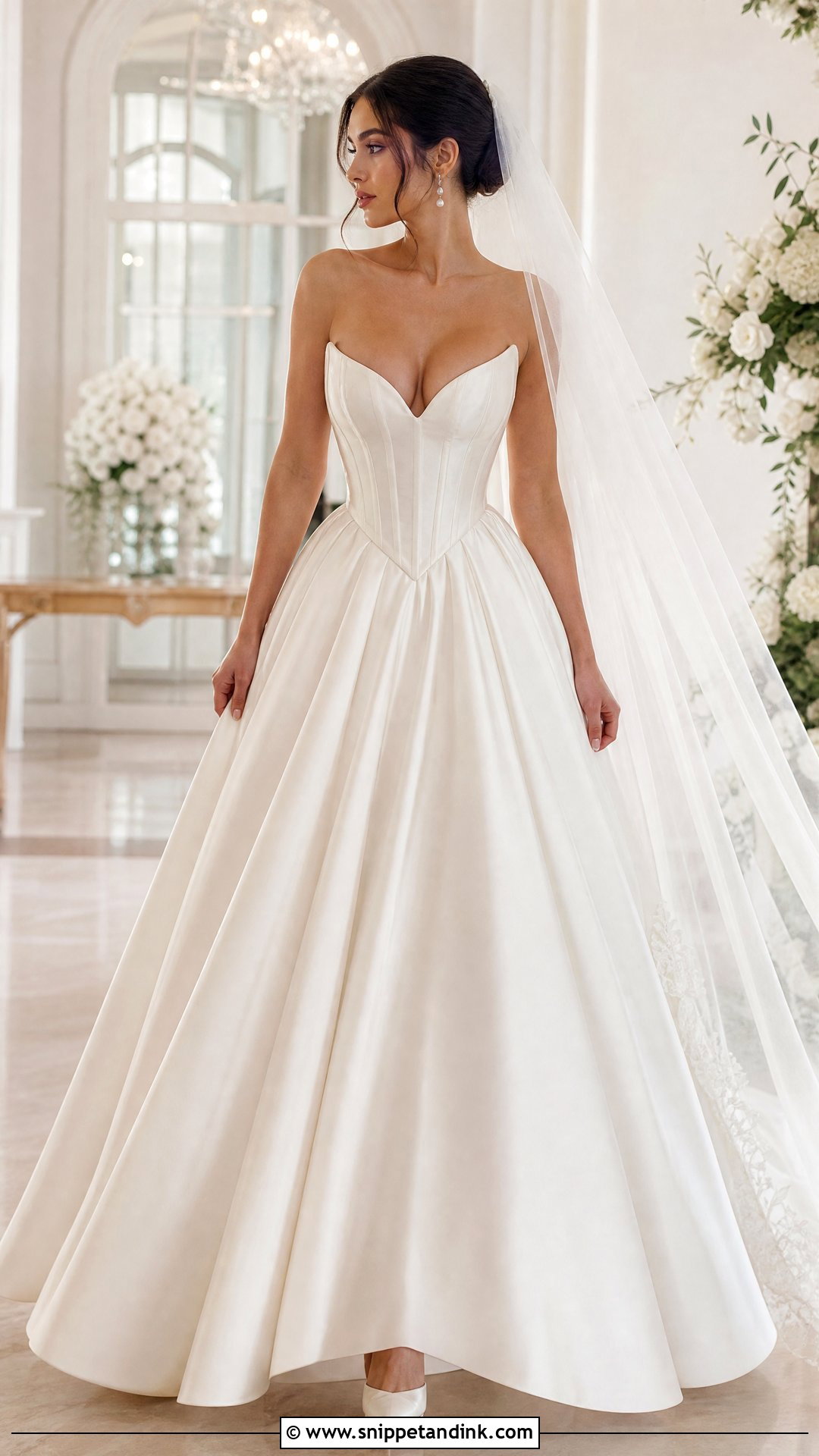
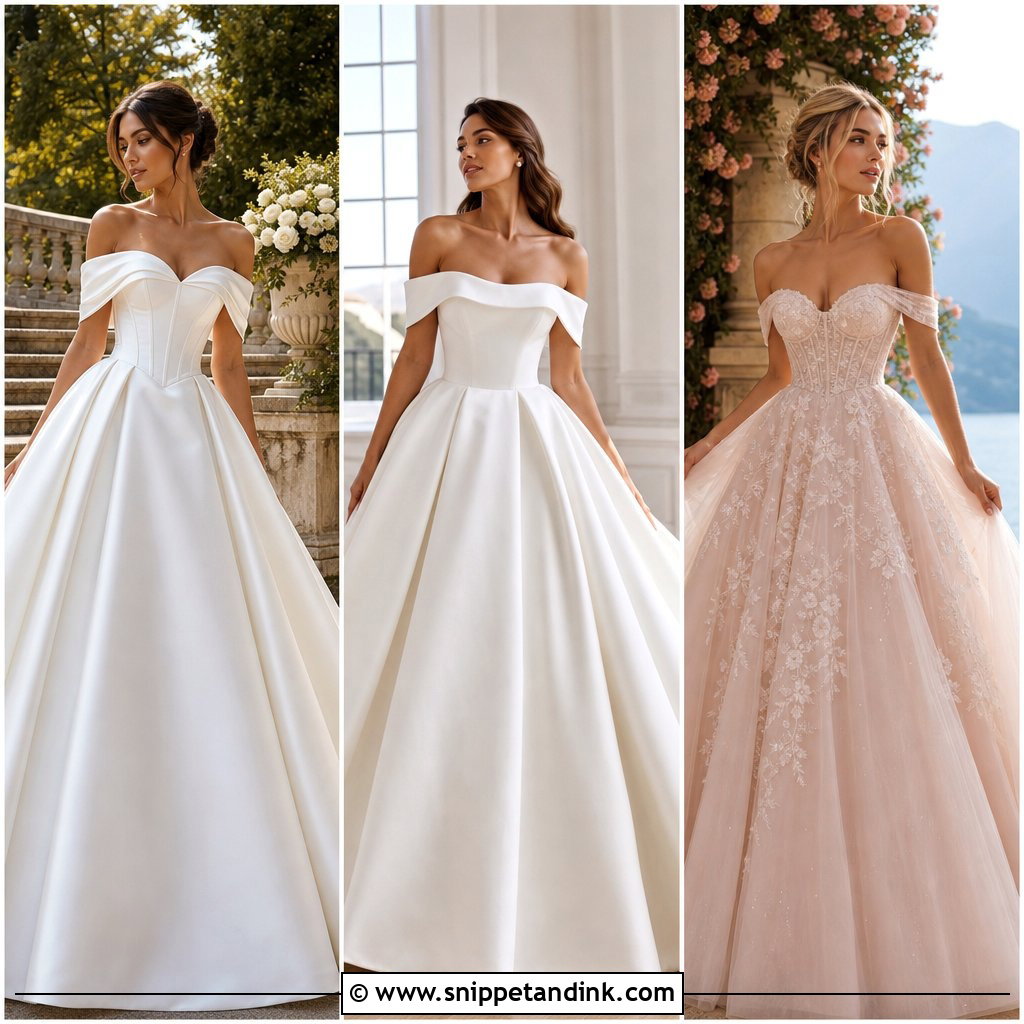
The basque waist is the most flattering waistline I fit on a full skirt. Its V point dips below the natural waist, which lengthens the torso and lets the skirt sit lower on the hip, so the volume reads graceful rather than wide. A structured corset under the satin carries the weight of the skirt. Duchess satin is my first choice here; it has a soft sheen and enough body to hold deep pleats. The point of the V needs to land at your center line, and that’s the fitting detail I check first, because even a slight shift makes the whole bodice look crooked. Add a cathedral veil with a plain edge, pearl drops and pointed satin pumps, with a sleek low bun. Skip the necklace. A compact bouquet of white roses or callas leaves the waistline visible.
2. Off Shoulder Lace Princess Ball Gown
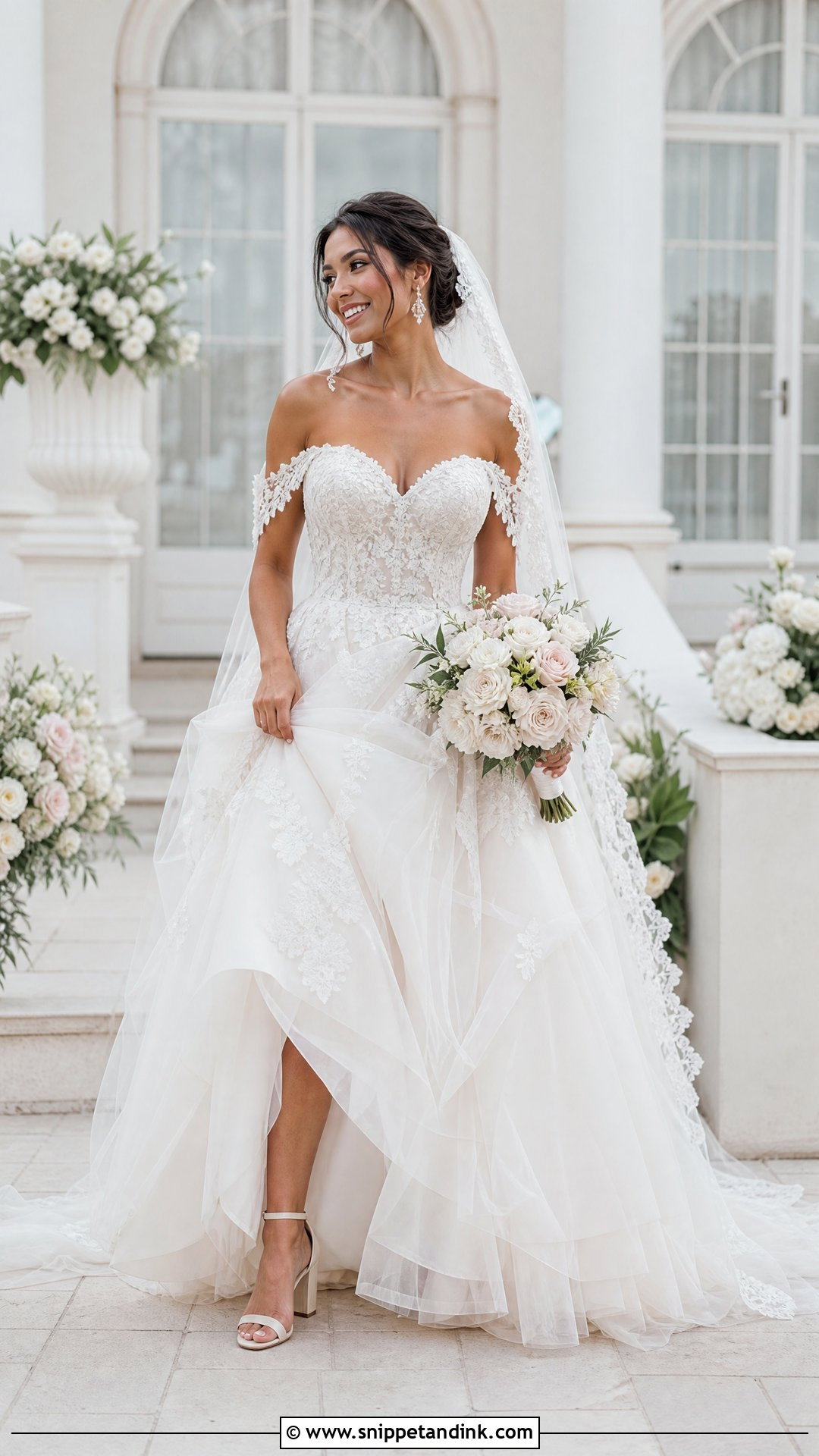
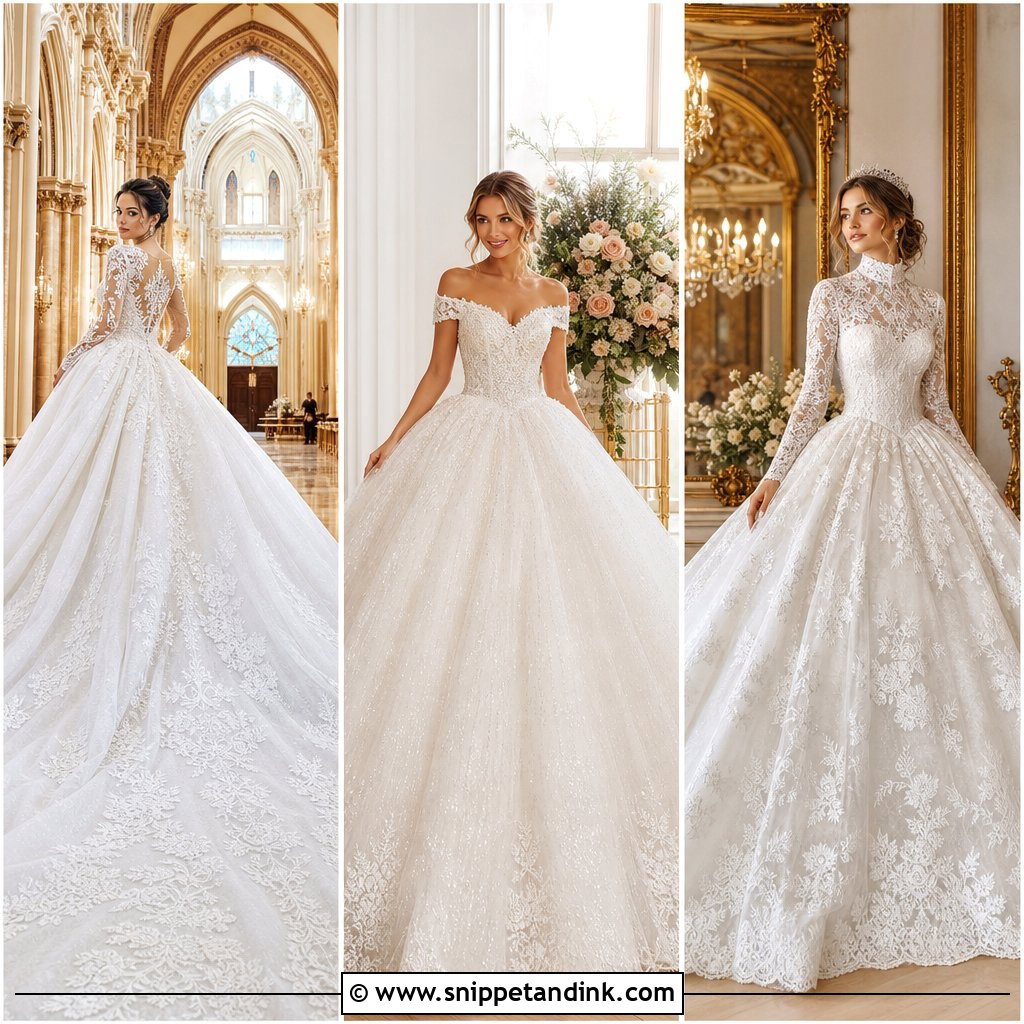
Off-the-shoulder lace is romantic, and it’s also the neckline that needs the most help from the inside. I look for real boning in the bodice and a grip band along the top edge, because off-shoulder sleeves pull the bodice down every time you lift your arms. Removable straps or sleeves give extra security without changing the effect. Scalloped lace edging and a layered tulle skirt keep it soft. Style it with a lace-trimmed fingertip veil, crystal studs and ivory block-heel sandals. Loose waves or a softly pinned updo balance the open neck, and a garden bouquet of white peonies suits the mood. Highly detailed lace wants plain jewelry and a quiet shoe.
3. Strapless Sweetheart Princess Ball Gown
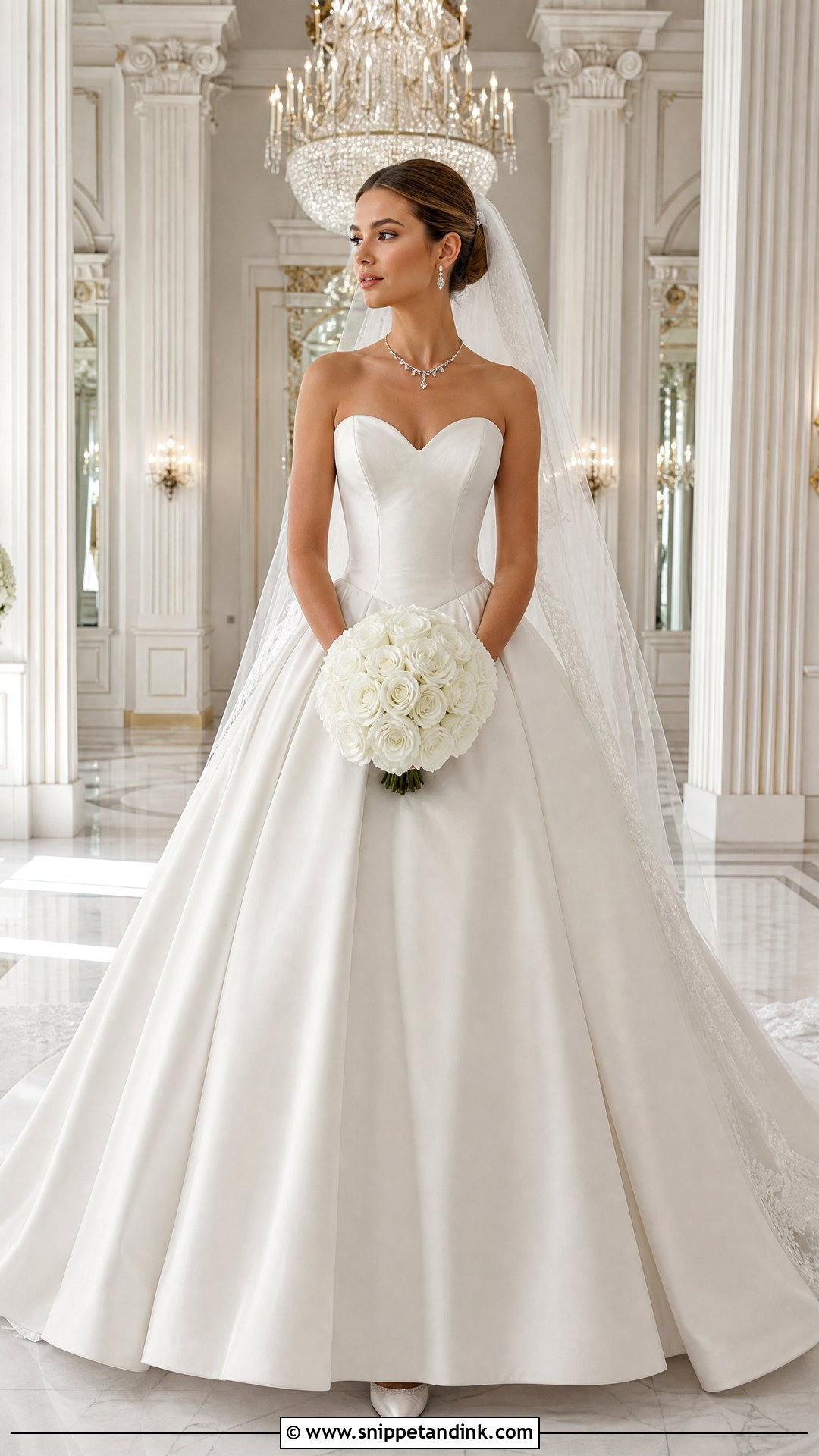
The strapless sweetheart is the classic storybook shape, and its success depends entirely on the bodice. With no straps, a corset has to grip at the ribs and natural waist so the weight of the skirt doesn’t pull it down. If you find yourself hitching it up at a fitting, it needs taking in. A properly fitted one stays put through hugs and dancing. Pair it with a chapel veil and a fine crystal necklace, or swap the necklace for studs if the neckline is beaded. Closed-toe pumps are traditional, and embellished flats are completely fine under all that skirt. A polished chignon with a comb above the veil and a round bouquet of ivory roses finish it.
4. Long Sleeve Lace Princess Ball Gown
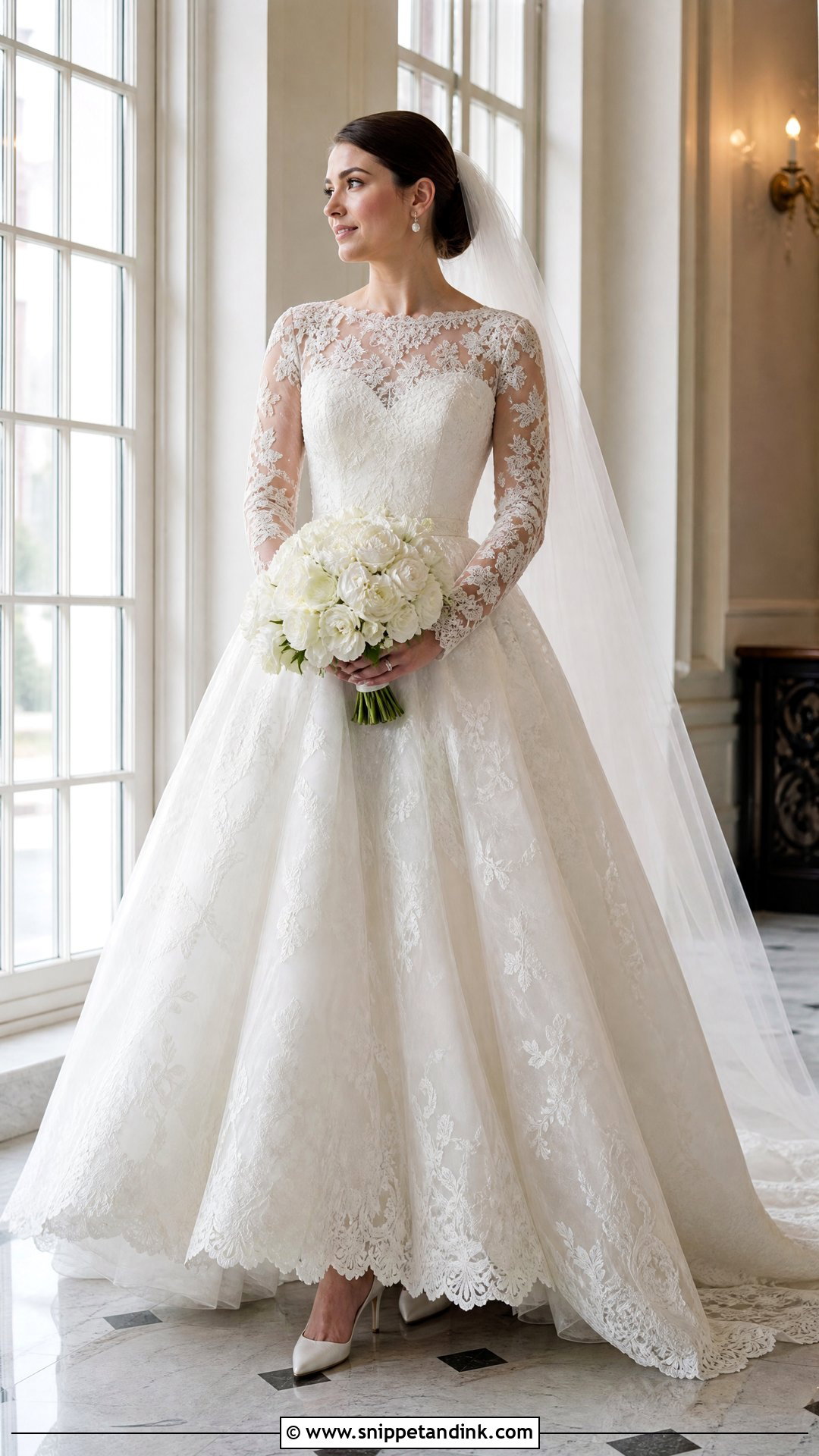
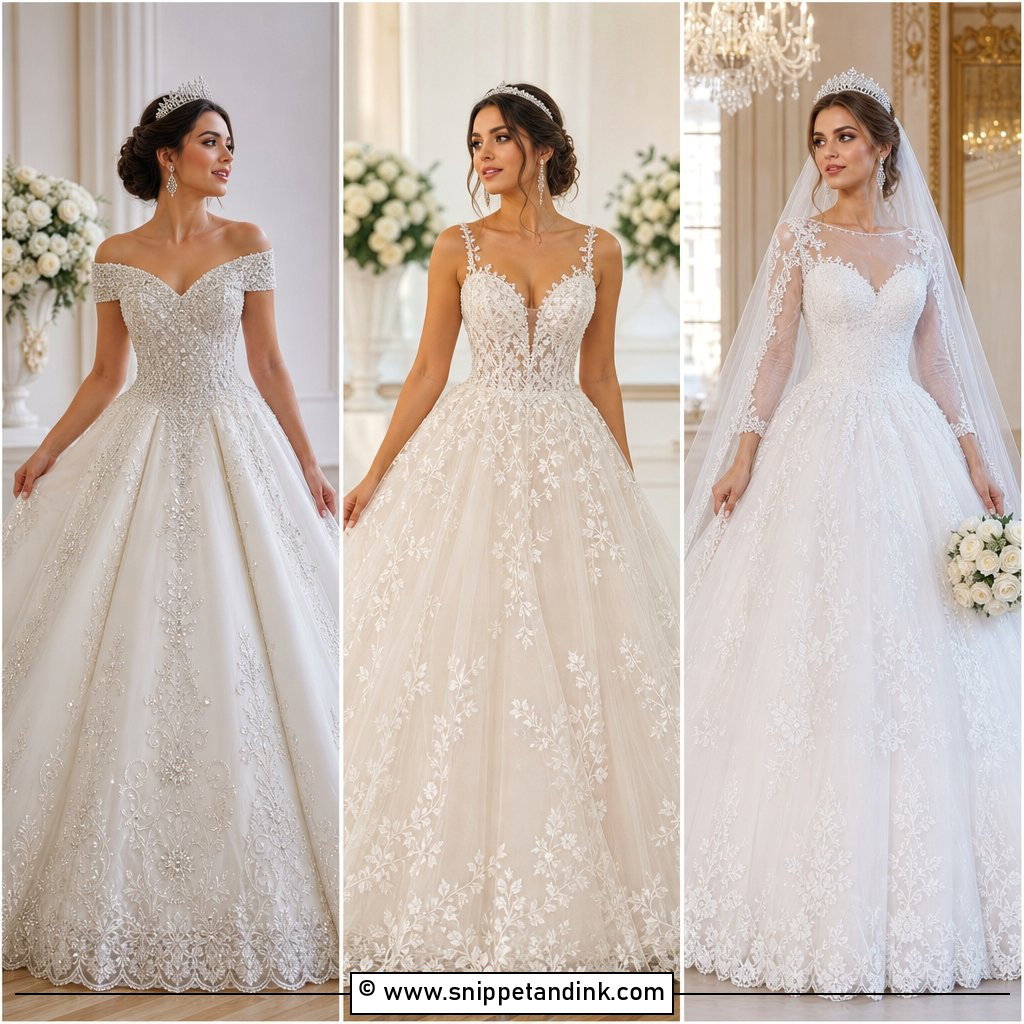
Long lace sleeves with a full skirt feel regal, and they’re the obvious choice for winter or a formal church. The sleeves need careful fitting. Lace on illusion mesh has little stretch, so I always have brides raise their arms and hug someone at a fitting; too-tight sleeves restrict the arm and can tear at the underarm seam. Motifs placed across the shoulders and cuffs look intentional. A higher back helps support the bodice. Add pearl earrings, a long plain veil and pointed pumps, with a low bun to show the neckline. Carry a structured bouquet of roses and ranunculus. Skip bracelets, which snag lace cuffs.
5. Square Neck Princess Ball Gown
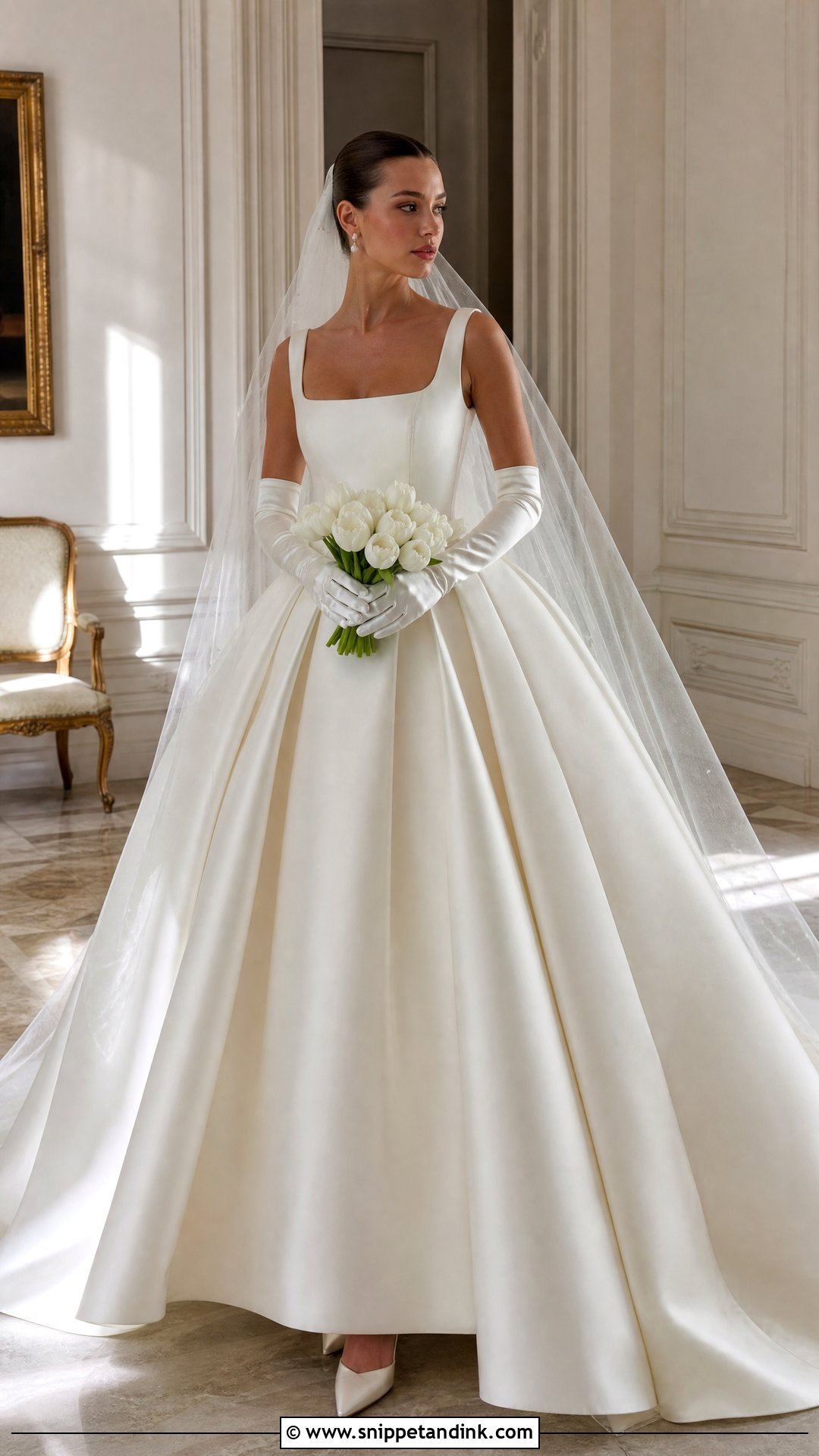
A square neckline makes a ball gown feel current while keeping all the grandeur. It suits fabrics with body, such as mikado, structured satin or jacquard, because the straight edge needs crisp fabric to stay straight. Wider straps support the bodice and stop the corners from bowing outward, which is the fault I see most in thin satin versions. A sharply defined waist balances the skirt. Wear a sheer cathedral veil, pearl and crystal drop earrings and pointed ivory heels, with a smooth bun or half-up style. Tulips or roses tied with satin ribbon keep the flowers architectural. Long gloves are a good match on a plain gown.
6. Beaded Corset Princess Ball Gown
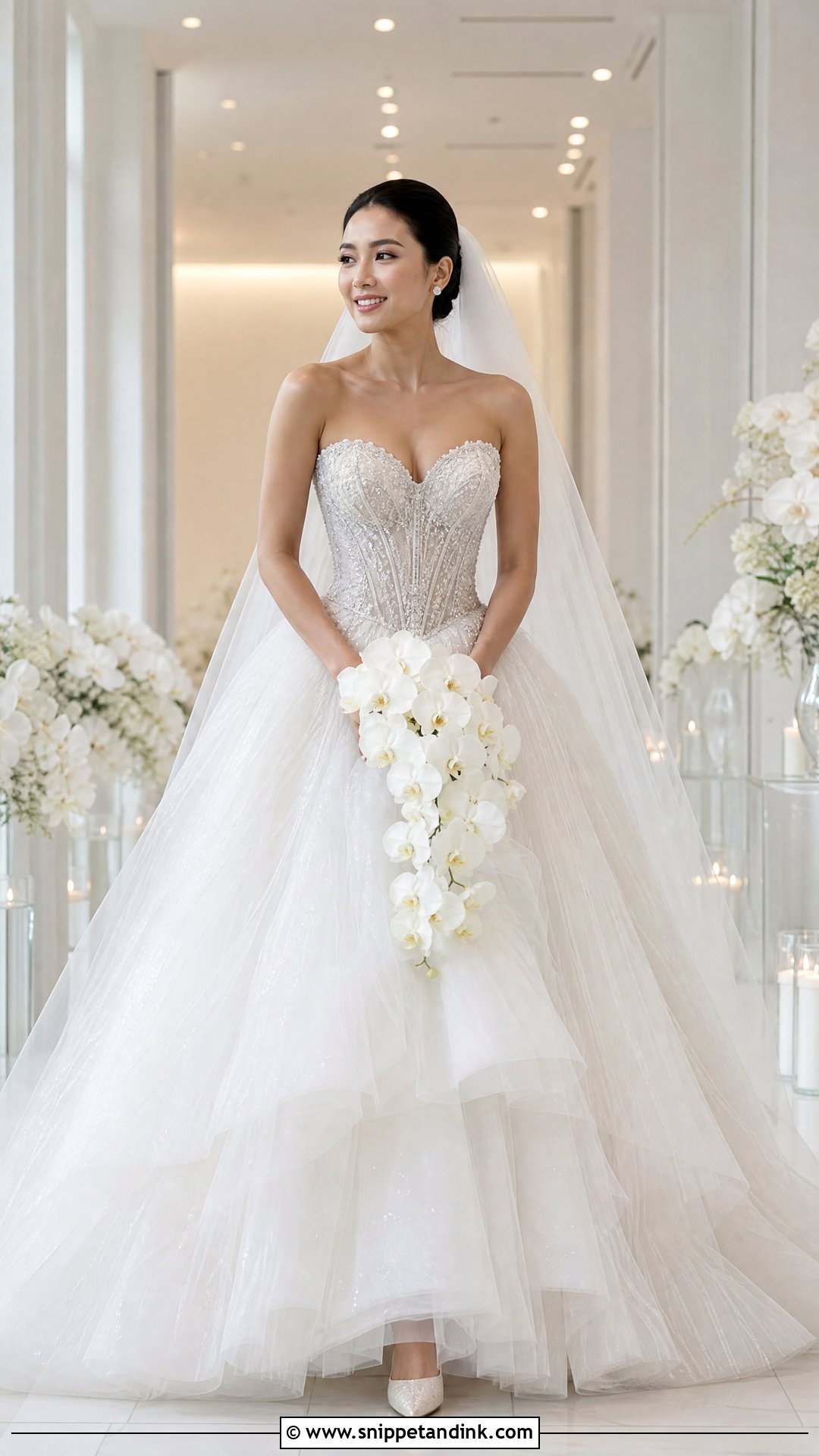
For real sparkle, a beaded corset ball gown does the work without help from accessories. The best ones grade the beading, heavy on the bodice and fading out into the tulle, so the weight sits where the corset can carry it. Heavy beading weighs more than you’d think, so check that the straps or boning hold it without the bodice sagging forward. Visible boning reads modern; a soft sweetheart keeps it romantic. Crystal studs, an unembellished veil and silver or ivory pumps are enough. An updo keeps hair from catching on the beads. My rule is one area of sparkle per bride, so the necklace, jeweled veil and belt all stay home.
7. Floral Applique Princess Ball Gown
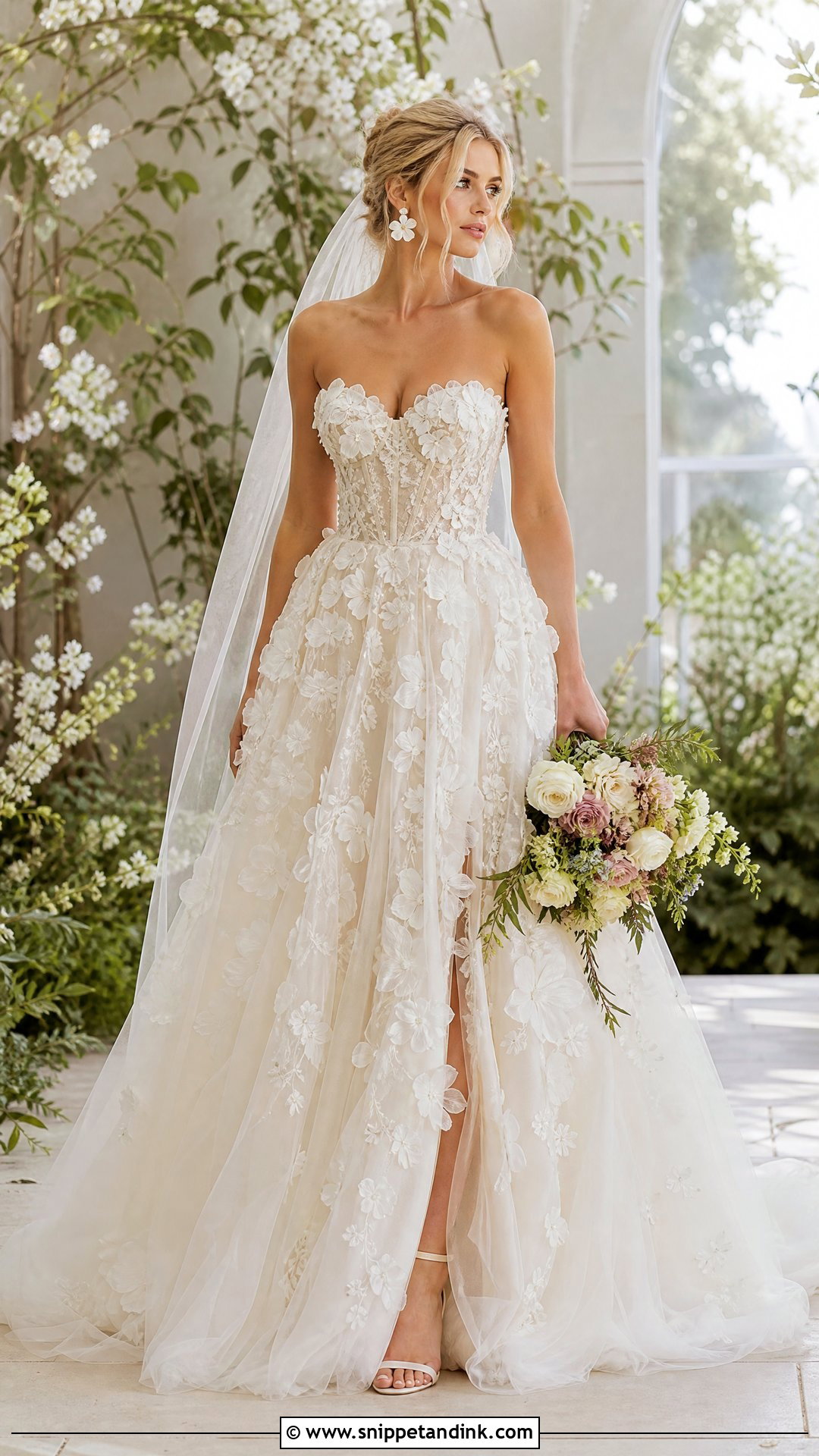
Floral appliqués turn a classic gown into a garden. The best placement starts across the bodice and scatters down the skirt, thinning out as it goes, rather than covering every inch. Layered organza petals and tiny pearl centers add depth without glare. Appliqués are hand-sewn and can lift at the edges, so I check for loose petals at every fitting and have them tacked down before the day. Keep the veil plain so it doesn’t compete, add delicate floral earrings and neutral sandals, and wear a soft textured bun. The bouquet should echo the appliqués in scale without copying them flower for flower.
8. Pearl Detail Princess Ball Gown
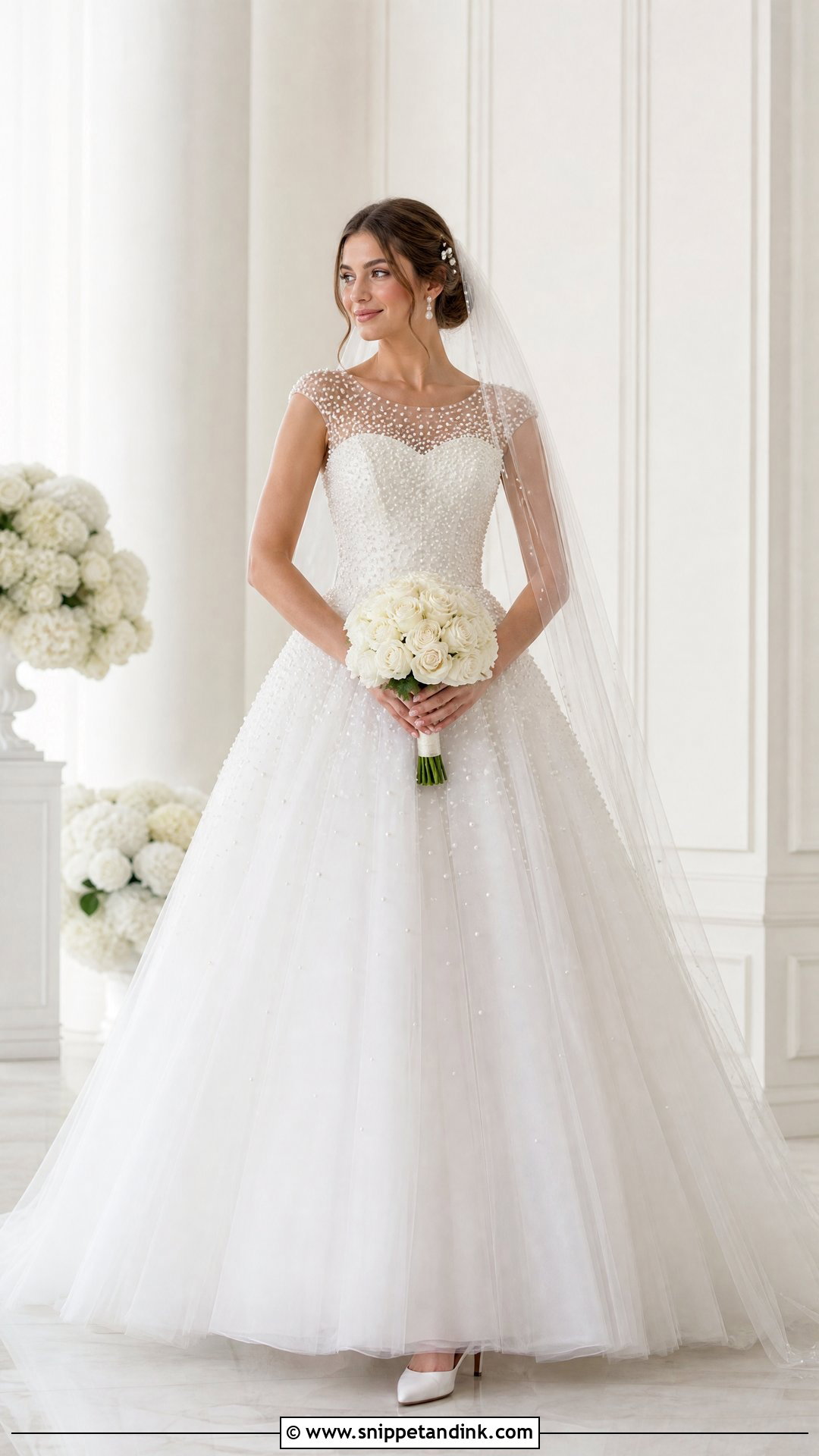
Pearls give a softer glow than crystals, and they read beautifully on camera without hot spots. Scattered across a corset bodice or sheer sleeves, they should thin out toward the hem so the eye travels upward. I check pearl attachment on any gown I style. Sewn pearls survive a day of hugs, while glued ones pop off. Pair it with small pearl drops, a sheer chapel veil and satin pumps with one pearl detail. A low bun with pearl pins carries the theme. Choose a compact white rose bouquet with little greenery. Mixing pearls with several bold metal pieces muddies the effect.
9. Mikado Princess Ball Gown With Bow
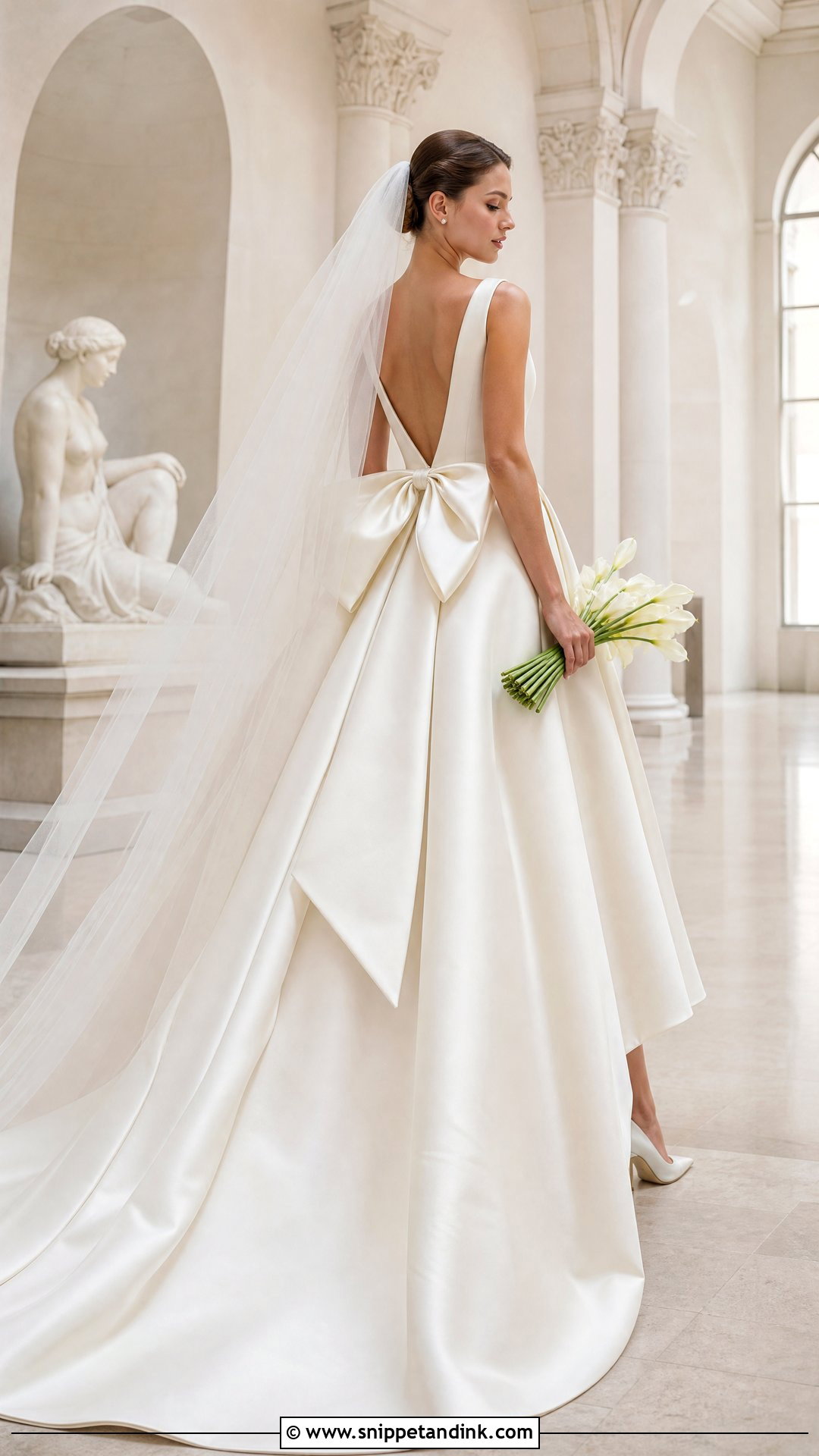
Mikado is the fabric I reach for when a bride wants a skirt that holds its own shape. It’s a heavy, crisp silk or silk-blend weave that keeps deep pleats standing and doesn’t collapse at the end of the night. A statement bow at the back waist is the classic partner, but its size matters: a bow too large for your frame eats the train. Wear a long sheer veil over it for the ceremony and take it off for the reception so the bow shows. Pearl studs, pointed satin heels and a sleek chignon keep it sharp. Mikado does show creases where you sit, so a steam before the portraits is worth arranging.
10. Tulle Princess Ball Gown With Detachable Sleeves
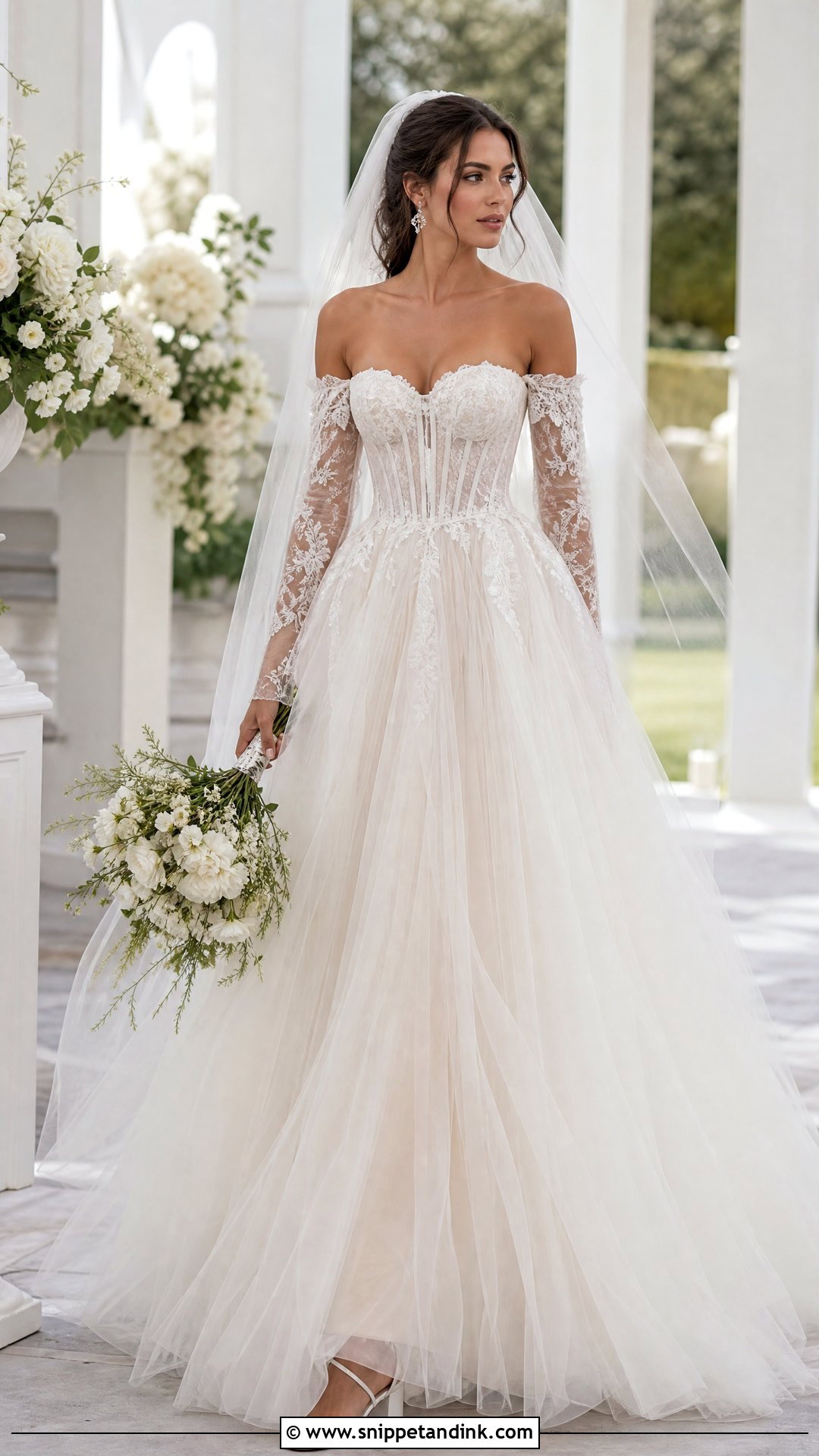
Detachable sleeves give you two looks from one dress. Start the ceremony in sheer off-the-shoulder sleeves with light lace or small appliqués, then remove them for a strapless or fine-strapped bodice that’s cooler for dancing. Removable sleeves and overskirts are a smart way to get a ceremony look and a party look without buying twice. The fastening is the part I test. Hooks, snaps or tiny buttons should sit flat and hold through a full arm lift, and someone besides you should know how to remove them. Pair it with a fingertip veil, crystal earrings and block-heel sandals. A half-up style works with both versions.
11. High Neck Princess Ball Gown
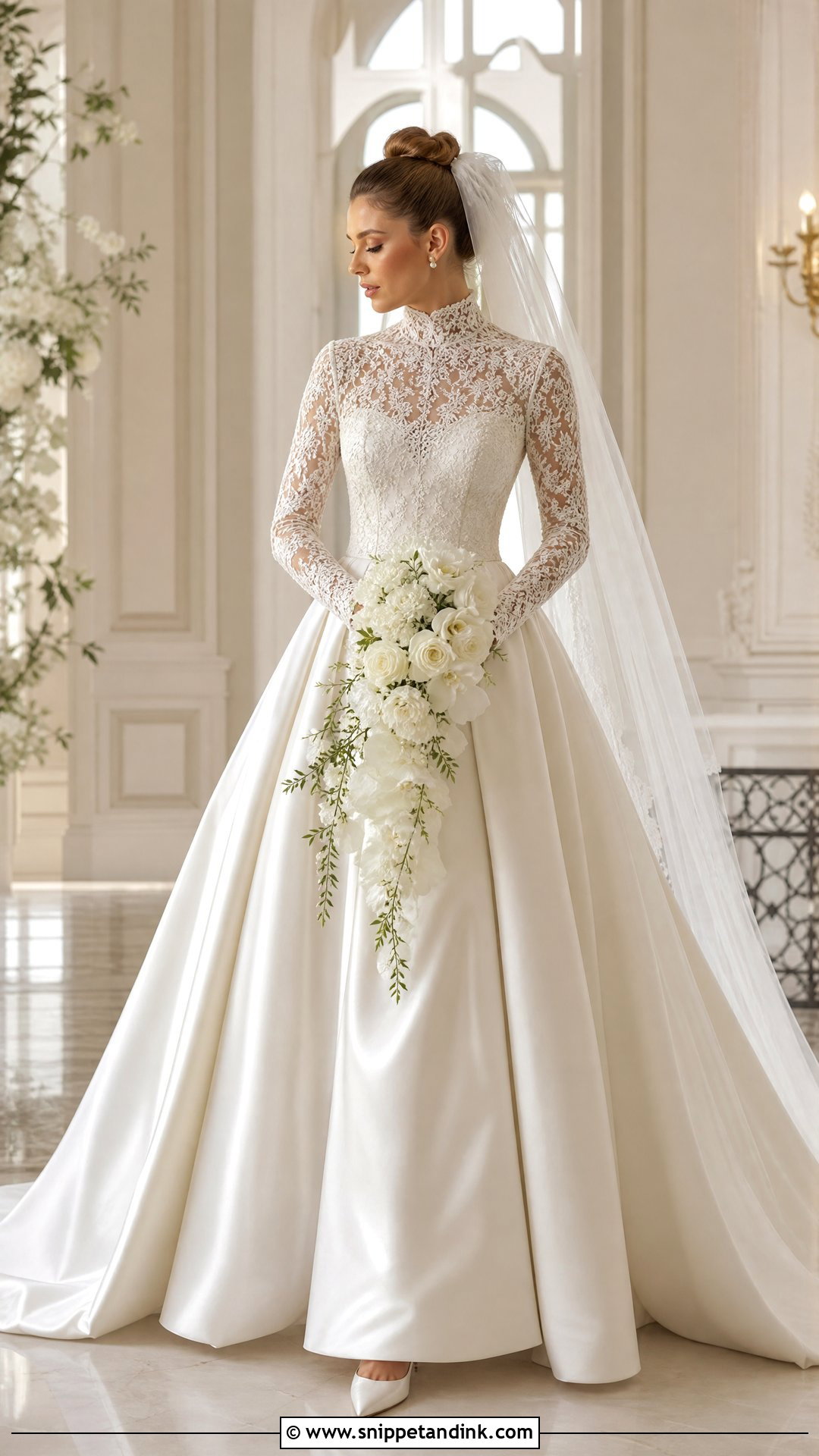
A high neck is poised and stately, and it only works if it lets you move your head. I steer brides toward a sheer lace yoke or a softly structured collar rather than a stiff one, which presses on the throat when you look down at your vows. Long sleeves fully cover; sleeveless keeps it lighter. Secure a plain cathedral veil under a polished bun. Small pearl or diamond studs are enough, since the neckline already frames your face, so skip necklaces and busy hairpieces. A cascading bouquet balances the covered bodice. Expect alterations at the shoulders and neck, the two places a high neckline shows every millimeter.
12. Scoop Neck Princess Ball Gown
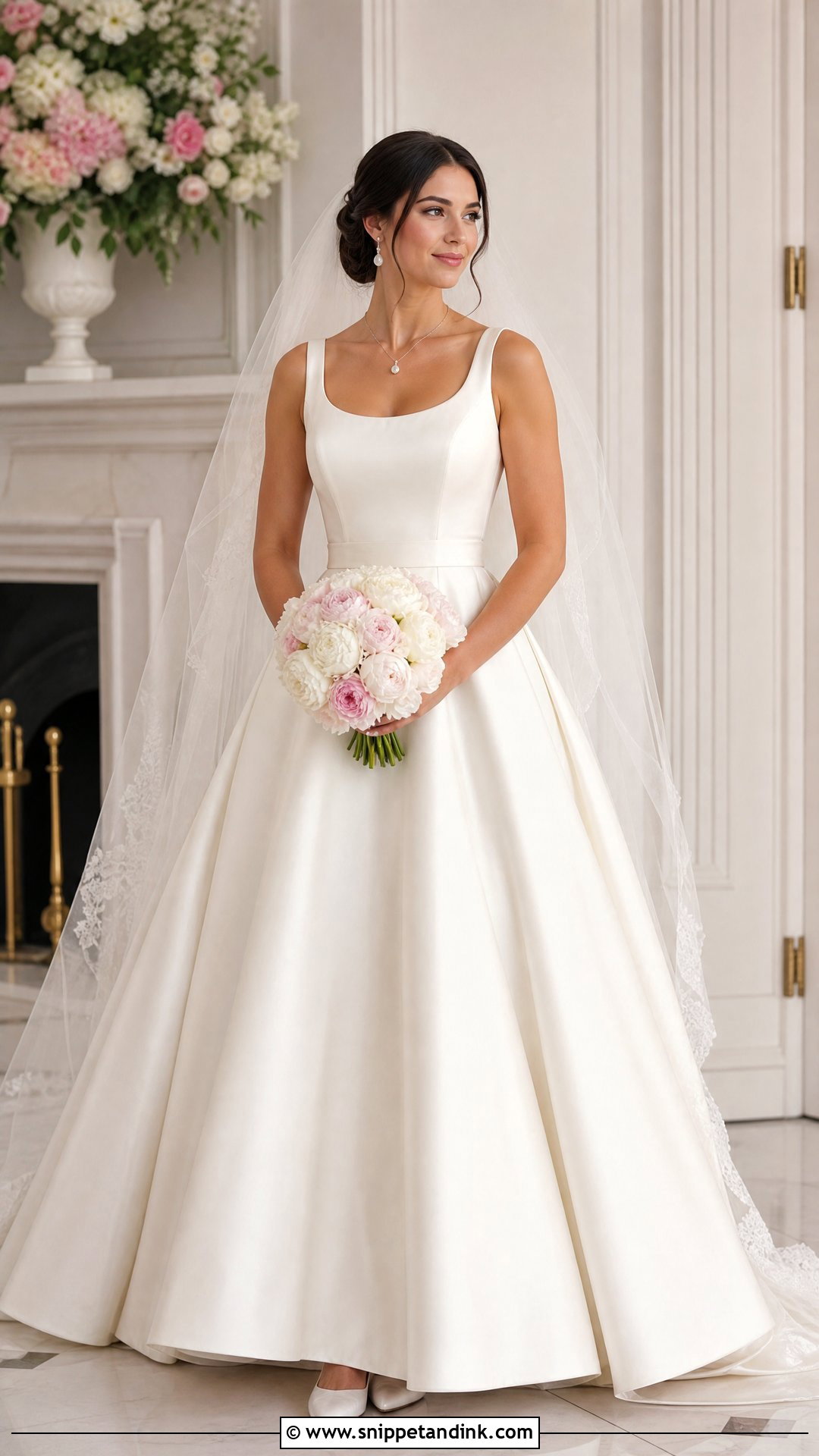
The scoop neck is the gentlest neckline on a ball gown, and it’s the one I suggest to brides who find a strapless bodice uncomfortable. The depth can be modest or a little lower, but the straps need to be substantial enough to carry part of the skirt’s weight. A defined natural waist with a skirt falling smoothly from the hip suits most figures. Add a chapel veil, pearl earrings and ivory pumps. Soft waves swept back echo the curve of the neckline. A rounded bouquet of roses or peonies keeps everything soft. On a plain bodice, a fine pendant fills the space nicely.
13. Drop Waist Princess Ball Gown
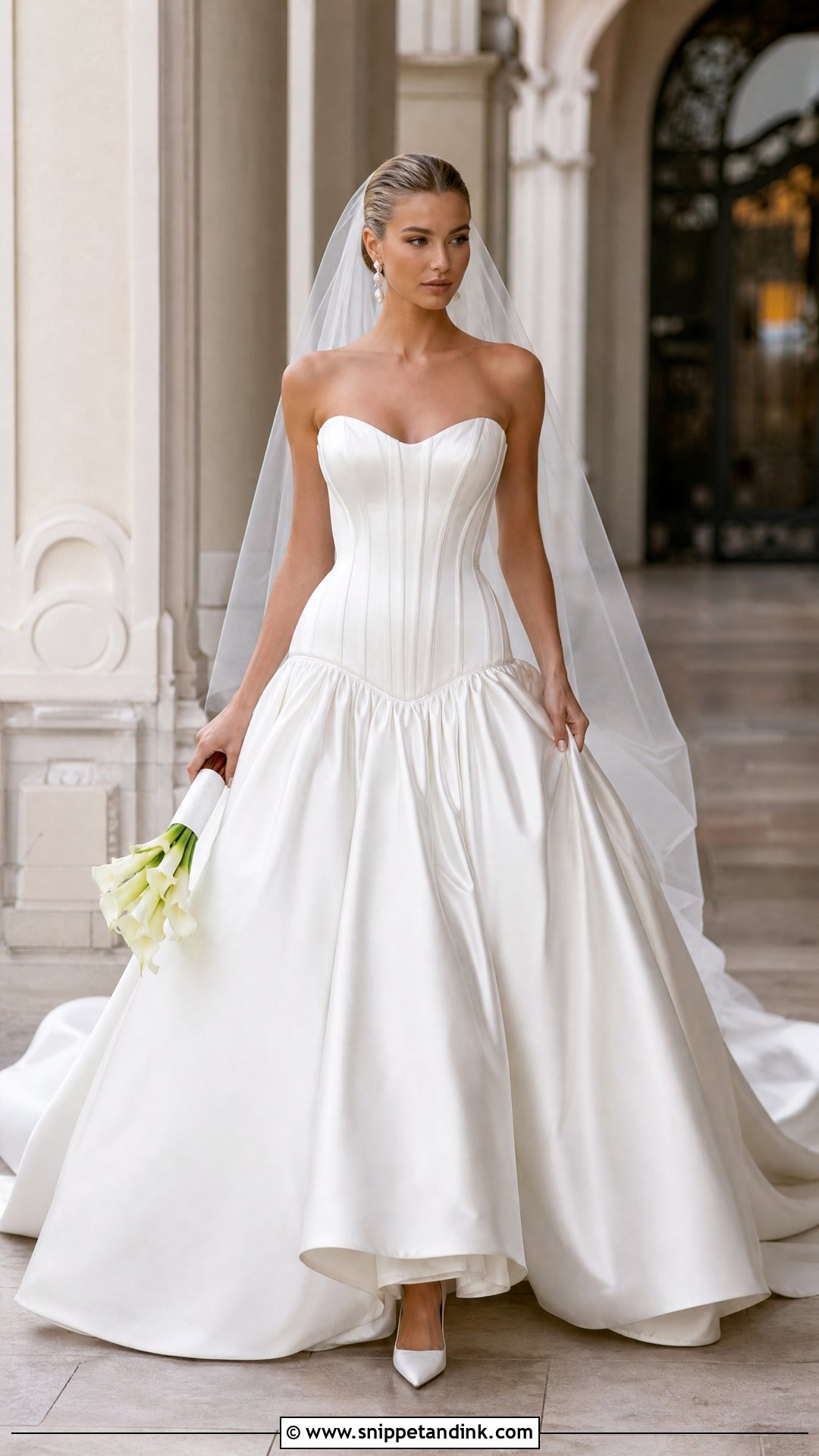
A drop waist extends the fitted bodice below the natural waist before the skirt releases. It creates a long, sculpted line with a fashion edge, in smooth satin for a minimal version or lace corsetry for something softer. The fitting is unforgiving, though. Because the bodice ends on the hip, it has to be shaped through the waist and hips so you can sit down without it digging in, and that’s the test I insist on at every fitting. Wear a plain cathedral veil, small drop earrings and pointed heels. A clean updo carries the long line upward. Hold a narrow bouquet, since a big round one hides the very waistline you chose this dress for.
14. Ruffle Skirt Princess Ball Gown
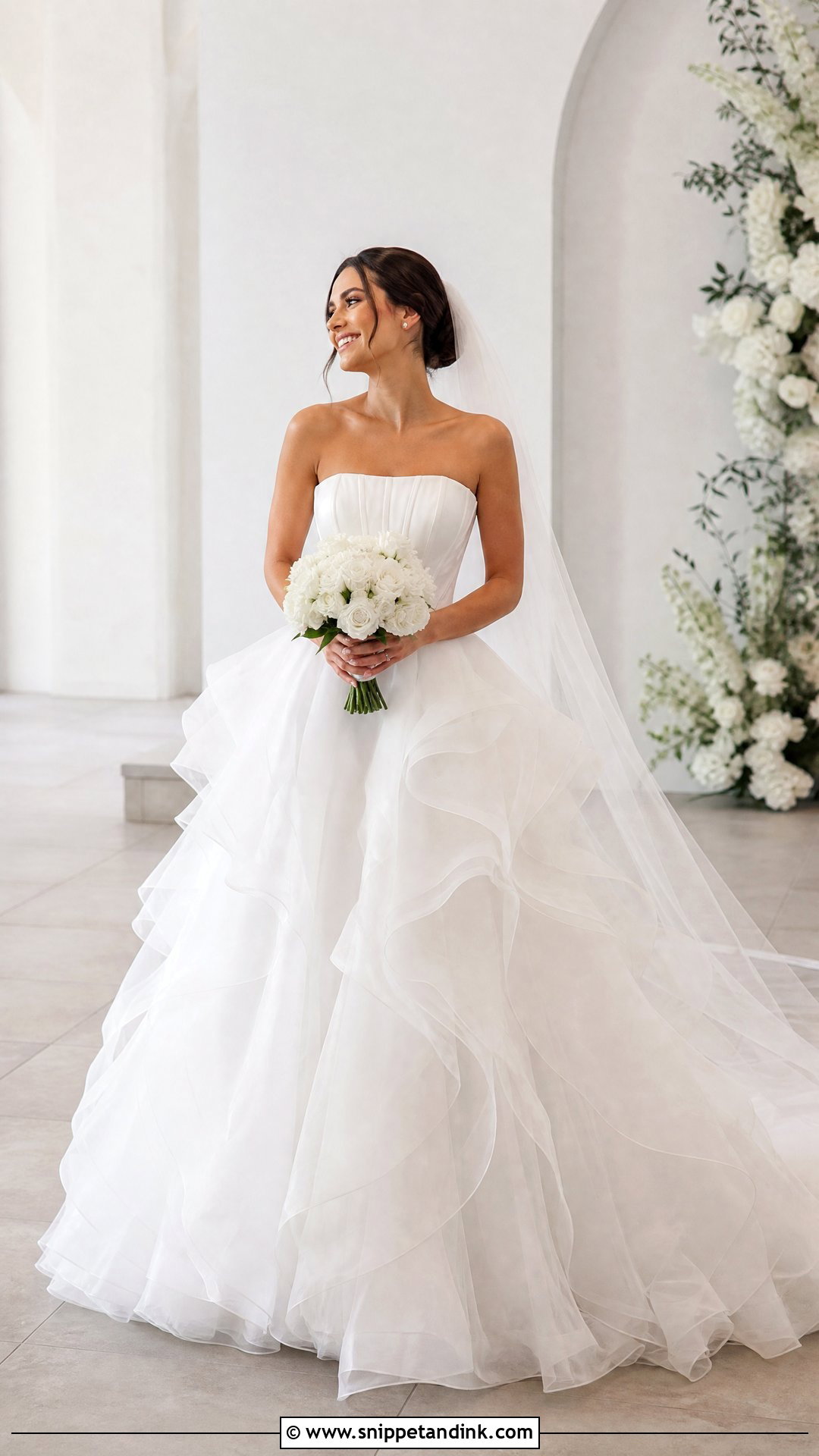
Ruffled tiers give a ball gown movement, and they’re lighter than they look when they’re made from organza or tulle. Start the ruffles below a fitted bodice, never at the waist itself, or you add bulk exactly where you want definition. A strapless corset or a simple V-neck balances the skirt. Wear a plain fingertip veil, crystal studs and stable block heels hidden under the tiers. A high bun keeps it neat. Ruffles crush in a car and when you sit, so I tell brides to plan a quick fluff before photos. Walk, turn and sit at your fittings to see how the layers settle. Keep the bodice, veil and jewelry simple.


15. Cathedral Train Princess Ball Gown
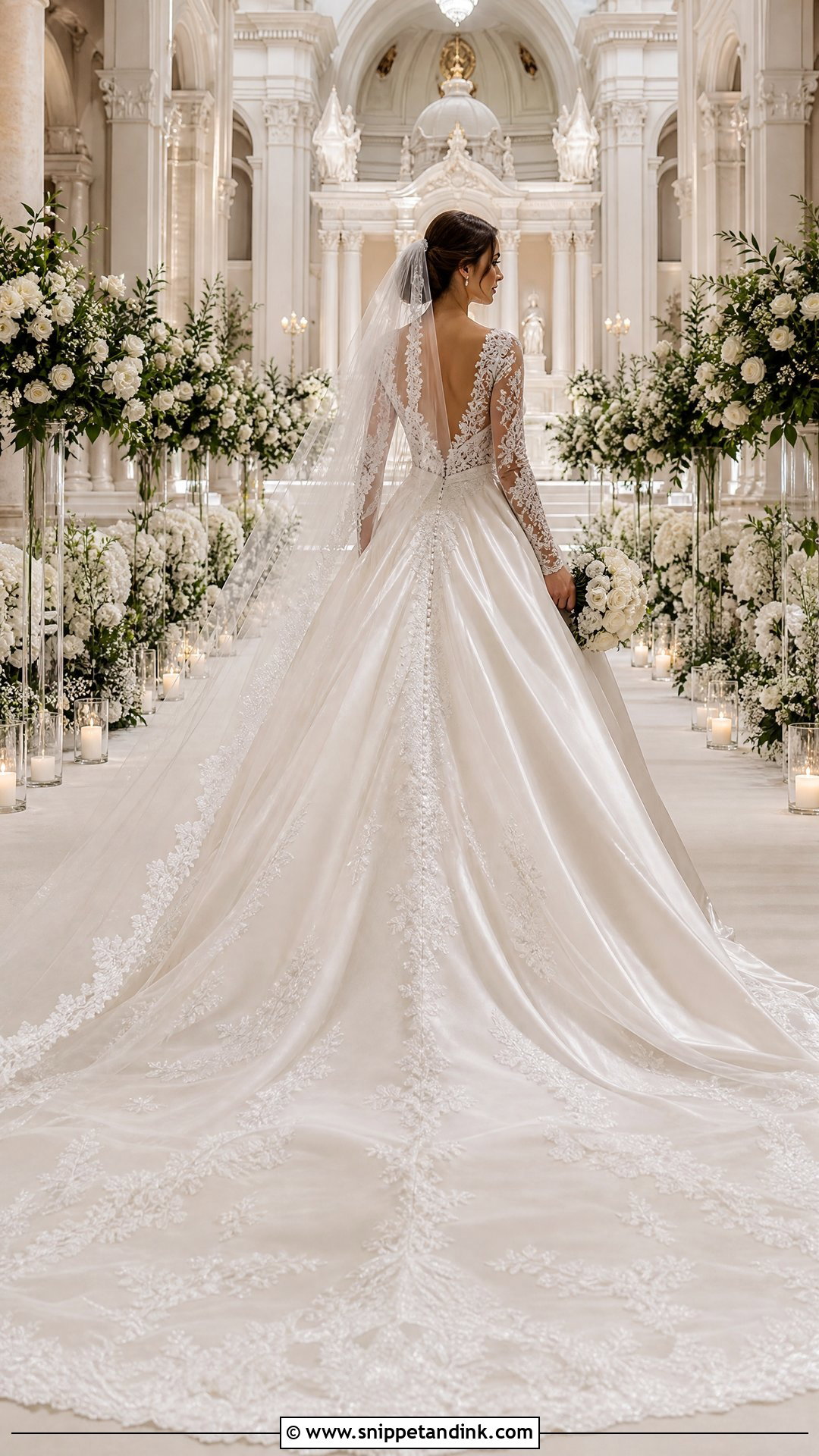
Nothing makes an entrance like a ball gown with a sweeping cathedral train. It may be plain satin, a continuation of the lace or edged with appliqués. The bodice has to be structured enough to counter the pull of all that fabric behind you. The veil should be slightly longer than the train, or sheer enough to let its detail show through. Closed-toe pumps, quiet earrings and a secure updo keep it practical. A medium bouquet stays in proportion. The bustle is the piece couples forget. Ask your seamstress for a strong one, then practice with whoever will do it on the day, because a cathedral train has many tie points and a rushed bustle sags.
16. Blush Pink Princess Ball Gown
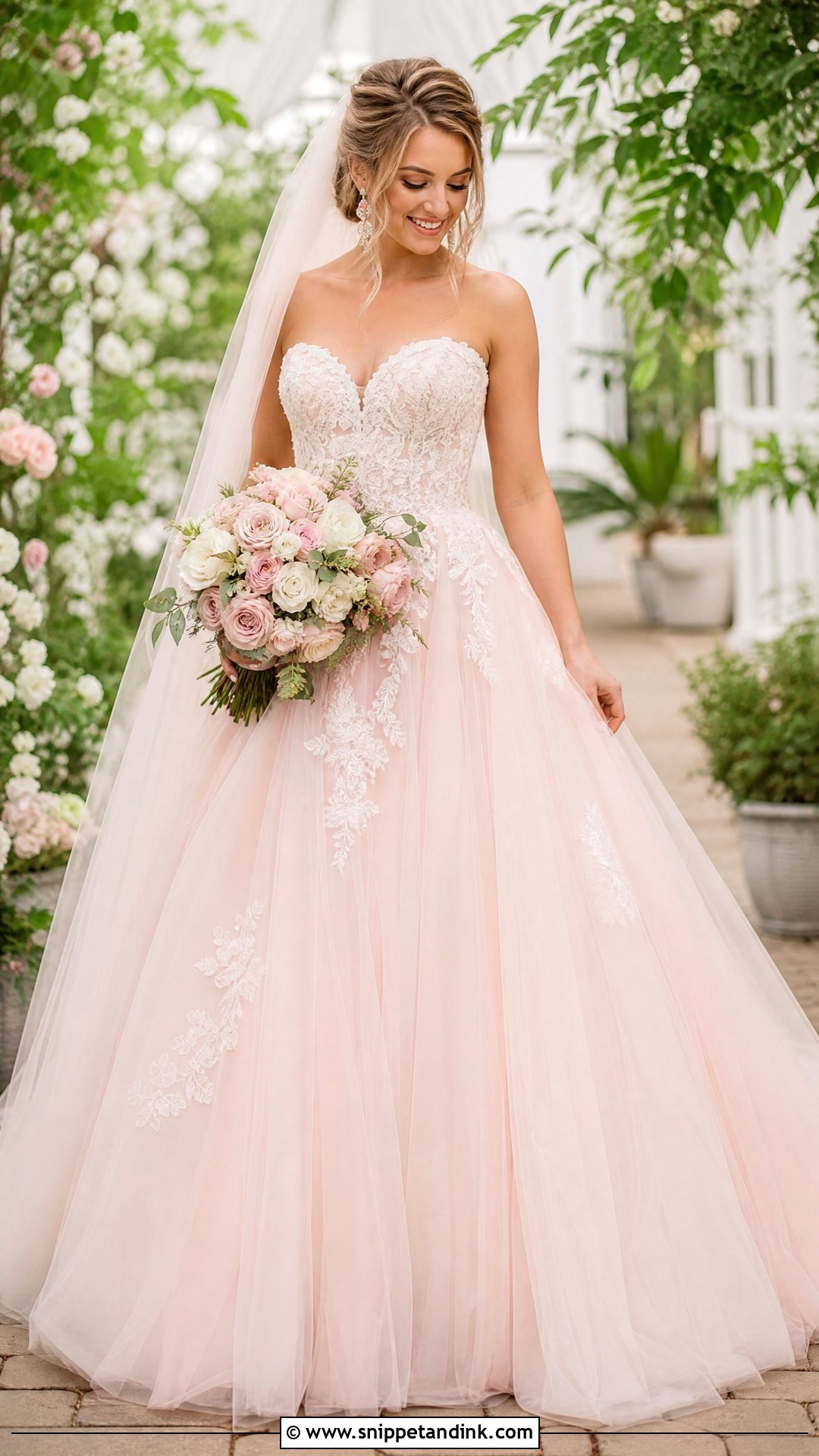
Blush is a gentle step away from white that still reads unmistakably bridal. The way I like it best is a blush lining under ivory tulle or lace, which gives depth without looking pink in every photo. Match the veil to the outer fabric, not the lining, or it looks like a separate piece. Rose-gold earrings and neutral ivory heels keep the accessories quiet. Soft curls or a textured low bun suit the palette, with white and blush flowers. Look at the gown in daylight and under warm indoor light before you commit, because blush can turn peachy or almost disappear depending on the light.
17. Vintage Lace Princess Ball Gown
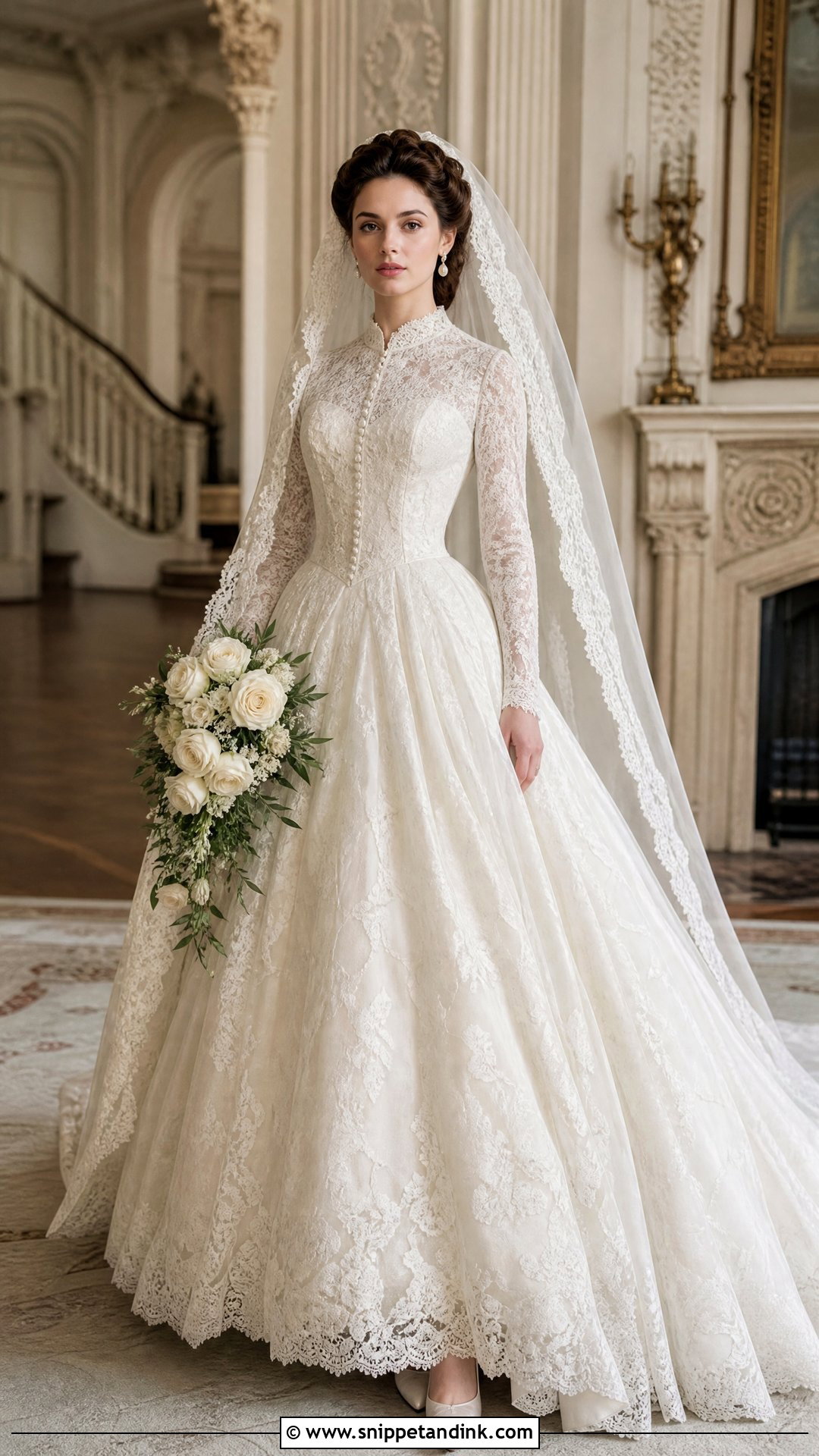
Vintage lace gives a ball gown character, and each type behaves differently. Chantilly is fine and soft, so it drapes; corded lace has raised outlines that read strongly at a distance; embroidered lace adds rich surface detail. A basque waist, long fitted sleeves and covered buttons push the vintage feel further. Add a lace-edged veil, pearl earrings and closed-toe satin pumps, and a low chignon with a delicate comb rather than a big tiara. A loosely gathered bouquet of roses and sweet peas fits the era. Draw your accessories from roughly one period. Mixing eras is what tips vintage into costume.
18. Minimal Satin Princess Ball Gown
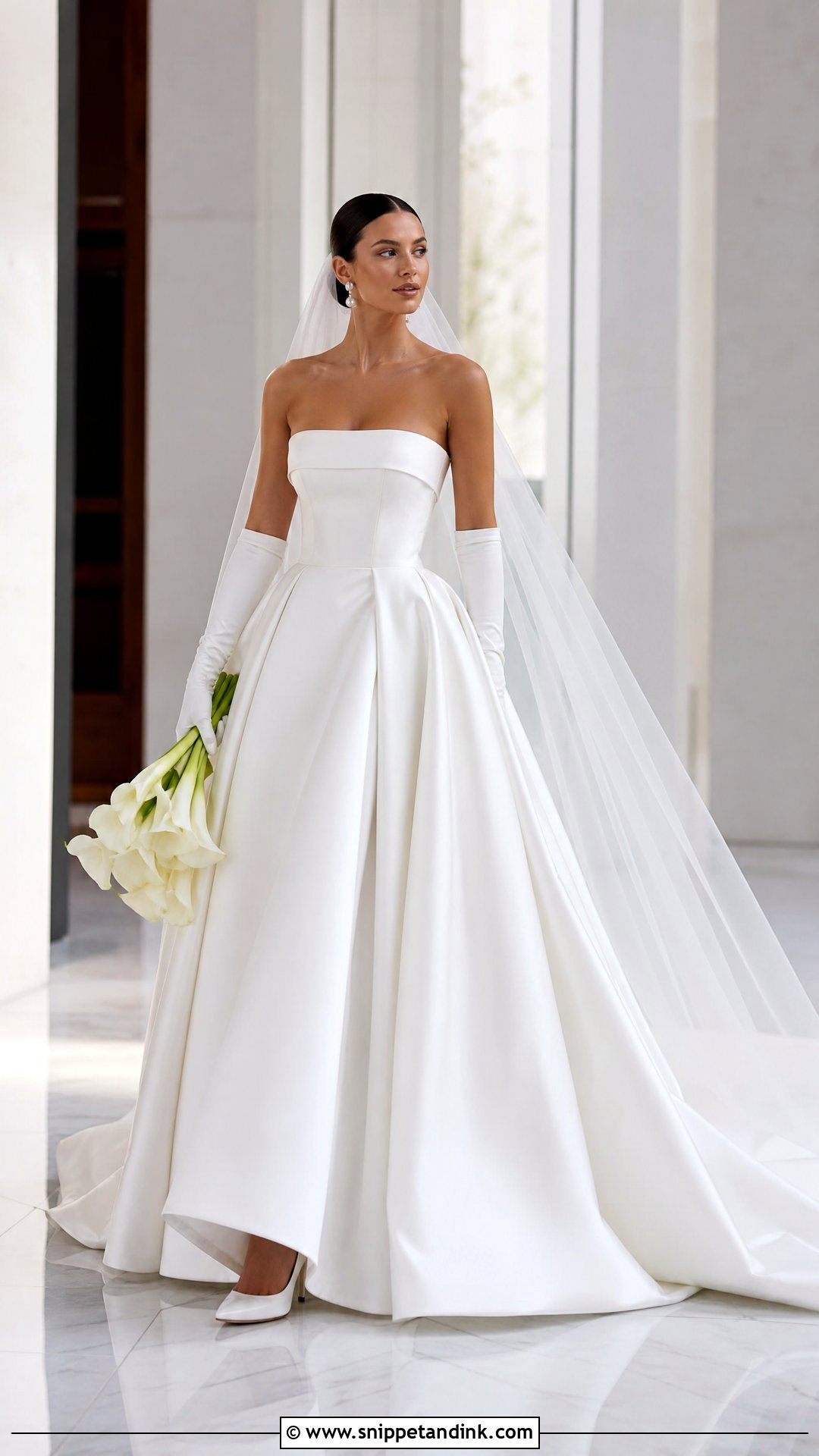
Can a princess gown be dramatic with no lace, crystals or embroidery? A minimal satin ball gown proves it can, as long as the tailoring is exact. A plain surface hides nothing. Every seam, dart and pleat shows, so I examine the inside of a minimal gown more closely than a beaded one. Look for a structured bodice, a defined waist, deep pleats and a long train. A raw-edge cathedral veil, sculptural pearl earrings and sleek pumps carry the clean line. Wear a polished bun and luminous makeup, and carry callas or a compact rose bouquet. Satin gloves for the ceremony, removed for the reception, add a quiet bit of drama.
19. Plus Size Corset Princess Ball Gown
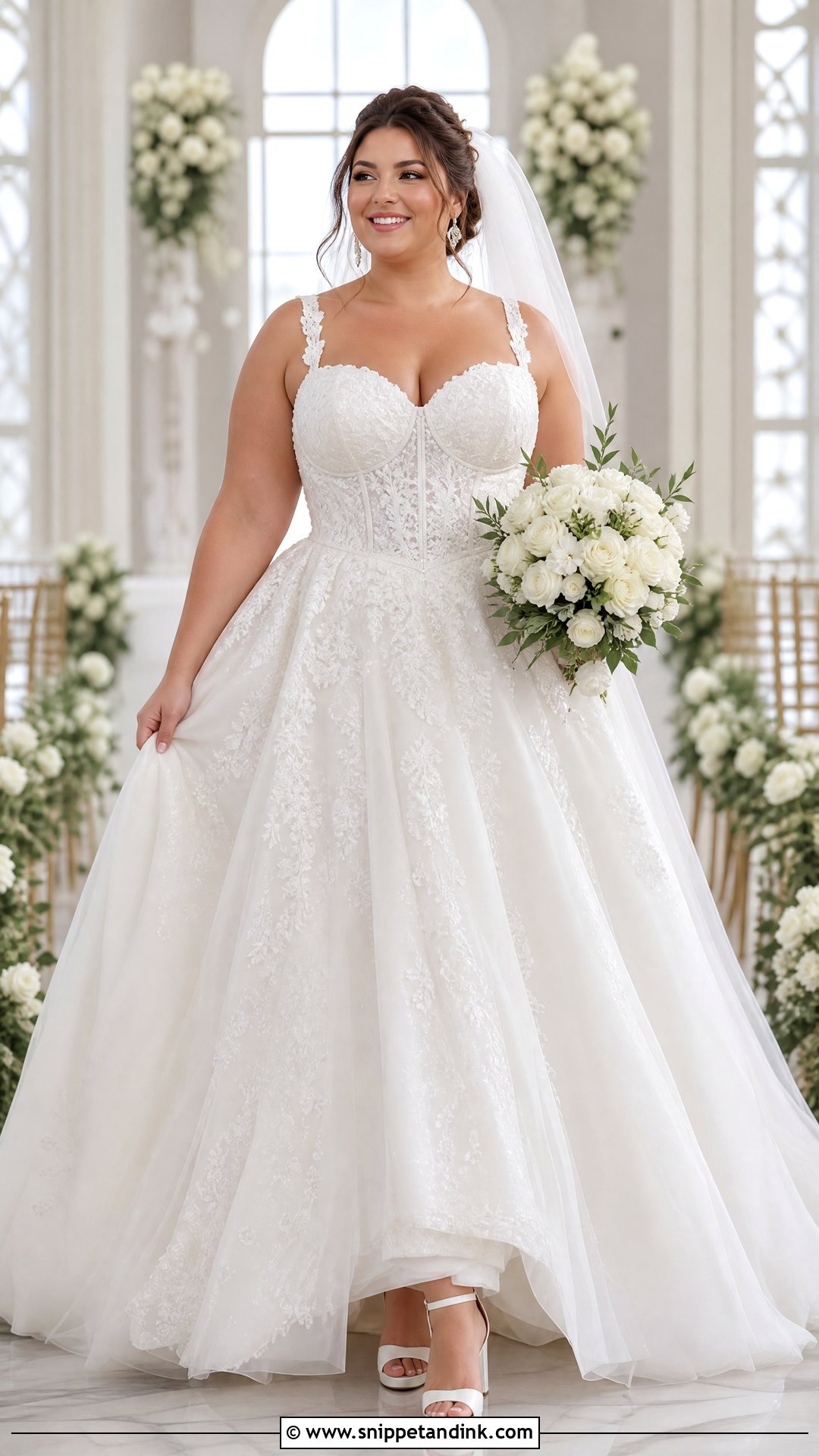
A well-built corset ball gown gives a defined silhouette at any size, and the construction matters more than the pattern. I look for substantial boning, adjustable lacing at the back, proper cups and a waist seam placed where your own waist is, not where a sample size puts it. Wide straps or detachable sleeves spread the support. A lightweight veil, balanced drop earrings and block heels or embellished flats keep the look grounded. Choose a bouquet scaled to your height and the width of the skirt. Ignore rigid body-shape rules and spend on alterations instead. At every fitting, sit, walk, lift your arms and dance. If the bodice shifts, it isn’t finished.




20. Petite Basque Waist Princess Ball Gown
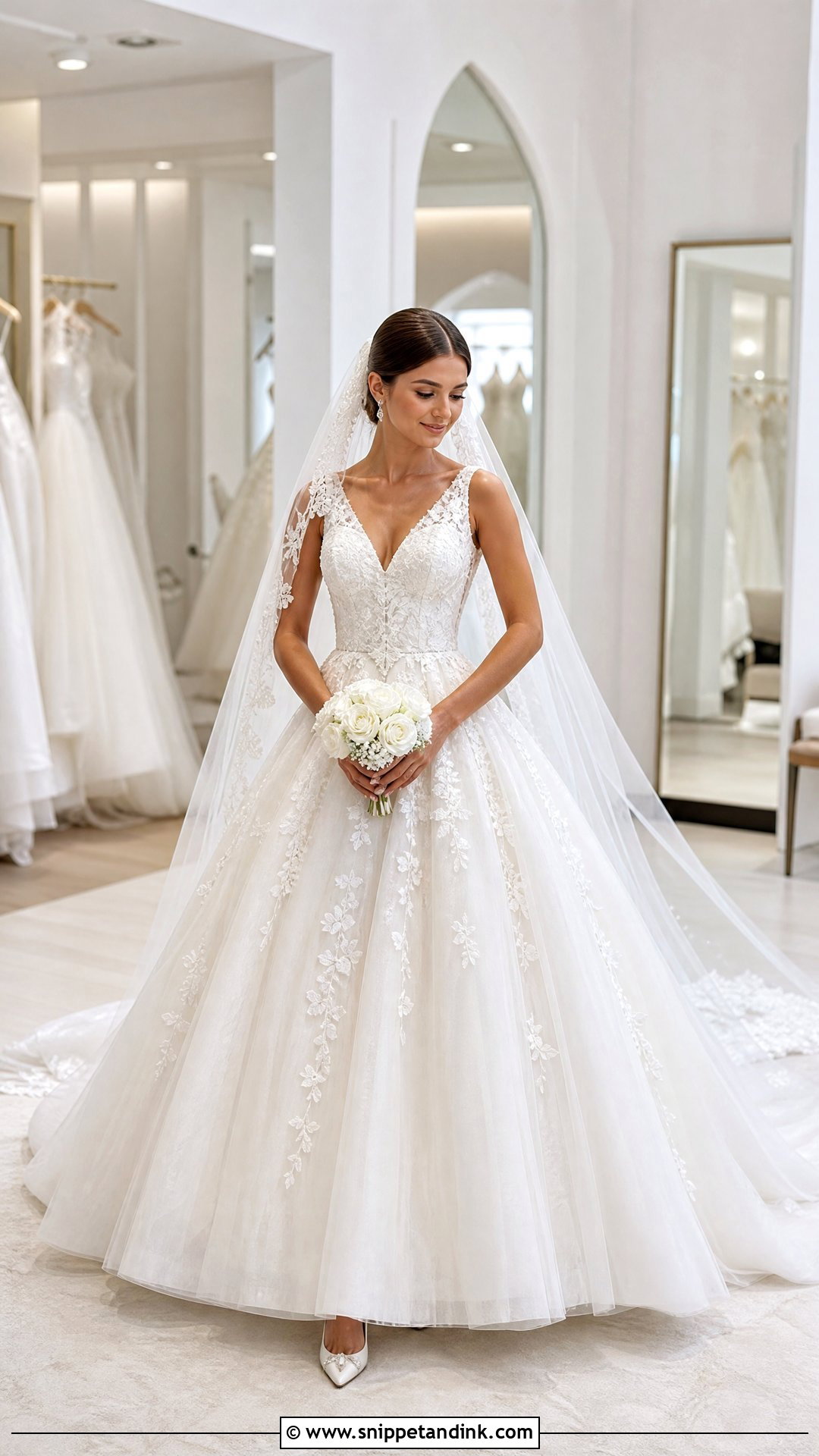
Petite brides can absolutely wear a full princess gown; it just needs scaling. A carefully placed basque waist lengthens the torso, while controlled volume keeps the skirt from swallowing you. Too many petticoat layers are the usual culprit, and taking one out often fixes the proportion. Vertical seams, smaller appliqués and a moderate train keep the detail in scale with your frame. Add a fingertip or chapel veil, delicate earrings and pointed heels. A neat updo adds height and opens the shoulders. Carry a compact bouquet held low enough to show the bodice. During alterations, adjust the straps, waist, hem and train together, because changing one shifts all the others.
Cars, Doorways and Bathroom Trips in a Full Skirt
Nobody shows the practical side of a ball gown, but brides feel it from the moment they leave the house. A few minutes of planning saves a lot of crushed tulle.
- Book a car with a wide back door and plenty of seat space. Sit down first, then have someone gather the skirt and train in after you.
- For the bathroom, step in facing the toilet backwards and gather the skirt forward in front of you. One helper makes this far easier.
- At the reception, sit toward the front of a chair without arms and let the skirt spread to the sides.
- Measure any narrow doorways or spiral stairs at the venue if your skirt is very wide.
Hoop or soft petticoat?
A hooped petticoat gives the roundest shape, but the hoops can tip up at the front when you sit, and some brides find them awkward on stairs. A layered tulle or crinoline petticoat without hoops is softer, sits more easily and moves better on the dance floor, at the cost of a slightly less perfect bell. If you plan to dance a lot, try both at a fitting before you decide.
Volume, Proportion and a Bustle That Holds
A princess gown is all about volume, but it only works when that volume is balanced with comfort and proportion. Satin, lace, corsetry, sleeves, florals, pearls and bows all reshape the classic silhouette in different ways. Start with the neckline, waist placement, fabric and skirt volume that make you feel confident. Then build around the gown with shoes you can stand in, restrained jewelry, the right veil and a bouquet that doesn’t hide the bodice. Test movement at every fitting and get a bustle that holds. Minimal, vintage or full sparkle, the gown should feel like yours by the time you walk in it.
You'll Like These Ideas:








Leave a Reply