
Reading a Sample Gown That Isn’t Your Size
Most of the gowns you try on in a bridal shop are samples, made in one or two sizes and clipped to fit you. That makes a princess gown harder to judge than it looks, because the bodice, which matters most, is the part the clips distort.
- Ask the consultant to clip the back evenly on both sides. A bodice clipped all on one side twists the waist seam and the neckline.
- If the sample is too small to close, look at the skirt, the fabric and the neckline shape, and ignore how the bodice sits. That will change once it’s made to your measurements.
- Notice where the waist seam falls on you. If it’s well above or below your own waist, ask whether the bodice length can be adjusted when the gown is ordered.
- Samples are often worn many times. Slightly grey hems and flattened tulle are normal and won’t be on your gown.
I’d also try one gown in your shortlist without any petticoat. Seeing how much of the volume is built into the dress itself tells you how much it will weigh and how it will feel by evening.
1. Satin Sweetheart Princess Wedding Dress
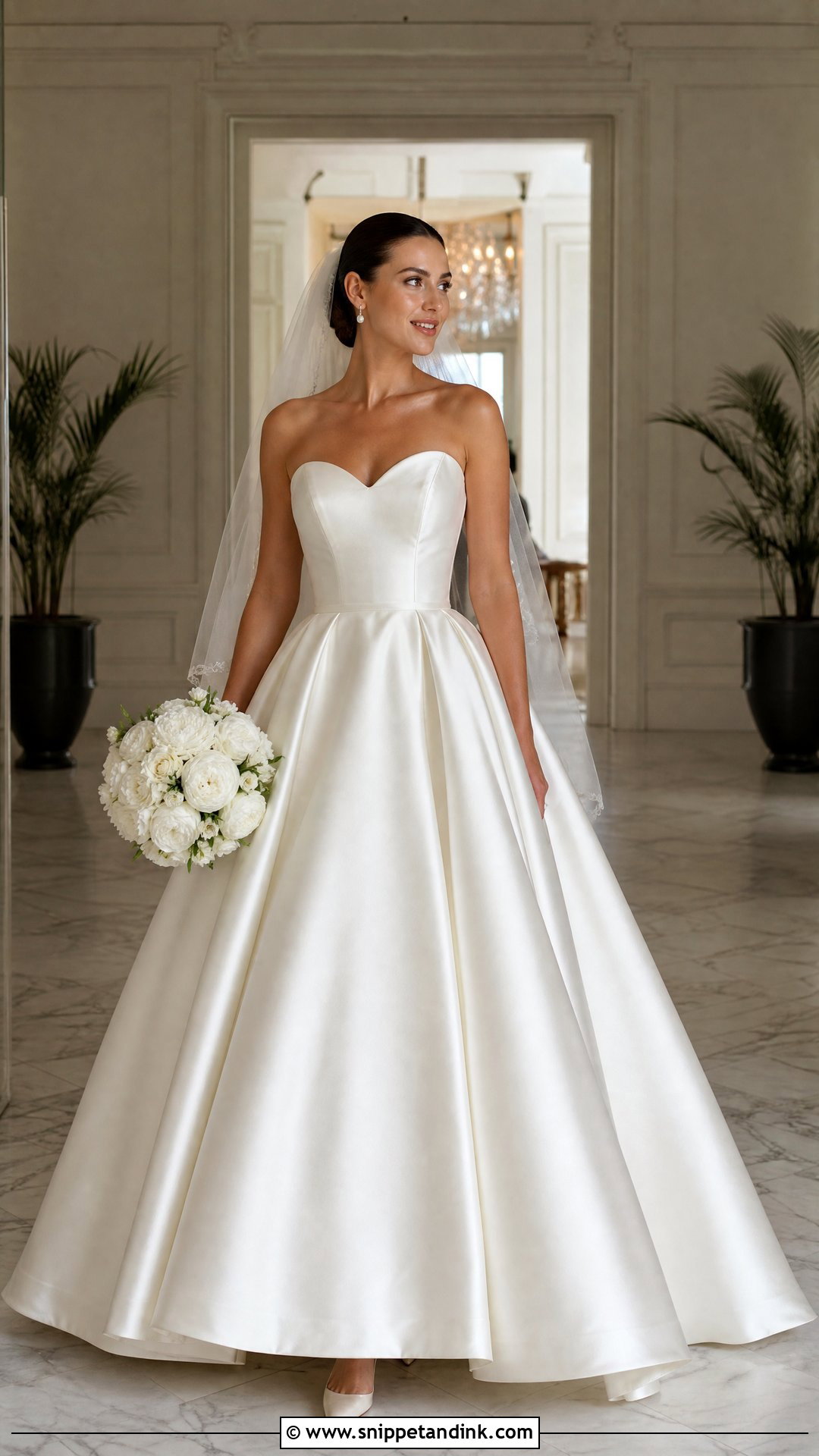
Satin and a sweetheart neckline are the most classic pairing a princess gown can have. The curve frames the collarbone, the fitted bodice sets the waist, and the skirt opens out from there. Weight is the decision to make. Proper duchess satin is heavy and rich and holds a skirt out on its own, while a lighter satin moves more easily and is kinder in summer heat. Covered buttons down the back add tradition without clutter. Pearl drops, a fingertip veil, pointed pumps and a compact white bouquet are all it needs. The fabric glows already, so keep any embellishment fine, and don’t skimp on internal boning or hemming; satin shows every sag.
2. Long Sleeve Lace Princess Wedding Dress
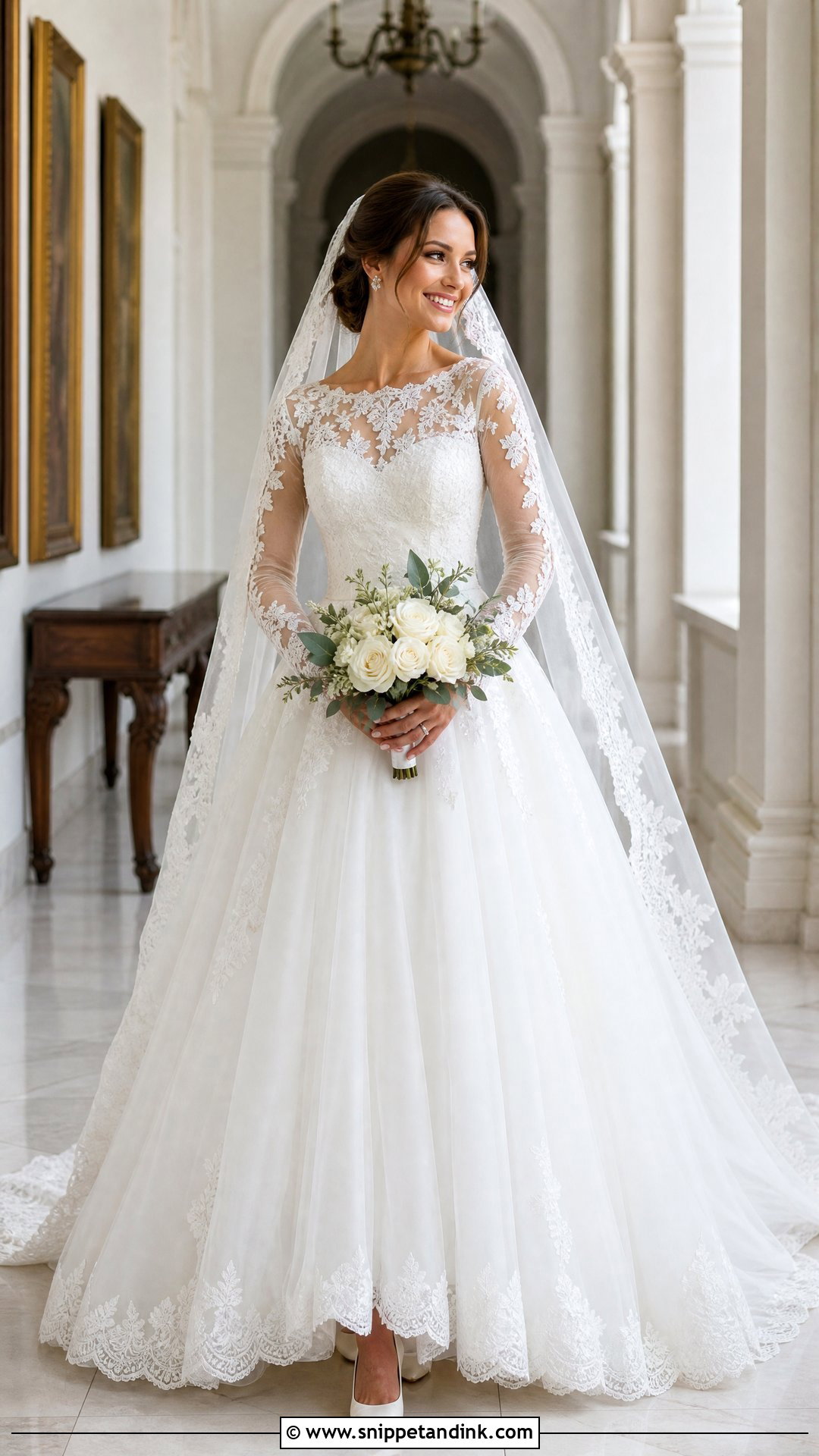
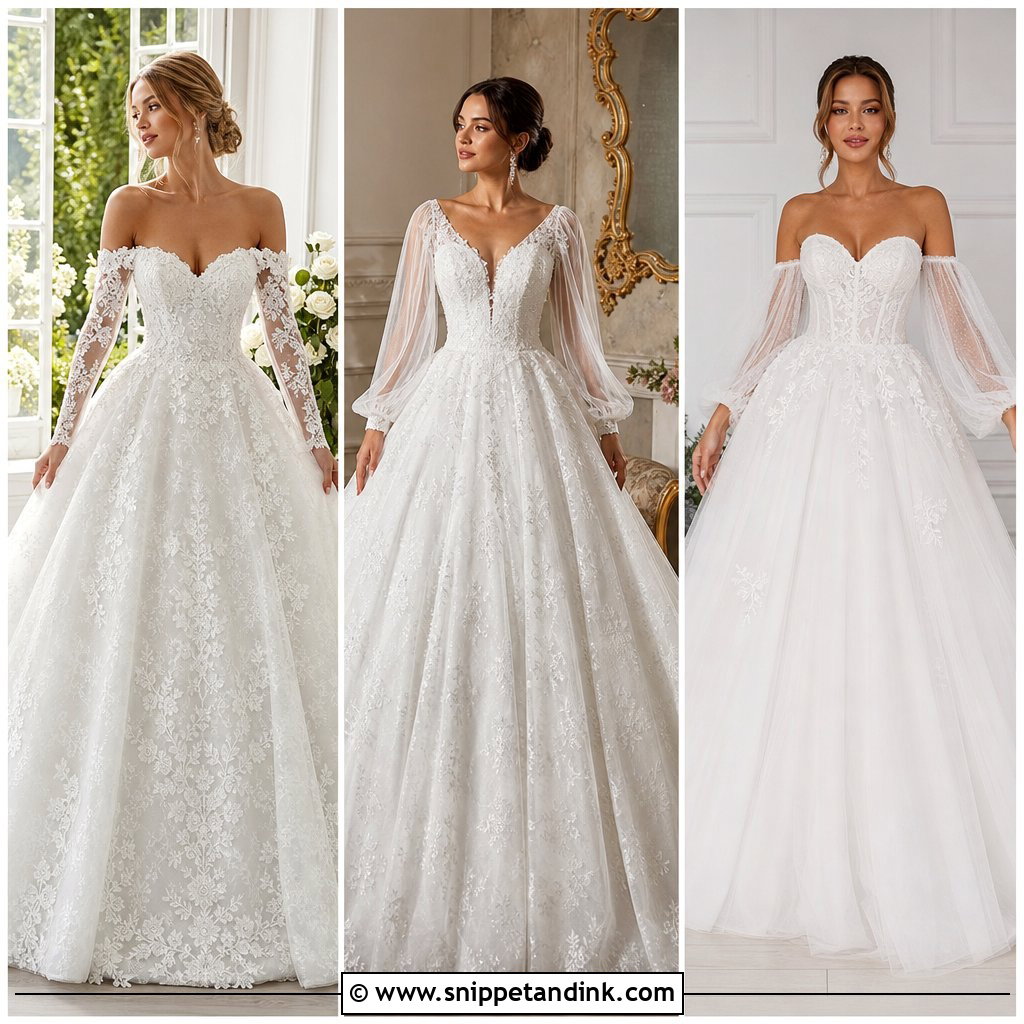
Long lace sleeves balance a full skirt by adding detail up top, and they give coverage without weight. The best versions carry the floral appliqués from the bodice down into the layered tulle, so the dress reads as one piece rather than a lace top on a tulle skirt. Scalloped cuffs or covered buttons at the wrist draw the eye to your hands, which is lovely during the ring exchange. Before alterations are finished, I have brides reach forward as if hugging someone. Lace sleeves have very little give, and a sleeve that’s tight across the back of the arm tears at the seam. A low bun, crystal studs, closed-toe heels and a cathedral veil with matching lace edging finish it.
3. Off Shoulder Princess Wedding Dress
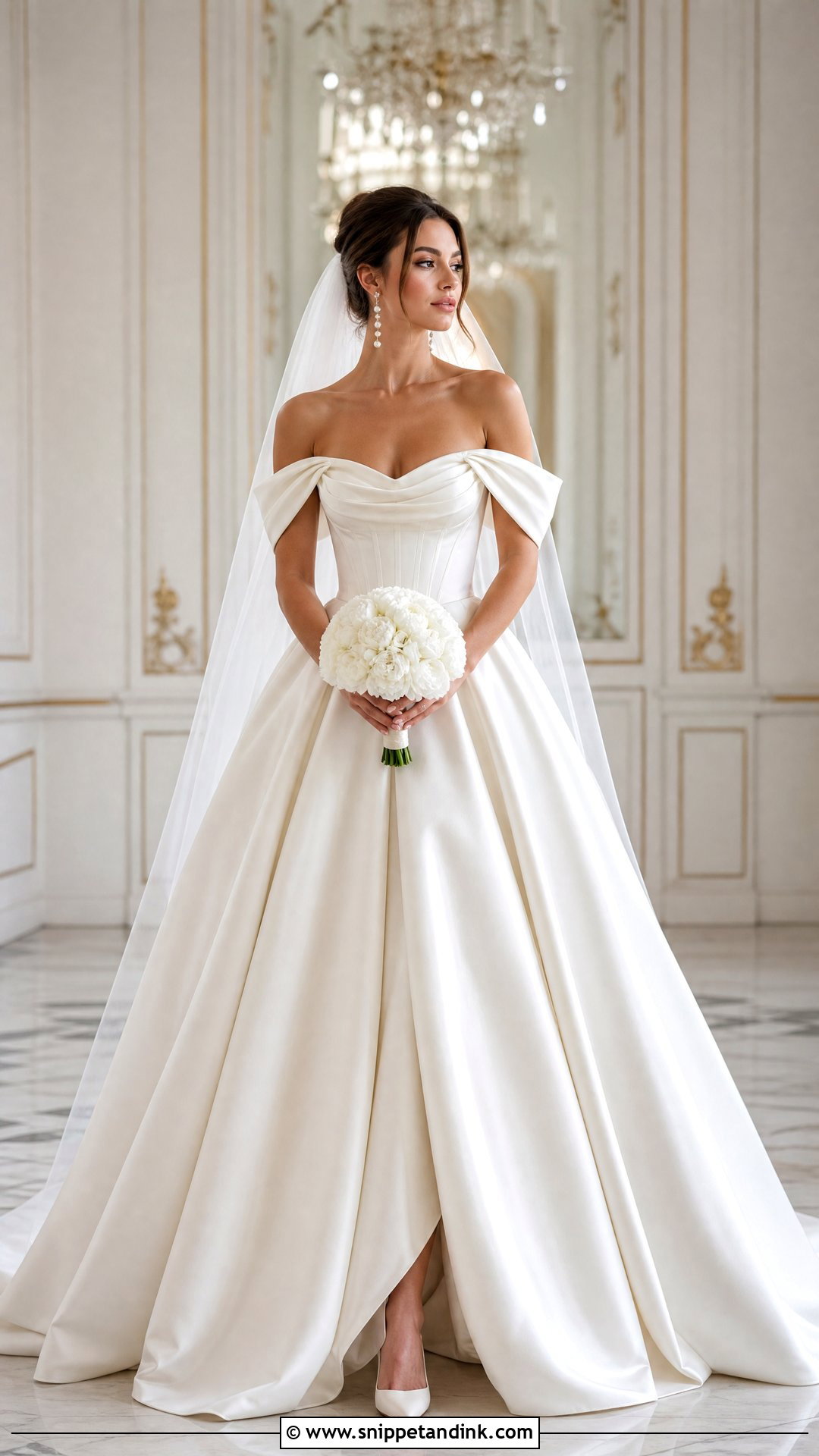
The off-shoulder neckline opens the collarbone and suits a ball gown’s scale. Draped satin bands look formal; lace or tulle sleeves look softer. The common complaint is the neckline slipping when you move your arms, and the fix is inside the dress: a structured corset with a waist stay, so the bodice is anchored at the waist and not hanging from the arms. Practise lifting your arms, sitting and walking at each fitting. A polished updo, a delicate necklace, pearl earrings and ivory heels suit it, and a long plain veil keeps the focus on detailed sleeves.
4. Corset Princess Wedding Dress
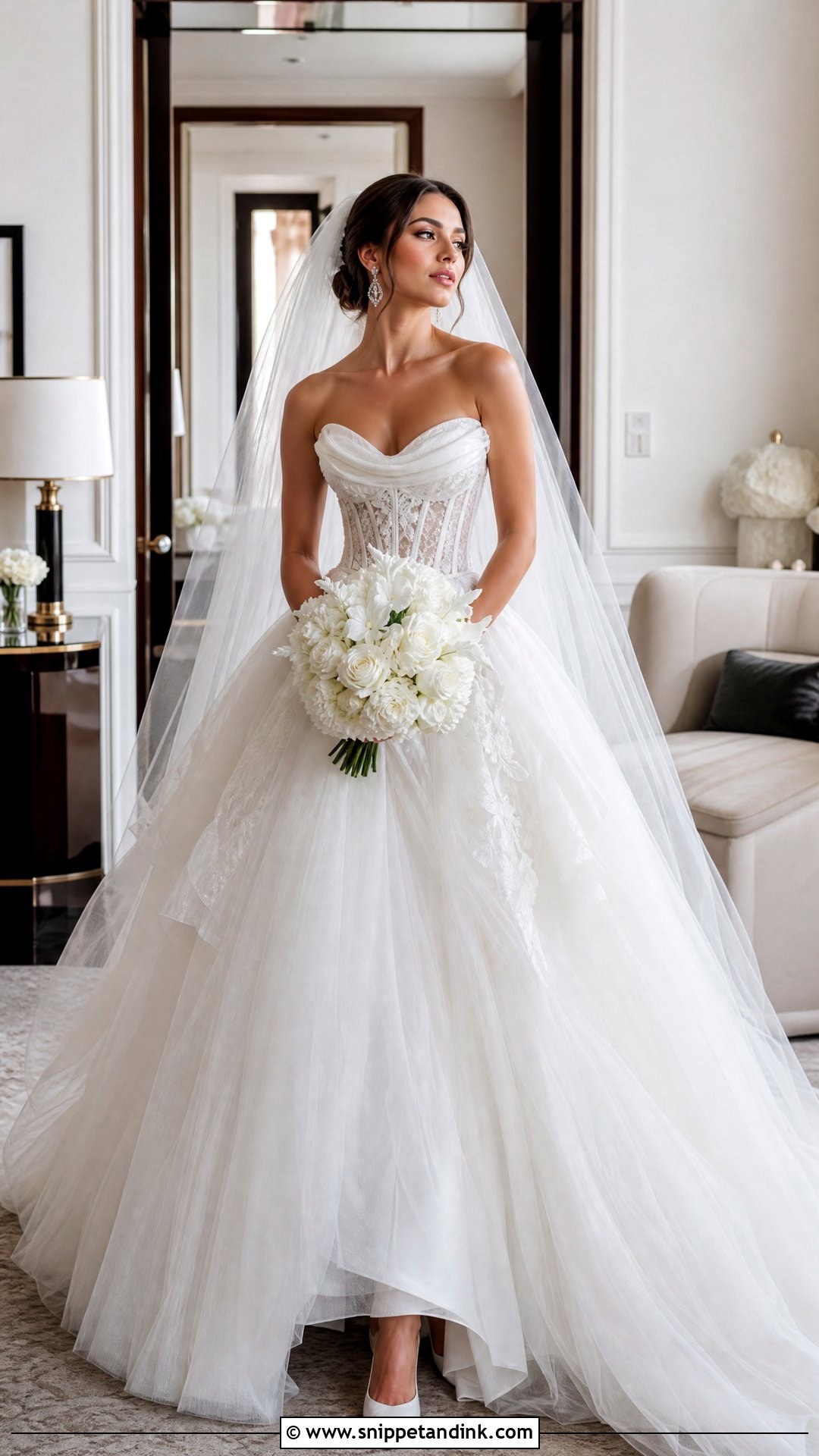
Visible boning gives a corset gown strong vertical lines and the classic storybook shape below. Floral lace or embroidered tulle over the corset makes it romantic; smooth satin with a draped neckline makes it minimal. A lace-up back gives you some room to adjust; a hidden zip looks cleaner but has no give. Here is how I judge the fit: the corset should hold up the weight of the skirt through structure, not tightness. If you can’t take a full breath sitting down, it’s too small. A cathedral veil, crystal earrings, pointed pumps and a structured white bouquet complete it.
5. Basque Waist Princess Wedding Dress
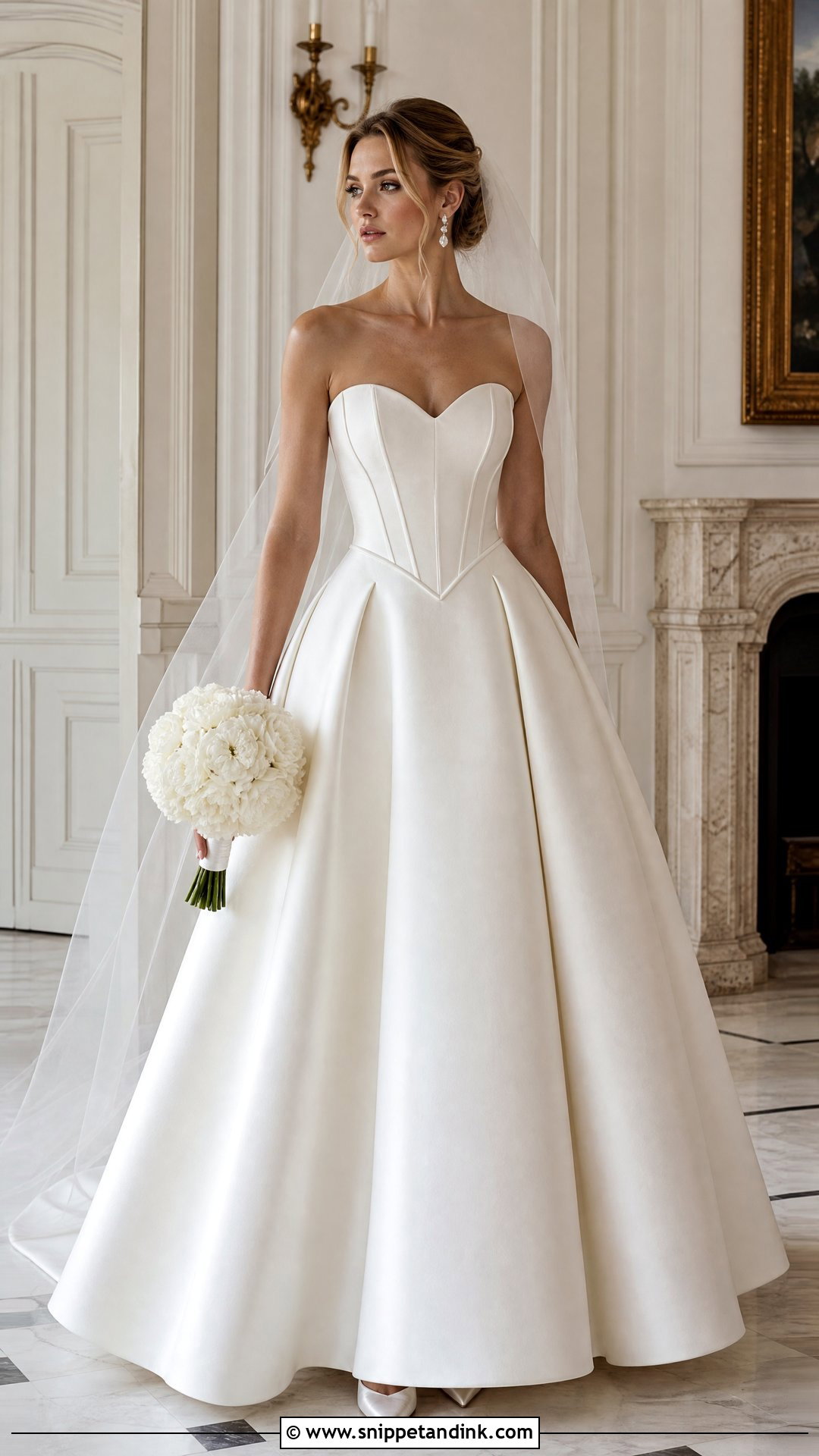
A Basque waist dips into a deep V below the natural waistline, which lengthens the torso and gives a princess wedding dress a sculpted, slightly historical feel. Mikado and satin show the point most clearly; layered tulle softens it, and lace appliqués over the point soften it further. Designers often combine it with corsetry and detachable overskirts too. The fit issue I see most is the point lifting or folding when you sit. Test it seated, and at the edge of a chair, at every alteration appointment. A simple veil, drop earrings, satin heels and a round bouquet keep it uncluttered.
6. Square Neck Princess Wedding Dress
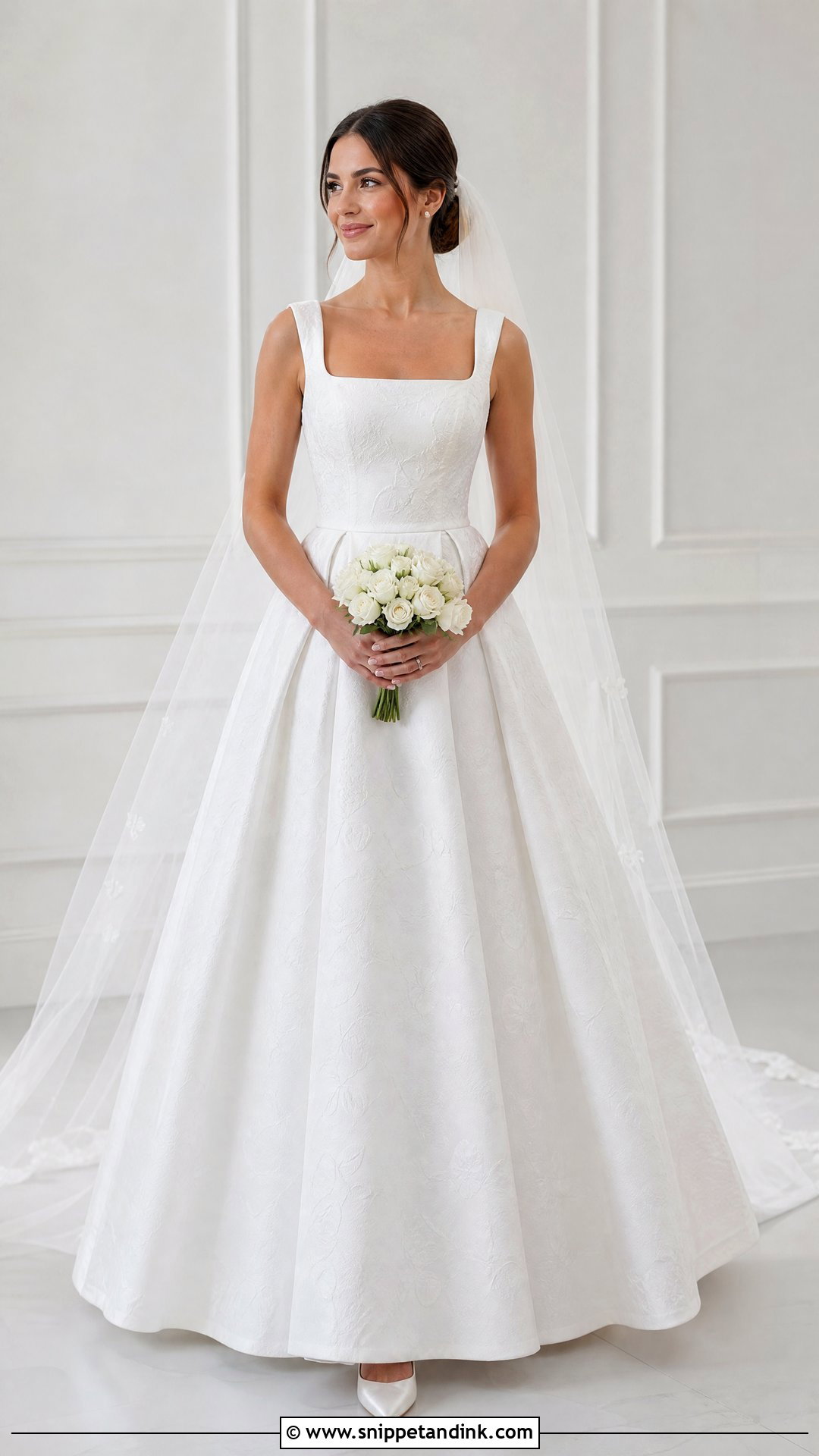
A square neckline looks modern even on a traditional ball gown, because the straight lines contrast with the round skirt. Wide straps give dependable support and cover a bra strap; narrow ones look lighter. Smooth Mikado gives the sharpest outline, and floral jacquard adds texture without lace. I’d style it with a low chignon, small pearl earrings and no necklace, then a chapel veil, satin pumps and a simple bouquet. The thing to check is the corners: they should lie flat against your chest from the front and the side, without gaping or pressing into the arm.
7. Strapless Mikado Princess Wedding Dress
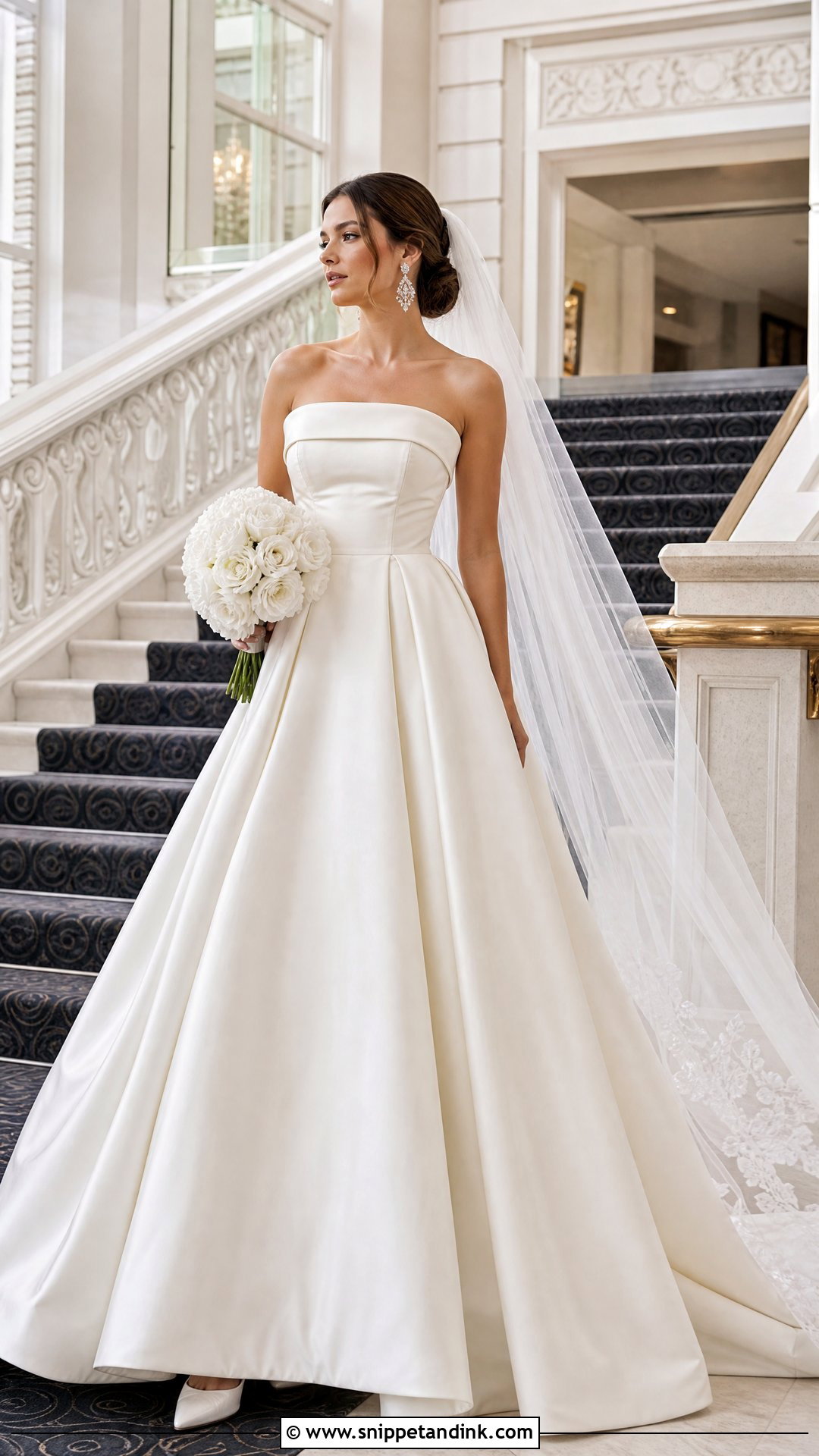
Mikado is a stiff, heavy silk-blend weave that holds pleats and supports a wide skirt without many petticoats. It photographs with a soft sheen rather than shine, which is why it suits a strapless princess gown so well. A straight neckline is the minimal choice, a shallow sweetheart is softer, and a fold-over cuff or waist pleats add interest. Strapless gowns stay up because of what you can’t see: boning, grip tape along the top edge and a waist stay fitted snugly to your waist. Ask about all three. A long sheer veil, statement earrings and ivory pumps finish it, with no necklace if the neckline is sculptural.
8. Floral Applique Princess Wedding Dress
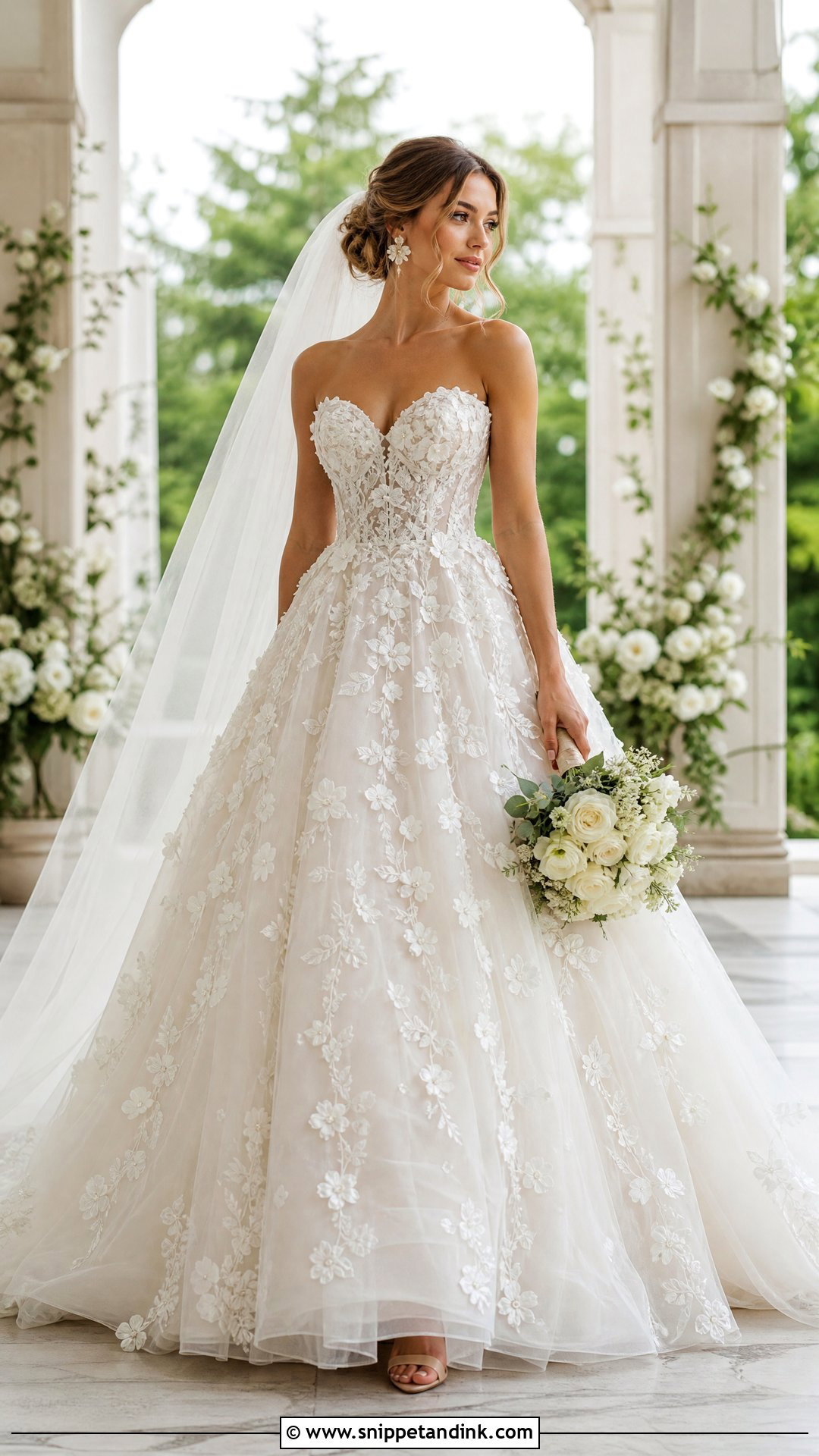
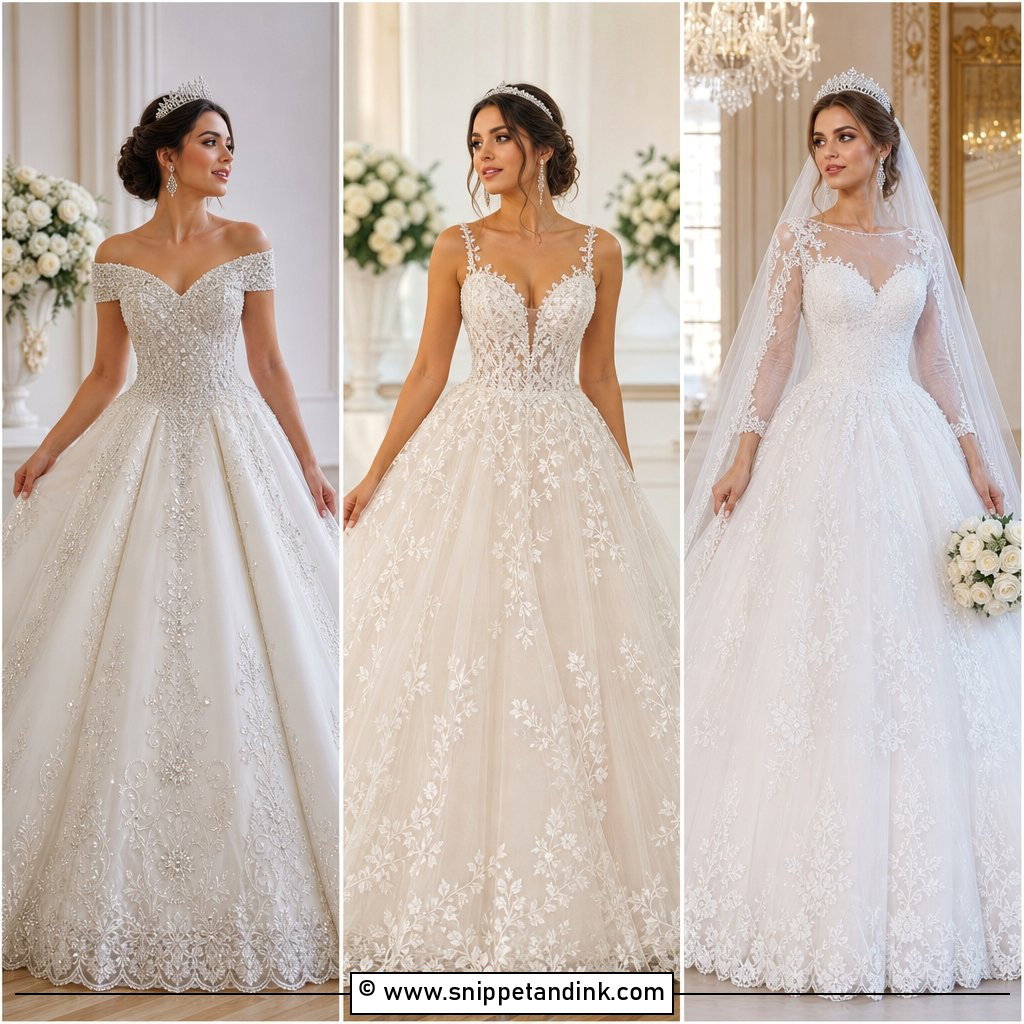
Appliqué flowers can cover the bodice, scatter down the skirt or frame the train. Flat lace appliqués look classic; three-dimensional petals look whimsical but snag on tulle veils, so test the veil over them. Scale matters more than people think. On a petite frame, large motifs overwhelm, while tiny ones disappear on a very tall bride. I look closely at the side seams and the hem at fittings, because alterations can cut through a motif and break the pattern; a skilled seamstress will lift and re-stitch appliqués over the new seam. A plain tulle veil, floral-inspired earrings, neutral heels and a soft bouquet finish it.
9. Sparkle Tulle Princess Wedding Dress
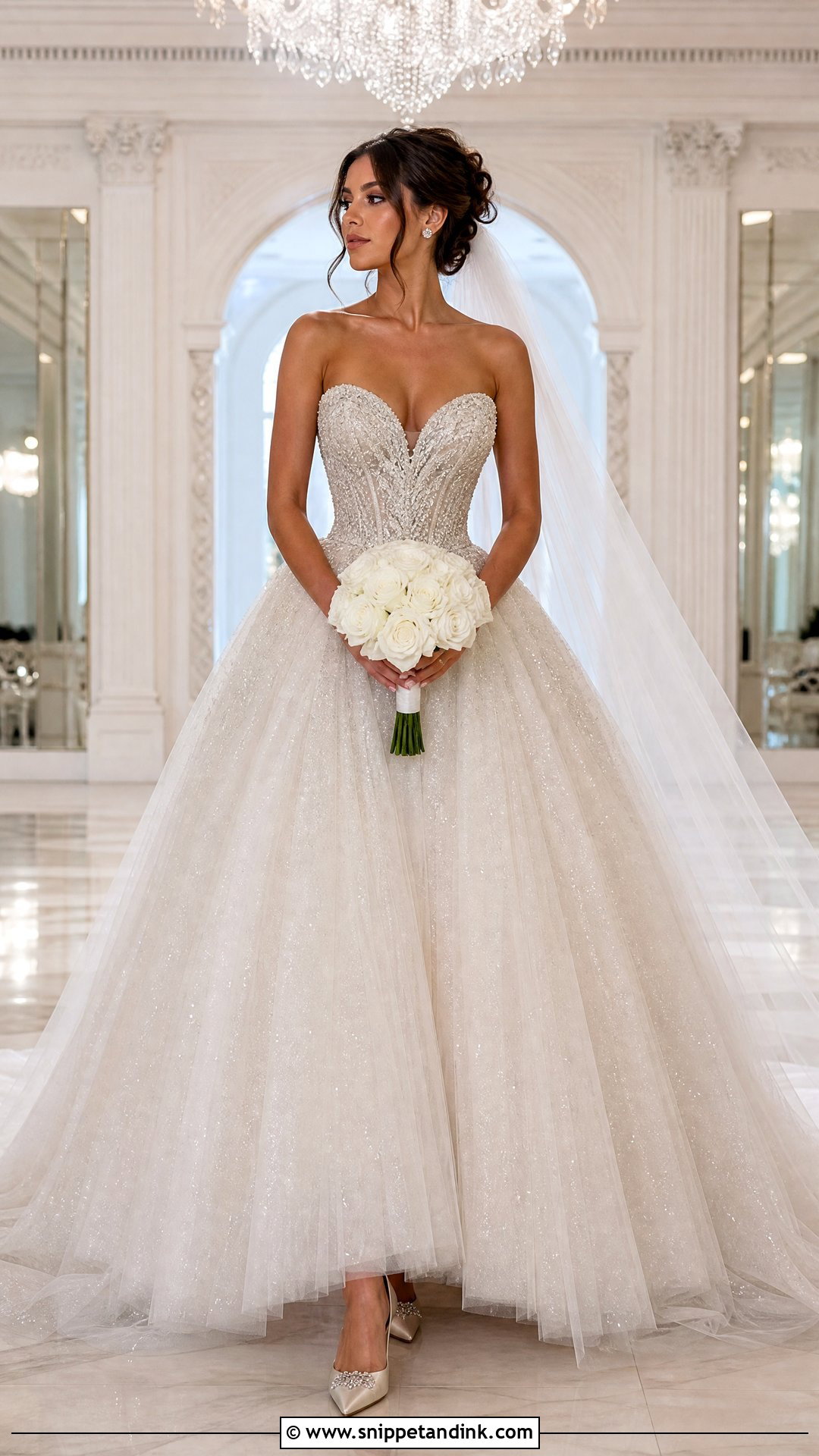
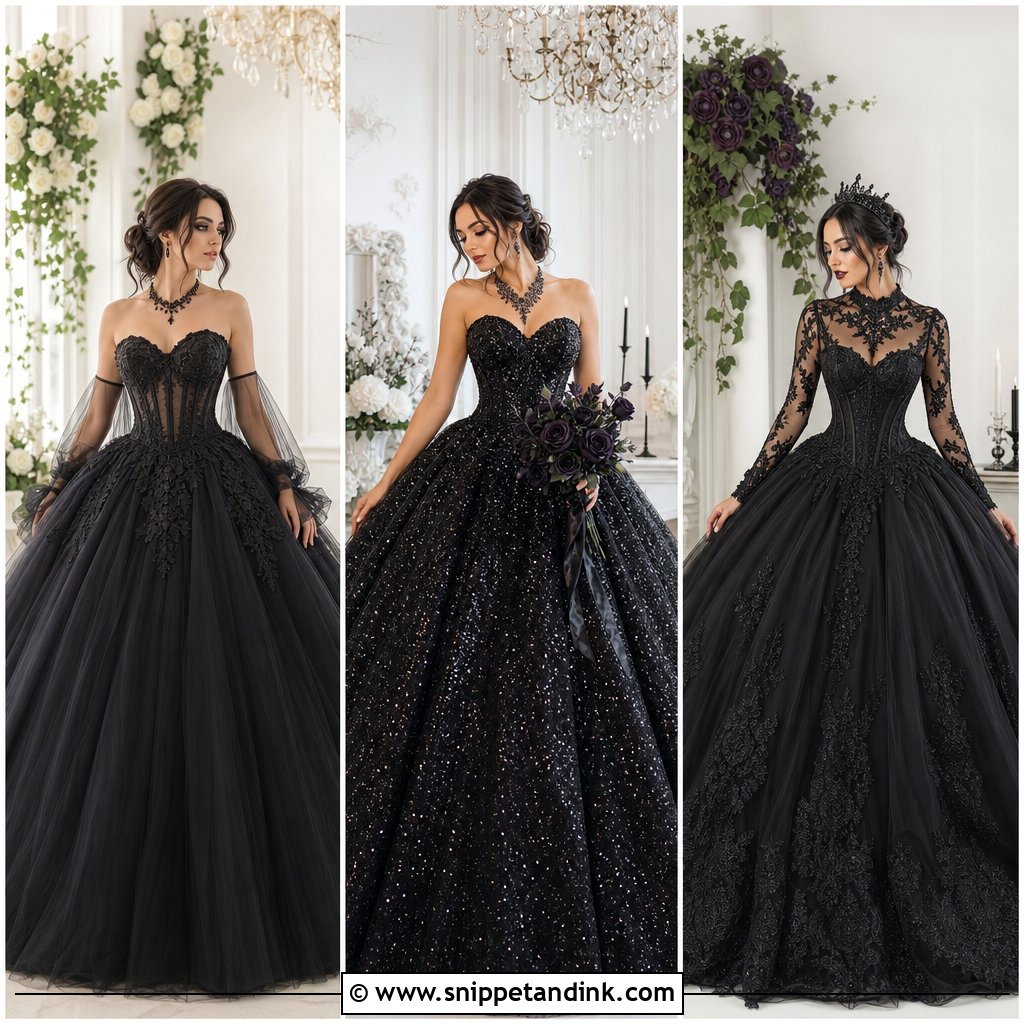
Pick one kind of sparkle. Fine glitter tulle, crystal embroidery and scattered sequins each look elegant alone and chaotic together. A fitted bodice and several light skirt layers give the shape and let the shine move. Sparkle often looks stronger in person than in photos, and different again under evening lighting, so see the gown in daylight and indoors before deciding. Glitter tulle can also shed onto a dark suit or a bridesmaid’s dress, so rub a corner against dark fabric in the shop. Crystal studs, a plain veil, metallic ivory heels and a simple bouquet complete it.
10. High Neck Princess Wedding Dress
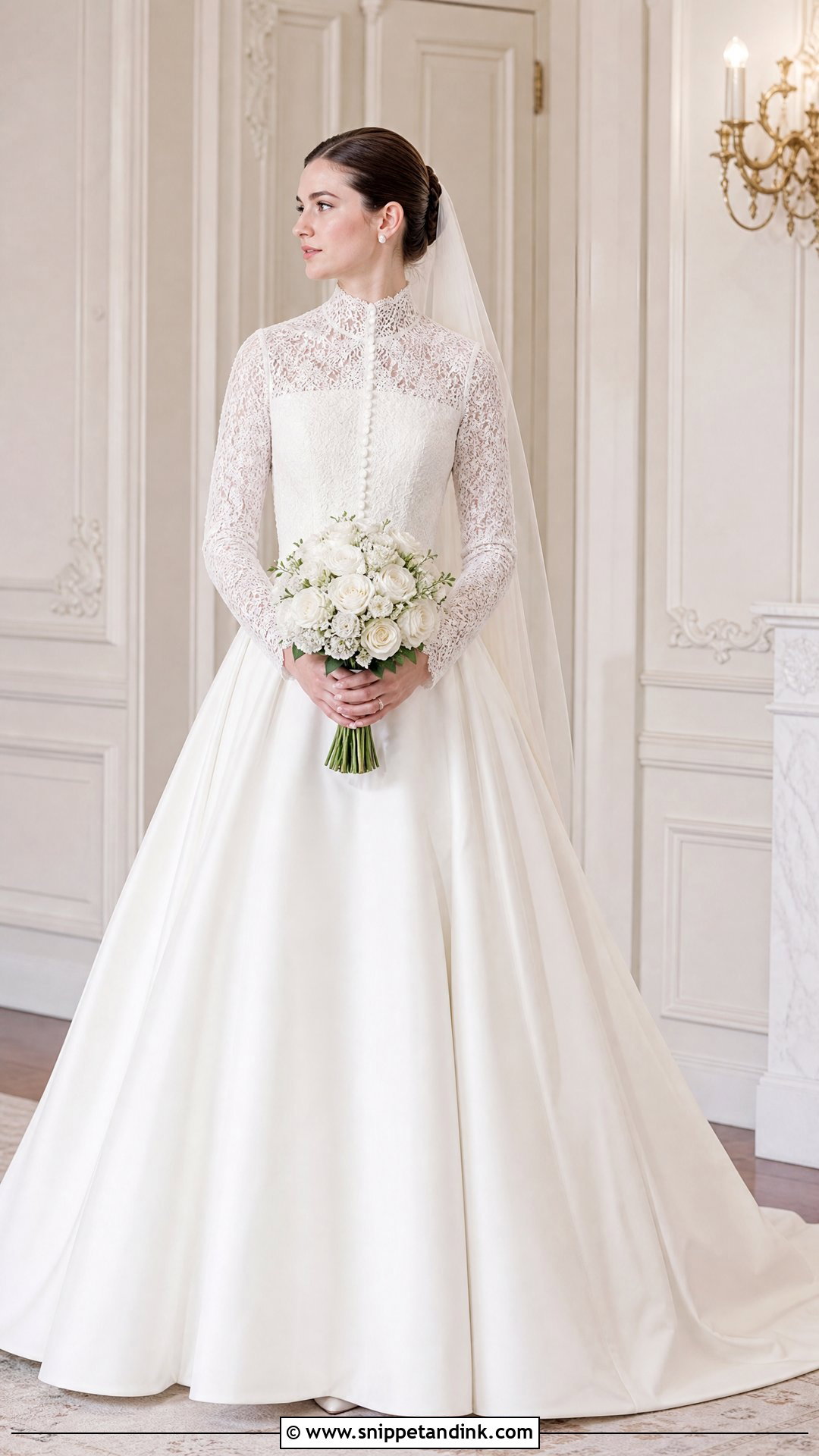
A high neckline gives coverage and a formal profile, and it’s especially flattering in side shots. Sheer lace at the neck is softer; an opaque satin or crepe bodice looks cleaner. The collar should never rub or fold when you turn your head, and a soft inner finish makes a real difference over a long day. Covered buttons, light embroidery or a keyhole back give interest from behind. Skip the necklace. Wear a sleek bun, small earrings and closed-toe shoes, and attach the veil below the bun so it doesn’t fight the collar.
11. V Neck Princess Wedding Dress
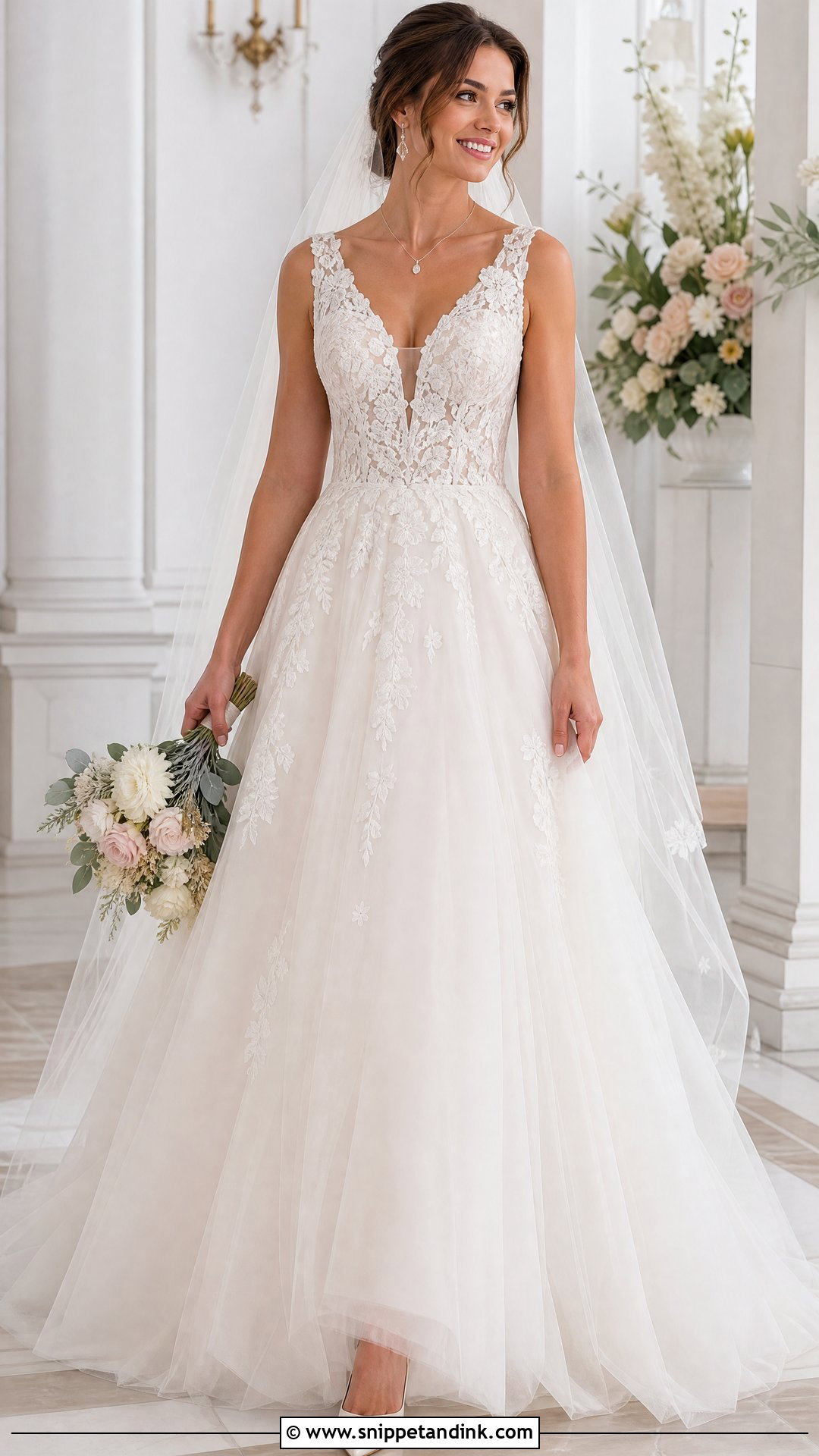
A V neck lightens the top half of a big gown and makes the torso look longer. A narrow V feels supportive; a deep one is bolder, and an illusion insert keeps it secure without breaking the line. Wide lace straps add coverage. Continue lace into the skirt for romance, or pair a clean V with smooth satin. If you wear a pendant, it should end above the lowest point of the V; a chain that runs into the neckline looks accidental. Drop earrings, a chapel veil and pointed pumps finish it. At alterations, sit and lean forward to make sure the bodice stays flat.
12. Cap Sleeve Princess Wedding Dress
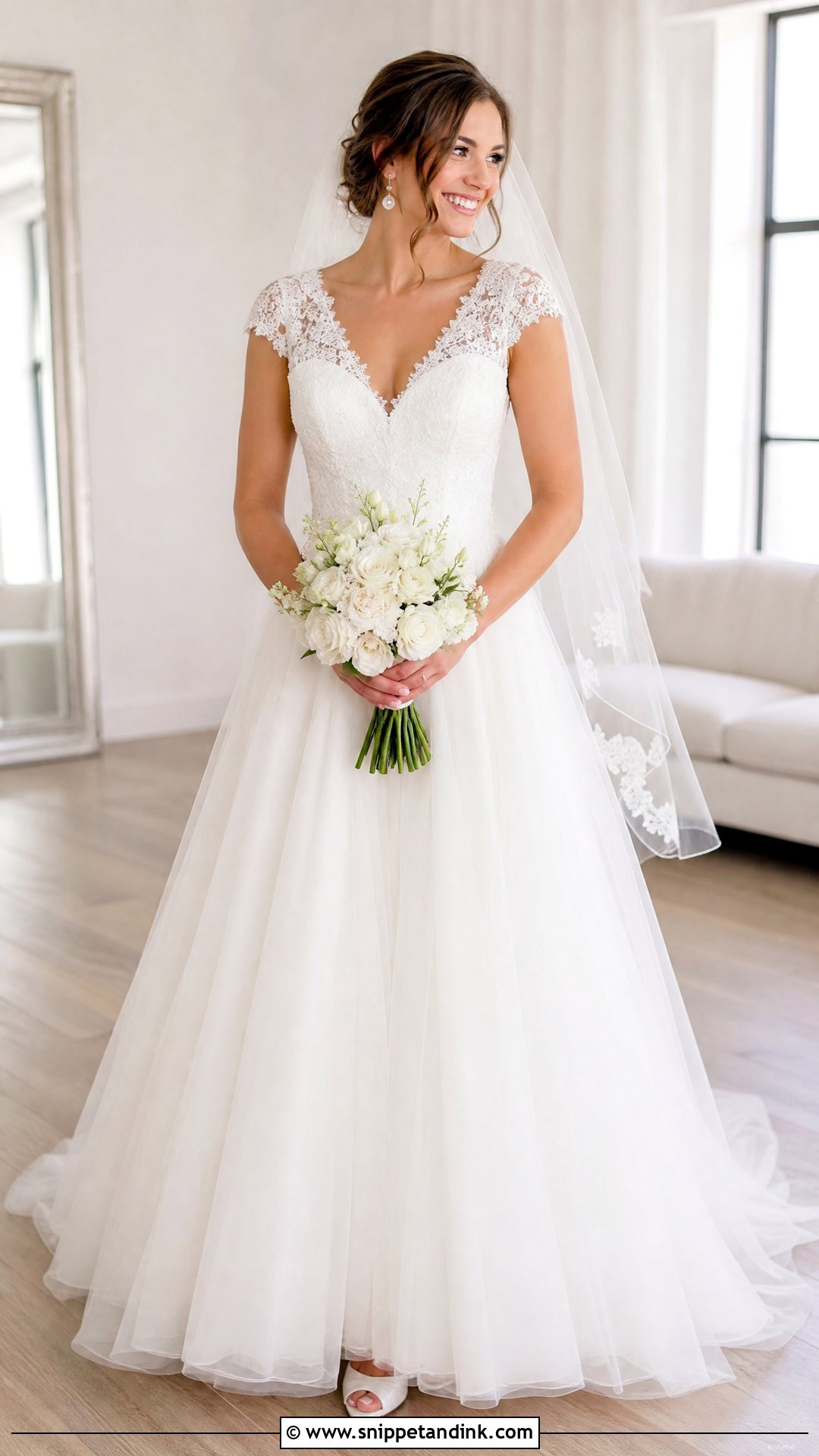
Cap sleeves sit just over the top of the shoulder, so they frame it without covering the arm. Lace caps feel romantic; smooth satin caps look tailored. They work with a scoop, bateau or shallow V neckline over a natural waist and a flowing tulle skirt. The armhole is my main concern here. Tight cap sleeves cut into the arm and restrict movement, and a good seamstress can reshape the opening without changing the look. Pearl earrings, a soft updo, low ivory heels and a fingertip veil suit it. One floral element from the sleeve repeated on the veil edge ties them together.
13. Jacquard Princess Wedding Dress
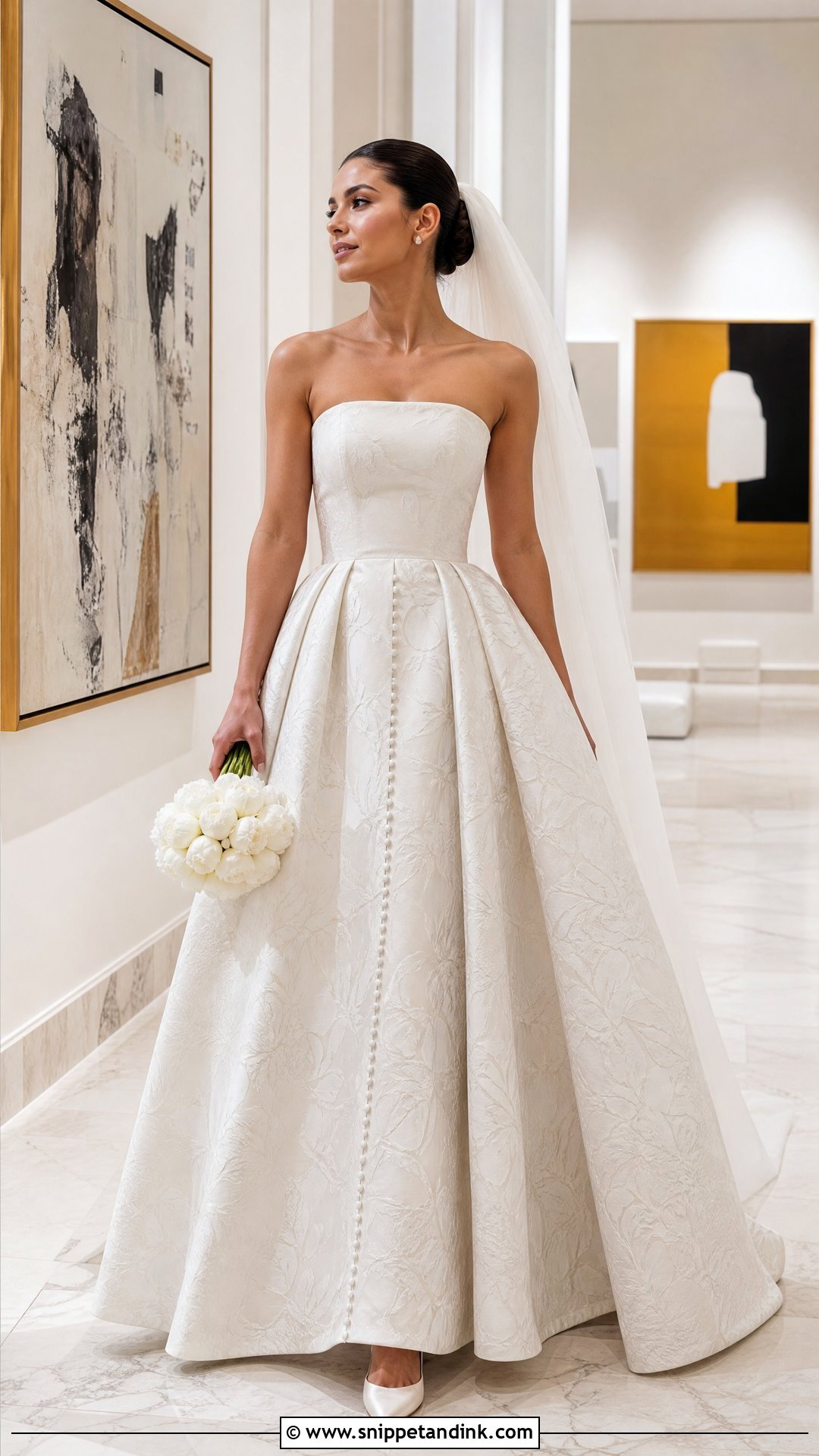
Want texture without lace, glitter or beadwork? A jacquard princess wedding dress has its pattern woven into the fabric, so it’s subtle and catches light only as you move. Floral jacquard is romantic, geometric motifs sharper. The fabric has body, so it holds box pleats and suits a strapless neckline. Pattern placement is what makes it look expensive: a large motif should sit centred on the bodice, not sliced by a seam at the waist. Check that before alterations start. Pearl studs, a plain veil, satin pumps and a compact bouquet are enough, with a back bow or covered buttons for detail.
14. Detachable Sleeve Princess Wedding Dress
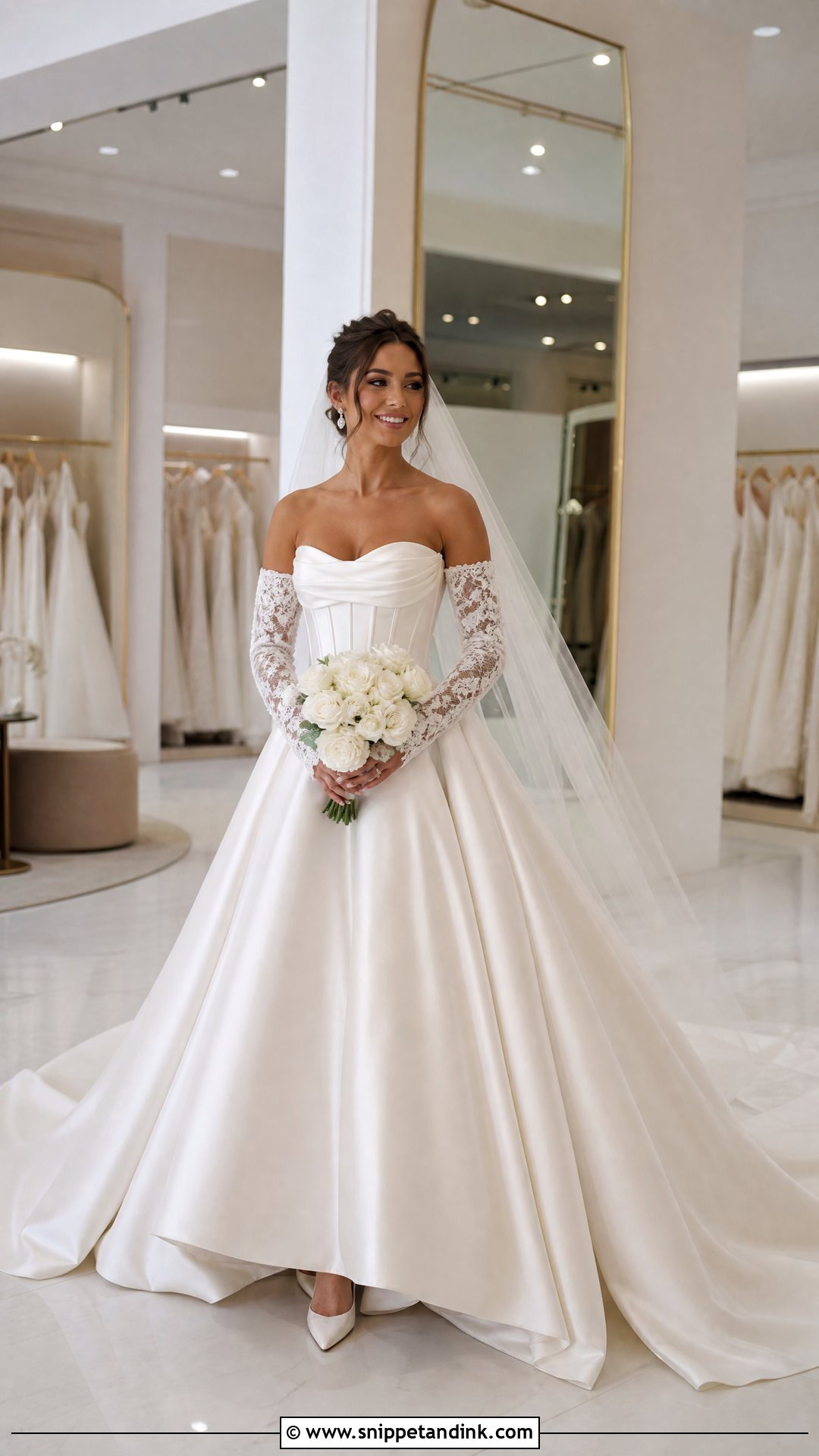
Detachable sleeves give you a ceremony look and an evening look in one gown. Fitted lace sleeves come off to reveal a strapless or sleeveless bodice; draped off-shoulder sleeves feel romantic, puff sleeves playful. The attachment points need to be discreet and comfortable; hooks that press into your skin will bother you during the vows. Swap the long veil for a smaller hairpiece or bolder earrings when the sleeves come off so the change is visible. Practise attaching and removing them, assign one person to help and keep a labelled garment bag ready for them.


15. Beaded Bodice Princess Wedding Dress
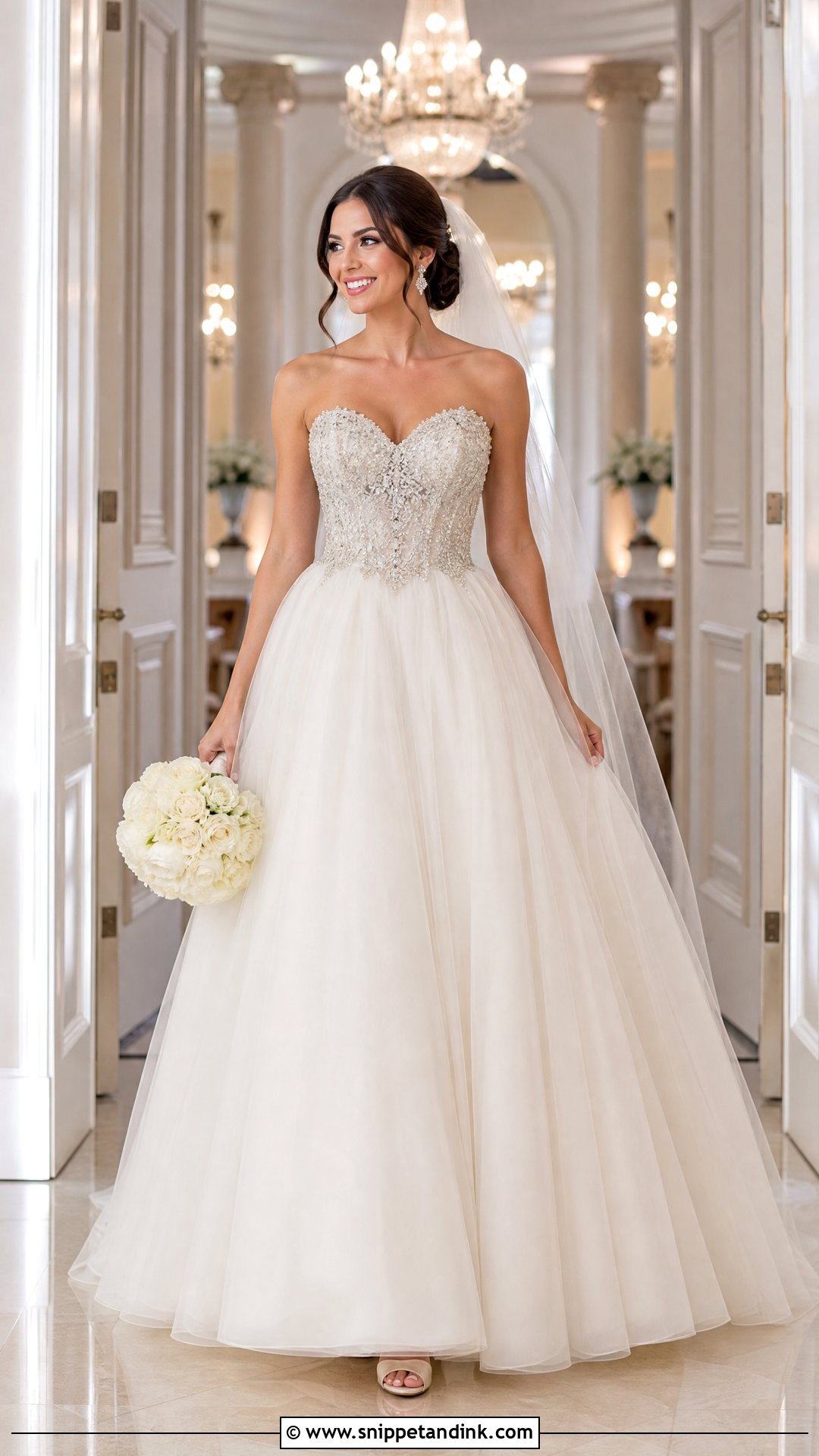
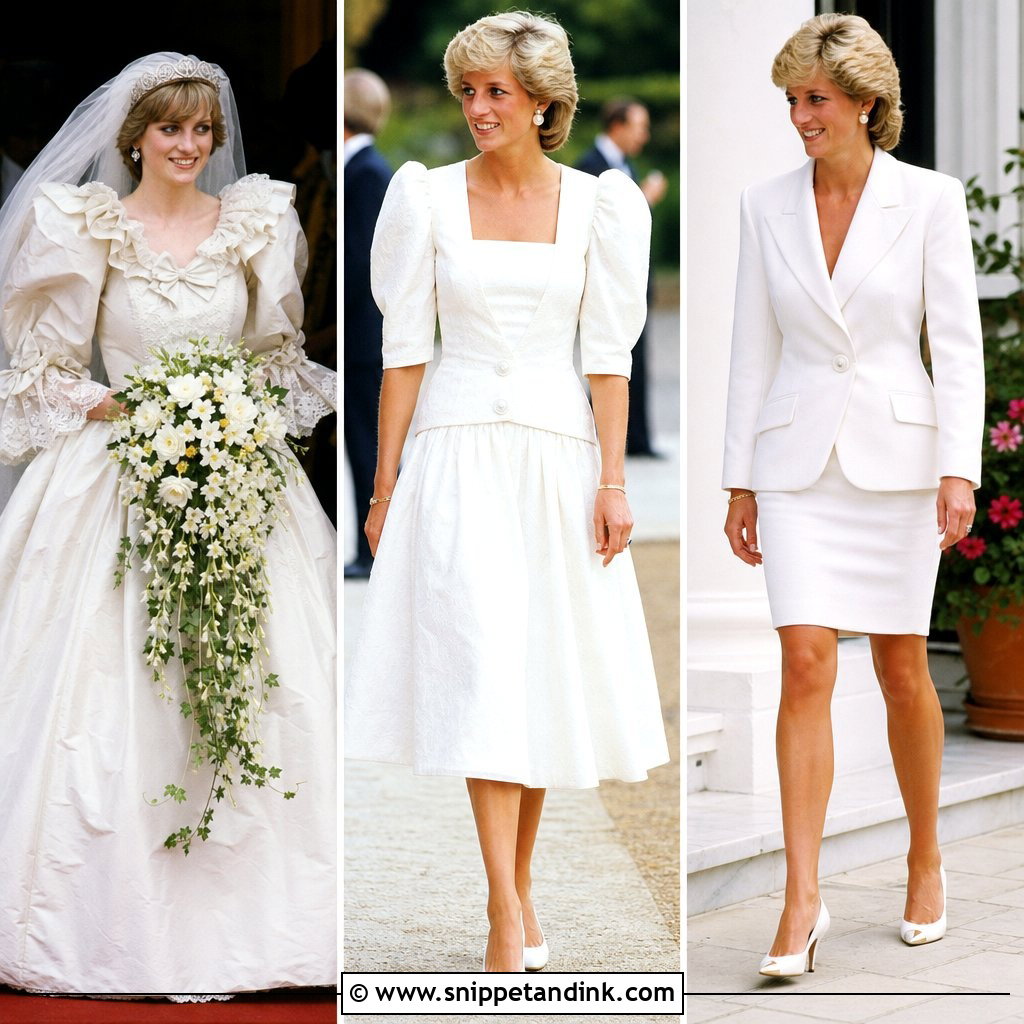
Pearls on the bodice look soft and classic, crystals brighter, tonal beads textured without contrast. Whichever you choose, keep the skirt plain tulle or satin so the bodice is the clear focus, and keep the bouquet free of jewels. Run your hands over the bodice before buying. Rough edges and loose beads are common on hand-beaded work, and the lining should sit between the beads and your skin. Check the inside of the arms too. A curved neckline, defined waist, simple earrings, a plain veil and comfortable ivory heels complete it.
16. Bow Back Princess Wedding Dress
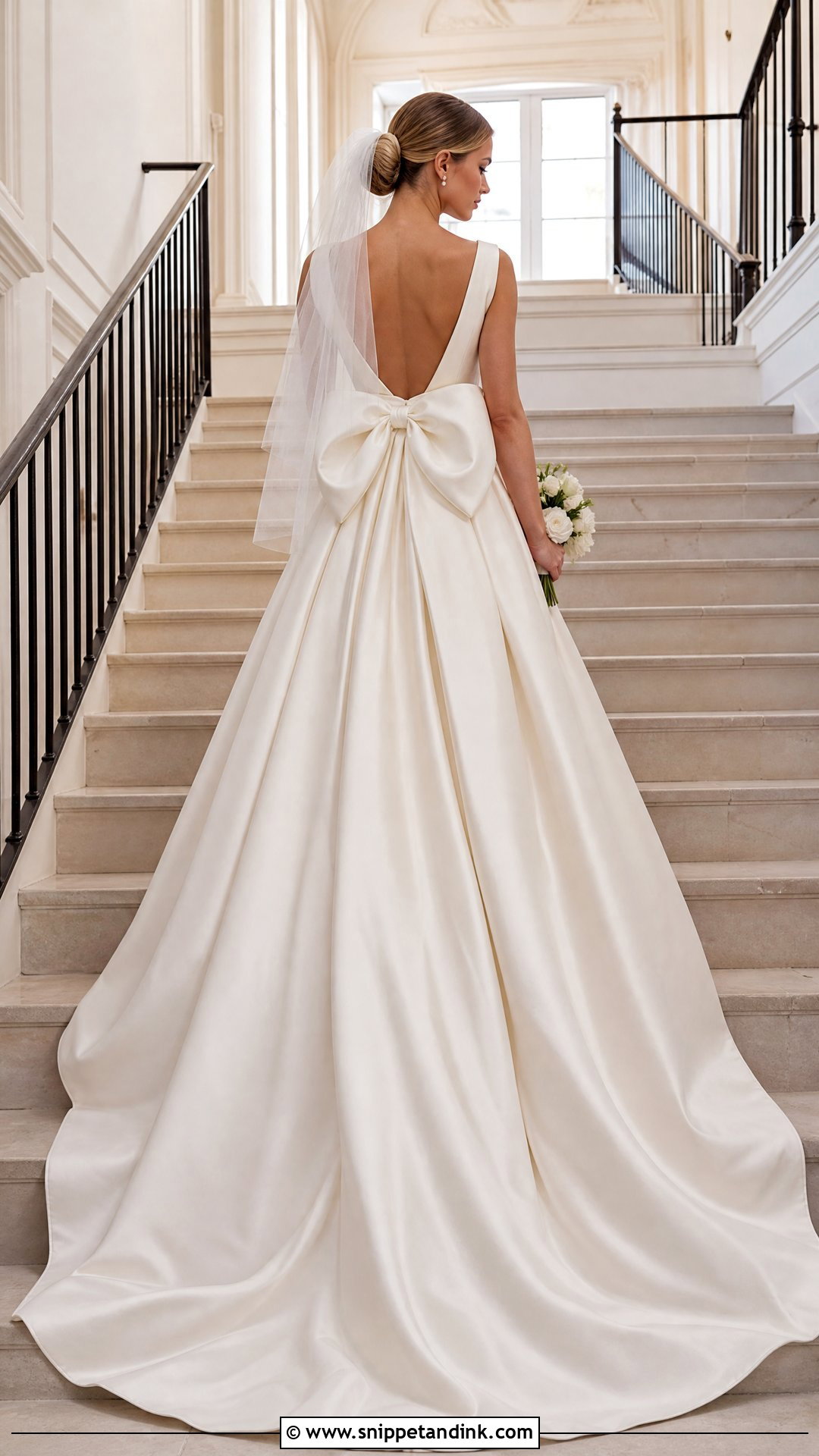
From the front, this gown can look almost plain. Then the bride turns, and there’s a structured bow above the skirt or train. A medium bow is subtle; an oversized one is editorial. Satin and Mikado hold the shape best, because softer fabrics droop by evening. The veil placement matters most here: it should end above the bow or run well past it, never cut across the middle. Ask whether the bow is removable, pre-tied or built in, since that changes how the bustle works and how the gown is stored. Stud earrings, pointed pumps and a clean low bun keep it simple.
17. Pearl Princess Wedding Dress
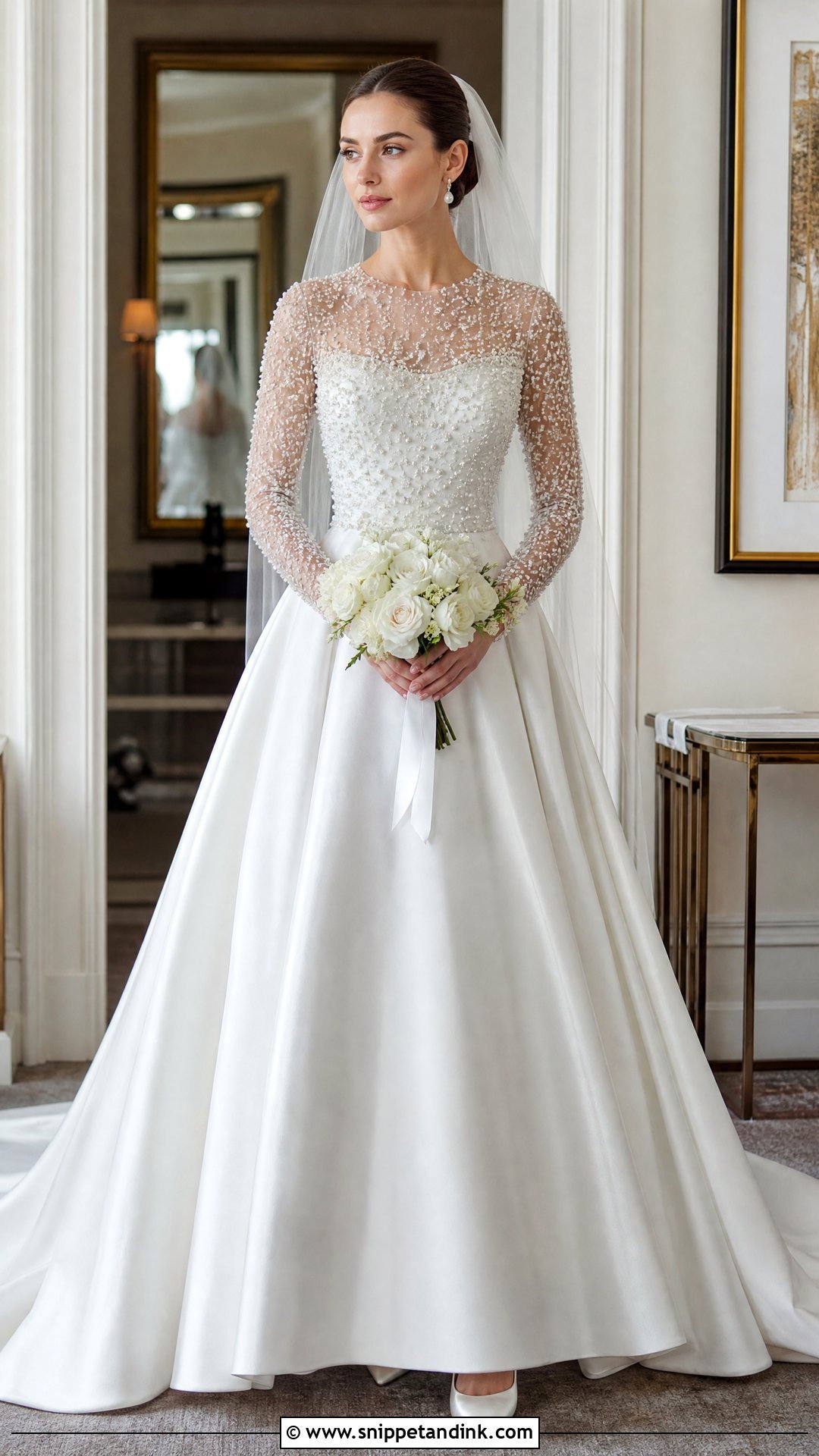
Pearls scattered on sheer sleeves, clustered at the neckline or mixed with lace give a soft glow rather than sparkle. Keep the skirt and accessories uncluttered: plain tulle for movement or smooth satin for formality, pearl studs, a simple veil, satin shoes and a white bouquet with a clean ribbon. Mixing many pearl sizes with crystals and sequins only works when it follows a clear pattern. Ask how the gown should be cleaned. Many pearls are coated, and some cleaning solvents can dull or strip them, so a cleaner who knows bridal work is worth finding.
18. Modest Princess Wedding Dress
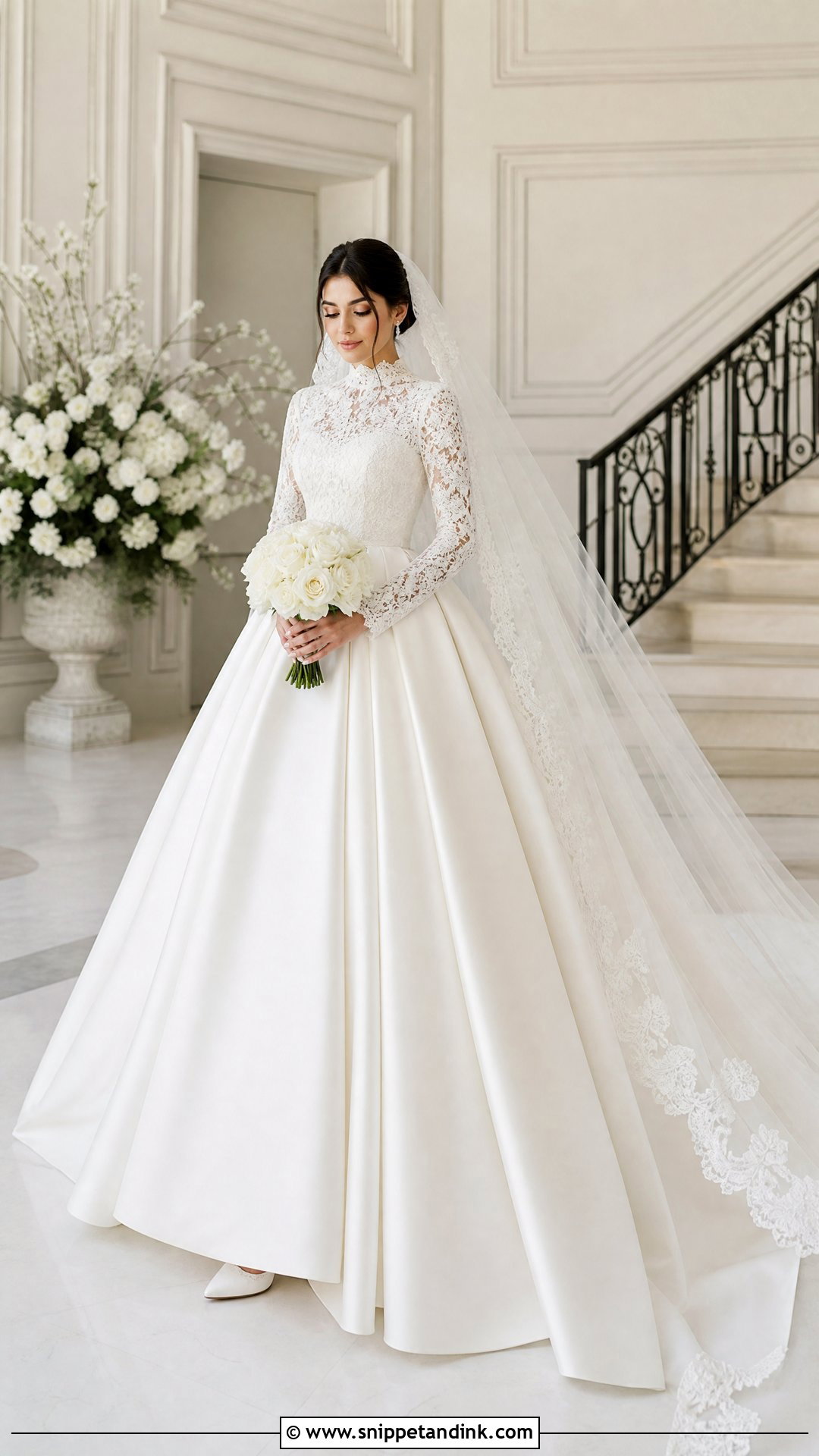
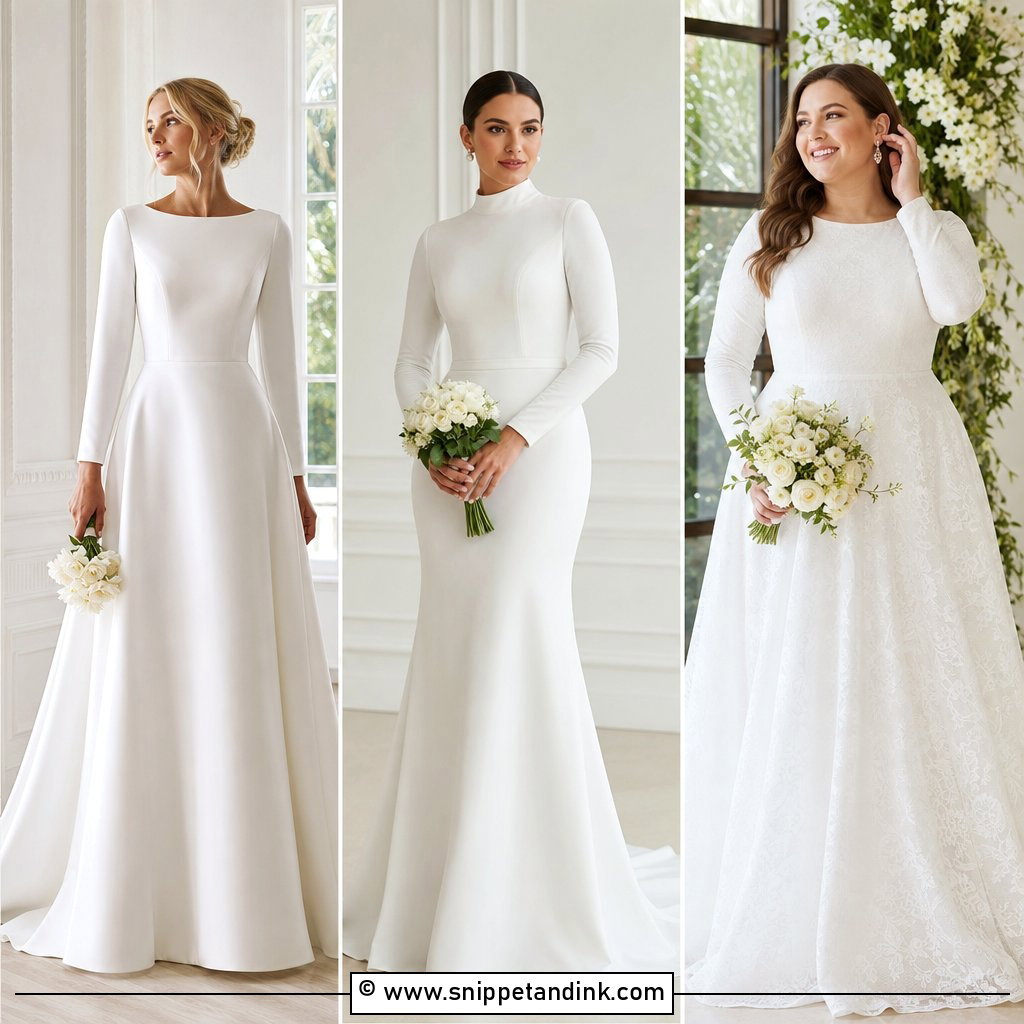
Coverage and lightness can go together. A modest gown with a lined bodice, higher neckline, full back and sleeves that let you move still feels celebratory when the waist is defined and the skirt is well supported. Floral lace keeps it romantic; smooth satin looks regal. Sheer areas can almost always be lined to your preferred coverage, and the lining colour changes the look a lot: white lining under lace looks opaque and bright, nude looks closer to skin, ivory looks warm. Ask to see swatches under the actual lace. A long veil, pearl earrings, closed-toe pumps and a structured bouquet complete it.
19. Blush Princess Wedding Dress
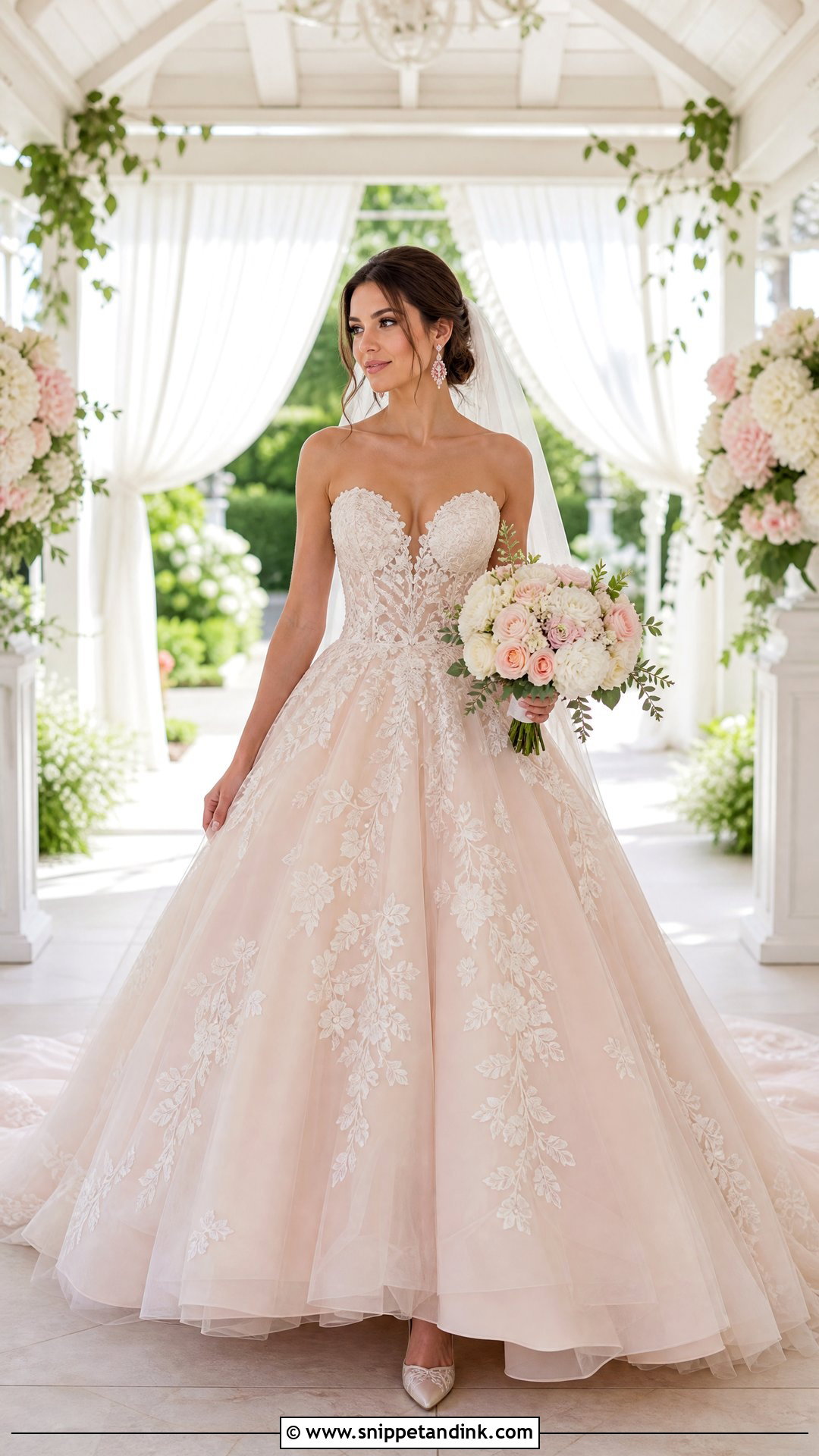
Blush can be subtle or obvious. Pale pink lining under ivory lace adds depth that most guests read as warm white; fully coloured tulle reads clearly pink. Champagne blush suits gold accessories, and cooler rose tones suit silver and pearls. Keep the silhouette classic. I always put the fabric next to the actual veil, because ivory tulle over blush can look mismatched or grey once they’re layered, and check both in daylight and indoor light. Ivory heels, rose-toned earrings, a plain veil and a white-and-pale-pink bouquet finish it.



20. Cathedral Train Princess Wedding Dress
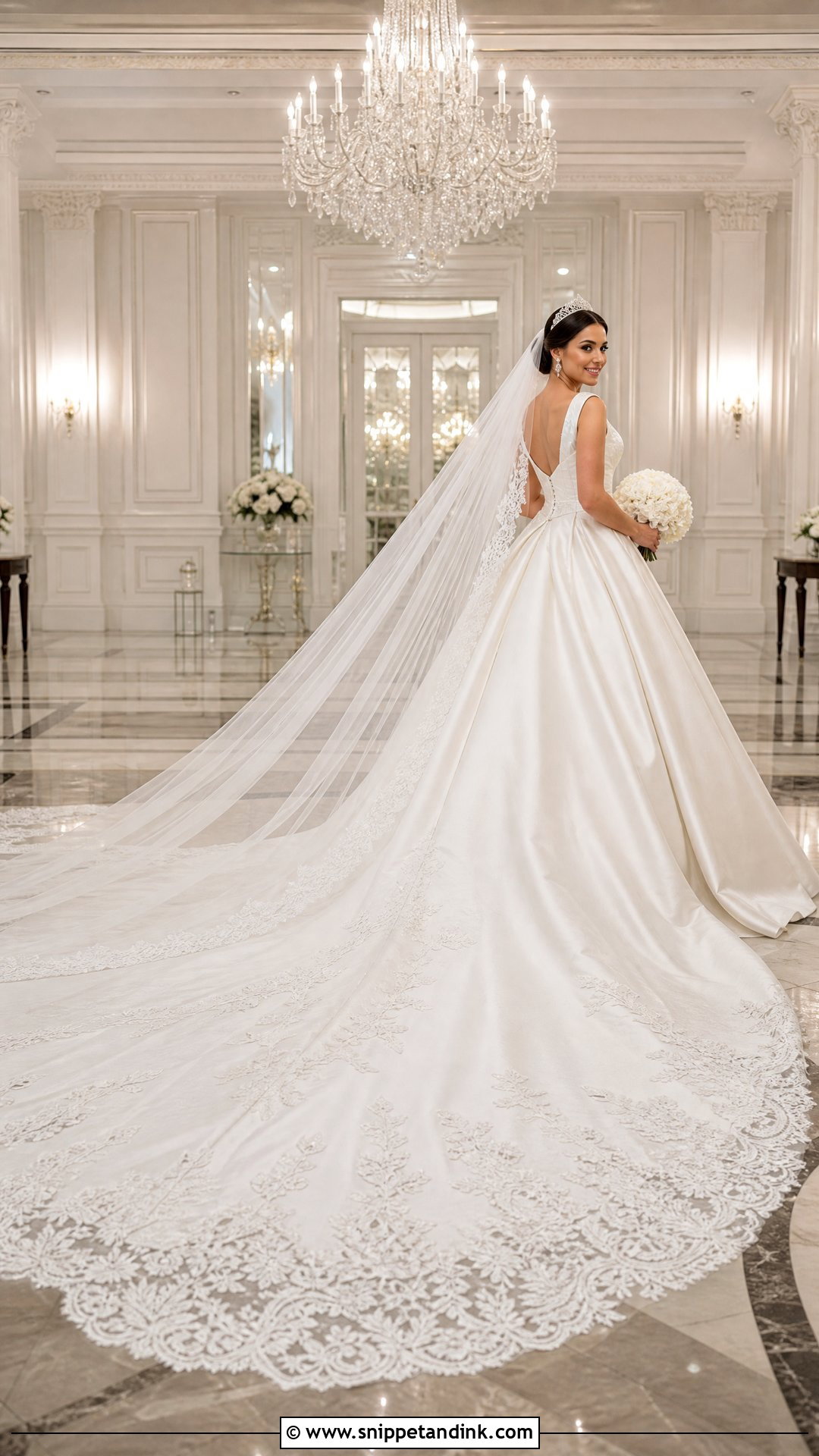
Nothing makes a grand entrance quite like a cathedral train behind a full skirt. It suits big ballrooms, historic estates and long aisles; in a small room, it just bunches. Satin gives a clean sweep, lace or embroidered borders give detail on the floor. Choose a cathedral veil that complements rather than covers the train. The bustle is the practical part: ask for a sturdy one, practise it and teach it to the attendant who’ll also arrange the train for photos. Walk and turn in it before the day. Secure heels, refined earrings and a bouquet in proportion complete it.
Cleaning and Storing a Full Gown After the Wedding
A princess gown has a lot of fabric to look after, and the damage usually happens in the weeks after the wedding, not on the day itself. A few steps keep it from yellowing or creasing permanently.
Get it cleaned soon
Spilled drinks and frosting leave sugar in the fabric. It can be invisible when fresh and turn into brown or yellow marks over time, so have the gown professionally cleaned within a few weeks rather than months. Point out every spot you know about, including the hem.
Store it flat and breathable
Plastic bags trap moisture, so use a breathable cotton bag or an acid-free box with acid-free tissue folded into the bodice and between skirt layers to soften the creases. Don’t hang a heavy gown by its straps for long periods; the weight stretches them. Keep it somewhere cool, dark and dry, not in an attic or a damp basement.
Check it once a year
Open the box, refold along different lines and look for early discoloration. Wear clean cotton gloves if you handle beading or pearls.
The Gown That Moves With You Is the Regal One
Size and decoration aren’t what make a princess gown memorable. Balance and comfort are. Compare necklines, waist placement, fabric, sleeves and train length, then put each favourite through the same test: sit, walk, turn and raise your arms. Alterations can turn a sample into a secure gown that moves with you. After that, keep the accessories supporting the dress, whether it’s clean satin, lace, pearls or a little sparkle.
You'll Like These Ideas:




Leave a Reply