
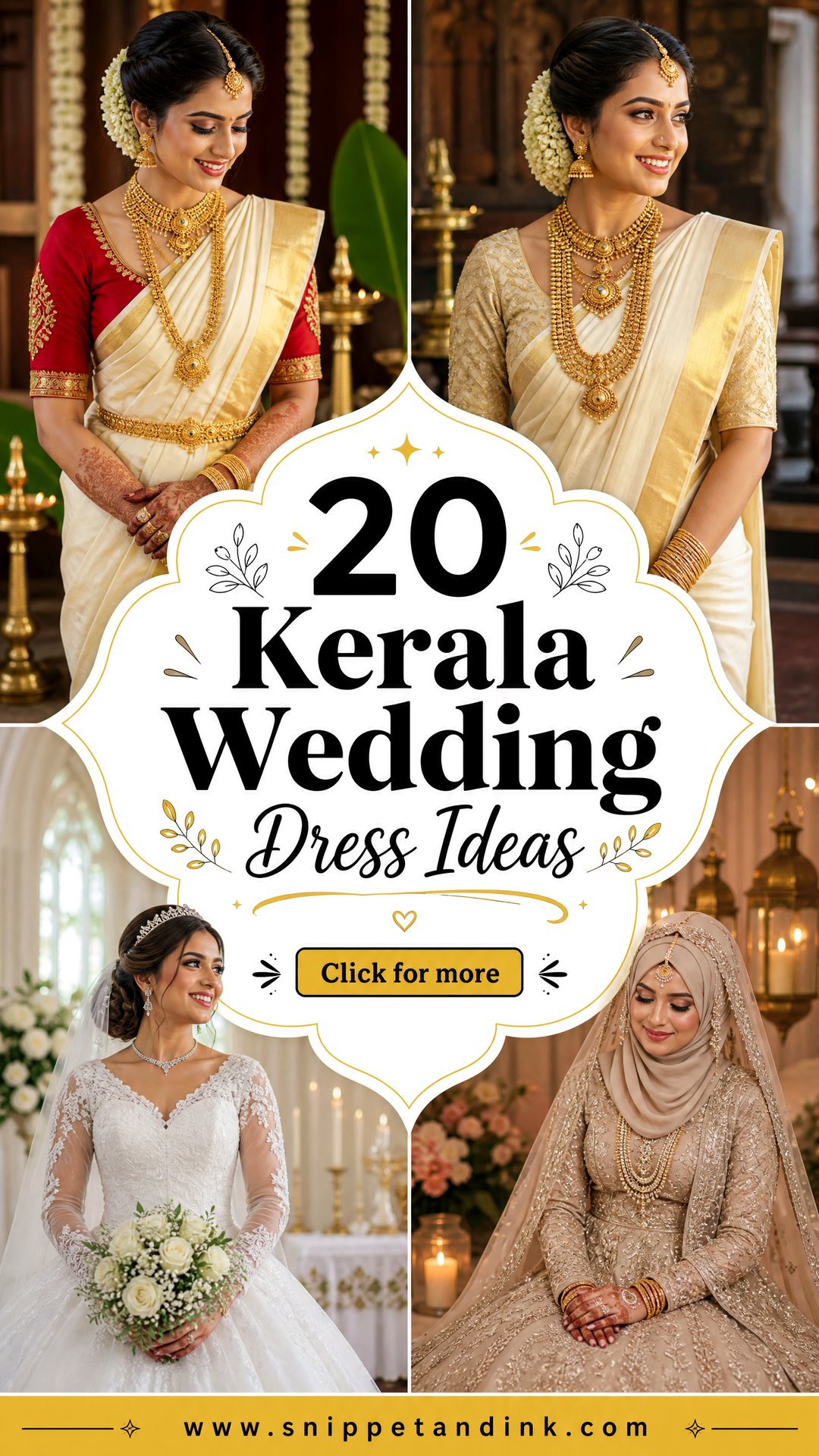
Most Kerala brides I dress start from the same place: a cream saree with a gold border, worn either as a kasavu saree or as a traditional two-piece set mundu. From there the outfit changes a lot by community. A Hindu muhurtham, a Christian church service and a nikah each ask for different coverage, colour and layering, and many families add a reception look on top. Below are twenty complete outfits, each worked out from blouse to footwear, with notes on the fabric choices and fitting details I’d check before committing to any of them.
Cotton, Silk-Cotton or Tissue Kasavu in Kerala Humidity
The fabric decides more about how a Kerala bridal look survives the day than the colour of the blouse does. Before a bride falls for a photo, I ask which ceremony the saree is for, how long she’ll be sitting, and whether the venue is air-conditioned.
- Pure cotton kasavu is cool and authentic, and it drapes crisply when starched. It also creases deeply at the knees after a seated ritual. I’d keep it for shorter functions or a bride who doesn’t mind a lived-in look.
- Silk-cotton is my usual compromise for the main ceremony. It breathes almost as well as cotton but recovers from sitting much better, and the pleats stay sharper.
- Tissue shimmers under lights and is lighter than heavy silk, but it snags. Use fine pins, keep bangles with rough edges off that wrist, and avoid it for a bride with a long outdoor walk.
- Heavy pure silk (Kanchipuram, Banarasi) holds a dramatic drape but is warm. In a non-air-conditioned hall at midday, I plan a lighter change for the afternoon.
Whatever you choose, ask your draper to come to the trial. A saree draped by a professional who knows the fabric stays put far longer than one done in a hurry on the morning.
1. Kerala Bridal Kasavu Saree With Red Blouse
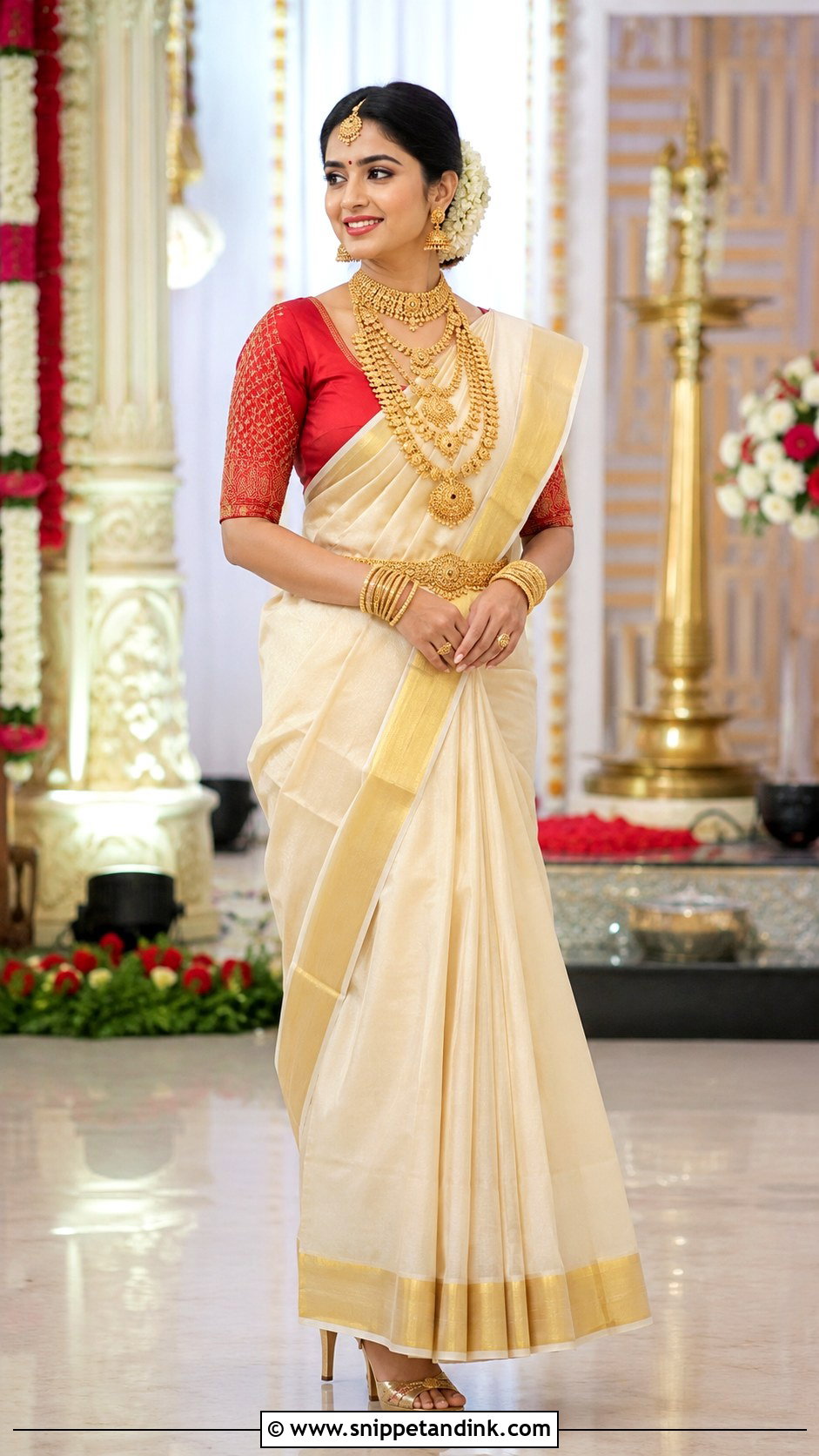
Cream kasavu with a red blouse is the pairing most people picture first, and it earns that place because the red picks up the warmth in the zari border. I’d go for silk or silk-cotton here; pure cotton kasavu looks crisp but creases the moment you sit through the rituals. Keep the blouse fitted with elbow sleeves, a rounded neck and a thin gold edge so it frames the border instead of fighting it. A choker plus one or two longer chains, jhumkas, bangles and a slim waist belt is plenty. Fresh jasmine around a low bun finishes it, and gold block heels or flat sandals will see you through a temple floor without slipping.
2. Kerala Set Mundu With Maroon Blouse
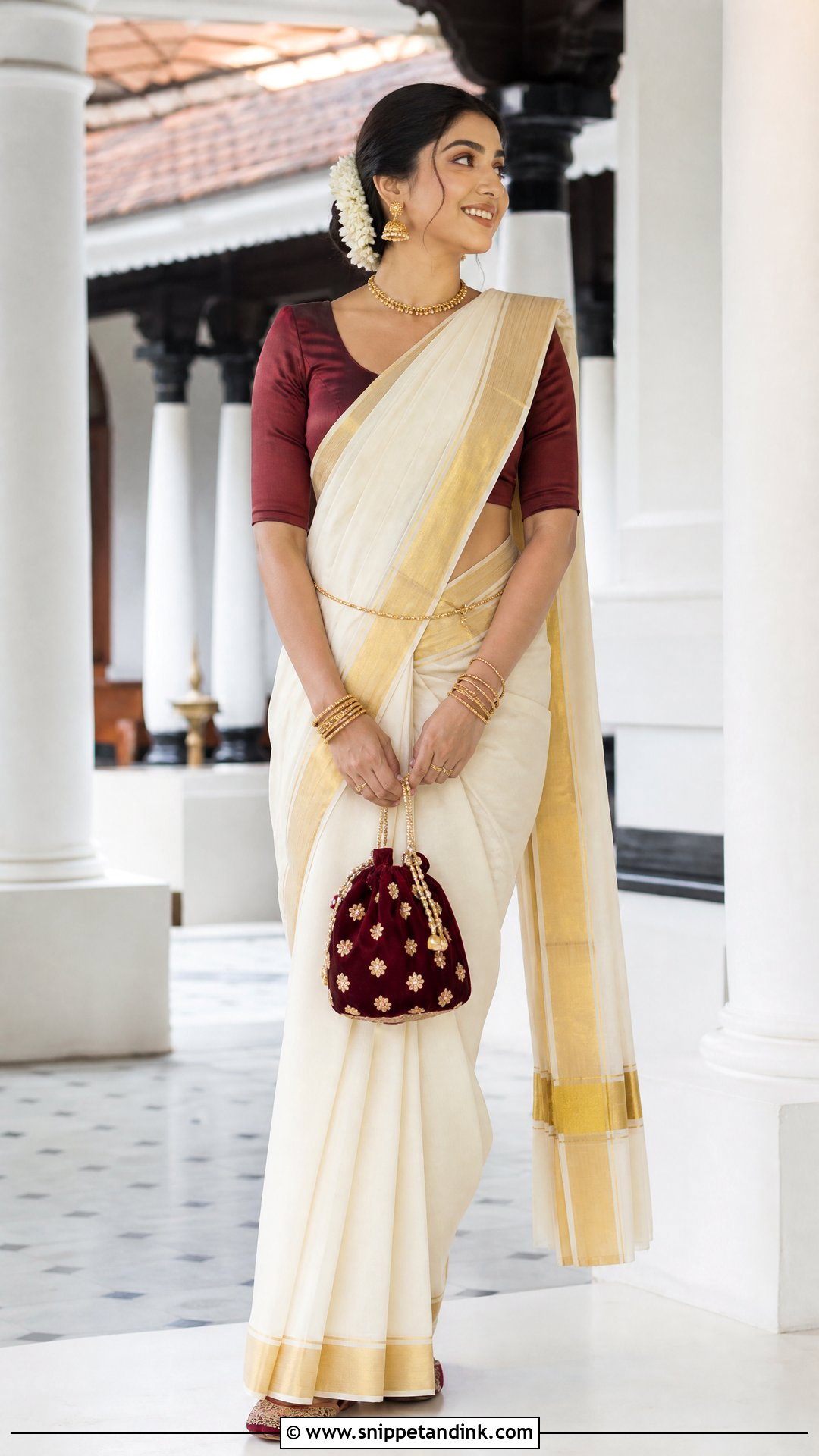
A set mundu is two pieces, not one: a lower mundu wrapped at the waist and a separate neriyathu draped over the shoulder. That split is why it moves so freely, and also why it slips if it isn’t anchored. I usually tuck the neriyathu into the waistband at the back and put one small safety pin under the blouse at the shoulder. An ivory set with a medium kasavu border and a maroon raw-silk blouse gives contrast without loudness. Keep the jewellery short so it doesn’t snag the upper drape: a gold necklace, jhumkas, bangles and a fine waist chain, then a centre-parted jasmine bun and maroon-and-gold flats.
3. Kerala Kasavu Saree With Green Blouse
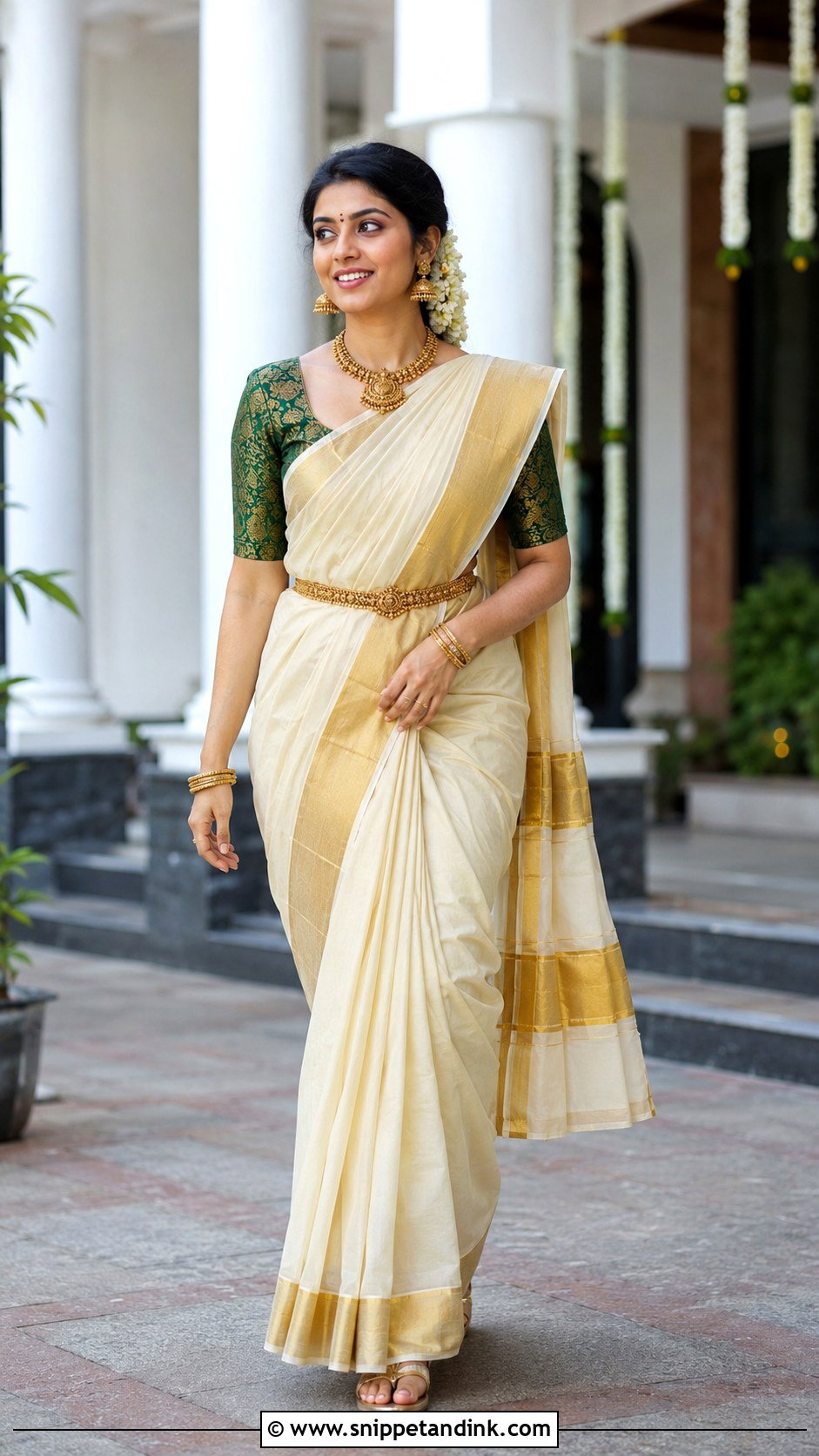
Green against a gold border reads fresher than red, and it holds up well in morning light at an engagement or a daytime function. Pick the shade by your jewellery as much as your skin: emerald suits bright yellow gold, while bottle or forest green flatters older, antique-finish pieces. Brocade blouses add texture; plain silk looks cleaner and is easier to alter if the fit is off. Pleats need to be crisp and the pallu pinned at the shoulder so it doesn’t drag. Temple jewellery, a slim belt if you want the waist defined, jasmine in a braid or bun, a green bindi and low gold sandals complete it.
4. Kerala Tissue Kasavu Saree Bridal Outfit
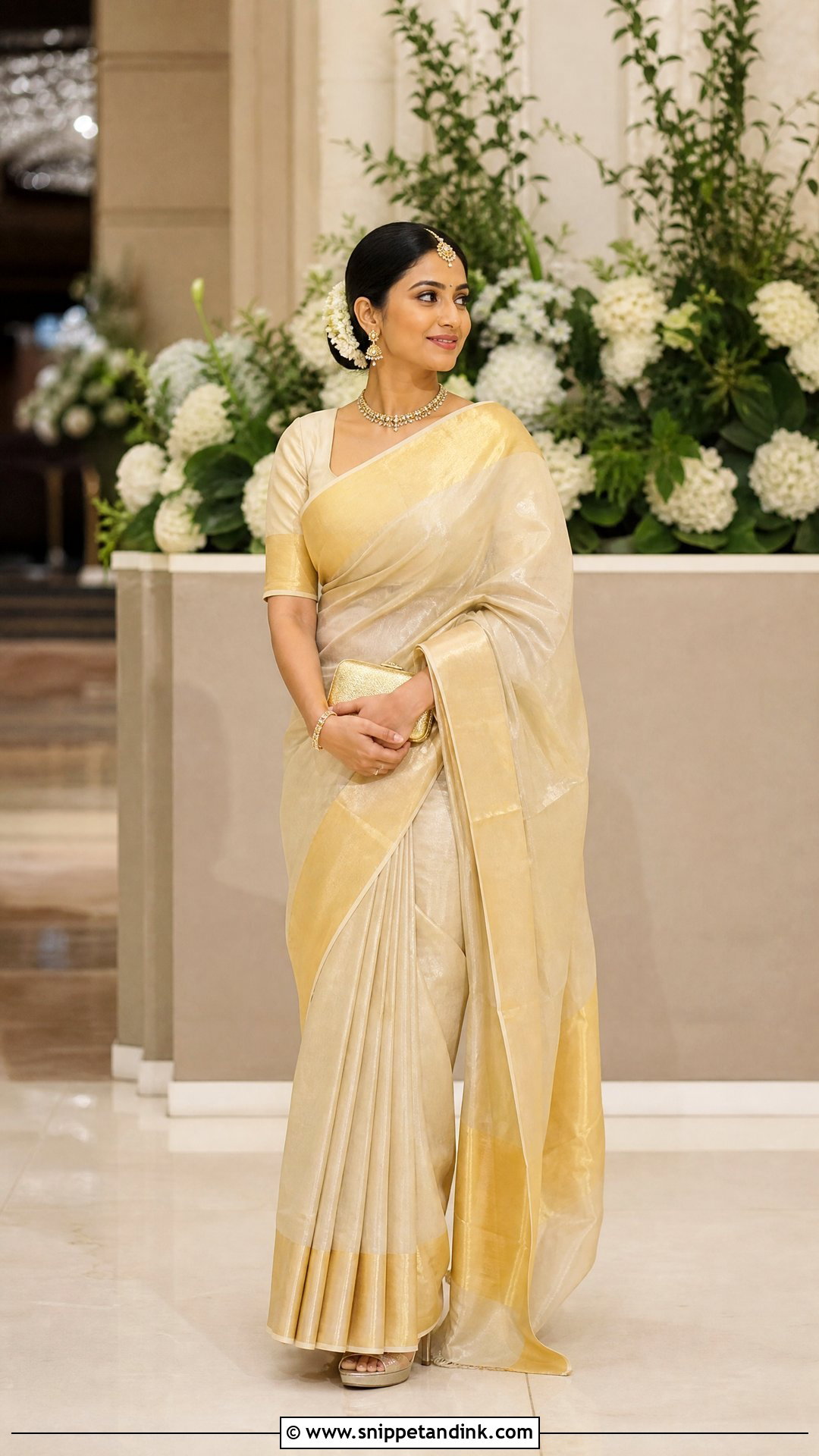
Tissue kasavu has metallic yarn running through the weave, which is where that shimmer comes from. It is also the most fragile fabric on this list. Standard dressmaker pins can leave pulls, so I use fine pins and as few of them as possible. Because tissue is lighter than silk, the blouse has to do the structural work: ivory, gold or muted bronze, properly fitted. A diamond-and-gold collar necklace, drop earrings, slim bangles and a small maang tikka keep things refined. A sleek low bun with white flowers, metallic block heels and a compact gold clutch let the fabric stay the focus.
5. Kerala Silk Kasavu Saree With Temple Jewelry
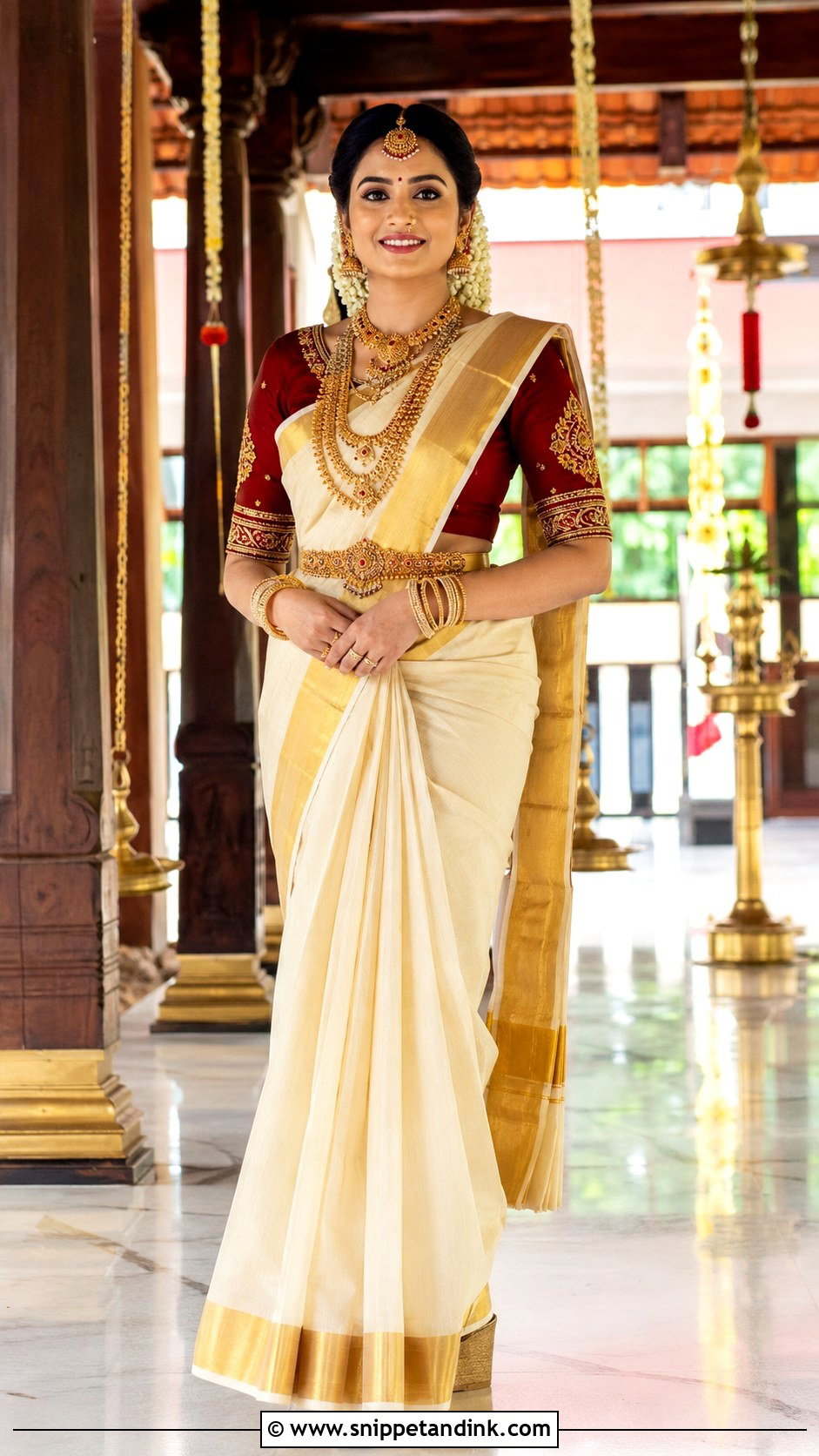
Heavy pure silk takes a pleat and holds it, which is exactly what you want under layered temple jewellery. Choose a pure silk kasavu saree in off-white with a deep border, and a red, green or maroon silk blouse. The mistake I see most often here is piling every necklace on at once. Build it in steps: choker first, then a medium chain, then one long statement piece, and stop. Jhumkas, bangles, a waist belt and a modest forehead ornament round it out. A long jasmine braid with gold accents balances the weight at the back, and cushioned gold wedges add height without wobbling on stone floors at a formal Hindu ceremony.
6. Kerala Red Kanchipuram Saree Bridal Outfit
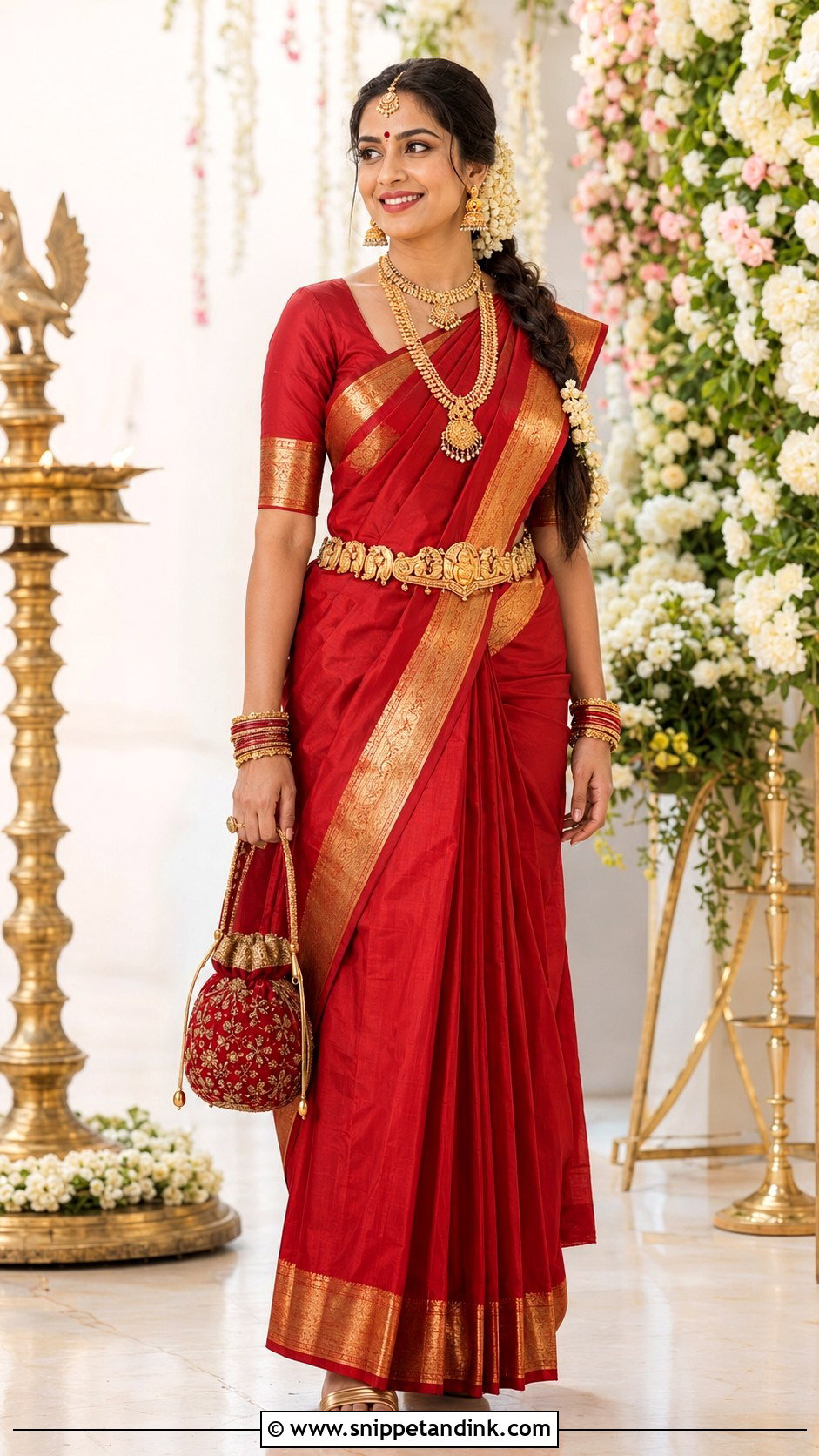
A red Kanchipuram is the choice for a bride who wants colour rather than cream. Look for crimson or vermilion with a zari border that’s wide but not crowded. Kanchipuram silk is heavy, and a full one can weigh noticeably more than a cotton kasavu, so the blouse fit matters: I check that the shoulder seam sits exactly on the shoulder point or the pallu will pull it sideways all day. Match the blouse, or go antique gold for gentle contrast. A high round neck and elbow sleeves look regal. Add a layered gold necklace, earrings, bangles and a belt, a jasmine braid, a red bindi, warm gold eyeshadow, padded sandals and a structured potli.
7. Kerala Maroon Banarasi Saree Wedding Outfit
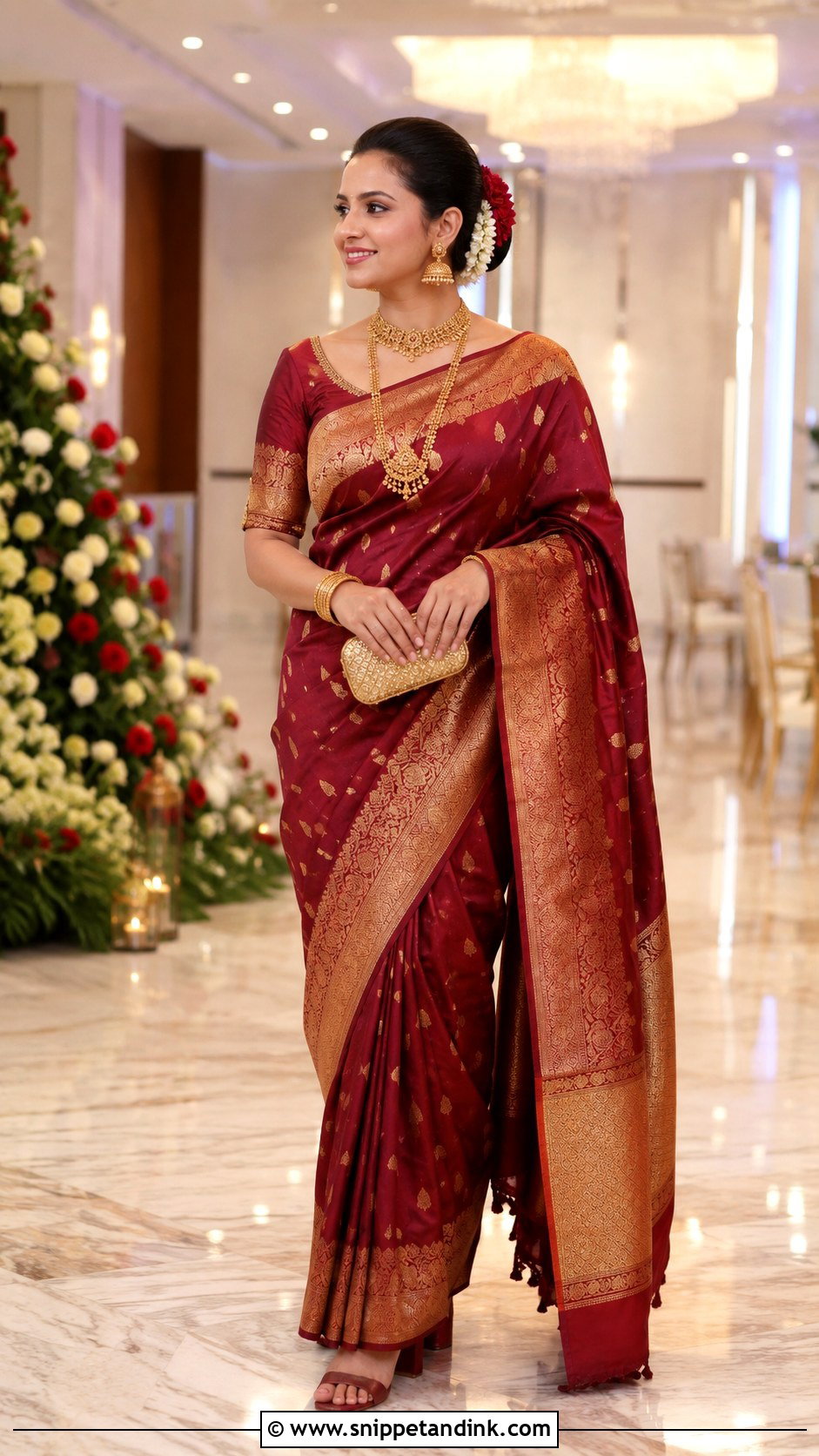
Maroon Banarasi suits an evening wedding because it looks rich under warm lighting without the brightness of red. Banarasi weaves can be very busy, so I’d pick one with enough plain ground between motifs. A matching blouse gives a long line; muted gold lifts the face. Decide the neckline only after you’ve chosen the jewellery, never before, because a choker needs a lower neck than you might think. Antique gold, jhumkas and stacked bangles, a smooth bun with a ring of jasmine or deep red flowers, a berry lip, maroon block heels and an embroidered gold clutch.
8. Kerala Green Silk Saree Wedding Outfit
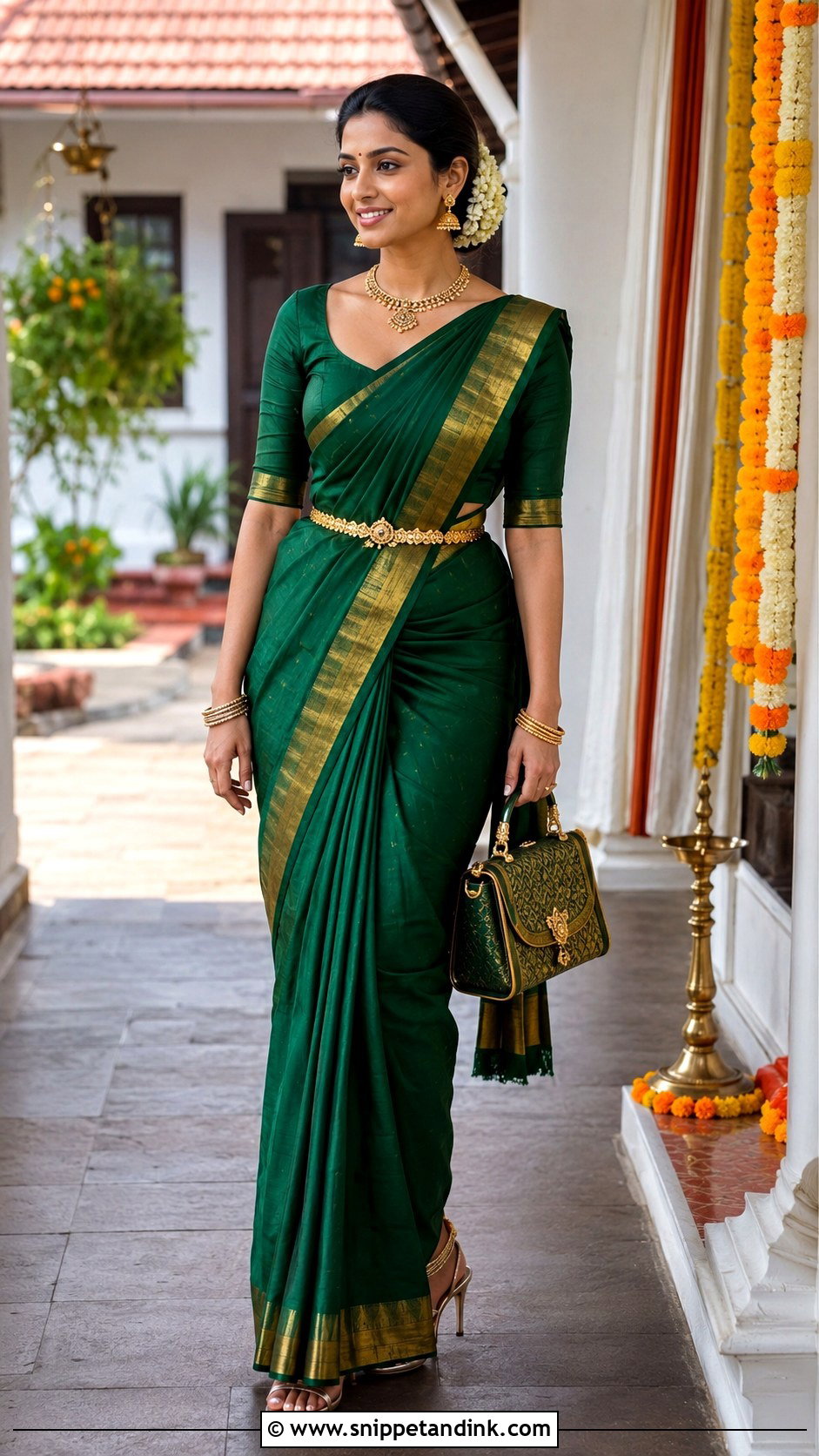
Deep green silk framed in gold photographs well against the cream walls of many Kerala halls. Emerald is vivid, bottle green is classic, olive is the quietest. A matching blouse with gold piping is the safe route, though maroon brings a traditional contrast I like a lot. If the saree already carries heavy zari, cut the jewellery back: jhumkas, one medium necklace, bangles and maybe a belt. A jasmine bun or a loose braid with gold pins, a small bindi, warm neutral makeup, cushioned metallic heels and a green-and-gold bag finish it.
9. Kerala Gold Bridal Saree With Matching Blouse
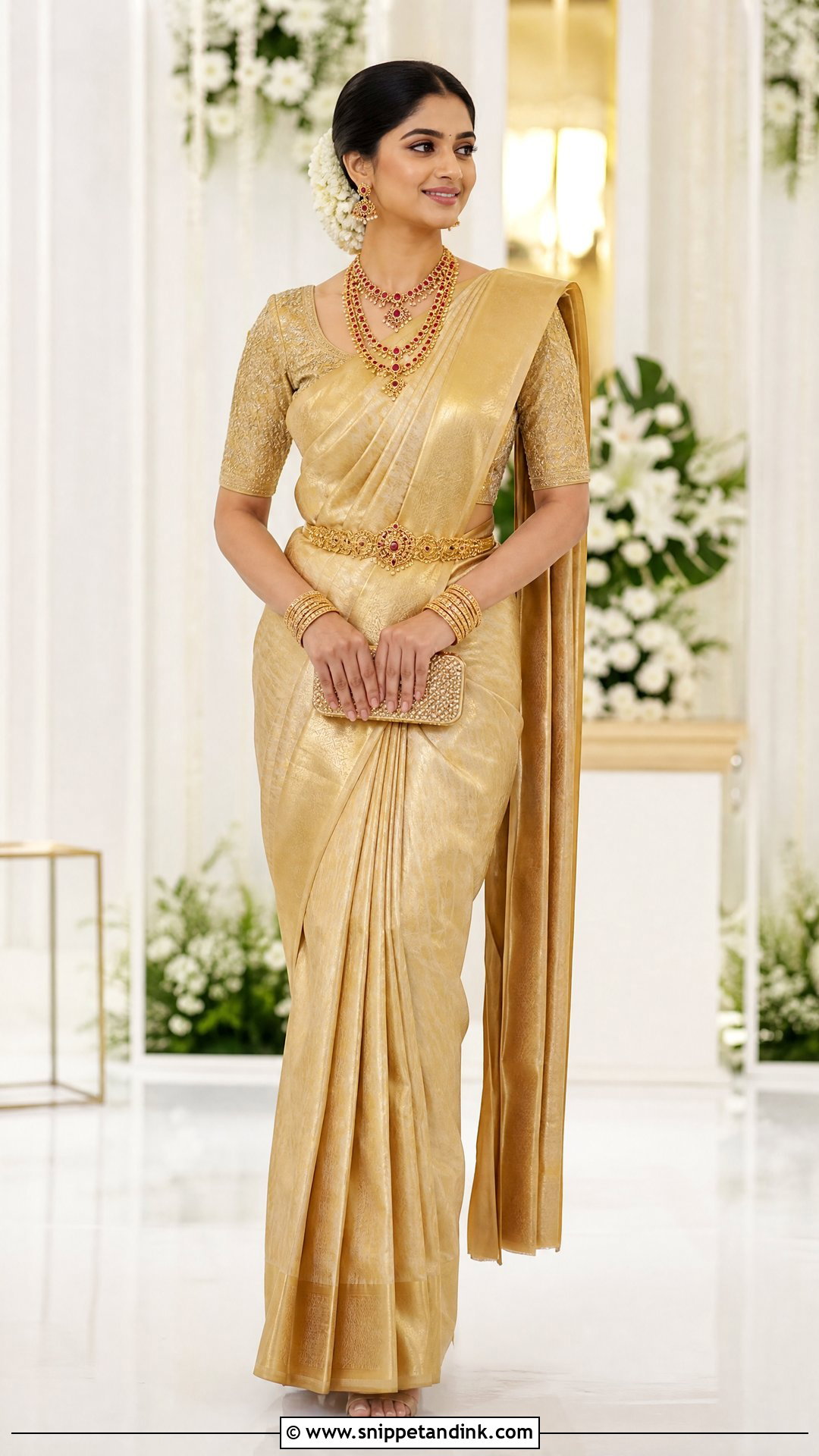
Gold on gold can go flat very quickly, so this outfit lives or dies on texture. I start with a muted gold silk rather than a mirror-bright one, then pair it with a blouse in brocade, jacquard or lightly embroidered raw silk so the two surfaces catch light differently. The fit should be tailored with elbow sleeves and a shaped neckline. Ruby, emerald or pearl in the necklace and earrings breaks up the monochrome. Keep bangles mostly gold, add a slim belt, a polished bun with white flowers near the face, neutral gold heels and a lightly beaded clutch.
10. Kerala Pastel Silk Saree Wedding Outfit
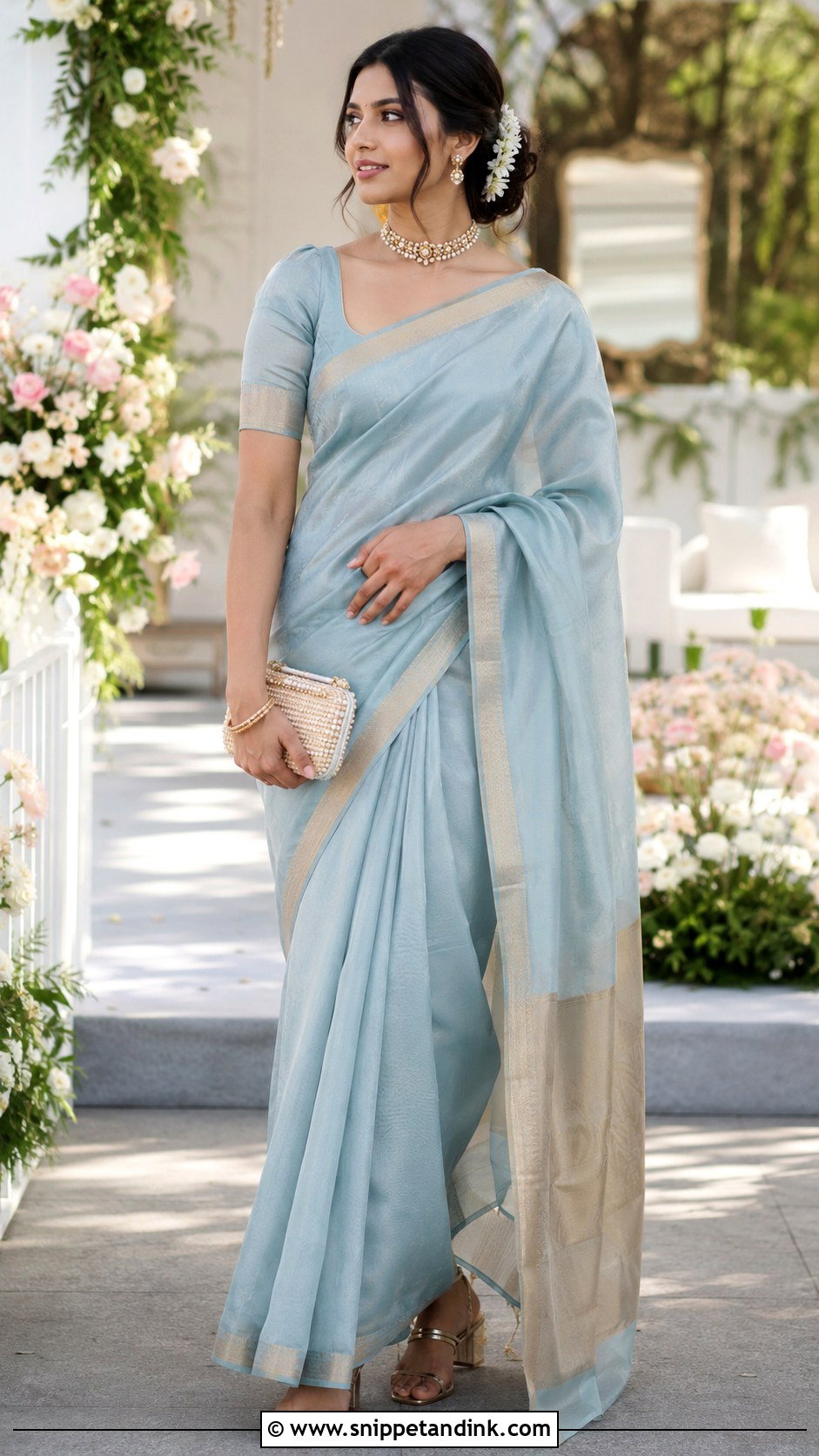
Pastel silk works for a bride who doesn’t want red, maroon or green at all. Powder blue, blush, sage, lilac and peach all pair well with a fine gold border. One thing to test: some pastels wash out under warm hall lighting, so look at the fabric under yellow light before you buy. A matching blouse is streamlined; one shade deeper adds dimension. Pearl-and-gold jewellery suits the palette better than heavy temple sets. Add a choker, small drops, slim bangles and a subtle hair ornament, a loose low bun with white flowers, fresh makeup, block heels and a pearl clutch for a daytime wedding or reception.
11. Kerala White Lace Wedding Gown
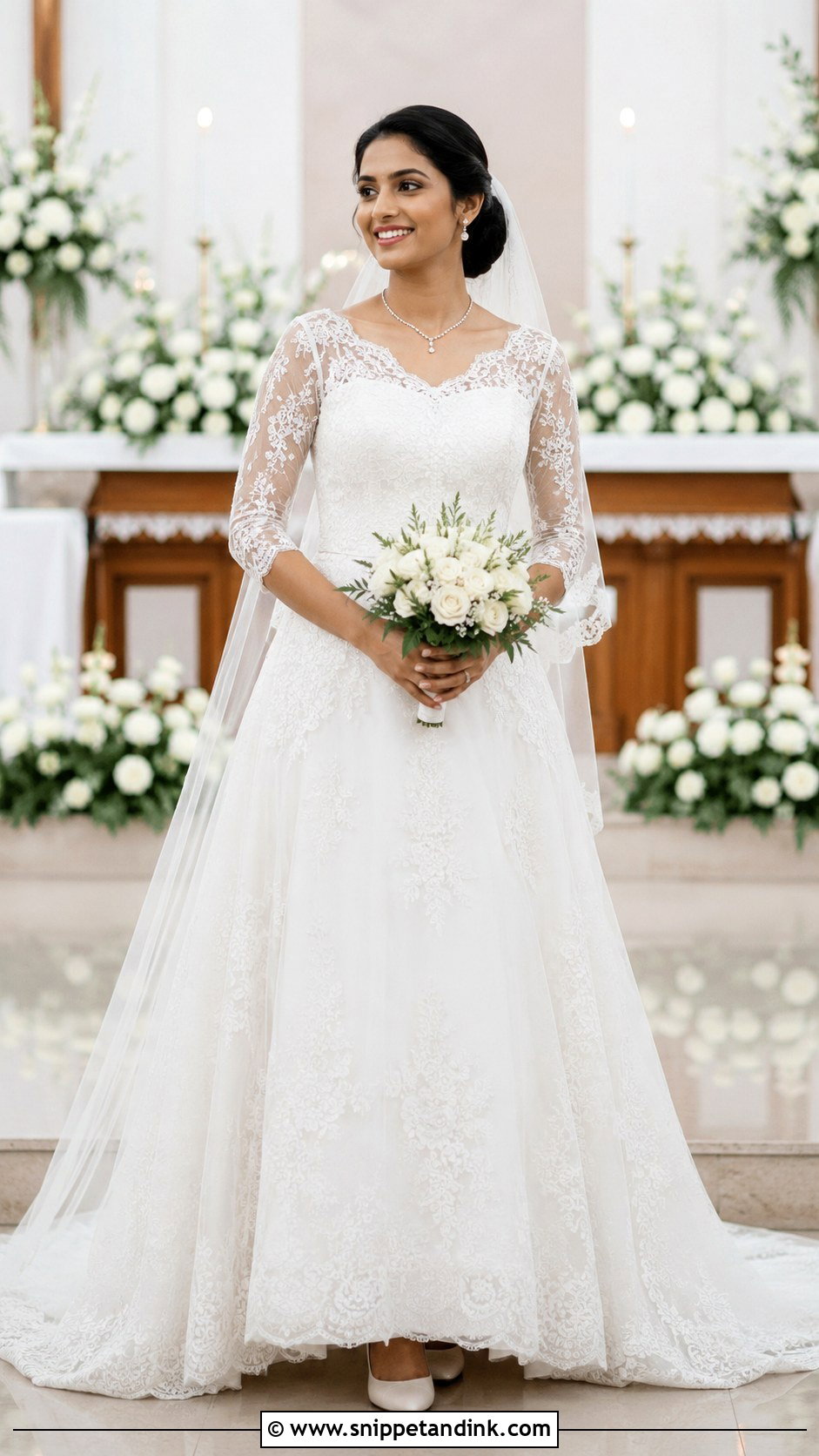
Many Kerala Christian brides wear a white lace gown for the church ceremony. A-line is easiest to move in, fit-and-flare gives definition, and a softly structured ball gown makes the bigger entrance. Lace sleeves help where the church expects covered arms. Pair it with a chapel-length veil, pearl or diamond earrings and a single necklace only if the neckline leaves room. In humid weather lace over a polyester lining can feel hot, so I ask about the lining fabric at the first fitting. White pumps or low embellished heels, a compact white-and-green bouquet, a low bun, natural makeup and a train that bustles after the service complete it.
12. Kerala Long-Sleeve Christian Bridal Gown
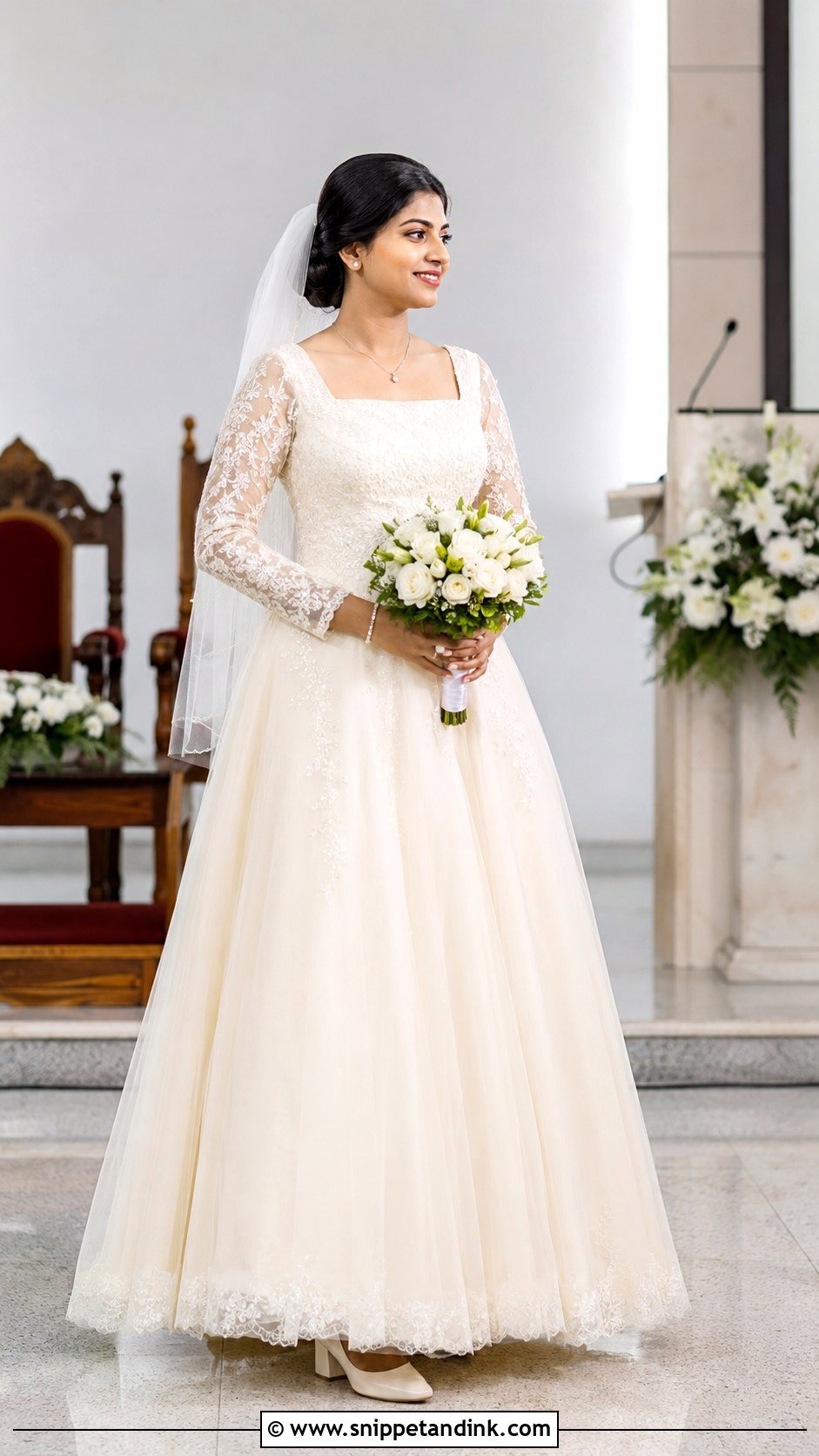
Long sleeves are where gowns most often go wrong in fittings. Fitted sleeves look elegant standing, but the bride needs to raise her arms to hug people and hold a bouquet. Illusion lace, embroidered tulle or crepe with a little stretch handle that best. An A-line skirt suits most figures because it shapes the bodice and then releases from the waist; brides wanting more structure can choose an internally boned bodice. Set the veil under a low bun so the neckline and sleeves stay visible. Pearl studs, a fine bracelet and a small pendant are enough. Closed-toe block heels for church, soft flats for later, and a white-and-green bouquet.
13. Kerala Christian Saree With Bridal Veil
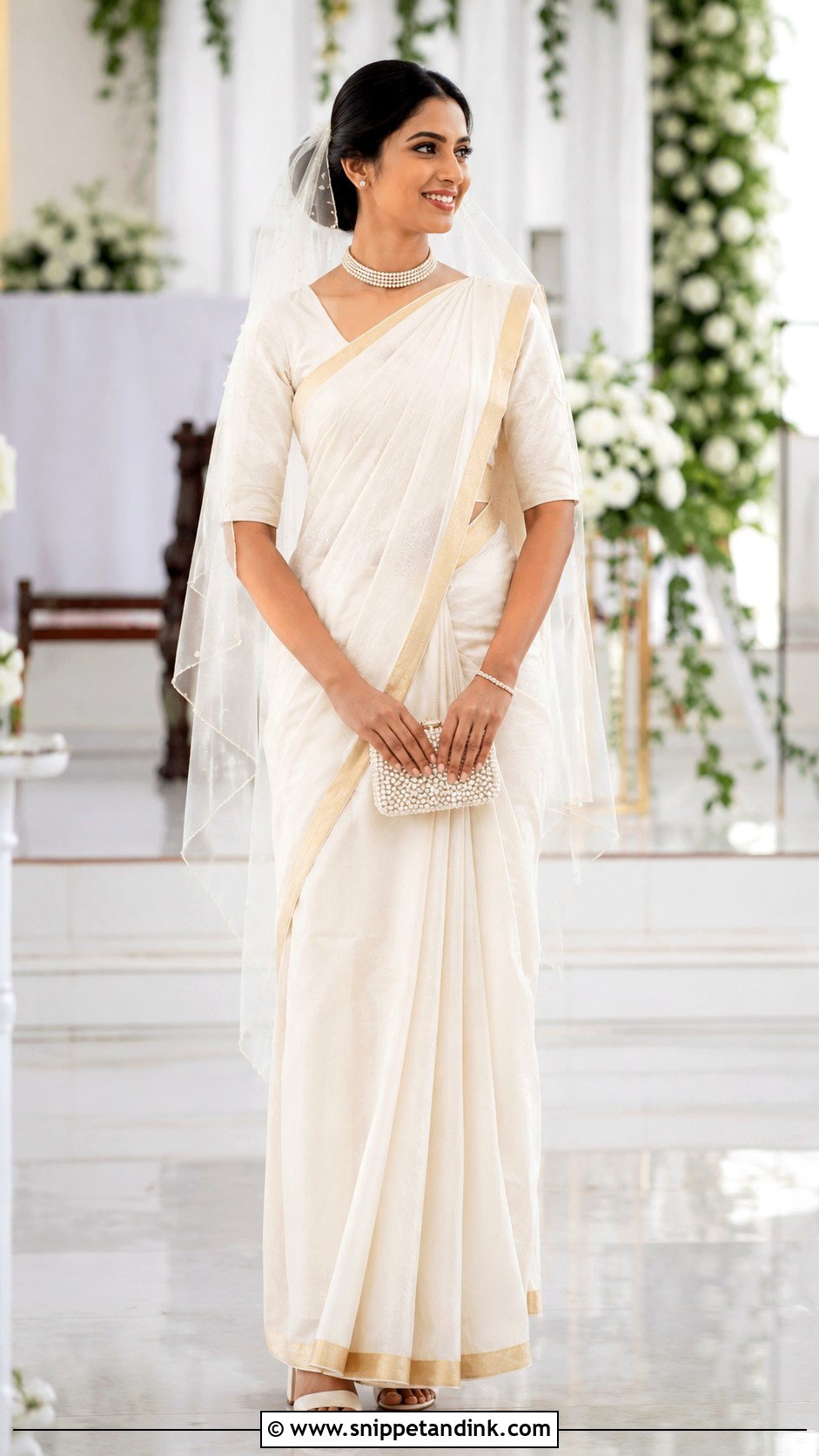
A saree worn with a veil is where Kerala draping and Christian wedding dressing meet. Choose ivory silk, white lace or cream tissue with a fine gold or silver border, and a modest blouse with elbow or full sleeves. The tricky part is layering: the veil comb needs to sit in a smooth bun high enough that the veil falls behind the pallu, not on top of it. A pearl choker, diamond studs, a slim bracelet and a simple ring are enough; a heavily worked saree needs even less. Ivory block heels, a small pearl clutch, and one full rehearsal of walking and sitting in everything together before the day.
14. Kerala Manthrakodi Saree Wedding Outfit
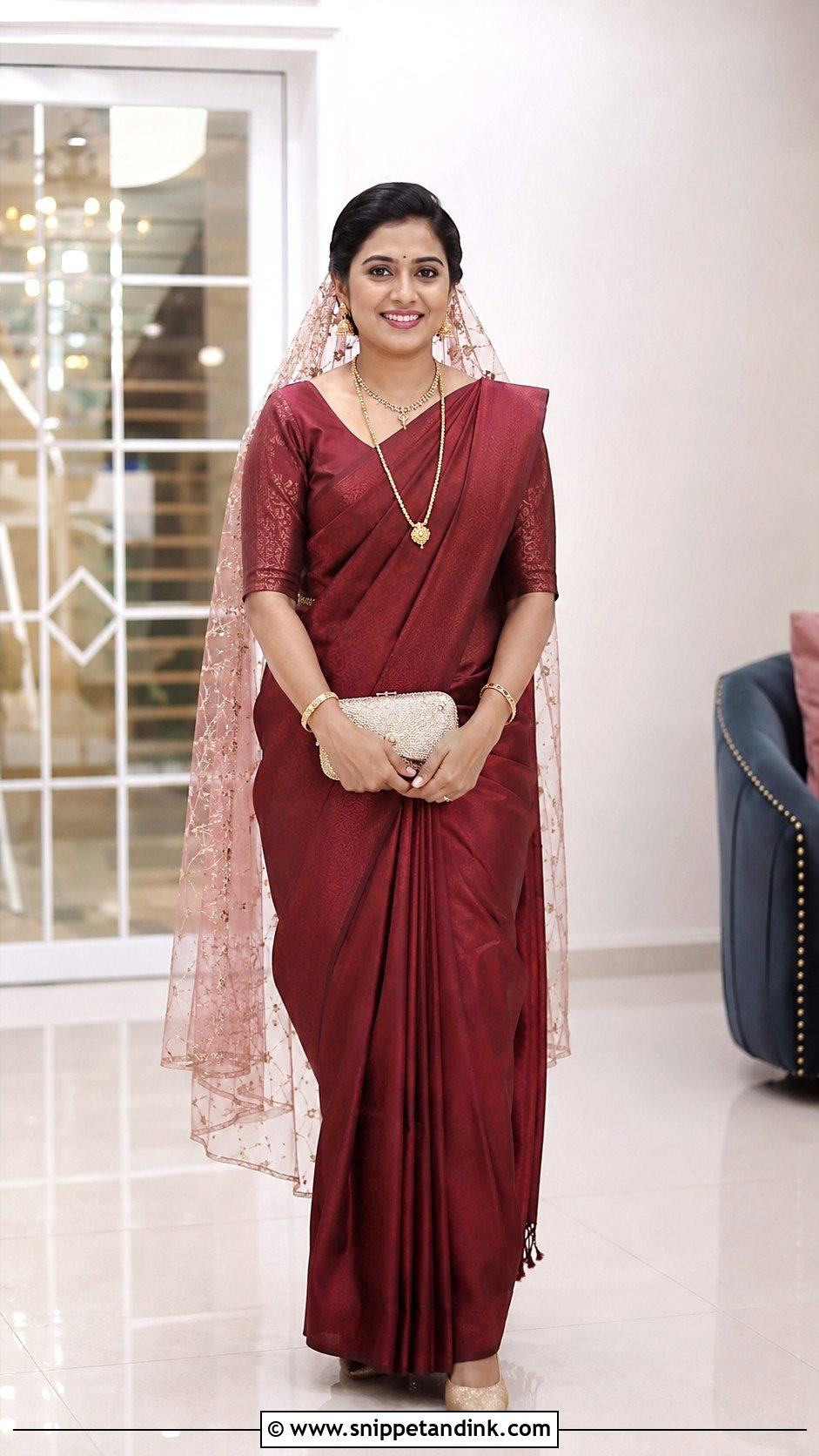
The manthrakodi is the saree given to the bride by the groom’s family during the ceremony, so it carries a weight that the other outfits here don’t. Its colour depends on the family and community: cream, red, maroon or something else meaningful. Because it often arrives close to the wedding, I keep a pre-made blouse in a coordinating neutral ready in case there’s no time for a custom one. Gold jewellery, the wedding chain, drop earrings and balanced bangles look right. If the saree is richly patterned, simplify the necklaces. A low bun that works under a veil or head covering, closed-toe heels or dressy flats, a compact clutch and firmly secured pleats see you through a long ceremony.

15. Kerala Muslim Bridal Lehenga With Hijab
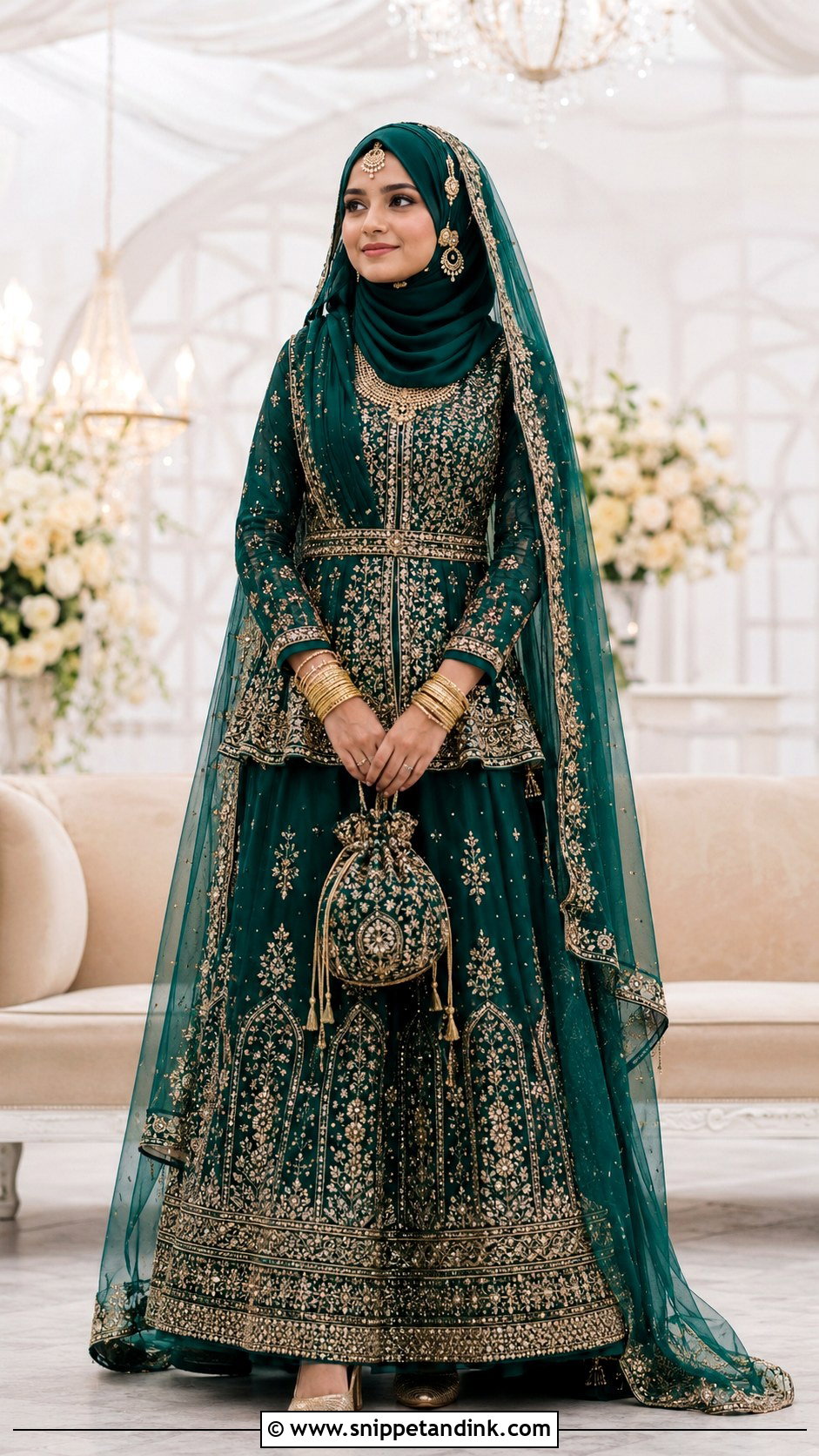
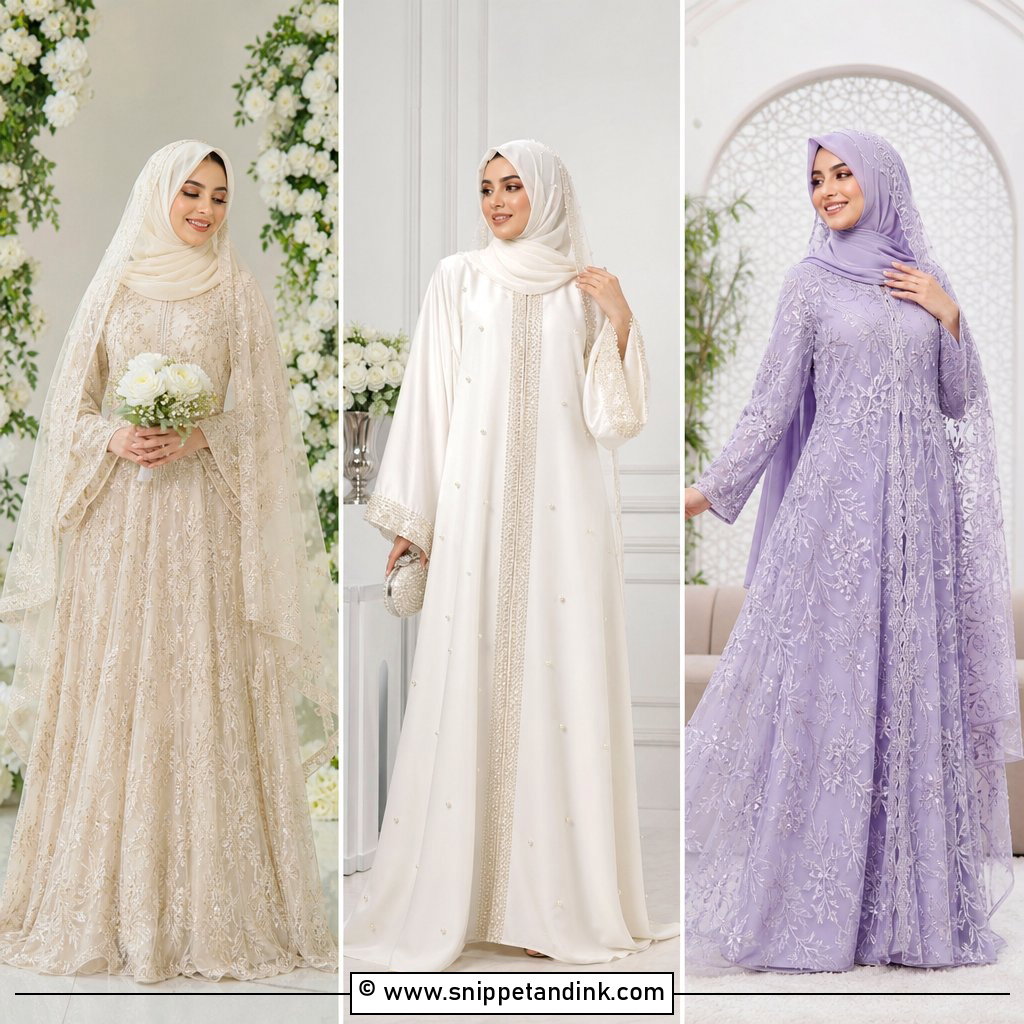
For a Kerala nikah, a modest lehenga gives colour and movement while keeping full coverage. Emerald, maroon, ivory, blush or a deep red lehenga all work if the embroidery is spread evenly rather than piled at the hem. A heavy hem is the thing I’d steer you away from; it drags on steps and tires you out within an hour. Pair it with a hip-length blouse or peplum top with full sleeves and a secure neck. Drape a coordinating dupatta over the bodice and add a lightweight hijab in a matching or softly contrasting shade. A jewelled headpiece, earrings, bangles and one necklace, closed-toe block heels, an embroidered potli and softly defined eyes.
16. Kerala Nikah Anarkali With Dupatta
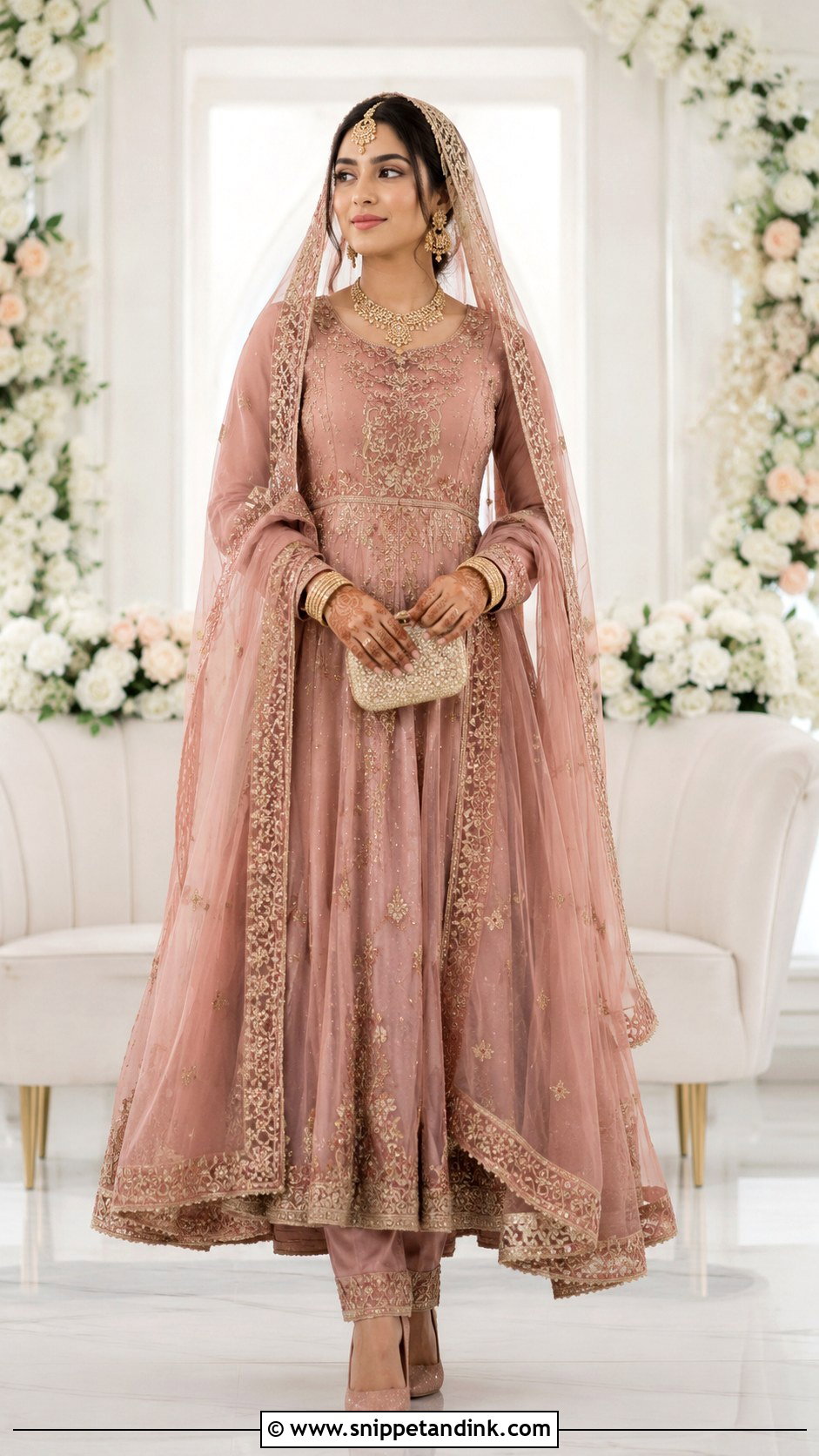
A floor-length Anarkali feels noticeably lighter than a lehenga, which matters if the nikah runs long. Green, muted rose, ivory or blue with restrained gold embroidery all look formal. The upper part should be fitted with full sleeves, and the flare should start near the natural waist. Straight pants underneath give coverage and make sitting easier. Two dupattas are common, one over the head and one across the body, but at the trial I always check the bride can still turn her head freely; if not, drop the second. A delicate tikka, earrings, bangles, a medium necklace, matching closed-toe heels, a beaded clutch and eye-focused makeup finish it.
17. Kerala Pastel Lehenga Reception Outfit
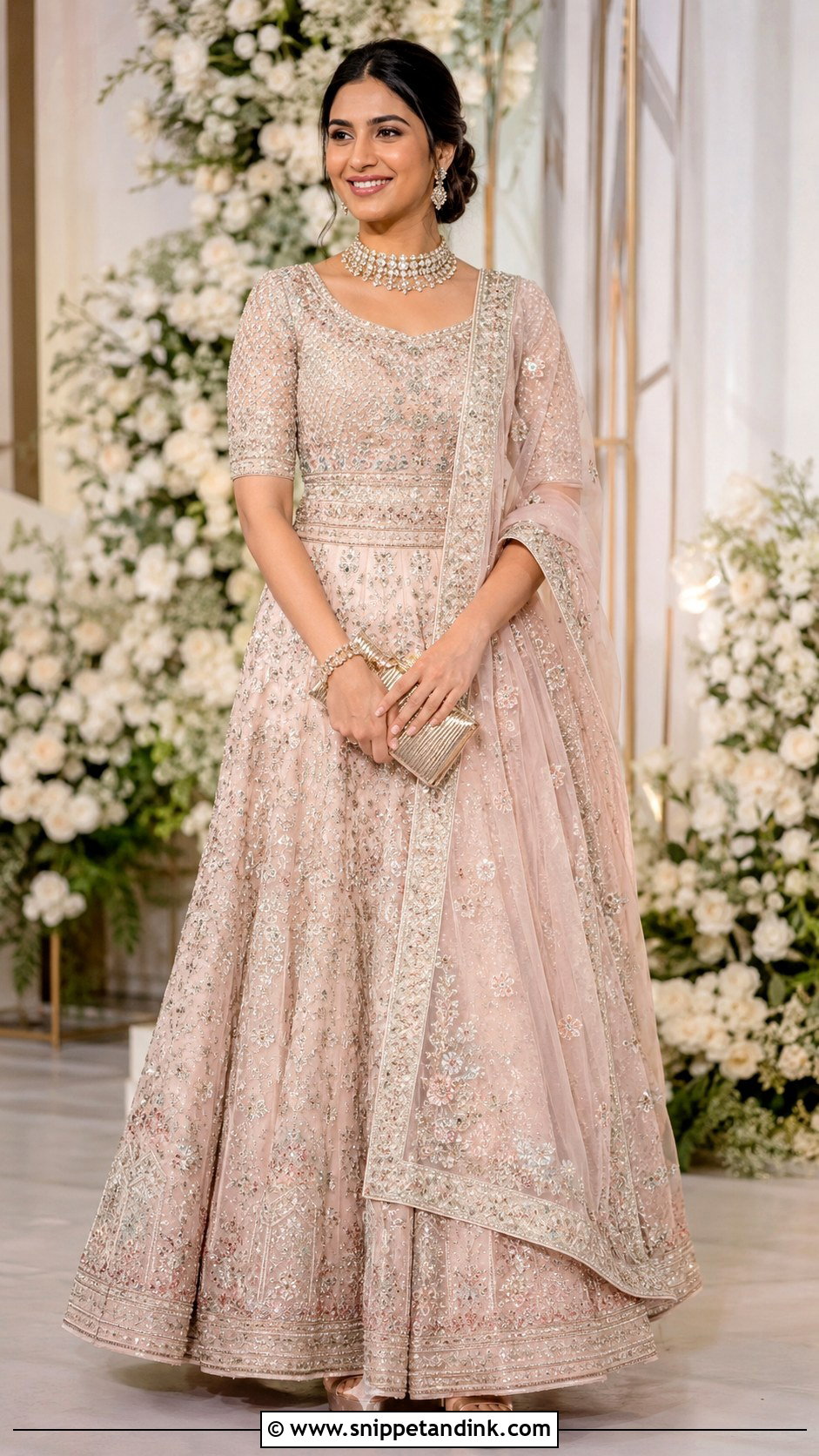
A pastel lehenga is a sensible reception change after a heavy morning saree. Blush, lavender, powder blue, mint and champagne all work, but check the embroidery under bright venue lights; pale thread on pale fabric can disappear entirely in photos. A structured blouse with elbow sleeves supports the full skirt. Drape the dupatta from one shoulder and pin it at the waist so your hands are free to greet guests. Pearls, pale stones and diamond-look pieces suit the palette: a collar necklace, drop earrings and one statement bracelet rather than stacks. Polished waves or a loose low bun with minimal flowers, platform block heels and a small metallic bag.
18. Kerala Kasavu Lehenga Wedding Outfit
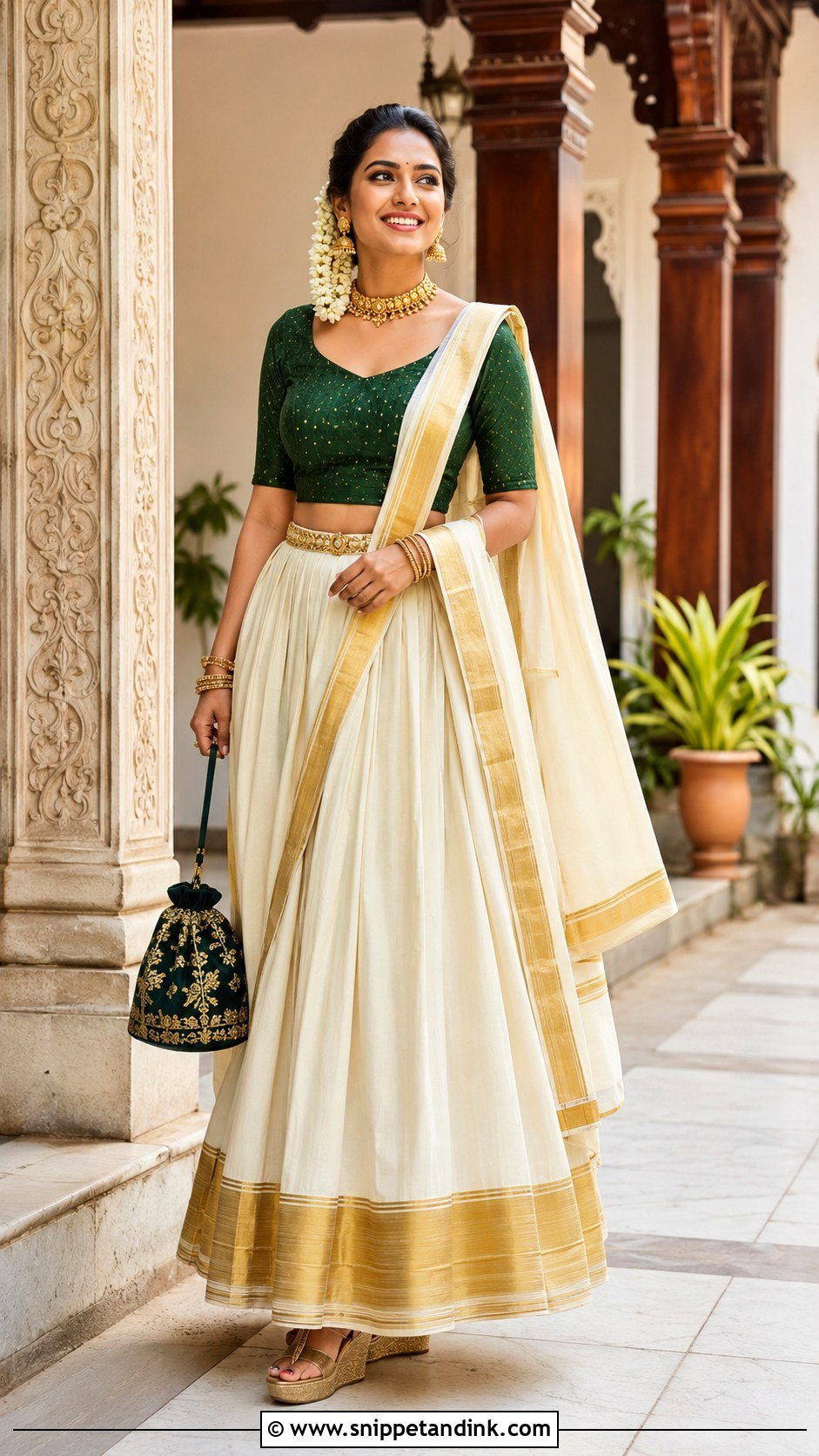
A kasavu lehenga takes the cream-and-gold palette into a three-piece outfit that’s far easier to wear than a draped saree, because nothing needs re-pinning. An ivory skirt with a broad gold border pairs with a red, green, maroon or gold blouse, and a matching ivory dupatta with a narrow kasavu edge ties it together. I recommend it most for bridesmaids, younger guests, pre-wedding functions or a reception change. Gold jhumkas, a choker, bangles and a slim belt, a long jasmine braid, cushioned wedges or embroidered flats, and a potli in the blouse colour so the whole look stays cream, gold and one contrast.
19. Kerala Half Saree Wedding Outfit
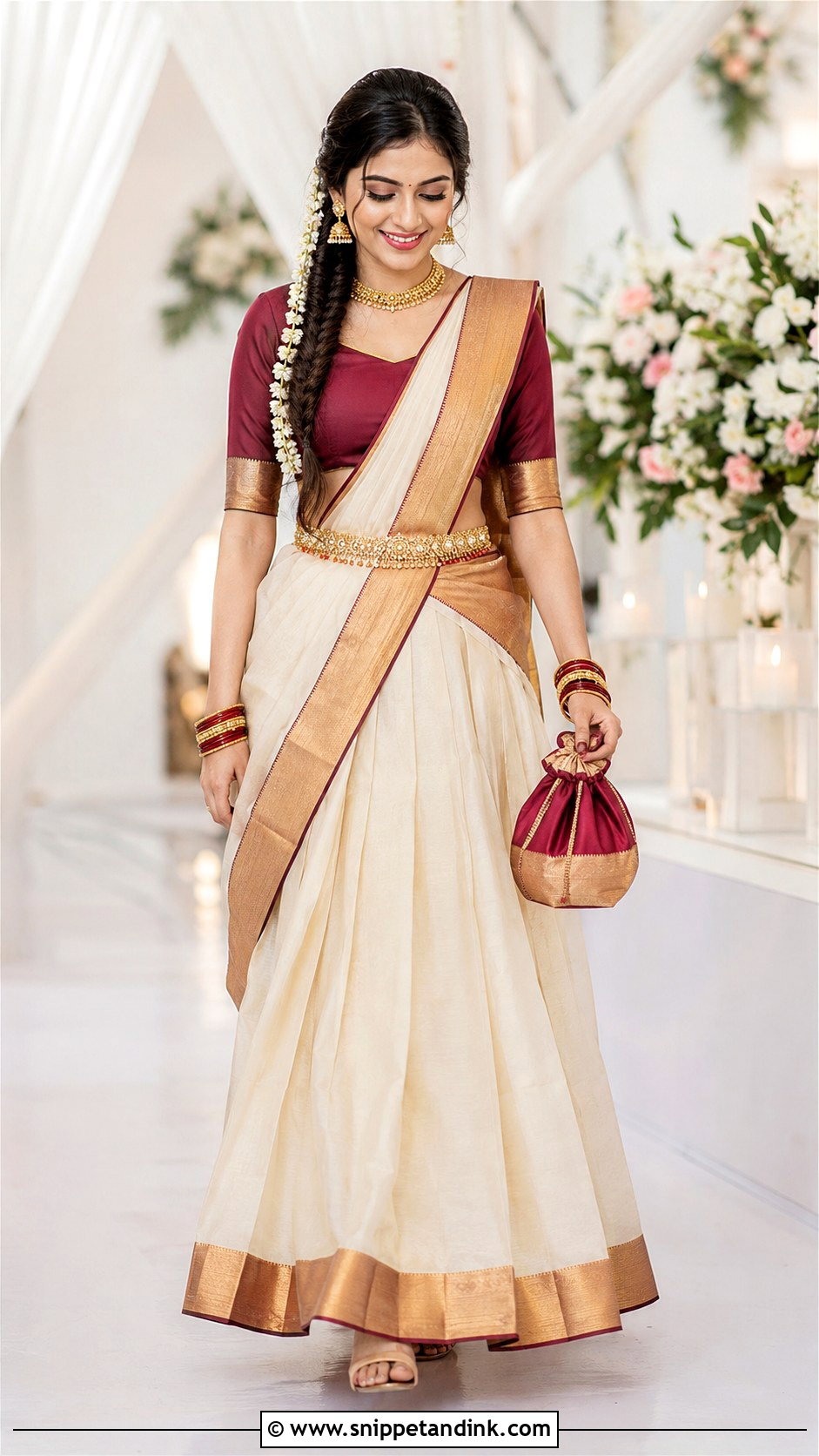
The half saree, or dhavani, combines a full skirt with a dupatta draped diagonally across the body. It’s the outfit I suggest most for bridesmaids, younger guests, engagements or a bride’s pre-wedding celebration. A cream-and-gold skirt with a green or maroon blouse reads as Kerala straight away; jewel-toned silk is more colourful. The diagonal drape needs a pin at the shoulder and a firm tuck at the waist, or it creeps down during dancing. A short necklace, jhumkas, bangles and an optional belt, a long braid with jasmine, low block heels and a matching potli. Have the skirt hemmed with the actual shoes on.

20. Kerala Embroidered Reception Gown
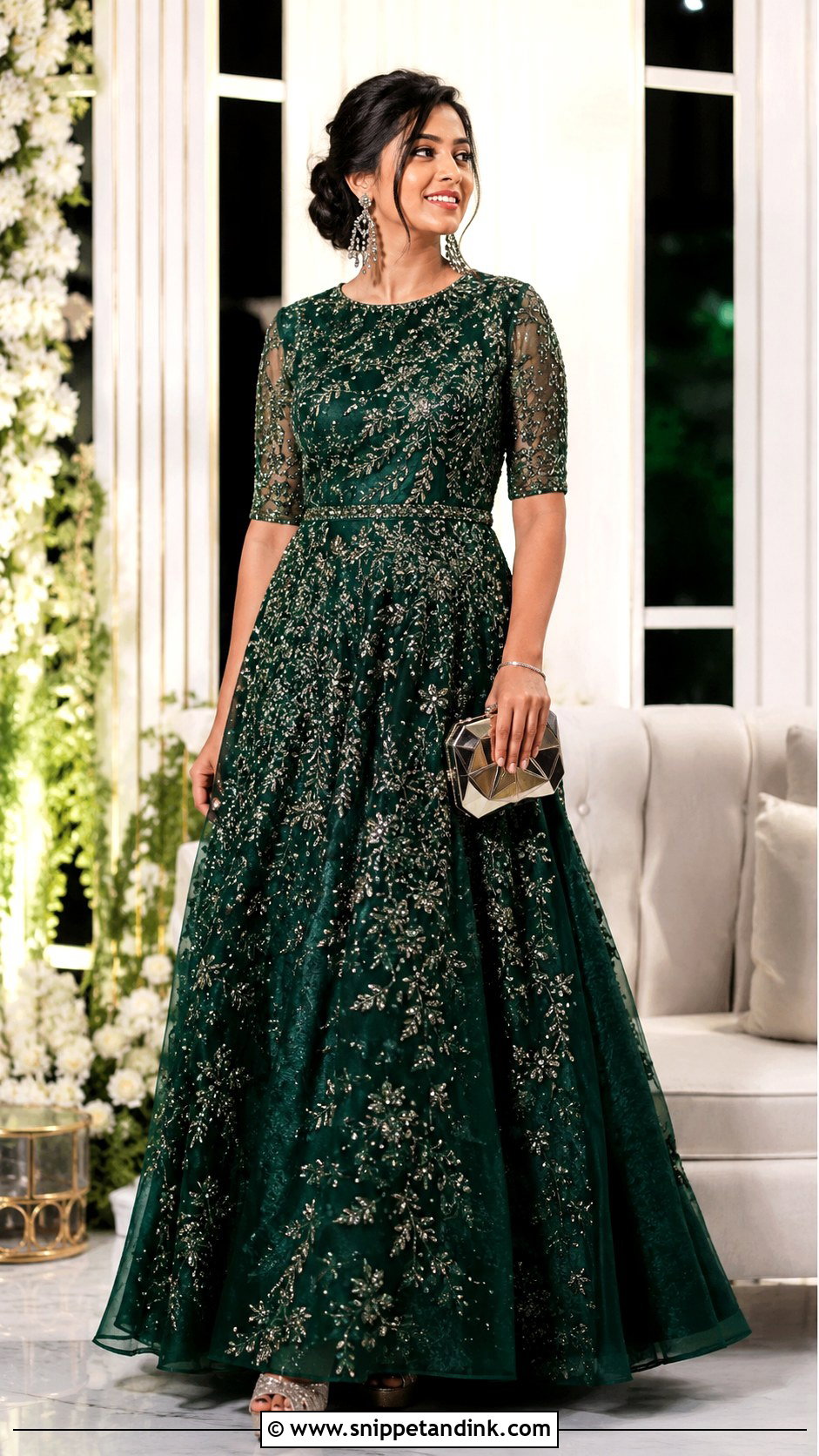
An embroidered gown lets a bride step away from sarees for the reception while still looking formal. Floor-length A-line or fit-and-flare in champagne, emerald, burgundy, navy, blush or soft gold all suit an evening hall. I look for embroidery spread across bodice, waist and hem so full-length photos don’t look top-heavy. A modest V, an illusion neck or a high round neck can be chosen around the jewellery. Statement earrings with a bracelet, and either a fine necklace or none. Smooth waves or a low textured bun, platform heels, a structured clutch, and a lightweight lining so you can actually dance in it.
Blouse Fittings, Draping Trials and the Reception Change
Most of the problems I fix on a wedding morning go back to the blouse. Tailors in wedding season are busy, so I give the fabric to the tailor around two months ahead and plan for at least two fittings. Wear the actual bra you’ll use on the day to each one.
At the final fitting I have the bride raise both arms, sit cross-legged if the ritual needs it, and fold her hands as she would during prayers. A blouse that pinches at the underarm in that position will be unbearable by the third hour. Then we do a full drape with the real jewellery, because a heavy choker changes how high the neckline should sit.
If there’s a reception change, map it backwards from the photographer’s schedule. Unpinning a saree, redoing hair from a jasmine bun to waves and switching jewellery realistically needs forty-five minutes to an hour. Ask someone you trust to look after the jewellery while you change.
Folding Kasavu Away So the Zari Stays Bright
A wedding kasavu is often kept for years, and the gold border is the part that suffers. Zari darkens with damp, sweat and perfume, so let the saree air for a day in the shade before putting it away, and never spray fragrance near the border.
- Wrap it in a soft cotton or muslin cloth, not plastic, which traps moisture in a humid climate.
- Refold it along different lines every few months; cotton weakens and can split where it’s folded in the same place for too long.
- For a silk or tissue saree, choose a dry cleaner who handles zari, and point out any stains on the day you drop it off.
- Keep it away from naphthalene balls touching the fabric directly; tuck them in a cloth pouch at the corner of the cupboard instead.
Kasavu, Silk or Gown: Matching the Outfit to the Ceremony
Traditional Kerala clothing and modern bridal silhouettes sit comfortably together at the same wedding. Kasavu and set mundu carry the cream-and-gold tradition, while Kanchipuram silk, Banarasi sarees, lehengas, Anarkalis and gowns cover the other communities and events. Start with the ceremony and your family’s customs, then the venue and the weather, and only then the colour. Get the blouse fitted properly, practise the drape, wear shoes you can stand in for hours, and let the jewellery support the fabric instead of hiding it.
You'll Like These Ideas:








Leave a Reply