
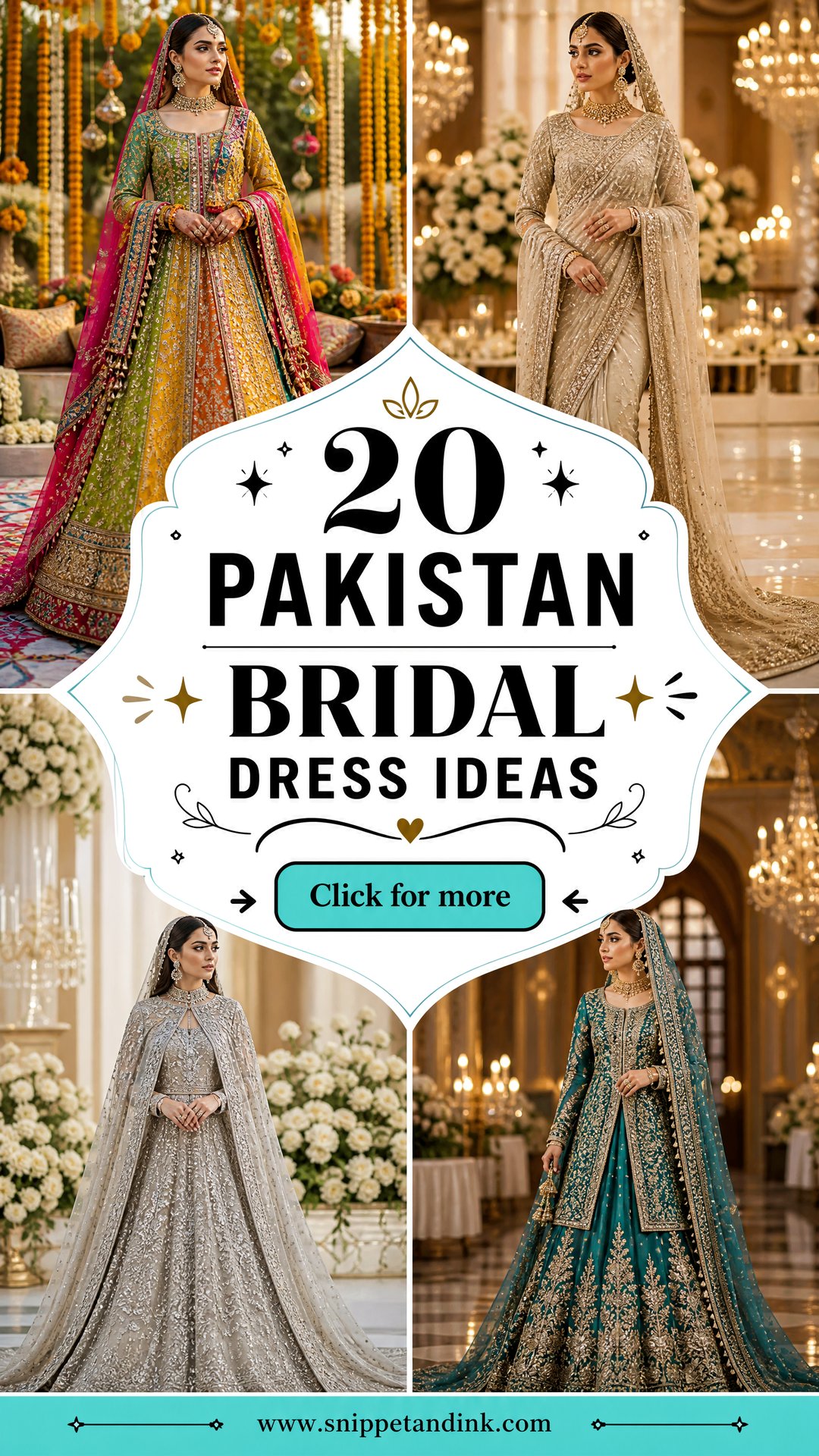
Pakistani bridal fashion asks more of a bride than most traditions, because there isn’t one dress. There are four events, the nikah, mehndi, baraat and walima, and each wants a different weight, color and mood. Red lehengas still carry the most meaning for the baraat. Shararas, ghararas, pishwas and soft-colored gowns cover the rest beautifully. Newer bridal work also tends toward cleaner cuts, embroidery placed with more restraint and lighter dupattas. The 20 looks below are complete outfits, with the jewelry and shoes I’d put with each. Read them with your venue, the season and how much you want to move in mind.
Matching Embroidery Weight to Each Event
When a bride brings me a mood board, the first thing I do is sort it by event. Most of the friction in Pakistani bridal planning comes from putting the right outfit at the wrong function.
- Nikah: often held at home, a mosque or a small hall, with a lot of sitting. Light to medium work, pale or pastel colors and a dupatta that stays put over the head.
- Mehndi: dancing, heat and henna. Color and mirror work are welcome; heavy dabka isn’t. Shararas and ghararas move better than a heavy lehenga.
- Baraat: the heaviest, most formal outfit, usually red or maroon. Budget the most here and expect it to weigh the most.
- Walima: the groom’s family hosts, and the bride changes mood. Pastels, silver, navy or a gown suit it, with glamour that’s lighter than the baraat.
Before you fall for something, ask the shop or designer to weigh it or let you hold it on a hanger. A baraat outfit that feels fine for five minutes in a fitting room is a very different thing after four hours, a long photo session and the rukhsati.
1. Red Pakistani Bridal Lehenga
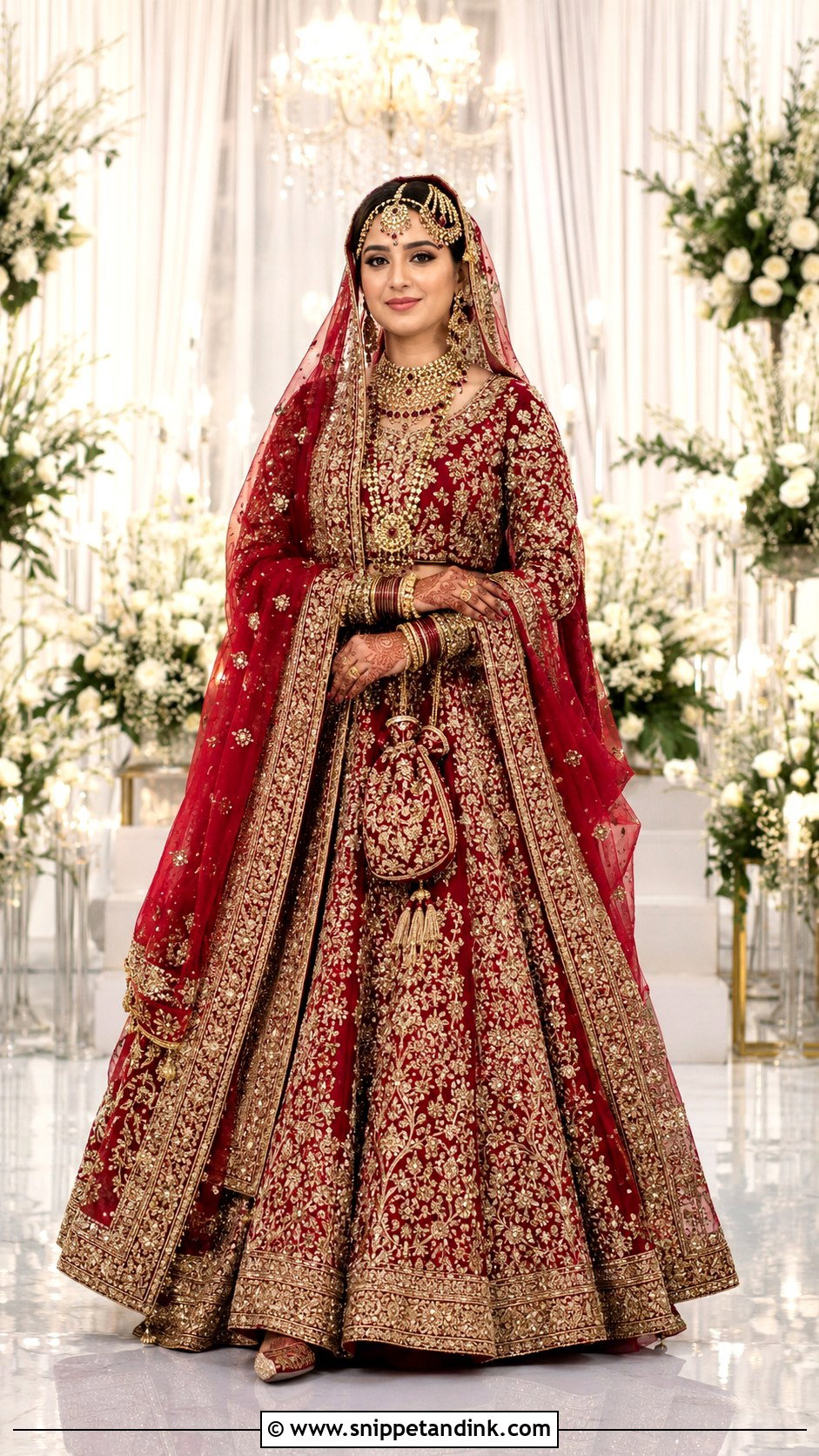
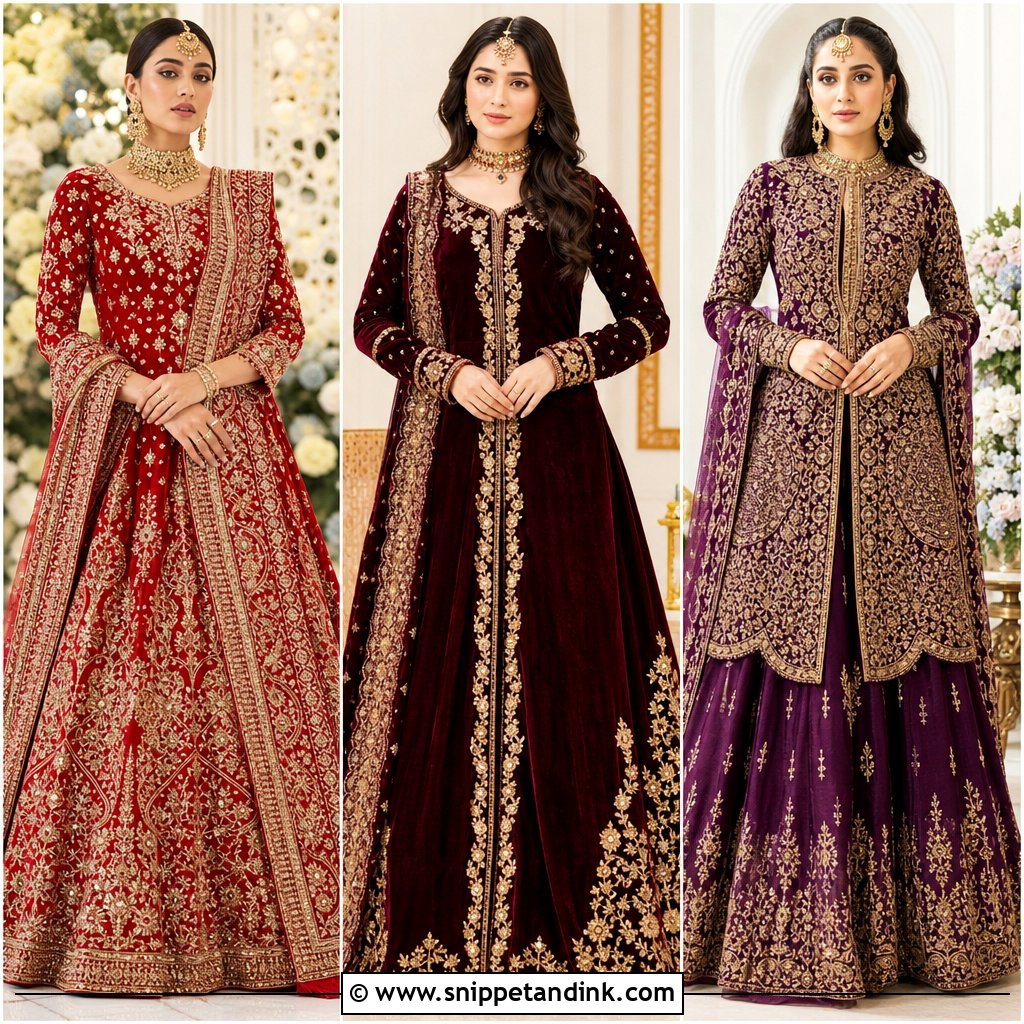
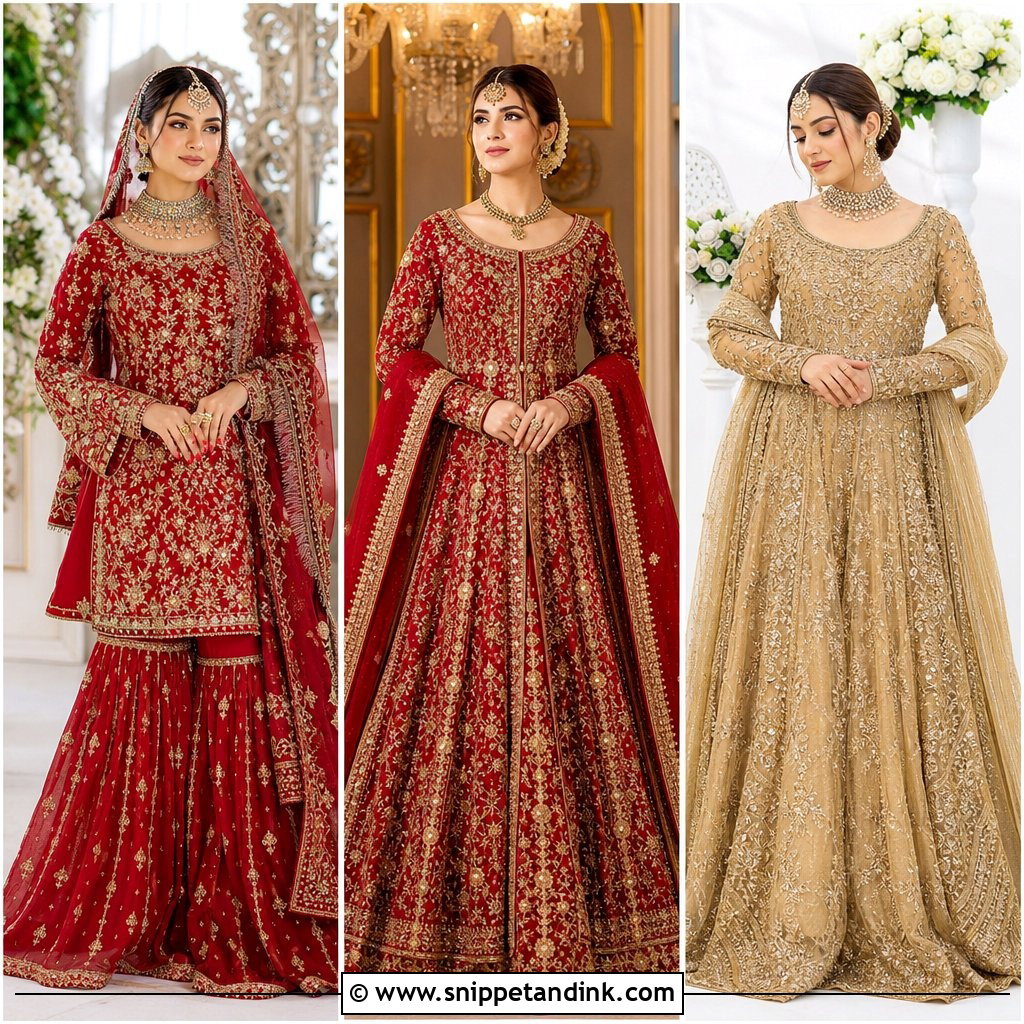
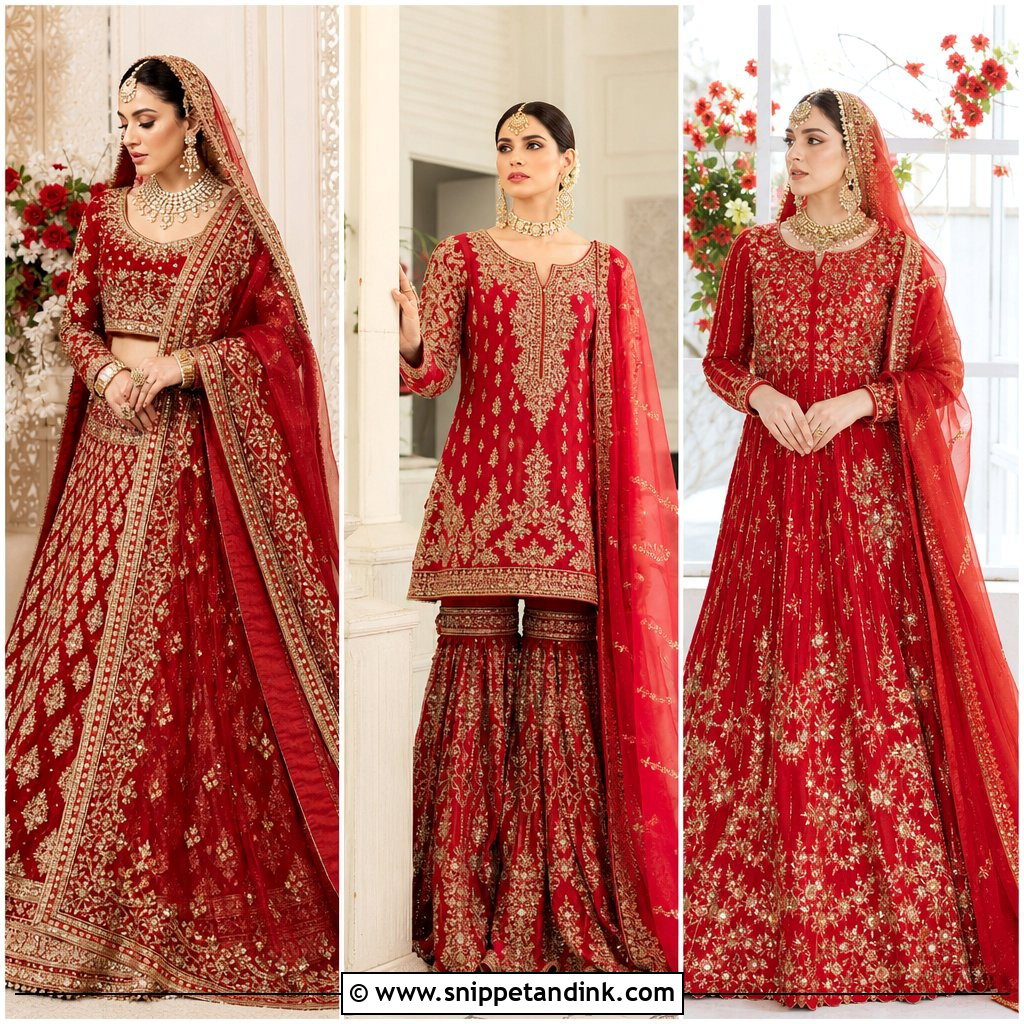
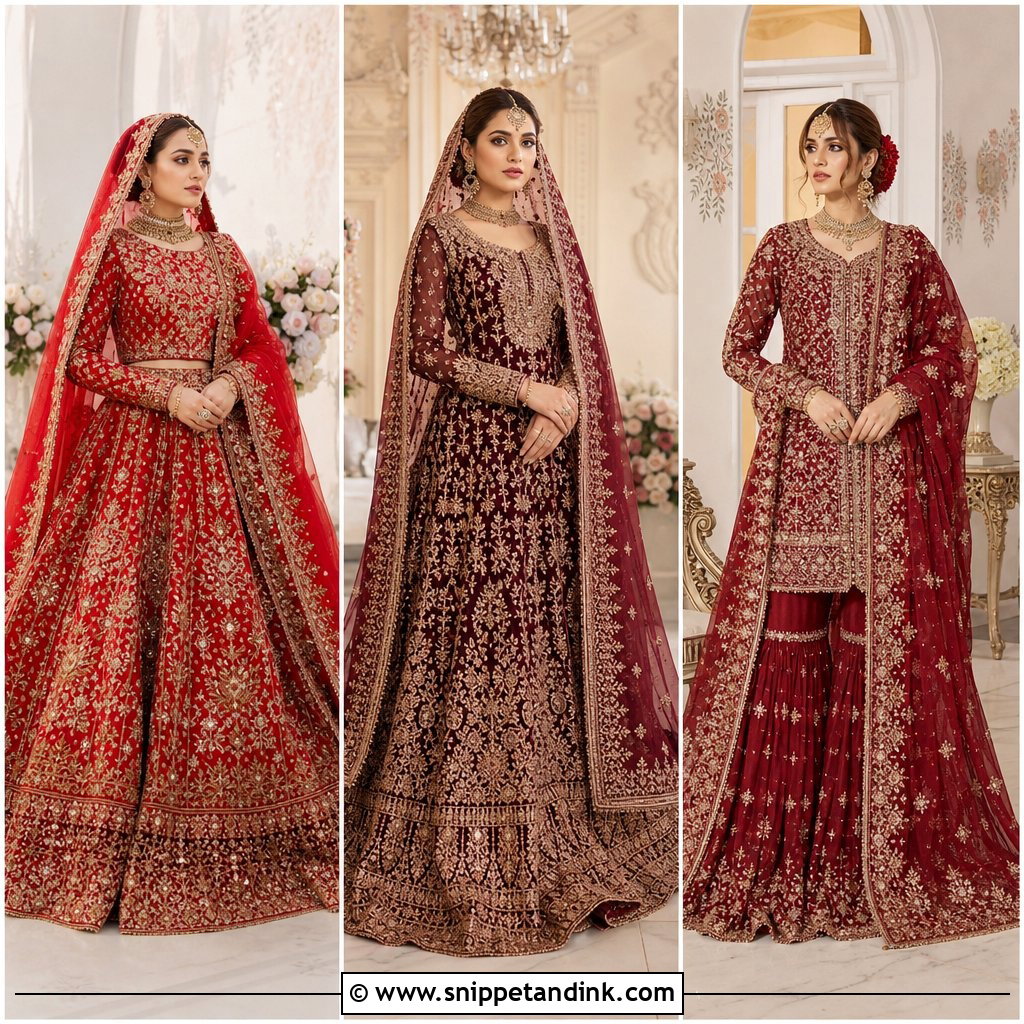
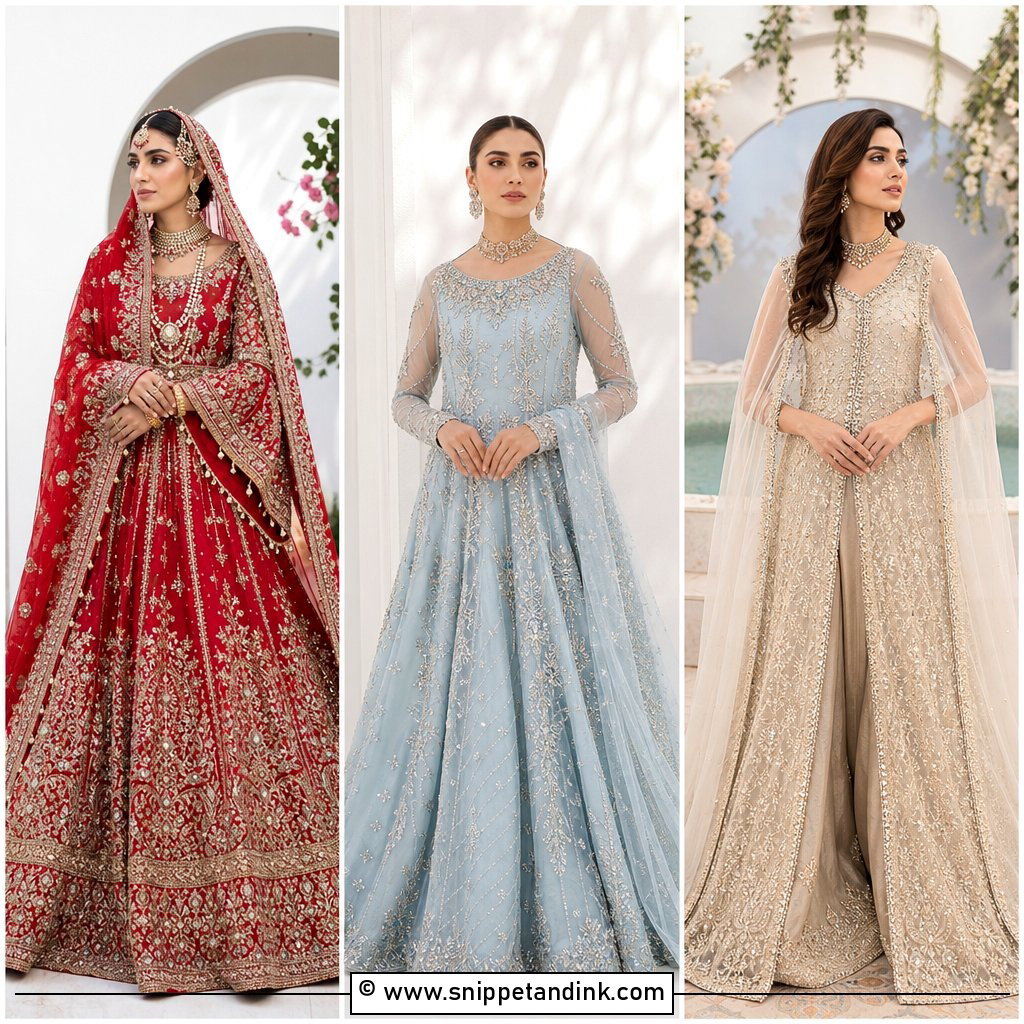
Deep red is still the baraat color that makes grandmothers cry. Raw silk, velvet or jamawar give the skirt enough body to carry zardozi, dabka, tilla and sequins without sagging. Choose a fitted long-sleeve blouse or a waist-length kameez for more coverage. The double dupatta, one over the head with a broad border and a lighter one over a shoulder, frames the face in portraits. Add a matha patti, layered necklace, jhumkas, bangles and khussas. My honest note on weight: a fully embroidered red skirt is heavy enough to tire you by the rukhsati. If you want less load, ask for dense borders and lighter work across the body of the skirt.
2. Maroon Pakistani Bridal Lehenga
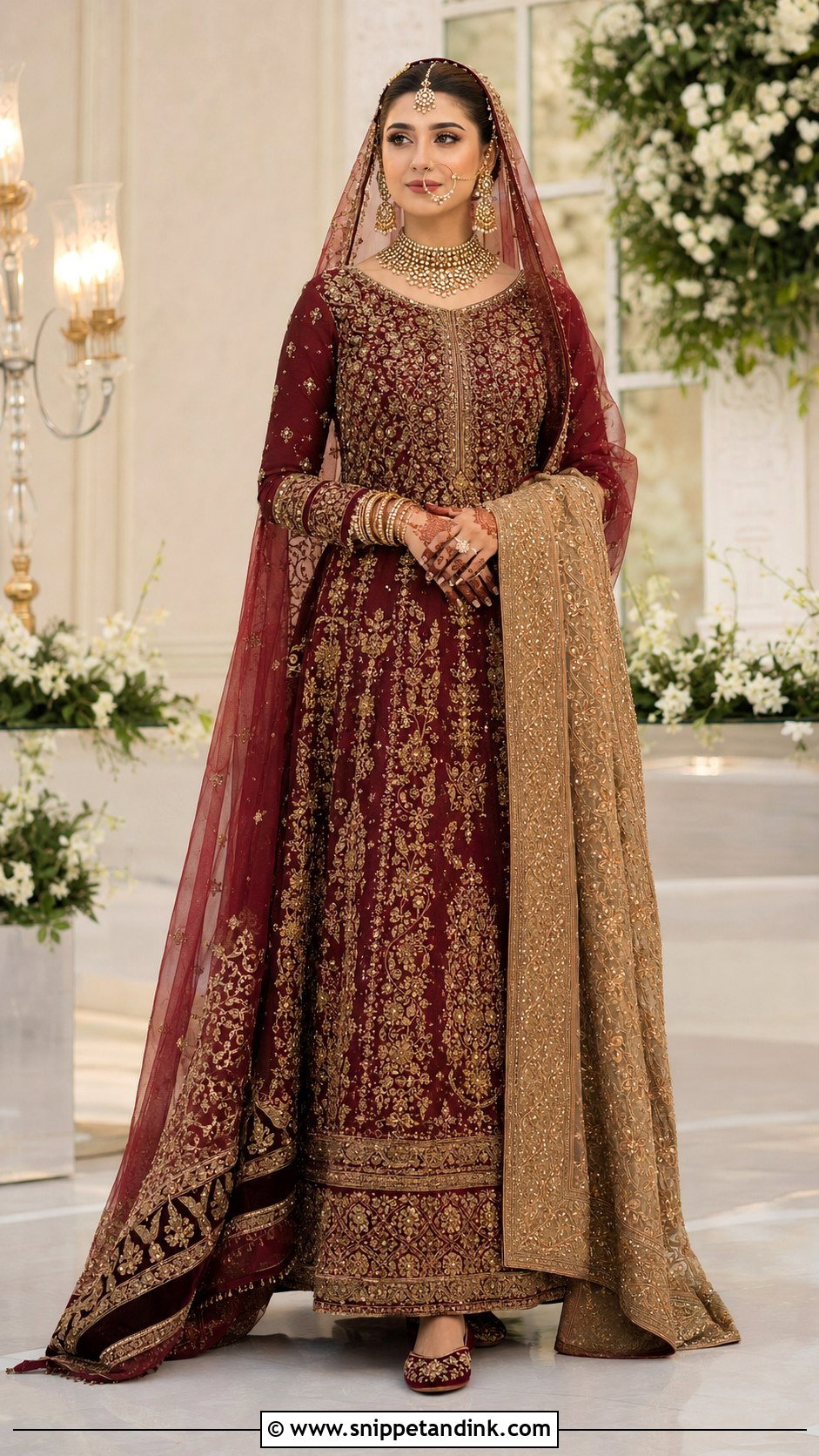
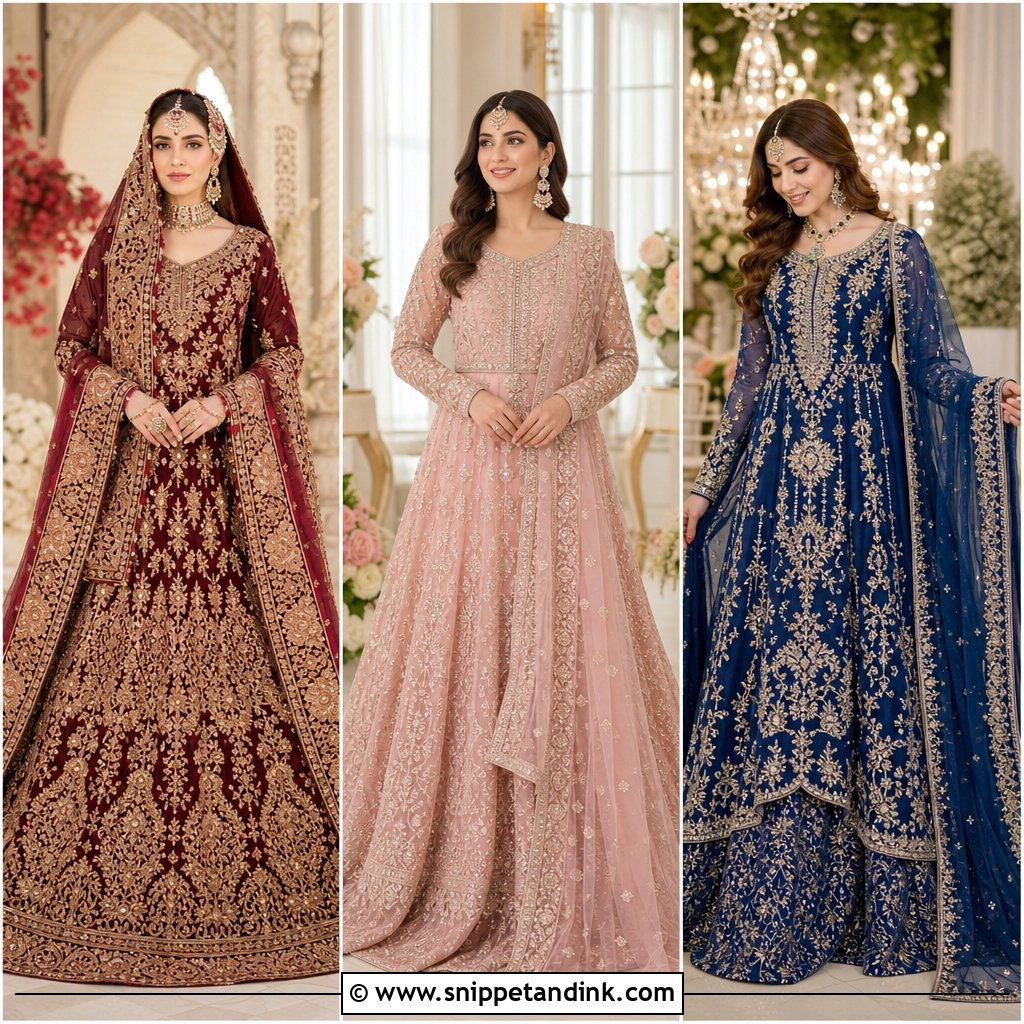
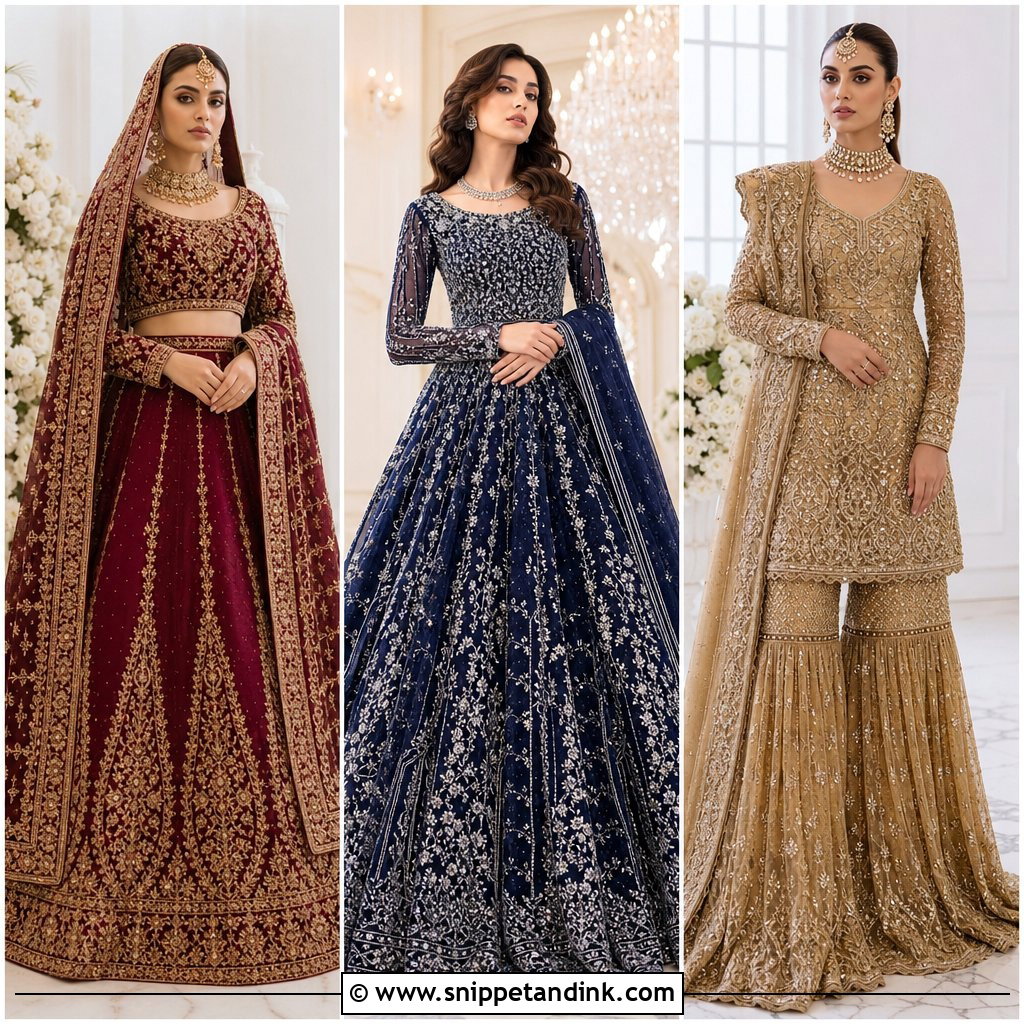
Maroon is what I suggest to brides who love red but find it brightens their skin too much. Build it around a flared lehenga in antique gold embroidery and fine beadwork, with a long matching blouse. A sheer maroon dupatta over the head and a muted gold one across the arms finish the double drape. Antique gold jewelry, a nath, stacked bangles and velvet khussas complete it. Maroon holds its depth under warm evening light and against neutral décor. Ask the tailor to start the flare at the natural waist; extra gathers at the hip add bulk in seated photos.
3. Gold Pakistani Bridal Farshi Lehenga
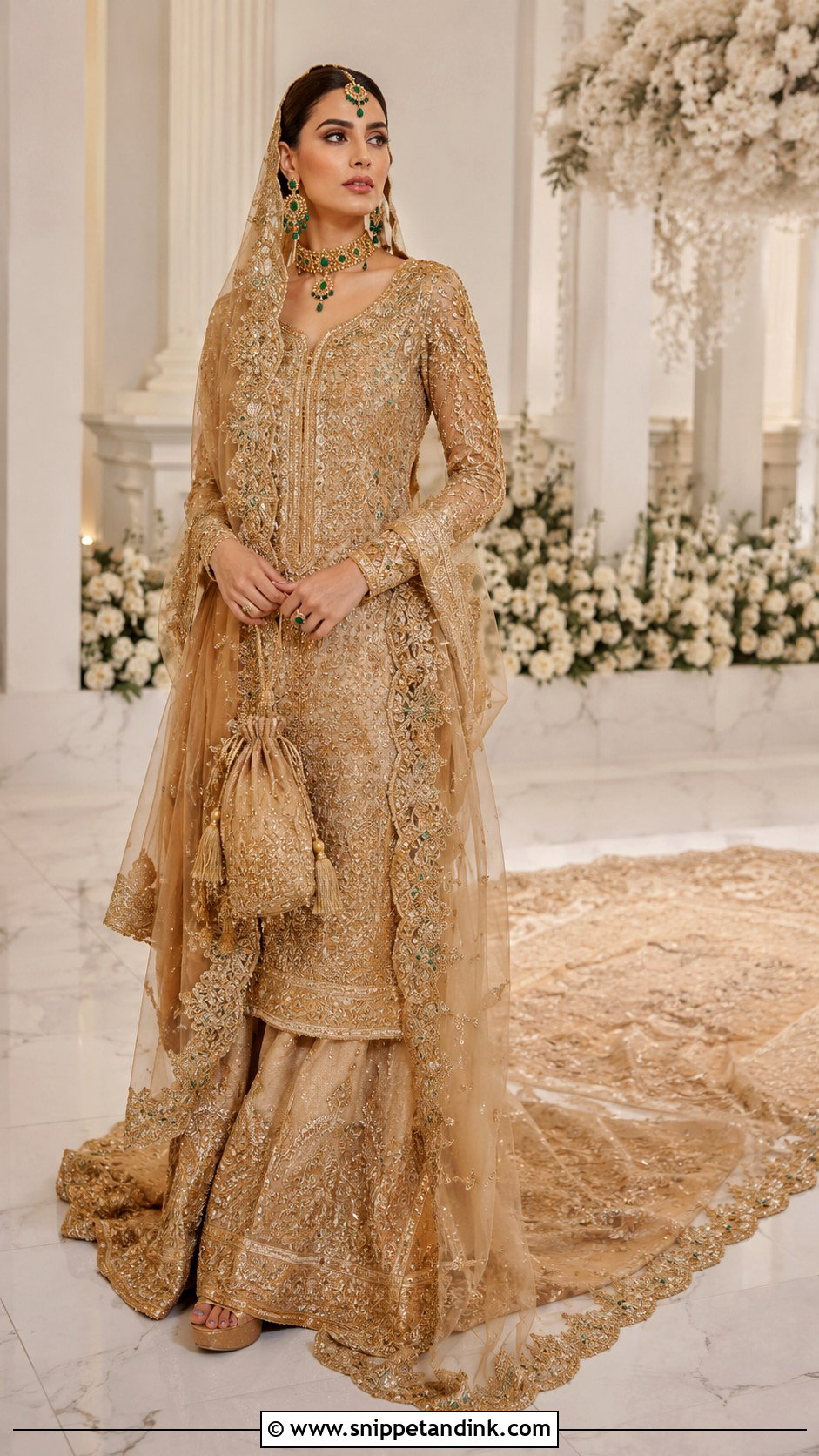
A farshi lehenga pools on the floor, so the bride literally sweeps into the room. Choose champagne, muted bronze or antique gold rather than a mirror-bright metallic, which flares under photography lights. A long straight kameez with zardozi and pearls gives a clean line above the skirt. The trailing hem spreads out in seated portraits, but it also gets stepped on. Practice walking with it, kicking the hem slightly forward with each step, and assign one cousin whose only job is the train. Wear a sheer scalloped dupatta over the head, set back enough to show the neckline. Emerald or kundan jewelry, hidden platform sandals and a small potli complete it.
4. Ivory Pakistani Bridal Pishwas
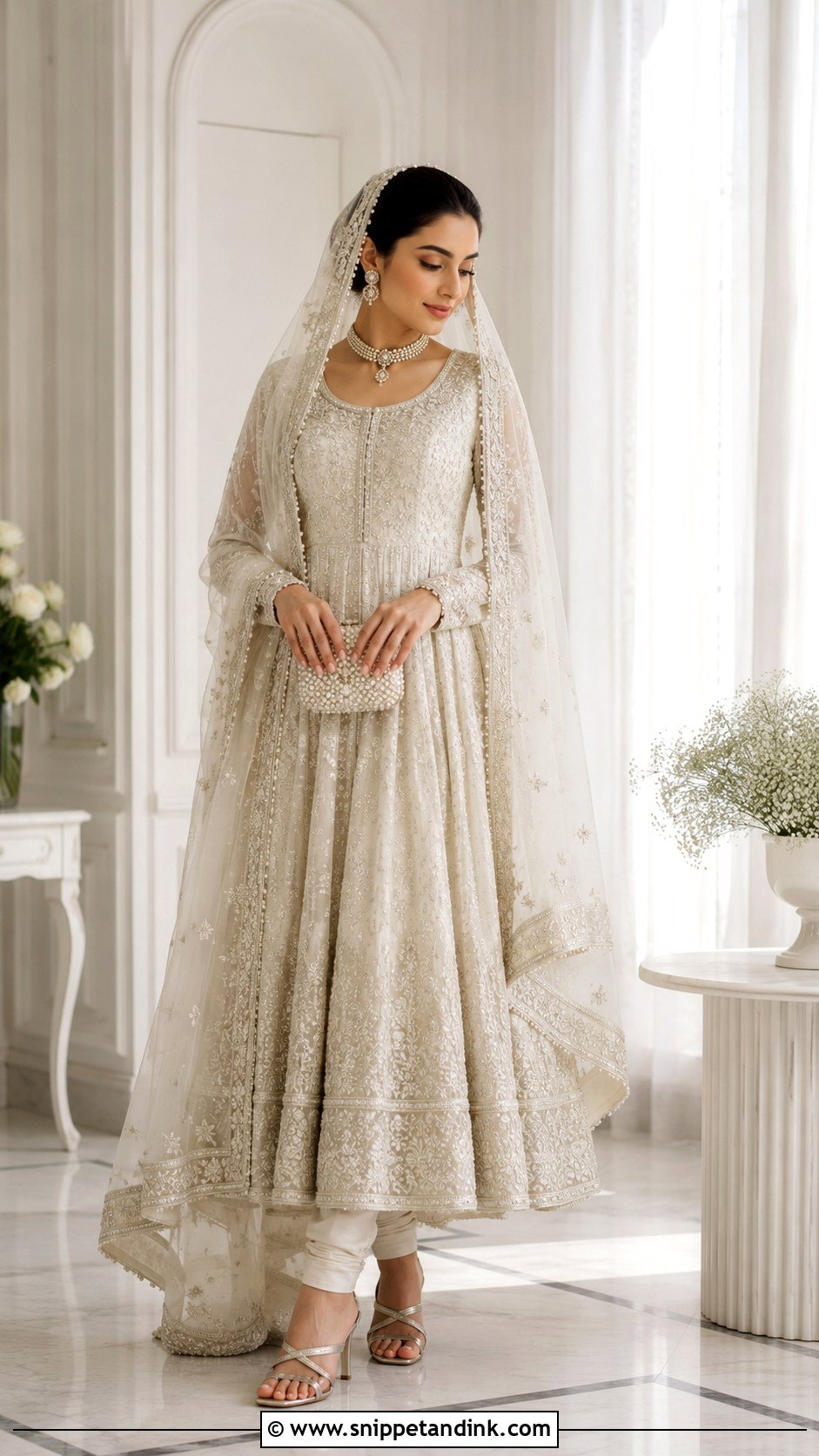
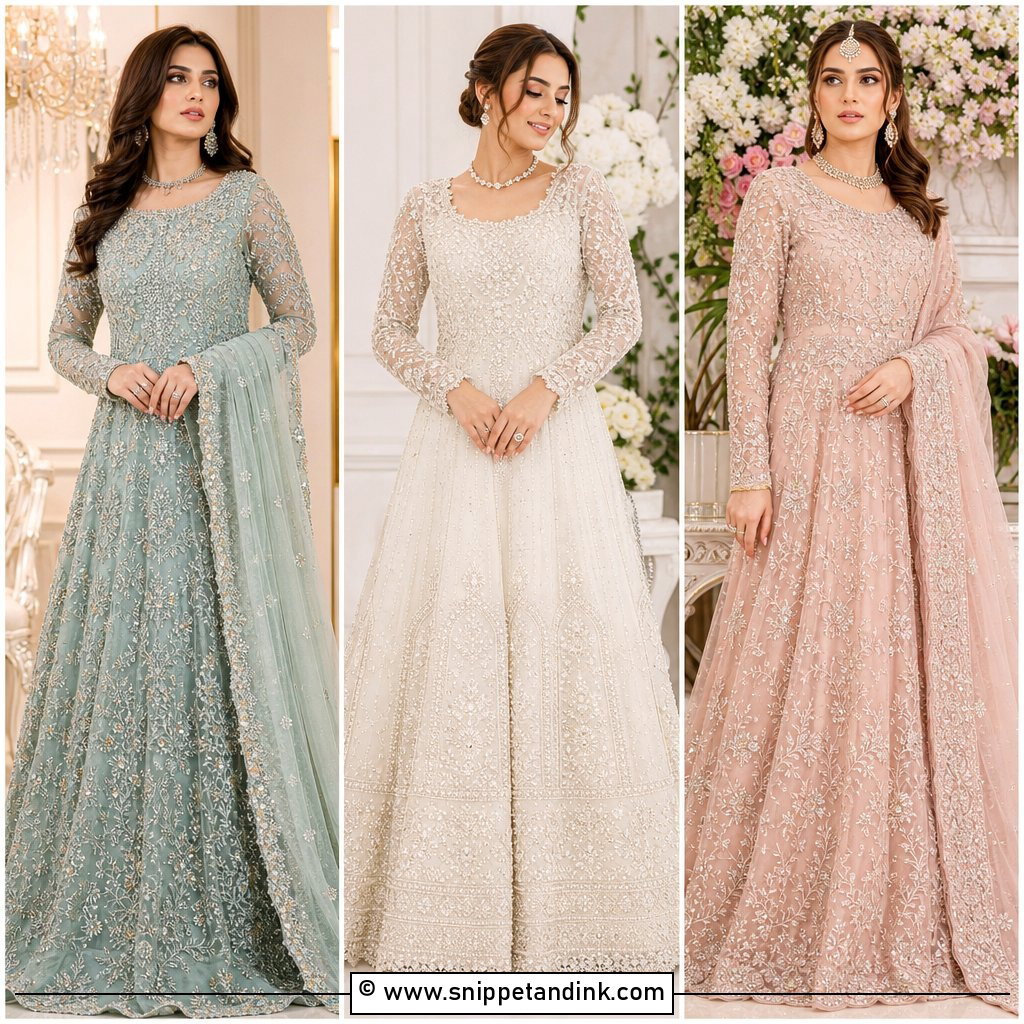
Ivory pishwas suits a nikah, where the mood is quieter and the bride often sits for a long time. Look for a fitted bodice, full sleeves and a wide circular skirt with silver threadwork, pearls, crystals and pale gold motifs. Wear a matching churidar or slim trousers underneath. A sheer ivory dupatta with an embellished edge rests over the head and falls down the back. Pearl jewelry, a small tikka, metallic heels and a beaded clutch finish it. Ivory is the shade that varies most between dye lots, so lay the outfit, lining, dupatta and jewelry side by side under daylight and indoor light before the final payment. Mismatched whites look dirty next to each other in photos.
5. Blush Pink Pakistani Bridal Gown
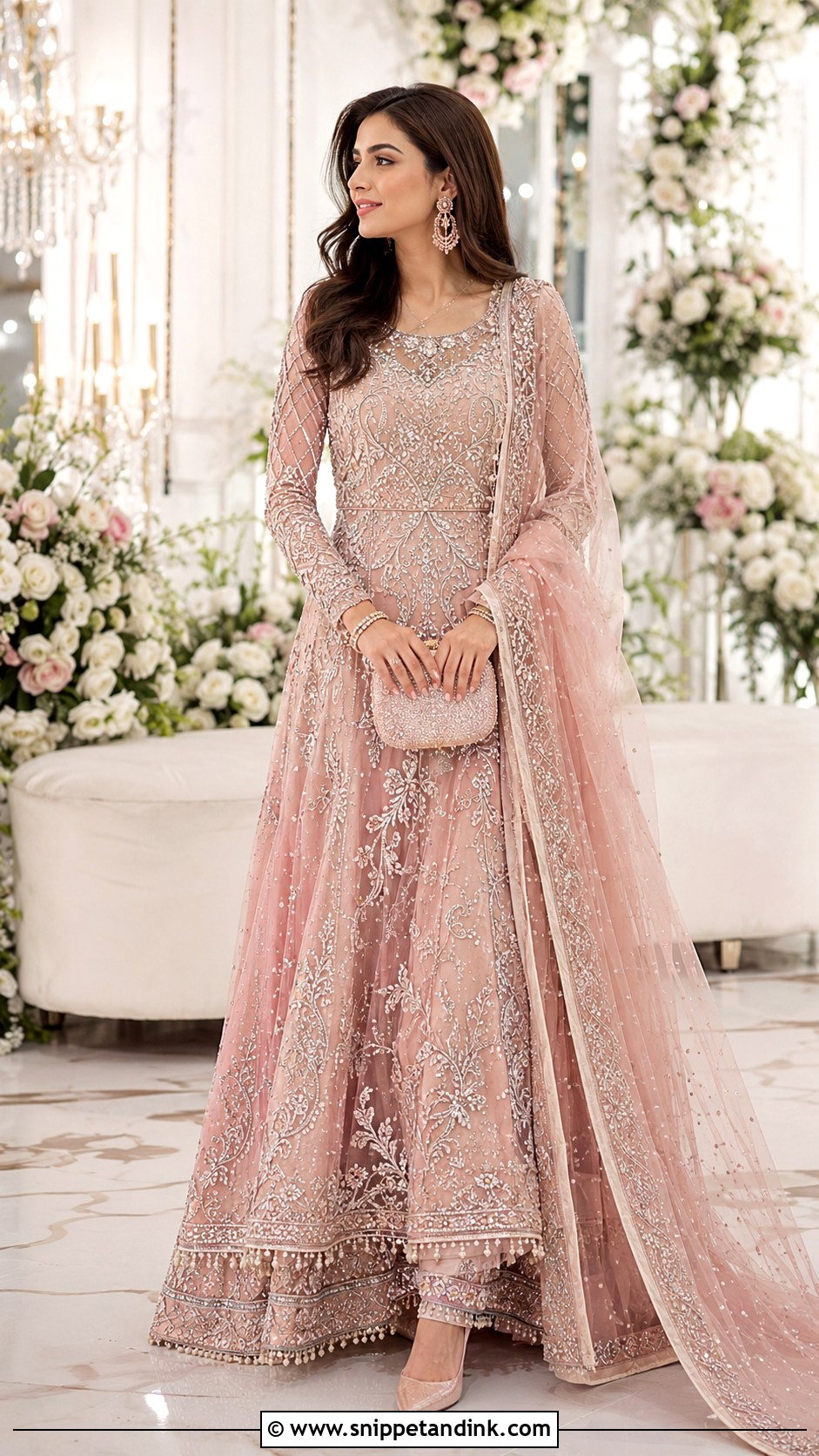
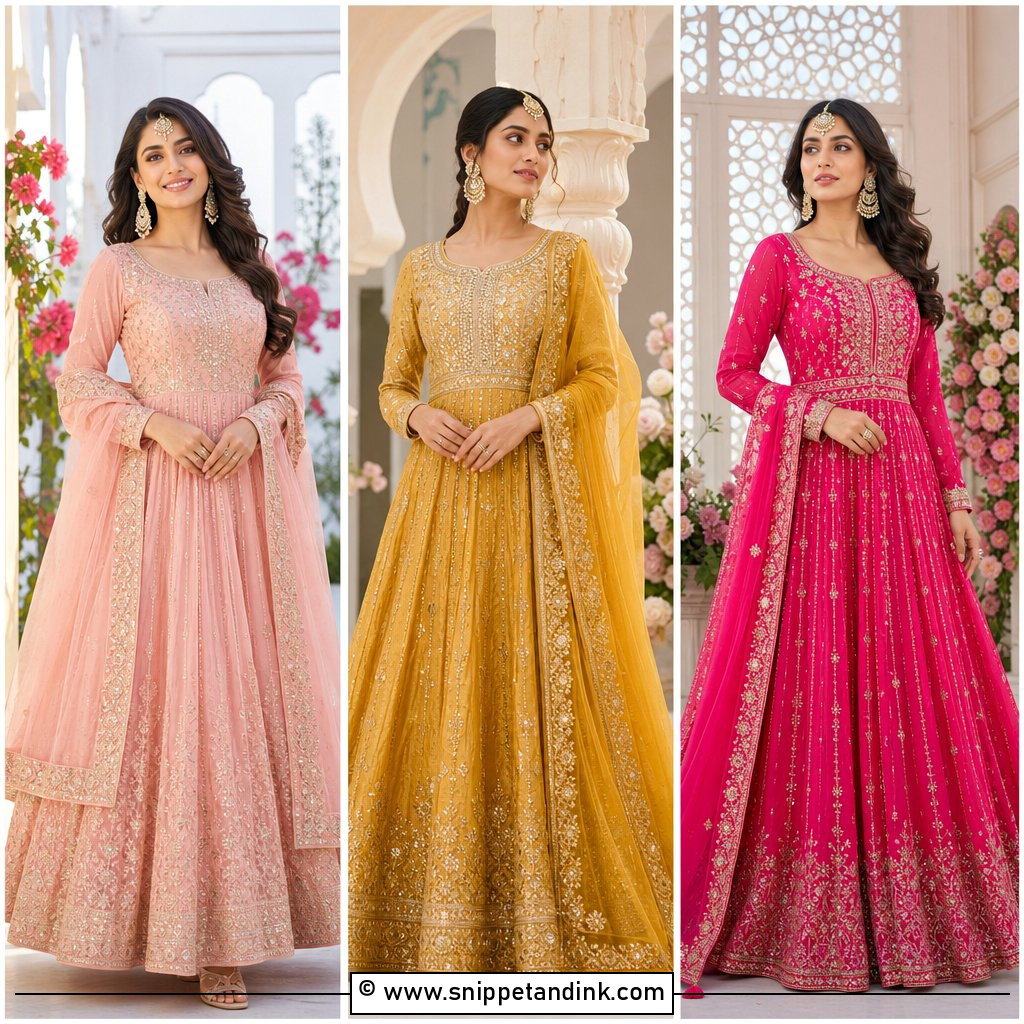
Blush pink is the walima color I see chosen most by brides who want a softer second look. A floor-length gown with a fitted upper half and a gentle flare is easy to walk and receive guests in. Floral embroidery, pearls, silver thread and a few crystals suit the delicate base. Illusion sleeves or embroidered fitted sleeves give coverage. Drape a net dupatta over the head or loosely around the arms. Rose gold jewelry, crystal earrings and metallic heels finish it, with a sleek style or a low bun with small flowers. On a fuller bust, I’d build a structured bodice with a higher neck and a defined waist seam rather than relying on stretch.
6. Pastel Blue Pakistani Bridal Maxi
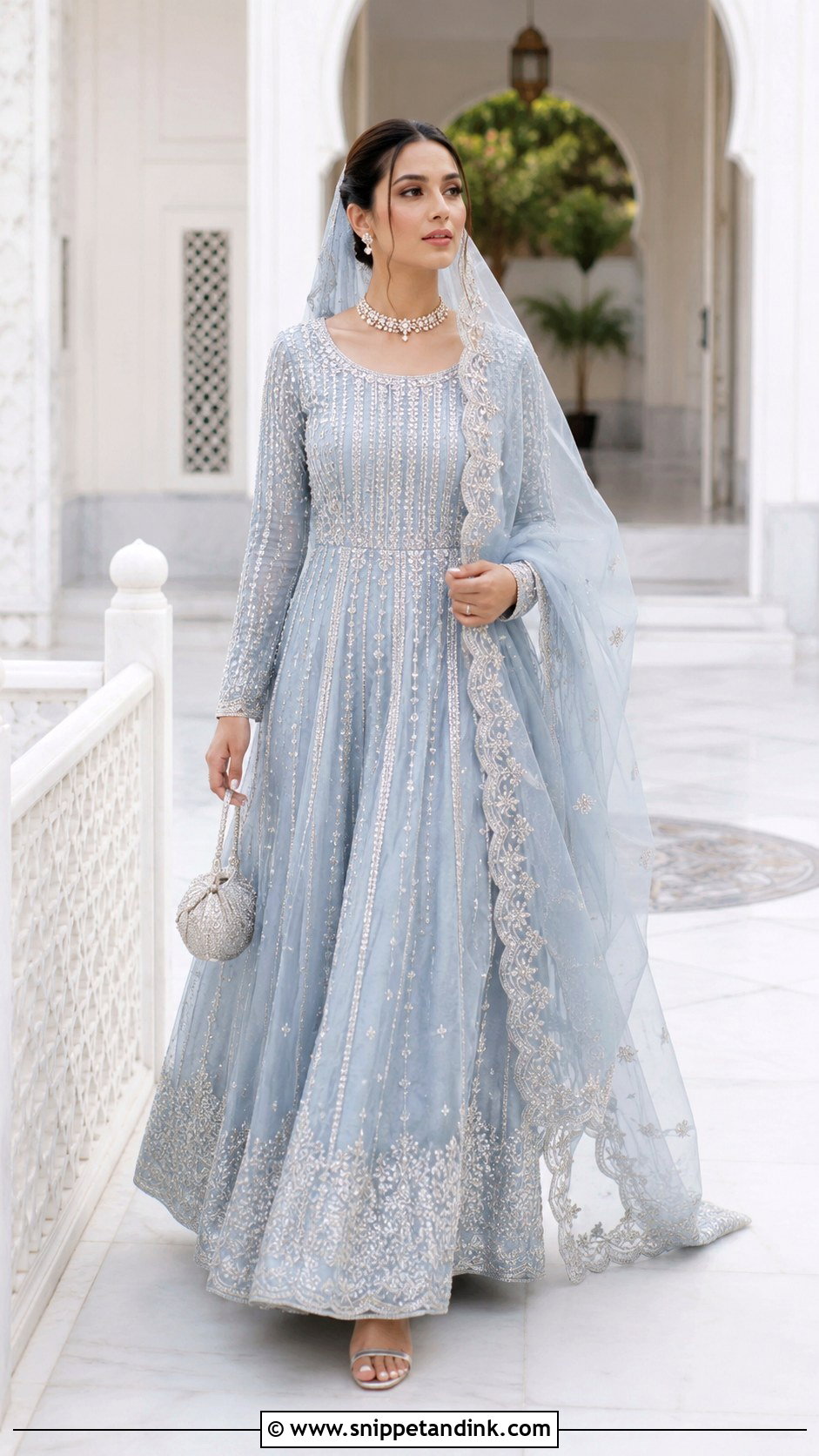
Pastel blue belongs in daylight. For a daytime nikah or walima, a long maxi with a structured bodice and vertical silver or pearl embroidery lengthens the frame while letting the blue show. Pair it with a sheer dupatta edged in narrow scallops. Silver heels, a pearl-and-crystal set and a small metallic bag complete it, with cool-toned makeup and a low bun. Petite brides should keep the flare moderate; taller brides can carry a fuller hem and longer dupatta. Pale blue linings are often thin, and under a photographer’s flash the skirt can turn see-through, so stand in front of a bright window during your fitting and check.
7. Sage Green Pakistani Bridal Lehenga
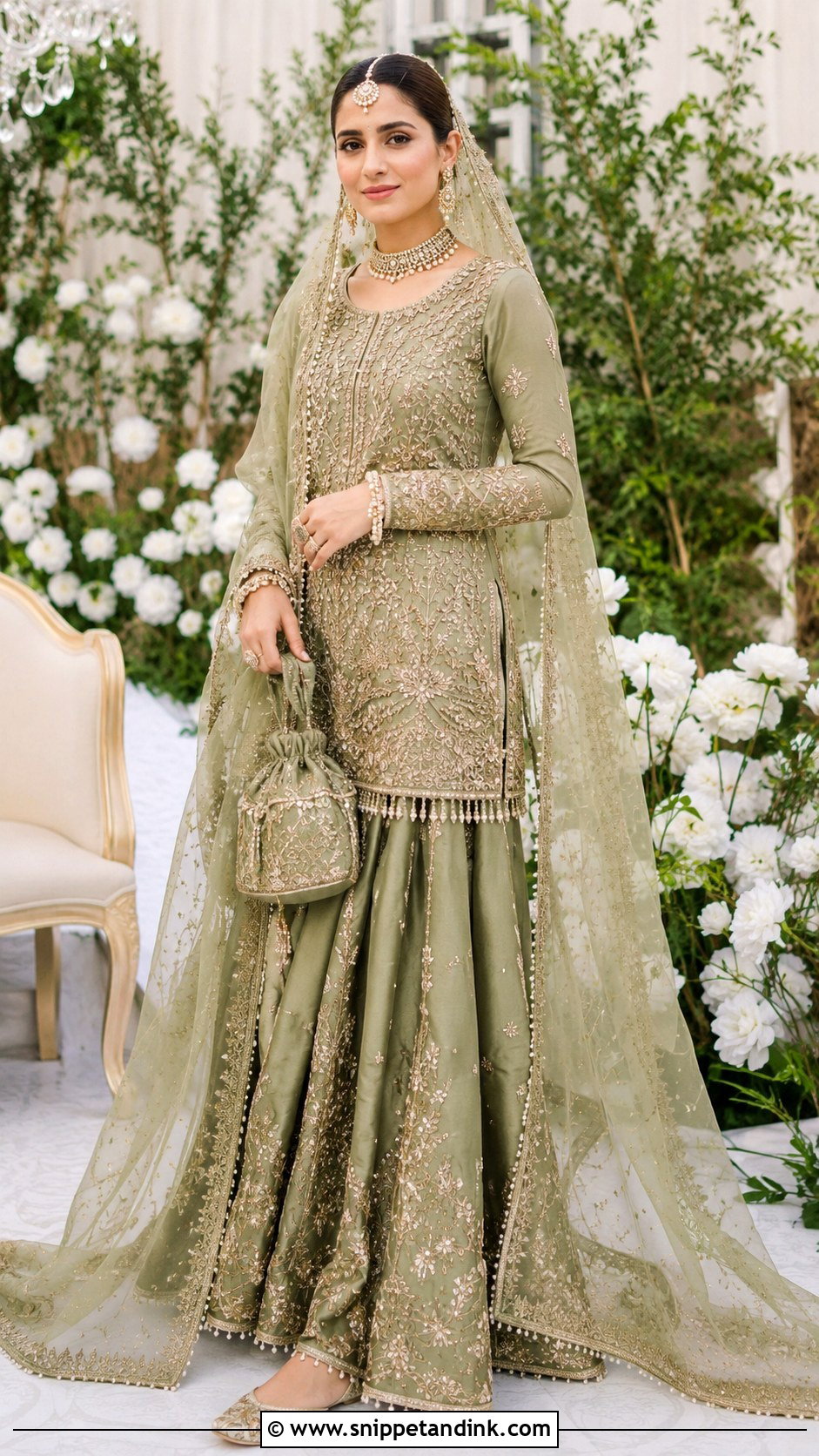
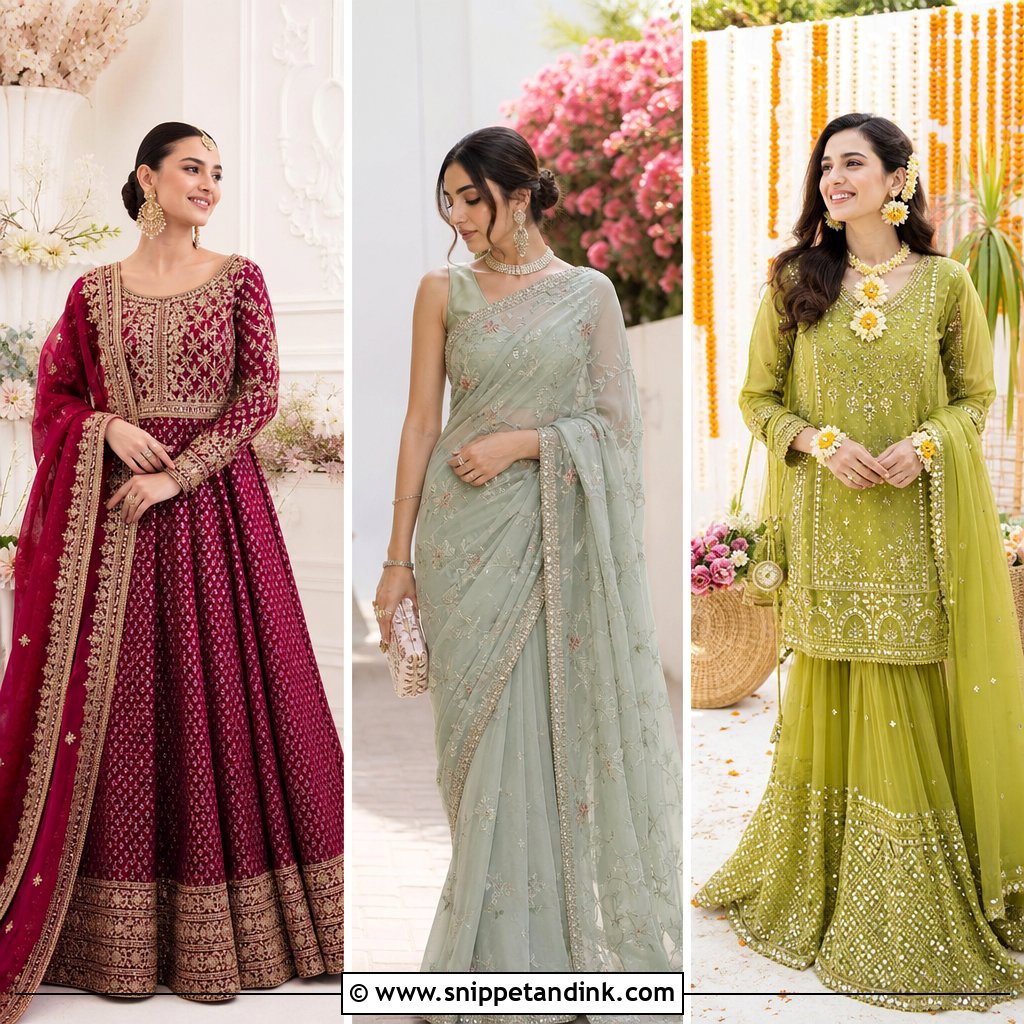
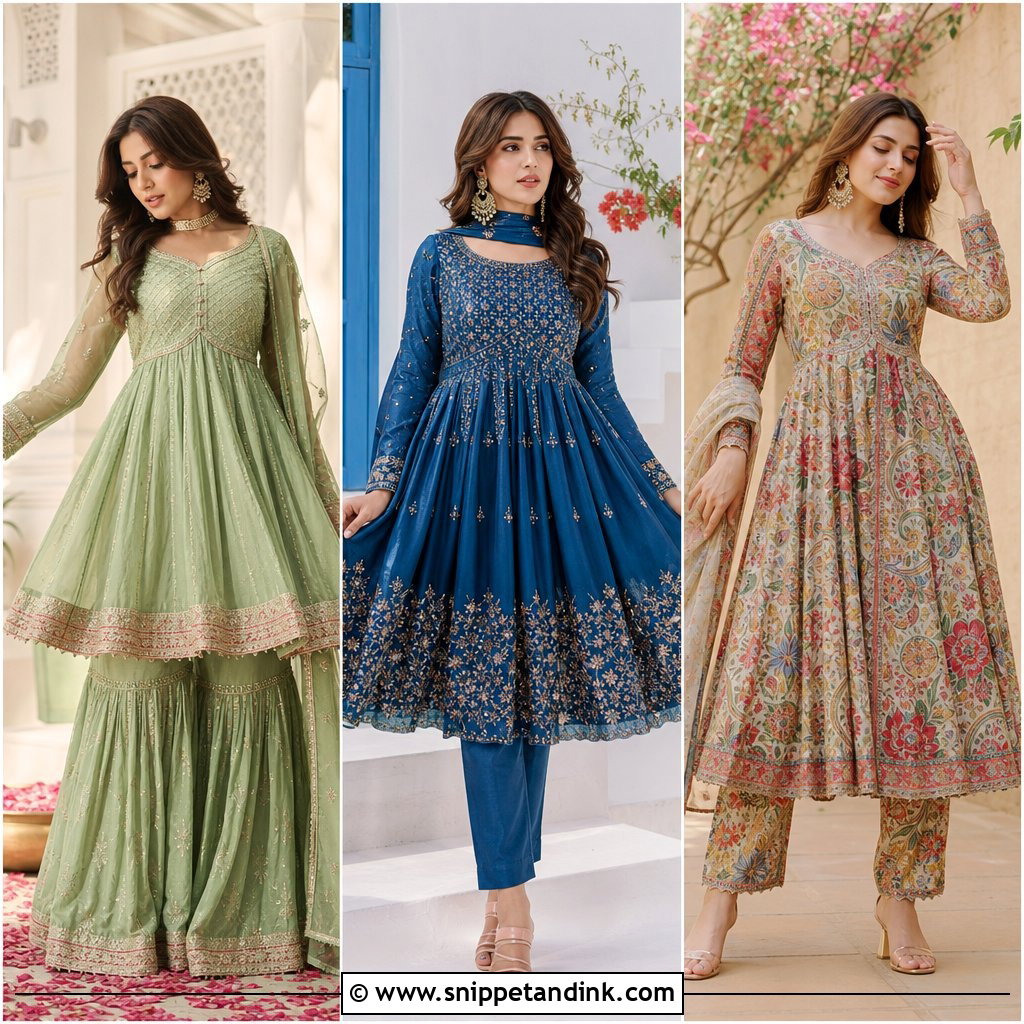
Sage green gives color without the weight of jewel tones, and it’s become a favorite for garden nikahs. Start with raw silk carrying champagne threadwork, tiny pearls and scattered florals. A fitted blouse or hip-length kameez in the same shade keeps the line continuous. Add a translucent organza dupatta with a detailed border, pearl jewelry, gold-and-green bangles, khussas and a structured potli. Peach makeup suits it. Sage shifts toward grey in shade, so I’d only choose it for daylight events. When the embroidery uses several thread colors, repeat just one or two in your jewelry; matching all of them looks like a costume set.
8. Emerald Green Pakistani Bridal Gharara
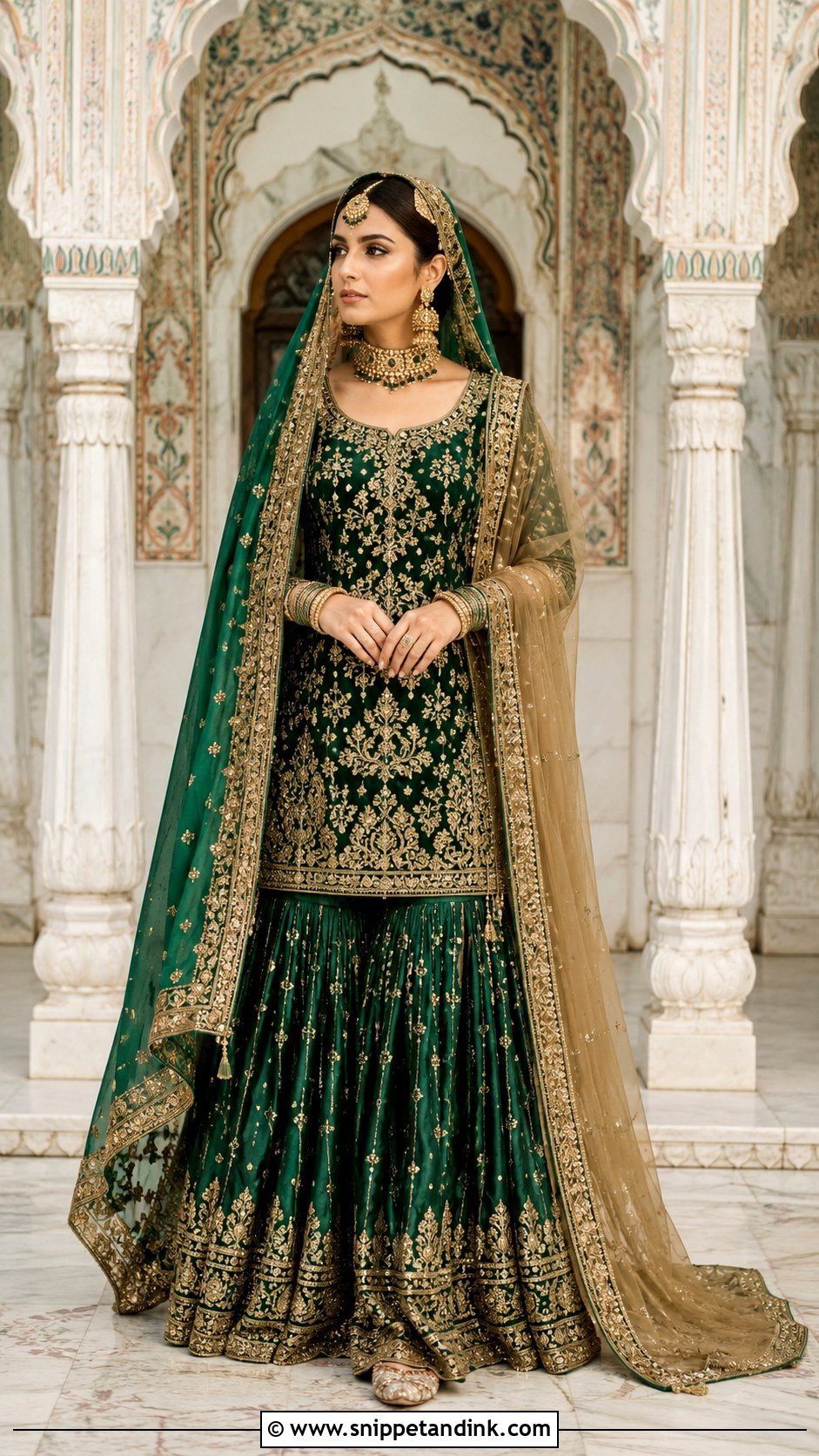
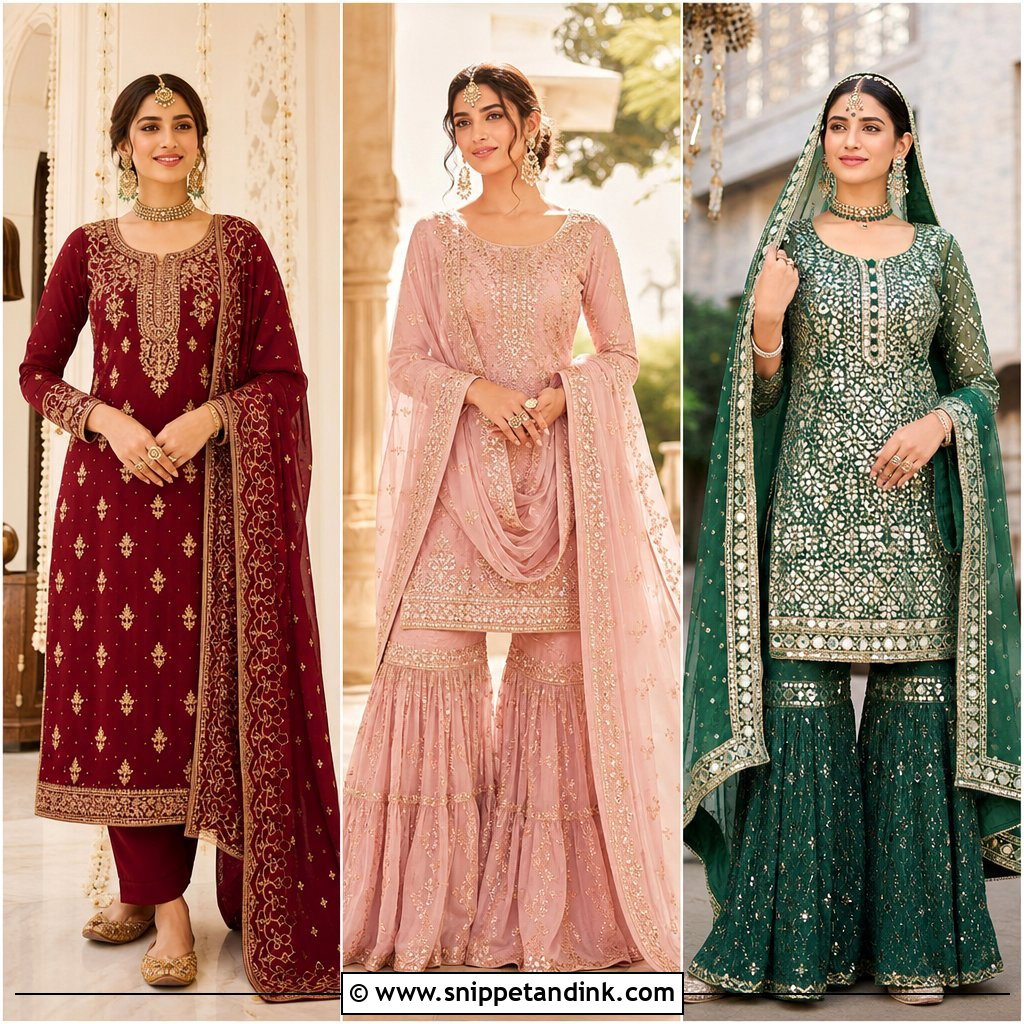
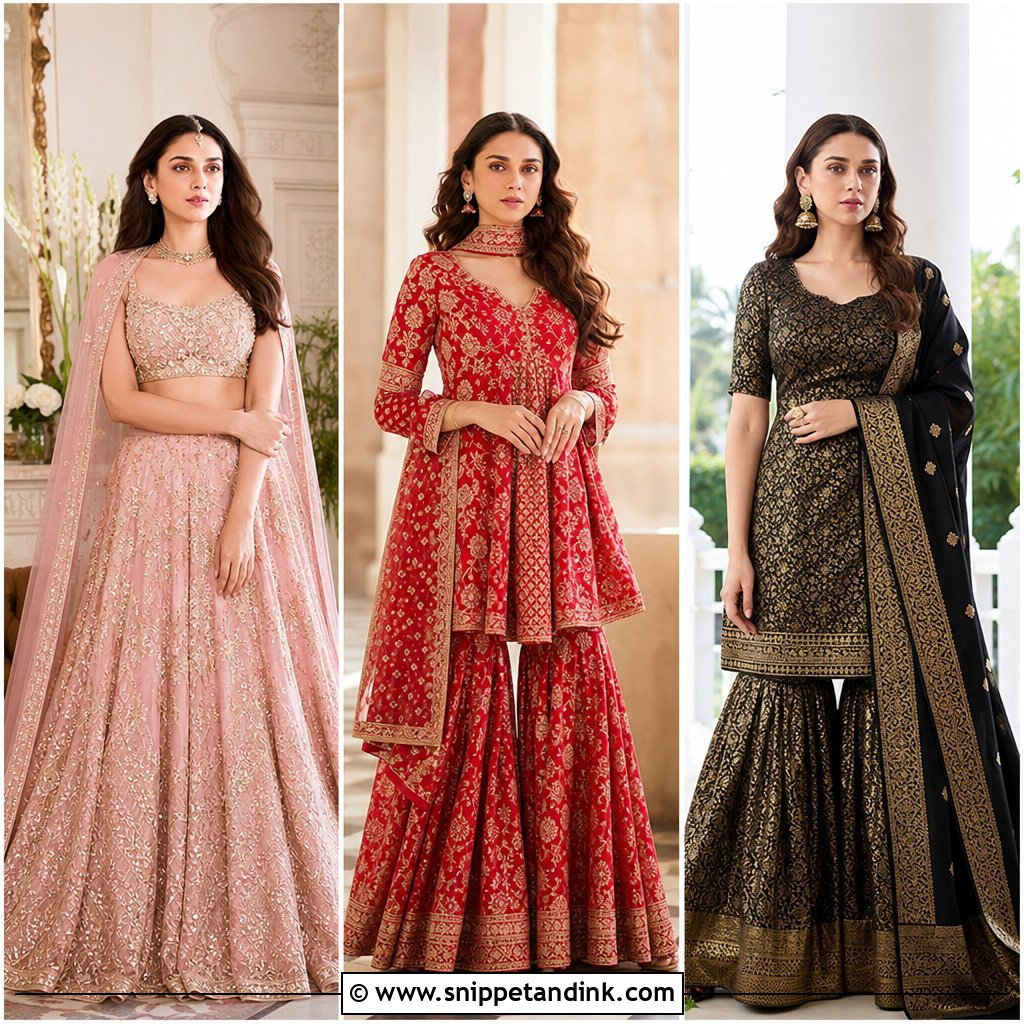
Emerald gives a bridal gharara a regal mood. The gharara is fitted through the thigh and opens into a gathered flare at the knee, usually with a decorated band at the joint. Pair it with a short or mid-length kameez in antique gold dabka, gota and threadwork, and keep that hem above the knee joint, or the whole point of the garment disappears. A green dupatta over the head and a muted gold one across the shoulder, jhumkas, a choker and pointed khussas complete it. It suits nikah, mehndi and small baraats, and brides who dislike a tight lehenga waistband find the drawstring trousers far more comfortable.
9. Mustard Yellow Pakistani Bridal Sharara
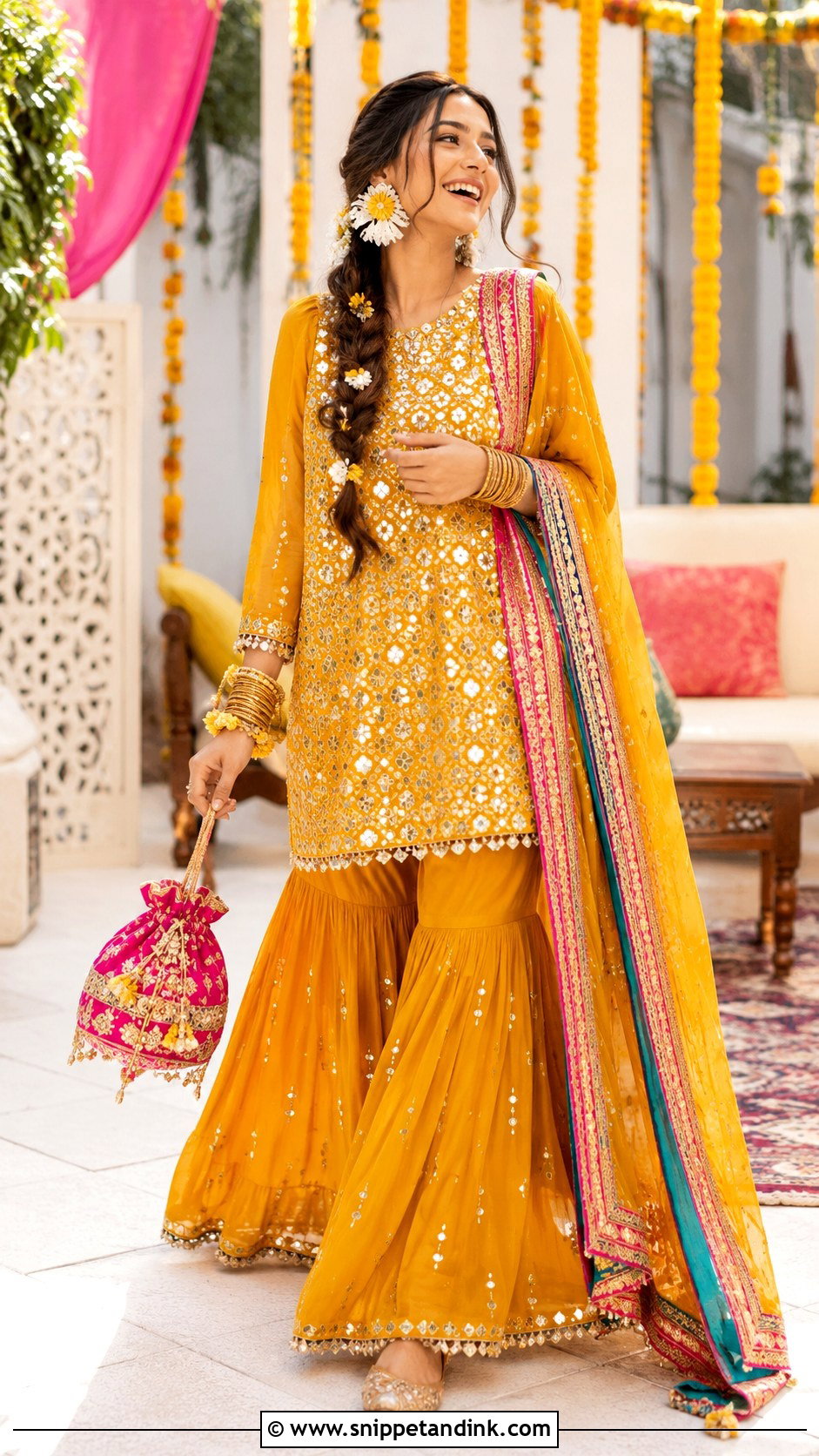
Mustard is the classic mehndi color because it reads bright and joyful without competing with the baraat red. A short embroidered kameez with a wide sharara flows freely to the floor. Multicolor threadwork, mirrors, gota and small florals all suit the occasion. Pick one contrasting dupatta, green, pink or orange, not all three. Floral jewelry, gold jhumkas, bangles and flat khussas make dancing easy, with a braid threaded with flowers. Mirror work catches on dupattas and hair, so I keep mirrors off the shoulders. Ask for a soft waistband and cotton lining if the event is outdoors in summer.
10. Multicolor Pakistani Bridal Mehndi Lehenga
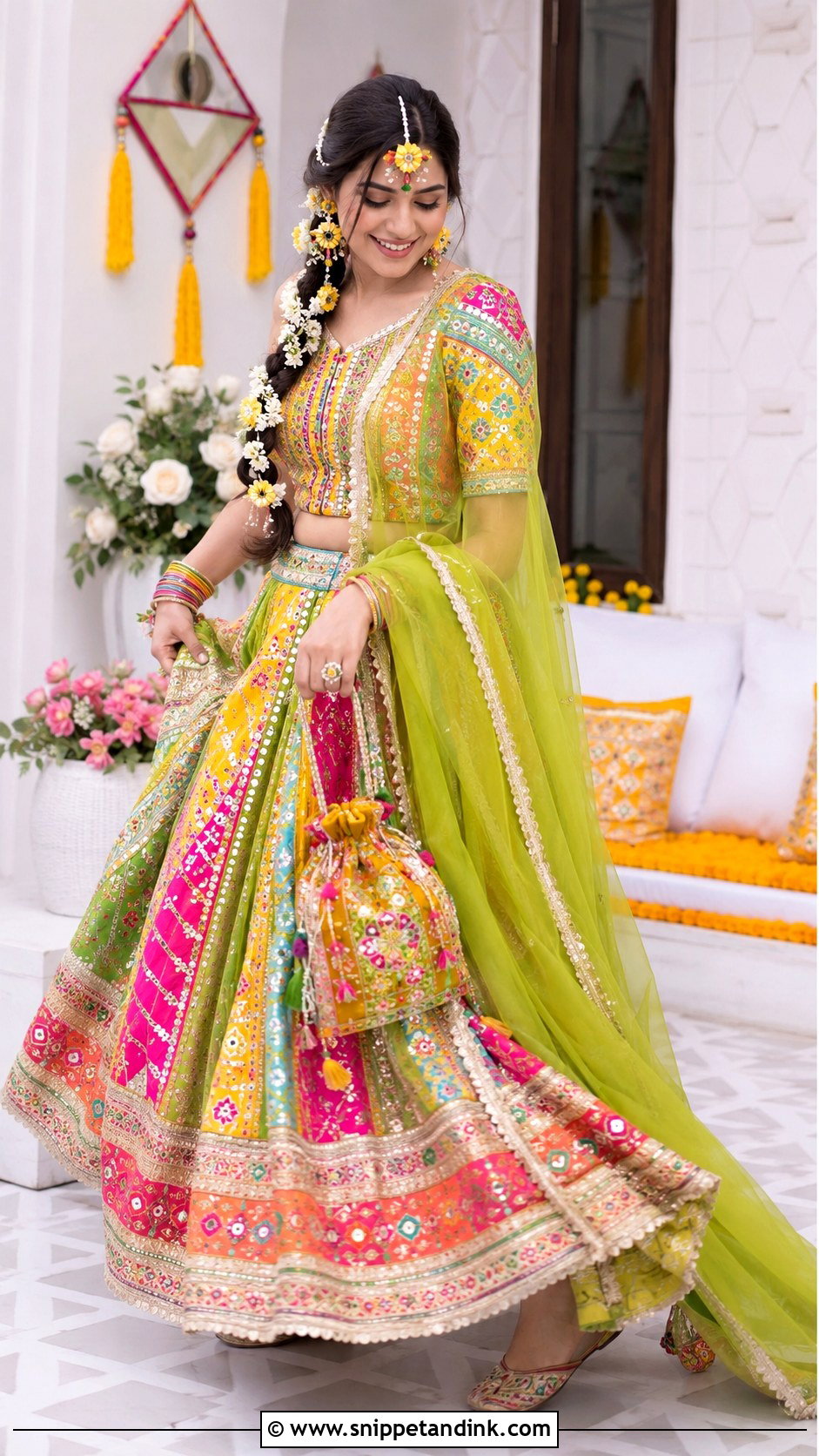
Multicolor mehndi lehengas are fun until they turn chaotic. Begin with a green, yellow or turquoise base and embroidered panels in pink, orange, purple and gold. Pair a fitted blouse or cropped kameez in one dominant color from the skirt. A light dupatta with gota trim keeps it festive. Floral earrings, stacked bangles, a decorated parandi braid, a potli and comfortable khussas finish it. My rule is three or four colors repeated across the outfit, no more. Vertical panels lengthen; a broader flare adds volume. Pin the dupatta at the shoulder and loop it at the wrist before the dholki starts.
11. Coral Pakistani Bridal Peplum Lehenga
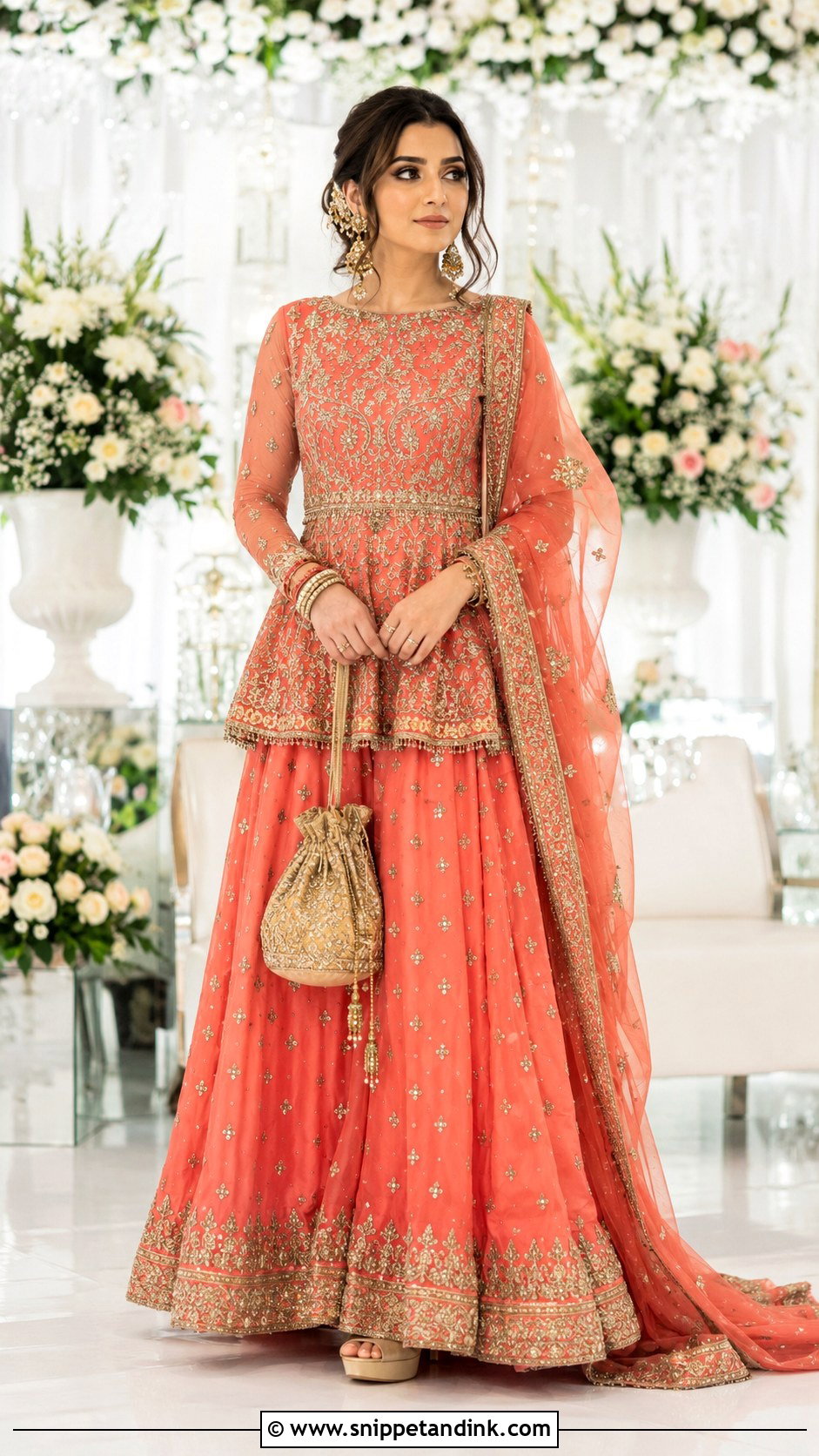
Peplum tops bring a little structure to a coral lehenga. The peplum fits at the waist and flares over the upper skirt, so the hem placement matters: just at the upper hip is the most flattering on almost everyone. Too long and it cuts the leg line; too short and it looks like a frill. The skirt needs enough volume to balance the top, with gold embroidery, light sequins and a clean border. Wear a sheer coral dupatta over a shoulder, or over the head for the ceremony. Gold earrings, a statement ring, bangles, platform heels and a small potli complete it. On fuller hips, a soft peplum flare works better than a stiff one.
12. Burgundy Pakistani Bridal Anarkali
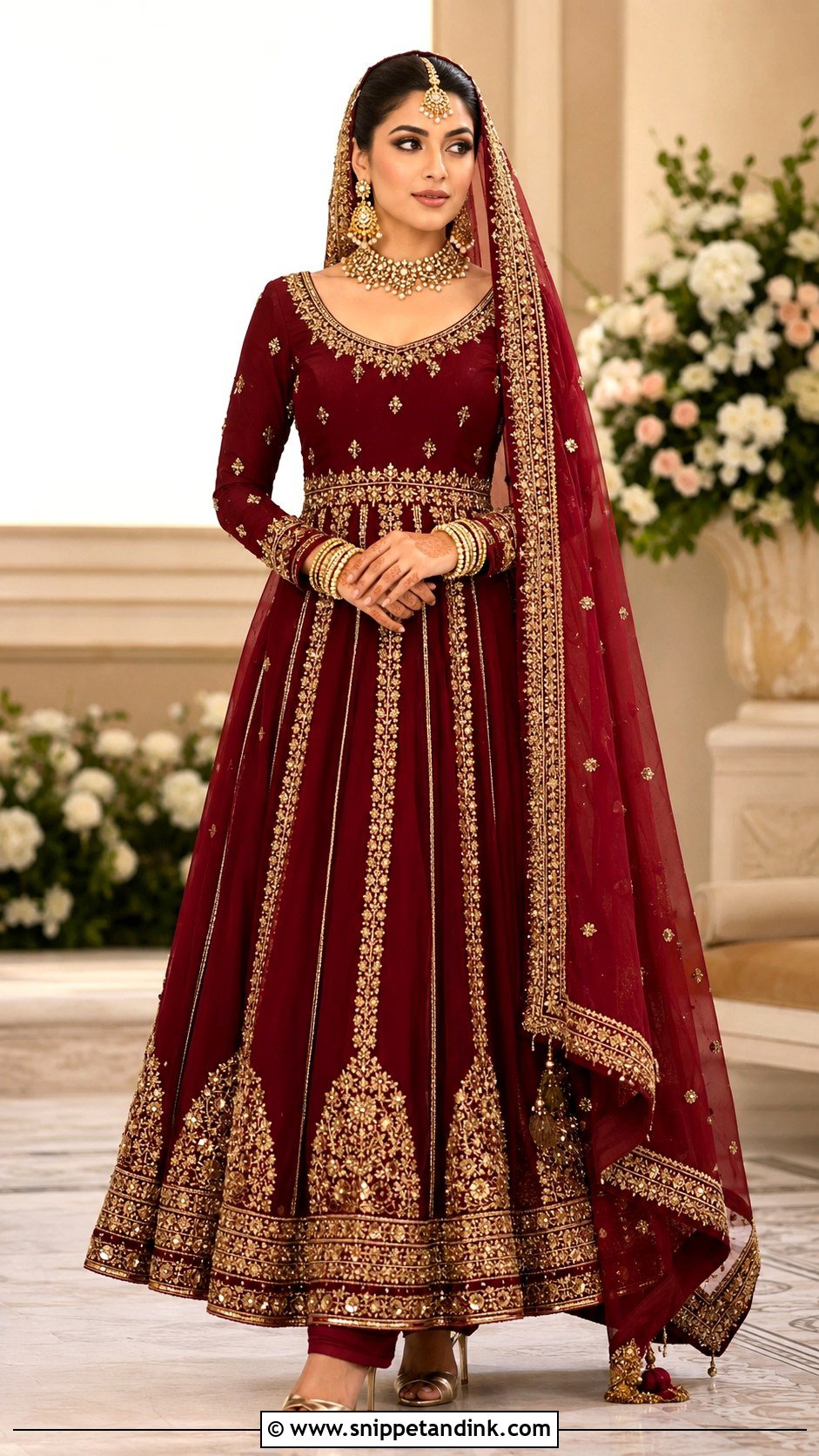
Burgundy Anarkalis give coverage and movement in one piece. The bodice is shaped, the sleeves fitted and the panels open gradually below the waist. Antique gold embroidery at the neck, cuffs and hem lets plain fabric show off the depth of the color. Wear slim churidars and a matching dupatta with a broad border, plus kundan, a centered tikka, bangles and metallic heels. Vertical embroidery on the panels suits petite and plus-size brides alike. What usually goes wrong is the lining: Anarkalis with several layers of can-can and thick lining feel bulky and hot. Ask for one soft lining layer instead.
13. Champagne Pakistani Bridal Saree
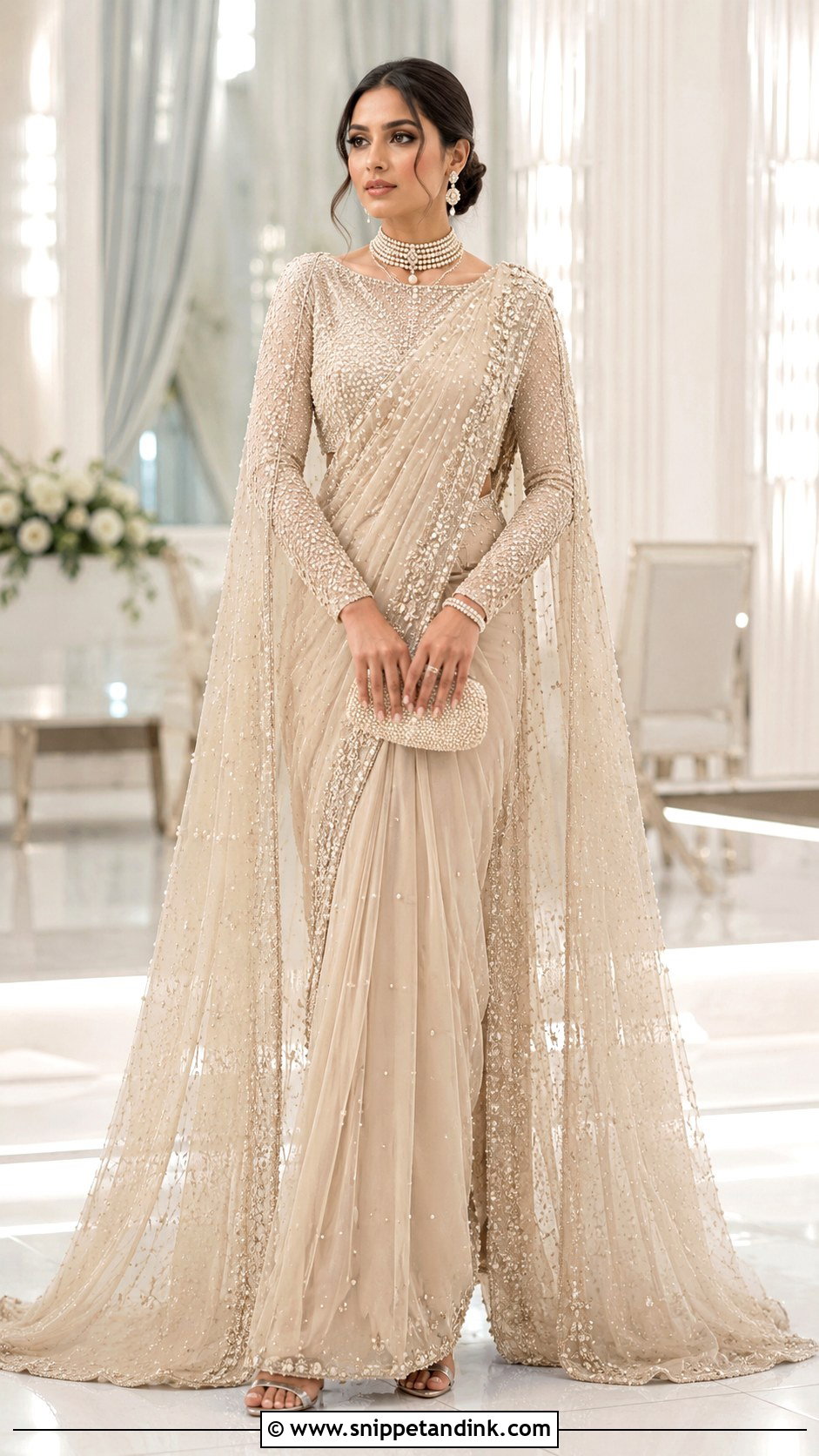
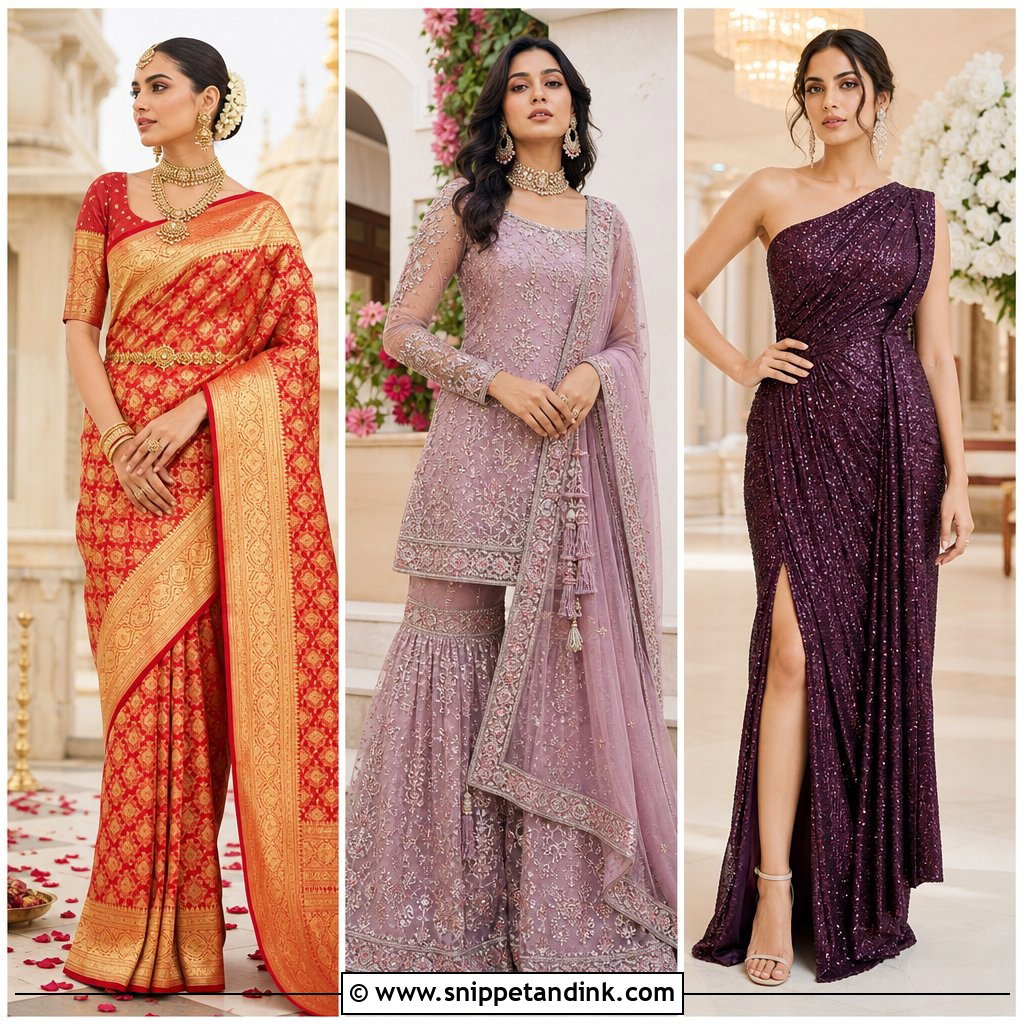
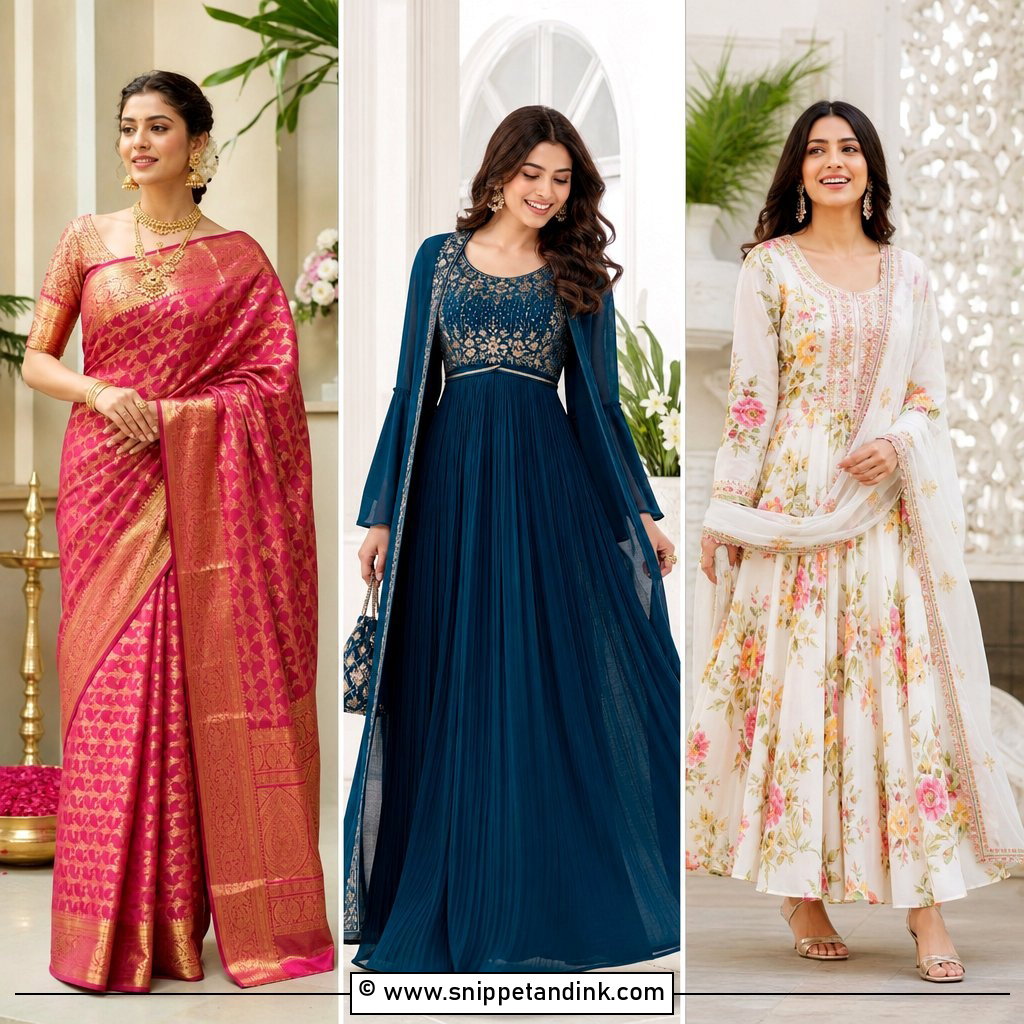
Sarees are rarer at Pakistani weddings, which is exactly why a champagne one stands out at a walima. Organza or tissue silk holds a crisp drape and shows fine pearl embroidery and silver thread. Pair it with a supportive blouse, with full sleeves, a higher neck or a longer hem if you prefer coverage. Tissue frays where pins go through, so use small brooch-backed pins and set the pleats only once. A pearl choker, drop earrings, a bracelet, metallic heels and an embellished clutch complete it. A low bun keeps the drape the focus. A sheer cape or longer veil adds coverage if you need it.
14. Silver Pakistani Bridal Cape Gown
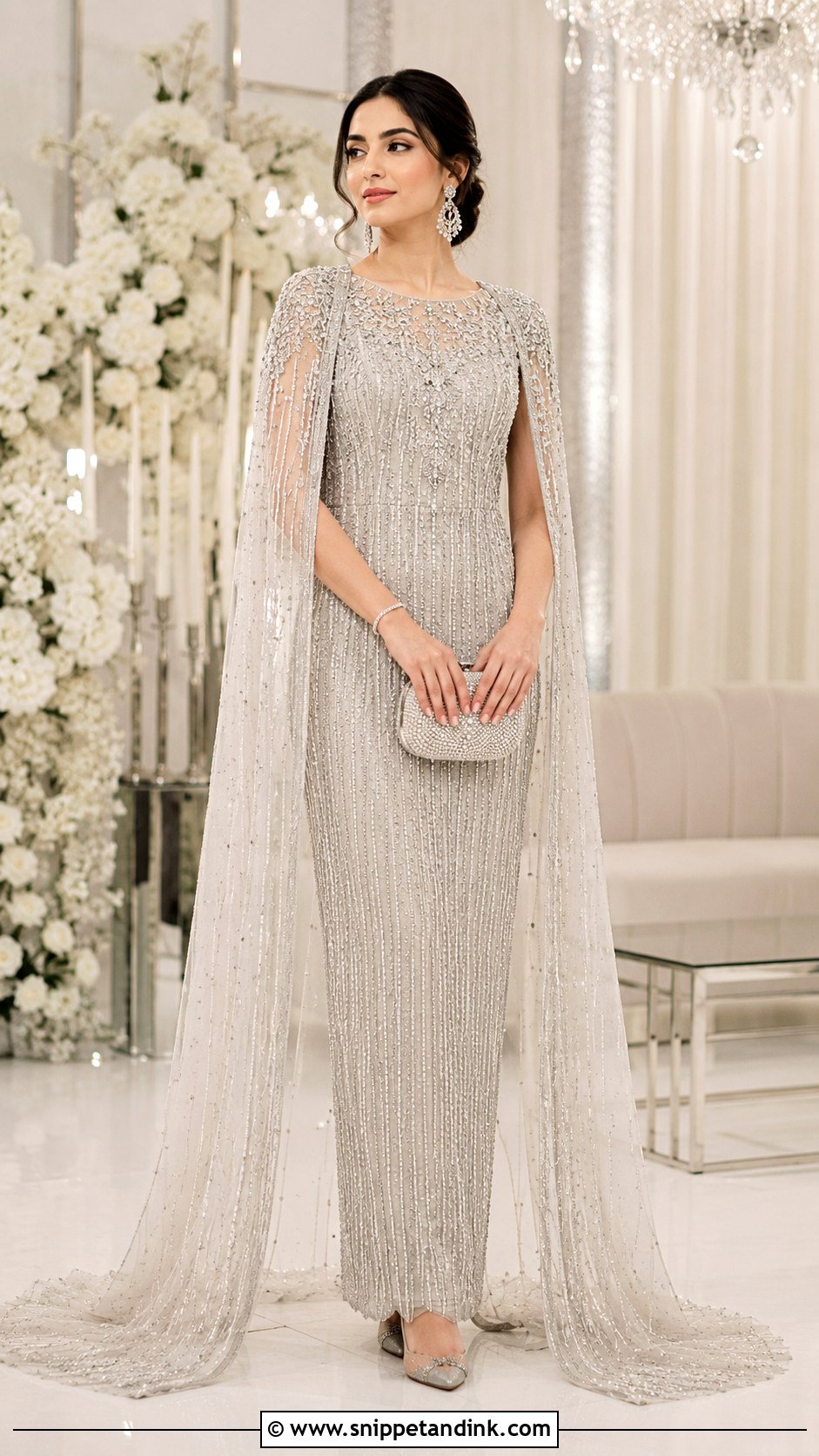
A silver cape gown is the most modern look here, built for walimas held in hotel ballrooms. Choose a fitted floor-length gown with vertical crystal, pearl and thread embellishment, then a sheer cape from the shoulders that falls behind like a light veil. The cape should frame the gown, not hide its work. Crystal earrings, a slim bracelet, pointed silver heels and a beaded clutch are enough; wear your hair smooth and off the shoulders. Capes slide backward as you move, so I have them stitched or hooked at the shoulder seam rather than just laid on. For modest styling, choose a fully lined bodice, long sleeves and a fuller cape.
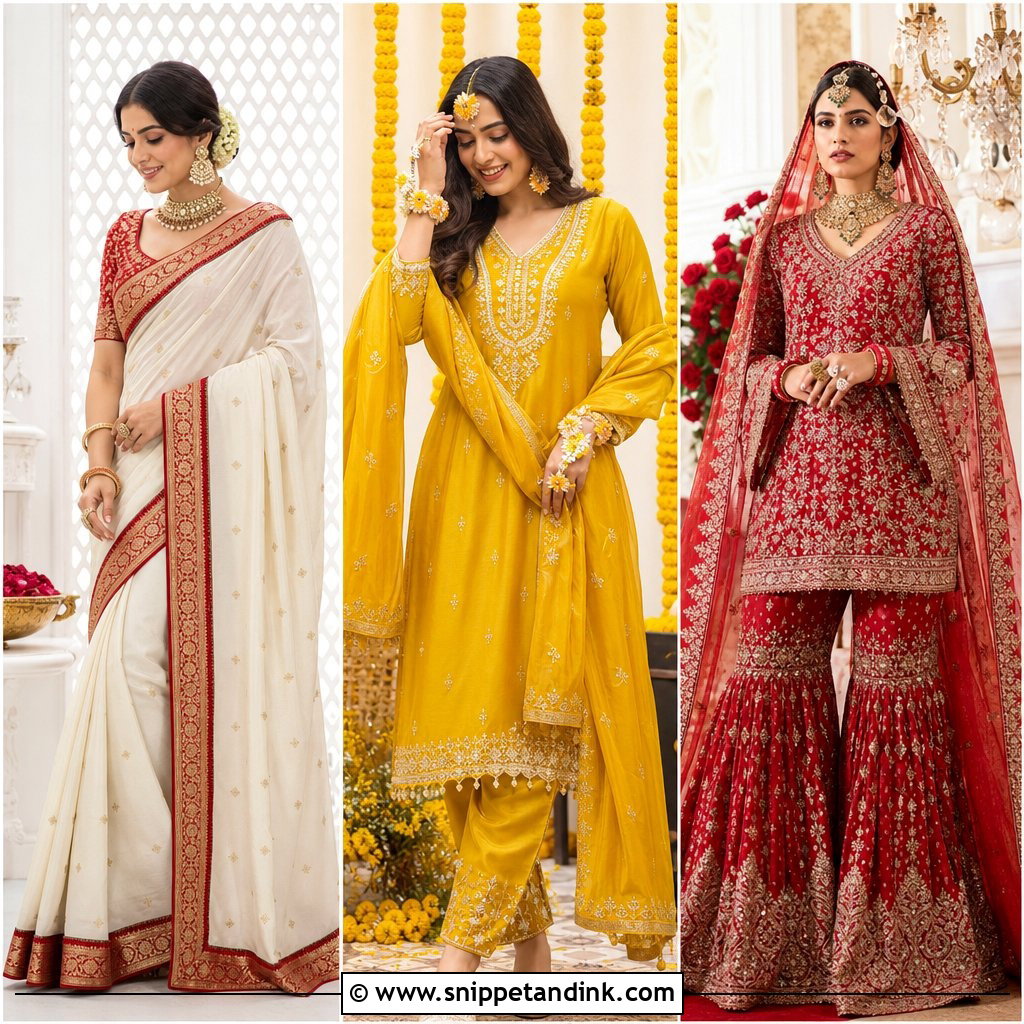
15. Peach Pakistani Bridal Sharara
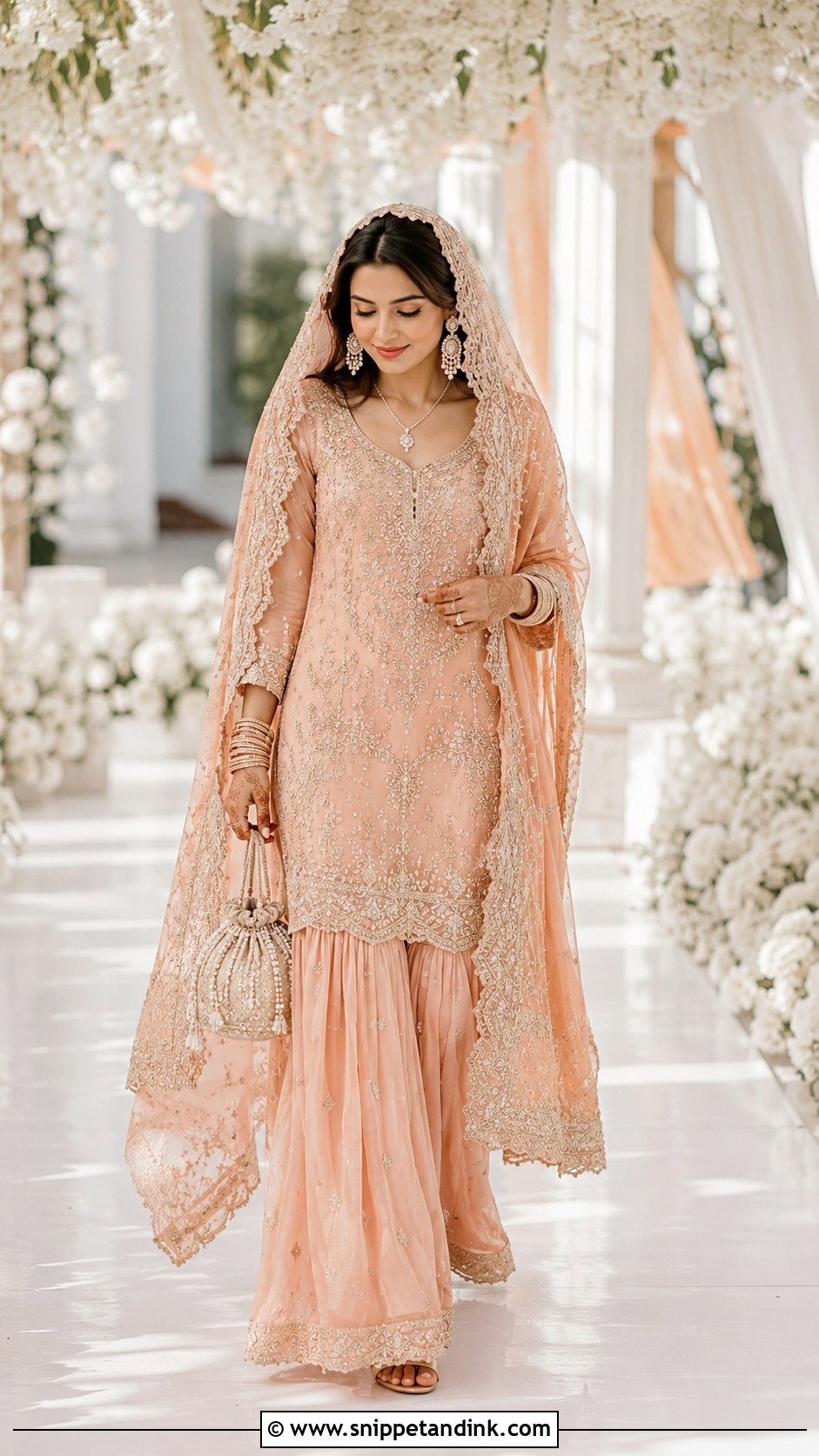
Peach gives a bridal sharara a light, romantic tone for a nikah, engagement or daytime walima. Pair a knee-length kameez with wide sharara trousers in organza, silk or a lightly structured fabric. Champagne embroidery, pearls and small florals keep the palette soft. Wear a sheer scalloped dupatta over the head or across both arms. Pearl earrings, a fine necklace, bangles, metallic sandals and a beaded potli finish it. Keep the kameez straight to balance the trouser width. The sharara hem should just reveal your shoes as you walk; any longer and you’ll be lifting it on every step.
16. White And Gold Pakistani Bridal Gharara
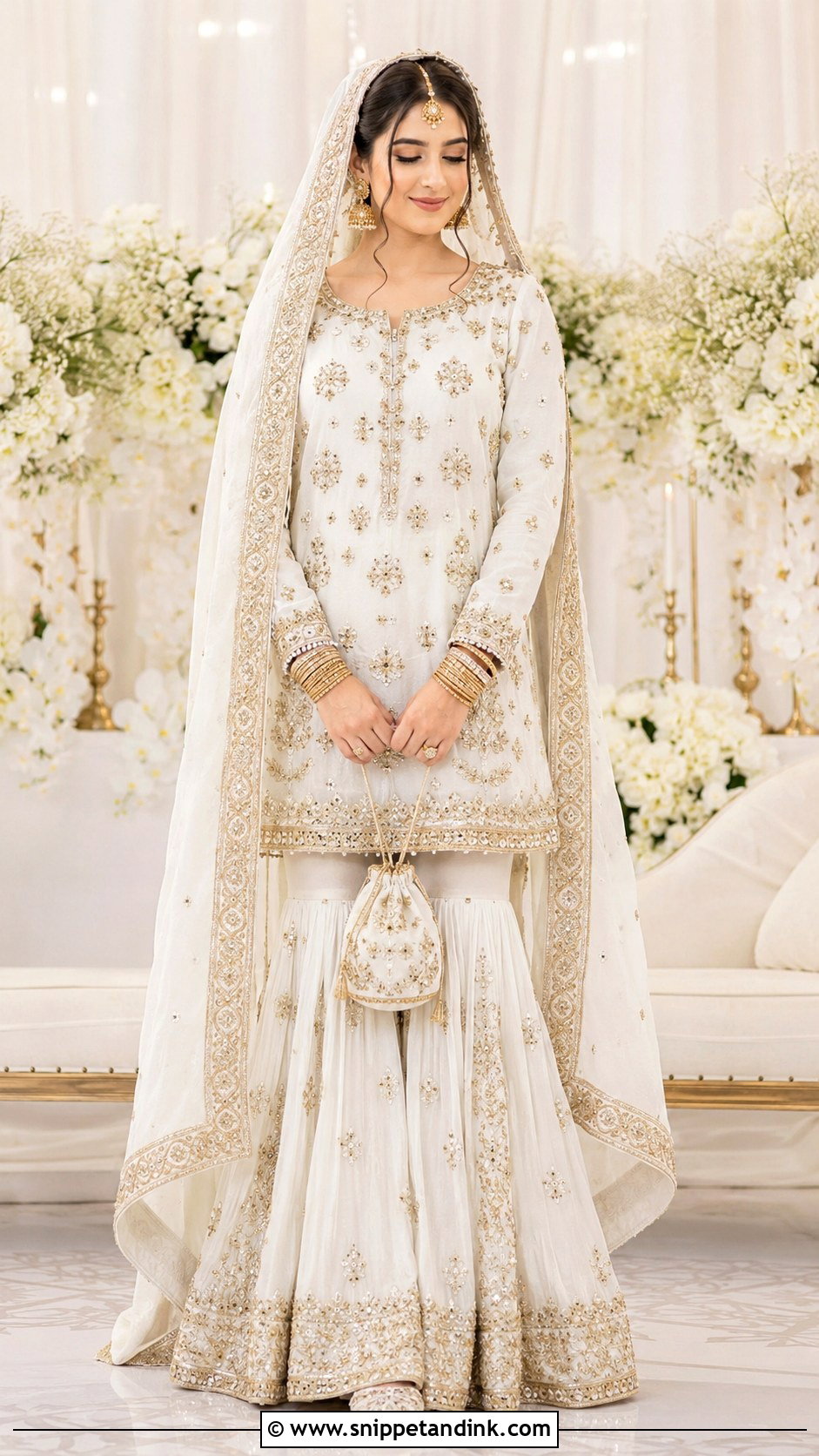
White and gold is the nikah look with the deepest roots in older Pakistani bridal dress. A short white kameez with fine gold zardozi, gota and pearls pairs with a gharara fitted above the knee and gathered below it. Wear a white dupatta with a broad gold border over the head, pinned lightly at the shoulders. Gold jhumkas, a small tikka, bangles, khussas and a matching potli complete it. I avoid mixing gold tones; antique gold looks softer and more expensive than bright yellow gold. Make sure the lining matches the outer white exactly, because a cream lining under white chiffon shows as a patch in daylight.
17. Navy Blue Pakistani Bridal Lehenga
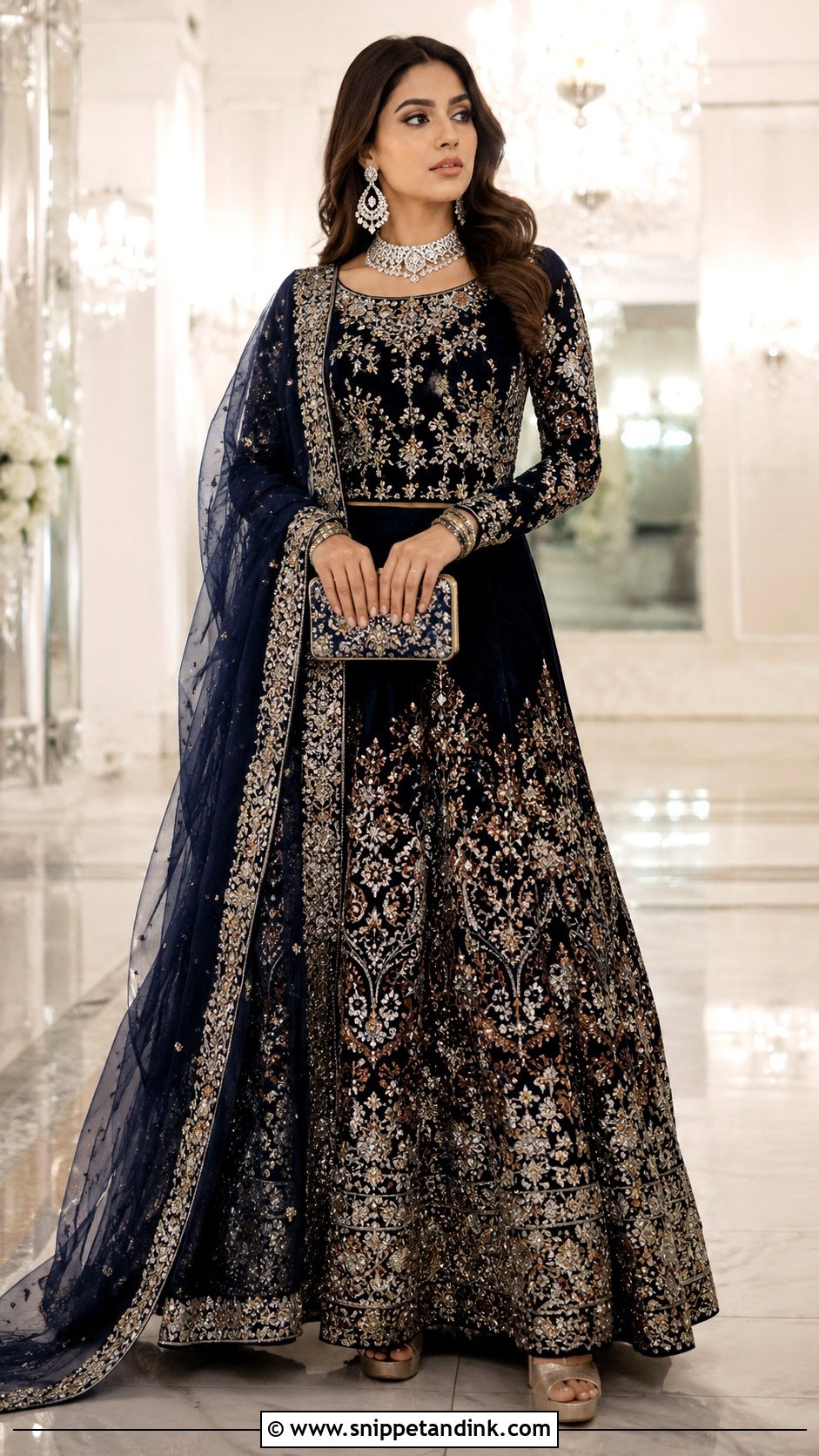
Navy suits an evening walima and gives a bride a look her guests haven’t seen at the baraat. Velvet or raw silk carries silver, antique gold or mixed-metal embroidery well. Pair it with a long-sleeve blouse and a sheer navy dupatta to lighten the heavy fabric. Diamond-style jewelry, metallic bangles, a structured clutch and platform heels complete it, with highlighted makeup so the dark color doesn’t drain the face. Vertical embroidery and a controlled A-line streamline the shape. Navy can look almost black in dim halls, so check the fabric under lighting close to your venue’s before you sign off on it.
18. Rust Orange Pakistani Bridal Pishwas
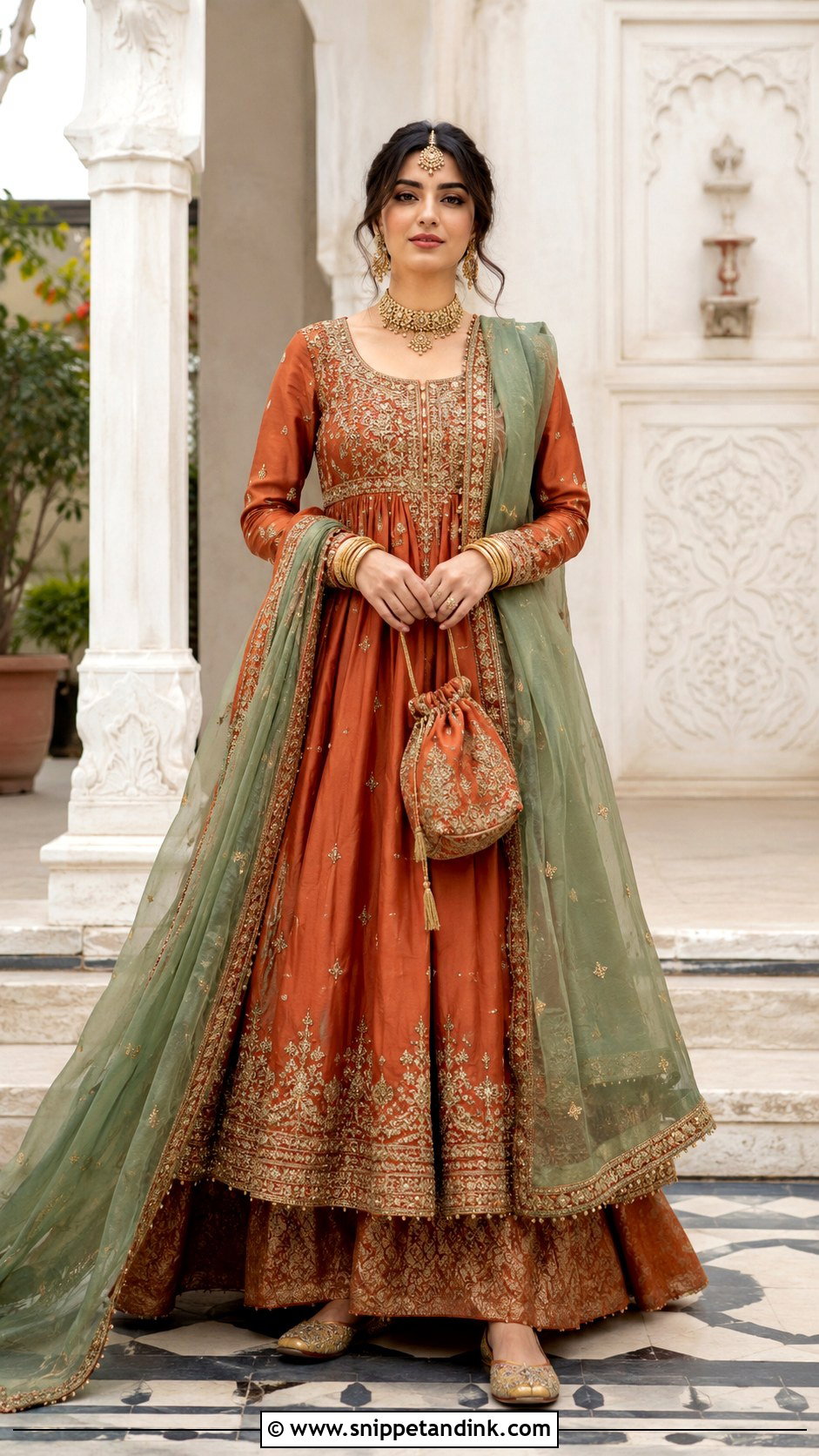
Rust is an earthy alternative to red, and it flatters warm and olive skin especially well. A long paneled bridal pishwas in raw silk or jamawar, with antique gold work at the bodice, sleeves and hem, sits over a lehenga for volume or a churidar for a slimmer line. A muted green or gold dupatta adds contrast. Traditional gold jewelry, bangles, khussas and a small potli complete it, with a center-parted bun and defined eyes. Fit the bodice closely at the natural waist so the panels open from there; if the waist sits low, the heavy work above it reads as bulk.
19. Lilac Pakistani Bridal Lehenga
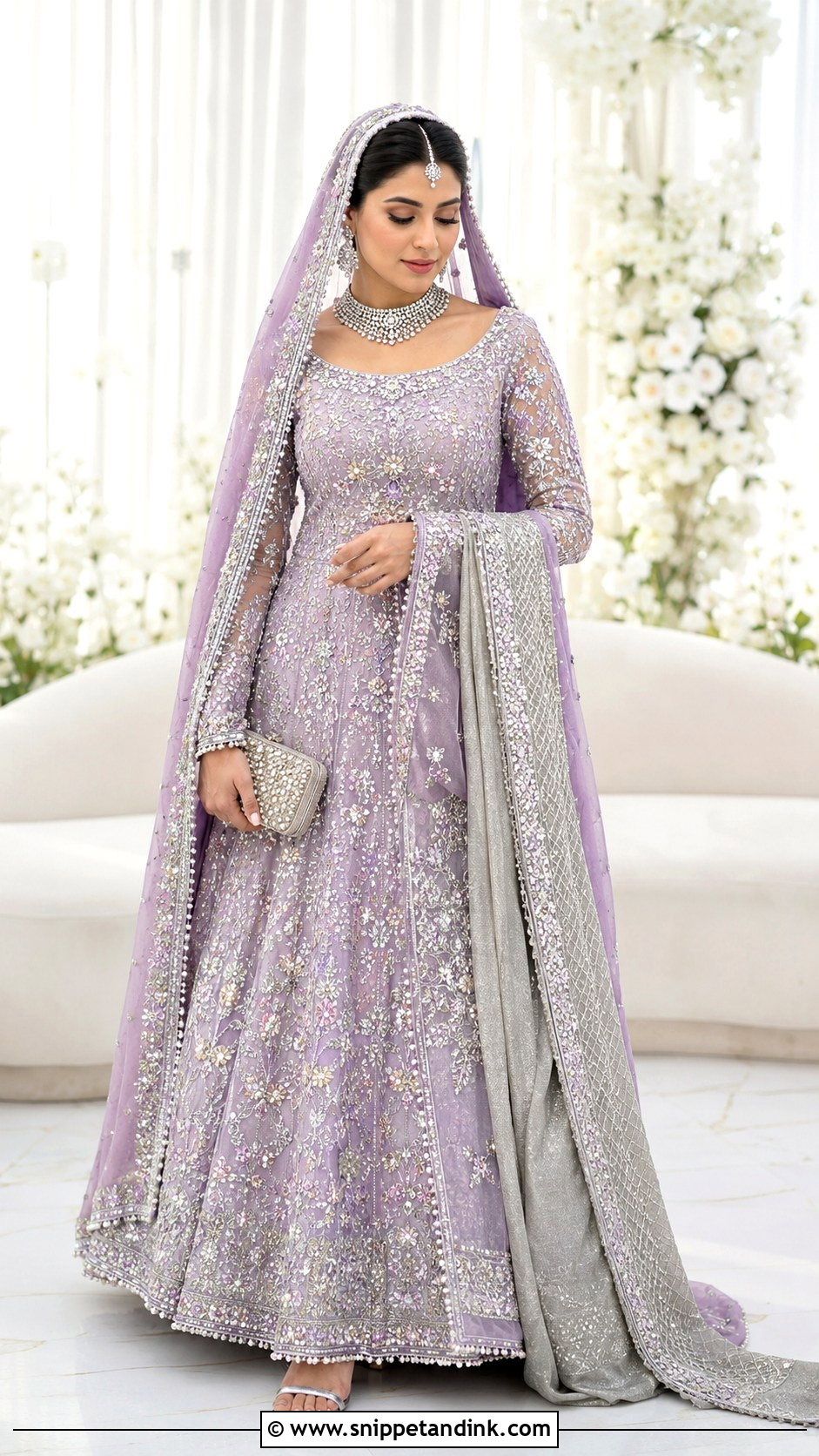
Lilac makes a soft palette for a spring nikah or daytime walima. A flowing lehenga with silver threadwork, pearls, small sequins and pastel florals pairs with a full-sleeve blouse or longer kameez. Wear a translucent lilac dupatta over the head and a silver-grey one across a shoulder. Pearl-and-crystal jewelry, metallic heels and a beaded clutch suit it, with a soft bun. Lilac can wash out in photos, so I ask the makeup artist for more definition around the eyes than she’d use with red. Petite brides should keep motifs small and borders narrow. If you want grandeur, add skirt volume but keep the bodice clean.
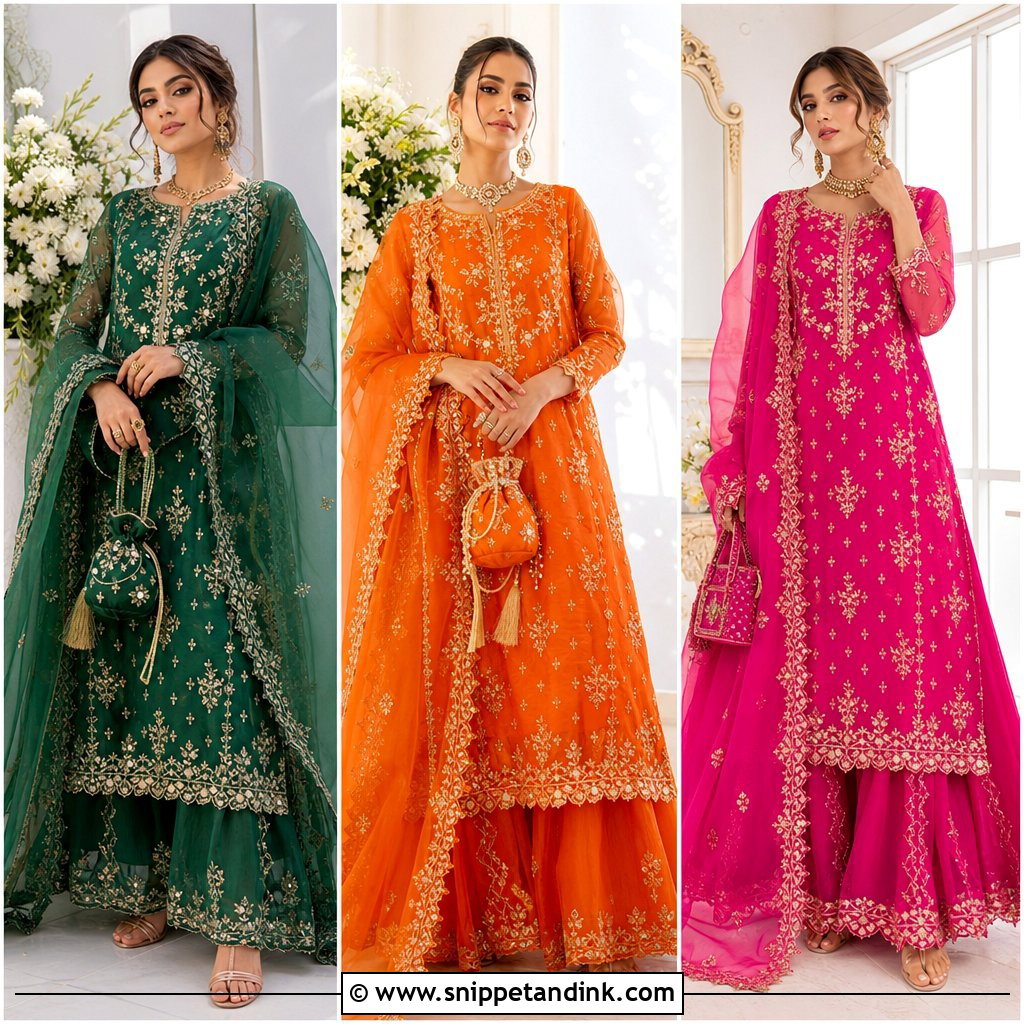
20. Teal Pakistani Bridal Jacket Lehenga
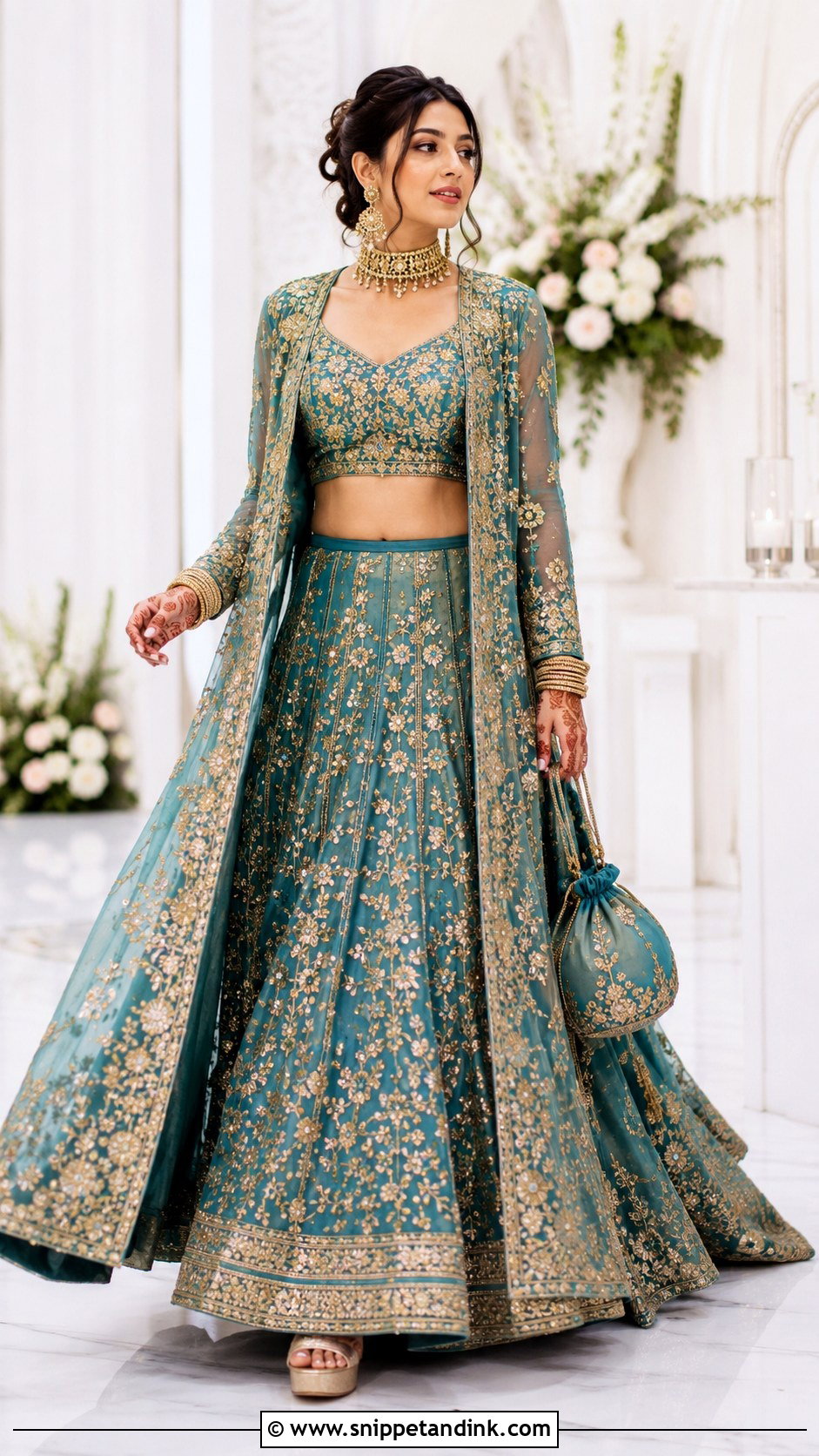
Jacket lehengas give traditional separates a layered, modern finish. Start with a full embroidered teal lehenga and a simple fitted blouse in the same family, then add a long sheer jacket with gold threadwork and bordered edges. Leave it open for a strong vertical line. Antique gold earrings, a choker, bangles, platform sandals and a structured potli complete it. With the jacket providing coverage, a heavy dupatta is unnecessary; a very light veil suits the ceremony. The jacket has to fit at the shoulder seam and the sleeves have to be narrow. A loose jacket over a full skirt turns the bride into a tent.
Custom Orders Run on Karigar Time
Hand embroidery is done by karigars working stitch by stitch, and a heavily worked baraat outfit can occupy a workshop for weeks. Designer and couture houses commonly ask for several months on custom bridal orders, and the lead time grows before the main wedding season. Ready-to-wear from a bridal store is quicker, but it still needs alterations.
- Order early enough to allow for at least two fittings after the outfit arrives.
- If you’re overseas, add shipping time and the possibility of customs delays, and ask whether a local tailor can finish the hem.
- Get the embroidery colors approved on a fabric sample, not just a screen photo; zari and dabka look very different on a monitor.
- Ask what’s included: many bridal sets come with the dupatta but not the trousers, can-can or lining layers.
Storing Zardozi So It Doesn’t Tarnish
Metallic zari and zardozi darken when they meet moisture and air, and perfume sprayed straight onto embroidery speeds it up. Spray scent on your skin before you dress. After the wedding, let the outfit air out for a day, then fold it with acid-free tissue or plain muslin between the layers and store it flat in a cotton bag, never sealed plastic. Refold it along different lines every few months so the heavy work doesn’t crack along the same crease.
Four Events, One Bride, Very Different Dresses
Four events, four moods, and an outfit for each that still feels like you. The list covers red baraat lehengas, ghararas, bright mehndi sets, modern walima gowns and pishwas. Before you order, weigh up the event, venue, weather, the weight of the outfit, your footwear and how long alterations will take. Look at fabric and embroidery in more than one light, and practice sitting and walking in the finished piece. Let jewelry support the dress rather than fight it. Above all, choose colors and shapes that feel personal; those are the outfits that stay meaningful long after the celebrations end.
You'll Like These Ideas:


Leave a Reply