
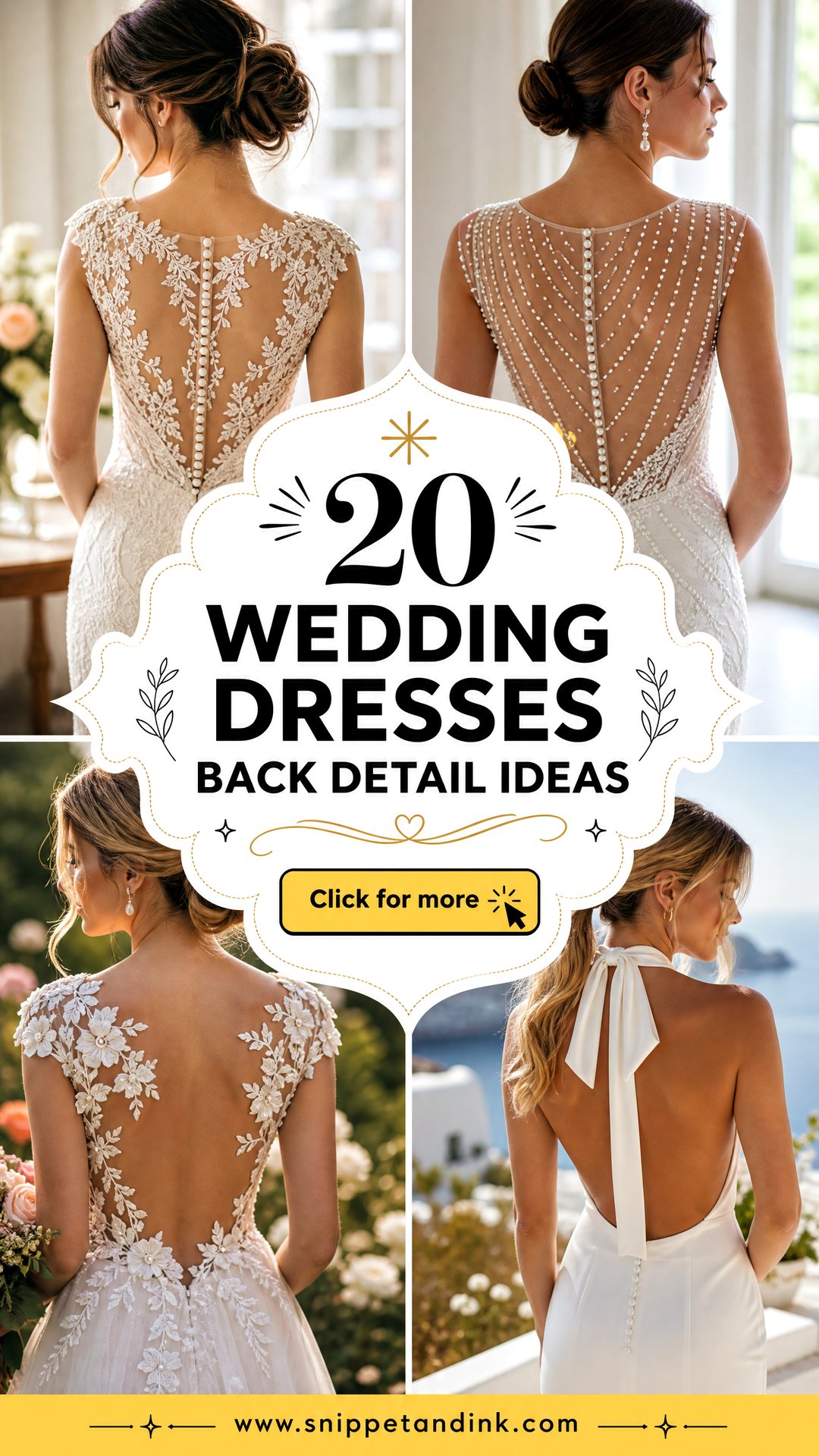
Your guests spend most of the ceremony looking at your back, which is why I treat the back of a gown as seriously as the neckline. The ideas below cover open backs, illusion lace, covered buttons, sculptural bows, corset lacing and soft draping, from very plain to heavily decorated. Lace, bows and dimensional trims are still everywhere in bridal collections, but a back detail only works if it stays put. Before you fall for one, think about your venue, how much skin you want to show, what you’ll wear underneath, and where your hair and veil will sit. A good bridal tailor can move an appliqué, add a hidden cup or reshape an opening, so a back that is nearly right can often be made right.
Judging a Back Detail Properly at Your Appointment
Bridal shop mirrors face forward, and most brides spend appointments staring at the front of a gown. The back gets a quick glance over the shoulder, usually with the consultant holding the dress closed with clamps. That’s how people end up surprised by their own photographs.
When I take a bride shopping for a statement back, I do the same few things with every dress:
- Ask for a hand mirror or have a friend film a slow walk away from you. The ceremony view is from behind and slightly below, so look at it from there.
- Have the clamps taken off before you judge an open back. A sample pinned two sizes smaller shows a cleaner line than the gown you’ll actually receive.
- Sit on a chair for a full minute. Open backs and cutouts gape when you sit, and that is how you’ll spend dinner.
- Raise both arms as if hugging someone taller. Straps, halters and keyholes show their weak points straight away.
- Ask what goes underneath. A deep back with no built-in support means you are choosing between adhesive cups and going without.
If a back still looks good after all five, it will hold up on the day. If it only looks good standing still, keep looking.
1. Low Back Satin Wedding Dress
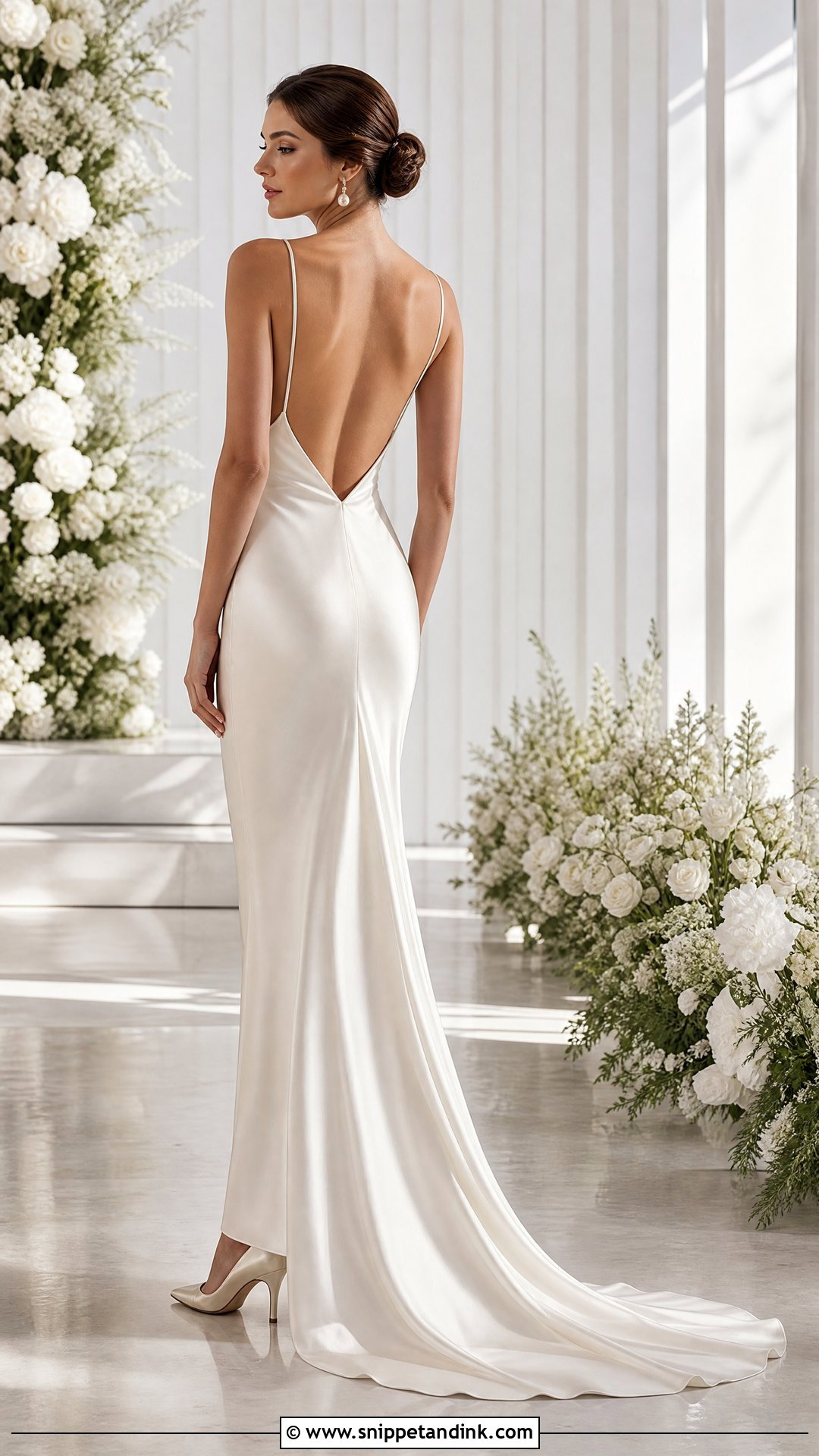
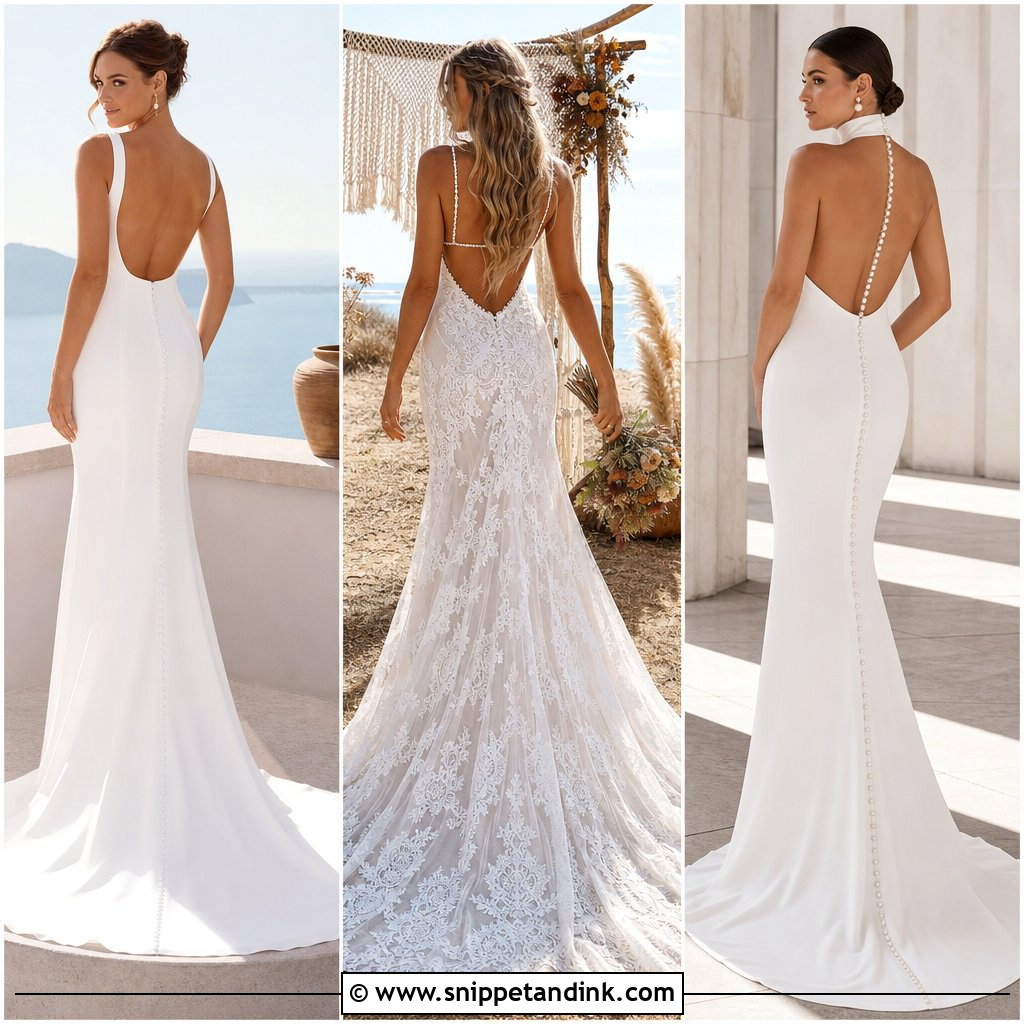
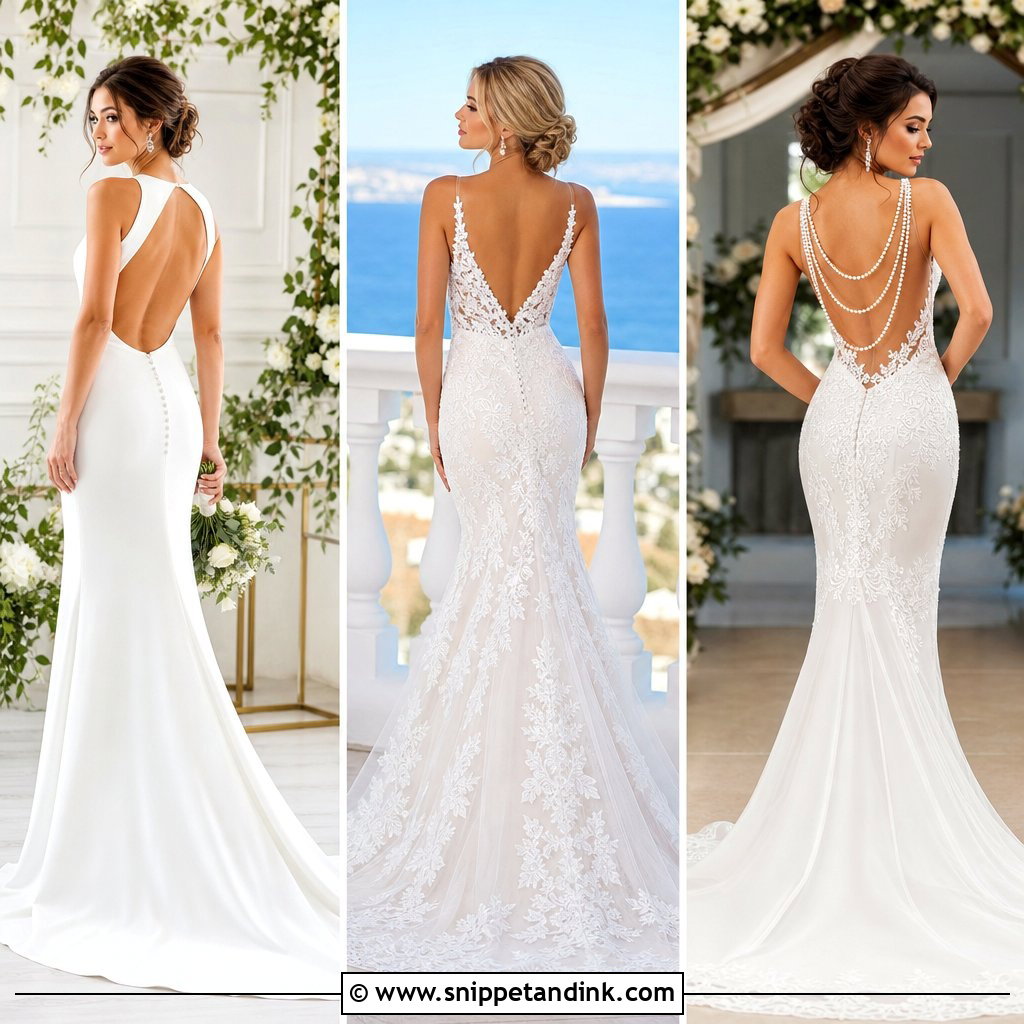
Plain satin with a deep back is the hardest look to fake, because satin shows every pull. I look for a bias-cut sheath or a softly fitted A-line falling into a sweep train, with the back cut in a clean curve or V. Thin straps read delicate; wider ones carry more weight and stay on the shoulder better if you dance a lot. Pearl drops, a low bun, pointed ivory pumps and a fingertip veil keep the focus on the cut. At the fitting, I ask the seamstress for sewn-in cups, light boning and a waist stay, then I have the bride sit down: if the satin ripples across the lower back when she’s seated, the fit isn’t finished.
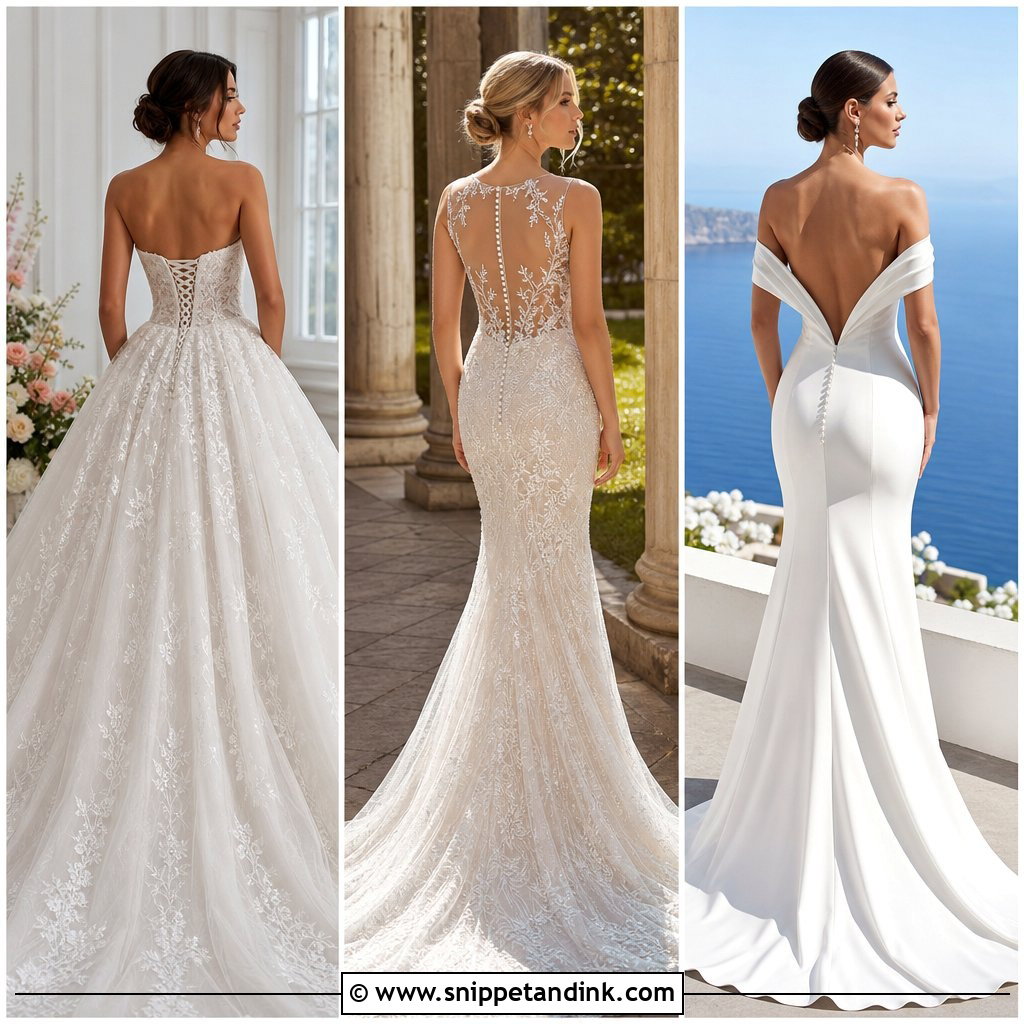
2. Illusion Lace Back Wedding Dress
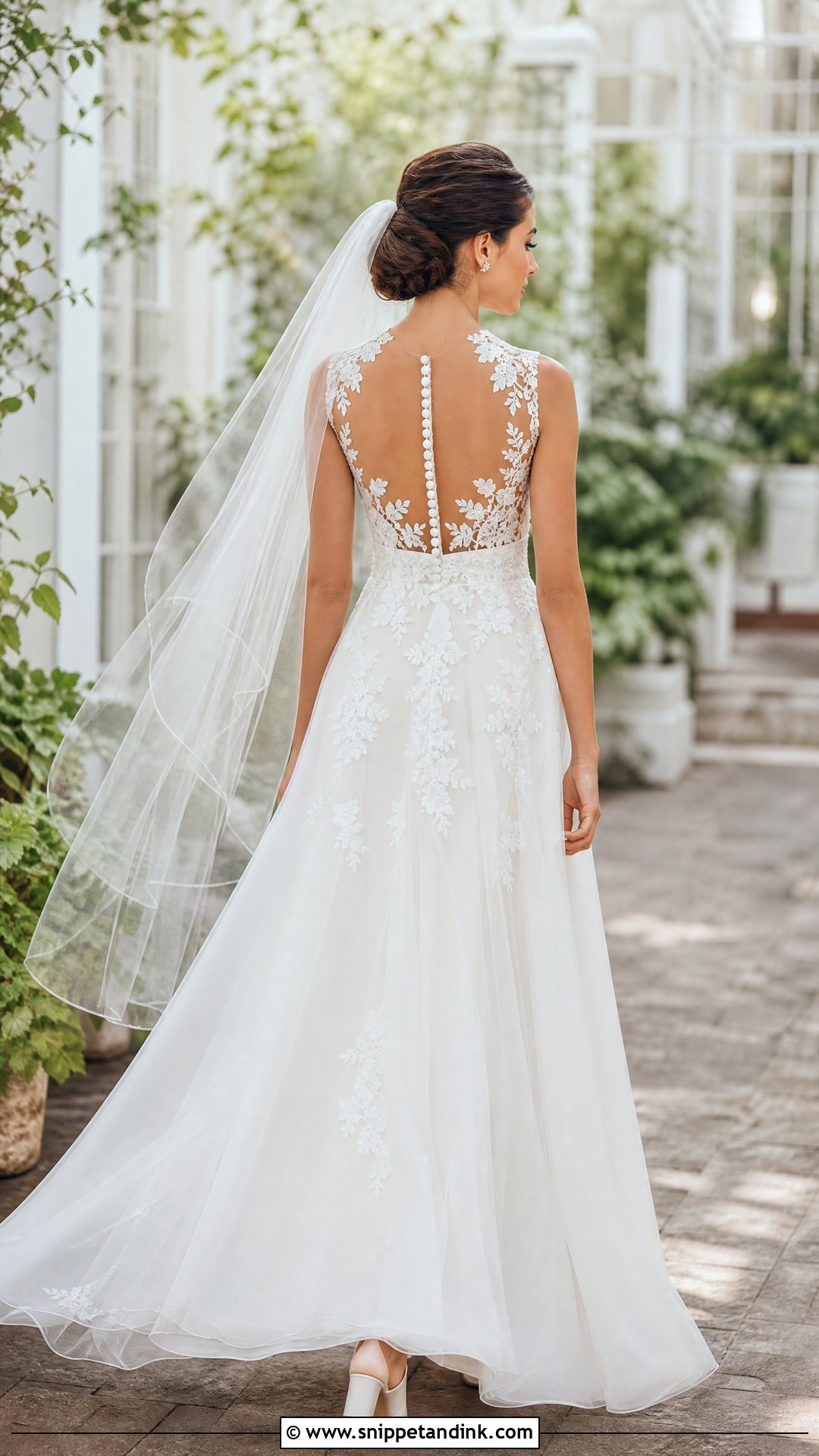
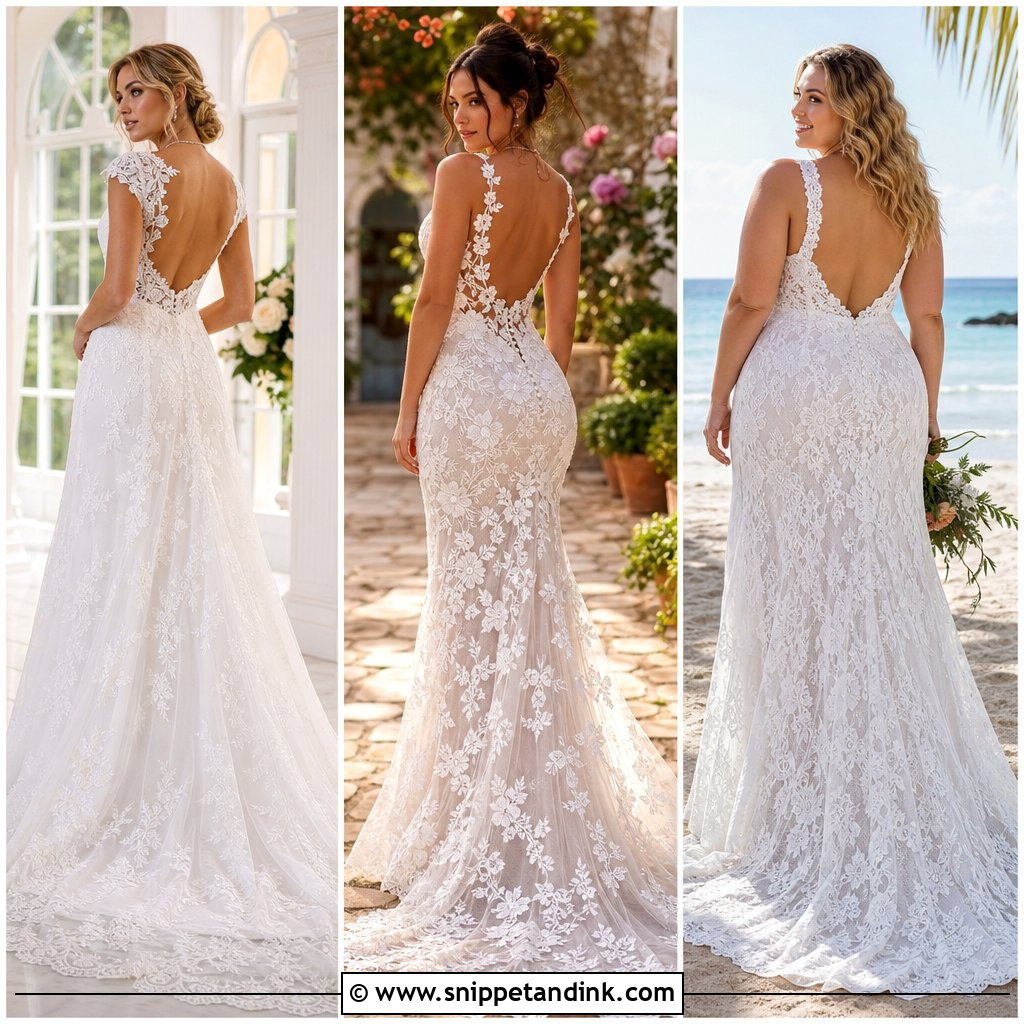
Illusion lace lets appliqués look as if they’re sitting on bare skin, with fine mesh doing the quiet work of holding everything in place. A fitted lace bodice over an A-line skirt keeps the proportions calm, and covered buttons running down the centre into the train give it a traditional finish. A twisted updo, crystal studs and satin block heels suit it, along with a sheer veil that has a plain edge so it doesn’t fight the lace. The thing I always check is the mesh colour. Look at it by a window, not under the shop spotlights, because a shade that matches you indoors can turn grey or pink against skin in daylight. It also shouldn’t gape at the shoulder blades when you hunch slightly.
3. Button Back Crepe Wedding Dress
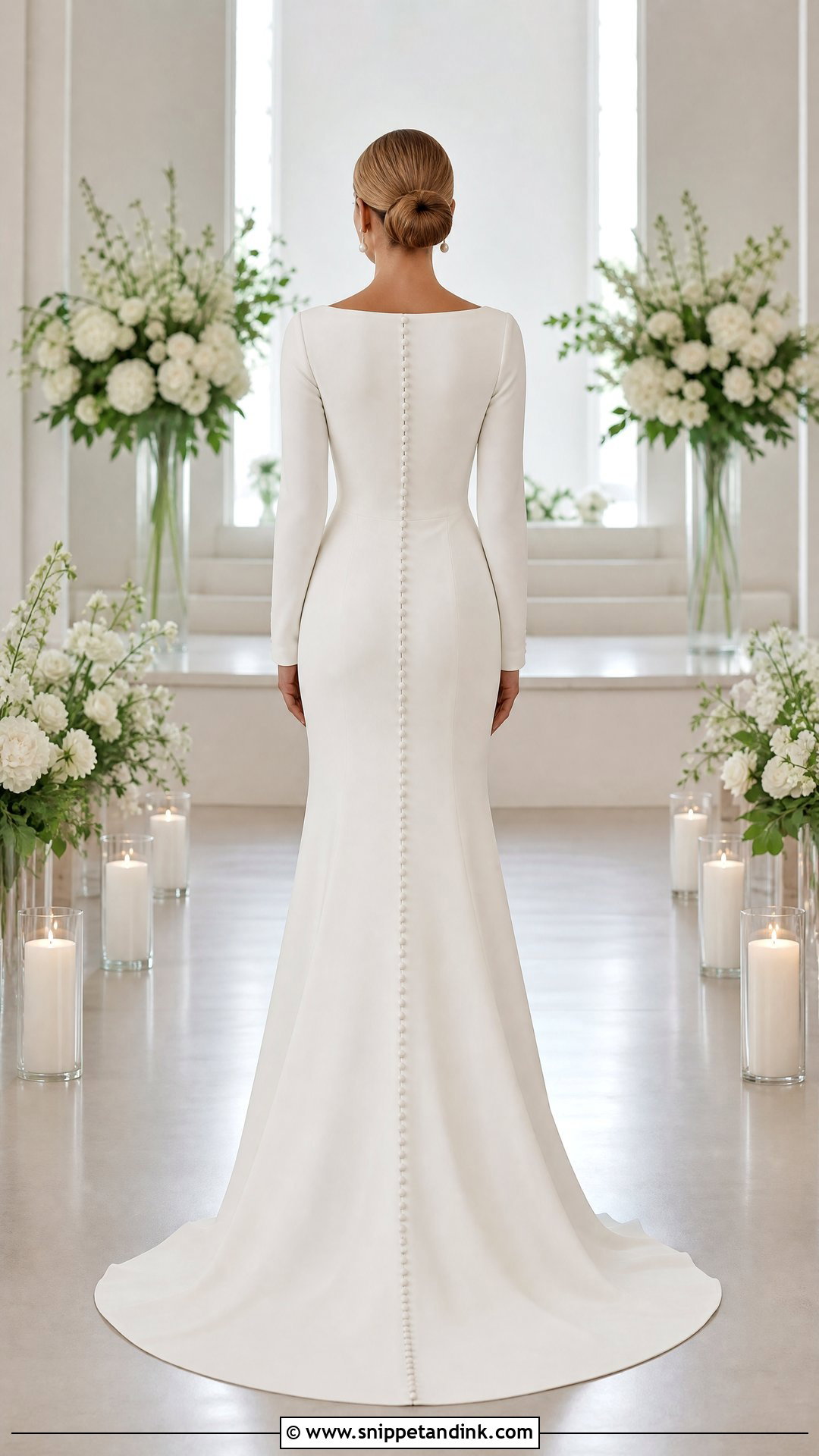
A long row of buttons is what makes a quiet crepe gown look finished from behind. Choose a fitted column or fit-and-flare with covered buttons running from the upper back to the end of the train, and pair it with a bateau neckline or long sleeves for a restrained front. A shallow V at the back keeps it from looking too buttoned-up. Pearl earrings, a sleek chignon and a plain cathedral veil are all it needs. Ask whether the buttons actually fasten. Thirty working loops take a long time to do up on the morning, so most of my brides end up with a hidden zip under decorative buttons, and nobody in the pews can tell.
4. Bow Back Ball Gown Wedding Dress
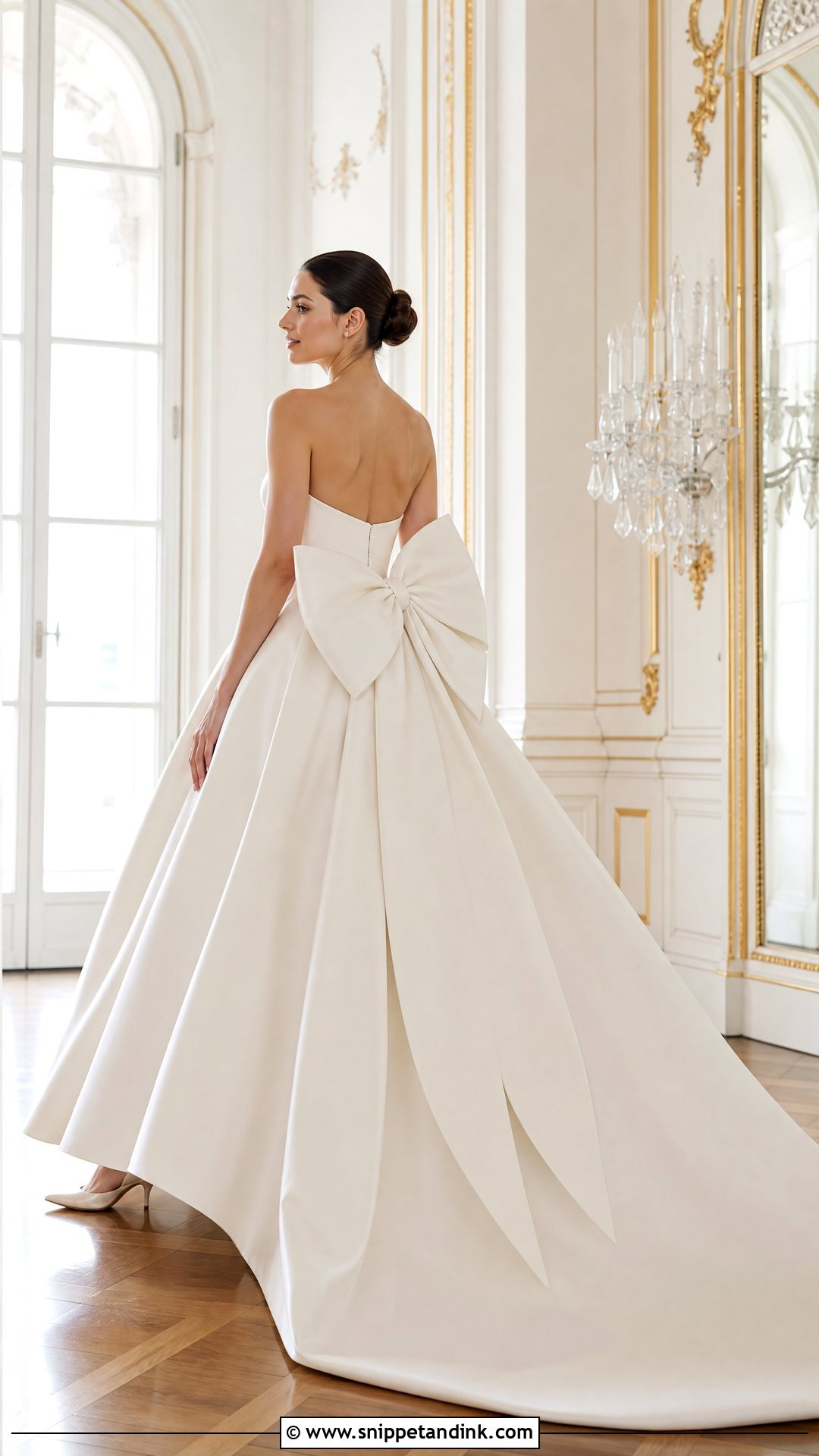
An oversized bow is a commitment, and it only reads well on a gown with enough structure to hold it. Mikado or heavy satin, a fitted bodice, a defined waist and a full skirt give the bow something to sit on, and long tails that run into the train make the whole back look deliberate. Keep everything else quiet: small crystal earrings, a polished bun, classic pumps. I’d skip a long embellished veil here, since it lands right on top of the bow; a short veil or a blusher you remove after the vows works better. If the bow detaches, you get a cleaner gown for dancing. Squeeze the loops at the fitting. They should spring back, not crumple, and they shouldn’t feel like cardboard either.
5. Corset Back Lace Wedding Dress
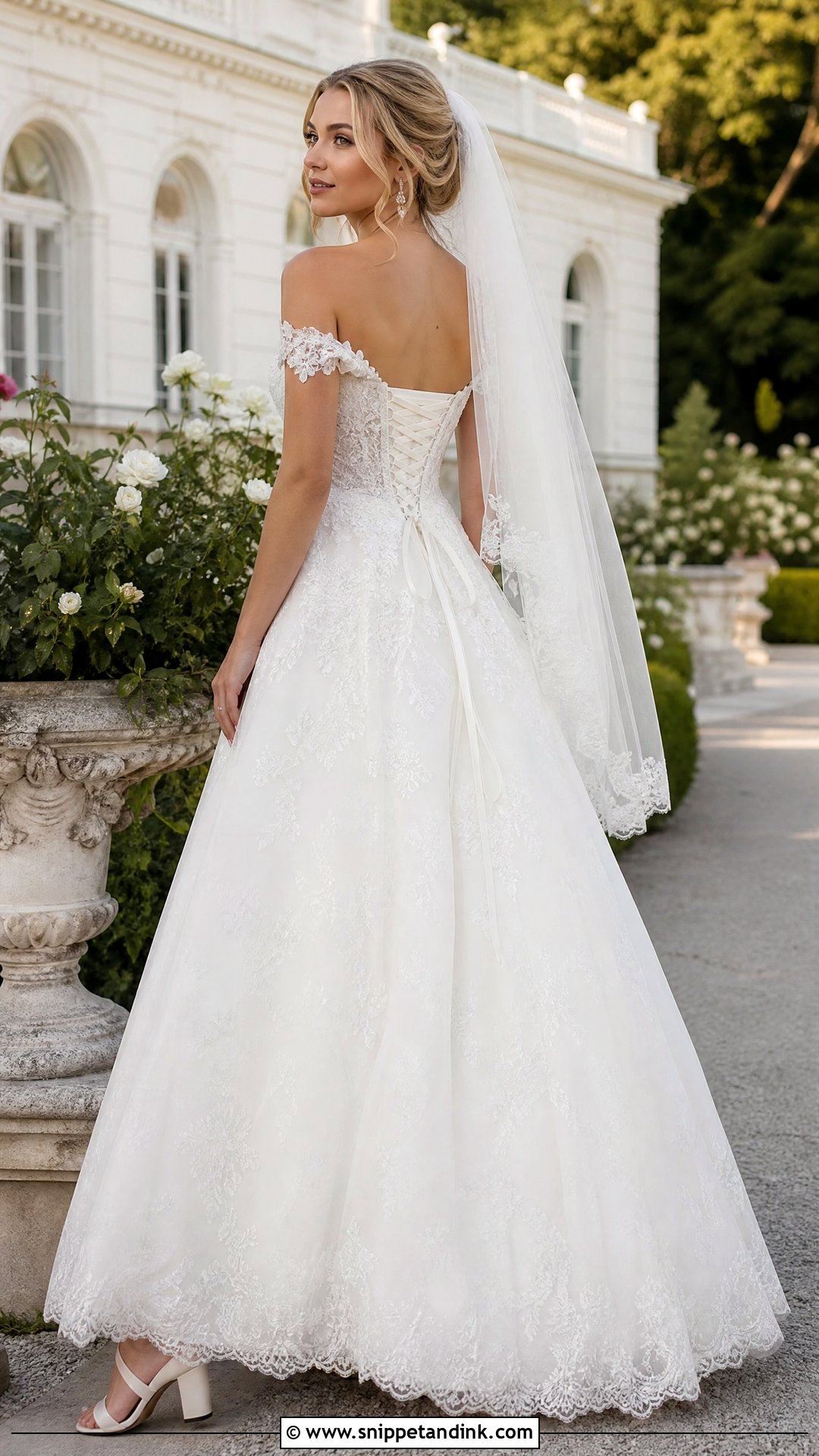
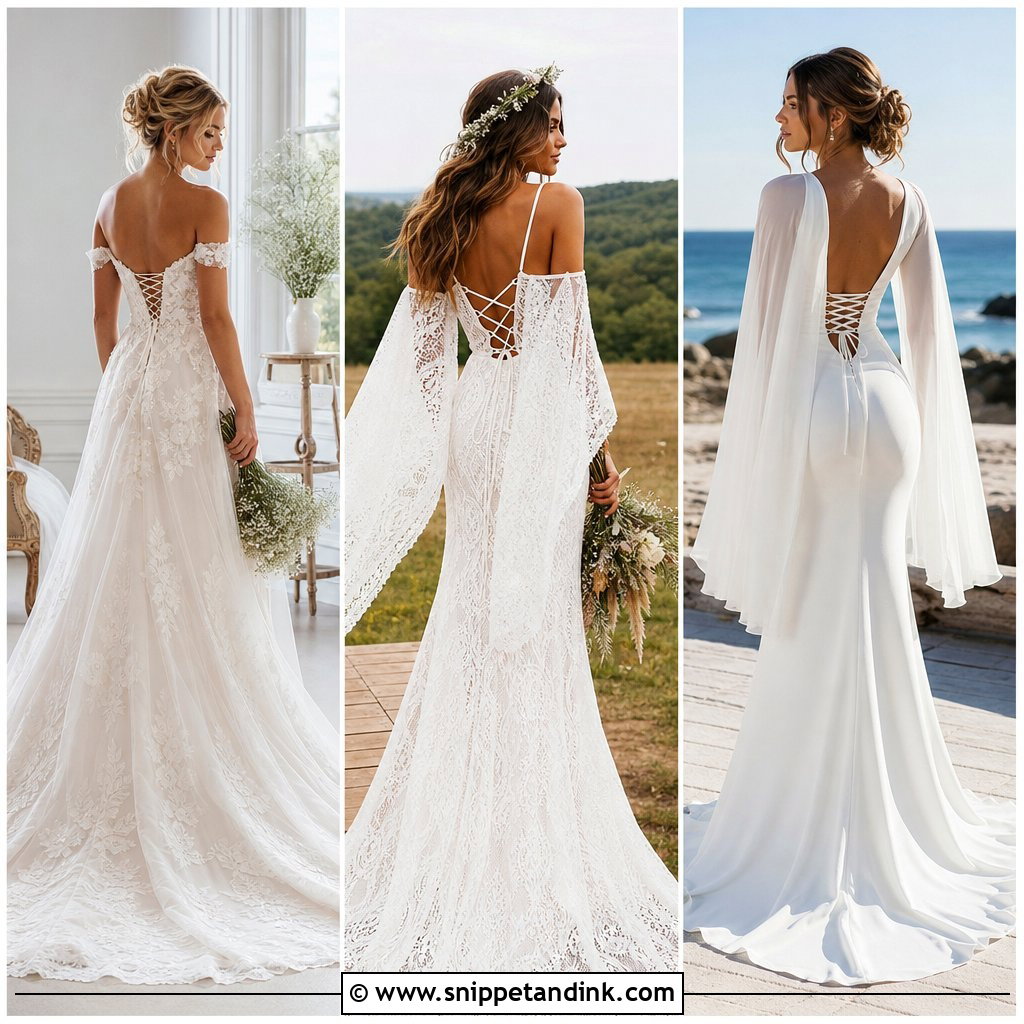
Corset lacing is the most adjustable back you can buy, which is why I suggest it to brides whose weight may shift in the months before the wedding. It pairs naturally with an A-line or ball gown, because the lacing pulls in the waist right where the skirt starts to open. Floral lace over a lined, supportive bodice works well, finished with satin ribbon or self-fabric ties. Long lace sleeves add coverage; off-the-shoulder straps soften it. Get the consultant to show your maid of honour how to lace it, and take a photo of the finished result, because lacing from the top down versus the middle out changes the fit. A modesty panel underneath stops skin peeking through the gaps.
6. Keyhole Back Long Sleeve Wedding Dress
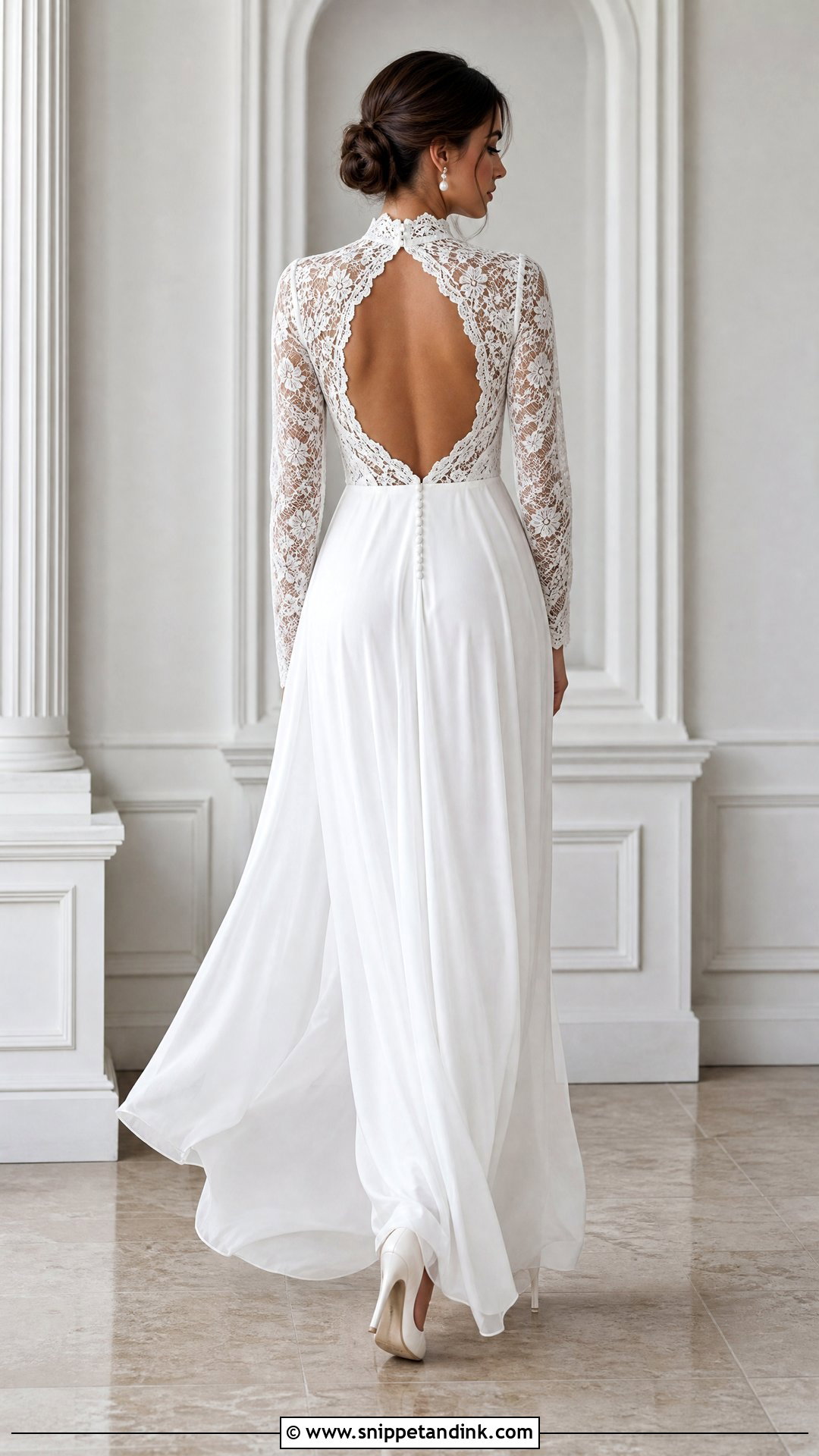
With full sleeves and a high neck, a single keyhole at the back is often all a gown needs. The opening can be an oval, a teardrop or a soft curve, usually closed at the nape with a button or small hook. A fitted lace bodice over a chiffon or tulle skirt keeps it light. Wear your hair in a low textured bun so the opening isn’t covered, and add small pearls and pointed pumps. The weak point is the closure at the neck: when you reach forward to hug someone, the whole bodice pulls on that one button. I have brides roll their shoulders and reach for a glass during alterations to make sure the keyhole holds its shape and the collar doesn’t choke.
7. Cowl Back Slip Wedding Dress
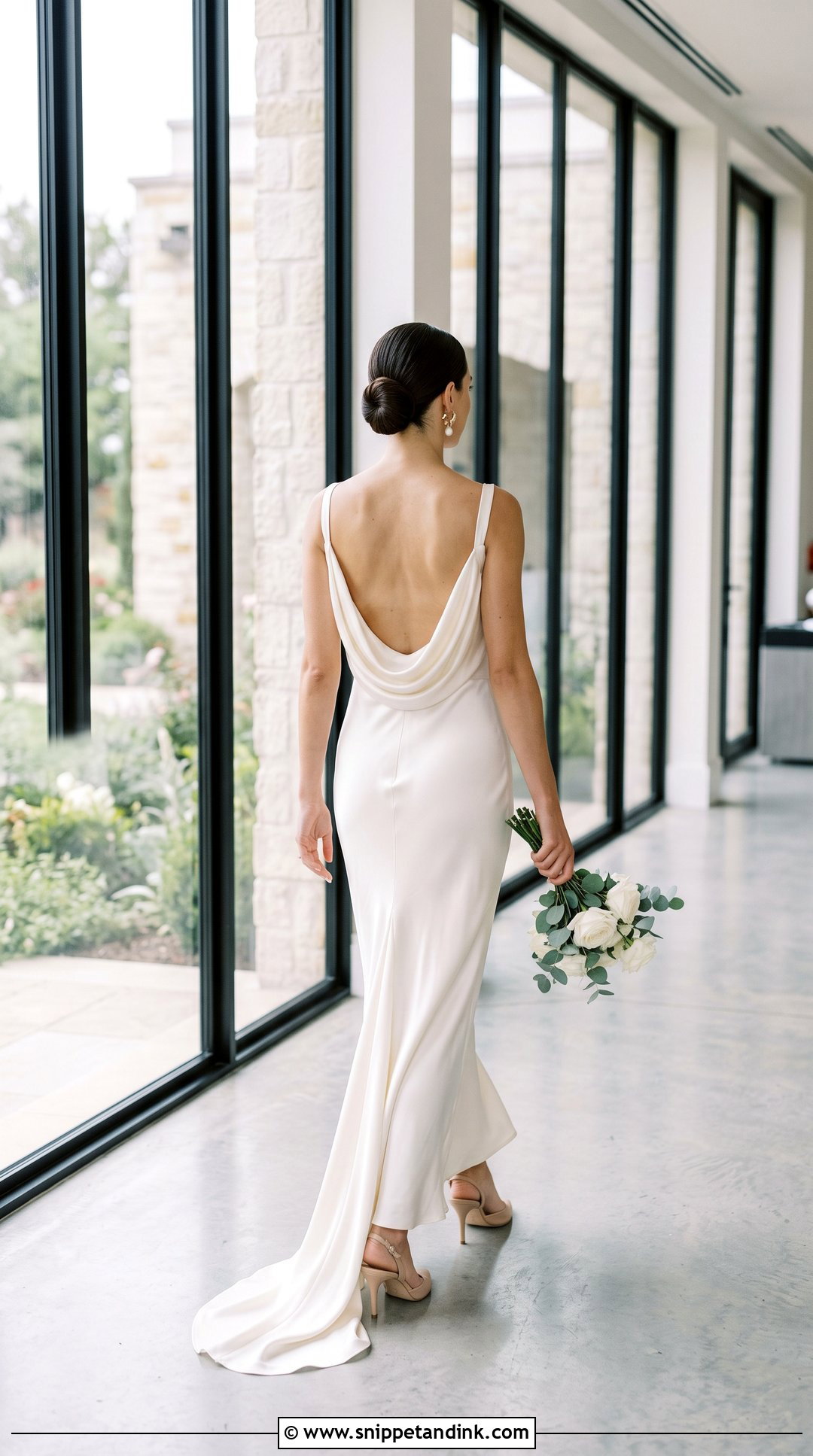
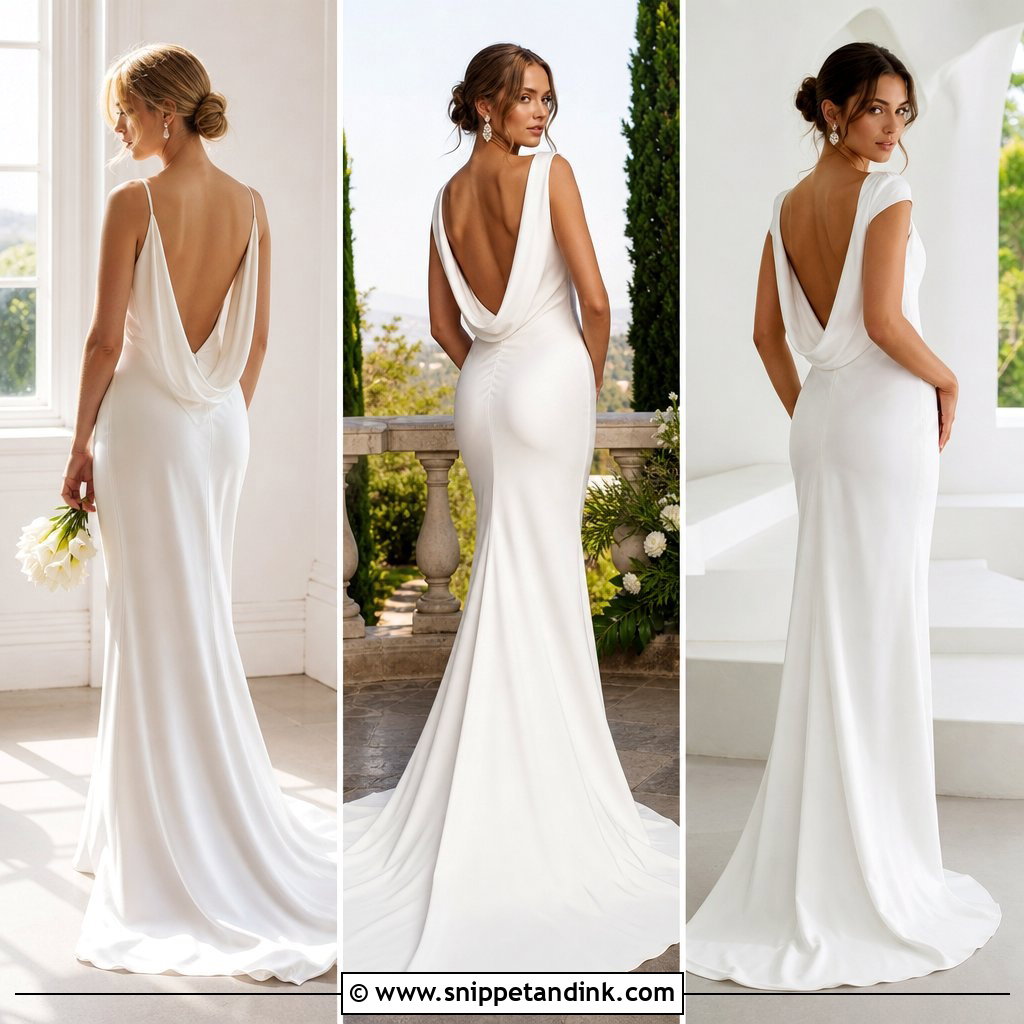
Soft folds of fabric are what make a cowl-back slip wedding dress move the way it does. The cowl needs a fabric with real drape, so silk satin or charmeuse rather than a stiff polyester that will hold a hard fold. A bias-cut sheath with narrow straps and a small train keeps it simple, along with sculptural earrings, a sleek bun and slingbacks. Leave the necklace off. If the cowl is deep enough, a fine back chain can sit inside it instead. A sheer chapel veil adds movement for the ceremony. Watch the drape after you sit for a minute: a well-cut cowl falls back into place when you stand, while a poorly weighted one stays bunched.
8. Pearl Illusion Back Wedding Dress
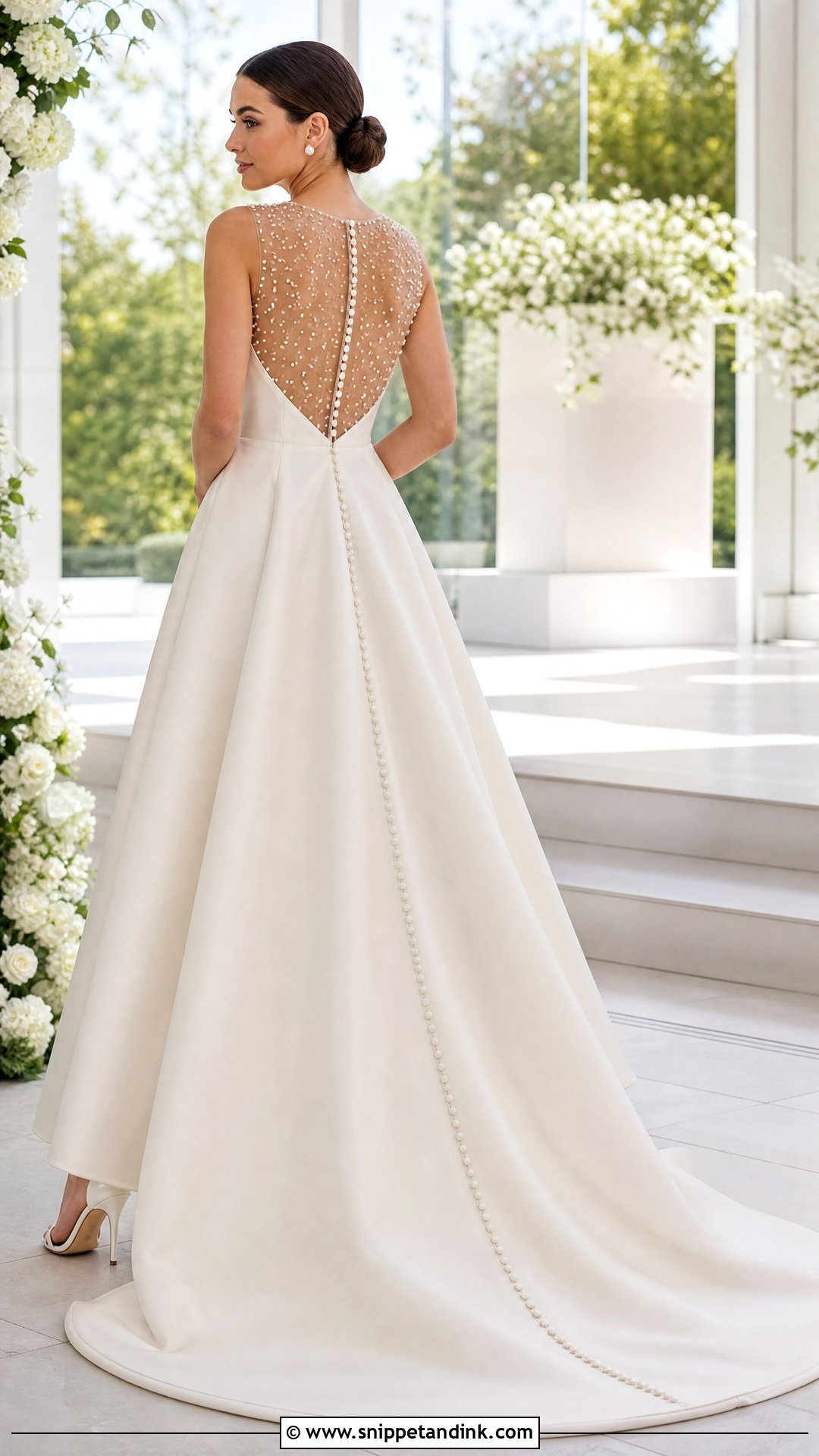
Pearls scattered over illusion mesh catch light gently instead of flashing like crystals. They can trace the neckline, float across the back in loose clusters, or follow a centre row of covered buttons. I prefer this on a structured A-line or a fitted crepe dress, which keeps the beading from looking fussy. Pearl studs, satin heels and a smooth low bun tie it together without looking too matched, and a plain veil lets the pearls show in photos. Run your fingers over the inside at the neckline and armholes. Hand-sewn pearls on cheap mesh can scratch, and every bead adds weight, so the bodice may need extra internal support to stop the back sagging by evening.
9. Floral Appliqué Open Back Wedding Dress
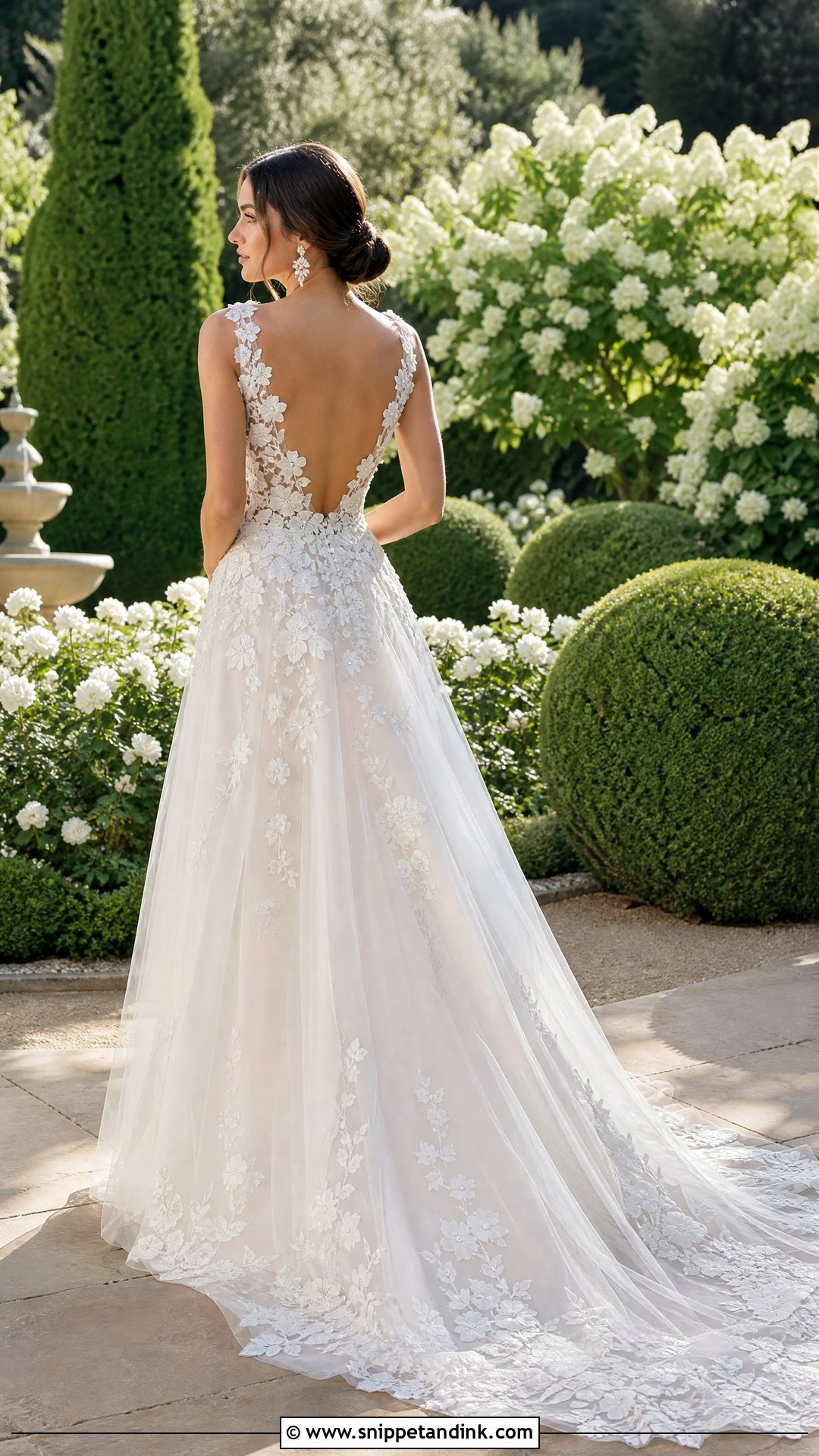
Dimensional flowers suit a garden or estate wedding, where guests are close enough to see the texture. The appliqués can follow the edges of a deep V, climb over the shoulders and drift onto a tulle train. Give them room on an A-line or fit-and-flare skirt, and keep the rest light: floral earrings, ivory heels, a loose low bun. A veil with a few spaced motifs can echo the gown, but a dense lace veil turns the whole back into one busy layer. What I look at most is symmetry. If the flowers along the opening sit unevenly, a seamstress can lift and re-stitch them. With so much of the bodice open, the support has to come from inside the dress.
10. Draped Scarf Back Wedding Dress
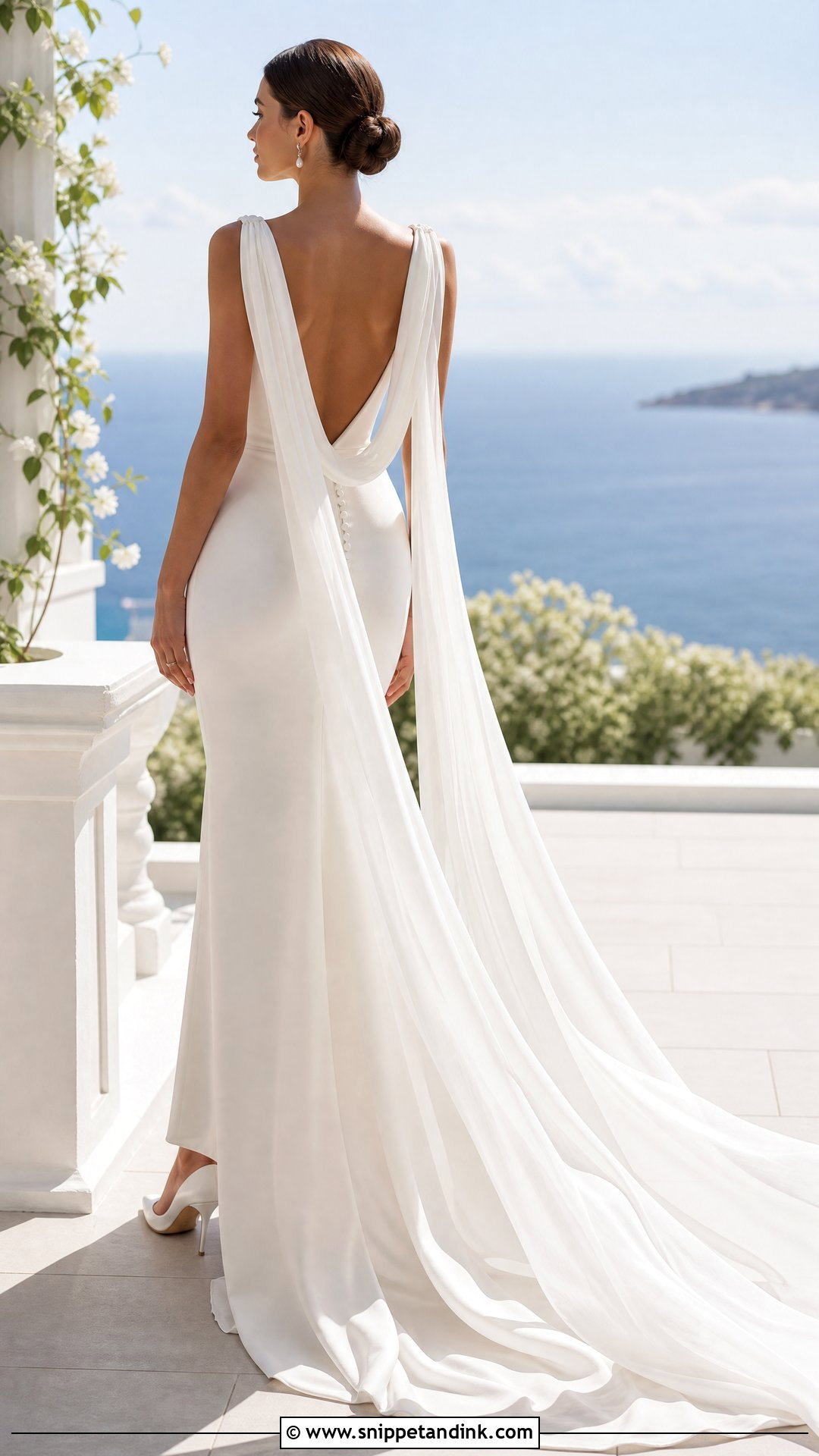
Long scarf panels give you the movement of a veil without anything pinned in your hair. Chiffon or georgette works best, attached at the shoulders and trailing over a crepe sheath or flowing A-line, often with an open back showing between the panels. A smooth bun, simple earrings and pointed heels are enough, since the scarves already frame your shoulders and train. Ask whether the panels unhook for dinner; long chiffon gets stepped on during dancing. Length matters too. I like them to reach the floor or just past it, not trail a metre behind. Outdoors, test the attachments by walking briskly, because a breeze will lift chiffon higher than you expect.
11. Crisscross Strap Wedding Dress
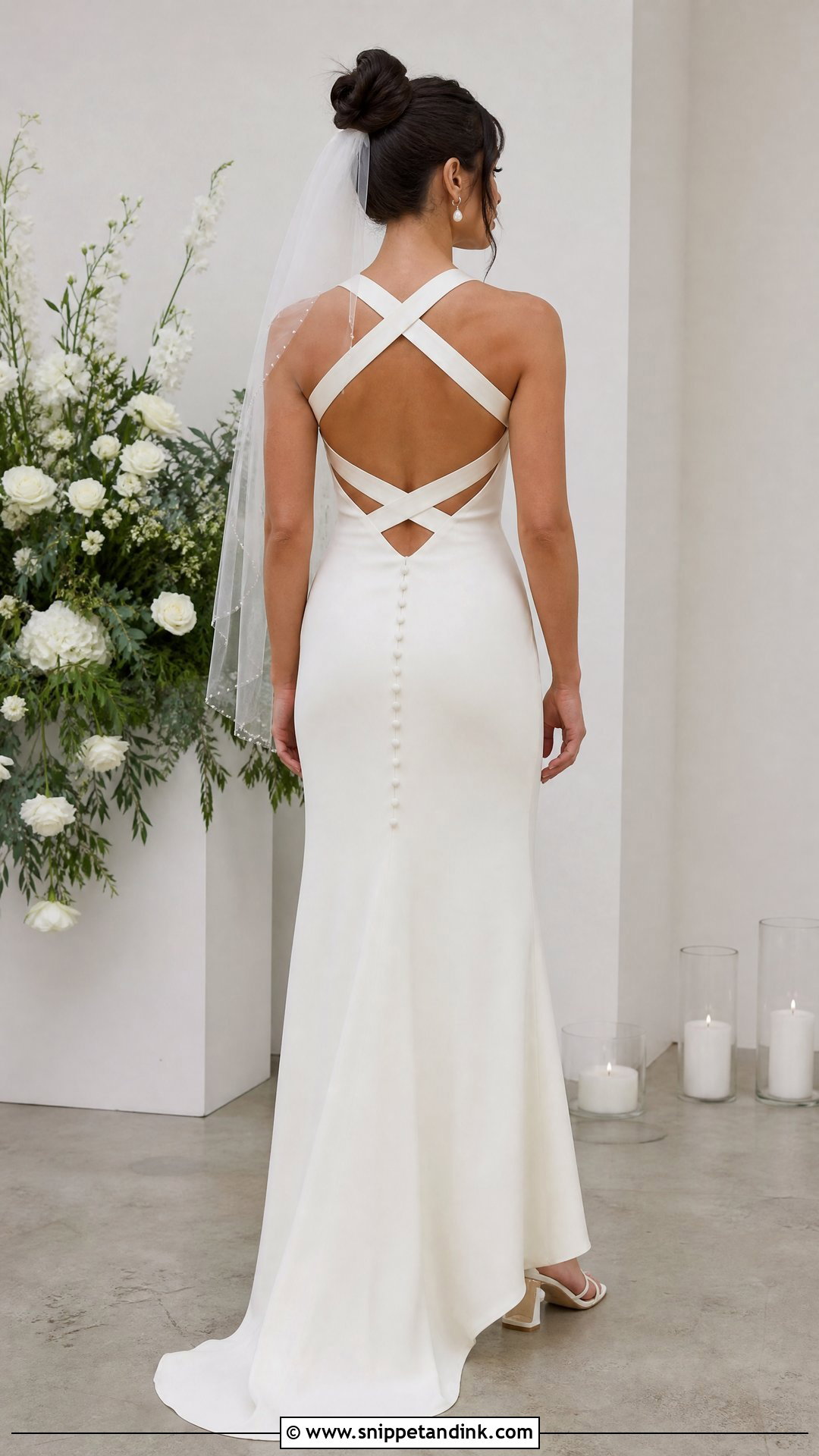
Crossed straps add a graphic line to a sleeveless gown and do practical work too, holding the bodice in place better than a strapless cut. Thin satin straps suit a plain crepe sheath, while lace-covered straps match a softer fit-and-flare. They can cross once at mid-back or form a more complicated lattice above a row of buttons. A high bun, small hoops or pearls and sleek sandals finish it, and a plain fingertip veil won’t snag on them. Re-check the strap length at every fitting: half an inch changes how the neckline sits at the front. Raise your arms above your head. If a strap rolls or digs in, it will do it all night.
12. Halter Open Back Wedding Dress
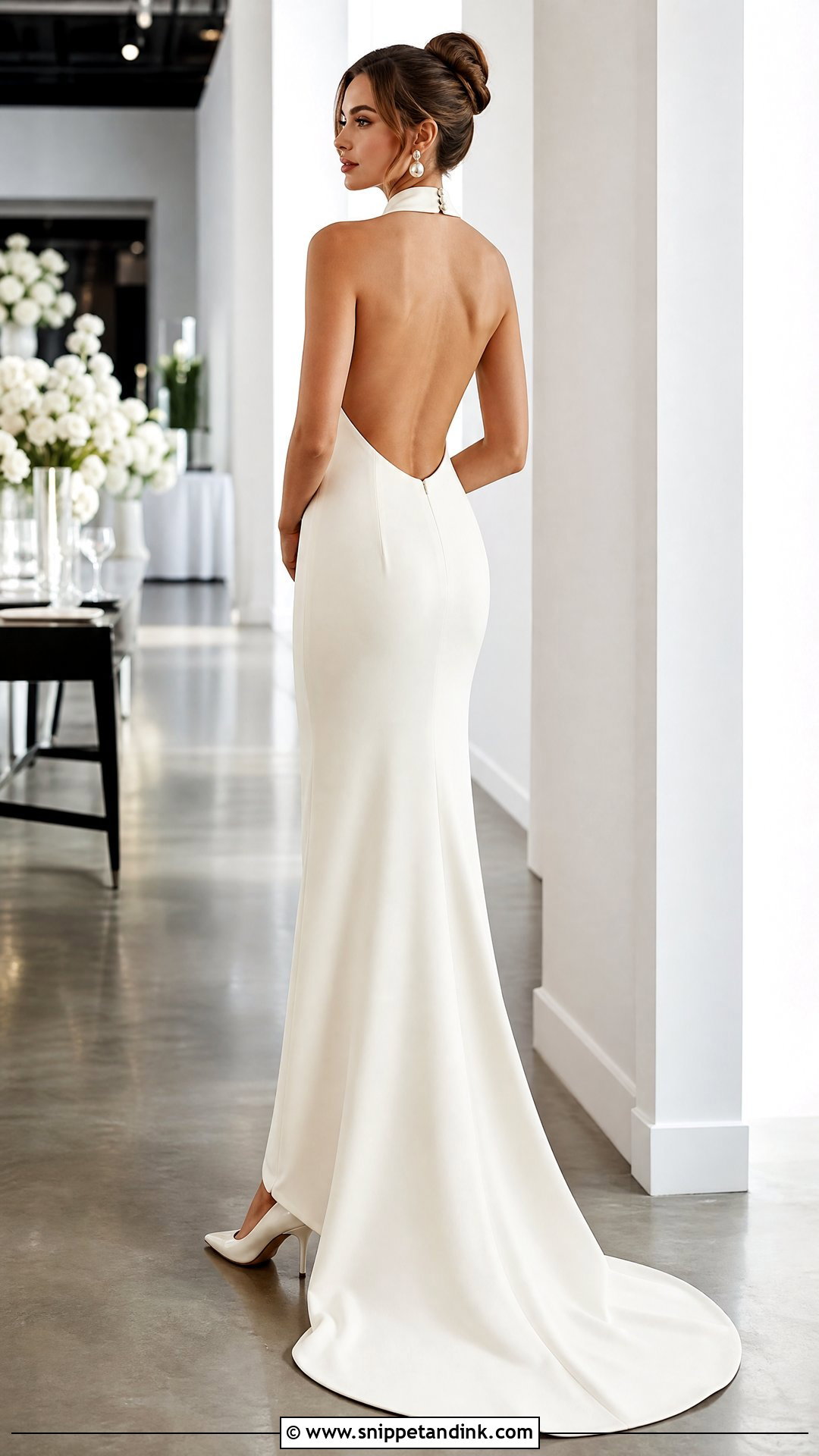
A halter open-back wedding dress shows off strong shoulders and a long back in a single line. I’d look at a crepe column, satin sheath or soft mermaid with a high neck and an opening that curves toward the waist, closed with a covered button at the nape and a few lower buttons. An architectural updo and bold earrings fit the shape; a necklace just crowds it. Pin the veil below the bun so the halter stays visible from both sides. Neck comfort is the deal-breaker. If the gown hangs from the halter strap, you’ll have a sore neck by the first dance, so the bodice has to carry the weight. Built-in cups remove the need for a bra.
13. Off The Shoulder Low Back Wedding Dress
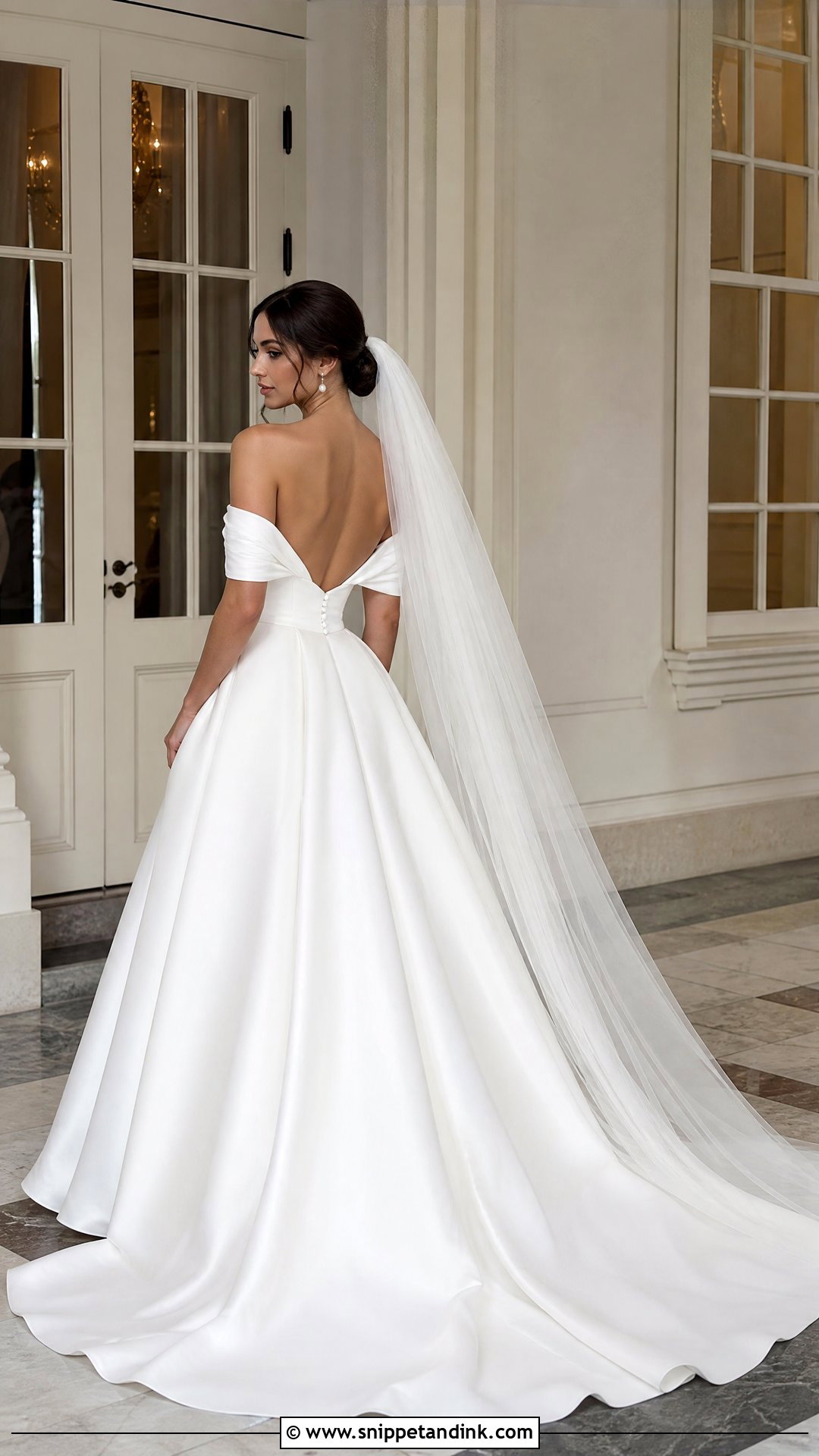
Off-the-shoulder sleeves combined with a low back look romantic, but this is the cut I see restrict brides most. A structured satin or lace bodice wraps the upper arms, then dips into a soft V or curve at the back. A full A-line skirt reads classic; a mermaid gives more definition. Add a low bun, pearl drops, closed-toe heels and a veil set beneath the hair. During fittings, lift your arms, hug your mum, sit and stand. If the sleeves ride up or drag the bodice down, you’ll be adjusting them in every photo. Internal boning, a waist stay and a strip of silicone grip tape along the neckline usually solve it.
14. Square Back Mikado Wedding Dress
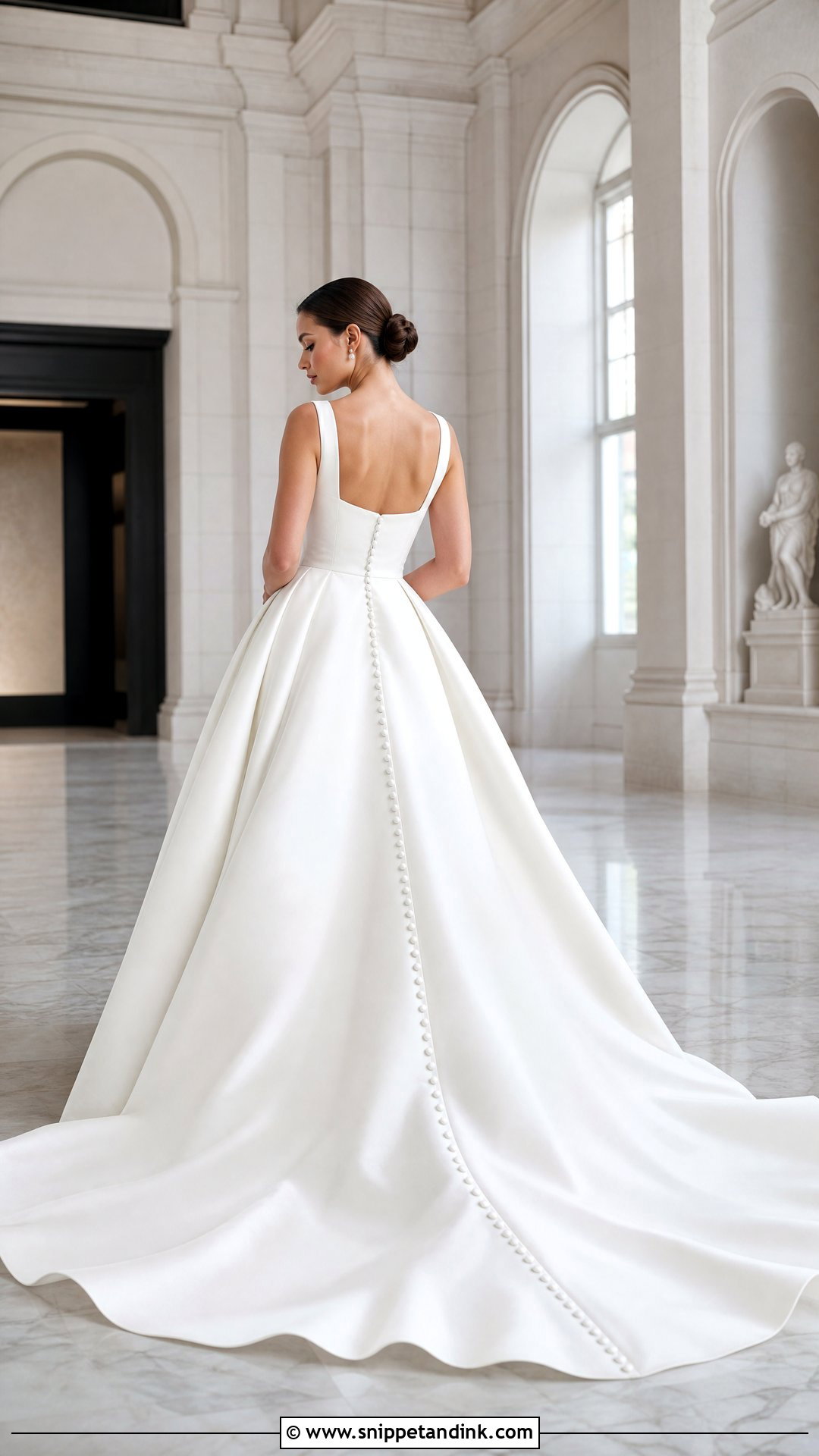
Mikado holds a crisp edge, which makes it ideal for a square back. The shape suits a sleeveless A-line or a modern ball gown with wide straps and a defined waist, and covered buttons down the centre soften the hard corners while leading the eye to the train. Pearl studs, a sleek bun and ivory pumps are plenty. A cathedral veil looks right for the ceremony, then comes off for portraits. Stiff fabric is unforgiving at the back neckline, though. If the edge stands away from your shoulder blades, it shows in every side photo. I often ask the tailor to round the corners slightly, which keeps the line clean without looking severe.
15. Scoop Back A-Line Wedding Dress
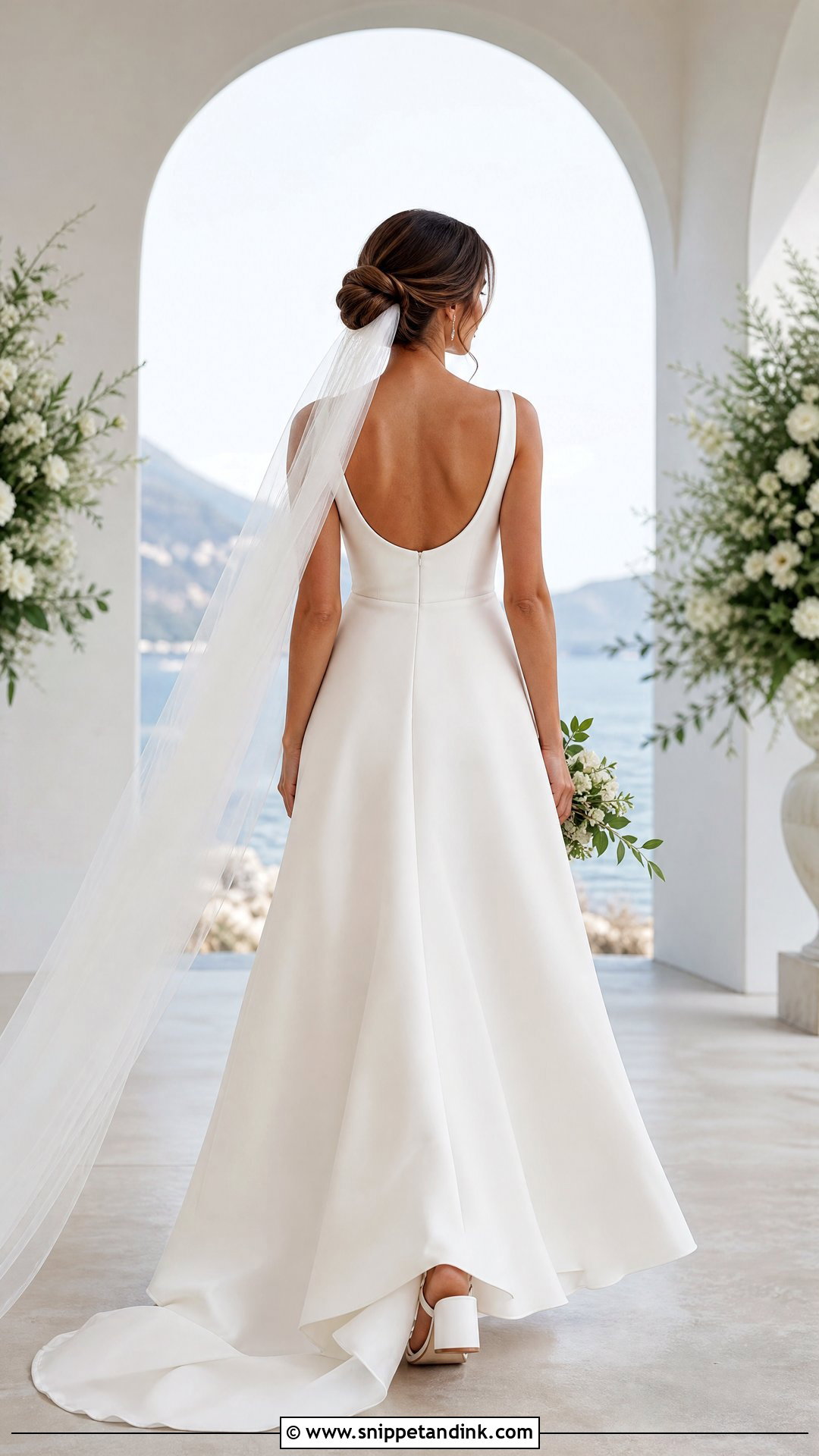
A scoop back is the one I suggest most to brides who want some openness but also want to wear a proper bra. The curve can sit above or just below the bra line, so decide your coverage before you order. Satin keeps it clean; floral lace adds texture. A fitted waist and softly flared skirt suit nearly any venue, and a twisted low bun, small earrings and block heels finish it. A chapel veil follows the curve nicely. If you need more lift, ask whether built-in corsetry or a low-back longline will work with the depth of the scoop. Then stand with your back to a mirror. The curve should be symmetrical, and it often isn’t on an off-the-rack sample.
16. Beaded V Back Wedding Dress
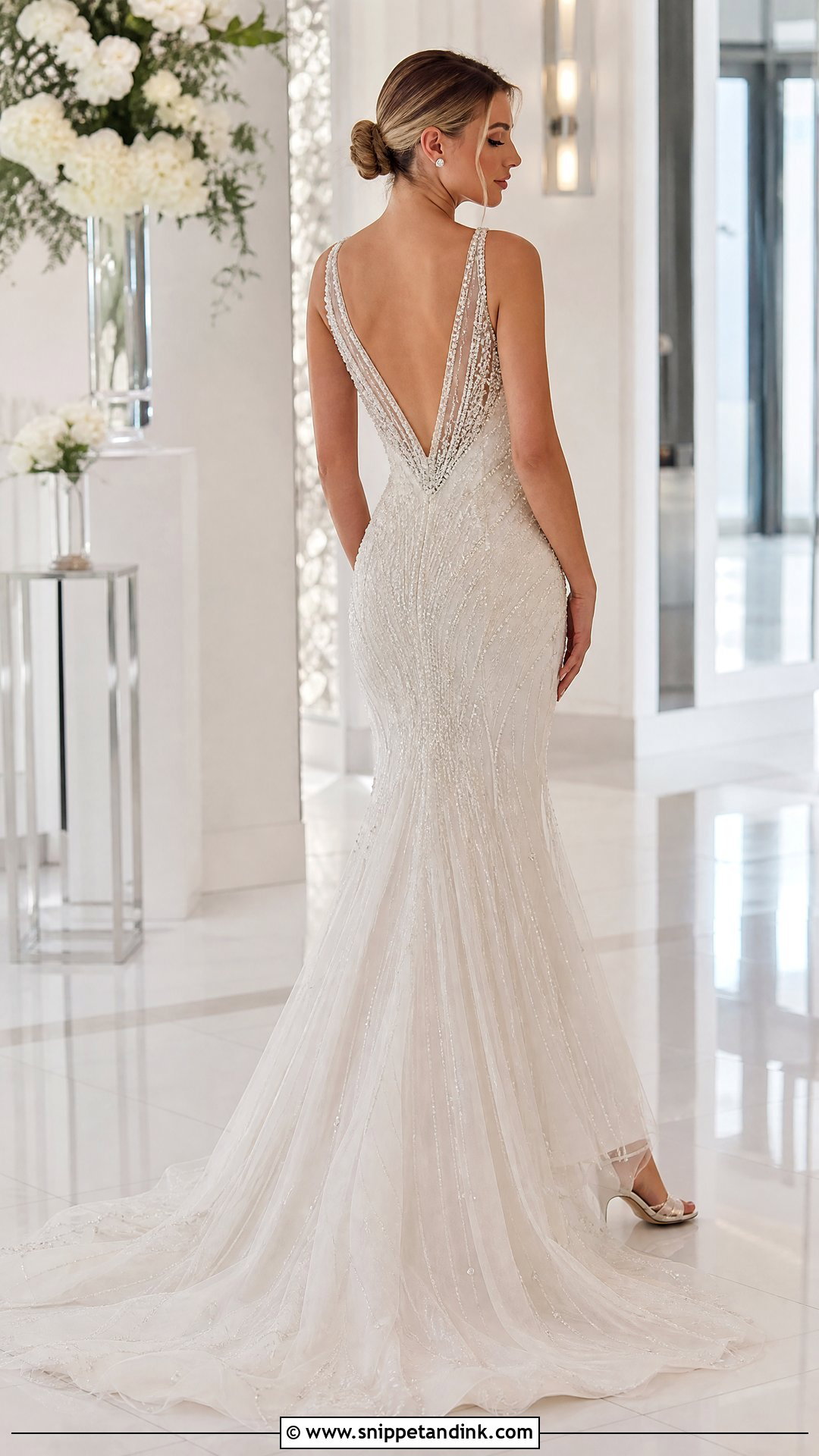
Beading along a V-back draws a long line down the spine and catches every camera flash. A fitted tulle gown, soft mermaid or flowing A-line all work, with crystals, pearls or clear sequins tracing the opening so the gown keeps its bridal colour. Crystal studs, a neat low bun and satin heels balance it. Choose a plain veil, because raised beads snag tulle the moment you turn. I always look at beaded backs in daylight and under warm indoor light, since they can read silver in one and gold in the other in photos. The inside edge is where the trouble is: ask for a soft lining or bound trim so the beads don’t rub a red line into your skin by evening.
17. Back Cutout Column Wedding Dress
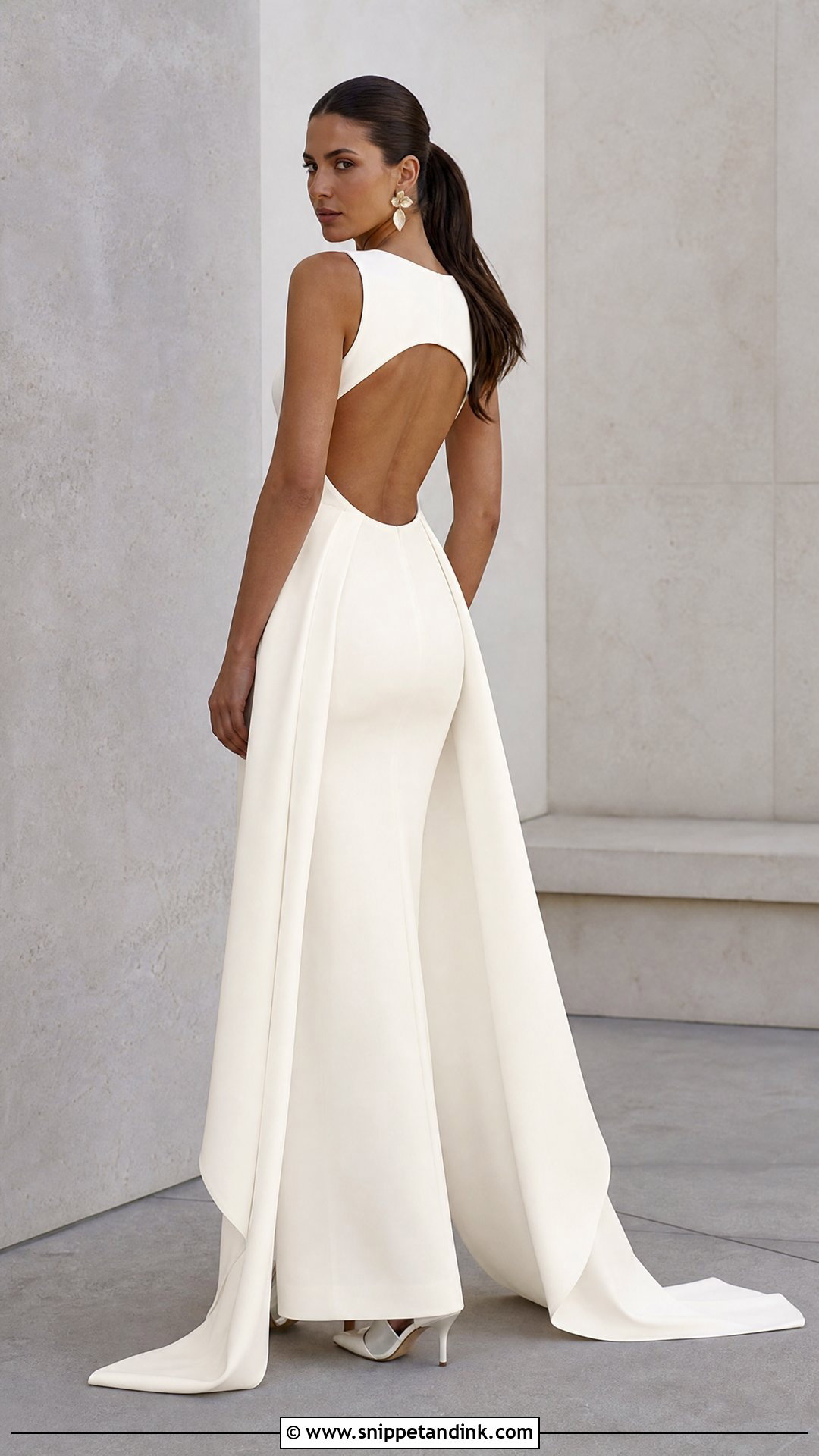
A single cutout gives a minimal column a modern edge while keeping the upper back covered. It can sit at the waist as a narrow oval or as a curved opening under a closed bodice. Matte crepe is my first choice here because it stays flat and lets the shape of the hole do the talking. Sculptural earrings, a polished ponytail or bun and pointed pumps suit it; a short veil keeps it visible, and a removable overskirt adds ceremony drama. Every edge must be stabilised with tape or a facing. Unsupported crepe around an opening stretches and starts to gape after a few hours of wear, especially when you twist to talk to people.
18. Ribbon Tie Back Wedding Dress
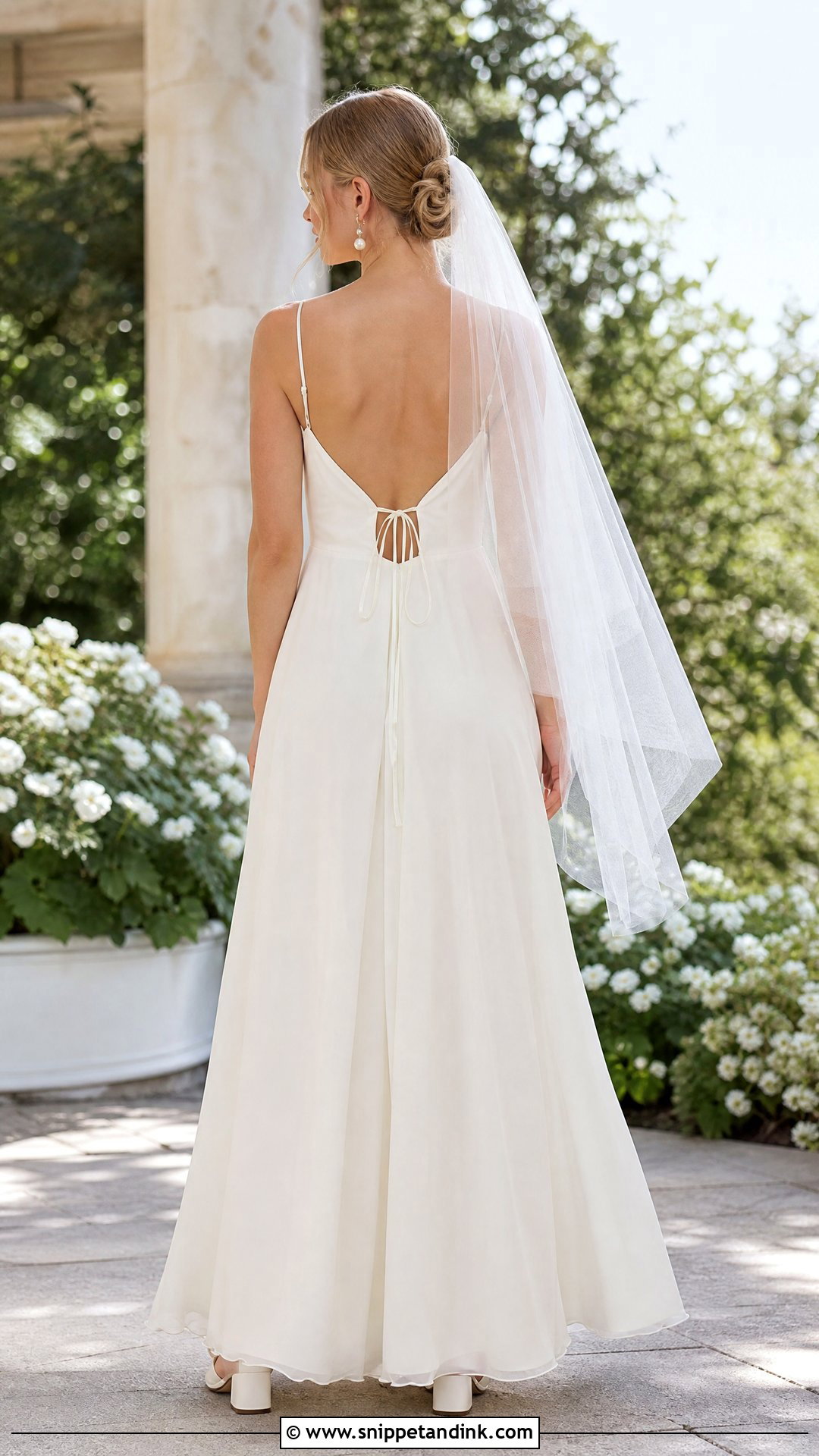
Ribbon ties give you a bow without the bulk. Narrow ties can close a keyhole, join delicate straps or fasten across a low back, and they sit naturally on chiffon A-lines, lace sheaths and light tulle. Small drop earrings, a relaxed low bun, ivory sandals and a sheer fingertip veil keep it airy. The ribbon itself matters more than people think. Slippery polyester satin loosens within an hour; a double-faced satin or grosgrain holds a knot. I teach one bridesmaid to tie the bow and have her practise twice at the final fitting, with the tails trimmed to equal length and kept clear of any buttons or appliqués.
19. Ruffle Back Mermaid Wedding Dress
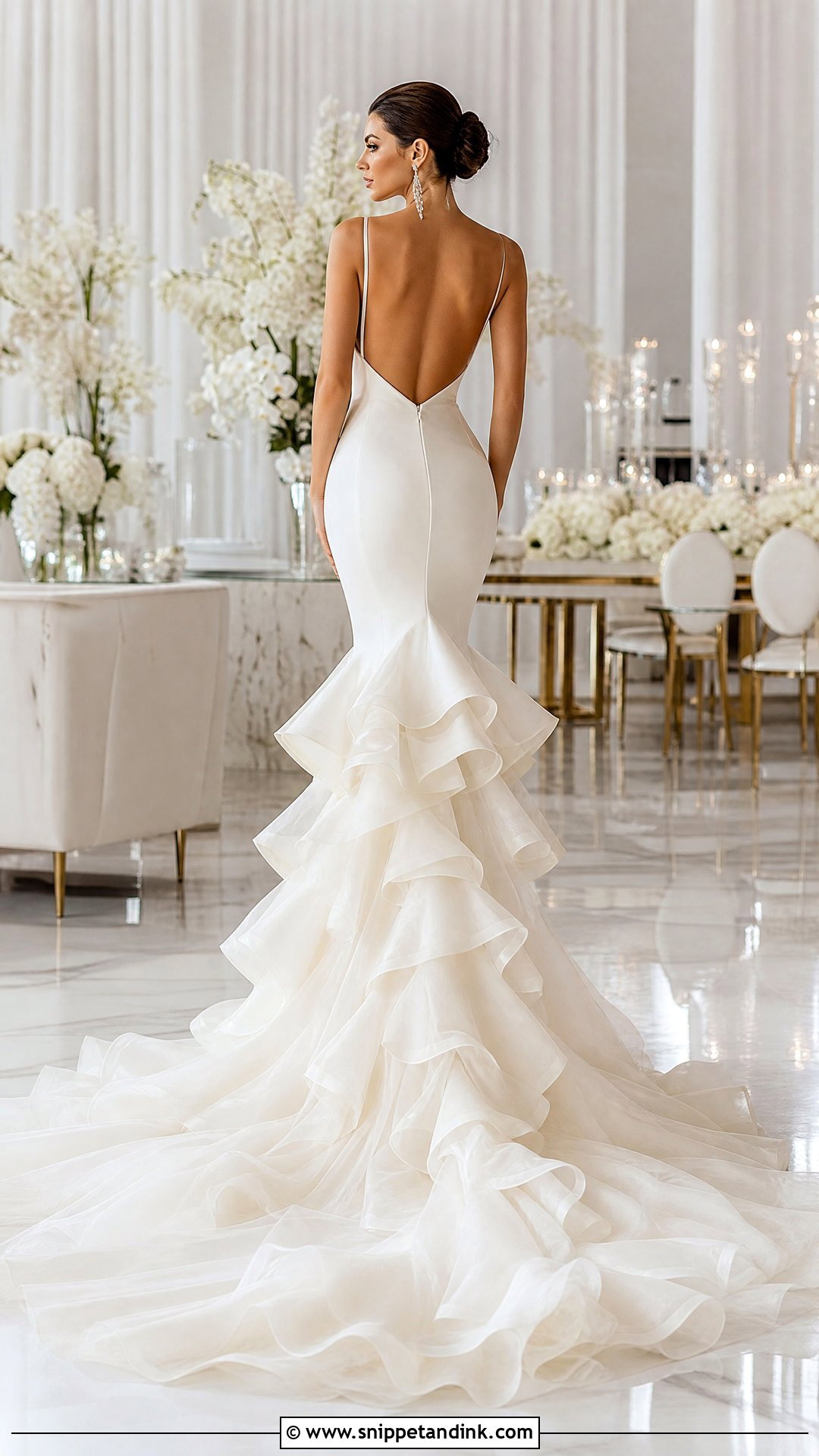
Ruffles at the back of a mermaid put all the volume behind you, which is exactly where it belongs on a fitted silhouette. Cascading organza or tulle ruffles can start below an open back and tumble into a layered train. Keep the bodice plain, wear a smooth updo, crystal earrings and steady block or platform heels, and keep the veil short so the layers aren’t fighting each other. Bustling is the practical problem. One loop can’t lift that much ruffled fabric evenly, so ask for a bustle with several points. Walk on carpet and on stone during fittings, and turn on the spot to check the layers don’t fold under the knees.
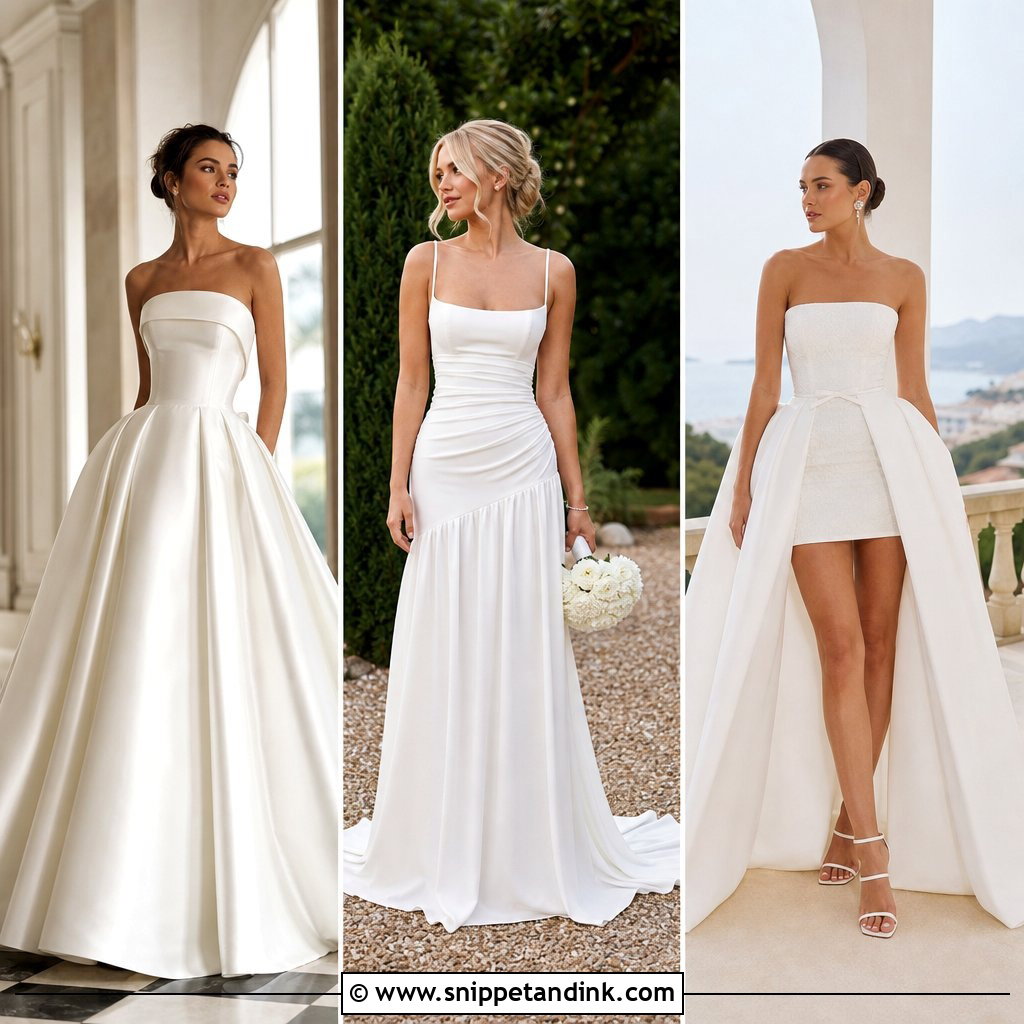

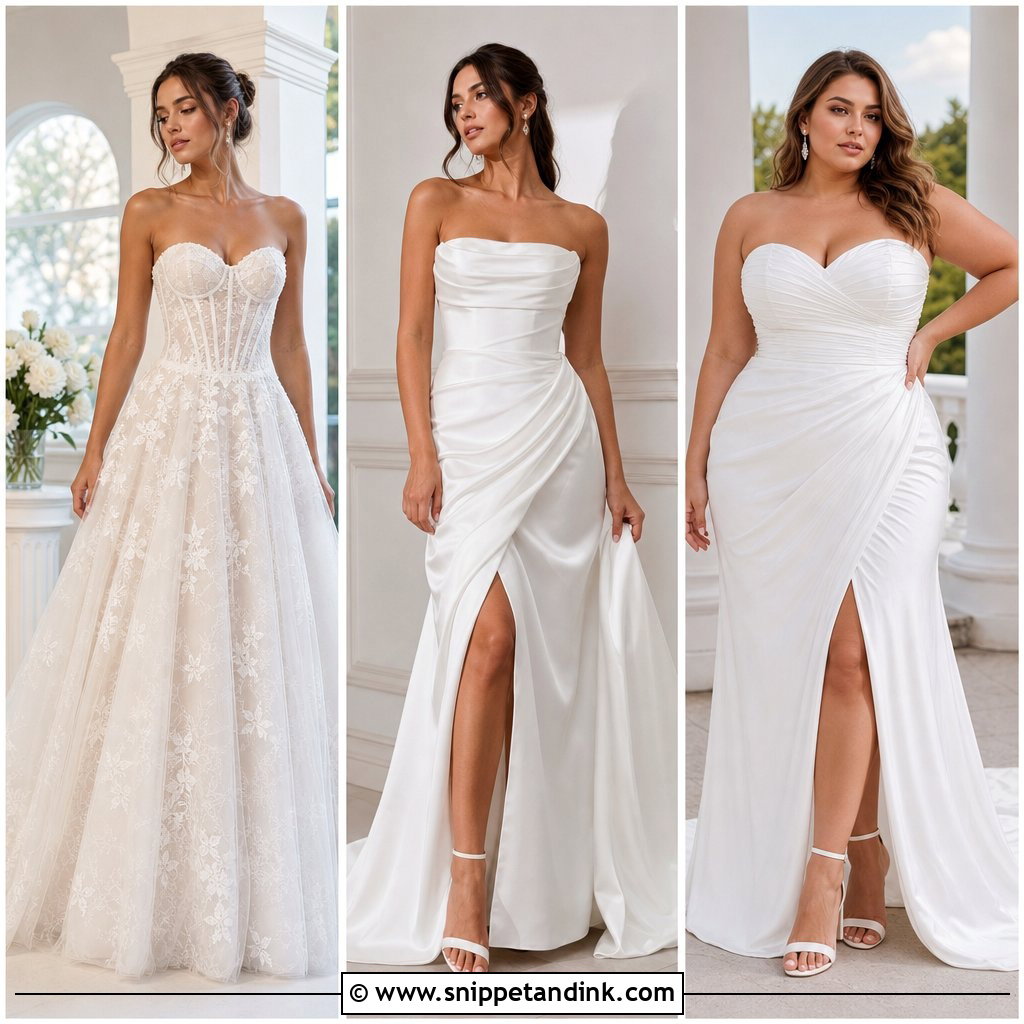
20. Detachable Cape Back Wedding Dress
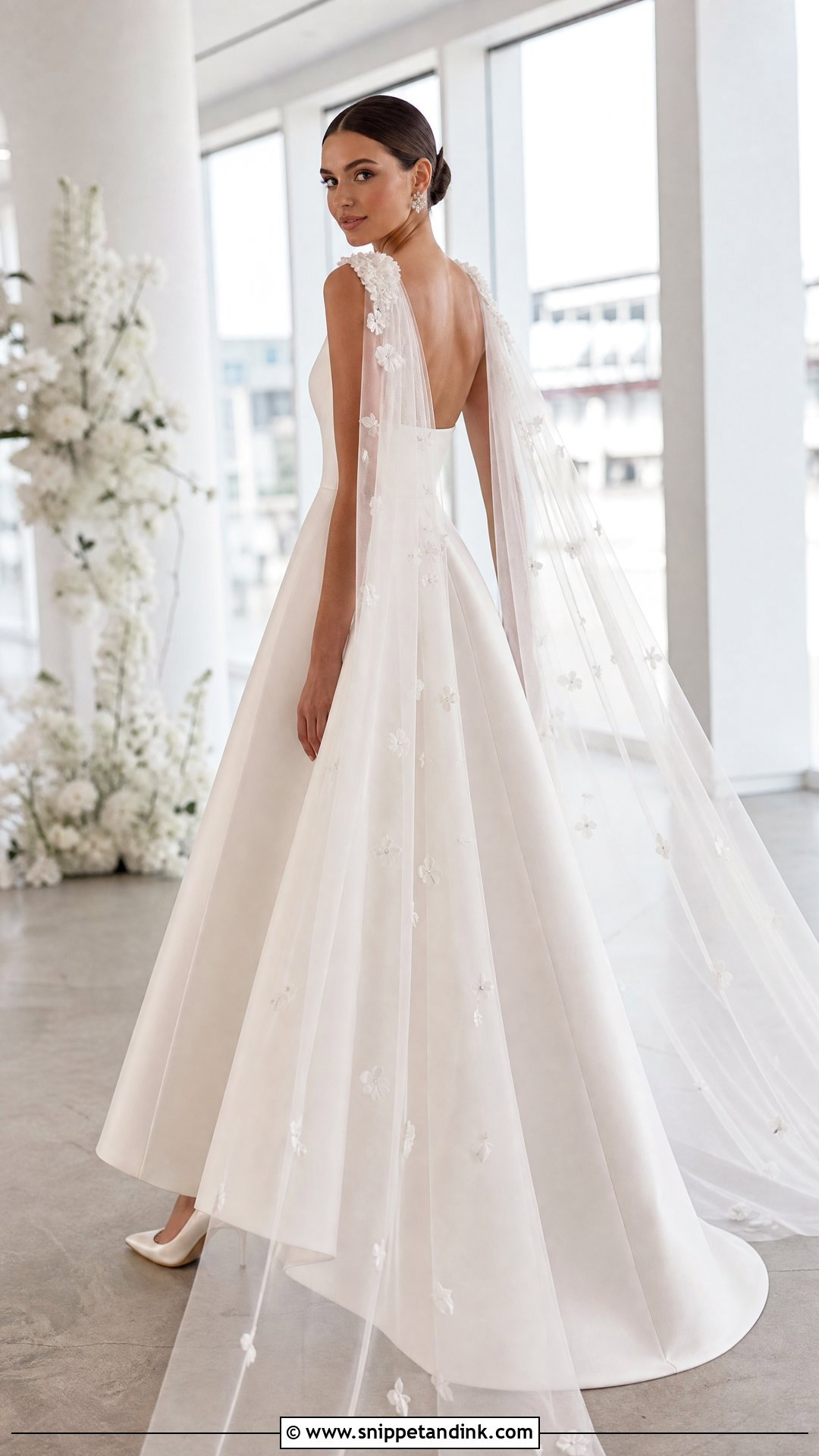
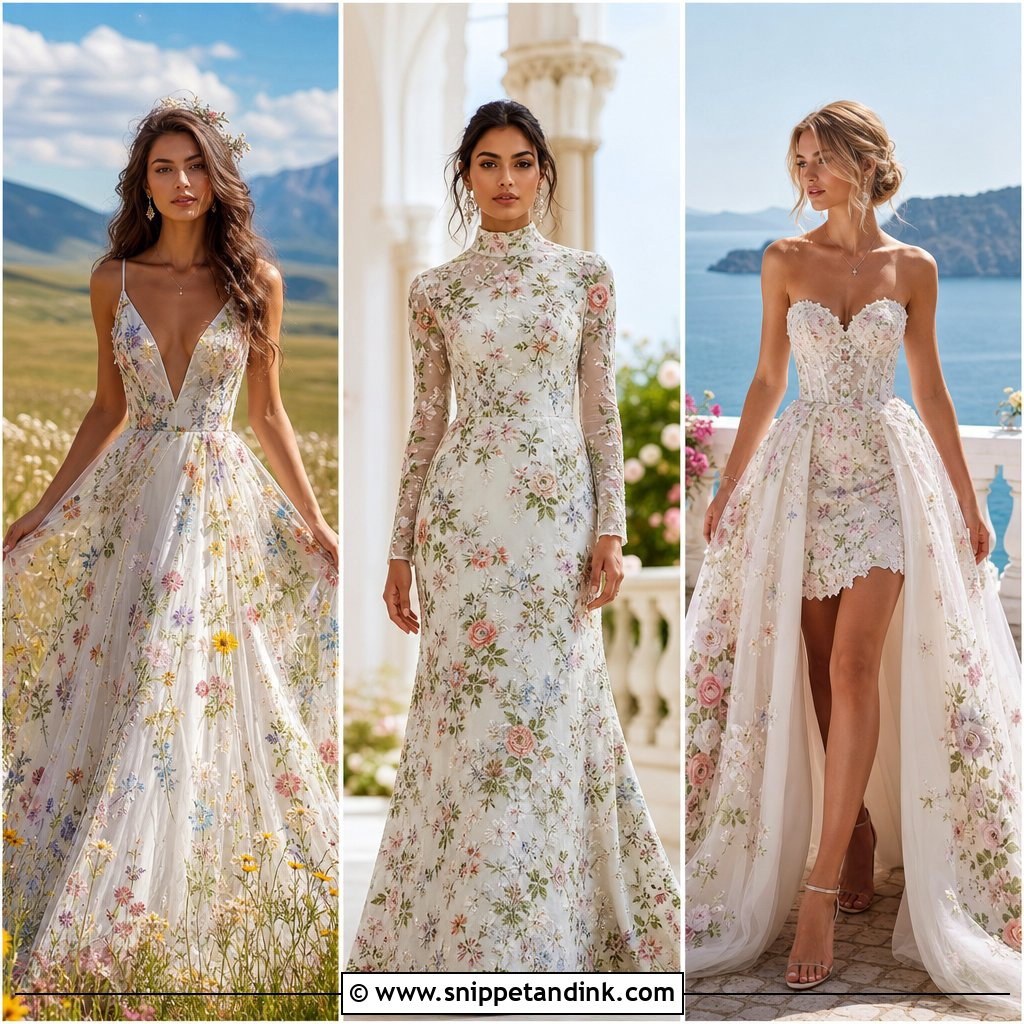
A detachable cape gives you two gowns for the price of one. Start with a simple strapless, square-neck or sleeveless dress in crepe, satin or Mikado, then add a sheer tulle cape that clips at the shoulders and falls over the back like a veil. Its edge can carry appliqués or pearls that match the gown, or stay clean. A sleek bun, refined earrings and pointed heels complete it. Wear the cape for the ceremony and formal portraits, then take it off to show the original back. I make sure the fastenings are hidden snaps or hooks a bridesmaid can undo in seconds, and that the cape doesn’t drag the bodice backward when you lift your arms.
Hair, Veil and Bustle Can Bury Your Back Detail
I’ve watched brides pay for an intricate back and then hide it under three other things. Plan these together, ideally at the same fitting.
Hair
Long loose waves cover most of the upper back, including the top buttons, a keyhole and any detail at the nape. If the interest sits high, go for an updo or a low bun. If it sits at the waist, hair down is fine.
Veil
A dense or heavily trimmed veil lands right over the back for the whole ceremony. Choose a sheer, plain-edged one, pin it below your bun rather than on the crown so it falls away from the shoulders, or plan to remove it before portraits. Bows and ruffles usually look better with no veil at all after the vows.
Bustle
Bustle points are hooks or loops sewn into the skirt, and they can land straight on top of a bow tail, an appliqué or a line of buttons. Ask your seamstress to show you the bustled gown from behind before she finishes, and choose a style (over, under or ballroom) that keeps the main detail clear for the reception.
Underwear for Open, Low and Cutout Backs
This is the question I get most about these gowns, and the honest answer is that the dress should do most of the work. Sewn-in cups and boning are cheaper than a drawer of specialist bras, and they can’t slip.
- Scoop and moderate V-backs: a low-back longline or a convertible bra with straps hooked around the waist usually hides below the opening.
- Very low backs and cutouts: built-in cups are best; adhesive cups work for smaller busts but can loosen with heat and dancing.
- Illusion mesh: wear nude-to-you, seam-free knickers and check the waistband doesn’t show through when you sit.
- Bring the exact underwear to every fitting, because changing it after the final alteration changes how the back sits.
The View From the Last Pew Matters Most
The right back detail suits the gown’s shape and still lets you move, sit and hug without thinking about it. Open satin reads modern; lace, pearls, buttons and bows feel more decorative. Plan your hair, veil, venue and underwear around the back, not the other way round. At every fitting, have someone photograph you from behind while you stand, sit and walk, because you’ll never see the back of your gown in the mirror the way your guests do. Alterations can smooth mesh, shorten straps and move appliqués, so trust how you feel from every angle and let the tailor handle the rest.
You'll Like These Ideas:




Leave a Reply