
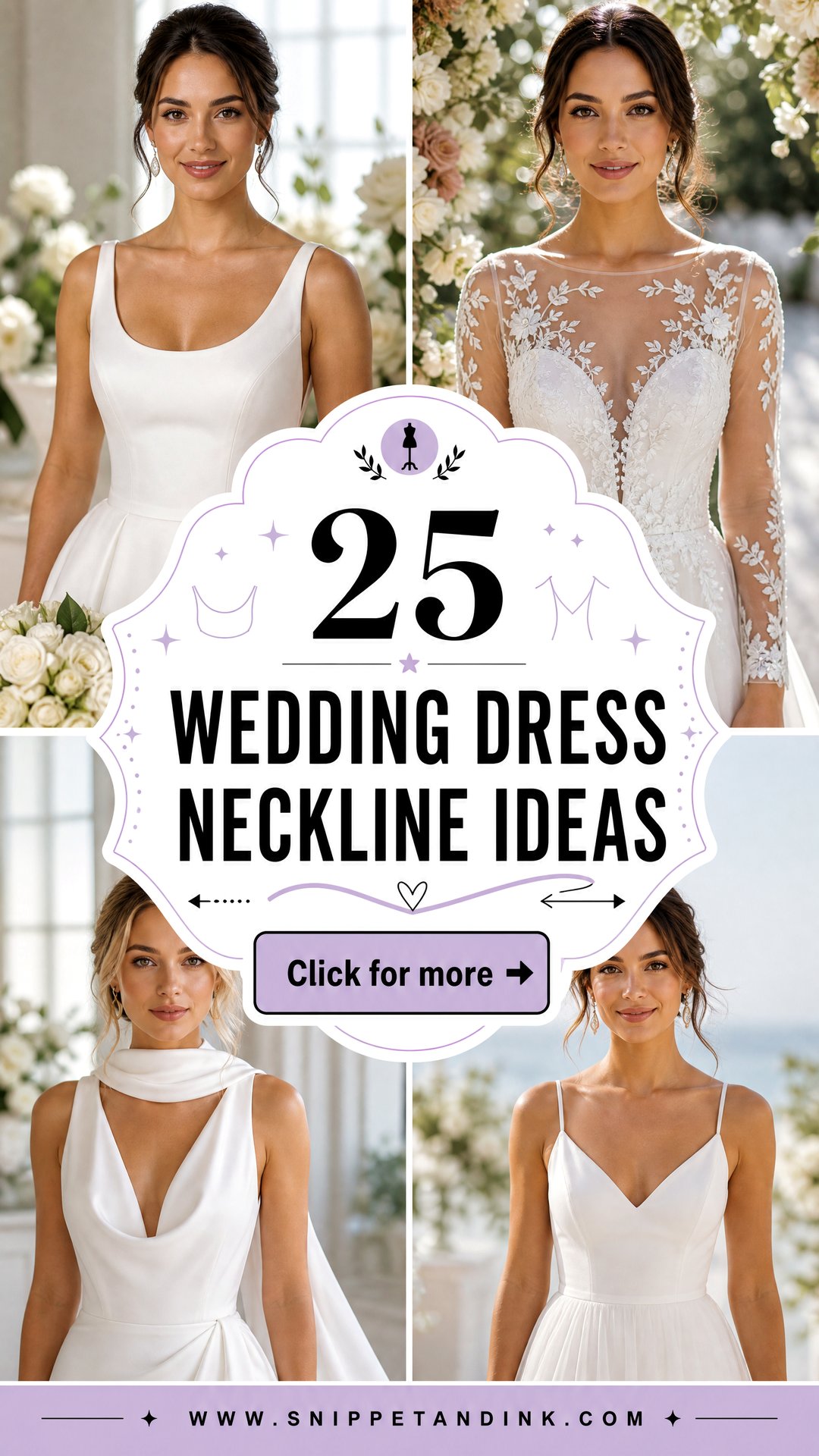
The neckline is the part of the gown that sits closest to your face, so it does more to shape how you look in photos than the skirt ever will. It decides how much collarbone shows, how much support your bust gets, which necklace or earrings make sense and how a veil falls behind you. Sweetheart, V-neck, off-the-shoulder, square, halter and high necks remain the backbone of bridal design, and sharper shapes like the cat-eye, scarf, cowl and sculpted strapless now appear in most collections. Below are 25 of them, with what I watch for when a bride tries each one on: where it gapes, what it needs underneath, and who it suits.
What Your Bust and Shoulders Ask of a Neckline
Before looking at necklines as styles, I look at what the bride needs them to do. A neckline can only flatter if the bodice underneath is built to hold it, so the first conversation is about support and frame, not about trends.
Support
Fuller busts are usually happiest in V-necks, sweethearts, halters and square necks with straps, because those shapes hold weight through the straps or the curve. Straight-across strapless and spaghetti straps can work, but only with built-in cups and firm boning. Smaller busts have more freedom, including plunges and cowls that rely on drape rather than structure.
Shoulder Width
Wide horizontal lines like the bateau, Sabrina and square neck add width at the top, which balances narrow shoulders and a full skirt. Broad shoulders often look softer in a V or a scoop, which break that width at the center.
Neck Length
High collars, mock necks and jewel necks look best on longer necks. If your neck is short, open necklines give it room, and the V lengthens more than any other shape.
1. Sweetheart Neckline Wedding Dress
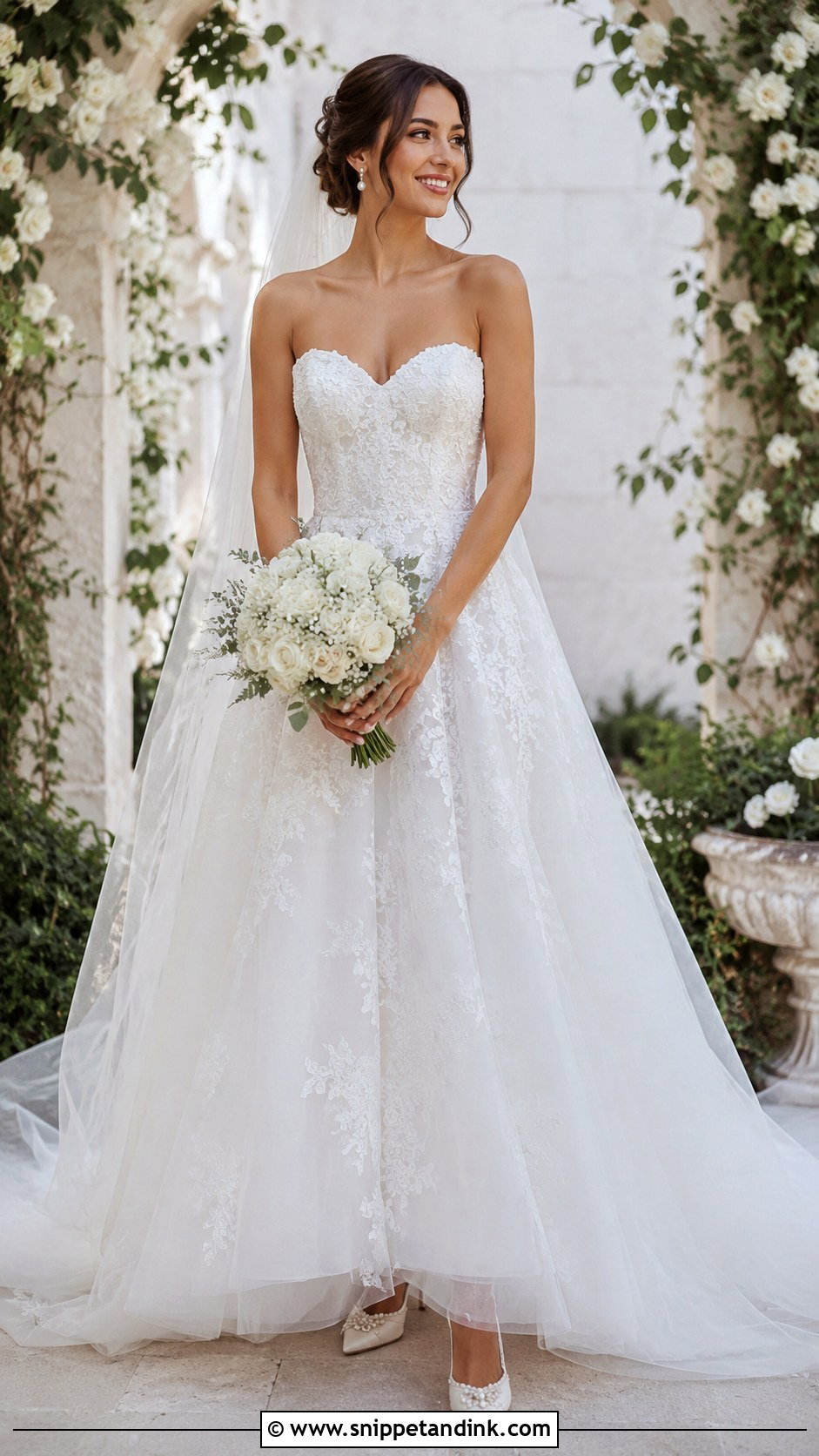
The sweetheart curve dips at the center and rounds over each side of the bust, which gives shape without a deep cut. It works with ball gowns, A-lines, fit-and-flare dresses and corset bodices. The catch is fit: if the bodice is even slightly big, the two curves pull away from your body every time you sit or lean forward, so I always have brides sit down in the fitting room before deciding. Lace with a tulle skirt reads romantic; plain structured satin is cleaner. Low buns, loose waves and delicate pendant necklaces all suit it.
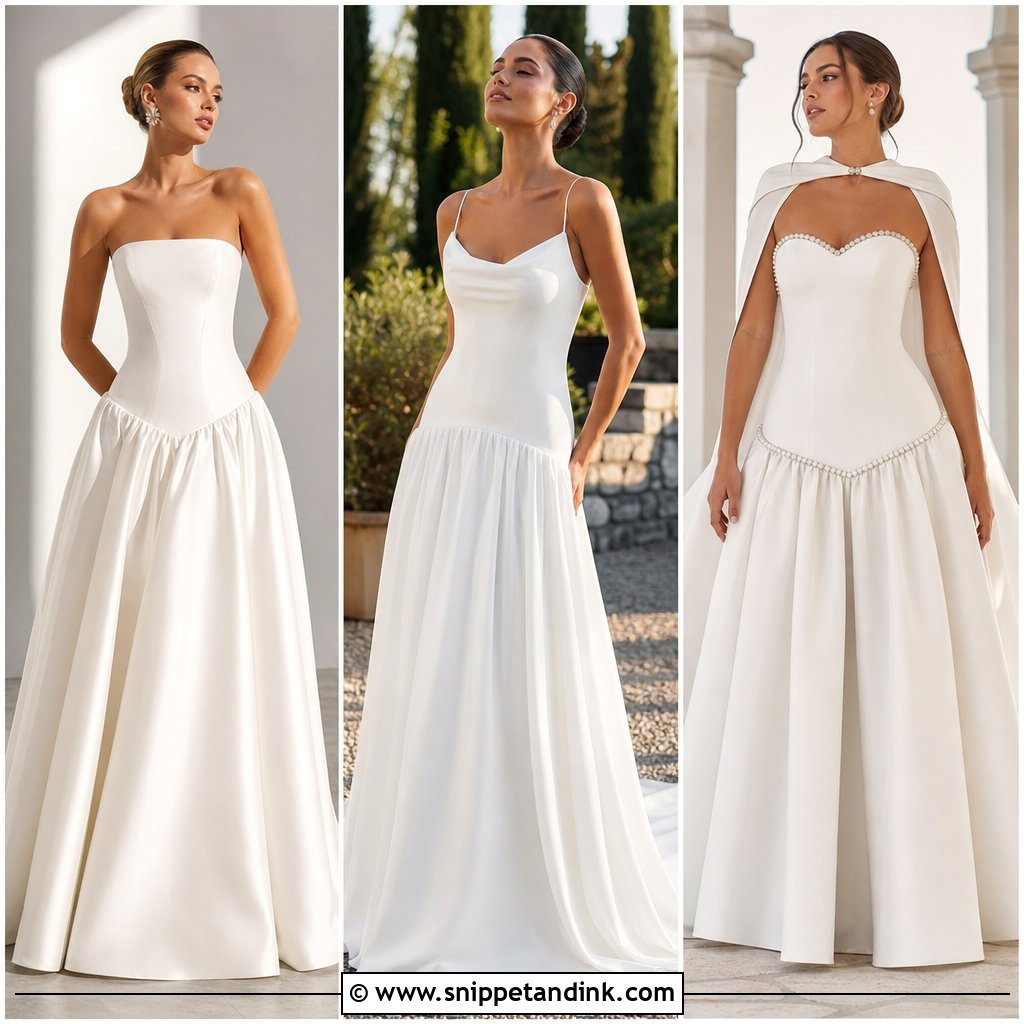
2. Strapless Sweetheart Wedding Dress
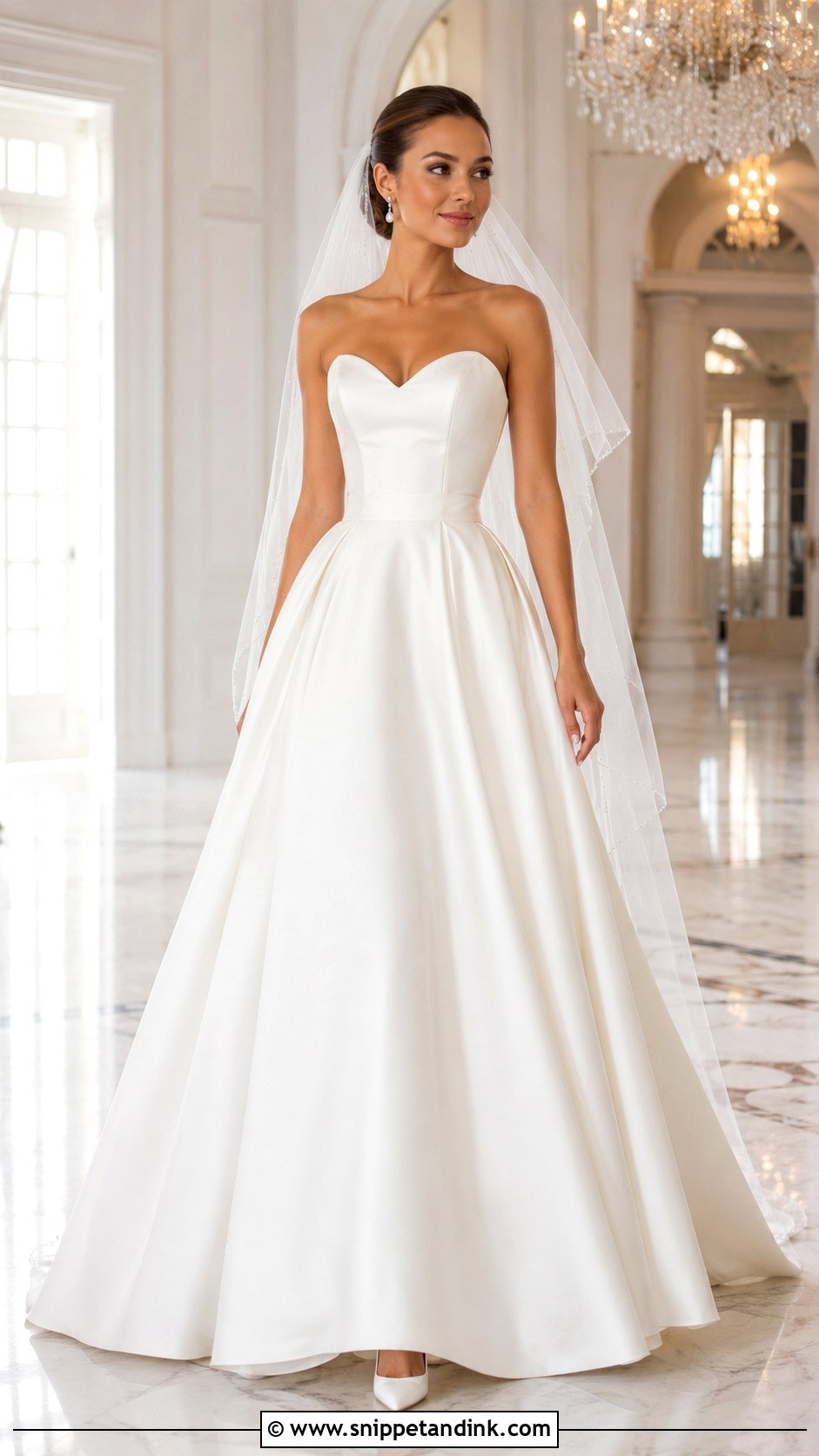
Take away the straps and the sweetheart becomes all about the bodice construction. A strapless version stays up only because of internal boning and a snug waist, not because it’s tight at the top, so the fitting focuses on the ribcage. If you can slide two fingers in at the top edge, it’ll need taking in. A full tulle skirt gives you the princess shape, a crepe fit-and-flare something more polished. Add a simple veil and drop earrings. A detachable bolero covers the shoulders for a church ceremony.
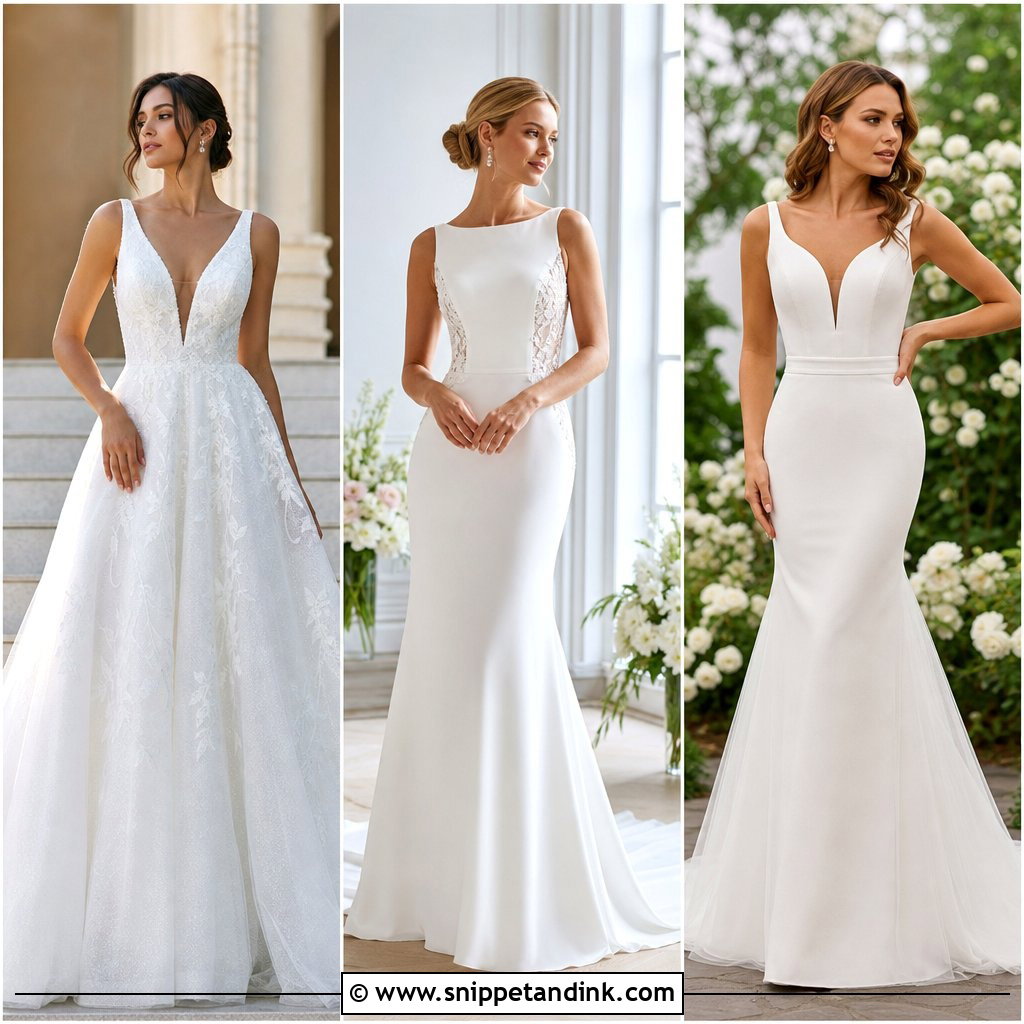
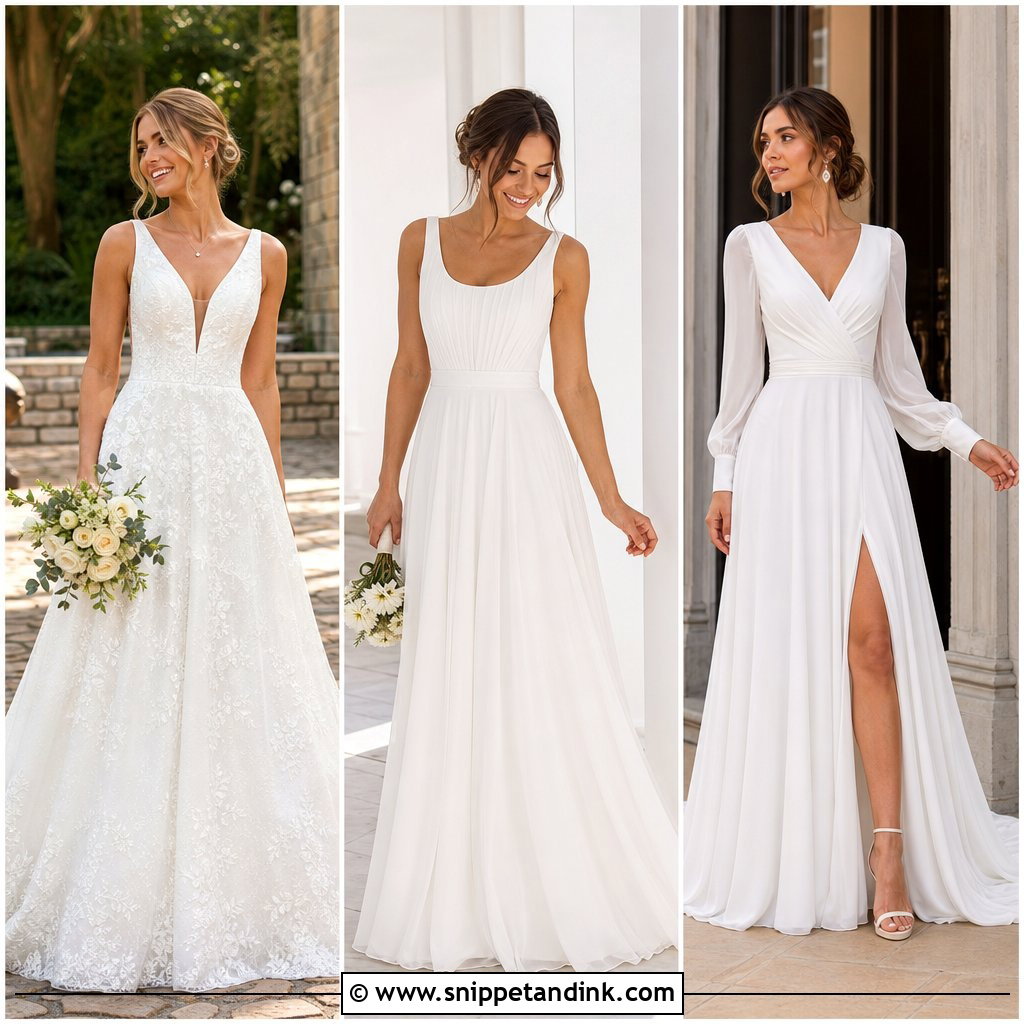
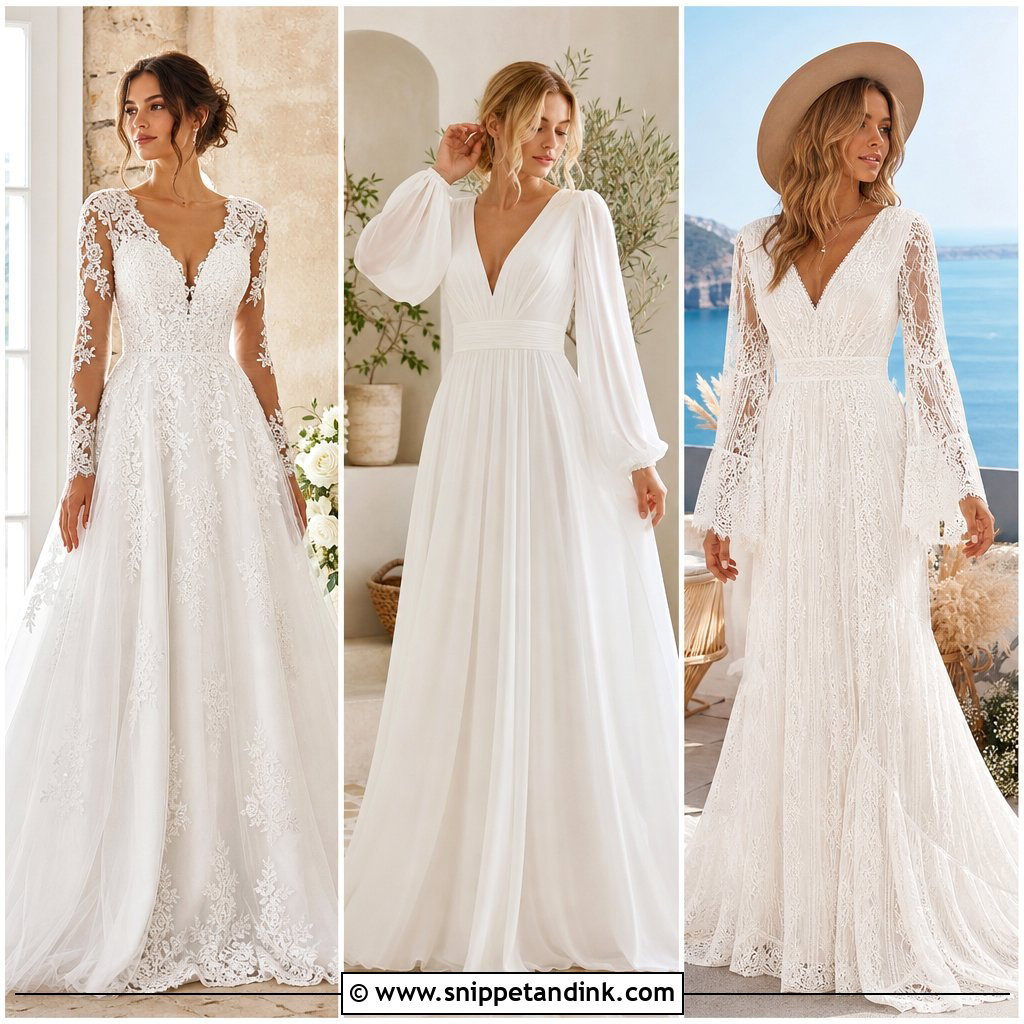
3. V Neck Wedding Dress
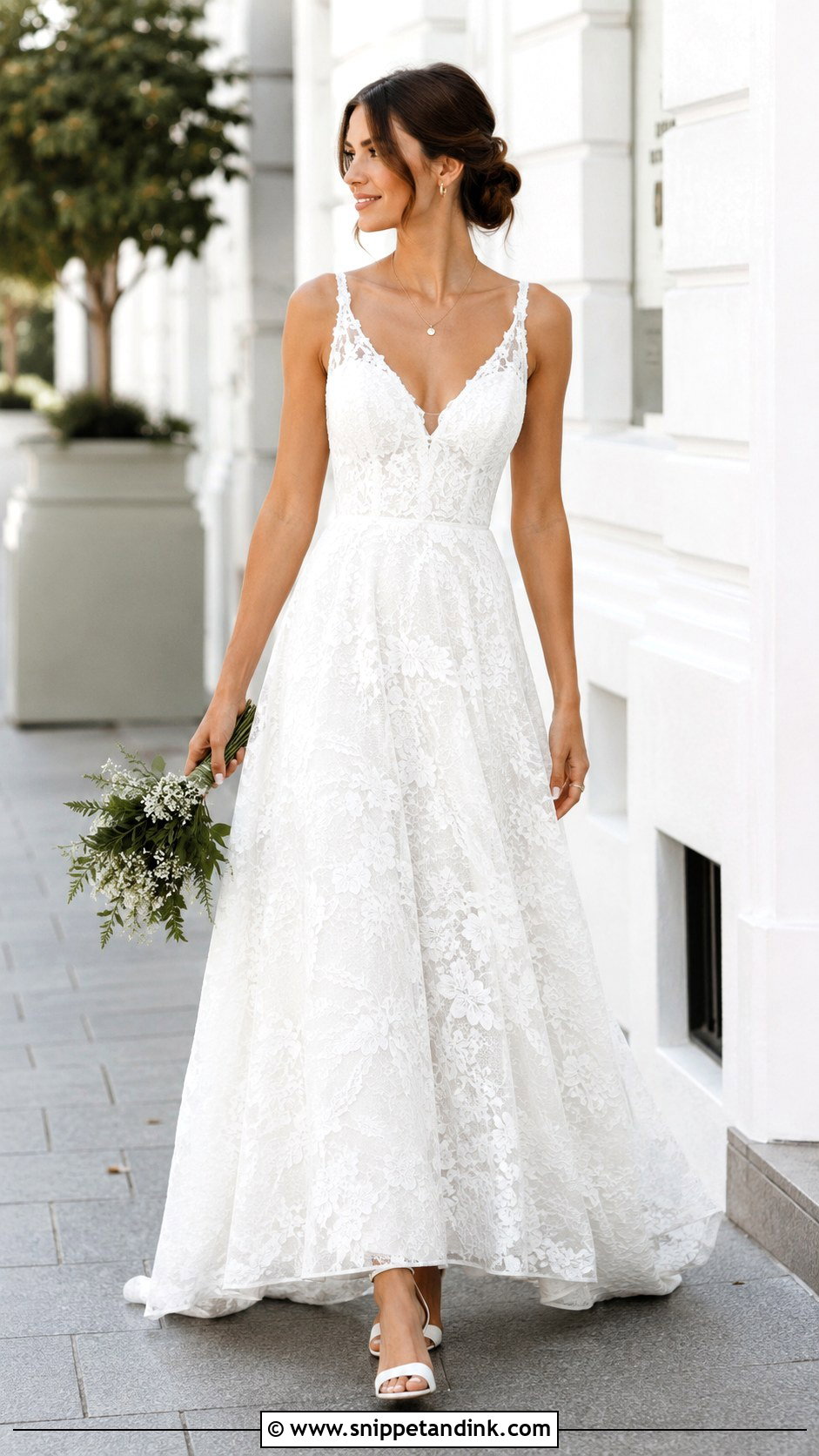
V necklines lengthen. The angle pulls the eye down the center of the body, which makes a short neck or short torso look longer. A lace A-line with flutter sleeves feels soft, while a satin sheath is minimal. The depth of the V decides the jewelry: a shallow V takes a small pendant that sits above the point, a deep one usually looks best bare. I keep a roll of double-sided fashion tape in my kit because even well-fitted V necks can shift when you hug guests.
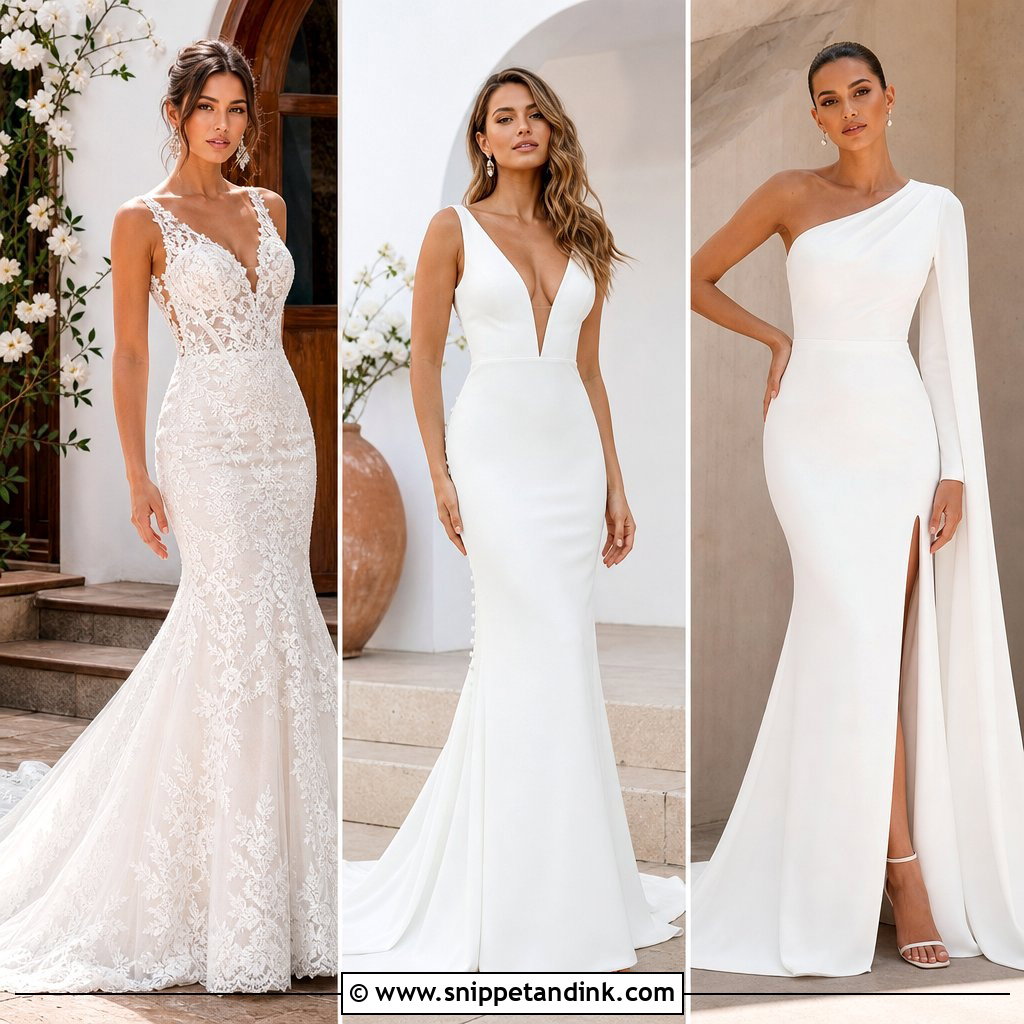
4. Plunging V Neck Wedding Dress
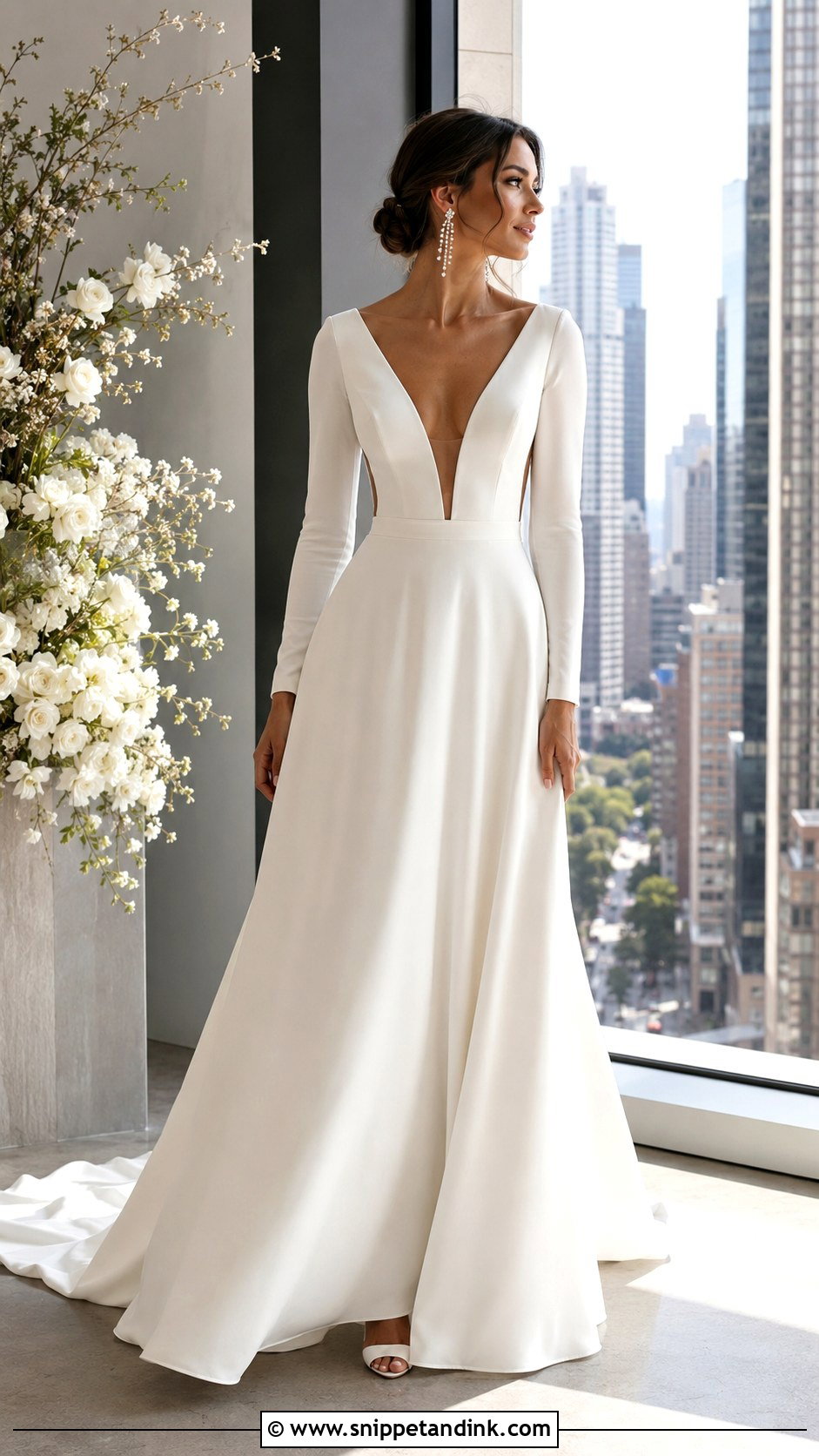
Most plunging bridal gowns rely on a panel of sheer illusion mesh running down the center front. That mesh does the holding, so check it’s as close to your skin tone as possible; a mismatched panel turns grey or pink under flash. Deep plunges suit smaller busts more easily, while fuller busts usually need cups sewn in and a firmer mesh. Crepe, embroidered lace and beaded fabrics all work. A fuller skirt or long sleeves keeps the proportion balanced. Statement earrings and a low bun suit its editorial edge.
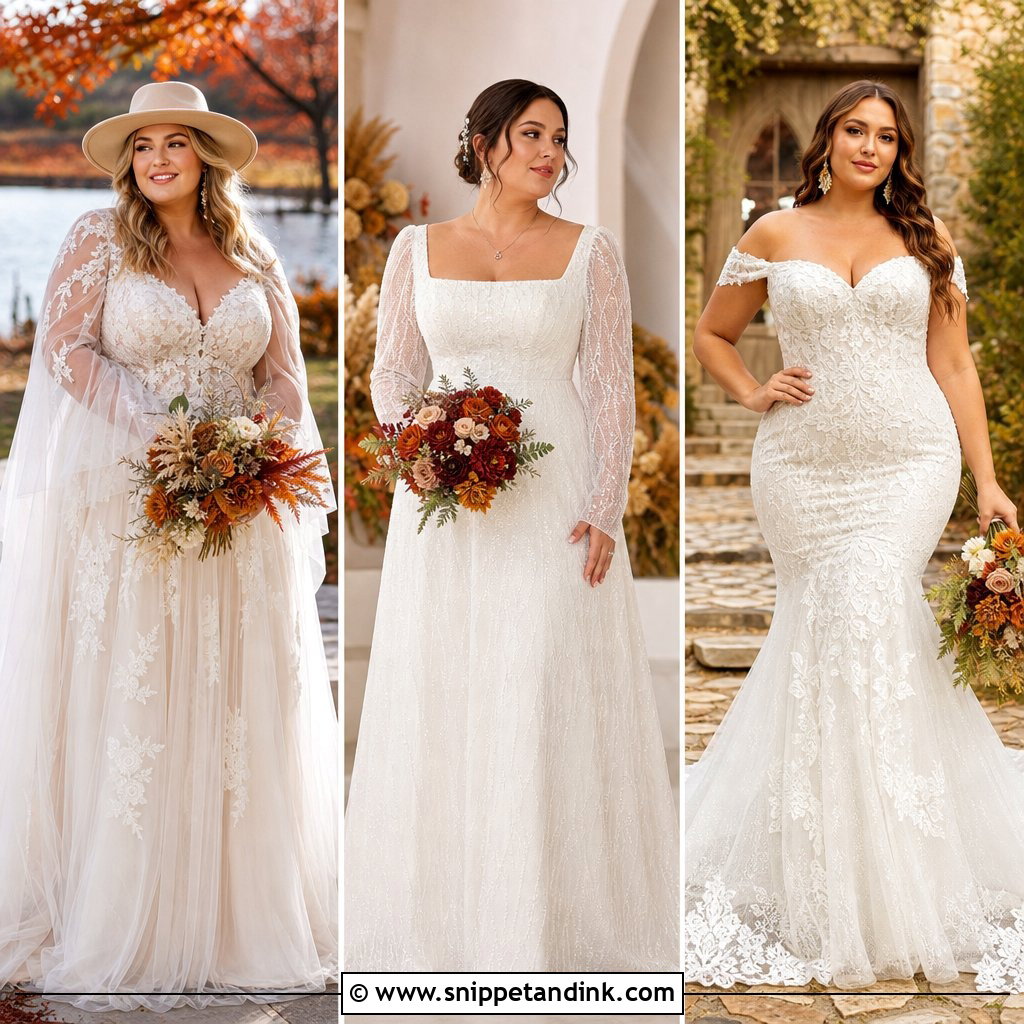
5. Square Neck Wedding Dress
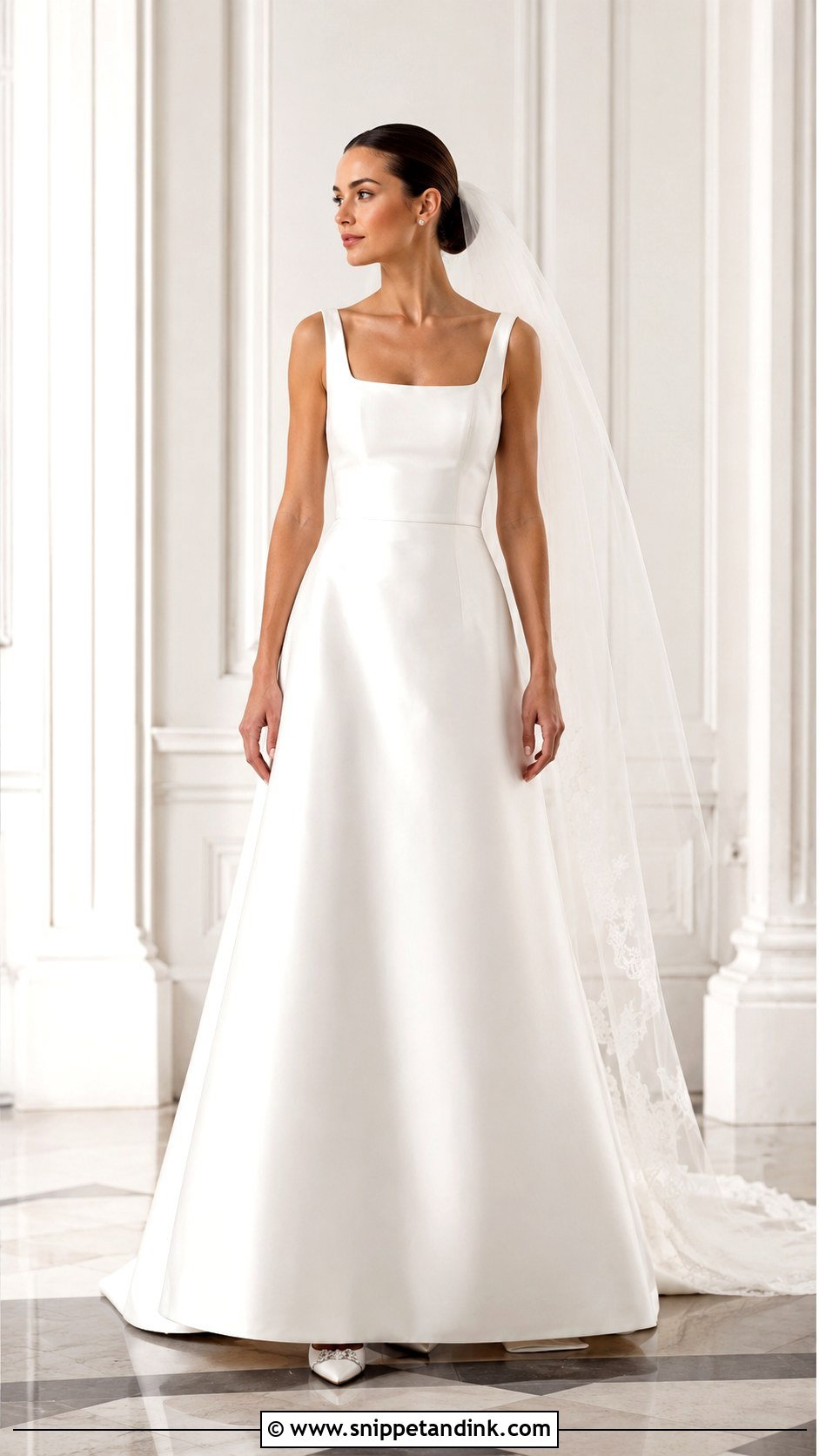
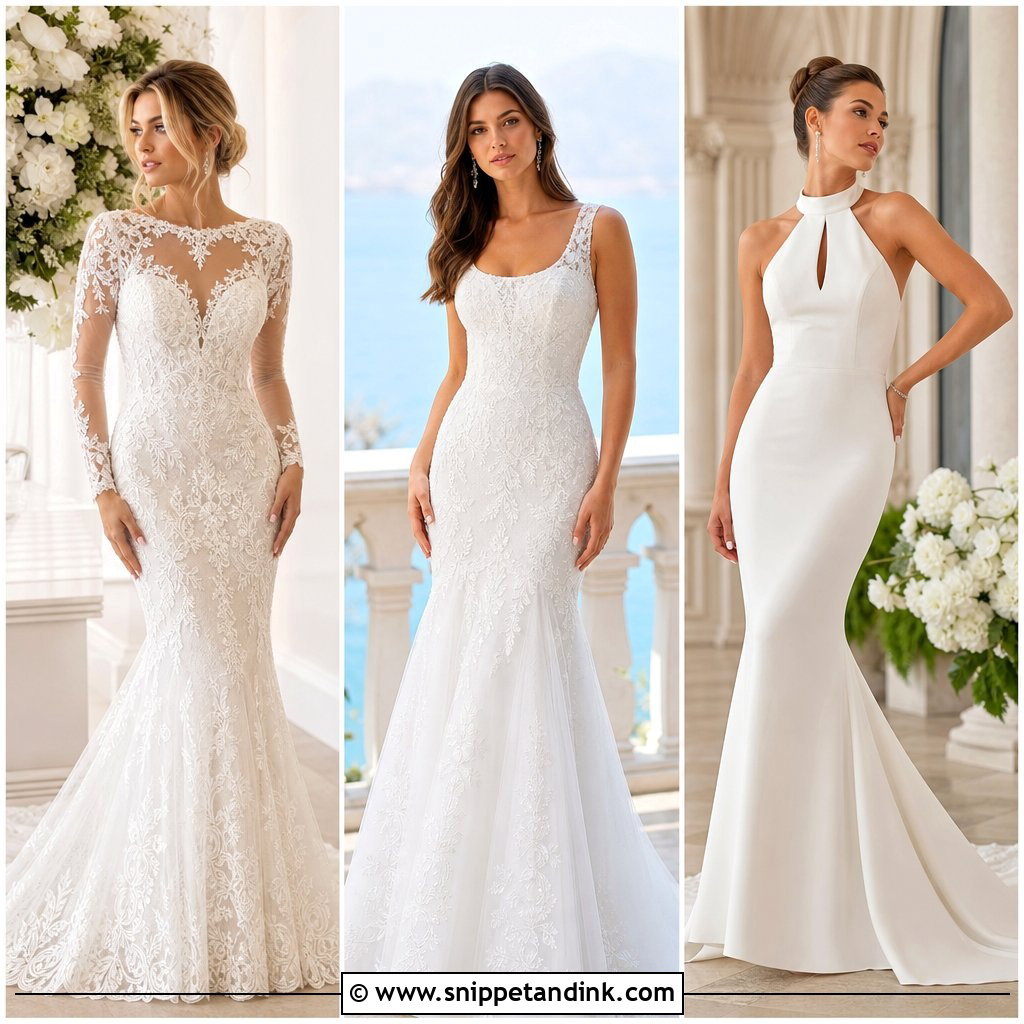
Square necks draw a crisp horizontal frame across the chest, which flatters broad shoulders and gives narrow ones some width. They need straps, sleeves or a strong corset to hold their corners; without them, the top edge bows into a curve after an hour. A satin A-line suits a formal room, a lace sheath a garden ceremony. The neckline already does the work, so pearl studs or small hoops are plenty. A sleek bun keeps the line clear.
6. Scoop Neck Wedding Dress
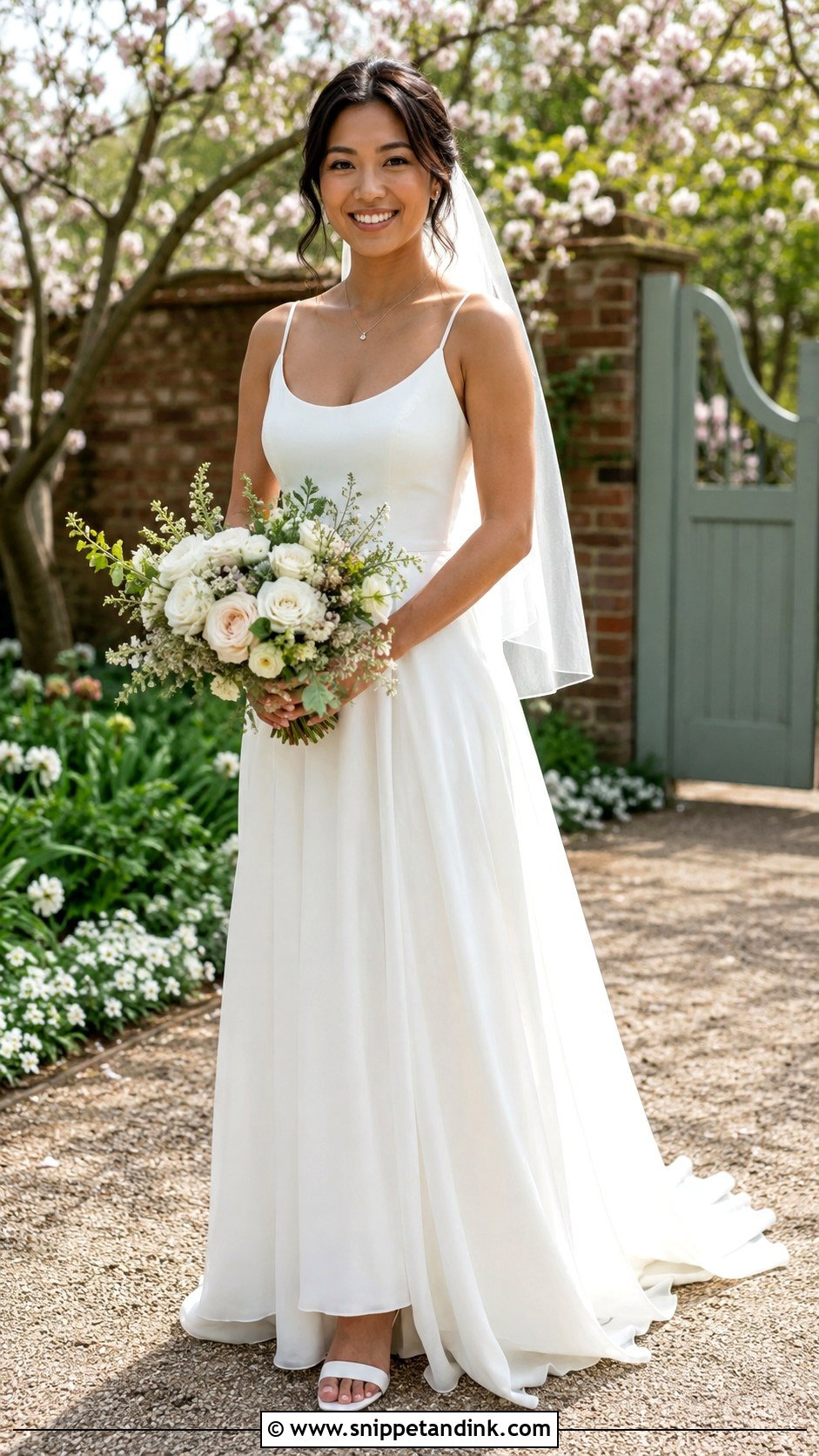
Brides who find a square neck too rigid and a plunge too exposing often land on the scoop neck wedding dress. The rounded line shows the collarbone without much skin below it. Thin straps make it delicate, lace sleeves make it romantic, and minimalist satin keeps it sleek. A scoop is also one of the easiest necklines to wear a normal bra under, which matters more than people admit. A short pendant that echoes the curve suits it, along with a veil set at the crown.
7. Straight Across Strapless Wedding Dress
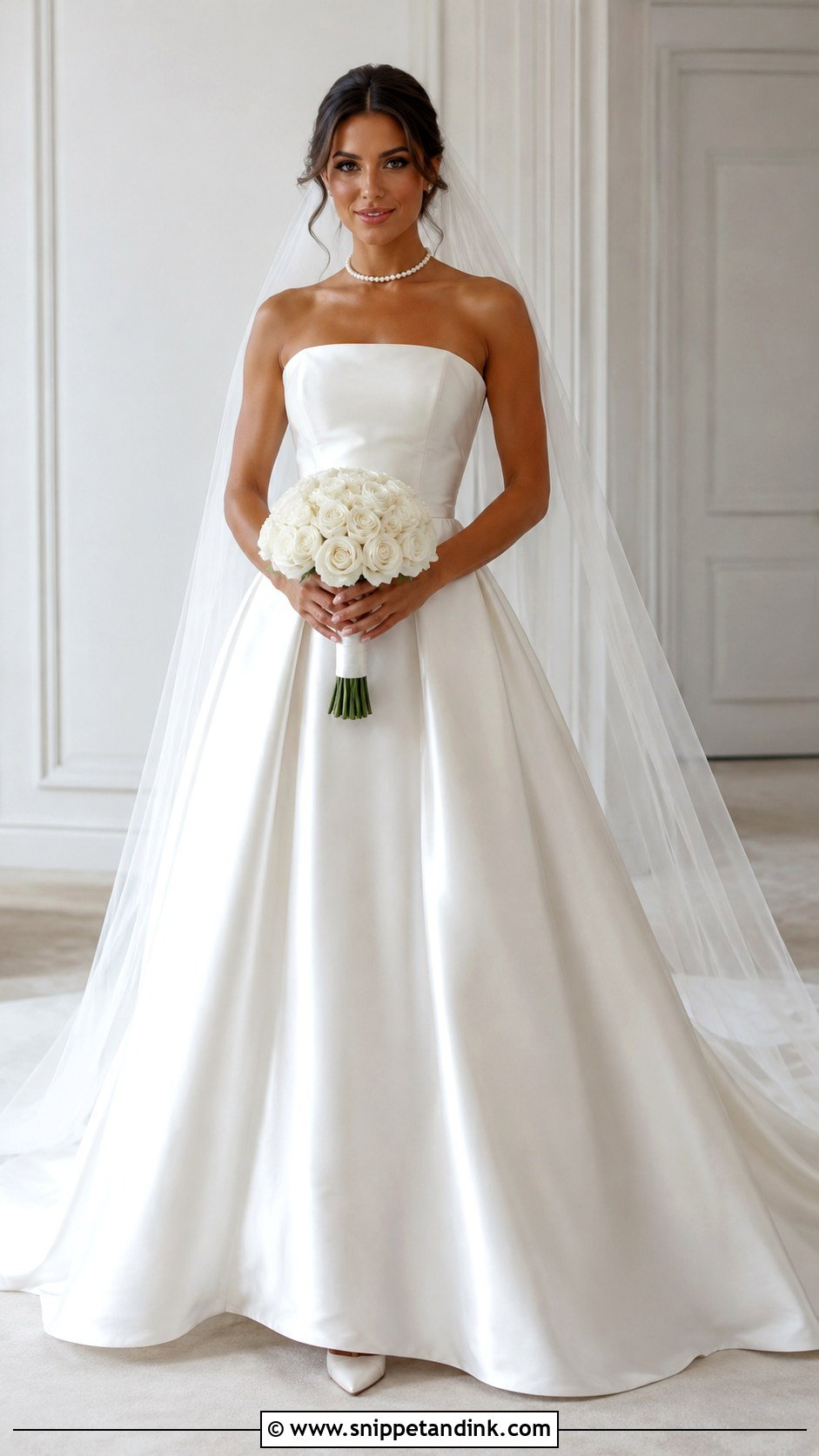
Straight-across strapless gowns are classic, but they’re the shape most likely to slip, because there’s no curve to grip the bust. The bodice must be fitted firmly around the ribcage, and I’d always ask whether a waist stay is sewn inside. Satin ball gowns look formal; a crepe column feels city-ready. With such a plain neckline, the accessories can carry more: a pearl choker, bold earrings or a cathedral veil. A smooth blowout or low bun keeps the shoulders clear.
8. Off The Shoulder Wedding Dress
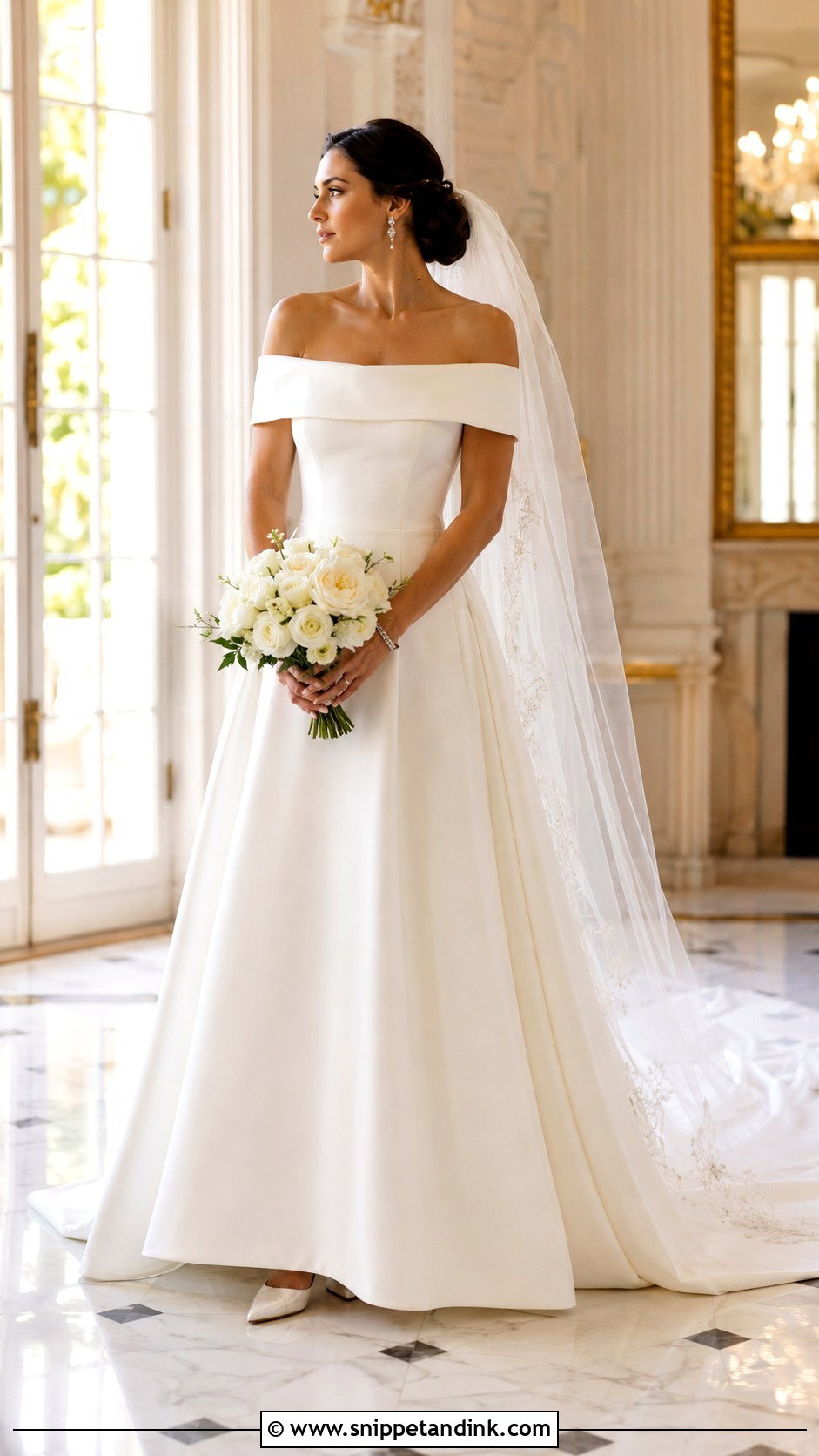
The off-the-shoulder band sits around the upper arms, framing the collarbone and covering the tops of the arms without full sleeves. It works in lace, satin, mikado and tulle. The trade-off is movement: with the band across your arms, you can’t lift them much above shoulder height, so practice hugging, throwing the bouquet and dancing in it. An A-line keeps it classic; a mermaid with folded satin sleeves is more dramatic. Skip the necklace and wear drop earrings instead.
9. Portrait Neckline Wedding Dress
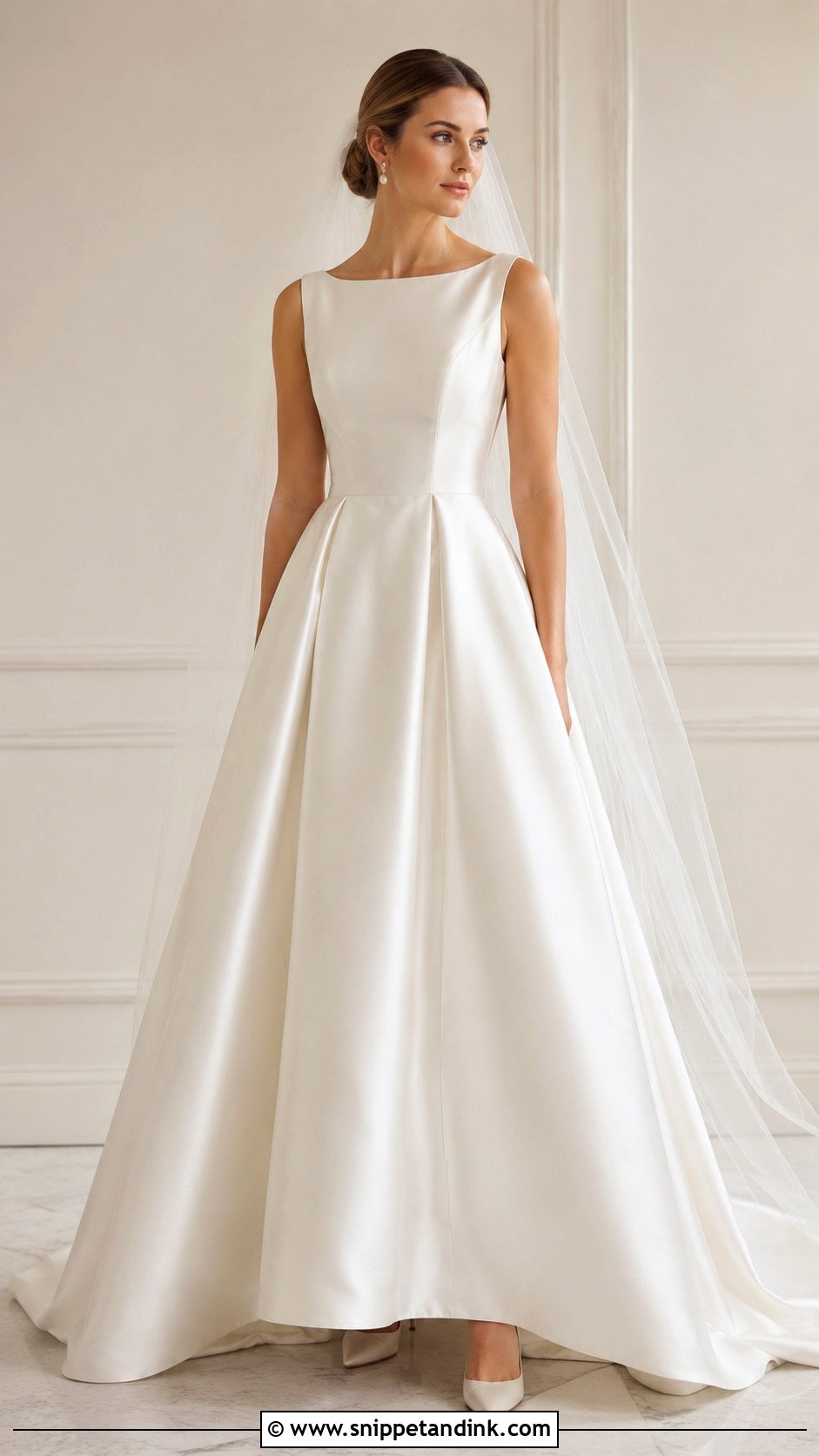
Portrait necklines are wider and higher than an off-the-shoulder, with fabric that folds or curves around the shoulders like a frame. They read slightly vintage. Satin portrait collars hold their fold; lace versions are softer and more romantic. This shape can make petite brides look swamped if the fold is too deep, so I’d ask to see one with a narrower band. With such a broad frame, earrings work better than a heavy necklace. A low bun and a classic veil complete it.
10. Bateau Neck Wedding Dress
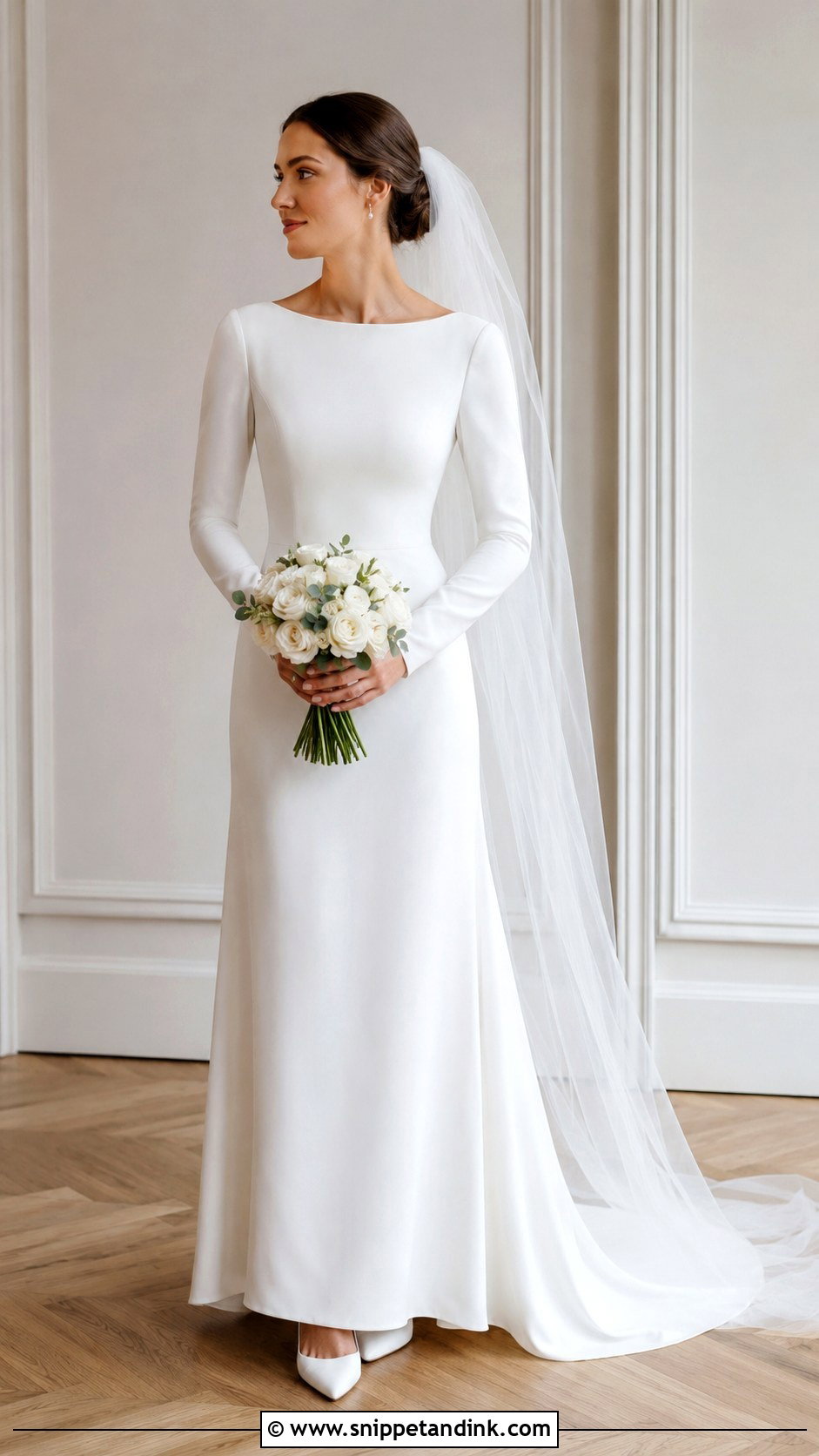
Also called a boat neck, the bateau runs straight from one shoulder point to the other just below the collarbone. It’s modest and graceful, and it works best on simple crepe gowns, long-sleeved lace and minimalist A-lines. Because the neckline sits so wide, ordinary bra straps show, so plan for a strapless bra or built-in cups. Small earrings, a bracelet and a sleek updo leave the line visible. A chapel veil and closed-toe heels keep it classic.
11. High Neck Wedding Dress
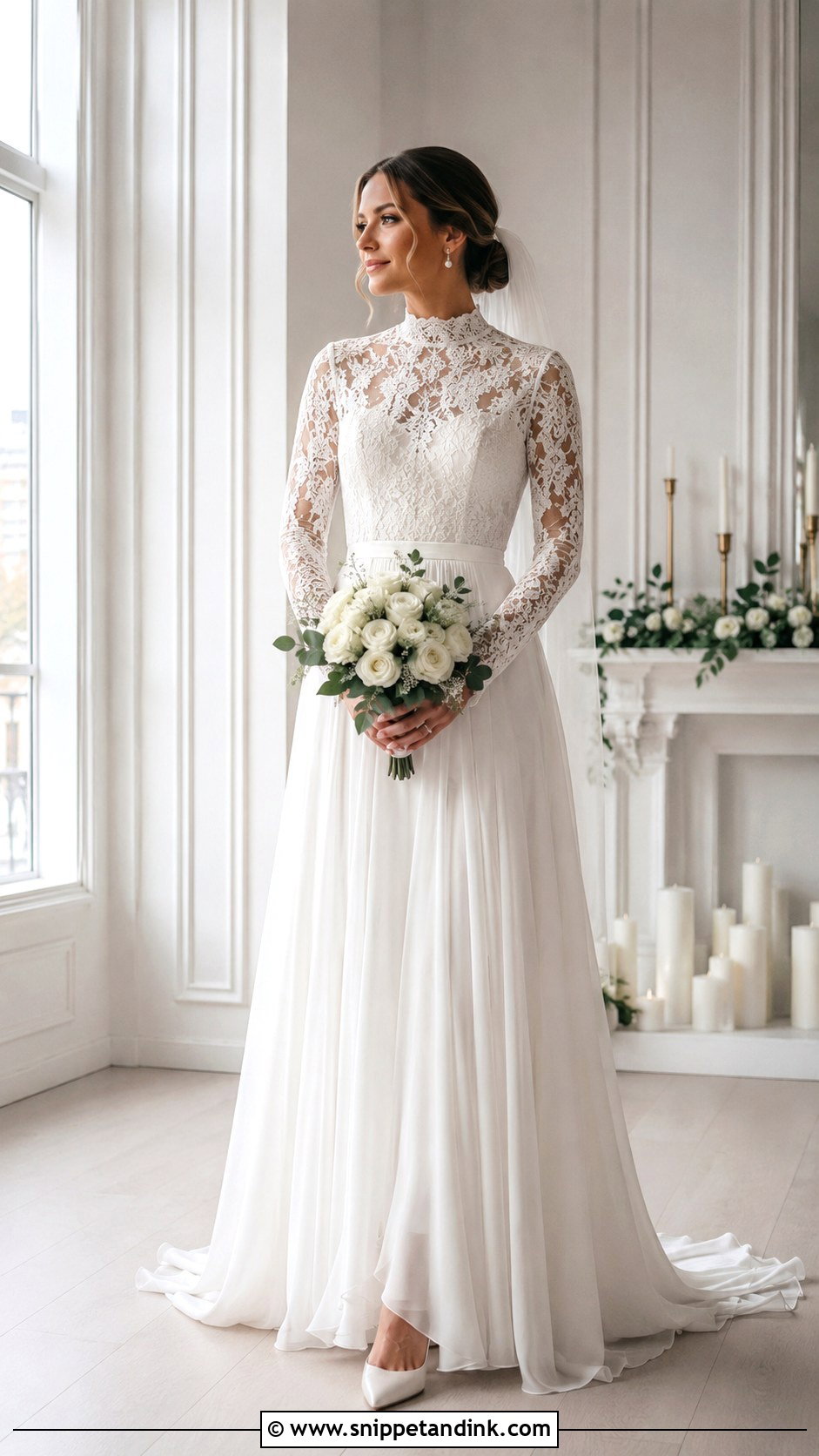
High necklines suit formal and cool-weather weddings, and they can be lace, crepe, satin or sheer illusion. A long-sleeved lace version reads traditional; a sleeveless crepe one is modern. The collar needs a little ease, because a high neck that fits perfectly when you look ahead will press on your throat when you look down at your vows. Skip the necklace. Earrings, a clean bun and a veil placed low at the back of the head keep the focus on the shape.
12. Halter Neck Wedding Dress
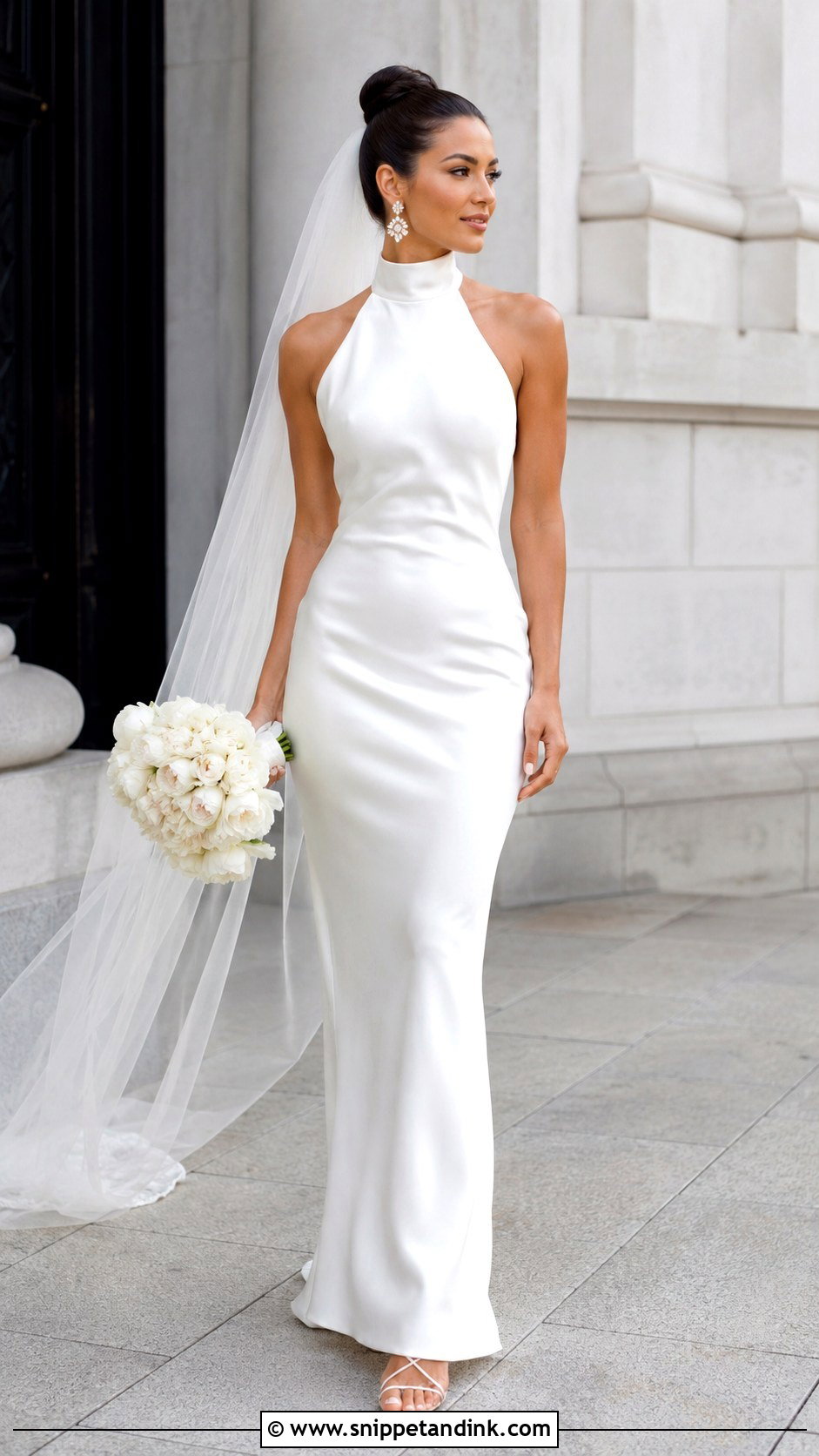
Halters rise around the neck and leave the shoulders and arms bare, which shows off toned arms and gives surprising support through the straps. A satin sheath looks sleek for a city wedding; lace A-lines feel softer outdoors. The weight of the bodice hangs from the back of the neck, and on a heavy beaded gown that pulls by the evening, so ask whether the halter has a hidden hook or adjustable tie. No necklace. A high bun or smooth ponytail shows the line from behind.
13. Illusion Neckline Wedding Dress
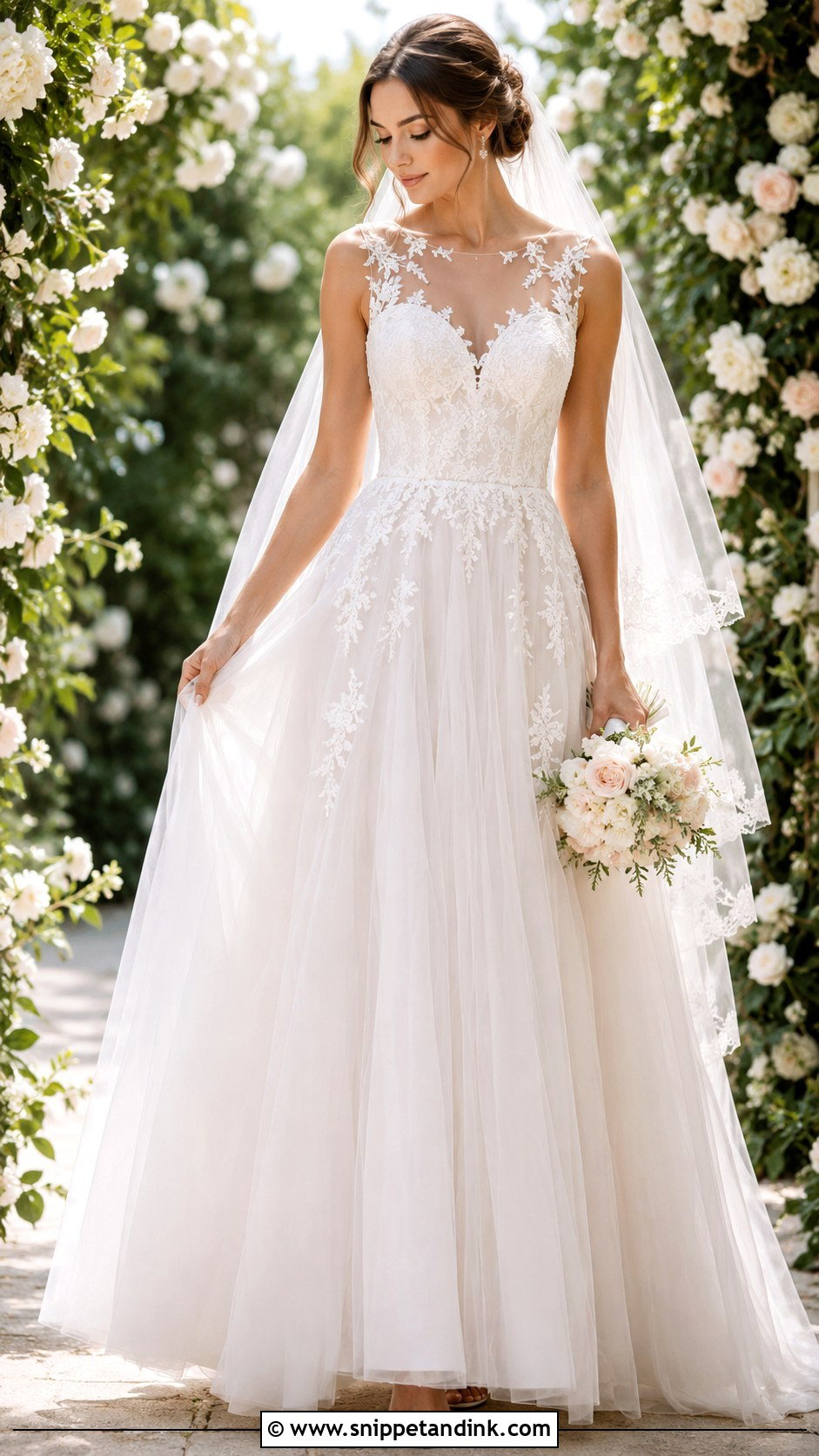
Sheer tulle or mesh gives an illusion neckline wedding dress its coverage while still reading as strapless, sweetheart or plunging from a distance. Lace appliqués, beading or pearls placed over the sheer panel carry the detail. Match the mesh to your skin as closely as you can; most bridal shops can order it in several shades. Glitter on the skin underneath shows through, so tell your makeup artist to keep body shimmer off the chest. Simple earrings suit it.
14. One Shoulder Wedding Dress
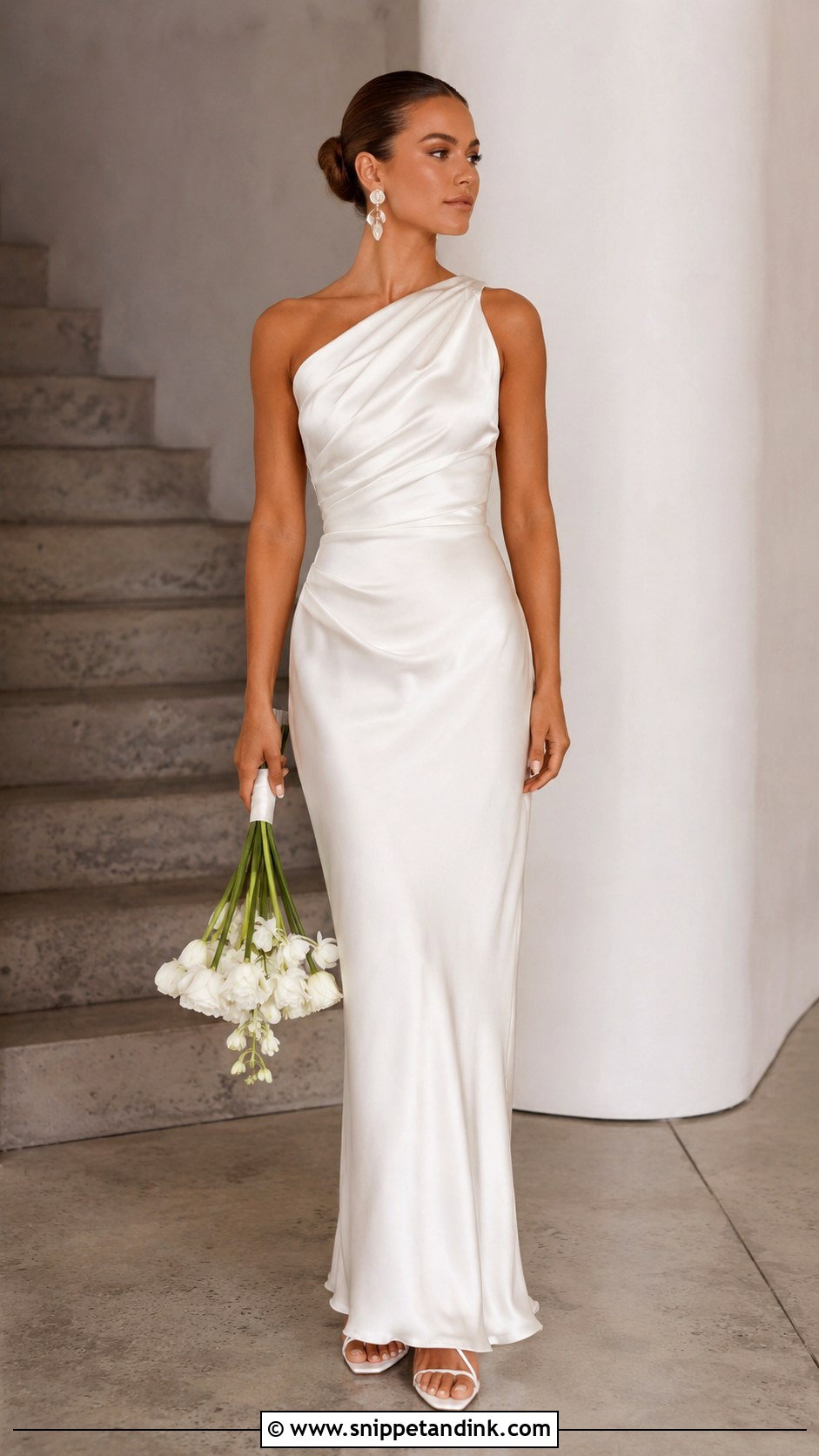
The single strap makes the asymmetry the main feature, so the rest of the gown can stay plain. A satin column suits a city wedding, while a softly draped A-line is more romantic. Because only one side holds the bodice up, the strap needs a firm anchor at the back; I check by having the bride lift the opposite arm and watch for the free side lifting away. Wear earrings, not a necklace, and part your hair on the bare side.
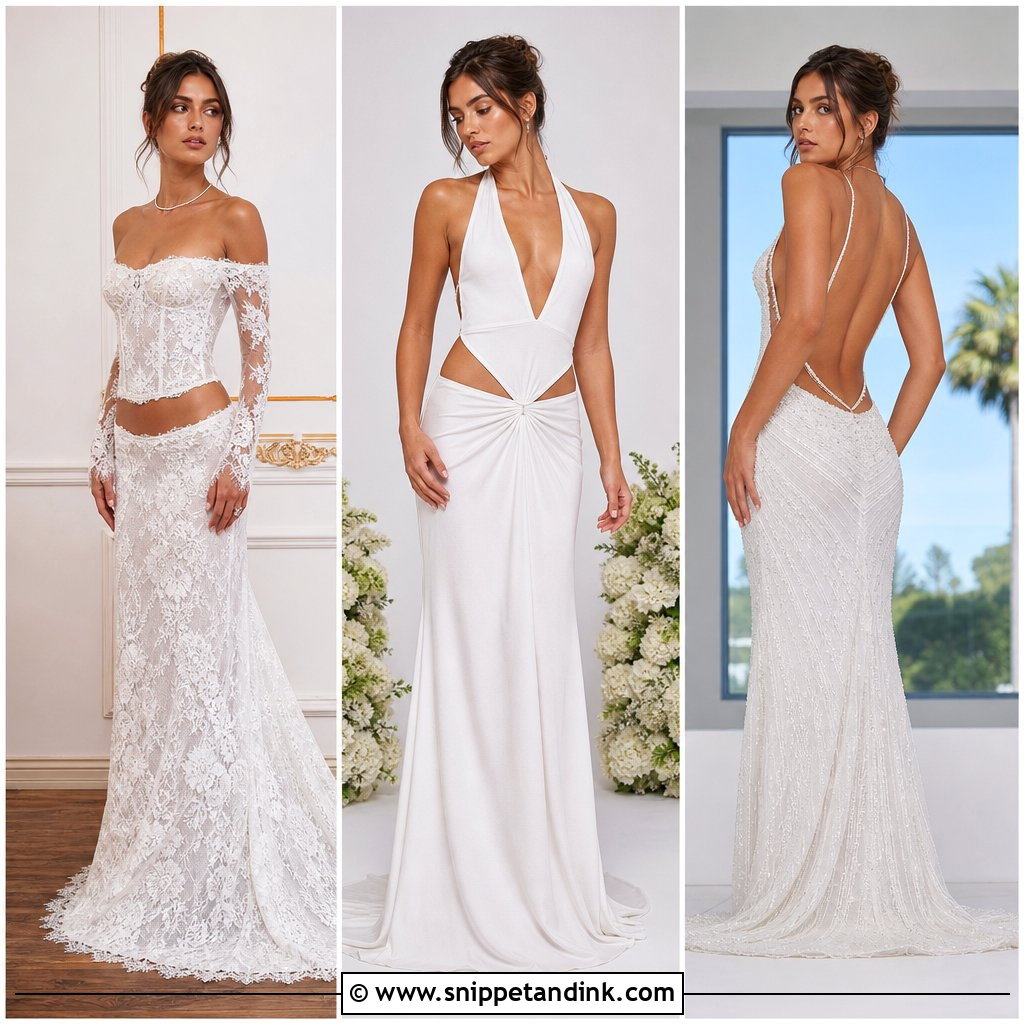
15. Cowl Neck Wedding Dress
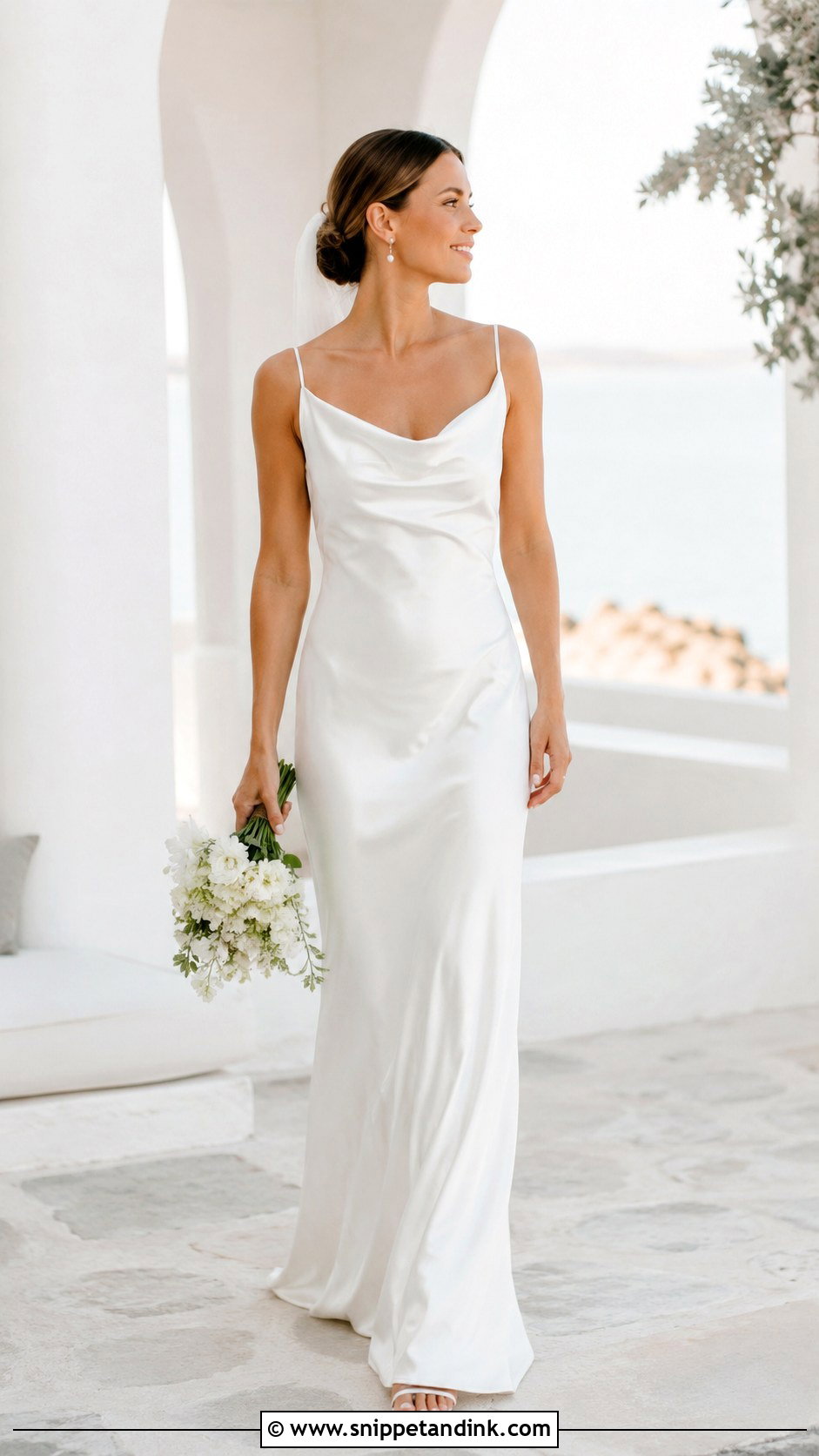
Cowl necks fall in soft folds, and they only drape properly in fluid fabrics like silk, satin and charmeuse cut on the bias. Stiff fabric just sits there. Bias-cut slip dresses cling and show everything underneath, including seams, so laser-cut, no-show underwear and a test under daylight are essential. It suits destination weddings, small ceremonies and reception changes. Strappy heels, delicate earrings and a smooth low bun finish it. Add a simple veil if the back is low.
16. Queen Anne Neckline Wedding Dress
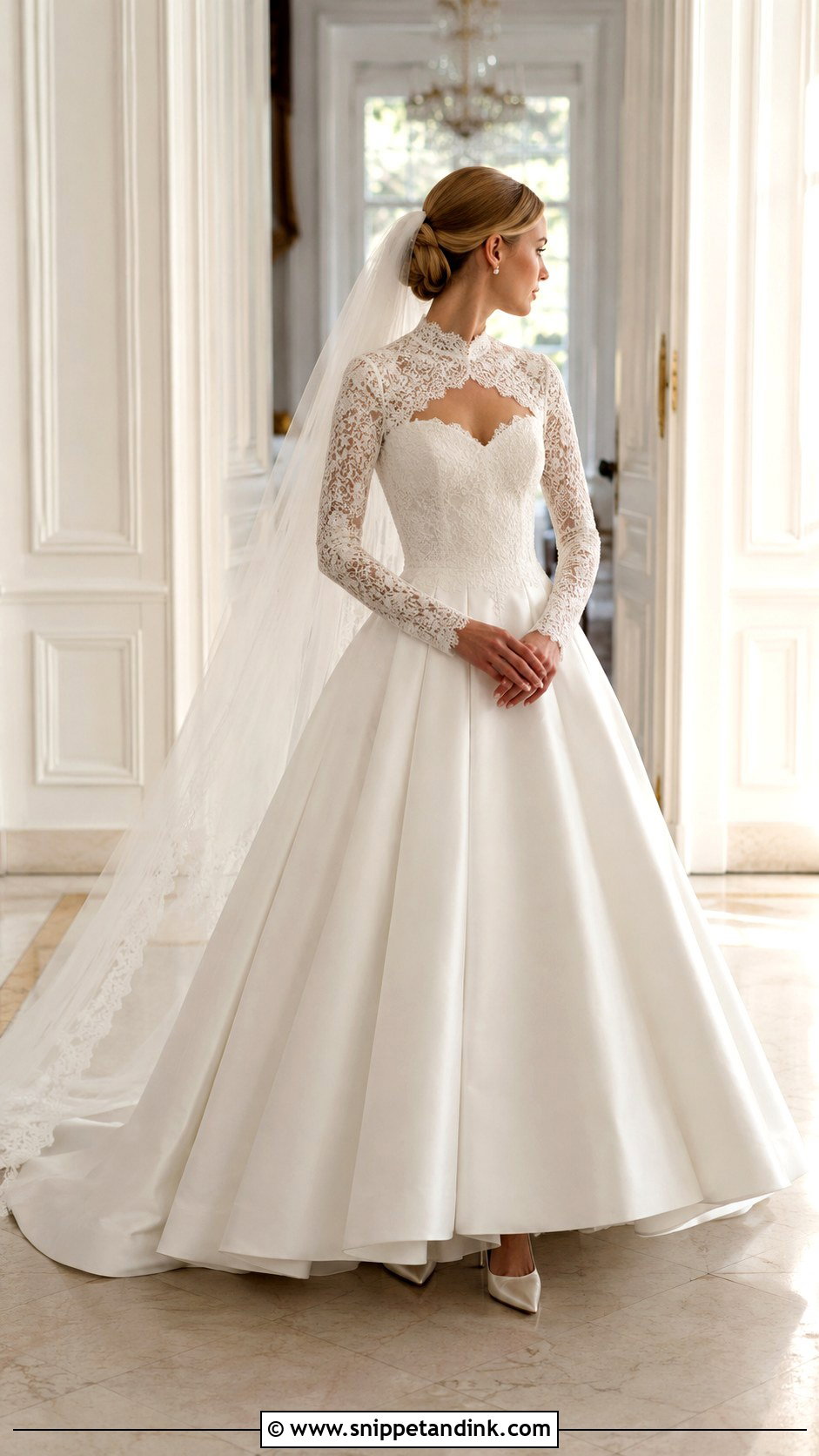
A high back or collar and an open front, usually dipping into a sweetheart or V, is what defines a Queen Anne neckline wedding dress. It reads traditional and a little regal. Long-sleeved lace looks right in a grand venue; structured satin is more polished. The raised back collar meets the veil comb, so test where the comb sits before the wedding to avoid it pushing the collar forward. Pearl earrings, a low bun and a long veil suit it.
17. Jewel Neck Wedding Dress
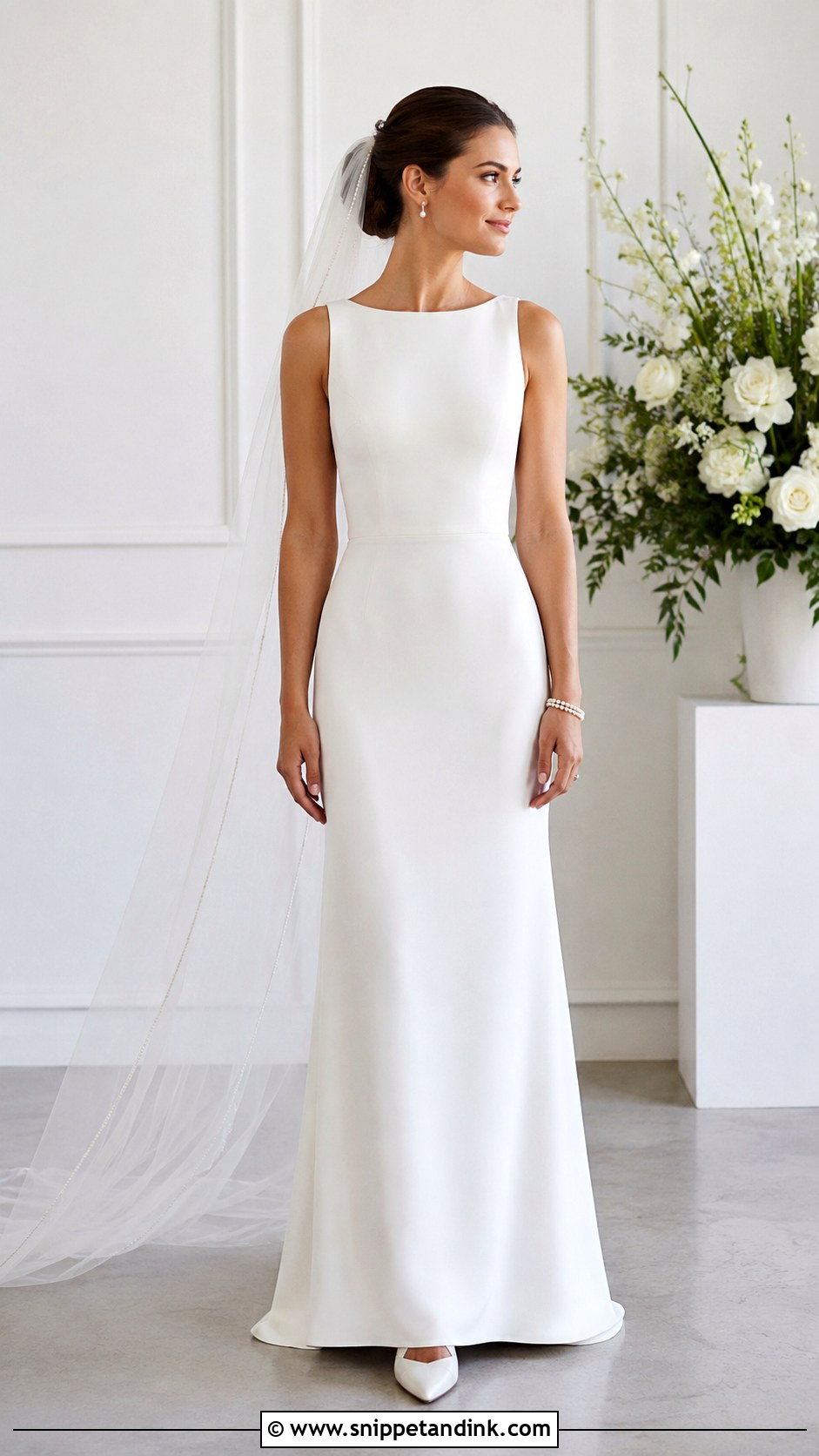
Jewel necks sit in a neat round line close to the base of the throat. They offer more coverage than a scoop but less than a full high collar, and they look tidy on sheath dresses, beaded bodices and short-sleeved or sleeveless gowns. On a larger bust, a jewel neck can look like one block of fabric, so a seam or appliqué that shapes the bust helps. Skip the necklace and wear earrings or a bracelet. A sleek updo and pointed heels keep it tidy.
18. Asymmetrical Neckline Wedding Dress
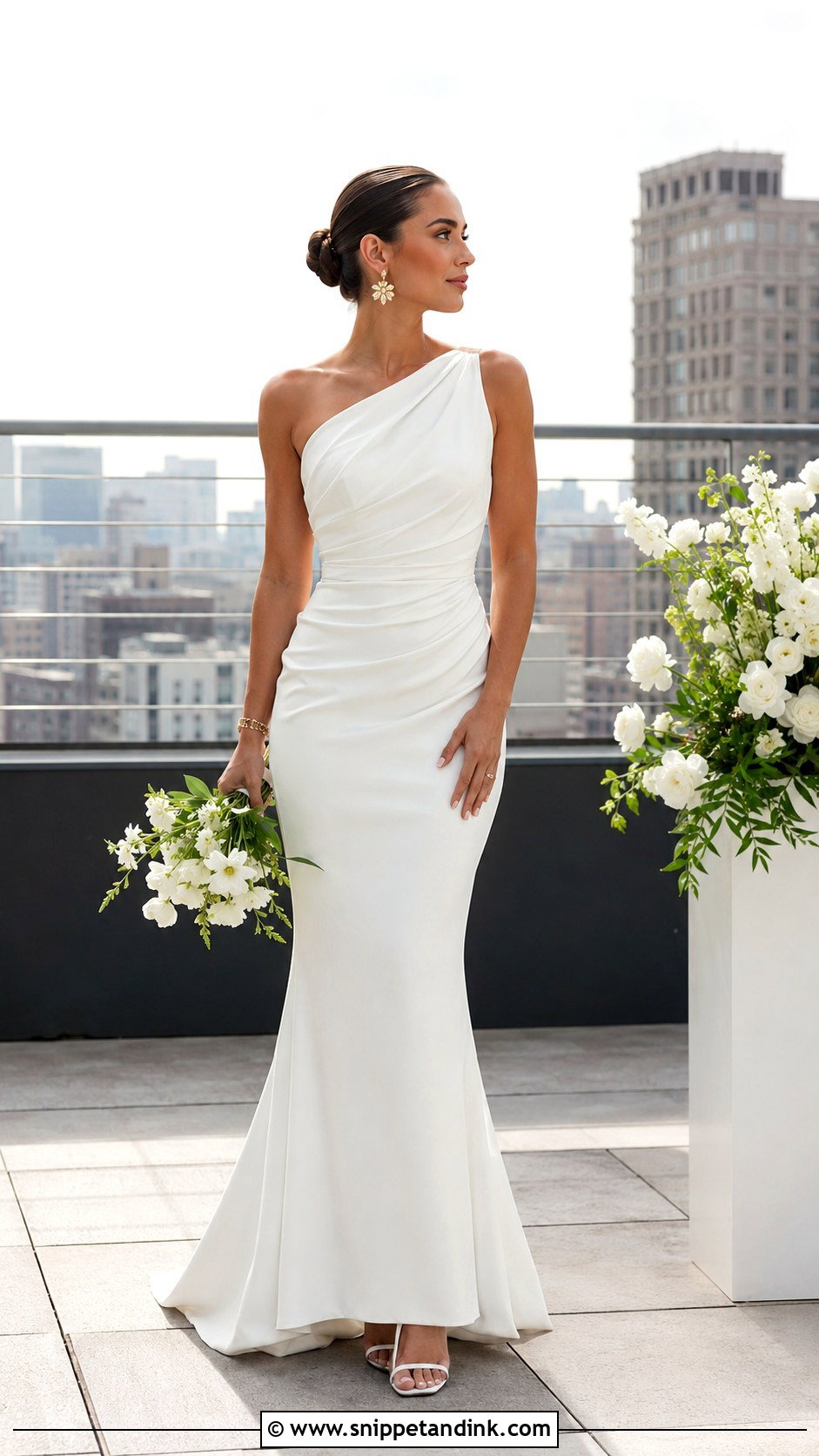
Asymmetrical necklines go beyond one shoulder: angled straps, diagonal bodice cuts or uneven draping all count. Crepe sheaths look architectural; draped satin is softer and more fluid. These cuts depend heavily on precise pattern cutting, and an alteration that moves one strap can throw off the whole diagonal, so choose a size that needs little adjustment at the top. Keep the accessories plain: sculptural earrings and smooth hair. It suits rooftop and gallery venues.
19. Sabrina Neck Wedding Dress
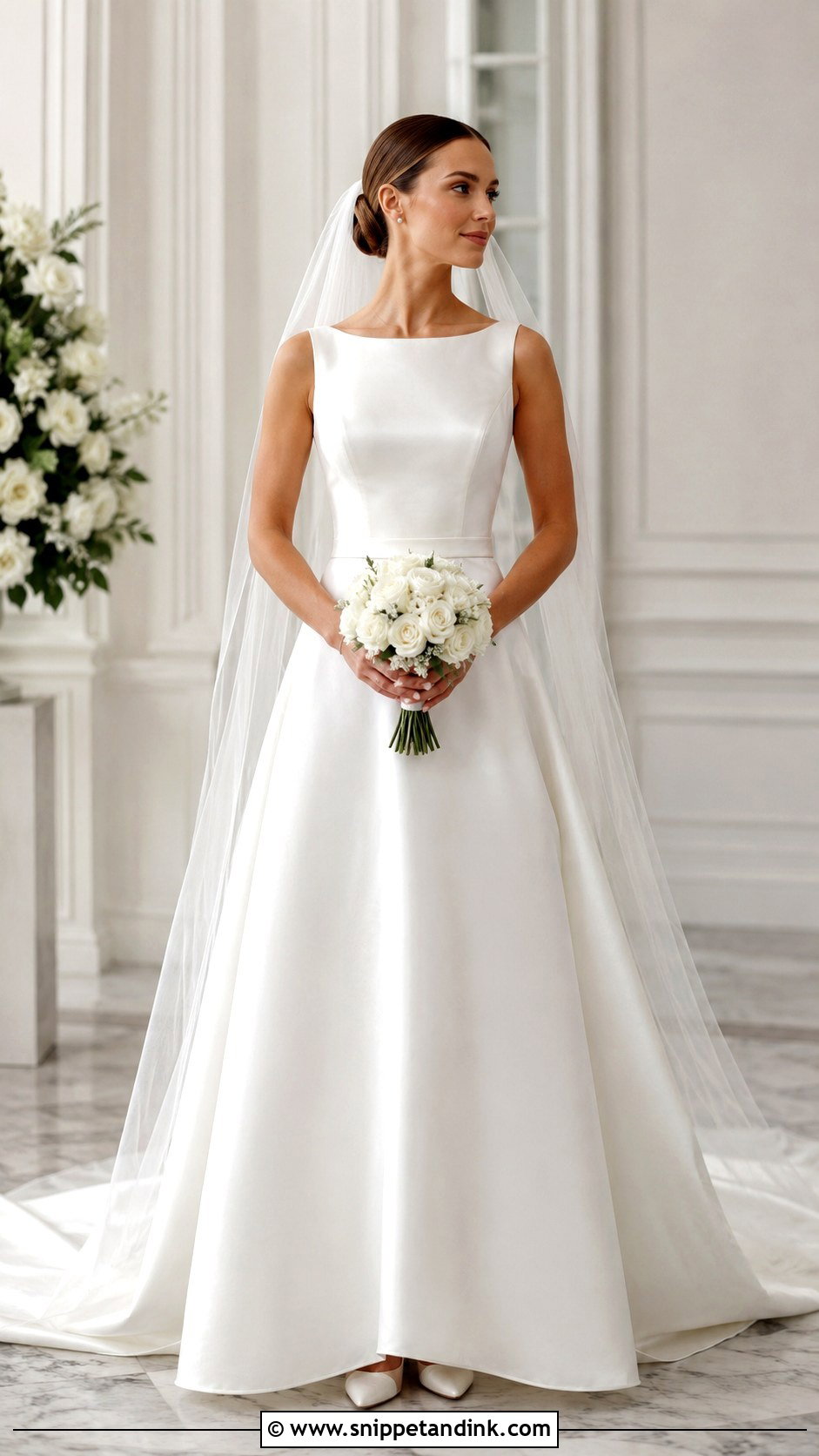
The Sabrina is close to a bateau but sits a touch higher and wider, ending in a graceful line across the upper chest. It’s modest without feeling covered up. Satin ball gowns, long-sleeved crepe and clean A-lines all suit it. Brides with short necks sometimes find it shortens them further, so I’d try it beside a bateau before deciding. Pearl studs, a low bun and a soft veil work well, and it pairs nicely with gloves and a structured bouquet.

20. Keyhole Neckline Wedding Dress
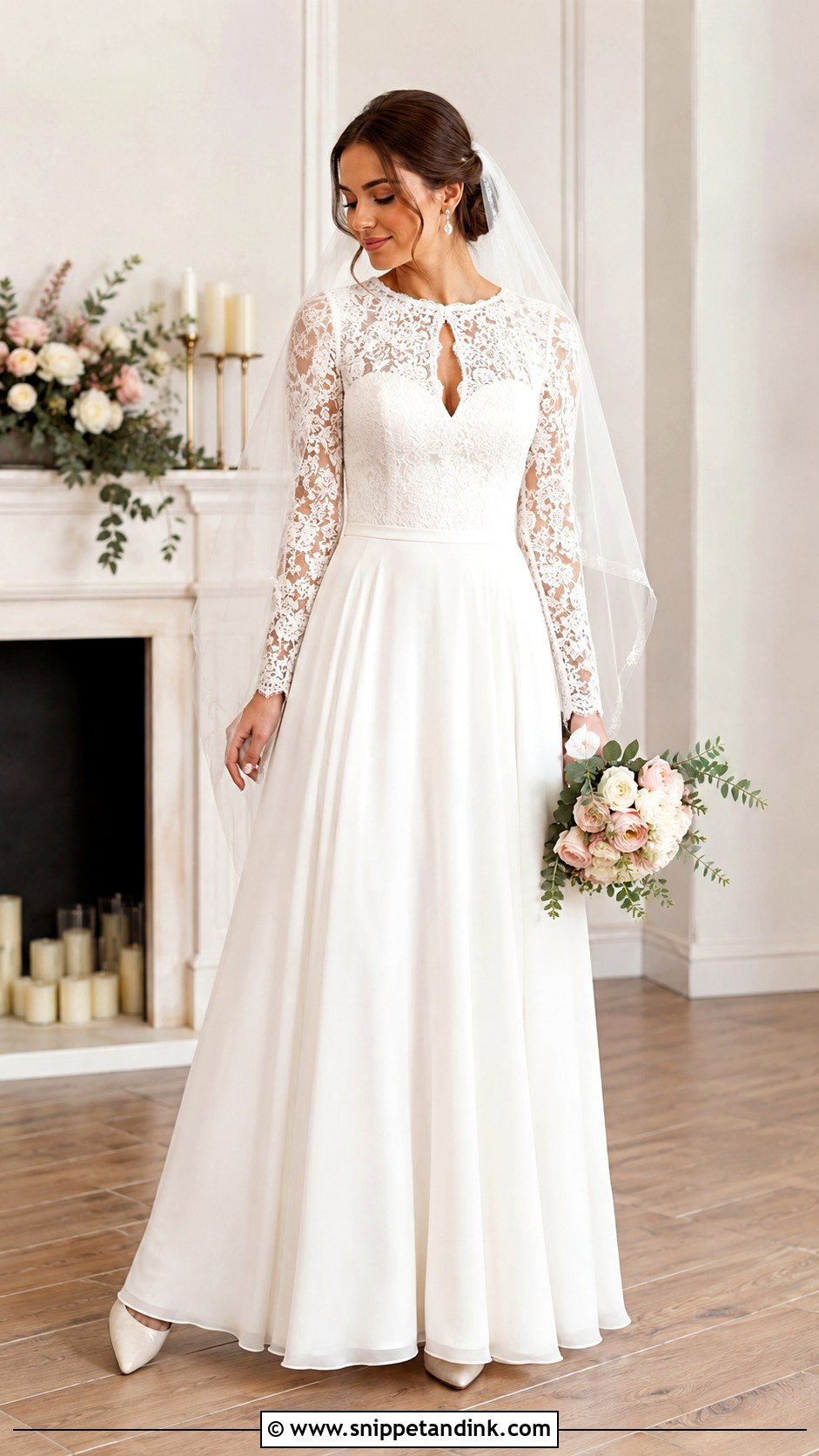
A keyhole adds a small cutout at the chest or collarbone, giving detail without much exposure. Lace keyholes with long sleeves feel vintage; crepe versions look contemporary. Proportion is everything here: a bold cutout needs a plain gown, while a small keyhole can sit among beading or lace. The opening should lie flat, so check it doesn’t pucker when you raise your arms. Wear earrings and a neat updo so nothing distracts from the cutout.
21. Scarf Neck Wedding Dress
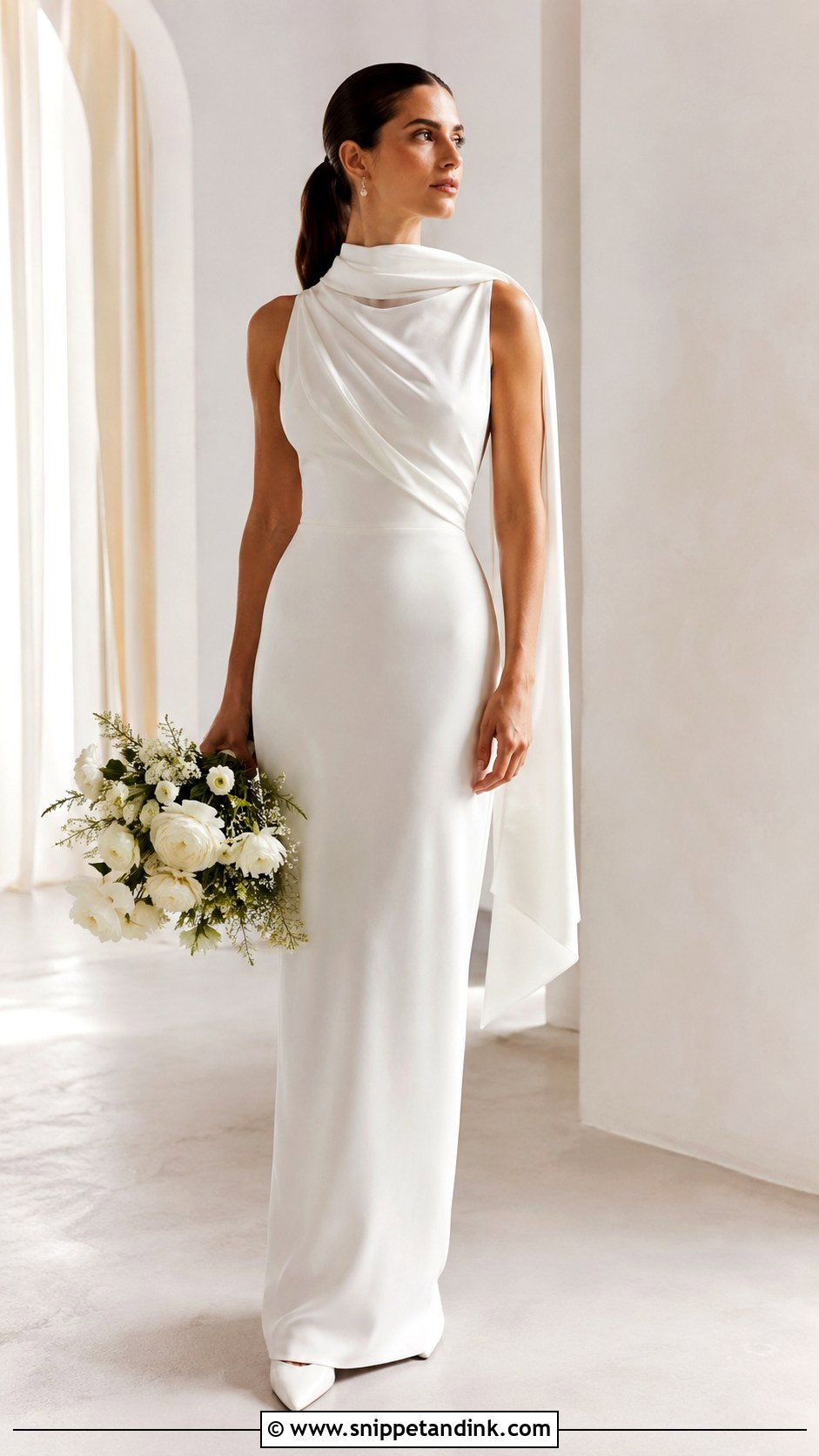
Scarf necklines add a length of soft fabric that wraps the neck, ties at the back or drapes over a shoulder. Silk, chiffon, satin and crepe hang well enough for it. A scarf sheath suits a modern ceremony, and a long trailing scarf gives you movement in walking photos. Long tails catch in bouquets and car doors, so have the seamstress add a discreet hand loop or hook to hold them. Small earrings and a sleek bun keep the scarf visible.
22. Cat Eye Neckline Wedding Dress
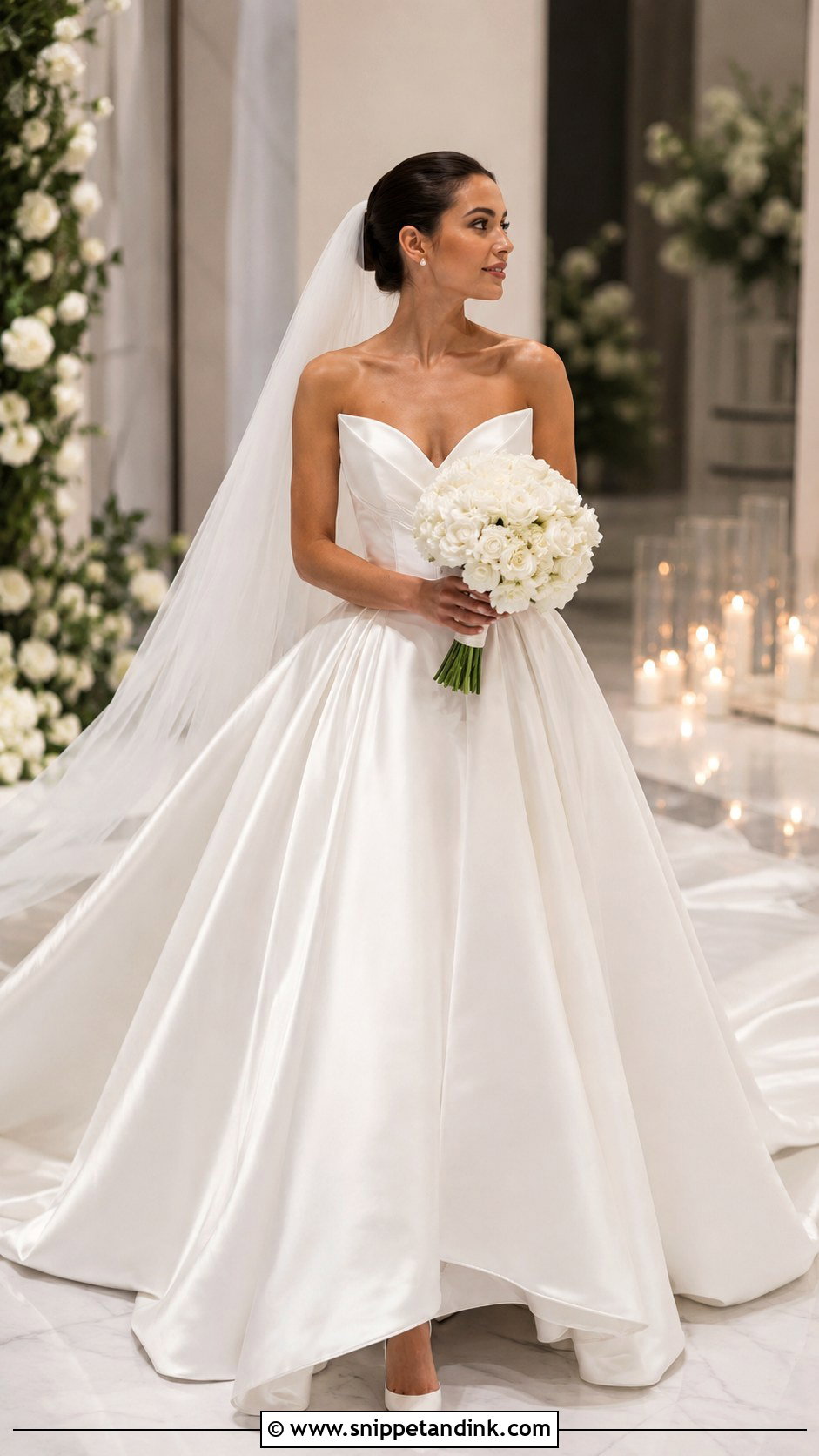
The cat-eye is a sculpted strapless shape with pointed, lifted edges at each side of the bust. It’s distinctive without being low. The points only stay crisp if they’re boned or wired, and a soft cat-eye flops quickly, so press gently on each point at the try-on. Satin ball gowns look dramatic; fitted crepe looks sleek. Keep the styling clean with pearl studs, a smooth veil and classic pumps so the sharp lines lead.
23. Mock Neck Wedding Dress
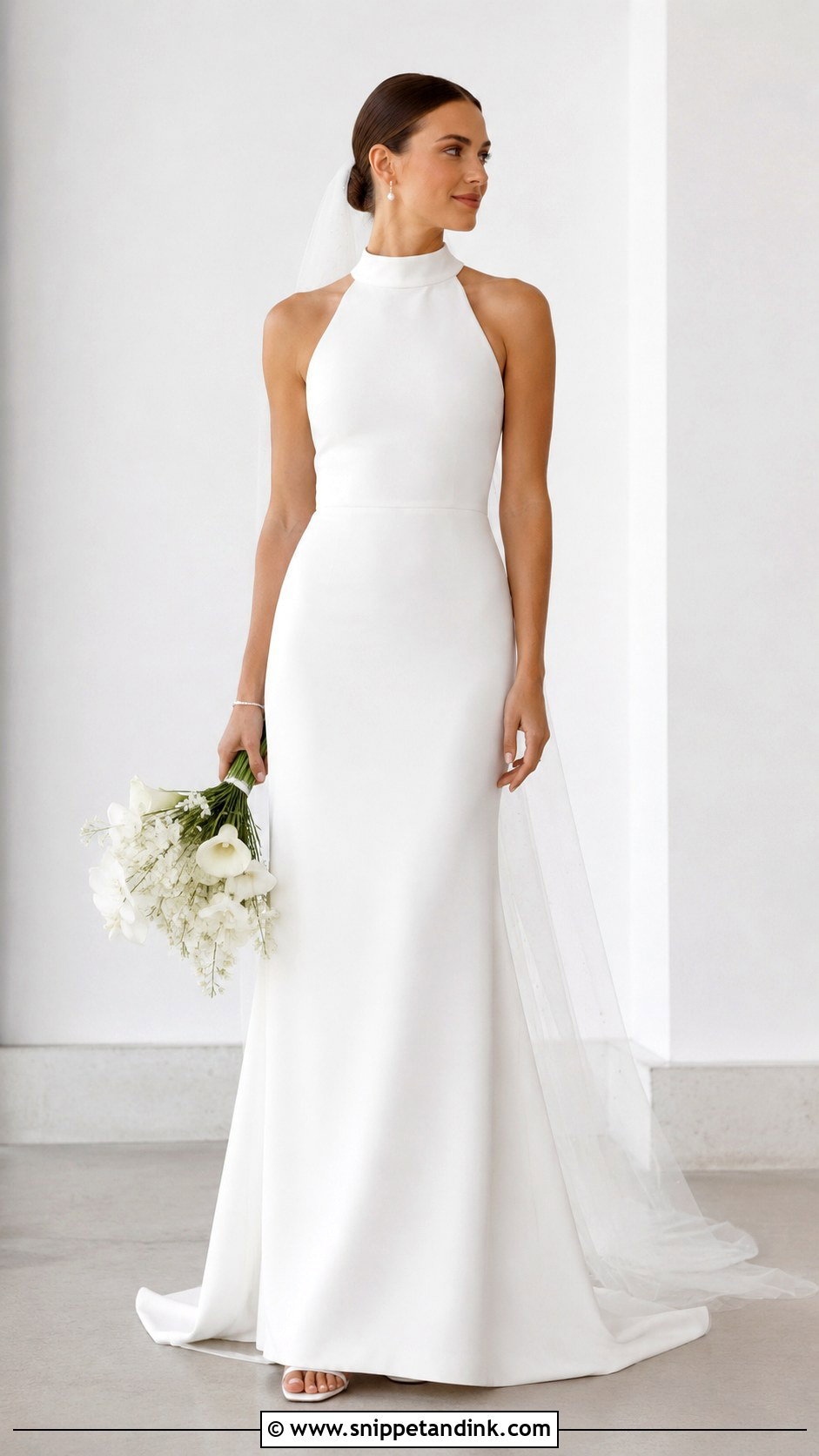
A lower, softer collar than a full high neck is what sets a mock neck wedding dress apart, so you get the coverage without feeling choked. Sleeveless crepe versions look minimal, long-sleeved lace more romantic. It pairs especially well with an open back or a fitted skirt. With the neck covered, hair does the styling, so pick a bun, twist or sleek ponytail that shows the collar. Simple heels and a long veil complete it.
24. Spaghetti Strap Wedding Dress
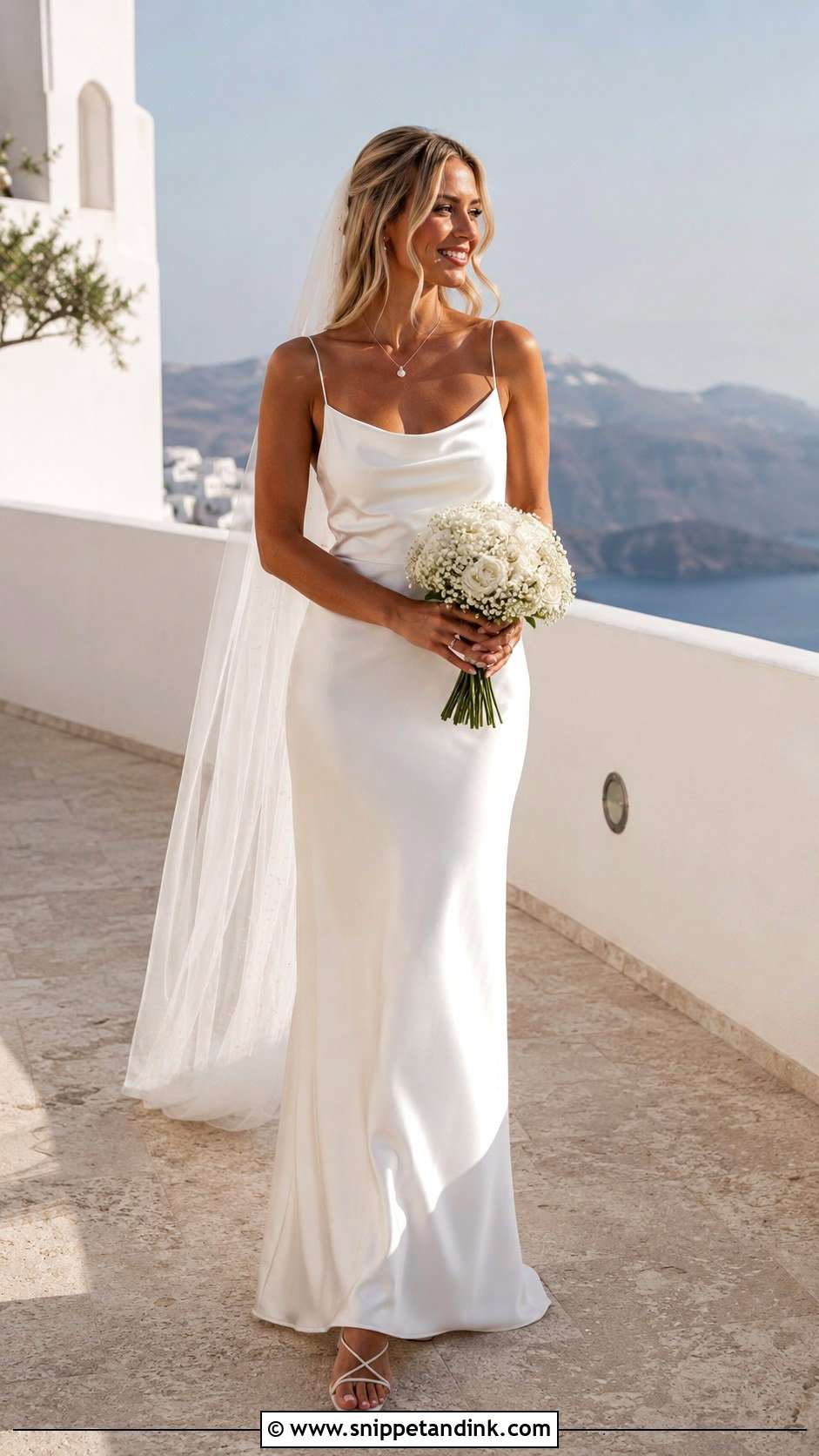
Thin straps keep things light, which is why they’re common in warm-weather and destination weddings. The neckline itself can be straight, scoop, V-shaped or curved. A satin spaghetti strap slip dress is simple; a lace A-line feels romantic. Thin straps can’t support a full bust alone, so look for built-in cups or a corset under the bodice if you need lift. Keep the accessories delicate to match. Soft waves or a low bun suit it.
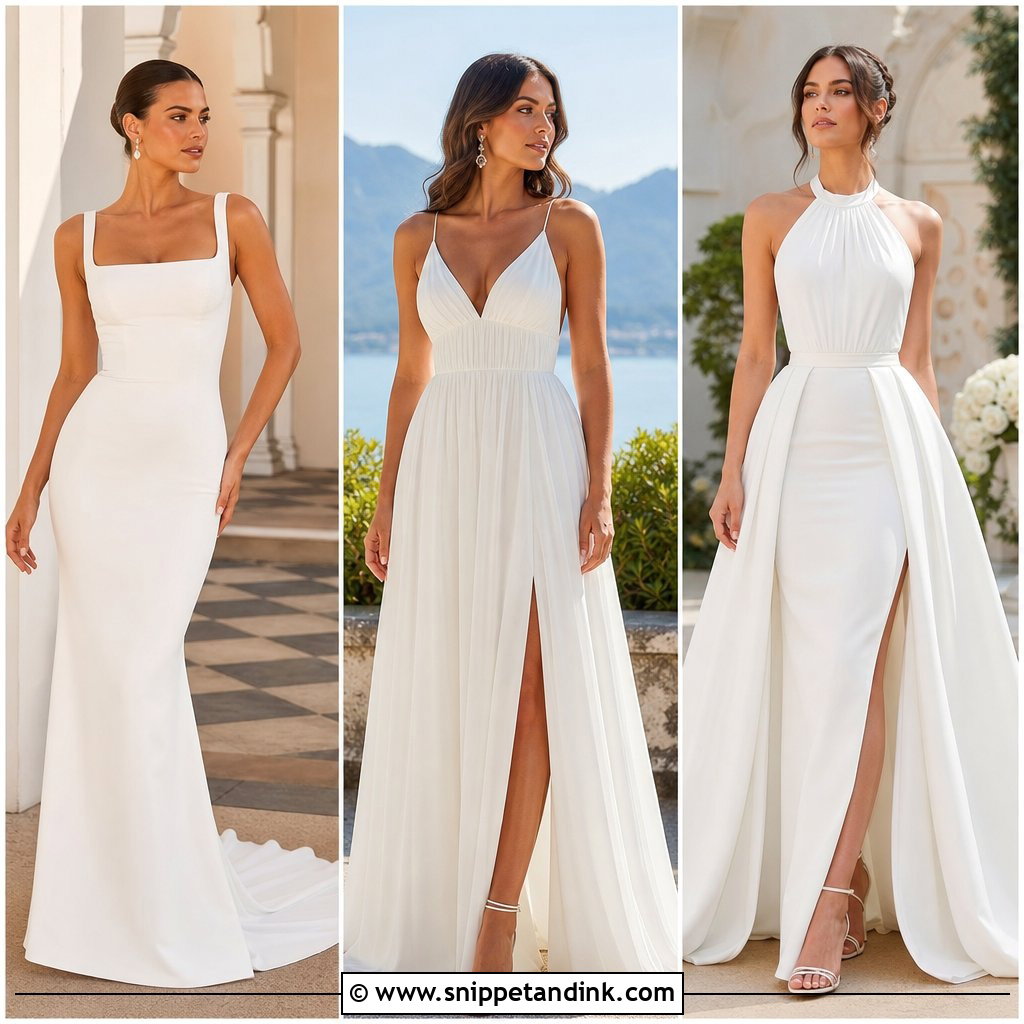

25. Notched Neckline Wedding Dress
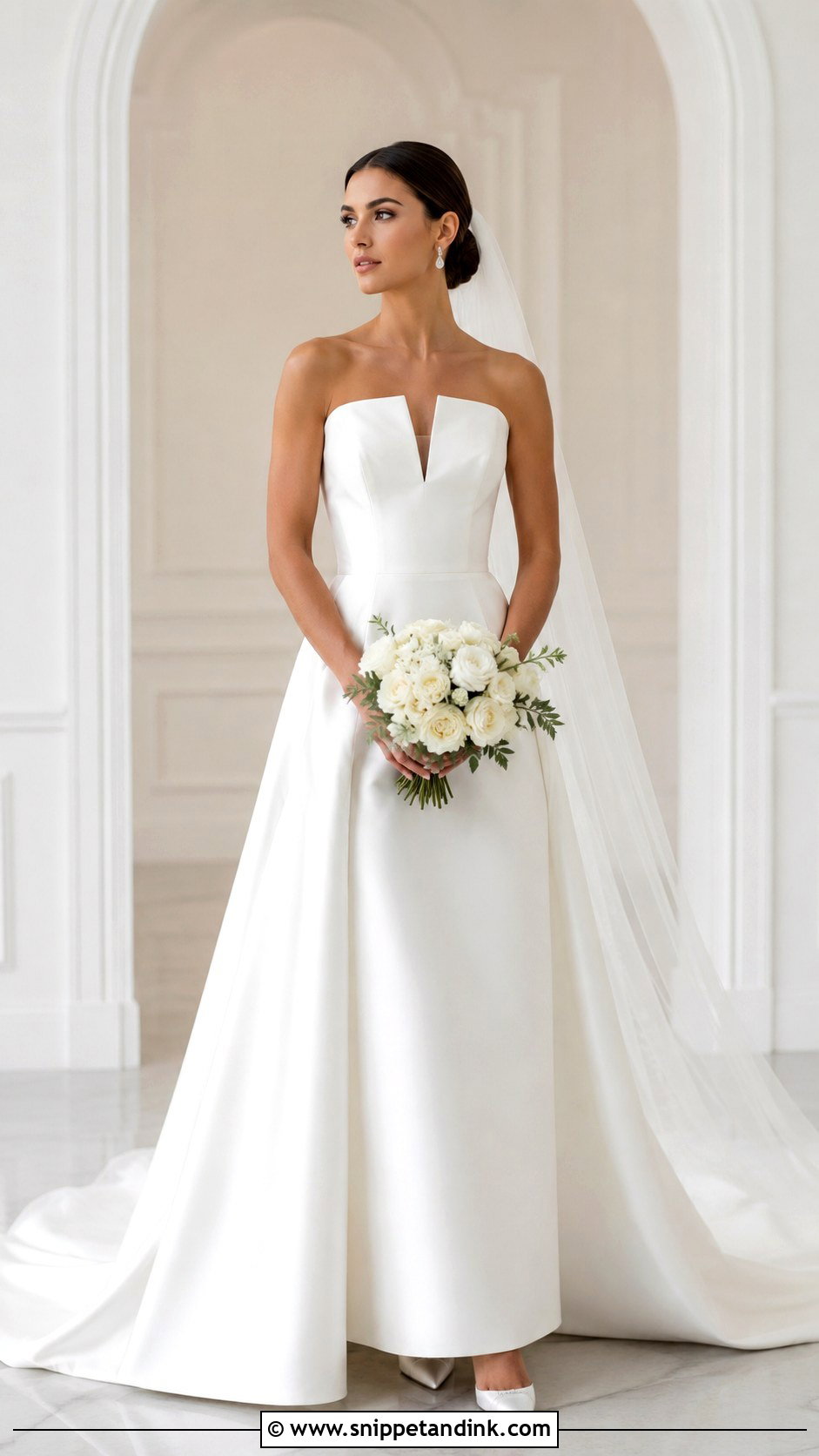
A notch is a small V or angular cut at the center of an otherwise straight or curved neckline. It’s a subtle way to add shape to a plain gown. Satin A-lines with a notch look crisp; crepe sheaths look tailored. The notch must sit exactly on your center line, so check it in the mirror while standing straight and while sitting; a bodice that’s slightly loose lets it drift. It works especially well on strapless or wide-strap designs. Small earrings and a sleek veil suit it.
Gaps, Slips and Pulls That Only Show Once You Move
A neckline that looks perfect while you stand still in a fitting room can behave very differently by mid-reception. These are the problems I see most often, and what fixes them:
- Sweetheart and cat-eye edges lifting away when you sit. The bodice needs taking in at the side seams, not just the top edge.
- Strapless gowns sliding down during dancing. A waist stay or grippy silicone tape inside the top edge holds it better than tightening the bust.
- Plunging V and wrap necklines shifting sideways. Double-sided fashion tape at the inner edges, applied after moisturizer has fully dried.
- Halter straps digging in at the back of the neck. Ask for a wider strap base or a hidden hook so the weight spreads.
- Bateau and Sabrina necks revealing bra straps. Built-in cups or a strapless bra, decided before the final fitting, not after.
Wear the exact undergarments and shoes you’ll use on the day to every fitting. A different bra changes where a neckline sits by more than people expect, and a seamstress can only fit what she can see.
Which Neckline Stays Put Through Hour Eight?
Comfort and support should decide this as much as looks. A sweetheart reads romantic, a square neck modern, a high neck formal and a plunging V dramatic, while illusion mesh, scarf draping, cat-eye shaping and keyholes give a gown a personal detail. When you try dresses on, put your hair up and down, hold the veil to the back of your head, and imagine the jewelry and the venue. Then sit, lift your arms and hug someone. The neckline that stays in place through all of it is the right one.
You'll Like These Ideas:





Leave a Reply