
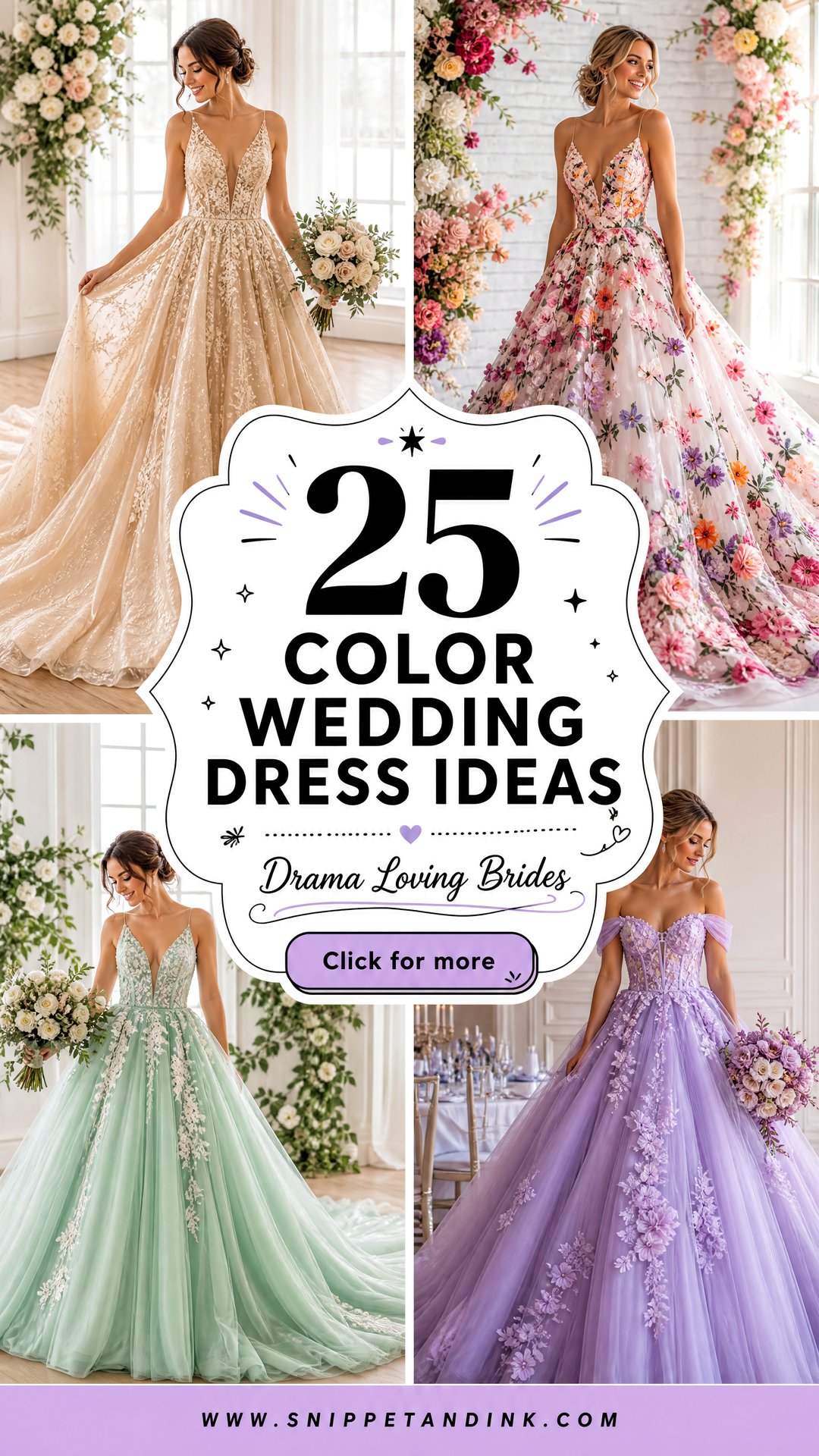
A colored gown changes how every other piece of a bridal outfit has to behave. White forgives a lot; color doesn’t, because the shoes, veil, metals and flowers either agree with it or fight it. I’ve pulled together twenty-five shades here, from barely-there tints to black, and for each one I’ve written what I actually check when a bride steps into it at a fitting: how the fabric carries the dye, which skin tones it pulls warm or grey, and what it asks of the accessories. Read them with your venue lighting and your season in mind, not just the photo.
Testing a Colored Gown Against Your Skin Before You Commit
Before we talk shades, here’s how I narrow color down at a first appointment. I put the bride in natural light near a window, with little or no makeup, and hold fabric up under her chin rather than against her body. The face tells you everything. A shade that suits you makes the skin look even and the eyes brighter; a wrong one brings out redness, shadows under the eyes or a yellow cast.
- Look at the veins on your inner wrist and how you tan. Greener veins and easy tanning usually mean warm undertones, which favor champagne, peach, gold and dusty rose.
- Bluer veins and burning easily point to cool undertones, where powder blue, lilac, silver and navy tend to sit better.
- Compare in pairs: hold two close shades next to each other, then remove the loser. It’s much easier than judging one color alone.
- Take a phone photo with and without flash in the same spot. Some dyes, especially lilac and mauve, shift more on camera than in the mirror.
I also ask where the ceremony is and at what time. Golden-hour sun warms everything, overcast skies cool it, and many reception halls use warm bulbs that can make pale pastels vanish. If you love a shade but it fails one of these tests, a slightly deeper or warmer version of the same color usually solves it.
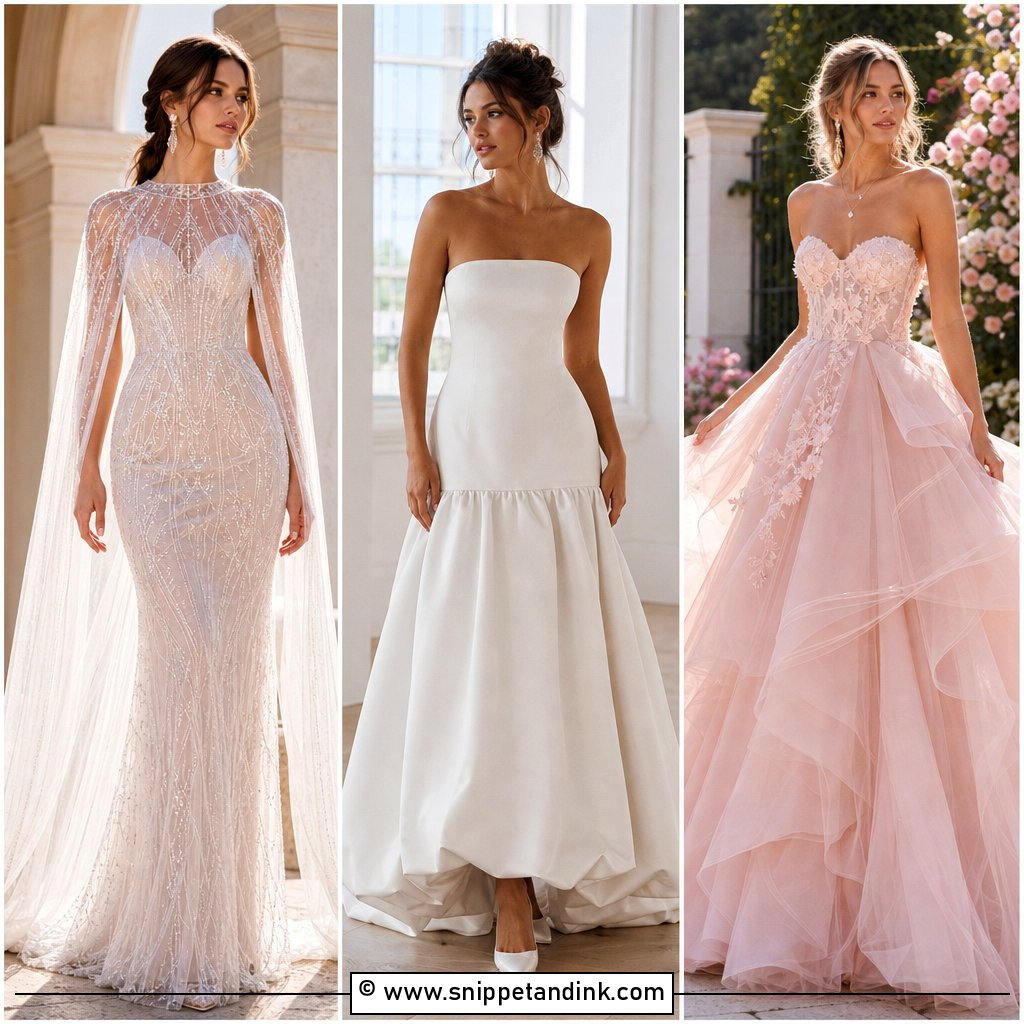
1. Blush Pink Wedding Dress
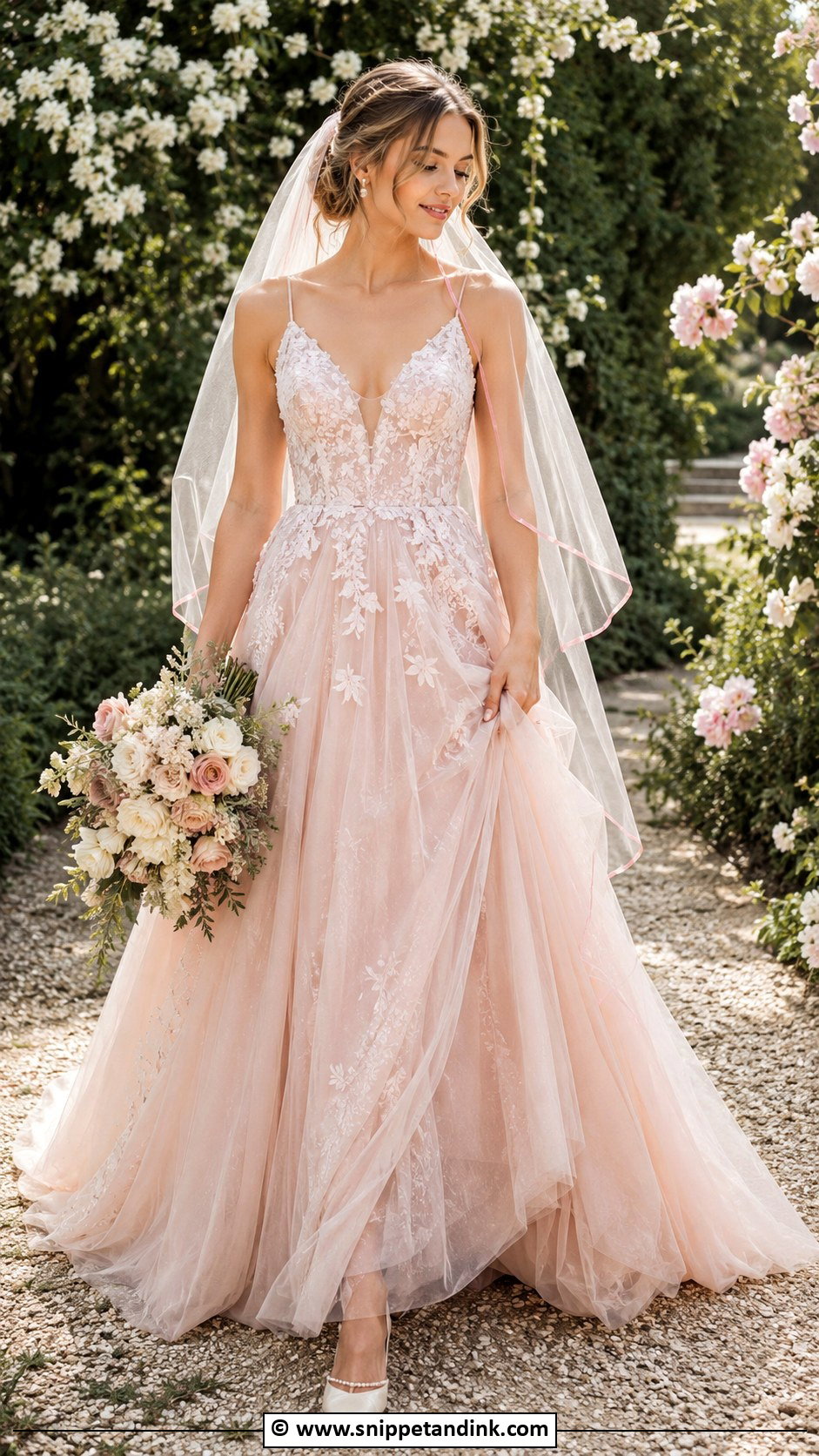
Blush is the shade I hand to brides who are nervous about color, because from across a room it still reads as bridal. The catch is that some blush dyes lean beige under warm indoor bulbs and almost disappear, so I always look at it in daylight and under the venue’s lighting before deciding. On tulle and organza it glows; on heavy satin it can go flat. Ivory heels, pearl earrings and a sheer veil with a faint pink edge keep it light, and a bouquet in cream, pale peach and dusty rose stops the pink from looking like an accident.
2. Champagne Wedding Dress
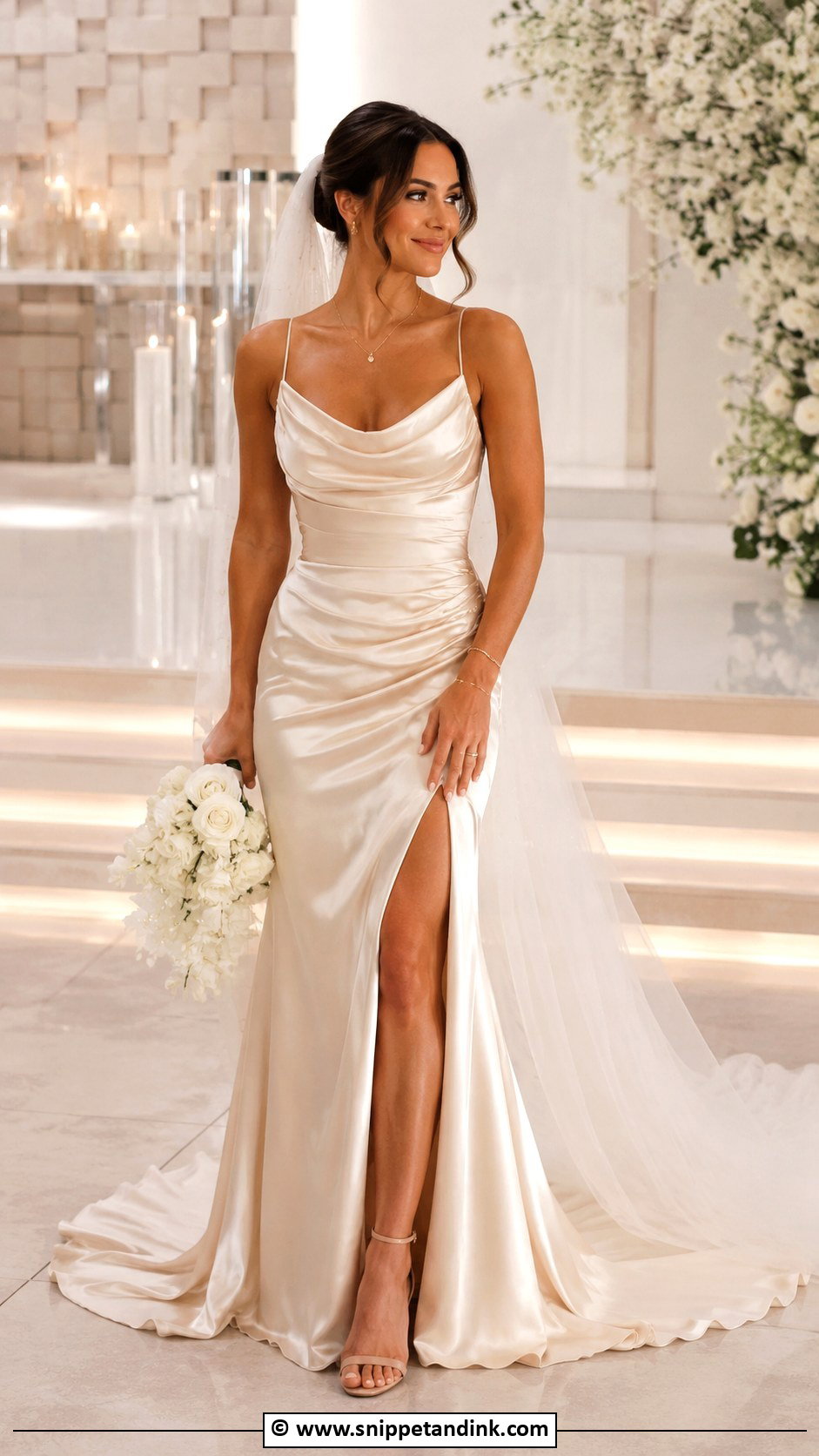
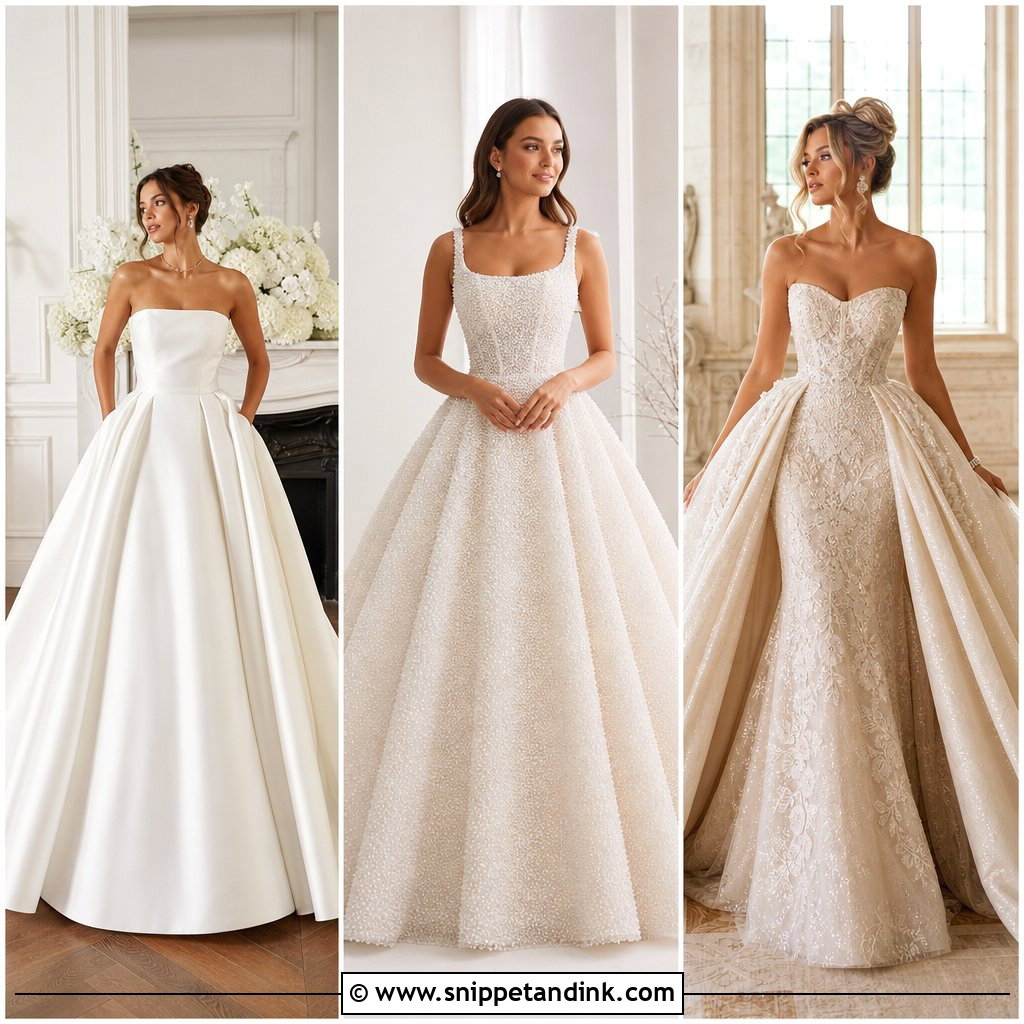
Champagne is warmer than ivory, and that warmth is the whole point. On satin and beaded tulle it catches light softly, which is why it suits hotel ballrooms and evening receptions so well. What I watch for is fair skin with pink undertones: a very beige champagne can drain it, so I’ll bring a slightly pinker version off the rack for comparison. Nude or metallic heels, fine gold jewelry and an ivory veil finish it, with cream roses, beige orchids or a little greenery in the bouquet.
3. Dusty Blue Wedding Dress
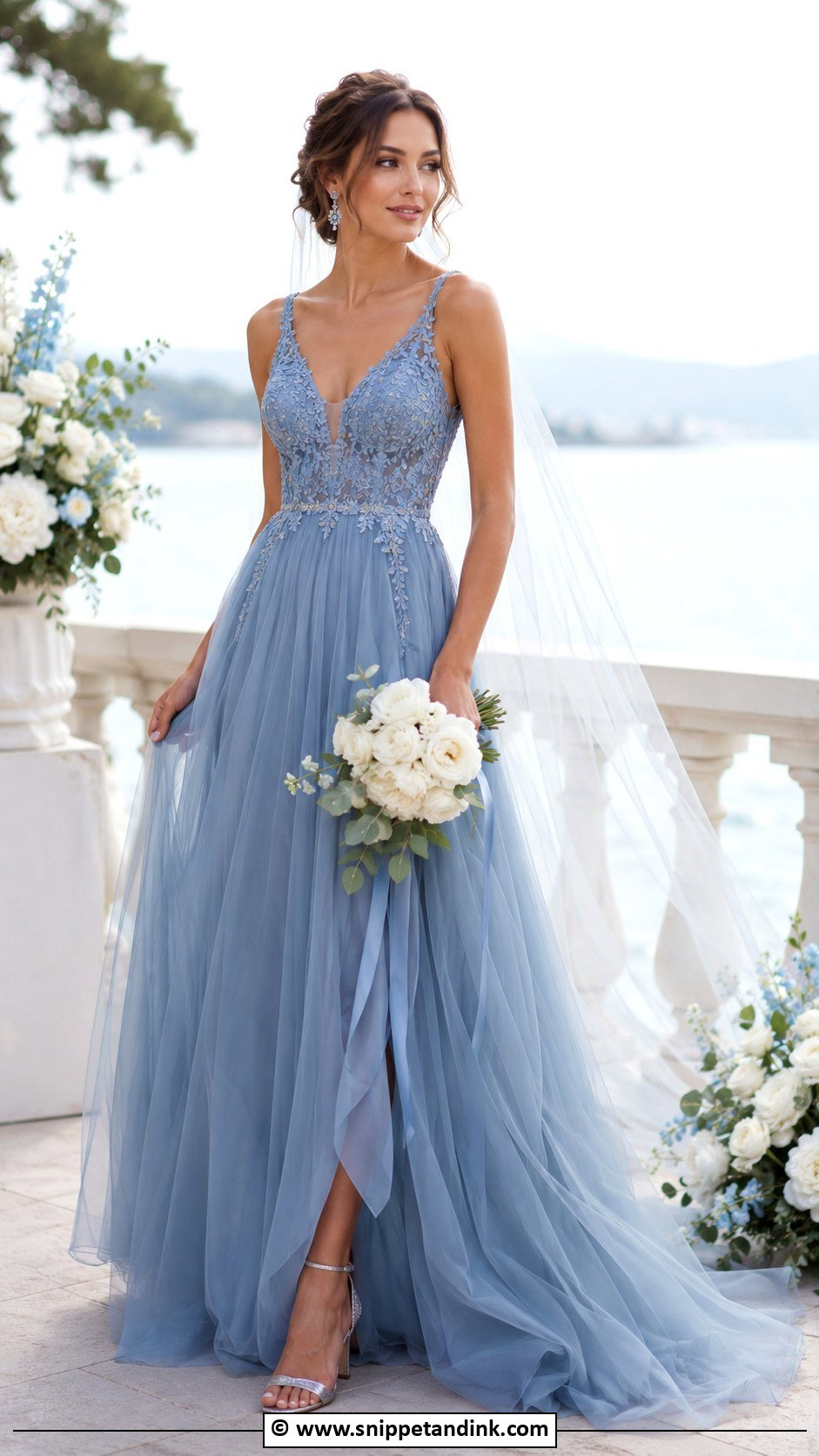
Dusty blue has grey mixed into the dye, and that grey is what makes it feel calm rather than costume. I like it most on tulle with a fitted bodice and a full skirt, because the layers soften the color even further. Be careful with greenery-heavy venues in summer; green light bouncing off lawns can make dusty blue look murky in photos. Silver heels, crystal earrings and white flowers tied with pale blue ribbon and eucalyptus keep it fresh for spring, winter and waterfront weddings.
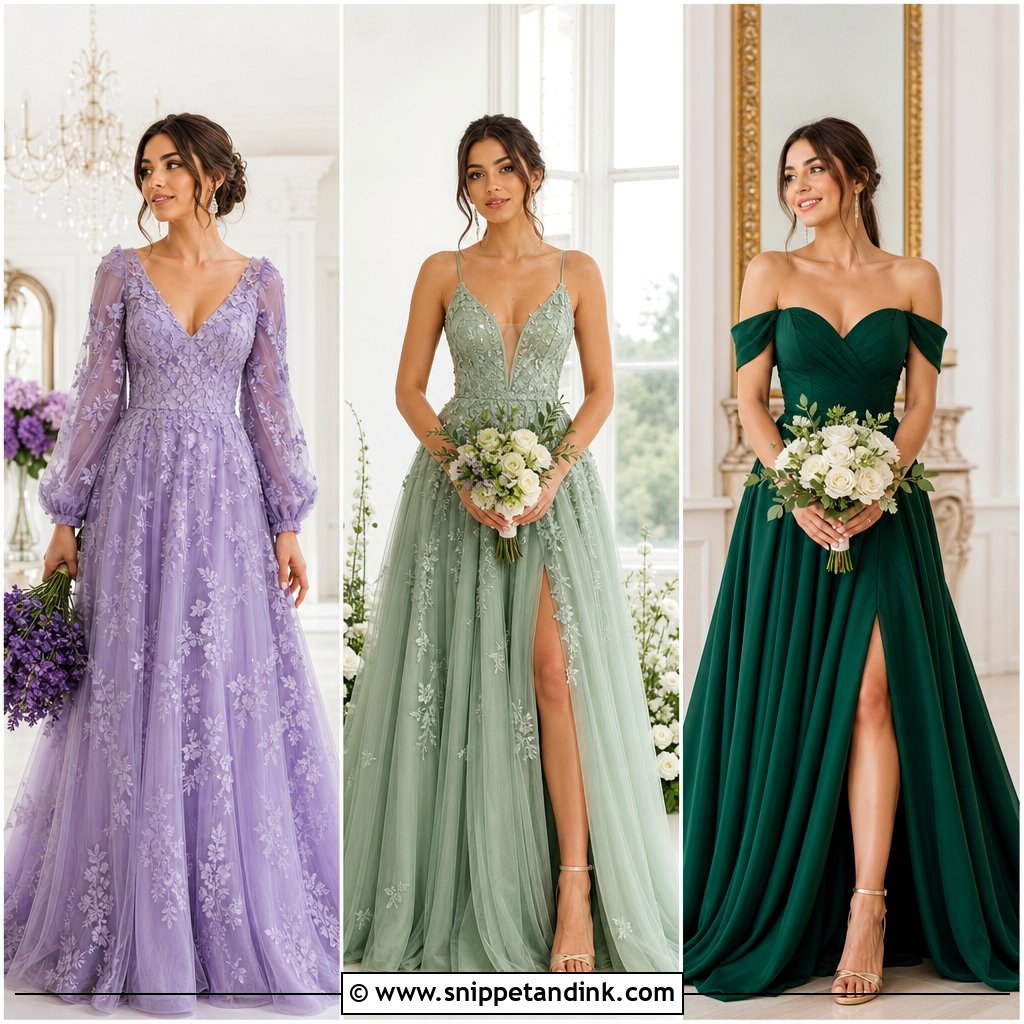
4. Lavender Wedding Dress
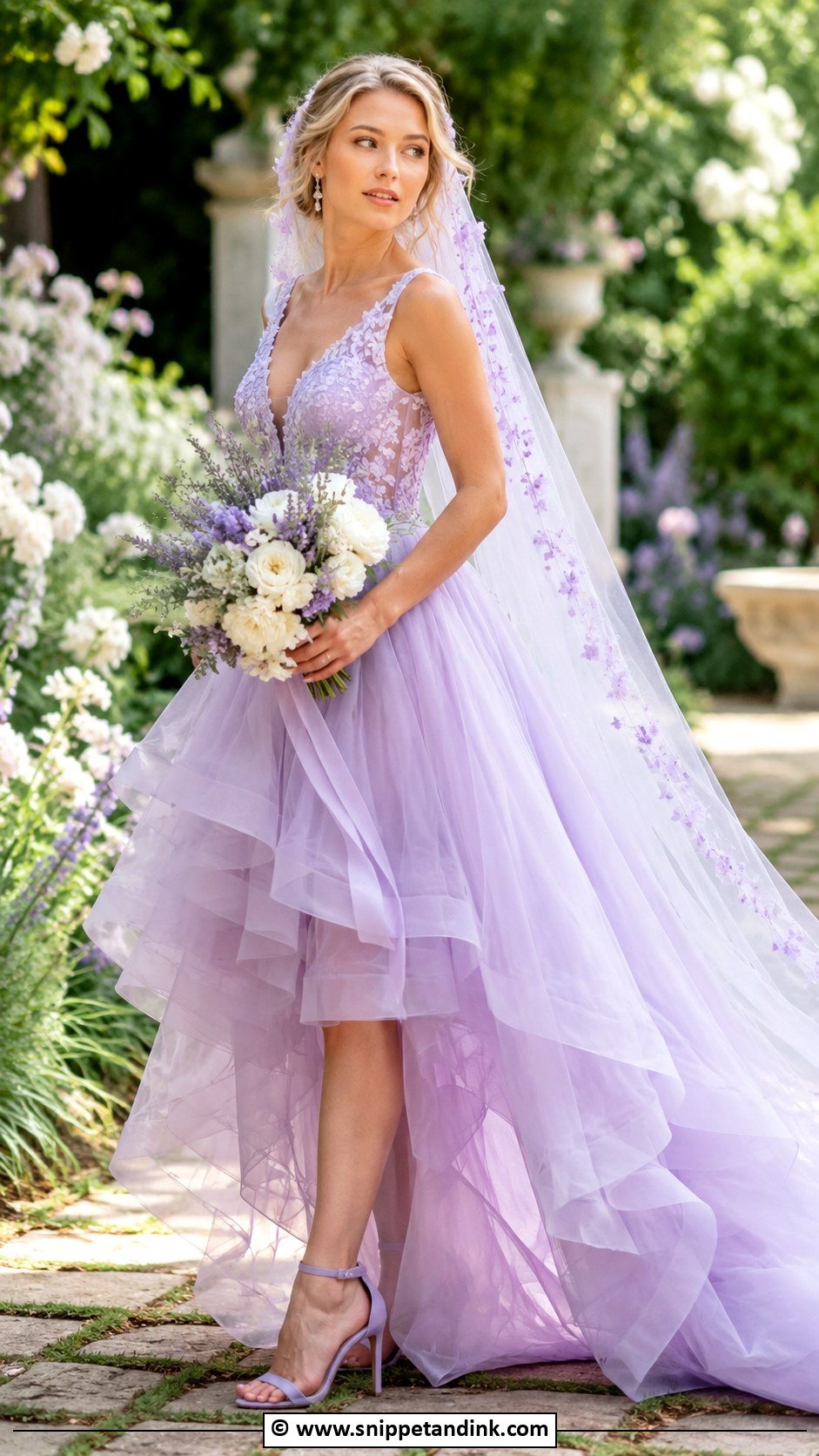
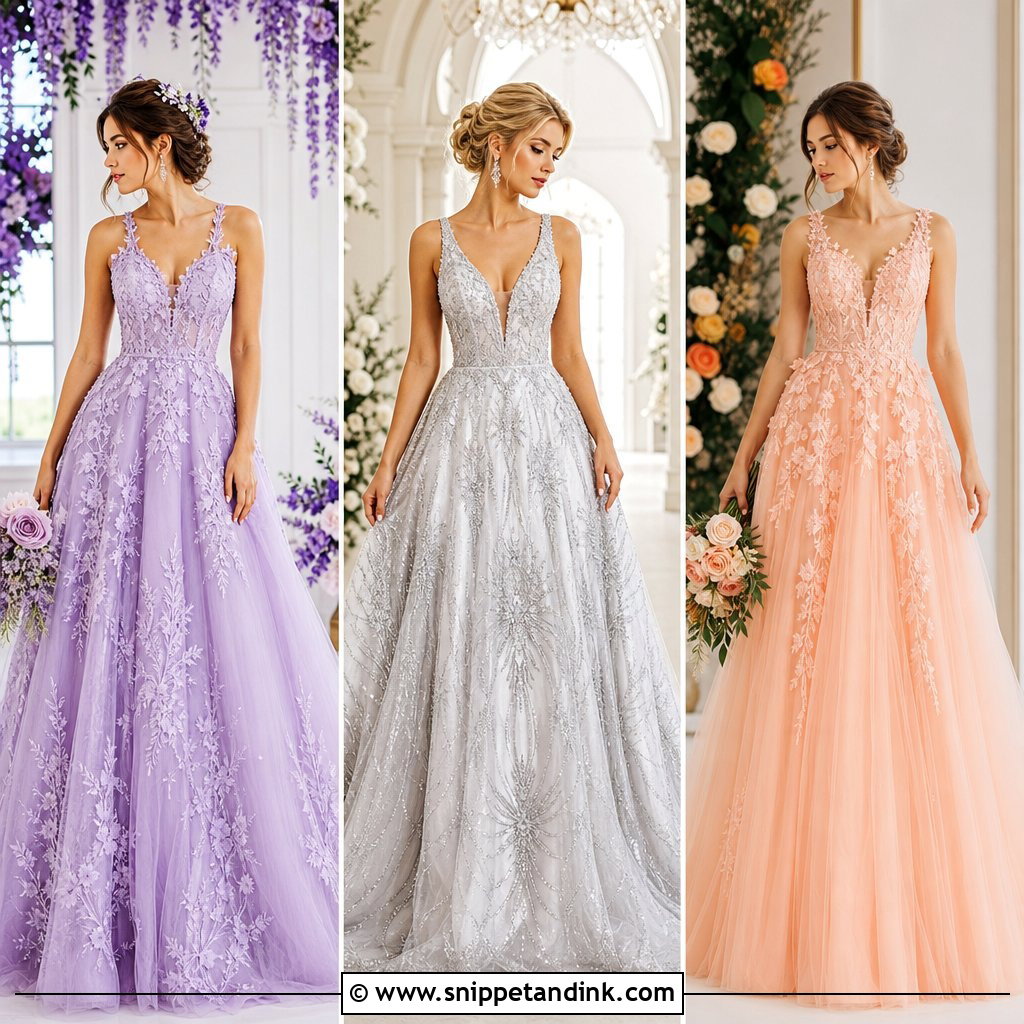
Lavender behaves differently on every fabric. A lavender wedding dress in chiffon looks airy, while the same dye on satin can read almost grey-blue in shade, so I ask to see the actual fabric, not a printed swatch. Silver or pale lilac heels and small drop earrings suit it, and a veil with light floral detail carries the softness up to the face. Lavender sprigs and white blooms in the bouquet tie it together. It’s at its best outdoors in spring and summer, though candlelight indoors brings out its pink side in a way I really like.
5. Sage Green Wedding Dress
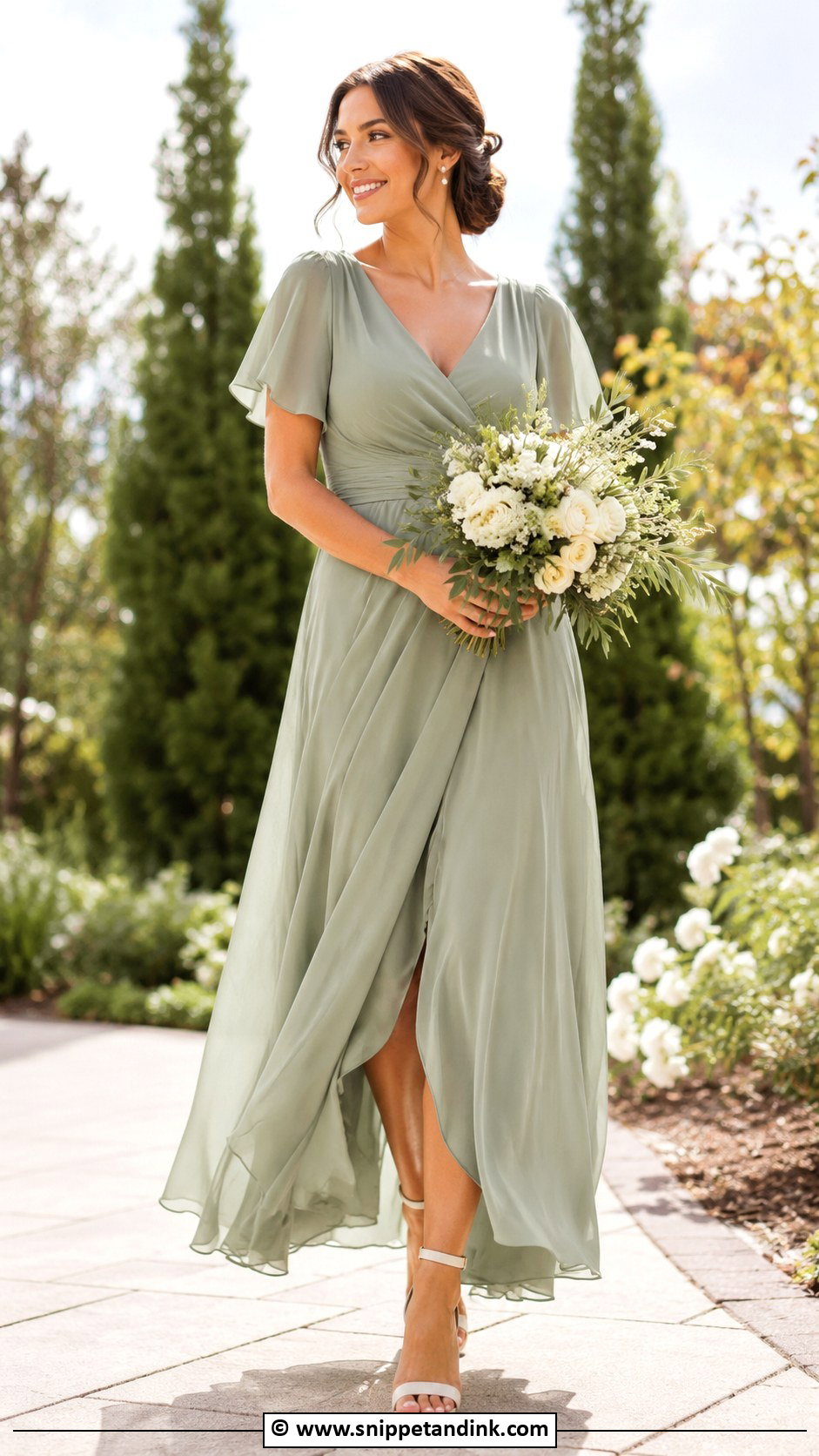
Sage is the color I suggest most for garden and mountain weddings, since it sits comfortably against real foliage instead of competing with it. Chiffon or matte satin keeps it understated; shiny fabric makes sage look minty. I keep the jewelry to pearl studs and pair it with ivory block heels, which matter on grass. Where I’d hesitate is very sallow skin, where a muted green can add a tired cast near the face; a warmer ivory veil fixes a lot of that. Cream flowers with olive branches finish it.
6. Powder Blue Wedding Dress
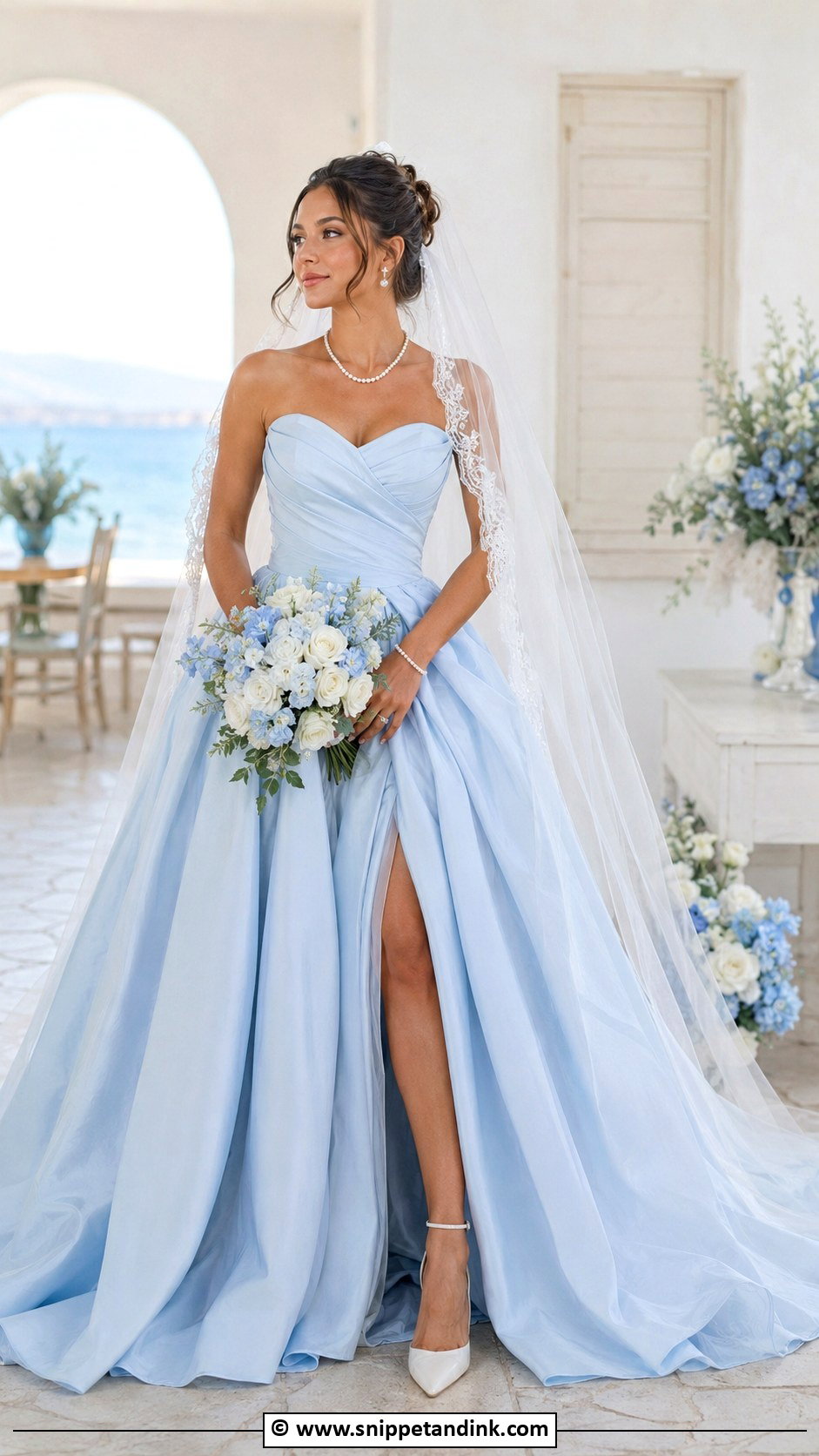
Powder blue is lighter and clearer than dusty blue, with almost no grey in it, so it looks bright in sun and slightly icy under cool LED light. A ball gown or A-line with a sweetheart neckline in this shade pairs well with white heels, pearls and a long cathedral veil. If you want it modern, go to sleek satin and strip the accessories back. I’d add white tulips and soft ribbon to the bouquet. It suits spring weddings and coastal venues, where the sky does half the styling for you.
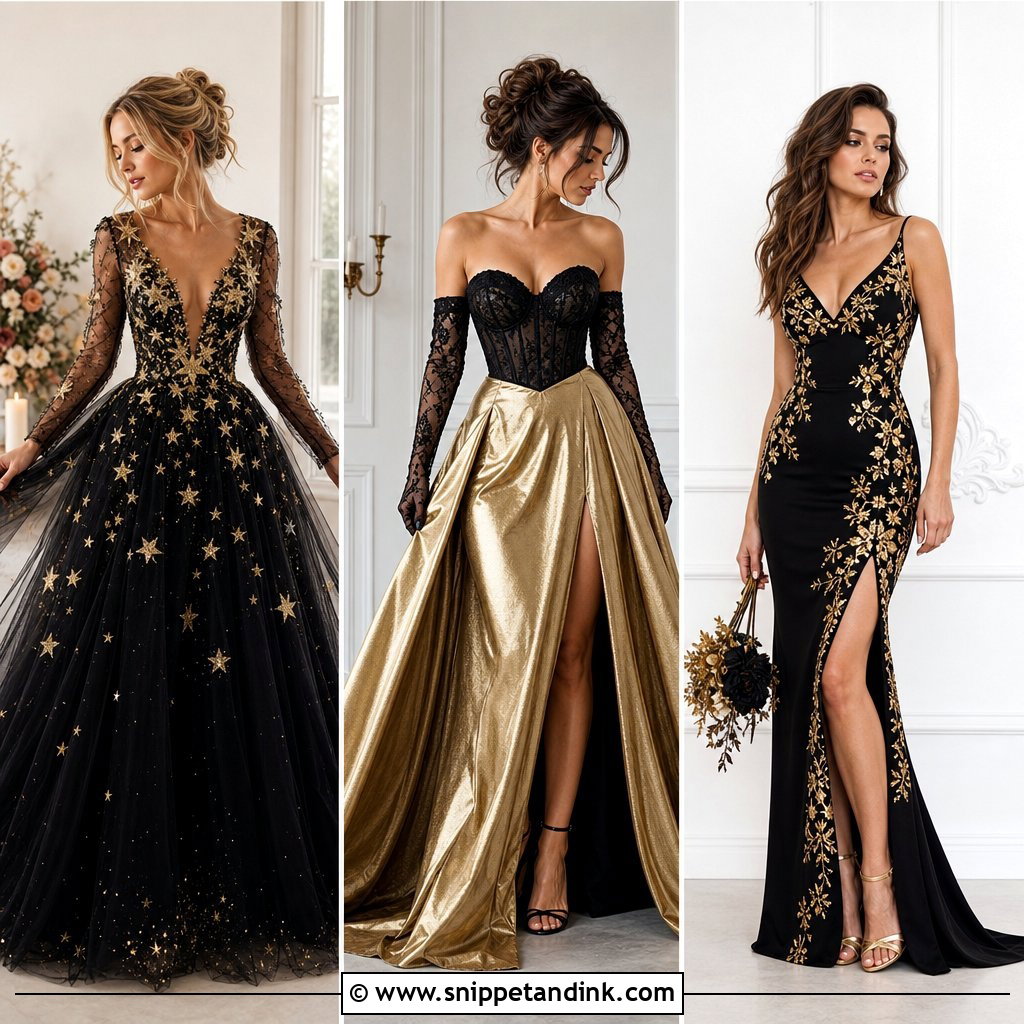
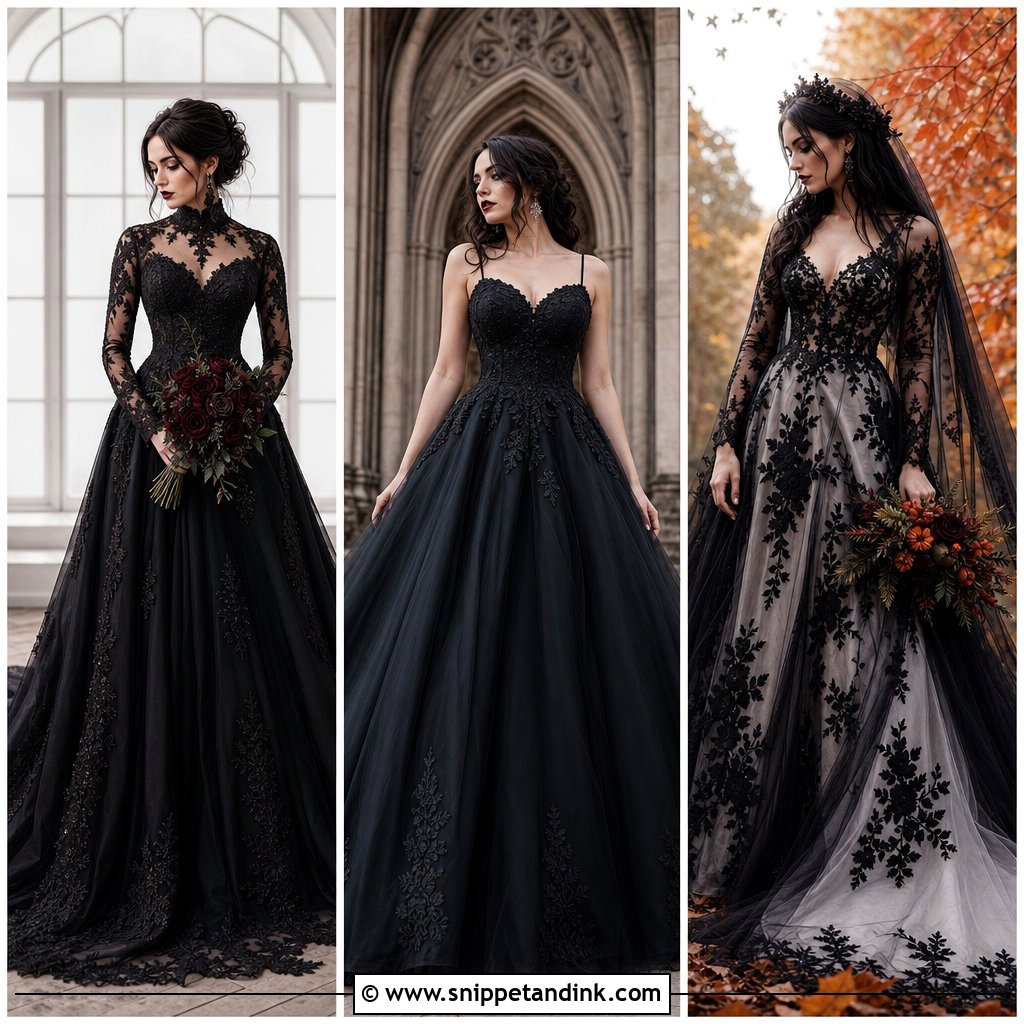
7. Black Wedding Dress
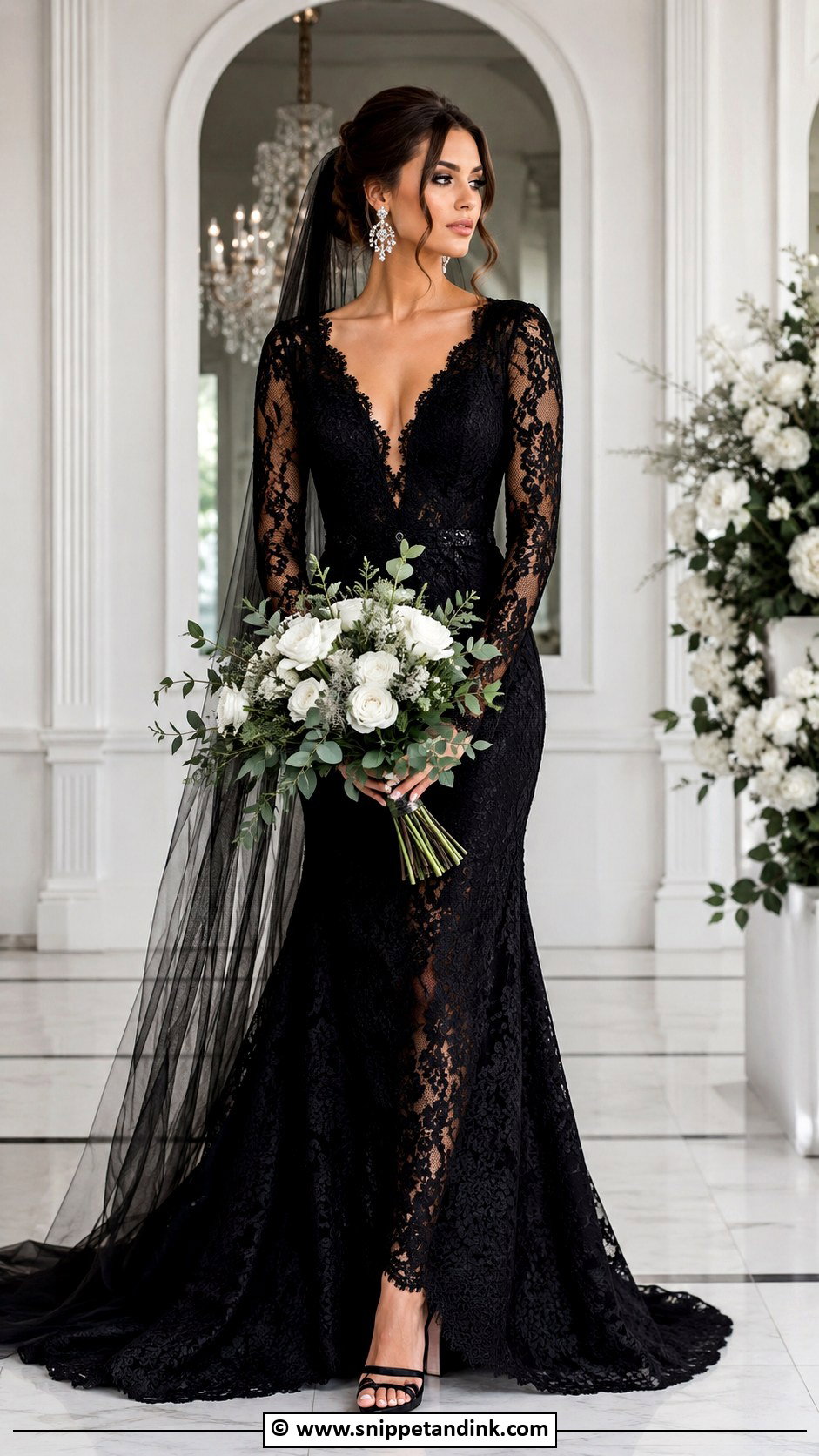
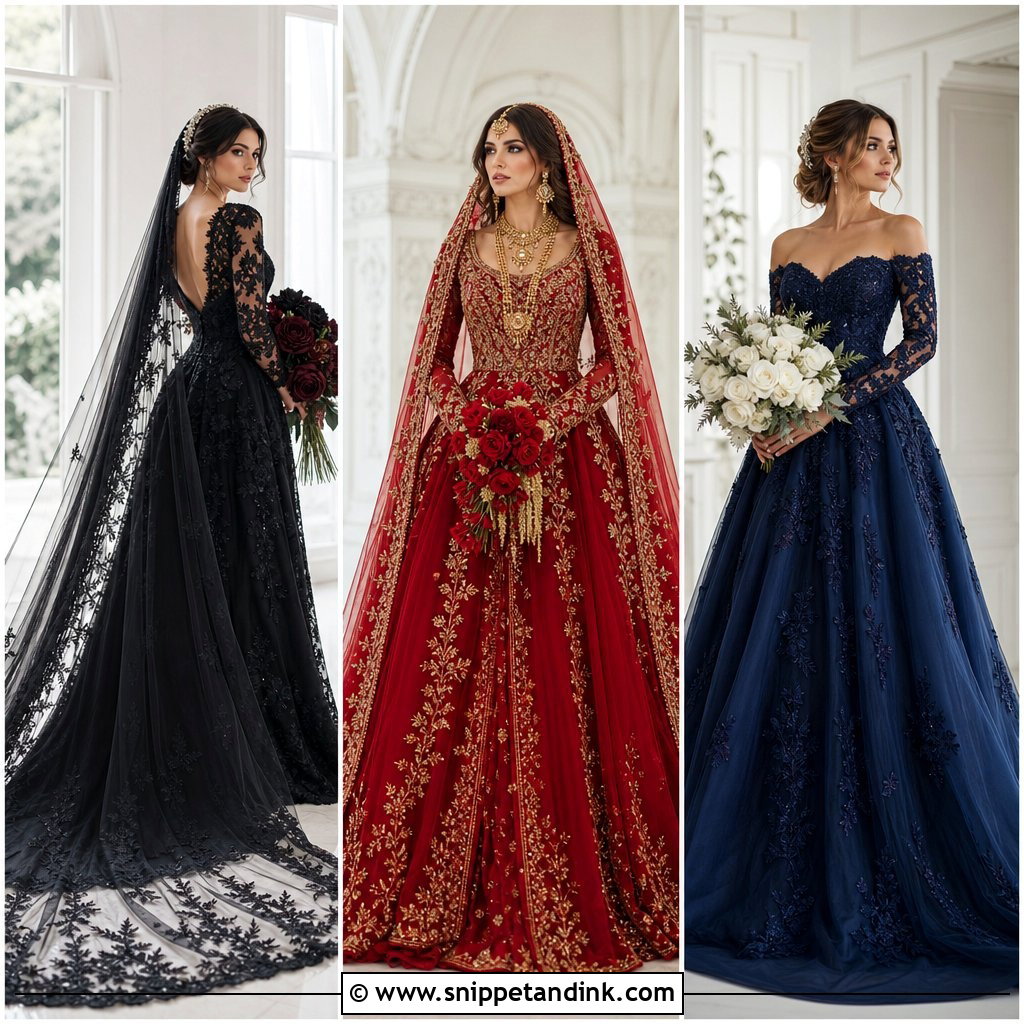
Black is all about fabric quality. Cheap black shows every seam, every crease from the car and every speck of lint under a flash, so this is the one color where I tell brides to spend on the textile before the embellishment. A black lace gown, satin mermaid or structured ball gown works with black heels, crystal earrings and a sleek veil. I soften it with fresh makeup, polished hair and a bouquet of white flowers so it still reads as a bride and not a guest. Evening weddings and modern venues suit it best.
8. Red Wedding Dress
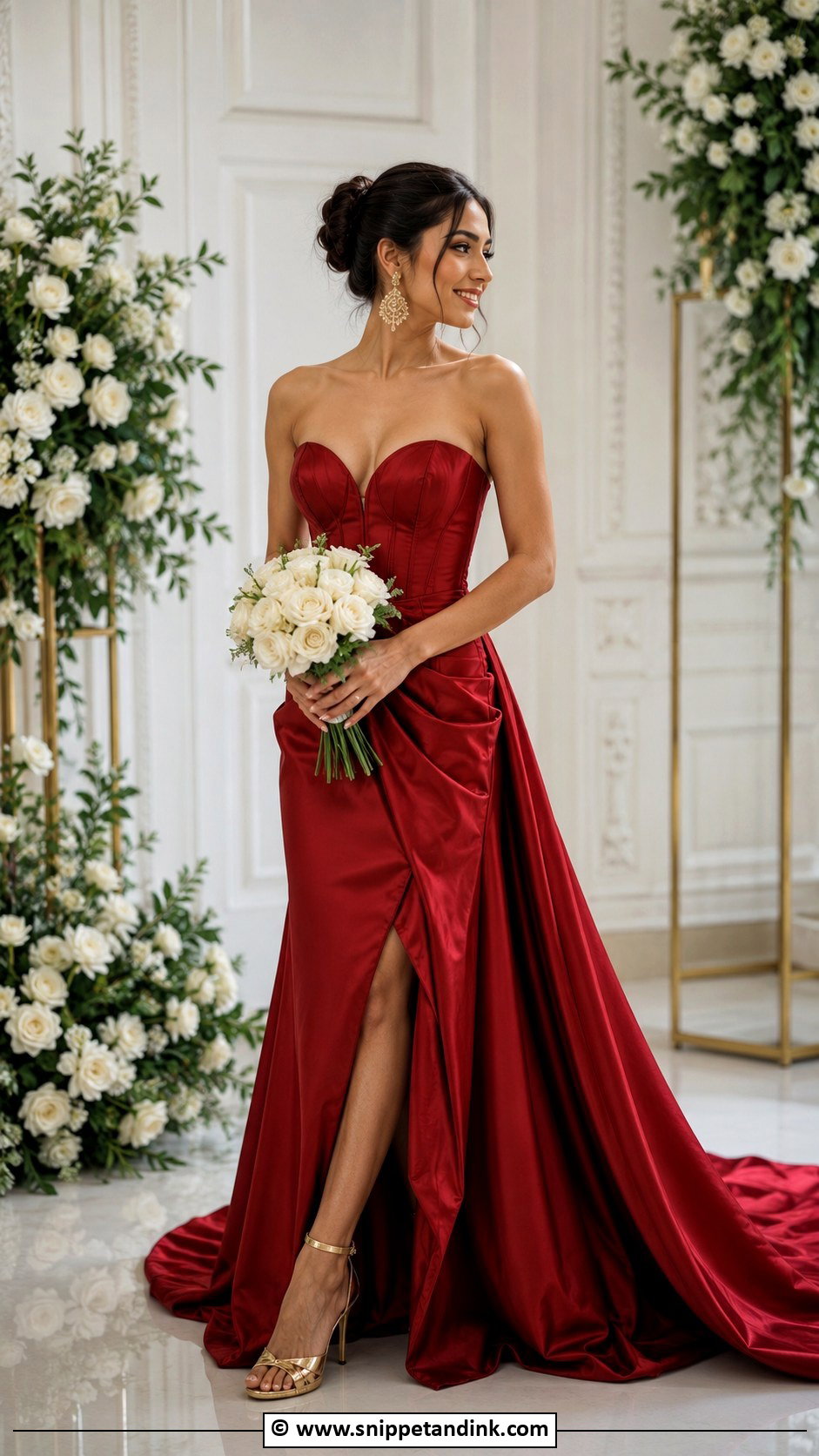
Red carries real meaning in many cultures, so the first thing I ask is whether family expectations come attached to the shade. A deep red satin gown with a structured bodice looks strong with gold heels, statement earrings and a polished updo, while red tulle softens the whole thing. Red is unforgiving with the bouquet: two slightly different reds side by side look like a mismatch. I either go to cream flowers or pick reds clearly darker or lighter than the dress.
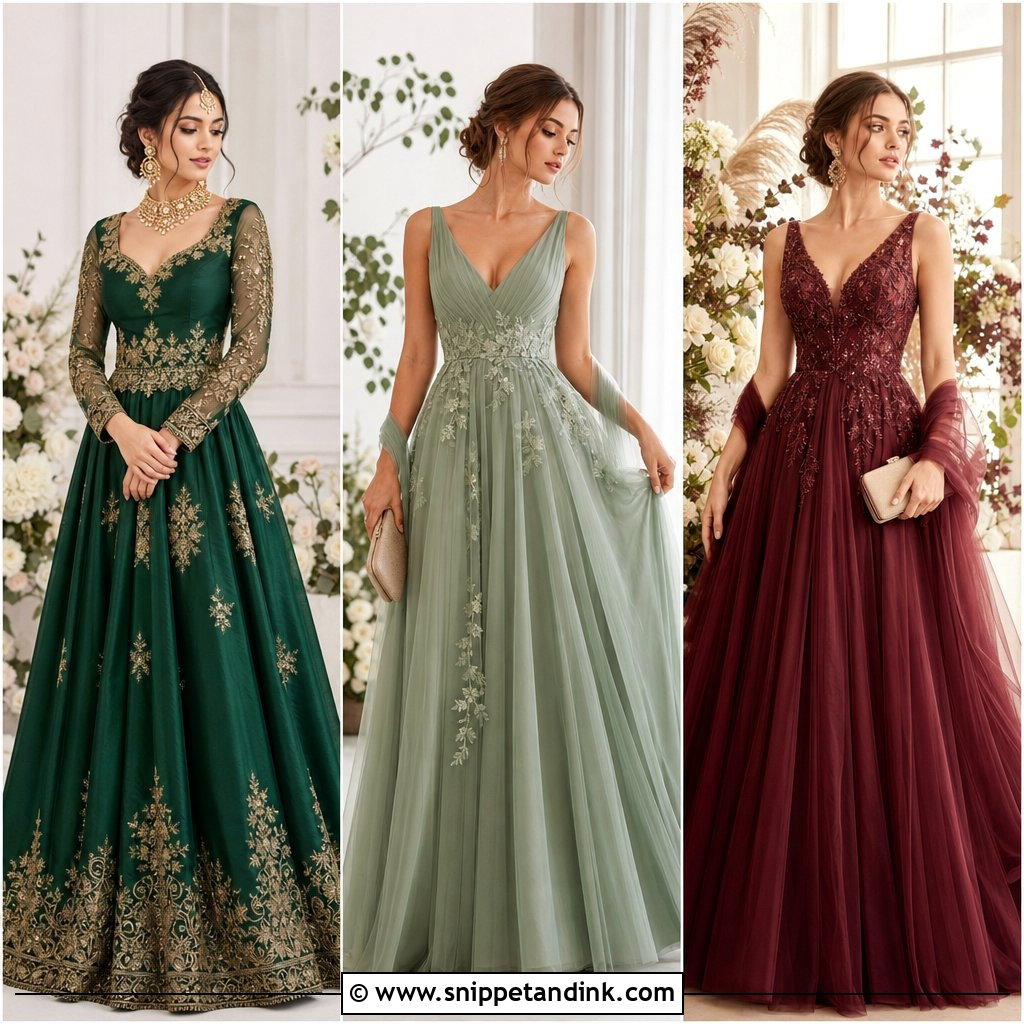
9. Emerald Green Wedding Dress
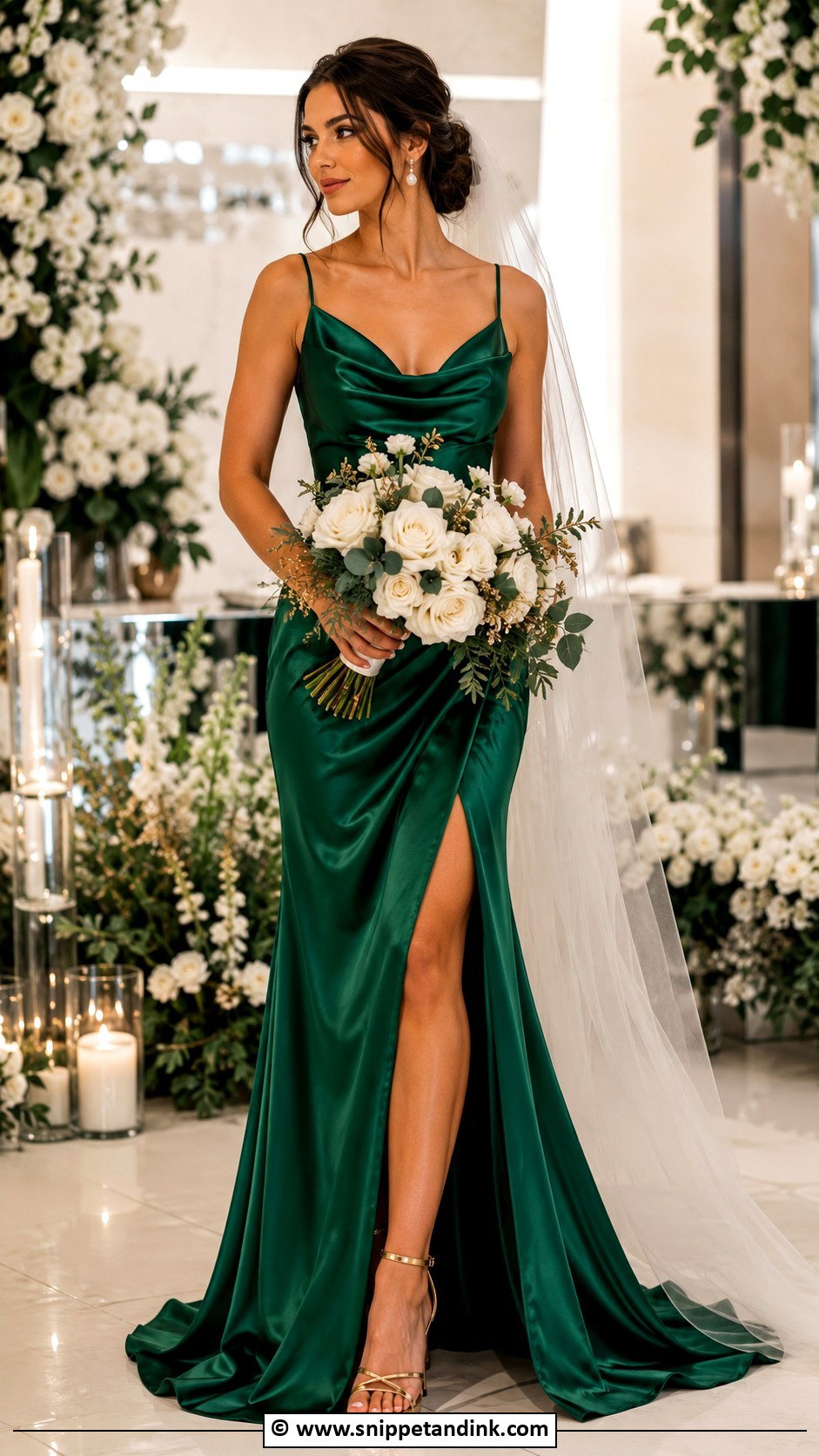
An emerald green wedding dress needs a fabric with depth. Velvet, satin, crepe and heavy beading all give the jewel tone somewhere to sit, while thin chiffon makes it look like a bridesmaid dress. Gold heels, emerald or pearl earrings and a clean veil keep it bridal. I’d add white roses with small gold accents in the bouquet. It’s most striking at formal evening weddings and in cooler months, when velvet is also comfortable to wear for hours.
10. Gold Wedding Dress
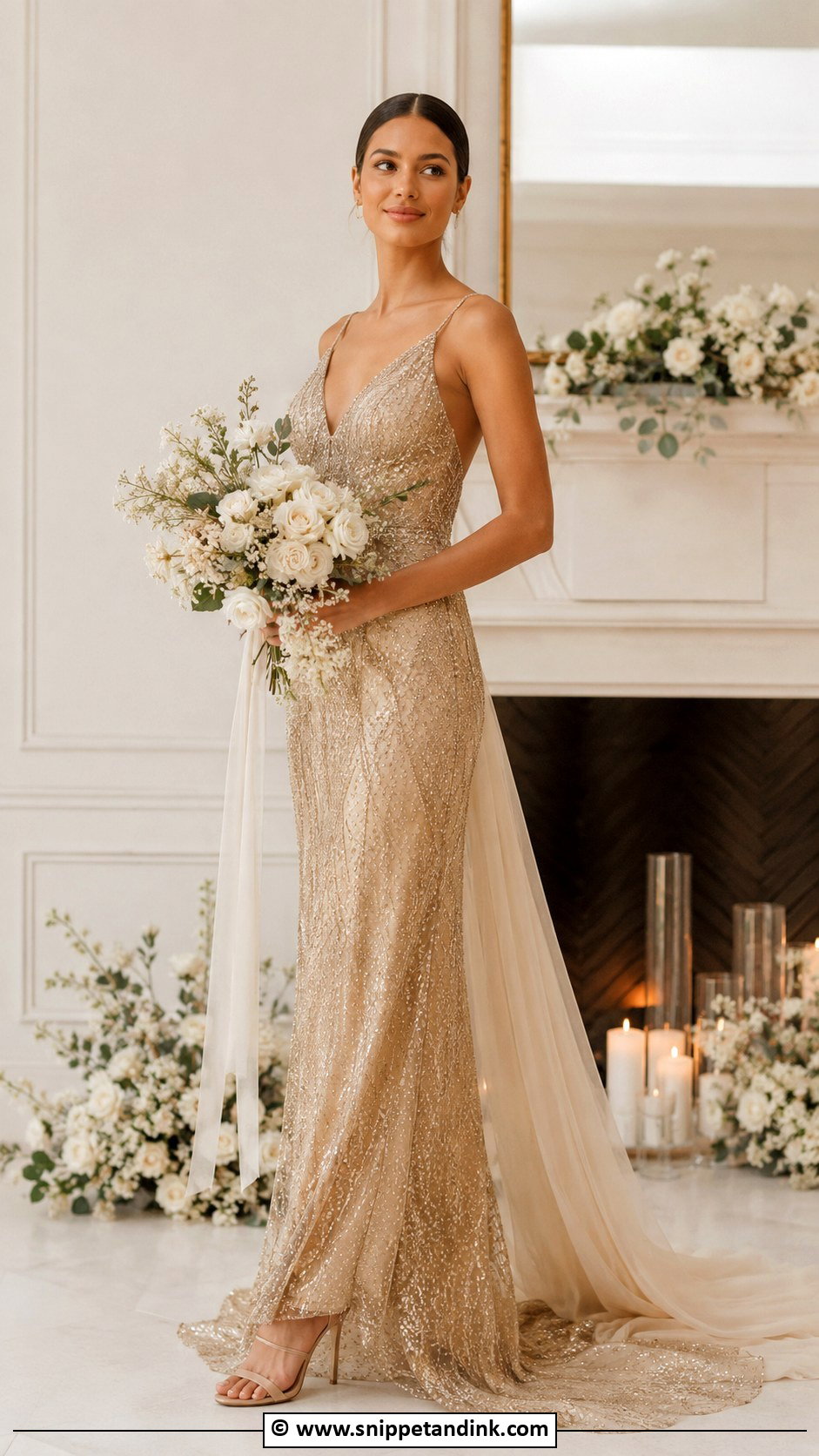
Gold ranges from soft champagne-gold to full metallic, and the difference shows up mostly in weight. Heavily beaded gold gowns can be genuinely heavy by the reception, so I have brides sit, walk and lift their arms in one at the fitting. With a beaded gold gown I keep it to nude heels, simple earrings and a sleek hairstyle and let the dress do the work. A champagne-gold tulle with light shimmer is the gentler route. Cream flowers and soft greenery stop the outfit from feeling heavy.
11. Silver Wedding Dress
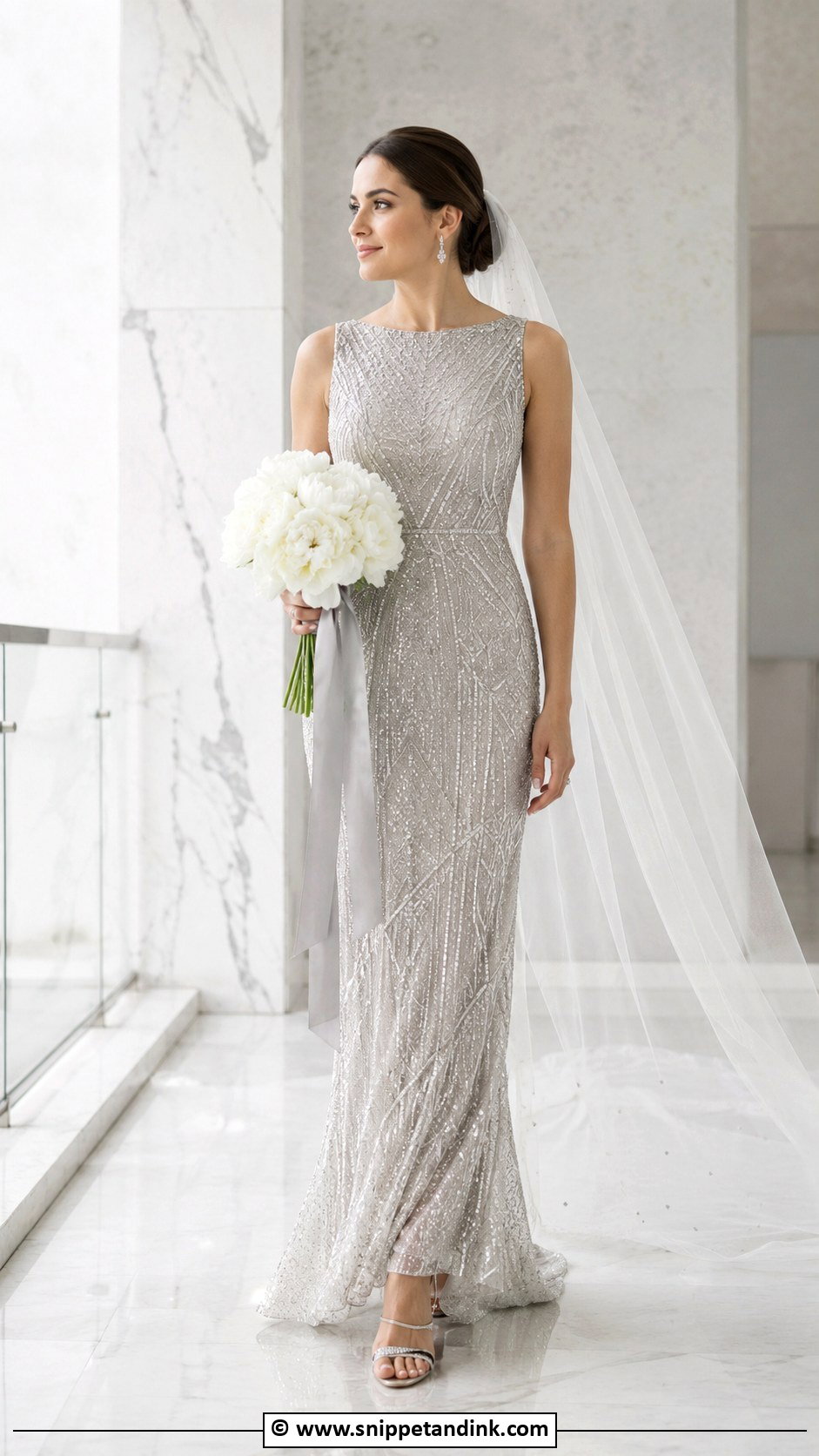
Silver reads cool and modern, and it’s a cleaner alternative to all-over glitter. A satin slip, beaded sheath or shimmering tulle ball gown all work with crystal heels, delicate earrings and a soft veil. My one warning: silver satin shows sweat marks and creases more than most metallics, so I keep a steamer close on the morning. White flowers, pale grey ribbon and some greenery suit it. Winter weddings and city venues are where silver makes most sense.
12. Dusty Rose Wedding Dress
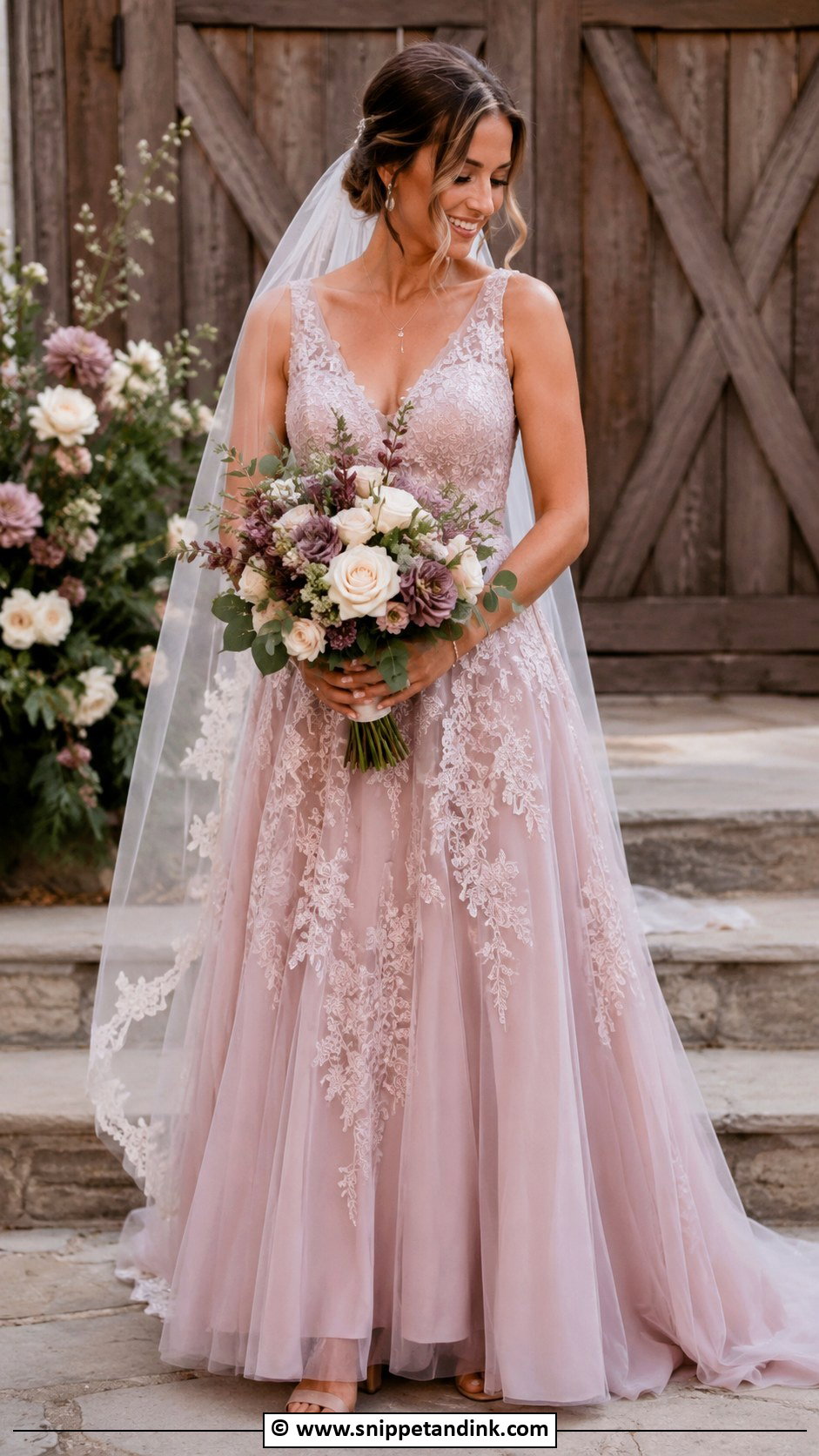
Dusty rose is deeper than blush and softer than true pink, which means it holds its color in photos where blush sometimes washes out. Lace and flowing chiffon both carry it well. I style it with nude heels, rose-gold jewelry and an ivory veil, and choose cream roses with mauve blooms for the bouquet. It sits naturally at rustic venues and fall weddings, and in spring I lighten the accessories so it doesn’t feel autumnal.
13. Peach Wedding Dress
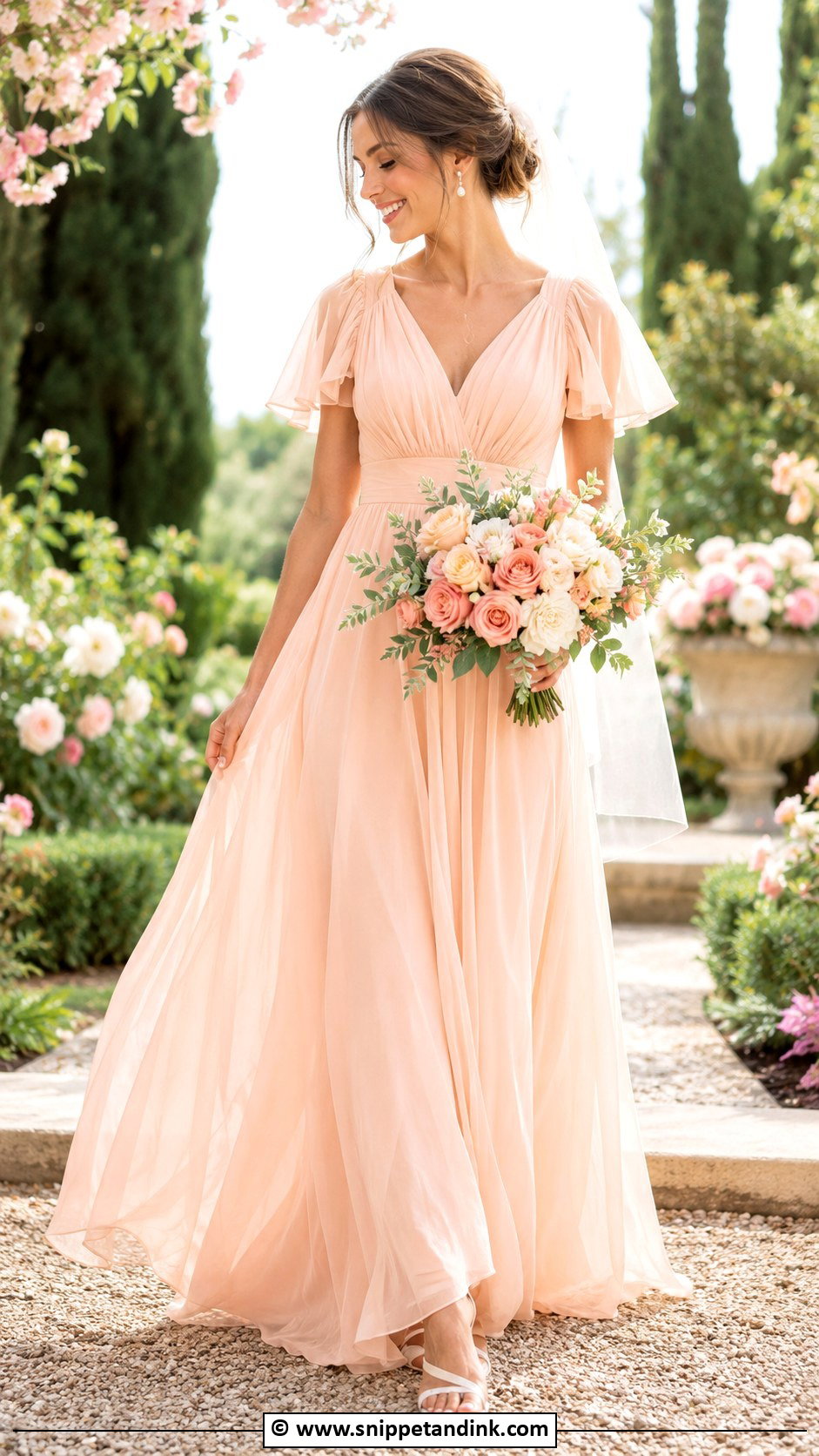
Peach throws warmth back onto the face, which is why I reach for it with brides who look washed out in white. On chiffon with flutter sleeves or a tulle skirt it feels relaxed, and ivory sandals with pearl jewelry suit it. The risk is a very orange-leaning peach on olive skin, which can push the complexion yellow; I compare two or three shades side by side before deciding. A tonal bouquet of cream, peach, coral and pale yellow works for beach and garden weddings.
14. Mauve Wedding Dress
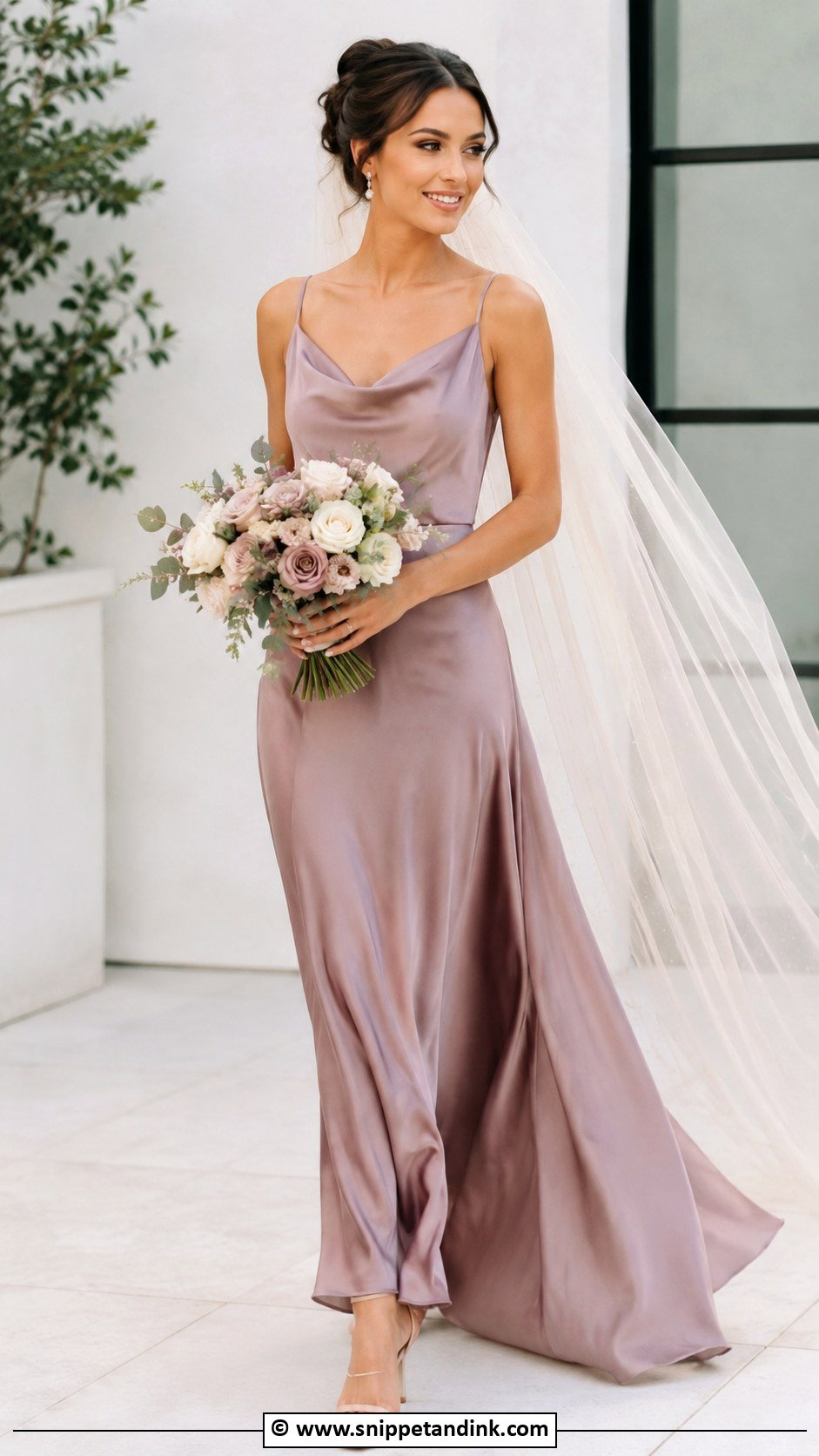
Mauve sits between pink, purple and grey, so it changes more with lighting than almost any color on this list. That’s not a flaw, it just means you should see it in the light you’ll actually wear it in. Satin, lace and soft tulle all work. I pair it with nude heels, pearl earrings and an ivory or pale mauve veil, with cream roses and dusty pink blooms. Fall weddings and venues with natural wood or stone suit it particularly well.

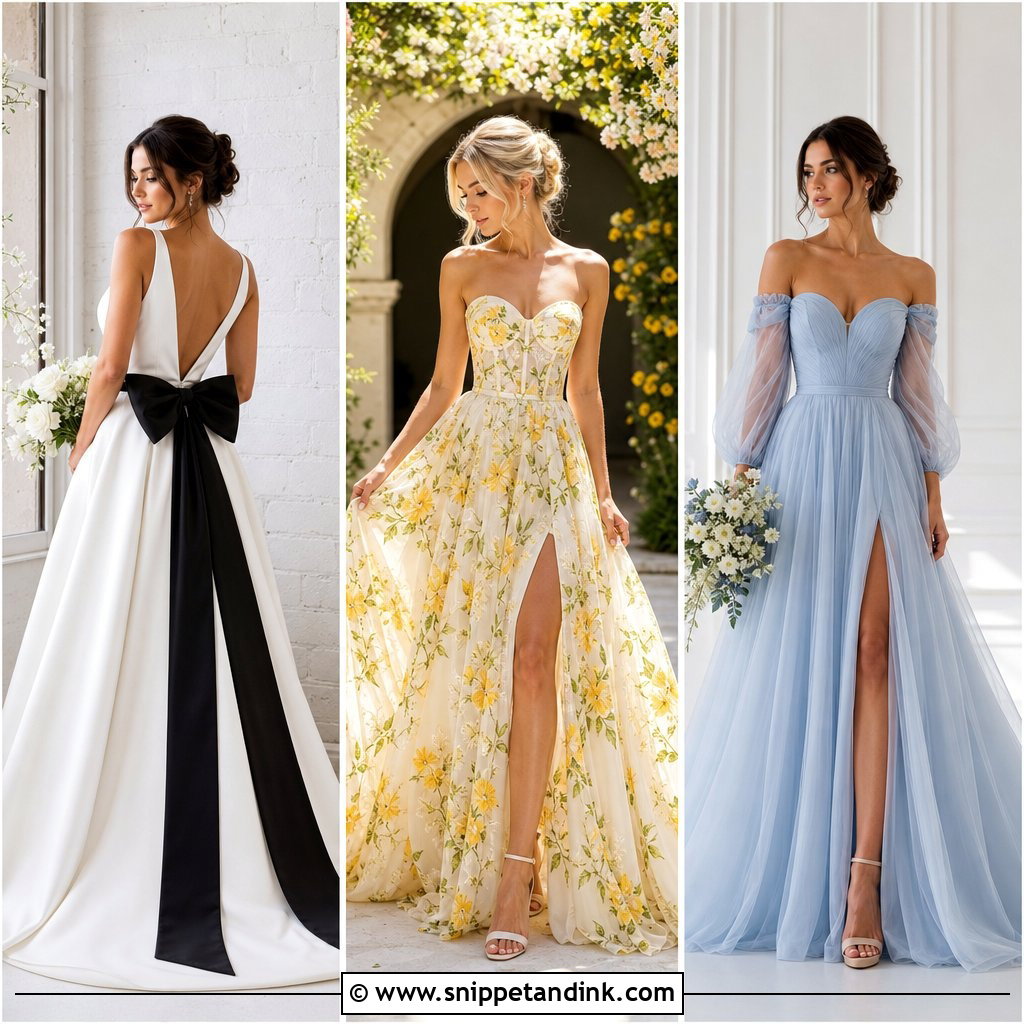
15. Navy Blue Wedding Dress
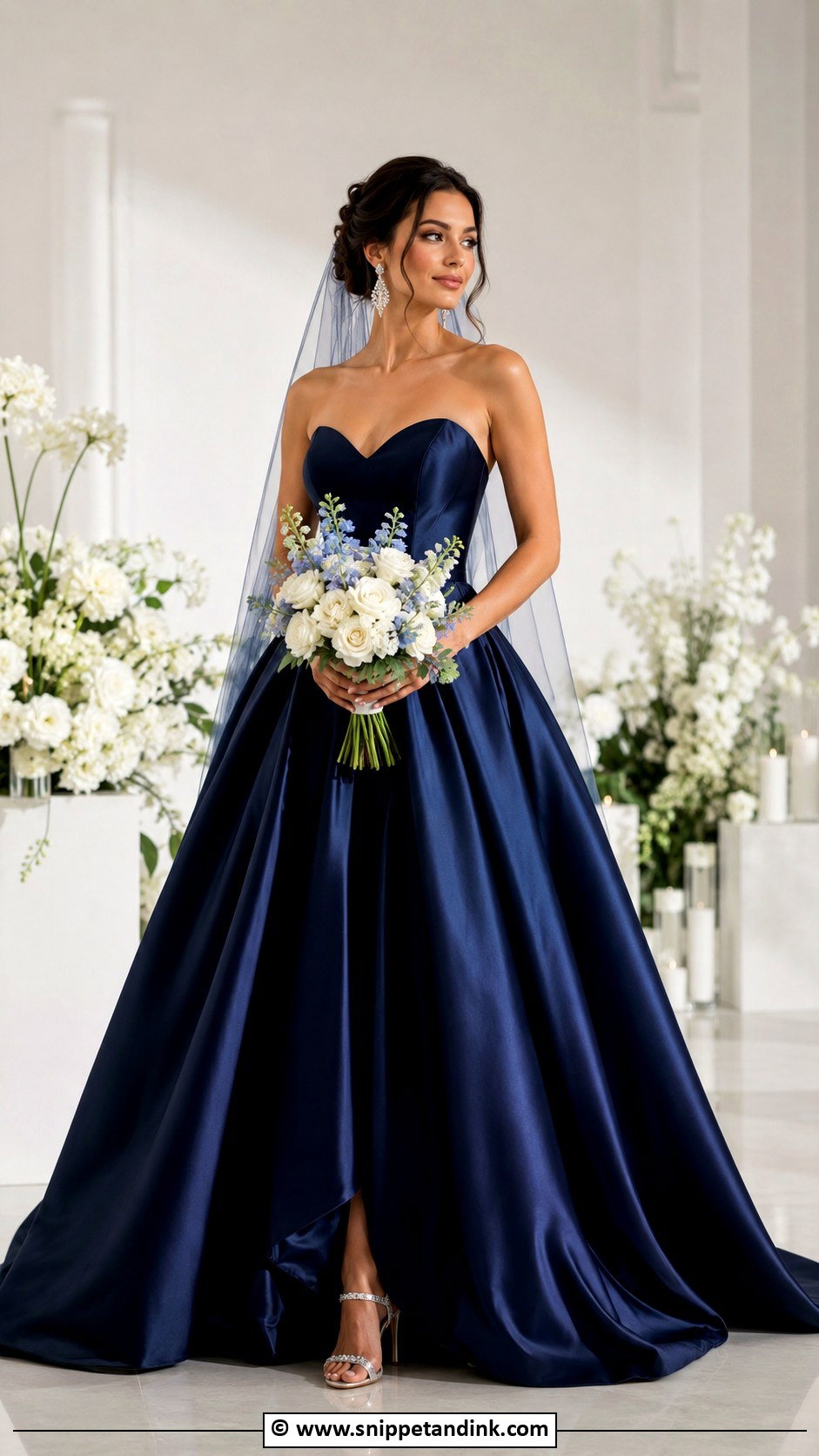
Navy gives you a clear break from white with less severity than black, and it’s forgiving: lint and small marks hardly show. A navy blue wedding dress in satin or fitted crepe looks right with silver heels, crystal earrings and a sleek veil. It’s also one of the few deep shades that takes both silver and gold jewelry, so you can match whatever metal your ring is. White flowers with pale blue accents soften it at evening and formal receptions.
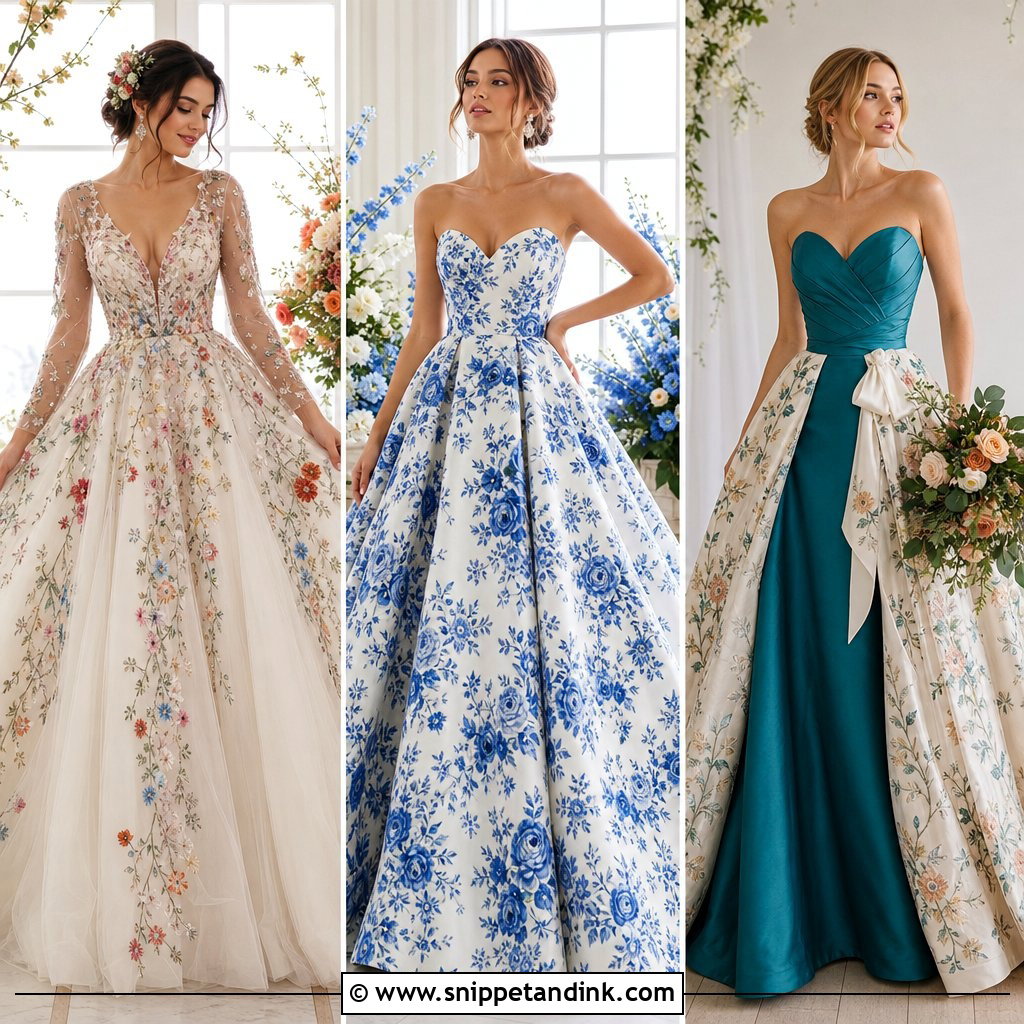
16. Floral Wedding Dress
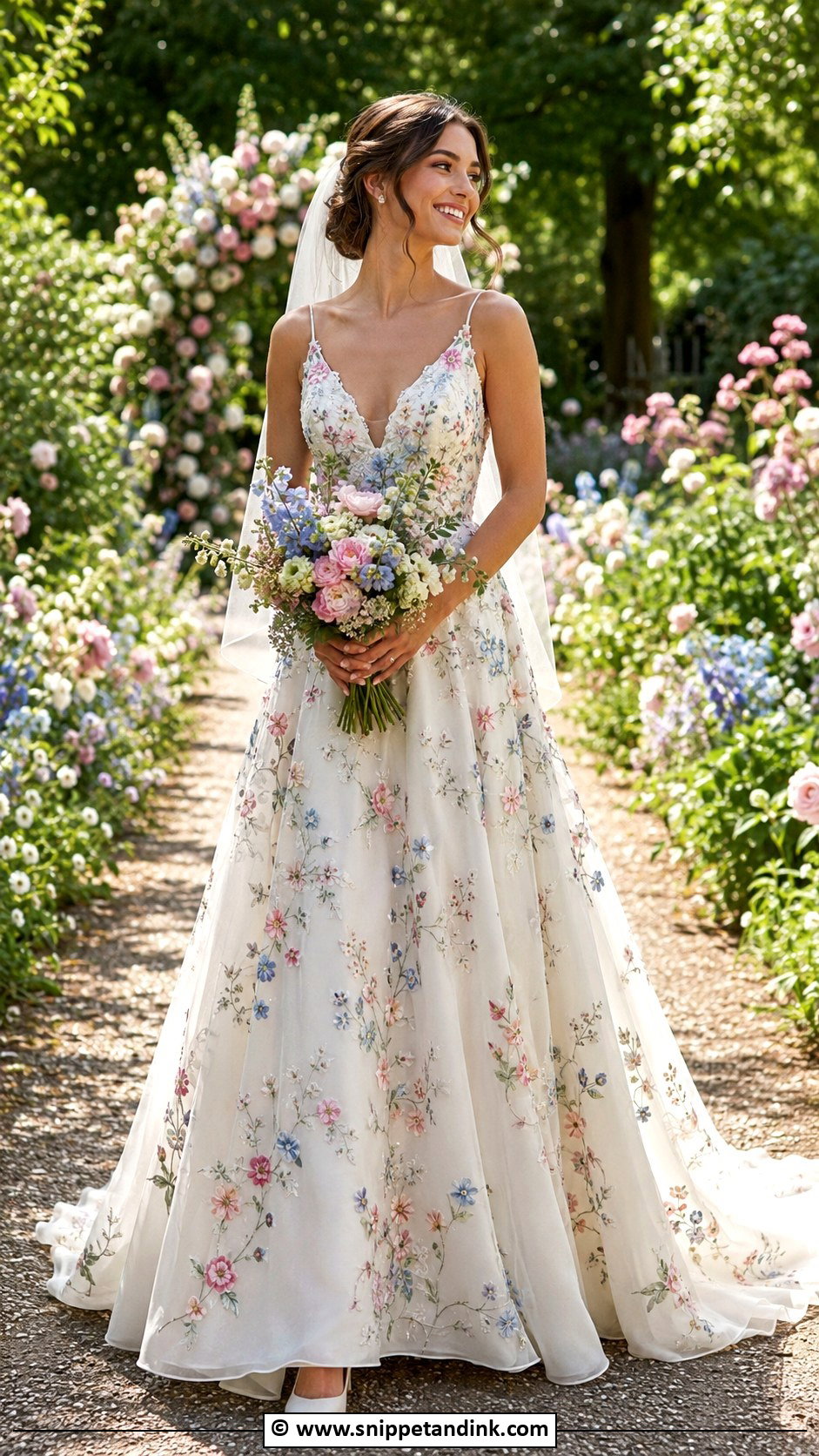
A floral gown is the hardest to accessorize, because the dress already has a lot to say. Embroidered flowers on ivory, watercolor prints and bold botanical appliques each need a different approach, but the rule I follow is the same: plain veil, small earrings, simple heels. For the bouquet, I pull one or two colors from the print rather than trying to match all of them, which always looks busy. Floral gowns suit garden weddings in spring and summer best.
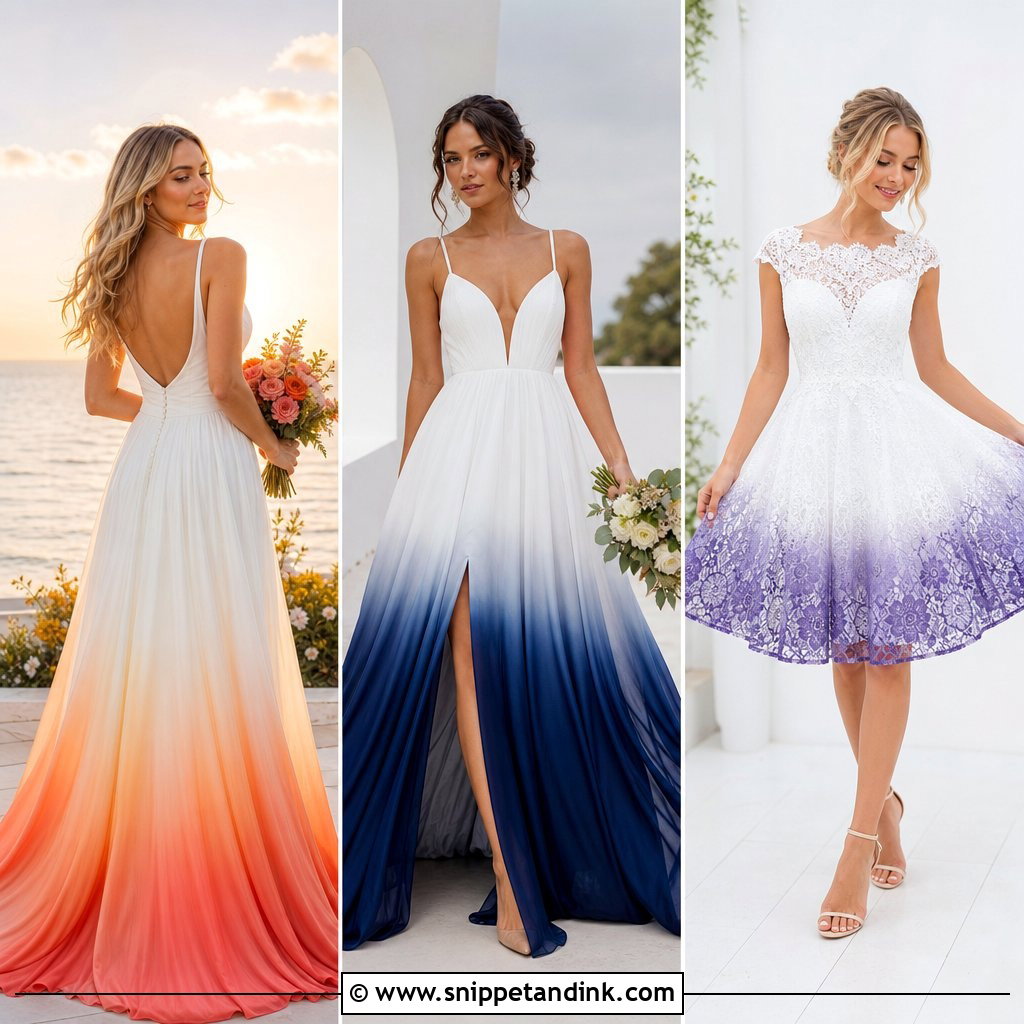
17. Ombre Wedding Dress
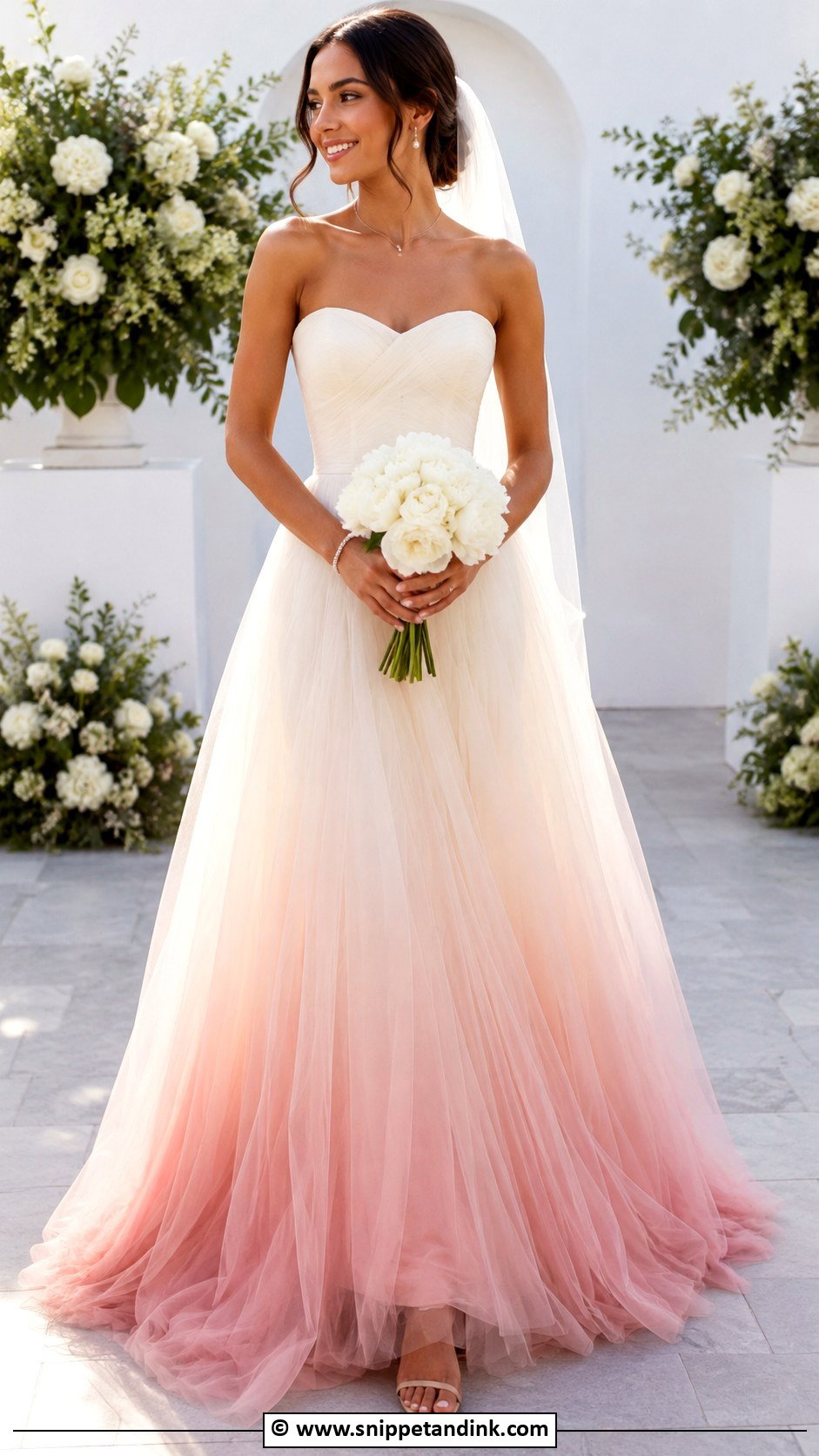
Ombre keeps a white or ivory bodice near the face and lets the color deepen toward the hem, so it moves as you walk. White-to-pink, ivory-to-blue and champagne-to-gold are the common blends. I match the veil to the lightest part of the dress, never the darkest, and keep shoes neutral. One practical thing: the darker hem shows dirt less than an all-white train, which helps outdoors. A simple bouquet stops it competing with the gradient.
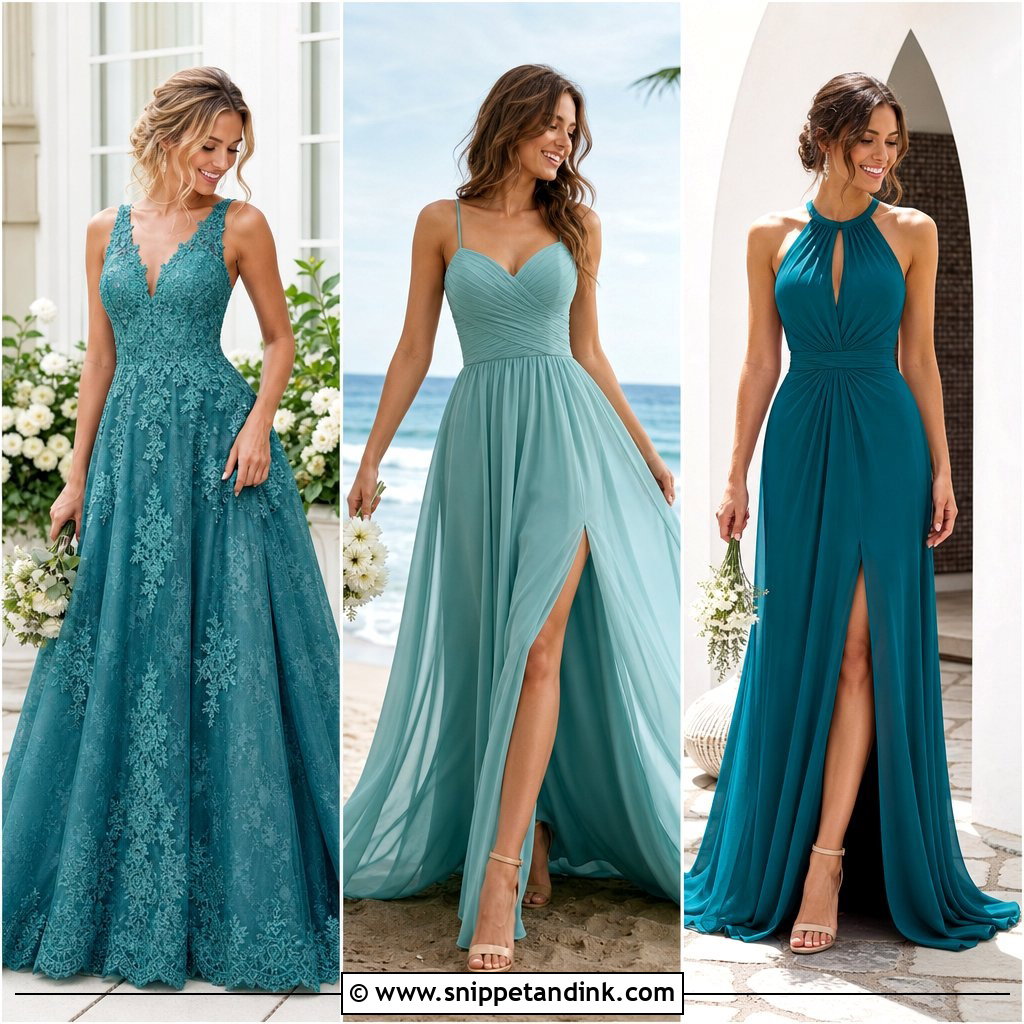
18. Teal Wedding Dress
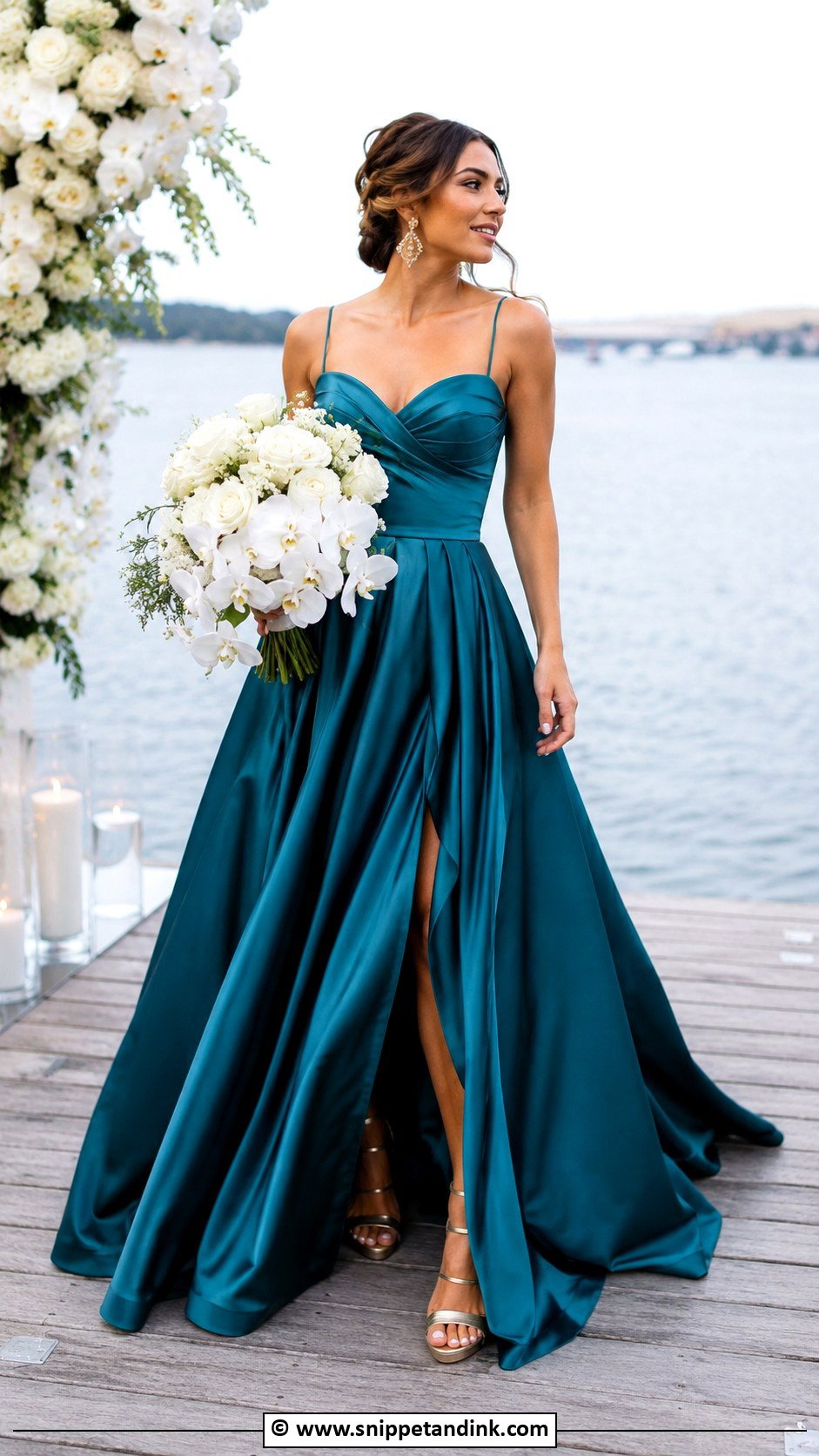
Teal blends blue and green, and it shifts toward one or the other depending on the light, which keeps it interesting in photos. A teal satin gown with a fitted bodice looks polished with gold heels, statement earrings and a structured bouquet of white flowers. Teal chiffon with soft draping is the quieter version. I find it flatters a wider range of skin tones than pure emerald or royal blue. It works at waterfront venues and evening weddings.
19. Butter Yellow Wedding Dress
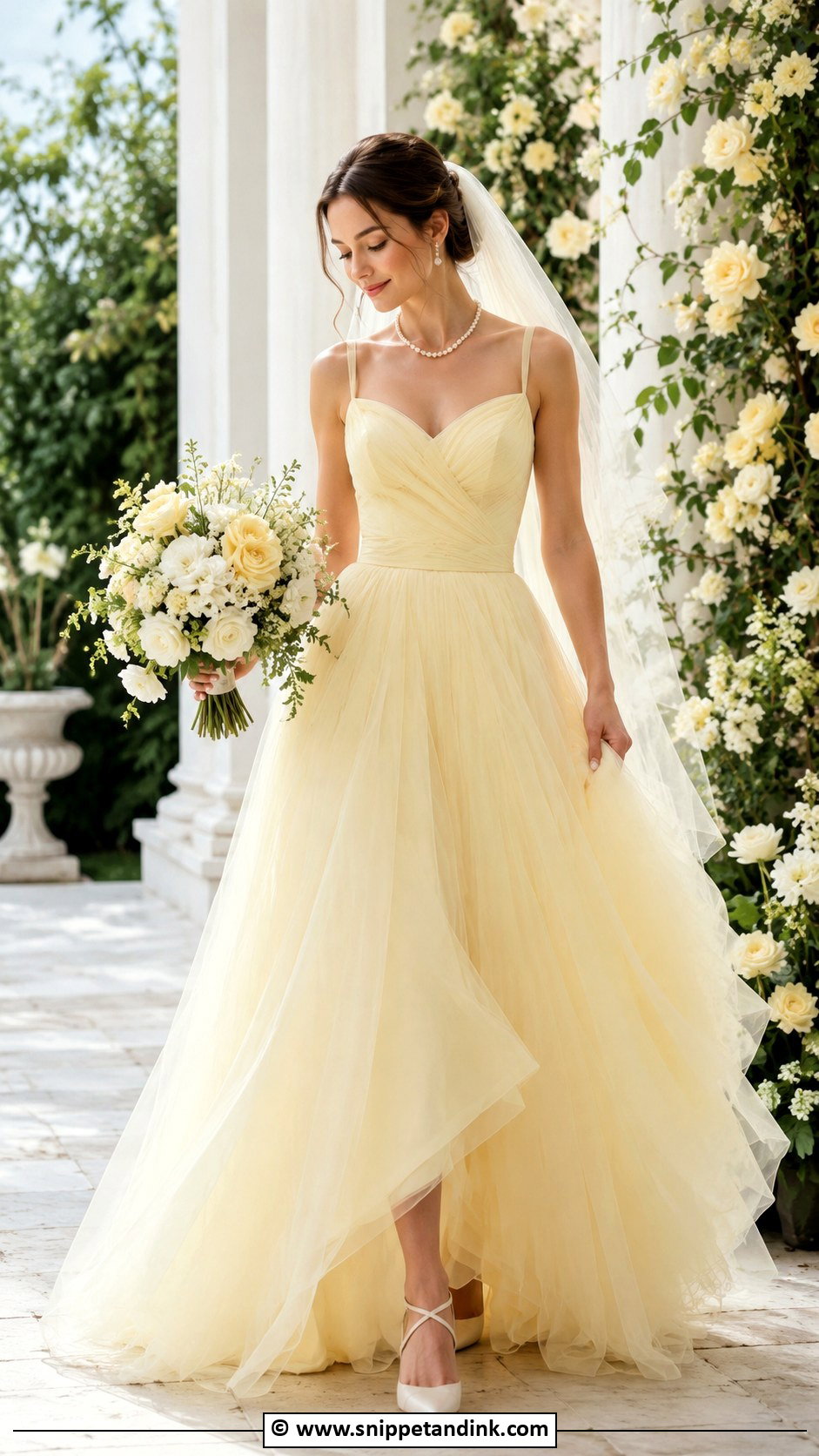
Butter yellow is the only yellow I’d put most brides in, because the creamy base keeps it soft where lemon looks harsh on skin. Tulle or a satin A-line works, with ivory heels, pearls and a soft veil. Daylight is its friend; under warm evening light it can fade toward ivory, so I suggest it for daytime ceremonies in spring and summer. White flowers with a few pale yellow blooms and fresh greenery keep the palette sunny.
20. Ivory And Blue Wedding Dress
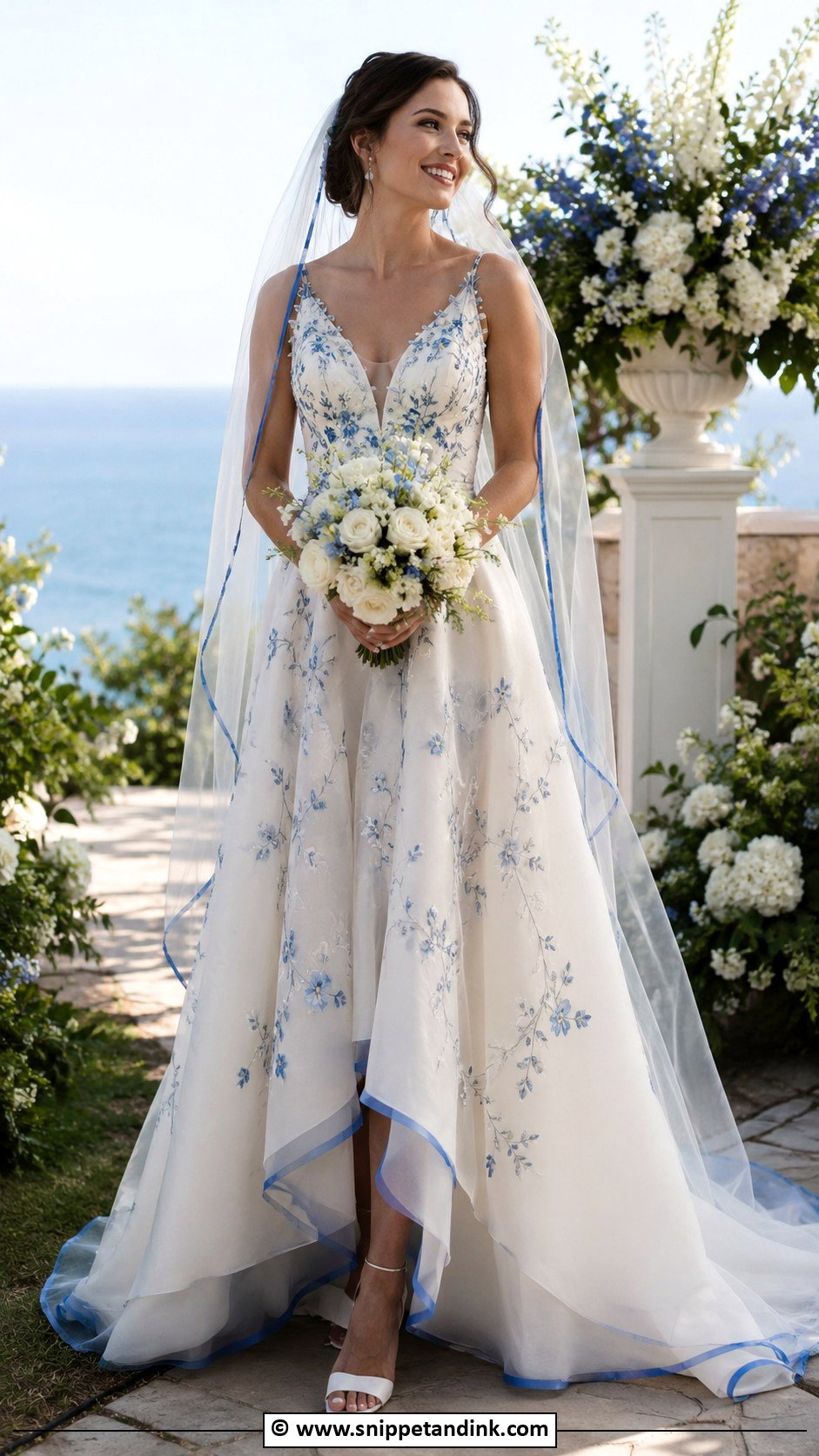
An ivory gown with blue embroidery, lace, ribbon or applique is the gentlest way to bring color in, and it suits brides whose families expect something close to traditional. Blue floral detail on the bodice keeps attention near the face. I echo it with a veil that has a light blue trim or scattered embroidery, plus ivory heels and pearl earrings. White flowers with a few blue accents finish it at garden and coastal weddings.
21. Gray Wedding Dress
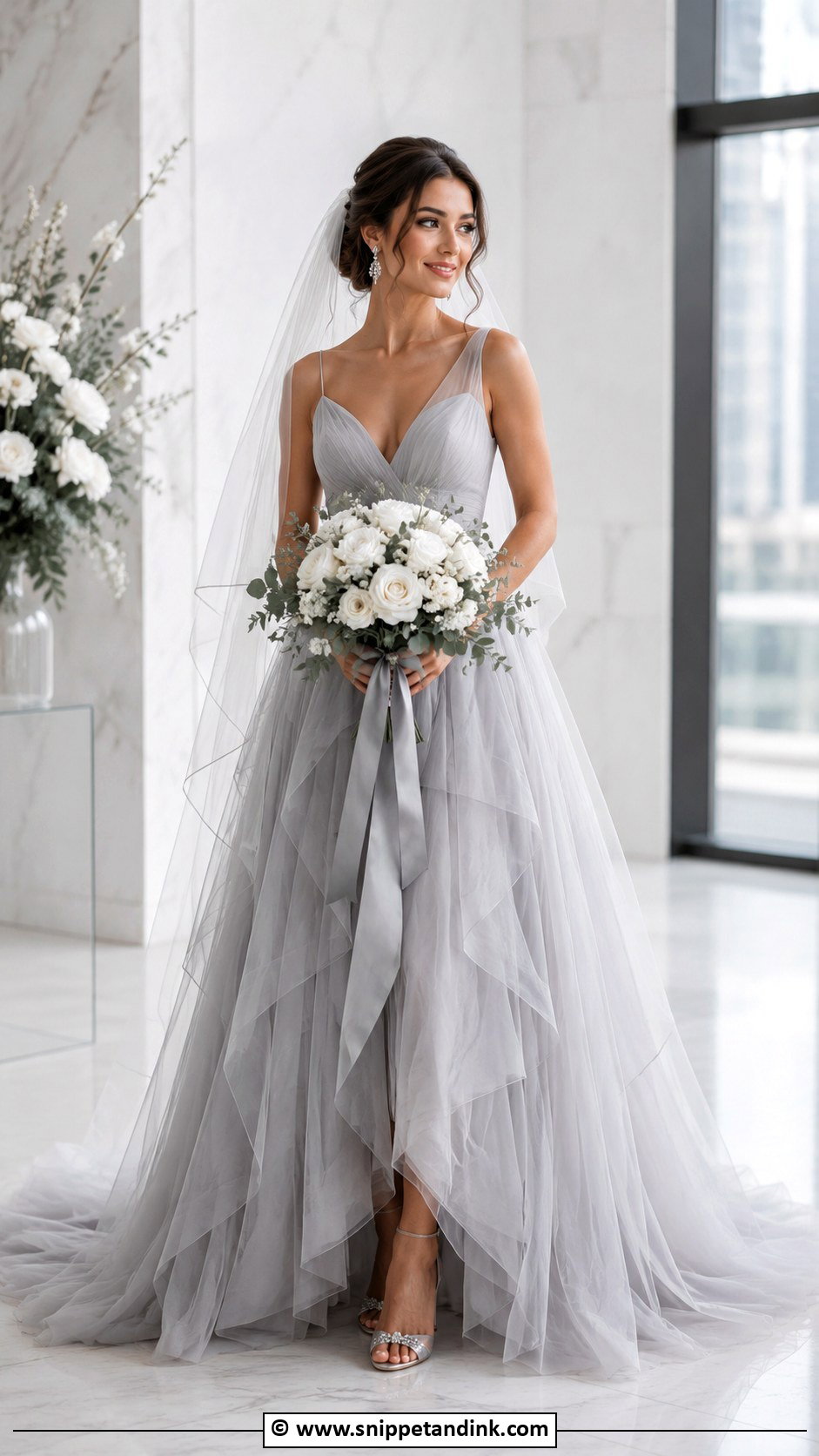
Grey surprises people. Light grey can look almost silver in daylight, while deep grey is moody and fashion-led. Layered grey tulle pairs well with silver heels, crystal earrings and a sheer veil; sleek grey satin feels minimal. I check grey on the bride’s skin very carefully, because a cool grey next to a cool, pale complexion can look drained, and a warmer pewter often fixes that. White flowers, pale greenery and grey ribbon suit city venues and winter weddings.
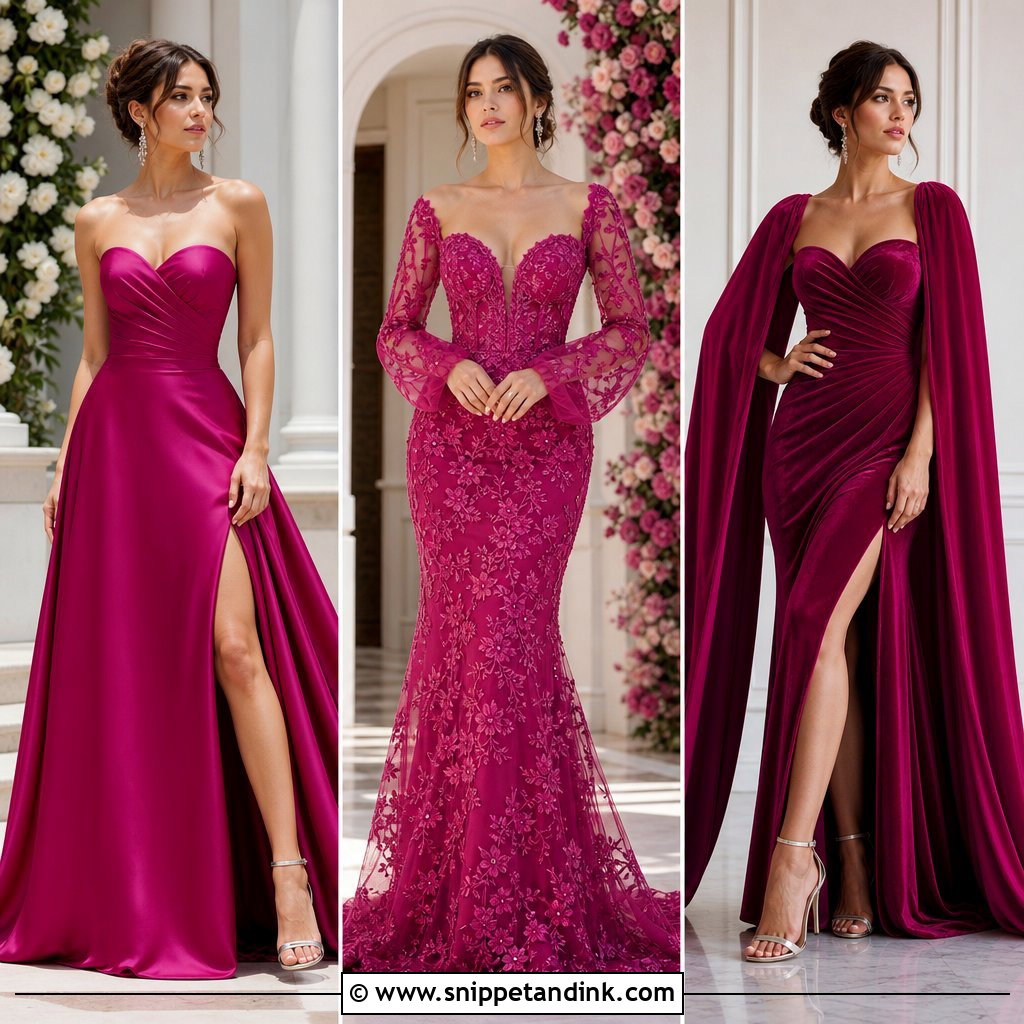
22. Burgundy Wedding Dress
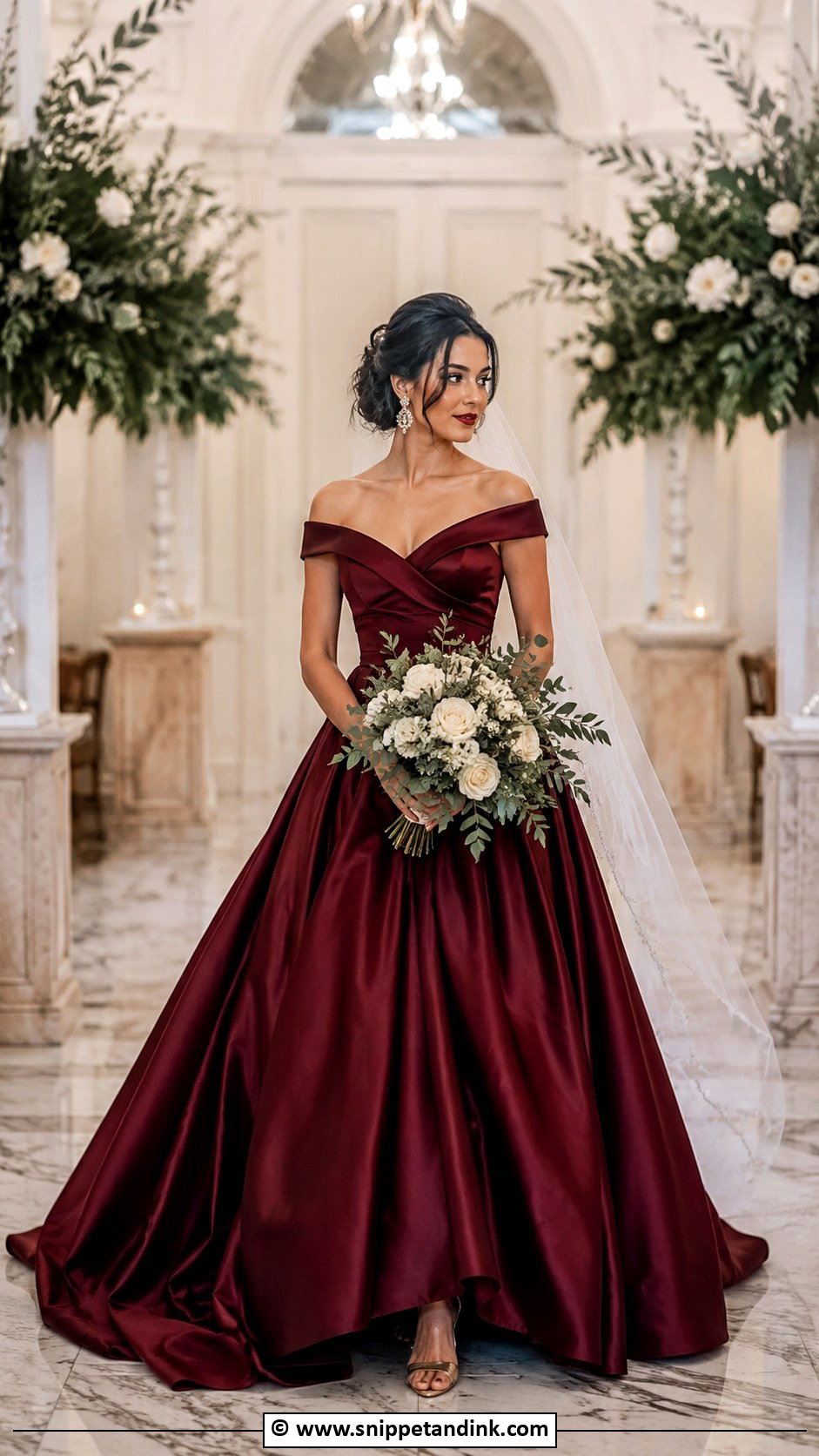
A burgundy wedding dress sits between red and purple, and it’s richer in velvet or satin than in tulle. A ball gown or fitted silhouette works with gold heels, vintage-style earrings and cream flowers with greenery. If the bodice is heavily detailed, I keep the veil plain. Burgundy belongs to fall and winter and formal evening receptions, and it holds its depth against both wooden interiors and outdoor backdrops.
23. Mint Green Wedding Dress
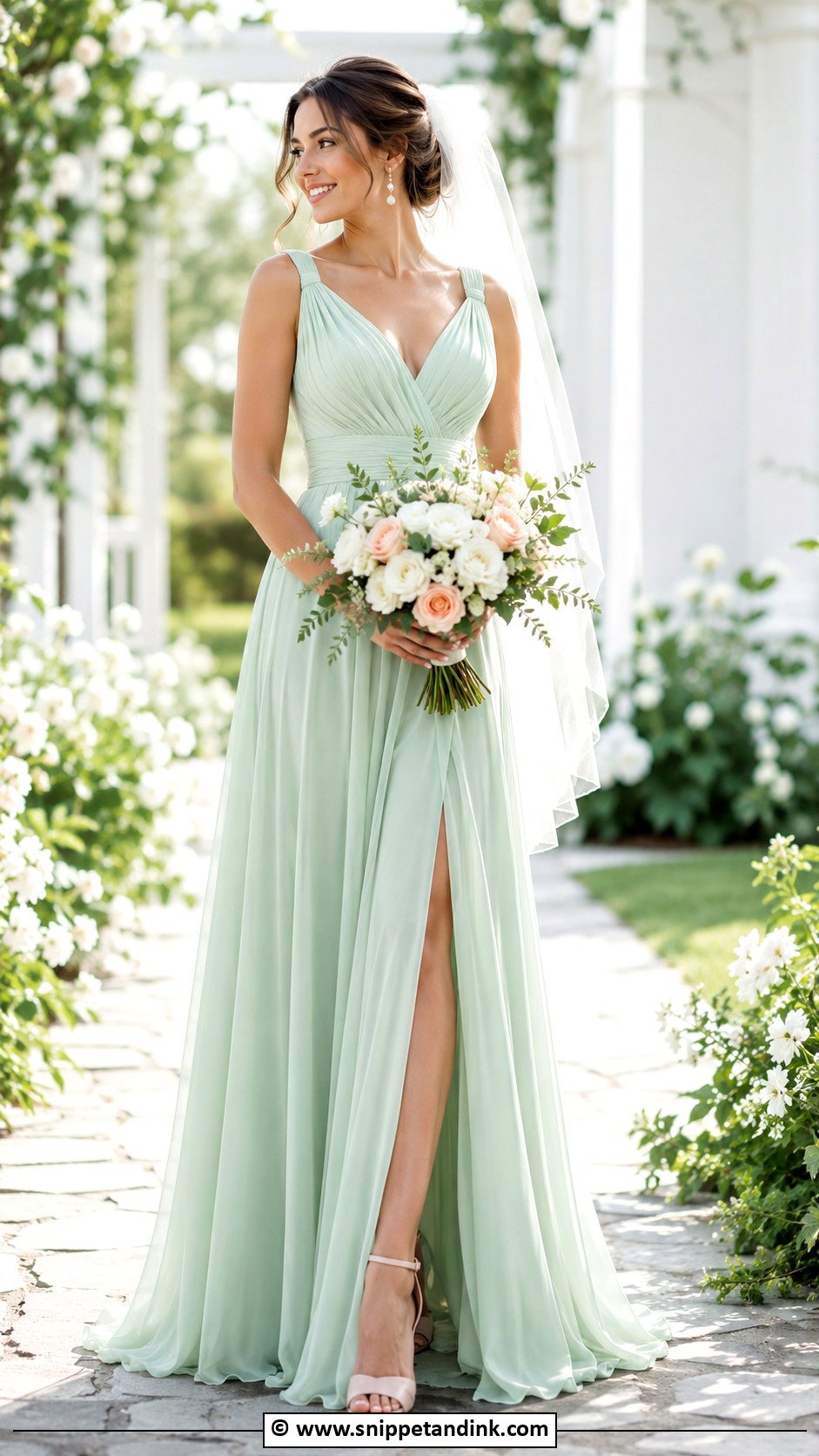
Mint is brighter than sage, with more blue and less grey, so it feels youthful in daylight. Tulle and chiffon suit it; satin can push it toward prom territory. Ivory heels, pearl earrings and a delicate veil keep it bridal, and I like white flowers with pale peach accents in the bouquet to warm it slightly. It’s a daytime and spring color in my book, ideally outdoors.
24. Lilac Wedding Dress
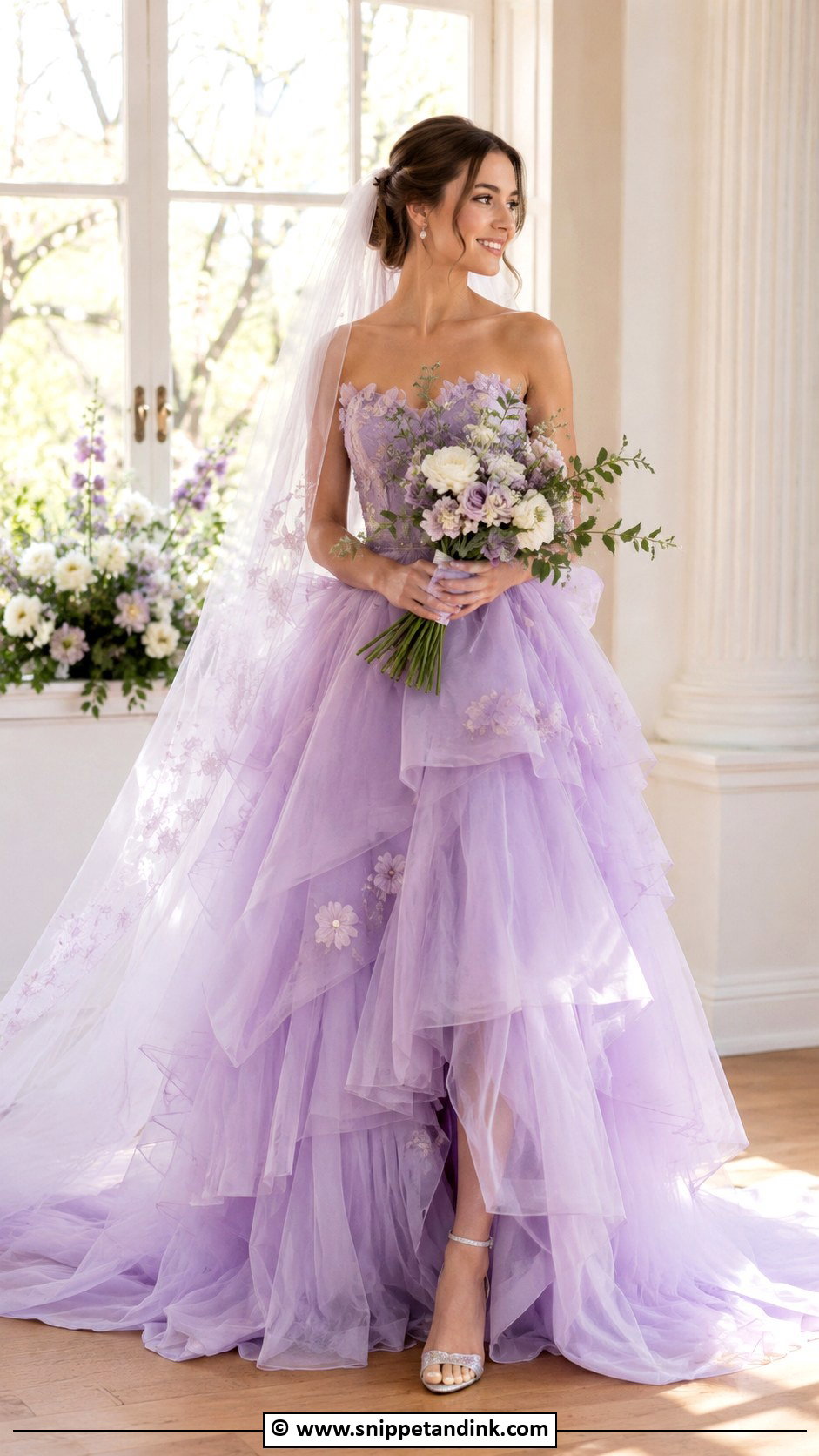
Lilac is a lighter, brighter purple than lavender, with a slightly playful feel. A lilac wedding dress in tulle, organza, chiffon or floral lace pairs with silver heels, tiny pearl earrings and a veil with a little shimmer or floral edging. White blooms and pale purple flowers complete it. Lilac often looks bluer on camera than in the mirror, so a quick photo test at the fitting is worth doing. Spring garden weddings and bright indoor venues suit it.
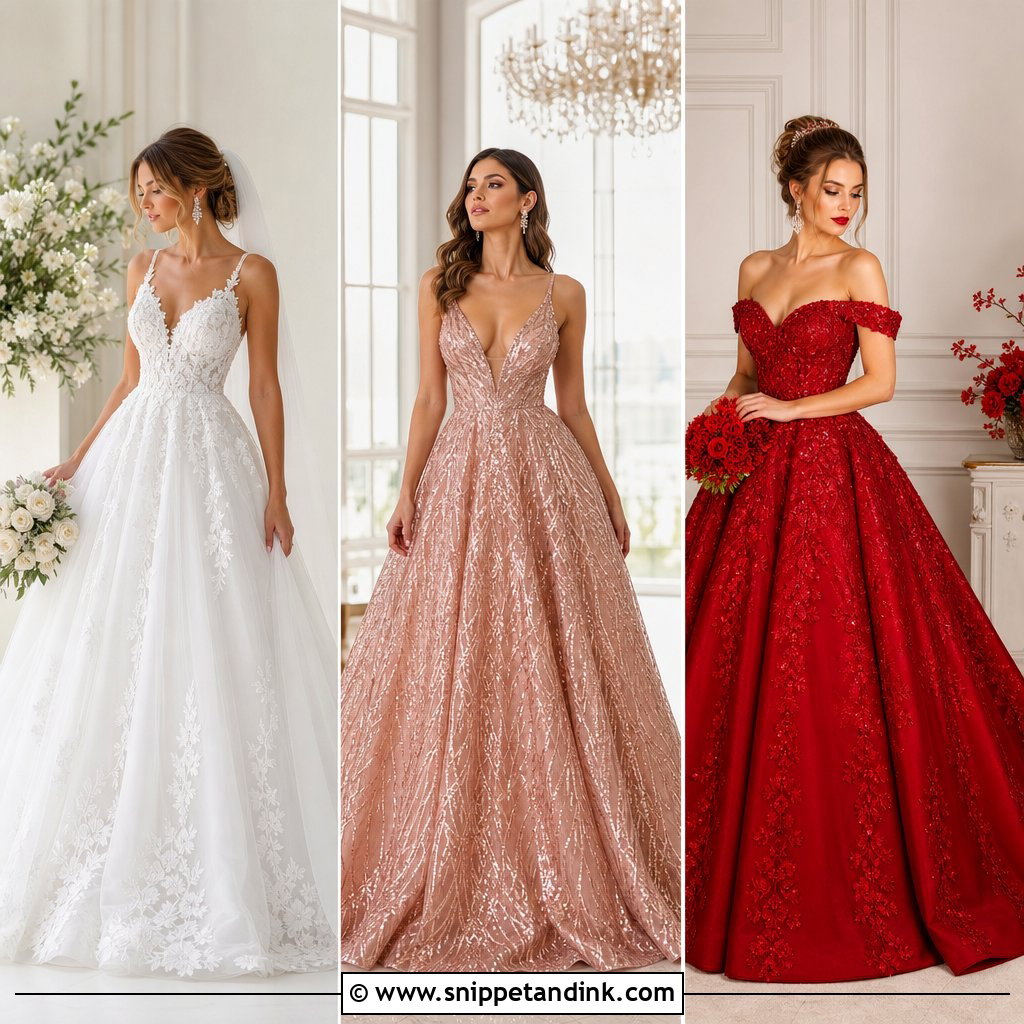
25. Rose Gold Wedding Dress
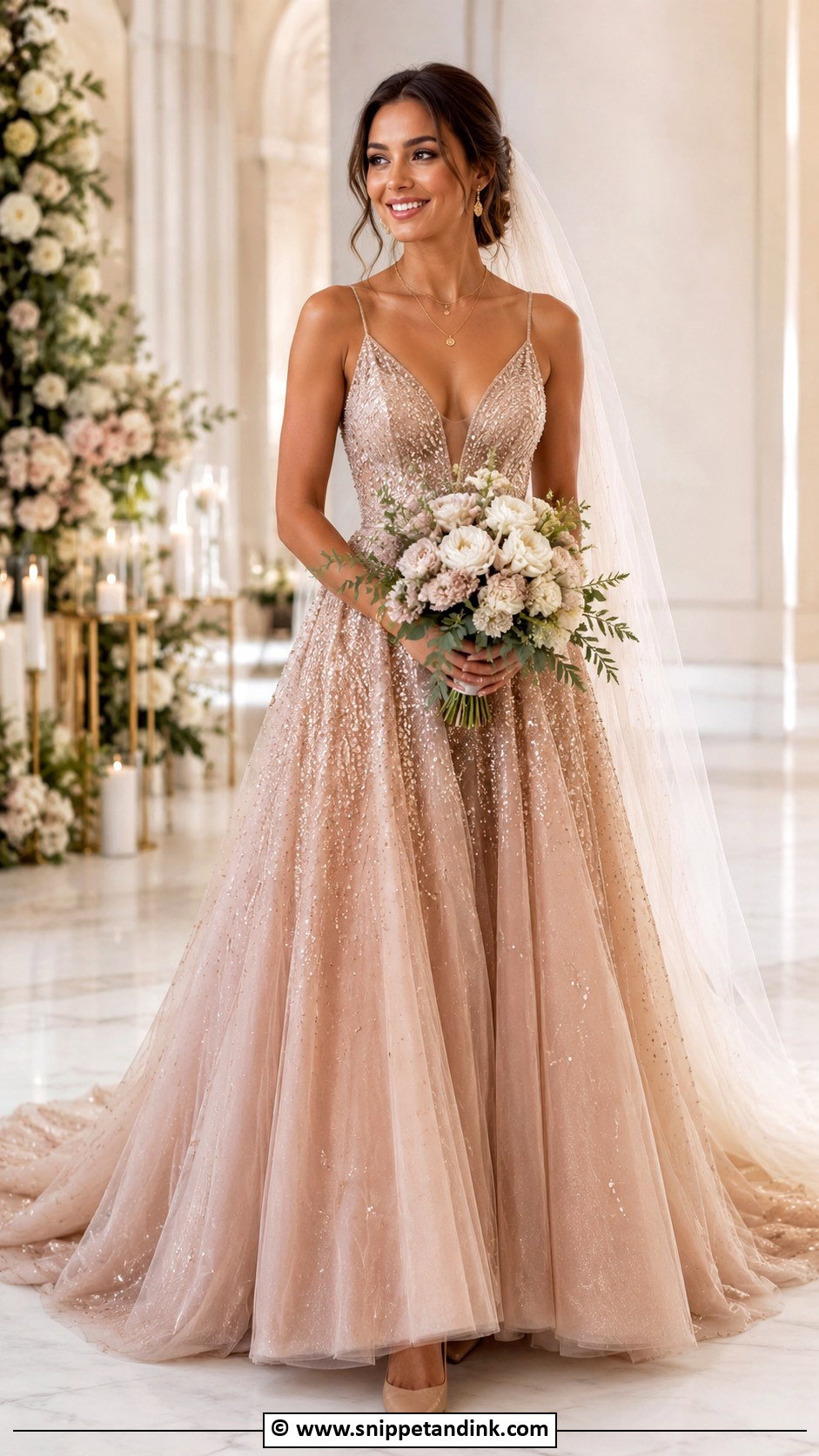
Rose gold is a warm metallic with a pink undertone, softer than yellow gold and warmer than silver. Sequins, beaded tulle and shimmer satin all carry it. With so much shine in the dress, I keep it to nude heels, fine gold jewelry and an ivory veil, and the bouquet stays simple with cream and pale pink blooms. Sequined rose gold catches on lace veils and bouquet wire, so I check where the veil falls against the bodice before the day.
Ordering a Colored Gown When a Swatch Is All You Have
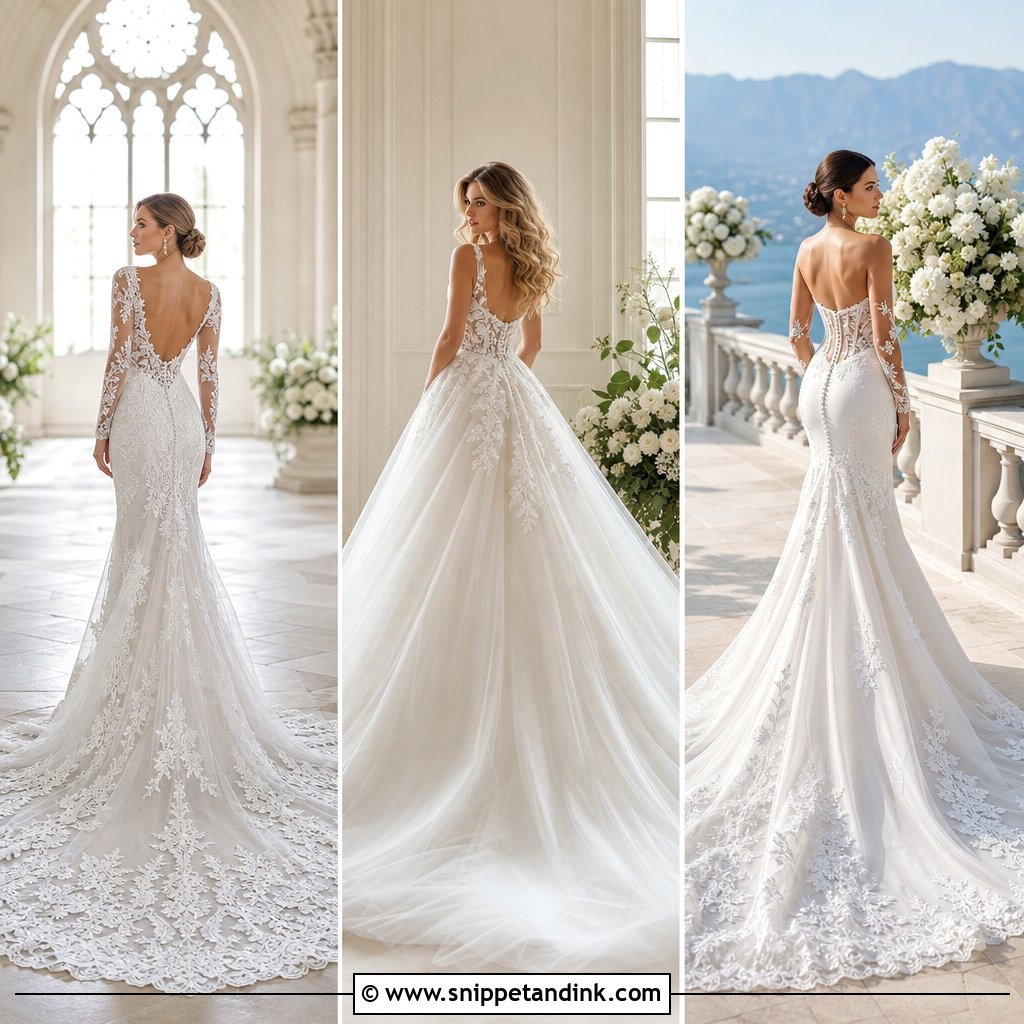
Most colored bridal gowns are made to order, and many designers quote several months for production before alterations even start, though it varies a lot by maker. Allow more time than you would for white, because color adds a step that can go wrong. Fabric is dyed in batches, and two batches of the same named shade can differ slightly. I always ask for a physical swatch cut from the production fabric, and I keep it until the gown arrives so I can compare them side by side in daylight.
Alterations need care too. Thread has to match the dye exactly, and on dark satin a seam that’s been let out can leave visible needle holes. Tell your seamstress early that the gown is colored so she can source matching thread and lining. If you’re planning bridesmaid dresses, settle your own color first; matching attendants to a gown you haven’t seen in person is where I see most clashes.
How Colored Fabric Holds Up Through a Long Wedding Day
Each family of colors shows wear differently, and it’s worth planning for. Pastels show foundation transfer at the neckline and grass marks at the hem, so I tuck tissue inside the neckline while makeup is finished and dress the bride last. Black and navy hide stains but show deodorant streaks and lint under flash, so a lint roller goes in my kit every time. Metallic and sequined fabrics crease across the lap when seated and catch on lace, which matters through a long dinner.
- Steam the gown on the morning; never iron dyed silk directly.
- Keep a white cloth and plain water for spills. Colored silk can water-mark, so blot gently rather than rubbing.
- After the wedding, take it to a cleaner who handles colored bridalwear, and store it away from daylight in a breathable bag, since strong sun fades dyes over time.
Your Shade, Your Venue Light, Then Everything Else
Color makes a bridal outfit personal, but only when every piece around it agrees. Start with the shade that suits your skin in your venue’s actual light, then build outward: shoes, metals, veil, flowers and hair. Blush, lavender, champagne, black, emerald and burgundy all ask for different choices, and none of them is wrong if the whole look is planned around it. Wear the color that feels like you, once you’ve tested it properly.
You'll Like These Ideas:



Leave a Reply