
By 1959 the bridal silhouette had settled into something very recognizable: a narrow, defined waist, a structured bodice and a skirt that was either full to the floor or cut short to the ballerina or tea length for daytime. Silk, satin, taffeta, tulle and lace did the shaping, and the finishing pieces were small ones, short gloves, pearls, plain pumps and a veil fixed to a neat headpiece. Most brides who come to me wanting this look don’t want to feel dressed up as a period piece. The trick is to keep the cut honest to the year and let the fabric and accessories stay quiet. Below are twenty complete looks for different venues and seasons, each with the styling I’d put with it.
Ballerina, Tea or Floor Length for a 1959 Hem
Hem length changes the whole character of a late-fifties dress, and it’s the decision brides most often leave too late. Here is how I explain the three lengths at a first appointment.
- Tea length lands somewhere around mid-calf. It is the most forgiving for dancing and shows off your shoes, and it reads as daytime and relaxed.
- Ballerina length stops just above the ankle. It feels more formal than tea length while still clearing the floor, which helps on grass, stairs and old stone floors.
- Floor length is the ceremonial choice, best with a train and a church or ballroom aisle long enough to show it off.
Two things move a hem after you’ve chosen it. The first is your shoes, so buy them before the first fitting and wear them every time; a change from a kitten heel to a higher pump can lift a tea-length hem into an awkward spot just below the knee. The second is the petticoat. A full petticoat pushes the skirt outward and lifts the hem slightly, so the dress has to be hemmed with the actual petticoat underneath. On a shorter bride, I’d usually choose ballerina over tea length, since a hem at mid-calf can cut the leg at its widest point.
1. 1959 Long Sleeve Lace Wedding Dress
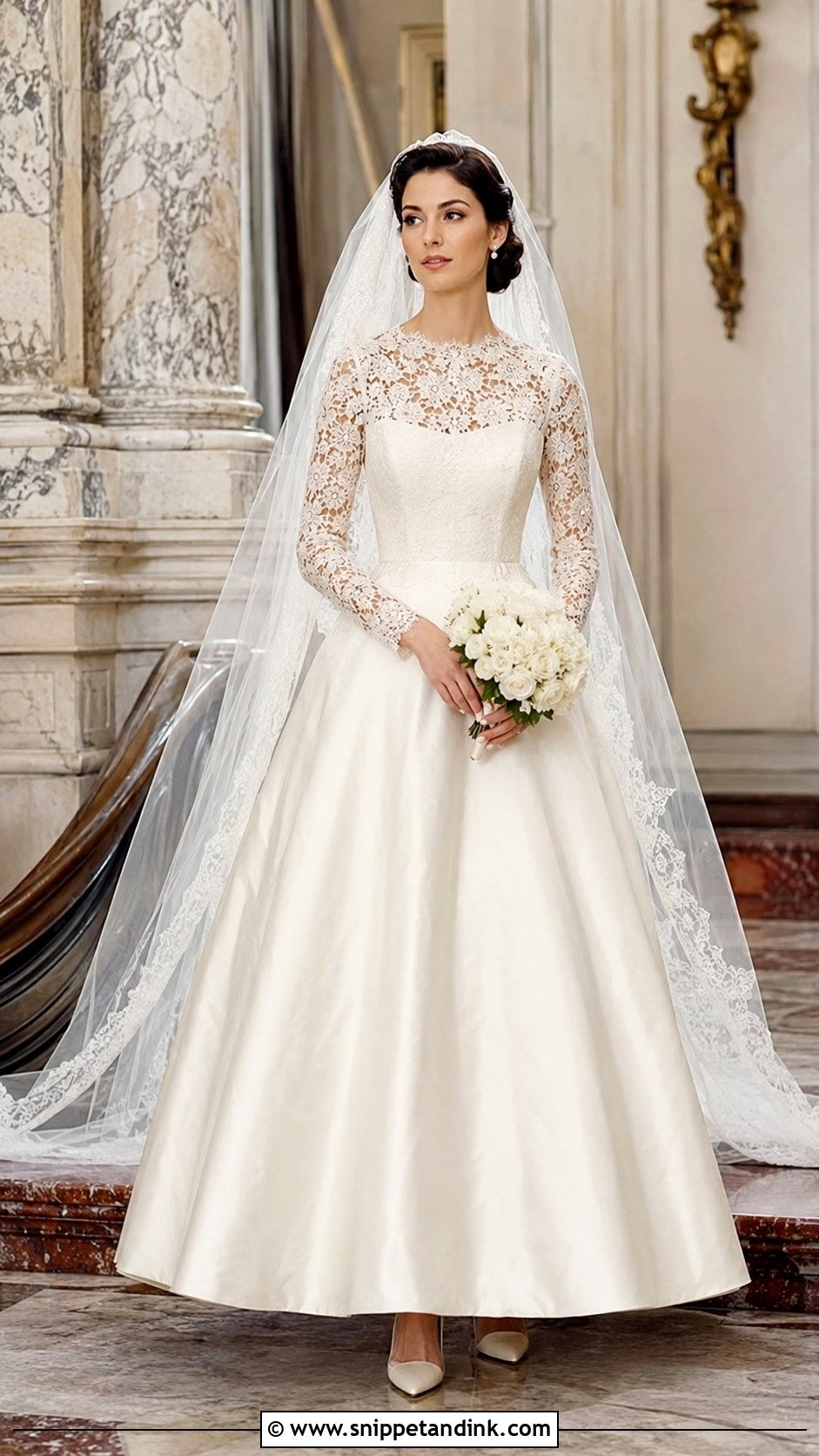
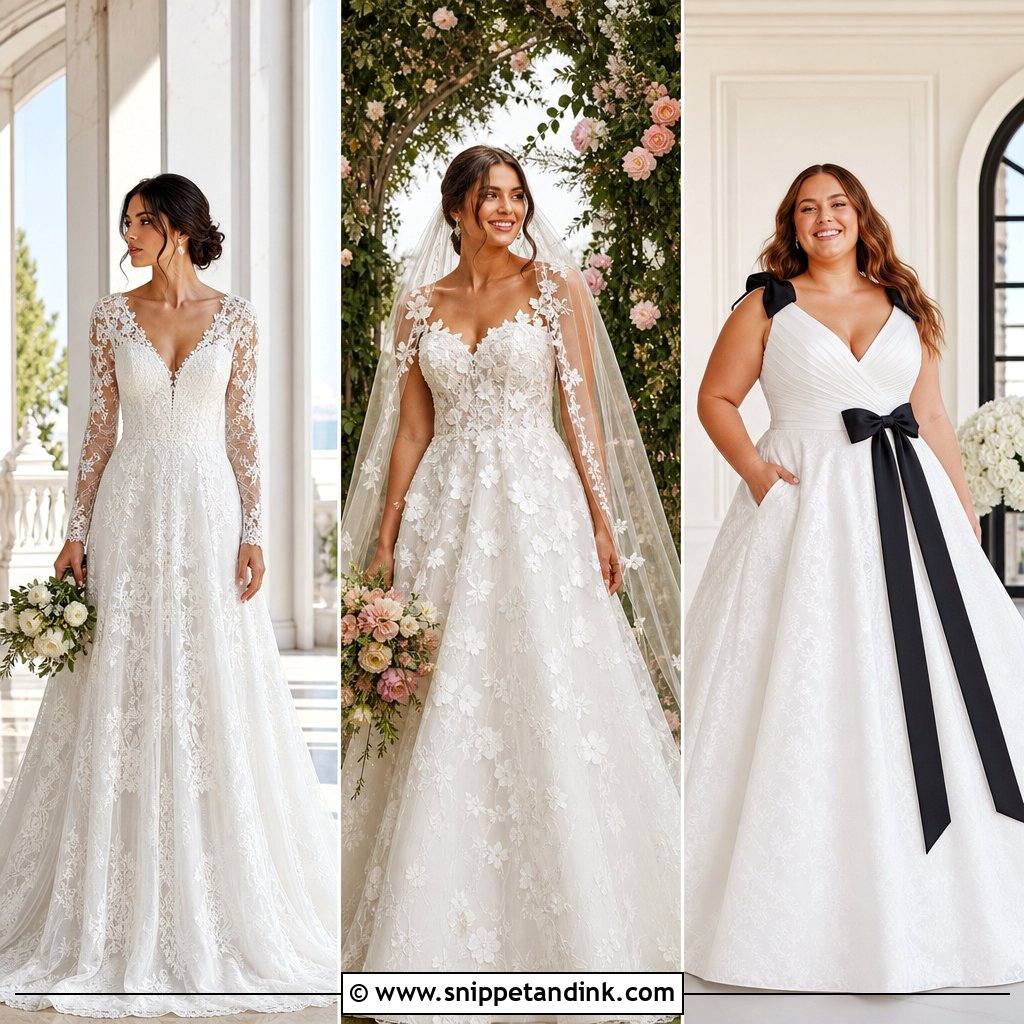
Long lace sleeves over a fitted bodice and a full satin skirt is the image most people picture when they think of a late-fifties wedding, and it has become an enduring midcentury reference for good reason. Go for a high rounded neckline and a natural waist. The sleeves are where fittings take time: lace sleeves cut too close stop you lifting your arms to hug anyone, so I always have the bride reach forward and up before they’re finalized. Covered buttons at the wrists and down the back add the period detail. Pearl studs, ivory pumps and a fingertip or cathedral veil finish it, and a light petticoat gives the skirt support without swamping you. It suits a formal indoor ceremony in the cooler months.
2. 1959 Tea Length Satin Wedding Dress
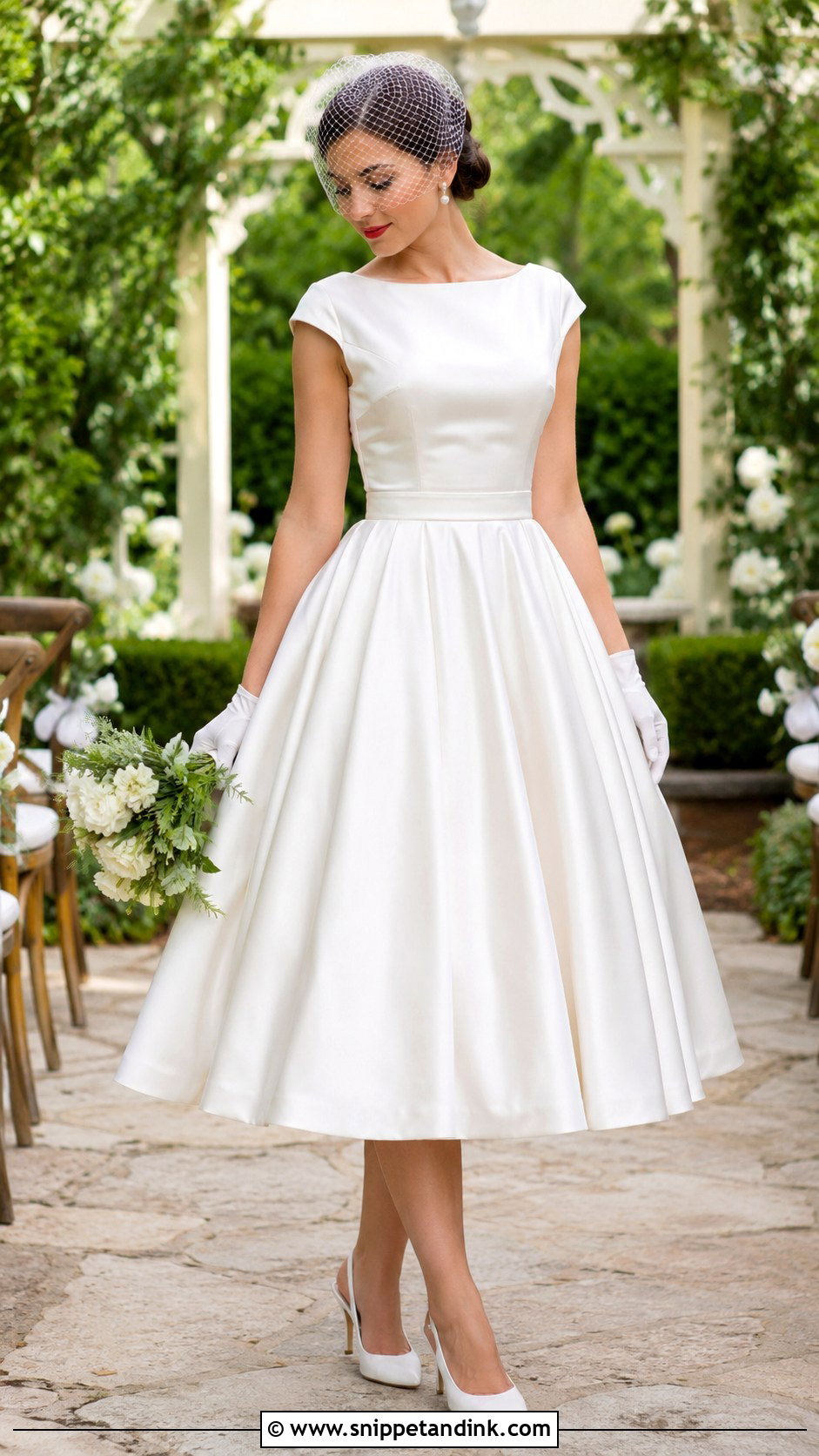
A satin skirt that swings just below the knee is a joy to walk in. The tea-length wedding dress keeps the defined 1959 waist with a lighter, less formal shape, and it was a common alternative to a floor-length gown through the decade. Look for a fitted bodice, a bateau neckline, cap sleeves and a softly pleated circle skirt. A structured petticoat gives crisp fullness; leave it out and the satin drapes more quietly. Because the hem stops short, your shoes are part of the outfit all day, so buy ivory slingbacks you can stand in for hours. Short gloves, pearl earrings and a small birdcage veil complete it. Courthouse ceremonies and garden receptions are where I’d use it.
3. 1959 Silk Princess Wedding Dress
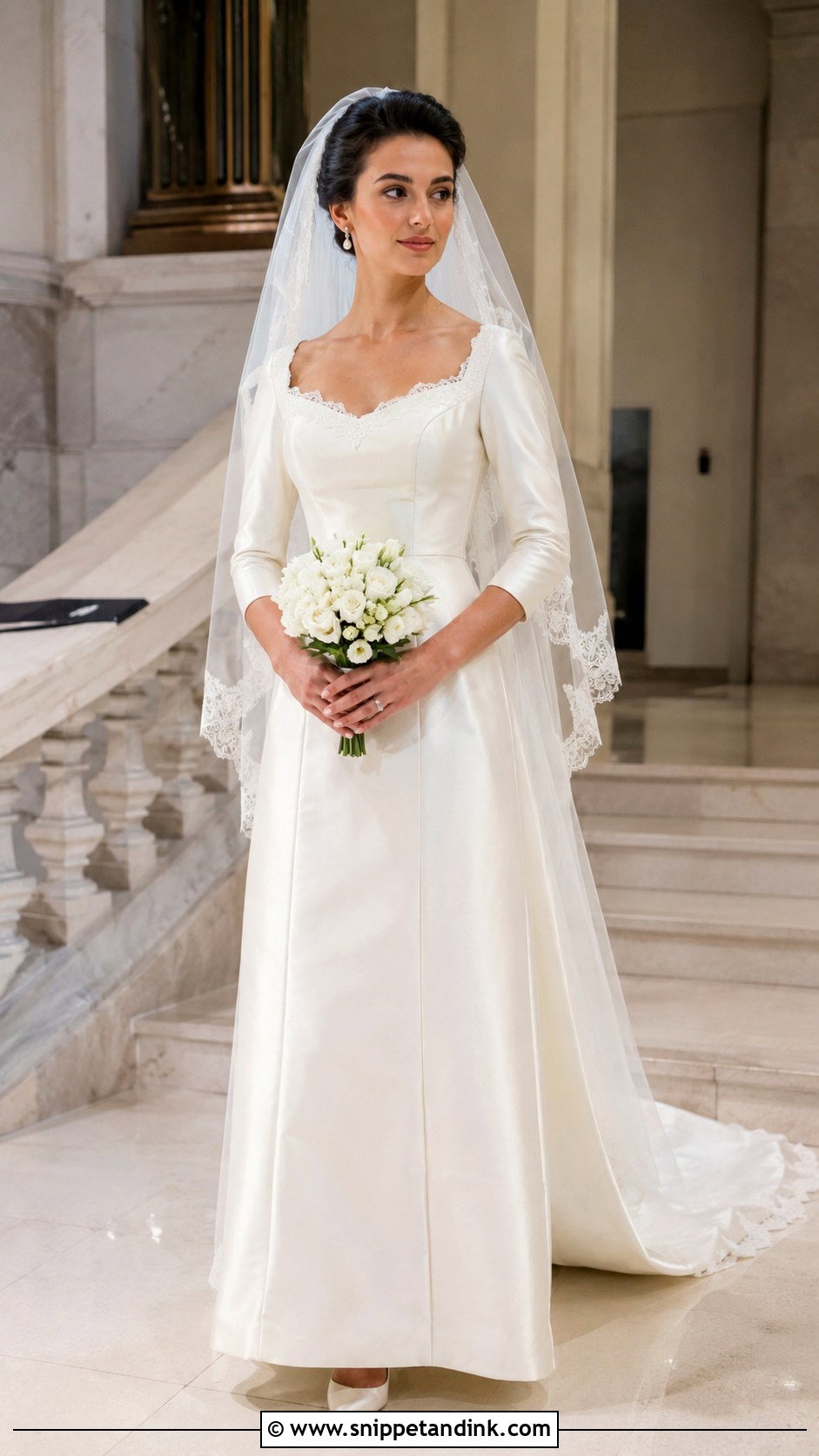
Princess seams give length without a sharply gathered waist. They start at the shoulder or bust and run unbroken into a controlled floor-length skirt, and that sleek line still sits comfortably in 1959, when silk was the standard bridal fabric. Add a lace-edged sweetheart neckline, three-quarter sleeves and a modest train. Silk shows seam puckers far more than a heavy satin does, so I look closely at the curve over the bust at the first fitting; that’s where a princess line most often ripples. Pointed ivory pumps, pearl drops and a chapel veil set beneath a small satin headpiece finish it. Choose this one for definition without the bulk of a gathered ball gown.
4. 1959 Bateau Neck Wedding Dress
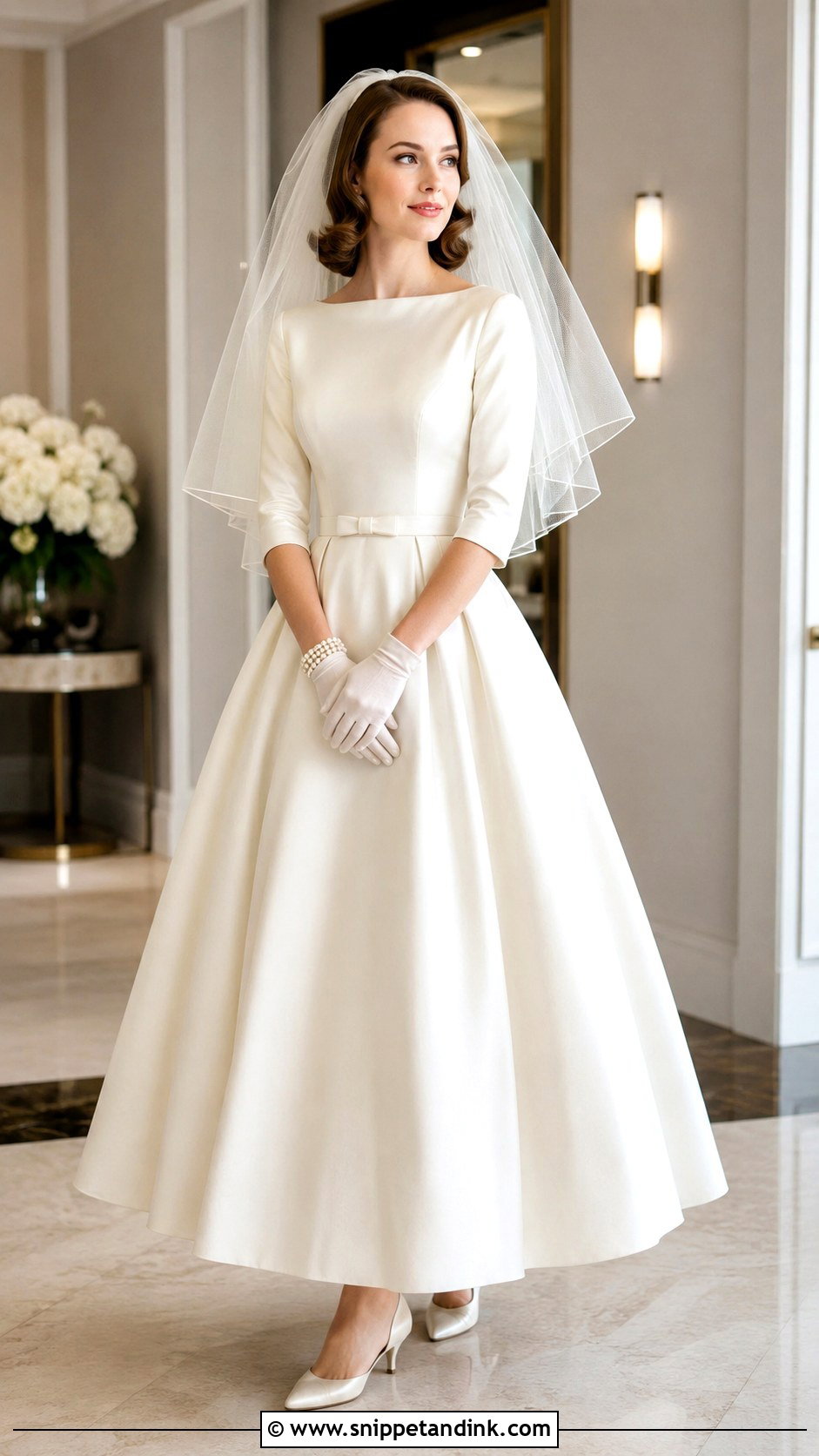
The bateau neckline draws one clean line across the collarbones and frames the face without showing much skin. Put it with a fitted satin bodice, three-quarter sleeves, a natural waist and a full ankle-length skirt; that combination is about as typical of fifties bridal design as it gets. A narrow fabric belt or a small bow marks the waist. Bateau necks can gape at the shoulder point when you lean forward, so the fitter should check it with your arms moving, not just standing still. Add a pearl bracelet, button earrings, short ivory gloves and low kitten heels, with a shoulder-length veil on a simple pillbox-style headpiece. Light silk satin or a structured cotton sateen keeps it comfortable through an afternoon reception.
5. 1959 Sweetheart Taffeta Wedding Dress
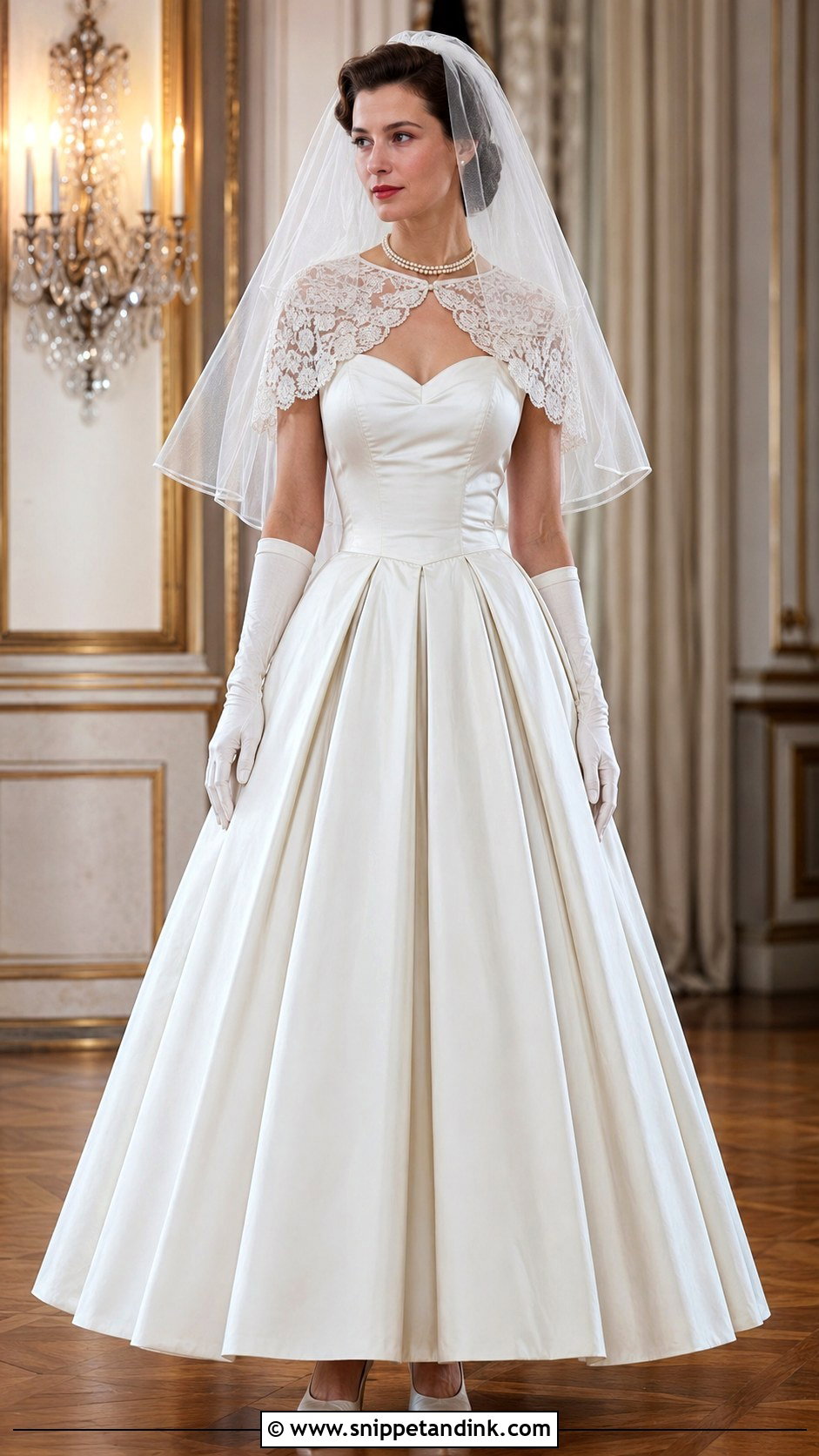
Taffeta rustles, holds a pleat and gives a full 1959 skirt real movement. Choose a fitted sweetheart bodice with proper boning inside and a sweeping skirt shaped by soft gathers or deep box pleats. Ecru or soft white taffeta looks more of the period than a high-shine modern finish. A removable lace capelet covers the shoulders for the ceremony, an approach late-fifties brides used often, and comes off for the reception. Pearls, elbow gloves, pointed pumps and a fingertip veil are enough; the fabric already makes plenty of noise, literally. I warn brides that taffeta marks where it creases, so ask your florist to wrap bouquet stems that might press into the skirt.
6. 1959 High Neck Lace Wedding Dress
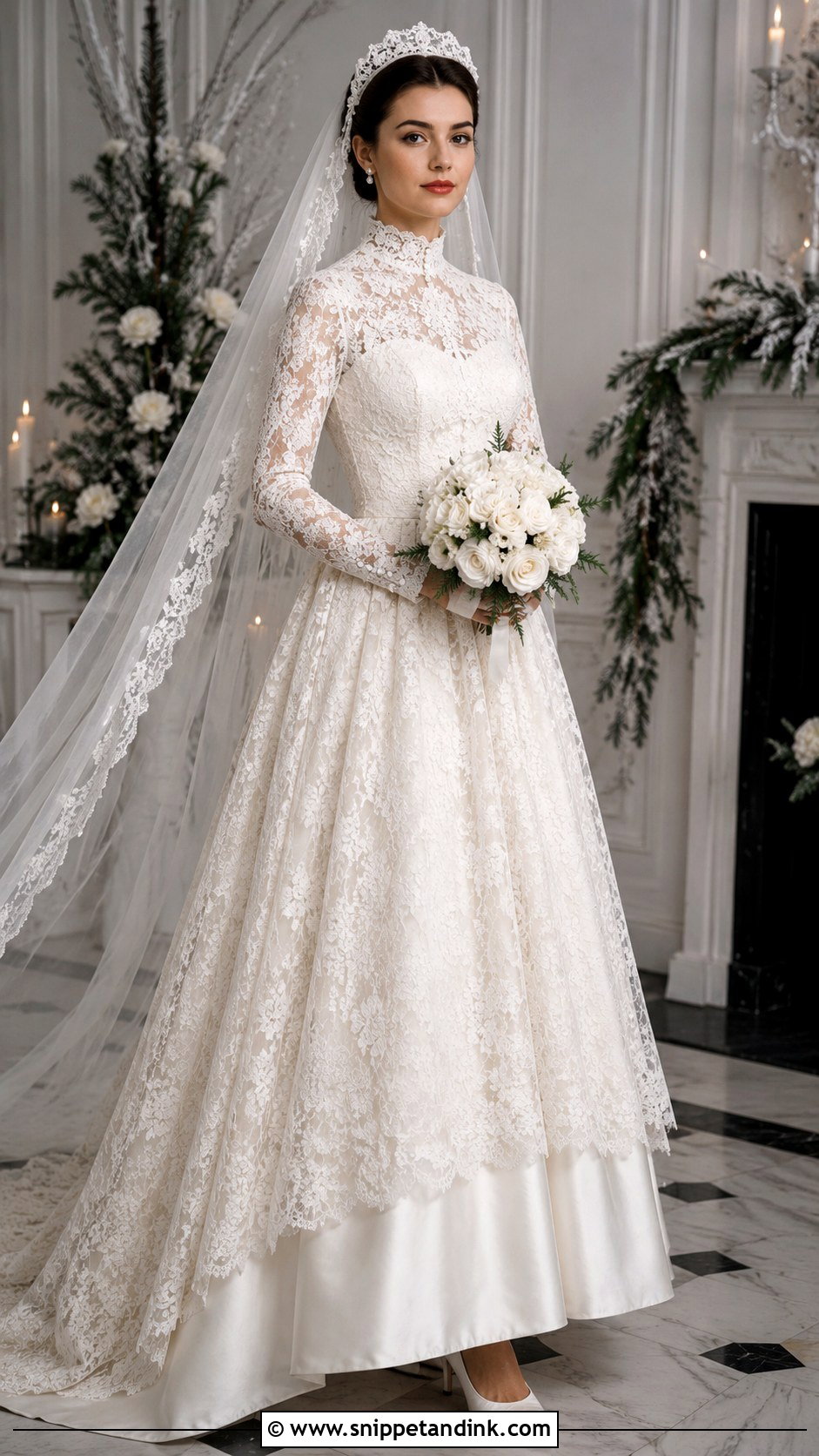
A high-neck lace gown over a full satin underskirt is the most reserved look here, and one of the most regal. The neckline can stand slightly away from the throat or curve into a soft Victorian-style collar, and long fitted sleeves end in covered wrist buttons. Ask for the lace motifs to be placed by hand across the bodice rather than cut from a running length; placed motifs look intentional, while a randomly cut pattern can land awkwardly over the bust. A smooth lining keeps the pattern readable. Pearl studs, satin pumps and a long veil set behind a small lace headpiece complete it. Skip the necklace entirely. Winter ceremonies and formal venues suit this best.
7. 1959 Ecru Satin Wedding Dress
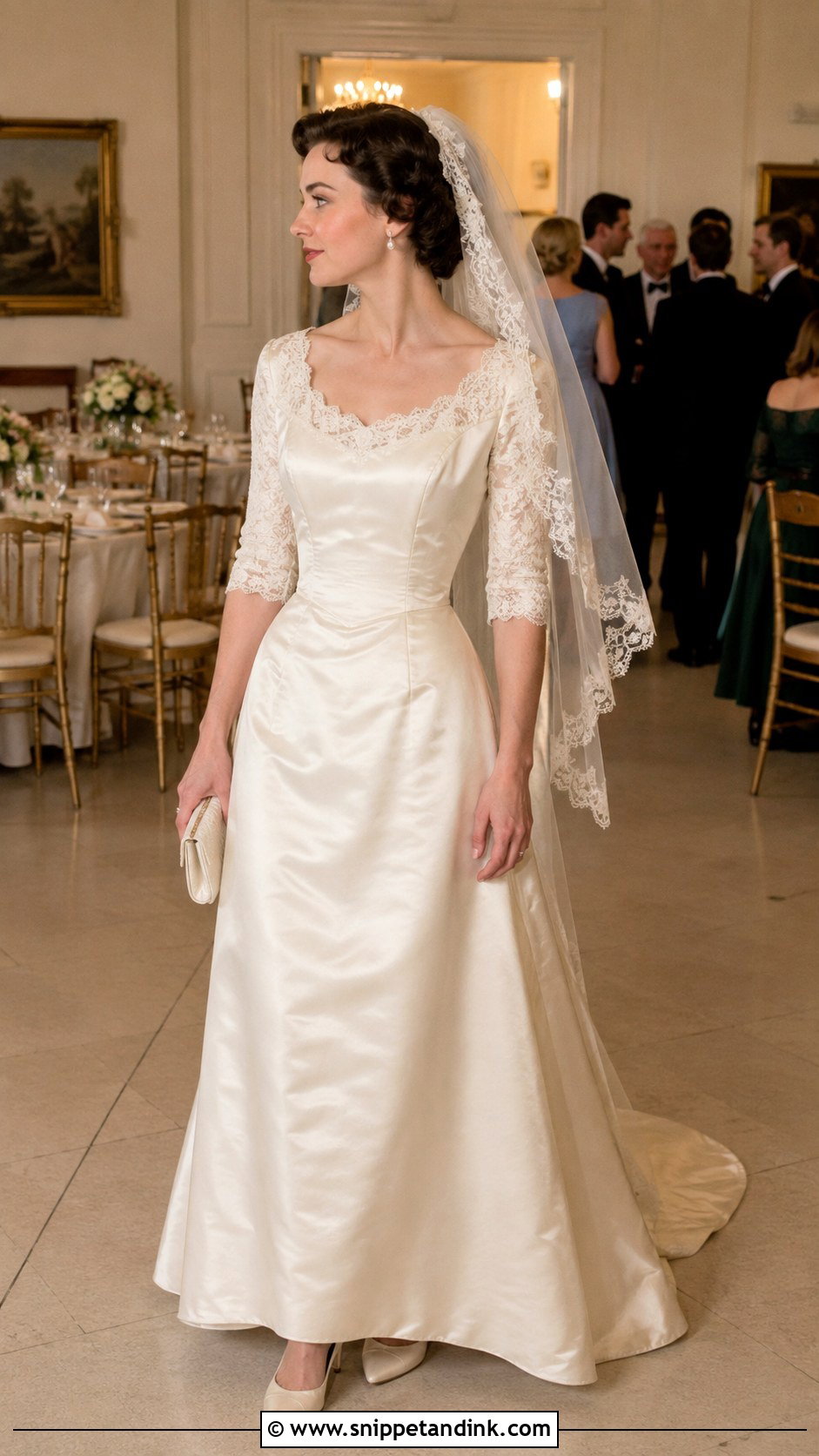
Ecru satin is warmer than bright white and sits naturally beside pearls and antique-style pieces. Choose a scoop-neck bodice trimmed with lace, three-quarter sleeves and a fitted waist running into a floor-length skirt. Ecru with fine lace was a common pairing in late-fifties bridal shops, so it reads as genuinely of the year. Cream pumps, pearl earrings, a lace-edged fingertip veil and a small satin clutch carry the palette through. Ecru has golden undertones that either glow or look tired against your skin, and the only way to know is to hold swatches to your face by a window. I never let a bride decide on ecru under shop lighting.
8. 1959 Portrait Collar Wedding Dress
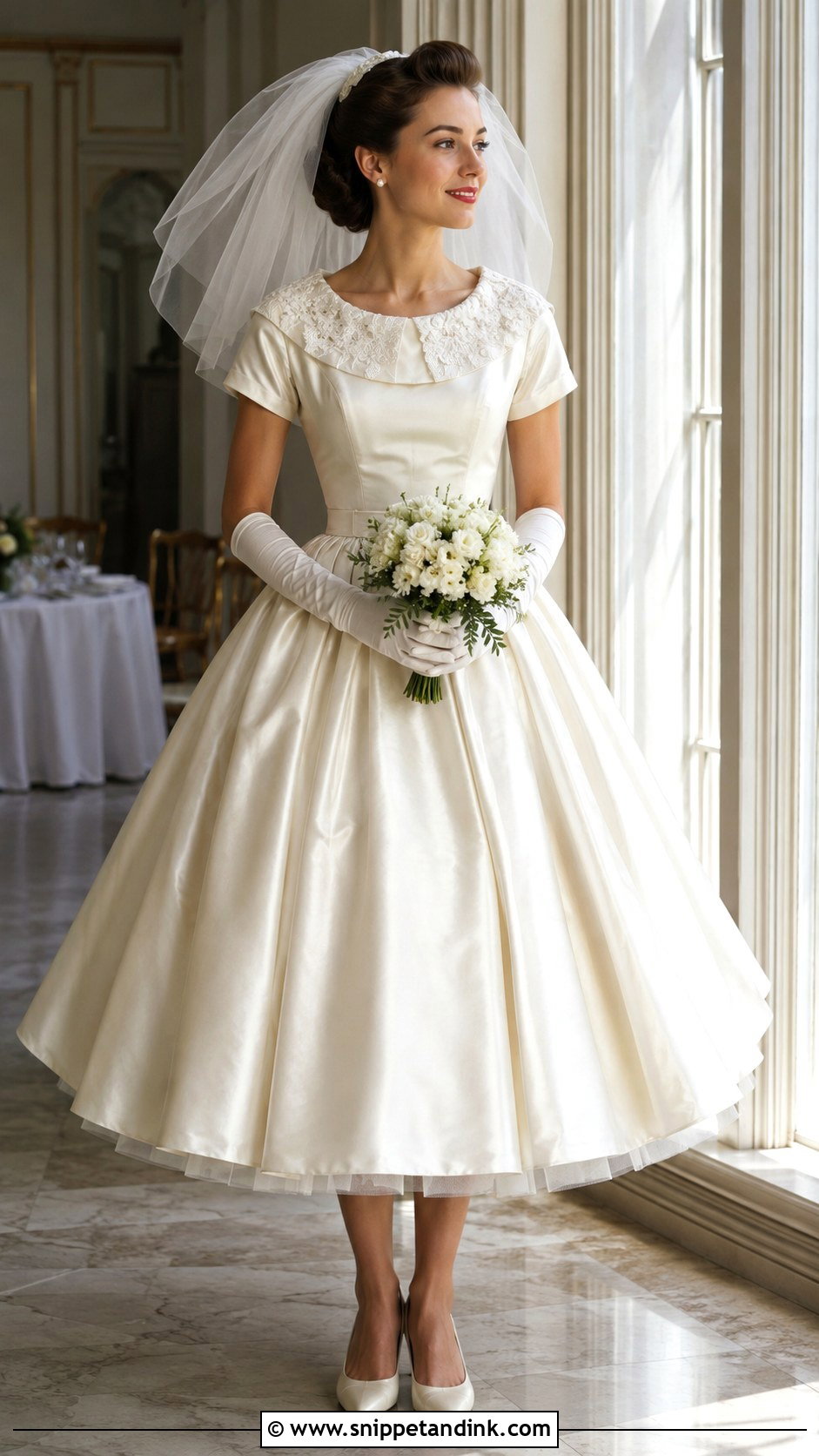
A wide portrait collar frames the shoulders while keeping the bodice covered and secure. Combine it with a close-fitting waist, short sleeves and a full satin skirt over a moderate petticoat, the slim-waist, full-skirt formula that ran through so many fifties wedding dresses. Make the collar in matching satin, or in lace for contrast. A portrait collar needs interfacing to hold its curve, and without it the edge collapses forward by midday. Pearl studs, wrist gloves and ivory pumps with a low tapered heel finish it, with a short circular or shoulder-length veil so the eye stays at the neckline. Choose it when you’d like glamour without a revealing bodice.
9. 1959 Off Shoulder Wedding Dress
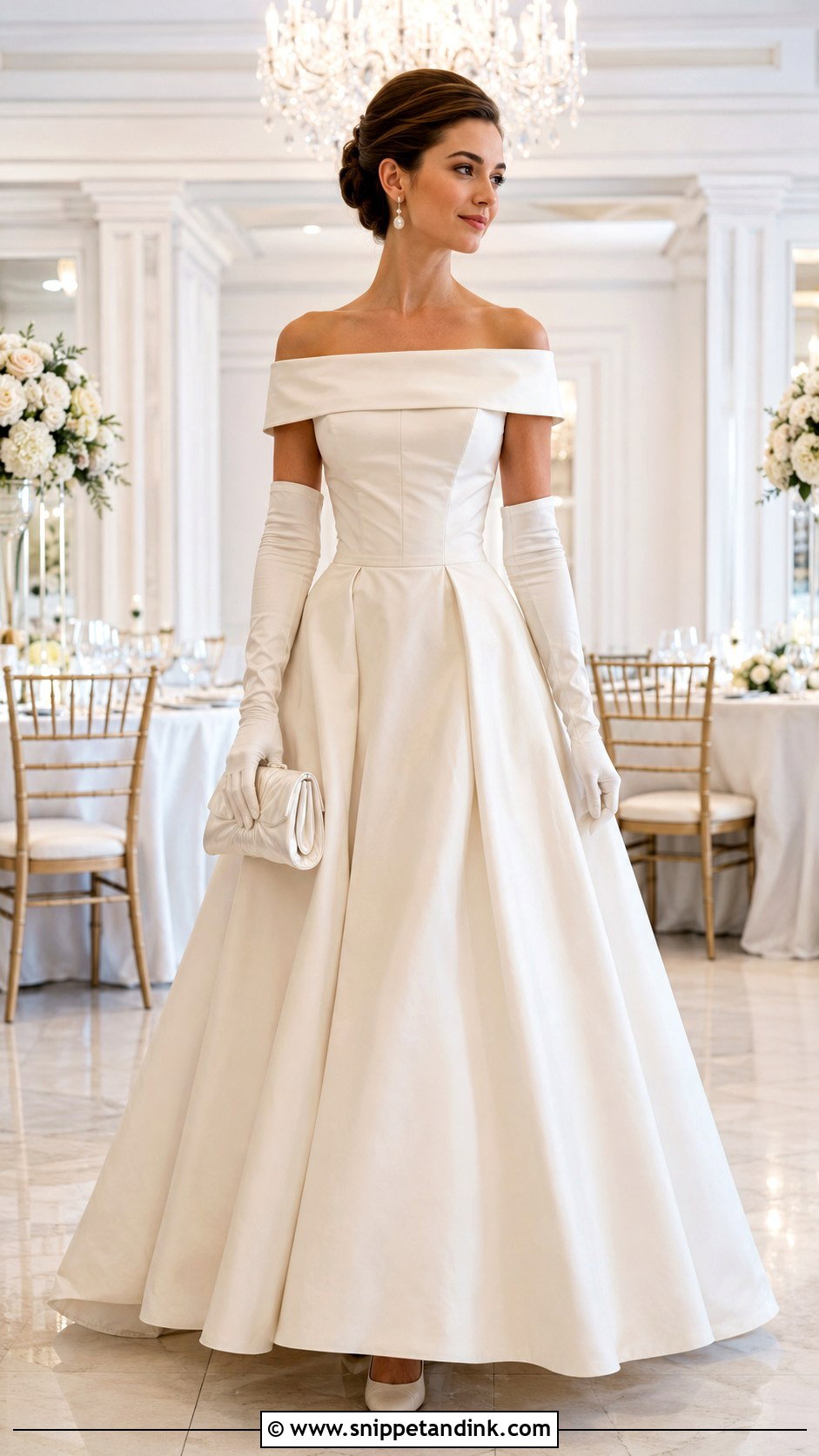
Off the shoulder can look like 1959 rather than a modern red carpet, provided the neckline is structured and everything else stays restrained. A folded satin neckline should sit firmly across the upper arms over a boned bodice, with a full floor-length skirt below. Add a lace bolero or fitted jacket for the ceremony if you’d like more coverage. Pearl drops, long gloves, ivory pumps and a compact satin clutch suit the reception, and a small brooch at the waist or back replaces a heavy necklace. This neckline has one real weakness: it slides. Raise your arms, sit, and reach for a glass at the final fitting, and if the band moves, it needs a silicone grip or a tighter fit.
10. 1959 Illusion Neckline Wedding Dress
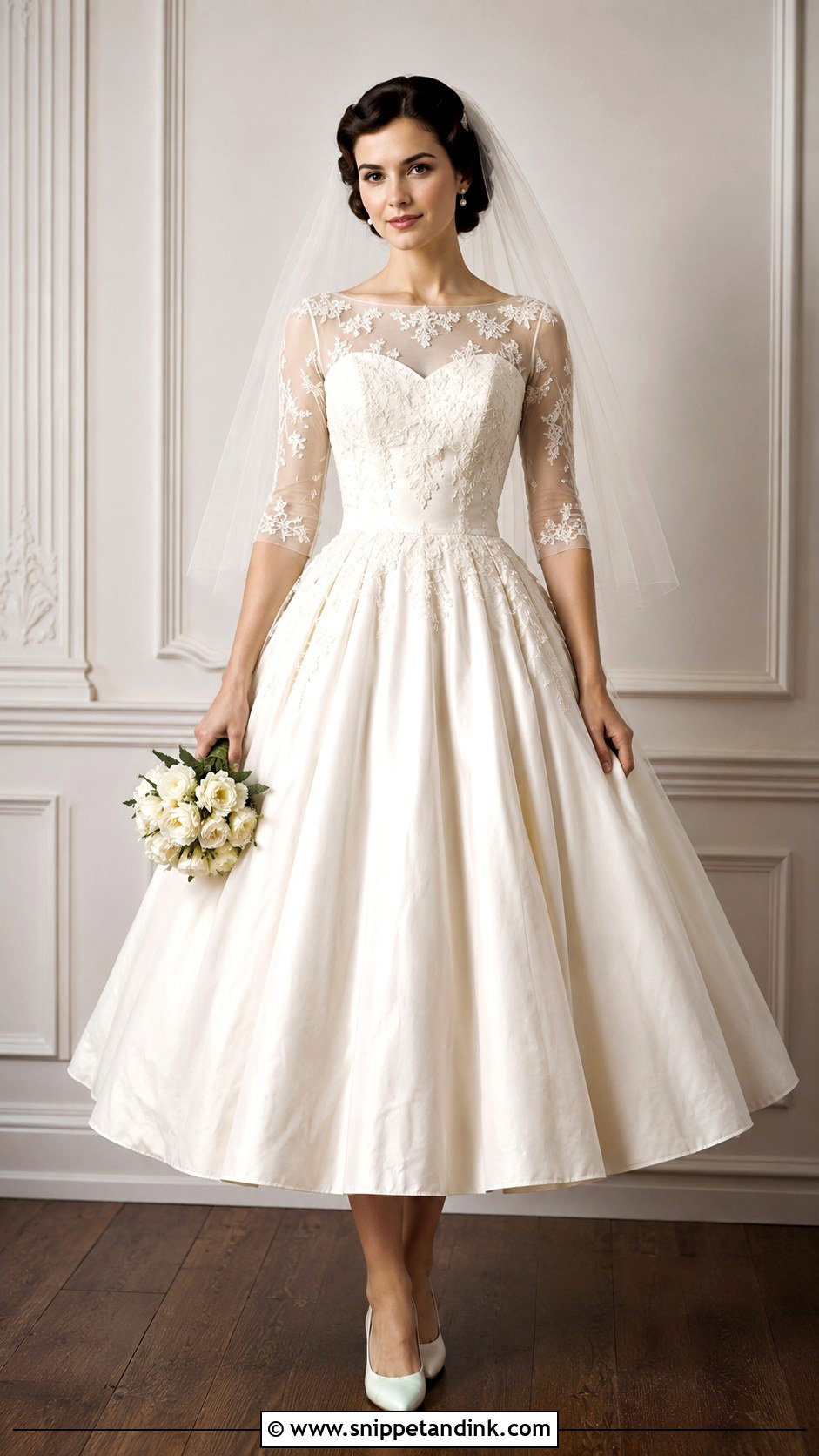
Illusion tulle gives the look of an open neckline with the coverage and support of a high one. The bodice has a sweetheart underlayer, a sheer upper panel scattered with lace appliqués, and short or three-quarter sleeves, over a defined waist and a full satin or tulle skirt. Lace on illusion netting was everywhere in fifties formalwear. The success of it depends on color: the tulle should match your skin closely, or it shows as a pale band rather than disappearing. Pearl earrings, satin pumps and a fingertip veil that starts behind the crown, so it doesn’t cover the bodice detail, finish it. Keep visible seams in the mesh to a minimum.
11. 1959 Basque Waist Wedding Dress
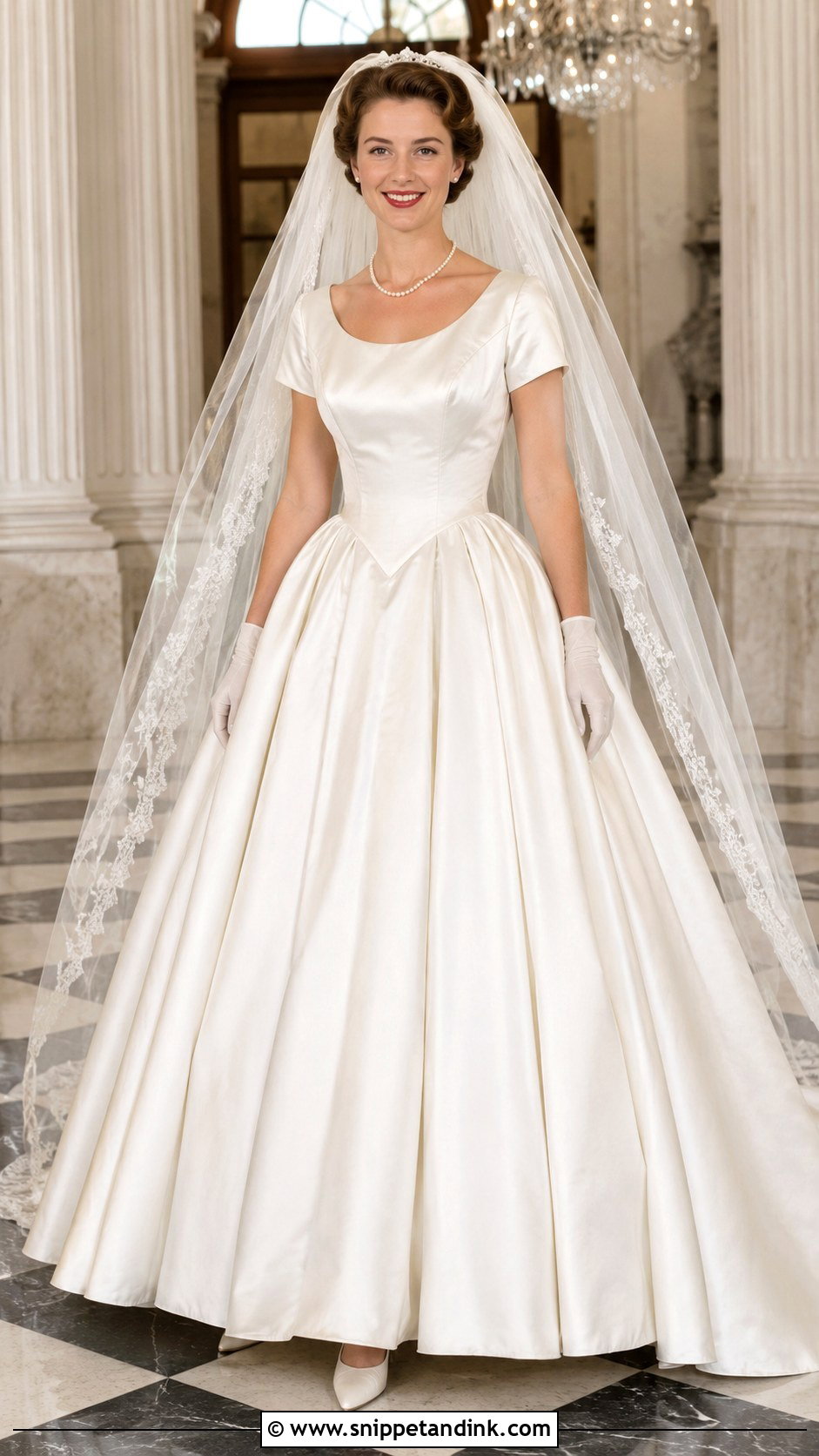
A basque waist dips to a gentle point at the center front, which lengthens the torso and makes the skirt look fuller by contrast. Pair it with a scoop or sweetheart neckline, fitted short sleeves and layers of silk taffeta or satin. The skirt should grow gradually from that point; bulky gathers right at the waist undo the whole effect. A pearl strand, short gloves and closed-toe pumps keep it simple, with a cathedral veil for formality or a shoulder-length one for a lighter feel. The basque shape needs firm internal support, but I always ask the bride to sit and eat something at a fitting. If the point digs in when seated, it isn’t finished.
12. 1959 Tiered Tulle Wedding Dress
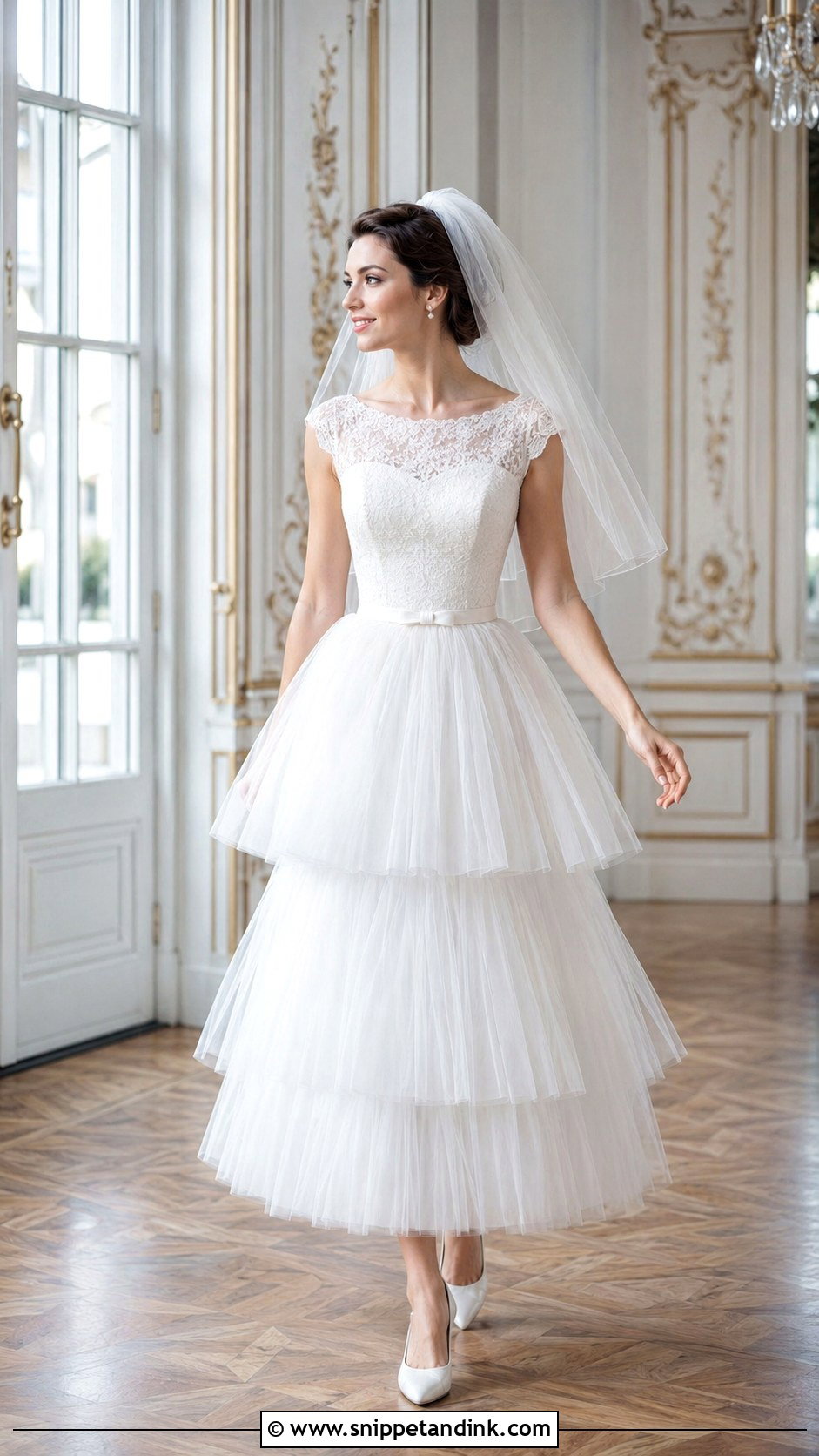
Tulle tiers give big volume without the weight of gathered satin. Choose a fitted lace bodice with a rounded neckline, cap sleeves and a narrow waist, and below it two or three carefully spaced tiers. Nylon tulle was one of the materials most associated with fifties wedding gowns, and tiered skirts turn up again and again in the bridal pictures of the time. Satin pumps, pearl button earrings and a simple fingertip veil are enough; a wide belt or big jewelry fights the texture. Tulle loses its crispness in humidity and gets crushed in a car, so steam it at the venue and keep it out of a damp marquee if you can. A ballroom or a hotel suits it.
13. 1959 Embroidered Organza Wedding Dress
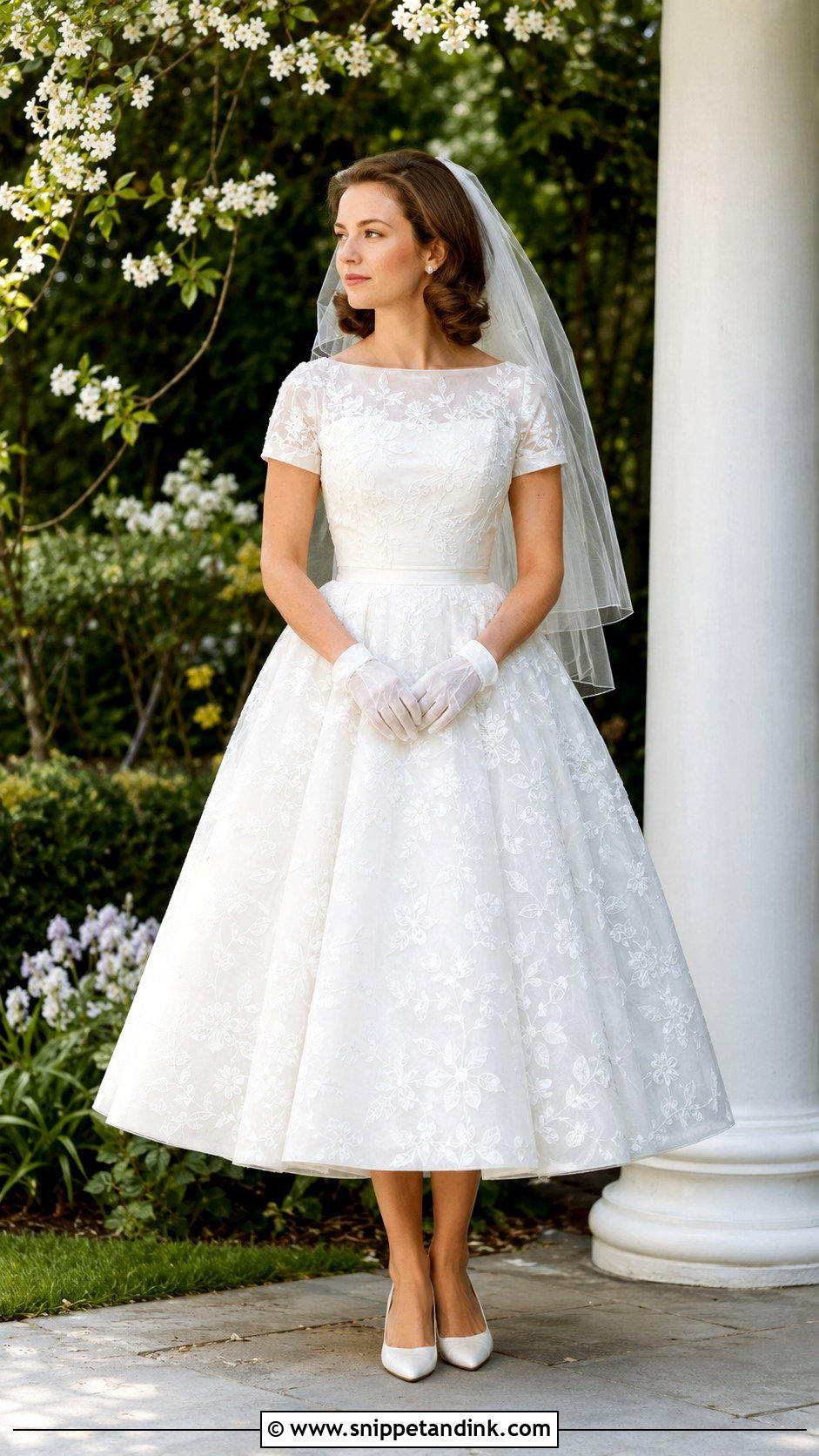
Embroidered organza lets light through, which is why I save it for spring and summer daylight weddings. Build the look around a fitted short-sleeve bodice, a bateau neckline, a natural waist and a full tea-length or floor-length skirt. The embroidery should be spread evenly, small sprigs rather than one heavy cluster. Wear it over a smooth satin slip and a soft petticoat, chosen so the shape holds but the sheerness still shows. Organza creases sharply and doesn’t relax, so dress at the venue if you can. Ivory pumps, pearl studs, short gloves and a narrow headband holding a shoulder-length veil complete it. That orderly, decorated look is exactly what fifties bridal fashion was about.
14. 1959 Brocade Winter Wedding Dress
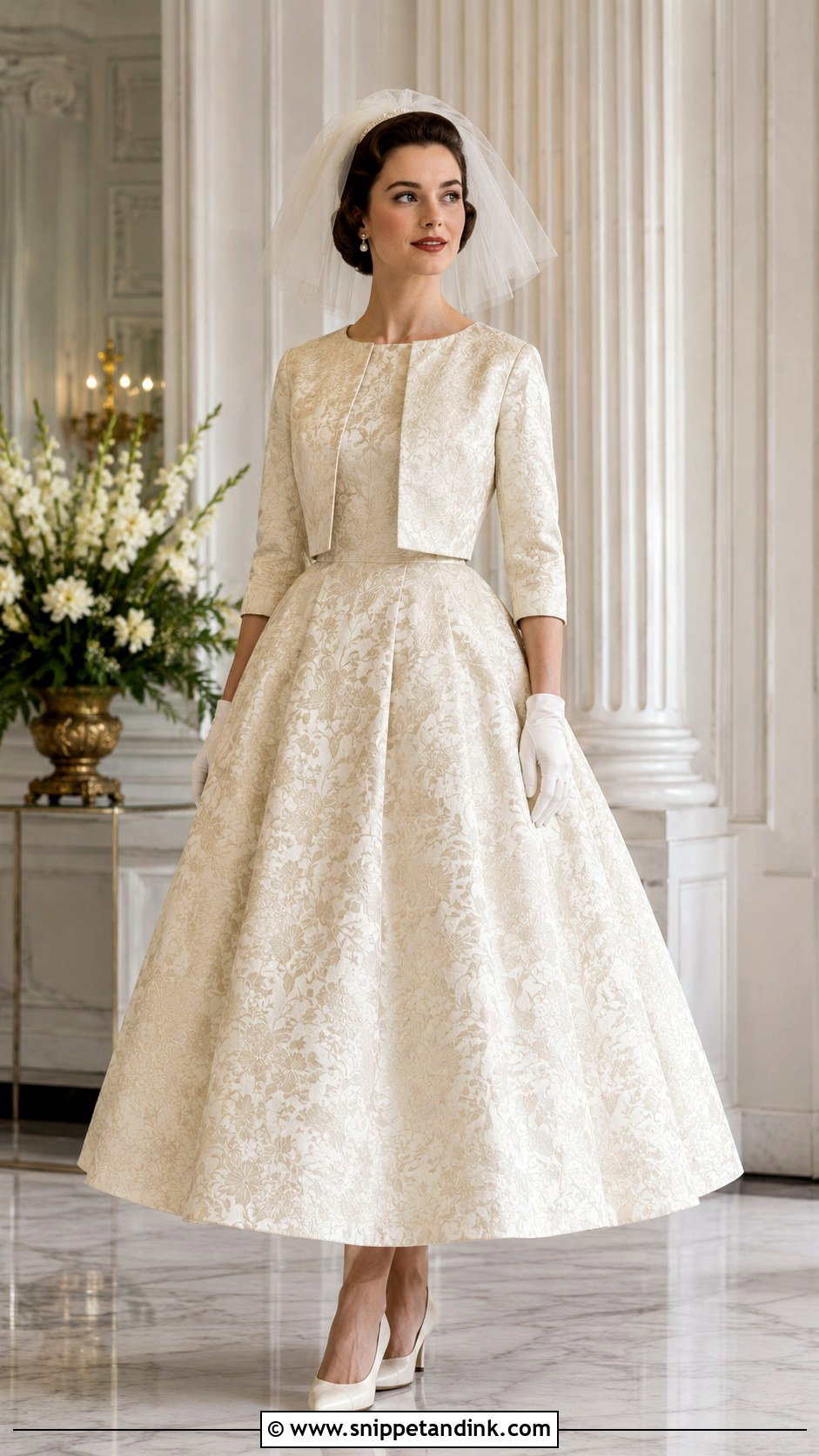
A winter ceremony needs a fabric with some presence, and ivory floral brocade gives structure with no embellishment at all. Choose a fitted three-quarter-sleeve bodice, a bateau neckline, a defined waist and a full ankle-length skirt, the established fifties proportions. A matching cropped jacket adds warmth and keeps the line. If you need more, an ivory coat over the top beats a contrasting dark one, which cuts the outfit in half in photographs. Closed-toe satin pumps, wrist gloves, pearl earrings and a short veil under a small structured headpiece complete it. Brocade is heavy, so I’d have the waist seam reinforced; a full skirt in it drags on the bodice over a long day.
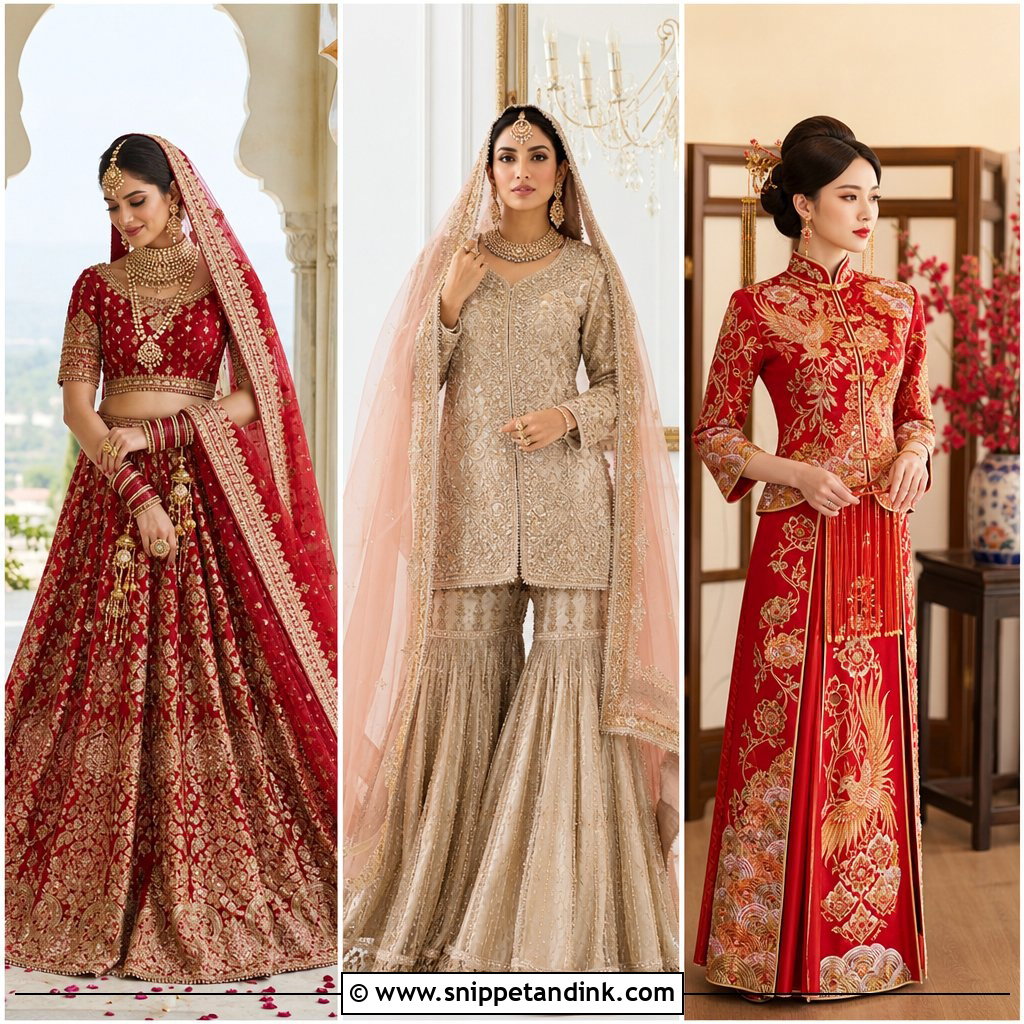
15. 1959 Chiffon Ballerina Wedding Dress
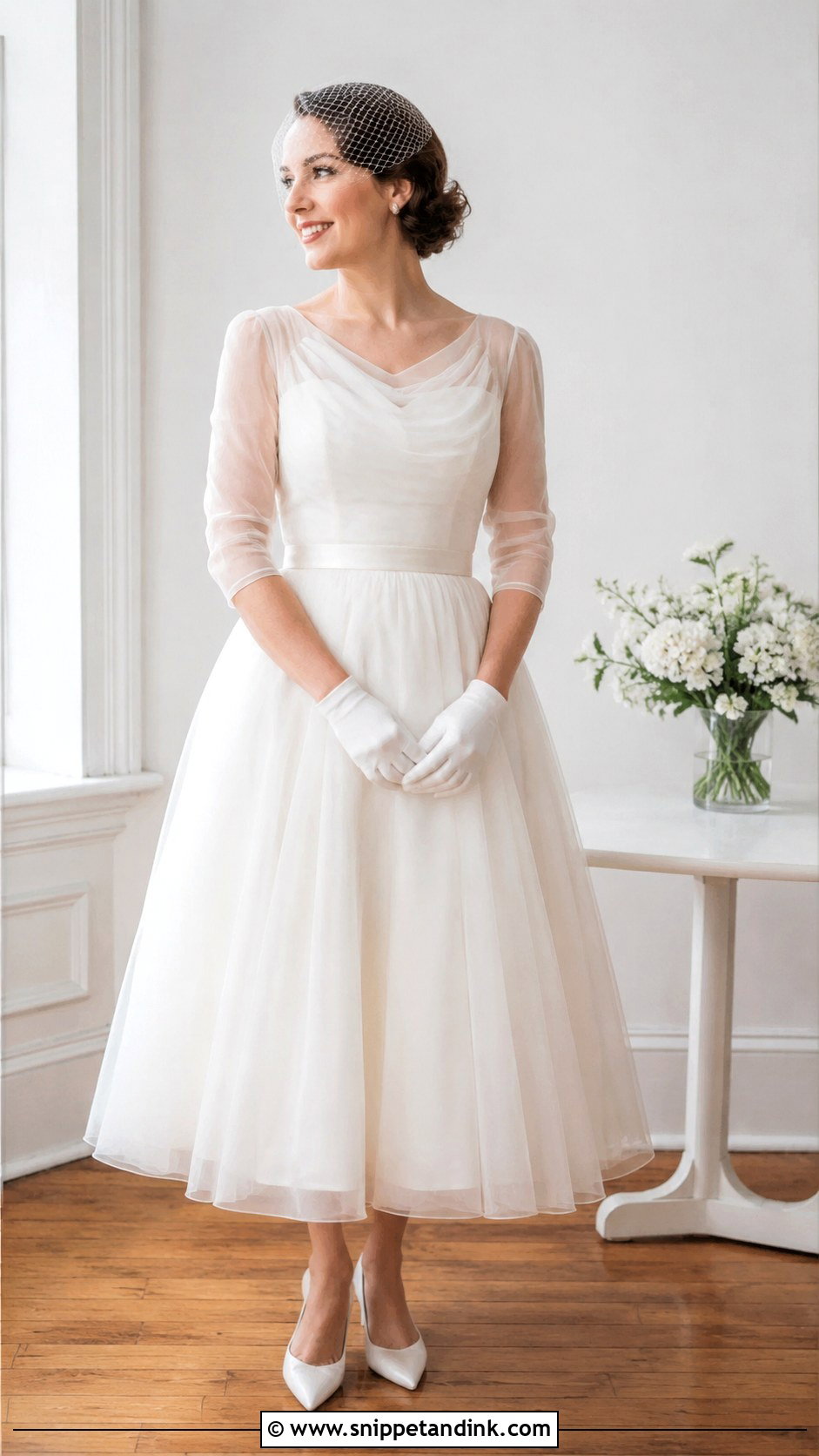
Chiffon is the lightest way to wear the fitted-waist silhouette. A ballerina-length dress has a gently draped bodice, sheer three-quarter sleeves, a narrow satin waistband and a layered skirt falling between knee and ankle. Ballerina and tea lengths were both fashionable fifties alternatives to the long ceremonial gown. A smooth lining stops the chiffon turning transparent and a small petticoat controls its movement. Chiffon frays and snags easily, so keep beaded bags and rough bracelets away from it. Pointed kitten heels, pearl earrings, short gloves and a small birdcage veil finish the look. It moves well on a dance floor and suits a courthouse wedding or a small daytime ceremony.
16. 1959 Short Sleeve Lace Wedding Dress
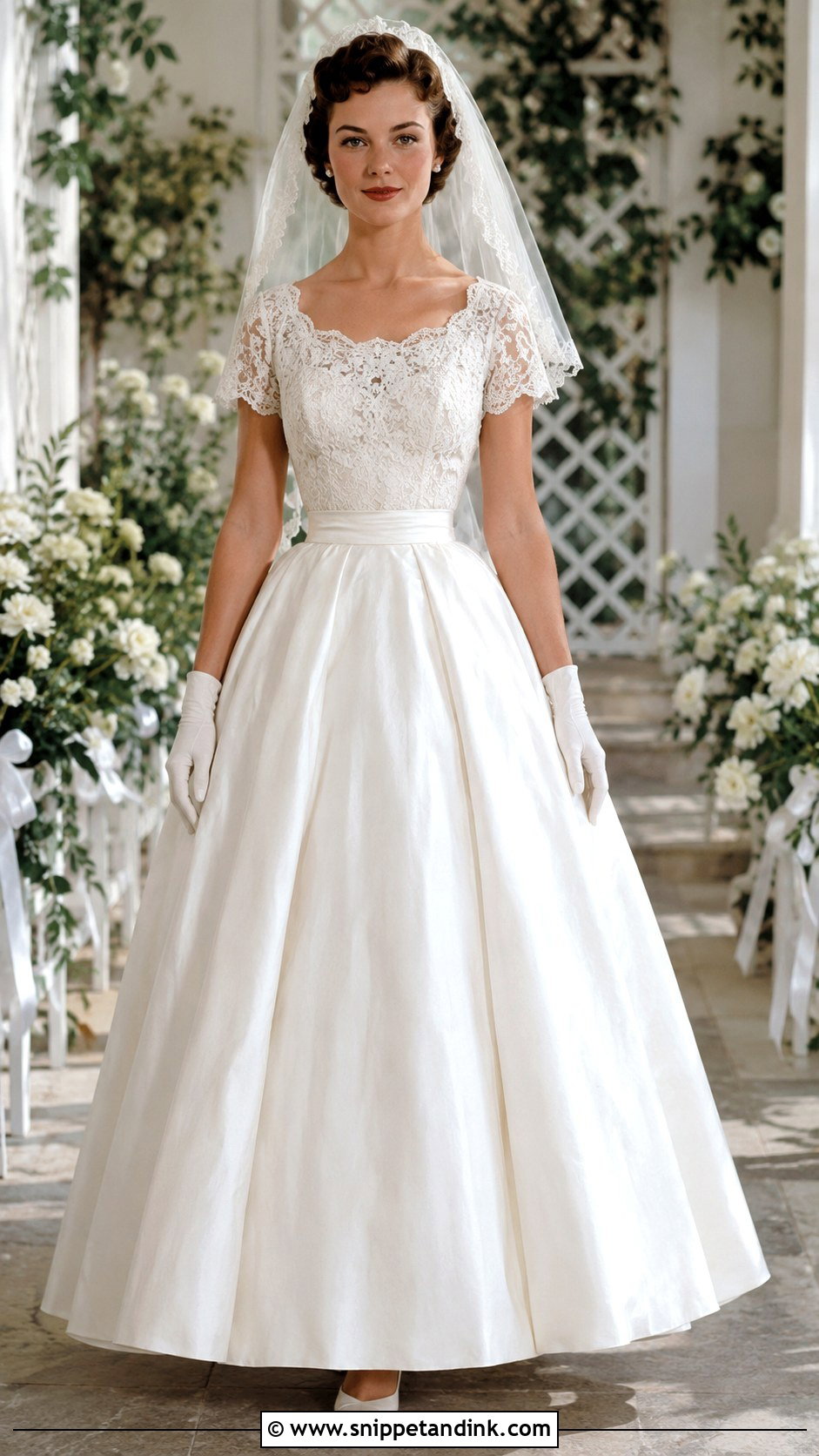
Short lace sleeves cover the shoulders and keep you cool. Look for a fitted bodice with a scoop neckline, lightly scalloped sleeve edges and a full satin skirt to the ankle or floor; lace may cover the whole bodice or sit as a shaped overlay. Scoop necks, lace and full skirts were all part of the 1959 bridal picture. A slim satin waistband matched closely to the skirt adds definition. Pearl studs, short gloves, ivory pumps and a fingertip veil edged with narrow lace complete it. This is the dress I find easiest to adapt to different figures, since sleeve length, neckline depth and skirt fullness can each be adjusted without losing the period.
17. 1959 Satin Column Wedding Dress
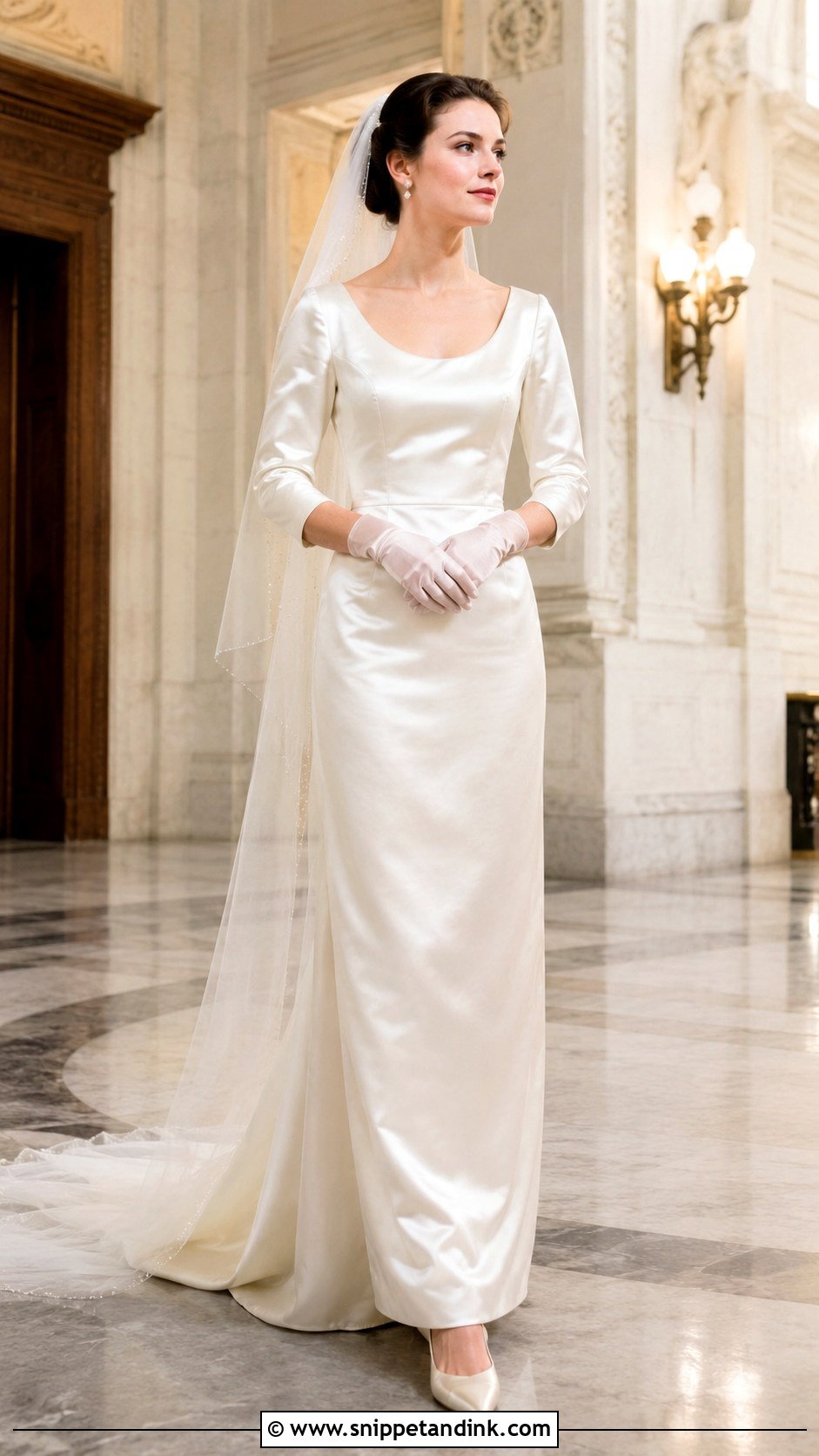
Not every late-fifties bride wore a big skirt. A satin column keeps the period through its fabric, sleeves and accessories and drops the volume. Choose a fitted scoop-neck bodice, three-quarter sleeves, a natural waist seam and a straight floor-length skirt with a modest back train. Satin clings to anything beneath it, so wear light shaping underneath and bring it to every fitting; the skirt should fall smoothly, not outline your underwear. Pearl earrings, wrist gloves, pointed pumps and a narrow chapel veil complete it. Keep any embellishment at the neckline or waist so the long line stays unbroken. A city ceremony or a small venue suits it.
18. 1959 Wedding Dress With Cropped Jacket
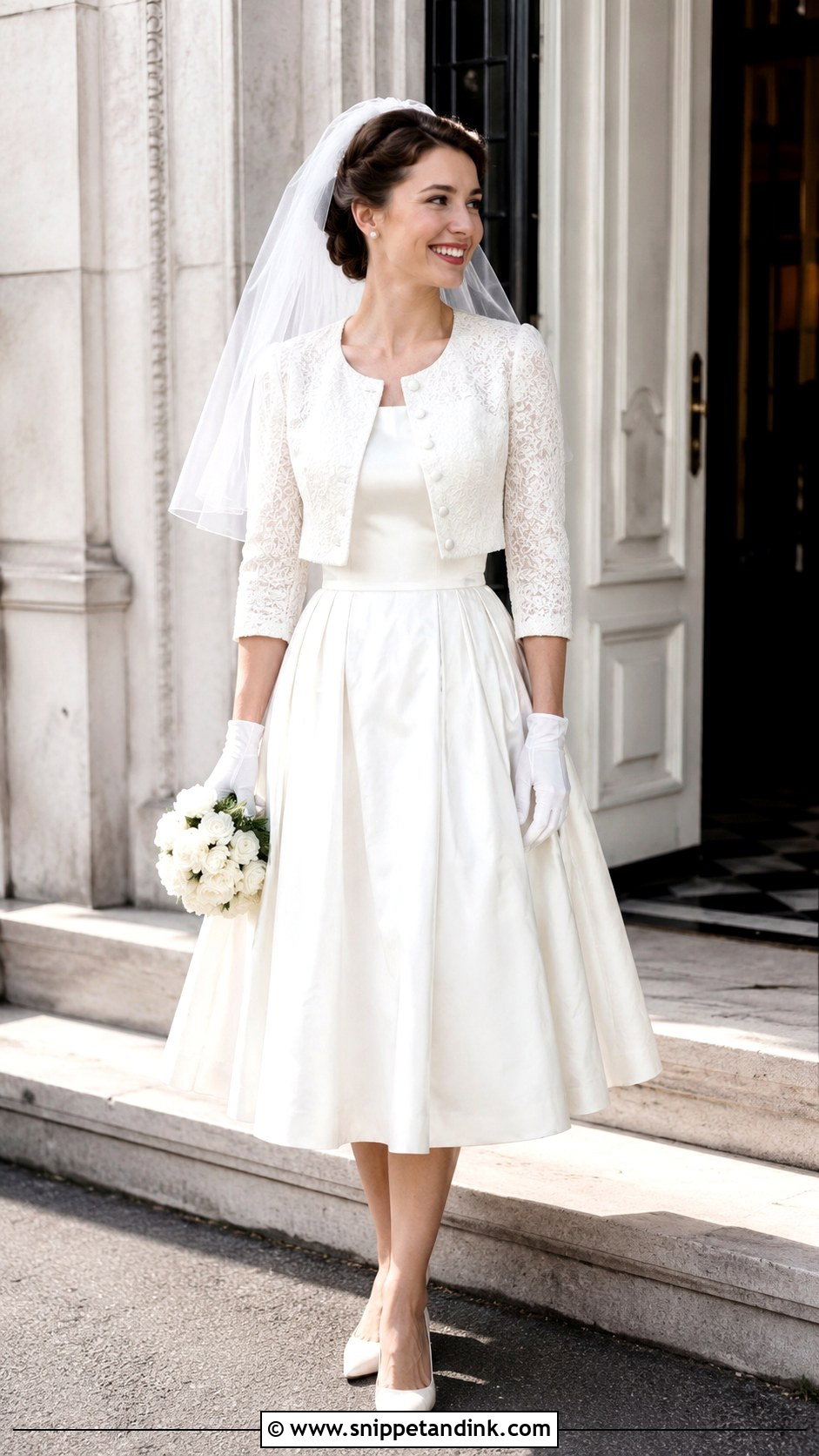
A matching cropped jacket turns a sleeveless dress into two outfits. Start with a tea-length satin dress with a scoop neckline, a fitted waist and a softly pleated skirt, then add a lace or satin jacket that ends precisely at the waist, with three-quarter sleeves and small covered buttons. Brides of the period used sleeves, capelets and jackets like this all the time to change how much they covered between church and party. Take the jacket off at the reception for a simpler second look. Pearl earrings, short gloves, ivory pumps and a small veil on a neat headpiece finish it. The jacket’s hem must meet the dress waistline exactly; even half an inch of gap looks like a mistake.
19. 1959 Wedding Dress With Lace Capelet
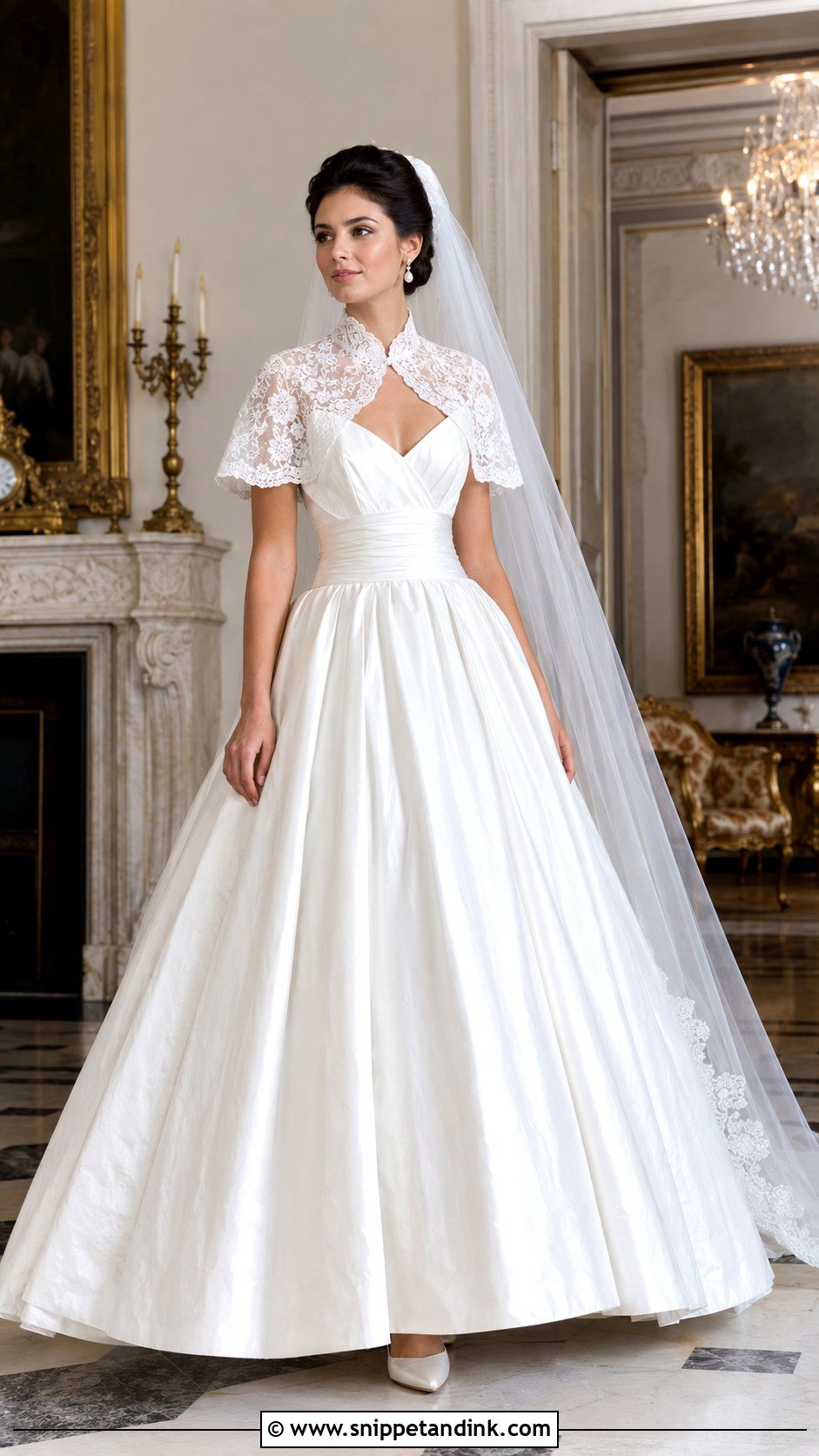
A lace capelet turns a plain satin gown into a ceremony outfit and comes off for the party. Choose a floor-length dress with a wide V-neckline, a fitted waist and a full taffeta skirt, then cover the shoulders with a high-neck capelet in matching lace, fastened discreetly at the back or front. Late-fifties bridal fashion used exactly this trick to cover a lower neckline during the service. Pearl drops, satin pumps and a long veil set beneath the capelet’s collar finish it. Practise taking the capelet off yourself before the day, because hooks at the back of the neck are hard to reach in a hurry. Skip the heavy necklace and detailed belt.
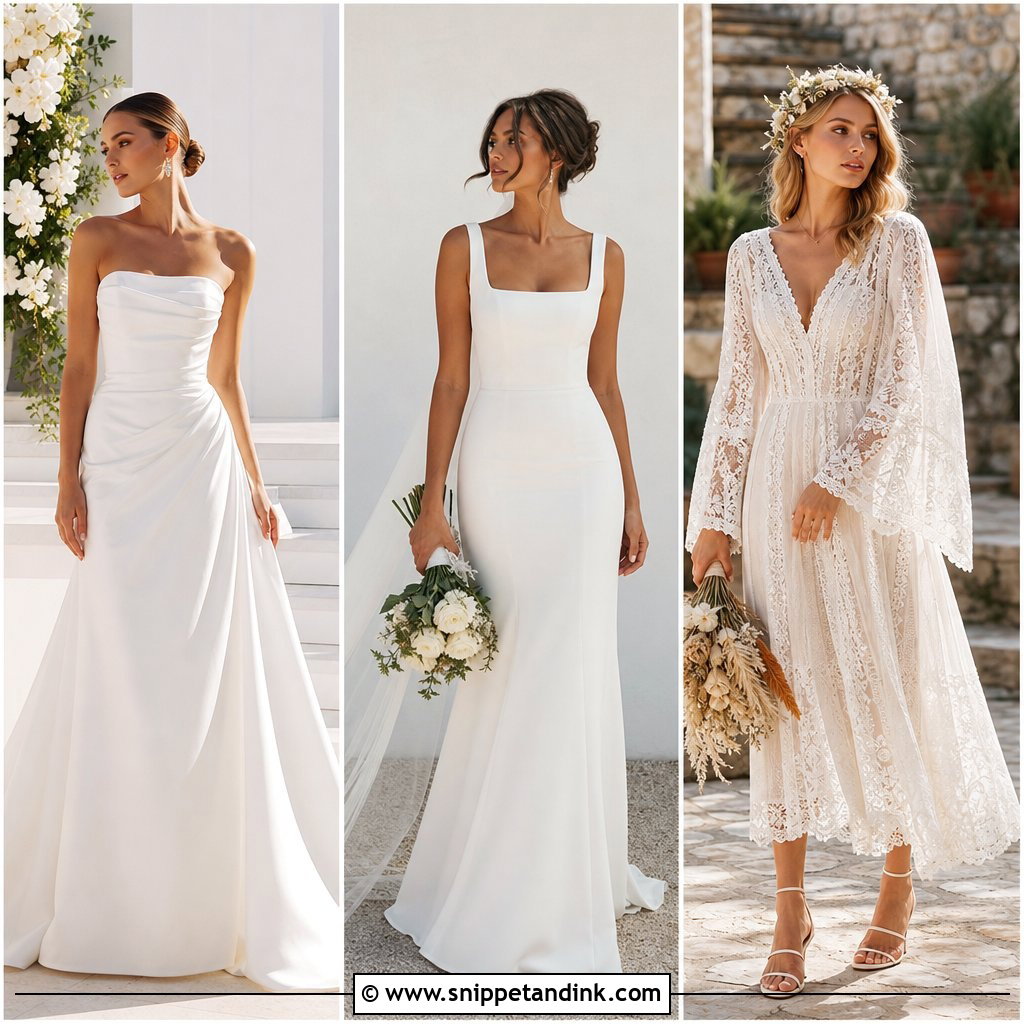
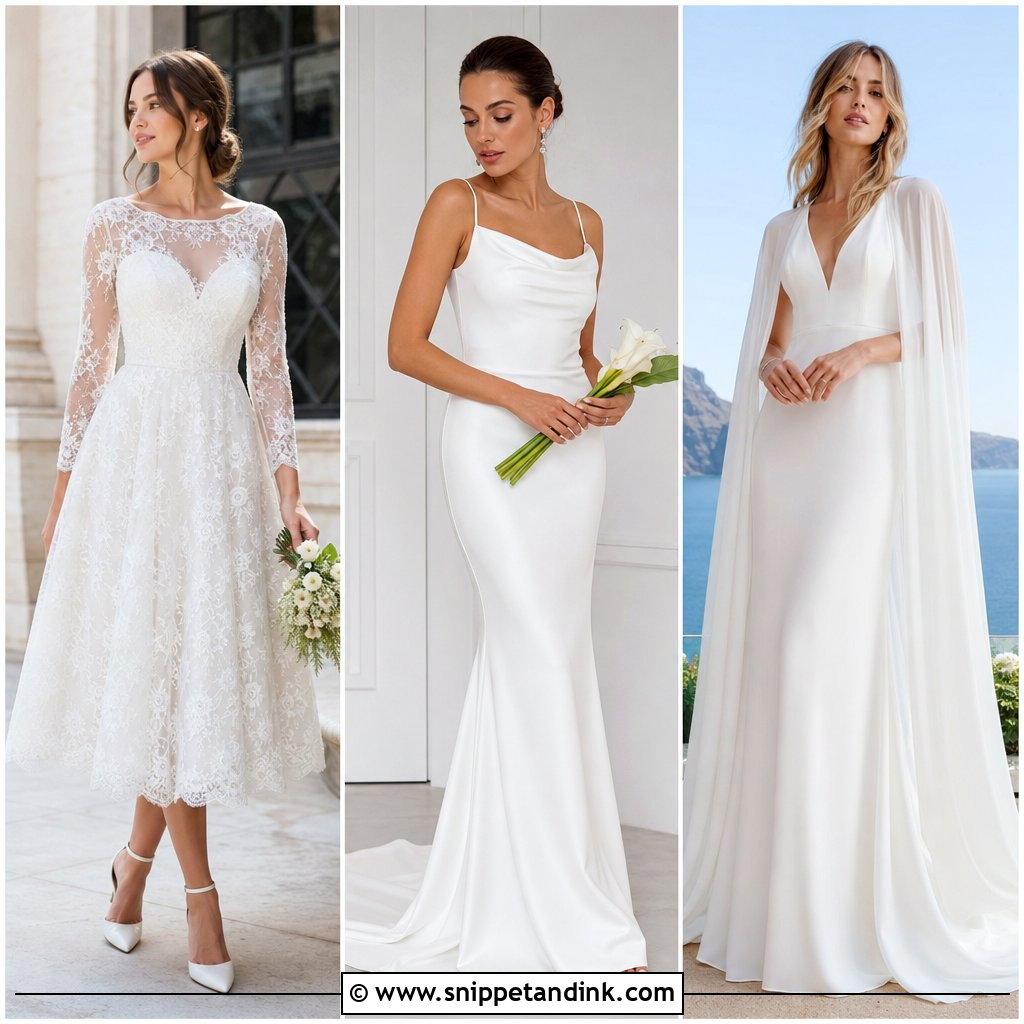
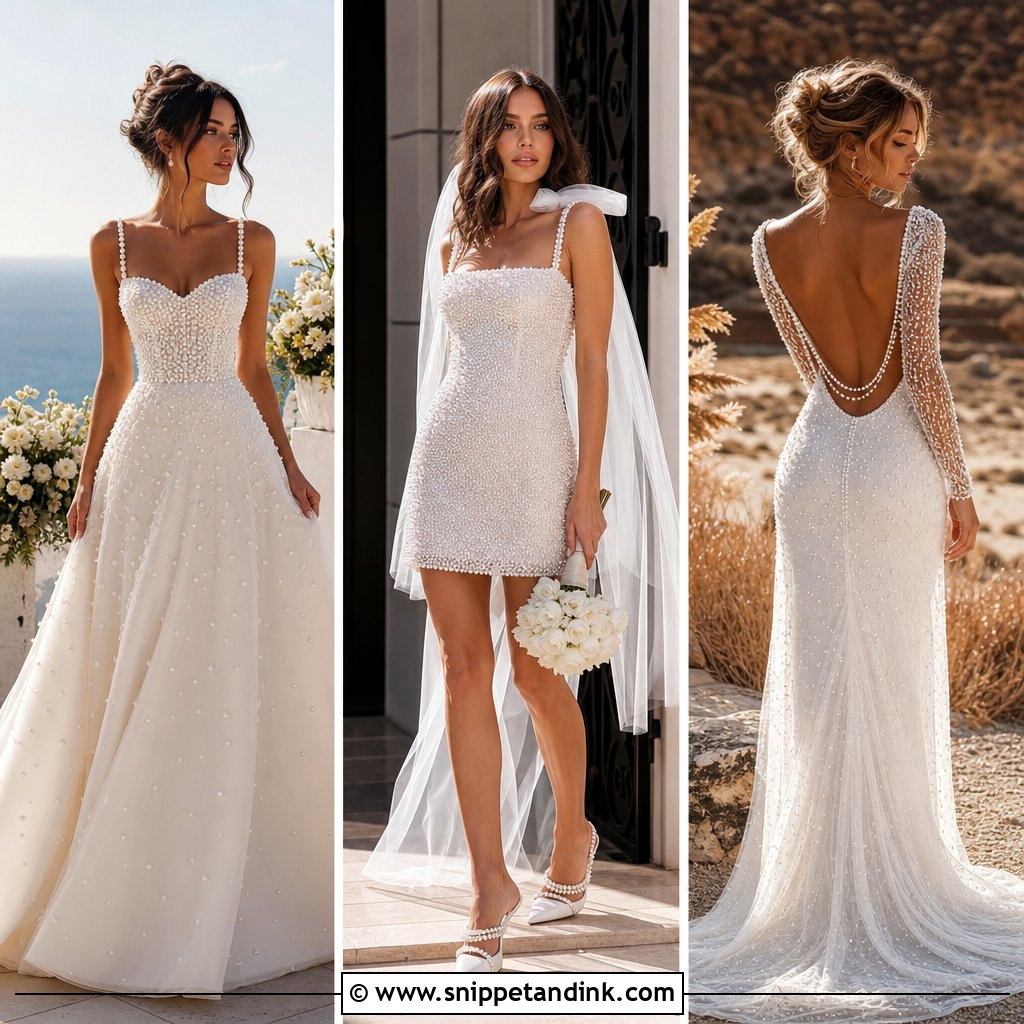
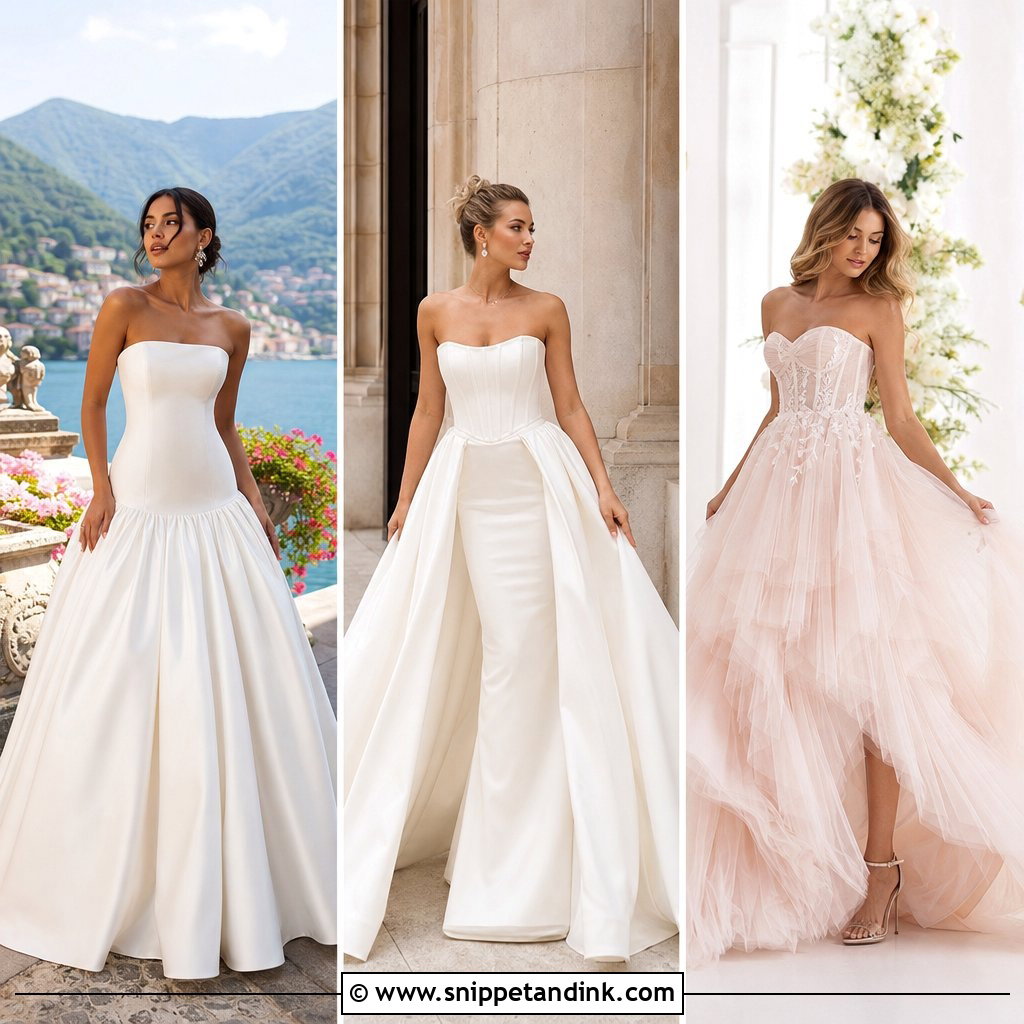
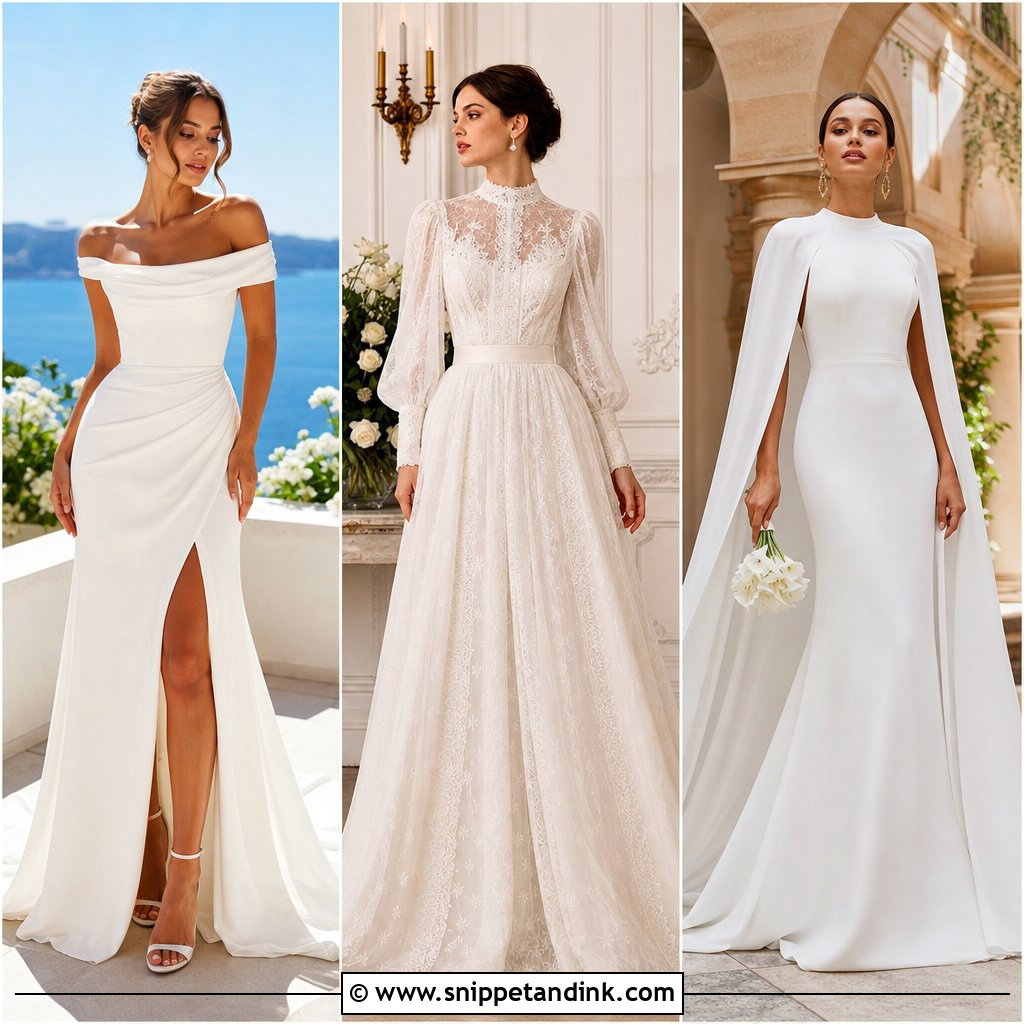
20. 1959 Reception Wedding Dress
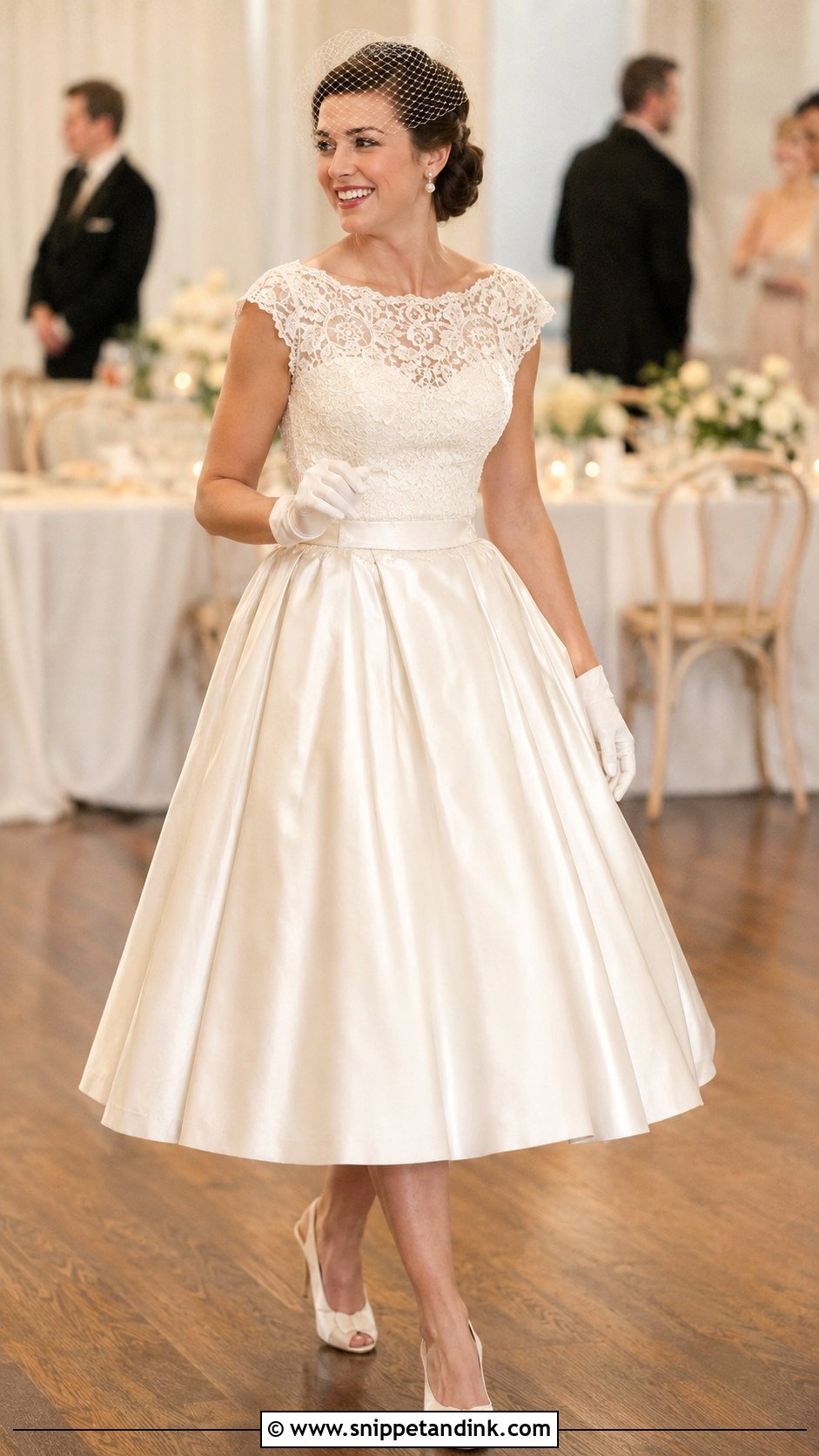
A shorter reception dress lets you dance while keeping the shape of the ceremony gown. Choose a tea-length fit-and-flare with a fitted lace bodice, a rounded neckline, cap sleeves and a full satin skirt over a moderate petticoat, full enough to swing but still easy to sit in. Cocktail-length bridal dresses were popular through the fifties, so this reads as true to the period. Ivory slingbacks, pearl studs and short gloves suit it, with a birdcage veil, a floral headpiece or a narrow satin headband replacing the long veil. I always carry one piece over from the ceremony look, usually the earrings or gloves, so the two outfits clearly belong to the same bride.
Wearing a Gown That Really Was Made in 1959
Some of the brides I dress aren’t recreating the look at all. They’re wearing a mother’s or grandmother’s own dress, and that comes with its own set of decisions.
Color and cleaning
Silk satin and nylon tulle both yellow with age, and old stains from perspiration or a dropped drink often only show up years later as brown marks. Never try bleach or a home whitening product on an heirloom gown. Take it to a cleaner who specializes in wedding or historical textiles and ask for a test on a hidden seam first. Sometimes the honest answer is that a soft ivory is as white as it will go, and many brides end up preferring it.
Altering without destroying it
Ask your seamstress to take seams in rather than cut them away, and to keep any fabric she removes in a labelled bag. That way the dress can be returned to its original size for the next person in the family. Fifties bodices often have a metal zip and internal boning that may need replacing, and that is a normal, reversible repair. Budget extra fitting time compared with a new gown, because old fabric can’t be pinned and unpicked as freely.
Updating it gently
If the dress feels too much like a photograph of someone else, change the accessories before the dress itself. A new veil, a different petticoat or a removable capelet can make it yours without touching the original seams.
Walk, Sit and Dance in It Before the Last Fitting
Full satin skirts, fitted waists, lace bodices, tea-length hems, structured necklines and neat sleeves all belong to the late fifties, and any of them can carry a wedding today. Accessories do as much as the gown: pearls, short gloves, simple pumps and a neatly shaped veil keep the outfit polished without turning it into costume. Pick the details that suit your venue, season and how formal you want the day. Then test the dress honestly. Walk in it, sit in it, raise your arms and dance before the final alterations are signed off, because a 1959 waist that fits perfectly standing still can be a very different story at dinner.
You'll Like These Ideas:


Leave a Reply