
Satin is the fabric I see plus size brides fall for most quickly in the fitting room, and also the one they’re most nervous about. The worry is always the same: won’t it show everything? A well-made satin gown doesn’t, because its weight and structure hold a shape of their own. The ideas below cover satin wedding dresses from simple slips to full ball gowns, with notes on straps, bodices, necklines and seam placement, which are the details that decide how satin sits on a curvy figure. Alterations matter too, as a good fitting changes how a satin gown moves. Each look comes with accessories, shoes and a veil. First, a quick word on satin weights, because the cloth makes more difference than the cut.
Not All Satin Is the Same Weight
“Satin” describes a weave, not a single fabric, and the version a gown is made from changes how it fits, creases and photographs. When a plus size bride tells me satin shows every lump, she has usually tried on a light one. These are the satins I see on bridal rails.
- Duchess satin is heavy and dense. It holds structure on its own, smooths over the body and suits ball gowns and A-lines. It’s also warm, so think about that for a summer outdoor wedding.
- Mikado has a slightly textured surface and a crisp hand. It’s technically a twill rather than a satin, but it’s sold alongside them and suits architectural shapes and bows.
- Crepe-back satin is soft with a little drape. It works on fit-and-flare and empire styles.
- Charmeuse is light and fluid, the fabric of slip gowns. It clings, shows undergarments and creases quickly, so it needs the most careful fitting.
If you love a slip shape but not a light fabric, ask whether the designer offers it in a heavier satin or with a fuller lining. Many will, and the difference on a curvy figure is dramatic.
1. Plus Size Satin A-Line Wedding Dress With V-Neck
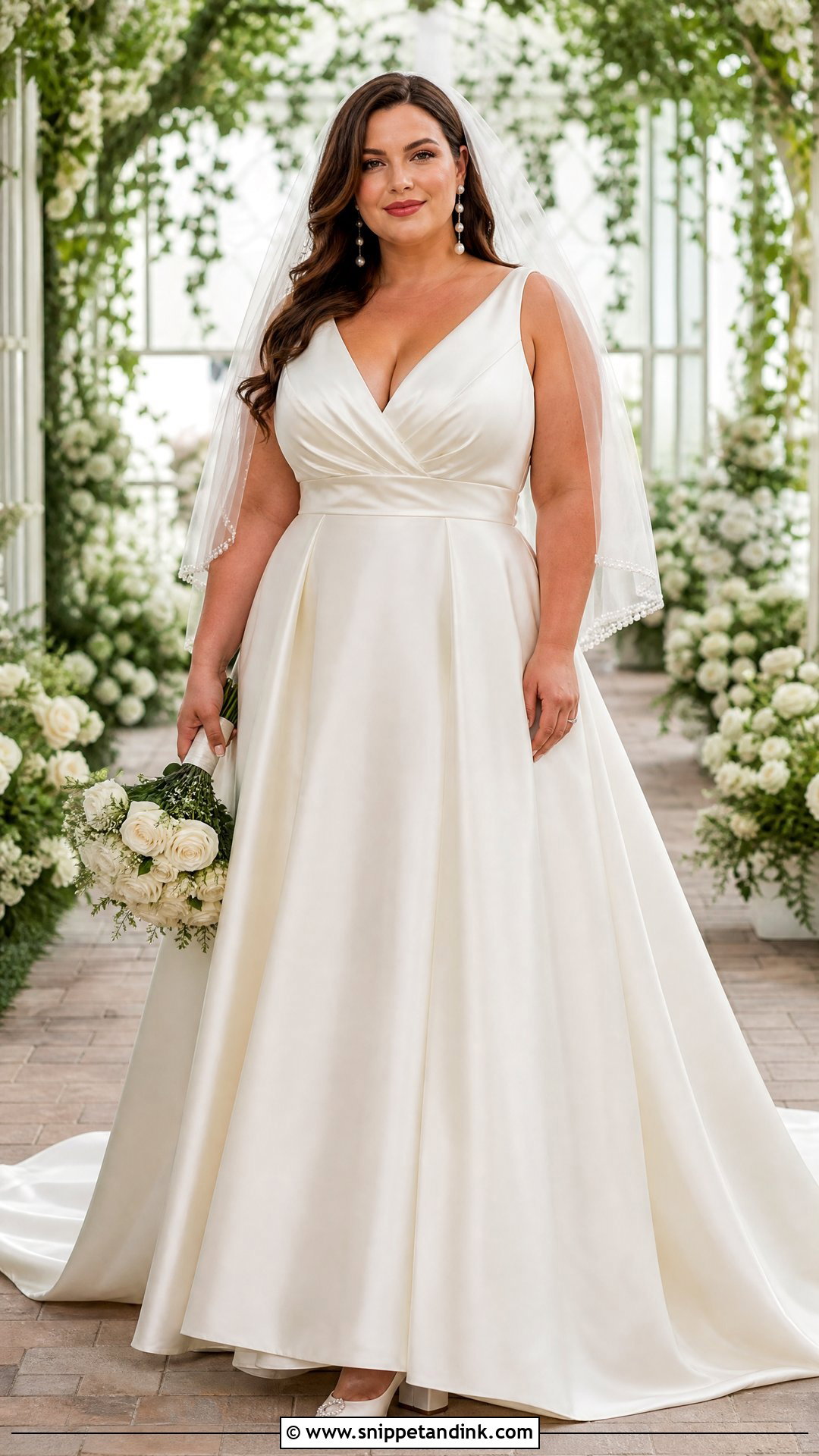
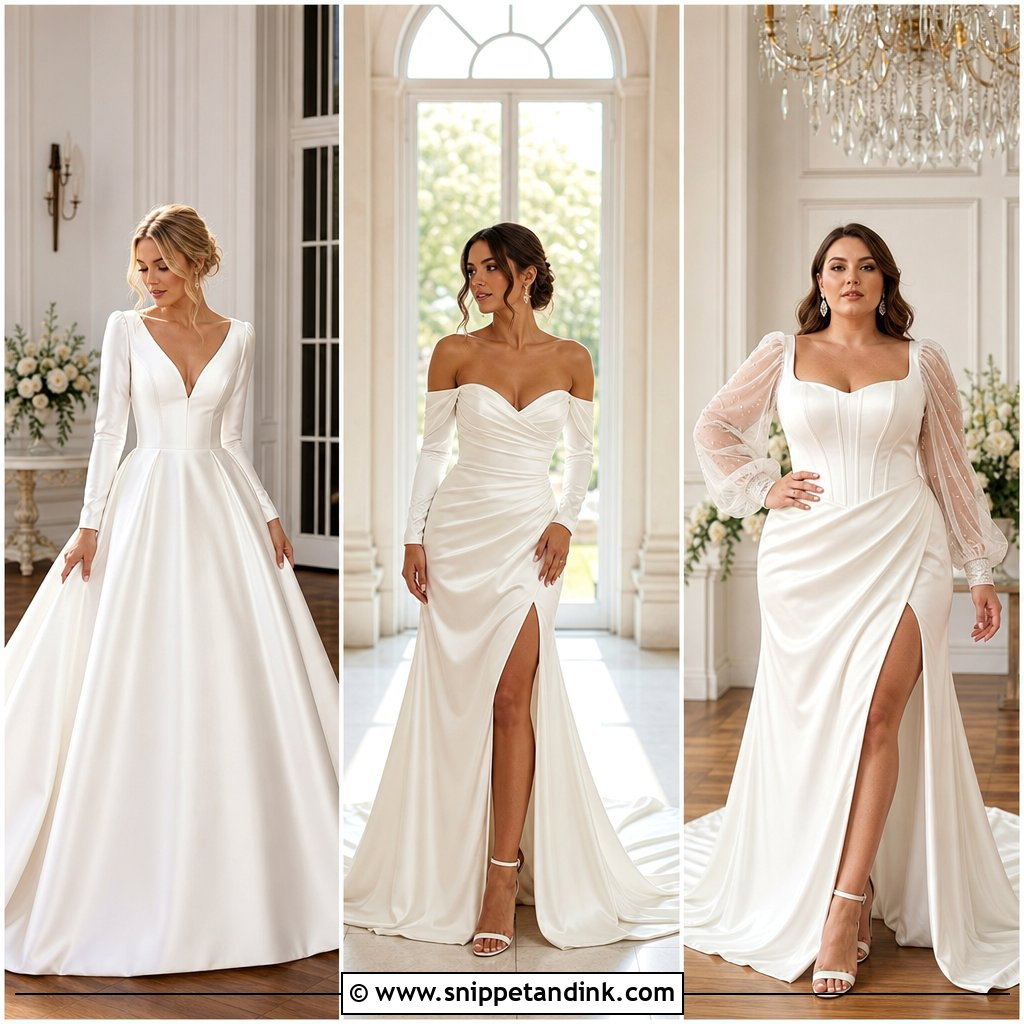
An A-line is the easiest satin gown to wear. The V-neck bodice with wide straps and built-in cups gives support, the natural waist is marked, and the skirt glides over the hips before opening into a soft chapel train. Heavier satin can hold that shape without layers of underskirt, which keeps it lighter to wear. Pearl drops, pointed ivory block heels and a fingertip veil with a plain satin edge suit it, with a structured bouquet of roses or peonies. If you’d like more hold through the bodice, ask whether boning and a secure back closure can be added; on a plain satin bodice I’d want both.
2. Plus Size Strapless Satin Ball Gown Wedding Dress
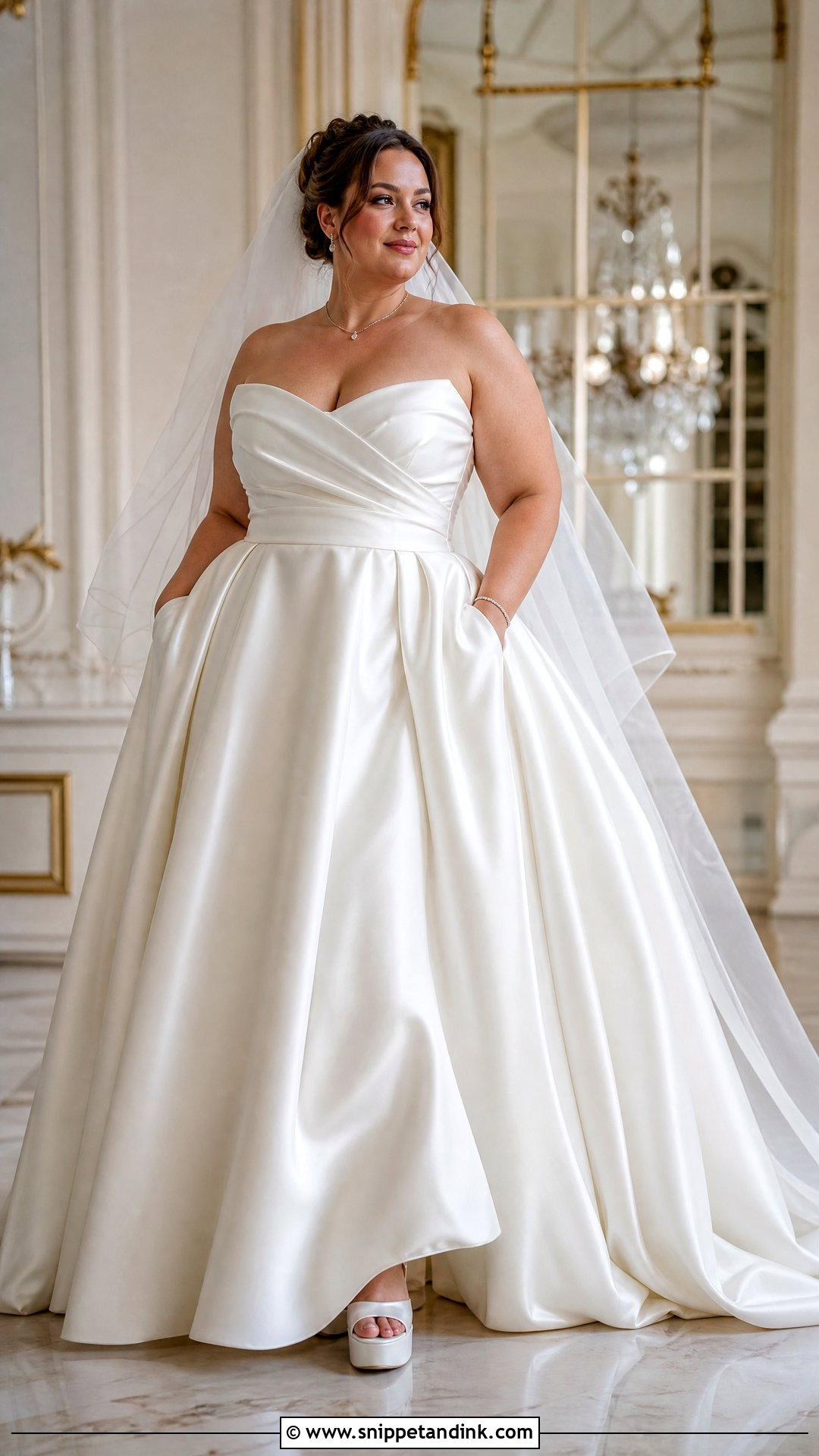
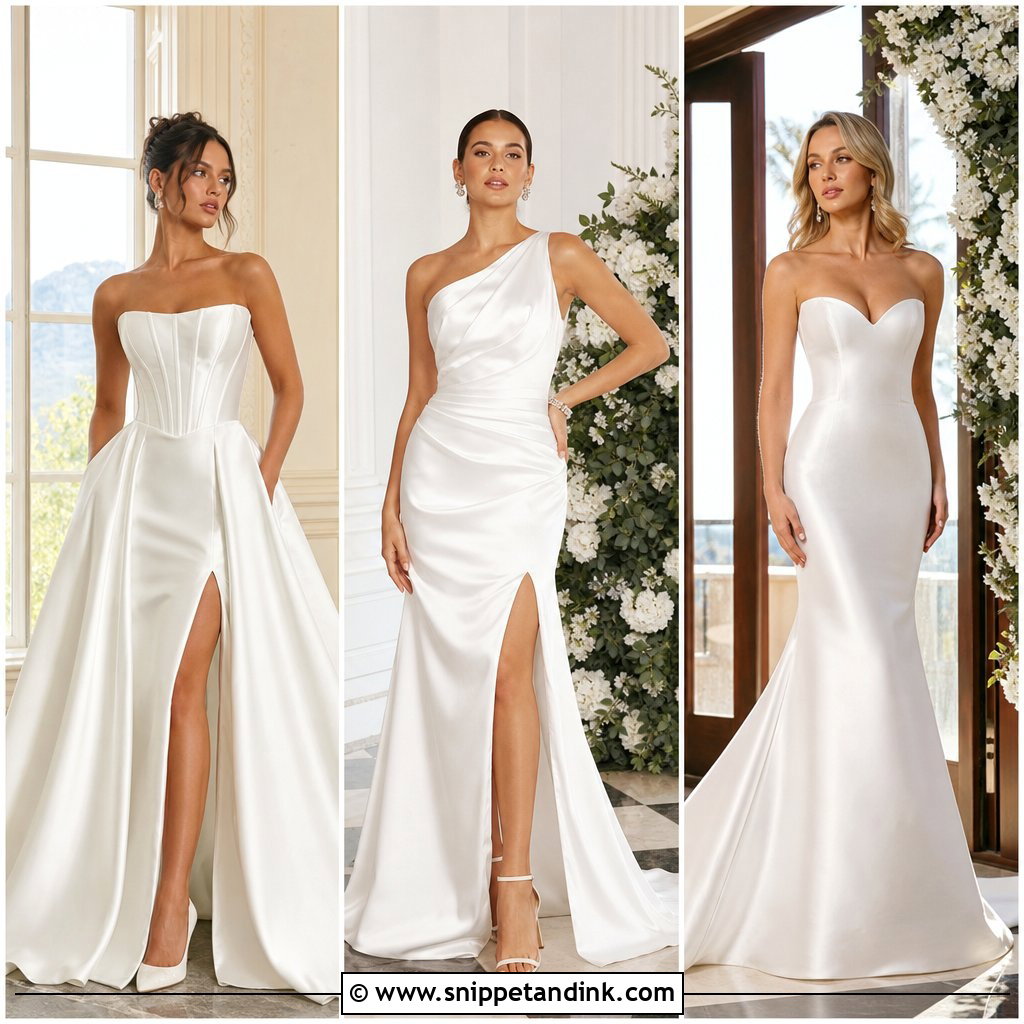
Picture the doors opening on a full satin ball gown with a strapless bodice. A straight or softly curved neckline leaves room for statement jewelry, and the boning and lace-up back give you adjustable support. I’d look for controlled fullness, not endless layers; satin is heavy, and a skirt with too much volume pulls on your waist all day. Crystal studs, a fine tennis necklace and satin platform heels hidden under the hem are enough, with a cathedral veil. Pockets are worth asking about. During alterations, sit, walk and raise your arms. A strapless bodice that slips when you reach up needs taking in at the top edge.
3. Plus Size Off-the-Shoulder Satin Wedding Dress
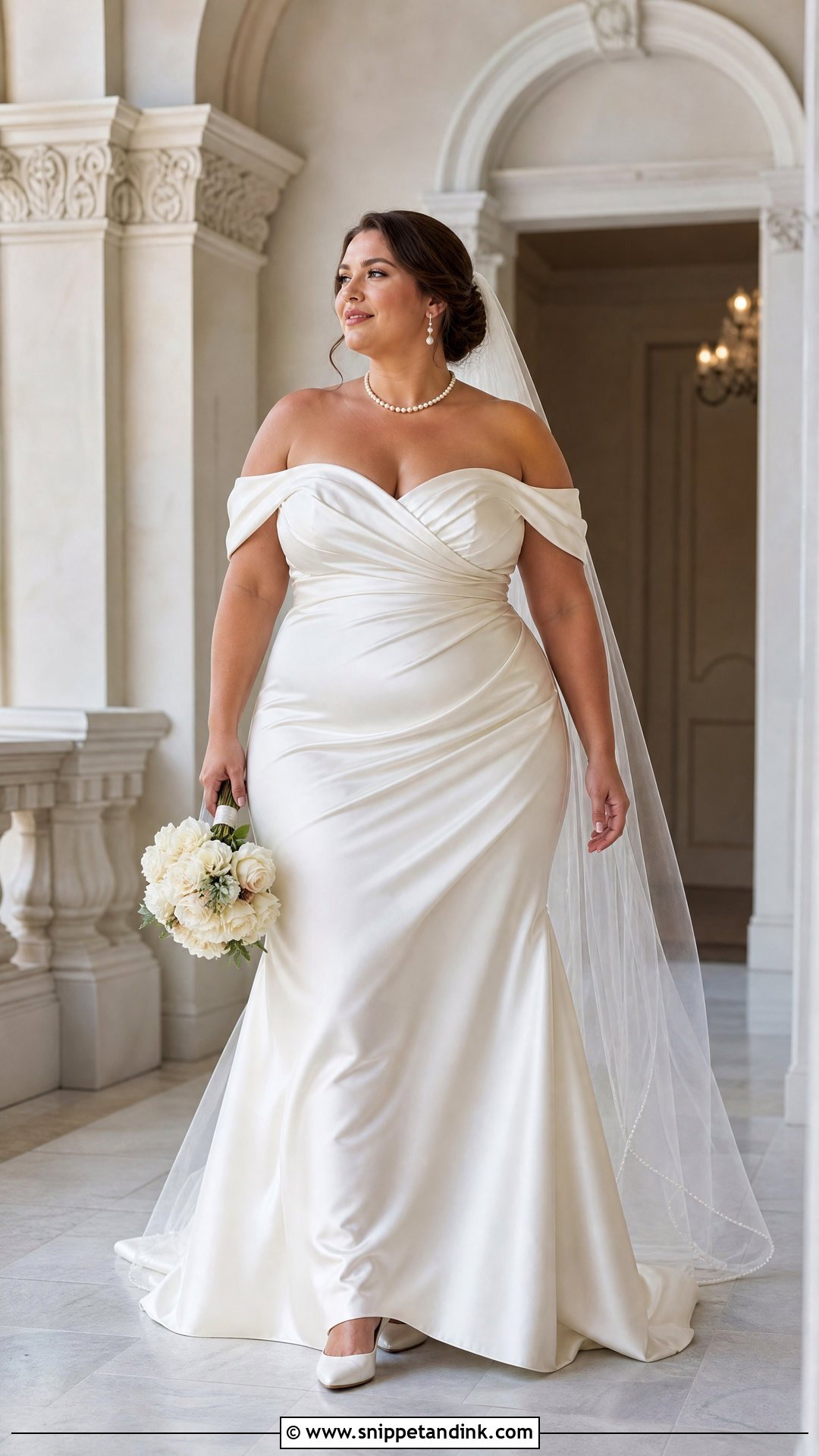
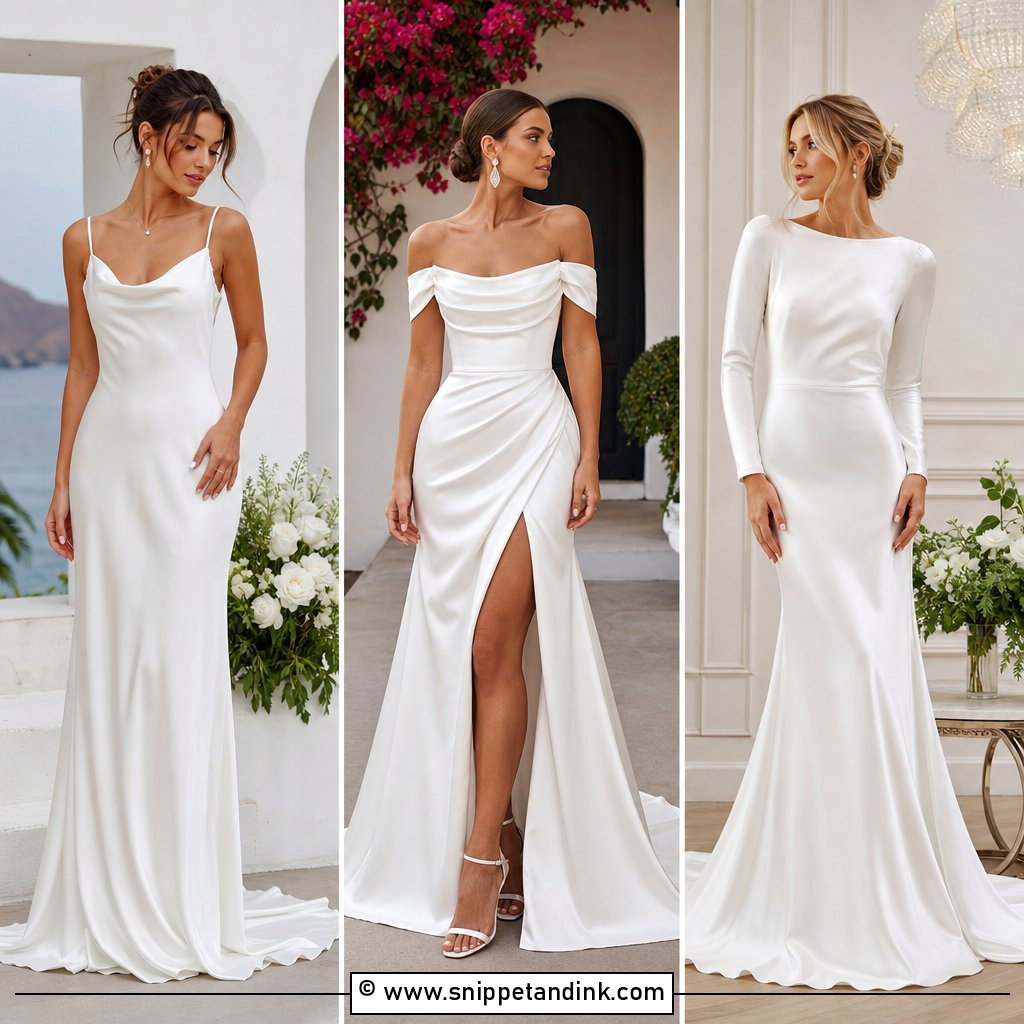
An off-shoulder satin gown frames the collarbones, but the sleeves shouldn’t be doing the holding up. A fold-over neckline with hidden elastic or proper internal structure is what keeps it in place. A fitted waist and softly flared skirt balance the shape. Finish with a short pearl necklace, drop earrings, ivory low heels and a sleek updo, and attach a chapel veil under the hair. The fitting test I do every time is the hug: arms forward and around someone. If the sleeve bands cut into your arms or drag the bodice down, they need loosening. It suits ballrooms and historic venues.
4. Plus Size Long-Sleeve Satin Wedding Dress
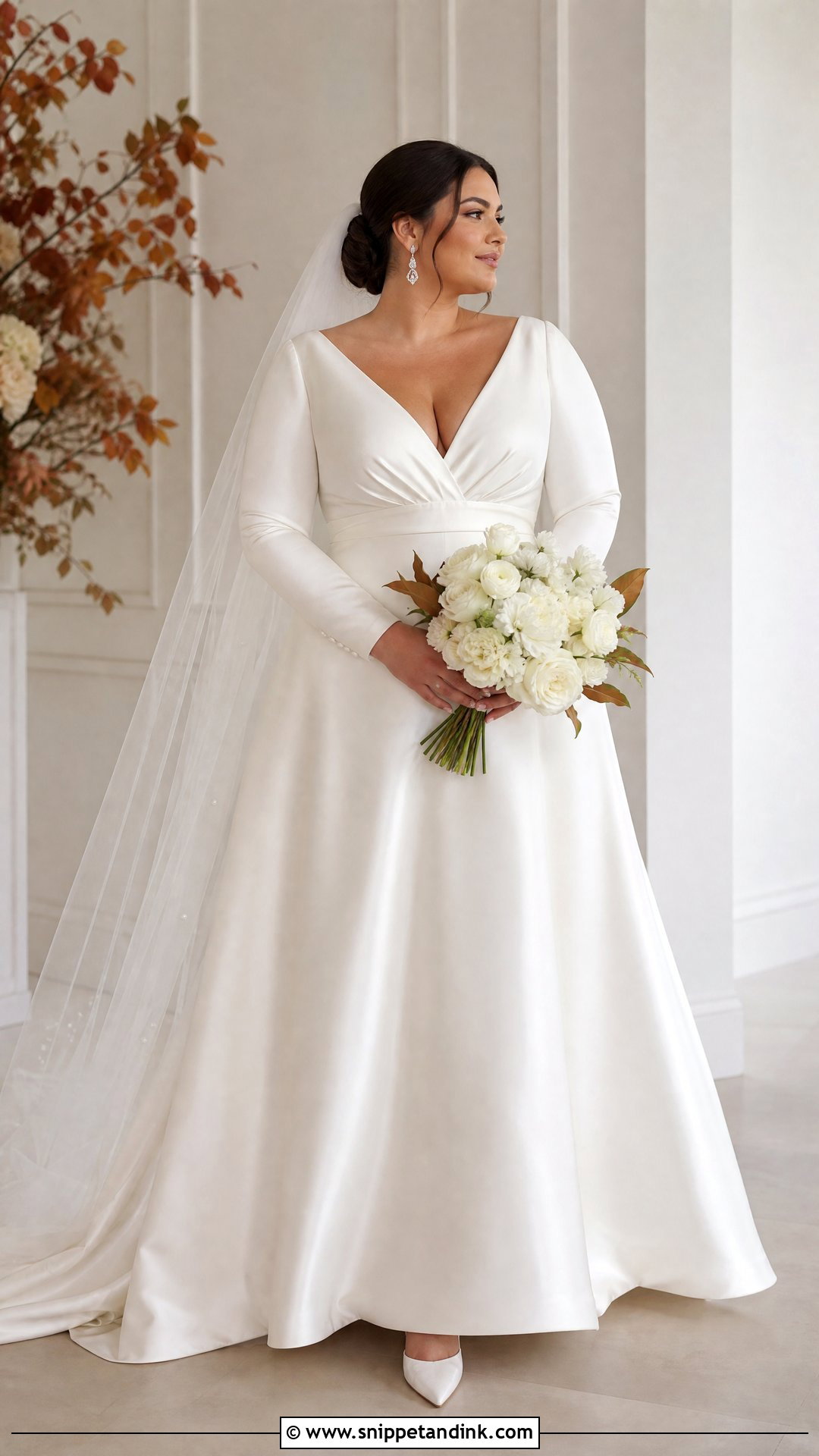
Long satin sleeves look clean and formal, though satin has very little give, so the arm is where comfort goes wrong. Stretch satin or a sleeve cut with an elbow dart lets you bend your arm without the fabric pulling at the shoulder. A V-neck, square neck or bateau neckline keeps the top from feeling closed in. Pearl buttons at the cuff, pointed pumps, small crystal earrings and a structured bouquet complete it, with a low bun and sheer fingertip veil. Ask your seamstress to check the upper arm and elbow while you move, not while standing still. It’s the version I’d suggest for a winter ceremony in a cool church.
5. Plus Size Square-Neck Satin Wedding Dress
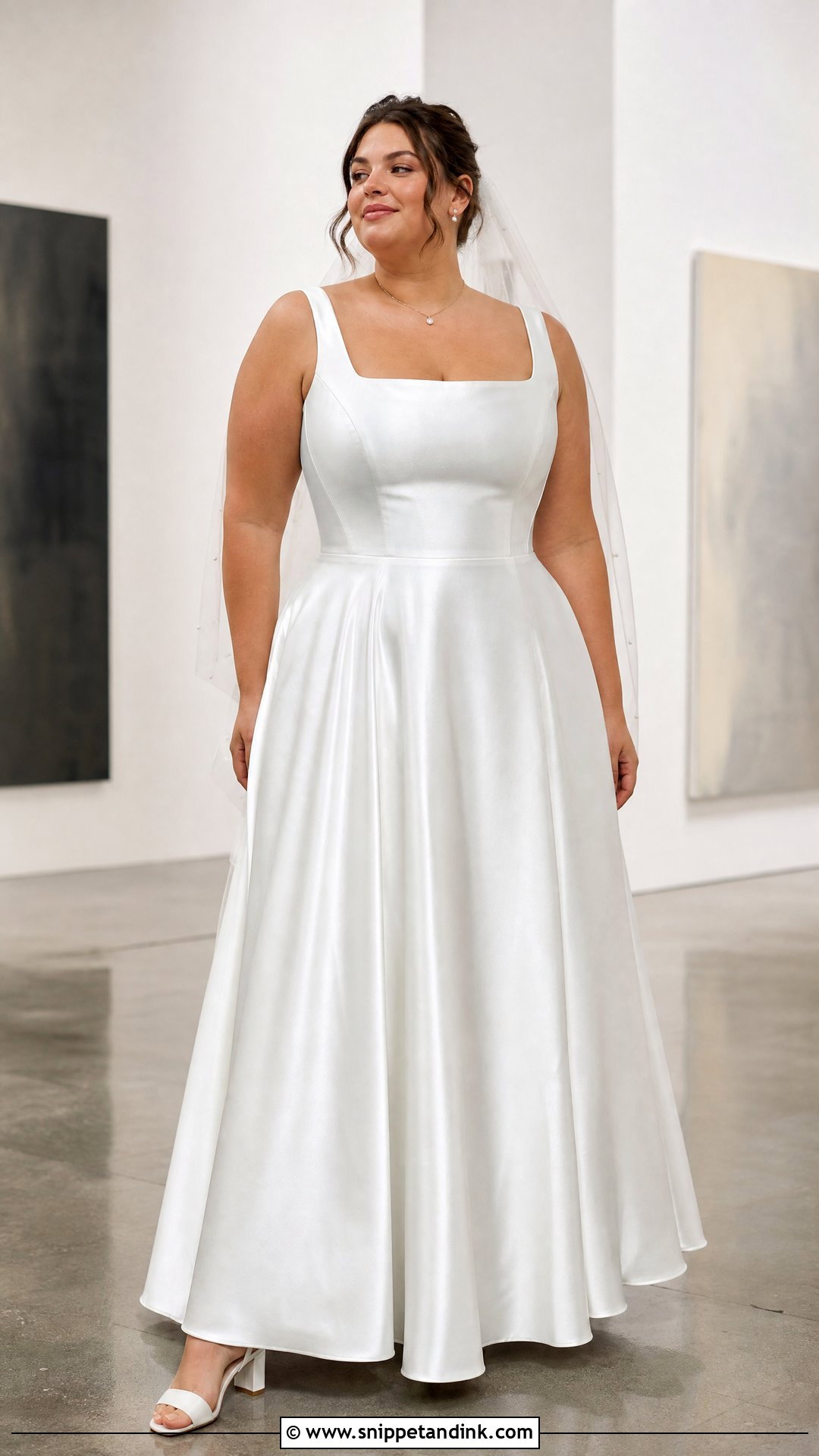
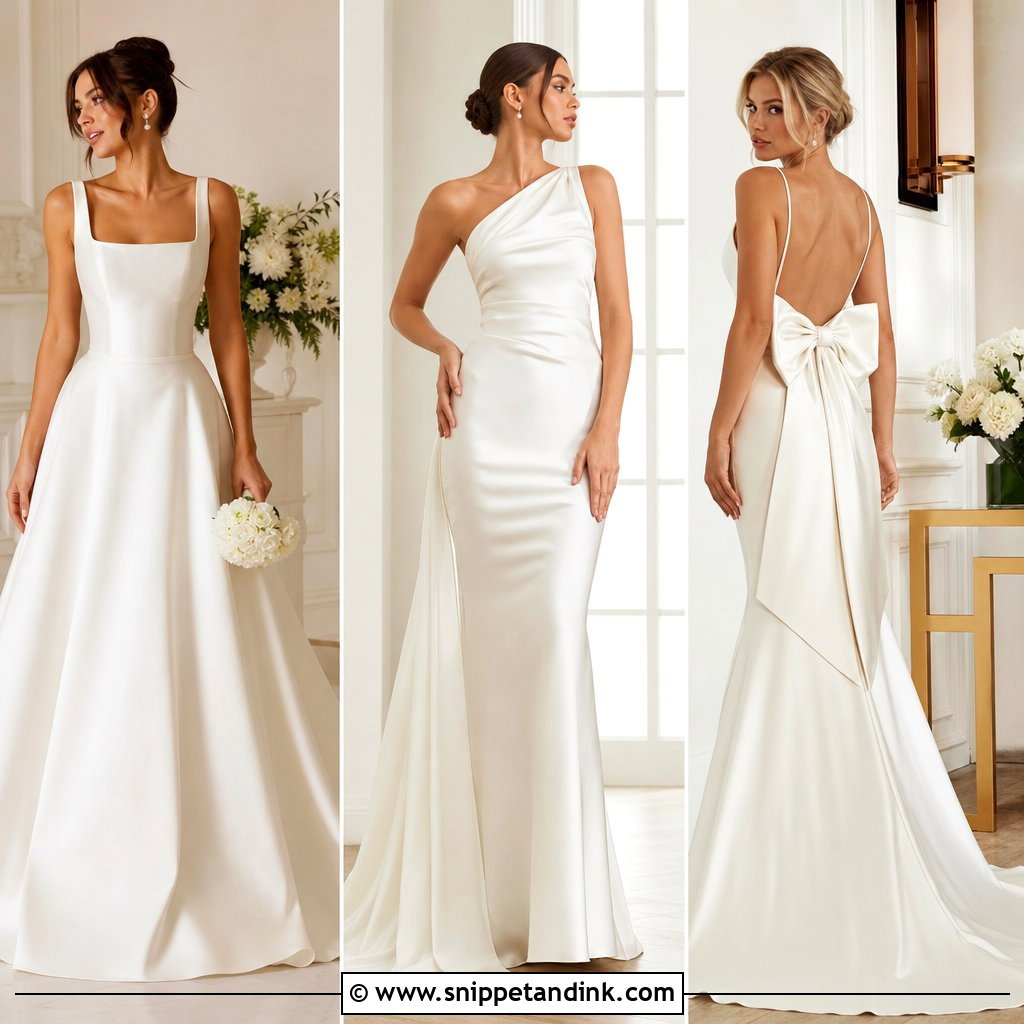
Square necks look crisp in satin because the fabric holds a sharp line. The neckline shows the collarbone and pairs well with wide straps, princess seams and a defined waist. Choose an A-line skirt for movement or a column for structure. A fine pendant, pearl studs, slingback block heels and a medium veil finish it, and soft waves or a low chignon soften the geometry. For bust support, I’d look for built-in cups, boning and straps wide enough to hide your bra. Keep everything else simple so the sheen and shape stay in focus. It suits galleries and minimalist venues.
6. Plus Size Satin Mermaid Wedding Dress
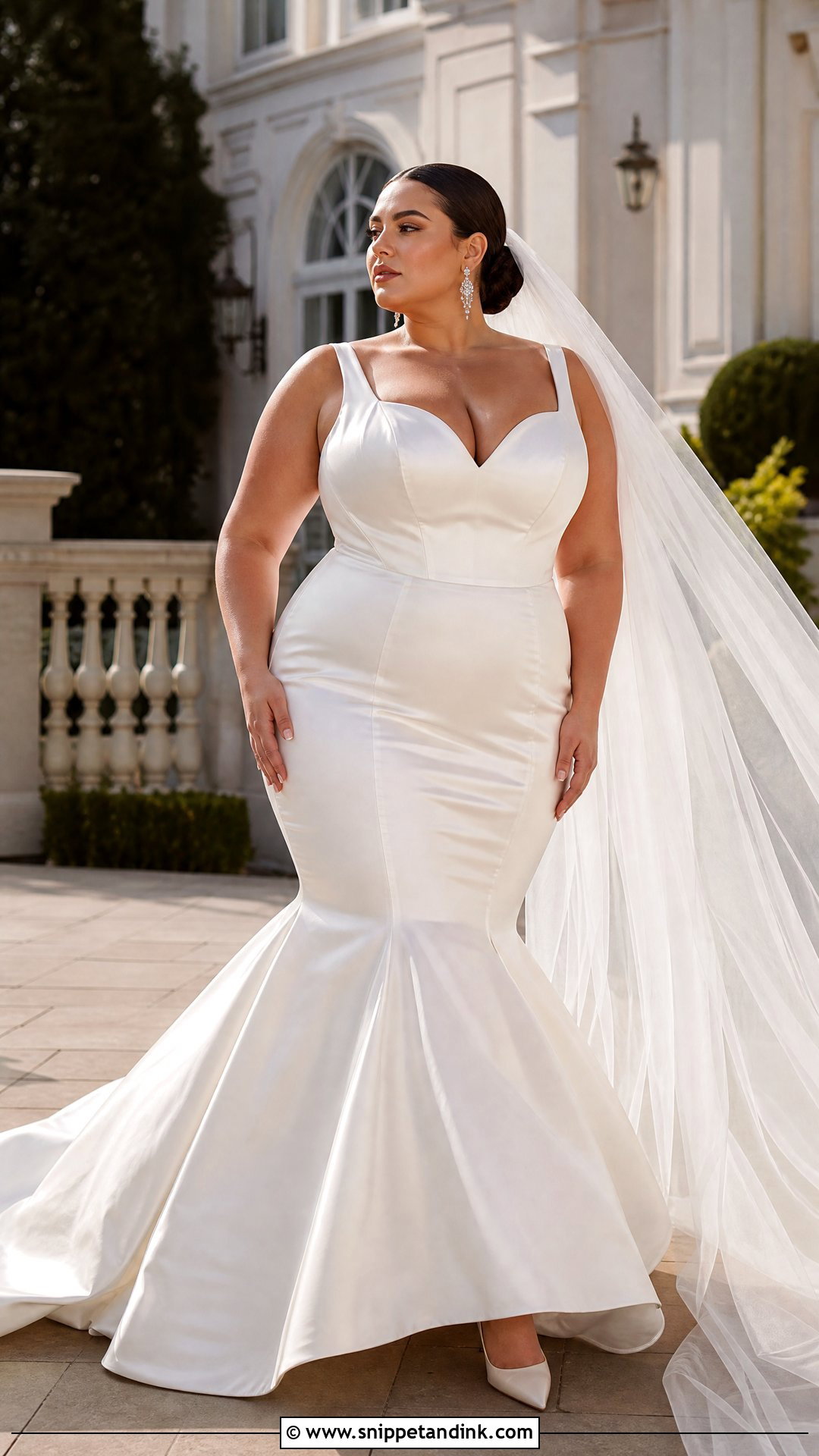
A satin mermaid follows the body and flares around the knee, so where that flare starts decides whether you can walk. Too high, and you’ll take tiny steps all day. The version I’d look for has some stretch or generous seam allowance through the hips. A sweetheart neck with supportive straps, or an off-shoulder fold, balances the proportions. Crystal earrings, a sleek bracelet, pointed heels and a long veil complete it, with a smooth low bun. Walk, turn and dance at your fitting instead of judging it standing still. Careful tailoring at the waist, hips and flare lets the gown move and shows your curves with confidence.
7. Plus Size Satin Fit-and-Flare Wedding Dress
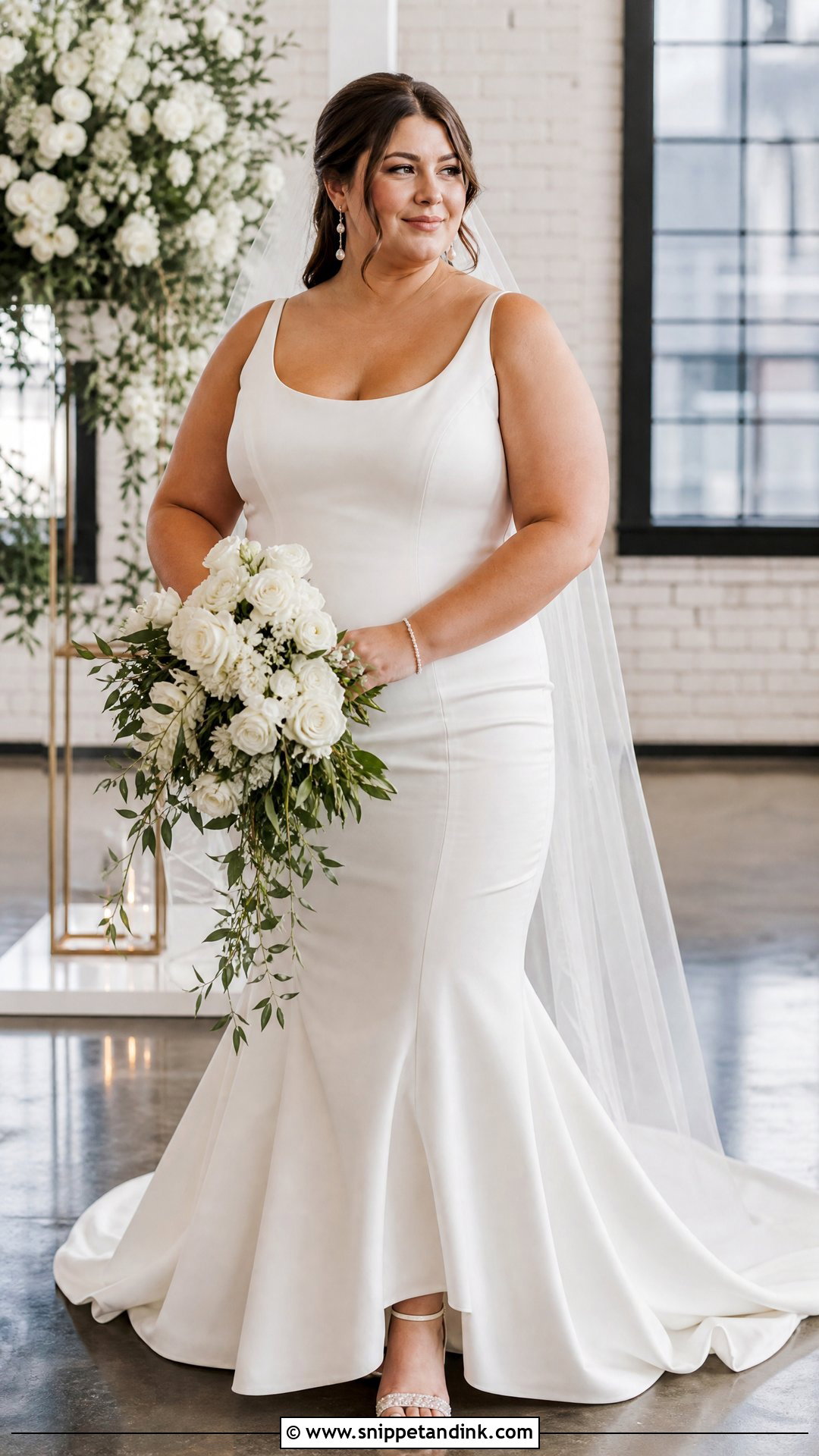
Want shape without the close fit of a mermaid? A fit-and-flare follows the bust and waist, then opens gradually from the hip. The curved seams do the shaping, and a supportive V or scoop neck keeps it easy to wear. Pearl drops, a simple bracelet, ivory ankle-strap heels and a soft tulle veil finish it, and trailing greenery in the bouquet adds texture next to the smooth satin. If you plan to dance a lot, look for a back slit, stretch lining or a wider flare. A little ruching at the waist can add dimension.
8. Plus Size Satin Empire-Waist Wedding Dress
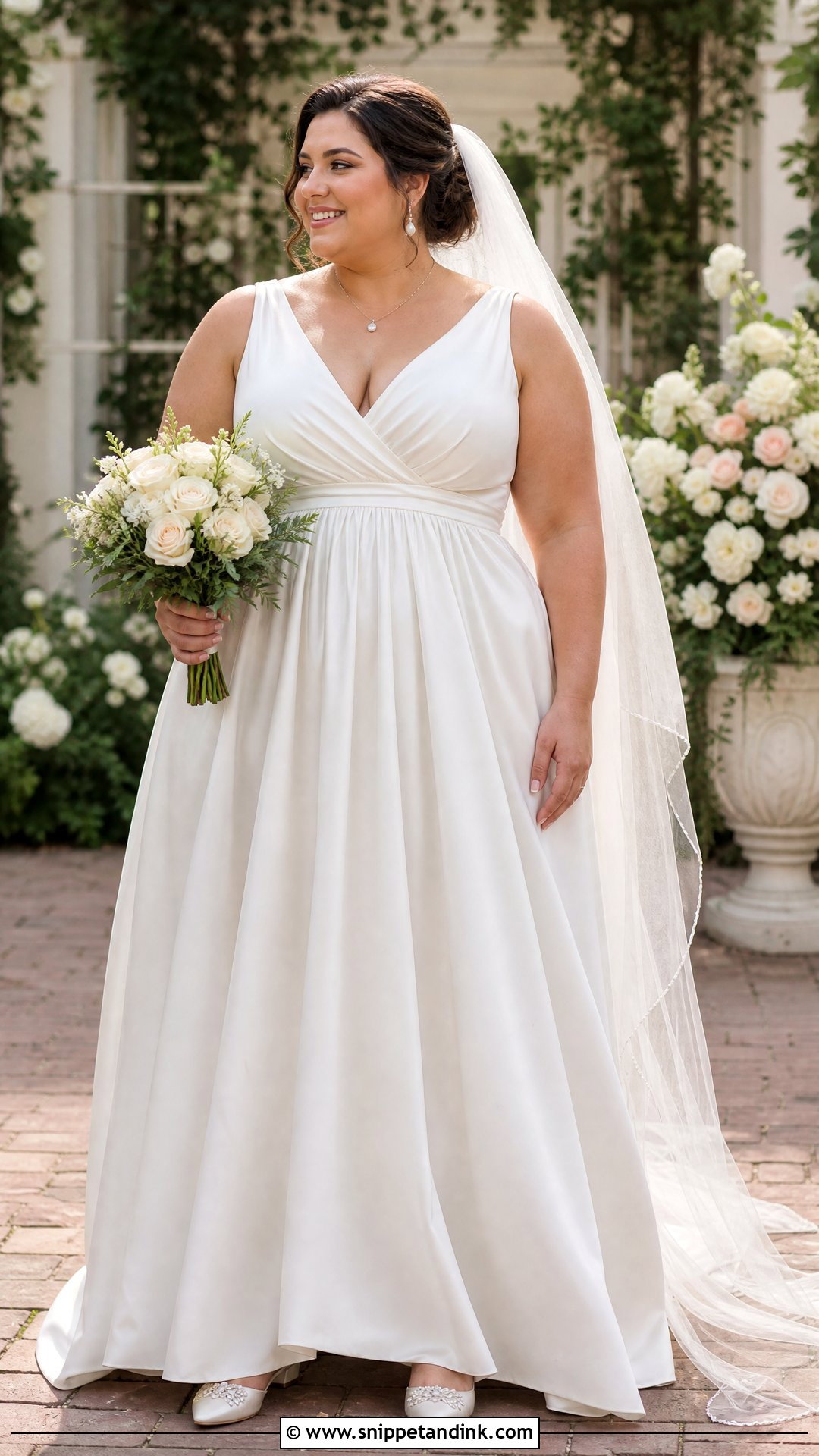
A satin empire-waist gown puts the main seam just under the bust and lets the skirt fall long and loose, which many brides find freeing after trying corsets. A V-neck with secure straps and gentle gathering works best; too much volume under the bust can look like maternity wear. The detail I check is the underbust band, since satin shows tension clearly. It should lie flat with no pulling lines toward the sides. A delicate pendant, pearl earrings, embellished flats and an airy veil suit it. Soft curls or a loose bun add romance.
9. Plus Size Satin Wedding Dress With Corset Bodice
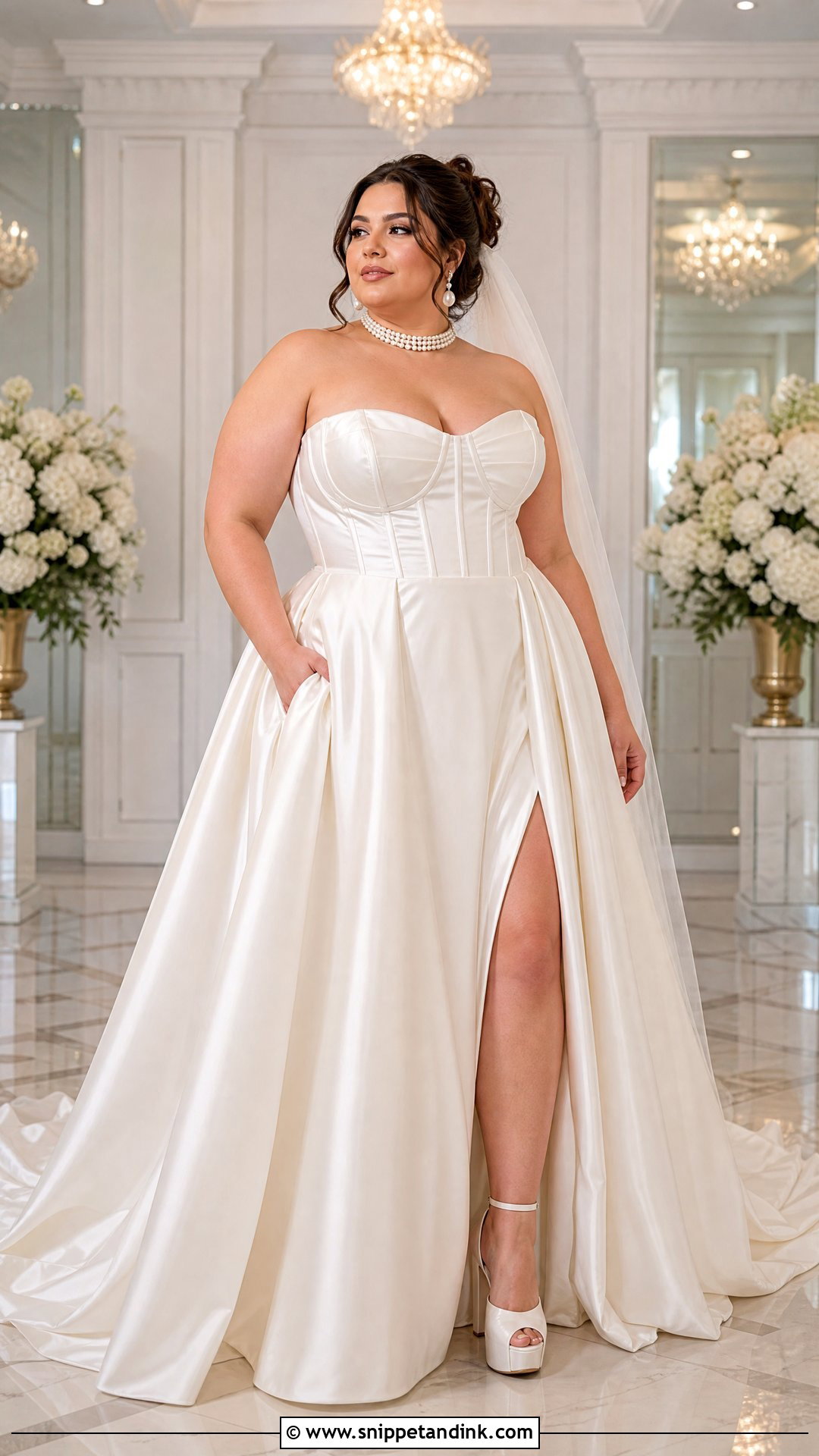
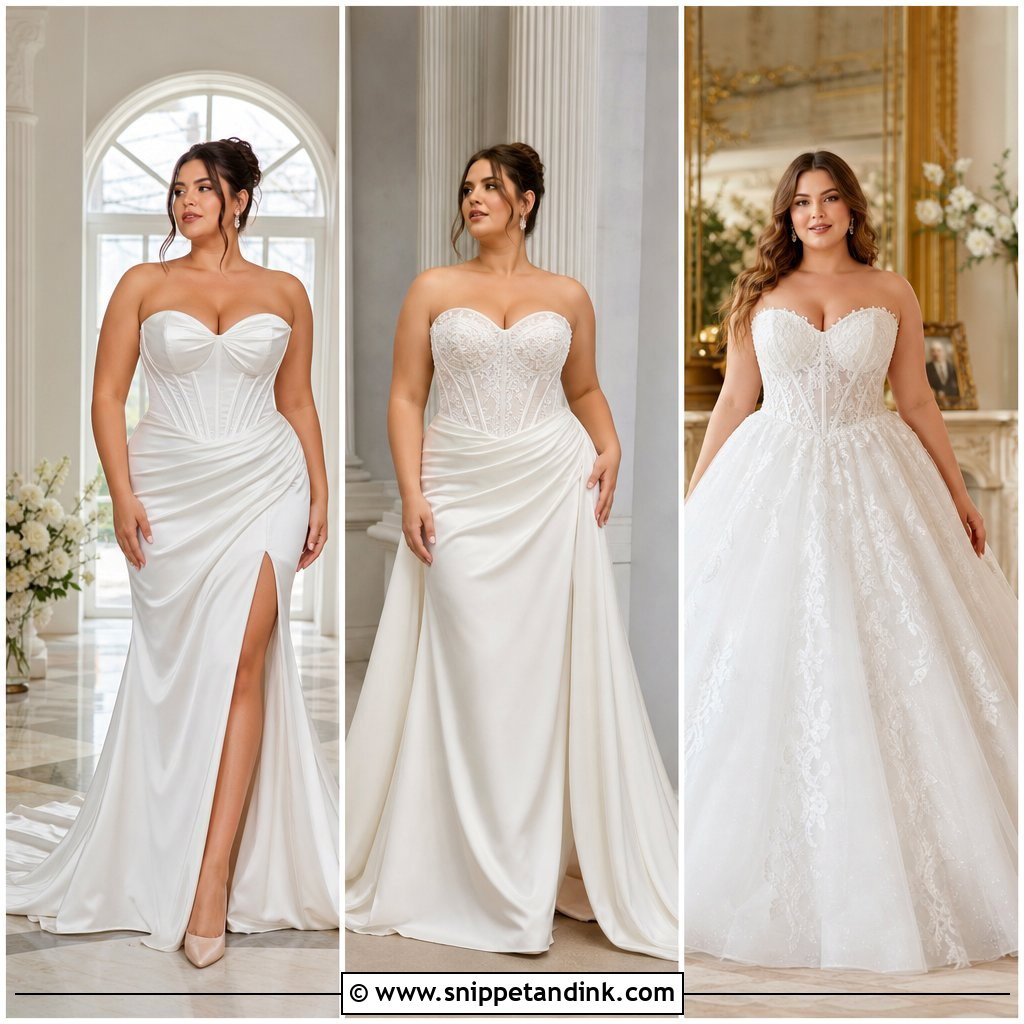
Corset bodices give satin a defined, adjustable fit. Look for proper boning, secure cups and a lace-up or well-fitted back. The skirt can be A-line, full or fitted depending on how much drama you’d like. A pearl choker, drop earrings, ivory platform heels and a long plain veil suit the structure, with a polished updo. If the boning shows on the outside, keep other embellishment minimal. My test during alterations is simple: sit down and take a deep breath. A corset should feel like firm support. If it stops you breathing fully while seated, it needs letting out.
10. Plus Size Satin Wedding Dress With Basque Waist
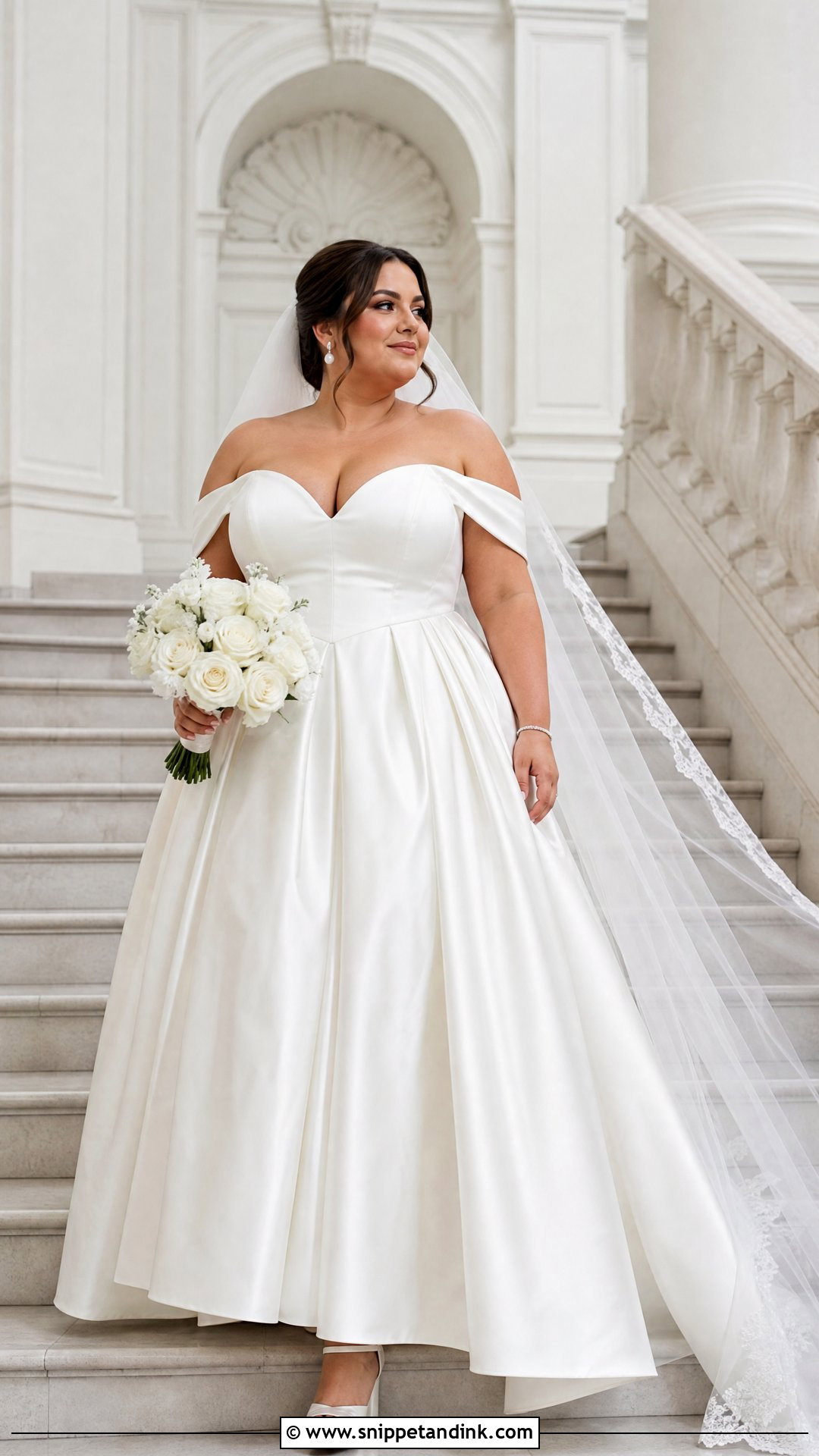
The basque waist dips into a V or U below the natural waistline, lengthening the torso and giving a full skirt a regal base. Wide straps, an off-shoulder neck or a secure strapless bodice all pair with it. Finish with a cathedral veil, pearl earrings, a delicate bracelet, satin block heels and a structured bouquet. Torso length is the fit issue I watch for. If the point sits too low, it folds or digs in when you sit; if too high, the shape loses its effect. Ask your seamstress to adjust the bodice length to your own torso. On a staircase, this is the shape that photographs best from below.
11. Plus Size Satin Wedding Dress With Ruched Bodice
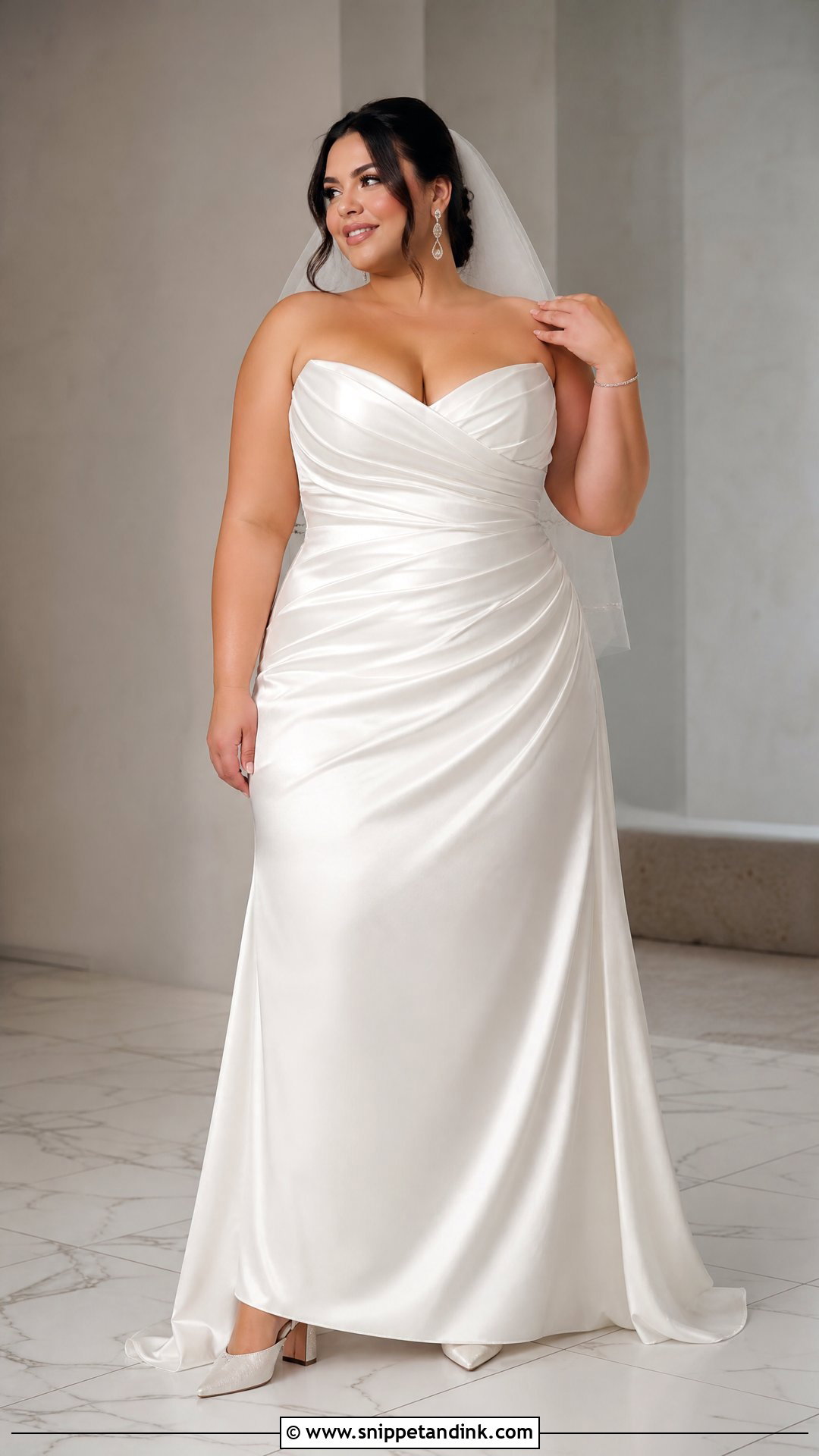
Ruching on satin adds texture and covers the transition from neck to waist. A diagonally draped bodice looks especially polished over an A-line or fit-and-flare skirt. Underneath the folds, there should still be cups and boning; ruching alone doesn’t support. Choose a sweetheart, V-neck or one-shoulder design. Crystal earrings, a slim bracelet, pointed block heels and a simple tulle veil are enough, since the gathers already give interest. At each fitting, check the folds lie smoothly. Ruching that bunches near the side seams usually means the bodice is slightly too small.
12. Plus Size Satin Wedding Dress With Draped Neckline
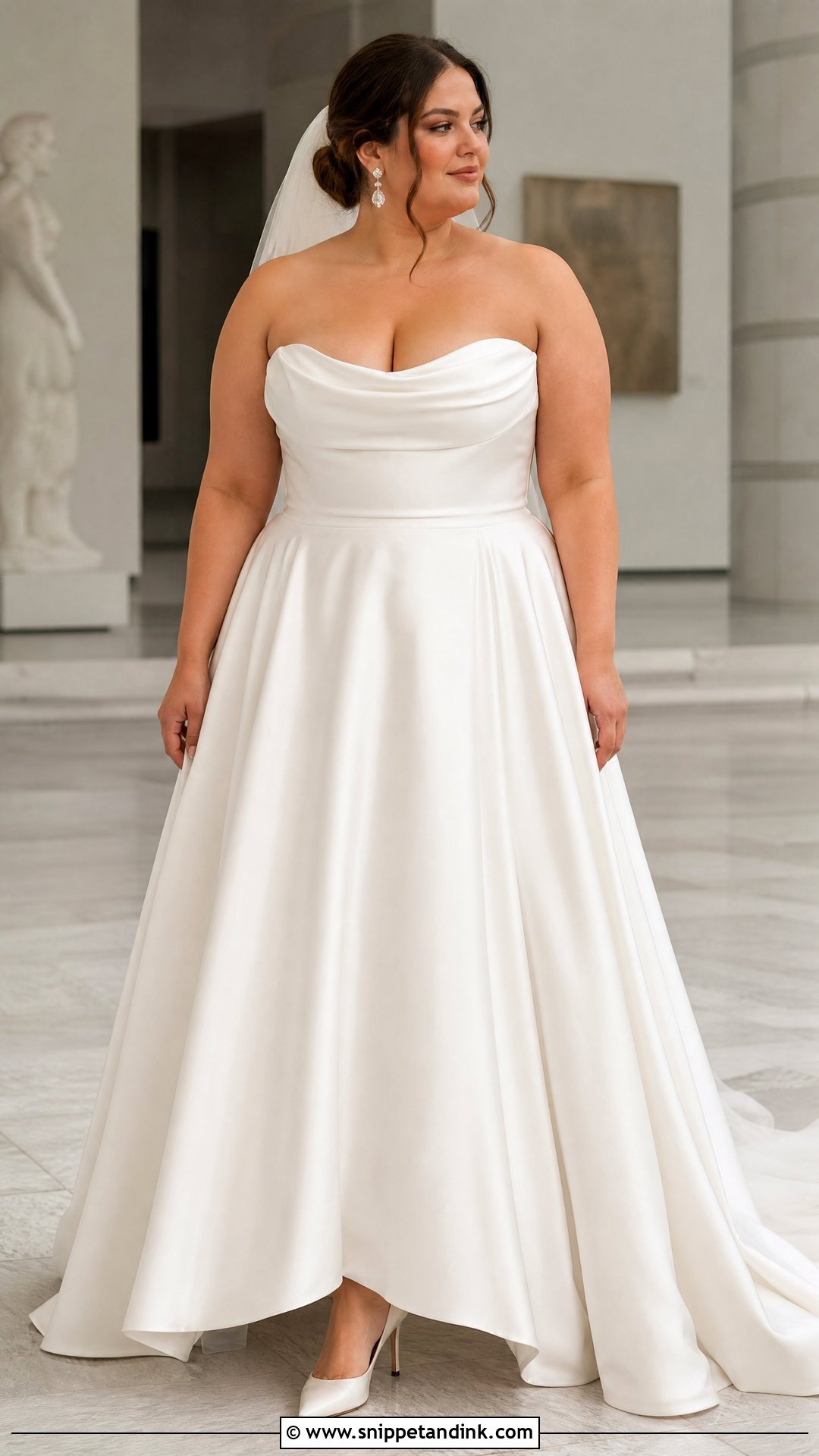
A draped neckline softens a structured satin gown. A strapless scoop, a subtle cowl or a folded portrait neckline pairs well with a fitted waist and flowing A-line skirt. Drape moves when you bend, so built-in cups and boning are essential to keep it in place. Lean forward in the fitting room to check. Pearl-and-crystal earrings, a sleek low bun, ivory heels and a veil beneath the hair finish it. A small structured bag holds reception essentials. Skip the necklace if the drape is the feature. It feels current without chasing a trend.
13. Plus Size Satin Wedding Dress With Pockets
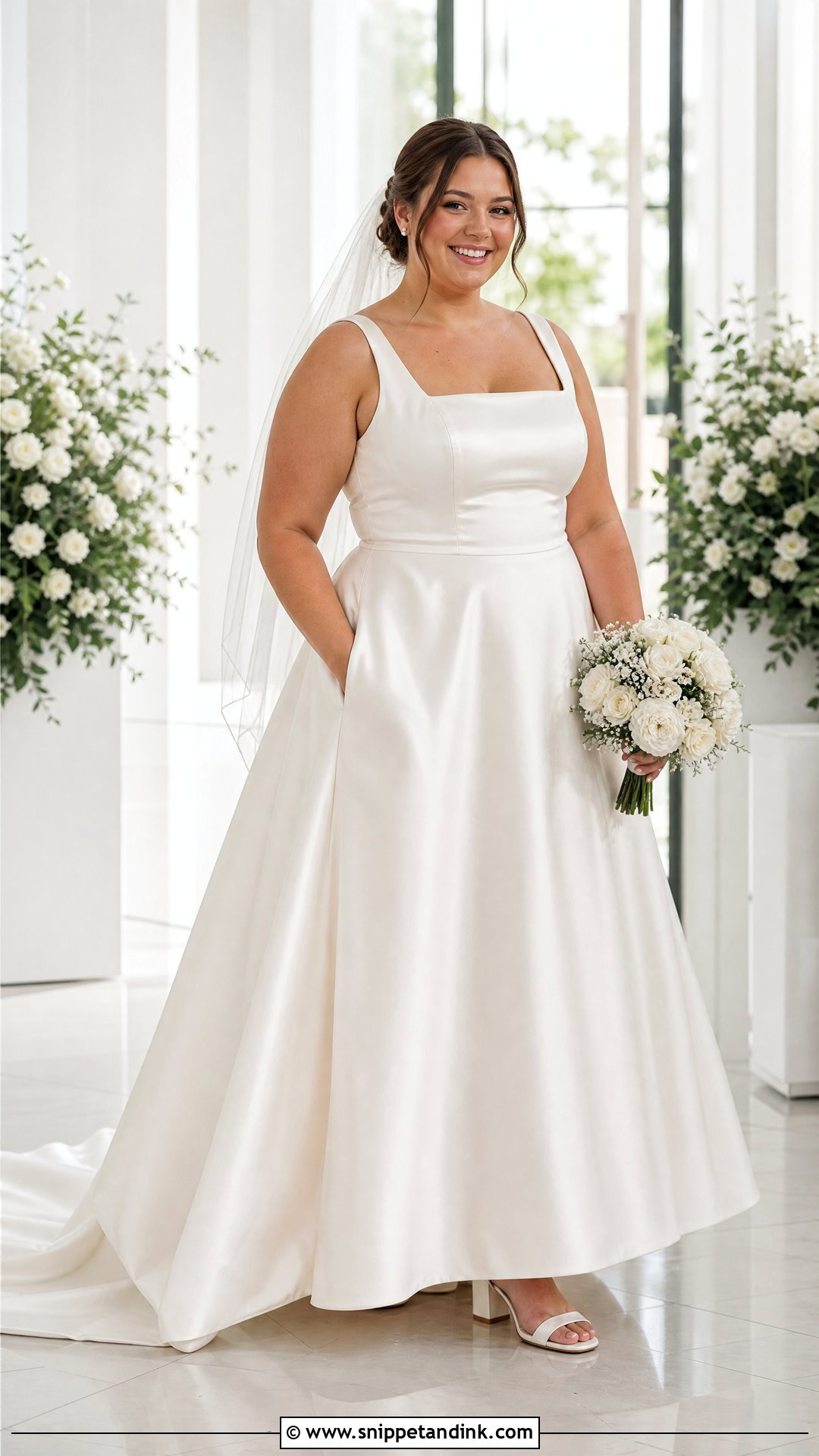
Pockets in a satin gown are a detail I’ve rarely seen a bride regret asking for. They sit most discreetly in the side seams of an A-line or ball gown, where the skirt volume hides them. Pair with a square or V-neck bodice, supportive straps and a defined waist. Pearl studs, low block heels, a fingertip veil and a compact bouquet that leaves a hand free complete it. Test what you’ll carry. A phone drags satin out of shape and shows as a bulge in photos; a lipstick and a tissue won’t. Pockets can usually be added during alterations if the gown doesn’t have them.
14. Plus Size Satin Wedding Dress With Detachable Sleeves
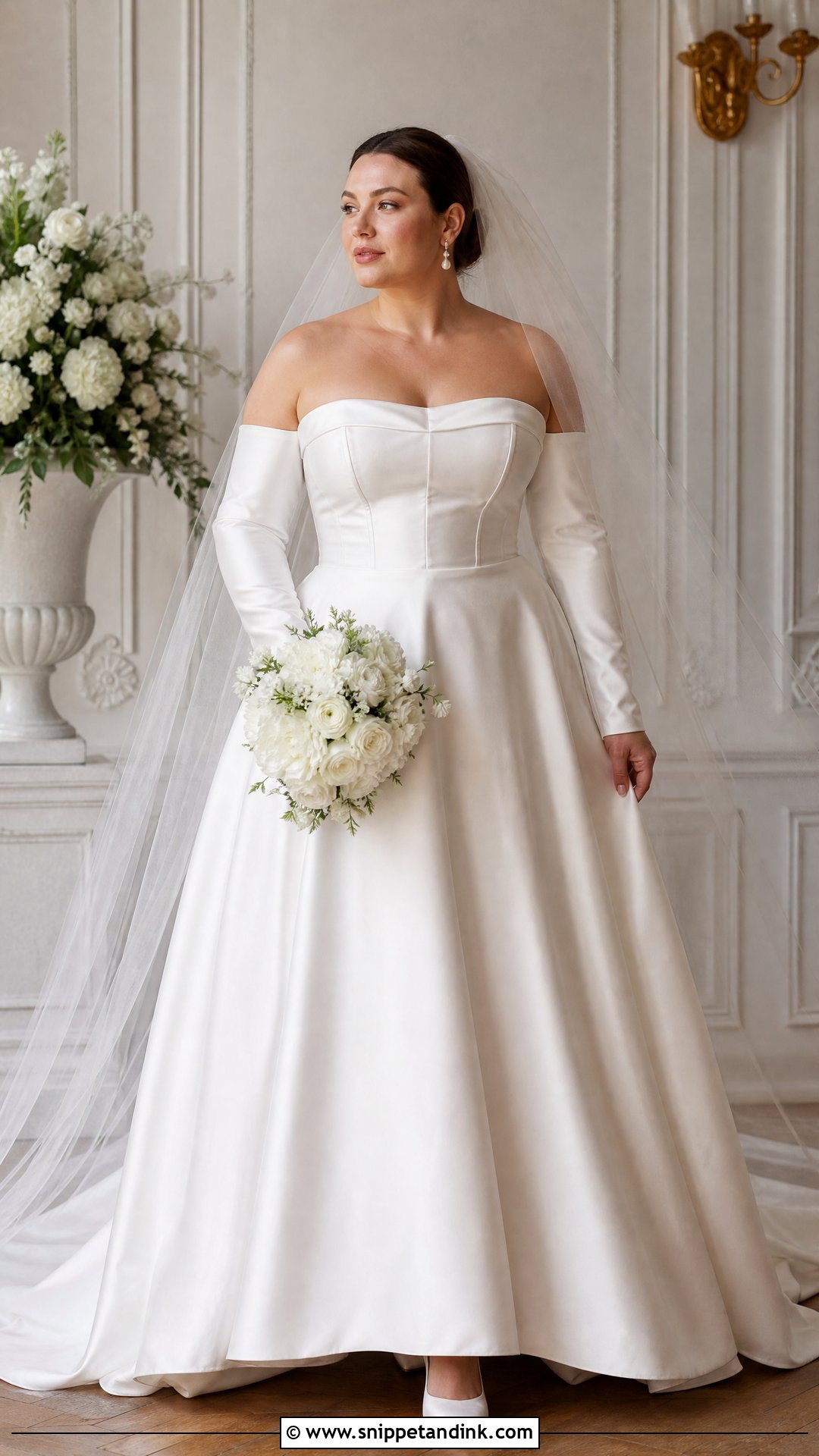
Detachable sleeves give one satin gown two looks. Start the ceremony with fitted long sleeves, soft puffs or off-shoulder bands attached to a strapless bodice, then take them off for the reception. Pearl earrings, satin pumps and a cathedral veil suit the first look; swap to statement earrings, block heels and a short veil or hair comb for the second. What I check is how the sleeves attach. Fastenings should hide inside the bodice edge, and the bodice must hold up on its own without leaning on the sleeves for support.



15. Plus Size Satin Wedding Dress With Overskirt
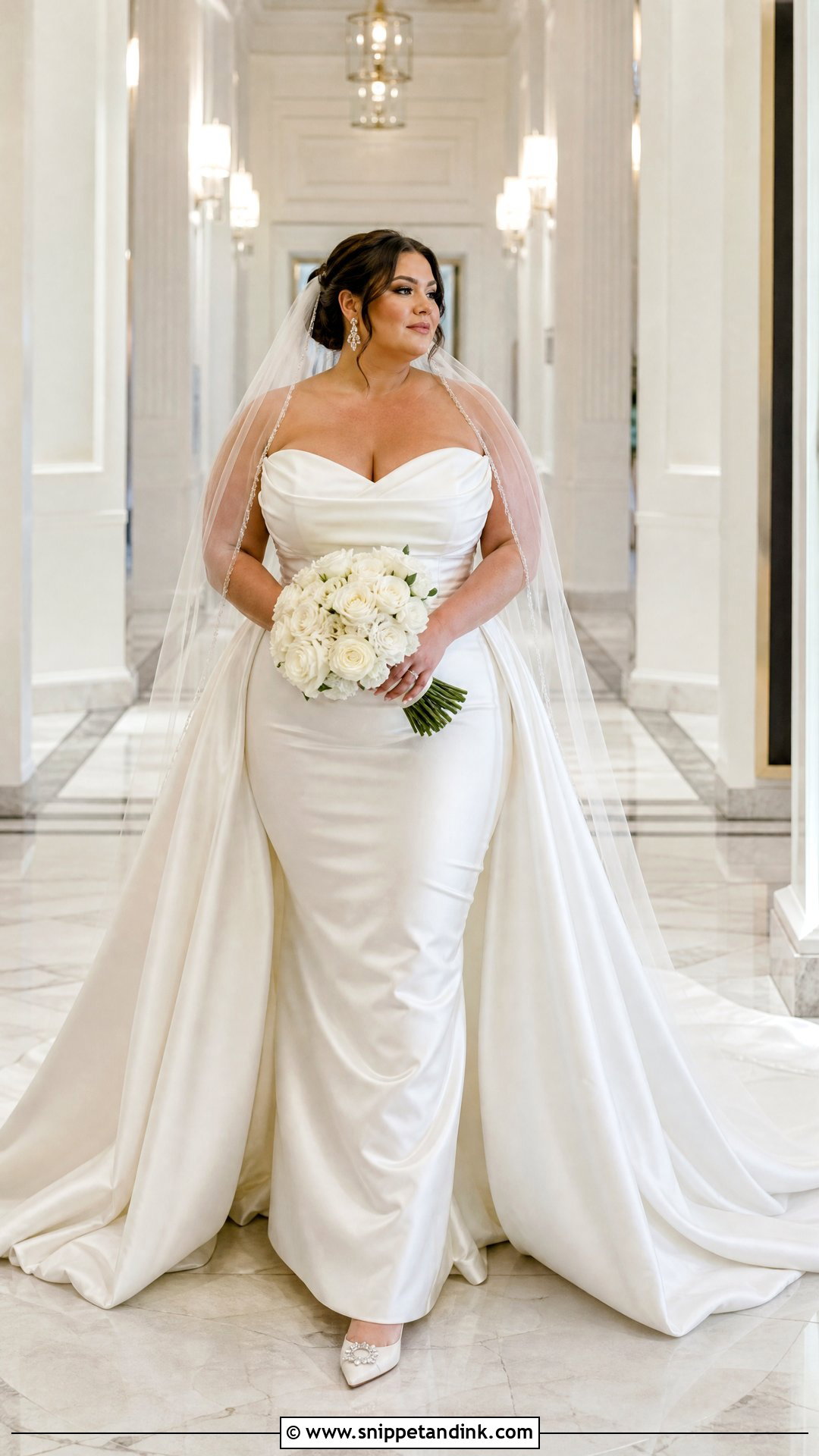
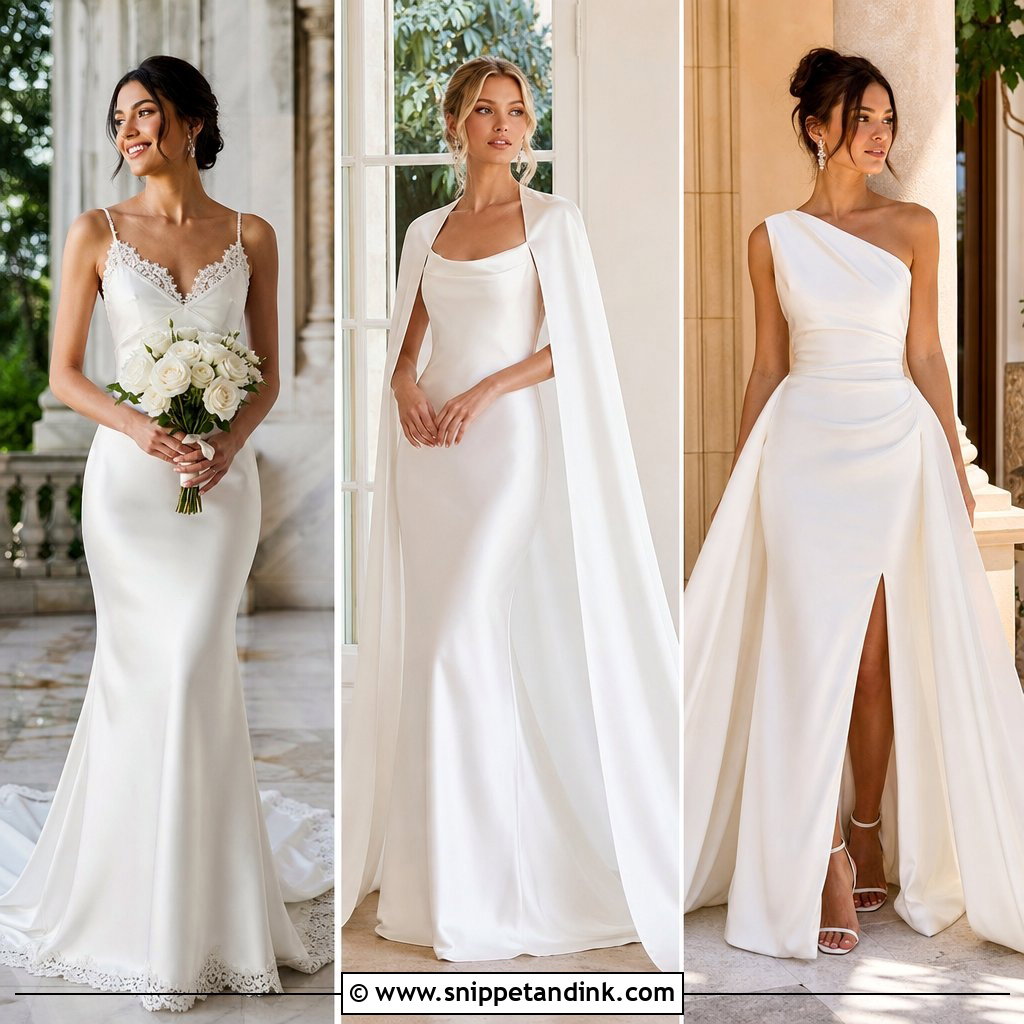
A detachable overskirt adds ceremony volume and a longer train over a satin column, mermaid or fit-and-flare base. For the ceremony, add a cathedral veil, crystal earrings and pointed heels. At the reception, remove it to reveal the slimmer gown and switch to block heels for dancing. The waistband must lie flat and fasten securely with no visible ridge. I always have the seamstress show a bridesmaid how to attach and remove it, so it takes seconds on the day. Keep both pieces in the same satin, as two slightly different whites look mismatched in photos. Suits ballrooms.
16. Plus Size Satin Wedding Dress With Bow Back
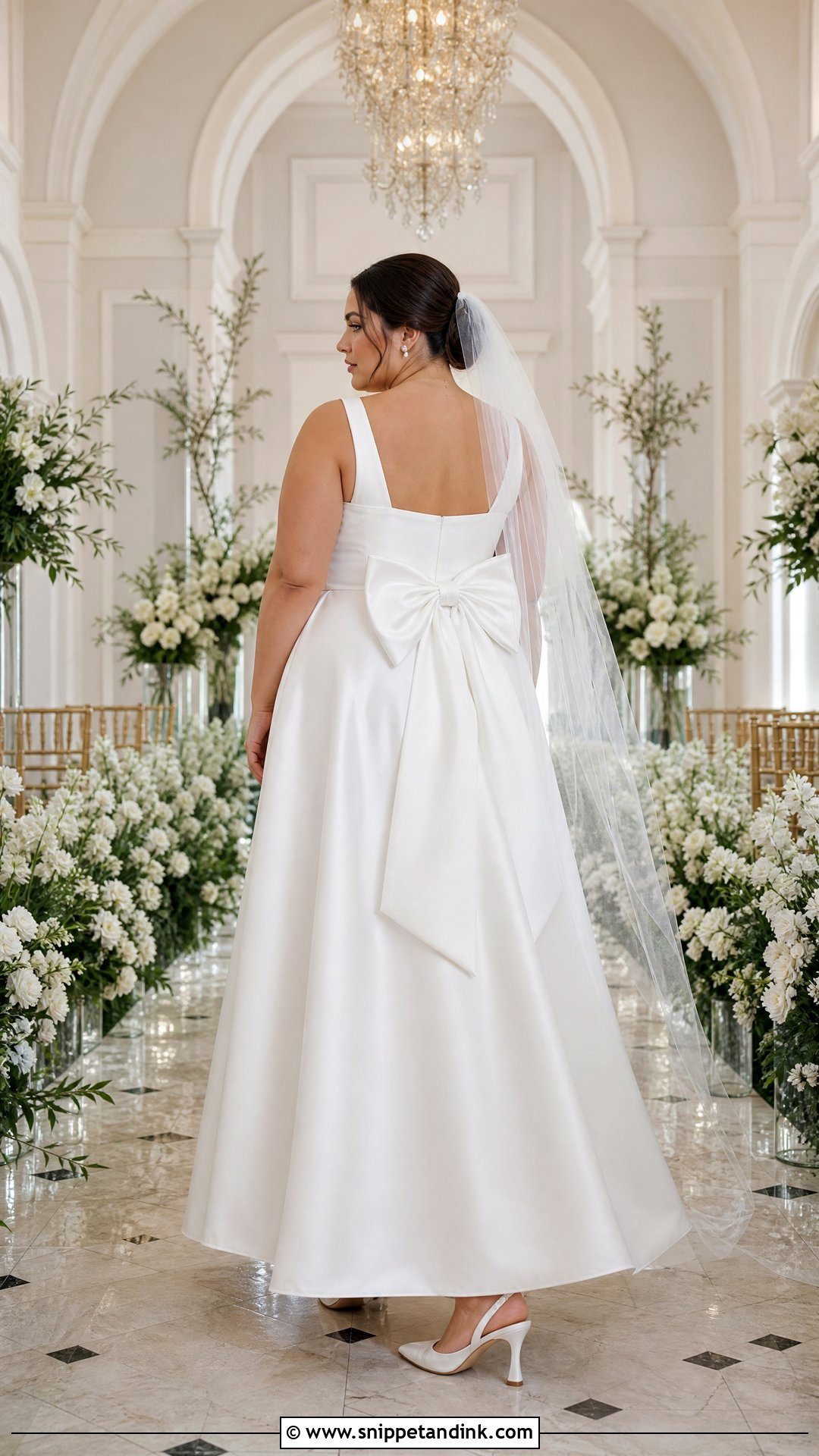
A bow brings personality to the back of a plain satin gown. Choose a structured removable bow at the waist or a softer one with long tails over an A-line skirt. Keep the front clean, with a square, scoop or strapless neckline, so the back stays the feature. Pearl studs, a smooth updo, slingback heels and a sheer veil that lets the bow show through suit it. Oversized bows get crushed against chair backs and can clash with bustle points, so I’d test sitting and plan the bustle around it. A removable bow gives you options later.
17. Plus Size Satin Wedding Dress With Lace Appliqué
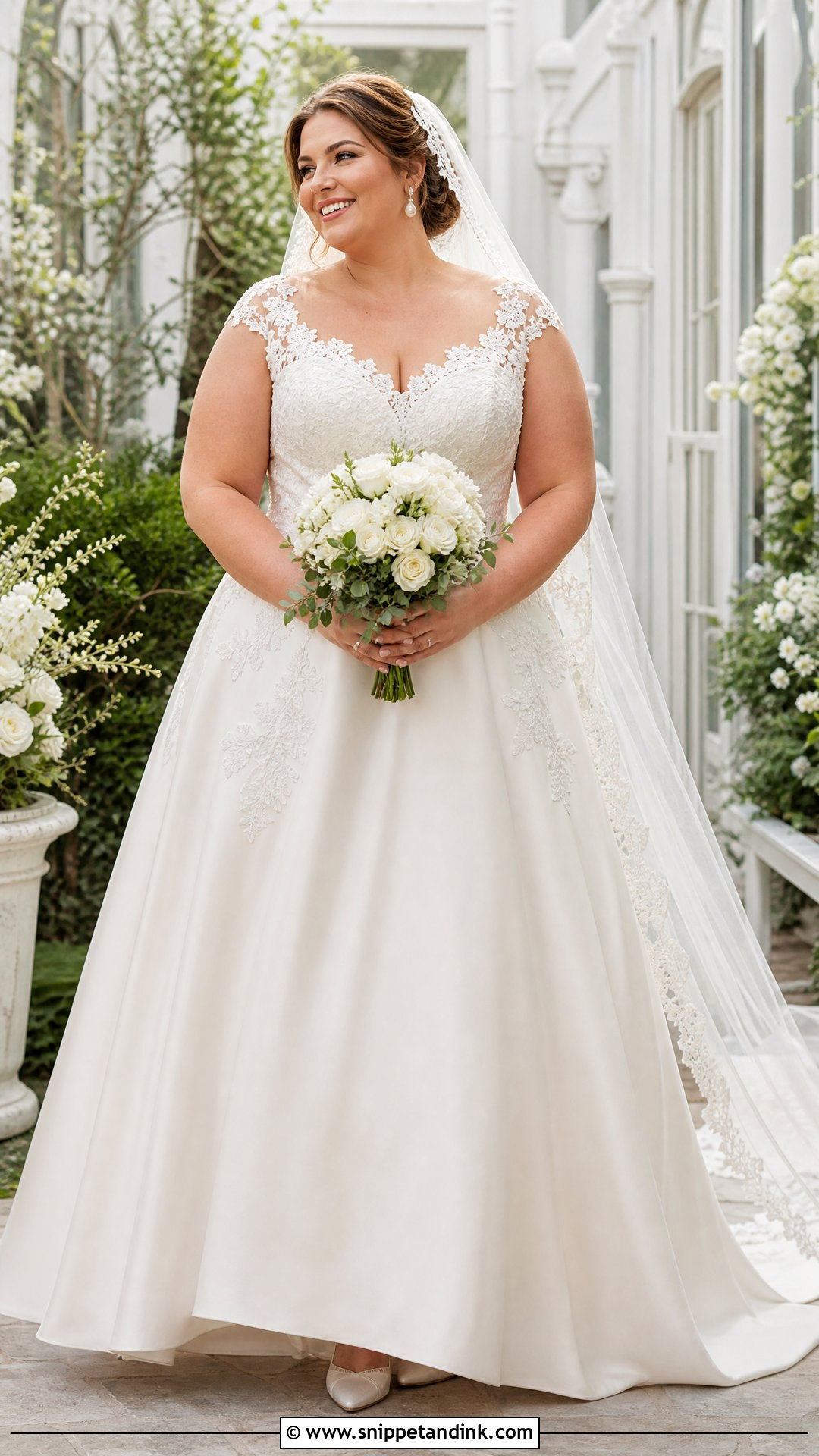
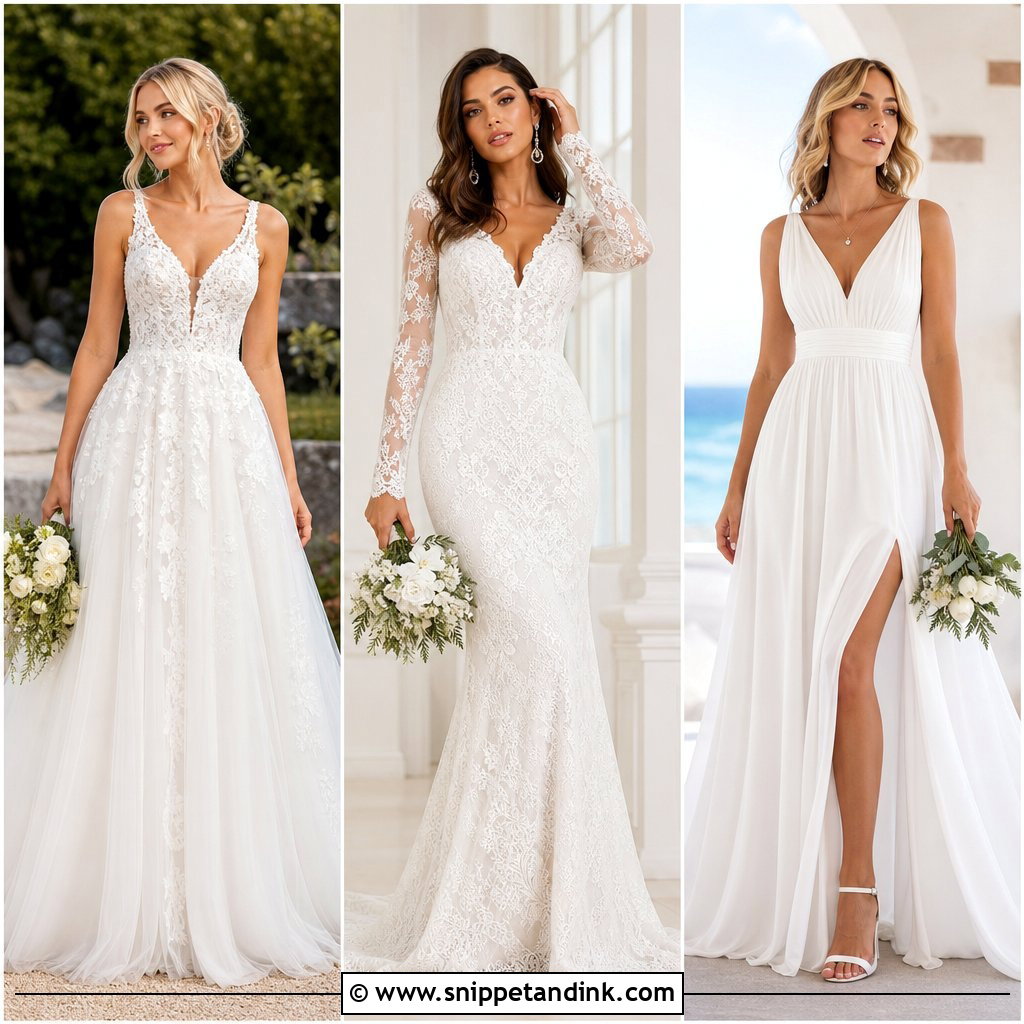
Lace appliqué softens satin’s smooth surface while keeping its structure. I like lace placed in one or two areas, the neckline, straps, waist or train, rather than covering the gown. A satin A-line with a lace bodice balances the two textures well. Pearl earrings, an ivory comb, comfortable pumps and a veil with a narrow lace edge finish it, with soft white flowers and greenery. Run your fingers along the appliqués at the armholes and neckline. If the lace edges feel rough, a soft lining or binding added by the seamstress will save you hours of scratching.
18. Plus Size Tea-Length Satin Wedding Dress
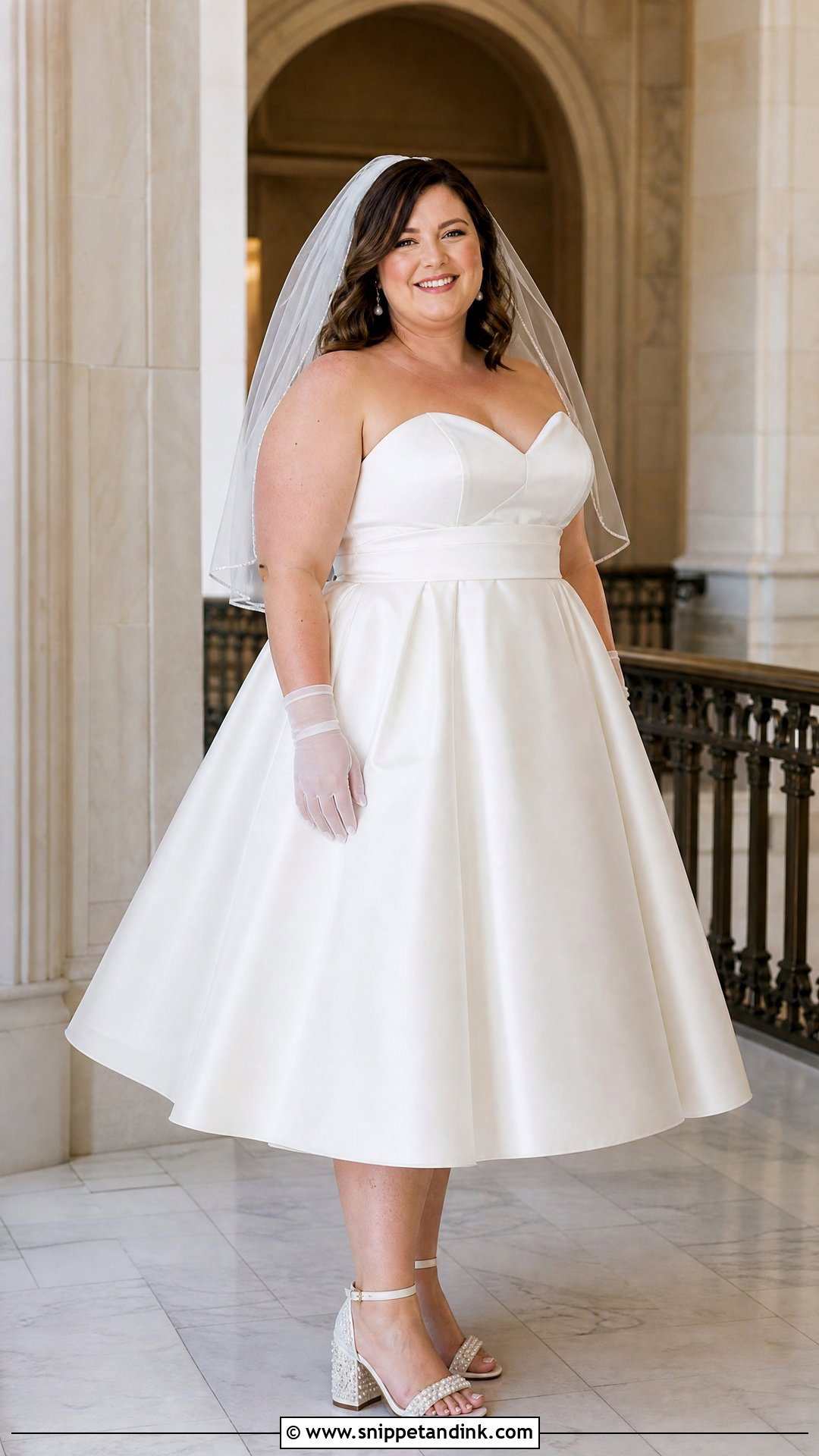
A tea-length satin wedding dress moves freely and puts your shoes on show. Choose a fitted bodice with a square, sweetheart or bateau neckline and a skirt ending between knee and ankle. Embellished block heels, pearl earrings, short gloves and a birdcage or shoulder veil suit it. A defined waistband adds structure; a light petticoat gives controlled volume. Check the hem from every angle at alterations, since an uneven hem is obvious at this length. Comfortable shoes matter more than usual too, because they can’t hide. I often suggest it for courthouse ceremonies.
19. Plus Size Minimalist Satin Slip Wedding Dress
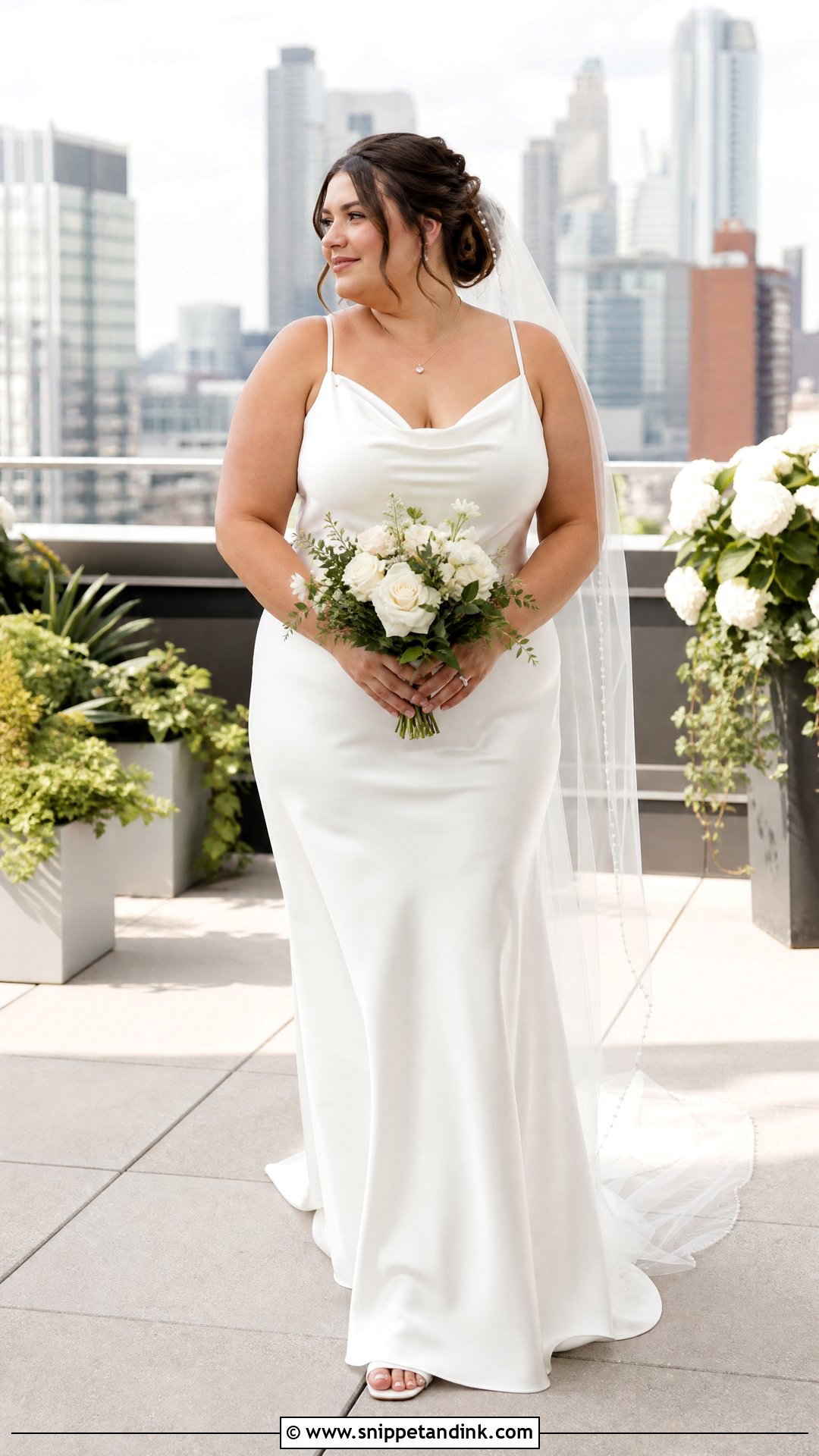
A satin slip gown is the simplest dress on this list and the hardest to get right on a curvy body. Lightweight satin shows every line, so I’d only choose a bias-cut slip in a substantial satin with a full lining, adjustable straps and real room through the hips. A V-neck or soft cowl suits it. A delicate pendant, sleek drops, ivory sandals and a sheer chapel veil finish it, with a low bun or glossy waves. Smoothing underwear can help, but only if you can sit and breathe in it. Check how it falls standing, sitting and walking. On a breezy rooftop, the fluid fabric moves well.



20. Plus Size Champagne Satin Wedding Dress
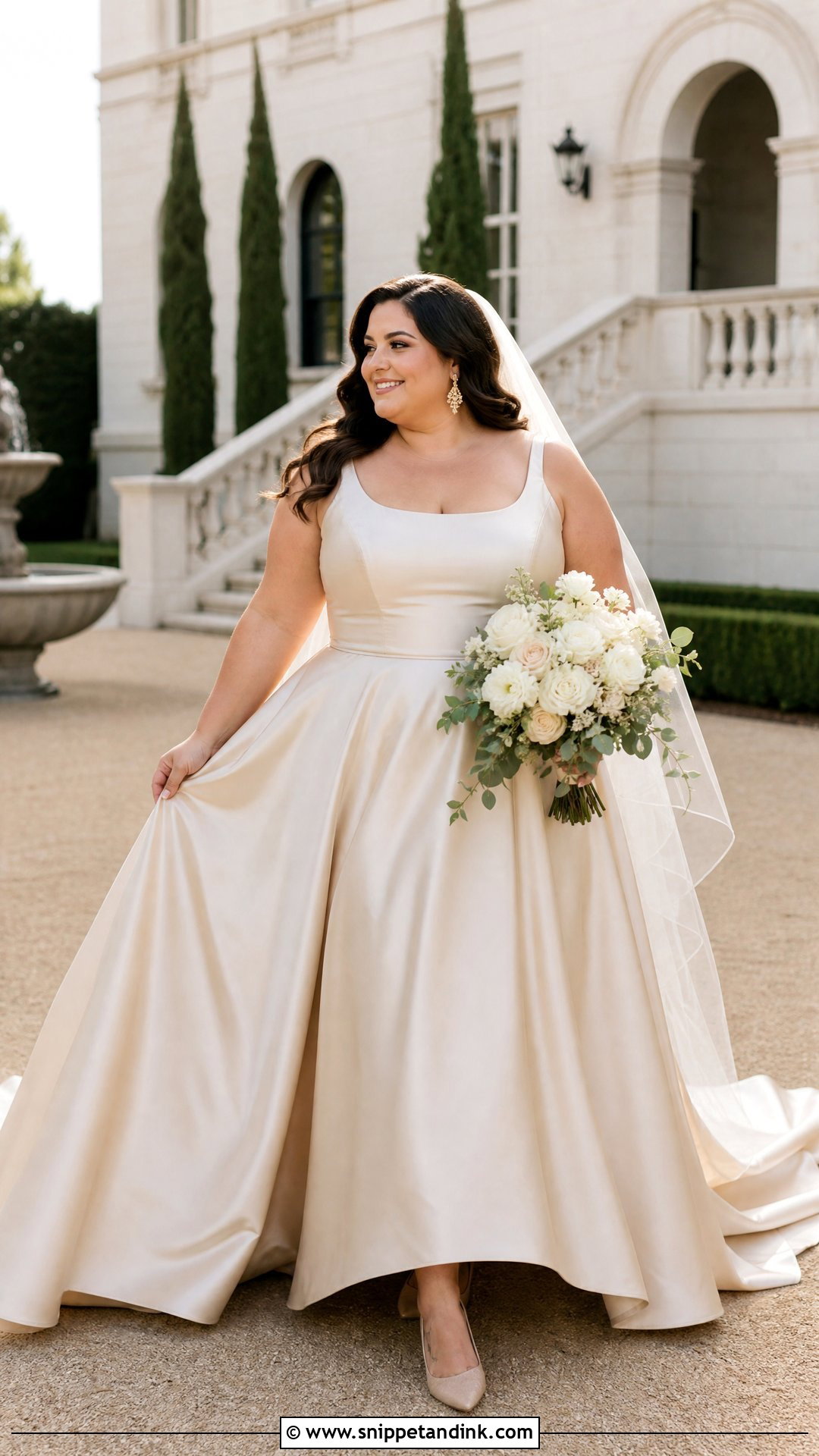
Champagne satin is a warm alternative to bright white. Hold it near your face in daylight to see how it suits your skin, since champagne ranges from nearly ivory to quite golden. It pairs well with pearls and neutral shoes. Gold-tone earrings, a soft ivory veil, champagne satin heels and cream flowers with muted greenery complete it. If the gown has several layers, check they make the same overall tone; a lining that’s warmer than the outer satin can turn the whole gown peach in photos. It works in every season and glows at golden hour.
Satin Creases. Plan the Wedding Morning Around It
Every satin gown wrinkles somewhere, usually across the lap and at the back of the skirt. A few habits keep it under control.
- Take the gown out of its bag the day before and hang it from a high hook so the skirt falls free.
- Steam it, never iron it, and steam from the inside of the skirt where you can. Direct heat can leave shiny marks on satin that won’t come out.
- In the car, lift the back of the skirt before you sit so you’re not sitting on the train, and spread it over your lap.
- Keep a small handheld steamer with whoever helps you dress, for a quick touch-up before portraits.
Keep drinks and lipstick away from the bodice until after photos. Water marks show on satin, so blot a spill rather than rubbing it.
How Satin Shows Up in Photographs
Satin reflects light, which is what makes it look rich, but direct flash can bounce off it and flatten the folds into white patches. It helps to mention your fabric to your photographer, who can adjust lighting angles accordingly. Bright white satin can also look blue-toned outdoors in shade, while ivory and soft white stay warmer. If you’re torn between two shades, ask the shop to photograph you in both, near a window and with a phone flash.
Satin Rewards Good Construction More Than Any Size Label
No body rule decides your wedding gown. The right one supports you, reflects who you are and lets you enjoy every part of the day. The ideas above range from classic A-lines and full ball gowns to fitted shapes, slips and convertible designs. When you shop, focus on construction, how the gown moves, the weight of the satin and what can be altered, rather than the number on the label. Bring your shoes and undergarments to every fitting, and walk and sit in the gown each time. With careful tailoring and accessories you’ve chosen yourself, a satin gown will feel polished and entirely yours.
You'll Like These Ideas:




Leave a Reply