
A plain gown leaves nowhere to hide, and that is exactly why I like dressing brides in satin and silk. With no lace or beading to carry the look, the cut, the weight of the fabric and the fit at the bust do all the work. The slip dresses, column gowns and soft A-lines below are the shapes I keep coming back to at fittings, from narrow straps to full sleeves and open backs. I’ve noted what each one asks of you underneath, at the tailor, and on your feet, because a simple dress is only simple once those things are right.
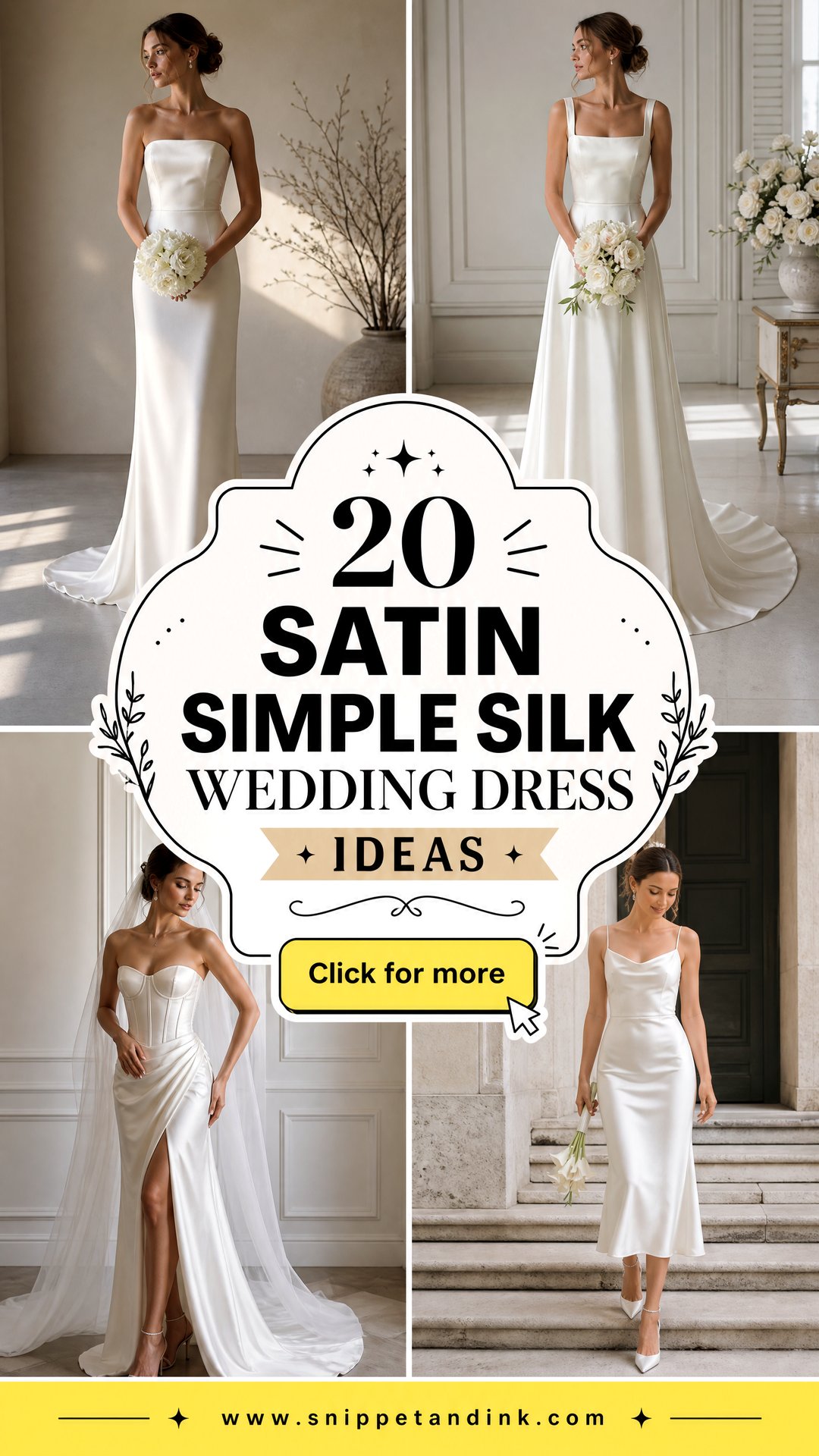
Silk Charmeuse, Crepe or Duchess Satin: Reading the Fabric Tag
Two dresses with the same cut can look nothing alike because of the cloth. Before a bride falls for a silhouette, I hand her a few swatches and ask her to scrunch each one in her fist for ten seconds. What happens next tells you more than the price tag.
- Silk charmeuse is light and liquid with a high shine on one side. It’s made for bias-cut slips and cowls, but it marks with water, shows every bump underneath and creases where you sit.
- Silk crepe has a matte, slightly grainy face and more weight. It skims rather than clings, so it’s kinder to anyone worried about lines.
- Duchess or mikado satin is heavy and stiff. It holds a strapless column, an A-line or a mermaid flare, and it resists wrinkling far better than a slip fabric.
- Polyester satin is cheaper and more crease-resistant than silk, though it can look shinier under flash and feels warmer on a summer day.
If you sweat easily or your ceremony is outdoors in July, I’d lean toward crepe or a matte satin. Shiny charmeuse shows damp patches at the underarm and the small of the back, and there’s nothing you can do about it once it happens.
Undergarments Come Before the First Alteration
Satin is honest. A bra band, a knicker line or shapewear that rolls at the thigh will all show through a slip or column. Buy your foundations before your first fitting, not after, because changing them later shifts the bust and hip measurements your seamstress has already pinned to.
My rule of thumb: for open backs and plunges, ask whether cups can be sewn into the bodice. For bias-cut slips, a nude laser-cut brief and a slip-grip shapewear short are usually enough. Wear the same set and the same shoes to every appointment, and do one fitting where you sit for twenty minutes so you can see where the fabric creases.
1. Simple Satin Slip Wedding Dress
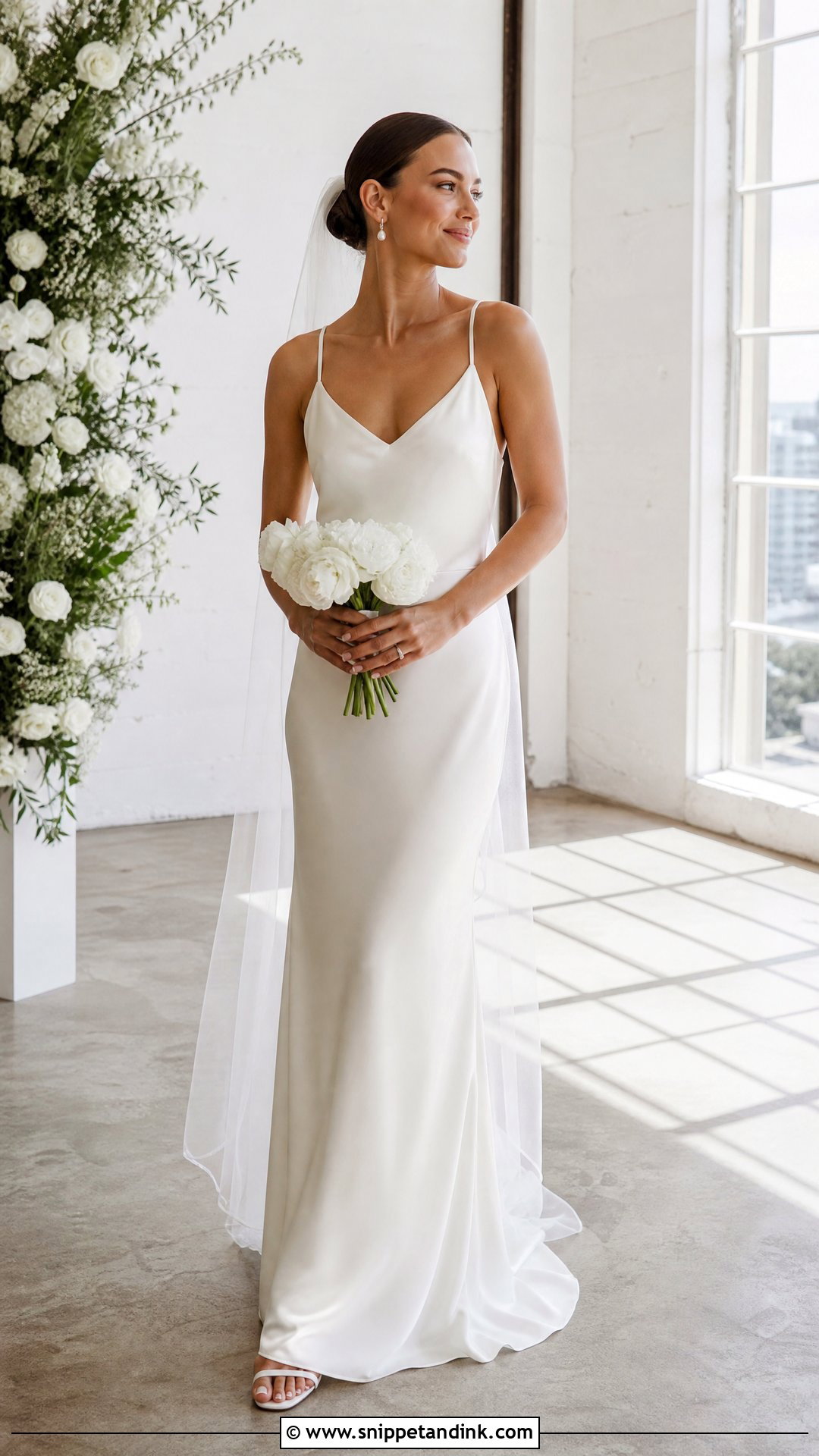
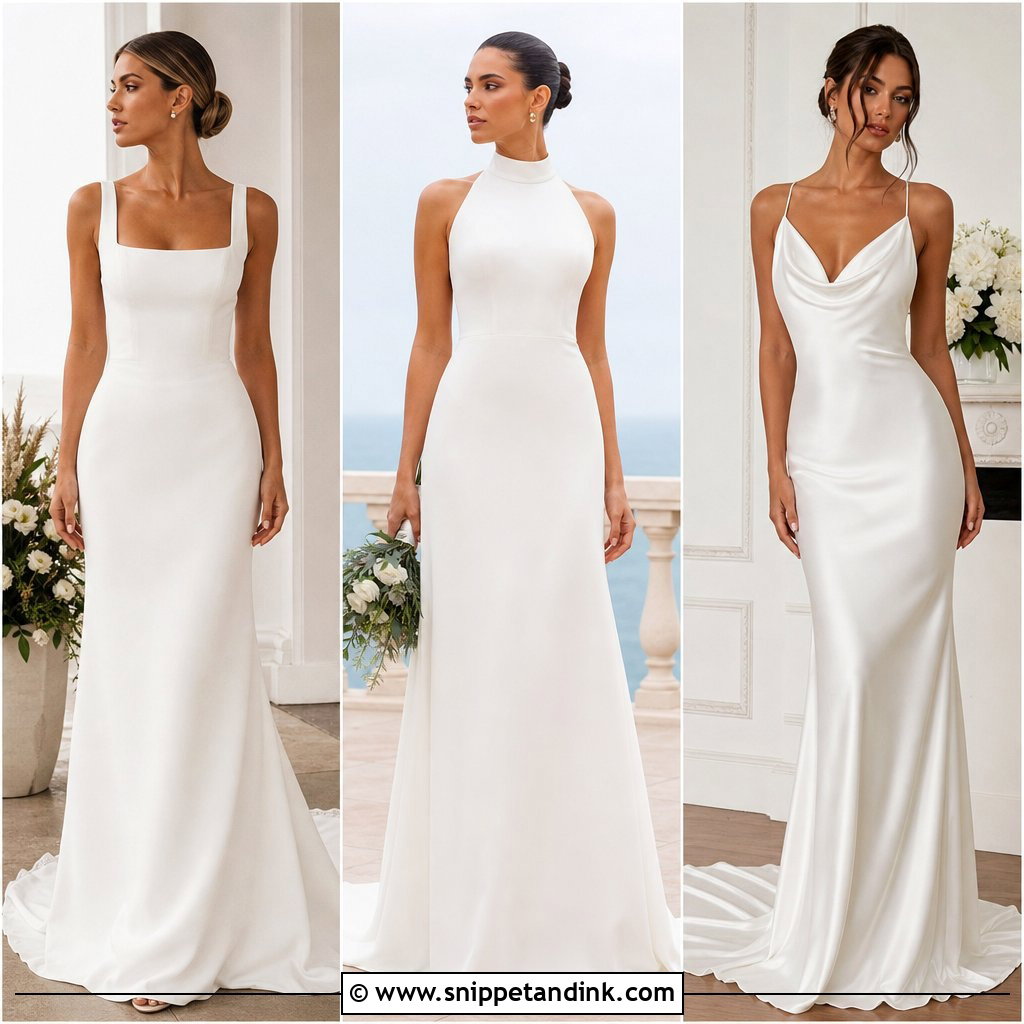
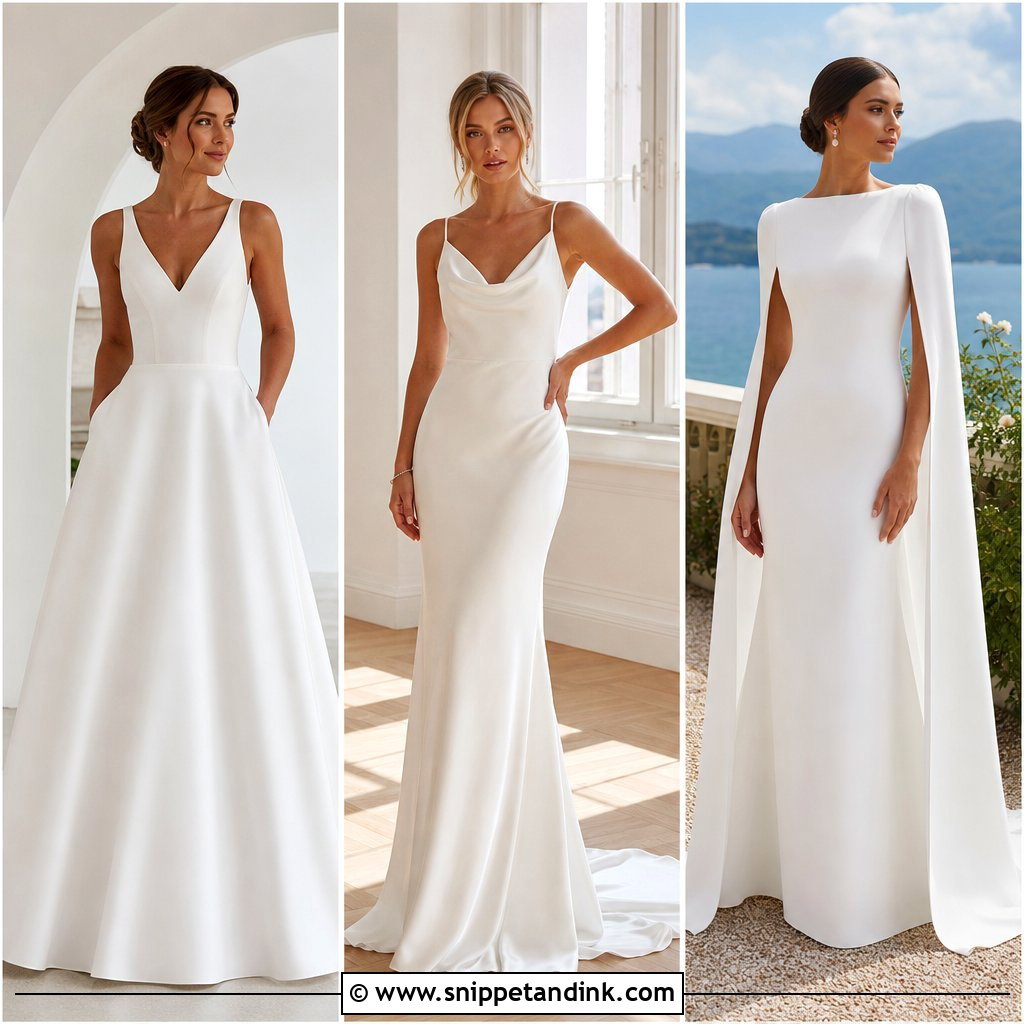
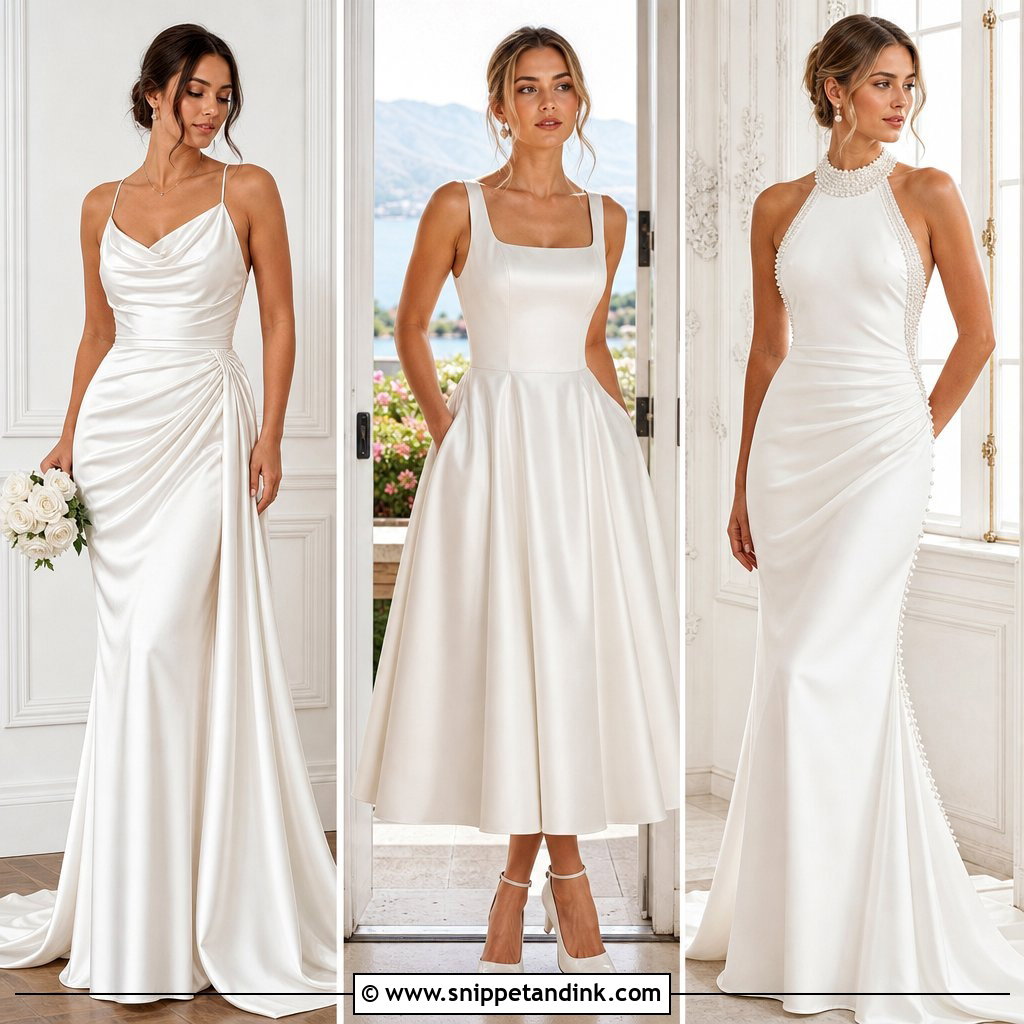
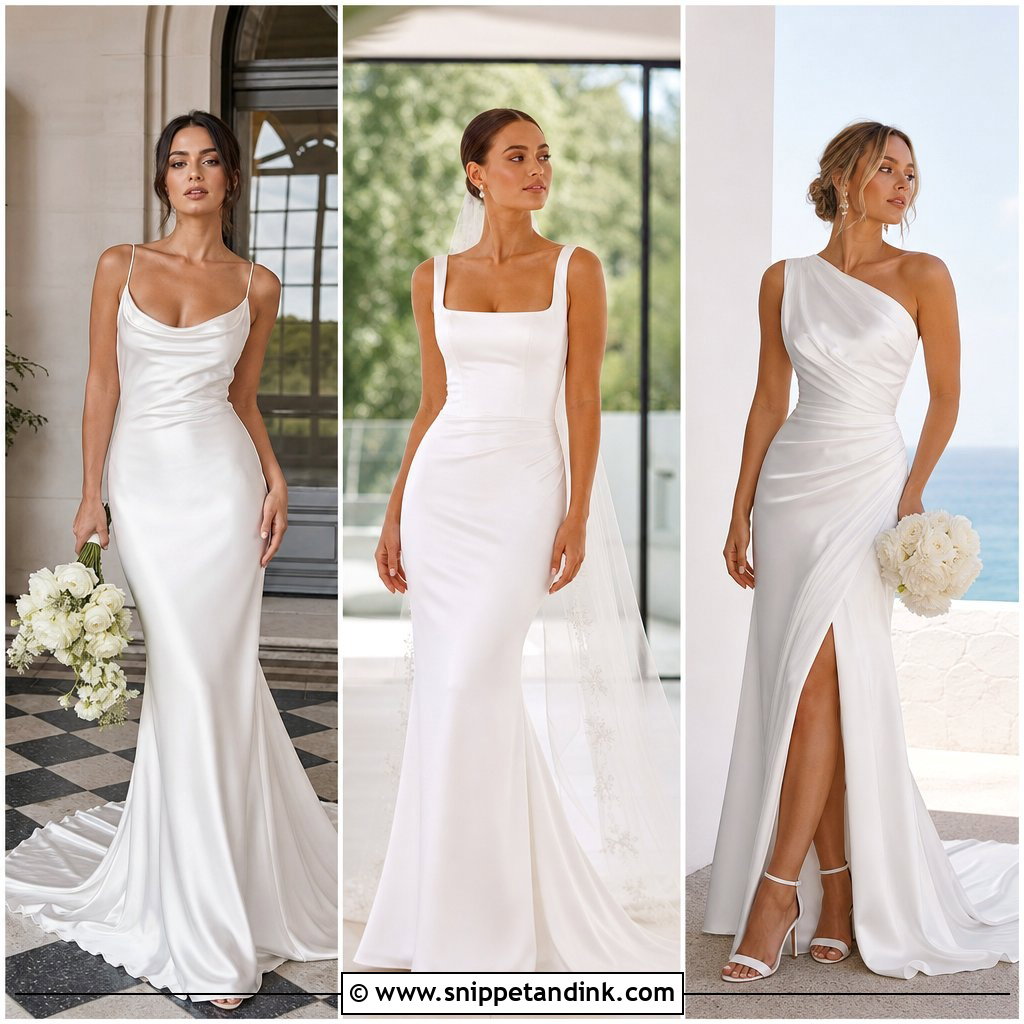
The slip is the dress I’m most careful with at a first appointment. Cut on the bias, satin drapes over the hips and stomach and shows every seam and strap underneath, so I always ask brides to bring the exact underwear they plan to wear. A floor-length hem that skims rather than clings is the goal; ivory reads traditional, while pearl or a pale champagne warms up fair skin in daylight. Keep the rest quiet with low strappy sandals, small pearl earrings and a plain tulle fingertip veil, and wear the hair in a neat bun or loose waves so the neckline stays visible. It suits a loft, a small ceremony or an evening dinner more than a cathedral aisle.
2. Silk Cowl Neck Wedding Dress
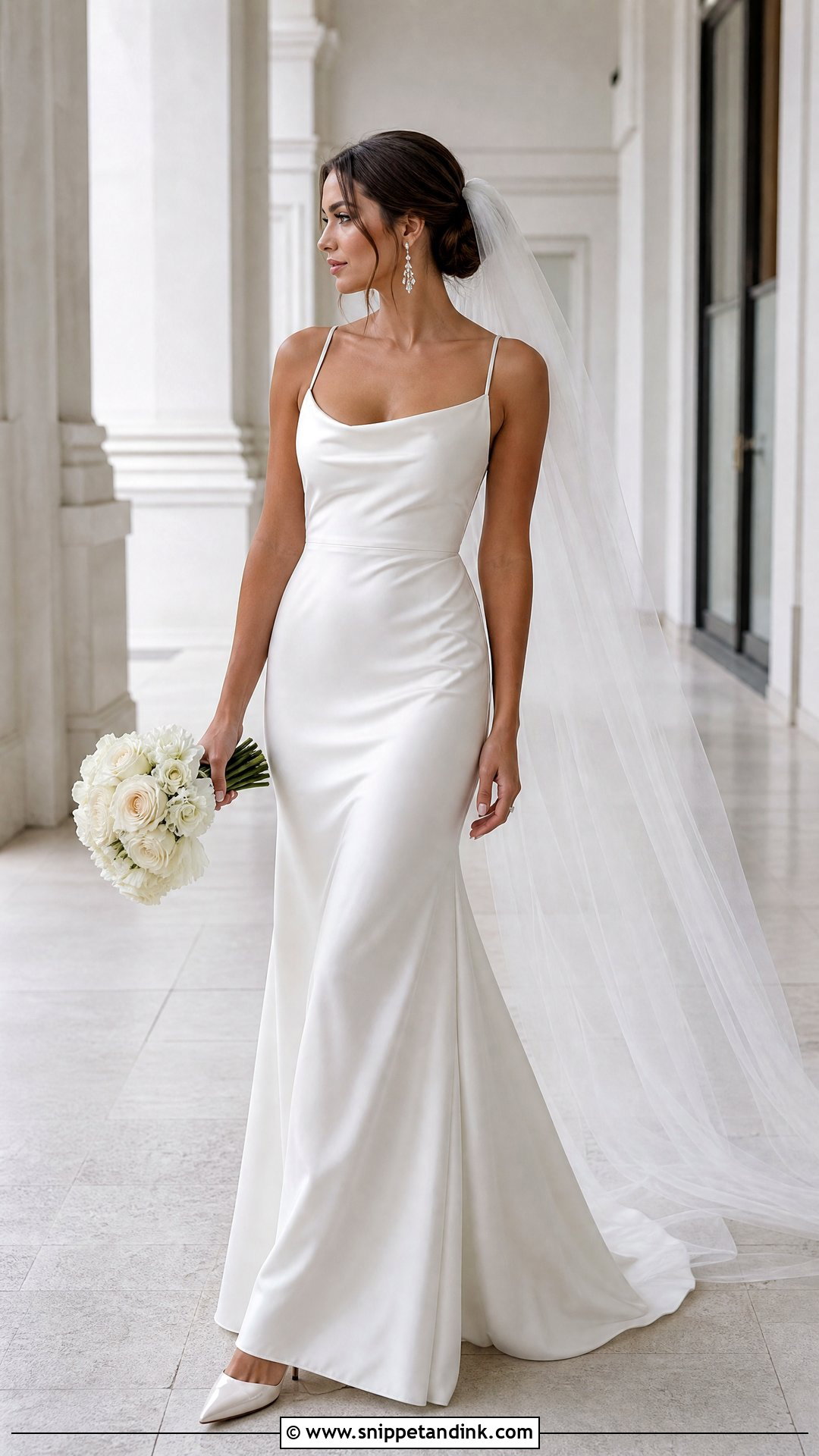
A cowl neck only behaves if there’s structure hiding under the drape. Without a stitched-in bra cup or a fine elastic at the inner neckline, the folds slide forward every time you lean to sign the register. I look for slim straps, a gently fitted waist and a fluid skirt, then keep the chest bare, since the cowl is already the necklace. Crystal drops, pointed ivory pumps and a sleek low chignon finish it. A sheer cathedral veil adds drama without hiding the folds, or you can swap it for a polished comb if you’d rather not manage the length.
3. Strapless Satin Column Wedding Dress
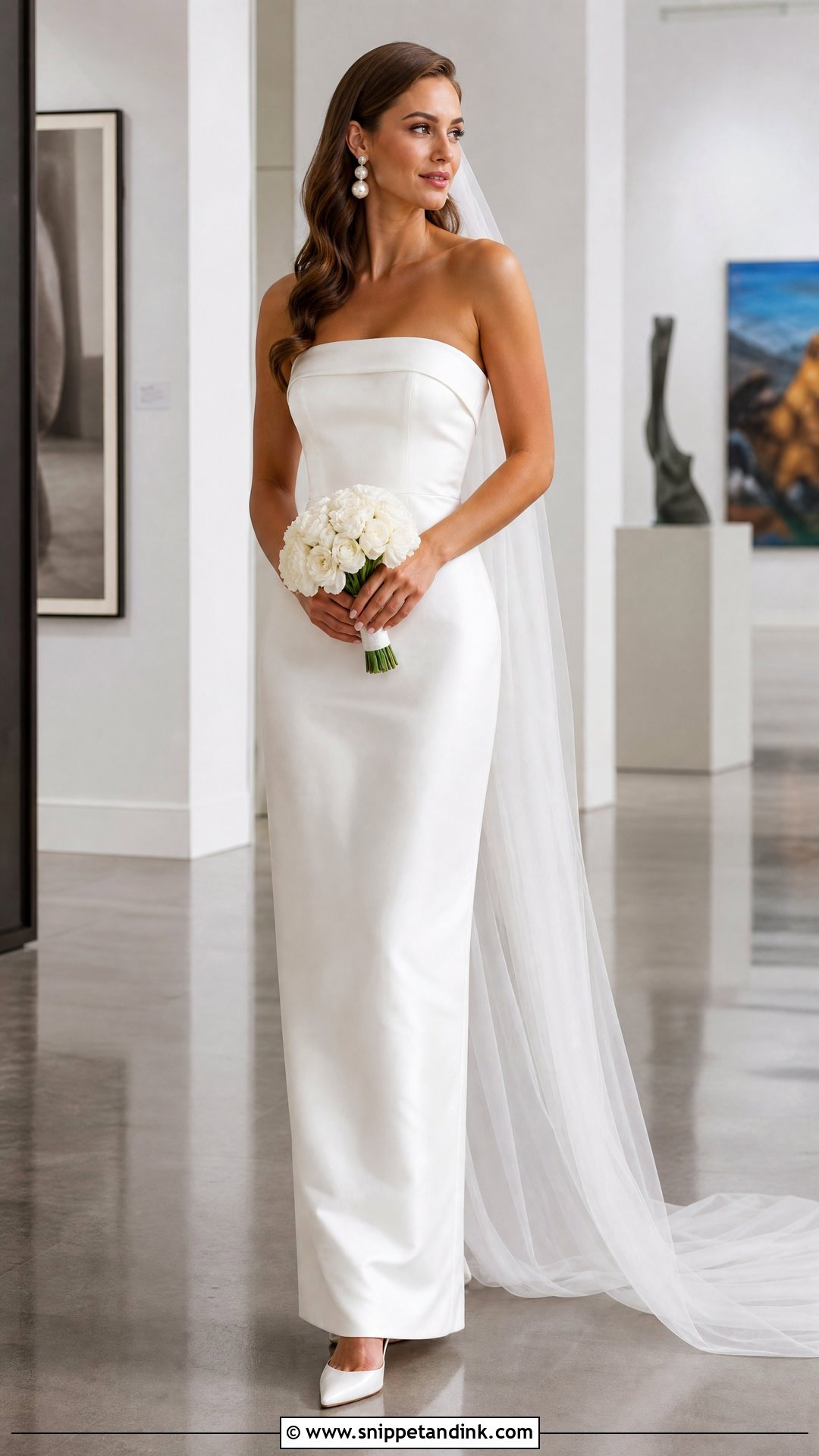
Strapless column gowns live or die on the corsetry inside. A thicker satin, something like a duchess or a heavy crepe-back, holds a straight or softly curved neckline and lets the skirt fall in one long line. Thin satin on this cut wrinkles across the hips the moment you sit. I’d pair it with a long plain veil, sculptural pearl earrings and satin pumps with a heel you can actually stand in, plus a small white bouquet that doesn’t block the waist. A smooth bun or side-parted waves frames the shoulders. Ask your seamstress to check the bodice while you breathe deeply, sit and raise your arms; it should grip, not squeeze.
4. Silk Square Neck Wedding Dress
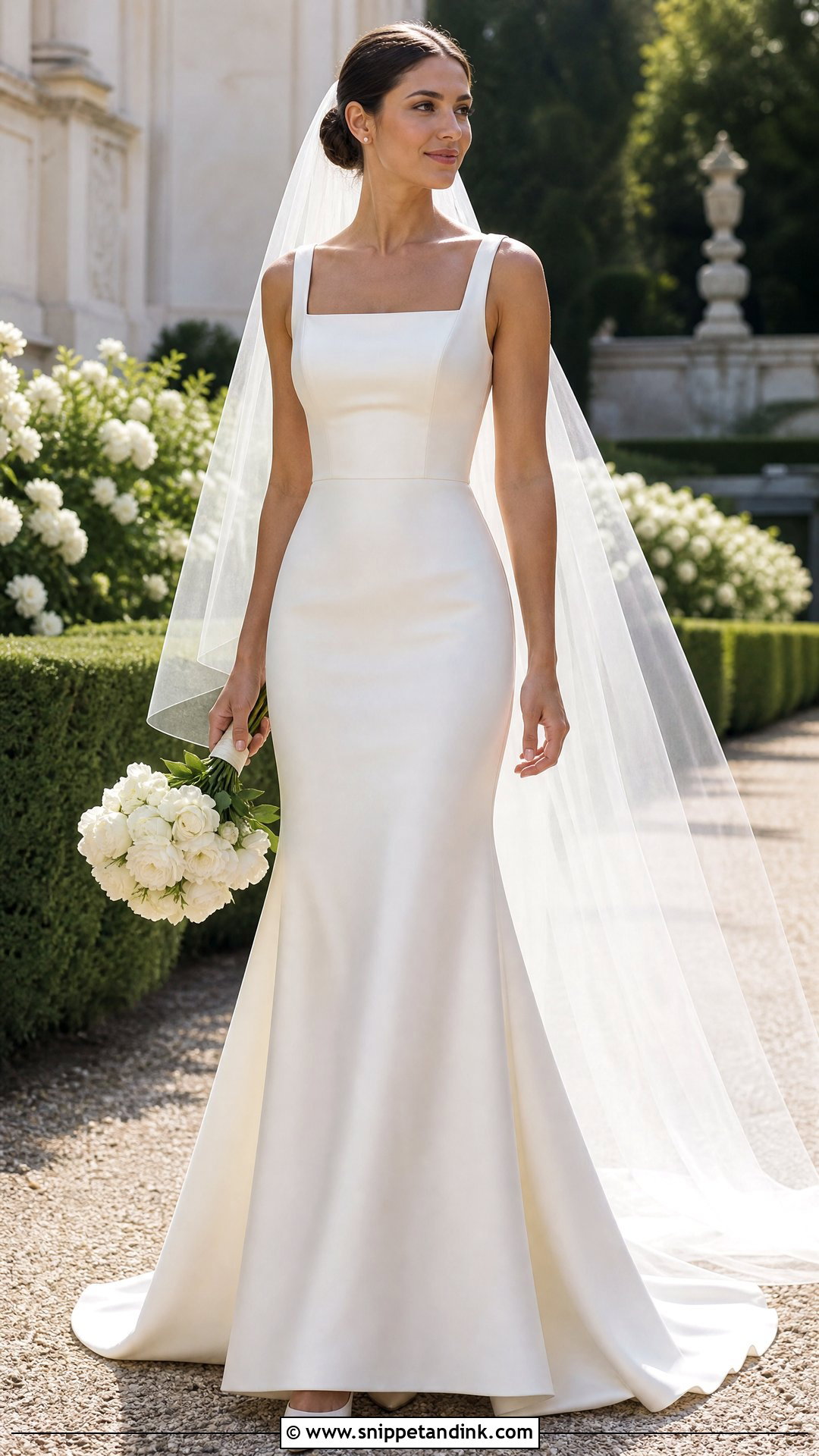
A square neck gives coverage without anything fussy. Wide straps and a structured bodice give more support than a slip, and a fitted top with a softly flared skirt moves well. The corners of the neckline need to sit exactly level, so a good fitter will pin them while you stand naturally rather than straight-backed. Pearl studs, a plain chapel-length veil and closed-toe ivory heels keep things clean, and a low bun with a centre part repeats the lines of the neck. If the front is very plain, a low square back or a row of covered buttons gives guests something to look at during the ceremony. Historic rooms and formal gardens are where this shape feels most at home.
5. Satin A-Line Wedding Dress
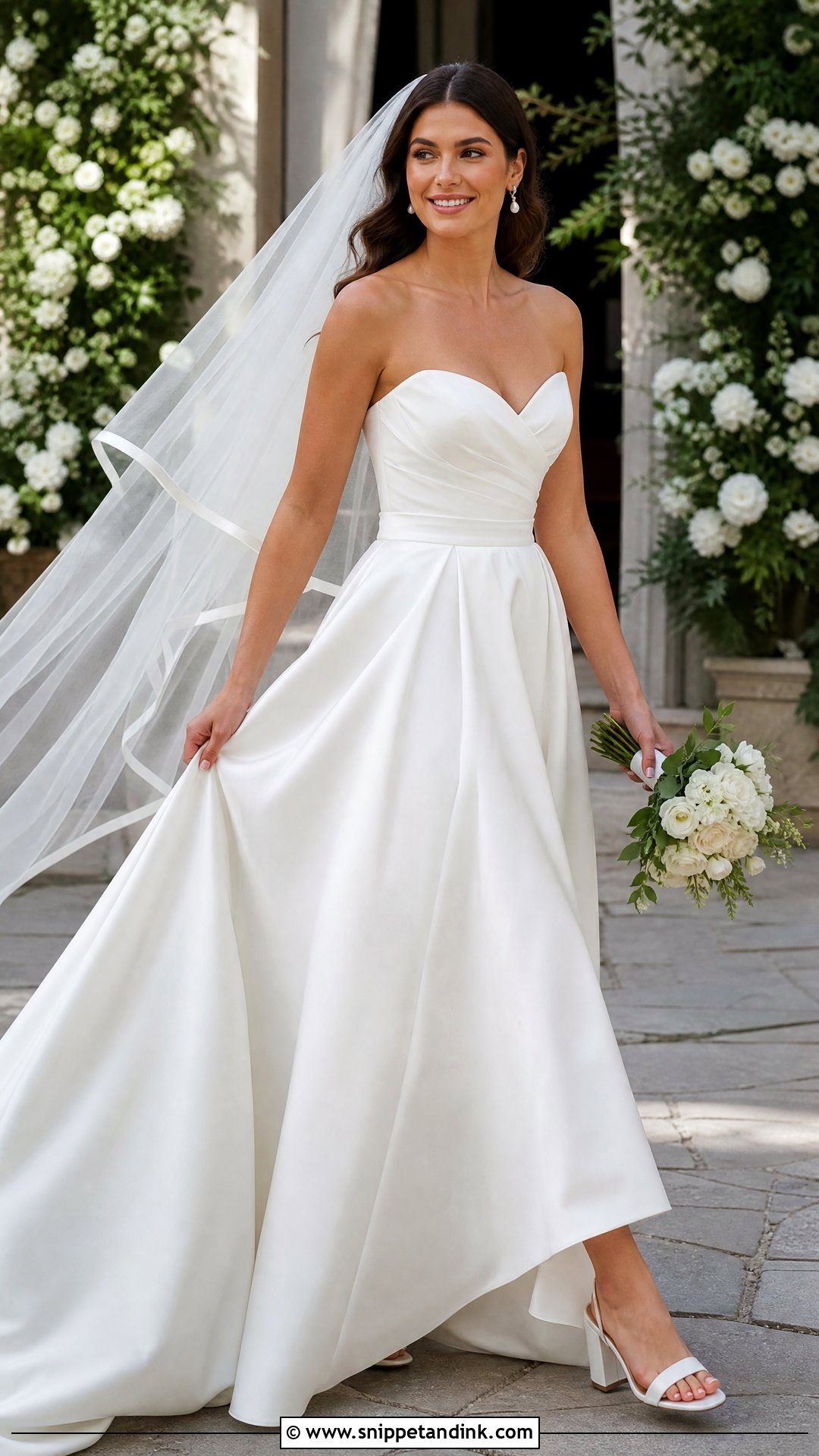
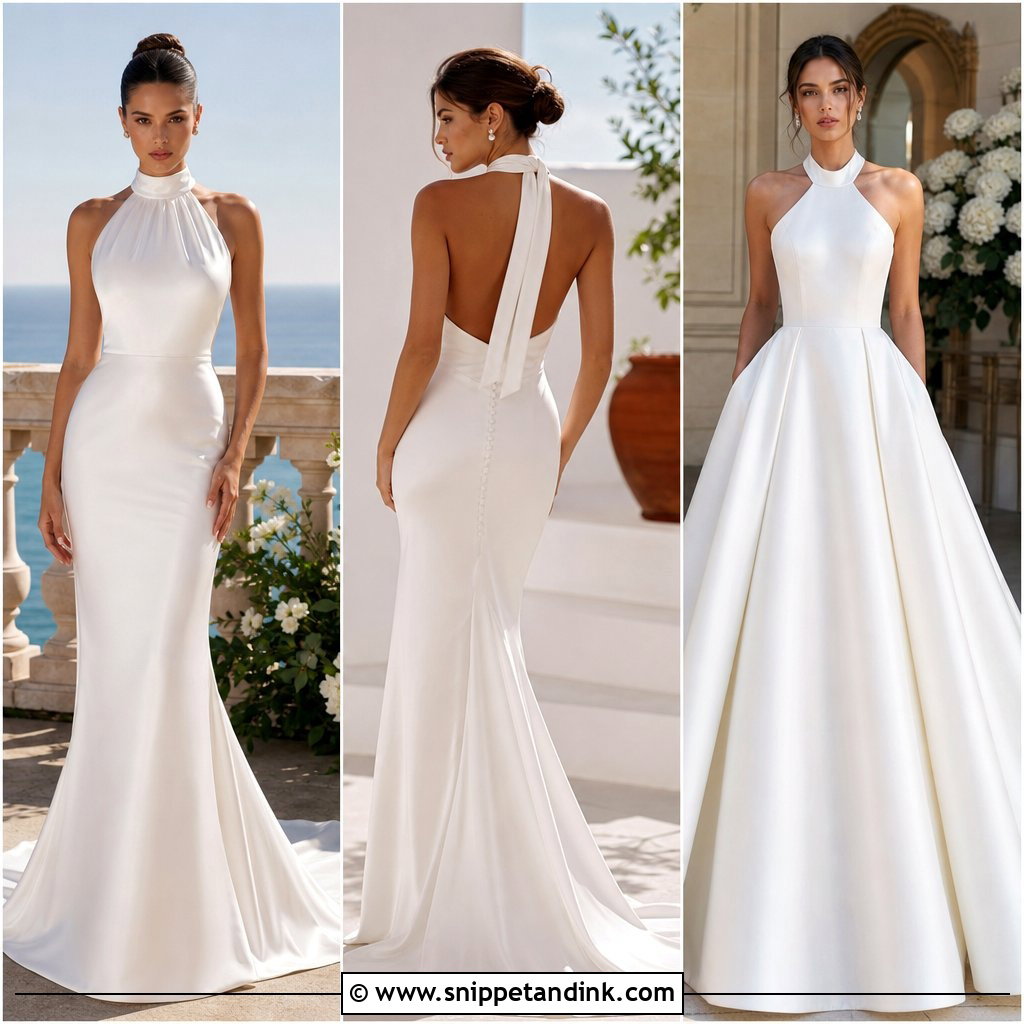
An A-line is the gown I suggest when a bride can’t decide, because a fitted bodice that opens gradually from the waist flatters almost everyone without the weight of a ball gown. Pick a sweetheart, scoop, or straight neckline by how much coverage you want and what you can wear under it. Block-heel sandals, pearl drops and a light veil just past the train are enough. A satin-edged veil echoes the gown nicely, and a narrow waistband in matching fabric sharpens the waist if the skirt starts to feel shapeless. Keep the bouquet compact so the line of the skirt shows.
6. Silk Halter Neck Wedding Dress
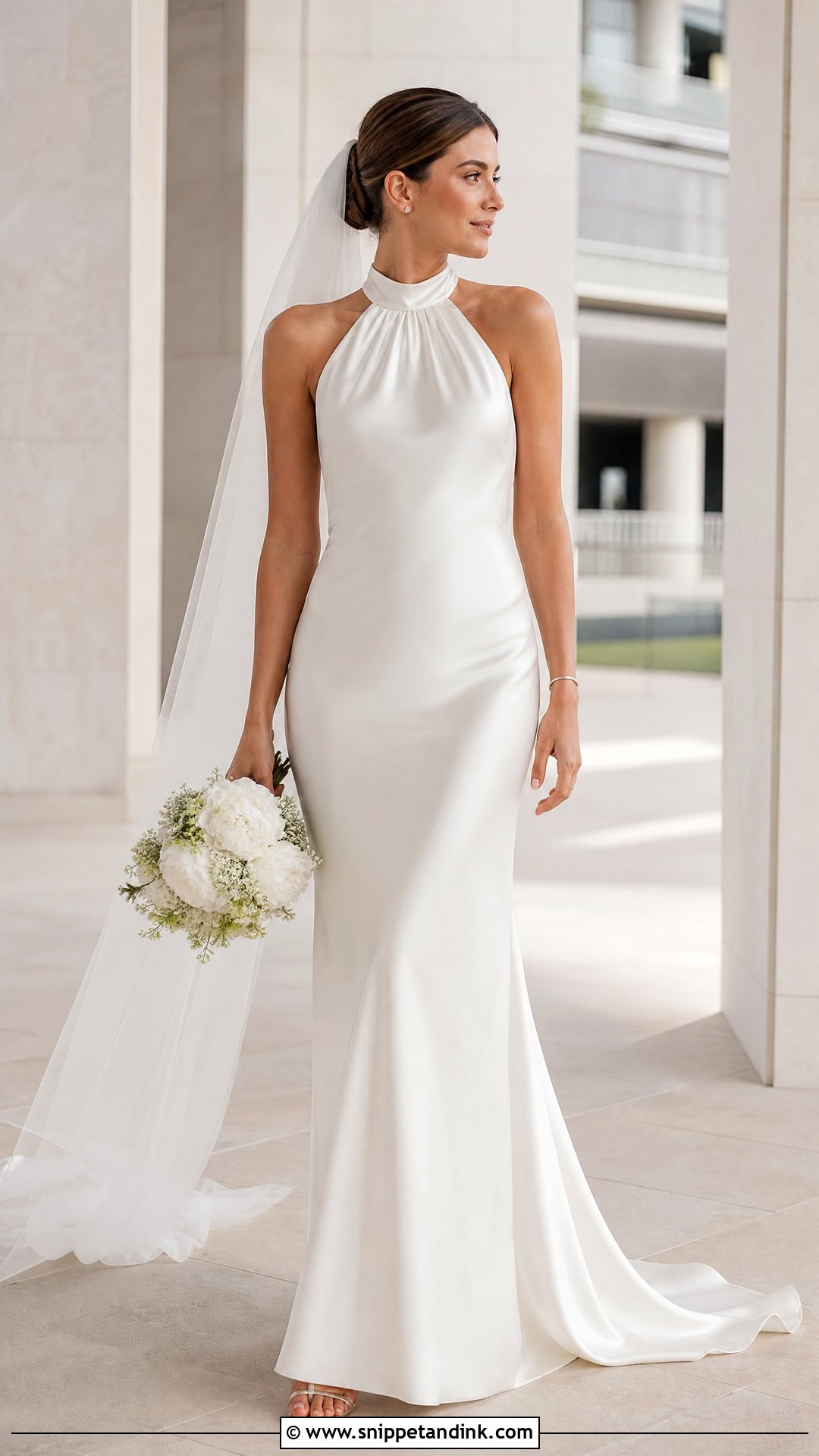
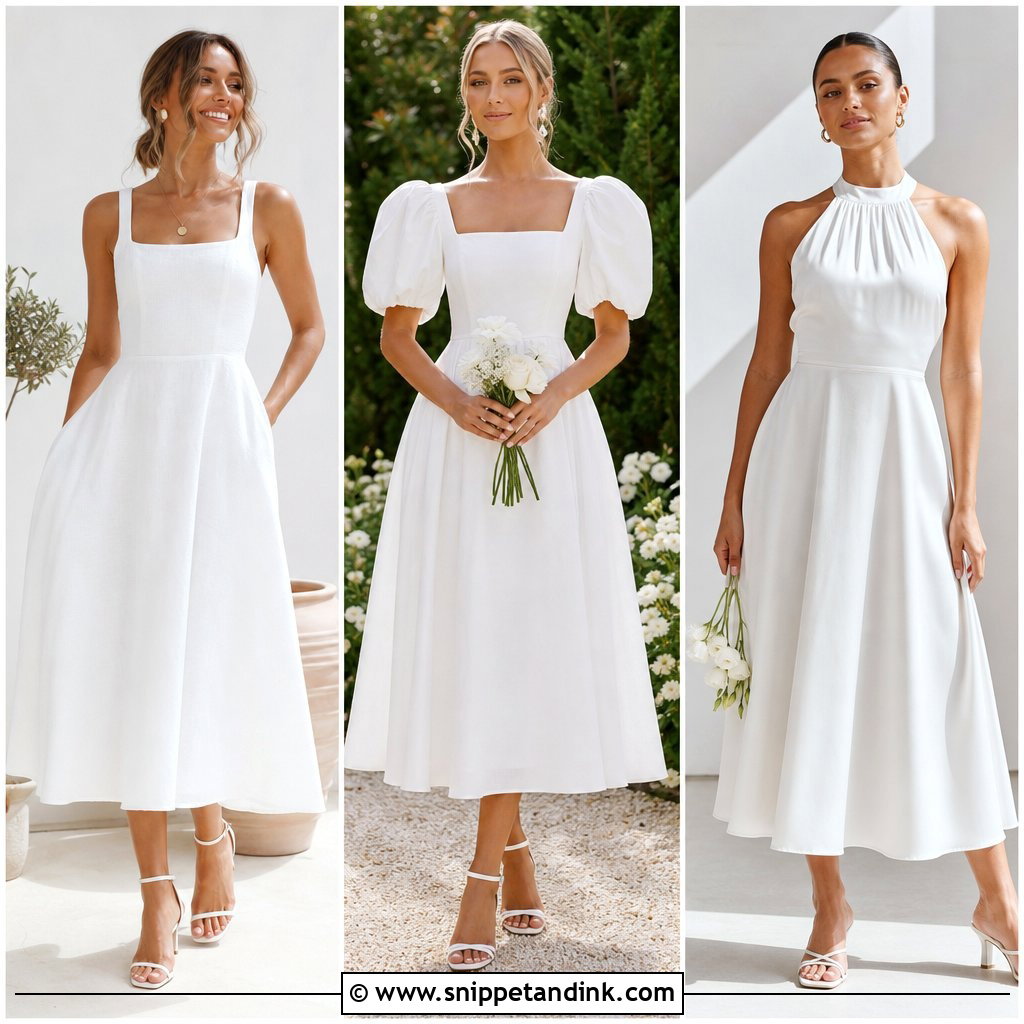
Halters pull the eye straight up to the face and shoulders, which is the point. A high draped neck reads soft; a clean fitted halter with a defined waist reads sharper. Check the closure before anything else. Hooks at the nape that dig in after an hour will have you tugging at your neck in every reception photo. Skip the necklace for studs or slim ear cuffs, add metallic sandals and a neat updo, and tuck the veil comb under the bun so the back stays visible. Going without a veil looks very current with this cut, especially in a gallery or a city venue.
7. Long Sleeve Satin Wedding Dress
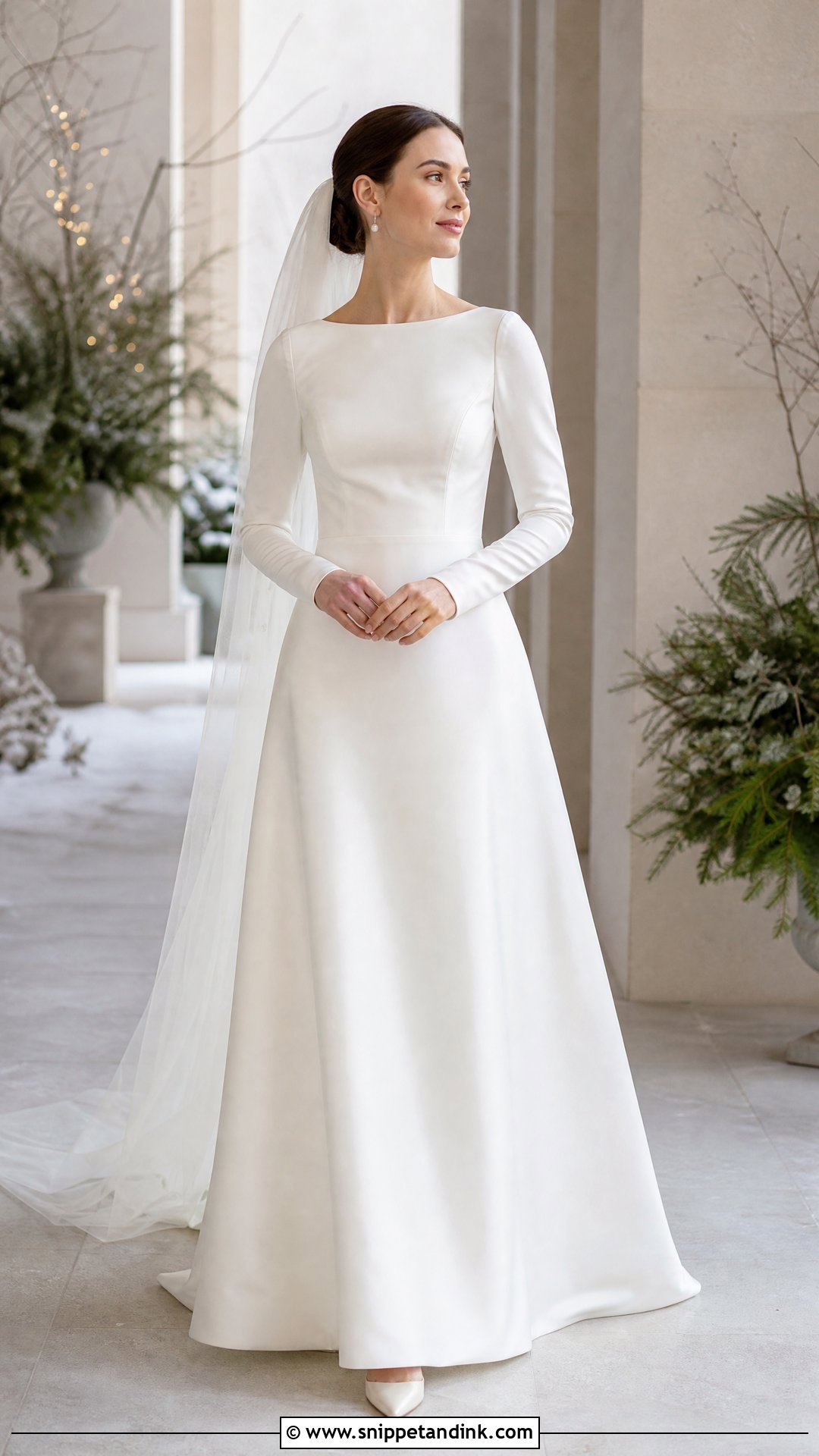
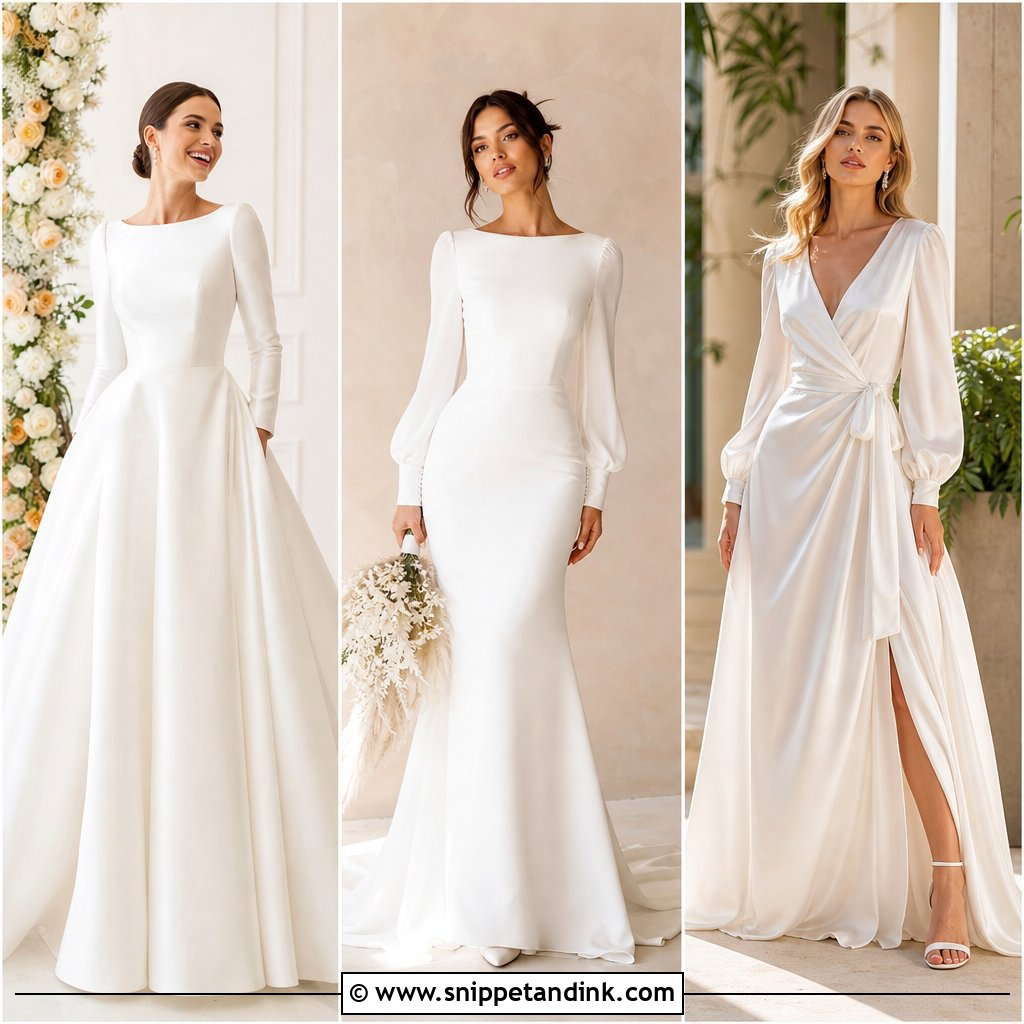
Sleeves change how satin behaves more than brides expect. Full-length satin sleeves need room through the shoulder and elbow, otherwise the fabric pulls across the back the first time you hug someone. I ask for a fitted bodice, a defined waist and a column or A-line skirt, with a bateau, scoop or shallow V neckline to balance the arm coverage. Closed-toe pumps, pearl earrings and a structured ivory clutch suit the formality. Leave the bracelets off; they snag on the cuff and scuff the satin. A smooth bun with a long veil feels formal, loose waves with a shorter one softer, and either way you get warmth for a winter ceremony without any lace.
8. Off-Shoulder Silk Wedding Dress
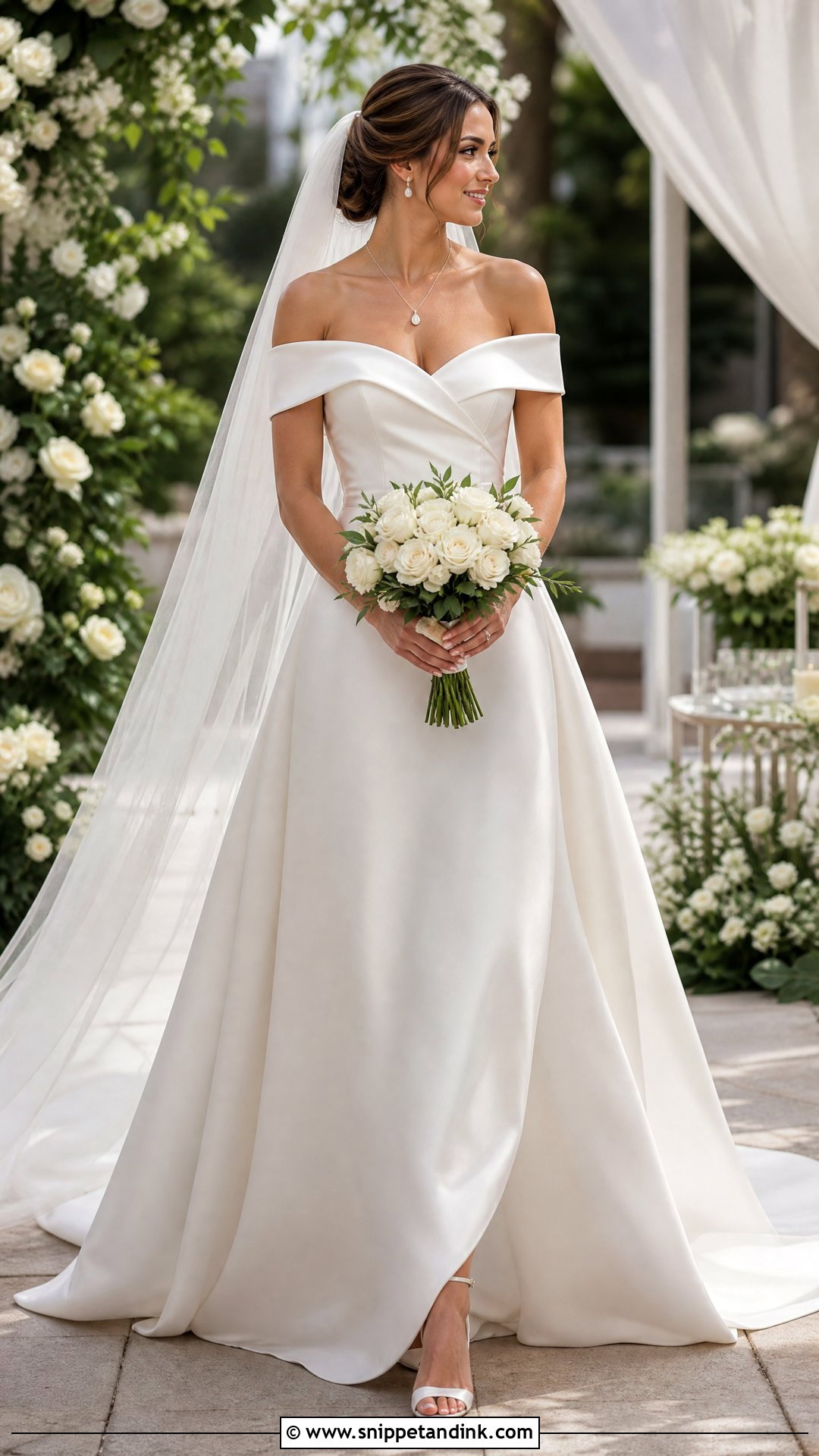
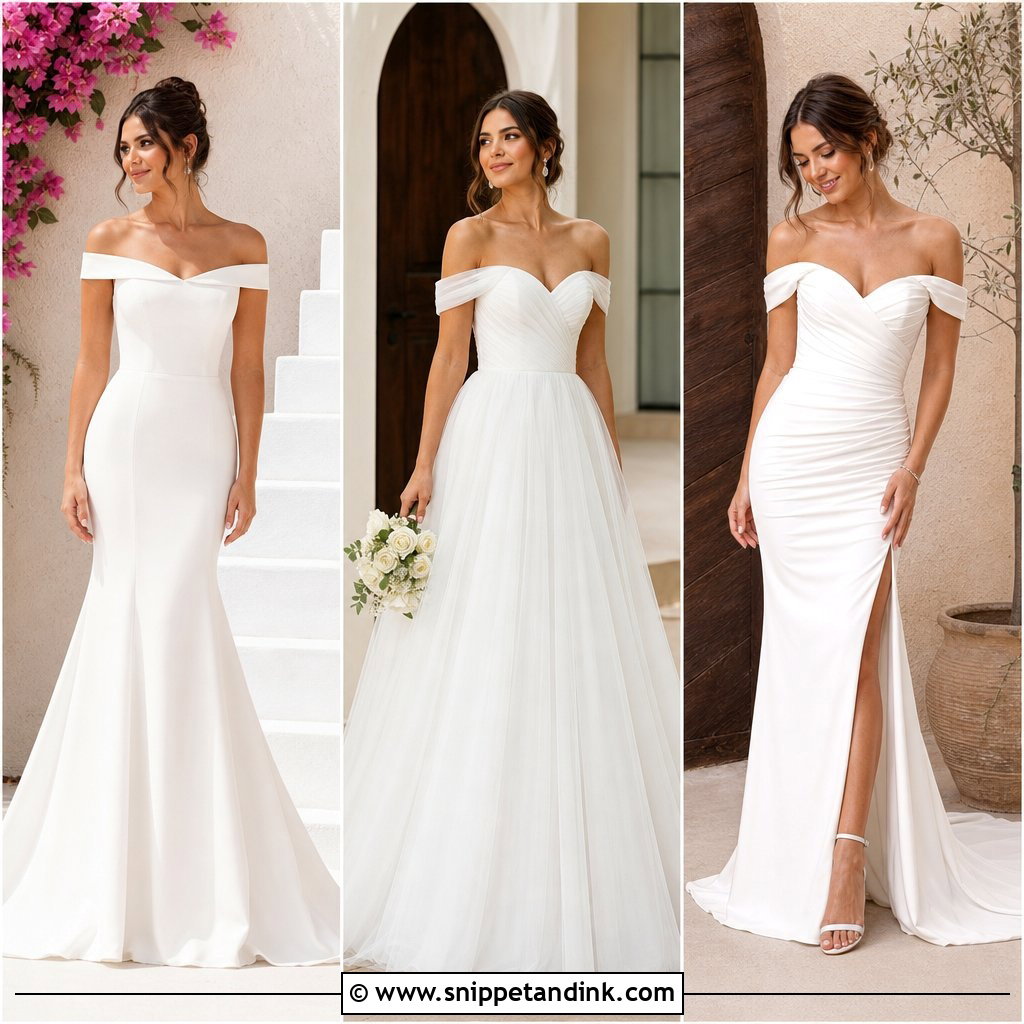
Off-shoulder necklines need a stiffened band or a silicone grip strip inside, or they creep up toward the neck as you move your arms. That’s the first thing I check. A folded band or soft drape over the upper arm, a fitted waist and an A-line skirt balance the bare shoulders; a column skirt makes it more statuesque. A delicate pendant, small drops and pointed satin heels are all it needs. Wear the hair up or swept to one side so the neckline shows. At fittings, lift your arms, hug your mother, sit down. If you’re pulling the band back into place after each one, the dress isn’t finished yet. A plain cathedral veil can come off before the reception.
9. Silk V-Neck Wedding Dress
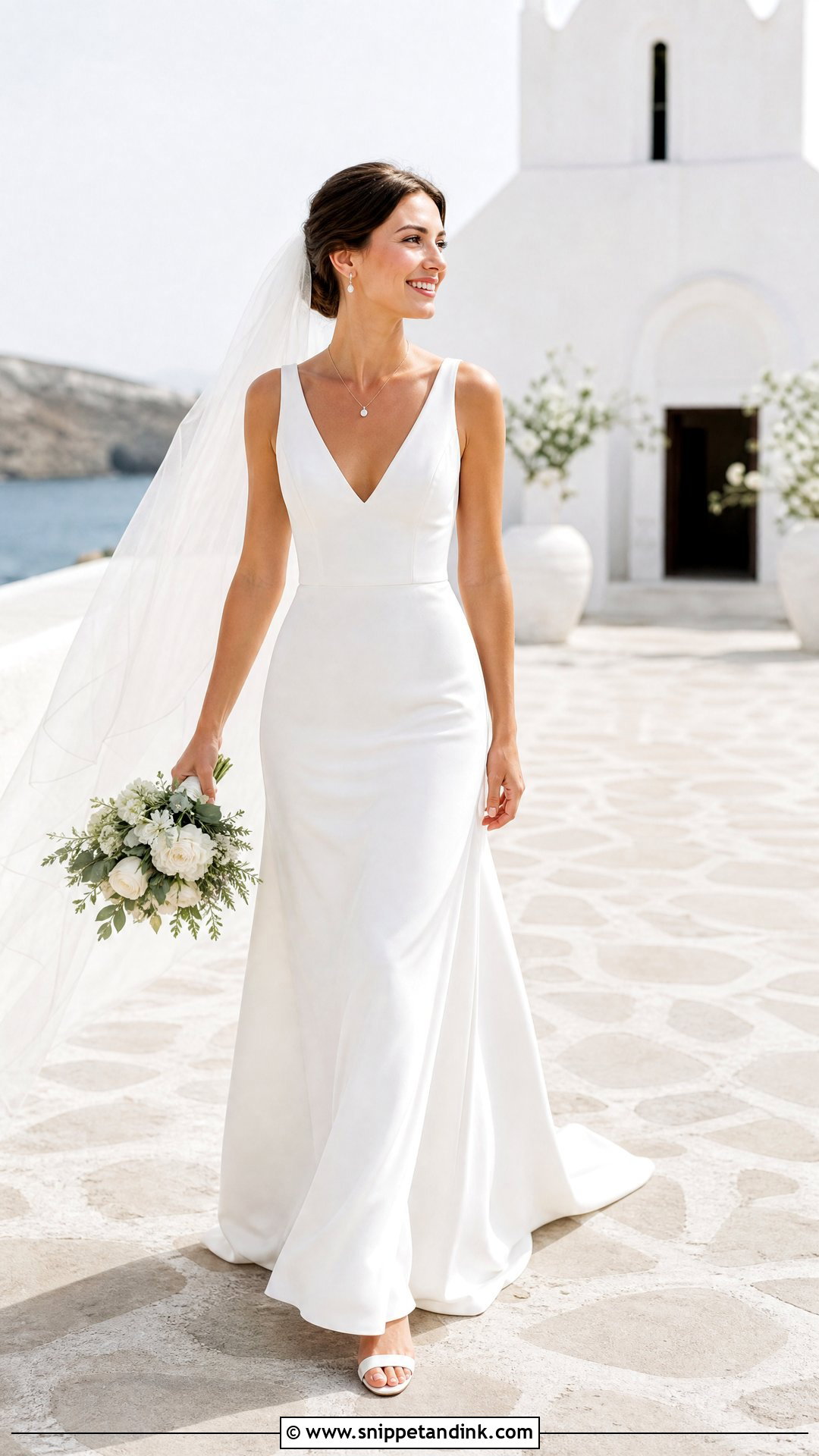
A V-neck lengthens the upper body and frames the face with no detail at all. The depth is the decision: go only as low as your chosen bra or tape will hold securely. Wide straps give support, narrow ones feel more like a slip. Keep the waist fitted and the skirt soft, then add a fine pendant, understated earrings and low ivory heels. A chapel-length veil set under a loose bun brings movement without hiding the neckline. If you want more coverage, ask for an illusion insert, and bring it to the window in daylight to match your skin tone, since bridal shop lighting flatters mesh. I’ve seen this cut work on a beach and in a ballroom.
10. Satin Scoop Neck Wedding Dress
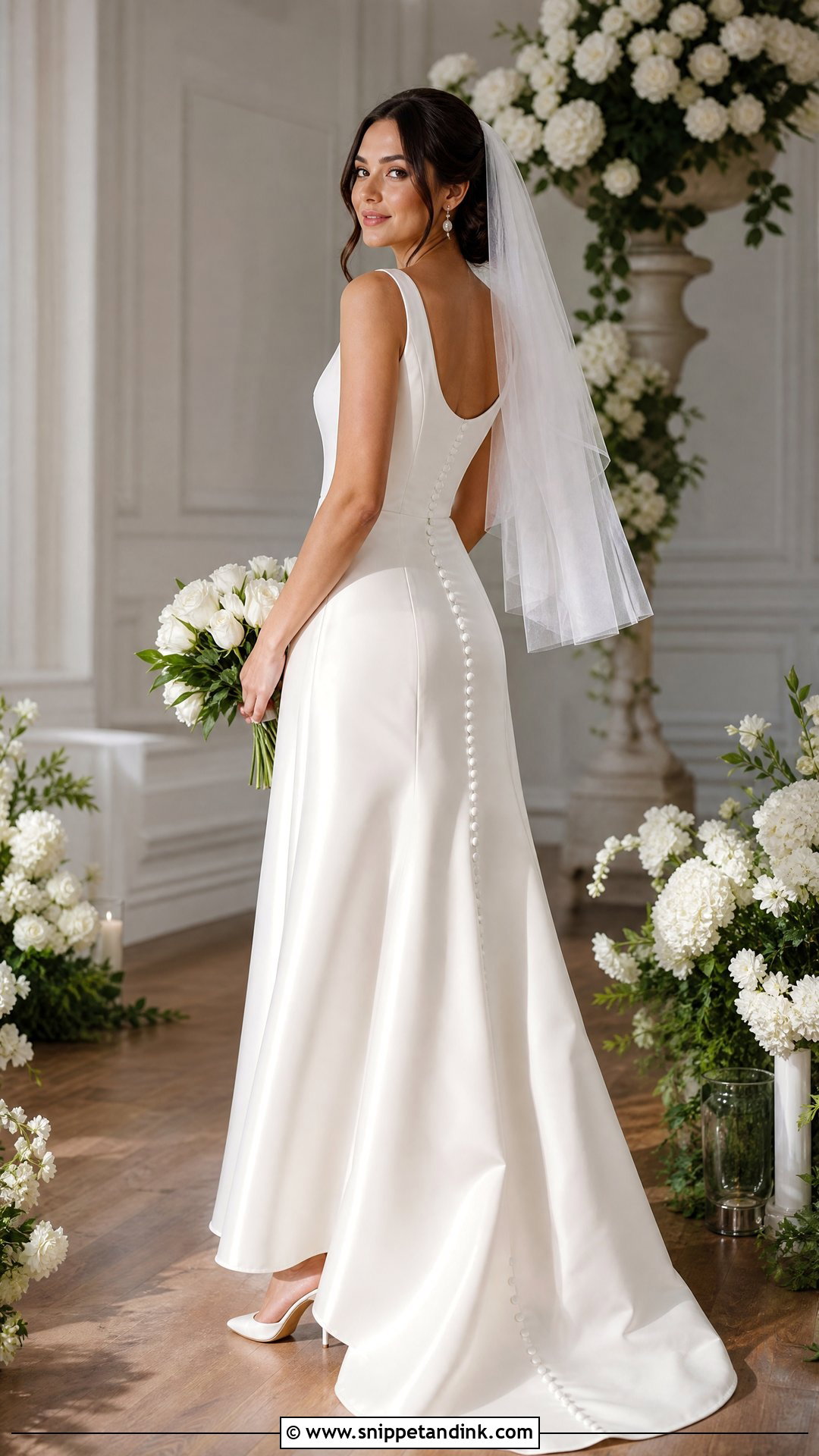
Of all the necklines here, the scoop is easiest to accessorise, since a medium-depth curve works with almost any earring and short pendant. Look for wide straps, a shaped bodice and a skirt that follows the body before flaring slightly at the hem. Pearl earrings, a short pendant and pointed pumps you can stand in all day suit it. A shoulder-length veil keeps it young; a long plain veil makes it formal. A low twisted bun or brushed-out waves both work. Covered buttons down the back add detail without touching the front, and this is the shape I reach for when a bride tells me comfort matters more than drama.
11. Silk One-Shoulder Wedding Dress
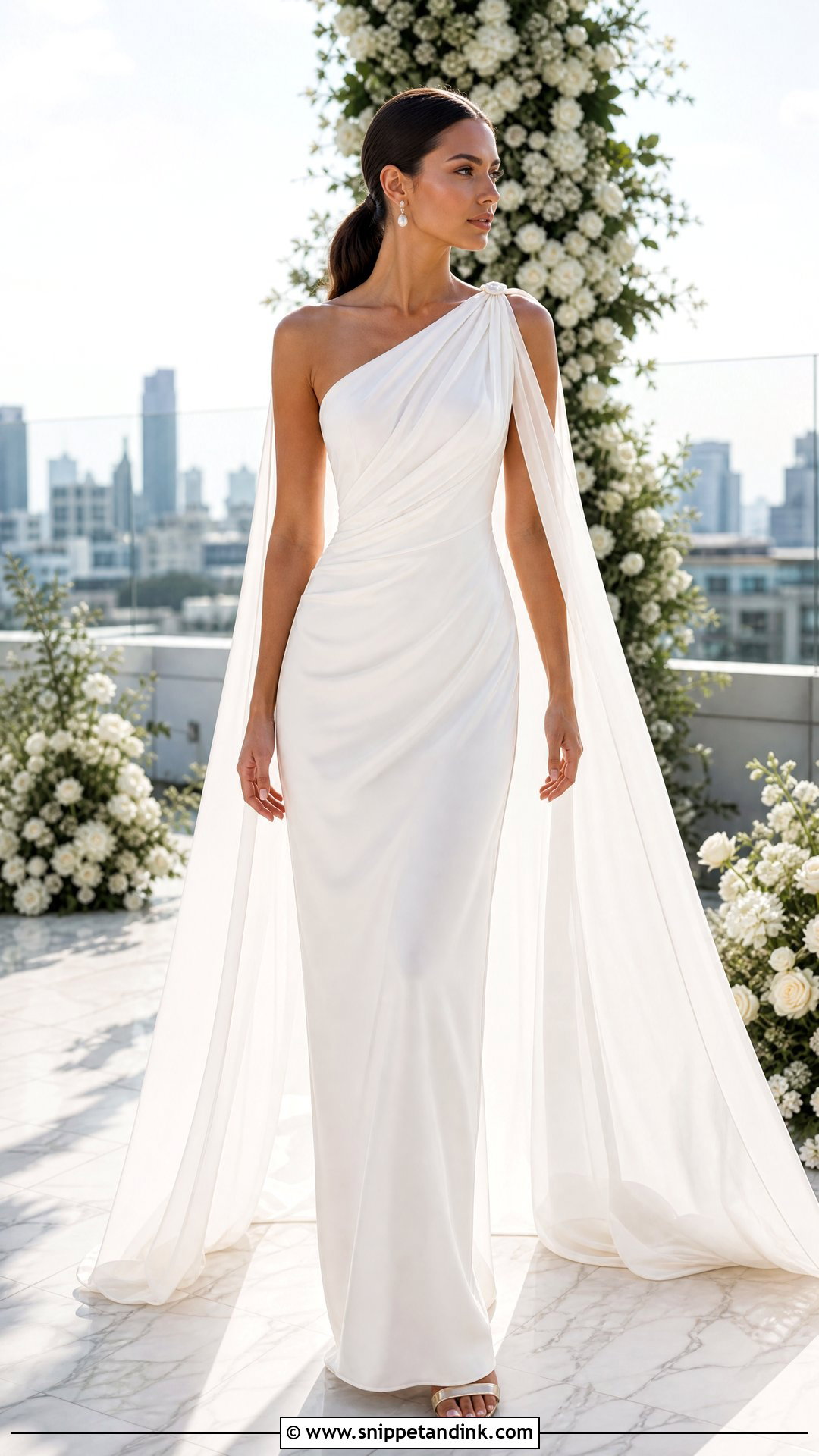
One shoulder gives a plain gown its whole point of interest, so I keep everything else level and calm. One clean strap, a fitted bodice and a straight or slightly flared skirt are enough. Soft draping across the torso shapes the waist without beads or embroidery. A single earring on the bare side is my favourite trick here, or matching small studs for a quieter finish. Metallic sandals, a compact clutch and a sleek ponytail or low bun keep the hair from competing. Instead of a veil, try a sheer cape fixed at the back. The one thing to test is the strap: it has to carry the bodice weight without sliding toward your neck.
12. Satin Corset Wedding Dress
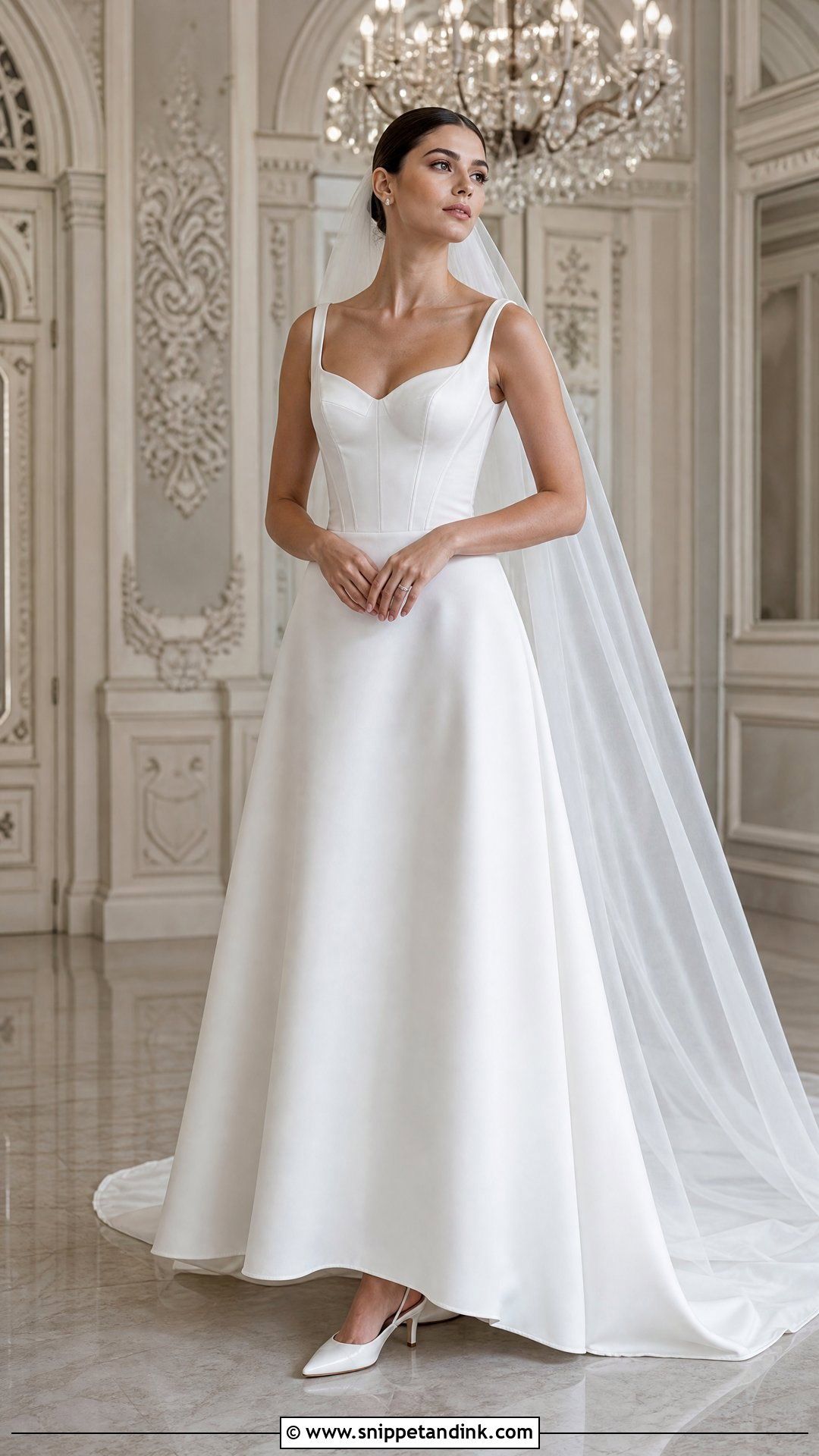
Brides often think a corset gown can’t look minimal, but it can if the boning stays inside. I look for subtle seaming, a straight or curved neckline and channels that don’t show through the satin as ridges, which cheaper gowns often do once they’ve been worn a few hours. Pair it with a smooth A-line or softly gathered skirt, pearl studs, satin slingbacks and a long unadorned veil, with a neat bun to show off the neckline. Support should come from the structure, not from lacing it tight. Have the tailor check the fit while you sit, bend and reach, because a bodice laced snug while standing can feel brutal at dinner.
13. Silk Open Back Wedding Dress
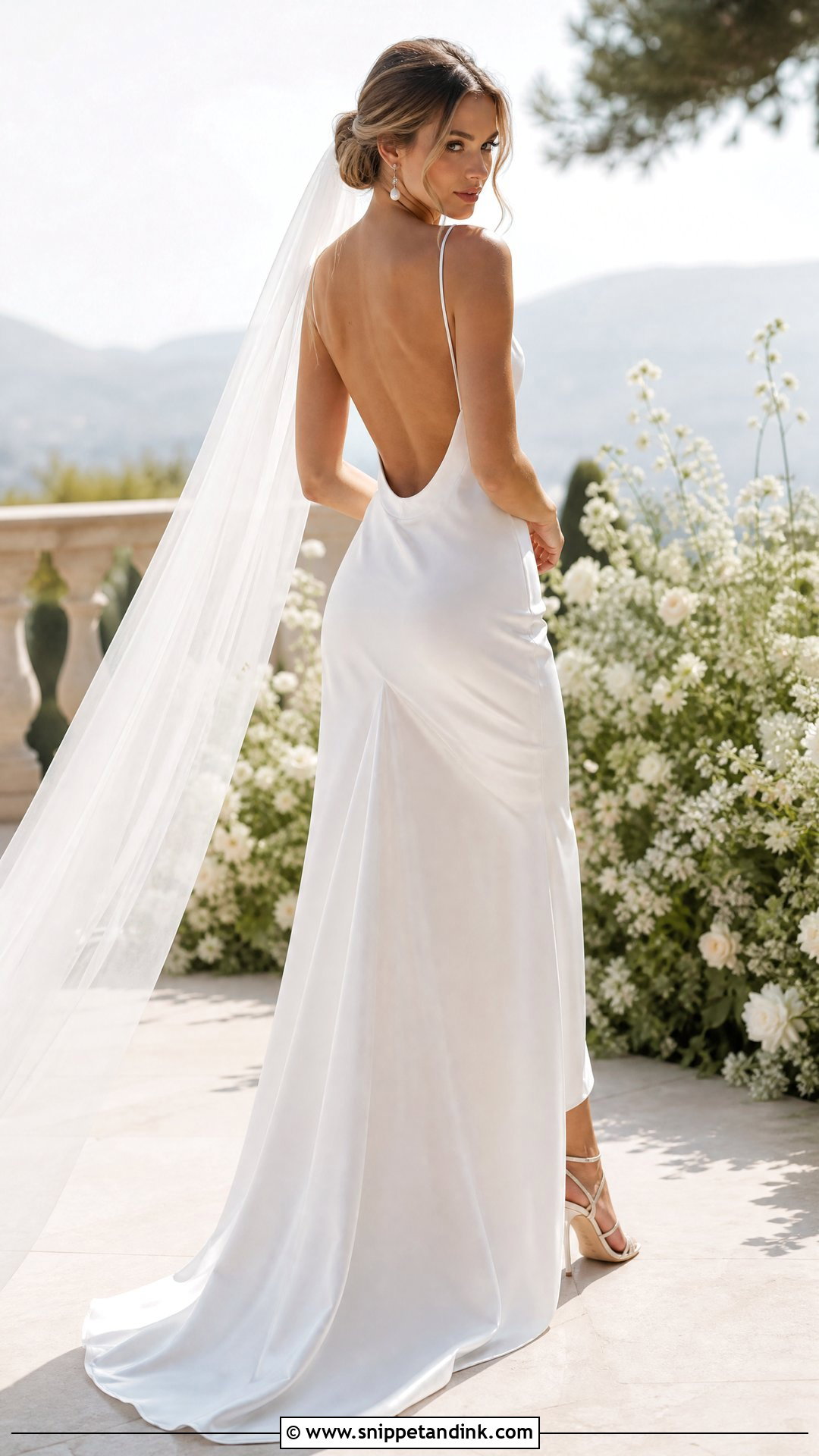
Backless gowns are about what you wear underneath. The back can be softly scooped, cut into a low V, or framed by narrow straps, and each needs a different solution: adhesive cups for a deep V, a low-back longline bra for a scoop, or cups sewn straight into the bodice, which is what I prefer. Keep the front high or smoothly fitted and the skirt fluid. Drop earrings, strappy heels and a veil placed below the hairstyle keep the opening on view. A low bun or a polished braid does the same. If you’re worried about gaping when you lean forward, a discreet connecting strap across the shoulder blades fixes it. Guests see the back for the entire ceremony, so it’s worth the fitting time.
14. Satin High Neck Wedding Dress
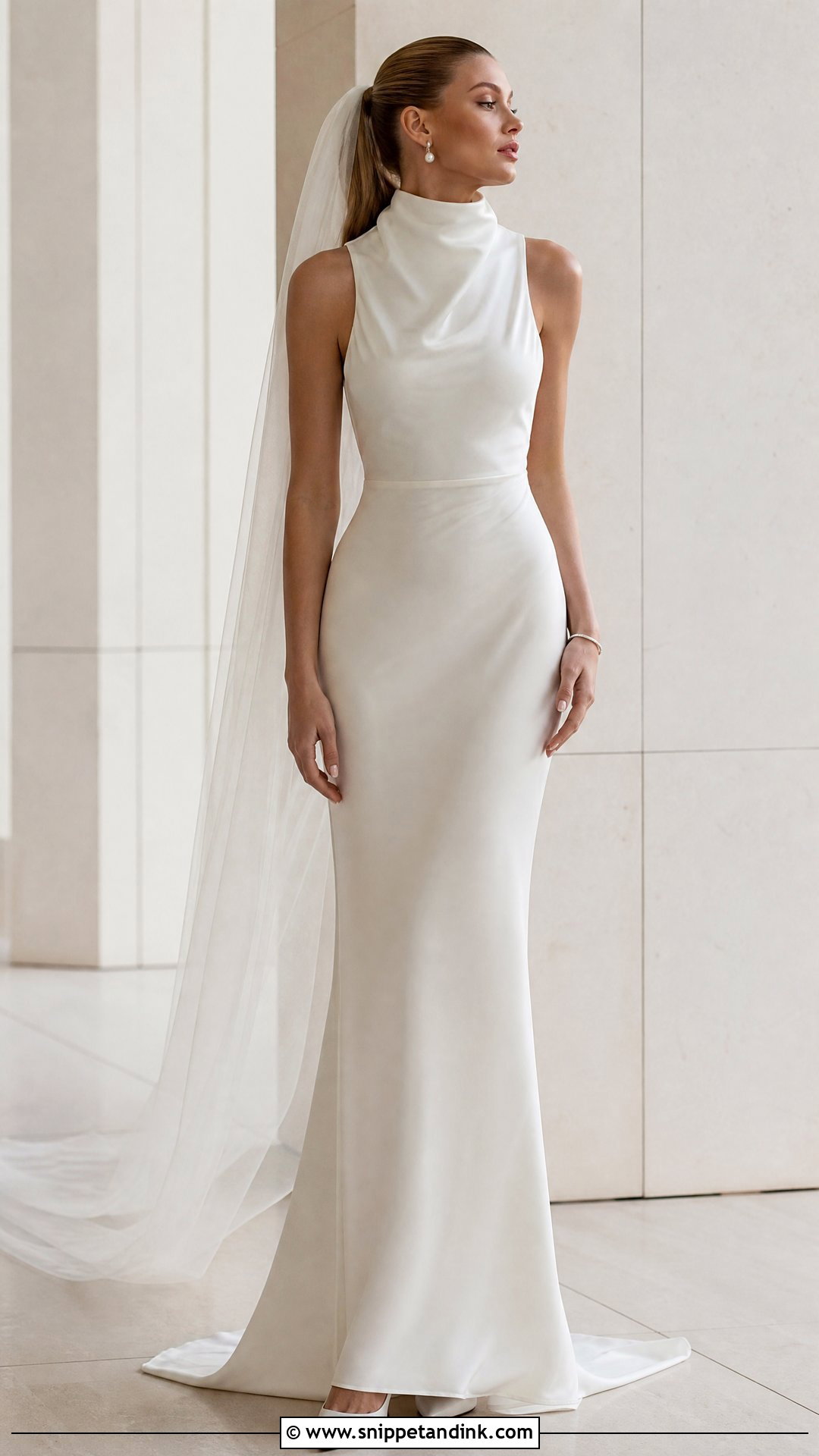
A high neck needs to sit close to the base of the neck without touching the throat when you swallow or turn your head. That’s the test I do in the mirror at every fitting. Sleeveless shoulders balance the coverage, and a fitted waist with a straight skirt gives a long, sculptural line. Leave the necklace off and choose pearl or crystal earrings, a slim bracelet and pointed ivory pumps. A clean bun or ponytail keeps the collar uncrowded, and the veil goes under the hairstyle. If rigid structure feels too severe, a high neckline with gentle gathering softens it. Modern architecture suits this gown well.
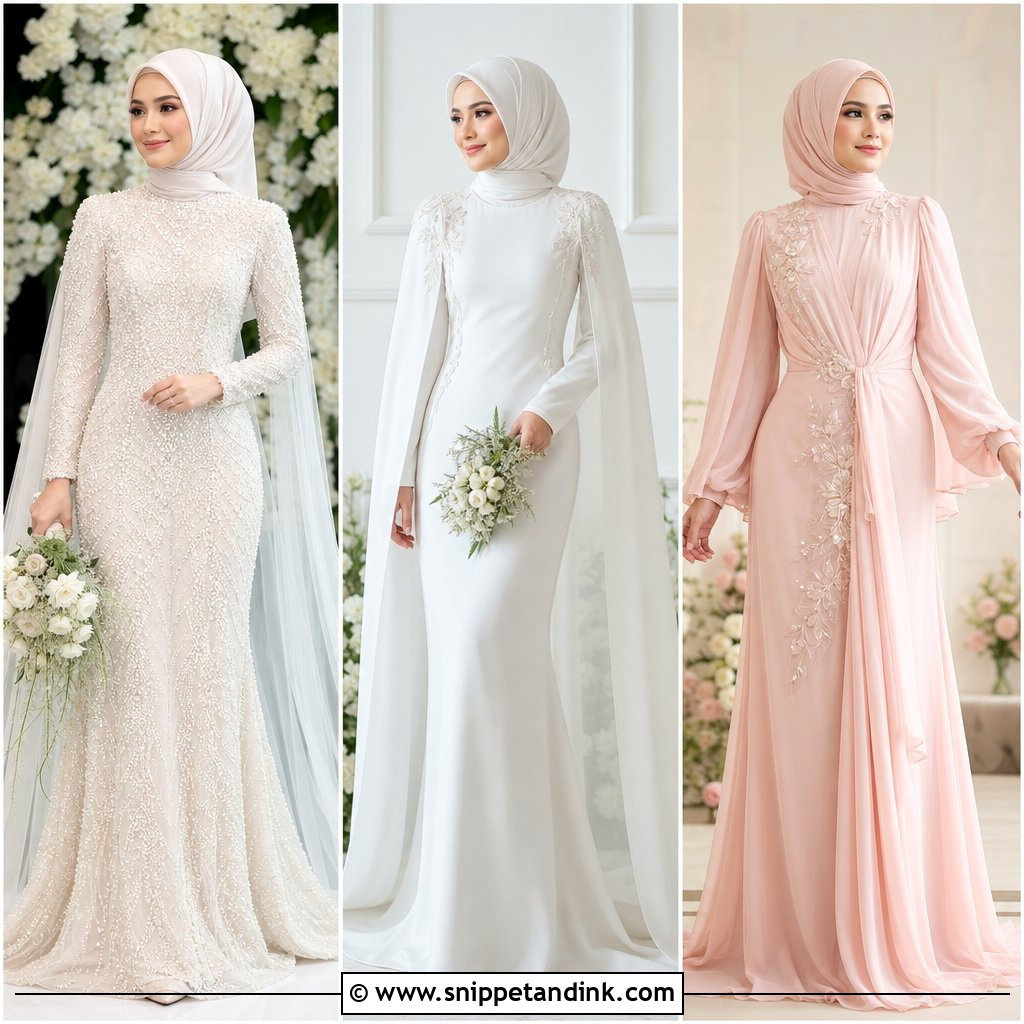
15. Silk Wrap Wedding Dress
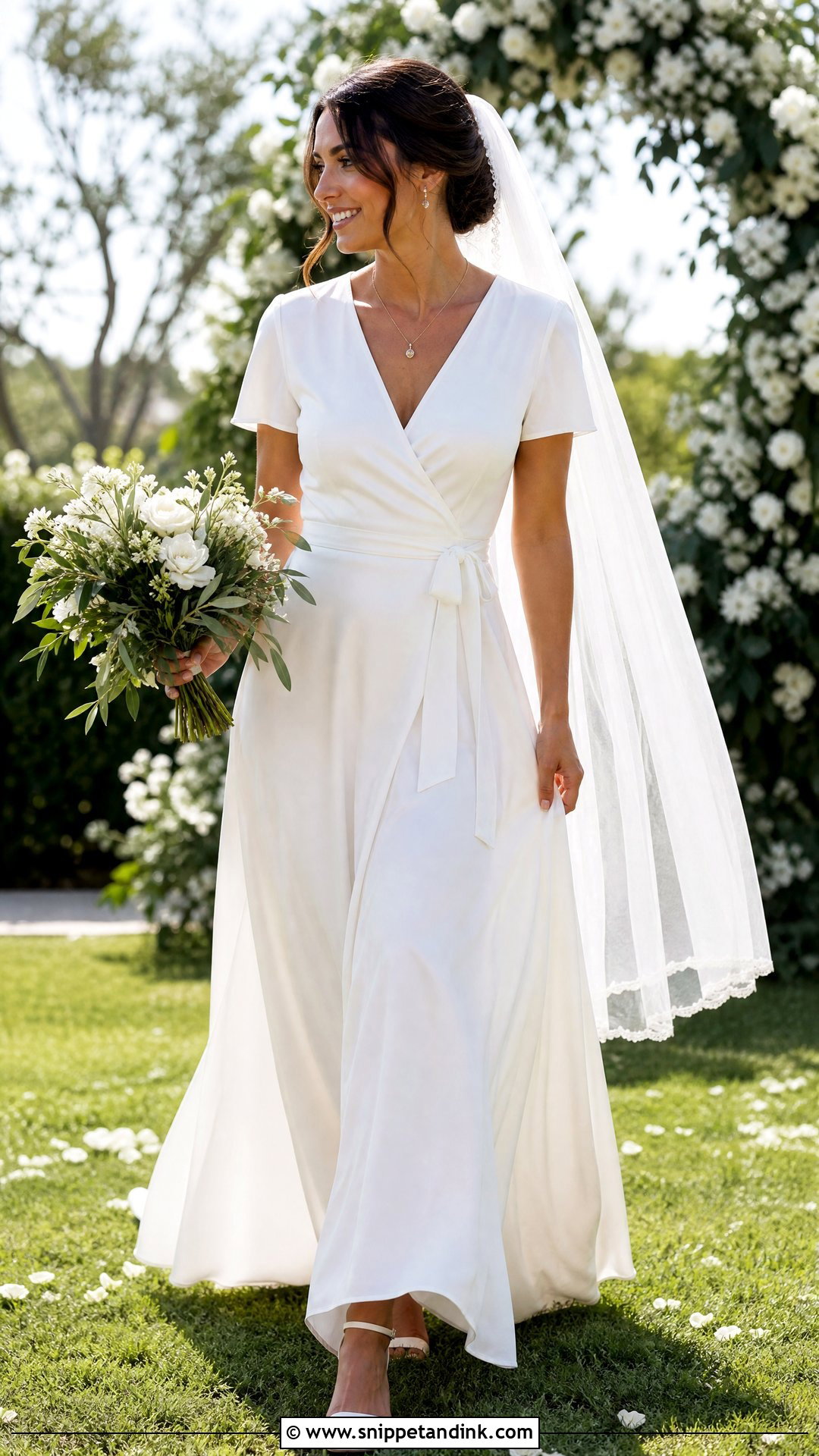
With a wrap dress I look straight at the closure. A bodice held only by a tie loosens over the day and opens at the chest, so I’d always want it stitched or secured with a hidden hook. With that sorted, the diagonal lines, V-neck and flowing skirt are flattering and easy to move in. A delicate pendant, short drops and low block-heel sandals fit the relaxed drape, as do a softly gathered bun and a fingertip veil. If there’s a side tie, keep every other accessory plain so the knot looks deliberate. I’d put this gown in a garden or on a coast before a ballroom.
16. Satin Mermaid Wedding Dress
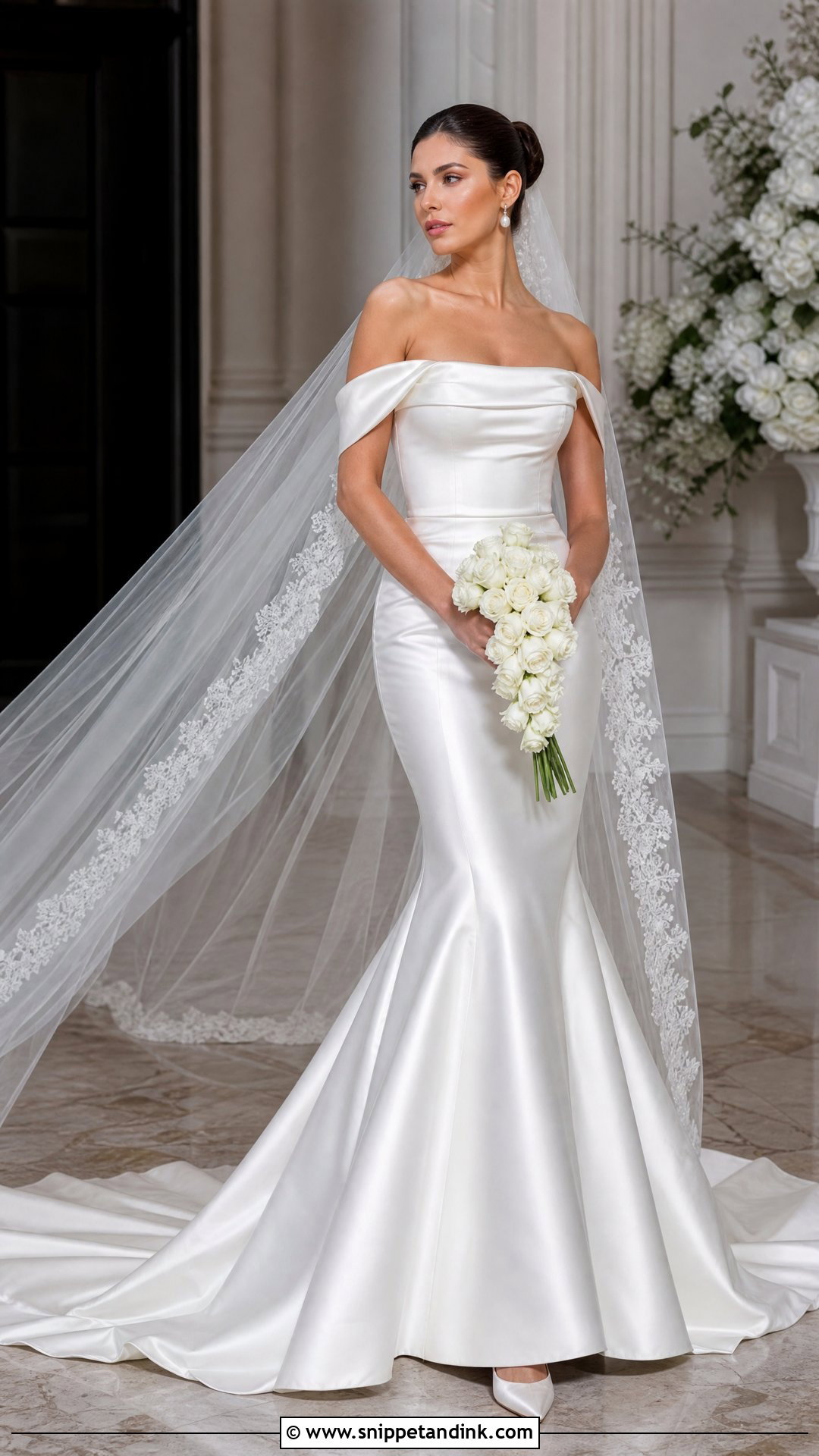
A mermaid cut gets its drama from shape, not decoration, and satin shows that shape cleanly. The fit hugs the bodice and hips before flaring at the knee or lower thigh. Where that flare starts matters: too high and it reads costume, too low and you’ll shuffle. Strapless, square or off-shoulder necklines each change the mood. Add a cathedral veil, pearl earrings and pointed heels you can stride in, a narrow bouquet that doesn’t hide the hips, and a sleek updo. Practise stairs and sitting at fittings. A good tailor removes pulling lines across the thighs without making the skirt tighter.
17. Silk Empire Waist Wedding Dress
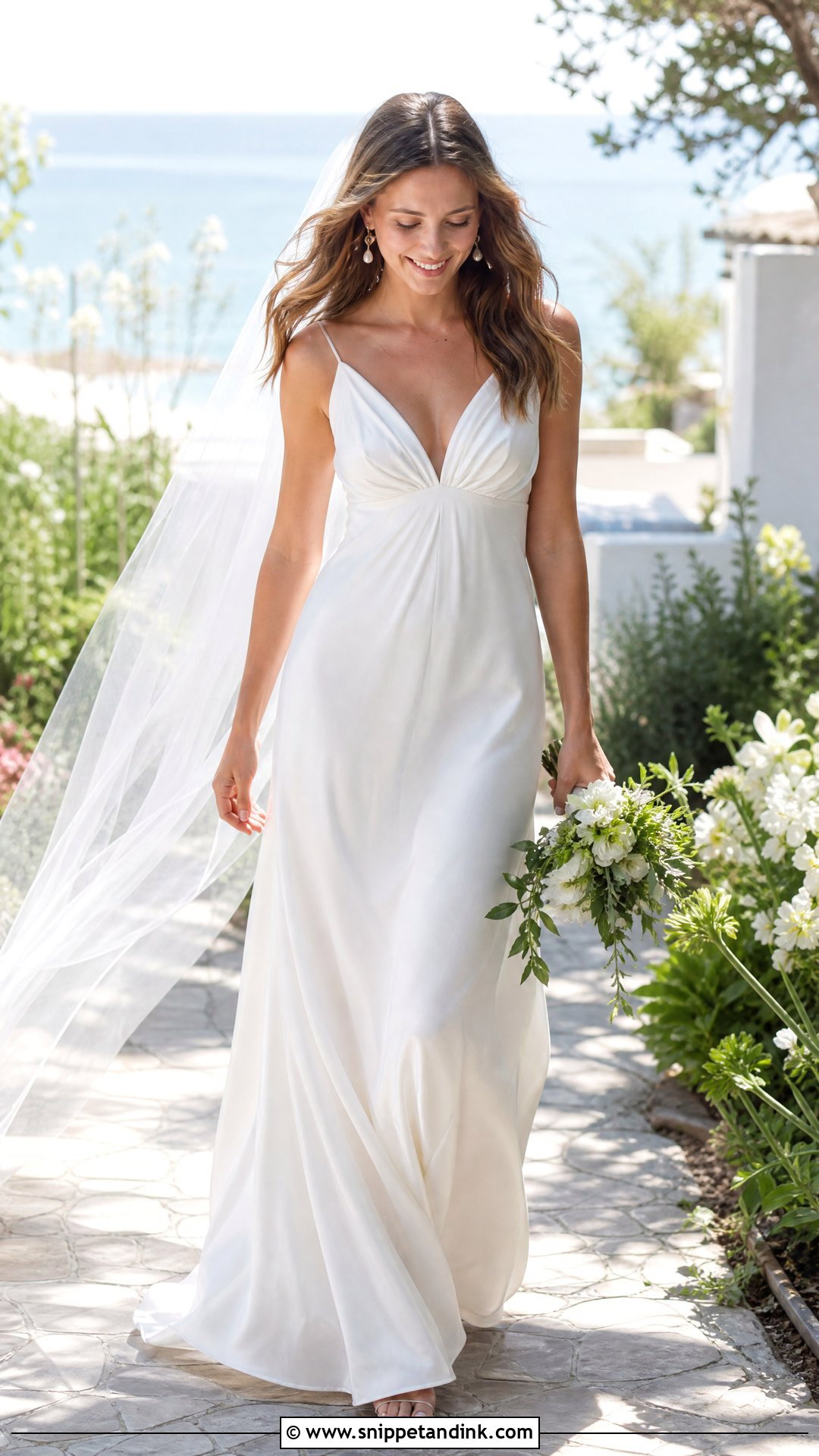
An empire waist puts the seam just under the bust and lets the skirt fall free, so nothing presses on your stomach through a long dinner. It’s the cut I suggest to brides who know they’ll be on their feet dancing for hours, and it works well in early pregnancy too. Choose a V-neck, square or gathered bodice depending on the support you need. Low sandals, small earrings, an airy veil and loose waves or a relaxed bun suit the light shape. Skip a wide belt at the seam; it breaks the vertical line and makes the bodice look short. A small bouquet and minimal jewellery keep it bridal rather than casual.
18. Satin Midi Wedding Dress
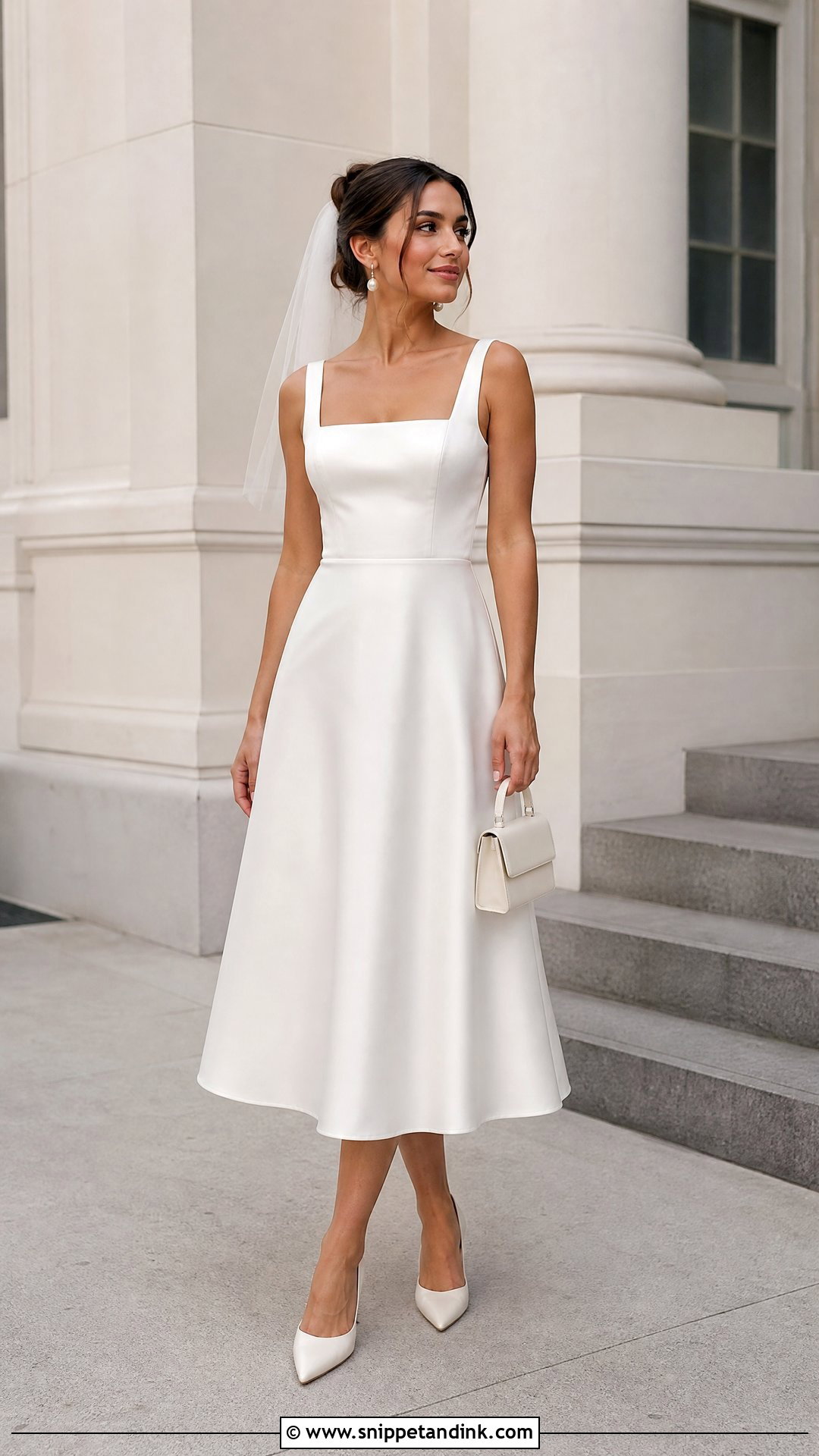
Midi lengths are where shoes stop being an afterthought, because everyone sees them. I like a hem between calf and ankle for a courthouse ceremony, a small wedding or a reception change. A square, scoop or off-shoulder neckline keeps it reading as bridal. Pointed pumps, pearl earrings and a small structured bag suit it, with a short veil, a bow or a pillbox-style piece on the head. The satin needs enough body not to cling to the legs. Whether you go for a fitted pencil silhouette or a softly flared skirt, have it hemmed in your actual shoes, since an inch of difference is obvious at this length. It’s easy to walk in between locations.
19. Silk Cape Wedding Dress
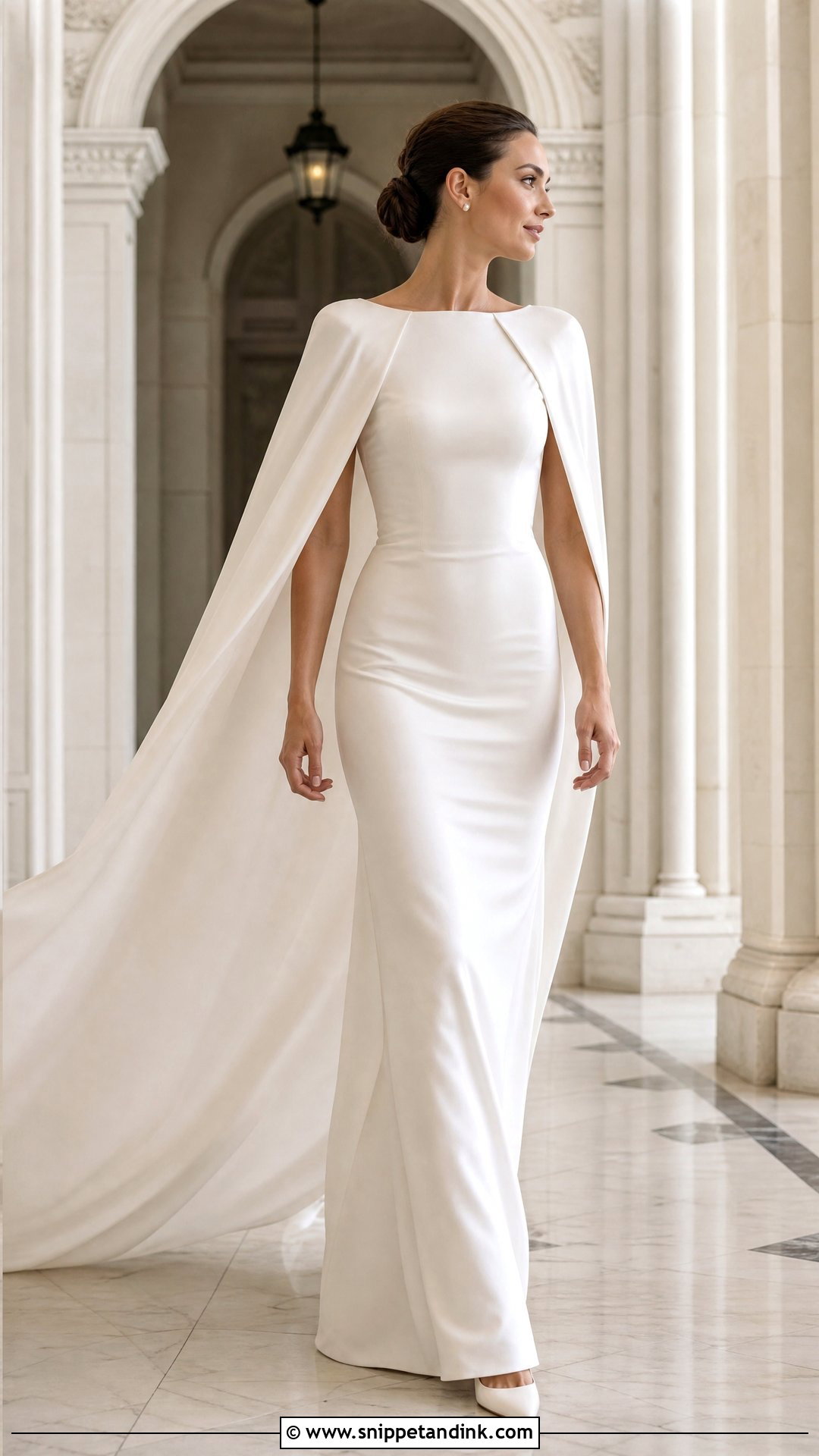
A cape lets you have drama for the ceremony and freedom for the party. Start with a clean column, sheath or A-line, then add a detachable cape from the shoulders: sheer chiffon or tulle moves, silk or satin feels more formal. Ask how it fastens. Hidden snaps or hook loops on the shoulder seams are quick to remove, while anything sewn in means you’re wearing it all night. Small earrings, one slim ring or bracelet, pointed pumps and a structured bun keep the look clean. Choose a cape length that ends before the train does, or you’ll have two layers of fabric tangling at your heels. It’s a good answer to a cold season or a grand room.
20. Satin Wedding Dress With Pockets
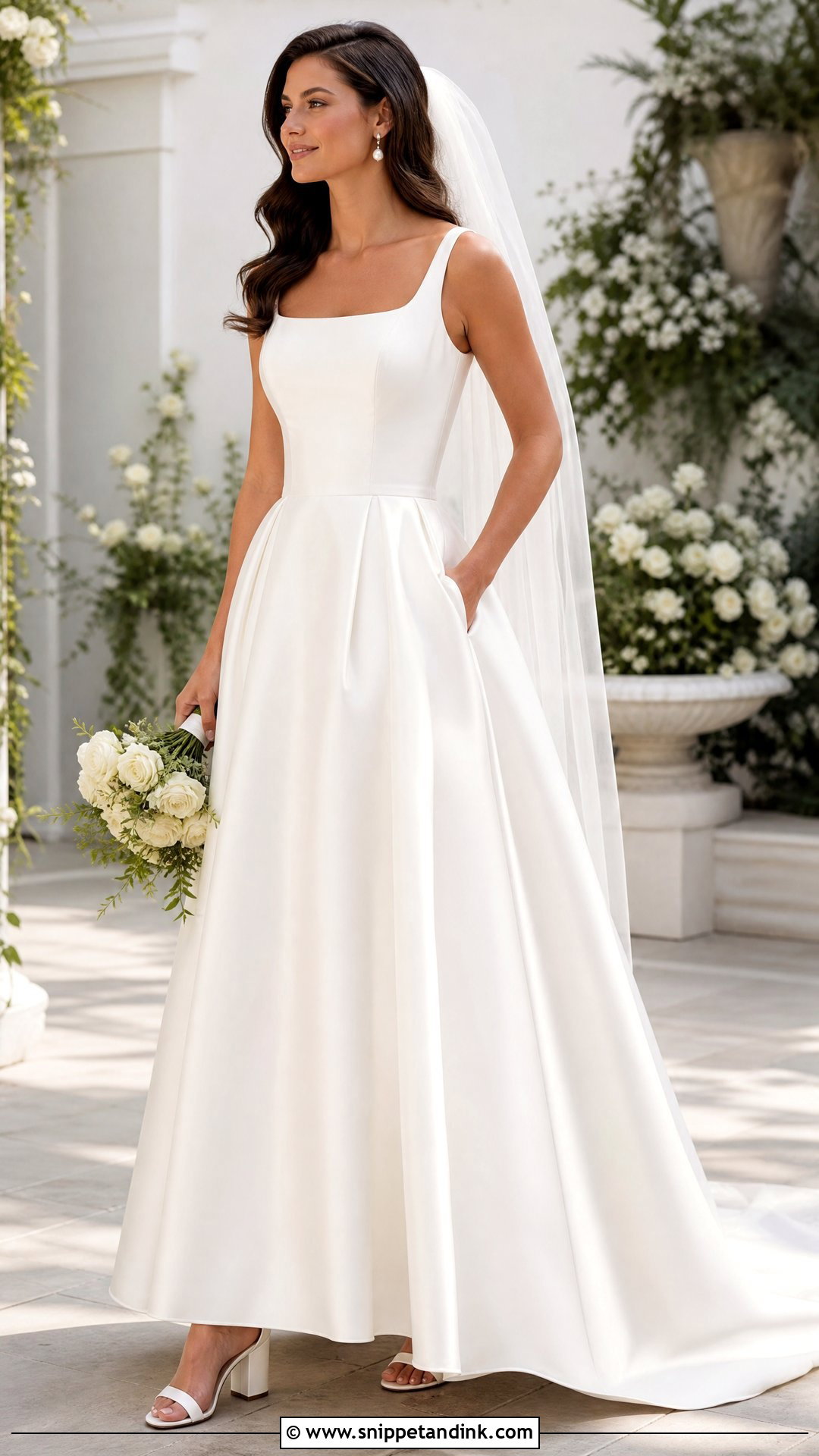
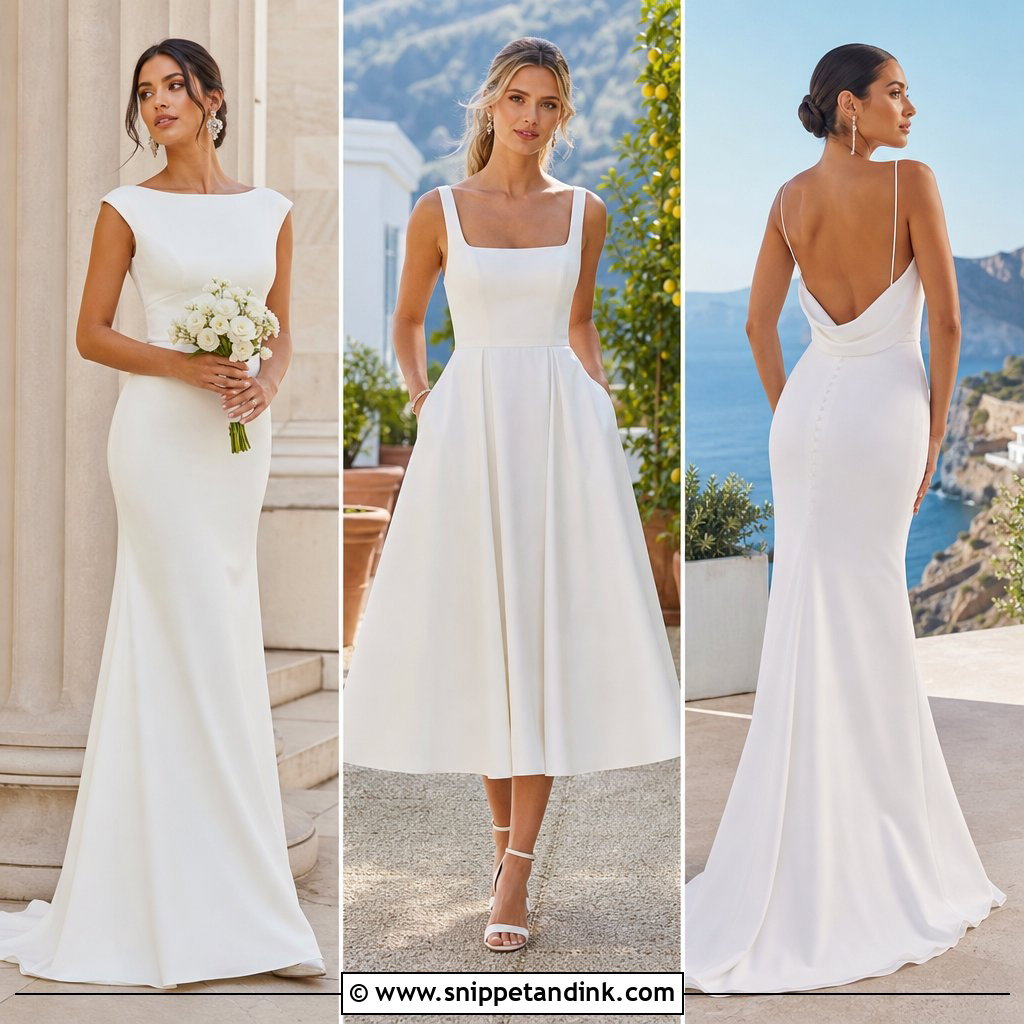
Pockets are the detail brides thank me for at the reception. An A-line or softly pleated skirt gives them room to lie flat; on a slim column they bulge at the hip. A square, scoop or strapless bodice balances the skirt, with pearl earrings, block-heel sandals, a simple veil and a low bun or polished waves. Use them for lip balm and a tissue, not your phone. A phone drags the satin down on one side and spoils the line in photos. At your final alteration, walk away from the mirror and look back over your shoulder to check the pocket openings don’t gape.
Creases, Water Marks and a Steamer on the Morning
Every satin dress creases. The question is how badly, and whether you’ve planned for it. Hang the gown by its inner loops the night before, never on the shoulder straps of a slip, and have someone steam it from the inside, holding the nozzle a hand’s width away. Direct steam or an iron on silk charmeuse leaves water rings and shiny patches that won’t come out.
Through the day, keep a clean white cloth and a bottle of plain water away from the dress. Rubbing at a spill on silk spreads it; blot, don’t wipe, and leave the rest for a cleaner. When you sit for dinner, smooth the skirt under you rather than sitting on a bunched back panel. That one habit saves most of the deep creases in the reception photos.
Afterward
Get the gown to a cleaner who handles bridal silk within a few weeks, even if it looks clean. Sugar from champagne or cake is invisible at first and turns brown with time. Store it folded with acid-free tissue in a breathable box, away from plastic bags and bright light, which yellow silk over the years.
A Plain Dress Still Needs a Plan
A simple gown works when every detail has been thought through, not when there are no details at all. The slips, corset gowns, A-lines, midis and open backs above all reward the same homework: your venue, your season, how much support you need, and how the dress feels when you walk, sit and lift your arms in the shoes you’ll wear. Bring the right underwear to every fitting, edit the accessories hard, and leave time for a tailor who knows satin. Get those right and a plain dress will look entirely yours.
You'll Like These Ideas:








Leave a Reply