
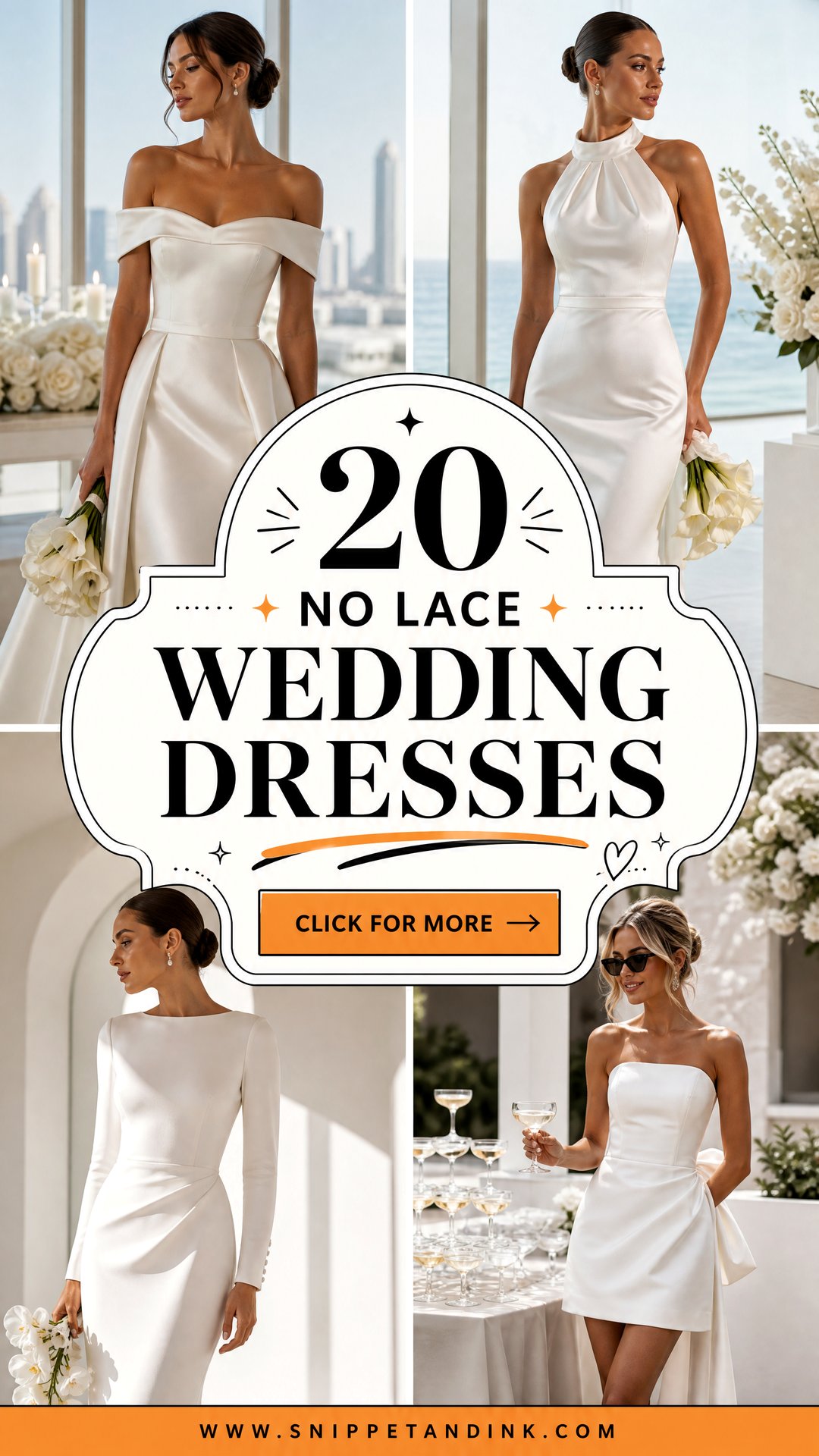
What Plain Fabric Shows That Lace Would Have Hidden
Lace is forgiving. Its pattern breaks up the surface, so a seam that wanders, a bodice that wrinkles at the side or a hem that dips slightly all disappear into the texture. Take the lace away and every one of those small faults is on show, in the mirror and in close-up photos. That’s why I treat a lace-free gown as a fit project first and a style choice second.
At each fitting for a plain dress, I go through the same short list:
- Side seams with the arms raised. Diagonal ripples mean the bodice is pulling and needs adjusting.
- Underwear lines in daylight, not just under boutique lighting. Satin and silk pick up every edge.
- The waist seam against your real waist, checked standing and seated.
- Hem level in your wedding shoes, front, sides and back.
- How the fabric catches the light. High-shine satin highlights curves, matte crepe flattens them.
Weight matters as much as shine
Heavy satin, Mikado and taffeta hold their own shape and keep you warm, which suits a winter ballroom and punishes an August lawn. Chiffon, organza and lightweight crepe breathe and move, but they need a good lining to stay opaque. I’d decide on the weight that suits your date and venue before falling for a silhouette, because the same shape behaves differently in each fabric.
1. Satin A-Line Wedding Dress
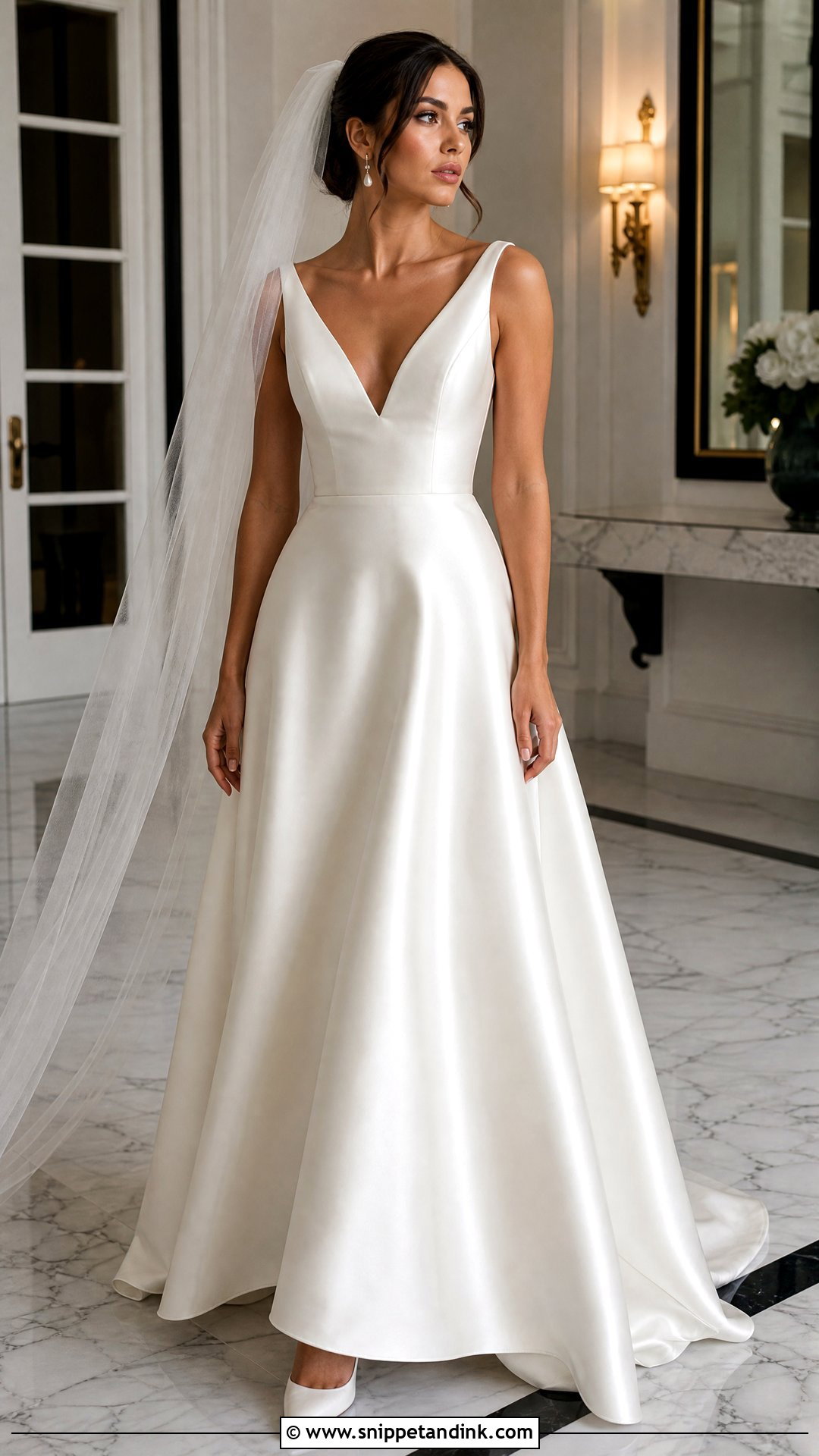
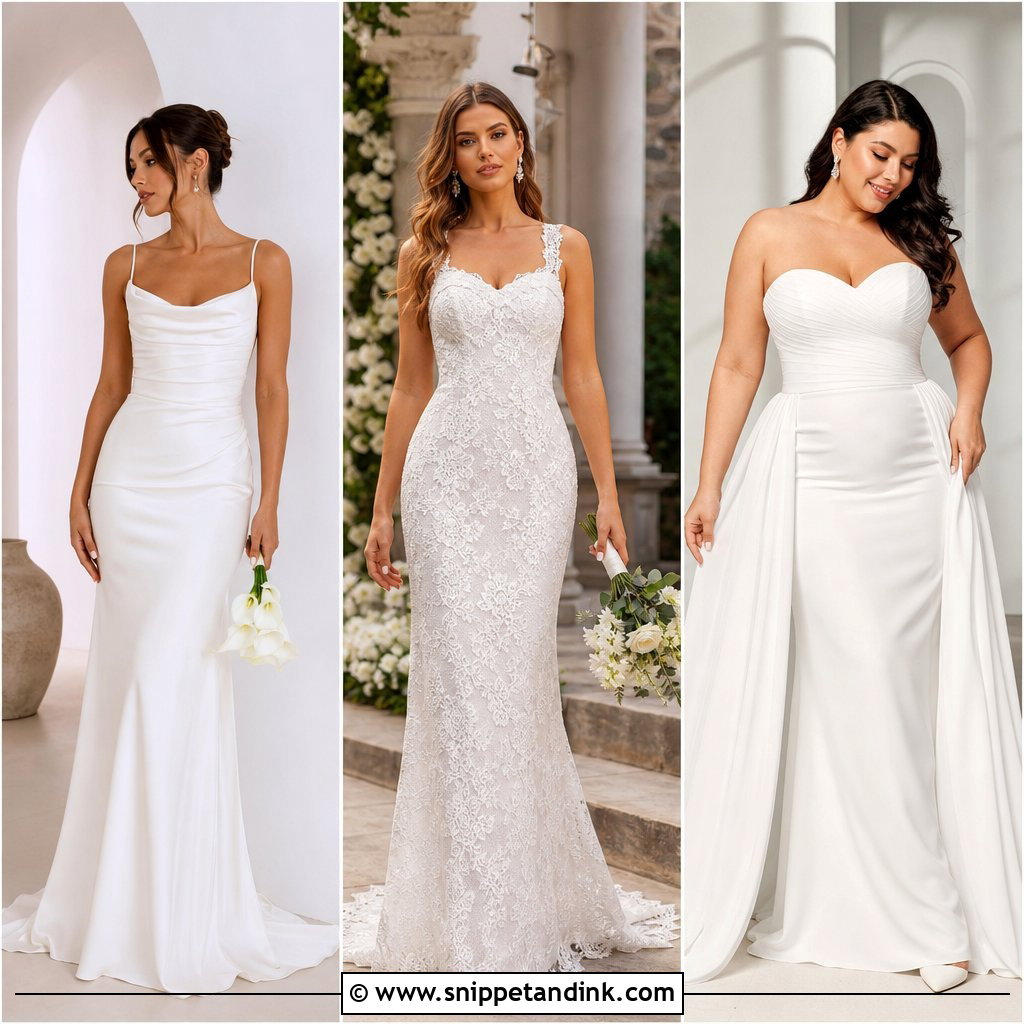
Satin on an A-line is the gown I hand to brides who aren’t sure yet what they want, because the shape forgives almost every figure and the fabric does the decorating. The bodice fits close and the skirt opens gradually from the waist, so you can walk and sit without fighting it. A V-neck lengthens the torso, while a straight neckline reads cleaner and more structured. I’d keep the train medium; a long one on plain satin starts to look like yardage rather than design. Satin shows every pull, so I check the side seams while the bride lifts her arms, and if the fabric ripples there the bodice gets taken in before anything else. Pointed ivory pumps, pearl drops and a fingertip veil with a plain cut edge are all it needs, with a sleek low chignon keeping the neckline clear. The balanced shape sits comfortably in a ballroom, a hotel or a garden.
2. Mikado Ball Gown Wedding Dress
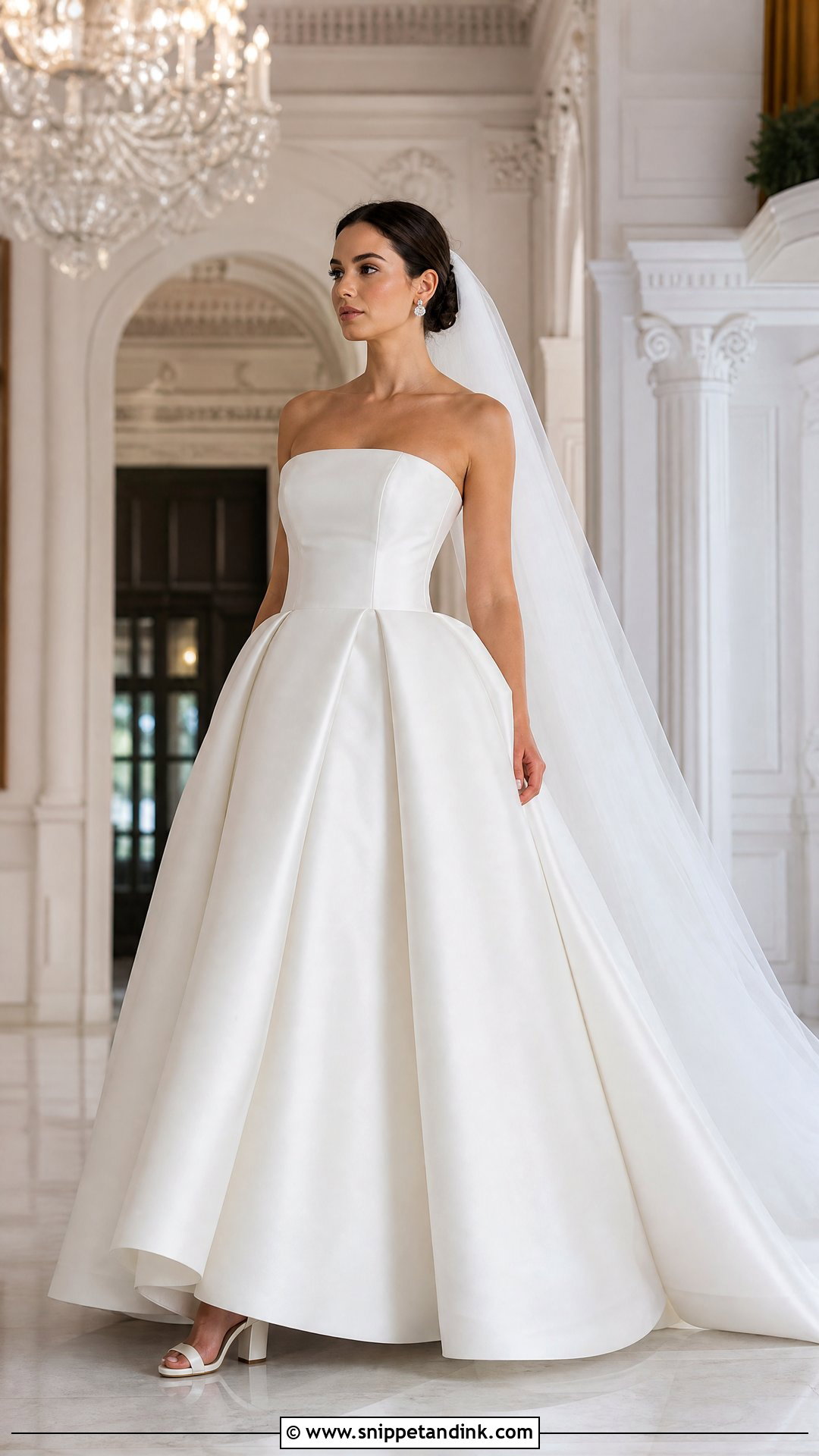
A Mikado ball gown gets its drama from the weave itself. Mikado is a heavy, slightly ribbed silk or silk blend with enough body to hold a full skirt, crisp pleats and a sharp bodice with no lace propping it up. Strapless versions rely on an internal corset, and I always have the bride sit for a full minute at the fitting: a corset that feels fine standing can dig into the hip crease once seated. Ask for pockets, since they vanish in that much skirt. Crystal studs, satin block heels and a plain veil that runs past the train finish it, with a soft updo rather than anything sculpted. Give this one a big room. In a narrow aisle or a small restaurant the skirt simply has nowhere to go.
3. Crepe Sheath Wedding Dress
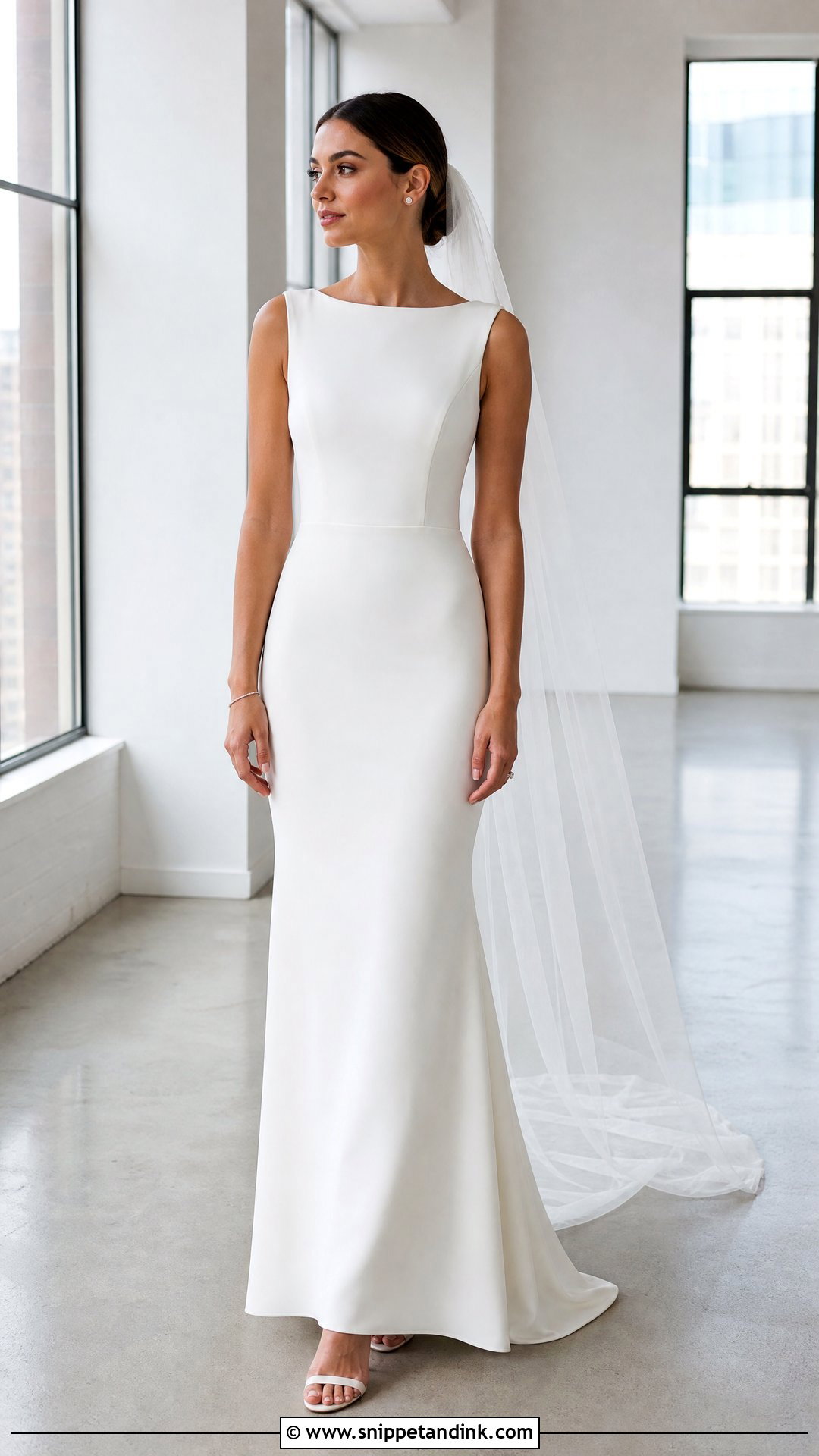
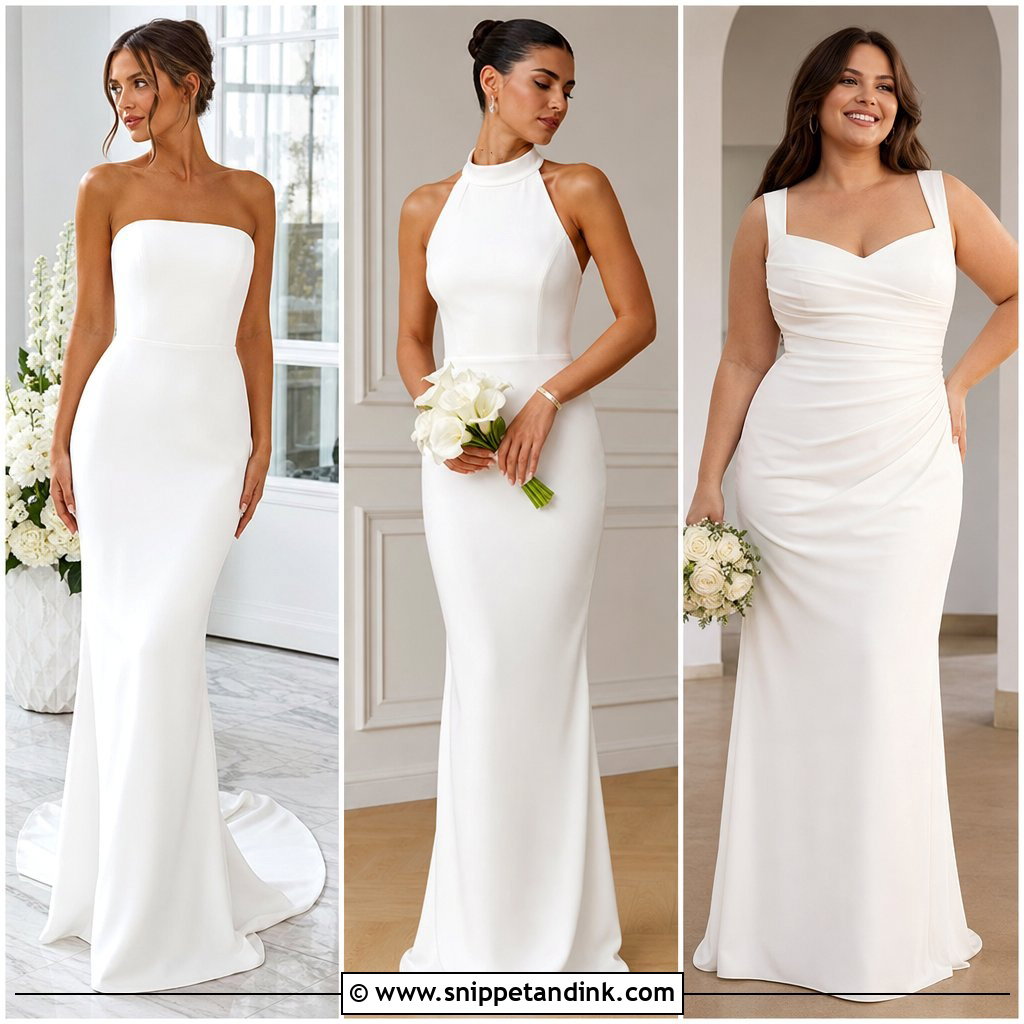
Crepe is honest fabric. A crepe sheath wedding dress follows the body closely, and with a matte surface the seaming is the only decoration, so I look hard at where the darts and princess seams land before I look at anything else. A seam sitting slightly off your natural waist is invisible under lace and obvious on plain crepe. A bateau neck gives modest coverage. A low back closed with fabric-covered buttons adds interest without beading or embroidery. I pair it with slim ankle-strap heels, pearl studs, a chapel veil and loose waves or a neat ponytail. It belongs in a loft, on a rooftop or in a small restaurant where guests see you up close.
4. Silk Slip Wedding Dress
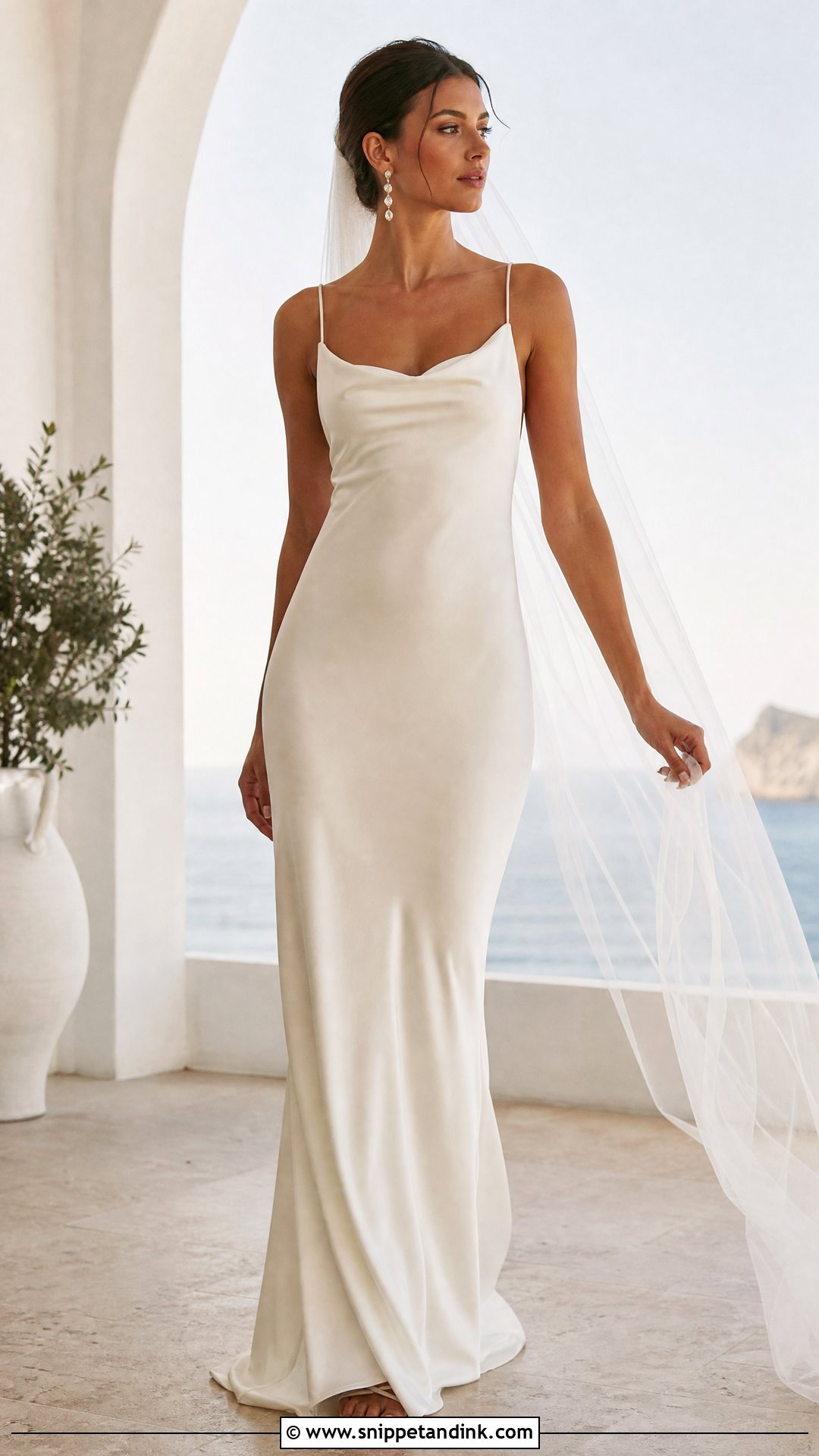
Bias-cut silk is the least forgiving fabric on this list, and I say so before a bride falls for the picture. A silk slip wedding dress has narrow straps, a lightly shaped bodice and a fluid skirt with that 1990s mood, but because the fabric is cut on the diagonal it clings and stretches over hip and stomach. It still needs a professional fit at bust, waist and hip. Your underwear has to be chosen by the first alteration appointment, not the week before, because smooth, line-free pieces change how the skirt hangs. Delicate strappy sandals, small crystal earrings and a long sheer veil with no appliqués are enough, plus a sleek centre-part bun. A coastal venue, a gallery or a courthouse suits it, and it travels far more easily than a boned gown.
5. Strapless Column Wedding Dress
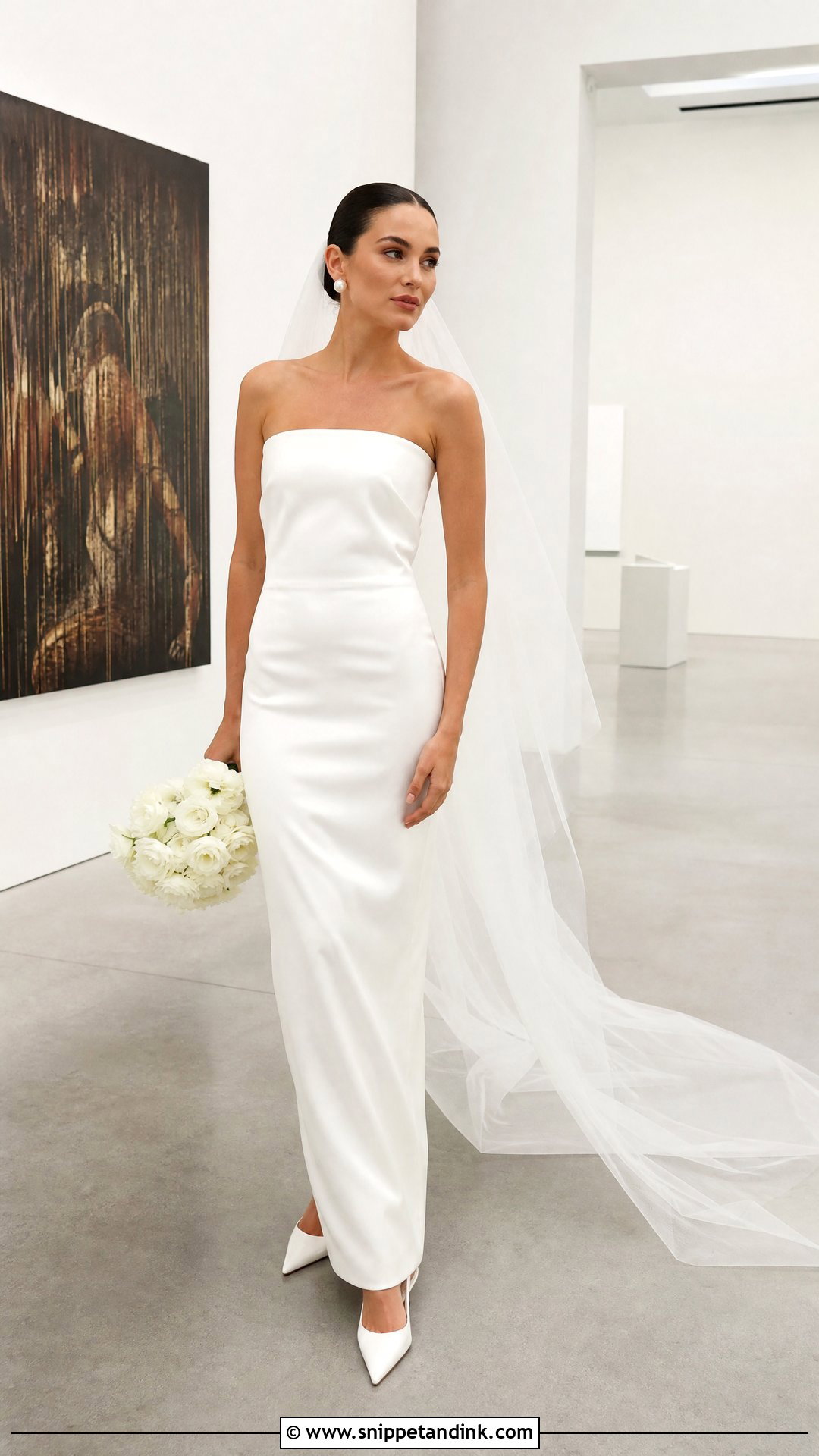
A strapless column depends entirely on what’s built inside it. The narrow skirt falls close to the body, giving length without fullness, and a straight neckline reads architectural while a curved one softens the effect. With no straps, the boning, grip tape along the top edge and a waist stay do all the holding. In fittings I have the bride raise her arms, hug someone and bend to pick up a dropped shoe; if the bodice slips during any of those, it will slip at the reception. Pointed slingbacks, bold pearl earrings and a smooth cathedral veil balance the straight line, and a structured clutch helps in portraits. City weddings, museums and hotels suit its clean shape.
6. Off-Shoulder Satin Wedding Dress
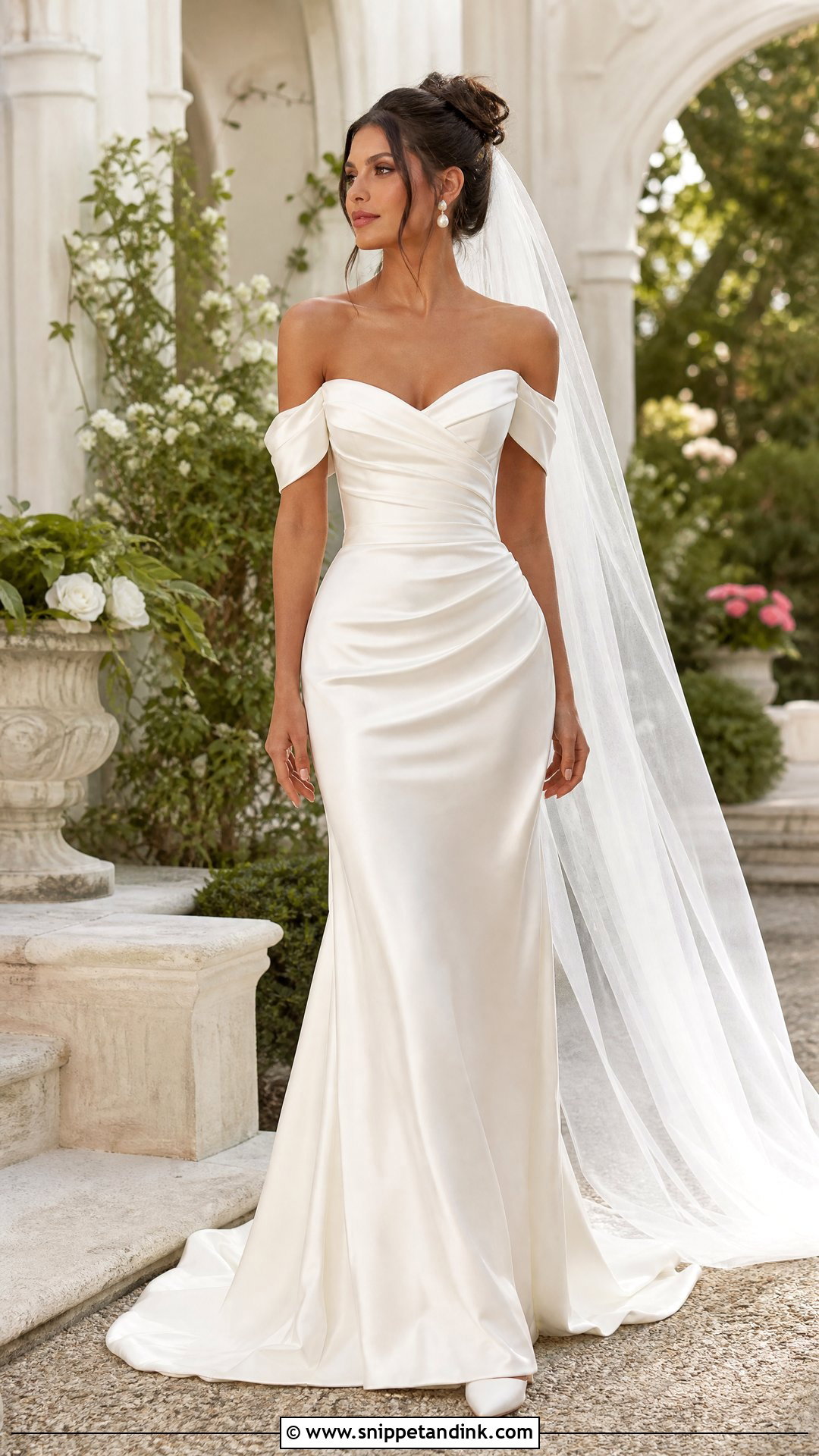
Off-the-shoulder bands look simple and turn out to be surprisingly technical. The draped satin sits across the upper arm, so lifting your arms for a hug pulls on the whole bodice. What I check is that the structured bodice underneath carries the weight and the bands are only decoration. An A-line skirt keeps it traditional; a fitted skirt makes it more sculpted. The neckline is already the focal point, so pearl drops, a fine bracelet and closed-toe satin heels are plenty. A low bun keeps the collarbone visible, and a plain chapel veil adds movement behind you in estate gardens or candlelit halls at any time of year.
7. Square-Neck Crepe A-Line Wedding Dress
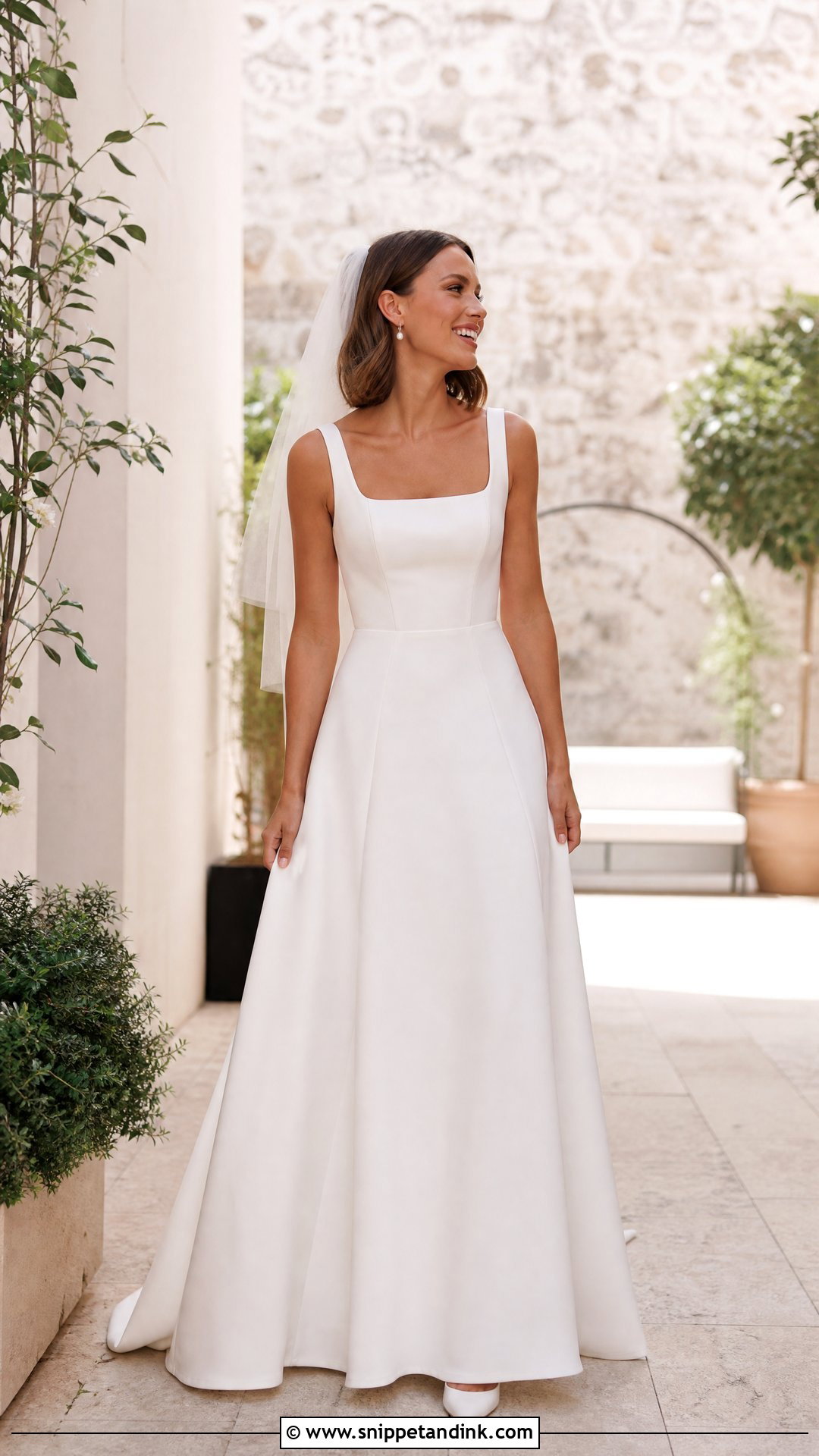
Square necklines are kinder to broad shoulders than most brides expect, because the horizontal line balances the shoulder rather than widening it. On a crepe A-line, wide straps or short fitted sleeves anchor that shape, and the crepe keeps the skirt fluid enough to dance in while princess seams do the shaping. Where I’m careful is the corners. They should lie flat against the chest, and if they gape when the bride leans forward, the straps need shortening. Pearl button earrings, low pointed heels and a shoulder-length veil with no trim keep it plain, with a half-up style softening the face. Gardens, restaurants and courthouses all suit a dress with this much structure and so little weight.
8. Halter Satin Wedding Dress
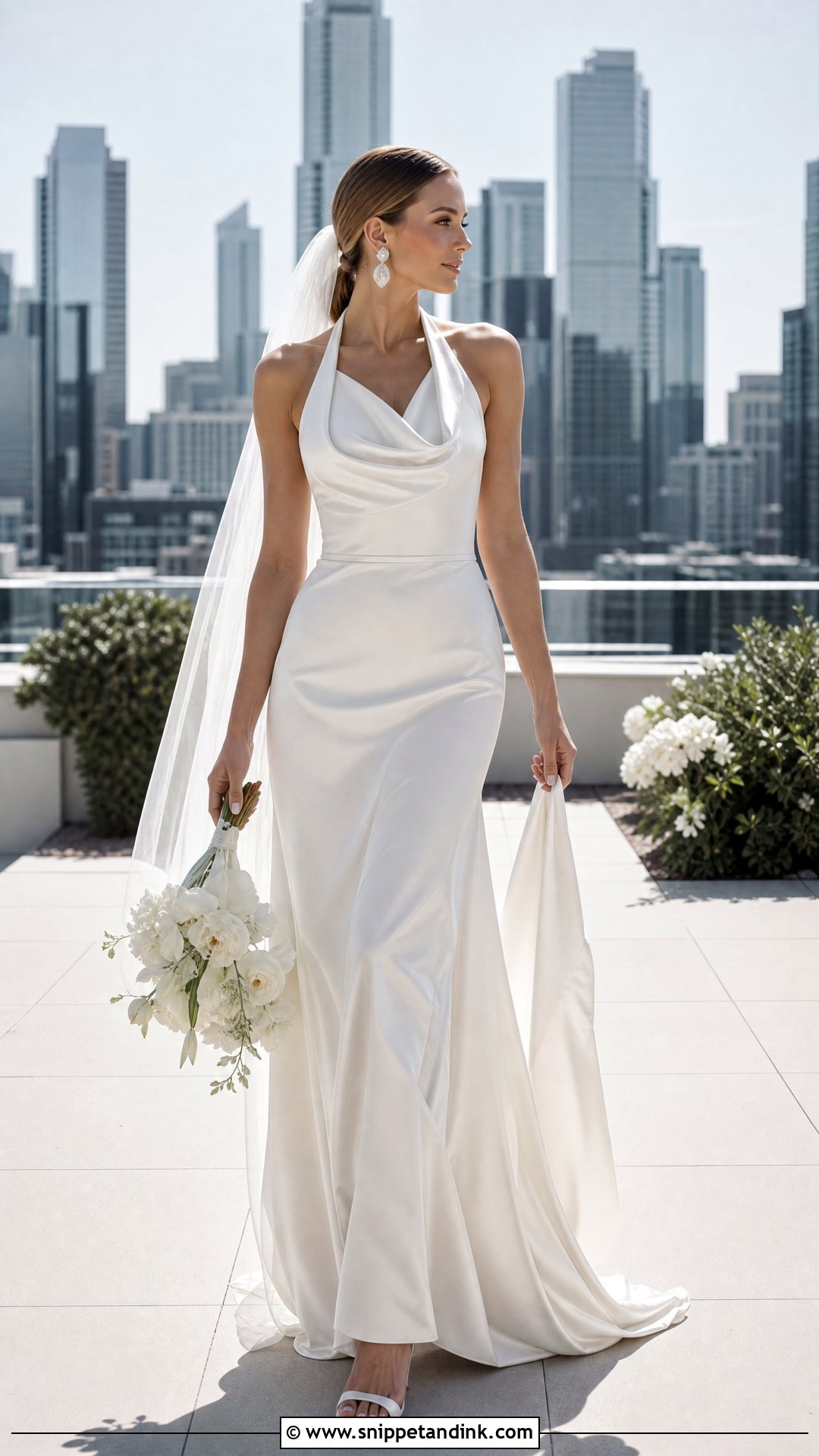
A halter takes the necklace off the table, which is the first thing I mention to a bride who already owns a family piece she hoped to wear. The neckline can sit close to the throat or drop into a narrow V, and a draped bodice over a straight or lightly flared skirt keeps the balance. Sculptural earrings and a simple cuff step in for the necklace. Hair matters more here than with most gowns: the halter fastening sits right where loose hair rests, so a low bun or sleek ponytail stays clear of it, and the veil comb goes beneath the hair so nothing crowds the neck. Open-toe heels and a compact bouquet finish it for a rooftop or a warm evening.
9. Long-Sleeve Crepe Wedding Dress
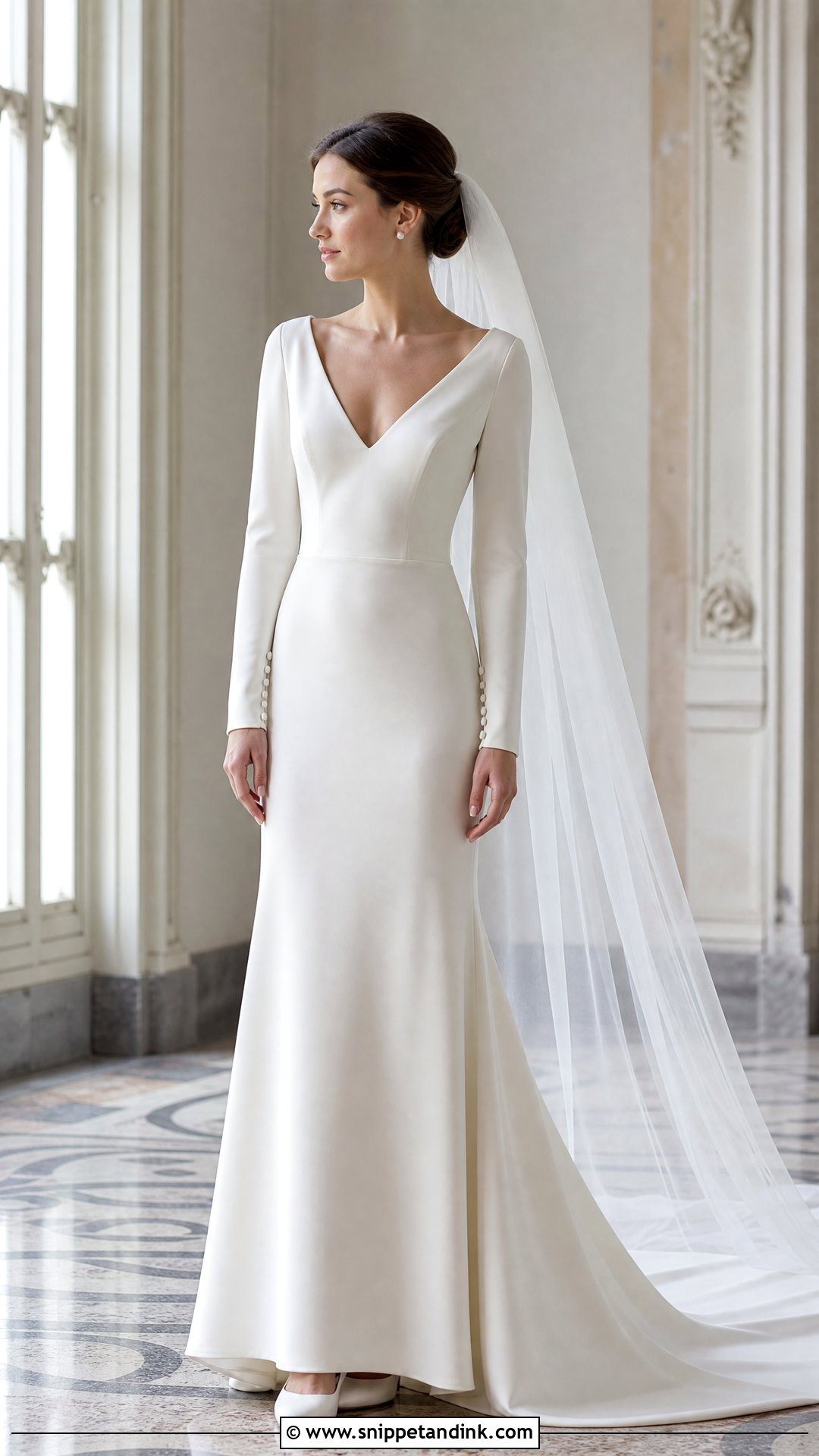
Long fitted sleeves in crepe give full coverage with a clean line, but I always test them with the arms raised. A sleeve set too low in the armhole drags the whole bodice upward every time you reach for someone. The neckline decides how much skin shows, and a bateau covers the most. Crepe drapes softly, so the dress stays relaxed rather than rigid. Fabric-covered buttons along the cuffs or down the back are the small detail that rewards close-up photos. Closed-toe pumps, pearl studs, a plain floor-length veil and a low twisted chignon complete it. I’d reach for this in fall or winter, or for an air-conditioned ballroom where bare arms are cold by the second hour.
10. Basque-Waist Mikado Wedding Dress
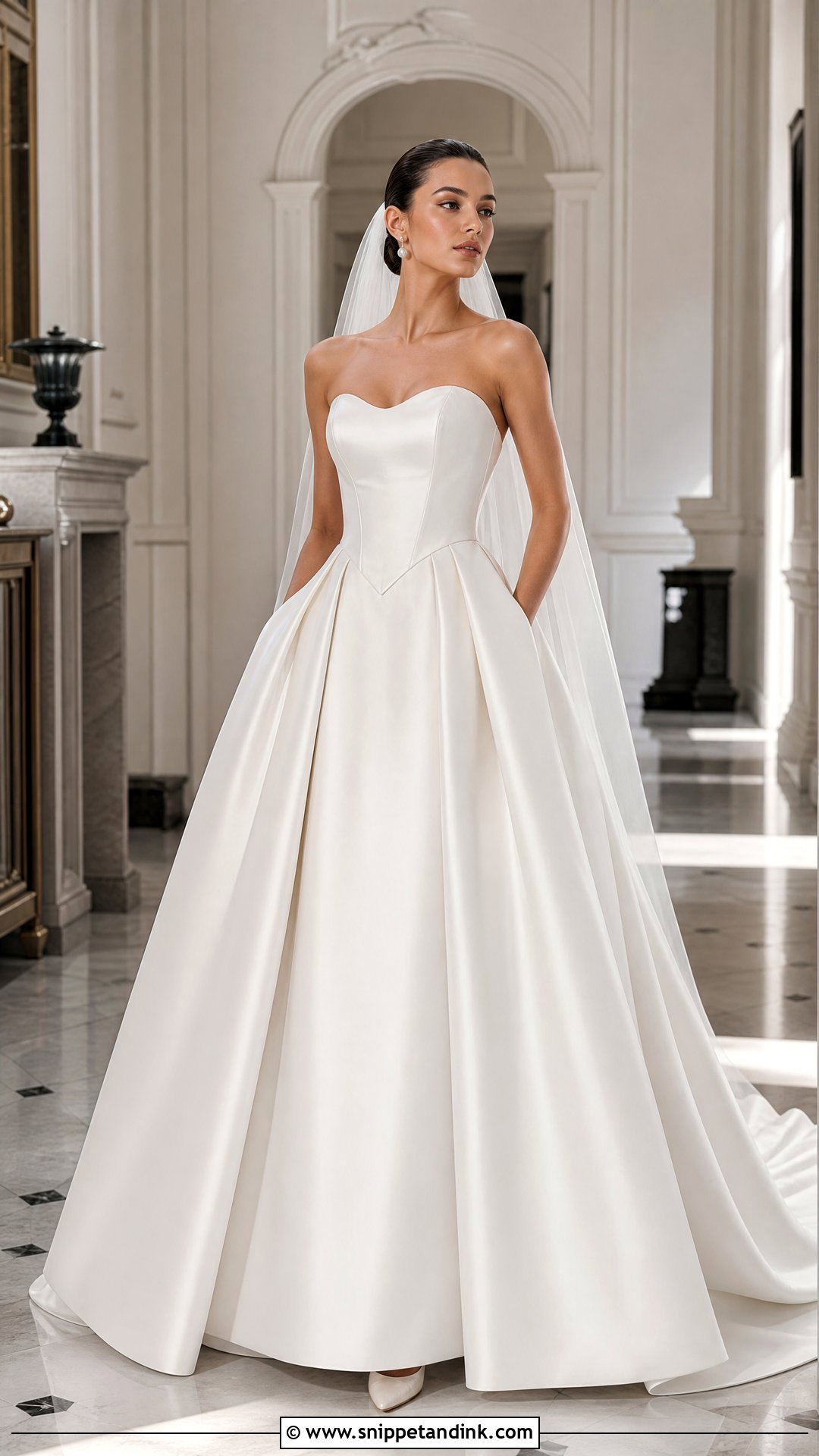
The V-point of a basque waist dips below the natural waistline and lengthens the torso, which is why I often suggest it to petite brides who want a full skirt without being swallowed by it. A basque-waist Mikado wedding dress pairs that pointed bodice with a full pleated skirt, and Mikado’s stiffness keeps both holding their shape through a long ceremony. The point must land exactly at centre front. Even slightly off to one side, the eye catches it on plain fabric. Satin pumps, pearl earrings, a plain cathedral veil and a polished updo leave the waistline on show in an estate, a grand hall or a large hotel.
11. Drop-Waist Satin Wedding Dress
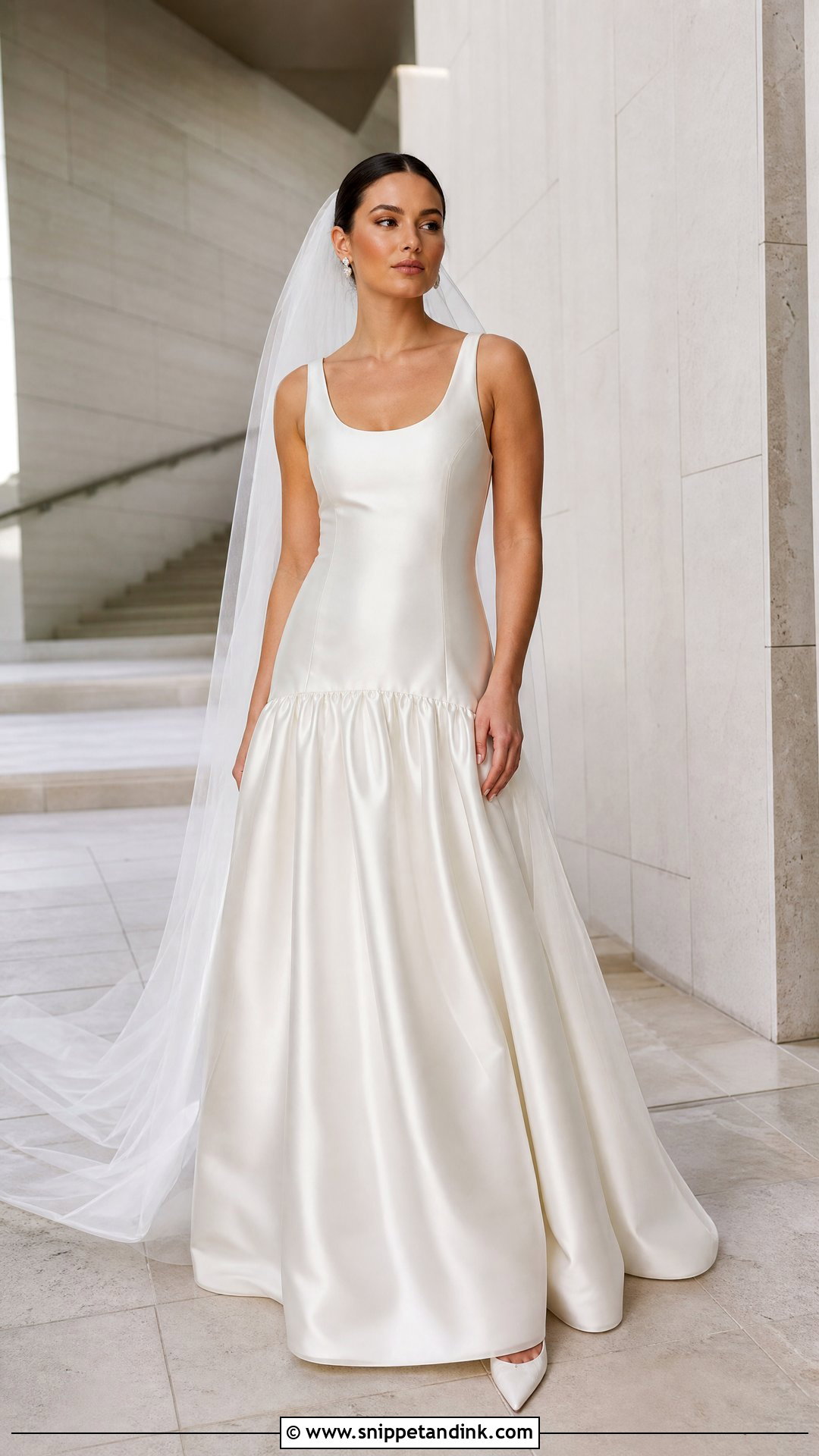
Drop waists divide opinion in the fitting room, and the reason is proportion. The bodice runs past the natural waist toward the hip before the skirt opens, so it flatters a longer torso and can make a short-waisted bride look as though her legs have shrunk. Vertical seams keep the surface clean, and gathered fabric at the lower hip adds controlled volume. Because the fit is so precise, I ask brides to sit and walk in the sample during the appointment, since a dropped seam can bind across the hips in a chair. Pointed heels, small crystal studs and a long veil set under a neat bun suit it. Skip the necklace if the strapless or scoop neckline is strong. Galleries and modern ballrooms are its natural setting.
12. One-Shoulder Draped Wedding Dress
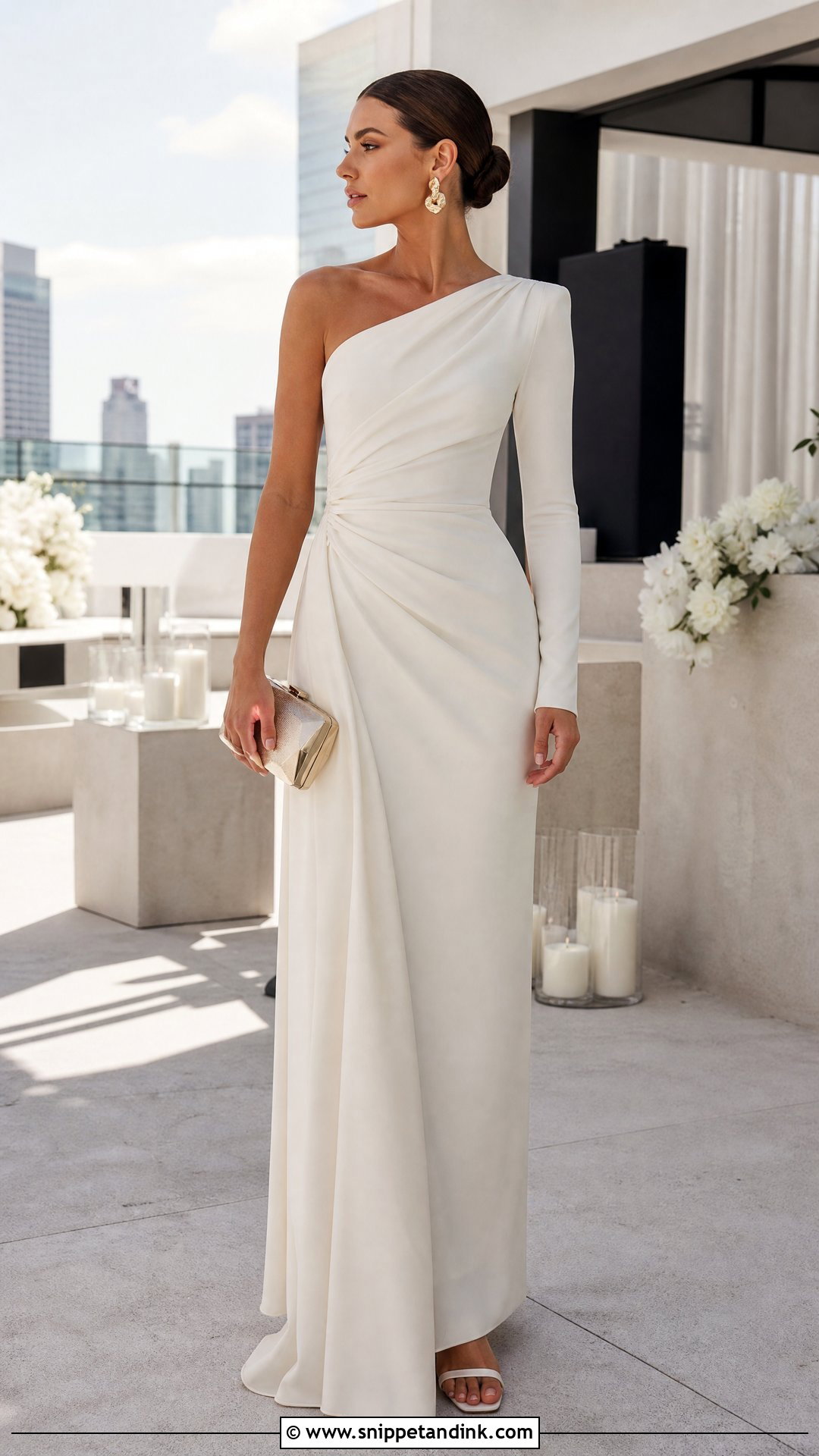
Asymmetry gives this dress its interest. Satin or crepe sweeps diagonally across the bodice to the waist, and the single shoulder can be a long sleeve for coverage or a wide strap for a lighter feel. That drape needs anchoring. I look for a hidden stay or tacking stitches along the diagonal, because unsupported folds slide downward over a long day. Wear one statement earring on the bare side, or a matched pair of small drops, with sleek heels and a structured clutch. A low bun parted toward the bare shoulder follows the neckline. A detachable cape can replace the veil, or you can skip both. Rooftops, art spaces and evening ceremonies are where this dress makes most sense.
13. Cowl-Neck Silk Wedding Dress
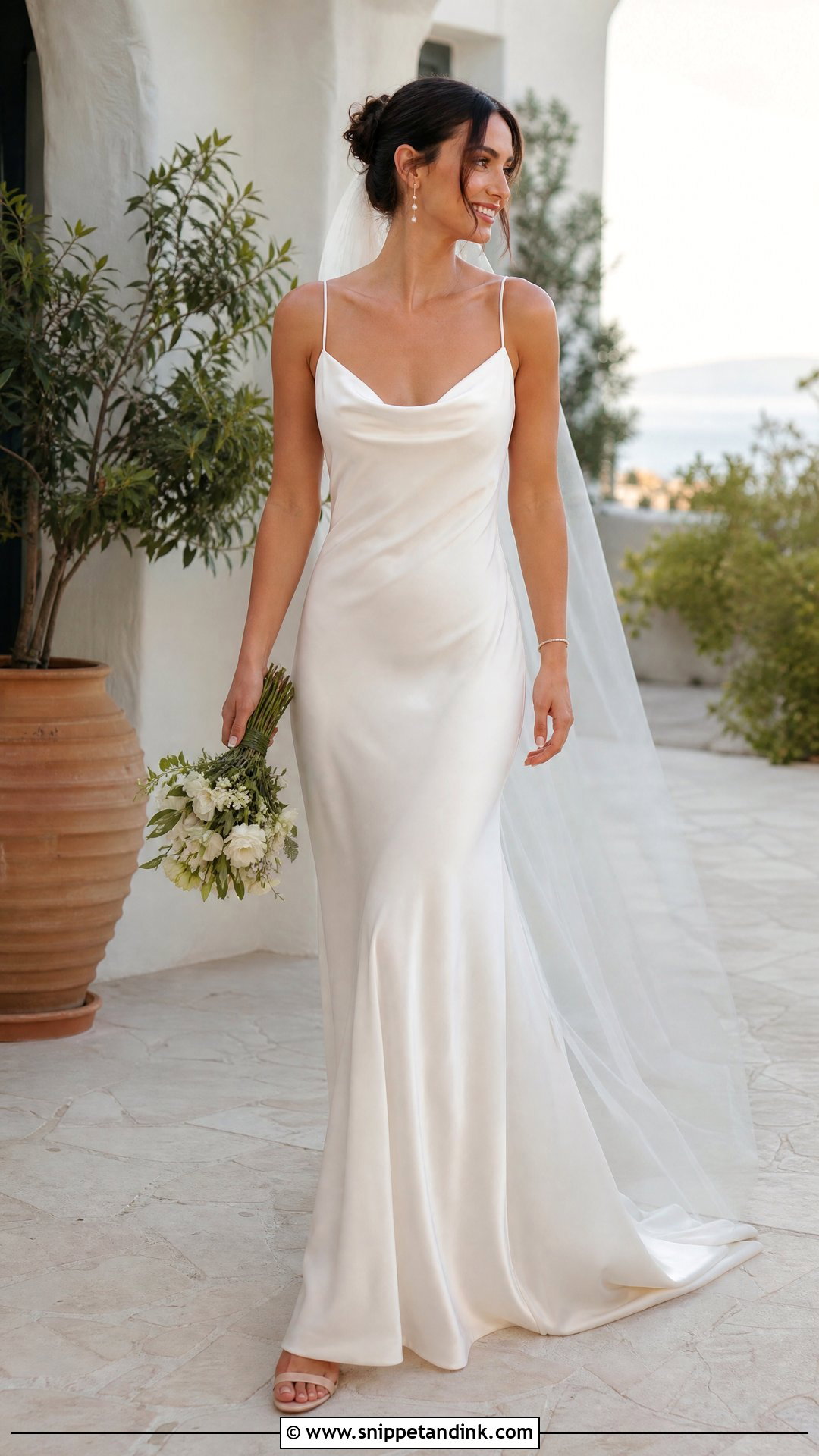
A cowl is bias-cut fabric falling in folds, which is exactly why it moves when you bend. Those soft drapes give a cowl-neck silk wedding dress depth without any lace, and the slim straps and fluid skirt keep it relaxed. At fittings I have the bride lean forward as if signing the register, then check the mirror from the side. If the neckline opens further than she’s comfortable with, a few hand stitches or a small weight sewn into the fold will hold it, with fashion tape as the backup. Barely-there sandals, pearl threader earrings and a fine bracelet finish it, along with a low knot or smooth waves. Wear a plain veil for the ceremony and take it off for dinner on the beach or in the courtyard.
14. High-Neck Chiffon Wedding Dress
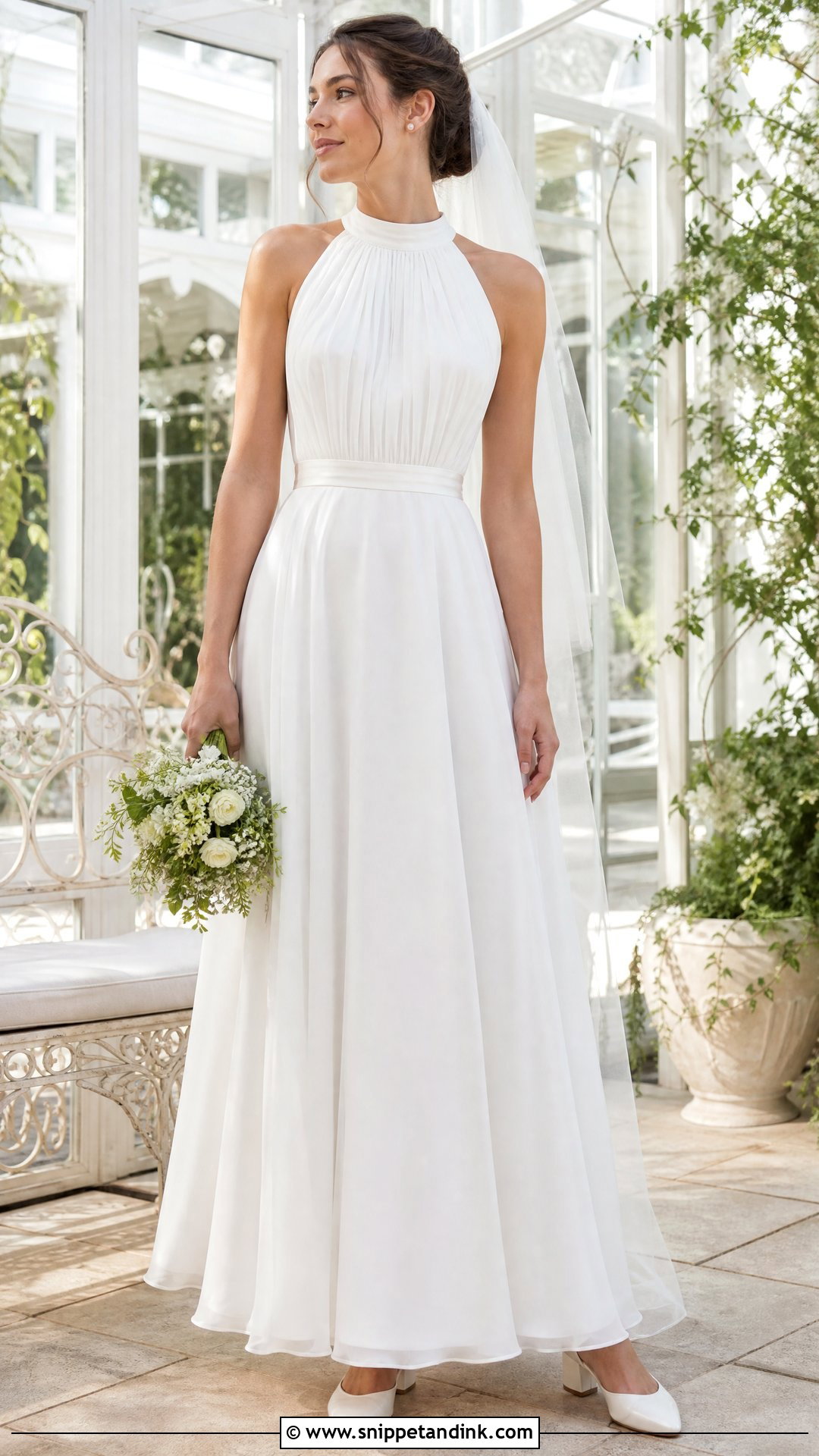
High necklines in chiffon cover without weight, and that’s the difference from a high-neck crepe or satin. The chiffon gathers at the neck and falls into a soft A-line or empire skirt, with a full lining underneath so the outer layer floats. I always check how a high neck closes at the back. A row of tiny loops takes time to fasten, and a hook that strains when you turn your head will nag at you for hours. Sleeveless versions suit the heat, opaque long sleeves the cooler months. Pearl studs, low block heels, a simple veil under a soft bun and perhaps a narrow satin waistband complete it for gardens, conservatories and beach venues where airflow matters.
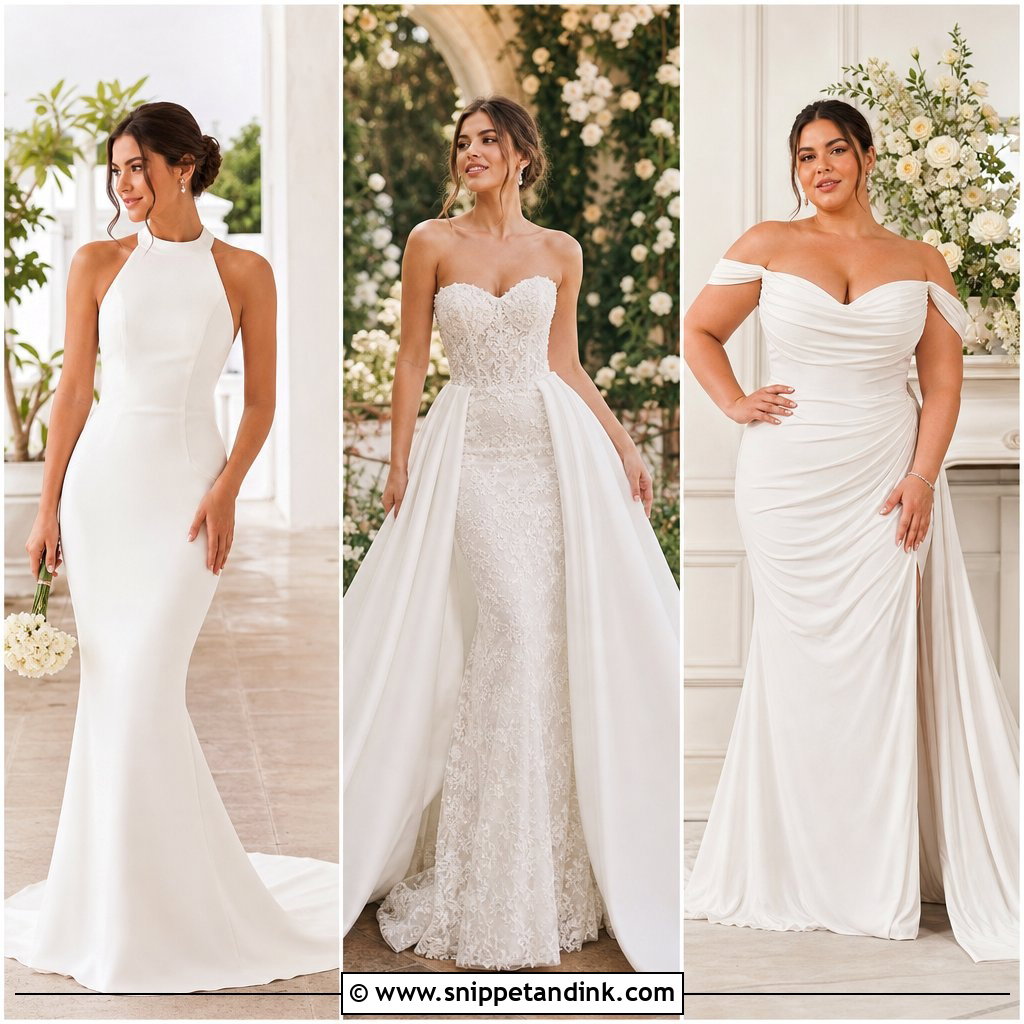
15. Organza A-Line Wedding Dress
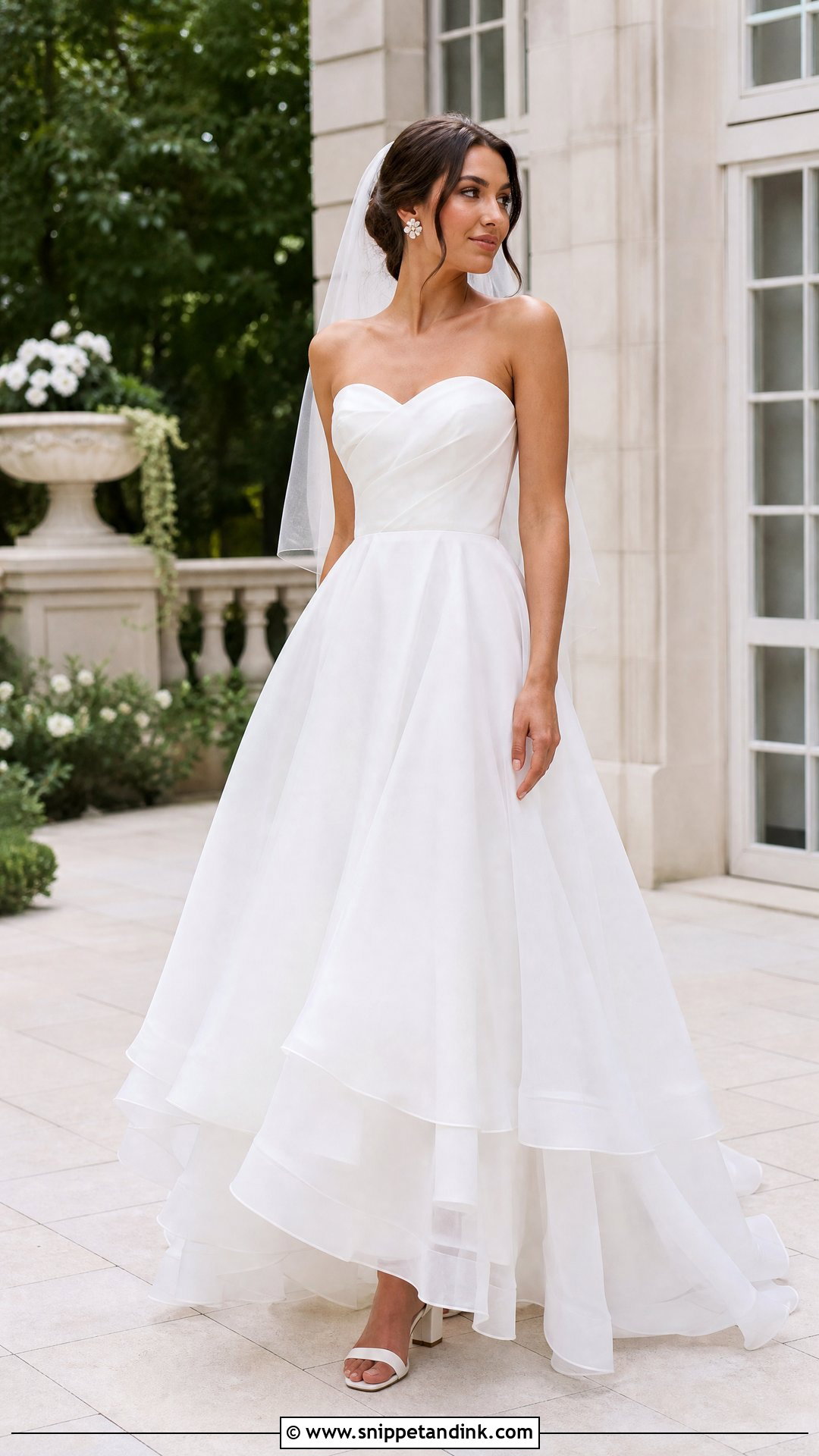
Organza holds volume without weight, and it’s the fabric I suggest when a bride wants a full skirt for a July wedding. It is stiffer than chiffon and far lighter than satin, so the skirt floats instead of dragging. A structured strapless bodice contrasts with that airy skirt, and layered organza or gentle pleating adds dimension without lace. My one warning: organza snags easily on rough stone, bouquet wire and the hook side of hook-and-loop fastenings. If your aisle is gravel or old brick, ask about a slightly shorter front hem. Block-heel sandals, pearl cluster earrings, a plain fingertip veil and a loose low bun suit it in gardens, bright ballrooms and coastal resorts.
16. Taffeta Ball Gown Wedding Dress
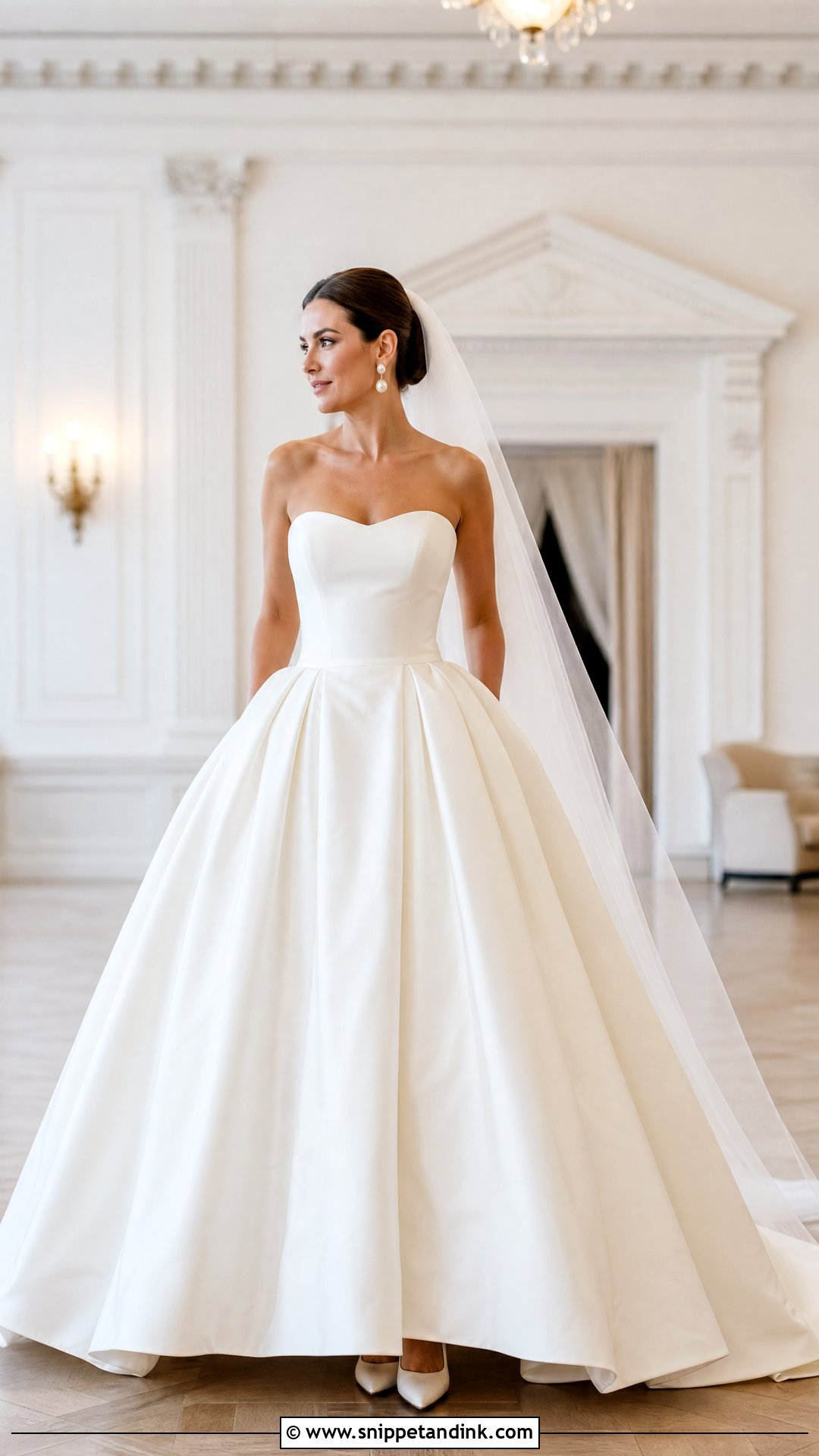
Taffeta rustles. That’s the first thing to know, and I’d rather a bride hears it in the boutique than in a silent church. The crisp fabric supports deep pleats and sculptural folds without lace, and a strapless curved bodice with a fitted waist balances the volume. Taffeta also creases sharply wherever it’s crushed, so I watch how the skirt looks after the bride has sat for a few minutes. Some love that slightly lived-in texture by evening, and others hate it. Classic pumps, statement pearl earrings, a long plain veil and a smooth bun keep the formal mood in a grand hotel, a historic mansion or a large ballroom.
17. Pleated Chiffon Empire Wedding Dress
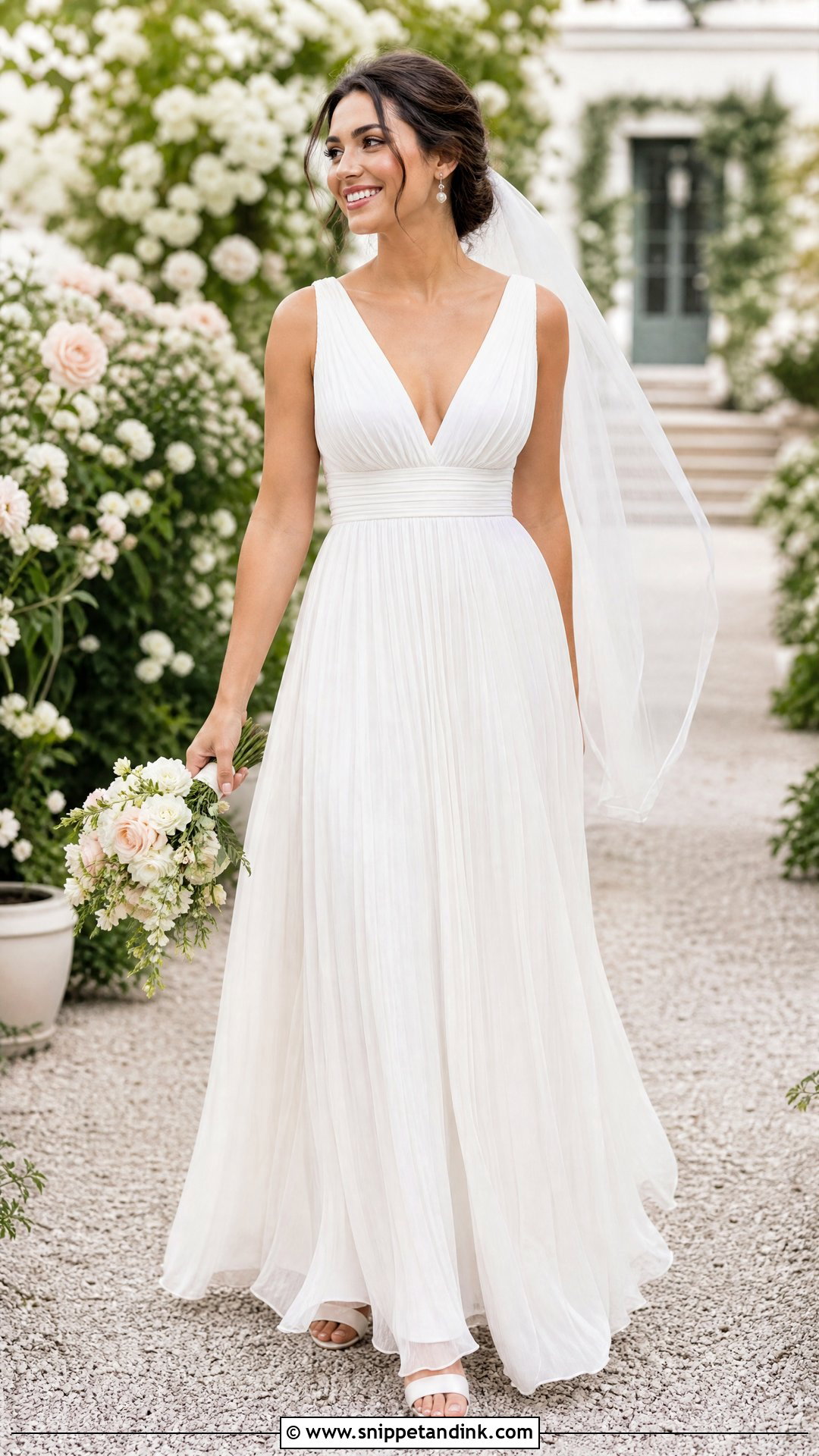
Comfort is the selling point here. A pleated chiffon empire dress falls from a raised waistline beneath the bust, so nothing presses on the stomach, which is why I suggest it to expectant brides and anyone who wants to eat dinner properly. Fine vertical pleats give texture without embroidery. One fit note: the underbust seam has to sit on the ribcage itself, or it rides up all night. The light skirt packs well for destination travel and moves on any breeze. Low block heels or flats give stable footing on sand and lawn, finished with pearl drops, a narrow bracelet, a light veil and softly pinned hair.
18. Minimalist Crepe Mermaid Wedding Dress
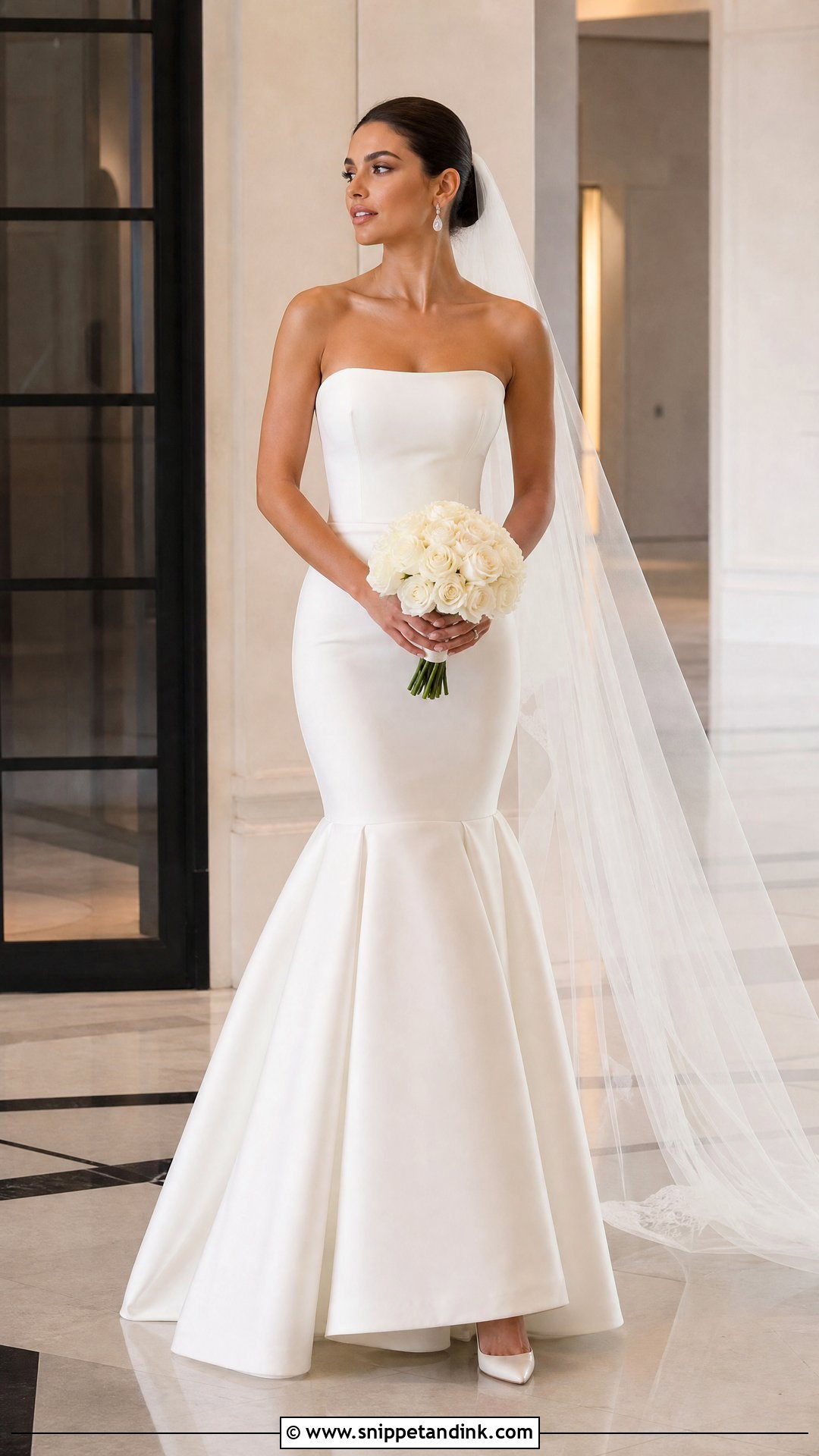
A mermaid in plain crepe has nowhere to hide a bad fit, and the knee is where it usually goes wrong. The bodice and skirt follow the body before flaring near the knee. If the flare starts too high, the dress looks bottom-heavy; too low, and you shuffle. I have brides take a flight of stairs in the sample before deciding. Medium-weight crepe gives enough structure for the sculpted shape while keeping a matte finish, and a back vent or generous flare makes walking easier. Pointed pumps, sleek drop earrings, a plain cathedral veil and a low ponytail finish it. Formal hotels and city venues show off the clean line and train best.
19. Tea-Length Satin Wedding Dress
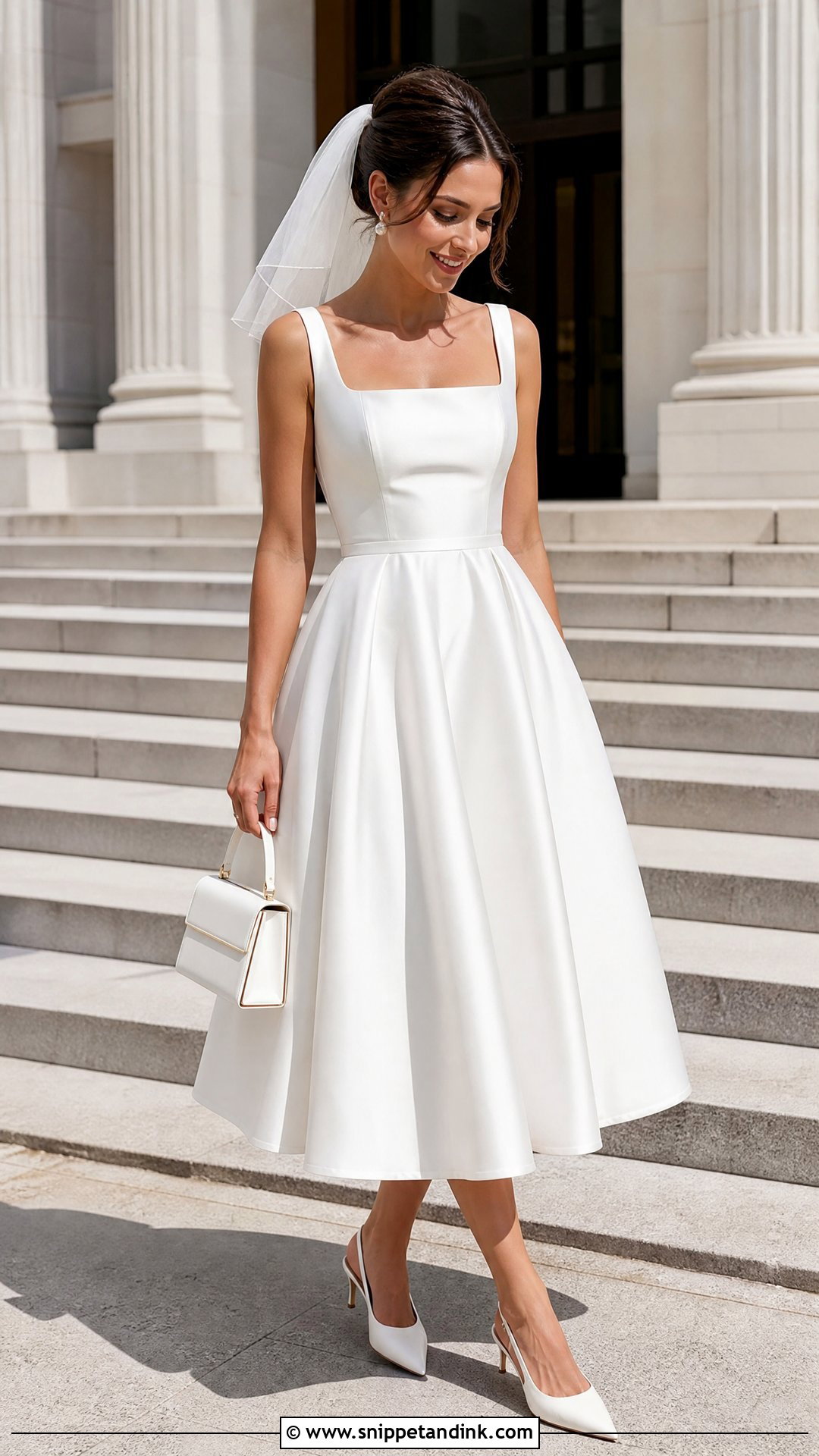
Tea length puts your shoes in the picture. The hem falls between knee and ankle, so whatever is on your feet becomes part of the outfit, and I’d spend on good shoes before anything else. A fitted bodice over a softly flared skirt gives the retro shape. Satin at this length shows the hemline very clearly, which means it has to be level all the way round; I check it with the bride standing in her actual wedding shoes, never barefoot. Pointed slingbacks, pearl earrings, a short plain veil, a structured mini bag and a neat bun or curled bob complete it. City halls, restaurants and garden parties suit a dress with no train to manage.

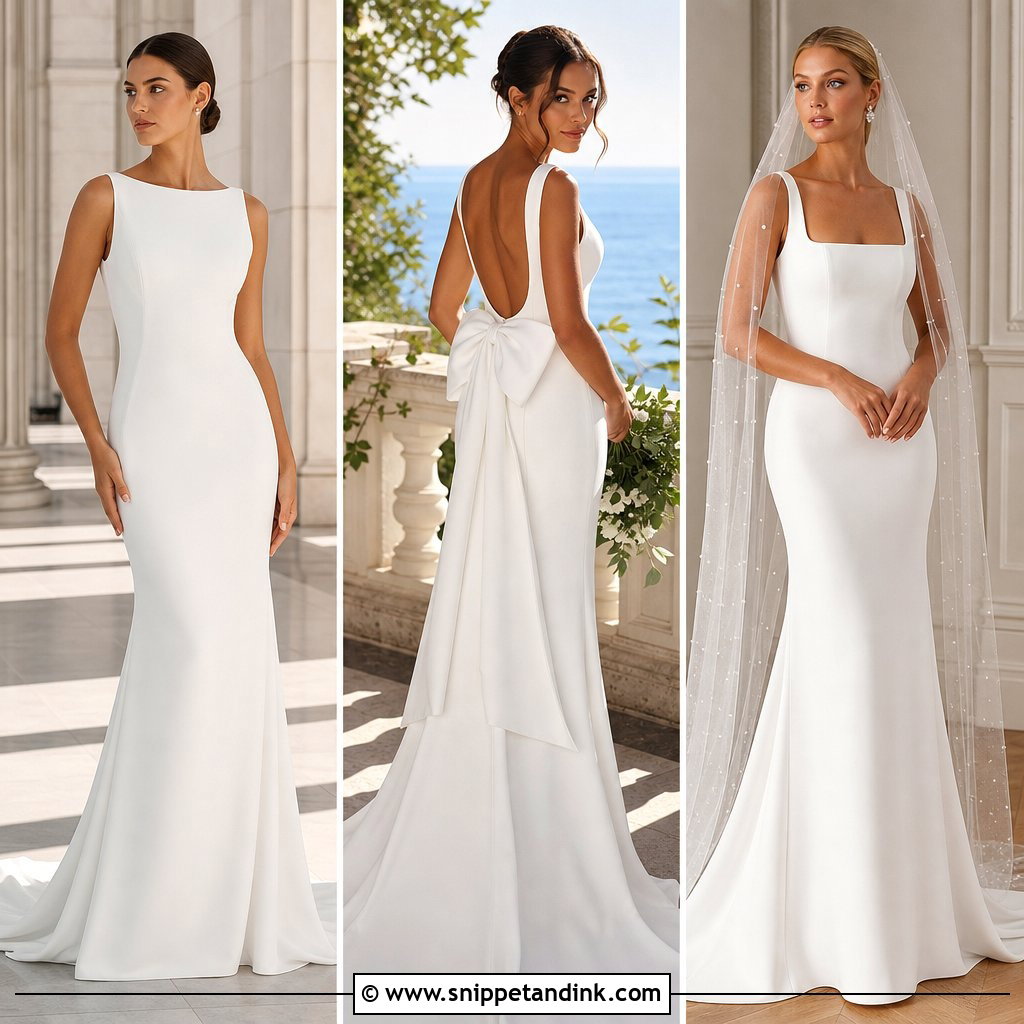
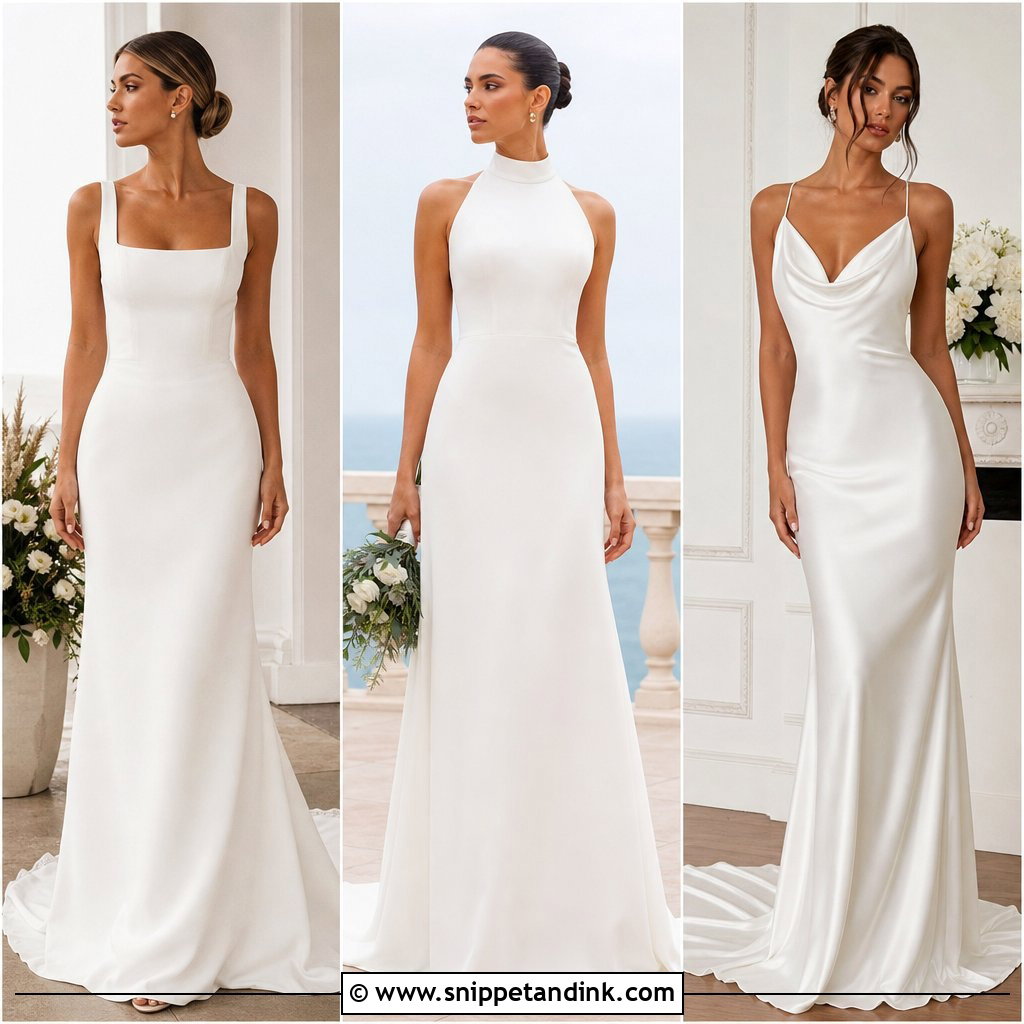
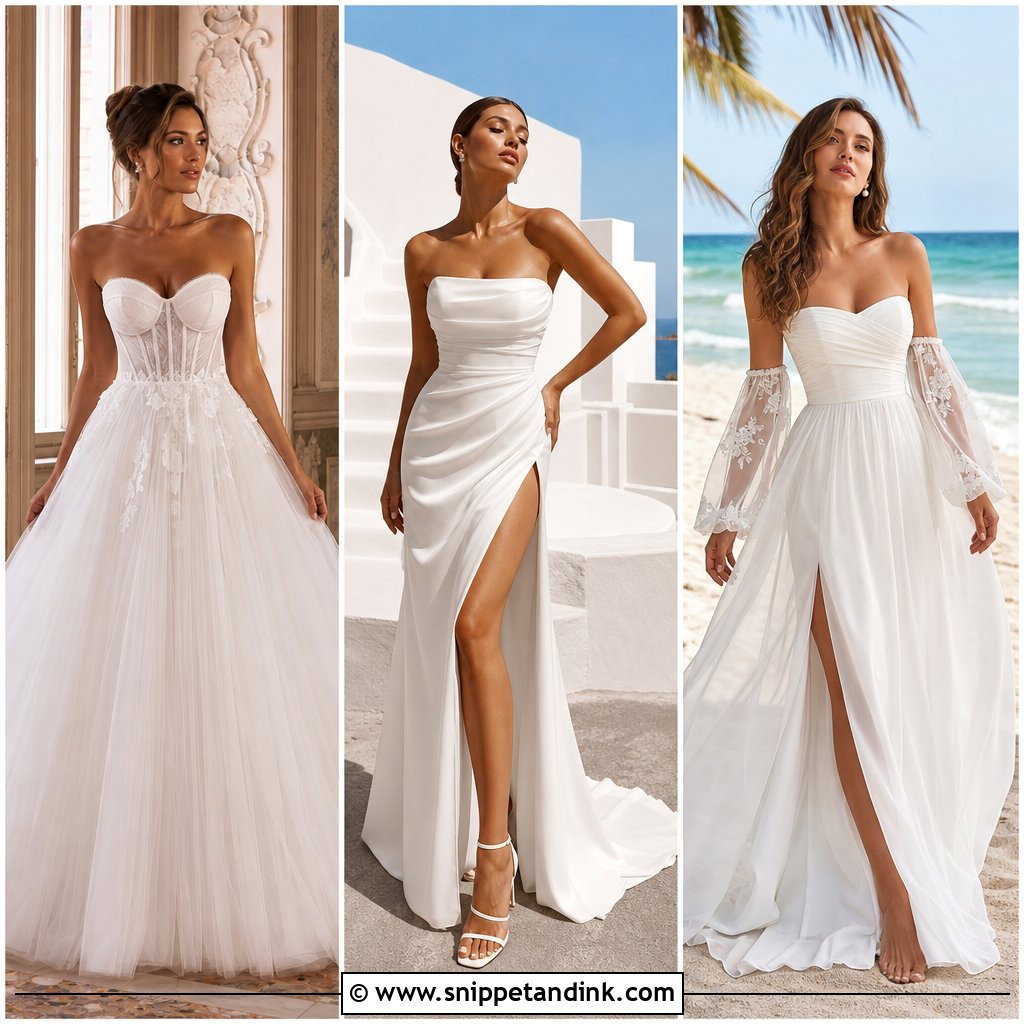
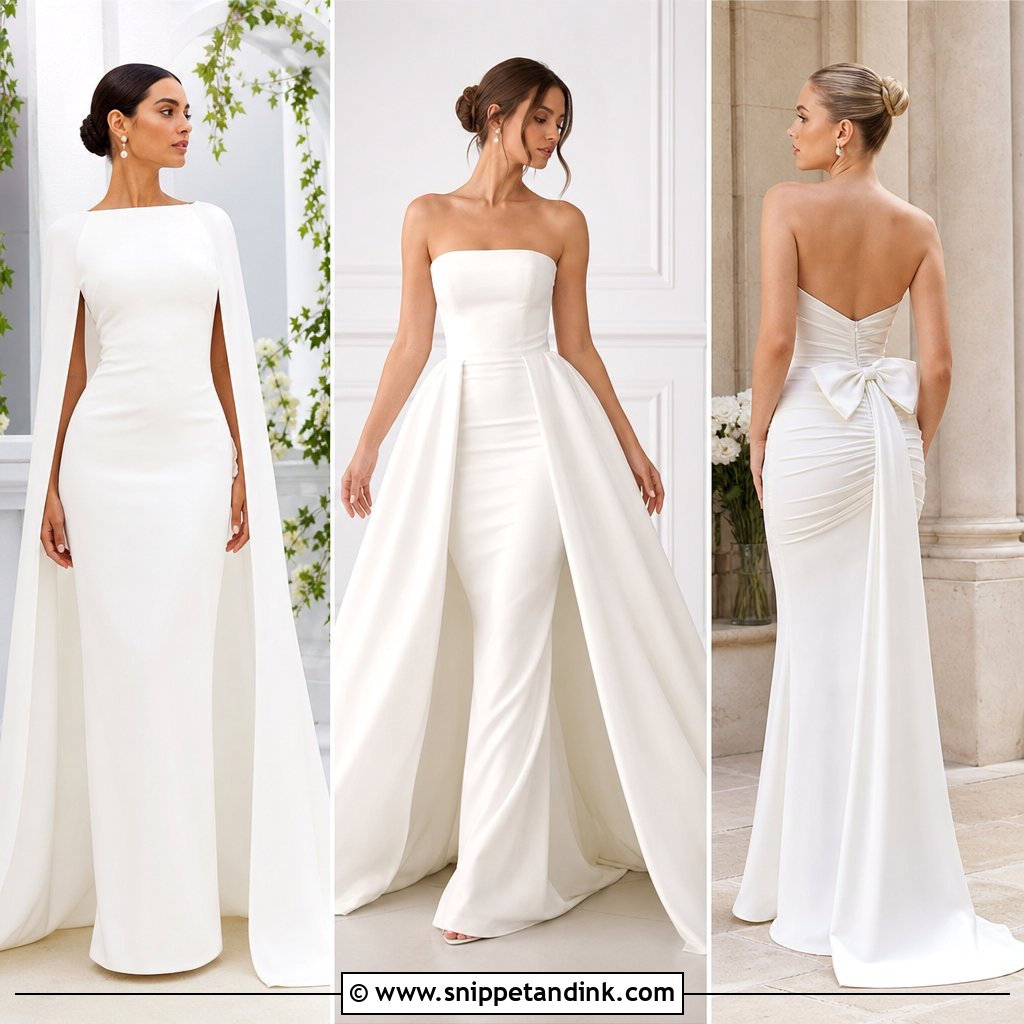
20. Short Satin Mini Wedding Dress
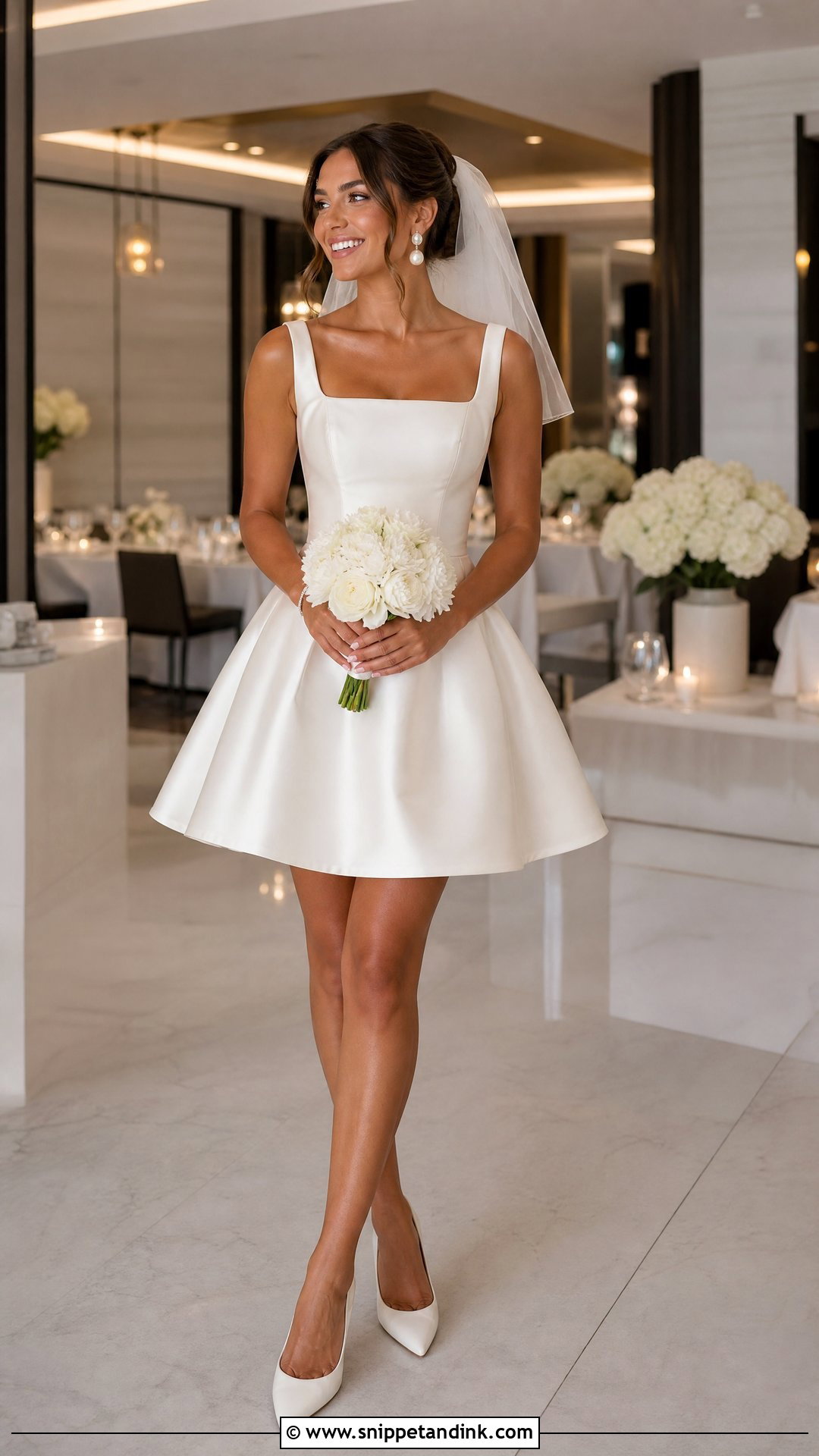
Short satin is the dress I see most often as a second look, changed into after dinner. A structured bodice and slightly flared skirt keep a mini polished, and the neckline sets how much coverage you get. Sit down in it in front of a mirror. Satin rides up when you sit, and a hem that looks fine standing can be very short in a chair, so a slippery lining that helps the skirt fall back into place is worth asking for. Pointed pumps or slingbacks, pearl statement earrings and a compact bouquet suit it, with a short veil or a big satin bow for bridal character in a courthouse, a private dining room or a hotel reception.
Creases, Spills and a Steamer on the Day
Plain fabrics wear their history. Satin and taffeta crease in the car and keep those lines, crepe usually relaxes after a few minutes of standing, and silk marks with almost anything wet. I ask brides to put a handheld steamer, a clean white cloth and a few safety pins in the getting-ready room, and to hand them to someone who isn’t the bride.
- Steam from inside the skirt where you can, and never press satin flat with an iron, which leaves shine marks.
- Blot spills on silk with a dry cloth. Rubbing and water can both leave a ring that’s harder to hide than the original drop.
- Practise the bustle with whoever will do it at the reception. Plain trains bustle with hidden hooks or ribbons that are easy to miss in a hurry.
- Stand rather than sit during the last half hour before the ceremony if your fabric creases sharply.
Storing a Satin or Silk Gown After the Wedding
Have the dress cleaned soon after the wedding, even if it looks spotless. Sugary drinks and perspiration can dry invisibly and turn into yellow-brown marks months later, and that shows badly on plain ivory.
For storage, I prefer a breathable cotton garment bag or an acid-free box with acid-free tissue folded into the creases. Plastic traps moisture and can yellow silk over time. Heavy ball gowns shouldn’t hang by their straps for months, so use the inner hanging loops or lay them in a box. Keep the dress somewhere cool, dark and dry, which rules out most attics and basements.
A Plain Gown Lives or Dies on Its Fit
Without lace, the fabric and the cut carry the whole dress, so start there. Satin and Mikado build structure, while silk, chiffon, organza and crepe give you different amounts of softness and movement. Try necklines and waist positions you never planned on, because a dropped or raised waist can change how a plain gown sits on your body more than any trim. Bring your actual shoes and underwear to every fitting, and test walking, sitting and raising your arms each time. Then add the veil, jewellery, hair and flowers that make it yours. A well-fitted plain dress is a blank page, and blank pages date very slowly.
You'll Like These Ideas:







Leave a Reply