
Most curvy brides I dress walk into the first appointment expecting to be talked out of things. I’d rather do the opposite. A gown that fits a curvy body well is mostly an engineering problem: where the bodice gets its support, where the waist seam lands, and how the skirt fabric behaves over the hips once you sit down at dinner. Get those three right and almost every silhouette below becomes wearable. The thirty gowns here run from structured corsets and A-lines to crepe sheaths and mermaid cuts, and for each one I’ve noted what I check on the fitting stand before a bride falls in love with it.
Ordering a Gown When Your Bust, Waist and Hips Are Different Sizes
Bridal size charts rarely match your street size, and most curvy brides find that their measurements land in two or three different columns. My rule is simple: order to your largest measurement, then alter down. Taking a gown in is routine work for a good seamstress; letting one out depends on how much seam allowance the maker left, which is often very little.
Before any appointment, I ask brides to measure themselves in the bra they plan to wear, standing relaxed rather than holding their breath. Bust at its fullest point, natural waist at the narrowest, hips at the widest point of the seat. Write all three down and bring them, along with the shoes you expect to wear or ones of the same height.
- Order roughly eight to ten months ahead if you can. Made-to-order gowns usually take several months to arrive, and timelines vary by designer.
- Ask whether the designer offers custom measurements or a separate bodice and skirt size. Some do, sometimes for an extra fee.
- Check what the bodice is built from inside: boning, cups, a waist stay. You can’t add these well after the fact.
- Sit, bend and lift your arms in every sample. A dress that only looks right standing still will annoy you by evening.
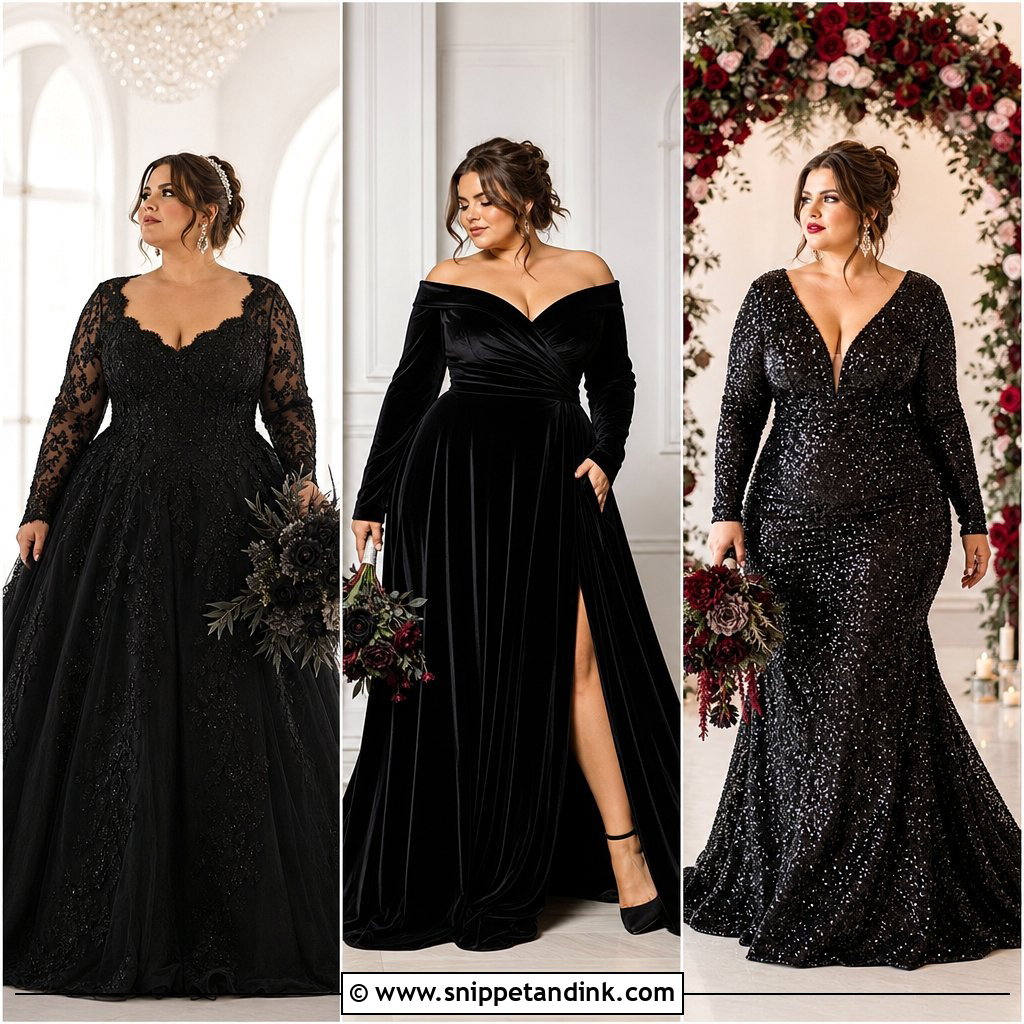
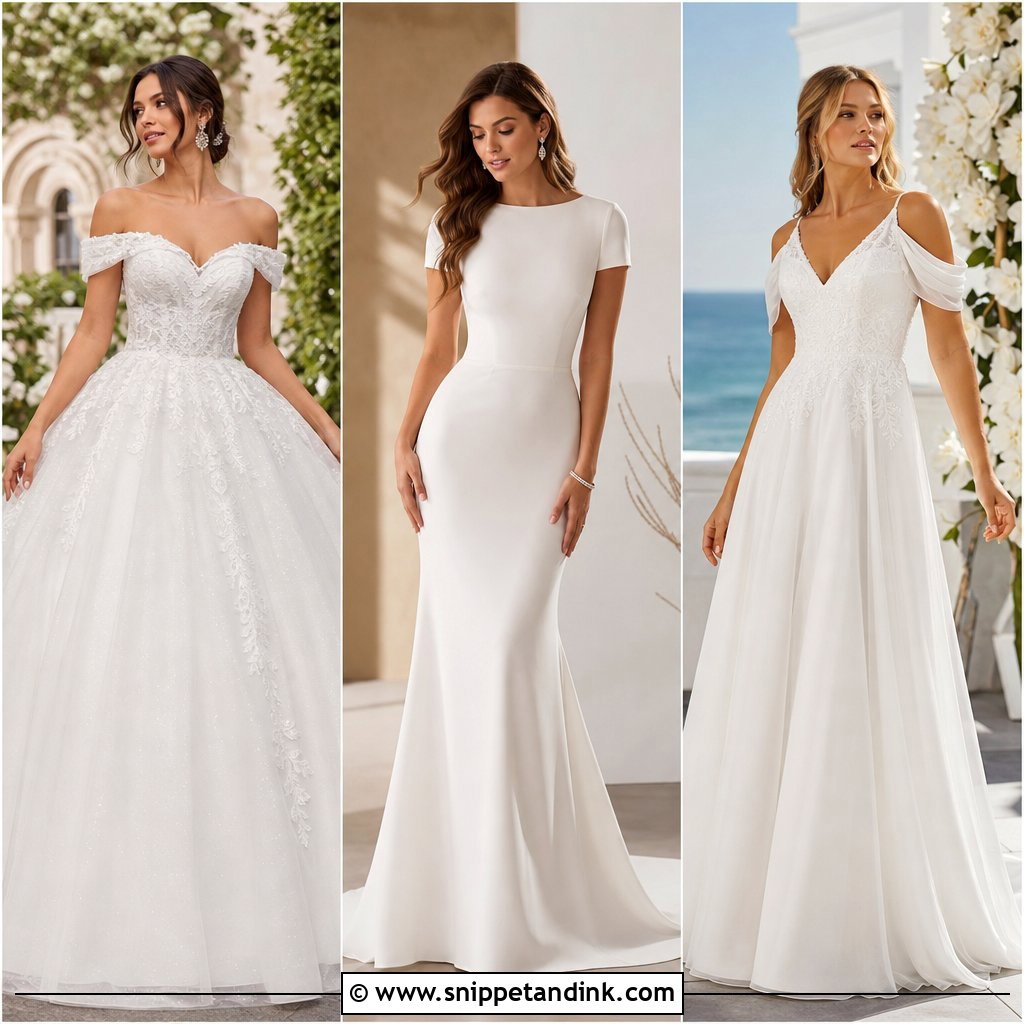
1. A Line Wedding Dress For Curvy Brides
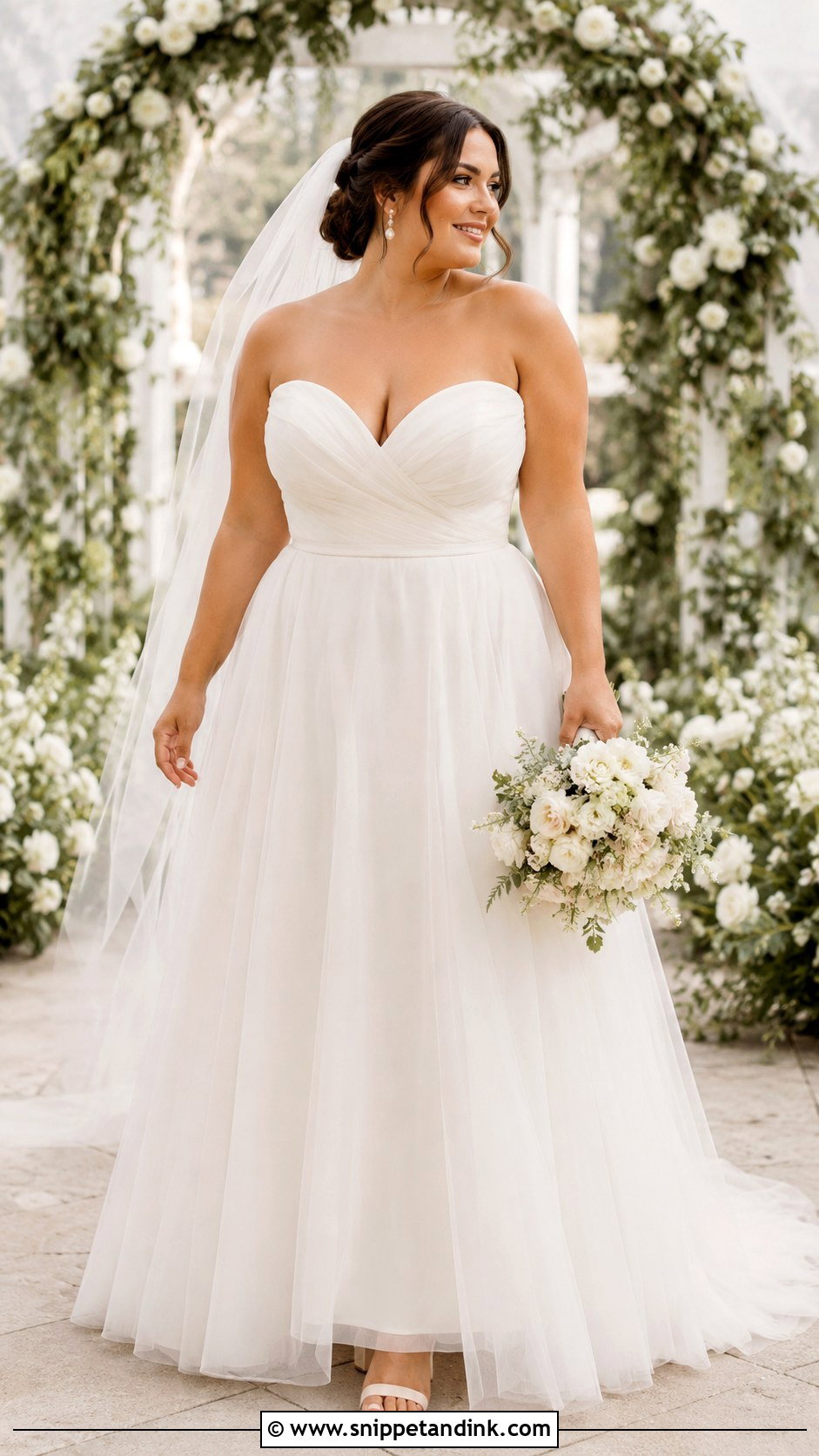
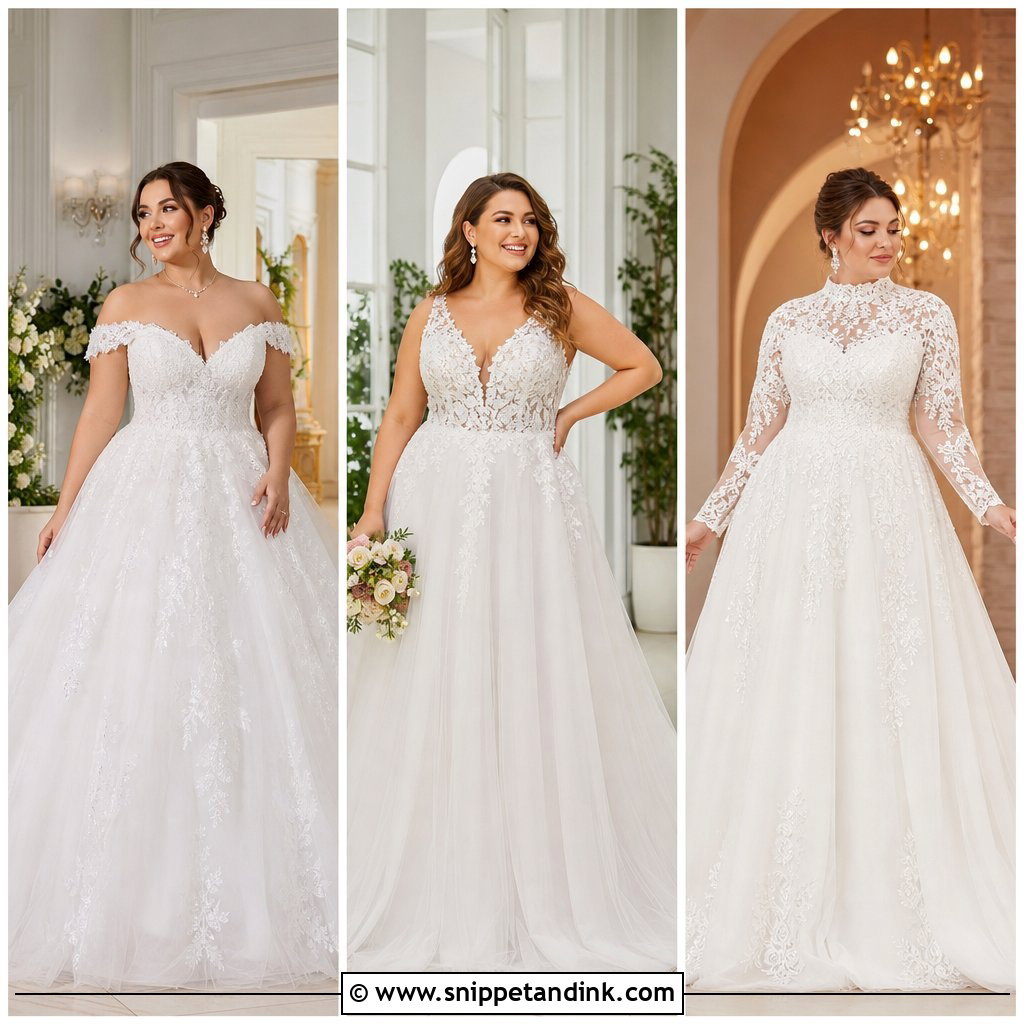
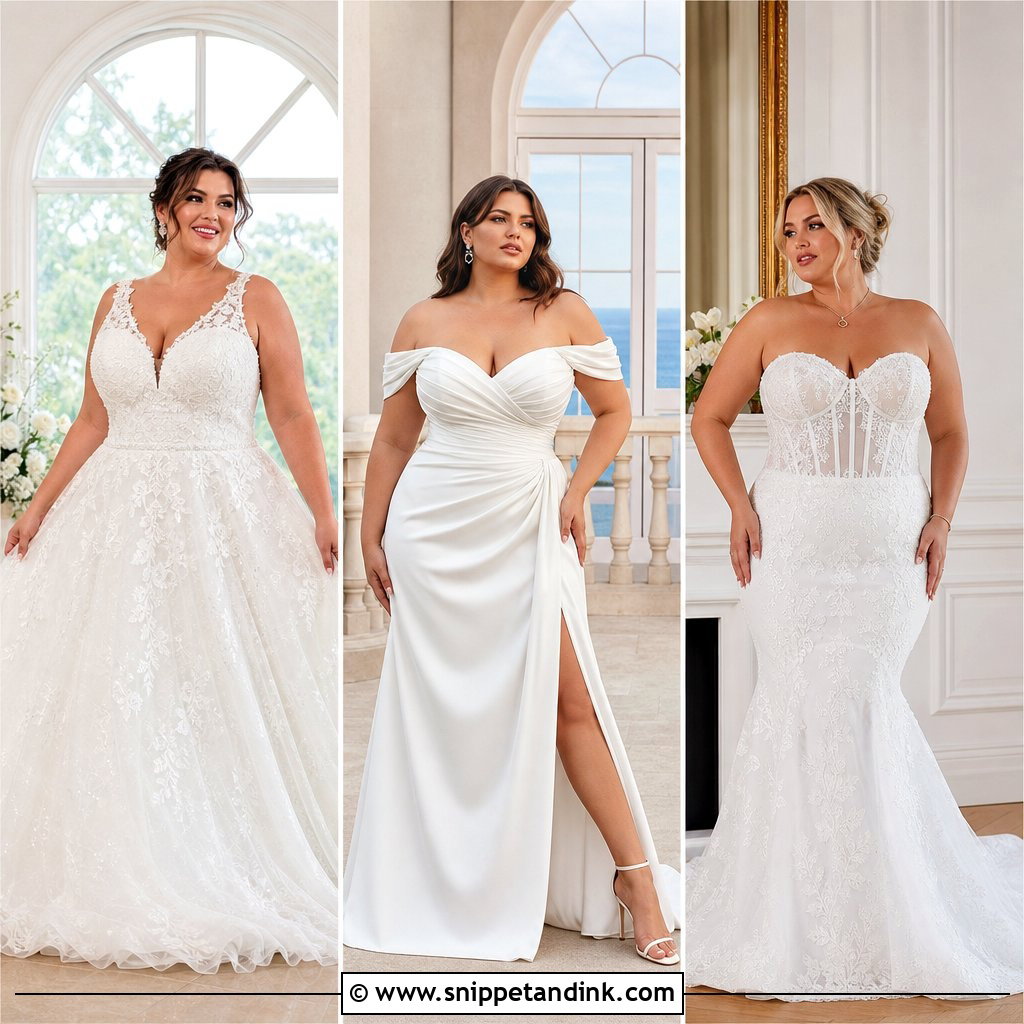
If a bride has no idea where to start, this is the dress I pull first, because it tells me so much in one try. The A-line defines the waist and then clears the hips instead of tracing them, so it reads well in a garden or a hotel ballroom. What I check is the bodice: wide straps or a sweetheart with sewn-in cups will hold a fuller bust far better than a thin strap ever can. Tulle and chiffon skirts move freely; satin gives a cleaner outline but shows every seam ripple, so it needs a good lining. Pearl drops, a fingertip veil and block heels finish it without fuss.
2. Ball Gown Wedding Dress For Curvy Brides
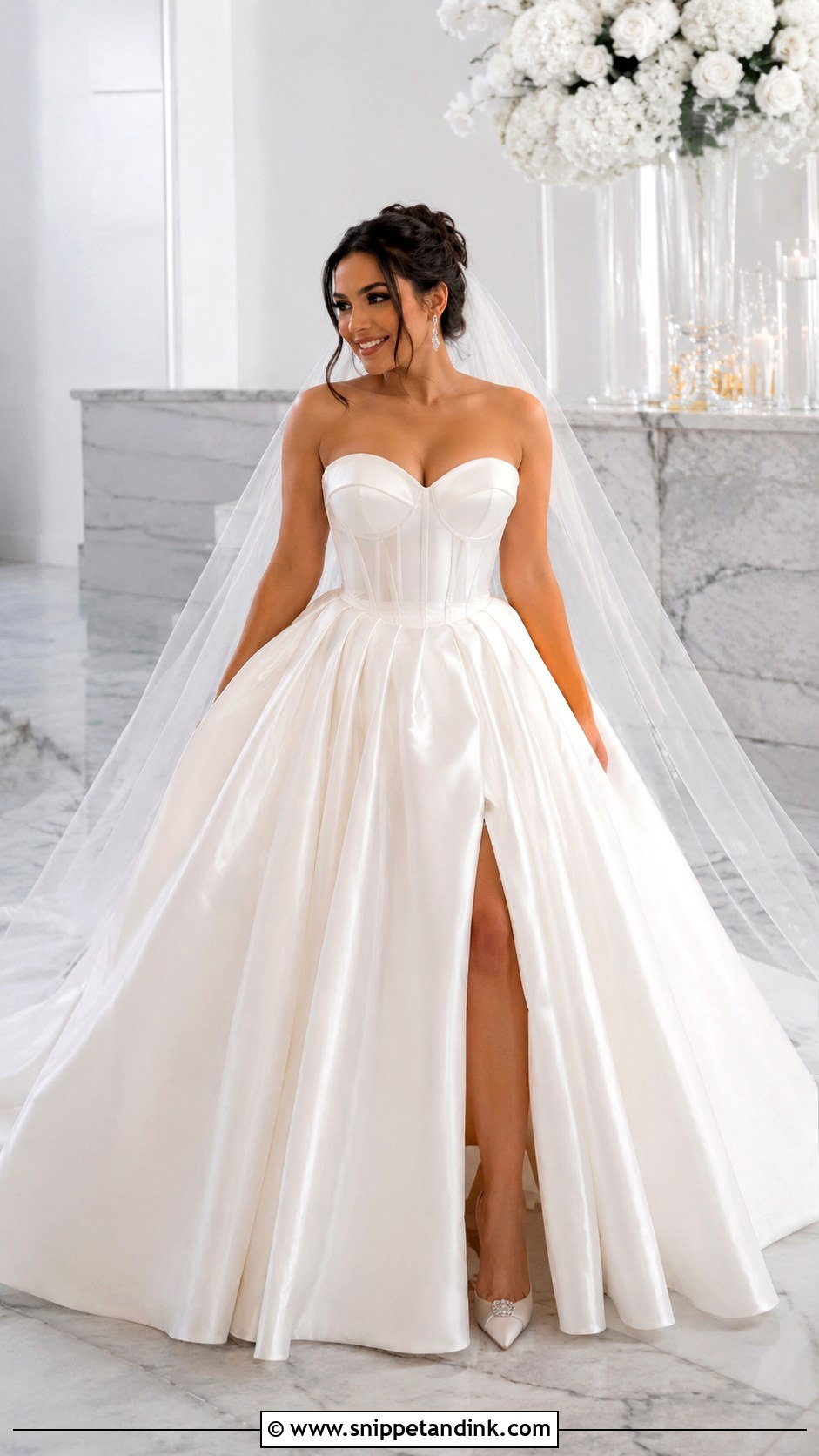
A ball gown wedding dress works for curvy brides when the bodice is doing real work. I always turn the gown inside out at the appointment to look for spiral steel boning and an inner waist stay, because without them the weight of a full skirt drags the bodice down by the reception. Layered tulle keeps the volume soft; mikado holds a crisp, sculpted shape. Square and sweetheart necklines balance the width of the skirt. Then a cathedral veil and pointed heels, and you have a proper entrance.
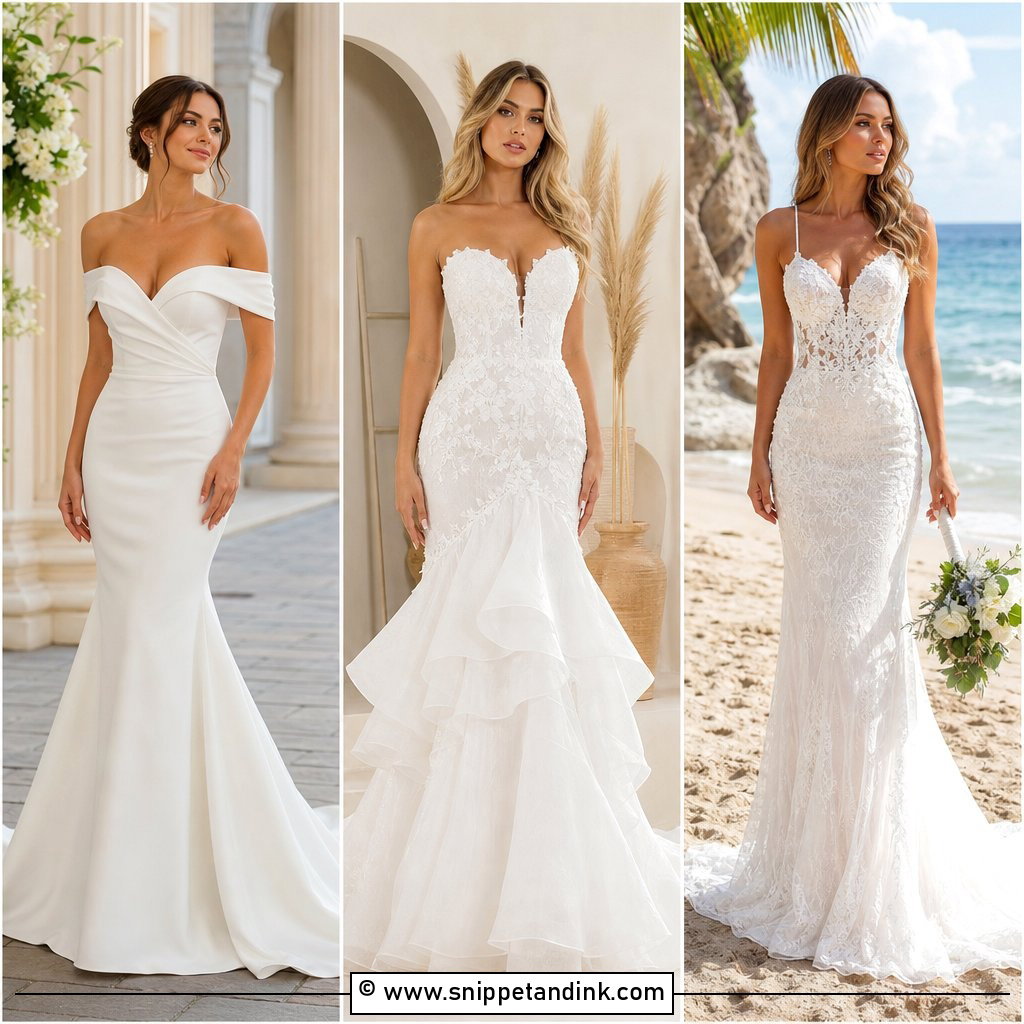
3. Mermaid Wedding Dress For Curvy Brides
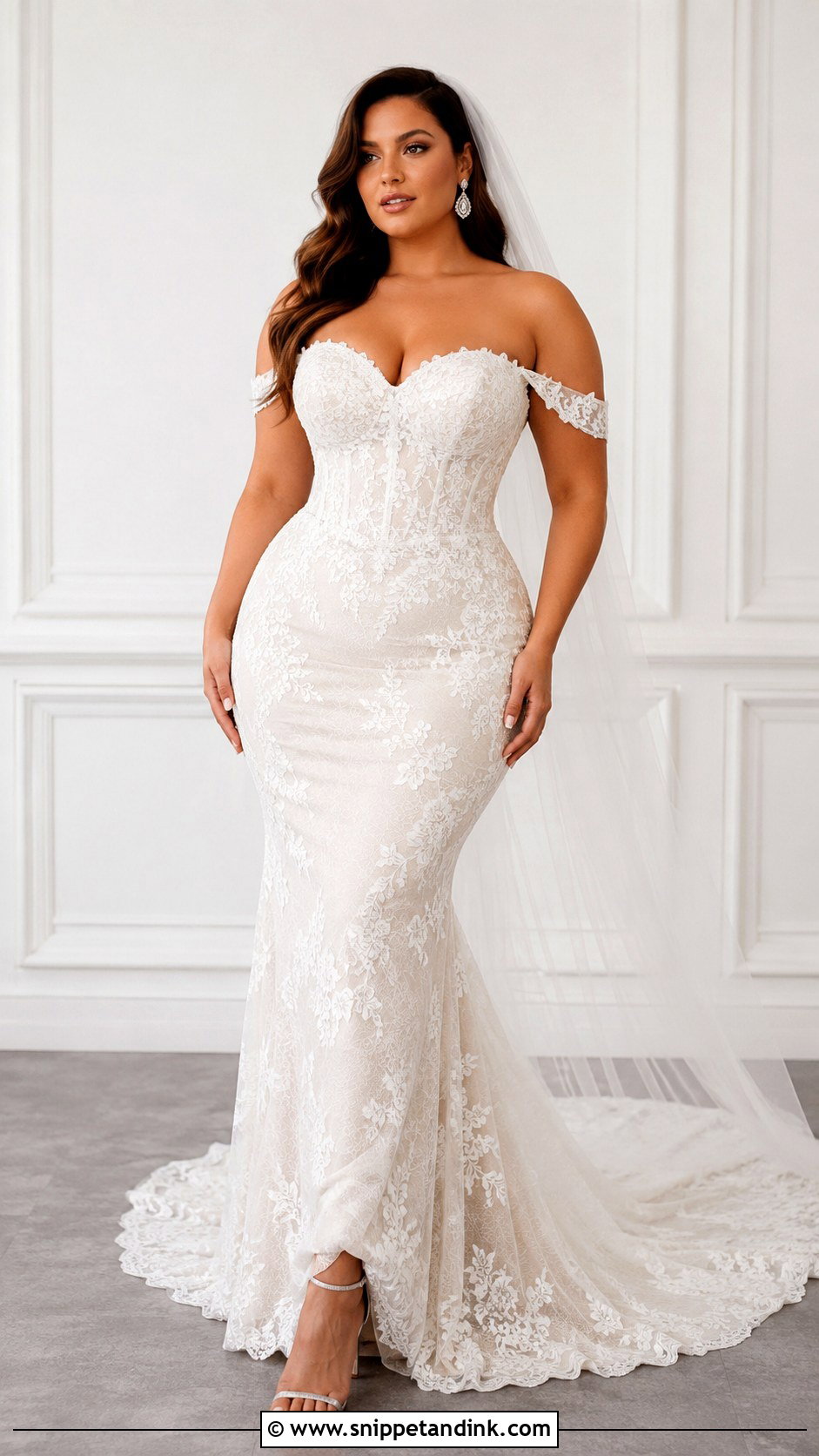
Fit is the entire story with a mermaid. The dress traces bust, waist, hips and thighs before it flares at or just below the knee, so a few millimetres in the wrong place show immediately. I steer curvy brides toward stretch crepe or lined lace, which move with the body, and away from thin unlined satin, which pulls into horizontal creases across the hips the moment you take a step. Sit down in it at the fitting. If you can’t sit comfortably, the flare point needs to drop. Keep jewellery simple, since the cut is already the headline.
4. Fit And Flare Wedding Dress For Curvy Brides
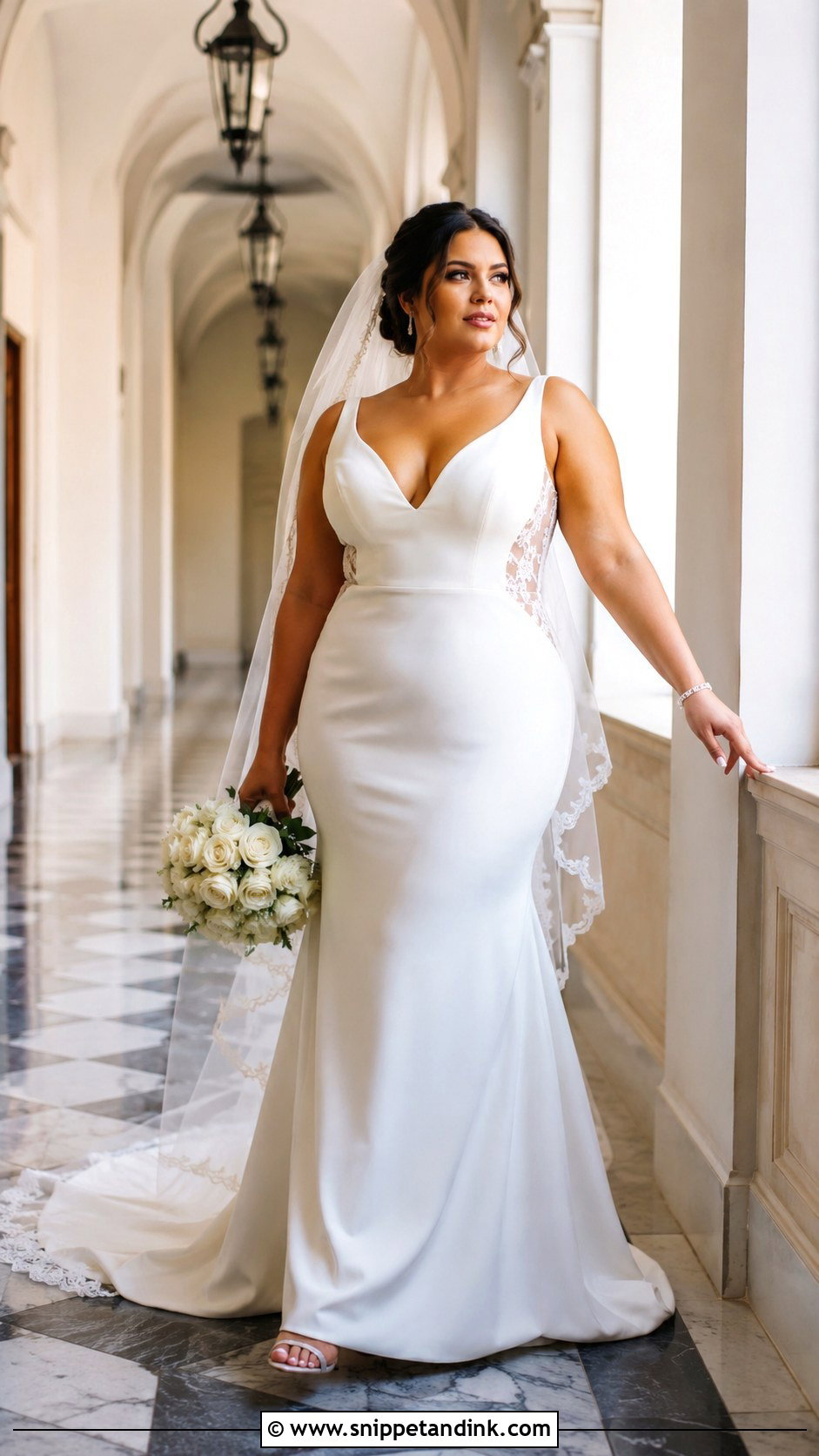
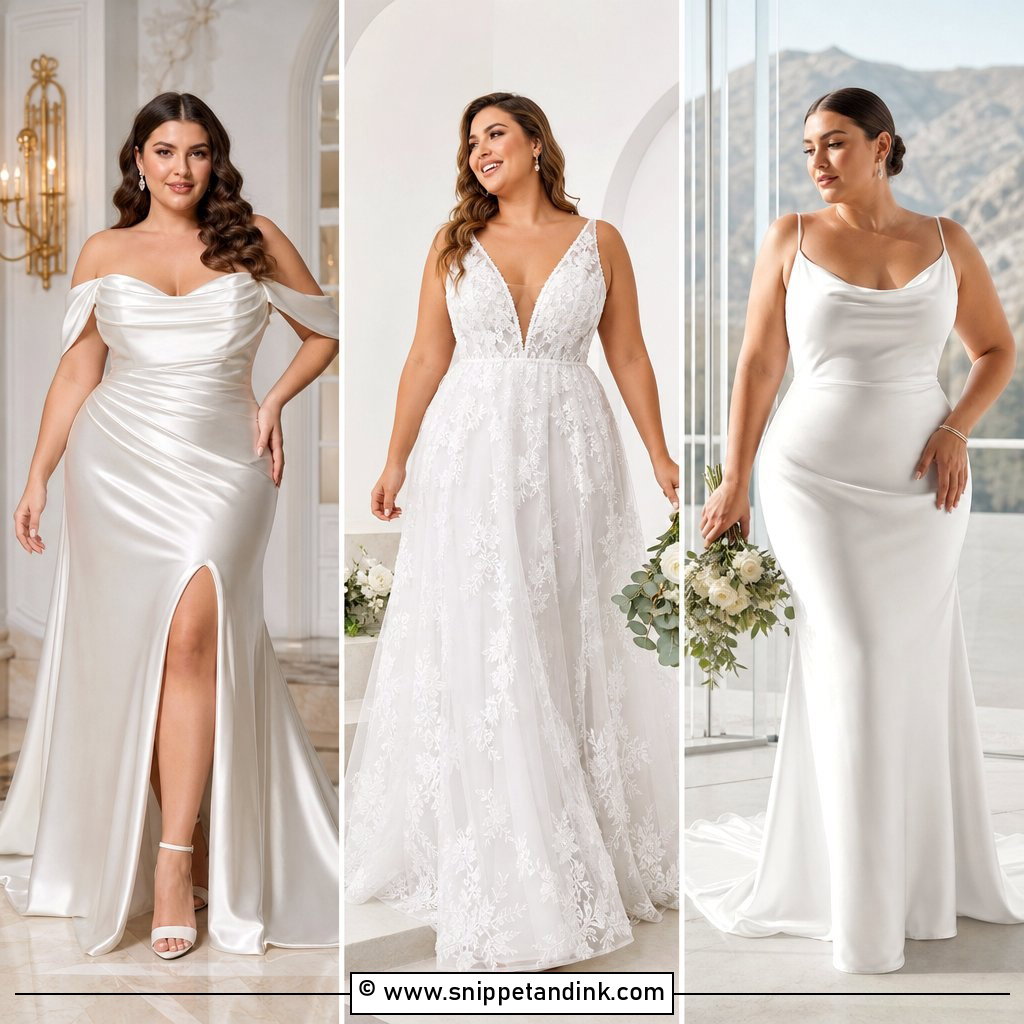
Think of a fit and flare wedding dress as the mermaid’s more forgiving sister. It follows the waist and hips, then opens at mid-thigh, which leaves room to walk, climb steps and dance without hitching the skirt. Contour seams in lace or crepe do a lot of the shaping here, so I look at where those seams cross the hip before anything else. A V-neck or off-the-shoulder bodice lengthens the top half. Cushioned heels, a chapel veil, done.
5. Empire Waist Wedding Dress For Curvy Brides
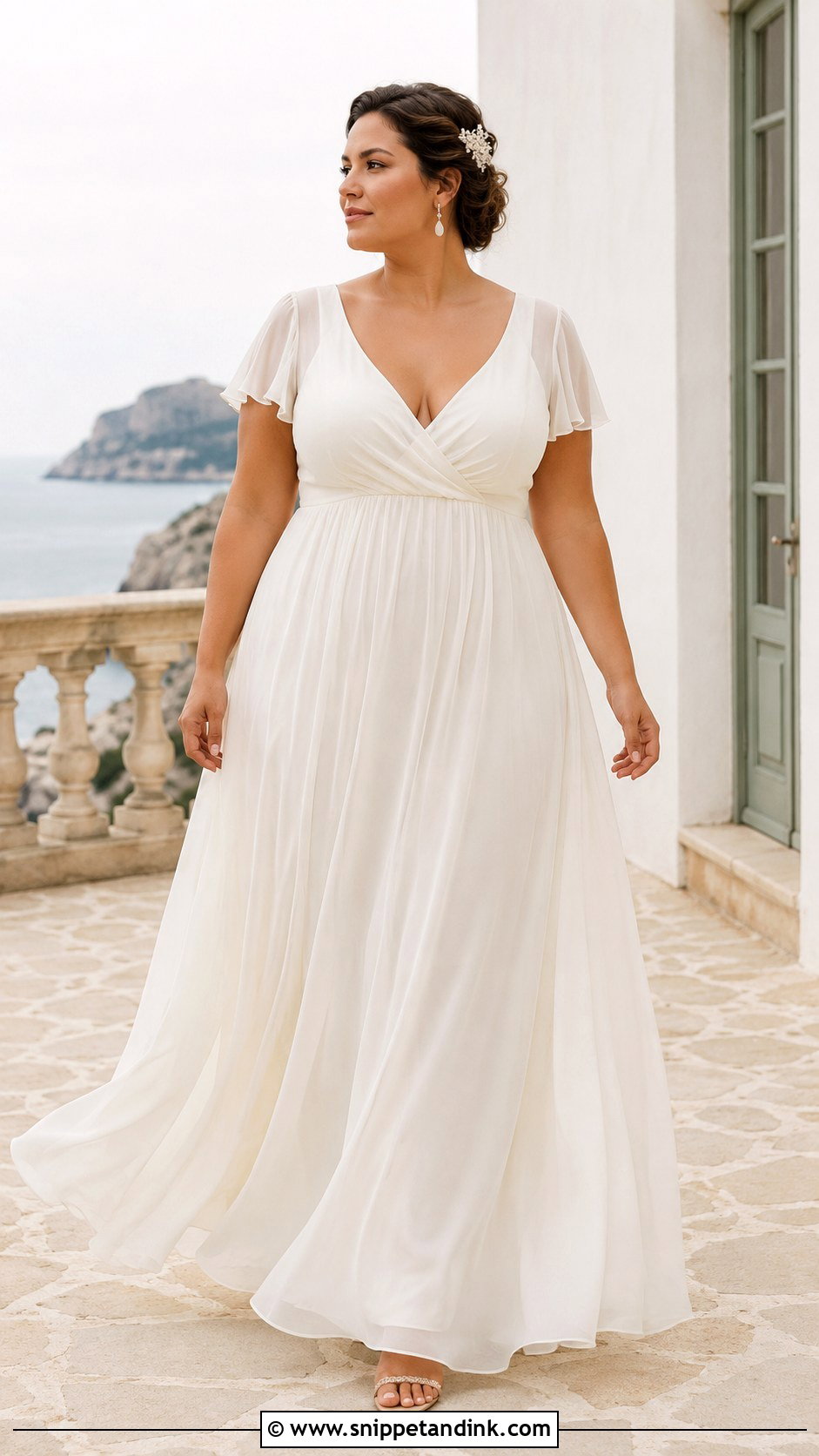
The empire seam sits right under the bust, and everything below it floats, which is why brides who don’t want anything snug through the stomach often relax the moment they put one on. The trade-off: on a very full bust the seam can ride up and look accidental, so I make sure it is anchored to a supportive band rather than just gathered. Chiffon and lightweight crepe are the right fabrics for this; heavy satin fights the flow. Flutter sleeves give gentle arm coverage. I’d put this on a destination or outdoor bride before anyone else.
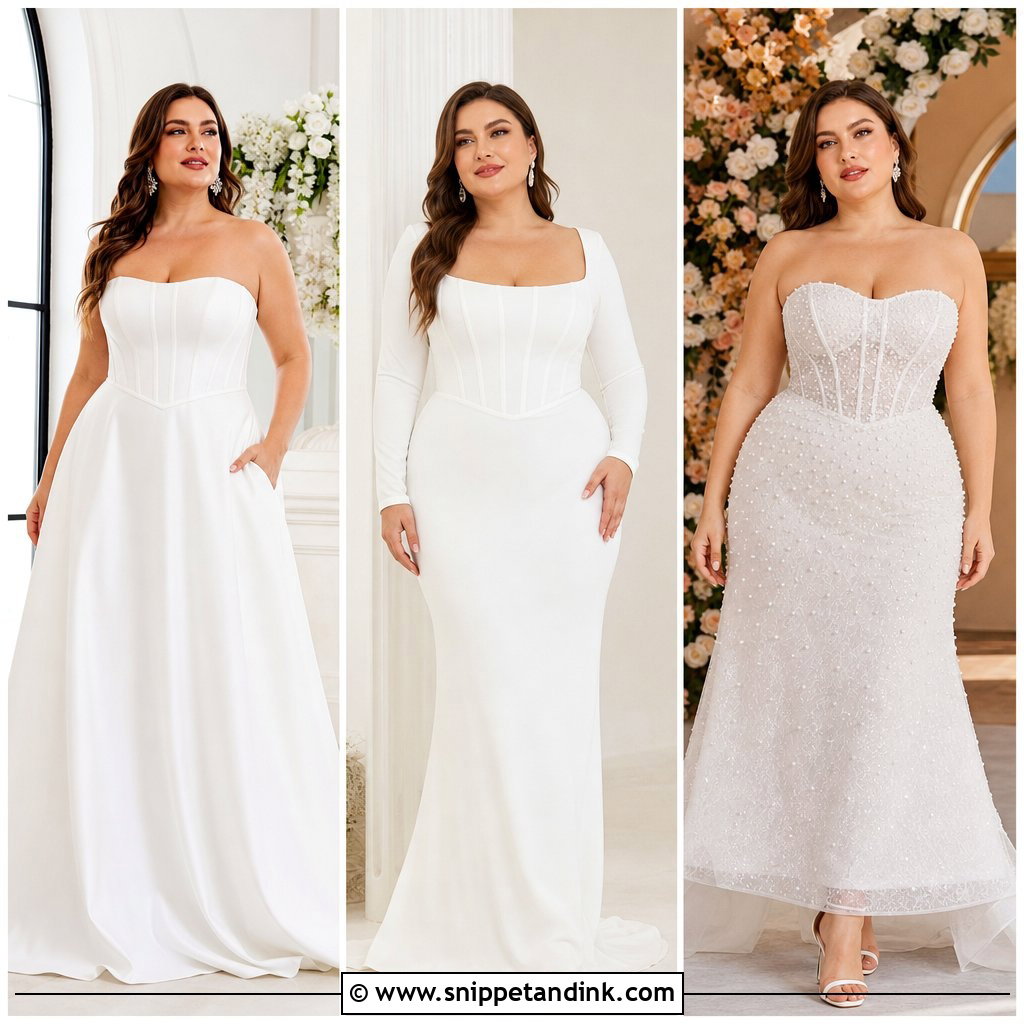
6. Corset Wedding Dress For Curvy Brides
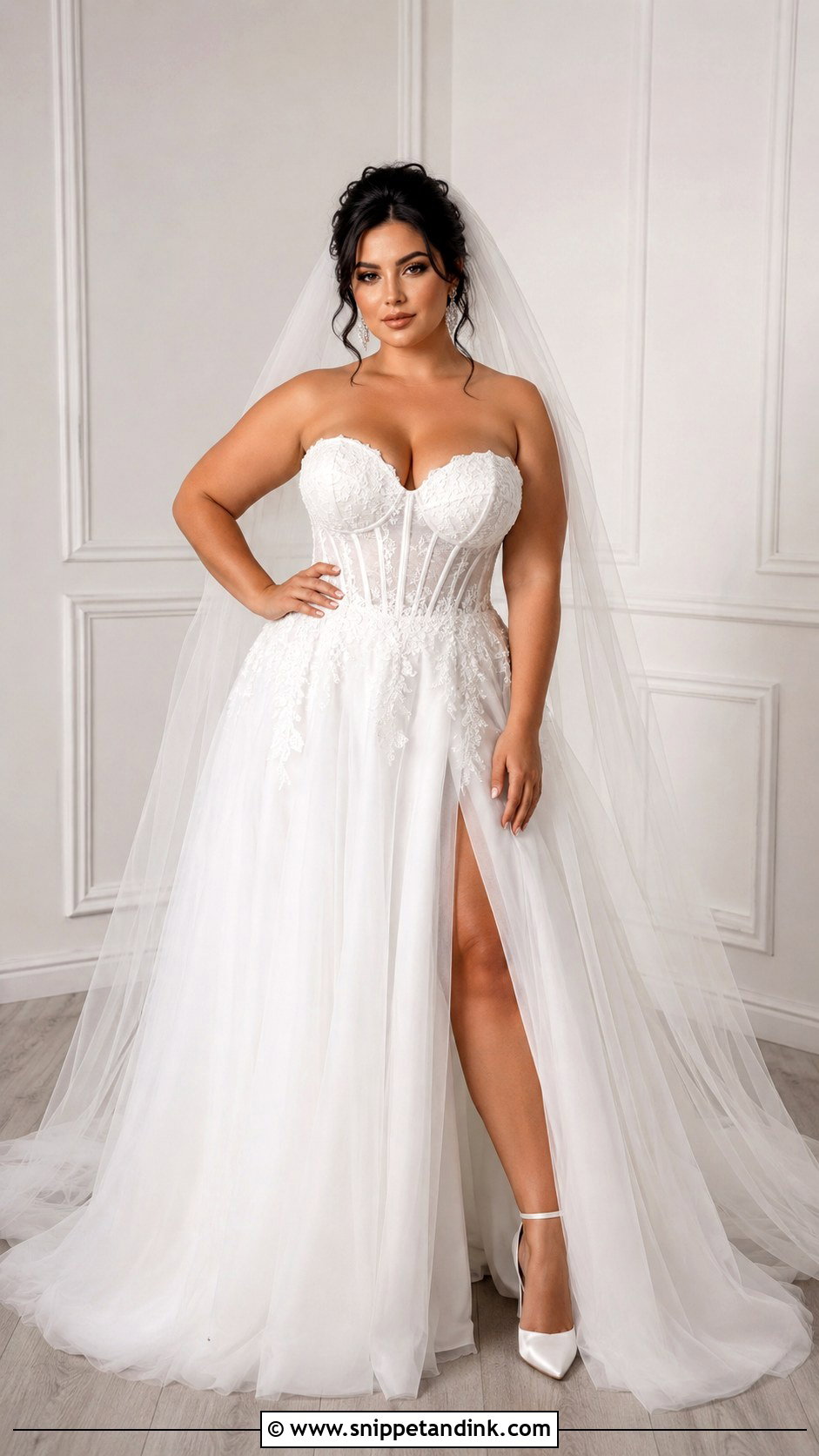
A well-made corset wedding dress can replace most of the underwear a curvy bride would otherwise need. Boning, structured cups and a lace-up back shape the waist and lift the bust, and the lacing gives a little adjustment room if your weight shifts in the final months. The test I use: breathe in deeply and raise your arms. A good corset feels secure through both; a bad one bites at the top edge. Pair the bodice with a full skirt for drama or a slim crepe skirt for something modern, and a basque point adds more definition.
7. Off The Shoulder Wedding Dress For Curvy Brides
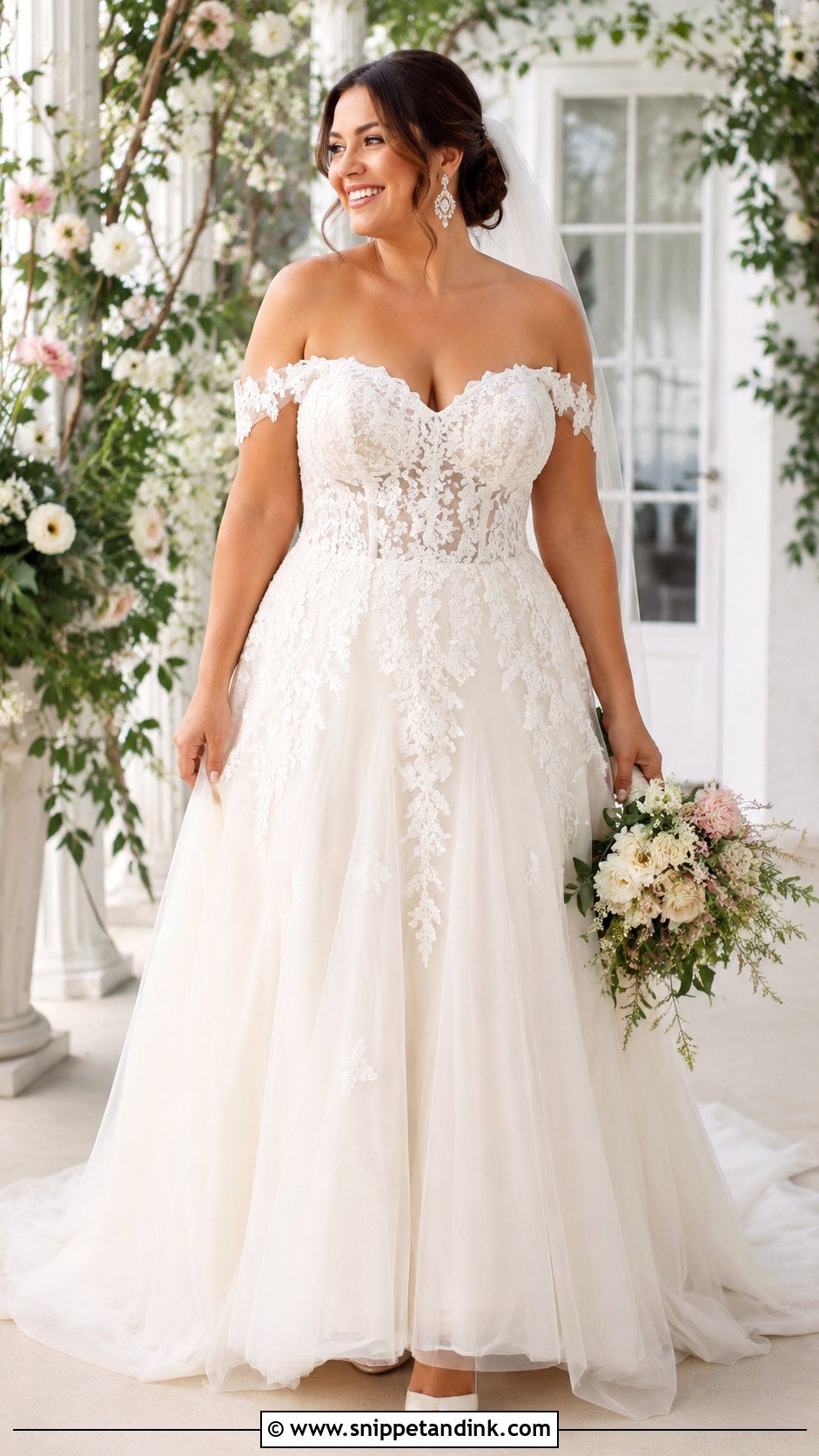
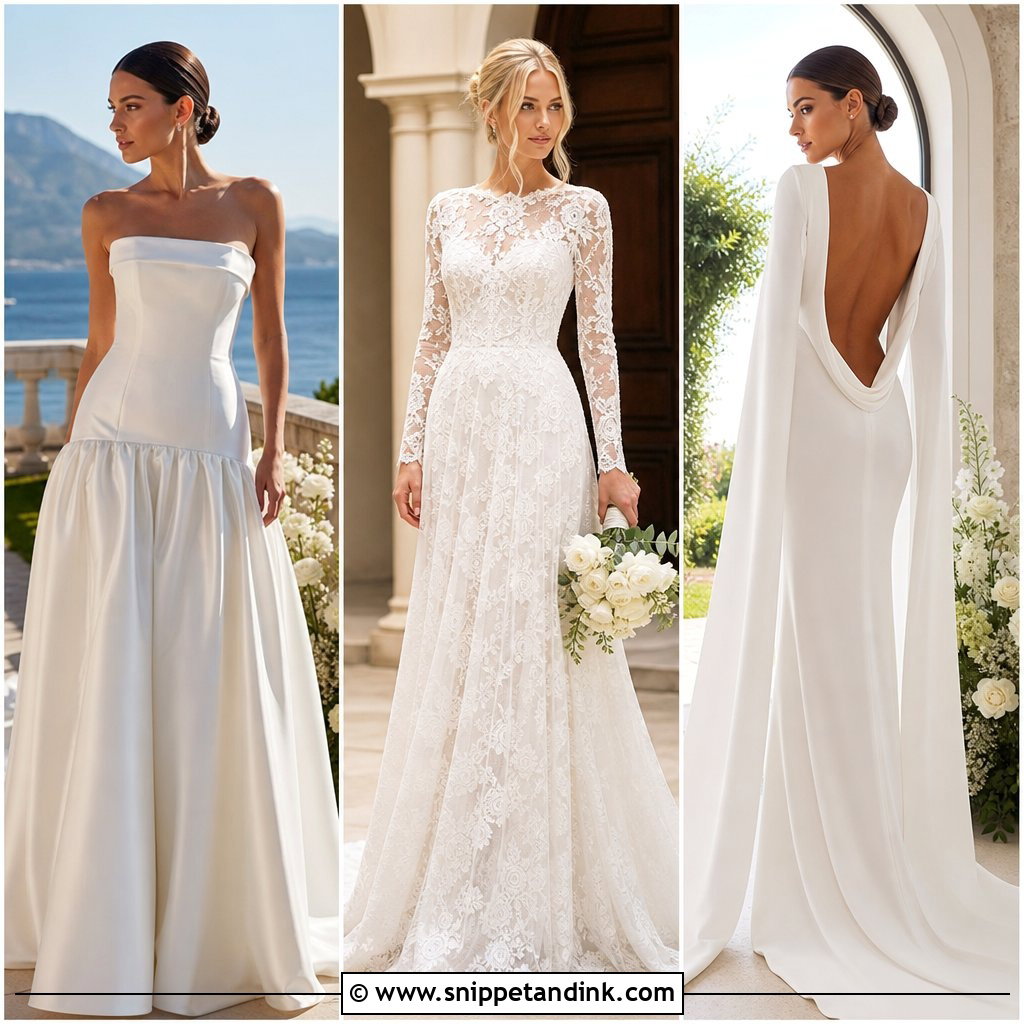
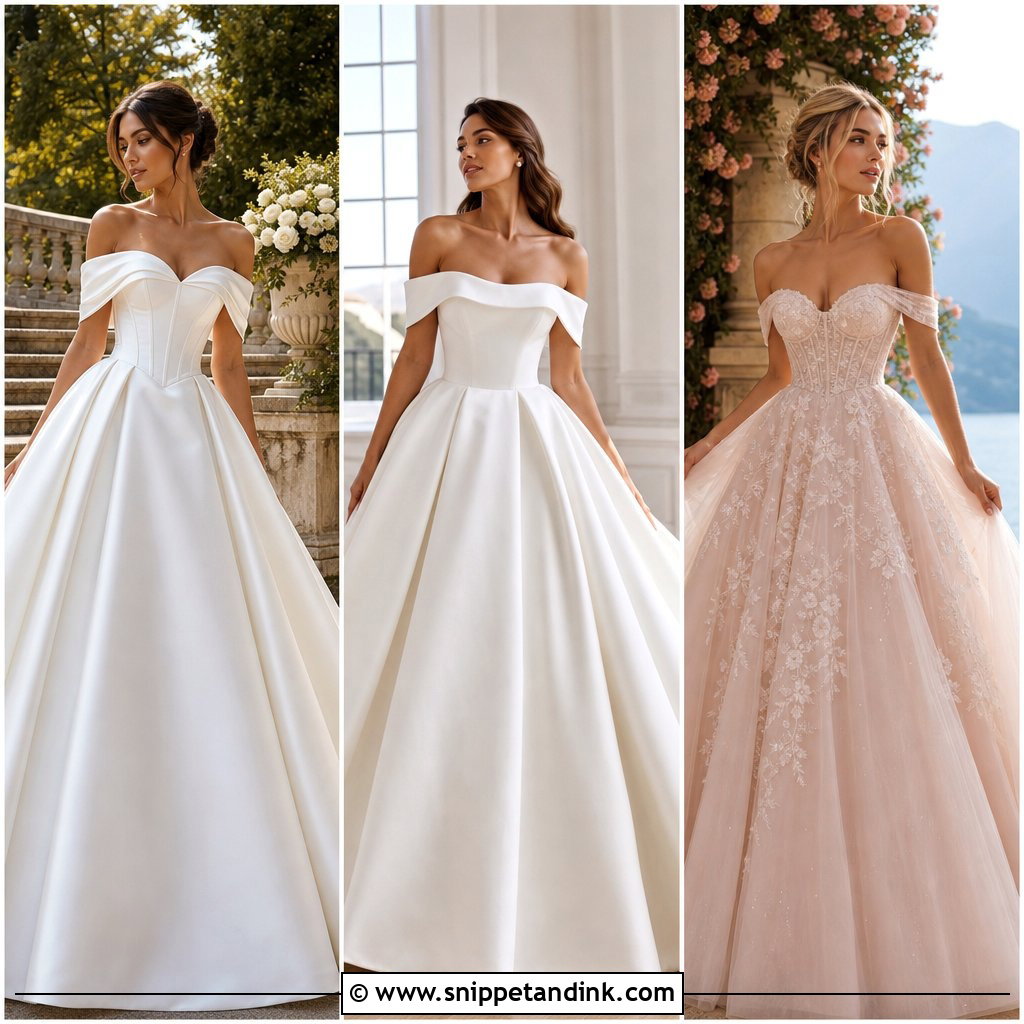
An off-the-shoulder neckline frames the collarbones and pulls attention up, which balances a fuller bust nicely. The problem I see most often is the sleeve band itself. If it’s cut tight, it pins your arms and you can’t hug anyone; if it’s loose, it slides. At fittings I ask brides to lift both arms to shoulder height, as if reaching for a hug. Lace sleeves read classic, plain satin reads modern, and with a neckline this open, chandelier earrings usually beat a necklace.
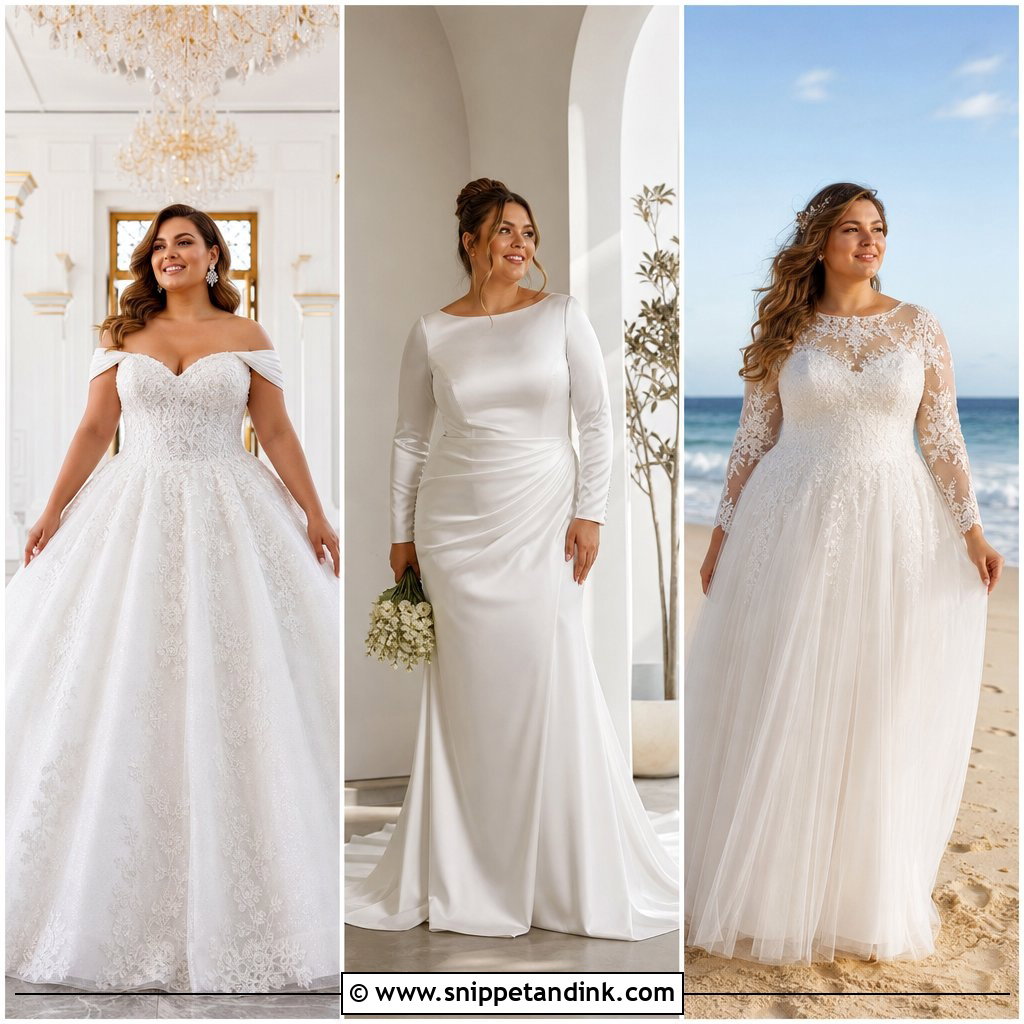
8. Long Sleeve Wedding Dress For Curvy Brides
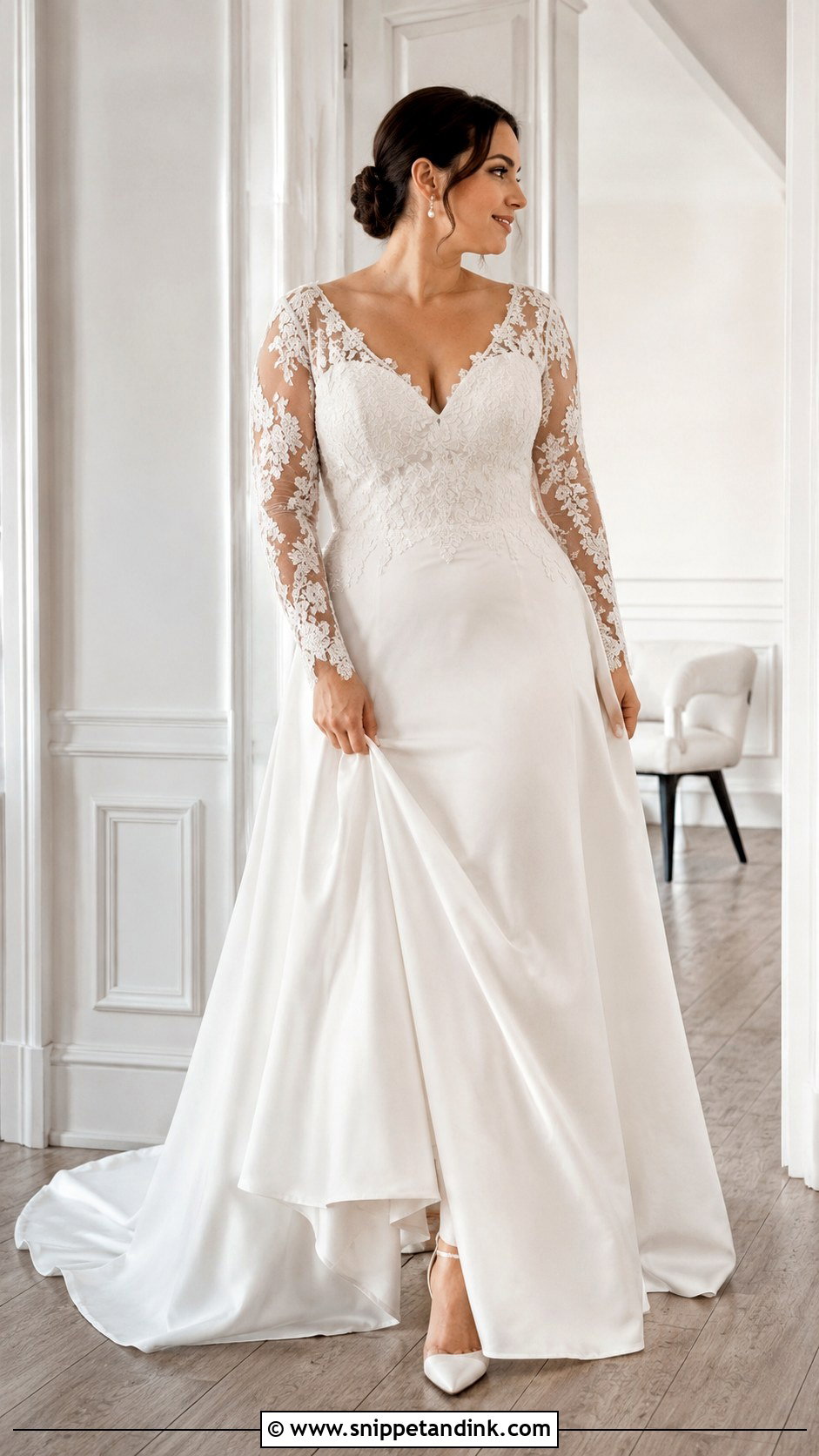
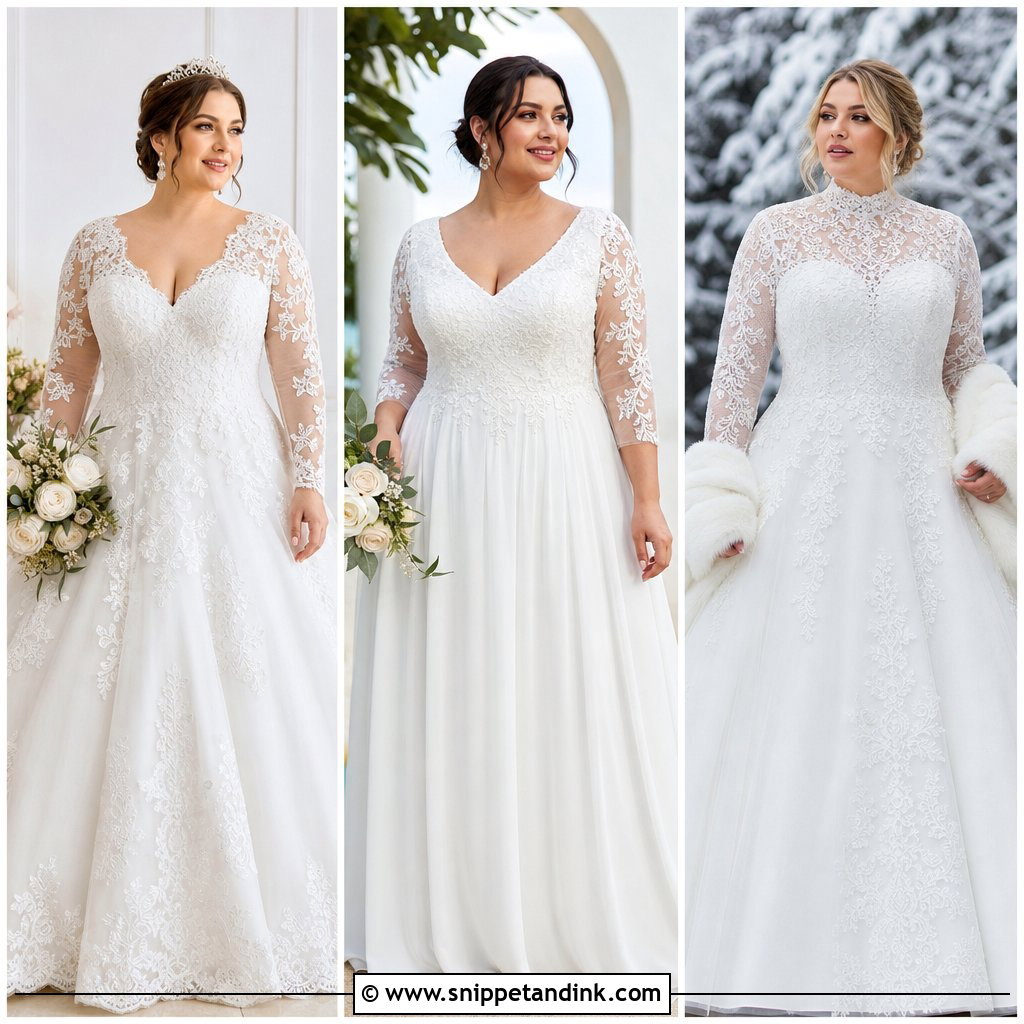
Sleeves add length and polish, but only if they feel deliberate. Sheer lace, illusion mesh or fitted crepe all breathe better than you’d expect, and I always have the seamstress check the armhole depth, because a high, close armhole lets you move while a dropped one restricts your reach. Open the neckline or the back so the gown doesn’t feel buttoned up. A low bun and pearl studs keep the sleeve detail visible. For autumn, winter and formal venues, this is a dress that looks right in the setting.
9. Strapless Wedding Dress For Curvy Brides
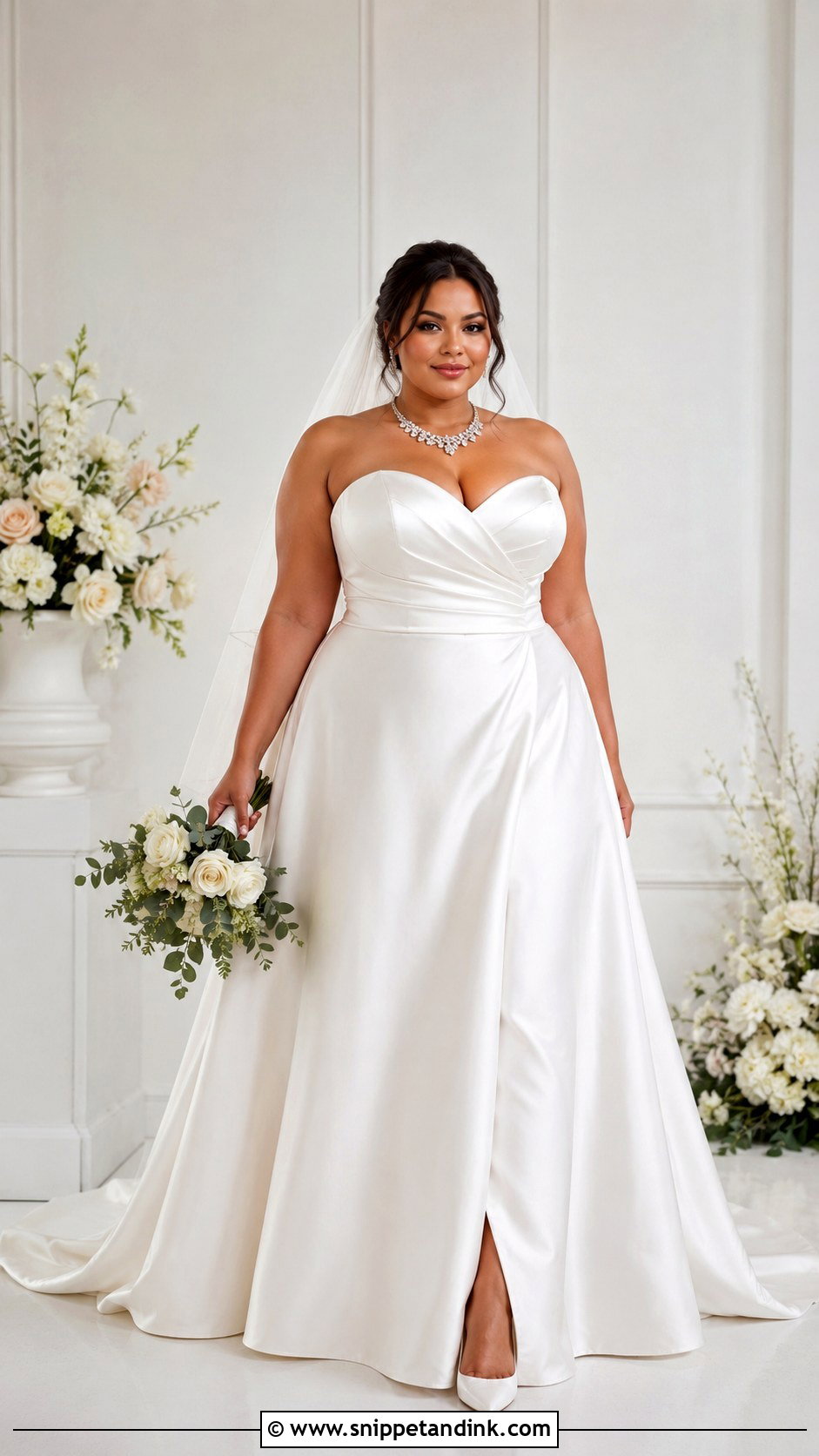
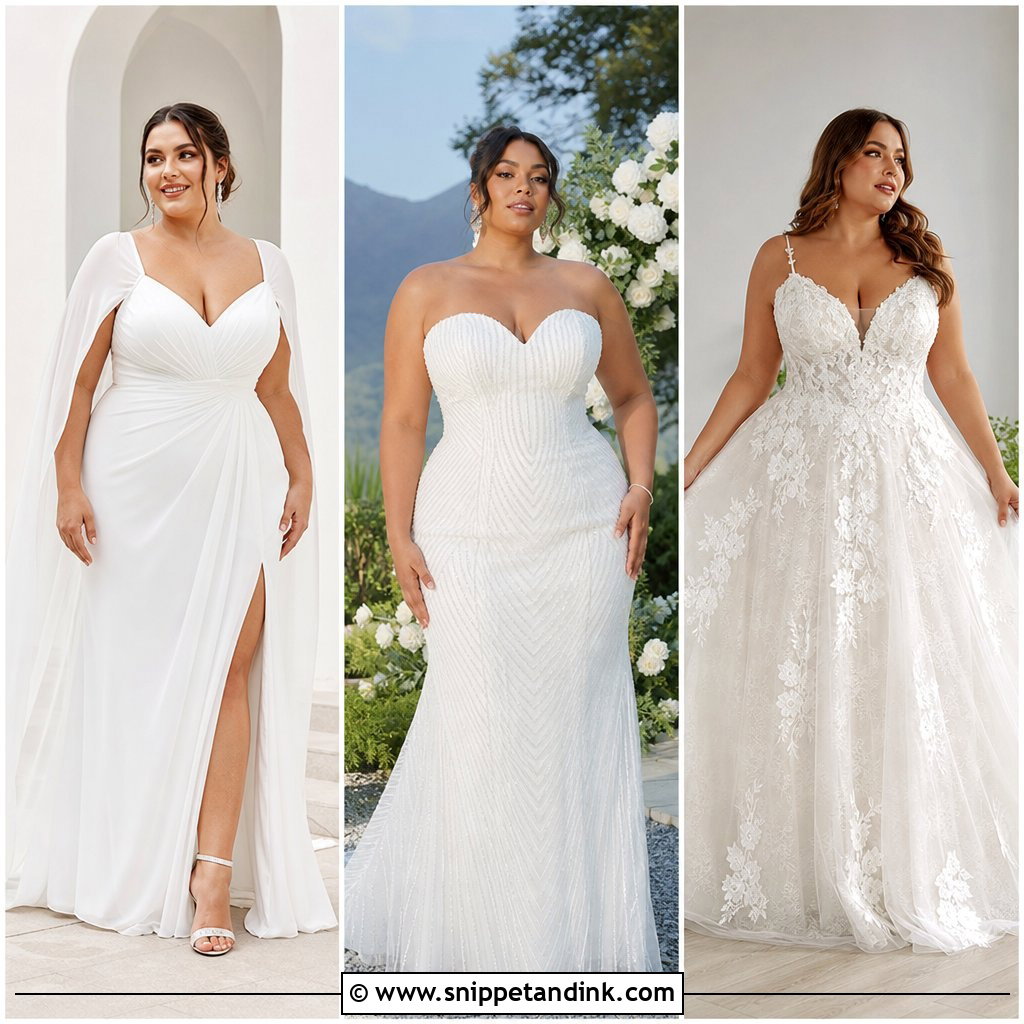
A strapless dress on a curvy bride lives or dies on its internal structure. I look for a built-in corset, boning that runs the full depth of the bodice and a silicone grip strip along the top edge. Without those, you’ll spend the night tugging it up, and every photo catches the moment. A sweetheart softens the bust; a straight neckline looks sharper. Balance the skirt to your taste. And if you love the look but distrust it, ask about detachable straps for the reception.
10. Square Neck Wedding Dress For Curvy Brides
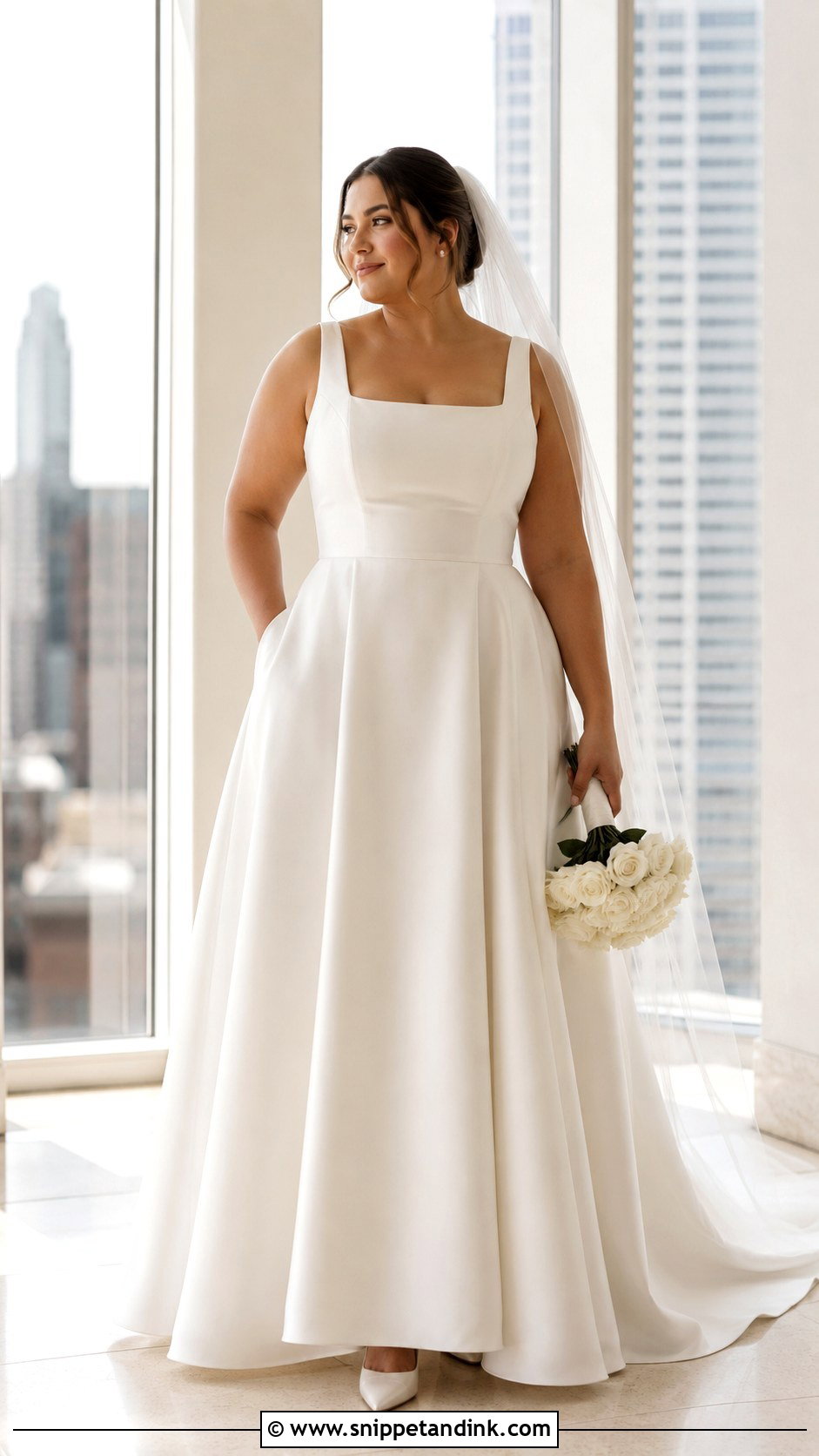
Straight lines across the bust give more coverage than a plunge but still keep the chest open, which is why the square neck has become one of my most requested necklines for curvy brides. It takes wide straps, puff sleeves or fitted sleeves equally well. One fit note: the corners of the square should sit just inside the bust line, not on it, or the neckline gapes when you lean forward. Satin A-line or crepe sheath, a smooth updo and pearl studs.
11. V Neck Wedding Dress For Curvy Brides
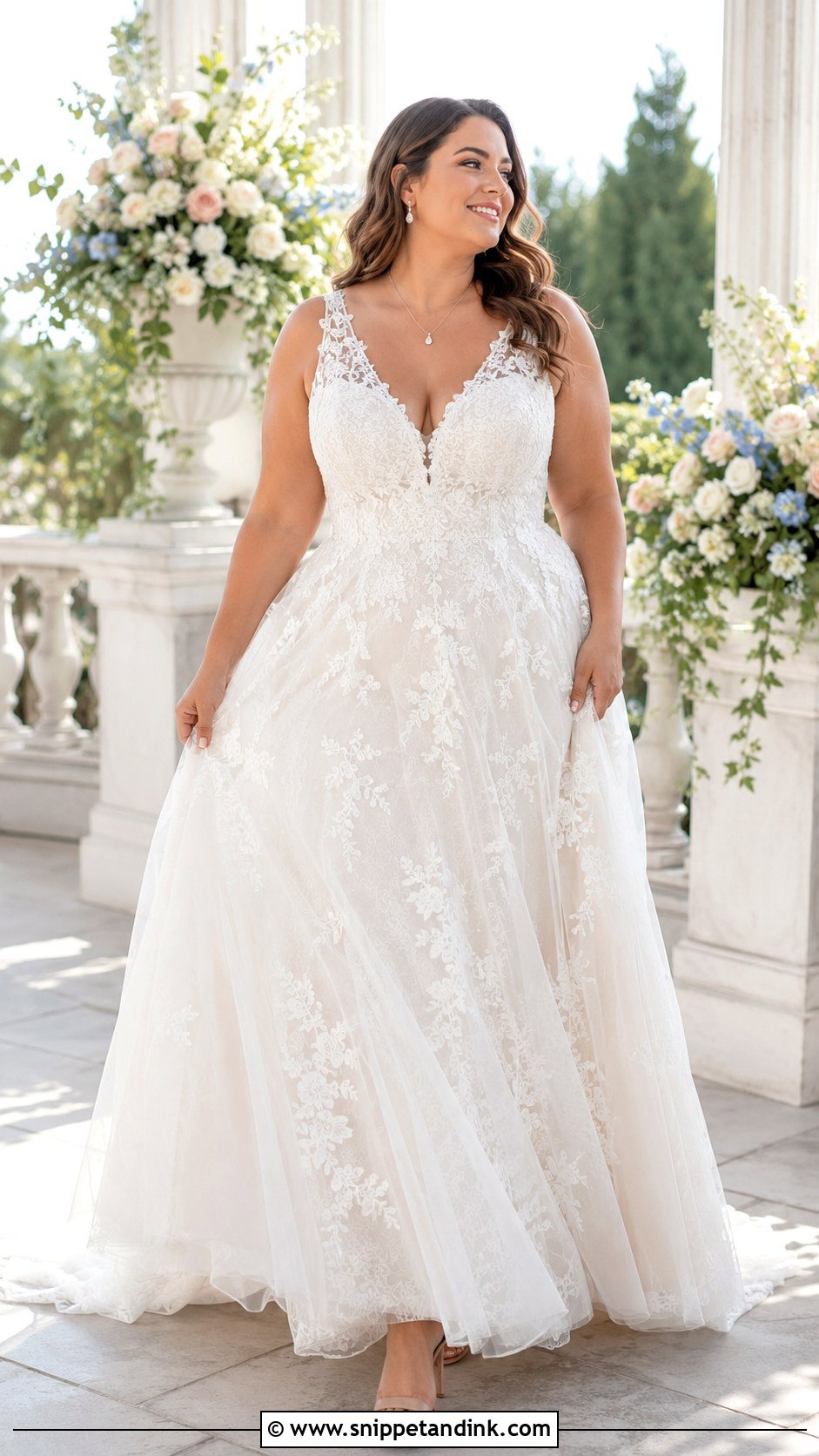
A V-neck draws a long vertical line through the torso, and how deep you go is personal. I suggest a hidden mesh insert across the deepest part of the V for any bride who will be hugging relatives all day; it’s invisible in photos and stops the neckline shifting. Wider straps or cap sleeves carry the weight of the bust better than spaghetti straps. It sits comfortably on lace A-lines, crepe and chiffon. Add a pendant, loose waves and mid-height heels.
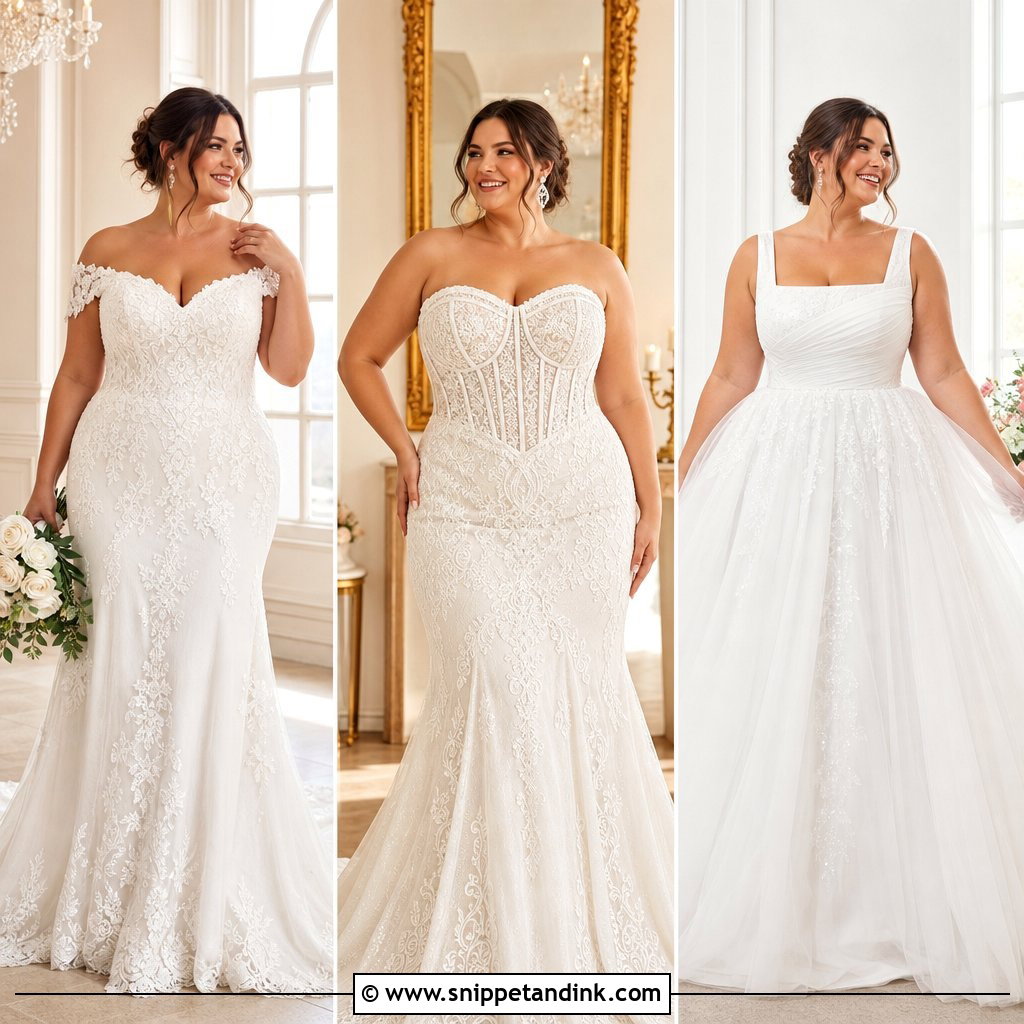
12. Sweetheart Wedding Dress For Curvy Brides
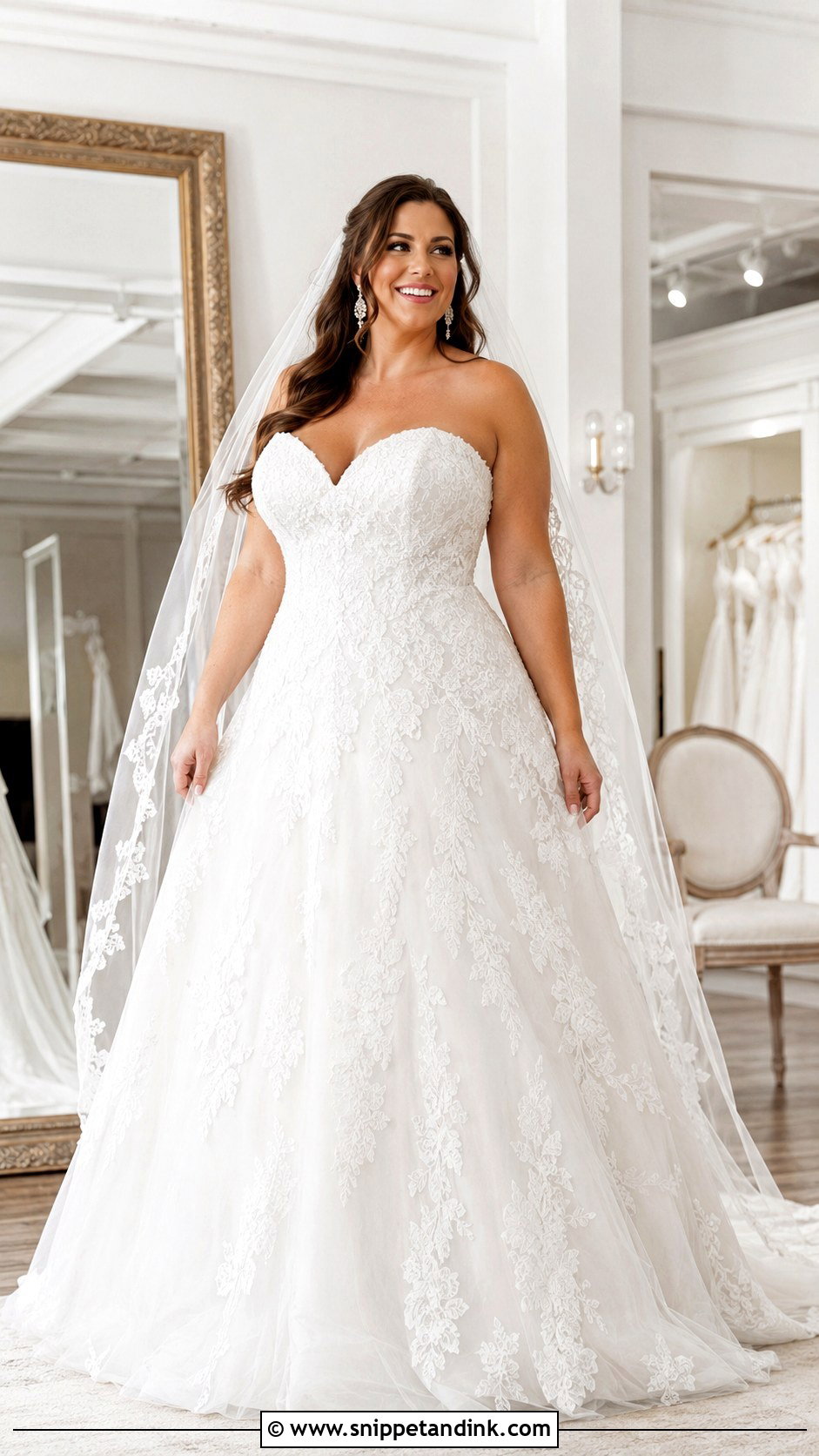
The sweetheart is the neckline I see curvy brides choose more than any other, and the reason is mechanical: the curve follows the bust instead of cutting straight across it, so there’s no flattening. It works strapless, with straps or over a corset. Look closely at the centre dip. If it plunges too low on a fuller bust, it can tip from flattering to fussy, and a seamstress can raise it a little with a small insert. Lace ball gown, satin A-line or mermaid; soft curls and crystal earrings.
13. Basque Waist Wedding Dress For Curvy Brides
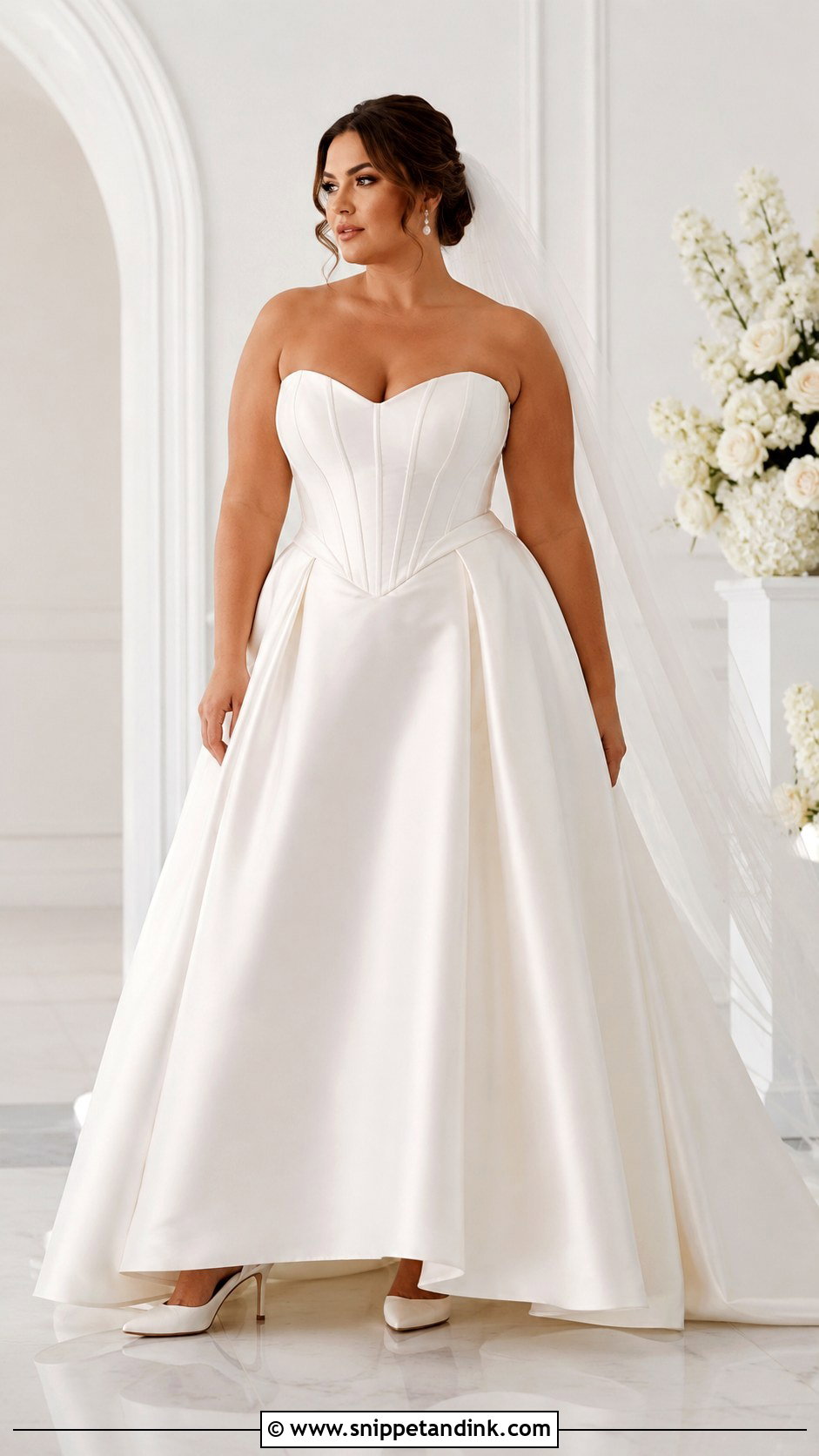
A basque waist wedding dress drops the waist seam into a soft V at the front, which visually lengthens the torso. On curvy brides, I like it best with a structured bodice and a fuller skirt, where the point lands just below the natural waist. That placement matters: too low, and it cuts across the stomach rather than defining it. Mikado gives a sculptural line, tulle a softer one. Strapless or off-the-shoulder suits the point; pearl earrings and a long veil keep the rest quiet.
14. Drop Waist Wedding Dress For Curvy Brides
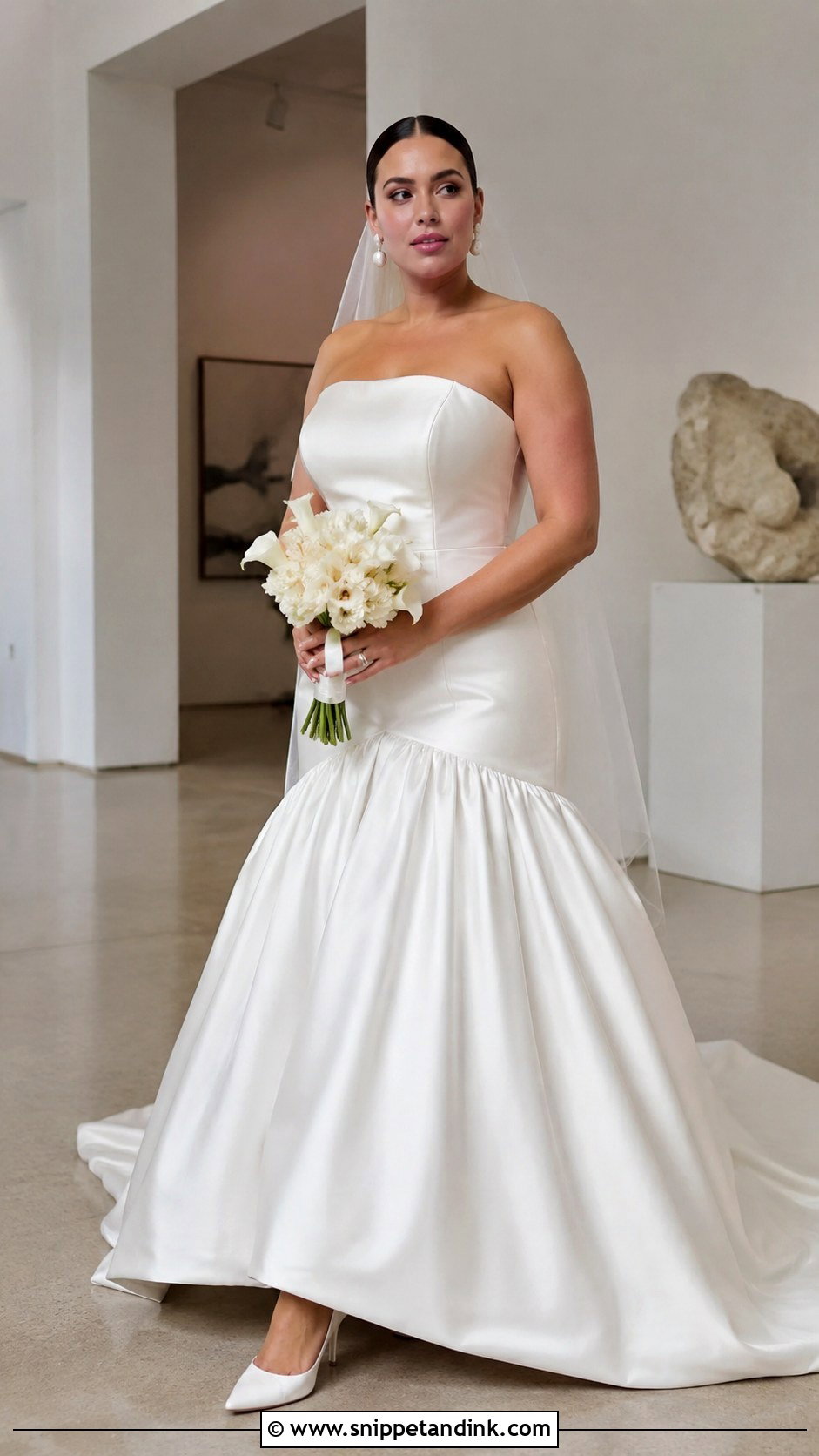
I’m honest with brides about the drop waist: it’s the most proportion-sensitive gown on this list. The seam sits around the upper hip, which lengthens the torso but can shorten the legs if it lands even a little too low. When it’s tailored precisely to where your hip begins, it looks modern and confident. Satin, taffeta or lace hold the shape. Sleek hair, a plain veil and sculptural earrings suit its editorial mood. Try it on with your actual shoe height before deciding.
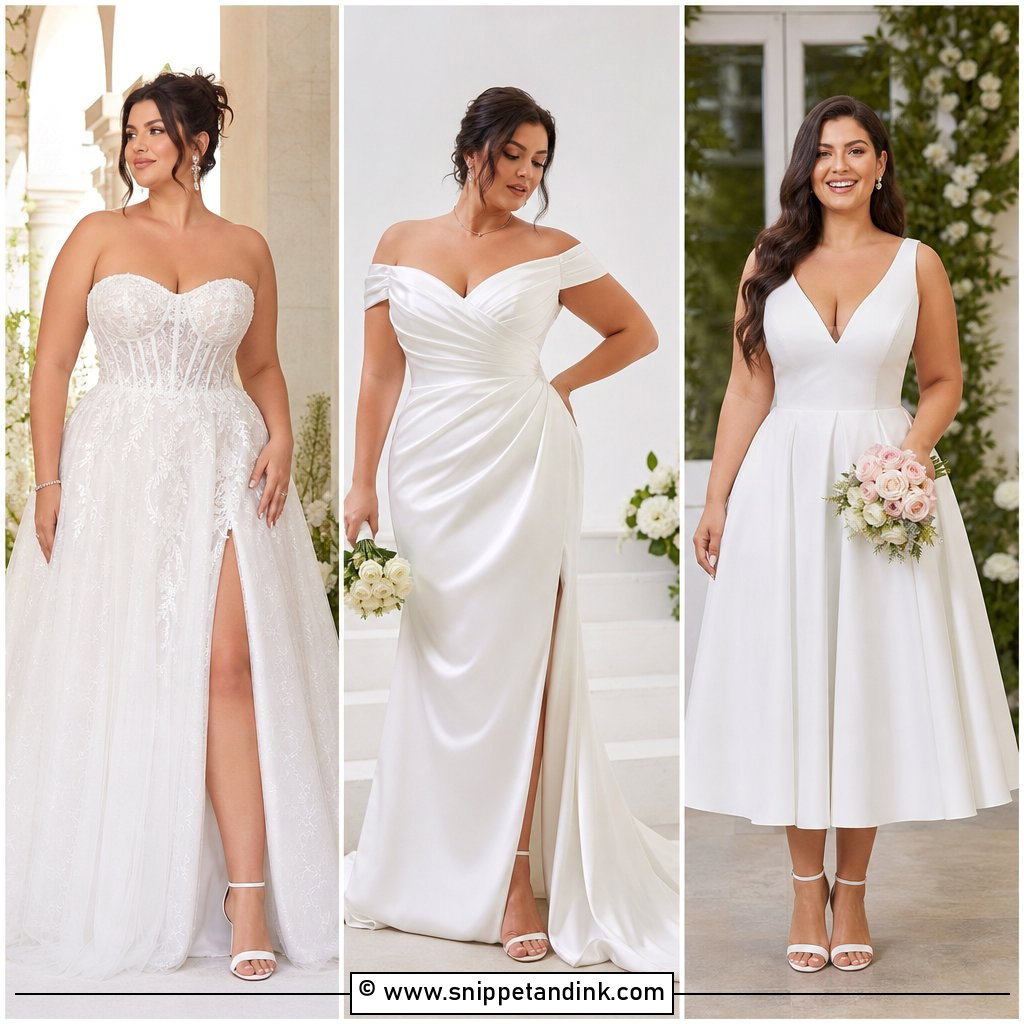
15. Lace Wedding Dress For Curvy Brides
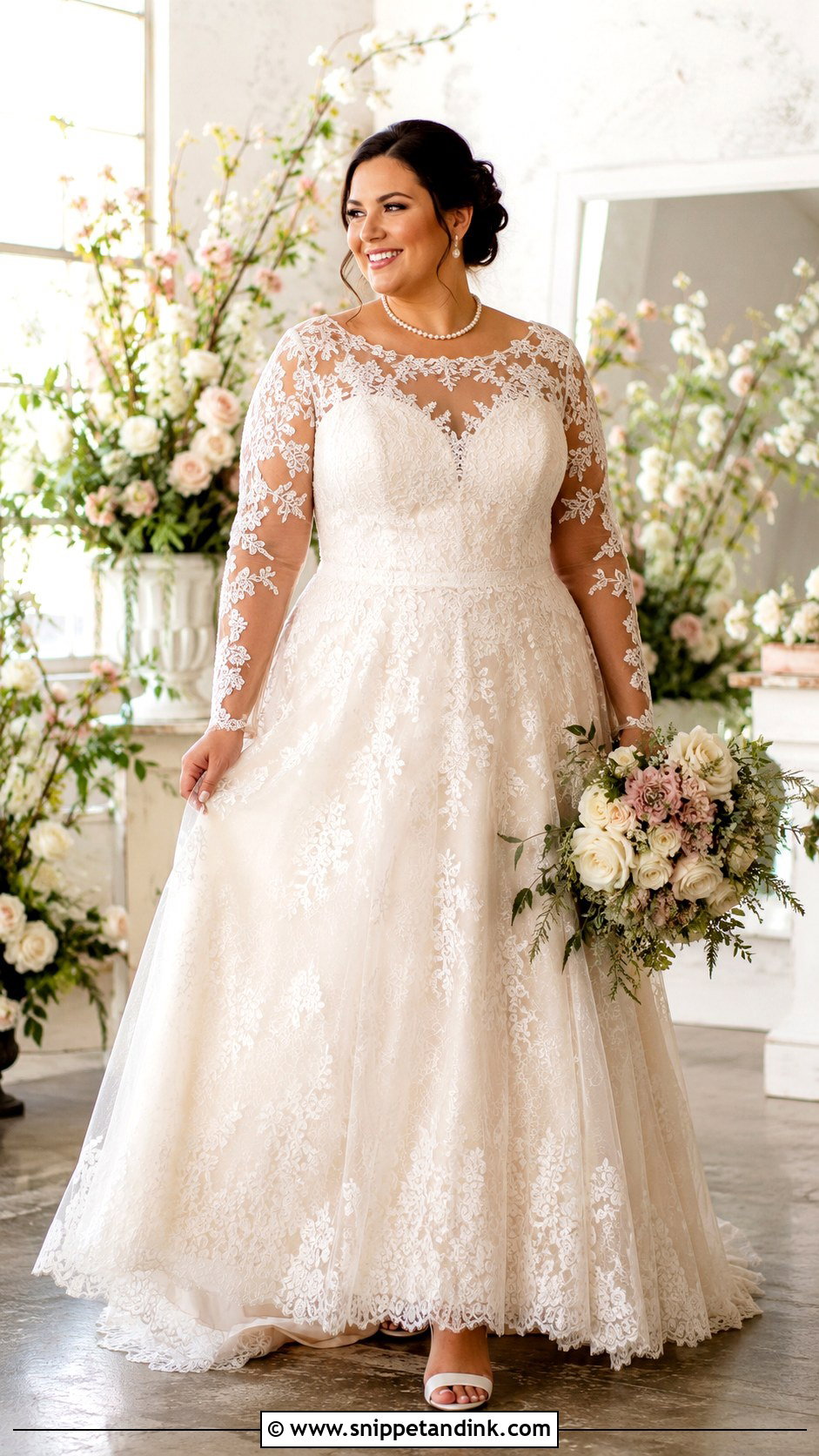
Lace on a curvy figure is all about where the pattern goes. Motifs that follow the seams and taper toward the waist guide the eye; large allover florals scattered at random can make the dress look busier than you are. I check that the bodice is fully lined beneath the lace, since unlined lace stretches and shows anything underneath. Illusion lace sleeves or back panels add detail without weight. Floral lace for a romantic mood, geometric for a cleaner one, with a soft veil and pearls.
16. Satin Wedding Dress For Curvy Brides
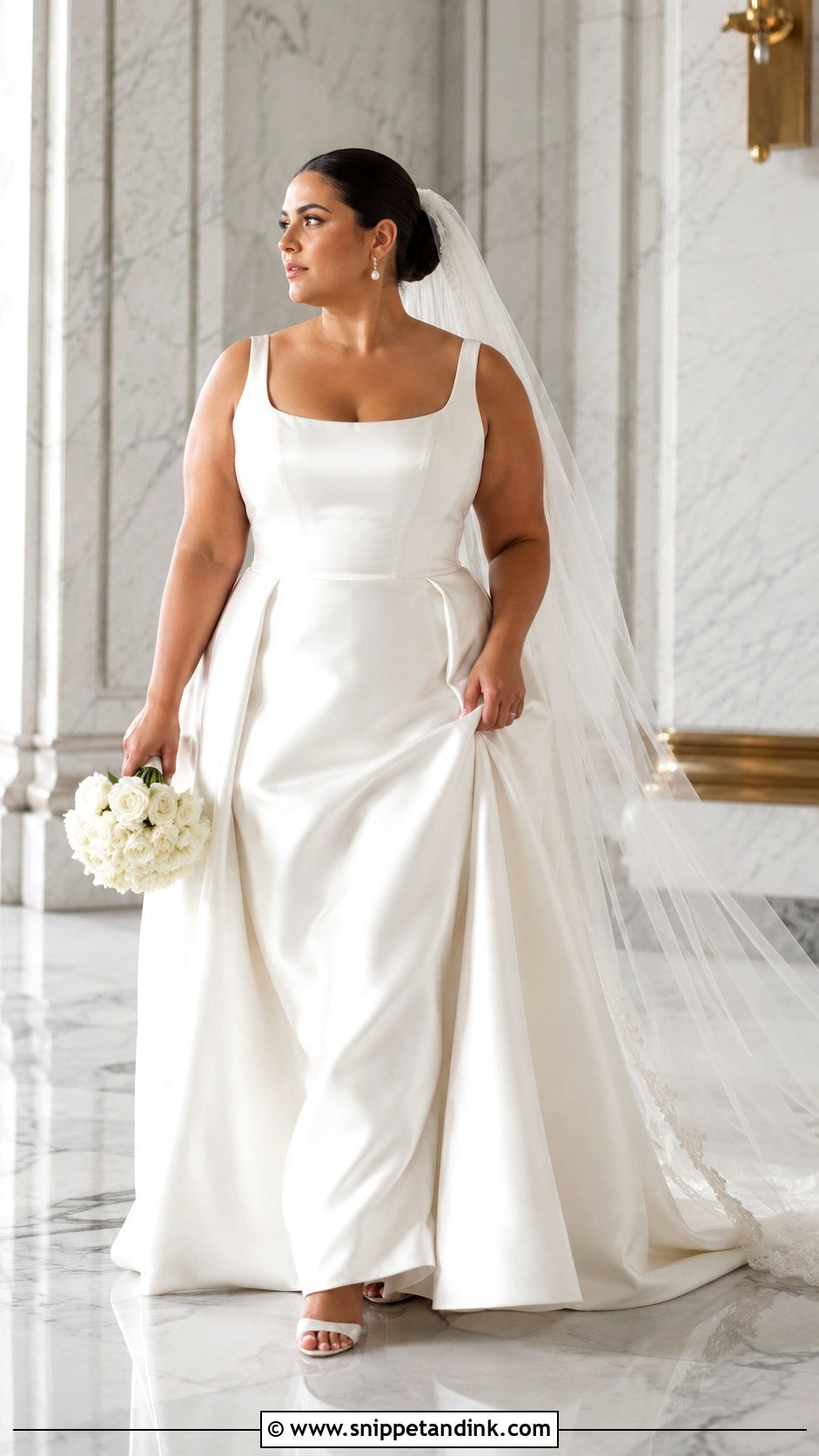
Satin reflects light, and that’s both its charm and its catch. Thin satin highlights every seam, every bra line and every place the fabric strains, while a heavier satin or mikado skims the body and photographs as one smooth surface. That’s the first thing I feel for when a bride pulls a satin gown off the rail. Structured A-lines, ball gowns and square-neck sheaths look polished in it. Keep the design clean or add pleating, buttons or a bow, and finish with a sleek bun and satin heels.
17. Crepe Wedding Dress For Curvy Brides
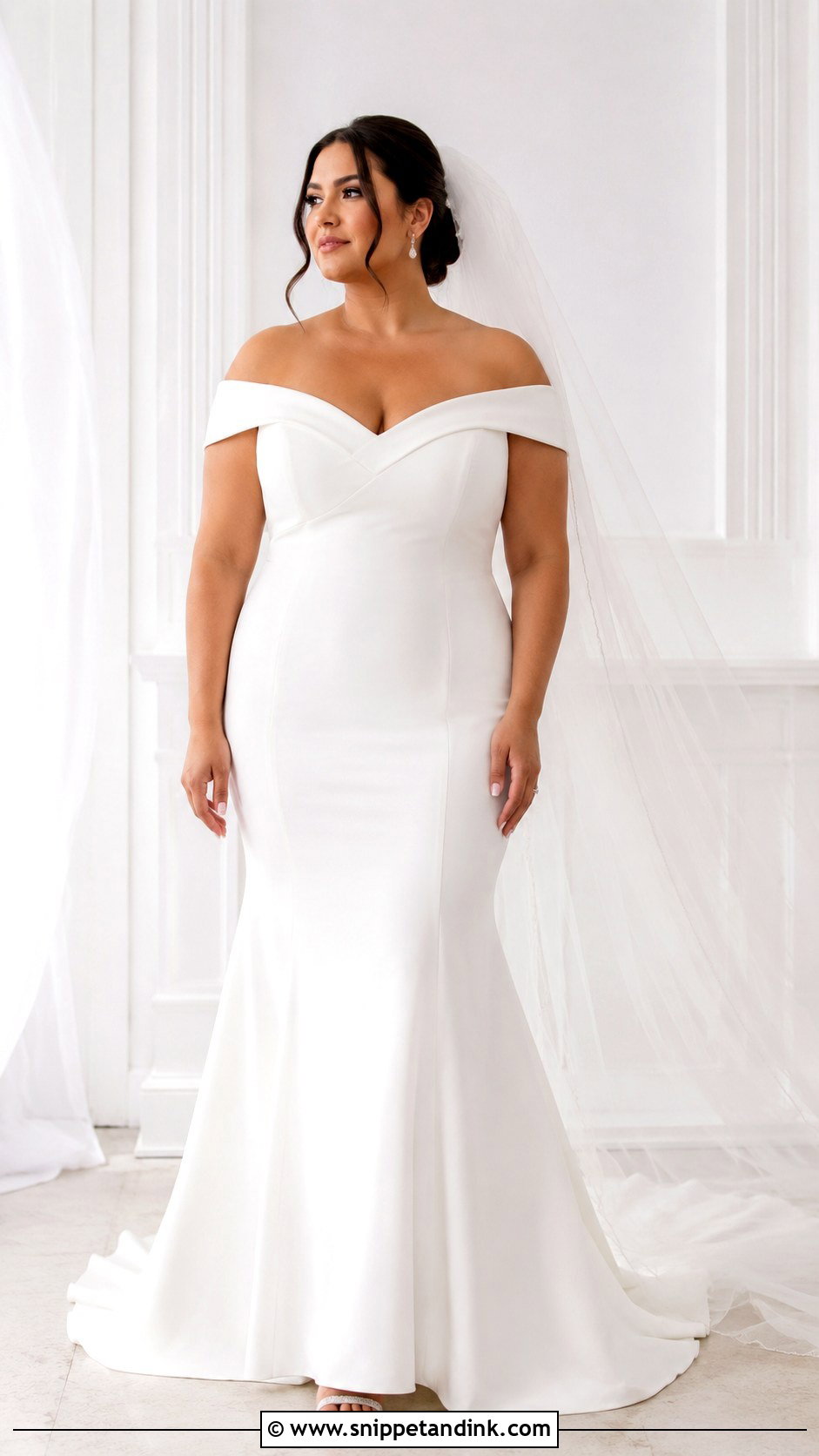
Crepe is my quiet favourite for curvy brides who like clean lines. It has enough weight to hang smoothly and enough stretch to move, so a well-cut crepe sheath or fit and flare looks tailored rather than tight. The thing to examine is the seam work; crepe hides nothing, so a skilled cut with strategic princess seams and full lining is non-negotiable. A bateau or V-neck top, a long veil and simple earrings let the shape speak.
18. Tulle Wedding Dress For Curvy Brides
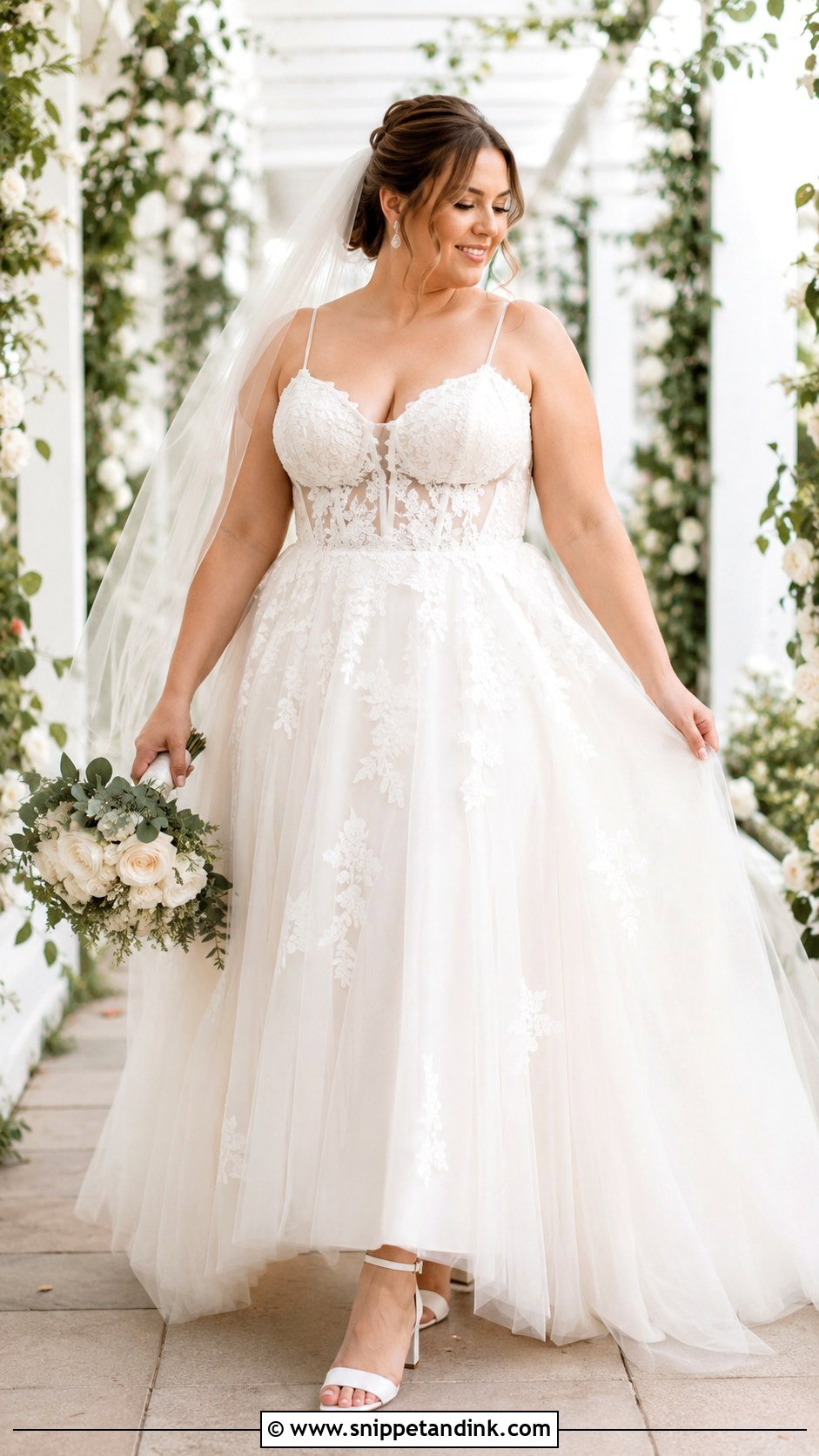
Tulle gives you volume without heaviness. Several soft layers float over the hips while a structured bodice keeps the waist defined, which is why the A-line tulle skirt is one of the easiest gowns I fit. One practical warning: cheap tulle snags on heels, chair legs and beaded sleeves, and the damage shows. Ask whether the top layer is soft bridal tulle or stiff netting. Scattered appliqué or a hint of sparkle is plenty; add a romantic veil and block heels.
19. Chiffon Wedding Dress For Curvy Brides
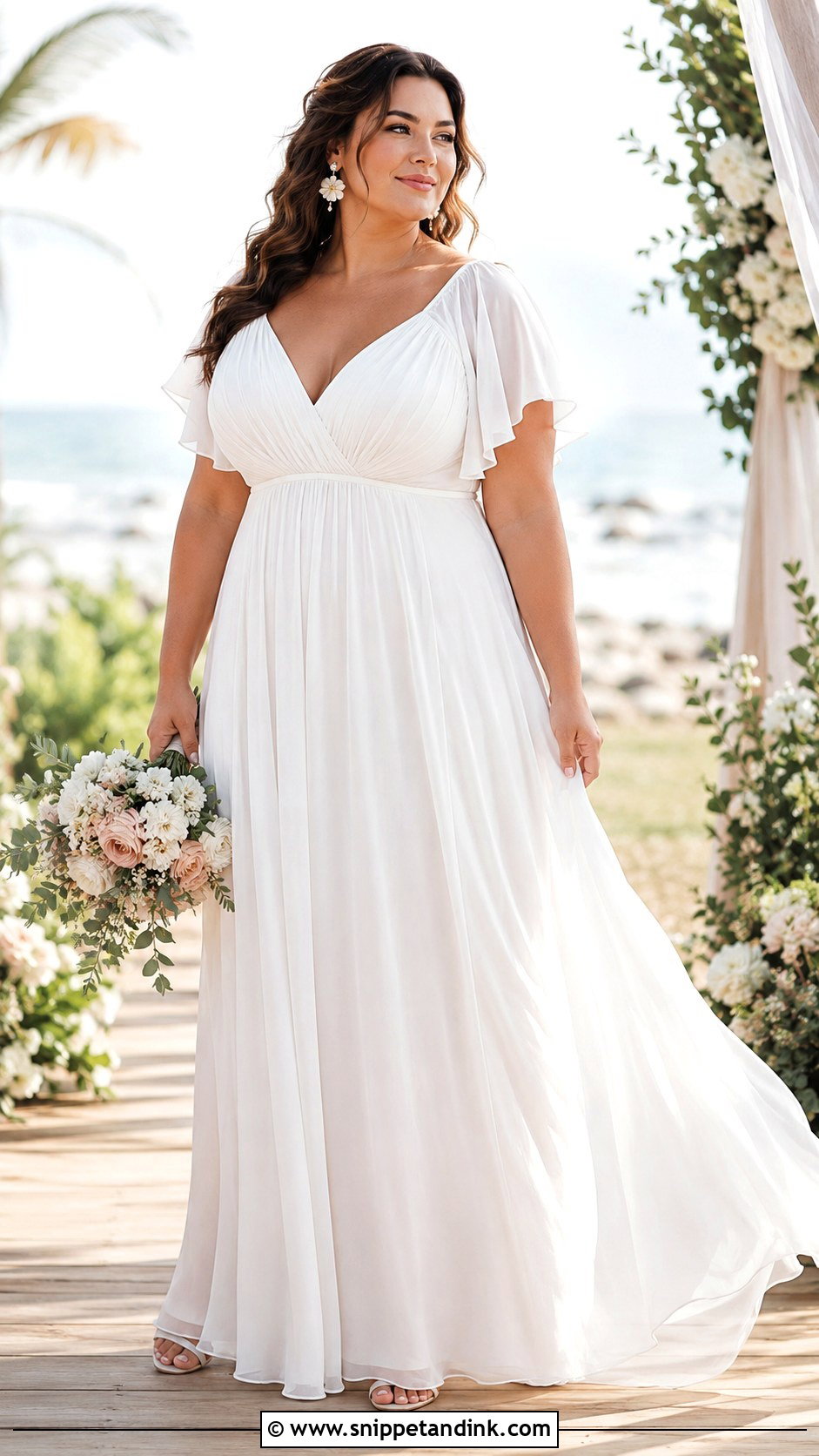
A chiffon wedding dress moves with you rather than clinging, which makes it a strong choice for warm venues. Because chiffon is sheer, the shaping has to come from the layers beneath, so I check for a structured lining in the bodice before anything else. Pleating across the bust adds definition; flutter sleeves or wide straps give comfort. Ivory or warm champagne tones glow in daylight. Loose waves and dressy sandals keep it relaxed for a beach or garden.
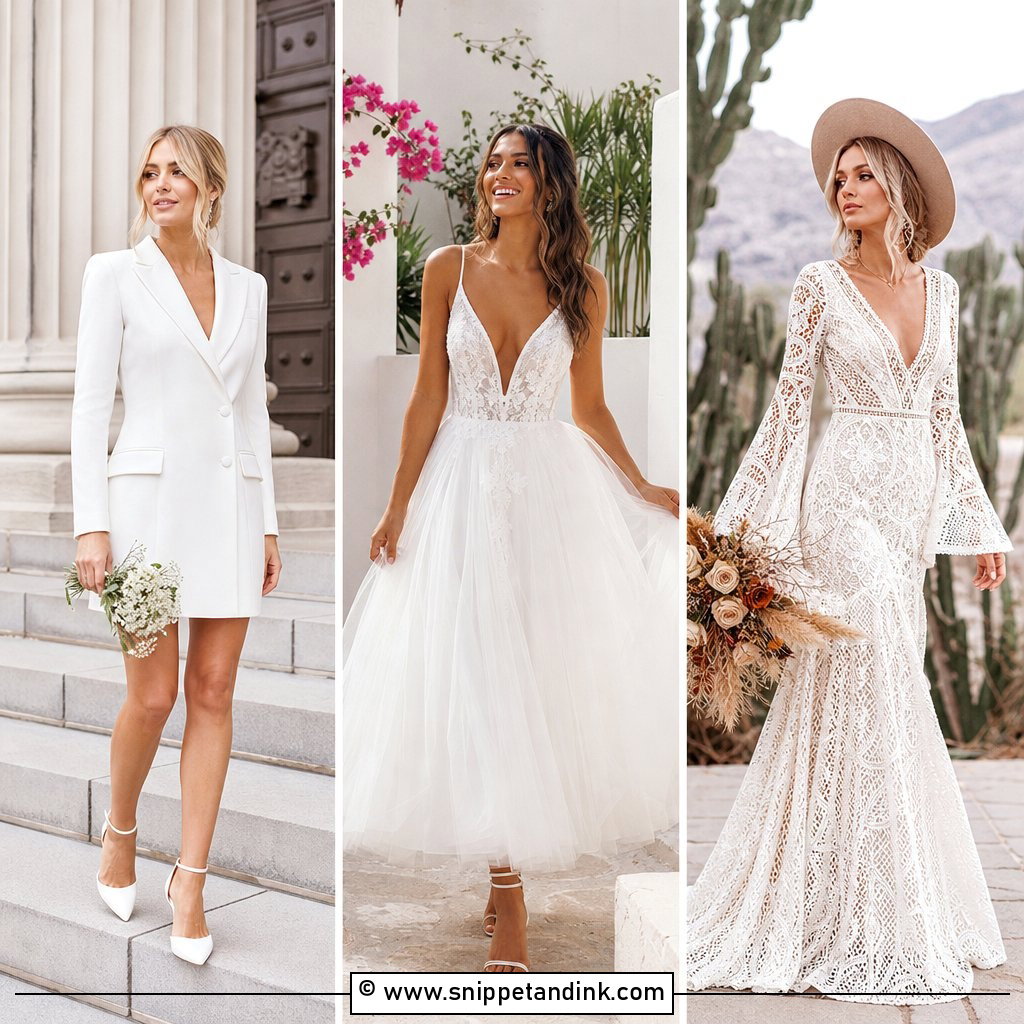
20. Beaded Wedding Dress For Curvy Brides
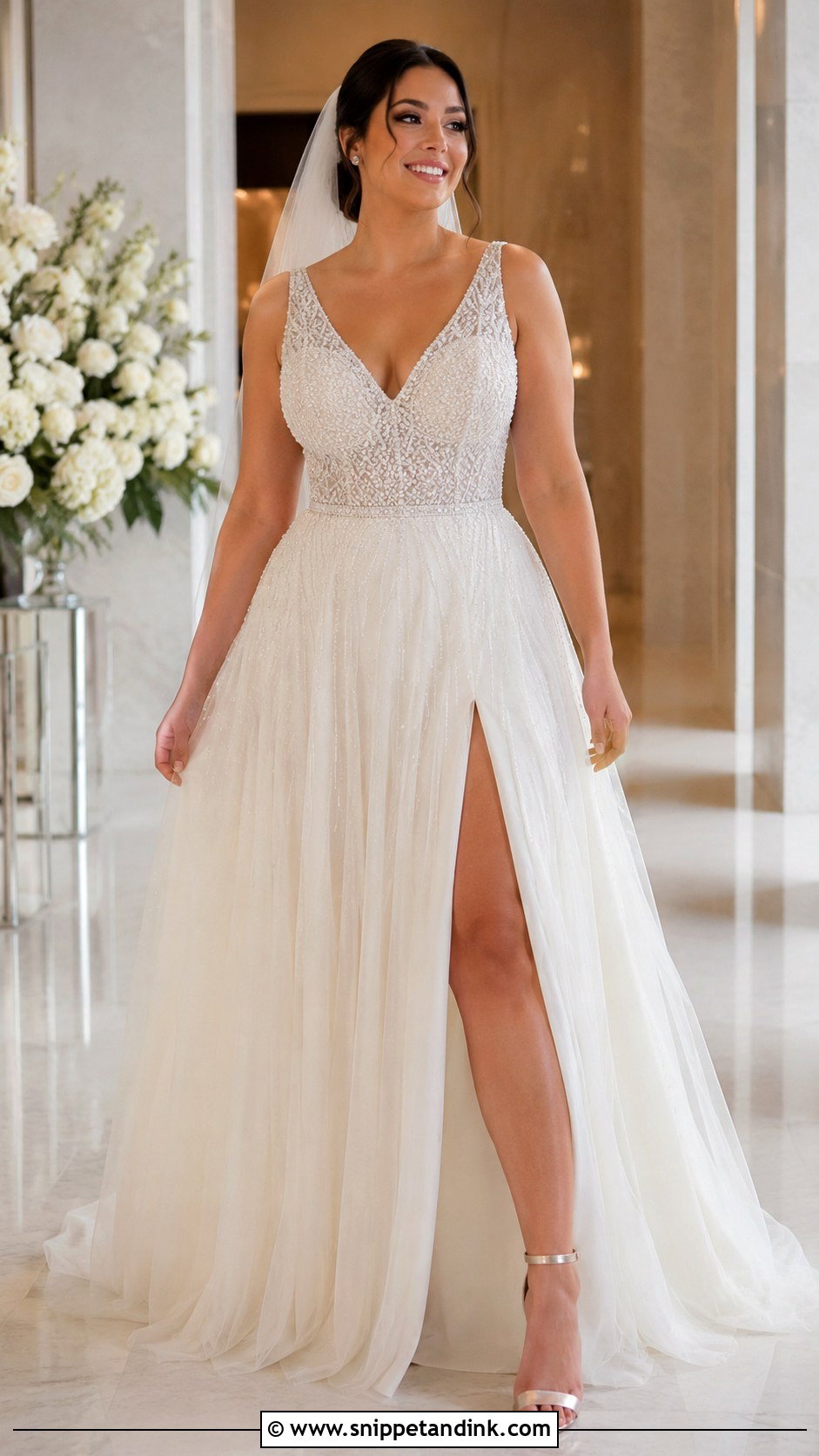
Beading earns its place when it does a job. On a beaded wedding dress, I like the sparkle concentrated at the neckline, along the waist or tracing the vertical seams, where it shapes the eye. Allover beading adds real weight, sometimes a lot, so the gown needs strong lining and straps to carry it comfortably for hours. Ask the shop to weigh it on your shoulders, not on the hanger. Stud earrings and a smooth veil; let the dress shine at evening or hotel venues.
21. Simple Wedding Dress For Curvy Brides
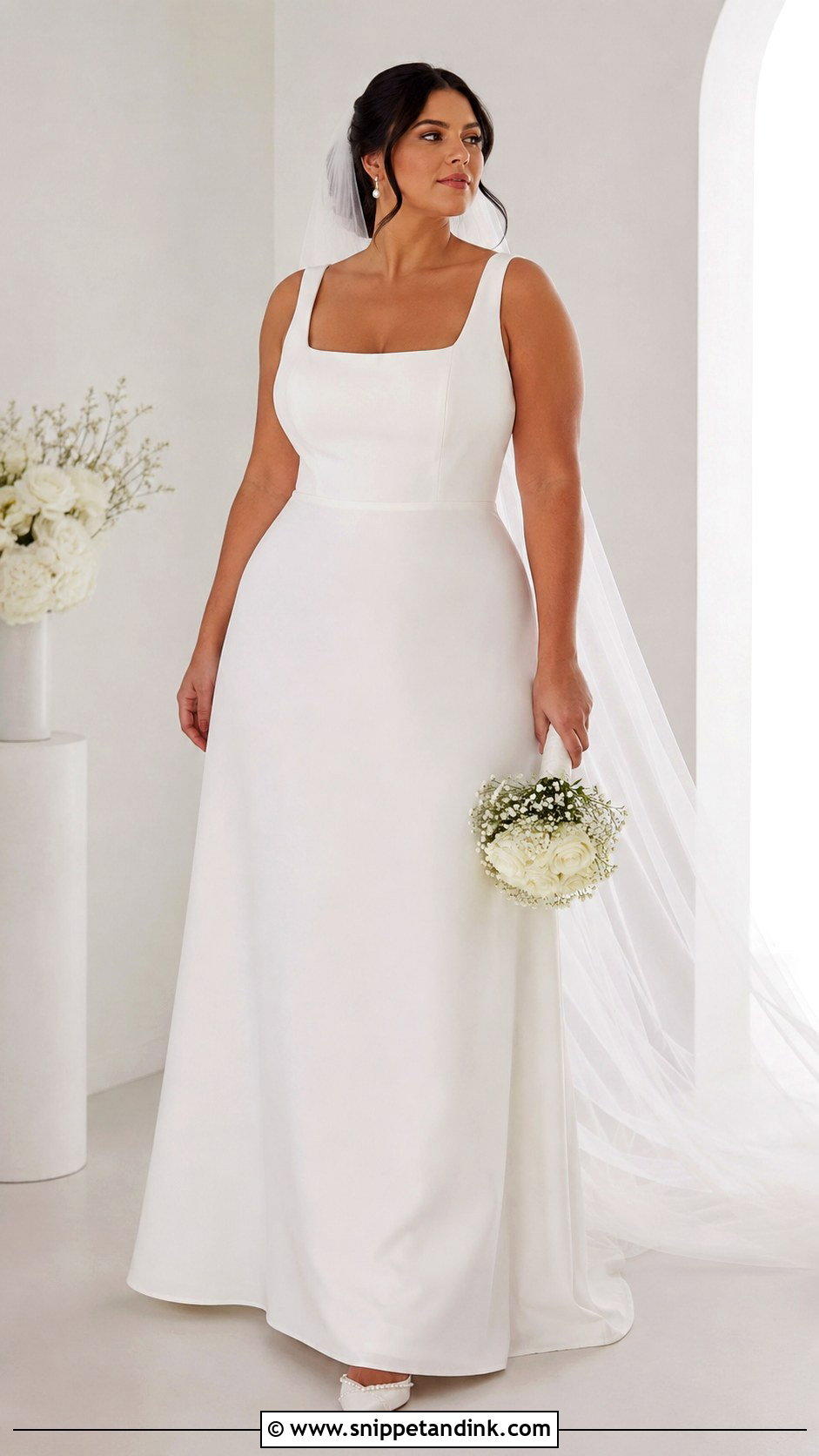
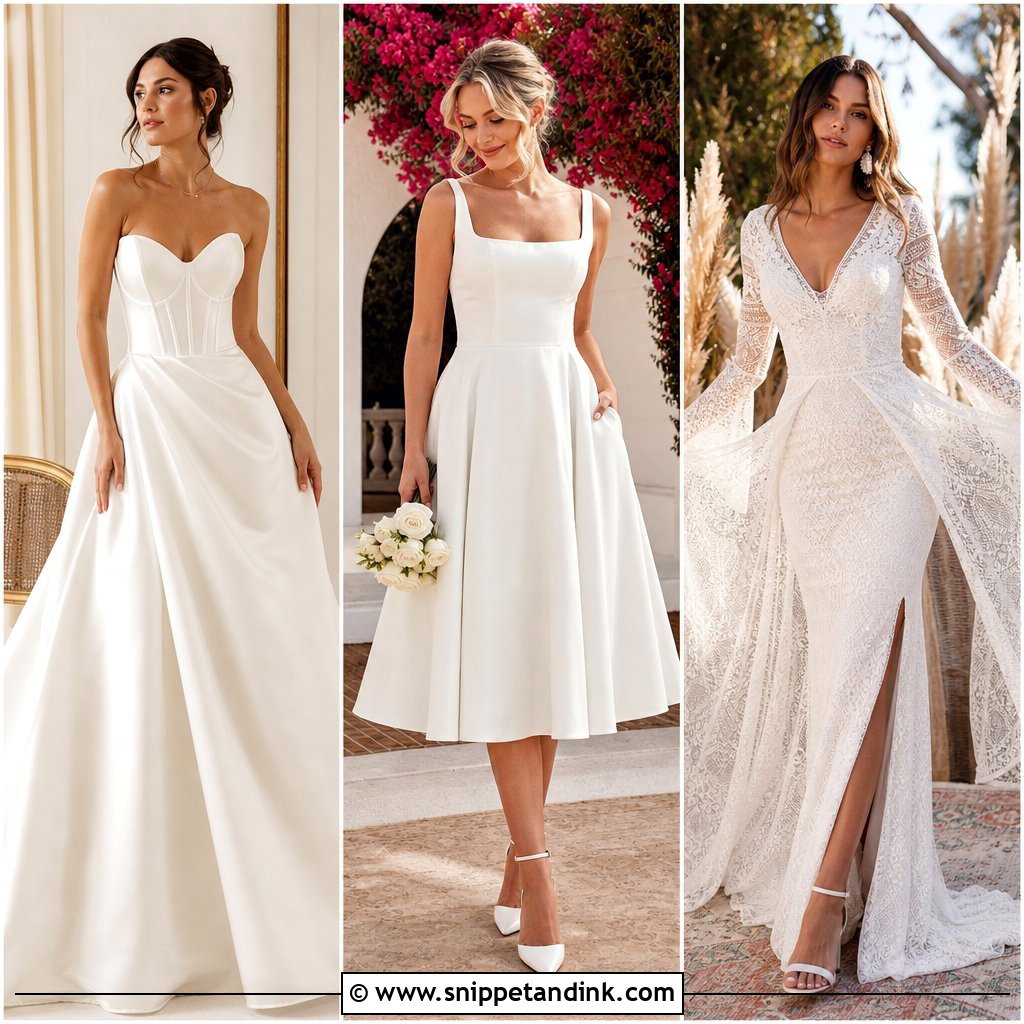
With nothing to hide behind, a plain gown shows the quality of its cut immediately, and on curvy brides that’s a good thing. Crepe, satin and mikado look expensive when they’re fitted precisely. Start with a neckline that supports your bust properly, then choose the skirt shape you’re comfortable in: a square-neck A-line, an off-the-shoulder sheath or a strapless ball gown. Your personality comes in through the veil, the shoes and the earrings.
22. Boho Wedding Dress For Curvy Brides
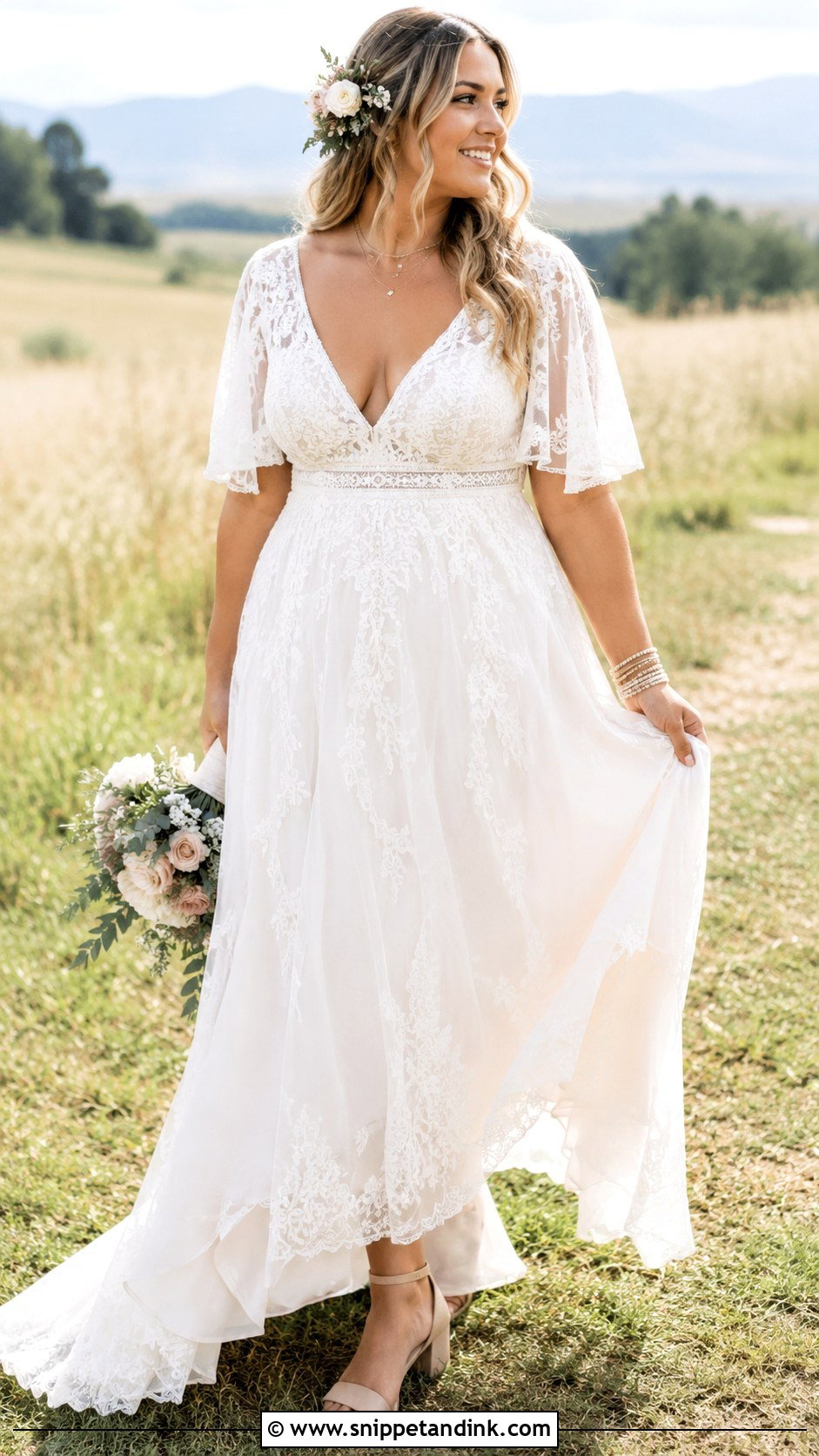
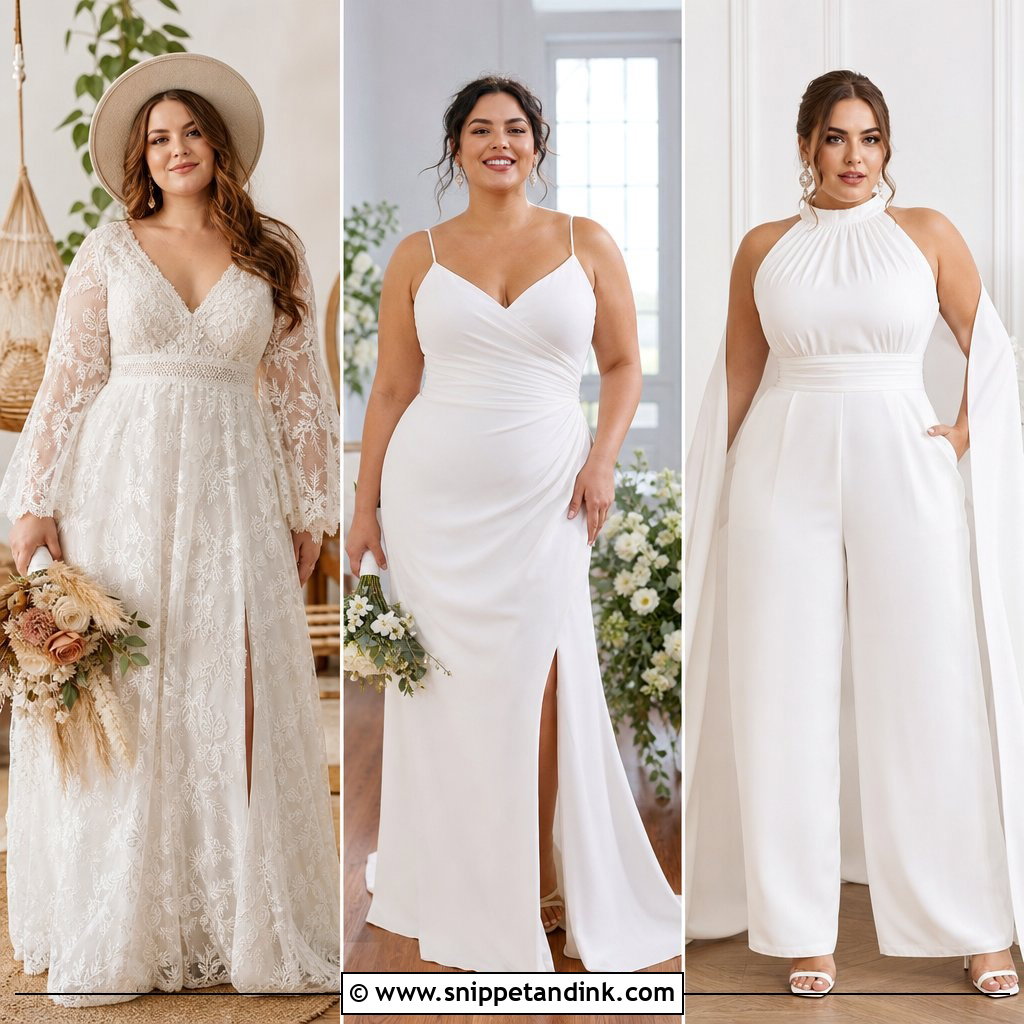
Boho dresses can drift into shapeless if nobody pays attention to the bodice. I always ask for a lined, supportive top under the soft lace and bell sleeves, so the dress feels relaxed but still holds you. A-line and empire shapes suit outdoor venues best. Loose waves, a floral hairpiece and stacked bracelets carry the mood, with sandals or block heels for grass. Earthy lace tones in place of stark white make it feel natural.
23. Vintage Wedding Dress For Curvy Brides
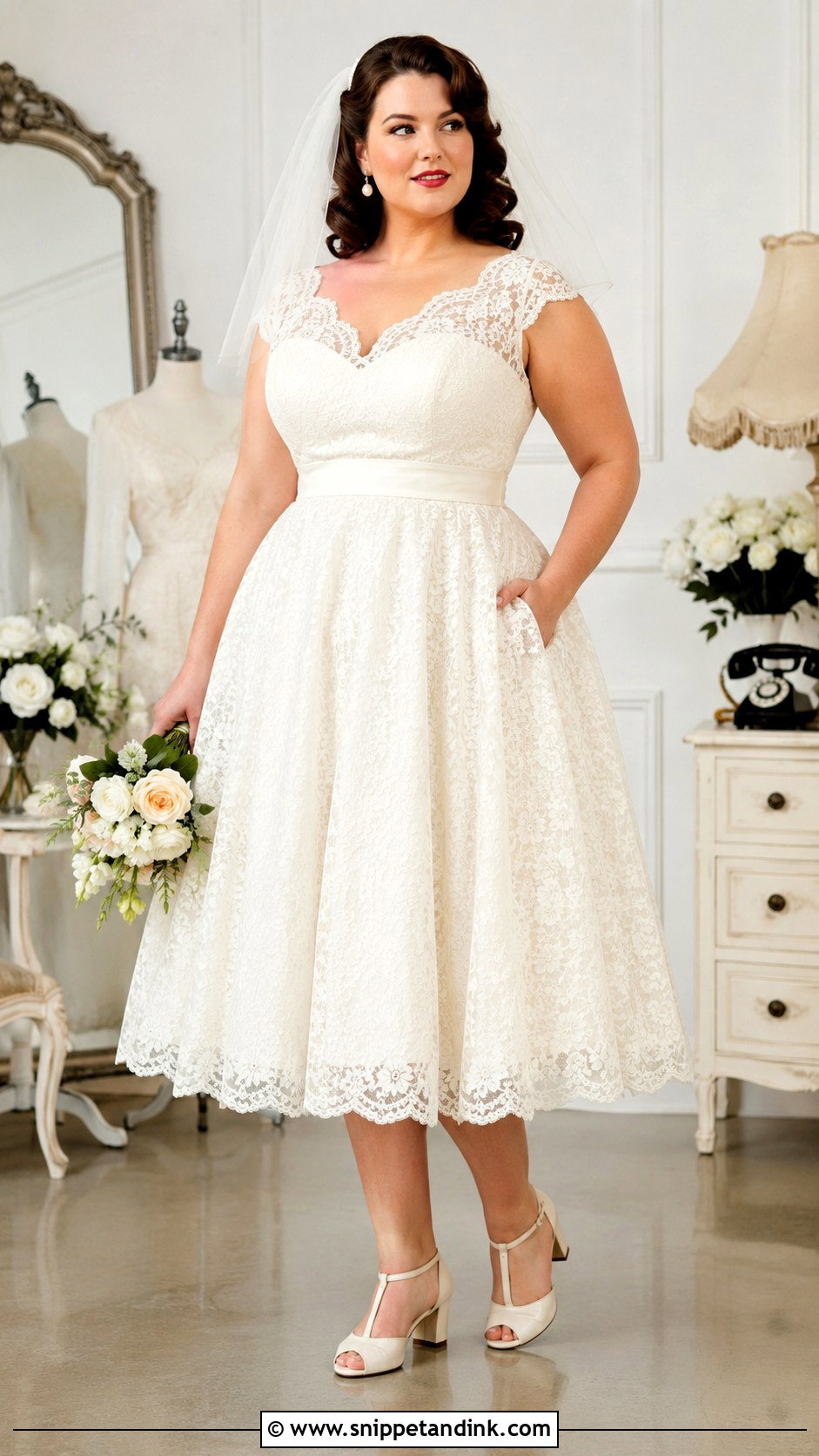
Vintage cuts were often built for a defined waist, so they can sit naturally on a curvy frame. Tea-length lace, a 1950s full skirt, art deco beading, long sleeves fastened with tiny buttons: all lovely, as long as the gown carries modern support underneath. With genuine vintage pieces, I check the seam allowances first, because older dresses sometimes have very little fabric left to let out. A birdcage or soft fingertip veil, block heels or pearls, and it stays charming rather than costume.
24. Tea Length Wedding Dress For Curvy Brides
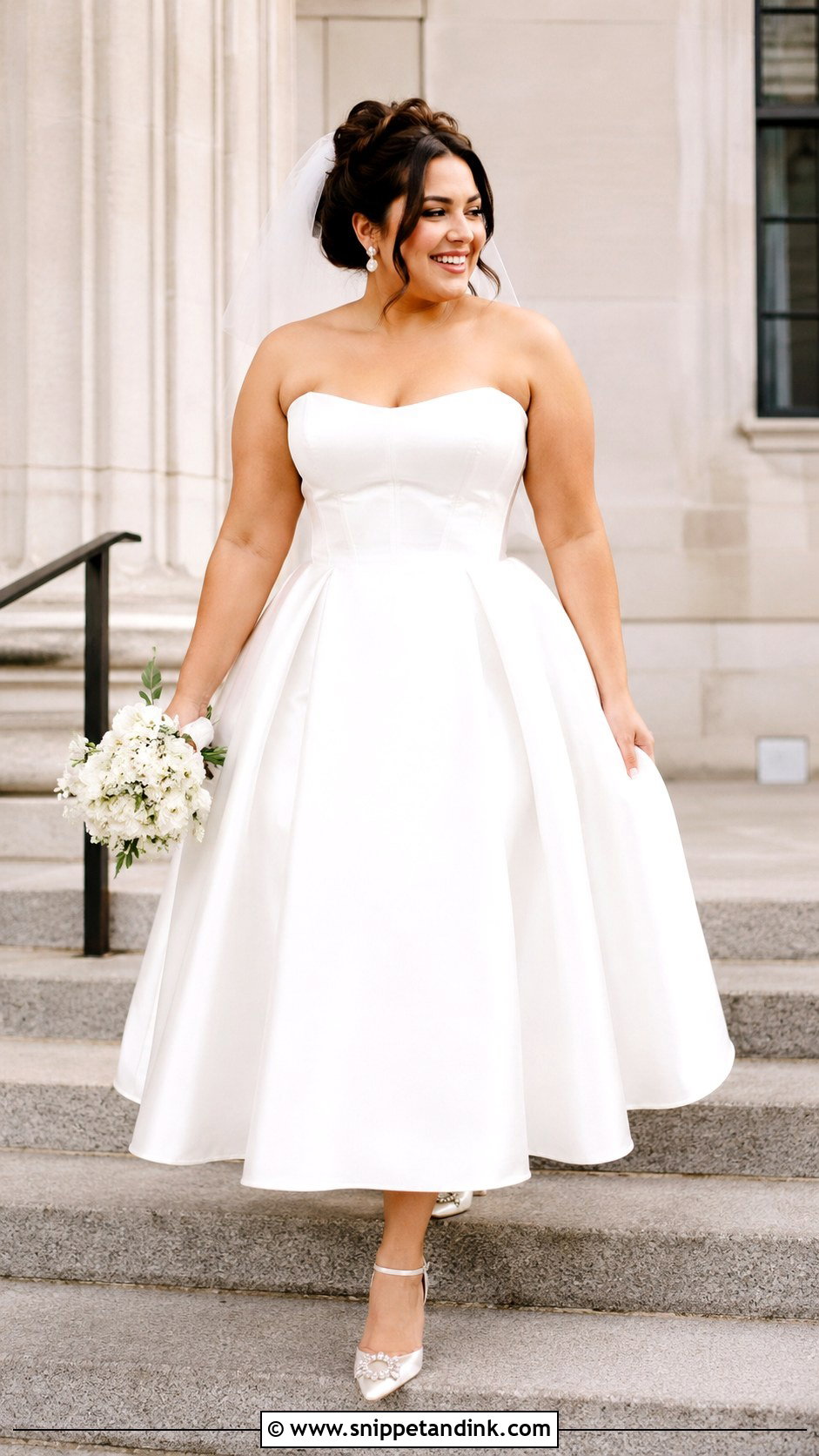
Hem placement makes or breaks a tea-length dress. On most curvy brides, the most flattering point is just below the widest part of the calf, where the leg starts to narrow; land it at the widest point and the leg looks shorter. With a structured bodice and full skirt, it reads vintage, and in clean satin it looks modern. Shoes become part of the outfit here, so choose pumps, embellished flats or block heels you genuinely like. Courthouse and garden weddings suit it best.

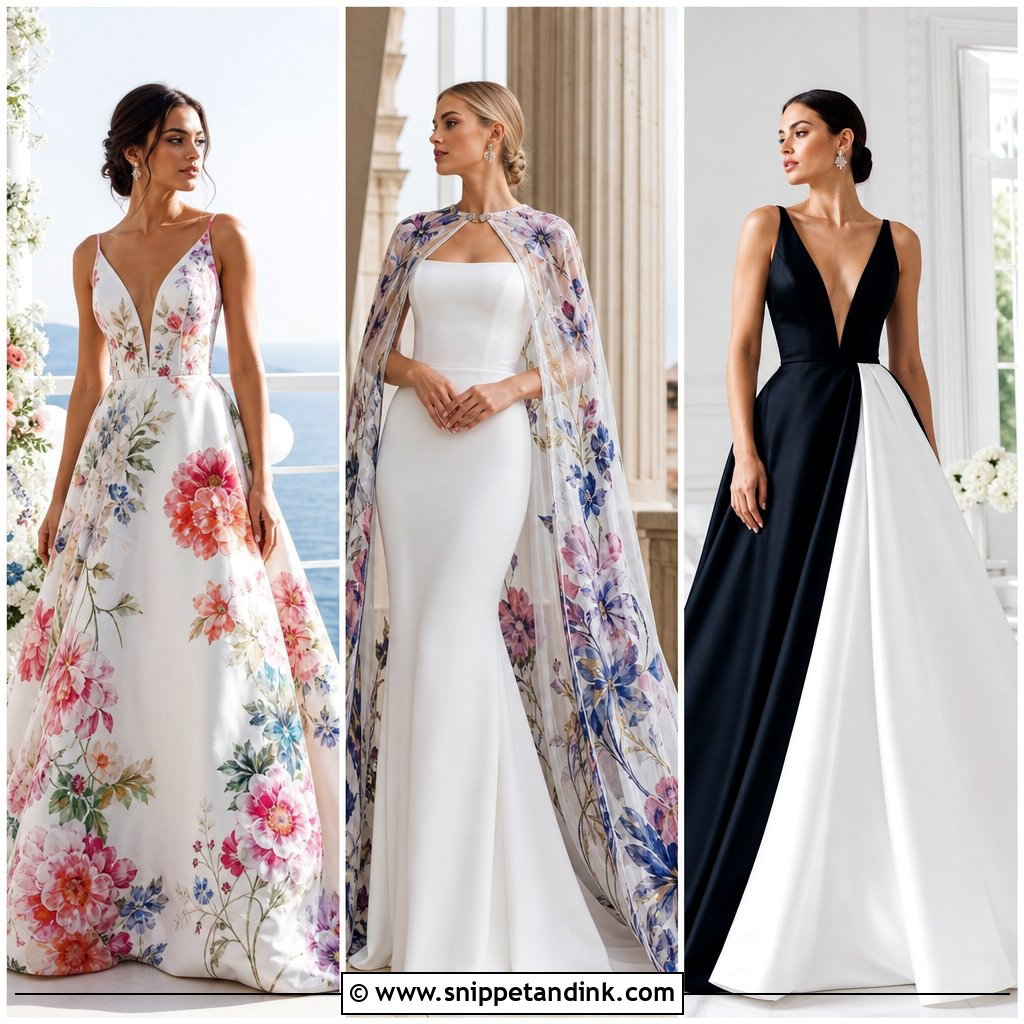

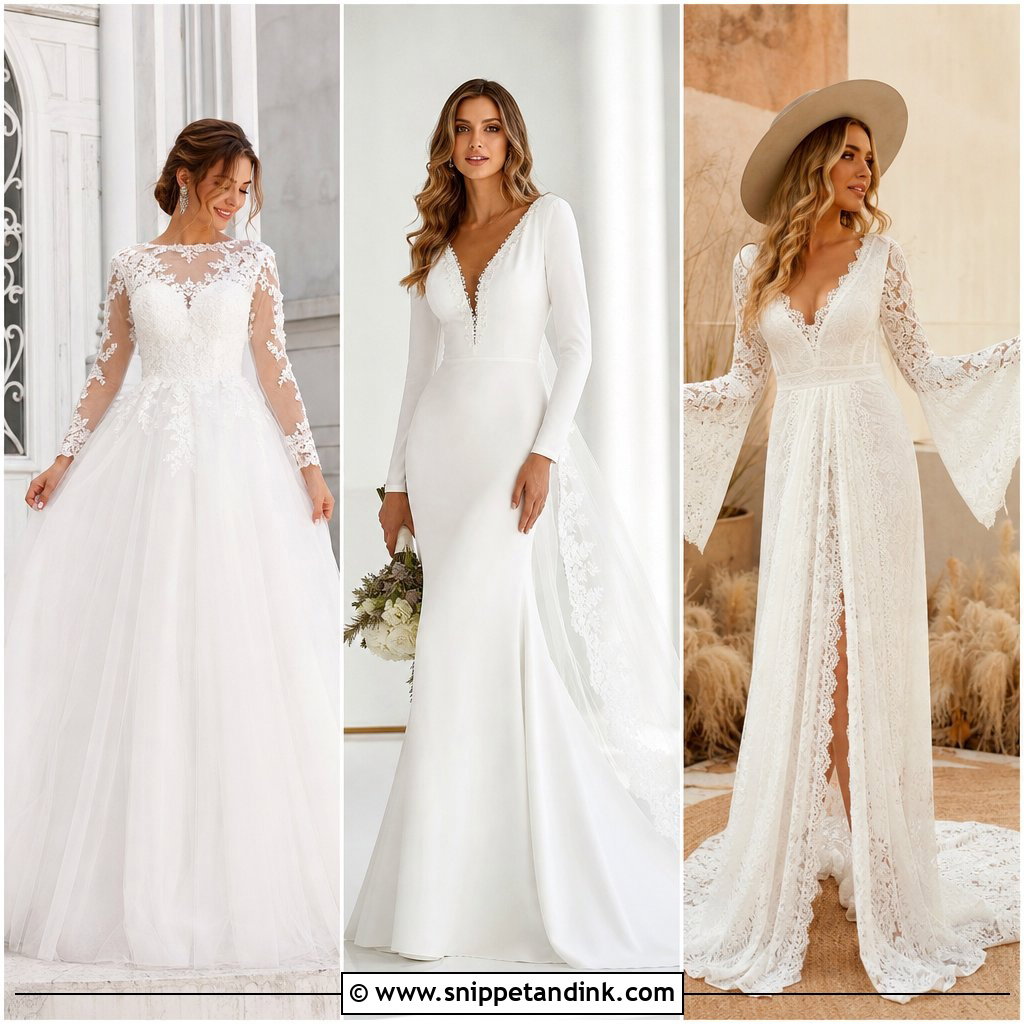
25. High Low Wedding Dress For Curvy Brides
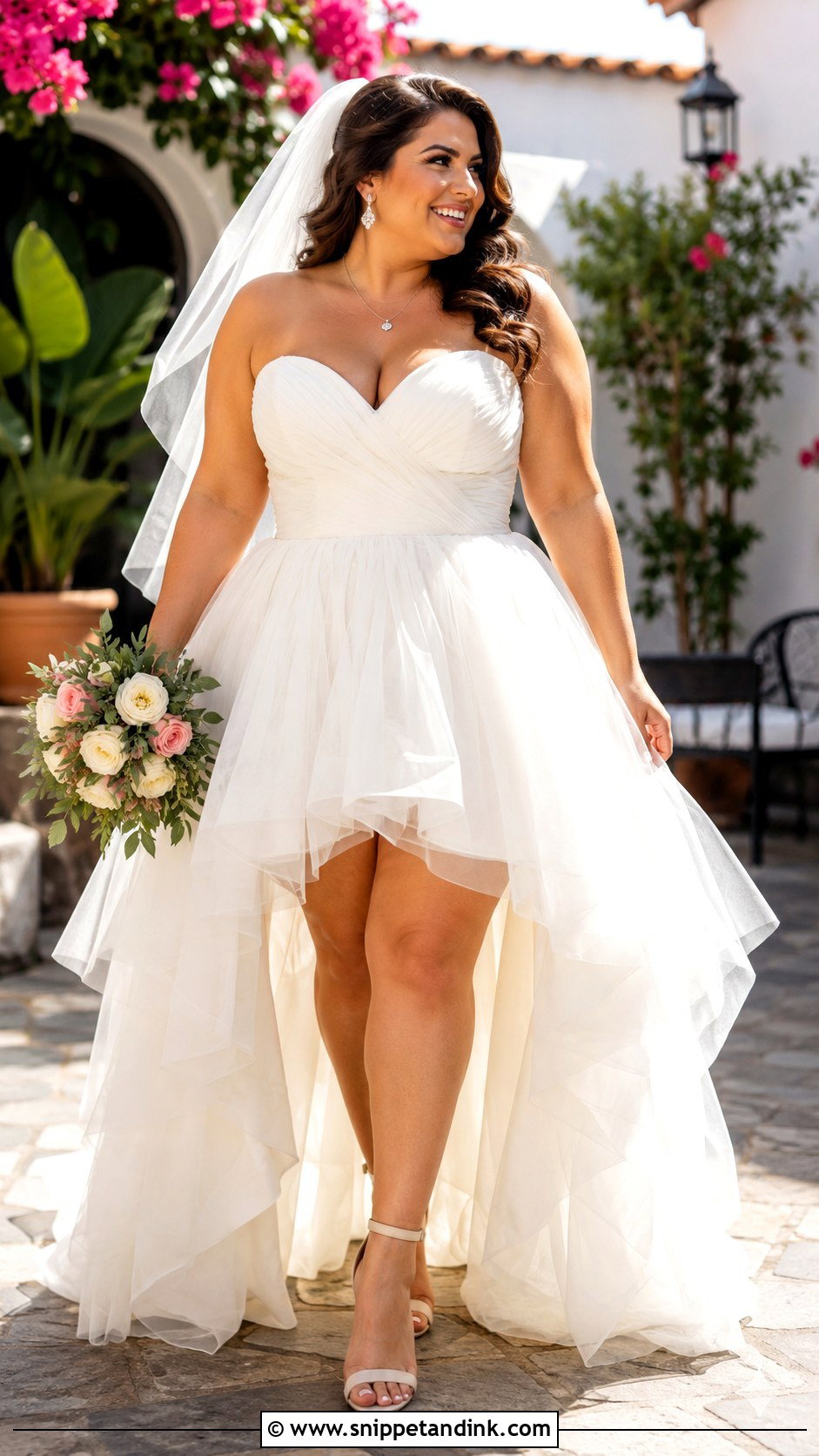
The shorter front shows off your shoes and the longer back keeps it bridal, so the high low skirt gives movement without a full train. In tulle, organza, satin or chiffon, it swings as you walk. The angle of the hem is what I check: a gentle slope looks intentional, a steep one can look like an alteration gone wrong. A fitted bodice and a sweetheart or square neck balance it. For a lively reception or an outdoor venue, this is a bit of fun that still looks polished.
26. Short Wedding Dress For Curvy Brides
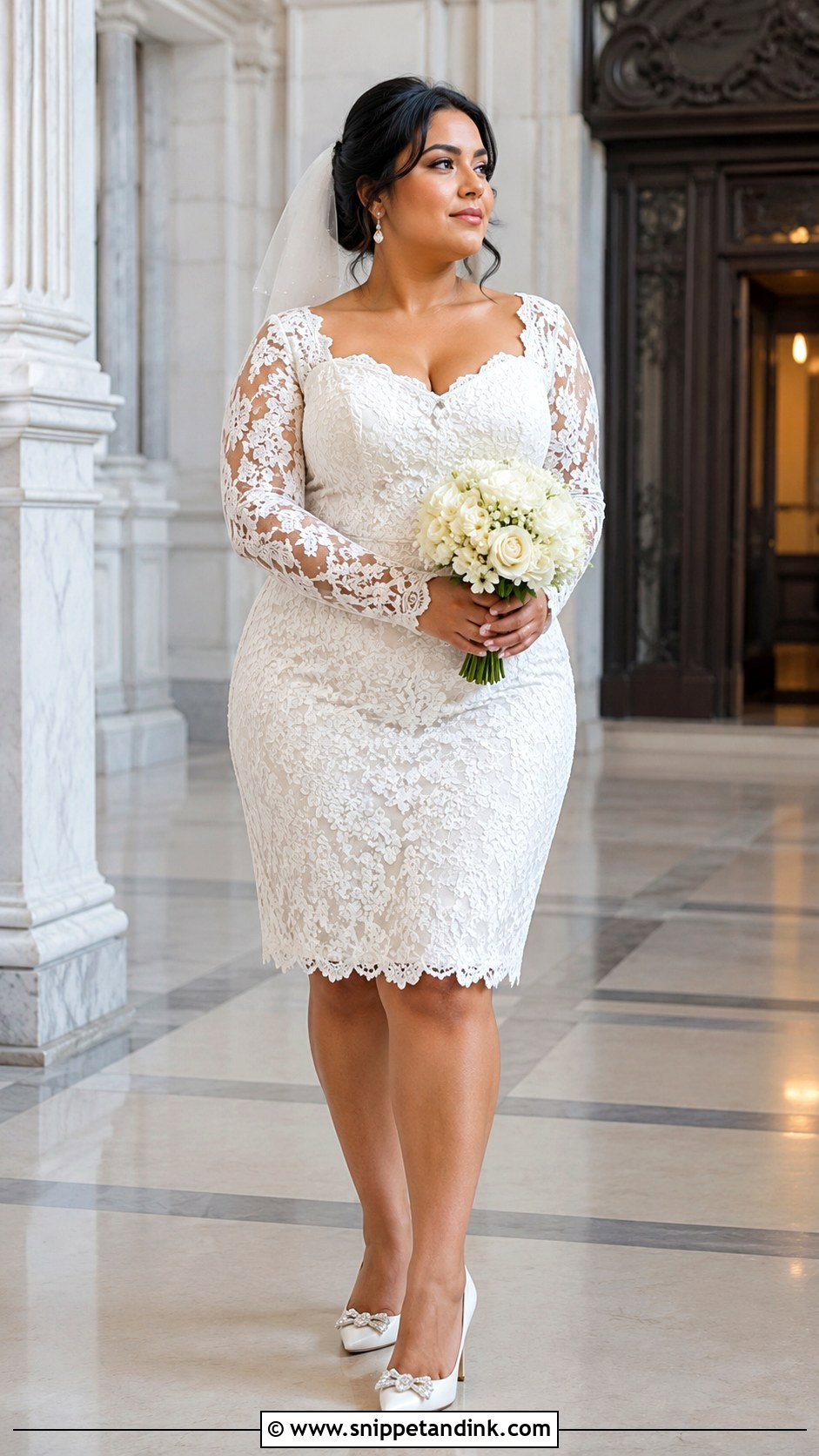
Short dresses suit curvy brides who want to dance and move freely, and they’re far more varied than people expect: a structured long-sleeve mini, a knee-length lace dress, a sleek satin shift. Sit in it, walk up stairs, bend to pick something up. A hem that rides up when you sit is the most common problem I see, and it usually means you need an extra inch or a heavier fabric. Statement shoes and a short veil or bow suit elopements, courthouse ceremonies and reception changes.
27. Two Piece Wedding Dress For Curvy Brides
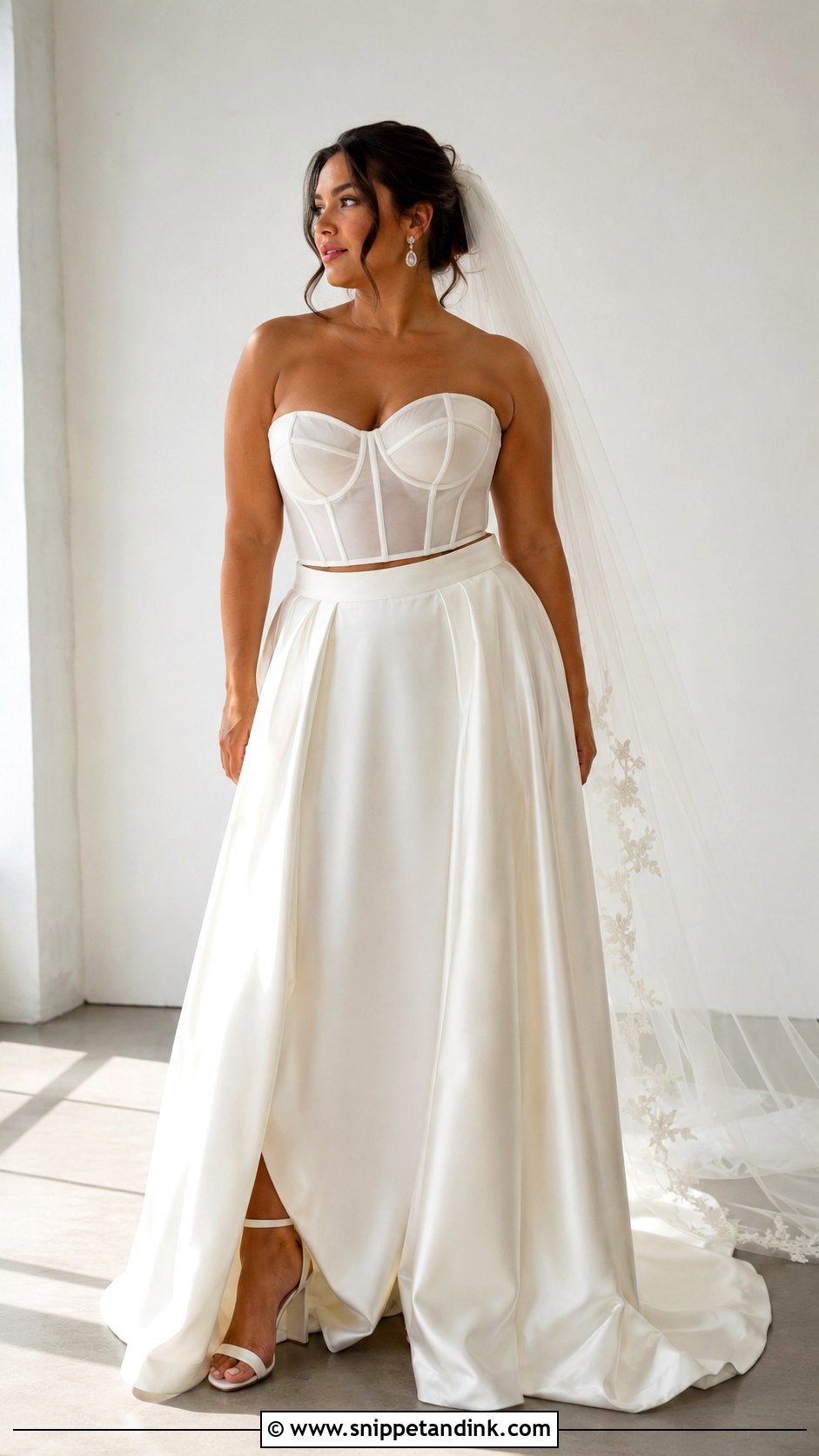
Separates are the most practical answer I have for brides whose bust and hips are two or three sizes apart. With a two piece wedding dress, the top and skirt are sized independently, so alterations get much simpler. A corset top over a full skirt, a lace crop over a high-waist skirt, a satin bodice with a clean A-line: the high waist keeps it bridal and covers the midriff unless you want a sliver showing. Match your heel to the skirt length.
28. Wedding Dress With Sleeves For Curvy Brides
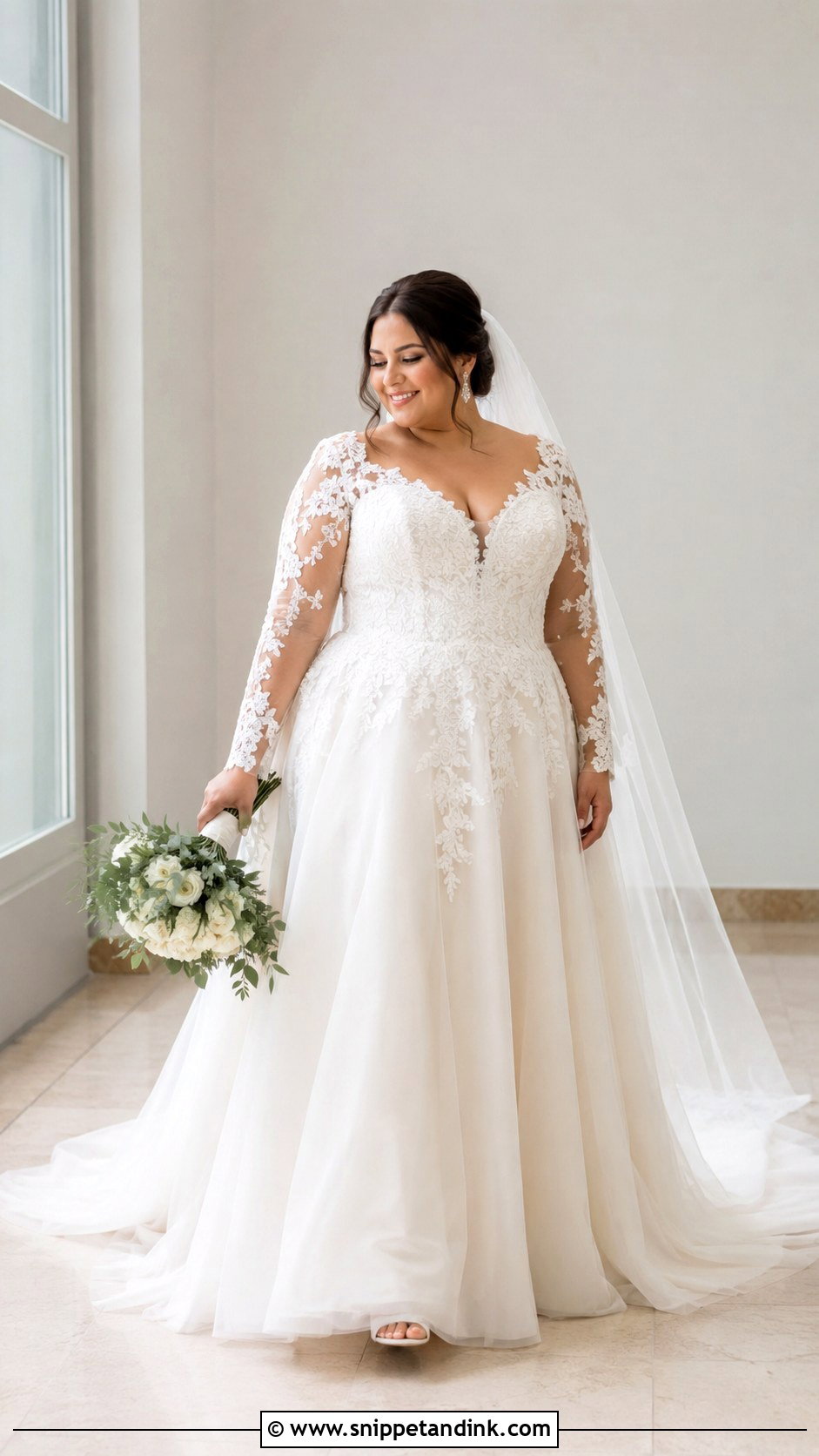
Sleeves come sheer, fitted, fluttery, puffed or detachable, and each changes how a gown moves. The question I ask is whether you can raise your arms comfortably, because a sleeve set too tight pulls across the shoulder blades the moment you reach for anything. Illusion lace looks romantic; clean crepe looks sleek. Pair sleeves with a neckline that balances them, such as a V, square or off-the-shoulder cut, and keep earrings modest so they don’t compete.
29. Wedding Dress With Train For Curvy Brides
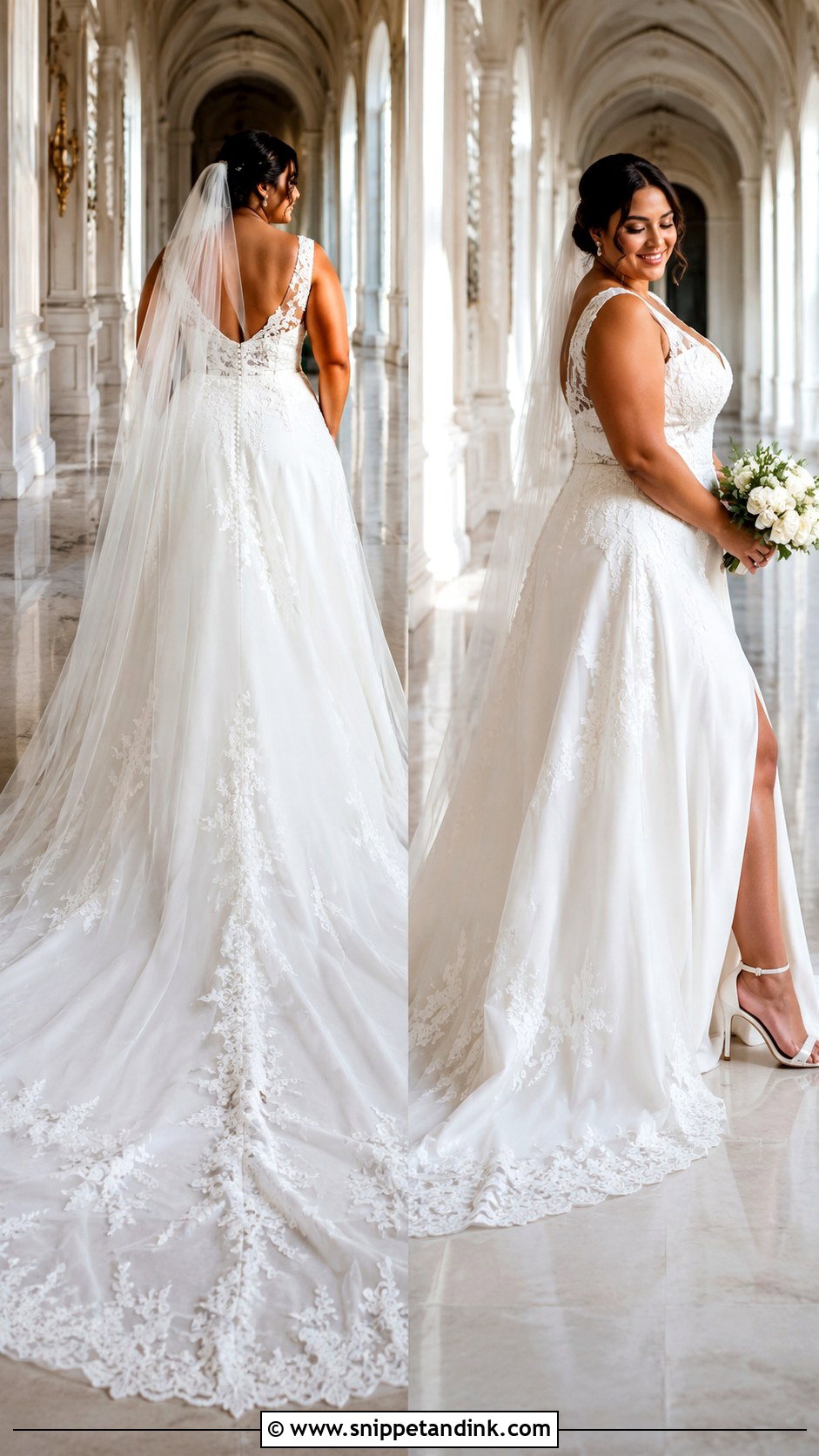
A train makes the entrance and the portraits, but it also has to survive the rest of the day. Sweep trains barely touch the floor, chapel trains are a classic middle ground, and cathedral trains need space and helpers. For curvy brides, I care most about the bustle: a heavy train needs several strong hook points, or it drops halfway through dancing. Ask your seamstress which bustle style suits the fabric, and practise it with whoever will be fastening it.
30. Champagne Wedding Dress For Curvy Brides
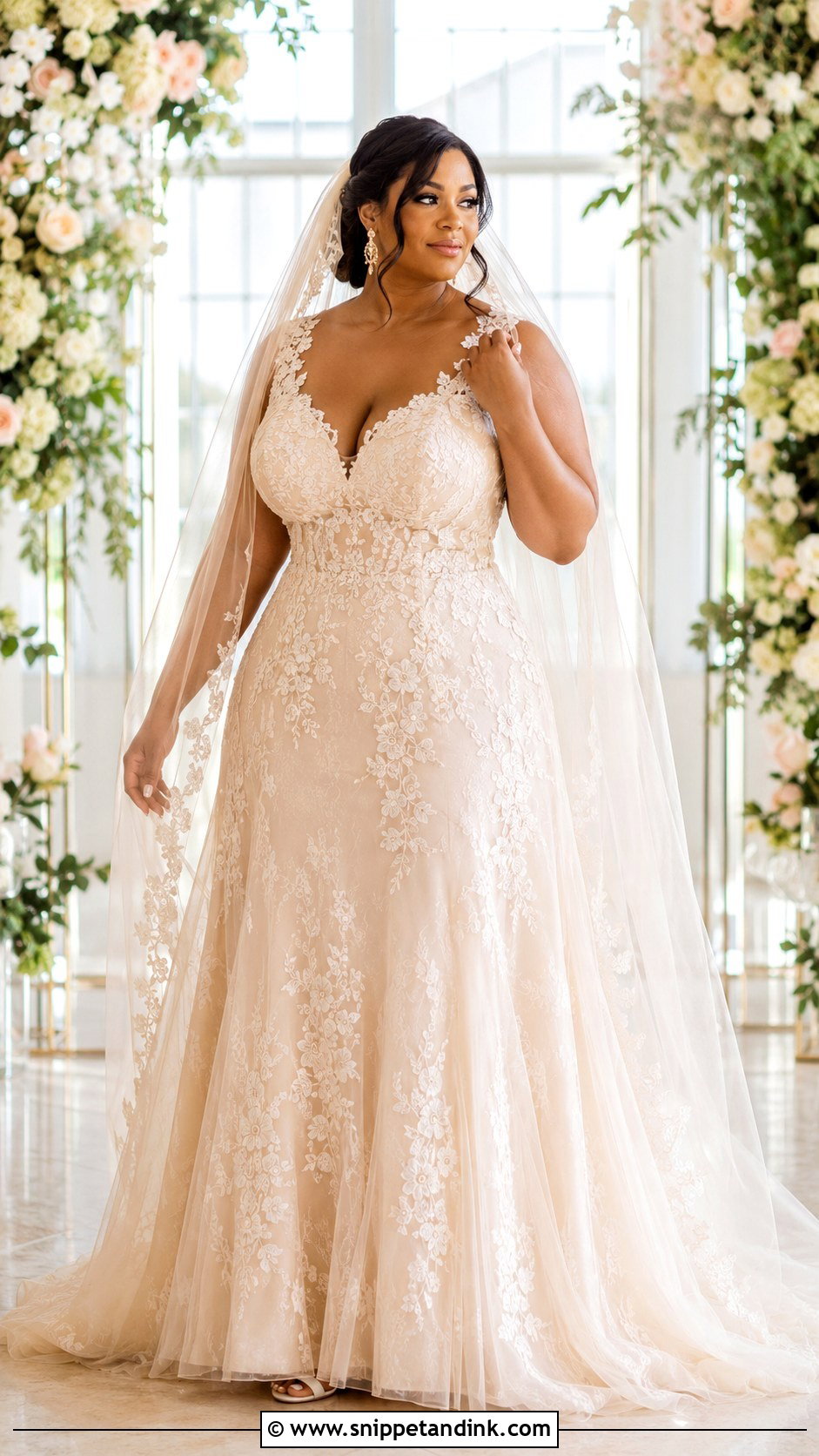
A champagne wedding dress warms up a bridal look and makes lace, tulle and beading show their texture more clearly than stark white does. Over a nude or blush lining it can look almost gold; over ivory, it stays soft. If you have warm undertones, it tends to flatter in photos. Hold the fabric against your face in daylight at the shop before deciding. Gold jewellery, ivory shoes and a veil in a matching warm tone, with a bouquet in blush, cream or greenery.
What a Seamstress Can Fix, and What She Can’t
Alterations solve a lot, and I’d budget for them on every gown. Hemming, taking in side seams, adding cups, shortening straps, raising a neckline slightly and building a bustle are all standard. Most brides need two or three fittings, the first around two to three months before the wedding and the last a couple of weeks out.
Some things are much harder. Moving a waist seam that sits in the wrong place, adding real structure to an unboned bodice, or letting a gown out by more than the available seam allowance can mean rebuilding the dress. Beaded and lace-covered seams cost more to alter because the trim has to be removed and reapplied by hand. If a sample needs one of these fixes to work for you, treat that as a warning sign rather than a plan.
Underwear Decisions That Change the Fit
Bring your final bra and shapewear to the first fitting, not the last. Every adjustment the seamstress makes is measured against what you’re wearing underneath, and switching from a padded strapless bra to sewn-in cups later can throw the bodice out by a surprising amount.
- A longline strapless bra suits many open-back and strapless gowns, but only if it sits below the gown’s back line.
- Light shapewear can smooth satin and crepe; heavy compression often creates a ridge at the top edge that shows through thin fabric.
- If the gown has a built-in corset, try it with nothing underneath first. You may need far less than you think.
Try the Silhouette You Already Ruled Out
No single shape wins here, and I’d be suspicious of anyone who tells you curvy brides must avoid mermaids or strapless gowns. What matters is support, proportion and whether you can sit, breathe and dance without adjusting yourself every five minutes. Try at least one silhouette you’ve already ruled out, because the fitting room has a way of overturning assumptions. Ignore the number on the tag; bridal sizing runs differently from your everyday clothes. Judge the dress by how it feels on you after twenty minutes, not two.
You'll Like These Ideas:




Leave a Reply