
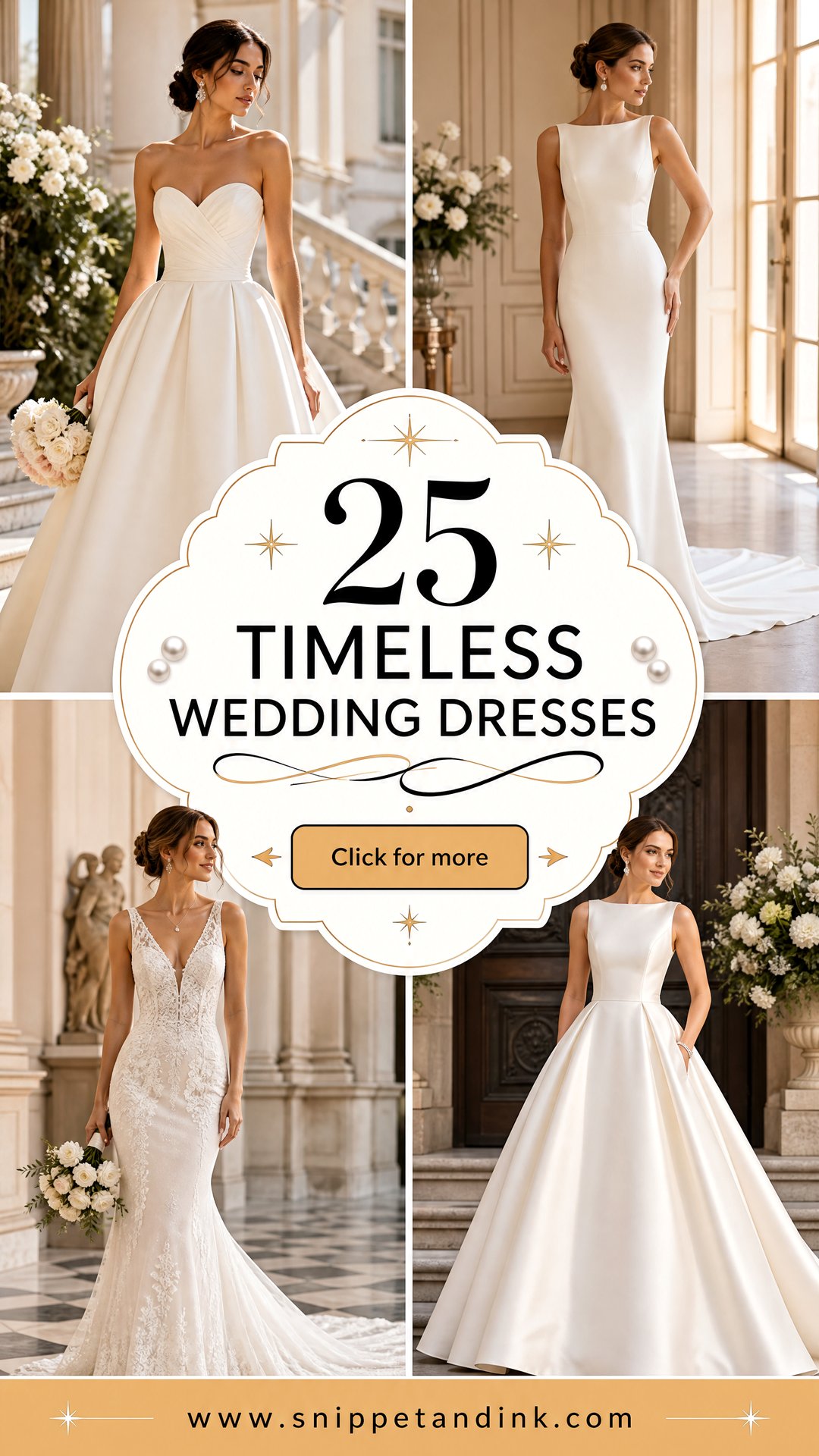
When a bride asks me for a dress that will age well, what she usually means is one she won’t wince at when her children look through the album. That comes down to clean lines, careful tailoring, proportions that suit her and fabric that isn’t tied to one season. The shapes that keep returning are the A-line, the ball gown, the satin slip, lace sleeves, the bateau neck and the classic sweetheart necklines, sheath gowns and vintage-led cuts. Classic is not the same as plain, though. It can be minimal or romantic, structured or soft, as long as the whole outfit is balanced. These are the gowns I trust to look right for decades.
Details That Date a Dress Faster Than Its Shape
Look at wedding photos from twenty or thirty years ago and you’ll notice something: the silhouettes often still look fine. What dates them are the details placed on top. A plain satin A-line from almost any decade looks wearable today; the same gown with puffed shoulder trim or a heavy crystal belt does not.
When I’m helping a bride who wants a dress to age well, I sort the features into two groups:
- Ages well: a good fit through the bodice, natural fabrics or quality synthetics, necklines that suit your shoulders, restrained lace, small pearls, clean seams.
- Dates quickly: anything that was everywhere in one season, such as very specific cut-outs, heavy sparkle belts, novelty colours, oversized trims or shapes that only work with one hairstyle.
You don’t have to avoid the second list. Just keep trend details removable where you can: a detachable sleeve, a separate belt, an overskirt or a veil. The dress underneath stays classic, and the trendy pieces can come off for the evening or for later wear.
1. Satin A Line Wedding Dress
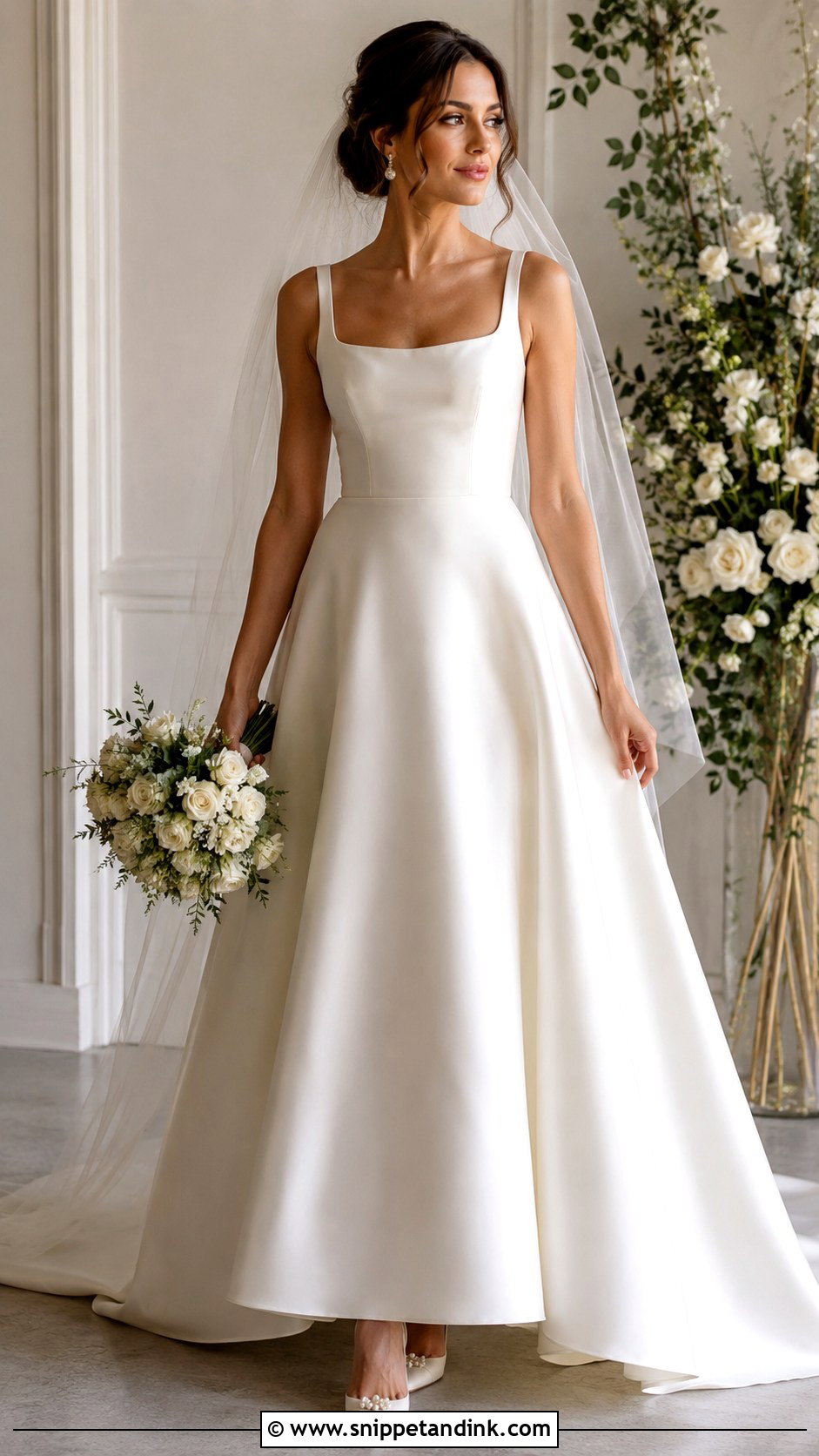
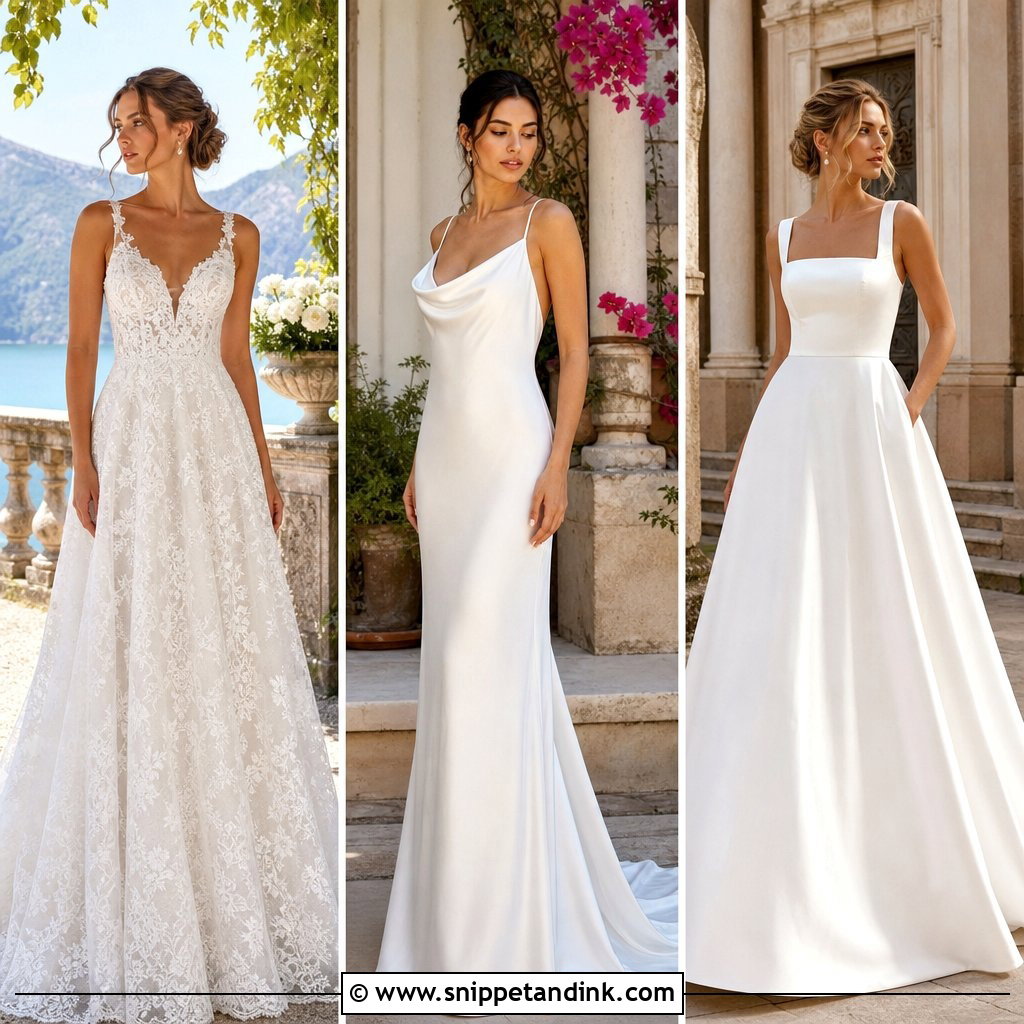
If I had to dress a bride in one shape without meeting her, it would be a satin A-line. The bodice marks the waist, the skirt eases away from the hips, and almost every figure looks balanced in it. Smooth ivory satin gives a clean finish; mikado adds structure and creases less. Pointed pumps, pearl earrings and a simple veil are all it needs. It suits ballrooms, gardens and hotels equally.
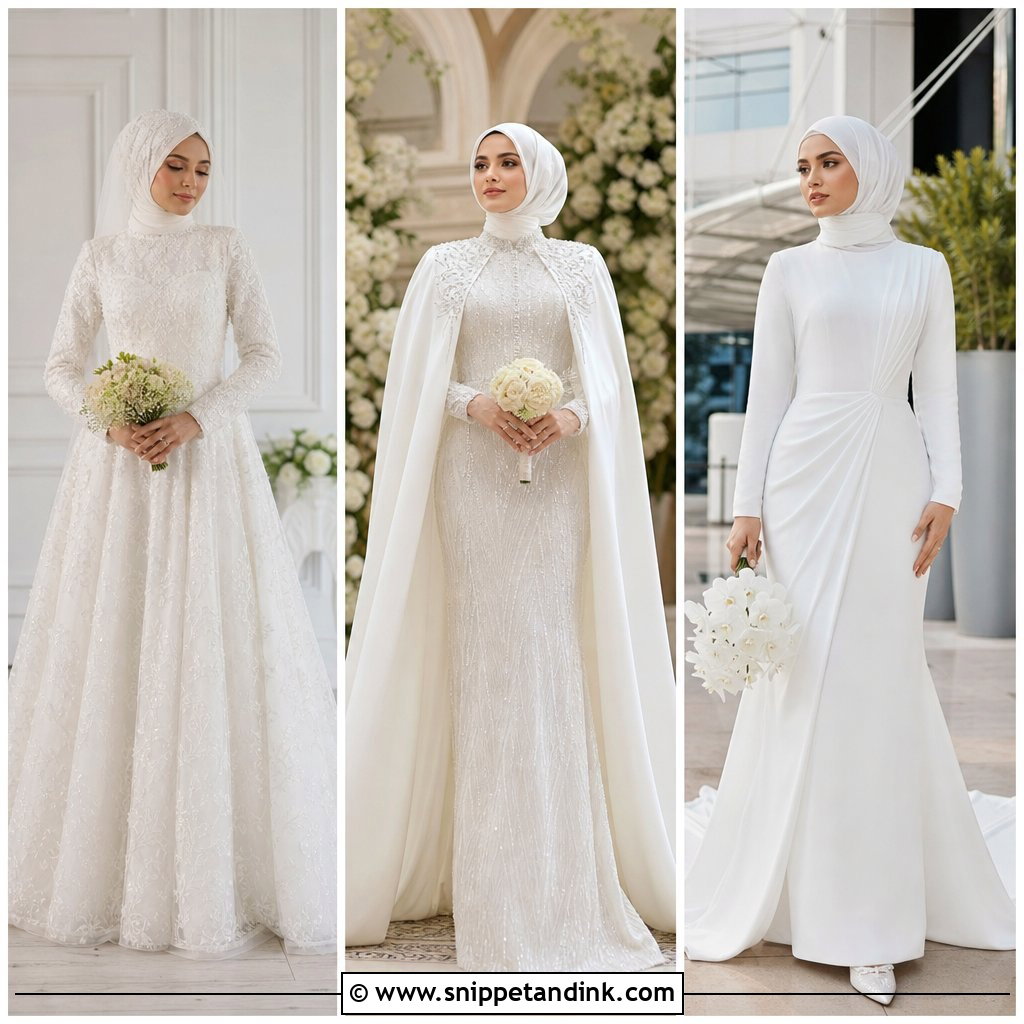
2. Long Sleeve Lace Wedding Dress
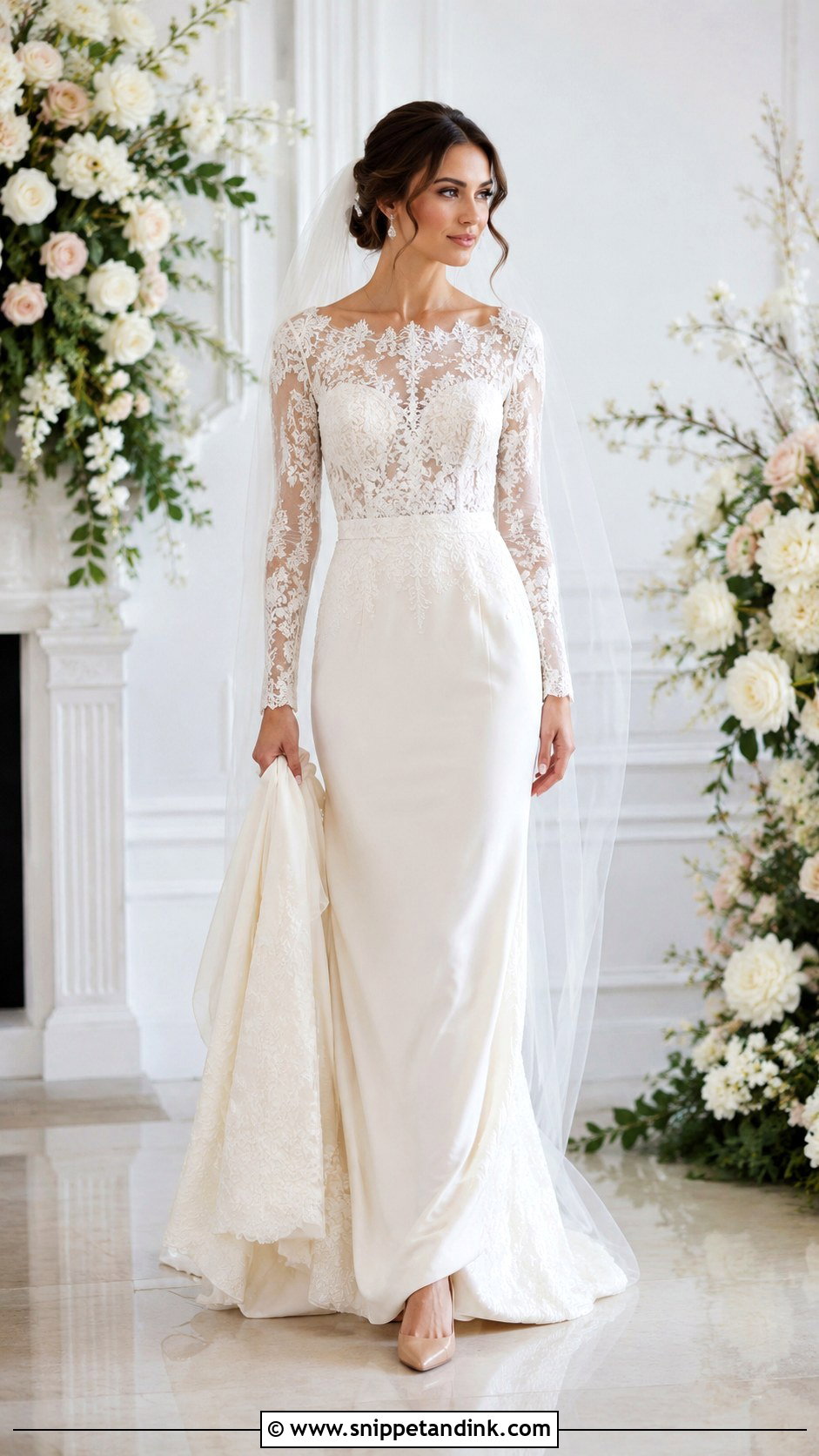
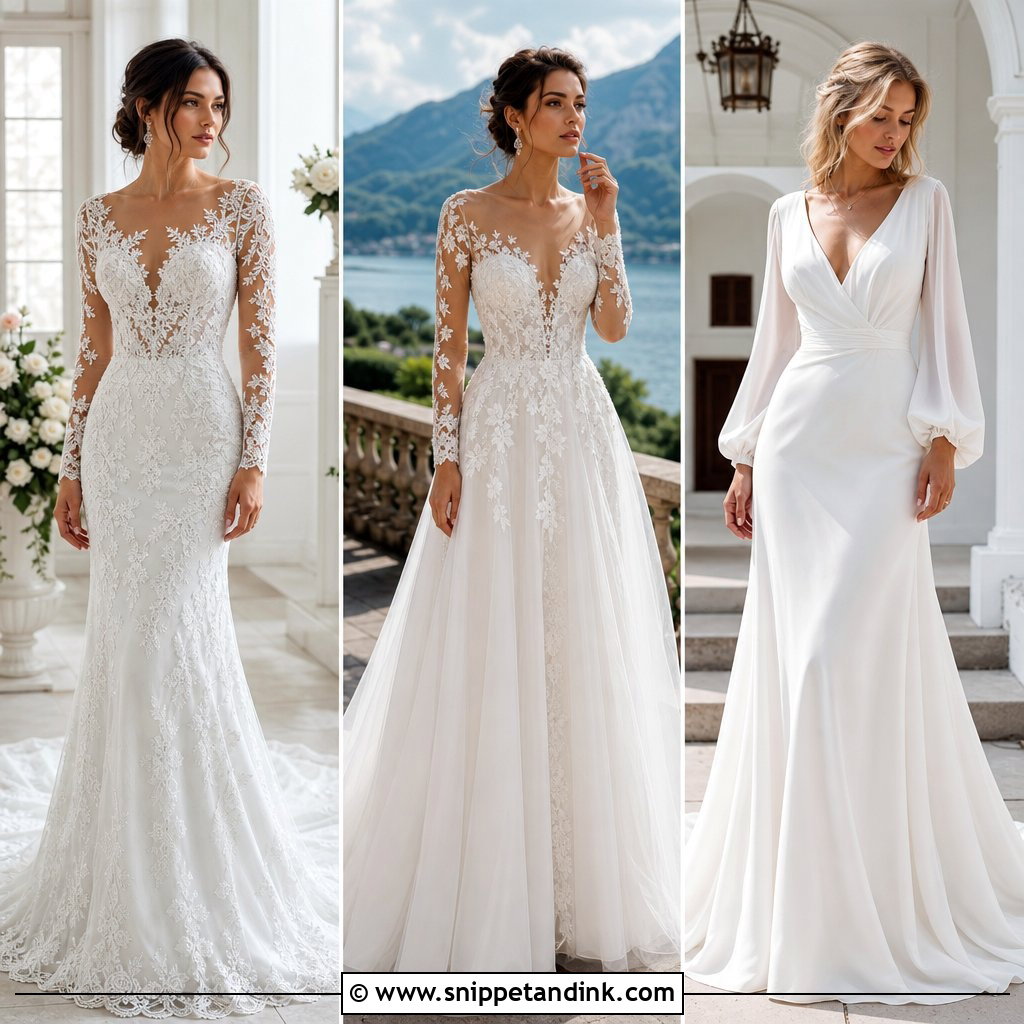
Lace sleeves frame the shoulders and arms, and fine lace dates far more slowly than heavily corded or glittered lace. I look for a delicate pattern with motifs placed symmetrically on both sleeves, which is the mark of careful cutting. A fitted bodice over an A-line or sheath skirt keeps it balanced. Lift your arms at the fitting; tight lace sleeves can restrict hugging and the first dance. A low bun and a sheer veil keep the lace in focus.
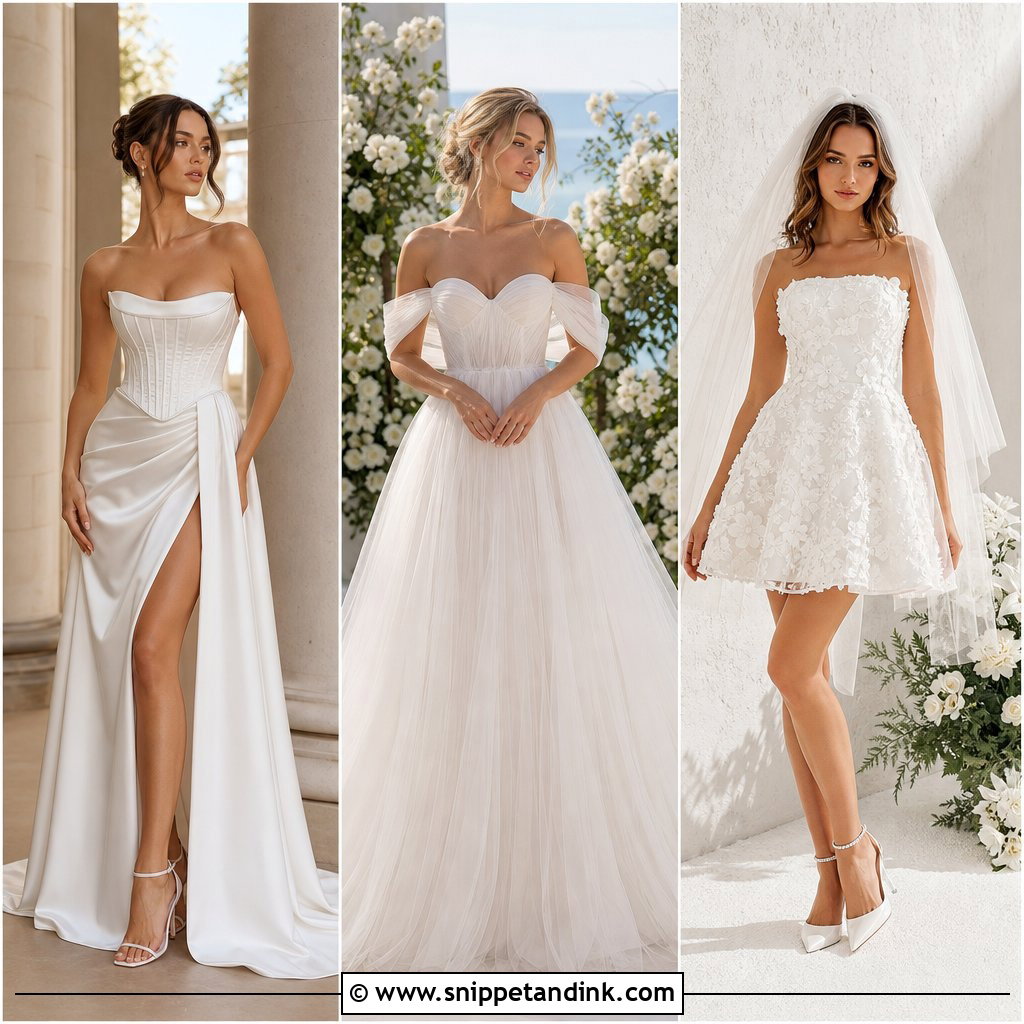
3. Strapless Sweetheart Wedding Dress
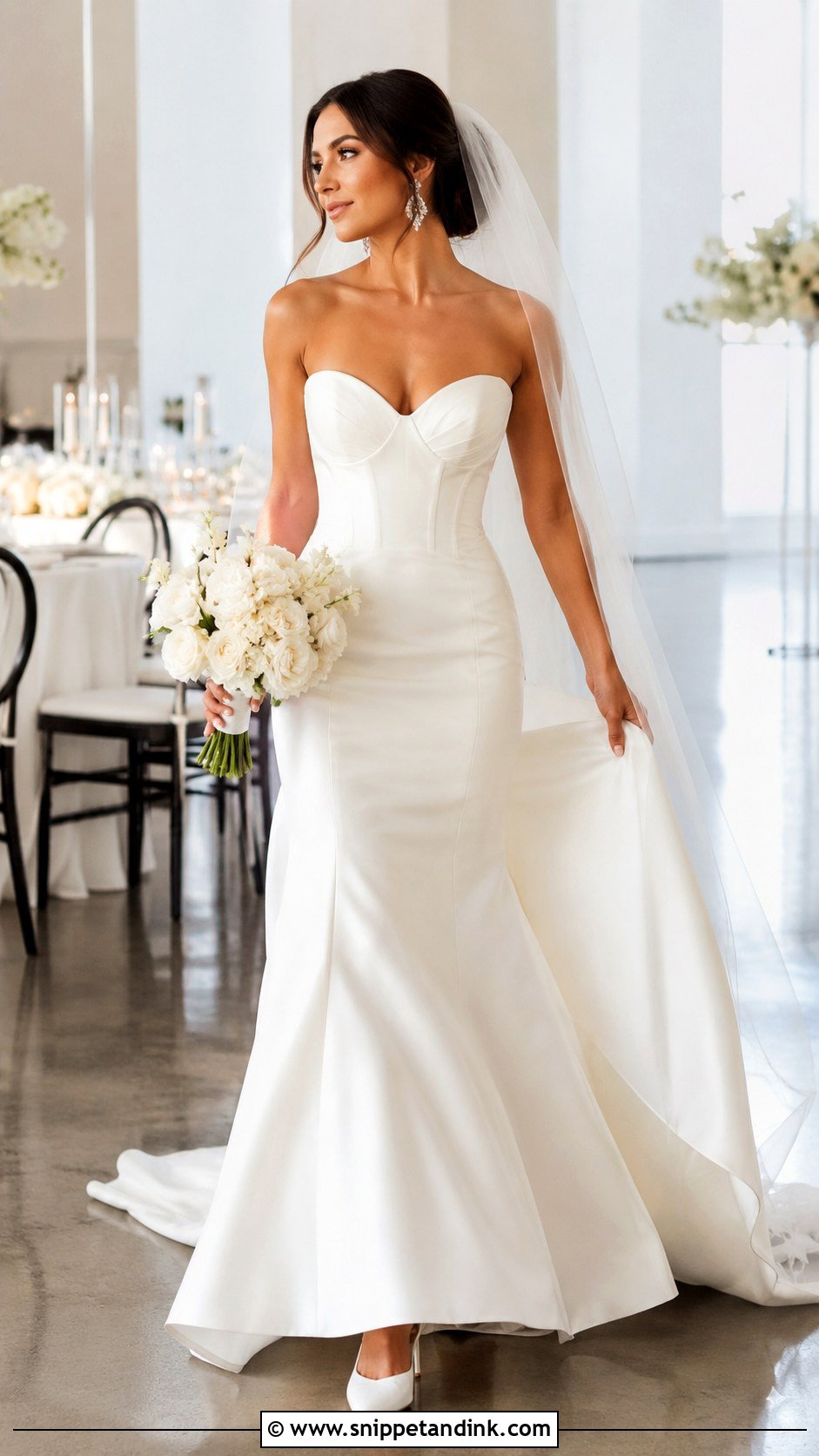
The curved neckline of a strapless sweetheart wedding dress softens the upper body and shows the collarbone, which is why it keeps coming back. A properly boned bodice is what keeps it timeless, since a strapless top that needs constant hitching looks uneasy in every candid. A full skirt reads traditional; fit-and-flare reads sleeker. Wear a fine necklace only if the neckline feels bare, or skip it for statement earrings.
4. Bateau Neck Wedding Dress
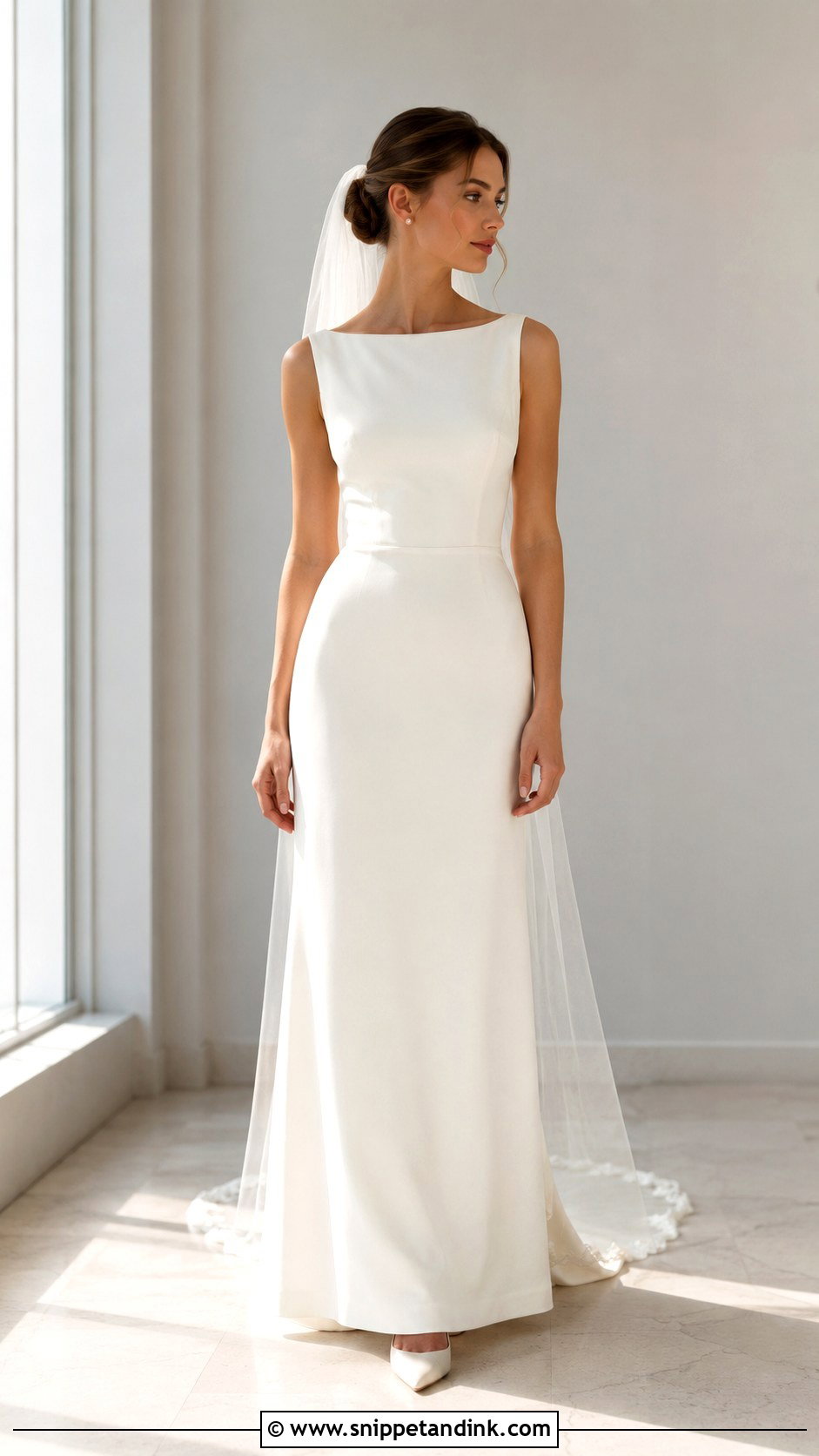
A bateau neck wedding dress runs wide and shallow across the collarbone, and it’s my favourite neckline for a bride who loves tailoring. It suits long sleeves, cap sleeves or a plain fitted bodice. Because it sits close to the edge of the shoulders, the fit there must be exact, or it slides off one side. Pearl studs and a smooth bun are enough. City and museum venues suit it.
5. Simple Crepe Wedding Dress
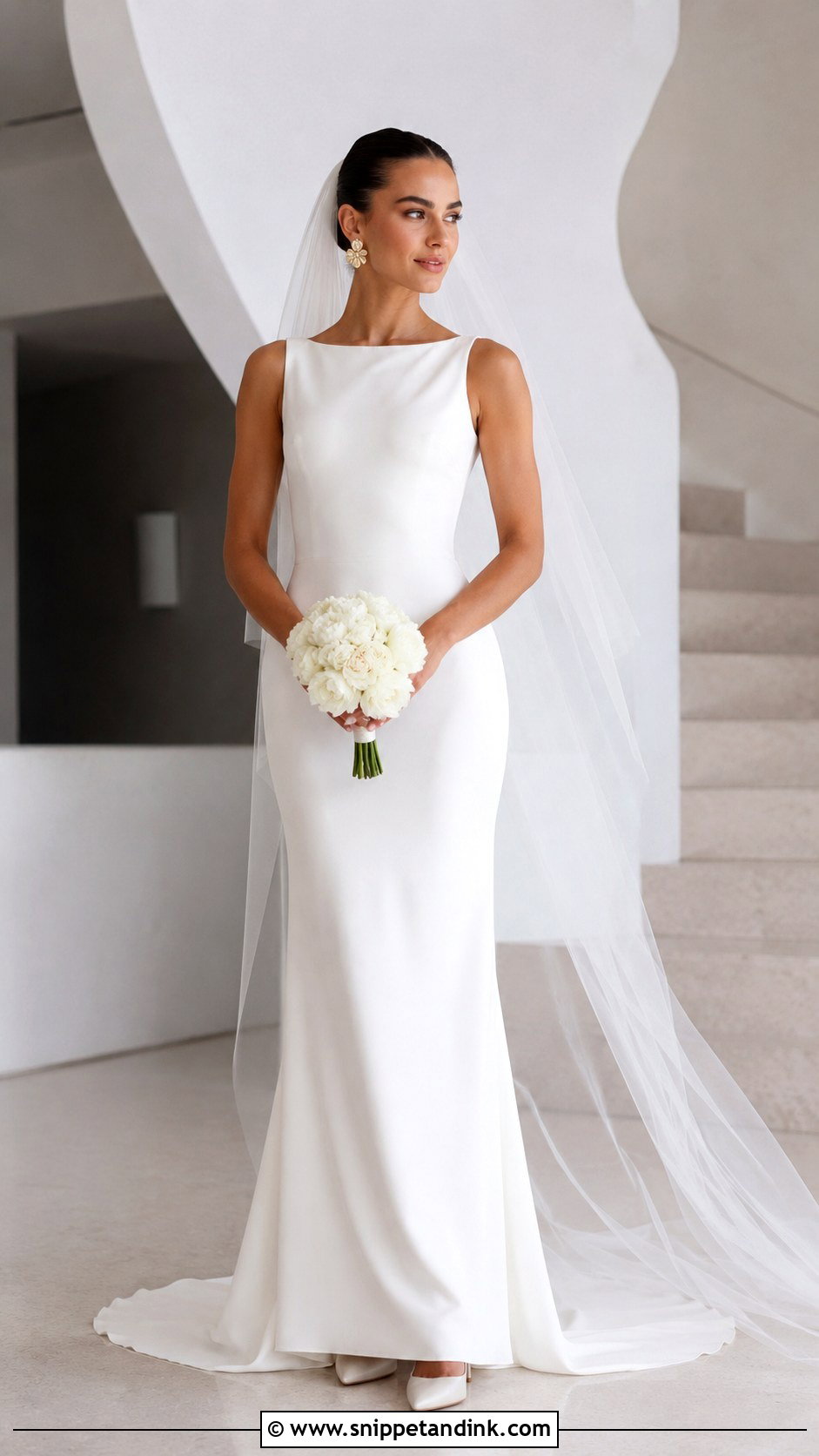
Crepe has a smooth, slightly weighted drape, and it never looks like a particular year. That also means it hides nothing. Every pull and wrinkle in the fit shows, so plain crepe needs the most tailoring of any fabric here. A sheath, soft mermaid or minimal A-line all work. A long veil and sculptural earrings make it feel finished for modern and coastal venues.
6. Off Shoulder Wedding Dress
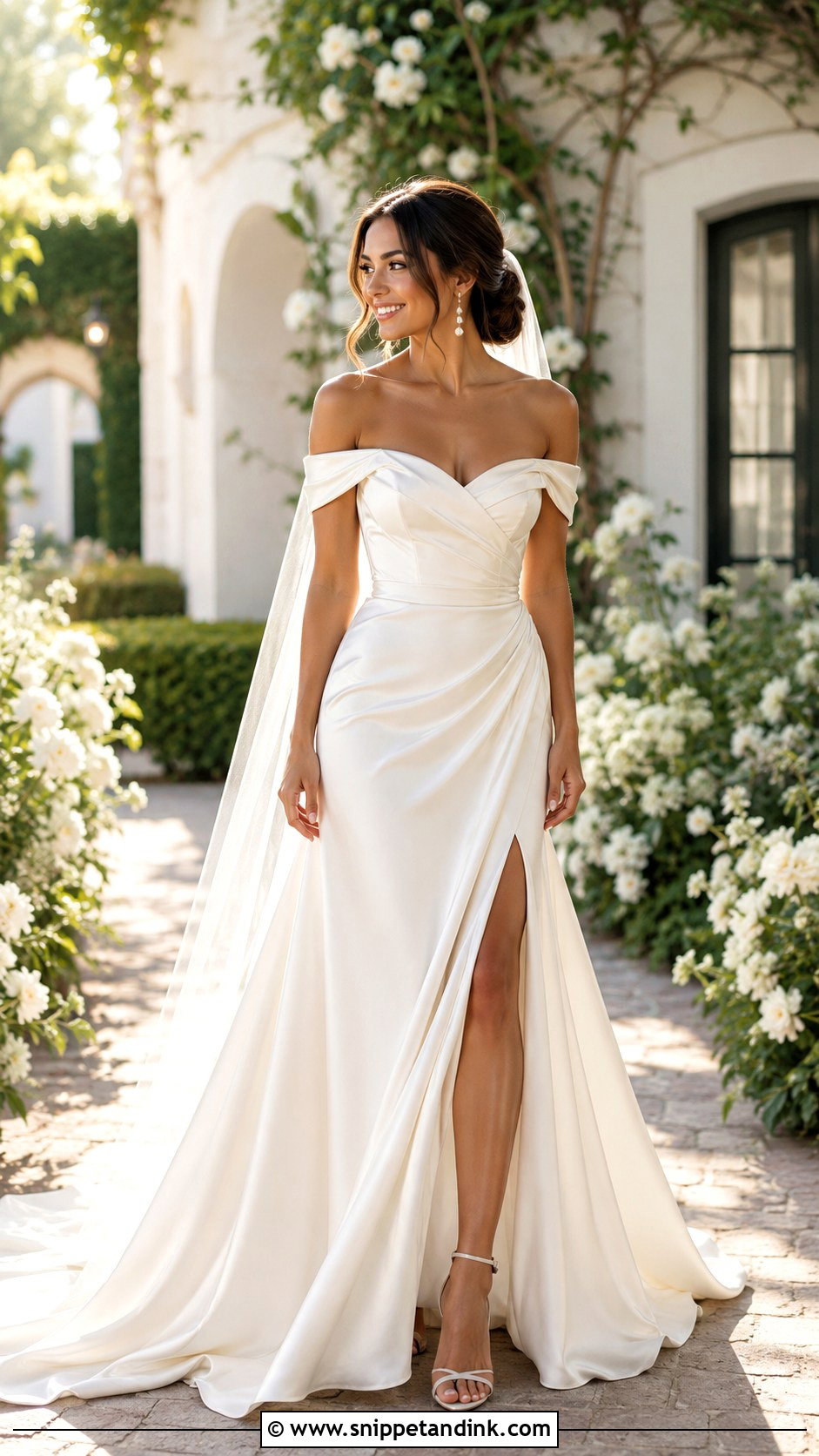
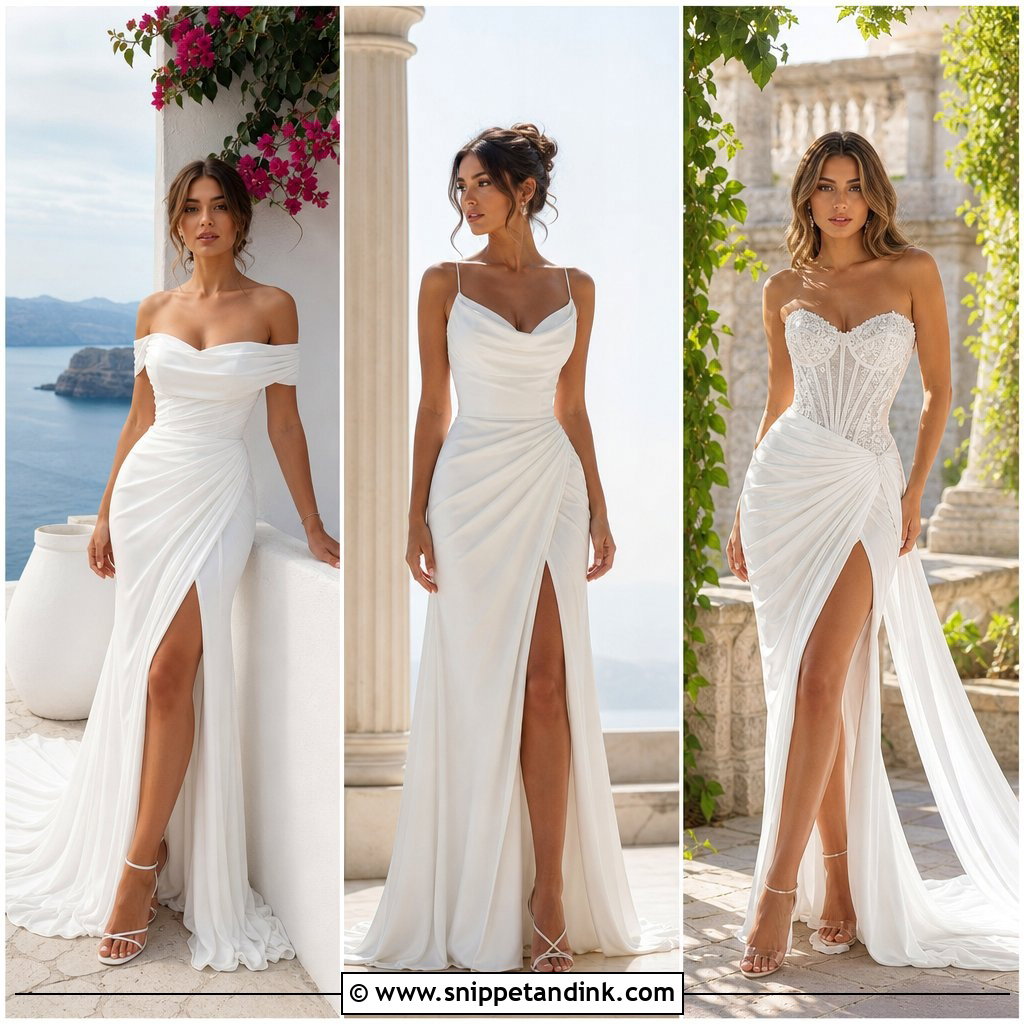
Off-shoulder necklines show the shoulders and collarbone without much skin. Smooth satin, crisp mikado and delicate lace keep it classic; heavy embellishment ages it. The practical point is security: the neckline should hold when you raise your arms to hug, and an internal band or grip tape helps. A soft updo and a veil set low at the back of the head keep the shoulder line clear.
7. Ball Gown Wedding Dress
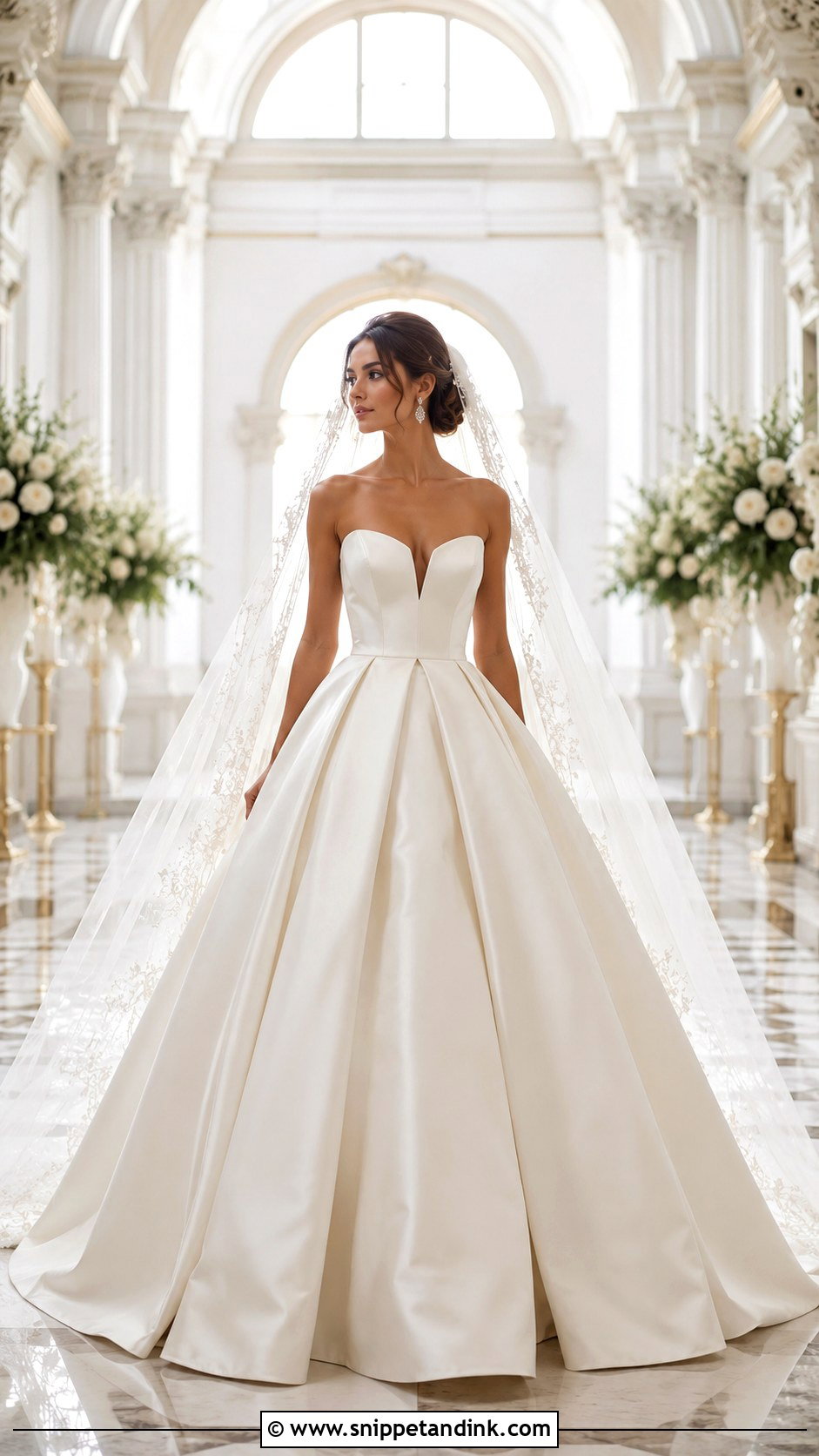
A ball gown gives the biggest bridal moment. For it to stay classic, the proportions have to be balanced, with a skirt that’s full but not wider than your arm span, in satin, tulle, organza or mikado. Underneath, a hoop or layered petticoat decides how the skirt sits, so try the dress with the exact underskirt you’ll wear. Comfortable heels can hide under all that fabric. Keep hair and accessories polished, not piled on.
8. Sheath Wedding Dress
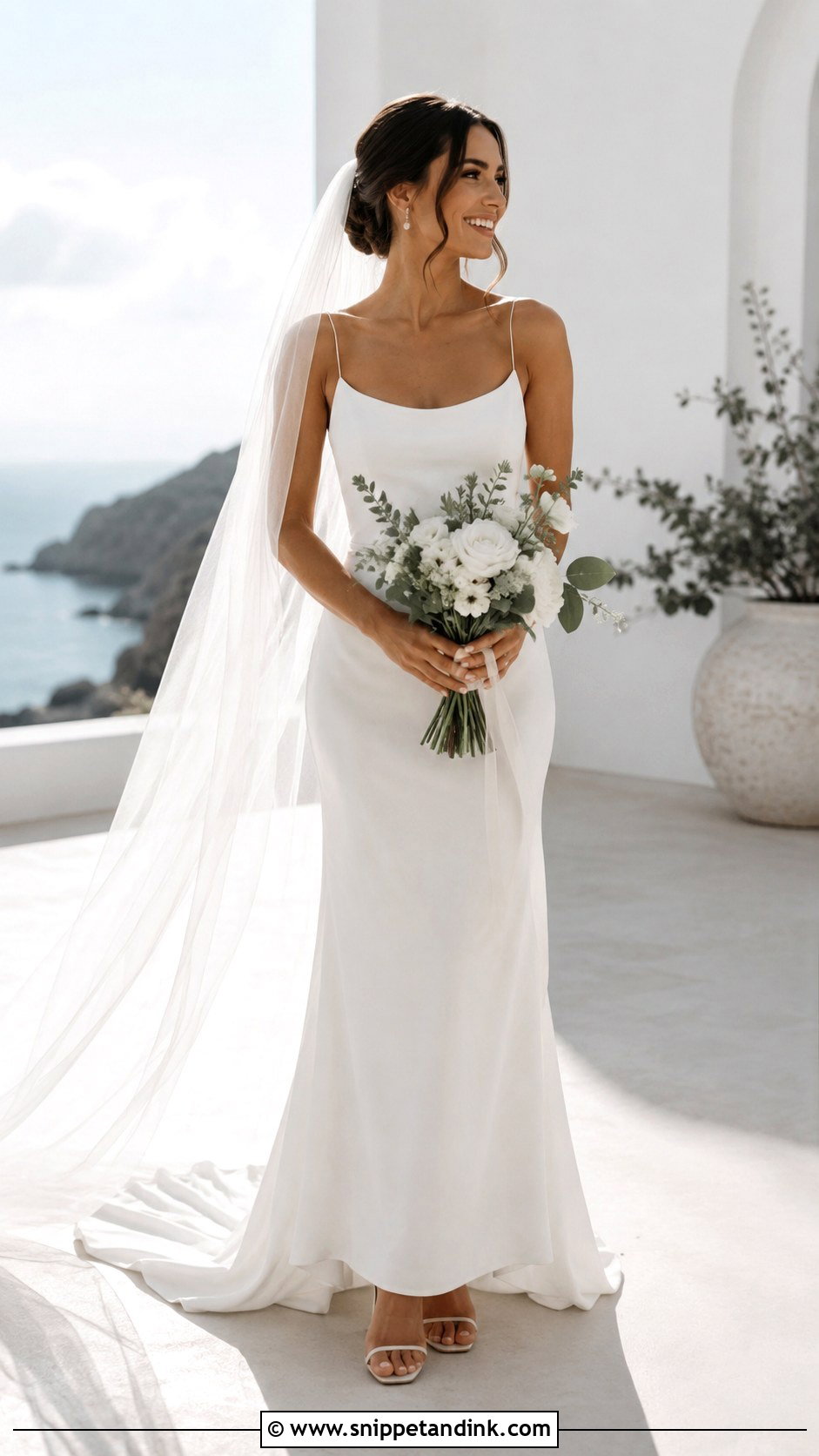
A sheath wedding dress follows the line of the body without a full skirt. Crepe, satin and fine lace keep it classic. Fit is everything: it should skim, never pull across the hips when you sit. I’d check the walk too, since a narrow hem can shorten your stride more than you expect. A long veil and strappy ivory heels suit beach, courthouse and intimate weddings.
9. Satin Slip Wedding Dress
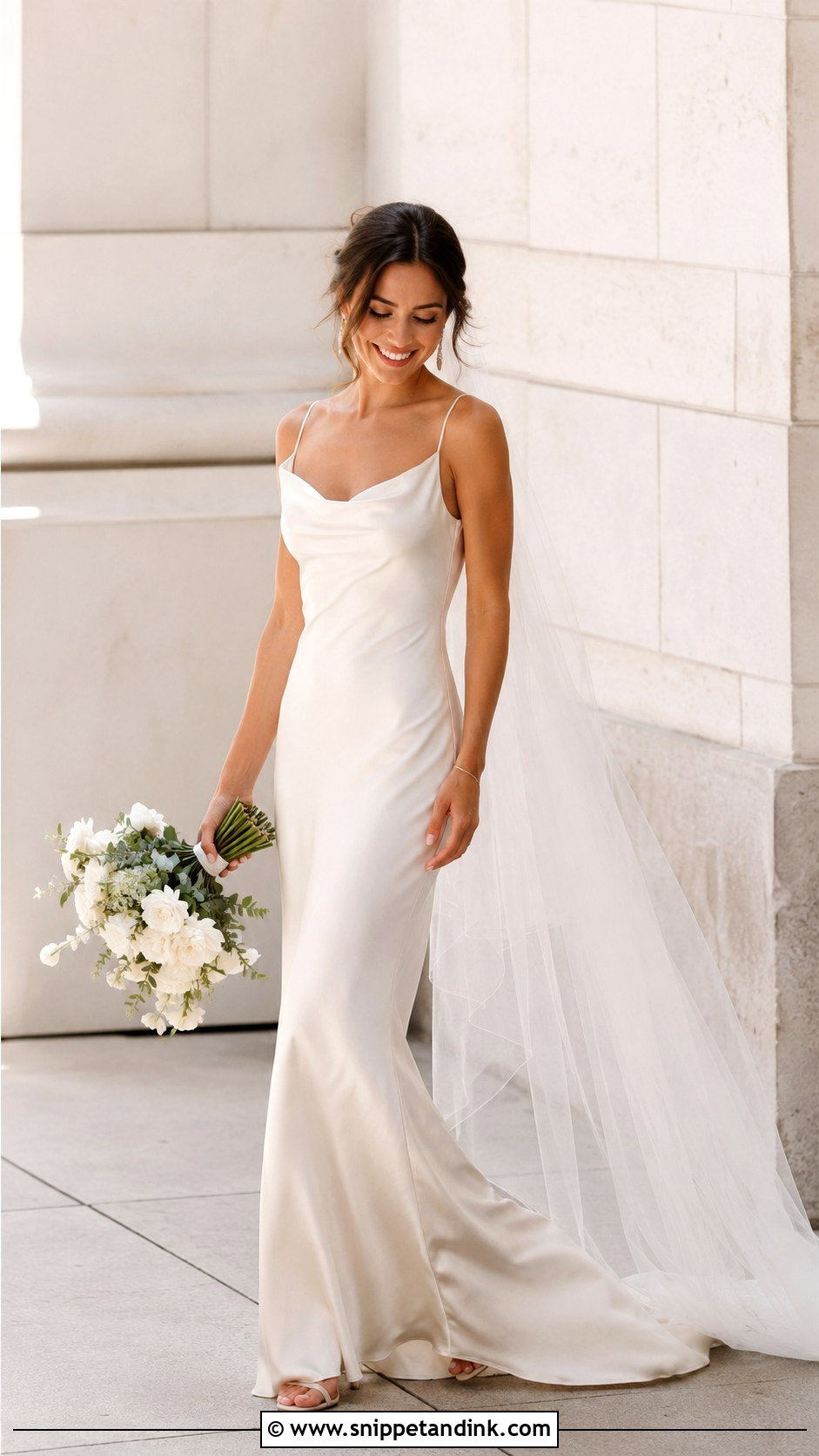
Slips get their beauty from cut and movement rather than detail. Look for a bias-cut shape that drapes softly and moves as you walk; bias-cut fabric stretches along the diagonal, which is why it flows so well. Ivory or pearl satin keeps it classic. Bias cuts are unforgiving of underwear lines, so bring smooth, laser-cut underwear to every fitting. A cropped jacket or tailored wrap covers cooler evenings.
10. High Neck Wedding Dress
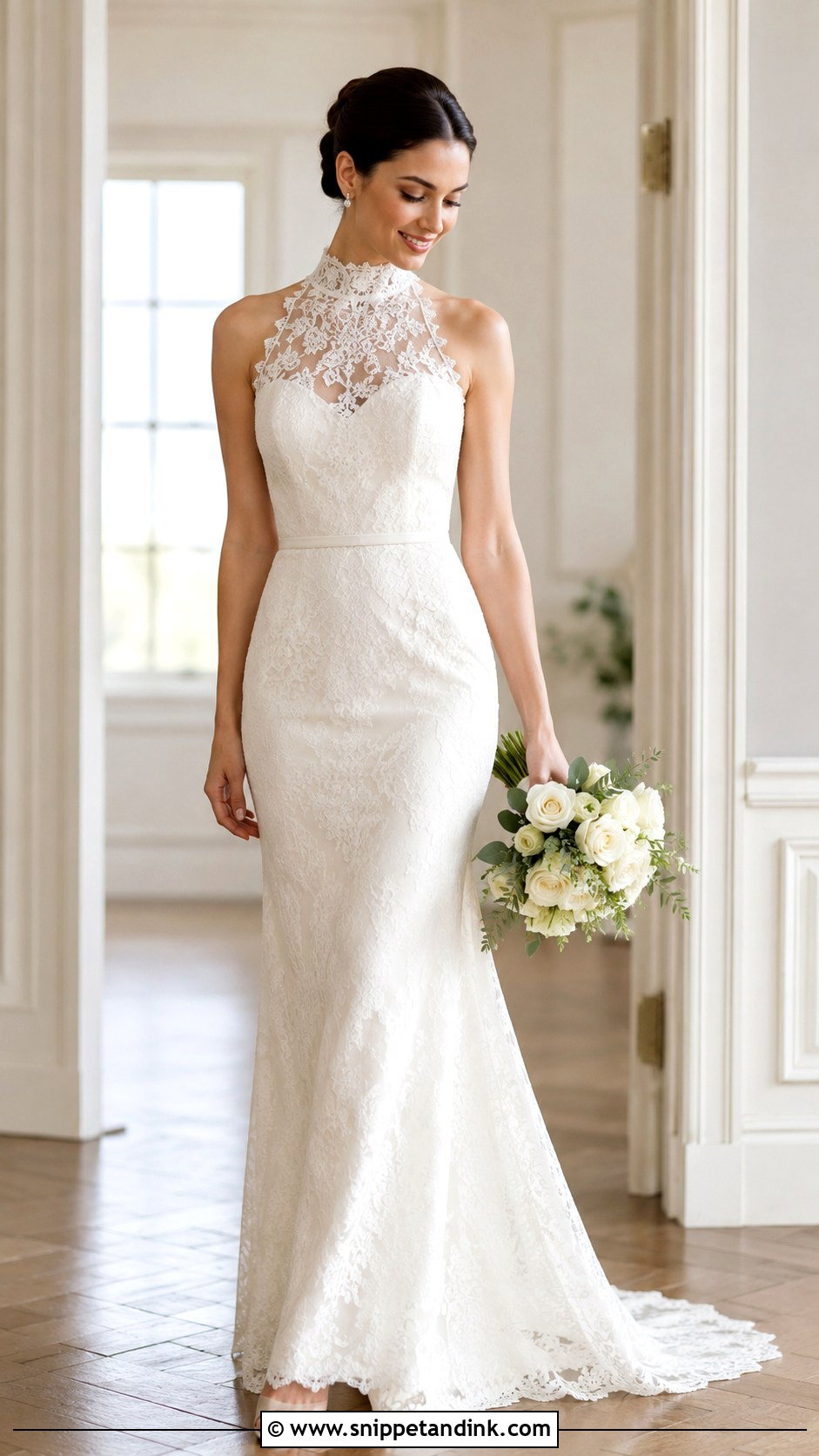
High necks give a poised, covered look and can lean vintage, regal or modern. Lace reads romantic; crepe or satin looks architectural. Since the collar sits near your face, hair should be lifted or tucked back. A fitted waist keeps proportions flattering. Small earrings and a clean veil are usually enough for formal venues and cooler months.
11. Square Neck Wedding Dress
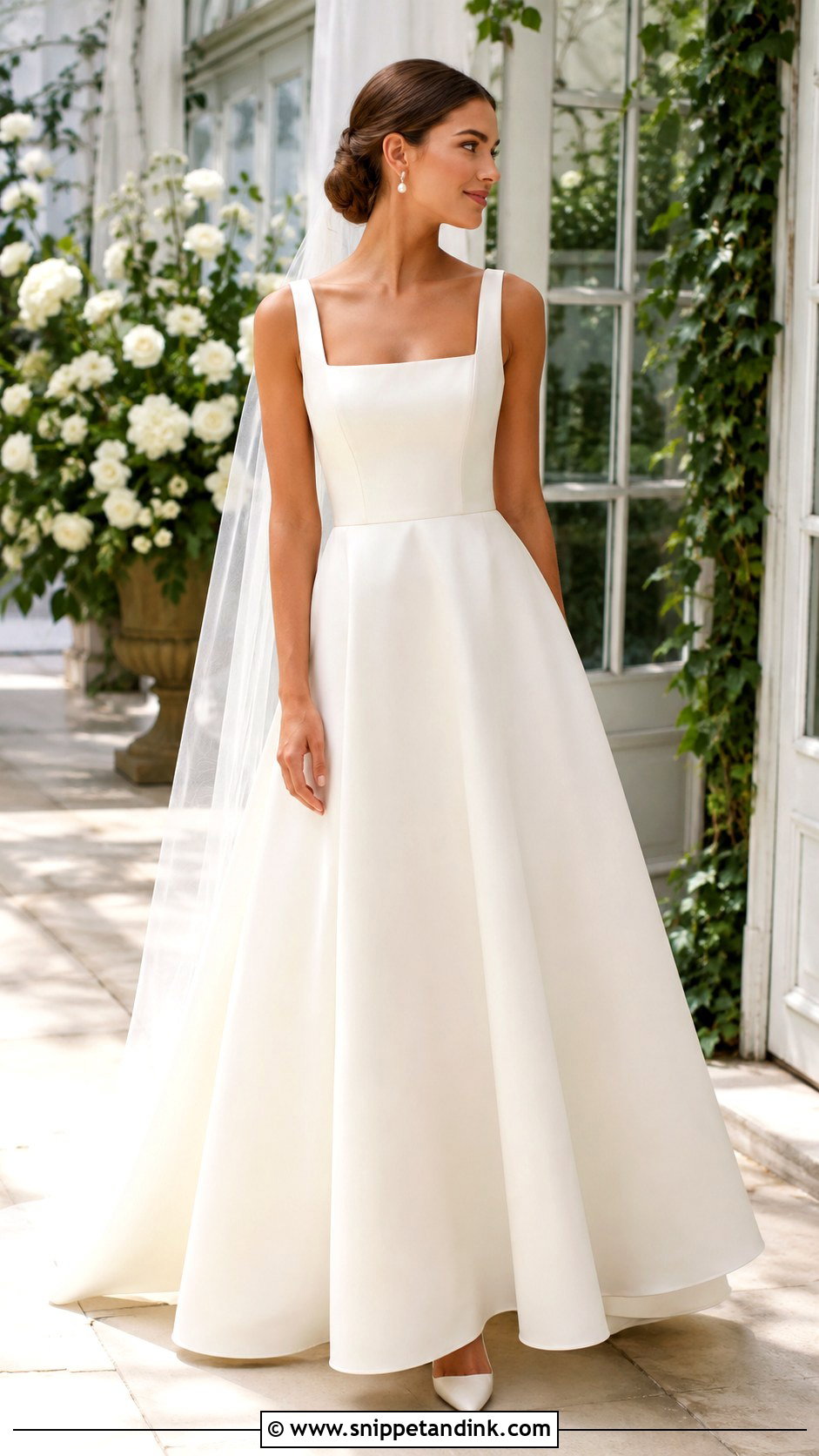
A square neckline opens the chest in a straight, structured line that hints at vintage without costume. It works with wide straps, long sleeves or a plain fitted bodice. The corners of the square have to sit flat; on a small bust they can gape, and a seamstress will need to take them in. Pair it with a low chignon and pearl drops. An A-line skirt reads romantic, a sheath more modern.
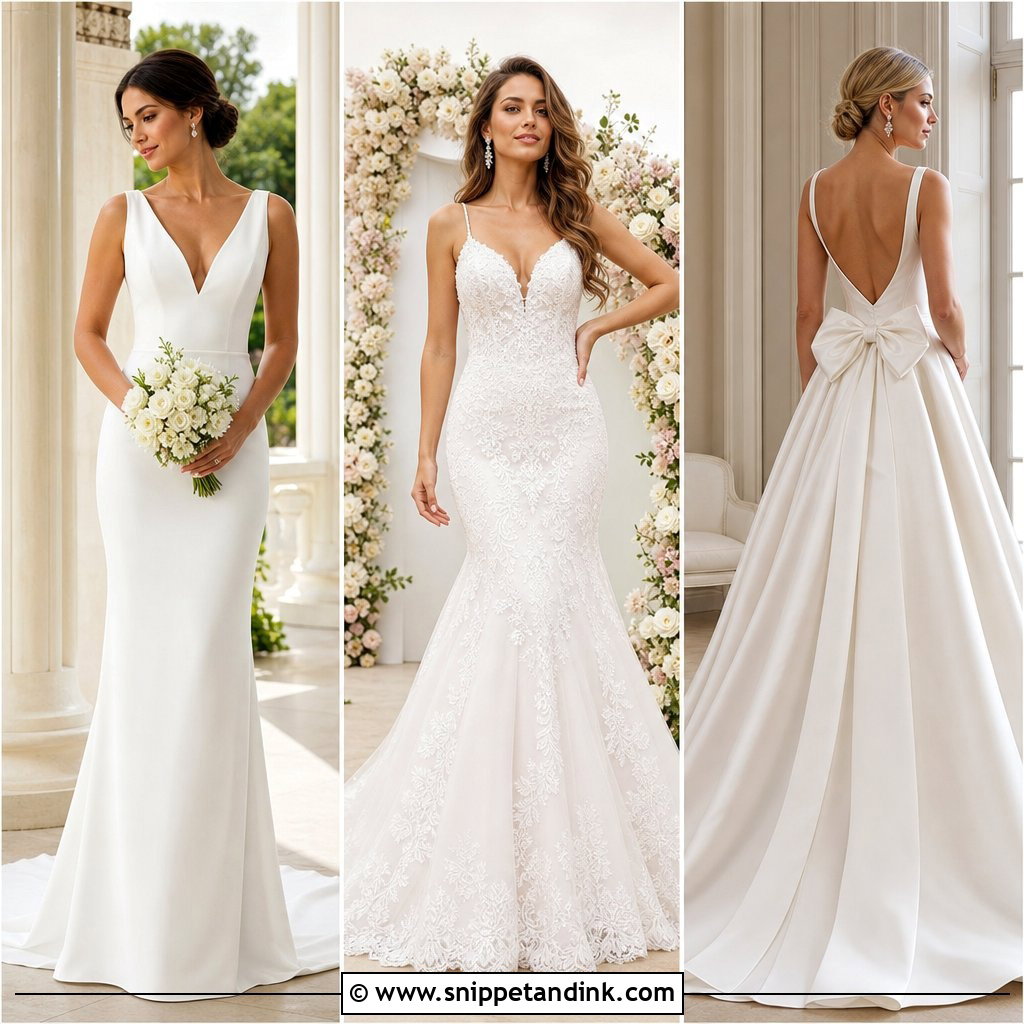
12. Mermaid Wedding Dress
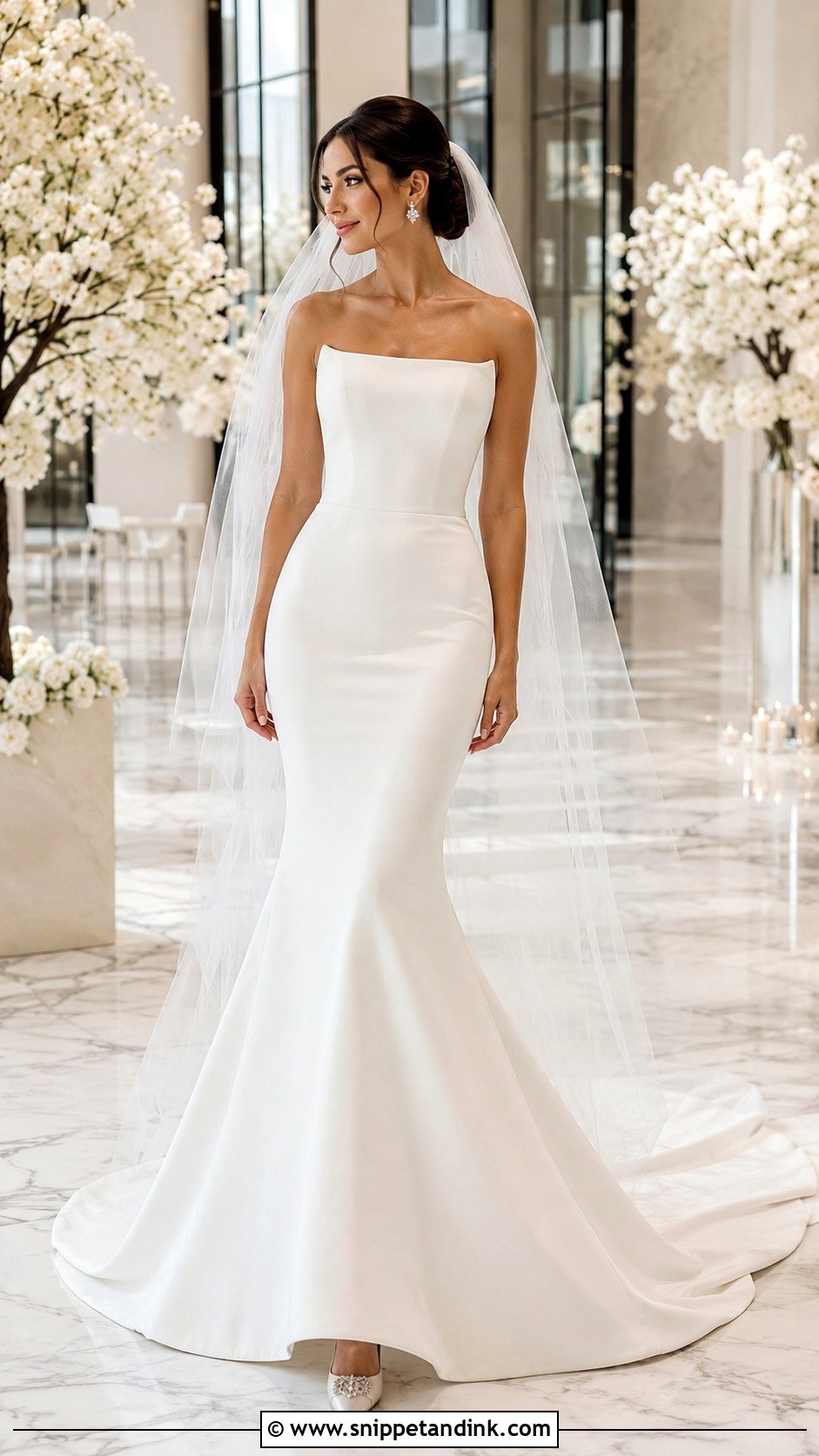
Mermaid gowns stay classic when the details are restrained. The bodice and hips are fitted and the skirt flares near the knee. Smooth crepe, satin or soft lace keep it refined. Where the flare begins determines whether you can climb stairs, so check it at every fitting. A sleek hairstyle and simple heels let the shape lead in formal ballrooms.
13. Empire Waist Wedding Dress
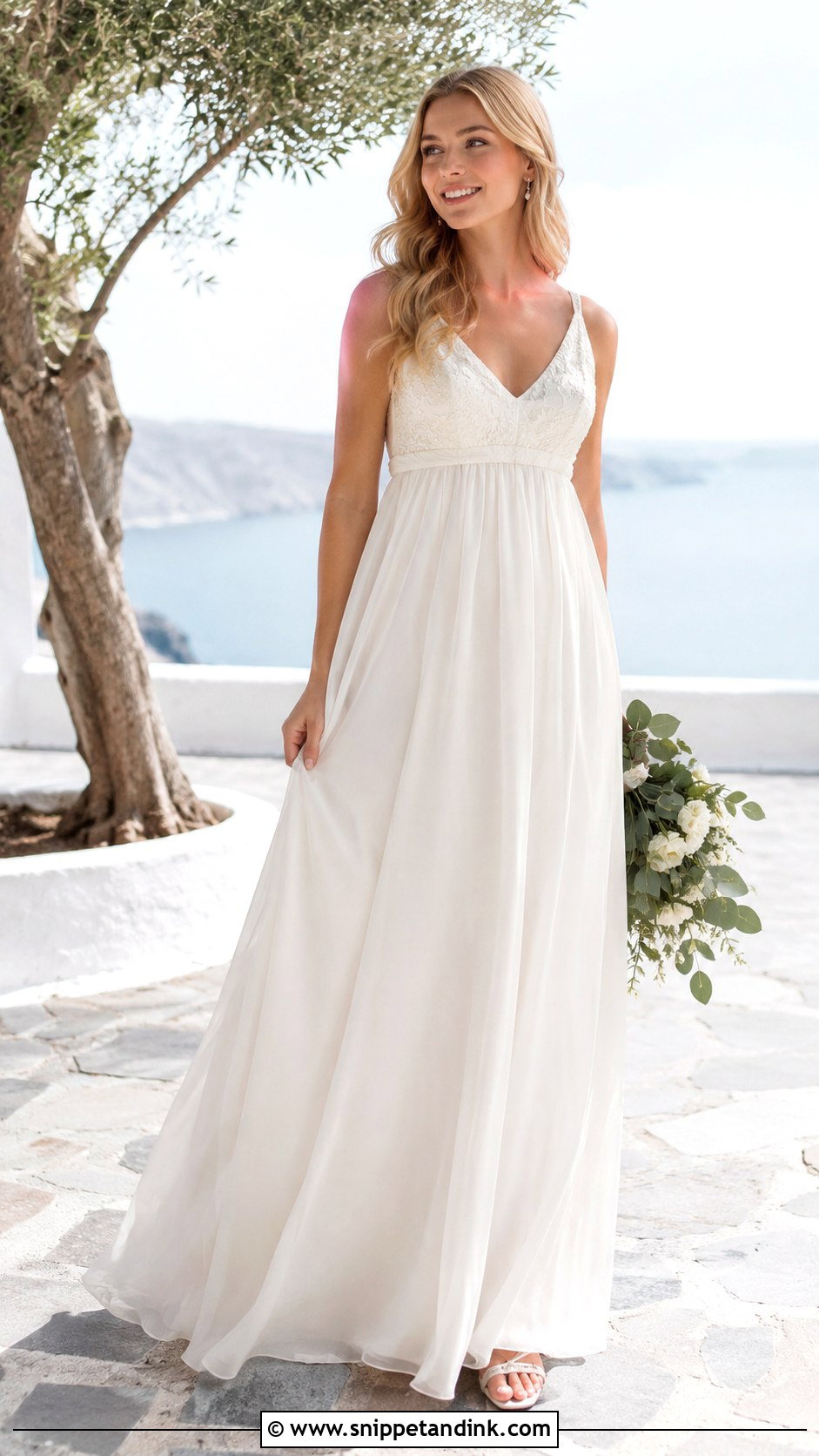
The waistline here sits just below the bust and the skirt falls straight from it, so there’s no focus on the natural waist or hips. It’s the most comfortable shape on this list for long days and warm venues. Chiffon, silk and lightweight crepe flow best. I’d be careful with very heavy fabric in this shape, because it can make the skirt tent forward. Loose waves and low heels suit outdoor and destination weddings.
14. Tea Length Wedding Dress
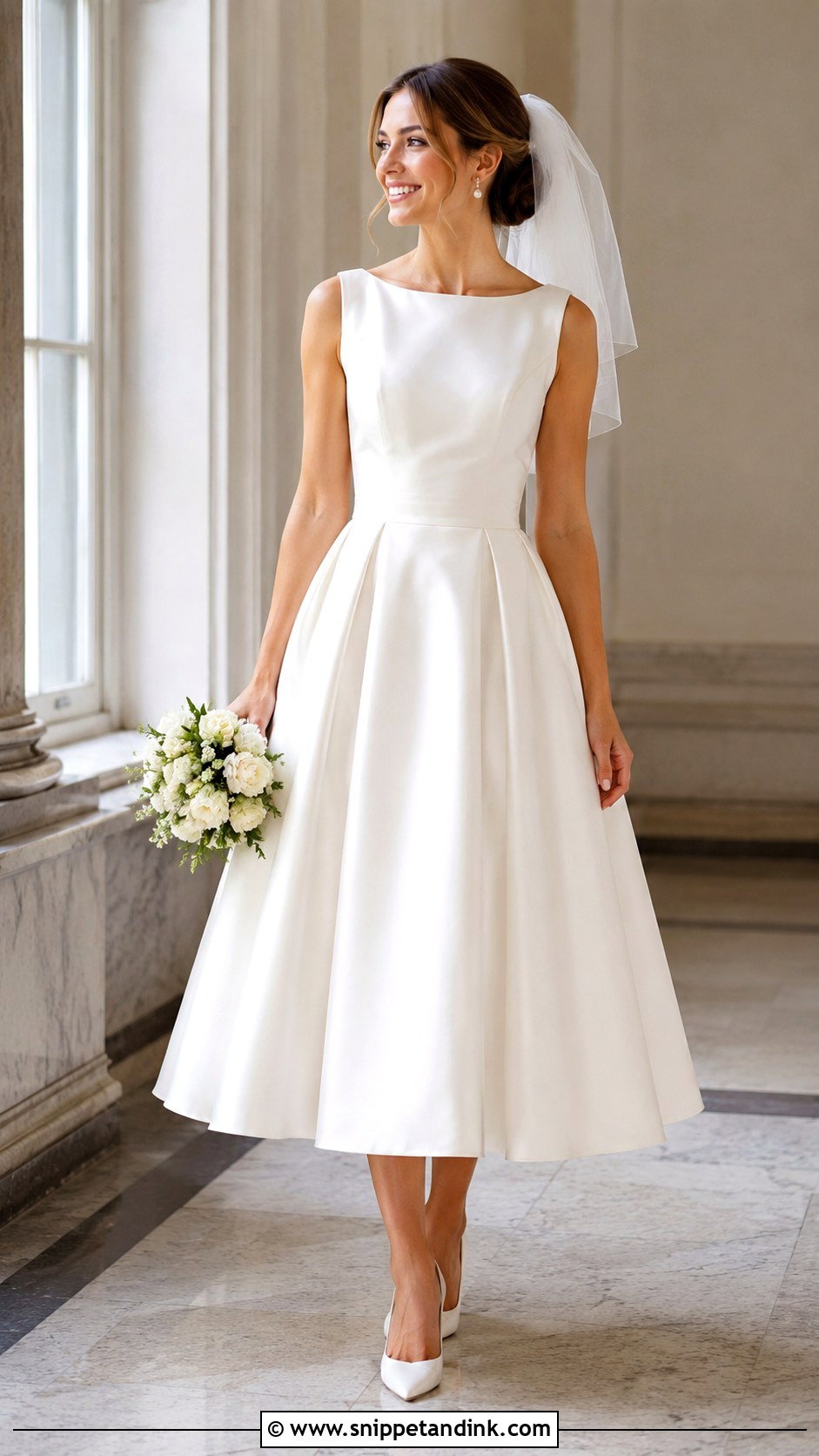
Tea length falls between knee and ankle, so your shoes are part of the look. Satin, lace, tulle or organza with a fitted bodice and softly flared skirt is the classic shape. Hem it with your actual shoes on; a small difference at this length is very visible. Pointed pumps and a short veil or comb suit courthouse weddings and garden receptions. It also makes a good second dress for dancing.

15. V Neck Wedding Dress
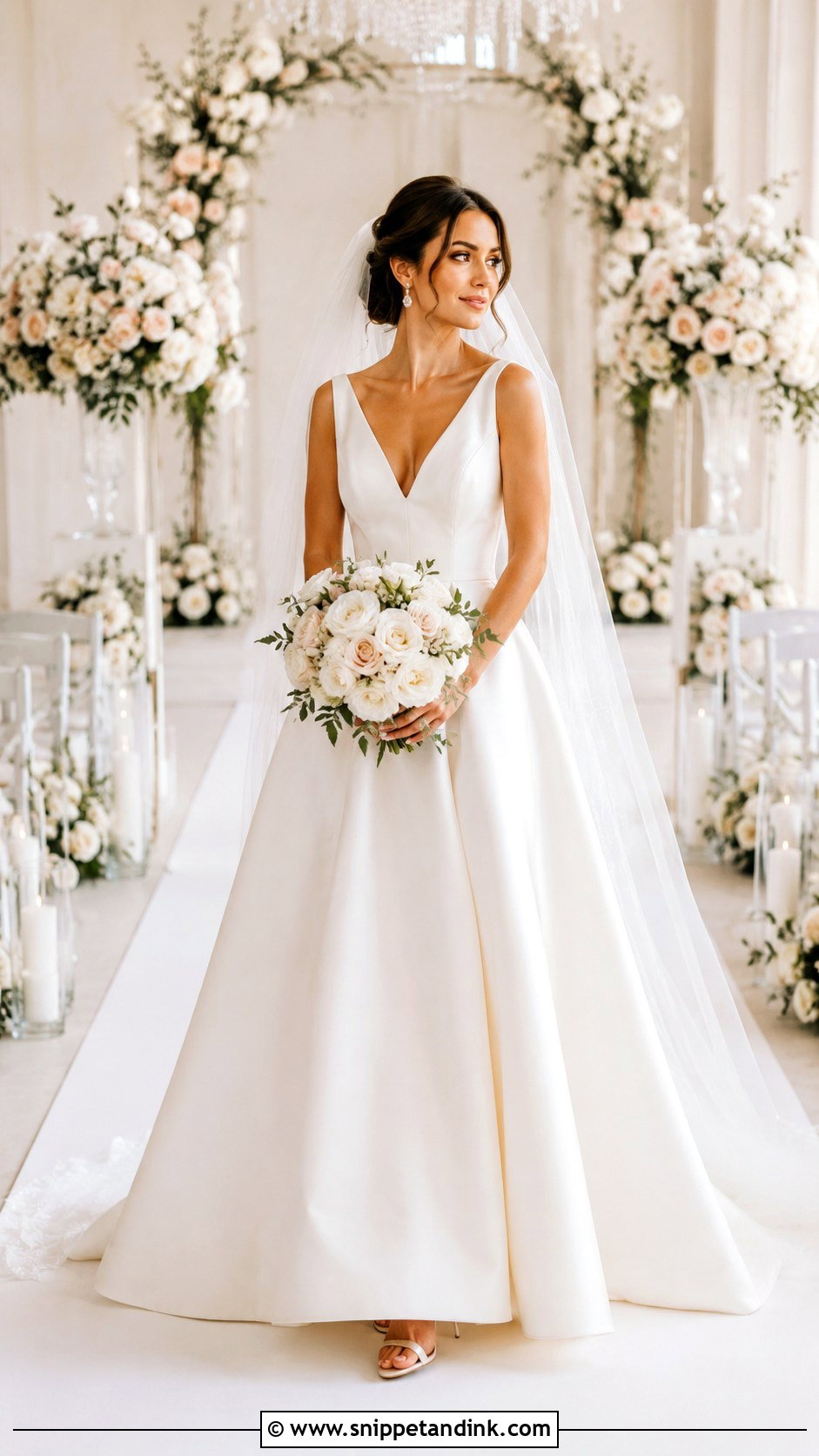
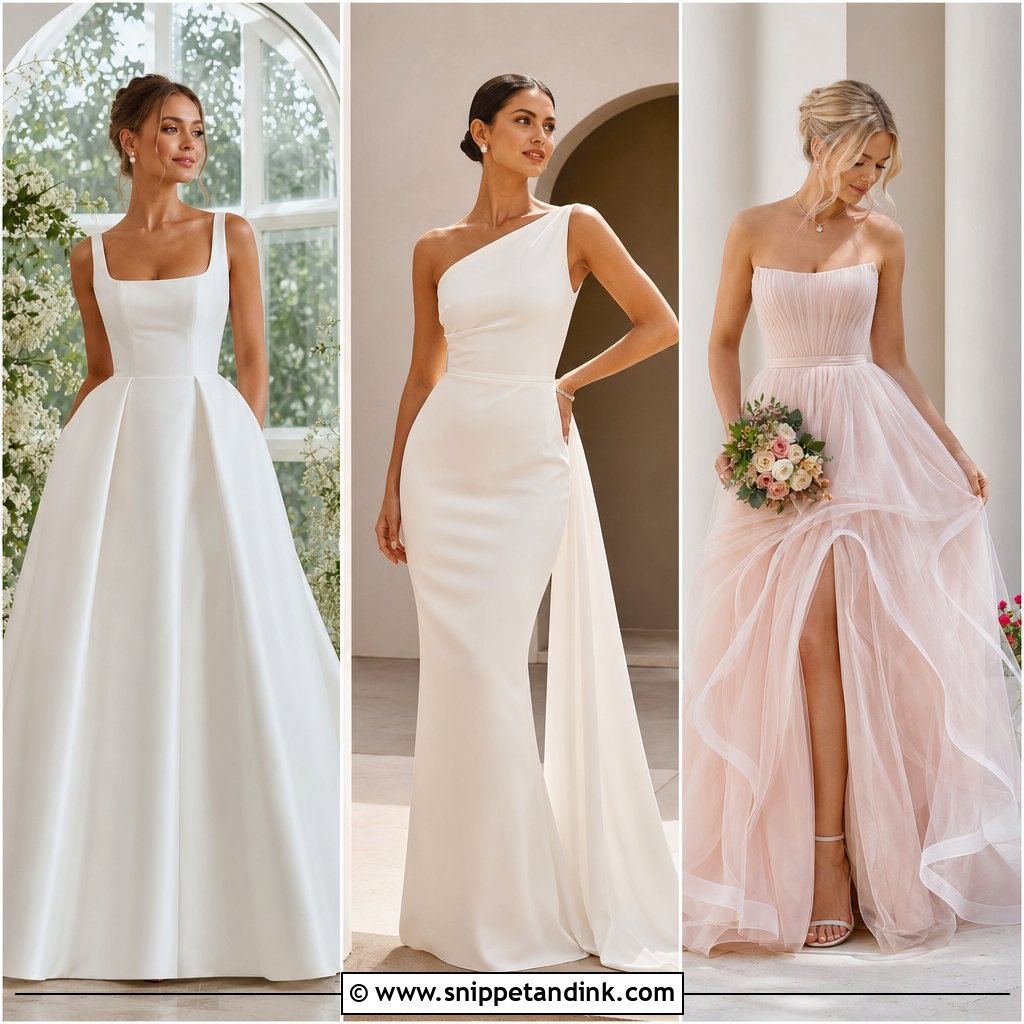
A V-neck lengthens the neck and draws a clean vertical line, and its depth can be adjusted to your comfort. A modest V usually ages better than a very deep plunge. Lace reads romantic, satin and crepe sleek. Wear a pendant only if the neckline is plain; otherwise, earrings and a veil. Fashion tape or a hidden mesh panel keeps a deeper V in place.
16. Cap Sleeve Wedding Dress
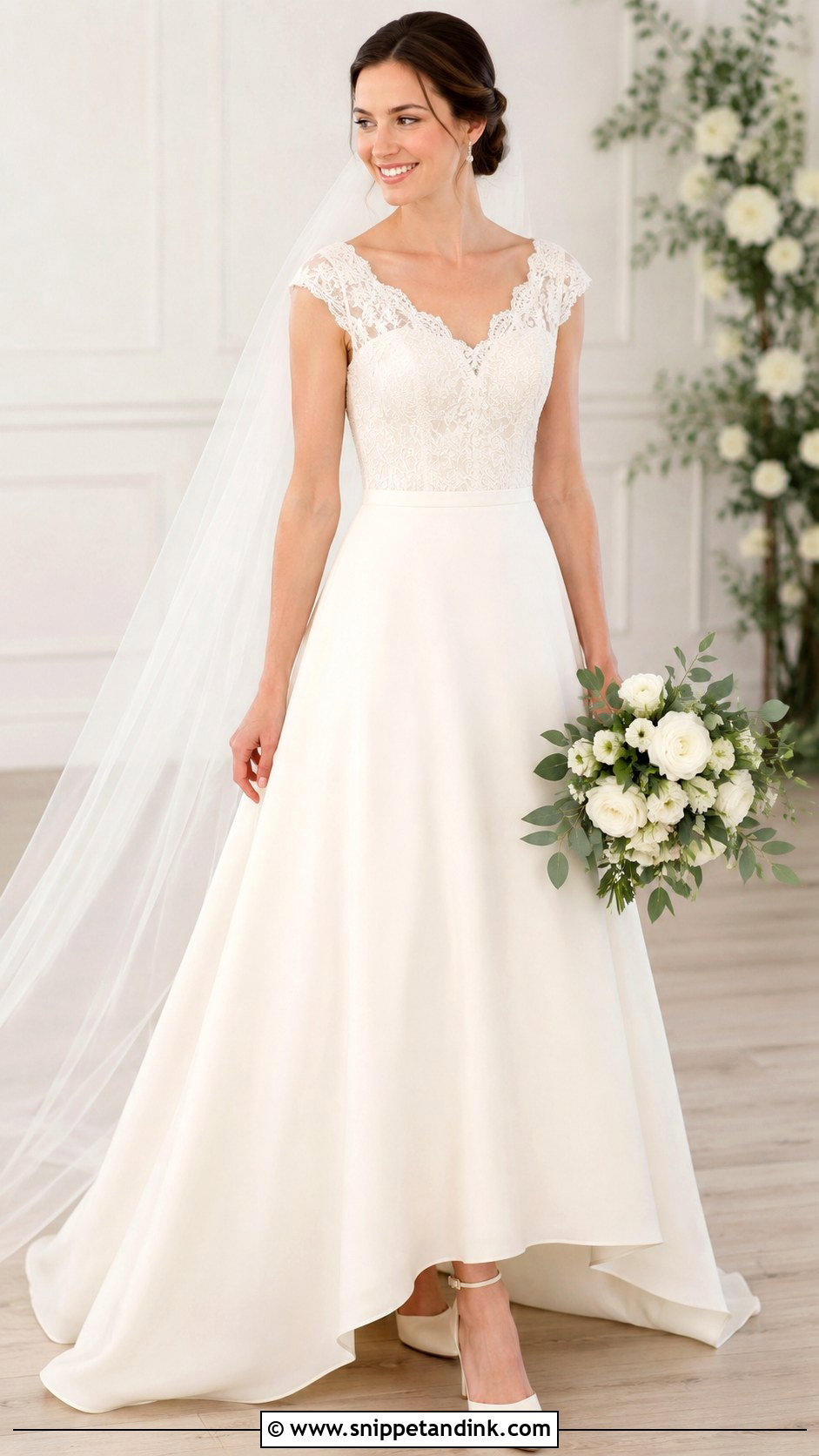
A cap sleeve wedding dress covers the very top of the shoulder and nothing more, so it feels airy while giving a little coverage. Lace caps look romantic; satin or crepe caps look polished. Check that the sleeve doesn’t cut into the arm when you lift a glass, a common problem with tight caps. A fitted bodice and A-line skirt suit spring, summer and early autumn.
17. Tulle A Line Wedding Dress
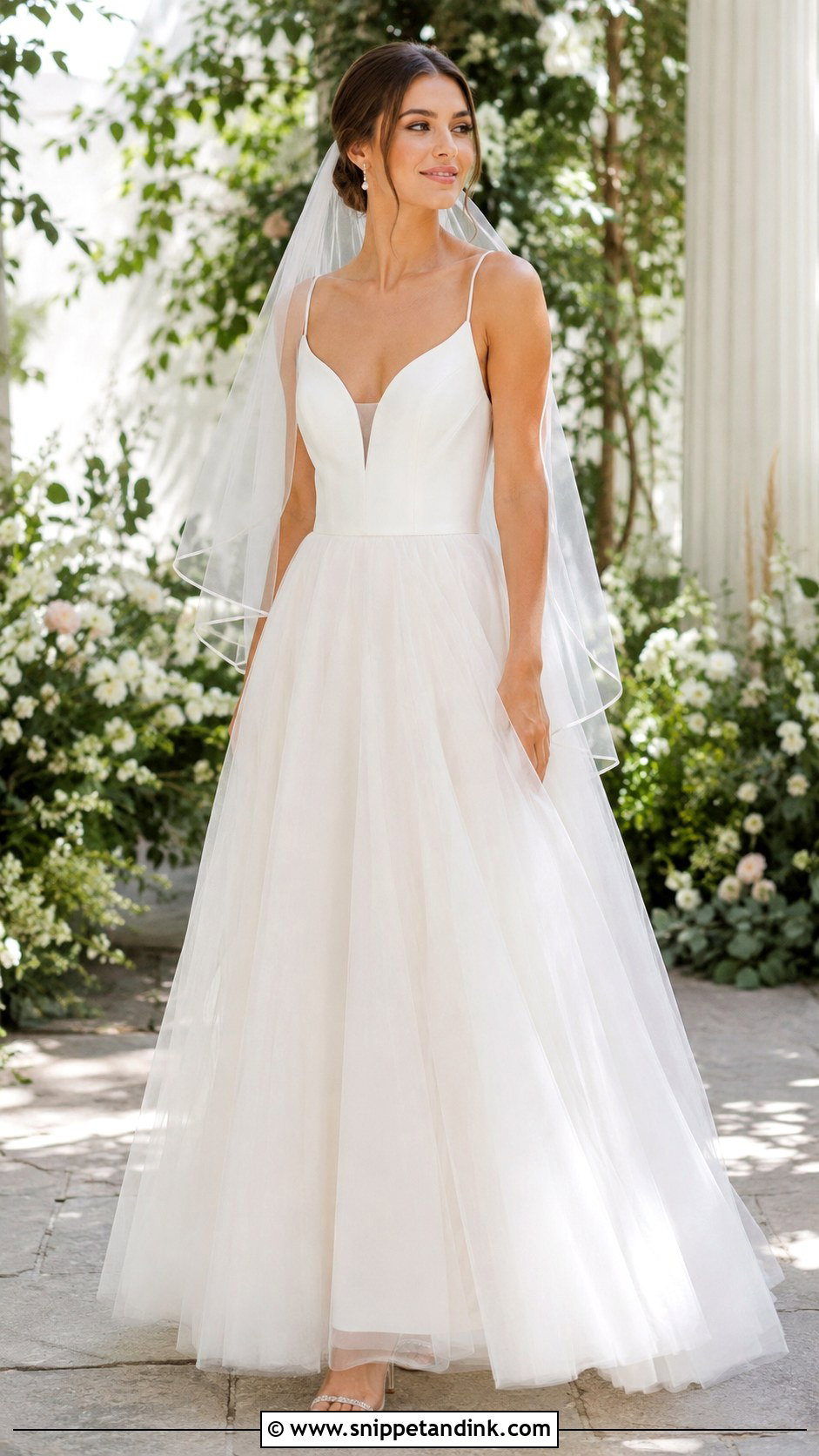
Tulle A-lines give volume without ball-gown drama, and soft tulle ages better than stiff net. A clean bodice keeps it modern; lace appliqué adds classic detail. Tulle snags on rough ground and on jewelry, so watch bracelets and engagement ring prongs. A fingertip veil and simple earrings keep it light for garden and estate weddings.
18. Silk Wedding Dress
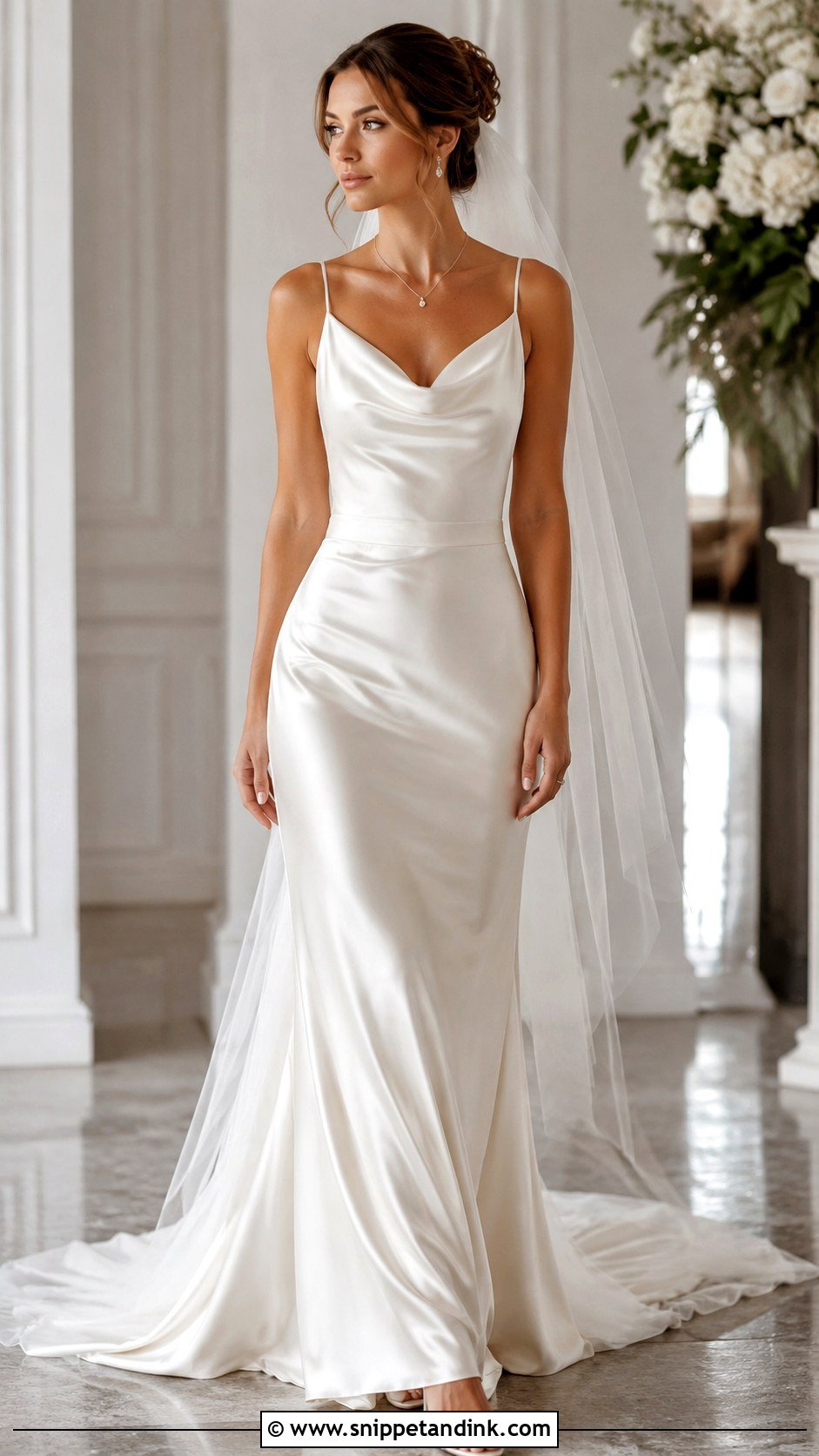
Silk barely needs decoration. Charmeuse makes a soft slip, faille gives structure, and organza adds airy volume. Silk also marks easily with water, so dab any spill rather than rubbing, and keep a white cloth handy. The cut and fit are what make silk look expensive. Classic heels and fine jewelry are plenty.
19. Pearl Detail Wedding Dress
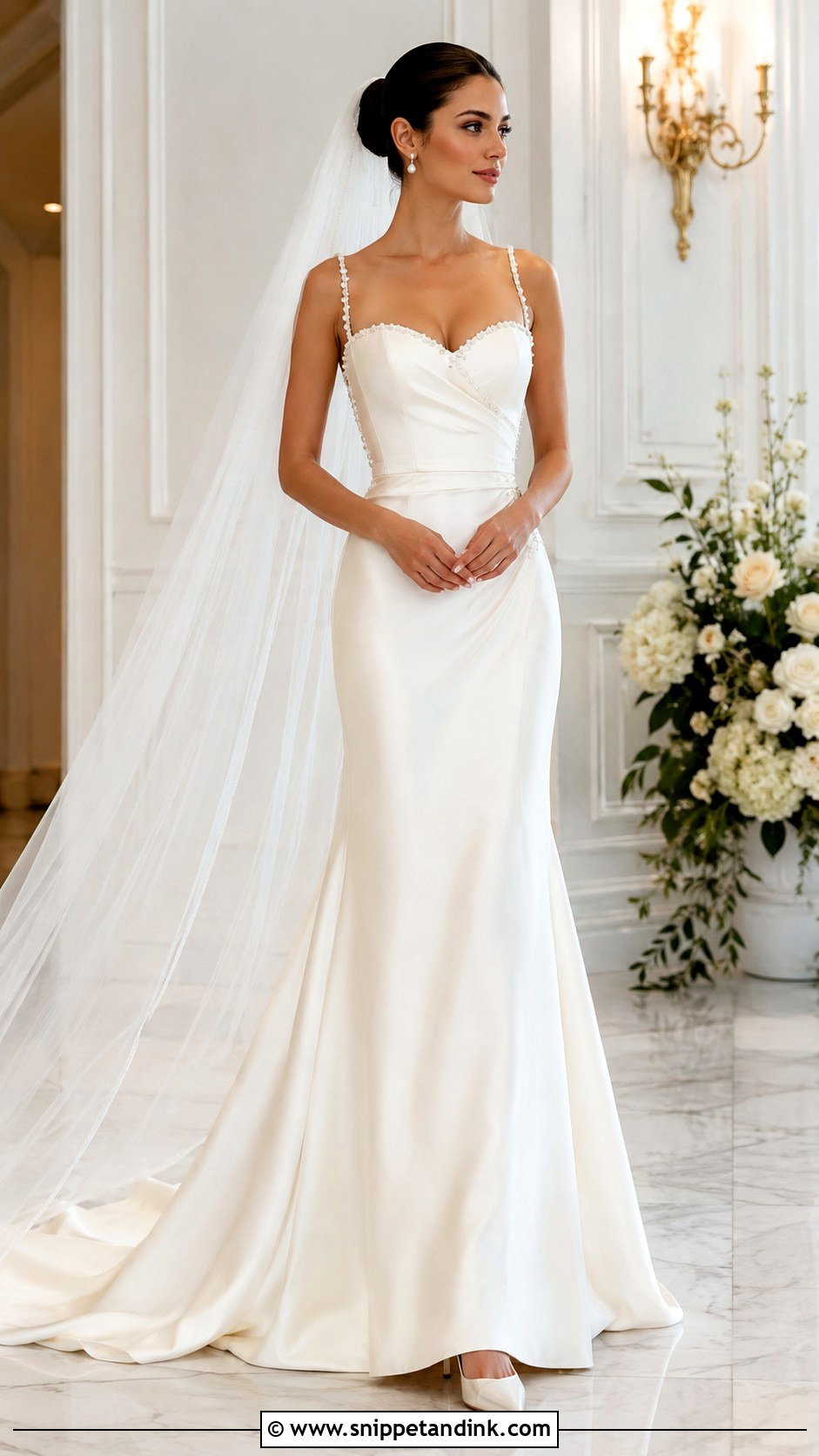
Pearls add a soft glow, and restraint is what keeps them classic. Small accents on straps, sleeves, the bodice or the veil look better over time than an allover covering. On crepe or satin they read especially polished. Pearl earrings are fine, but don’t match every accessory to the dress. Check the stitching on each pearl; glued pearls pop off when hugged.


20. Vintage Lace Wedding Dress
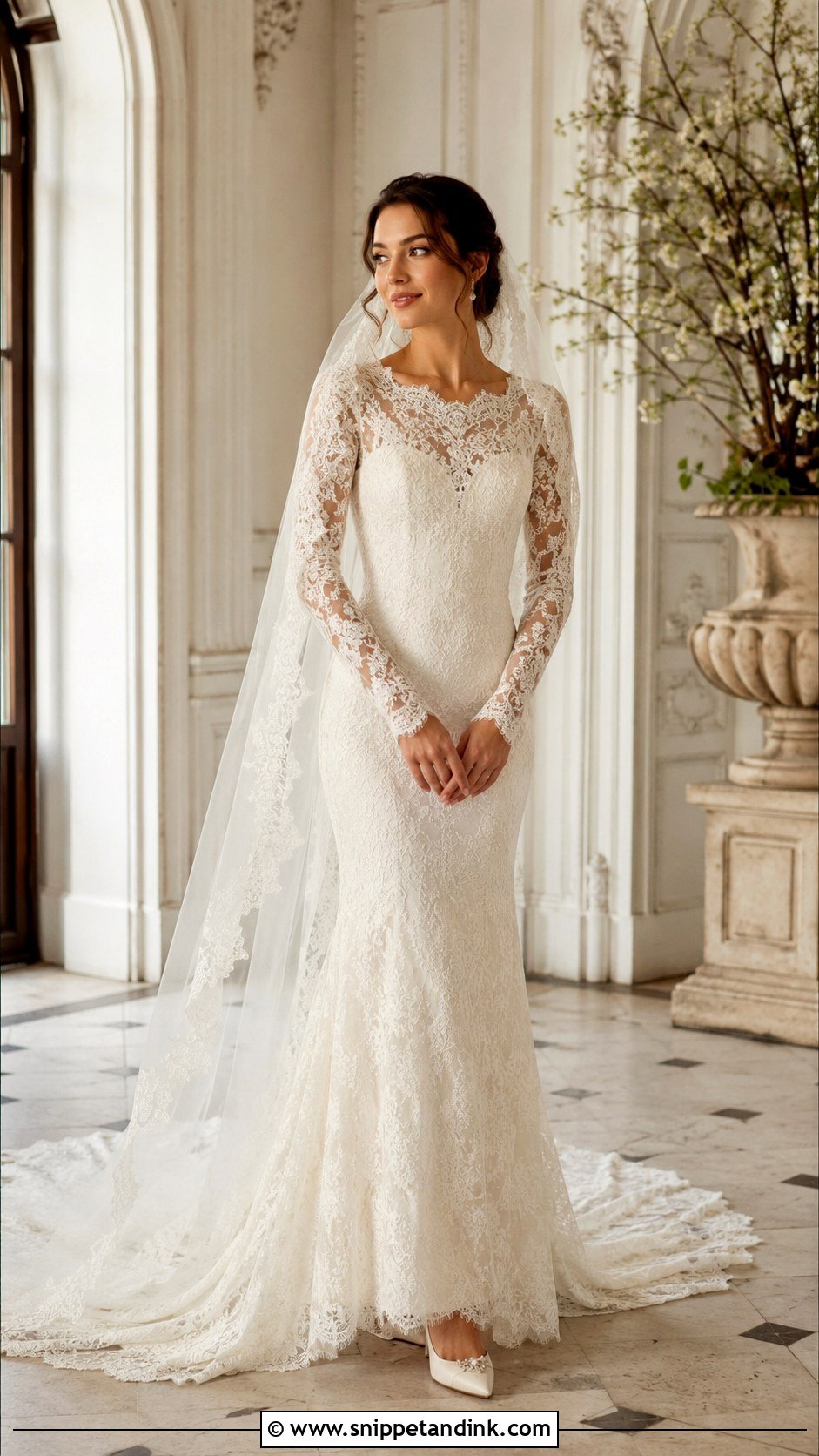
Vintage lace has character, and the trick is lace that looks fine and well placed rather than heavy. Long sleeves, high necks, scalloped hems and fitted bodices give the classic mood. Simple hair, clean makeup and understated jewelry keep it from looking like a period piece. It suits historic venues and heirloom details, such as a grandmother’s brooch.
21. Mikado Wedding Dress
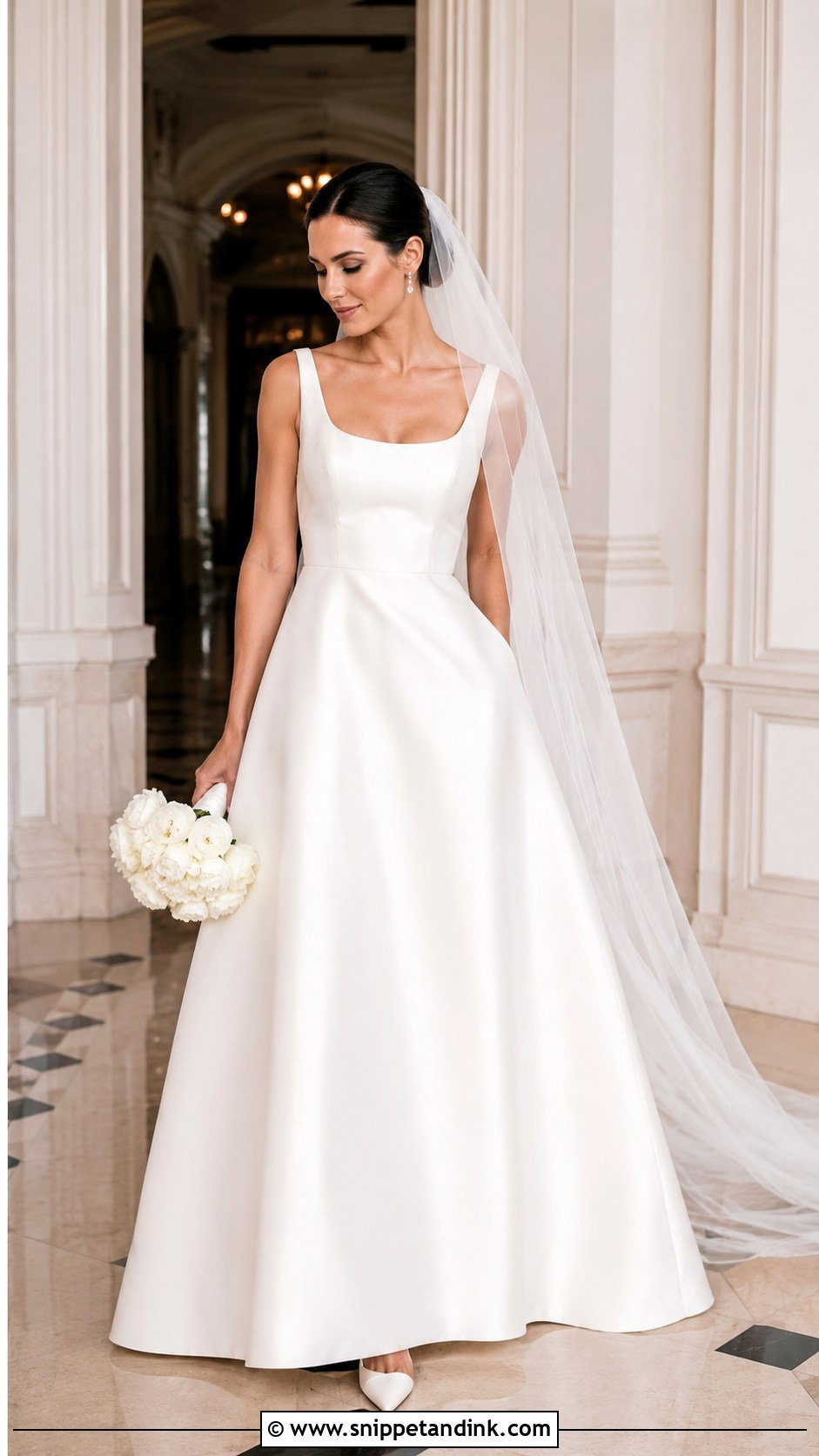
Mikado is a heavy, slightly ribbed silk or silk-like fabric that holds its shape with almost no support. That makes it ideal for A-lines, ball gowns and architectural bodices. It has a soft sheen, so it needs little embellishment. It’s warm, though, which is worth knowing for a summer ceremony. A structured veil and a smooth updo match its crispness.
22. Fit And Flare Wedding Dress
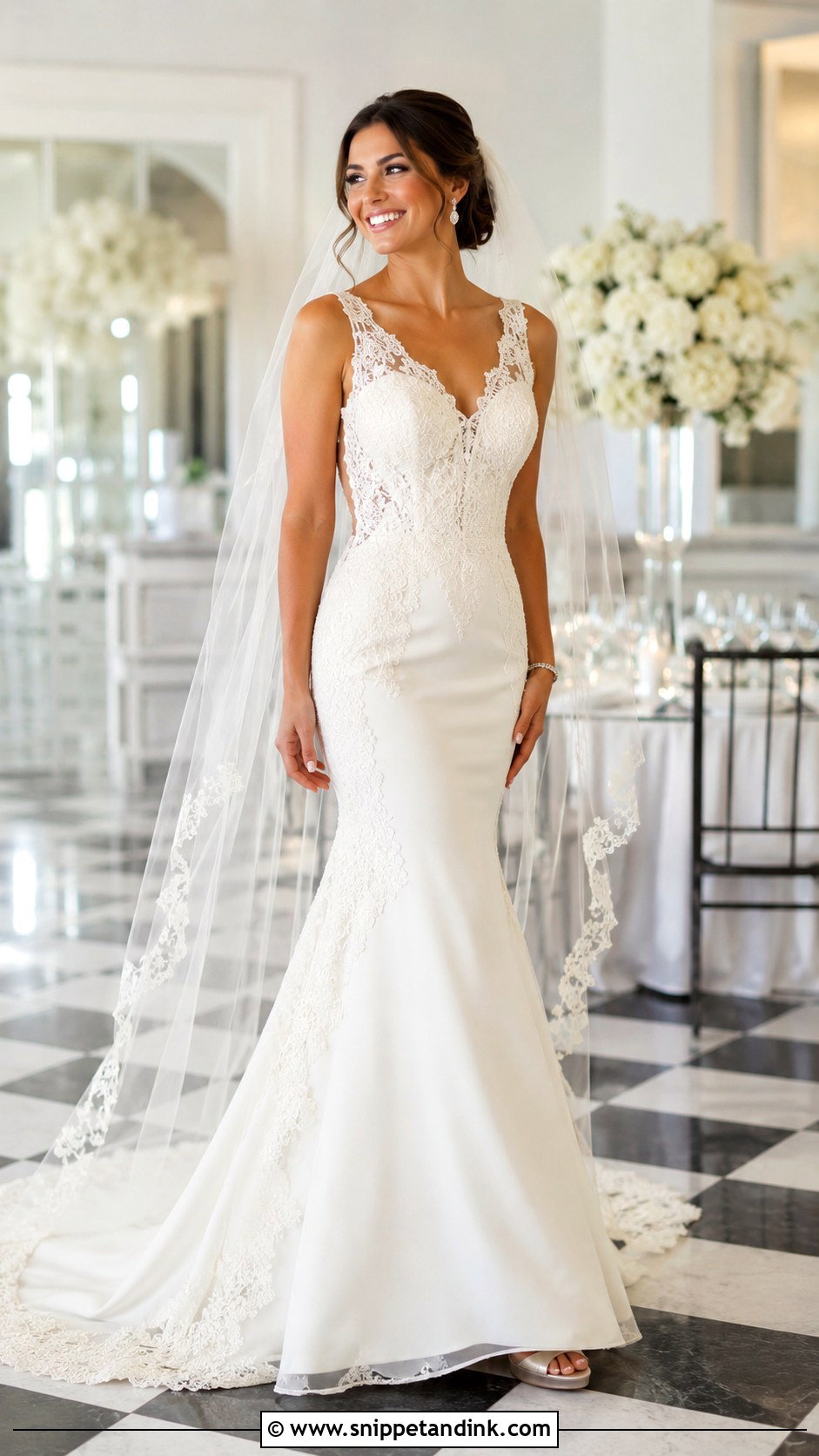
A fit and flare gives shape without the drama of a mermaid. It follows the body through the hips, then opens gradually, usually from mid-thigh. Crepe, lace, satin and mikado all work. The flare point should allow a full stride; if you shuffle at the fitting, ask for it to start higher. Medium heels and a classic veil suit long days of greeting guests.
23. Minimalist Strapless Wedding Dress
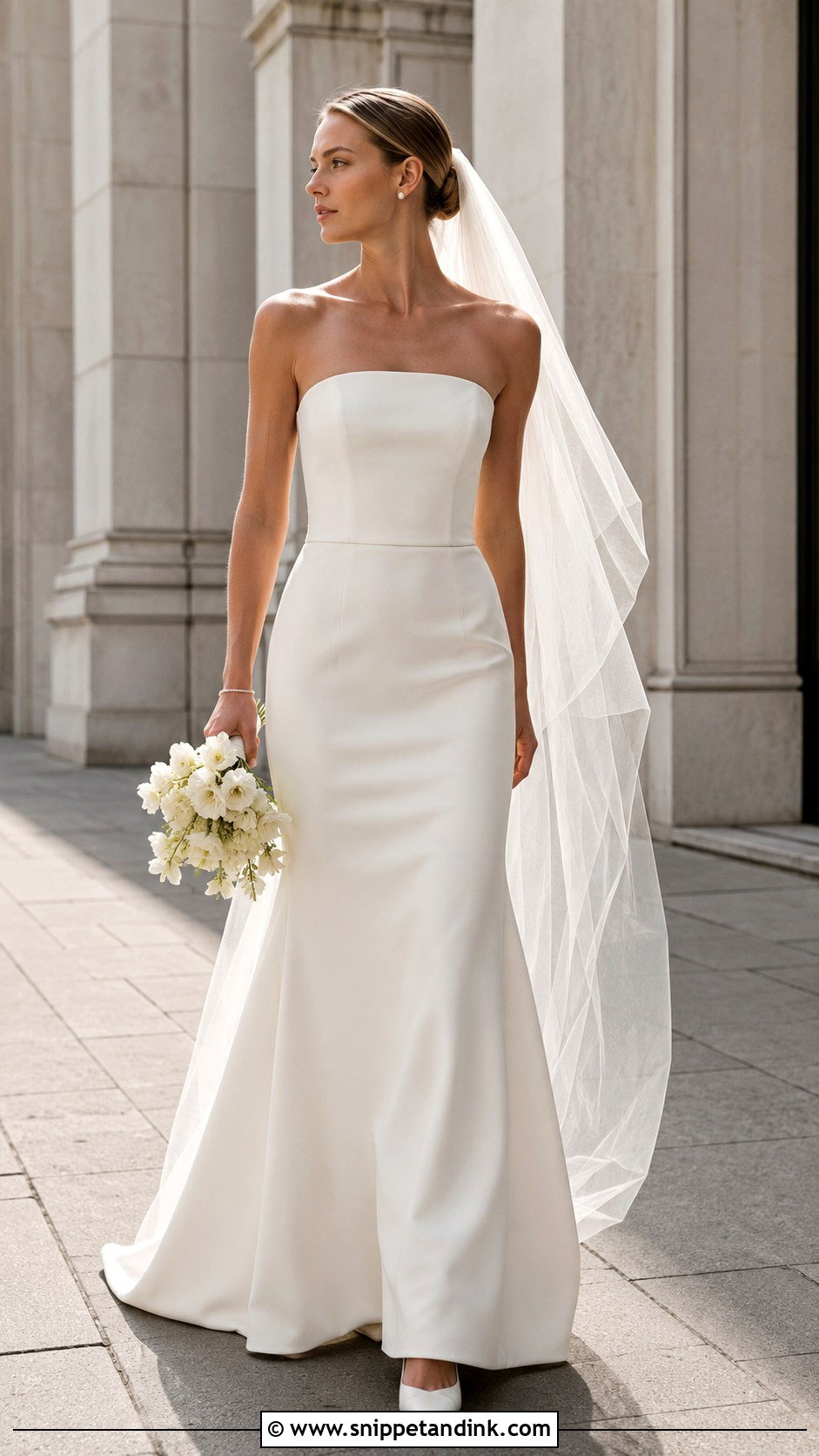
Plain strapless gowns are only as good as their fit. The bodice should lie smooth and stay put without you touching it. Satin, crepe and mikado show tailoring clearly, which is exactly why they suit this style. Wear a long veil for the ceremony and remove it for a cleaner reception look. Pearl studs and pointed heels finish it.
24. Corset Bodice Wedding Dress
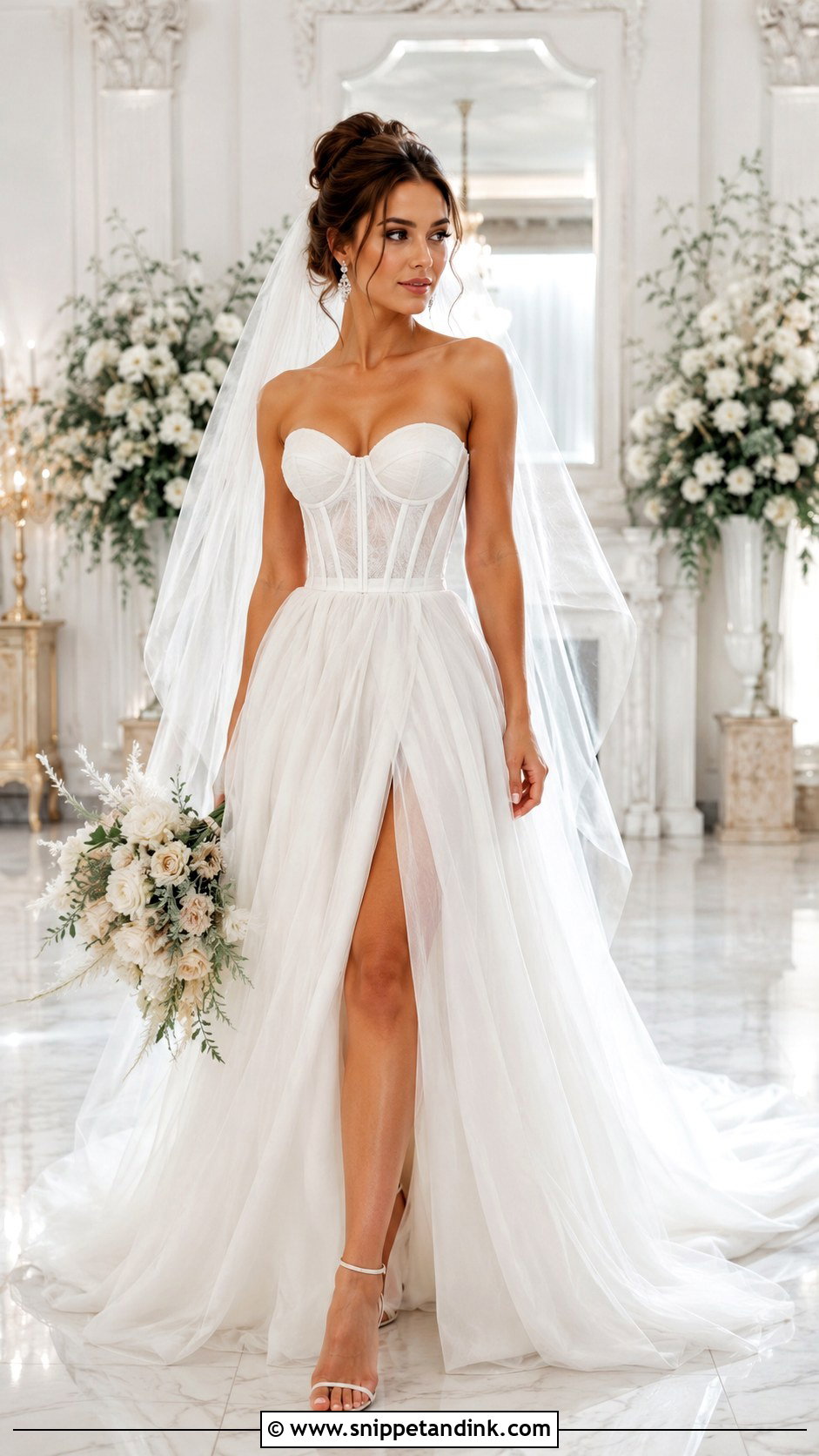
A corset bodice stays classic when it’s lined and fully bridal rather than sheer and lingerie-like. It defines the waist and supports the bust, and the skirt can be soft, full or fitted. Satin, lace and tulle all pair well with it. Ask about the boning: spiral steel bends with you, while plastic boning can warp and dig after hours of wear. A romantic updo balances the structure.


25. Short Sleeve Wedding Dress
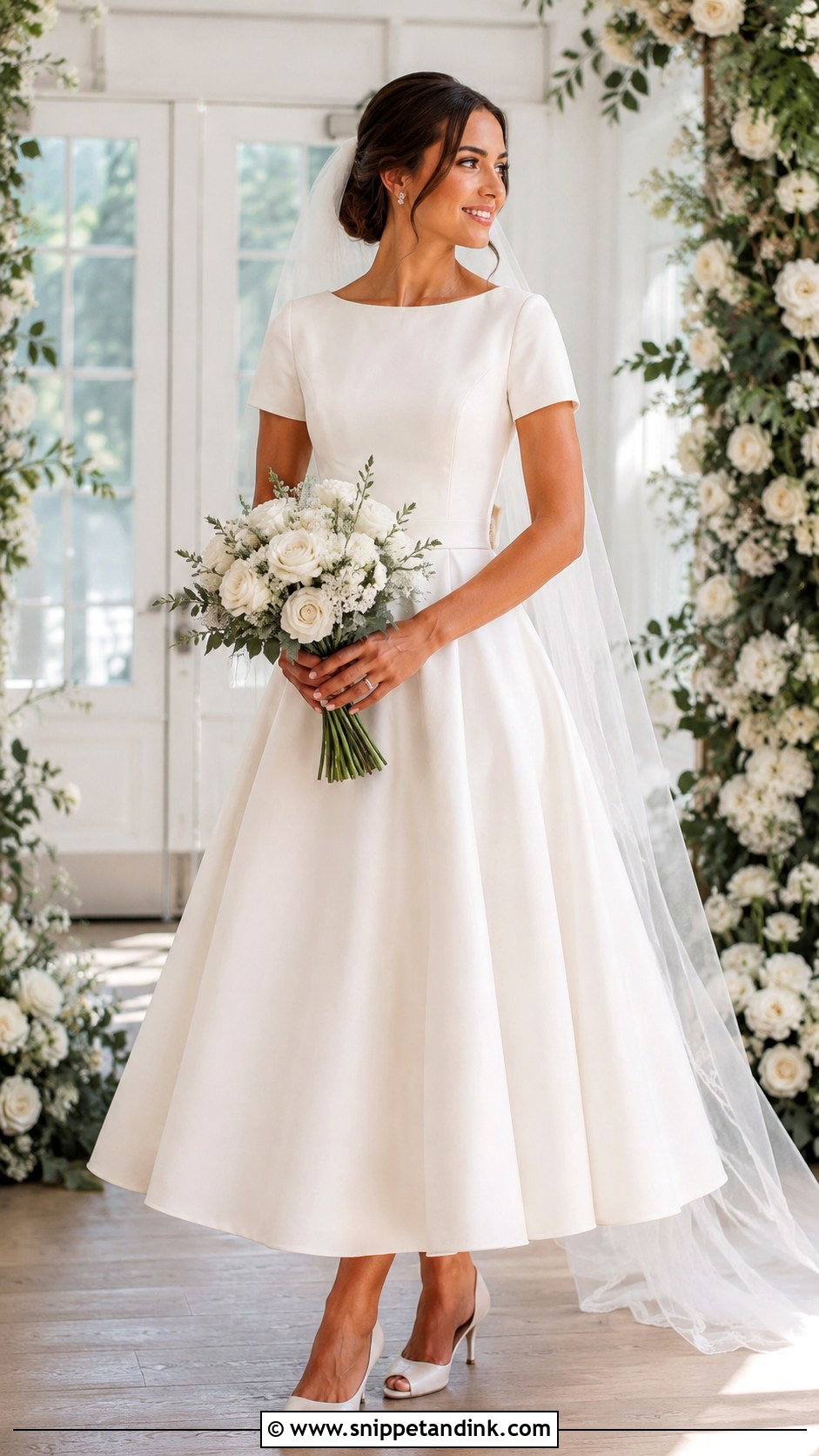
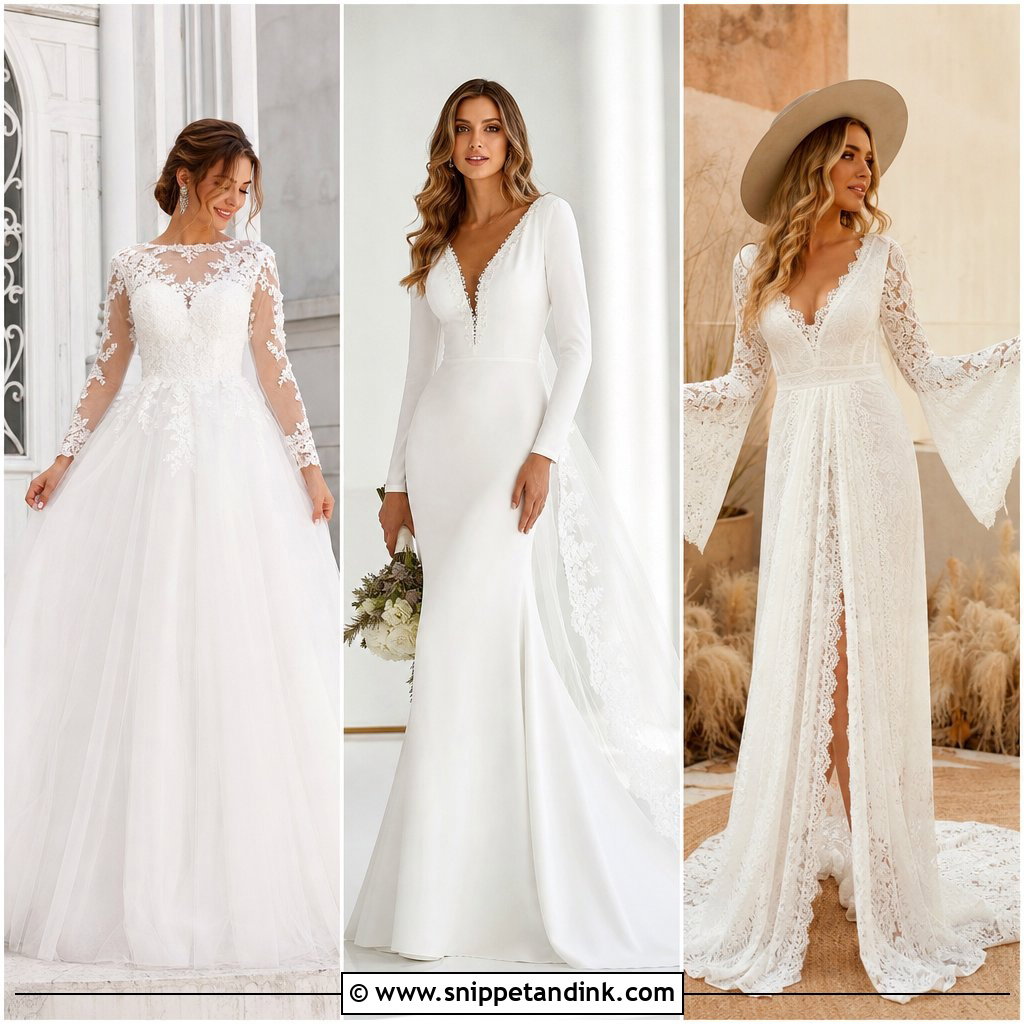
Short sleeves offer arm coverage without warmth or weight. They can be fitted, fluttery, lace or tailored. A lace sleeve on an A-line reads romantic; a clean crepe sleeve reads modern. Flutter sleeves move in a breeze, which is pretty in photos but can catch the veil, so test both together. Soft waves and comfortable heels suit daytime and outdoor weddings.
Preserving the Gown So Someone Can Wear It Again
A classic dress has a real chance of being worn again, by a daughter, a niece or you for a renewal of vows. That only works if it’s stored properly from the start, because the damage that ruins old gowns usually happens quietly in the first few years.
- Have it cleaned by a specialist within a few weeks of the wedding. Spilled drinks and sweat can be invisible at first and turn yellow or brown months later.
- Store it folded with acid-free tissue in an acid-free box, not hanging and not in a plastic bag, which traps moisture and can yellow fabric.
- Keep the box somewhere cool, dark and dry, under a bed or in a wardrobe rather than an attic or basement where temperature and humidity swing.
- Open it every year or two, refold along different lines with clean hands, and check for marks.
- Keep the spare buttons, beads and fabric offcuts from alterations in an envelope inside the box. They make future repairs or a remake far easier.
If no one wants to wear it as it is, a classic gown is also the easiest to remake. Plain satin and silk can become a christening gown or a smaller dress, while ornate trend pieces rarely reshape well.
Fit Outlasts Every Trend
Trends are fun, but the dress should still look right when you open the album years from now. Fit, fabric quality and proportion carry that. Satin, lace, crepe, silk, tulle, sleeves or a bare neckline can all be classic when the details support the whole look rather than crowd it. Pick the version that feels like you, then put your money into tailoring.
You'll Like These Ideas:








Leave a Reply