
White at a haldi sounds like a risk until you see it on the day: turmeric paste, marigolds and yellow décor all read brighter against an ivory or cream base than against more yellow. I style a lot of haldi looks, and the outfit that wins is almost never the most embellished one. It’s the one you can sit cross-legged in, lift your arms in, and laugh in while someone smears paste on your cheeks. That means light fabric, a drape that stays put, and shoes you can kick off at the edge of the mat. A lehenga or saree works, and so does a relaxed kaftan, sharara, or contemporary jumpsuit. Below are twenty complete looks, with notes on which ones I’d give the bride and which suit a sister or a guest better.

Is White Welcome at Every Family’s Haldi?
Not always, and I raise this before we shop. In some households white is linked to mourning or widowhood, and older relatives may feel uneasy seeing the bride in all white, even at a playful function. In many others ivory and cream are completely ordinary at a haldi. It is a five-minute conversation with your mother or mother-in-law, and it’s far easier than a tense moment on the morning itself.
If someone is unsure, I keep the base white but put real colour close to the face: a yellow dupatta, a marigold-print blouse, or floral jewellery in yellow and pink. That usually settles it, and the photos still have the fresh look you were after. Guests should follow the hosts’ lead; if the invitation asks for yellow, a white outfit with a strong yellow dupatta is a respectful middle ground.
1. White Haldi Lehenga With Yellow Dupatta
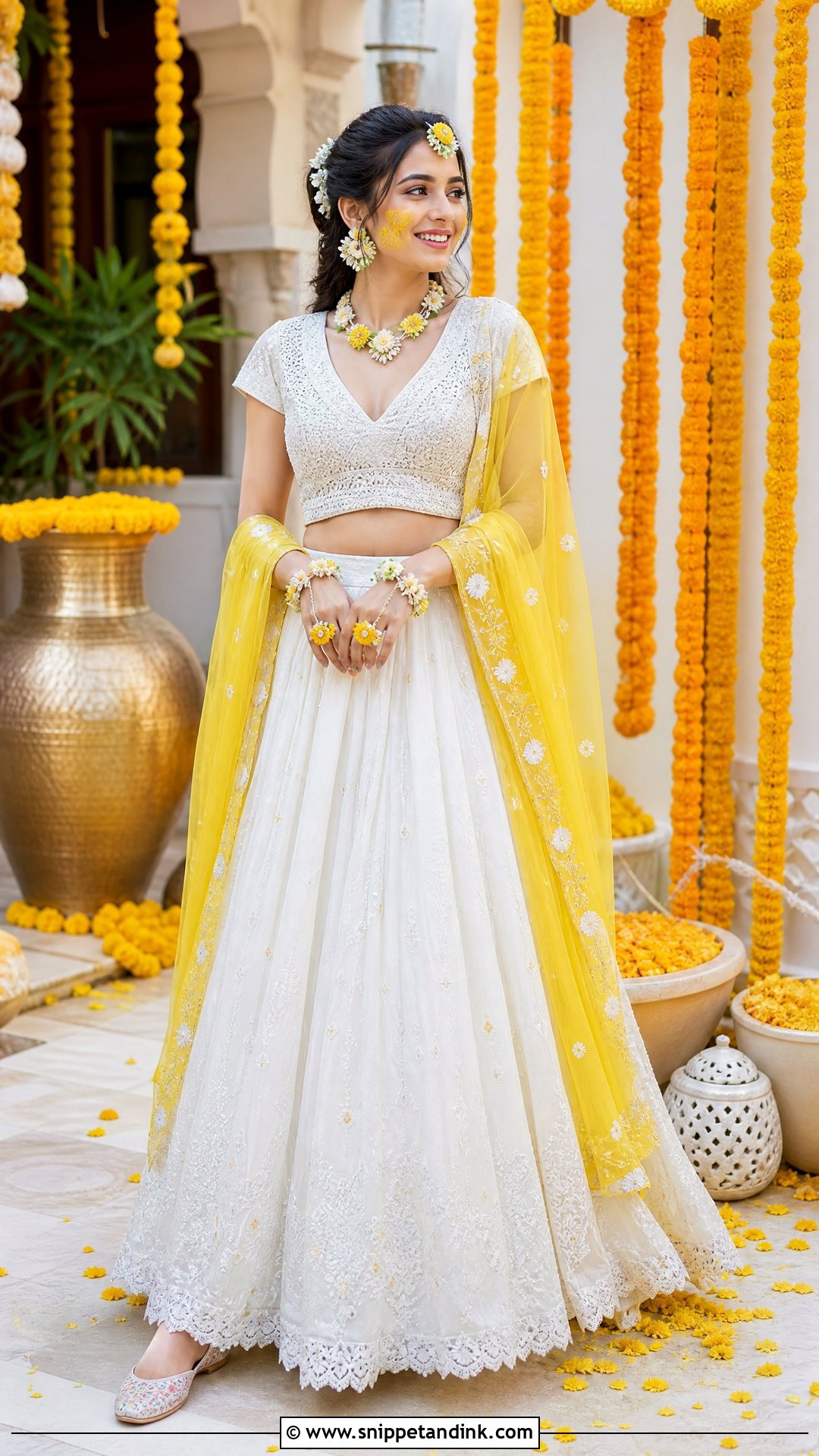
This is the pairing I reach for when a bride wants white but her mother wants yellow somewhere obvious. Keep the skirt light, in cotton-silk, georgette or chanderi, with embroidery only near the hem, because a heavily worked skirt pools awkwardly when you sit on the floor. An elbow-length blouse gives coverage without trapping heat. Throw a marigold dupatta over one shoulder and pin it twice, at the shoulder seam and at the blouse back, so it never slides into the paste bowl. Floral earrings, a small maang tikka and yellow bangles finish it. I put brides in embroidered juttis or a low block heel; a guest wearing the same idea can simply scale the skirt down.
2. White Haldi Chikankari Kurta And Sharara
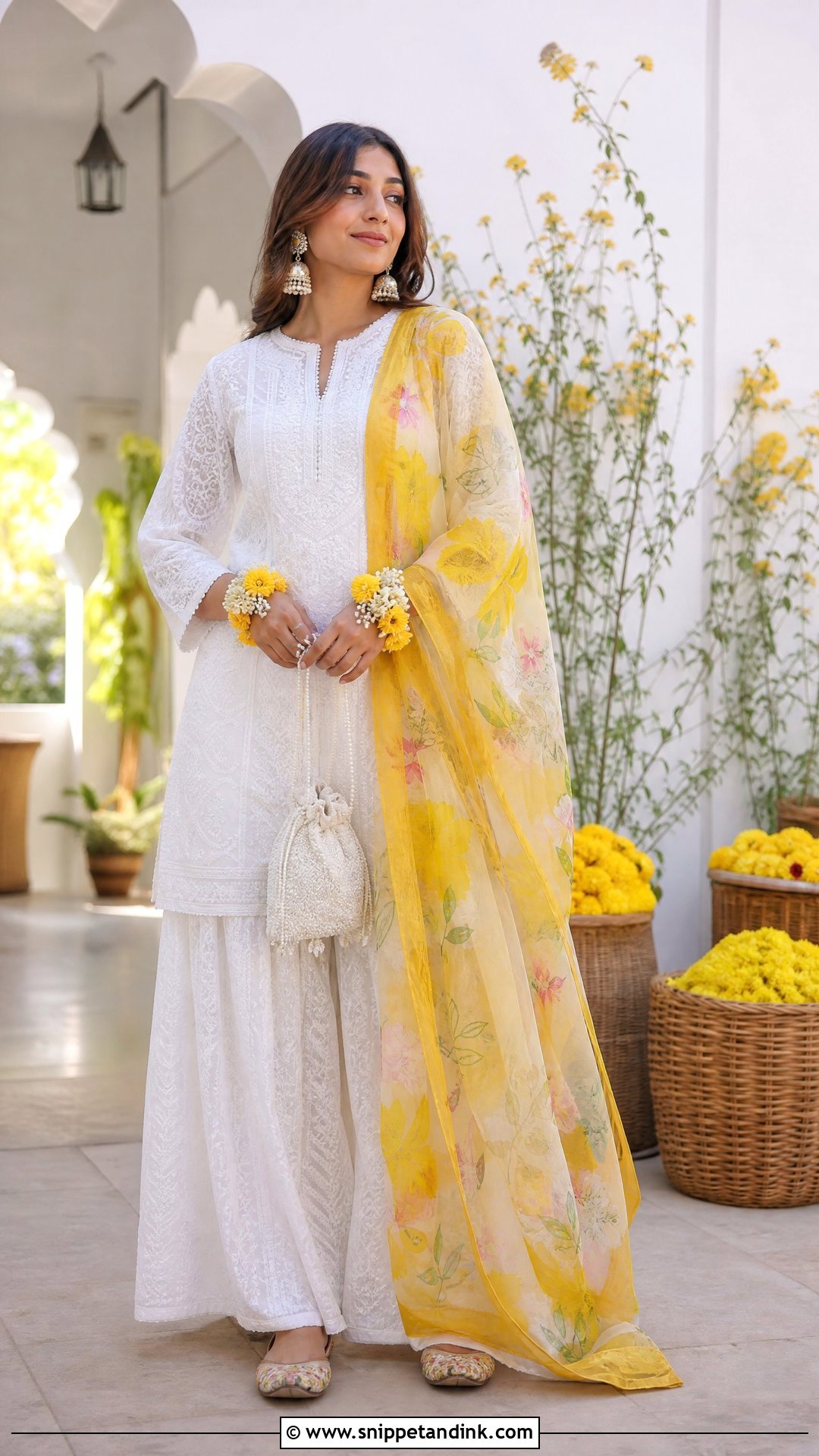
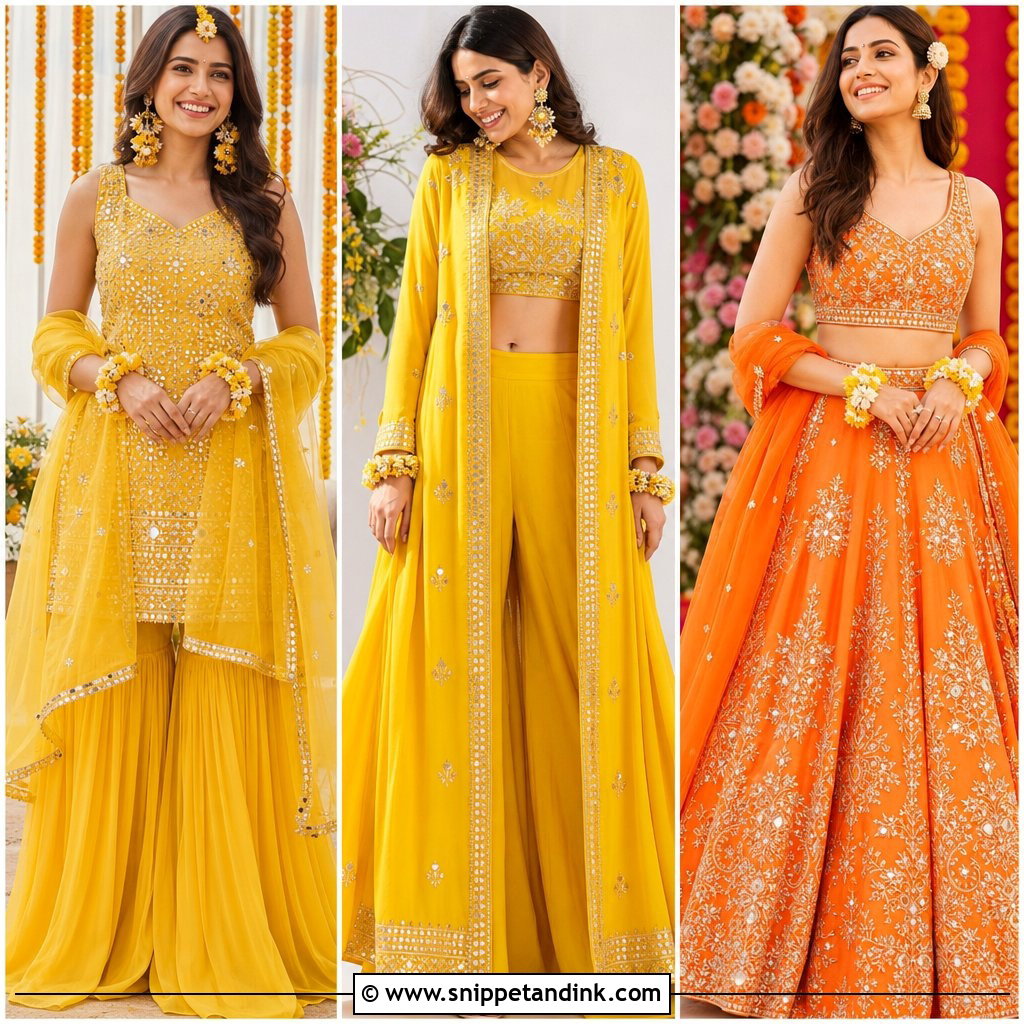
Chikankari is shadow work, and on a white haldi kurta and sharara it only shows properly when there’s a lining behind it. Without one, the embroidery disappears in bright sun and the fabric looks thin. I ask for a cotton lining that stops just short of the hem. The sharara brings the movement, so keep the dupatta loose around the arms rather than pinned. Pearl jhumkas, a fresh flower bracelet and a small potli are plenty. Flat juttis matter here; the flare of a sharara catches easily on a heel at the ankle.
3. White Haldi Saree With Floral Blouse
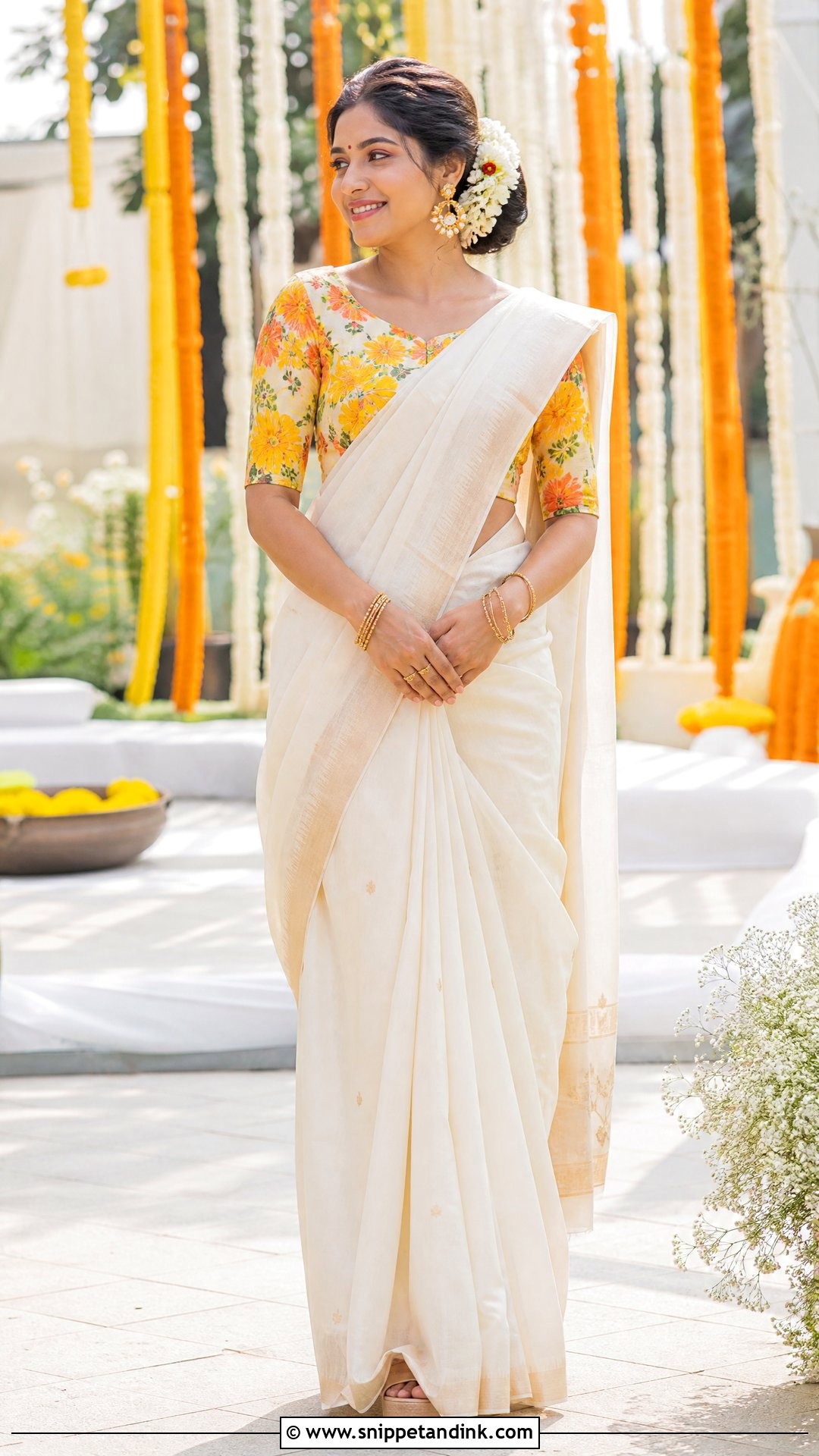
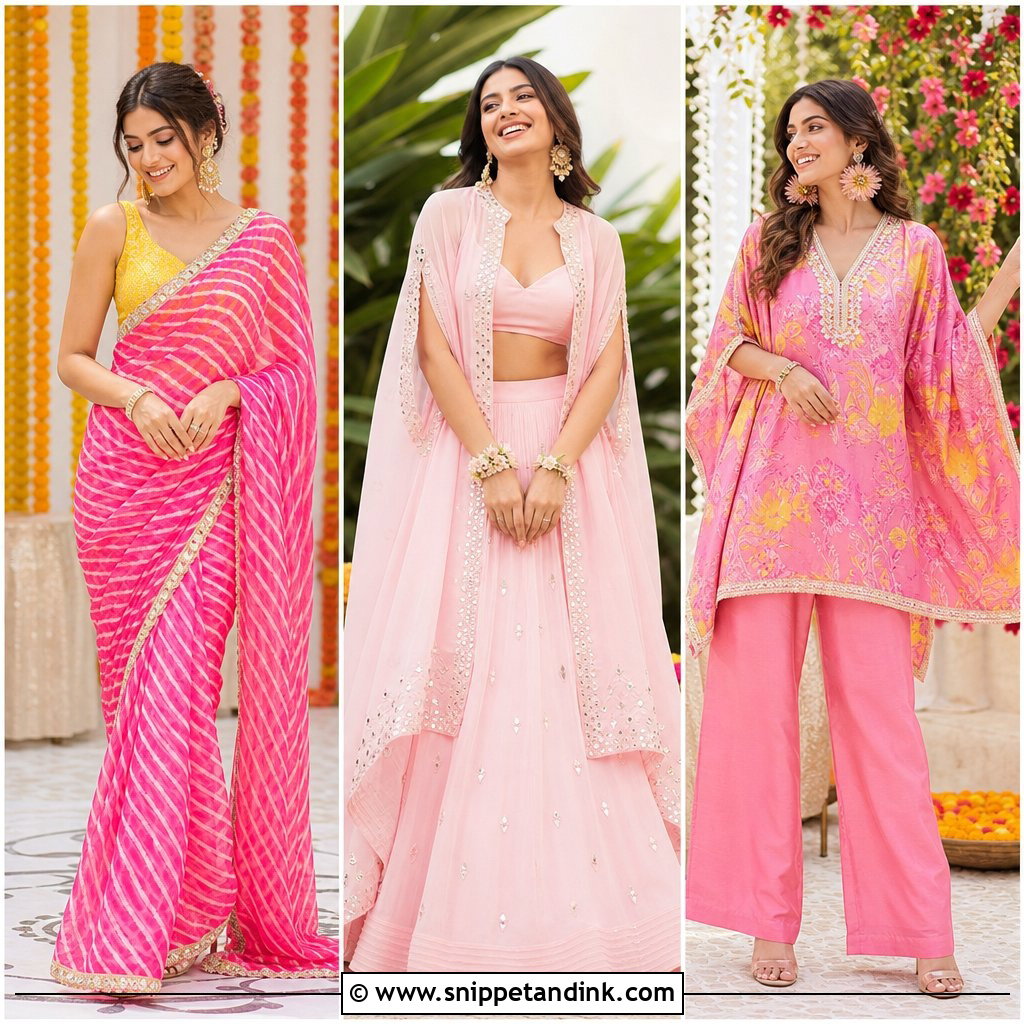
A plain white saree with a printed floral blouse is the easiest way to bring the yellows, greens and pinks of the décor onto your body without wearing a busy saree. Cotton or soft organza drapes lighter than silk in midday heat. Before anyone touches turmeric, I pin the pleats at the waist and the pallu at the shoulder, because a saree that needs adjusting every ten minutes pulls your hands into the paste. Floral earrings, slim gold bangles and a small bindi are enough. Wedges look tidy but wobble on grass, so check the ground first. A neat flower-studded bun keeps hair clear of the face during the application.
4. White Haldi Anarkali With Floral Jewelry
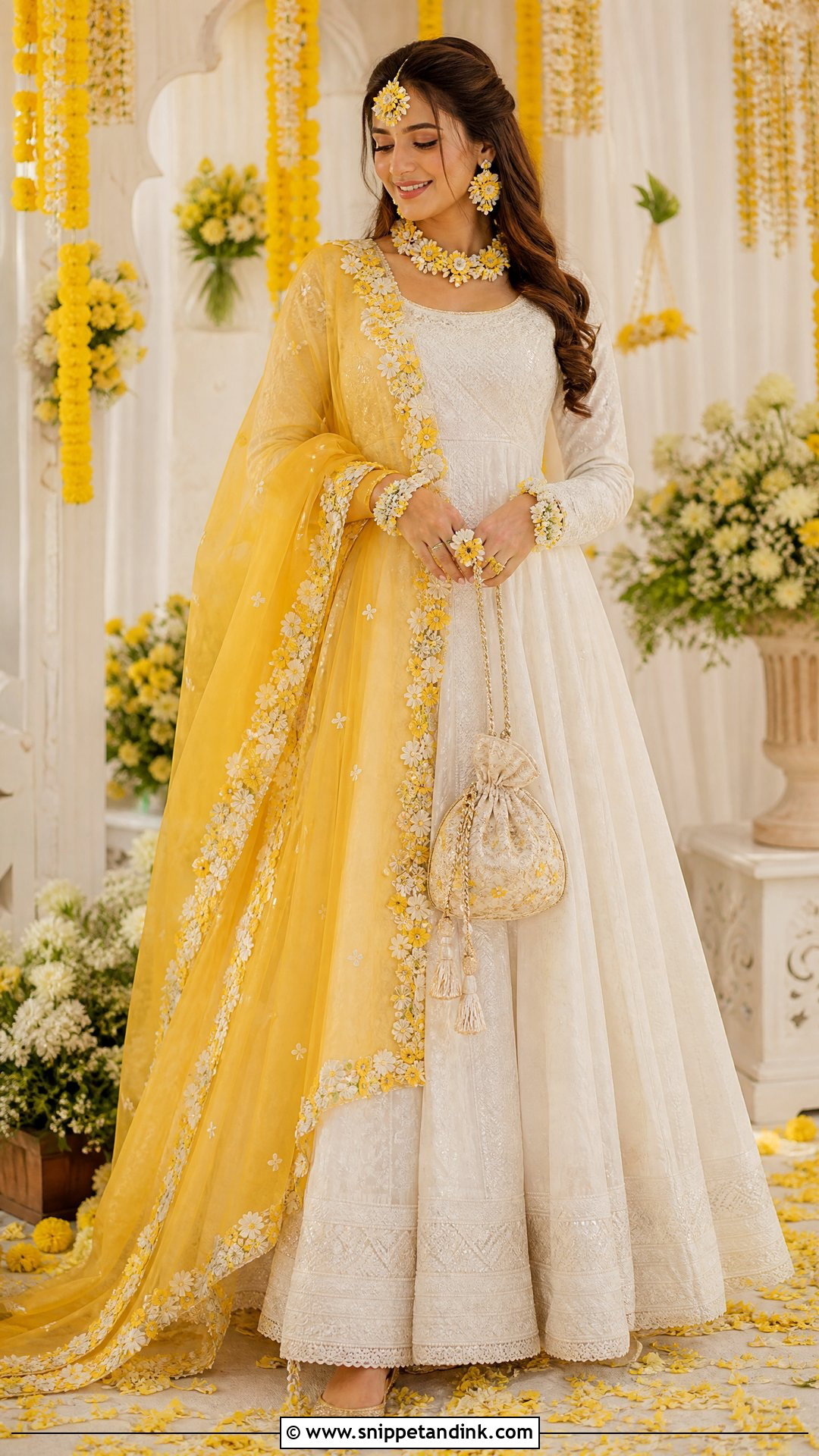
An Anarkali is the most forgiving silhouette on this list if you’re unsure about a two-piece. I look for cotton, georgette or chiffon with light threadwork, since stones on a fitted bodice dig in once you’re seated on a low stool. The bodice should be snug at the ribs and the flare should start at the natural waist, or the dress swallows you in full-length photos. A sheer yellow dupatta with a narrow gota border adds the colour. Fresh or fabric floral jewellery suits it better than metal. If you add a belt, wear it over the dupatta so it anchors the drape. Ask your makeup artist for a waterproof base; the paste and the water rinse come for your face too.
5. White Haldi Gharara With Short Kurti
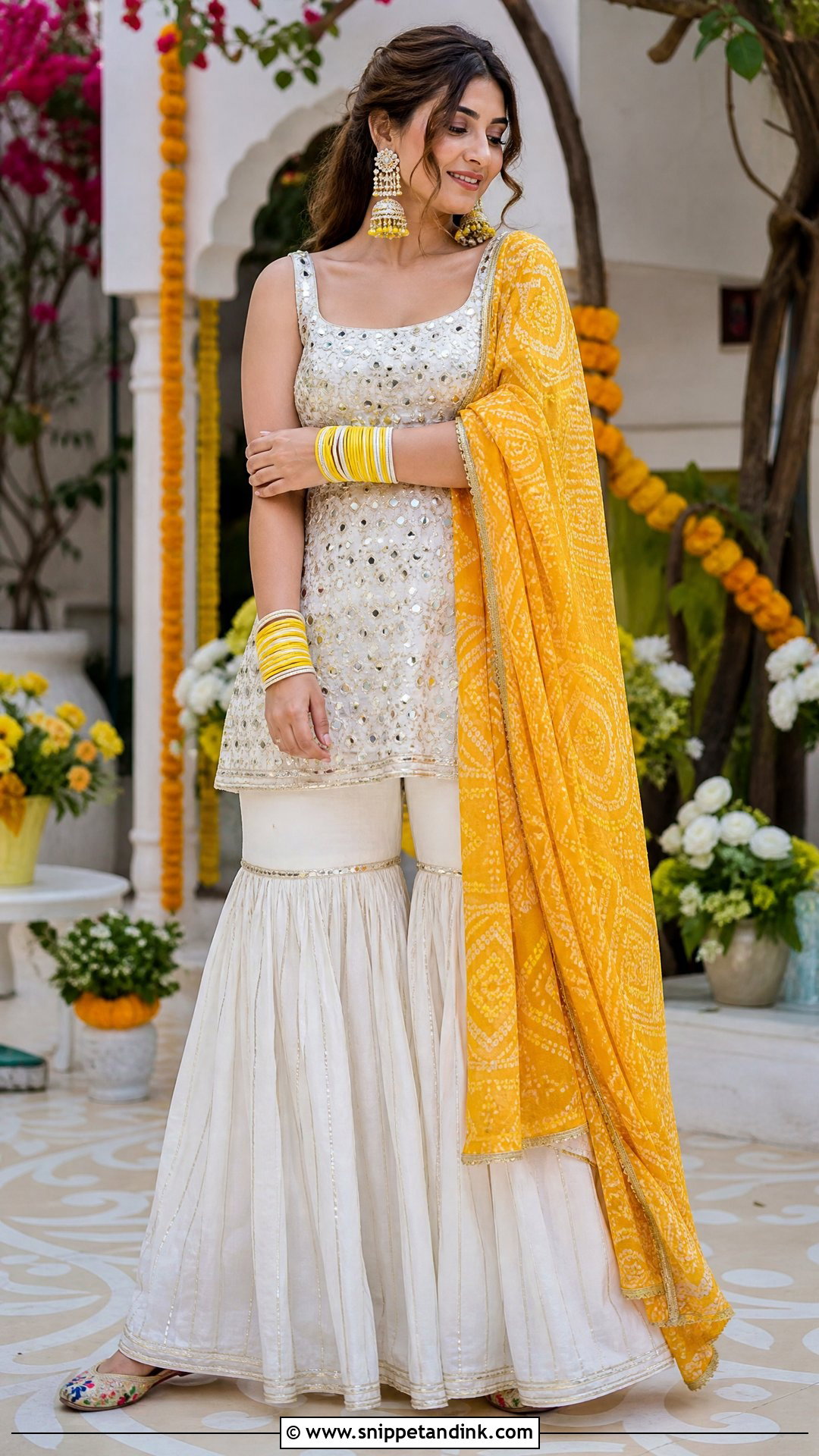
Gharara volume is all in the knee seam, which is why it photographs so well head to toe and why it can feel bulky if the kurti is too long. I keep the kurti at knee length so the flare starts where the gathers do. Light mirror work, lace edging or tonal embroidery is plenty on top. A yellow bandhani dupatta or a white one with a mustard border pulls the look together, along with statement jhumkas and stacked yellow and white bangles. Flat mules or juttis, always. Want more coverage? Lengthen the sleeves to three-quarter; the silhouette survives it.
6. White Haldi Kurta And Palazzo Set
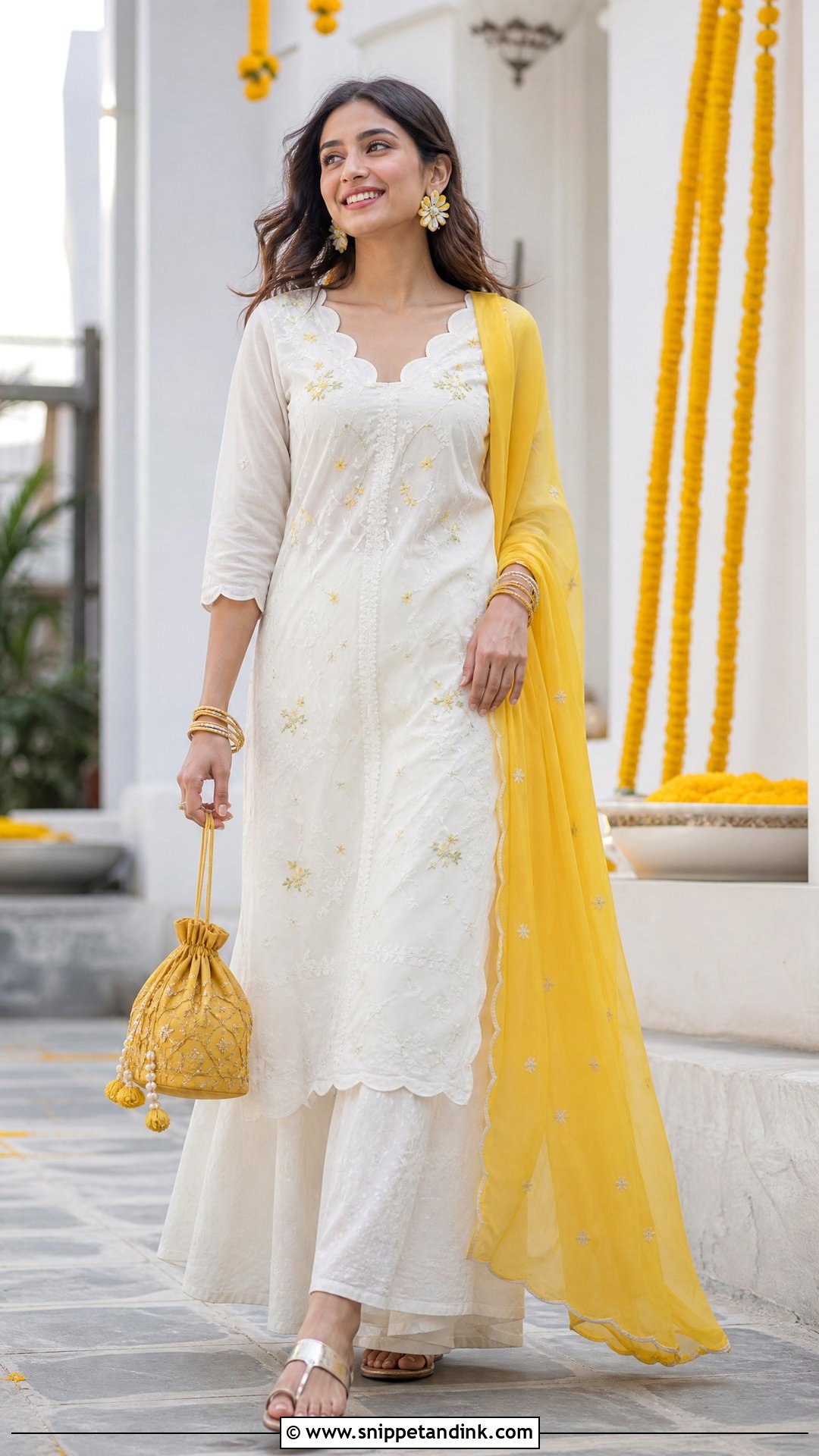
When a mother or aunt tells me she wants to look dressed but not bridal, this is usually where we land. A straight white kurta with scalloped edges or a fine gold border reads festive, and matching palazzos keep the line long. The one thing I check at the fitting is the palazzo hem in the shoes she’ll actually wear: it must clear the floor, or it drags through wet turmeric on the mat. A yellow dupatta over both shoulders looks more formal, over one shoulder more relaxed. Floral studs, slim bangles, a bright potli and metallic flats are all it needs.
7. White Haldi Kaftan With Yellow Details
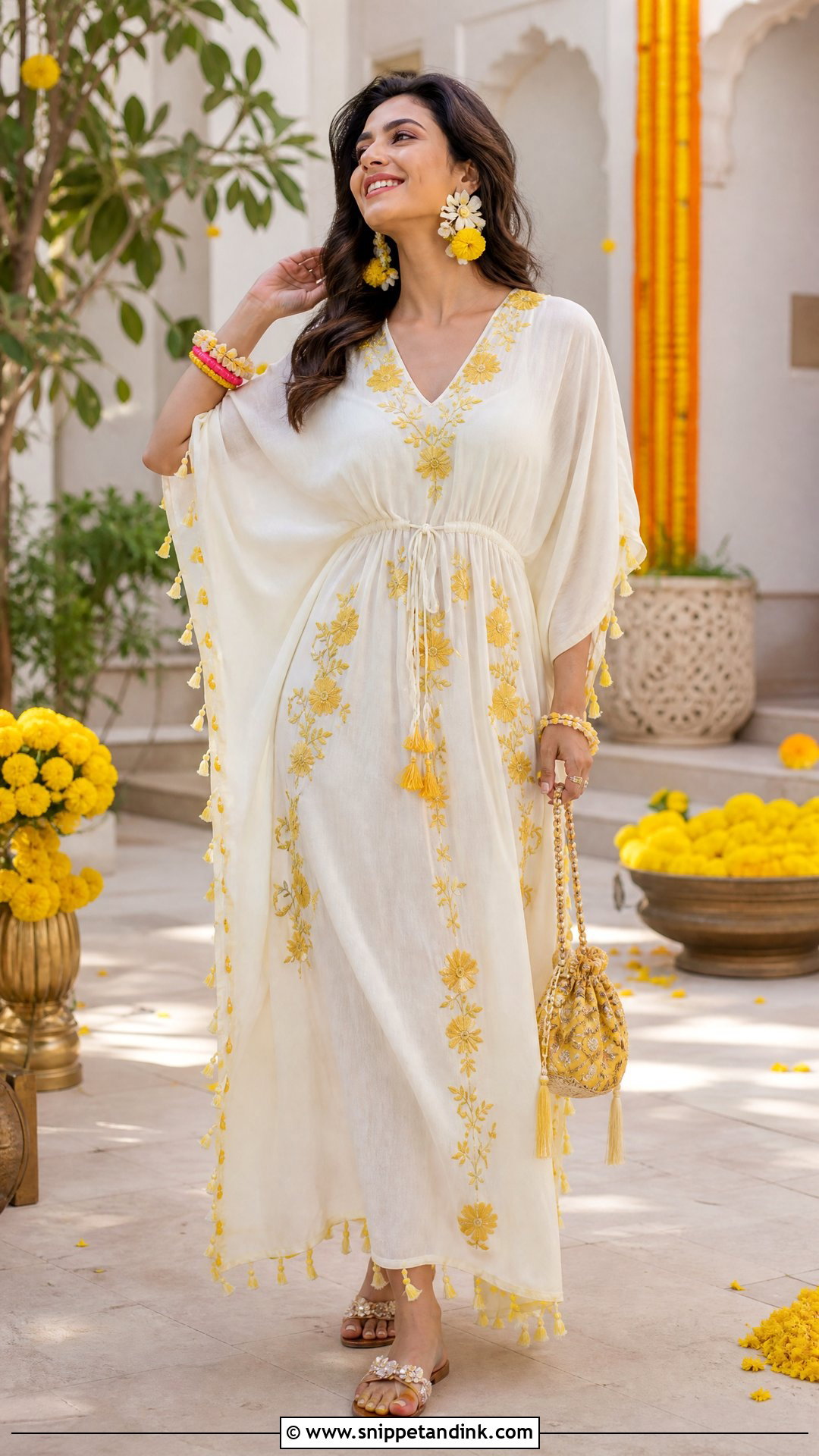
No waistband, no pleats, nothing to re-pin. A white kaftan with yellow embroidery, tassels or floral motifs is the outfit I suggest for brides who know they’ll be pulled into every ritual and every dance. Its weakness is shape: in photos a loose kaftan can look like a robe, so I add a narrow belt or choose one with a soft drawstring at the waist. Keep the hem at midi or ankle length so it doesn’t trail in the paste. Oversized floral earrings, a few bangles, a crossbody potli and a low ponytail. It’s my first pick for a home haldi or a warm destination morning.
8. White Haldi Drape Saree With Crop Blouse
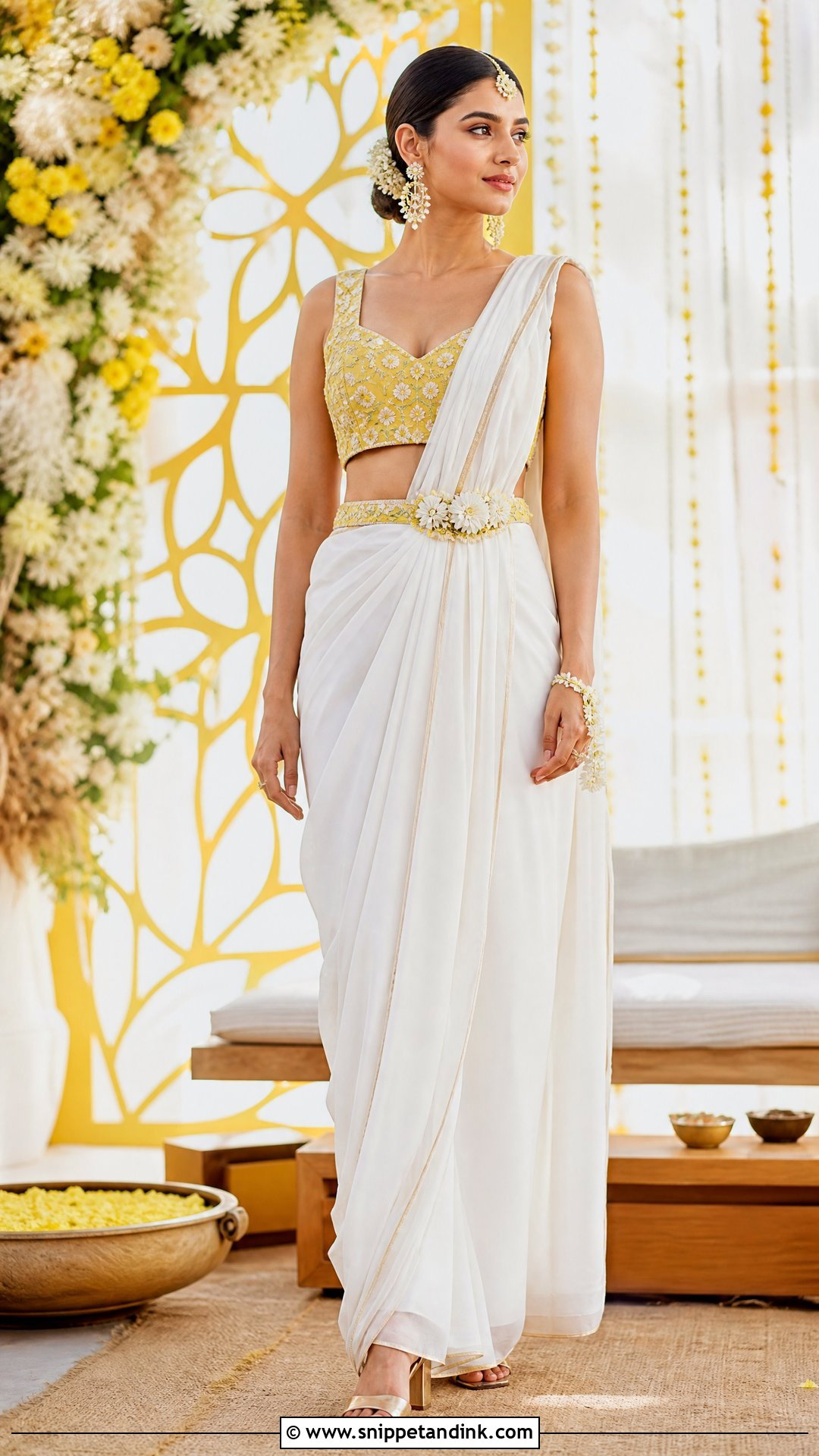
Pre-draped sarees solve the problem I see most at haldis: a bride who spends the whole function hitching her pleats. The pleats are stitched, and the pallu can be pinned at the shoulder or tucked at the waist, so the drape stays where it was set. Pair it with a structured crop blouse in yellow threadwork, small mirrors or floral appliqué. A floral waist belt controls the drape further and gives you a waist in photos. Statement earrings, a simple maang tikka and gold block heels finish it, with a sleek braid or low bun. If you expect to dance a lot, I’d choose this over a traditional drape.
9. White Haldi Co-Ord Set With Long Jacket
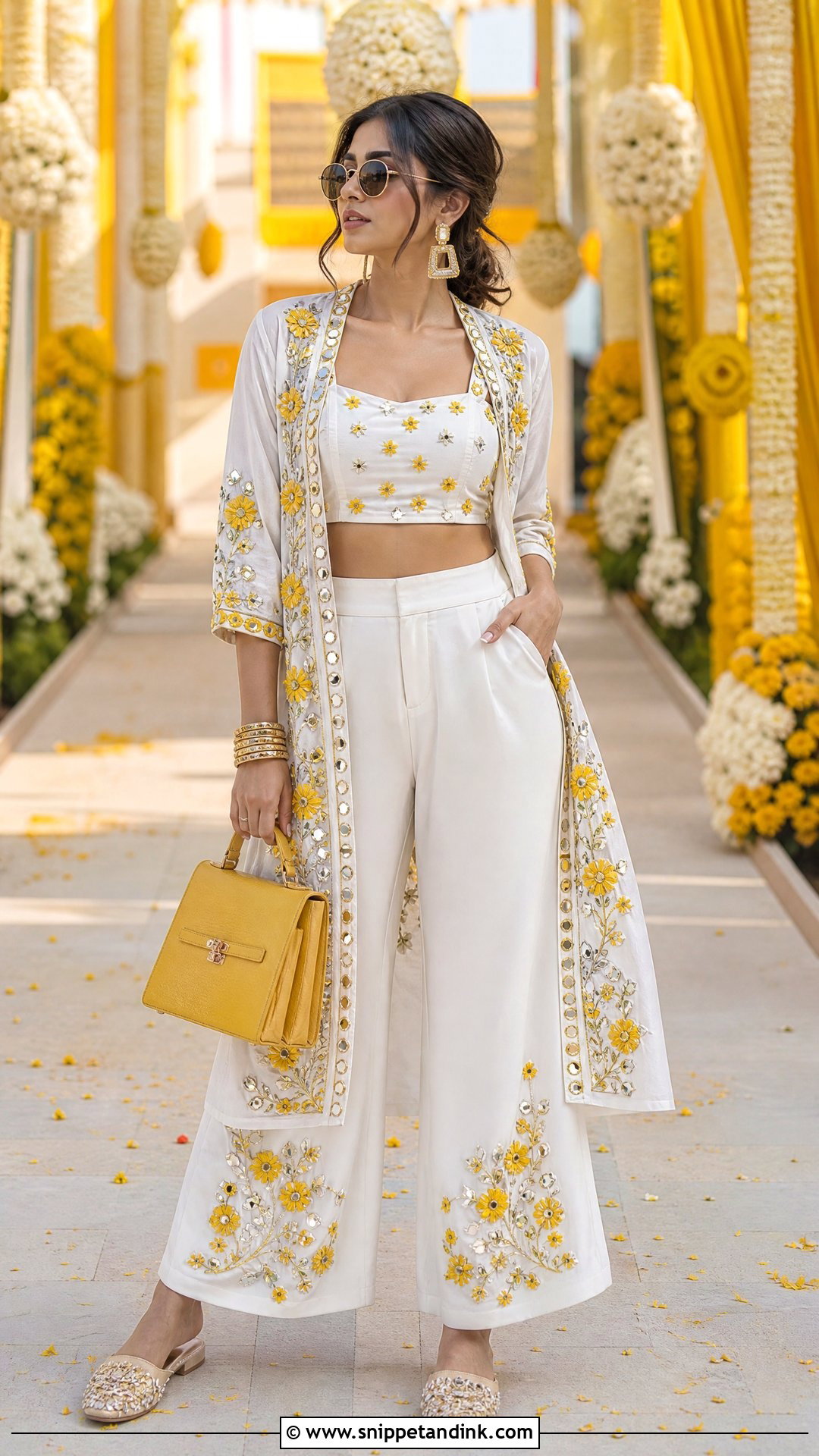
Co-ords look modern but can feel exposed once you’re sitting, so before I approve one I have the bride sit on the floor and raise both arms. If the crop top lifts more than she’s comfortable with, we lower the pants’ rise or lengthen the top. The long jacket decorated with yellow flowers, mirror accents or gota trim does the festive work and adds coverage over the back. Geometric earrings, stacked bangles and a small structured bag suit the sharper lines. Embellished mules or low wedges, depending on the ground. Brides can go heavier on the jacket; guests can keep it plain, and every piece rewears separately afterwards.
10. White Haldi Dhoti Pants And Peplum Top
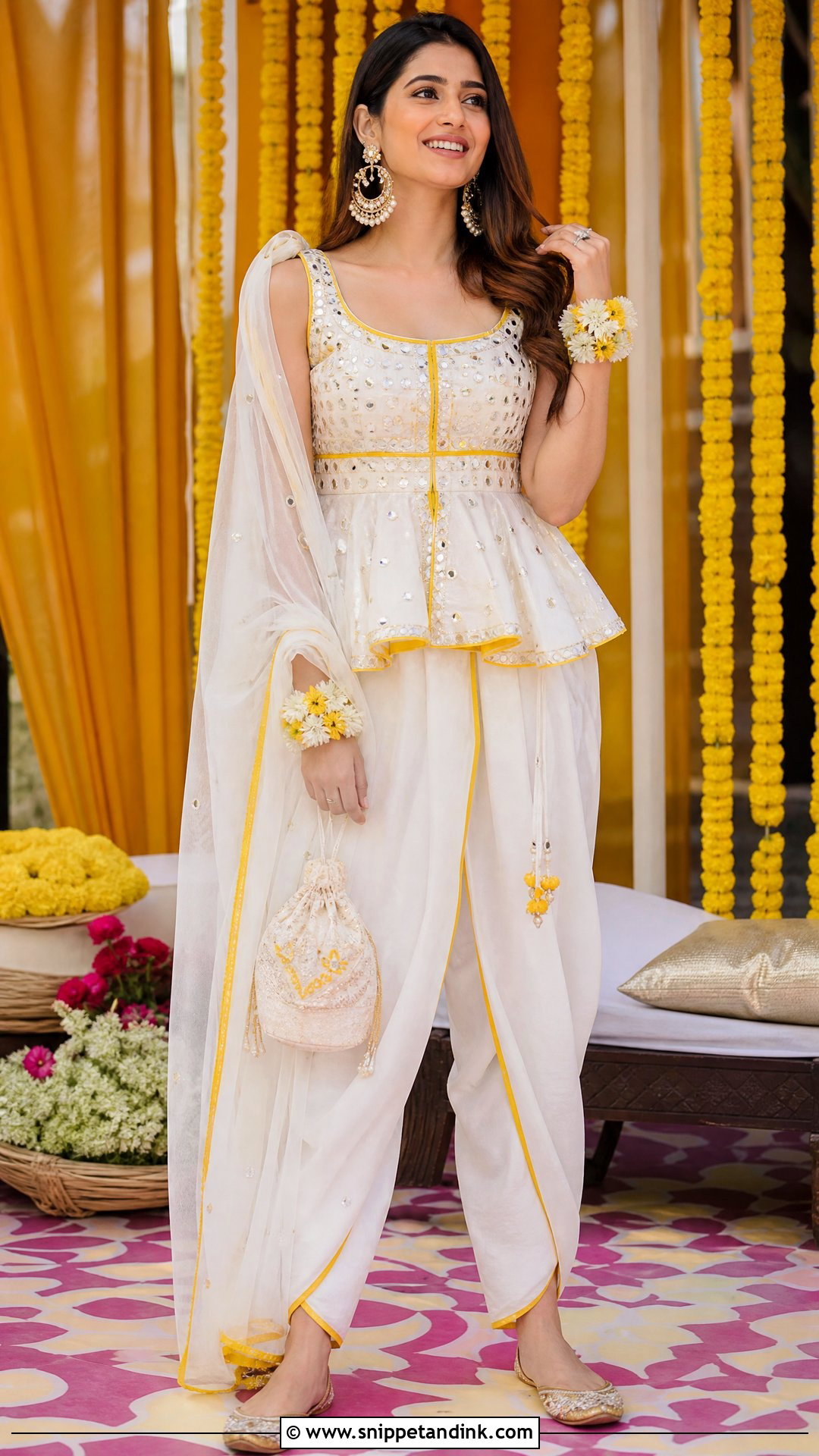
Dhoti pants are the most practical bottom here for floor seating: the drape gives you room at the hip without any extra skirt fabric to manage. I pair white dhoti pants with a fitted peplum top so the waist still shows. Yellow piping, mirror work or small floral embroidery on the top ties it to the theme. An organza dupatta is optional; I usually leave it off for bridesmaids who’ll be helping with the paste. Chandbalis, floral bracelets, a compact potli and gold juttis or kolhapuri-style flats keep the look light. One fit note: dhoti drapes add visual weight below the hip, so keep the peplum short.
11. White Haldi Peplum Kurti And Sharara
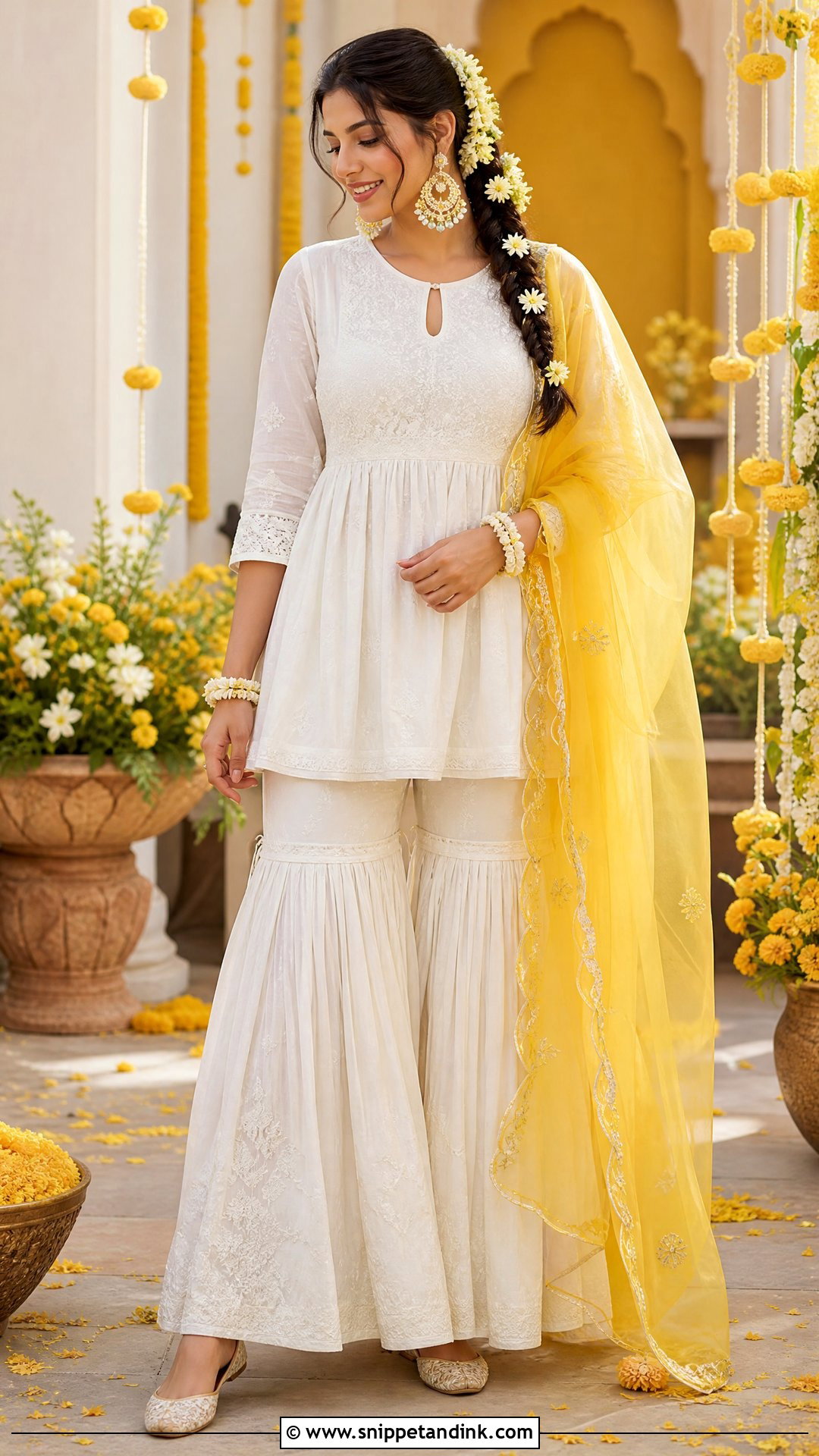
Peplum over sharara balances structure on top with movement below, and it gives waist definition to anyone who doesn’t want a cropped blouse. The flare of the peplum should start right at the waist and stop at the high hip; any longer and it competes with the sharara. Tonal embroidery, pearls or a little mirror work is enough on a white base. I keep the sharara wide but not so full that you need both hands to walk. A yellow organza dupatta with a scalloped edge, floral chandbalis, a matching bracelet and low embroidered heels finish the outfit. A side braid with tucked flowers sits well with the shape.
12. White Haldi Cape Lehenga
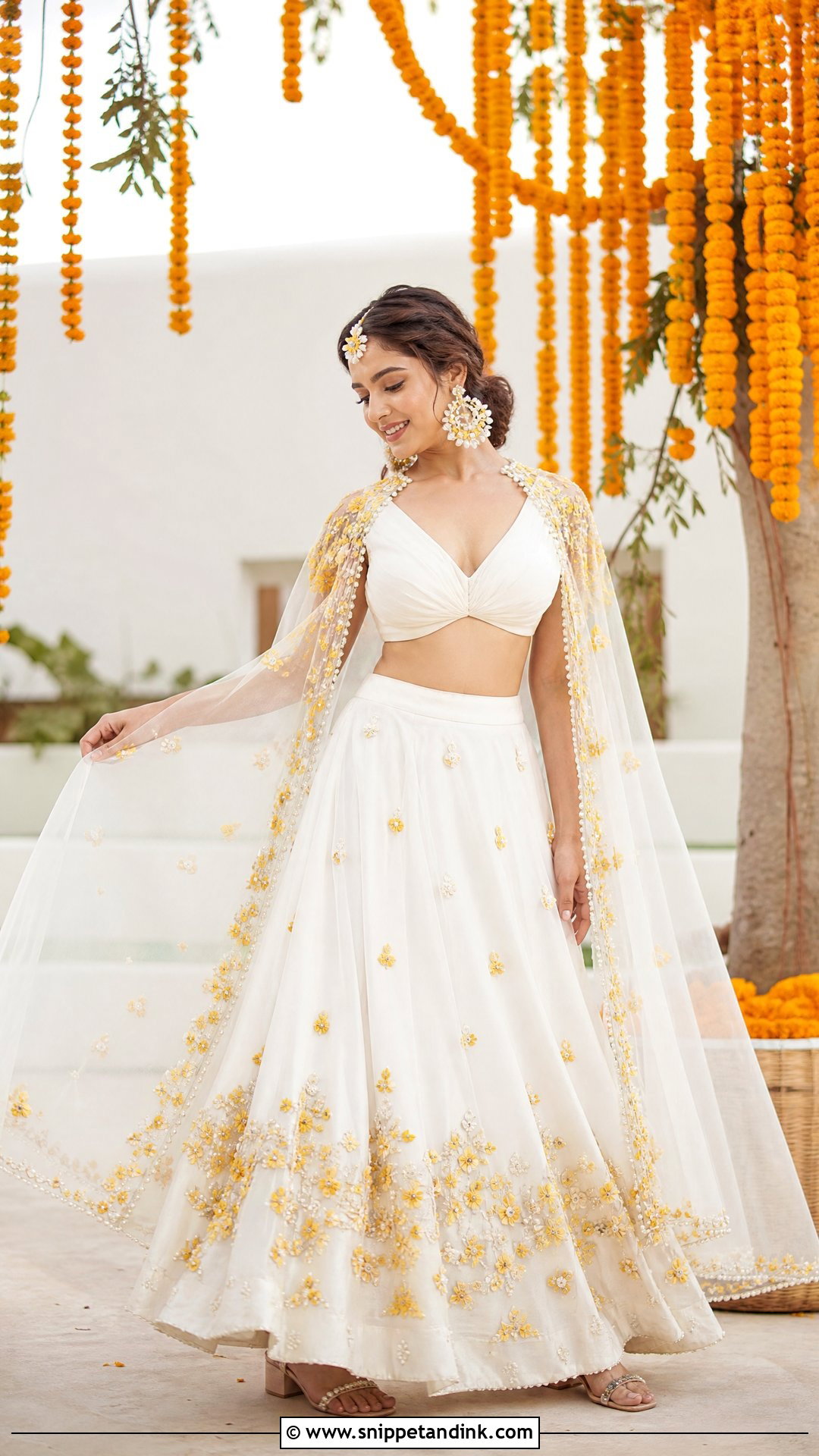
A cape is my answer to dupatta fatigue. It sits on the shoulders, needs no pinning, and leaves both hands free for rituals. Start with a lightly flared skirt and a fitted sleeveless or short-sleeve blouse, then add a sheer cape with yellow floral appliqué, pearl edging or fine embroidery. I measure the cape so it ends a few inches above the skirt hem; any lower and it drags on wet floors. Statement floral earrings, a delicate headpiece and low block heels complete it. A sleek bun keeps the neckline and shoulders of the cape visible. Guests can take the same idea with a shorter cape.
13. White Haldi Organza Saree With Yellow Border
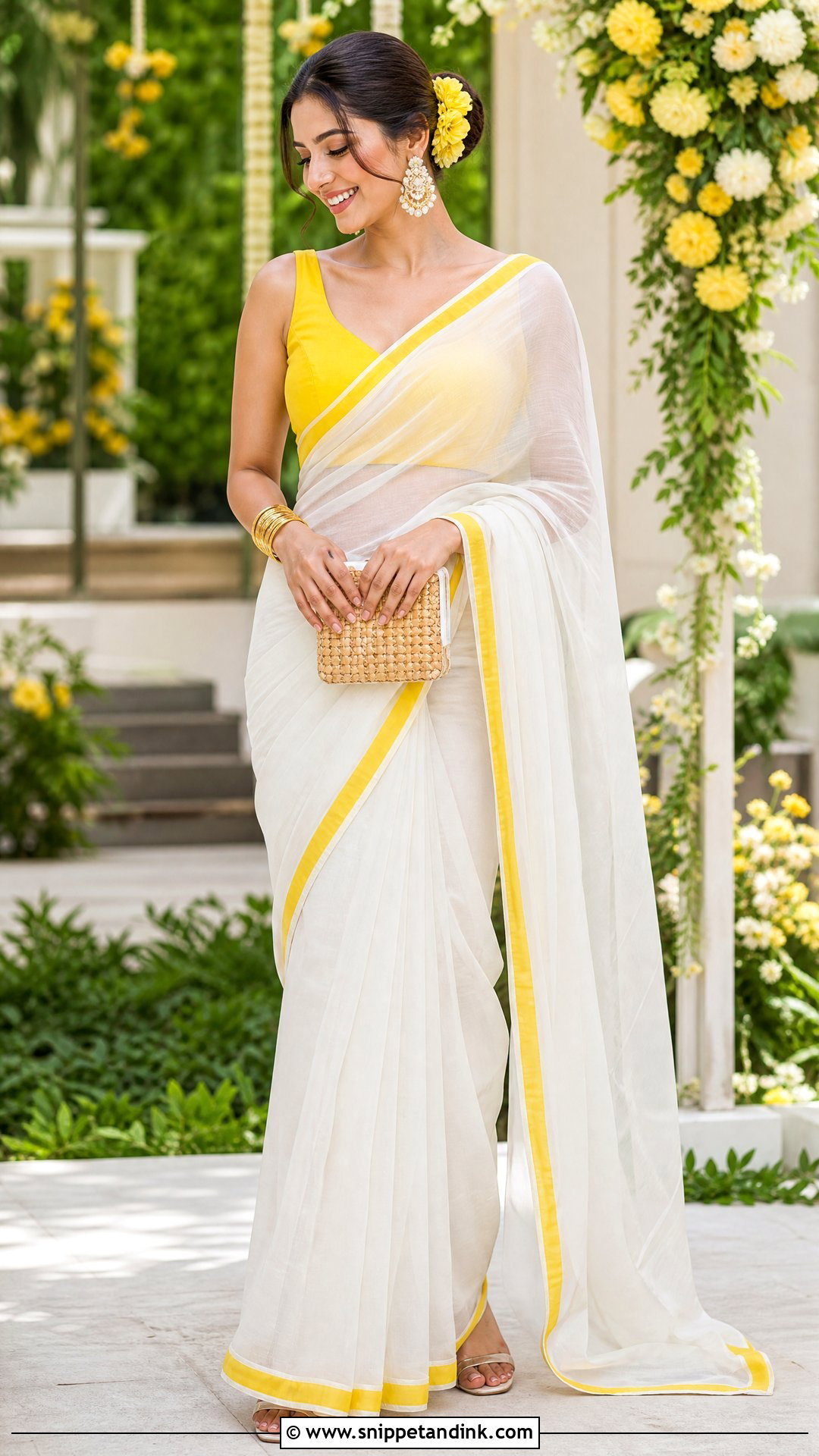
Organza is crisp, which is its charm and its catch. It holds sharp pleats, but it also stands away from the body, so I make pleats narrow and pin them firmly at the waist over a fitted petticoat. A white organza saree with a yellow border looks right in daylight, paired with a yellow sleeveless blouse or a white one scattered with small yellow flowers. Pearl-and-floral earrings, gold bangles and a woven clutch suit the texture. Kitten heels or flats, plus a soft bun with yellow flowers. If you dislike that stiff stand-away drape, look for organza blended with silk, or a light embroidered chiffon.
14. White Haldi Mirror Work Lehenga
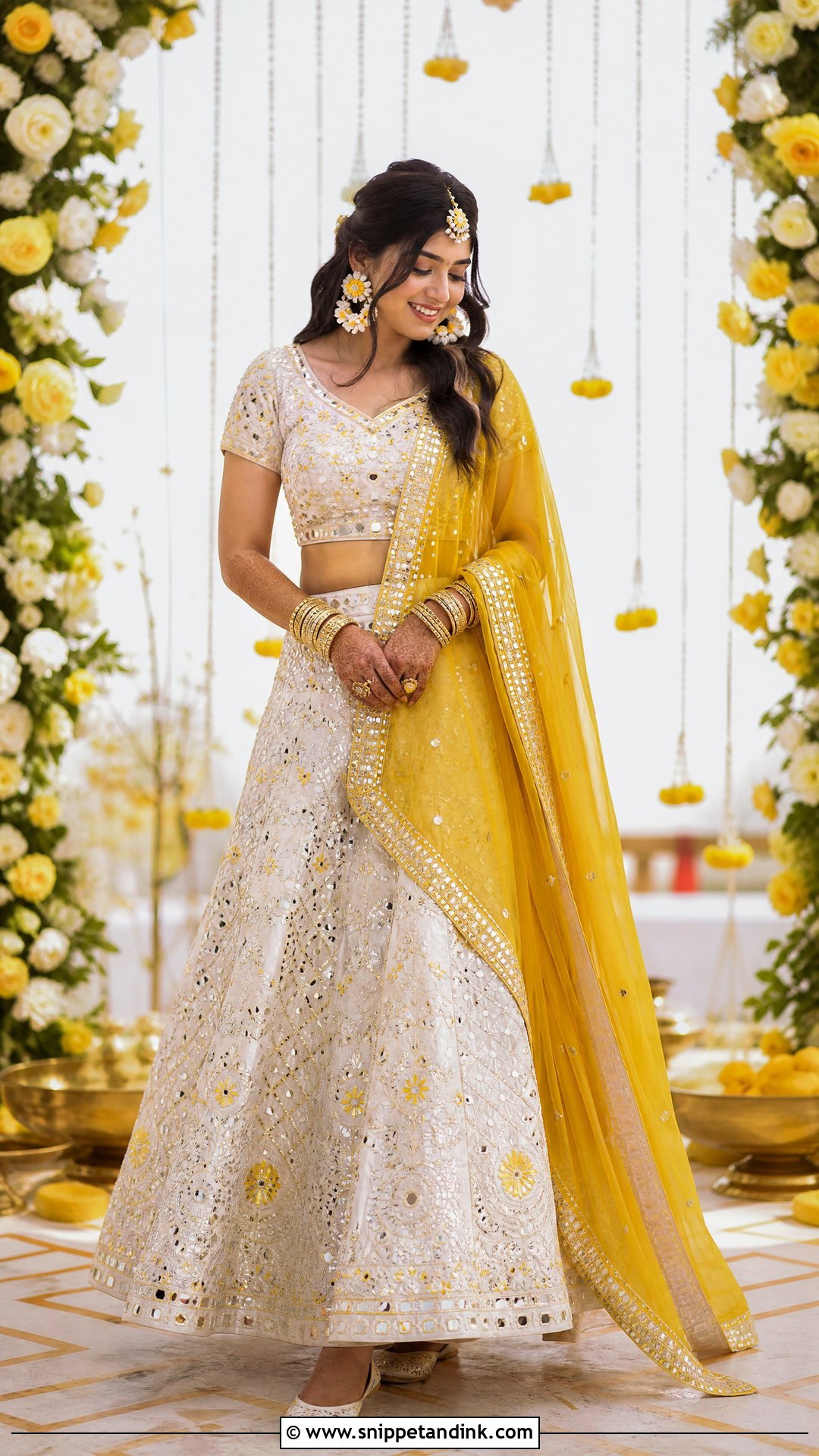
Mirror work catches daylight better than any stone, which makes it ideal for a white haldi lehenga that shouldn’t feel heavy. Scattered mirrors on a moderately flared skirt look richer than dense embroidery. The thing I always check is the lining: mirrors are hand-stitched, and the edges can scratch through a thin lining or catch on the dupatta. A blouse with supportive straps or short sleeves carries the weight better. Drape a sheer yellow dupatta diagonally across the torso so it reflects in the mirrors. Floral earrings, a simple maang tikka, a few gold bangles and white or gold juttis keep the palette tight.

15. White Haldi Skirt And Short Kurti
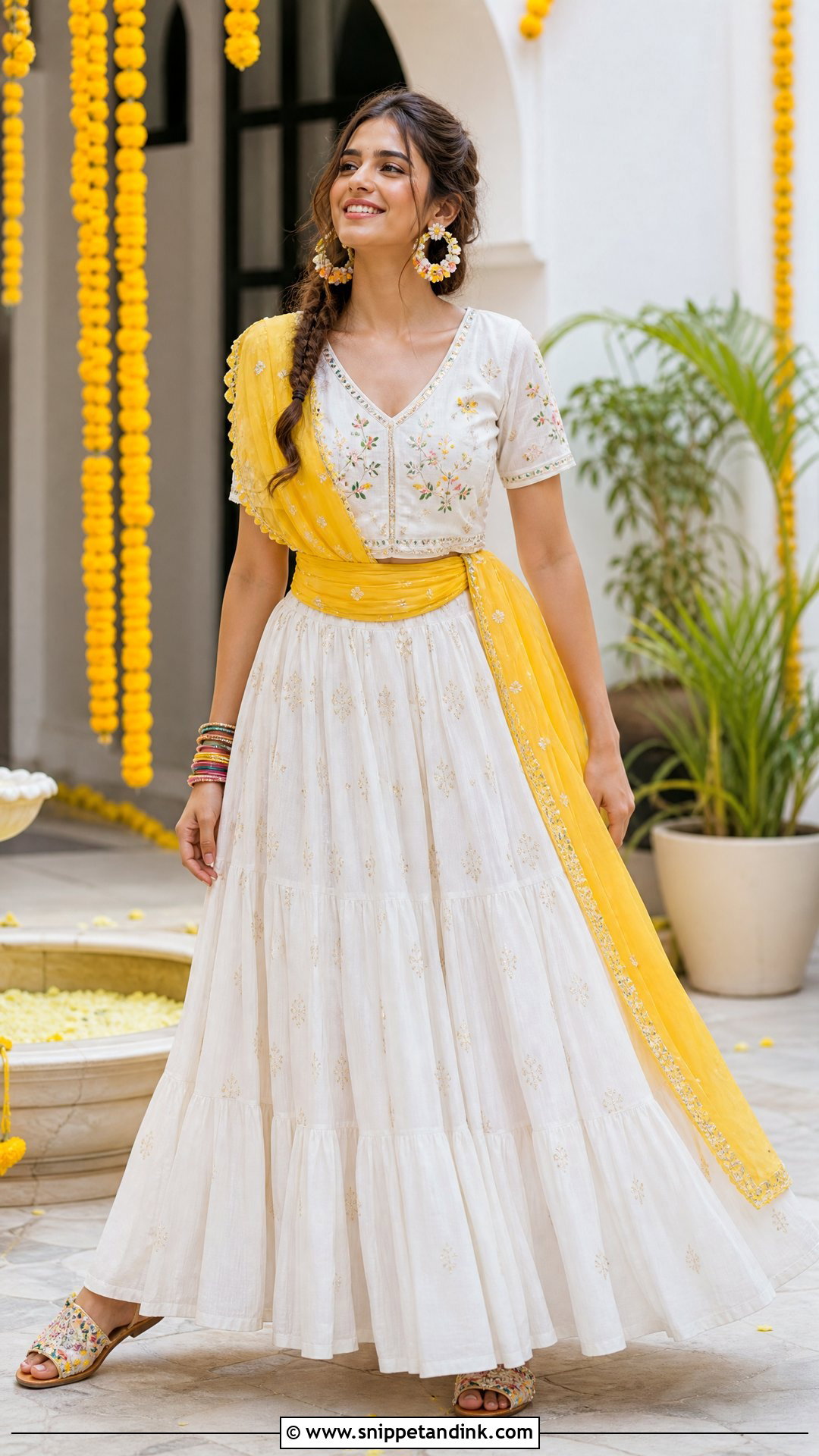
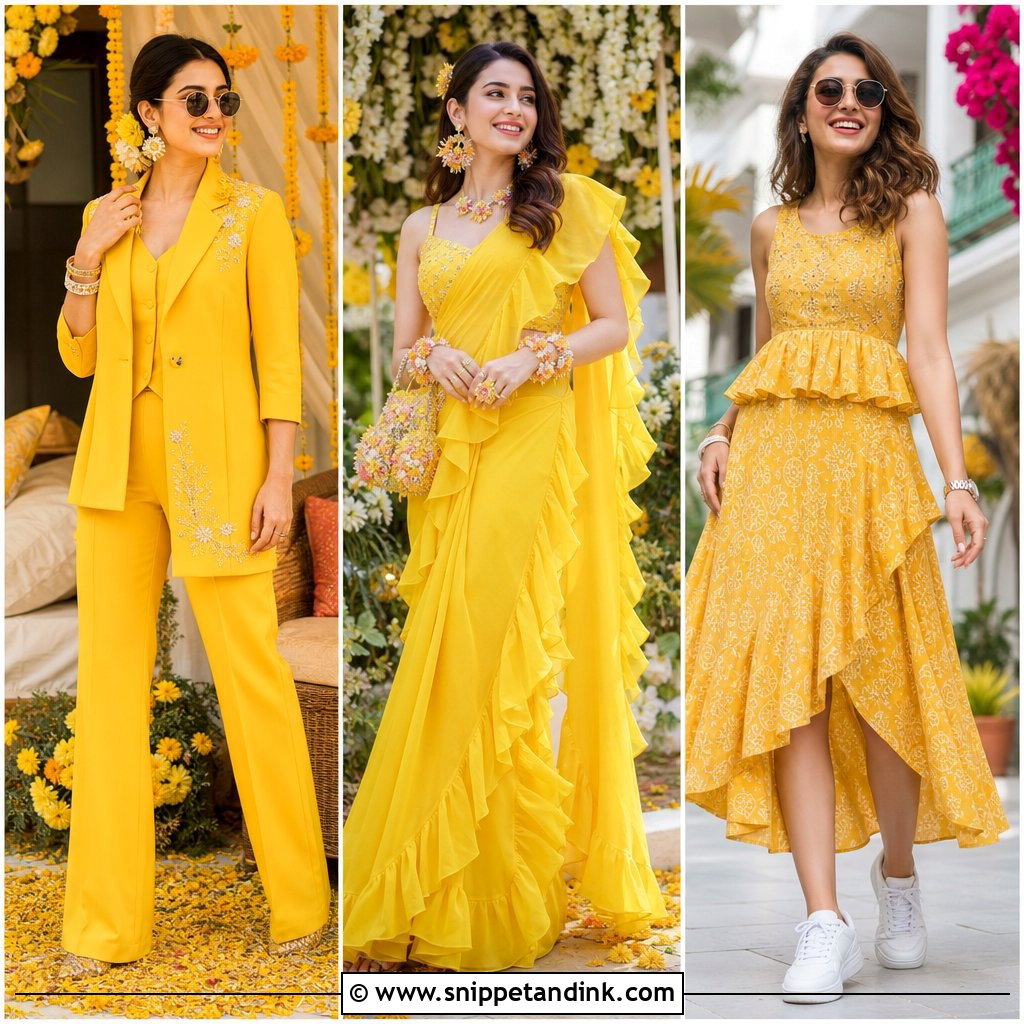
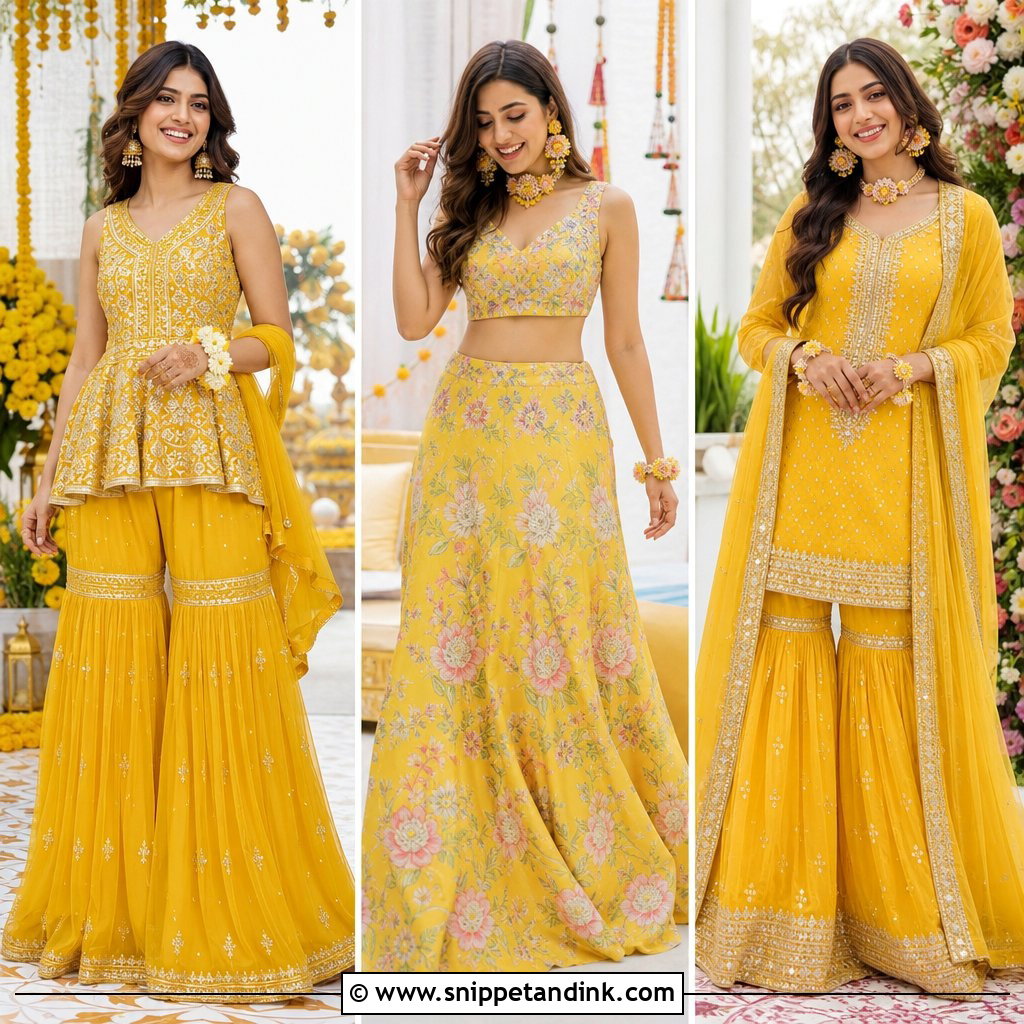
For bridesmaids and younger cousins, a breezy skirt and short kurti is the look I recommend most. It costs less than a lehenga and both pieces work again separately. A tiered or gently flared skirt in cotton, muslin or light georgette moves well when dancing. The kurti should sit at the hip with yellow embroidery or a colourful floral hem. A yellow dupatta can go round the neck, over a shoulder, or belted at the waist. Floral hoops, bright bangles and embroidered flats, with a half-up style or a loose braid.
16. White Haldi Salwar Suit With Bandhani Dupatta
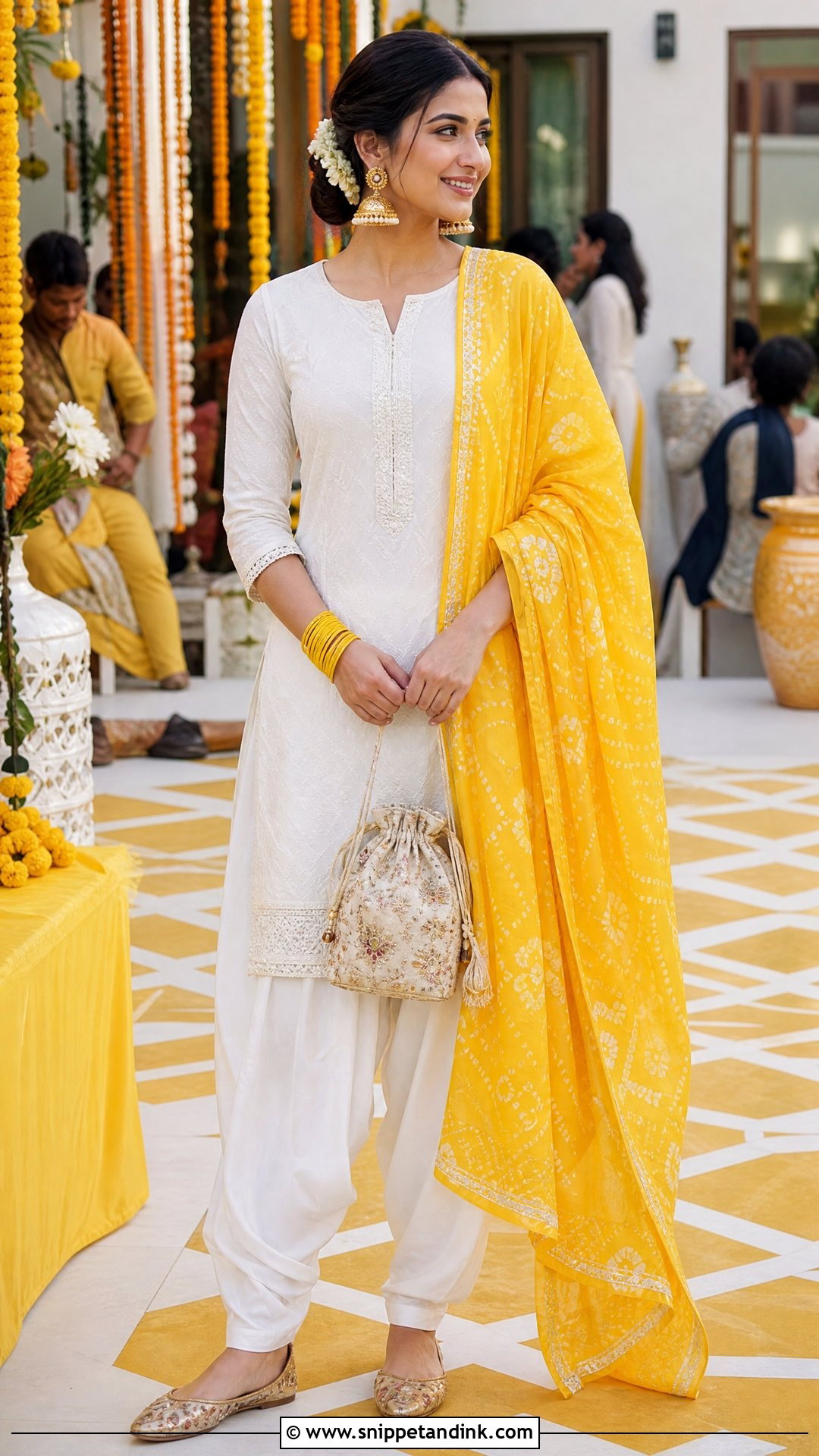
Here the dupatta does all the talking. A white salwar suit with three-quarter sleeves and a comfortable neckline is a calm base, and a bright yellow bandhani dupatta brings the haldi colour in one move. I keep the kurta embroidery minimal so the tie-dye pattern isn’t fighting anything. Salwar pants have room through the hip and legs, which is why I push them for anyone helping with rituals on the floor. Gold jhumkas, slim yellow bangles, an embroidered potli and traditional juttis finish it. It can be cut for any coverage level and suits every age at the function.
17. White Haldi Jumpsuit With Floral Cape
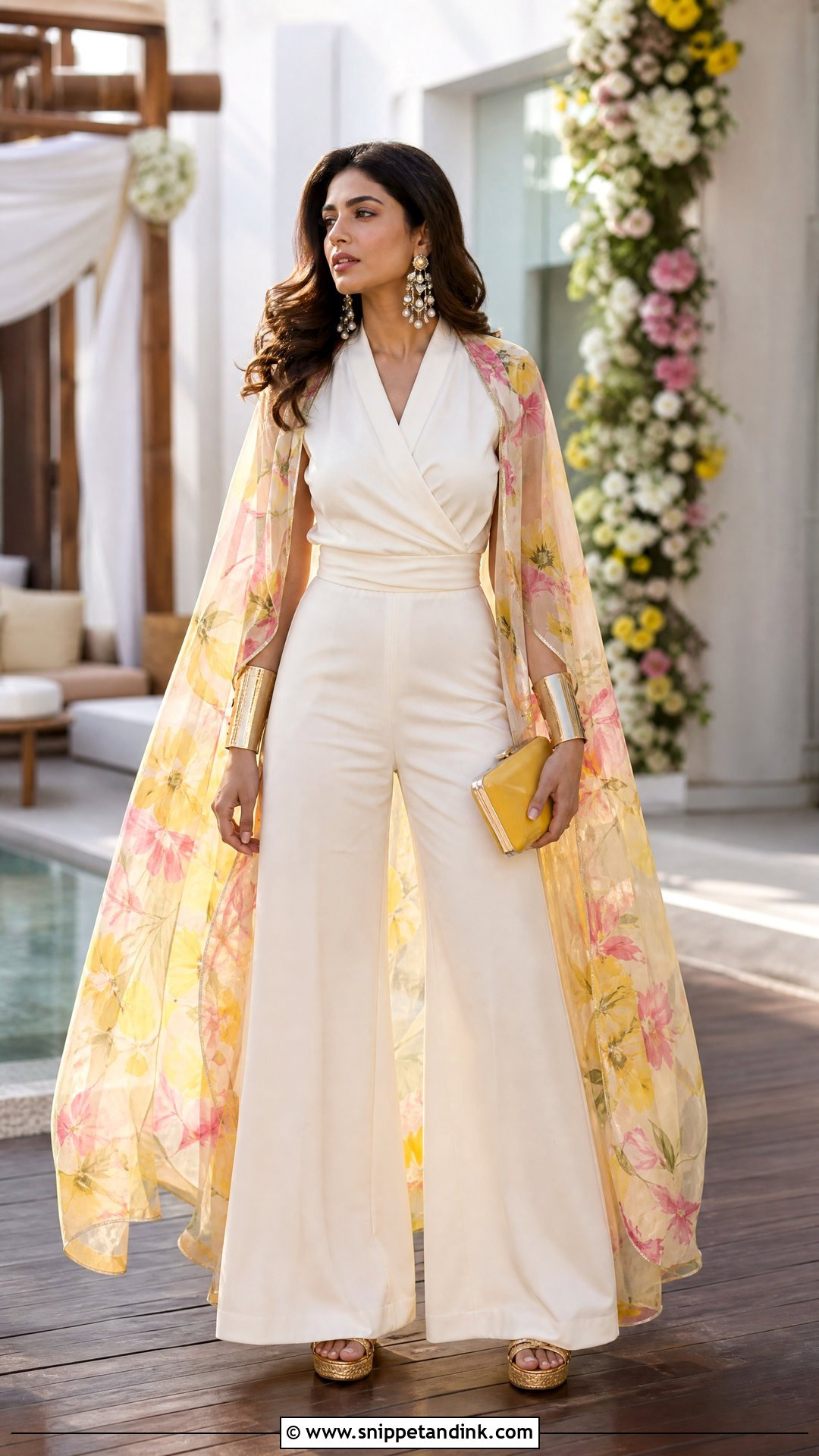
Would you rather skip separates and draping altogether? A white wide-leg jumpsuit is one zip and done. I look for a wrap or fitted bodice with real shoulder coverage and a defined waist, because a shapeless jumpsuit reads as daywear. The sheer floral cape over it, in yellow, pink and green, is what makes it a haldi outfit. Statement earrings, gold cuffs and a yellow box clutch suit the clean shape. Low platforms keep the wide hem off the ground. One honest caution: bathroom trips in a jumpsuit plus cape take time, so I’d keep this for guests and bridesmaids rather than the bride.
18. White Haldi Angarkha Set
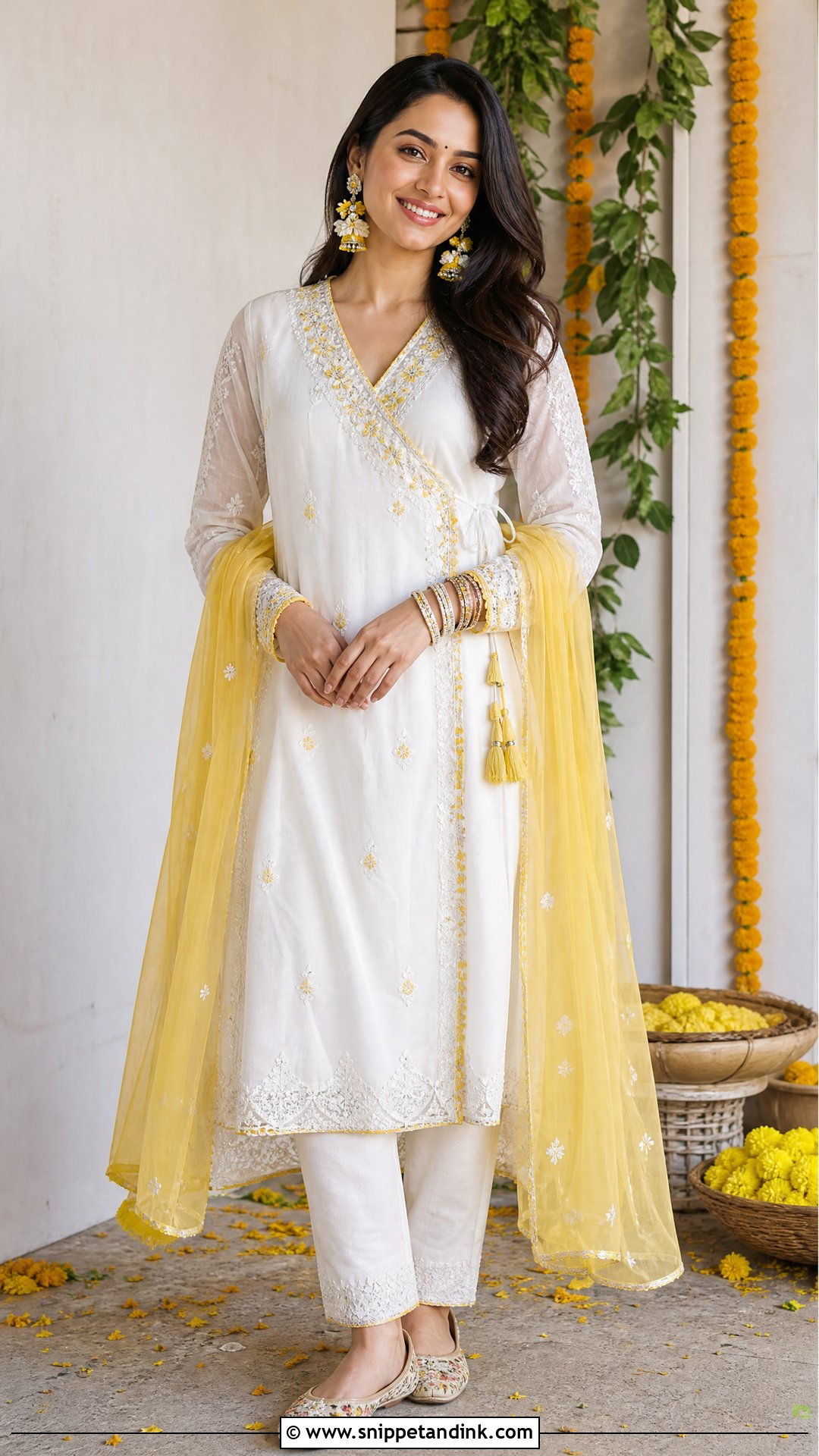
The overlapping neckline of a white angarkha does the shaping for you, so the rest of the outfit can stay simple. A knee-length kurta tied with yellow tassels at the side pairs neatly with narrow pants or churidar. Look for block-printed flowers, delicate gota edging or fine thread embroidery on a light fabric. I drape the dupatta over one shoulder only, so the wrap line stays visible. Floral jhumkas, a simple bindi, stacked white and yellow bangles and embroidered juttis are enough. Before the ceremony I double-knot the inner and outer ties, because angarkha ties loosen with every bend and stretch.
19. White Haldi Pants And Embroidered Jacket
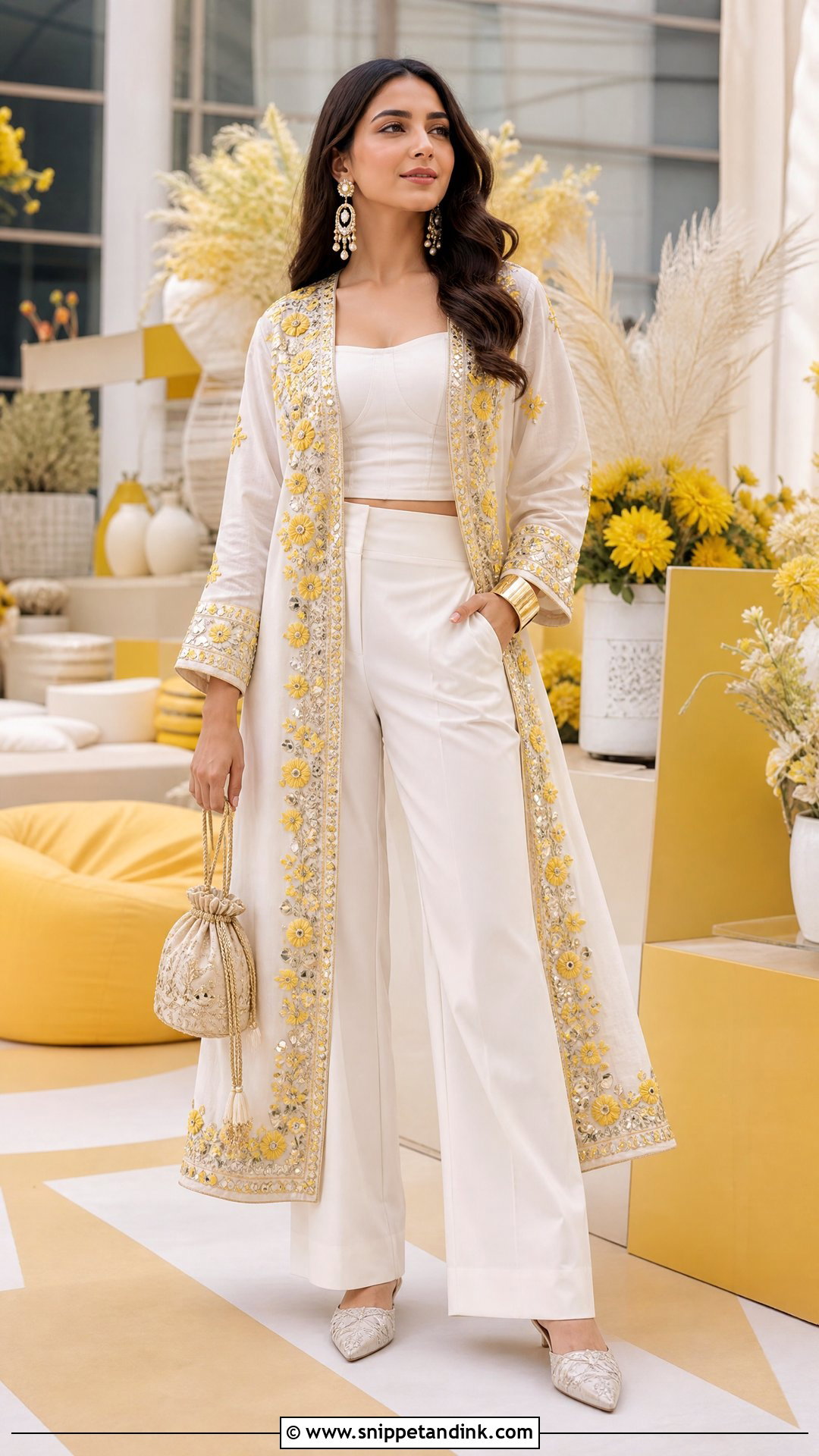
Tailored white trousers, a fitted inner top and an embroidered jacket give a sharper silhouette than anything else here. Ankle-length trousers with a clean waist sit well under either a camisole or a short kurti. The jacket carries all the colour, through yellow floral embroidery, mirror accents or a bright border. Waist-length looks younger; a longer jacket covers more and moves better. Statement earrings, a slim cuff and a structured potli finish it, with pointed embroidered mules rather than heels. I recommend it to guests who prefer Indo-Western dressing and want pieces they’ll wear again.

20. Simple White Haldi Kurta And Pants
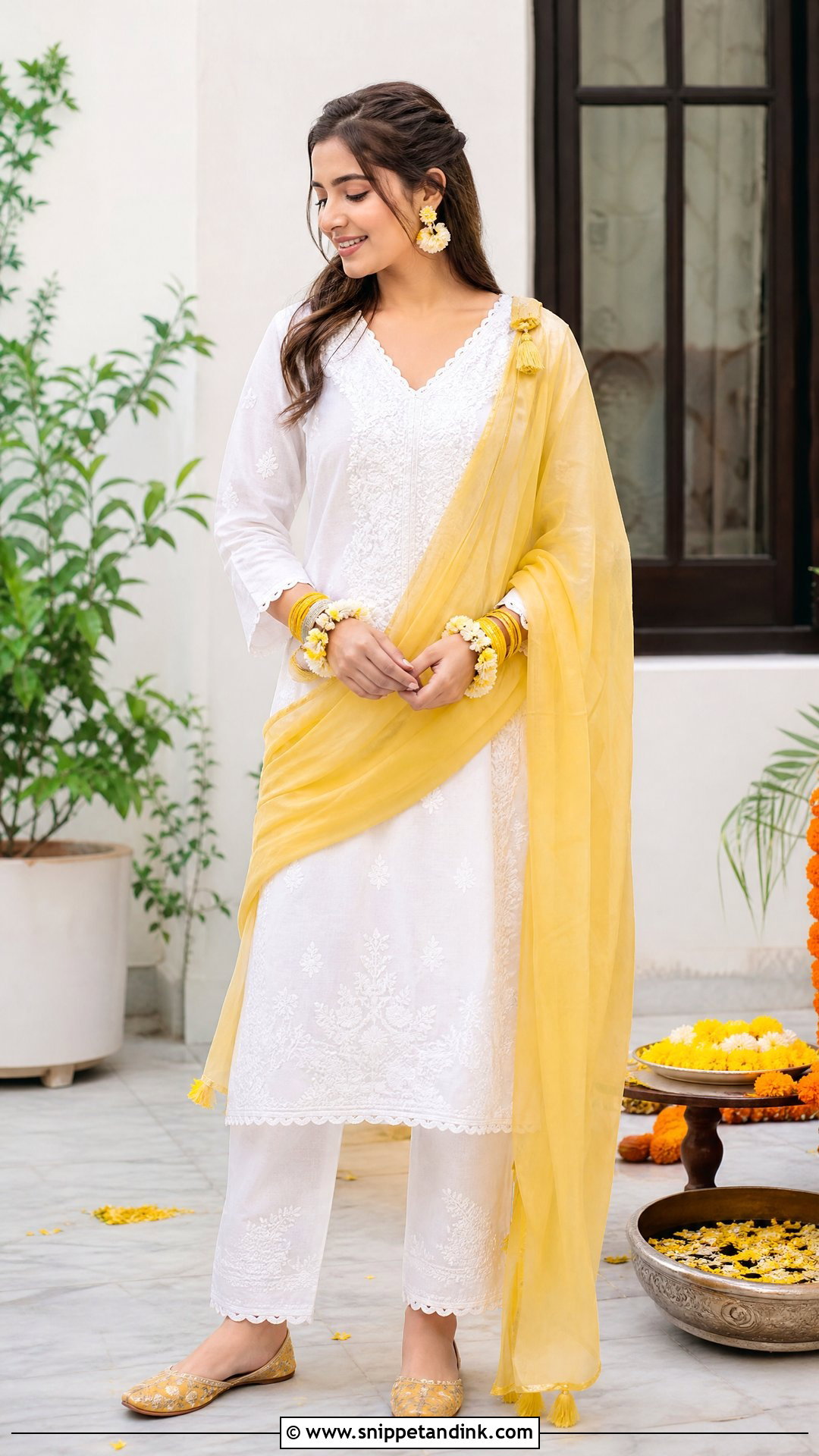
Sometimes the simplest outfit is the one people remember, because the person wearing it is relaxed. A breathable white kurta with straight pants lets the accessories bring the colour. Lace panels, scalloped cuffs or light chikankari keep it special without fuss. Pin a soft yellow tasselled dupatta at one shoulder. Floral earrings, a fresh flower bracelet and yellow glass bangles look cheerful against the white. Flat sandals or juttis, especially at a home function or on grass. It suits a minimalist bride, a guest on a budget, and anyone who wants a kurta she’ll restyle for years.
White Turns Sheer the Moment Paste Gets Wet
This is the problem nobody mentions in the shop. Turmeric paste is mixed with water, milk or rose water, and the rinse at the end soaks whatever you’re wearing. Thin white cotton, muslin and georgette go transparent when wet, and a bright daytime setting makes it worse. My checks before any white haldi outfit is final:
- Hold the fabric up to a window. If you can read your fingers through it, it needs a lining.
- Wear skin-tone innerwear, never white. White innerwear shows through wet white fabric more than nude does.
- Ask for a full lining in the bodice and at least to the knee in the skirt or kurta.
- Keep a change of clothes ready if there’s a water or flower-shower ritual after the paste.
Getting Turmeric Out of White Fabric Afterwards
Assume the outfit will be stained; that’s part of the ritual. What you do in the first hour decides whether the stain stays. I tell brides to scrape off excess paste with a spoon, never rub it, and rinse from the back of the fabric with cold water. Hot water sets the colour.
Don’t panic if the stain turns red or orange when it meets soap. Turmeric reacts to alkaline detergents and shifts colour; it isn’t spreading. A mild liquid detergent worked in gently, then a few hours drying in direct sunlight, fades most of what remains, because sunlight breaks the yellow pigment down. Embroidered, mirror-work or silk pieces should go straight to a dry cleaner, and tell them it’s turmeric so they treat it before cleaning.
Dress for the Paste First, the Photos Second
A white outfit at a haldi works when it respects the function: wet paste, floor seating, dancing and a long morning in the sun. Lehengas and sarees give you the traditional bridal shape, while kaftans, co-ords, jumpsuits and trousers make a lively pre-wedding function easier to enjoy. Yellow dupattas, floral jewellery and embroidered jackets stop white from looking plain. Whatever you pick, do one test at home: sit on the floor, stand up, raise your arms and walk across the room. If you can do all four without adjusting anything, the outfit is ready.
You'll Like These Ideas:


Leave a Reply