
Haldi is the one wedding function where your outfit will definitely get messy, and I dress people for it with that in mind. You’ll sit low, lean in, get paste on your arms and probably on your clothes, then dance. So the questions I ask first are practical: can you sit cross-legged in it, will the sleeves be in the way, and do you mind if it’s stained? Below are the styles I suggest most, from yellow lehengas and sarees to sharara sets, kaftans and Indo-western pieces, with notes on who each suits: the bride, her sisters and bridesmaids, or guests. Mustard, marigold, lemon, ivory, peach and green all belong here, worn with flower jewelry, juttis and a light dupatta.

What Sitting Through a Haldi Asks of Your Clothes
Before anyone falls for a particular outfit, I walk them through what the ritual actually involves. The bride or groom usually sits on a low stool or on the floor while family members apply turmeric paste to the face, arms, hands and feet. Then the play starts, and everyone nearby is fair game.
- Sleeves: elbow length or shorter keeps your arms free for the paste. Long sleeves end up stained and pushed up anyway.
- Hems: anything that pools on the floor will be sitting in spilled haldi. Pick lengths that clear the ground when you sit.
- Dupattas: pin them, or leave them off during the application. A loose dupatta drifts into the bowl.
- Embellishment: zari and metallic thread are hard to clean once turmeric oil gets into them. Save heavy work for a later function.
- Jewelry: fresh flower or fabric jewelry is the tradition for a reason. It doesn’t matter if it gets yellow.
If you’re the bride, plan a second outfit for after the ritual if there’s a lunch or dancing to follow. It takes the pressure off the first one completely.
1. Yellow Lehenga For Haldi
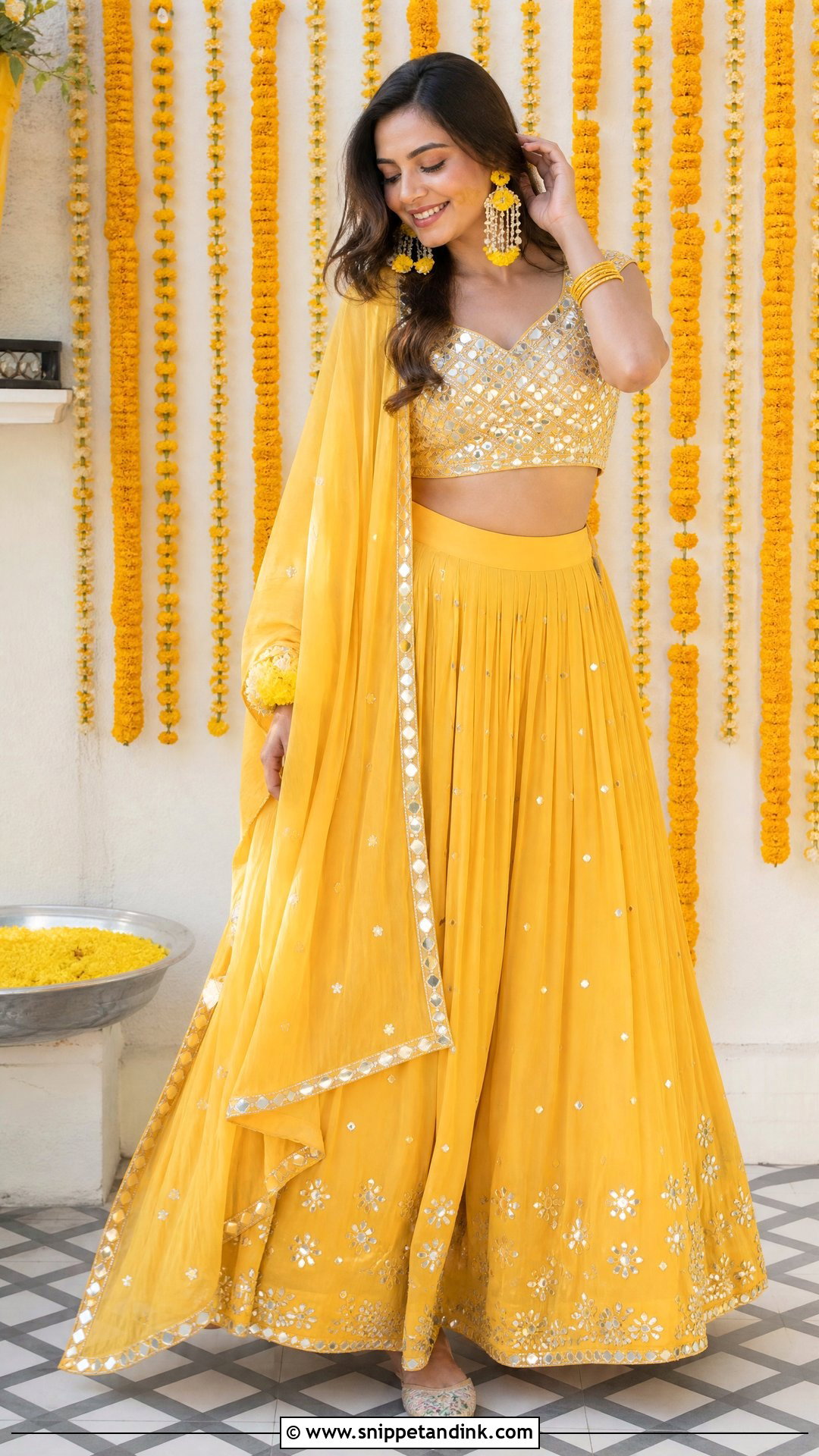
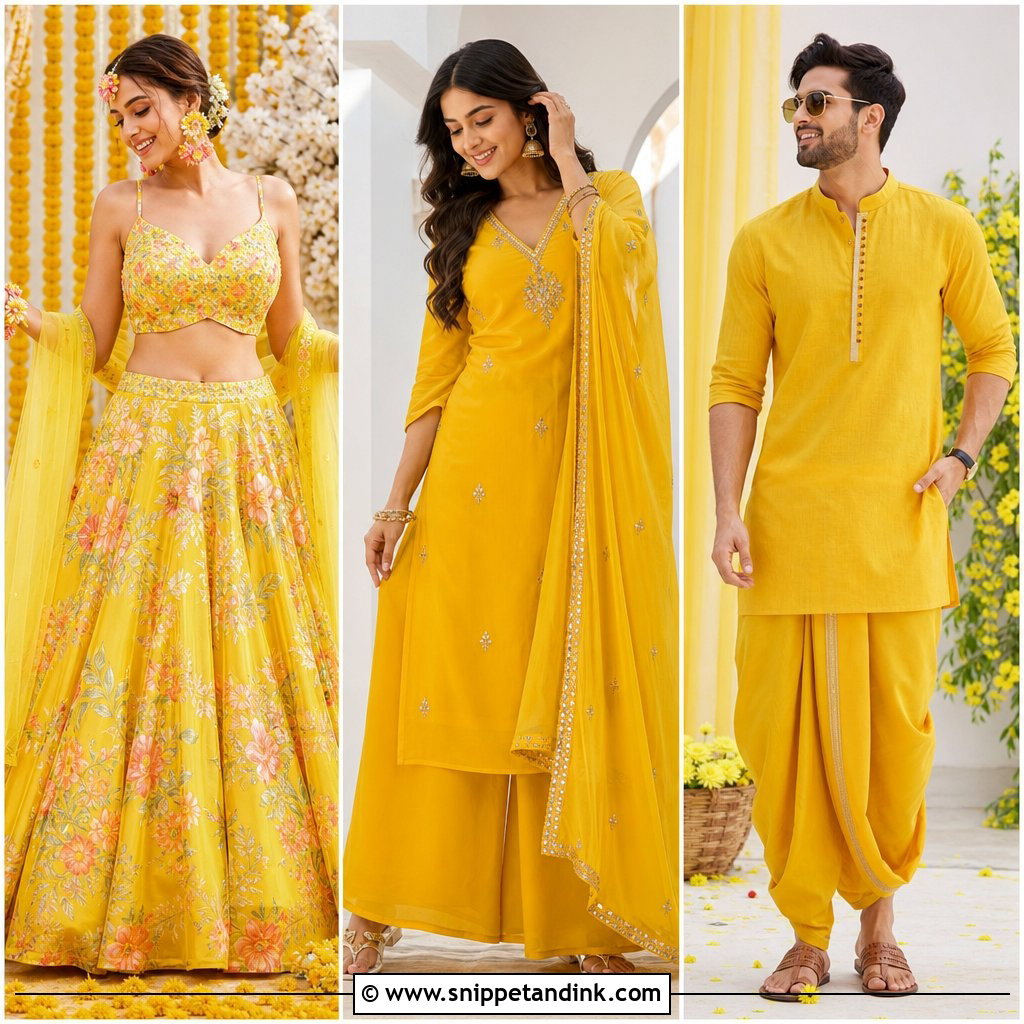
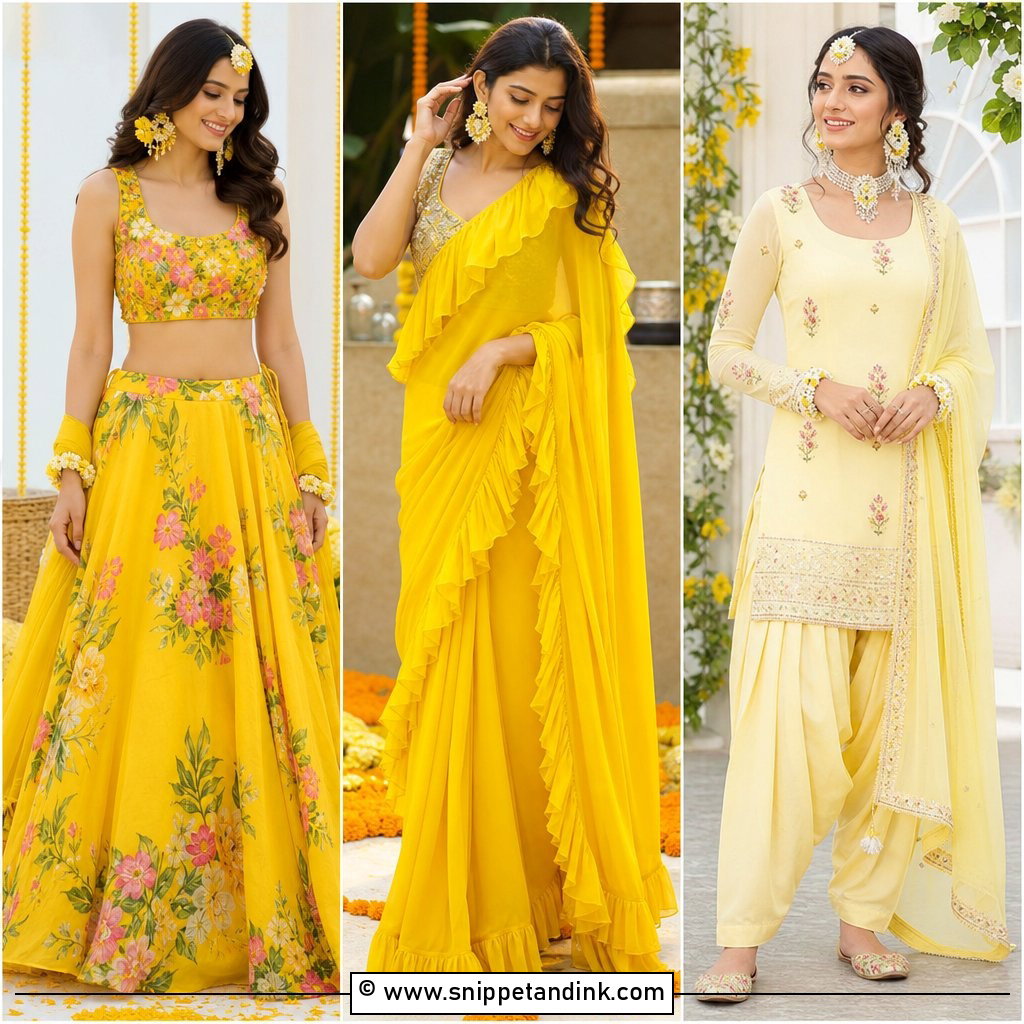
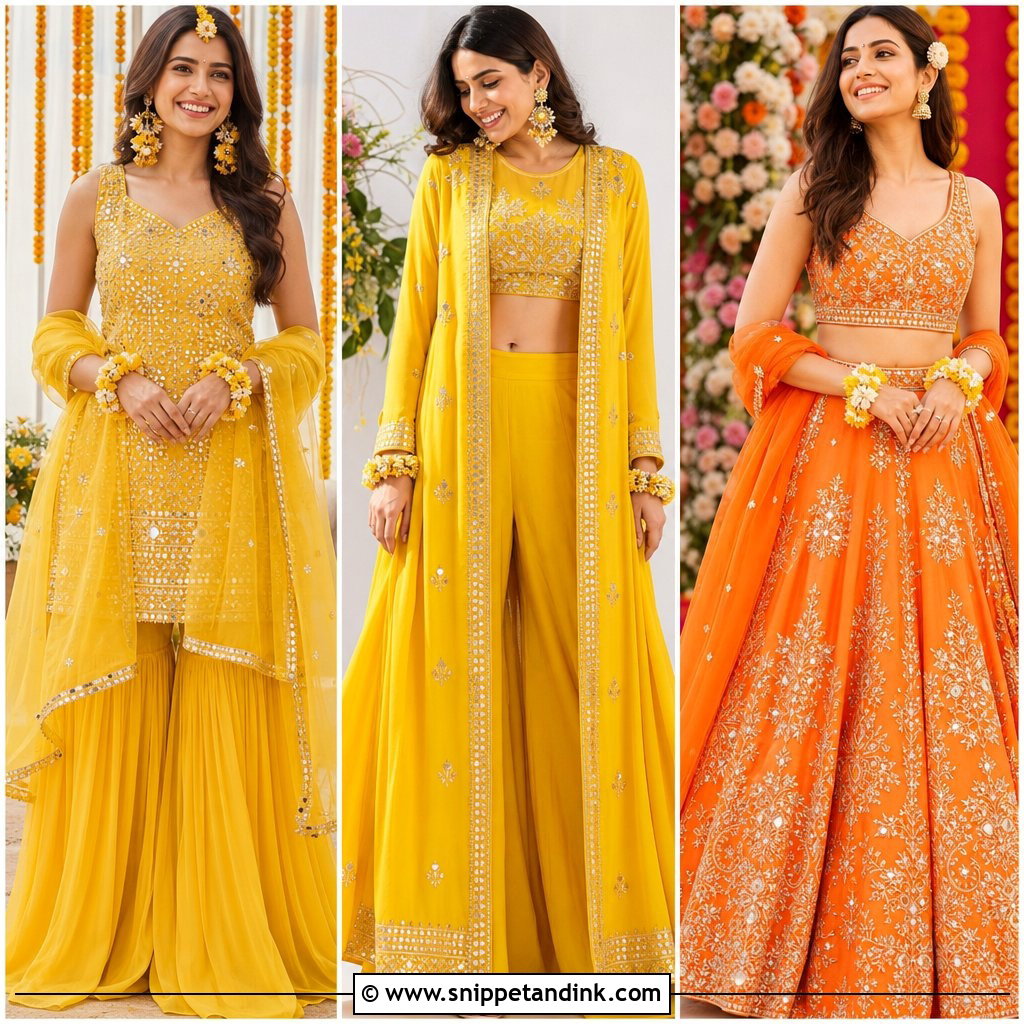
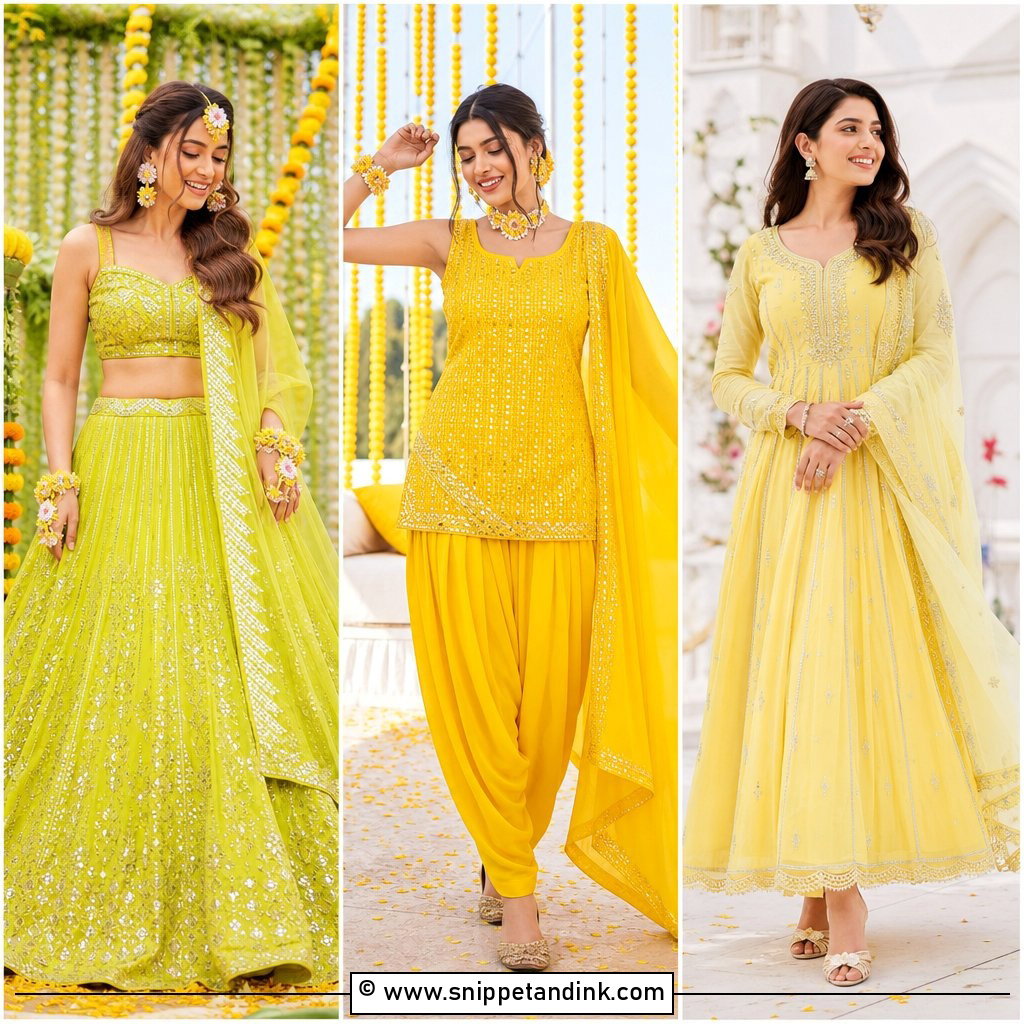
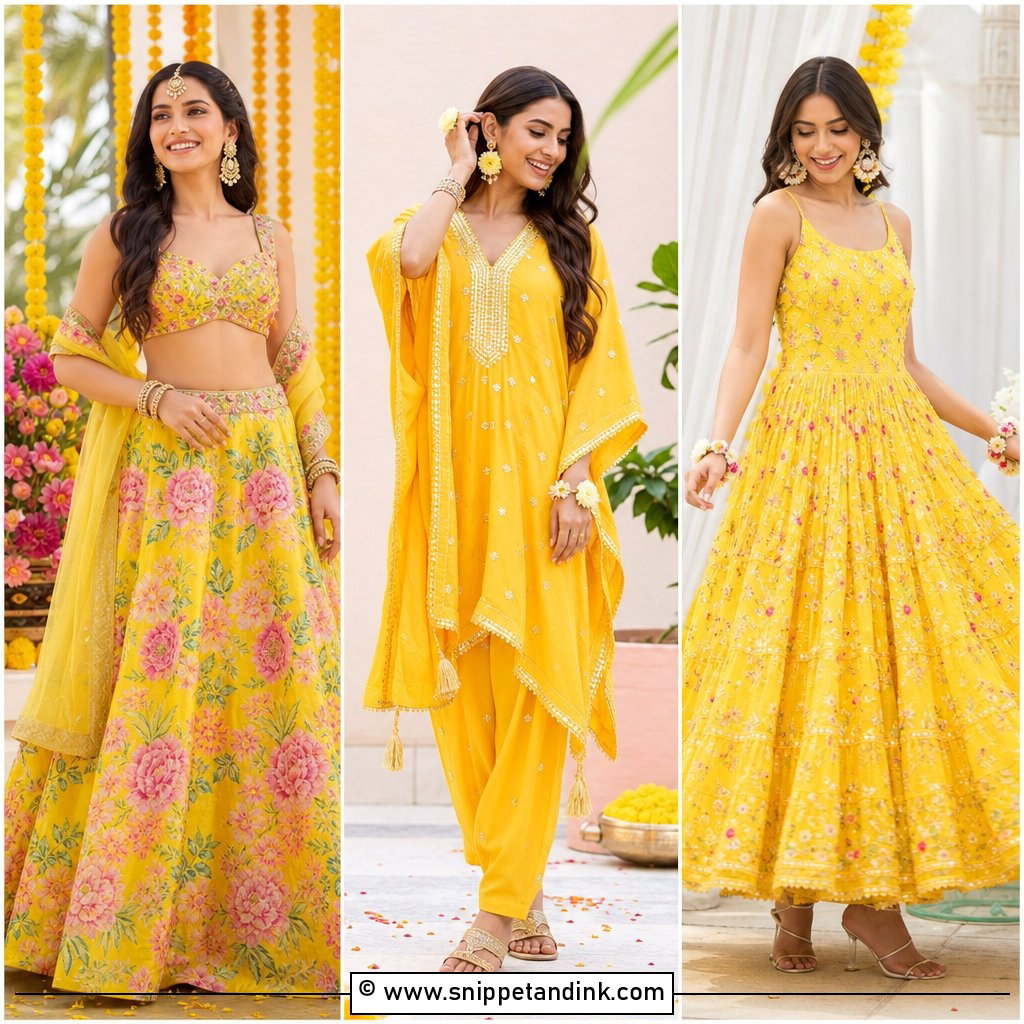
A yellow lehenga is the classic Haldi look, and it earns that place because the color simply belongs to the day. Keep the skirt light: georgette, cotton silk, organza or chiffon. Heavily lined, can-can-stiffened skirts make sitting on a low stool awkward and get hot by midday. A mirror work blouse, gota patti border or thread embroidery gives enough detail. Pin the dupatta firmly on one shoulder so it doesn’t drop into the turmeric bowl. Brides can go fully floral with fresh flower jewelry; guests should keep jewelry lighter and let the yellow lead.
2. Floral Saree For Haldi
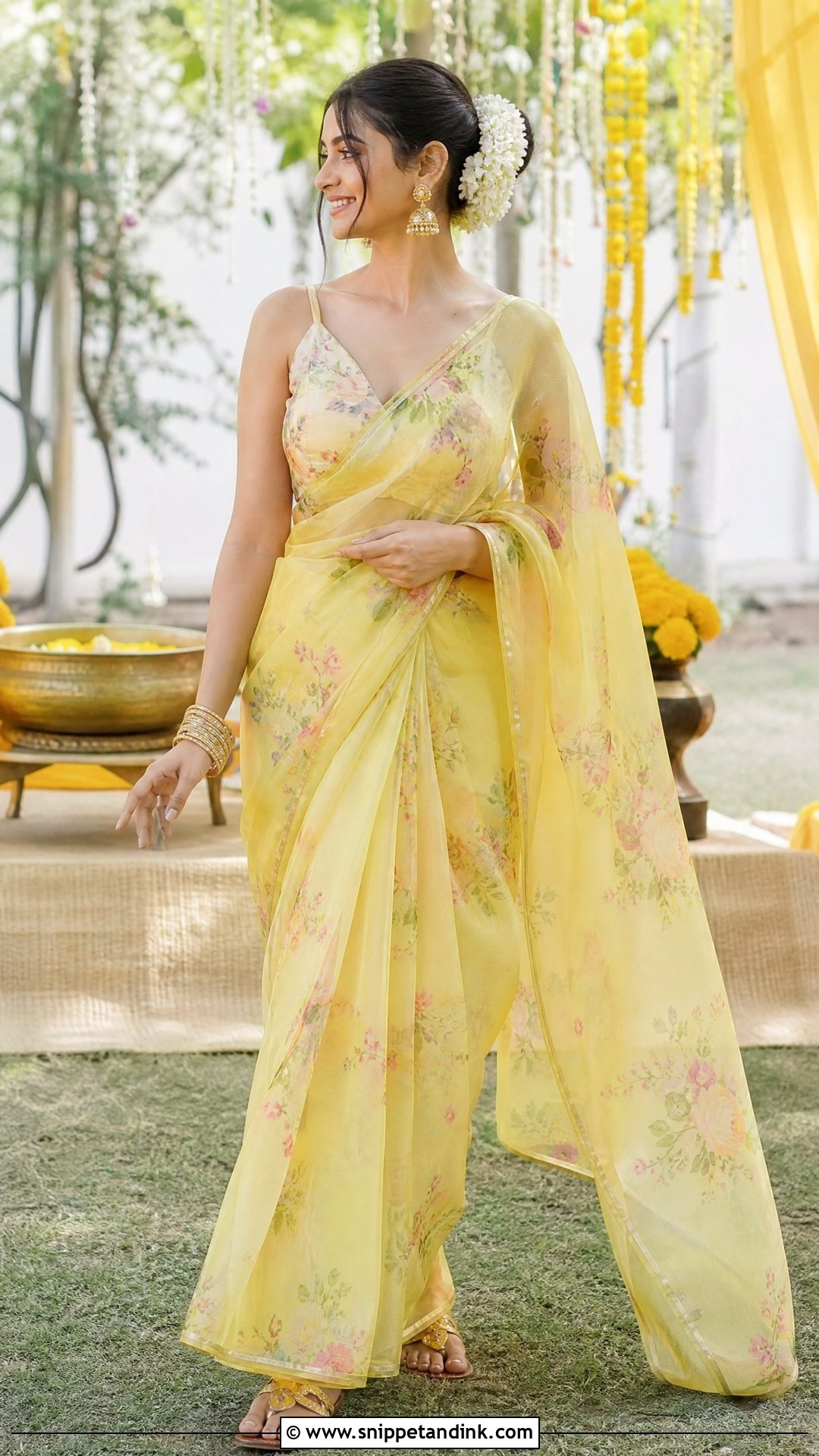
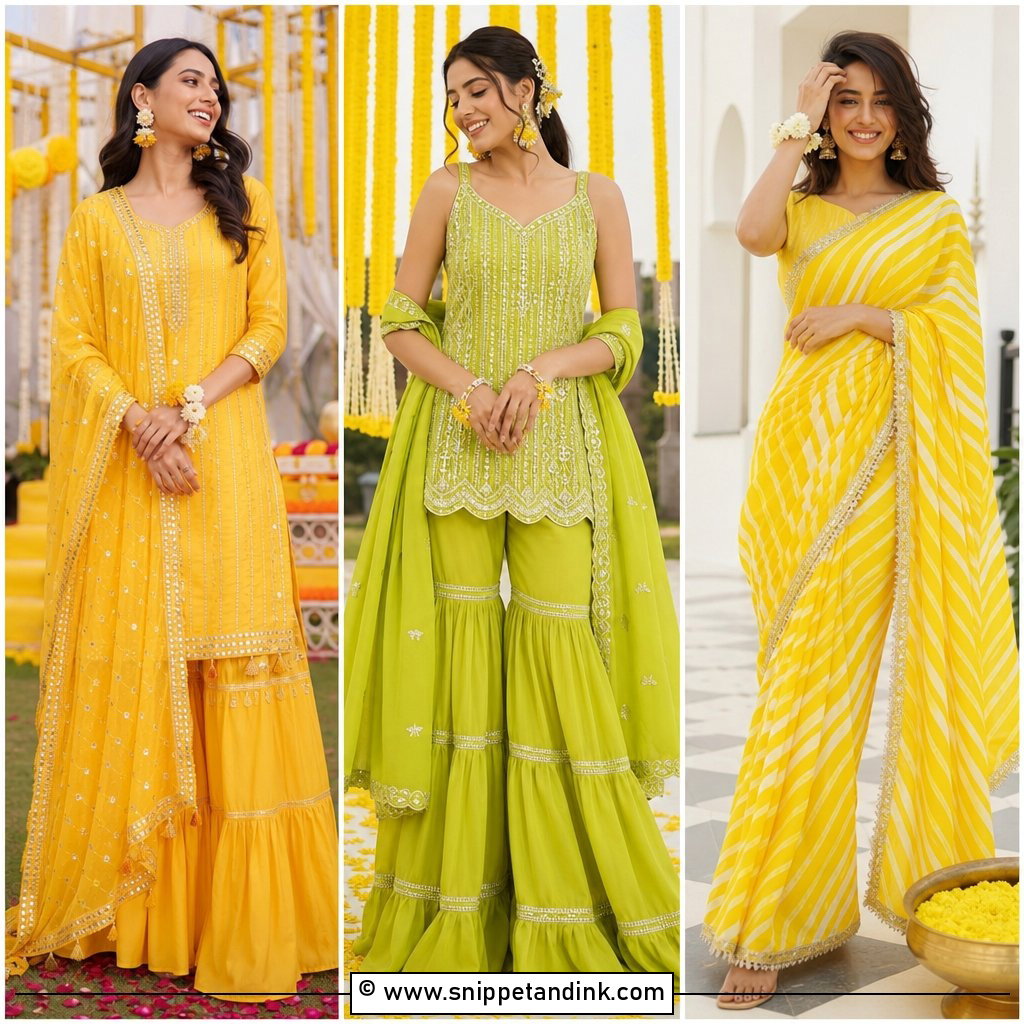
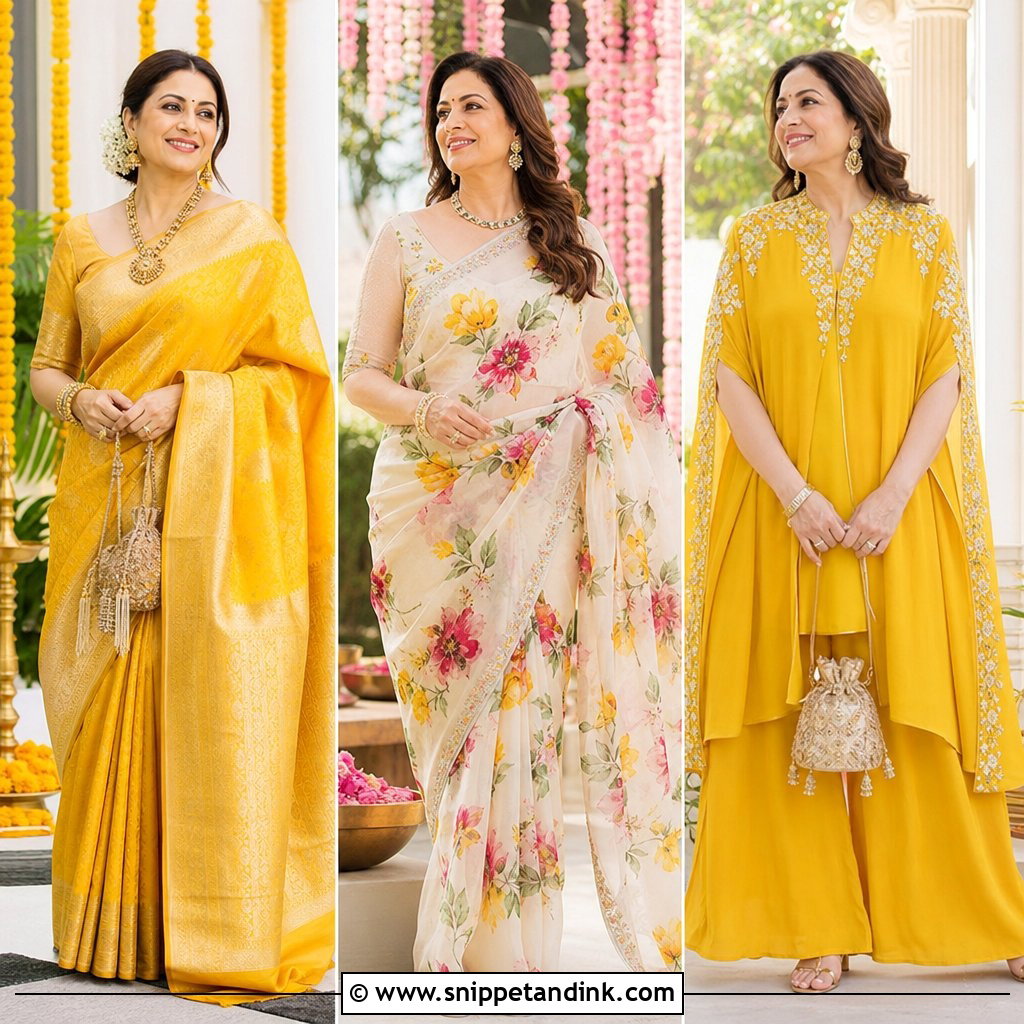
Floral prints on organza, georgette, cotton or lightweight silk keep a saree fresh for a daytime ceremony. Yellow, ivory, peach and pastels all work. These fabrics drape softly and don’t fight you when you sit. I’d pin the pleats more securely than usual, since you’ll be bending and getting up repeatedly. A fitted blouse, simple jhumkas, a small bindi and flat sandals or juttis keep it grounded, and a loose bun with fresh flowers gives it a traditional finish. Sisters, close friends and brides who’d rather skip a heavy lehenga all look right in it.
3. Yellow Sharara Set For Haldi
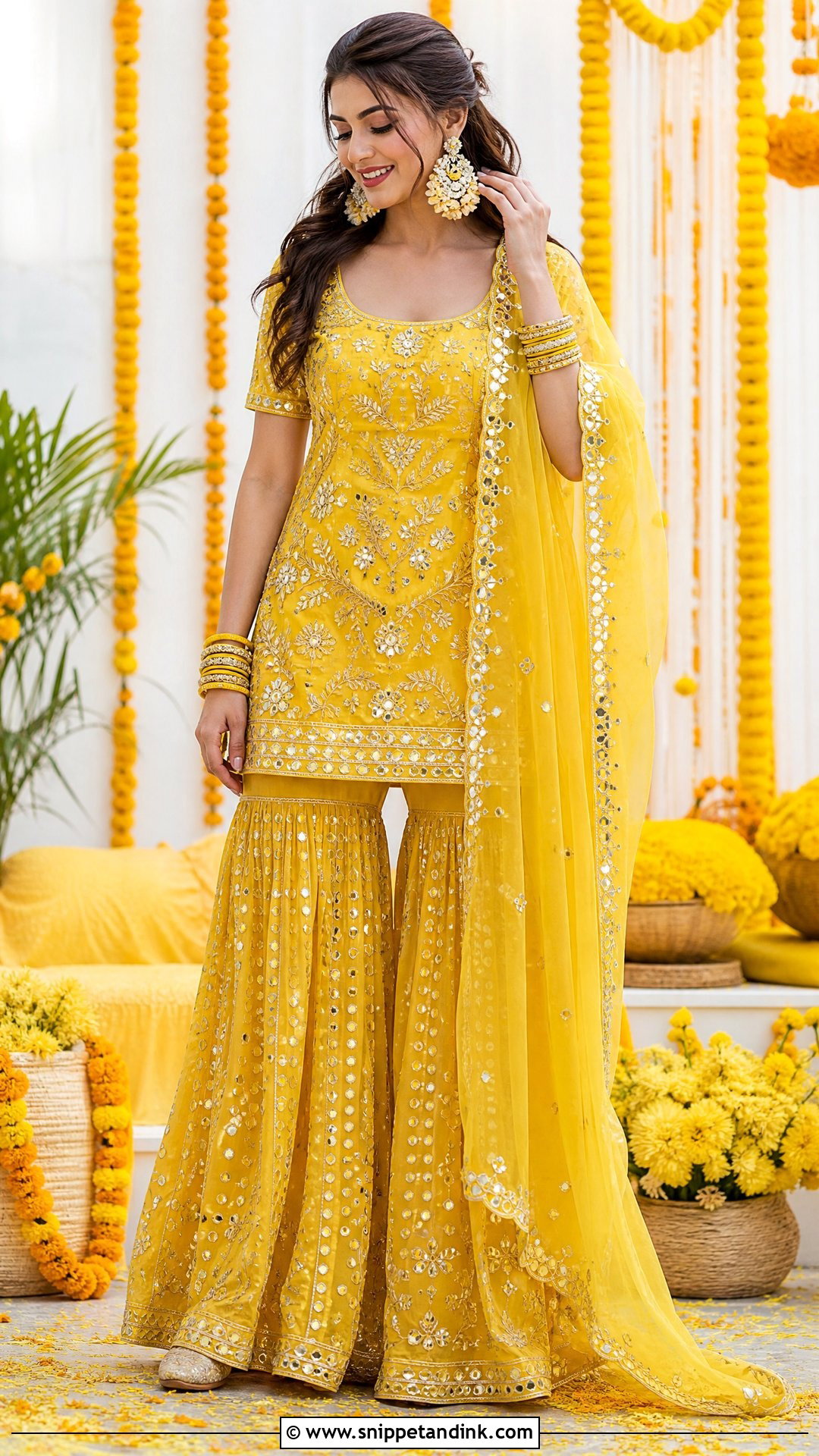
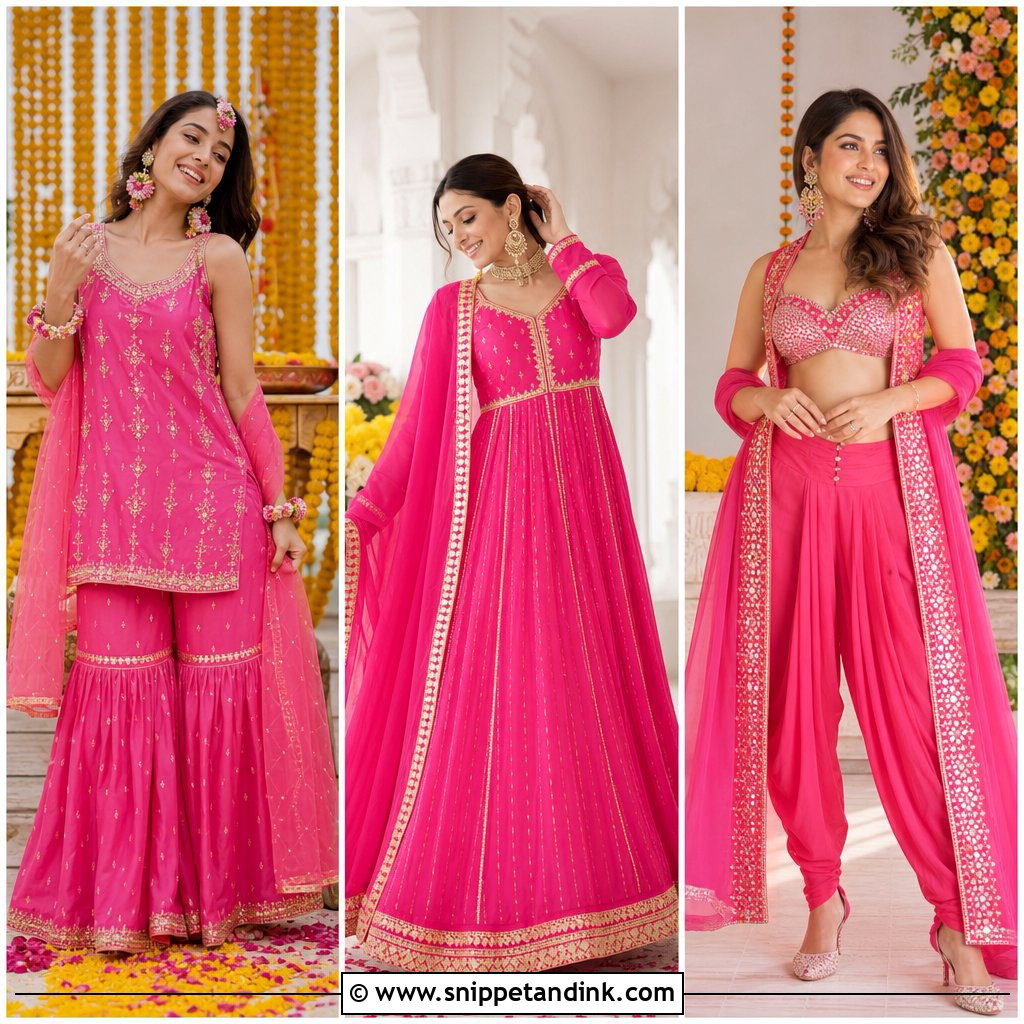
If a lehenga feels like too much, a yellow sharara set gives the same festive volume with far less to manage. The flared pants look dressy and the kurti stays comfortable through rituals and dancing. A short kurti looks younger; a longer one feels more formal and gives more coverage when you sit. Mirror work, gota patti or light embroidery adds the wedding sparkle. Choose a sharara with an elasticated or drawstring waist rather than a fitted zip if you’ll be on the floor for long. Bridesmaids and cousins can wear it without competing with the bride.
4. Mustard Gharara For Haldi
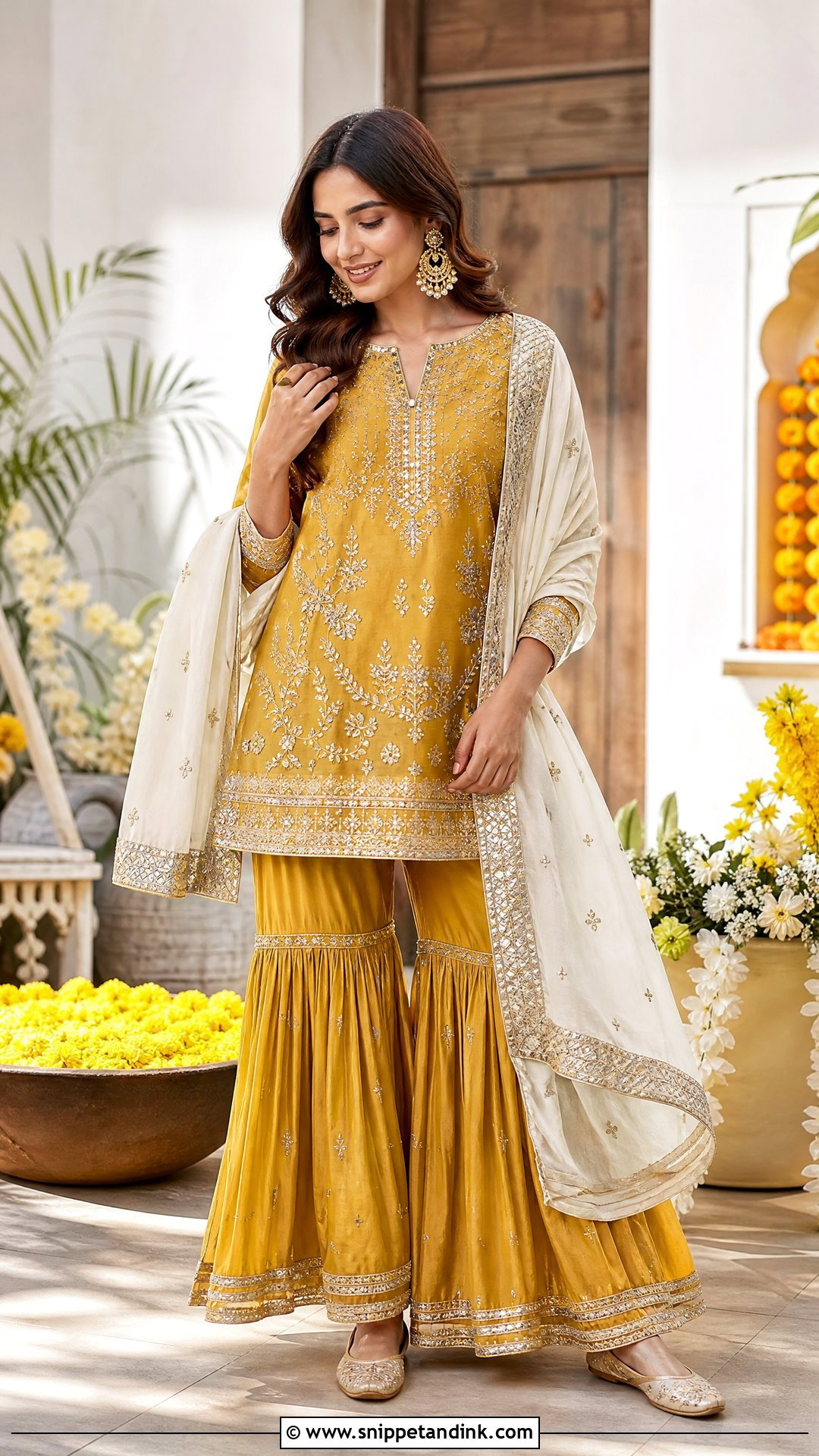
Mustard reads richer than lemon yellow and holds its depth in photos, especially in shade. A gharara gathers at the knee and flares below it, so it gives real shape at the waist and movement at the hem. Soft fabric matters here; a stiff gharara stands out like a bell and makes squatting awkward. Pair a short kurti with zari, gota or mirror detail to balance the volume, and try an ivory, green or orange dupatta. Statement earrings and cushioned juttis finish it.
5. Chikankari Kurta Set For Haldi
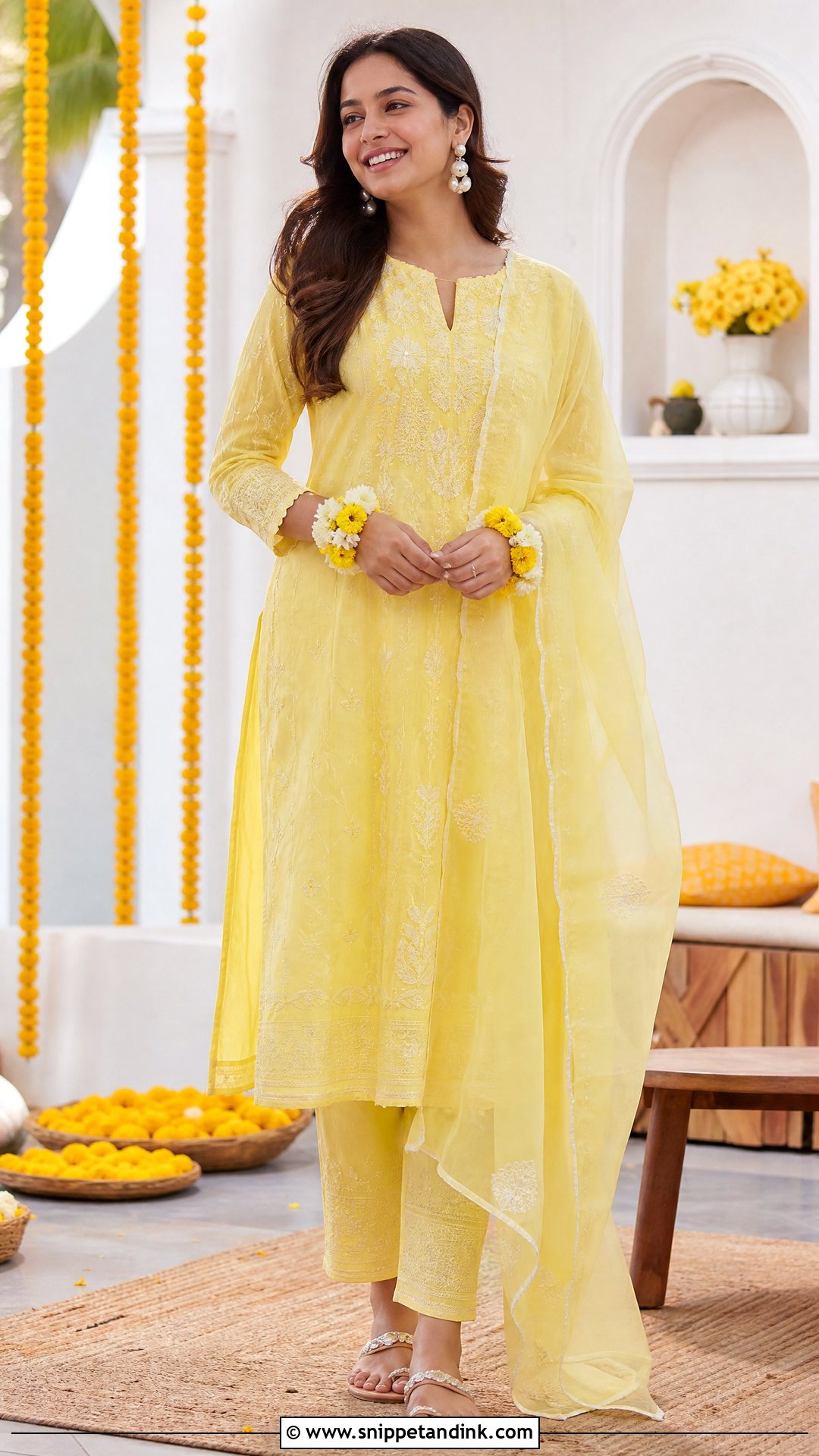
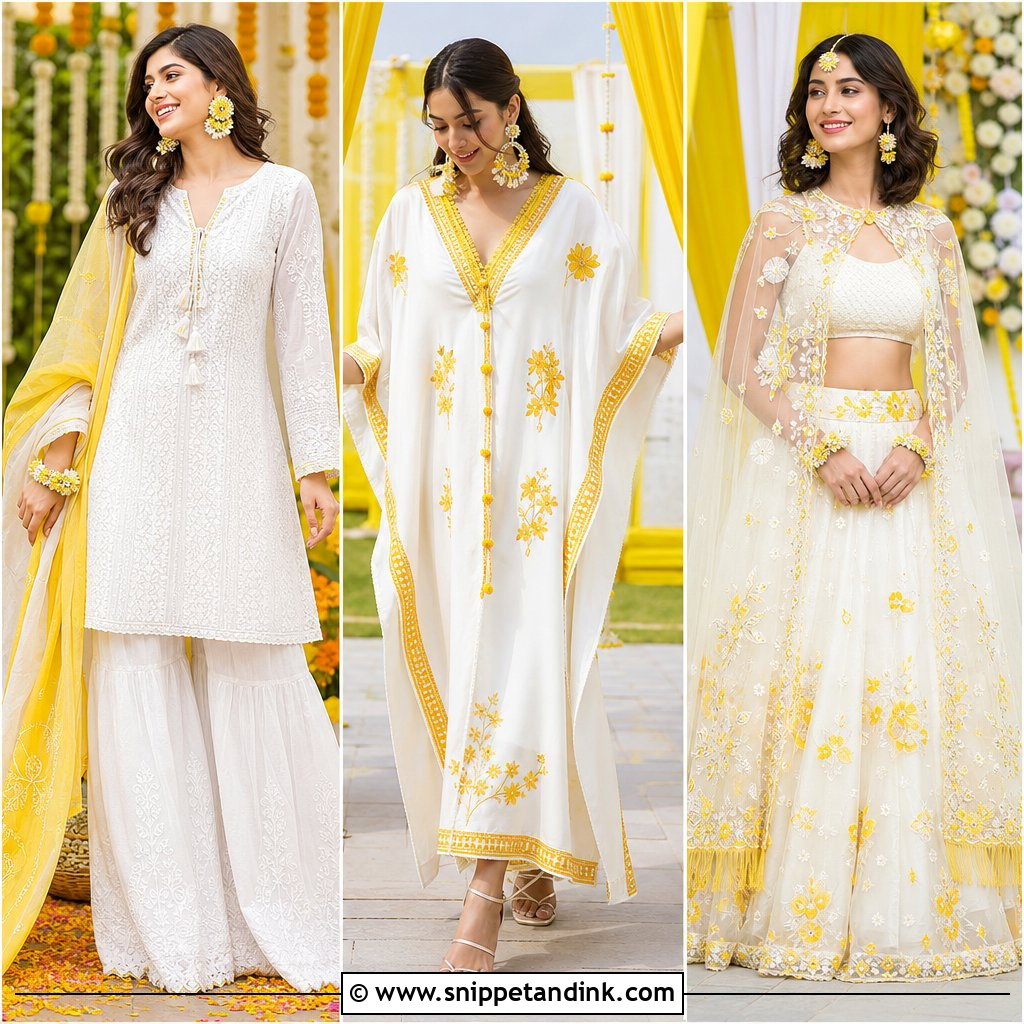
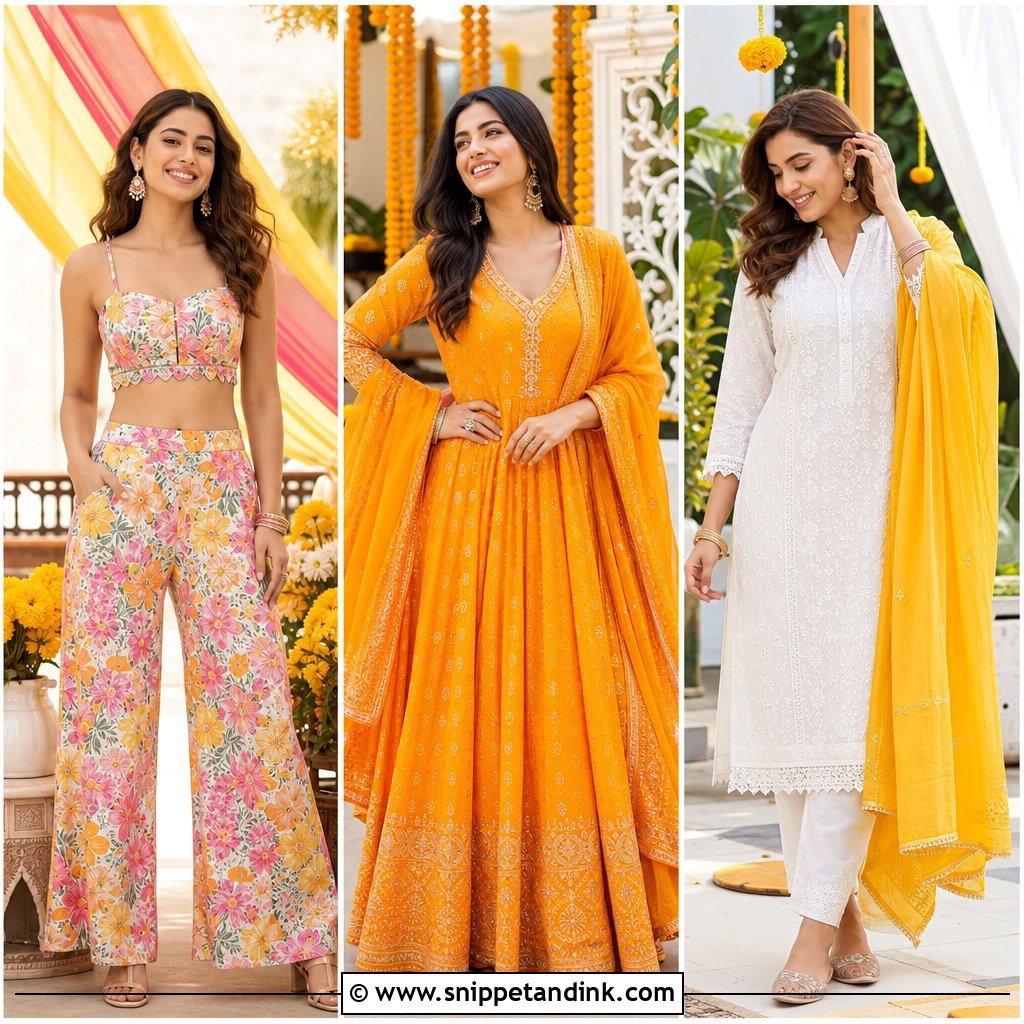
Chikankari is the outfit I suggest for a small home Haldi or a hot day. The hand embroidery adds texture without weight, and cotton or georgette chikankari breathes well. Lemon, ivory or pastel yellow with straight pants, palazzos or a light sharara all work. Real chikankari on fine cotton will usually wash well if turmeric lands on it, which is more than I can say for most embellished pieces. Pearl earrings, flower bangles, soft sandals and a sheer dupatta keep it light; a marigold or green dupatta adds contrast.
6. Anarkali Dress For Haldi
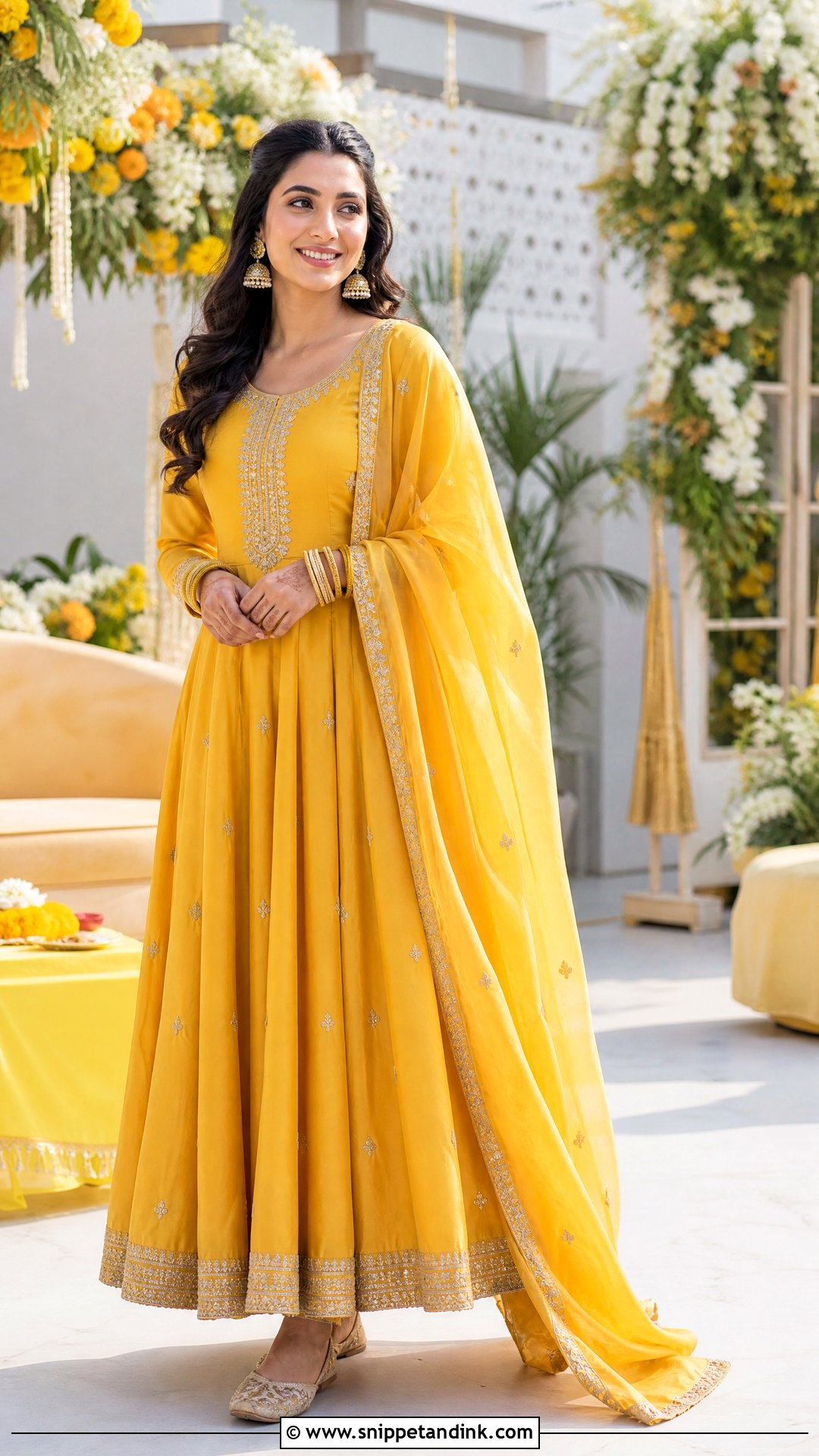
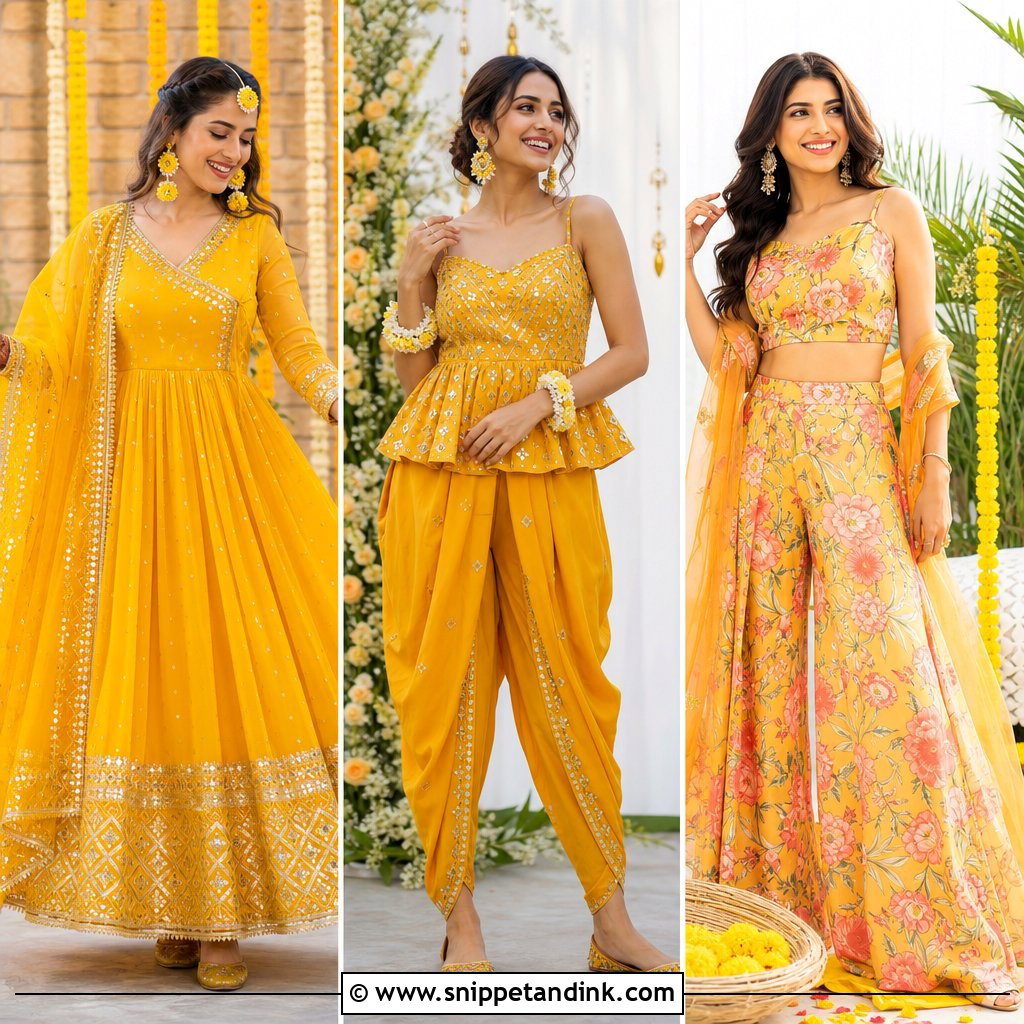
An Anarkali gives you one piece to manage instead of three, which counts at a busy ritual. A yellow or mustard Anarkali with light embroidery, tie-dye or a floral print flares beautifully when you turn and photographs well from any angle. For comfort, choose cotton, georgette, rayon or chiffon. The full flare does pool around you when you sit on the floor, so lift it slightly as you sit to keep the hem out of the paste. Add a matching dupatta, earrings, bangles and juttis. It suits brides who want a traditional silhouette and guests who want coverage.
7. Yellow Palazzo Suit For Haldi
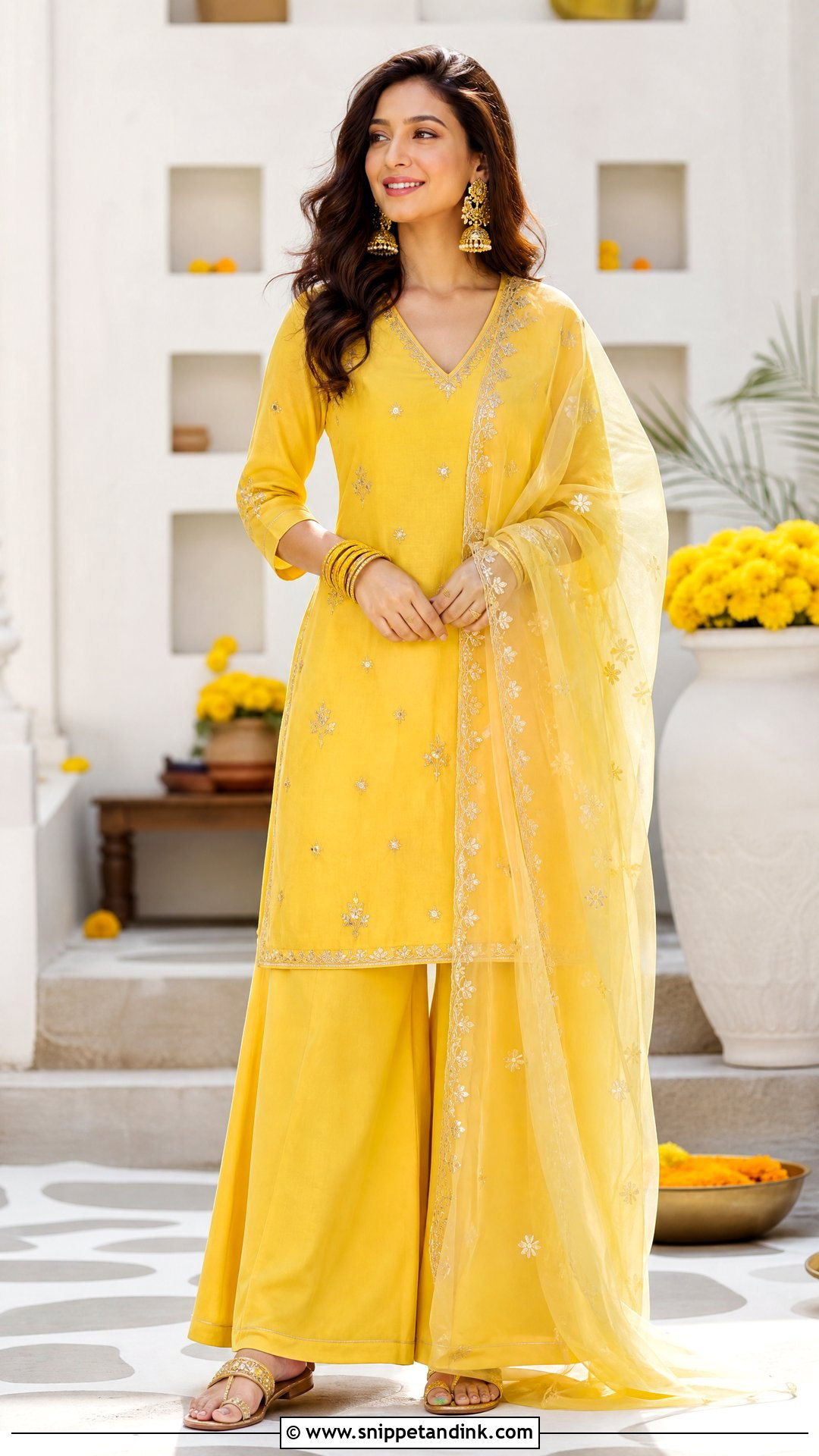
Palazzo suits are what I’d hand to anyone who expects to be in the thick of the turmeric play. Wide legs let you move freely, and a short or knee-length kurta keeps the proportions right. Small mirror work, lace trims, block prints or light embroidery suit a casual event; a silk blend or georgette set with a soft dupatta dresses it up. Jhumkas, bangles and flat sandals keep you steady on a wet floor. Mothers, sisters and guests who want something comfortable but still festive tend to love it.
8. Yellow Co Ord Set For Haldi
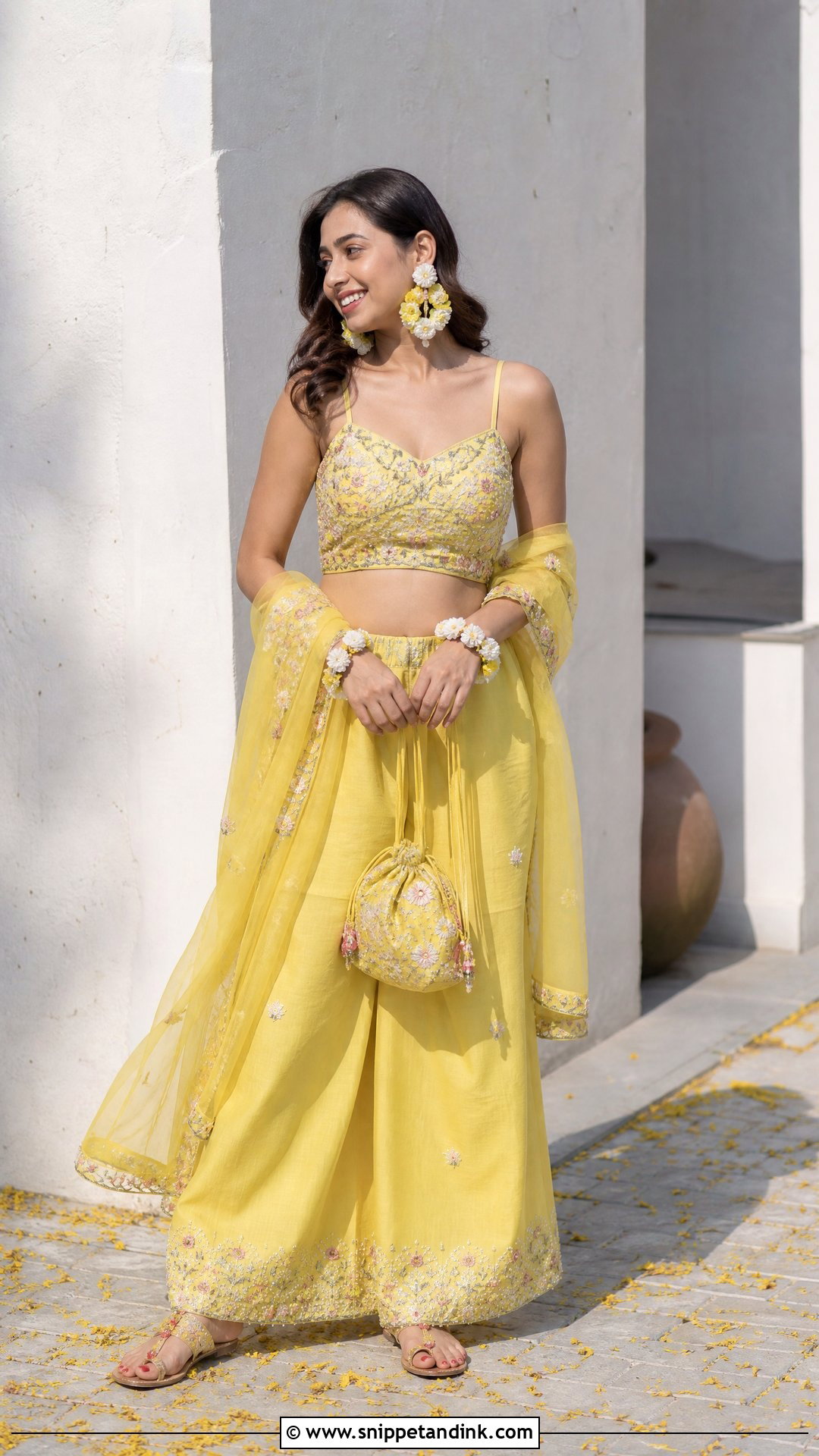
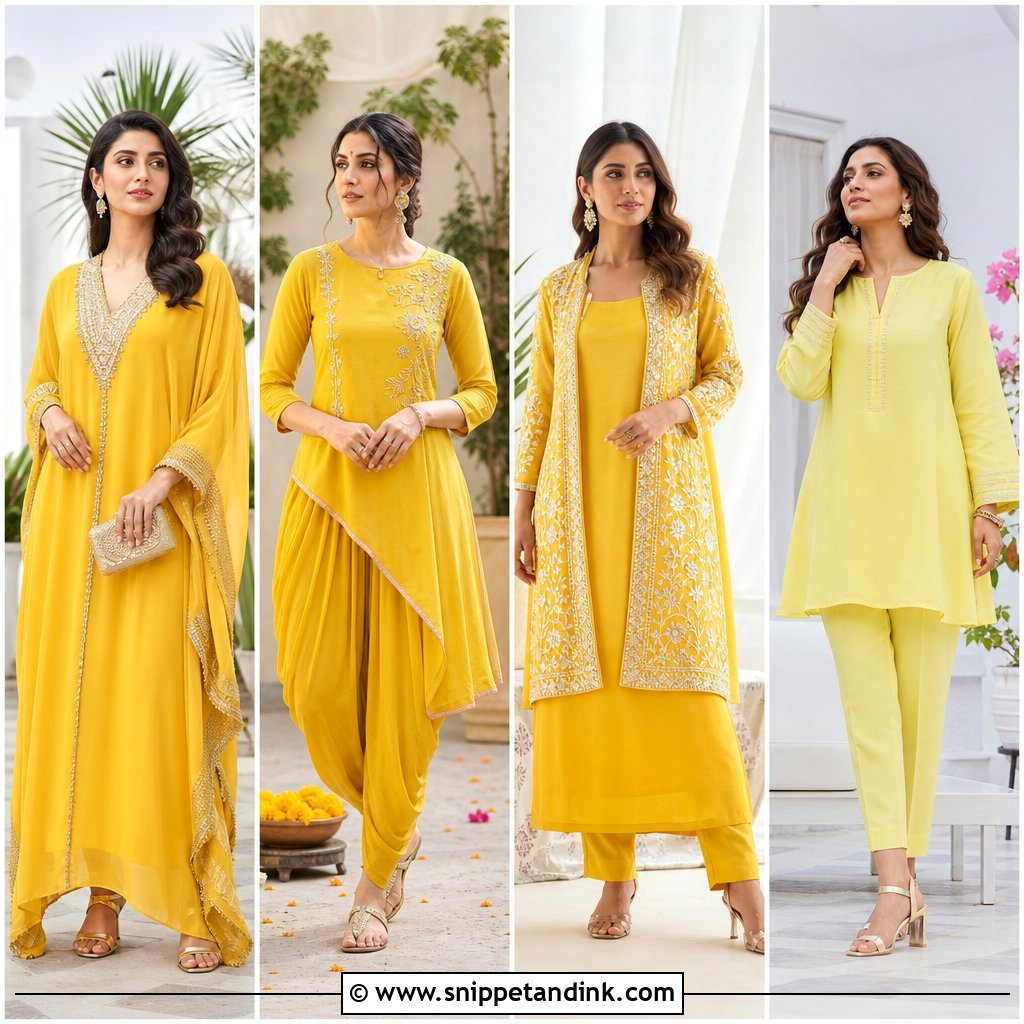
A yellow co ord set is the cleanest modern option: a crop top with a flared skirt, a short kurti with pants or a relaxed tunic with wide-leg trousers. Matching sets look put together with almost no styling. Cotton or a linen blend suits a casual daytime event; silk blend or georgette suits something more formal. If you’re coordinating a group of bridesmaids, co-ords are easy to buy in different sizes and shades within one color family. Floral earrings, kolhapuri flats, a small potli bag and soft waves complete it.
9. White And Yellow Saree For Haldi
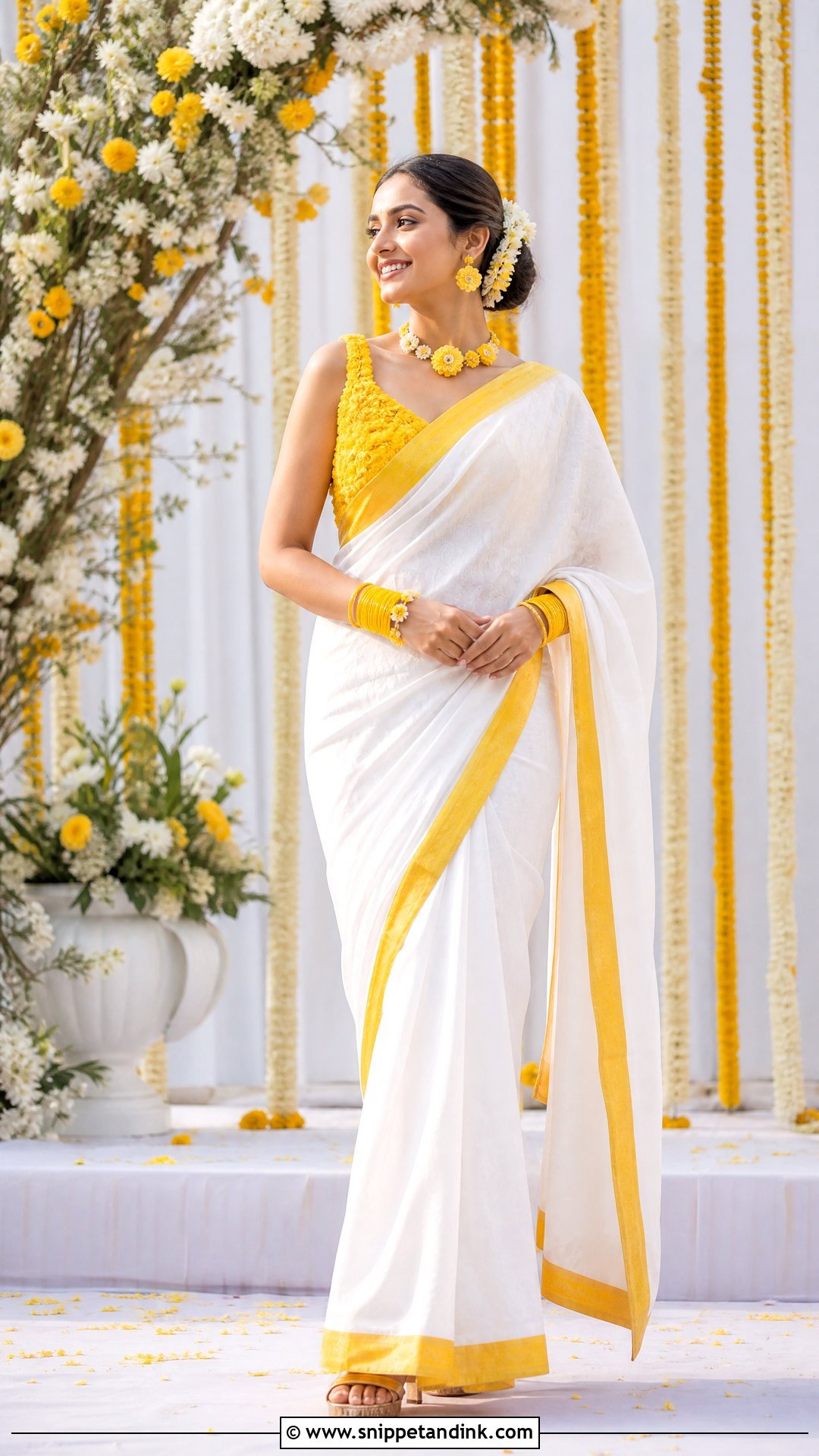
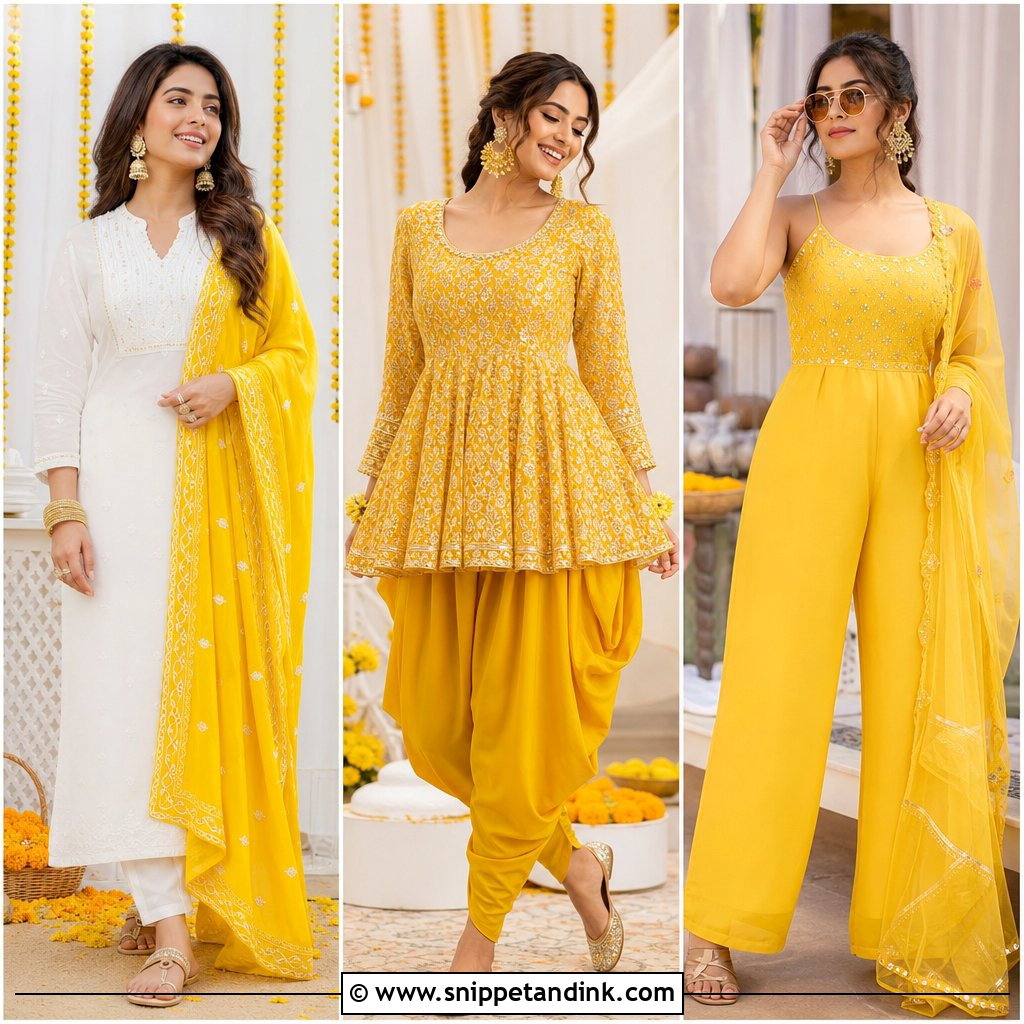
White and yellow look fresh together in daylight, but white is the hardest color to rescue from turmeric. I’d only wear a white saree with a yellow border, yellow florals or a marigold blouse if you’re happy to treat it as a one-time outfit or you’re changing before the paste comes out. Cotton, organza and georgette are good fabrics. Yellow bangles, flower jewelry, a sleek bun and gold sandals finish it. It works well for pre-ritual portraits and for guests standing back from the action.
10. Haldi Kaftan Dress
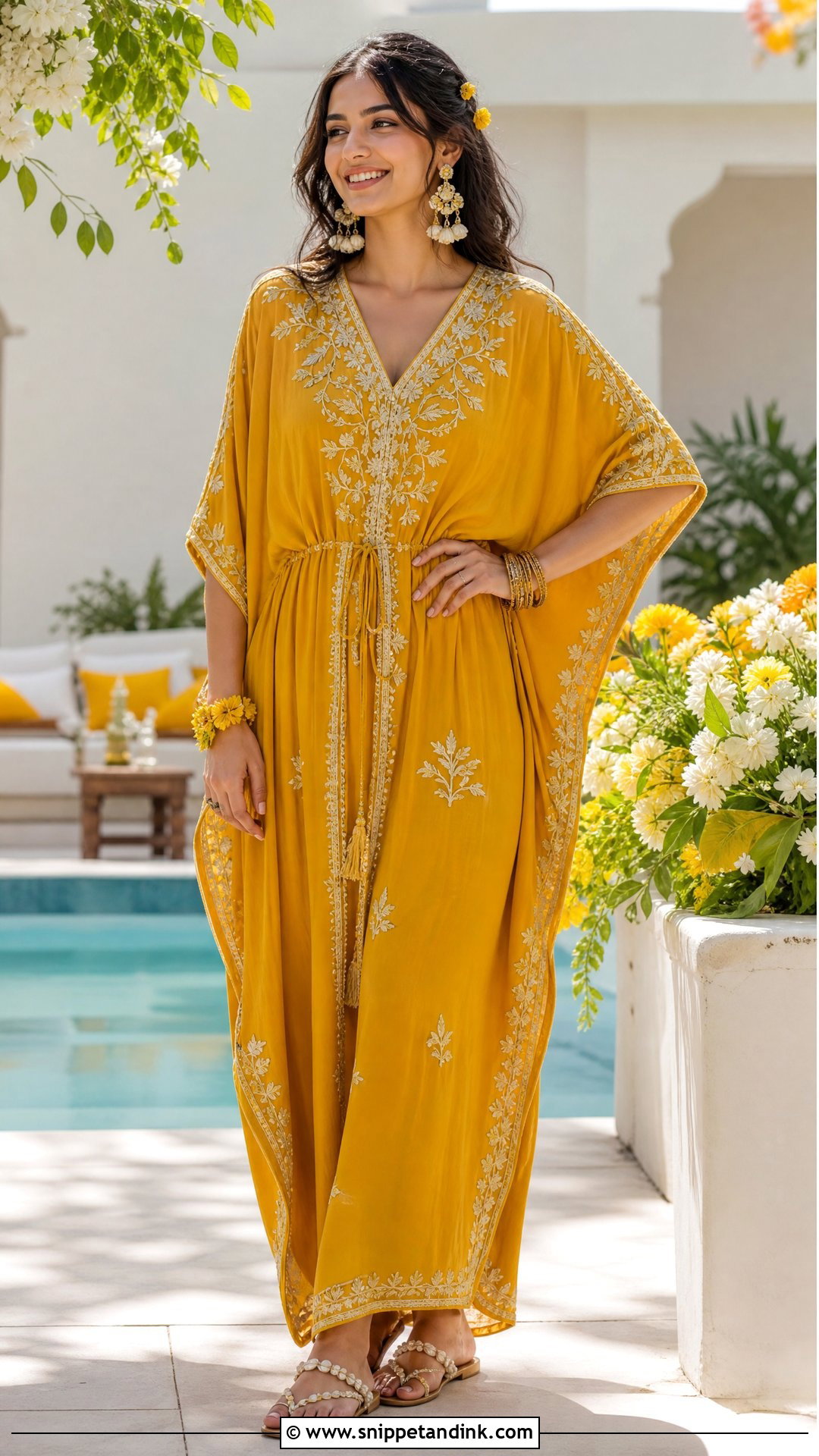
Nothing is easier to sit in than a kaftan. There’s no waistband, no pleats to shift and no dupatta to manage, so you can enjoy the ceremony instead of adjusting your clothes. A yellow, mustard or printed kaftan with neckline embroidery, tassel ties or subtle mirror work looks festive enough, and a waist belt adds shape. Wide kaftan sleeves do swing into the paste, though, so roll or tie them back while the haldi is applied. I reach for it at beach and destination functions, and for brides changing into something heavier later.
11. Yellow Pre Draped Saree For Haldi
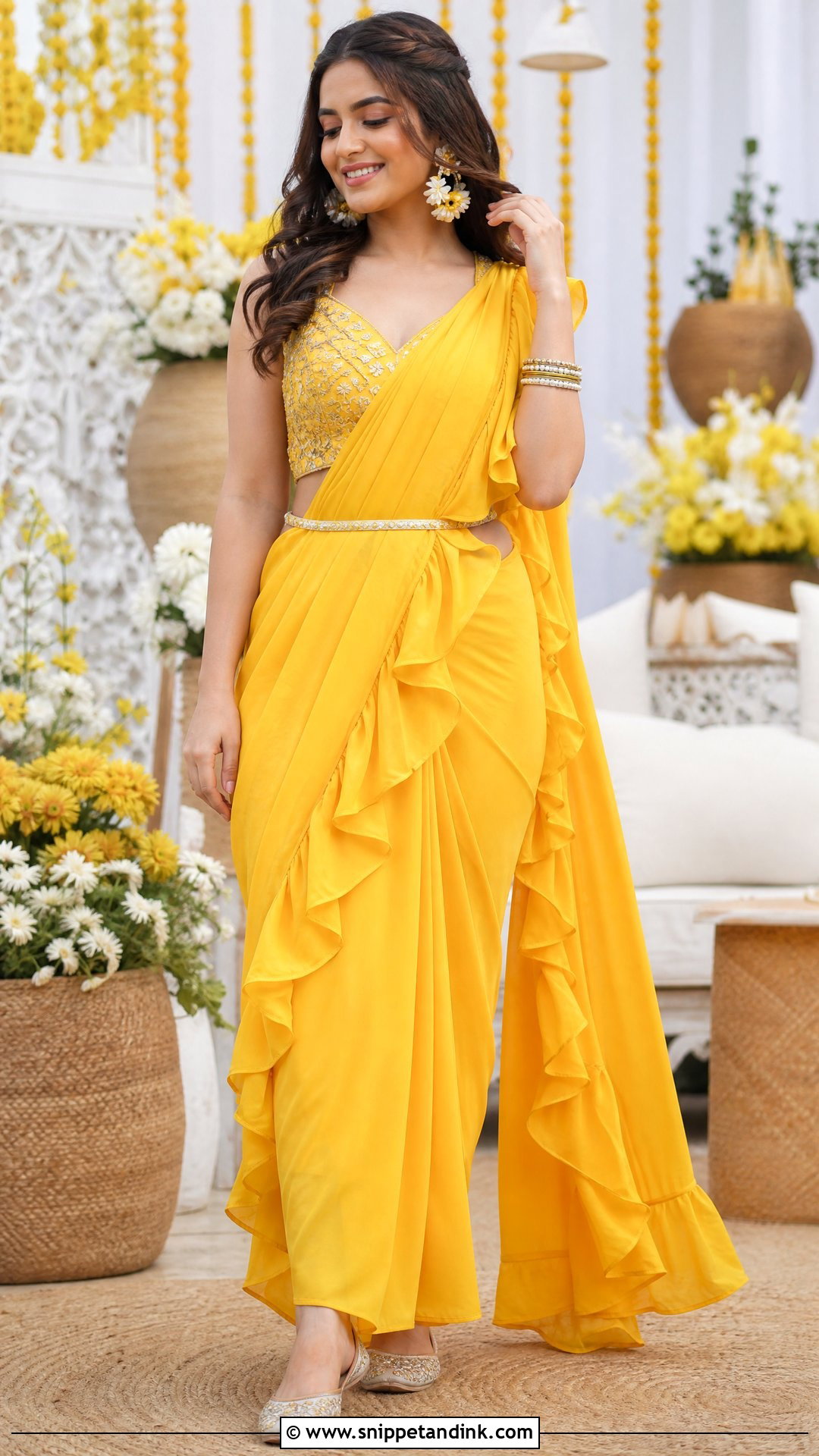
A pre-draped saree gives you the saree silhouette with nothing left to slip. The pleats and pallu are stitched in place, so you can sit, stand and dance without someone re-pinning you every half hour. A ruffled pallu, belt or cape blouse gives it a modern finish, and soft georgette, chiffon or crepe keeps it light. Sisters and bridesmaids who’ll be helping with the ritual, carrying bowls and handing things around, get the most out of it. Floral earrings, metallic bangles and juttis or comfortable heels complete it.
12. Yellow Skirt And Crop Top For Haldi
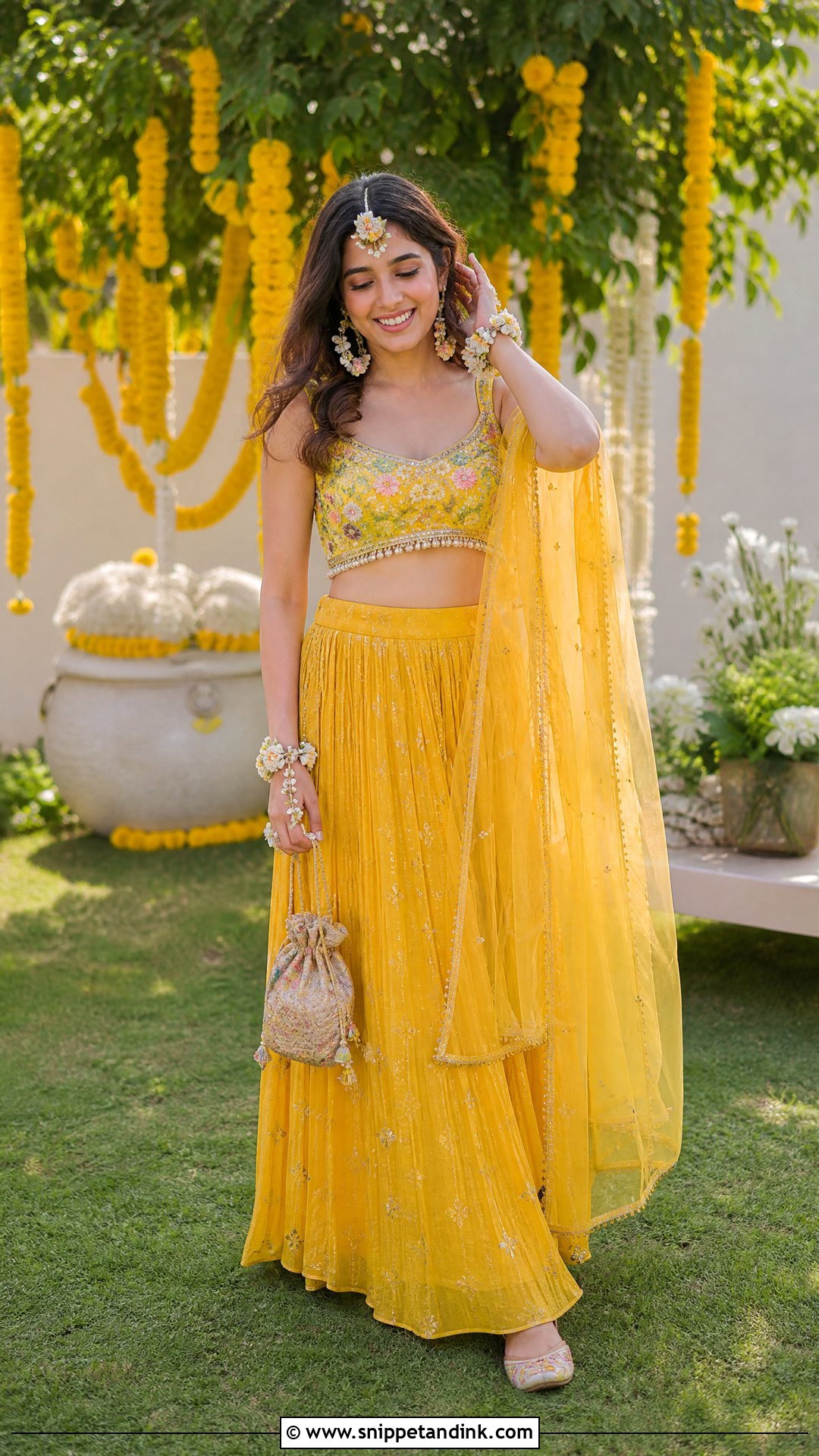
A flowy skirt with an embroidered crop top gives the feel of a lehenga with less weight. Cotton silk, organza or georgette works for the skirt. Add a dupatta for a traditional touch or leave it off for a cleaner Indo-western look. A high-waisted skirt gives more coverage and stays put better when you sit. Floral jewelry, a potli bag and juttis finish it. Bridesmaids, cousins and friends can easily wear the separates again to other events.
13. Yellow Jumpsuit For Haldi
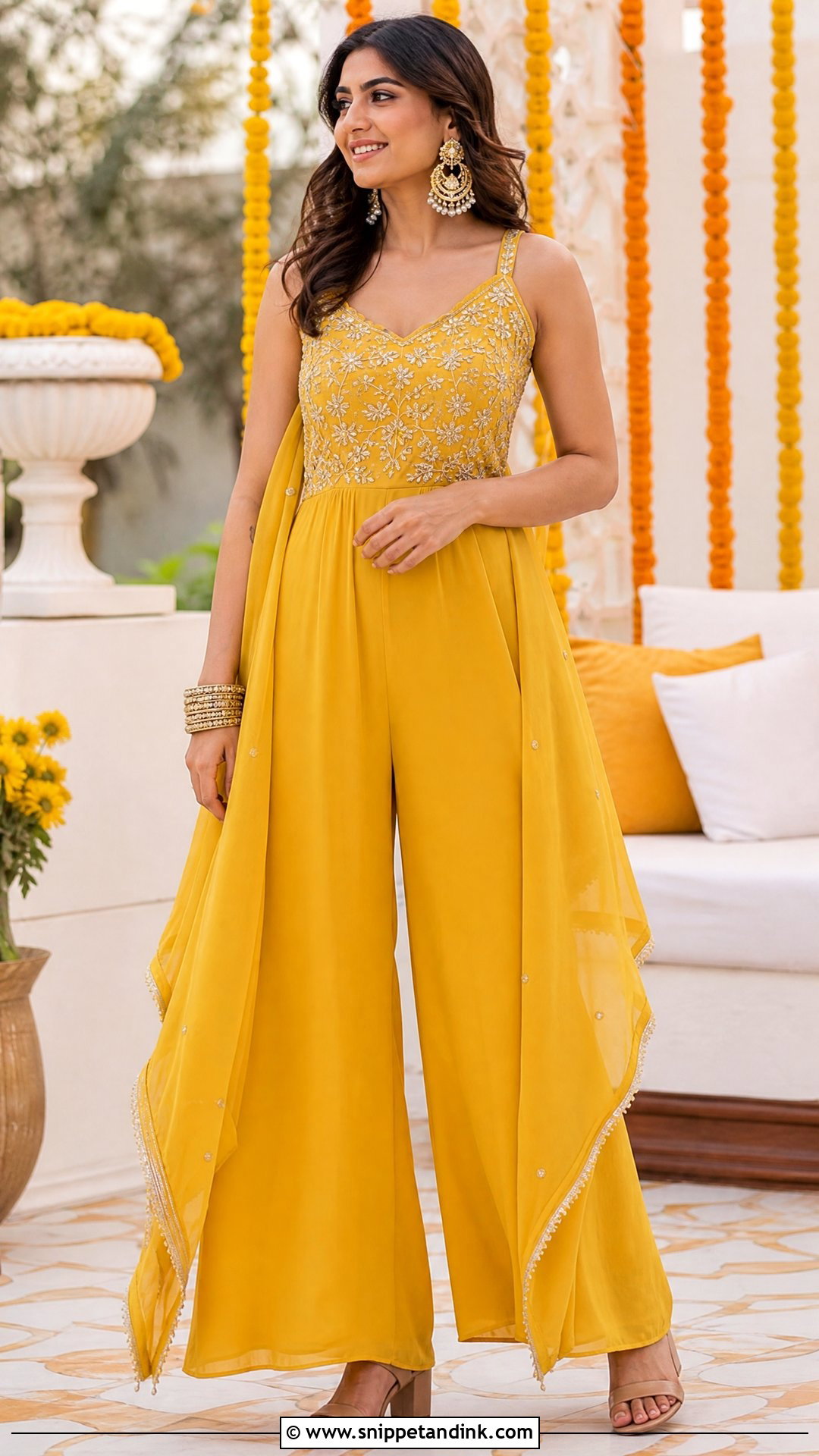
Jumpsuits suit a guest who’d rather not wear a saree or lehenga at all. A wide-leg yellow jumpsuit with embroidery, tassels, mirror work or a draped overlay keeps it festive, and a cape or attached drape makes it feel wedding-ready. Check the bathroom practicalities before you commit; a back-zip jumpsuit on a long ritual day can be a nuisance. Statement earrings, stacked bangles and block heels or embellished flats work well. Keep hair sleek or softly waved so the outfit stays the focus at an outdoor or destination function.
14. Orange Lehenga For Haldi
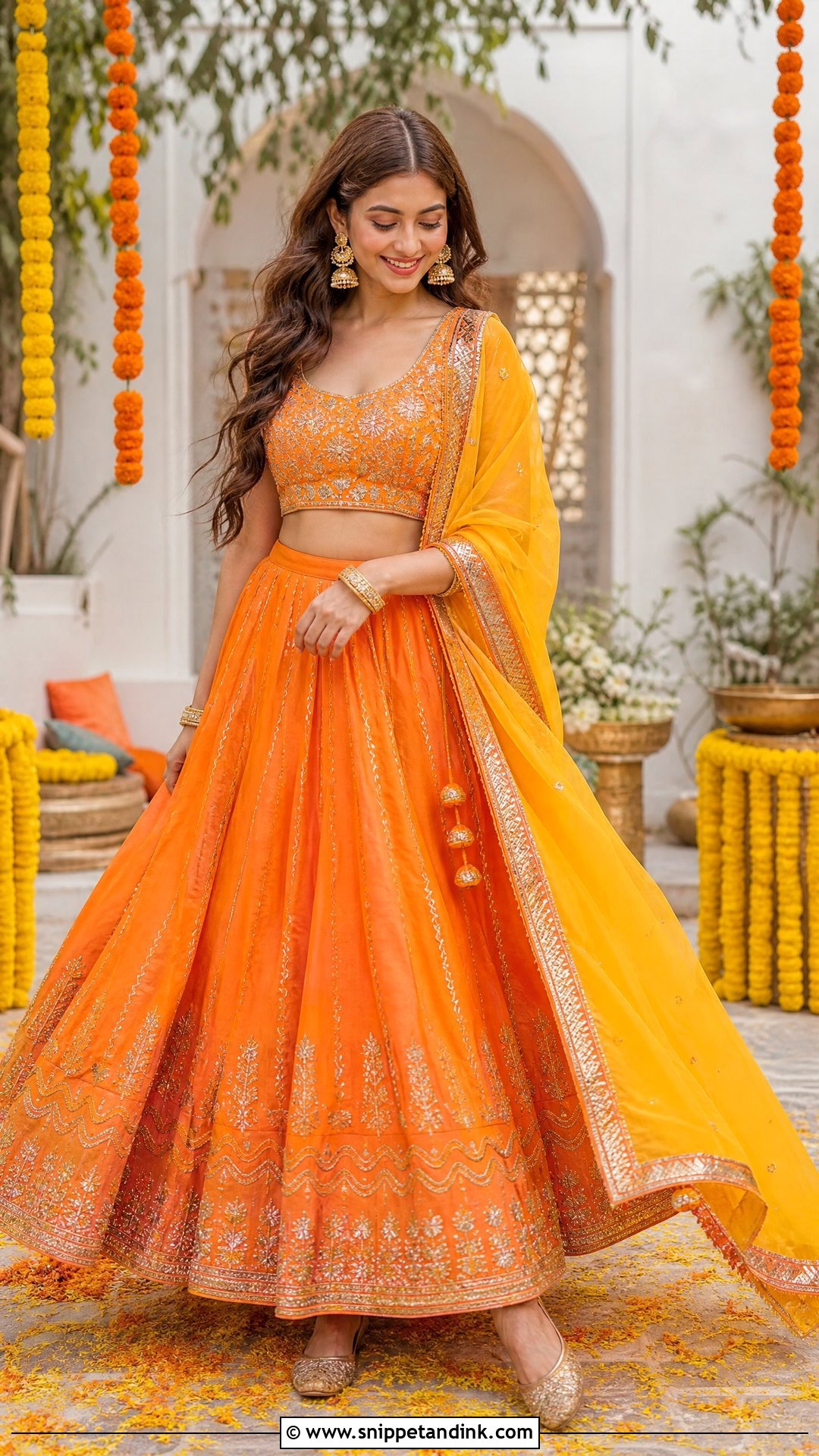
Orange is a warm alternative that still sits right in the Haldi palette. A bright orange lehenga with a yellow blouse or dupatta stands out in photos without breaking the theme. Mirror work, thread embroidery or floral print keeps it joyful. Orange is also more forgiving than pale yellow: turmeric marks blend into it rather than standing out as stains. Gold earrings, bangles and embroidered juttis suit it. If the shade feels strong, soften it with ivory or pastel accessories.

15. Green Sharara For Haldi
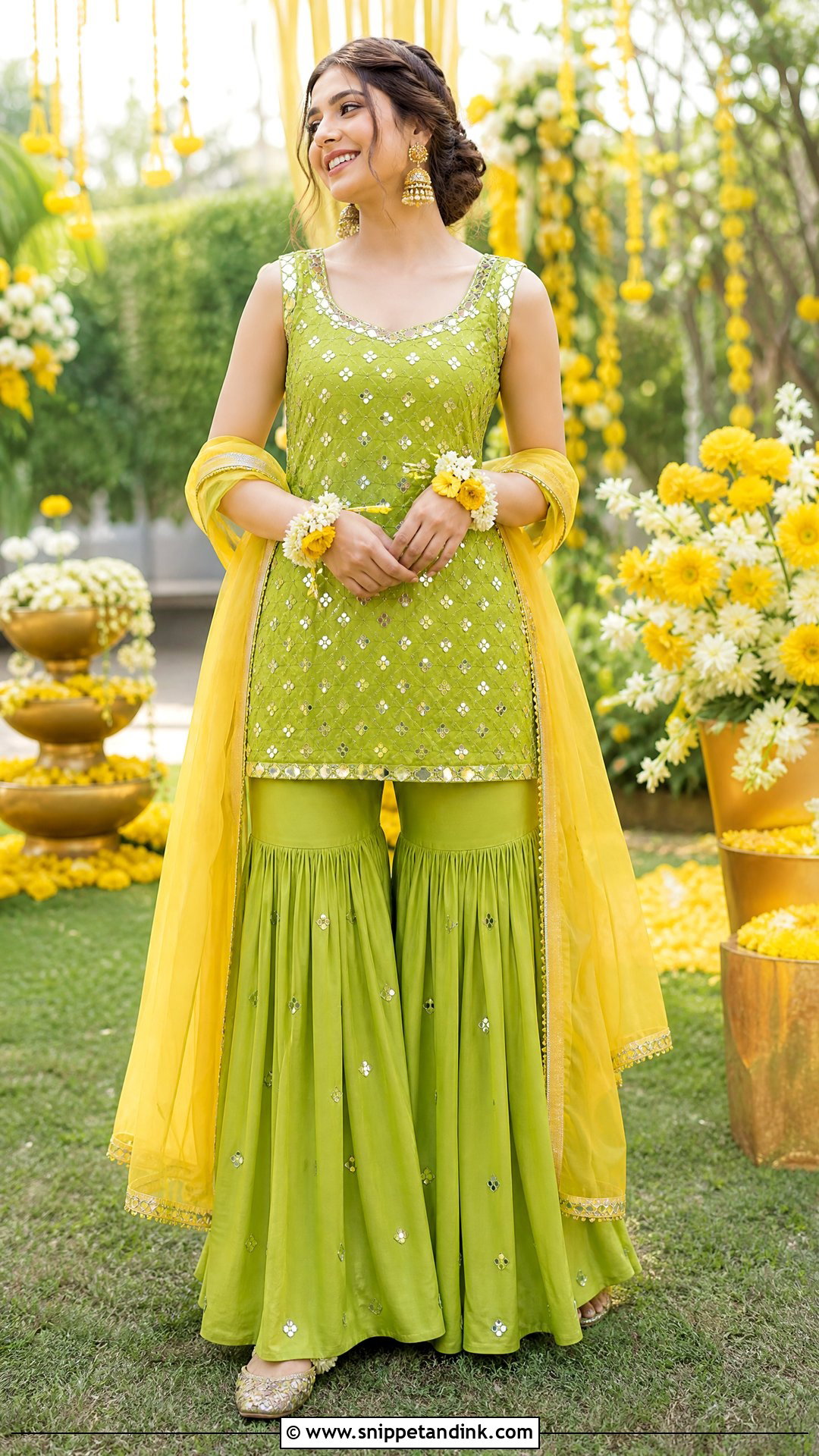
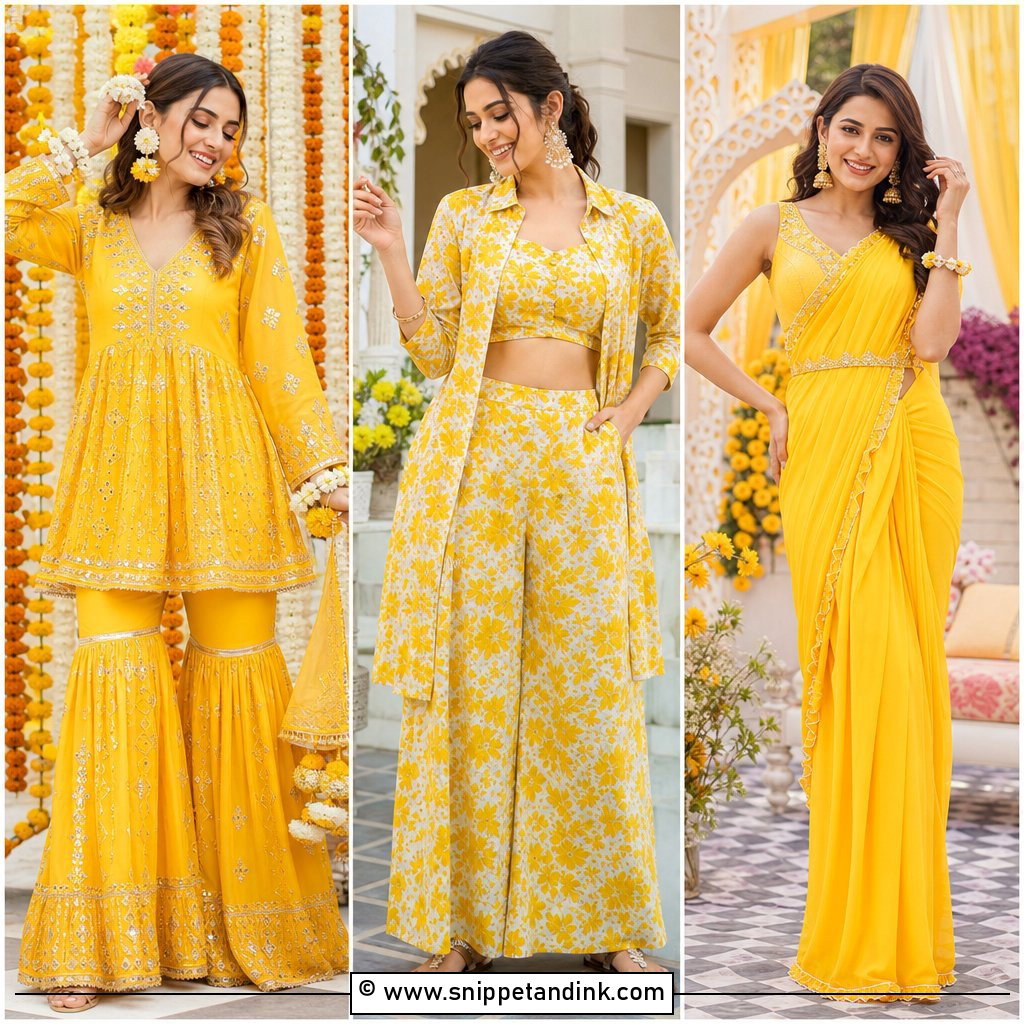
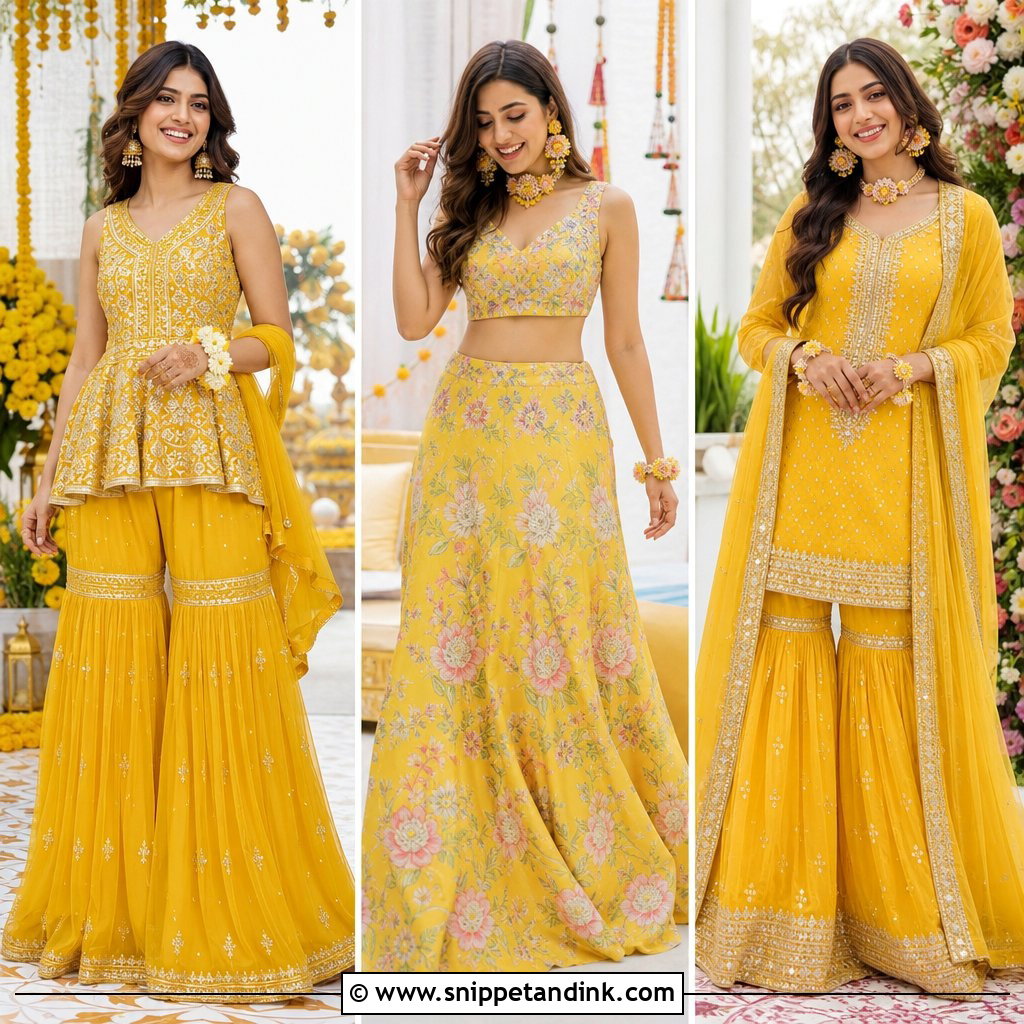
Green looks especially fresh beside marigolds. Lime, parrot green, mint and pistachio all sit well against yellow flowers and decor. Pair the sharara with a short kurti with mirror work or gota detailing, then add a yellow dupatta to tie it back to the ceremony. Gold jhumkas, flower bangles and juttis complete it. Green holds up well in outdoor daylight photos, which makes it a good pick for garden Haldis. Bridesmaids and sisters who want something different from a sea of yellow will appreciate it.
16. Ivory Lehenga With Yellow Dupatta For Haldi
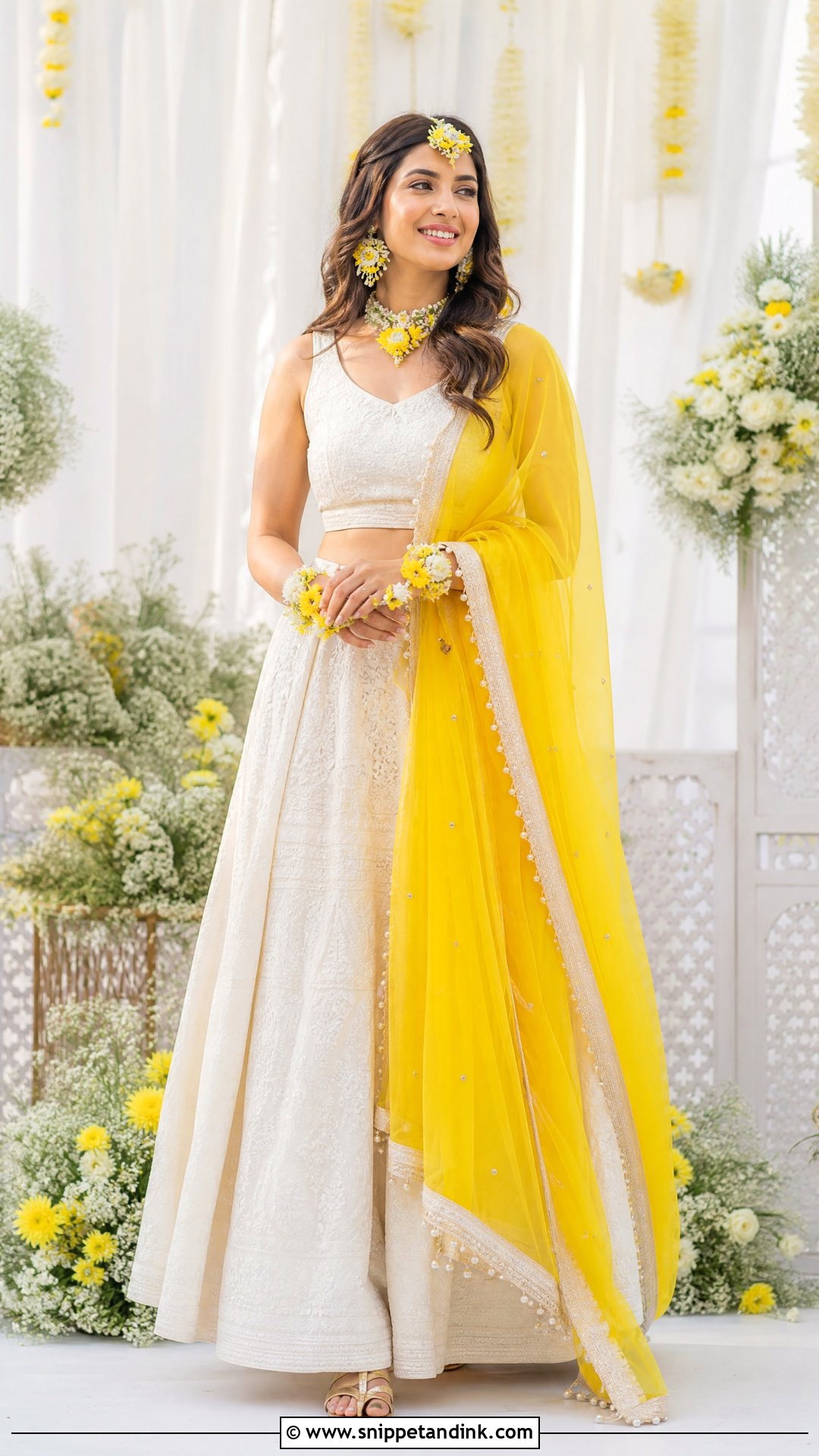
Ivory with a yellow dupatta looks graceful in photos, but think hard about where you’ll be standing. Ivory shows every fleck of turmeric, so I’d only wear it if you’re happy to change after the entrance and portraits, or if the fabric is washable cotton rather than delicate silk. Chikankari, thread work or block-printed lehengas keep it light. Floral jewelry, pearl details and soft gold sandals suit it. It’s best for brides during pre-Haldi portraits and guests who will watch rather than join in.
17. Yellow Dhoti Set For Haldi
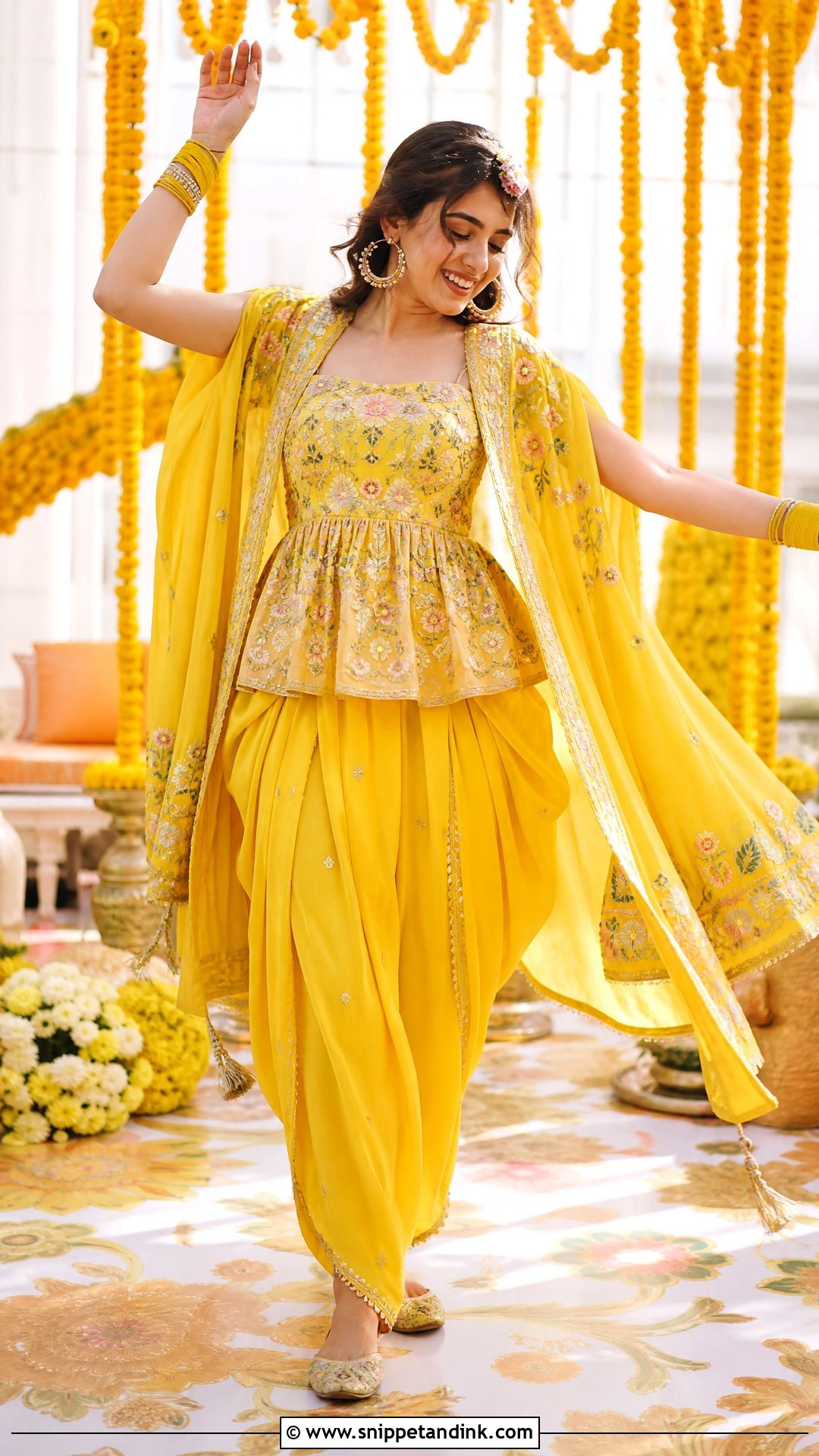
A dhoti set moves better than almost anything on this list, which is why I like it for whoever leads the dancing. The draped bottom feels traditional, and a crop top, peplum kurti or short jacket makes it modern. Light embroidery, mirror work or printed fabric keeps it festive. Add a dupatta for more coverage or a cape jacket for a trendier look. Hoops, bangles and flat juttis keep you agile. Bridesmaids and younger guests look lively in candid shots in it.
18. Yellow Maxi Dress For Haldi
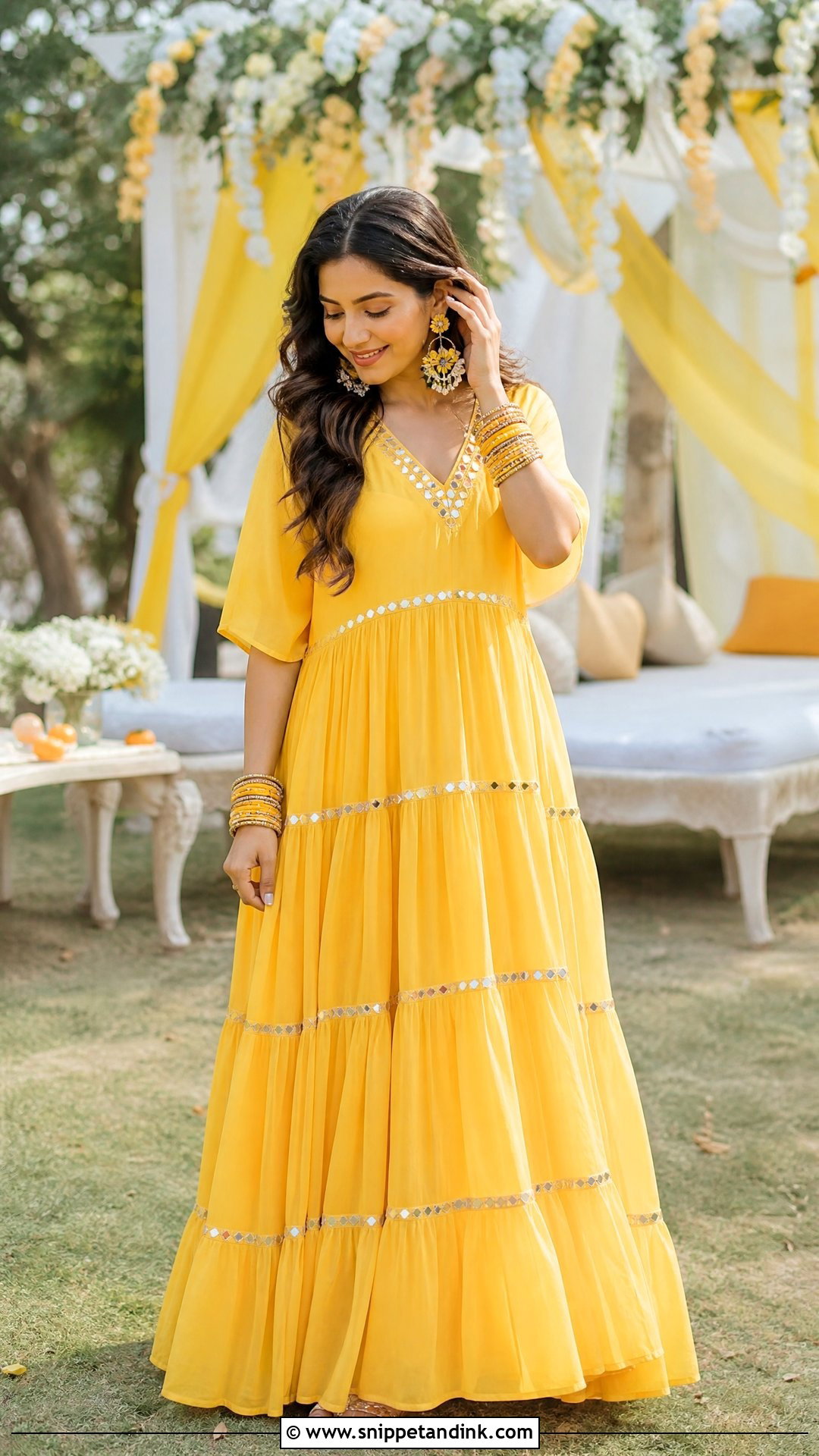
The maxi dress is the most low-effort Haldi outfit that still looks considered. A flowy silhouette with mirror work, gota trim, block print or embroidered straps keeps an Indian touch, and a tiered maxi suits outdoor and destination functions. Add a light dupatta if the event is more traditional. Floral earrings, a bangle stack and kolhapuri flats finish it. You’ll wear it again long after the wedding season, which matters to guests buying for one event.
19. Printed Kurta And Skirt For Haldi
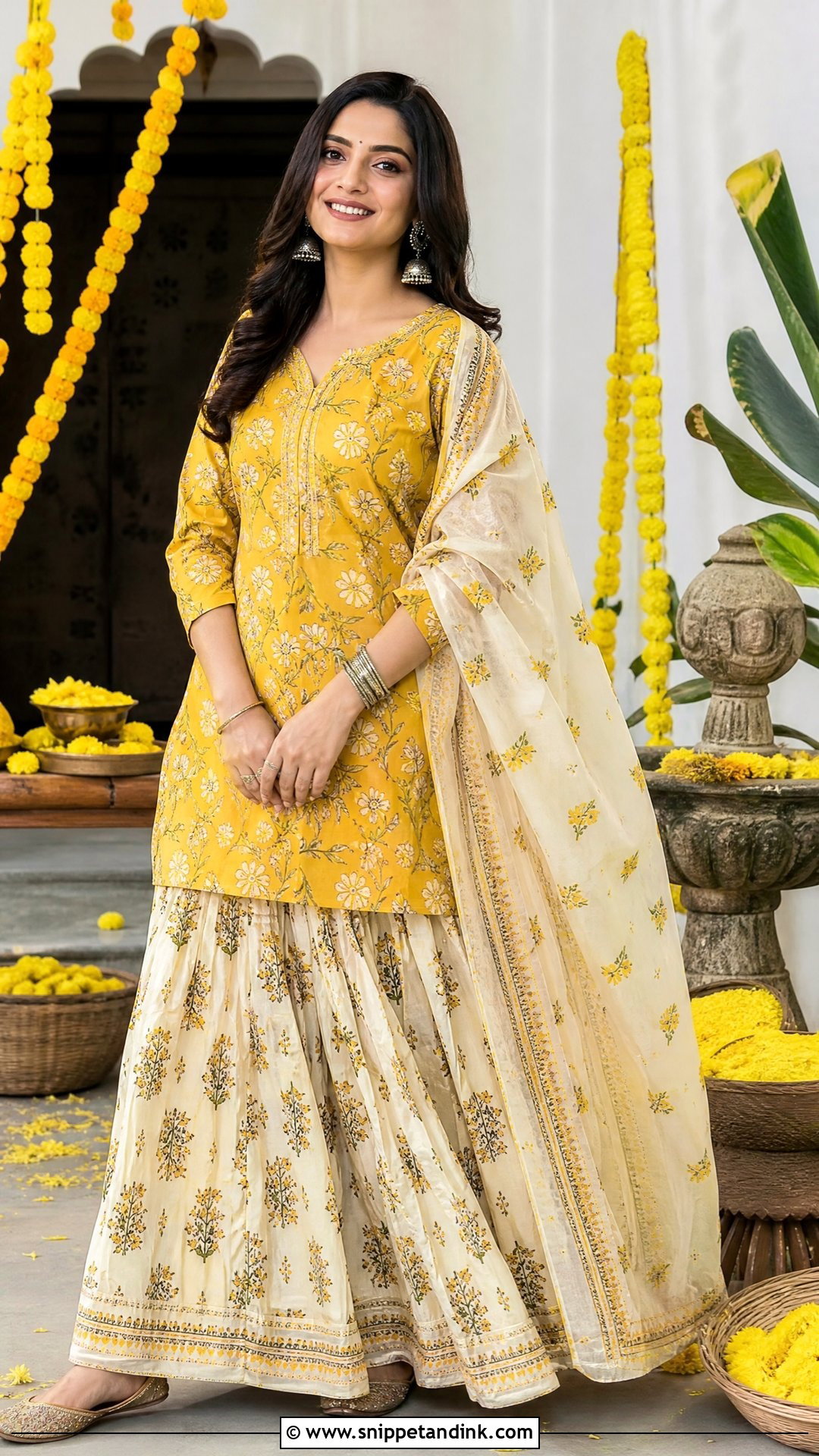
A printed kurta and skirt is modest and easy to wear across ages. Choose a short or straight kurta with a flared skirt in yellow, mustard, orange or floral prints. Block print, leheriya, bandhani and small florals all suit Haldi, and busy prints hide stray turmeric well. A light dupatta, oxidized earrings, bangles and juttis complete it. Length, sleeve and neckline are easy to adjust, so it suits a grandmother as easily as a teenage cousin.

20. Bandhani Saree For Haldi
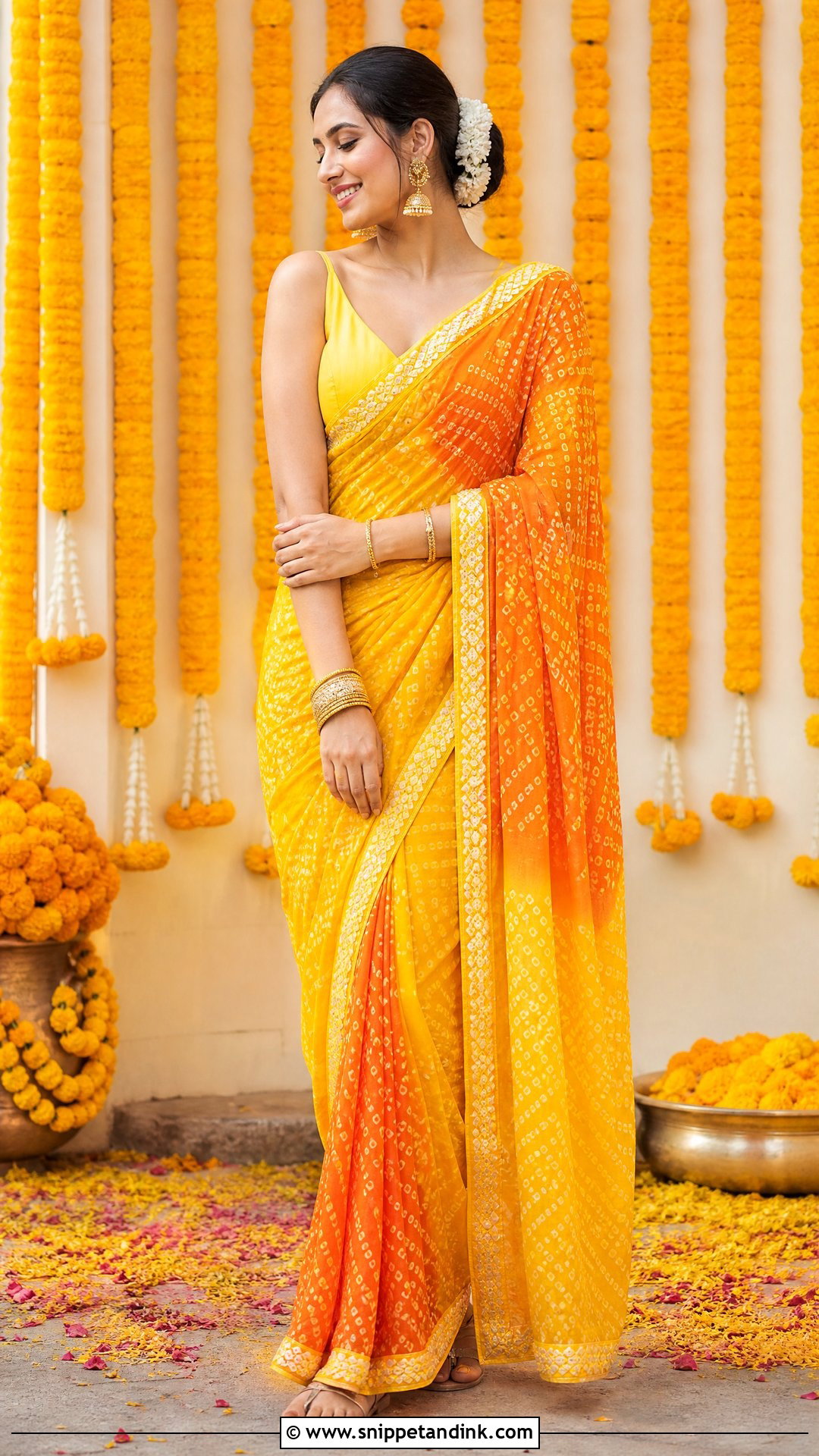
A bandhani saree brings traditional color with no heavy embroidery. Yellow, orange, pink and green bandhani dots read bright and festive. Choose lightweight cotton silk, georgette or chiffon so the saree is easy to handle. Many bandhani dyes can bleed on a first wash, so wash it separately and in cold water after the event. Pair with a plain blouse, gold jhumkas, bangles and a low bun with flowers, and add a belt if you want the pallu secured and the waist defined. Family members and brides who love heritage dressing will feel at home in it.
21. Yellow Peplum Top And Sharara For Haldi
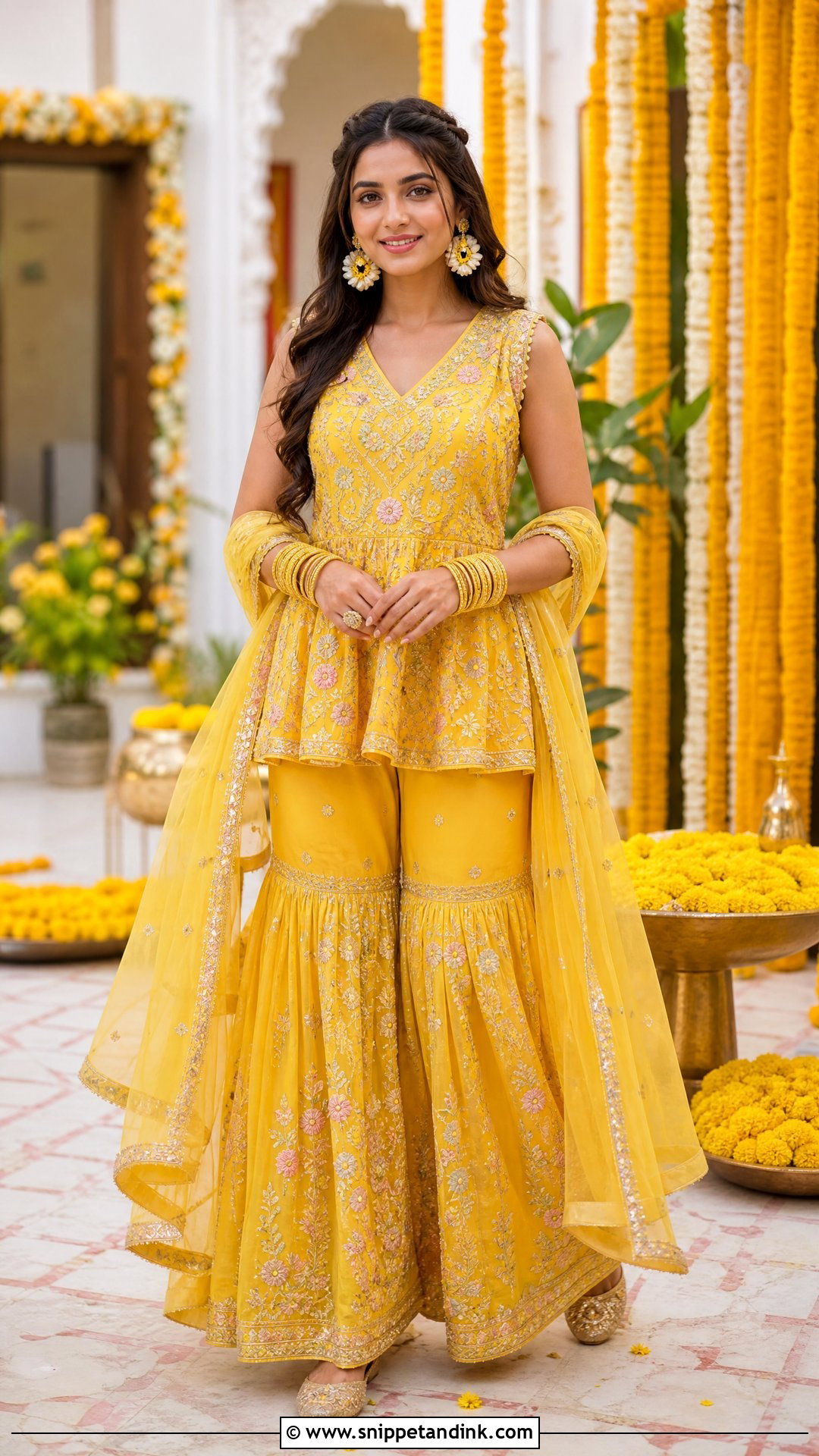
Peplum tops define the waist while flaring over the hips, so they give shape and coverage at once. Paired with sharara pants, the volume moves to the hem. Mirror work, gota patti or thread embroidery dresses it up. A sheer dupatta adds tradition, but the set works without one, which is useful if you’ll be helping at the ritual. Floral earrings, bangles and juttis finish it. Bridesmaids, sisters and guests who want structure without restriction suit it well.
22. Pastel Yellow Organza Saree For Haldi
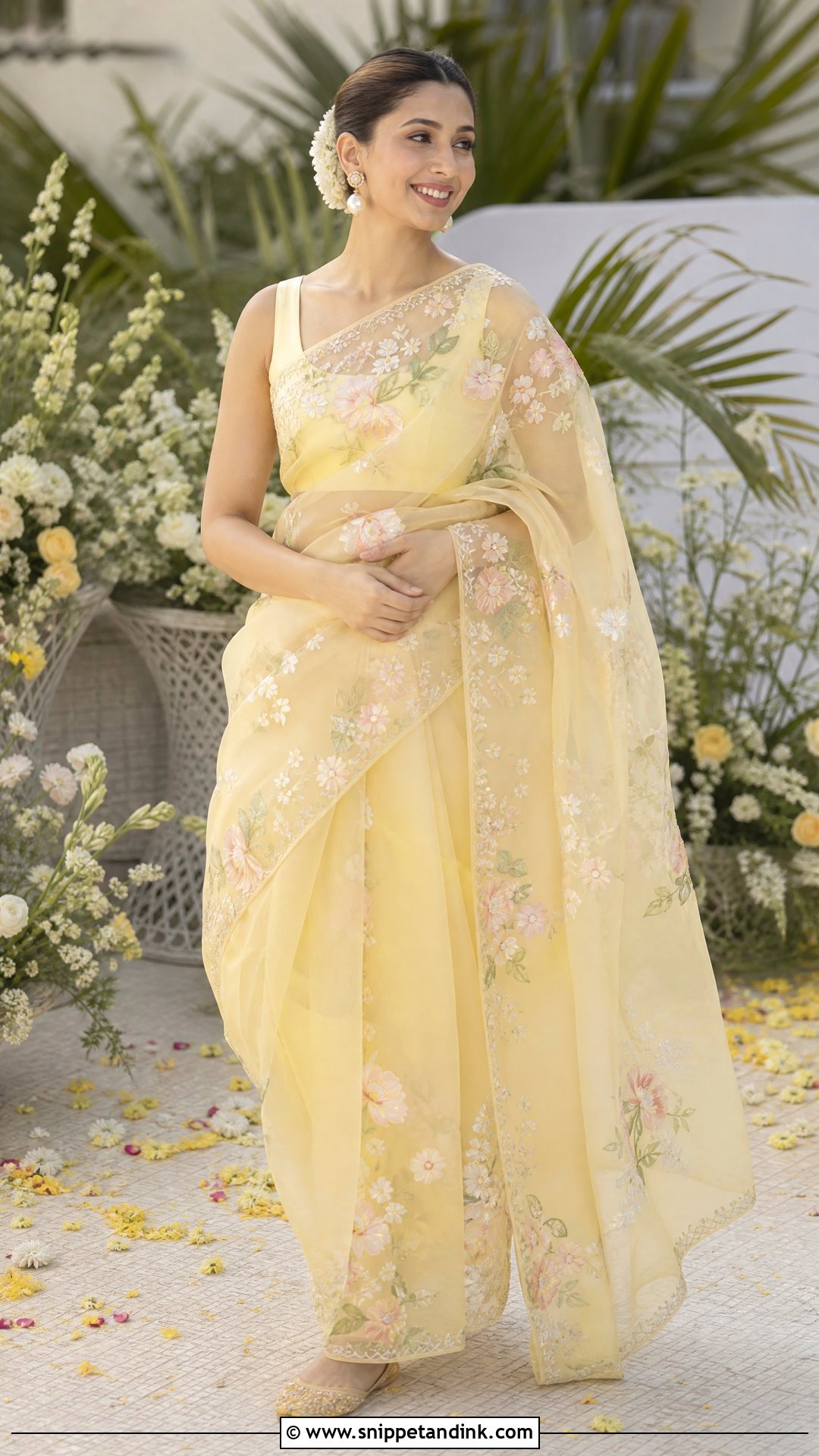
Pastel yellow organza is the softest look here. The sheer texture shows off a simple blouse and minimal jewelry, and floral embroidery, scalloped borders or light sequins add festivity. Organza has some body, so it doesn’t fall as close as georgette; pin the pleats and pallu neatly or they’ll stand away from you. It also crushes when you sit for long, so it’s better for those standing nearby than for the bride on the stool. Pearl earrings, a sleek bun, fresh flowers and low heels or flats suit it in bright daylight and garden settings.
23. Yellow Jacket Lehenga For Haldi
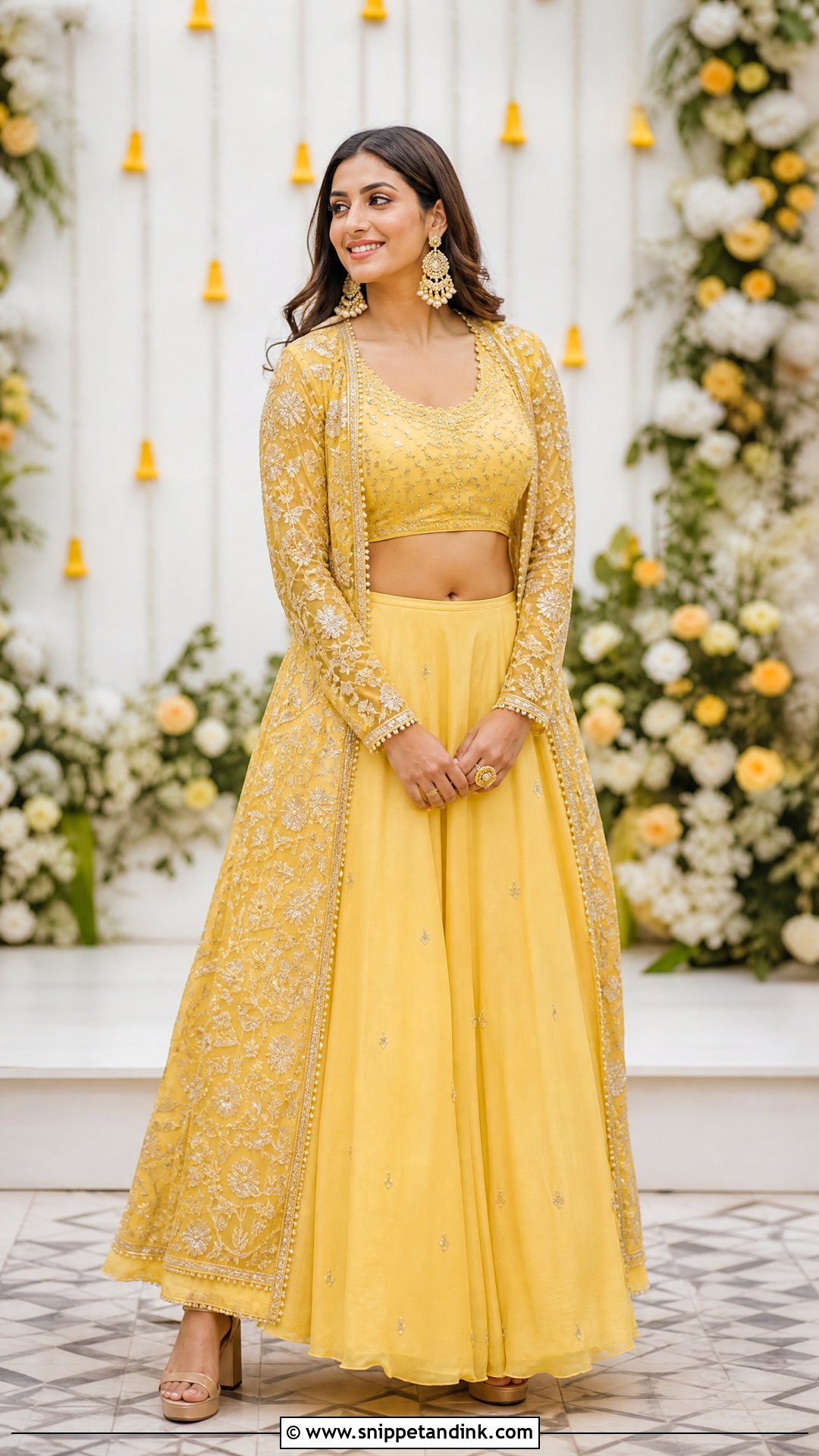
A jacket lehenga swaps the dupatta for a layer you don’t have to keep adjusting. The jacket can be short, long, sheer, embroidered or printed. A simple crop top and light lehenga underneath keep the base easy, while the jacket adds movement and coverage. Choose breathable fabric; a heavy jacket over a lehenga at a midday ceremony gets hot quickly. Statement earrings, rings and juttis or block heels finish it for brides, bridesmaids and sisters who want something modern with Indian roots.
24. Yellow Salwar Suit For Haldi
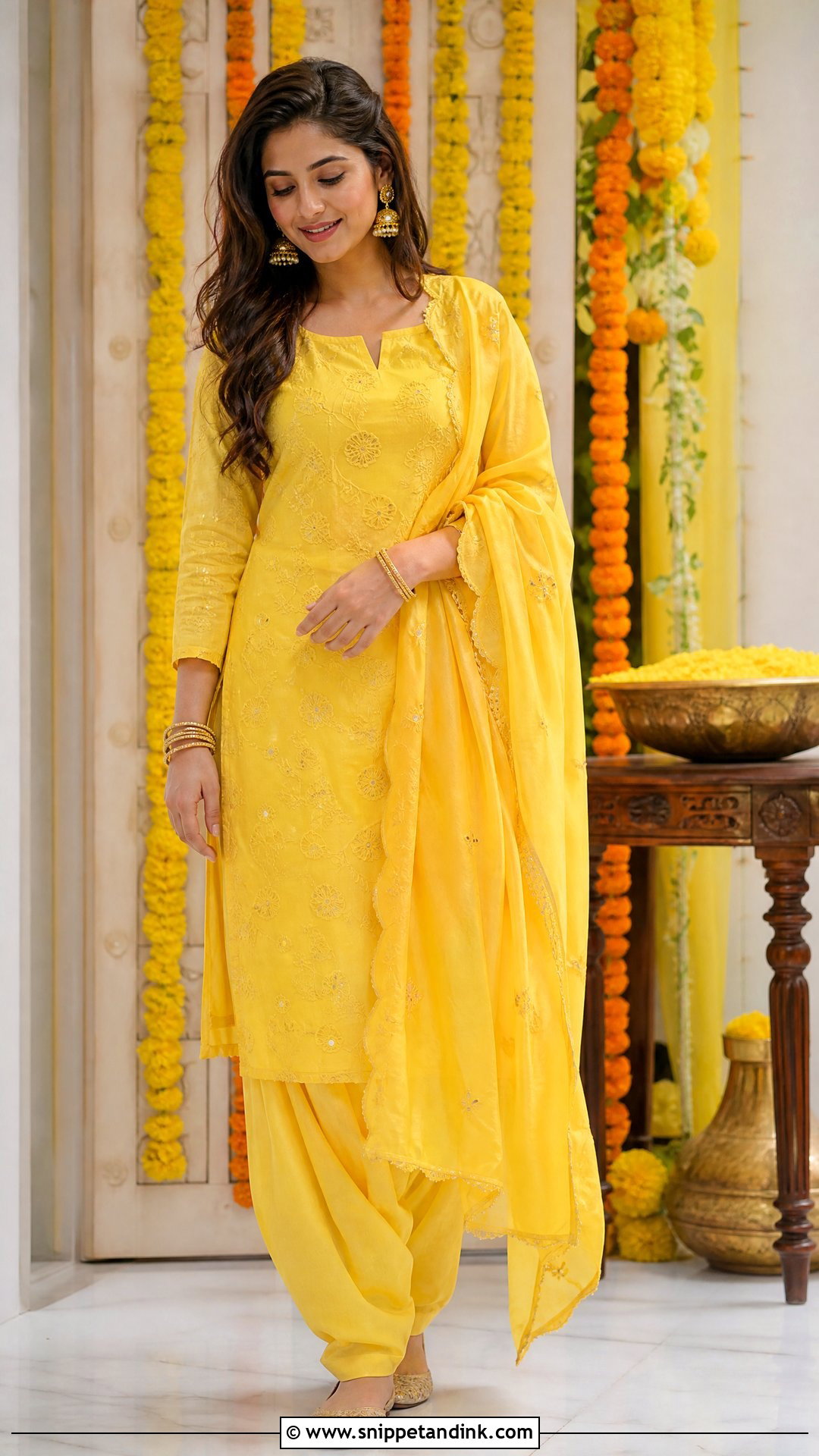
The salwar suit is the most comfortable outfit on this list for long hours. A straight kurta, salwar pants and soft dupatta give a traditional look, and neckline embroidery, lace trim or small mirror details add festivity without weight. Pair with jhumkas, bangles and flat juttis. It suits older guests, close family and anyone sitting near the ritual, since a cotton salwar suit can usually go straight into the wash afterward.
25. Multicolor Lehenga For Haldi
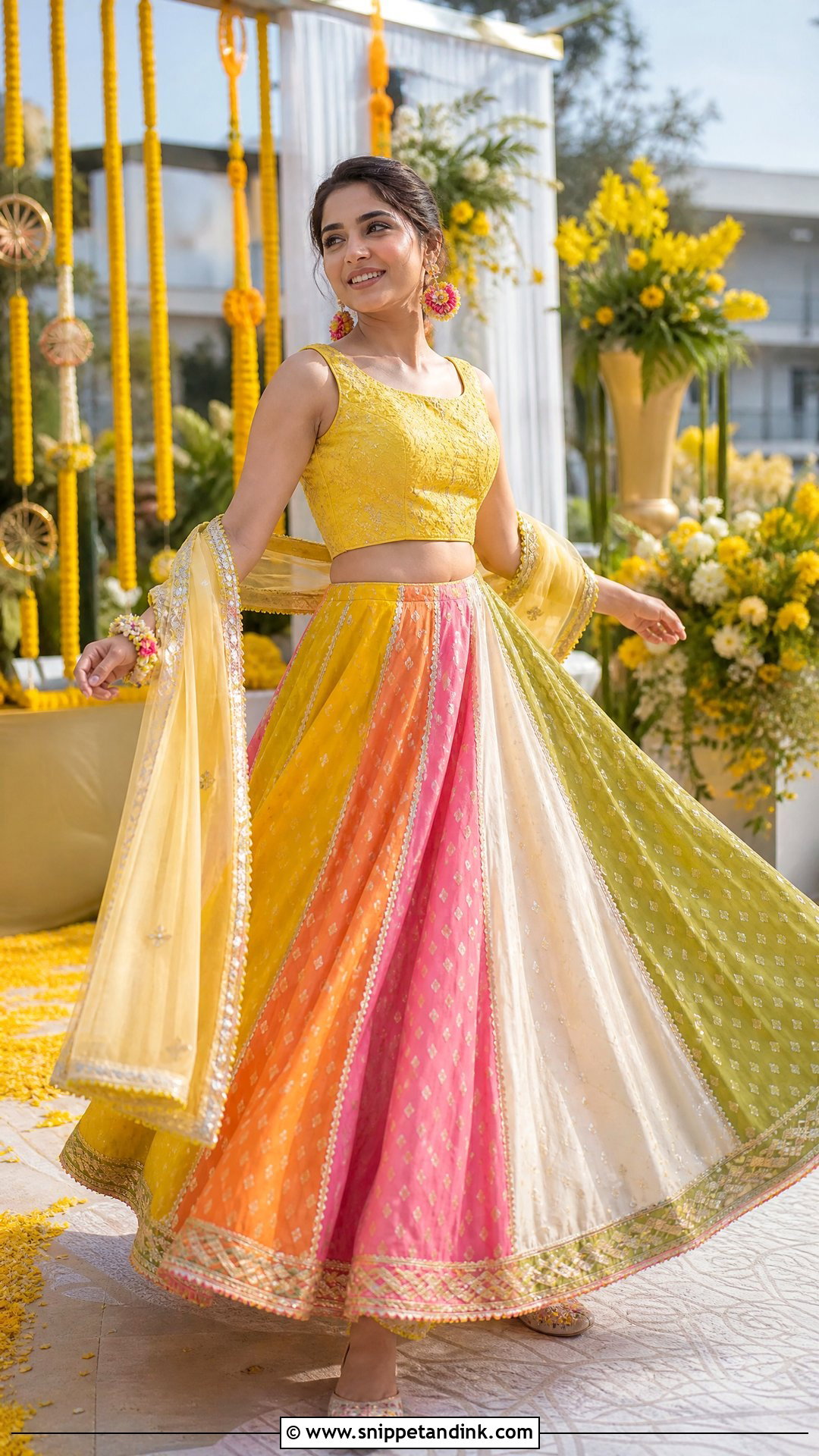
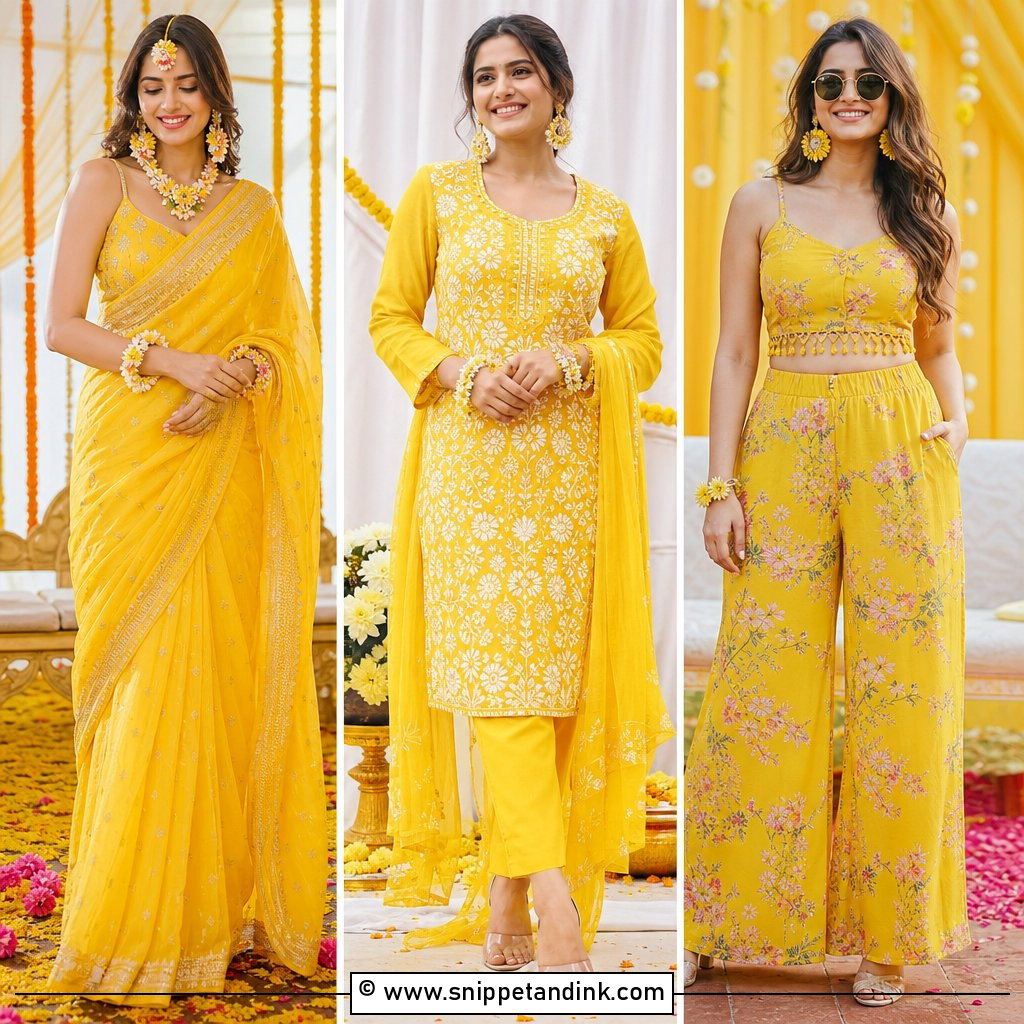
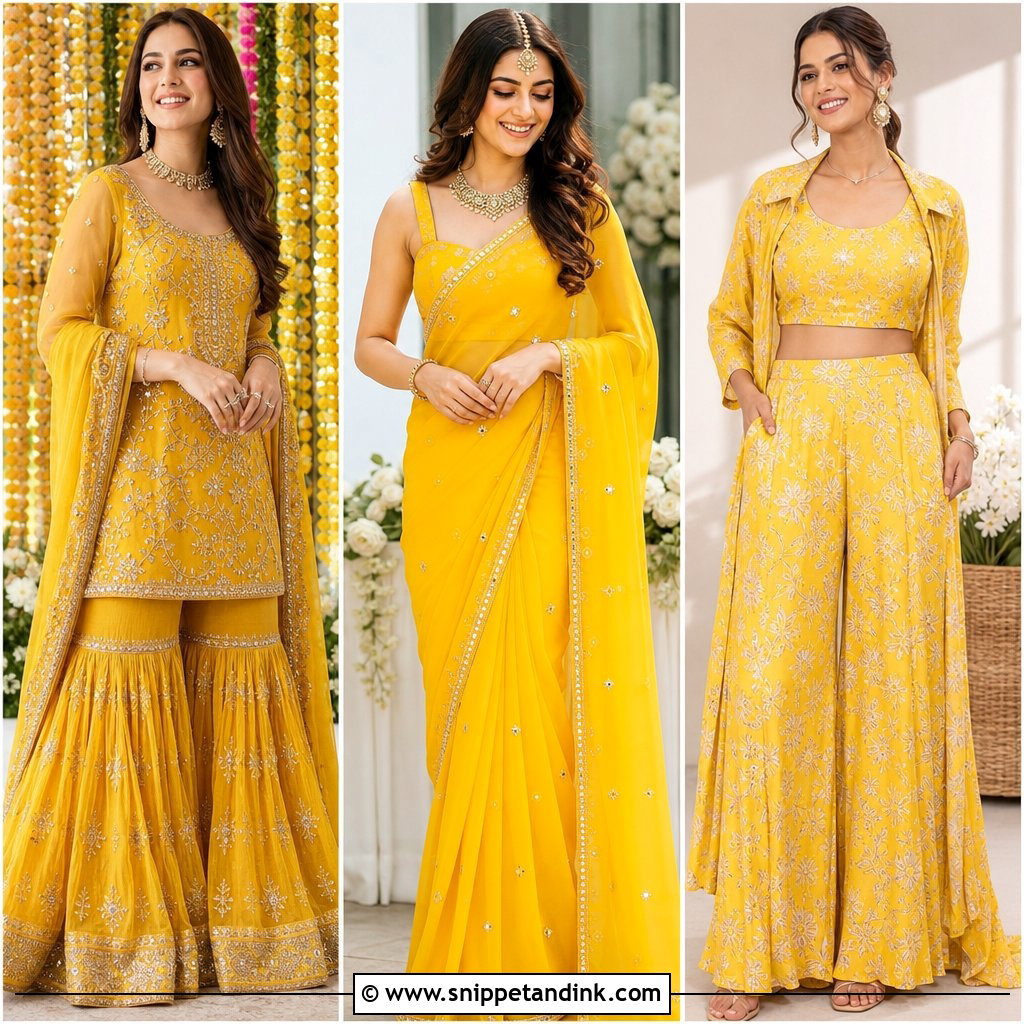
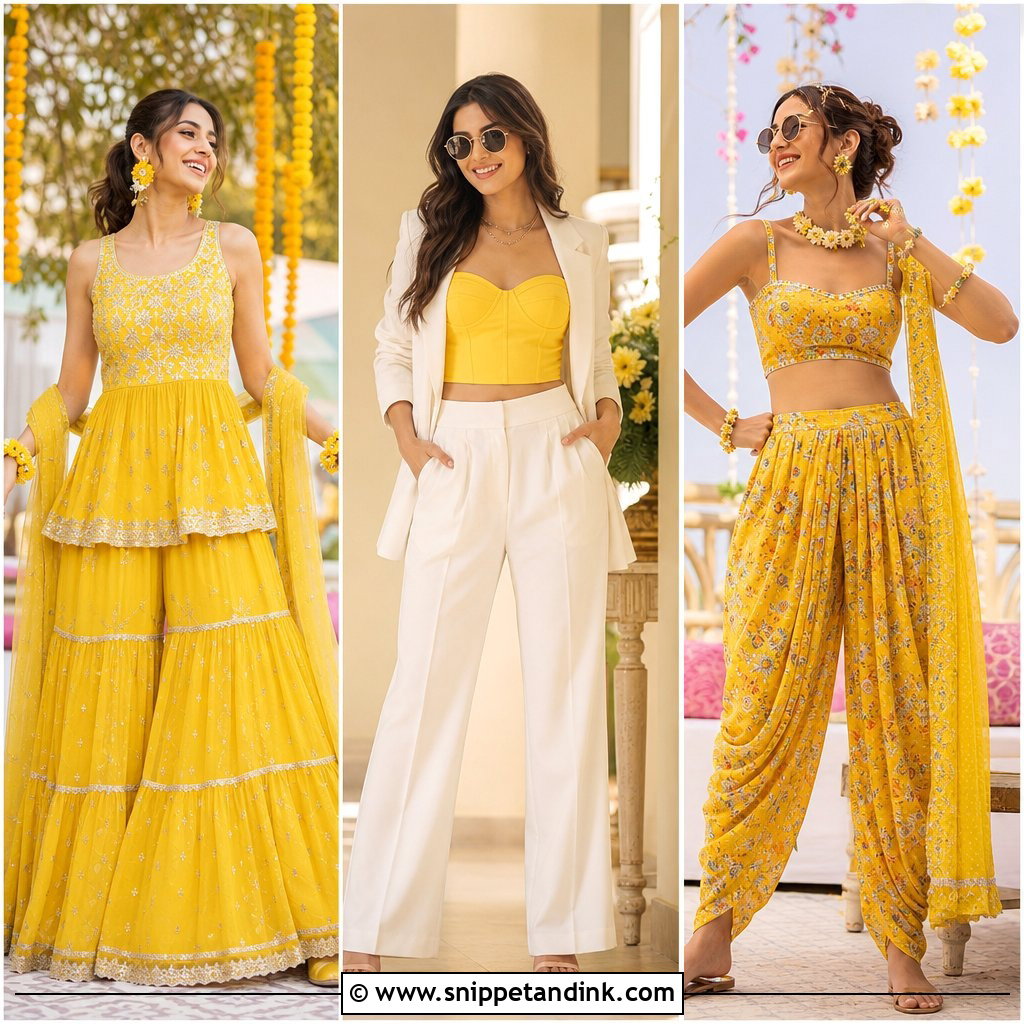
A multicolor lehenga goes beyond plain yellow and suits a playful entrance. Look for panels in yellow, orange, pink, green or ivory, then pair with a simple blouse and light dupatta. Leheriya, bandhani, floral prints and mirror work all suit Haldi. Keep accessories restrained, since the skirt already carries plenty of color: floral earrings, a neat hairstyle and juttis are enough. Bridesmaids can wear different color-blocked versions and still look like a group.
Getting Turmeric Out of Fabric the Same Day
Turmeric stains are stubborn because the pigment binds fast to natural fibers, and it gets harder to shift once it has dried. The sooner you deal with it, the better your chances. This is the order I follow on washable cotton, rayon and most blends.
- Scrape off any thick paste with a blunt knife or spoon. Don’t rub, which pushes it deeper.
- Rinse from the back of the fabric with cold water to flush the stain out the way it came in.
- Work a little liquid dish soap into the mark with your fingers and let it sit for a few minutes before rinsing.
- Dry the garment in direct sunlight. Turmeric’s pigment fades in sunlight, and a few hours outside often lifts what washing didn’t.
- Repeat before you machine wash. Heat from the dryer can set whatever is left.
Don’t panic if the stain turns reddish when soap touches it. Turmeric changes color with alkaline products, and it usually goes back to yellow once rinsed. Skip chlorine bleach on anything colored or silk.
Silk, zari and embroidery
Don’t experiment at home on pure silk, zari borders or heavy embroidery. Blot off what you can, keep it away from water, and take it to a dry cleaner who handles Indian wear, telling them it’s turmeric. Some marks on silk won’t come out completely, which is why I keep the delicate pieces for the functions that come after.
Dress for the Paste, Then for the Photos
A good Haldi outfit lets you sit, laugh and get messy without worrying. A classic yellow lehenga, a floral saree, a breezy kaftan or a modern jumpsuit can all work once you’ve thought about fabric, sleeves and stains. Pick fabric that moves, shoes you can stand in for hours and jewelry that suits a daytime event. Flower jewelry, juttis, a light dupatta and fresh makeup carry almost any of these looks. Start from your role at the ceremony and your comfort level, and the outfit choice gets much easier.
You'll Like These Ideas:






Leave a Reply