
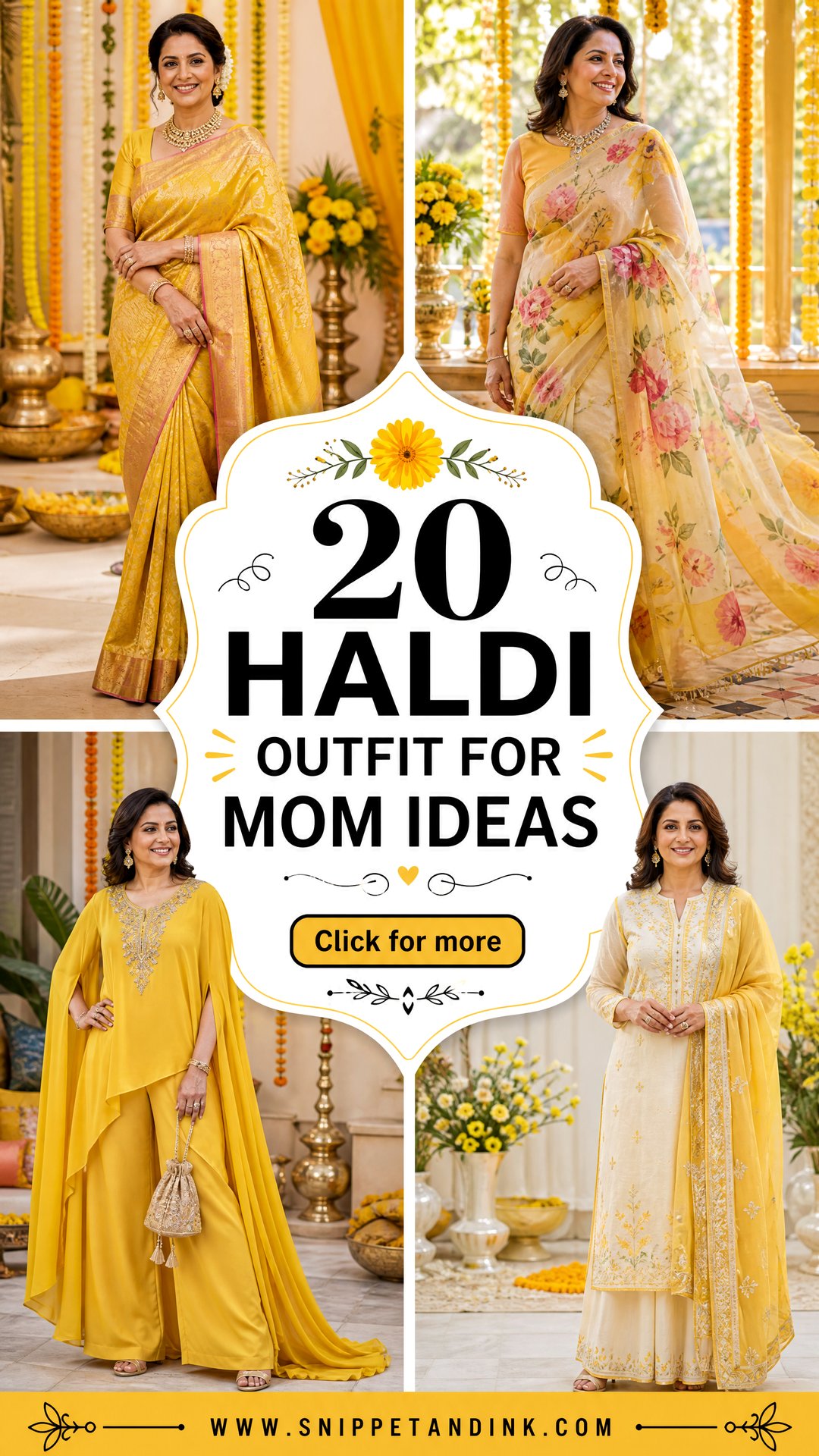
A mother at a Haldi is rarely just a guest. She is applying paste, feeding sweets, sitting on a low stool or the floor for long stretches and posing for every aunt with a phone. When I dress a mom for this ceremony, I start with how she will move and how much turmeric she is likely to catch, and only then talk about color. Yellow is the obvious anchor, but mustard, marigold, ivory, green and pink all belong here, as long as the outfit lets her stand next to the couple without competing with them. Below are twenty looks, from silk sarees to kaftan sets, with notes on where each one helps and where it gets in the way.
How Much Turmeric Will Mom Actually Wear?
Before we look at a single outfit, I ask the family one question: is Mom applying the paste, receiving it, or both? Haldi paste is usually turmeric mixed with gram flour and some oil, rosewater or milk, and the oil is what carries the color into fabric. A mother who only applies it to the couple gets fingertip marks on her sleeves and pallu. A mother who is smeared back by cousins, which happens in a lot of families, needs a very different outfit.
- Applying only: any of the looks below works, but elbow-length sleeves keep paste off the forearms, and a pallu or dupatta pinned back stays out of the bowl.
- Receiving paste too: choose mustard, deeper yellow or printed fabric that hides marks, and treat the outfit as one she may not wear again.
- Changing afterward: plan a second outfit for lunch and evening guests so she isn’t sitting in damp, stained silk for hours.
Seating changes things as well. Many Haldi rituals happen on low stools, cushions or the floor. I ask moms to sit cross-legged in the outfit at the fitting. Stiff fabric, tight kurtas and long hems show their problems in about ten seconds.
1. Yellow Silk Saree Haldi Outfit for Mom
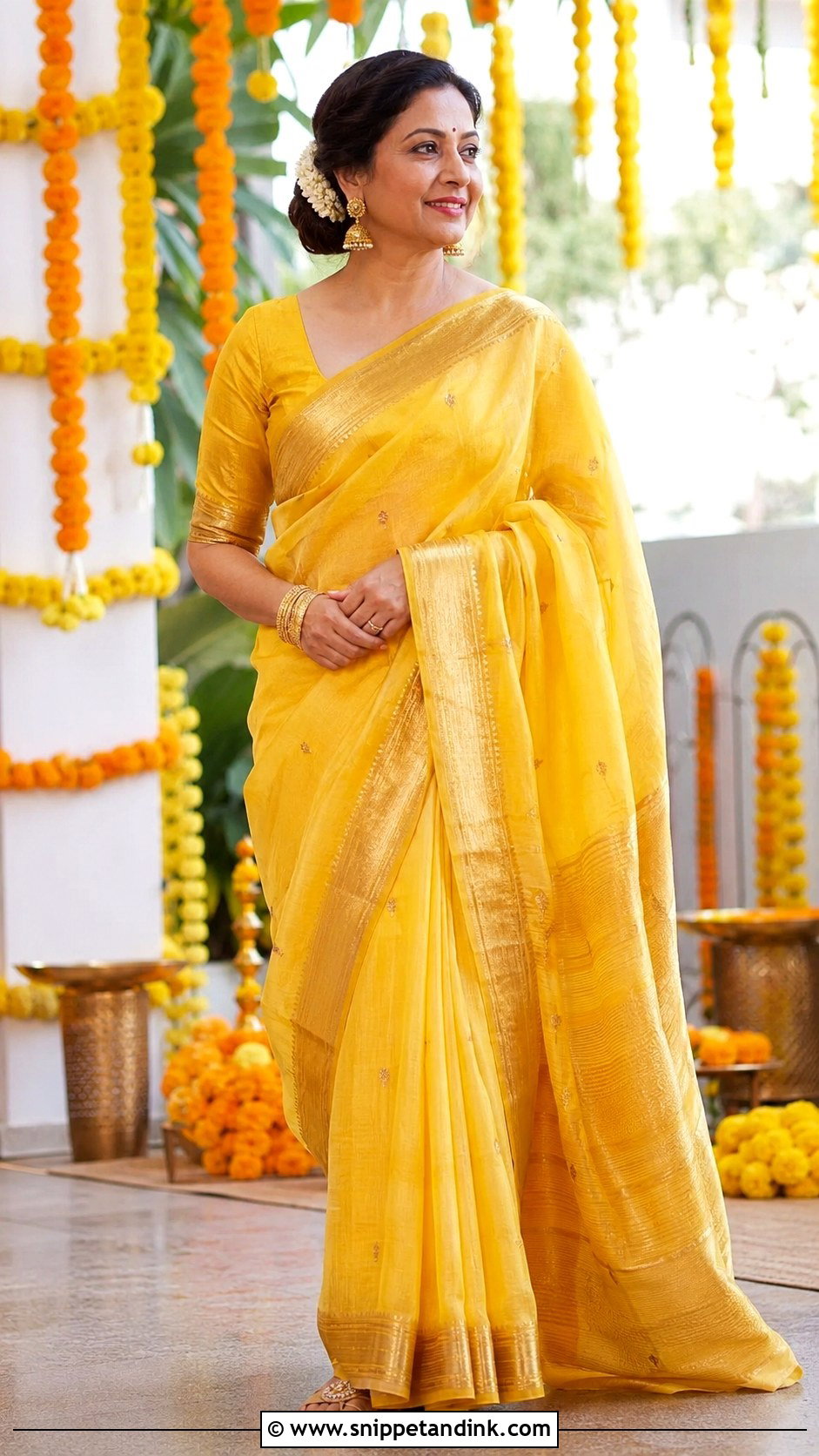
Silk is the classic, but weight matters more than people expect. A heavy bridal weave will hold stiff folds when Mom sits cross-legged, and by the third ritual the pleats fan out. I ask for a softer, lighter silk with a gold zari border, which gives enough richness on its own. An elbow-sleeve blouse in the same yellow keeps her covered when she leans in to apply paste. Gold jhumkas, a few slim bangles and a small bindi are plenty. A low bun with jasmine or yellow blooms reads clearly in group photos. If she is doing the ritual herself, I pin the pleats at the waist with two safety pins on the inside and anchor the pallu at the shoulder so nothing slides when she bends.
2. Mustard Cotton Silk Saree Haldi Outfit for Mom
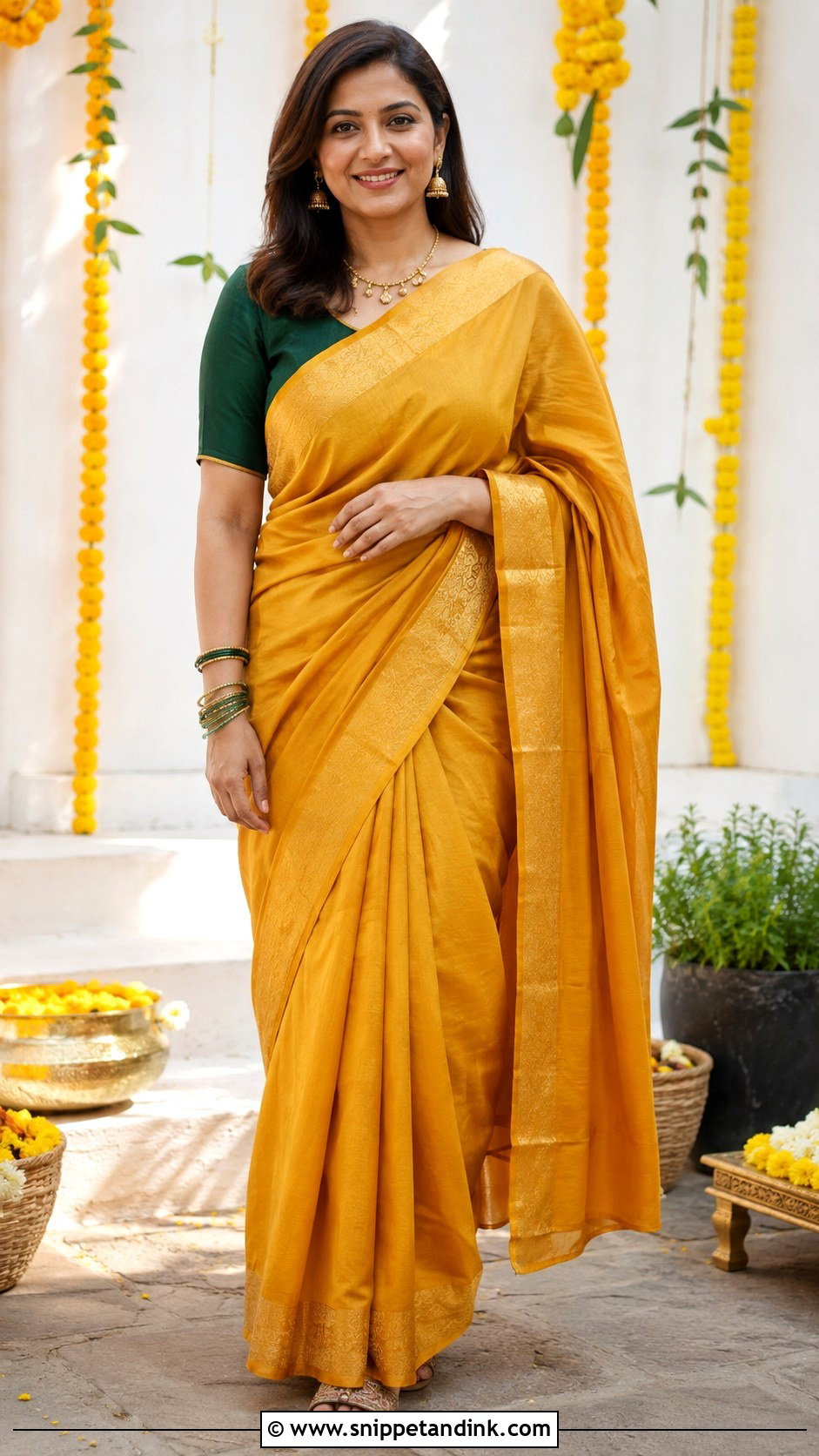
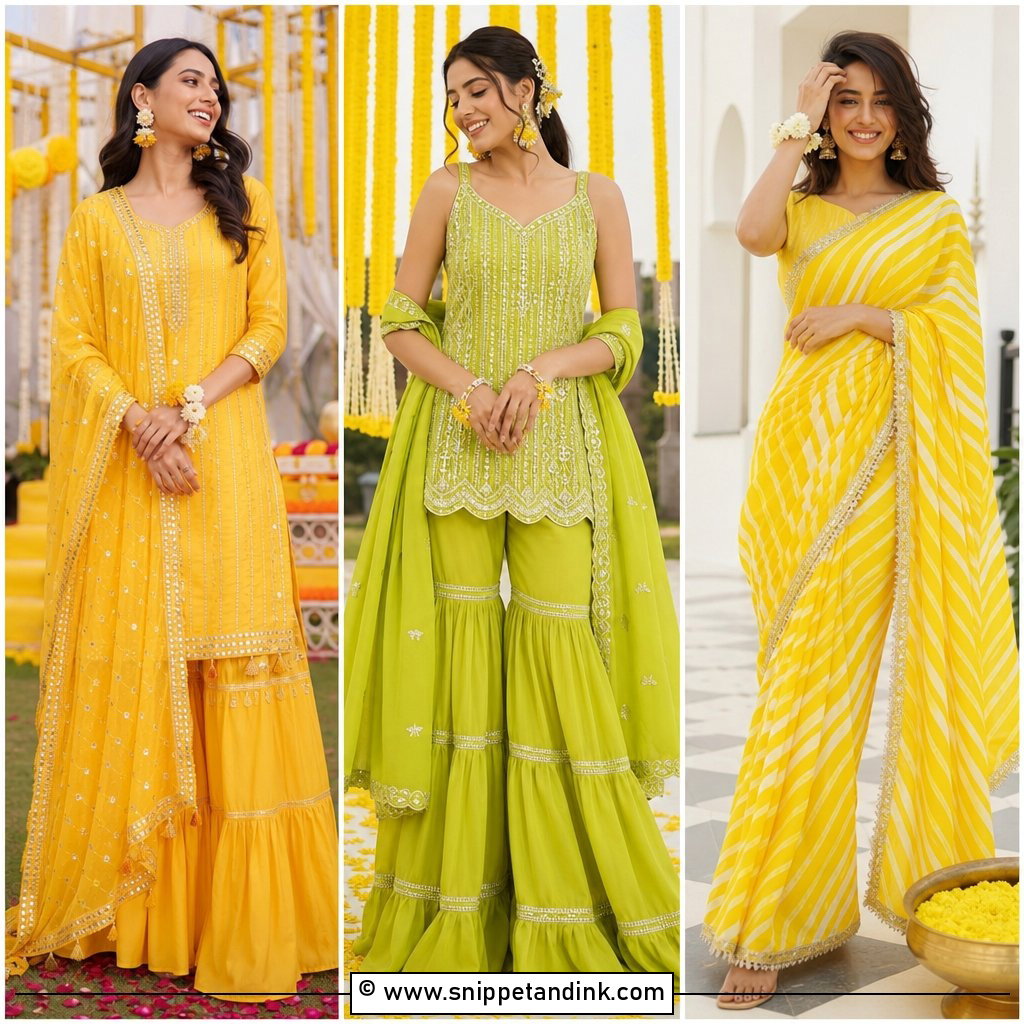
Mustard is the color I quietly recommend most to mothers who will be hands-on. Splashes of haldi paste dry to a yellow-orange that almost disappears into it, while the same mark on cream sits there all evening. Cotton silk also breathes better than pure silk on a hot afternoon. A woven border or small zari motifs keep it festive, and a bottle-green or magenta blouse gives the photos some contrast. A short gold necklace with matching earrings is enough. I’d put her in embroidered flats if she’s the one greeting guests at the gate, and a side-parted bun or soft braid holds up if the ceremony is outdoors.
3. Yellow Chanderi Saree Haldi Outfit for Mom
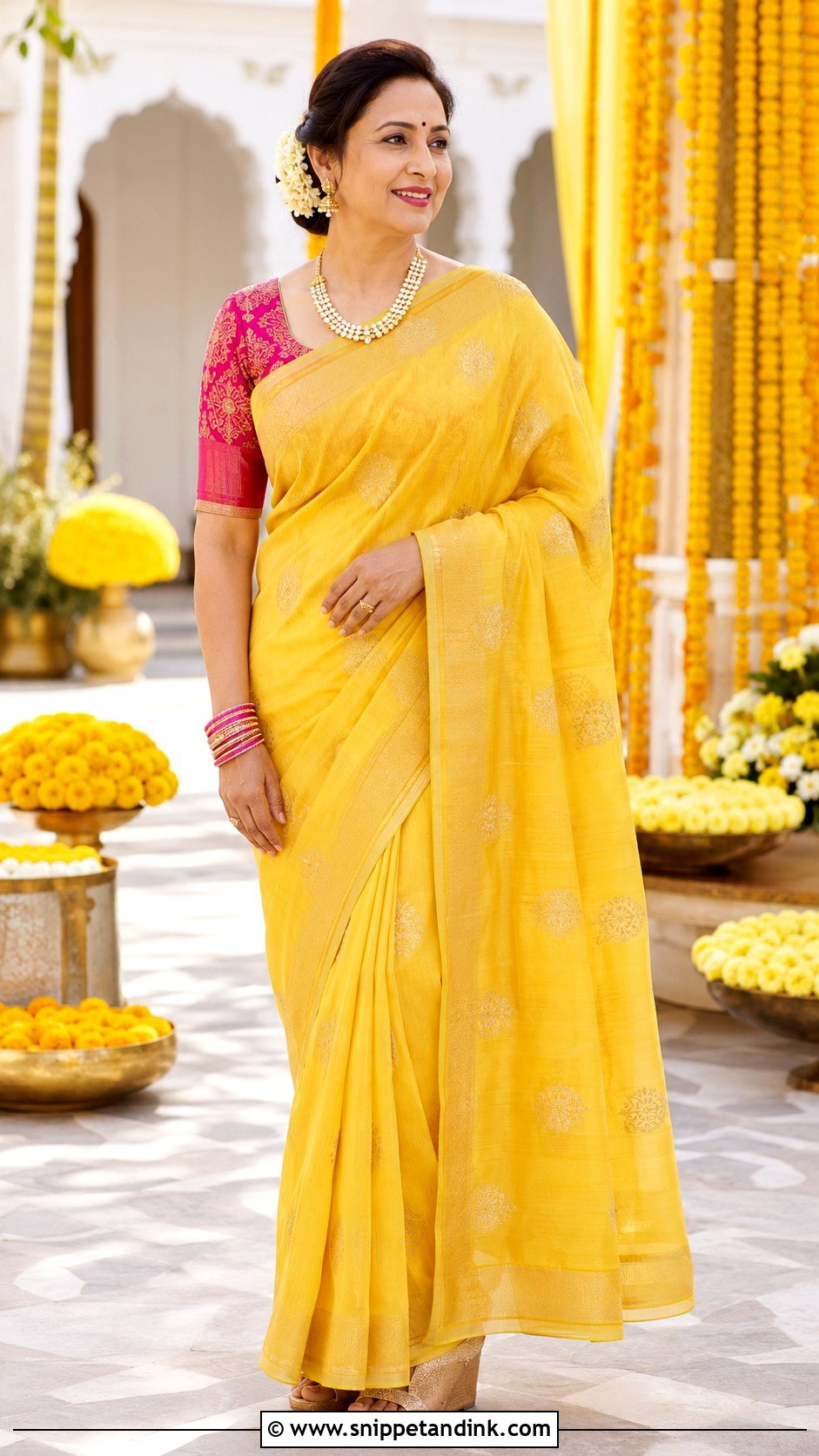
Chanderi is airy and slightly sheer, which is lovely in afternoon light but unforgiving if the petticoat is wrong. The first thing I check is that the petticoat matches the saree’s yellow, not a near-white, because a mismatched layer shows through in every outdoor frame. Choose small gold motifs and a neat border rather than heavy work, since the fabric is too fine to carry weight. A bright pink blouse with elbow sleeves gives the drape some definition. Pearl-and-gold earrings, a delicate necklace and pink bangles balance it. Low gold wedges or padded juttis keep her steady, and a sleek bun with fresh flowers finishes it. Of all the sarees here, this one is the coolest to wear in heat.
4. Yellow Bandhani Saree Haldi Outfit for Mom
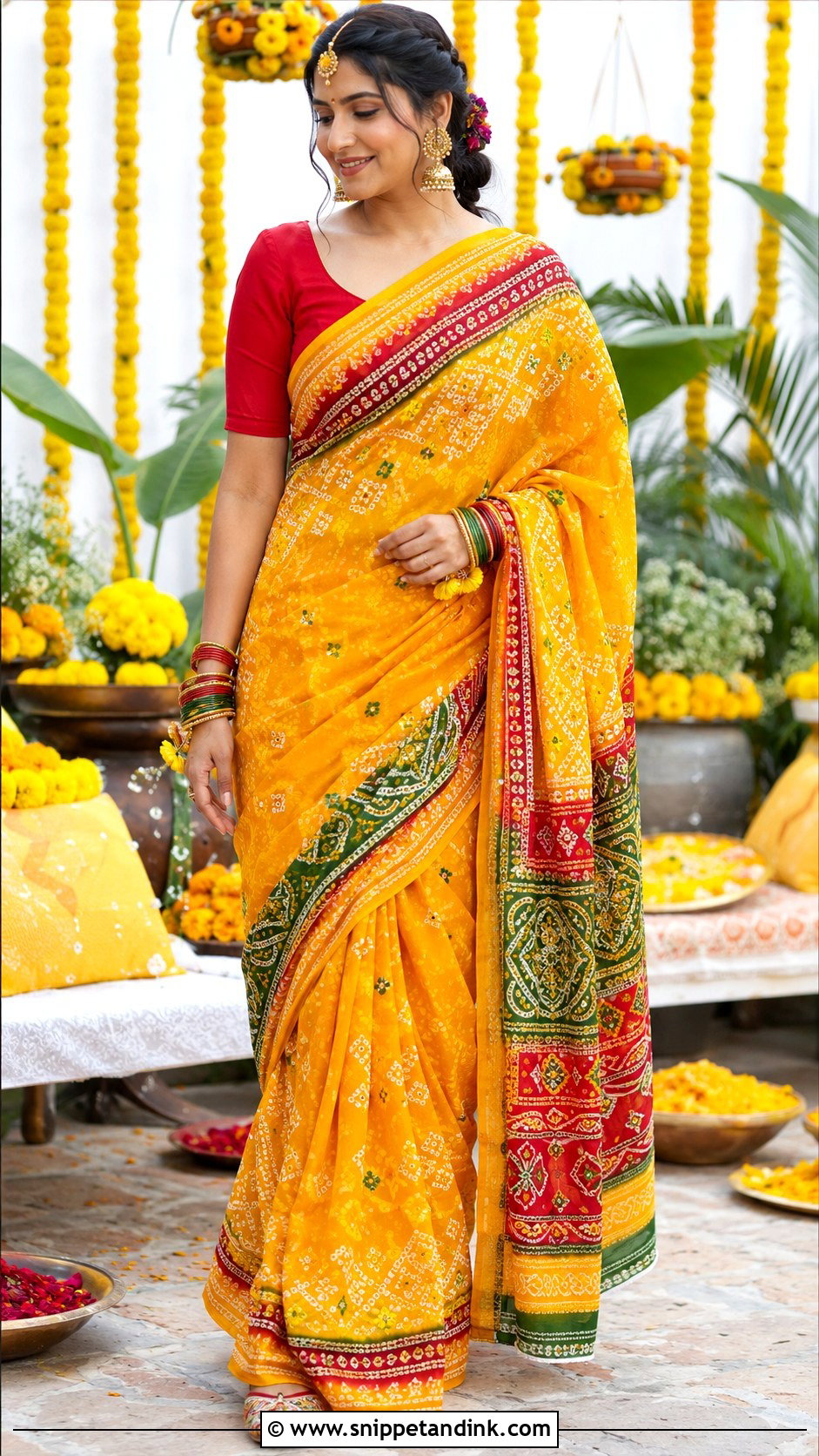
Bandhani carries a lot of regional meaning, and families from Gujarat and Rajasthan will often read it as a deliberate nod to tradition. The dotted pattern is busy by nature, so I keep the blouse plain in red, green or pink and let the saree do the talking. Georgette or crepe versions drape closer to the body than a stiff silk and do not add bulk at the hips, which many moms appreciate. Traditional gold earrings, glass bangles and a simple maang tikka suit it. Skip a big necklace if the border is already ornate. A braided or smooth low bun stays put through dancing, and juttis in the blouse color tie the look together.
5. Yellow Kanjeevaram Saree Haldi Outfit for Mom
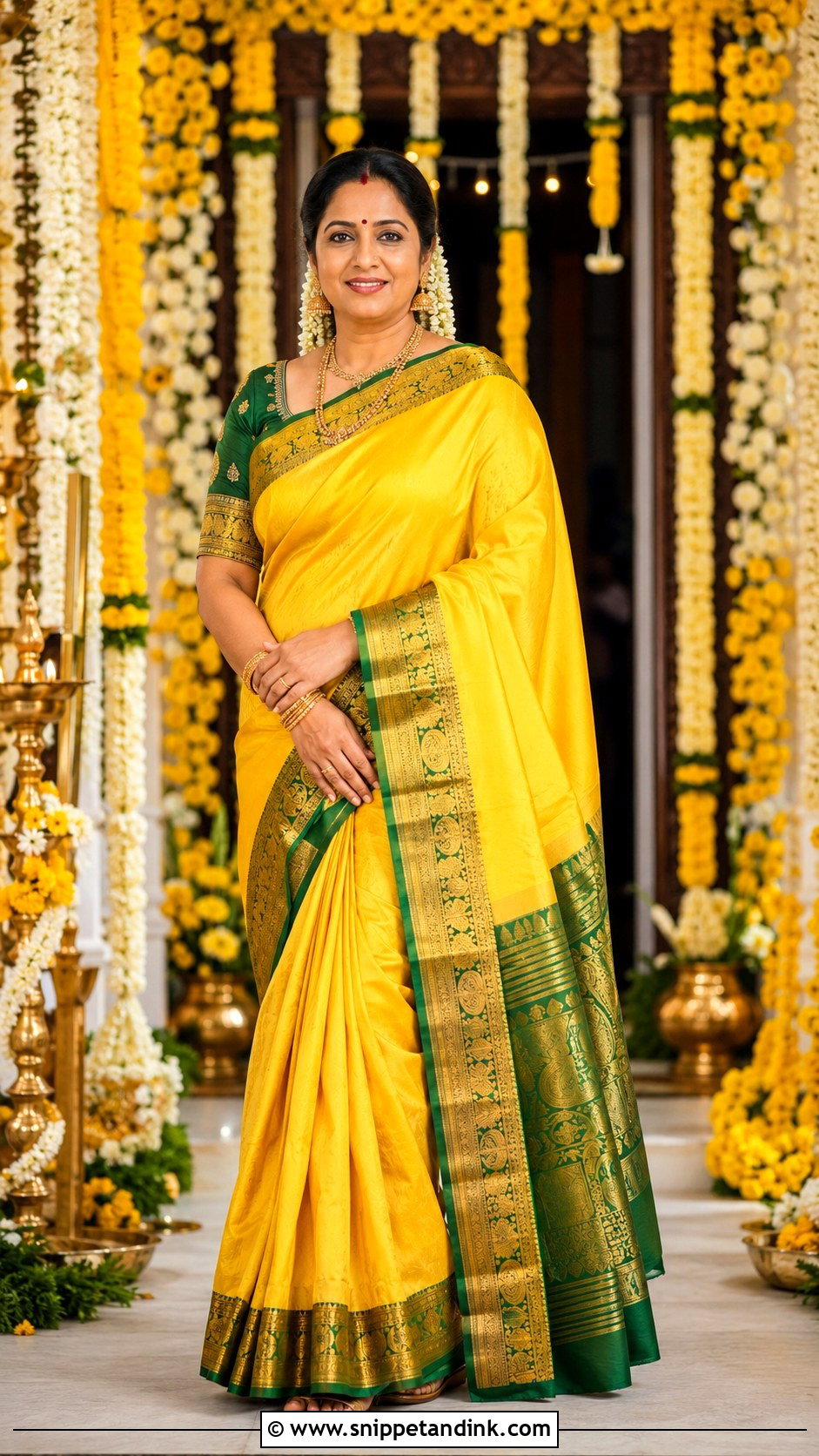
For a traditional South Indian Haldi ceremony, a yellow Kanjeevaram carries real weight, literally. A full bridal-grade Kanjeevaram can be tiring to wear for four hours on the floor, so I steer moms toward a lighter weave with a green, pink or maroon temple border. A fitted contrast blouse with elbow sleeves gives the silk structure. Temple earrings, a medium-length gold necklace and matching bangles are the natural pairing, and jasmine around the bun is expected in many families. Pleats in heavy silk need firm pinning before she sits, otherwise they splay. Secure-strap flat sandals are safer than heels on temple floors or courtyard stone.
6. Floral Organza Saree Haldi Outfit for Mom
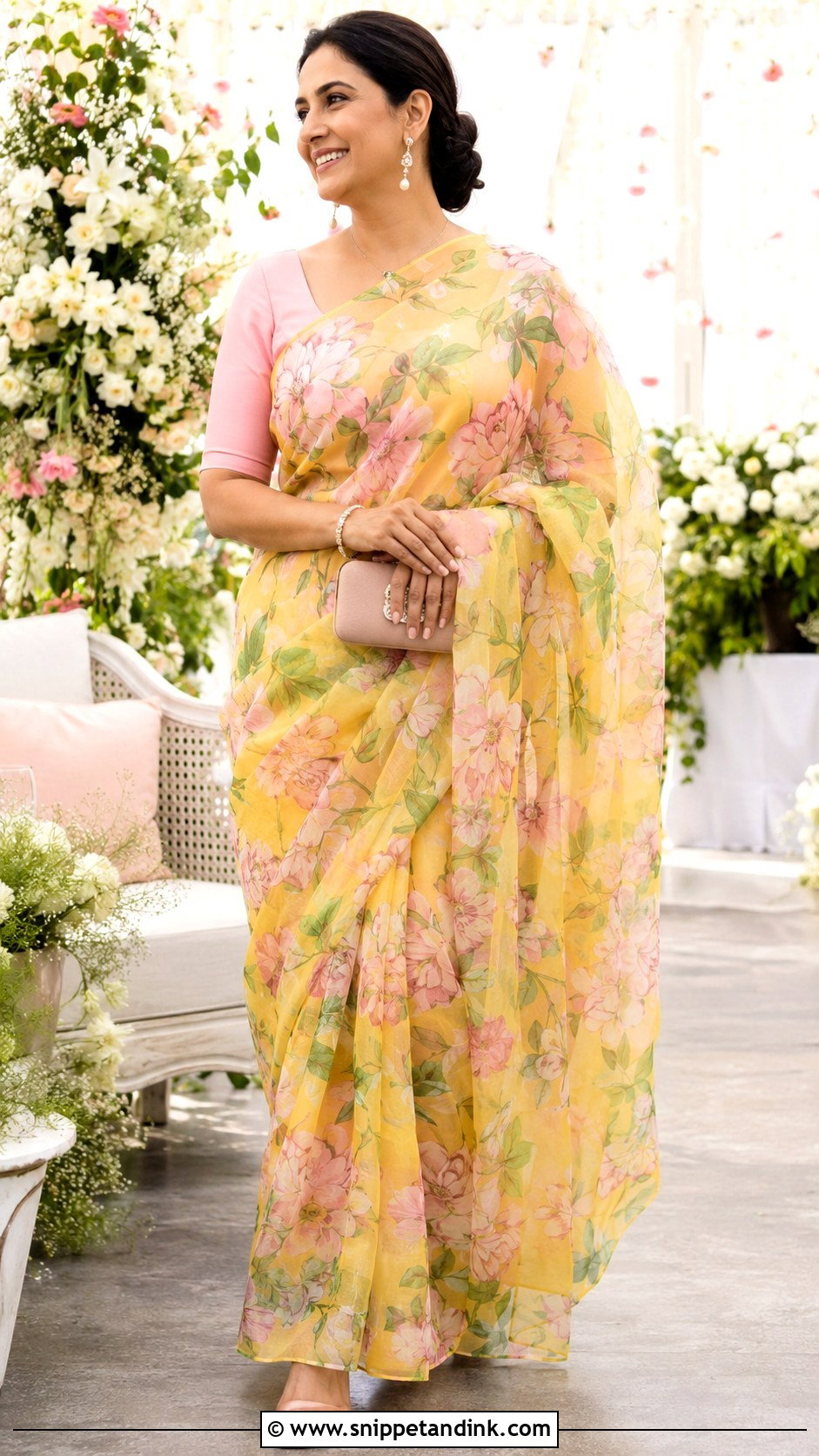
Would Mom prefer something lighter and more current? Floral organza is the answer I give most often, with one caution: organza has natural body, and it can puff out around the hips if the pleats are loose. I keep the pleats narrow and use a slim, not flared, petticoat underneath. Look for pink, green or white florals on yellow with a narrow embroidered border, and pair it with a plain yellow or pink blouse with proper coverage. Pearl earrings, a slim bracelet and a small clutch are enough jewelry. A soft bun or a shoulder-length blowout suits the mood, and low block heels work indoors. On a rough lawn I’d switch to flats.
7. Yellow Anarkali Haldi Outfit for Mom
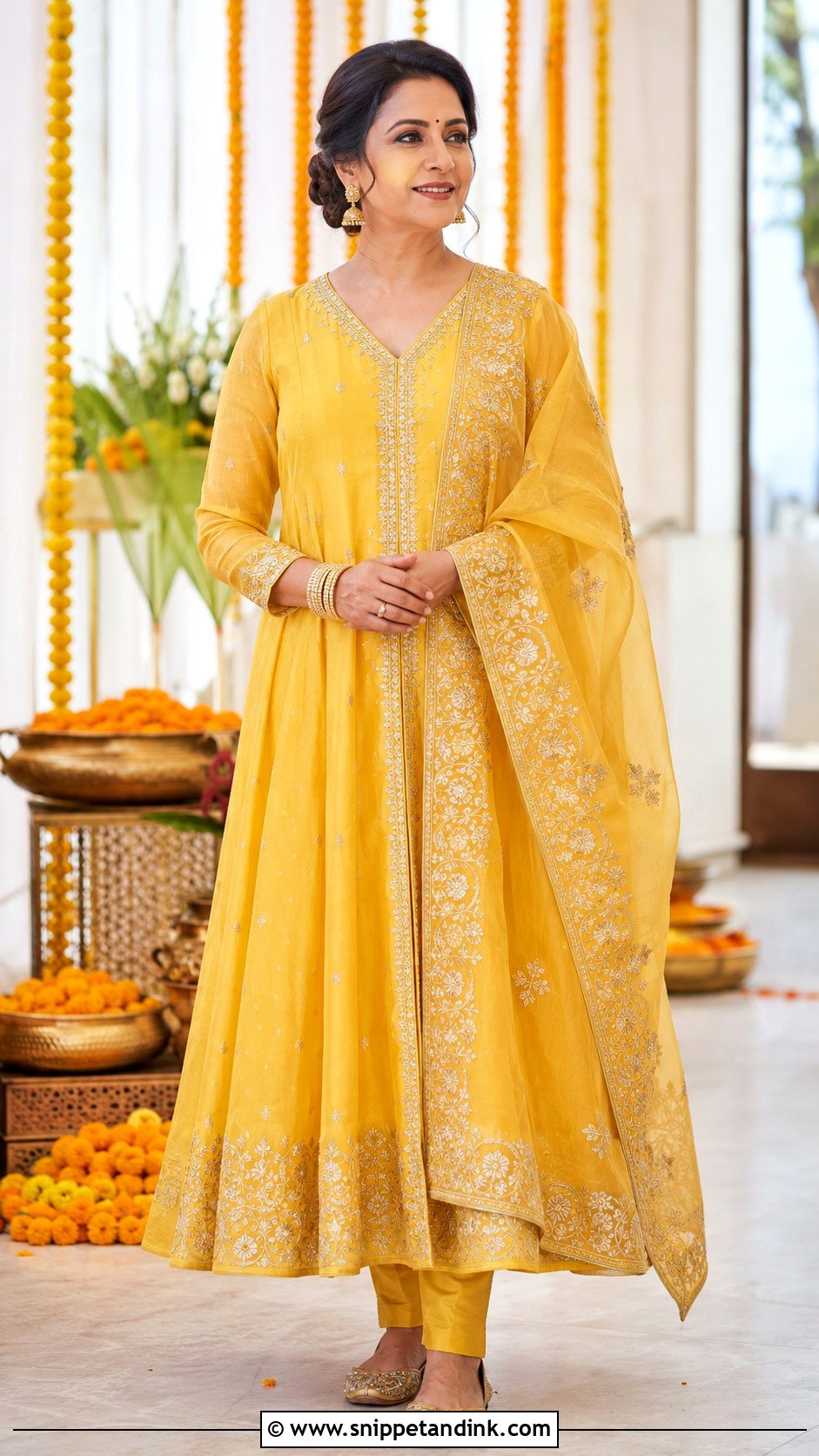
Not every mother wants to manage a saree for a whole afternoon, and an Anarkali solves that without looking casual. Calf or ankle length in cotton silk, Chanderi or light georgette gives a long line and a skirt that moves when she walks. I check the flare by asking her to sit on a low chair in the fitting room; if the hem bunches against the floor, it’s too long for a seated ritual. Slim pants and a soft dupatta pinned at one shoulder keep things tidy. Embroidery at the neckline or cuffs is festive without adding weight. Gold jhumkas, bangles and embroidered juttis finish it, with a half-up style or low bun.
8. Yellow Kurta and Palazzo Haldi Outfit for Mom
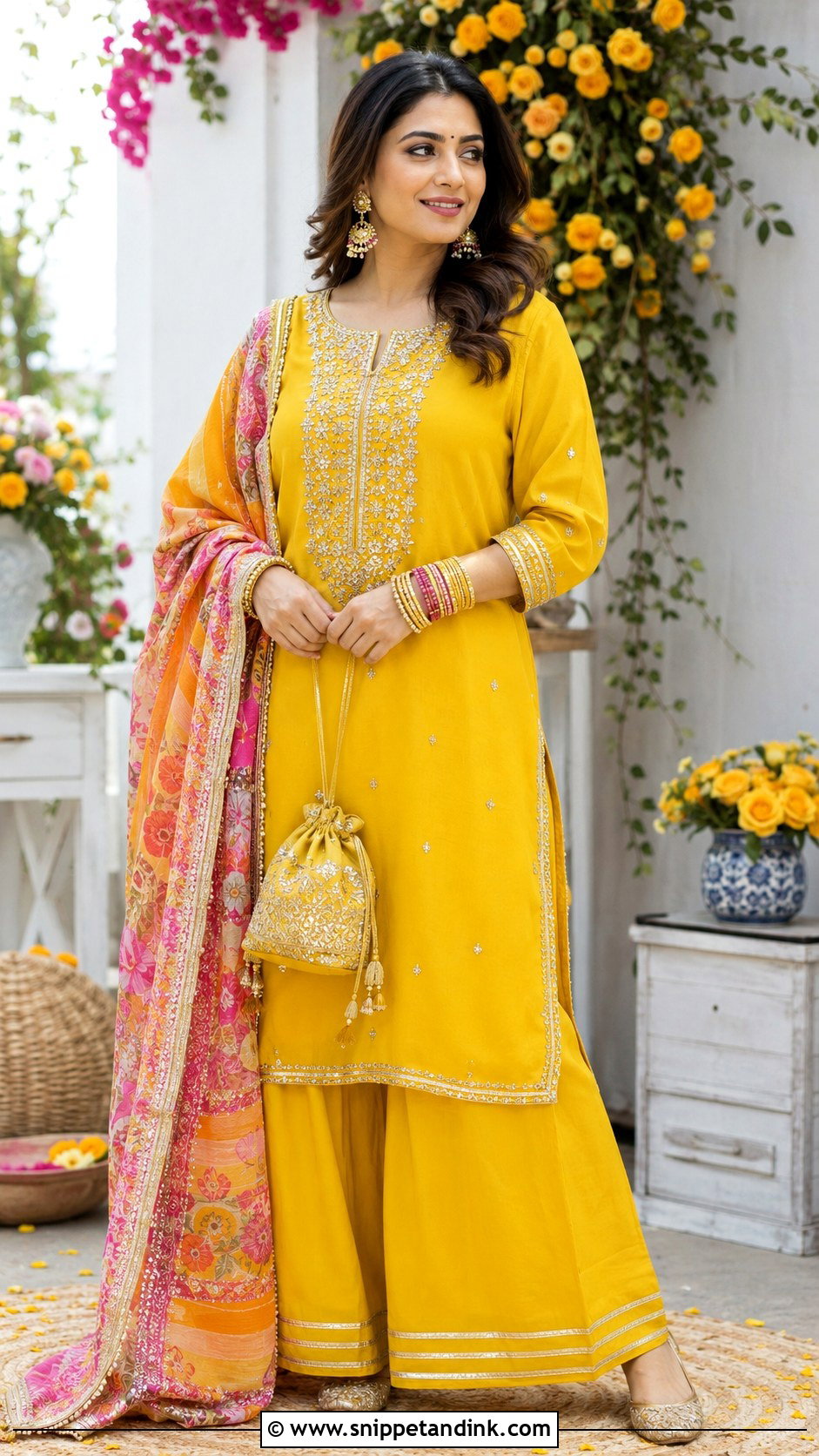
A straight yellow kurta with palazzo pants is the outfit I suggest to a mom who will be running the kitchen, the photographer and the guest list at once. A knee-length kurta with gota work, thread embroidery or small mirrors looks festive, and wide palazzos let air move on a hot day. Pick a printed dupatta with a pink, green or orange border and repeat that shade once in the bangles or earrings; once is enough. Narrow heels sink into lawns, so metallic flats or cushioned juttis are the practical choice. A small potli carries her phone and safety pins. Low ponytail, soft bun or neat short hair all suit it.
9. Yellow Sharara Haldi Outfit for Mom
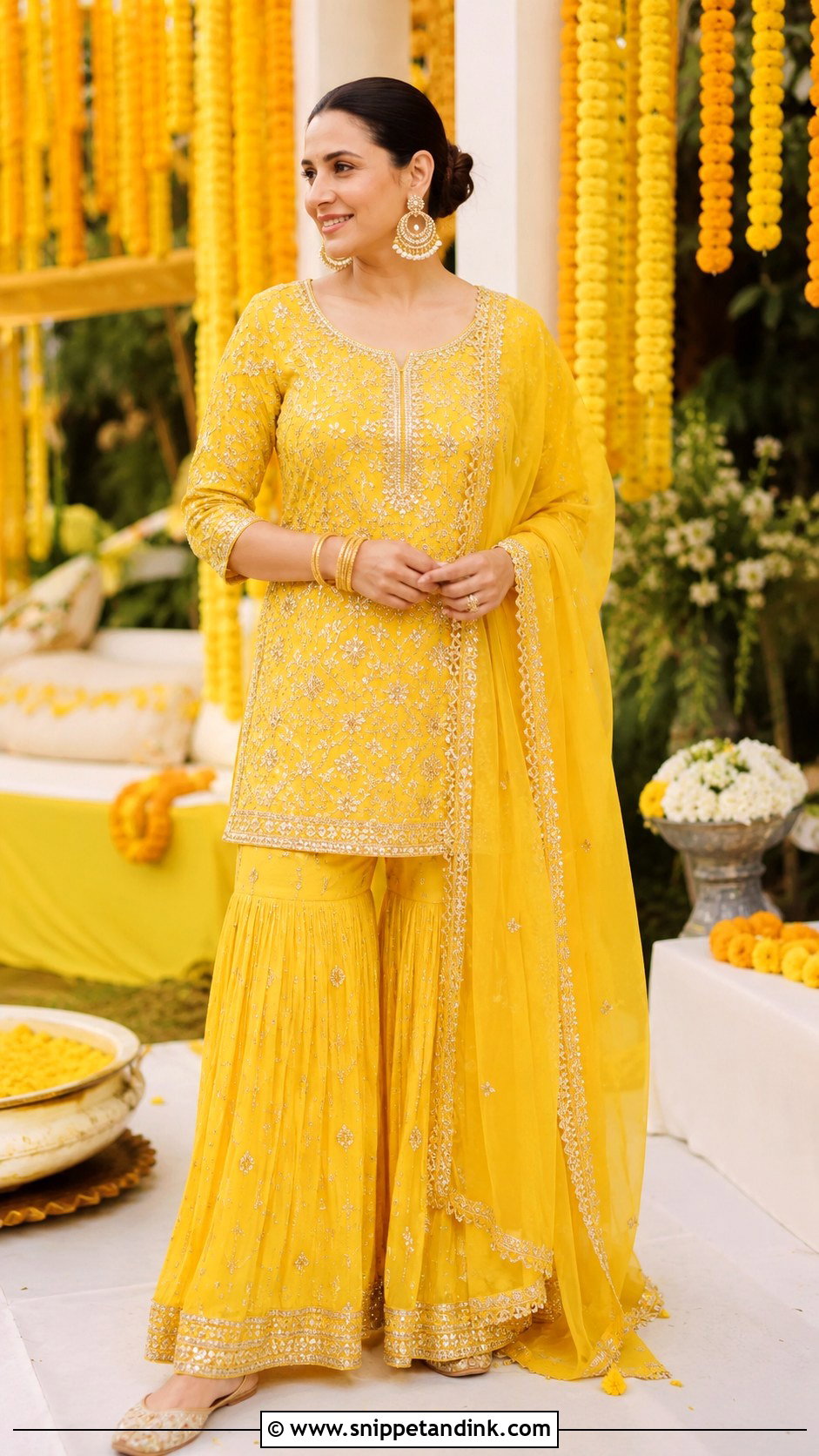
Shararas are fun to wear, but proportion decides whether they flatter or swamp. I pair moderately flared pants with a hip-length kurta, because a cropped top over a wide sharara makes the hips look broader than they are. Gota borders or delicate floral embroidery give definition without tipping into bridal territory. A sheer dupatta can go over both shoulders or be pinned to one side. For moms who don’t want volume at the waist, a longer kurta with a controlled flare is the fix. Statement earrings, a few bangles and embroidered flats are enough, and a sleek bun keeps focus on the neckline. It dances well.
10. Mustard Gharara Haldi Outfit for Mom
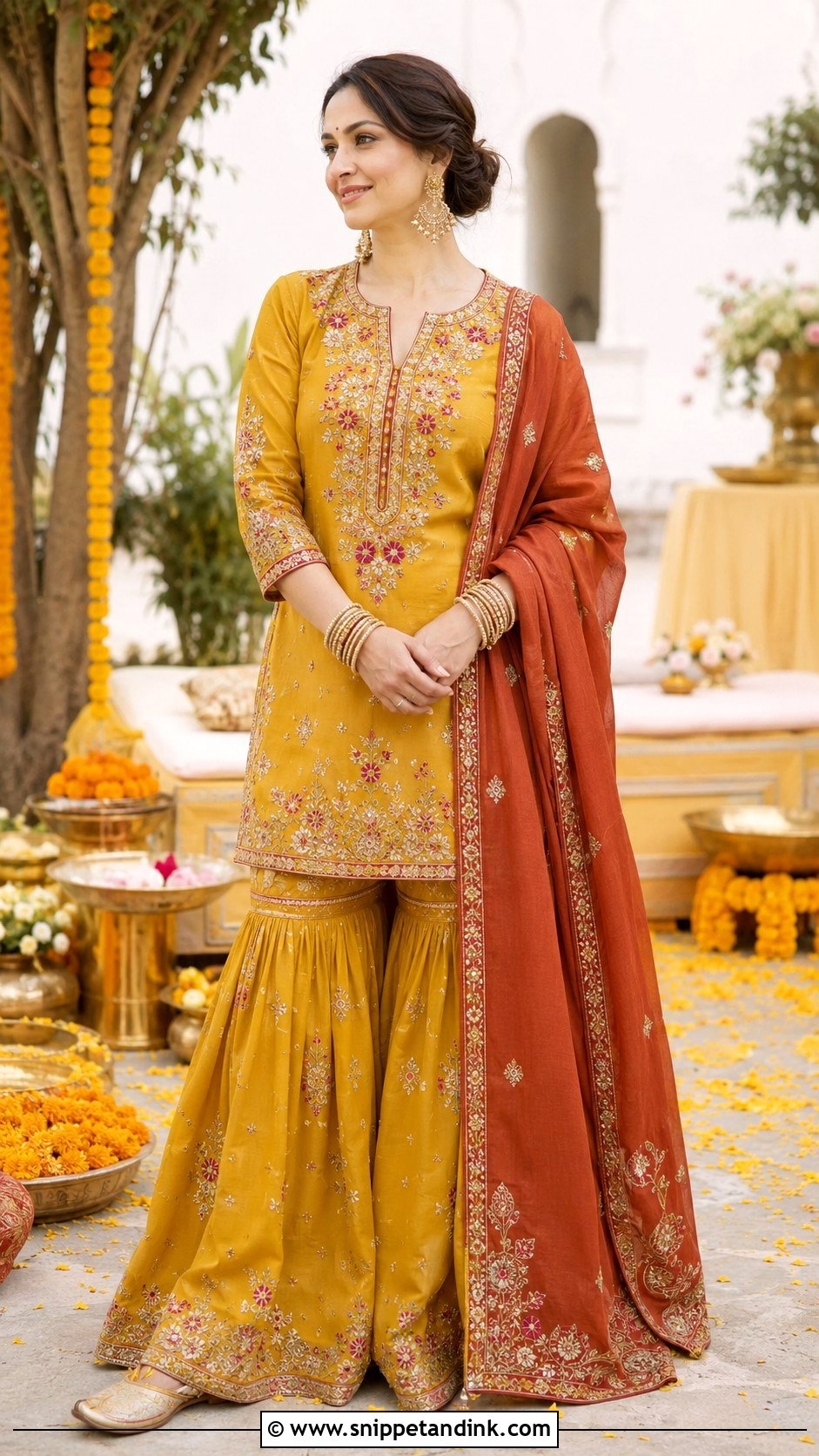
Mustard gives a gharara a richer, slightly older-school feel that suits a mother’s role. The gharara’s gathers and embellished knee seam already carry volume, so I keep the kurta clean: knee length, a simple neckline, subtle embroidery. A light contrast dupatta in rust, pink or olive lifts the deeper base. Gold drops, a single statement ring and stacked bangles are all I’d add. Pointed juttis suit the traditional shape and are easy to walk in. One practical note: the knee seam on a gharara sits right where she kneels, so check that the embellishment there is flat and not scratchy before buying.
11. Yellow Chikankari Suit Haldi Outfit for Mom
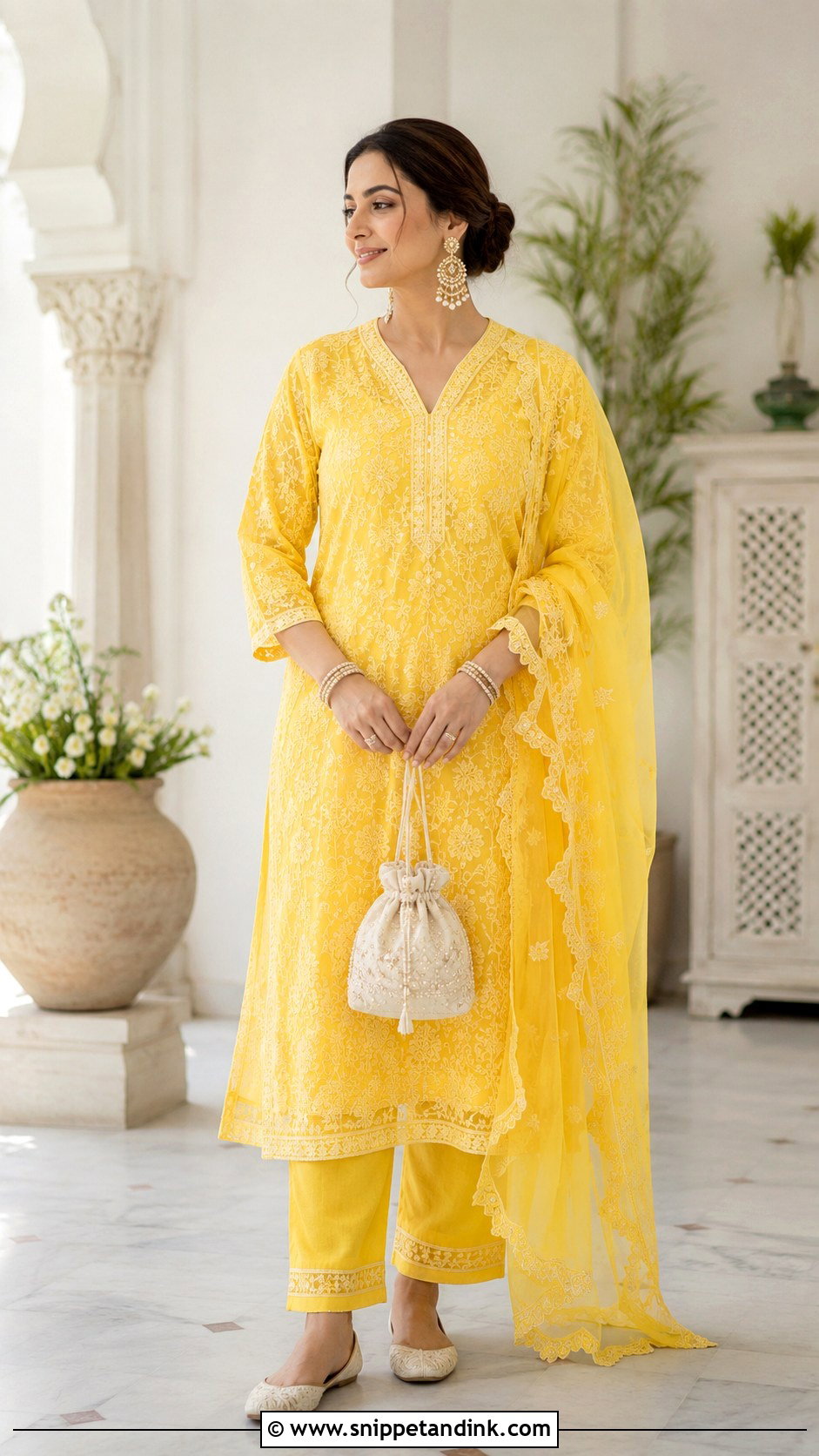
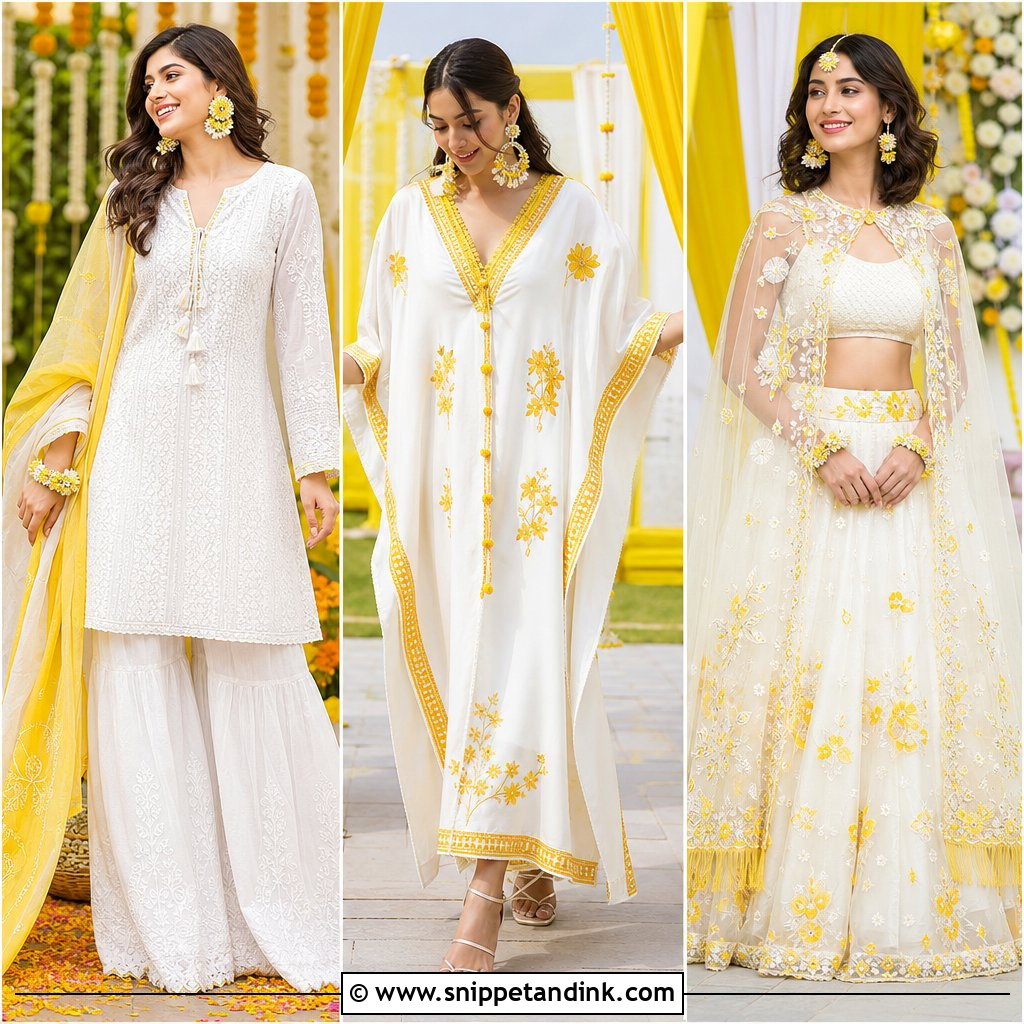
Chikankari is hand embroidery on fine cotton or georgette, and it brings texture rather than shine to a yellow Haldi suit. The thing to check is the lining. Unlined chikankari is see-through in direct sun, and I always hold the kurta up to a window before approving it. Straight pants or narrow palazzos and a dupatta with a simple lace edge keep it understated. White thread reads as daytime and soft, gold thread a little dressier. Pearl-and-gold earrings, thin bangles and ivory juttis suit it, along with a sling bag that keeps her hands free. It suits mothers who like minimal clothing.
12. Yellow Patiala Suit Haldi Outfit for Mom
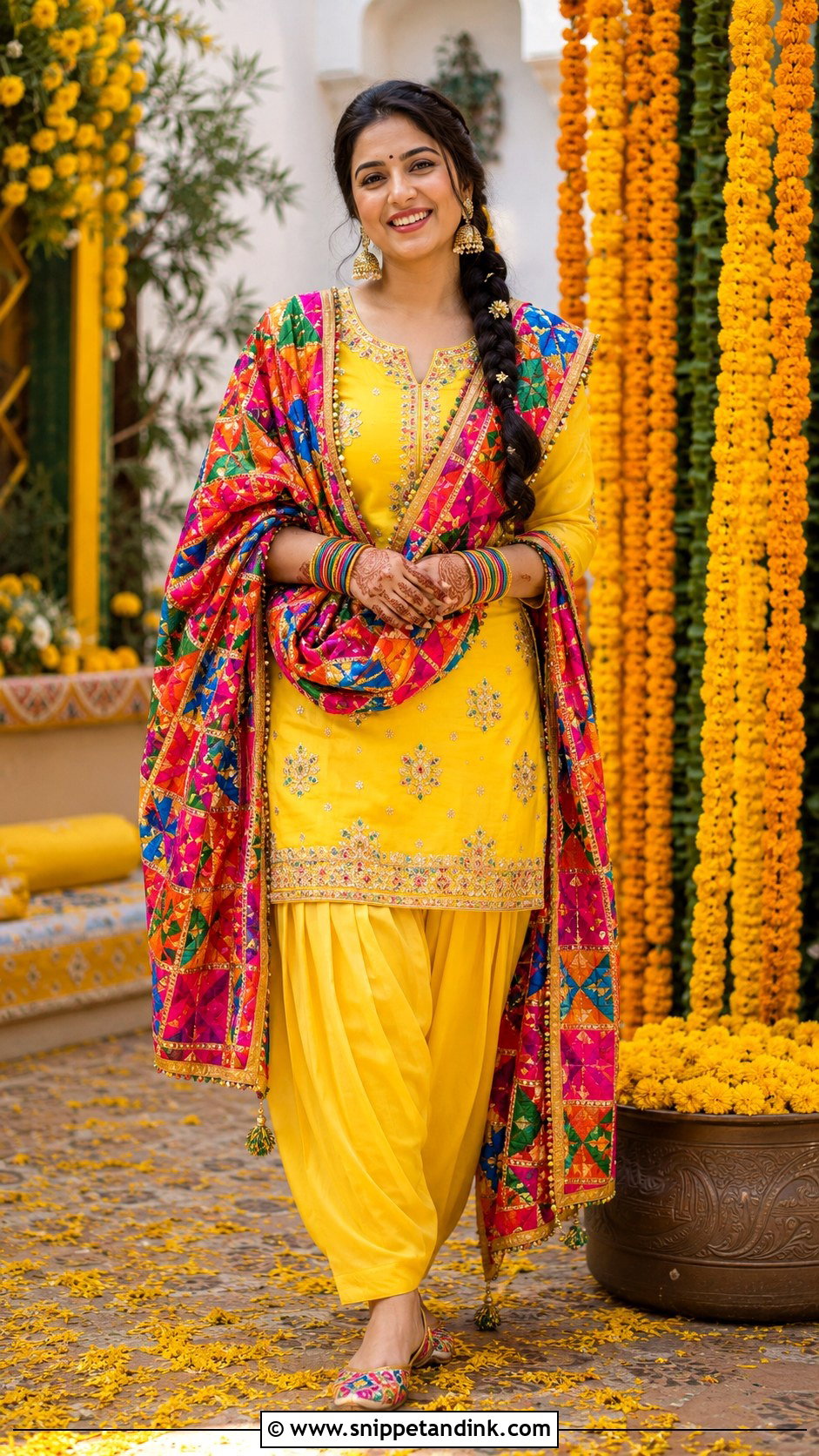
A yellow Patiala suit is made for a Haldi with a dhol and plenty of dancing. The pleated salwar gives a lot of room to move, and phulkari embroidery at the neckline, hem or sleeves keeps the kurta festive. The phulkari dupatta, in pink, orange, green or multicolor thread, is where the energy comes from, so I pin it at one shoulder or it ends up trailing through the paste bowl. Gold jhumkas, colorful bangles and embroidered juttis are the regional match. A long braid or braided bun suits it. If Mom prefers more coverage, choose a medium-length kurta rather than the shorter cuts that are fashionable right now.
13. Yellow Lehenga Haldi Outfit for Mom
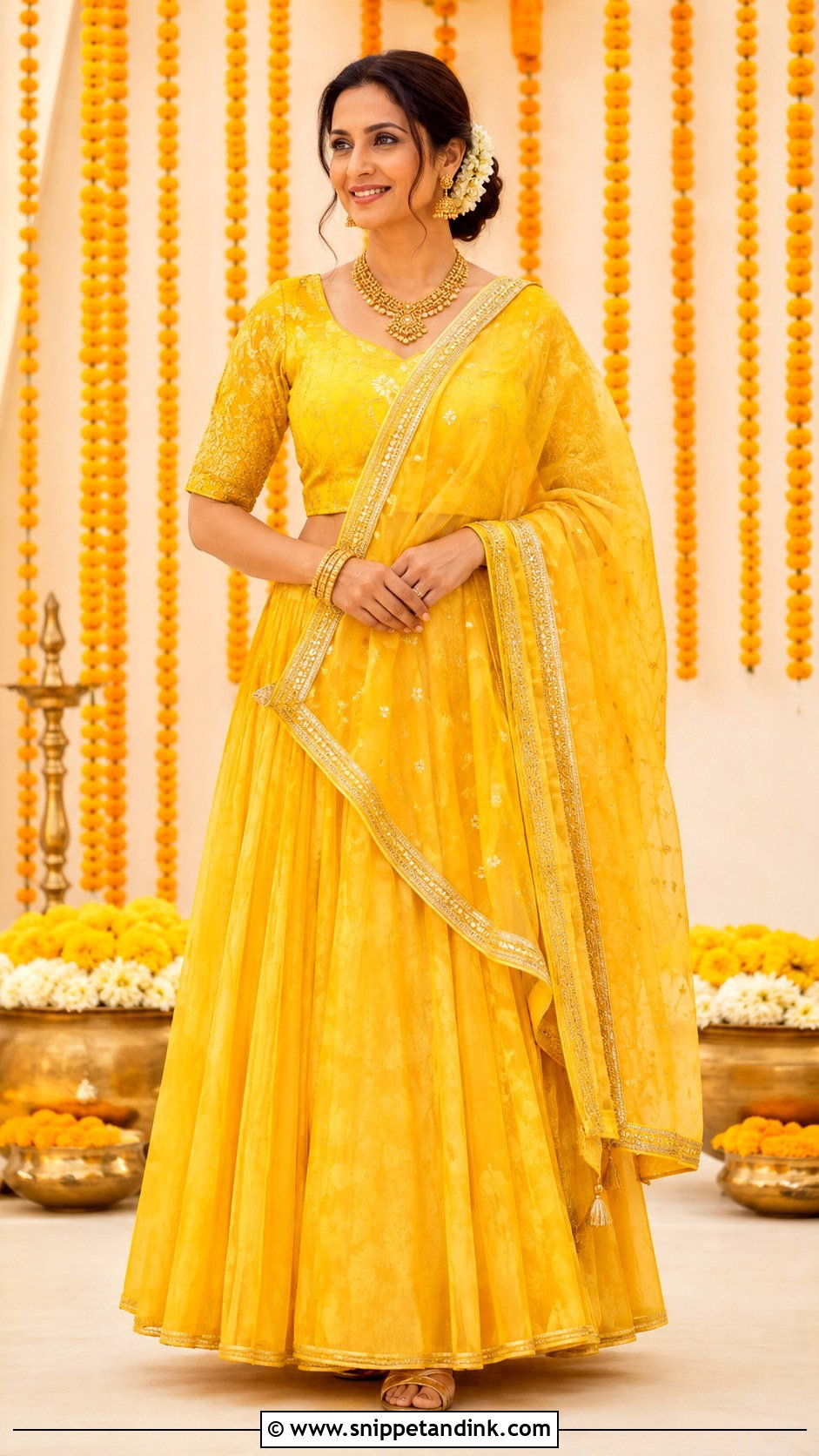
A lightweight yellow lehenga lets Mom dress up without the weight of her wedding-day outfit. I pick an A-line or softly flared skirt in cotton silk, georgette or Chanderi and keep embellishment along the hem rather than all over, which keeps the skirt from dragging. A longer blouse or short kurti with elbow sleeves and modest necklines gives coverage, and a dupatta worn diagonally across the torso balances the shape. A medium necklace, matching earrings, bangles and low block heels are enough. A low bun with fresh flowers finishes it. This makes the most sense when the immediate family has agreed on a yellow dress code.
14. Yellow Jacket Lehenga Haldi Outfit for Mom
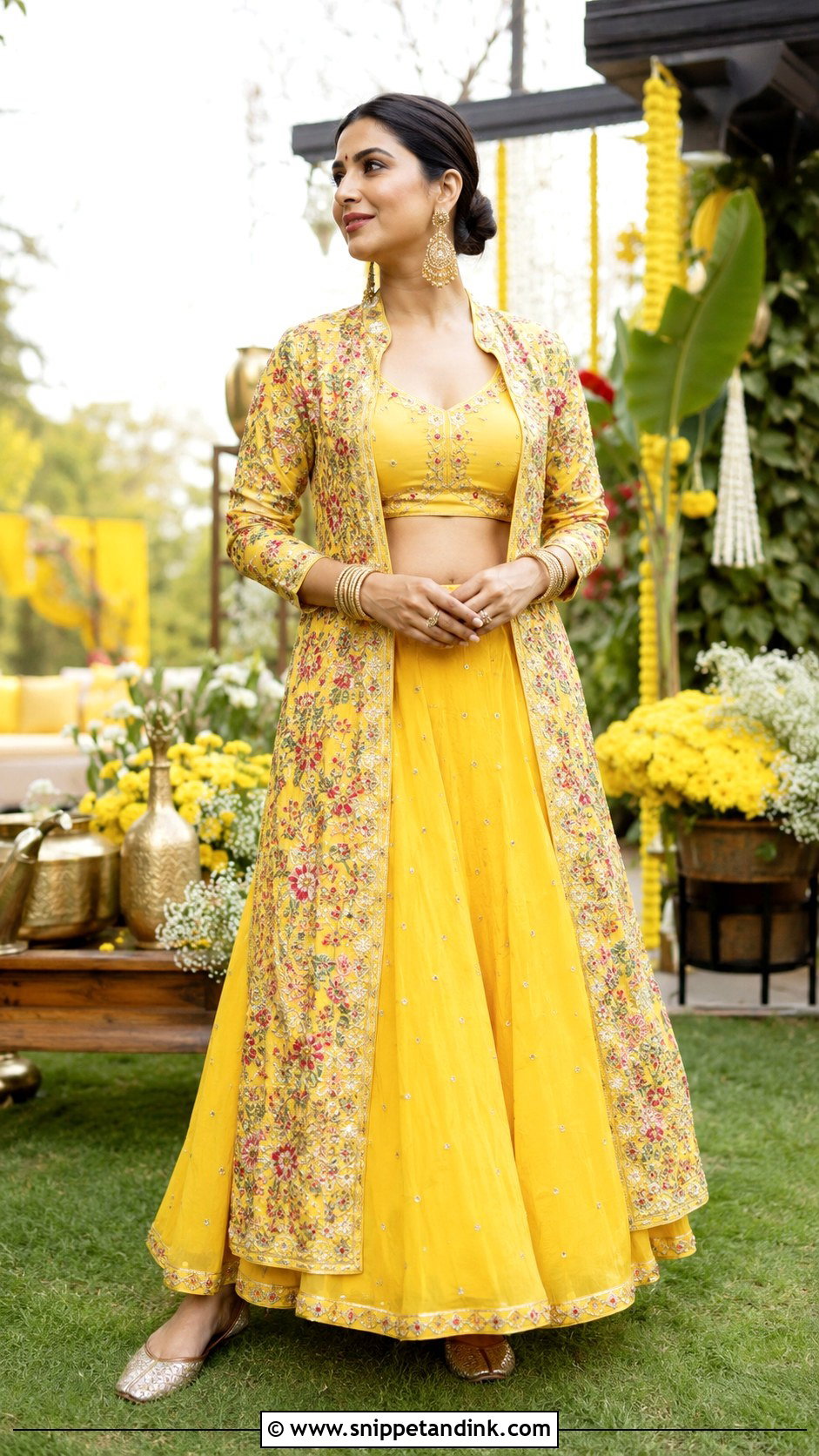
The jacket lehenga is my quiet solution for the mom who hates managing a dupatta. A simple yellow lehenga and blouse sit underneath, and a knee or ankle length embroidered jacket does the covering. Open-front jackets create a long vertical line; a closed jacket removes the dupatta question entirely. I’d keep the jacket to floral threadwork, gota edging or light mirror work, because dense stones make it heavy and hot by midday. Statement earrings and a few bangles are enough if the neckline is already detailed. Gold flats or low wedges keep her stable outdoors, and a sleek bun or soft side part suits the cleaner silhouette.
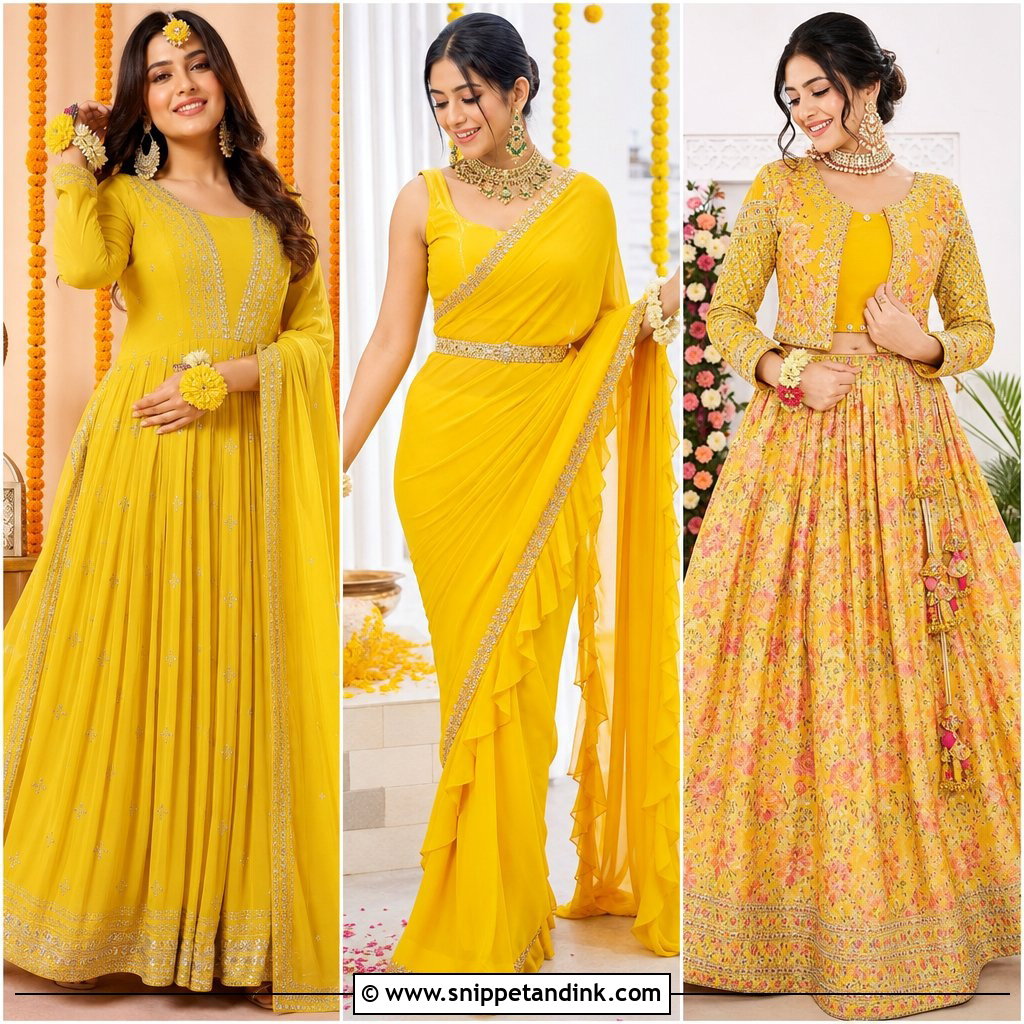
15. Yellow Peplum Sharara Haldi Outfit for Mom
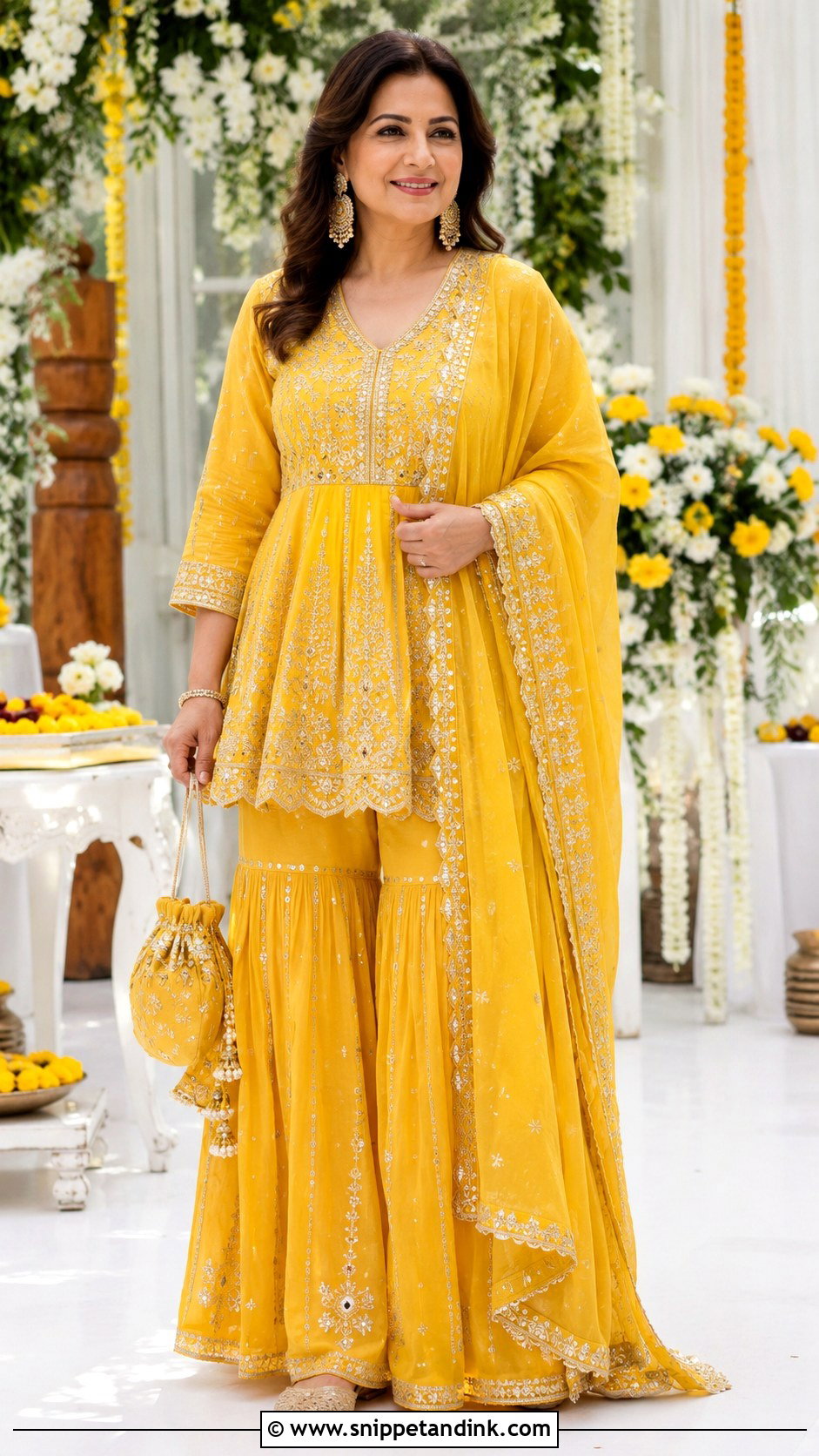
A peplum sharara set is the most current shape on this list, and it works only when the peplum is soft. A stiff, exaggerated flare sticks out when she sits and looks dated in photos within a few years. I look for a peplum that falls below the waist with a gentle flare, paired with flowing sharara pants in the same yellow or mustard. Light embroidery at the neckline, waist and pant hem defines it. A soft dupatta over one shoulder adds coverage if she wants it. Long earrings, a simple bracelet and a compact potli keep it clean. Juttis disappear nicely under the wide pants.
16. Yellow Cape and Palazzo Haldi Outfit for Mom
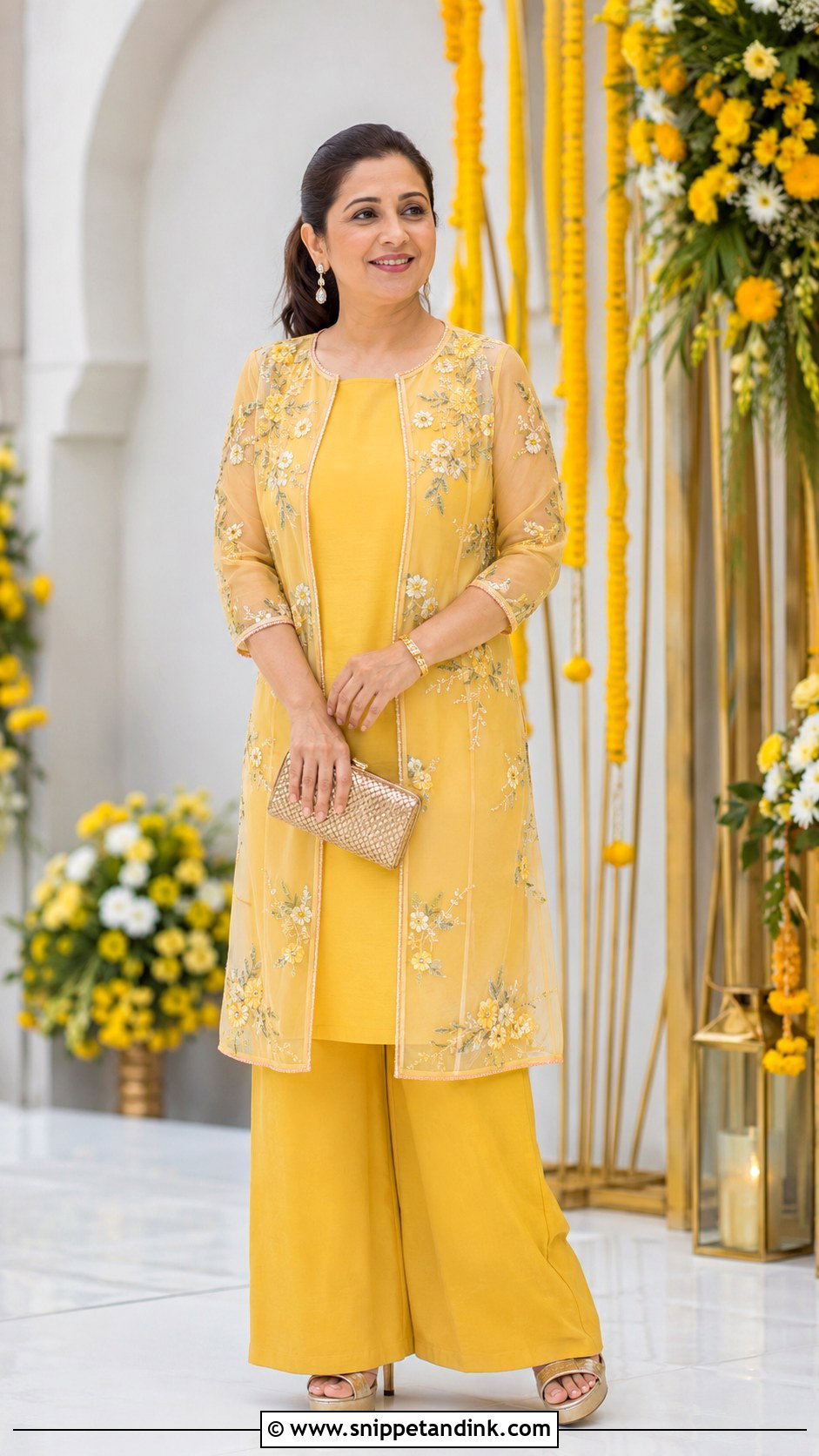
A cape gives coverage over the arms and back without any pinning, which is why I suggest it to moms who feel self-conscious in sleeveless or short-sleeve tops. The cape should stop at the knee or mid-calf; longer than that and it catches on chairs and gets stepped on. Keep the inner kurta or top opaque and well fitted, with coordinated palazzos underneath. Because the cape carries the embroidery, I’d hold the jewelry to drop earrings, one bracelet and a ring. Gold flats or low platform sandals and a small structured clutch finish it. A neat ponytail or bun keeps the hair clear of the cape’s neckline.
17. Pre-Draped Saree Haldi Outfit for Mom
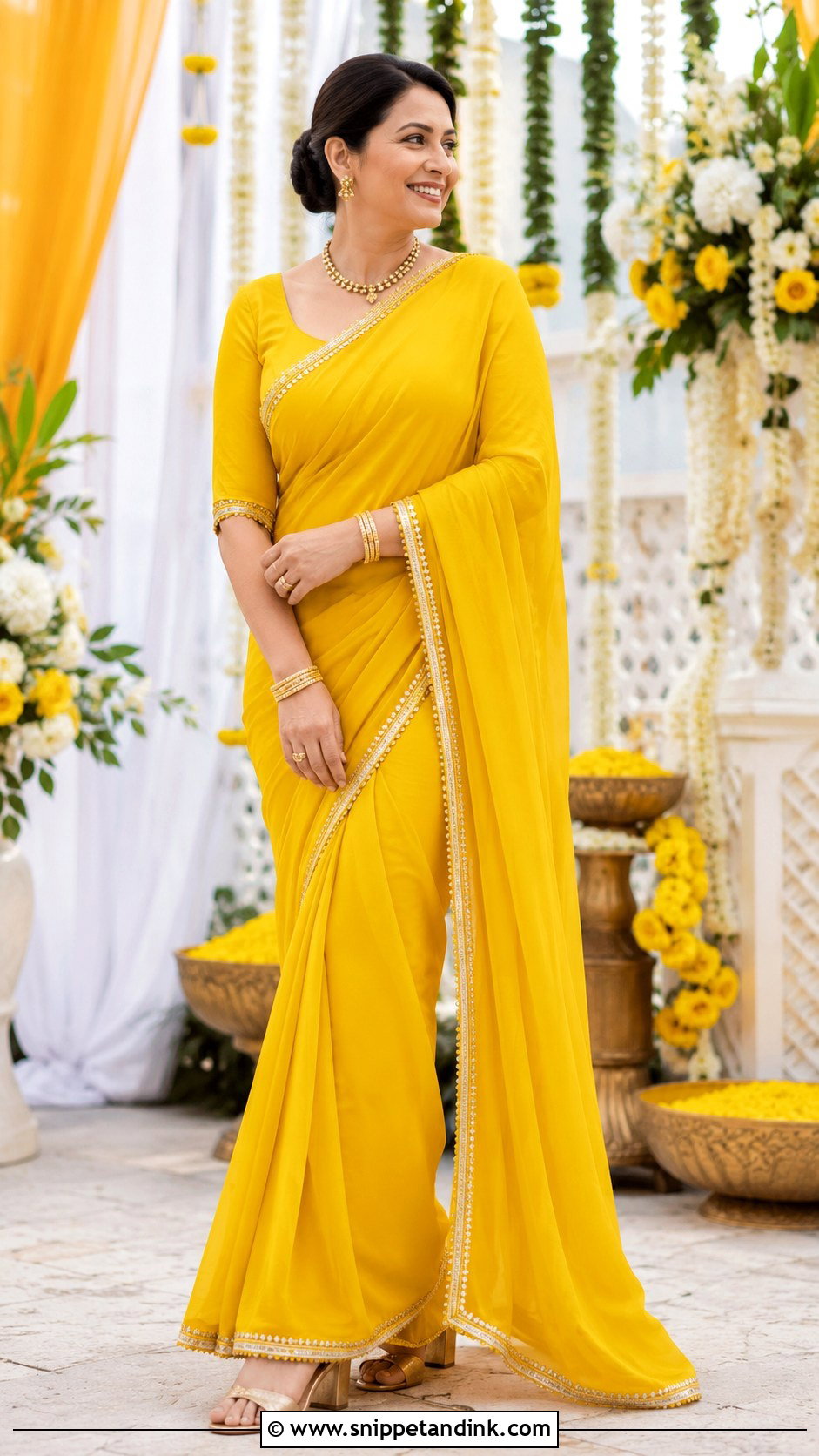
A pre-draped saree is the one I recommend to mothers who are nervous about pleats coming loose while they supervise the caterers. The pleats are stitched, the waistband closes securely and the pallu is fixed, so there’s nothing to adjust between rituals. Georgette or crepe holds the stitched drape best. A supportive blouse with elbow sleeves or a modest V-neck works well. A narrow gota border or small floral embroidery gives it ceremony-ready detail. A short necklace, matching earrings, slim bangles and low block heels finish it, with a sleek bun or soft curls. One caution: try it seated before the day, since some ready-made pleats pull at the hip.
18. Yellow Kaftan Set Haldi Outfit for Mom
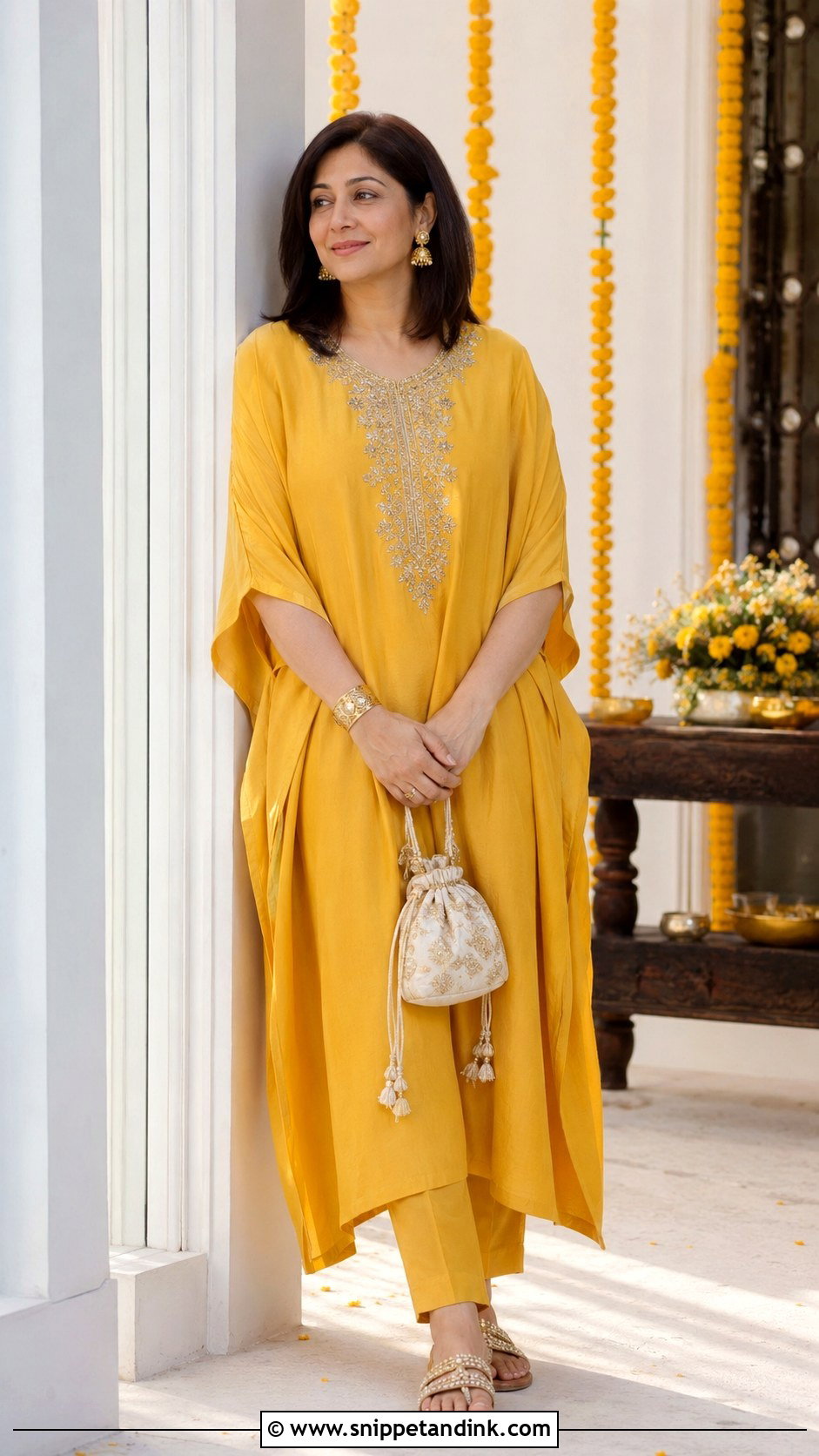
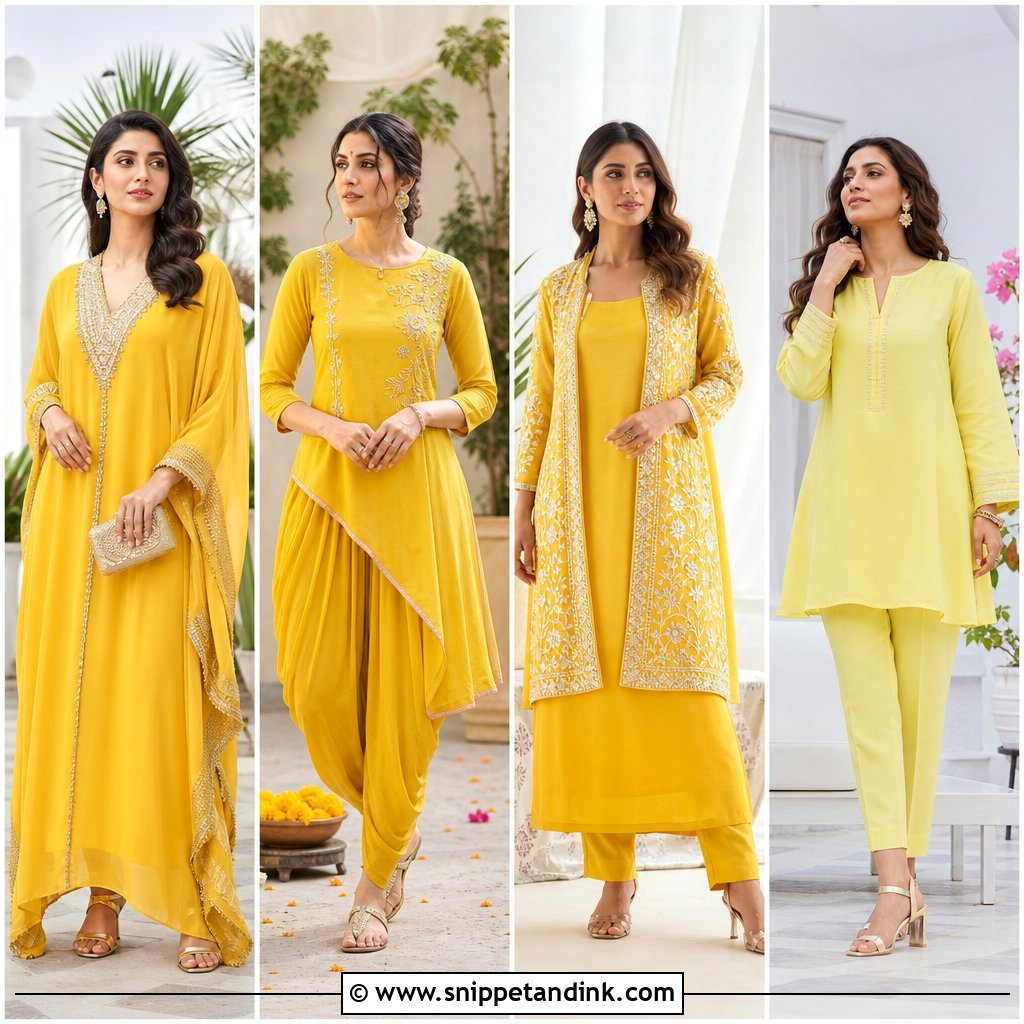
For a relaxed home ceremony, a yellow kaftan set is comfortable without looking like loungewear, provided it has structure. I look for defined shoulder seams, side slits and light embroidery at the neckline; a kaftan with dropped, shapeless shoulders reads as a nightgown in photos. Straight pants balance the loose top. A soft belt or internal waist tie can add shape, but it should never pinch when she sits. Gold earrings, a statement cuff and embellished flat sandals give the simple clothing some polish. A small ivory or gold bag, and a smooth blowout, short layered cut or low bun complete it. It suits warm climates and intimate gatherings.
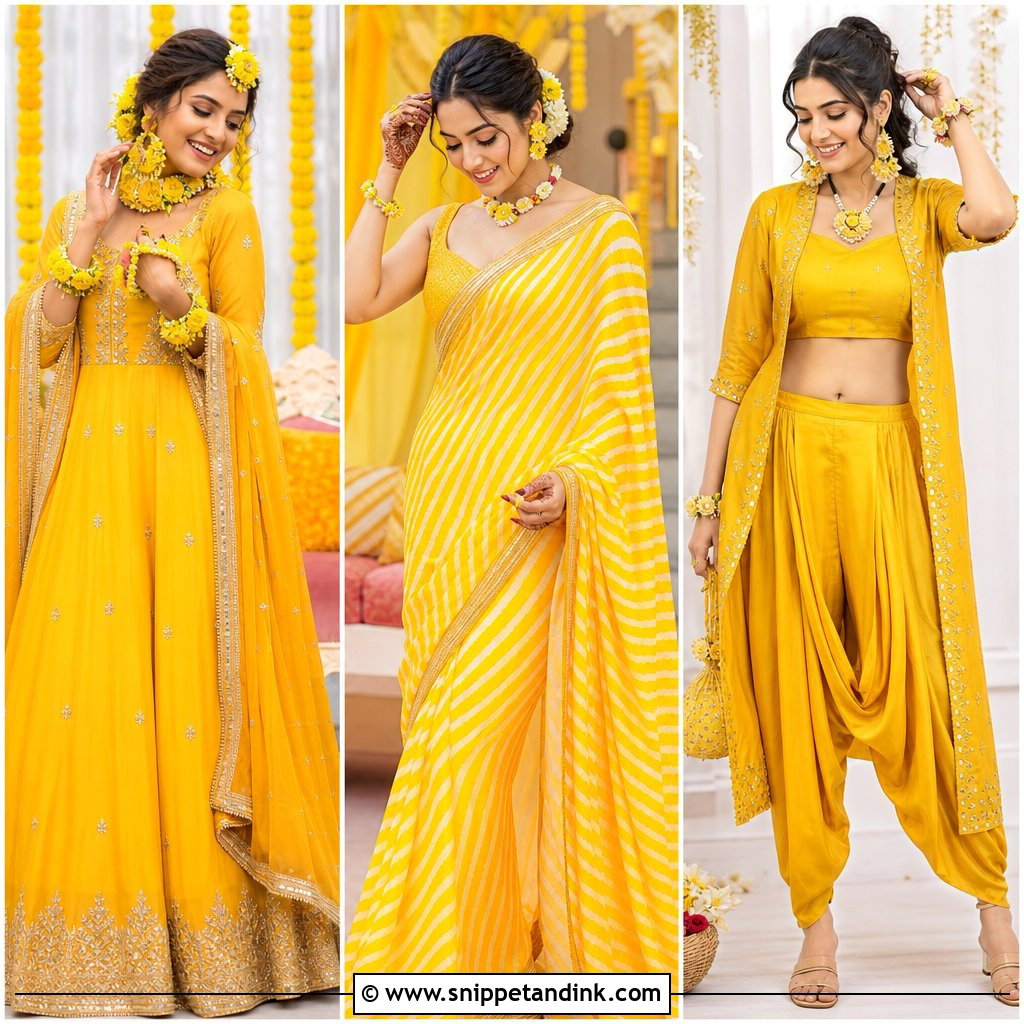
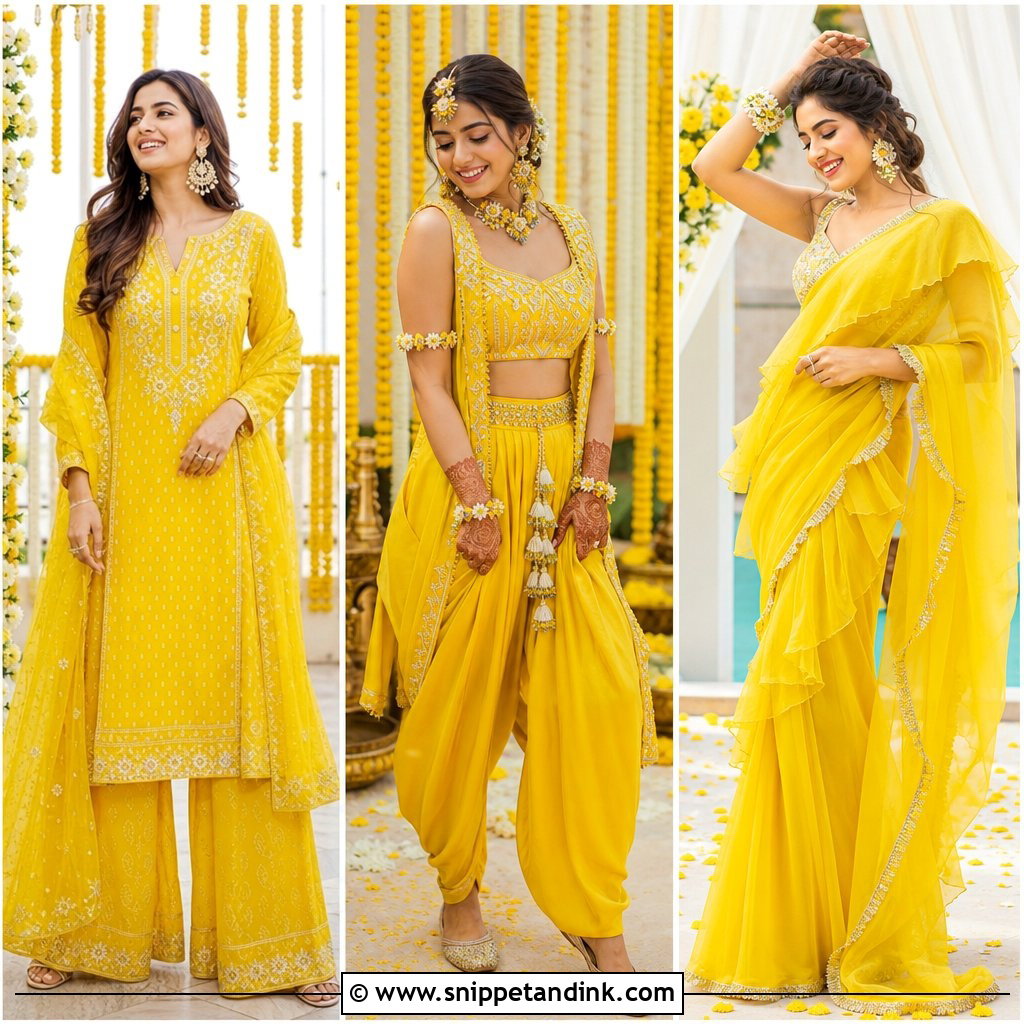
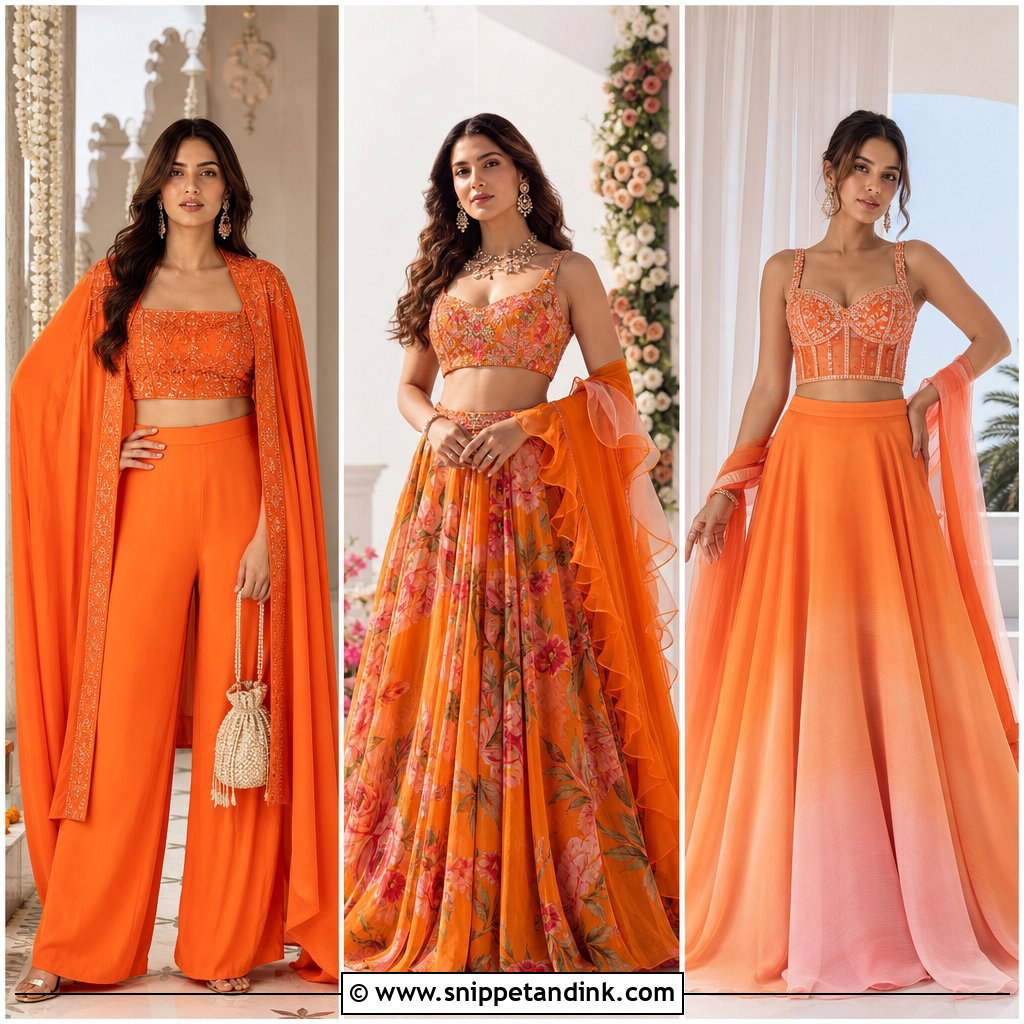
19. Yellow Salwar Suit With Phulkari Dupatta
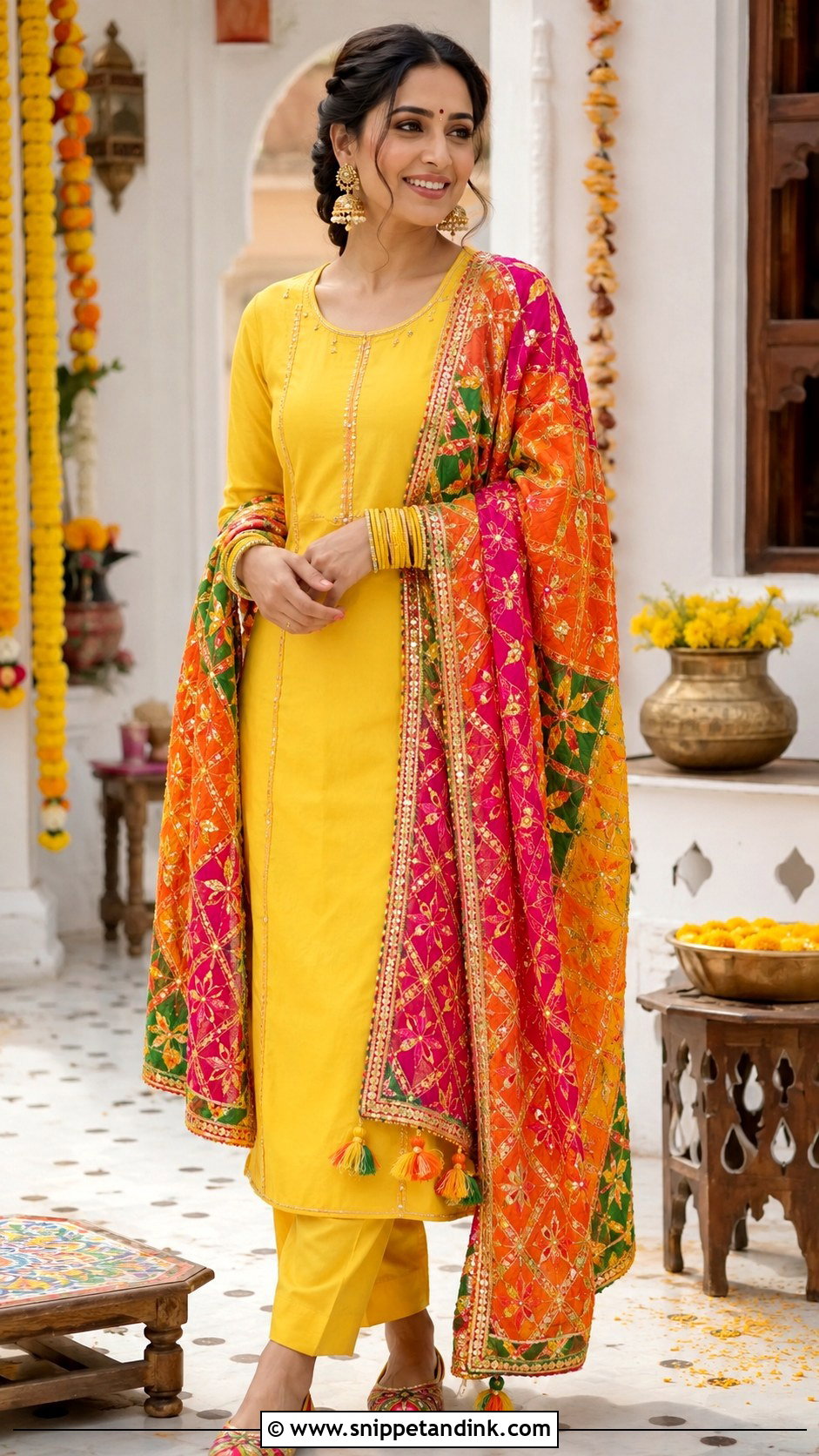
Vibrant embroidery can transform a simple yellow salwar suit into something ceremony-worthy, and it’s the most reusable outfit here. Start with a plain or lightly embroidered straight kurta and matching pants, then add a phulkari dupatta in pink, orange, green or red. Since the dupatta is the focal point, I keep everything else clean and well tailored. Pin it over one shoulder for rituals and drape it across both arms for portraits. Jhumkas, glass bangles, a small bindi and embroidered juttis suit the Punjabi feel, as does a long braid. After the wedding the suit and dupatta can be worn separately, which mothers tend to appreciate.
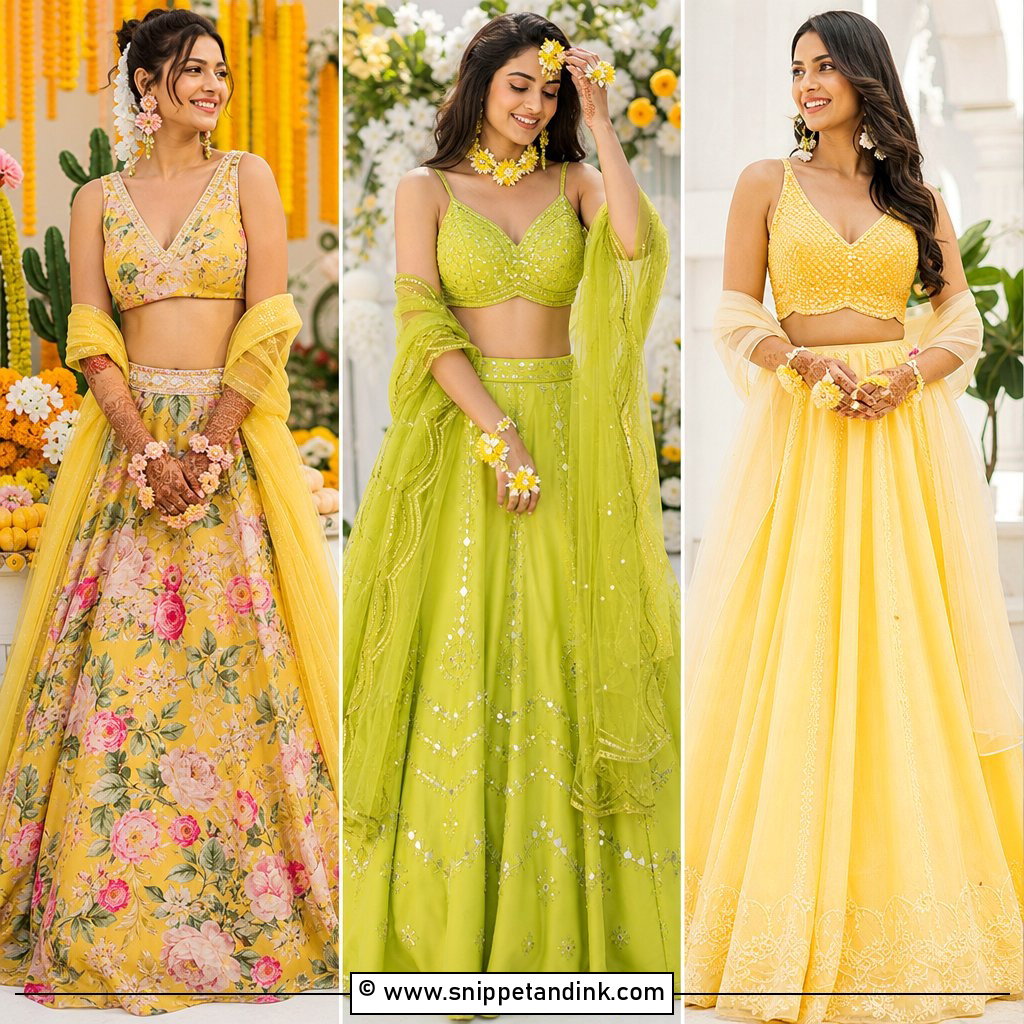

20. Ivory and Yellow Suit Haldi Outfit for Mom
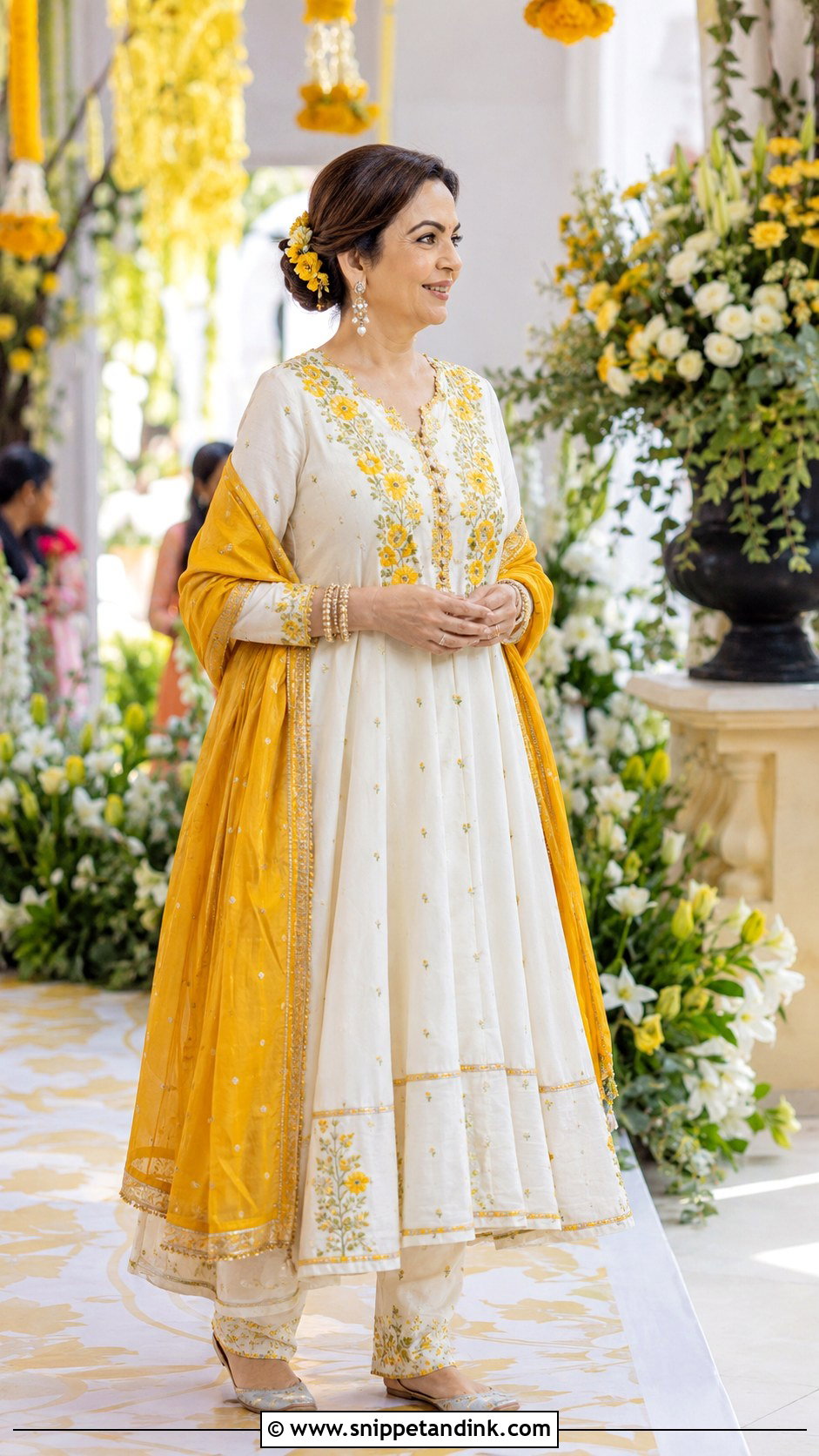
An ivory suit with yellow embroidery is a softer choice when the family hasn’t asked for head-to-toe yellow. An ivory Anarkali or straight kurta with marigold threadwork, floral print or a yellow border, matching pants and a yellow dupatta keep it clearly connected to the occasion. Pearl earrings, gold bangles and yellow or neutral juttis suit the light palette, and small yellow flowers in a bun are a nice detail. I’ll be honest about the risk: turmeric on ivory is very hard to remove completely. I only suggest this if Mom won’t be receiving paste herself, or if she wears it for the welcome and portraits and changes before the main ritual.
Getting Haldi Stains Out Once the Ceremony Ends
Turmeric is stubborn, but most of the damage happens in the first hour, when people panic and scrub. Here is what I tell mothers to do before they change for the evening.
- Scrape off any dried paste with a blunt edge. Do not rub it in.
- Blot fresh marks from the back of the fabric with cold water. Hot water helps set the dye.
- Go easy on soap on cotton. Many soaps are alkaline, and turmeric turns reddish when it meets alkali, which makes the mark look worse for a while.
- Washable white or pale cotton can be dried in direct sun, because sunlight fades turmeric stains noticeably.
- Silk, zari and embroidered pieces go straight to a dry cleaner. Tell them the stain is turmeric and oil so they treat it properly.
Zari borders can tarnish if stains are scrubbed or soaked, so keep water away from the metallic thread and let a professional handle it.
Coordinating Mom With the Couple Without Matching
The bride or groom usually wears the brightest yellow or the most embroidery at the Haldi, and I try to keep Mom one step quieter. If the couple is in bright lemon, a mustard or marigold works well for her. If the bride is in a printed lehenga, Mom looks better in a solid with a printed dupatta. Hold her outfit next to a photo of the couple’s outfits in daylight before deciding. Two outfits in the same shade and the same weight of embroidery merge into one block in group photos, and from ten feet away nobody can tell who the bride is.
Jewelry follows the same idea. If the bride is wearing floral jewelry, Mom in gold or pearls keeps the generations distinct. That contrast is what makes the family pictures read well.
Comfort First, Then Color, Then Jewelry
If I had to give one rule for a Haldi mom, it would be to decide how much she will sit, bend and get splashed before falling for a fabric. Sarees carry the most tradition, while Anarkalis, shararas, lehengas and palazzo sets give different amounts of coverage and freedom. Yellow and mustard are the safe anchors, and pink, green or ivory accents can make the look her own. Secure pinning, sensible footwear and jewelry she won’t need to keep adjusting matter more than any trend. When the outfit lets her forget about it, she relaxes, and that’s what shows up in the family photos.
You'll Like These Ideas:



Leave a Reply