
An evening Haldi asks more of an outfit than a morning one. You’re under string lights instead of sunshine, the dancing runs late, and you still have turmeric paste and floor seating to deal with. The ideas below mix traditional Indian silhouettes with modern pieces: mirror work, florals, drapes and easy separates. Yellow is the classic, but mustard, marigold, green, orange and even ivory can work if you know how they read at night. I’ve noted for each one who it suits, what to watch in the fitting, and where the bride’s version should differ from a guest’s.
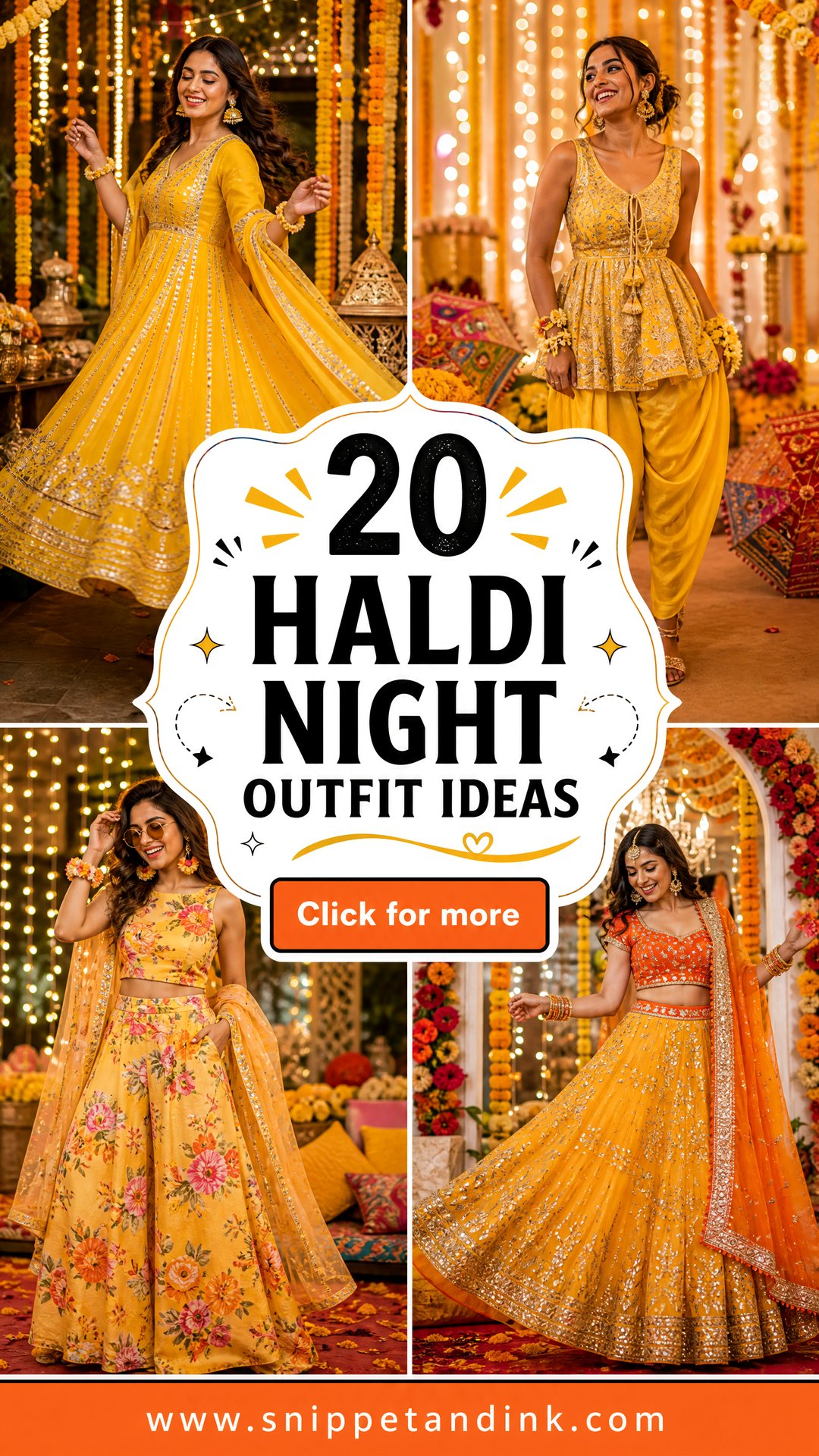
Yellow Under String Lights Is Not the Yellow You Bought
Most Haldi outfits are chosen in daylight, in a shop or on a phone screen, and then worn under warm bulbs and fairy lights. That shift changes yellow more than almost any other color. Pale lemon and butter shades can look washed out or slightly green at night, while deeper mustard, turmeric and marigold hold their warmth. Ivory picks up a yellow cast and can look dingy in photos if the lighting is very warm.
When I help a bride choose fabric for an evening function, I take the swatch under a warm household bulb before deciding. It’s a two-minute test that saves a lot of disappointment in the album.
What catches light, and what disappears
- Mirror work and gota reflect every light source, so they need far less coverage at night than in the day.
- Fine thread embroidery in tonal yellow often vanishes in low light; choose a slightly contrasting thread if you want it seen.
- Matte cotton reads flatter than silk or organza, which have a natural sheen.
- Sequins can flare white under camera flash. Small, scattered sequins photograph better than dense panels.
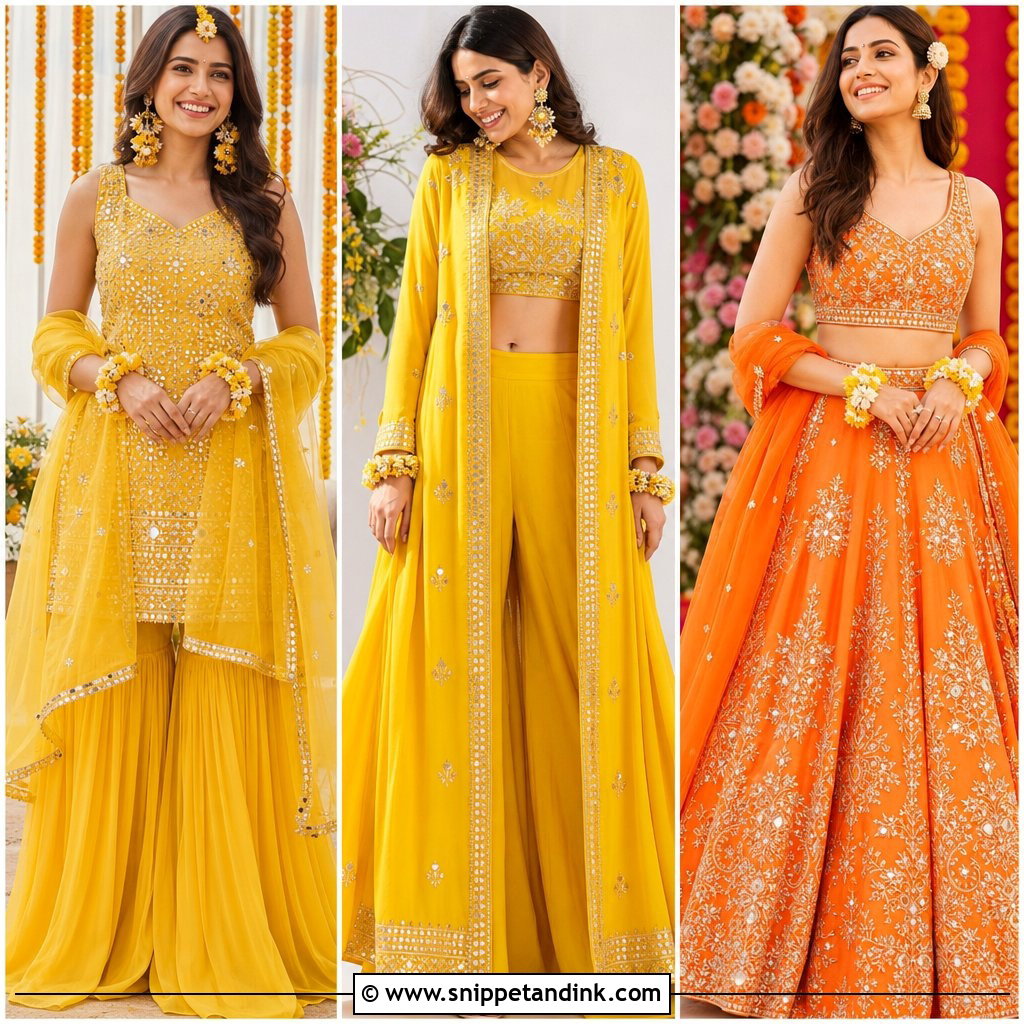
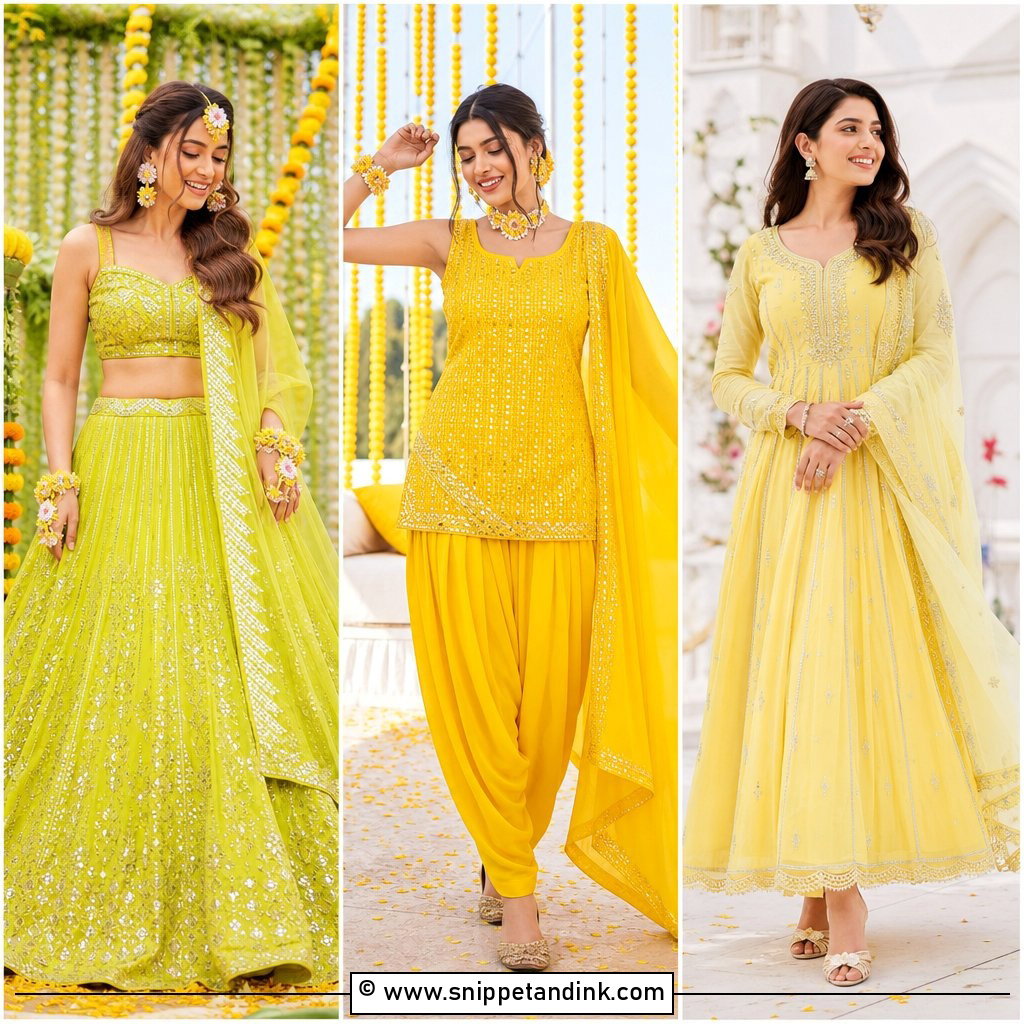
1. Yellow Mirror Work Haldi Lehenga
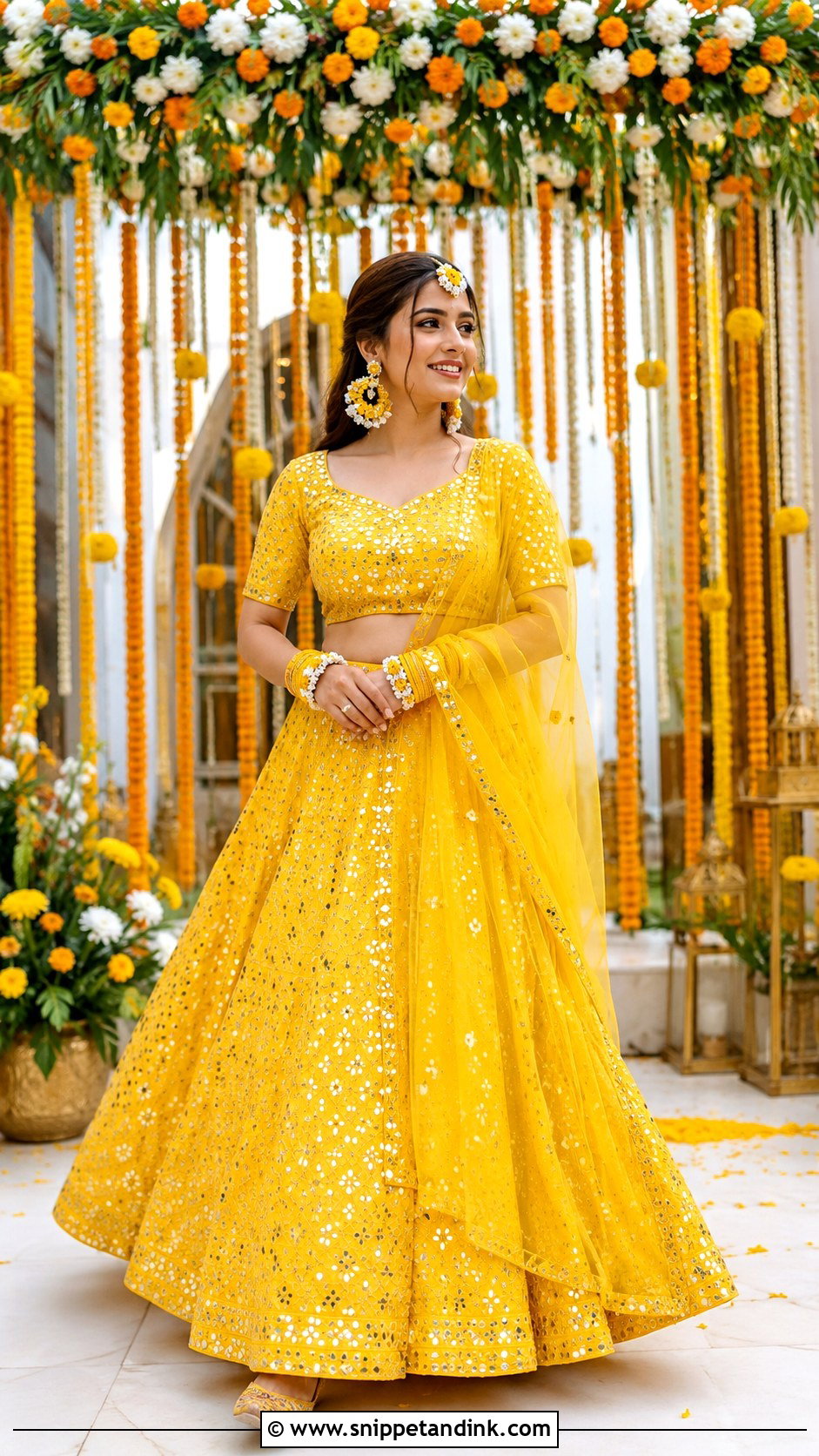
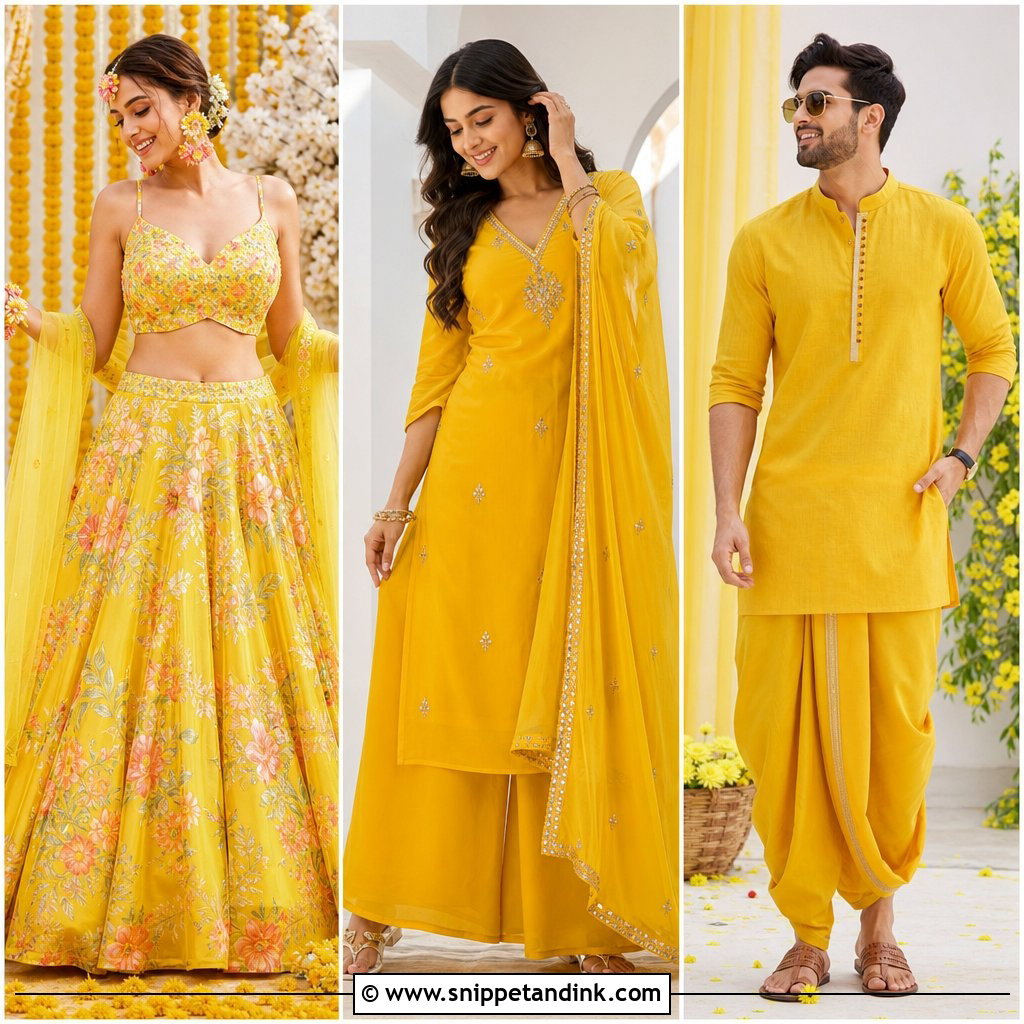
Mirror work was practically made for a night function: every small glass piece picks up the fairy lights and the camera flash. That means you don’t need heavy embroidery on top of it. A georgette or cotton-silk skirt with a moderate flare stays light enough to dance in, and the blouse should fit snugly enough that you never adjust it mid-ritual. I pin the sheer dupatta at the shoulder and again at the elbow for brides, so it can’t slip into the paste. Brides can go bold with the mirrors; guests are better with a mirrored border and fewer accessories.
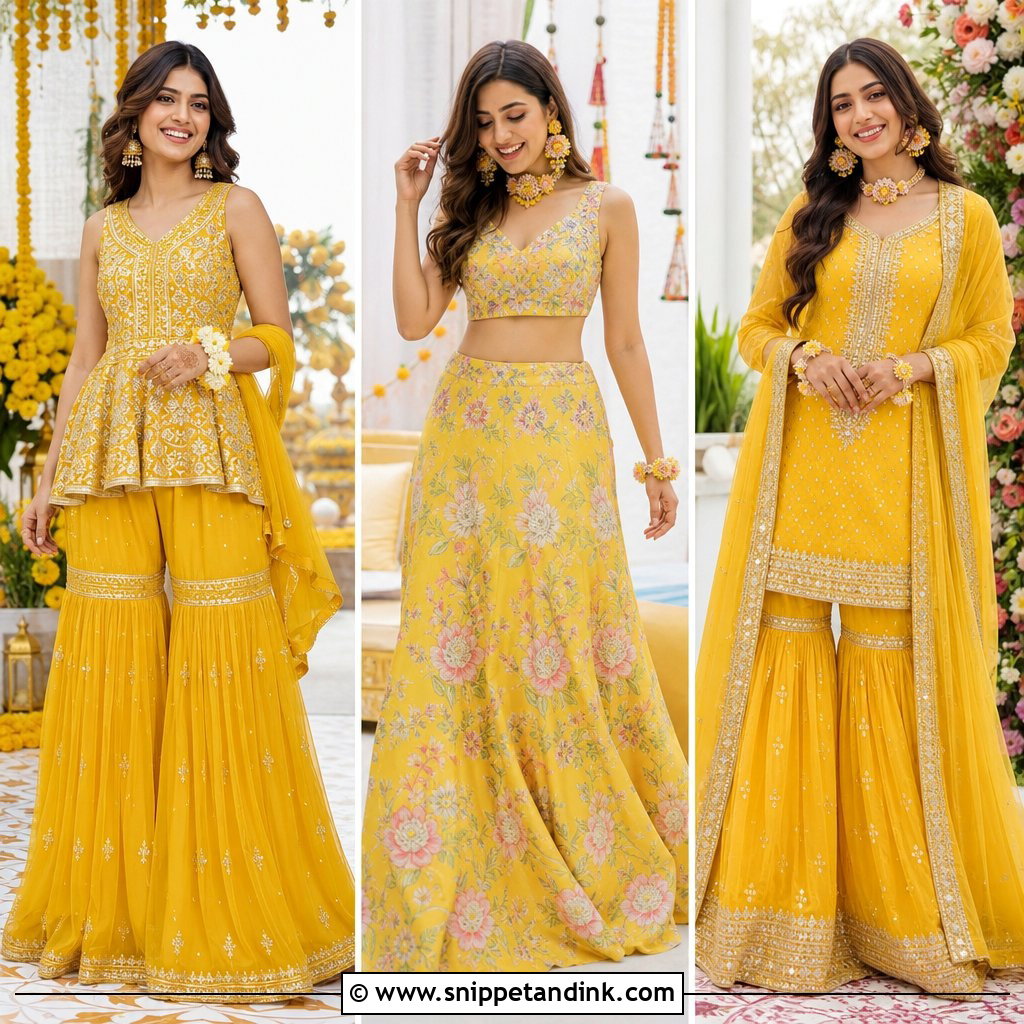
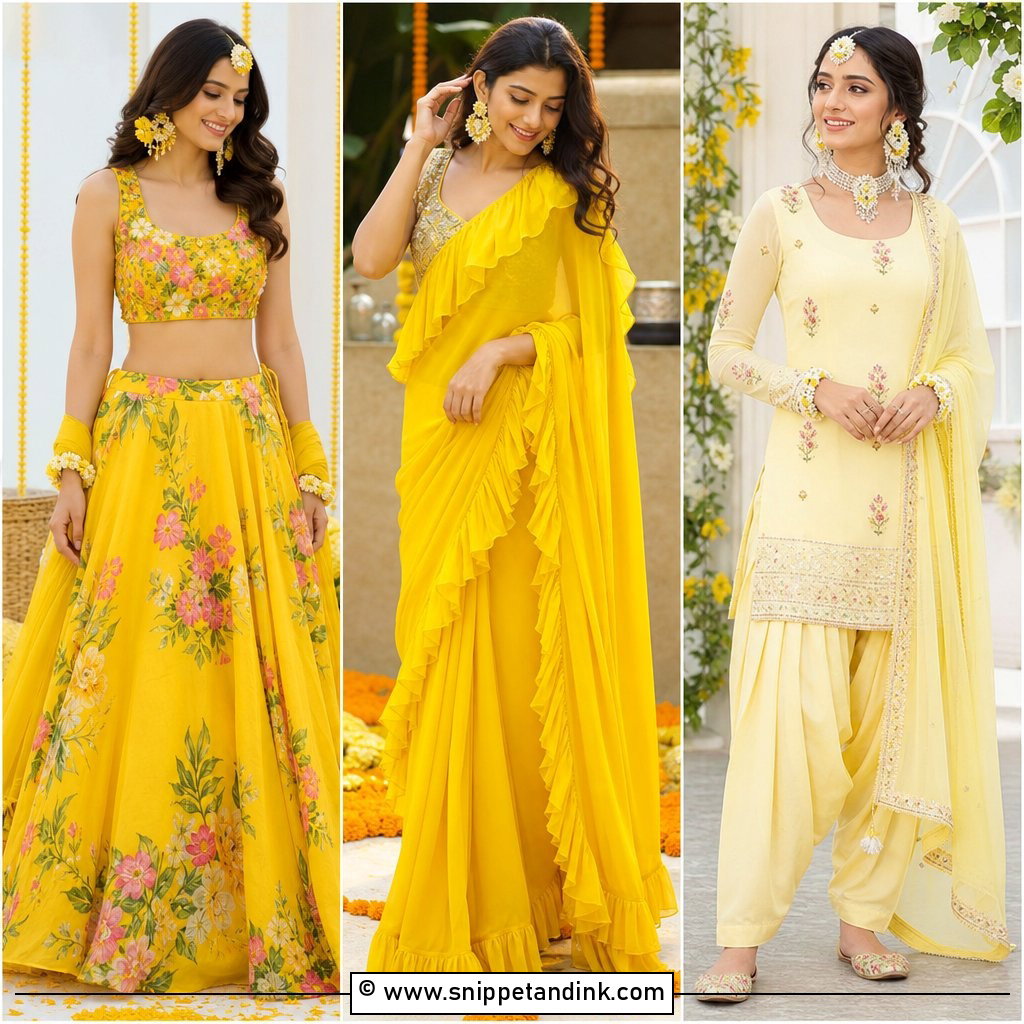
2. Floral Print Haldi Lehenga
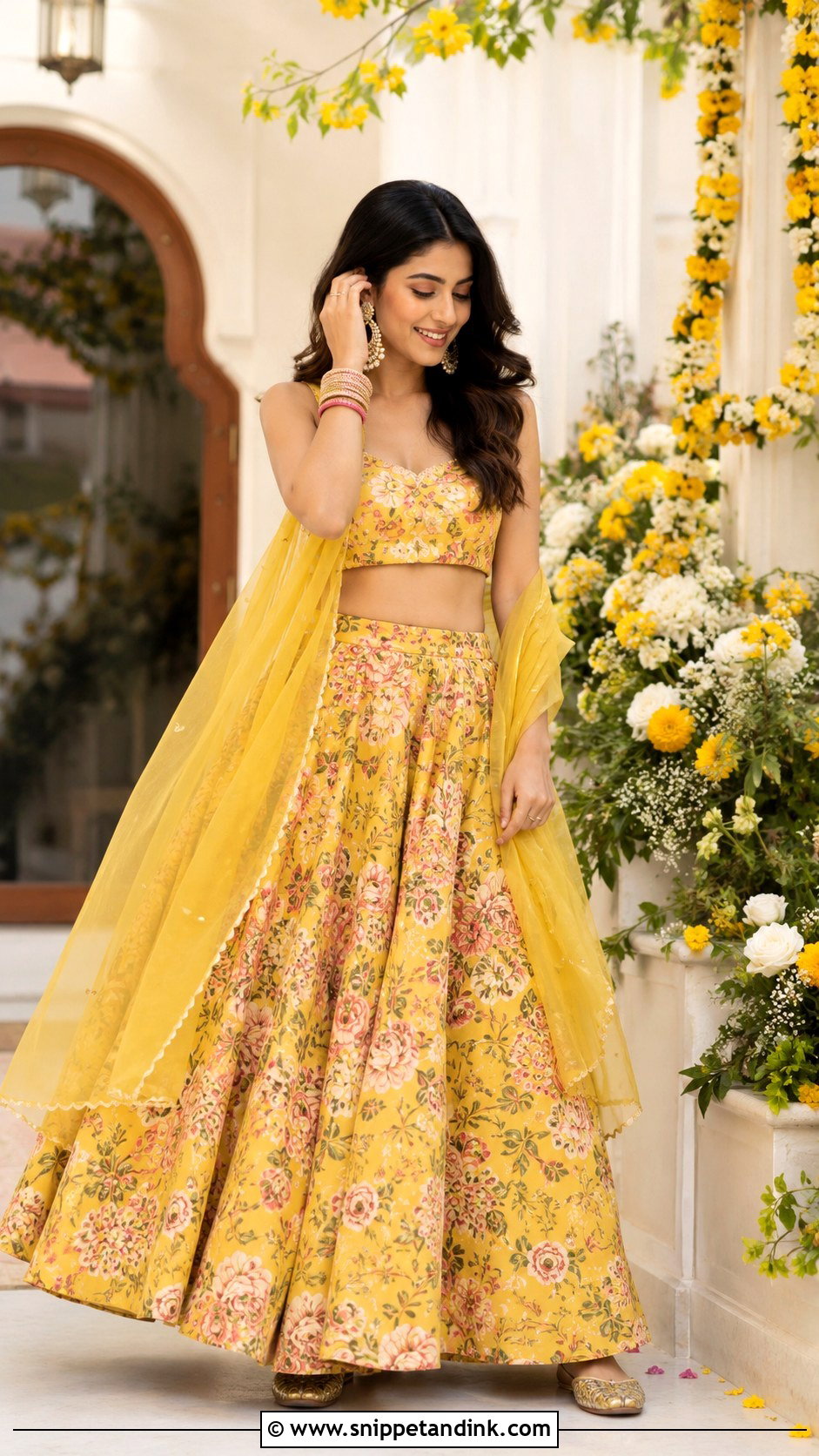
Prints forgive a lot at night. A yellow floral lehenga with pink, orange or green blooms hides a stray turmeric mark and doesn’t need jewelry to look finished. Keep the skirt light and the blouse short so you can move. Choose a plain organza dupatta so the print stays the focus, then add pearl earrings, colored bangles and juttis. Sisters, bridesmaids and guests will get the most from this one; for the bride, a print can feel too casual unless the family’s Haldi is very relaxed.
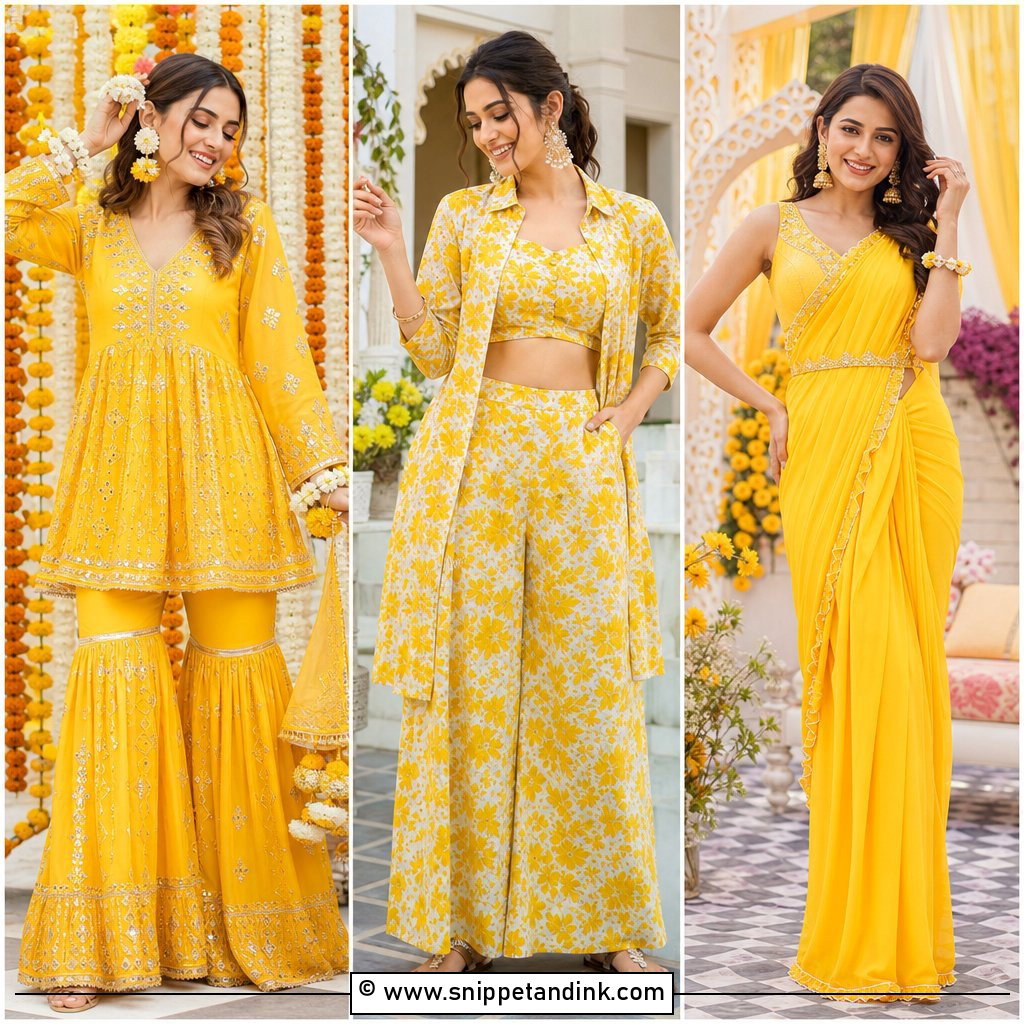
3. Yellow Sharara Set For Haldi
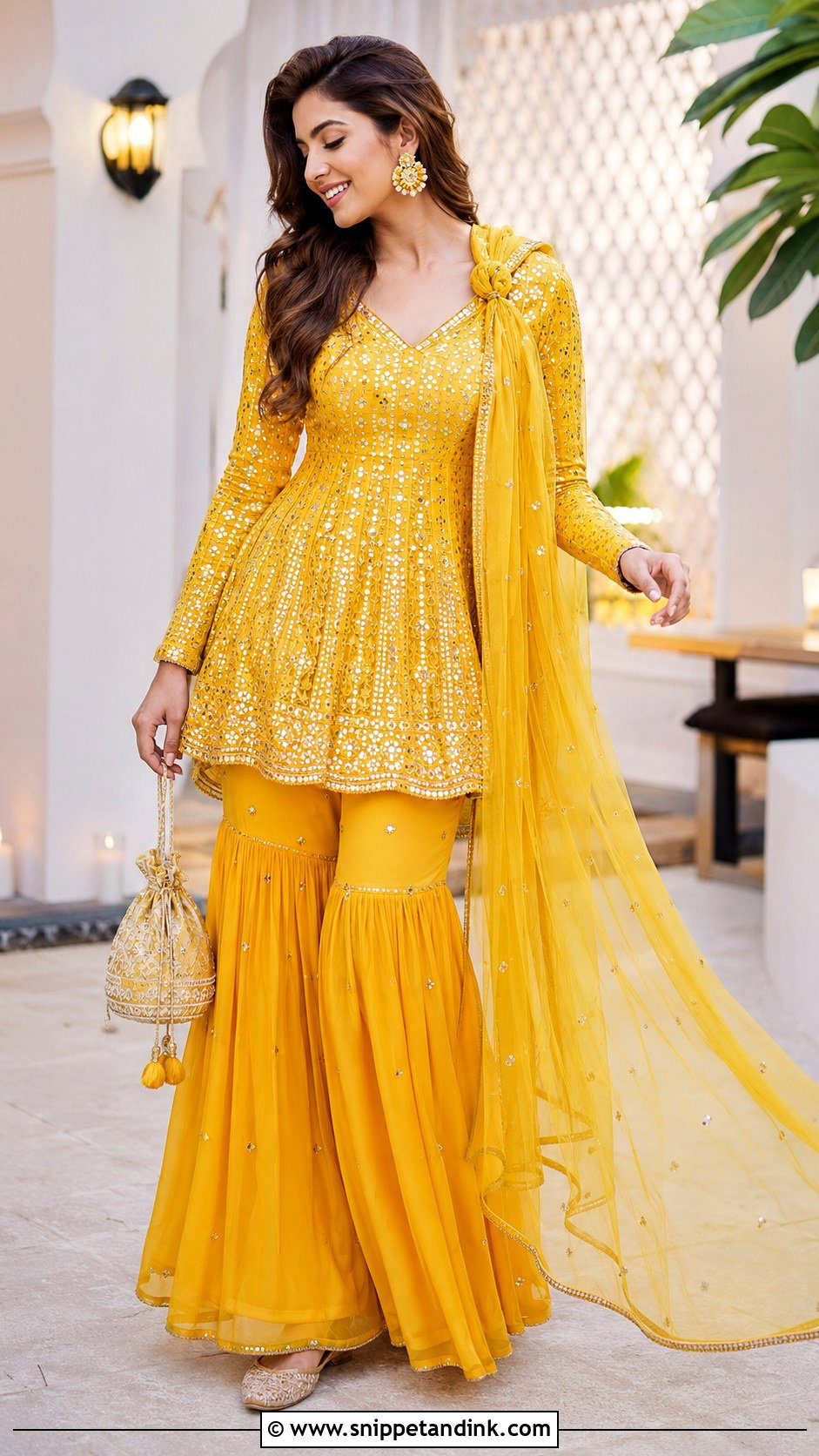
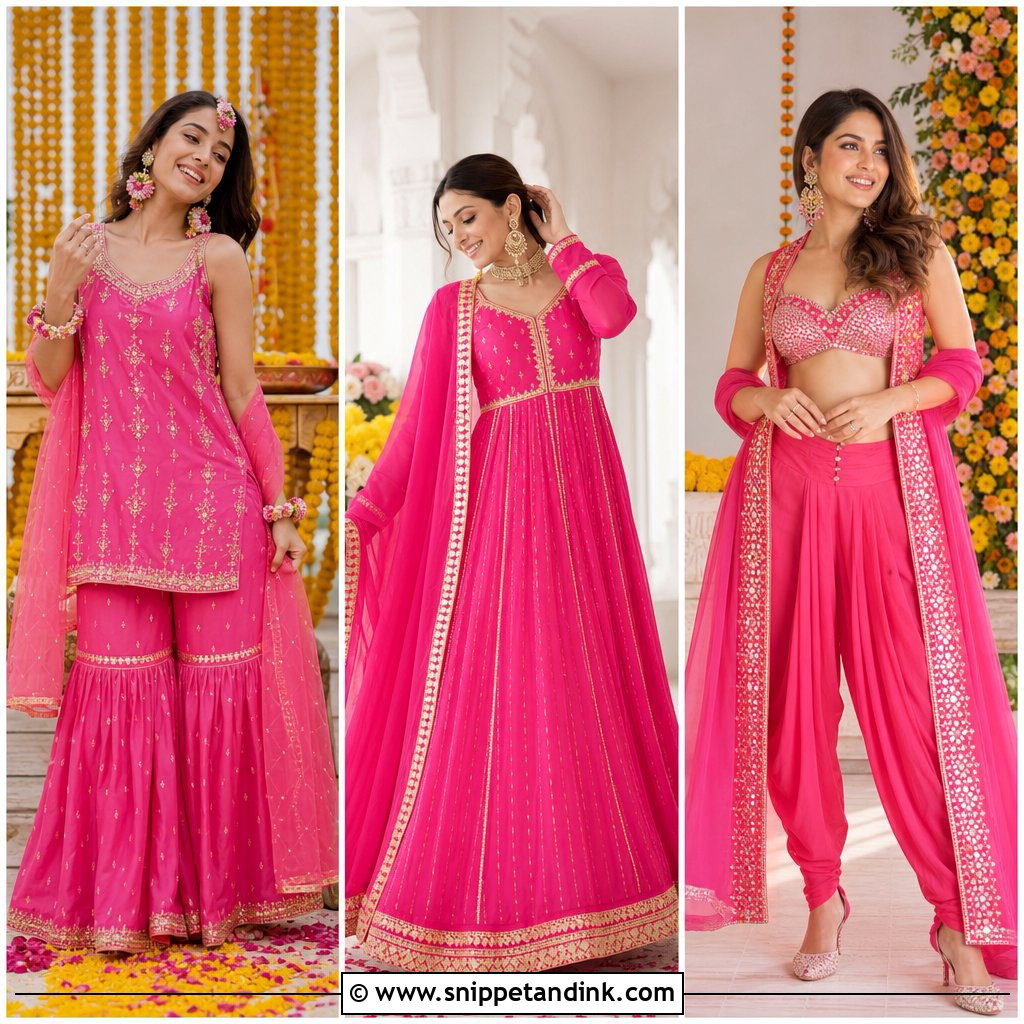
A yellow sharara set gives you freedom to walk, sit and dance, and it’s one of the outfits I’ve seen hold its shape best through a late night. Wide, flared pants under a short kurta with mirror work or gota trim is the classic pairing. My one fitting note: check that the sharara hem clears the floor in the shoes you’ll actually wear, because a dragging flare gets stepped on during group dances. At night, mustard and marigold look richer than lemon yellow, which can wash out under warm bulbs. The pieces rewear well afterward, which suits guests.
4. Mustard Gharara Set For Haldi
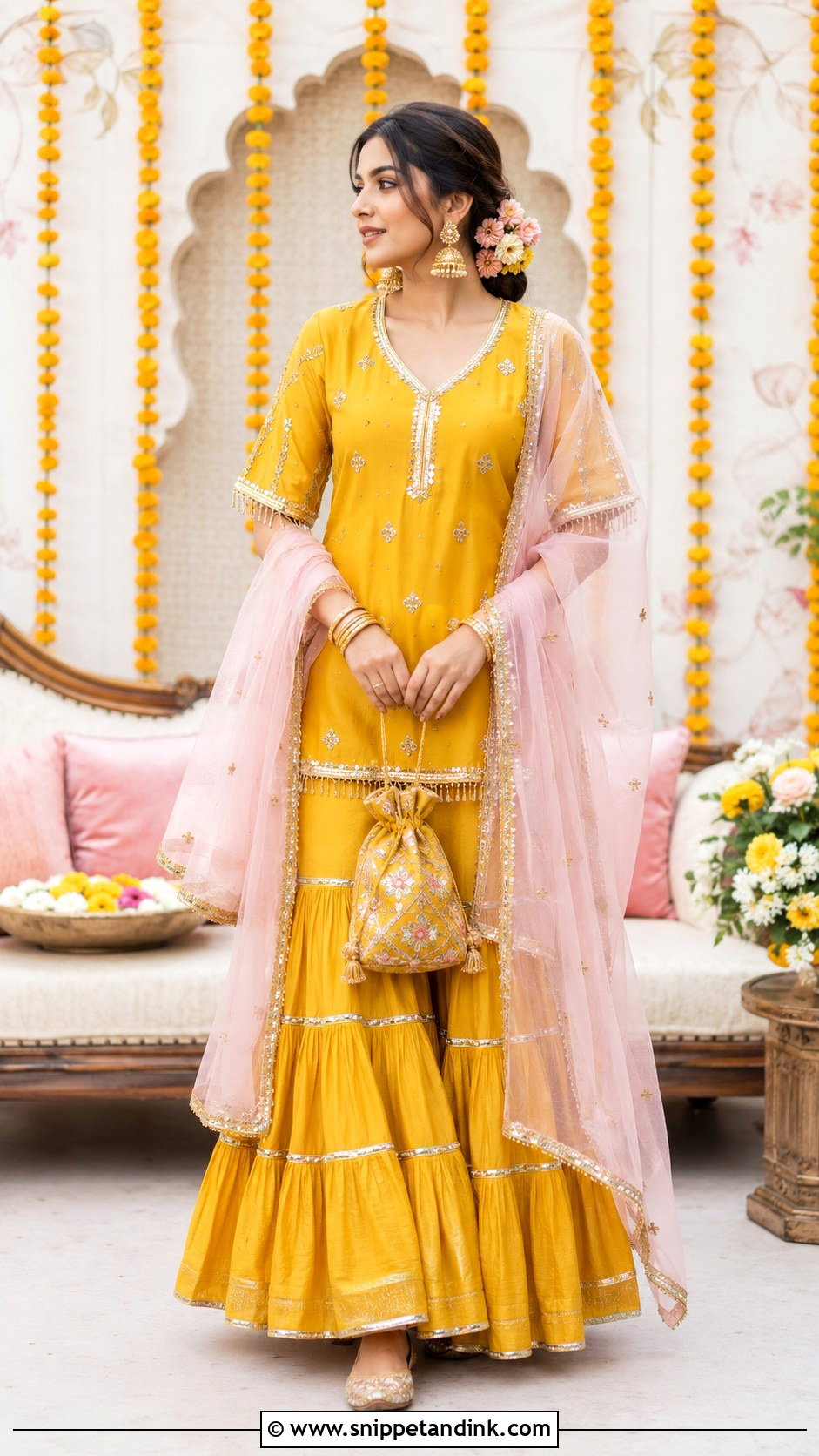
Gharara pants are fitted to the knee and then flare out, and that joint is where most fit problems show up. If the knee seam sits too low, you’ll struggle to sit cross-legged; I ask tailors to set it right at or just above the knee. Pair the mustard pants with a short kurti so the shape stays visible, and use gota patti at the hem, neck and cuffs for evening shine. An ivory or pale pink dupatta lifts the deeper mustard. Flat juttis are wiser than heels if you’ll be standing near the ritual for long stretches.
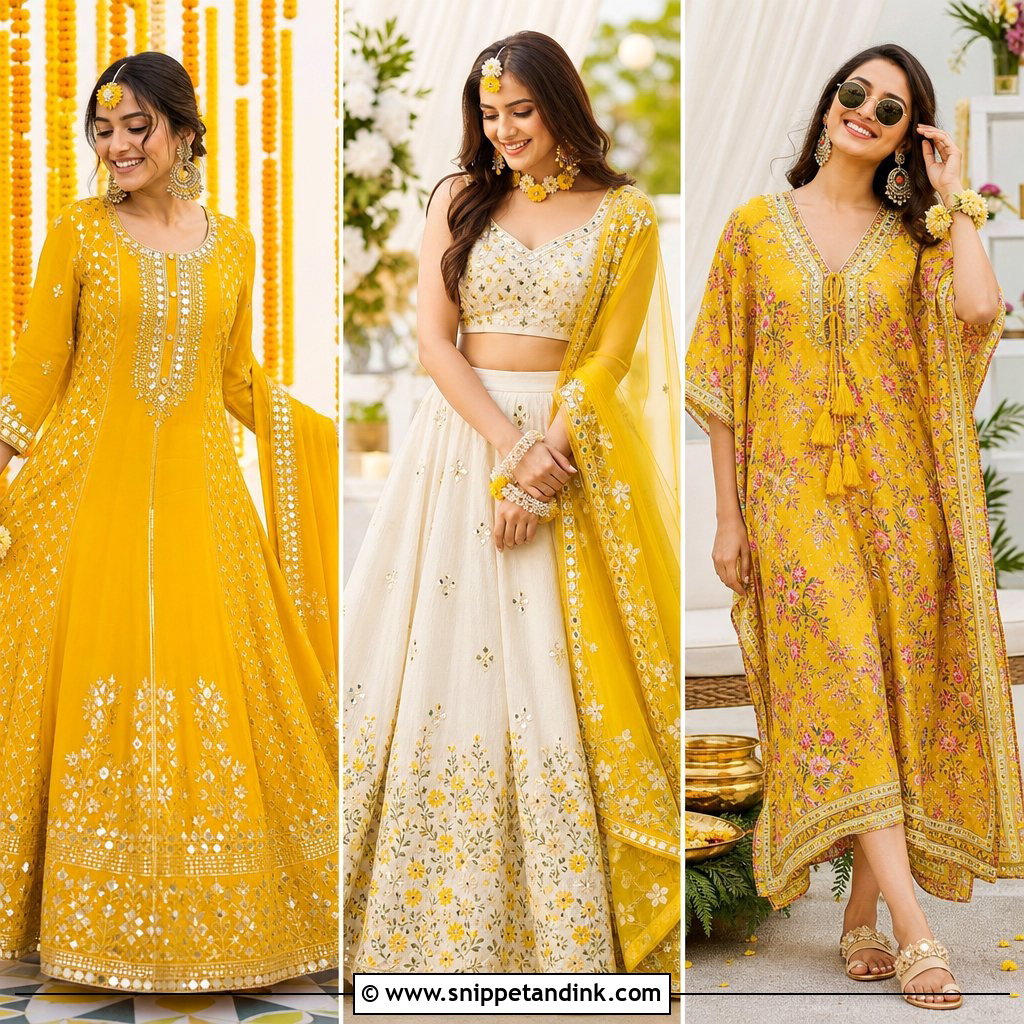
5. Gota Patti Haldi Anarkali
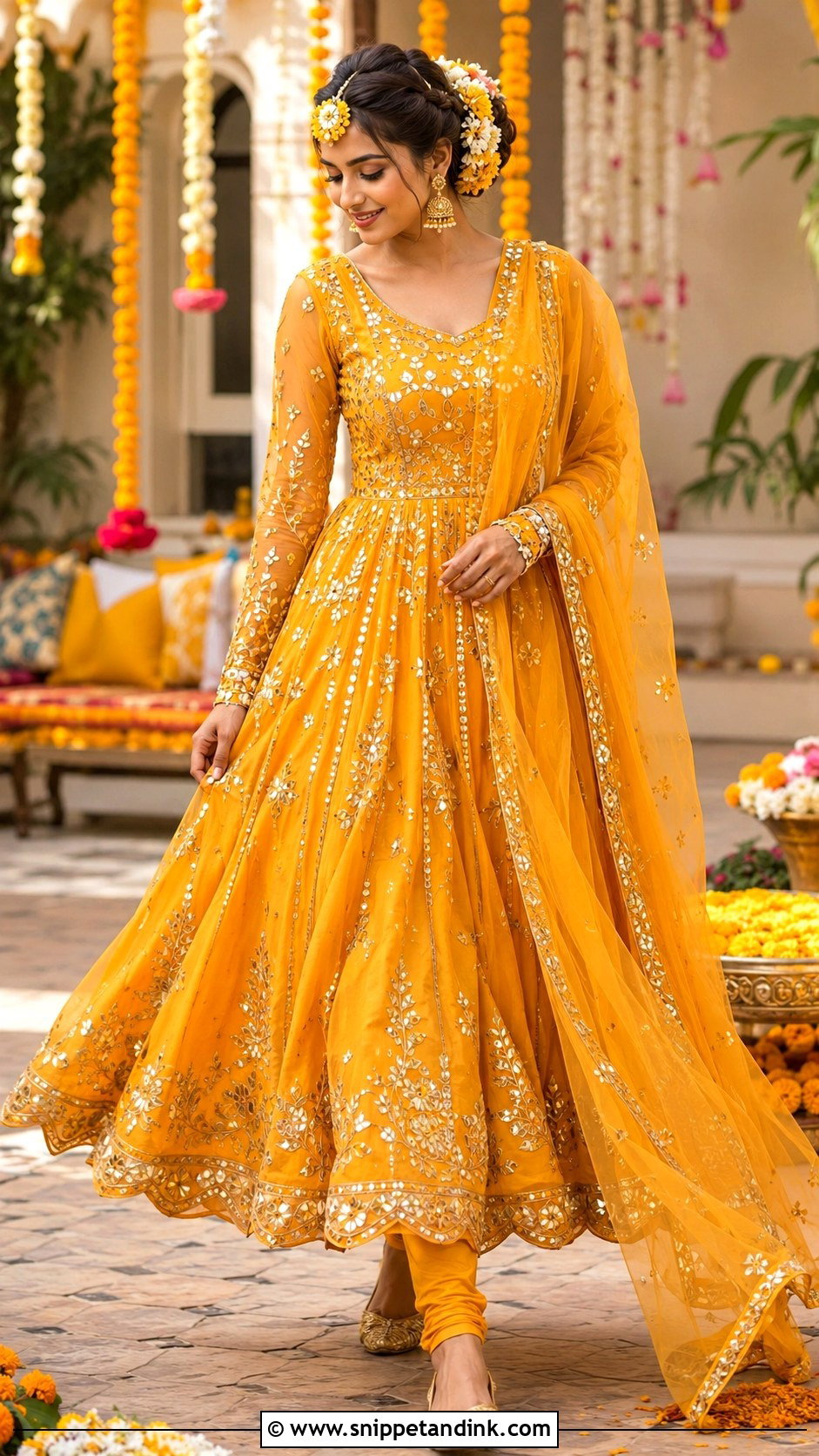
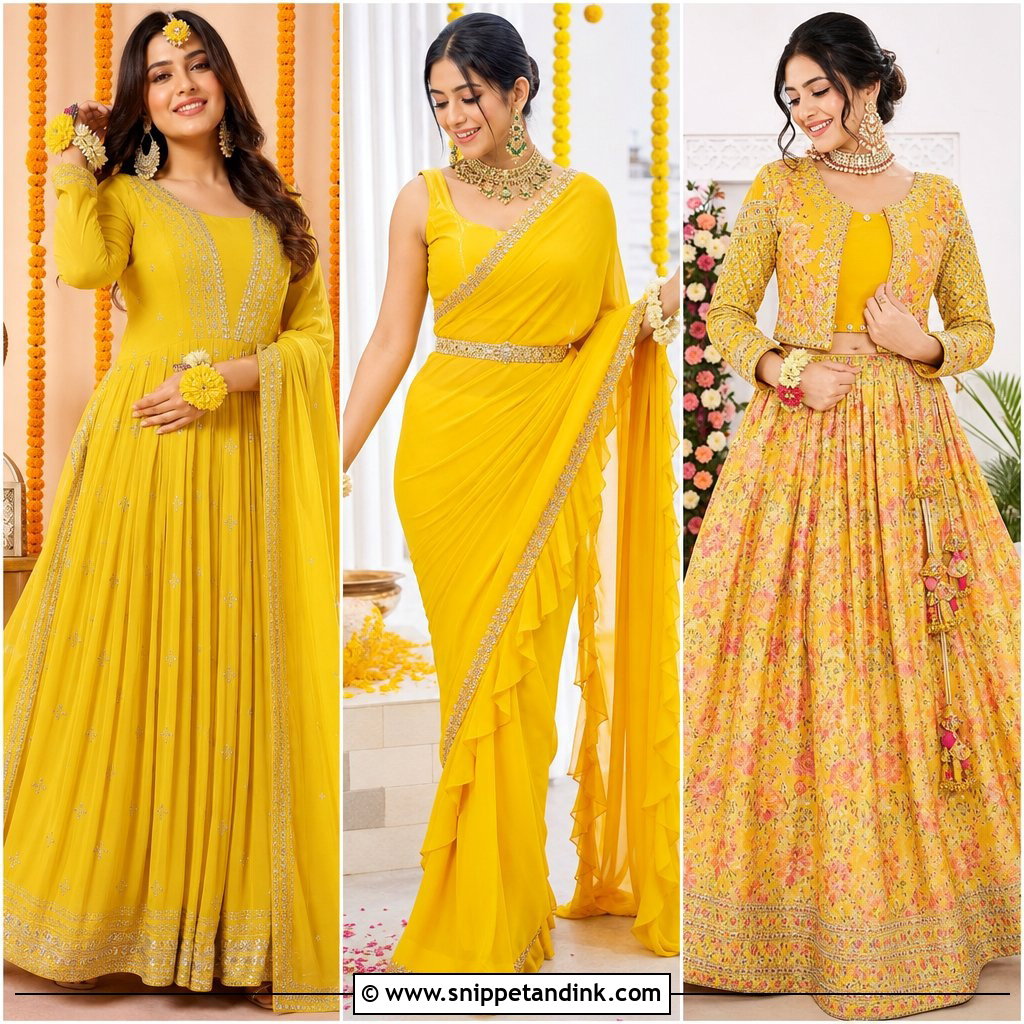
A flowing Anarkali covers well and moves gracefully, which makes it a safe choice for a long, busy evening. Cotton-silk and Chanderi breathe better than synthetic georgette when the room fills with people. I like gota patti at the neck, sleeves and skirt panels, with fitted churidar underneath. Pin the dupatta before the rituals start, not during. The thing to watch is the Anarkali’s skirt when you sit on the floor: a very full one bunches and gets crushed, so a guest may prefer a cleaner, less voluminous version while the bride takes the decorated hem.
6. Yellow Saree With Floral Blouse For Haldi
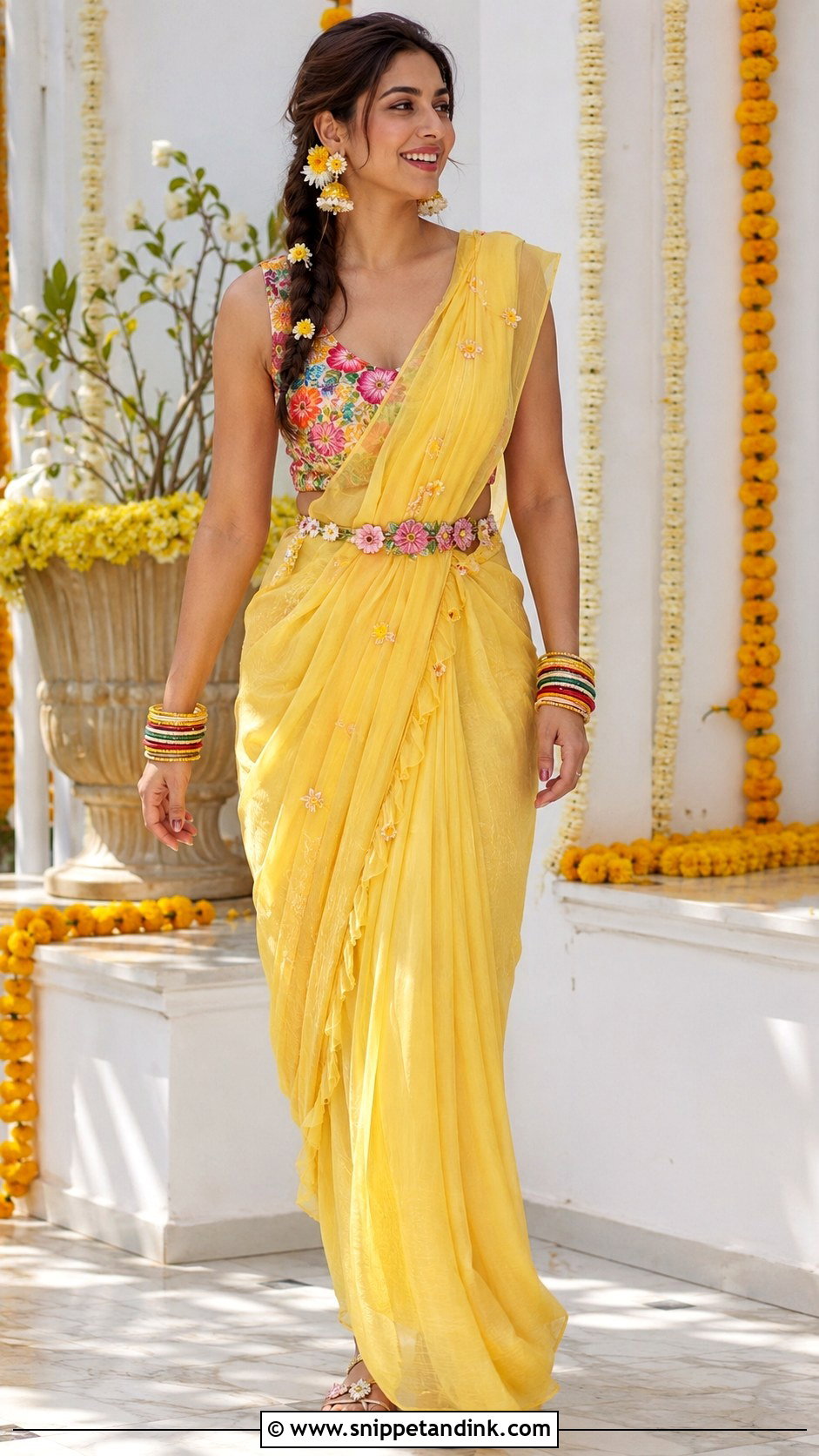
Put a busy floral blouse with a plain yellow saree and the whole outfit comes alive. Georgette, chiffon or soft organza drape easily, and I’d keep the saree border thin so it doesn’t fight the print. Pleats need securing with more than one pin at a Haldi, since you’ll bend forward repeatedly. A floral belt helps the bride hold the drape and defines the waist. Guests can go lighter with simple earrings and a potli, and a side braid with small blossoms ties it all together.
7. Pre-Draped Ruffle Saree For Haldi
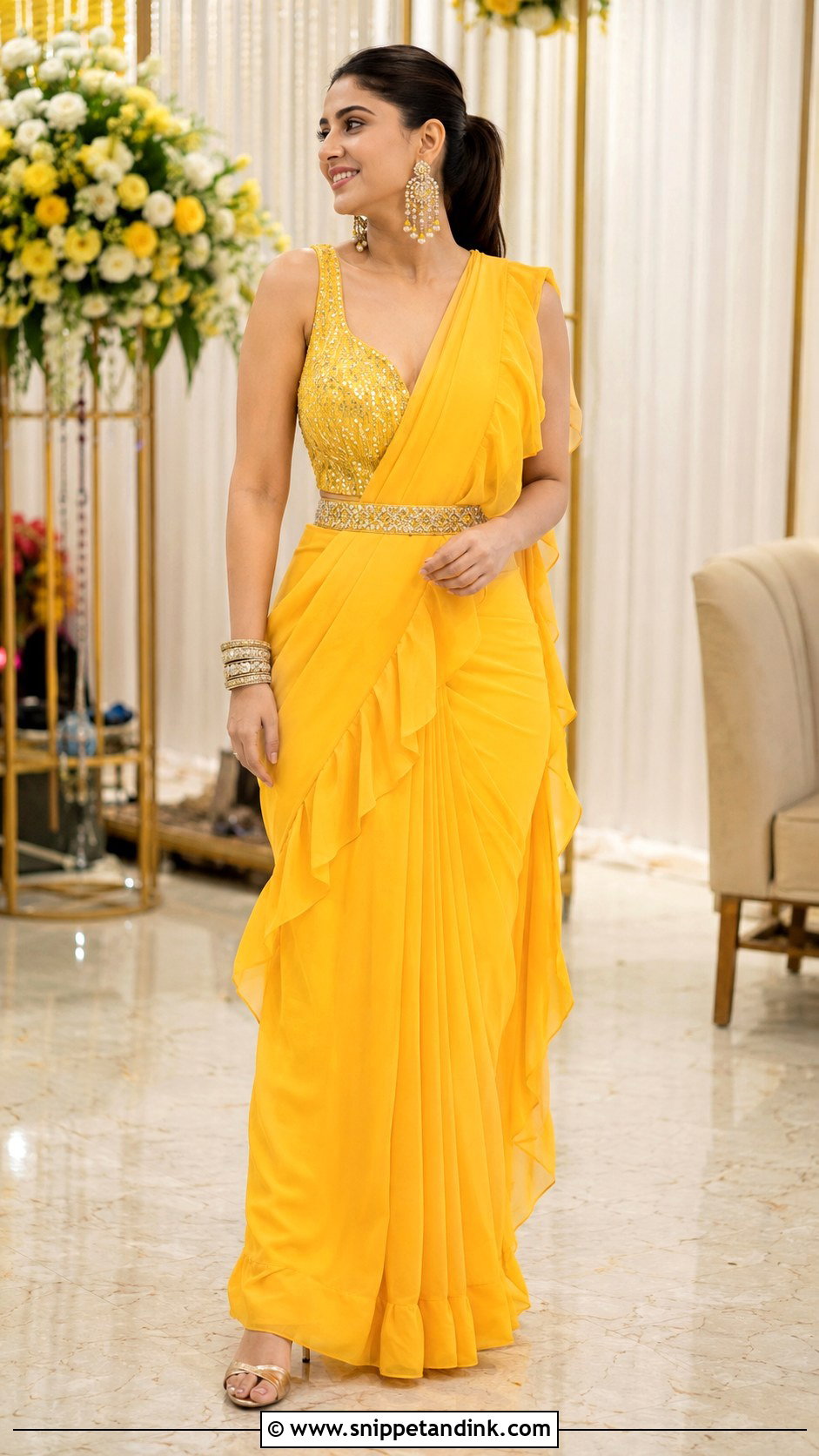
Want saree drama without minding pleats all night? A pre-draped ruffle saree is my answer, especially for bridesmaids who plan to be on the dance floor until the end. The ruffles need soft fabric like georgette or chiffon; in stiff organza they look more like packaging than movement. A slim embellished belt keeps the drape anchored. Skip the necklace, since the ruffled neckline already gives you detail. A sleek ponytail or tidy low bun suits the modern shape.
8. Yellow Bandhani Saree For Haldi
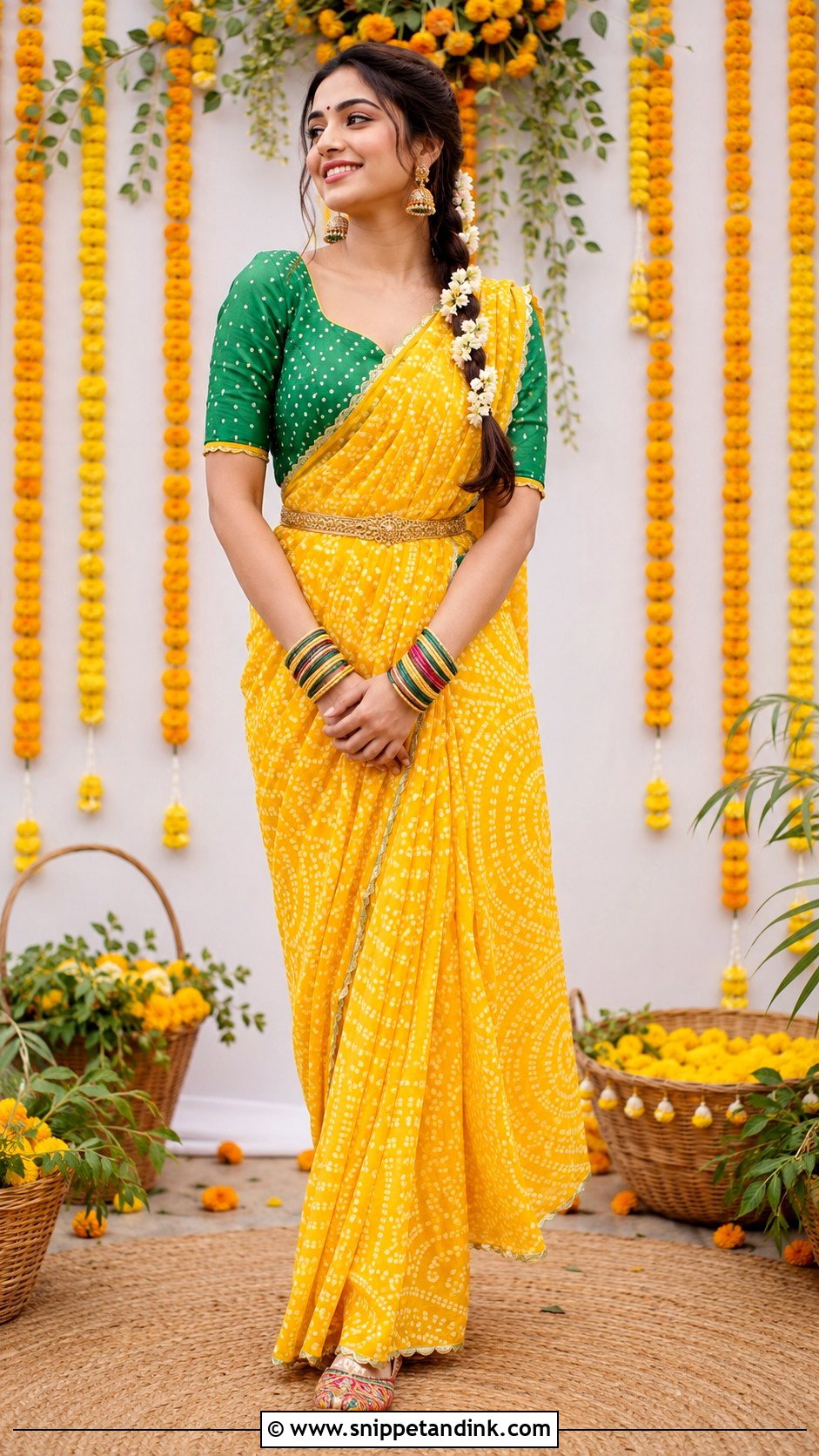
A yellow Bandhani saree brings pattern and history together, and the tie-dye dots read clearly even in dim light. Contrast blouses in green, pink, red or orange make the dots pop. Genuine Bandhani is often a little crinkled from the tying process, so don’t press it flat; that texture is part of the craft. Cotton-silk or lightweight georgette versions are far easier during a lively ceremony than heavy silk. Pin the shoulder well, add jhumkas and glass bangles, and wear a neat braid or flower-wrapped bun. A broader gota border suits the bride; smaller prints suit guests.
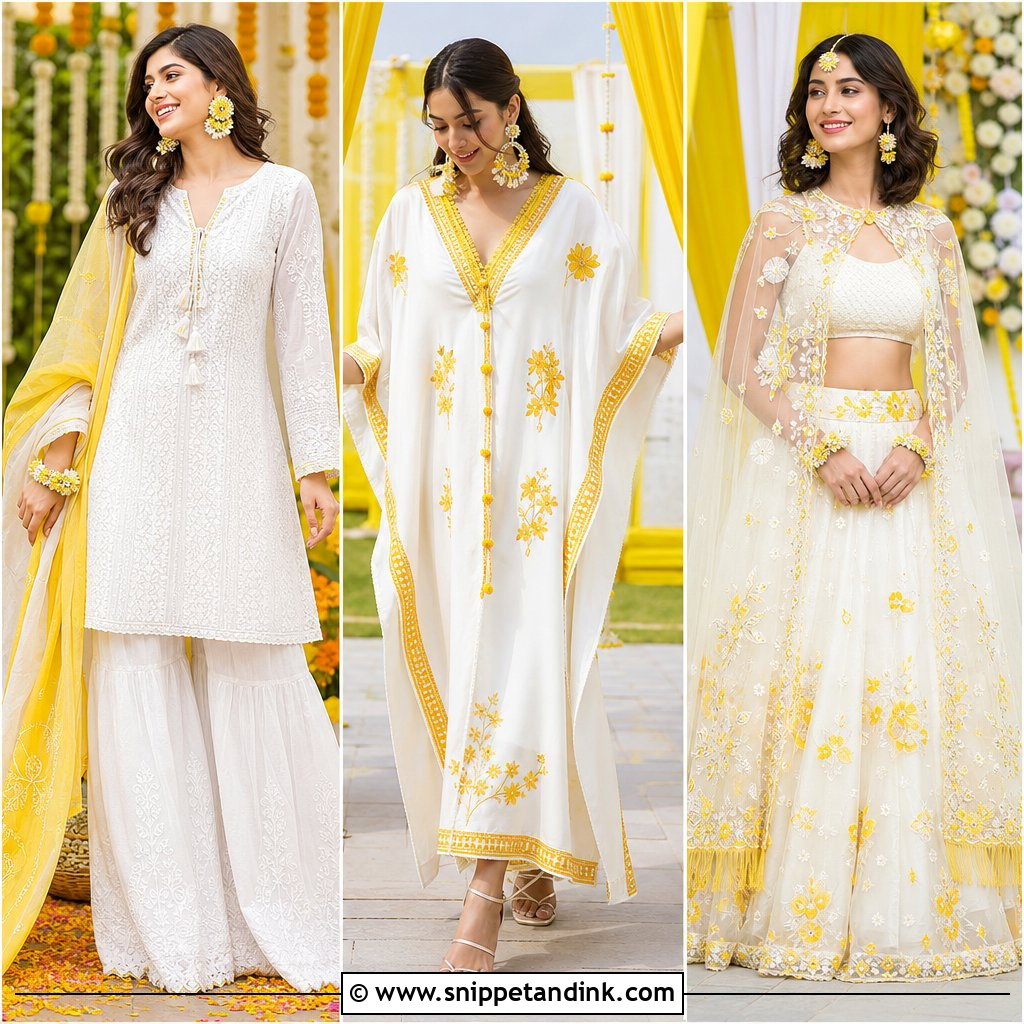
9. Chikankari Kurta Palazzo Set For Haldi
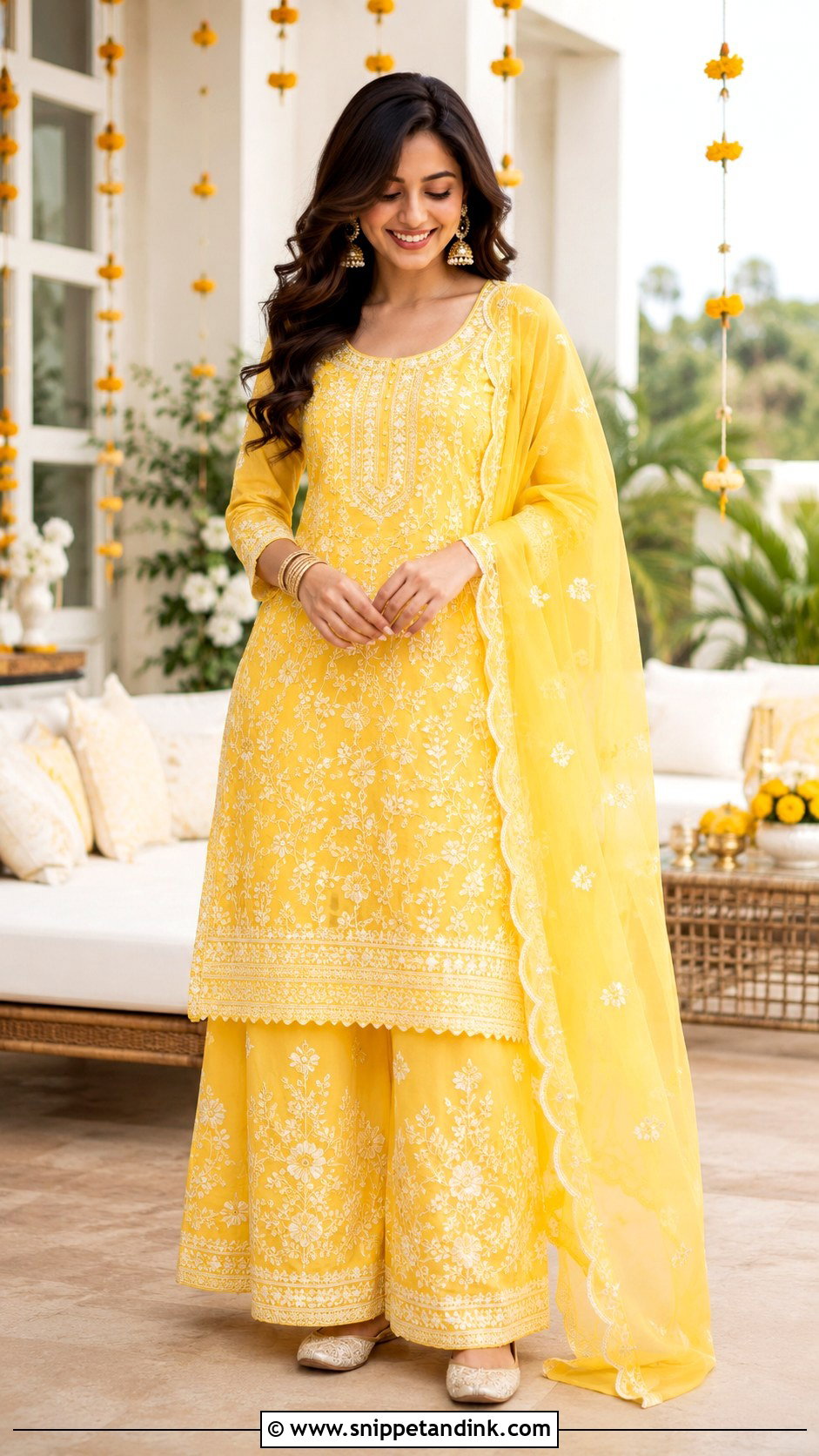
Chikankari is hand embroidery, usually white or tonal thread on fine cotton or georgette, and a yellow Chikankari kurta and palazzo set is about as refined as Haldi wear gets. Make sure the kurta has a soft lining, as the fabric is often sheer under bright lights. A knee-length kurta with wide palazzos moves easily. Ivory and yellow feels delicate; all-marigold looks stronger in evening photos. This suits guests of almost every age, since longer sleeves and a higher neck are easy to request.
10. Peplum Top And Dhoti Pants For Haldi
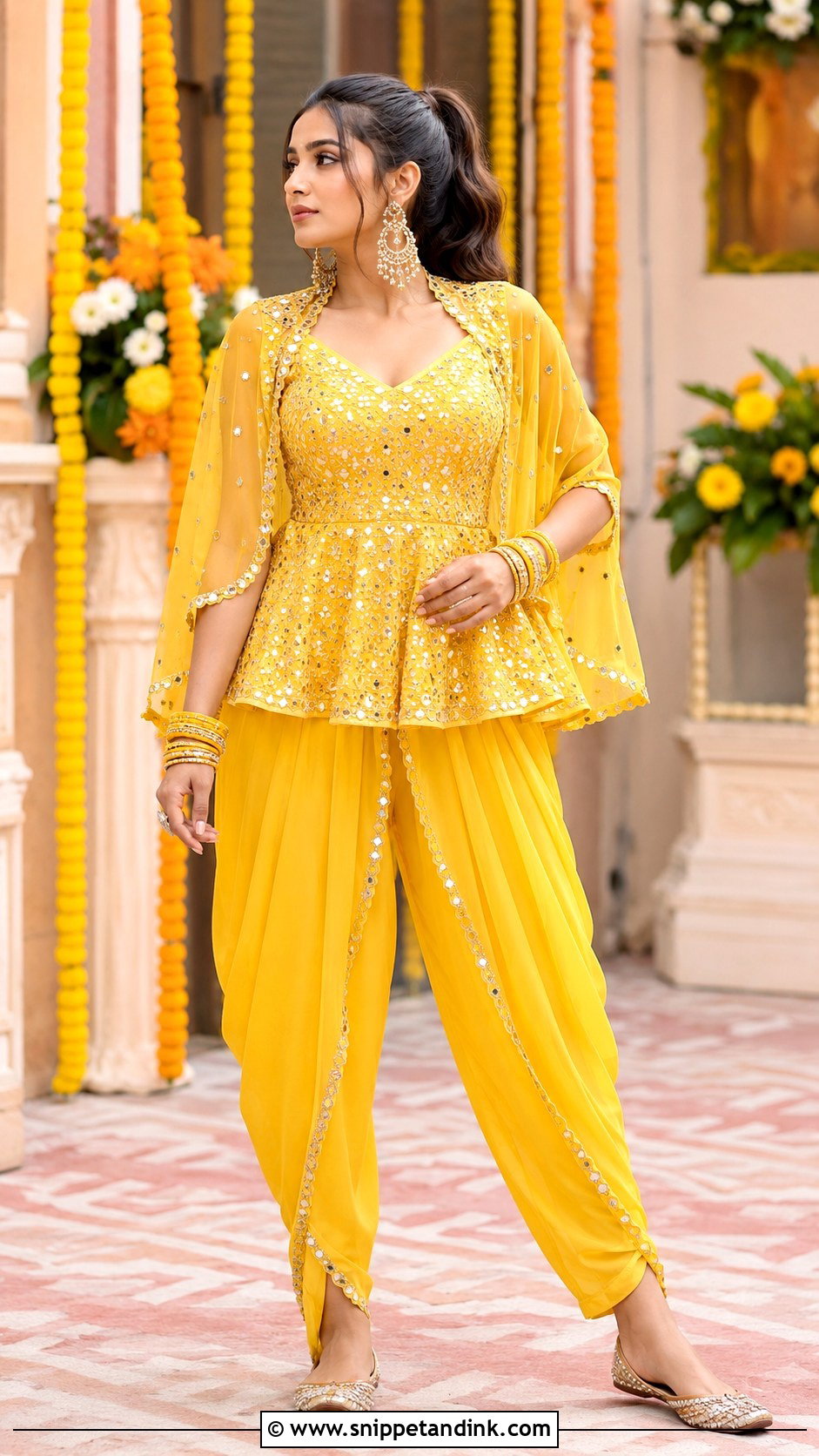
Cousins and younger guests usually love this one. A yellow peplum top with draped dhoti pants defines the waist while leaving the legs free, which makes sitting on the floor and dancing much easier. Put the embellishment around the neckline and peplum hem only. A short organza cape can replace a dupatta for coverage. Go for metallic juttis and stacked bangles, and either a high ponytail or a soft braid. I’d make sure the peplum doesn’t flare so wide that it hides the dhoti drape entirely.
11. Yellow Crop Top Skirt And Cape For Haldi
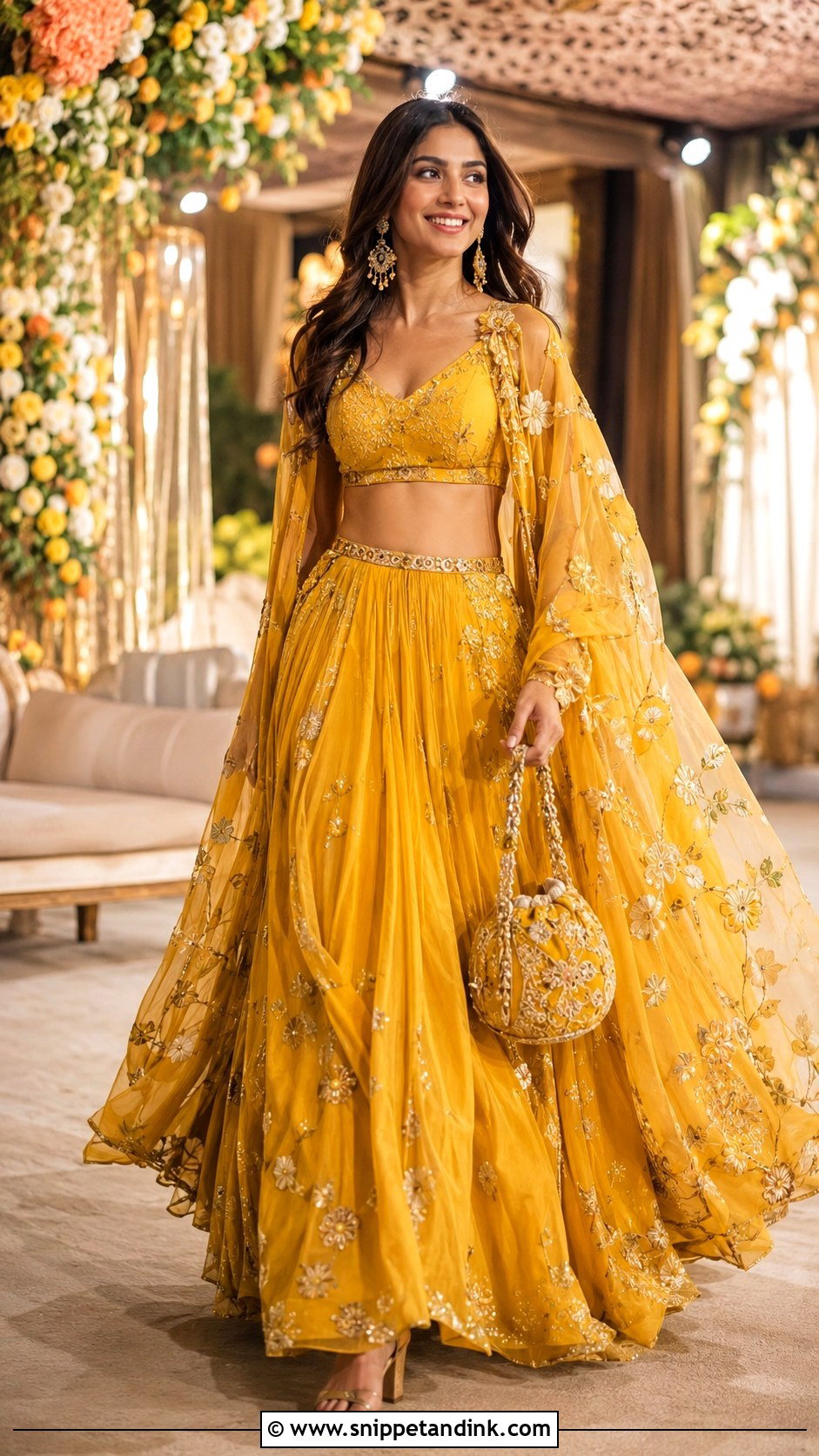
A crop top, flowing skirt and sheer cape gives you lehenga-level drama with far less to manage. The cape does the decorating, with florals, sequins or a scalloped edge, while the skirt stays plain or lightly printed. It also replaces the dupatta, so you’re not rearranging fabric every ten minutes. Long earrings and a slim belt balance the shape. Keep the hair in waves or a low ponytail; a high bun can hide the cape at the shoulders. Brides, sisters and bridesmaids all suit it.
12. Floral Haldi Co-Ord Set
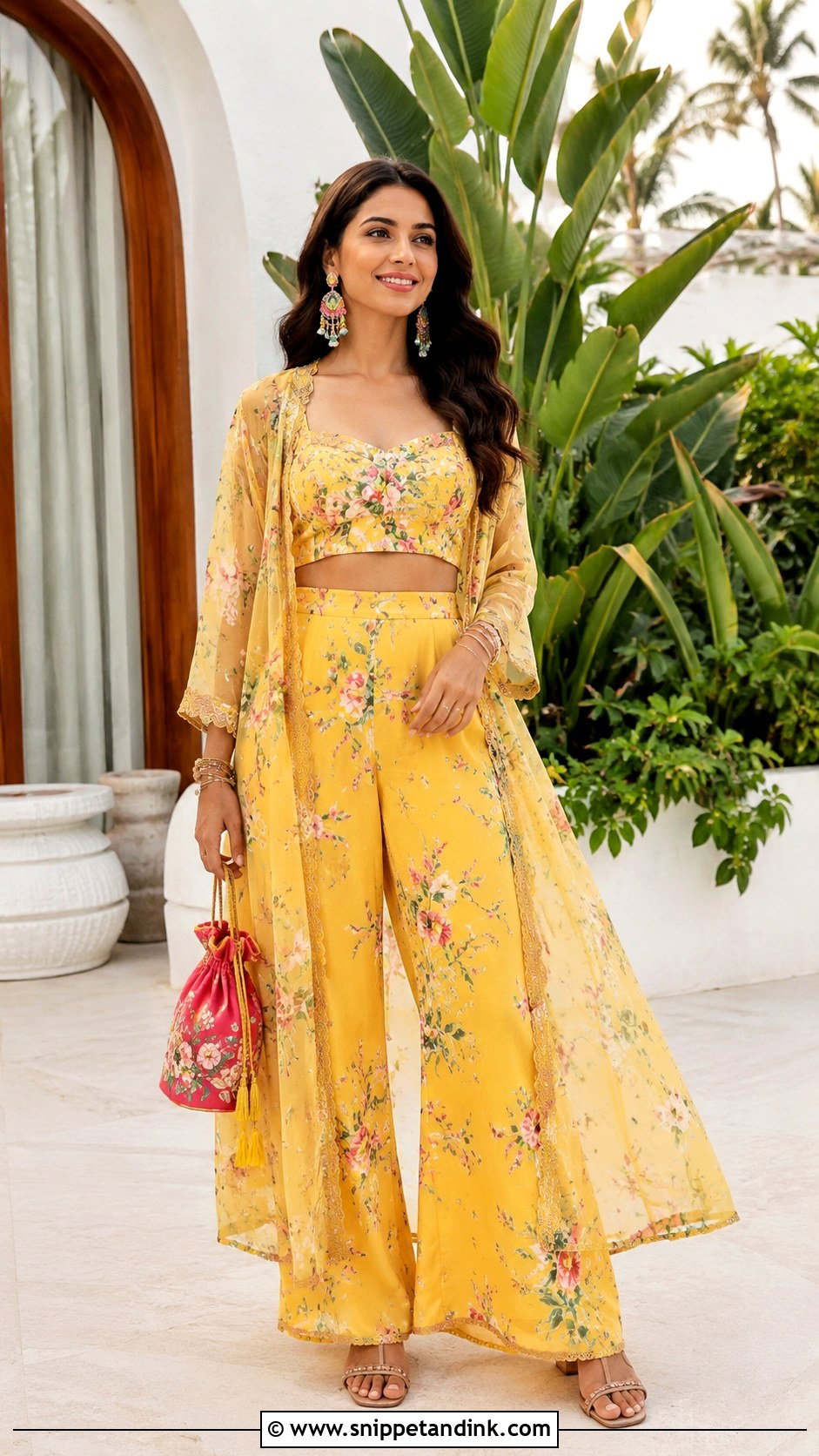
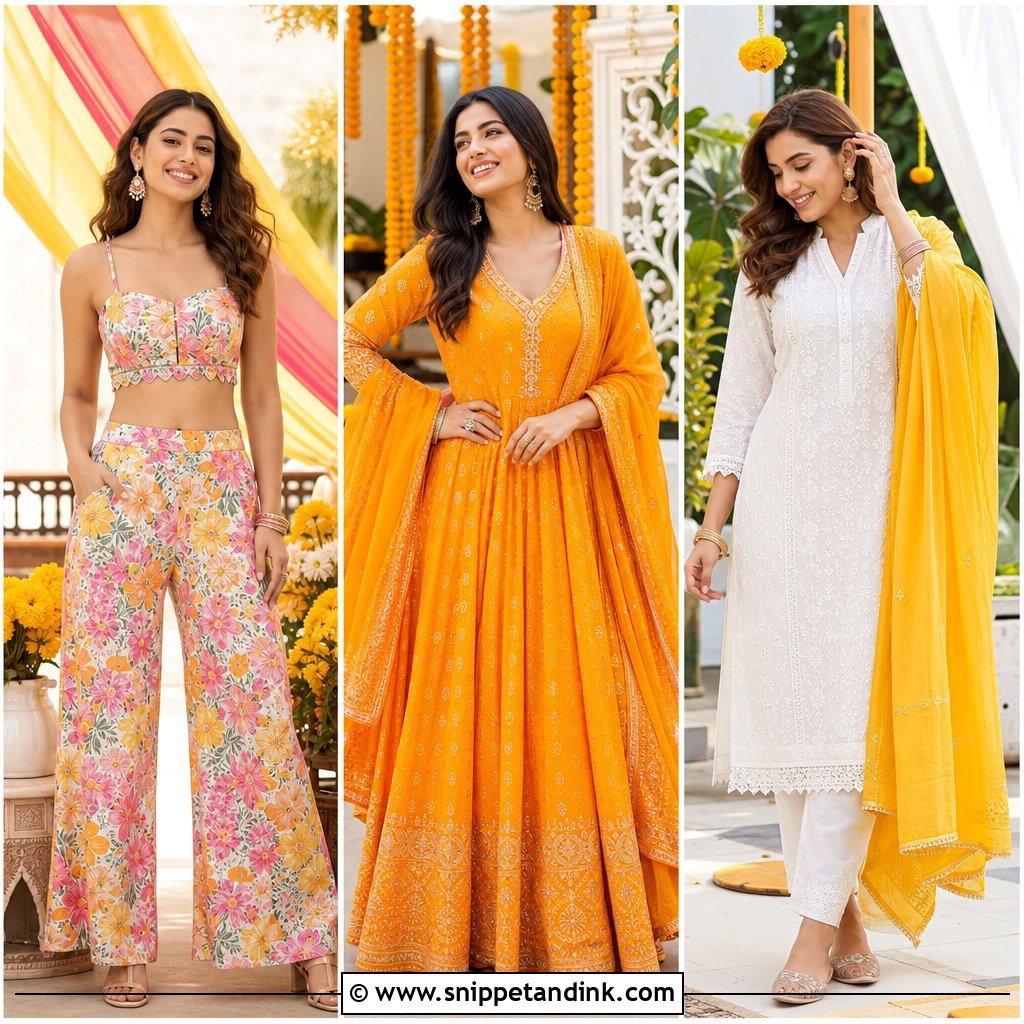
Co-ord sets are what I recommend to guests who want something they’ll wear again. Wide-leg pants or a flowing skirt with a matching crop top or short kurta, printed in yellow mixed with coral, pink or green, looks cheerful without heavy work. Add an organza jacket if the event turns out dressier than expected. They’re light enough for destination weddings and outdoor venues, though at night outside, bring a shawl; cotton co-ords get cold once the sun’s gone.
13. Yellow Kaftan Set For Haldi
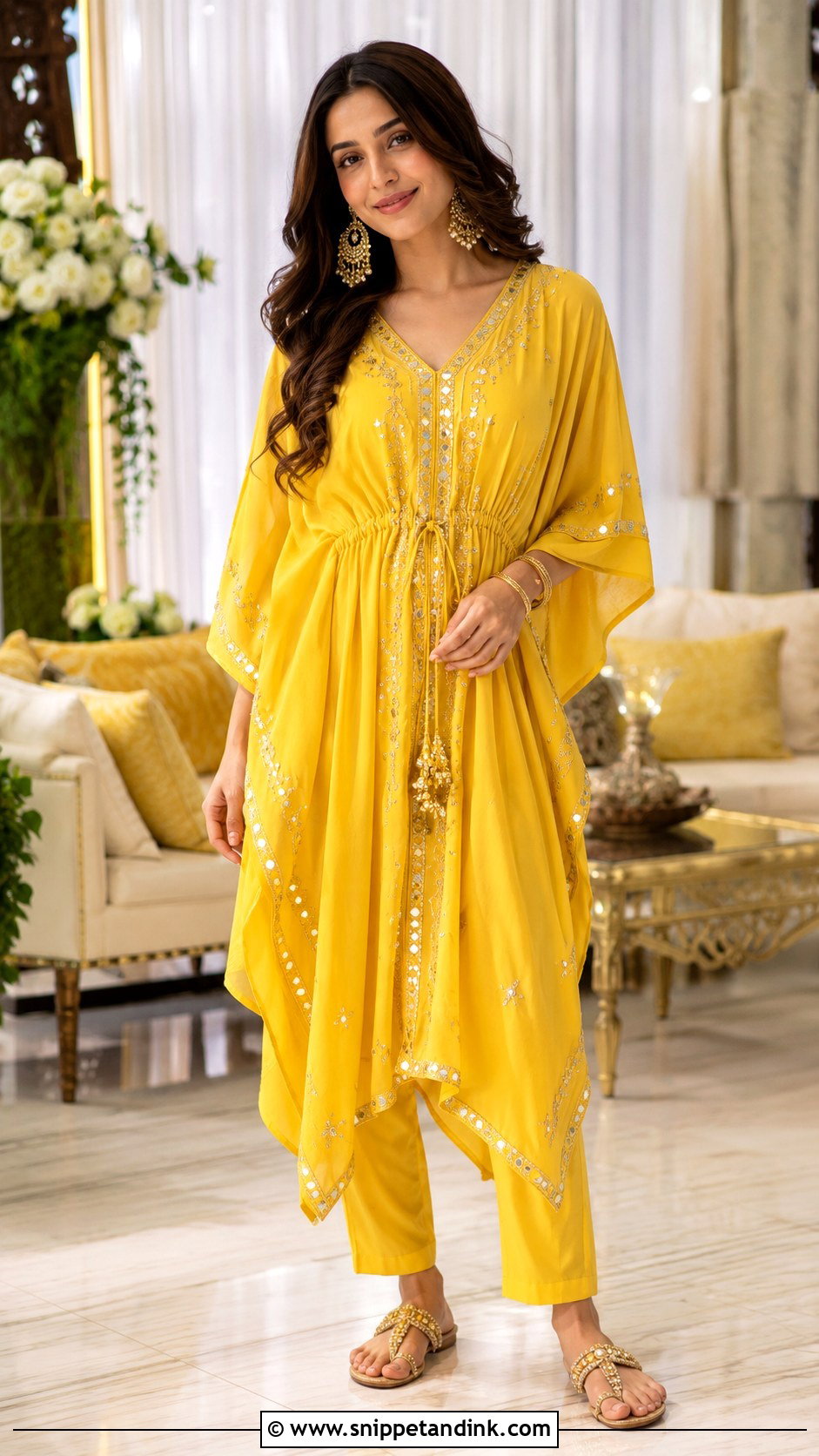
Kaftans are generous by design, and that’s exactly why they work for a long Haldi night. Pick one with defined side seams and a gently cinched waist, so it falls rather than billows, and wear it over straight pants. Mirror details, tassels or narrow gota add shine without weight. Older guests and expecting mothers often feel most at ease in this shape. If you’ll be near the turmeric bowl, choose a washable fabric; a dry-clean-only georgette kaftan is a nuisance once paste lands on it.
14. Ivory Suit With Yellow Dupatta For Haldi
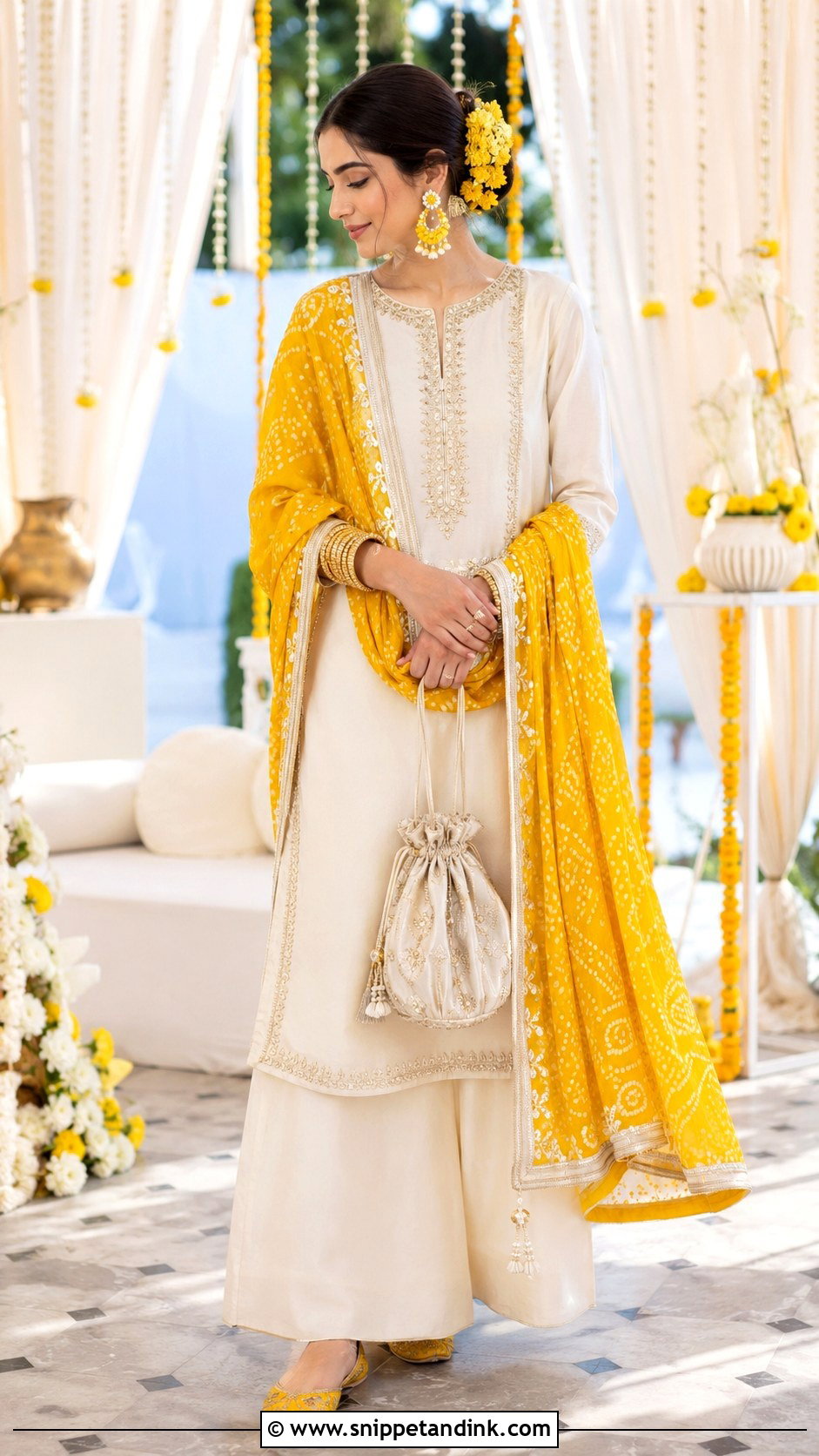
Not everything has to be yellow. An ivory kurta and palazzo with a bright yellow dupatta looks fresh and balanced, and the dupatta carries all the color through Bandhani, a scalloped edge or a marigold border. Subtle gold threadwork or small mirrors on the ivory base keep it festive. My honest warning: turmeric shows on ivory more than on any other color. Wear this as a guest who’s watching rather than applying paste, or for a part of the evening after the messy rituals are done.

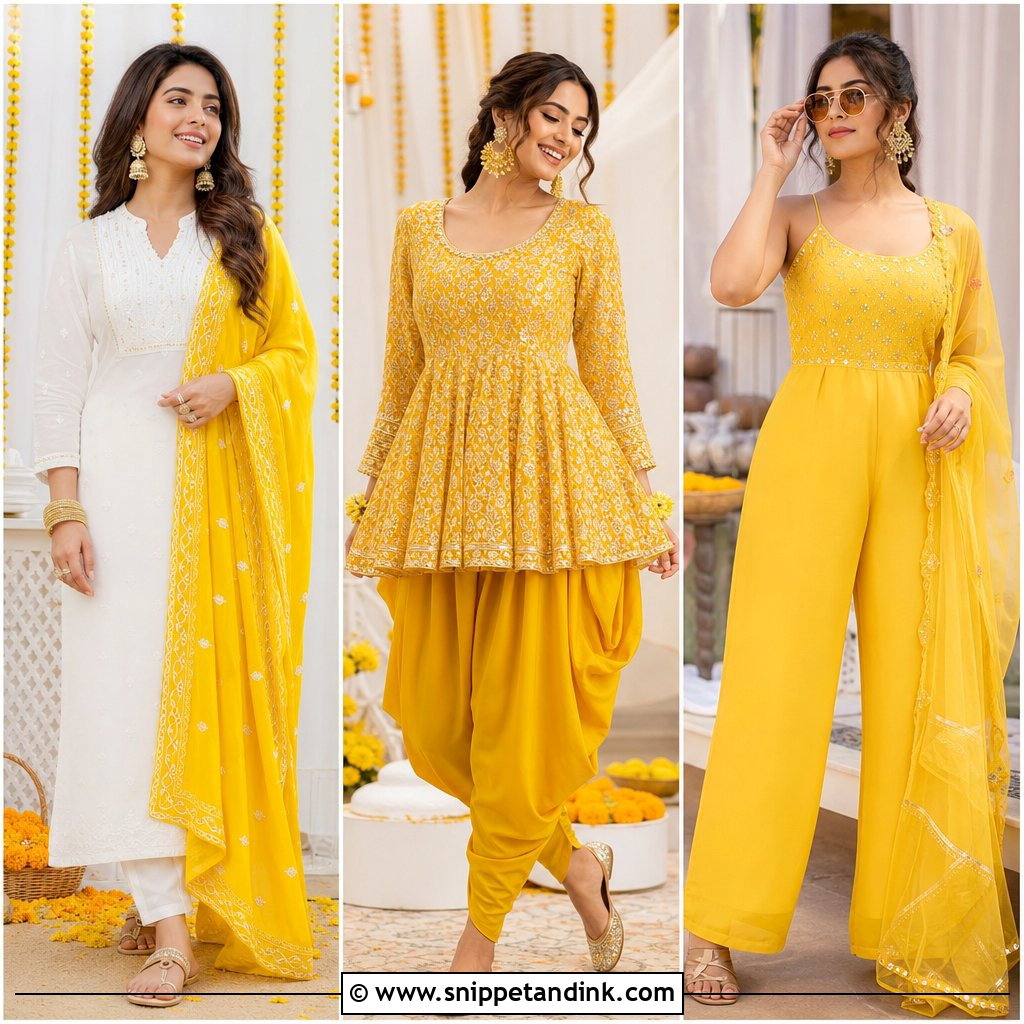

15. Orange And Yellow Haldi Lehenga
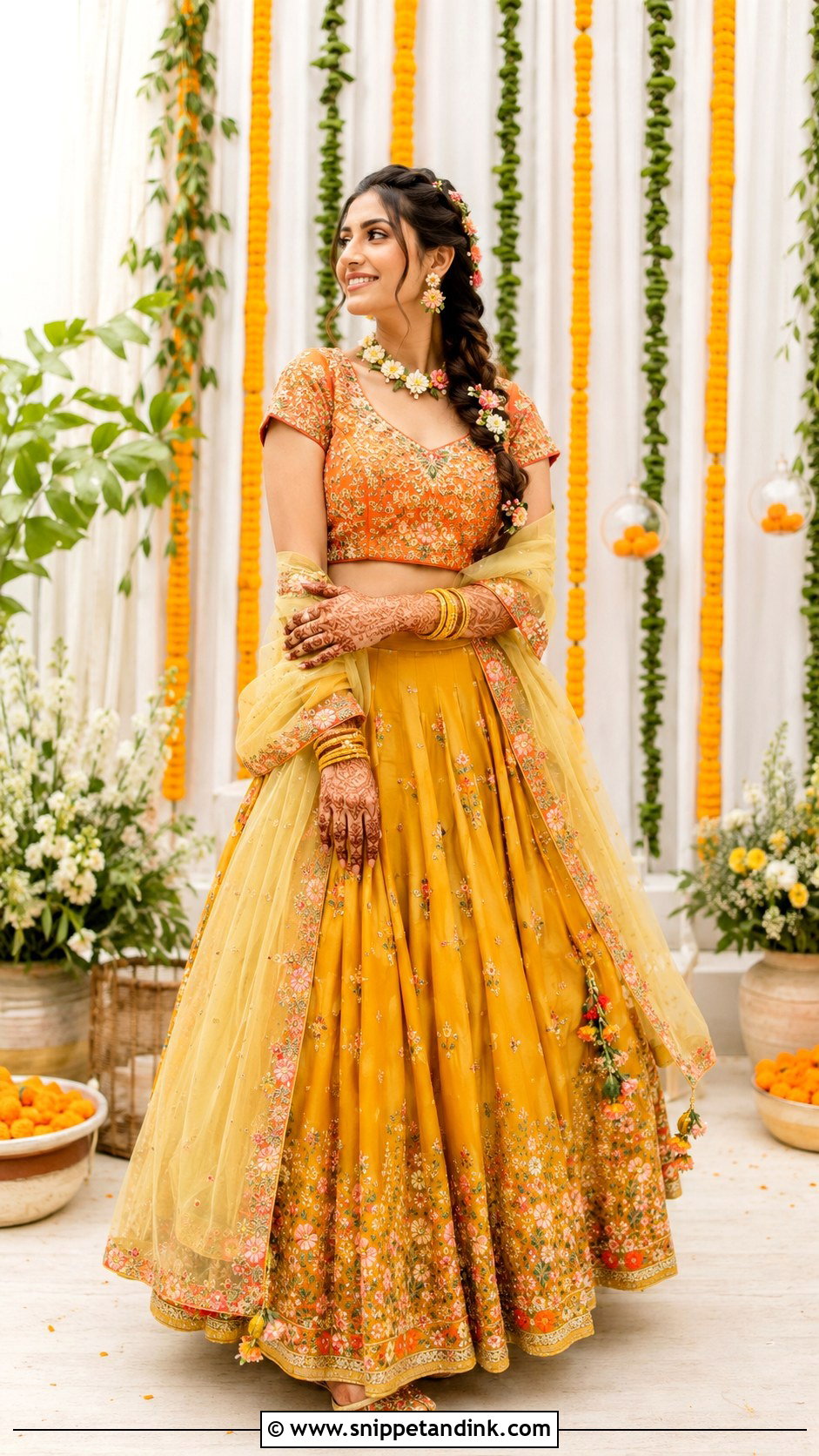
An orange and yellow lehenga echoes the marigold garlands and gives more depth than one flat color. A mustard skirt with an orange blouse works, as does a print blending both with touches of pink and green. Under warm evening lights, orange and yellow can blur together, so I like a clear line between them, such as a contrast border or a distinct blouse. A yellow dupatta softens the contrast. Against white or green decor, this combination reads very well on camera.
16. Green And Yellow Sharara Set For Haldi
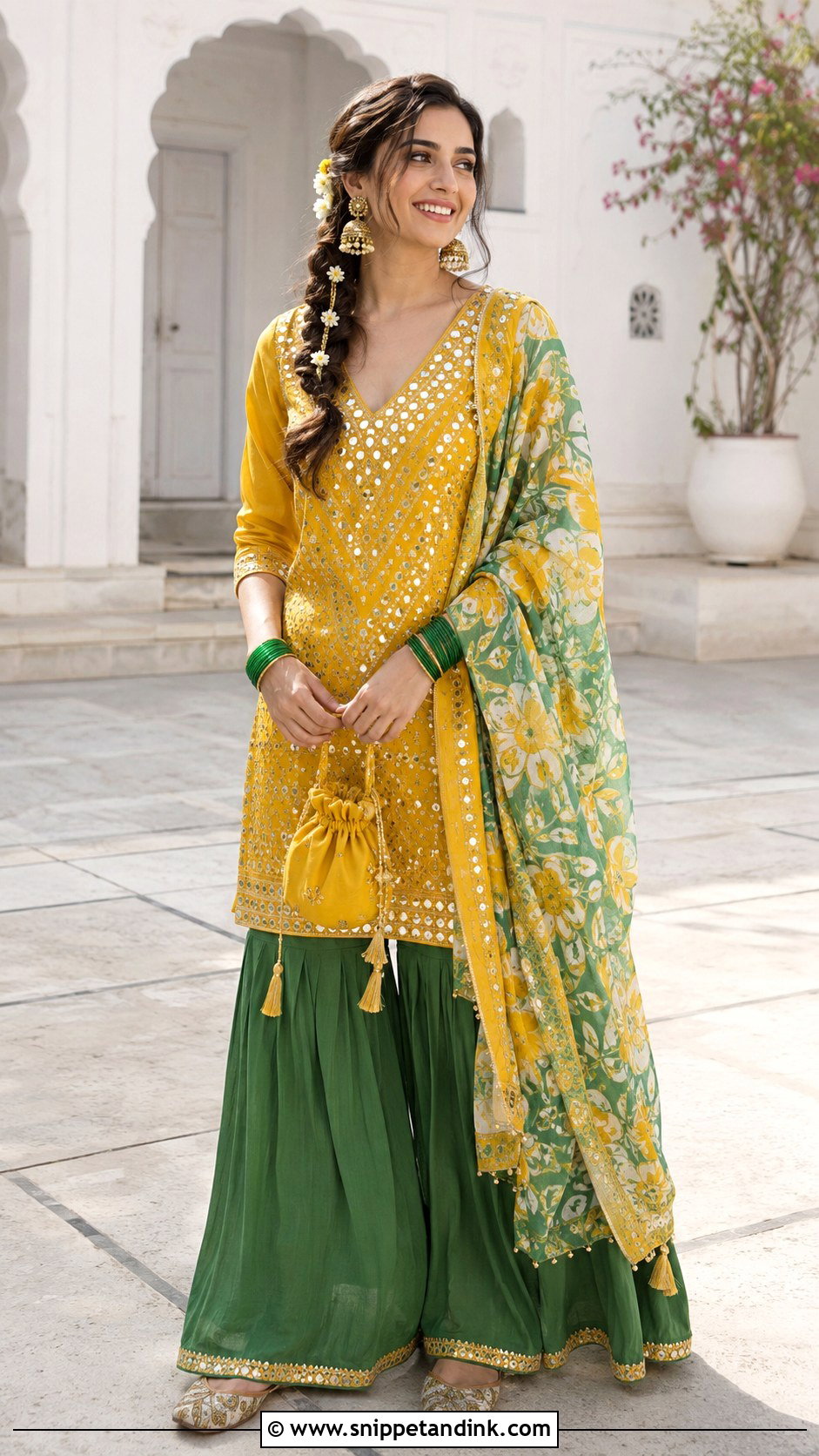
Green and yellow is a classic contrast, and it suits sharara sets especially well. Try a yellow embroidered kurti over green flared pants, or reverse it. A printed dupatta that holds both colors makes the separates look planned. Keep the mirror work or gota sparse so the color blocking stays clean. I like this for bridesmaids or sisters on a coordinated palette, because it frees the bride to be the only one in all-yellow.
17. Pastel Floral Saree With Corset Blouse For Haldi
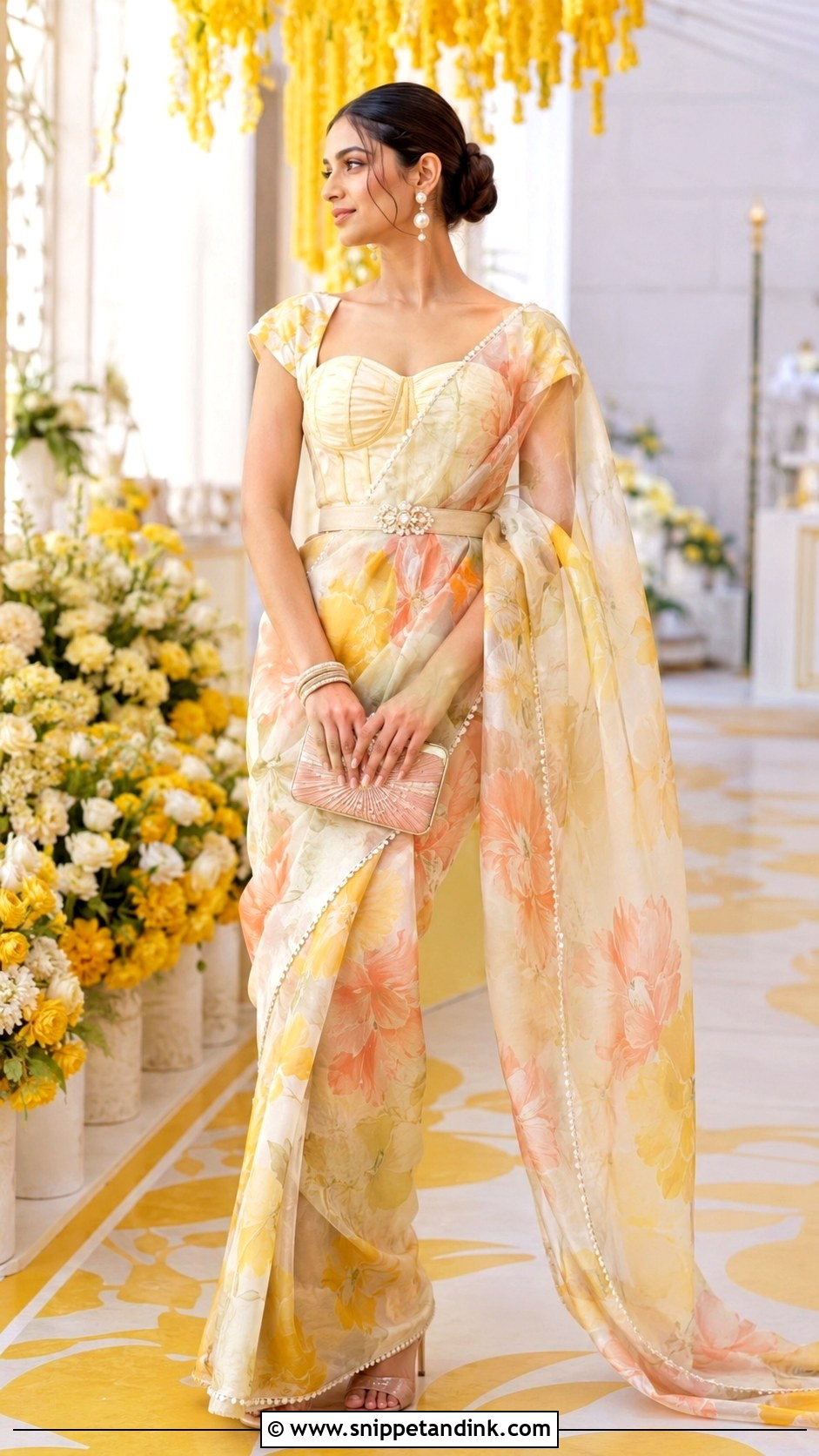
A corset-style blouse turns a pastel floral saree into something much more current. The blouse is where I’d spend the fitting time: supportive straps or short sleeves, enough structure to stay put while you bend and dance. Organza drapes airily but crushes when you sit; georgette moves more easily. Use discreet pins and a slim belt for the pleats. Pale yellow, peach, ivory and green suit a bride or bridesmaid who’d rather avoid bright embroidered yellow.
18. Yellow Jumpsuit With Embroidered Cape For Haldi
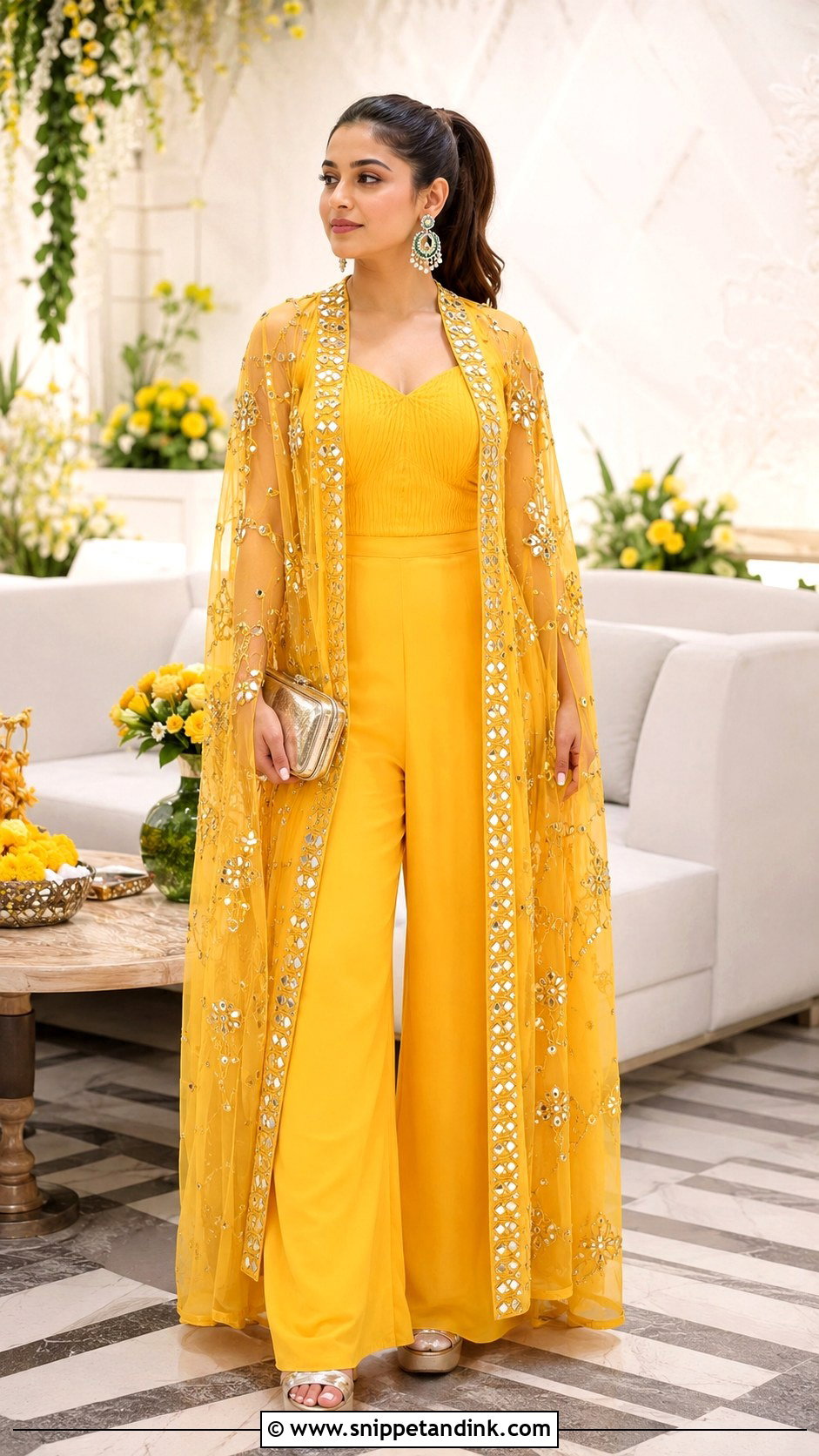
Jumpsuit plus embroidered cape is the sleekest look on the list. Pick a wide-leg jumpsuit with a defined waist and a neckline that stays comfortable when you sit. The cape, with mirror work or a narrow gota border, adds the festive layer and the movement. One practical concern: a one-piece is fiddly for bathroom breaks at a long night event, so a front or side zip beats a back zip. A high ponytail keeps the neckline and cape visible. Best for bridesmaids and guests at a modern Haldi with a lounge feel.
19. Cotton Silk Salwar Suit For Haldi
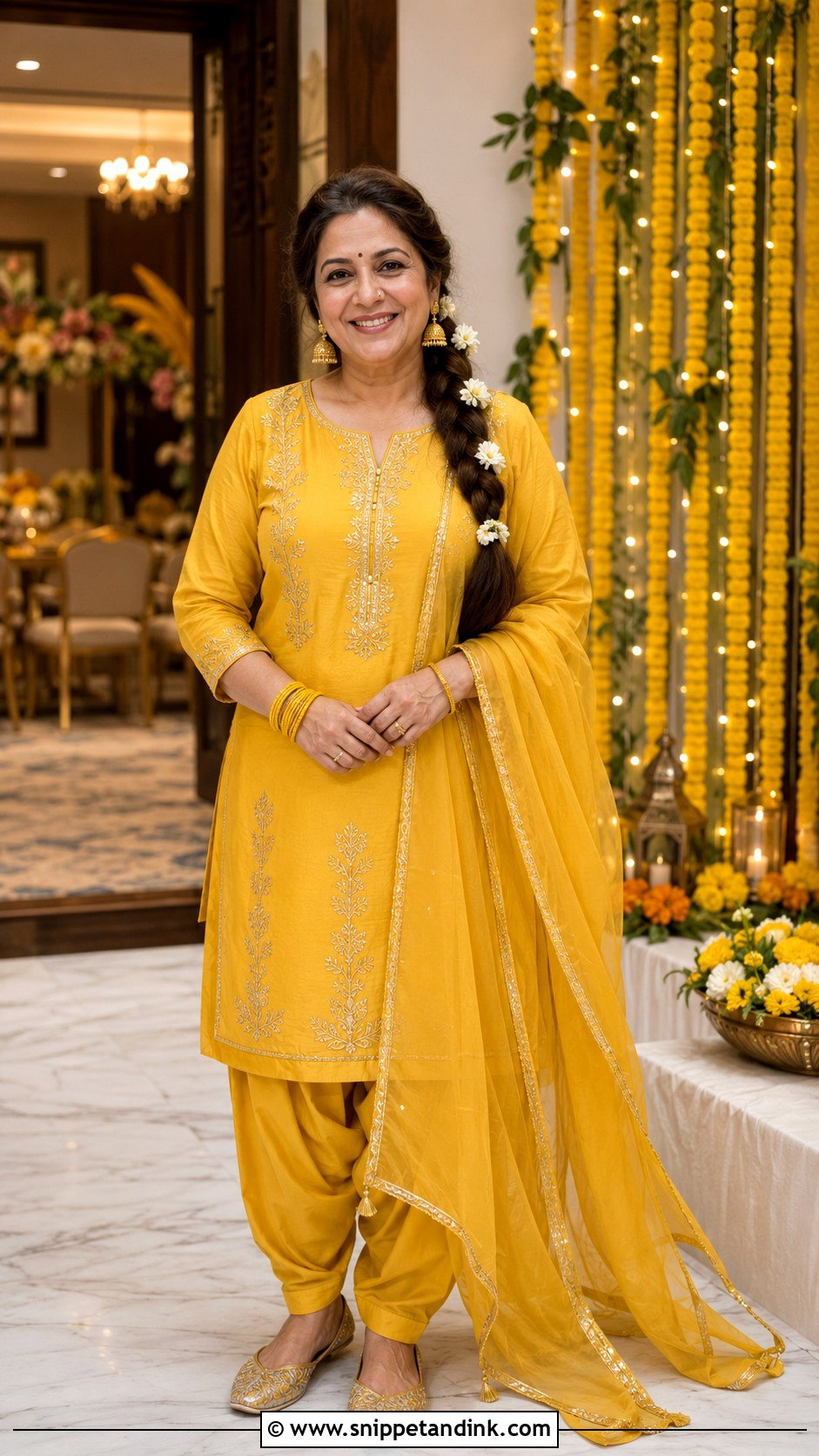
Family members who’ll be fetching things, greeting arrivals and helping with the rituals need clothes that don’t need minding. A yellow cotton-silk salwar suit is my pick for them. A straight or slightly flared kurta, traditional salwar and a light dupatta, with small florals or a gota border, rather than dense work. Mustard and marigold rewear better than very bright shades. Cushioned juttis and a neat braid finish it. It suits every age.
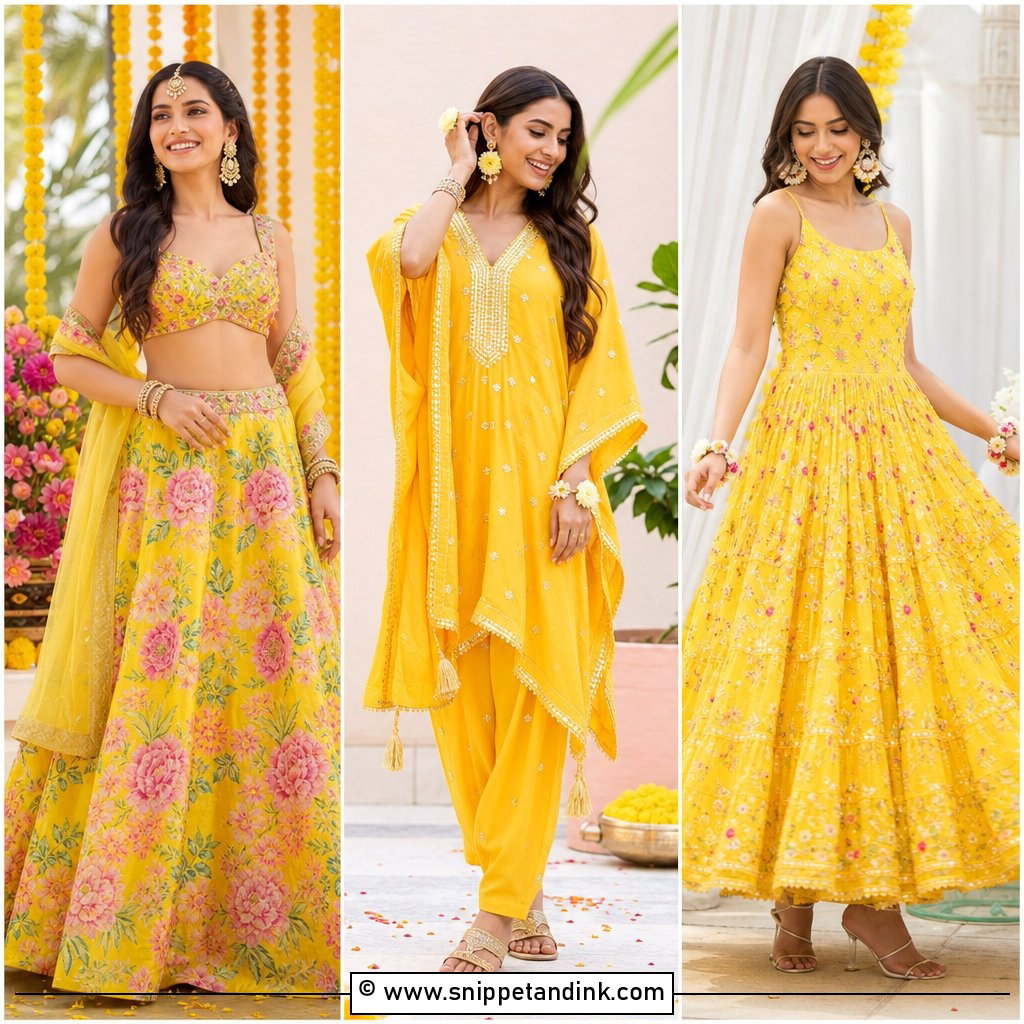



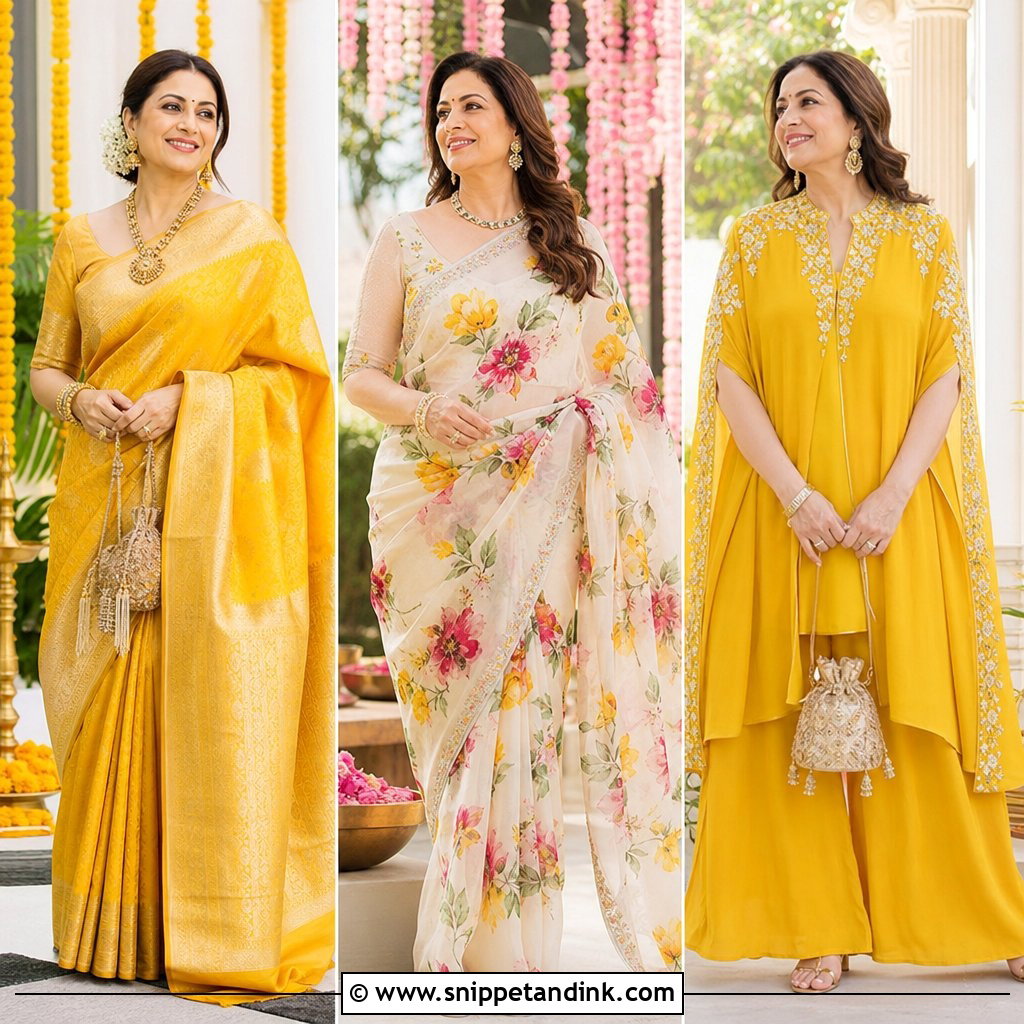
20. Yellow Maxi Dress With Ethnic Accessories For Haldi
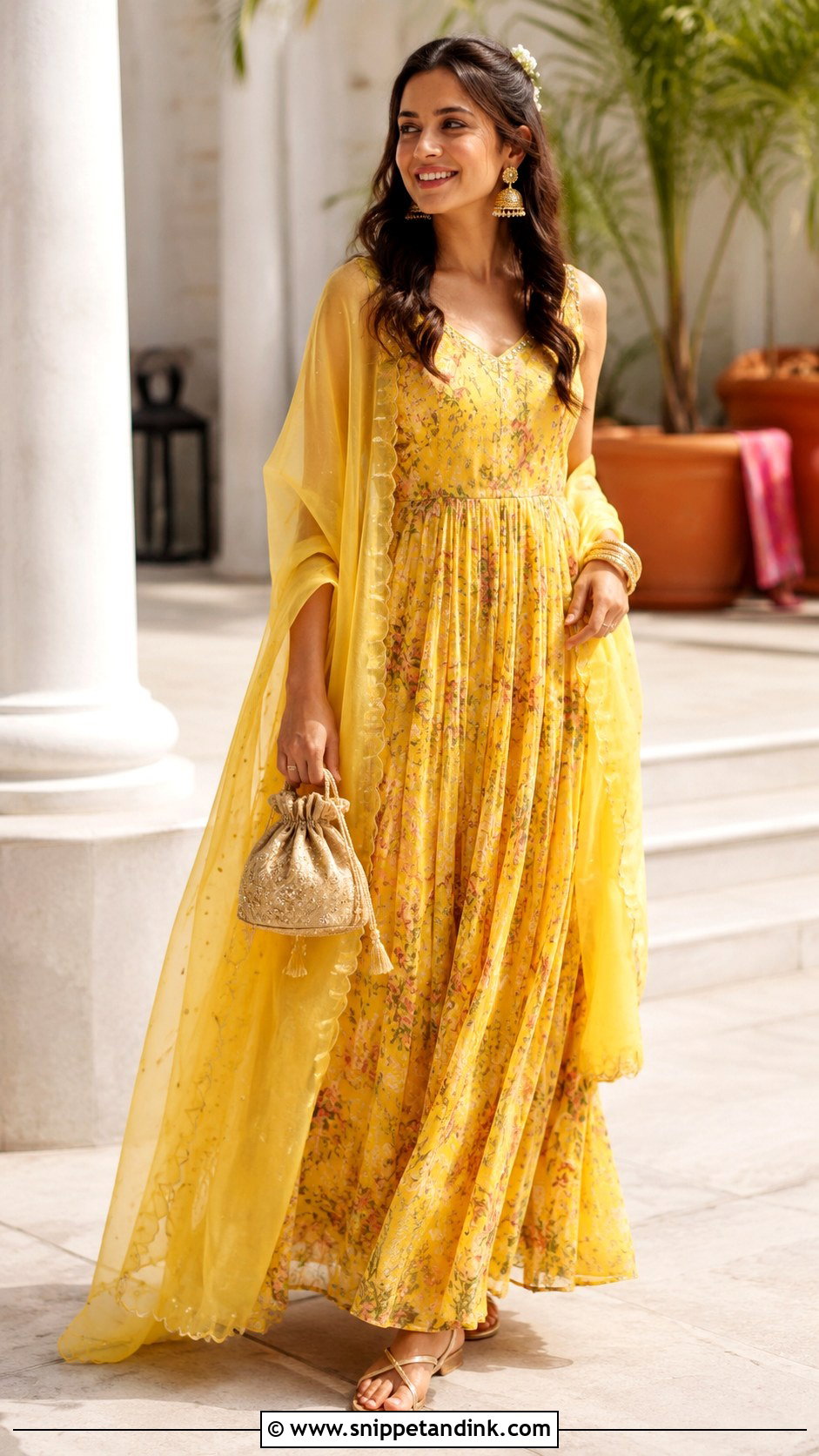
For guests who don’t usually wear Indian clothing, a flowing yellow maxi dress is the easiest way in. A modest wrap, tiered or empire-waist dress in chiffon, cotton or georgette, styled with jhumkas, stacked bangles and an embellished potli, looks occasion-appropriate without anything unfamiliar to manage. I’d check the hem length: if you might sit on the floor, a skirt that falls well past the knee keeps you comfortable. A floral organza stole adds coverage and movement.
Late Hours, Cooler Air and the Floor Cushions
An evening Haldi often runs into dinner and a long stretch of music. Plan for the temperature dropping if it’s outdoors. A light shawl, a cape you can keep on, or a jacket in the same palette means you don’t end up wrapped in a random cardigan in every late photo.
Seating is usually low, on cushions or a mattress covered with sheets. Before you buy, sit on the floor in the outfit and stay there for a few minutes. If a waistband digs in or a blouse rides up, you’ll feel it long before the photos come back. Pack a few safety pins, some tissues and a small stain wipe in your potli, along with flat shoes if you’re starting the night in heels.
A Guest’s Guide to the Family’s Unspoken Dress Code
Many families have a color plan for the Haldi, and guests are rarely told unless they ask. Some want everyone in yellow; others reserve all-yellow for the bride or the couple and ask relatives to wear green, orange or florals. A quick message to the host or a close cousin settles it.
Expect to get turmeric on you as a guest too, since relatives often smear it on each other once the couple’s rituals are done. If you’re wearing something precious or pale, stand back from the main circle. And if the event is at a family home or temple, I’d lean toward covered shoulders and a dupatta or stole on hand, even if the rest of the wedding is more modern.
Matching the Outfit to Your Role on the Night
A good Haldi night outfit lets you take part in every ritual and still look put together at the last song. Mirror work lehengas, Bandhani sarees, sharara sets, jumpsuits and maxi dresses each cover a different comfort level and taste. Breathable fabric, manageable draping, a neckline that stays where it should and shoes you can stand in for hours matter more than anything decorative. Brides can take the detailed embroidery and floral jewelry; guests can use the same shapes with lighter accessories. Choose by your role in the evening, the venue and the family’s dress code.
You'll Like These Ideas:



Leave a Reply