
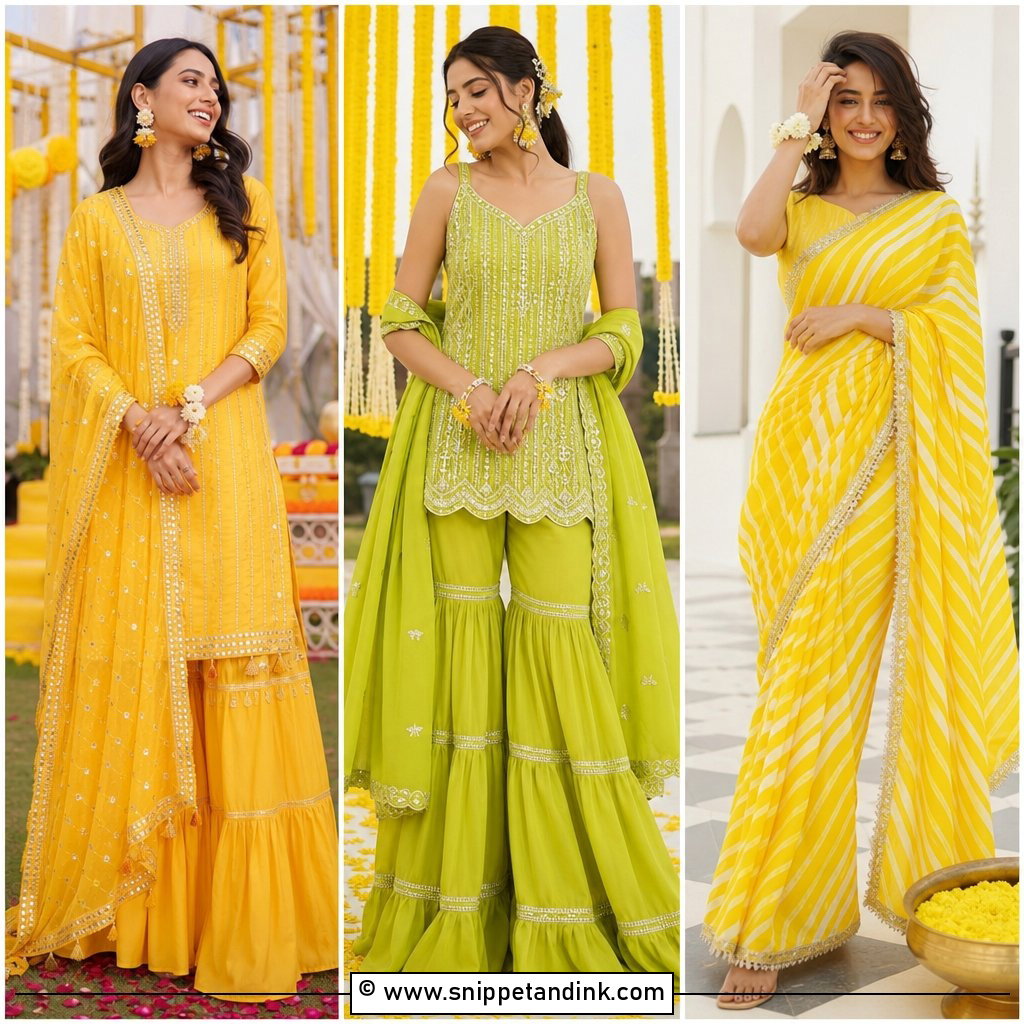
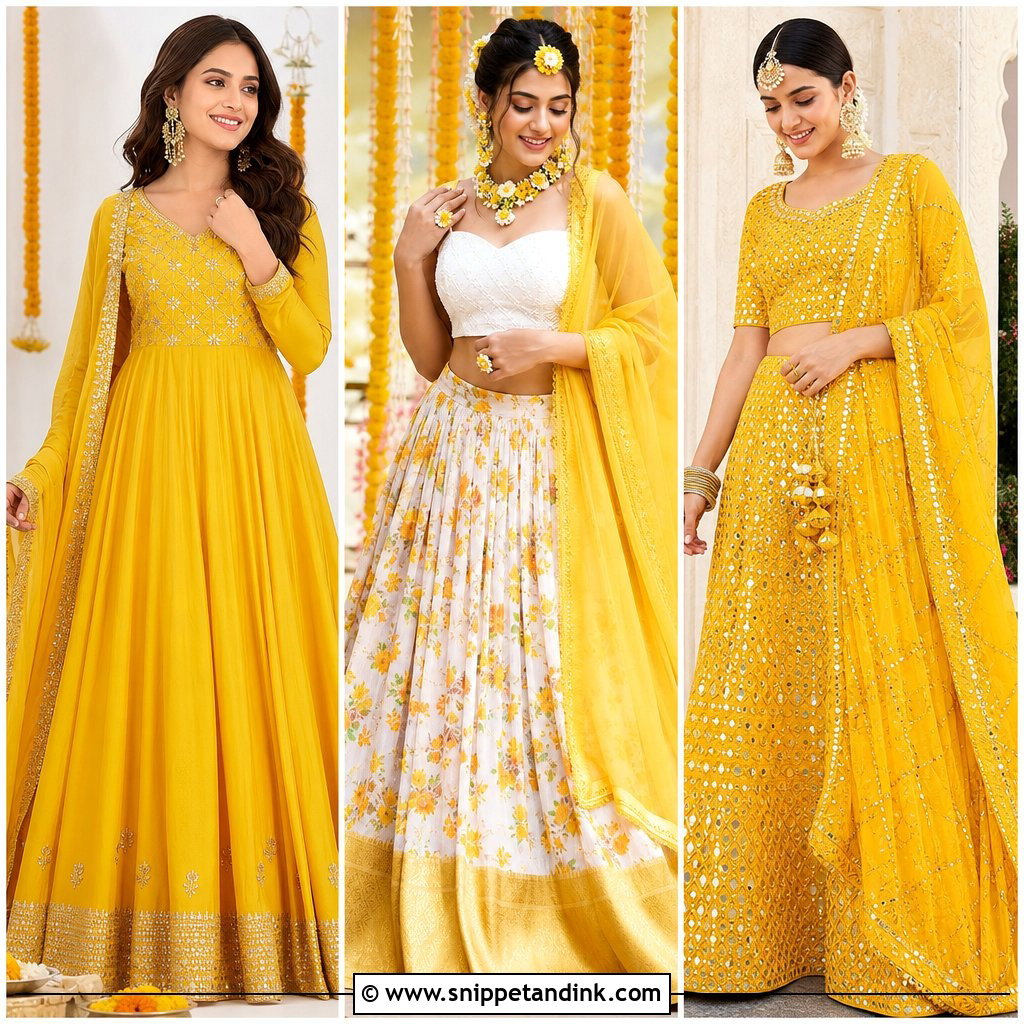
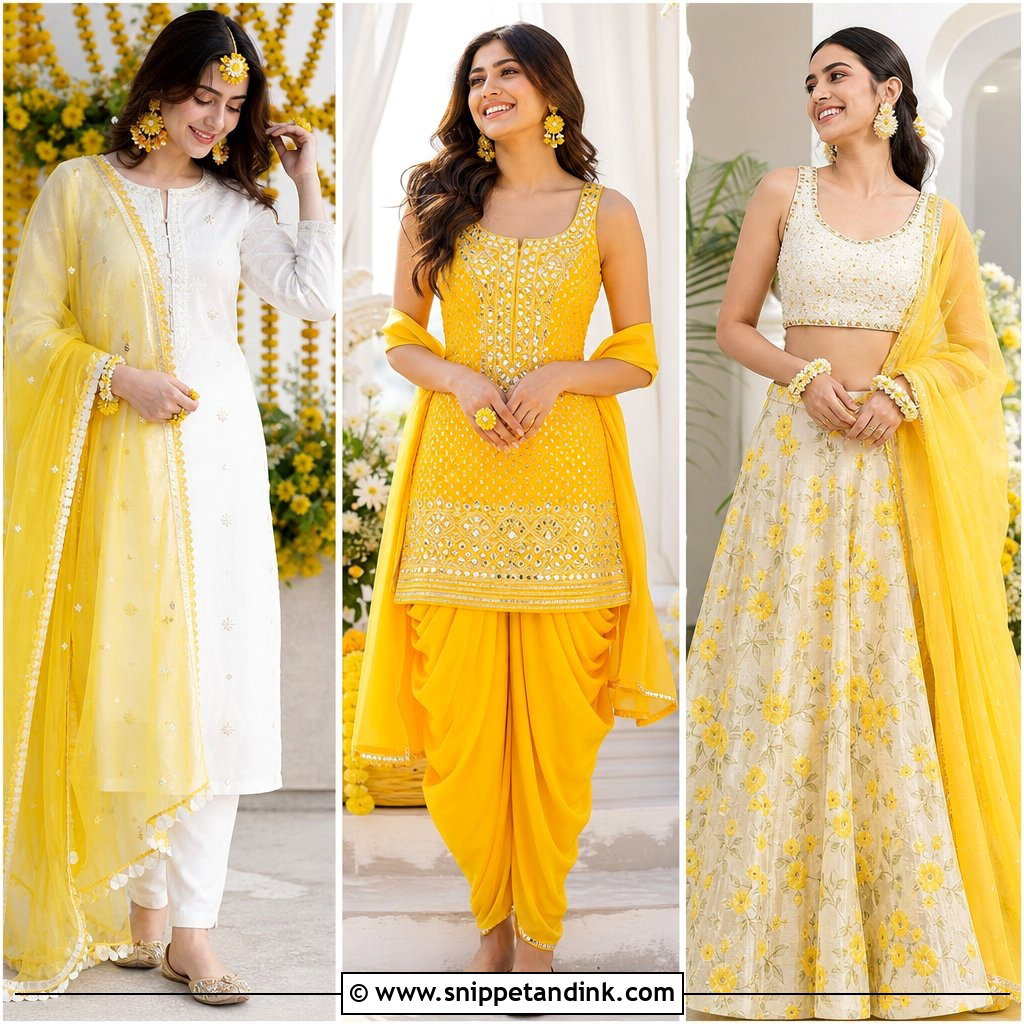
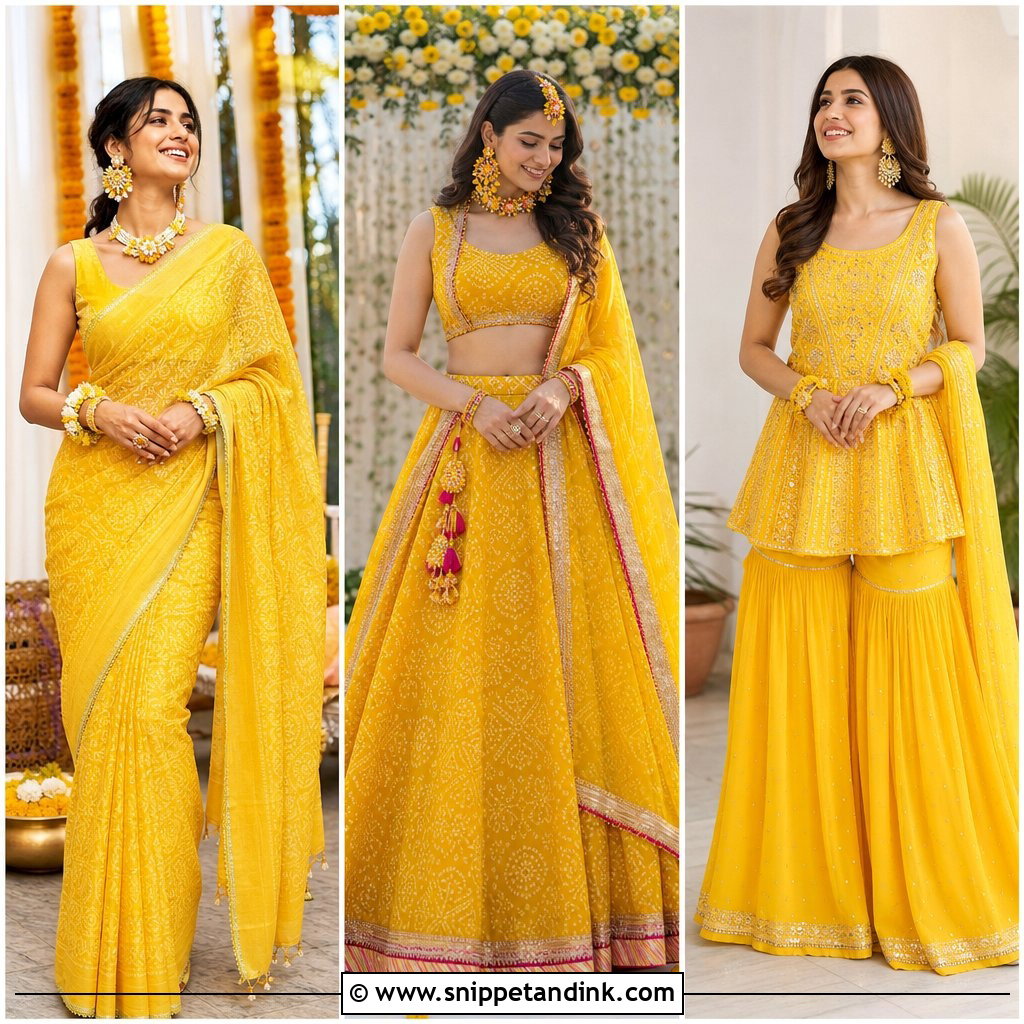
A joyful Haldi ceremony is the most physical event of an Indian wedding. You’ll sit low on the floor, lean in to apply paste, get pulled into dancing and almost certainly end up with turmeric on your sleeves. So when I dress anyone for Haldi, bride, sister or guest, I start with comfort and washability, then add the festive part. Below are simple yellow outfits that hold up to that: kurta sets, co-ords, Anarkalis, shararas, sarees and light lehengas, plus Indo-Western options. Pick the yellow that suits your skin, keep shoes flat and jewelry light, and you’ll look right without being overdressed.
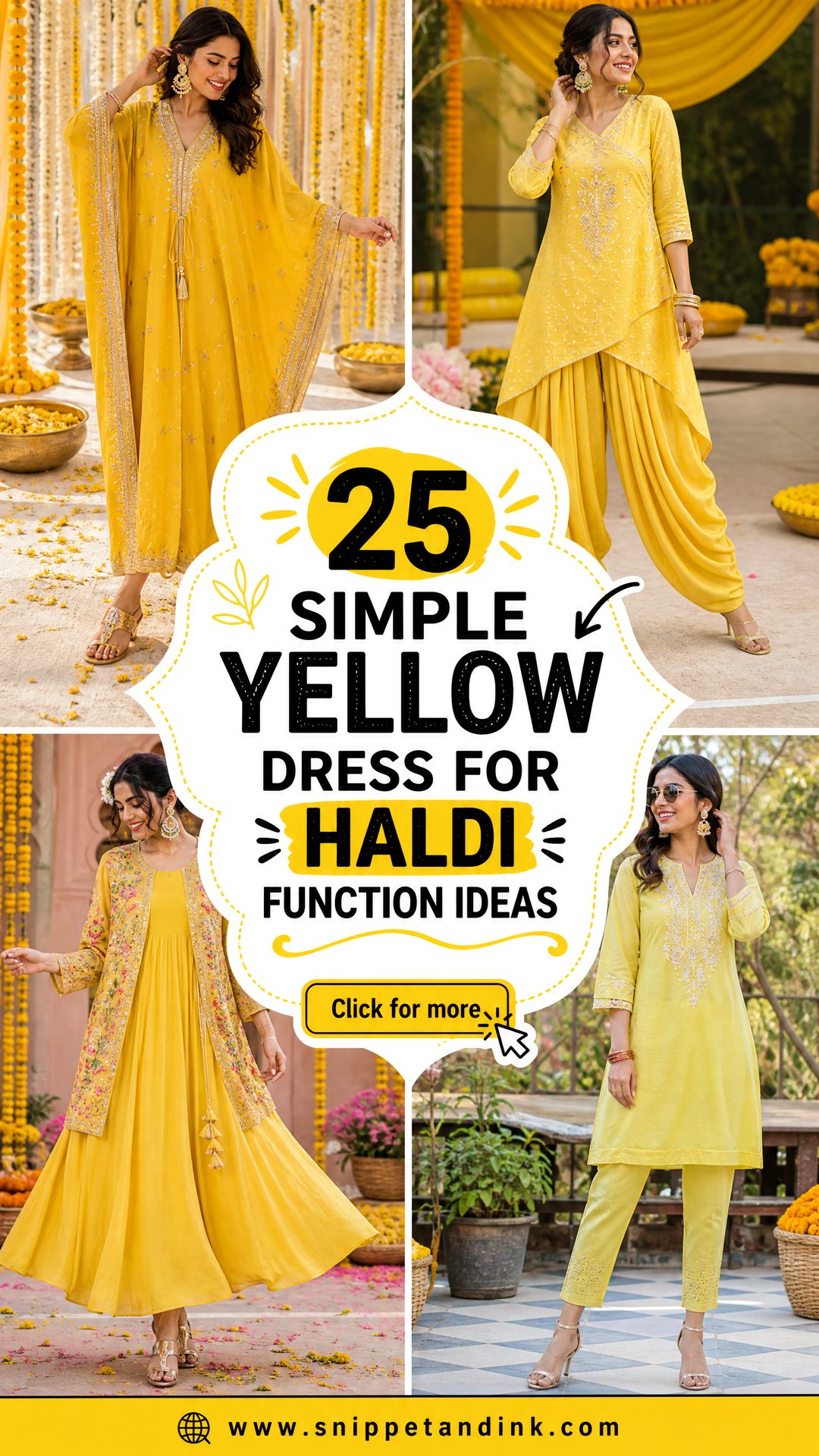
Lemon, Marigold or Mustard Next to Your Complexion
Yellow is the one color everyone wears at Haldi, and also the one that most easily drains a face. I always hold two or three shades up to a client in daylight before we settle on an outfit, because the difference between flattering and sallow is a small shift in tone.
- Lemon and pale butter yellow suit fair and cool-toned skin, and look clean next to white, silver and pearls.
- Marigold and saffron yellow, with a touch of orange in them, flatter medium and wheatish skin and glow in morning sunlight.
- Mustard, turmeric and deep ochre are richest on deeper skin, and also work for anyone at an evening or indoor Haldi.
- If a yellow makes the under-eye area look gray, try one shade warmer or put a white or pink border near the face.
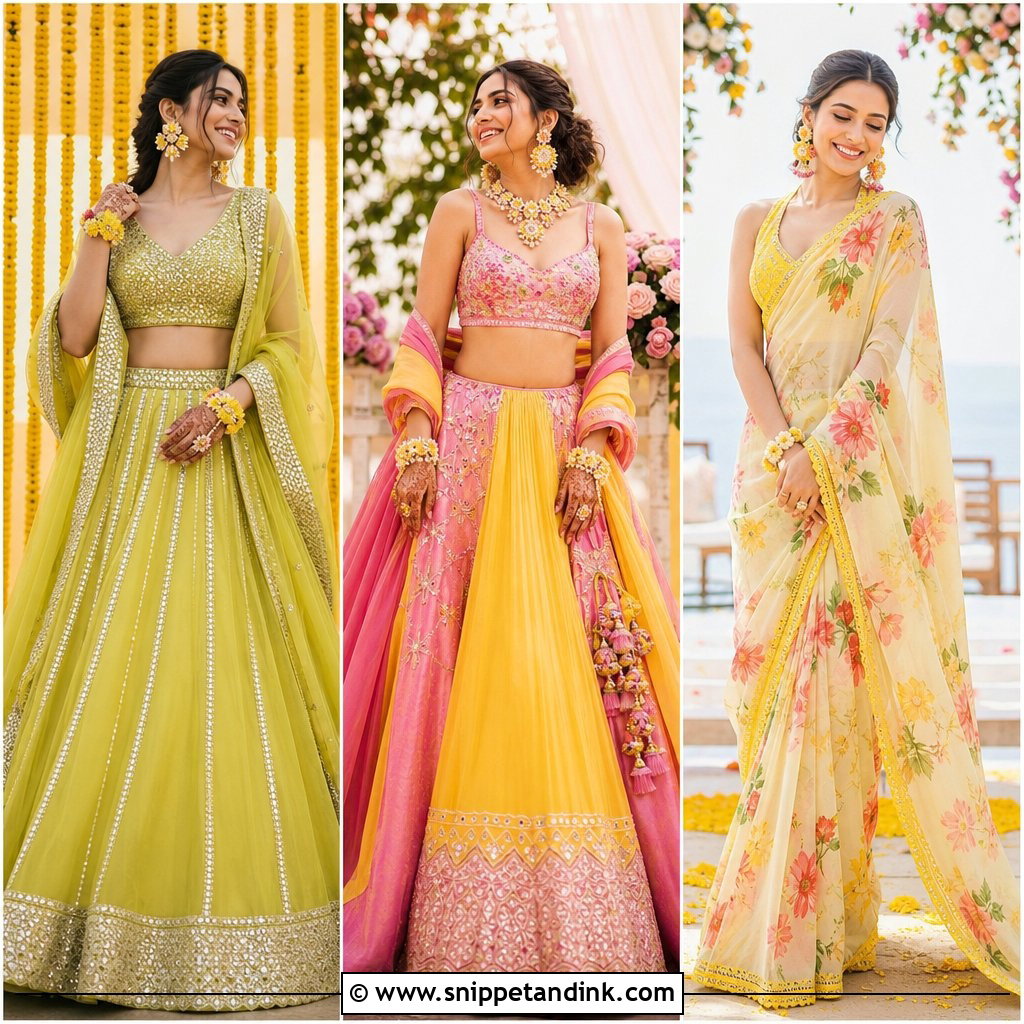
The bride usually wears the brightest or most detailed yellow, so family and friends sometimes go a shade softer or add a second color like pink, green or white. It’s worth a quick message to the bride or her sister before you buy. Some families like everyone to match, and some would rather the bride stand out.
1. Yellow Cotton Kurta With Palazzo Pants
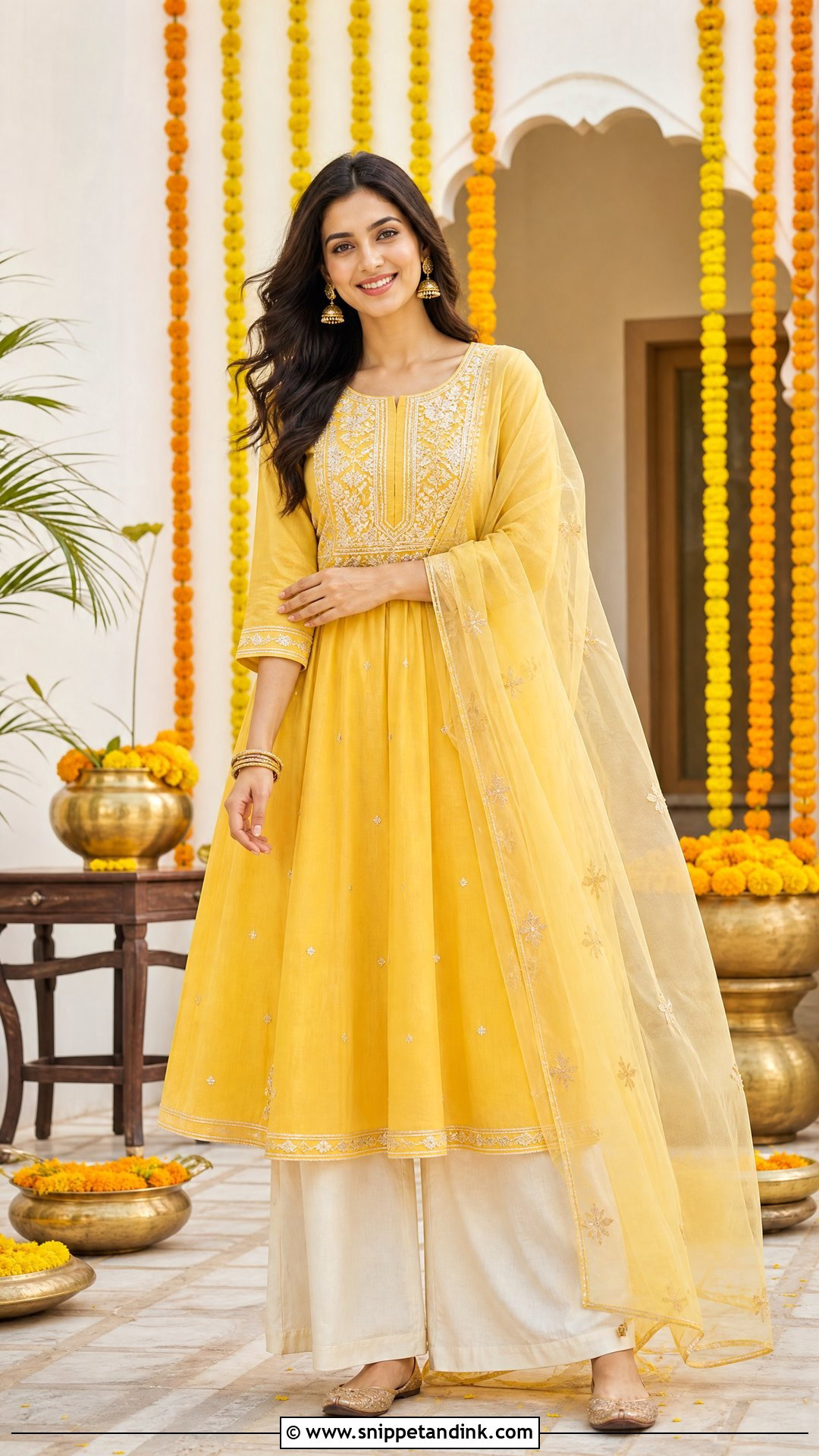
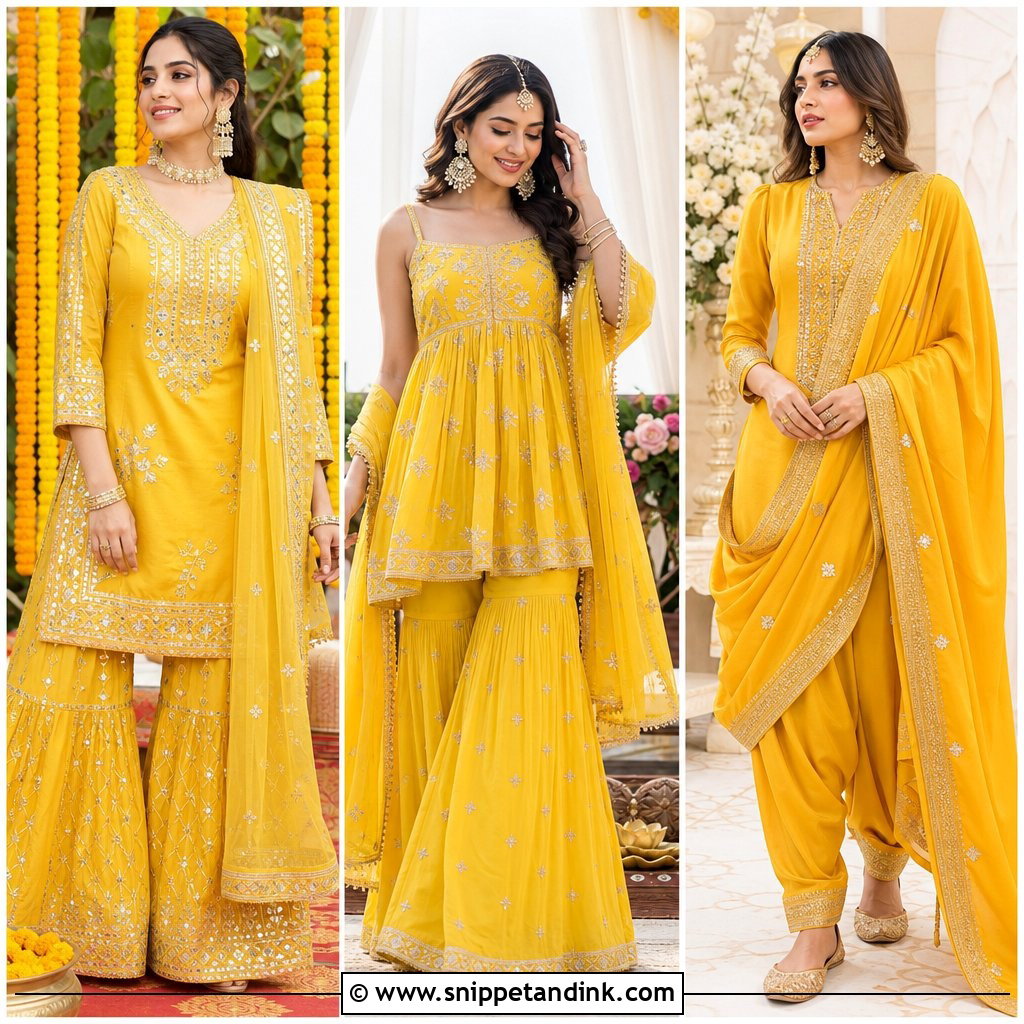
A yellow cotton kurta with palazzo pants is the outfit I suggest most for a daytime Haldi, because cotton breathes, washes and doesn’t mind a little paste. An A-line or straight kurta with embroidery only at the neck and sleeves keeps it light. White, ivory or matching yellow palazzos let you sit cross-legged without strain. An organza dupatta with a narrow border makes it more traditional. Flat juttis, small gold jhumkas and slim bangles. Tie your hair in a low ponytail or loose braid, since loose hair collects turmeric quickly.
2. Yellow Chikankari Anarkali With Juttis
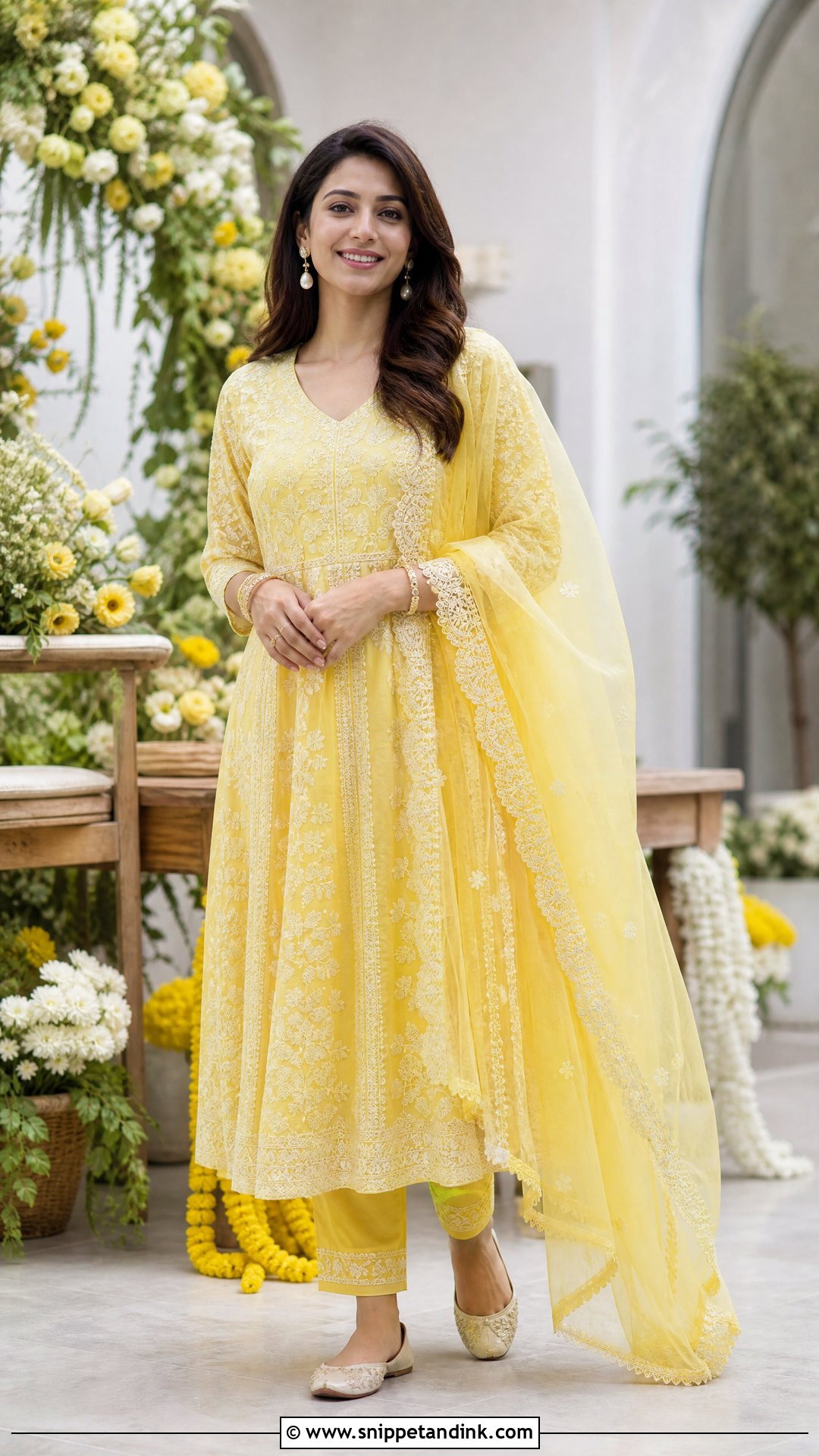
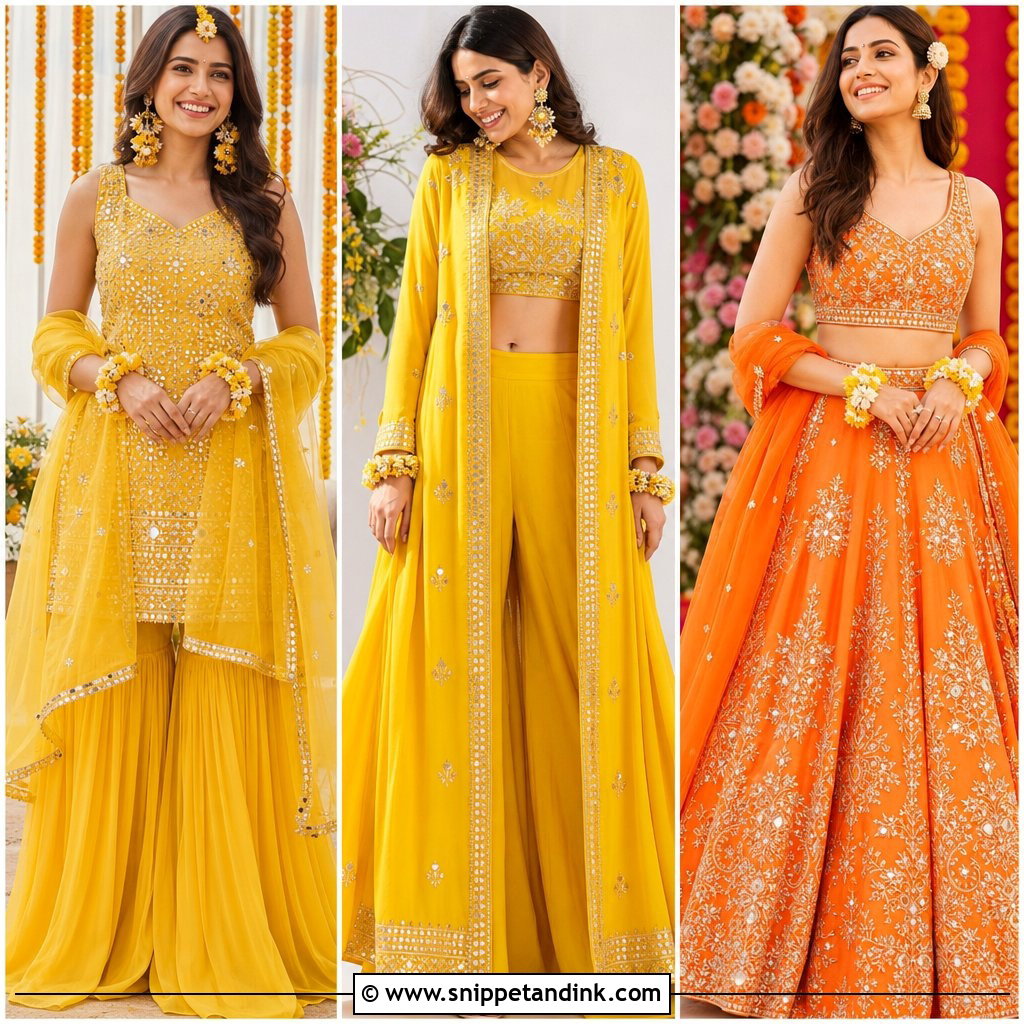
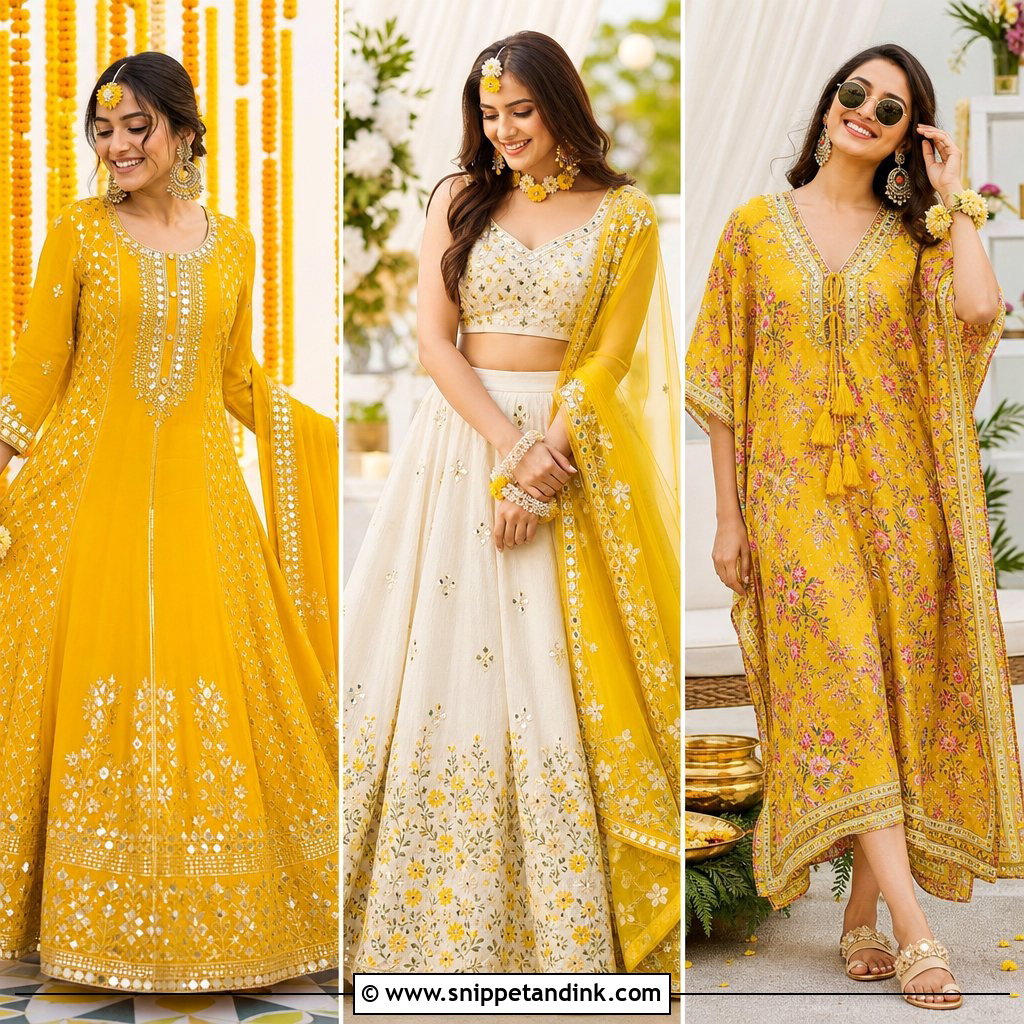
Chikankari is fine white-thread shadow work, and on yellow it looks festive without weight. I’d pick a knee or calf-length Anarkali with a modest flare; a very full one takes up a lot of floor when you sit in a circle round the bride. Narrow pants or churidar in the same shade lengthen the line, and a sheer dupatta with small motifs adds movement. Check the lining before buying, as good chikankari is usually done on fine cotton or georgette that needs one. Ivory juttis, pearl drops and two or three gold bangles each side. Soft makeup, a half-up style or braid.
3. Yellow Floral Midi Dress With Dupatta
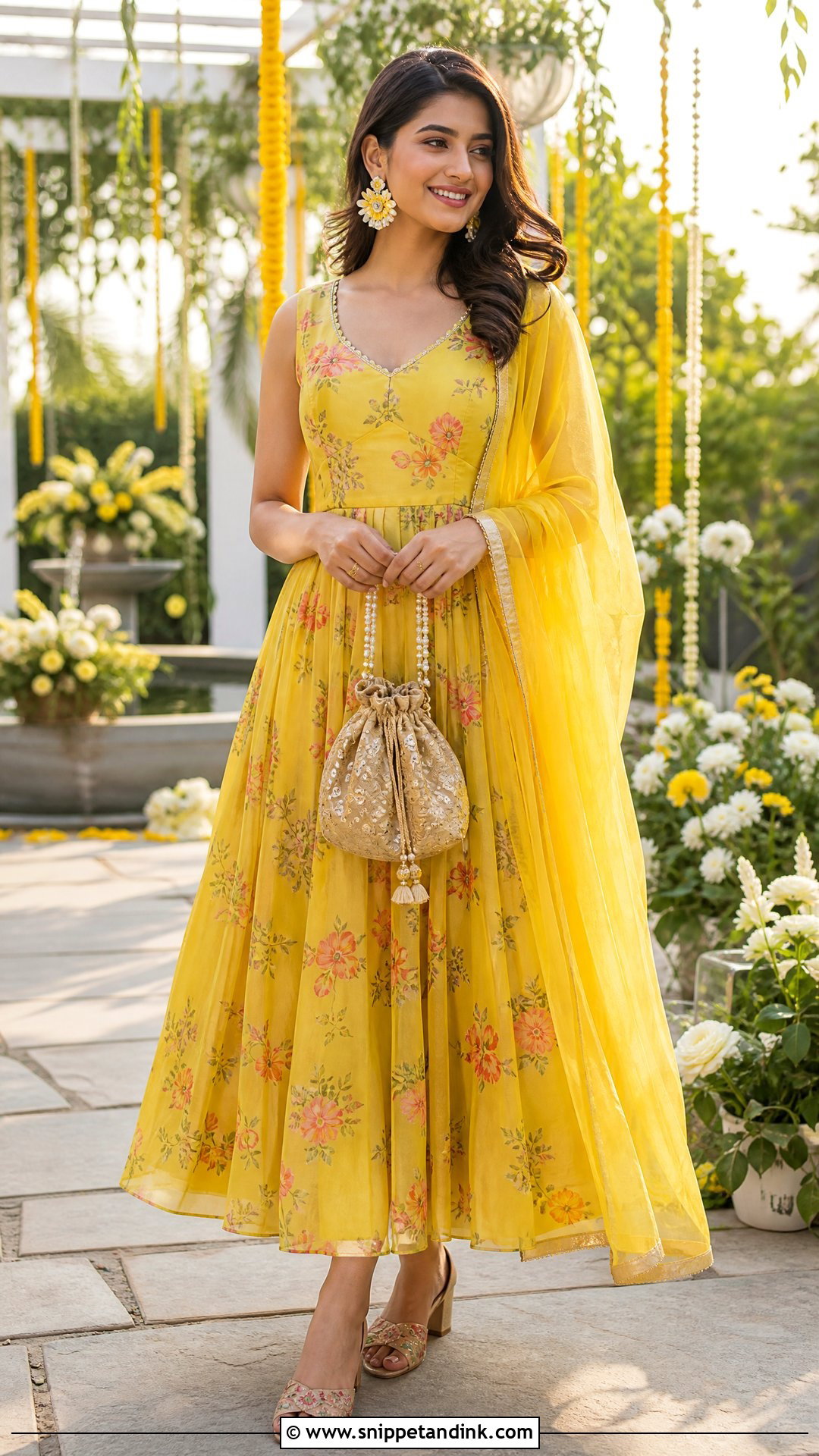
A floral midi dress is a fair choice for younger guests and friends who don’t own Indian wear, as long as it carries the color and the mood. Pick a fit-and-flare shape with elbow-length sleeves and a print with white, pink, green or orange flowers on yellow. A plain chiffon dupatta over one shoulder makes it read festive, though a busy print can stand alone. Hem length matters more than at a Western wedding: you’ll sit on cushions or the floor, so a skirt that clears the knee when seated is safer. Tan block heels or embroidered flats, floral studs, a small potli bag.
4. Yellow Lehenga With Simple Crop Top
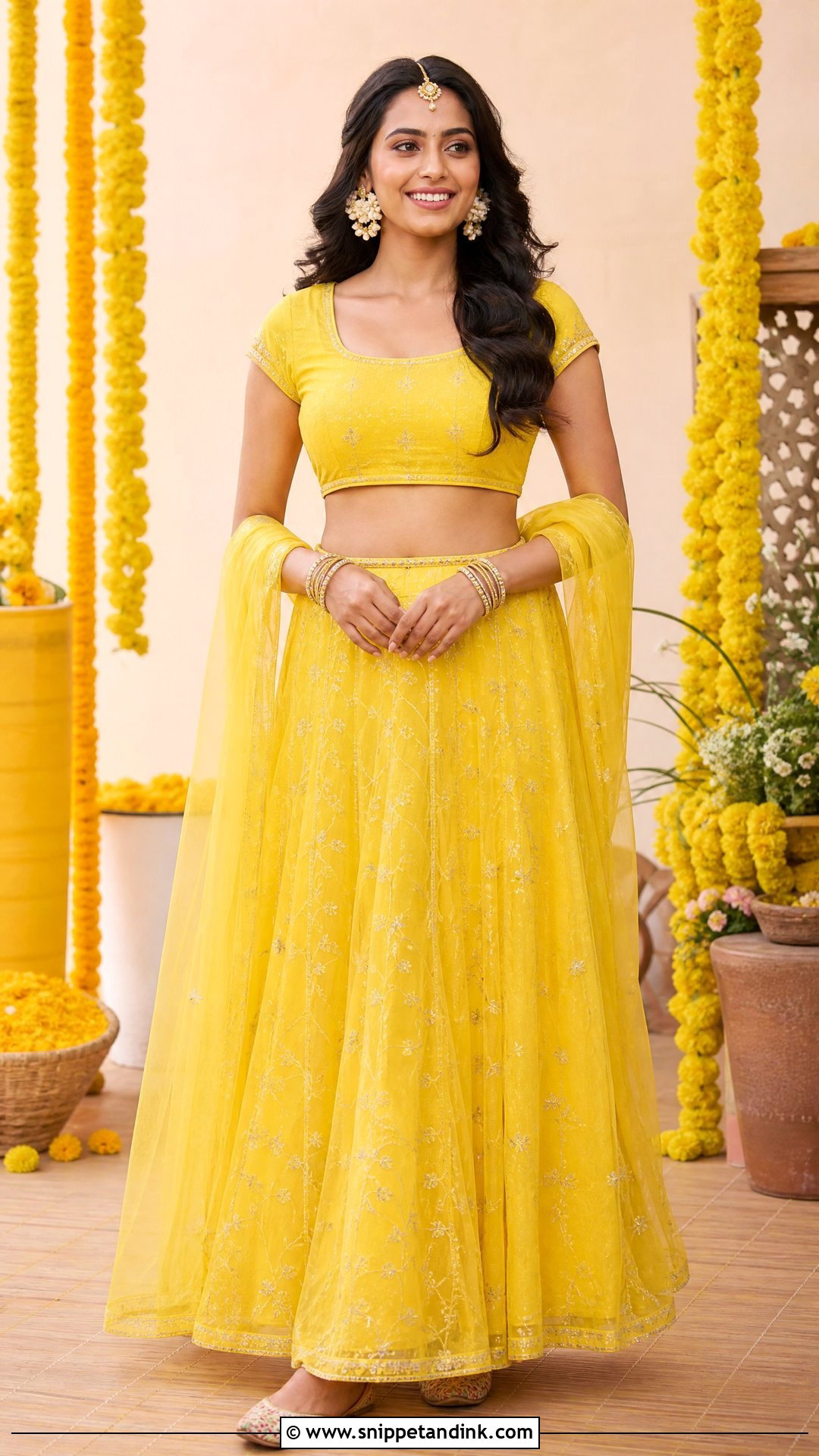
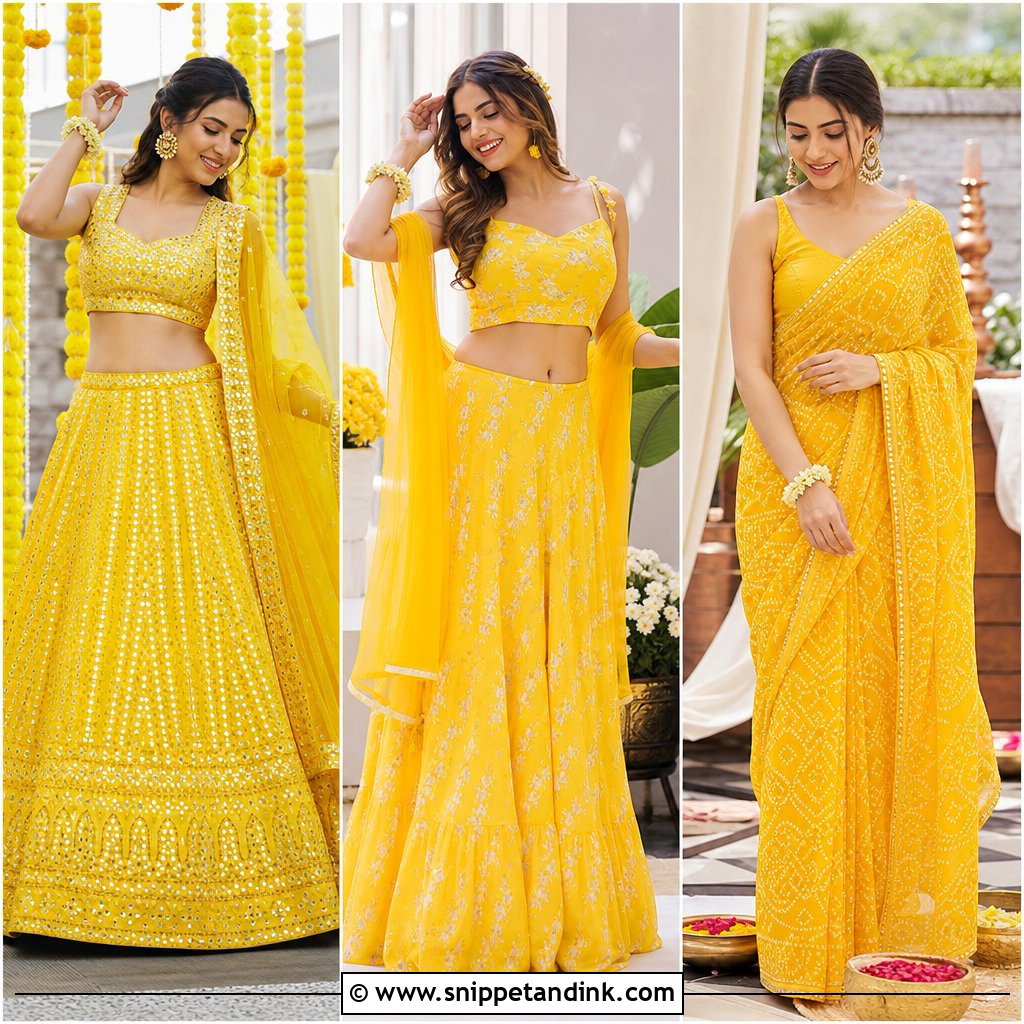
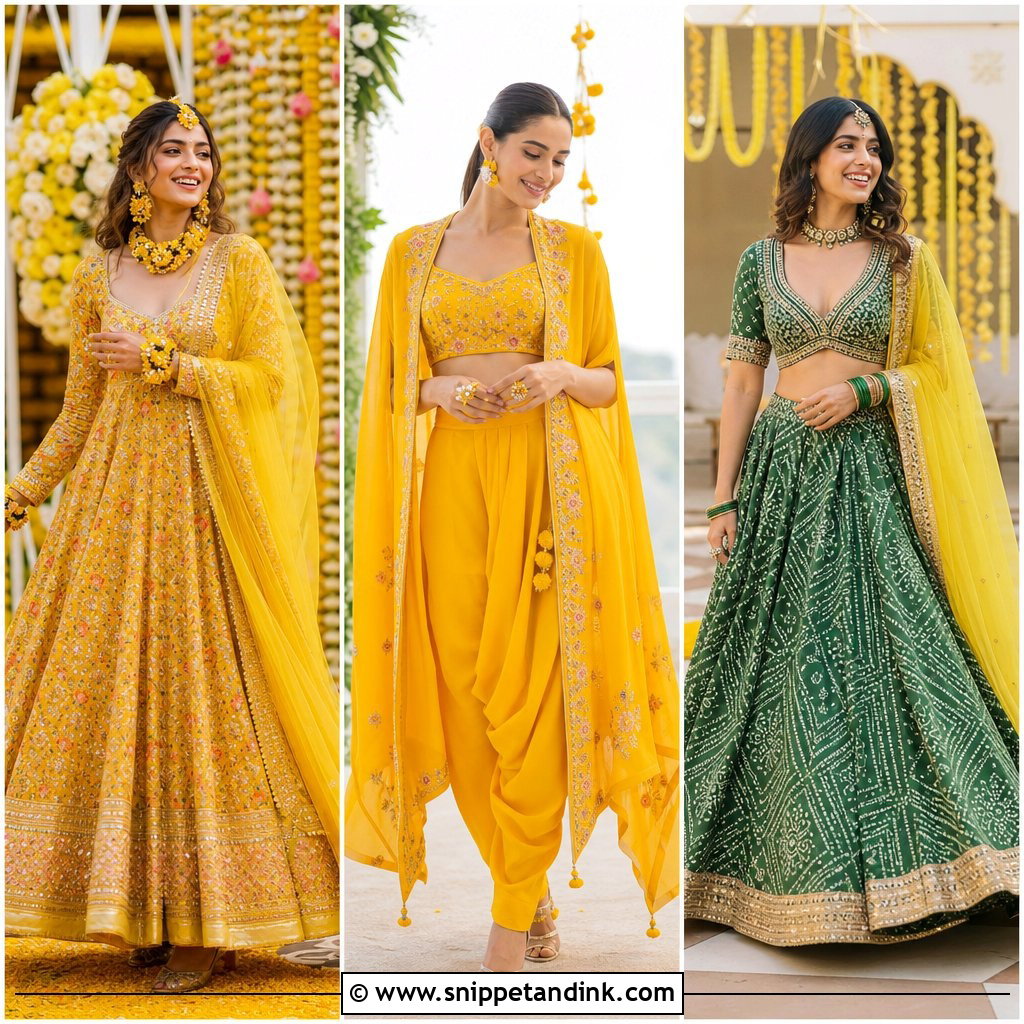
Lehengas at Haldi should be light enough to dance in. Cotton, georgette or chiffon with a soft waistband and only a little gota is what I look for; a heavy can-can skirt is uncomfortable sitting on the floor. A matching crop top with supportive straps, short sleeves or a modest square neck keeps it practical. Drape the dupatta over one shoulder and pin it so your arms stay free. Flat juttis, floral earrings and a small maang tikka. A braided ponytail with tiny flowers is the easiest hairstyle to keep turmeric-free. Skip long trains and thick borders; they drag through paste and petals.
5. Yellow Sharara Suit With Short Kurti
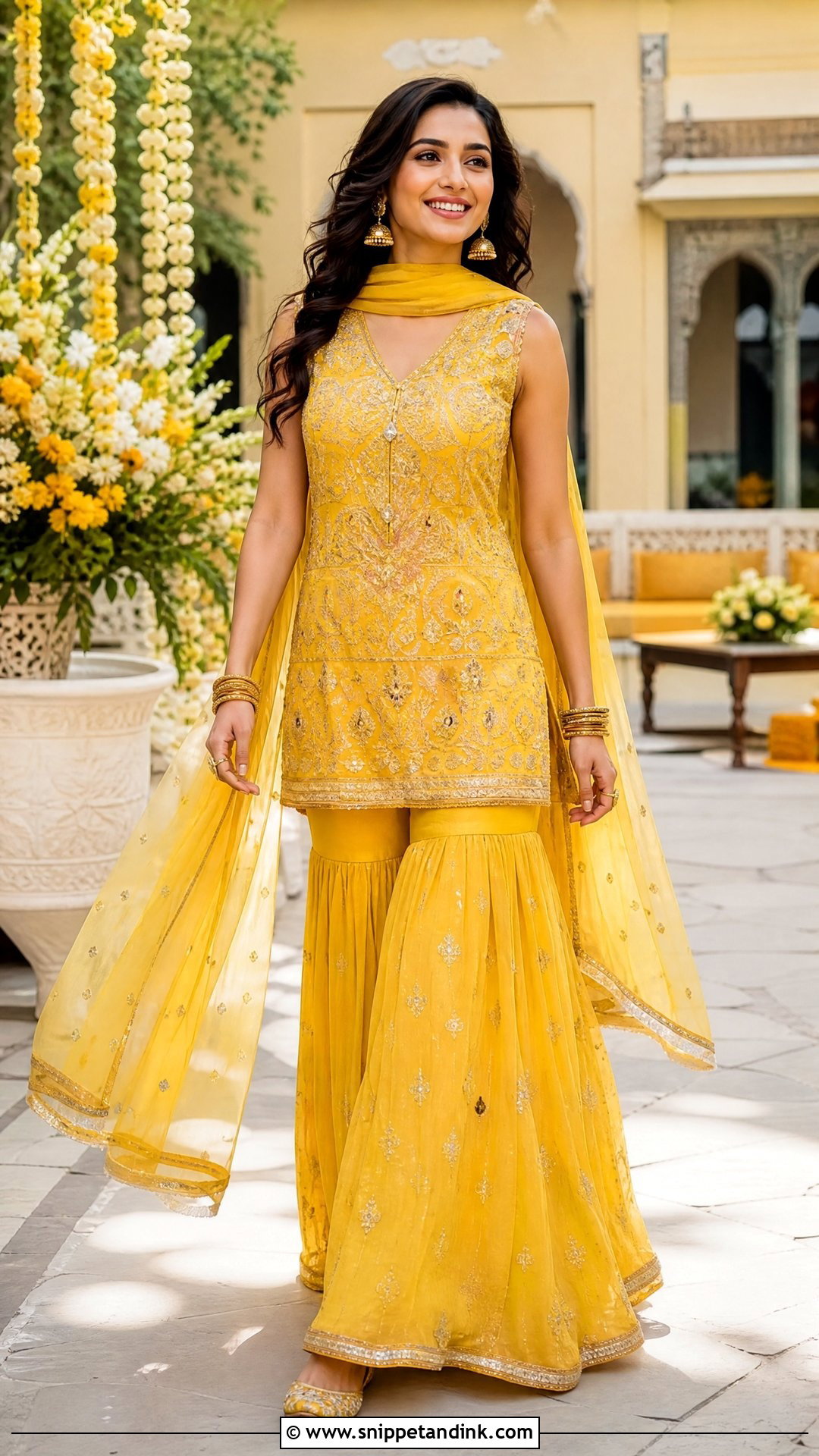
Shararas give real volume while letting you sit, walk and dance freely, which is why bridesmaids love them. The flare should start at or just above the knee; higher up and the pants get in the way when you sit cross-legged. A short kurti with a lightly embroidered neck, in monochrome yellow or with white floral thread for contrast. Wear the dupatta diagonally across the body or pin it at one shoulder. Gold jhumkas, matching bangles and embroidered juttis, with a side braid or half-up waves to keep hair off your face.
6. Yellow Saree With Sleeveless Blouse
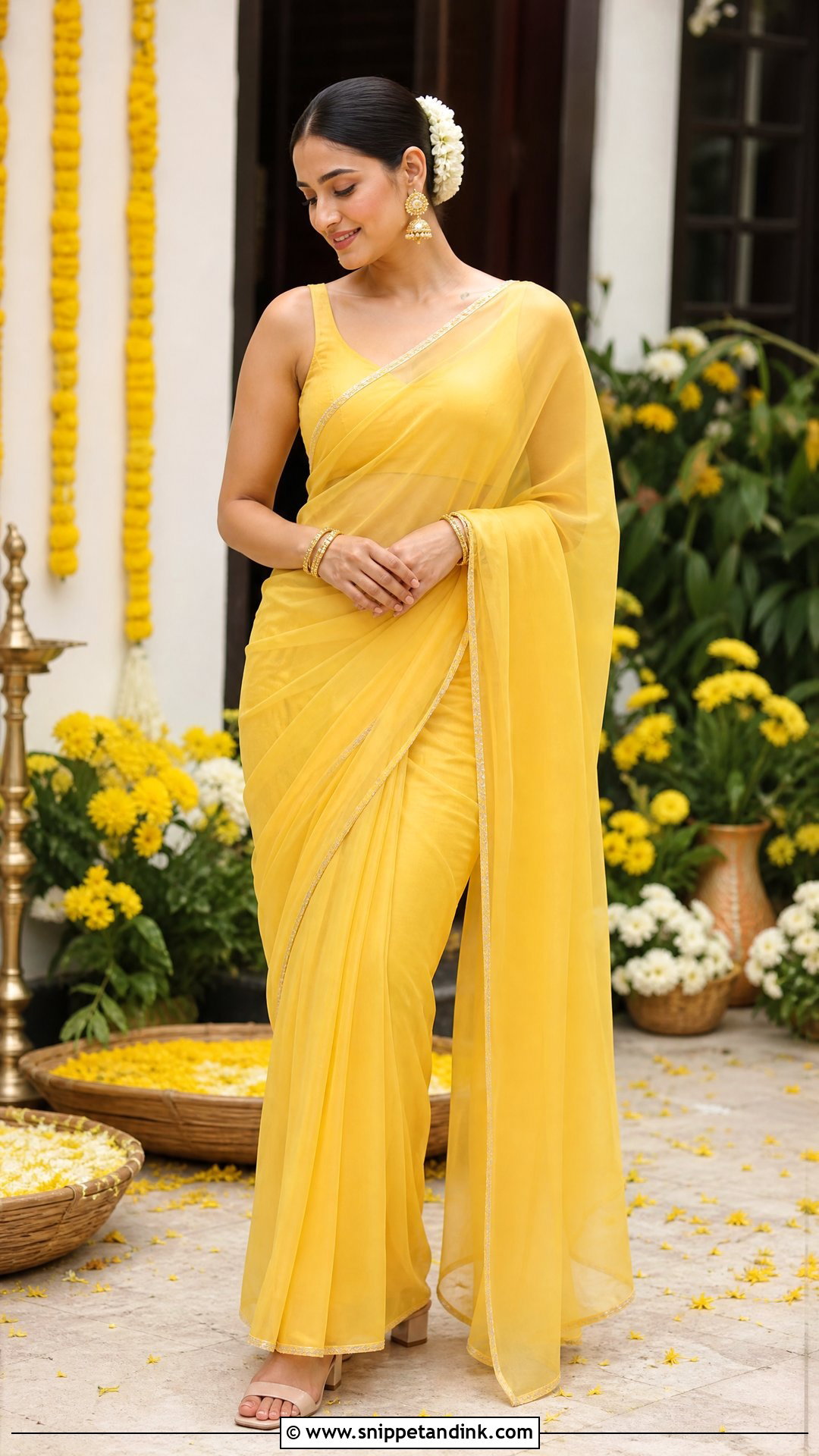
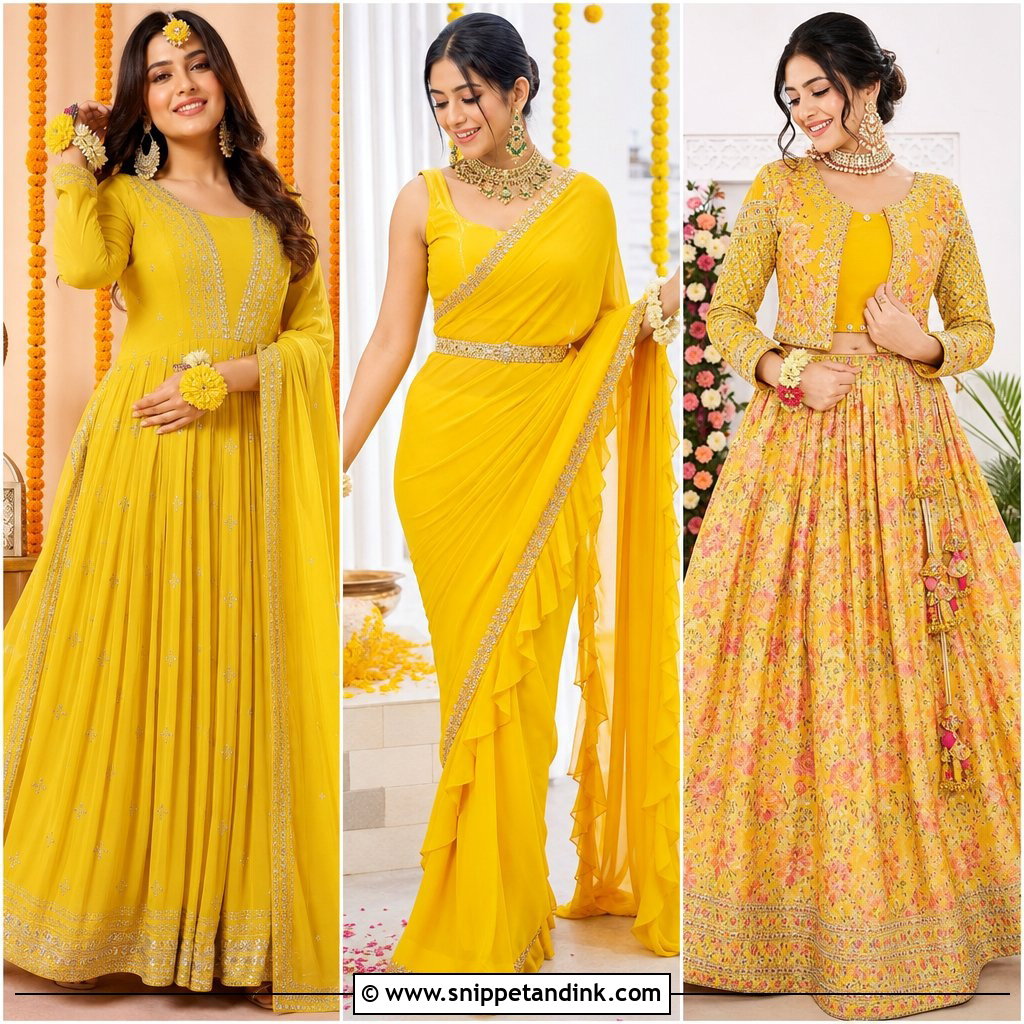
A plain yellow saree is lovely at Haldi, but only in a fabric you can move in: georgette, chiffon or soft cotton, never a stiff silk. Matching yellow blouse keeps it clean; ivory or floral gives contrast. I pin the pleats at the waist and the pallu at the shoulder, because during the ritual you’ll be bending forward constantly, and an unpinned pallu ends up in the paste bowl. Gold earrings, slim bangles and low block heels or flat sandals. A sleek bun with white flowers suits mothers and sisters. Keep the pallu short and the border light.
7. Yellow Angrakha Anarkali With Floral Jewelry
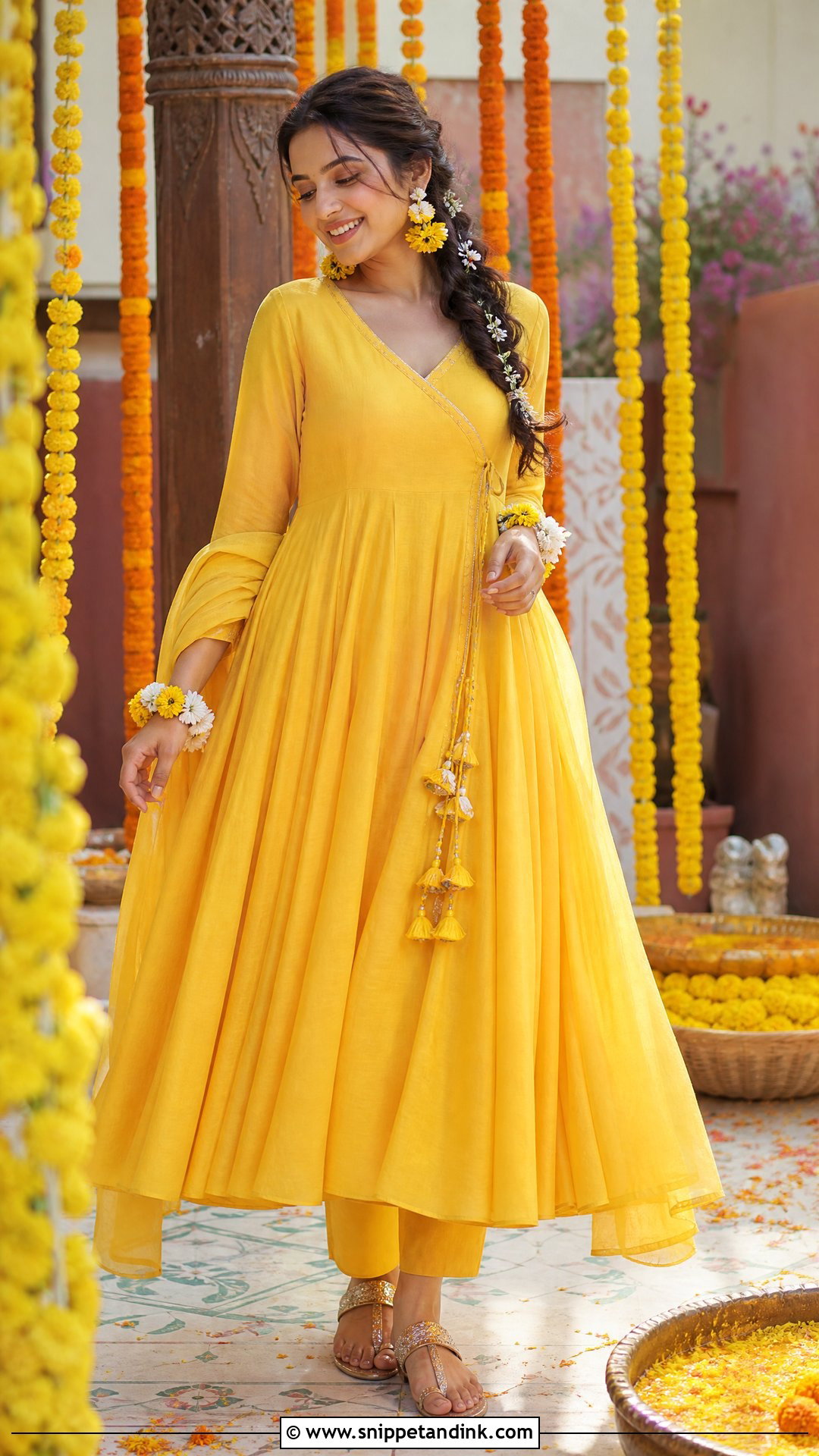
The overlapping neckline of a yellow Angrakha Anarkali ties at the side, and that’s the detail I check first: make sure there’s a hidden hook or snap behind the tie so it doesn’t open when you lean. Cotton or georgette with small tassels and an ankle-length flare. Churidar for more coverage, straight pants for easier sitting. Since the neckline is the feature, keep the throat bare and put flowers on your ears and wrist instead. Flat gold sandals and a loose braid woven with small blooms.
8. Yellow Straight Kurta With Organza Dupatta
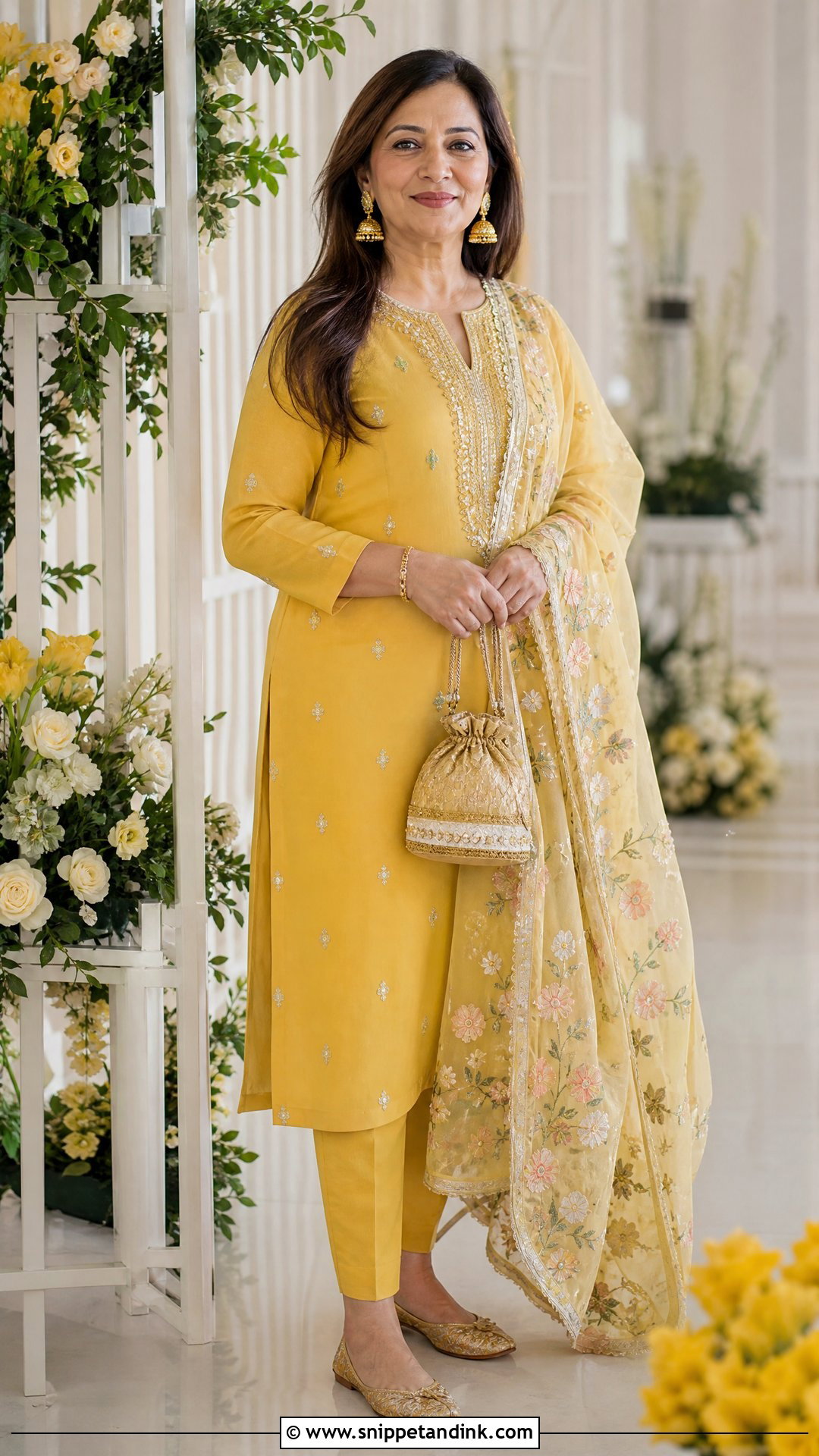
Straight kurtas look neat and grown-up, which suits guests and older relatives who’d rather not wear anything fussy. Calf length with side slits, so you can sit down without the hem pulling. Three-quarter sleeves stay out of the paste better than full ones. Cigarette pants or straight trousers in yellow or ivory, with an organza dupatta carrying the festive detail. Pointed juttis, medium jhumkas and a structured potli. Pin the dupatta at one shoulder; organza is slippery and slides off every time you greet someone.
9. Yellow Peplum Top With Gharara Pants
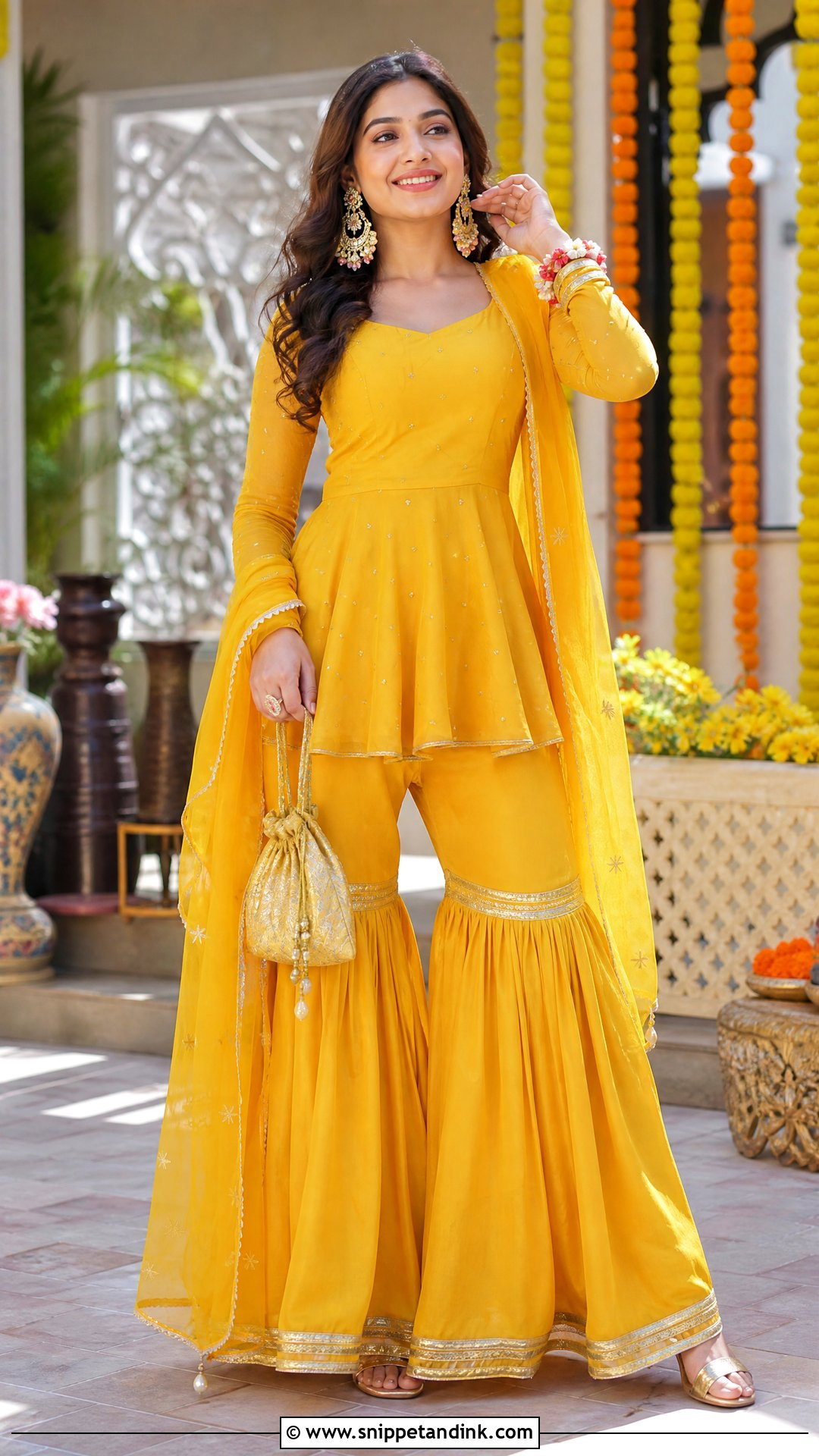
Peplum tops with gharara pants feel younger and a bit playful. The gharara’s flare sits below the knee, gathered at a border of lace, gota or embroidery, so the top needs to finish at the upper hip to keep proportions right. Keep both pieces in one yellow. A dupatta only if the event is formal or the top is very plain. Floral chandbalis, gold sandals and a compact potli bag. Curls or a high ponytail balance the volume of the pants. Gharara pants are wide, so check you can climb onto a low stage or stool in them before the day.
10. Yellow Kaftan Dress With Gold Sandals
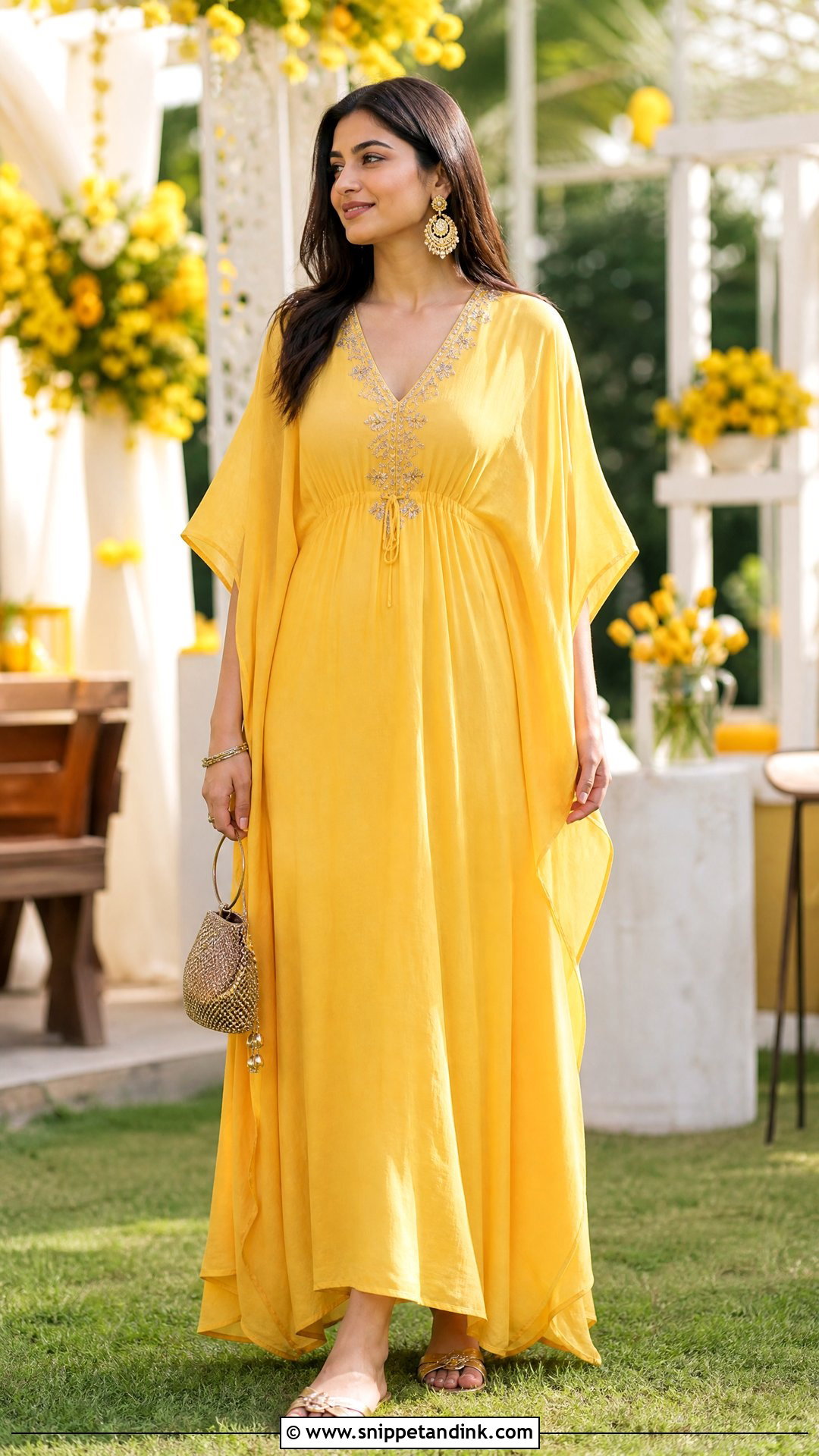
Comfort first? A kaftan. The risk is that the loose shape swallows you, so look for one with a defined waist, a drawstring or side slits that give it some outline. Embroidery round the neck or sleeve edges makes it festive without weight. Flat gold sandals, statement earrings and a small wrist bag; no necklace if the neckline is worked. I often suggest kaftans for pregnant guests and for destination Haldis in real heat, because nothing presses anywhere. Hair in a smooth ponytail or loose low bun.
11. Yellow Bandhani Suit With Matching Dupatta
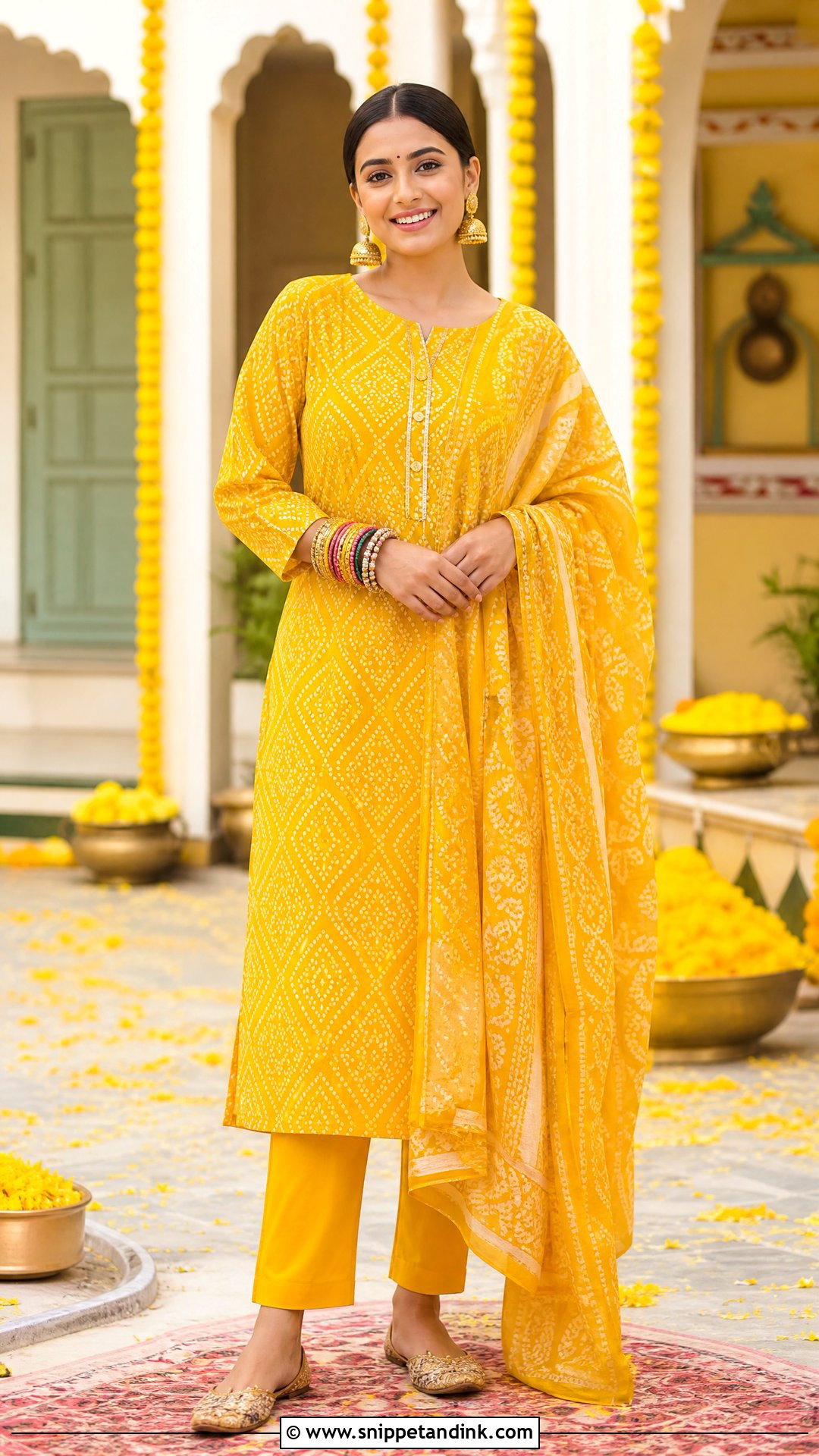
Bandhani is tie-dye made by pinching and binding tiny points of cloth before dyeing, and it brings pattern and regional craft without any embellishment. A straight or gently flared kurta in yellow Bandhani with plain matching trousers, plus a coordinated dupatta with a light border. Red, green, orange or white dots look good on yellow. One caution: real Bandhani dyes can bleed in the first wash, so wash it alone in cold water. Oxidized silver or simple gold jhumkas, embroidered juttis and colorful bangles, with a center-parted braid.
12. Yellow Skirt With Mirror Work Kurti
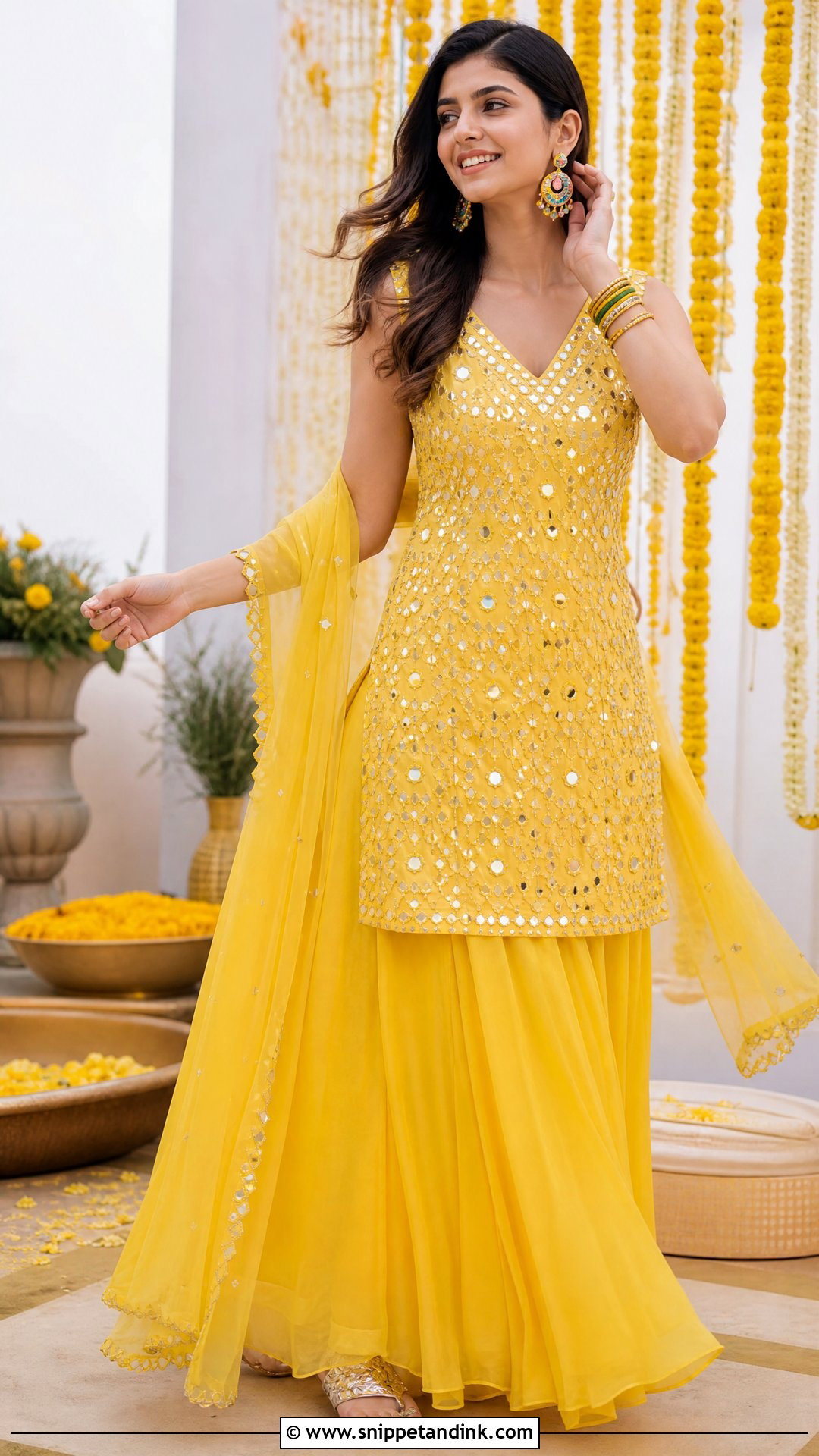
Mirror work catches the daylight and gives a skirt-and-kurti outfit a bit of sparkle without sequins. I’d keep the mirrors small and spaced on the kurti; dense mirror panels are heavy and their edges can scratch the person next to you in a group hug. A plain ankle-length skirt with enough flare to walk, and a waist-length kurti so the skirt stays visible. Flat metallic sandals, colorful earrings and a few bangles, with a chiffon dupatta if you want cover. High ponytail or side braid. Good for energetic bridesmaids and younger guests.
13. Yellow Asymmetrical Kurta With Dhoti Pants
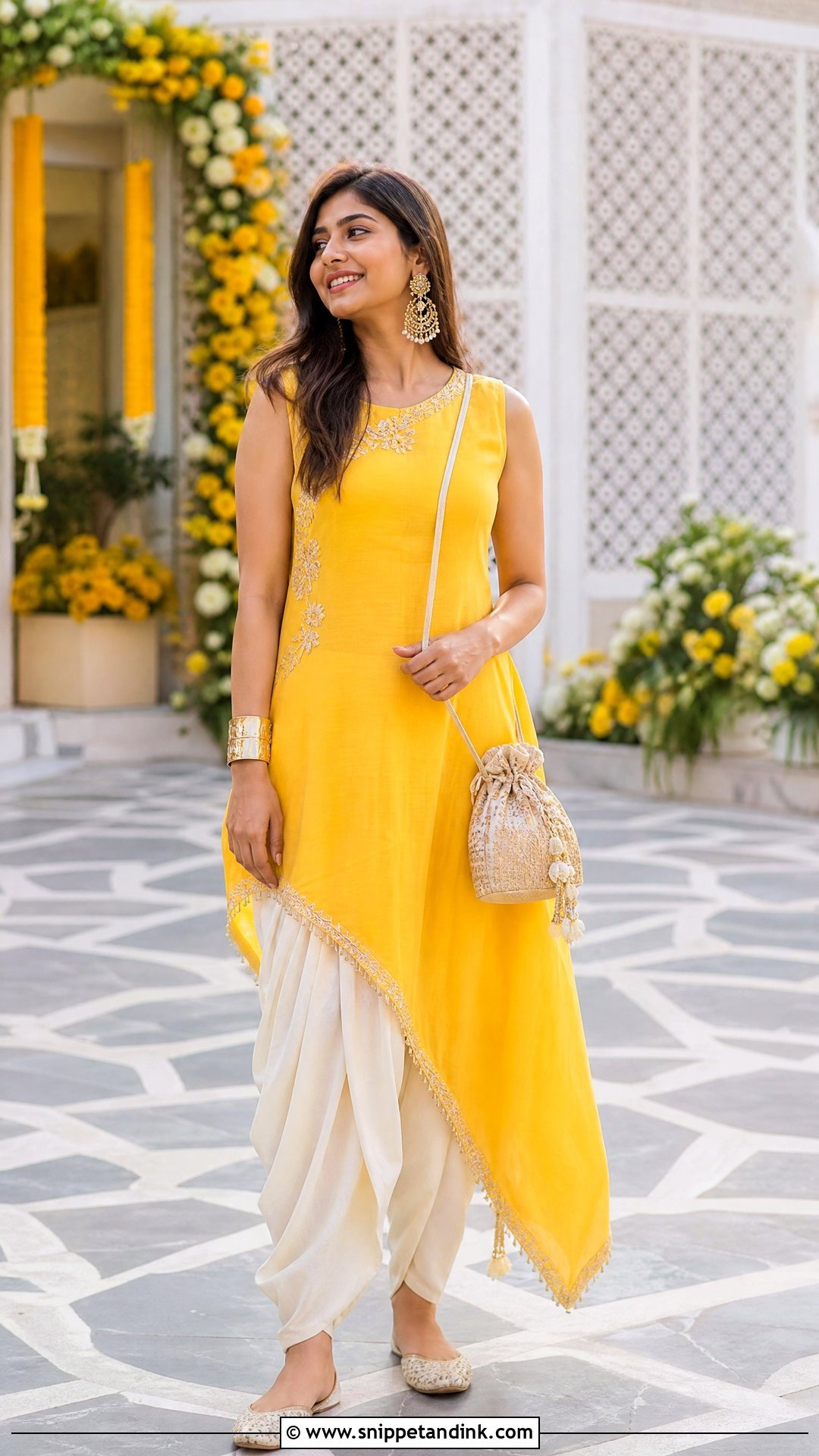
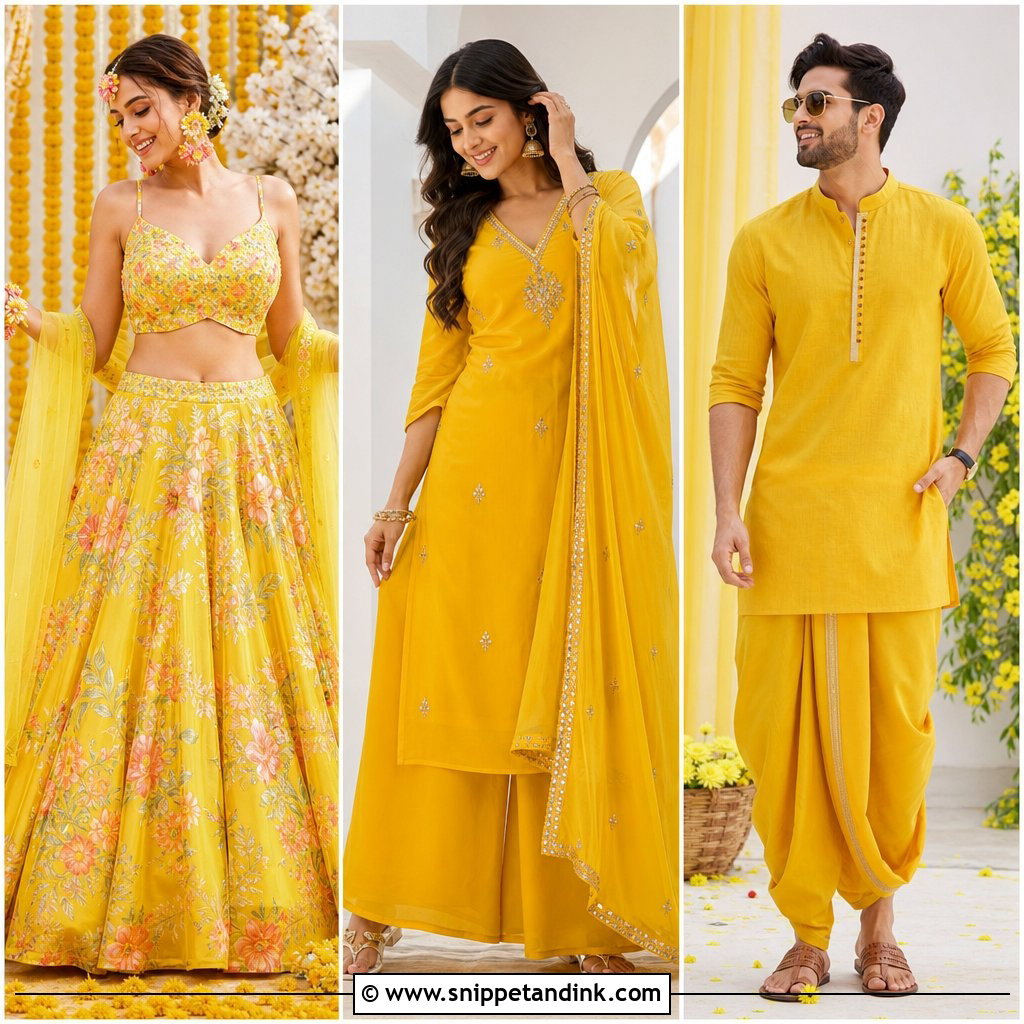
An asymmetrical yellow kurta and dhoti pants is the Indo-Western set I steer fashion-forward cousins toward. A high-low or diagonal hem around the knee and pre-draped dhoti pants in yellow or ivory. Pre-draped matters: a hand-tied dhoti can loosen once you start dancing. Keep the fabric light and avoid layers bunching at the waist. Statement earrings, a slim cuff and neutral juttis, with a small crossbody potli so your hands are free for the paste. A sleek ponytail or textured bun.
14. Yellow Cape Dress With Straight Pants
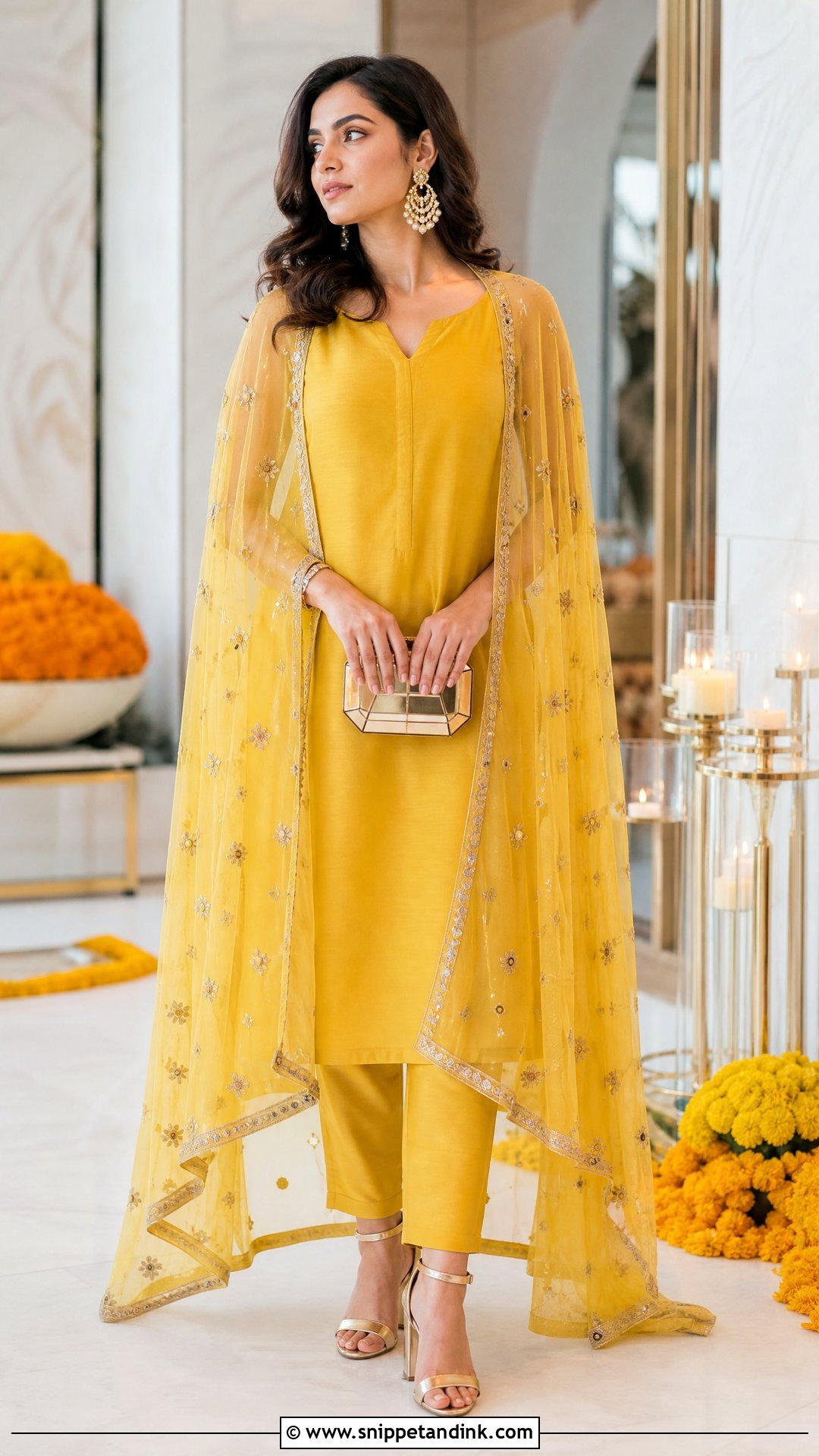
A sheer cape over a fitted tunic gives the drama of a dupatta with none of the pinning, which is why I like it for anyone who’ll be busy at the ceremony. The cape should end at the hip or knee; floor-length capes trail through paste. Matching straight pants keep the line balanced. Gold block heels, pearl or Kundan earrings and a small box clutch, with nothing at the neck. A sleek low ponytail or straight side-parted hair suits the modern shape. Make sure the cape is attached at the shoulder seam so it doesn’t slide back when you raise your arms.
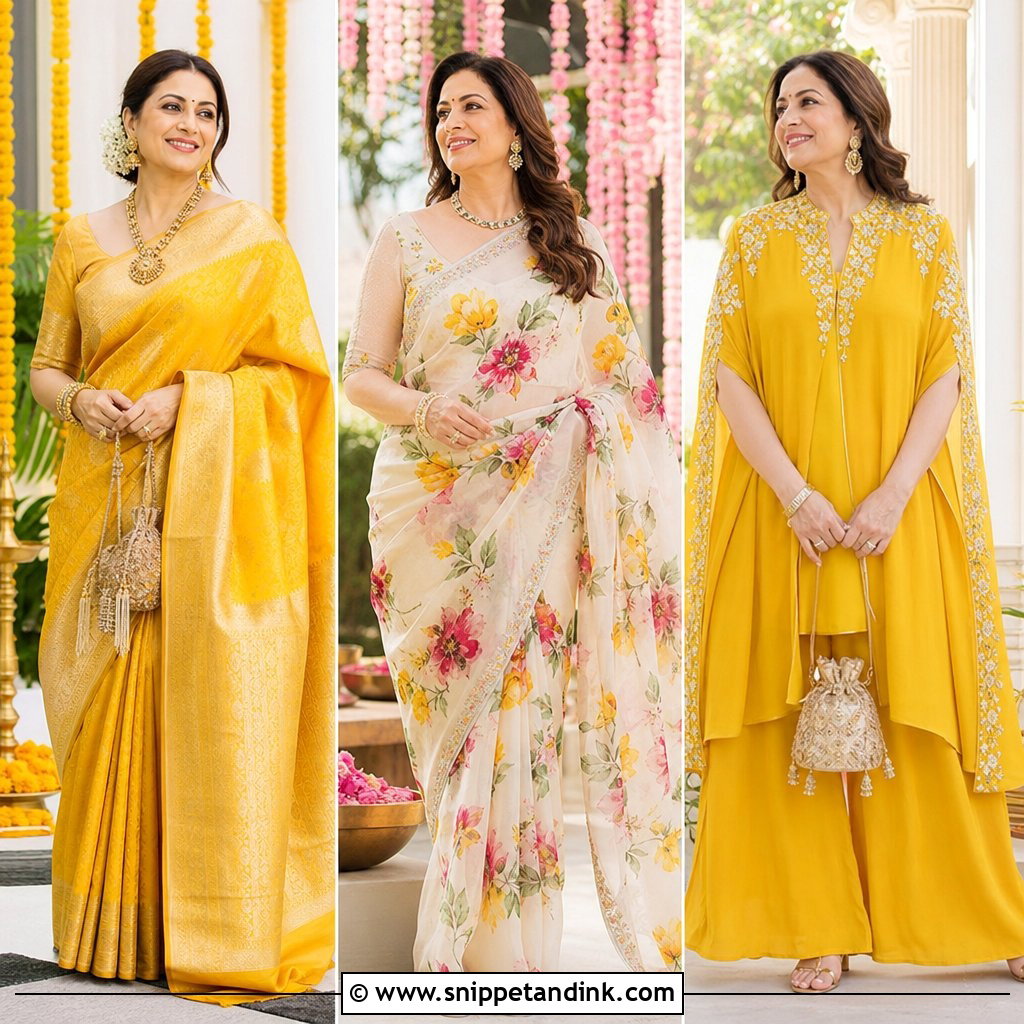
15. Yellow Tiered Maxi Dress With Floral Earrings
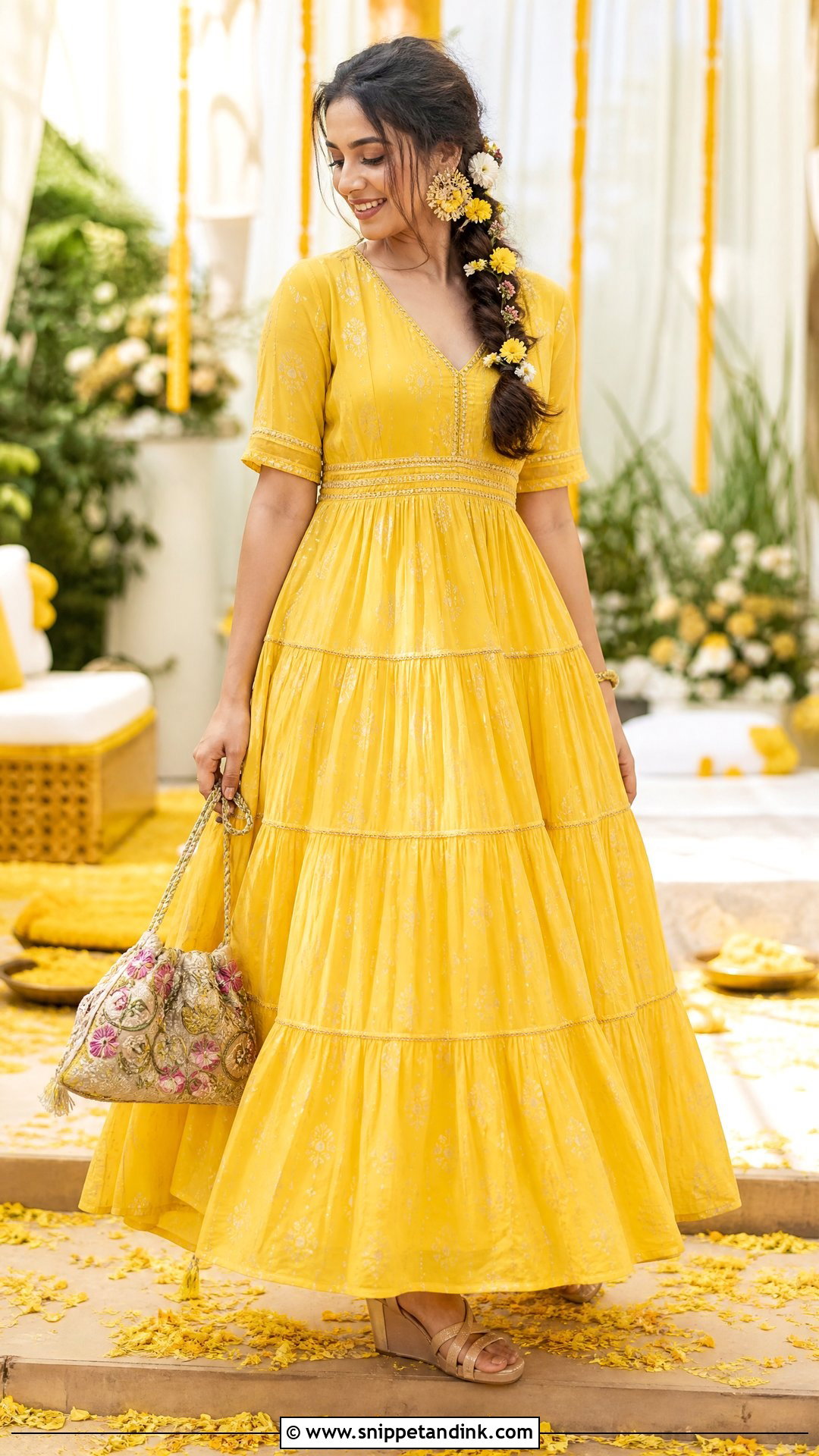
Tiered maxis are the easy one-piece for guests who’d rather skip a dupatta altogether. Cotton or georgette, fitted at the top, with tiers starting below the waist. Puff sleeves, elbow sleeves or wide straps depending on coverage. Wedges cope with lawns better than heels. Floral earrings and a small woven or embroidered bag, plus a thin belt if the dress hangs loose. Light cotton tiers can go see-through in strong sun, so check the lining outdoors. Hair in loose waves or a relaxed braid with tiny white flowers.
16. Yellow Chanderi Kurta With Straight Pants
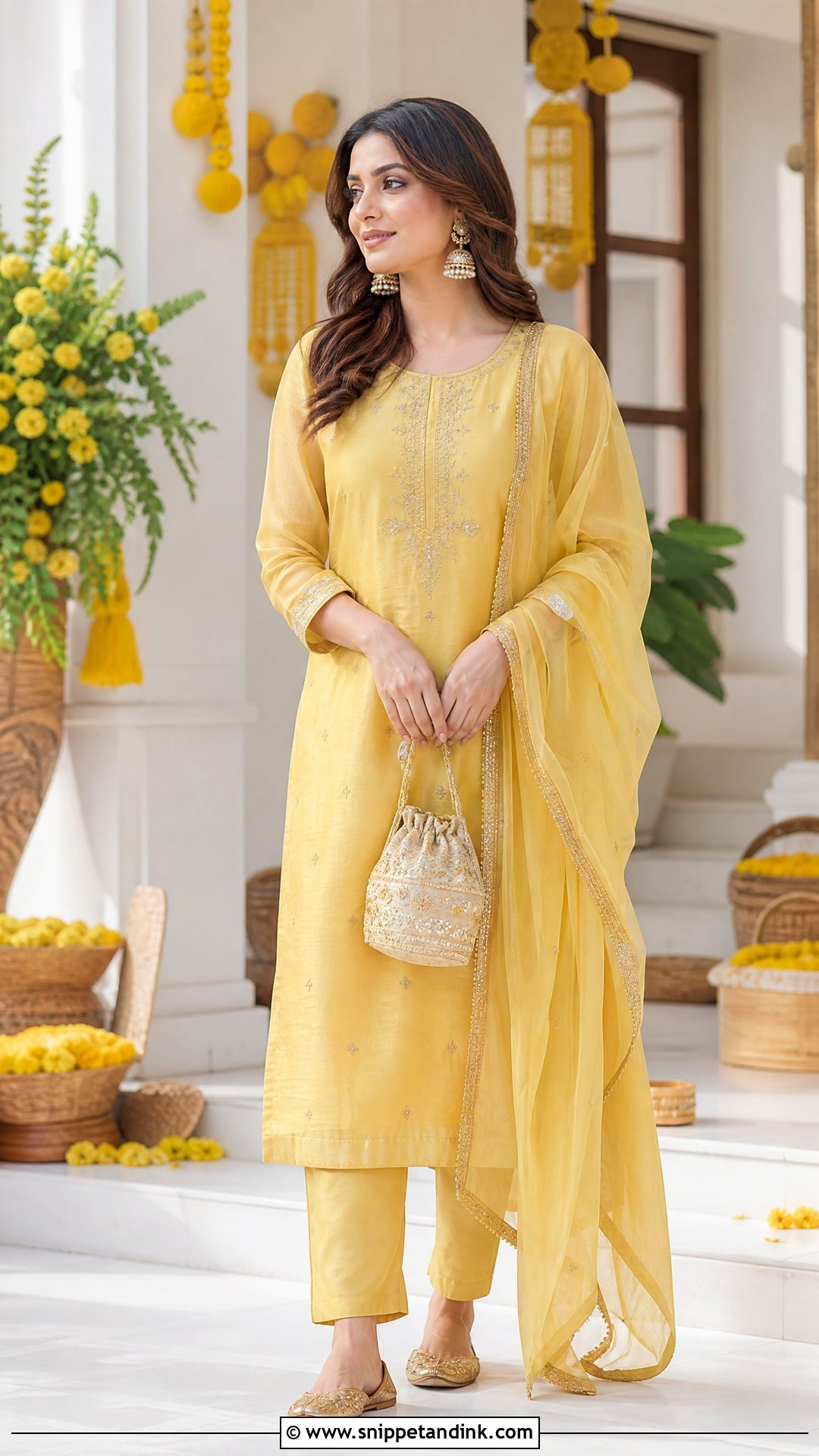
Chanderi has a soft sheen from its silk-cotton weave, so even a plain kurta set looks dressed. It’s slightly sheer, though, and I’d check the cotton lining in natural light before the event. An A-line or straight kurta with small woven motifs, matching straight pants and a Chanderi or organza dupatta with a gold border. Pearl jhumkas, gold-toned juttis and a compact embroidered bag. Neat bun or half-up hair. Mothers and aunts tend to like it because it looks refined, though I’d keep good Chanderi out of reach of wet paste, as turmeric sets fast on silk fibers.
17. Yellow Mulmul Kurta With Printed Palazzo Pants
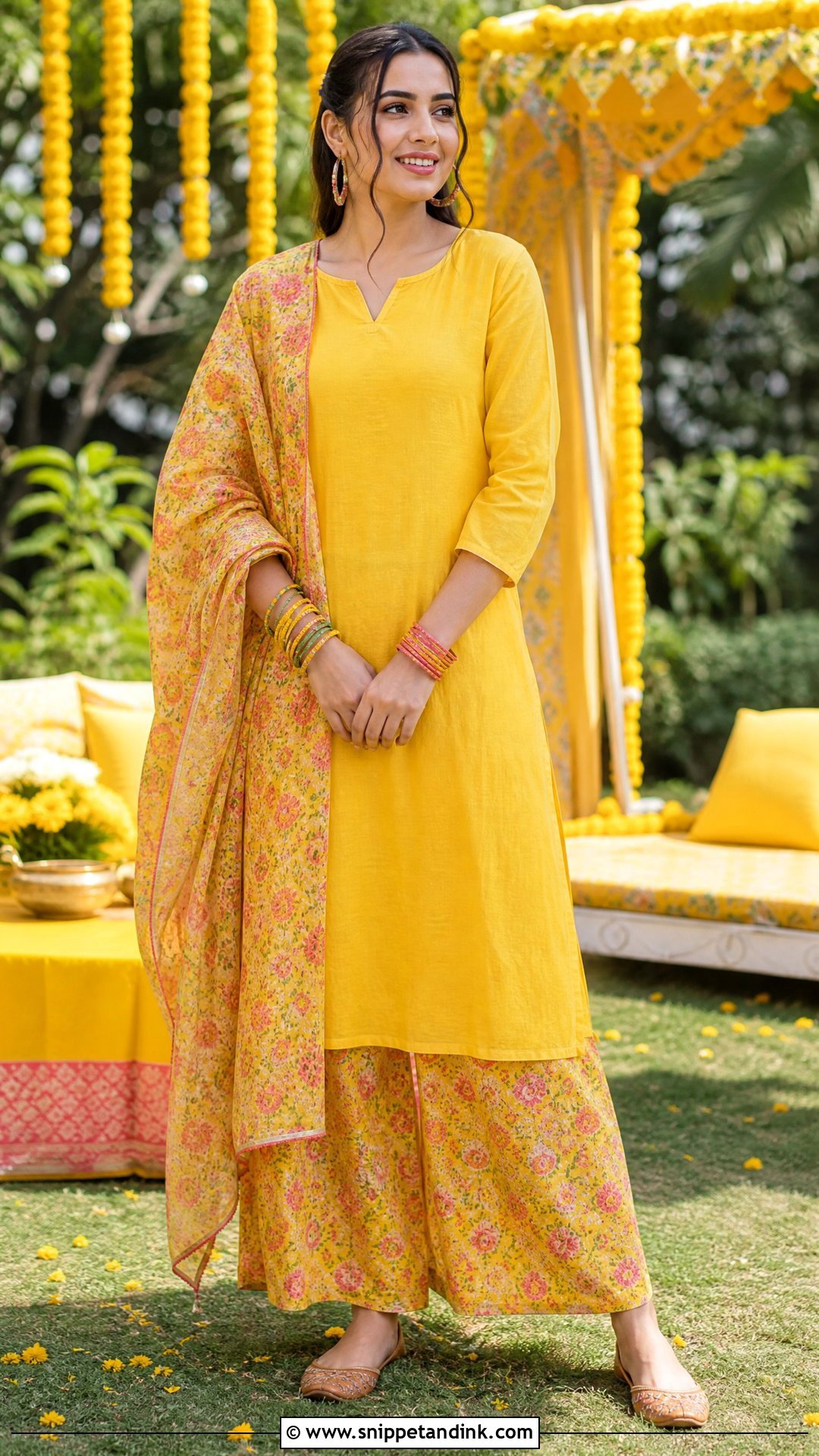
Mulmul is a very fine, soft cotton, the most comfortable fabric on this list for hot weather. Wear a plain knee-length yellow kurta with printed palazzo pants in small florals, paisley or block prints, so the pattern sits low and the top stays simple. A matching printed dupatta turns it into a full set. Flat leather juttis, small hoops and glass bangles. Look for an elastic waist and sleeves with room in the armhole if you’ll be applying haldi yourself. Mulmul wrinkles but washes easily, which is exactly what you want at this event.
18. Yellow Dress With Embroidered Jacket
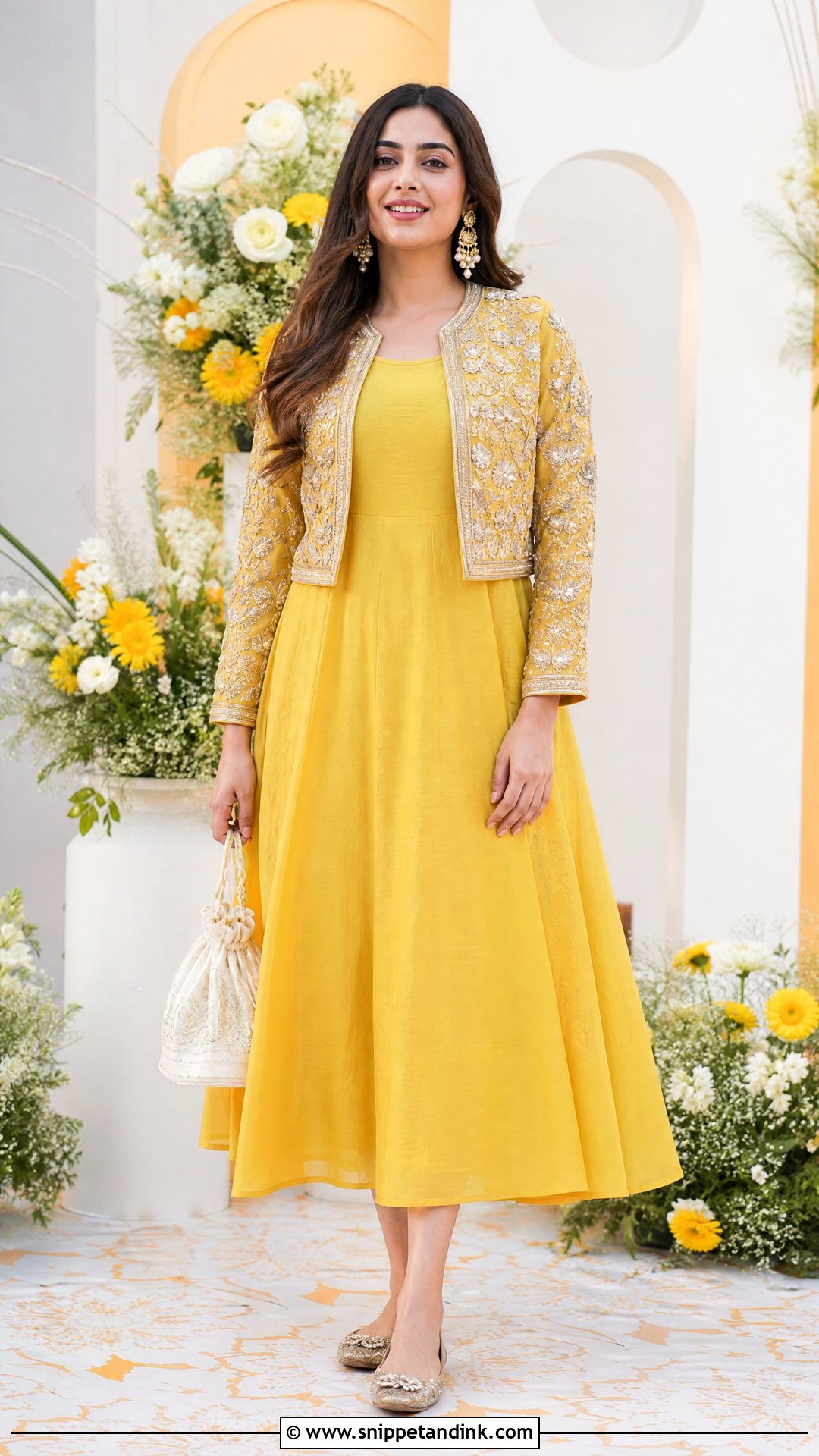
An embroidered jacket over a simple yellow midi dress gives you two outfits in one: jacket on for the ritual and photos, off when it gets hot or messy. A sleeveless or short-sleeved A-line dress underneath, and a cropped or waist-length jacket with light mirror, thread or floral work. Fit the jacket across the shoulders with your arms raised, as tight armholes restrict you while dancing. Metallic flats, statement earrings and a small yellow or ivory potli, with little other jewelry. Hair up to show the embroidery.
19. Yellow Ruffle Saree With Simple Blouse
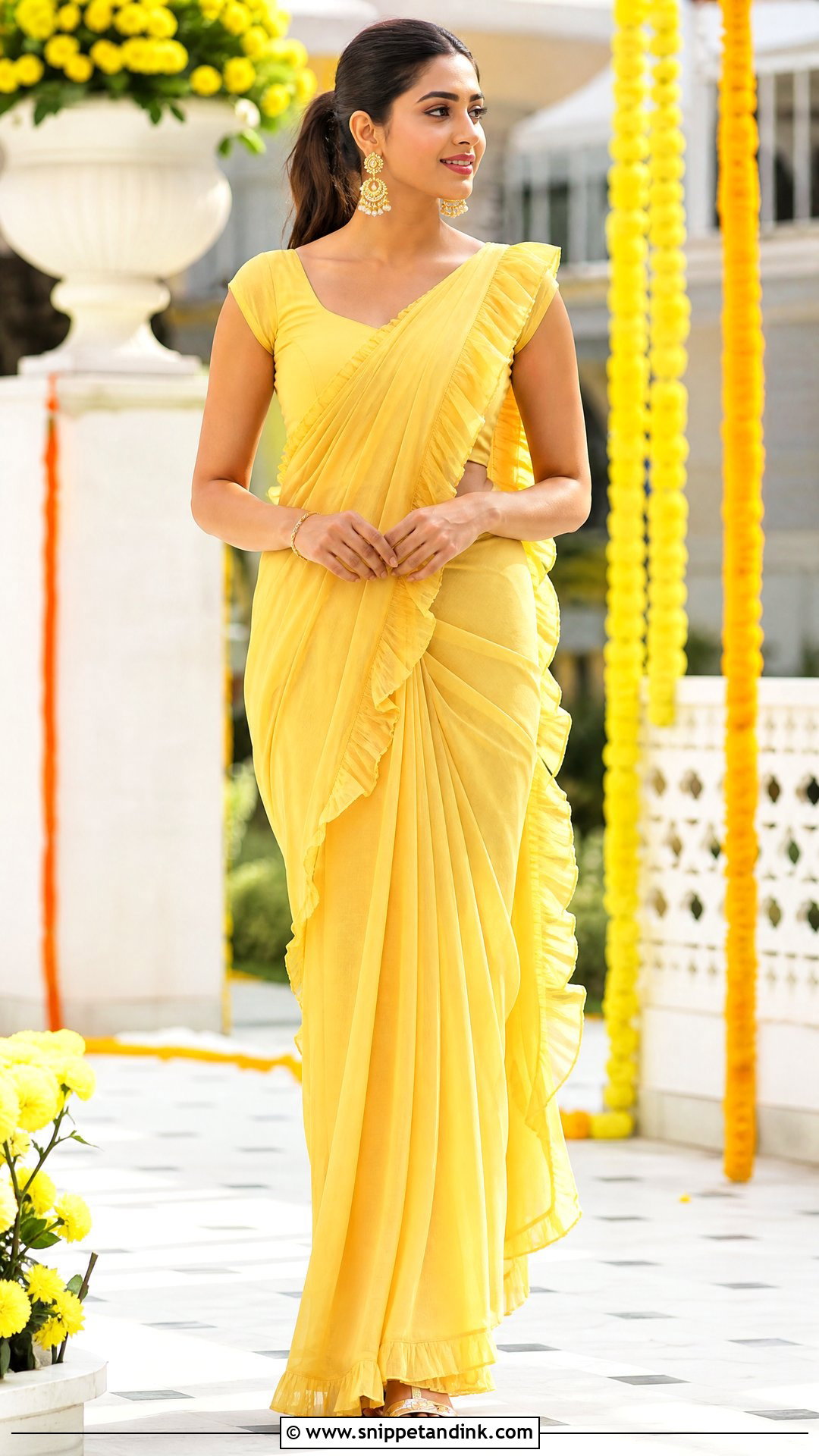
A yellow ruffle saree gives traditional draping with a lighter, playful edge. I recommend a pre-stitched or easy-drape version for Haldi, since a hand-draped saree takes time to fix once it’s been pulled about. Narrow ruffles along the border; large ones get crushed when you sit. Plain sleeveless, cap or elbow-sleeve blouse. Pin the pallu at the shoulder and waist. Delicate chandbalis, a slim bracelet and low metallic heels, with a smooth ponytail or side bun.
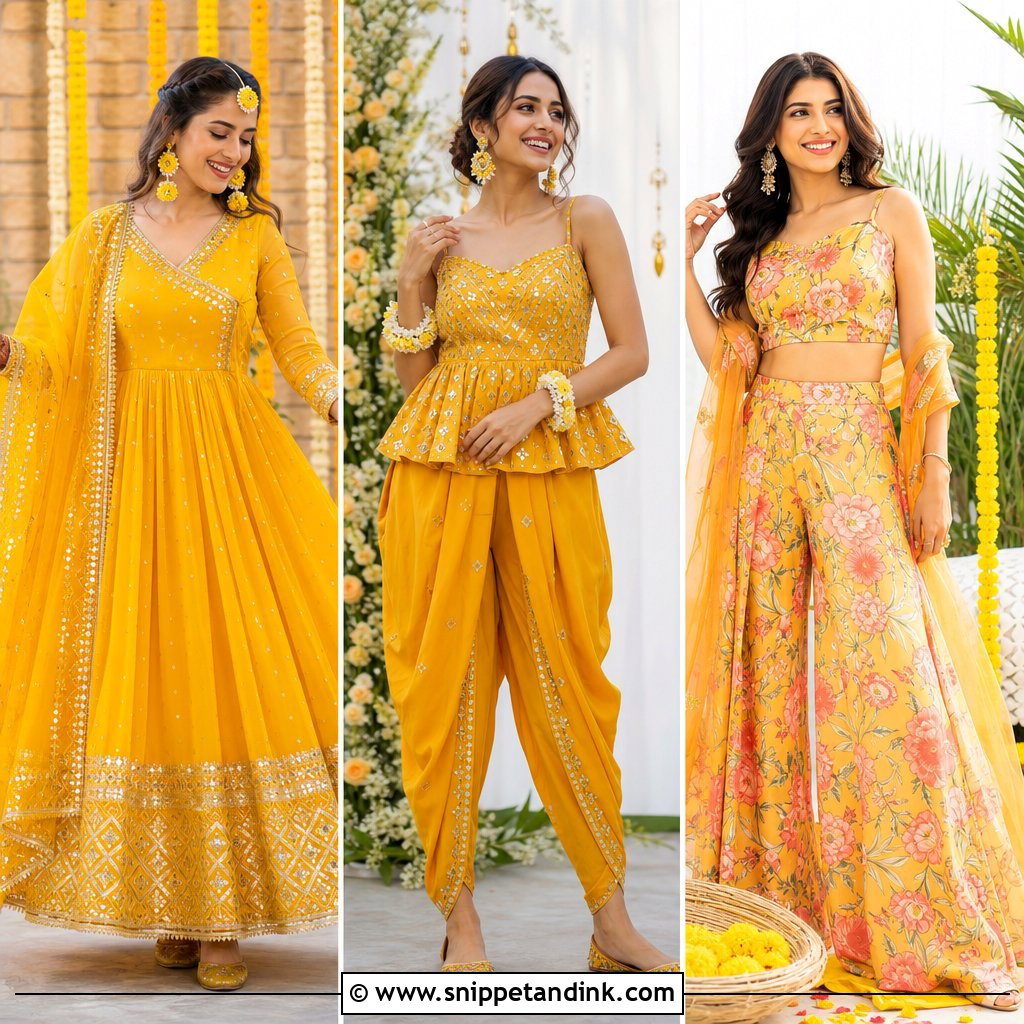
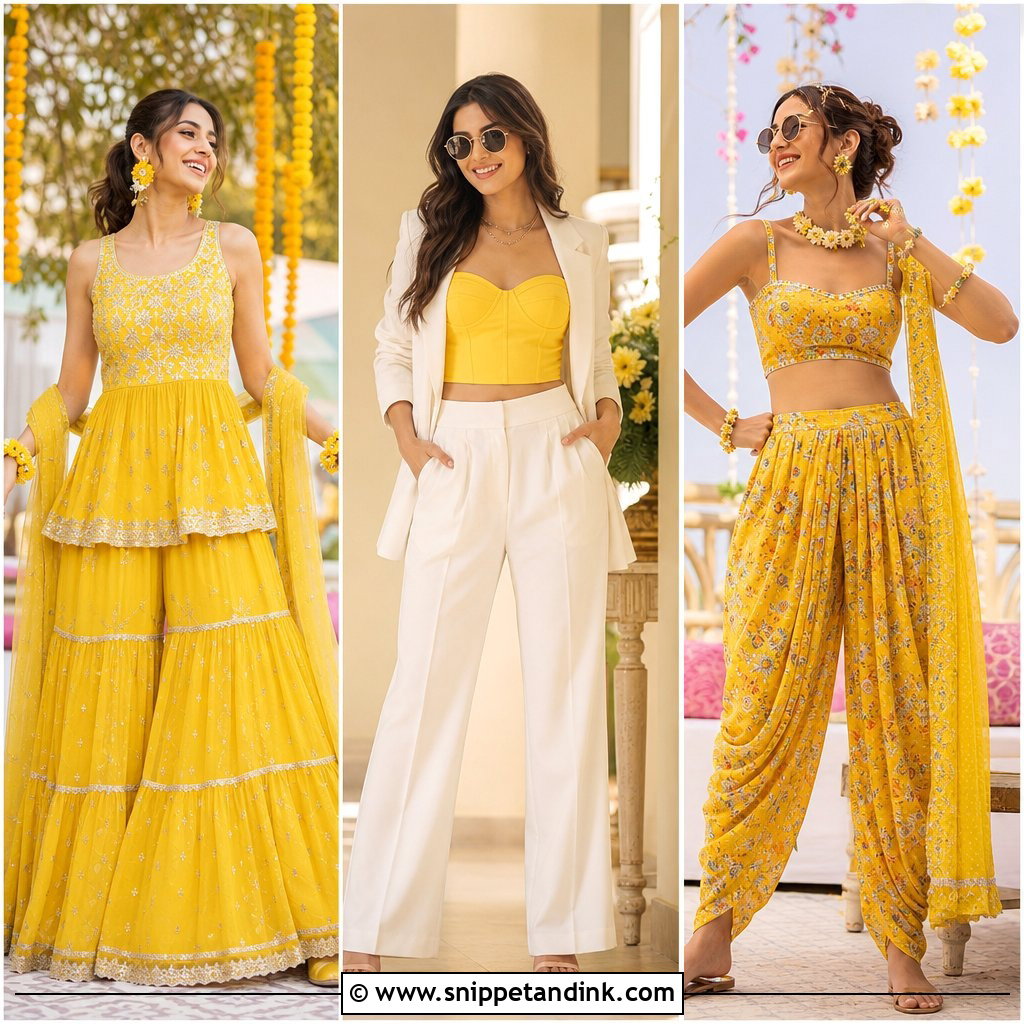
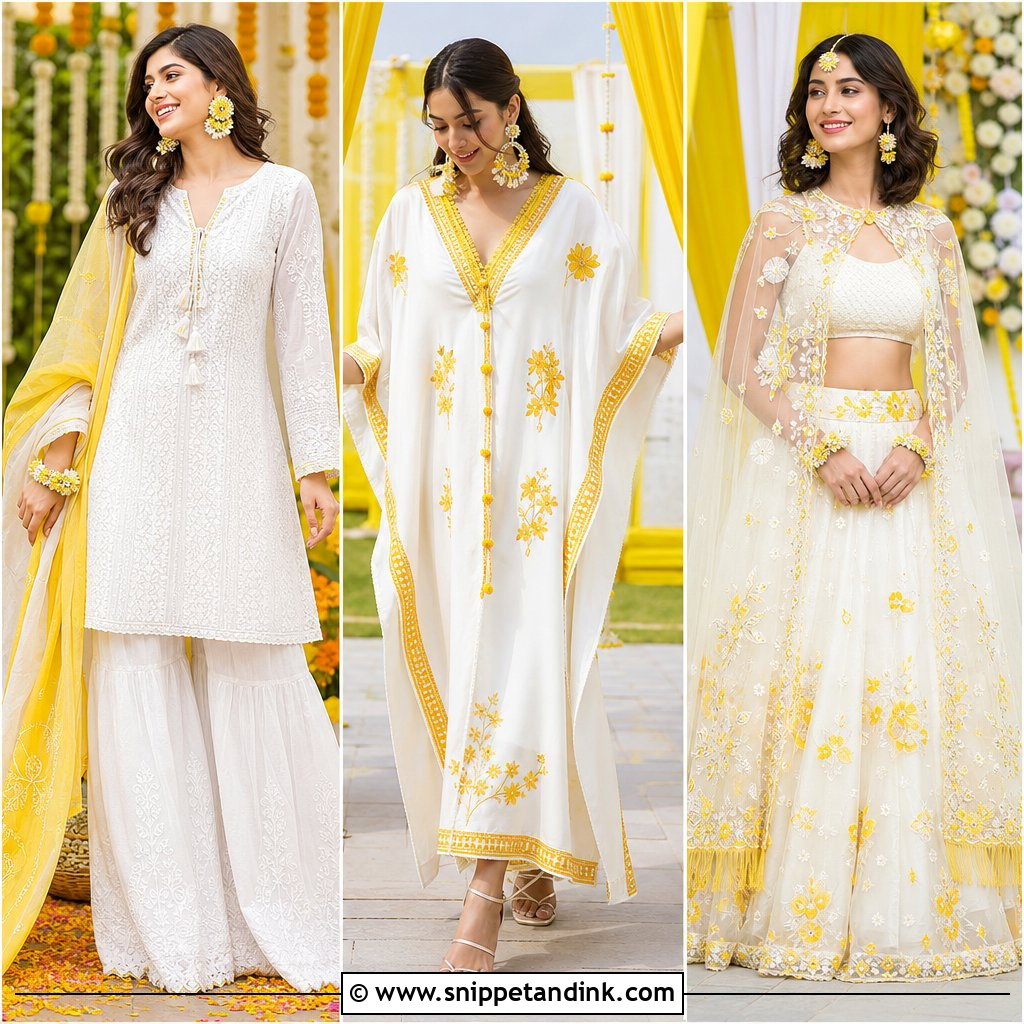
20. Yellow Lehenga With White Embroidered Kurti
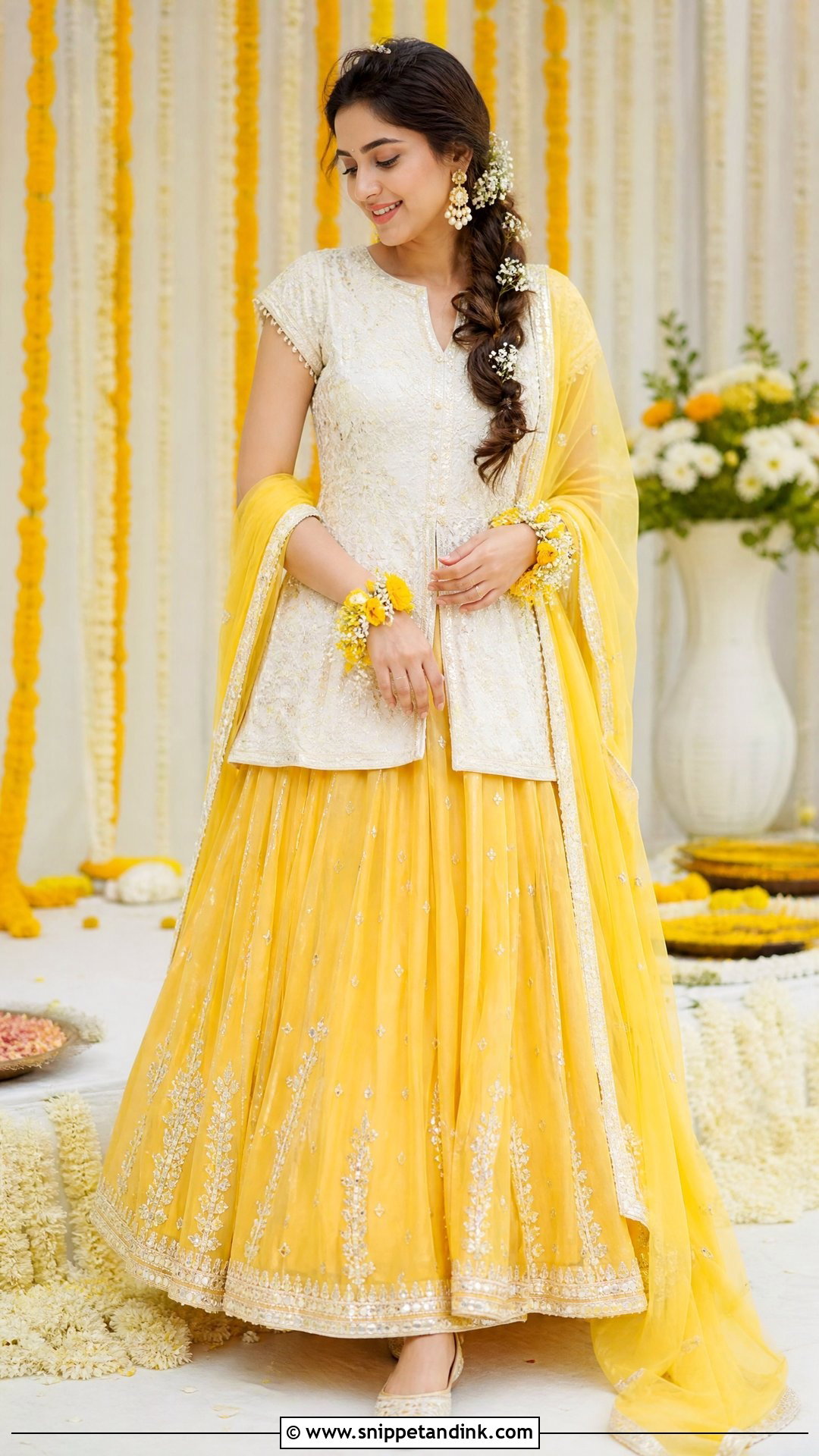
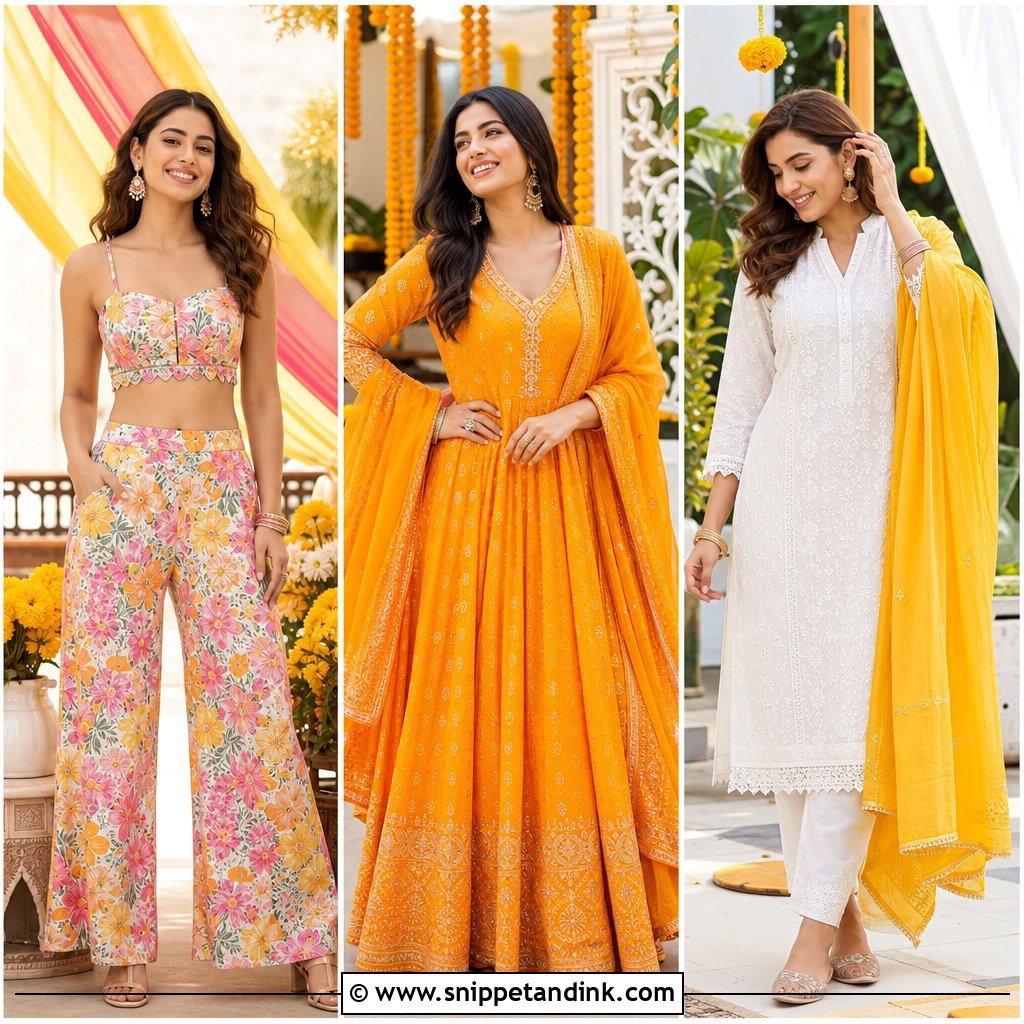
White kurti over a yellow lehenga skirt stands out in a sea of all-yellow outfits. The skirt in cotton, georgette or soft silk with a simple flare; the kurti short, with yellow thread, small mirrors or floral embroidery tying the colors together, and a sheer yellow dupatta to connect them. White juttis, pearl earrings, yellow floral bangles and a loose braid with white flowers. Be realistic about the white, though. Turmeric on white cotton is visible immediately, so if you’ll be close to the bride, choose a washable kurti and plan to treat it the same evening.
21. Yellow Co-Ord Set With Statement Earrings
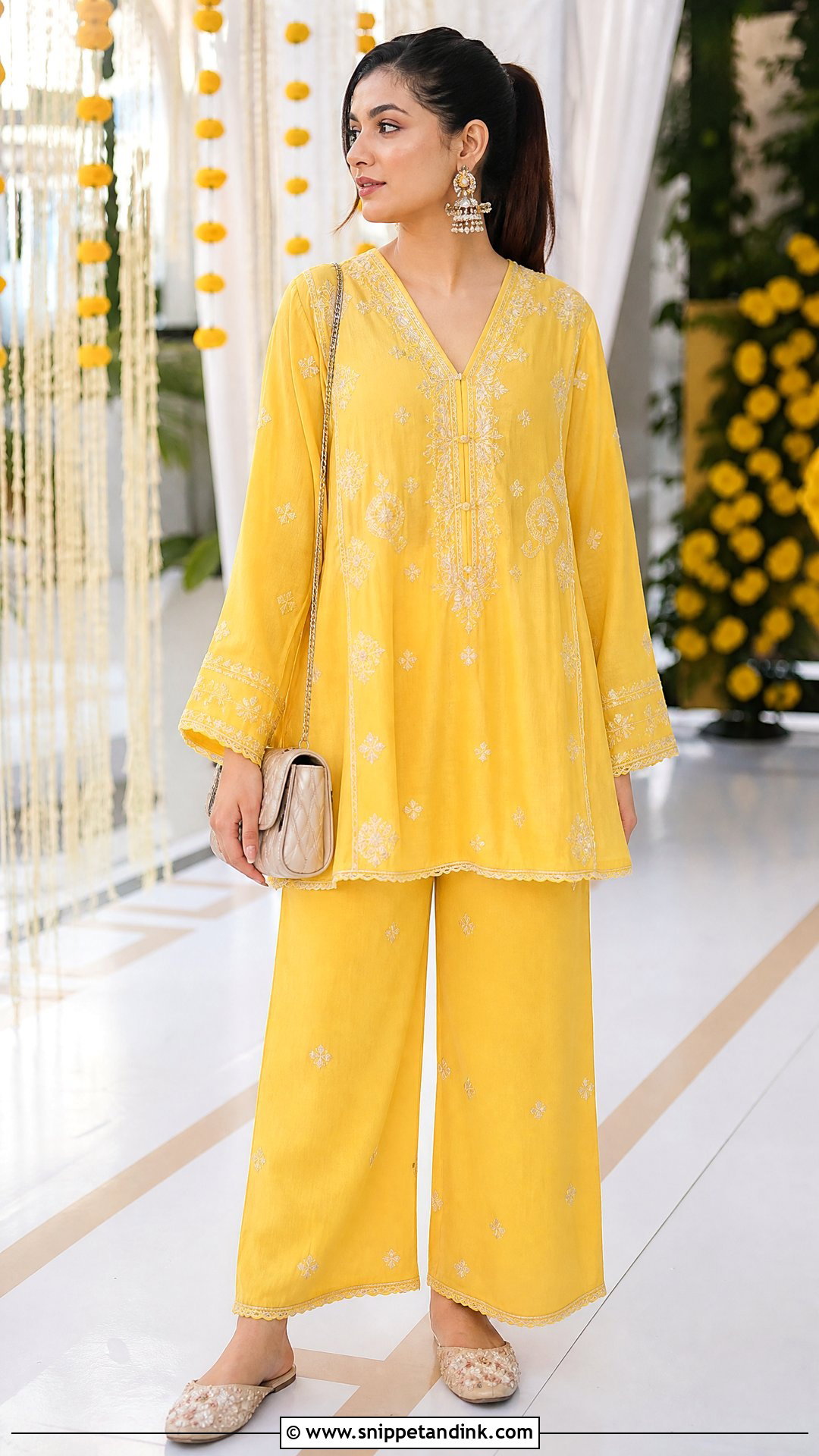
Co-ord sets are the least effort for the most comfort. A relaxed tunic or short kurta with wide-leg pants in the same fabric, kept from looking flat by small embroidered motifs, scalloped edges or a textured weave. No dupatta for a modern finish, a light one if the family is traditional. Statement earrings, flat mules and a compact shoulder bag, with a slick ponytail or curled bob. I like co-ords for destination Haldis because they pack small, and both pieces get worn again with plain basics.
22. Yellow Salwar Kameez With Phulkari Dupatta
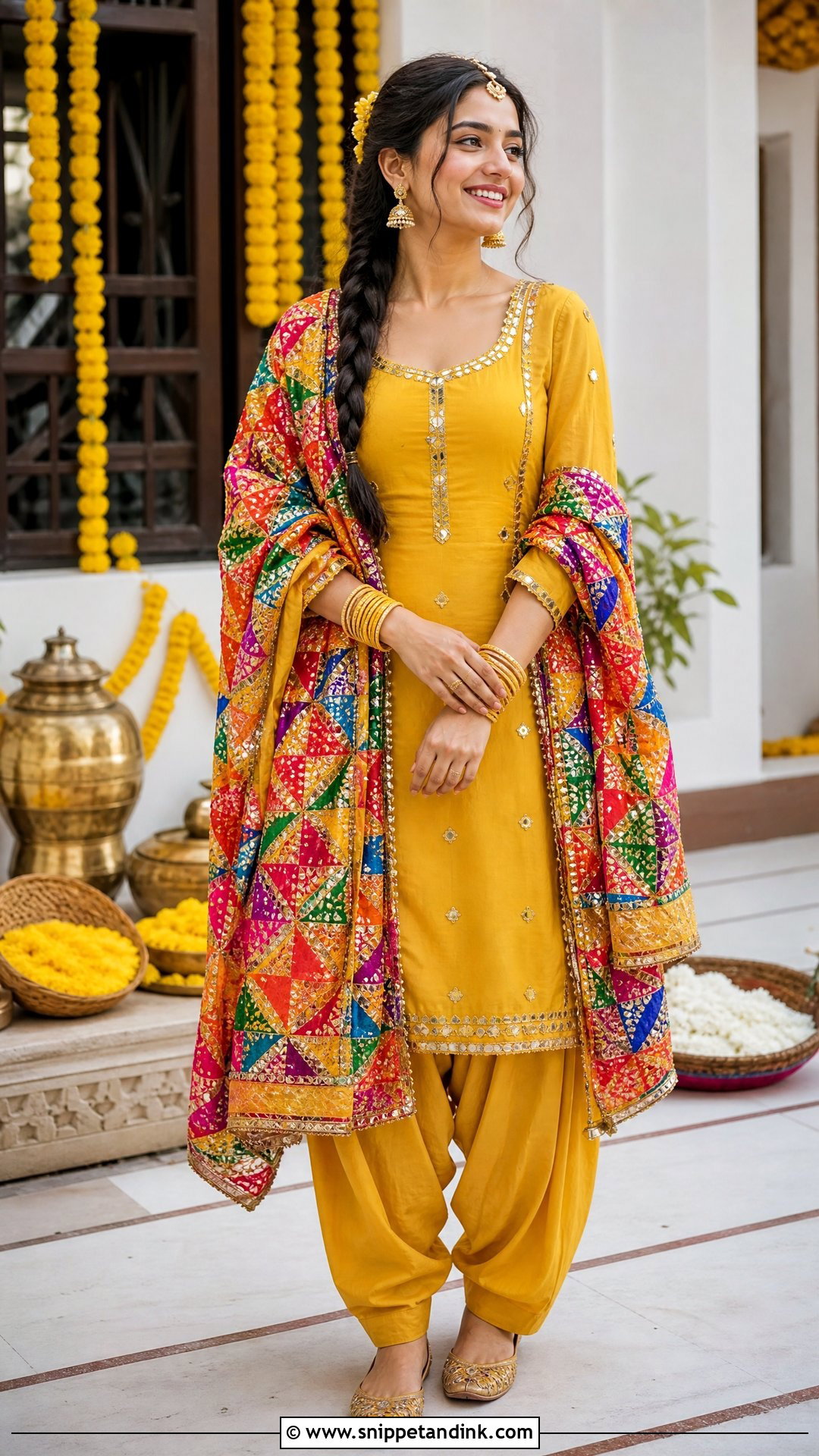
Phulkari is hand-embroidered floss work from Punjab, usually in bright pink, green, orange and red, and a Phulkari dupatta is enough decoration for a whole outfit. Pair it with a plain knee-length yellow kameez and pleated salwar. Drape it over one shoulder or pin both sides for hands-free movement. Since the dupatta is the color and pattern, keep the rest quiet: traditional juttis, gold or colorful jhumkas, bangles picking up a dupatta shade, no heavy necklace or large bag. It suits every age, and particularly home ceremonies with lots of family.
23. Yellow Embroidered Gown With Block Heels
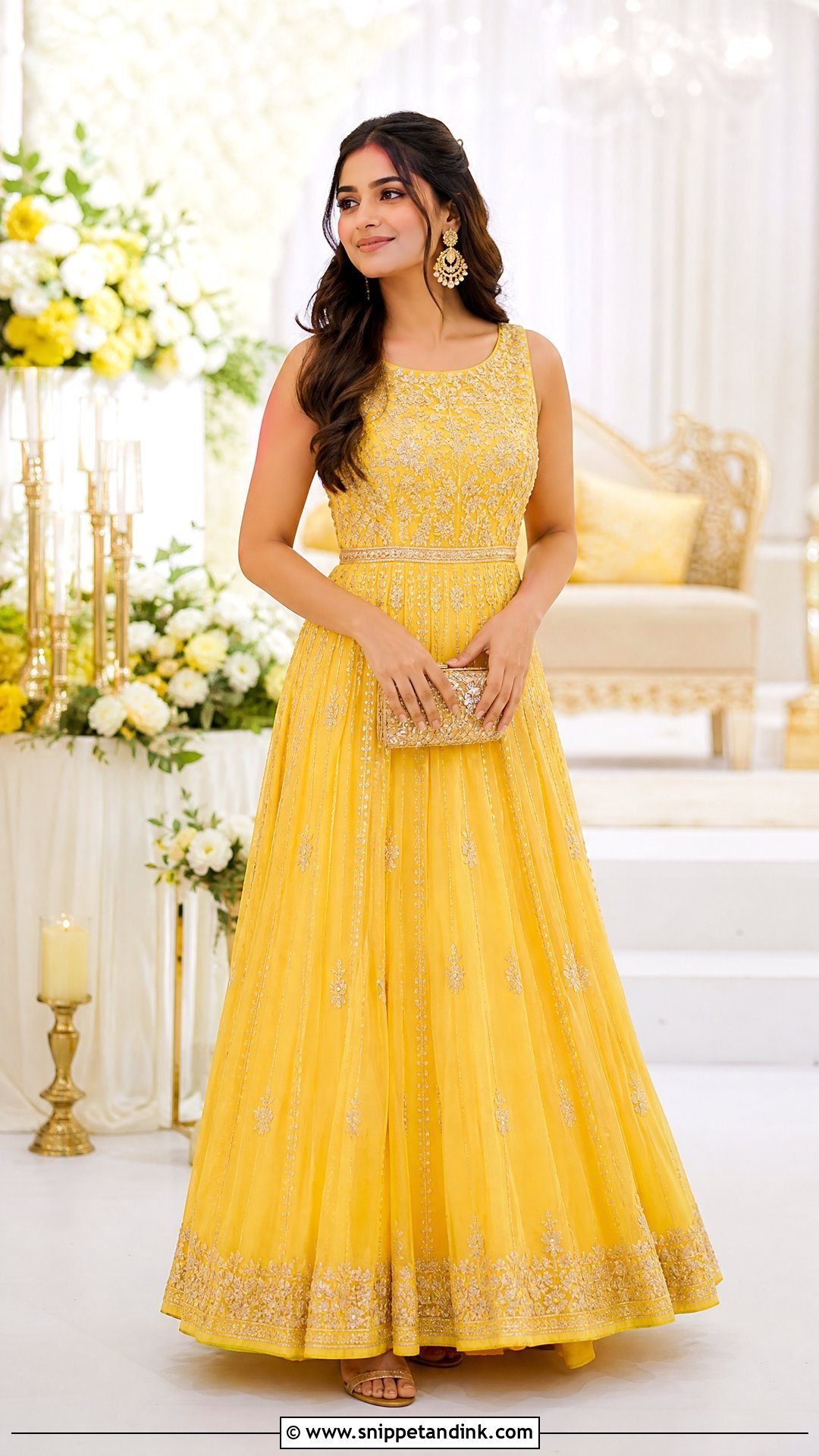
Embroidered gowns are the dressiest one-piece choice for a Haldi held at a venue rather than at home. A floor-skimming A-line with light threadwork at the bodice, waist or sleeves. No train: it collects dirt and paste and gets stepped on in a crowd. Have it hemmed so the toes of your shoes show, which makes walking and the stage steps easier. Low block heels, medium earrings, a small embellished clutch, and a narrow belt if the waist needs definition. Soft waves, a half-up style or a low textured bun.
24. Mustard Yellow Wrap Dress With Juttis
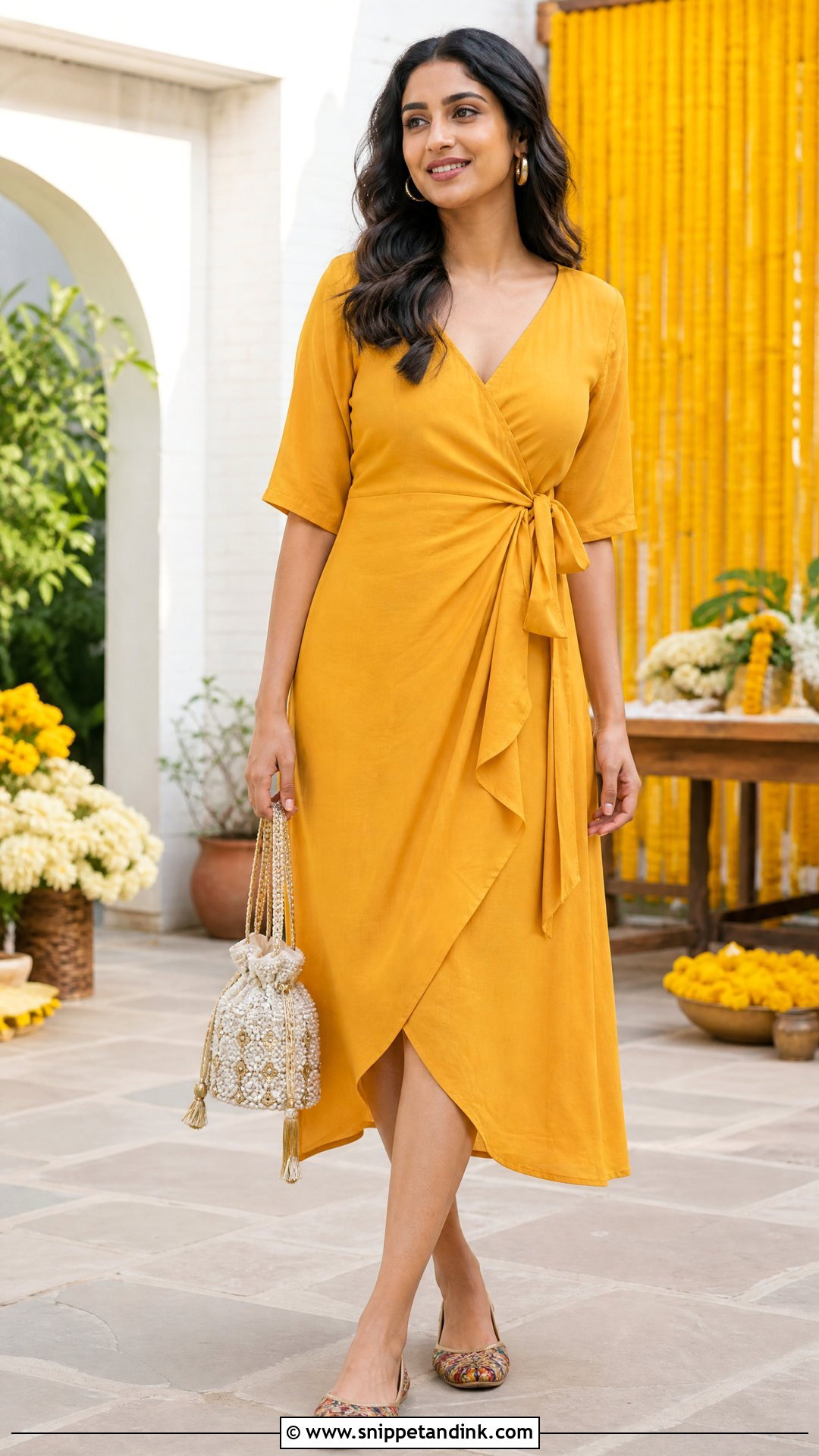
Mustard reads richer and warmer than bright lemon, so I reach for it for evening Haldis, autumn weddings and indoor venues. A midi wrap dress with short or elbow sleeves is the simplest Western way to wear it, and an embroidered dupatta over one shoulder makes it Indian. Wraps open when you sit on the floor, so I’d choose a faux wrap or secure the overlap with a snap or tape, and avoid a deep neckline. Colorful juttis, gold hoops and a small beaded bag, with a low ponytail or loose waves.
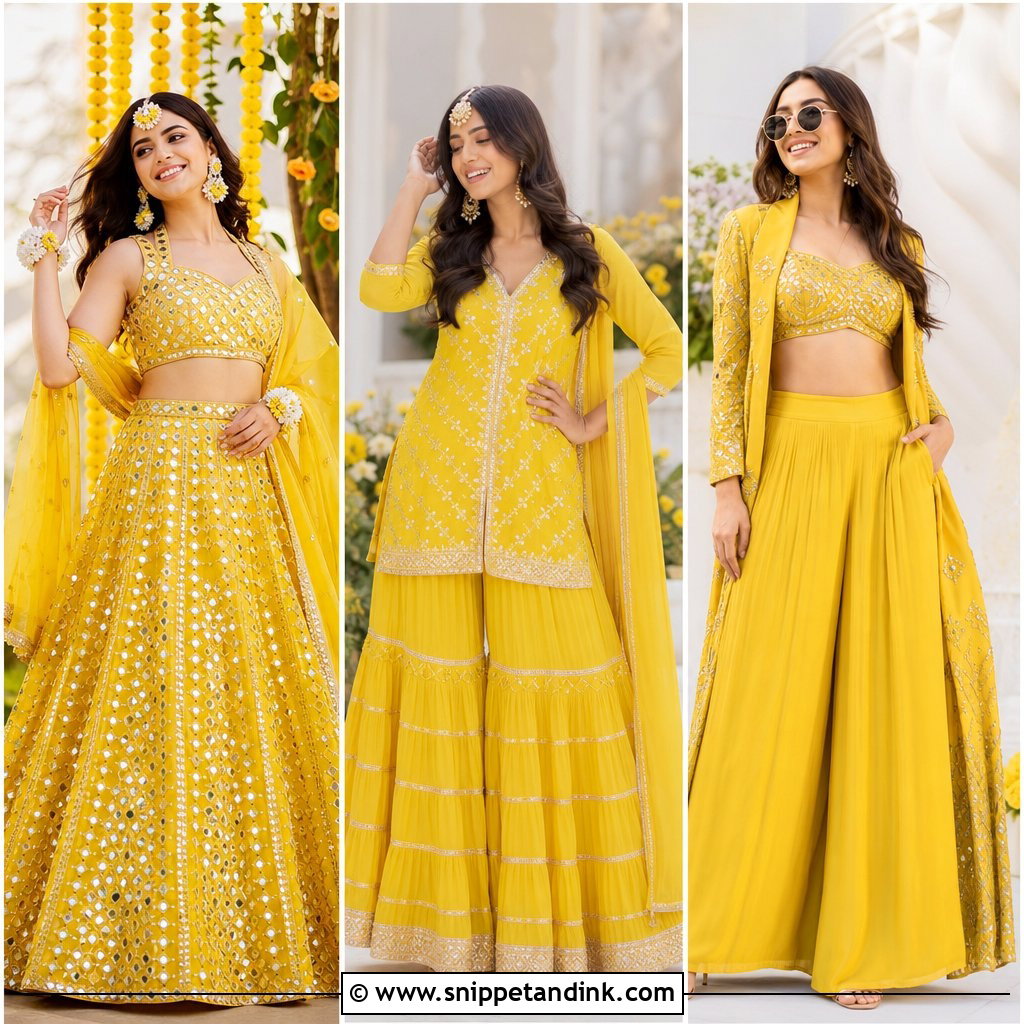

25. Lemon Yellow Tunic With Cigarette Pants
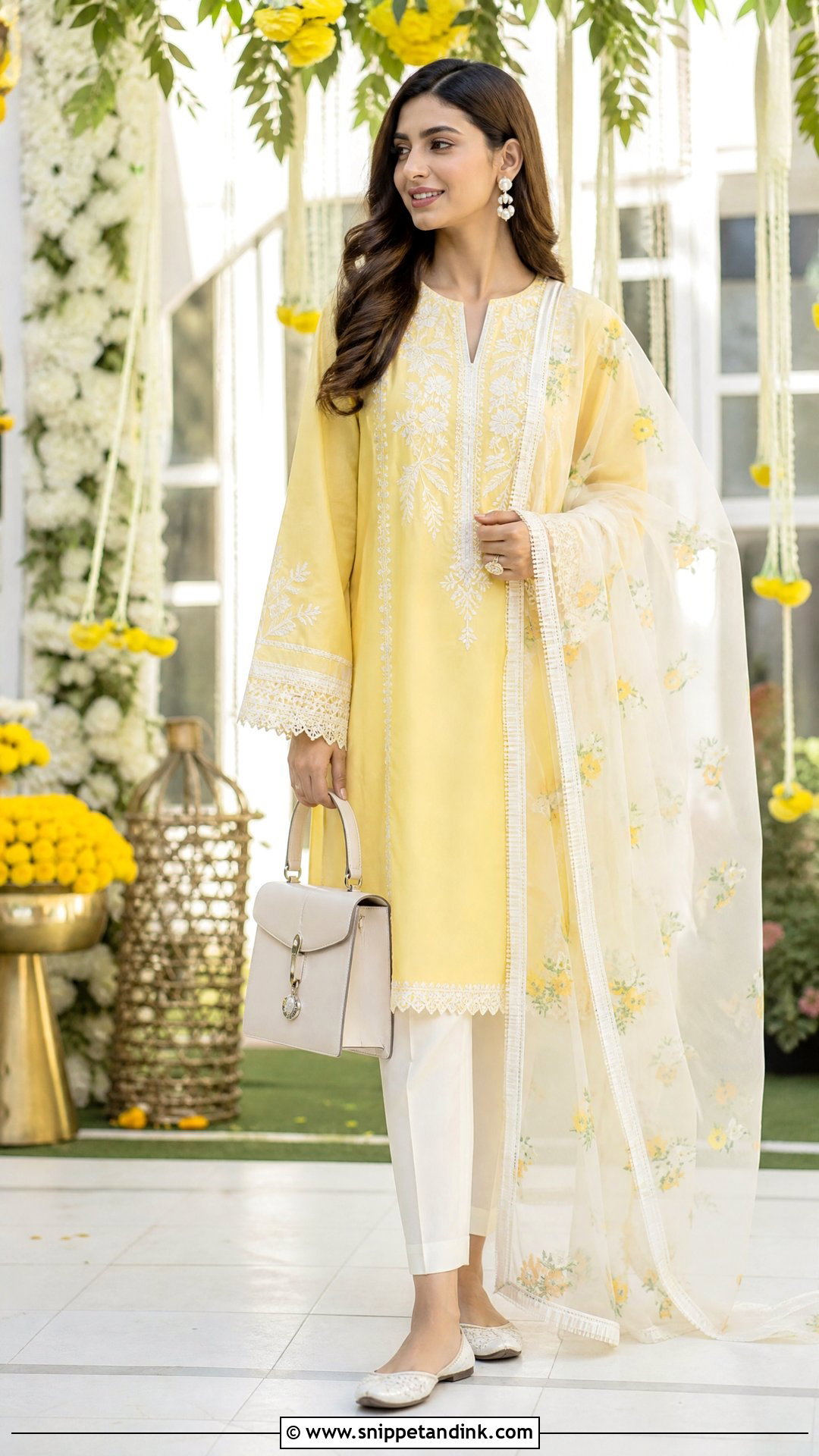
Lemon yellow and white look crisp in morning light, so this tunic set suits an early Haldi. A knee-length tunic with a round or V neck, side slits and fine white embroidery, over fitted ivory or lemon cigarette pants ending just above the ankle. Add a sheer floral dupatta for tradition or leave it off. White juttis, pearl drops and a small structured bag, with a smooth half-up style or neat ponytail. It’s modest and easy for every age group. Lemon goes with white, pearl and silver better than with heavy gold.
Turmeric Stains Come Out Easier Than You Fear
Haldi paste is turmeric mixed with things like gram flour, rose water, sandalwood, milk or oil, and it stains bright yellow because of curcumin. Expect some on your clothes. The trick is acting the same day and knowing what makes it worse.
- Scrape off dried paste gently with a blunt knife or card before anything gets wet. Rubbing pushes the color deeper.
- Rinse from the back of the fabric with cold water. Hot water and an iron can set the stain.
- Work in a little liquid dish soap and leave it ten minutes, then rinse. On cotton, a paste of baking soda and water can help with what remains.
- Don’t panic if the mark turns reddish with soap. Curcumin changes color with alkaline products and goes back to yellow once rinsed.
- Dry the washed piece in direct sunlight. Light fades curcumin noticeably, and many stains disappear in an afternoon on a line.
Silk, Chanderi and anything with zari or delicate embroidery should go to a dry cleaner who handles Indian wear, with the stain pointed out. Don’t use chlorine bleach on any of them. And if the outfit is precious to you, save it for the mehndi or the sangeet and wear your washable cotton to the Haldi itself.
Wear Yellow You Can Laugh in When the Haldi Flies
A good Haldi outfit lets you join in without worrying about your clothes. Cotton sets, light dresses, Anarkalis, sarees, shararas and simple lehengas can all work, and the right one depends on your role, the venue and the weather. If you’ll be right beside the bride, choose washable fabric, a pinned dupatta and flat shoes; if you’re watching from the edges, you can go a little dressier. The bride usually wears floral jewelry and the most detail, so guests and family look best when they let the yellow carry the outfit.
You'll Like These Ideas:



Leave a Reply