
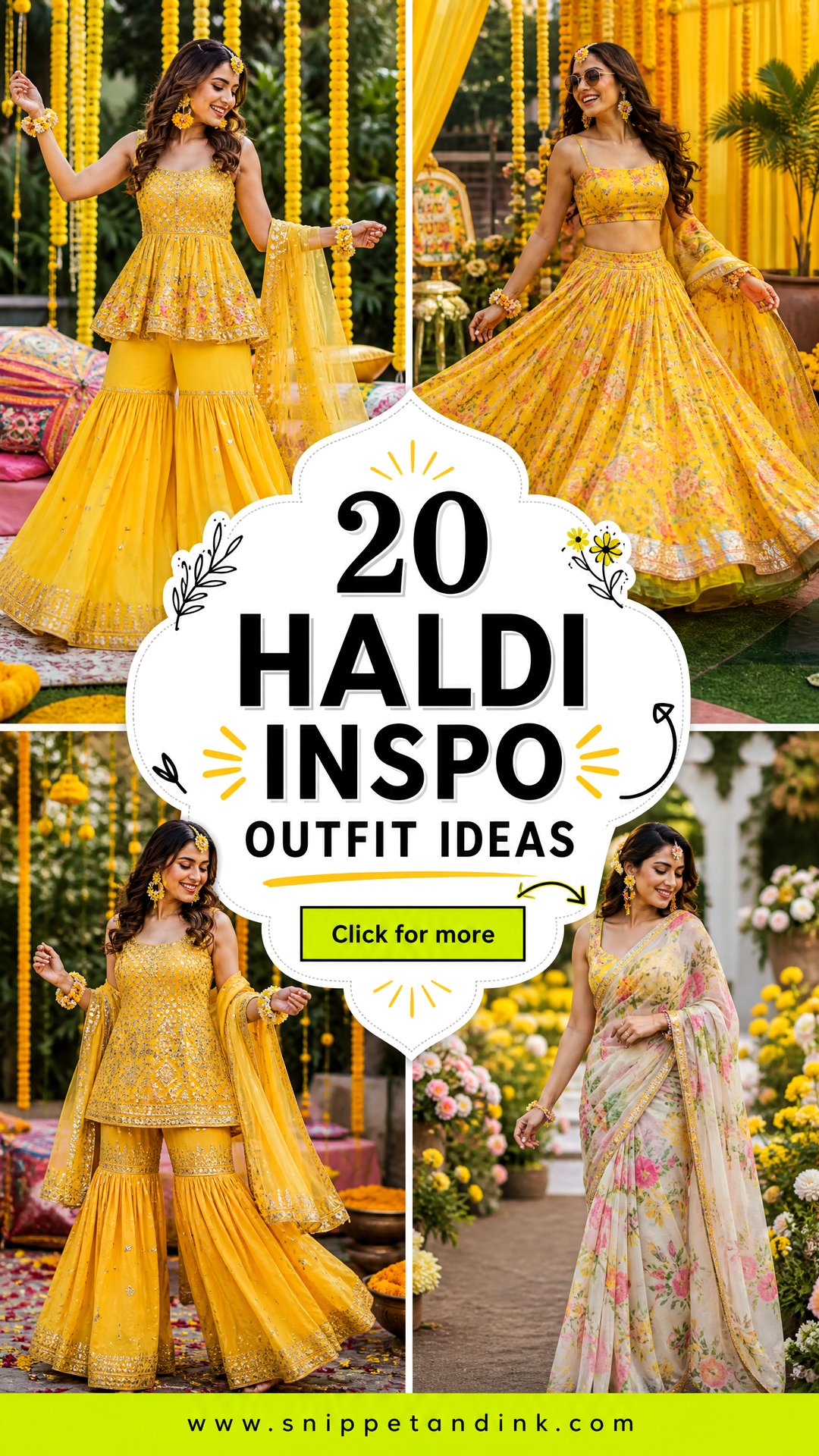
Haldi is the most hands-on function of an Indian wedding, and the clothes have to cope with it. Yellow is still the classic, but I dress plenty of people in marigold, ivory, green, coral and soft pastels now, and the fabrics have lightened up too. Light lehengas, pre-draped saris, shararas, coordinated sets and relaxed Indo-Western silhouettes all handle a daytime ritual well. What changes the choice most is your role. A bride sits in the middle of the paste, a sister helps apply it, and a guest mostly watches, so each needs a different level of protection and polish. The twenty looks below are complete outfits, and I’ve noted who each one suits.
Bride, Sister or Guest: How Close Will You Sit to the Paste?
The first question I ask anyone shopping for a Haldi outfit is where they’ll be standing. It decides the fabric, the color and how much you should spend.
The bride
She gets the most turmeric and sits the longest. Washable or printed fabric, short or no sleeves, a drape pinned in place and nothing she’d cry over. She can wear the boldest jewelry, ideally floral, which doesn’t matter if it gets yellow.
Sisters, cousins and close friends
They apply paste and usually end up wearing some of it, especially once the playful smearing starts. A set with separates, sleeves that push up and shoes that can get wet is ideal. If the family has picked a color theme, ask for it early so nobody turns up in the bride’s exact shade.
Guests and older relatives
They mostly watch, bless and eat. Pastels, ivory and finer fabrics are safer here, but it’s still a daytime ritual, so keep embellishment lighter than you would for the sangeet or the wedding. Leave the floral jewelry and statement maang tikka to the bride.
1. Yellow Floral Lehenga Haldi Outfit
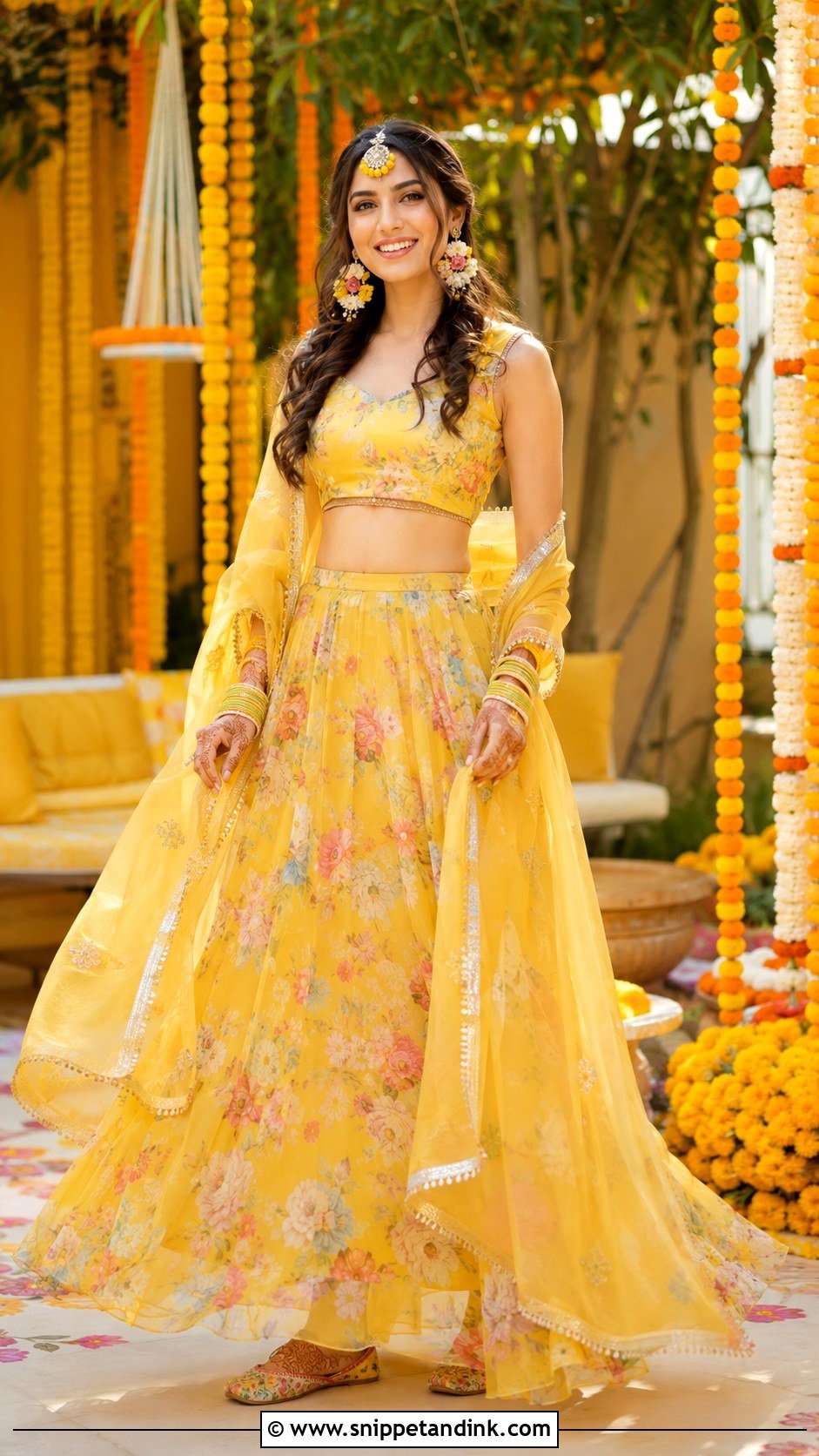
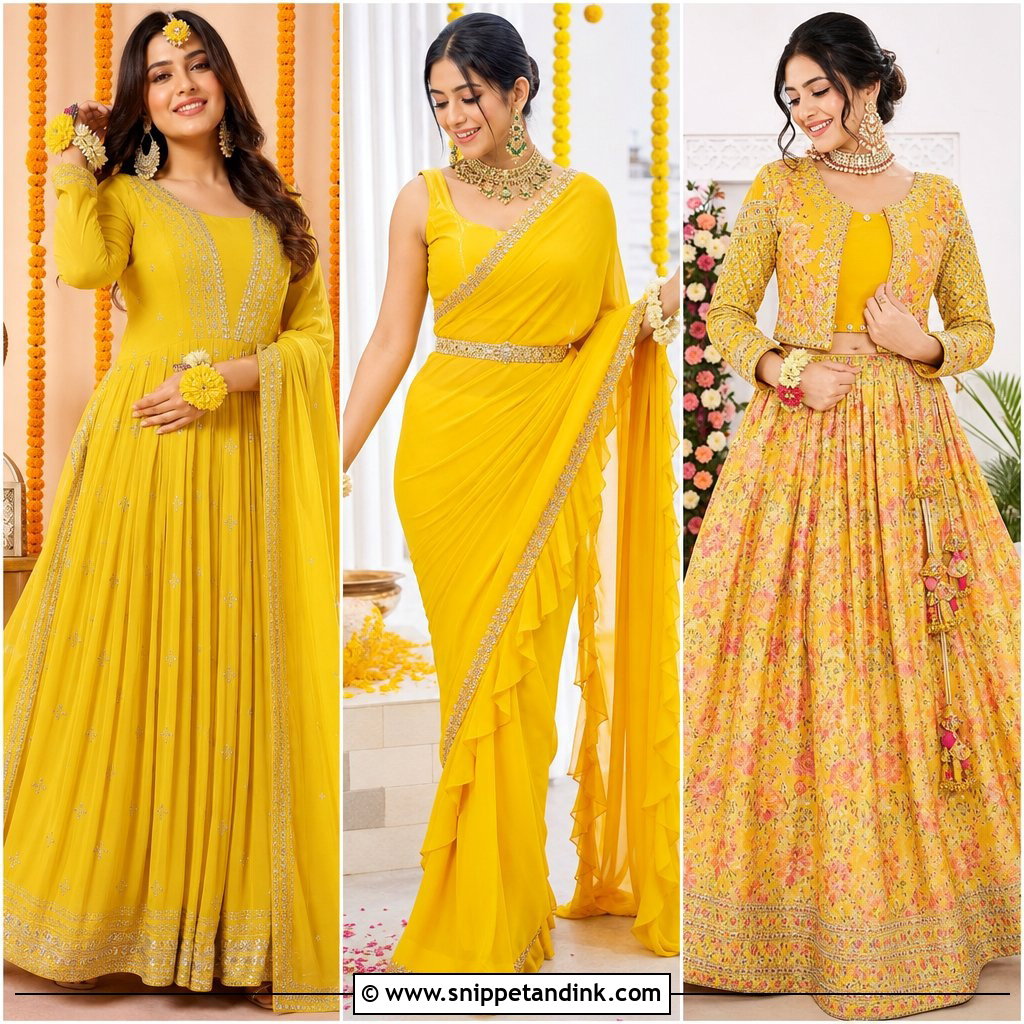
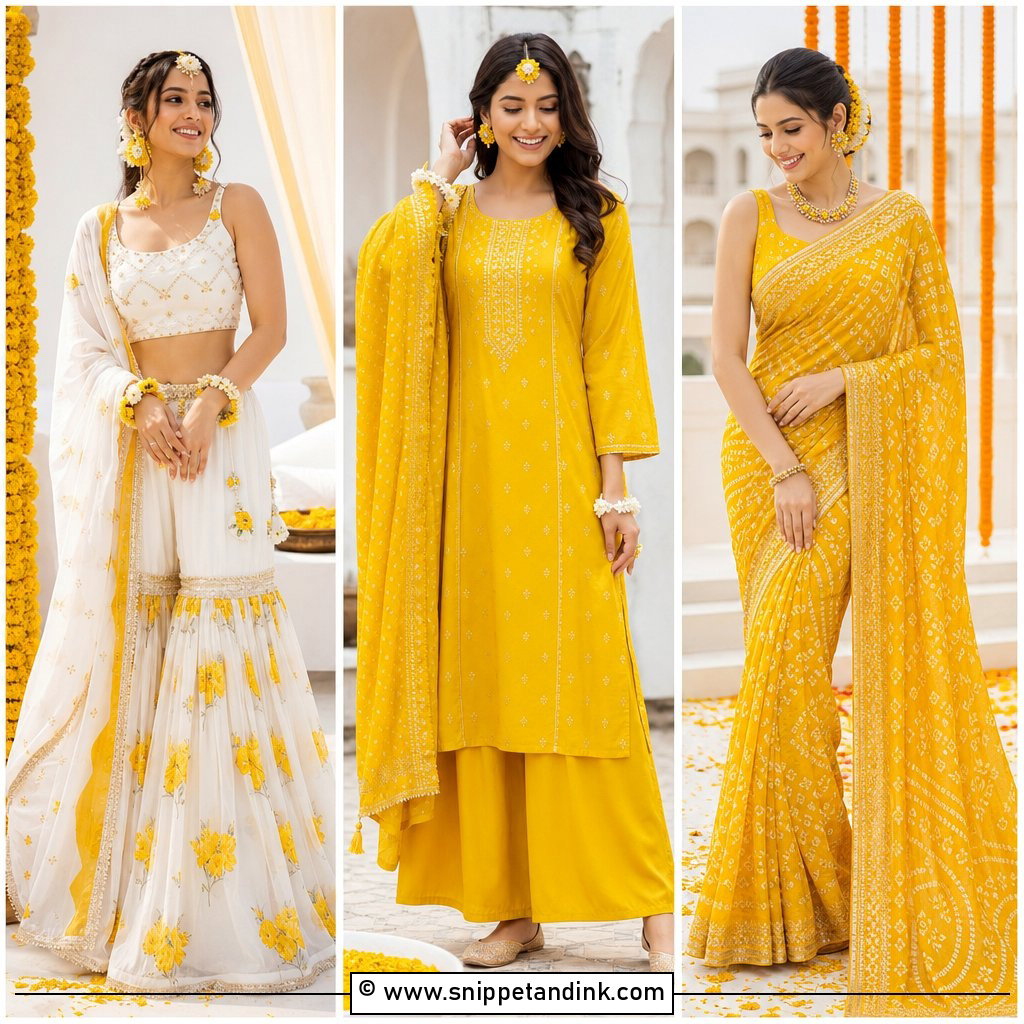
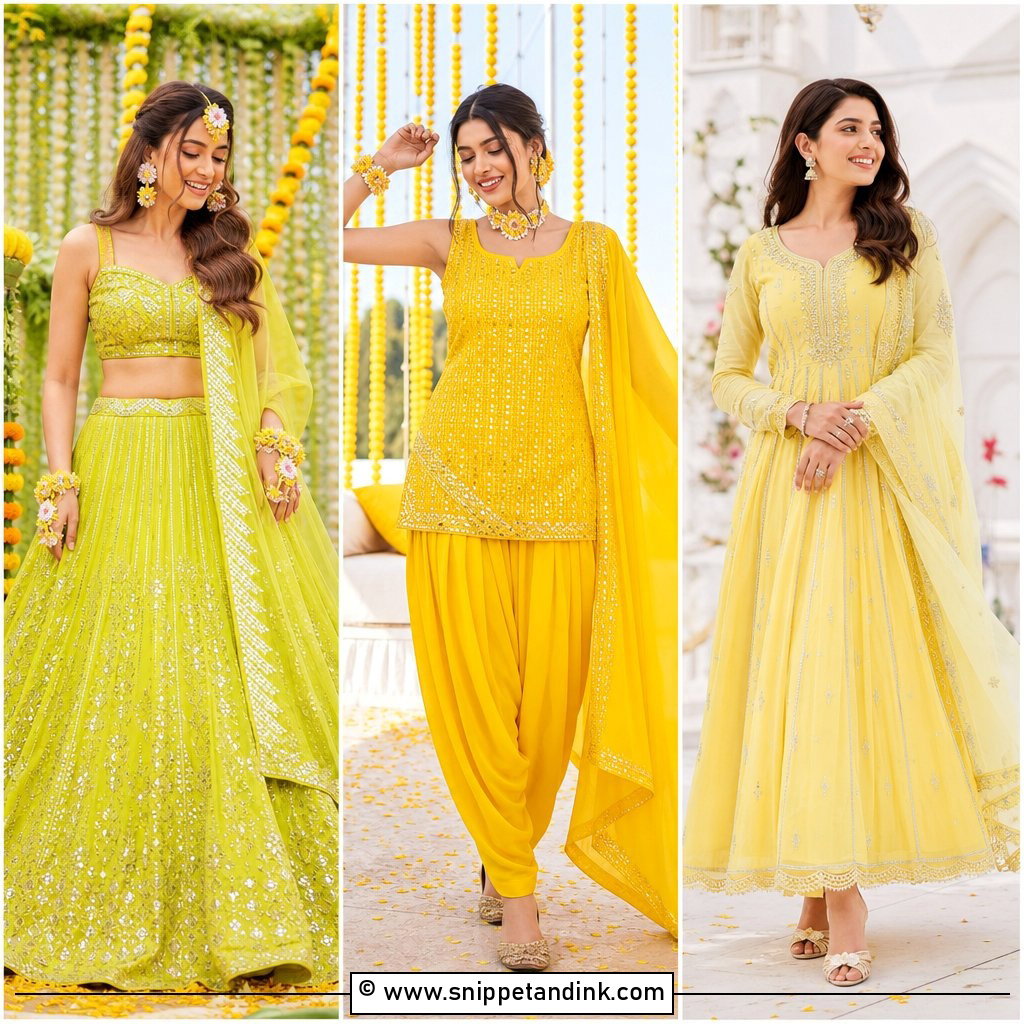
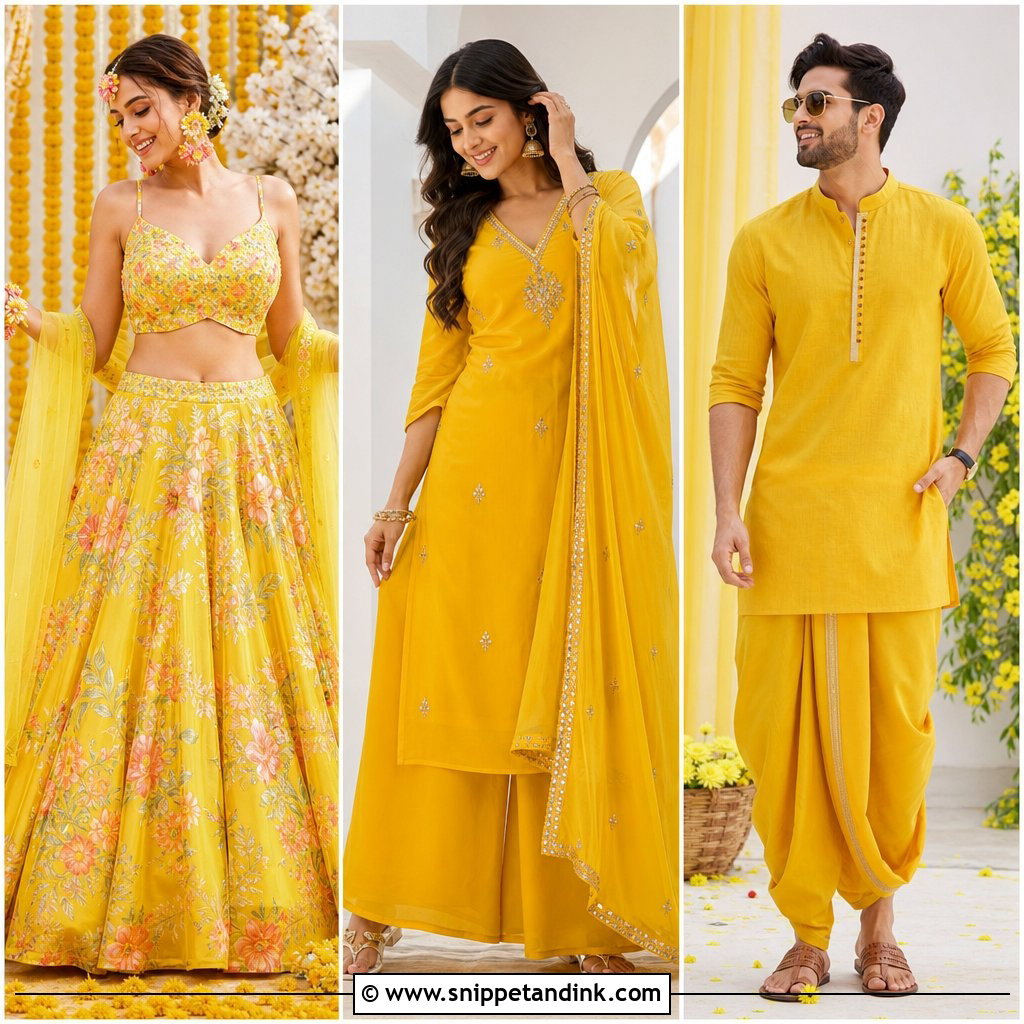
A yellow floral lehenga is the easiest outdoor Haldi outfit to get right. Go for small prints or fine thread embroidery instead of dense beadwork, which snags on garlands and holds paste in every gap. Sleeve length is a coverage choice, though remember that bare arms are easier to wipe clean than a turmeric-soaked sleeve. An organza dupatta adds movement without weight. Floral earrings, a matching maang tikka, bangles and embroidered juttis finish it. Brides can add a floral necklace or haath phool; guests should stop short of that. A loose braid or low ponytail stays put through the ritual.
2. Mustard Sharara Haldi Outfit
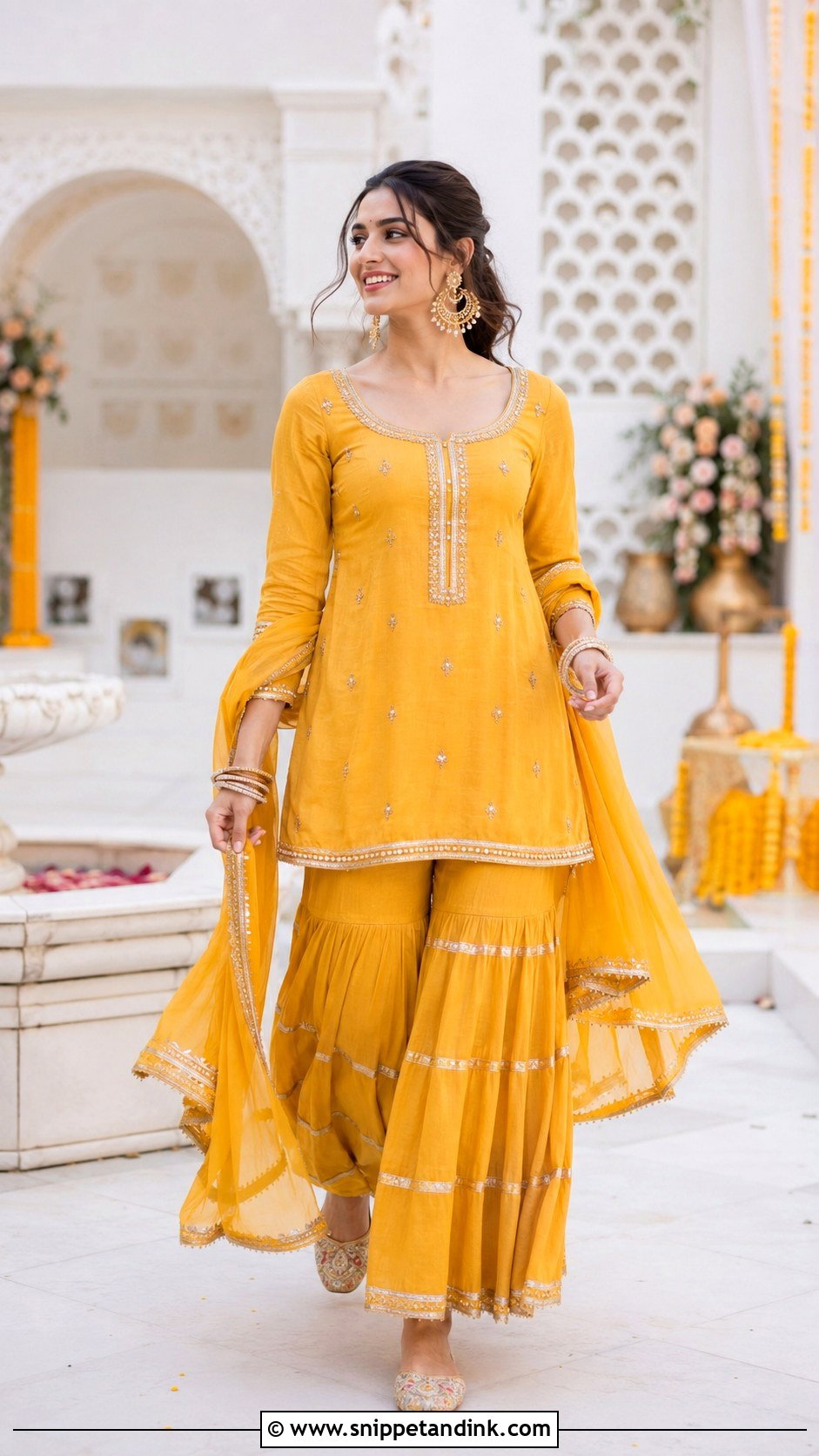
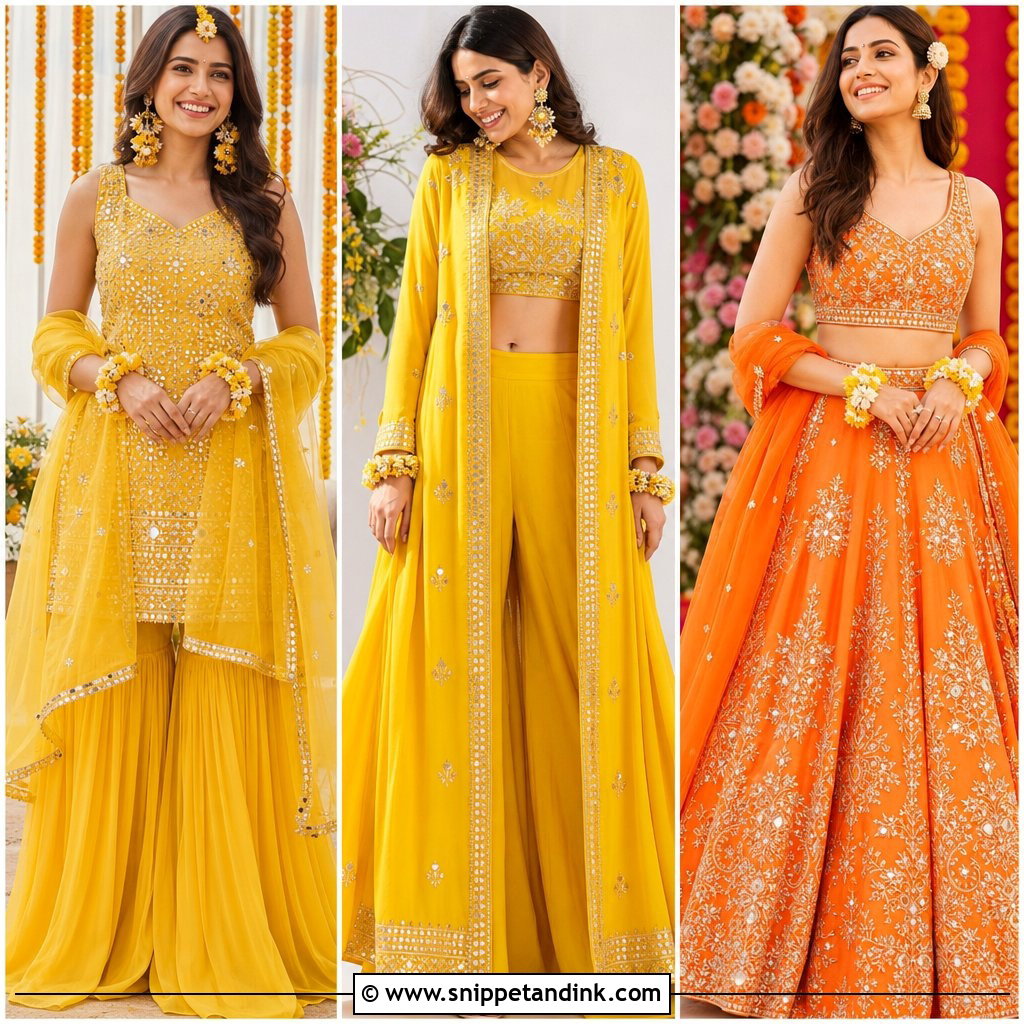
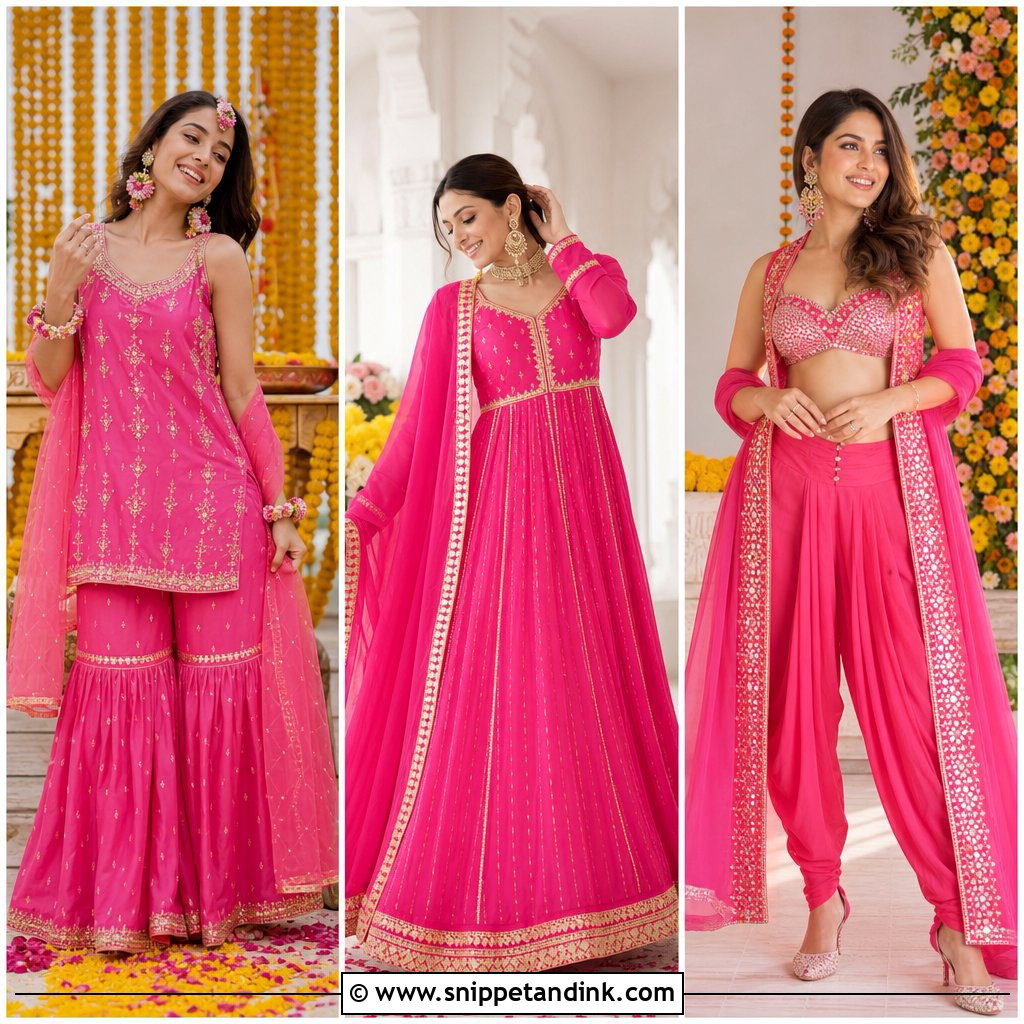
Want something festive that still lets you sit, walk and dance? A mustard sharara set moves generously while keeping a traditional outline. The usual pairing is a short embroidered kurta, wide flowing pants and a light dupatta over one shoulder, with gota, small mirrors or fine threadwork for brightness. Mustard is the shade I suggest to anyone whose skin looks washed out in lemon yellow, because its depth sits better against warmer and deeper complexions. Gold chandbalis, slim bangles and cushioned juttis or low block heels finish it, with a half-up style to keep hair off the face. Each piece rewears on its own later.
3. Yellow Chikankari Kurta Haldi Outfit
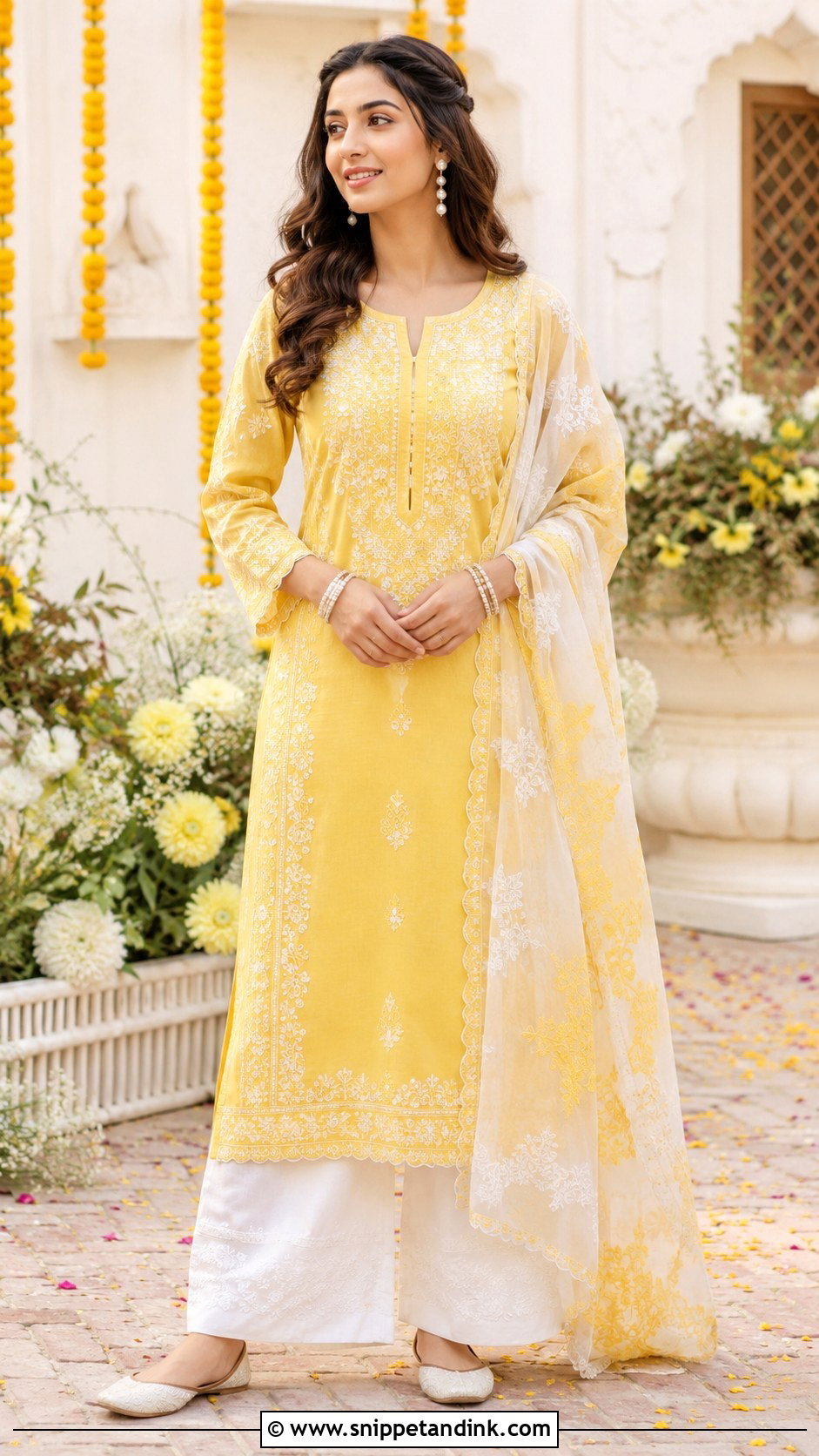
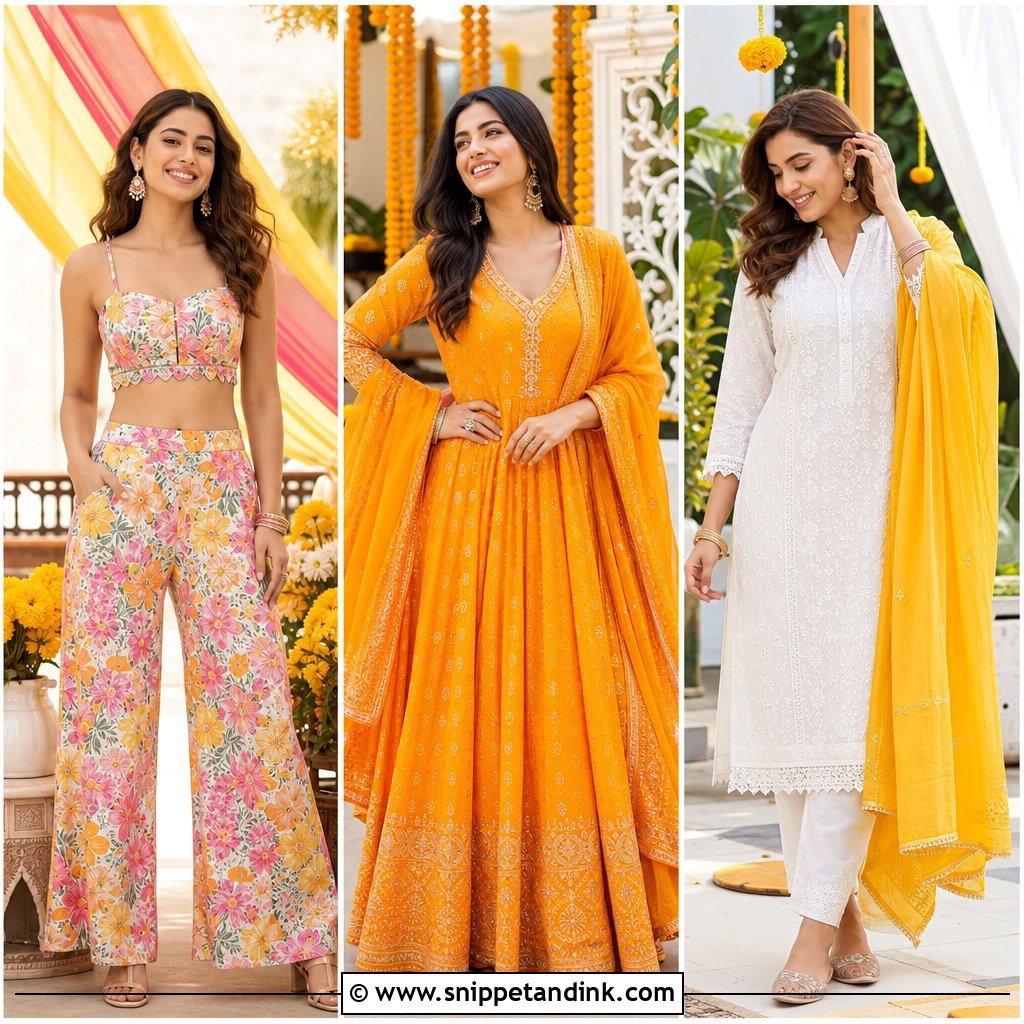
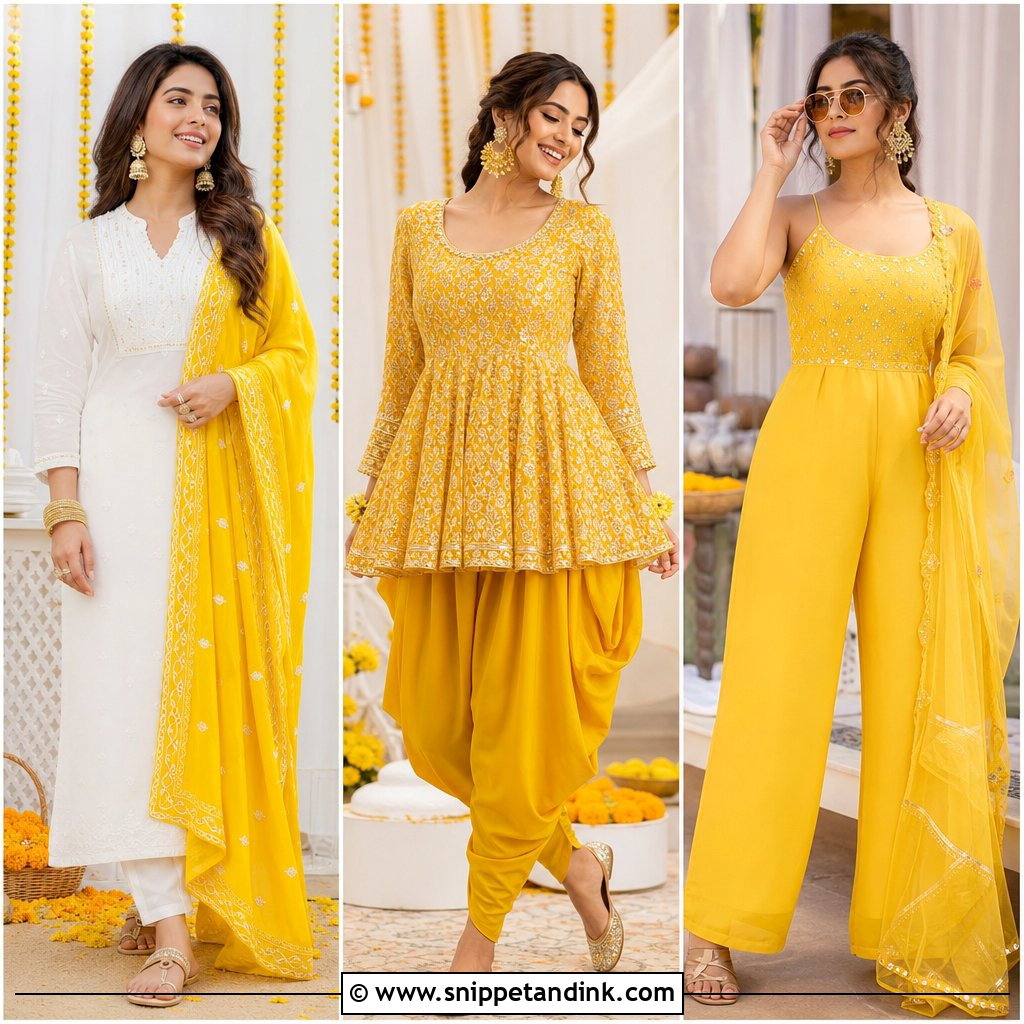
Chikankari brings texture to a plain yellow kurta without any shine, which makes it a natural pick for guests who want to look polished but quiet. A straight or slightly flared kurta works with matching pants, a narrow churidar or palazzos. Hand chikankari is worked on sheer fabric, so check what’s underneath: a breathable cotton slip makes all the difference on a hot morning. A white-and-yellow dupatta adds contrast, and pearl drops, fine bangles and white or gold juttis keep the balance. A small potli is all a guest needs. Brides can push it further with floral jewelry and a scalloped organza dupatta.
4. White Sari With Yellow Blouse Haldi Outfit
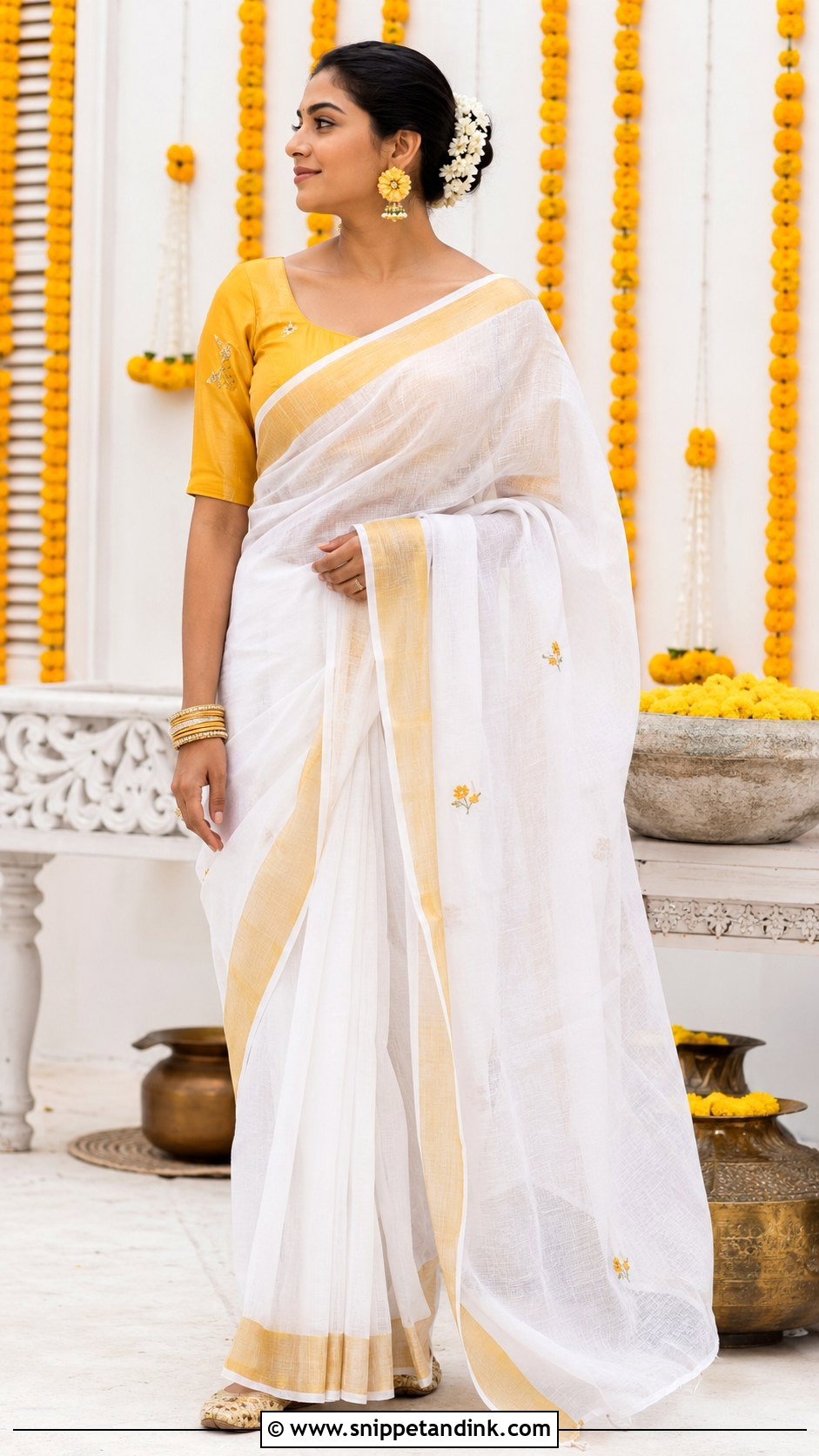
Crisp white against a yellow blouse looks sharp beside marigold décor, but I’ll be blunt: this is a portrait outfit or a guest outfit, not one for anyone receiving the paste. Pale cotton picks up turmeric permanently in minutes. If you’re set on it, choose an affordable, washable cotton, chiffon or organza sari. A sleeveless yellow blouse reads modern; puffed or elbow sleeves give more coverage. Yellow floral earrings, gold bangles and flat sandals or juttis keep it light, and a neat bun with fresh flowers holds the hair securely.
5. Marigold Anarkali Haldi Outfit
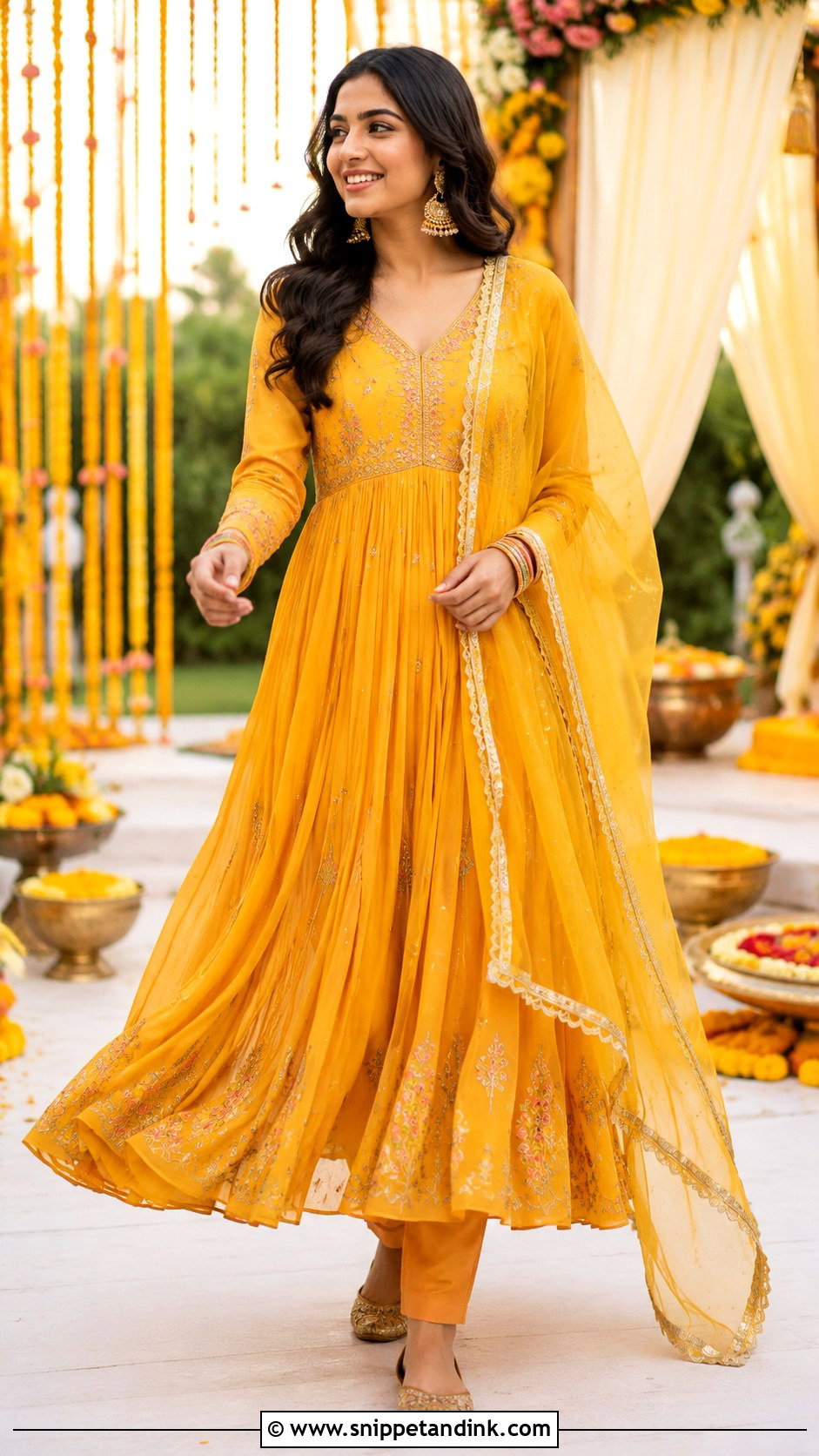
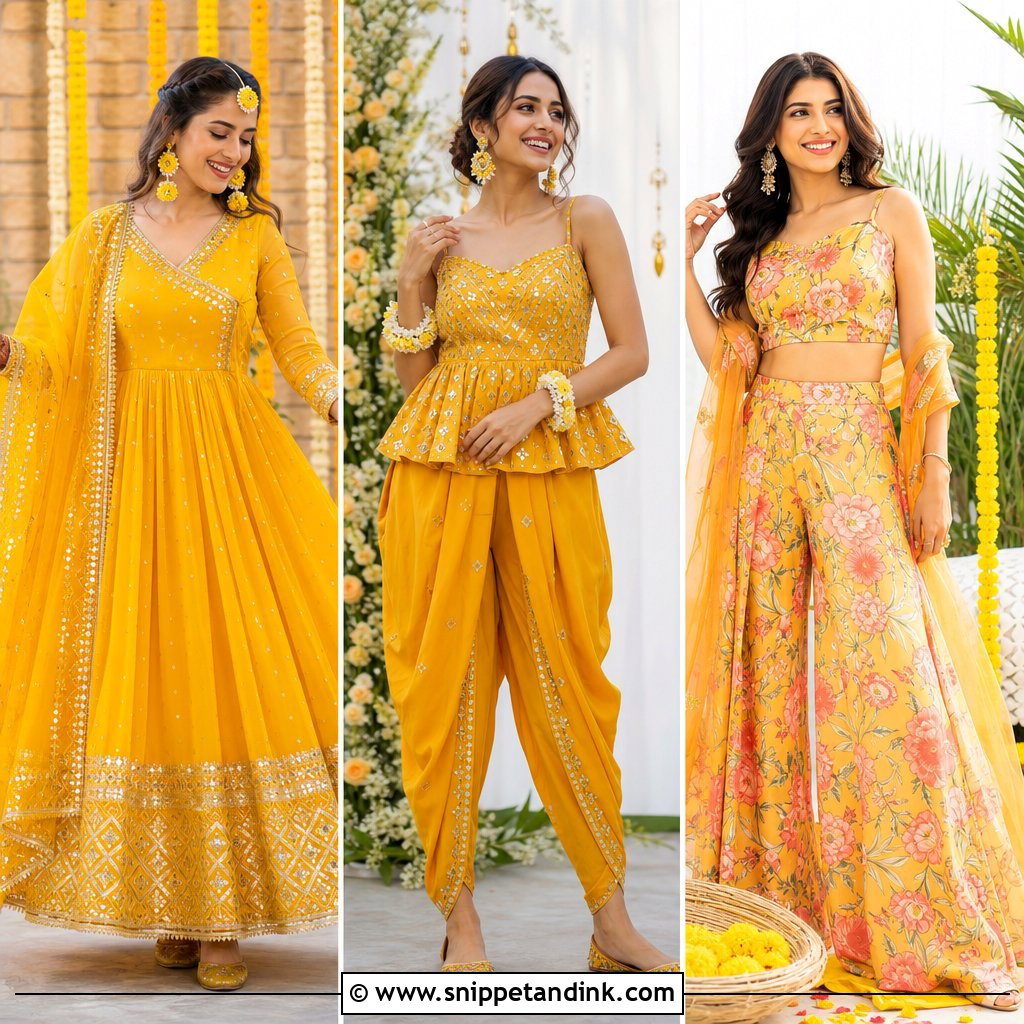
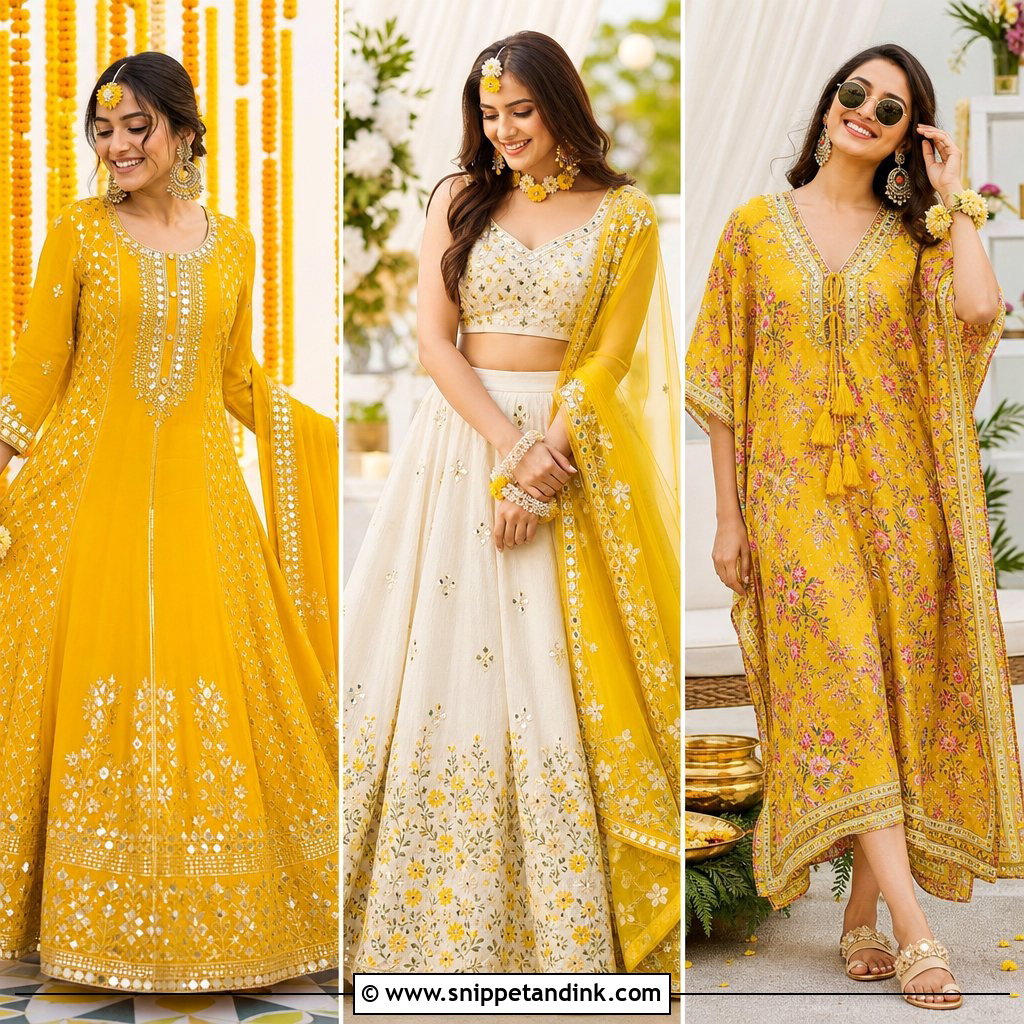
A marigold Anarkali gives you movement with no draping at all. Breathable cotton-silk, georgette or light chanderi with a fitted top and an easy flare is the formula. Proportion is what I adjust most here. On a petite frame I reduce the number of kalis, the flared panels, so the skirt doesn’t swallow her, while a tall woman can carry a floor-length cut with a full flare. Narrow pants, a sheer dupatta with a modest gota border, gold jhumkas and embellished flats complete it. Pin the dupatta at one shoulder so it doesn’t drift during the dancing, and keep the hair in a center-parted low bun or soft braid.
6. Yellow Palazzo Set Haldi Outfit
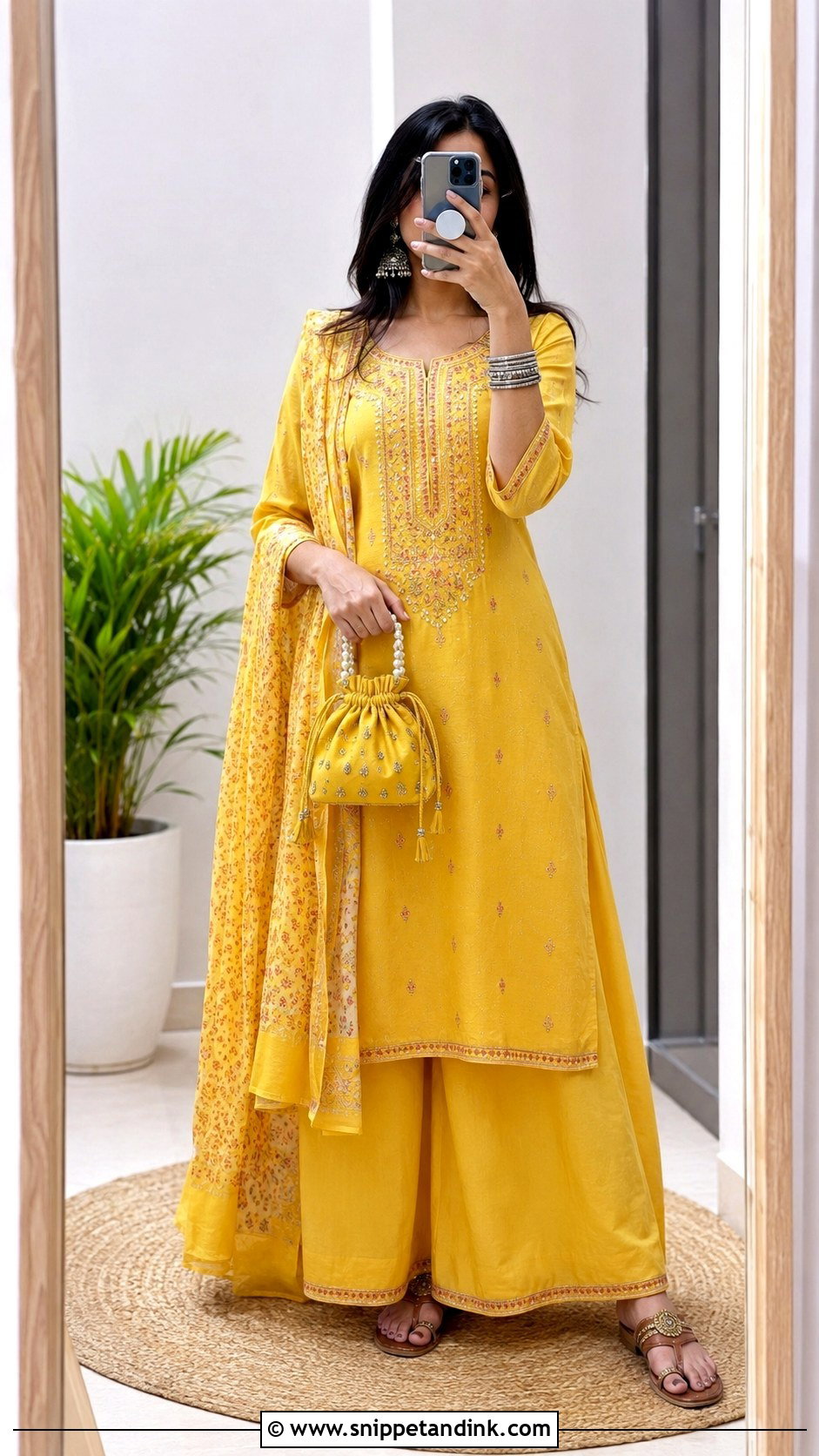
For a relaxed function at home, a yellow palazzo set does the job with no fuss. A straight or slightly cropped kurta over wide-leg palazzos, a printed dupatta, and small mirror details or contrast piping at the neckline for definition. Oxidized silver earrings make a nice change from gold against yellow, with stacked bangles and kolhapuri flats. This is the set I put sisters and cousins in when they’ll be running between the kitchen, the paste bowls and the photographer. A braided ponytail keeps it approachable, and both pieces slip straight into an everyday ethnic wardrobe afterwards.
7. Yellow Pre-Draped Sari Haldi Outfit
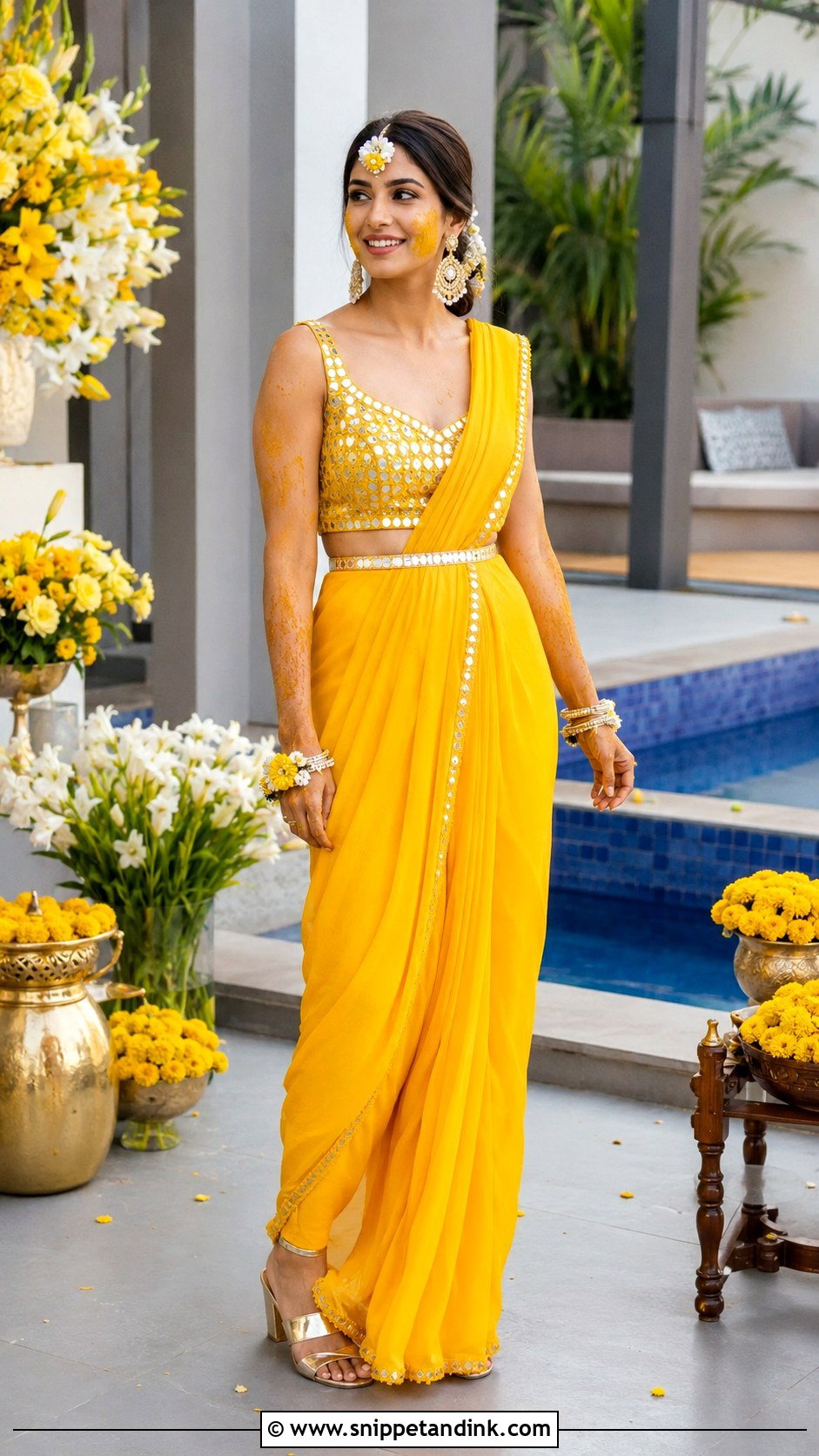
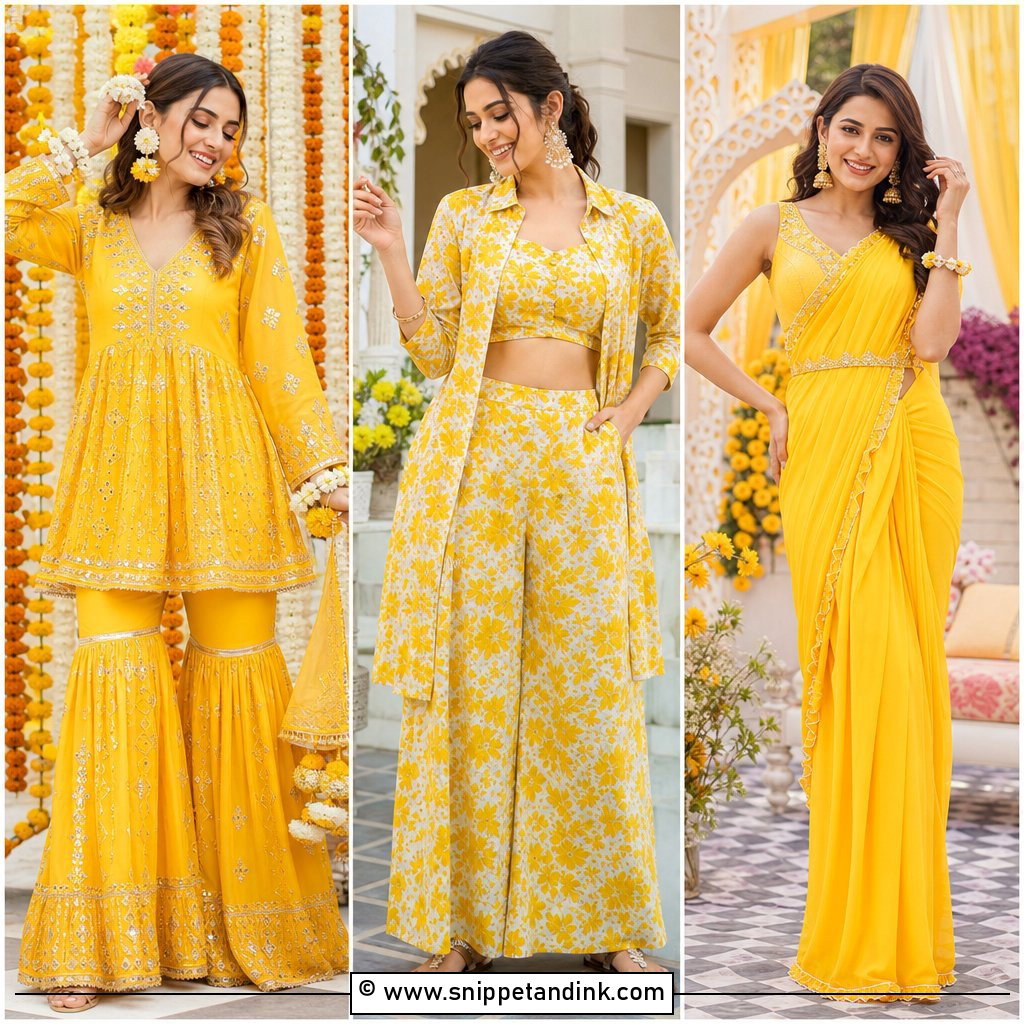
Pre-draped saris have taken over Haldi functions for a simple reason: nobody has to stop the ritual to re-tuck pleats. Chiffon, georgette or crepe with a stitched waist and a pleated pallu is the structure to look for. Crepe is the one I like best for this, since it has a little weight and stays where it’s put on a breezy terrace. A fitted blouse with mirror work, floral embroidery or a textured neckline adds interest, along with statement earrings, a slim waist belt and block-heel sandals. Brides can add a floral maang tikka; guests can carry a small beaded clutch. A sleek ponytail or low bun keeps the line clean at a poolside or resort venue.
8. Floral Cape Lehenga Haldi Outfit
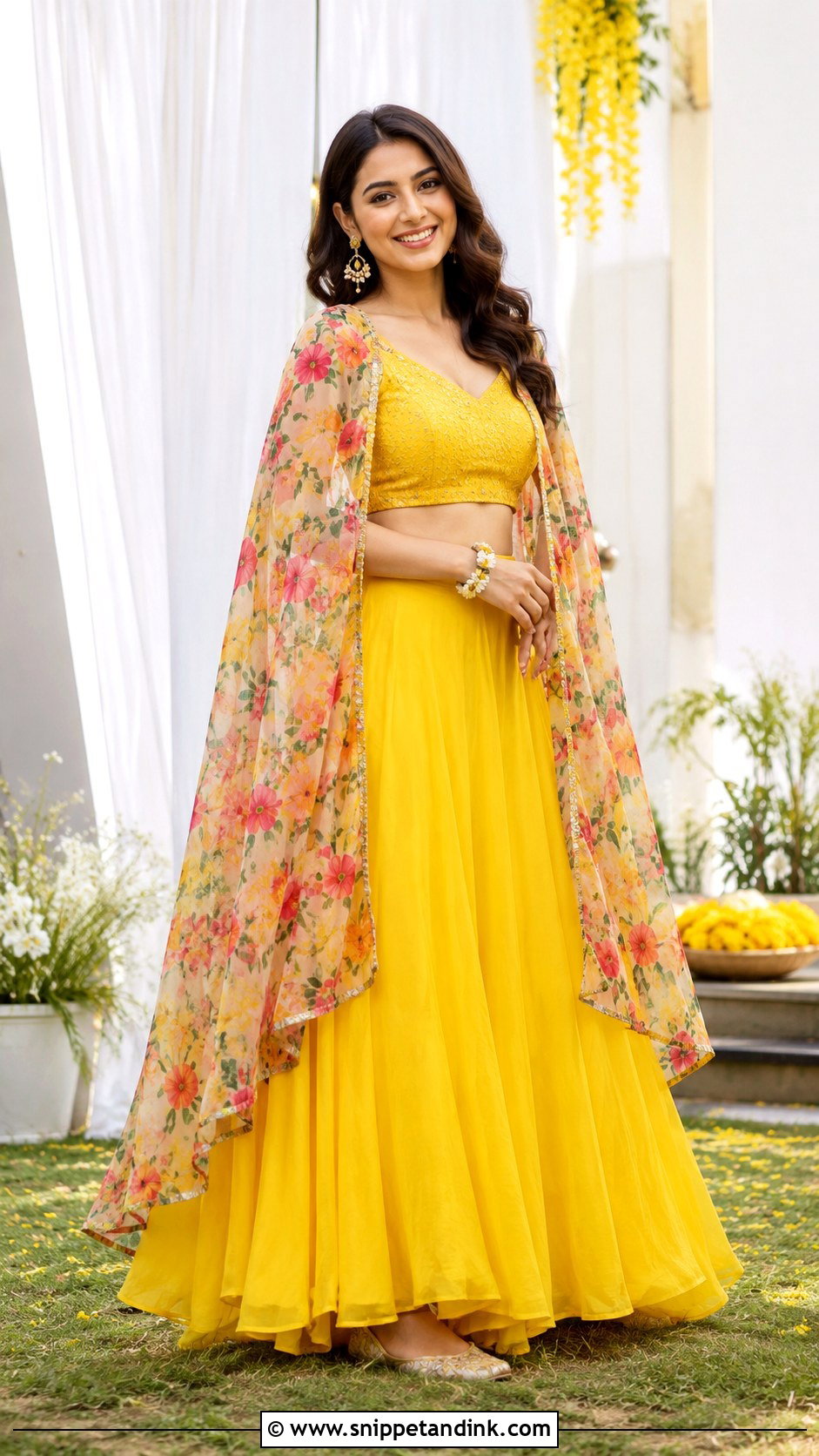
A cape lehenga gives you coverage without a dupatta to babysit. Start with a solid yellow, lime or ivory skirt and a simple fitted blouse, then choose the cape length by how much drama you want: waist-length is playful, knee-length is formal. Sheer capes do flare in wind, so for an open lawn I’d ask the tailor to add a hidden hook at the front neckline. Keep the skirt light for daytime heat. Drop earrings, a floral bracelet and neutral juttis or low heels are enough, and skip the necklace entirely because the cape is already the focal point. Soft waves or a half-up style leave the floral detail visible.
9. Lime Green Lehenga Haldi Outfit
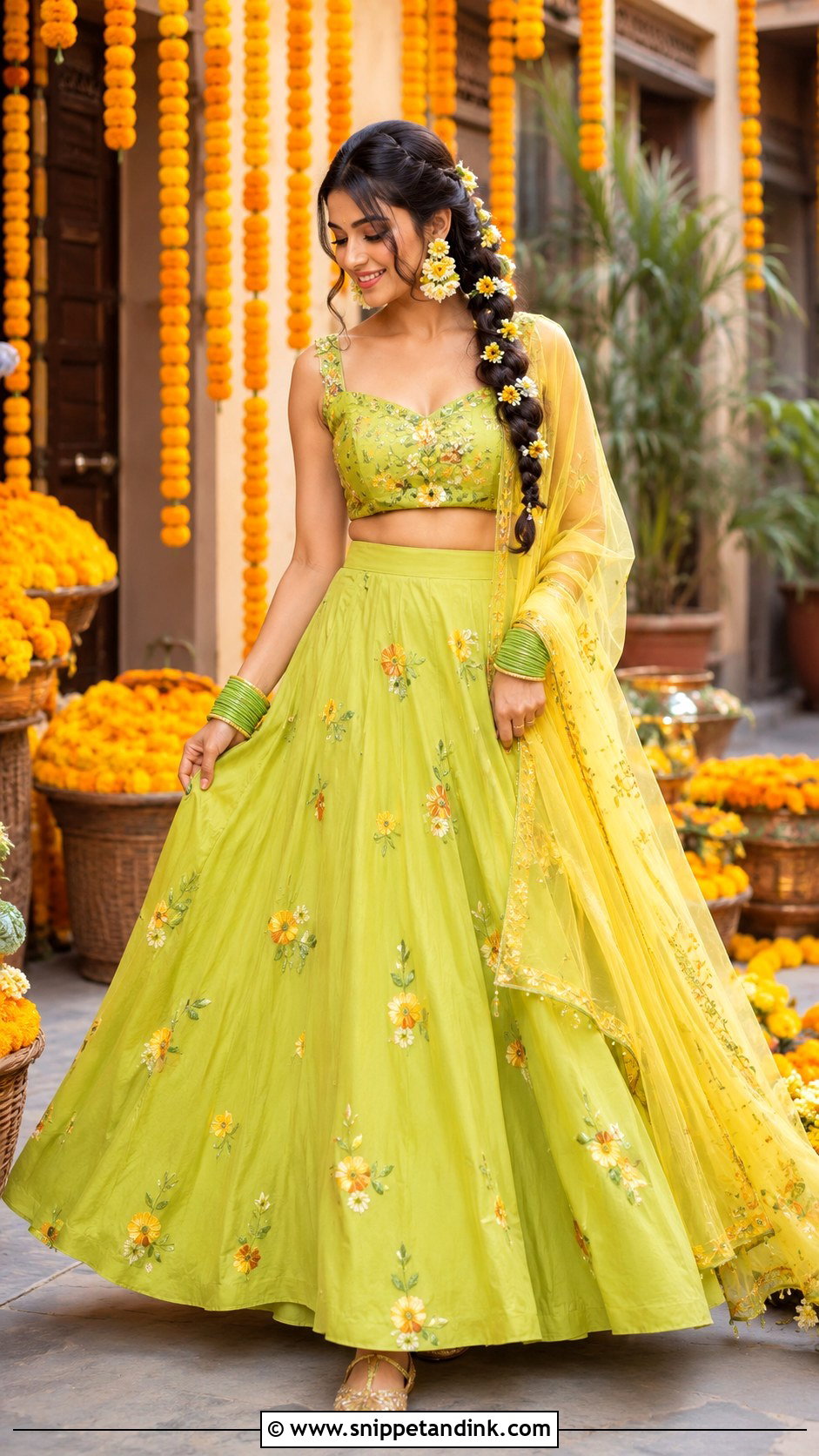
Lime green is my favorite alternative for anyone who doesn’t want to be another yellow figure against yellow drapes. Pick a light lehenga with subtle yellow florals, mirror accents or a contrast yellow border, then let a soft yellow dupatta tie it back to the occasion. Green glass bangles, floral earrings and gold juttis suit it. Brides can wear a statement maang tikka; guests should keep jewelry smaller. A loose braid with tiny flowers finishes it, and in group photos the green makes the wearer easy to pick out.
10. Yellow Peplum Sharara Haldi Outfit
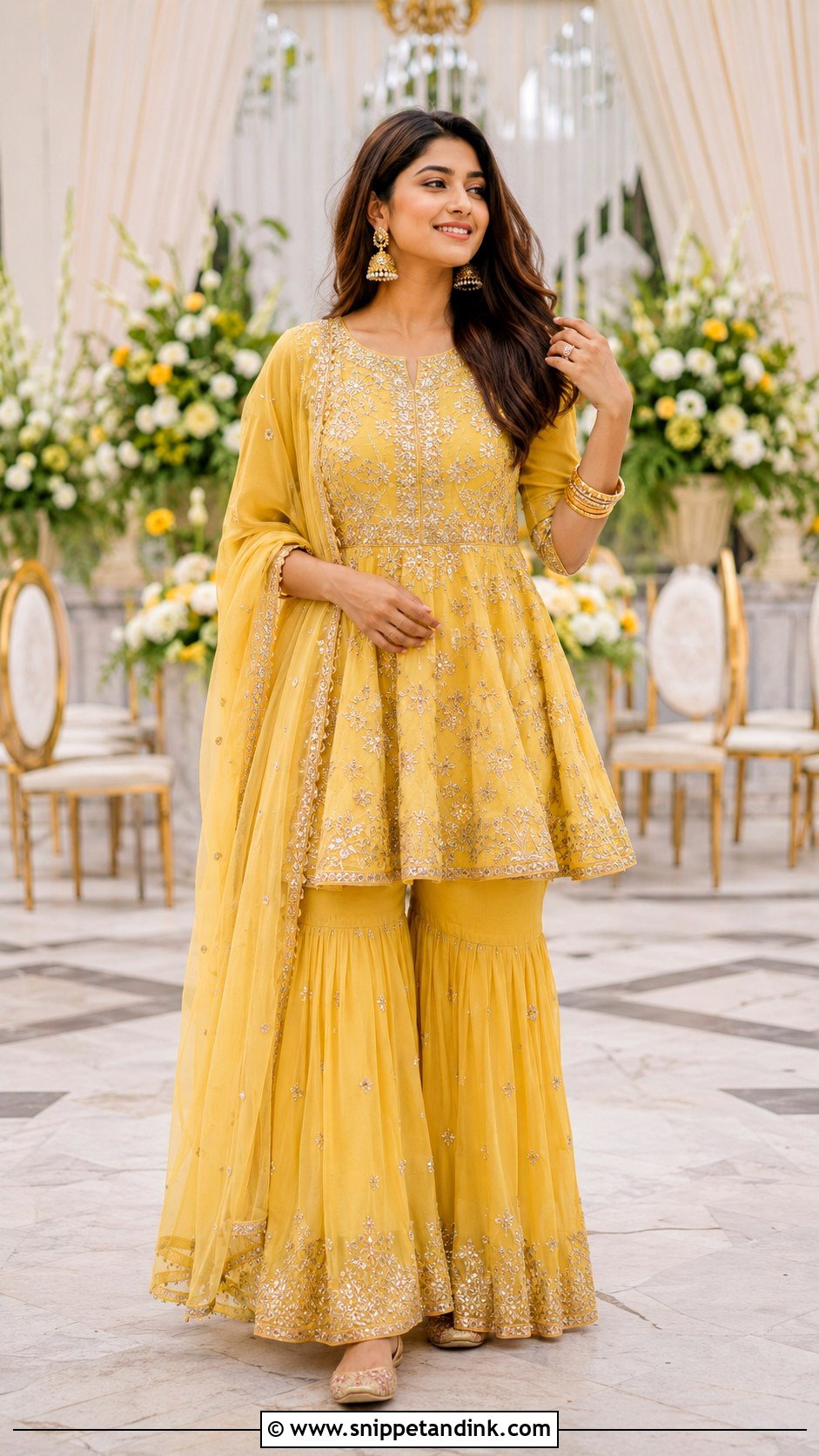
Peplum over sharara is the combination I reach for when a client wants a defined waist but still needs to move. The peplum kurta should fit closely through the bodice and flare gently from the waist, ending at the high hip so the sharara’s volume starts cleanly below it. Keep embroidery on the sharara low, near the lower panels, where it swings when you walk. A dupatta is optional if the neckline is detailed. Medium jhumkas, a bangle stack and metallic juttis finish it, with a high ponytail or braided bun to keep the proportions tidy. Structure on top and fluid fabric below flatters most body shapes.
11. Yellow Crop Top And Skirt Haldi Outfit
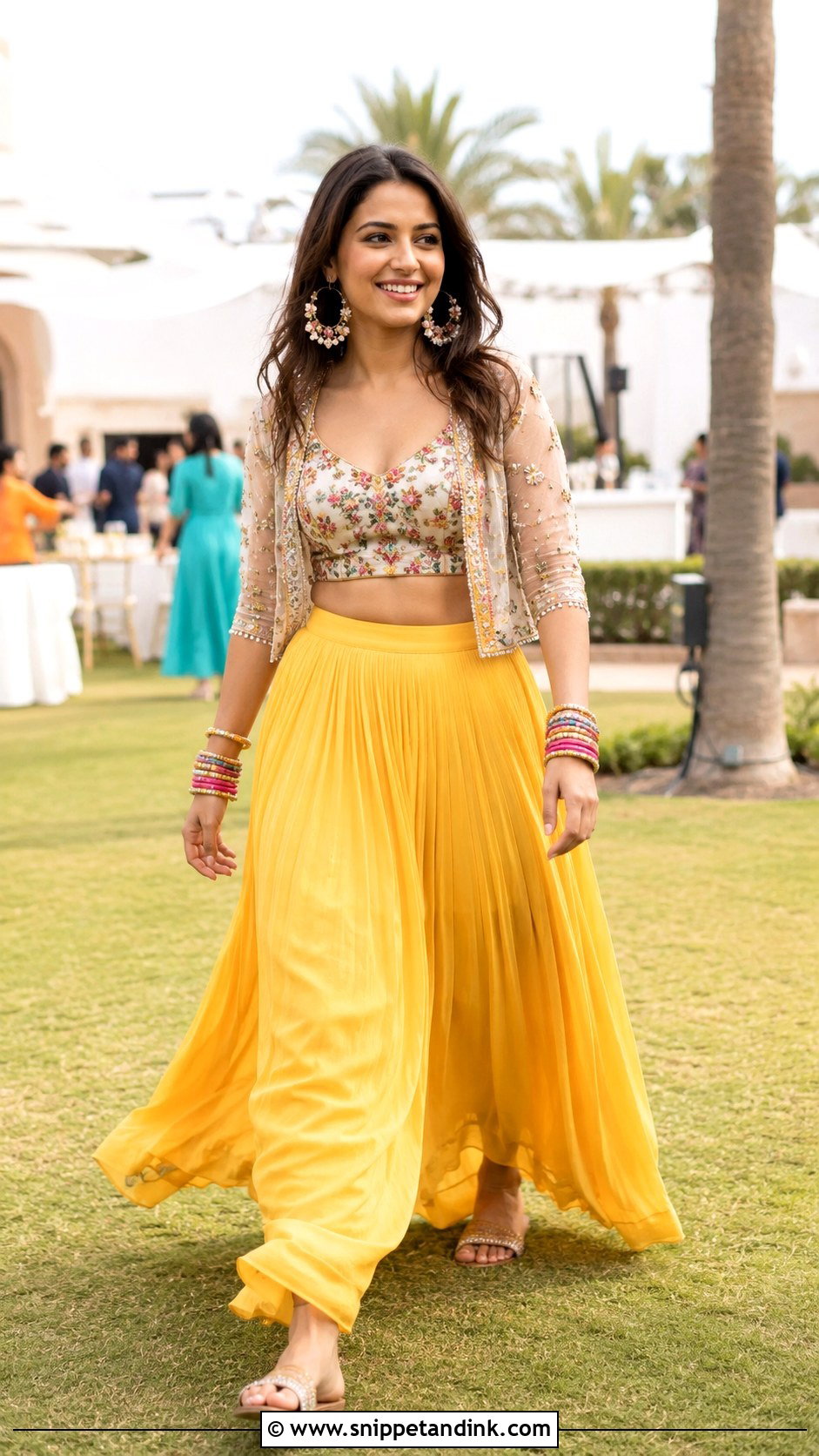
A yellow crop top and flowing skirt suit a casual or destination Haldi far better than a full lehenga. A high-waisted skirt in cotton, georgette or organza with a fitted top at your preferred coverage is the base; add a cropped jacket, sheer cape or draped dupatta only if you want a layer. Flat sandals matter more than people expect here, since heels sink into lawns and sand. Floral studs or hoops, colored bangles and a messy braid suit the mood. Keep the embroidery to the neckline or skirt border. The bonus is that you can often build this from separates you already own.
12. Ivory Lehenga With Yellow Dupatta Haldi Outfit
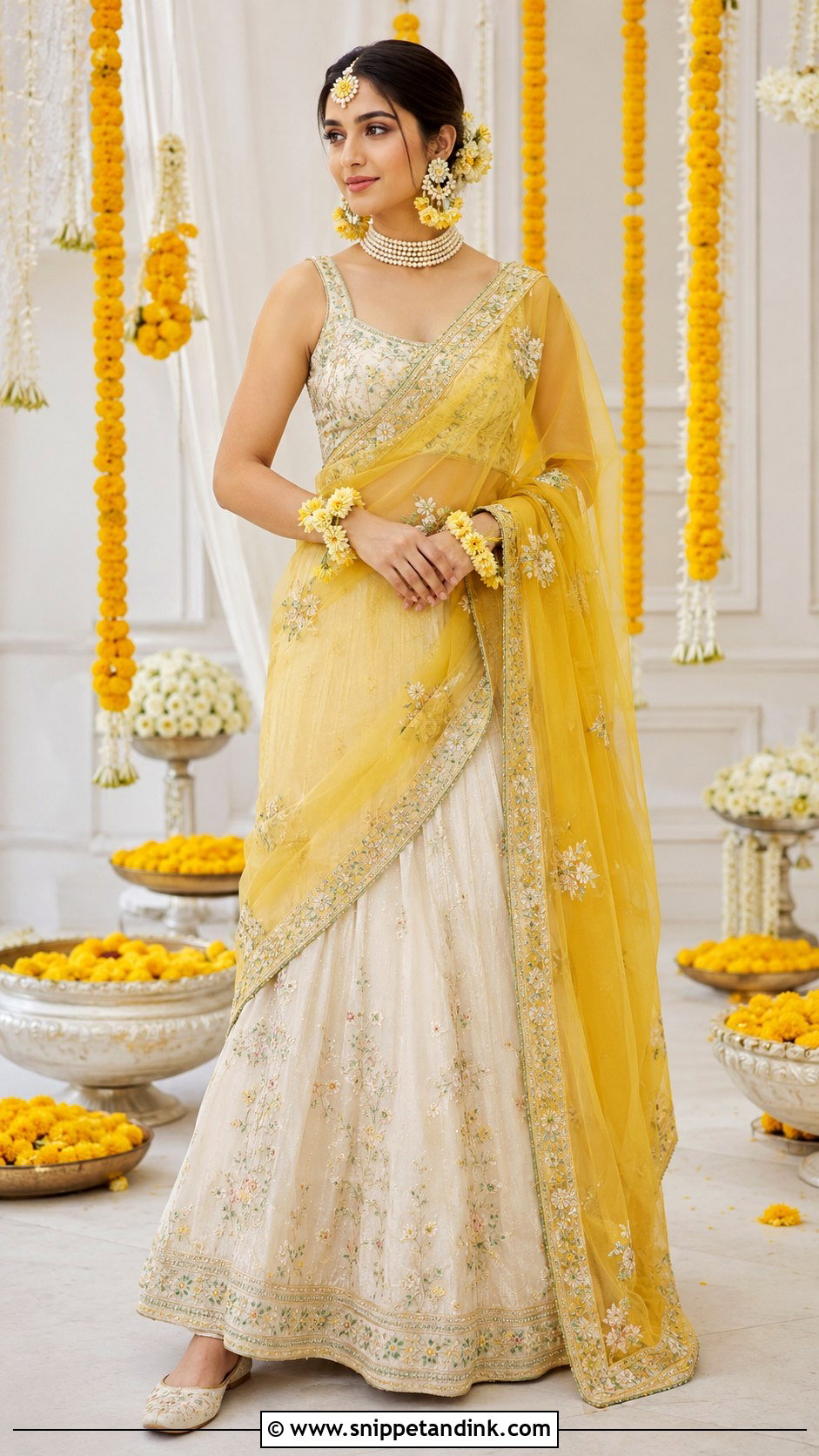
Ivory lets yellow accessories carry the color, which is a soft, grown-up way to do Haldi. Look for a skirt and blouse with fine floral embroidery, light mirror work or a narrow gold border, and drape a yellow organza dupatta over one shoulder or across the torso so your hands are free. Yellow floral earrings, a fine maang tikka and neutral juttis keep it airy. Brides can wear a fresh-flower necklace; guests usually look better in a small pearl choker. A sleek bun or side braid suits it. Ivory stains easily, so wear it for portraits, a separate bridal entrance, or as a guest who’ll stay out of the paste.
13. Yellow Bandhani Sari Haldi Outfit
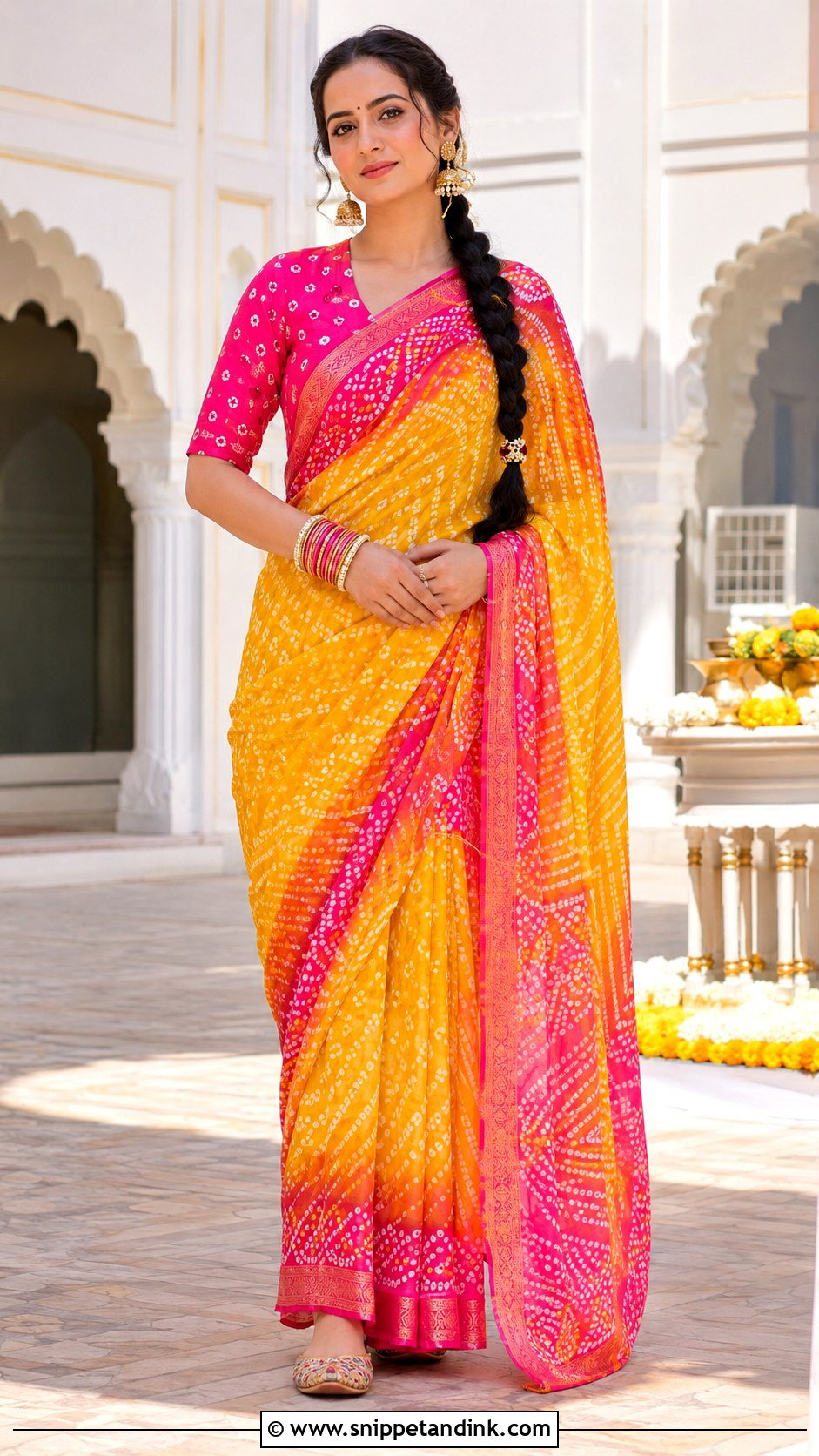
Bandhani is resist-dyed: the fabric is pinched and bound in tiny points before dyeing, which leaves that dotted pattern and a slightly crinkled hand. A yellow bandhani sari in georgette, cotton or crepe with red, pink, green or white dots is vivid enough to stand alone. Pick a blouse color from the smallest dots in the print rather than the main shade. Gold jhumkas, glass bangles, a small bindi and simple juttis are all it needs. Pin the pallu securely, since georgette bandhani slides. A braided bun or long plait suits the regional character. Avoid an oversized necklace or heavy makeup, which fight the pattern.
14. Yellow Gharara Haldi Outfit
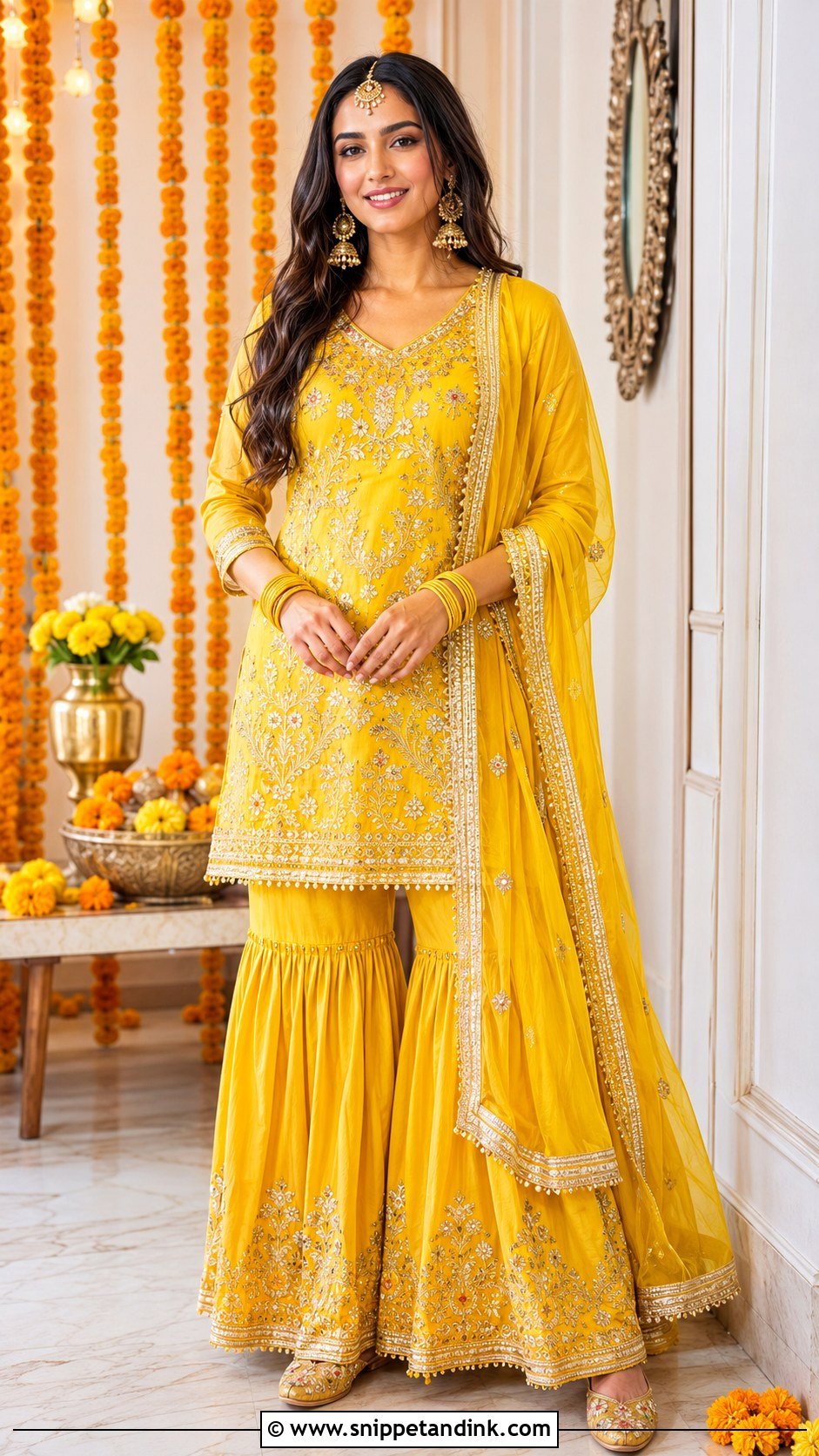
A gharara differs from a sharara in one detail that matters: it’s fitted to the knee and then flares out at a gathered joint, often trimmed with gota. That joint has to sit exactly at your knee, so I’d never buy one without a fitting. Pair a short kurta with properly fitted gharara pants and a light dupatta edged in gota, lace or embroidery. Cotton-silk or light georgette holds the flare without feeling stiff. A passa or small maang tikka, statement earrings, slim bangles and embroidered juttis complete it. It’s dressier than a kurta set, which suits brides, sisters and close family. Hem it carefully so the wide lower section doesn’t drag.
15. Orange And Yellow Lehenga Haldi Outfit
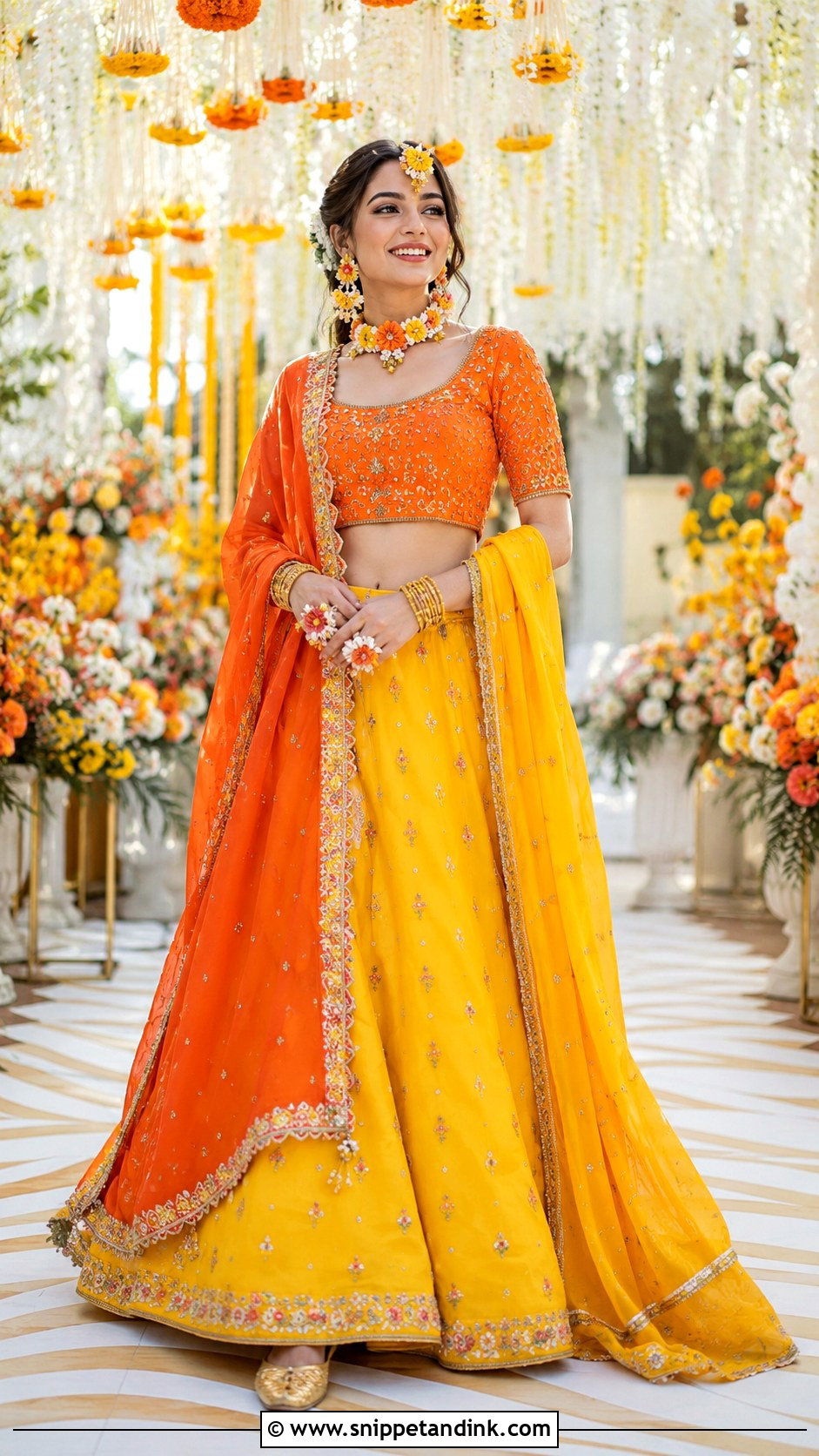
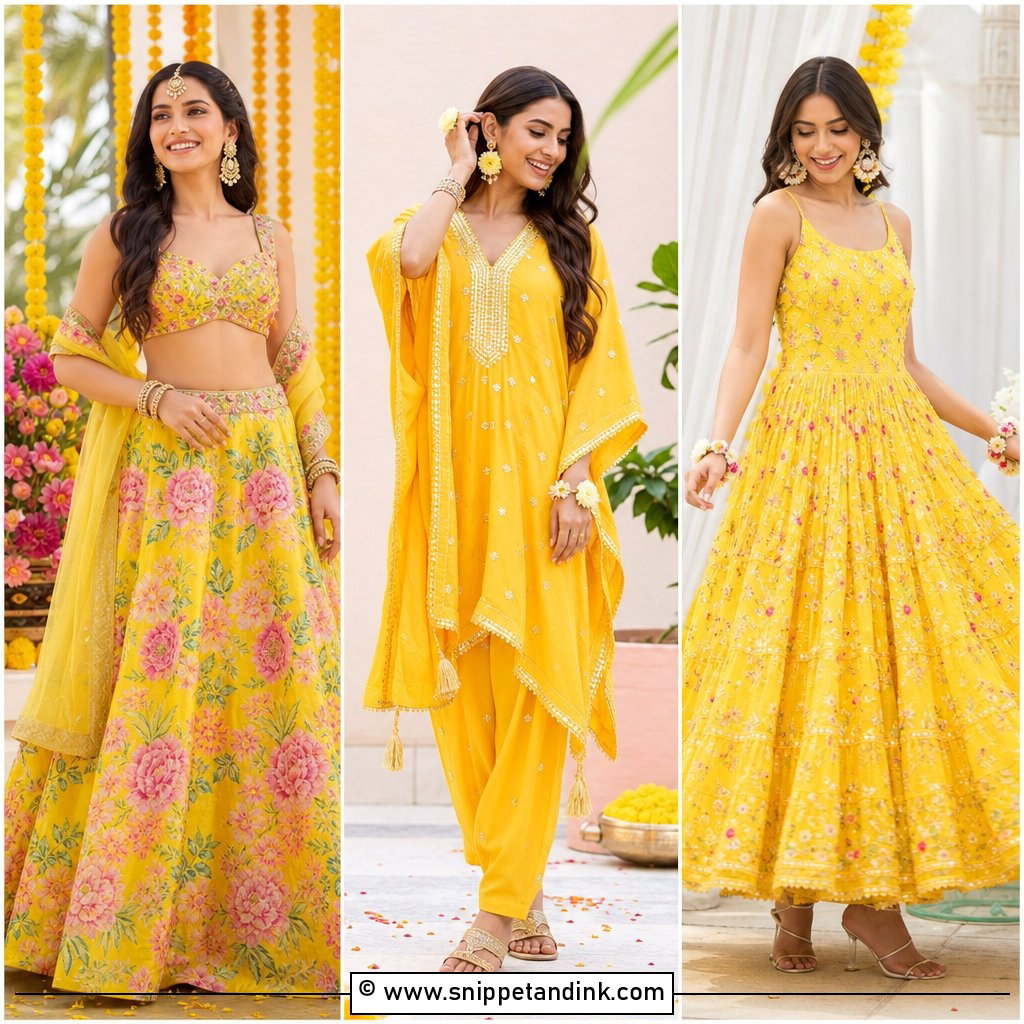
Orange and yellow is the warmest pairing here, and daylight makes the most of it. Wear a marigold-yellow skirt with an orange blouse, or flip them for stronger contrast, and use a printed or embroidered dupatta that combines both shades so it looks planned. Fabric finish matters more than you’d think. Shiny satin in two bright colors can glare in midday sun and blow out in photos, so I steer clients toward matte cotton-silk or a lightly textured weave. Gold earrings, warm bangles and tan or gold juttis suit it; brides can add white, yellow and orange floral jewelry. Keep the embroidery focused and the hair in a low bun or loose braid.
16. Yellow Dhoti Pant Haldi Outfit
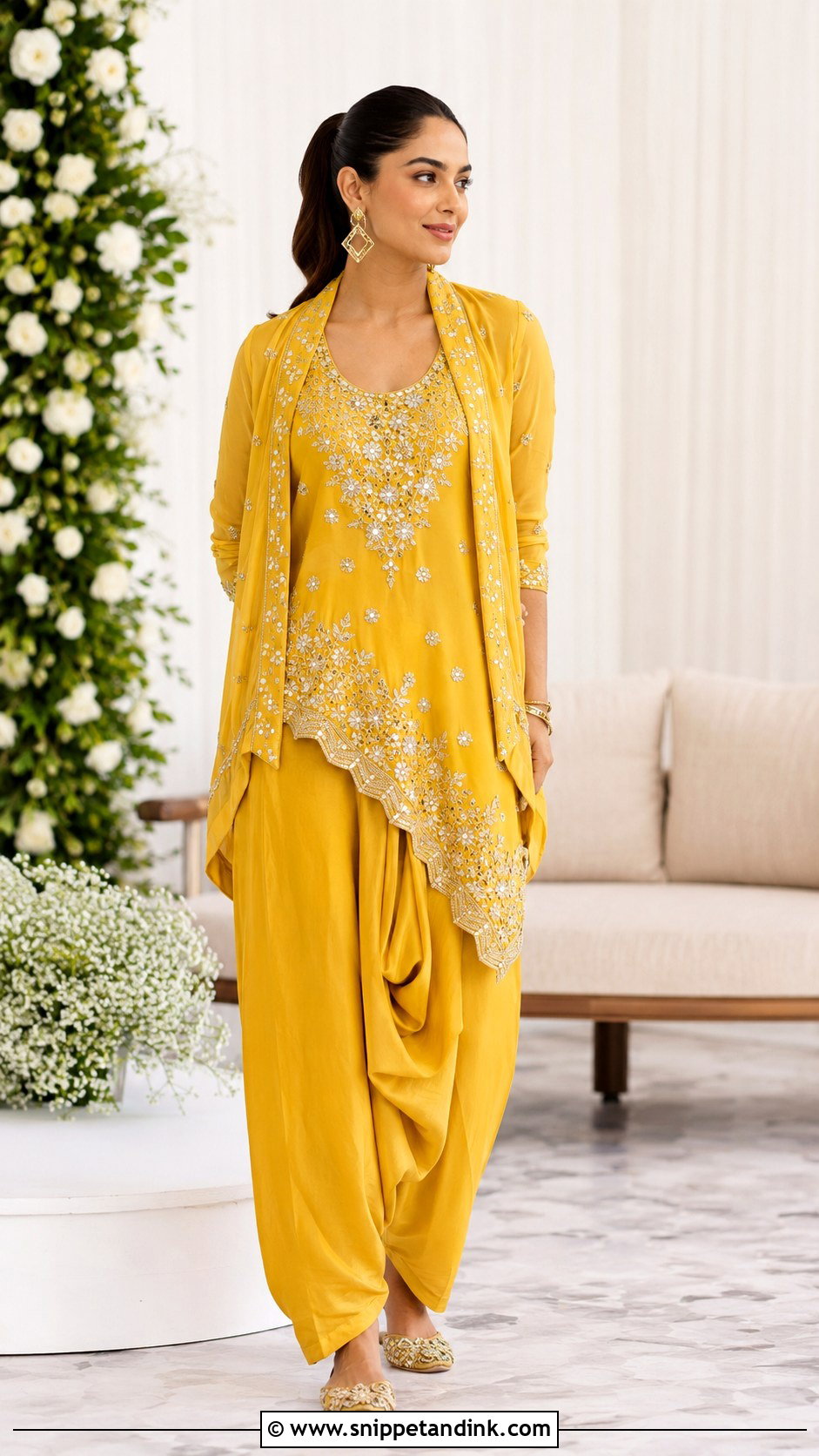
Dhoti pants are the Indo-Western piece I trust most for a dance-heavy Haldi. Pair the draped yellow pants with a short embroidered kurta, a structured crop top or an asymmetric tunic, and let a light jacket take the dupatta’s place so your arms stay free. Check the fastening before you buy. A secure elastic or side zip is far better than a drawstring that loosens as you dance, and you need room in the seat to sit cross-legged. Geometric earrings, a slim bracelet stack and embellished flats suit the clean shape, with a sleek ponytail, and it settles in naturally at an intimate home function or a modern venue.
17. Pastel Floral Sari Haldi Outfit
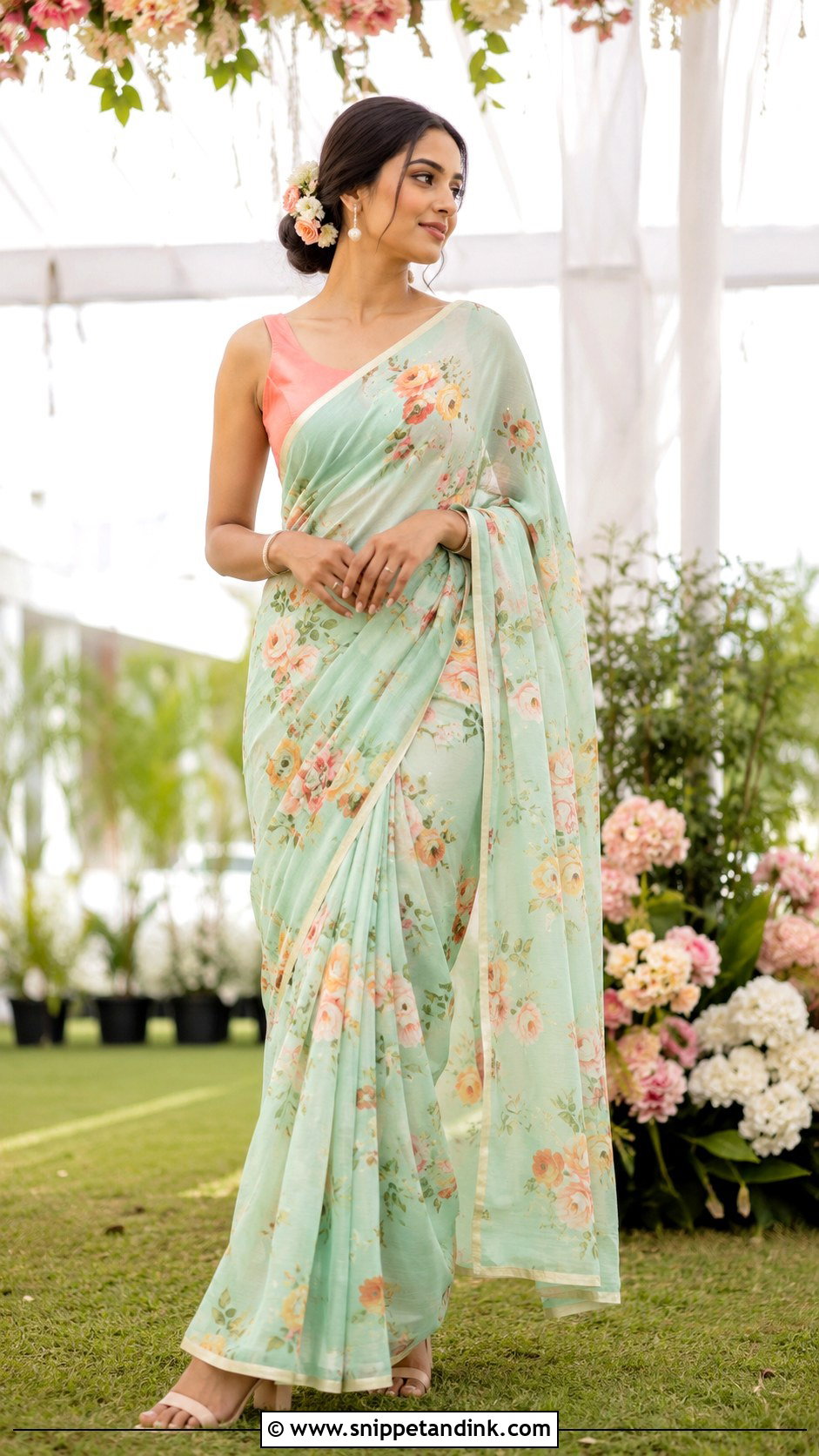
Pastel florals are the quiet option, and they suit mothers, aunts and guests especially well. Mint, blush, peach or pale yellow with watercolor flowers or small botanicals keeps it festive without competing with the bride’s yellow. Pull the blouse color from an accent in the print. Pearl earrings, thin bangles and neutral block heels are enough, with a loose bun and fresh flowers. One practical warning: pastels show turmeric and colored water as clearly as white does, so if you’re in the inner circle applying paste, choose an easy-care fabric and pin the pleats and pallu firmly.
18. Yellow Jacket And Palazzo Haldi Outfit
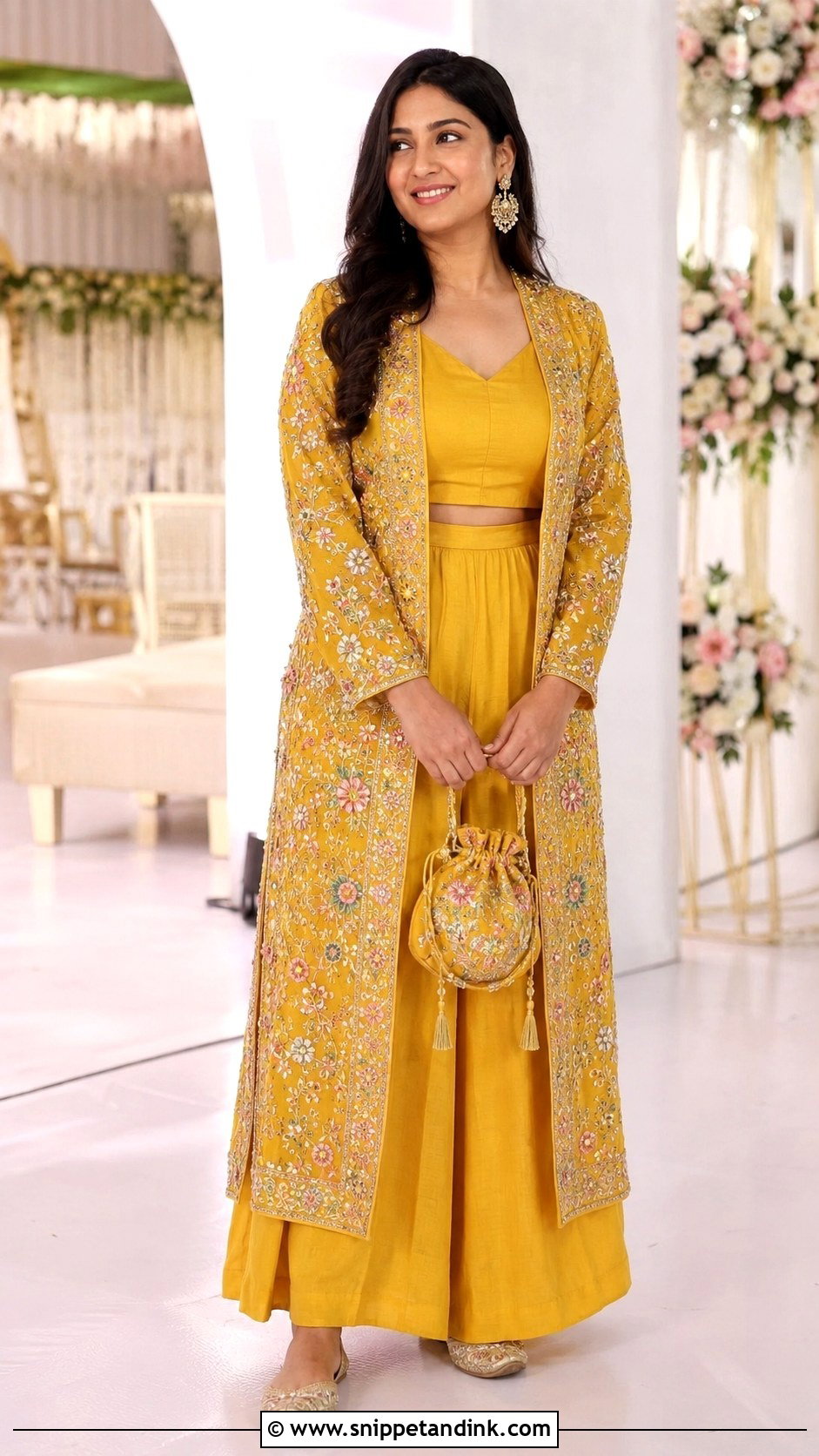
A long yellow jacket over a blouse and palazzos makes a polished fusion outfit with real coverage. Choose an open-front jacket with floral print, thread embroidery or restrained mirror work, and keep the blouse and wide-leg pants solid so the outer layer leads. This is my go-to for cooler winter mornings or an air-conditioned hall, where a bare midriff feels wrong. A long jacket does pick up paste at the hem when you sit, so a darker or printed lining helps. Statement earrings, a small potli and low heels or pointed juttis finish it, with a sleek bun or smooth ponytail to match the long vertical line.
19. Pink And Yellow Sharara Haldi Outfit
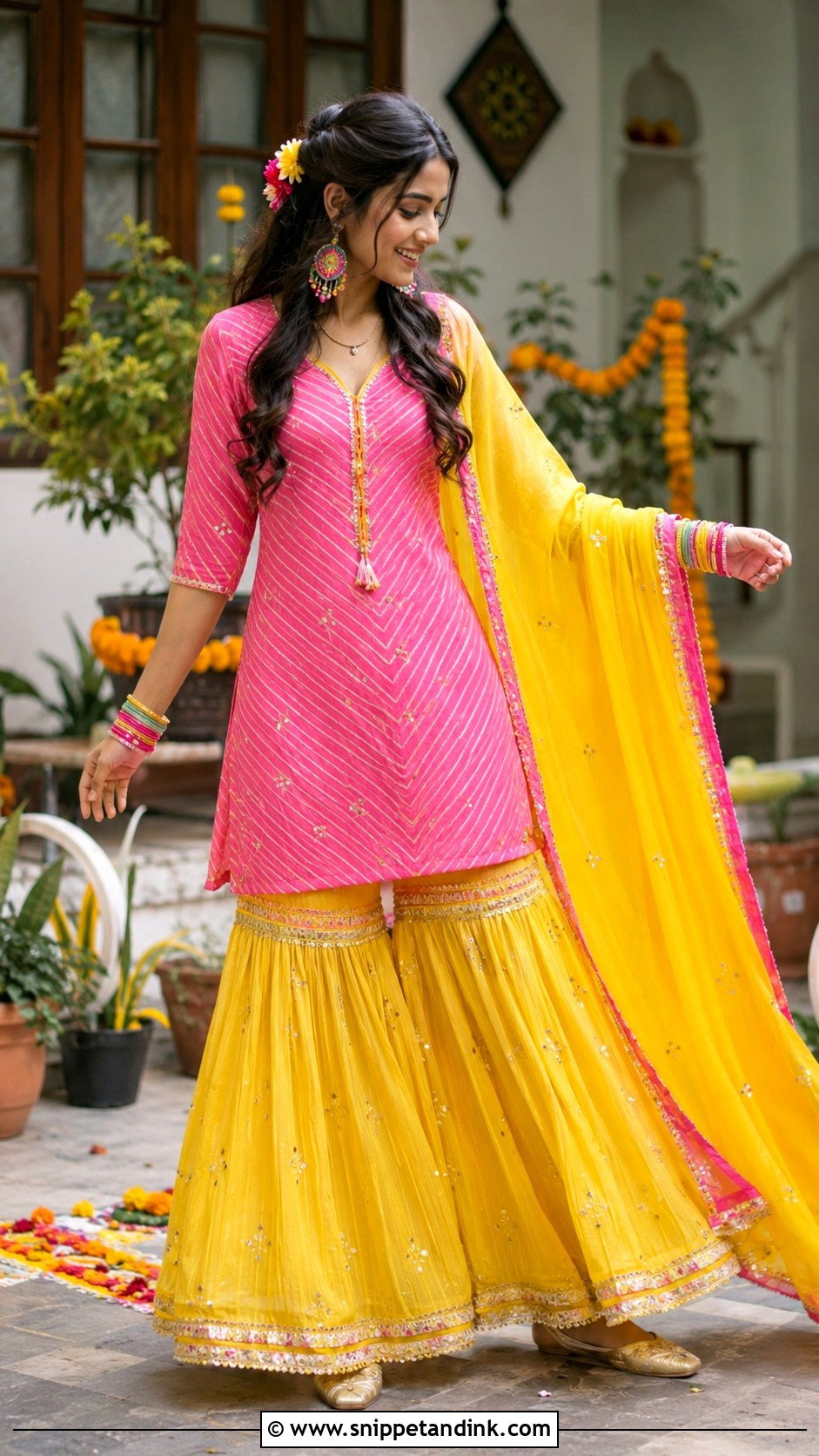
Pink and yellow feels young without drifting far from tradition. Pair a yellow sharara with a pink short kurta, or pick a set with both shades worked into the embroidery, and tie it together with a yellow dupatta edged in pink. The rule I follow with two bright colors is to let one dominate and use the second only in borders, jewelry and accessories, or the outfit gets noisy. Colorful earrings, mixed glass bangles and gold or pink juttis suit it, with a half-up style and small flowers. Bridesmaids can coordinate by sharing the palette across different silhouettes.
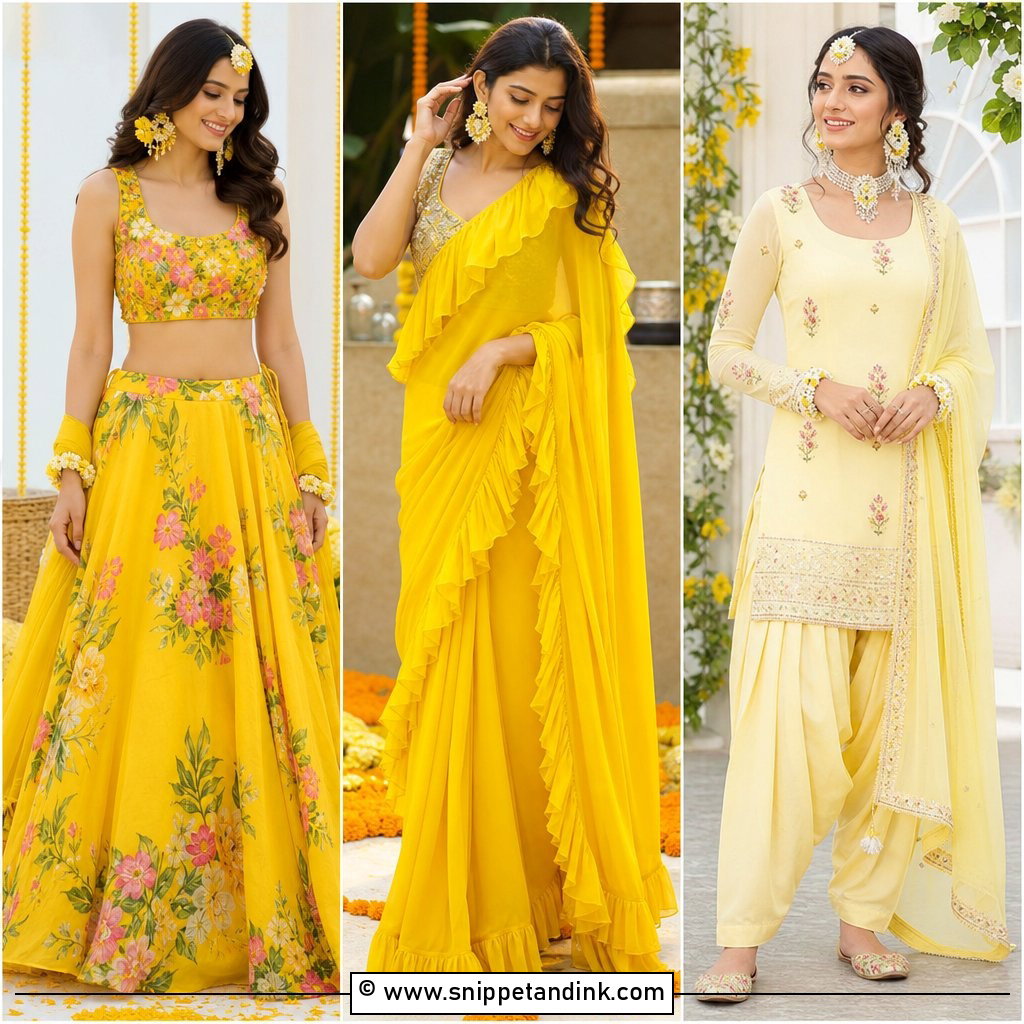


20. Yellow Kaftan Haldi Outfit
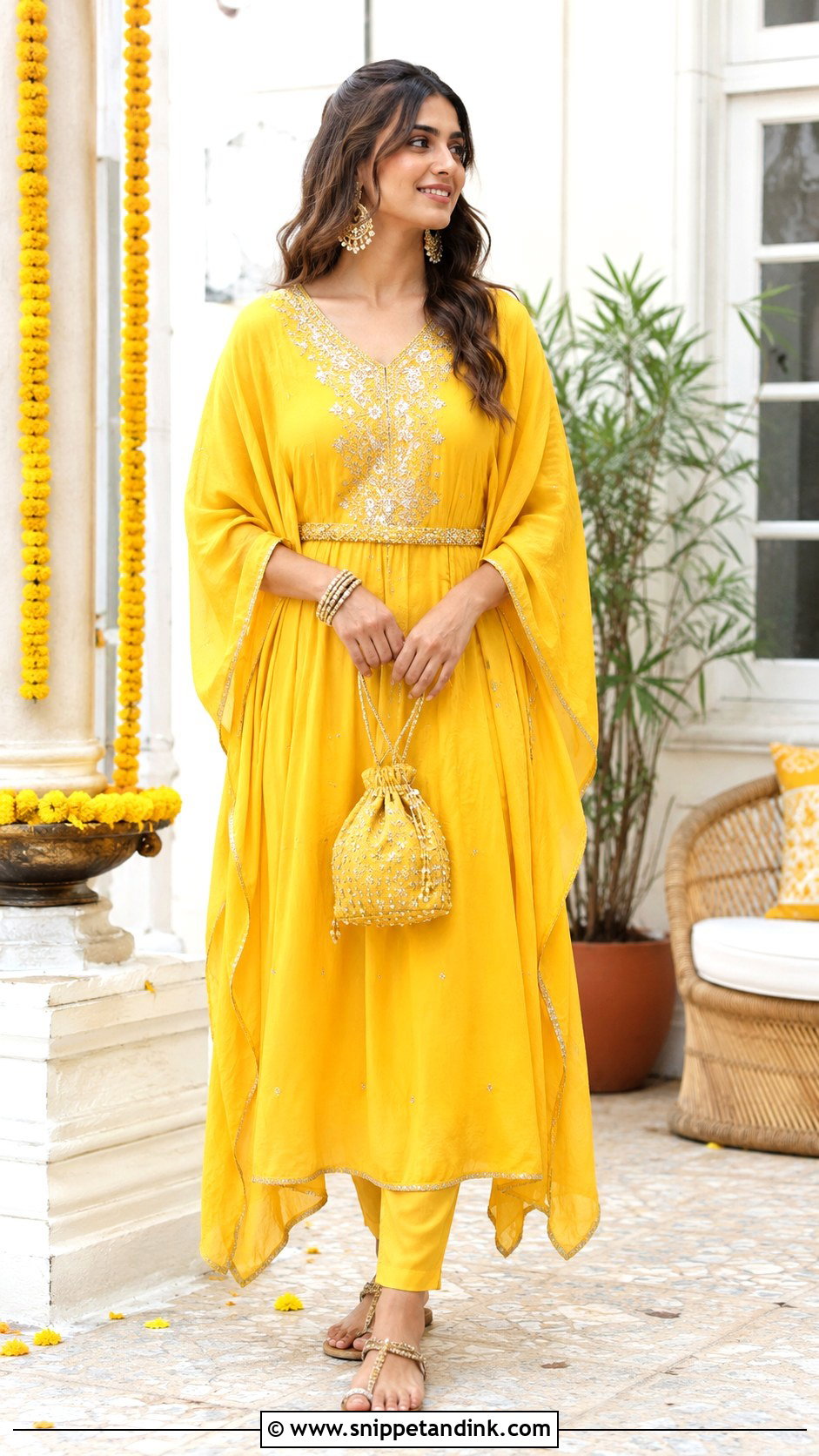
A yellow kaftan is the most forgiving outfit on this list, and the one I suggest for pregnant guests or anyone who simply wants to breathe. Choose midi or ankle length with a shaped waist, an embroidered neckline or decorative side borders so it still reads as wedding wear. Kaftans often have high side slits, so wear fitted pants underneath if you’ll be sitting on the floor. Statement earrings, stacked bangles and flat sandals are enough, with a low ponytail or braided bun. Brides can define the waist with an embellished belt and add floral jewelry; guests can carry a compact potli. It skims the body, so it fits across a wide size range without tight tailoring.
Midday Sun, a Monsoon Lawn or a Cool Hall
The same outfit can feel right at one Haldi and miserable at another. Before I settle on anything, I ask where and when the ritual is happening.
- Summer outdoors: cotton, mulmul and light georgette, short sleeves and no can-can. Satin and heavy silk trap heat and show sweat marks quickly.
- Rainy season: hems at ankle length or shorter, quick-drying georgette or crepe, and flats with grip. Floor-length lehengas soak up muddy water.
- Winter mornings or air-conditioned halls: a jacket, cape or long Anarkali gives coverage, and you can drop the layer once the room warms up.
- Home functions on a tiled or marble floor: avoid trailing hems, because wet paste on stone is slippery and will mark anything that drags.
If you can’t confirm the weather, dress in layers. A cape or light jacket is far easier to take off than a sweaty blouse is to fix.
How Much Time a Haldi Outfit Really Needs
Haldi clothes often get bought last, after the wedding lehenga and the reception outfit, and that’s when people run into tailoring queues. Timings vary a lot by city and season, but as a rough working guide I tell clients to buy ready-made sets at least two to three weeks before the function so there’s time for alterations. A blouse stitched from scratch usually needs longer, and wedding season stretches every tailor’s waiting list.
Try the finished outfit on with the actual shoes and jewelry at least a week out. That’s when you find the pallu that needs another pin loop, the hem that’s two centimeters too long or the dupatta that’s heavier than expected. Fixing those takes a day; discovering them on the morning takes the fun out of the ritual.
Yellow, Ivory or Lime Green on the Morning?
Whichever of these twenty you choose, plan for the paste first and the photos second. Traditional yellow lehengas, shararas, saris and Anarkalis still work wonderfully, and ivory, lime green, orange, pink and pastels are just as appropriate. Think about the venue, the weather, how the ritual runs in your family and how likely you are to get turmeric on you before spending on fragile fabric. Secure drapes, light jewelry and comfortable shoes let you join in instead of standing back. Brides can take any look further with florals and statement pieces, and guests can wear simpler versions of the same shapes.
You'll Like These Ideas:






Leave a Reply