
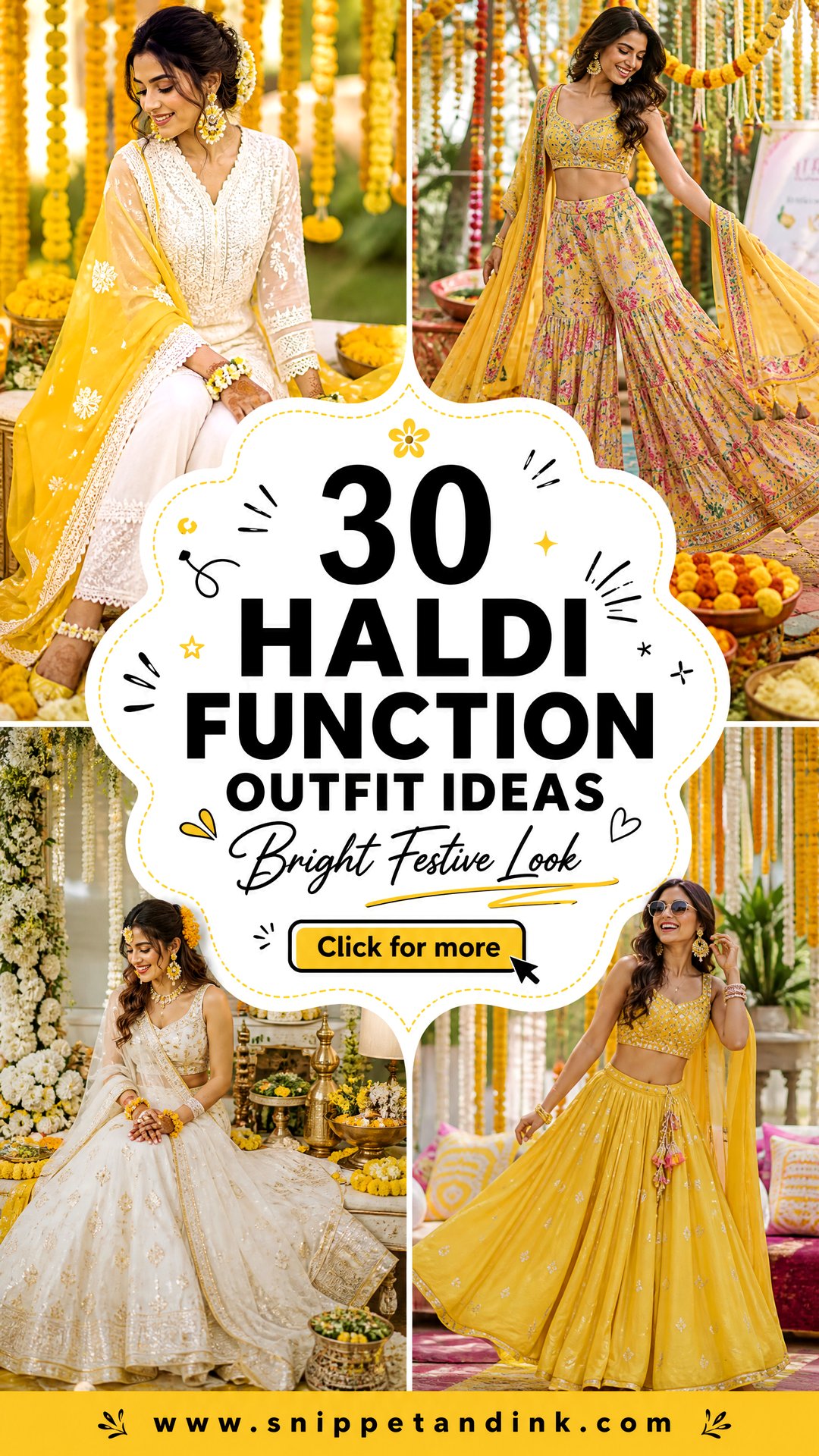
A Haldi is the one wedding function where your outfit is expected to get dirty. Turmeric paste goes on the bride’s face and arms, aunties smear it on anyone within reach, and half the ceremony happens sitting on a floor cushion or a low stool. So when I dress someone for it, I think about fabric and fastenings first and colour second. Yellow is still the classic, but white with yellow accents, florals, lime green, orange, pastels, light sarees, shararas, pre-draped styles and reusable Indo-western pieces all turn up now. Below are thirty looks for brides, bridesmaids, sisters, cousins and guests, with what each one handles well and where it struggles.
Fabric and Fastenings That Survive a Turmeric Morning
Before colour, I check three things with every Haldi outfit: what it’s made of, how it stays on and how it behaves on the floor. Turmeric paste is oily and deeply pigmented, so it sinks into some fabrics and sits on top of others.
- Cotton, linen, chanderi and georgette: the most forgiving. They breathe in the heat and respond best to cleaning afterwards.
- Silk, organza and anything with zari: keep these for people who won’t be getting paste on them. Metallic thread tarnishes and stains, and it is hard to clean.
- Pin everything that hangs. Dupattas, pallus and long sleeves dip into paste bowls and food without you noticing.
- Sit down in it at home. If a skirt rides up, a waistband digs in or the drape twists when you sit cross-legged, you’ll find out in front of everyone.
If you’re the bride, I’d also have a plain, dark-coloured towel or old dupatta on hand to drape over your lap during the application. It keeps the worst of the paste off the skirt without ruining the photos.
1. Yellow Lehenga For Haldi Function
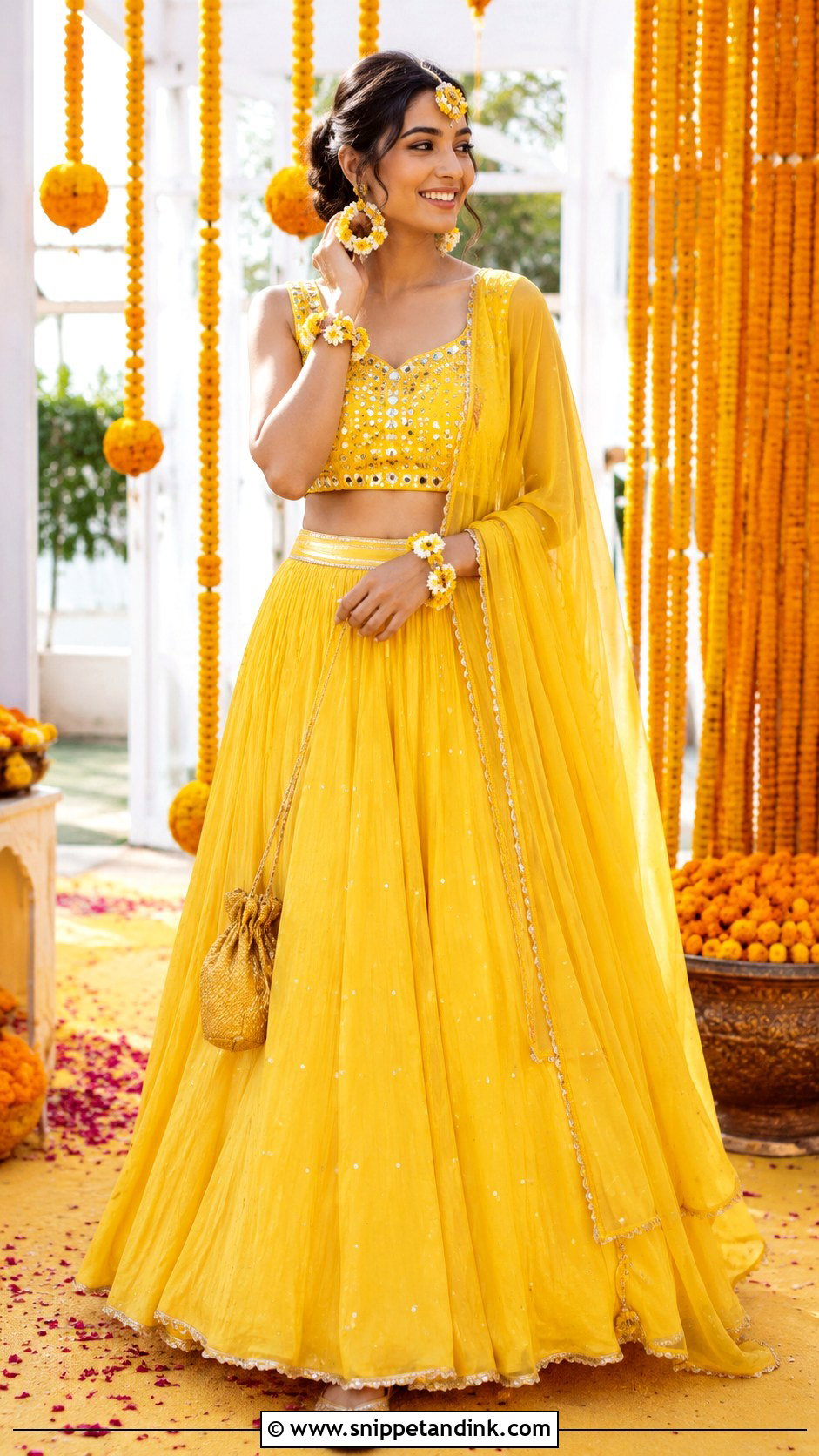
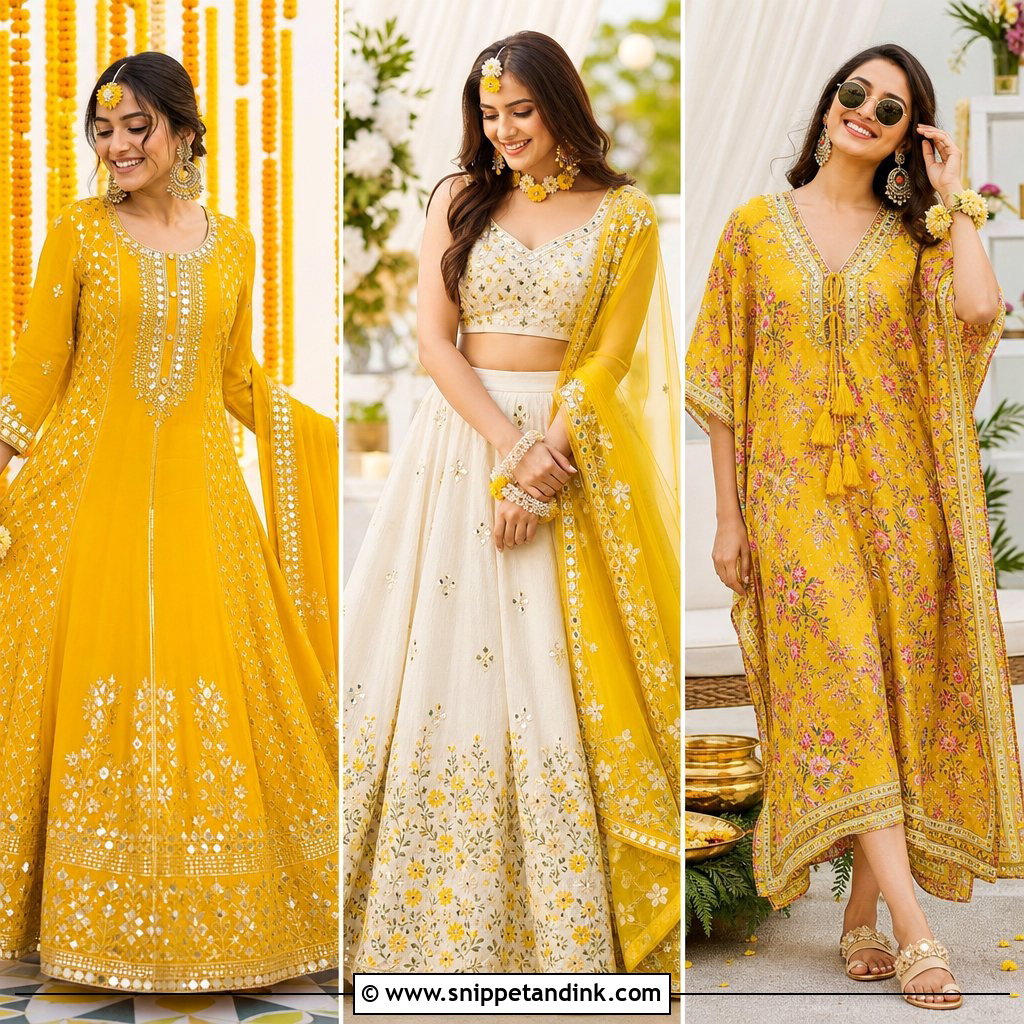
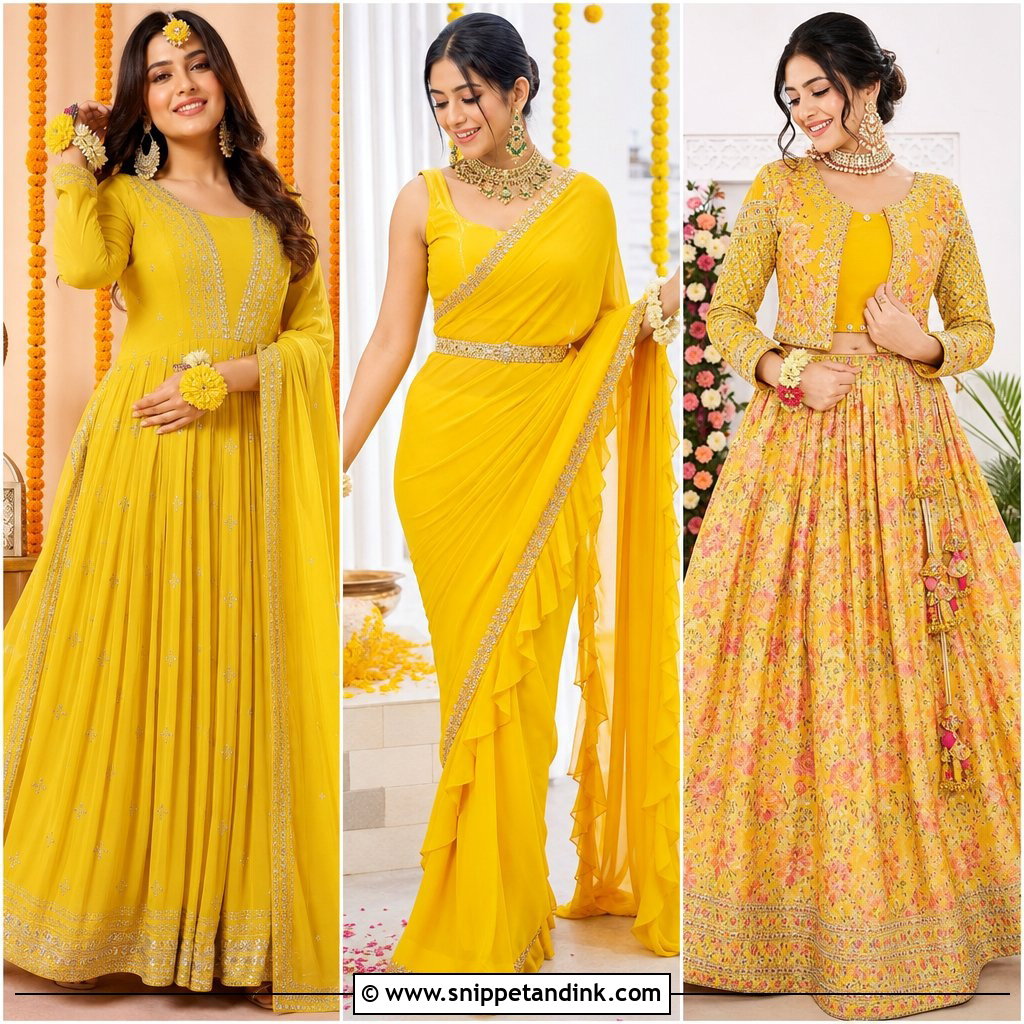
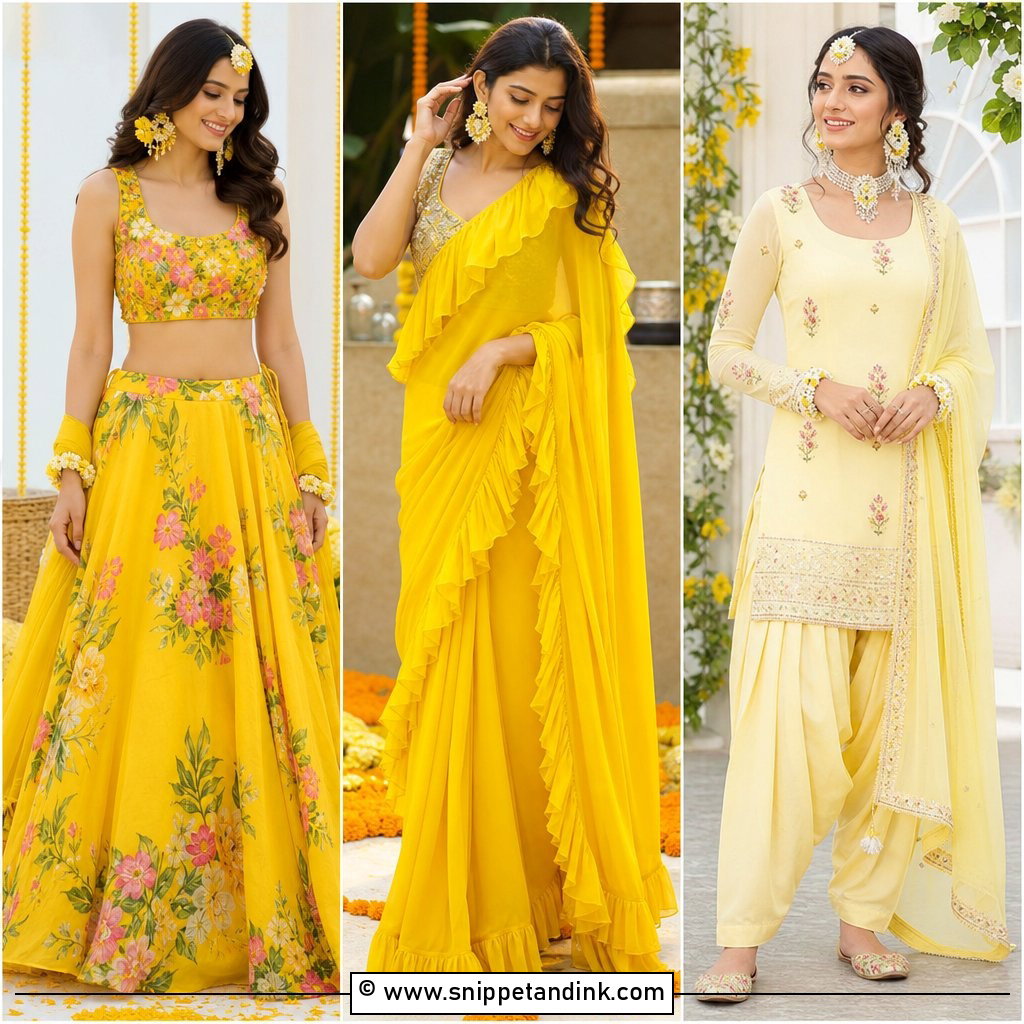
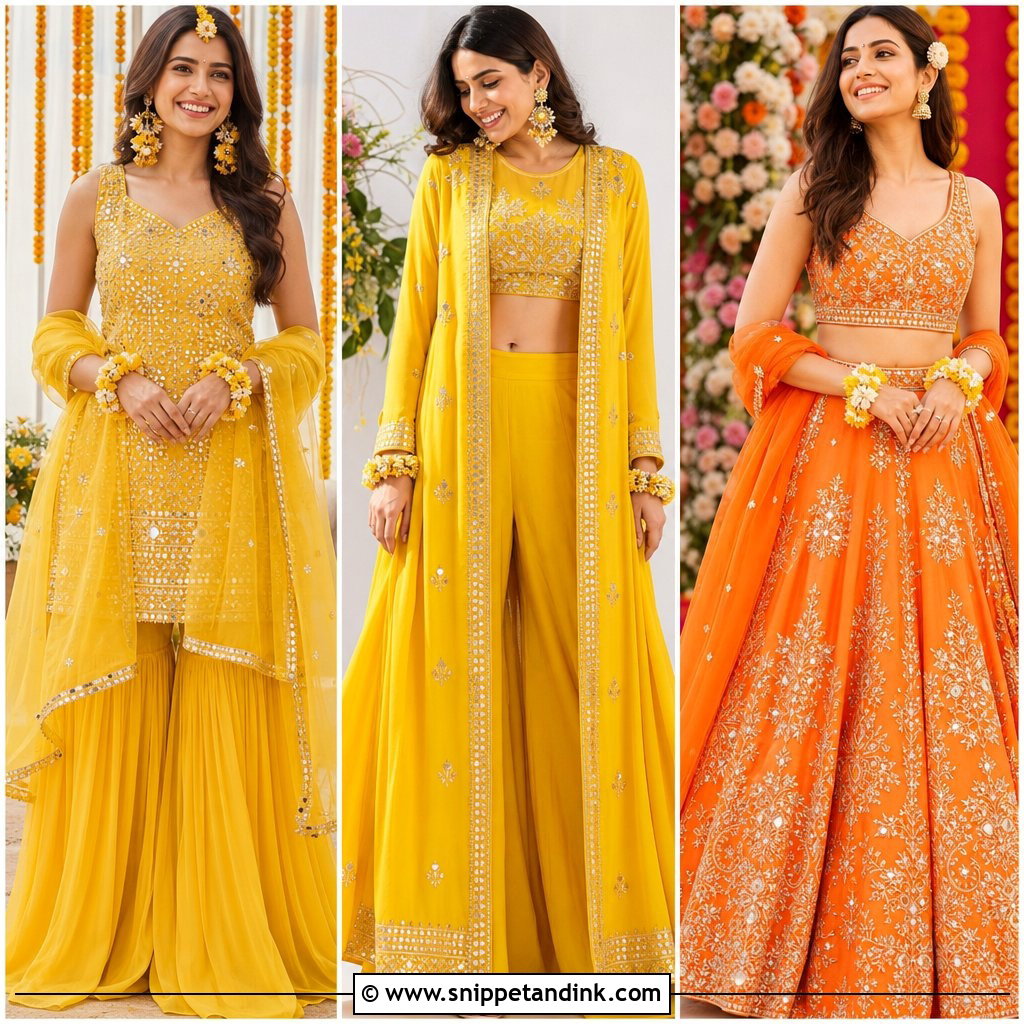
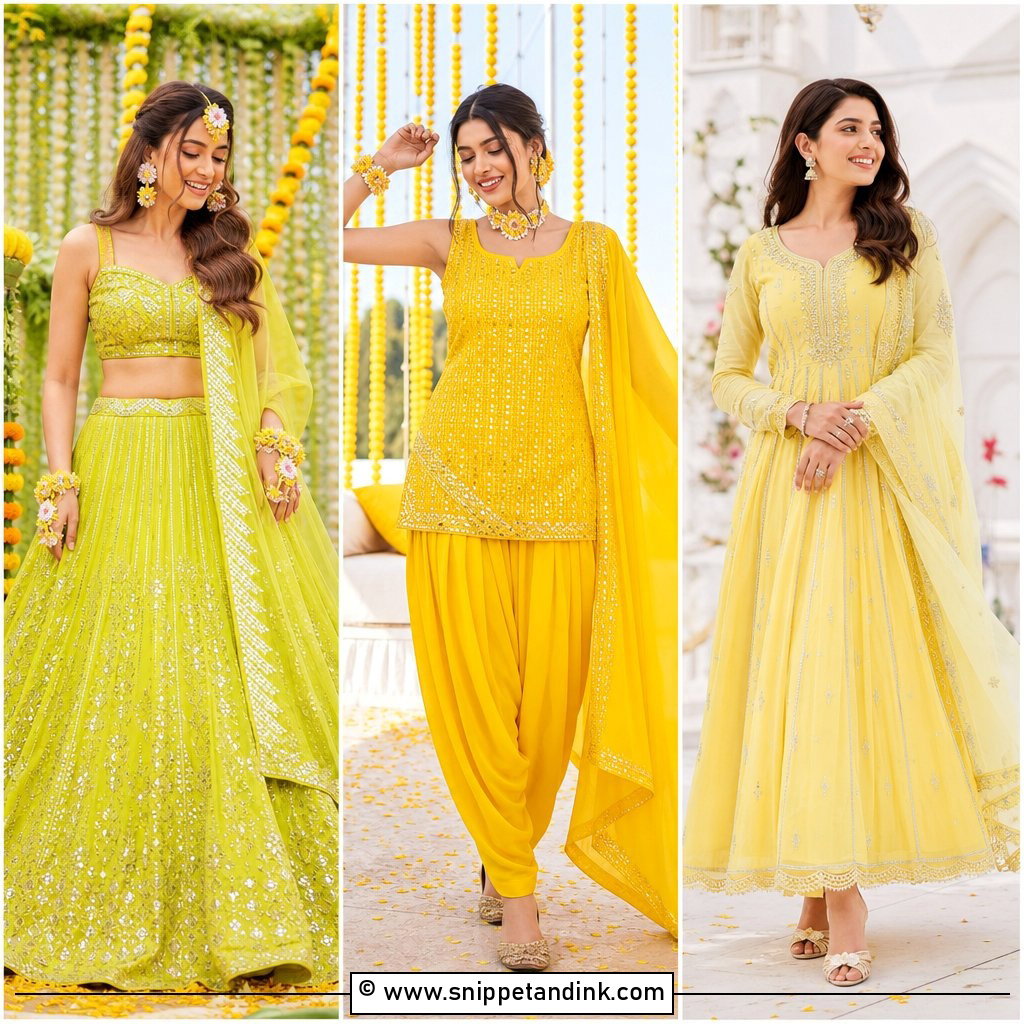
Yellow lehengas are the default for a reason: the colour hides turmeric splashes better than anything else on this list. I’d pick georgette, cotton silk, chanderi or organza over heavy silk so the skirt doesn’t fight you every time you sit down. A blouse with mirror work, gota patti, or thread embroidery catches the daylight in photos. Pin the dupatta on one shoulder rather than draping it loose; loose dupattas end up in the paste bowl. Brides can go fuller in the skirt and bigger in the earrings, bridesmaids lighter on embroidery.
2. Floral Lehenga For Haldi Function
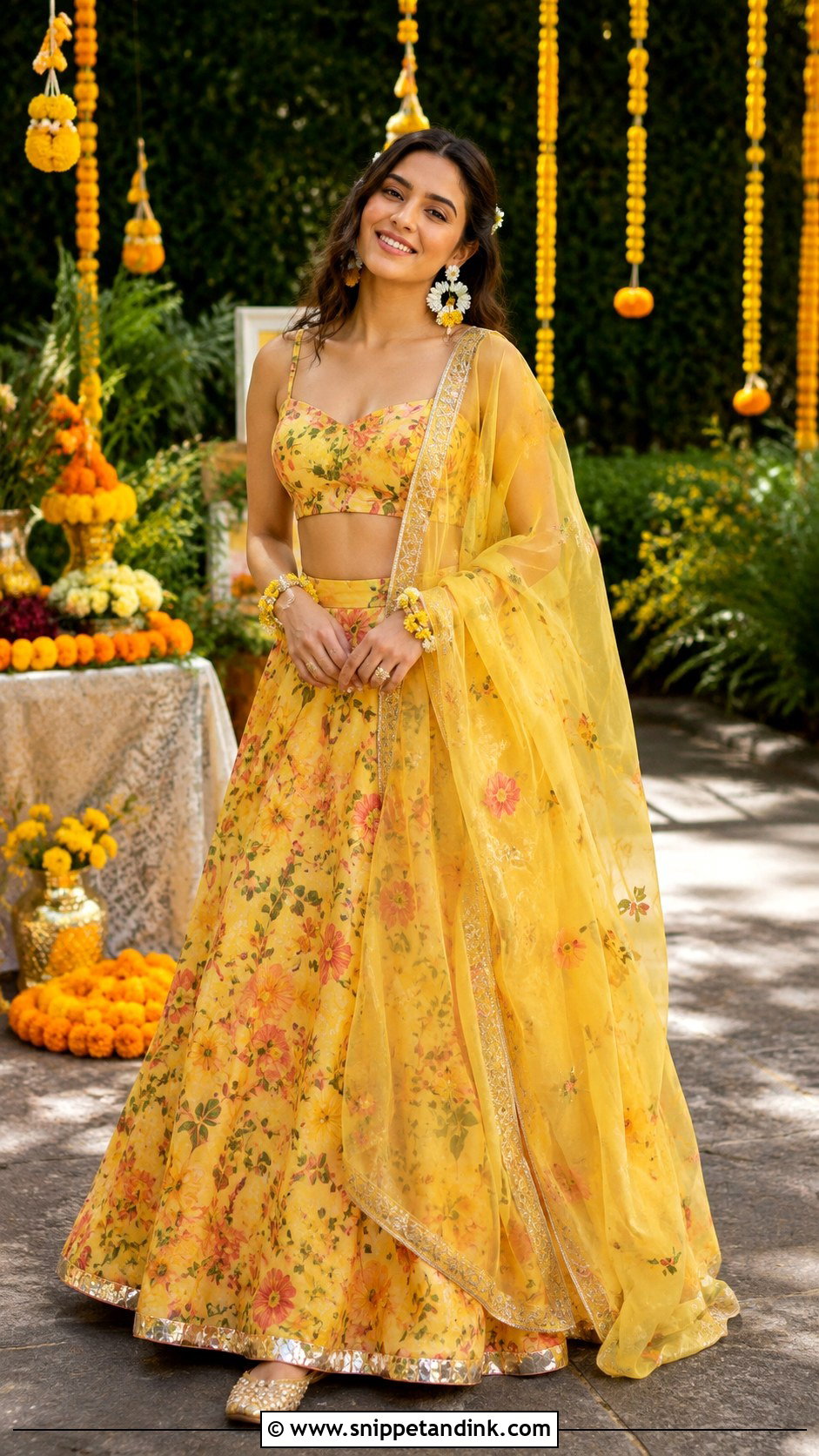
Printed or hand-painted florals feel right outdoors next to marigold decor, and they’re forgiving: a turmeric smudge on a busy print disappears in a way it never would on plain ivory. Choose a yellow, ivory, mint or peach base with small thread motifs rather than heavy bridal embroidery. A cropped blouse with a flowing skirt and an organza or chiffon dupatta keeps it airy. Floral jewelry suits this one well, though fresh-flower haath phool can bruise and drip, so put them on last.
3. Yellow Sharara For Haldi Function
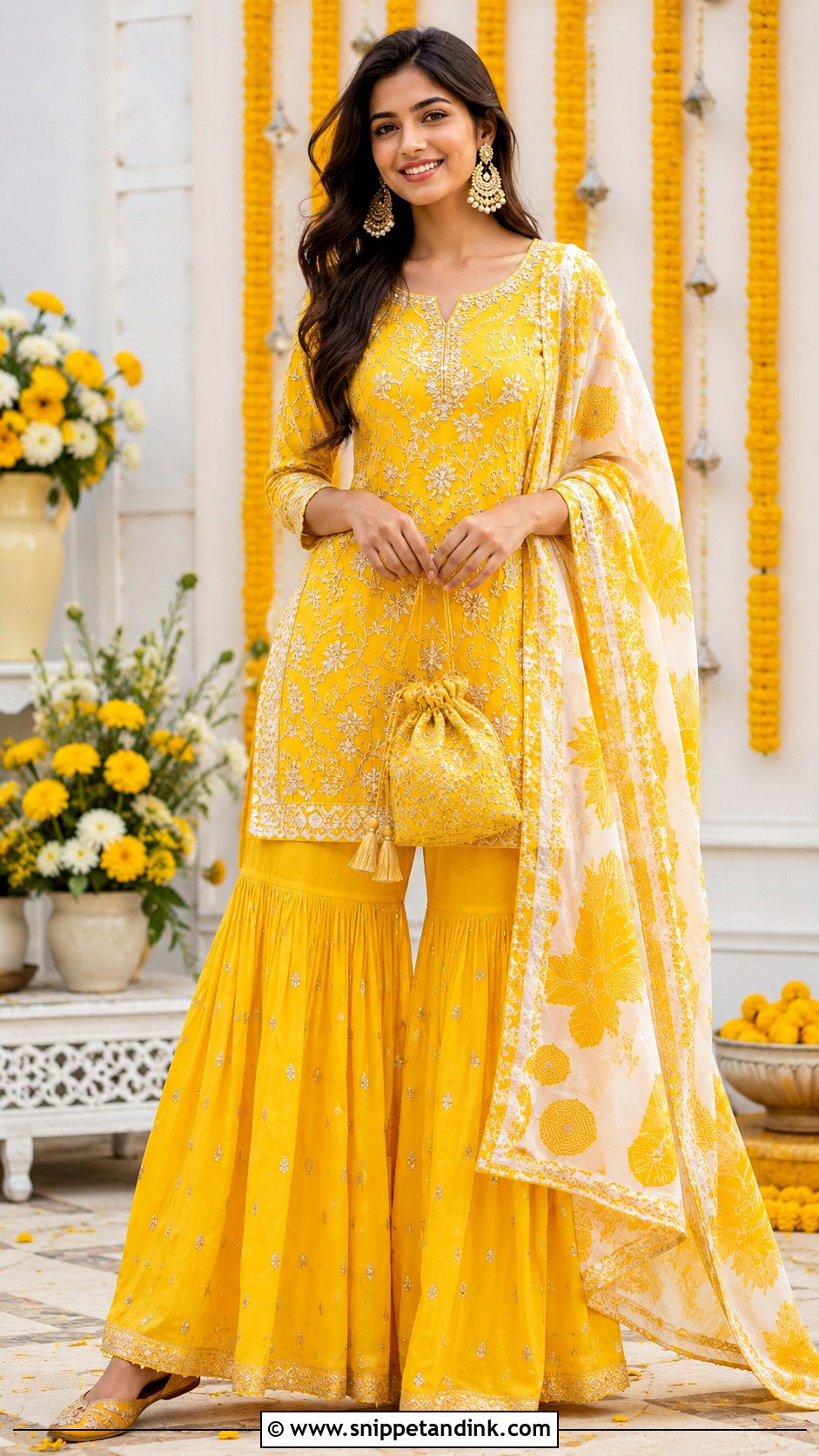
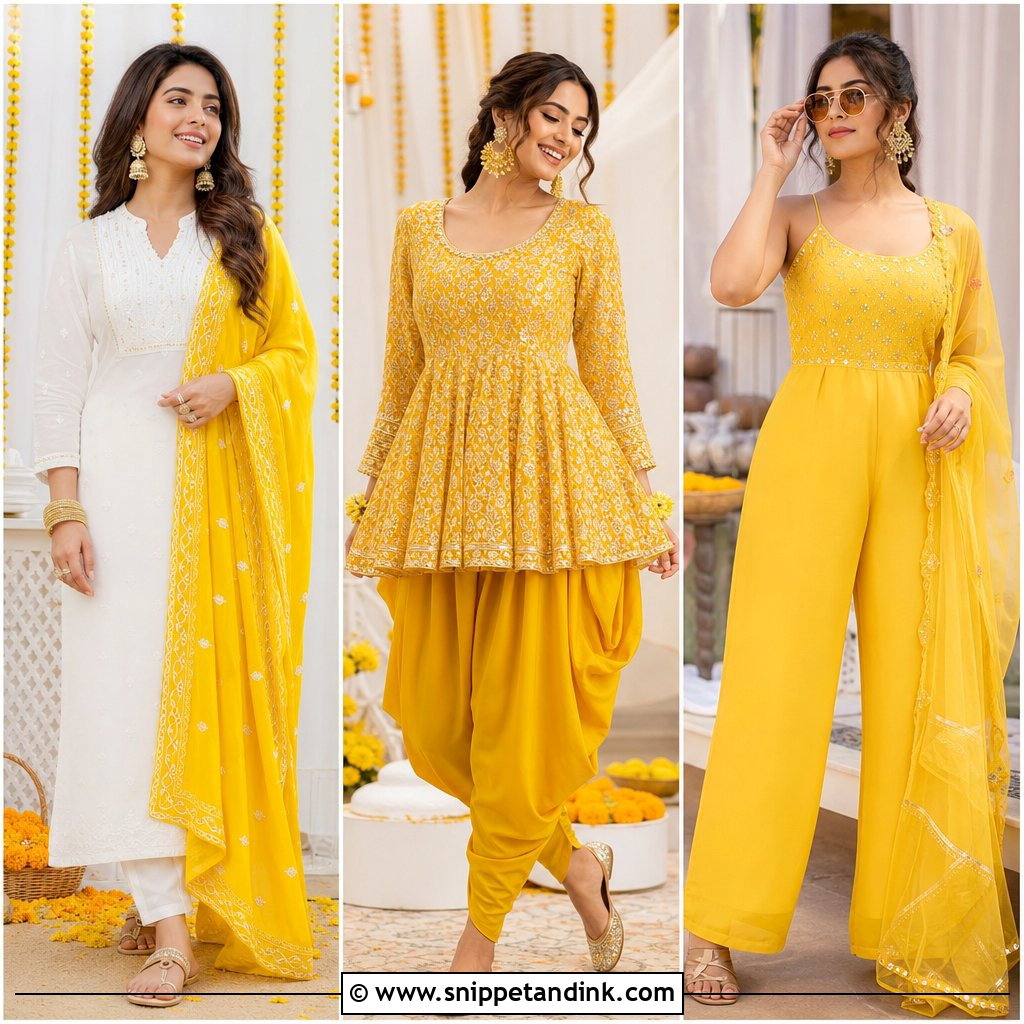
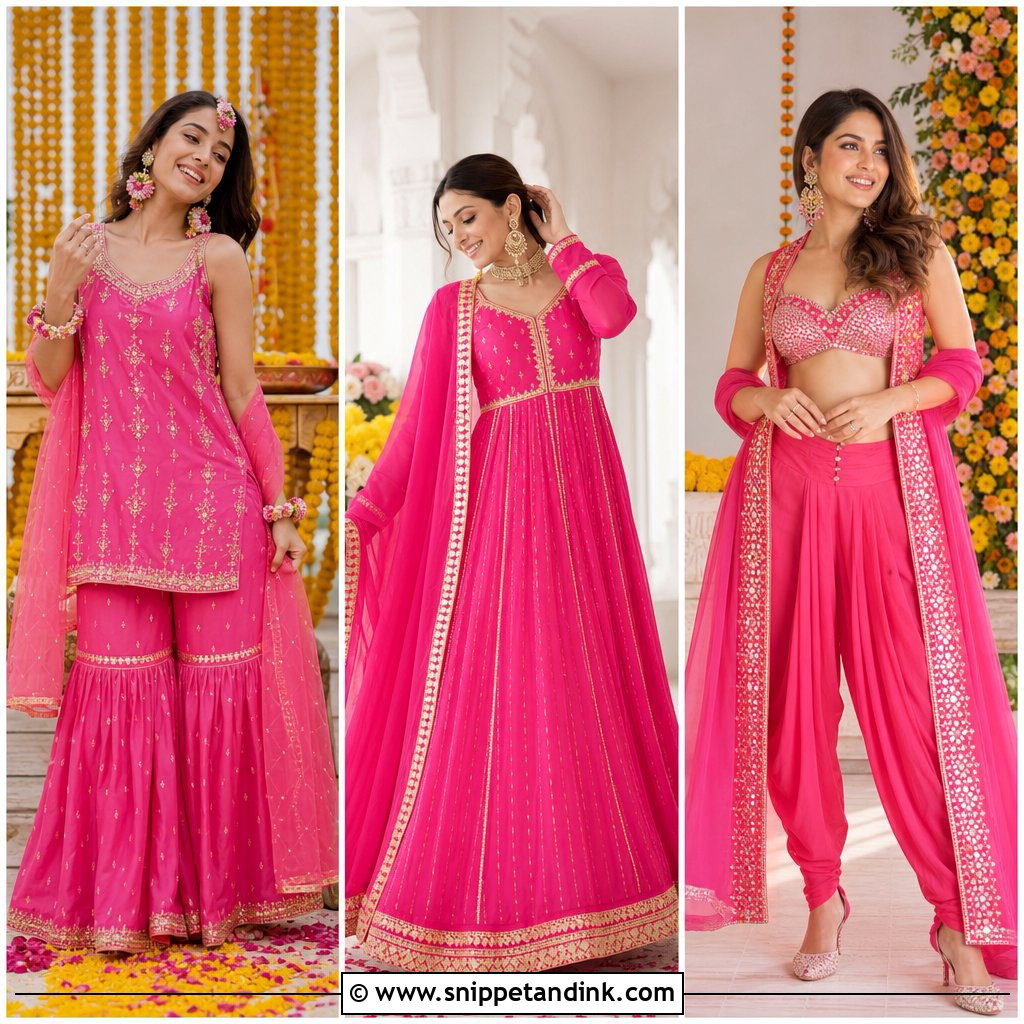
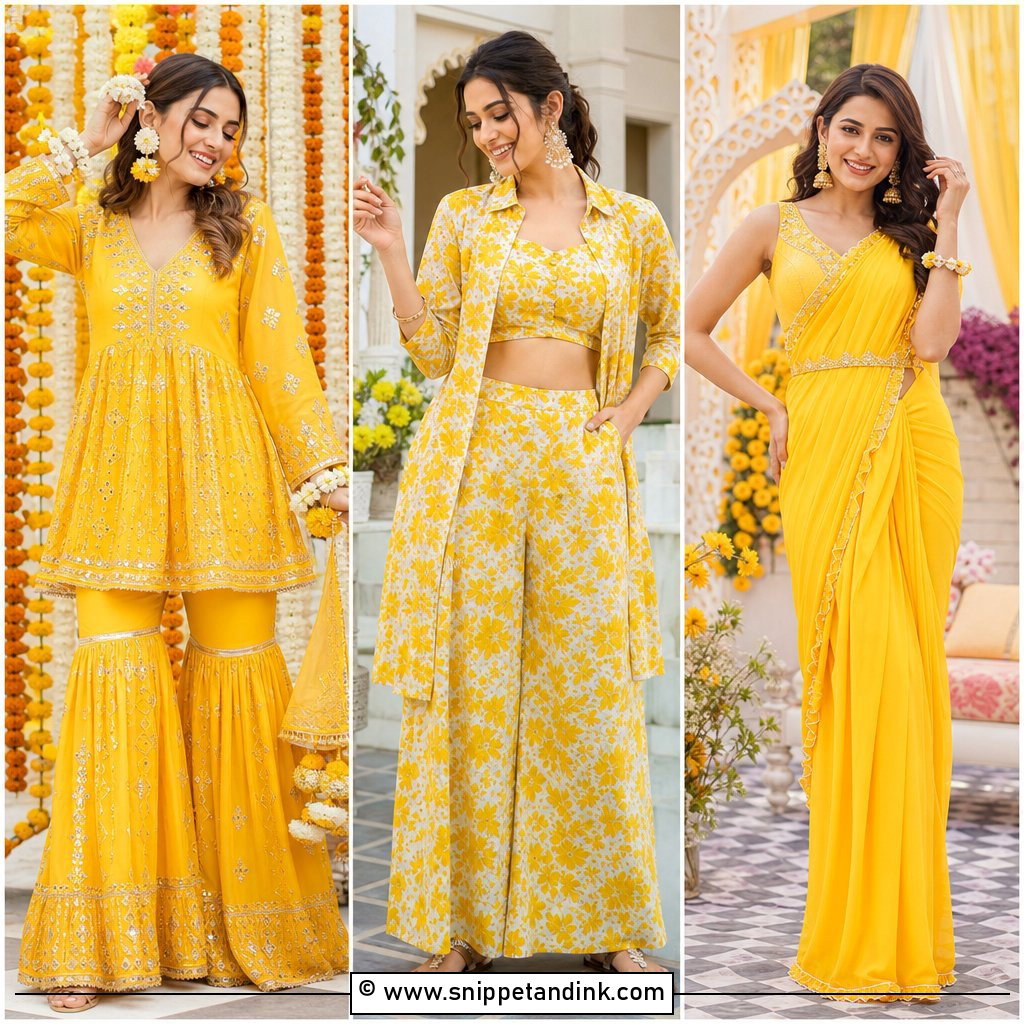
Sharara pants are easier than a lehenga when you’ll be up and down all morning, carrying plates, sitting cross-legged, then dancing. Cotton, georgette or muslin with gota borders or light embroidery suits the event. A printed dupatta in white, pink or green adds colour without weight. I’d check the waist before buying: shararas often sit on a drawstring, and a wide flare pulls it down when you dance, so a hook or elastic back is worth asking for. Juttis, chandbalis and a small potli bag finish it.
4. White And Yellow Haldi Outfit
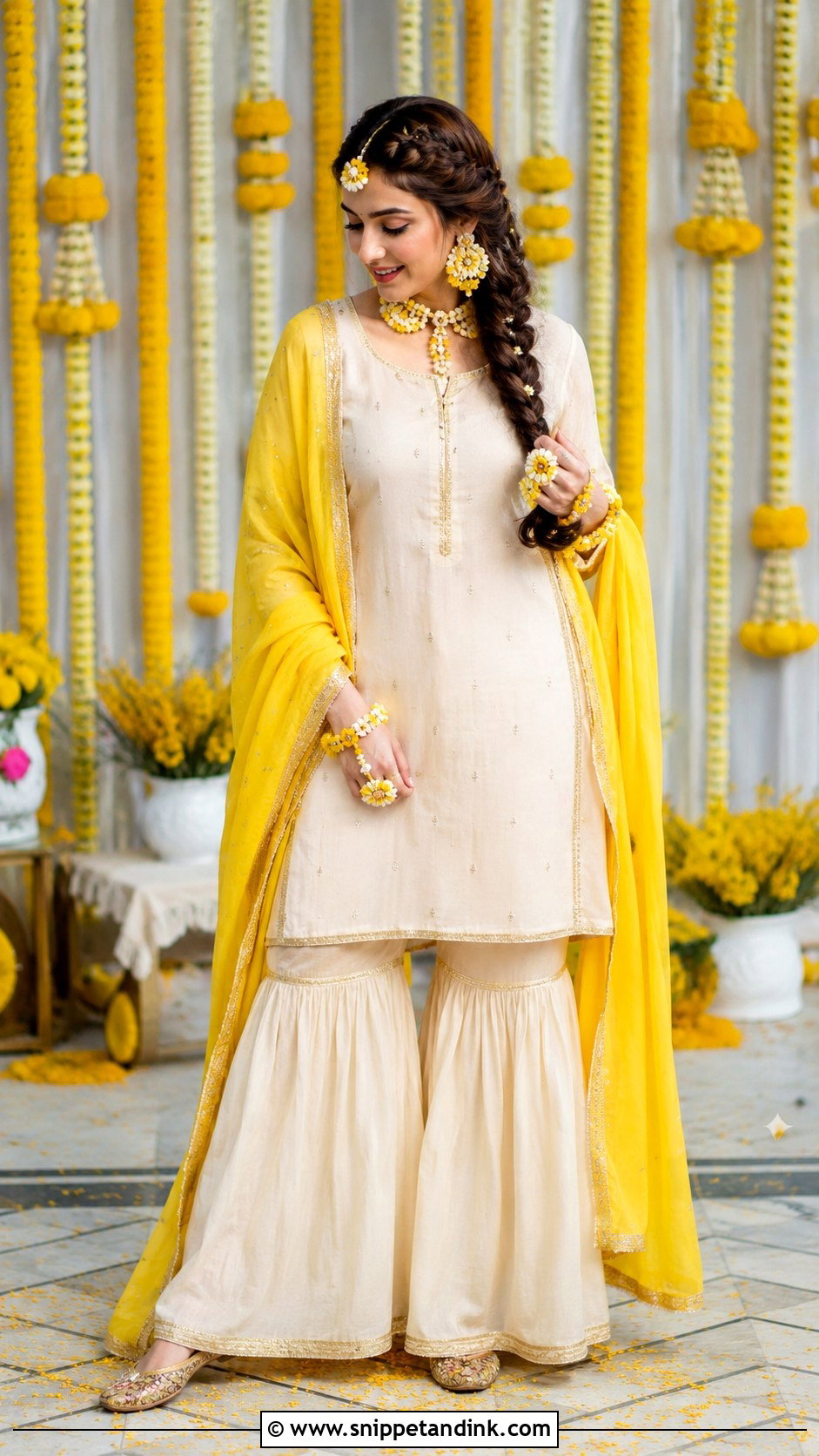
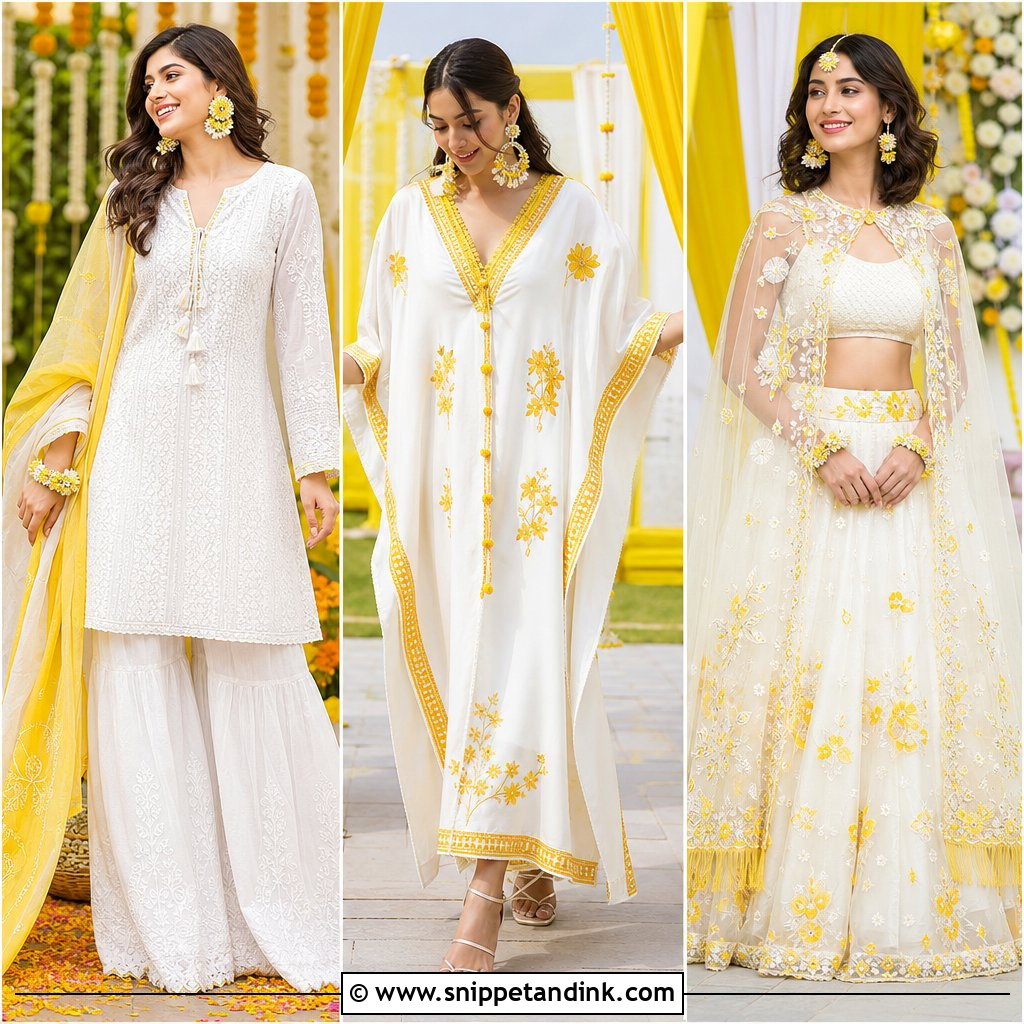
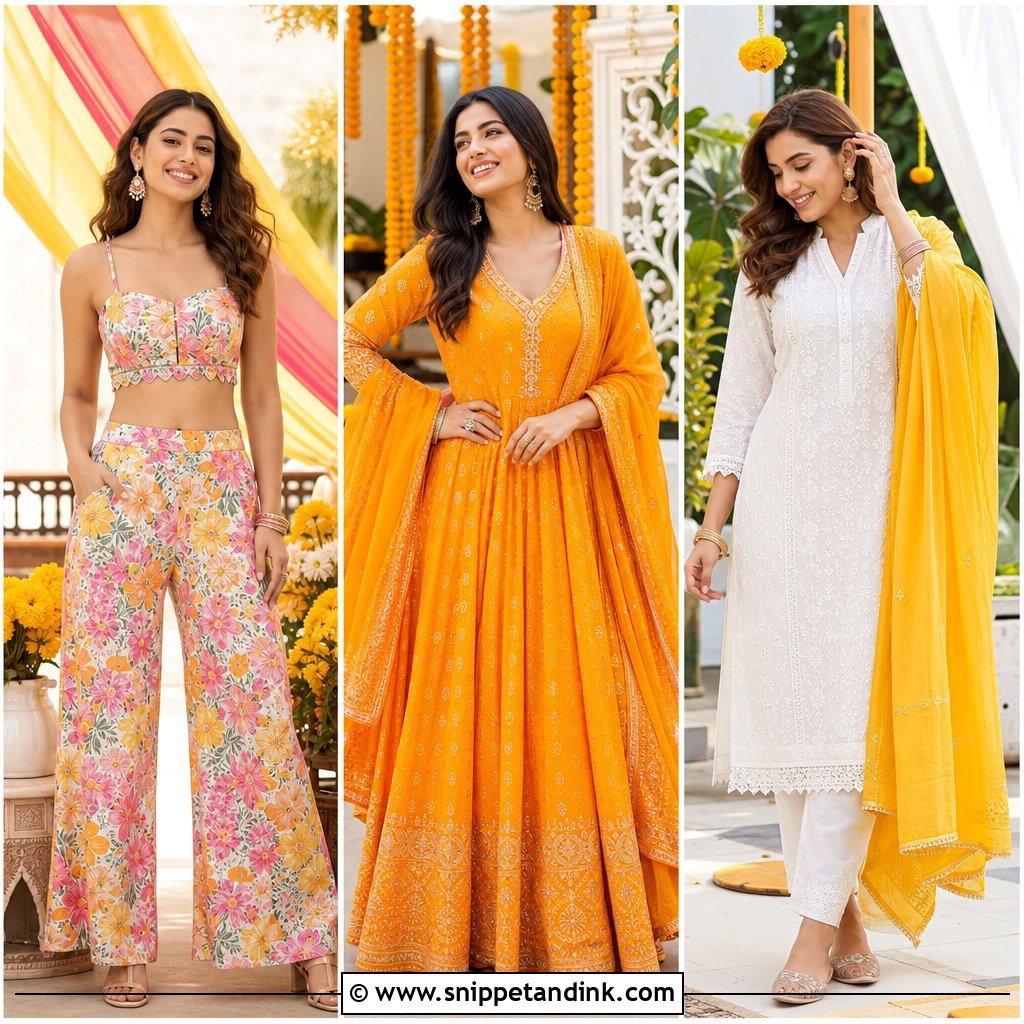
White with yellow details changes over the course of the ceremony, as the turmeric marks build up on it, and some brides love that. If you go this route, accept that the outfit may never come fully clean. Cotton, linen and chanderi handle the mess far better than delicate silk. An ivory kurta set with a yellow dupatta, a white lehenga with yellow embroidery or a white sharara with marigold borders all work. Flower jewelry, gold juttis and a soft braid suit the daylight setting.
5. Yellow Saree For Haldi Function
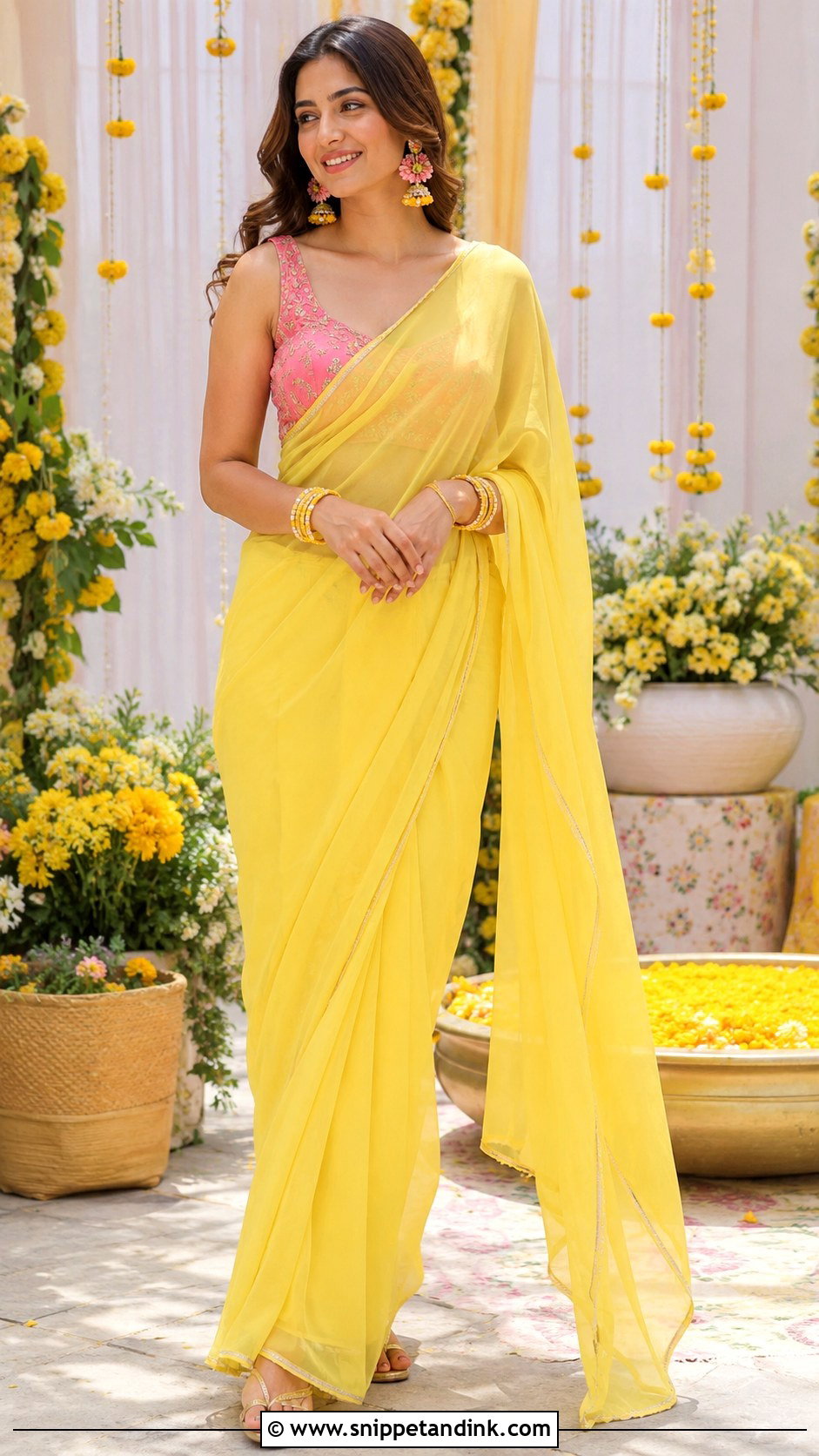
A saree at Haldi needs the right weight. Cotton silk, linen, chiffon, organza or georgette in mustard, lemon or butter yellow with a thin gold border will move with you; heavy silk with a deep zari border won’t, and turmeric on zari is close to impossible to clean. A contrast blouse in pink, green, white or orange adds colour. Use more safety pins than you think you need, especially at the pleats and the pallu on the shoulder, because you’ll be leaning forward constantly. Floral earrings and juttis or flat sandals keep it practical.
6. Organza Saree For Haldi Function
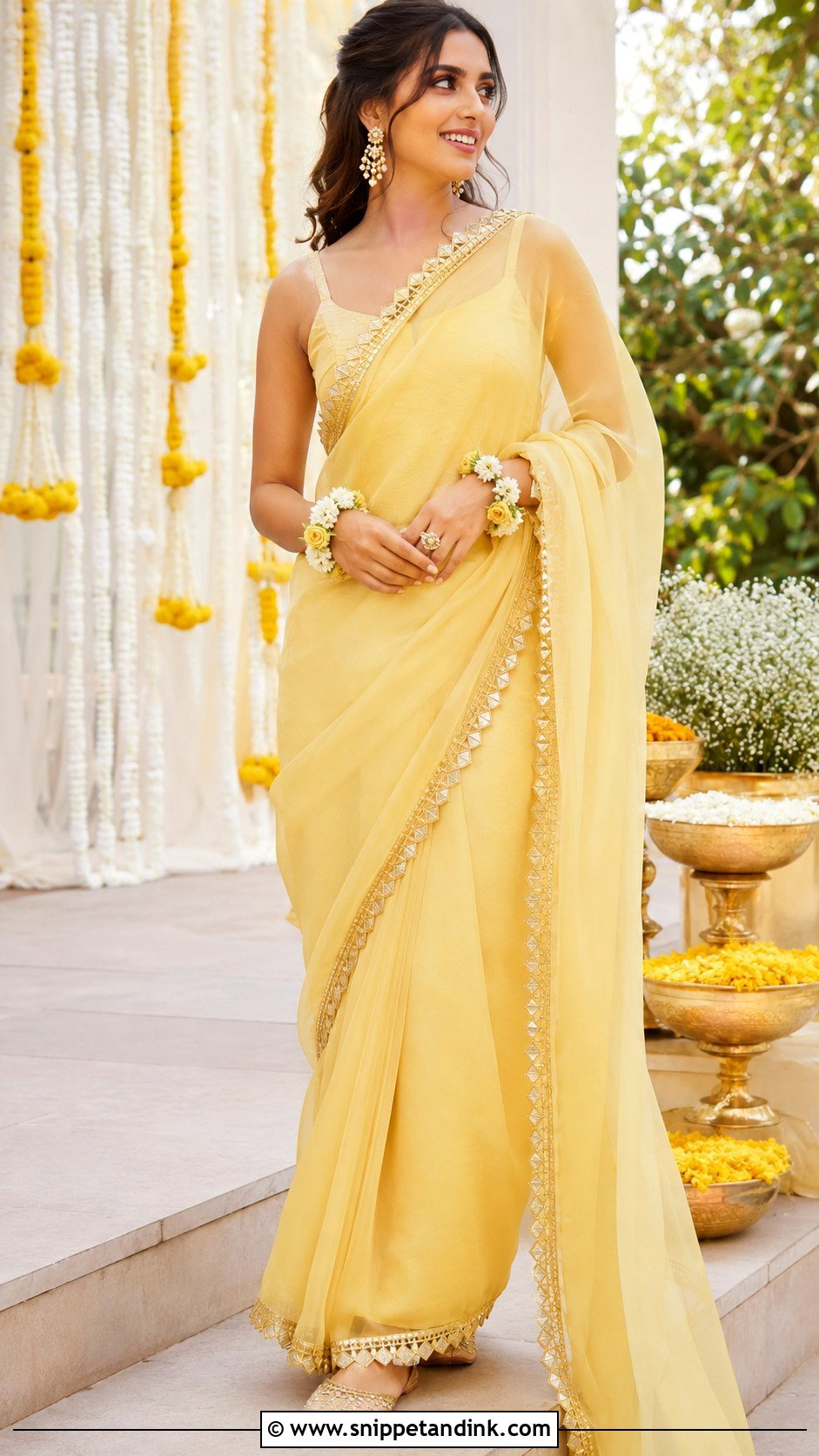
Organza holds its shape and looks crisp in bright daylight, which is exactly why it photographs well at a morning Haldi. Pastel yellow, lemon, peach-yellow or ivory with gota patti or a scalloped border suits it. Because organza stands away from the body, keep the blouse fitted and plain to balance the volume. One caution I give every bride: organza marks easily and turmeric settles into its weave, so this is a better pick if you won’t be the one getting covered in paste. Pearl earrings and a bun or soft waves let the saree lead.
7. Chikankari Kurta Set For Haldi Function
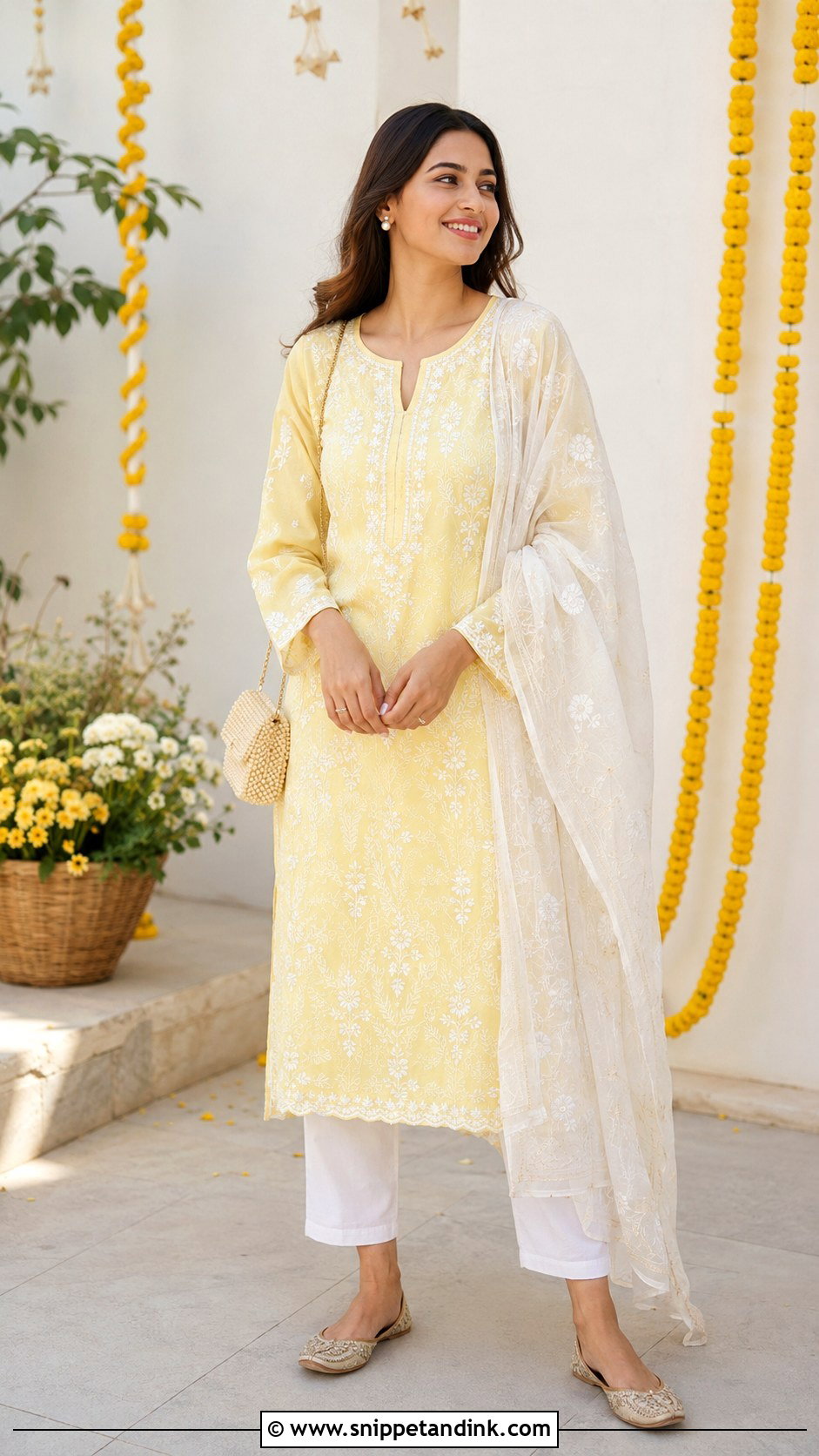
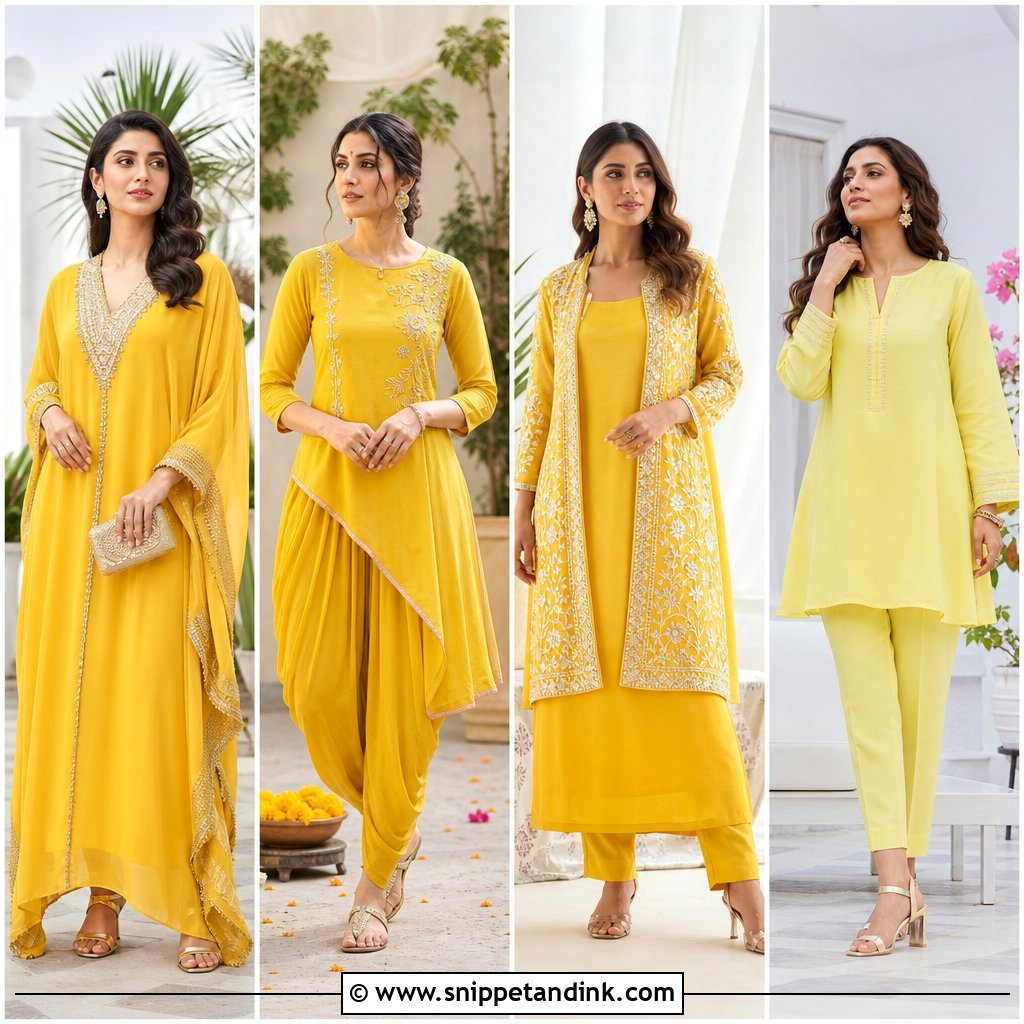
Chikankari is hand embroidery on light cotton or georgette, and it’s one of the most comfortable things you can wear to a warm Haldi. White threadwork on yellow looks soft; yellow on white looks fresh. Pair the kurta with straight pants, palazzos or a relaxed sharara and a dupatta with a light border. It washes better than most festive wear, which is a real advantage here. Pearl studs, glass bangles, juttis and a small sling bag finish it, and you’ll wear it again long after the wedding.
8. Anarkali Suit For Haldi Function
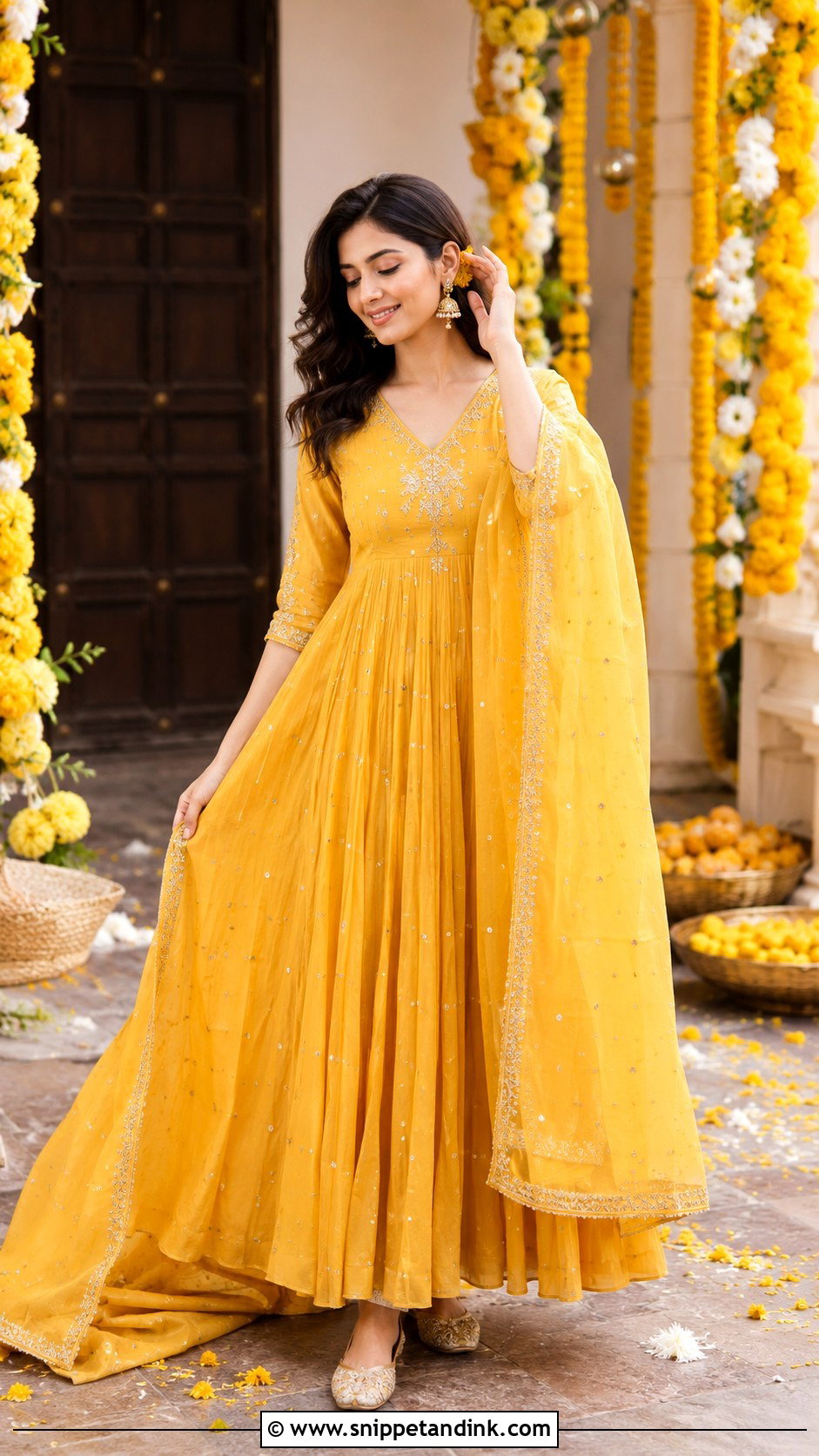
An Anarkali gives you the flare of a lehenga in one piece, so there’s no skirt to hitch up and no blouse to adjust. Georgette, cotton silk or chanderi in yellow, mango, lime or a floral print all suit the function. Keep the embroidery to the neckline, sleeves or hem; a heavily worked Anarkali gets hot and stiff fast. The flare looks great mid-twirl, and it also pools around you when you sit, so tuck it under before the paste comes round. A pink or green dupatta adds a playful contrast.
9. Yellow Kurta Palazzo For Haldi Function
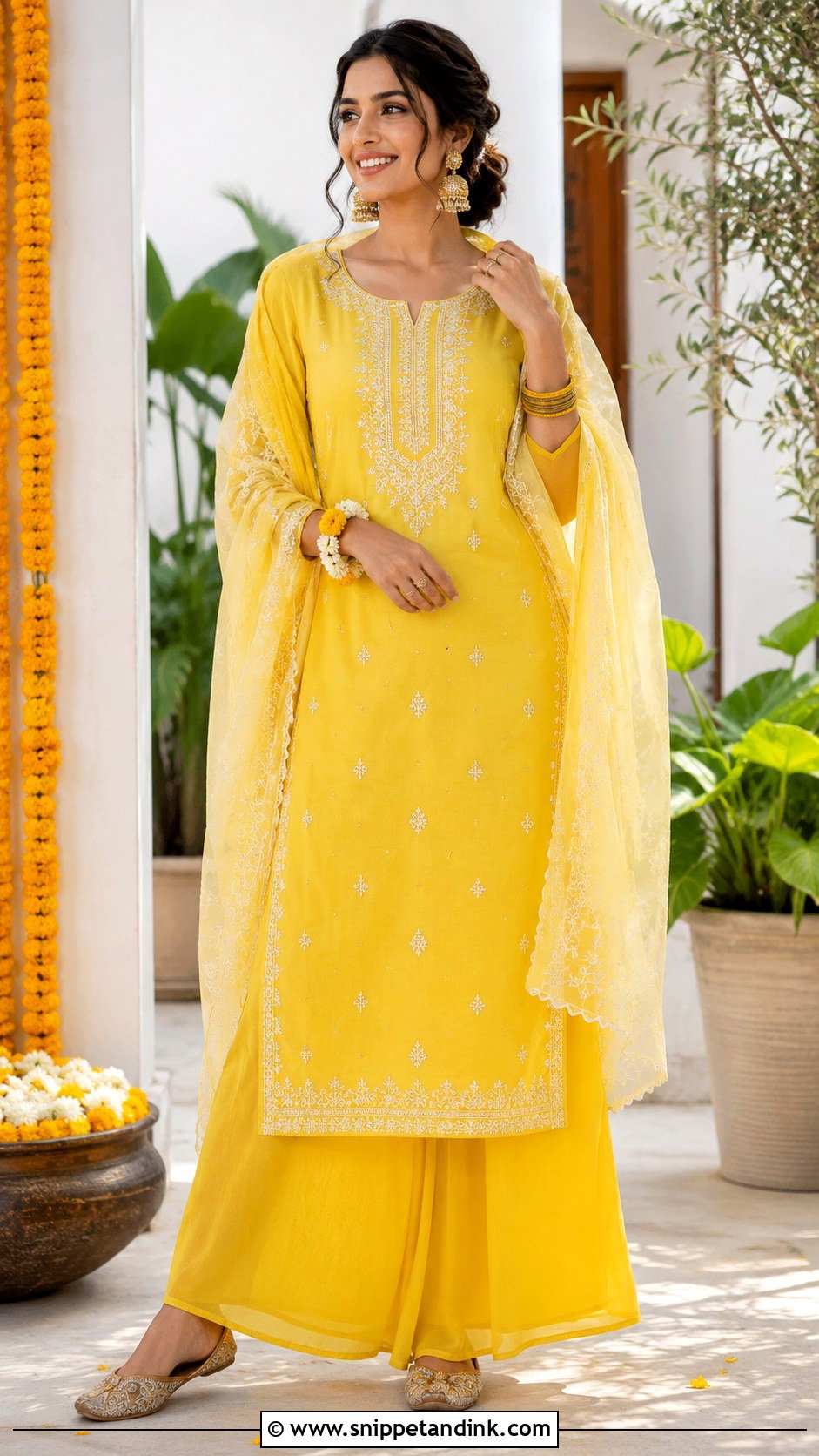
A kurta and palazzo set is what I’d hand anyone who’ll be helping run the ceremony rather than sitting in it. A straight kurta with mirror work, gota trim, block print or fine embroidery looks put together, and the palazzos let you crouch, kneel and climb steps without thinking. Skip the dupatta if the event is casual; it’s one less thing to catch. A sleek ponytail or braid, juttis and hoops or jhumkas keep it neat in the heat.
10. Lime Green Haldi Outfit
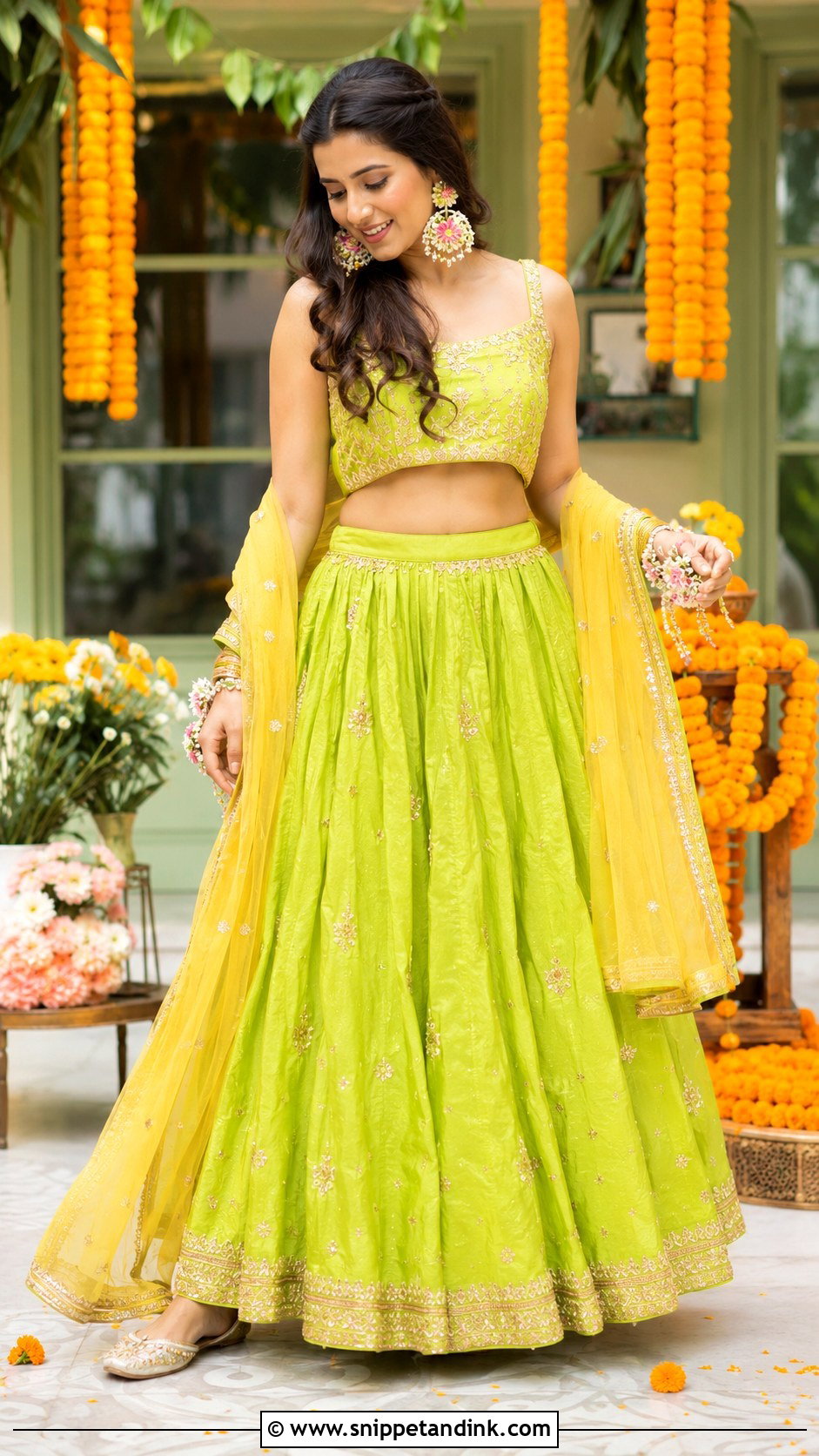
Lime green sits right next to yellow on the colour wheel, so it feels related to the Haldi palette while still standing apart from the bride. It looks especially bright against marigold decor in daytime photos. A lime lehenga, sharara, kurta set or Anarkali with small yellow accents ties it in; a yellow dupatta does the same job. Keep the fabric light so the colour doesn’t feel heavy. Dewy makeup with peach lips suits this shade better than a matte, full-coverage base.
11. Orange Haldi Outfit
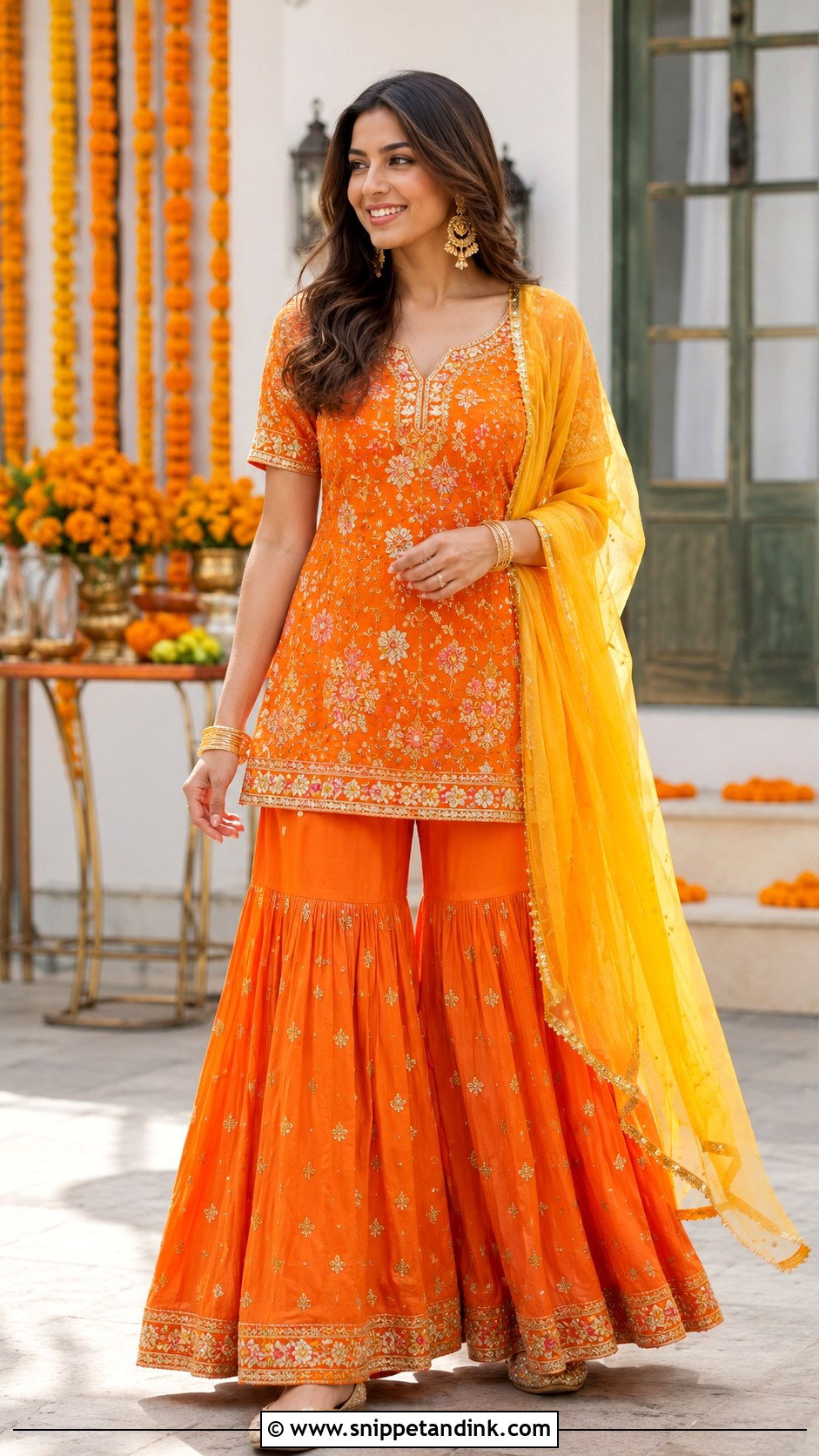
Orange is warm, bold and still traditional, especially in tangerine or marigold tones. A sharara, Anarkali or lehenga with yellow details needs very little embellishment because the colour already carries it. Georgette, cotton silk or crepe keeps it light enough to move in. Gold jewelry pairs naturally with orange, and flower accessories soften it. One thing I’d check in daylight: some oranges shift toward red in photos, so look at the fabric outdoors before you commit. Glowing skin and a coral lip suit it.
12. Mustard Yellow Saree For Haldi Function
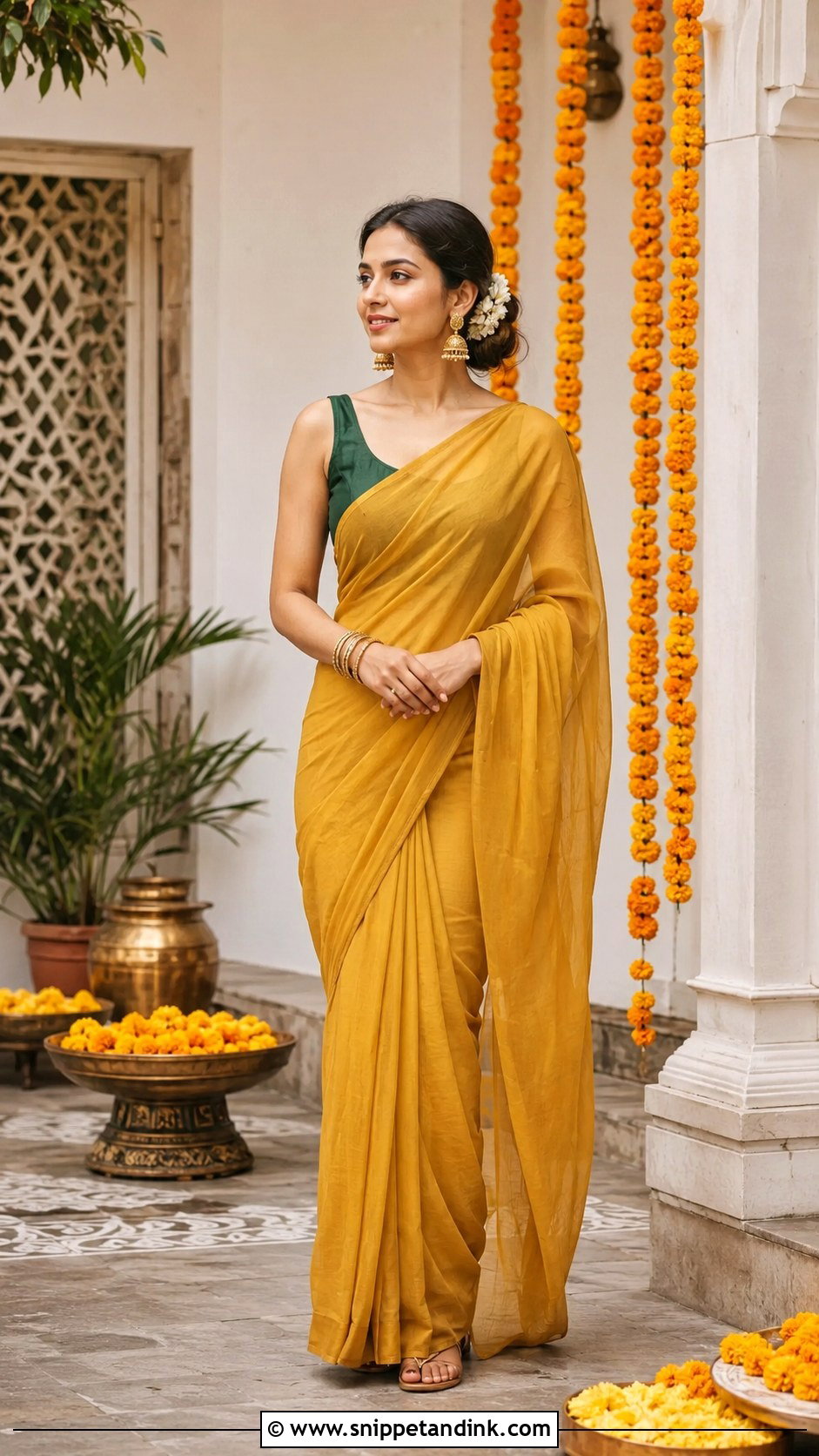
Mustard is deeper and more grown-up than lemon yellow, and it sits well on a wide range of skin tones, especially in morning or late-afternoon light. Linen, cotton silk, chiffon or a light Banarasi-style weave with a thin border keeps it wearable. A contrast blouse in magenta, emerald, ivory or rust gives it personality. Gold jhumkas, bangles and a neat bun with flowers suit mothers and married sisters in particular. Pin the pleats firmly; a saree at a Haldi gets pulled, sat on and splashed.
13. Yellow Gharara For Haldi Function
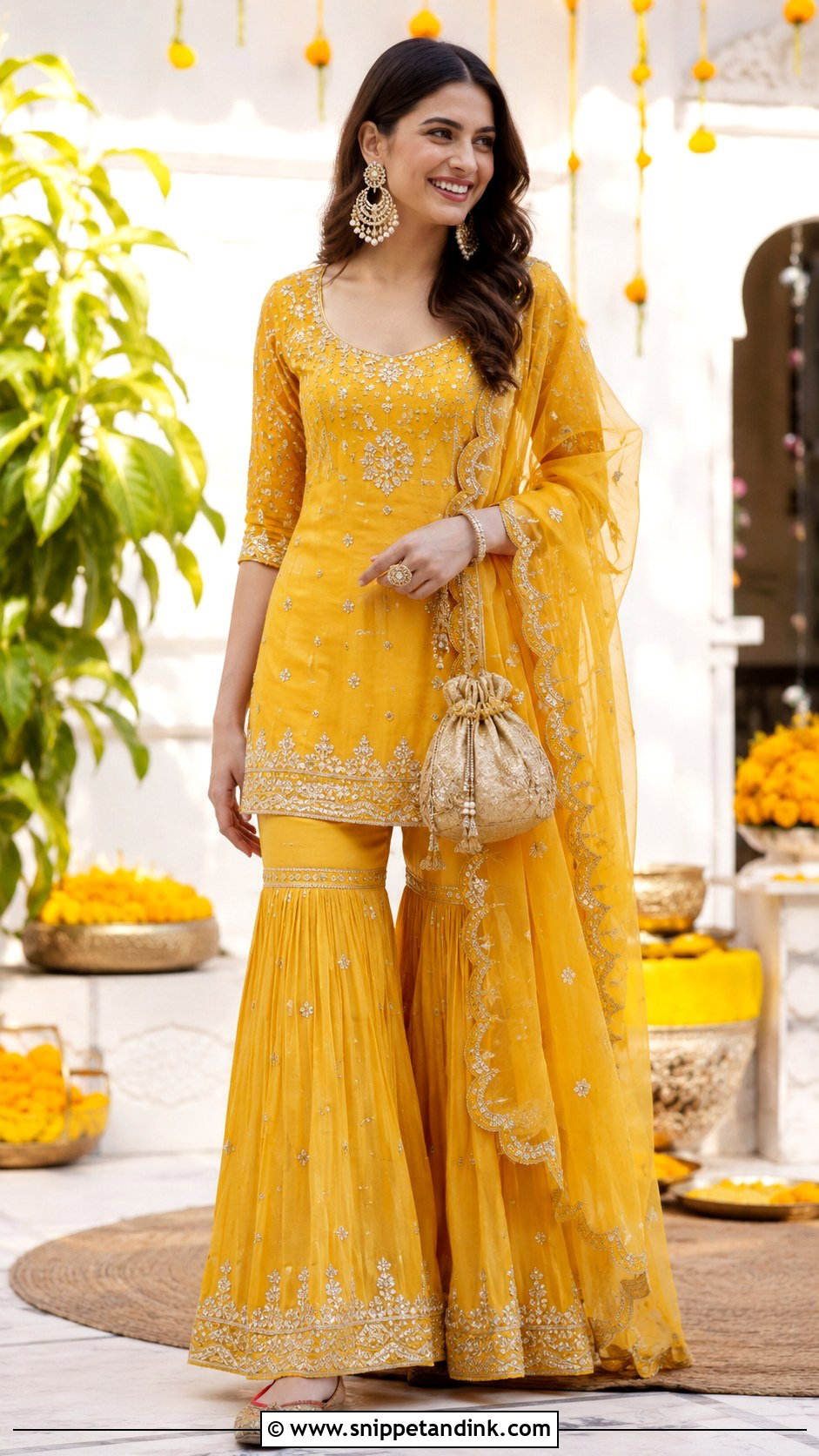
A gharara is fitted from waist to knee, then flares at the joint, and the fabric gathered there is what gives it that swing. It feels dressier than palazzos and easier than a lehenga. Pastel yellow reads soft, bright yellow festive. Pair it with a short kurti, a scalloped dupatta and embroidery at the hem. Check the knee joint at the fitting: if it sits too high, sitting on the floor becomes uncomfortable. Pin the dupatta if you’ll be dancing, and add chandbalis, juttis and a potli.
14. Pre Draped Saree For Haldi Function
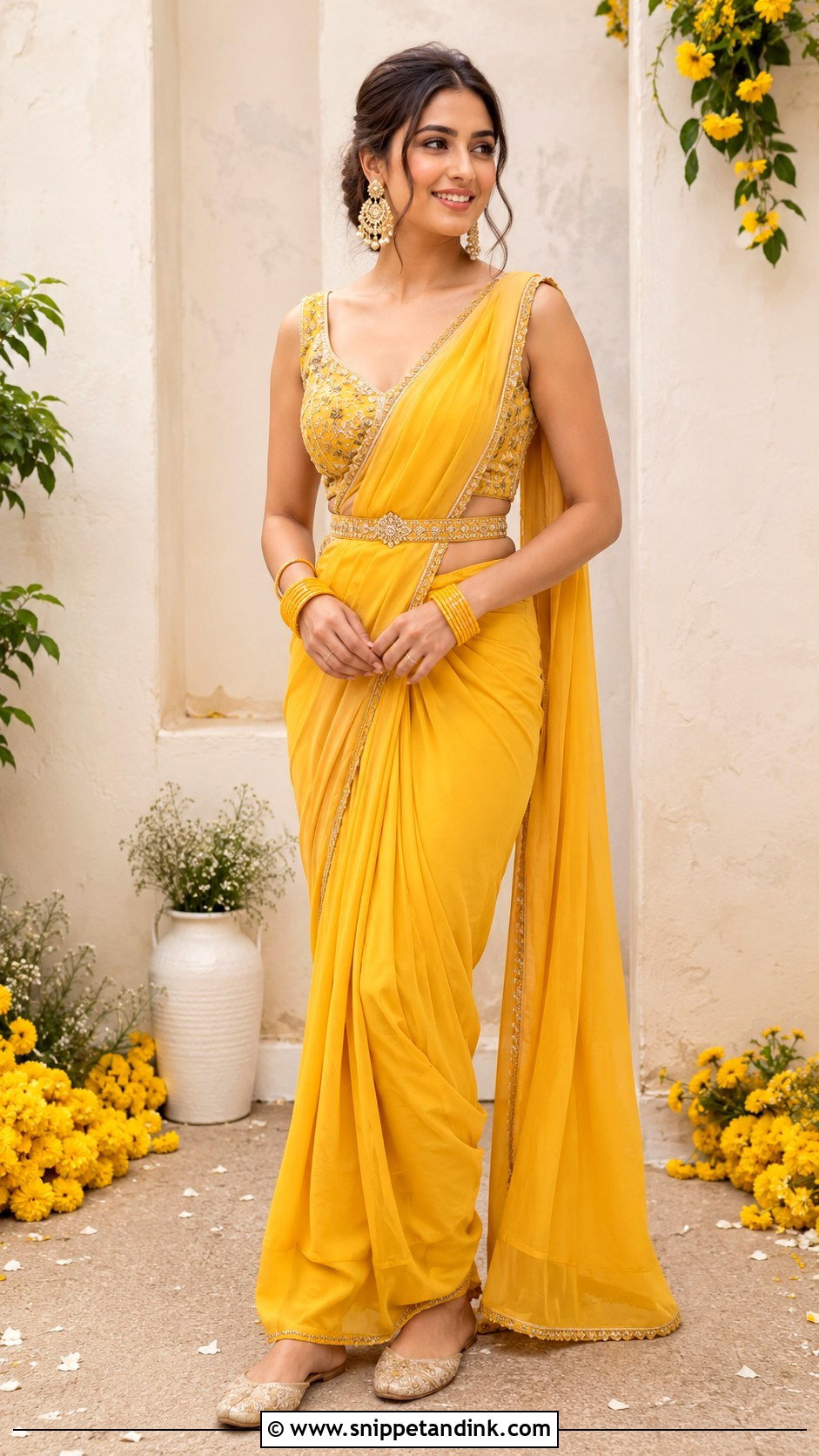
A pre-draped saree is stitched into shape, so the pleats can’t come undone halfway through the ceremony. That alone makes it worth considering for a function full of sitting, standing and turmeric application. Yellow, ivory, peach or lime in chiffon, georgette or crepe all suit it. A structured blouse or embroidered crop top gives a modern finish, and a belt holds the drape at the waist. Try it on sitting down before the day; some pre-draped styles ride up or twist when you sit cross-legged.

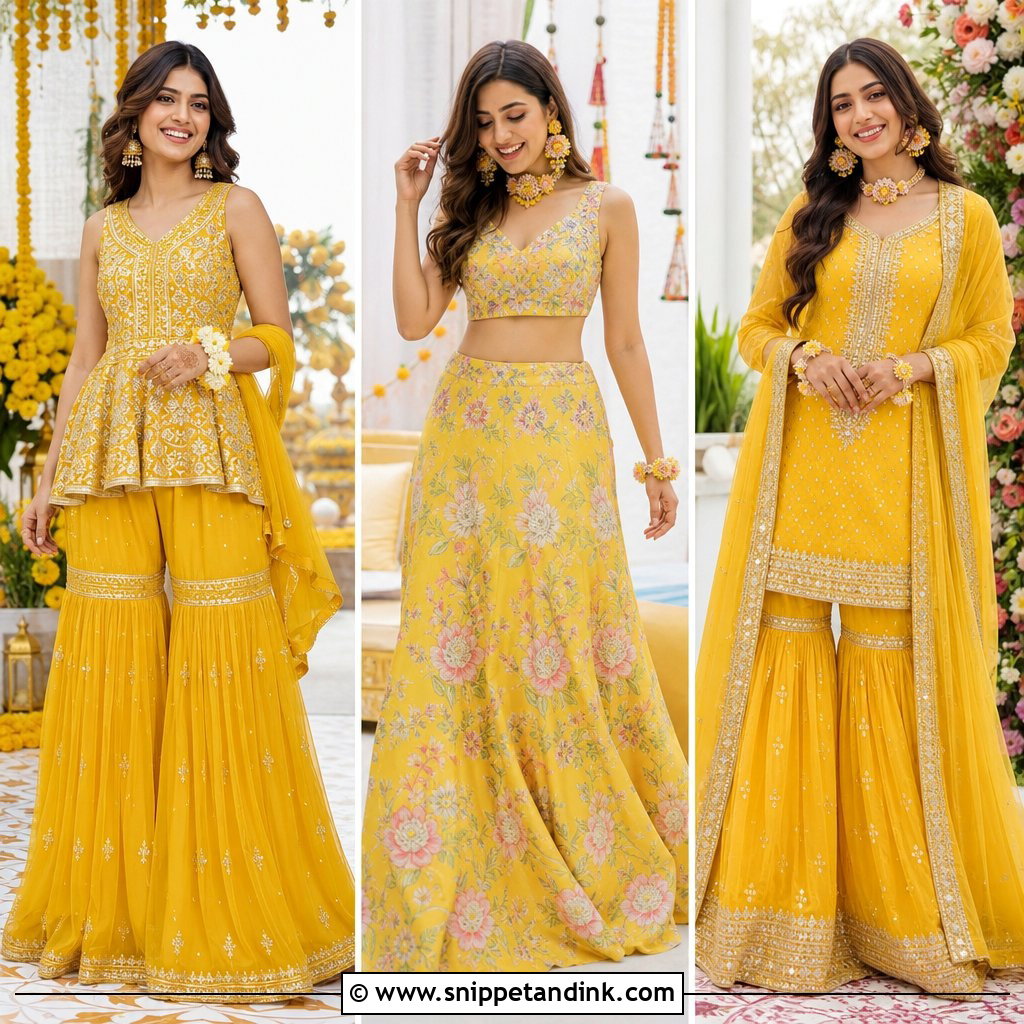
15. Yellow Co Ord Set For Haldi Function
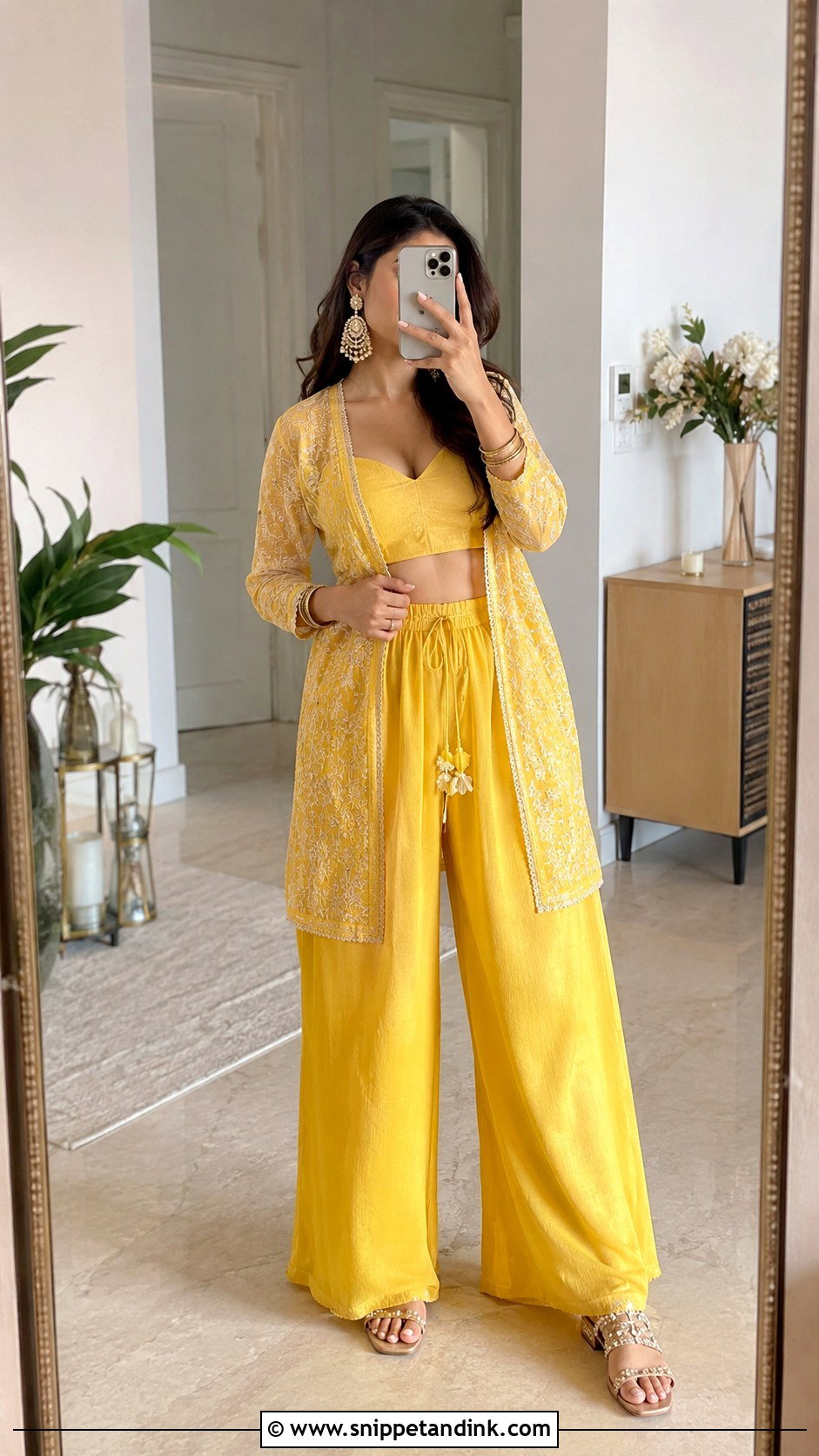
A yellow co ord set works when the dress code is relaxed and you want something you’ll wear again. A matching crop top and skirt, kurta and pants, tunic and palazzo or cape and trousers all count. Cotton, linen blends, crepe and georgette breathe well. Because the pieces already match, you need very little else: statement earrings, or a dupatta if the family leans traditional. Juttis, block heels or embellished sandals all suit it.
16. Cape Lehenga For Haldi Function
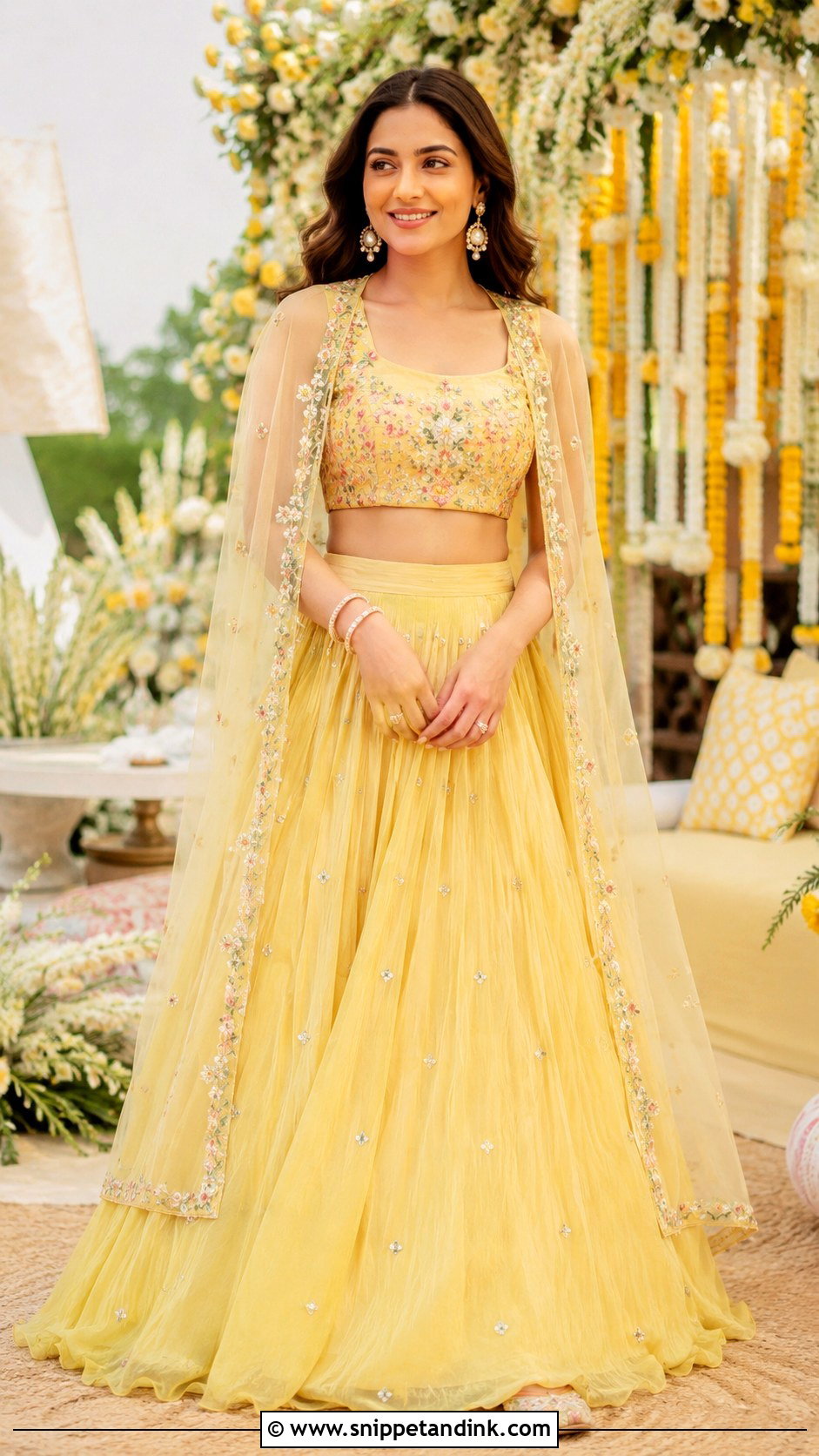
A cape lehenga replaces the dupatta with a sheer layer over the shoulders, which means nothing slipping off or trailing into the paste. Yellow, ivory, mint or peach with floral embroidery, mirror work or light sequins all suit it. An organza or net cape over a plain lehenga keeps it festive without bulk. With the cape as the main piece, one pair of earrings and a bracelet is enough. If the Haldi is outdoors on grass, choose juttis over heels.
17. Yellow Jacket Lehenga For Haldi Function
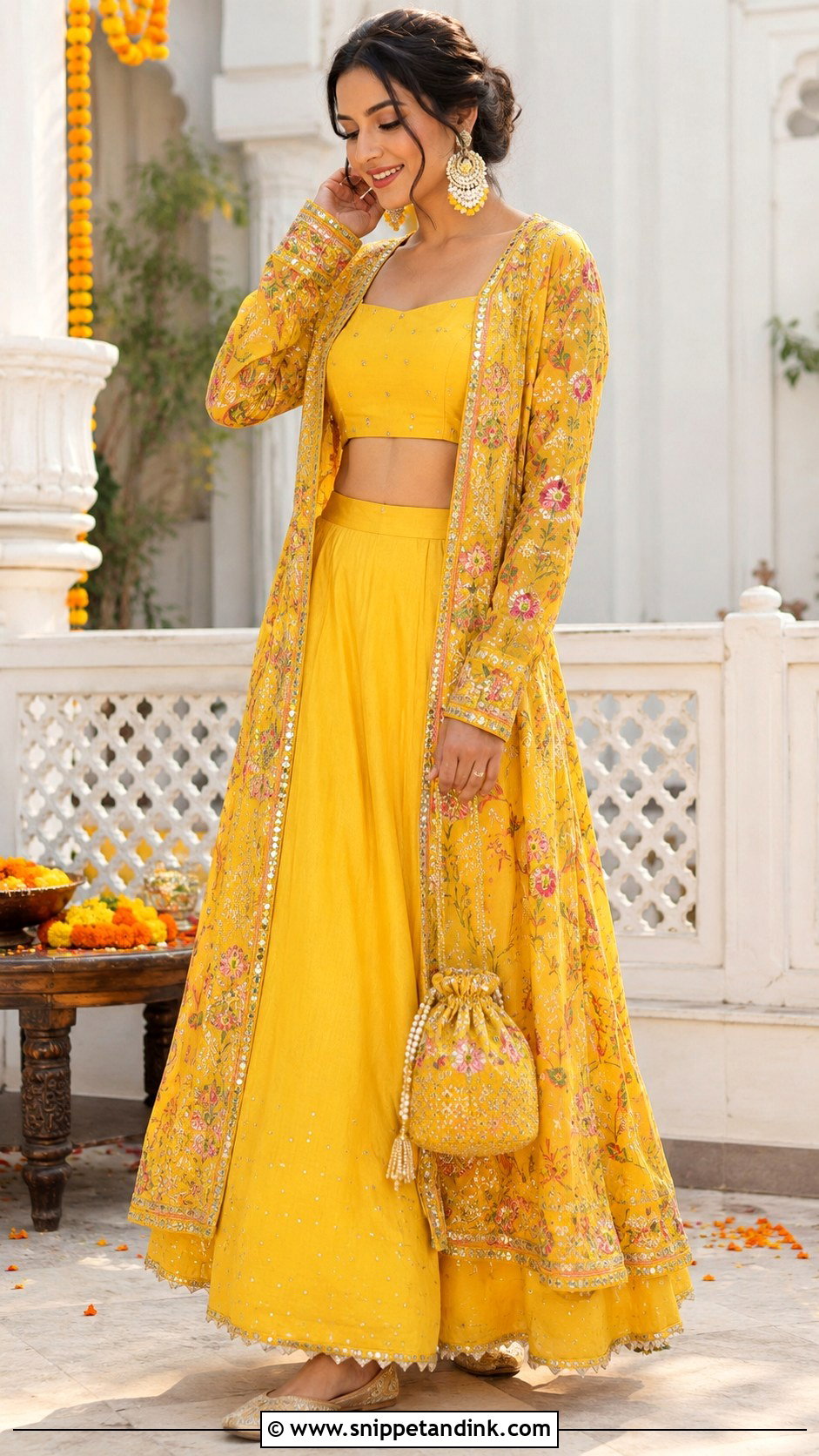
A jacket lehenga swaps the loose dupatta for a fitted layer, so it stays put during the active parts of the ceremony. A printed jacket over a plain skirt, or mirror work over a simple blouse, both look structured. The trade-off is heat: two layers in a sunny courtyard get warm quickly, so I’d only suggest this in a light fabric or for a cooler morning. A sleek hairstyle keeps the jacket’s detail visible, with juttis and statement earrings.
18. Printed Sharara For Haldi Function
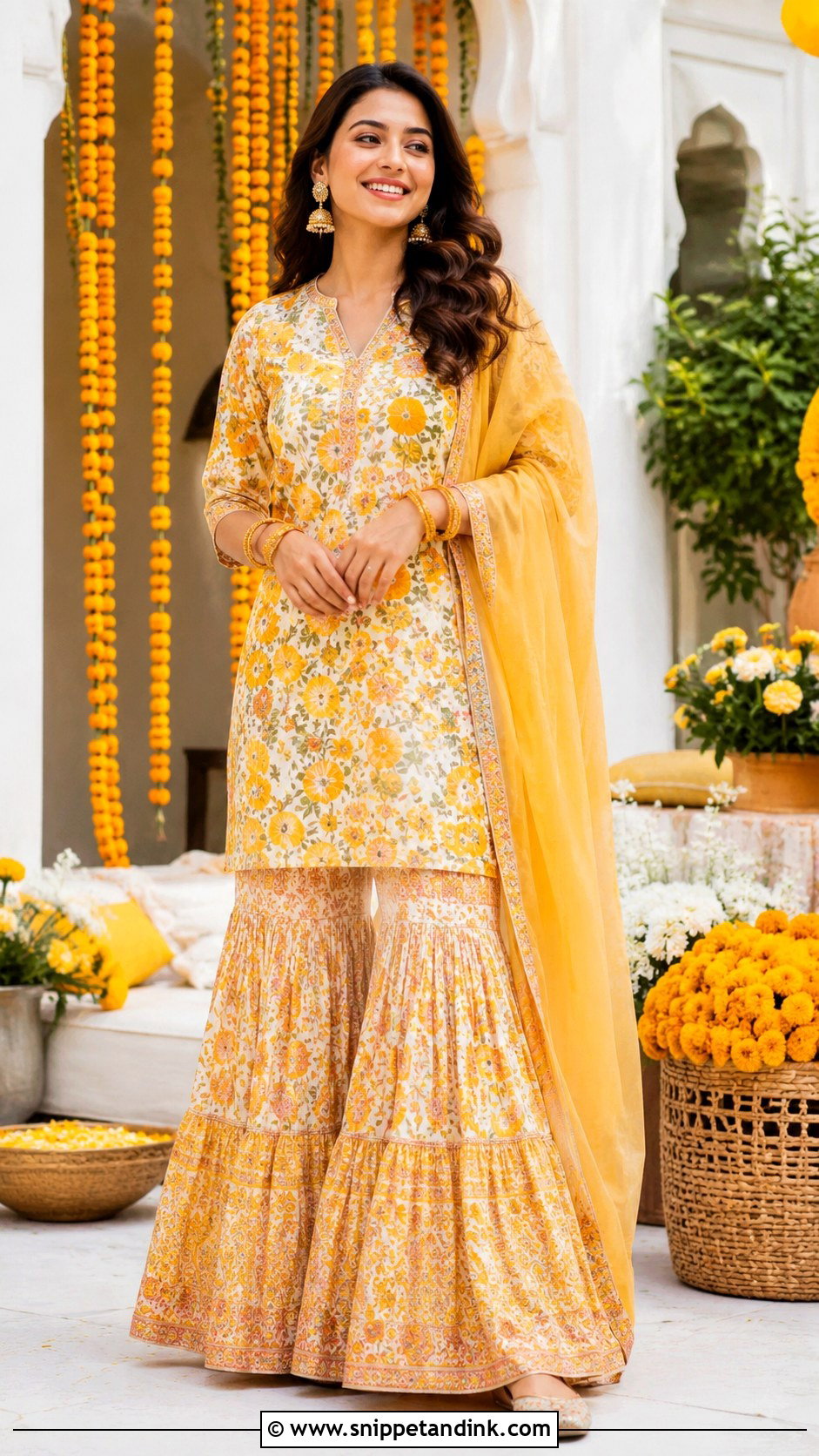
A printed sharara is one of the easiest ways to bring colour without heavy embroidery. Florals, block print, bandhani, leheriya and tropical prints all suit the occasion, and prints hide turmeric marks well. A yellow base keeps it classic; green, pink, white or orange with yellow details brings variety. A short kurta over wide pants, a light dupatta, jhumkas and flats finish it. Keep makeup soft, since the print already does plenty of work.
19. Pastel Yellow Haldi Outfit
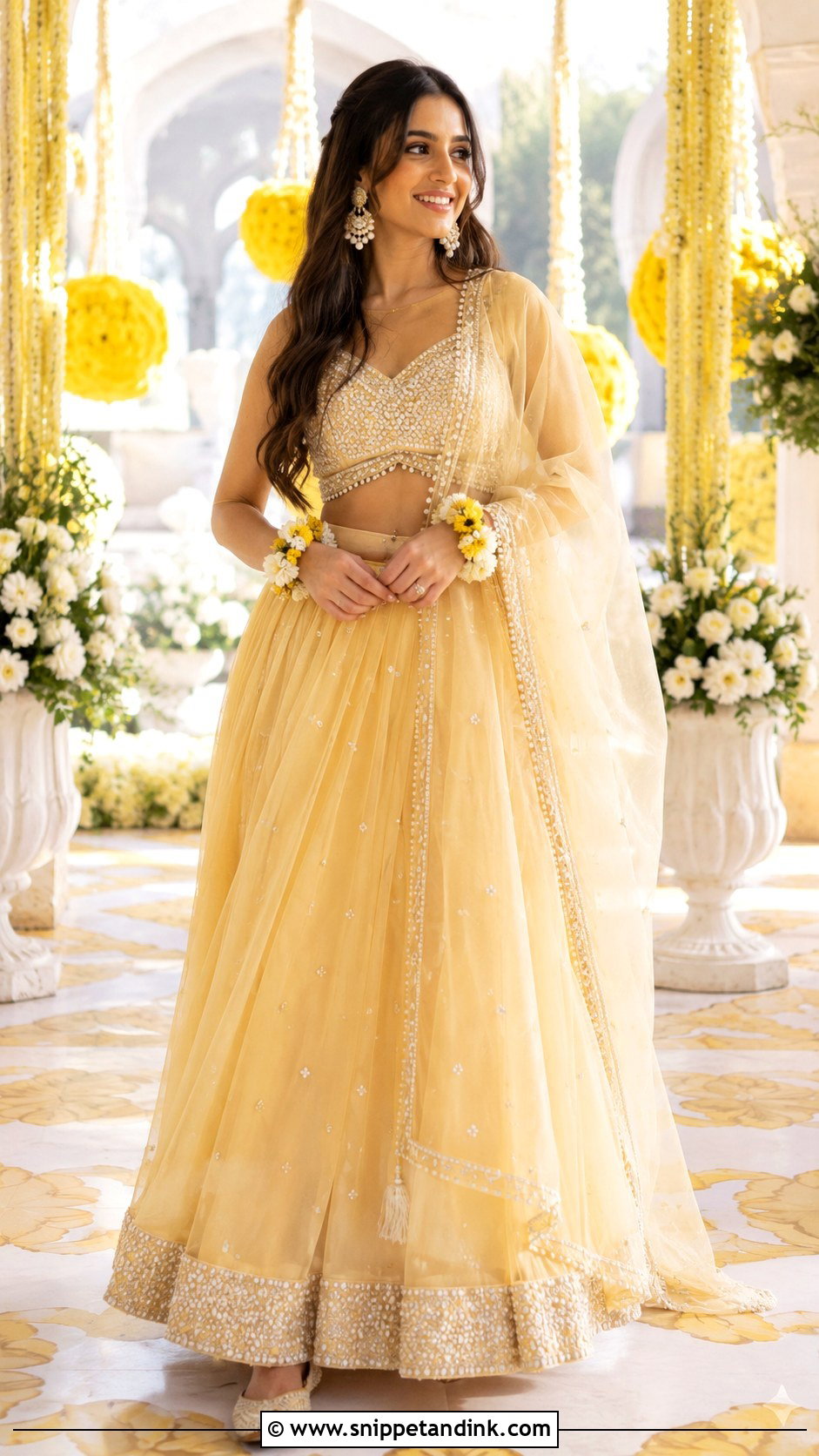
Pastel yellow is the quietest yellow on this list, and it suits brides who want to stand apart without wearing the brightest colour in the room. Pearl work, tone-on-tone embroidery, lace borders or small floral prints keep it refined. It pairs well with white, blush, mint and gold. The practical catch: pastel shows turmeric more than bright yellow, so expect visible marks by the end. Pearl earrings, floral bangles and neutral juttis suit a garden setting.



20. Yellow And Pink Haldi Outfit
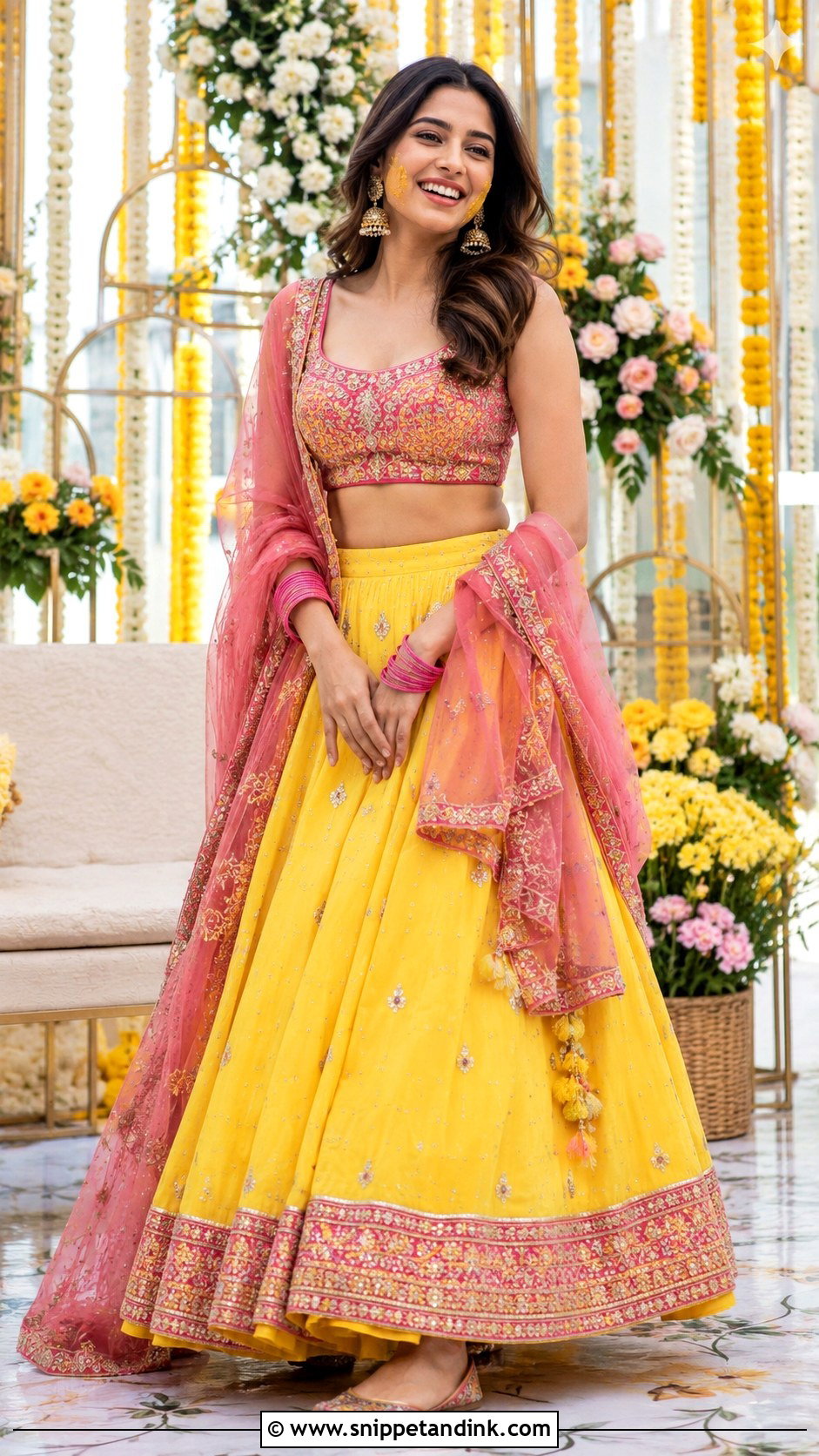
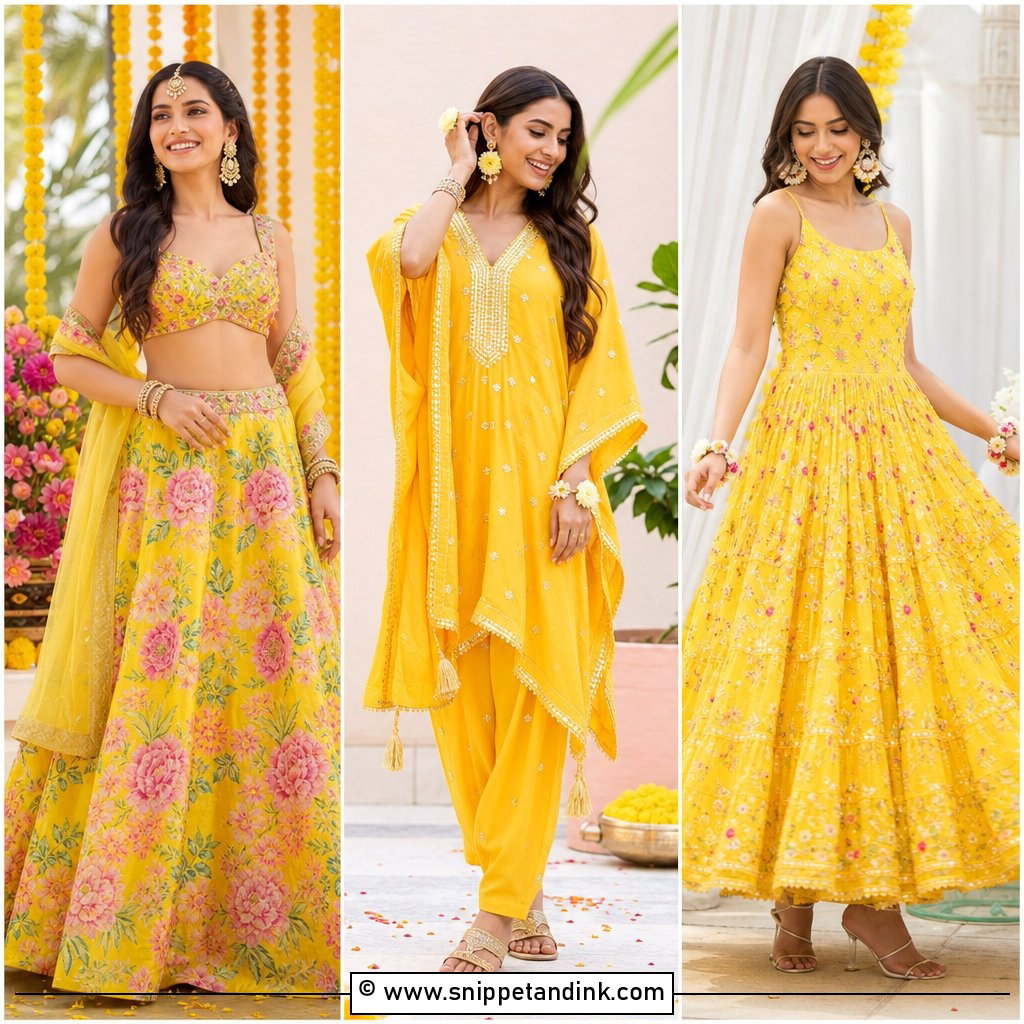
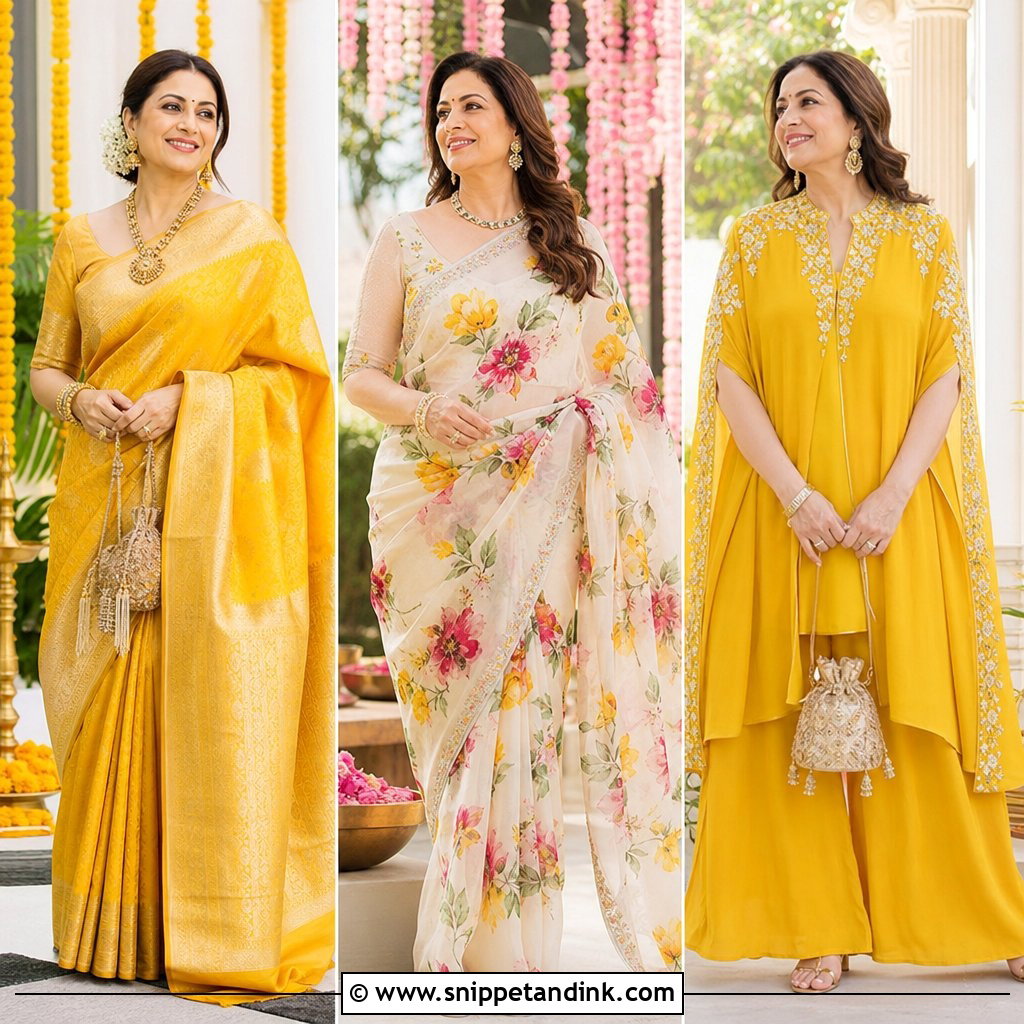
Yellow and pink is cheerful and easy to coordinate across a group of bridesmaids or sisters. A yellow lehenga with a pink dupatta, a yellow saree with a pink blouse or a yellow sharara with pink borders all work. My one rule: let one colour lead and use the other as an accent, or the outfit starts to look busy. Gold jewelry, pink bangles and embroidered juttis finish it, with soft curls or a braid with flowers.
21. Yellow And Green Haldi Outfit
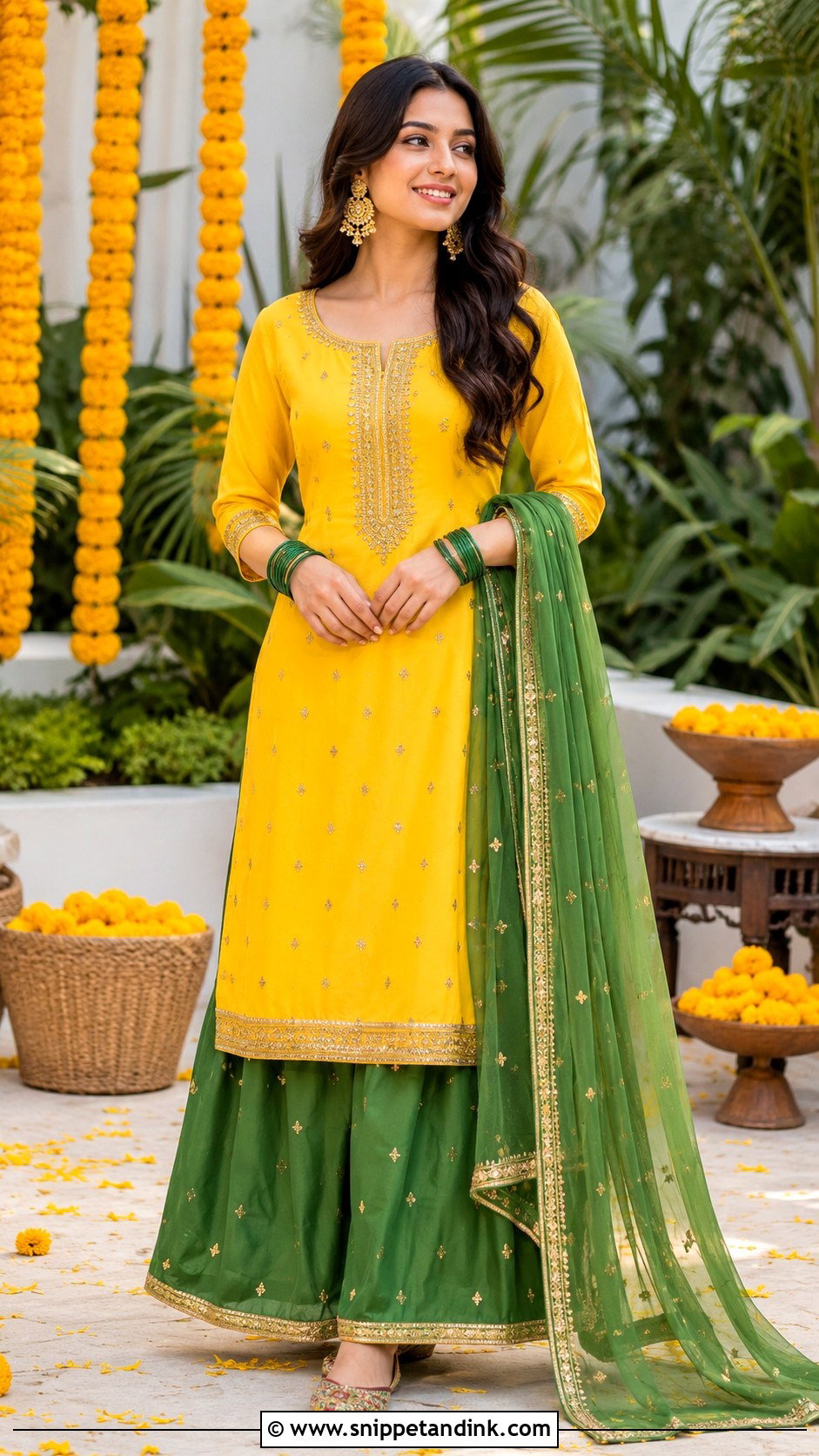
Yellow and green sits well in a garden Haldi with lots of leaves and marigolds around. A yellow kurta with a green dupatta, a green lehenga with yellow embroidery or a yellow saree with a green blouse all carry it. Lighter fabrics stop the pairing feeling loud. Gold earrings, floral jewelry or green bangles pull it together. With strong colours like these, I’d keep makeup soft and glowy rather than adding a bold lip.
22. White Lehenga For Haldi Function
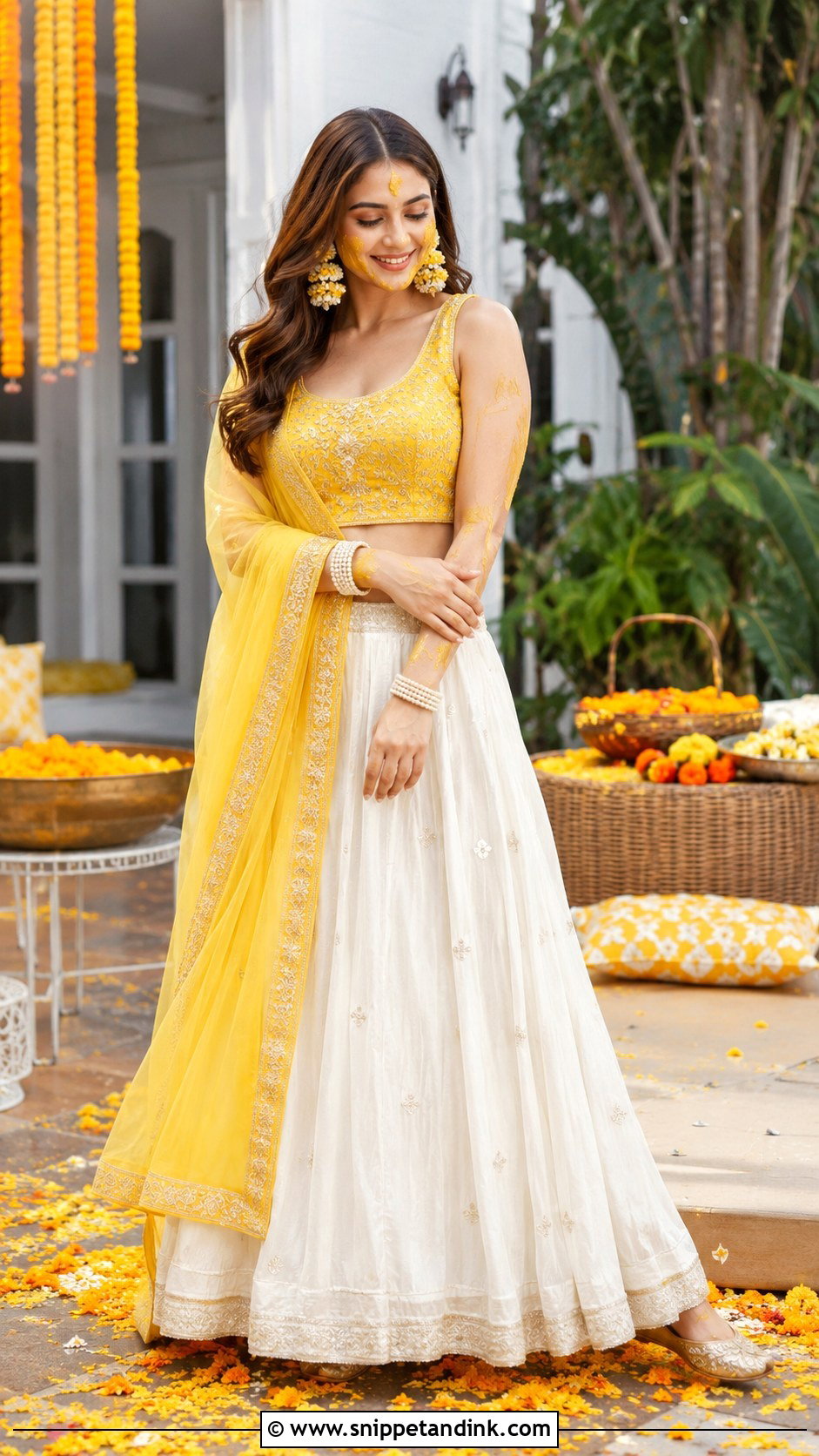
A white lehenga at Haldi is chosen for the before-and-after photos, as the turmeric marks build up through the ceremony. Choose cotton, linen, chanderi or georgette; anything precious will stain badly and probably permanently. Yellow embroidery, a yellow dupatta or marigold accessories keep it festive. A simple blouse and flowing skirt are all the shape it needs. Flower earrings or pearl accents, comfortable juttis and natural makeup suit the mood.
23. Bandhani Saree For Haldi Function
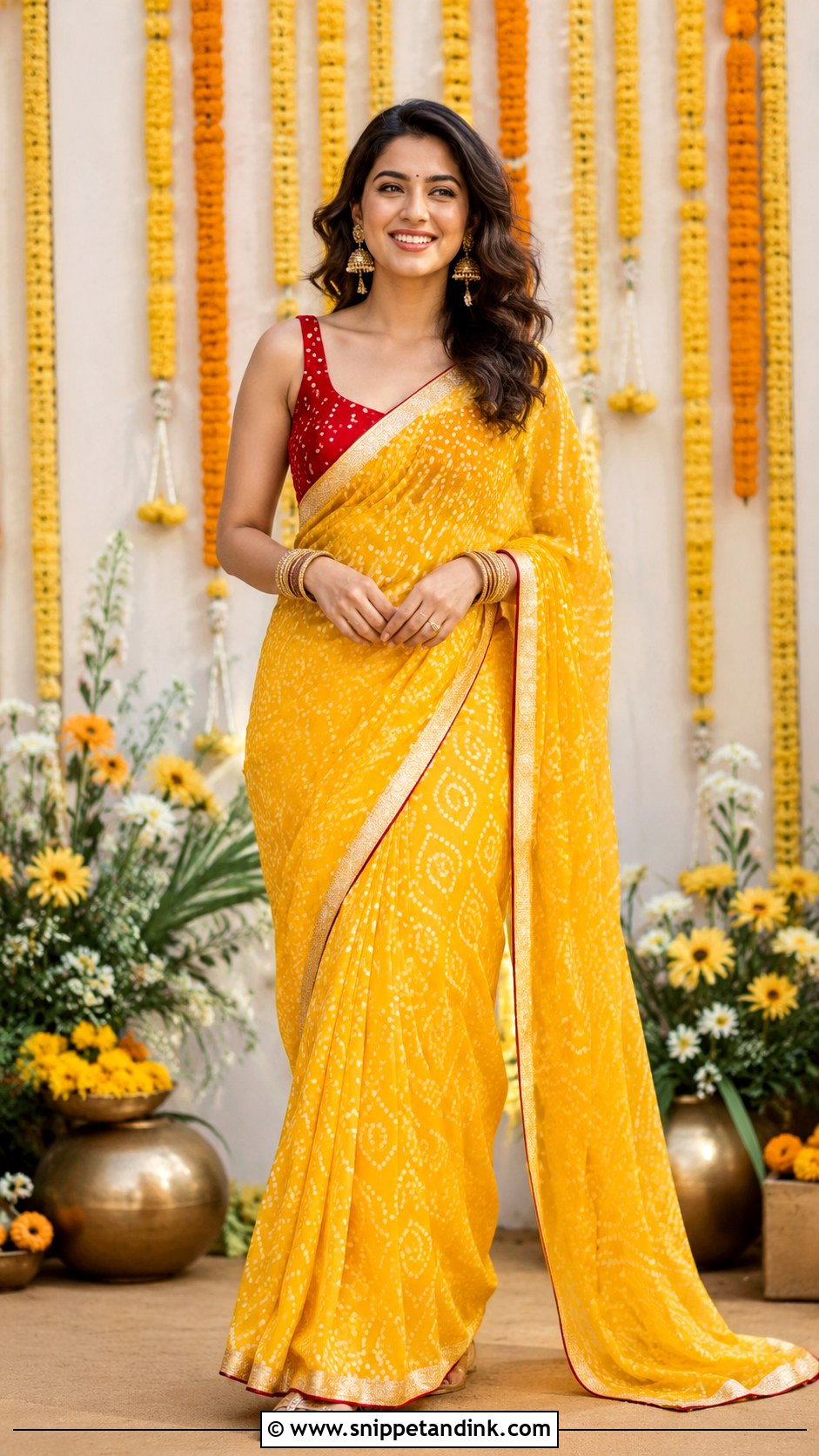
Bandhani is tie-dye made by binding tiny points of fabric before dyeing, which leaves that pattern of small dots. Yellow with white dots is the classic; borders in red, pink or green feel more festive. Georgette, chiffon or a light silk blend drape easily. A plain contrast blouse balances the print, and jhumkas, bangles and a small bindi finish it. Real bandhani can bleed colour in its first wash, so keep it away from white garments afterwards.
24. Leheriya Outfit For Haldi Function
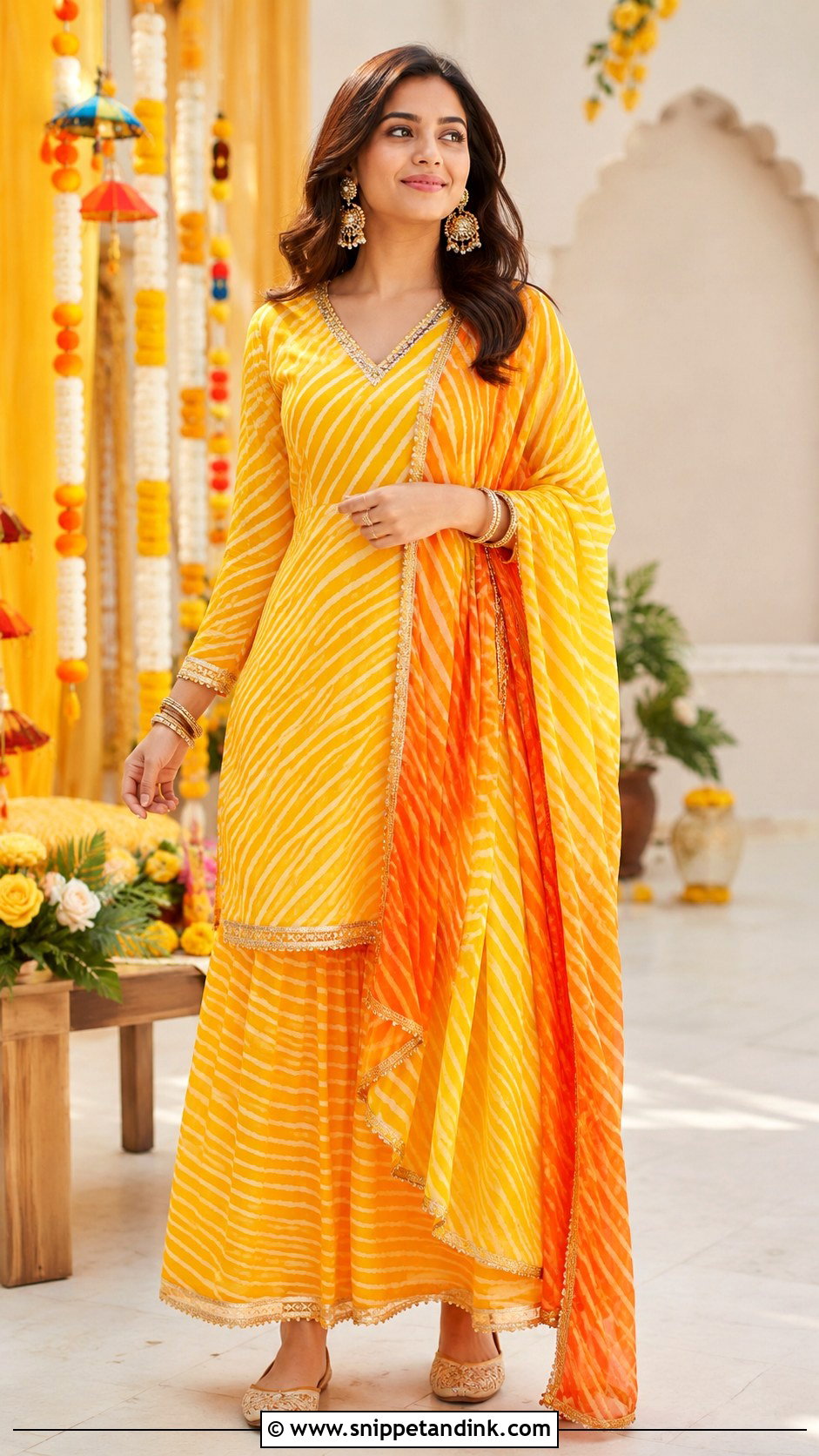
Leheriya is a resist-dye technique that creates diagonal wave stripes, and it brings movement to even a simple silhouette. It comes in sarees, lehengas, shararas and kurta sets in yellow, orange, pink or green. A leheriya dupatta over a plain yellow kurta set is the most budget-friendly way to wear it. Keep jewelry simple, since the print already has energy. It’s a natural match for summer and outdoor functions.
25. Mirror Work Lehenga For Haldi Function
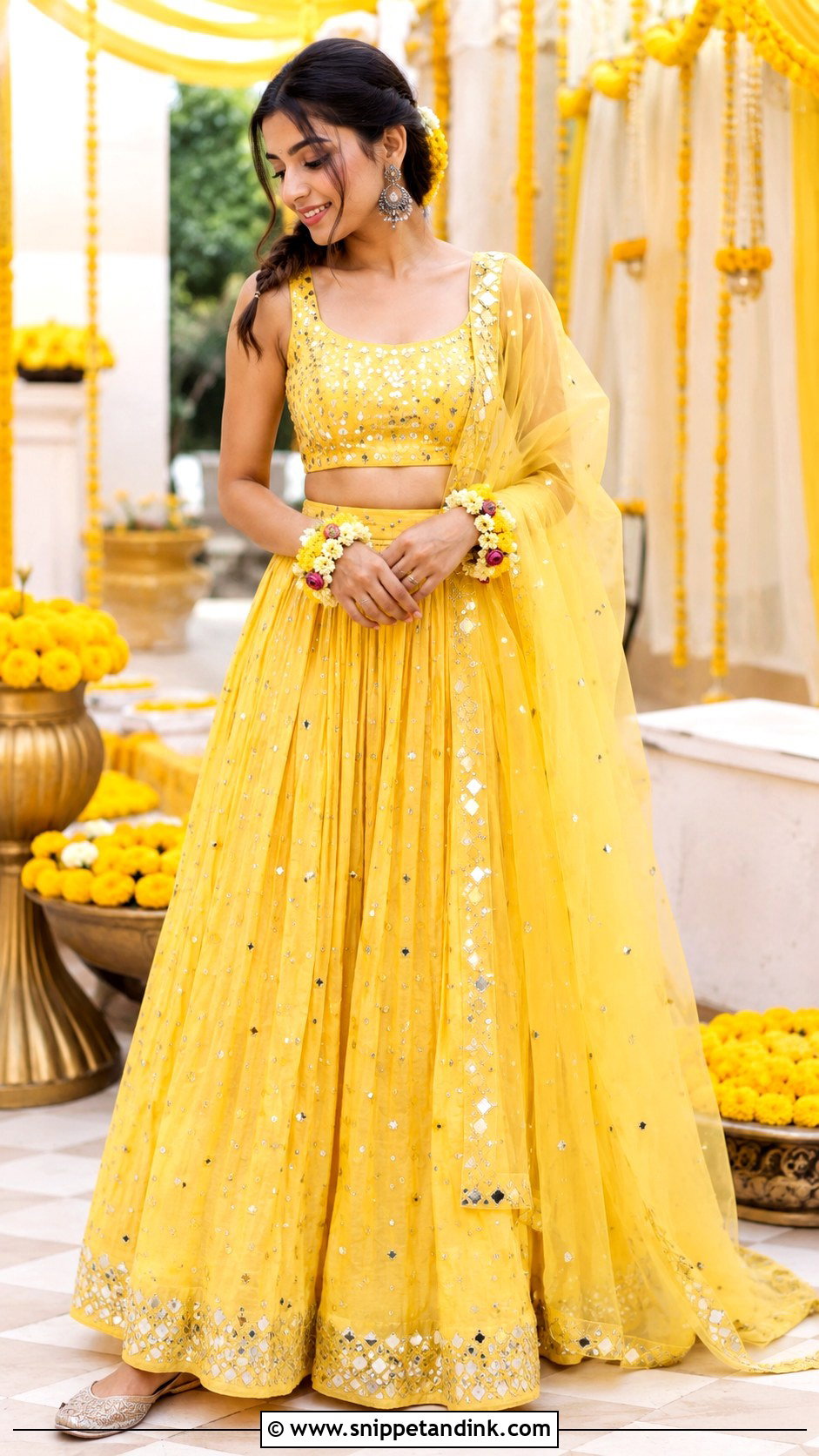
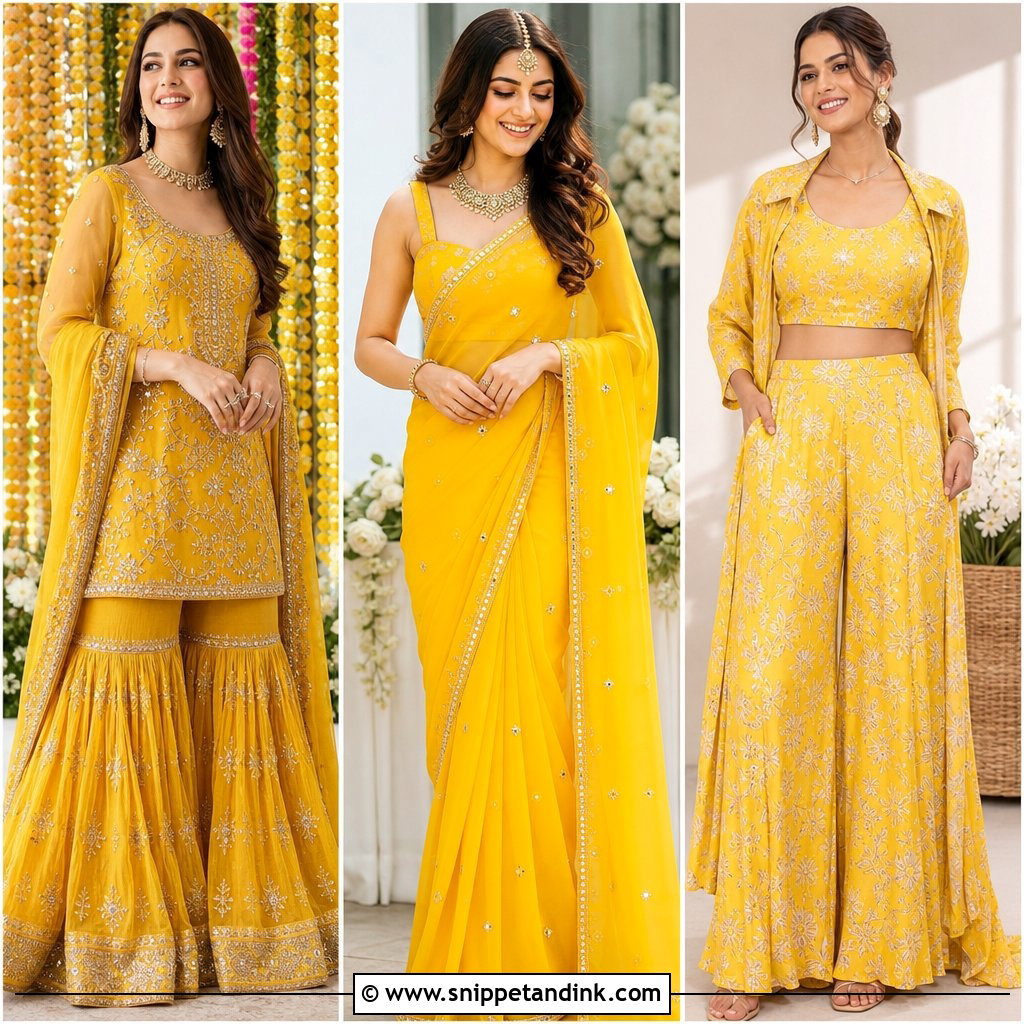
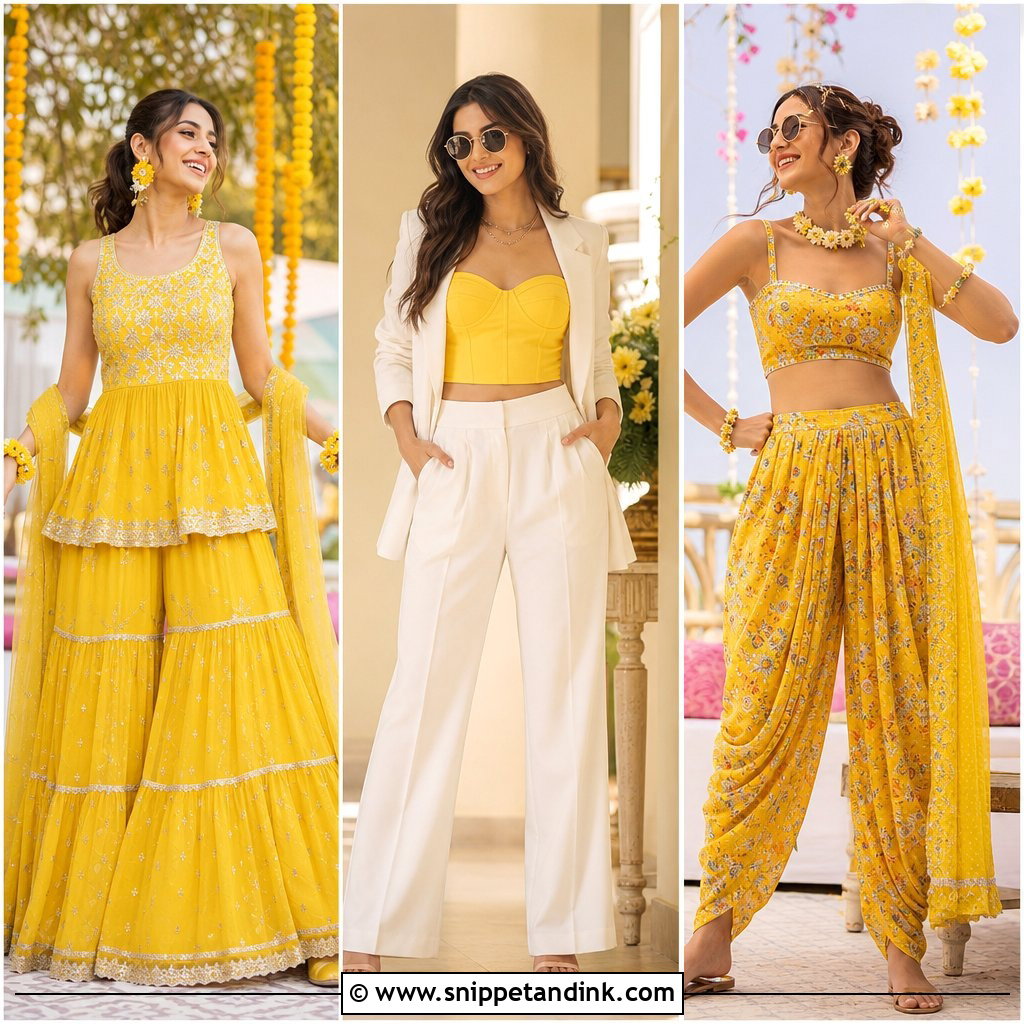
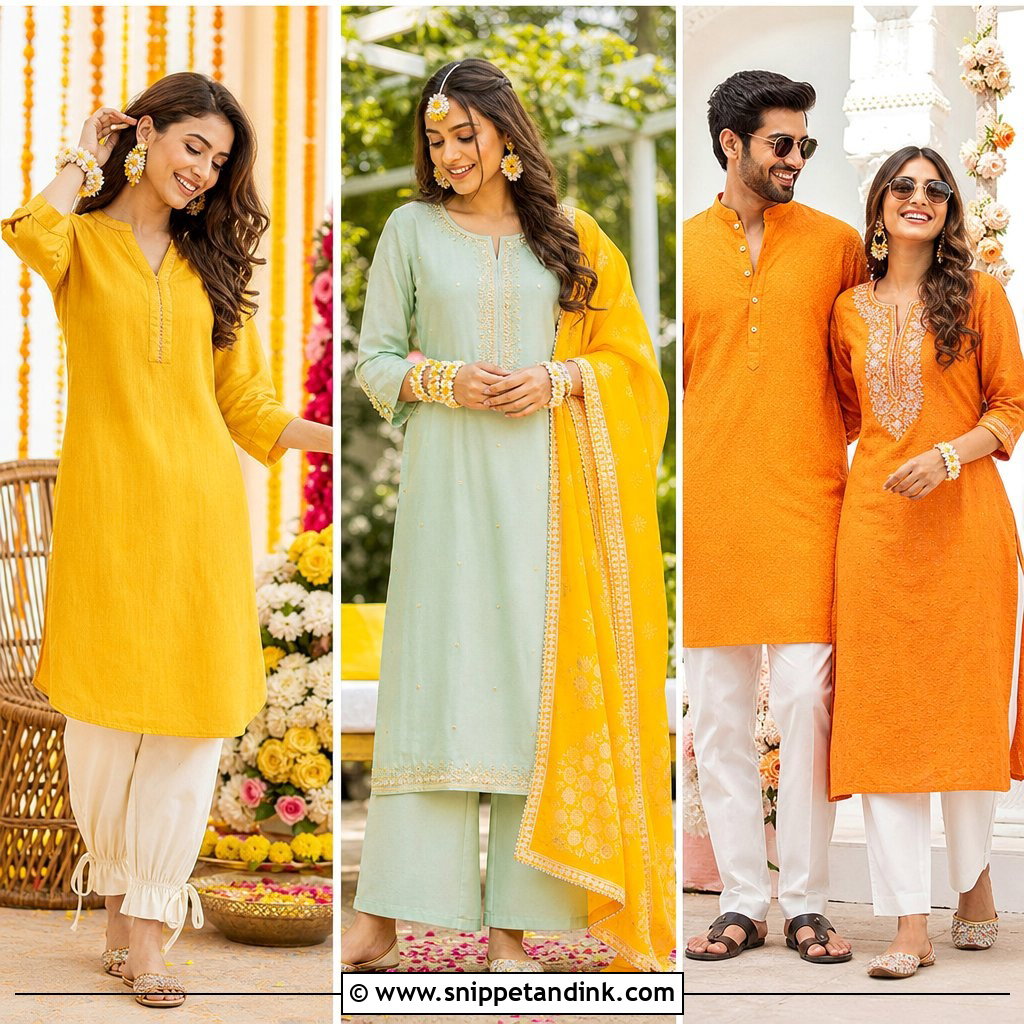
Mirror work reflects daylight in small flashes, so you get sparkle without sequins. For Haldi, keep the mirrors small and spread out on a yellow, lime, ivory or orange base; dense mirror work adds weight and can scratch when people hug you. Brides can choose a fuller skirt with more shine. Bridesmaids are better with mirror work only on the blouse or dupatta. Oxidised earrings or gold jewelry both suit it, and comfortable footwear matters more than you’d think.
26. Indo Western Haldi Outfit
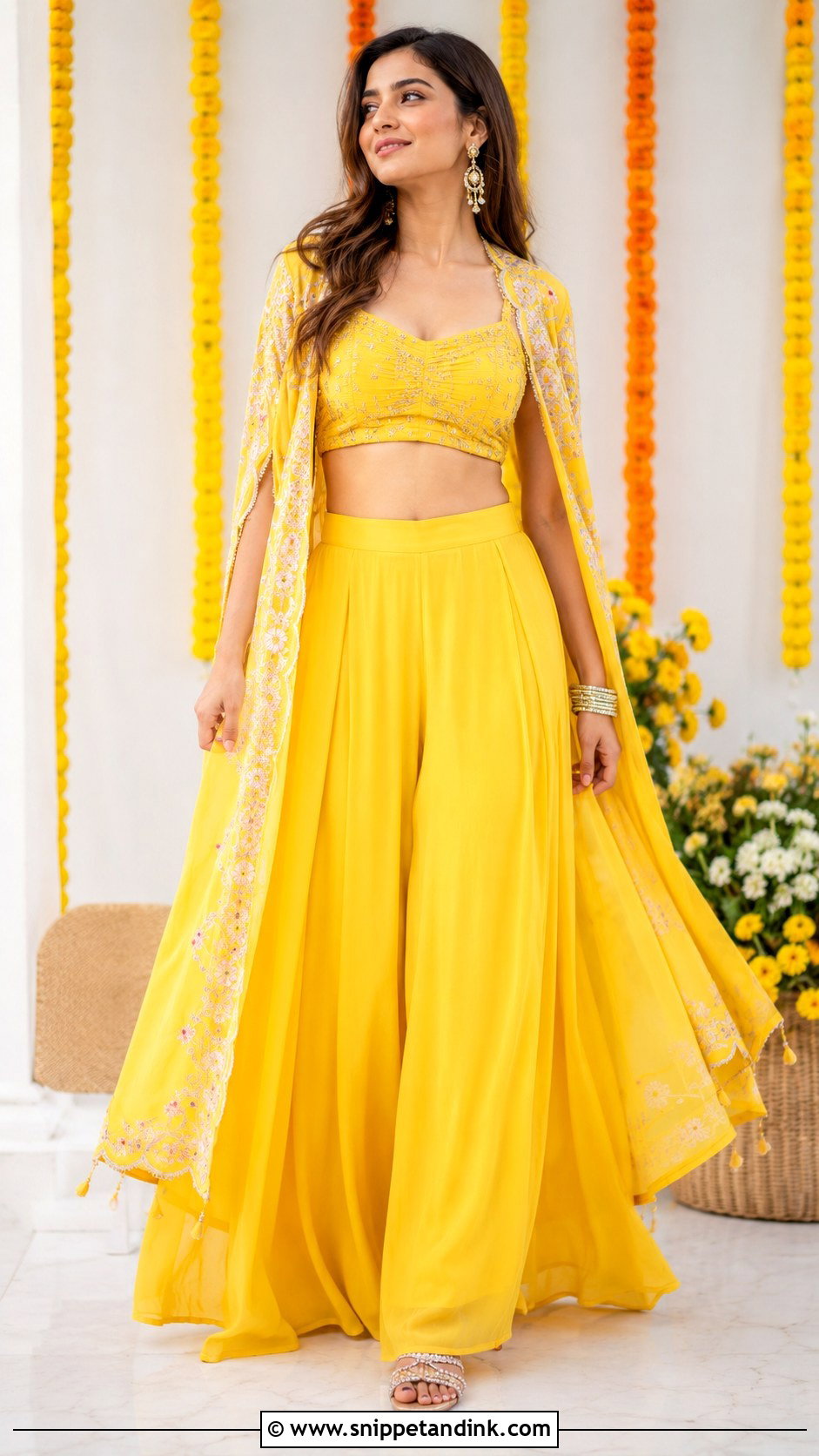
An Indo-western Haldi outfit works when you want something reusable and a little different. A yellow crop top with palazzos, a dhoti pant set with an embroidered cape or a skirt with a structured jacket all fit. To keep it festive, include at least one Indian detail: mirror work, gota trim, block print or a dupatta-style drape. Without that detail, it can read as a brunch outfit. Statement earrings and embellished sandals finish it.
27. Yellow Dhoti Set For Haldi Function
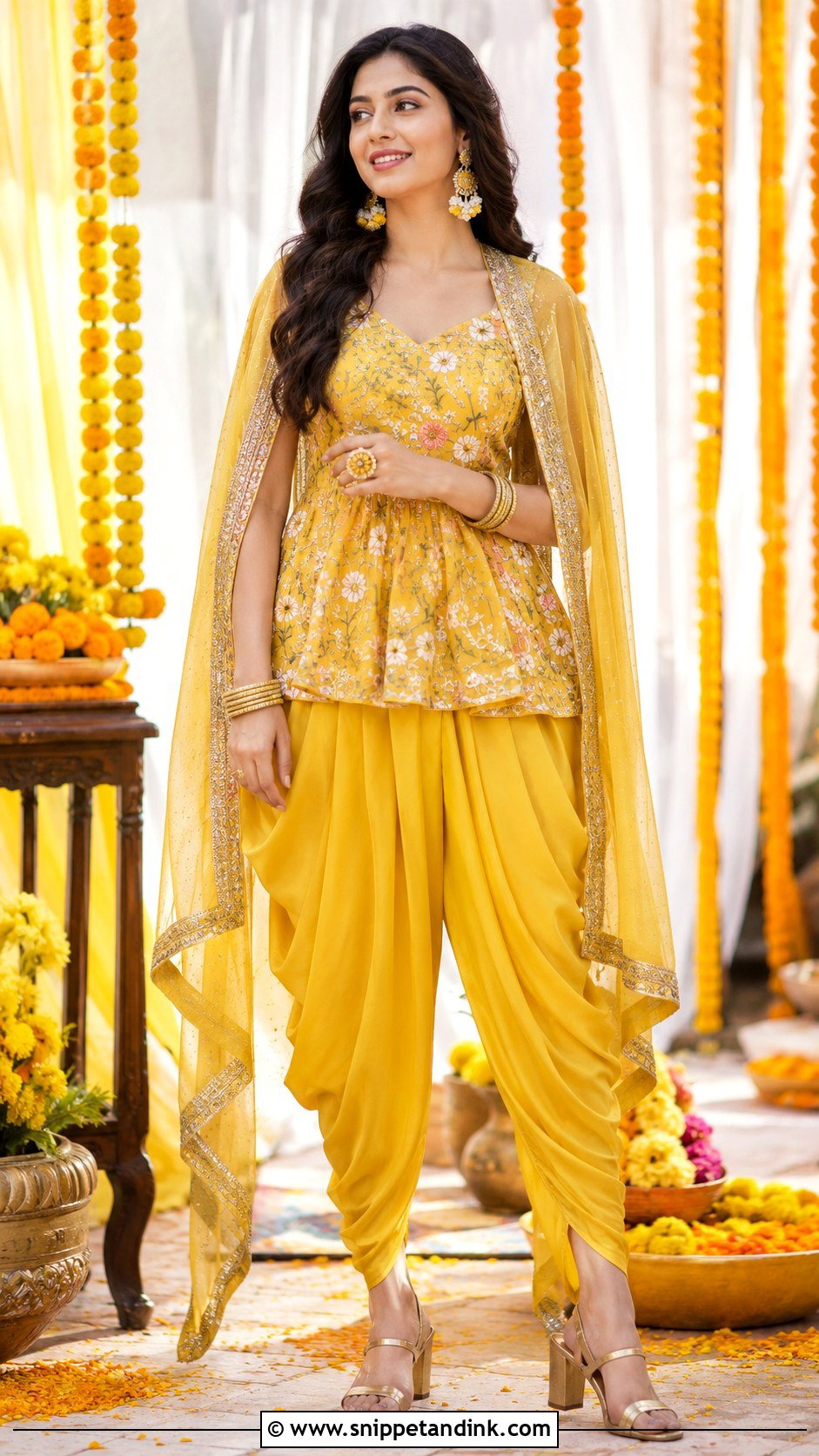
Dhoti pants are draped at the front and cut loose through the leg, so dancing and crouching are easy. A short kurta, peplum or crop top keeps it festive, and a cape, dupatta or embroidered jacket adds coverage. Cotton silk, crepe or georgette lets the drape fall properly; stiff fabric makes the folds stick out. Statement earrings, bangles and flats or block heels finish a look that holds up through games and dancing.
28. Yellow Maxi Dress For Haldi Function
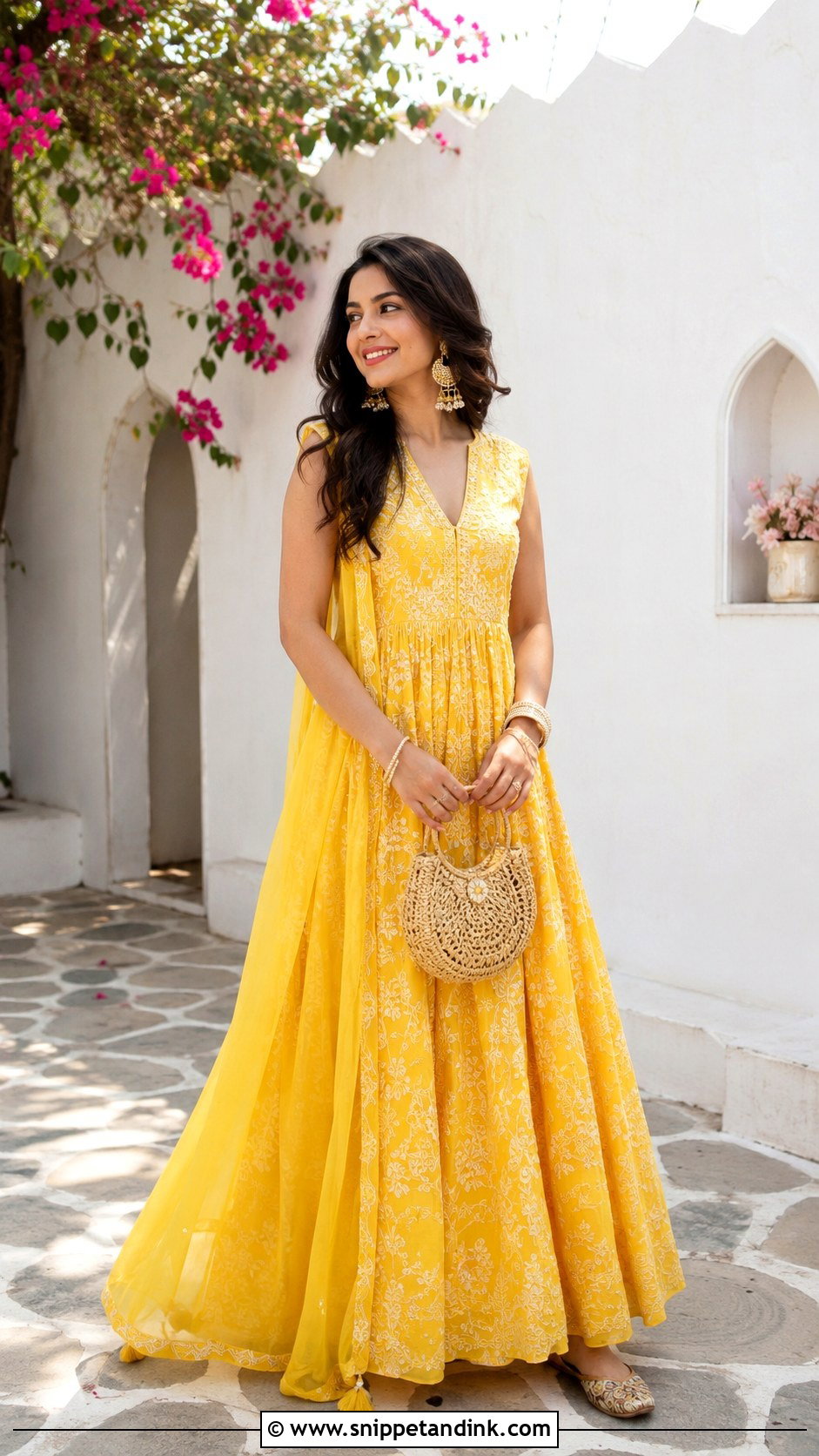
A yellow maxi dress suits a casual or destination Haldi where full ethnic wear isn’t expected. Look for Indian details like mirror work, block print, embroidered panels or a tiered skirt. It’s the coolest option on this list in hot weather. Jhumkas, bangles, embellished flats and a small potli or woven bag tie it to the occasion. If the family is traditional, a light dupatta or cropped jacket over the top makes it feel more appropriate.
29. Yellow Skirt And Crop Top For Haldi Function
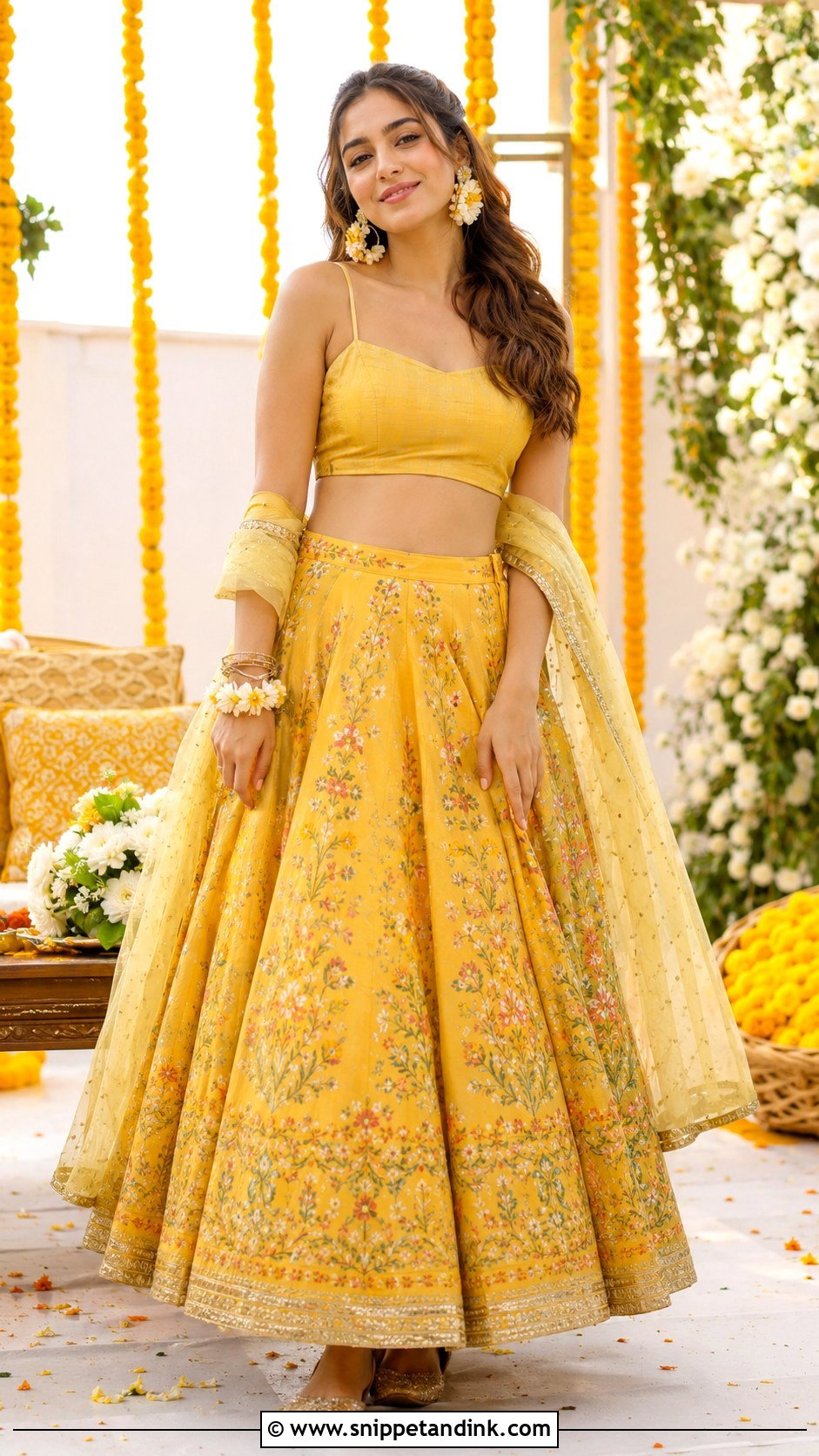
A skirt and crop top is a lehenga without the weight, and you can wear each piece separately later. A printed or embroidered skirt with a plain top works best; if both pieces are busy, they compete. A high-waisted skirt with a slightly longer blouse is comfortable for sitting on the floor. Add a dupatta for a traditional finish, plus floral earrings, bangles and juttis.
30. Simple Guest Outfit For Haldi Function
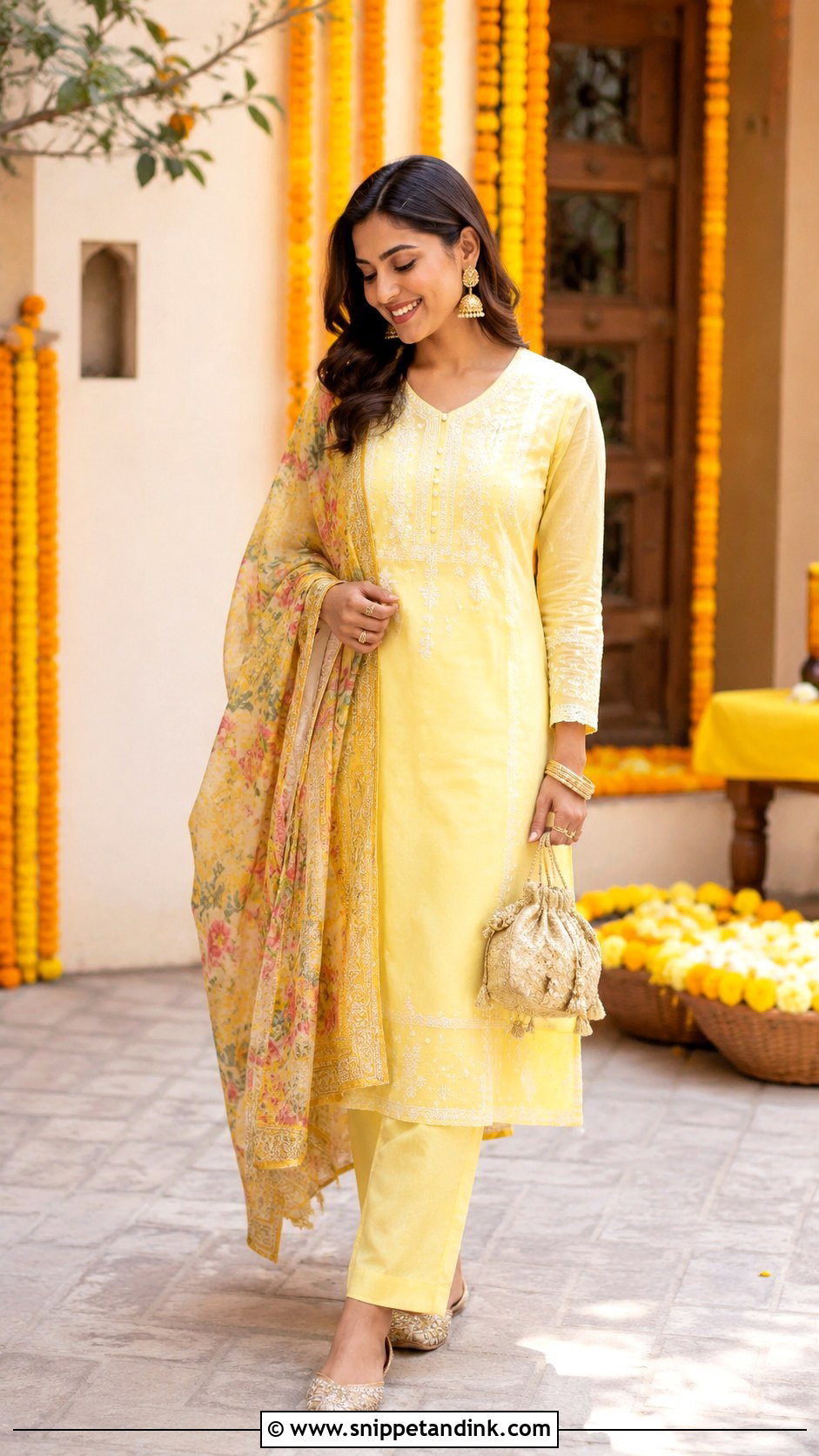
A guest outfit for Haldi should look festive without competing with the bride or her close family. A yellow kurta set, printed sharara, pastel saree or light Anarkali is usually enough. Cotton, rayon, georgette or linen blends keep you cool outdoors. Pick one statement piece: jhumkas, bangles, a potli bag or embroidered juttis. Skip heavy work, because guests get turmeric on them too. Neat hair and soft makeup make even a simple outfit look considered.
Can You Get Turmeric Out Afterwards?
Sometimes. Turmeric’s colour comes from curcumin, which binds quickly to fibres, so speed matters more than any product. The sooner you treat the outfit, the better your chances.
Same day
Scrape off any dried paste gently with a blunt edge, then rinse from the back of the fabric with cold water. Hot water sets the stain. On washable cotton or linen, work in a little plain dish soap and rinse again. Don’t panic if the mark turns reddish when soap touches it; curcumin changes colour with alkaline products, and it usually fades back as you rinse.
The next few days
Sunlight fades curcumin, so drying a washed cotton piece outside in the sun often lightens what’s left. That’s a reliable trick on white and pale cotton. It isn’t one for coloured silk, which can fade unevenly.
For silk, organza, zari, heavy embroidery or anything with mirror work, don’t experiment at home. Hand it to a dry cleaner who handles Indian wear and tell them it’s turmeric, ideally within a few days.
Dress for the Paste, Then for the Photos
A good Haldi outfit lets you sit on the floor, get covered in paste and dance afterwards without worrying about it. Yellow will always be the favourite, but white, lime, orange, florals, pastels and fusion pieces all have a place. Choose breathable fabric, pin the drapes, wear shoes you can stand in for hours and keep the jewelry light. Brides can go more detailed; bridesmaids and guests do better with something lighter that they’ll wear again.
You'll Like These Ideas:




Leave a Reply