
A sister at a haldi is rarely just a guest. She carries the bowl of paste, pulls cousins onto the dance floor, fixes the bride’s dupatta and usually ends up with more turmeric on her than anyone except the bride. So when I style sisters, I dress them for work as much as for photos. The outfits below range from classic yellow lehengas and sharara sets to sarees, co-ords and Indo-western pieces, in mustard, lemon, peach, mint, ivory and orange. With each one I’ve noted how it copes with a busy morning and how it sits next to the bride.
Ask the Bride Two Questions First
Before any sister buys a haldi outfit, I ask her to find out two things: what exactly the bride is wearing, and whether the family wants the sisters to match.
Her outfit sets your limits. If she’s in bright yellow with gota, you can wear a lighter lemon, a mustard or a neighbouring colour like peach or mint. Avoid her exact shade and avoid heavier embroidery than hers. In group photos the eye should go to her first, and an identical colour flattens everyone into one block of yellow.
Matching, Coordinating or Mixing
- Matching sets: all sisters in the same outfit. Easy to buy online in bulk, but fit becomes the issue, so allow time for each person’s alterations.
- Coordinated: same colour family, different silhouettes. One wears a sharara, one a saree, one a lehenga. This suits different ages and body shapes best.
- One accent: everyone chooses freely but wears the same floral jewelry or the same dupatta. It’s the cheapest way to look like a group.
Whichever you choose, agree on it early. Last-minute matching usually means someone settles for a size or colour that doesn’t suit her.
1. Yellow Lehenga for Haldi
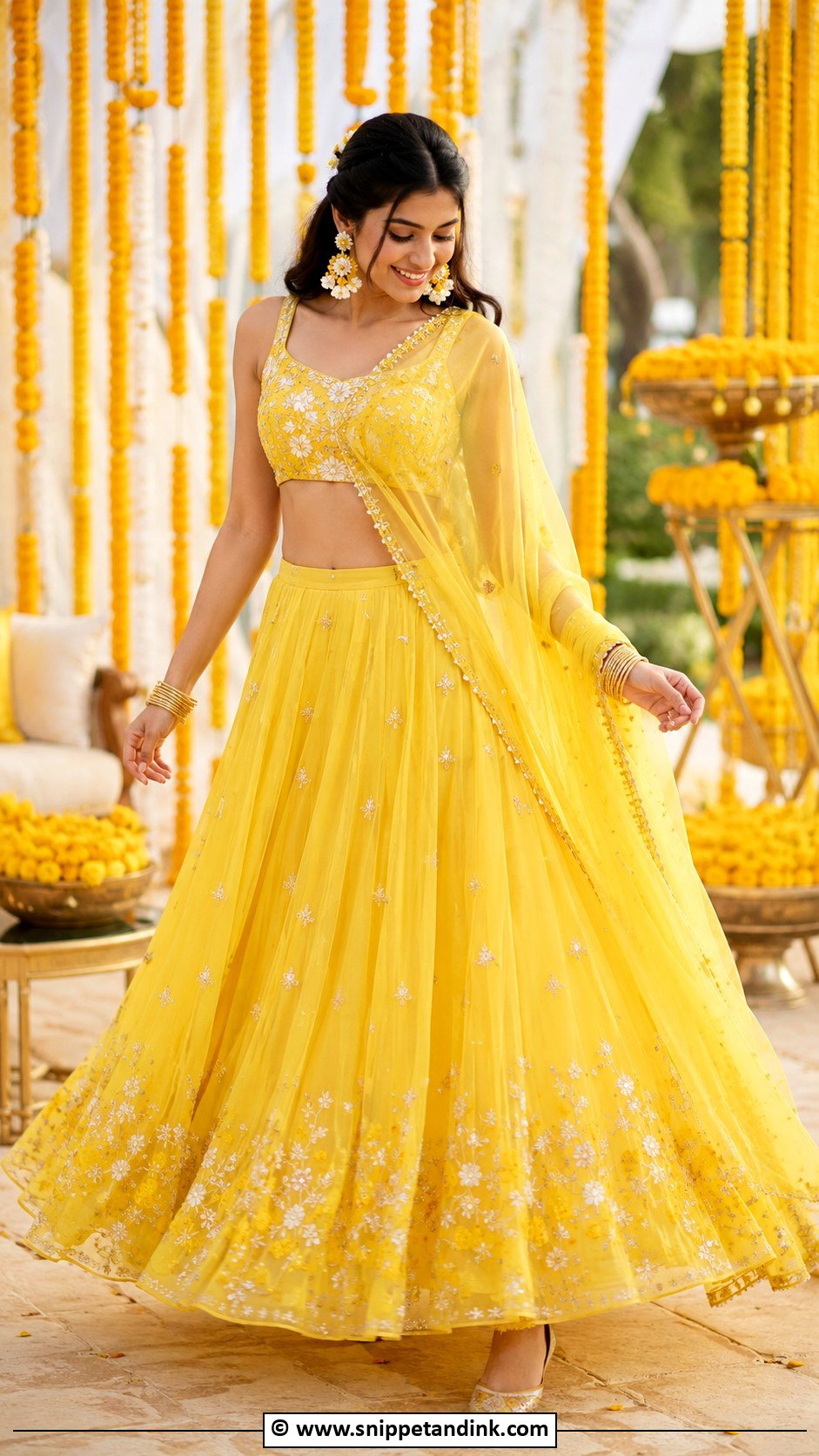
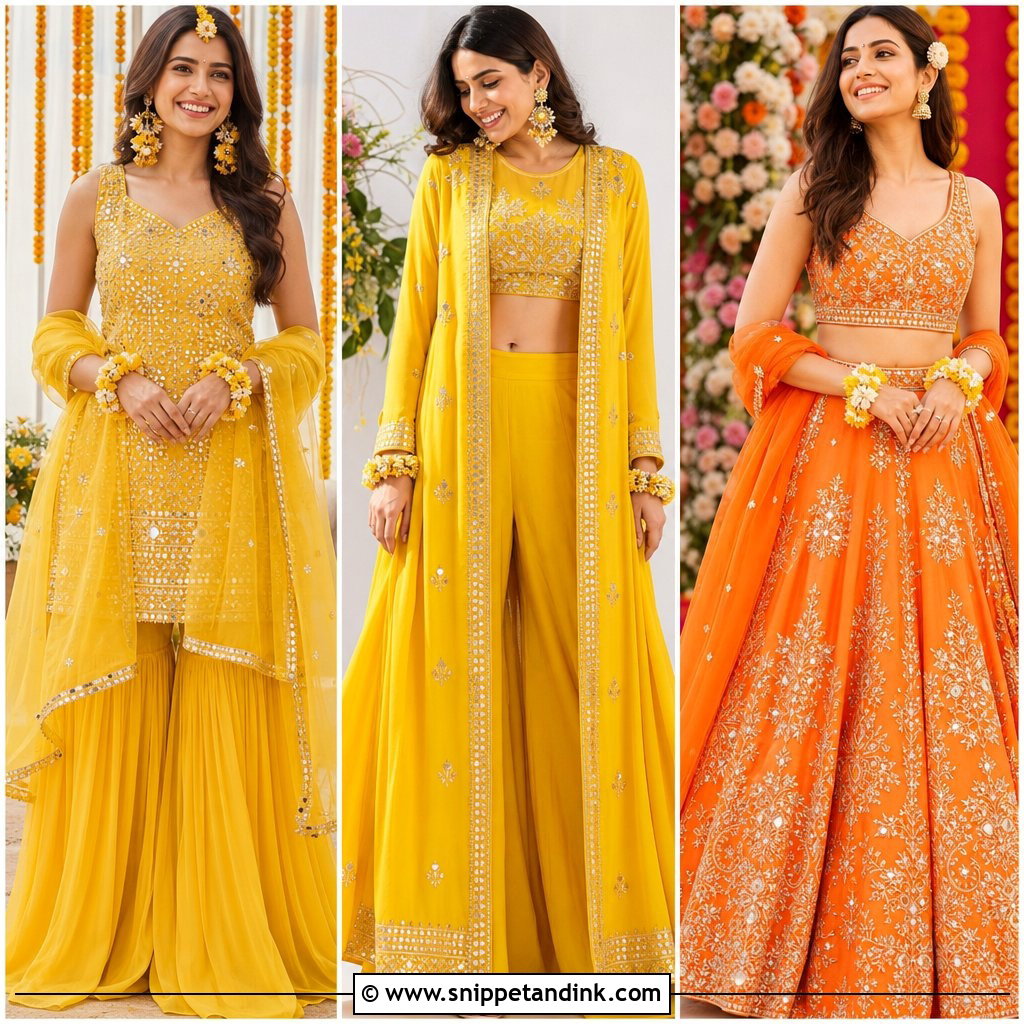
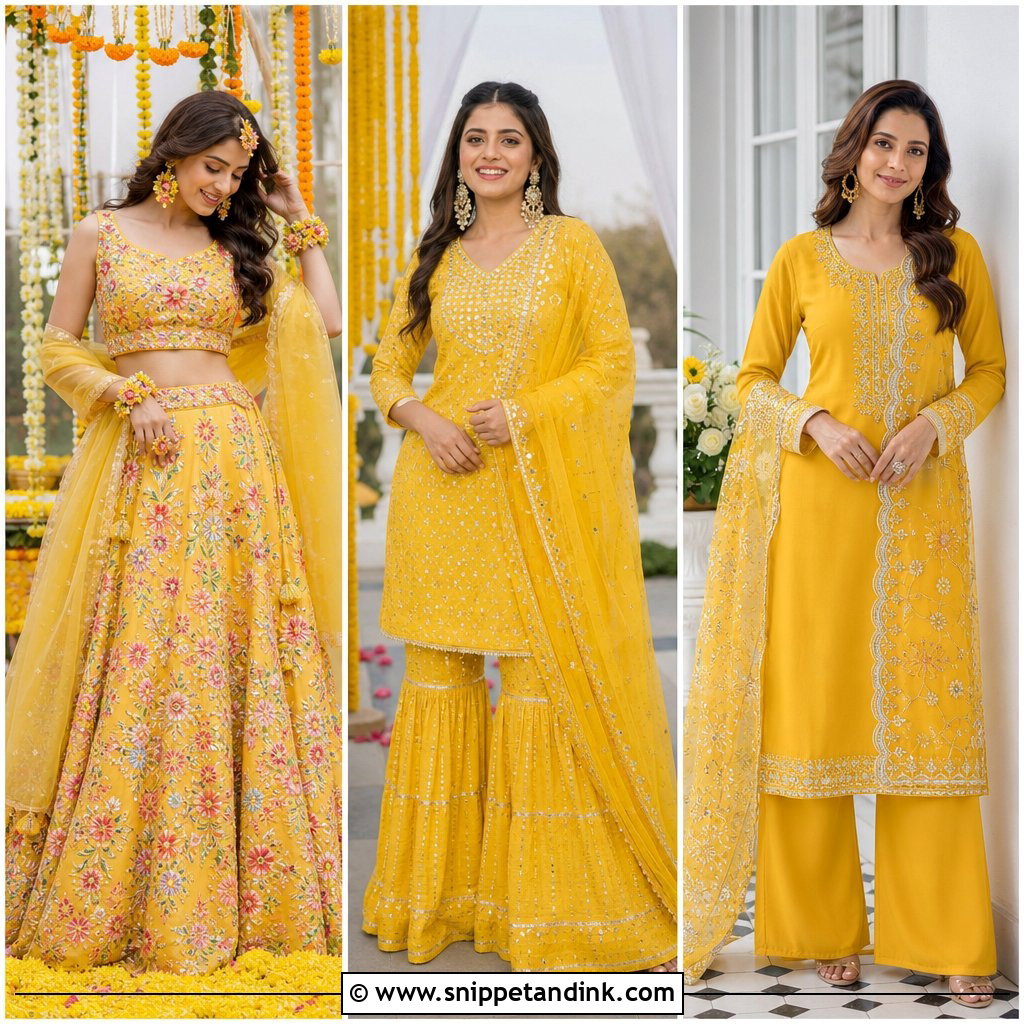
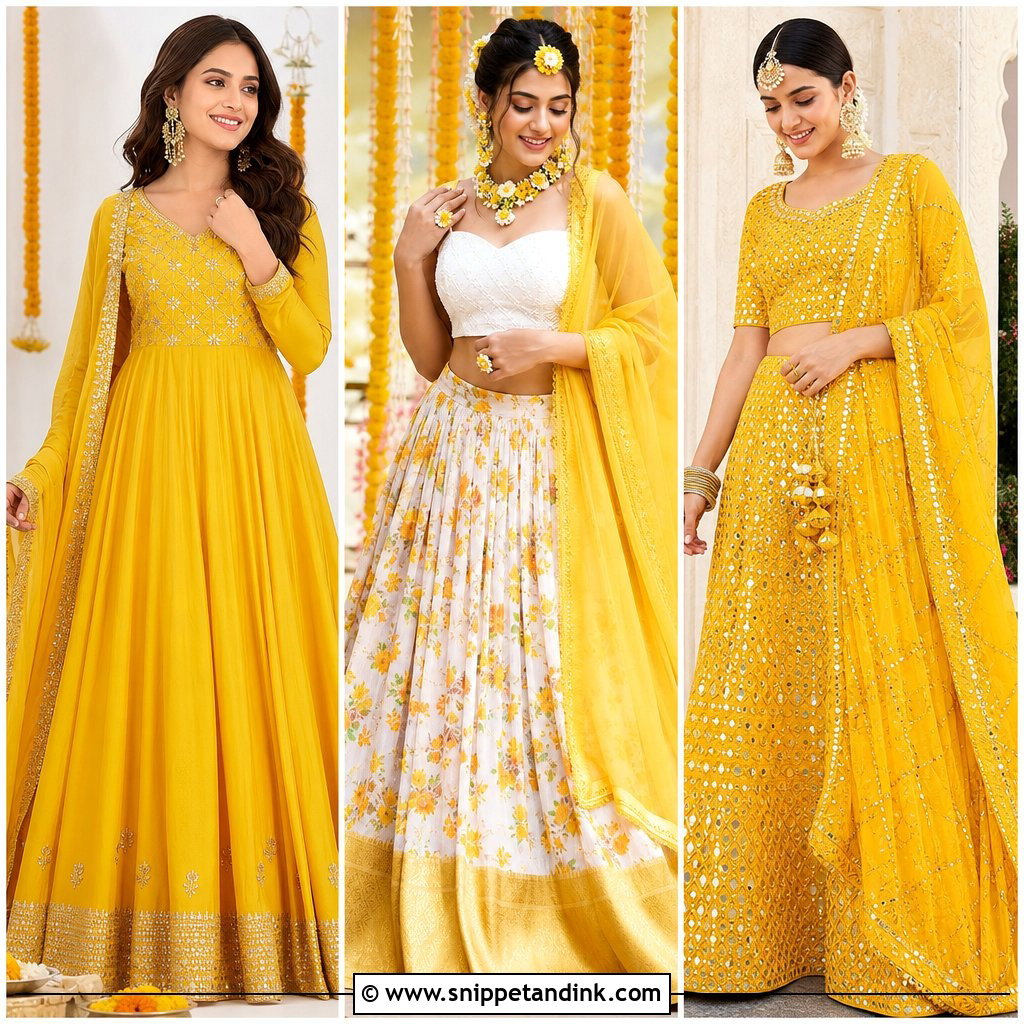
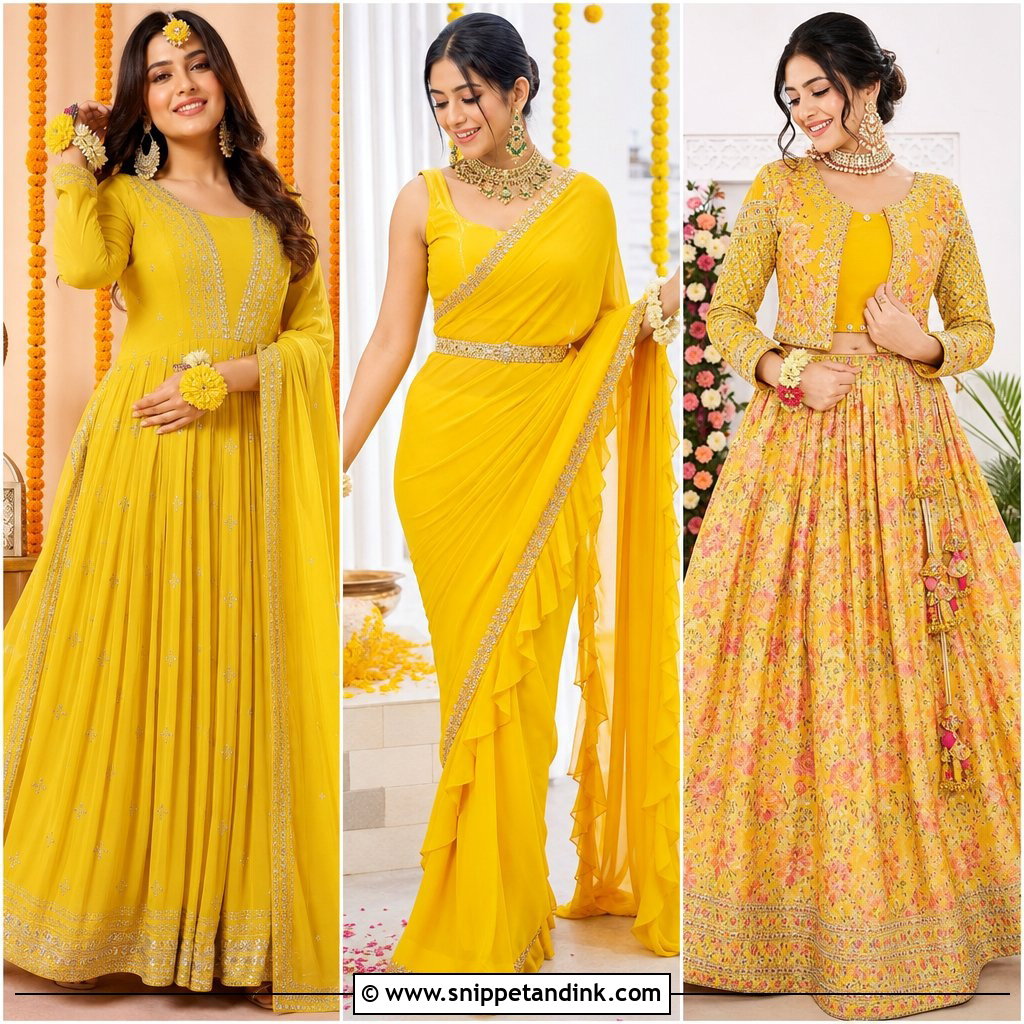
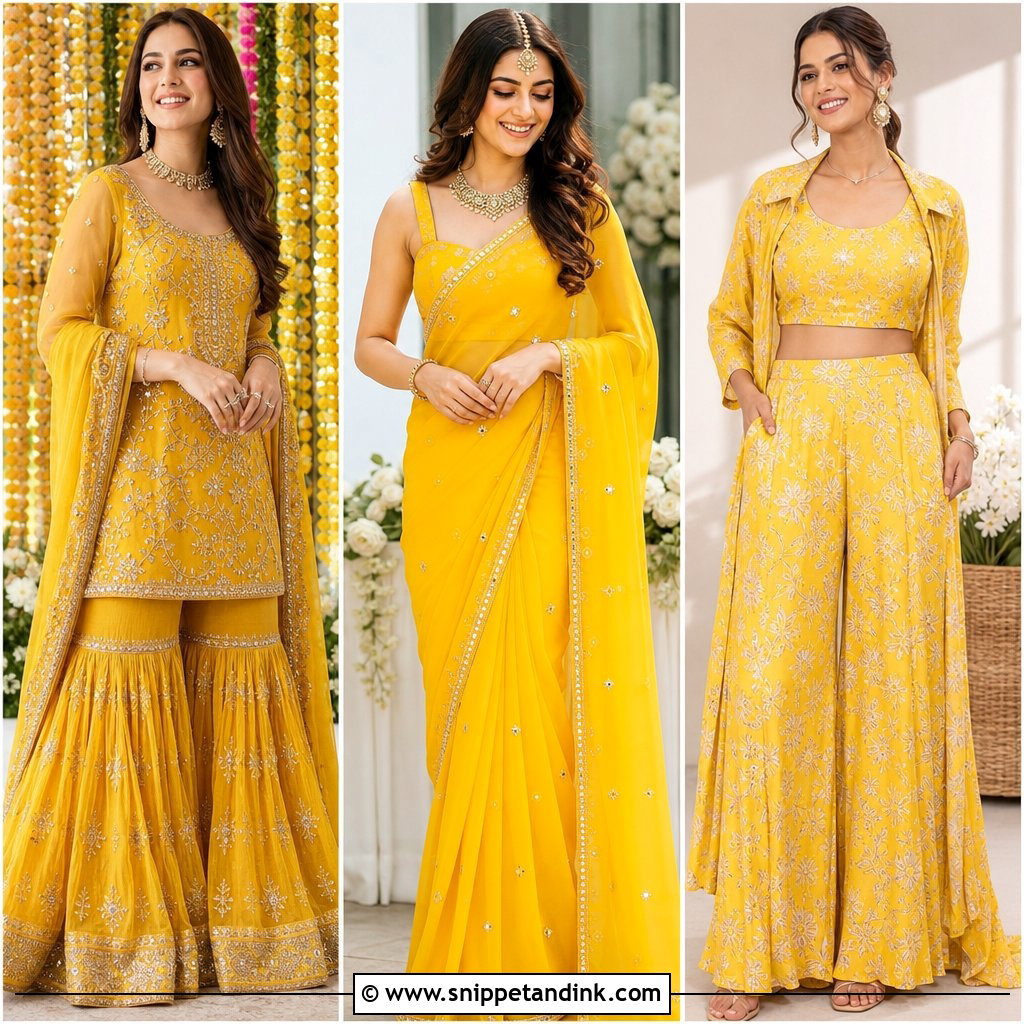
A yellow lehenga is the safe classic, and I still reach for it often. Choose georgette, organza or cotton silk, a short blouse and a dupatta pinned on one shoulder so both hands stay free. Mirror work, gota patti or small floral embroidery gives daytime sparkle. The one rule I hold sisters to: if the bride is in a deep, heavily worked yellow, go a shade lighter, such as lemon, so you sit beside her in photos rather than mirror her. Juttis, floral earrings and a braid finish it.
2. Yellow Sharara Set for Haldi
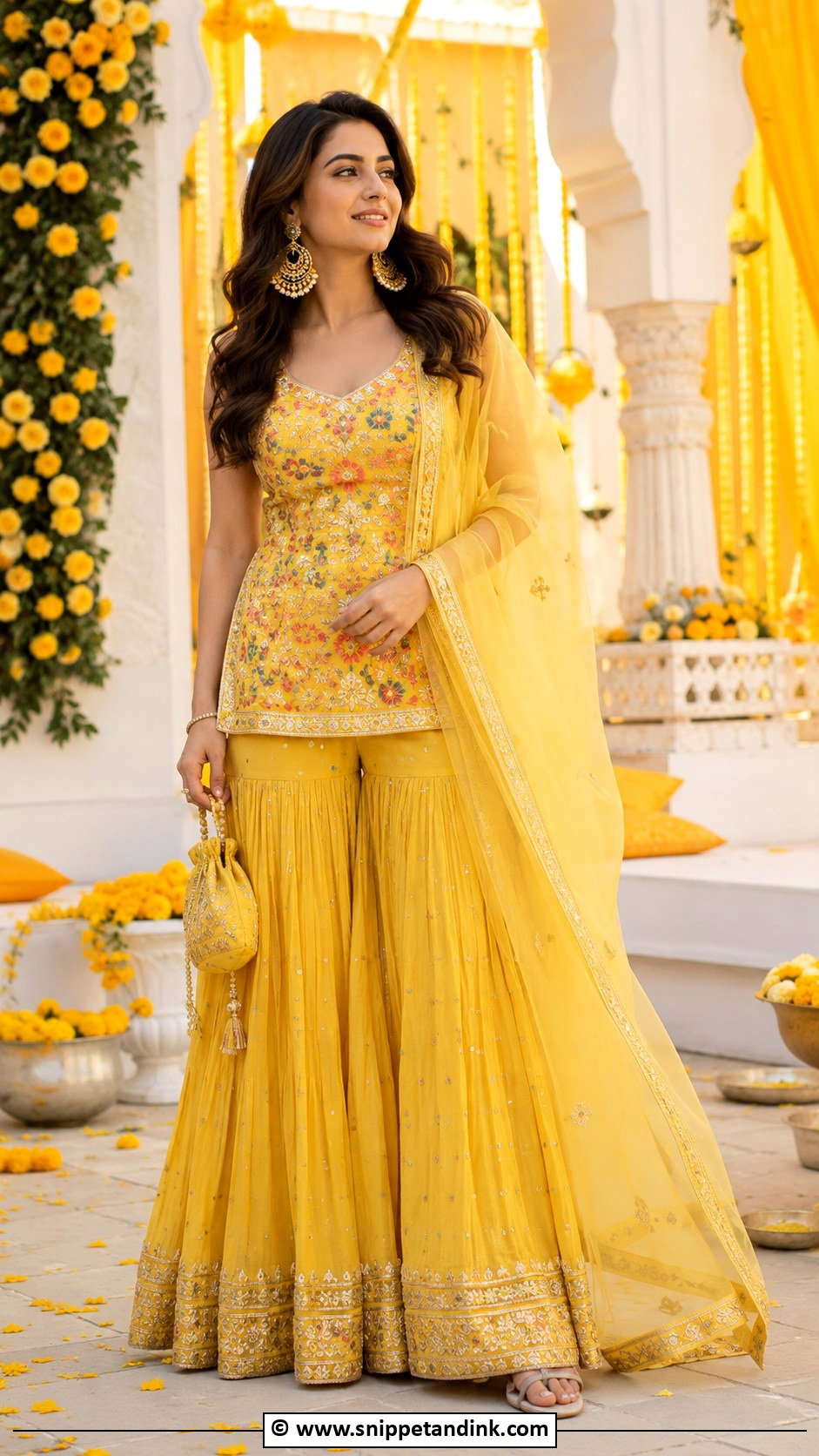
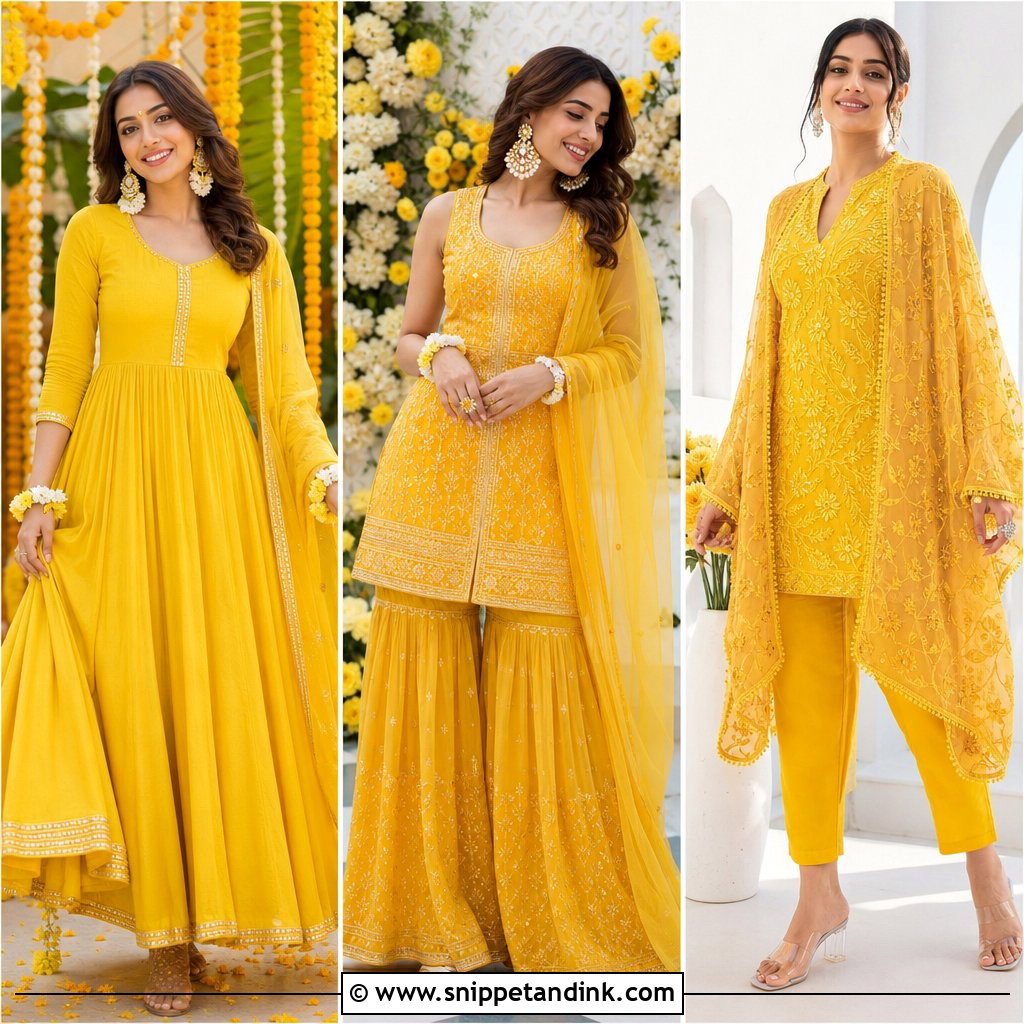
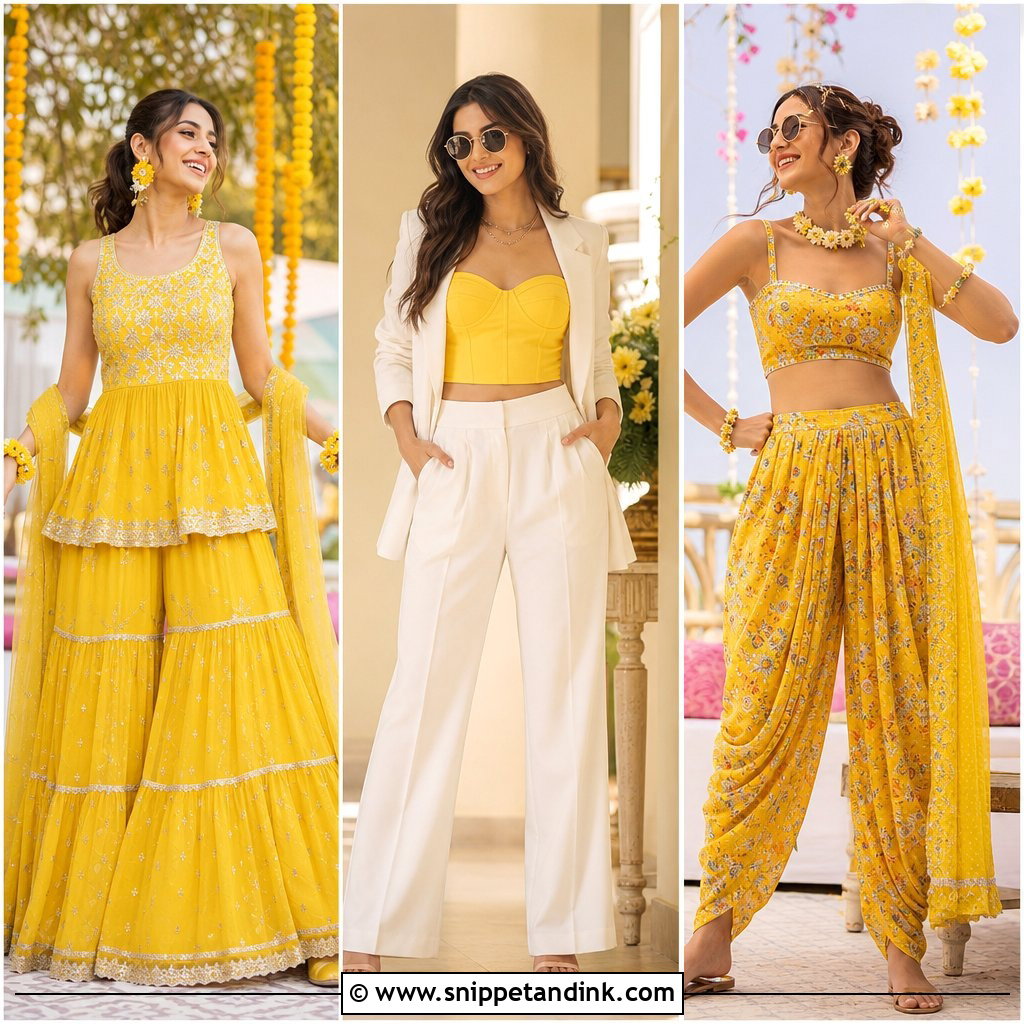
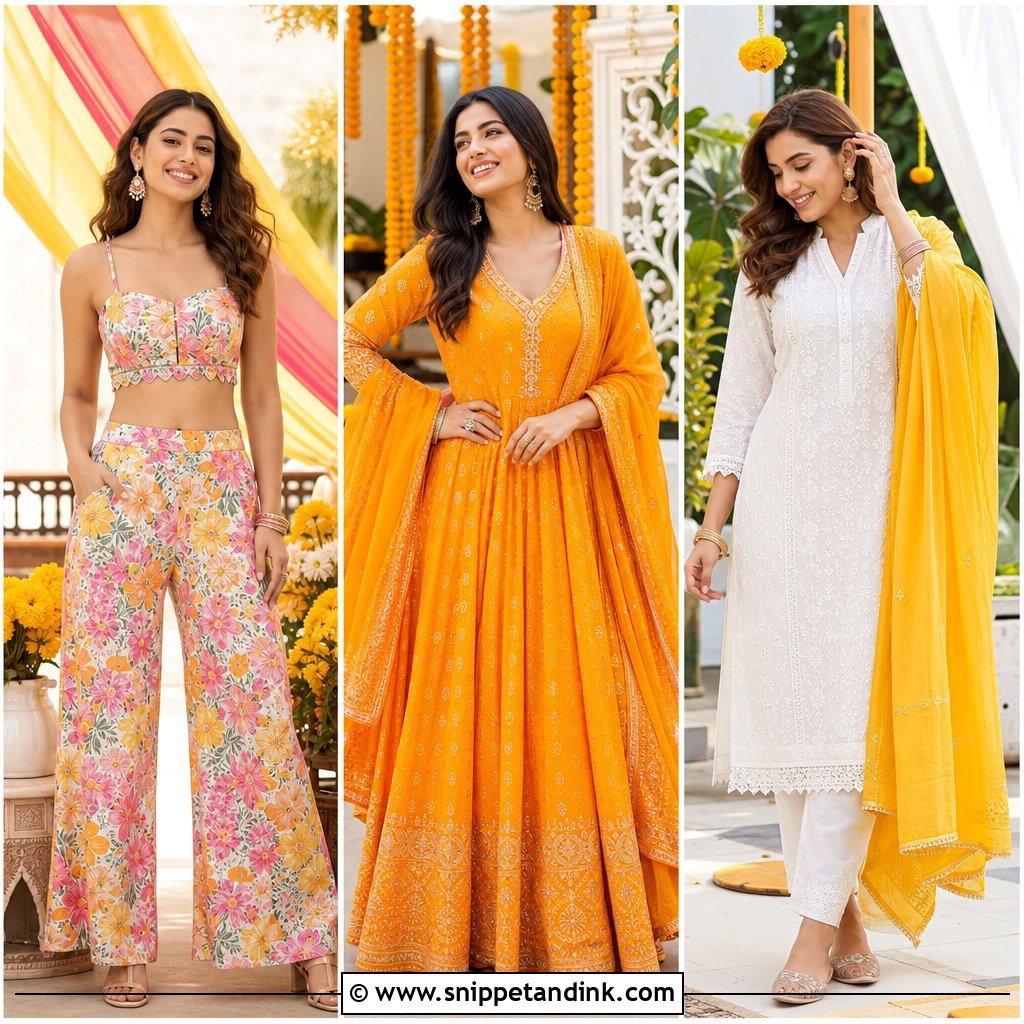
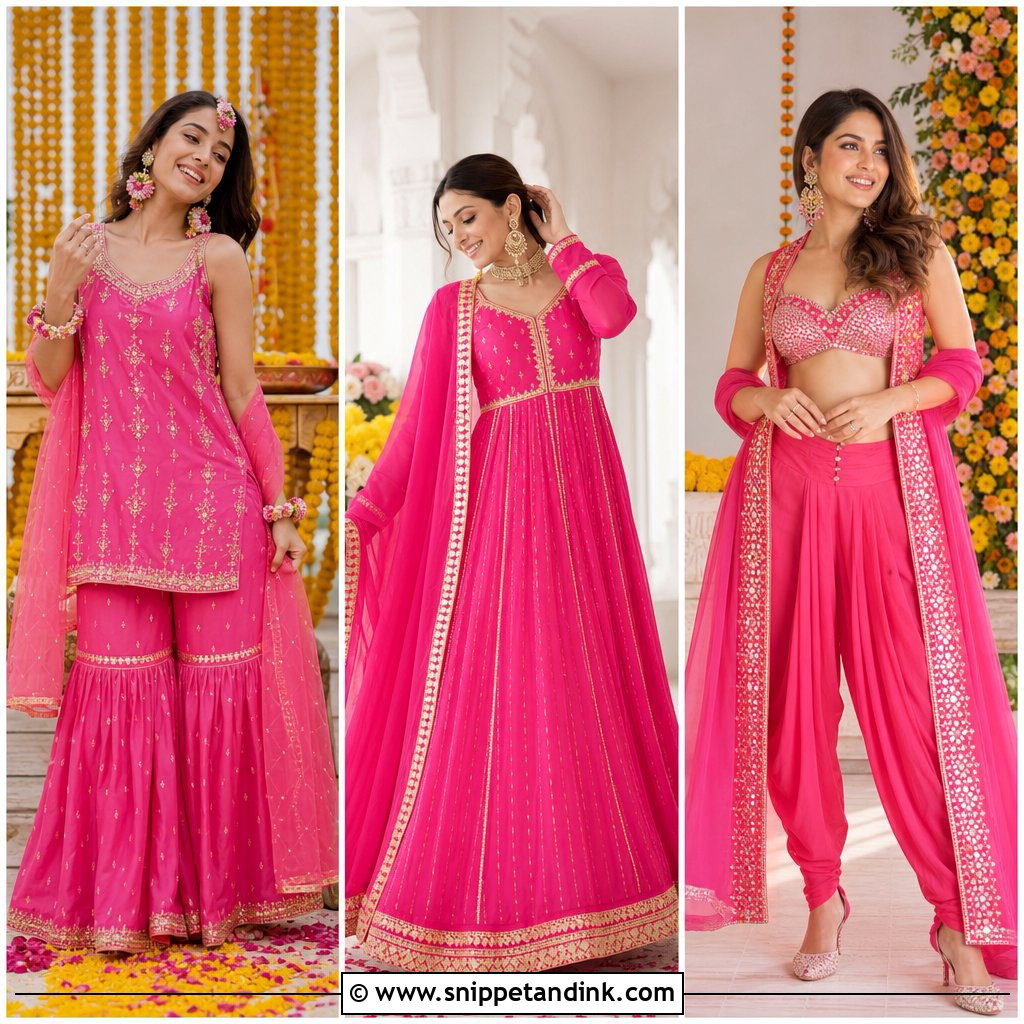
Wide sharara legs mean you can crouch to hand over the haldi bowl or sit on a floor cushion without gathering a skirt. That’s why a yellow sharara set is my most-recommended outfit for sisters who’ll be on their feet. A short kurti with subtle gota borders or thread embroidery keeps it light. An organza dupatta in a matching or contrast shade lifts it in photos. Block heels or embellished flats, chaandbalis, stacked bangles and a potli bag big enough for safety pins and lip balm.
3. Yellow Saree for Haldi
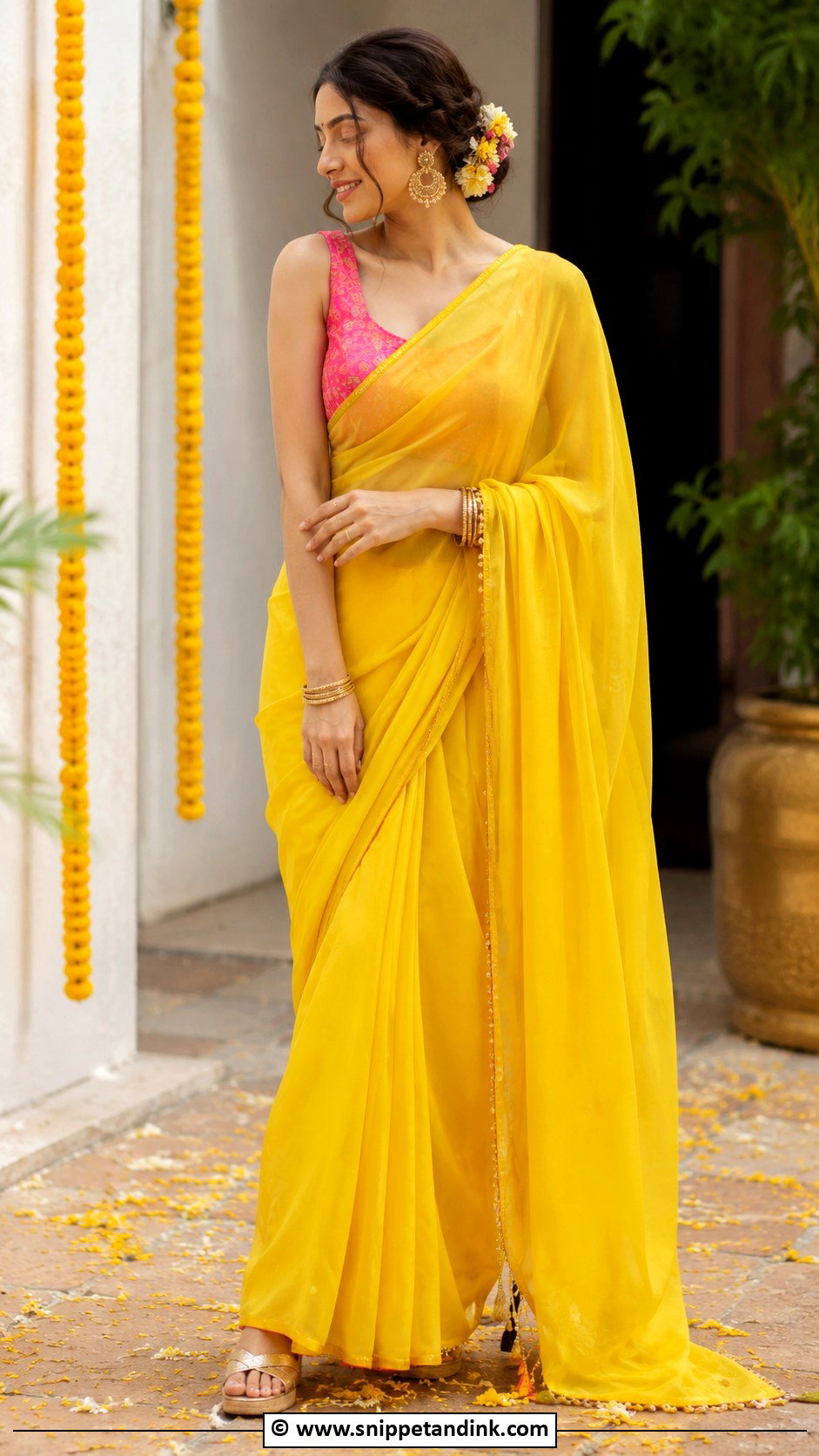
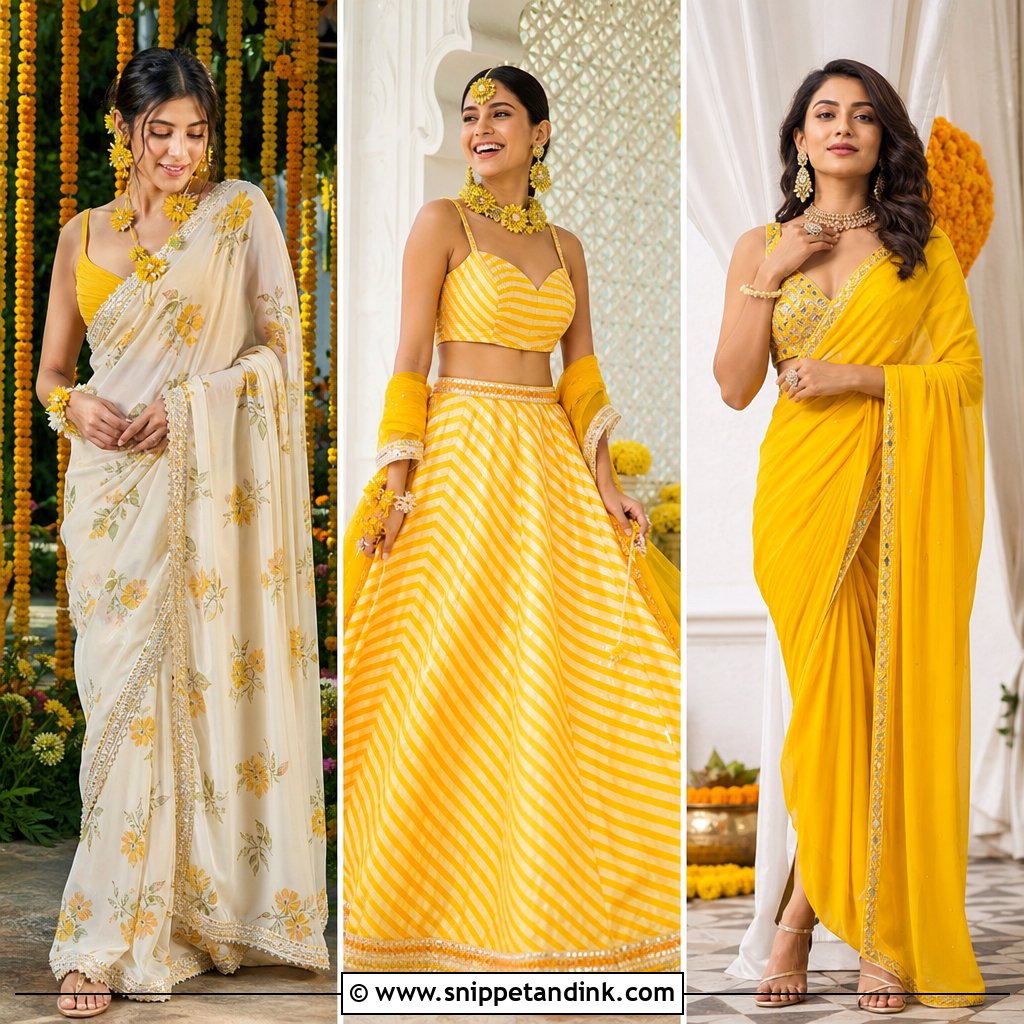
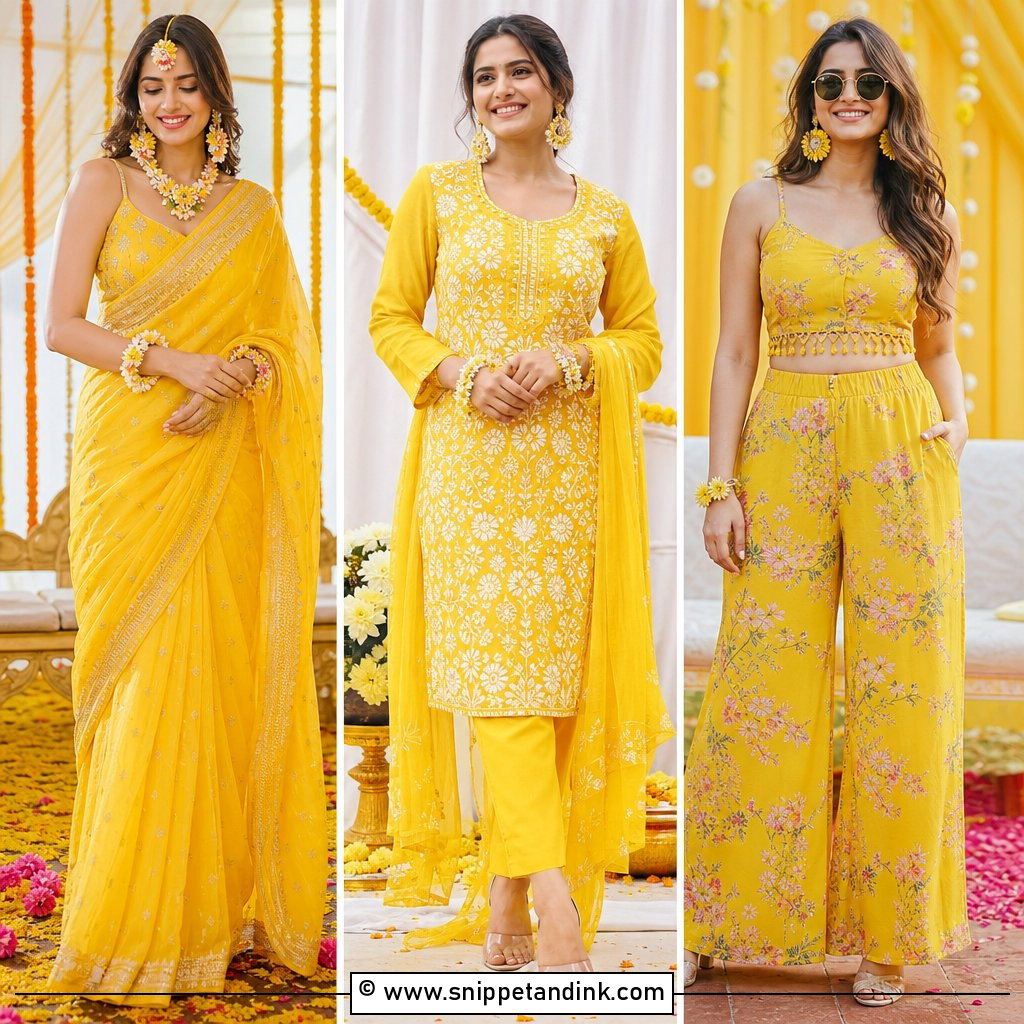
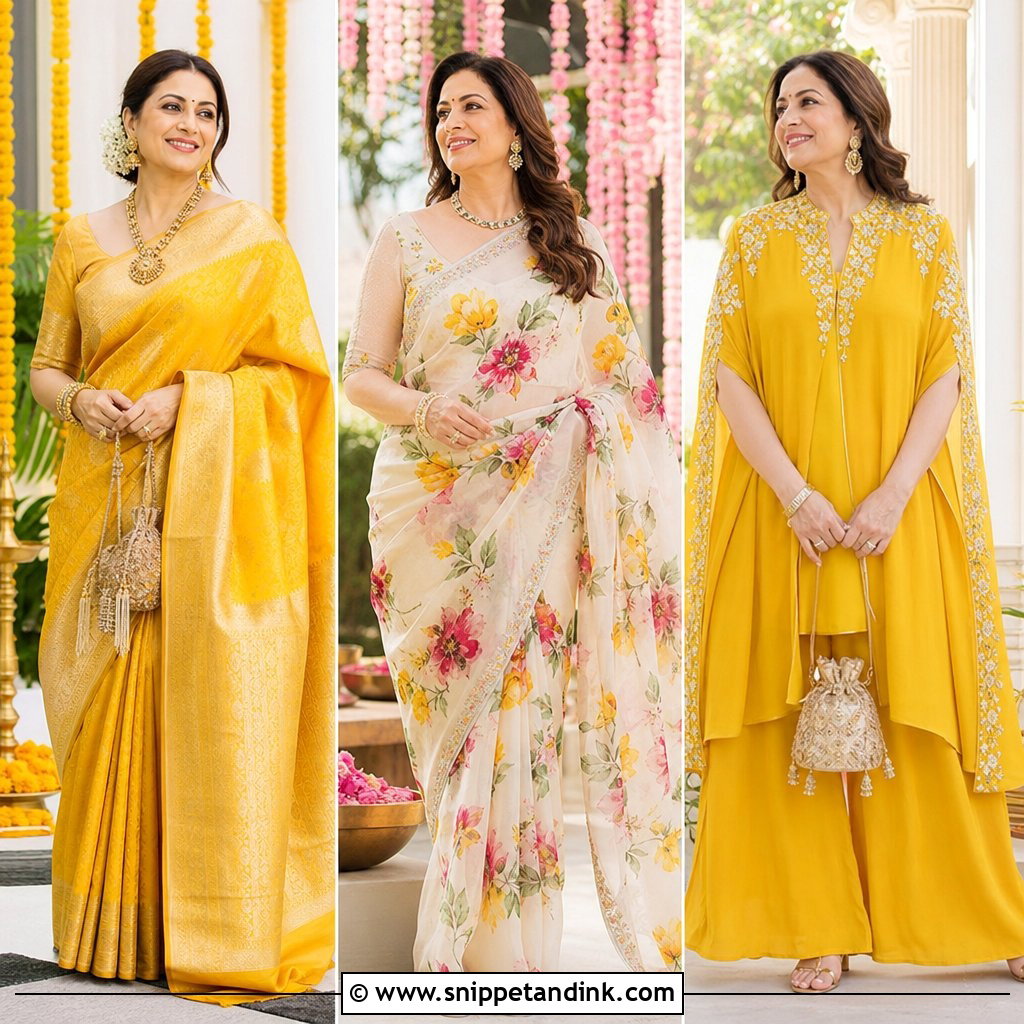
Sarees look graceful and need the most attention on a working day. Chiffon, georgette, linen or organza drape lightly and recover from being sat on. A contrast blouse in pink, green, ivory or orange freshens the yellow. Pin both pleats and pallu, because you’ll be bending over the bride, reaching for things and hugging relatives for hours. I’d pass on heavy zari borders here; light zari, gota or a floral print feels right for daytime. Wedges, statement earrings and fresh flowers in the hair complete it.
4. Yellow Anarkali Suit for Haldi
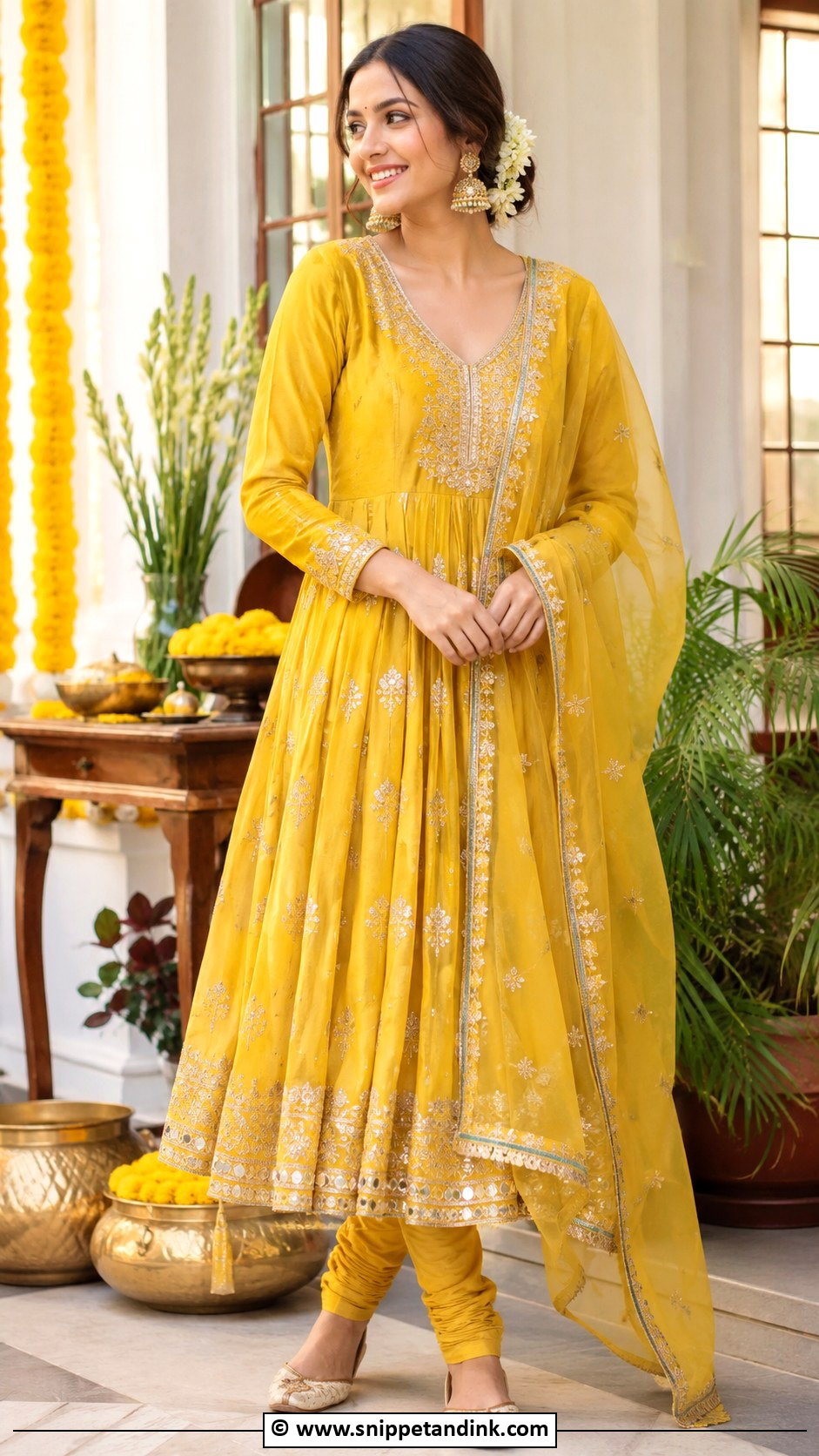
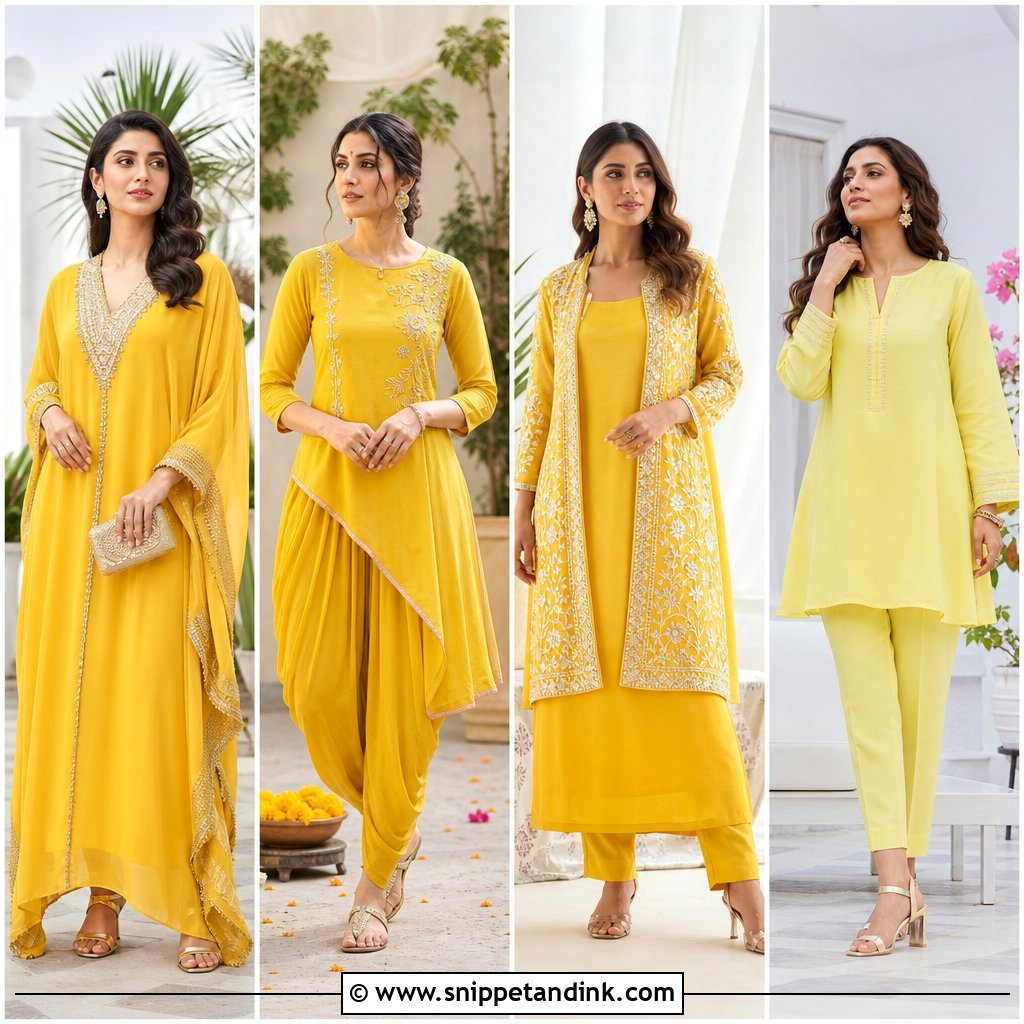
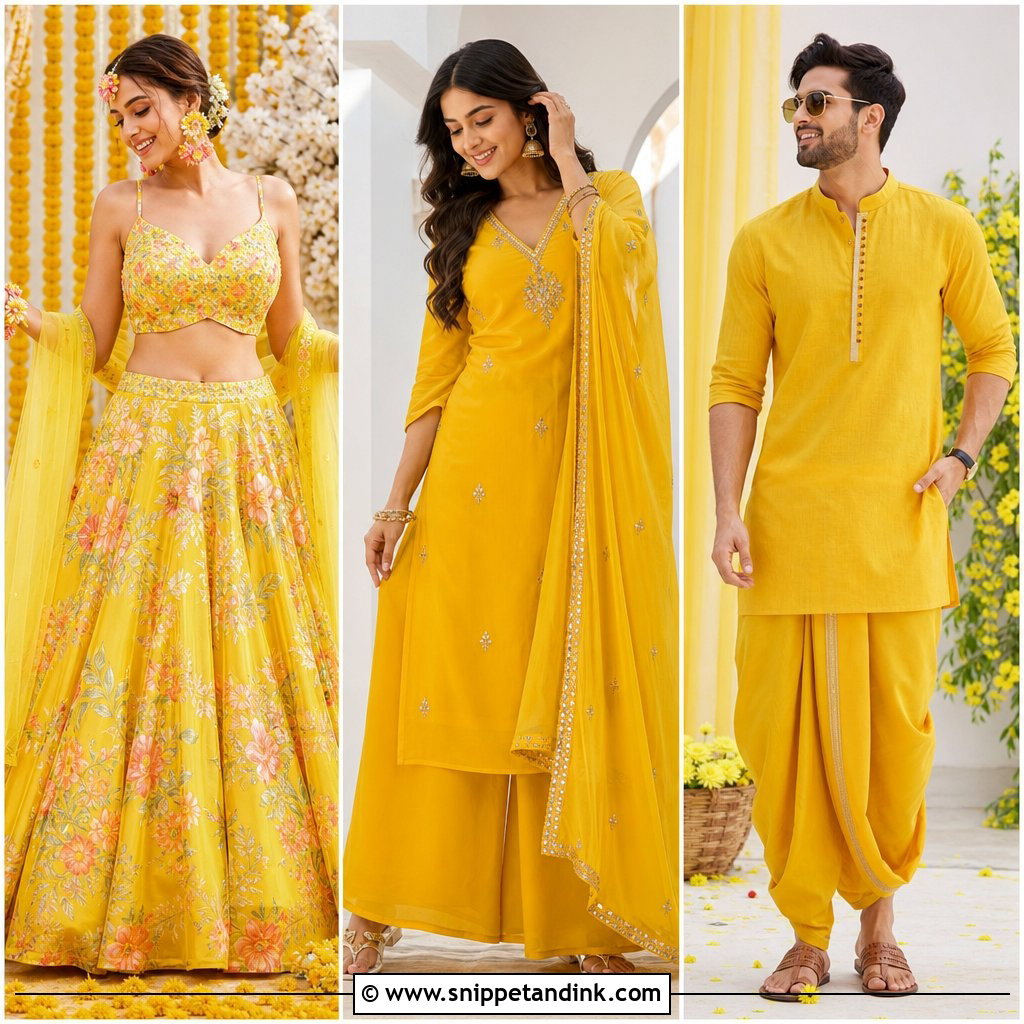
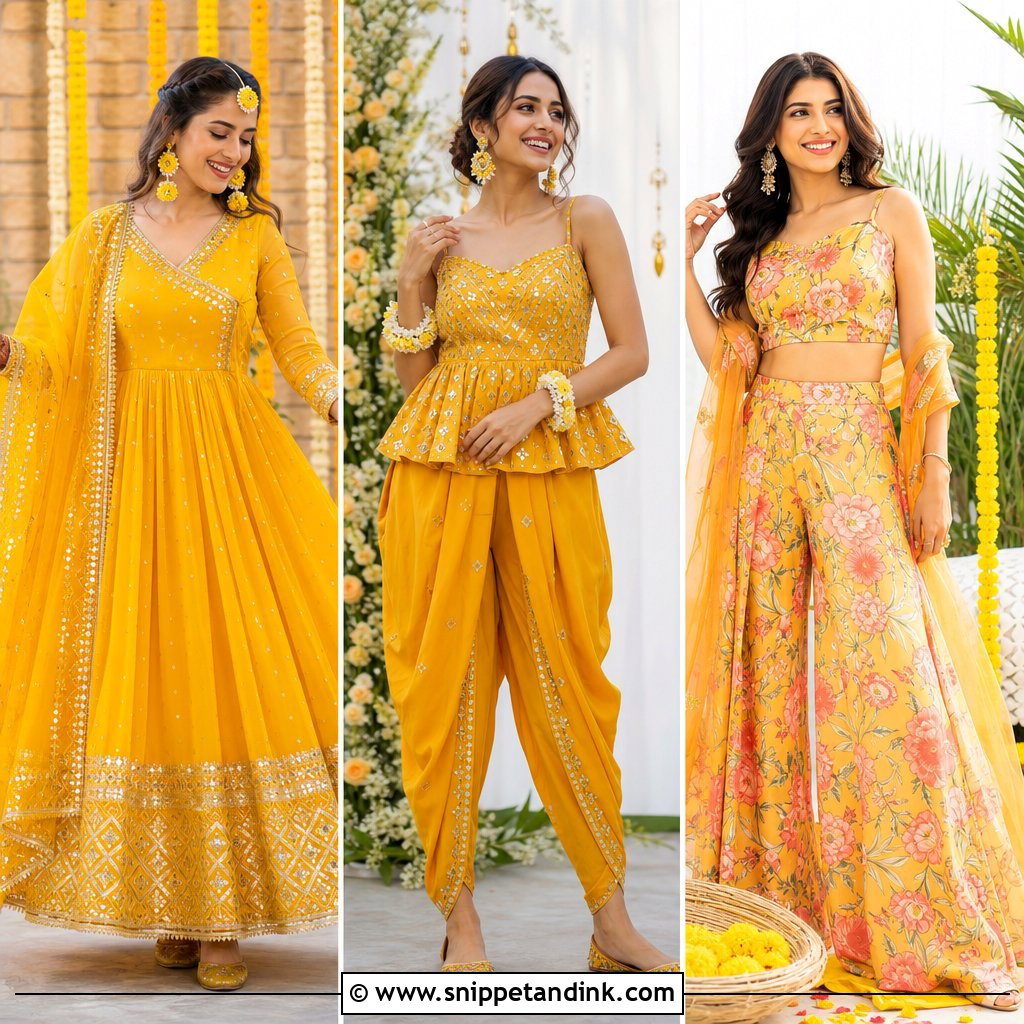
Not keen on draping, or on hauling a lehenga skirt around? A yellow Anarkali suit is the answer I give most. The flare gives you room to sit and move, and the single layer is easy to manage. Knee or floor length both work; choose cotton silk, chanderi, georgette or muslin according to the heat. Churidar or straight pants with a light dupatta. A little mirror work or lace trim is enough. Jhumkas, juttis and a low bun with gajra, and you’re ready.
5. White and Yellow Lehenga for Haldi
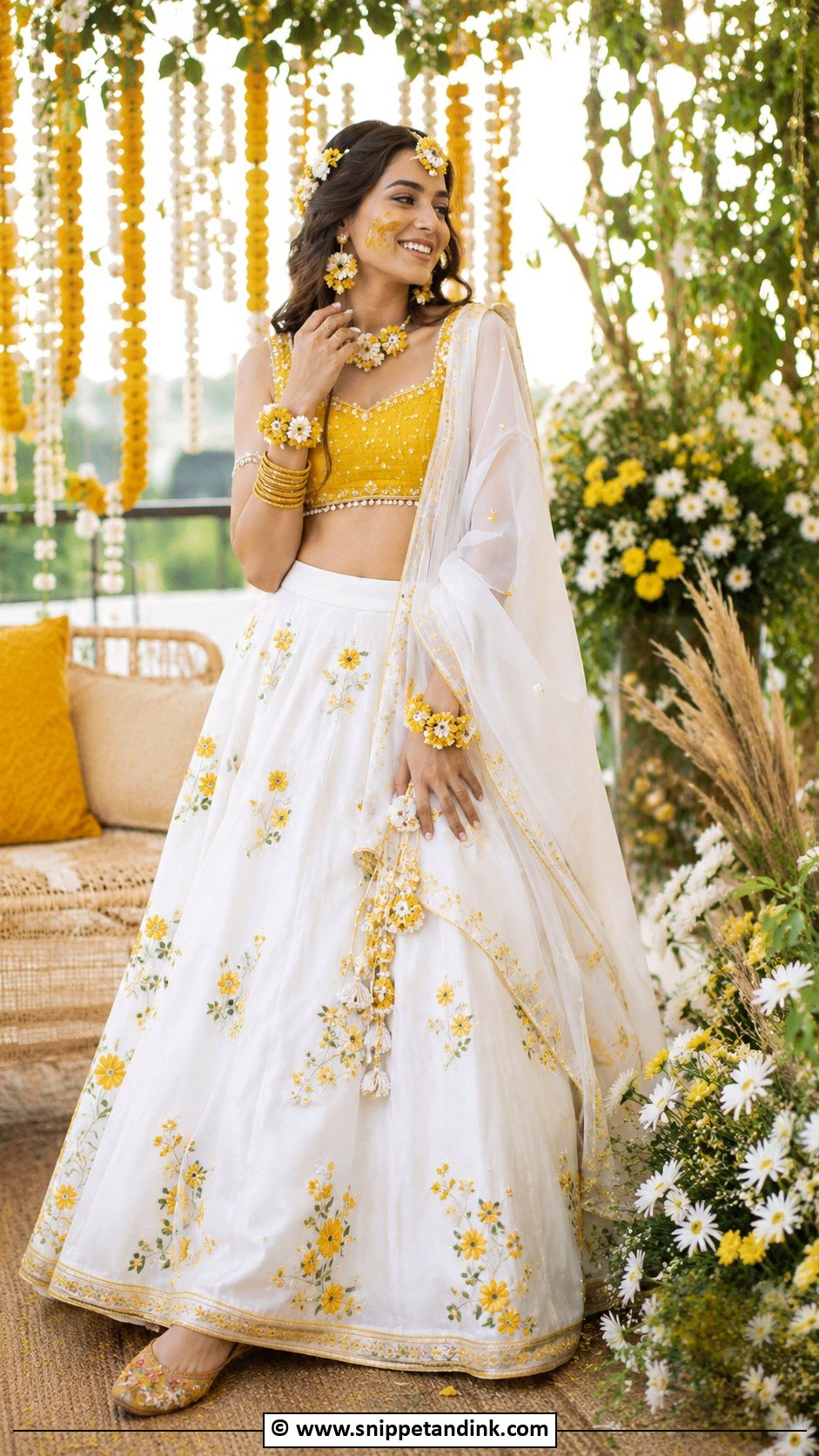
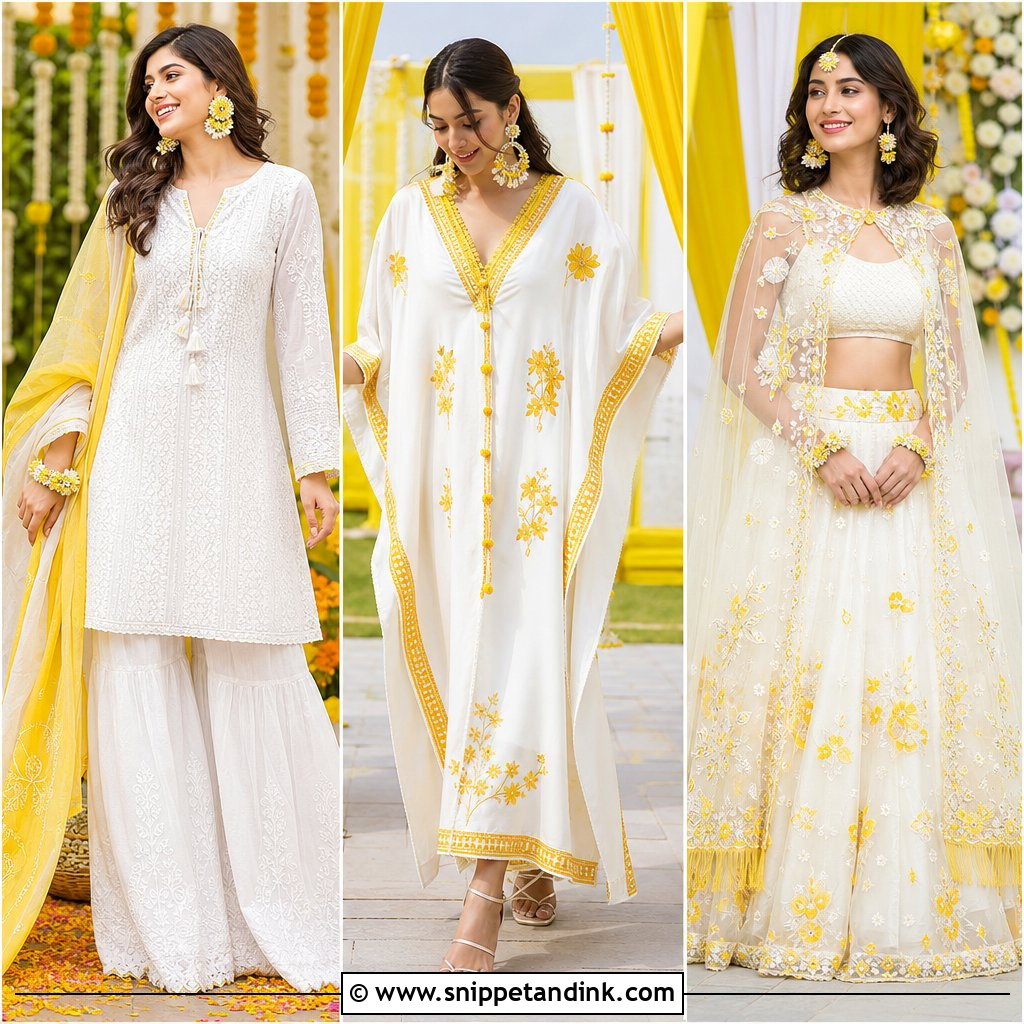
White and yellow looks crisp in morning sun, but think about where you’ll be standing. If you’re one of the sisters applying haldi, white will come home stained, and turmeric on white is stubborn. I keep this one for sisters who are hosting, greeting guests or mostly in photos. A white skirt with yellow buti work, or a yellow blouse over a white lehenga, ties it to the ceremony. Yellow floral jewelry, gold bangles and embroidered juttis, with soft waves or a half-up braid.
6. Mustard Lehenga for Haldi
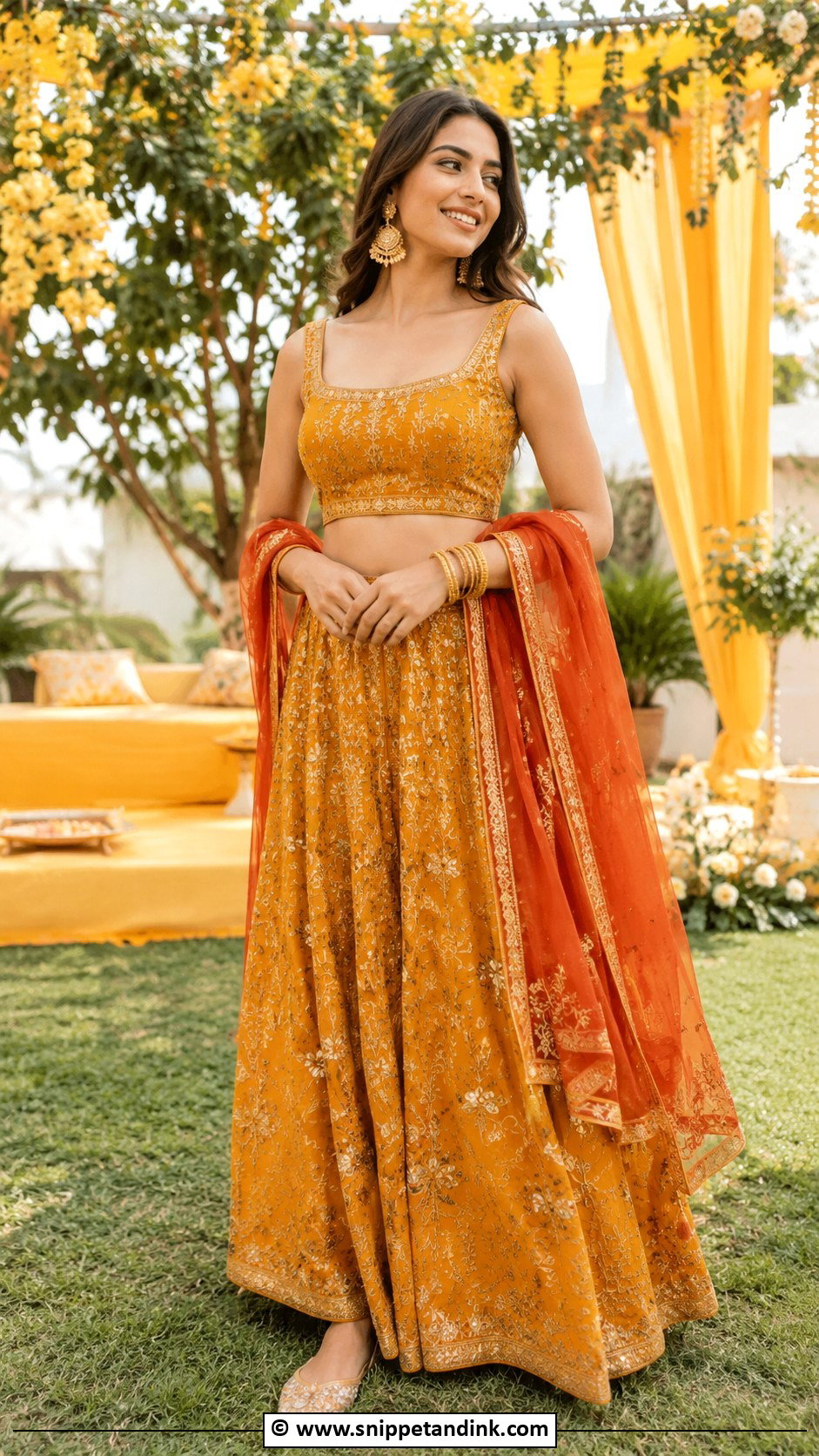
Mustard looks richer and a little more grown-up than bright yellow, which makes it a good choice for an older sister. Antique gold embroidery, mirror details or block prints all suit it. Skip a heavy can-can; it adds heat and bulk you don’t need while you’re running around. A rust, ivory or green dupatta adds contrast if you want it. Gold jhumkas, kadas and embellished flats, with warm blush and a natural lip rather than a bold colour that fights the mustard.
7. Lemon Yellow Saree for Haldi
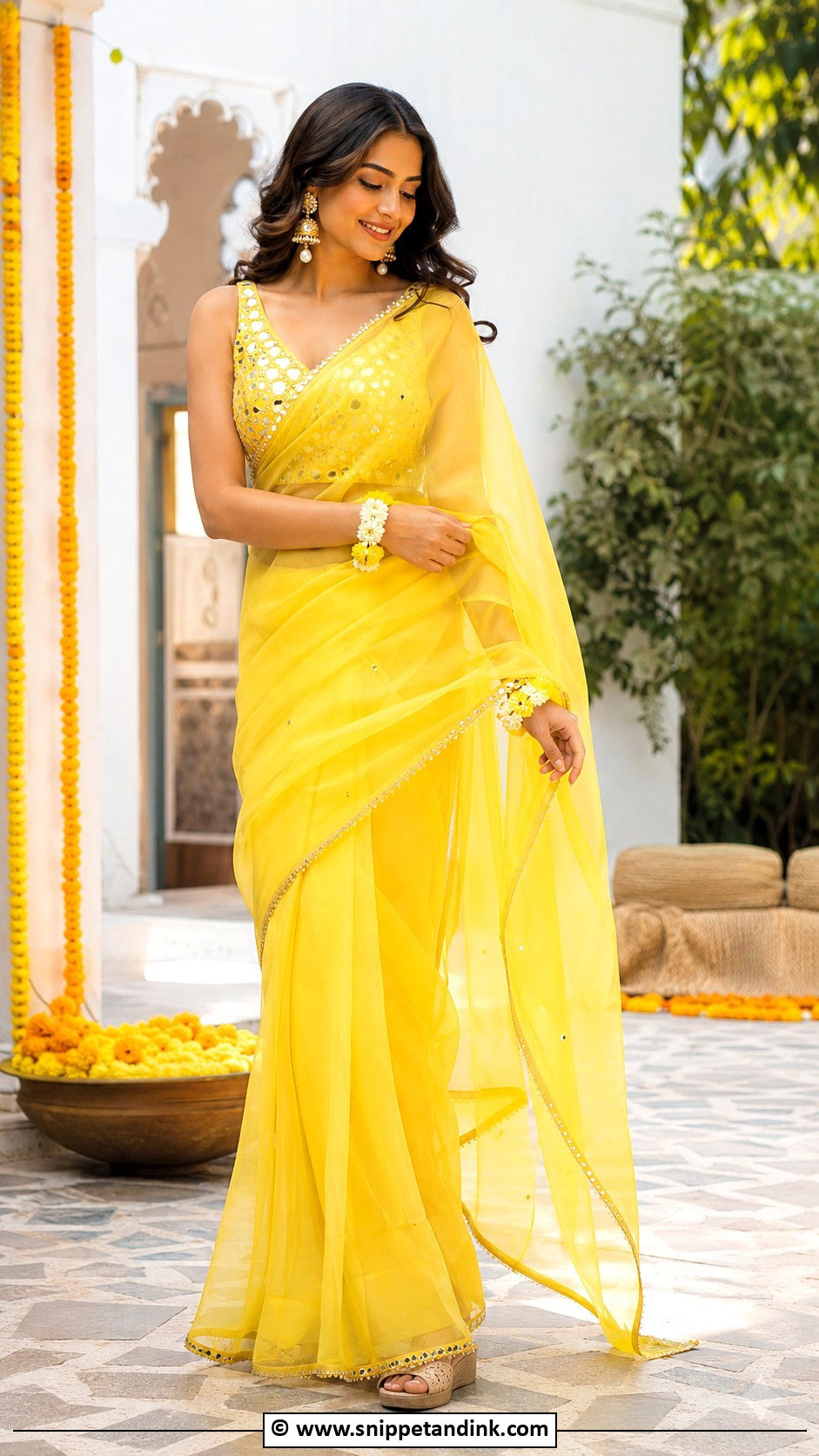
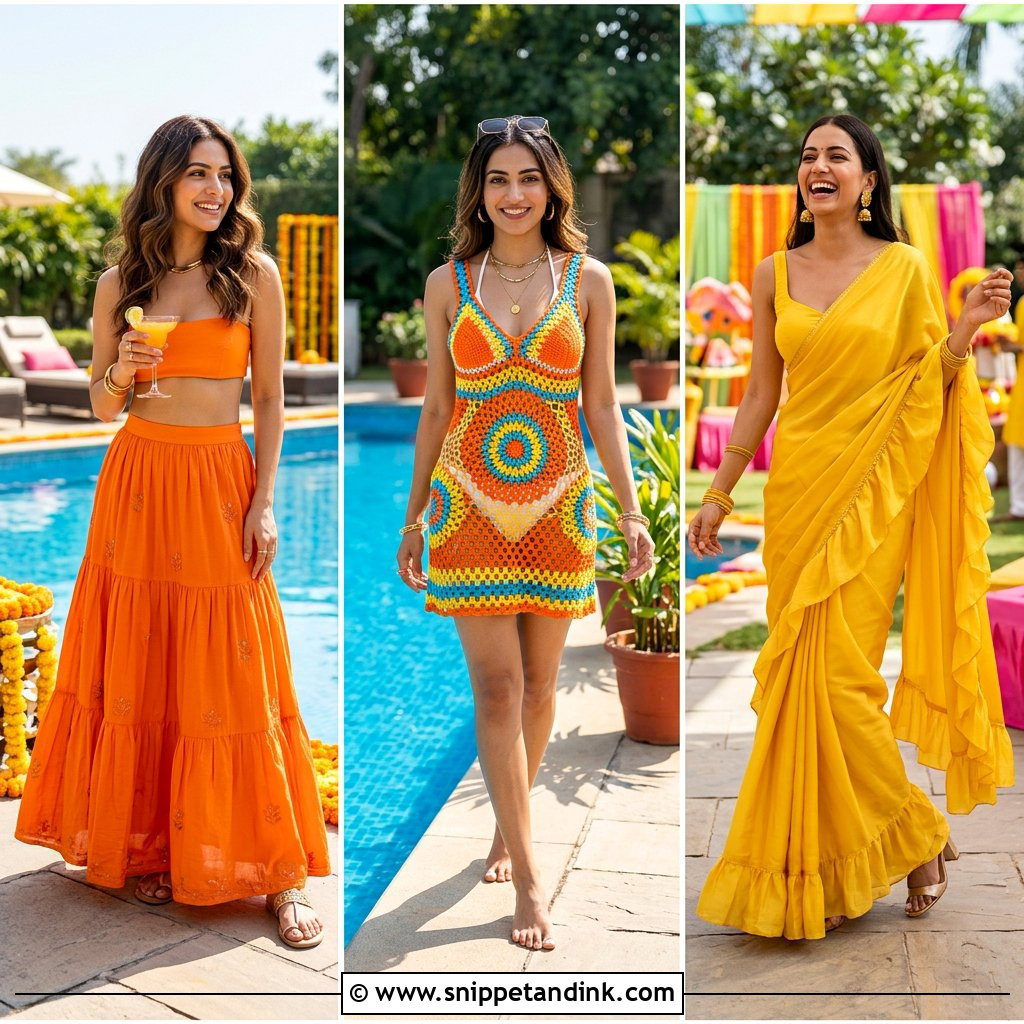
Lemon is the lightest, brightest yellow, and on a morning haldi it looks fresh rather than heavy. A plain chiffon saree with a mirror blouse, a printed organza or a linen saree with a narrow border all work. The blouse sets the mood more than the saree here: sleeveless feels relaxed, elbow sleeves feel traditional, a square neck looks modern. Pin the pallu well. Pearl earrings, floral bangles and wedges, plus a few jasmine or marigold flowers in the hair.
8. Floral Lehenga for Haldi
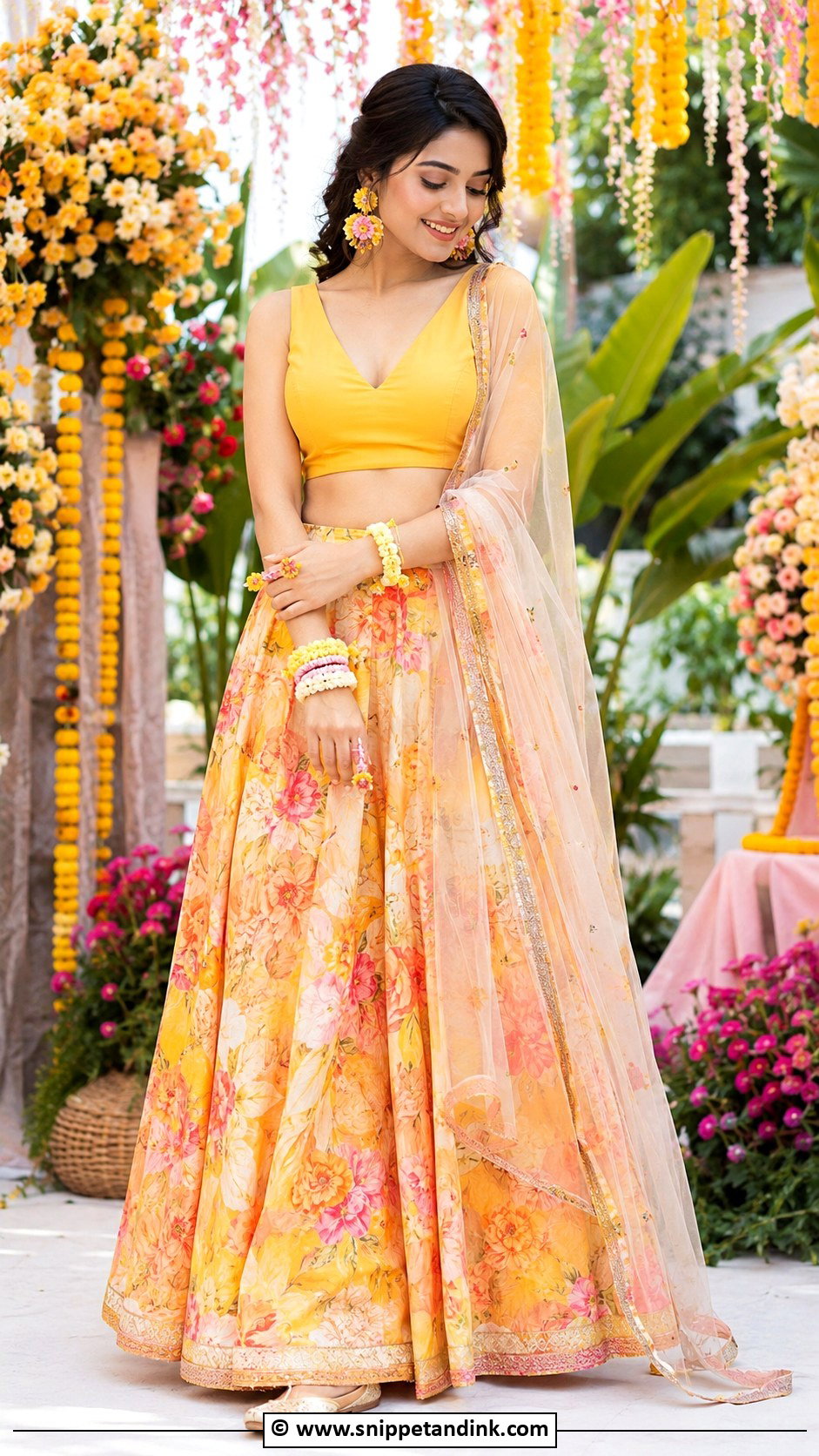
Prints forgive turmeric far better than solid pale colours, which is a quiet reason I like floral lehengas for sisters. Choose a print with yellow, peach, pink or orange in it so it sits with the marigold decor. Organza, georgette or cotton silk keep it airy. Pair the print with a solid blouse and a sheer dupatta; two prints together get busy fast. Floral earrings, soft bangles and juttis suit a garden or poolside haldi. Keep makeup fresh and glowing.
9. Yellow Palazzo Suit for Haldi
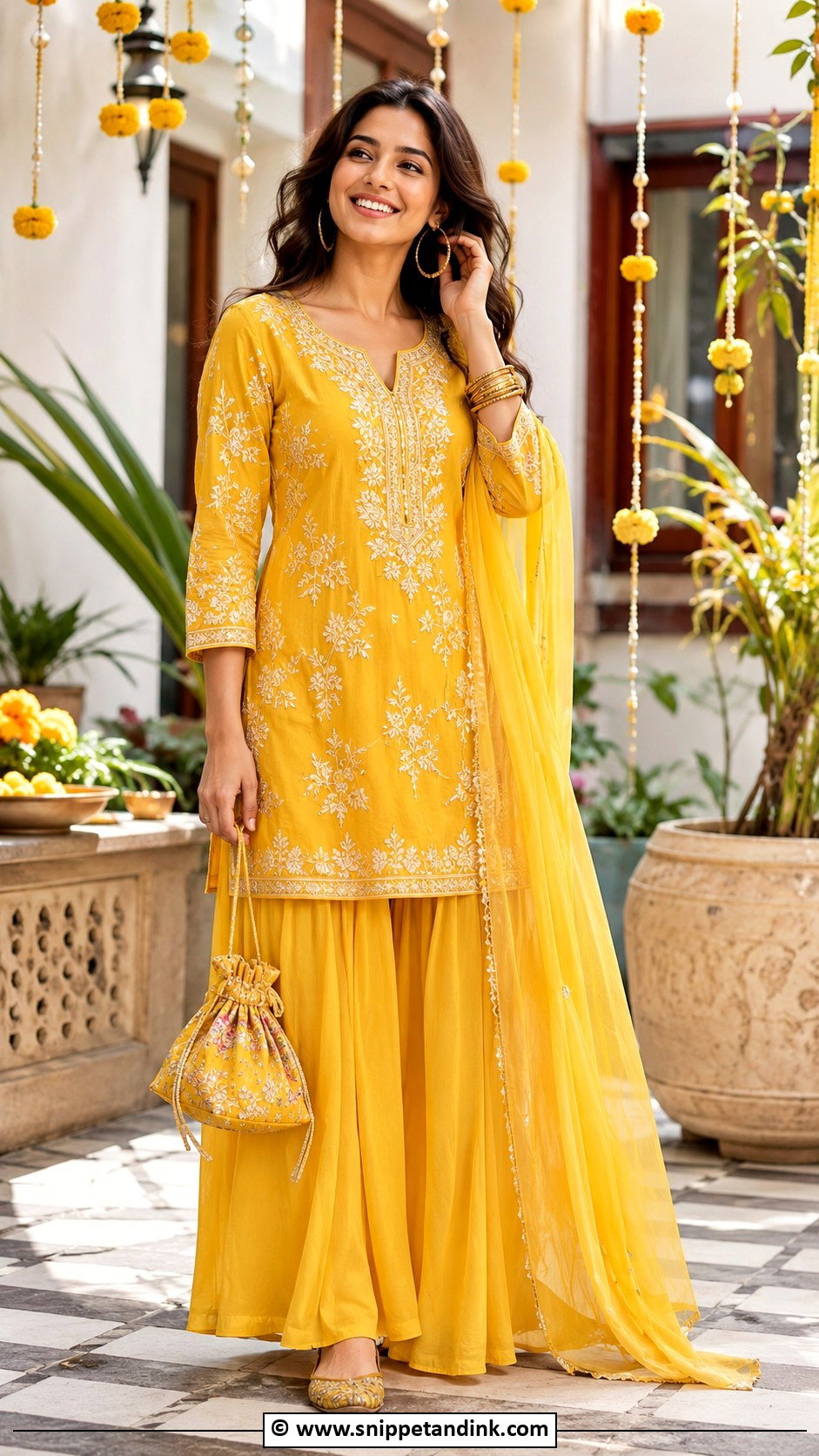
If comfort is your priority, start here. Palazzos let you sit, kneel and walk without thinking about your clothes, and the kurta keeps it smart. A short kurta looks current; a long straight one feels graceful. Embroidery at the neckline, sleeves or hem is all the decoration it needs. Add a light dupatta in organza, chiffon or kota doria for movement. Juttis, hoops, bangles and a small sling or potli bag that holds your phone.
10. Yellow Gharara Set for Haldi
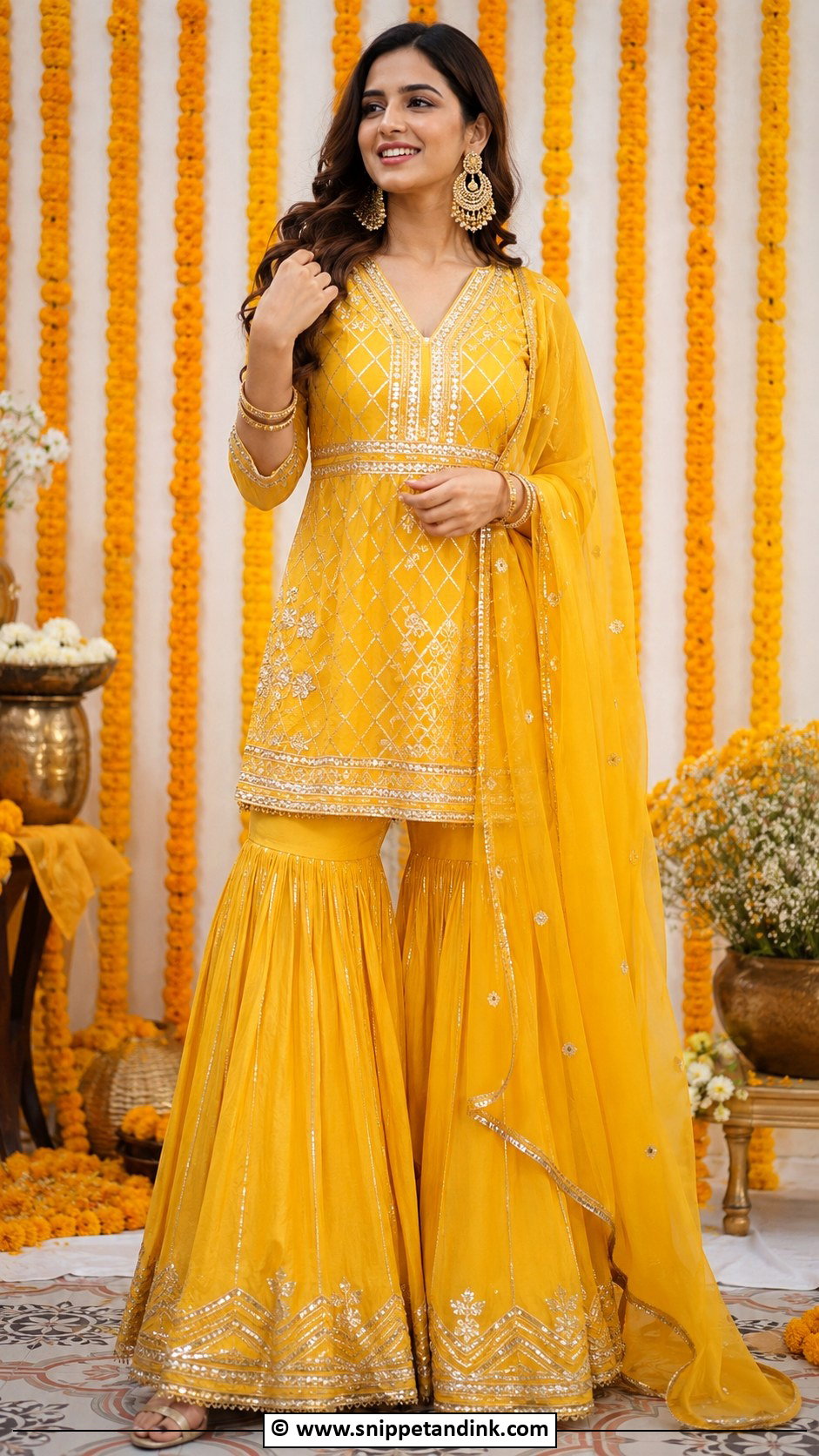
A gharara is fitted down to the knee, where a decorative band joins it to wide flared panels. That shape looks regal in group photos and gives more drama than a sharara. Try sitting cross-legged in it at the fitting, because the knee join can pull if it’s cut too slim. A short kurti with zari, gota or mirror details and a matching dupatta suit soft yellow, mustard or mango. Since the bottom has volume, go for statement earrings instead of a heavy necklace, and wear flats or low heels so the hem falls cleanly.
11. Orange Lehenga for Haldi
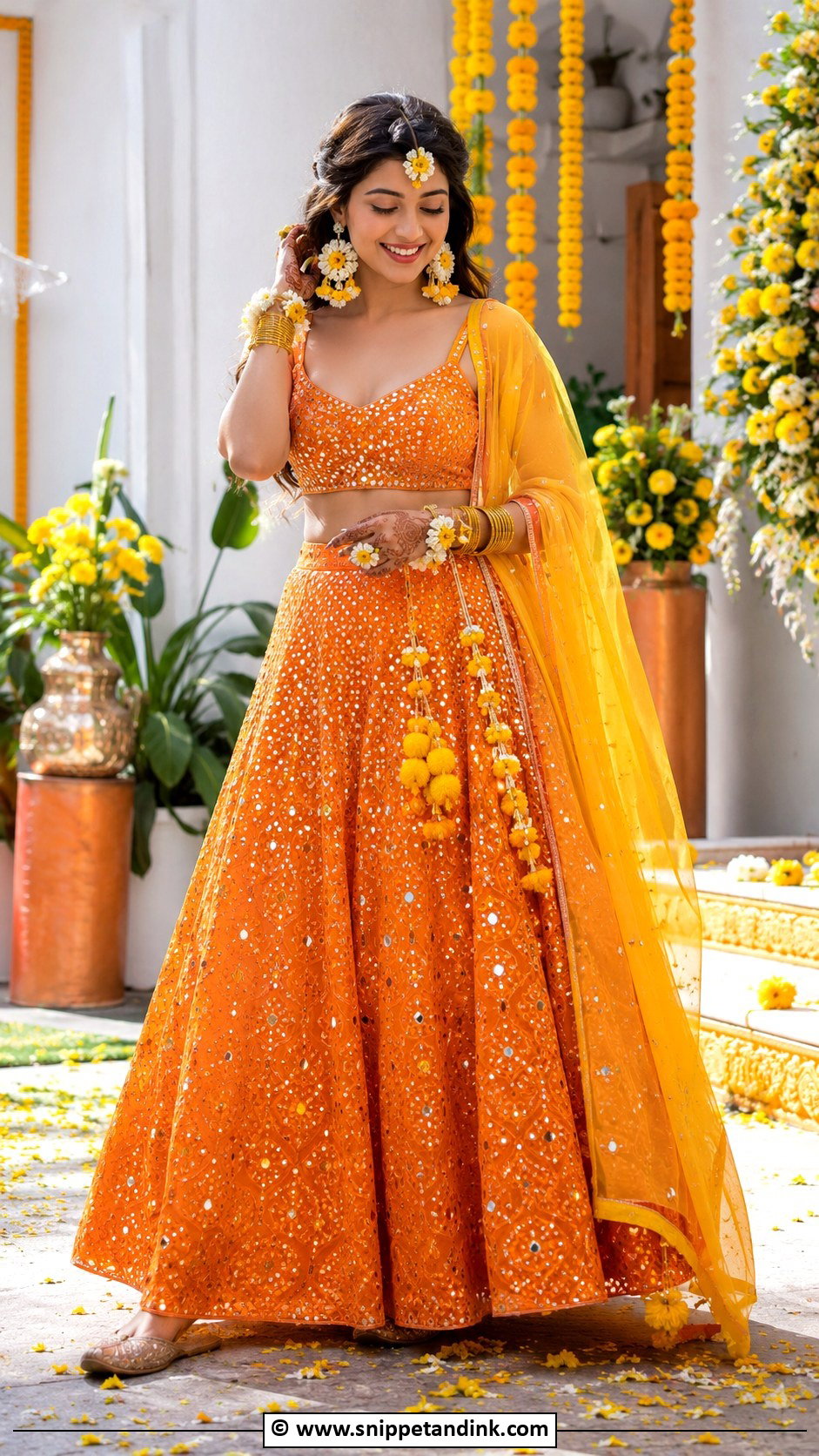
Orange is my go-to when the dress code is all yellow and you’d still like to be found in the crowd. Tangerine, marigold or a soft orange sits happily with yellow decor. Mirror work, thread embroidery or printed motifs keep it daytime. Add a yellow dupatta for a coordinated look, or go monochrome orange for something bolder. Gold jewelry looks particularly rich with orange; floral jewelry softens it. Comfortable juttis or block heels and a pinned dupatta.
12. Peach Sharara Set for Haldi
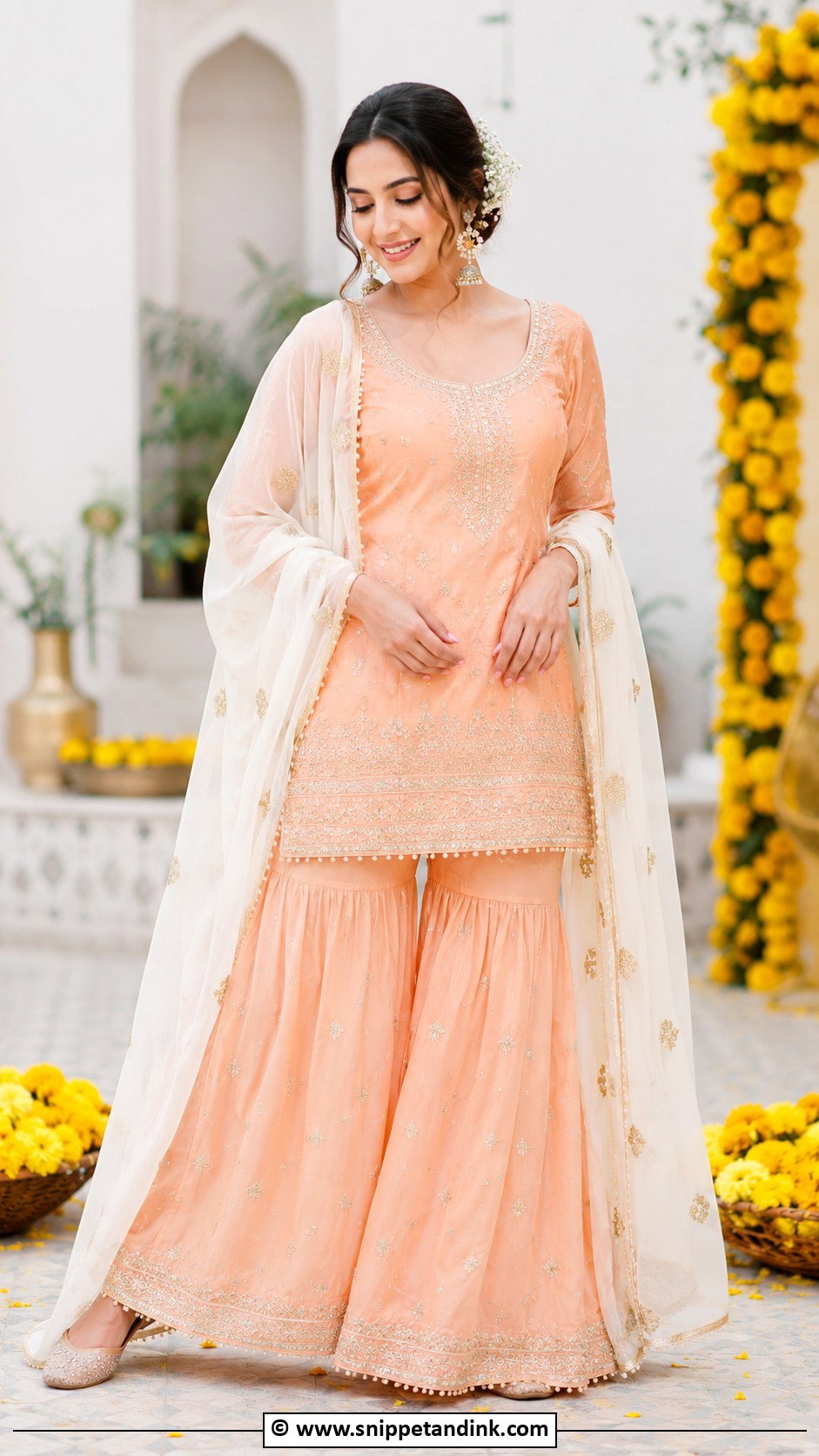
Peach is the colour I suggest to sisters who find yellow drains them. It still reads as festive and sits well next to the bride’s yellow without competing. Pick a short kurti, flared sharara pants and a lightweight dupatta with a border, with yellow, gold or ivory embroidery to link it to the ceremony. Pearl jewelry keeps it soft, gold jhumkas dress it up. Dewy makeup, soft pink lips, loose waves and nude or gold flats.
13. Mint Green Lehenga for Haldi
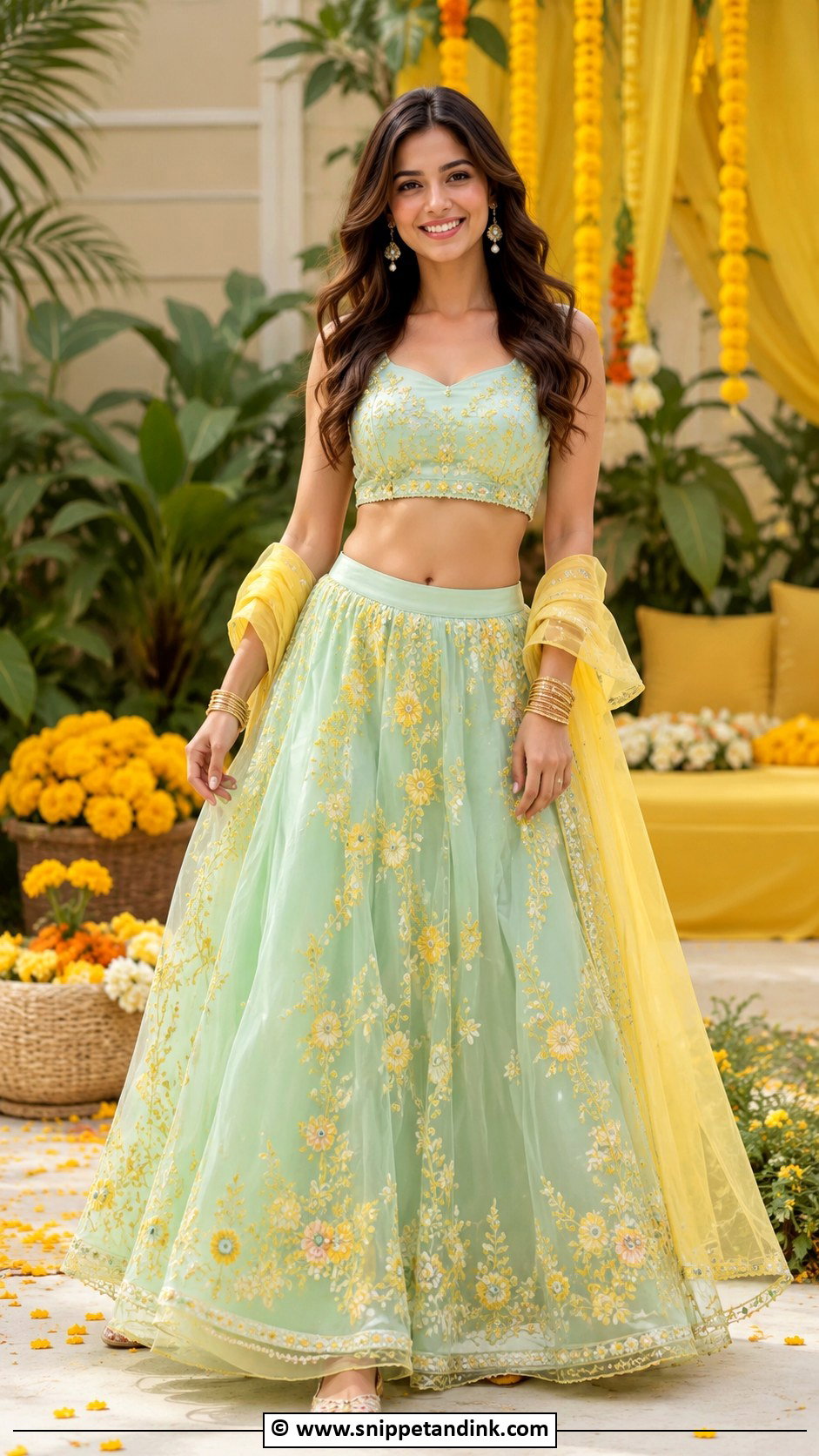
Mint against marigold is one of the best colour contrasts at a haldi, and it pulls you out of the all-yellow crowd. A mint lehenga with yellow embroidery or mirror work feels unexpected but not out of place. Organza, net or georgette keep it light. I’d add yellow somewhere near the face, a dupatta or floral jewelry, so you still look part of the ceremony. Pearl earrings, gold bangles, embellished flats and a soft braid.
14. Lime Green Sharara Set for Haldi
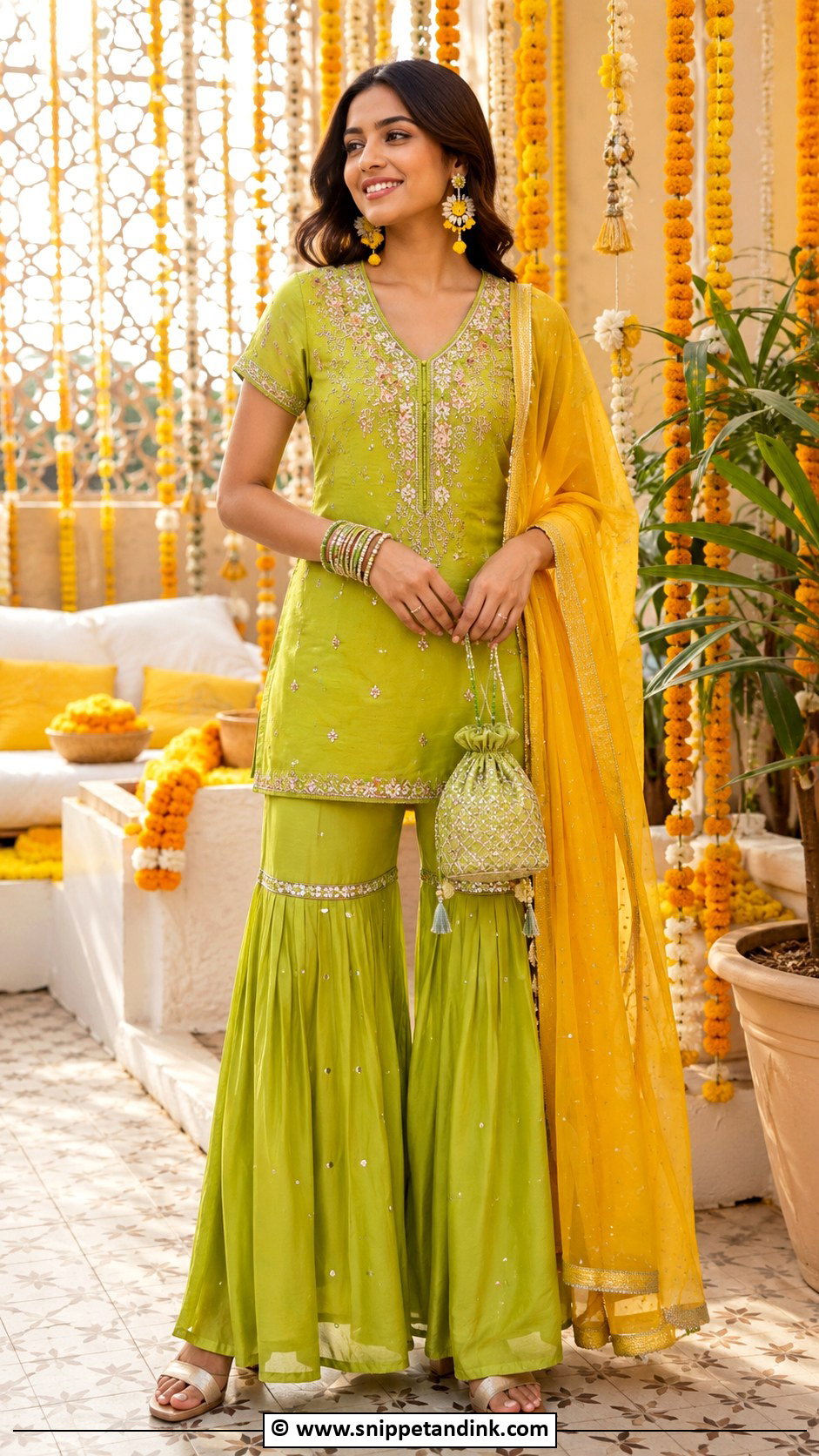
Lime is loud in the best way and reads clearly in group photos. A lime sharara with a short kurti and a flowing dupatta gives you colour and movement. Mirror work, sequins or gota catch daylight. It pairs well with yellow, orange, white and gold, so a yellow dupatta or potli bag ties it to the family look. Floral earrings, stacked bangles and block heels you can dance in. Avoid lime if you’ll be standing right beside a bride in a cool lemon, as the two can clash.
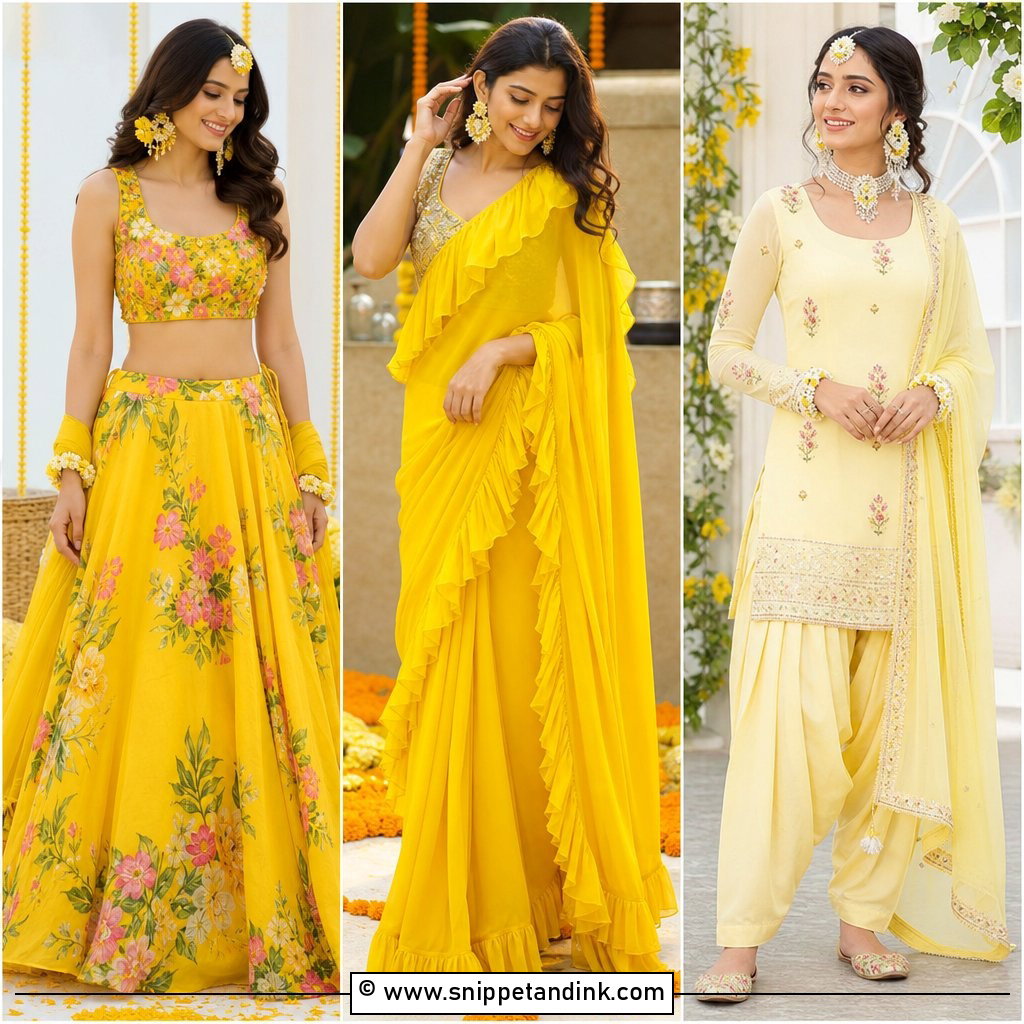
15. Ivory and Yellow Anarkali for Haldi
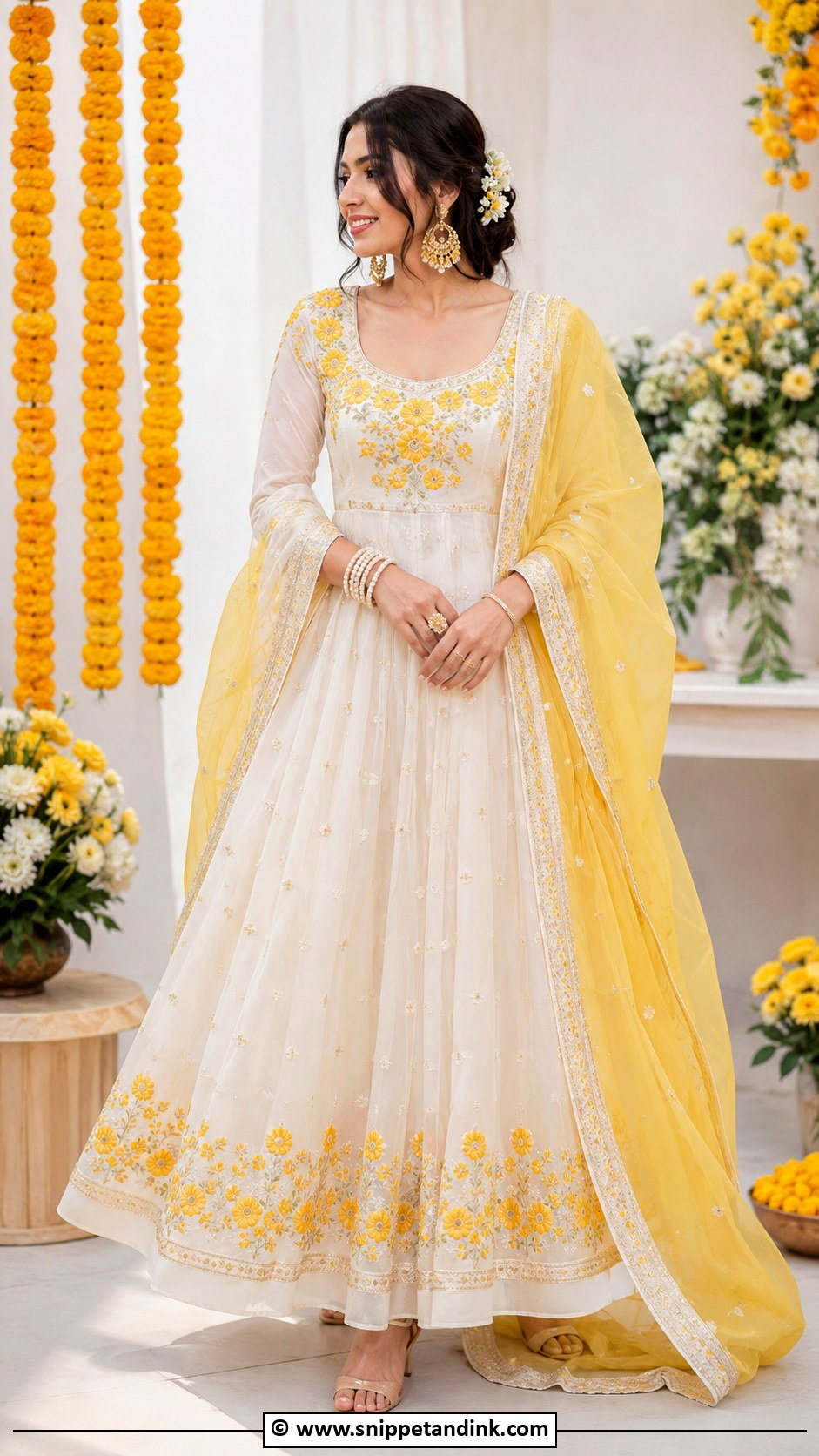
Ivory with yellow embroidery is calm and polished, and it suits a pastel-themed haldi. Georgette, chanderi or cotton silk move well. Be realistic about stains: this is for a sister who won’t be applying paste, or who is happy to send the outfit to a dry cleaner afterwards. A yellow dupatta brings the ceremony colour close to your face. Gold earrings, pearl bangles, yellow flowers in the hair and nude or gold sandals keep it refined.
16. Yellow Kurta and Skirt for Haldi
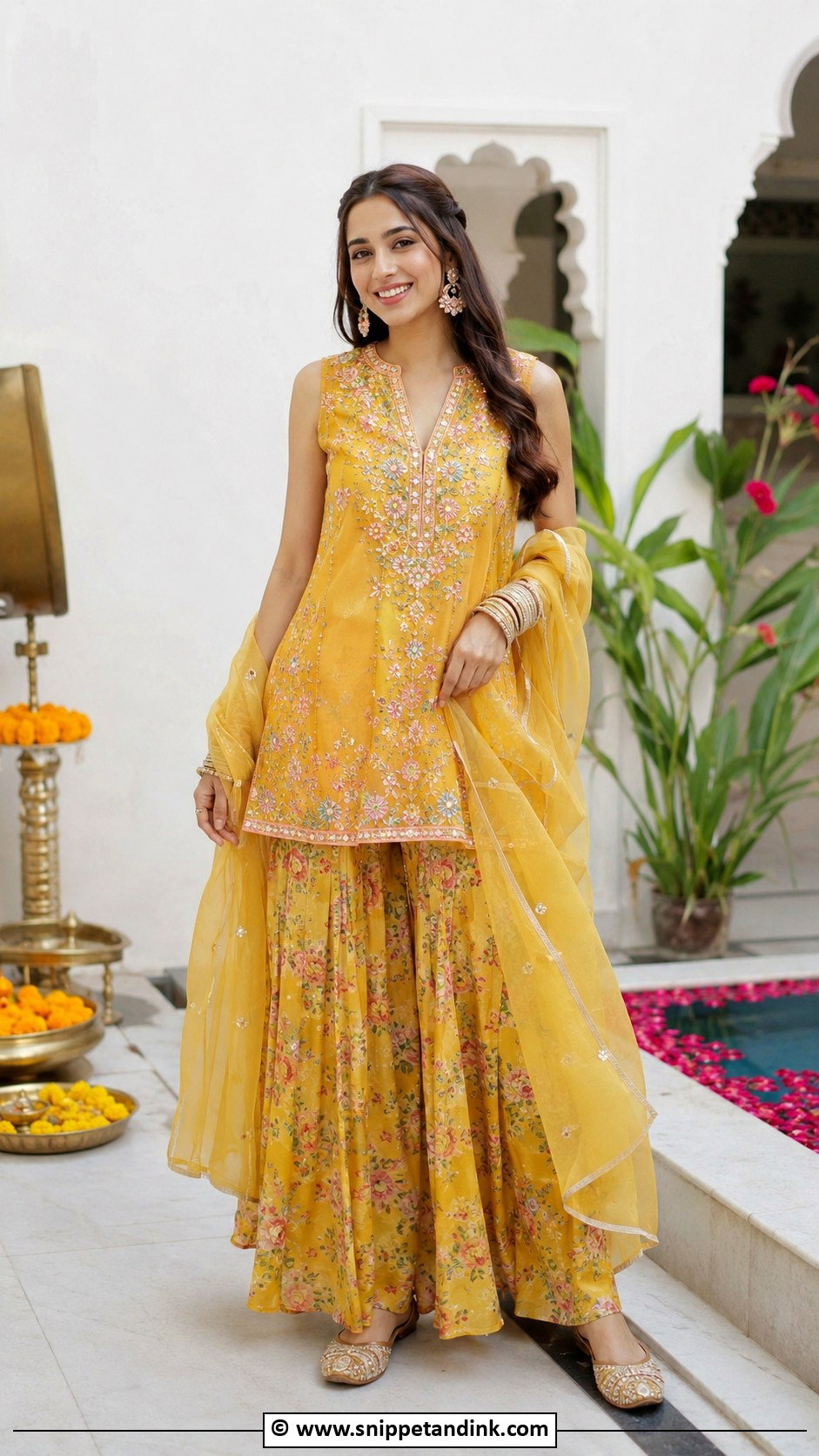
A kurta and skirt looks like a lehenga from a distance and wears like a suit. The kurta covers more, and you can rewear each piece separately after the wedding, which matters when sisters have five functions to dress for. A short embroidered kurta over a printed skirt, or a long straight kurta over a flowing skirt, both work. A light dupatta completes it. Juttis, bangles and earrings that pick up the embroidery colour, with a braid or bun.
17. Yellow Crop Top and Palazzo Set for Haldi
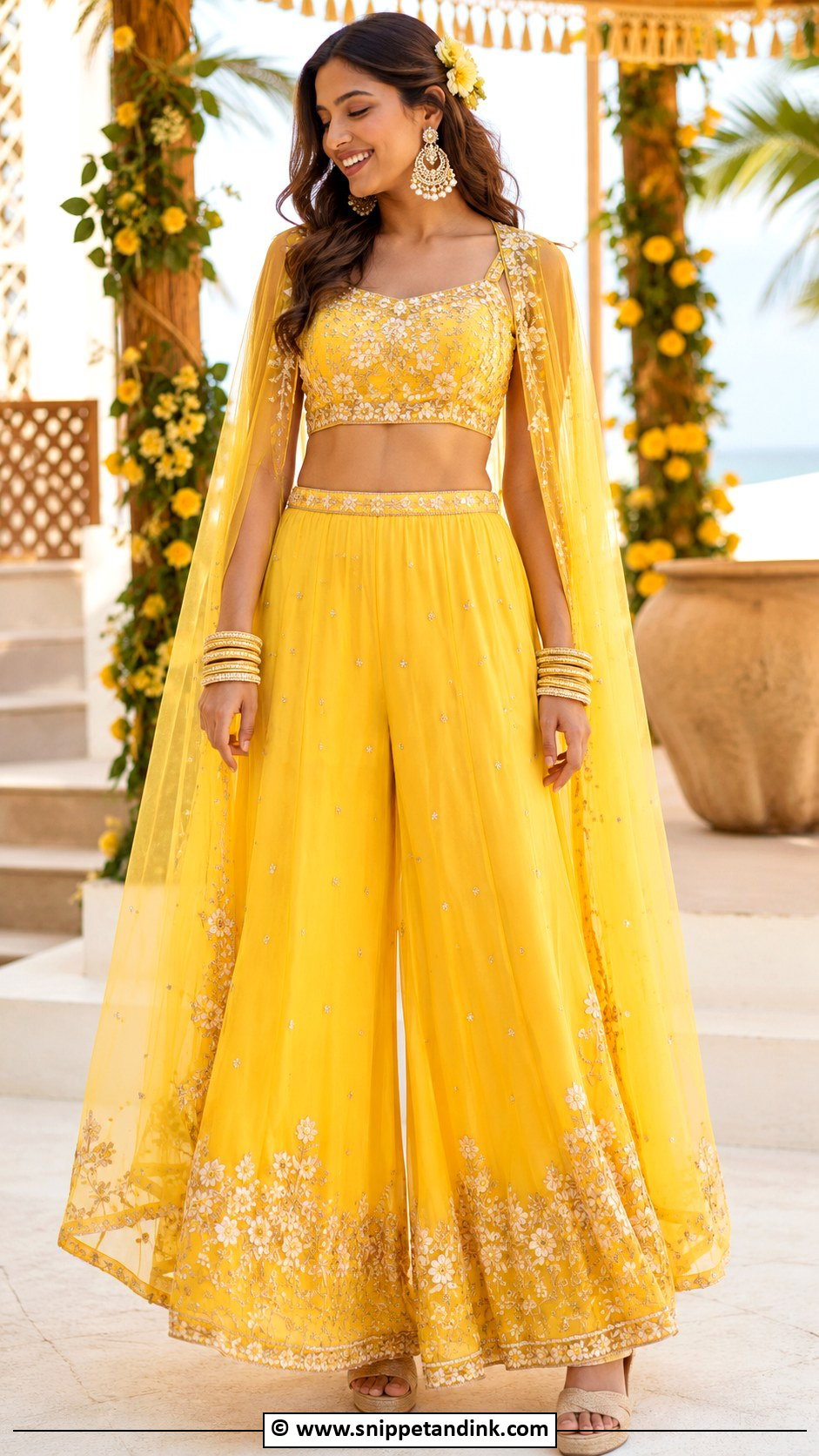
A yellow crop top and palazzo set suits a sister who likes Indo-western clothes but still wants to look festive. A structured crop top with mirror work keeps it smart; flowy palazzos keep it comfortable. Check the gap at the waist when you raise your arms, as that’s where paste and sweat both end up. A light cape, jacket or dupatta adds coverage for a more traditional family. Statement earrings, stacked bangles, wedges and glowing makeup.
18. Yellow Dhoti Pants Set for Haldi
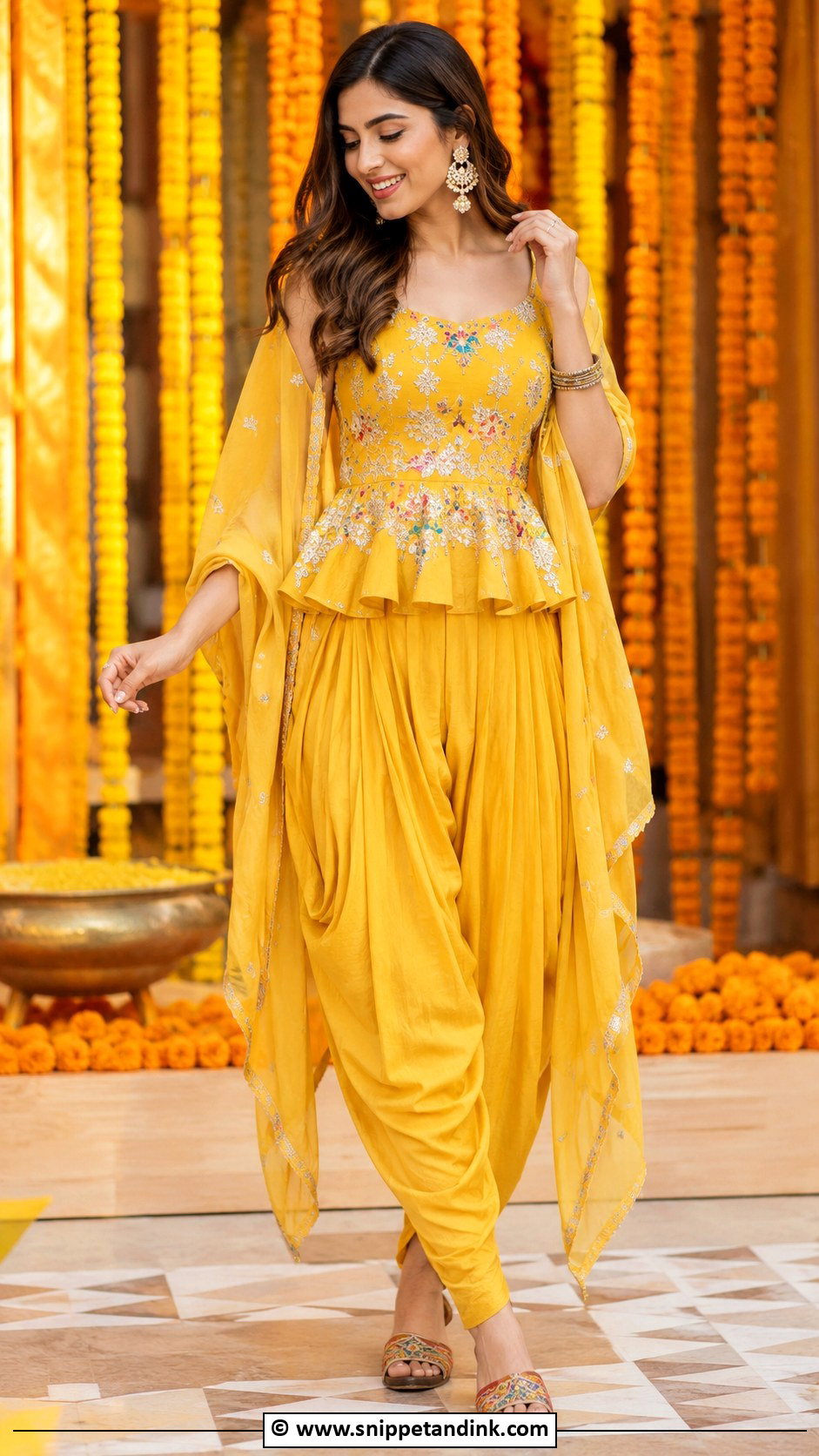
Dhoti pants are for the sister who’s doing everything: dancing, running errands, fetching the photographer. The drape feels Indian and festive; a short kurti, peplum top or embroidered blouse keeps it modern. Buy a pre-stitched dhoti so you’re not re-tying it mid-ceremony. Soft fabrics that drape without bulk work best. A cape or dupatta adds movement in photos. Kolhapuri flats, statement earrings, bangles and a sleek ponytail or braid.
19. Yellow Jacket Lehenga for Haldi
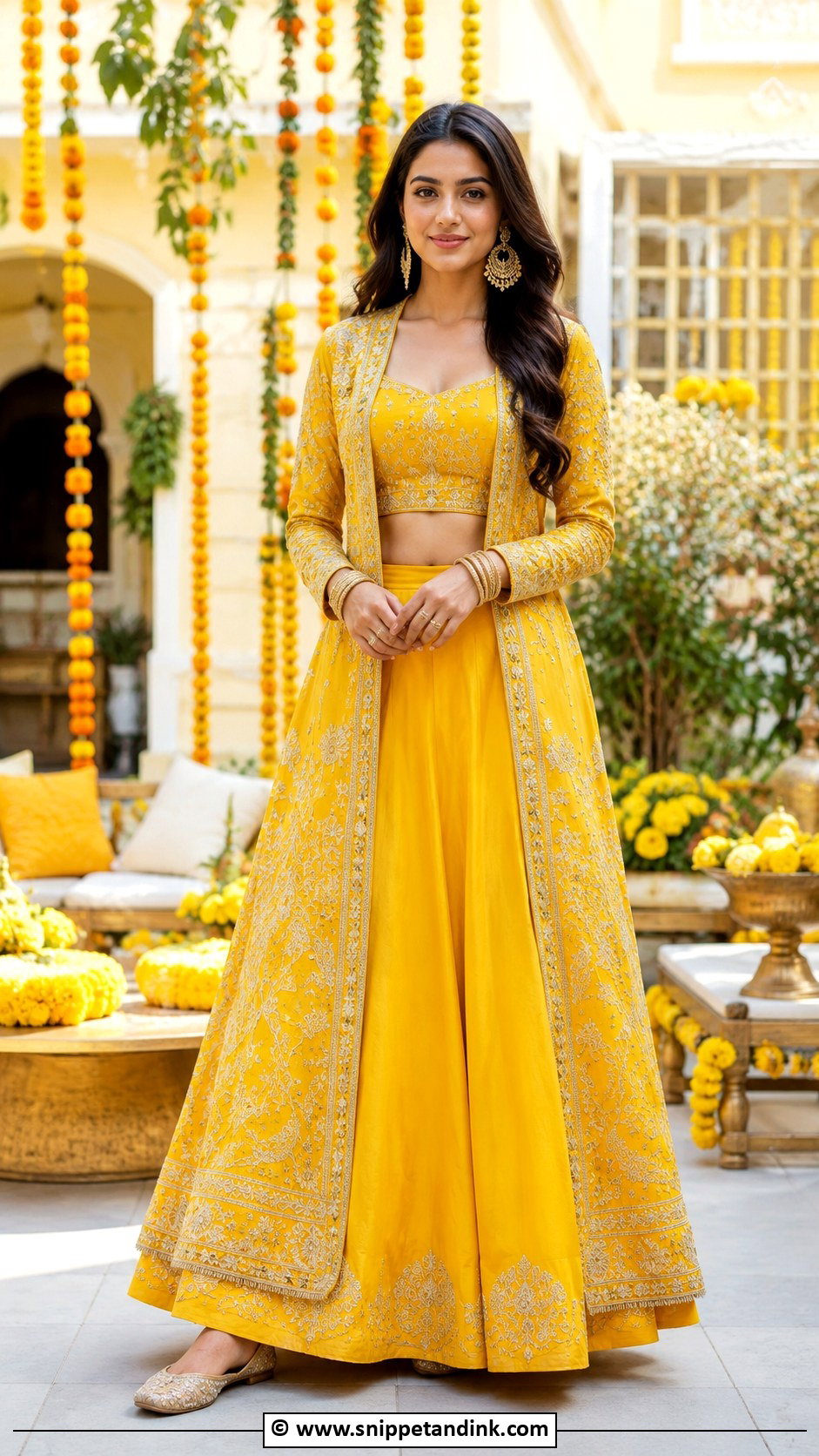
A jacket doesn’t slide off your shoulder the way a dupatta does, so it’s the hands-free choice for a sister with jobs to do. Short, waist-length or long and flowing all work. Keep the skirt and blouse simple and let the embroidered jacket carry the detail. Mirror work, thread embroidery or floral prints suit a haldi. If the jacket is busy, stop at earrings and bangles. Make sure the armholes let you lift your arms easily before the tailor finishes it. Block heels or juttis.

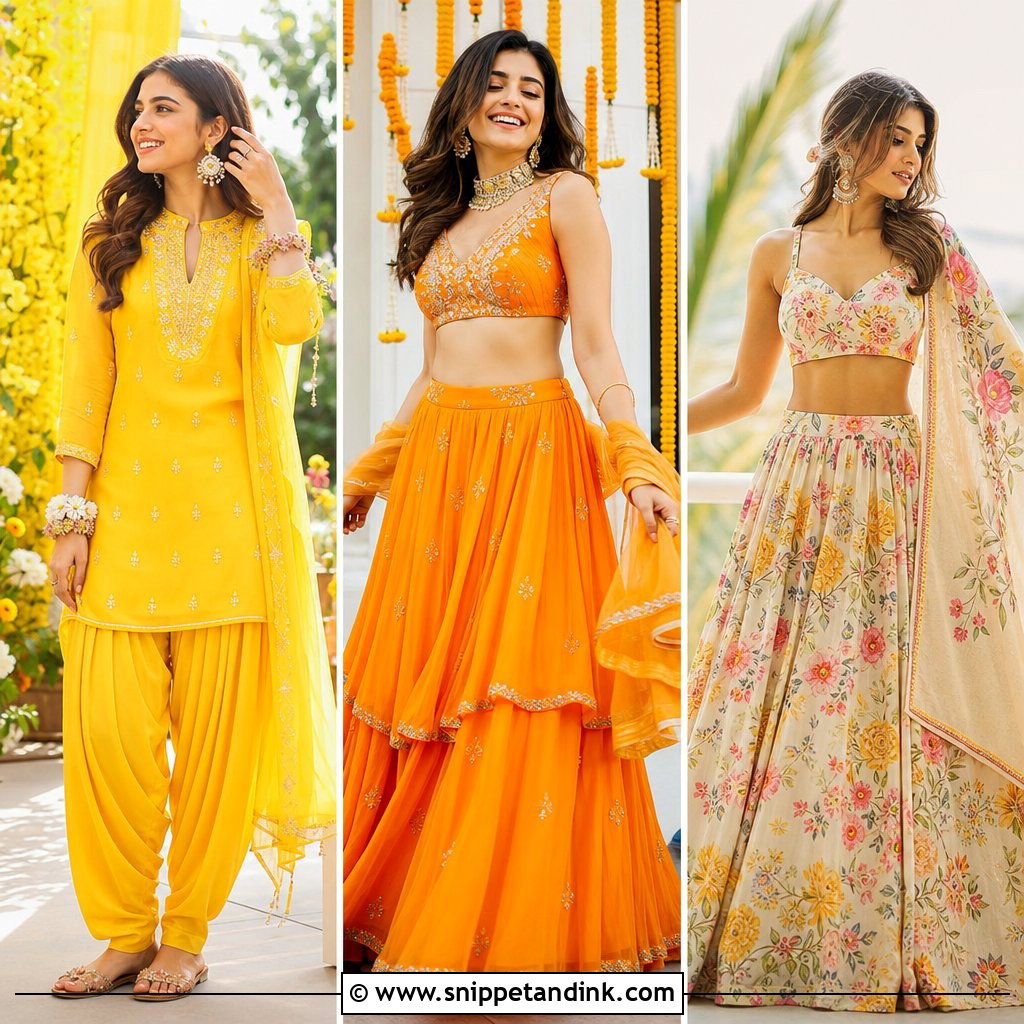
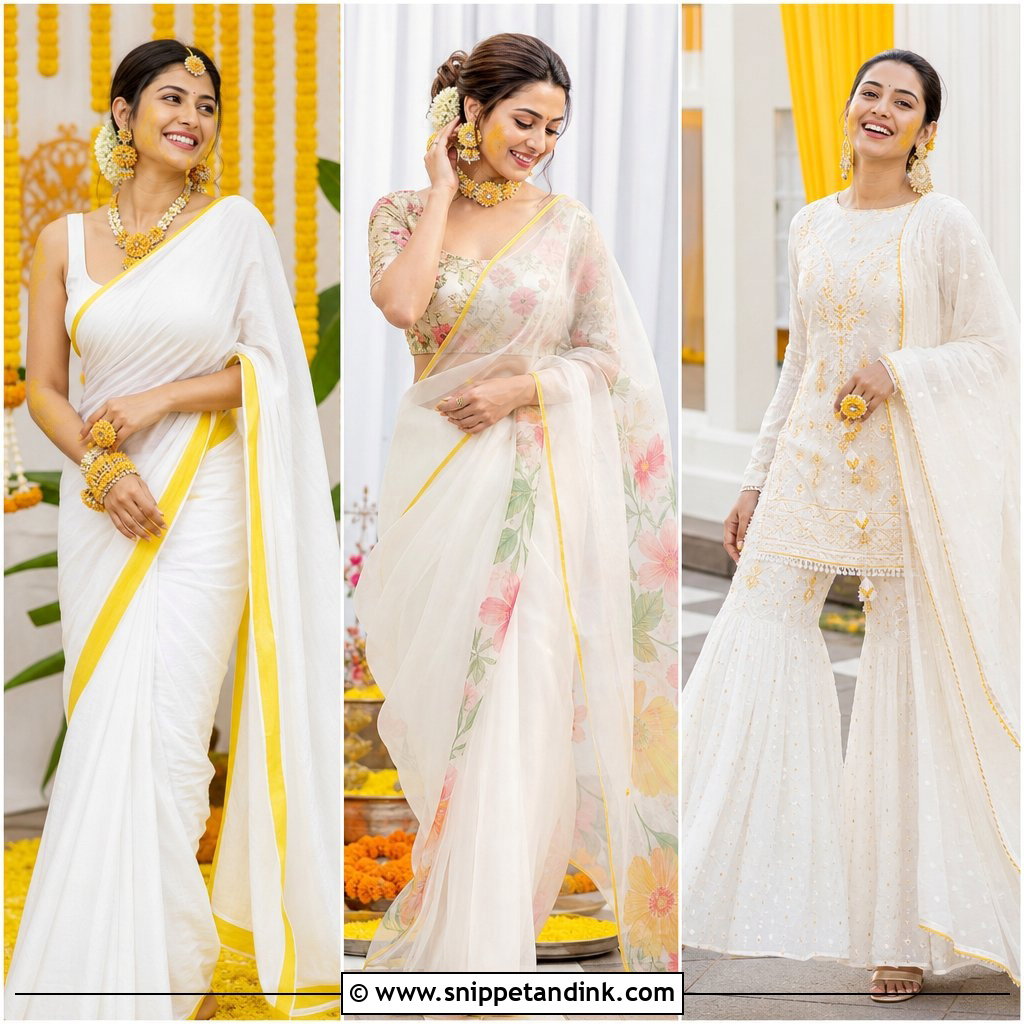
20. Yellow Cape Set for Haldi
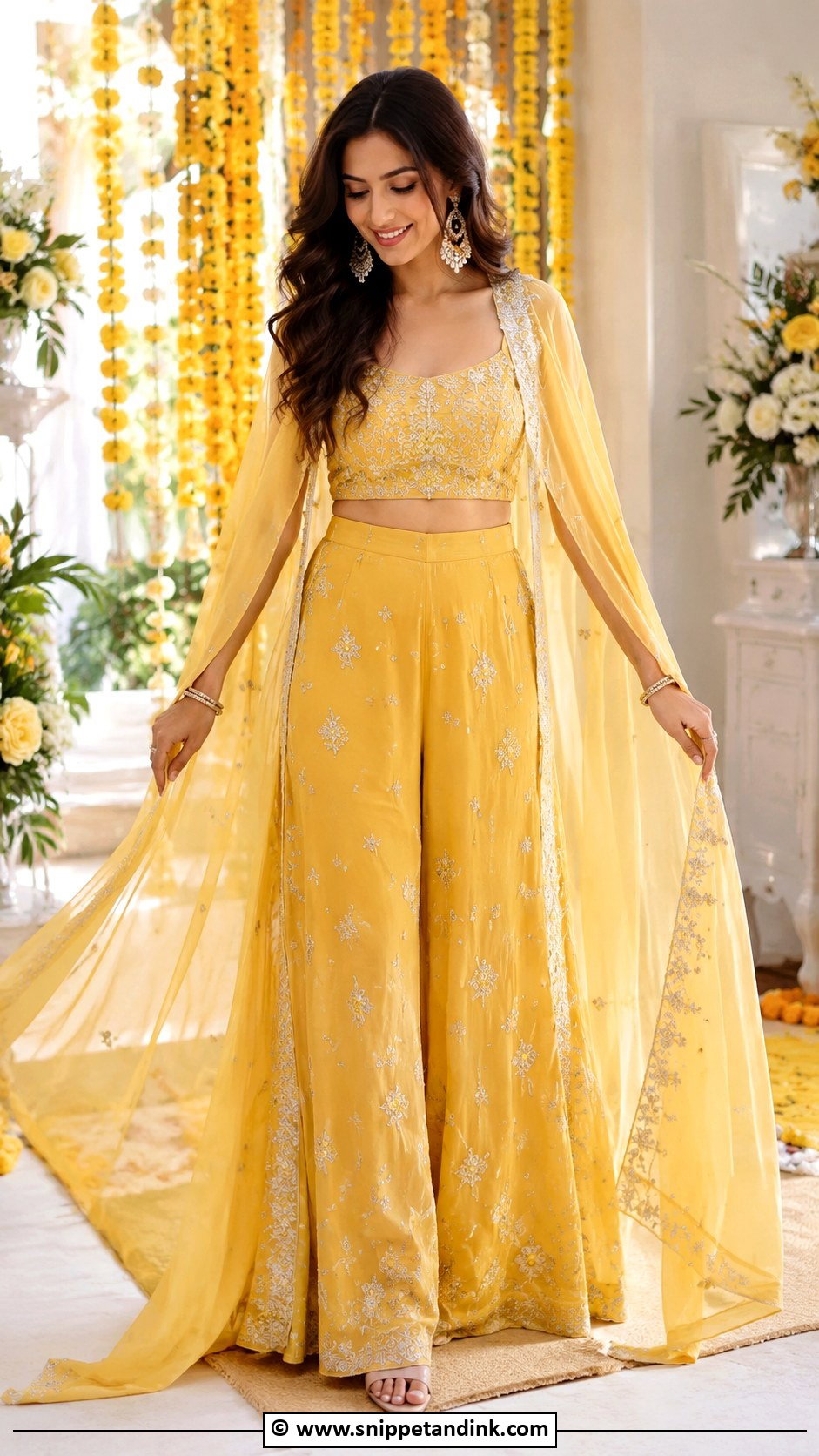
A cape gives you the movement of a dupatta in photos without any pinning. Pair it with palazzos, a skirt or dhoti pants depending on how much you’ll be sitting. A lightly embroidered blouse or crop top under it stays festive, and the cape adds coverage for sisters who’d rather not show much skin. Statement earrings, delicate bangles and comfortable heels. Sleek hair or soft waves pushed behind the shoulders let the cape fall properly.
21. Yellow Ruffle Saree for Haldi
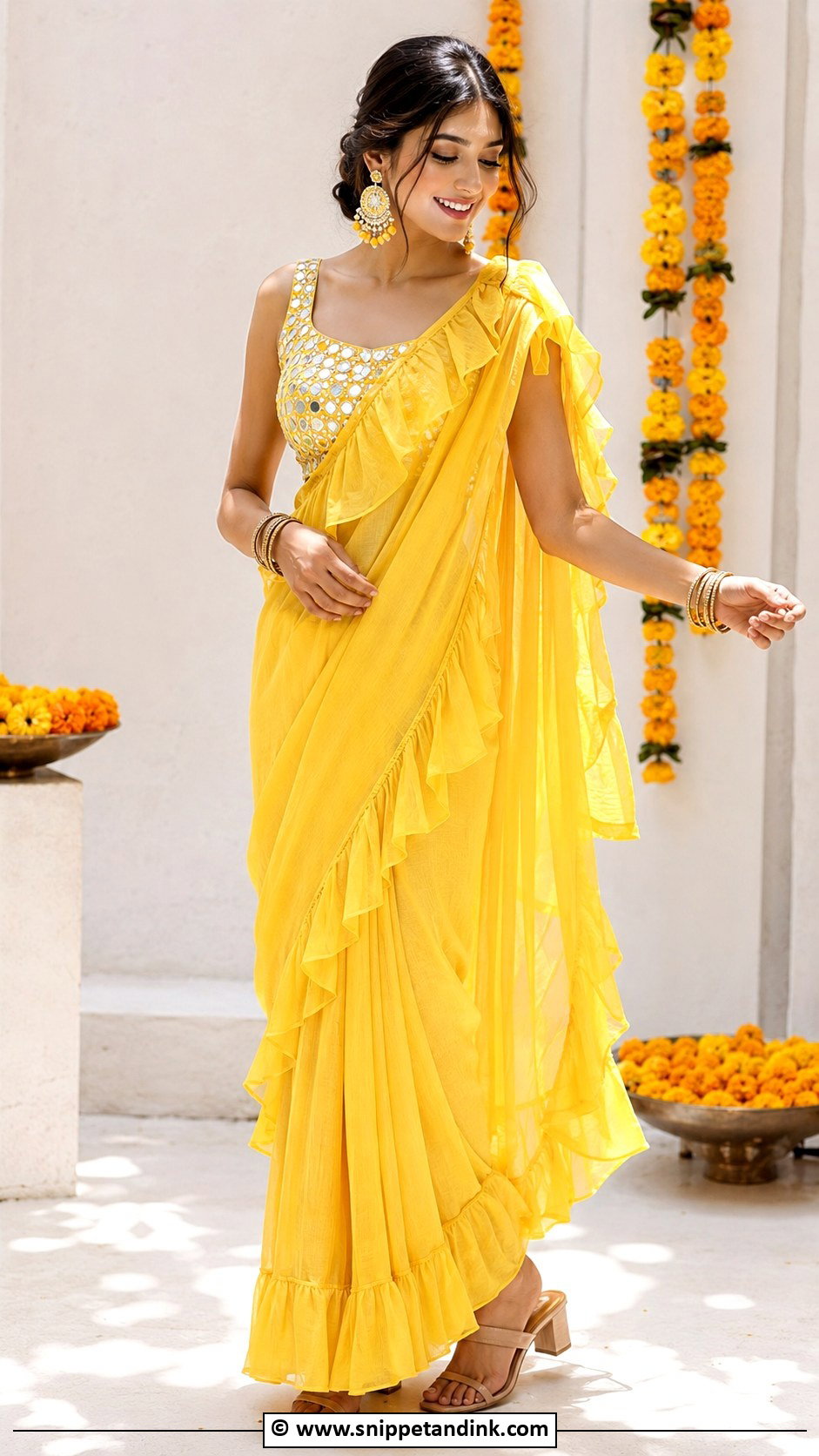
Ruffles make a saree feel young and photograph well when you move. If you’re new to sarees, buy a pre-stitched ruffle style so the pleats are done for you. A plain, embroidered or mirror-work crop blouse sets how dressy it gets. With all that volume, I’d keep jewelry to statement earrings and a few bangles. Wedges or block heels help the hem fall at the right length. Note that ruffled layers trap haldi paste, so expect some cleaning afterwards.
22. Yellow Pre Draped Saree for Haldi
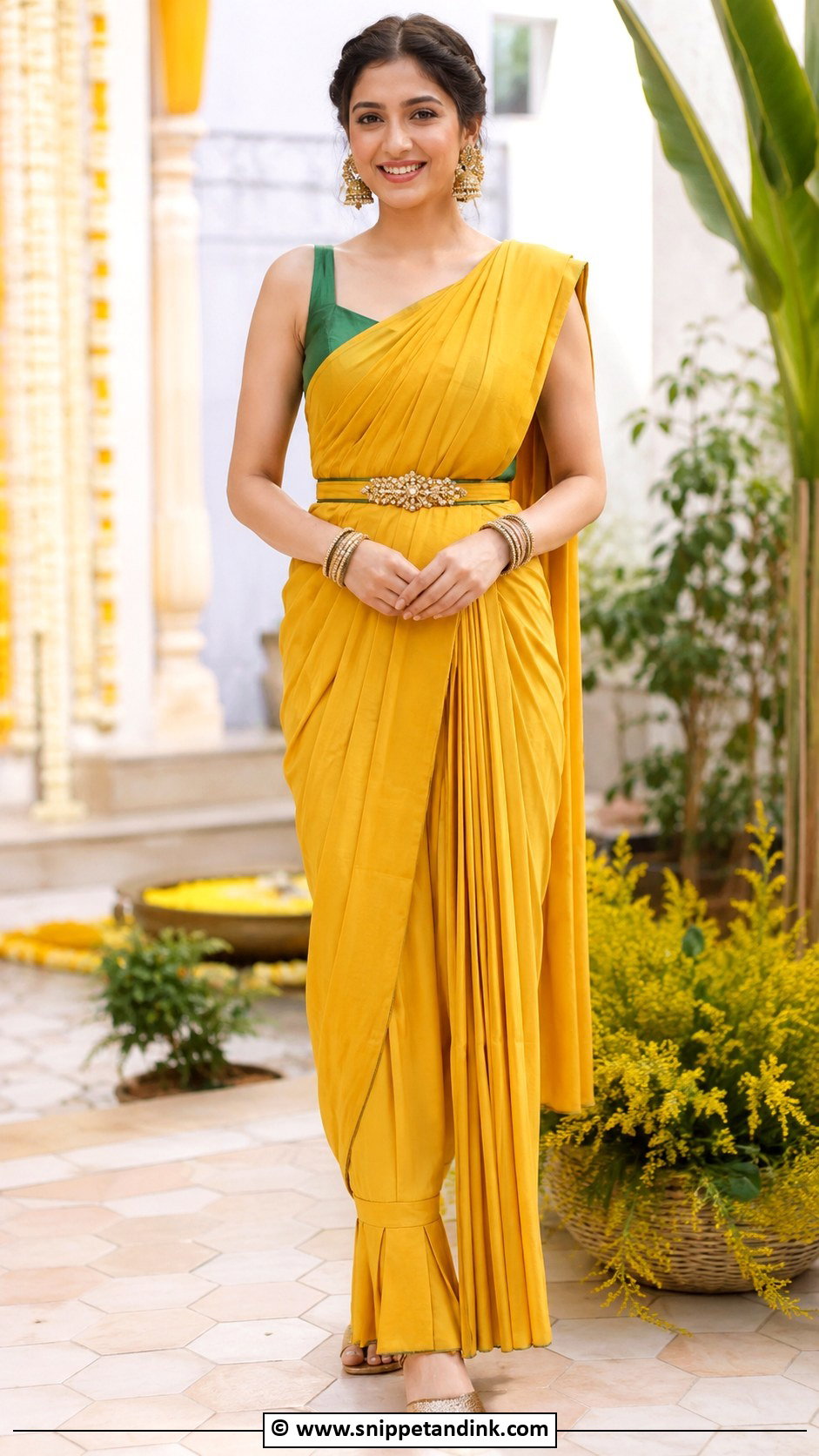
A pre-draped saree is a real help for a sister who’s hosting. The pleats are stitched, the pallu is fixed, and nothing comes undone while you greet guests or chase the photographer. A belt, attached pallu or ruffle edge gives it a modern shape. A mirror, embroidered or contrast green blouse makes it more festive. Earrings, bangles, comfortable heels and a low bun or soft waves.
23. Yellow Chikankari Kurta Set for Haldi
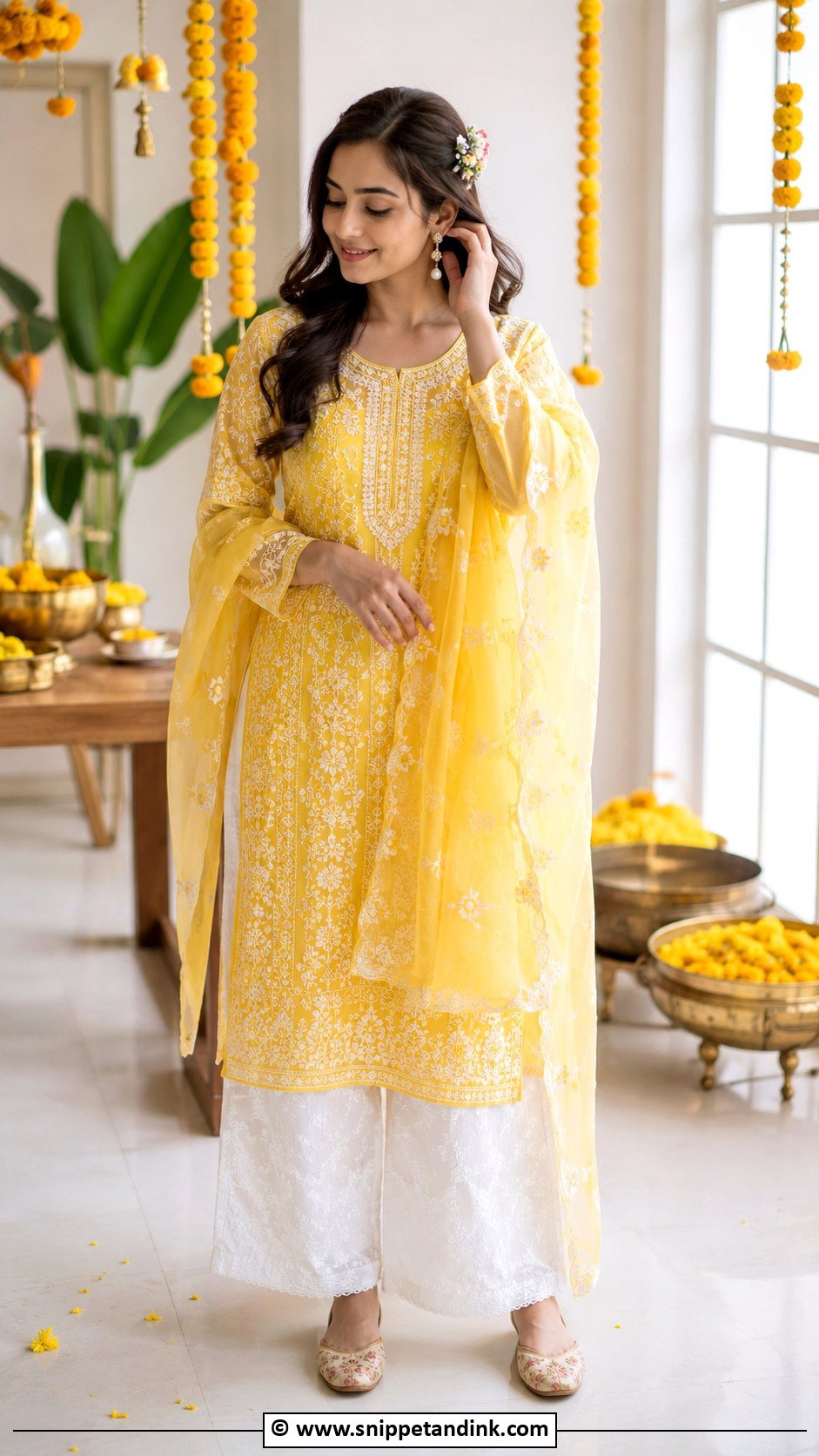
Chikankari is fine hand embroidery, traditionally on cotton, and it’s the outfit I’d suggest to a sister who wants to rewear it long after the wedding. A straight kurta with palazzos, cigarette pants or a sharara suits a small home haldi or a morning ritual. A white or yellow dupatta keeps it soft. Plan a slip or lining, since fine chikan cotton can be sheer in sunlight. Pearl earrings, juttis, a few bangles and maybe flowers in the hair.
24. Yellow Bandhani Lehenga for Haldi
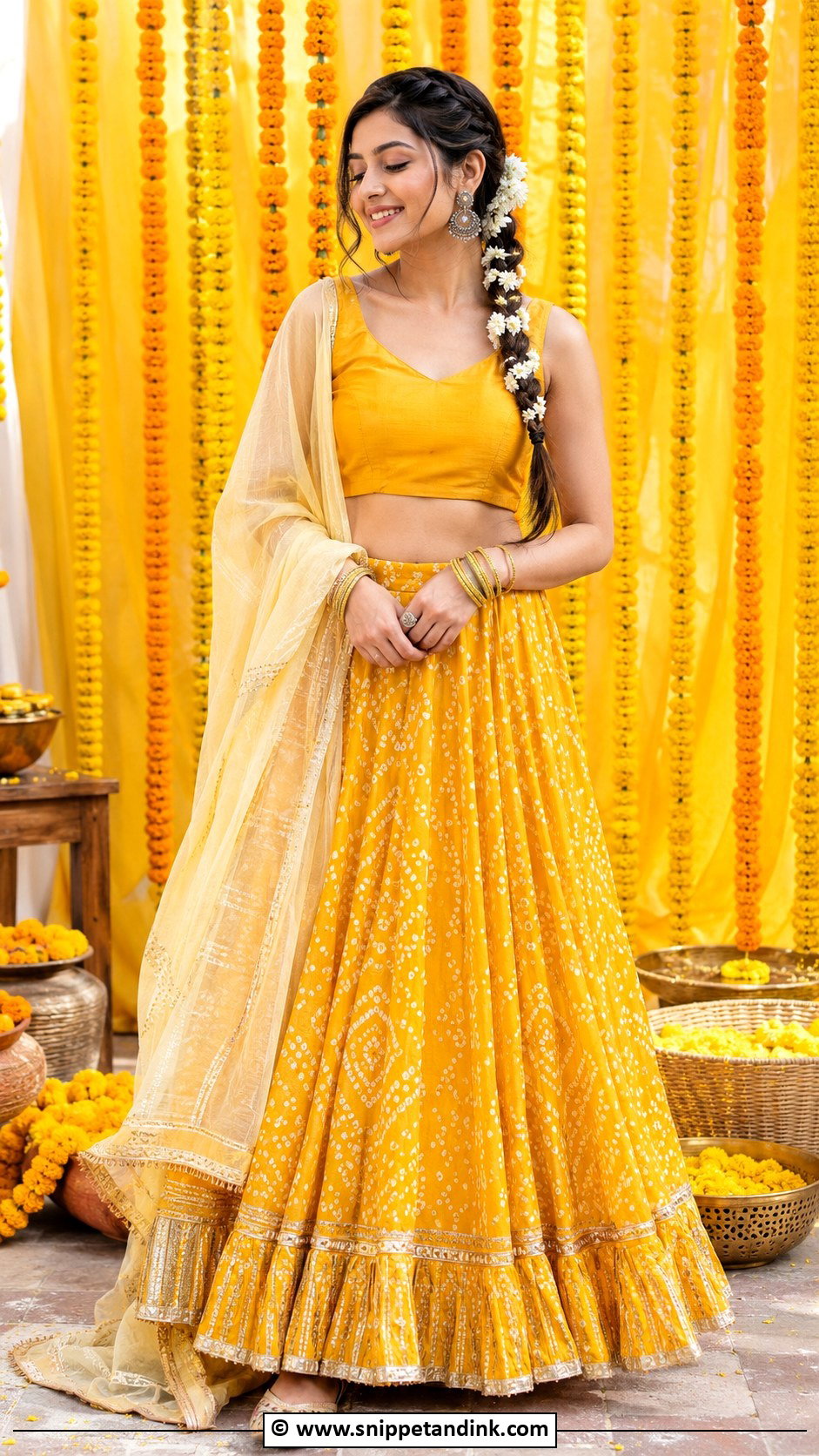
A yellow bandhani lehenga carries its own pattern, the tiny tie-dyed dots, so it needs little embroidery. Yellow, mustard or orange bandhani with a solid blouse and a light dupatta looks bright and rooted in regional textile tradition. A gota border dresses it up for a wedding. Oxidised jewelry gives a rustic feel; gold looks more polished. Juttis suit the traditional mood, and a braid with flowers finishes it. Bandhani dyes can bleed when wet, so don’t let paste sit on it.
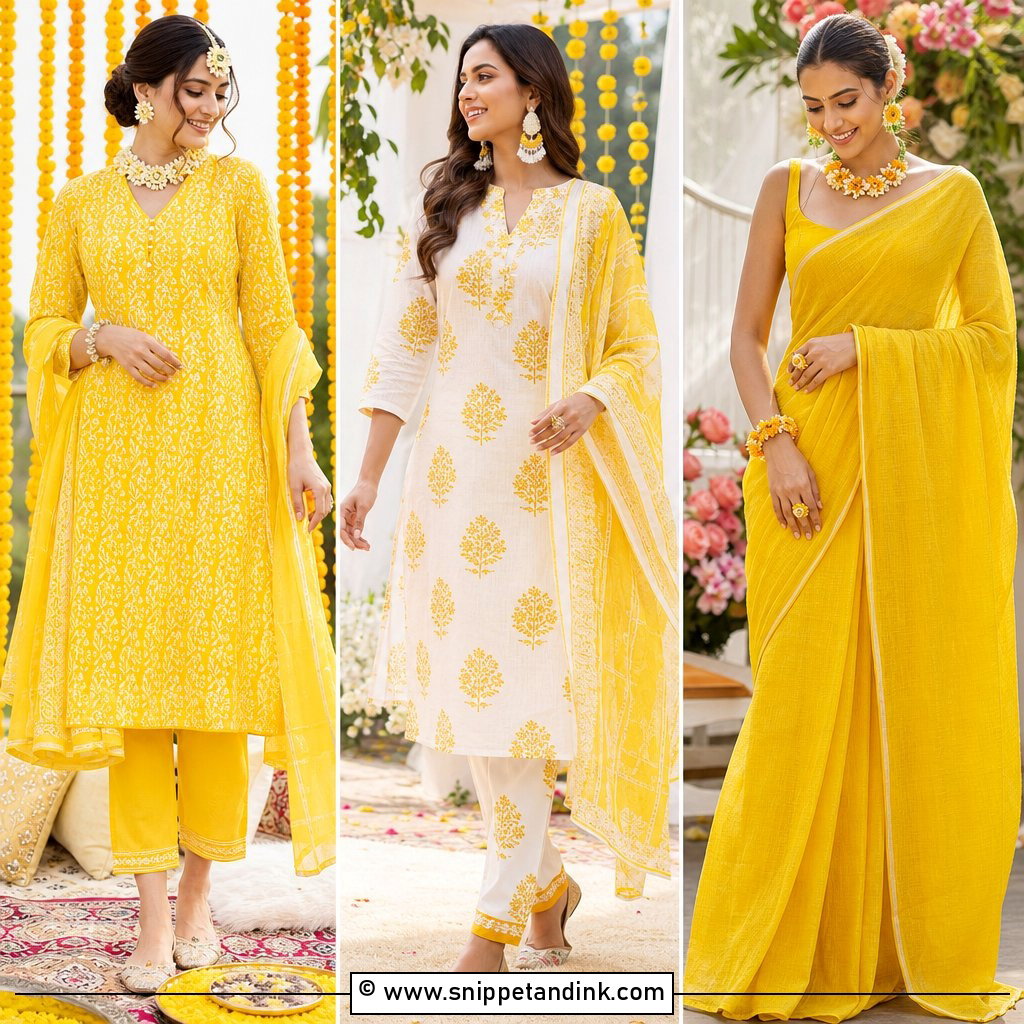


25. Yellow Leheriya Saree for Haldi
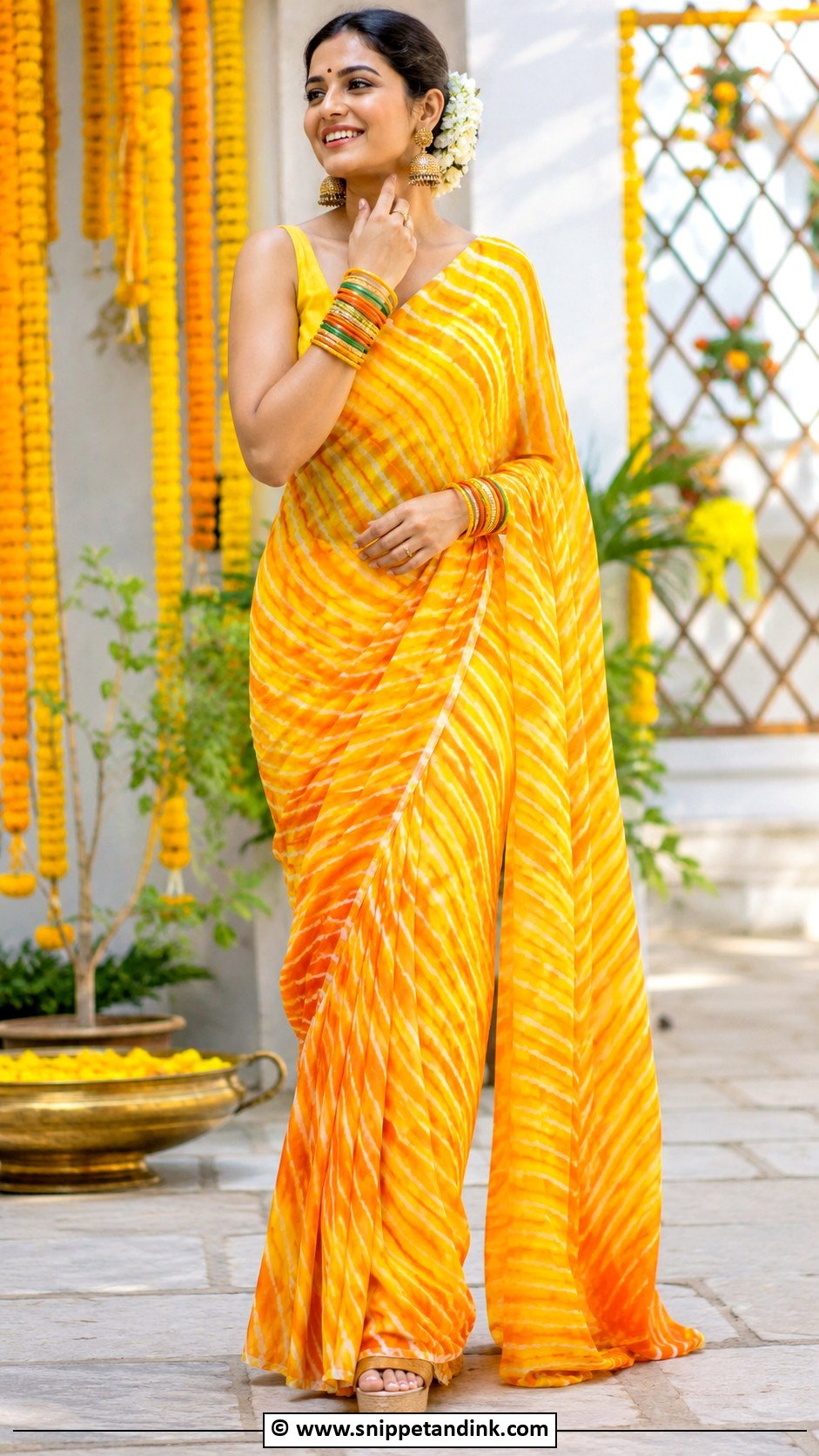
Leheriya is a wave-patterned resist dye from Rajasthan, and the diagonal stripes look lively in daylight. Yellow with orange, pink or green makes a bright, light saree that suits a sunny outdoor haldi. Pair it with a plain blouse or a gota-work blouse so the pattern stays the hero. Jhumkas, bangles, comfortable wedges, a small bindi and fresh flowers in the hair. Leheriya is usually soft and light, so it’s comfortable for a long, hot morning.
26. Yellow Printed Co Ord Set for Haldi
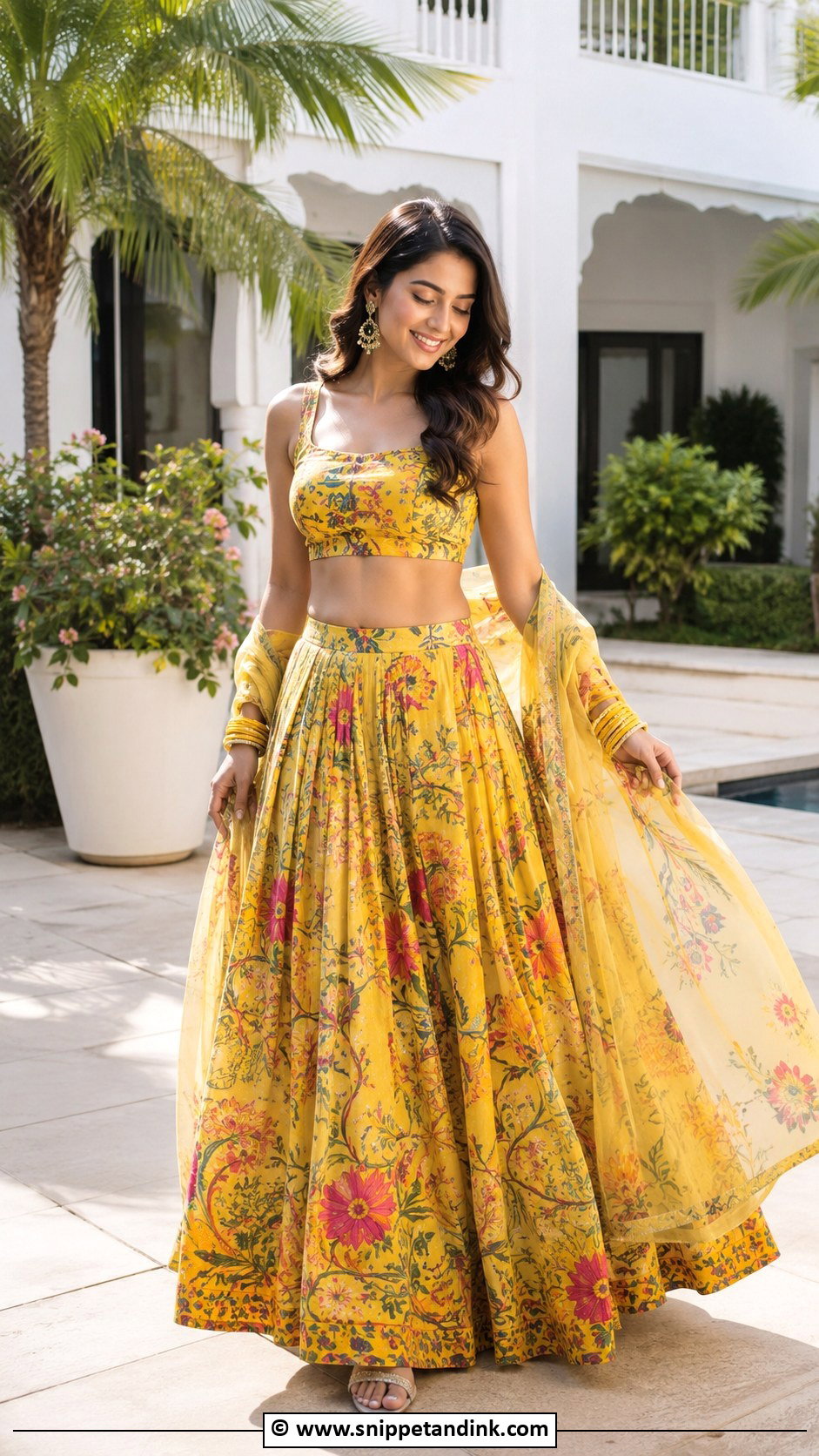
A printed co-ord is the relaxed option for a casual haldi. Crop top and skirt, kurta and pants, or tunic and palazzo in a floral, block or abstract print all look put together because the pieces match. Cotton, muslin and linen blends breathe well in heat. Add a dupatta or cape if the family is more traditional. Festive earrings, bangles and embellished sandals keep it from looking like daywear. It fits small home ceremonies and destination weddings well.
27. Yellow Peplum Sharara Set for Haldi
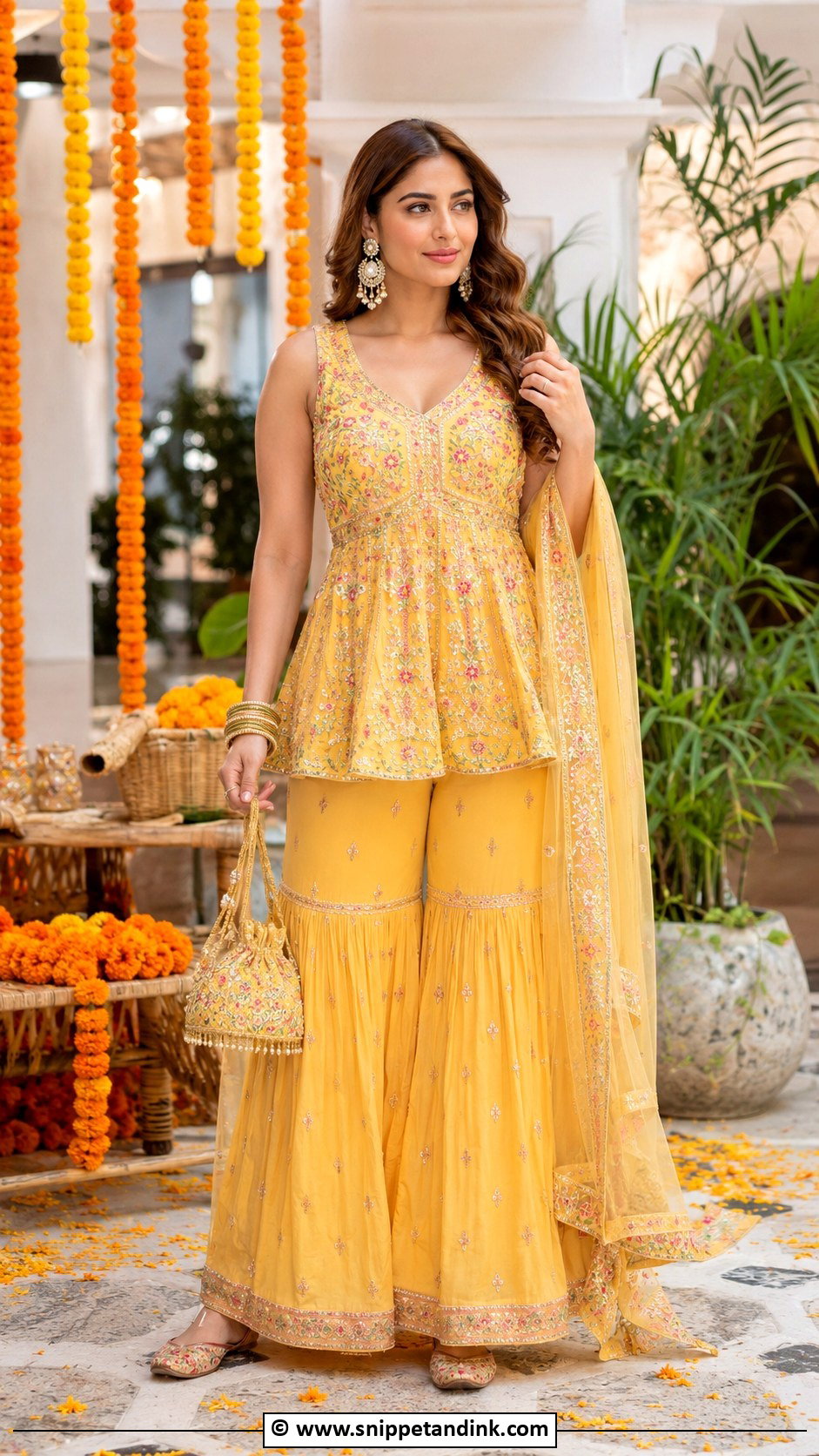
The peplum defines the waist, and the sharara balances it with volume below, so this shape flatters many figures. A top with mirror work, thread embroidery or small sequins gives a festive finish. If the peplum is detailed, skip the dupatta and enjoy having both hands free. Juttis, earrings and a potli bag, with half-up hair or soft curls. It’s a fun choice for a younger sister who wants something trendy but still clearly Indian.
28. Yellow Maxi Dress for Haldi
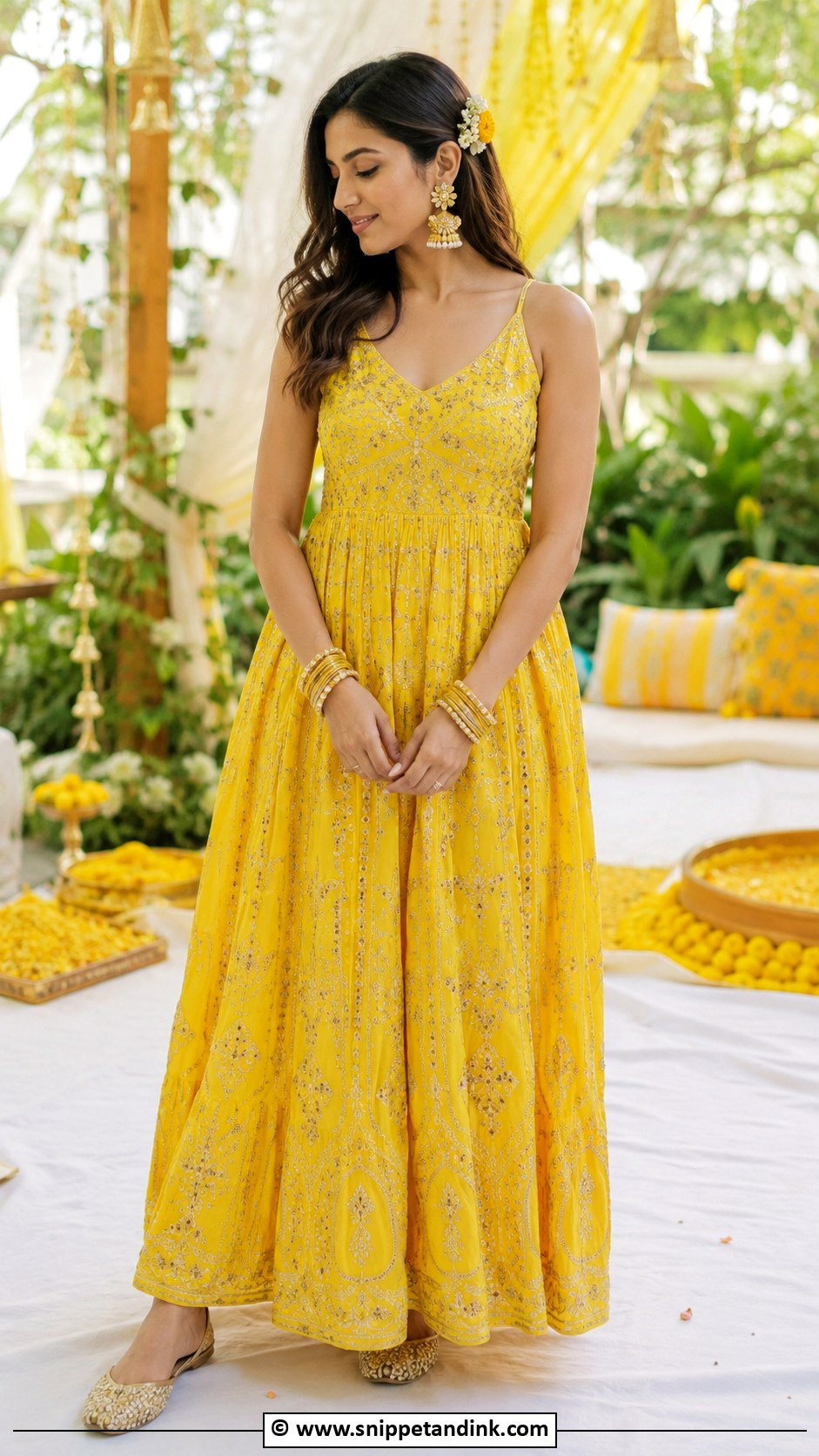
A maxi dress only works at a haldi if it has an Indian detail to anchor it: mirror work, block print, embroidery or a dupatta-style scarf. I’d reserve it for relaxed or destination celebrations. Cotton, linen, georgette and rayon blends keep you cool. Jhumkas, bangles and embellished flats make it festive rather than casual. A braid or a floral clip in the hair connects it to the ceremony. Check with the bride first if the family is traditional.
29. Yellow Indo Western Skirt Set for Haldi
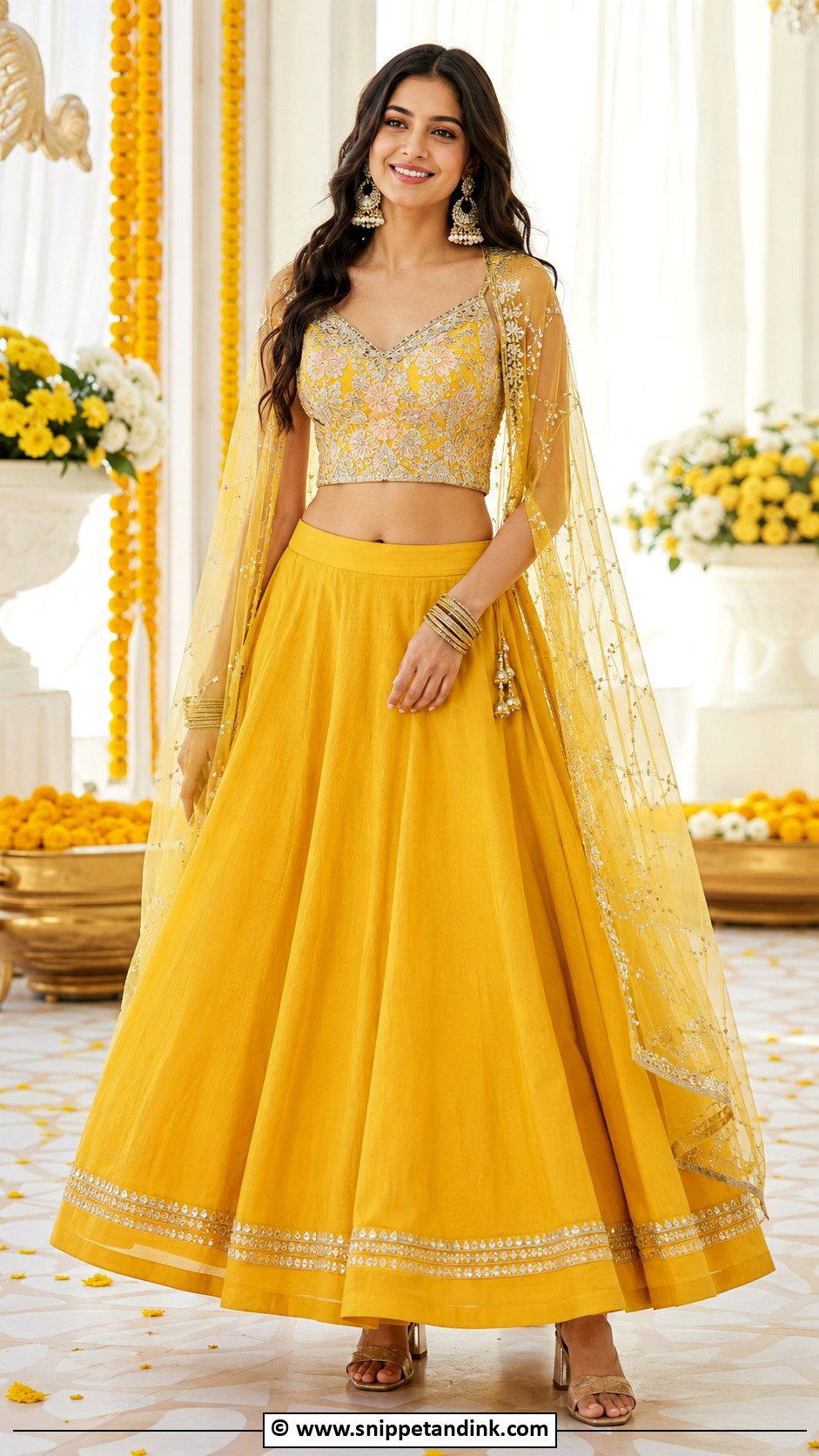
A yellow Indo western skirt set gives you the drama of Indian wear in a cleaner shape. A flared skirt with a structured blouse, corset-style top or embroidered crop top is the base. Add a cape, jacket or dupatta depending on how traditional the function is. I balance it one way or the other: a bold silhouette with minimal embroidery, or a simple shape with detailed fabric. Statement earrings, bangles and comfortable heels.
30. Yellow Suit With Floral Jewelry for Haldi
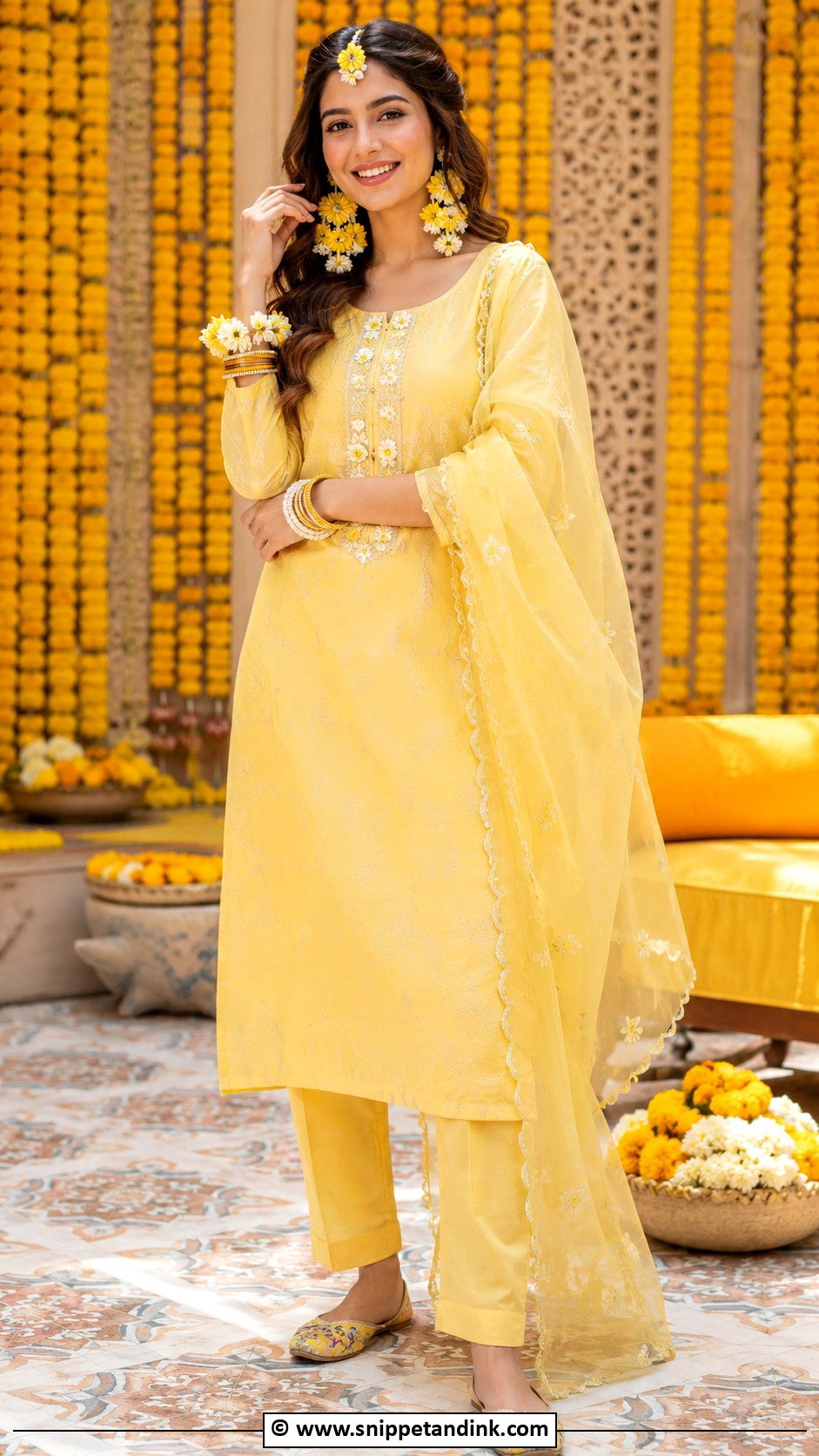
This is the most practical outfit on the list and one I’d happily put on every sister in a family. An Anarkali, straight suit, palazzo suit or sharara suit in cheerful yellow, plus floral earrings, a floral bracelet or a flower hair piece. Fabric flowers survive heat and hugging better than fresh ones. Choose a fabric you can wash at home if you expect to get haldi on you, such as cotton or a cotton blend. Juttis and light bangles finish it.
A Small Bag Every Sister Should Carry
Sisters end up being the bride’s emergency kit, so pack a little more than lip balm. This is what I’d fit into a potli or a small tote:
- Safety pins in two sizes, for your dupatta and the bride’s.
- Wet wipes and a small old hand towel for paste on hands and faces.
- Blotting papers, because haldi mornings are warm.
- A spare plain dupatta or shawl to throw over outfits between rituals.
- Hair ties and a few bobby pins.
- A bag for jewelry you take off before the paste goes on.
Getting Two Functions Out of One Outfit
Sisters often dress for five or six events in a few days, so a haldi outfit that rewears is worth having. A plain sharara or kurta set can go from haldi to a puja or mehendi with a different dupatta and heavier earrings. If you plan to rewear it, choose cotton, cotton silk or a printed fabric that washes well, and rinse turmeric off in cold water the same day, before it sets. Pack a change of clothes if the next function follows the haldi directly.
Your Role at the Haldi Decides the Outfit
Start with what you’ll actually be doing. A sister applying paste and leading the dancing needs washable fabric, a pinned dupatta and flat shoes. A sister greeting guests can wear the ivory Anarkali or the white lehenga. After that it’s about sitting well beside the bride: a lighter or neighbouring shade, a little less embroidery, and jewelry that won’t snag. Lehengas feel grand, shararas are fun, sarees are graceful and suits are easy. Pick the one that lets you help, dance and still look like family in every frame.
You'll Like These Ideas:


Leave a Reply