
A Haldi outfit is the one bridal look that is meant to get ruined, at least a little. Turmeric paste will land on the neckline, sleeves and hem, sometimes water and flower petals too, and you’ll sit low on a patla or stool for much of the ritual. So the plain yellow suit isn’t the only sensible answer, but every choice has to cope with mess and movement. Below you’ll find mirror-work lehengas, printed sets, sarees, shararas, ivory looks and a few Indo-Western ideas, many light enough to wear again. I’ve kept the jewelry floral or simple, because metal and stones near fresh turmeric are a bad mix, and noted where a fabric will forgive stains and where it won’t.
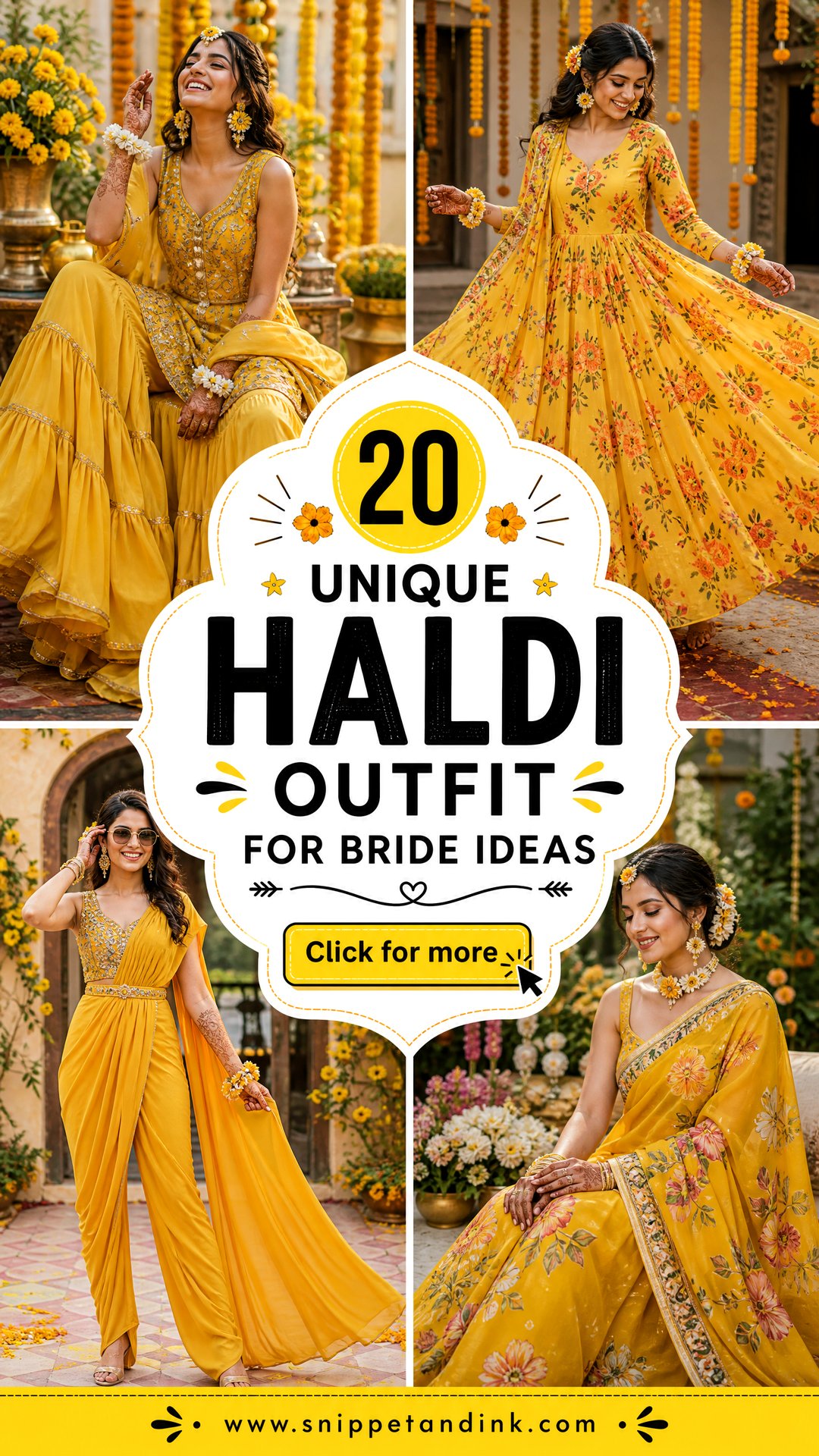
Which Fabrics Forgive Turmeric and Which Ones Never Recover
Turmeric’s color comes from curcumin, a strong natural dye that grips fibers quickly, especially natural ones. That’s why it stains so readily and why the fabric you choose matters more than the cut. When I help a bride plan her Haldi look, I sort fabrics into rough groups.
- Most forgiving: mustard, orange and deep yellow cottons and cotton blends, plus busy prints like Bandhani or florals. Marks either blend in or wash out reasonably well.
- Workable with care: georgette, crepe and chiffon. They’re easy to rinse quickly, though pale shades can hold a yellow tint.
- Risky: ivory and white in any fabric, pure silk, and anything with real zari, beading or floss embroidery. Silk and metallic threads can hold a stain for good.
If you love a delicate or valuable piece, plan two looks: wear it for the portraits before the ritual, then change into something cheaper and washable. Most families are happy to wait ten minutes for that.
1. Yellow Mirror Work Haldi Lehenga
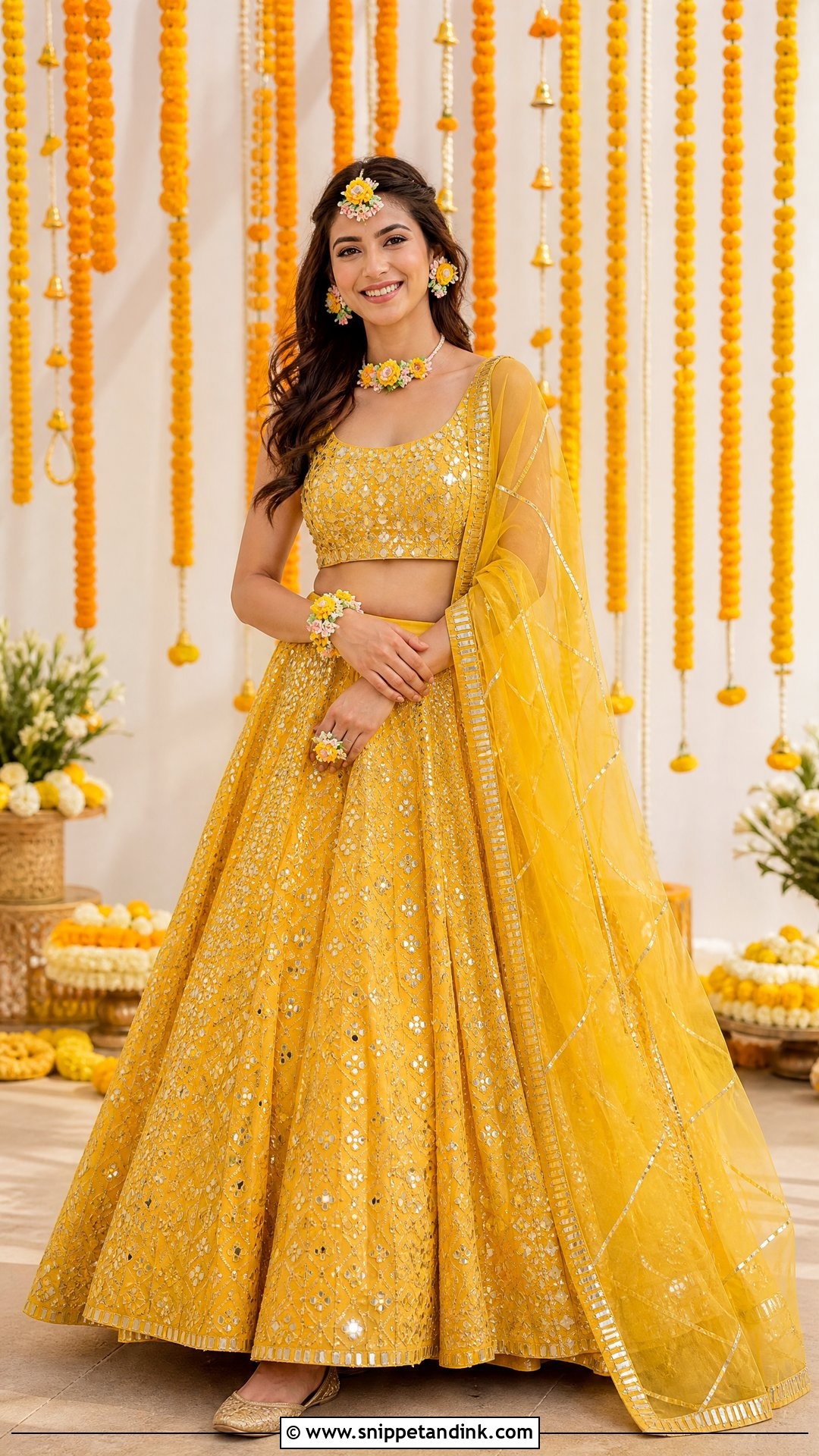
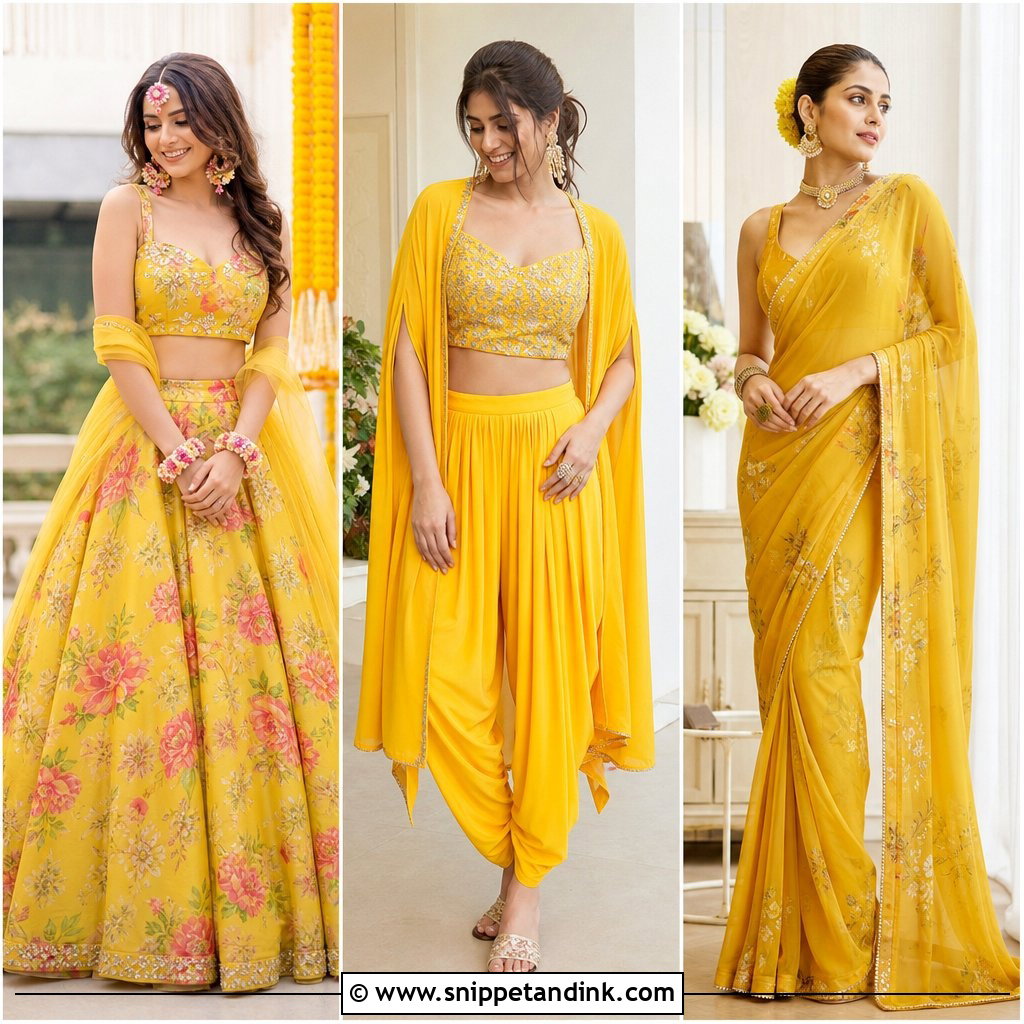
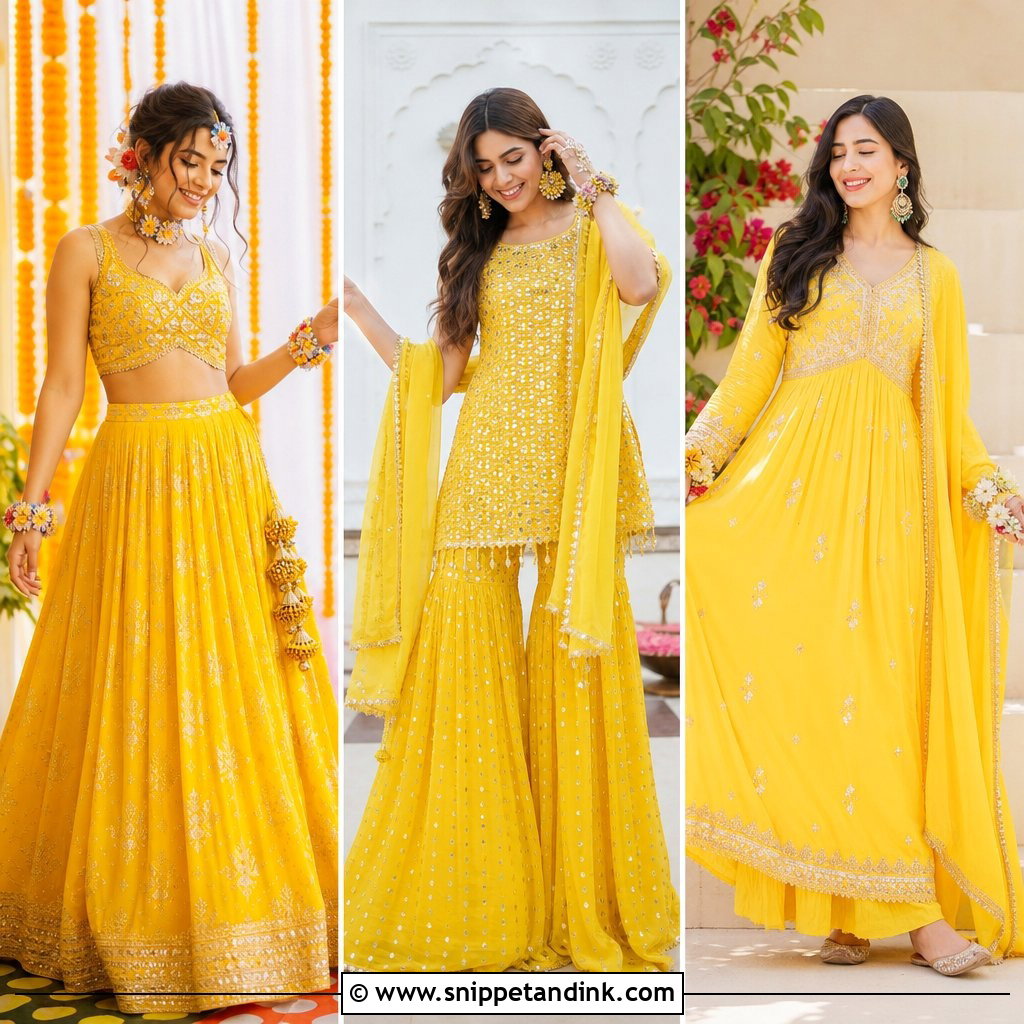
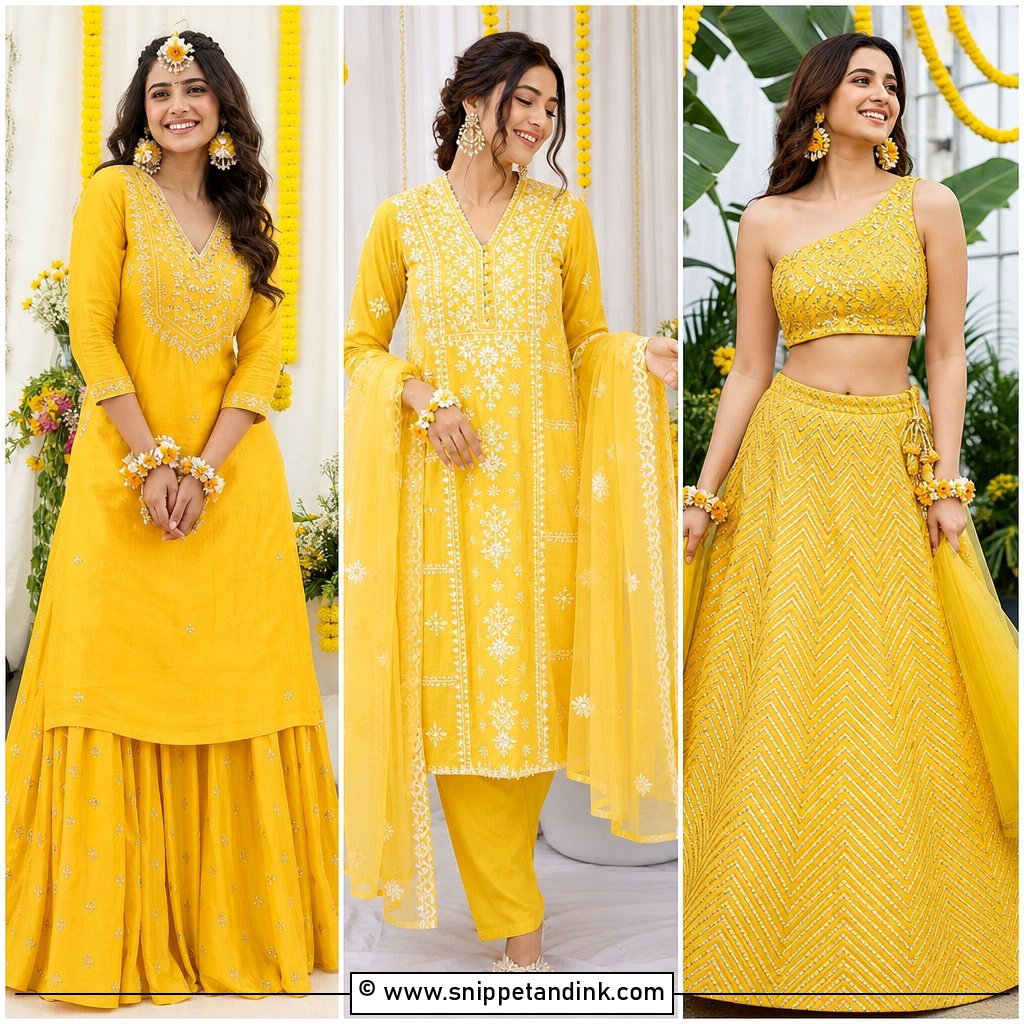
Mirror work gives a yellow lehenga sparkle without the weight of heavy zardozi, which matters when you’re sitting cross-legged for an hour. Georgette or cotton-silk keeps the skirt light; small mirrors spread around the hem catch the daylight well. A fitted sleeveless blouse and a soft organza dupatta with a narrow gota edge, draped over one shoulder, leave your hands free. Floral earrings, a simple maang tikka and flower bracelets are enough. Choose cushioned gold juttis for outdoor floors. I always ask for this skirt to sit just off the ground, because a floor-length hem soaks up paste and water like a wick and turns dark orange by the end.
2. White Floral Organza Haldi Saree
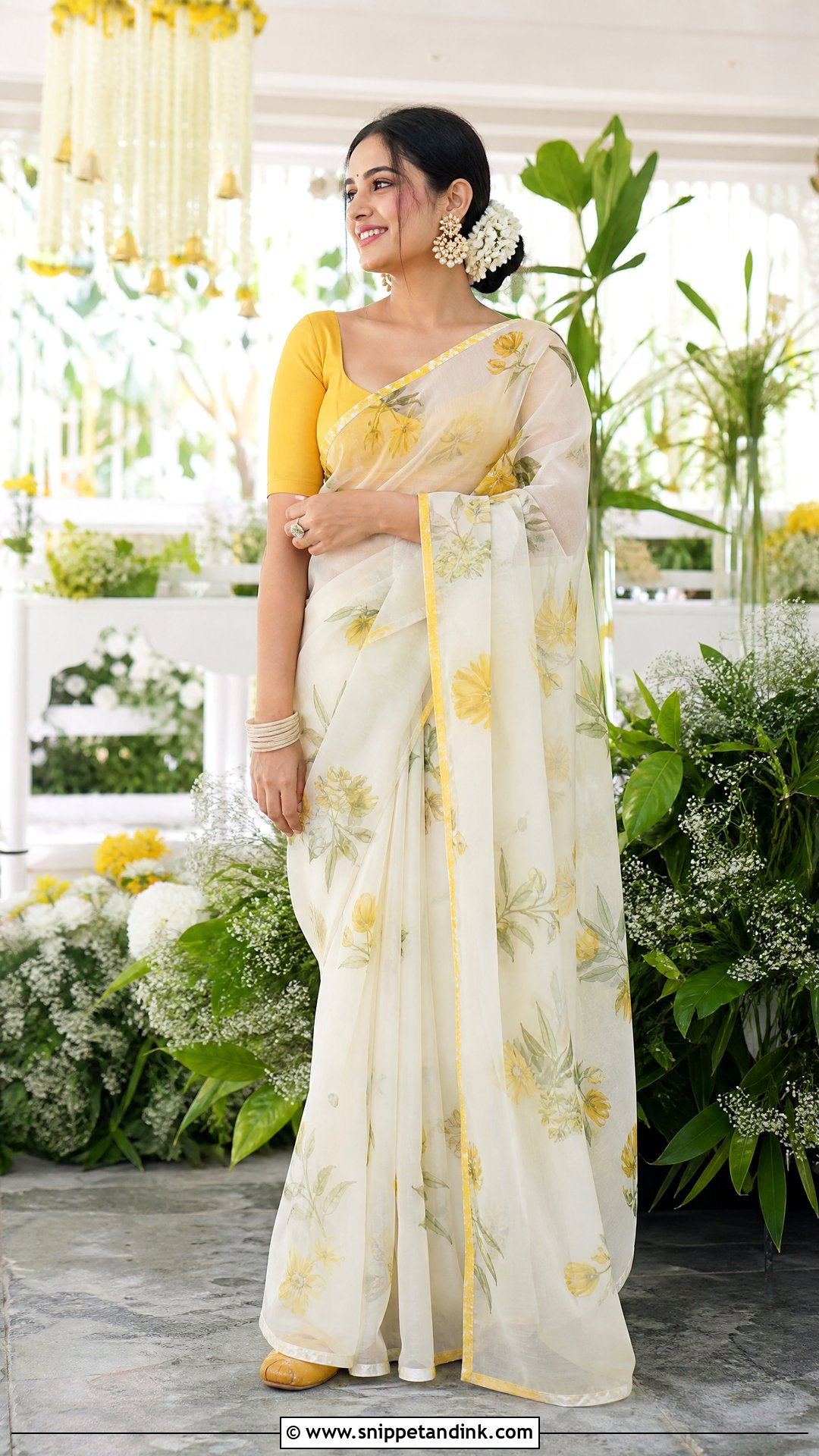
White organza with yellow florals is fresh, and it’s honest about what will happen: white will stain. Choose it only if you’re happy to keep a marked saree as a memento or have it dyed later. A fitted yellow blouse with elbow sleeves and a supportive neckline anchors the print. Pre-pleating keeps the drape steady through all the bending and leaning forward. Pearl-and-flower earrings, a small floral hair piece, ivory bangles and yellow embroidered flats finish it. Tie your hair in a low bun or braid, because loose hair falling forward ends up streaked yellow. It suits a daytime garden Haldi.
3. Mustard Sharara Haldi Outfit
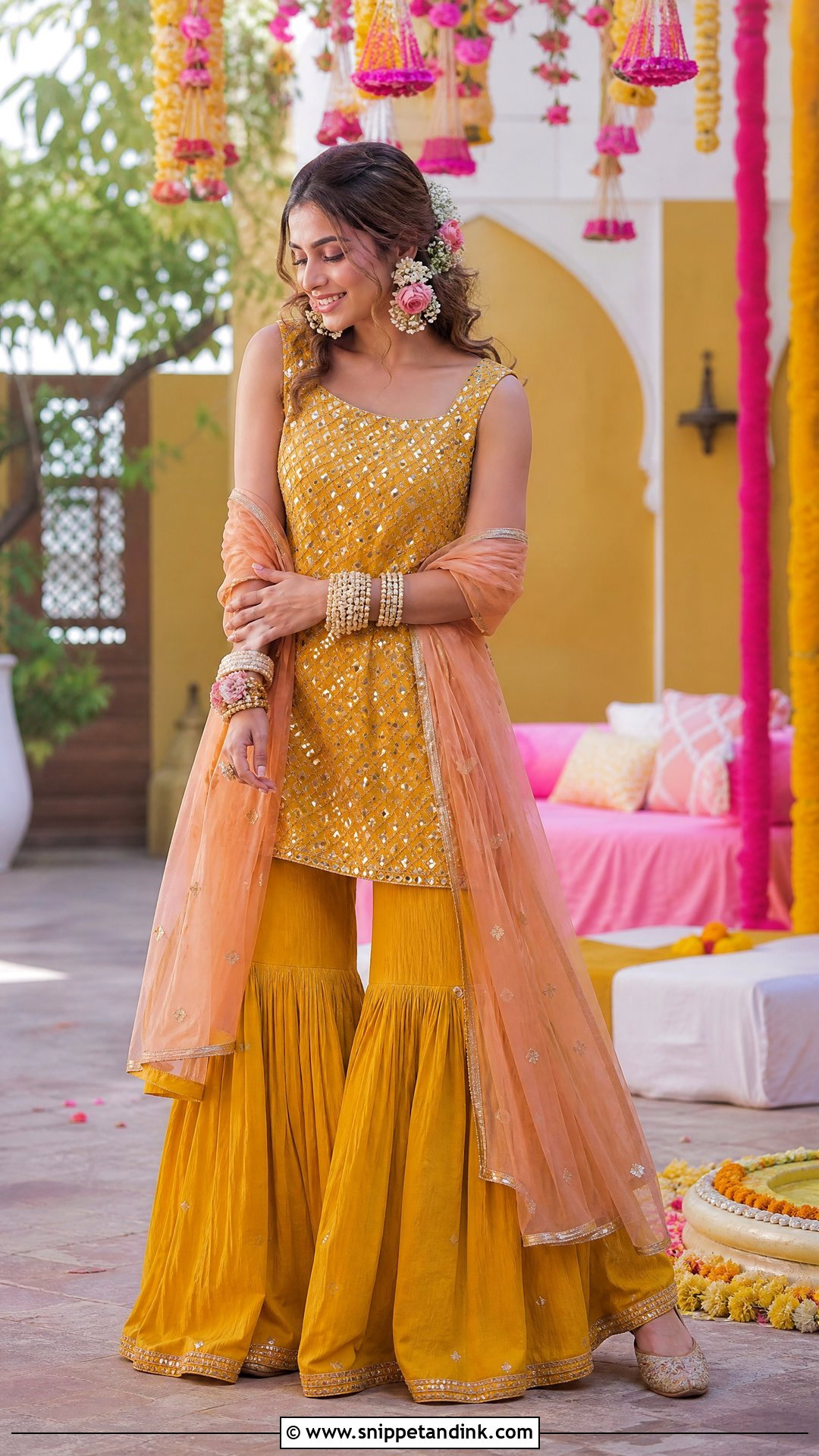
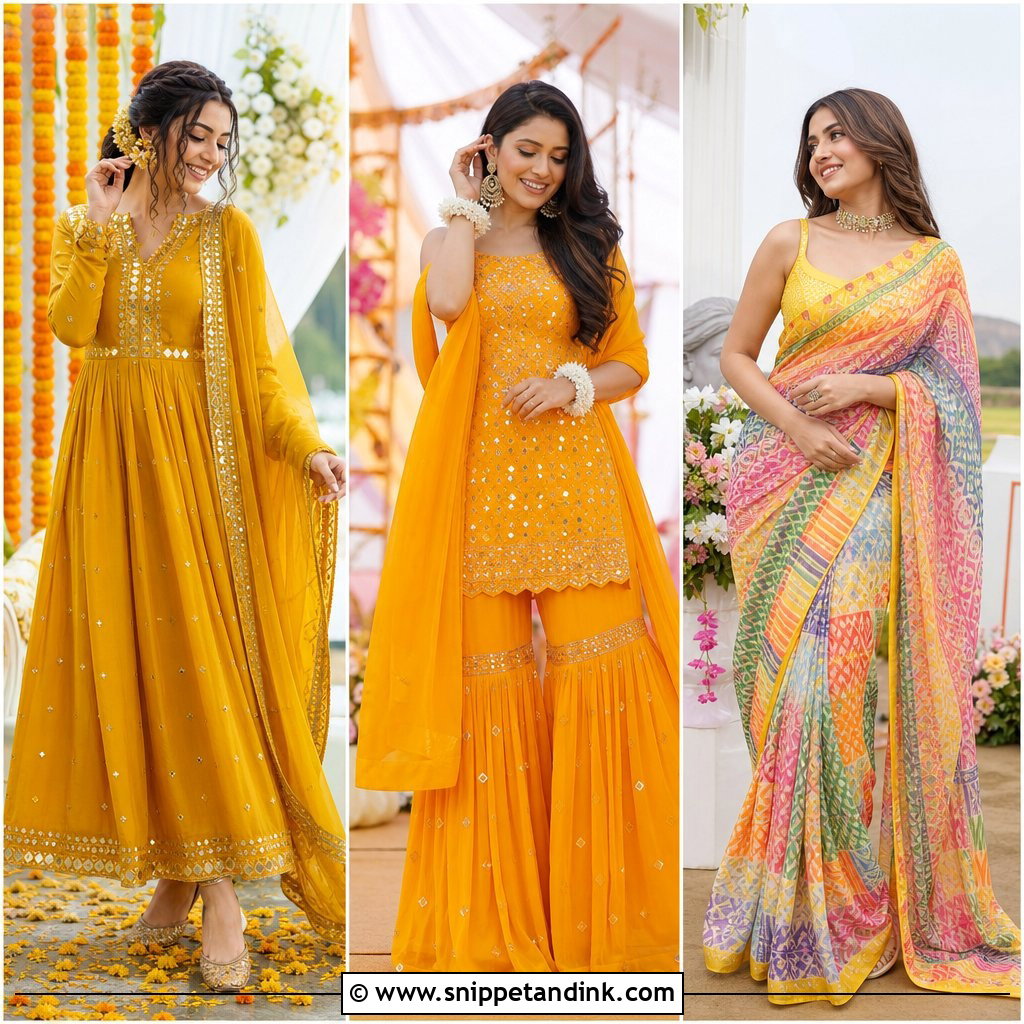
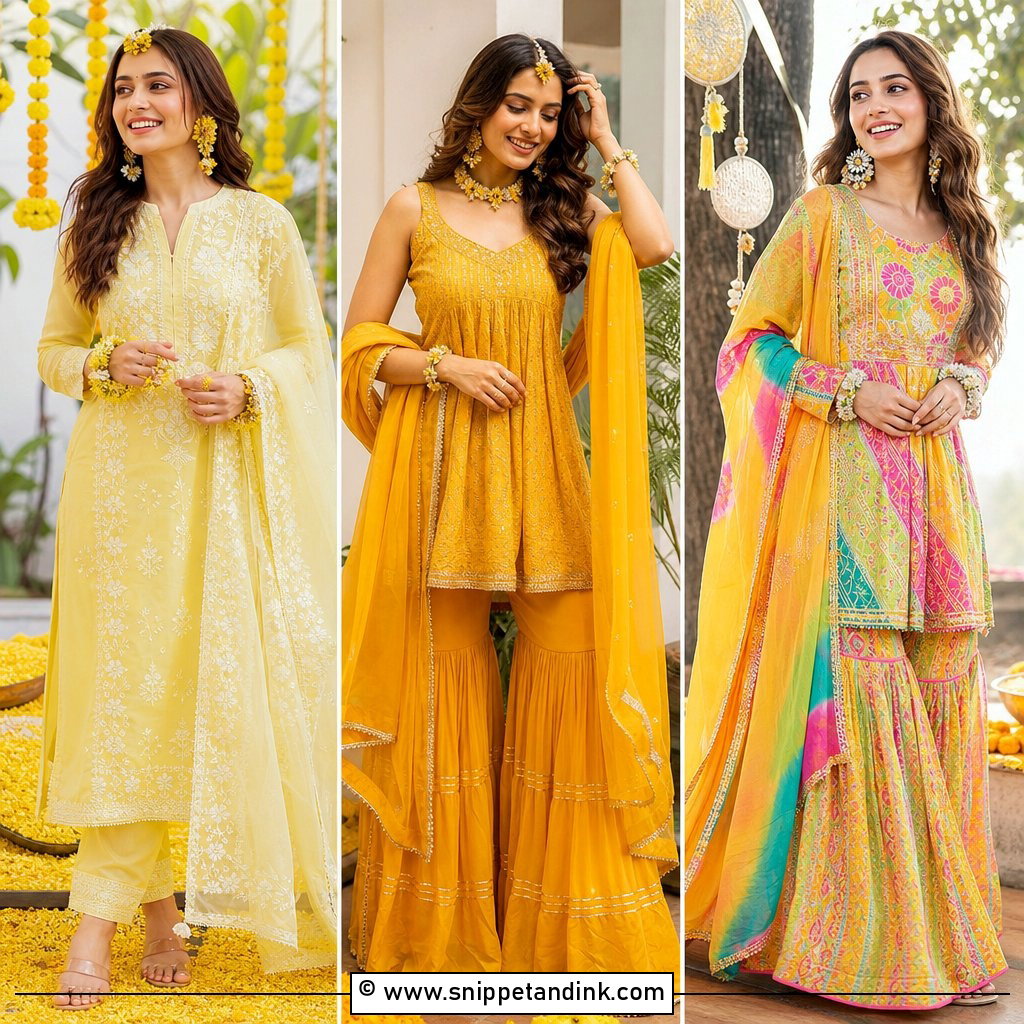
Mustard is my favorite practical color for Haldi because turmeric marks blend into it rather than sitting on top. A mustard sharara set gives festive volume and stays decent when you sit on the floor. Start with a short kurta with mirror work, gota or thread embroidery, then a wide, tiered sharara with a fitted waistband and breathable lining. A sheer dupatta in mustard, peach or a contrasting pink softens it. Oversized floral earrings, a small passa, stacked bangles and embroidered juttis complete the look. A flower-trimmed side braid balances the flare. Home ceremonies and courtyard events both suit it.
4. Marigold Print Haldi Anarkali
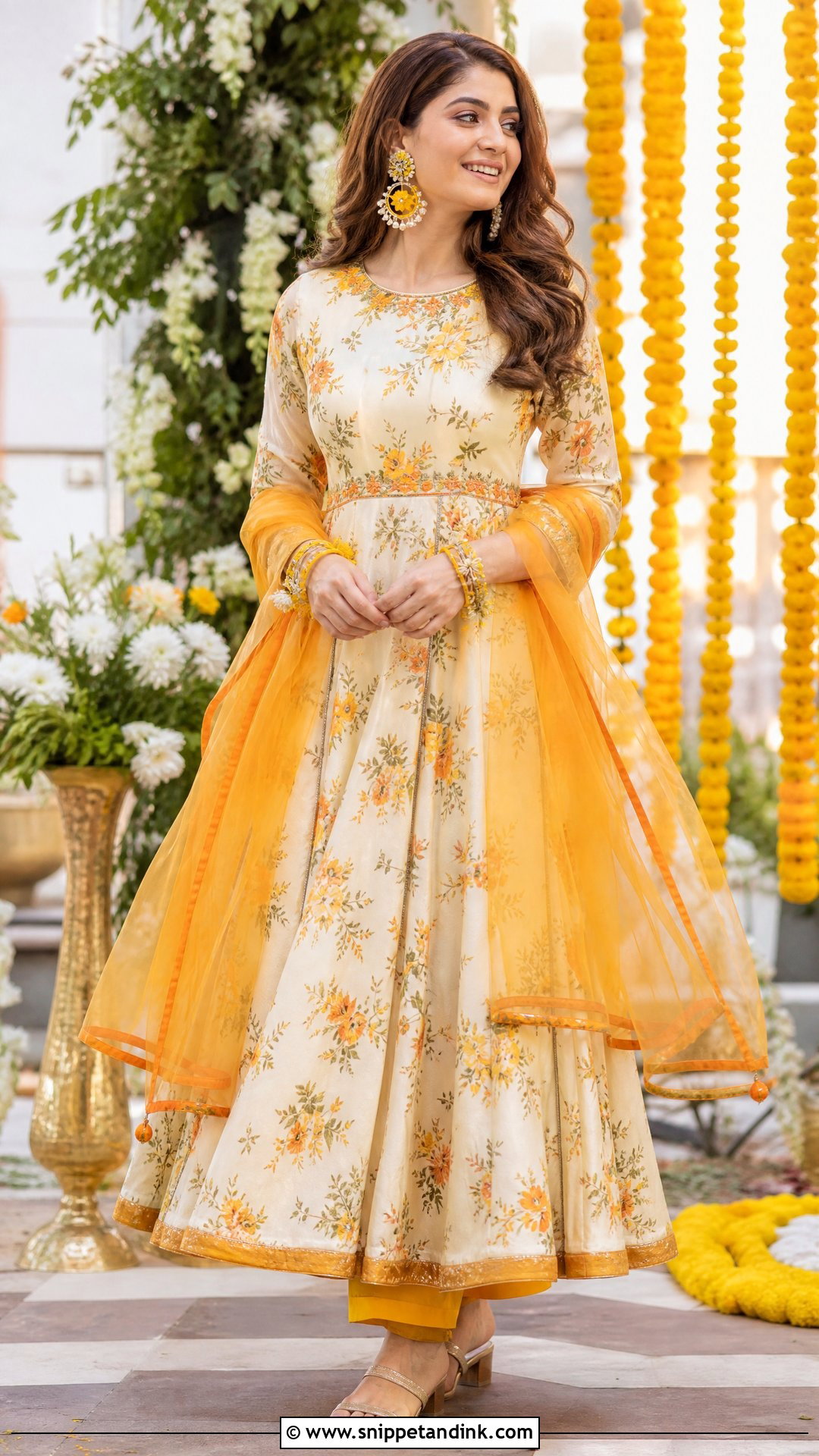
An ivory Anarkali printed with marigolds feels traditional, but the botanical print keeps it from looking like a standard festive suit. Calf or ankle length is easier than floor length for a ritual where people will be crouching around you. Choose a fitted bodice with enough flare to sit comfortably, narrow yellow pants and a light dupatta with orange piping. Floral chandbalis, a subtle maang tikka and orange or yellow bangles suit it, with soft leather juttis or low block heels. A half-up hairstyle with fresh marigolds echoes the print without matching it too literally. Since it’s printed, it can be worn again at daytime functions.
5. Dhoti Pants And Peplum Haldi Outfit
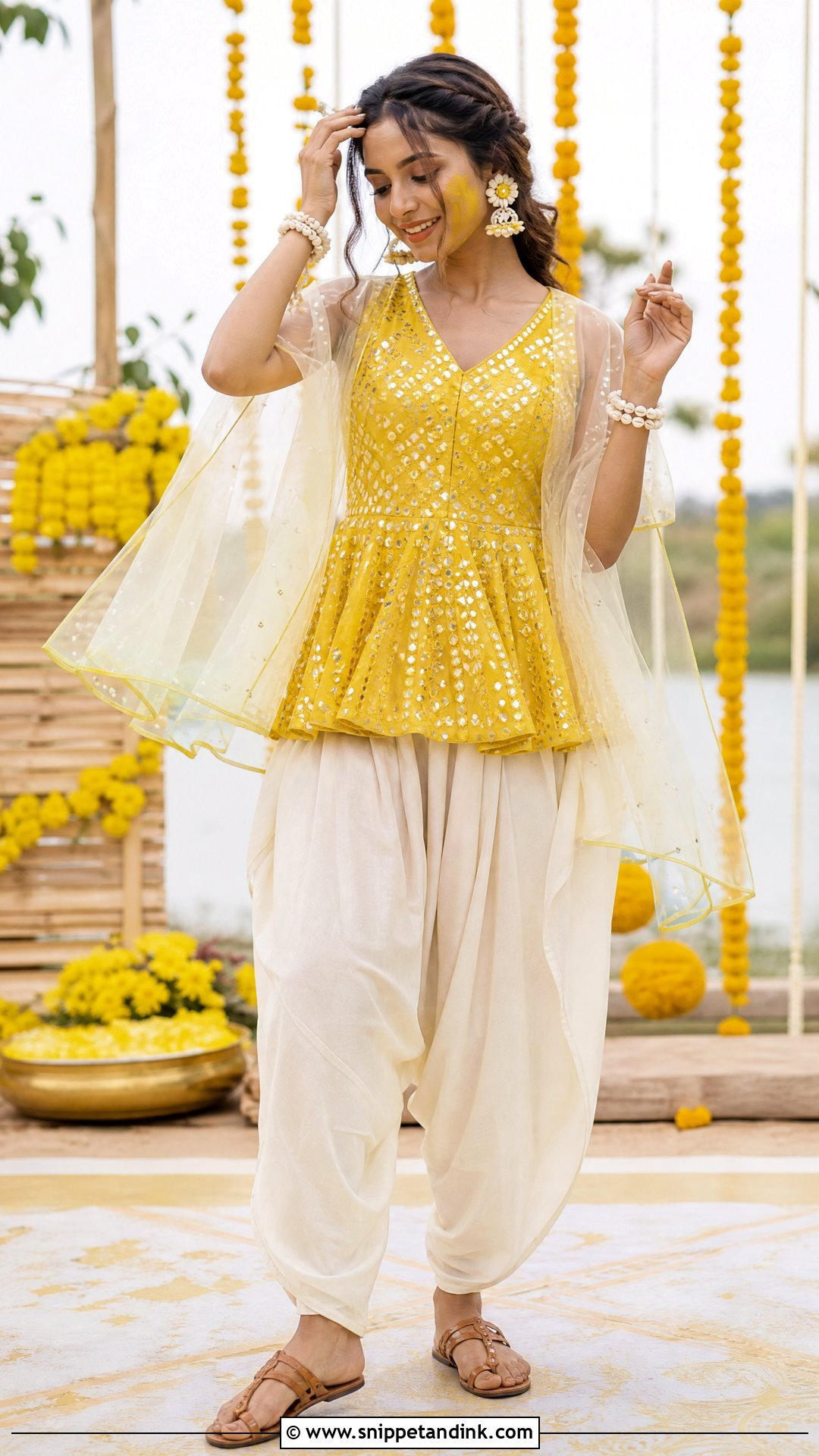
Separates move with you better than anything else, and a peplum with dhoti pants keeps a festive shape while you dance and play games. A sunny yellow peplum with mirror work at the neckline and waist pairs with ivory or yellow dhoti pants in a soft, flexible fabric. Swap the dupatta for a short sheer cape or a light scarf over one shoulder. Floral earrings, shell bangles and kolhapuri flats suit it. Keep the peplum hem structured so it defines the waist without riding up when you sit. Pre-stitched dhotis are worth it here; a hand-tied one loosens the moment someone pulls you onto the floor.
6. Draped Saree Jumpsuit Haldi Outfit
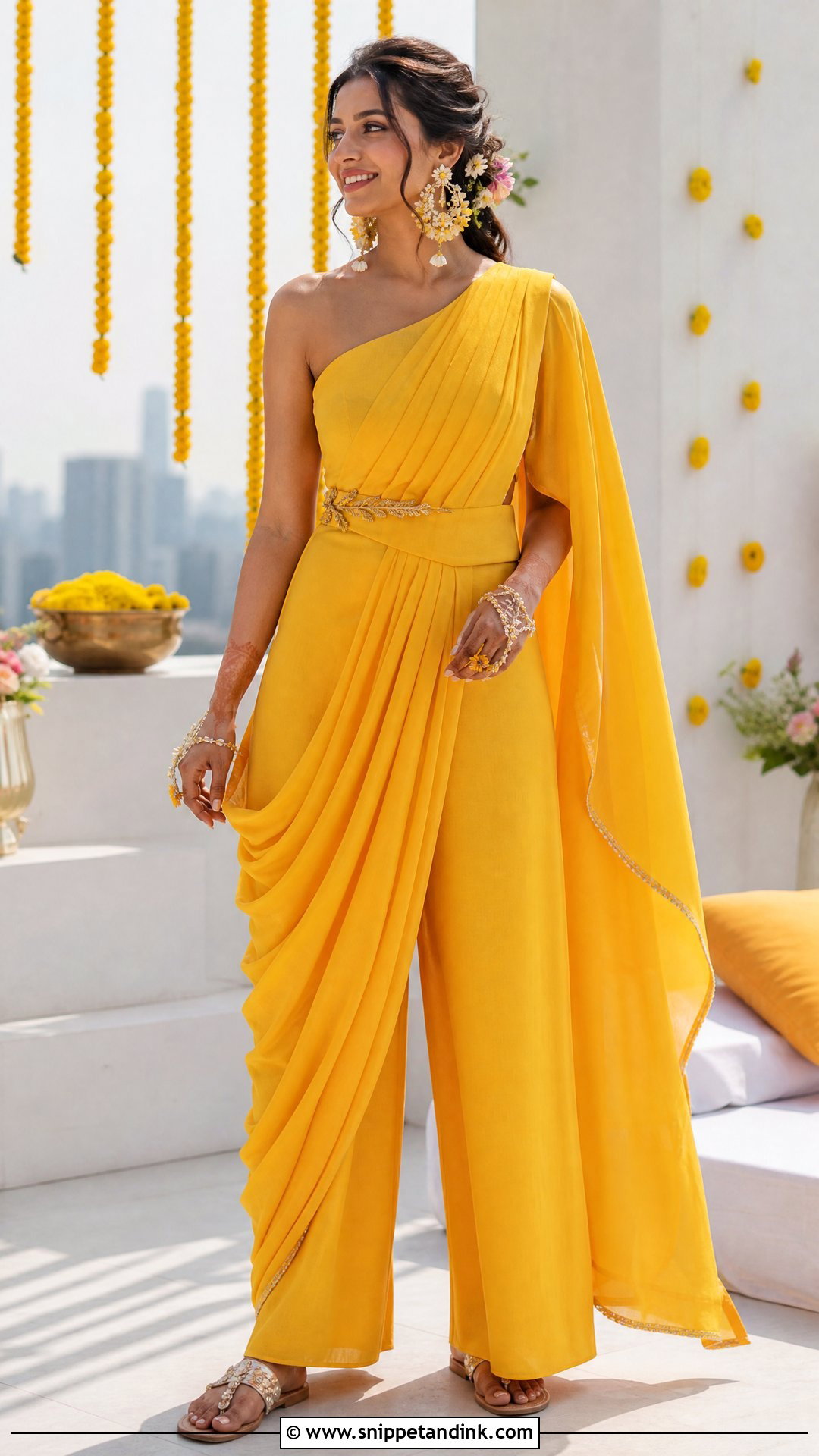
Want a saree silhouette without loose pleats? A yellow draped saree jumpsuit gives you exactly that. Look for a sleeveless or one-shoulder style with an attached pleated panel and a flowing pallu, a defined waist and wide legs that sit easily. Floral shoulder-grazing earrings, a delicate hand harness and gold flat sandals finish it; skip the necklace if the neckline is worked. A low ponytail wrapped in flowers keeps things sleek. I’d avoid beadwork on a Haldi jumpsuit, because paste gets trapped around beads and sequins and is very hard to clean. Plain, washable fabric is the better buy. It suits rooftop or poolside Haldi parties.
7. Yellow Phulkari Haldi Lehenga
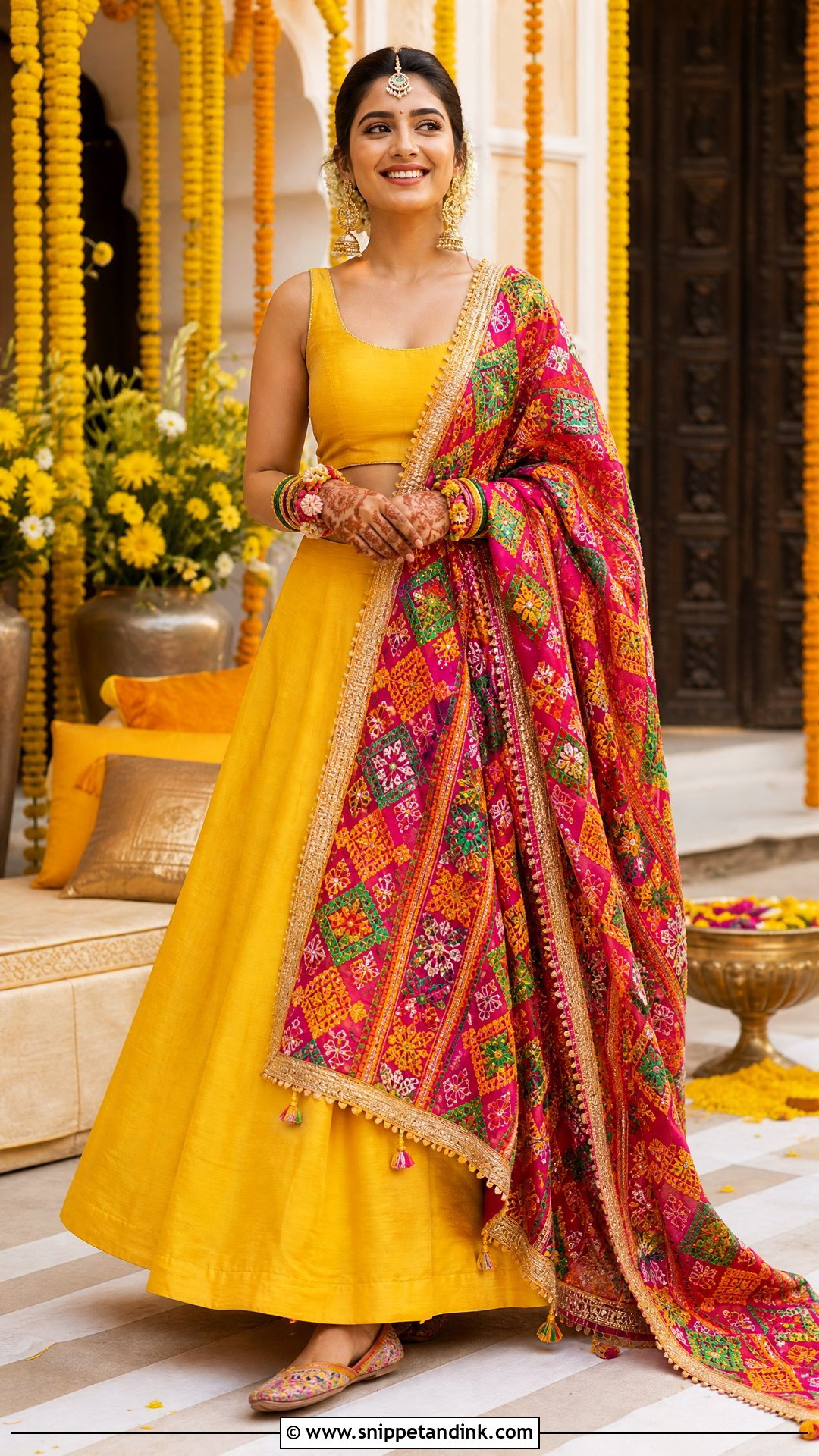
Phulkari is a bright, dense Punjabi embroidery traditionally worked in silk floss, and it can carry an otherwise plain yellow lehenga on its own. Keep the skirt and blouse simple and let a Phulkari dupatta in pink, orange, green and red be the feature. Colorful bangles, traditional earrings, a small maang tikka and bright embroidered juttis complete it, with a neat braid and paranda-style tassel. Pin the dupatta across the torso or securely over one shoulder. If the Phulkari is an older family piece, wear it for photos and swap to a cheaper dupatta for the paste itself, since floss embroidery can take on yellow that won’t fully wash out.
8. Yellow Bandhani Gharara Haldi Outfit
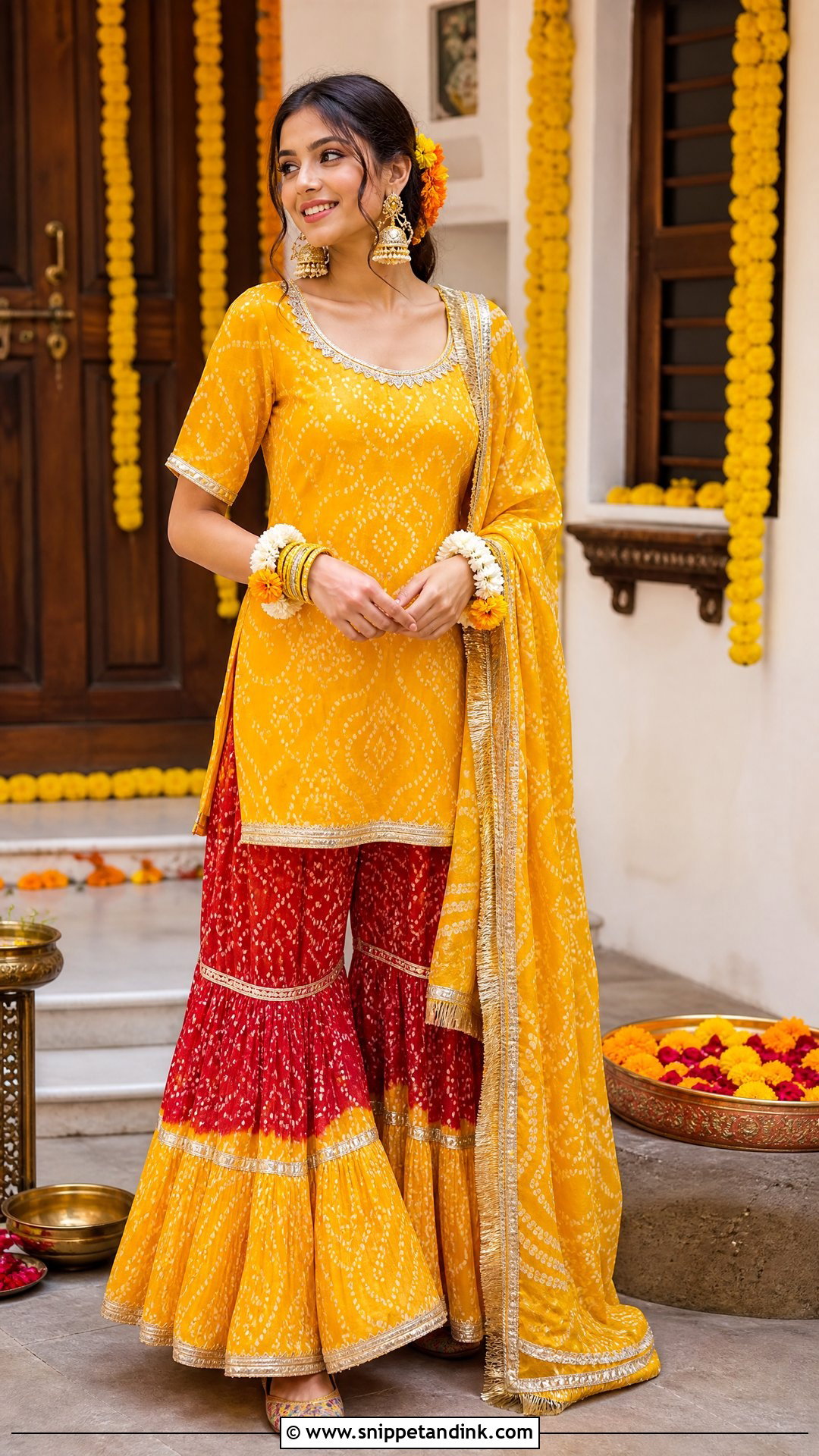
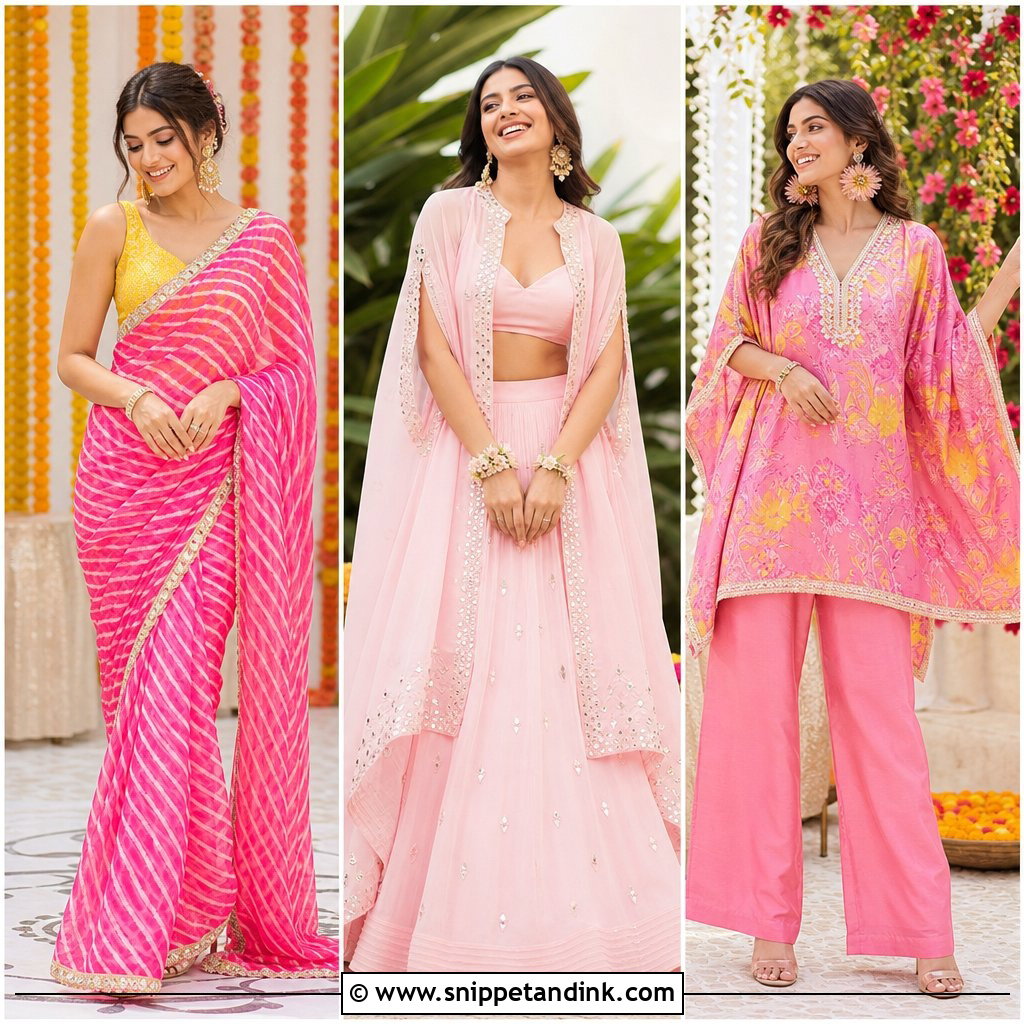
Bandhani’s tiny tie-dyed dots hide splashes well, which makes it one of the more forgiving prints for Haldi. Choose a short yellow kurti with a flared gharara in yellow-red, yellow-pink or yellow-green, and a matching Bandhani dupatta finished with small tassels or a fine gota border. Gold jhumkas, flower bracelets, glass bangles and embroidered flats suit it. Wear the dupatta over both shoulders for a classic look or diagonally for movement, and do a center-parted bun with roses. The print is busy, so keep the blouse embroidery and makeup soft. Bandhani dyes can bleed when wet, so rinse it alone the first time.
9. Ivory Cape Haldi Lehenga
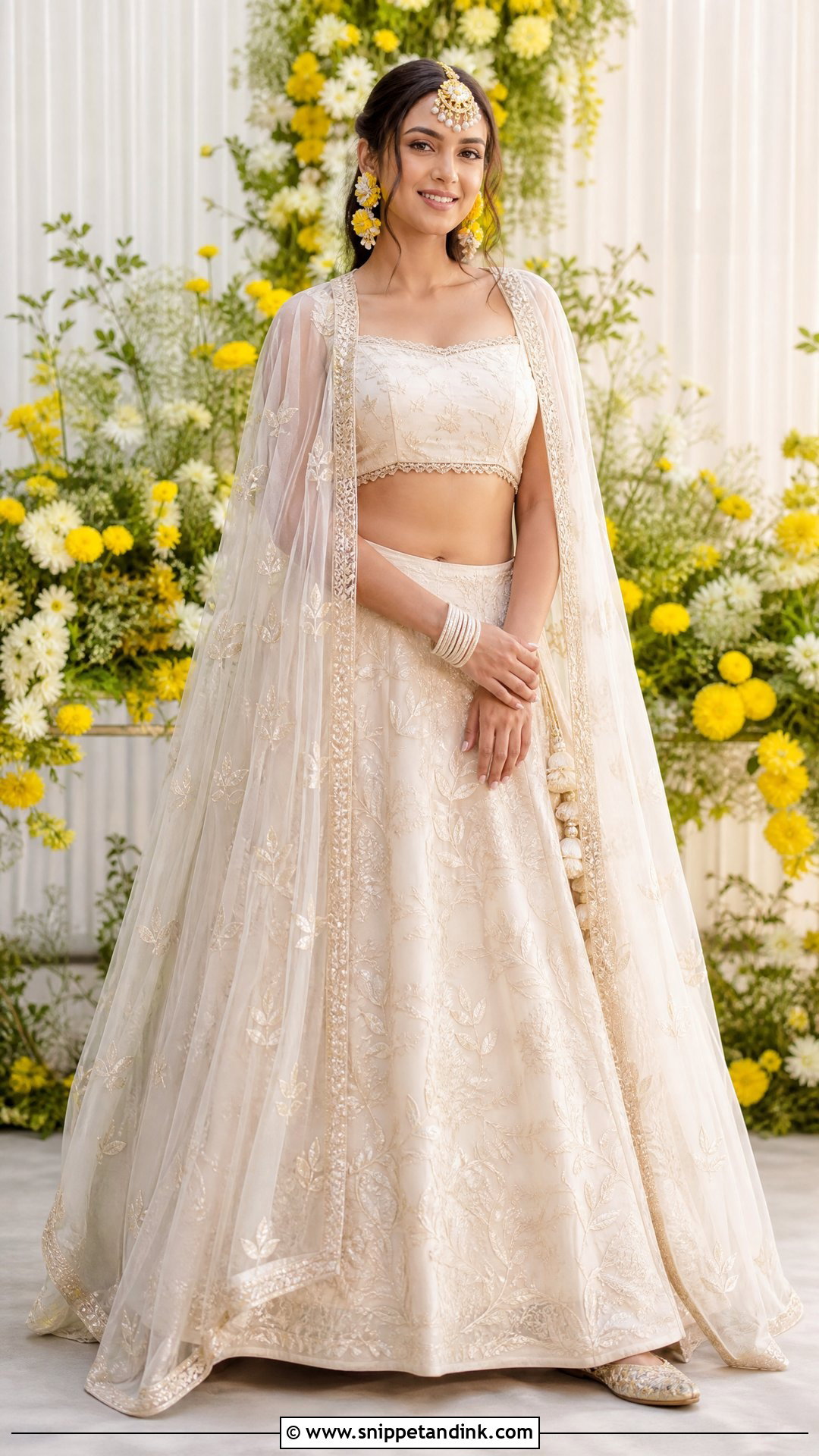
Ivory surrounded by yellow flowers can look striking, though it’s the least forgiving choice on this list. Pair an ivory lehenga with subtle yellow threadwork, a cropped blouse and a sheer cape instead of a dupatta, which moves well and never needs adjusting. Yellow floral earrings, a statement maang tikka, ivory bangles and metallic juttis complete it, with a few yellow flowers in a low bun. Only choose ivory in an affordable or washable fabric. I often suggest wearing ivory for portraits first, then changing into a simpler set before the paste comes out.
10. Floral Haldi Co-Ord Set
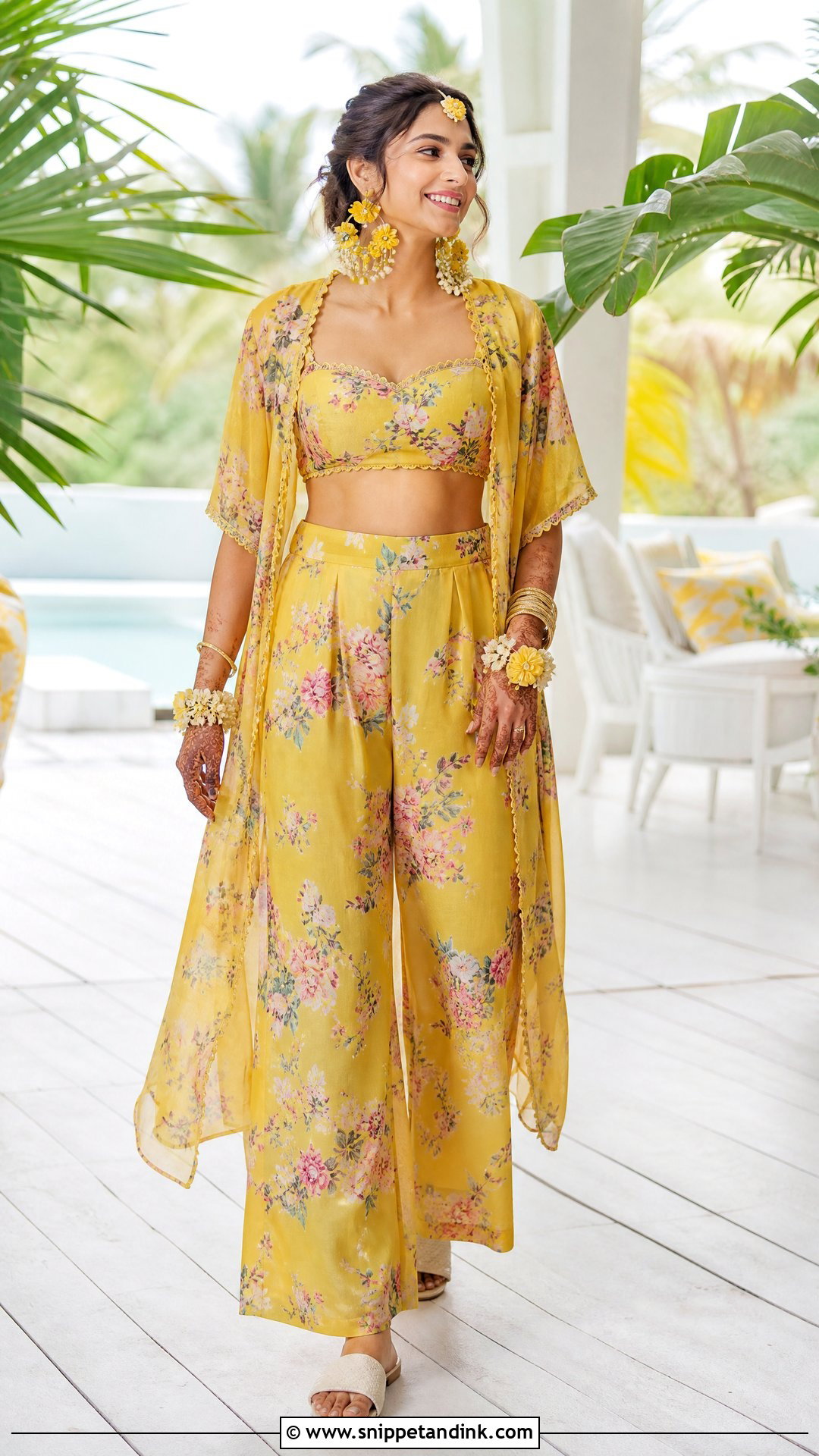
A floral co-ord set is comfortable, playful and easy to wear again. Choose a cropped blouse and high-waisted flared pants in a yellow botanical print, then add a matching shrug, cape or short jacket so it reads as bridal. Large flower earrings, slim bangles and woven flat sandals keep it relaxed, with a softly curled ponytail or half-up braid. If your Haldi includes water or a pool, fabric choice matters most: cotton and lightweight crepe dry fast, while heavier silk turns heavy and clingy when soaked. The pants should skim the floor rather than drag, and the blouse needs real support for dancing.
11. Hand-Painted Haldi Saree
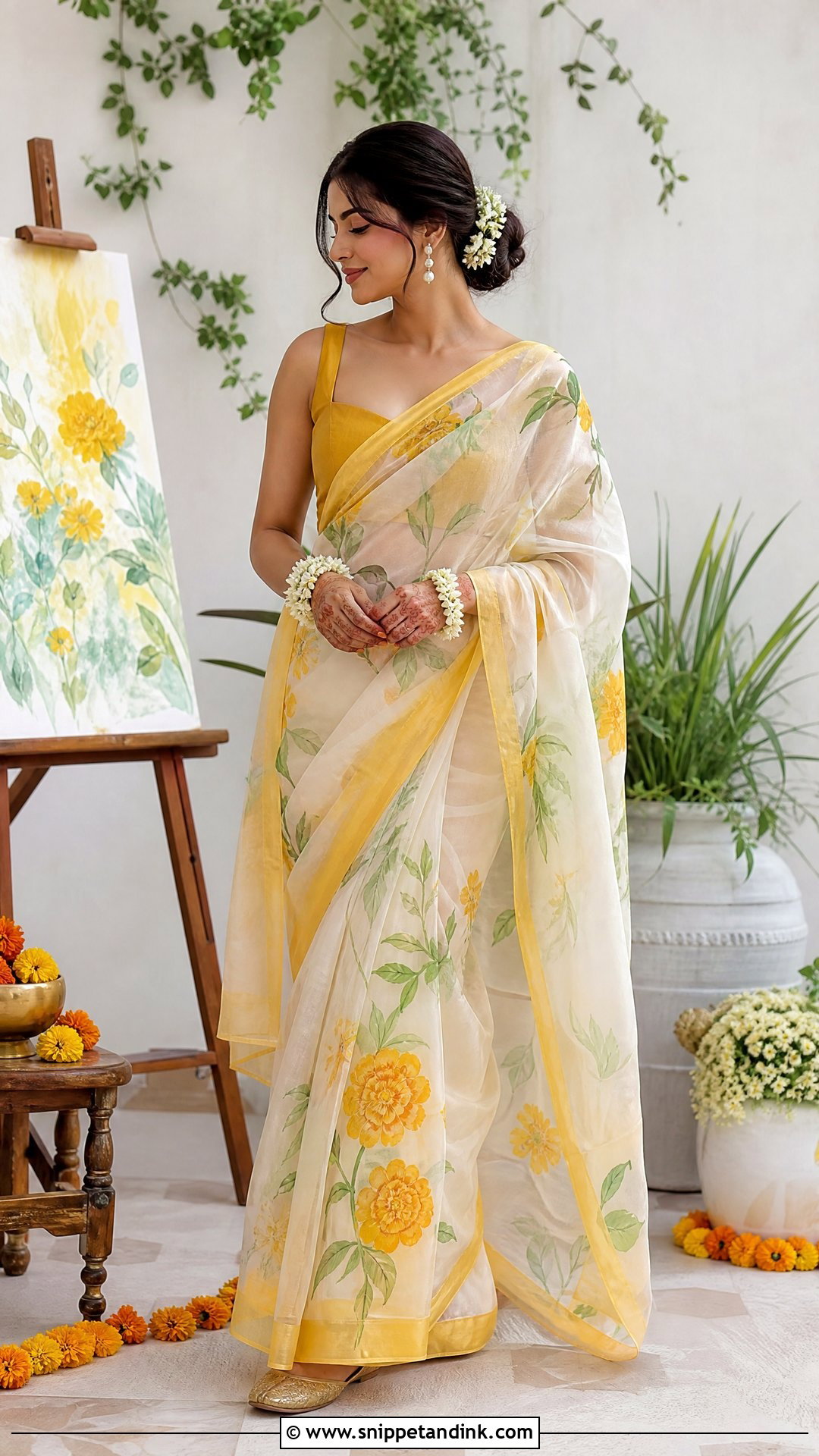
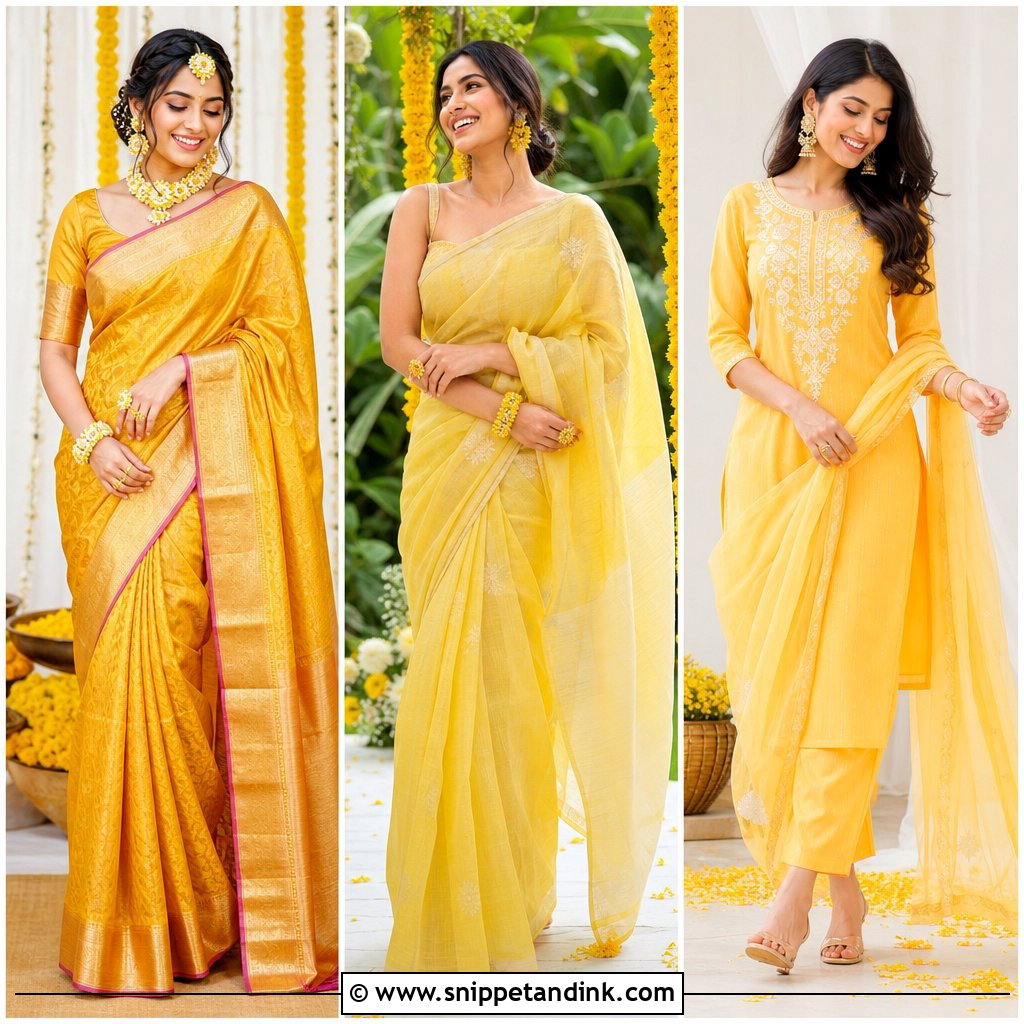
Hand painting turns a saree into something nobody else will have. Choose light chiffon, organza or soft silk painted with sunflowers, marigolds, lotus motifs or loose yellow brushstrokes, and a plain mustard, ivory or green blouse so the art stands out. Pearl earrings, floral bangles, gold flats and a compact potli for portraits are enough. Pre-pleat and pin it, because delicate fabric slips. Ask the artist which paint they used before the day. Fabric paints that haven’t been heat-set can lift or smudge when turmeric paste is scrubbed off, so I’d keep the painted panels away from the pallu that will get the most paste. Names or meaningful motifs can be worked into the design.
12. Yellow Palazzo Set For Haldi
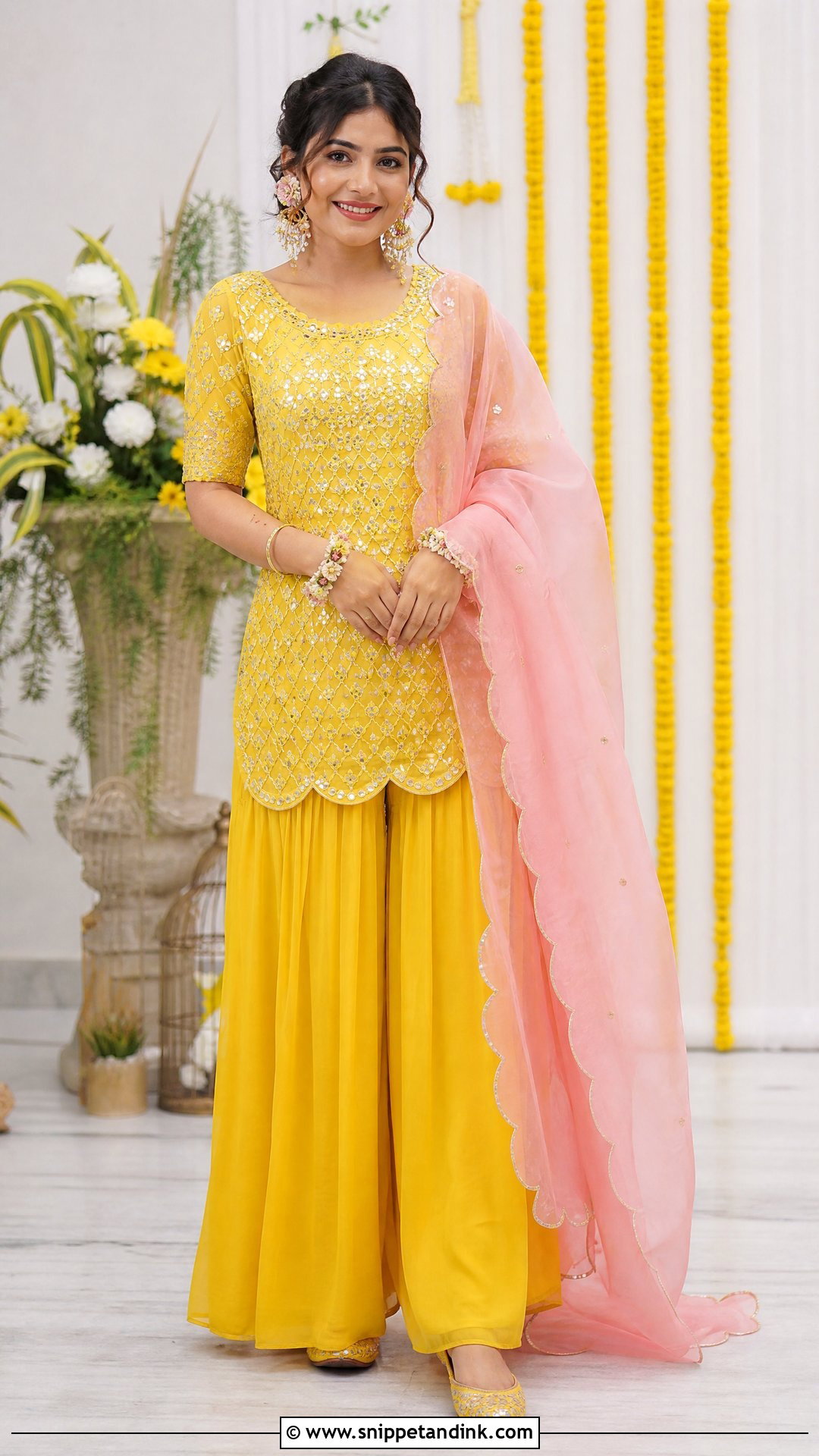
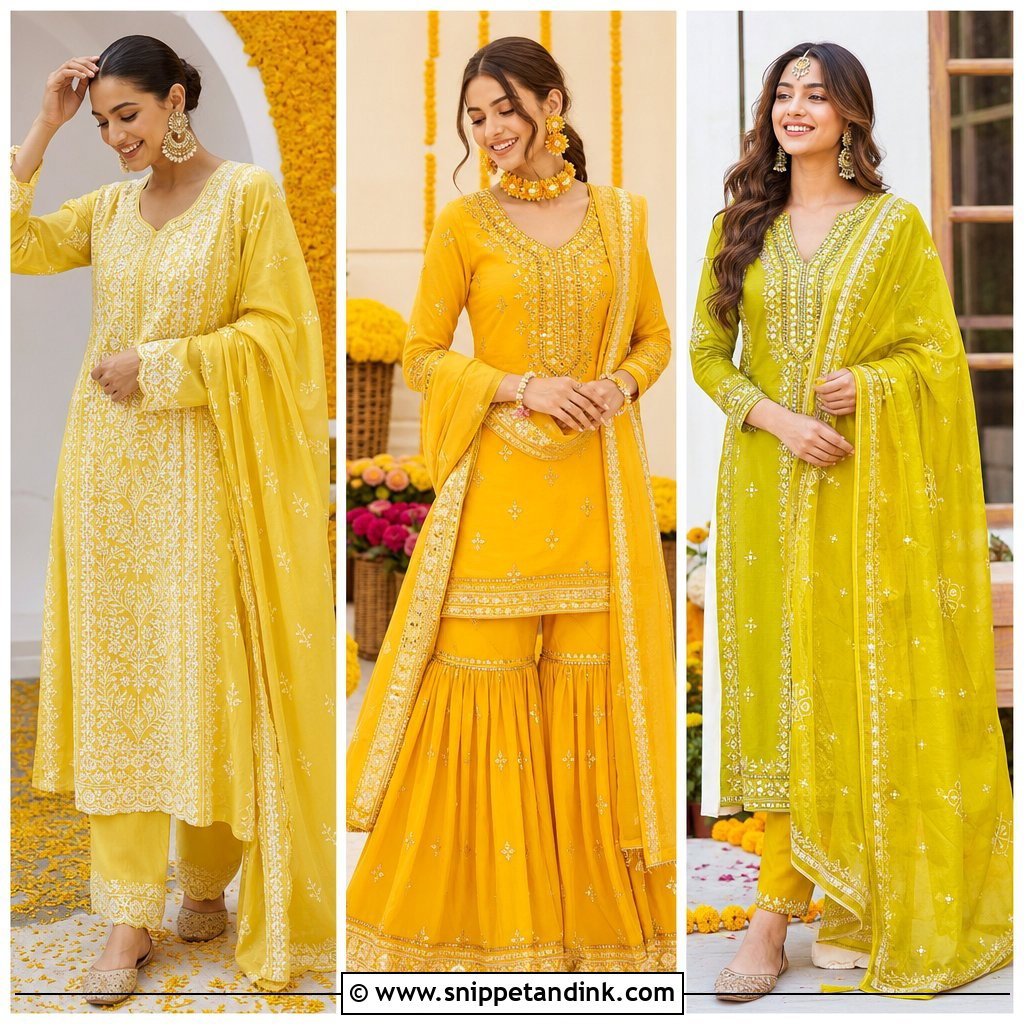
A short kurta and palazzo combination is the simplest outfit here and suits an intimate family Haldi. Pick a fitted yellow kurta with scalloped edges, light mirror work or small motifs, with high-waisted palazzos and a sheer dupatta in yellow, ivory or soft pink. Wide legs let you sit cross-legged comfortably. Medium floral chandbalis, slim bangles and cushioned juttis finish it, with a side-parted low ponytail. Avoid bell sleeves and very wide hems; paste collects in the folds of extra fabric and gets transferred to everyone who hugs you. The separates restyle easily afterwards.
13. Pink And Yellow Ombre Haldi Lehenga
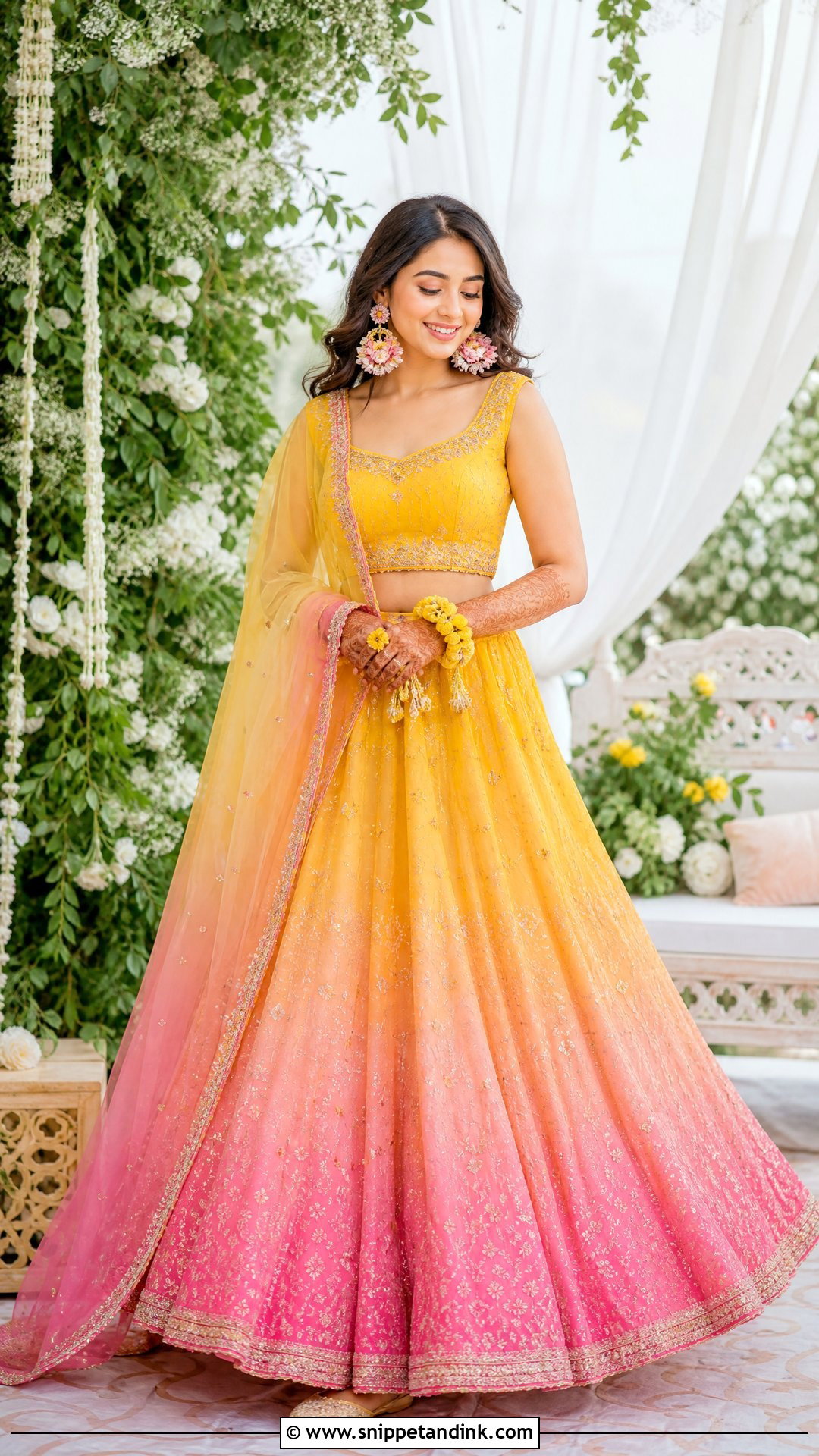
Ombré from pale yellow to pink brings more color to a ceremony that’s usually all yellow, and the gradient hides paste near the waist where most of it lands. Choose a lightweight skirt that deepens to bright pink at the hem, a simple yellow blouse and a sheer ombré dupatta over one shoulder. Mirror work, small sequins or a narrow gota border add sparkle without weight. Pink floral earrings, yellow flower bracelets and neutral gold juttis suit it, with soft curls or a flower-trimmed braid. Keep the flare moderate so you can sit and get up gracefully. Green foliage or white seating behind you keeps both colors clear in photos.
14. Green And Yellow Fusion Haldi Skirt
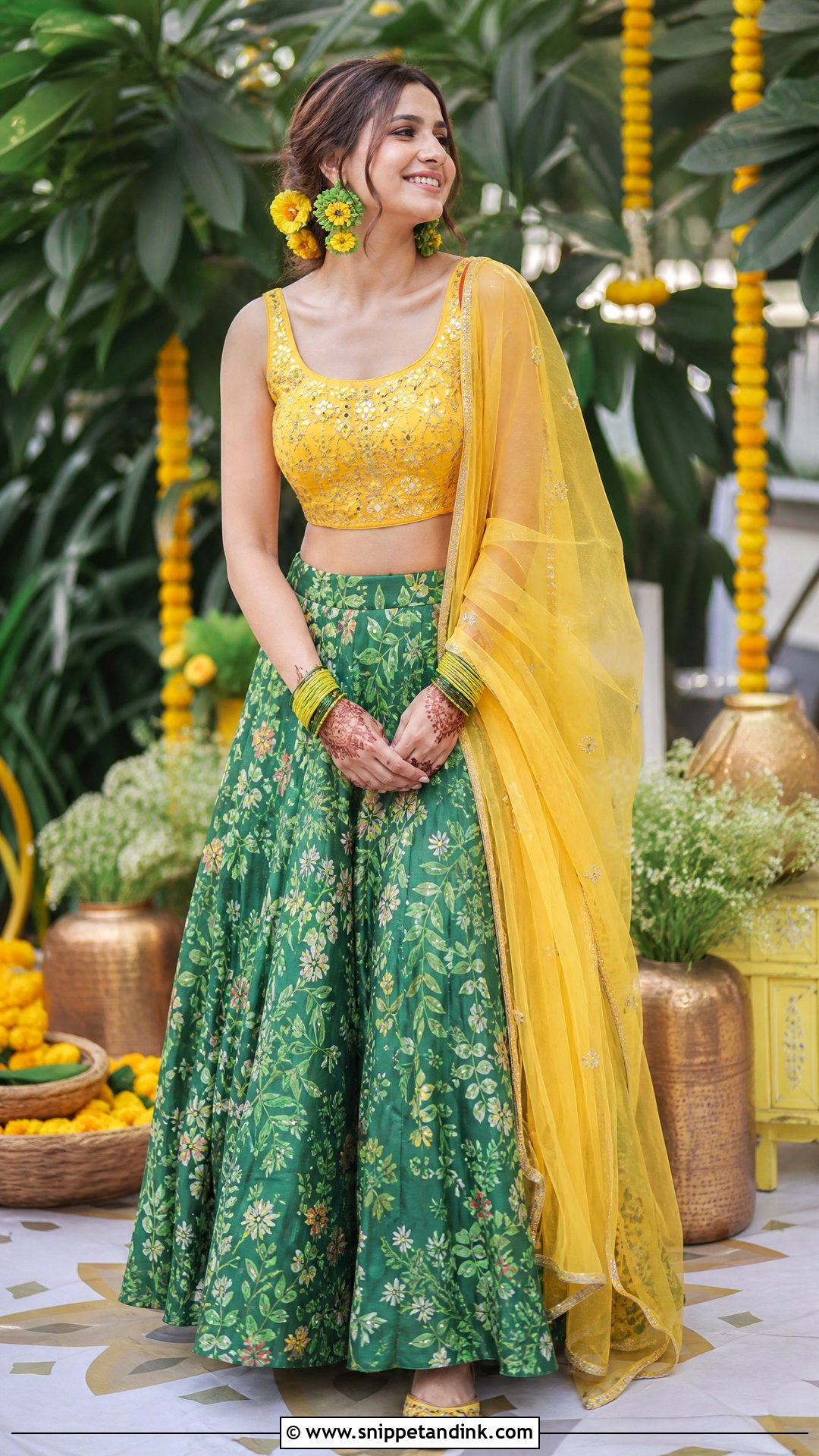
Green sets the bride apart when half the guests are in yellow. Pair a flowing green printed skirt with a yellow crop top in mirror or thread embroidery, then a light green-and-yellow dupatta, short cape or asymmetric drape. Floral earrings in both colors, green bangles and yellow embroidered juttis tie it together, with a textured braid and yellow flowers. Small botanical prints work better than dense embellishment outdoors, where heavy skirts get hot. Be aware that turmeric on green fabric can show as a muddy brown rather than yellow, so a darker green hides it better than mint or sage.

15. Orange Ruffle Saree Haldi Outfit
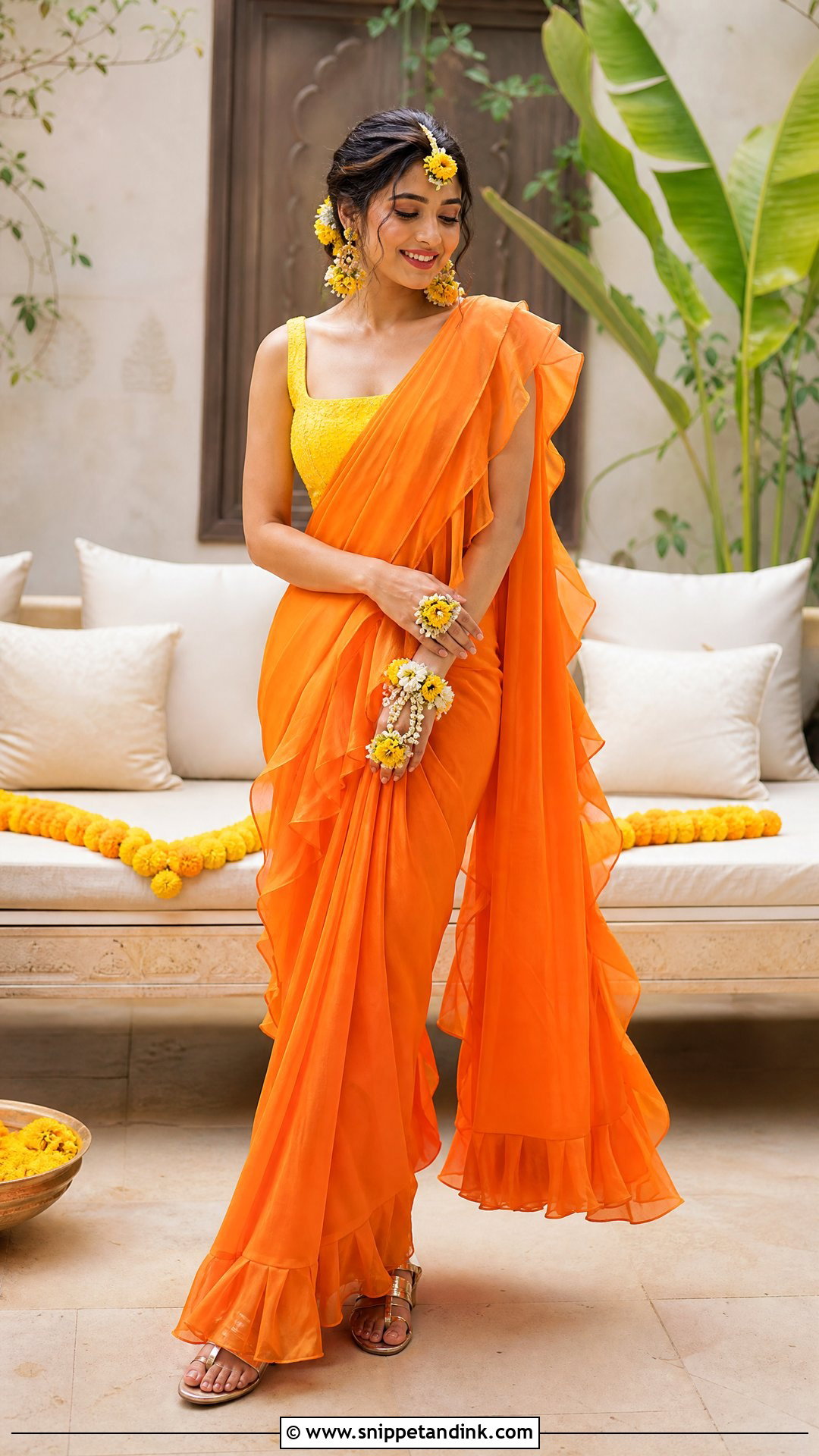
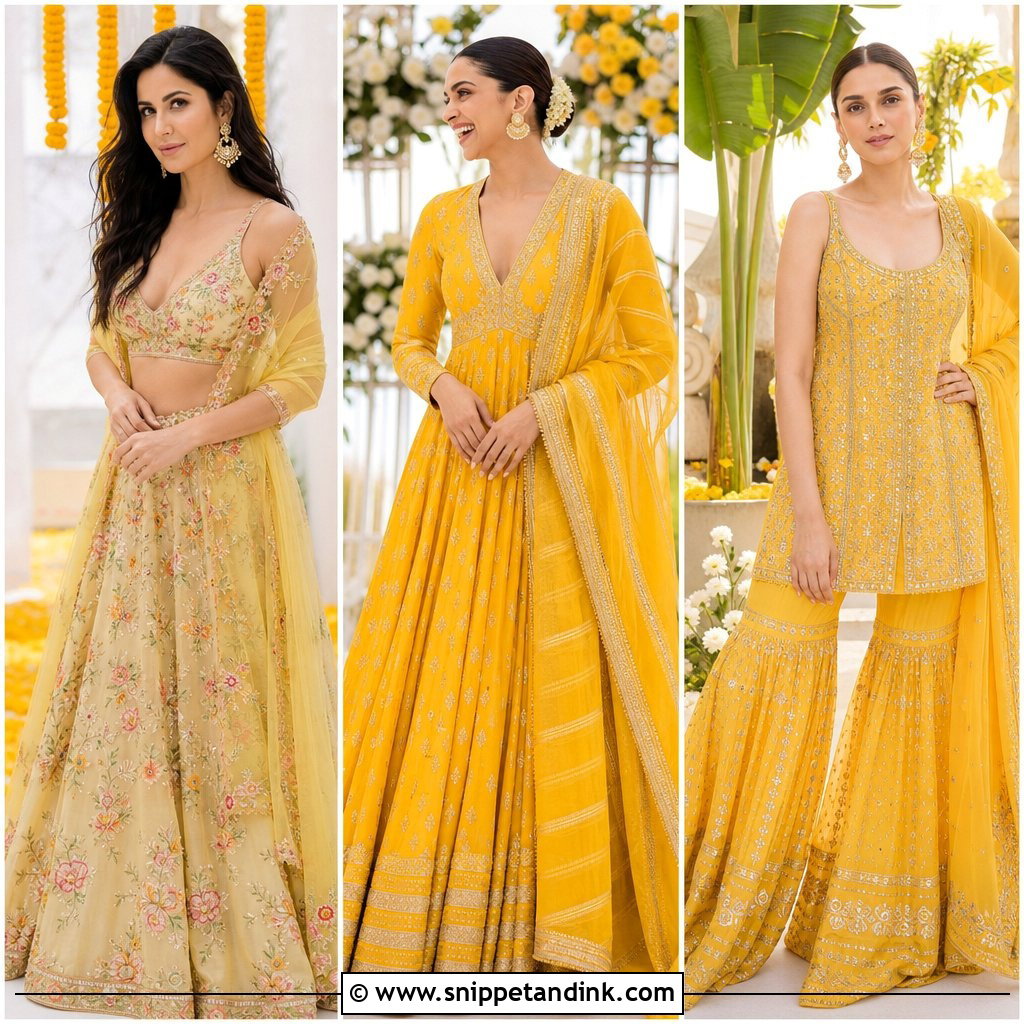
A vivid orange ruffle saree gives bold festive color, and orange hides turmeric almost as well as mustard. Pre-drape it with controlled ruffles along the pallu and hem, and pair it with a yellow or orange square-neck blouse with light mirror accents. Yellow floral earrings, hand flowers and metallic flat sandals complete it. Since the ruffles already give texture, skip the heavy necklace and belt, and wear a sleek bun or high ponytail. Ruffles trap paste in their folds, so keep the hem well above the ground, especially outdoors. It’s easier to manage than a hand-draped saree.
16. Yellow Chikankari Haldi Skirt Set
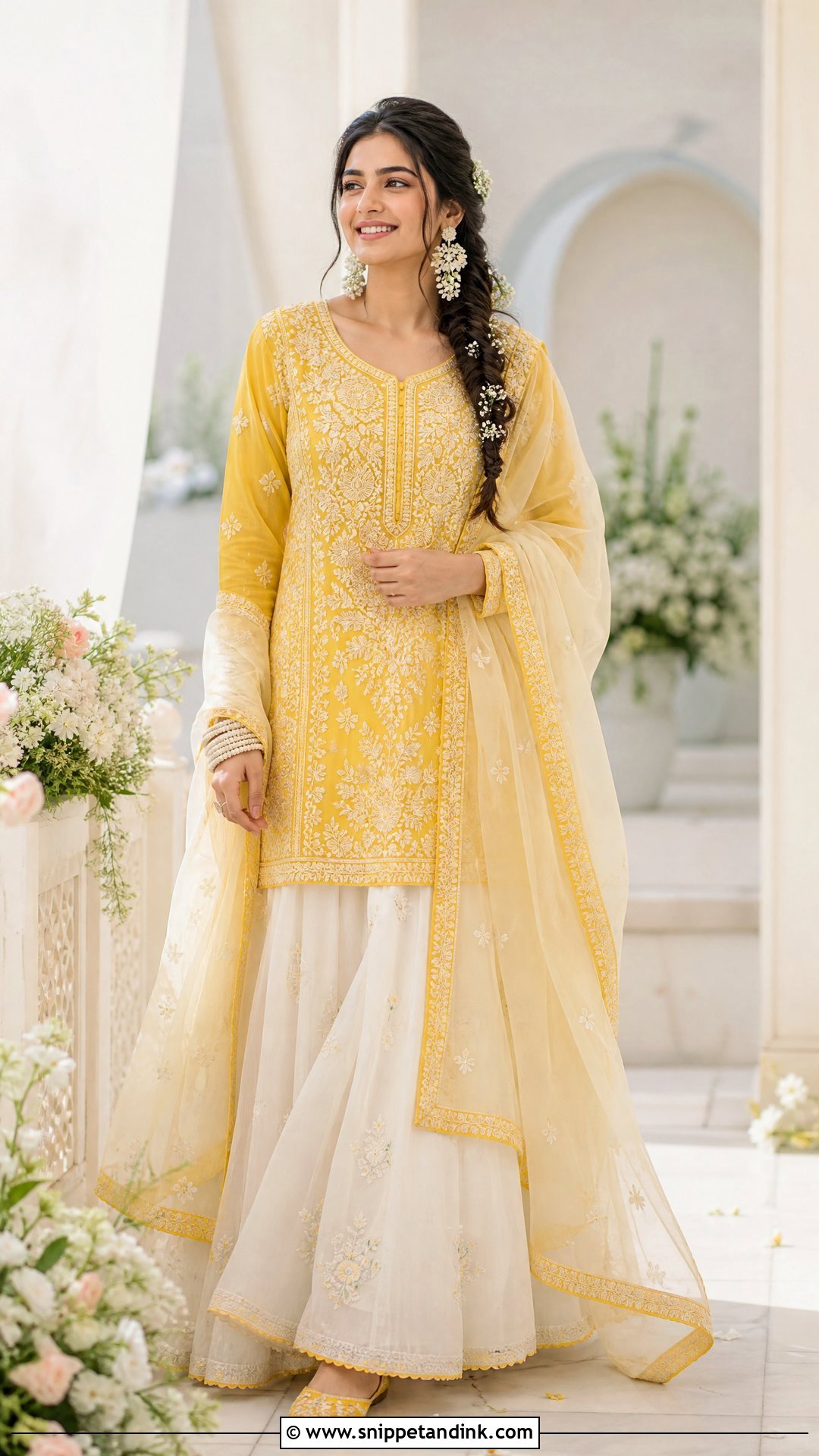
Chikankari is fine shadow-work embroidery from Lucknow, usually on light cotton or georgette, and it breathes better than almost any other festive work. Wear a short yellow Chikankari kurta over a flowing ivory or yellow skirt, with a light organza dupatta pinned at one shoulder and the opposite wrist. Pearl-and-flower earrings, ivory bangles and yellow juttis keep it soft, along with a loose braid and tiny white flowers. Thin chikan fabric can go see-through in direct morning sun, so ask for a lining. It suits a morning ceremony or a bride who dislikes sequins, and each piece works on its own later.
17. Yellow Kaftan Haldi Outfit
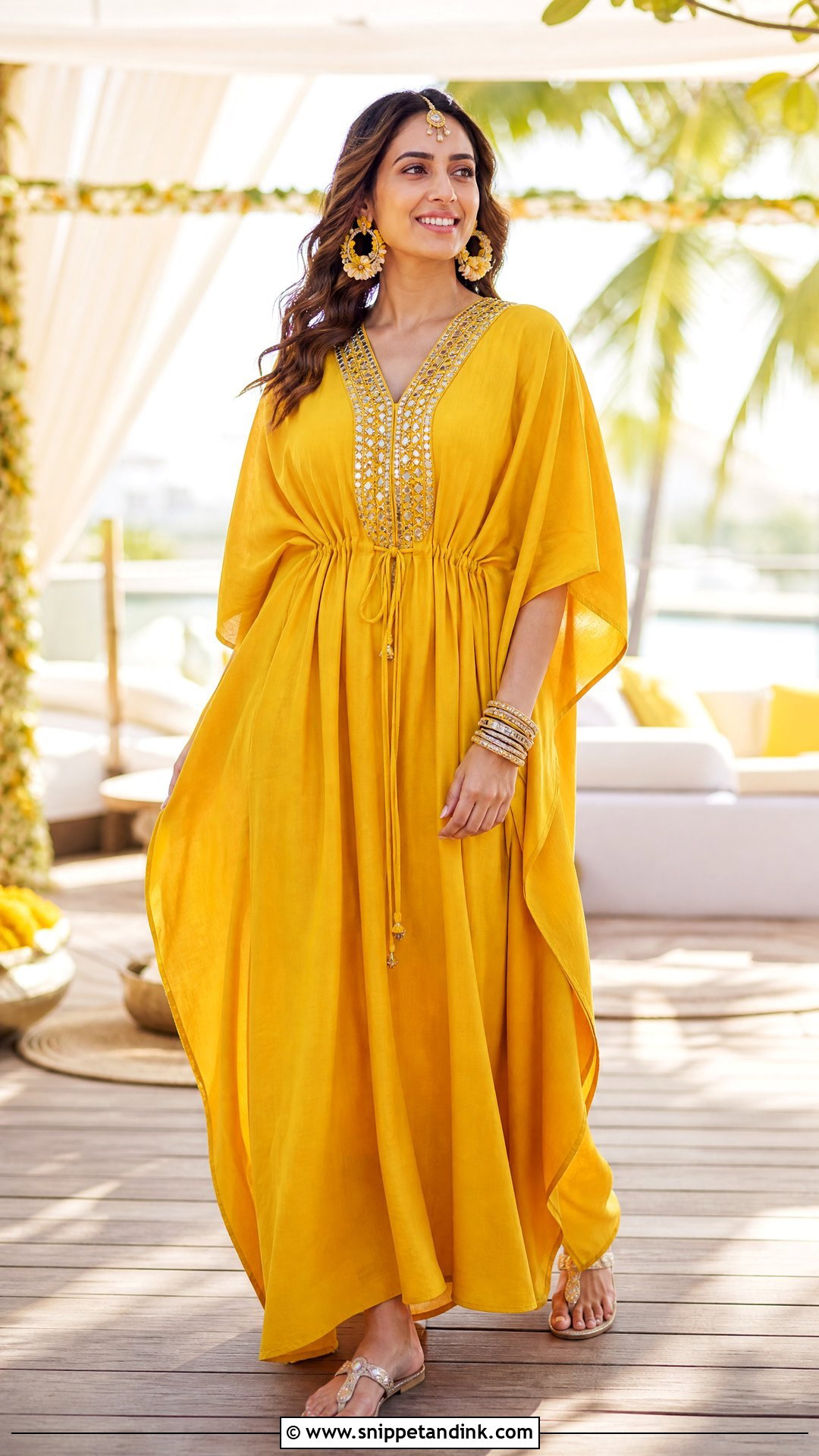
A kaftan is the most comfortable outfit here, and that counts if your Haldi is long or hot. Choose knee or ankle length with a drawstring waist, embroidered neckline and modest side slits, over narrow pants if you want more coverage. Floral hoops, stacked bangles, a delicate maang tikka and embellished flat sandals finish it. A high braided ponytail keeps hair out of the paste. Soft crepe, cotton-silk or georgette drapes without clinging. Check the neckline before you buy; deep kaftan necks gape when you lean forward for the paste, which can be awkward in front of relatives and cameras. Beach, resort and home ceremonies suit it.
18. Yellow Silk Saree Haldi Outfit
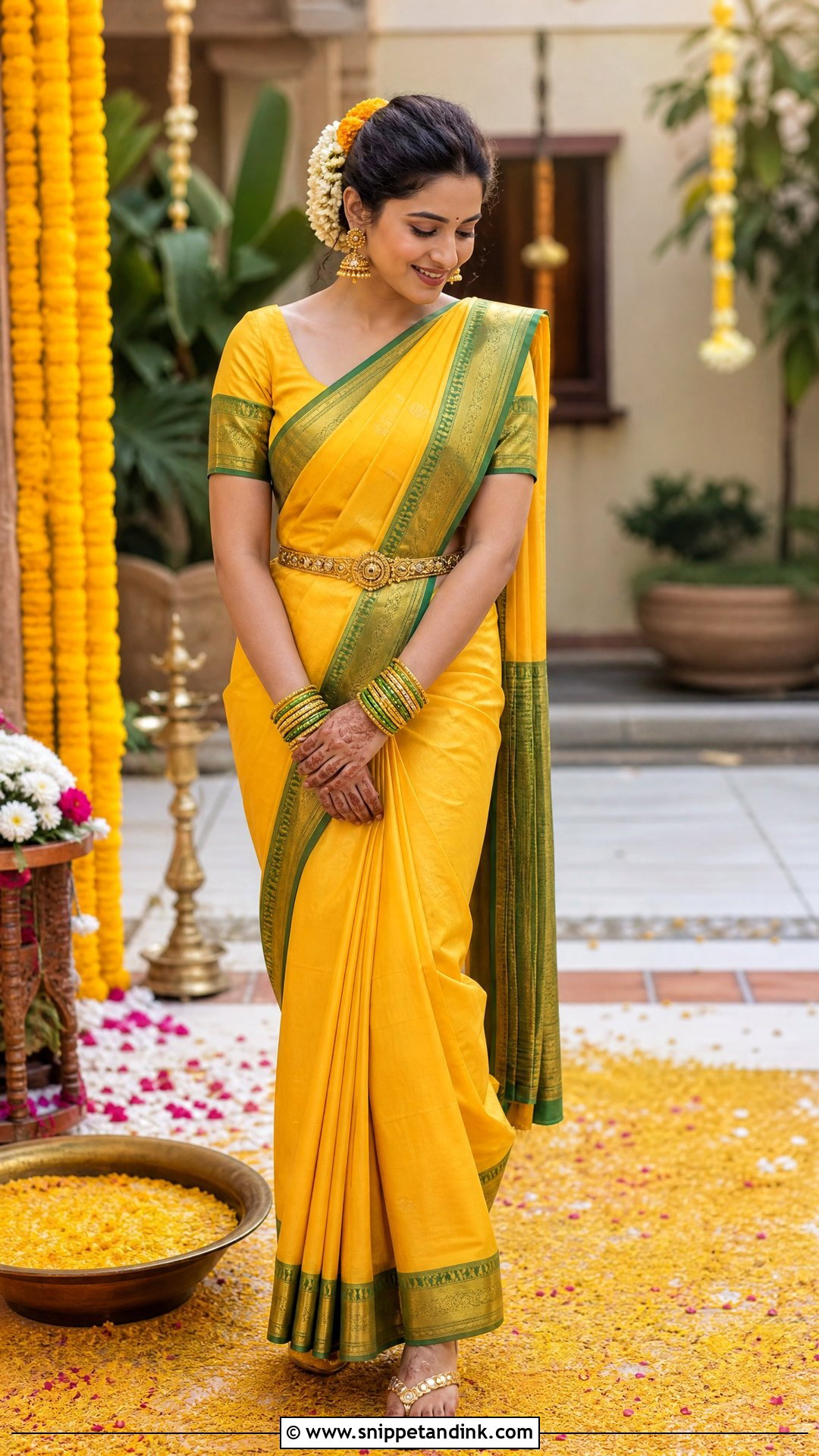
A traditional silk saree makes even a small Haldi feel ceremonial. Choose yellow with a green, pink or red border, and a short-sleeve blouse in the border color. Temple-style earrings, glass bangles, a small bindi and a neat waist belt add classic detail, and gold juttis or flats stay hidden under the drape. Wrap a low bun in jasmine or marigolds. Keep the pallu short and pinned so it stays out of the bowl of paste. If it’s a family saree, think carefully before wearing it into the ritual itself. Pure silk can hold a turmeric stain permanently, and I’d rather a bride wear it for the first photographs than lose it.
19. Jacket Lehenga Haldi Outfit
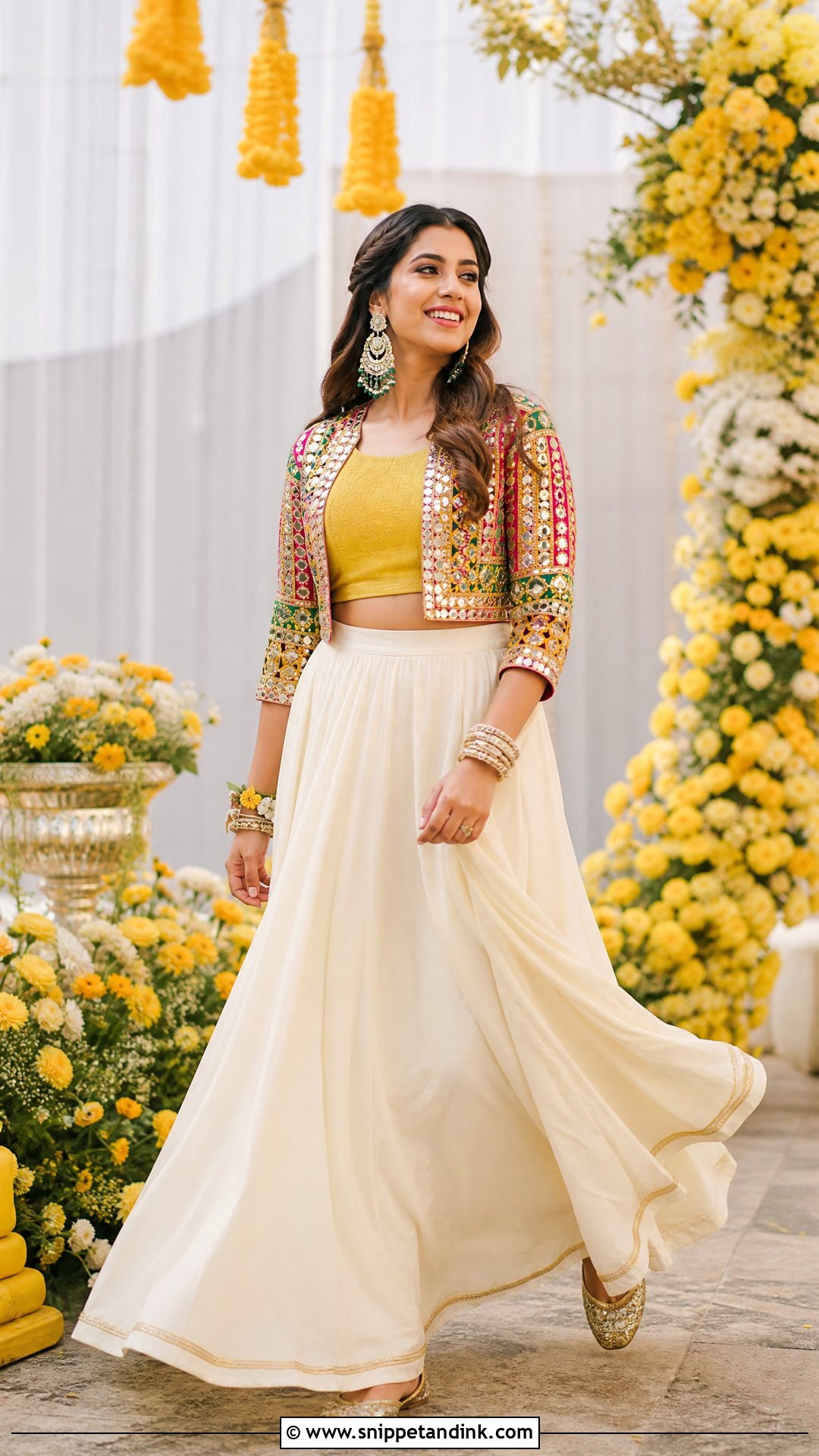
A cropped jacket adds structure to a light lehenga and replaces the dupatta entirely, so there’s no loose fabric to manage. Start with a plain yellow or ivory skirt and a supportive blouse, then layer an embroidered jacket in waist length for definition or a longer open style for coverage. Mirror work, colorful thread and small tassels make it festive. Add statement earrings, stacked bangles and metallic juttis. The jacket can also come off once the paste starts and go back on for photos afterwards, which keeps the best piece clean. Later it works over a saree, a plain dress or palazzos.


20. Upcycled Heirloom Haldi Outfit
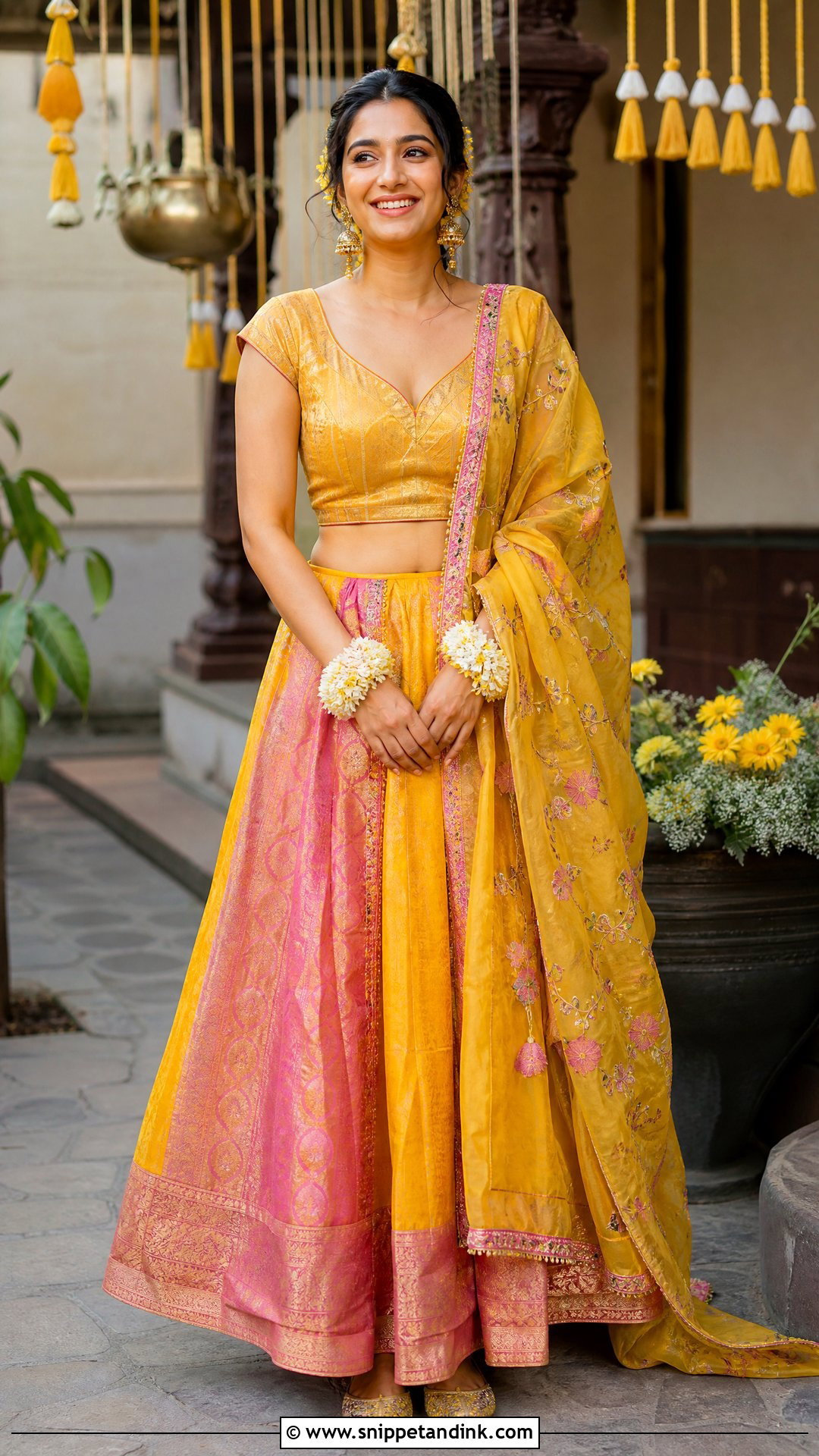
An heirloom textile can become a Haldi outfit nobody else will ever wear. A family saree or old dupatta can be cut into a cropped blouse, a paneled skirt and a light shoulder drape. Yellow, orange, pink and green fabrics work naturally; ivory can be updated with marigold embroidery or colorful borders. Inherited earrings, fresh flower bracelets and plain gold juttis complete it, with a low bun or traditional braid. Keep the cut simple so the original weave or print shows. Old silk can be brittle along fold lines, so ask an experienced tailor to check the fabric’s strength before cutting, and use the weakest sections for lining rather than the bodice.
Turmeric on Skin, Hair and Jewelry
The outfit isn’t the only thing in the line of fire. A little preparation stops the Haldi from leaving marks you’ll still be dealing with on the wedding day.
Before the paste goes on
- Rub a little coconut or almond oil along the hairline, around the nails and on the nail beds. It makes turmeric much easier to wipe off skin.
- Skip nail polish in pale shades, or plan your manicure for after the Haldi. Turmeric tints light polish and cuticles yellow.
- Wear floral or imitation jewelry. Pearls, kundan settings and anything porous can discolor, and paste works its way into every crevice of fine metalwork.
Washing it out afterwards
Scrape off excess paste once it’s dry, then rinse the fabric from the back in cold water. Hot water sets the stain. A little liquid dish soap worked gently into the mark helps cottons and synthetics, and drying the garment in direct sunlight fades what’s left, since curcumin breaks down in strong light. Send silk, embroidered or heirloom pieces to a dry cleaner and tell them it’s turmeric; don’t use bleach on them at home.
A Little Turmeric on the Sleeve Is Part of It
A good Haldi outfit is the one you can relax in while people cover you in paste. Heritage sarees, modern jumpsuits, lehengas, kaftans and separates all work, so start from the ritual, the weather, the floor you’ll sit on and the décor, then choose. Secure draping, washable fabric, comfortable footwear and light accessories make the morning far easier. Yellow is traditional, but ivory, orange, pink, green and mixed prints look just as joyful. Pick the one that still feels like you with turmeric on the sleeve.
You'll Like These Ideas:





Leave a Reply