
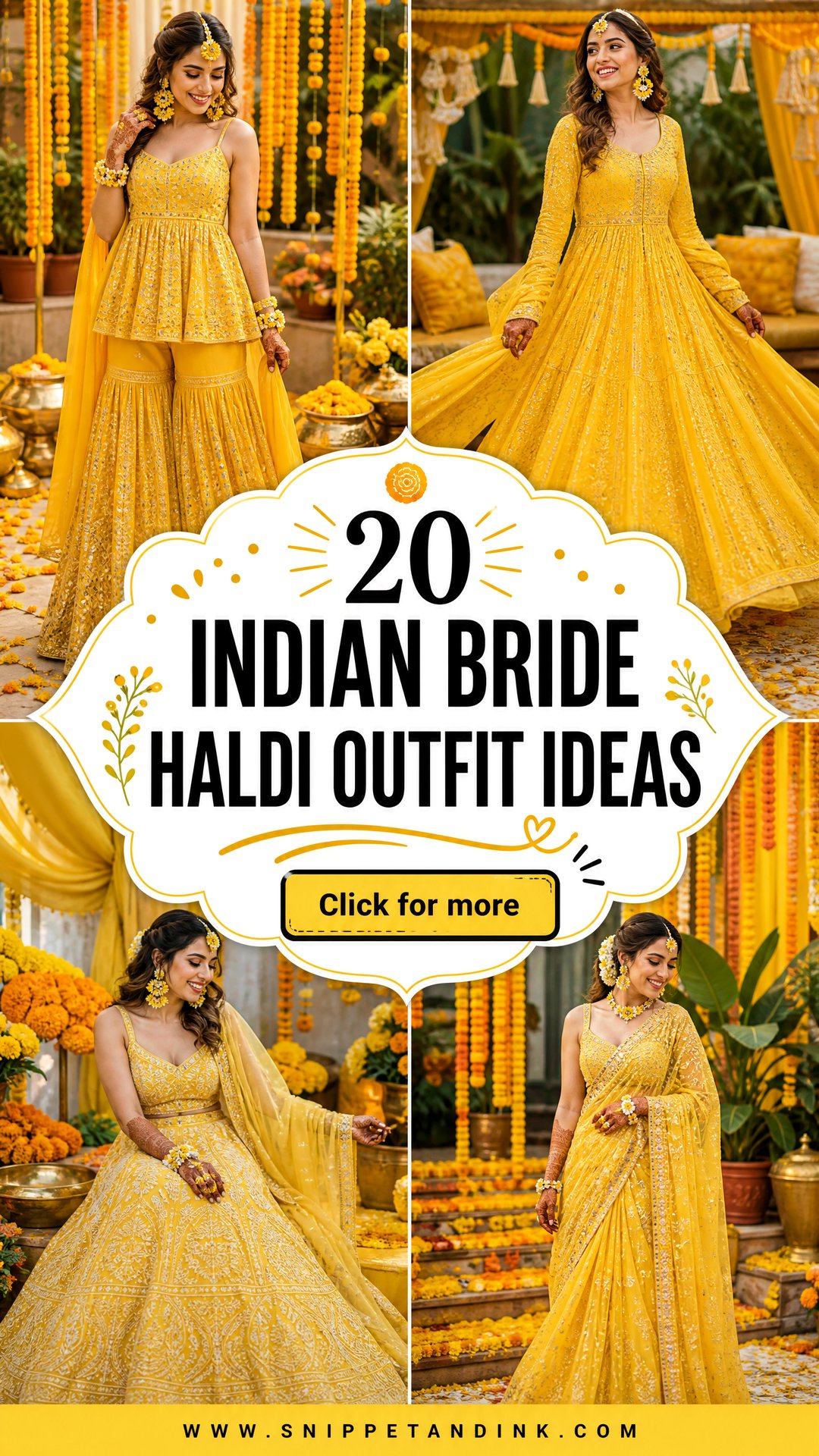
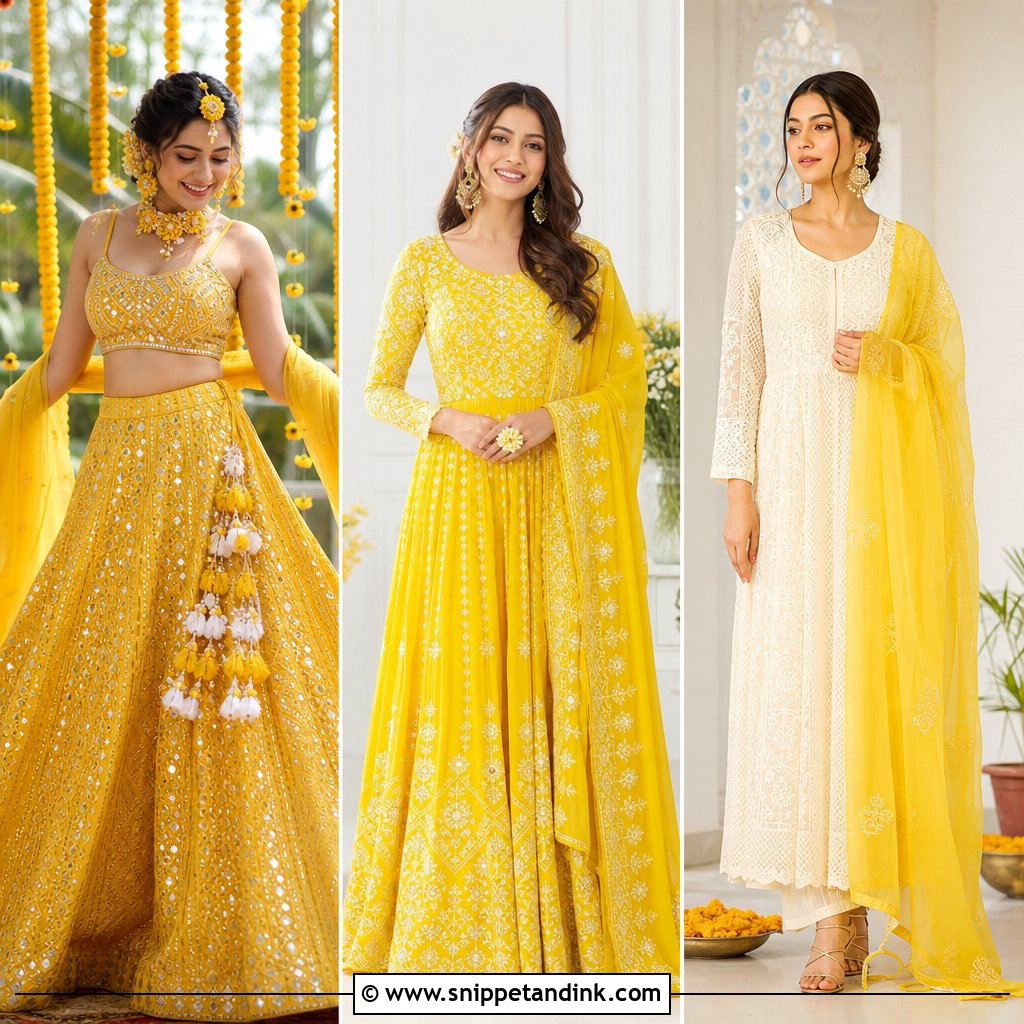
A Haldi ceremony is the one wedding event where I tell a bride to expect her outfit to get dirty. Turmeric paste, oil and water will land on the blouse, the hem and usually the dupatta, so I dress Haldi brides in light fabrics, drapes that stay put when relatives lean in, and jewelry that won’t snag. Yellow is the obvious starting point, but marigold, ivory, lime and mint all read as Haldi once flowers are added. Below are twenty outfits I’d happily put a bride in, from mirror-work lehengas to pre-draped sarees and co-ords, each with the footwear, hair and makeup I would pair with it.
Which Fabrics Forgive Turmeric and Which Ones Don’t
Before a bride falls for a color, I ask her one question: is this outfit allowed to be ruined? Haldi paste is turmeric mixed with gram flour and usually oil or rosewater, and the oil is what carries the yellow deep into fibers. Some outfits are bought to be worn once and accepted as stained. Others are meant to be rewashed and worn to a friend’s sangeet next year. Your answer decides the fabric.
- Cotton and cotton silk: the most forgiving. They tolerate cold water, gentle detergent and a few hours of sun, which fades turmeric noticeably on light cotton.
- Georgette and chiffon: light and quick to dry, and printed versions hide marks well. Plain pale georgette shows every smear.
- Organza: looks crisp, but paste sits on the surface and then spreads when someone tries to rub it off. Choose a printed or darker organza if you want this fabric.
- Pure silk: water spots and oil stains both show. Treat a silk Haldi outfit as dry-clean only and accept some risk.
- Heavy embroidery and sequins: paste lodges under the work and is hard to remove without damaging the threads.
When a bride wants to keep her outfit, I steer her toward print or bandhani, plus a dupatta she doesn’t mind sacrificing. That way the expensive piece takes the least paste.
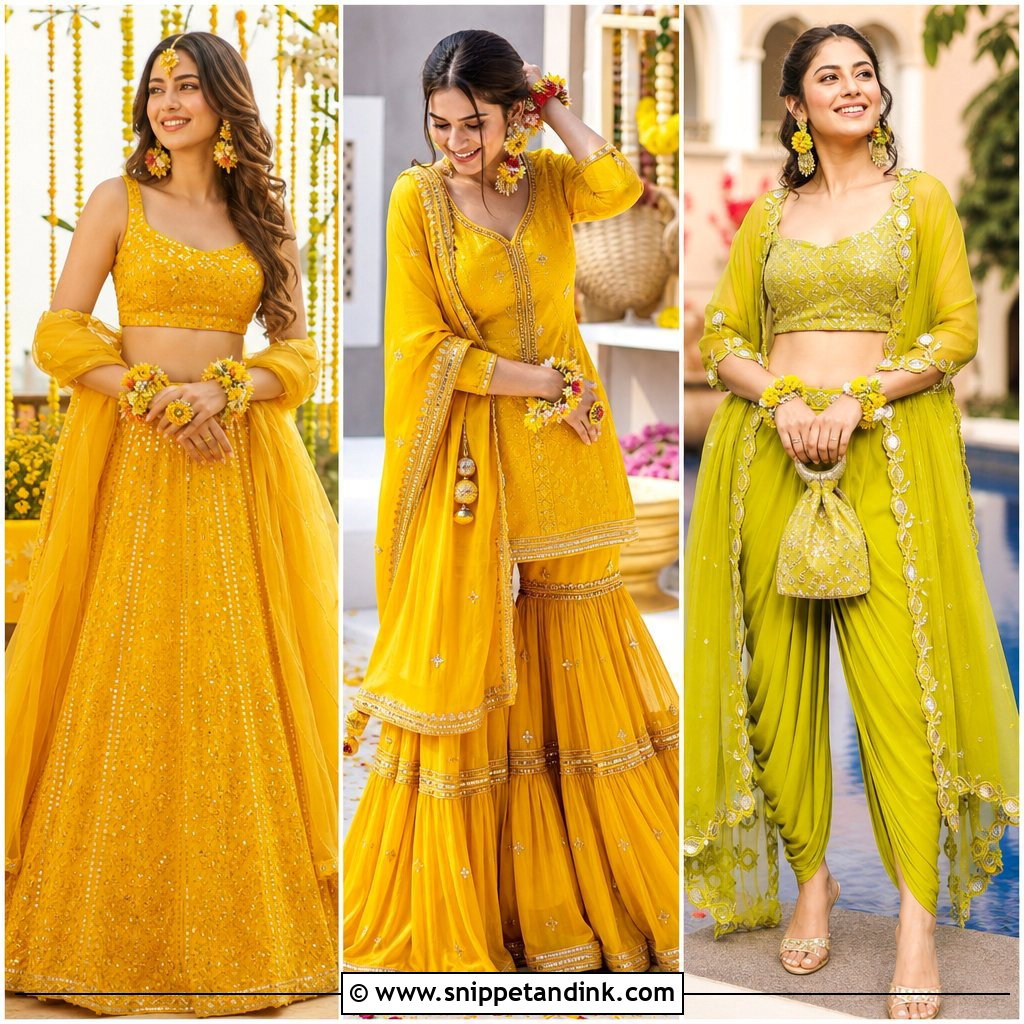
1. Yellow Mirror Work Haldi Lehenga
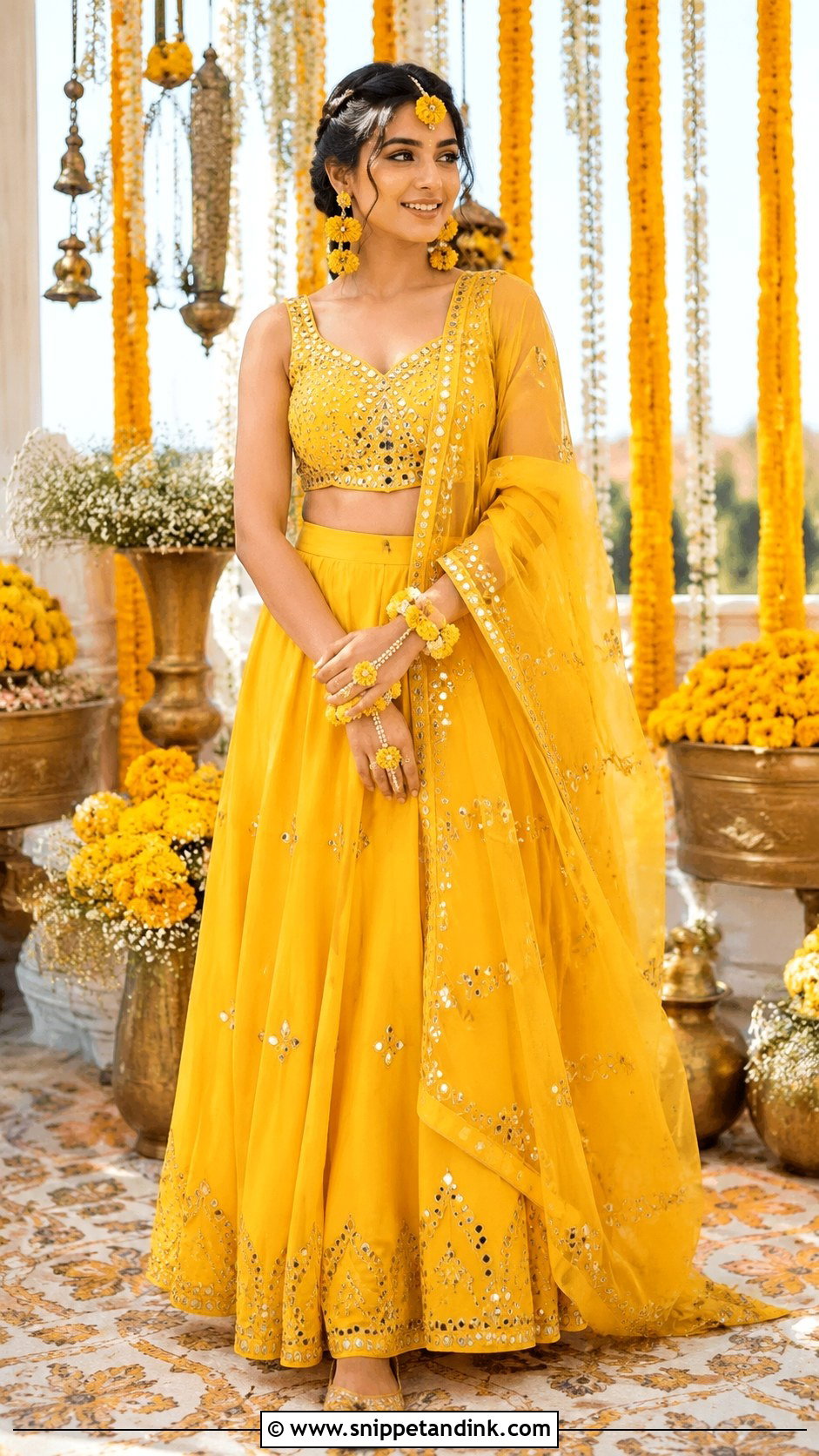
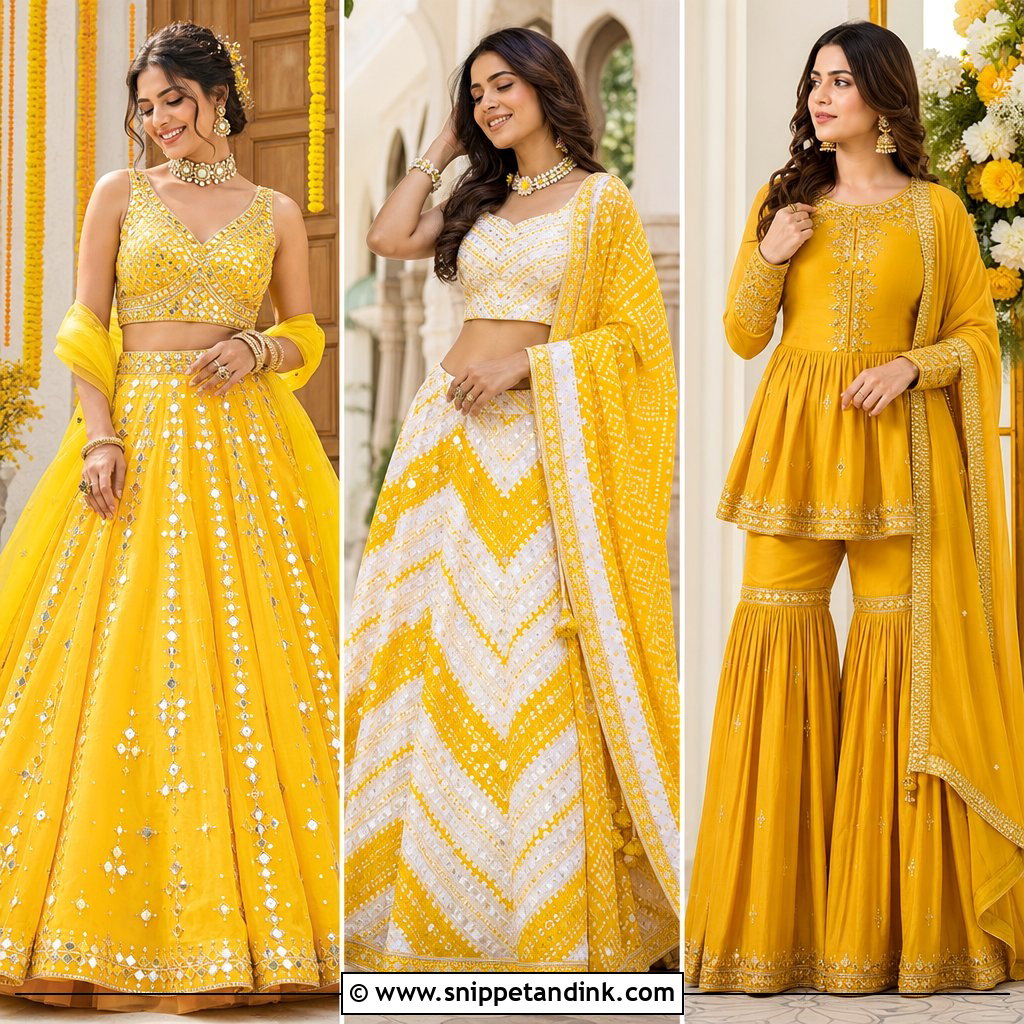
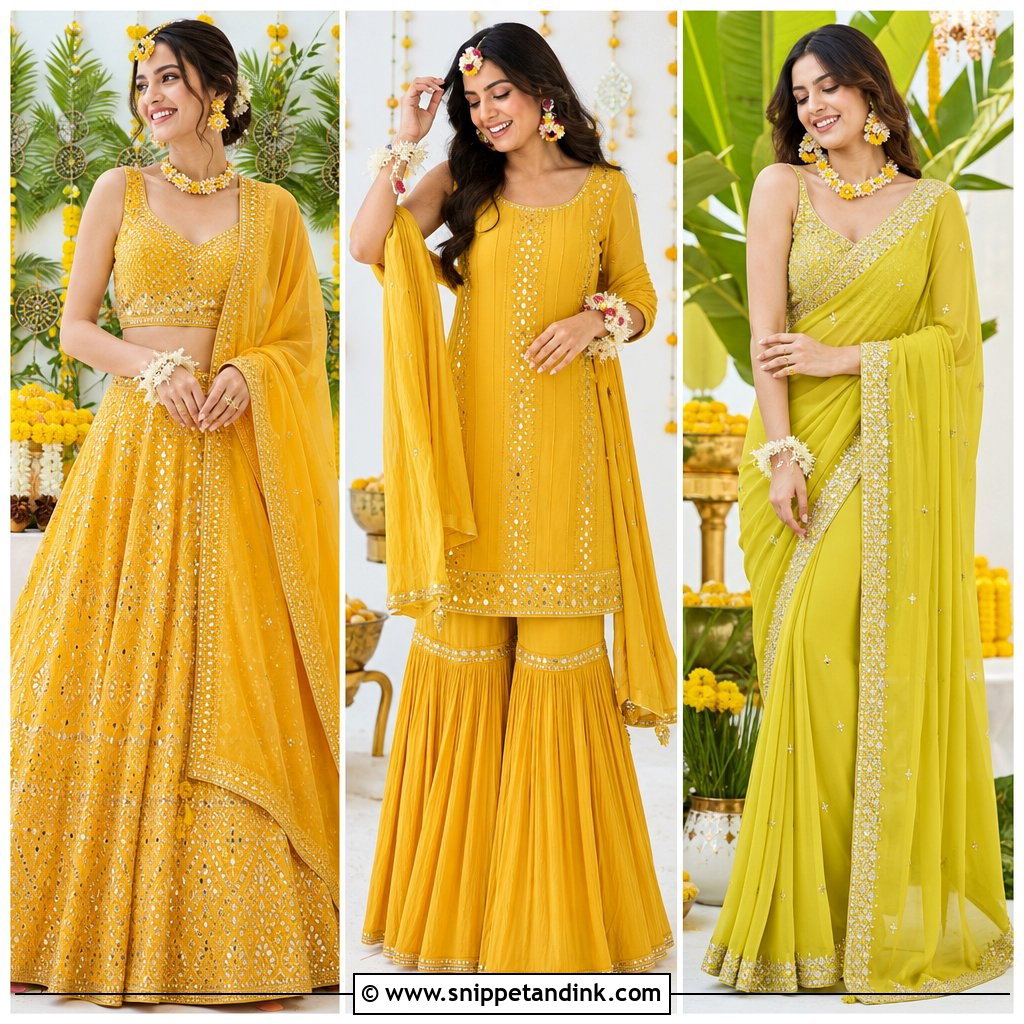
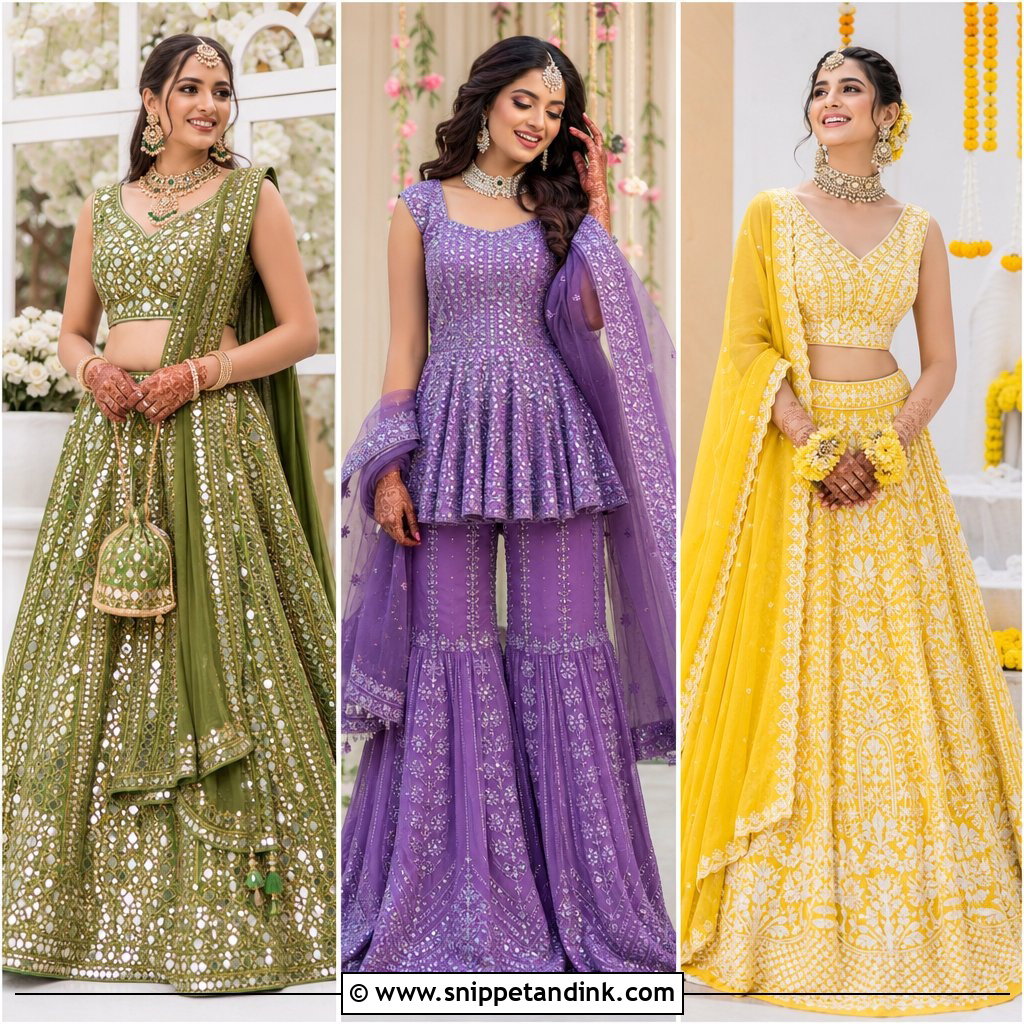
Mirror work gives you sparkle without the weight of zardozi, which matters when you will be sitting cross-legged on a low stool for an hour. I look for a georgette skirt with small mirrors and threadwork, because large mirrors catch on a dupatta and pull threads. Pair it with a fitted sleeveless blouse and a soft net dupatta over one shoulder so both hands stay free. Marigold earrings, a floral maang tikka and haath phools keep the accessories festive and light. Cushioned gold juttis, a braided ponytail or low bun so hair stays out of the paste, and fresh makeup with waterproof mascara and a coral-pink lip finish it.
2. Floral Print Haldi Lehenga
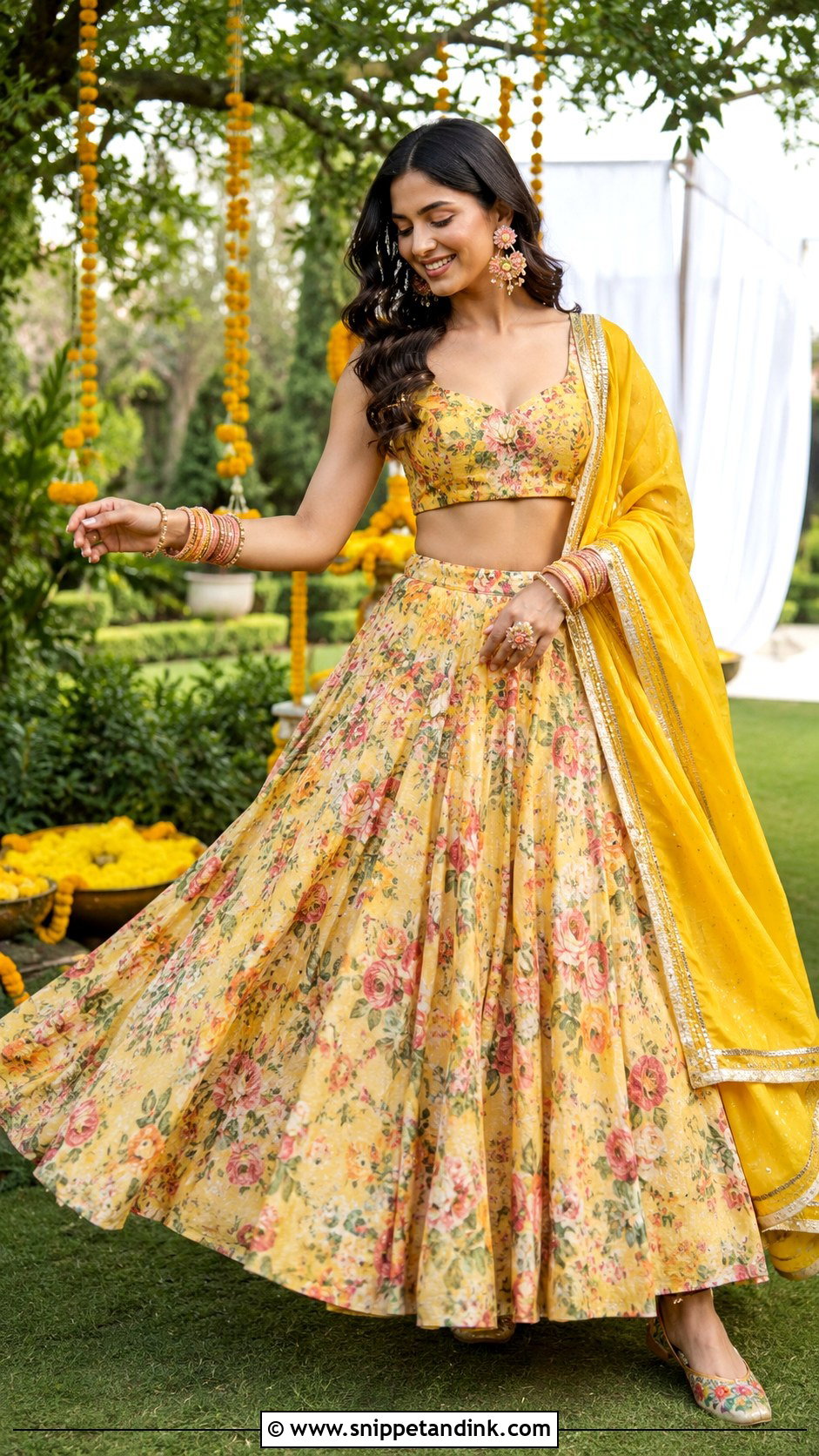
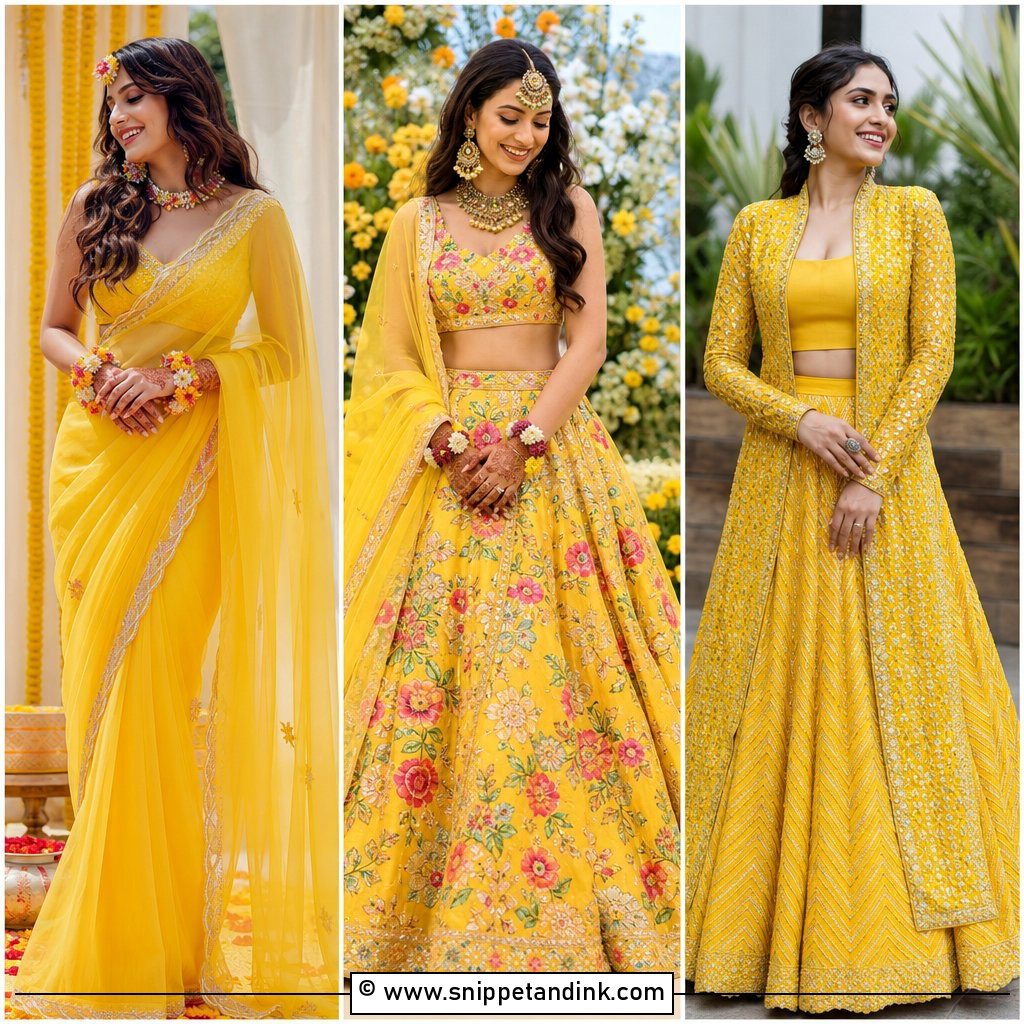
For a garden celebration, a floral print Haldi lehenga reads fresh against real greenery. Choose a yellow organza or cotton-silk skirt with pink, orange and green botanicals, then keep the crop blouse plain; two prints together turn into visual noise in group photos. A solid yellow dupatta with a narrow gota border gives the eye somewhere to rest. One honest warning from fittings: printed organza shows a turmeric smear far less than plain organza does, which is a quiet advantage of print. Rose earrings, stacked bangles and embroidered juttis complete it. I prefer half-up hair here; fully loose waves end up in the paste.
3. Yellow Organza Saree Haldi Outfit
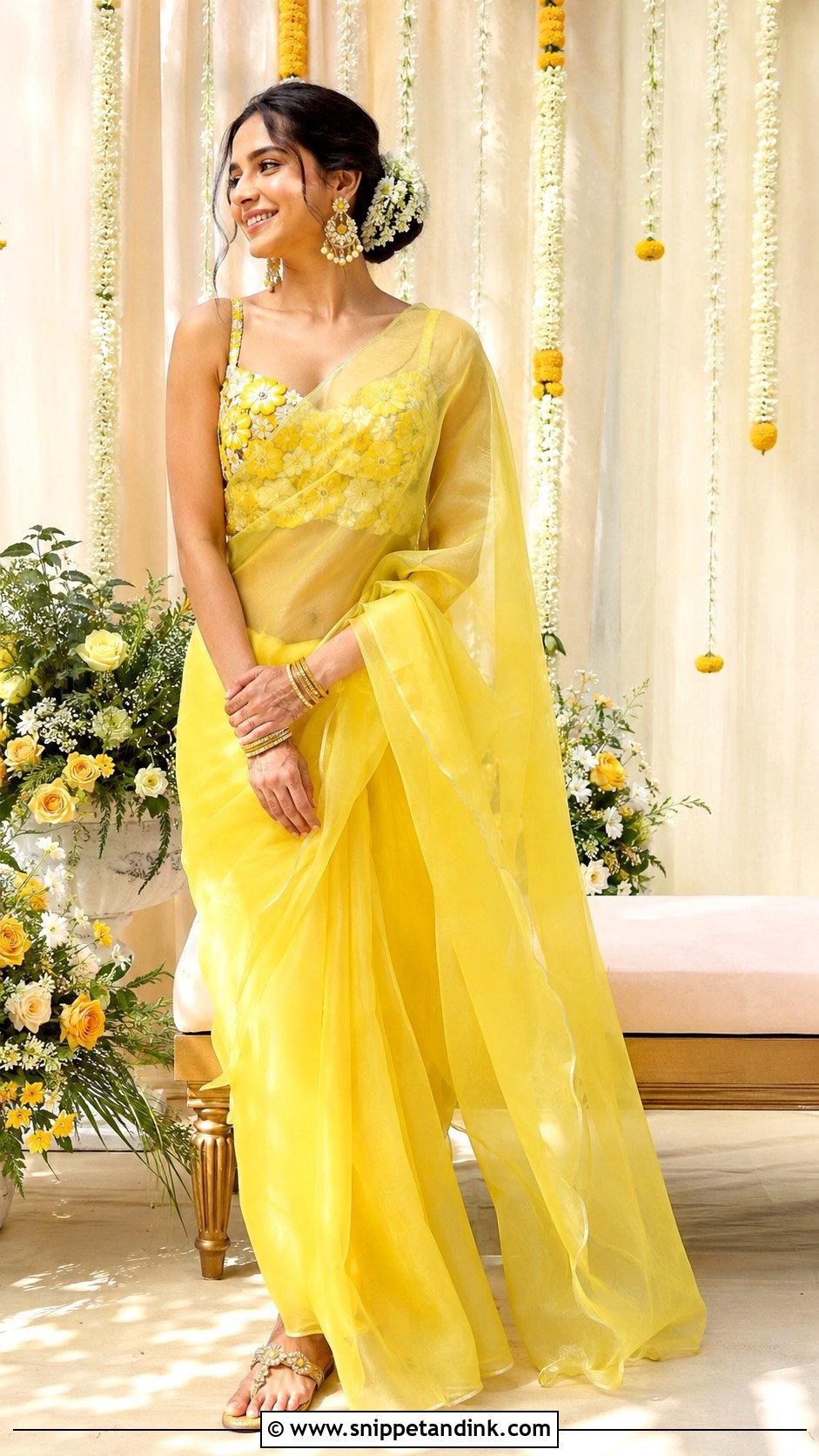
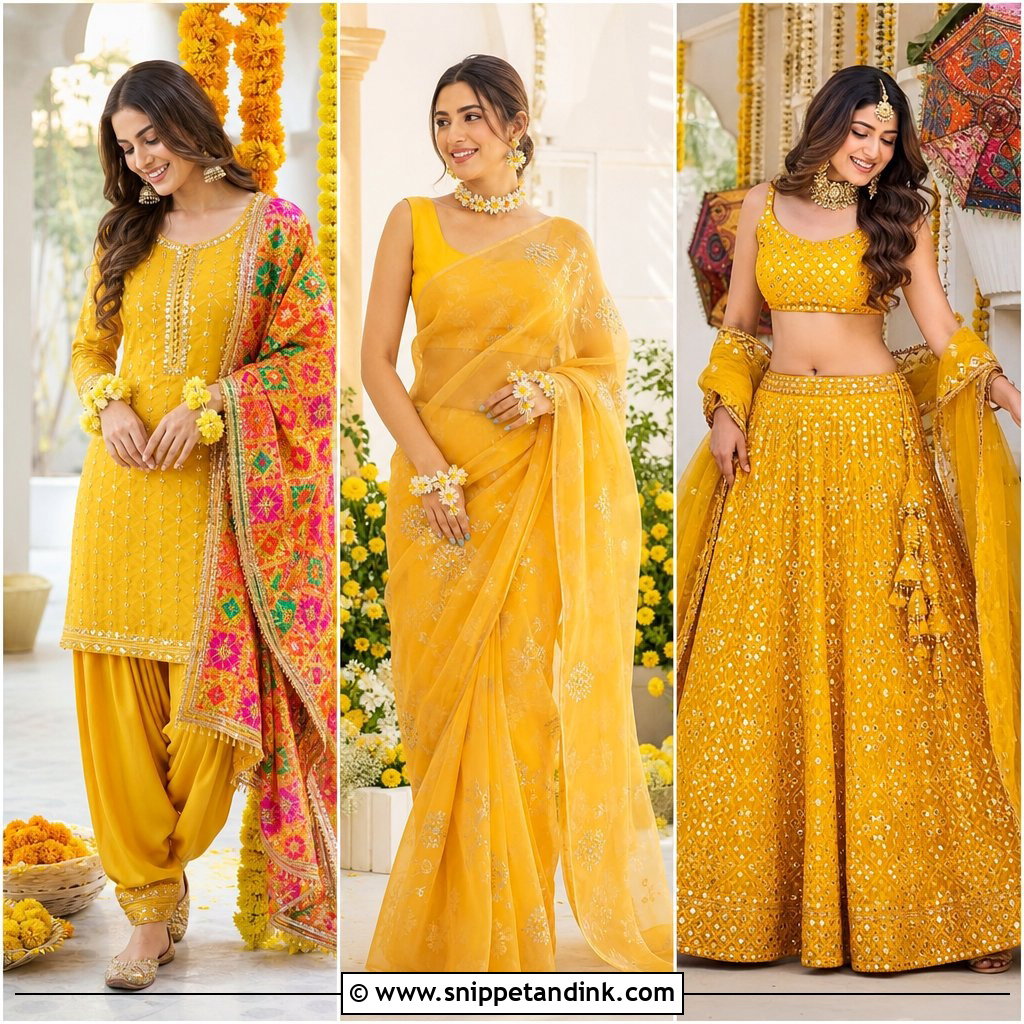
Organza keeps a yellow saree crisp and see-through at the edges, so it never looks heavy in daylight. The trade-off is that organza is slippery and springy, so pleats drift unless they are pinned at the waist and the pallu is fixed firmly at the shoulder. I’d choose a lemon or marigold saree with a fine embroidered border and a structured blouse, either a floral print for interest or plain sleeveless for a cleaner line. Floral chandbalis, a small maang tikka and slim gold bangles are enough; a heavy necklace fights the sheer fabric. Embellished flats, a low bun with fresh flowers, dewy skin and a pink-nude lip finish it.
4. White And Yellow Floral Saree Haldi Outfit
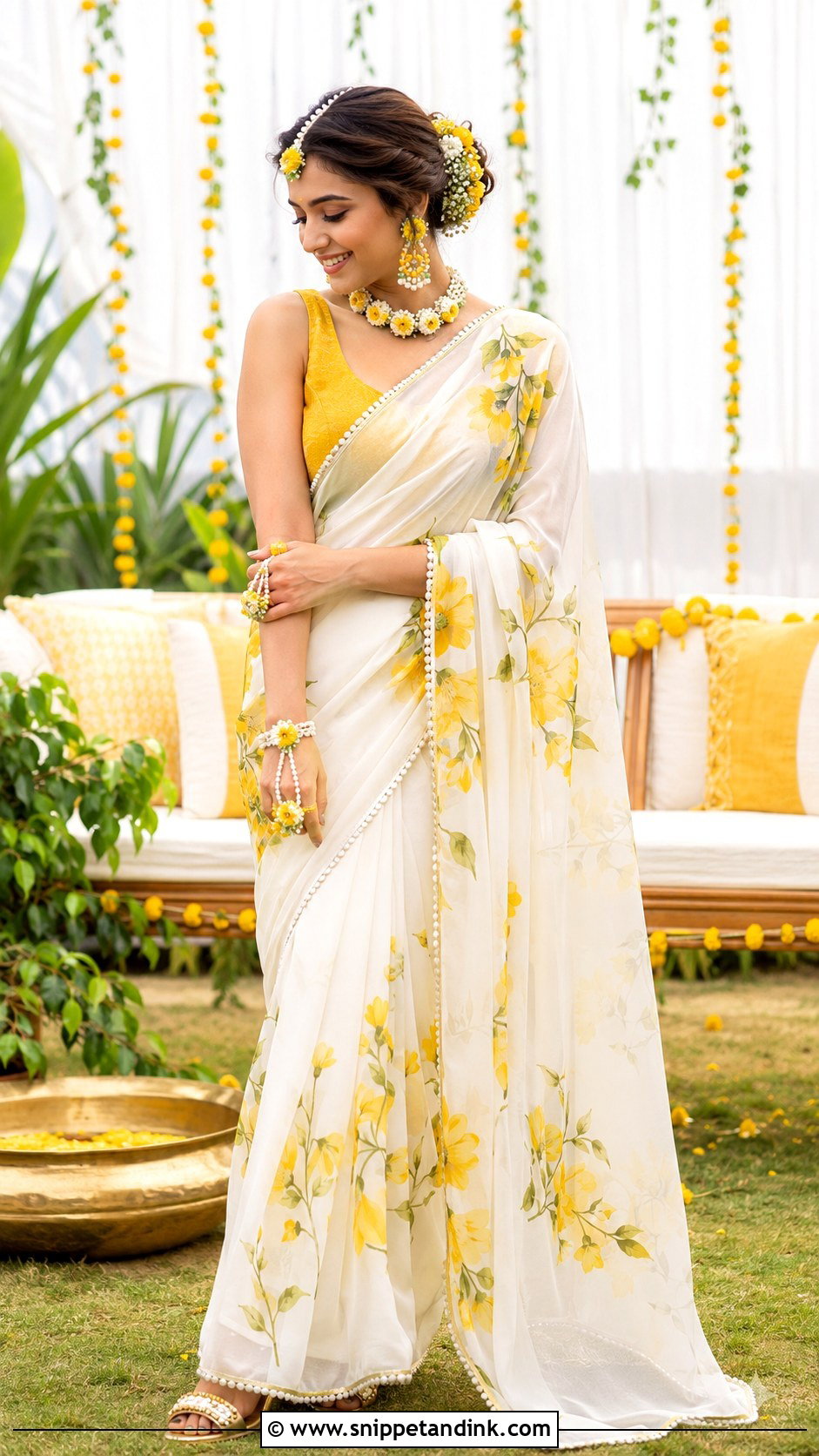
Ivory is the bravest base for Haldi, because every drop of paste shows. I still love it, as long as the bride knows that and plans a quick rinse straight after. Choose a white chiffon or organza saree with yellow floral print, hand-painted blossoms or soft embroidered flowers, and a yellow blouse to tie it to the ceremony. Short or no sleeves keep a daytime event comfortable. Jasmine-and-marigold jewelry, white or gold flat sandals and a relaxed bun with yellow flowers to show the neckline suit it. For makeup I keep the liner brown and the lip a warm rose that sits well against both ivory and yellow.
5. Mustard Silk Saree Haldi Outfit
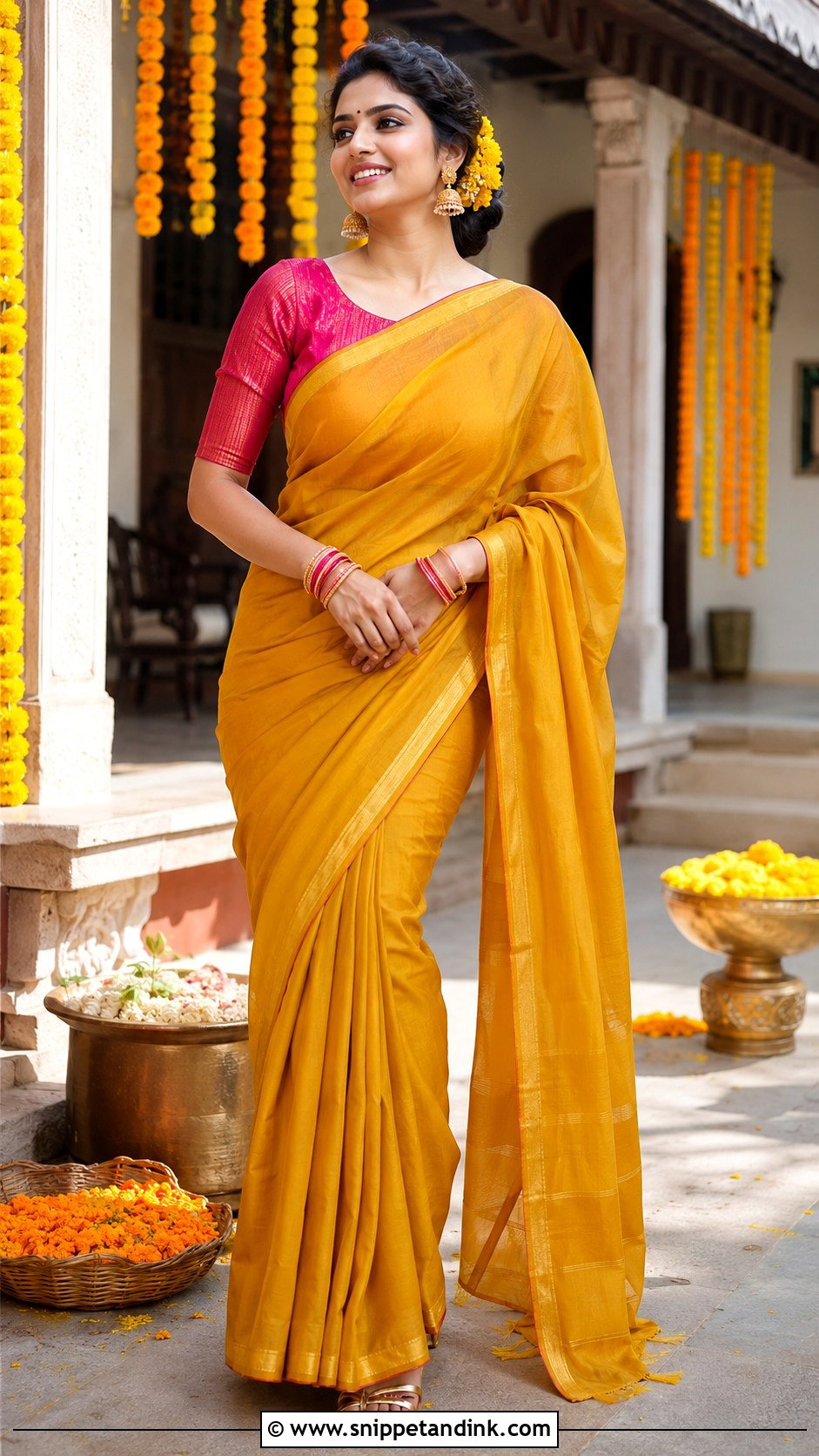
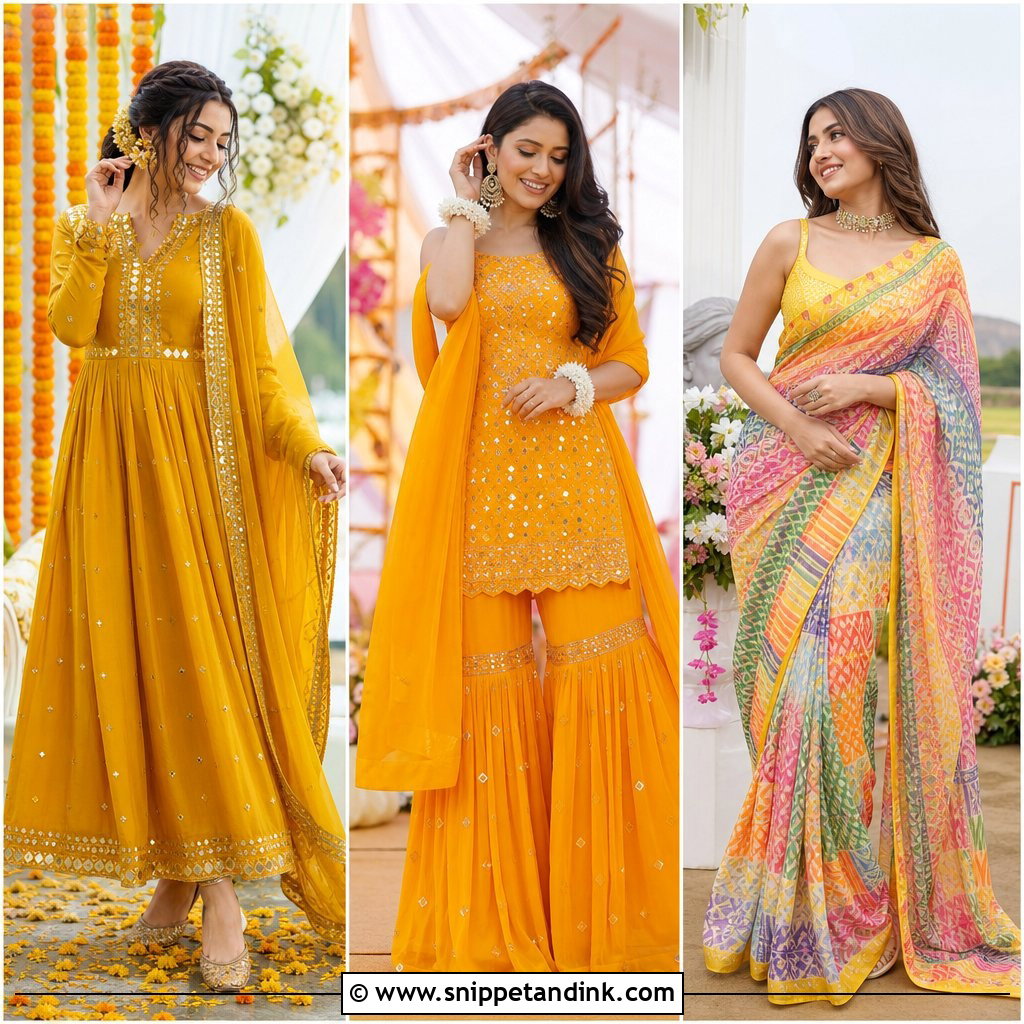
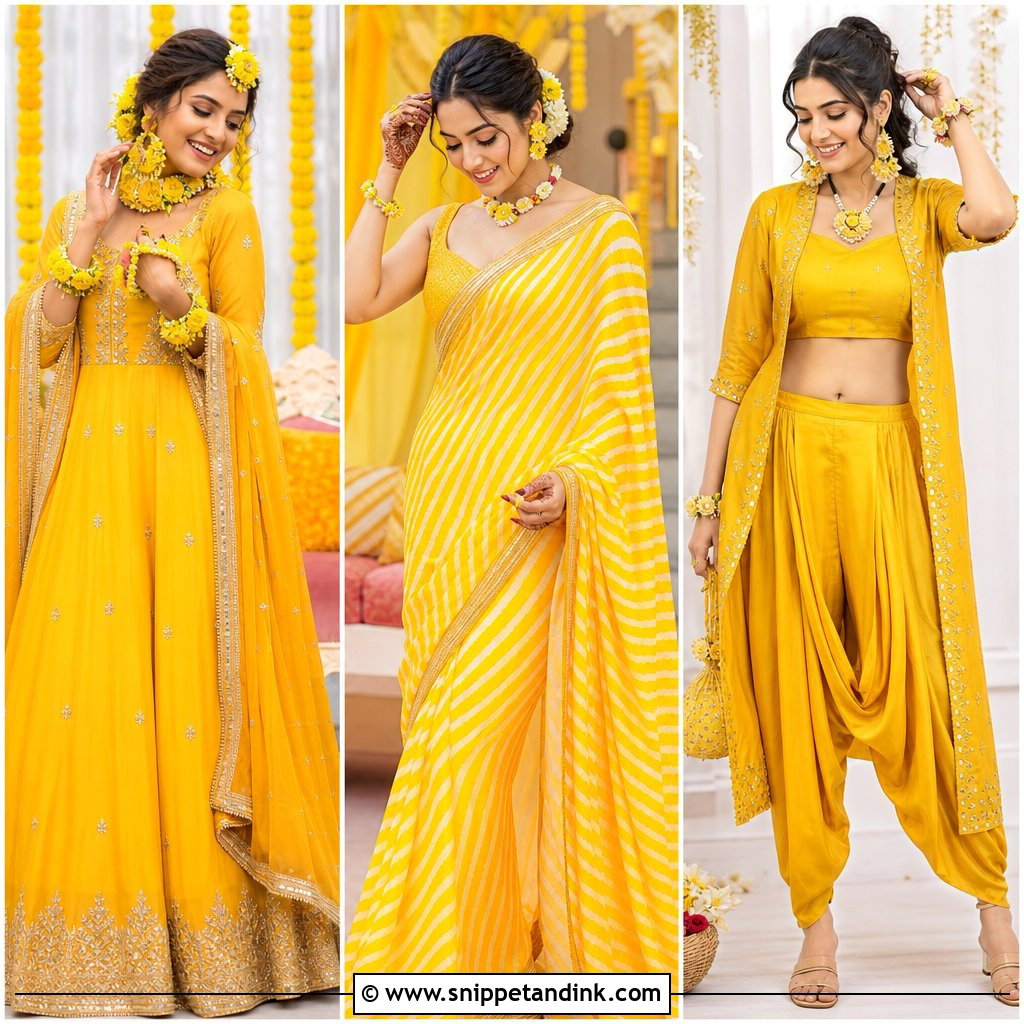
Mustard silk is my pick for an indoor or heritage-style Haldi where the bride wants something closer to tradition than a sheer lemon outfit. A soft silk or silk-cotton saree with a narrow gold border drapes easily; stiff Kanjeevaram-weight silk is too formal for the ritual and shows oil stains badly. Contrast the blouse in green, magenta or rust. Gold jhumkas, glass bangles and a simple maang tikka finish it, and a small cluster of jasmine and marigold at a sleek bun replaces a full floral set. Kolhapuris or padded juttis underfoot. Waterproof kajal, warm blush and a terracotta lip.
6. Yellow Sharara Haldi Outfit
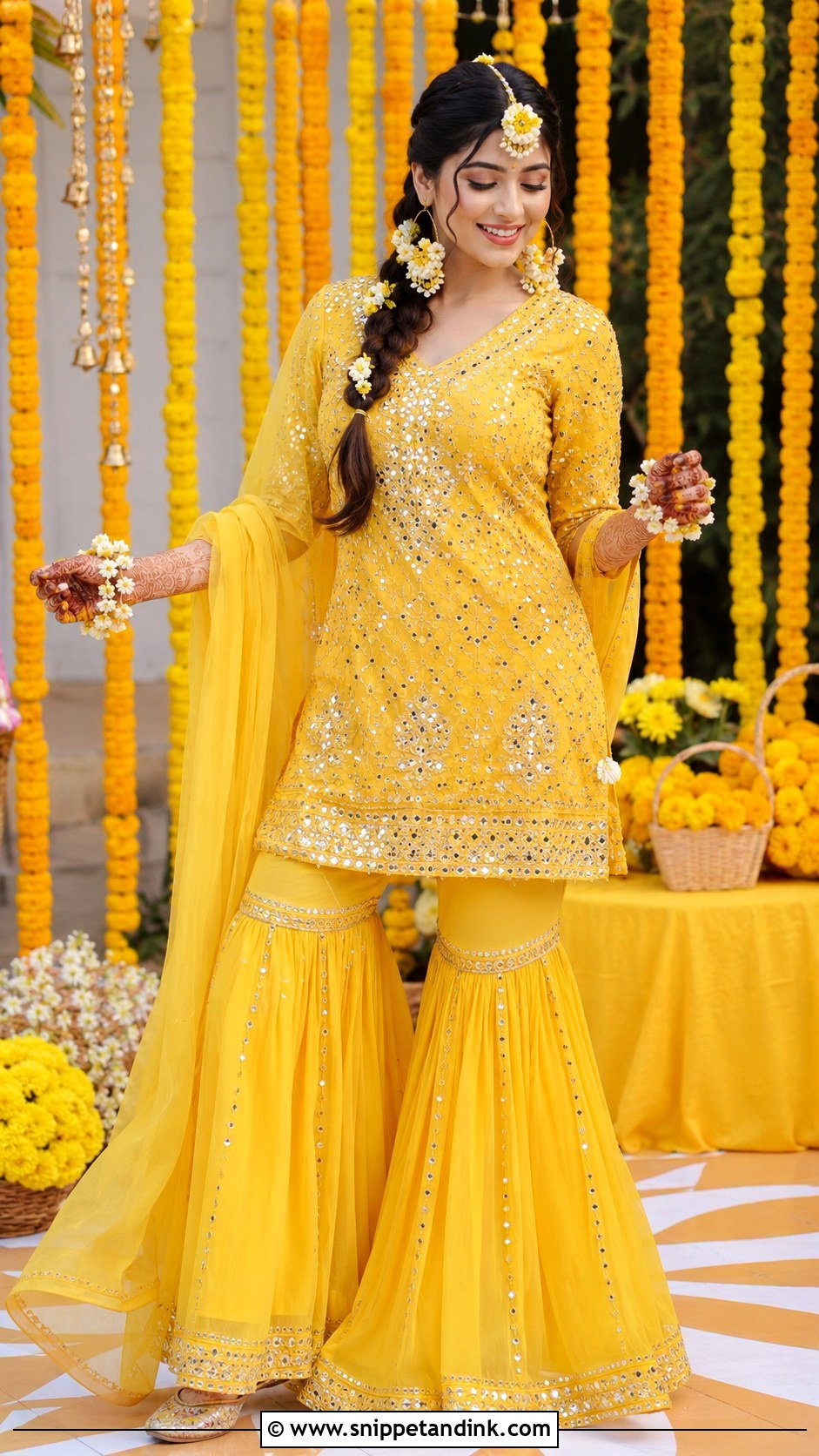
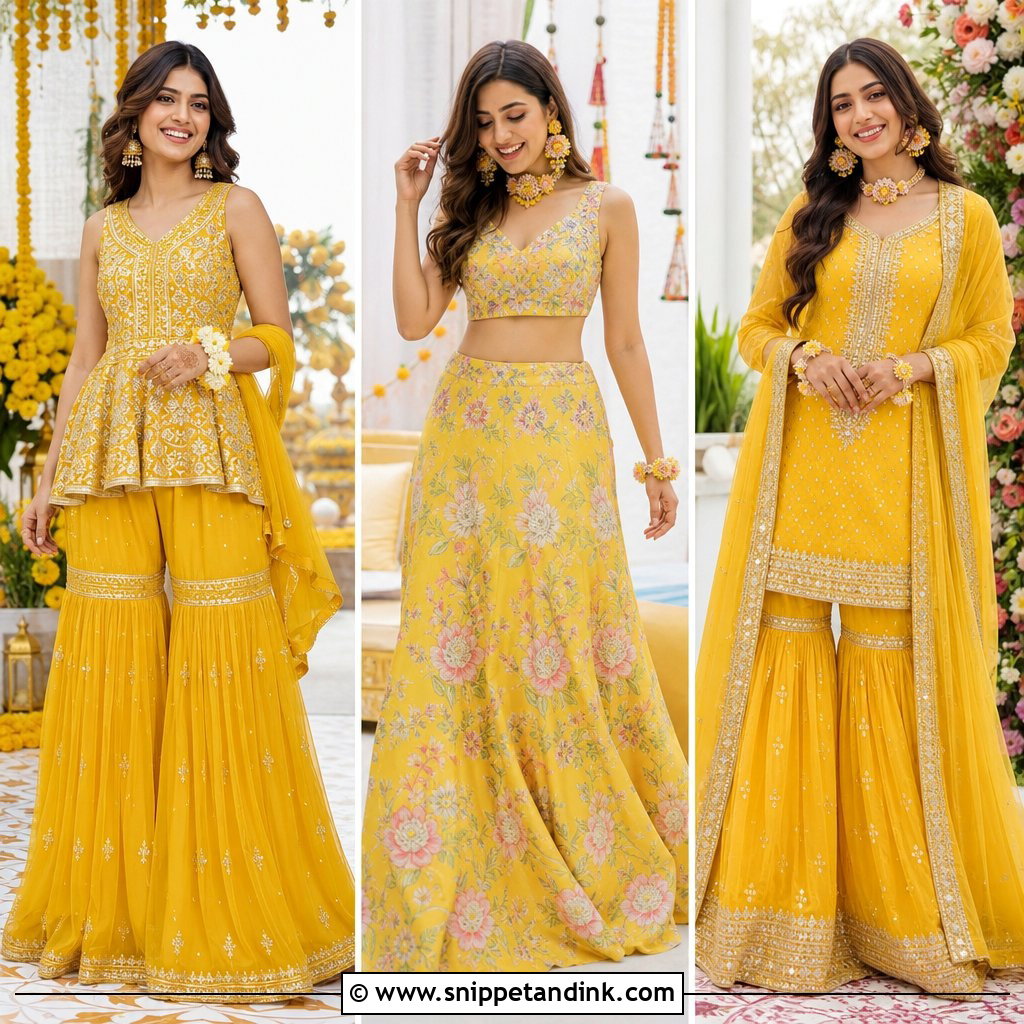
Sharara sets are what I suggest when a bride tells me she plans to dance at her Haldi. The flare of the pants moves well and the short kurti, in mirror work, gota or small floral embroidery, never tangles around the knees when she sits. Drape a light dupatta across one shoulder and pin it at the back of the blouse, not just the front, so it doesn’t slide during the dhol. Floral drop earrings, a matching tikka and a few slim bangles are plenty. Embroidered juttis are the practical shoe since the hem hides them anyway. A side braid with small flowers and long-wear lip color keep everything in place.
7. Yellow Peplum Gharara Haldi Outfit
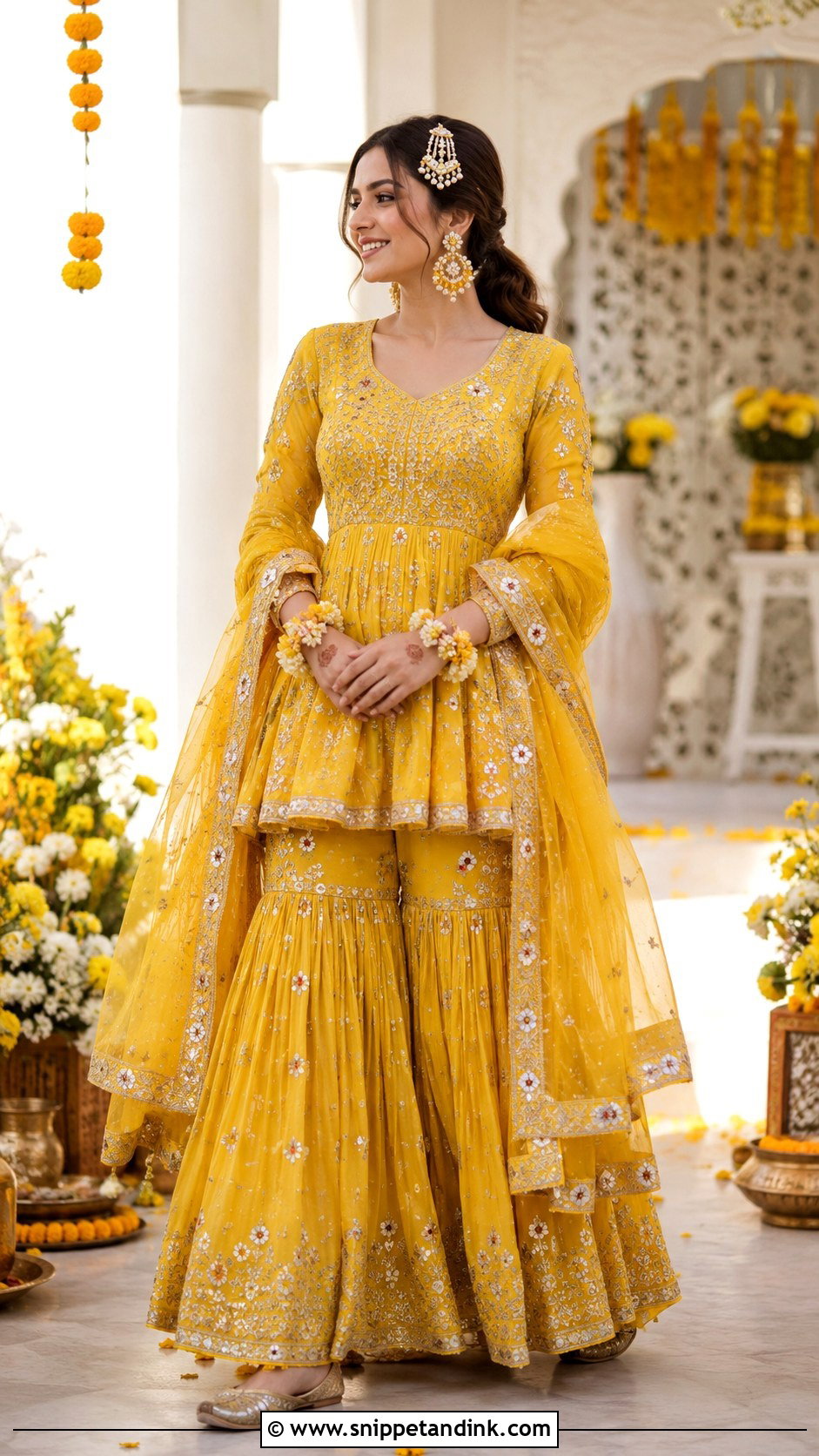
A peplum gharara gives a vintage shape that photographs crisply because the knee seam and flared lower section hold their structure. I check one thing at fittings: the gharara joint should sit right at the knee, or it looks like a mistake when the bride stands. Pair a fitted yellow peplum top with floral embroidery or tiny mirrors, and lay a sheer dupatta over one arm so the silhouette stays visible. Pearl-and-floral earrings, a delicate passa and coordinated bangles suit it. Gold juttis for a lawn, low block heels for a hard floor. A textured low ponytail, soft gold eyeshadow and a muted coral lip keep it daytime.
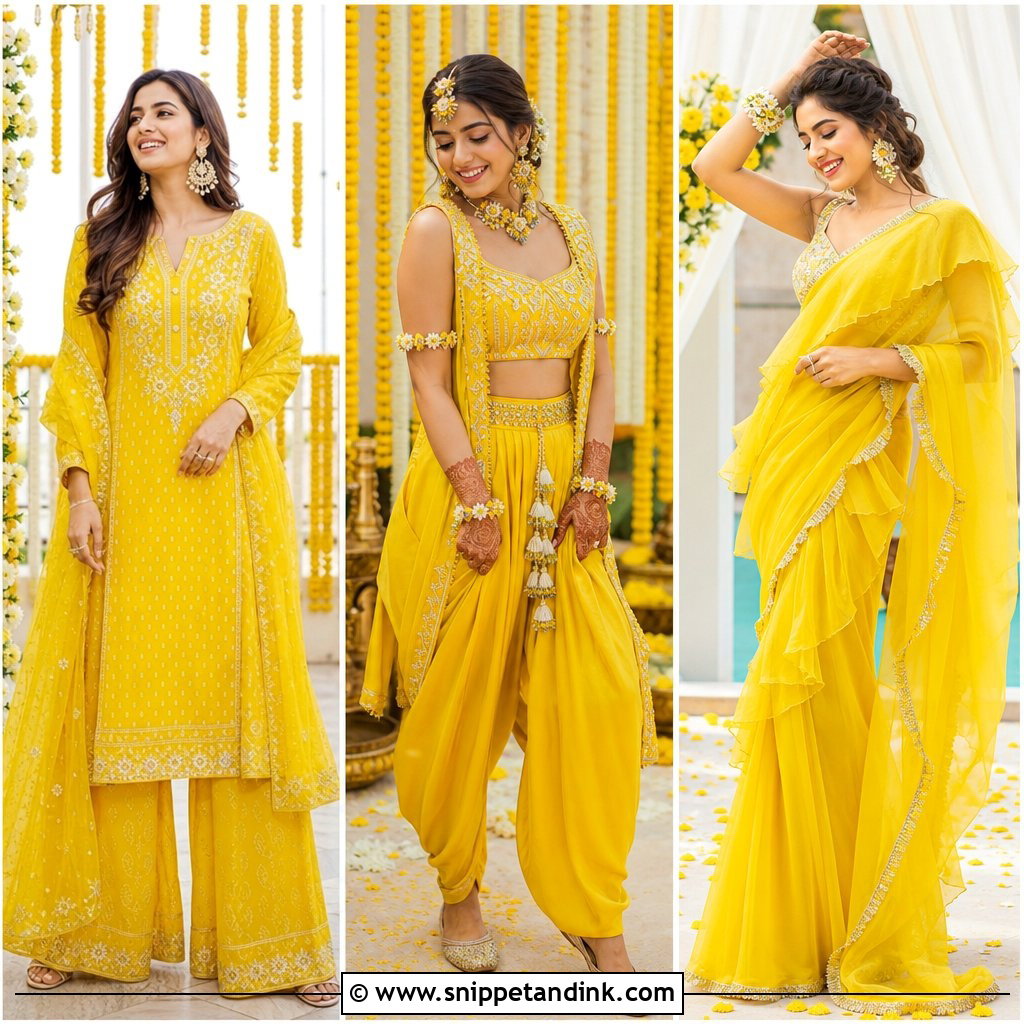
8. Yellow Anarkali Haldi Outfit
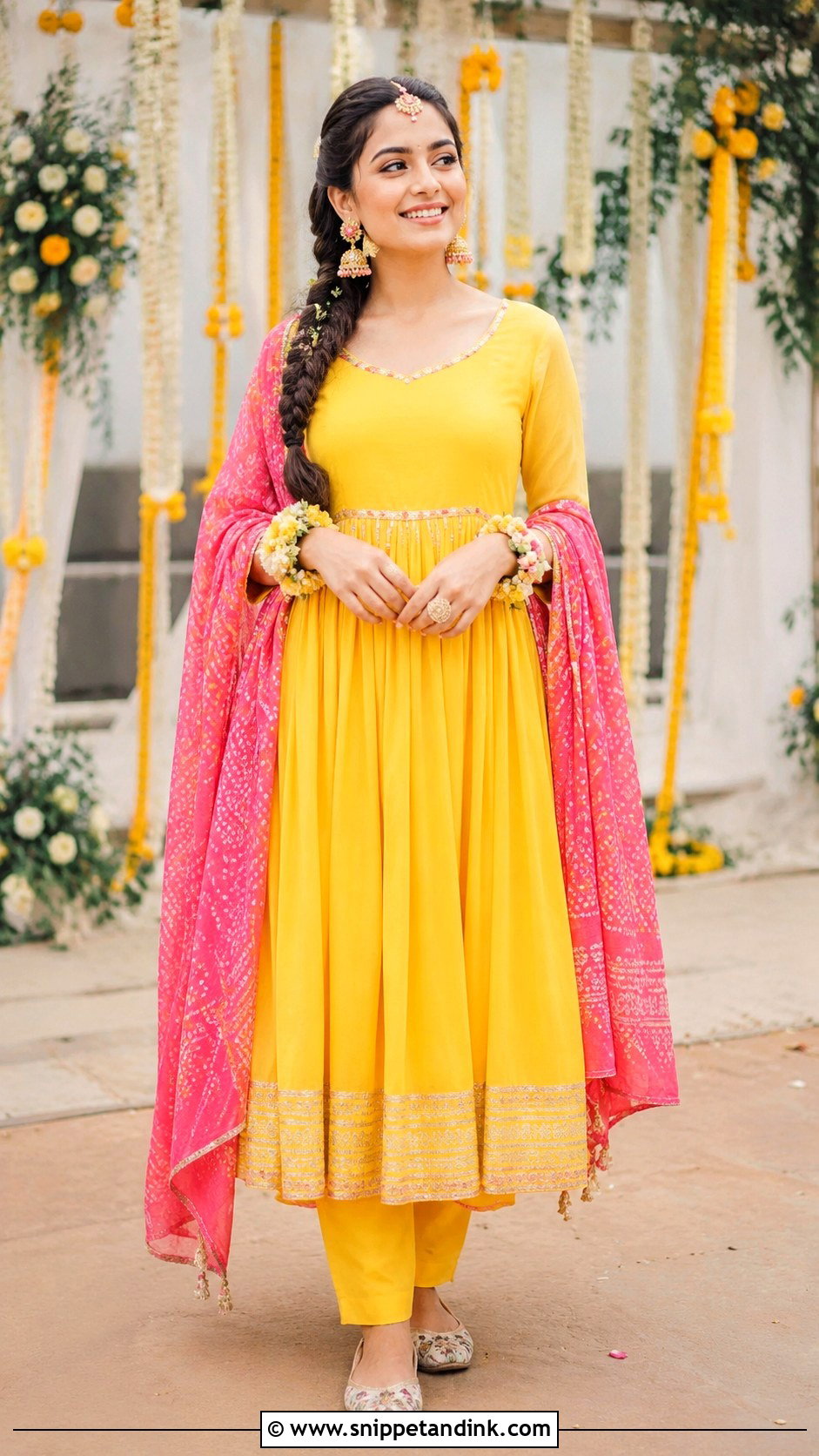
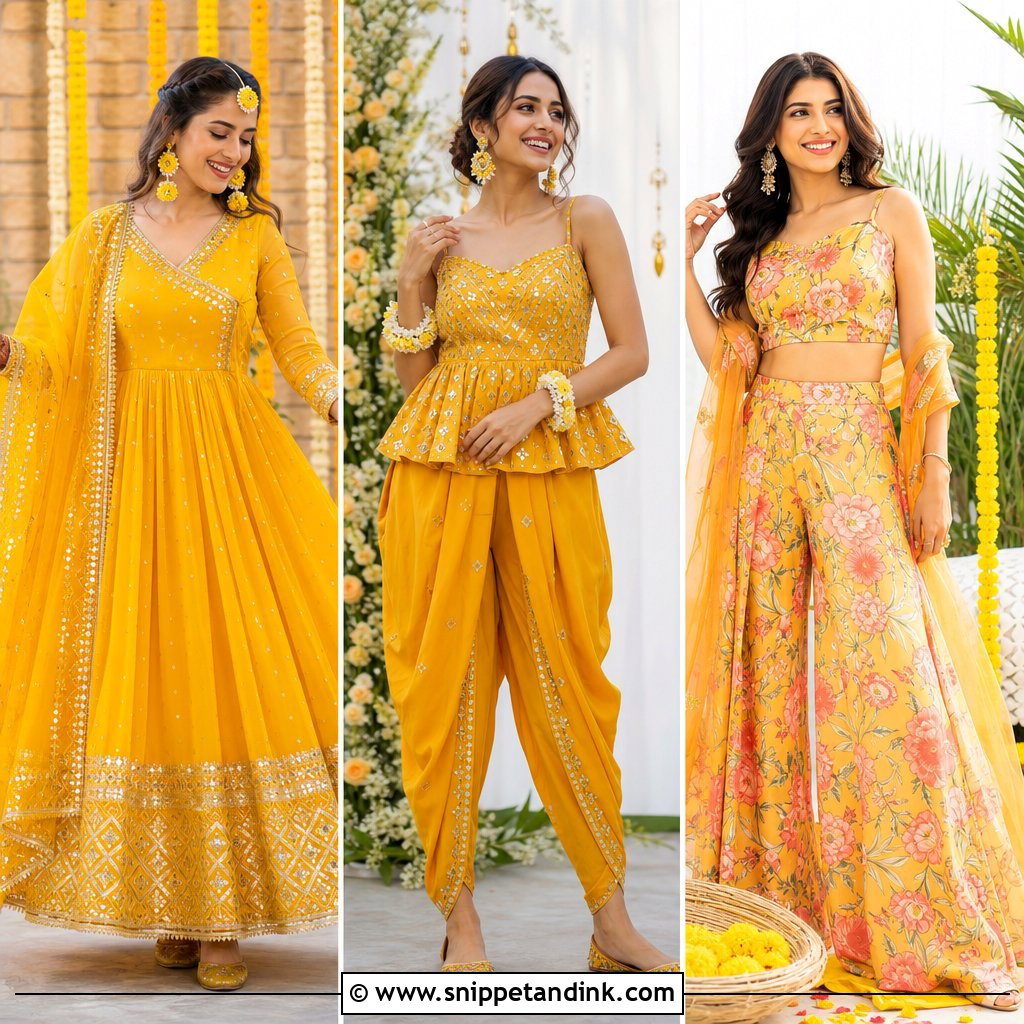
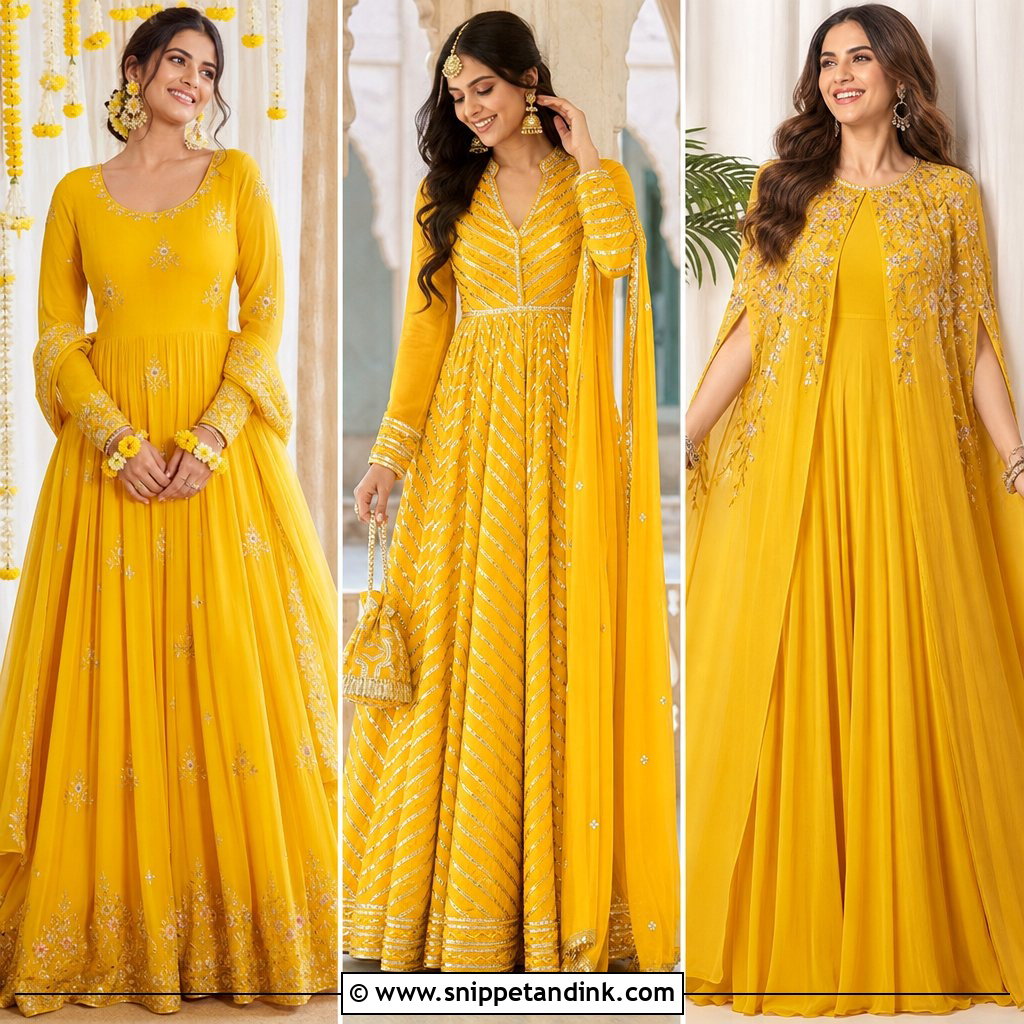
An Anarkali is the easiest outfit on this list to wear, and the one I recommend to brides who want full coverage without layers. Look for calf or floor length in cotton silk, chiffon or georgette, with light gota at the neckline and hem, worn over straight pants. Keep the flare under control though: a very full Anarkali pools on the floor when you sit and soaks up whatever spills there. A bandhani or floral dupatta brings in pink, orange or green. Statement jhumkas, floral bangles and cushioned mojaris finish it, with a sleek flower-trimmed braid, waterproof liner and a rose-pink lip.
9. Yellow Chikankari Lehenga Haldi Outfit
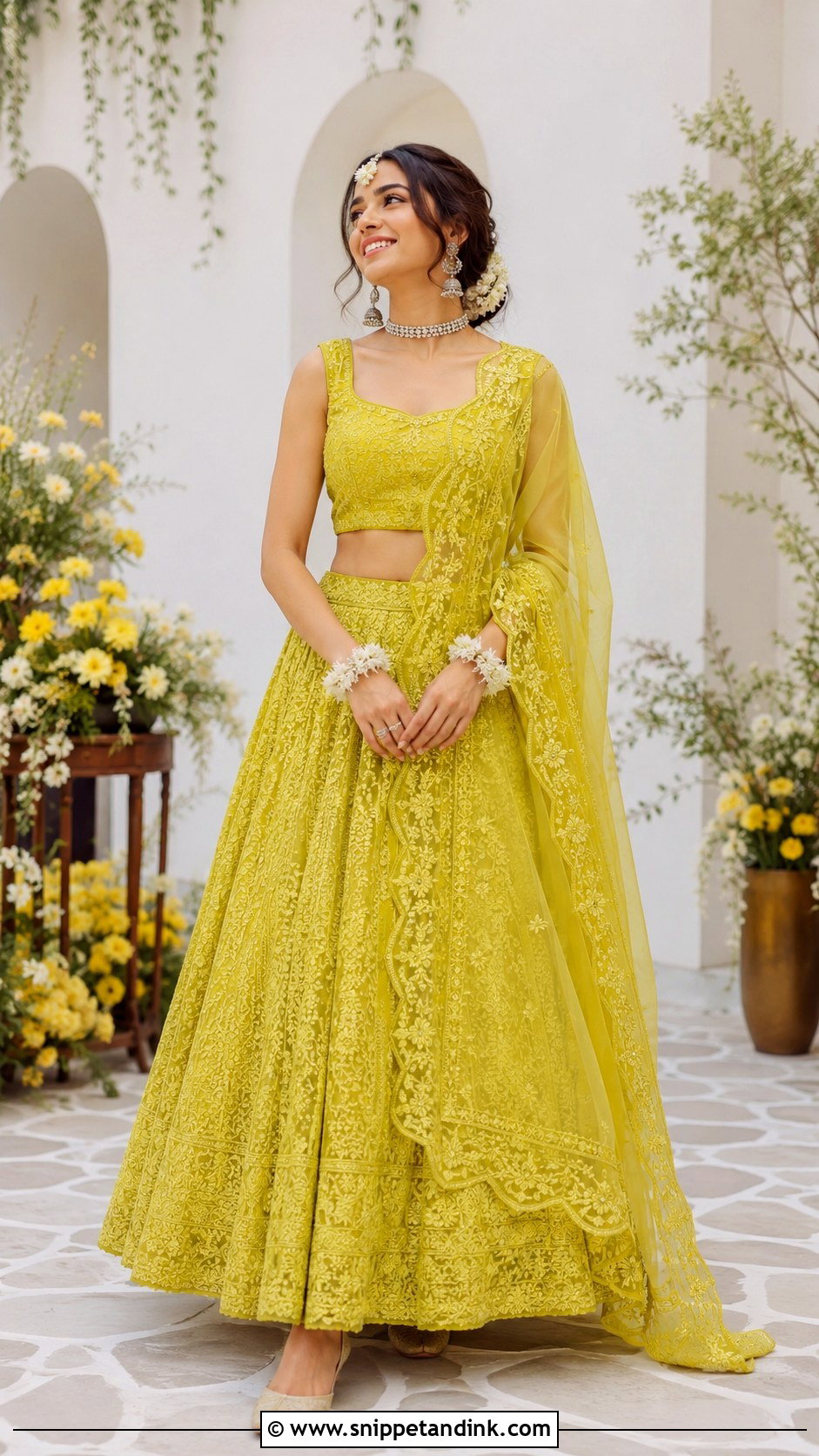
Chikankari is tonal shadow embroidery, so it gives a yellow lehenga texture you notice up close rather than shine you notice from across the lawn. I’d go for lemon, lime-yellow or soft mustard with white or tonal threadwork, a matching blouse, and a sheer dupatta edged in small scallops or gota. This is the outfit where I break the gold rule: oxidized silver jhumkas, a slim choker and silver bangles look fresher against chikan than gold. White flowers soften the metal. Padded neutral juttis, a loose low bun or pinned waves, champagne shimmer on the lids and a berry lip stain that still shows in bright sun.
10. Yellow Dhoti Pants Haldi Outfit
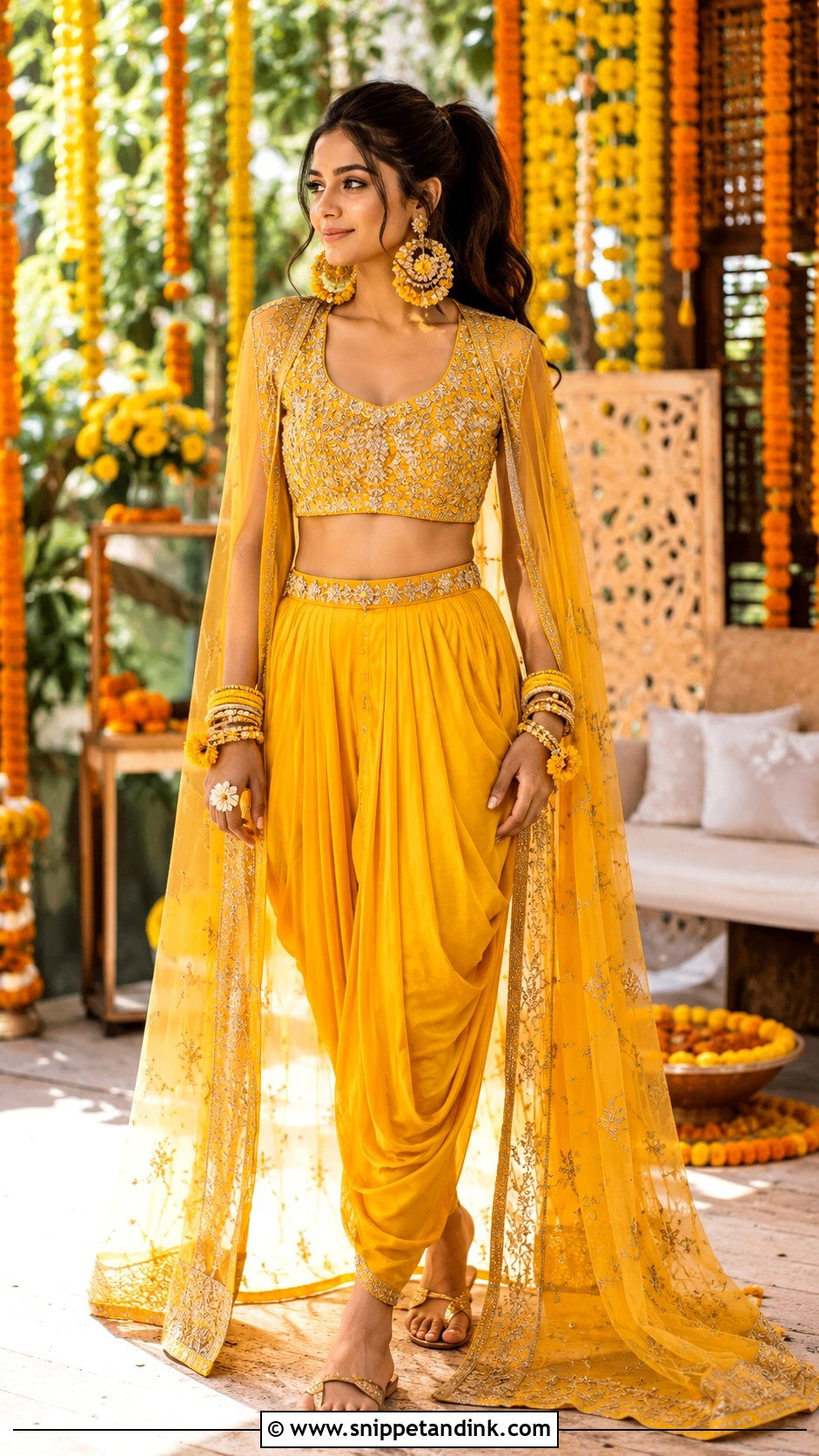
When comfort is the priority, yellow dhoti pants make an easy fusion outfit. Pair the draped pants with an embroidered crop top or a short fitted kurti, then add a long light cape or a dupatta fixed at one shoulder. I always add a belt with dhoti pants, partly for shape and mostly because it stops the drape from creeping down when you sit on the floor. Bold floral earrings, stacked bangles and a small forehead piece work better than a necklace here. Gold flats keep the ankle-length line visible. A high ponytail or bubble braid, soft smoked brown eyes and a bright pink lip make it read bridal.
11. Yellow Pre-Draped Saree Haldi Outfit
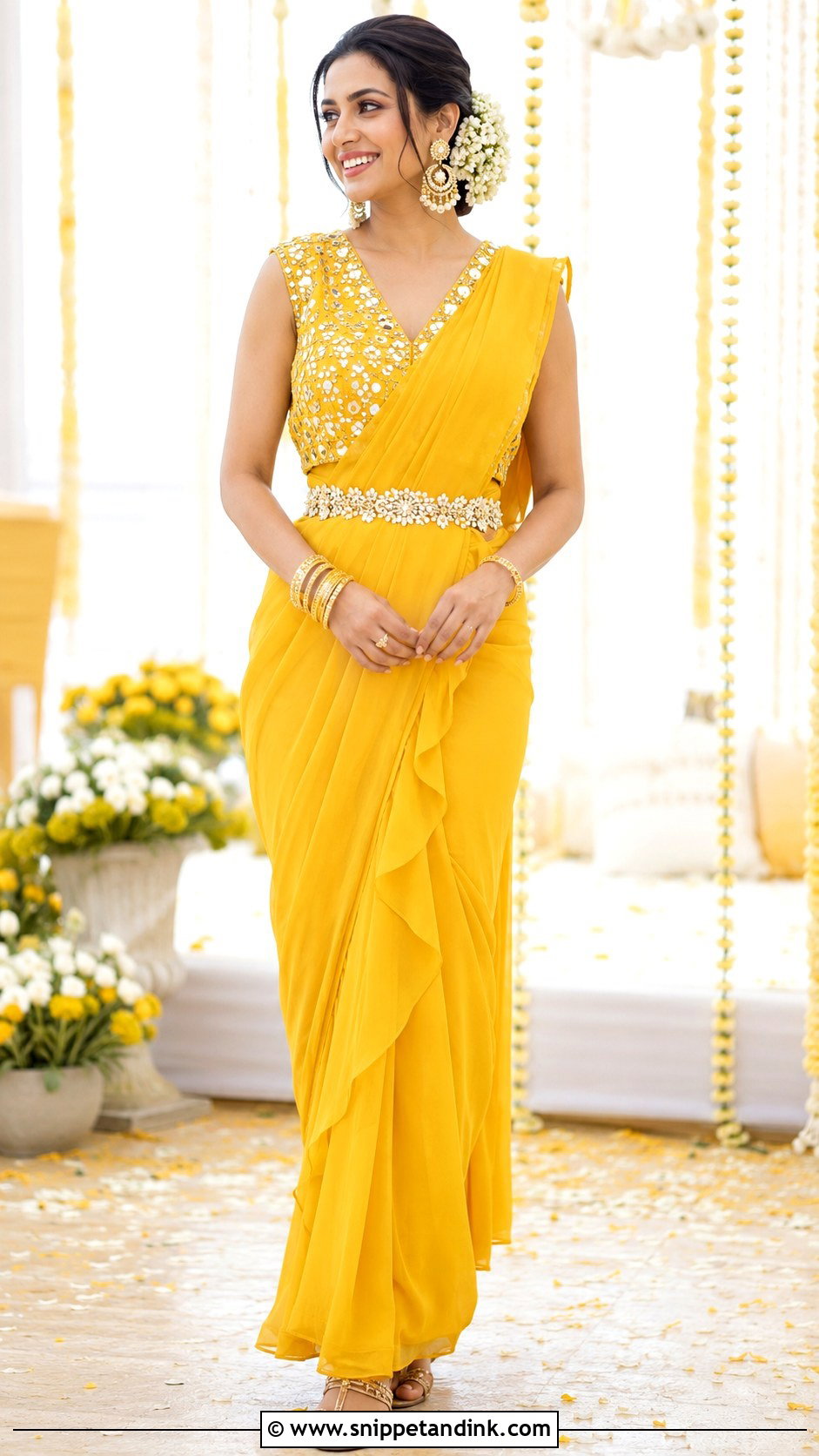
Pre-draped sarees exist for exactly this kind of event. Nobody has time to re-tuck pleats with turmeric on their hands, and a stitched drape simply can’t come loose. Choose chiffon or georgette with a structured waistband and a pallu that is sewn in rather than pinned. The blouse can be sleeveless, halter or a modest square neck. Small mirror or shell details add texture without weight. Floral chandbalis, a slim waist belt and a few coordinated bangles suit it, with flat metallic sandals under the fluid hem. A sleek jasmine bun, warm gold lids and a coral lip finish the look.
12. Yellow Lehenga Saree Haldi Outfit
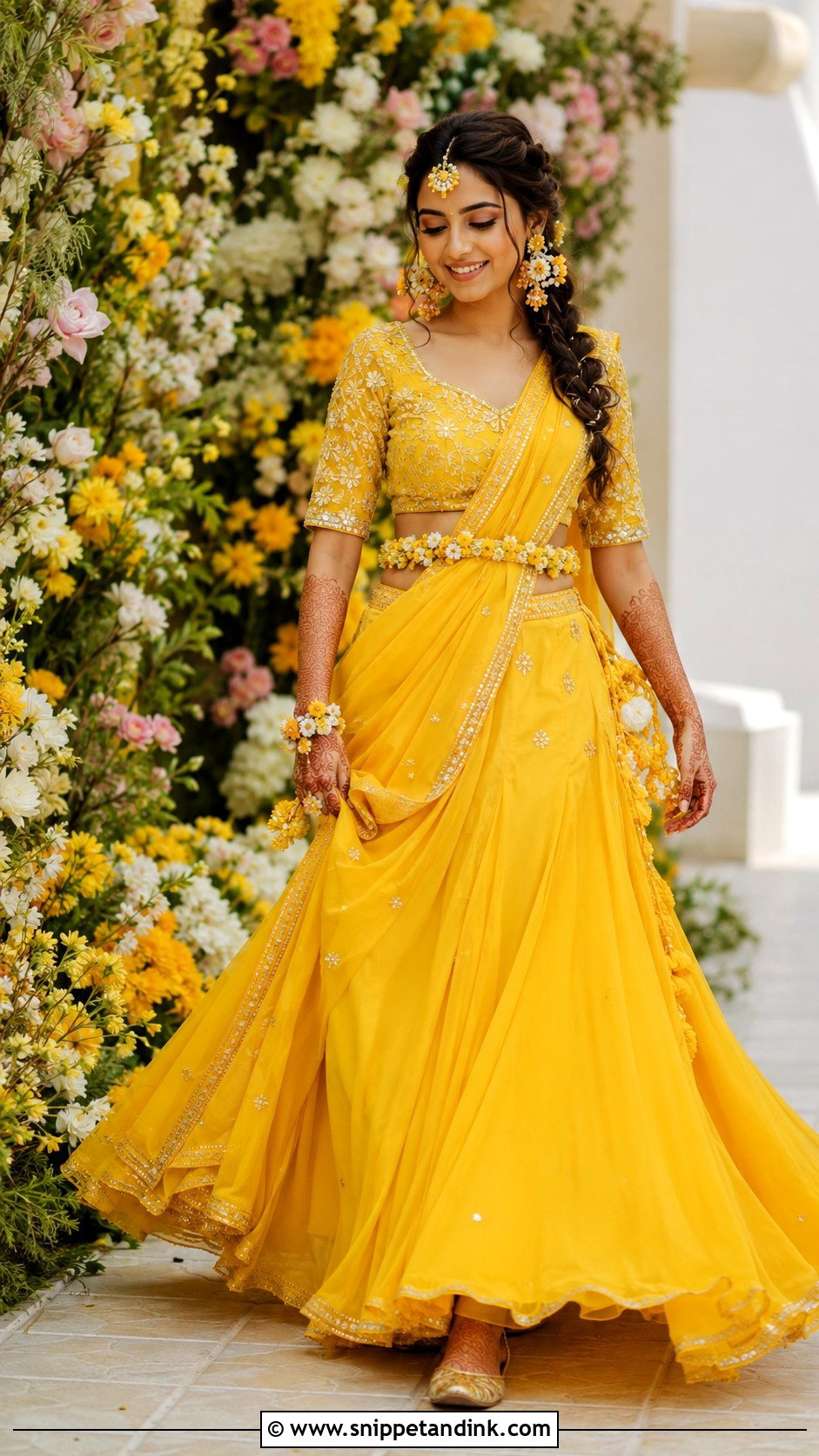
Can’t decide between a saree and a lehenga? A lehenga saree gives you the skirt’s movement and the pallu’s drape in one pre-stitched piece. I order these in georgette or chiffon with light thread embroidery at the border, and I ask for a floral belt at the waist, because the belt is what actually holds the drape when you bend forward for the paste. Choose a blouse with secure straps and a neckline you won’t keep adjusting. Fresh flower earrings, a maang tikka and minimal bangles, neutral juttis or flat sandals, and a side braid with tiny yellow flowers that echoes the angled pallu. A pink lip stain lasts longer than gloss here.
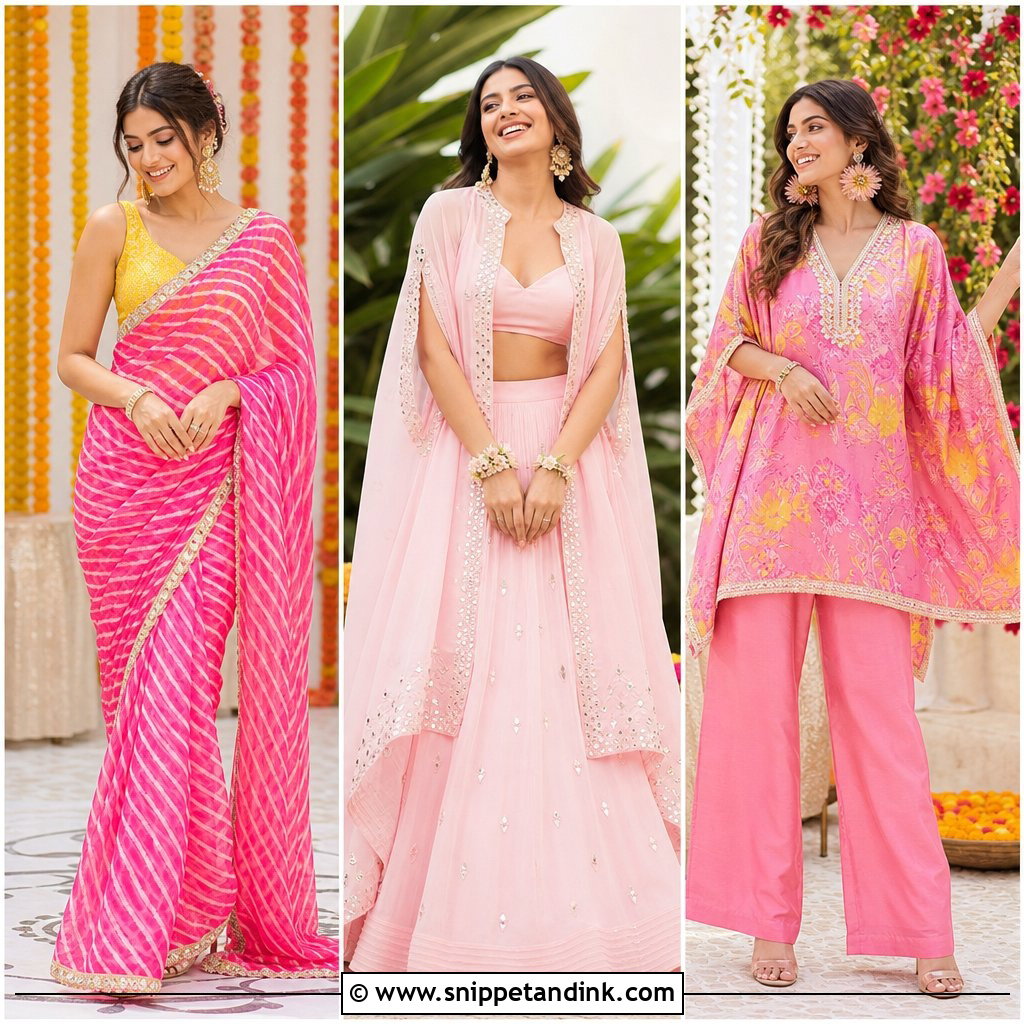
13. Yellow Cape Lehenga Haldi Outfit
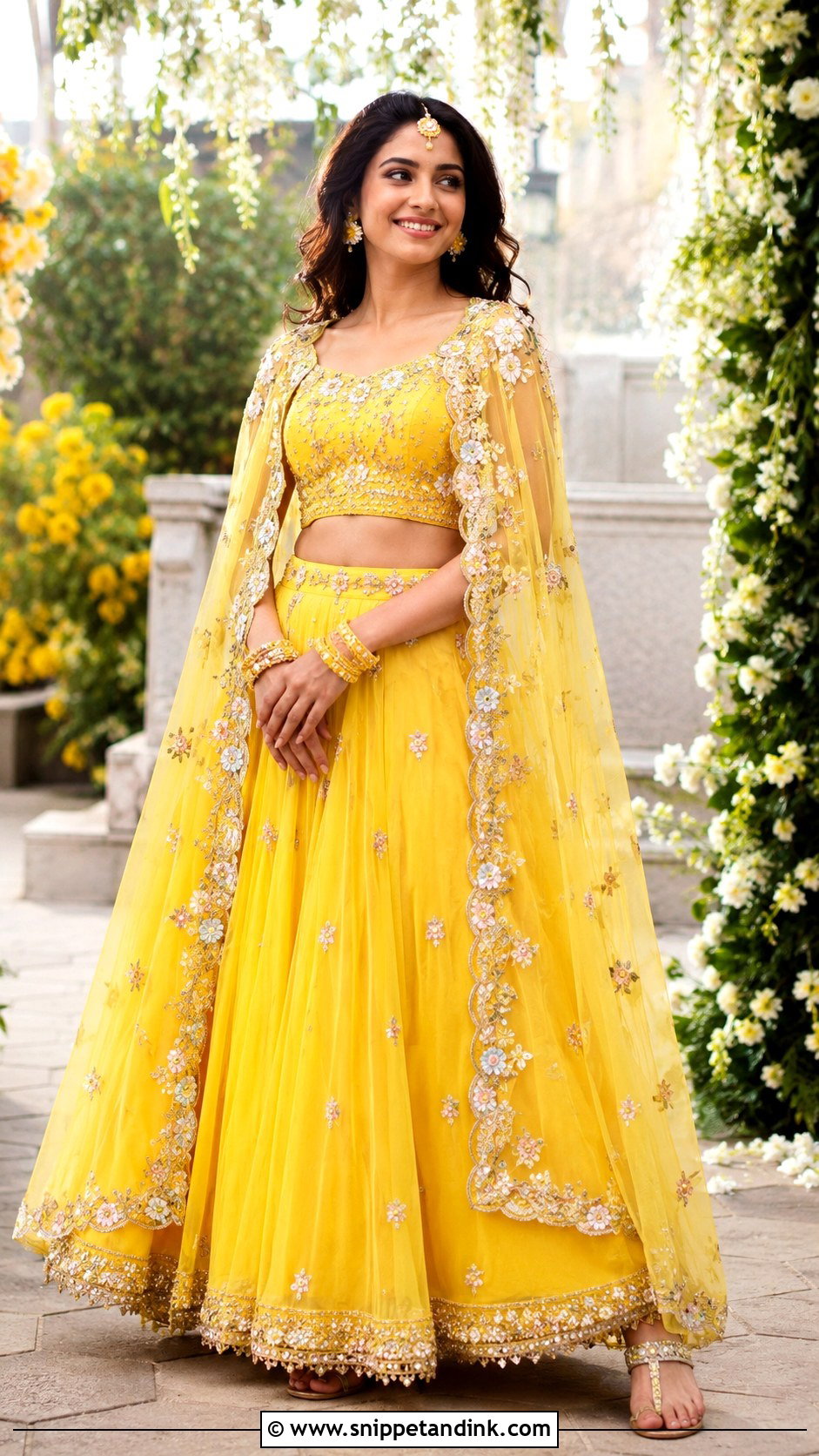
A cape lehenga solves the dupatta problem completely, which is why I suggest it to brides who hate fiddling with drapes. Start with a light yellow skirt and a coordinated crop blouse, then add a sheer cape with floral embroidery, scattered sequins or a scalloped edge. Length matters more than people expect: waist length keeps the shape defined when seated, while a longer cape trails into the paste bowl. With that much detail on the shoulders, keep jewelry to floral studs, a tikka and simple bangles. A high ponytail or neat low bun keeps hair off the cape, and bronzed lids with a rose lip keep it bright.
14. Yellow Corset Lehenga Haldi Outfit
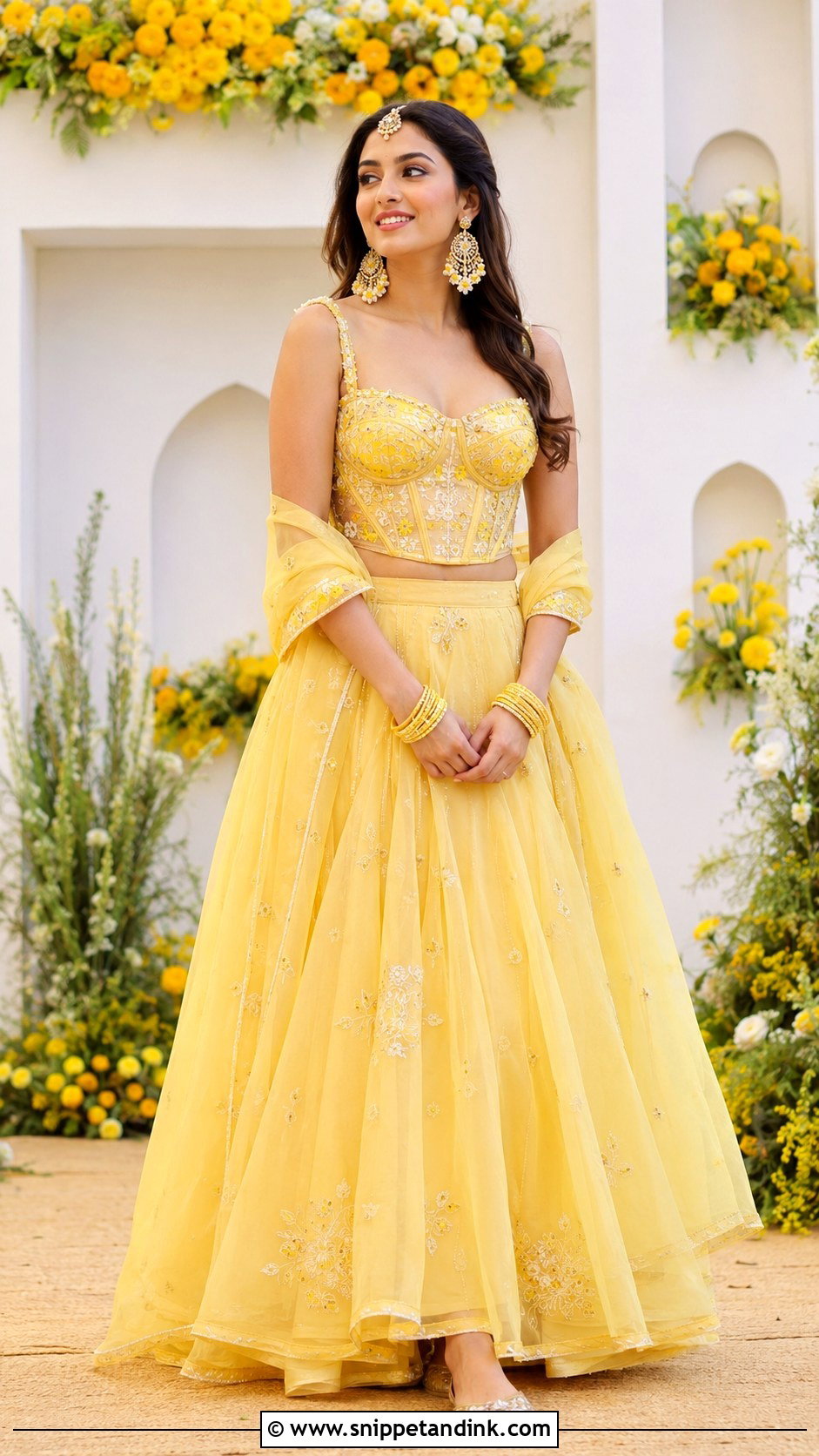
Corset blouses look sharp, but they are the outfit I’m strictest about in fittings. Sit down in it. Raise both arms as if you’re hugging someone. Lean forward as though your cousin is reaching for your cheeks. If the boning digs in or the top edge gapes, it needs another alteration, because you’ll do all three things repeatedly at Haldi. Choose supportive straps, embroidered panels and a back closure you can manage, with an organza or georgette skirt to soften the bodice. A light dupatta over the elbows, floral shoulder-grazing earrings, metallic juttis and a sleek ponytail to show the neckline. Brown winged liner and a coral lip finish it.


15. Yellow Floral Co-Ord Haldi Outfit
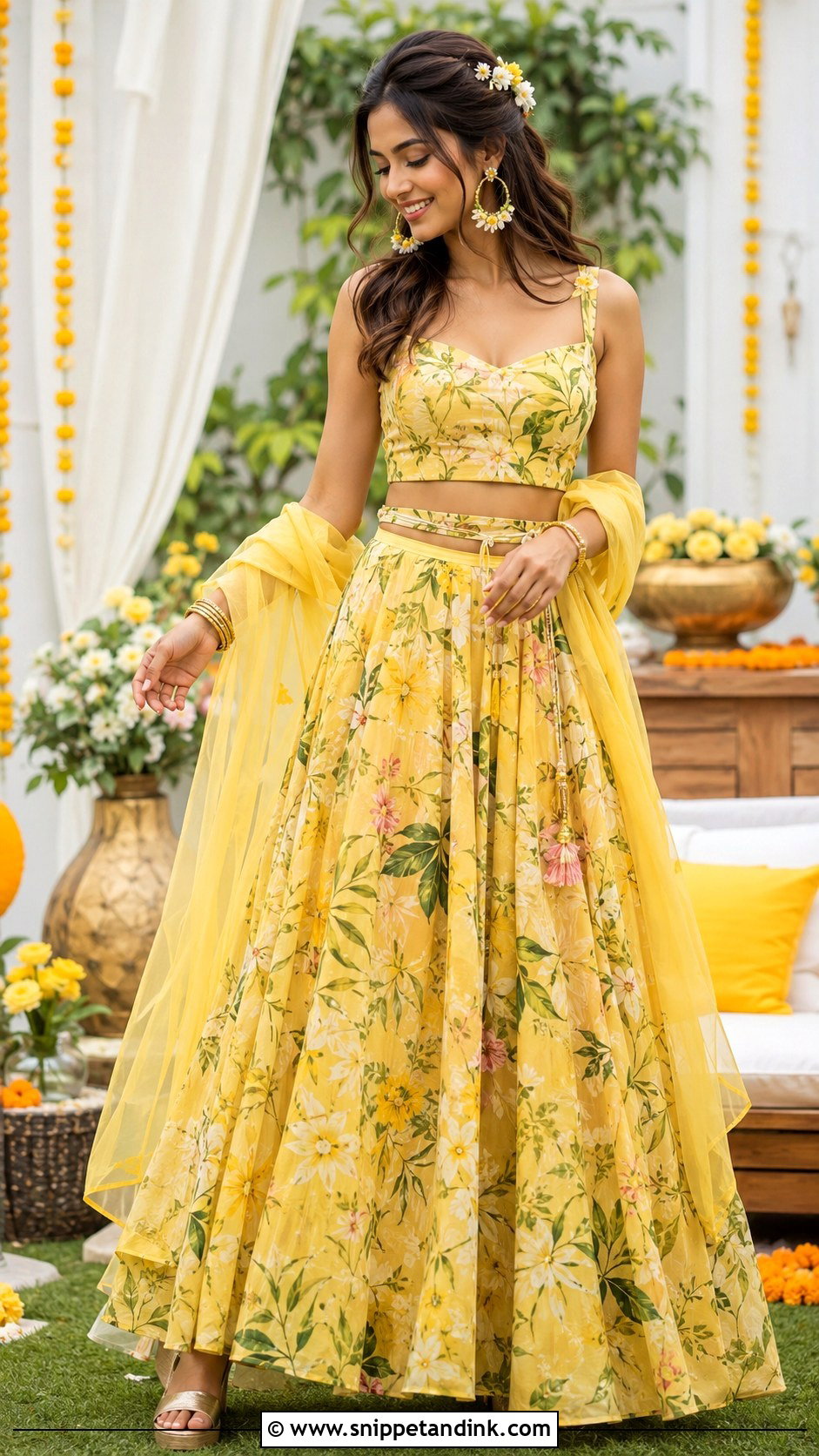
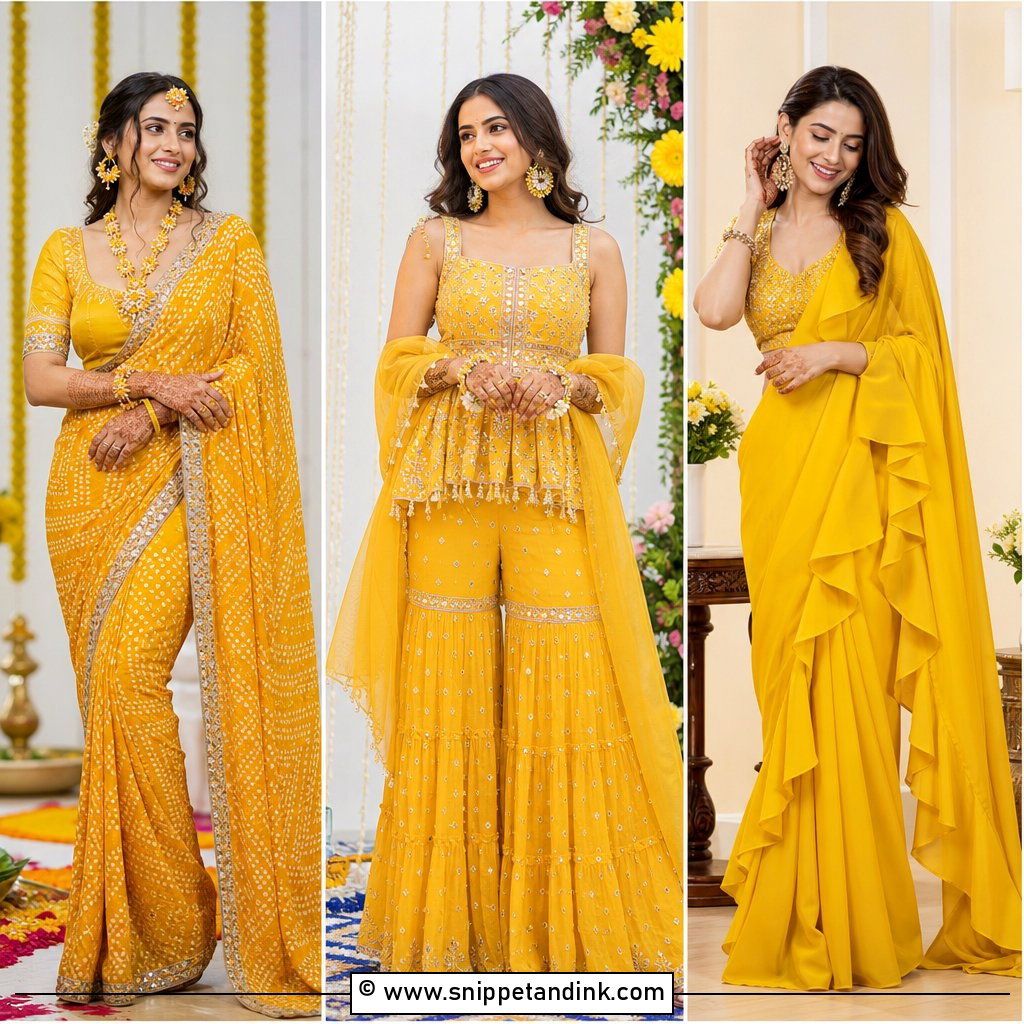
A floral co-ord is the outfit I’m most confident a bride will wear again after the wedding. A matching yellow crop top with a flared skirt or wide-leg pants in colorful botanicals, plus a plain organza dupatta or detachable cape for the ceremony, is all it takes. A fabric belt pulls it together. Pull jewelry colors straight from the print: floral hoops, a small tikka and slim bangles. Juttis or low wedges, half-up hair with tiny flowers at the back, pink cheeks and a watermelon lip suit its cheerful mood.
16. Yellow Kurta Palazzo Haldi Outfit
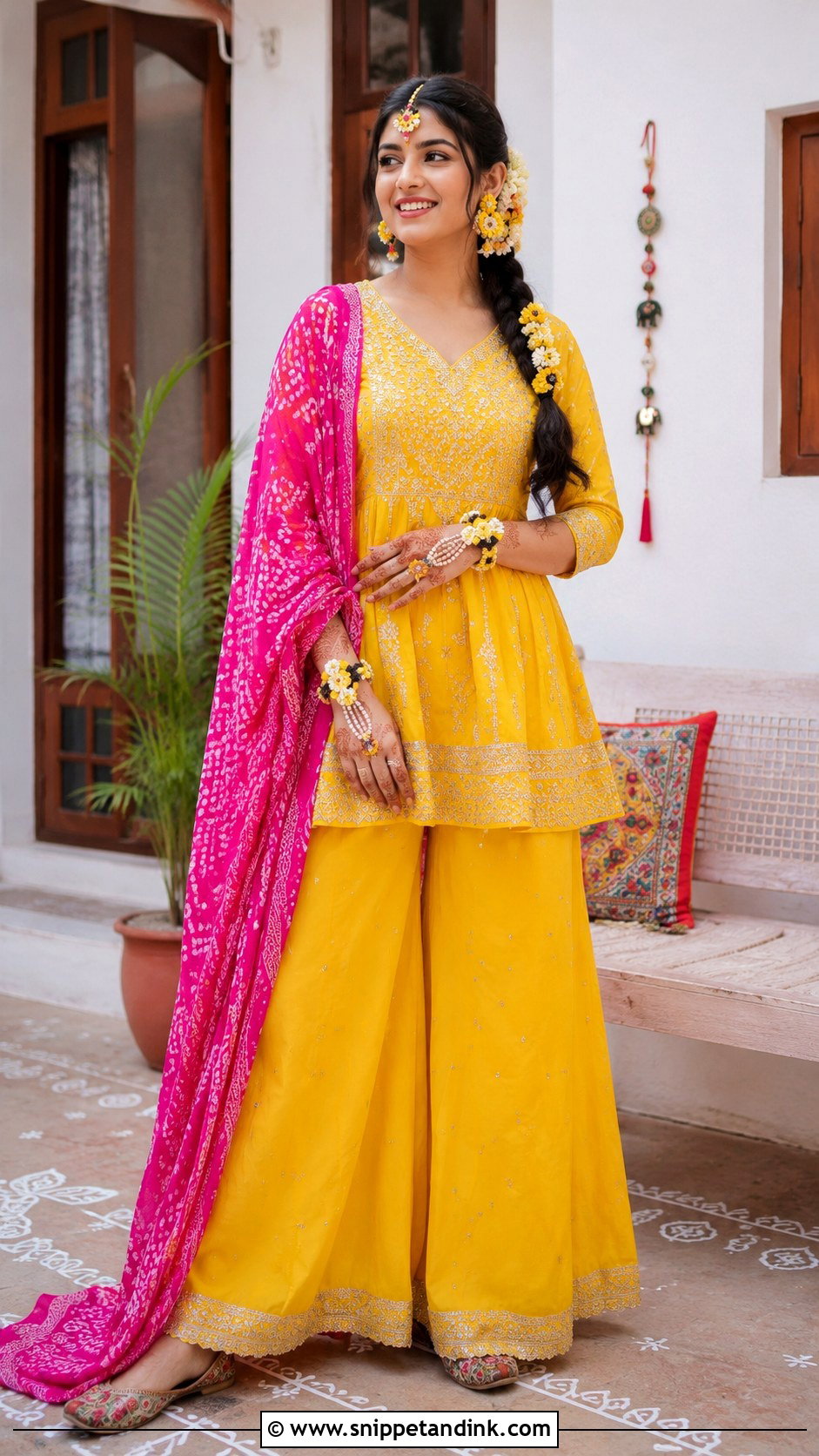
For a small Haldi at home or in the backyard, a kurta and palazzo set is comfortable without looking like loungewear, as long as the bride stands out from her guests. That is the real risk with this outfit, since half the family may also be in yellow kurtas. I fix it with the dupatta: a contrasting pink bandhani or green organza piece marks the bride instantly. Choose a short or knee-length kurta with mirror work, scalloped edges or floral thread embroidery, and wide palazzos for sitting. Floral jhumkas, haath phools and a small tikka, slip-on juttis for rugs and lawns, a flower-wrapped braid, waterproof kajal and a bright pink lip.
17. Yellow Half Saree Haldi Outfit
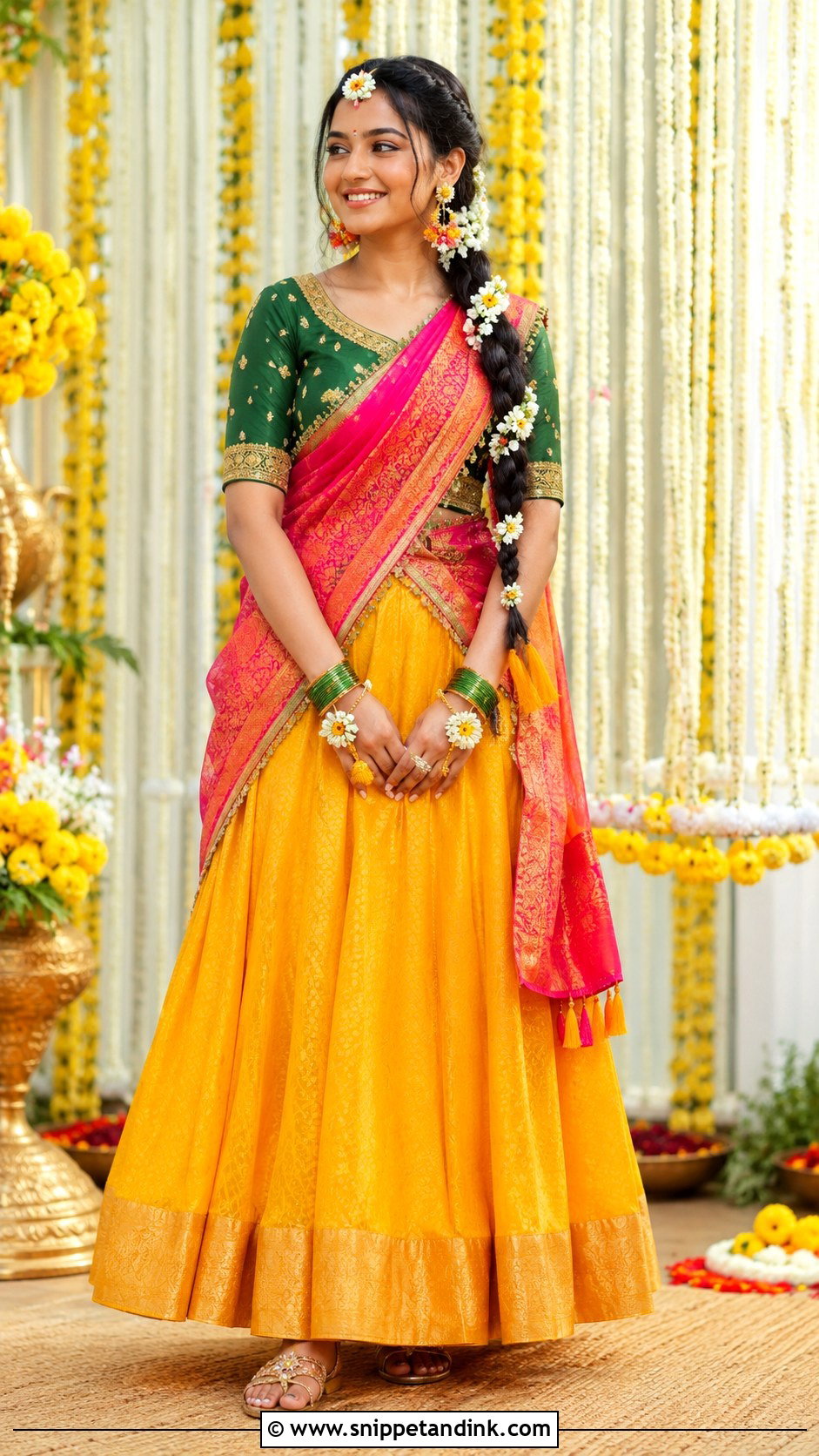
The half saree, or langa voni, comes from South Indian tradition and suits brides who want color blocking with a regional feel. Combine a flared yellow skirt with a fitted blouse in pink, green or orange, then drape a contrasting dupatta across the torso and over one shoulder. I pin it at both the shoulder and the waist before the ceremony starts; a half-saree dupatta is the first thing to slip once the paste goes on. Cotton silk or georgette keeps the skirt comfortable while seated. Temple earrings, a delicate necklace, glass bangles and a long jasmine braid complete the look, with a tiny bindi and a rich rose lip.
18. Yellow Bandhani Lehenga Haldi Outfit
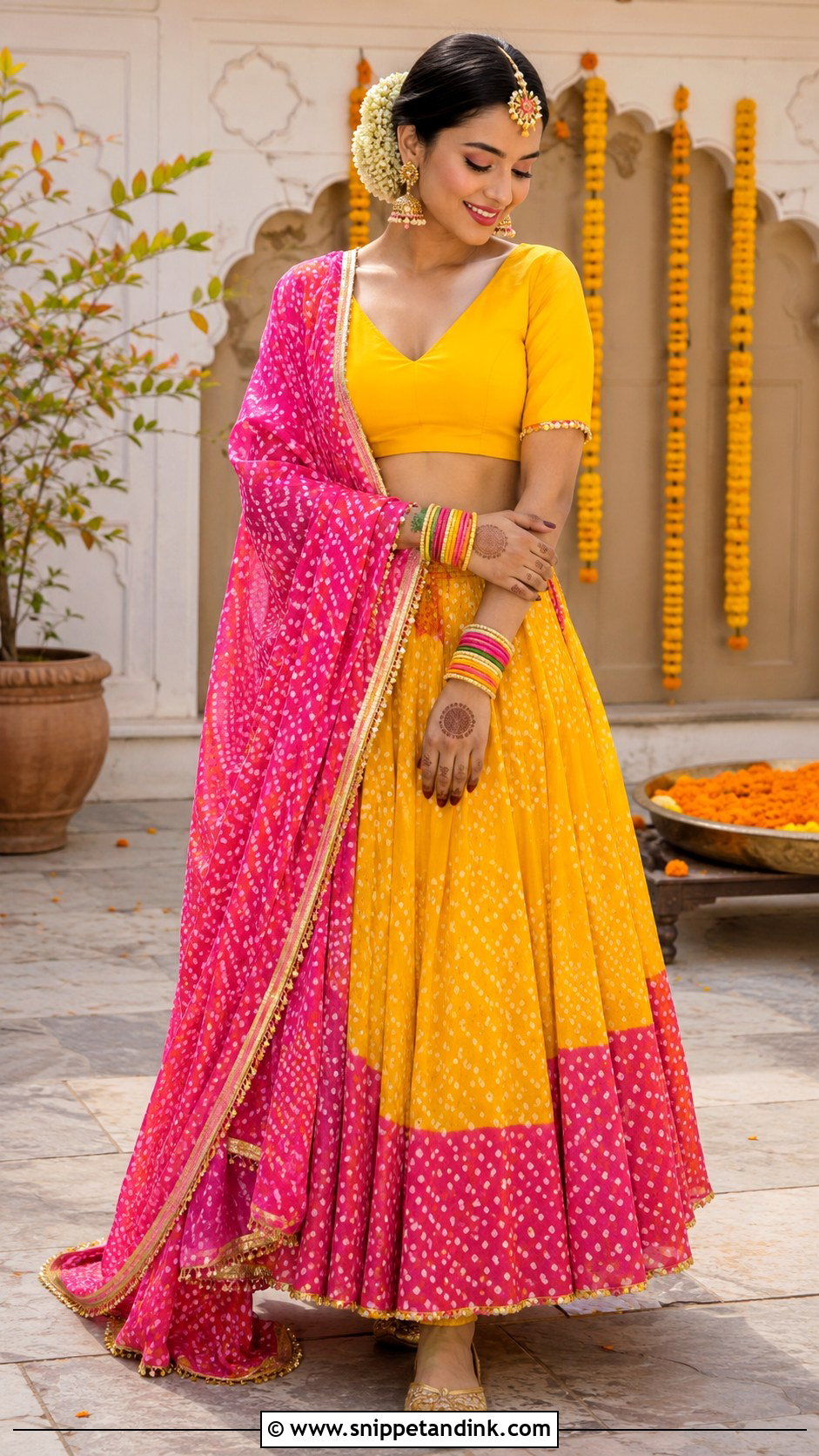
Bandhani is tie-dye at its finest, and those tiny dots hide turmeric splashes better than any plain fabric. That’s a real practical reason I like a bandhani lehenga for Haldi. Pick a yellow skirt with pink, red, green or orange bandhani and balance it with a solid blouse. Drape a contrasting bandhani dupatta over one shoulder, or across both arms for portraits. Gota edging gives shine without stonework. Since the fabric is already busy, I keep the shoes neutral gold and the jewelry traditional. A low jasmine bun, golden-brown eyes, waterproof kajal and a raspberry lip stain finish it.
19. Orange Ombre Haldi Lehenga
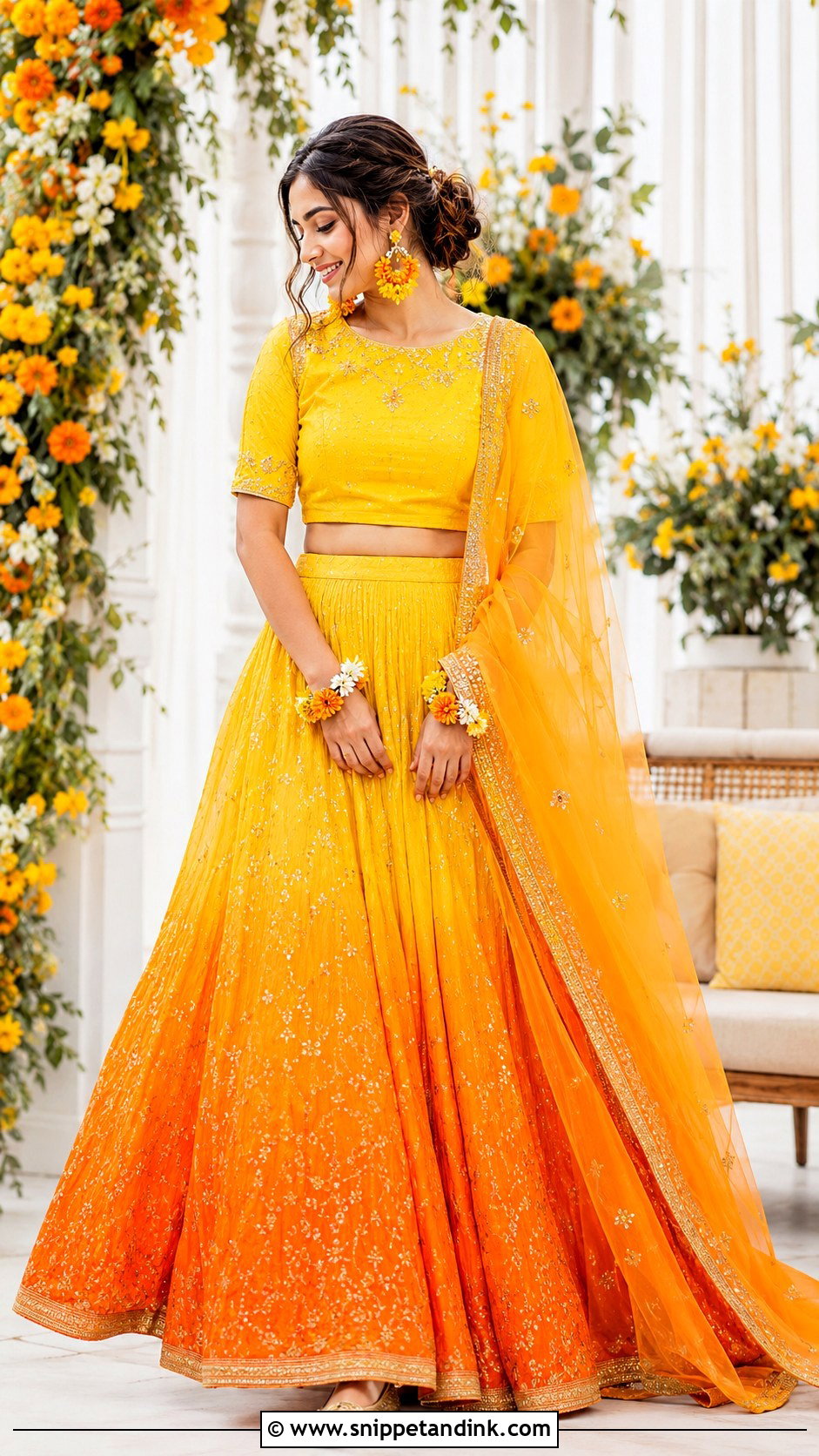
An ombre lehenga carries turmeric and marigold colors in one garment, moving from lemon at the waist to deep orange at the hem. The gradient is the whole point, so I keep everything else from interrupting it: a solid yellow or orange blouse and a sheer dupatta with minimal embroidery that won’t hide the color change. Ask to see the fabric in daylight before you buy, since dyed gradients can look muddy where the shades meet. Marigold earrings, a floral tikka and wrist flowers, gold juttis, soft pinned-back waves, bronze lids and a coral-red lip complete it.
20. Mint Green Floral Haldi Lehenga
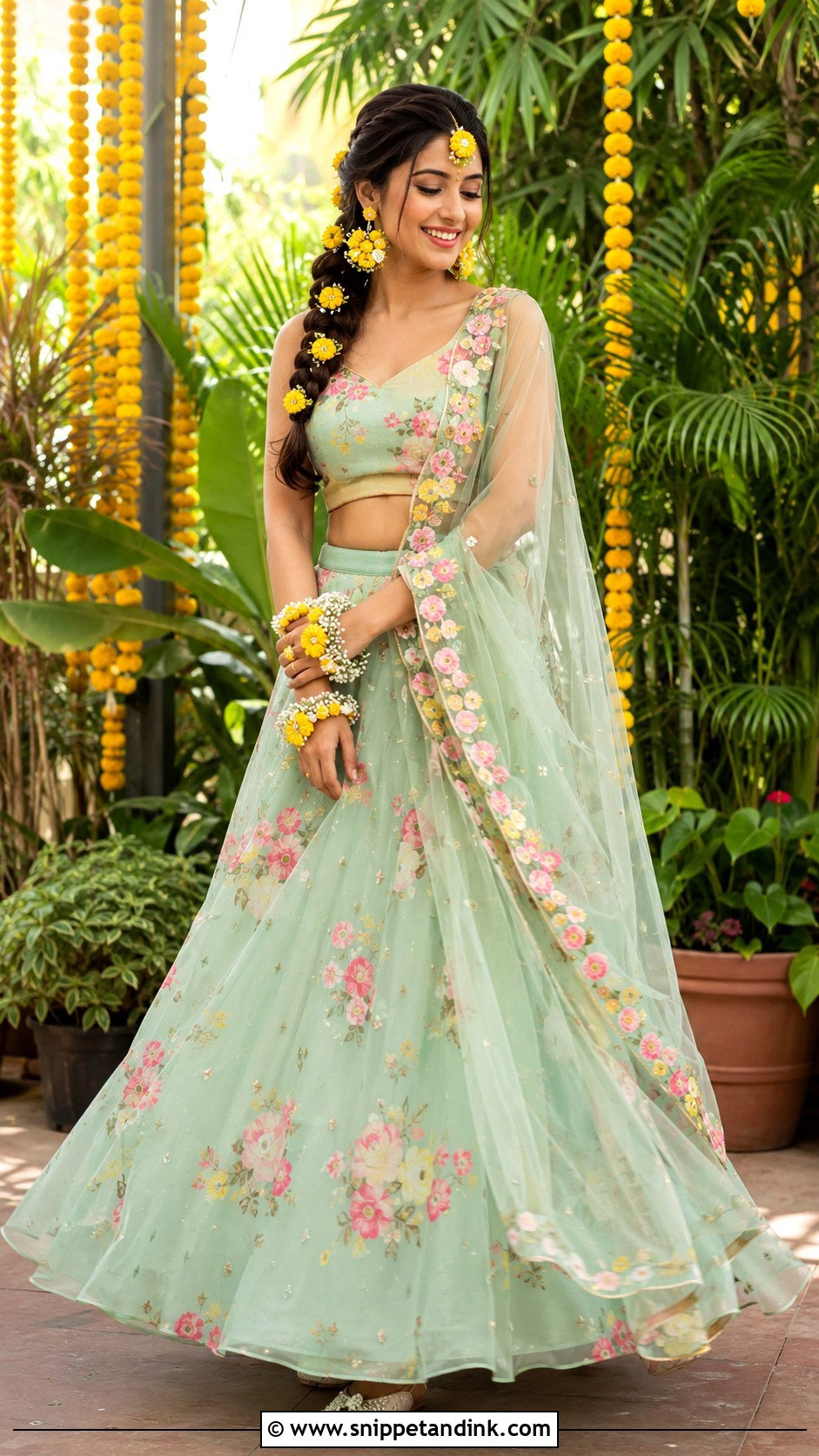
Yellow isn’t compulsory. A mint green lehenga with yellow and white floral embroidery still connects to the ceremony, and it gives you a different color in an album full of yellow. Choose a light organza or georgette skirt, a matching blouse and a sheer dupatta with a slim floral border. The yellow flower jewelry is what marks it as a Haldi outfit, so I wouldn’t skip it: floral earrings, a maang tikka and wrist garlands, with ivory or gold juttis. A loose braid with yellow blossoms ties the colors together. I keep the makeup airy here, sage-gold lids and a pink-nude lip, and it sits especially well against garden greenery.
The First Hour After the Ritual Decides Whether a Stain Stays
Most Haldi outfits are lost in the hour after the ceremony, when the bride changes and leaves everything in a heap. Turmeric keeps setting as it dries, so I give someone in the family a small job: collect the outfit straight away and deal with it before lunch.
- Scrape off dried paste with a blunt knife or a spoon. Don’t brush it, because brushing grinds the powder into the weave.
- Rinse cold water through the back of the stain so it pushes out the way it came in. Hot water sets turmeric.
- Dab, never rub, a little liquid dish soap into oily areas on cotton or georgette, then rinse again.
- Dry washable pieces in shade or gentle sun. Light breaks down the yellow pigment over a few hours, which helps on pale cotton.
- Take silk, organza and embroidered pieces to a dry cleaner within a day or two, and tell them the stain is turmeric and oil so they choose the right treatment.
Jewelry needs care as well. Wipe gold-plated and kundan pieces with a soft dry cloth the same day; paste in the settings dulls stones and can tarnish plating. Fresh floral jewelry is meant to be thrown away, which is one more reason I like it for this ceremony.
What I pack for the bride’s Haldi kit
Safety pins in two sizes, a spare dupatta, wet wipes for hands before touching jewelry, a small towel to sit on in the car, and a plain change of clothes. A shower cap is worth having too, for brides whose families get enthusiastic with paste in the hair.
Dressing for Paste, Floor Seating and a Lot of Hugging
A good Haldi outfit has to survive the ritual, not just the first photo. Light fabrics, drapes that are stitched or pinned in two places, flat shoes and hair tied back will do more for your day than any single trend. Do the sit, lean and arms-up test on every blouse and waistband before the final fitting. Floral jewelry gives a clear bridal finish without weight. After that, go with the silhouette you actually feel like yourself in, whether that’s a sharara for dancing or a mustard silk saree for a quieter family ritual.
You'll Like These Ideas:



Leave a Reply