
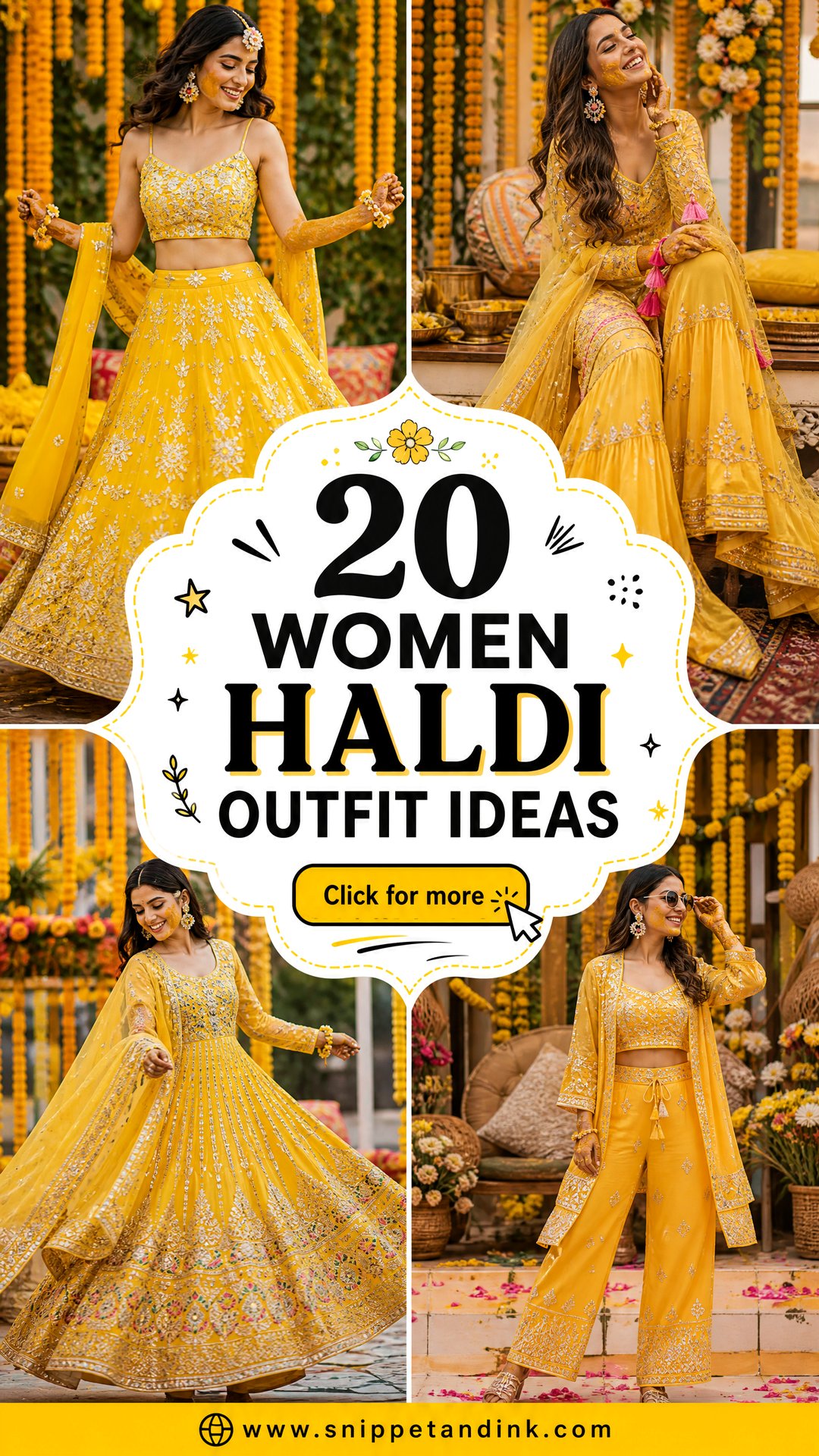
A Haldi outfit has a harder job than most wedding clothes. It has to survive turmeric paste, a low seat on the floor, splashes of water and a lot of hugging, all in daylight that shows every detail. When I dress brides and their families for this ceremony, I think about fabric and fit before color. The looks below range from sarees and light lehengas to relaxed kurta sets and fusion pieces, for the bride as well as sisters, bridesmaids and guests. Yellow is the tradition, but mustard, ivory, orange, green and florals all sit comfortably in the palette. For each one I note what to pair it with and what tends to trip people up on the day.
Dressing Around Turmeric Paste and a Low Seat
Before anyone falls for a color, I ask how the ceremony will actually run. Will the bride sit on a low stool or the floor? Is there water play afterward? Is it outdoors at noon? Those answers rule out more outfits than personal taste does.
- Cotton, cotton silk, georgette and chiffon breathe and wash well; heavy silk and velvet trap heat and stain permanently.
- Keep hems just off the floor. Anything that trails will soak up paste and water within minutes.
- Sleeves that can be pushed up or short sleeves stop paste working its way into the fabric at the wrist.
- Choose flat or low, grippy shoes. Wet paste on marble or tile is slippery.
- Plan floral or light costume jewelry for the ritual itself, since turmeric settles into filigree and stone settings.
For the bride, I often suggest two looks: something special for the portraits beforehand and a washable outfit for the paste. Brides who wear one outfit throughout should choose it expecting it to be stained.
When the Whole Family Is Asked to Wear Yellow
A dress code of yellow for everyone looks wonderful in group photos, but it can swallow the bride. I keep her in the brightest, warmest shade or give her the most embroidery, and steer the family toward softer lemon, mustard or yellow with floral prints. Agreeing on this a few weeks ahead saves last-minute swaps.
Guests who are unsure can simply wear any warm color, as orange, pink and green all sit well in the frame. Ask the hosts first if there is a theme, since some families prefer guests not to match the bride at all.
1. Yellow Chiffon Saree Haldi Outfit
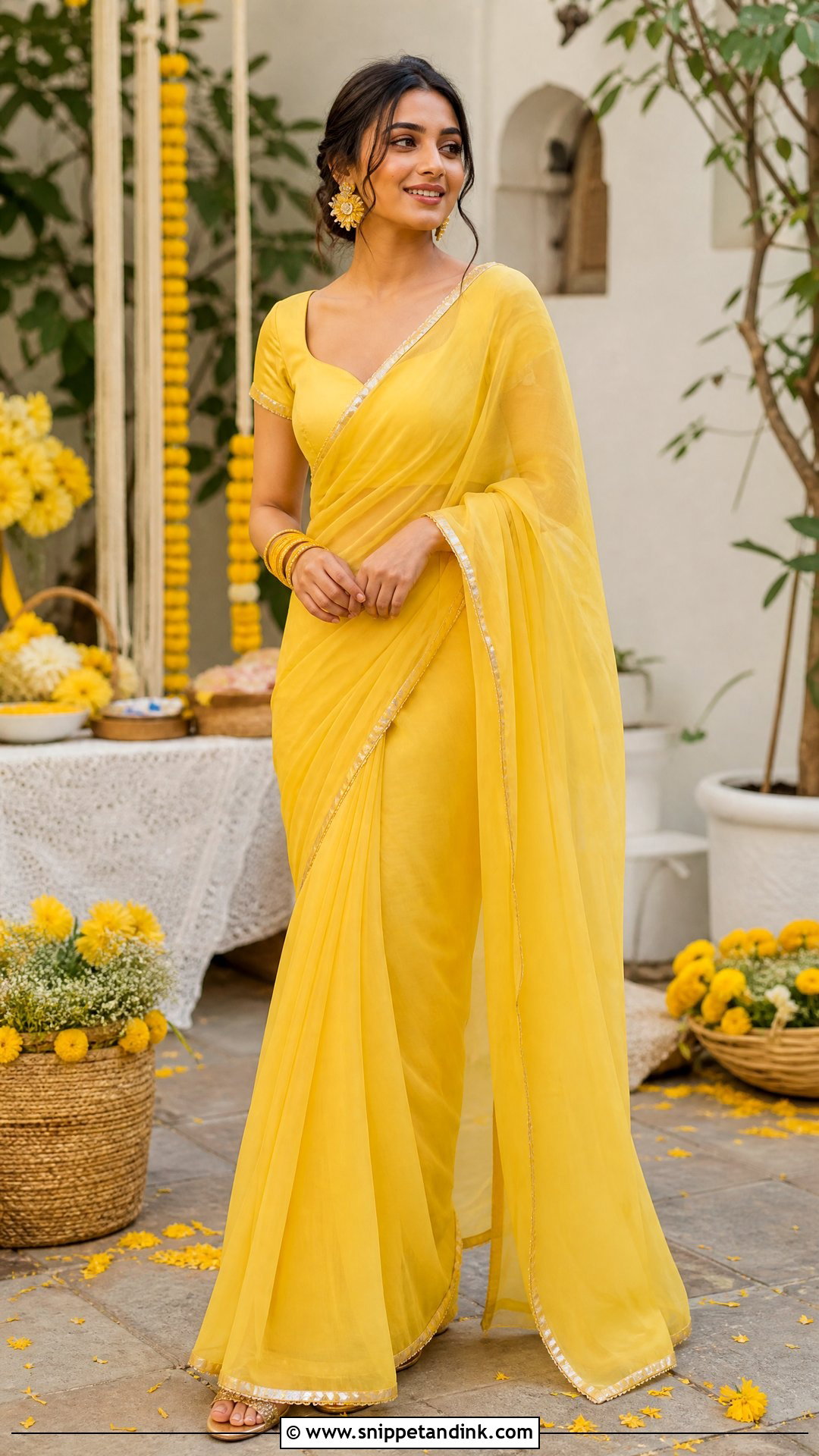
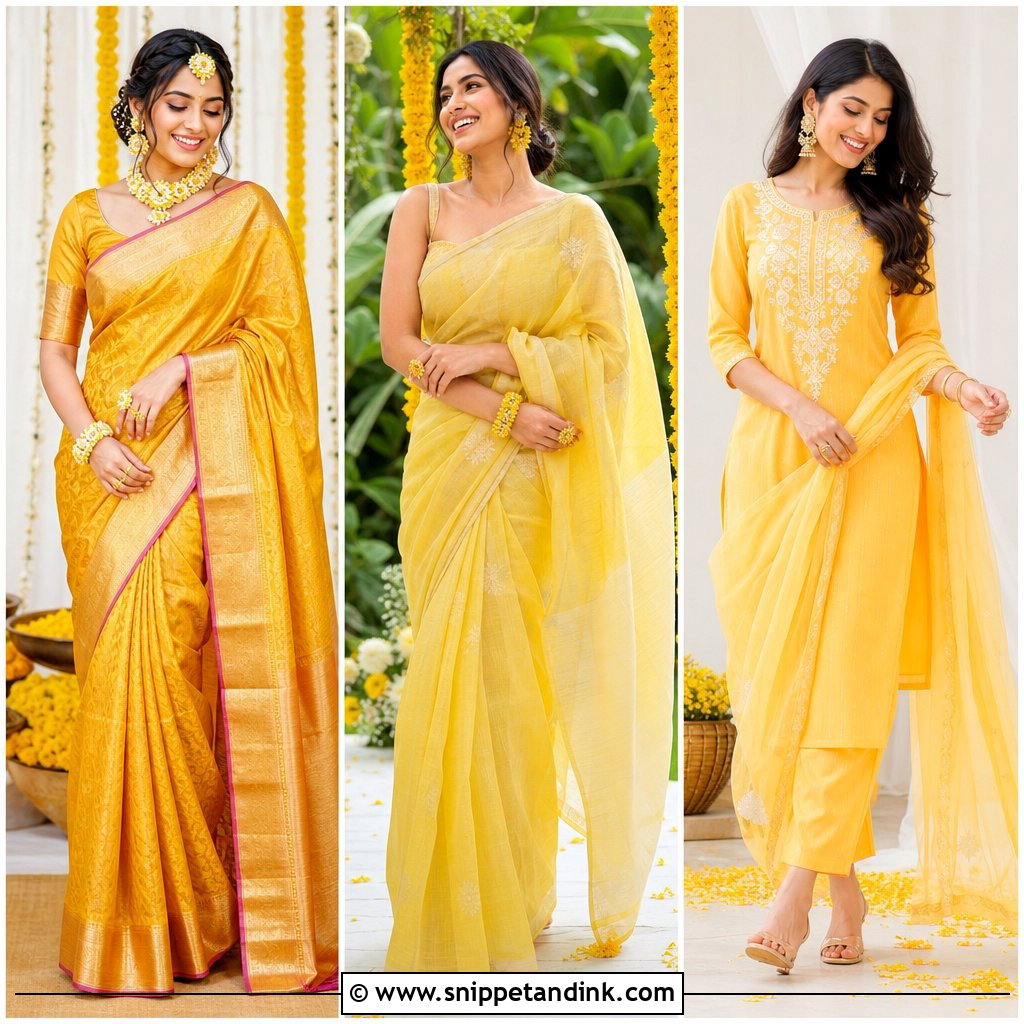
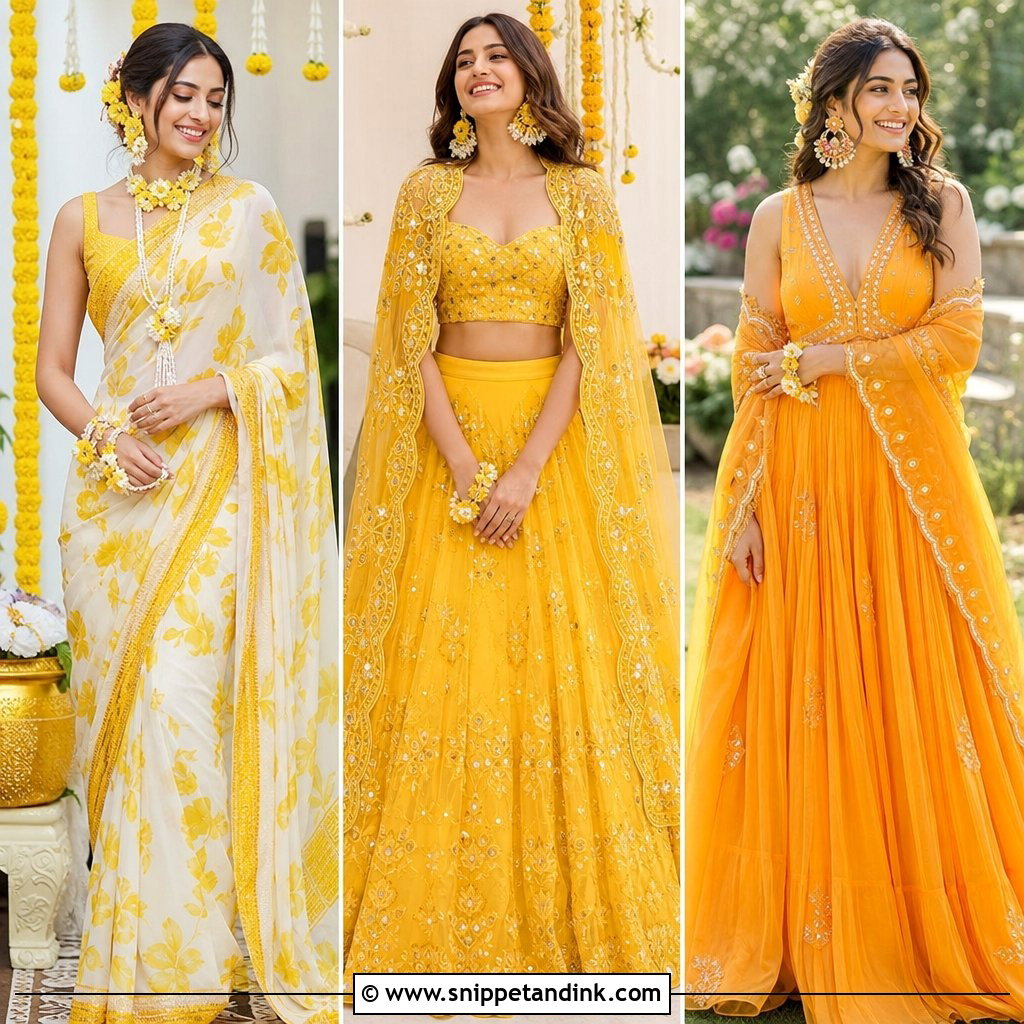
Chiffon is the lightest saree fabric I would put a bride in for a daytime Haldi, and it dries quickly if the ceremony turns into a water fight. Keep the saree plain, with a slim gota border or a little floral embroidery, and match the blouse color exactly. Chiffon slips, so I pin the pleats at the waist and the pallu at the shoulder with at least two safety pins each. Floral earrings, a small maang tikka and a few bangles are enough. Flat gold sandals or juttis are far safer than narrow heels when you are getting up and down from a low seat. A flower-trimmed low bun or soft waves both work.
2. Mustard Silk Saree Haldi Outfit
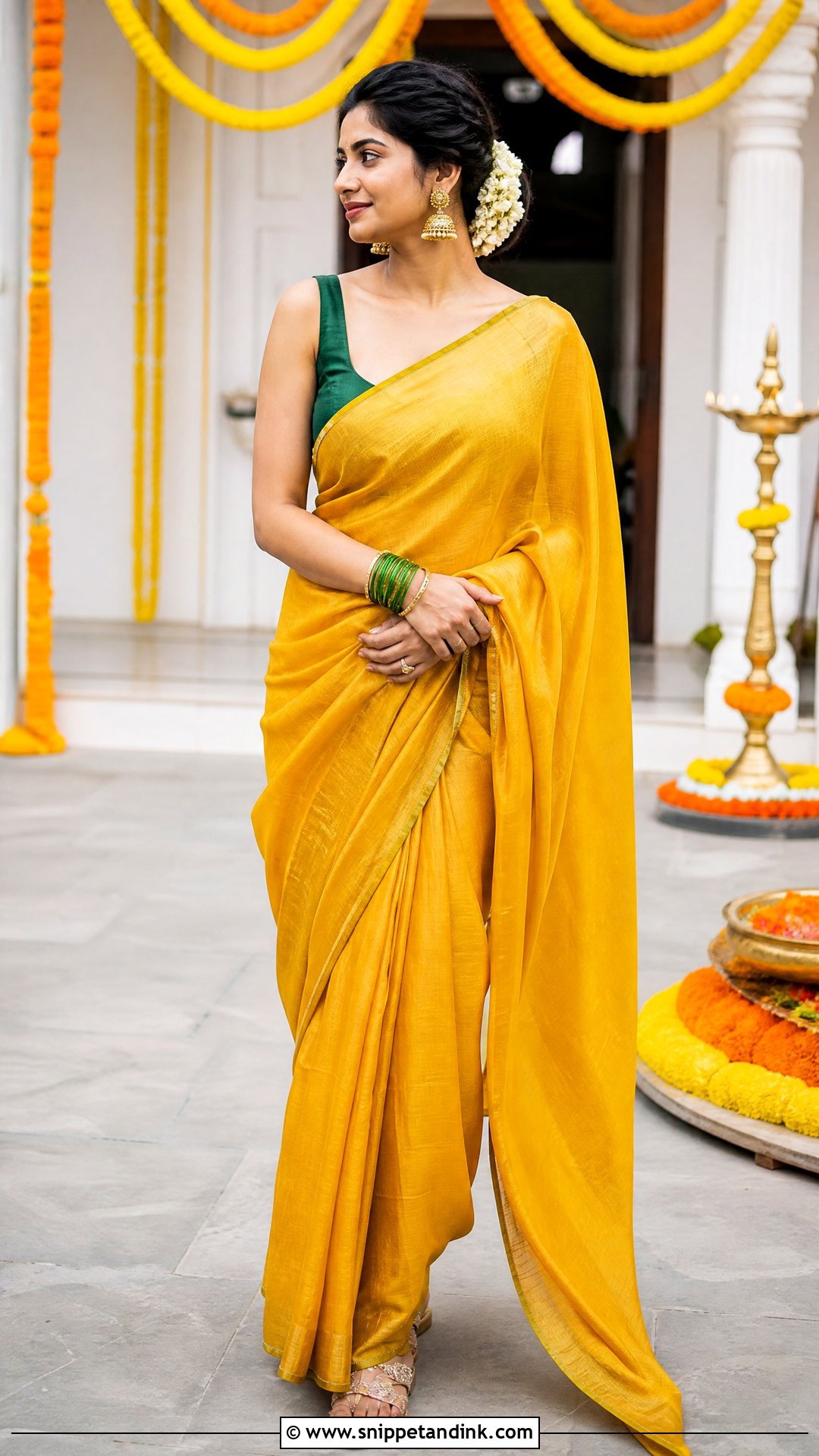
Mustard silk suits a more traditional family Haldi, and a bottle-green blouse gives it the contrast that reads well in photos. A plain mustard blouse is the quieter option. I suggest a lightweight silk blend with a restrained gold border, because heavy brocade is hot and stiff in afternoon sun. Turmeric does stain silk, and the zari border can discolor too, so if you own a precious handwoven piece, wear it for the portraits and change before the paste comes out. Small gold jhumkas, green glass bangles, a braided bun and gold kolhapuris complete it. This is a good choice for the mother of the bride or a married sister.
3. Floral Organza Saree Haldi Outfit
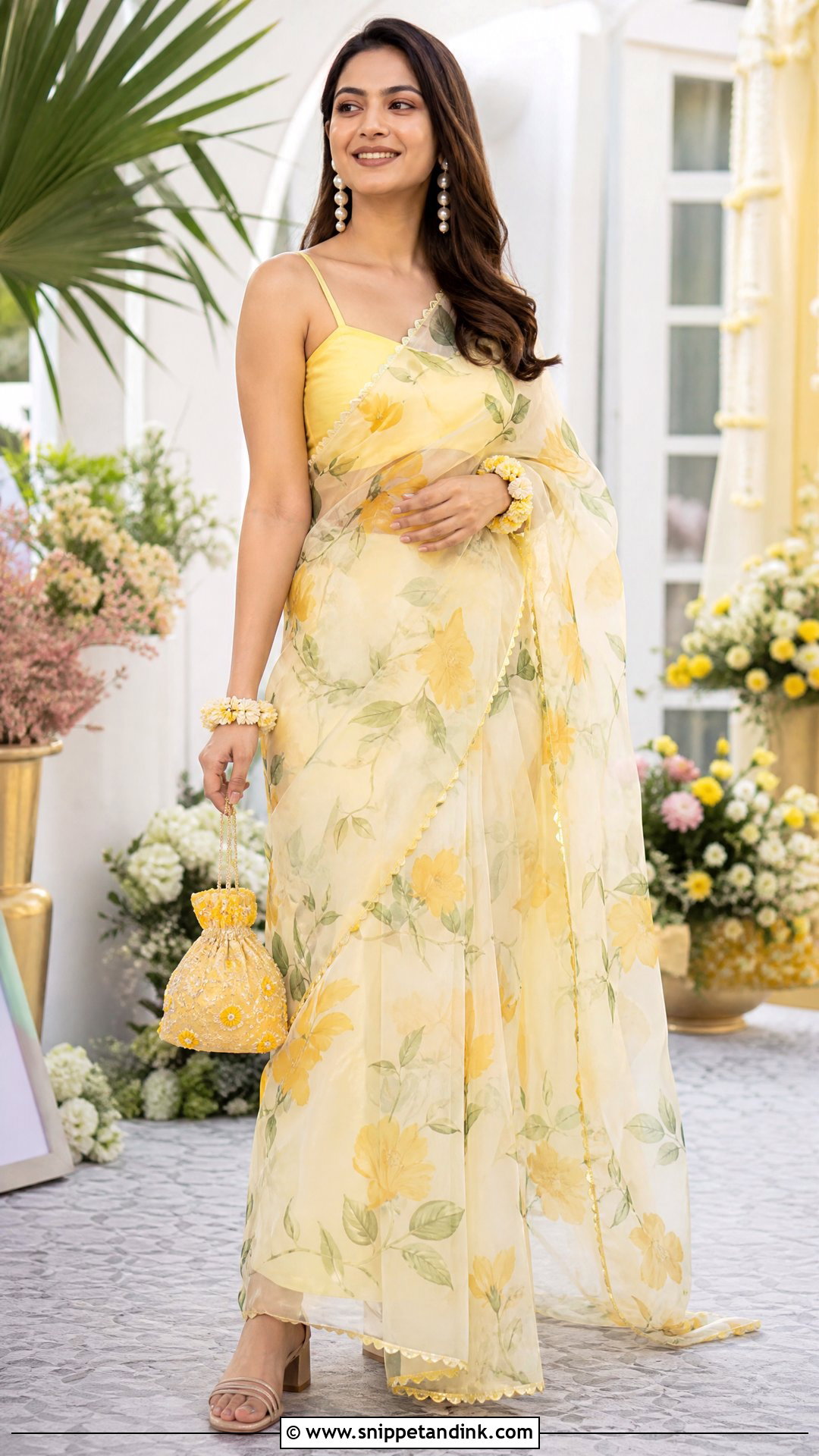
Organza holds its shape, which is lovely in pictures and awkward when you sit. A floral organza saree on a lemon or ivory base suits a garden ceremony, but the pleats will spring open unless I pin them at the waist and shoulder. Pick a fitted blouse in one shade from the print, so the eye has a resting point. Pearl earrings, floral bangles and a small potli are enough. Low block heels work on lawn better than flats, which can sink. It is a good alternative for bridesmaids and guests who do not want to wear head-to-toe yellow.
4. Pre-Draped Saree Haldi Outfit
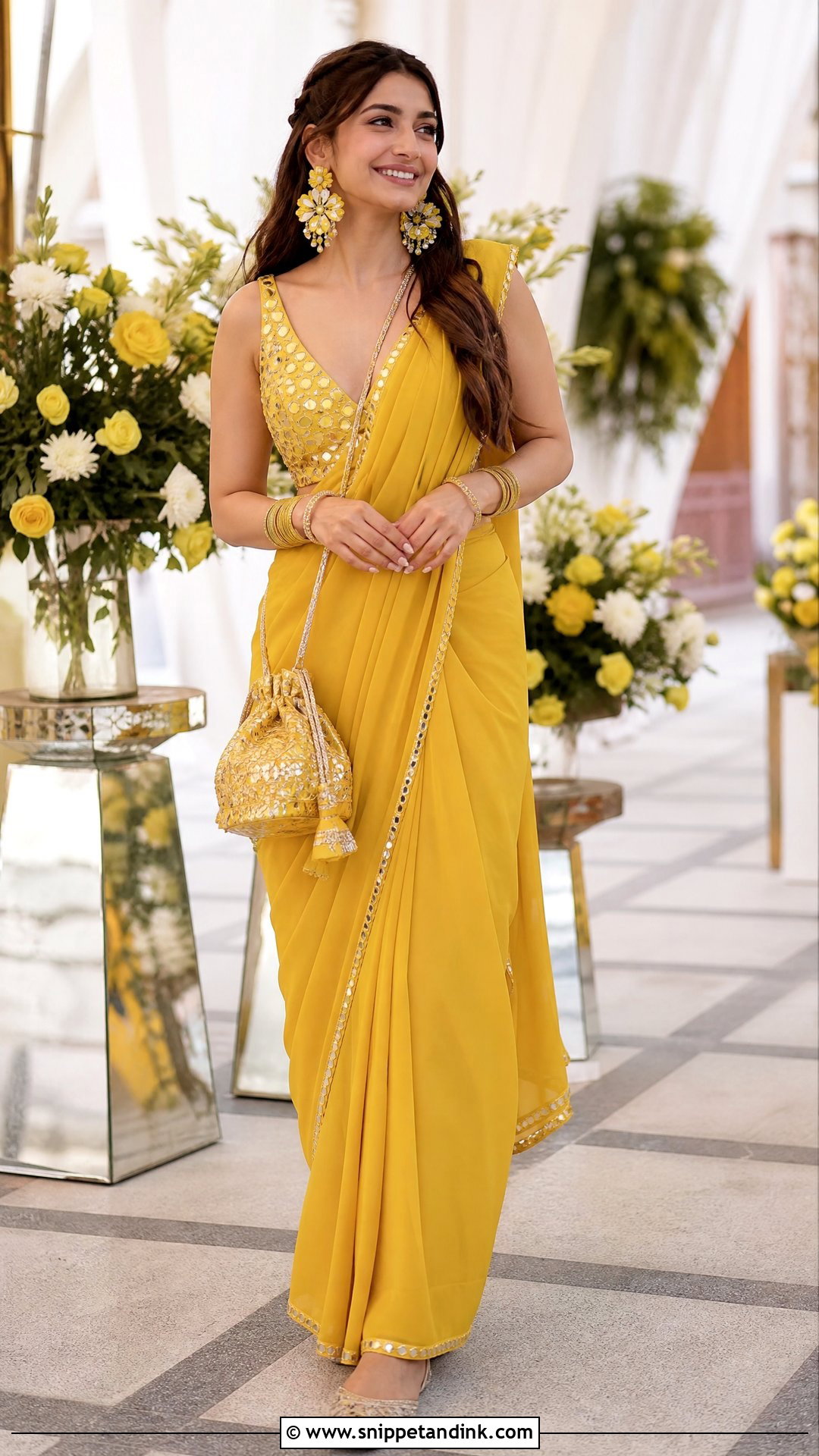
Love the look of a saree but dread re-pinning it every time you stand up? A pre-draped yellow saree solves that. The pleats are stitched in place, so they stay put through every ritual. I look for soft georgette with a stitched waist and a pallu short enough not to trail through the paste. A structured blouse with cap sleeves or light mirror work gives it shape. Choose cushioned juttis and a crossbody potli so your hands are free for the plates and diyas. This is the outfit I suggest to sisters and friends who will be helping all afternoon.
5. Yellow Mirror Work Lehenga Haldi Outfit
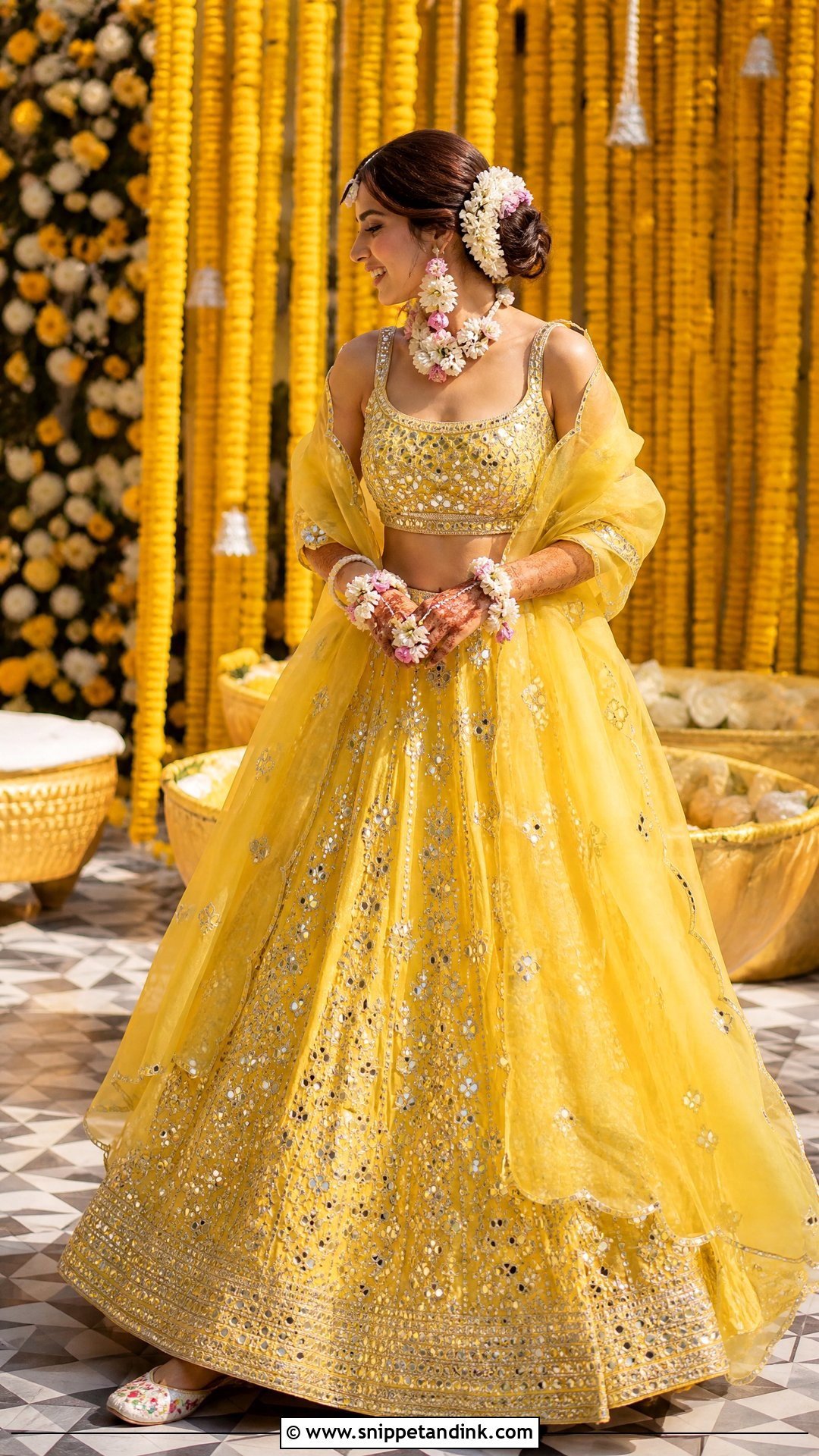
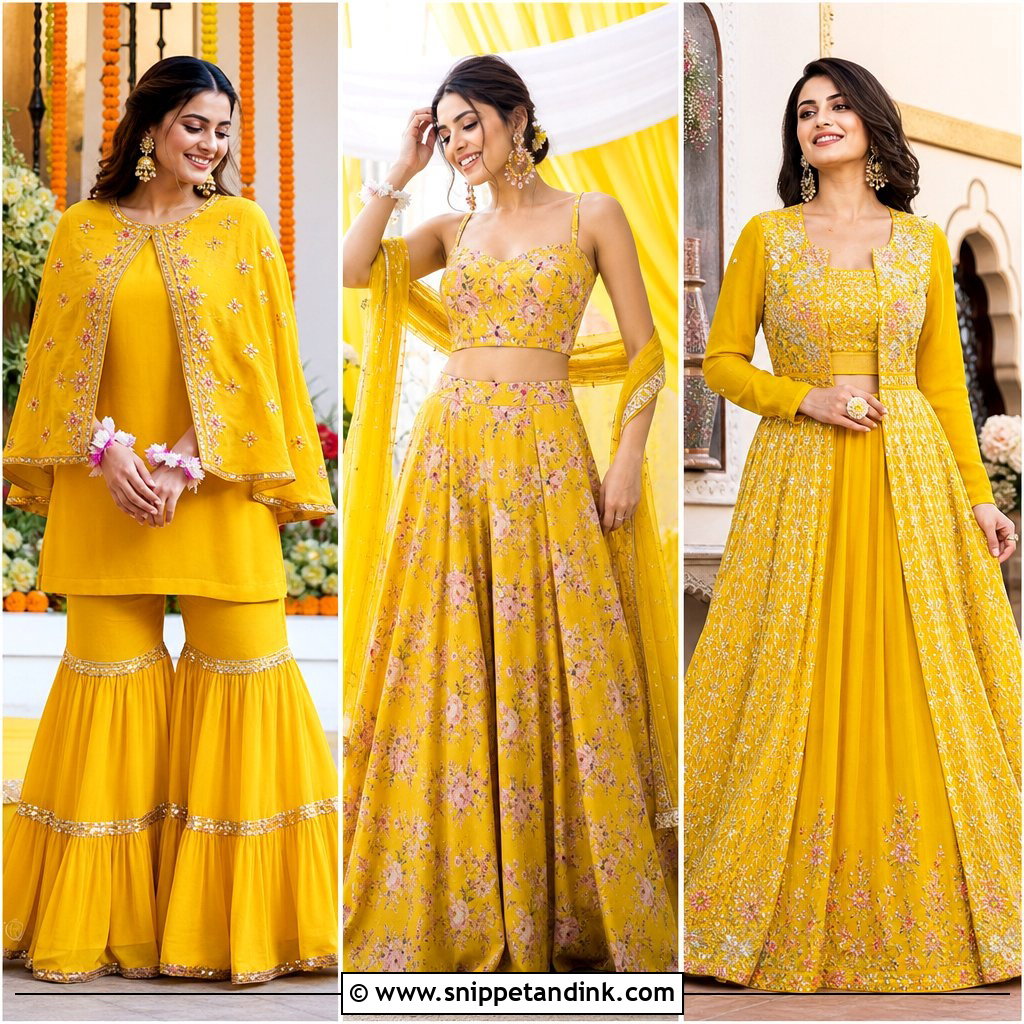
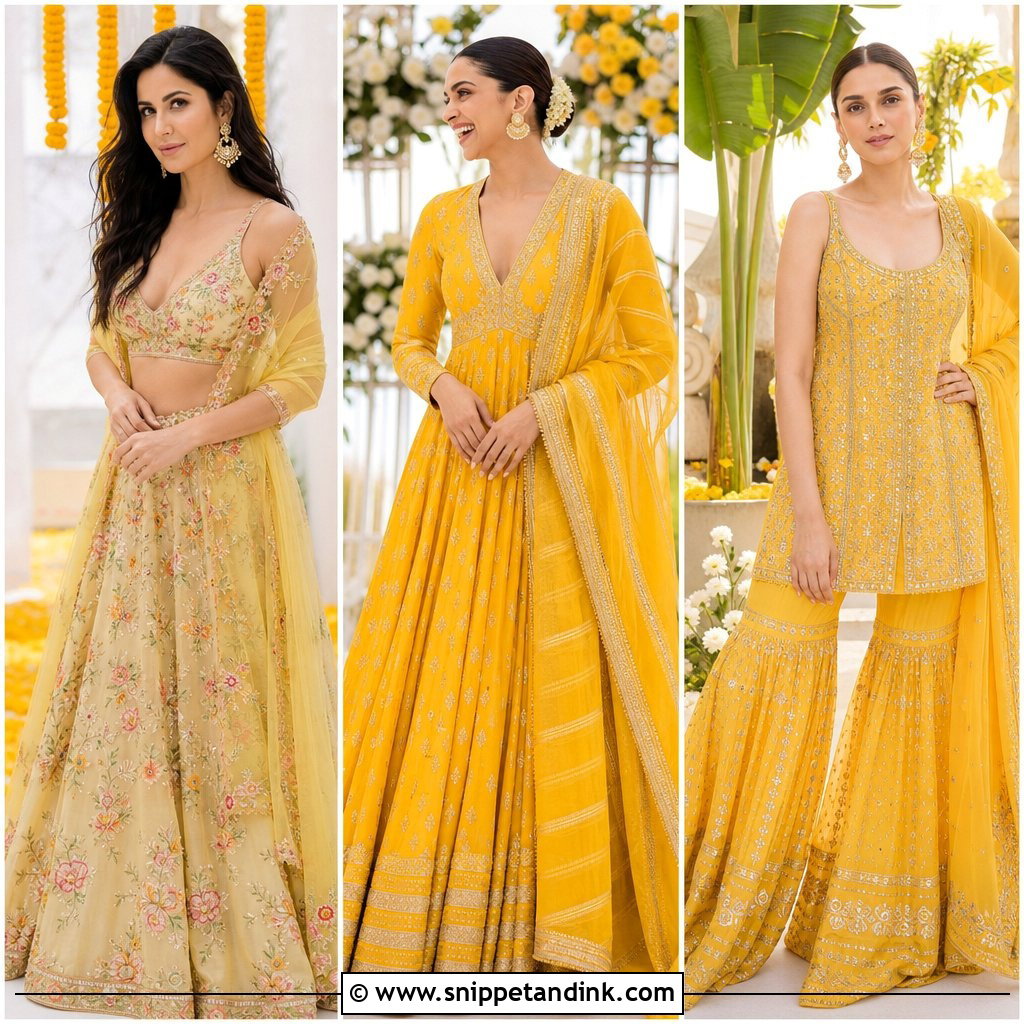
Mirror work catches the sun and gives a yellow lehenga real sparkle without sequins. For a bride, I choose a light flared skirt, a well-fitted blouse and a net or organza dupatta with only a narrow border. Ask the tailor to keep the hem just off the floor, since you will be walking on grass or wet tiles and sitting on a low stool. Small mirrors can scratch the skin under the arms if the blouse lining is thin, so check that at the fitting. Floral jewelry in white, pink or orange, waterproof eye makeup and platform sandals or juttis finish it. An elbow-sleeve blouse adds coverage if you want it.
6. Floral Print Lehenga Haldi Outfit
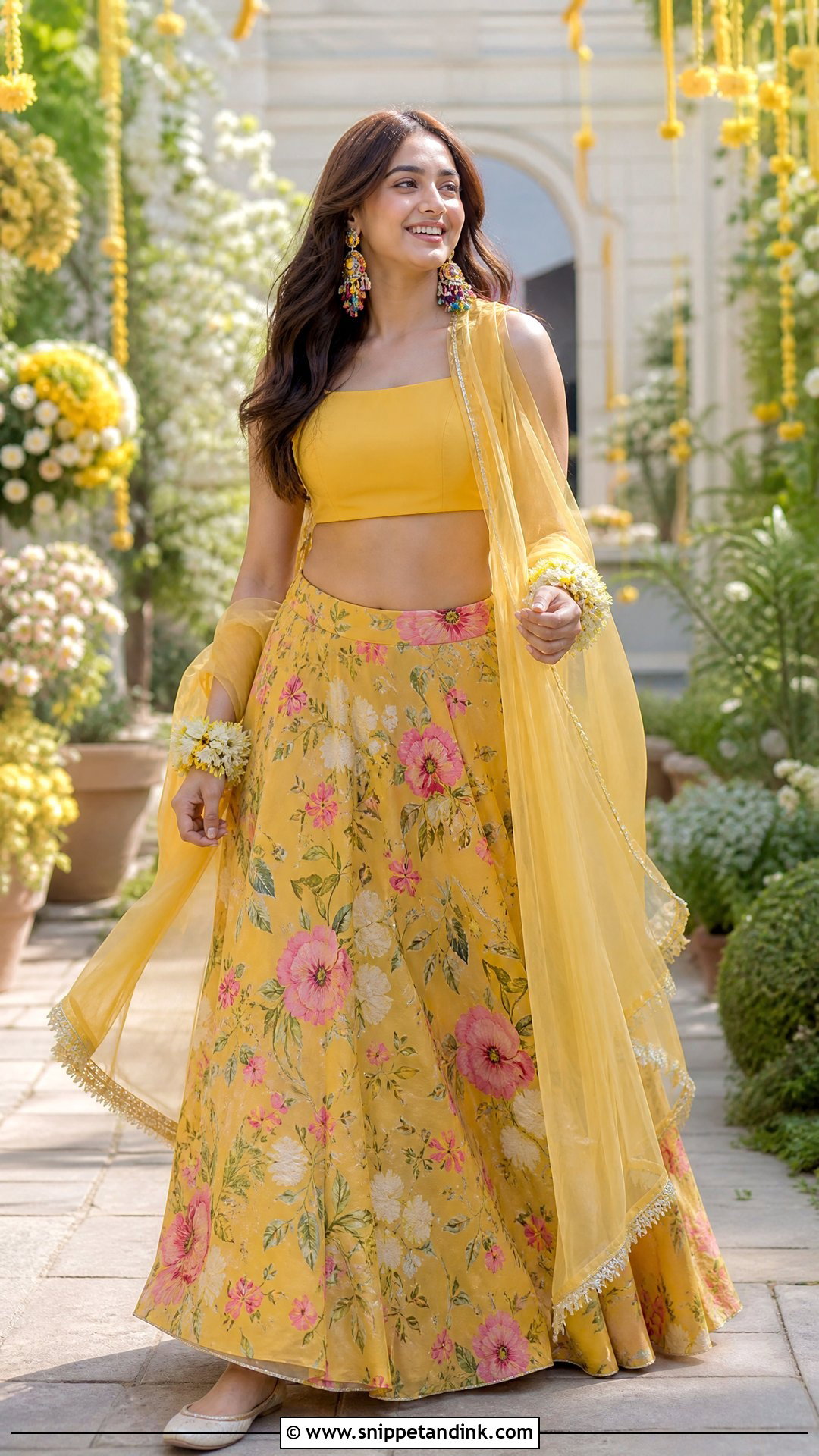
A printed lehenga already carries a lot, so I keep everything else plain. Pair a yellow skirt covered in pink, orange or green flowers with a solid crop blouse and a sheer dupatta; or reverse it with a printed blouse and a solid skirt for a calmer effect. Skip sequins and layered necklaces, since the print is the decoration. Colorful bead earrings, flower bracelets and neutral juttis are enough. A side braid tucked with small blossoms holds up well outdoors. The set is easy to rewear separately afterward, which younger sisters and bridesmaids often appreciate.
7. Yellow Skirt And Crop Top Haldi Outfit
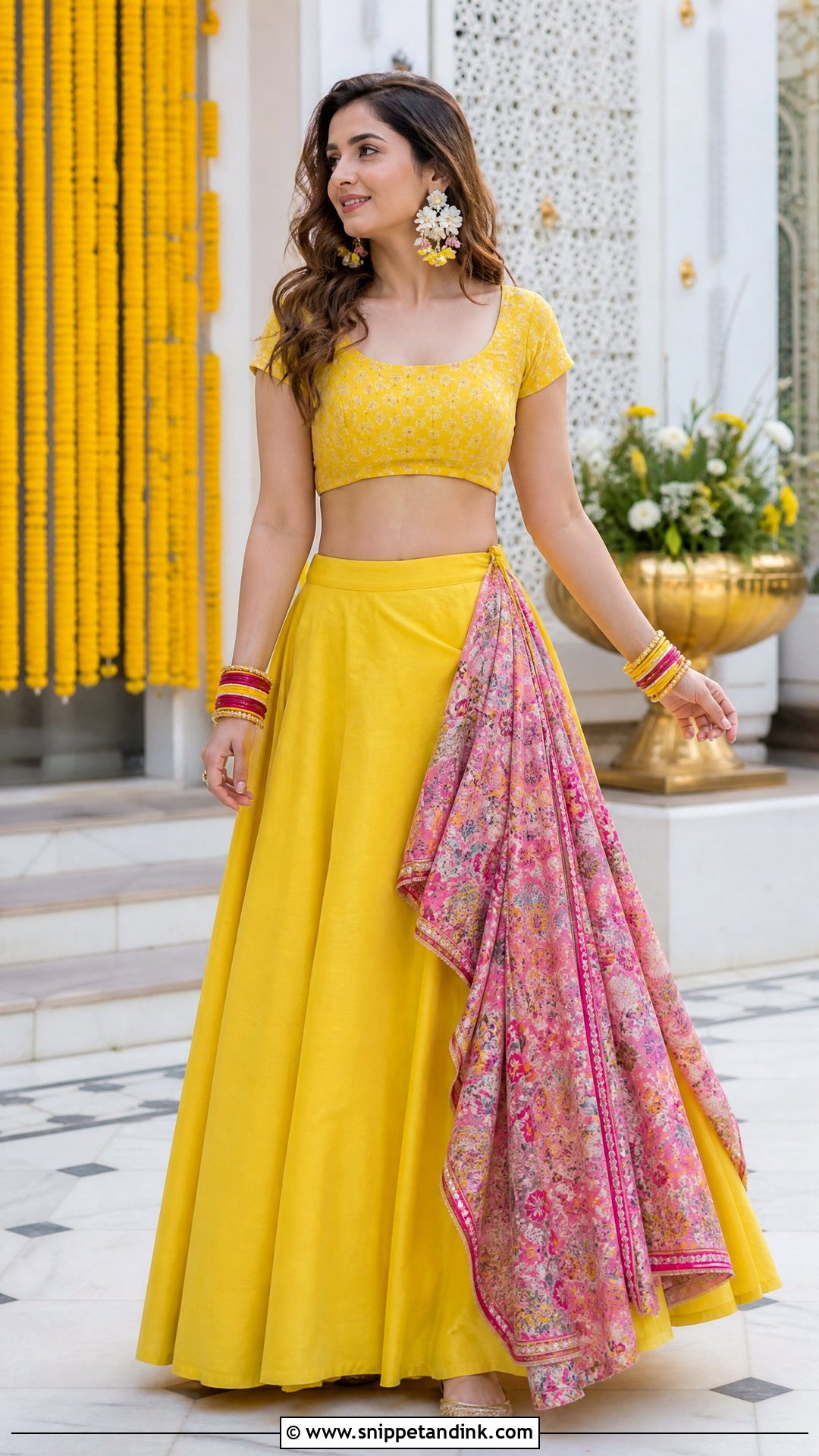
Ask the tailor to set the waist of the skirt where you are most comfortable sitting, since that single choice decides how this look feels by the end of the day. A yellow skirt and crop top in cotton silk, georgette or Chanderi is relaxed without looking casual. Choose a top with proper straps or short sleeves for support. A printed dupatta over one shoulder, tucked into the waistband, keeps both hands free. Oversized floral earrings, a few bright bangles, gold juttis and a half-up style or braid suit it. It is a natural choice for bridesmaids and younger guests.
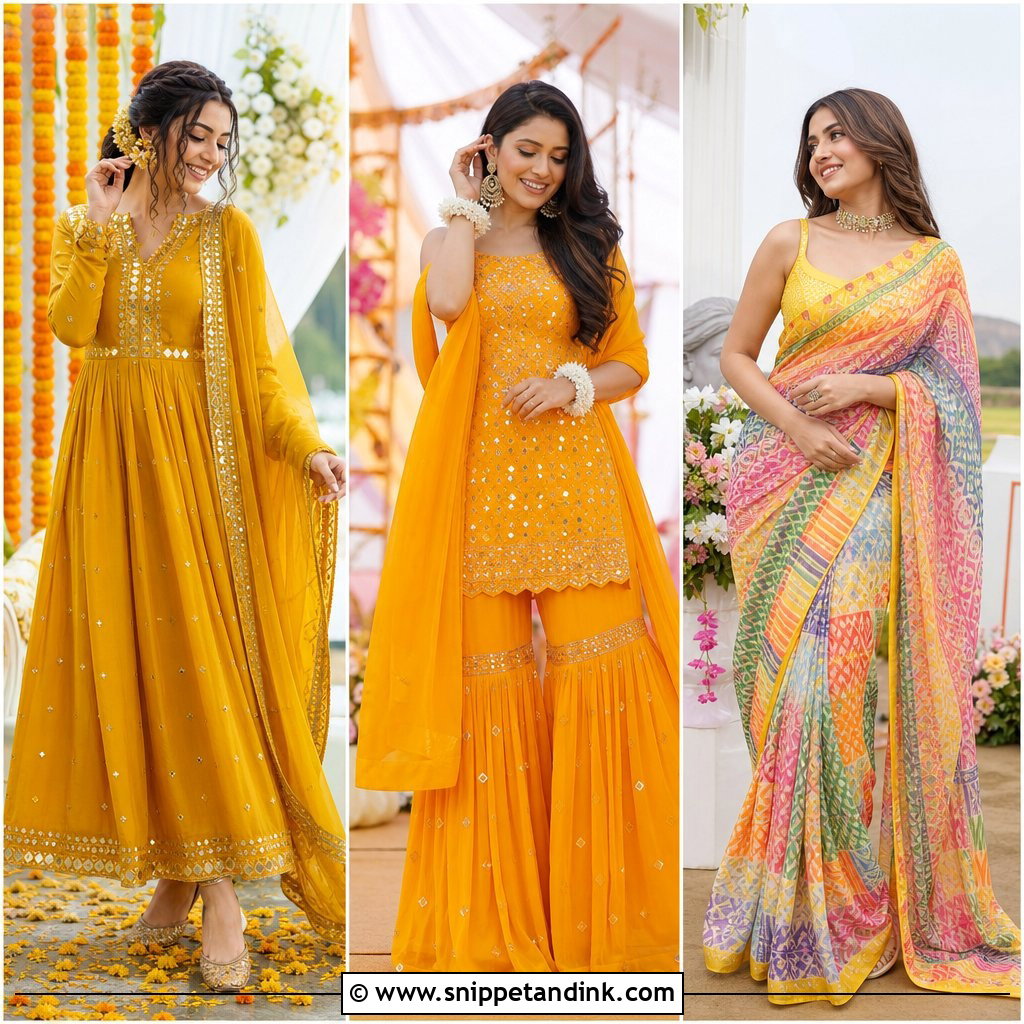
8. Yellow Sharara Haldi Outfit
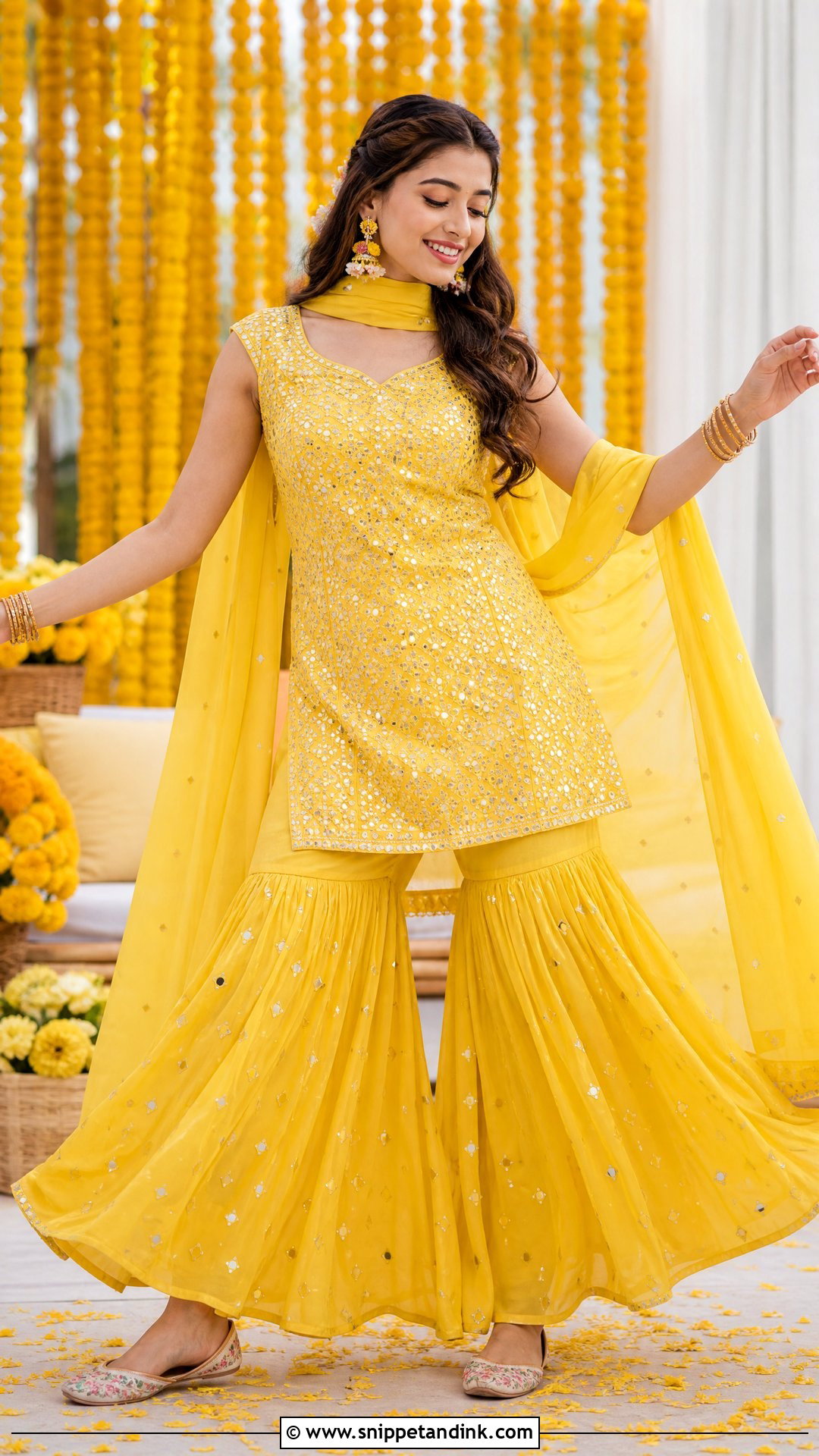
If there will be dancing, I put people in shararas. The wide legs move like a skirt but cannot trip you on stairs. A short yellow kurta with mirror work, thread embroidery or gota pairs well with a generous flare and a light dupatta pinned at both shoulders. Floral jhumkas, slim bangles and flat embroidered juttis keep it practical. A high ponytail or side braid stops hair falling into the paste bowl. On petite frames I shorten the kurta to hip length so the flare starts lower; taller women can carry a longer kurta.
9. Yellow Gharara Haldi Outfit
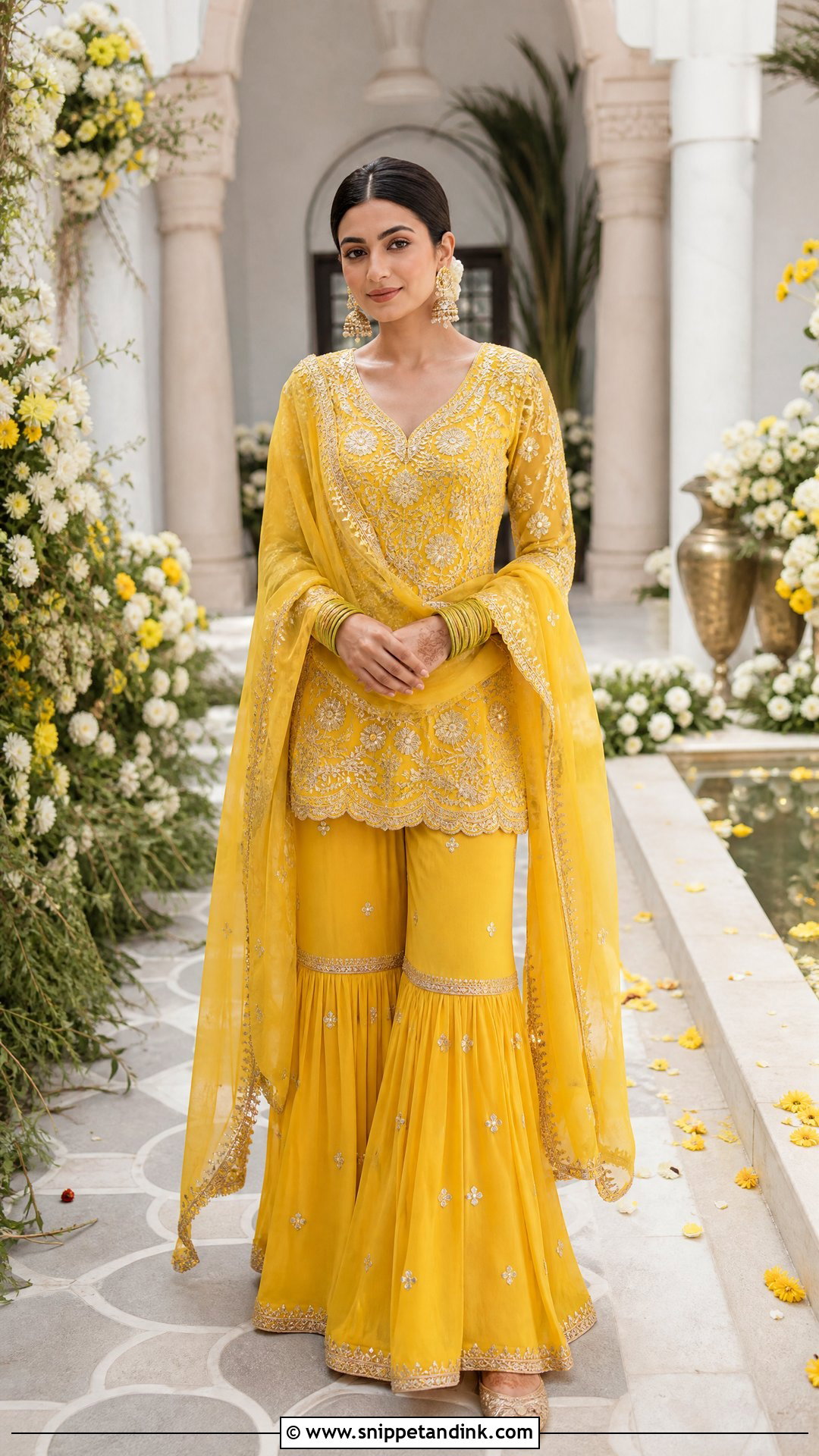
A yellow gharara set is fitted to the knee and then flares, with a gathered joint that I always check at the fitting, since a joint set too high makes the legs look short. Pair it with a short embroidered kurti and a chiffon dupatta edged in gota. It looks dressier than a kurta set without the weight of a lehenga. Medium jhumkas, a delicate maang tikka, glass bangles and pointed juttis or mojaris suit its traditional character. A center-parted low bun is classic; loose curls soften it for sisters, cousins and close friends.
10. Yellow Anarkali Haldi Outfit
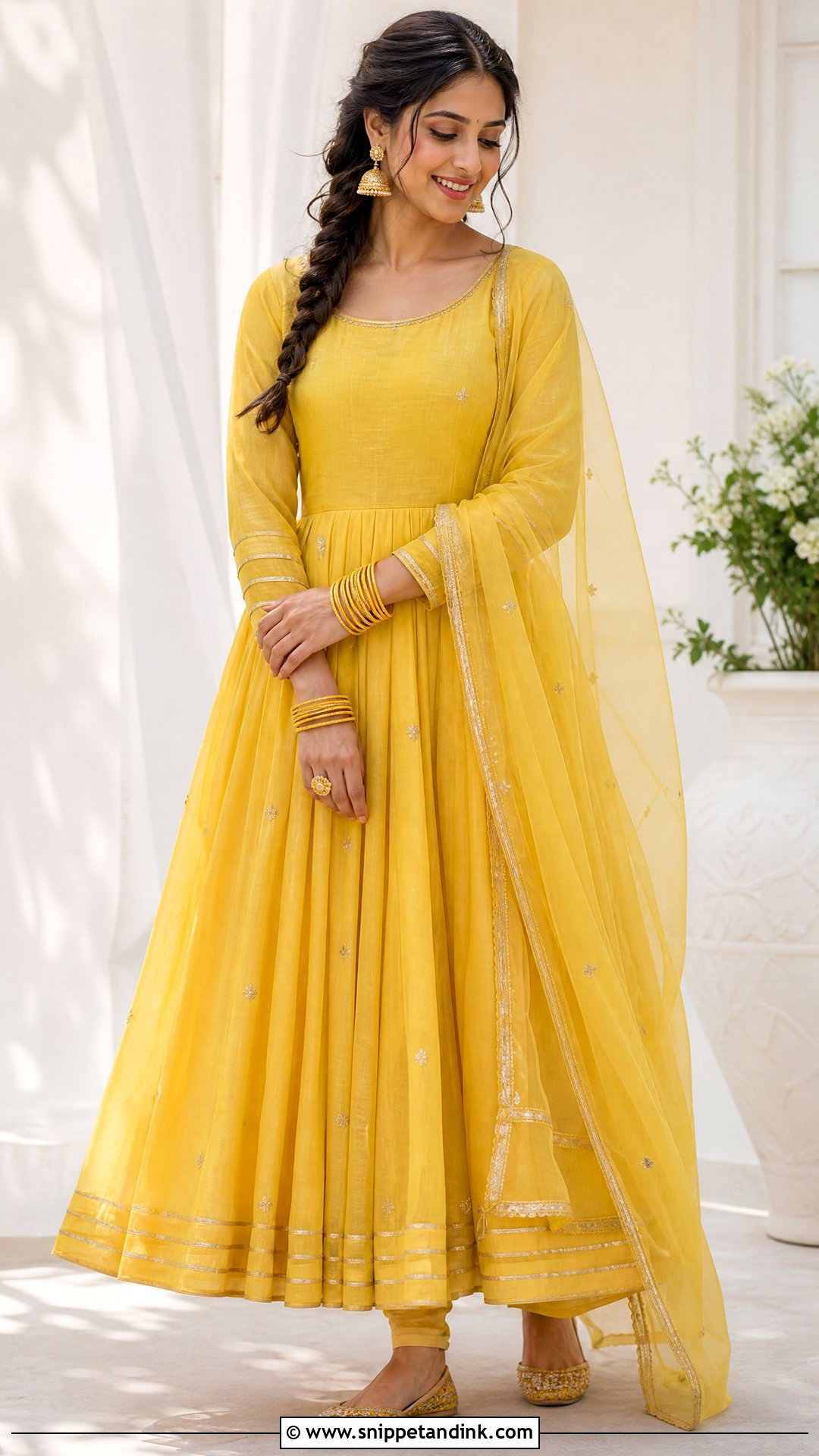
Few silhouettes are as forgiving as an Anarkali. The fitted bodice and full skirt balance most body shapes, and the length gives coverage without any pinning. Choose calf or ankle length in cotton silk, Chanderi or georgette, with light gota at the neckline and hem. Fitted pants underneath and a sheer dupatta over one shoulder complete it. I suggest calf length for anyone sitting on the floor for the rituals, since a floor-length hem soaks up whatever is spilled. Traditional jhumkas, a small bindi, stacked yellow and gold bangles and embroidered flats work across every age group.
11. Yellow Chikankari Kurta Haldi Outfit
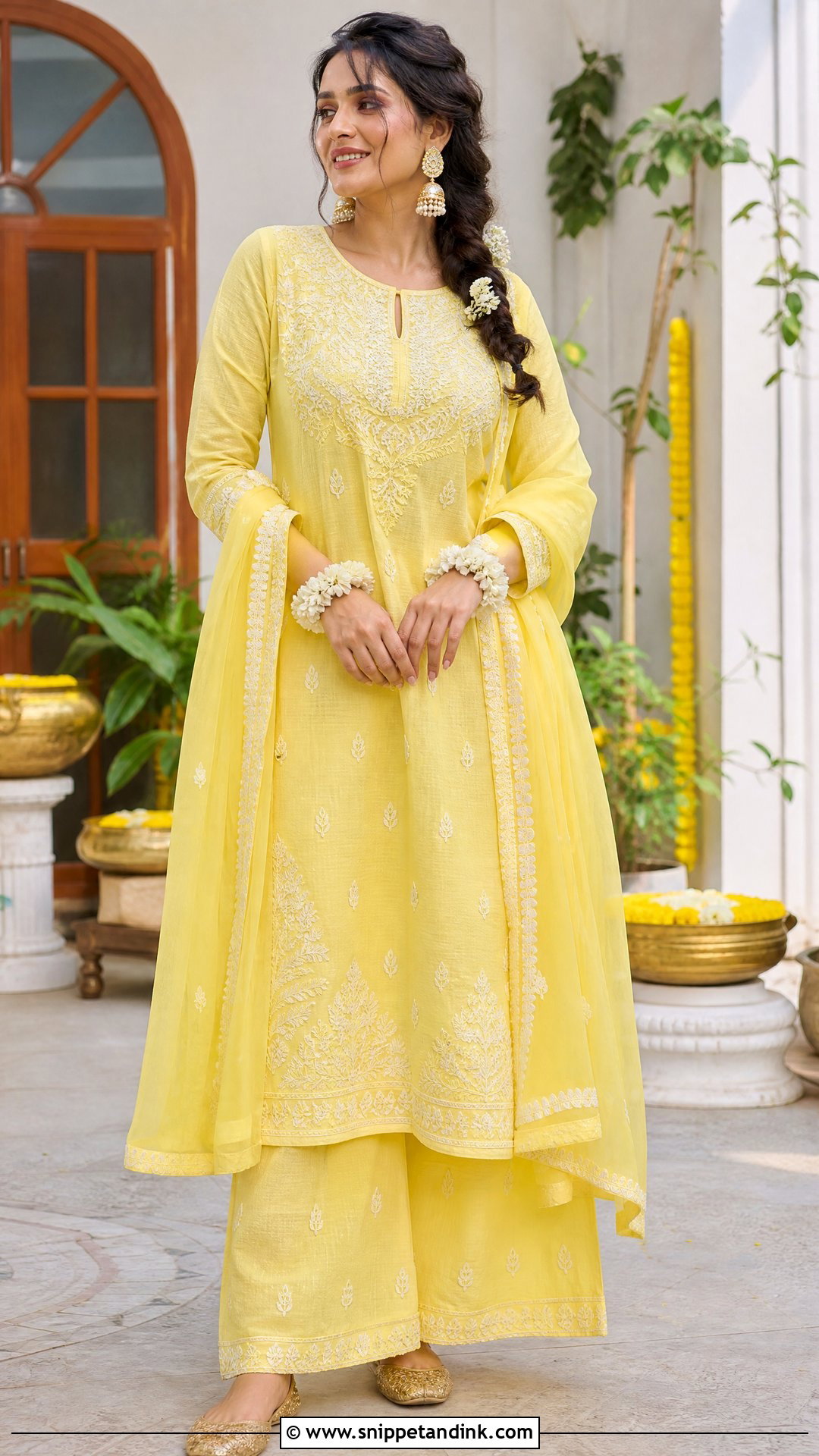
Chikankari is hand embroidery on fine cotton or georgette, and its delicacy is the point, so I keep the styling around it light. A straight or gently flared yellow kurta with palazzos and a chiffon dupatta suits an intimate home Haldi. White thread looks crisp on lemon; tone-on-tone is softer. Thin cotton chikankari can be sheer in sunlight, so ask for a matching lining or wear a slip. Pearl jhumkas, white flower bracelets and gold juttis finish it. It is the outfit I suggest to brides who prefer minimal dressing, and to mothers who want something they will wear again.
12. Yellow Kurta And Palazzo Haldi Outfit
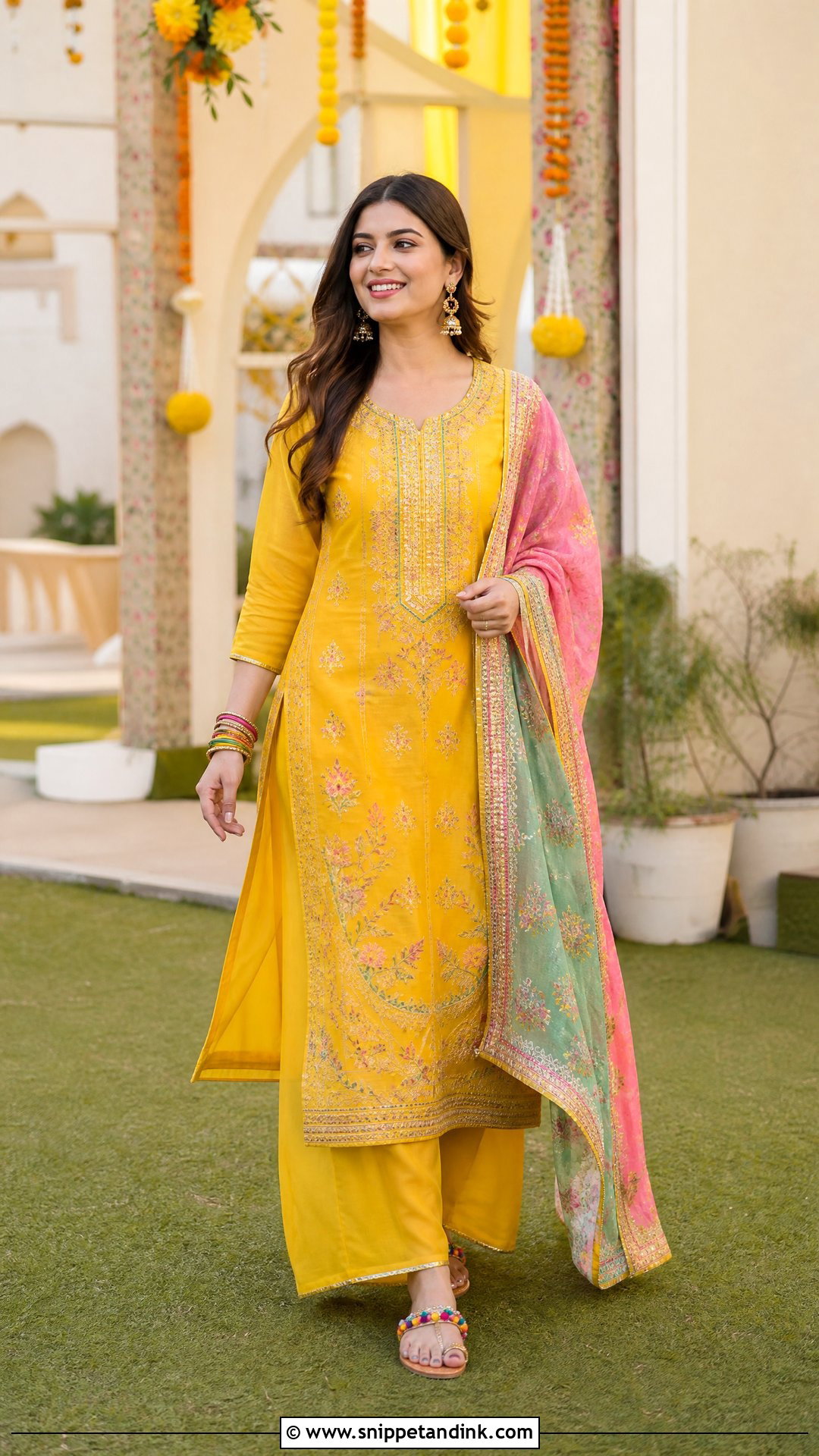
For anyone who will be on their feet all day, a kurta and palazzo set is the most practical thing in this list. Pick a knee-length straight kurta with small embroidered details and high-waisted palazzos that skim the leg. A printed dupatta in pink, green or orange adds contrast. Side slits and a slightly shaped waist give more definition if you want it. Lightweight hoop jhumkas, a few colorful bangles and cushioned flat sandals keep you comfortable. A braided ponytail stays tidy while you set up decor or chase photos.
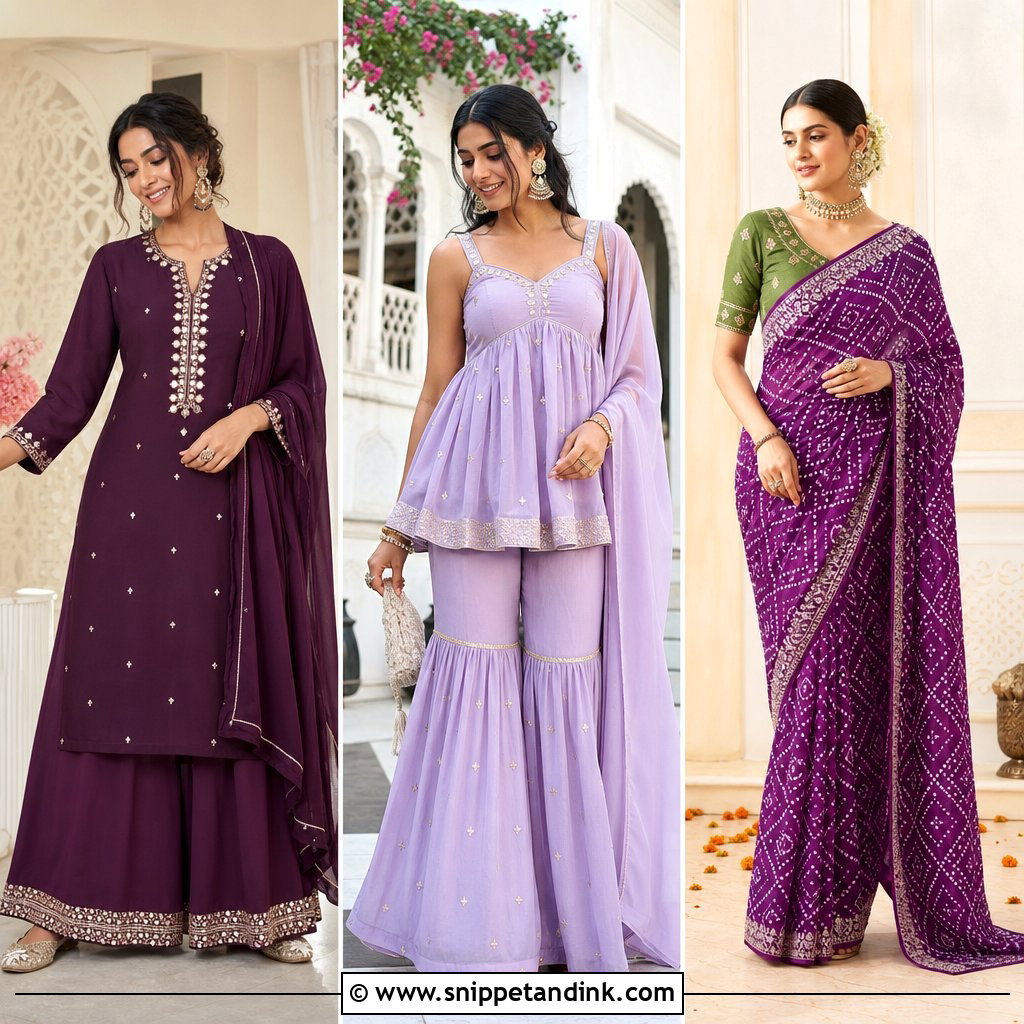
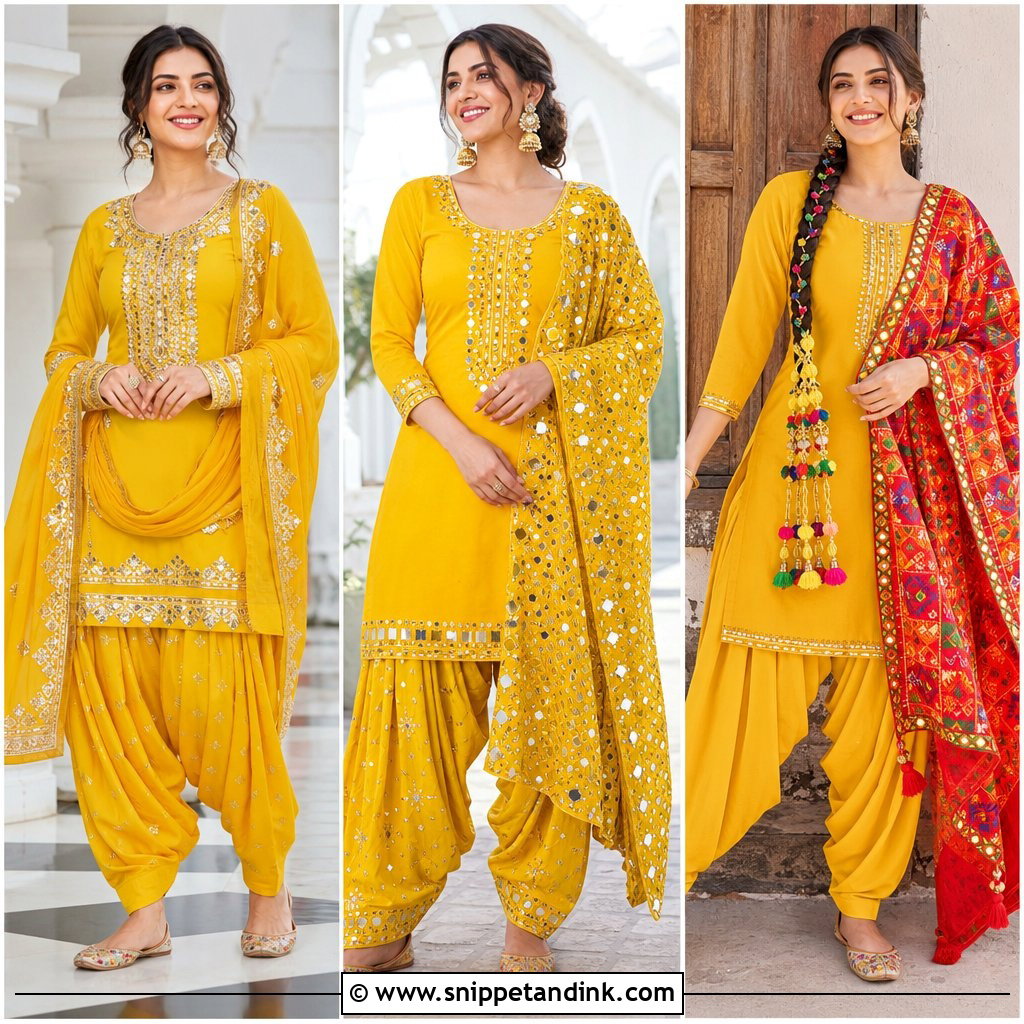
13. Yellow Bandhani Suit Haldi Outfit
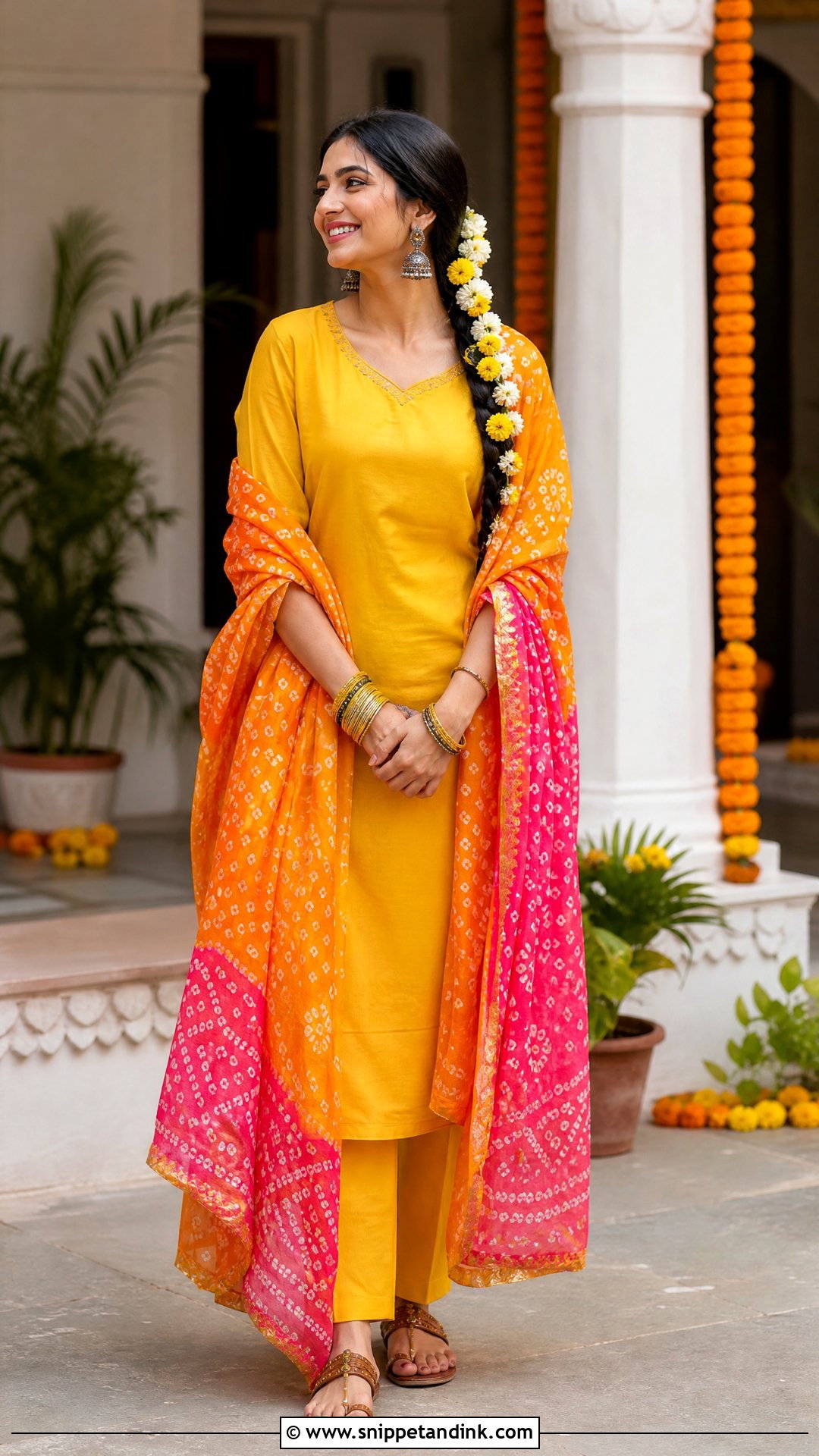
Bandhani is tie-dyed by hand, so the dots are slightly irregular, and that texture is what makes it feel traditional without embroidery. Wear a yellow Bandhani kurta with straight pants, or put a vivid Bandhani dupatta in orange, pink or red over a plain yellow kurta. Keep the cut simple so the pattern does the work. New Bandhani can bleed when wet, so it is worth a quick cold rinse beforehand if the ceremony involves water. Oxidized silver earrings, mixed bangles, brown kolhapuris and a braid with a few flowers suit it, and the set will work again at festivals.
14. Peplum Top And Dhoti Pants Haldi Outfit
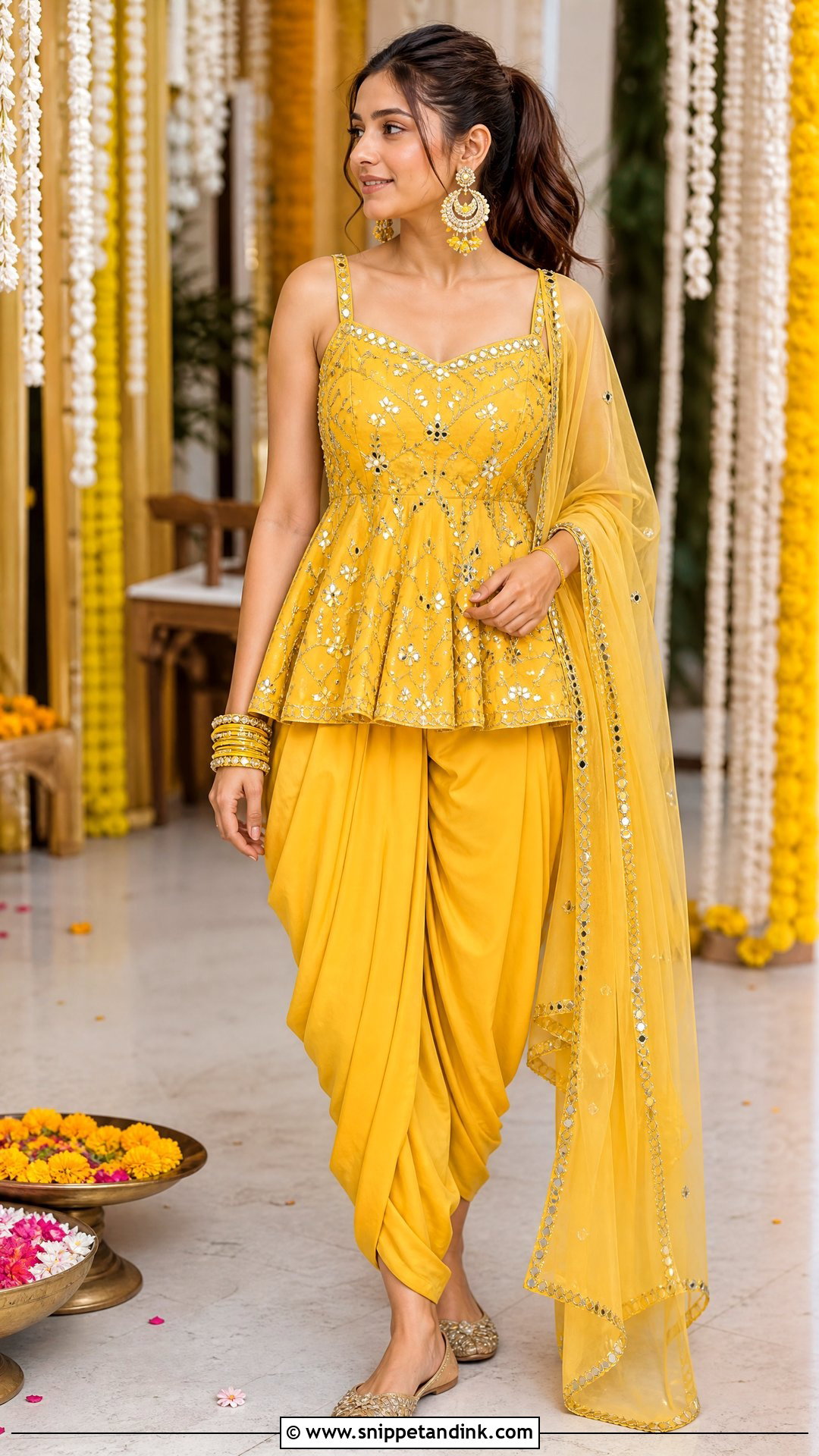
Dhoti pants hang low between the legs, which makes sitting cross-legged easy, and a peplum top defines the waist that the drape otherwise hides. Choose a fitted yellow peplum with mirror accents or a modest embroidered neckline and soft dhoti pants in the same shade. A sheer dupatta is optional. The two fit points I check are the waist, which must be secure, and the ankle cuffs, which should not pool over the shoes. Floral chandbalis, statement bangles and metallic juttis finish it, with a high ponytail to show the neckline. Bridesmaids and fashion-forward brides tend to pick this one.



15. Yellow Ethnic Co-Ord Haldi Outfit
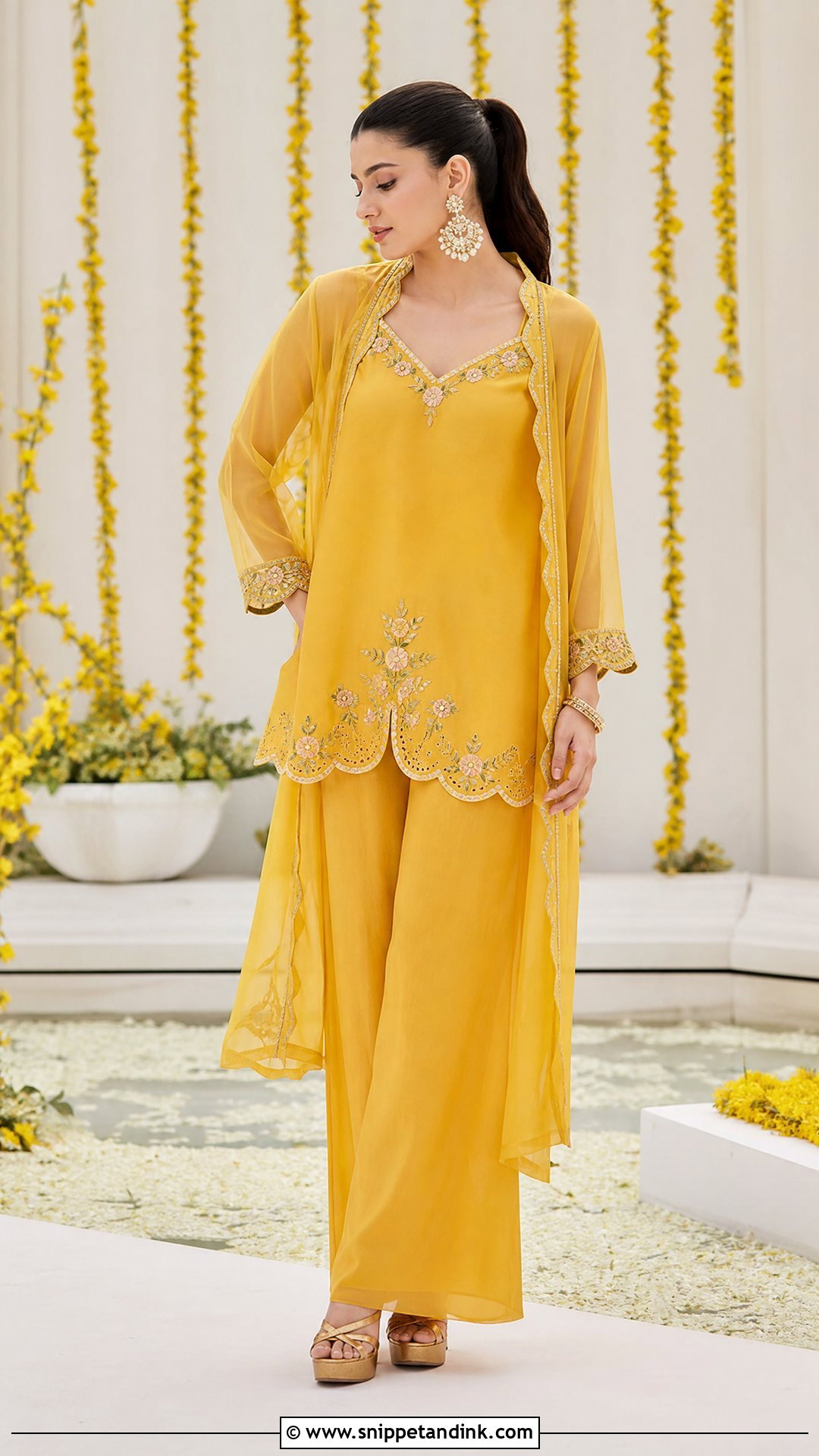
Co-ords are the quickest way to look put-together without any pinning. A cropped or hip-length top with wide-leg pants in cotton, linen blend or crepe reads ethnic once it has block prints, scalloped edges, tie closures or a little mirror work. Linen creases quickly, so cotton or crepe is better if you will be sitting for long. A light organza jacket adds coverage. Bold earrings, slim bangles, platform sandals and a sleek ponytail suit a casual home ceremony or a bridesmaid group, and the pieces mix with your own wardrobe afterward.
16. Yellow Cape Lehenga Haldi Outfit
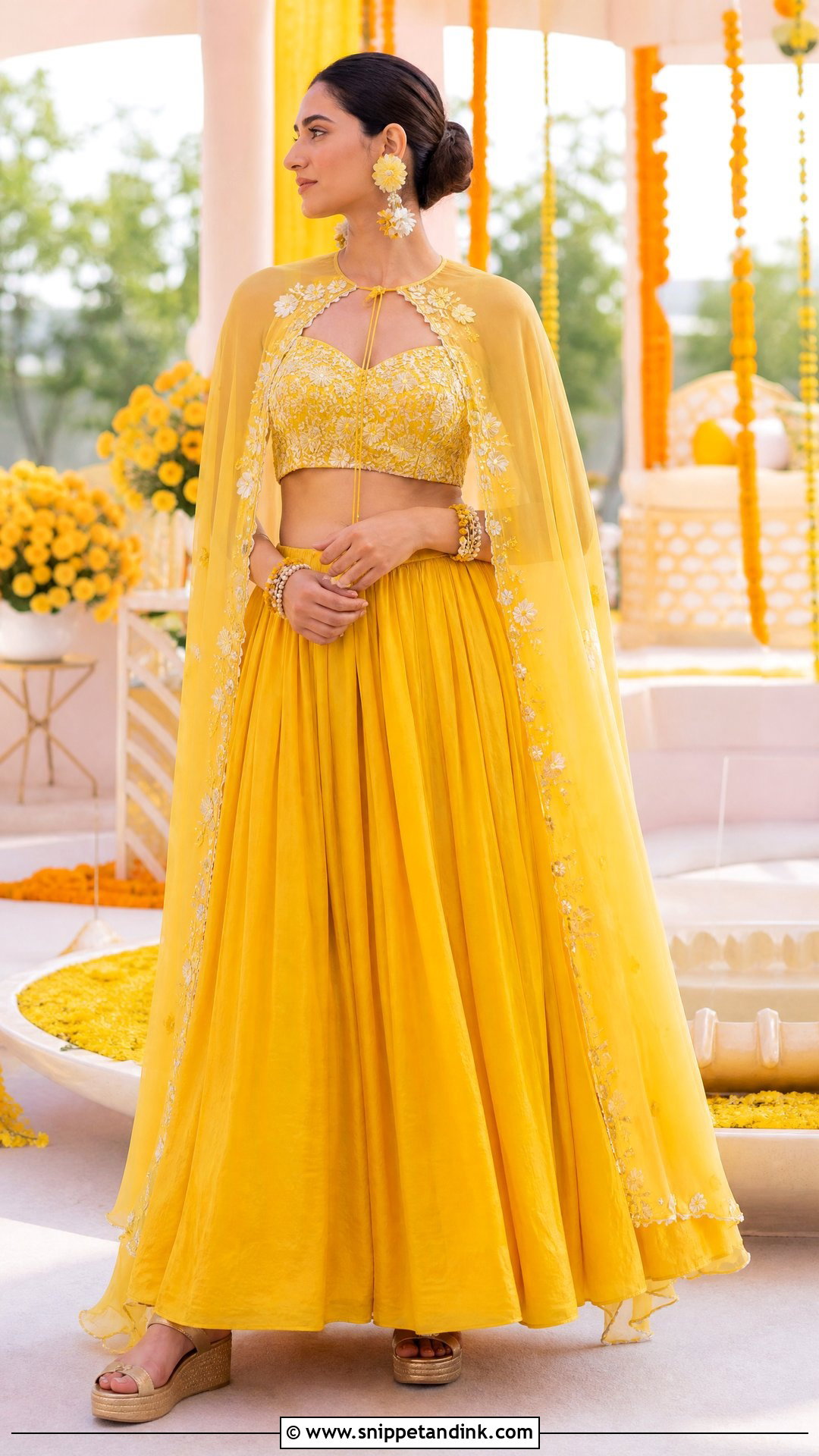
A cape lehenga replaces the dupatta with a sheer cape over the shoulders, which means one less thing to pin and hold. Start with a plain or lightly printed yellow skirt and fitted blouse. A waist-length cape is easier to move in; longer versions give more coverage in photos but catch on chair backs. Keep jewelry to floral earrings, a ring and a few bangles, since the cape is already the feature. Wedges or embellished juttis stay stable under the skirt, and a sleek low bun keeps the neckline visible. It suits brides who want something distinctive and bridesmaids who want to look different from a standard lehenga.
17. White Kurta And Yellow Dupatta Haldi Outfit
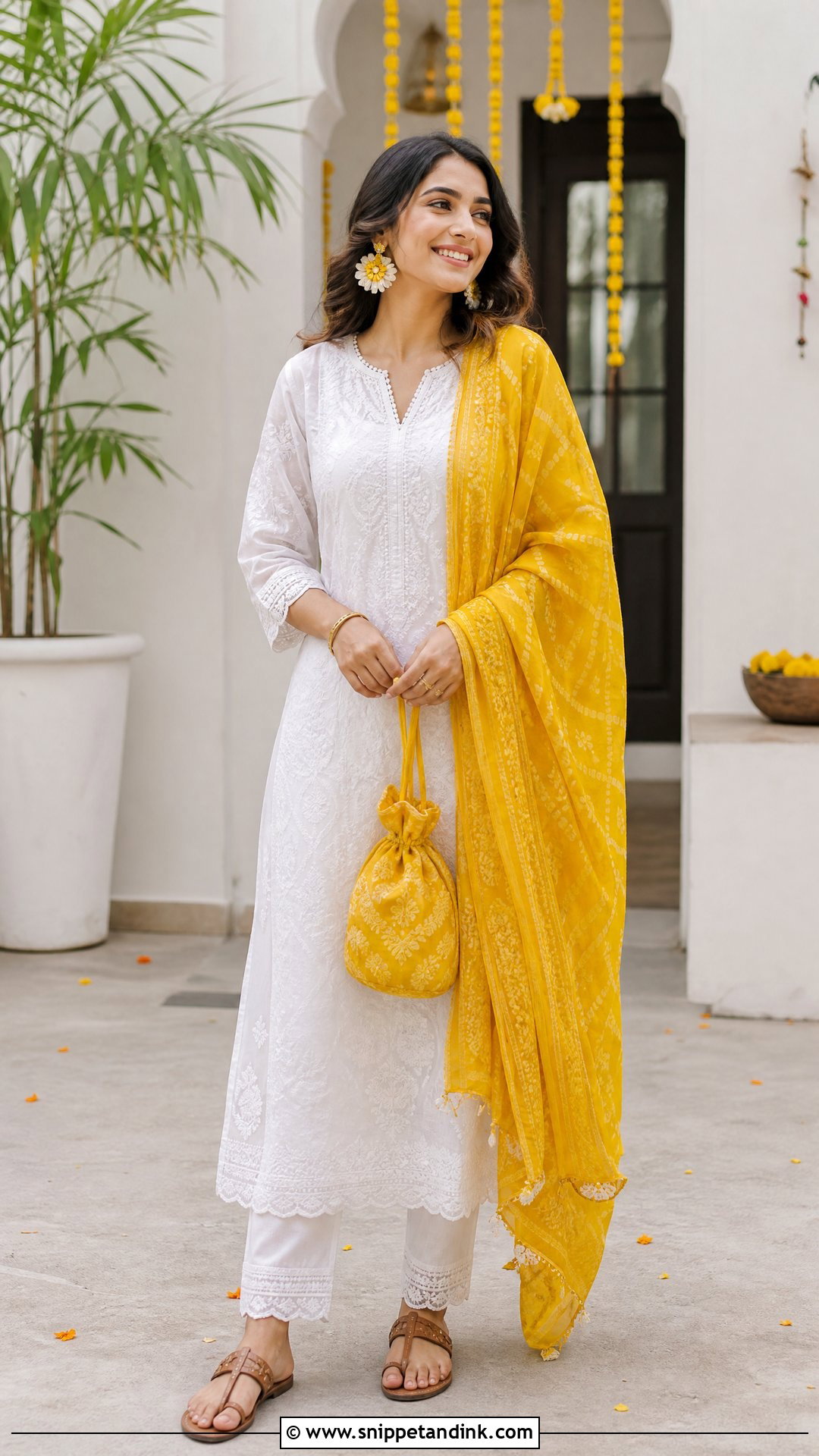
White and yellow together look fresh, but white is the riskiest color at a Haldi. If you are close to the rituals, assume it will get paste on it. Wear a white chikankari or cotton kurta that you are happy to wash, with straight pants and a yellow Bandhani, leheriya or floral dupatta to carry the color. Cotton is the only white fabric I would recommend here, because it can be washed hard. Yellow floral earrings, slim gold bangles, tan kolhapuris and a small potli finish it. A loose braid keeps the daytime mood.
18. Yellow Maxi Dress Haldi Outfit
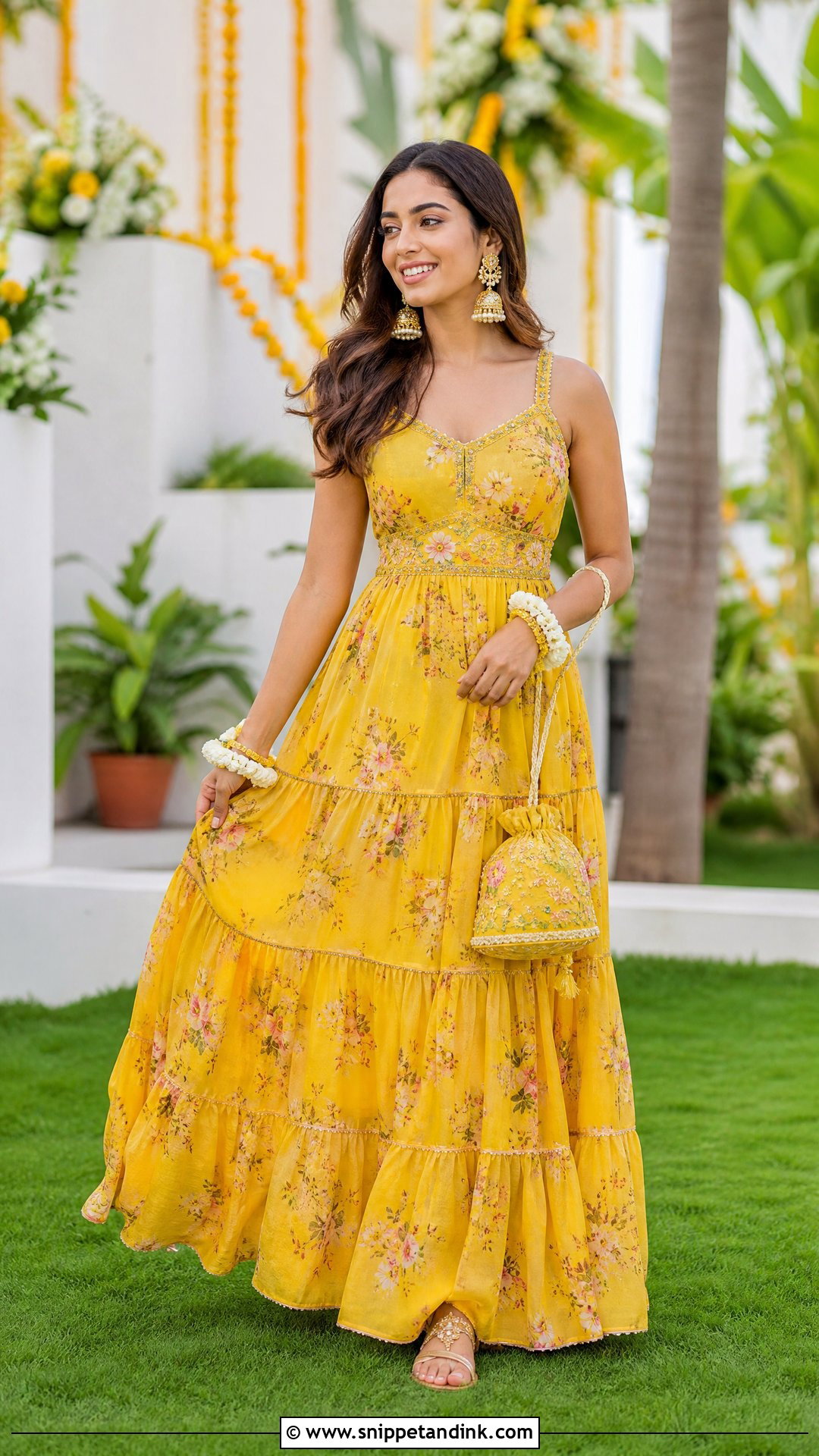
A yellow maxi dress is my suggestion for guests who have never worn a saree and do not want to learn on the morning of the ceremony. Choose breathable cotton, georgette or crepe with a defined waist and enough room in the skirt to sit down. Florals, tiered panels or subtle embroidery keep it festive. Add the ethnic touch with statement jhumkas, floral bangles and an embroidered potli. Flat gold sandals or simple wedges are practical. Loose waves or a braided crown suit it, and the dress will see plenty of summer wear afterward.
19. Yellow Jumpsuit And Jacket Haldi Outfit
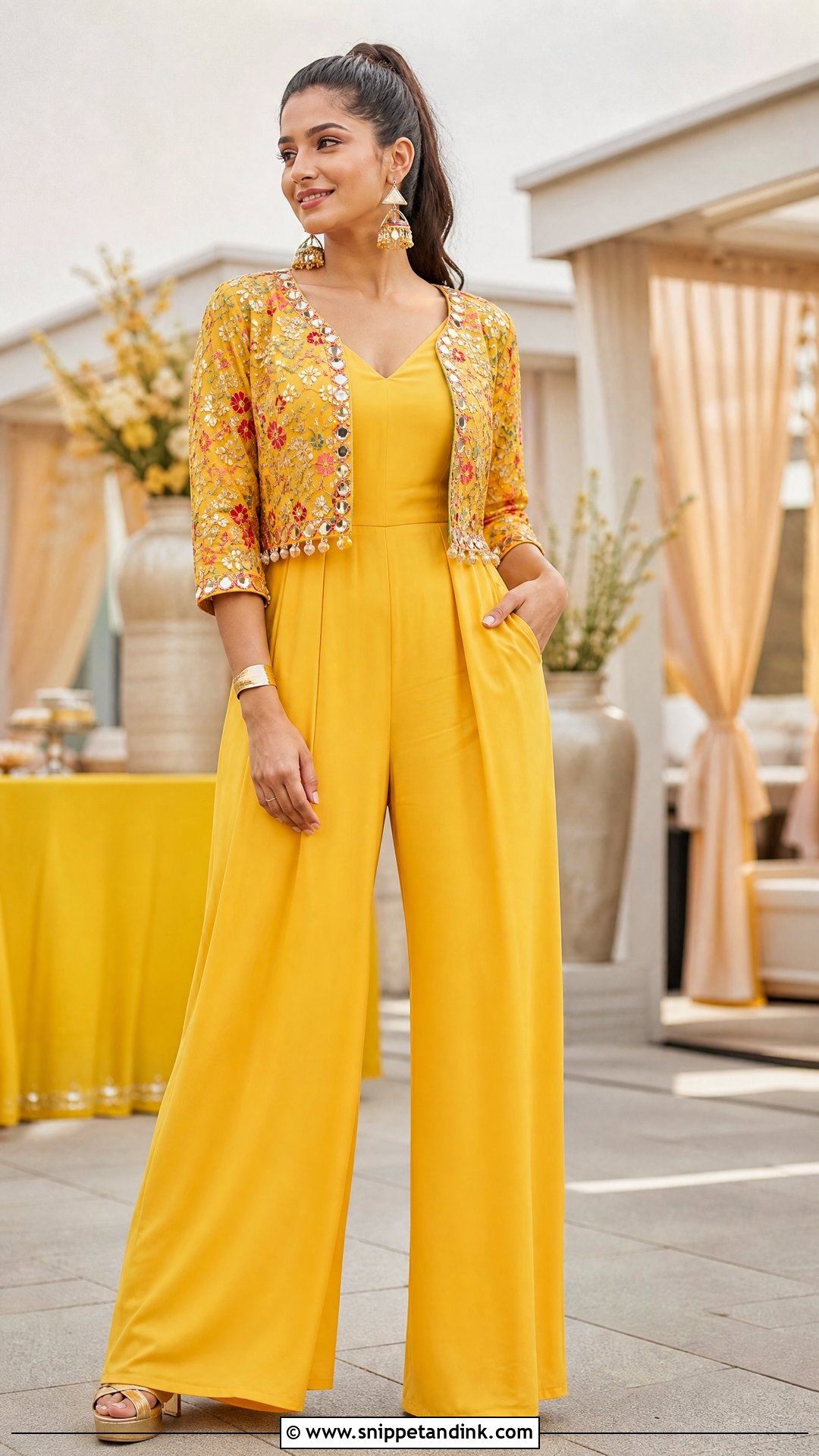
A yellow jumpsuit with an ethnic jacket is the most modern option here, and it has one drawback I always mention: you need help, or a long trip to the bathroom, to take it off. Choose a wide-leg jumpsuit with a fitted waist and a front zip if possible, then layer a cropped mirror work jacket or a long floral overlay for traditional detail. Geometric jhumkas, a slim cuff and platform sandals balance the wide legs. A high ponytail or low bun keeps the shape clean. Bridesmaids, cousins and guests who want to avoid draping tend to like it.

20. Orange And Yellow Lehenga Haldi Outfit
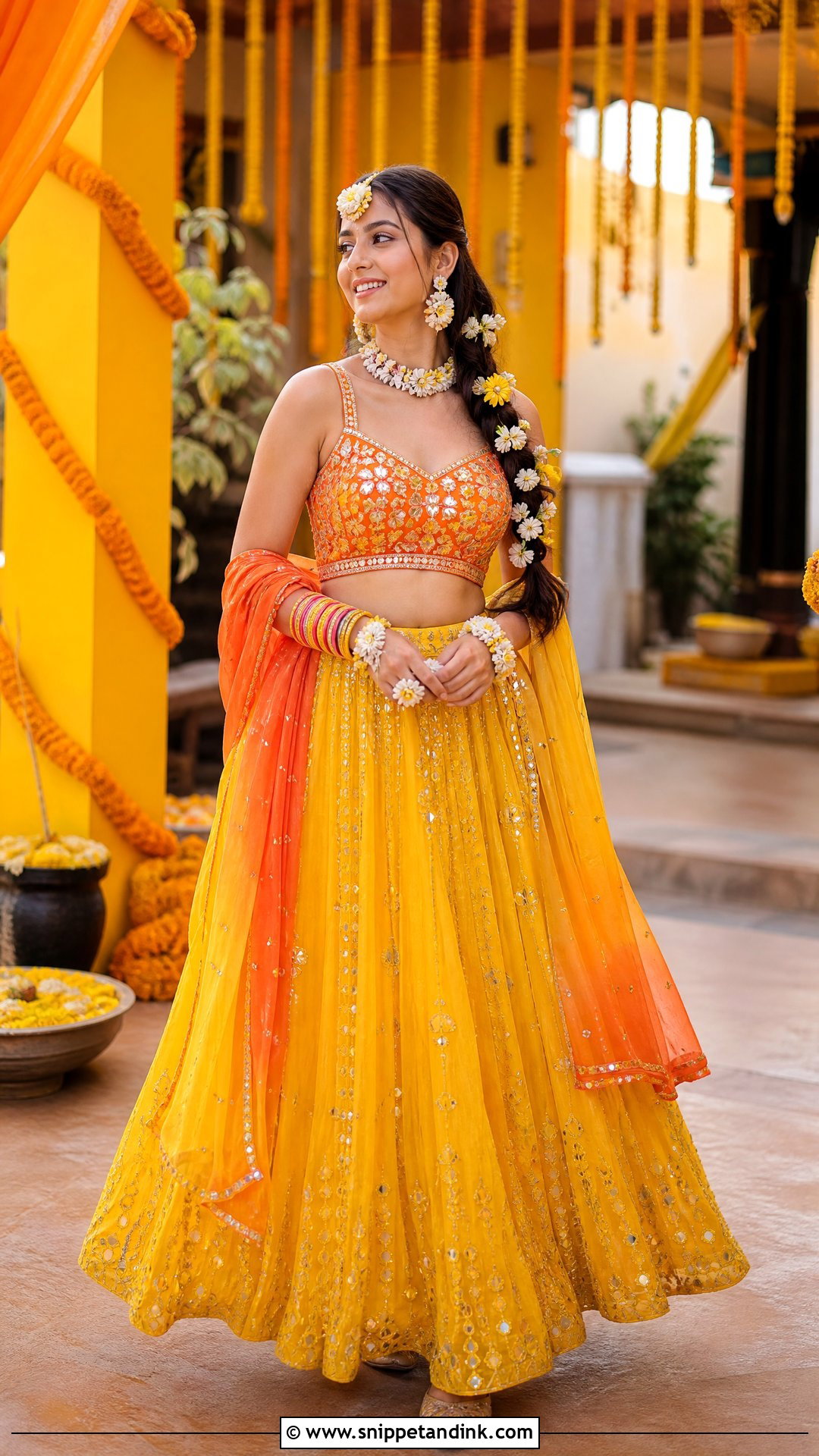
Orange and yellow together look warm against marigold decor, and they hide turmeric better than pale yellow does. Pair a marigold skirt with an orange blouse, or choose an ombre lehenga that shades from one to the other. A light dupatta with a narrow floral or gota border lets the color show. White flower jewelry, colorful bangles and neutral juttis keep the accessories from fighting the palette. Soft curls or a braid with flowers finish it. Brides can go richer with the embroidery; guests should keep it lighter so the bride stands out.
Getting Turmeric Out Once the Ceremony Is Over
Turmeric stains set fast, so the first hour matters. Let the paste dry slightly, then scrape off as much as you can with a blunt knife or card, without rubbing it deeper into the weave. Rinse from the back of the fabric under cold running water.
Avoid hot water and strong alkaline soaps at this stage. Turmeric reacts to alkali by turning reddish brown, which is harder to shift than the original yellow. A little liquid dish soap or mild detergent worked in gently is safer.
On cotton, sunlight does much of the remaining work. Drying the washed garment in direct sun fades turmeric noticeably over a day or two. Keep silk, zari and dyed pieces out of strong sun, though, as they fade unevenly. Anything with metallic thread or delicate silk should go to a specialist cleaner, and tell them it is turmeric so they choose the right treatment.
Will It Still Feel Good With Paste on Your Sleeves?
The outfit that works best at a Haldi is the one you stop thinking about once the ceremony starts. That comes down to a fabric that breathes and washes, draping that stays put, a hem that clears the floor and shoes you can kneel in. Sarees, lehengas, kurta sets, shararas and fusion pieces can all get there. Think about your role, the venue, the weather and how close you will be to the paste, then add floral jewelry instead of heavy gold so you are not weighed down. Traditional yellow or a contrasting color, the aim is the same: an outfit that lets you join in without worrying about it.
You'll Like These Ideas:







Leave a Reply