
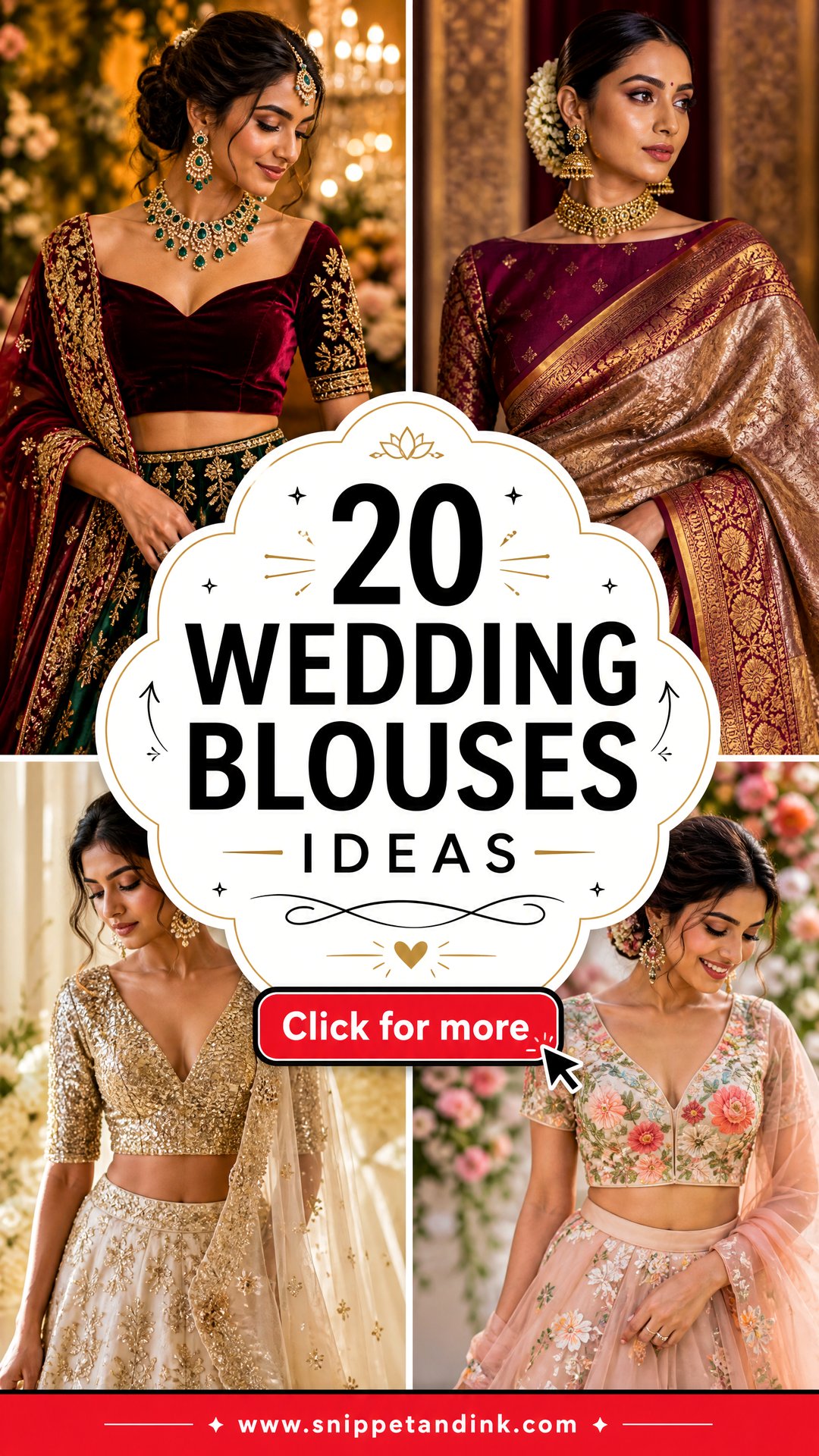
A blouse decides how a saree or lehenga actually sits on your body, so I treat it as the piece that gets fitted first and argued over longest. The ideas below run from heavy silk and zari pairings to corset cuts, covered sleeves and fusion separates, and they work for brides, bridesmaids and guests alike. Sweetheart and high necks, full sleeves, pearl detailing and dense handwork are all being requested right now, and each one changes what jewelry and support you can wear. Every outfit here comes with its bottoms, shoes and accessories so you can picture the whole look, not just the bodice.
Measurements and Fittings to Plan With Your Blouse Tailor
A wedding blouse is built on your body more than any other part of the outfit, so I plan it backwards from the date. Embroidered and zari blouses usually need several weeks for the handwork alone, and I like the first fitting done at least six to eight weeks out so there is time for a second and a third. Bring the actual saree or lehenga to the first appointment, plus the bra or support you’ll wear, and the heaviest necklace you plan to put on.
Numbers the tailor should take, not guess
- Bust, underbust and waist, taken over the bra you will actually wear on the day.
- Shoulder width and the point where you want the shoulder seam to sit; a wide seam lets a heavy pallu slide.
- Front and back neck depth, measured standing and checked again sitting down.
- Armhole round and upper arm at its fullest, plus where the sleeve should stop.
- Blouse length from shoulder to hem, so you know exactly how much midriff shows with your skirt height.
Ask for generous seam allowances on the side seams. Weight can shift a few kilos in the months before a wedding, and an inch left inside each seam is the difference between a quick alteration and remaking a hand-embroidered piece.
1. Red Zari Wedding Blouse With Kanjivaram Saree
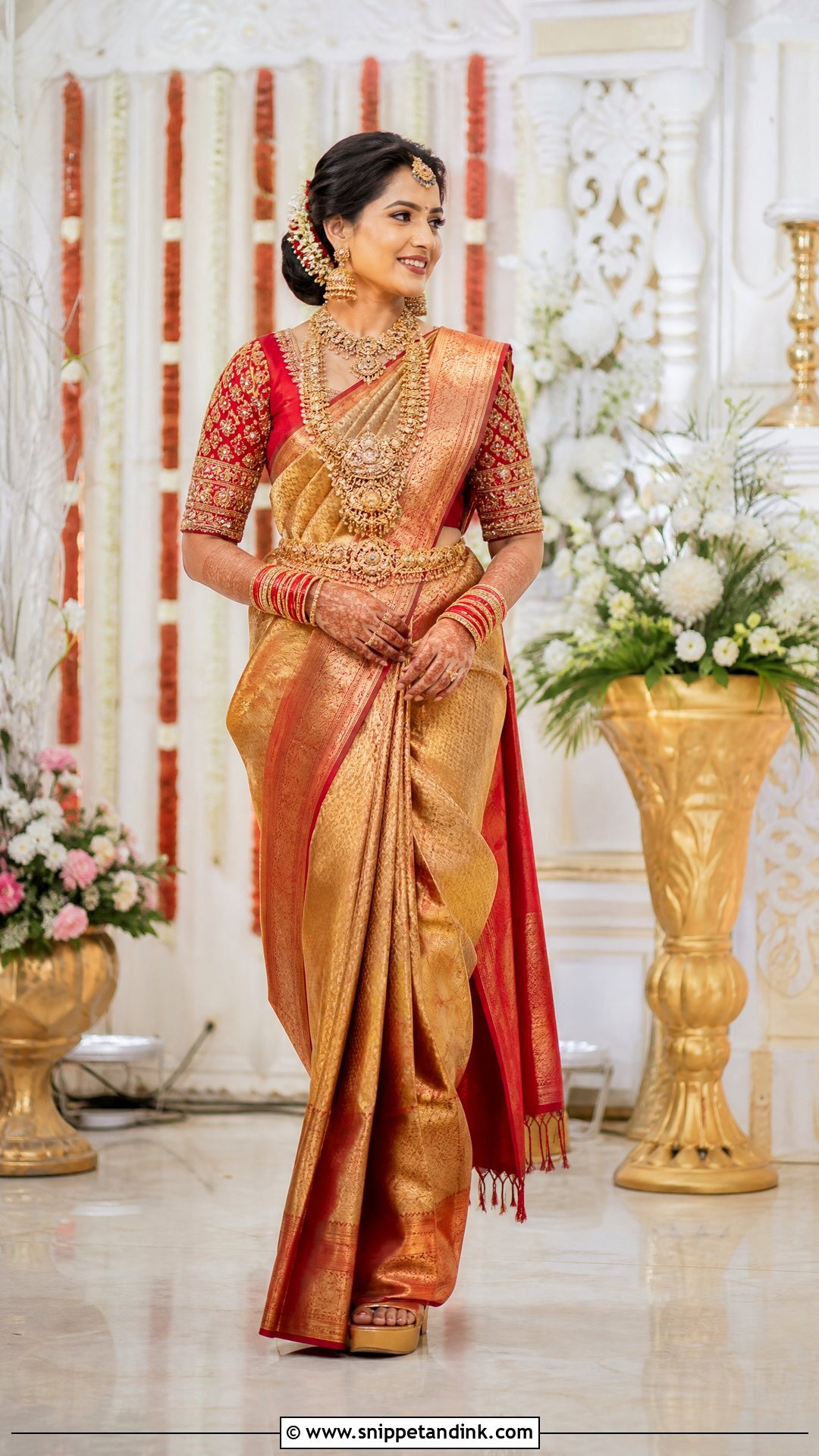
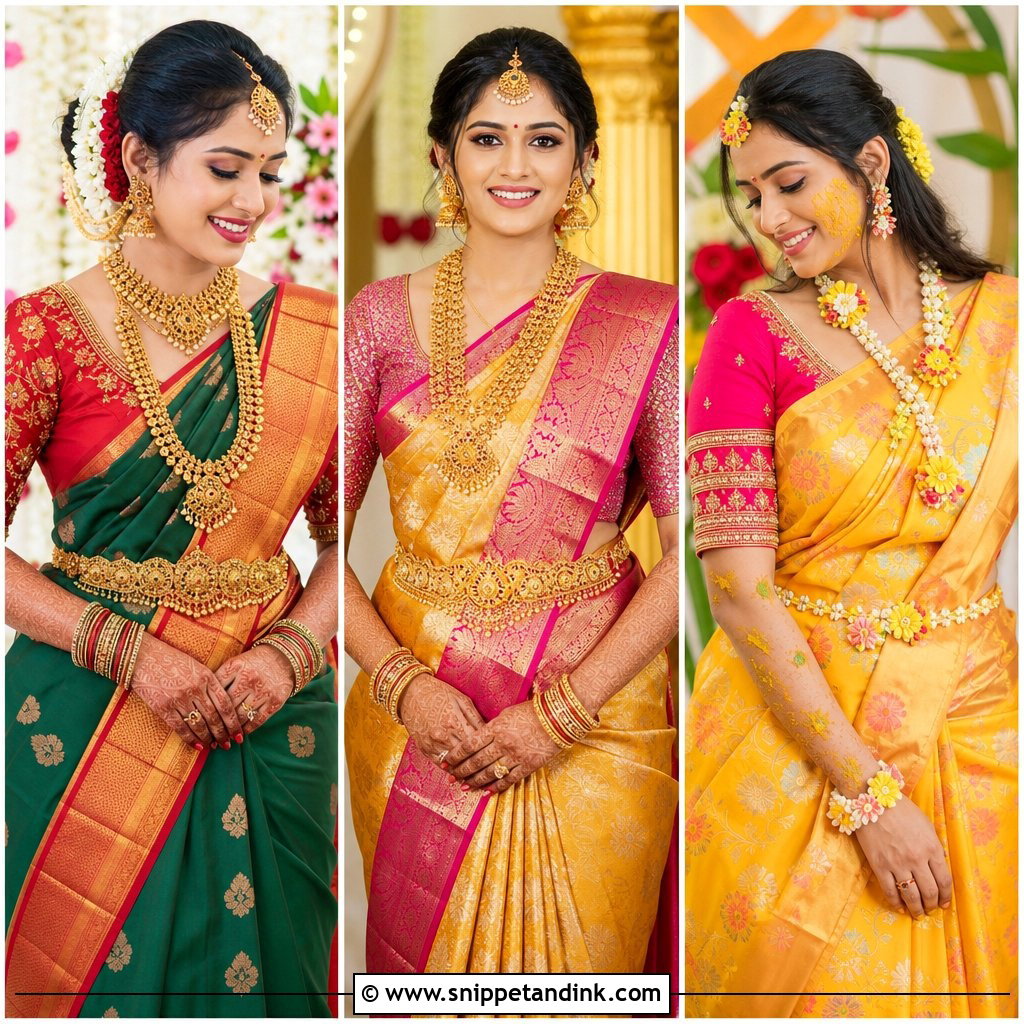
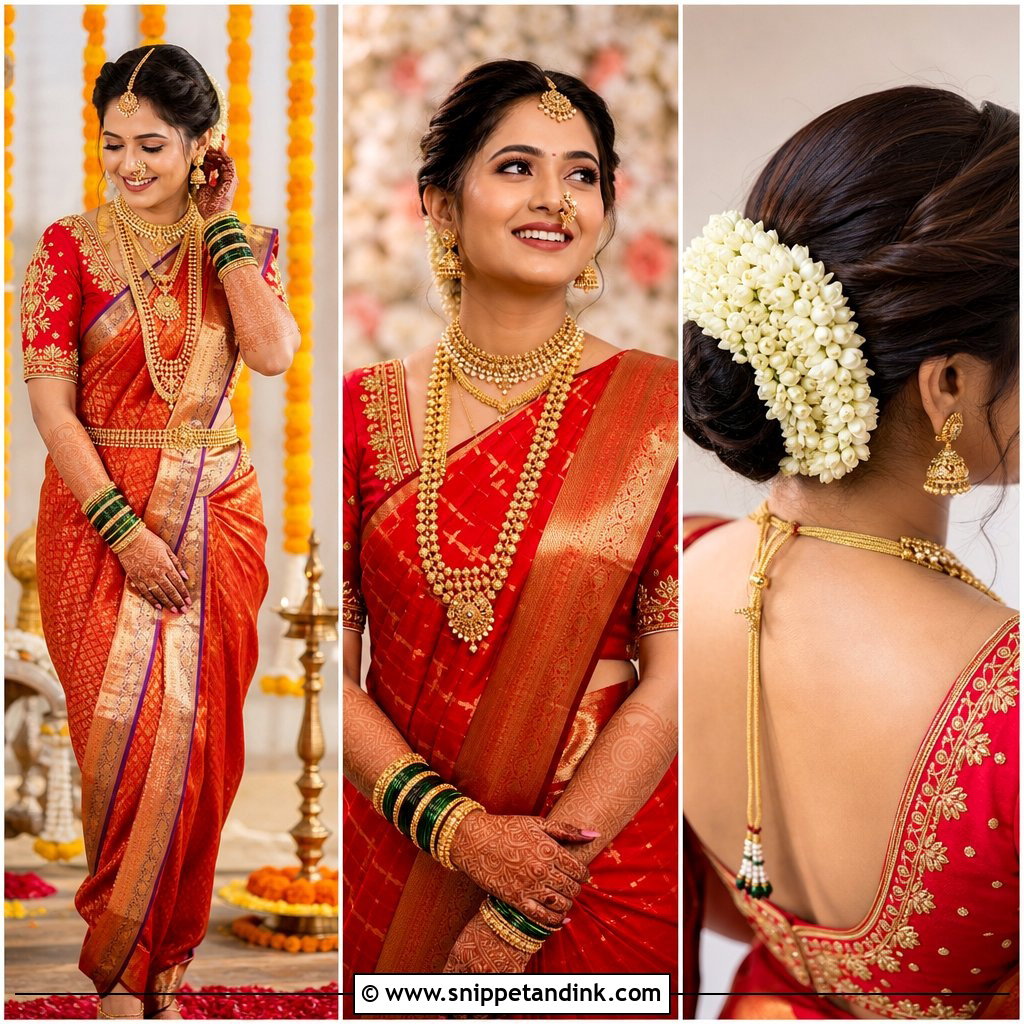
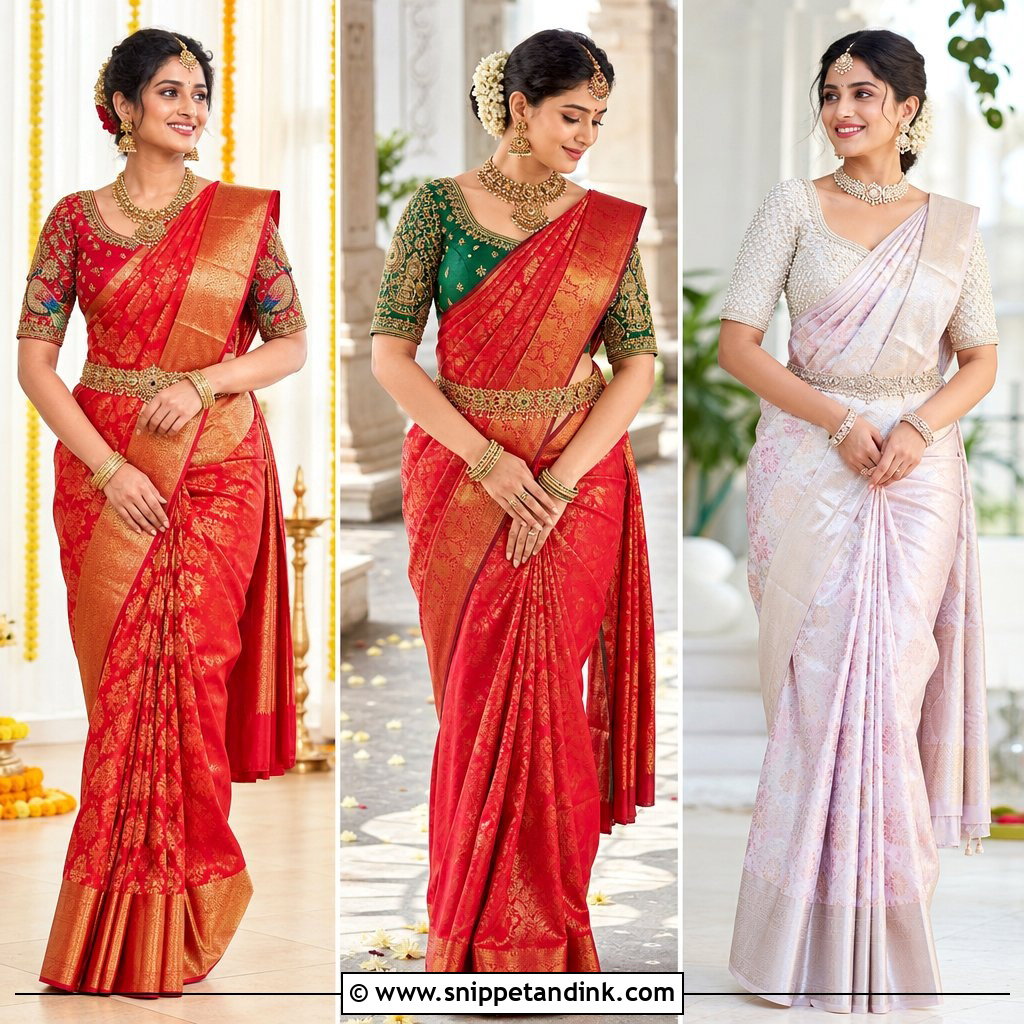
A rich red zari blouse against a gold Kanjivaram is the pairing I see most at South Indian weddings, and it earns its place. Zari is metal-wrapped thread, so it adds real weight to the sleeves; I keep sleeves at the elbow so the arm can still bend for the garland exchange. A round or sweetheart neck gives layered gold necklaces a flat base to rest on. Keep the motifs small (peacocks, temple shapes) so they don’t fight the saree border. Gold platform sandals, a red bindi and berry lips finish it. On a petite frame I scale the embroidery down; on a fuller bust I add a structured lining and an extra inch of length. The shoulder seam matters most here, because a Kanjivaram pallu is heavy and slides off a shoulder that’s cut even slightly wide.
2. Pearl Wedding Blouse With Blush Pink Lehenga
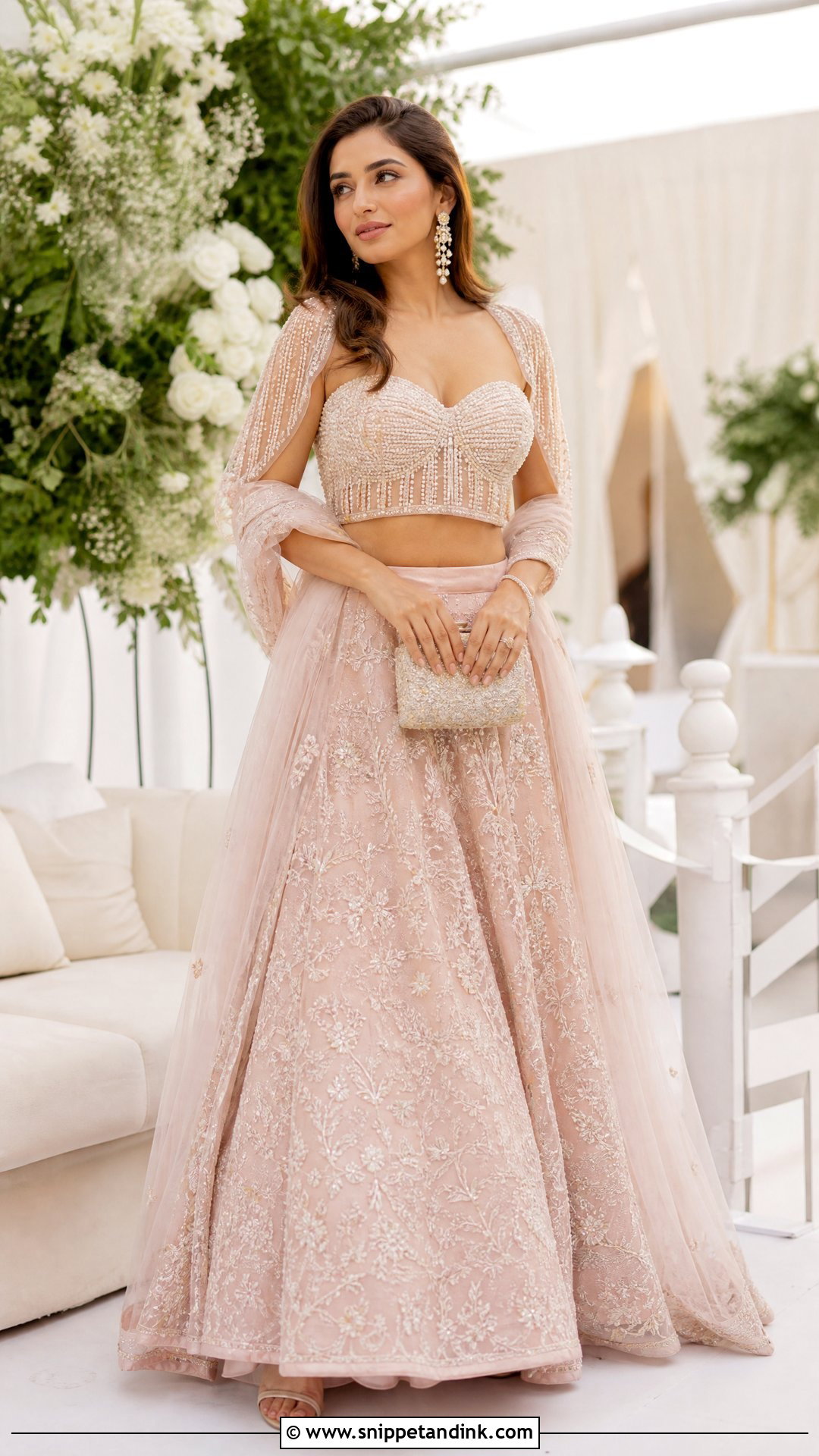
Pearl embroidery reads softly against blush pink, and a sweetheart neck with wide straps holds up far better than spaghetti straps once the pearls add weight. Pair it with a lehenga that has only light threadwork or scattered sequins. Throw the sheer dupatta over one shoulder so the bodice stays visible. Pearl drops, one slim bracelet, a small clutch and champagne heels are plenty. I always ask the tailor for built-in cups, light side boning and a hook-and-eye back over a zip, because hand-sewn pearls pull the fabric down at the neckline over a long evening. Reception, engagement or a pastel daytime wedding all suit it.
3. Mirror Work Wedding Blouse With Pastel Lehenga
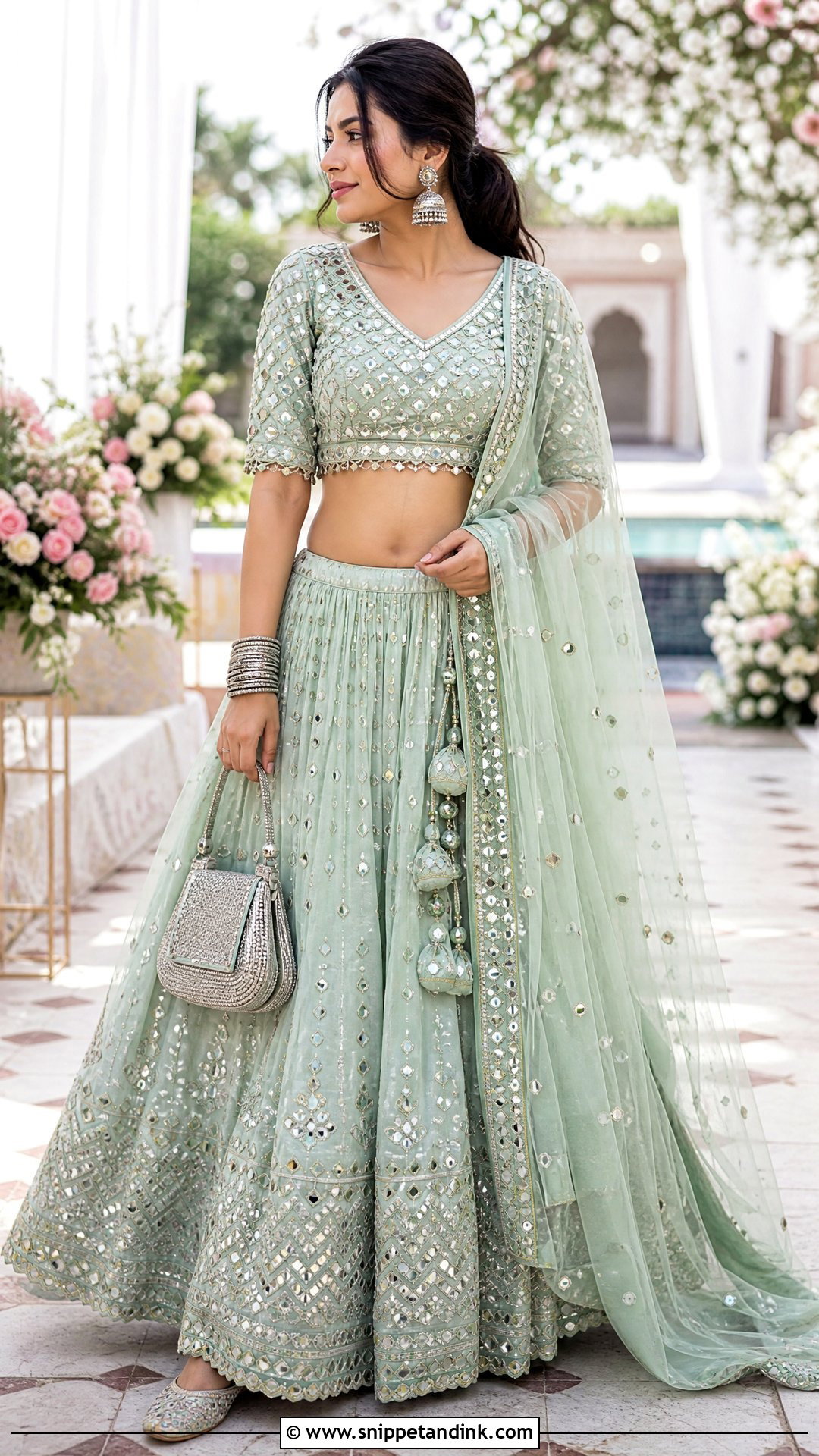
Mirror work comes alive outdoors, where every small glass disc throws light back at the camera. A pale blue, mint, peach or lavender blouse over a lehenga a shade lighter keeps it from looking busy. I’d keep the neck to a modest V and the sleeves short, since mirrors add stiffness and a long sleeve full of them won’t let the elbow bend comfortably. A chiffon dupatta with only a narrow mirror border, silver jhumkas, stacked bangles and embroidered juttis complete it. Carry a small structured bag; soft bags with chains snag the embroidery. The thing I check on every mirror blouse is the underarm: each mirror edge should be fully enclosed in thread, or it will scratch raw skin by mid-afternoon.
4. Velvet Wedding Blouse With Jewel Tone Lehenga
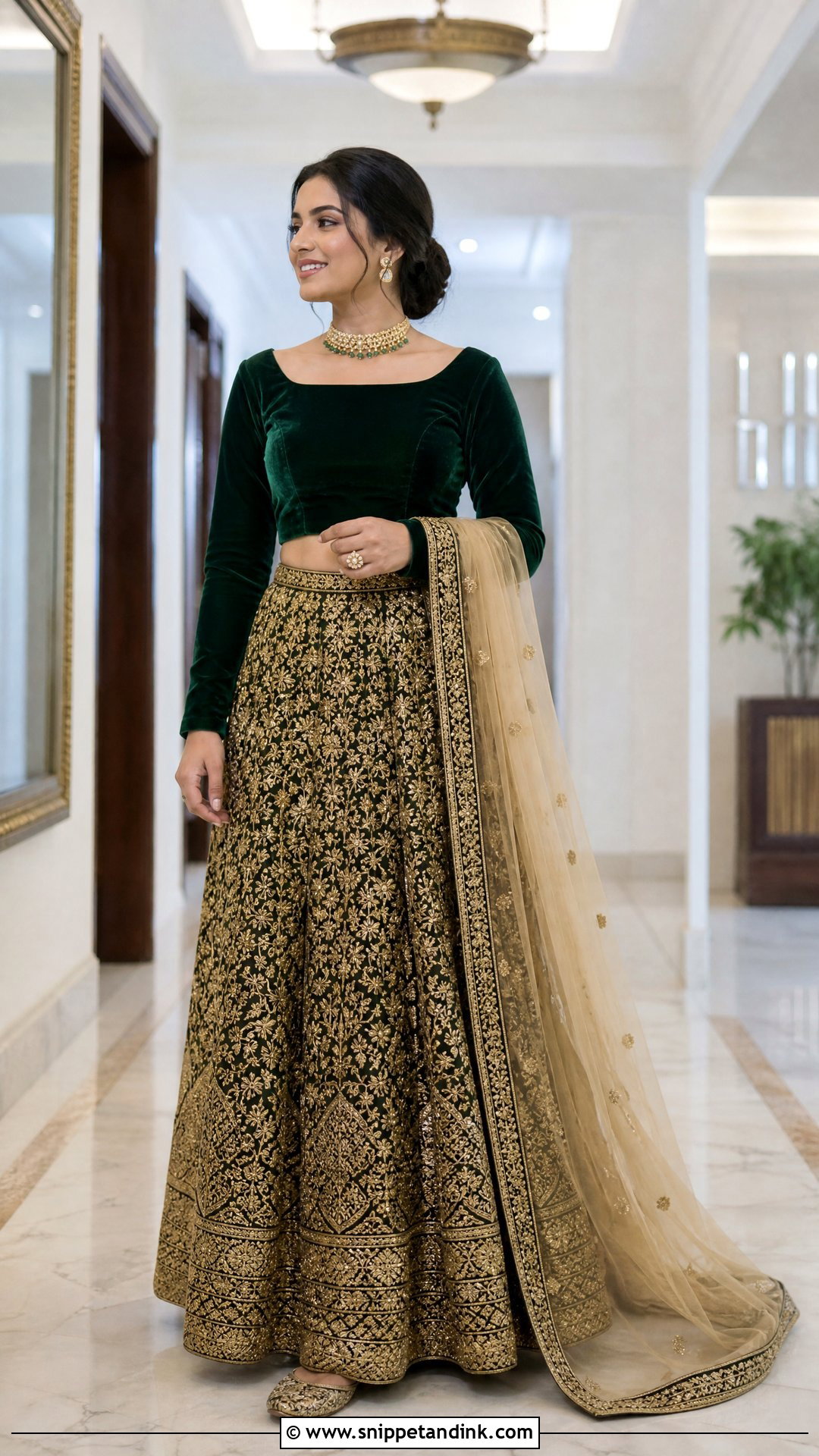
Velvet earns its weight at winter functions. A velvet wedding blouse in emerald, plum, navy or burgundy, with full sleeves and a gently curved neckline, sits well over a lehenga worked in antique gold. Add an organza dupatta rather than another heavy fabric, then antique gold earrings, a choker and one statement ring. Block heels or closed mules make sense on cold floors. Velvet has a pile that crushes and shines where it rubs, so I insist on a firm lining that stops it bunching at the waist. Broad shoulders look narrower when the sleeve embroidery stays near the cuff. A sleek bun keeps the line clean.
5. High Neck Wedding Blouse With Silk Saree
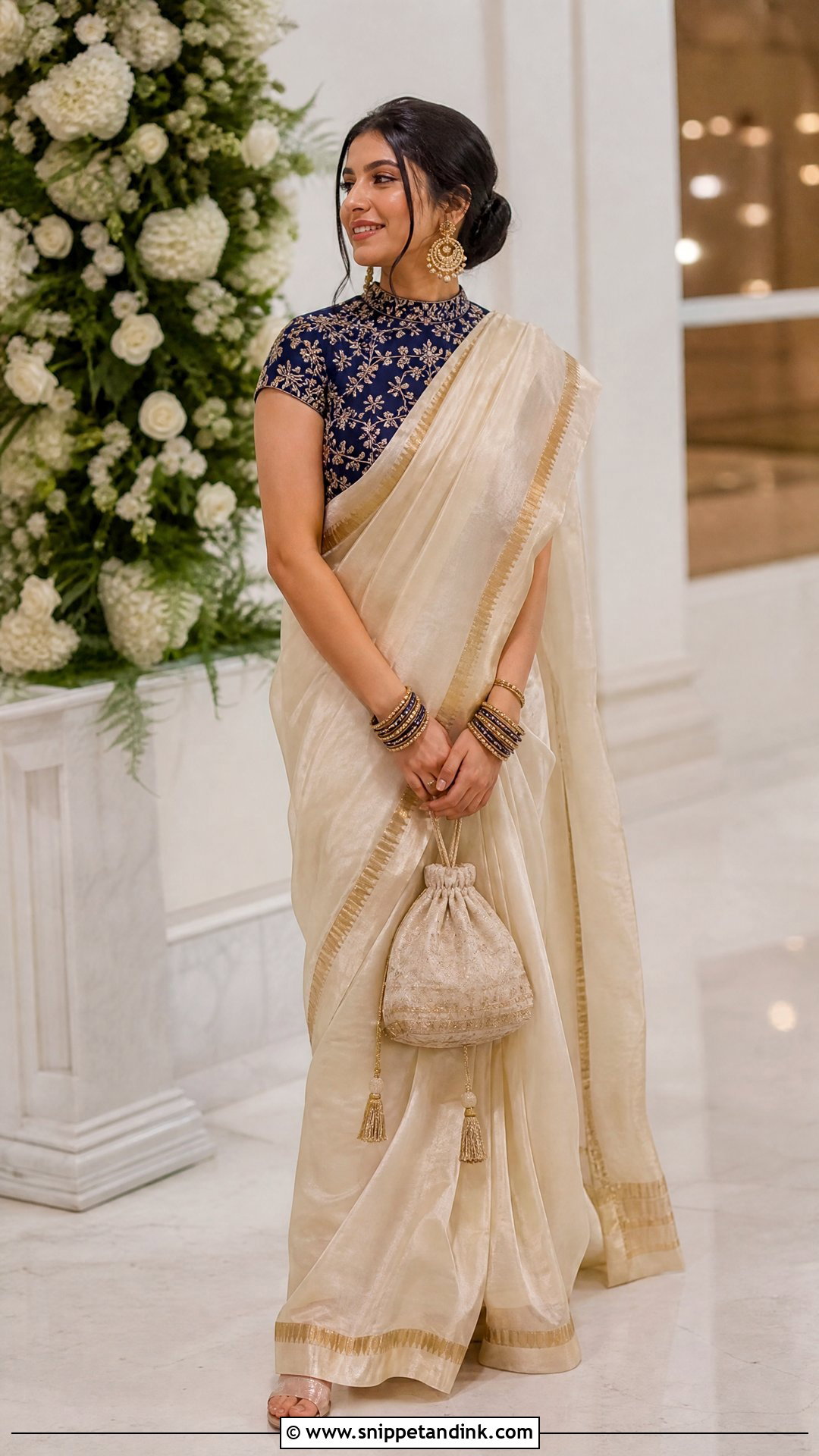
A high neck does the job of a necklace, so I tell brides to treat it that way and skip heavy pieces at the throat. Keep the zari, beads or threadwork concentrated at the collar and let the lower bodice stay plain. Deep green, maroon or navy against a gold, cream or contrasting silk saree all work. Statement earrings, stacked bangles, a potli and low gold heels finish the look, and a neat bun or long braid keeps the collar in view. The fit problem with high necks is breathing room: ask for a finger’s width of ease at the collar and generous armholes. When embroidery runs continuously across the front, a concealed side zip gives a cleaner line than a row of front hooks.
6. Corset Wedding Blouse With Embroidered Lehenga
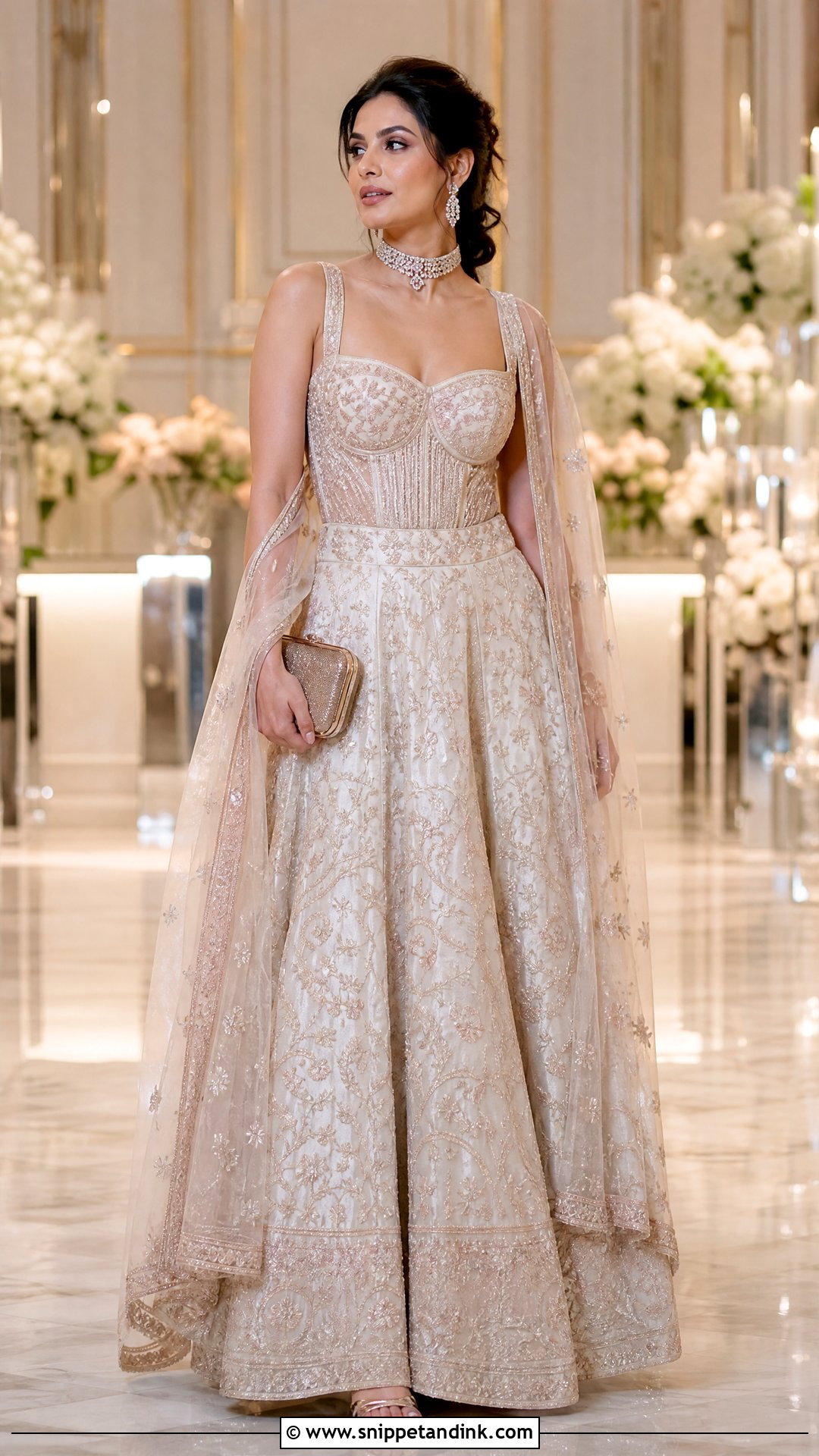
Corset blouses are the most fitting-dependent piece on this list. I look for wide straps, proper cups, flexible spiral boning and a secure back closure, and I’d steer you away from anything laced so tight you can’t eat. A high-waisted embroidered lehenga makes the defined waist read clearly, in ivory, rose, gold or a muted red. Drape the sheer dupatta loosely over the arms. A crystal choker, drop earrings, metallic heels and a compact clutch are enough. Because the bodice is so structured, a fluid skirt balances it better than a stiff can-can. Book your final fitting close to the date and, in it, sit down, walk and raise both arms; boning that’s a fraction too long digs into the hip the moment you sit.
7. Boat Neck Wedding Blouse With Banarasi Saree
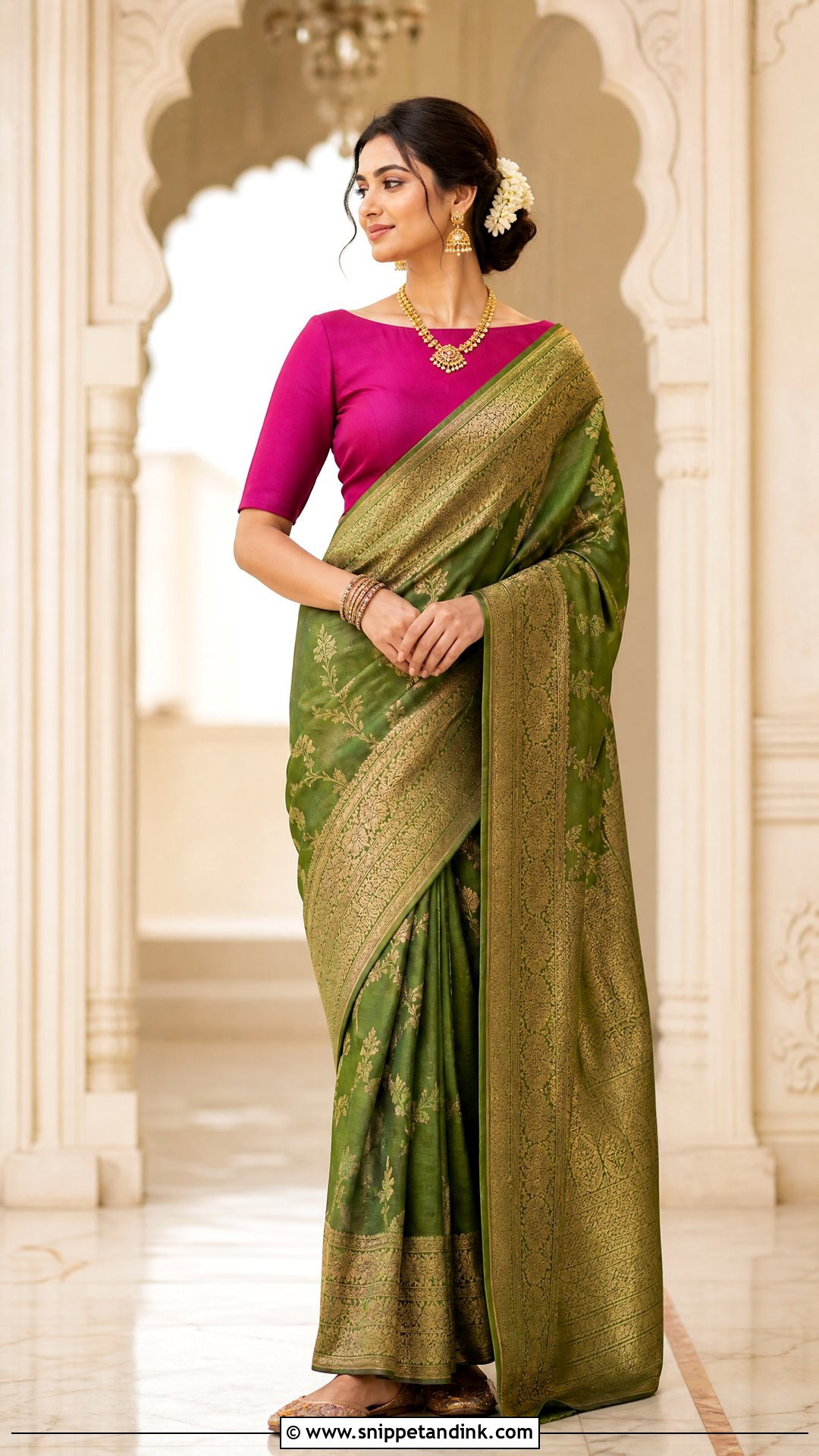
Boat necks are the quiet partner a busy Banarasi needs. Raw silk, brocade or plain satin works, ideally pulling one color out of the weave: magenta with green, navy with gold, red with ivory. Elbow sleeves leave room for bangles. Traditional earrings, a mid-length necklace and juttis finish it, with a low bun dressed in flowers. On broad shoulders I curve the boat neck slightly instead of running it straight across, which keeps it from looking wider than you are. Keep the back neck high enough to hide bra straps; a high back also gives you somewhere to pin the pallu.
8. Puff Sleeve Wedding Blouse With Organza Saree
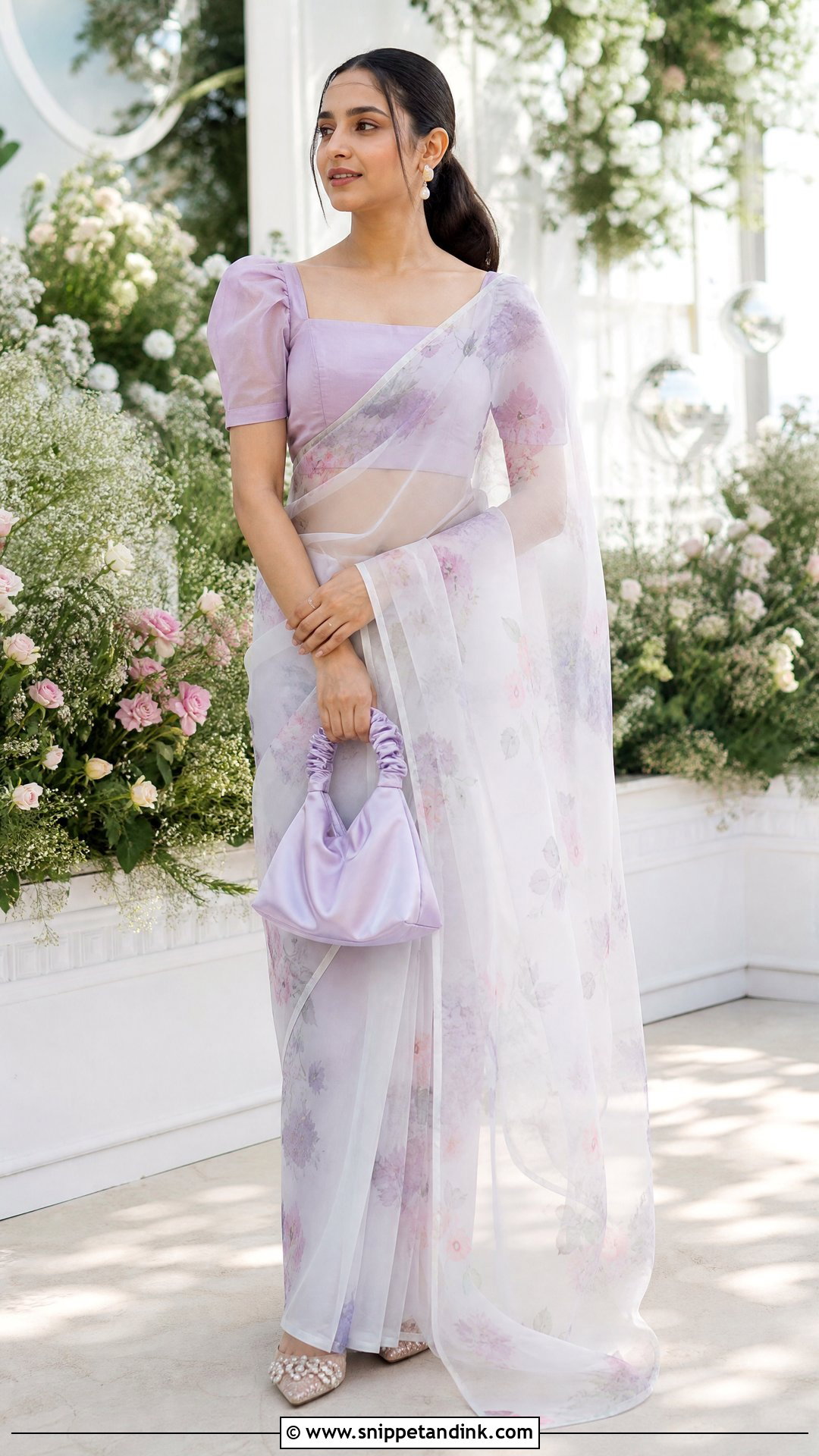
A puff sleeve wedding blouse gives a sheer organza saree some shape where it would otherwise just float. Short structured puffs feel playful; gathered elbow sleeves give more coverage. I keep the waist fitted and the neck a simple square, or the whole top starts to look inflated. A solid blouse in pink, lilac, sage, powder blue or ivory sits well under a floral organza. Pearl earrings, a fine bracelet, pointed flats and a satin bag are all it needs. Match the petticoat and lining to the saree, because organza is transparent and a mismatched underlayer shows through in every photo. With a full bust, soften the gathers rather than going for a dramatic puff.
9. Halter Neck Wedding Blouse With Draped Skirt
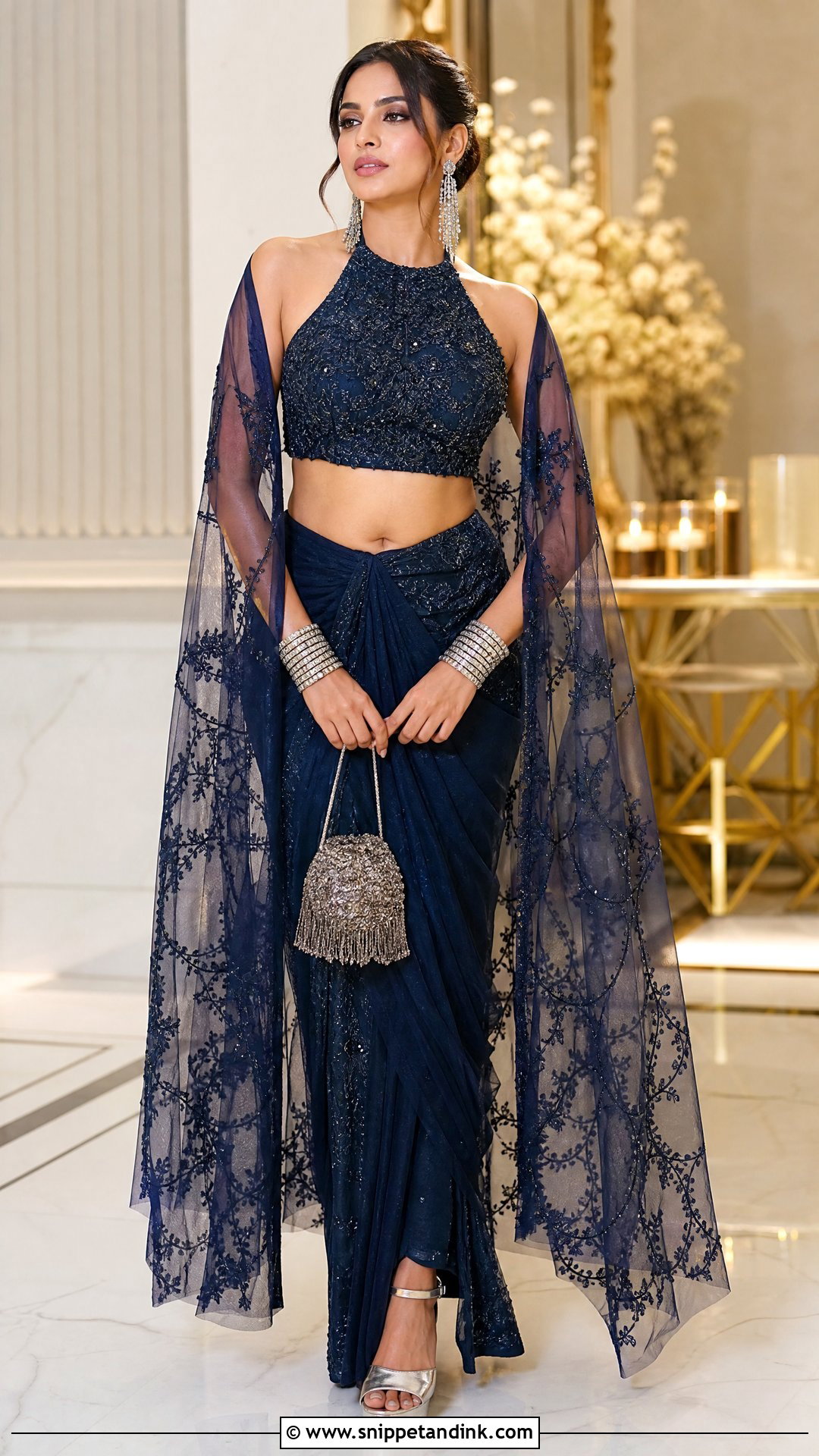
A halter blouse over a draped lehenga skirt suits a modern evening function. The halter shows off the shoulders and the high-waisted skirt balances the shorter top. I check two things on halters: that the strap lies flat at the back of the neck instead of cutting in, and that the bust support is built into the bodice, since a regular bra won’t work here. Jewel tones, metallics and deep pastels all hold up under evening lighting. A light dupatta over the arms or a detachable sheer cape gives optional cover. Long earrings, cuffs, strappy block heels and a metallic bag finish it. Skip the necklace; it crowds the neckline. A low bun or sleek ponytail keeps the construction visible for a reception or sangeet.
10. Cape Wedding Blouse With Wide Leg Pants
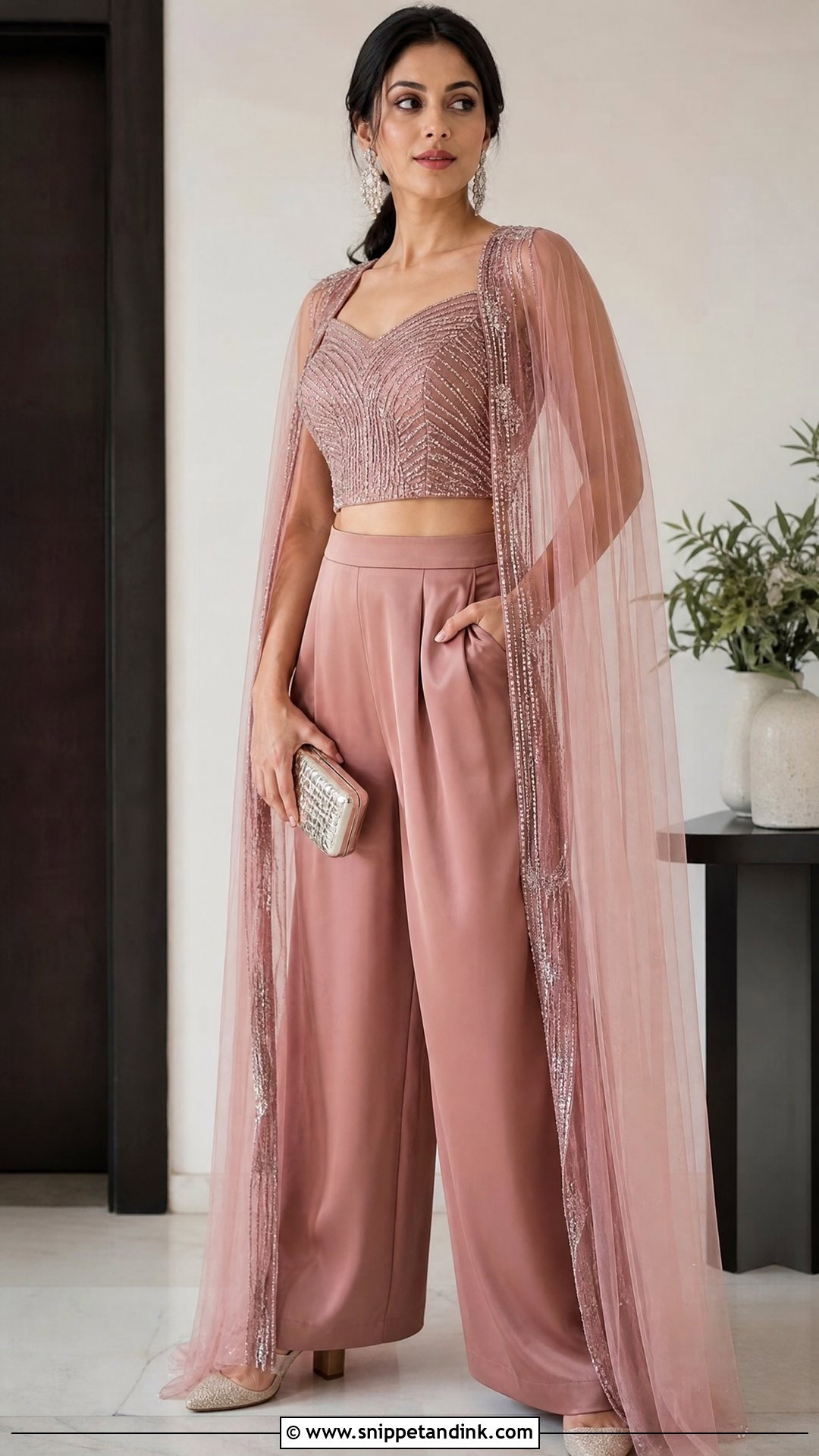
Cape blouses with wide-leg pants are what I suggest to brides and guests who plan to dance. Start with a fitted sleeveless blouse and an attached sheer cape worked with beads, sequins or an embroidered border, then add high-waisted silk pants in the same color to lengthen the leg. Ivory, dusty rose, teal and midnight blue all look formal. Crystal earrings, a slim metallic clutch and pointed block heels are plenty; the cape is the jewelry. Hem the cape below the hip but well clear of the floor, and make sure it isn’t attached so low at the shoulder that it catches under the arm. The draping layer covers without hiding shape, which is why this suits so many body types.
11. Peplum Wedding Blouse With Sharara Pants
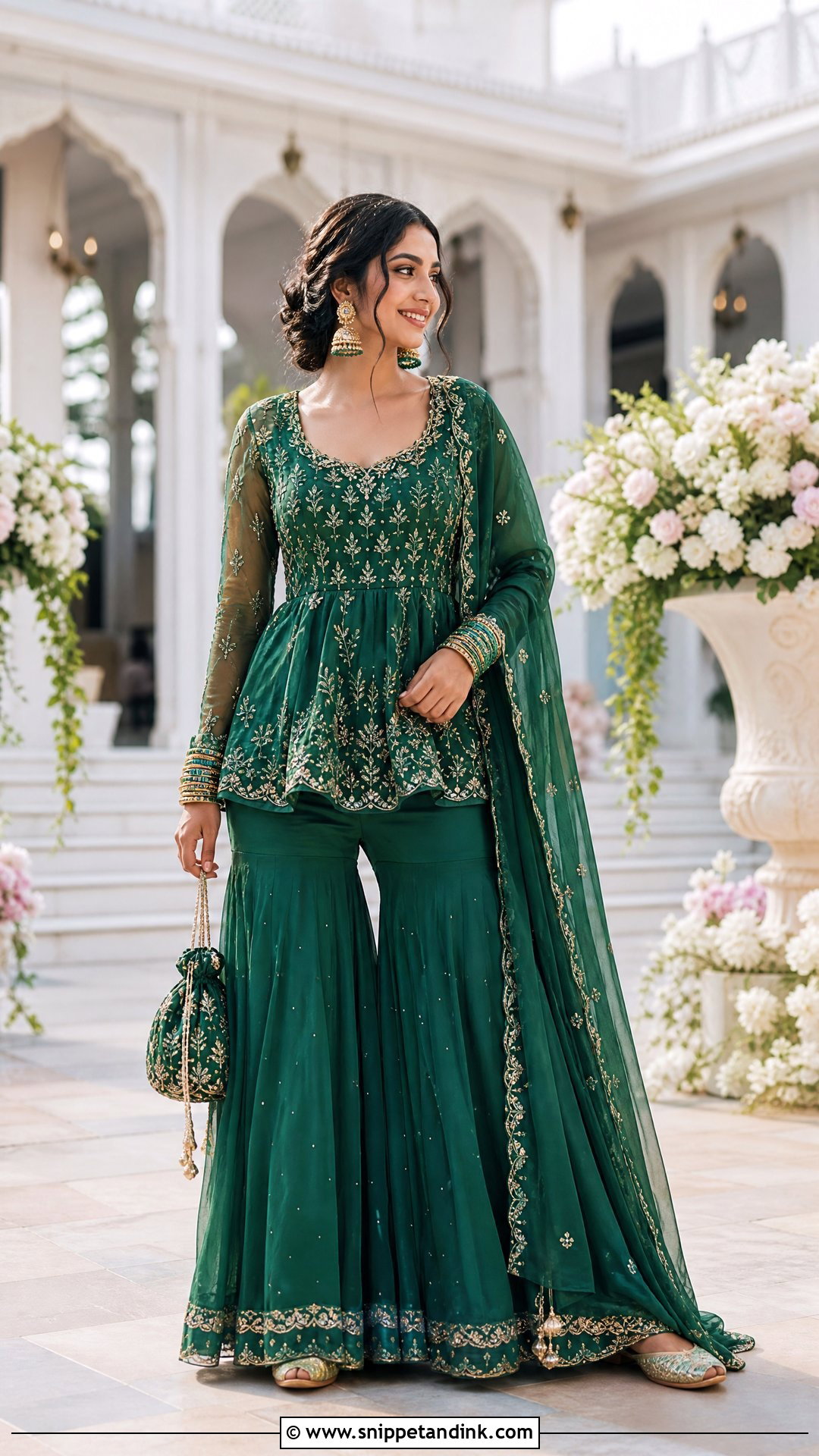
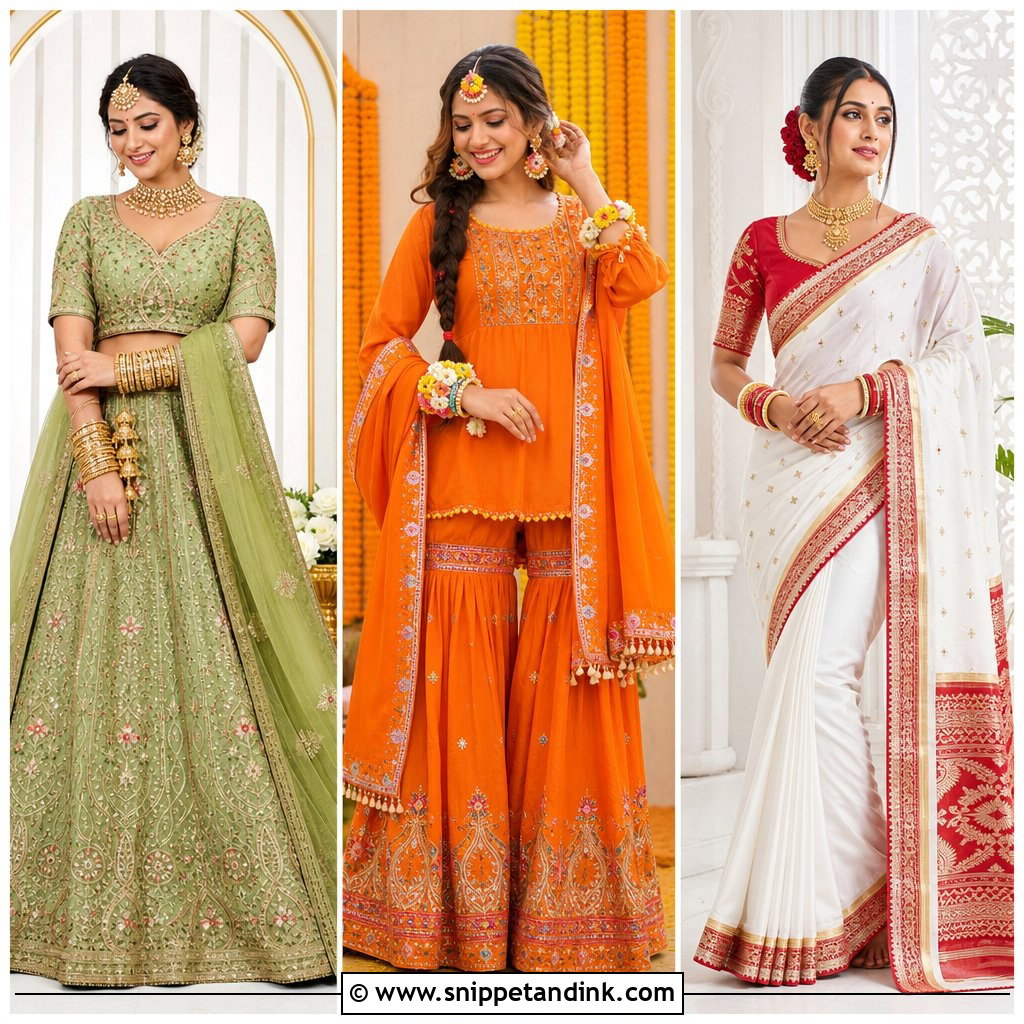
A peplum blouse and sharara pants is one of the most forgiving combinations I fit. The bodice defines the waist and the flare skims over the midsection. Silk, brocade or embroidered georgette in emerald, coral, mustard, plum or soft gold all work, with matching sharara and a light dupatta over one shoulder. Jhumkas, bangles and platform juttis add the festive touch. Where the peplum starts is the detail I fuss over: just below the natural waist, or it shortens the leg. Taller women can carry a longer flare; petite women look better in a compact one. A side zip and soft lining keep it smooth through sitting and dancing.
12. Square Neck Wedding Blouse With Tissue Saree
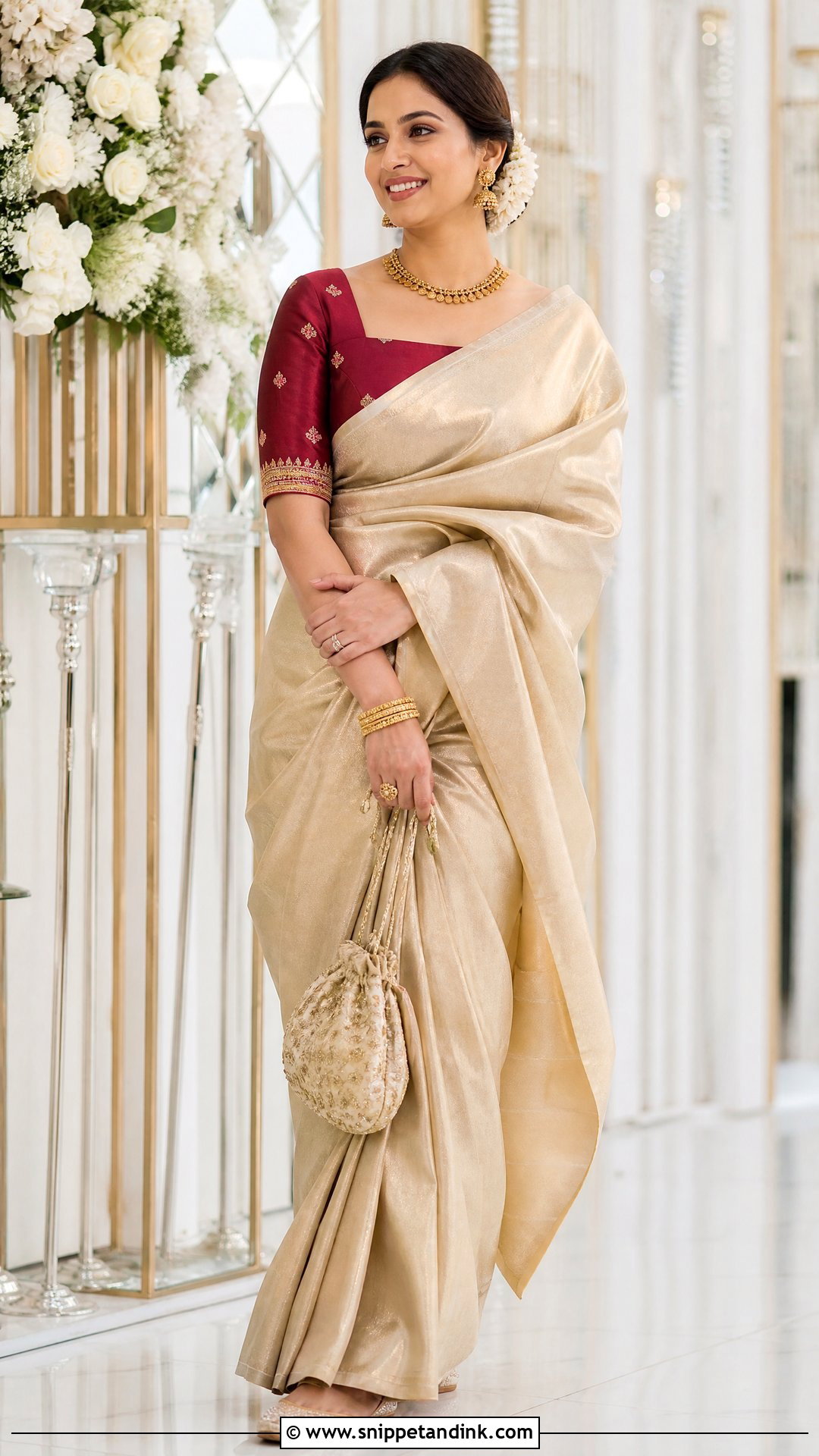
Tissue sarees are thin and shimmery, so the blouse has to supply the structure. I go for raw silk or brocade with a square neck that frames the collarbones, plus elbow sleeves and a moderately wide cut that doesn’t pin the shoulders. Gold tissue with an emerald, ruby, plum or deep blue blouse gives a clear contrast. A short necklace, matching earrings, bangles, gold kitten heels and a potli finish the outfit. Square necks gape if they aren’t interfaced, and the corners pop forward when you lean in, so ask your tailor for interfacing and check it seated. Raise the square slightly if you’d like more coverage.
13. Off Shoulder Wedding Blouse With Ruffle Lehenga
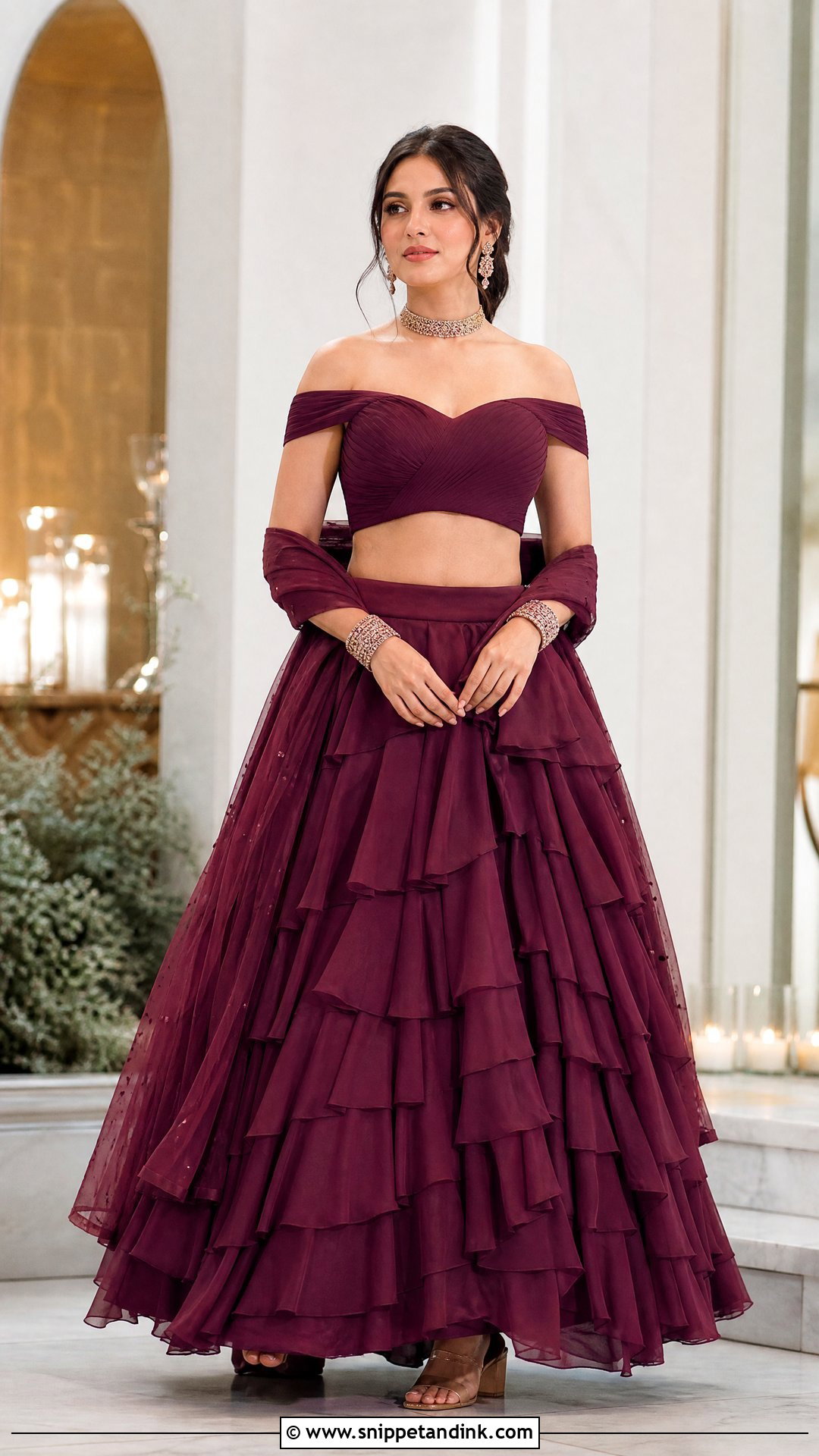
Off-shoulder blouses stay up because of what’s inside them, not the elastic. I ask for an internal support band, secure cups and only light elastic at the shoulder line, since elastic alone rolls down by the second hour. A fitted bodice keeps a tiered ruffle lehenga from swallowing the silhouette. Deep red, berry, navy, lavender and metallic rose suit evening events. A slim choker, small drops and one cuff frame the open neckline. Block heels give stability under a full skirt. Carry the dupatta on the forearms or attach it at the side, because draping it over bare shoulders defeats the neckline. Before the tailor finishes, raise your arms high, as you would for photos and dancing, and see whether the neckline stays put.
14. Cutout Back Wedding Blouse With Silk Saree
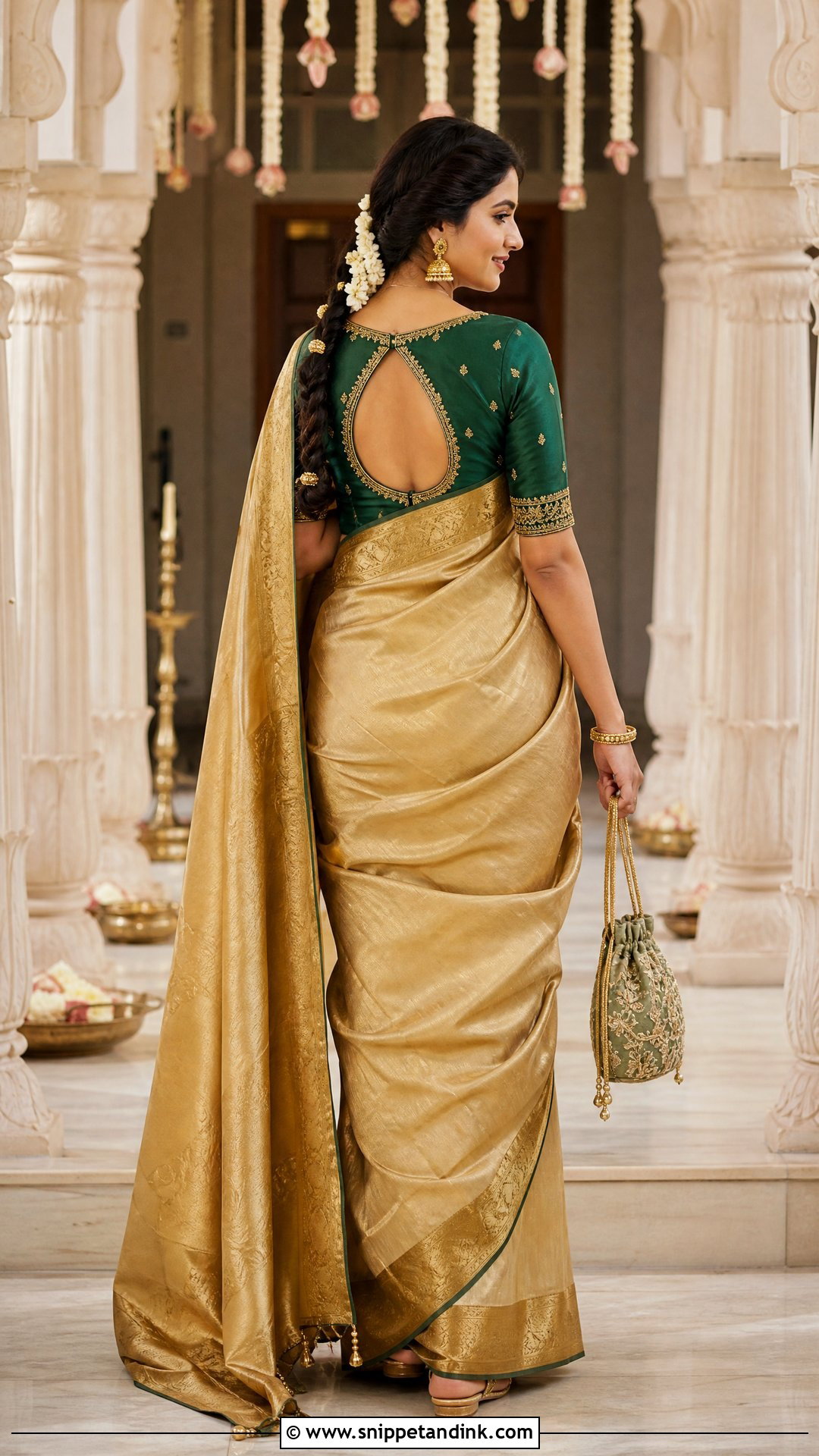
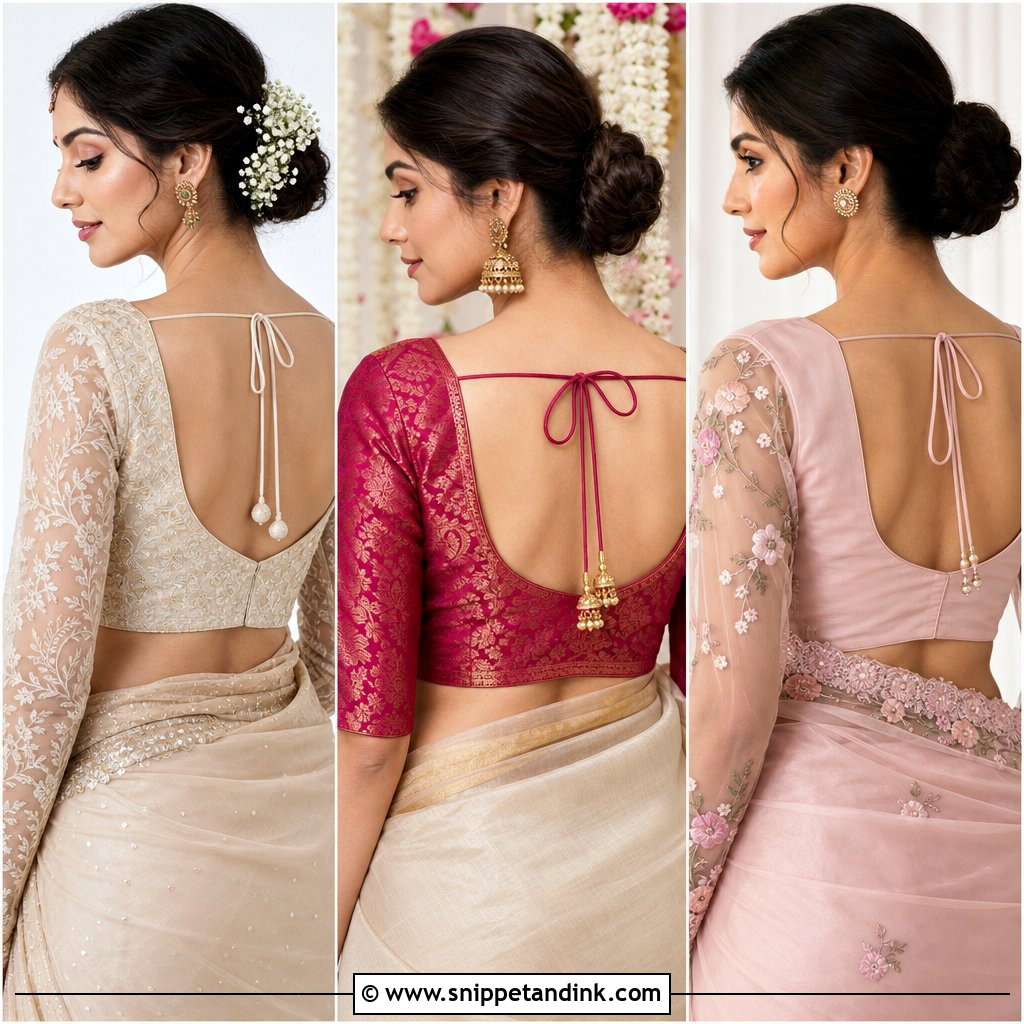
A cutout-back blouse adds detail to a silk saree without much exposure if you keep the opening small: a teardrop, oval or geometric shape rather than a deep scoop. A buttoned upper panel and tie closure hold it securely. Pair it with a jewel-tone silk, gold sandals, temple earrings and a potli, and wear a side braid or bun so the back stays visible. Short, light tassels are fine; long ones tangle in the pallu. I always fully line a cutout blouse and finish the edges by hand, because a raw-turned edge rubs the spine all evening. If you need a standard bra, ask for an opaque upper panel with the opening set lower.
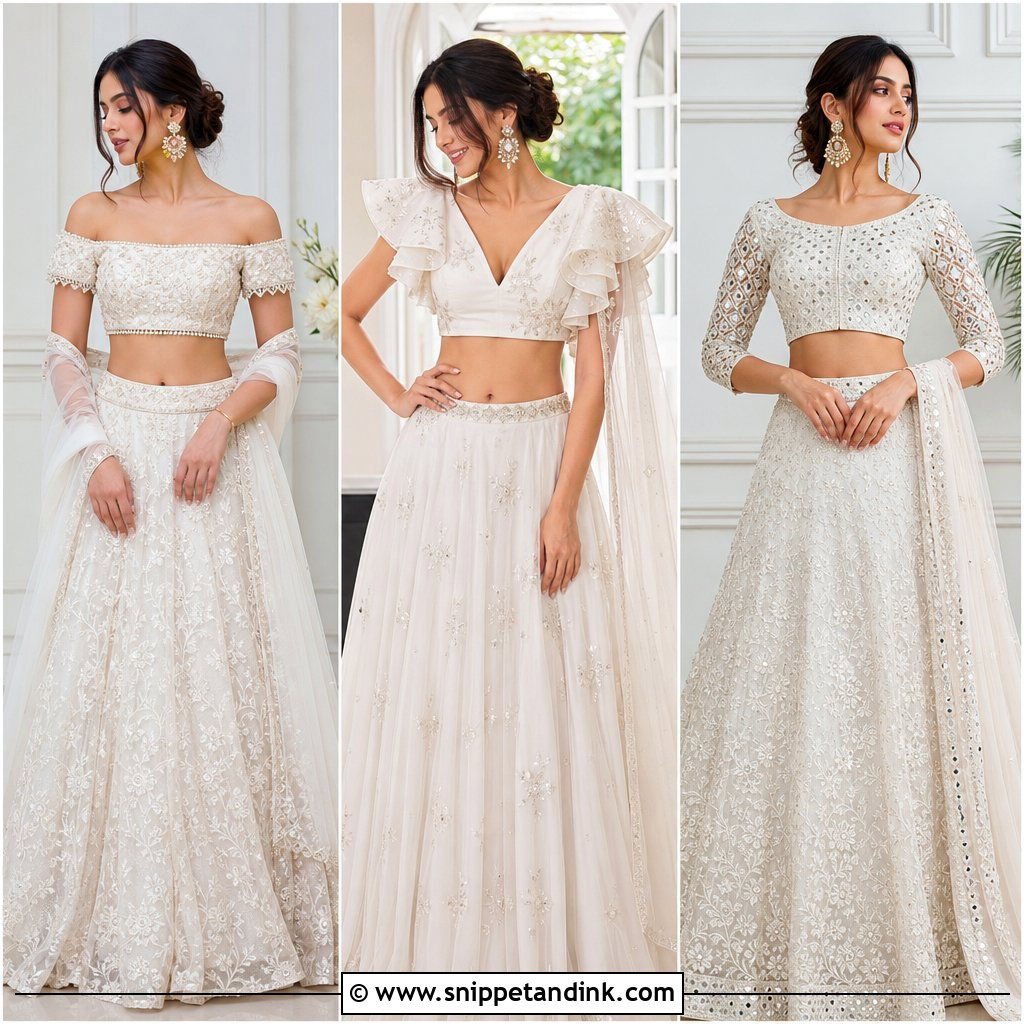
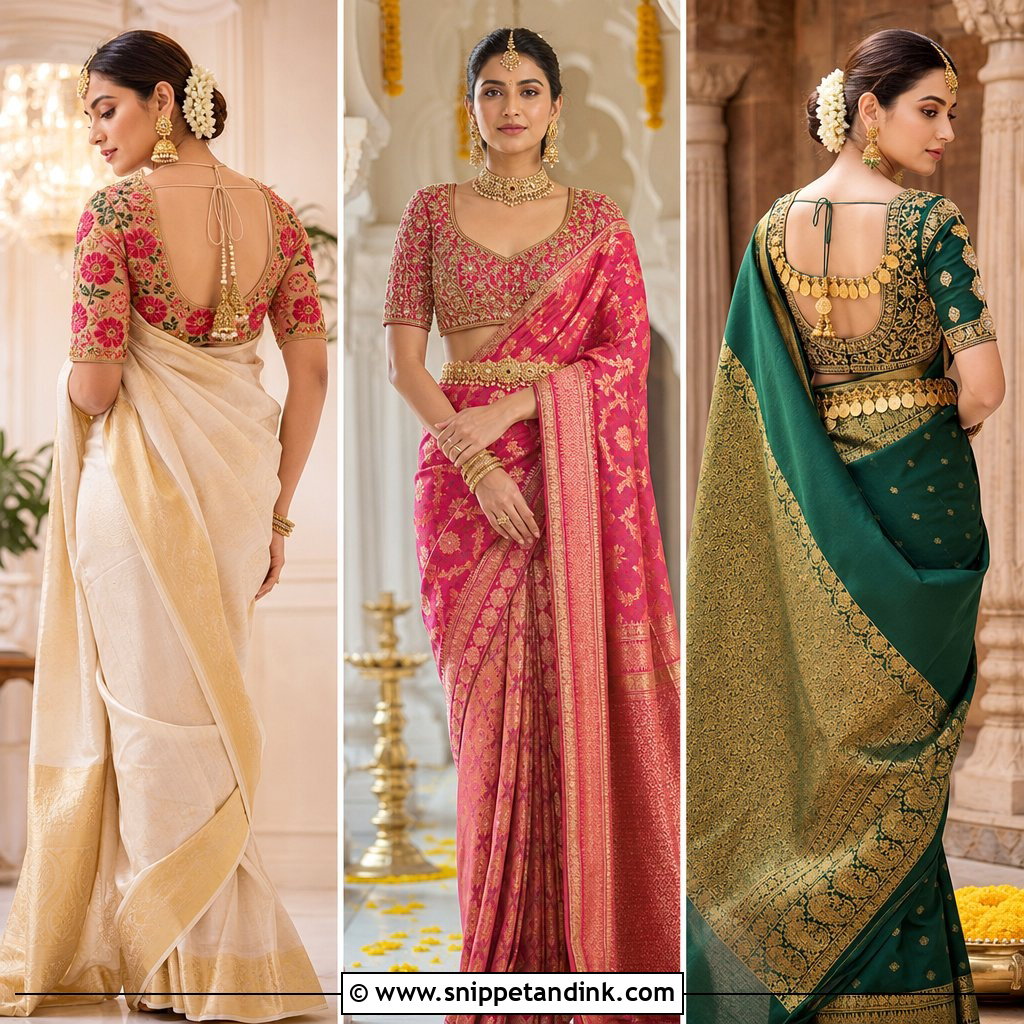
15. Green Wedding Blouse With Red Bridal Saree
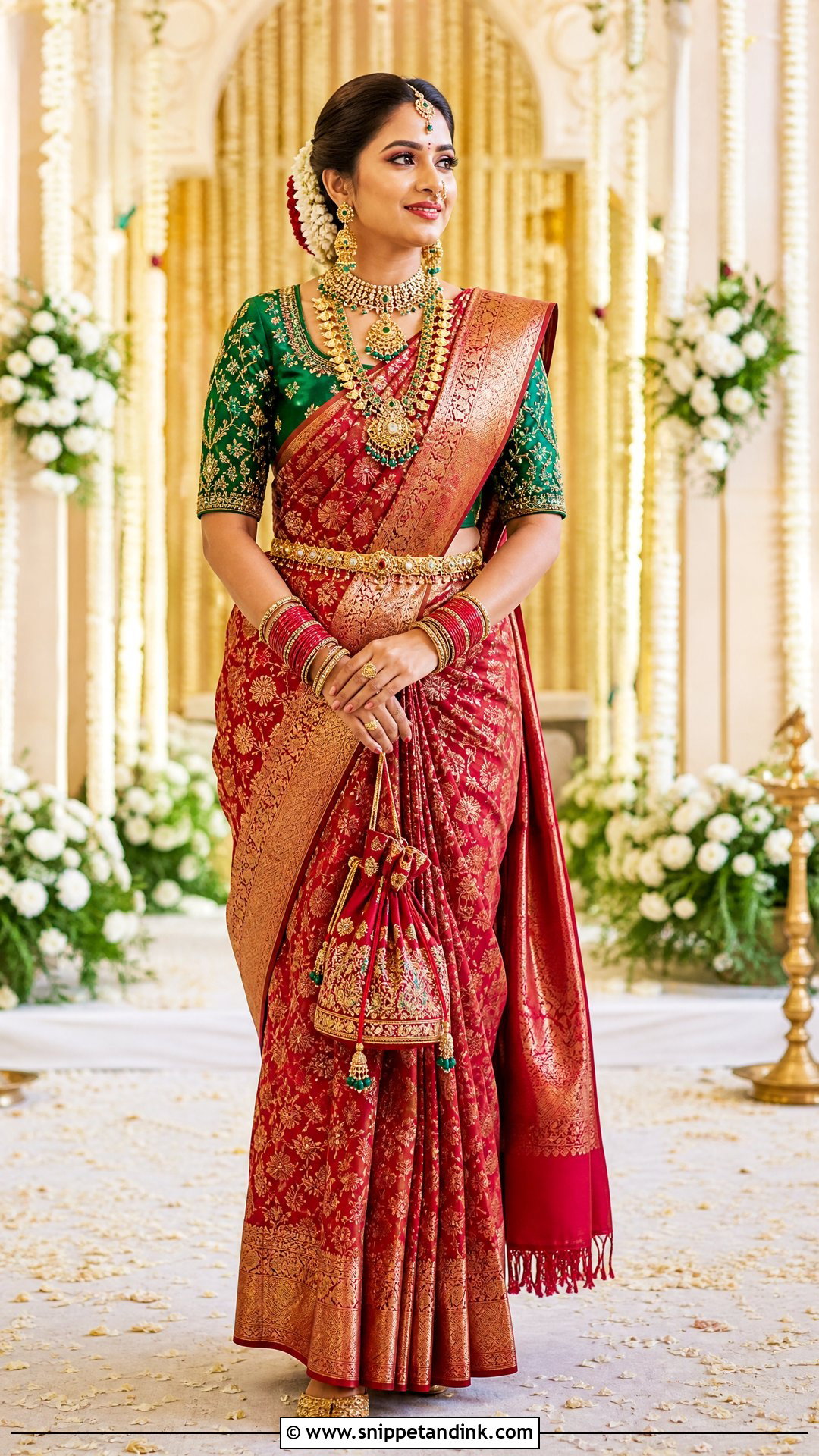
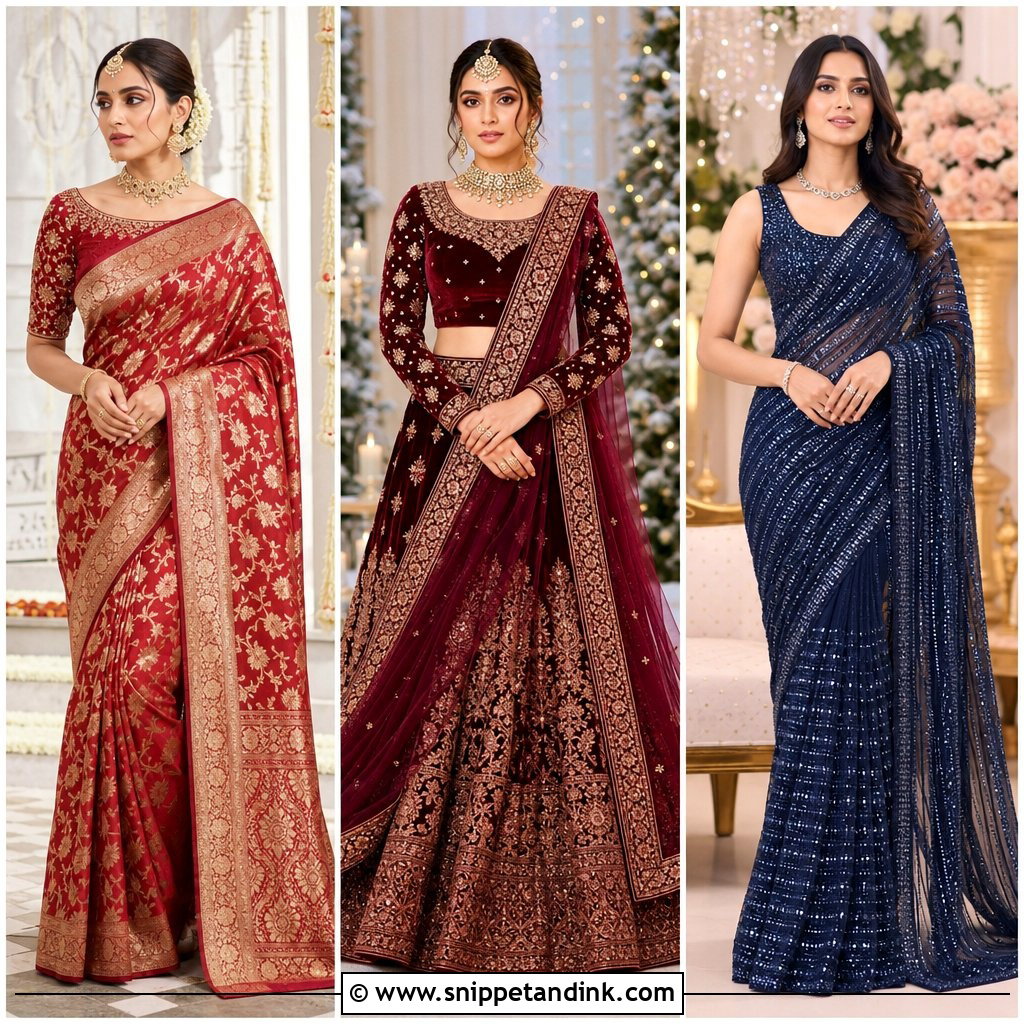
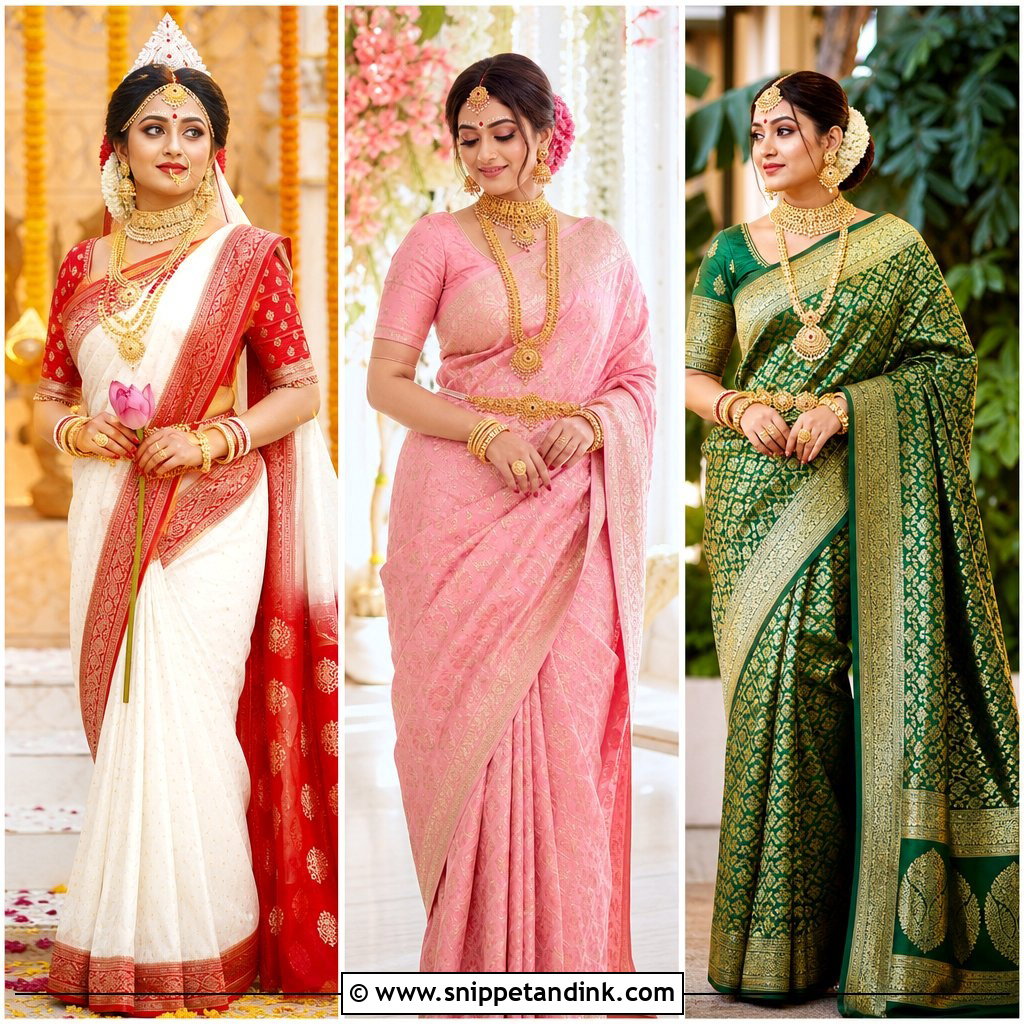
Green against a red bridal saree is a classic contrast, and emerald, bottle or forest green all hold their own beside antique zari. Elbow sleeves, a curved neckline and embroidery kept to the cuffs and borders work well. Gold jewelry with green stones, red bangles and gold embroidered footwear tie the two colors together, and a red-and-green potli helps without looking overmatched. The point I make at fittings is visual weight: silk with silk, brocade with a heavy woven drape. A flimsy blouse under a heavy saree looks borrowed. If the contrast feels too sharp, a warmer green softens it. Pin the pallu at shoulder and waist so the blouse shows.
16. Gold Sequin Wedding Blouse With Ivory Lehenga
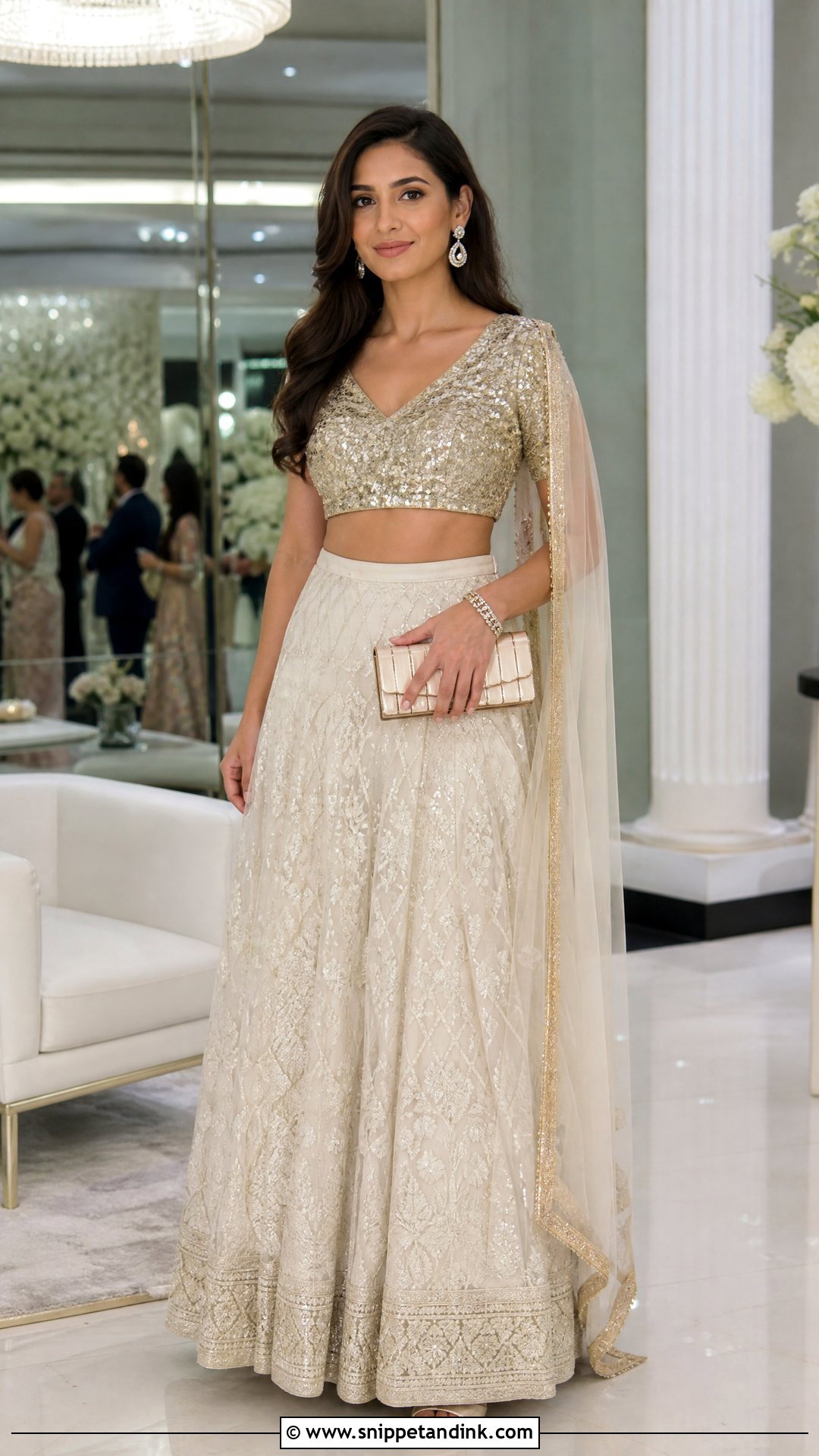
Gold sequins over an ivory lehenga look bright and clean at a reception. I steer brides toward small sequins or mixed beadwork, because large paillettes flash hard under a camera flash and add more weight than you’d expect. An ivory skirt with subtle gold embroidery and a sheer dupatta with a narrow border keeps the focus up top. A modest V or scoop neck balances the shine. Crystal earrings, a delicate bracelet, champagne block heels and an ivory clutch are enough; leave the necklace off if the bodice is heavily covered. Sequins are stitched with stiff thread on the reverse, so a soft lining around the armholes is not optional. A slightly longer blouse gives more coverage against a high-waisted skirt.
17. Floral Wedding Blouse With Organza Lehenga
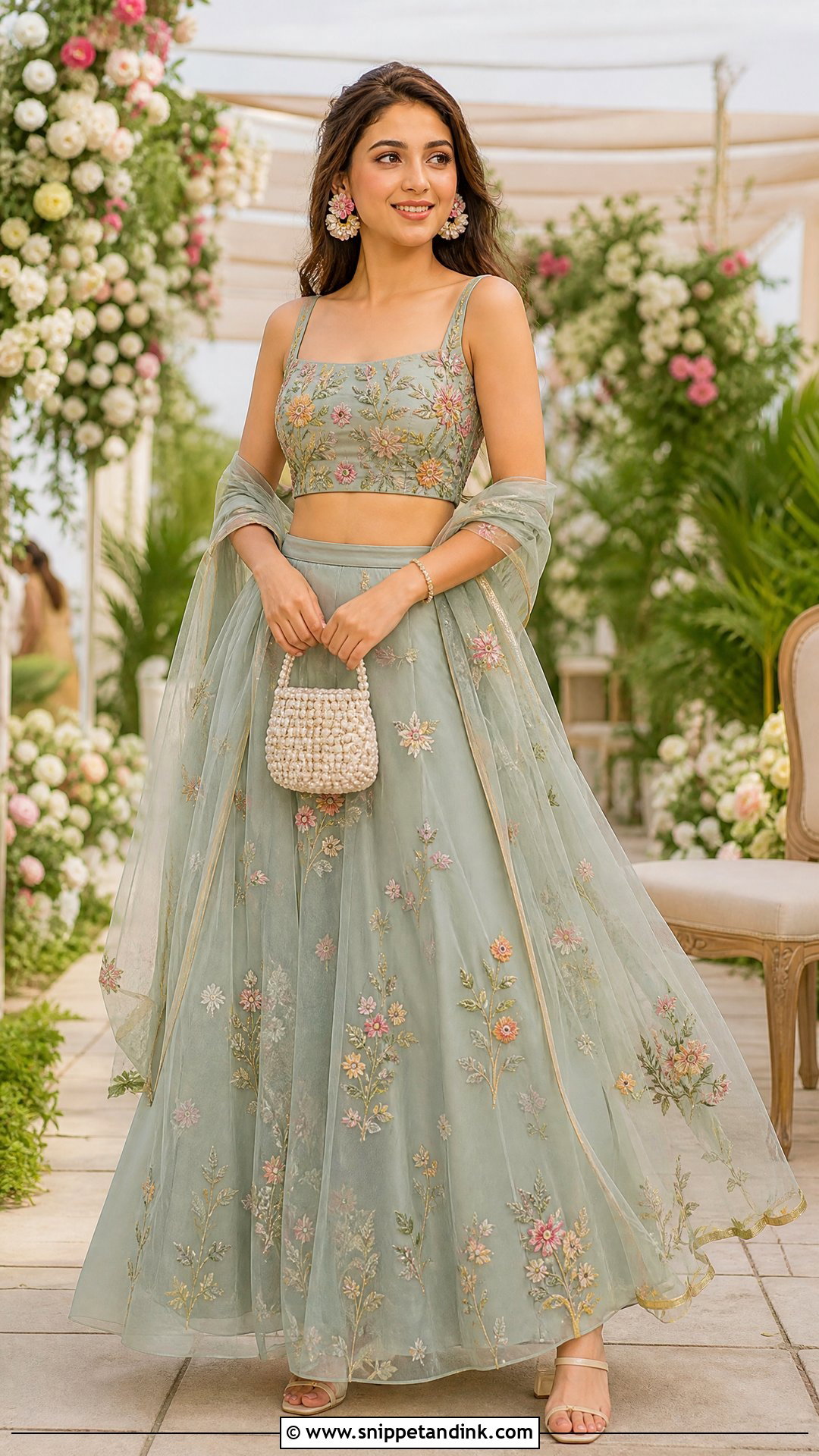
Floral embroidery suits daytime functions, especially thread flowers mixed with tiny beads or raised appliqué. Pull one color out of the embroidery for a plain organza lehenga, sage, peach, lavender or powder blue, and add a sheer matching dupatta. Floral earrings, one slim bangle, pastel block heels and a beaded bag finish it, with a low ponytail or braided bun. When I place motifs on a pattern, I keep the large raised ones away from the underarm and side seams, because appliqué there rubs with every arm swing. Dial the embellishment down and the same design dresses a bridesmaid, a sister or a guest.
18. Sheer Sleeve Wedding Blouse With Embroidered Lehenga
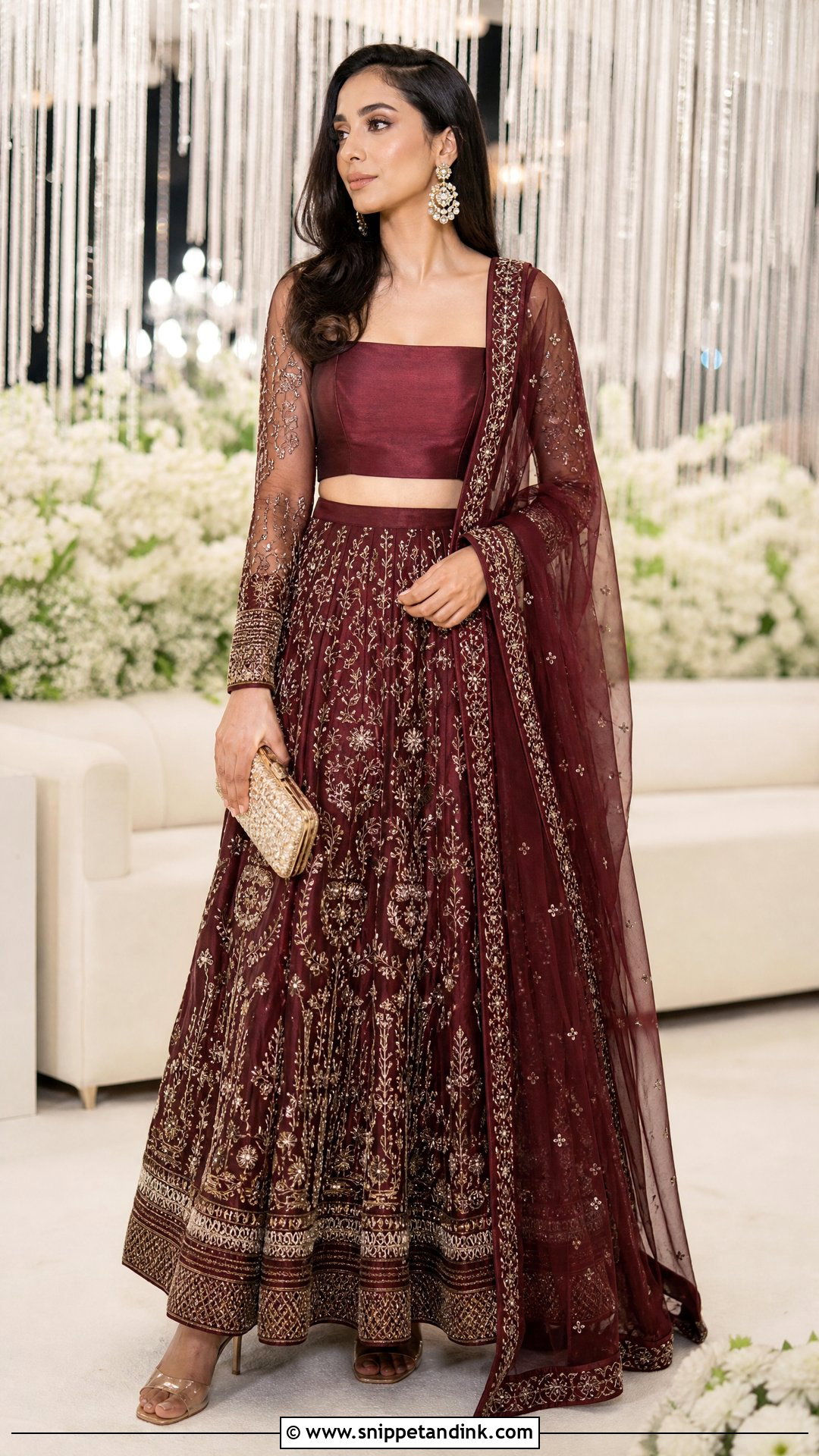
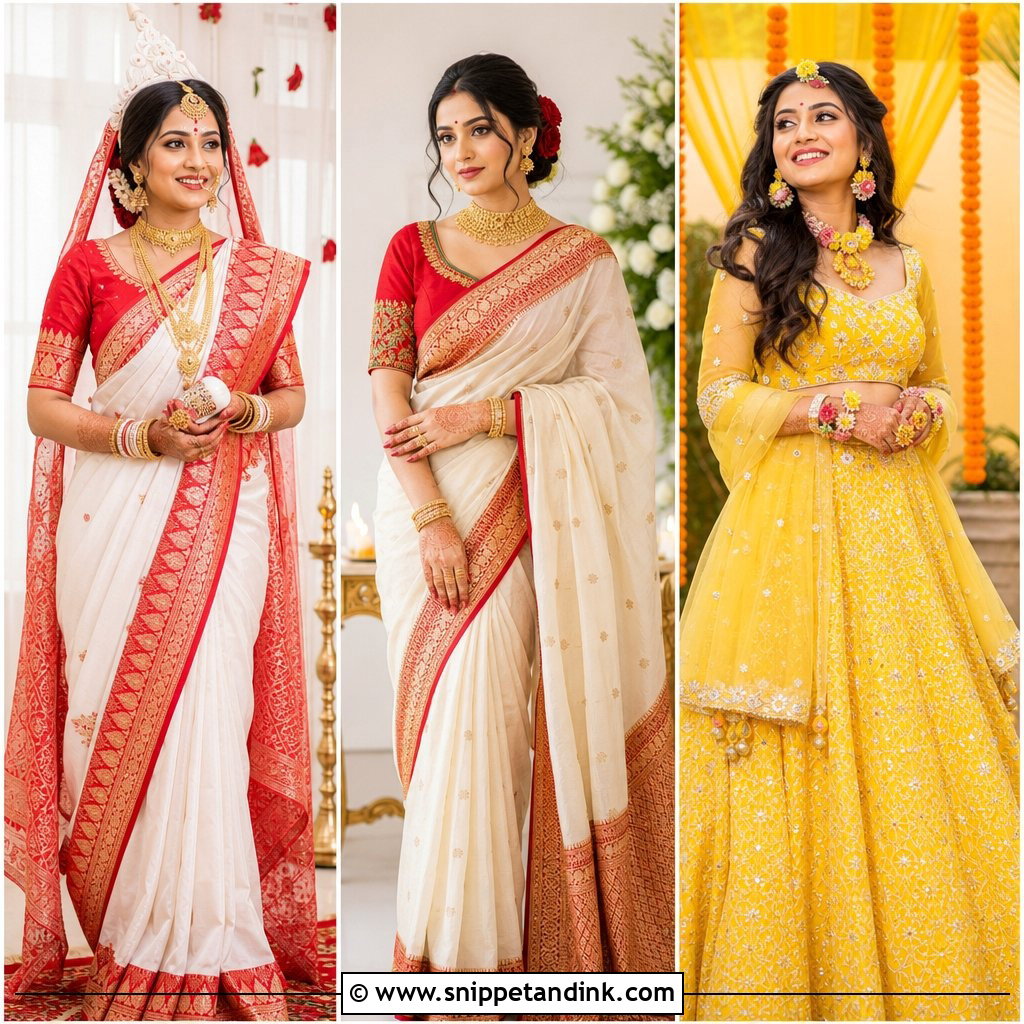
Sheer sleeves give arm coverage without bulk. Fine net with embroidered cuffs over a bodice in silk, velvet or lined georgette is the combination I use most, paired with a lehenga that repeats the cuff motif or border color. Deep blue, wine, dusty pink and muted gold all look polished. One shoulder for the dupatta, statement earrings, a small clutch and heeled mules complete it. Net snags easily, so keep sharp beads off the inner arm and reinforce the shoulder seam where the sheer meets the solid. For more coverage, choose mesh close to your skin tone, or line the sleeve in a very light breathable fabric.
19. One Shoulder Wedding Blouse With Draped Saree
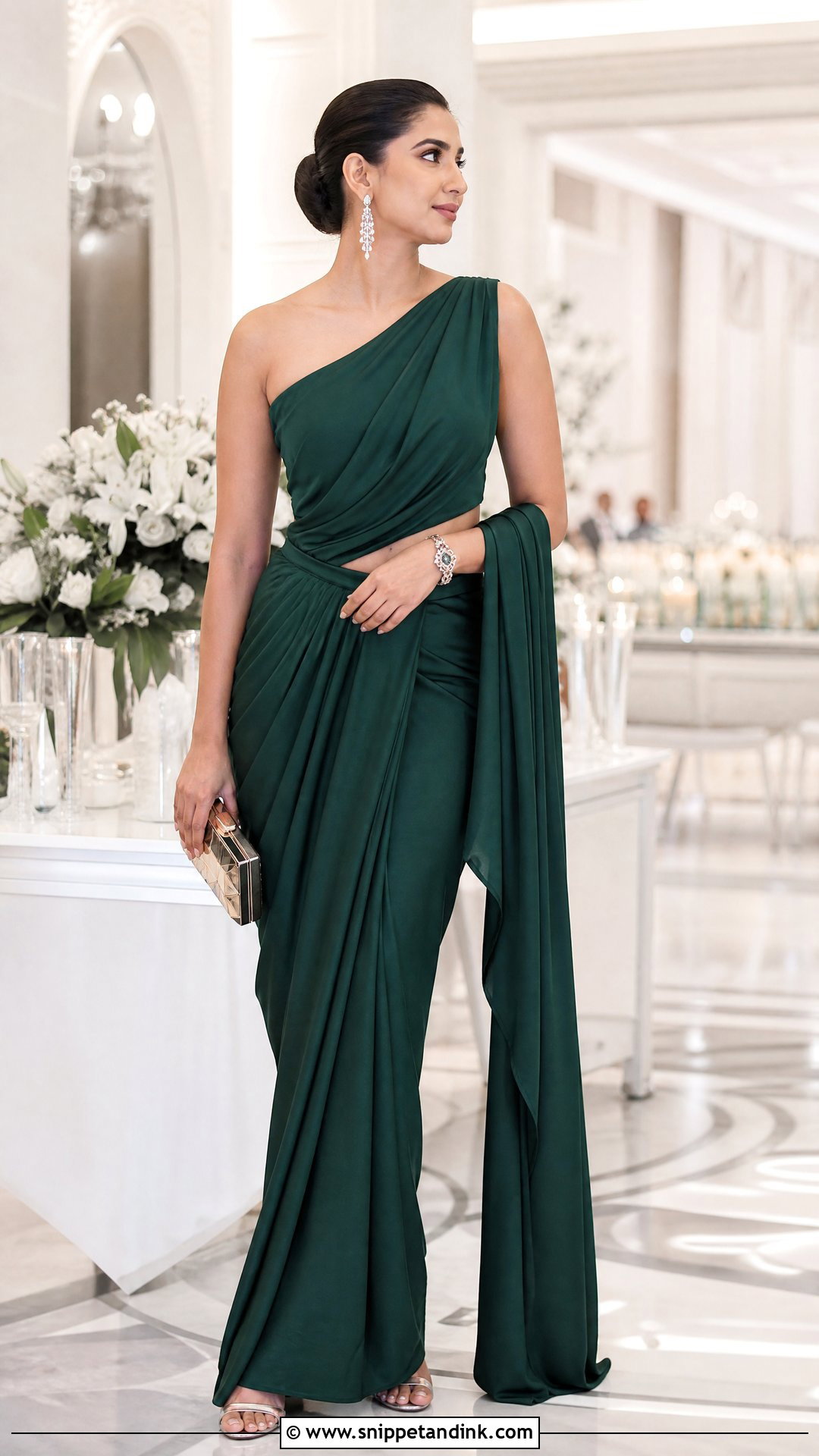
A one-shoulder blouse with a pre-draped saree is about as streamlined as wedding wear gets. Choose one wide supportive shoulder and a fitted waist, and let the drape fall from the opposite side so the asymmetry balances. Satin, crepe and light georgette hold the line; I avoid heavy silks here because they pull the bare side down. Emerald, royal blue, raspberry and muted gold all read formal. Long earrings, one bracelet, metallic heels and a box clutch are enough, with no necklace. Hidden cups, a strip of nonslip tape along the top edge and a side zip keep everything in place. Sweep the hair off the covered shoulder, and keep pleats to a minimum.
20. Sleeveless Wedding Blouse With Embellished Saree
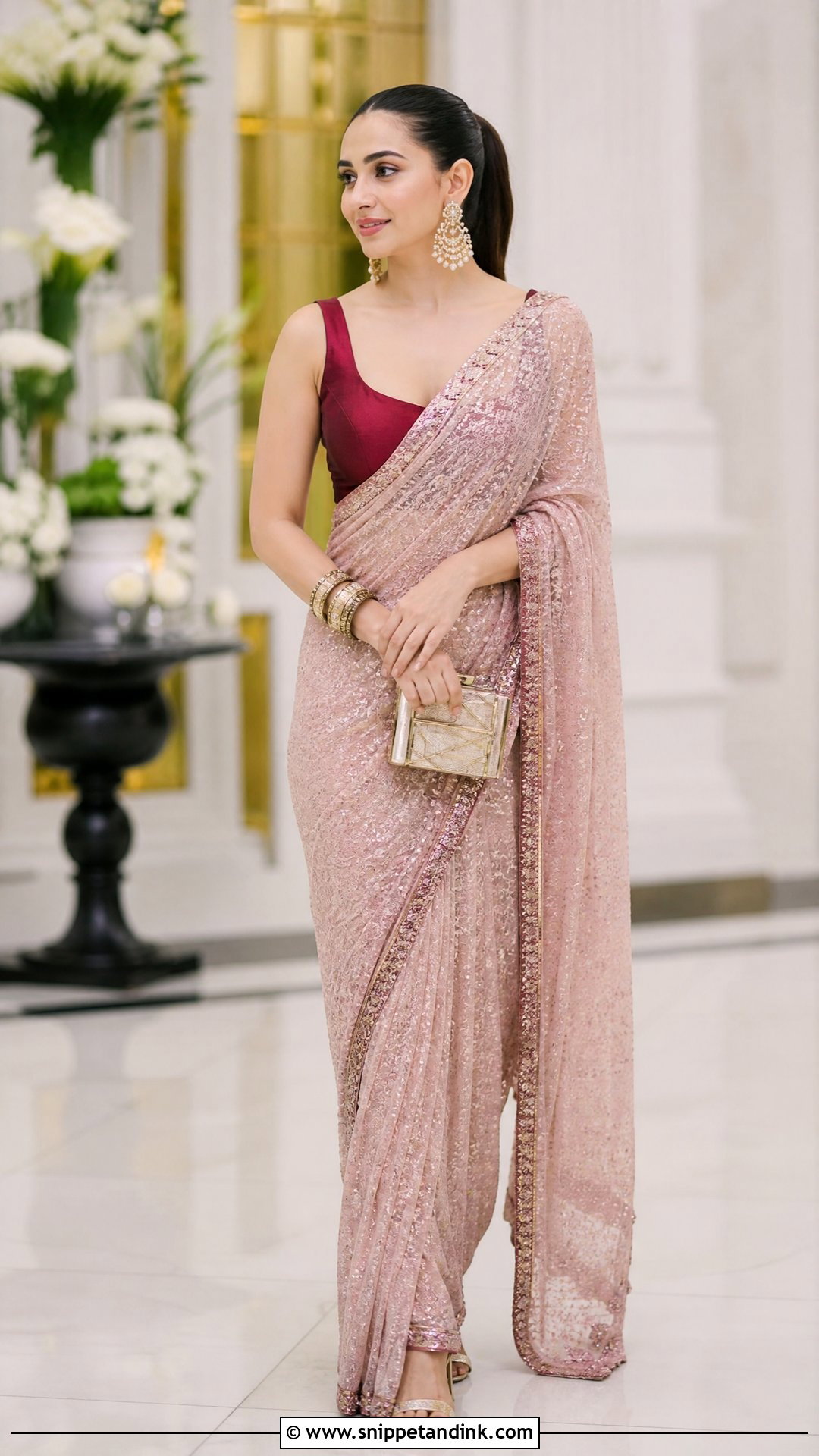
A well-fitted sleeveless blouse makes a heavily embellished saree feel lighter to wear. I prefer a broad shoulder with a round, V or jewel neck over narrow straps that slide. A solid silk blouse against a sequin, embroidered or woven saree works best in pairings with clear definition: burgundy with blush, navy with silver, black with gold. Statement earrings, bangles, a structured clutch and block heels finish it. The armhole is where sleeveless blouses fail: too tight and it digs in, too loose and it gapes to show the bra. Add a little length so the hem doesn’t ride up when you raise your arms, and wear your hair up so the shoulders stay clear.
How a Blouse Holds Up Through Heat, Sweat and a Long Ceremony
Most blouse problems I’m called to fix on the day come from the same few places. Embroidered fabric doesn’t breathe, so a long outdoor ceremony leaves the lining damp at the back and underarms. I line heavy blouses in soft cotton or cotton silk rather than polyester, and I ask brides who run warm to have washable underarm shields stitched in.
Hooks are the next weak point. A row of front hooks can spring open under the weight of a necklace, so I’d rather see a concealed side zip with a hook at the top, or back hooks set on a reinforced placket. For backless and off-shoulder styles, pack fashion tape, a few safety pins in your blouse color and a small needle already threaded.
After the wedding, don’t hang a zari or sequined blouse; the weight stretches the shoulders. Let it air out, wrap it in muslin or a soft cotton cloth with the embroidery folded inward, and keep it away from damp so the metal threads don’t tarnish. Dry clean only with a cleaner who handles bridal embroidery.
Fabric, Fit and Lining Outrank Color
Look at the full outfit before you commit to any single blouse. Match the neckline to the jewelry you already own or plan to borrow, set heavy embroidery against a calmer fabric, and pick shoes you can stand in for hours. In my fittings, the lining, closures, cups and the cut of the shoulder decide whether a blouse works far more often than the color does. Zari blouses belong with silk sarees; corset, cape and asymmetric cuts suit lehengas and pre-draped styles. Whichever you pick, sit, walk and lift your arms in it before the day, and let that decide.
You'll Like These Ideas:







Leave a Reply