
Most brides arrive at their first appointment with a neckline in mind and leave in a completely different silhouette. That is normal. A wedding dress is a structure you will wear for twelve hours, and how it behaves when you sit, hug and dance matters as much as how it photographs. Below are twenty dresses I regularly put brides in: ball gowns, crepe columns, lace A-lines, short reception dresses and gowns with removable layers. For each I explain how it is built, who it suits, what to pair it with and the fitting check I would not skip. Read them with your venue and your own body in mind, then try the shapes on in person.
Why the Size on a Bridal Tag Will Surprise You
Bridal sizing usually runs smaller than the clothes in your wardrobe, often by a size or two, and every designer has its own chart. Brides who normally wear a 10 are regularly ordered a 12 or 14. Ignore the number entirely. Your consultant will measure your bust, waist and hips and order from the designer’s chart, choosing the size that fits your largest measurement so the rest can be taken in.
Samples in a boutique are often one size, clipped at the back to show the shape. That is fine for judging a silhouette, but it tells you nothing about fit, so do not rule a dress out because the sample is too big or too small. Ask whether larger or smaller samples exist if you need them.
Bring a strapless bra or the kind of shaping underwear you expect to wear, plus shoes at roughly your wedding heel height. Without them, necklines and hems look completely different from how they will on the day.
1. A-Line Lace Wedding Dress
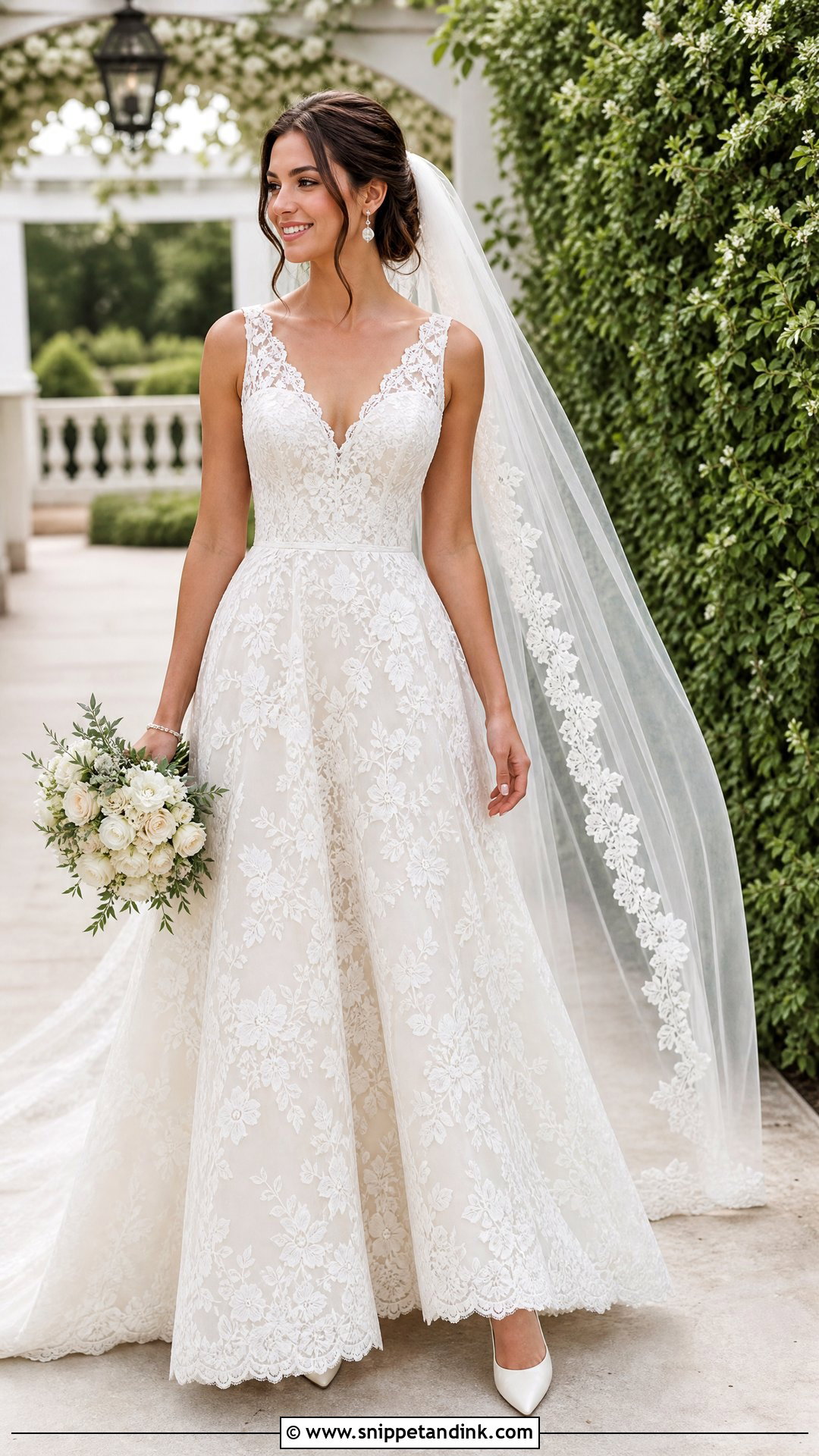
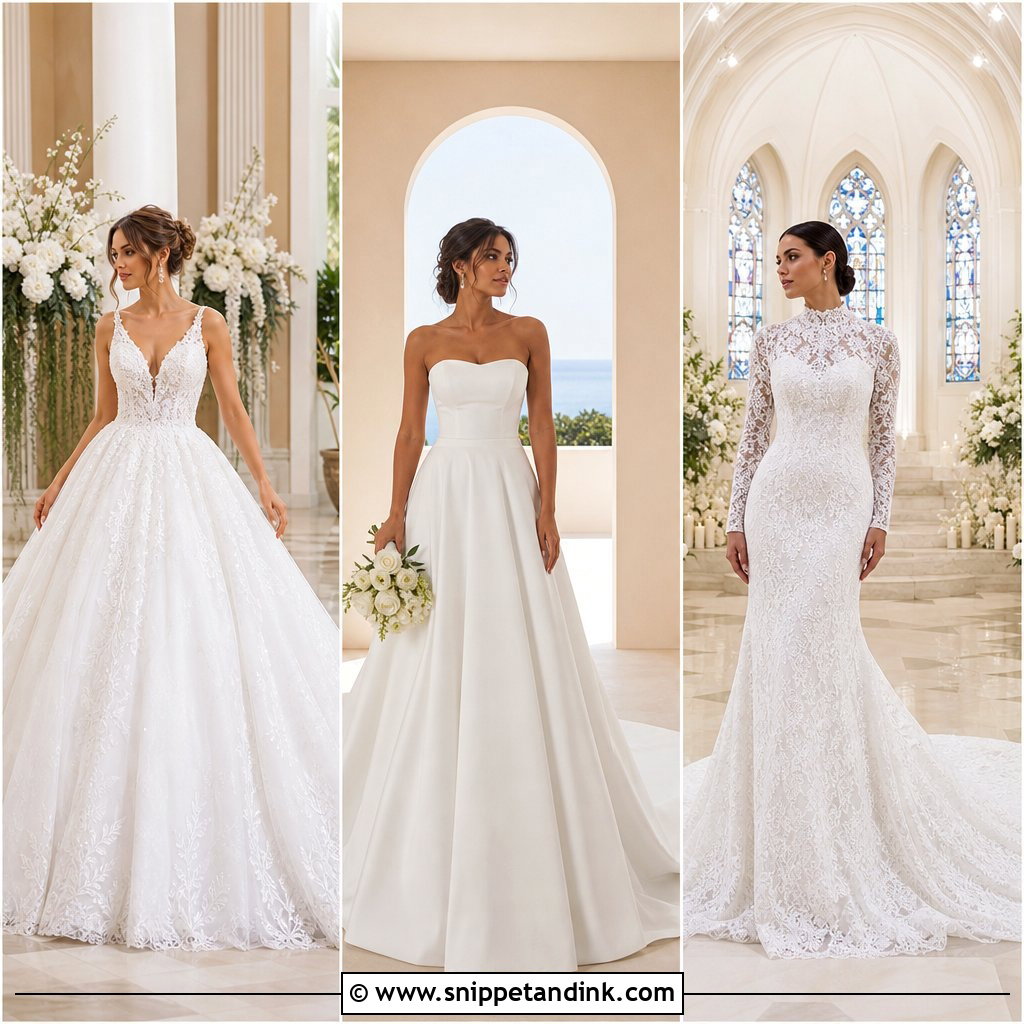
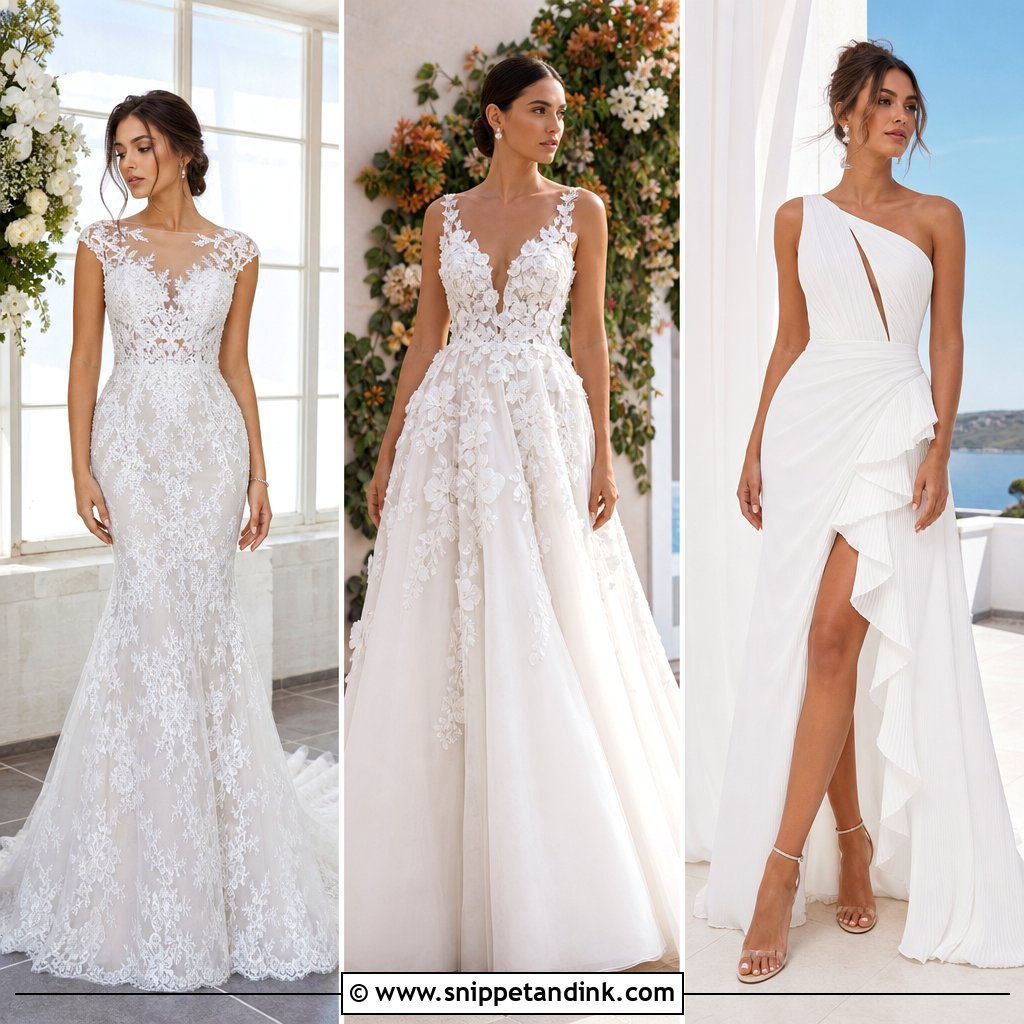
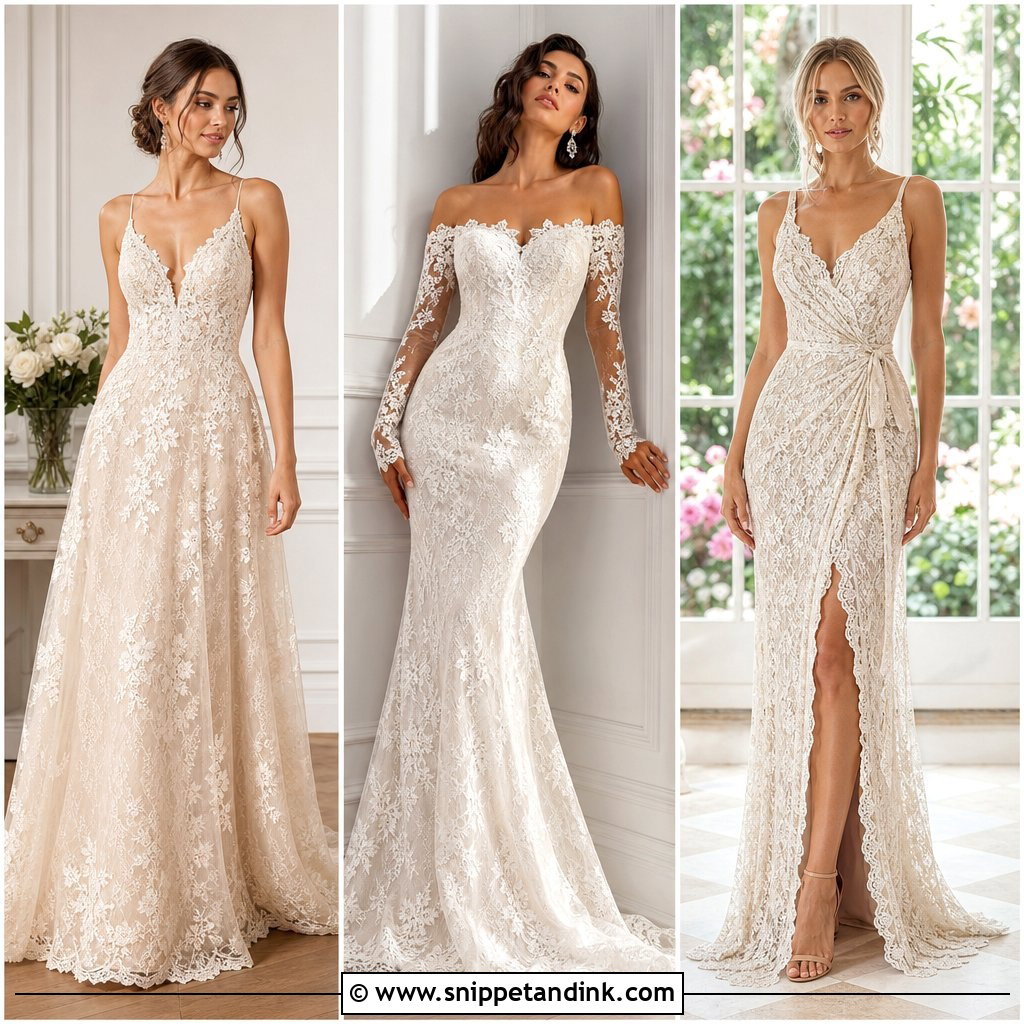
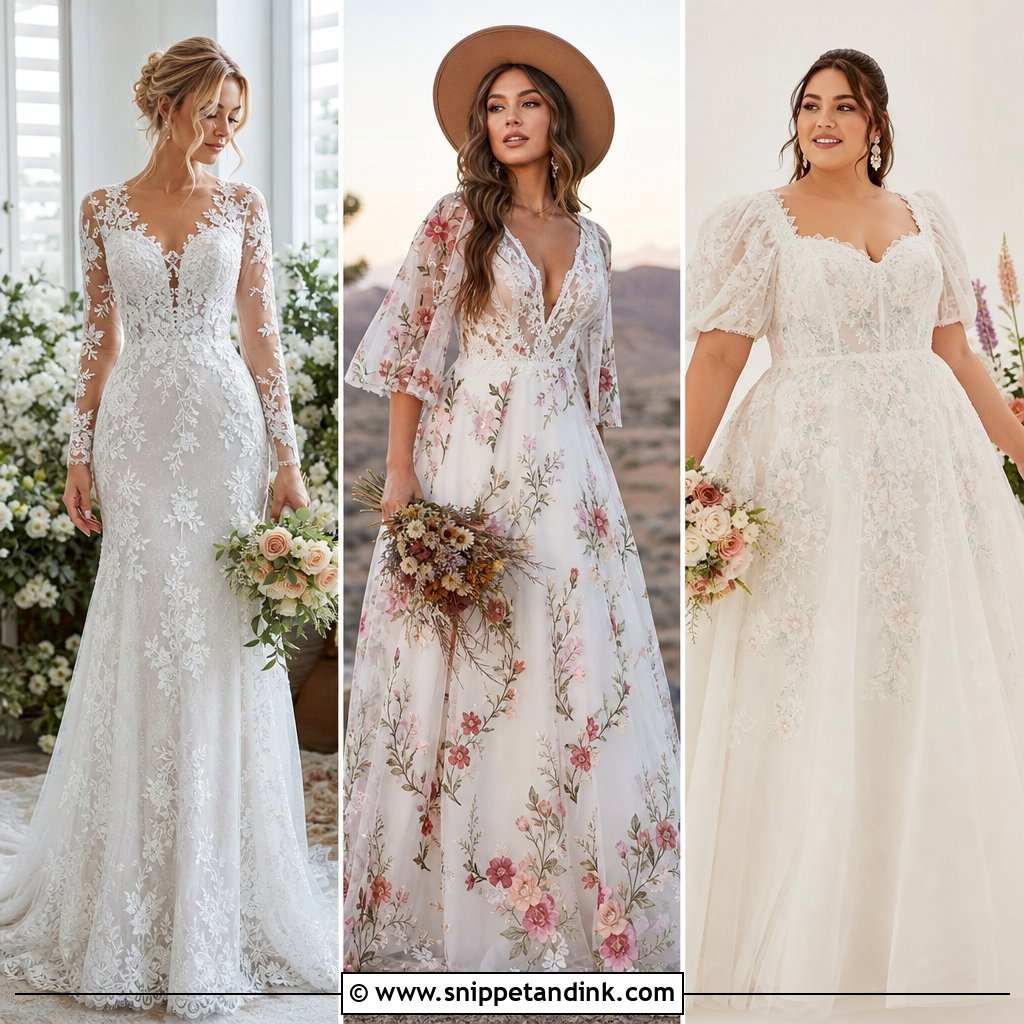
If a bride is unsure where to start, I pull an A-line first. The fitted bodice marks the waist and the skirt widens gradually, so it flatters most figures and suits nearly any venue. Soft floral lace over a light lining moves well and gives texture in close-up photos. A V-neck lengthens a shorter torso; wider straps carry a fuller bust more comfortably. Ivory pointed pumps, pearl drops and a fingertip veil edged in matching lace finish it, and a compact bouquet keeps the lace visible. Hem it in your wedding shoes, never in fitting-room heels.
2. Strapless Satin Ball Gown Wedding Dress
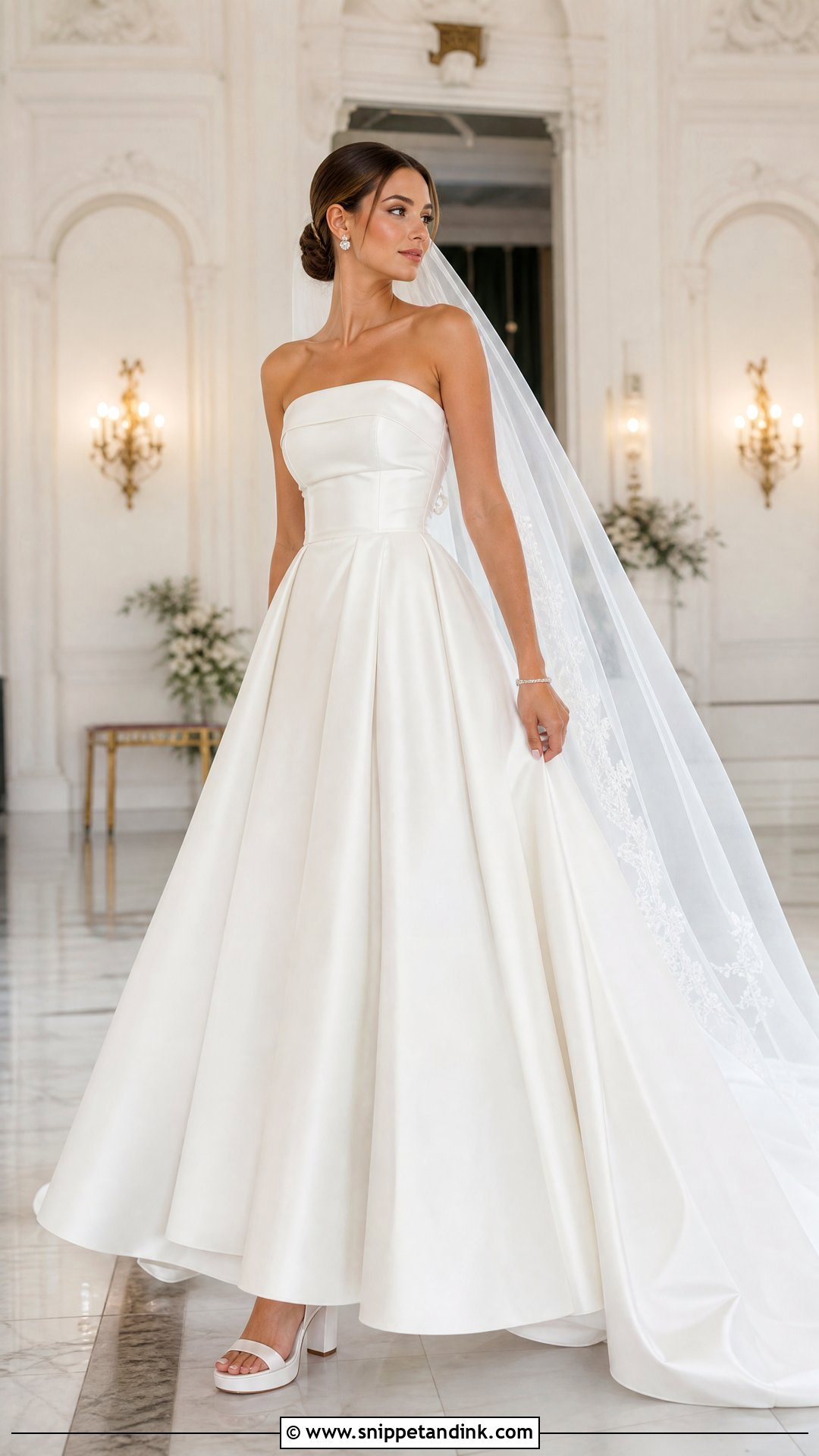
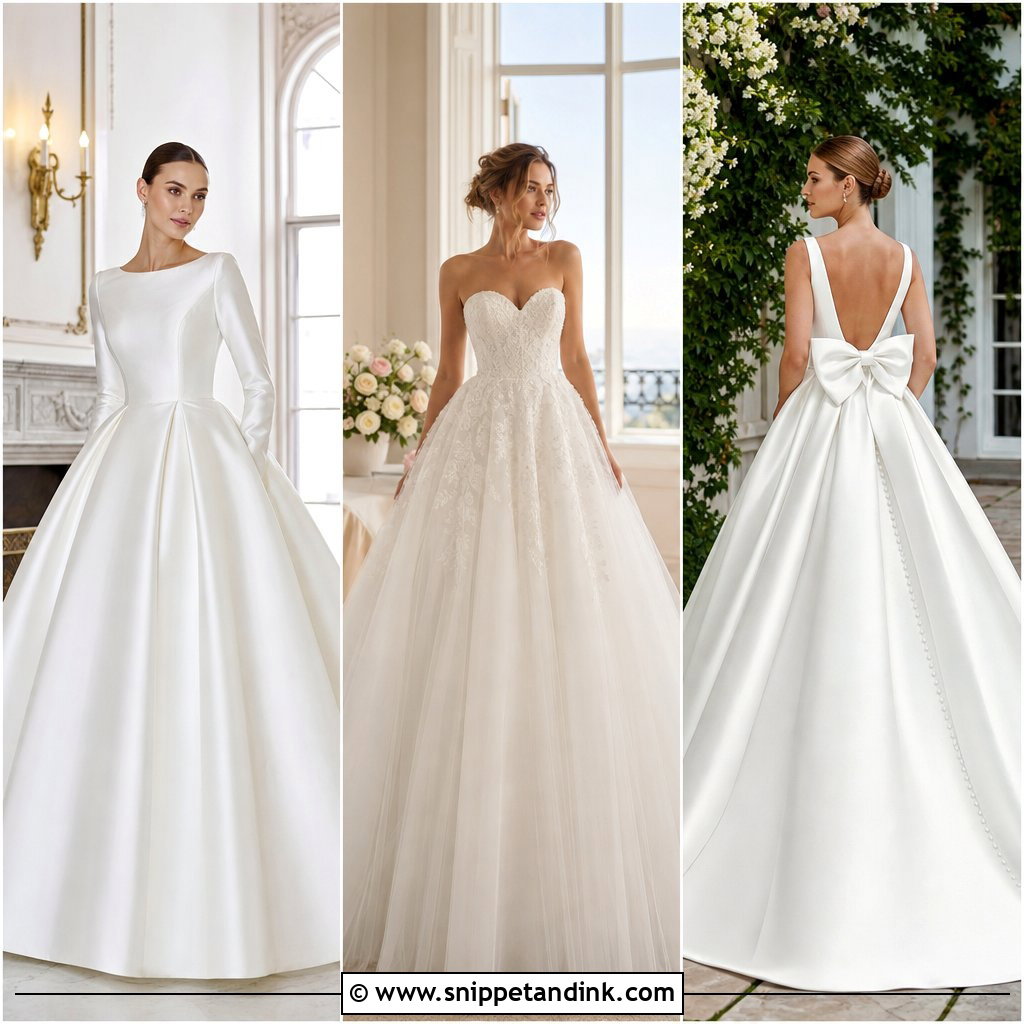
A strapless satin ball gown holds itself up through its bodice, not your shoulders, so internal corsetry is what I look at before the outside. Ask the consultant to show you the boning and waist stay. Satin or mikado give a clean surface that needs no decoration, and the volume makes the entrance. A cathedral veil for the ceremony can come off for the reception. Crystal studs, a tennis bracelet and satin block heels keep the focus on the dress. If you want coverage, detachable off-shoulder straps or a sheer wrap add it without changing the gown. Fit the bodice to your measurements rather than squeezing into a smaller size.
3. Long Sleeve Lace Wedding Dress
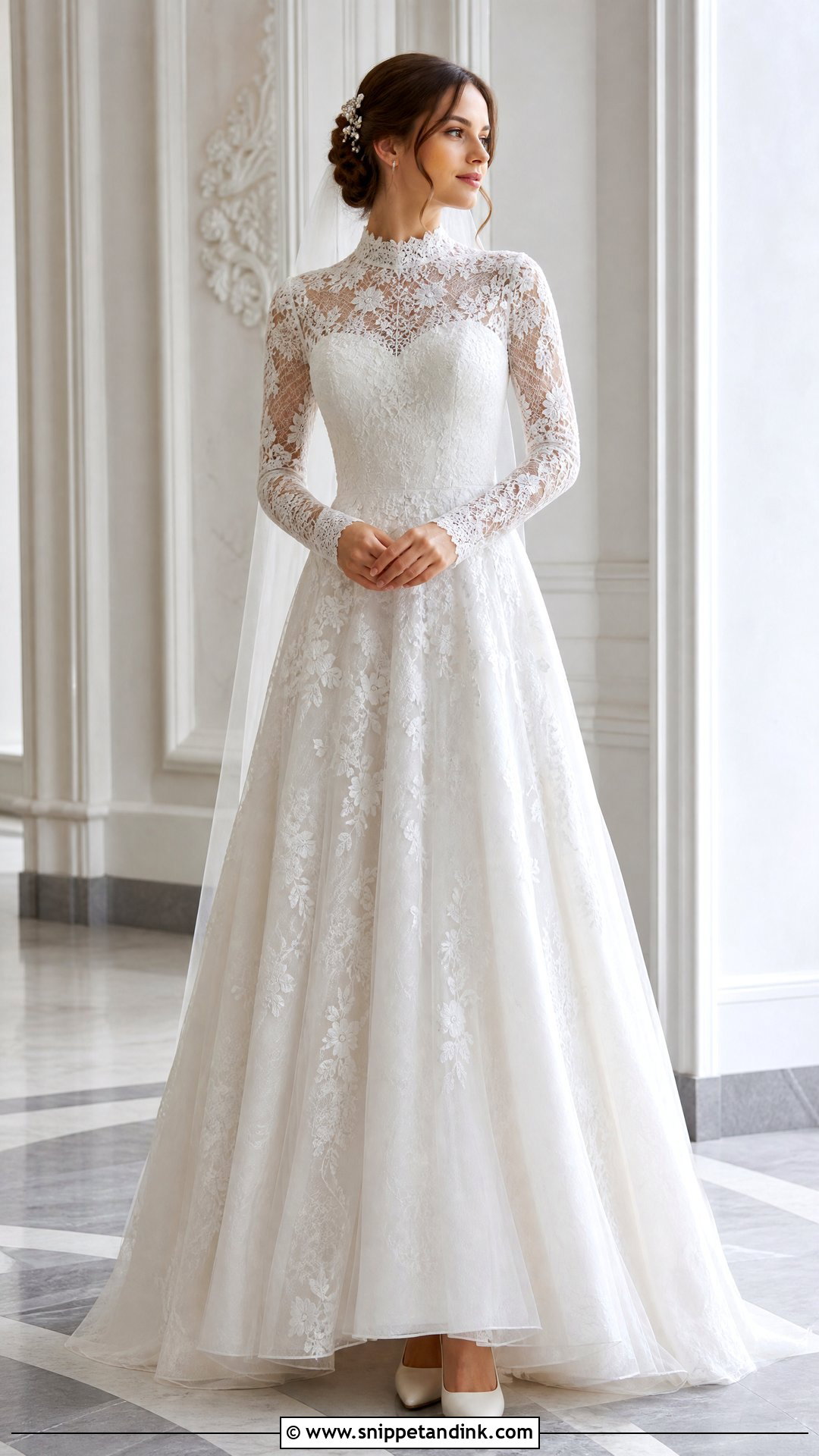
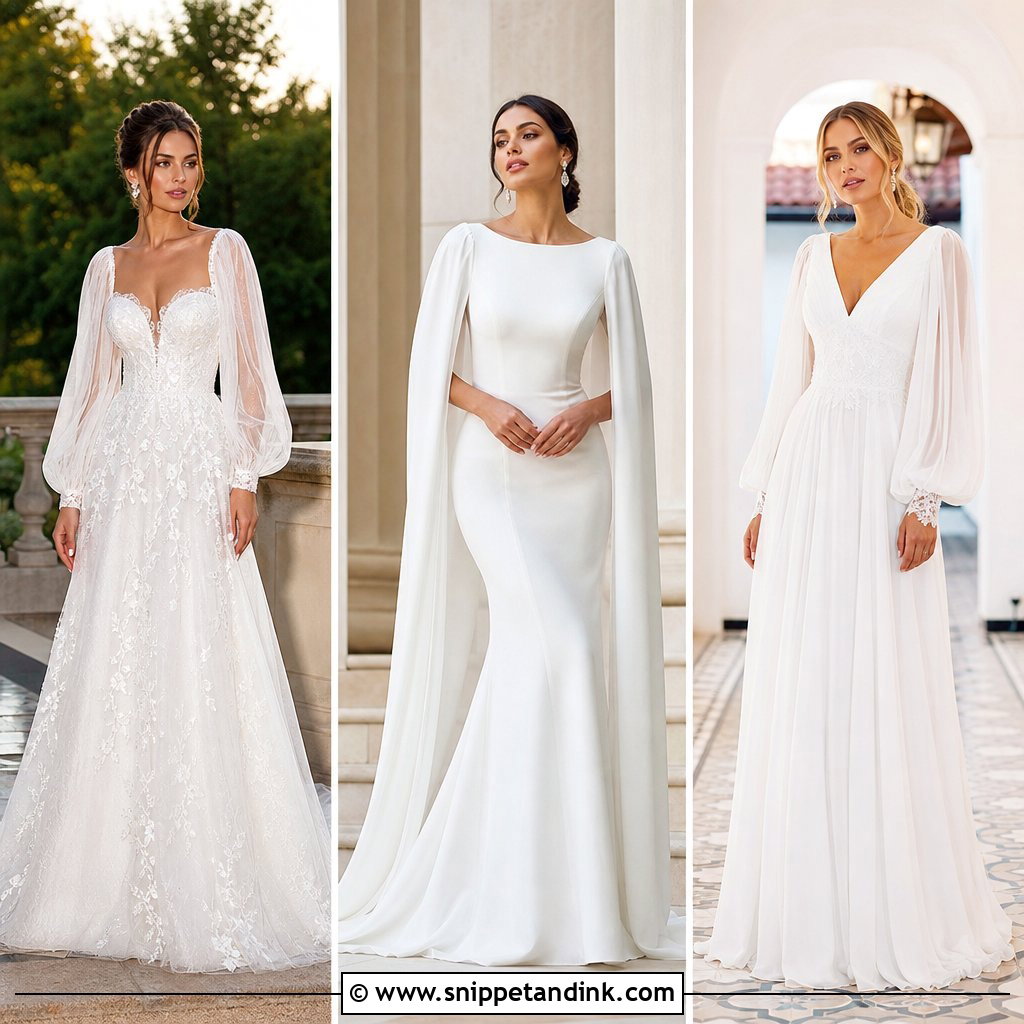
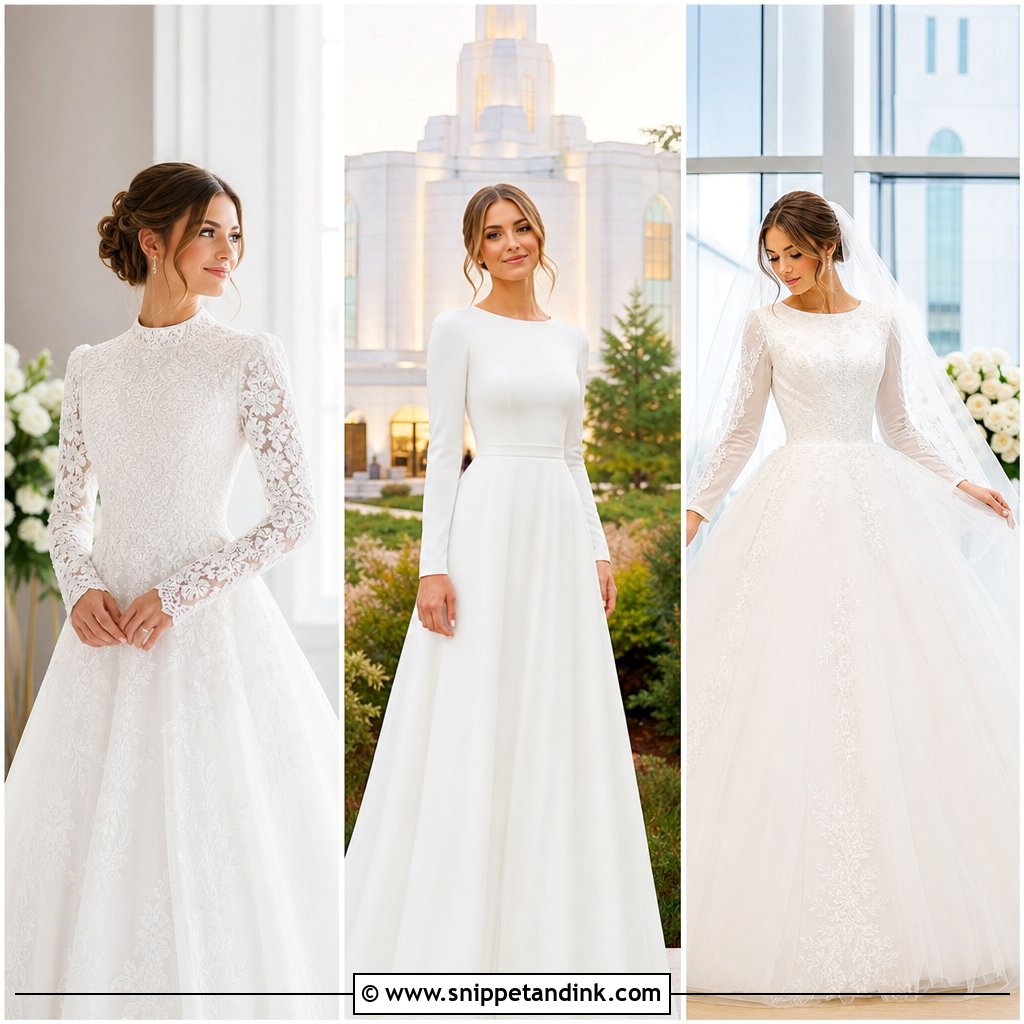
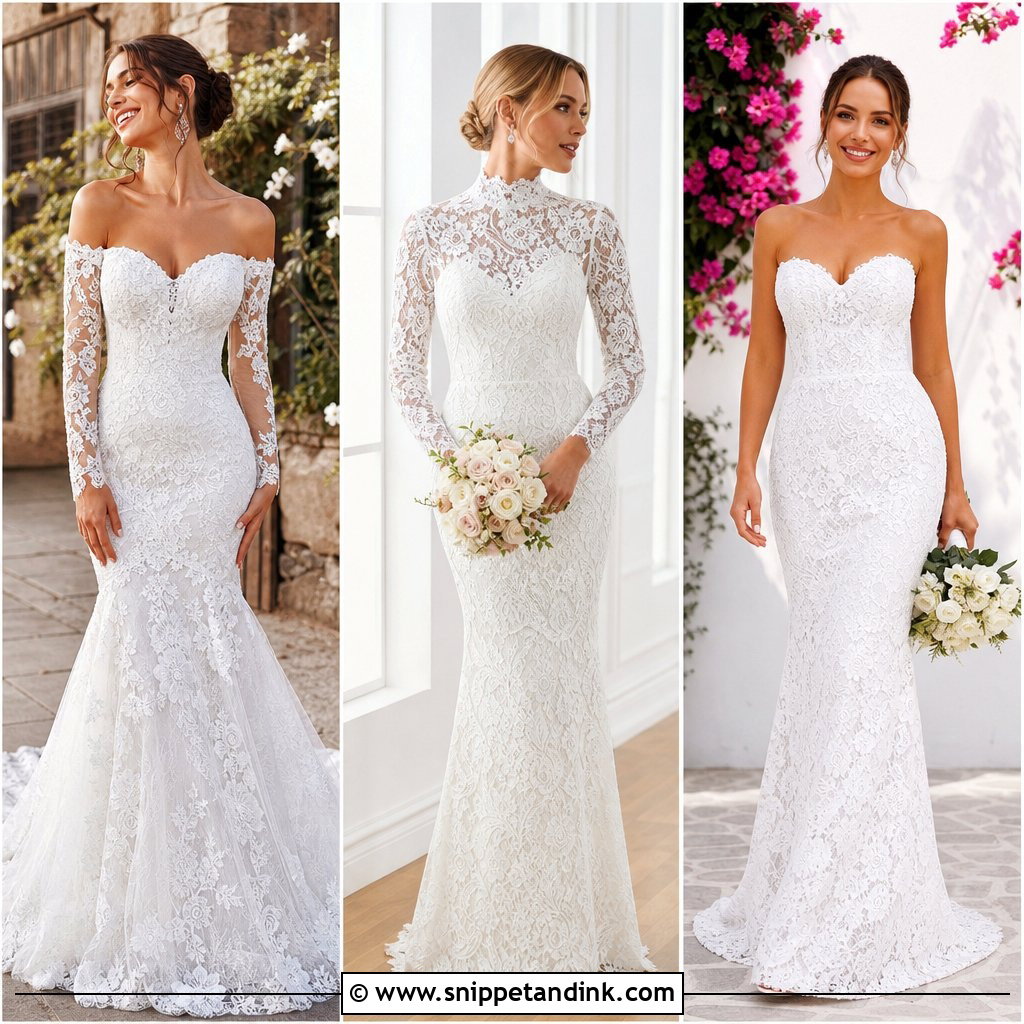
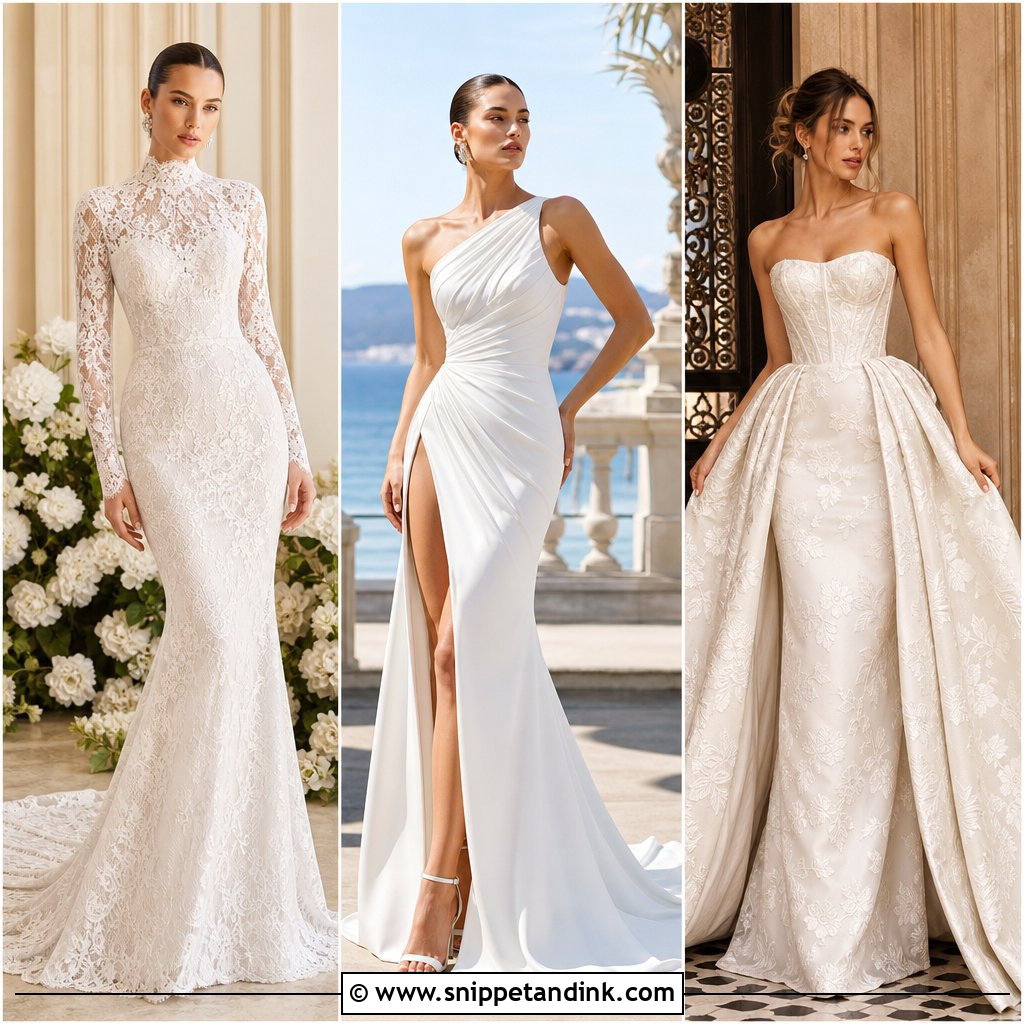
Long lace sleeves look delicate, but they change how far you can reach. Sheer lace sleeves give coverage for cool weather and formal churches while keeping the dress light. At the fitting, I have brides hug me and raise both arms over their head, because a tight armhole pulls the whole bodice up. A softly fitted bodice with an A-line skirt allows freedom through the hips. A high illusion neckline is traditional; a V-neck opens the shape. Pearl hairpins, small earrings, closed-toe heels and a plain tulle veil are enough, with no necklace over detailed lace. A low bun shows off the sleeves.
4. Mermaid Wedding Dress
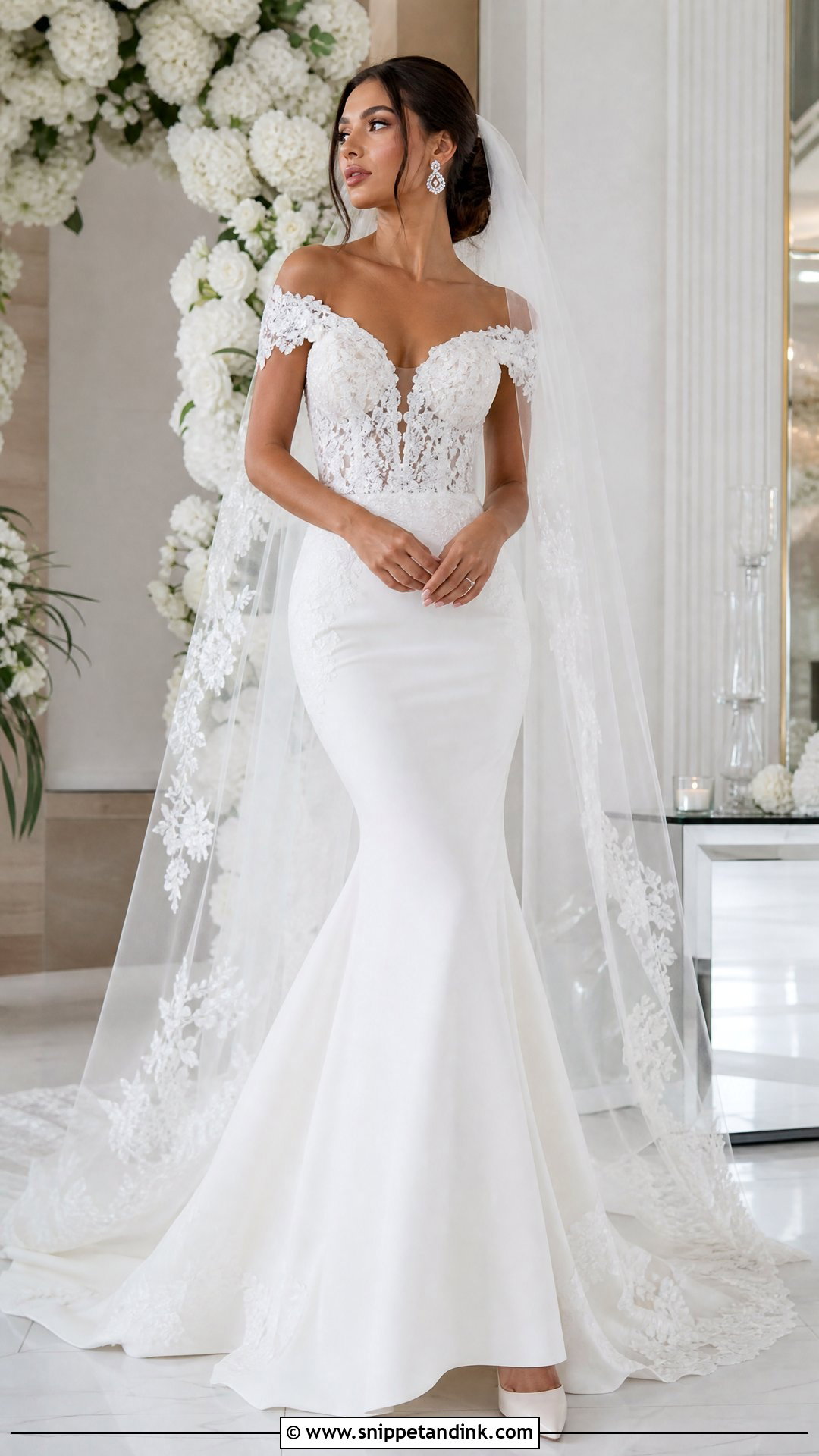
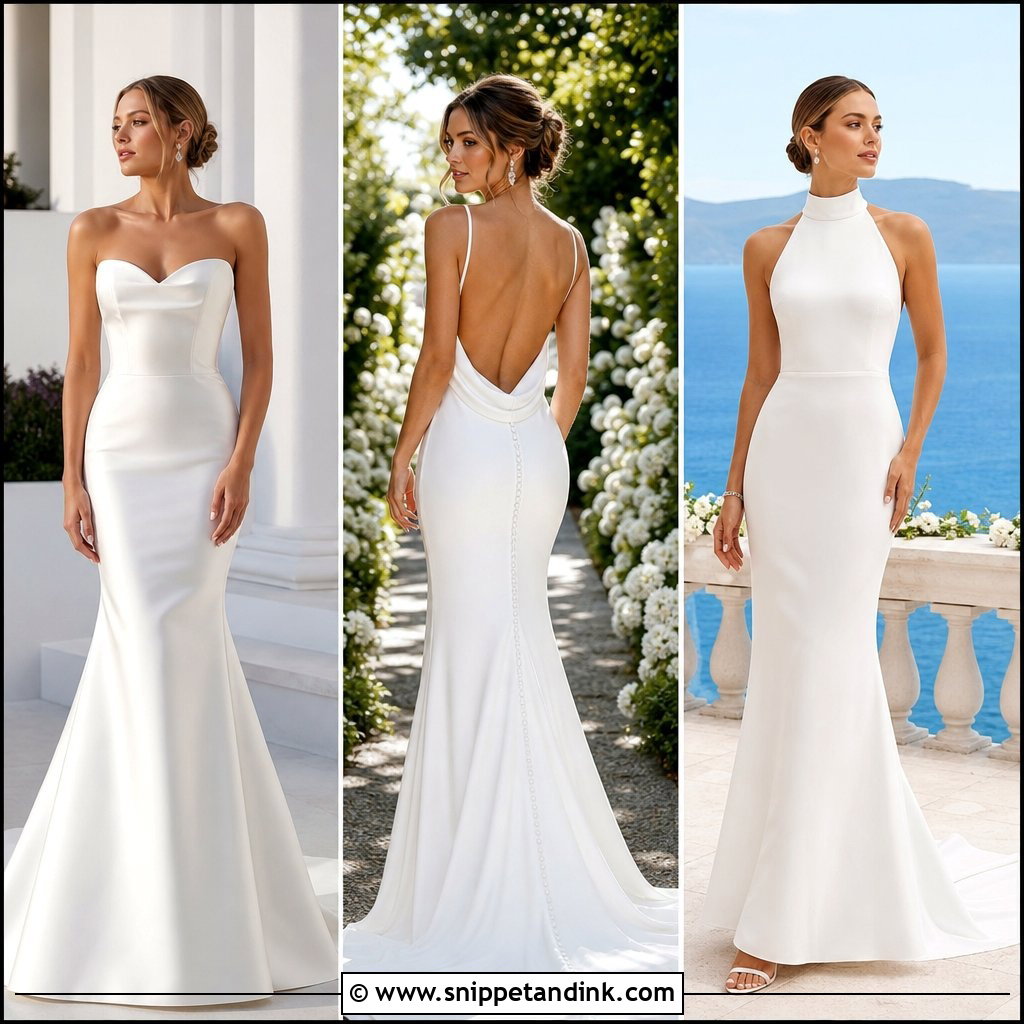
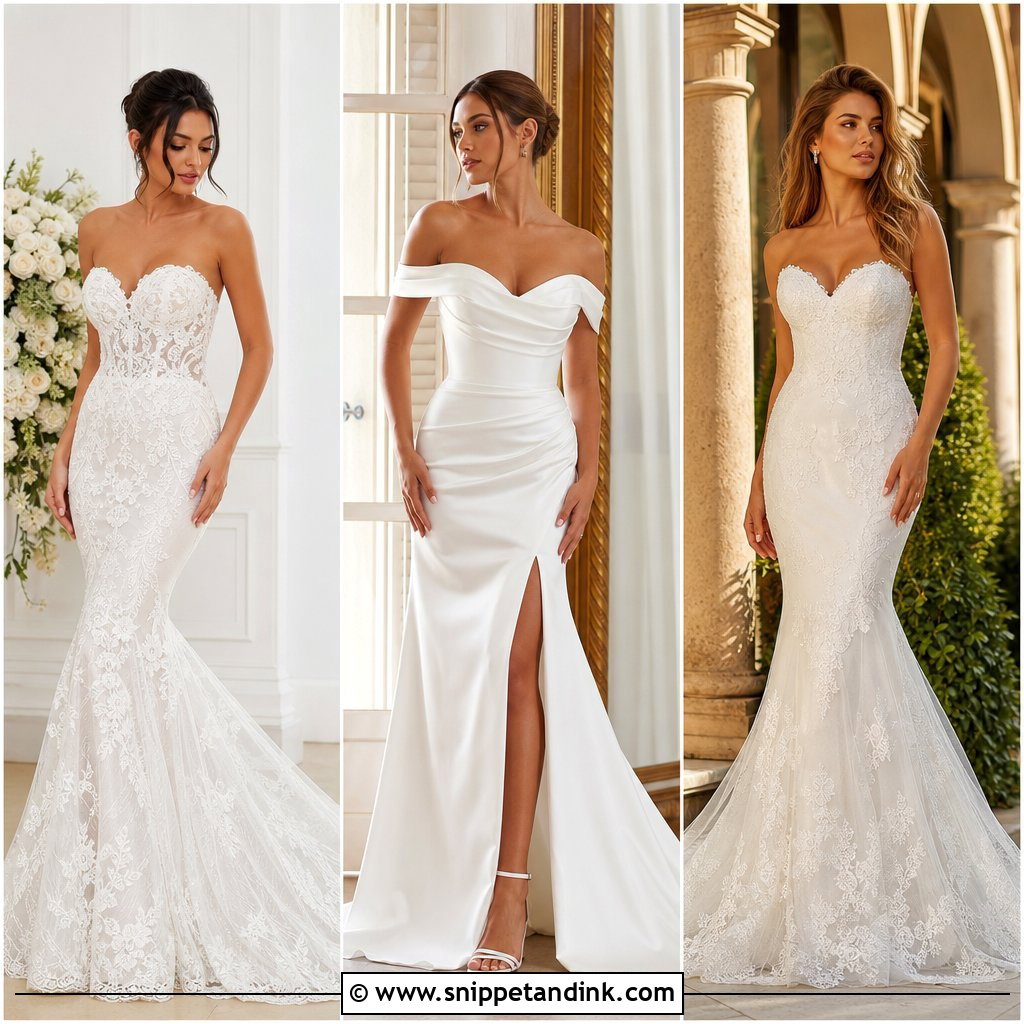
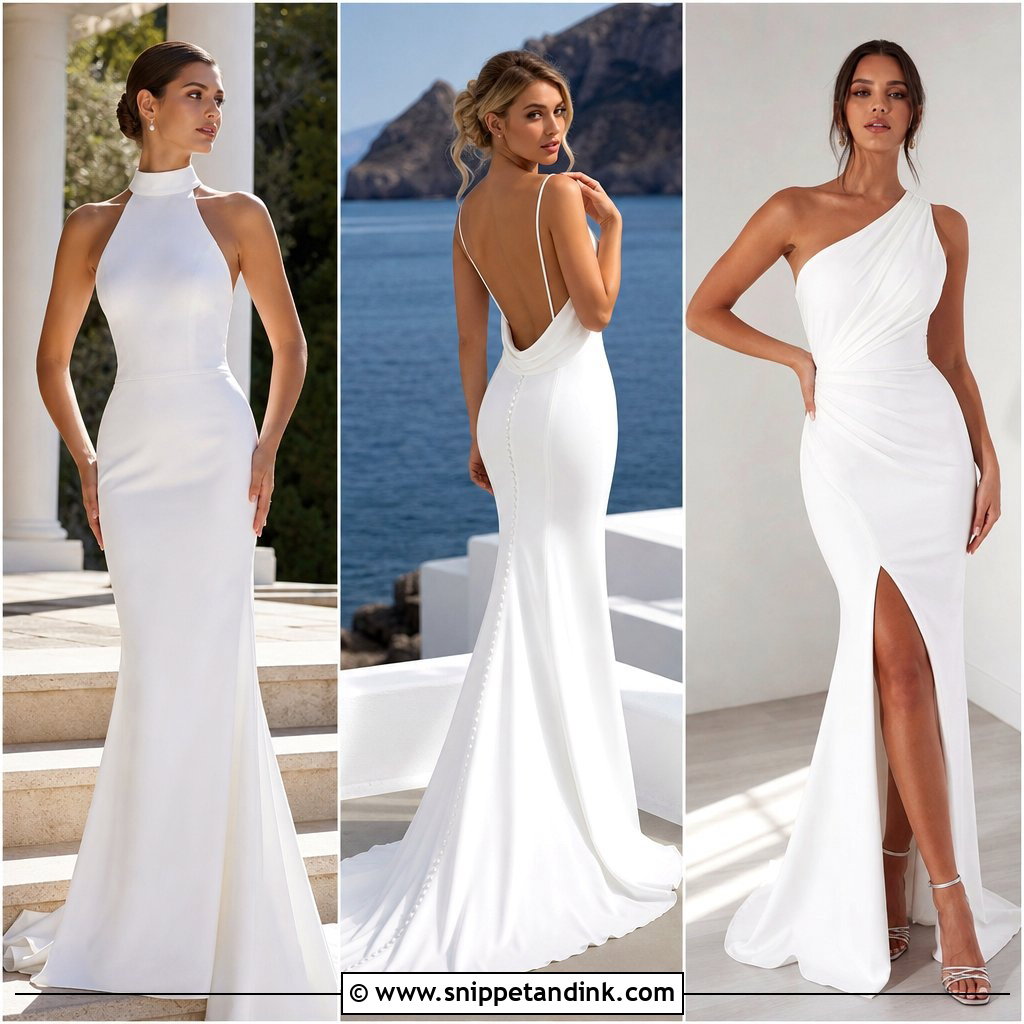
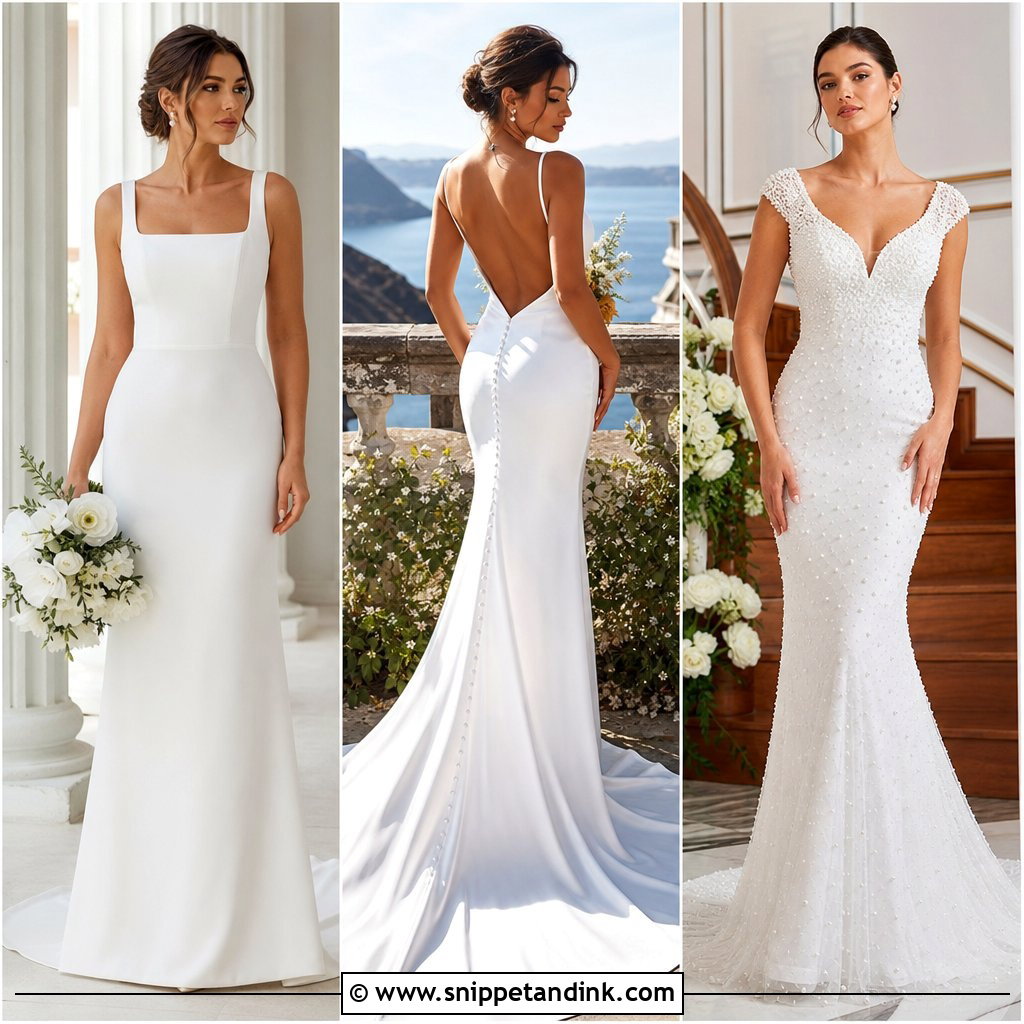
Mermaid dresses fit close through the hips and flare at or just below the knee, and that flare point is the most important decision in the fitting. Too low and you will shuffle; too high and it becomes a trumpet. Smooth crepe looks modern, lace looks softer. A supportive strapless or square-neck bodice suits the shape. Pointed pumps continue the long line, and statement earrings add light at the face. A sheer cathedral veil softens the fitted silhouette in the ceremony. Practice sitting and climbing steps in it, and ask for a wrist loop on the train for the reception.
5. Square Neck Crepe Wedding Dress
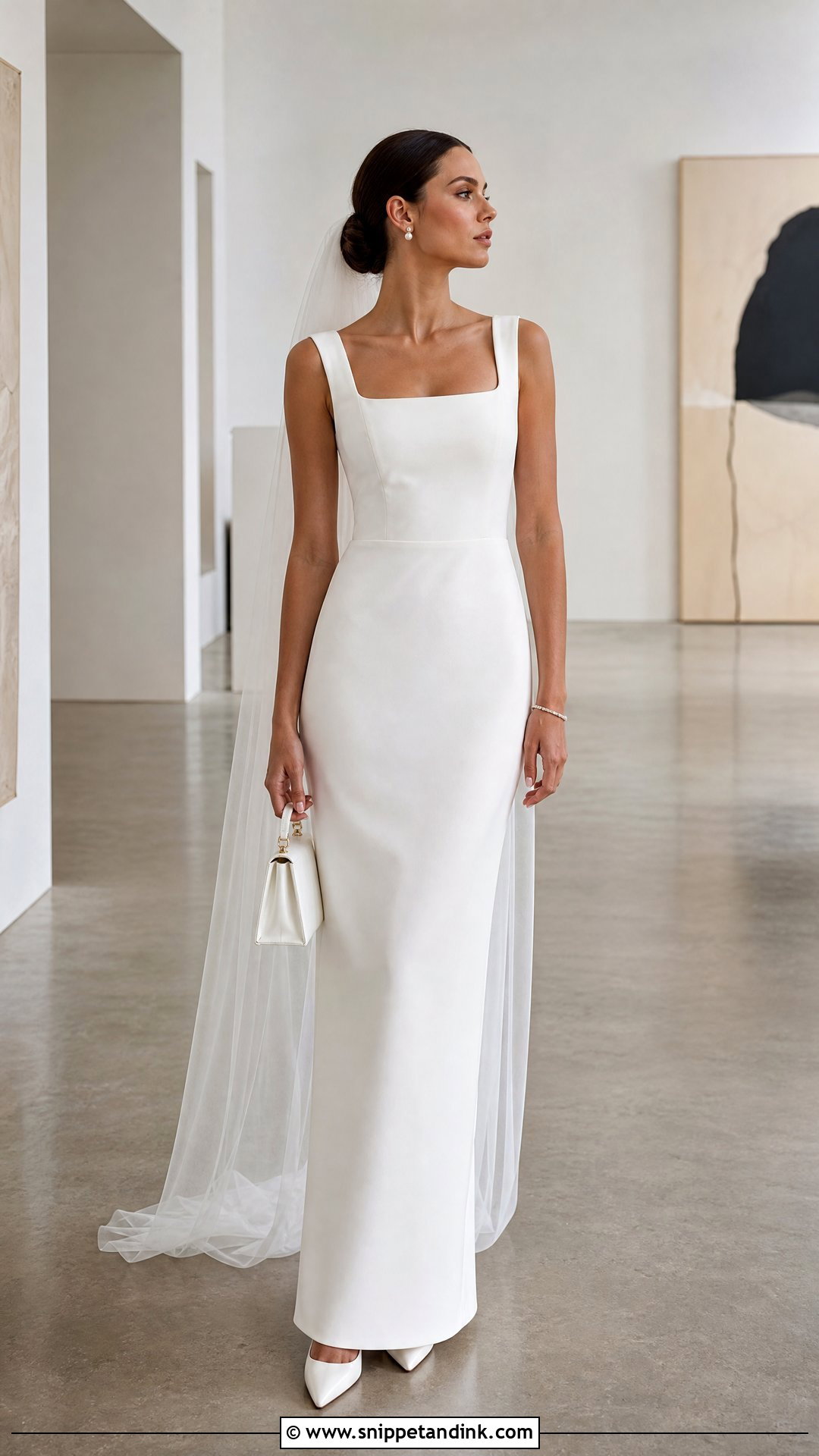
Crepe is heavy, matte and honest: it shows every seam and every line underneath, which is why a square-neck crepe dress depends on tailoring more than any lace gown does. The square neckline frames the collarbones, and an A-line or column skirt keeps the design quiet. I usually suggest a long, raw-edged veil for drama without adding pattern. Pearl studs, a sleek low bun, pointed heels and a small structured bag finish it. Wider straps and built-in boning add support if you need it. Bring your actual wedding underwear to every fitting.
6. Off Shoulder Wedding Dress
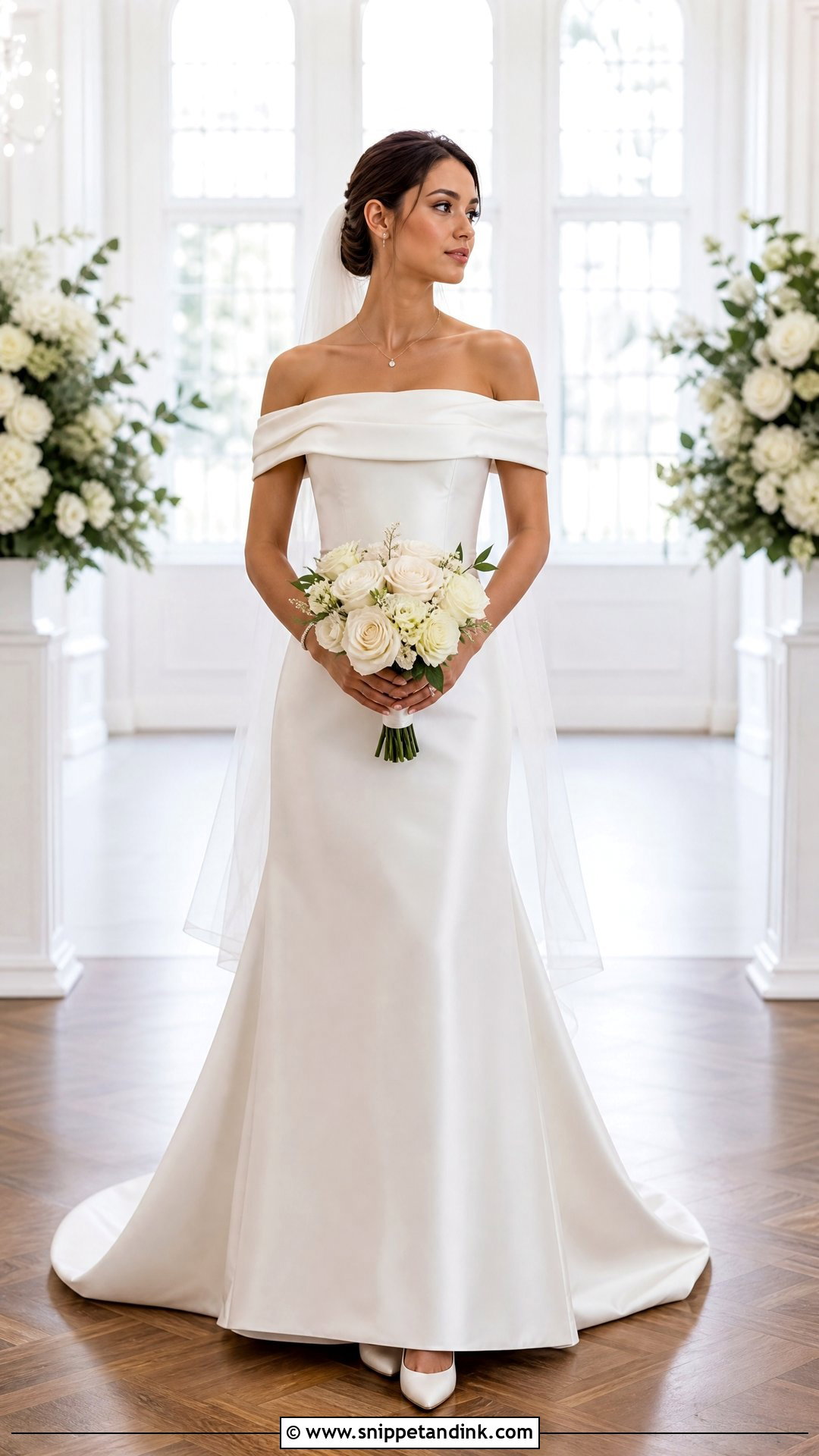
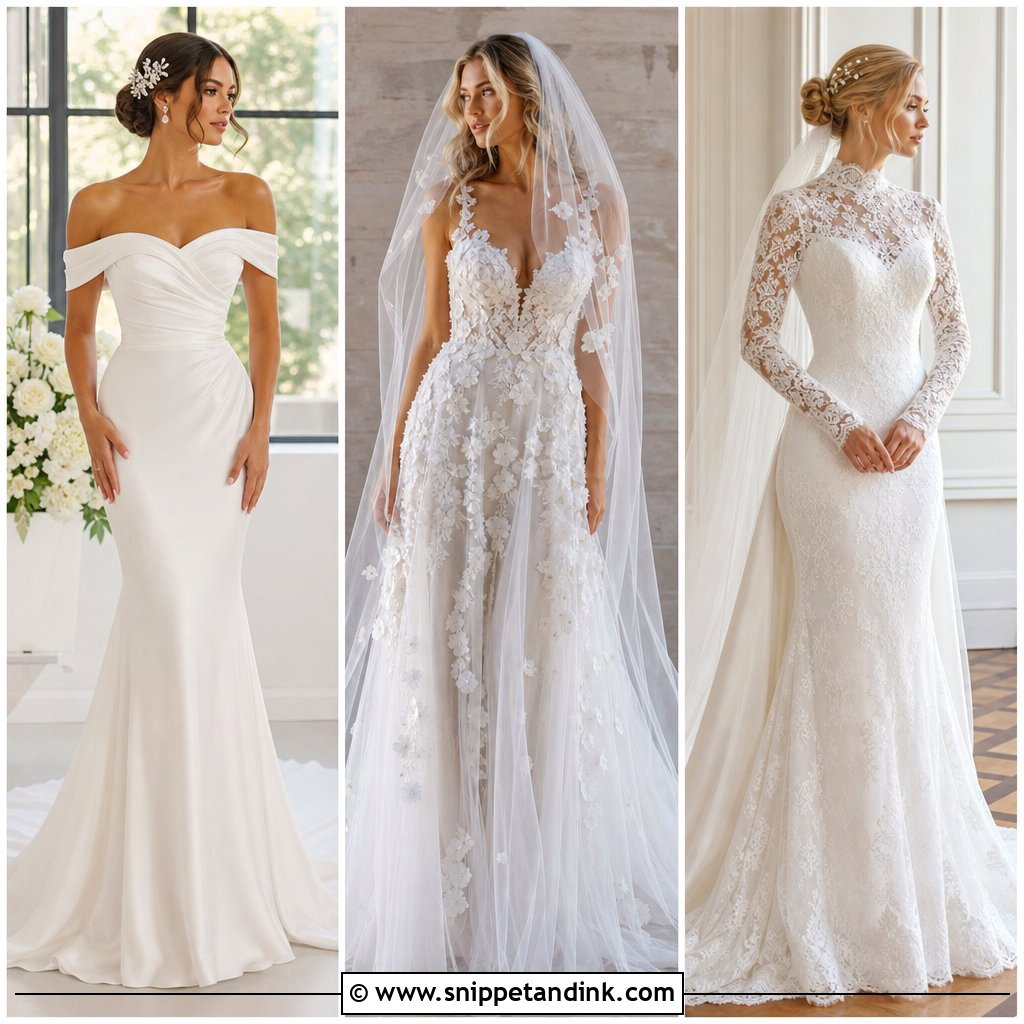
Off-shoulder bands are lovely on the hanger and restrictive on the body if they are set too tight. I check by having the bride lift her arms to shoulder height, roughly the position of a first-dance hold. Draped satin bands look architectural; lace or tulle sleeves are lighter. Pair the neckline with an A-line skirt for balance or a ball gown for scale. A short pendant or choker can fill the open neckline, though earrings alone are often enough. Place the veil beneath a low chignon. Detachable sleeves give you a formal ceremony look and freedom later.
7. Basque Waist Wedding Dress
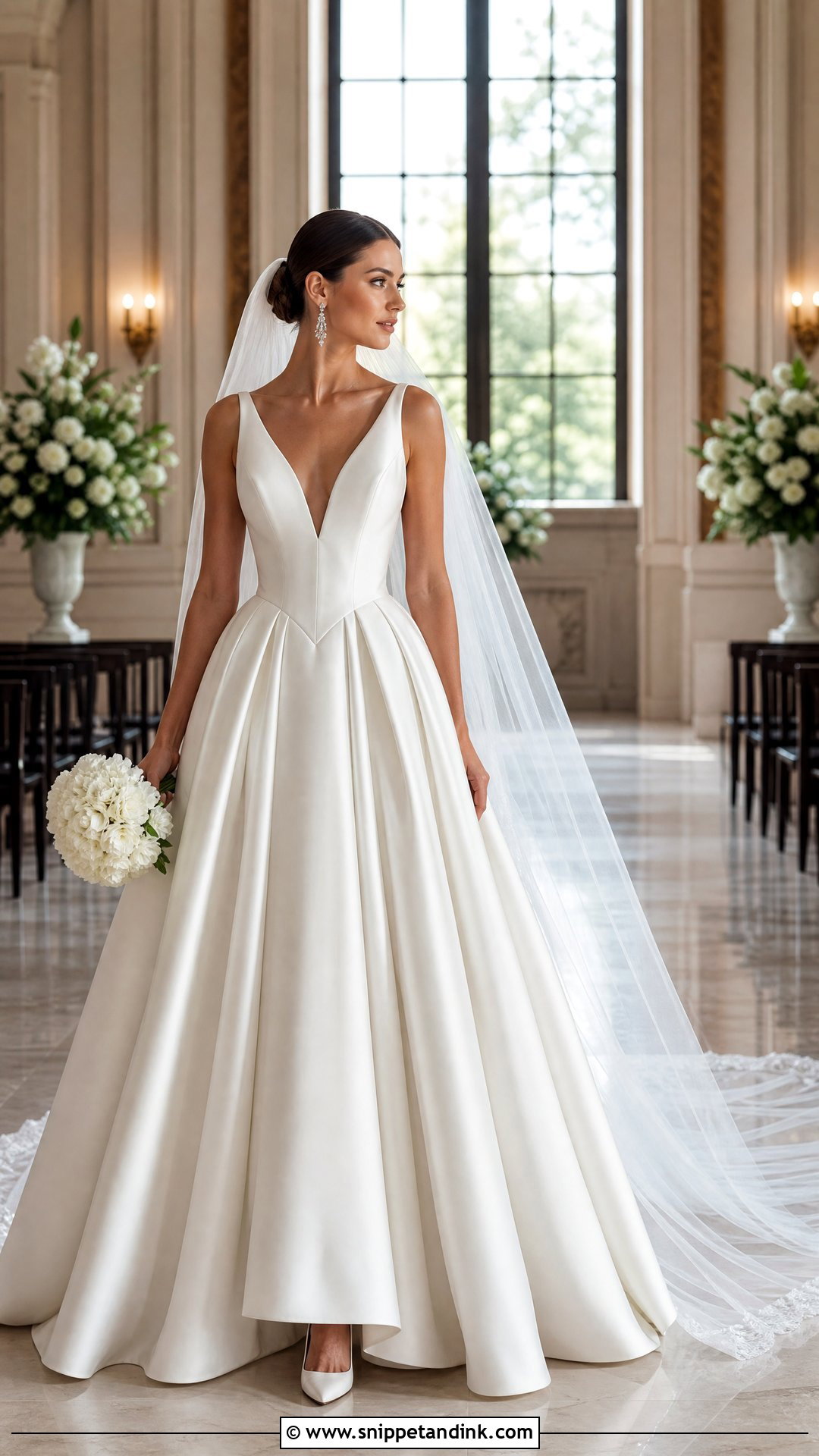
A basque waist dips into a V or U below the natural waistline, which lengthens the torso and makes a full skirt look even fuller. It is a structural style, so the alterations have to be precise: the point must sit dead center, and the seam should feel secure without pressing into the hip bones when you sit. Structured satin with a pleated skirt shows it best. Covered boning keeps the construction visible without looking busy. A cathedral veil, crystal drops, satin pumps and a smooth bun complete it, with nothing at the waist to compete.
8. Drop Waist Wedding Dress
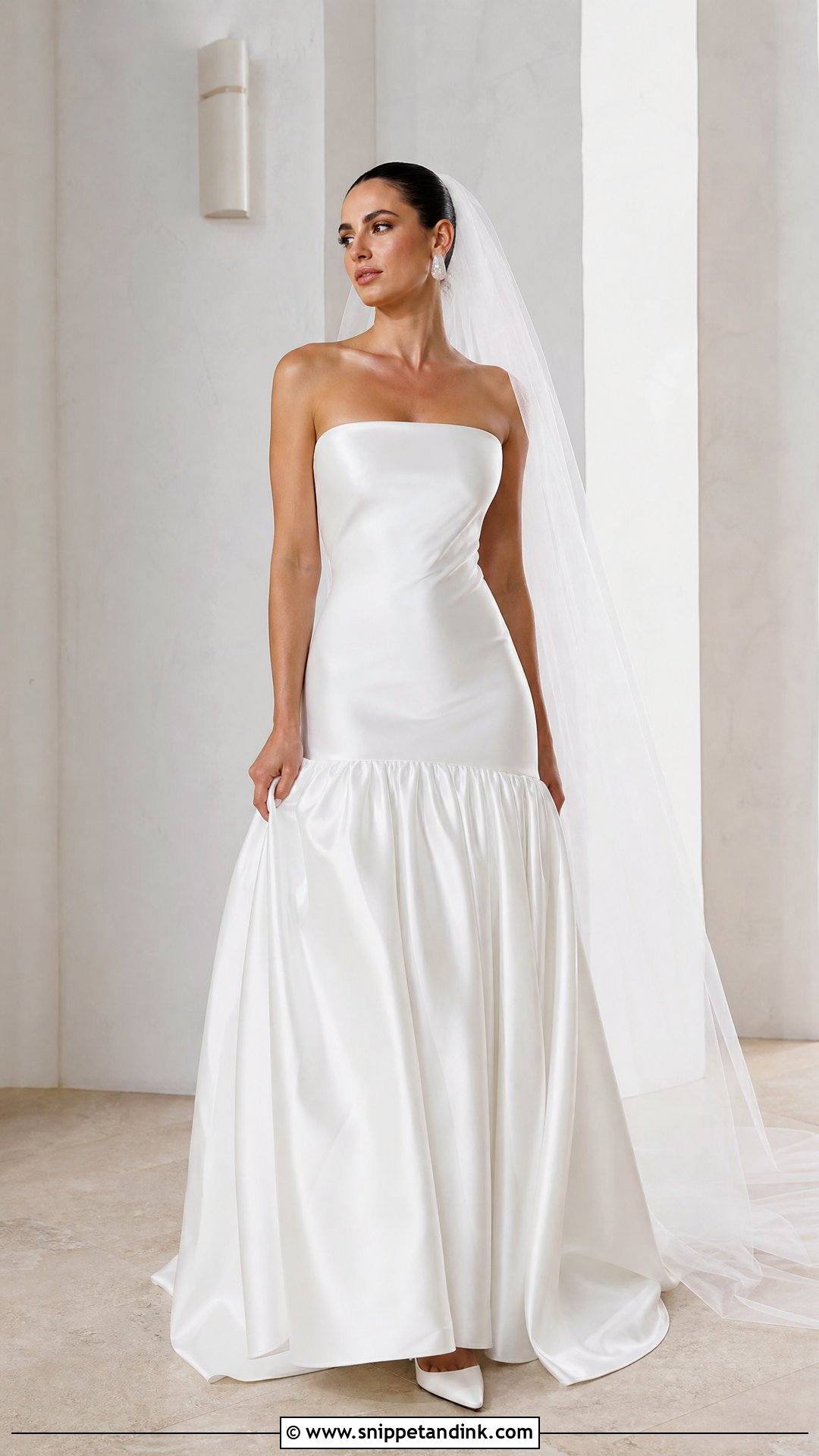
On a long-waisted bride, a drop waist looks completely natural; on a shorter torso, I place the seam a little higher so the legs do not look shortened. The extended bodice releases into a fuller skirt of satin, gathered tulle or soft draping. Strapless reads clean, wide straps add support. Sit down at the fitting: if the seam buckles or digs at the hips, it needs adjusting. Pointed heels, sculptural earrings and a plain chapel veil suit its fashion-forward shape.
9. Silk Slip Wedding Dress
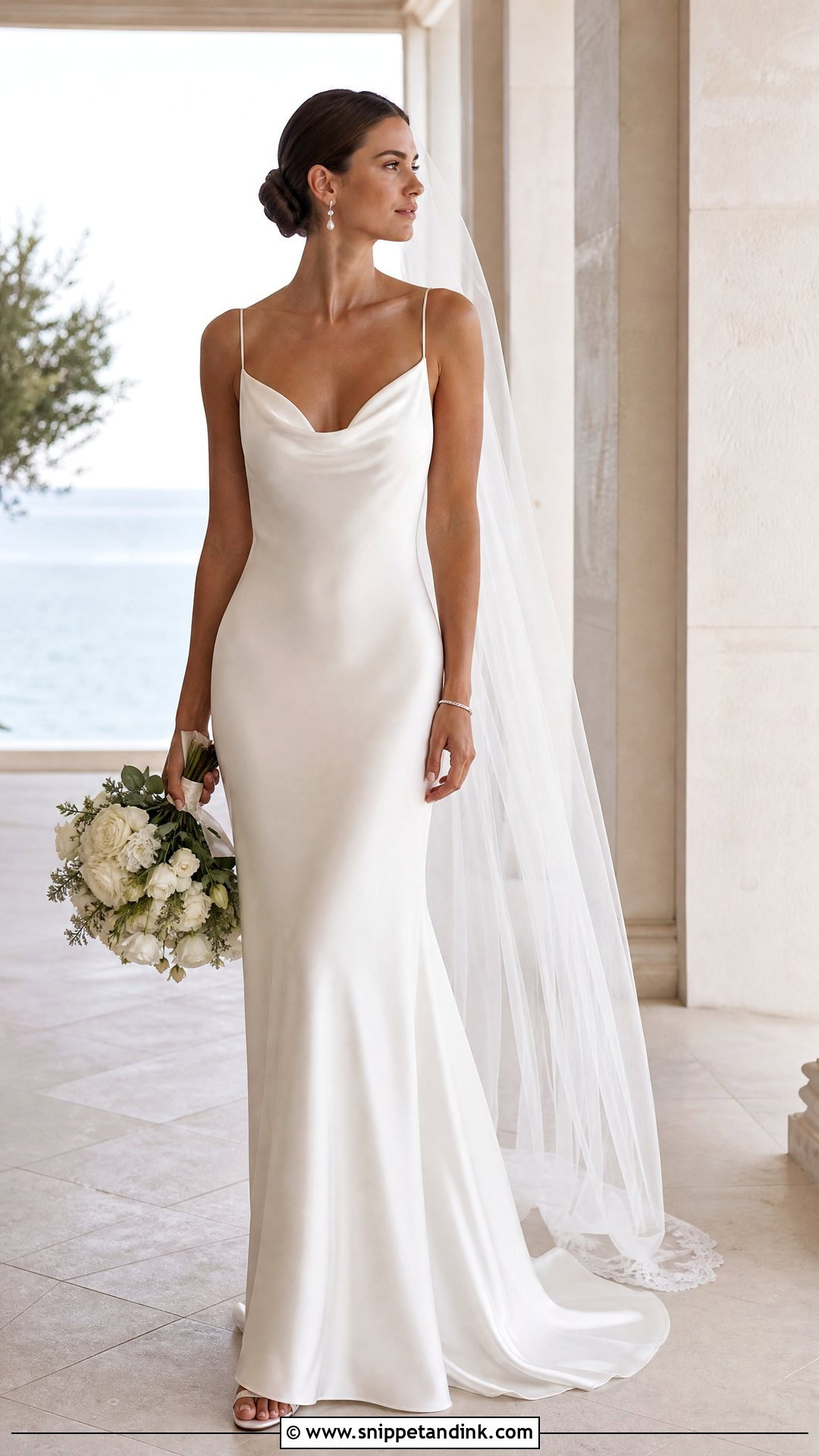
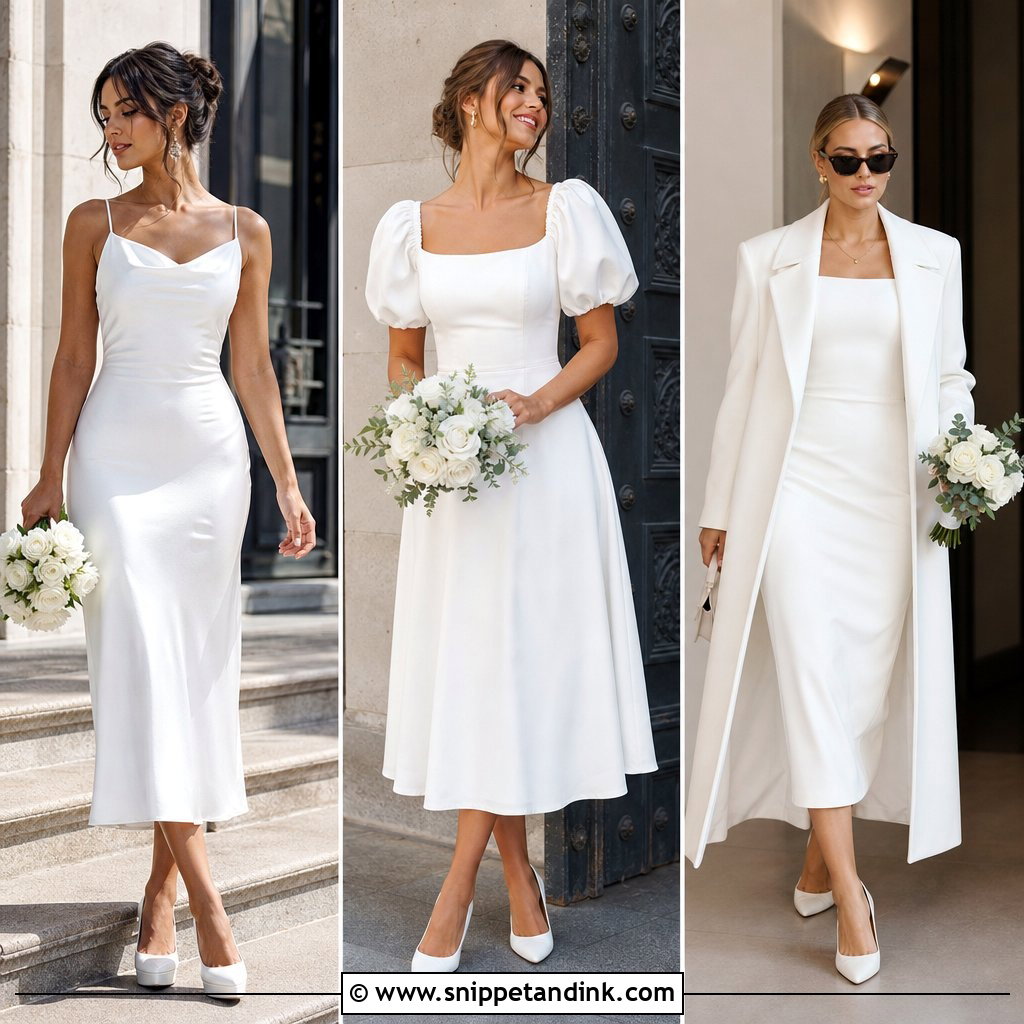
A silk slip dress has no structure to hide behind. The bias-cut fabric follows the body closely, which suits smaller ceremonies, coastal venues and modern spaces, and it means every undergarment line shows. Choose smooth, minimal underwear close to your skin tone, not white. A cowl, scoop or straight neckline depends on how much support you need, since most slips have none built in. Keep it floor length so it reads bridal. Slim-strap sandals, pearl drops, a delicate bracelet and a long sheer veil finish it. Have it steamed shortly before dressing, as silk creases in the garment bag.
10. Tea Length Wedding Dress
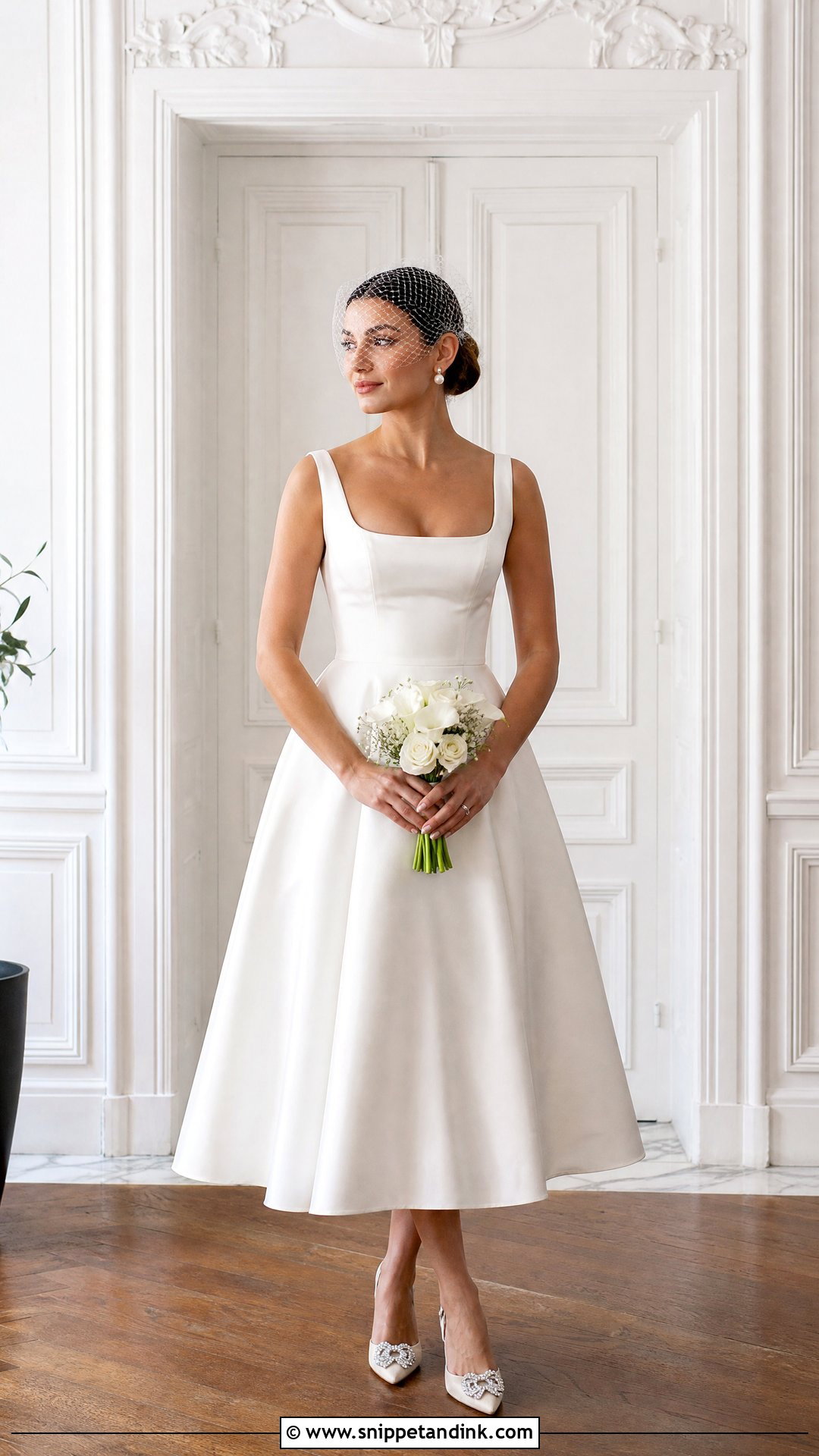
Tea length falls between knee and ankle, and the exact point is worth getting right. It should end at a slim part of the calf, not its widest point. A fitted bodice and flared skirt give classic proportions in satin, organza or lace. Because the hem shows your shoes, they become part of the outfit, so choose embellished pumps, slingbacks or block heels you can stand in. A birdcage veil, pearl earrings and a small bouquet keep it coordinated. Hidden side pockets are an easy addition. It is a natural choice for a courthouse wedding, a daytime celebration or a reception change.
11. Mini Wedding Dress
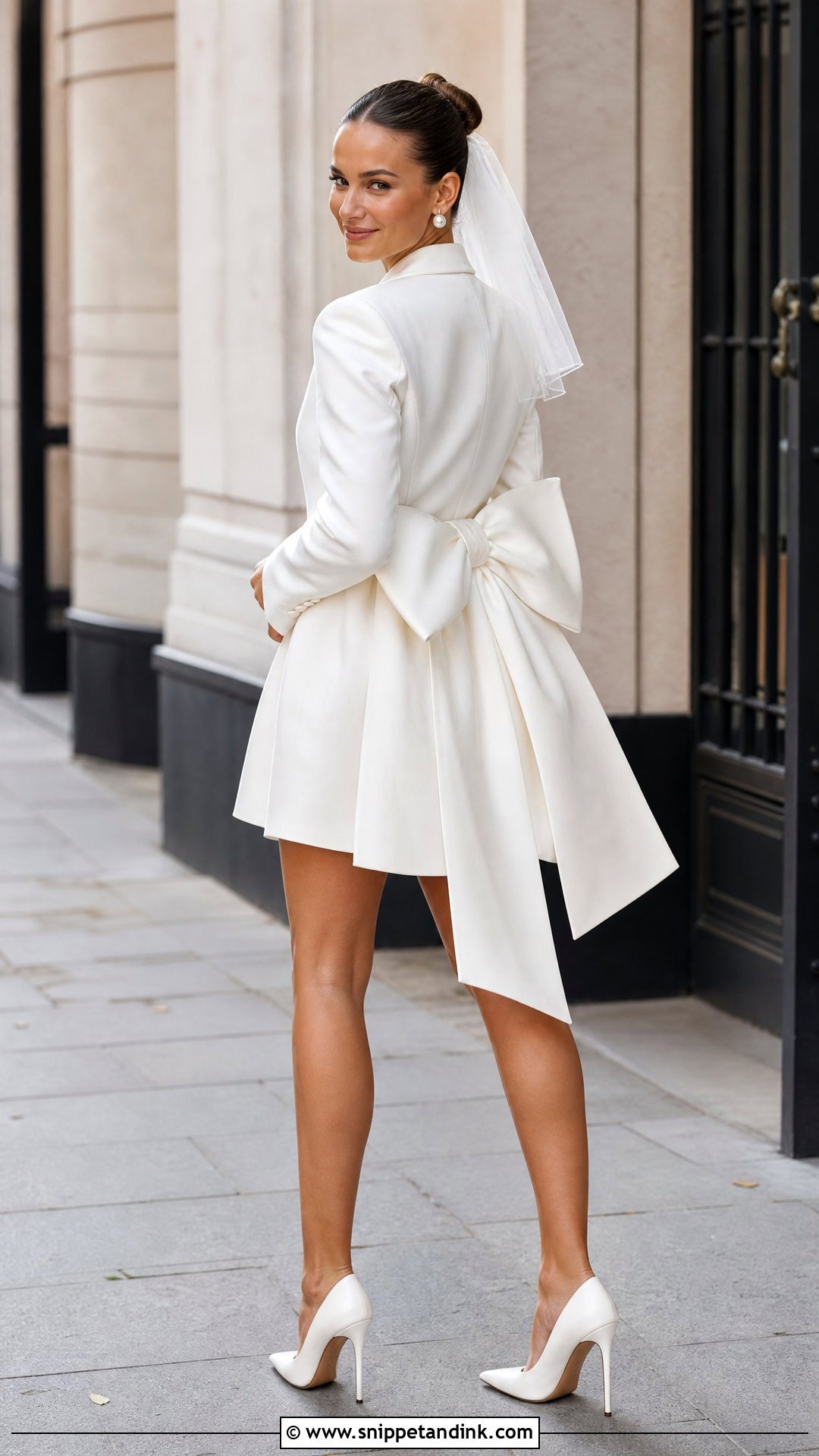
Short dresses need one clearly bridal detail, or they read as a party dress. A mini works for civil ceremonies, reception entrances and after-party celebrations when it has structure and a feature such as a bow, floral appliqué or detachable train. A fitted sheath is sleek; an A-line mini gives more room at the hips. Check the hem while sitting, since fitted minis ride up more than expected. Pointed pumps, sheer tights if you like, pearl earrings and a short veil finish it; block heels or low slingbacks are kinder for dancing. A tailored blazer adds coverage outdoors.
12. High Low Wedding Dress
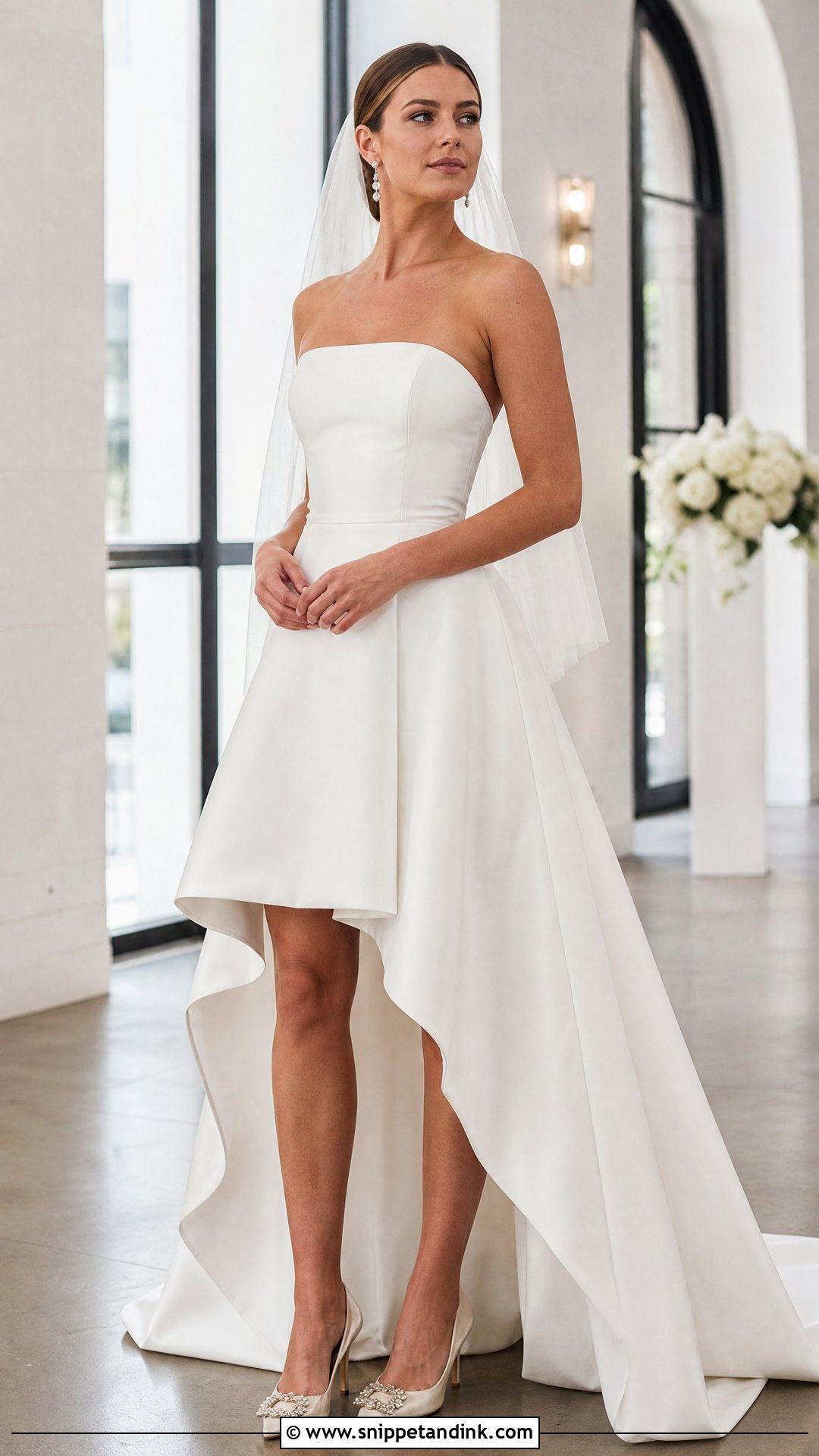
High-low skirts show the shoes at the front, so I treat footwear as a design decision here. Structured satin makes the shape dramatic; layered tulle makes it soft. Keep the bodice fitted to balance the uneven hem, and add embellished heels, drop earrings and a simple veil. A removable high-low overskirt can turn a fitted mini or midi into a ceremony gown. At the fitting, check the front hem on stairs: the short section should let you step confidently, and the back should bustle easily before the dancing starts.
13. Floral Appliqué Wedding Dress
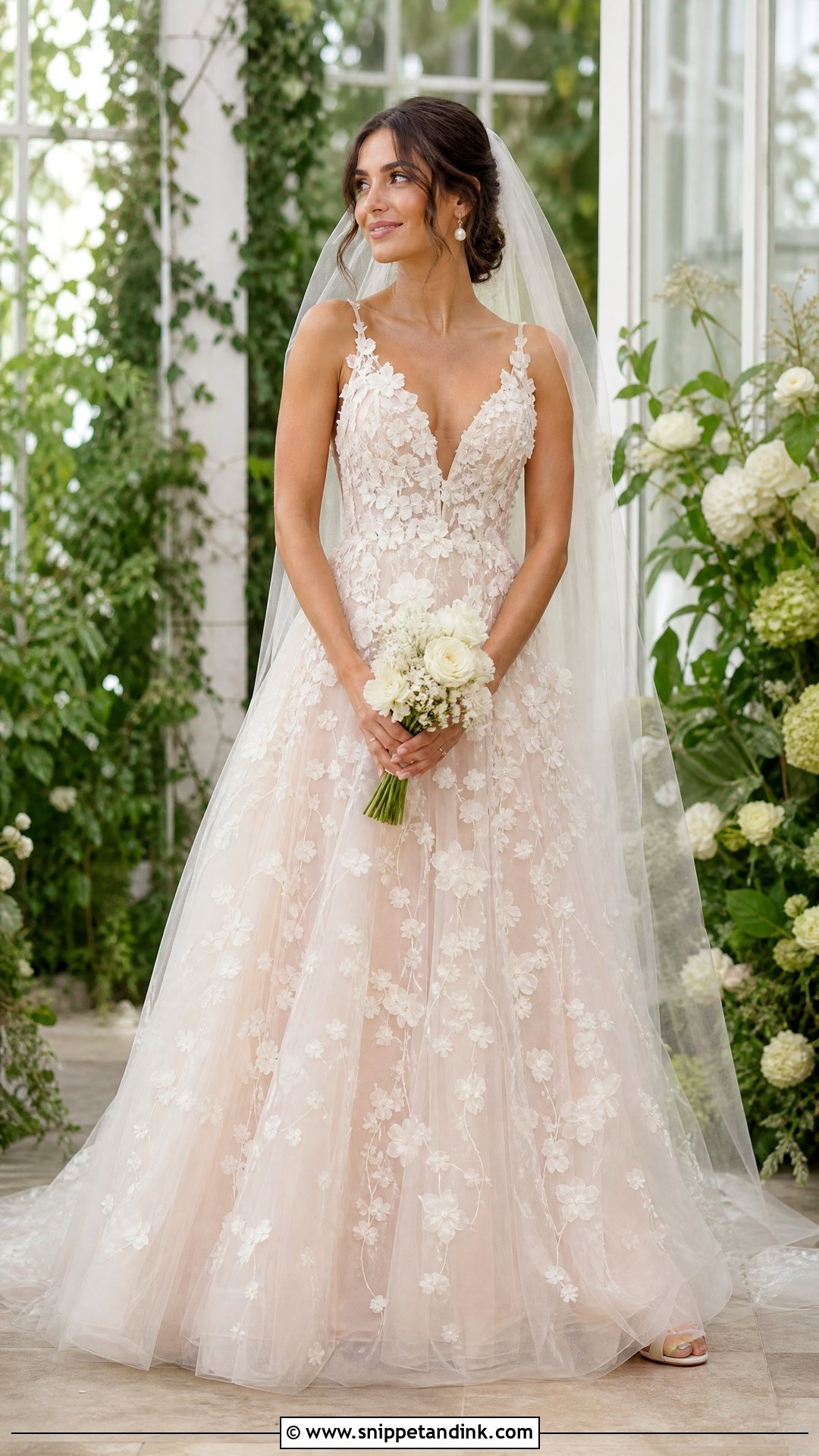
Appliqués are cut separately and stitched on by hand, so I check each one at the fitting for loose edges and for scratchiness under the arms. Small blossoms scattered across tulle look delicate; larger flowers at the neckline or hem make a stronger statement. Keep the silhouette simple, ideally an A-line with a fitted bodice. A lining in soft ivory, blush or champagne makes pale flowers show up in photos, where white-on-white can disappear. Pearl earrings, ivory heels, a sheer veil and a bouquet with just a few varieties keep the florals from multiplying.
14. Cape Sleeve Wedding Dress
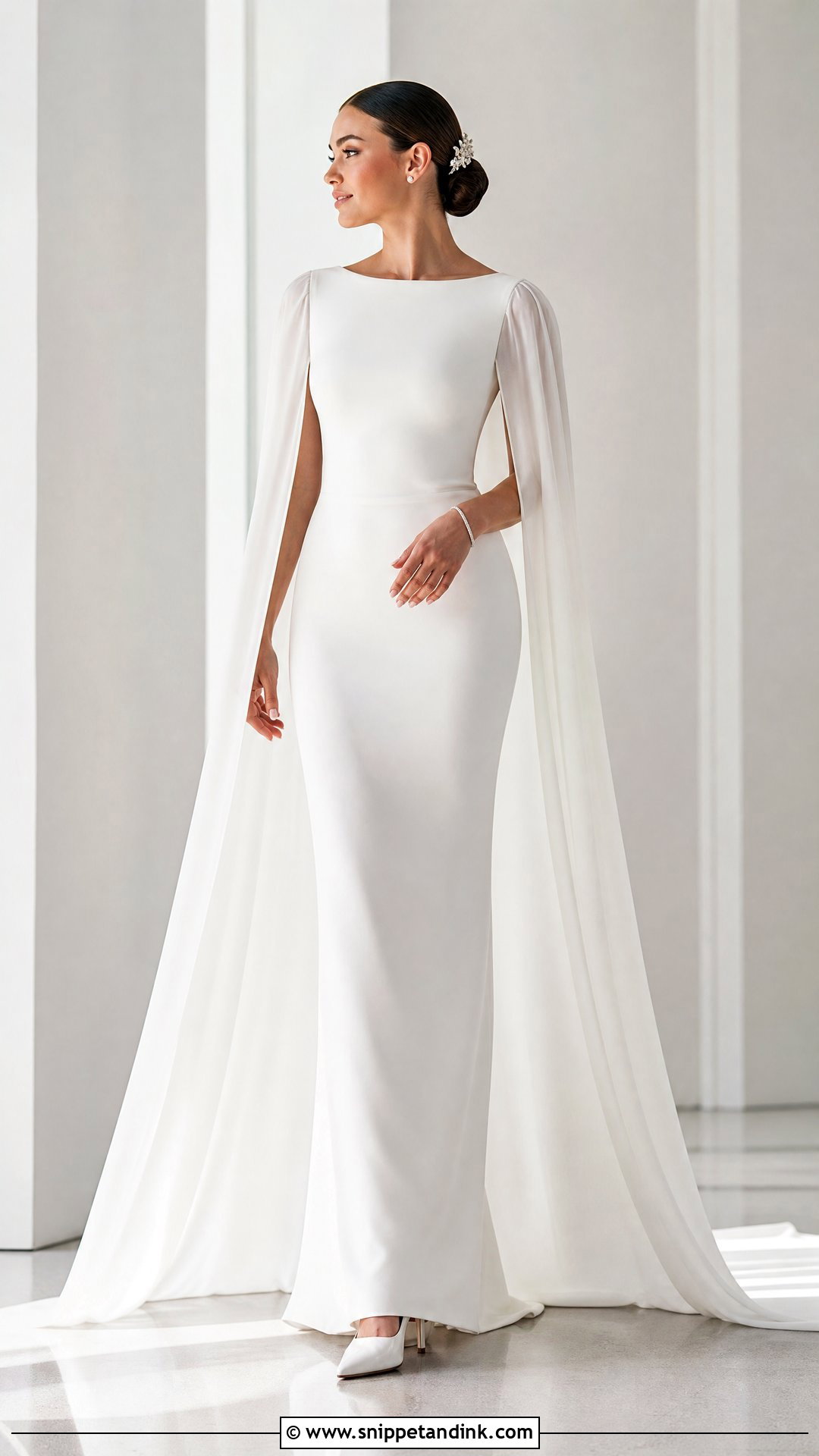
Cape sleeves give coverage without the restriction of fitted sleeves, since the fabric falls loose from the shoulder. Chiffon moves as you walk; lace or beaded tulle feels more formal. A column or A-line underneath keeps the outline balanced. I usually suggest skipping the veil and using a simple comb instead, because a cape and veil together layer too much fabric at the back. Studs, a slim bracelet, pointed heels and a sleek bun are enough. Check the cape length against the train so the two do not tangle when you turn, and consider a detachable cape for the reception.
15. One Shoulder Wedding Dress
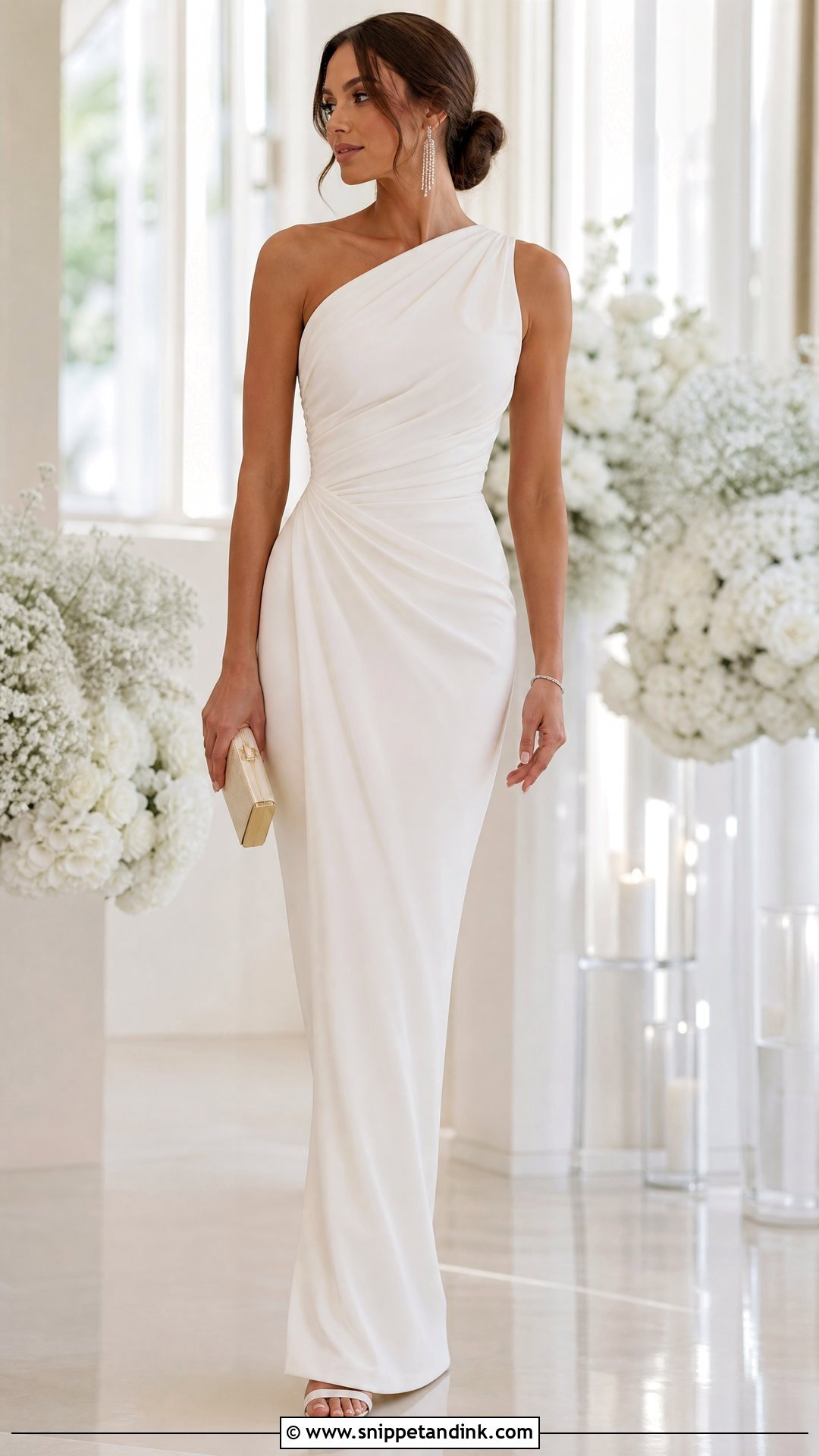
Asymmetry is the whole point of a one shoulder wedding dress, so I leave the neck bare and let the diagonal line do the work. Draped crepe looks smooth and modern; pleated chiffon is softer. A column, fit-and-flare or A-line skirt all pair well. A single statement earring on the bare side, or matching studs, plus a bracelet and slim heels are plenty. A low side bun can echo the line. During the fitting, raise both arms and twist; the single strap should stay put without dragging the bodice sideways.
16. Convertible Overskirt Wedding Dress
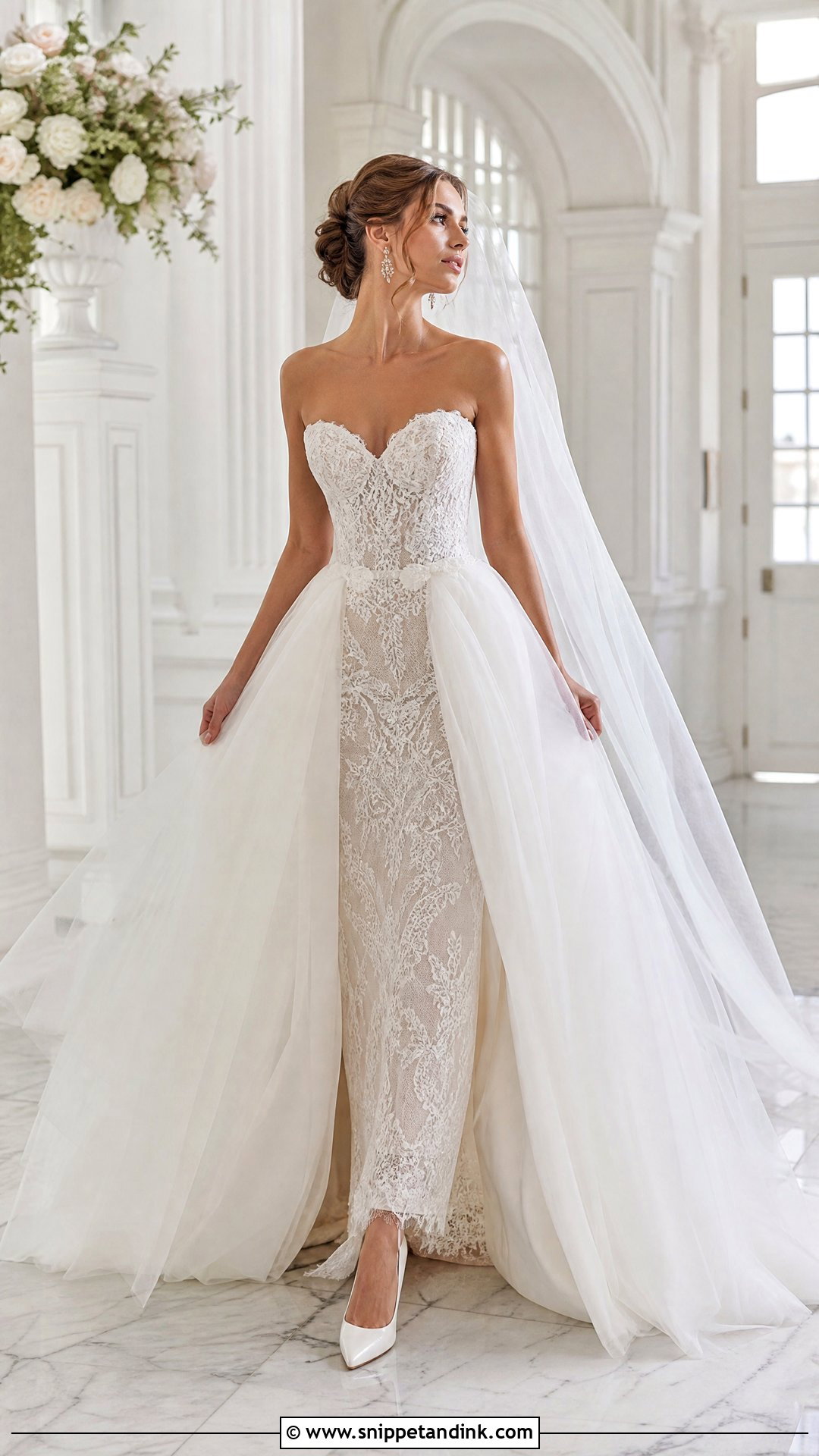
A convertible overskirt gives you a ball-gown ceremony and a slim reception dress without buying two gowns. Start with a fitted crepe, lace or satin base, then add a removable tulle or satin overskirt at the waist. For the ceremony, wear it with a long veil, crystal earrings and classic pumps; afterward, take off both, and switch to a hair accessory or bolder earrings. Ask your seamstress to hide the attachment points and to show your maid of honor how to unfasten it, because hooks and snaps are fiddly in a hurry. The waistband should sit flat on the dress beneath.
17. Plus Size Empire Waist Wedding Dress
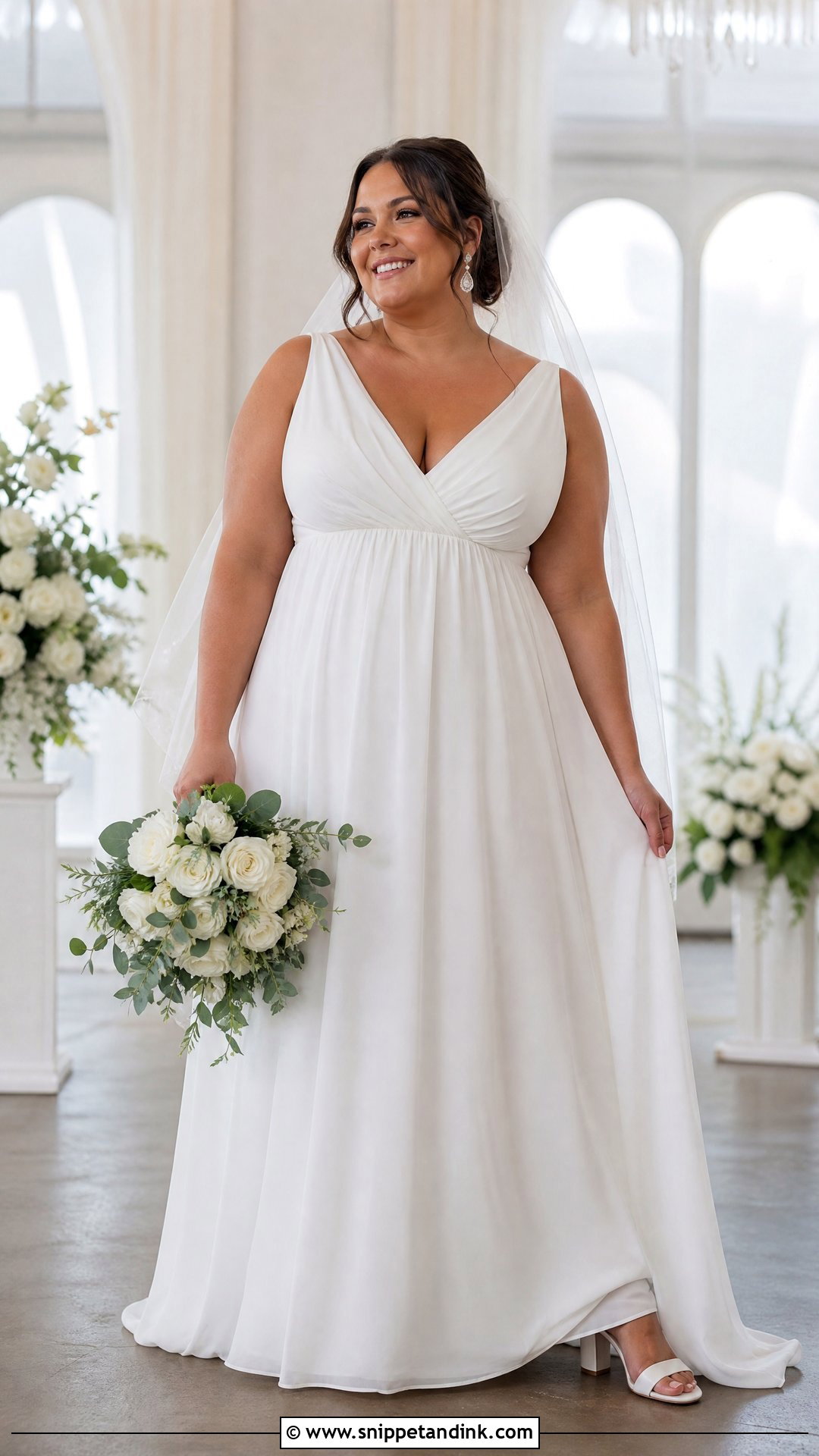
An empire waist wedding dress is fitted just under the bust and flows from there, so it is comfortable through the midsection. Plus-size brides often assume loose fabric means less fitting; in fact the bodice needs more precision, with built-in cups, wider straps and internal structure so it does not shift or gape. A V-neck or square neck both suit it. Chiffon floats, satin holds more shape. Block heels, drop earrings, a fingertip veil and a bouquet scaled to the skirt complete it. Look for a boutique that stocks samples in your size so you can judge the real silhouette.
18. Modest High Neck Wedding Dress
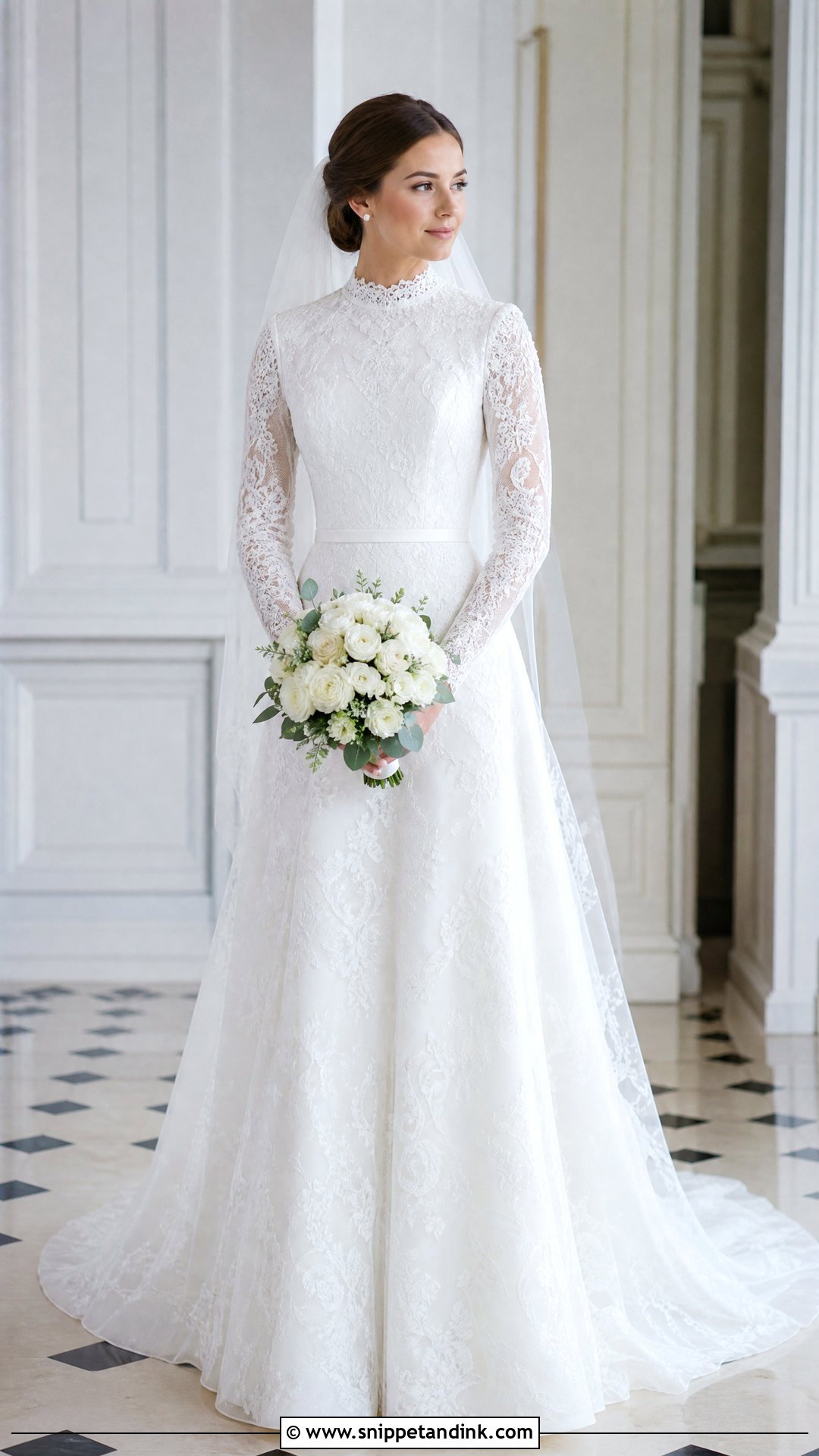
A high neck frames the face on its own, so this is one dress where I almost never add a necklace. Coverage here comes from the combination of neckline, sleeves and fabric: an opaque bodice with lace overlay looks romantic, while smooth crepe looks contemporary. A defined waist and A-line skirt keep the shape. Long fitted sleeves suit cooler weather; flutter or elbow sleeves are lighter. Pearl studs, closed-toe pumps and a low bun with the veil placed underneath are enough. Turn your head and sit down at the fitting; the collar should not rub or fold.
19. Boho Chiffon Wedding Dress
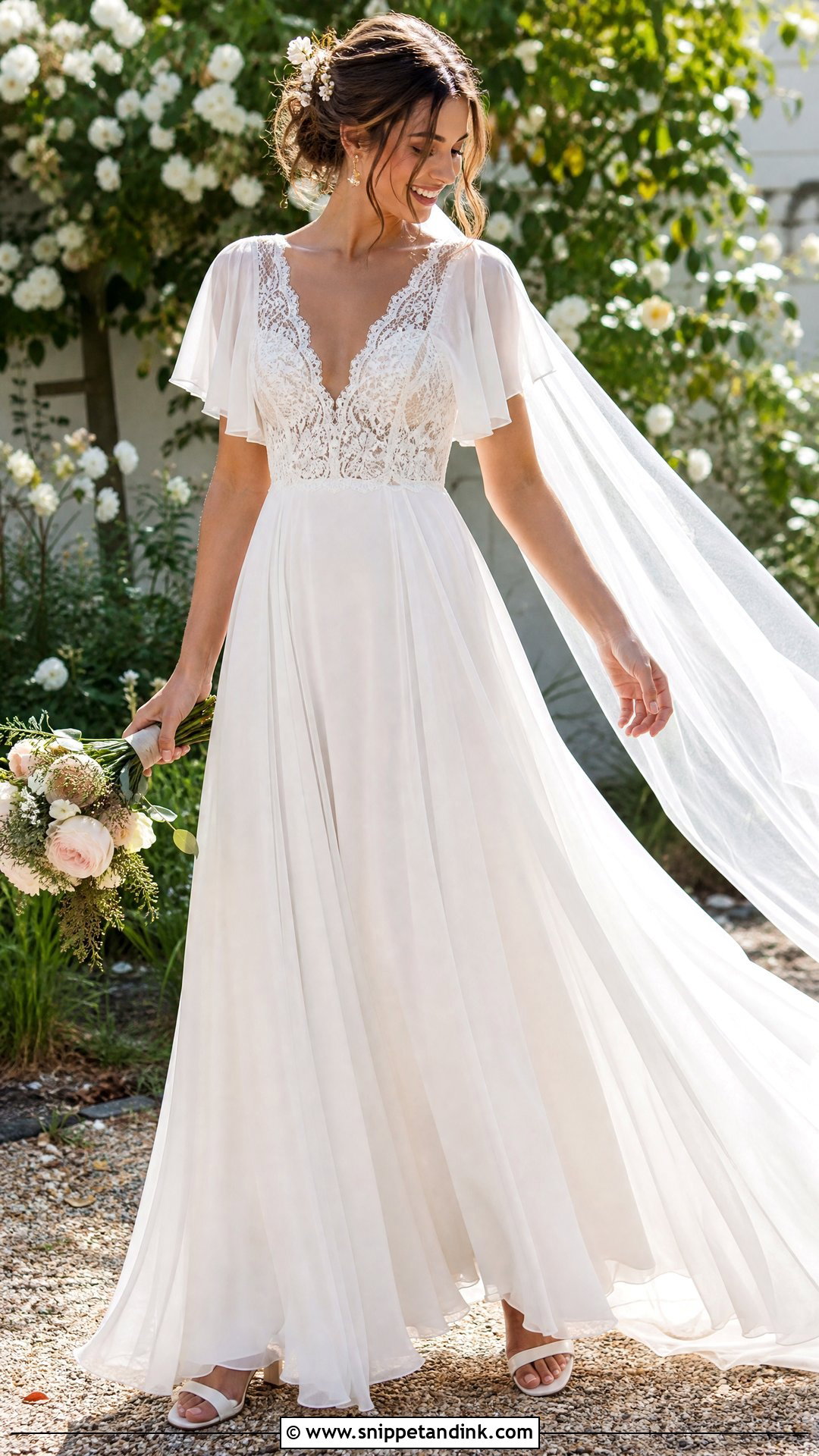
Boho chiffon moves freely, but it still needs a defined waist, or it looks like a nightgown in photos. A soft A-line skirt with a lace bodice, flutter sleeves or gathered details gives that shape. For outdoor venues, keep the train short; long chiffon picks up leaves and catches on uneven ground. Low block heels or flat sandals suit grass and sand. Small gold earrings, a loose updo with fine pins and a light veil or lace-trimmed cape finish it. Ask for a secure bustle and test the hem on a surface similar to your ceremony ground.
20. Blush Wedding Dress
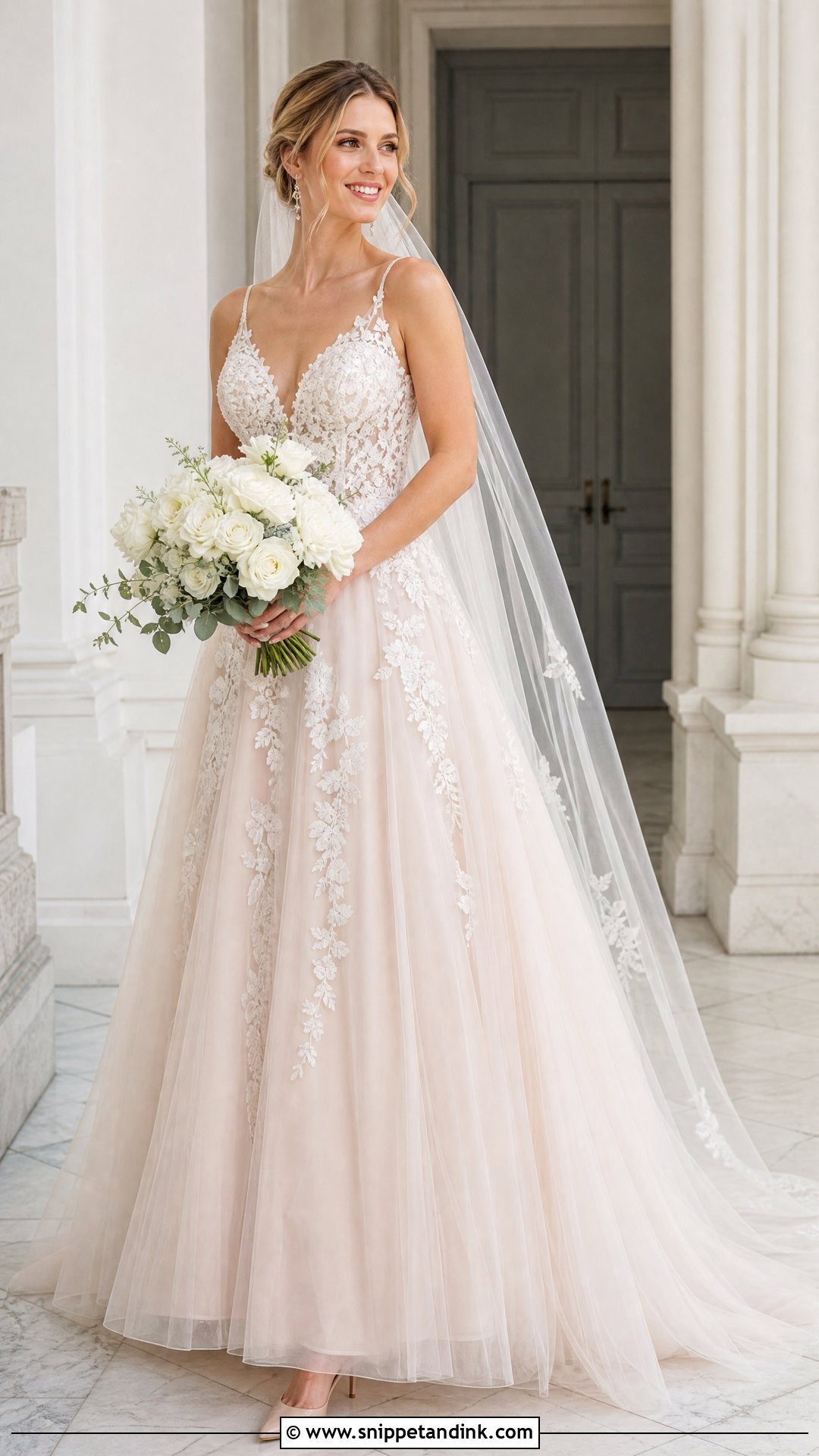
Blush is usually created by a pink or nude lining under ivory lace or tulle, which is why the same dress can look quite different in daylight and under warm indoor bulbs. View the shade outside and ask to see photos taken in indoor light, since some blushes turn darker or peachier on camera. Choose a tone that suits your skin undertone. An A-line or ball gown gives the color a classic base. Ivory pumps, rose-gold earrings, a blush or ivory veil and a bouquet of mostly white flowers keep it soft. Limit any other color in the accessories.
Bustling the Train: The Reception Detail Brides Forget
Any dress with a train needs a way to lift it off the floor for dancing, and the bustle is usually added during alterations. The type depends on the fabric and the length of the train.
- Over bustle (American): the train is hooked up to the back of the dress in one or more points. Quick to do and suits satin and lace.
- Under bustle (French): the train is tucked and tied underneath with ribbons. It gives a soft, layered look and suits tulle and full skirts.
- Ballroom bustle: many points around the skirt so the hem sits level all the way round. It looks the neatest but takes the longest to fasten.
Ask your seamstress to color-code or number the ties, and have the person who will bustle you attend your final fitting to practice. It takes a few minutes and a little patience, so plan it for a quiet moment after the portraits rather than on the dance floor.
Very heavy trains, especially on beaded or satin ball gowns, can pull a single bustle point loose by the end of the night. If yours is long and weighty, ask for extra points or a hidden reinforcement tape where the hooks sit, and keep a couple of safety pins in your emergency bag as a backup.
Lift Your Arms, Sit Down, Then Say Yes
A wedding dress has to work for your body, your venue and a long day of moving. Compare the silhouettes, fabrics and necklines here in person, and bring your intended shoes and undergarments to every fitting. Walk, sit, raise your arms and turn before you approve the alterations. Trends are useful for ideas, but fit decides whether you forget about the dress once you have it on. Detailed lace, smooth satin, dramatic volume or a short modern dress can all get there with careful styling.
You'll Like These Ideas:


Leave a Reply