
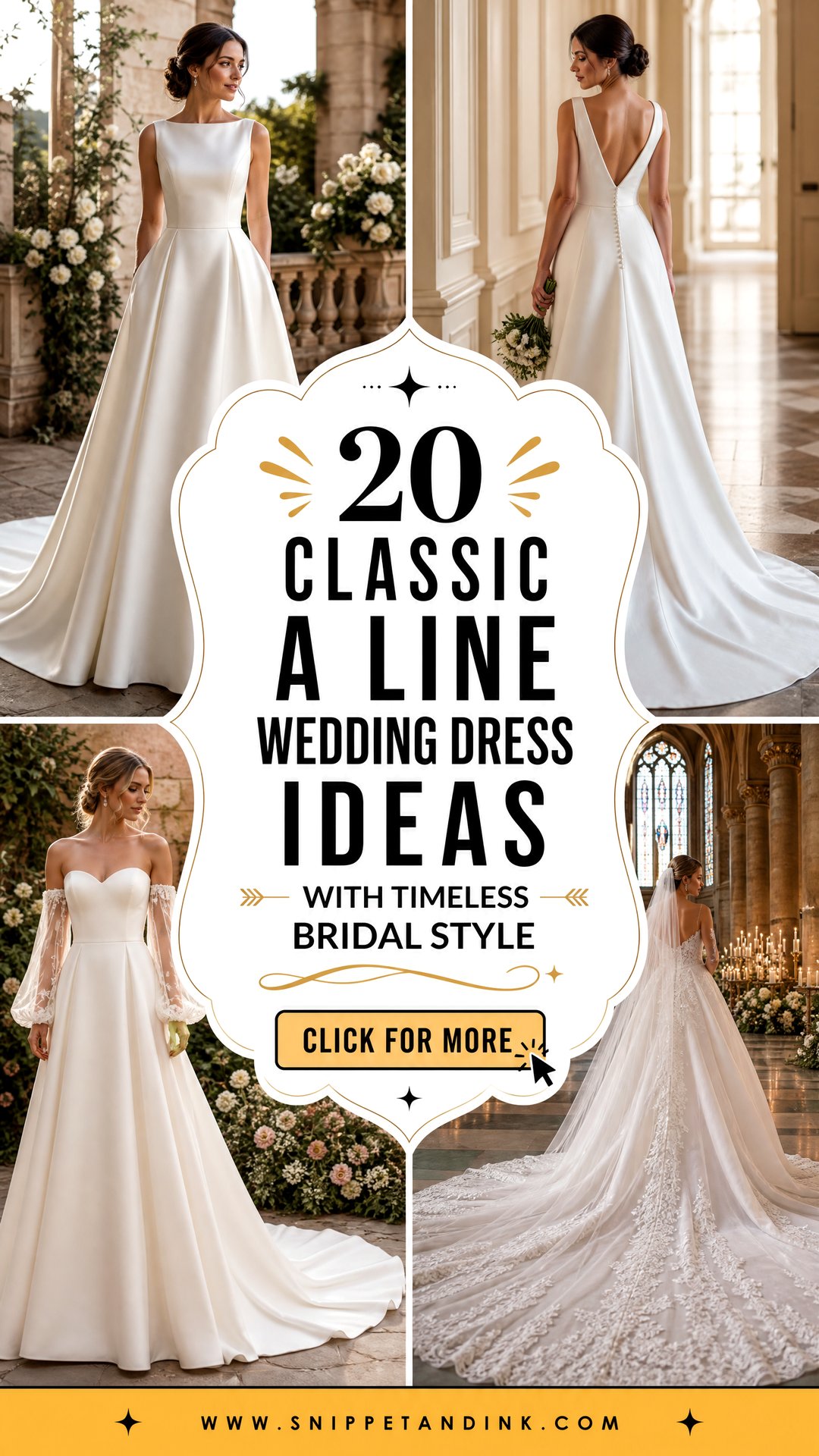
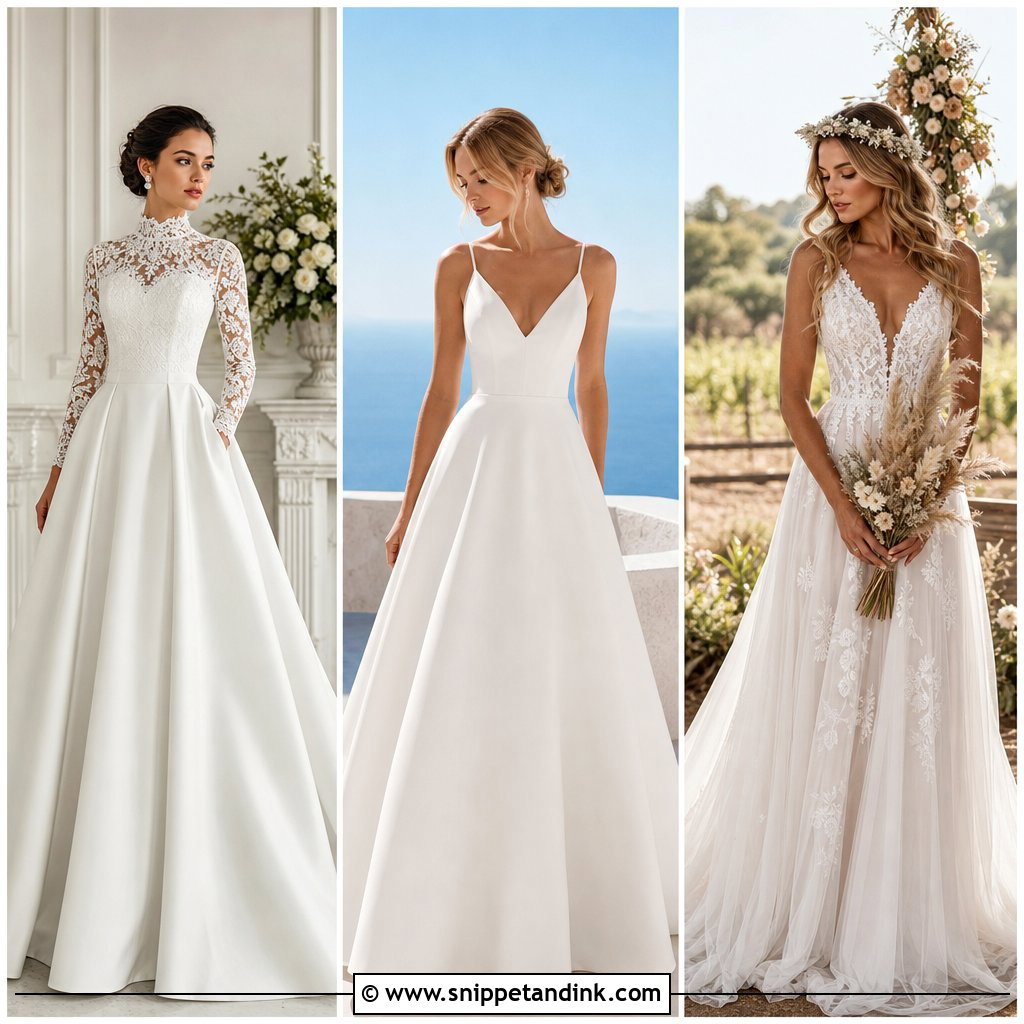
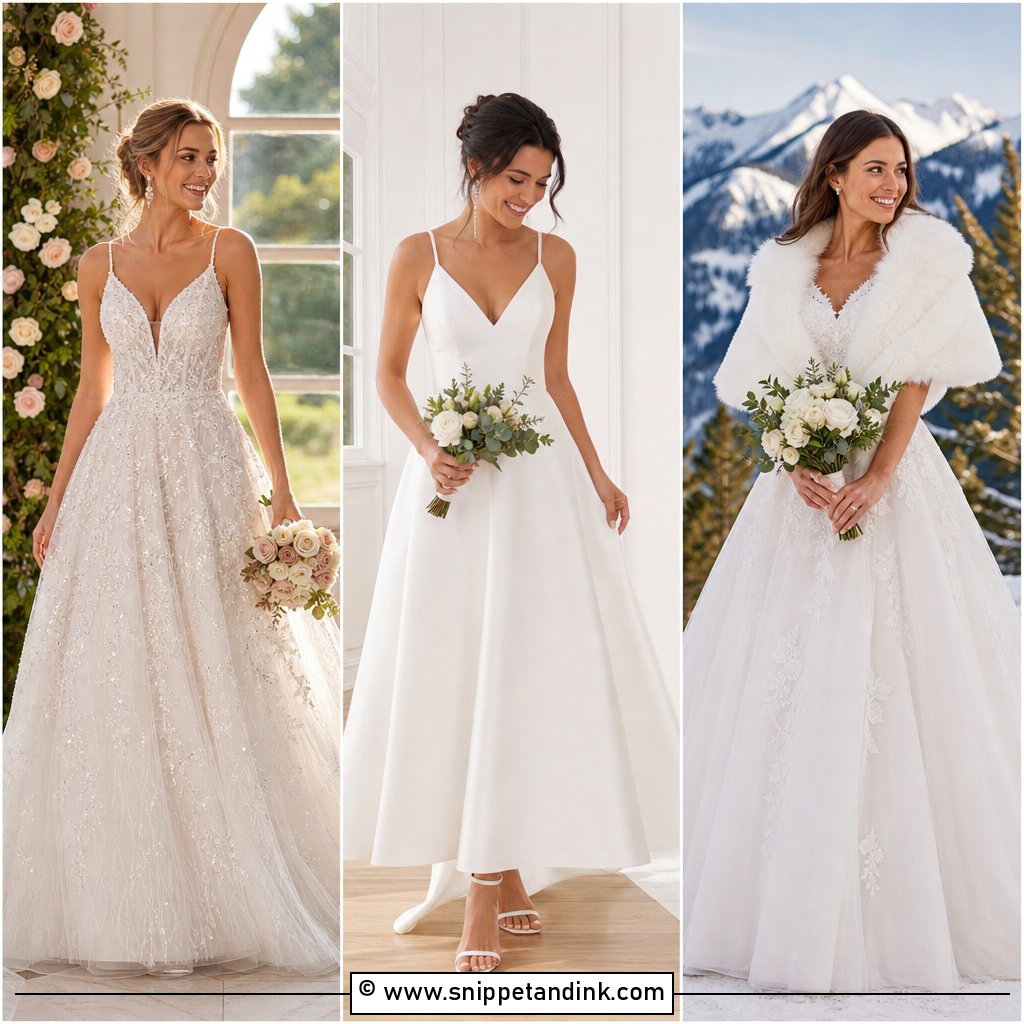
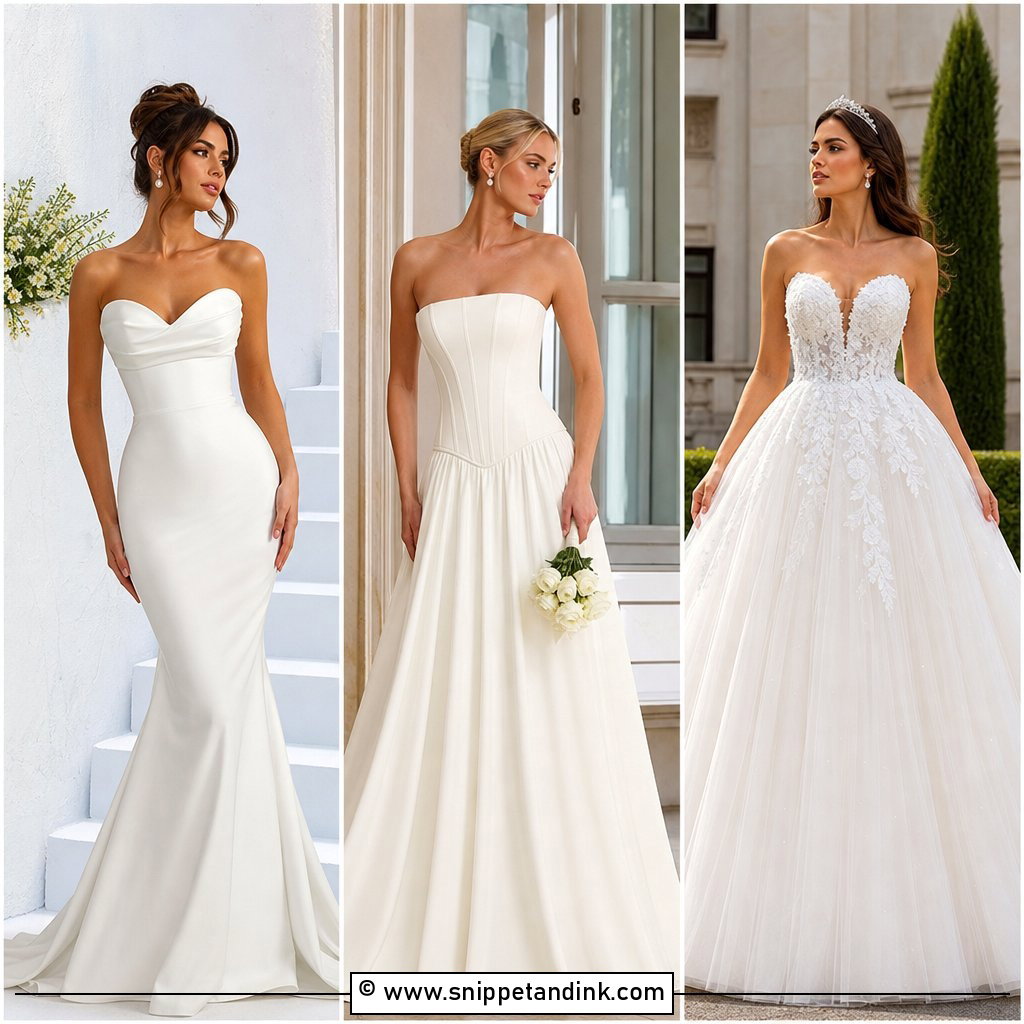
If I could put every bride into one shape for her first appointment, it would be an A-line. A fitted bodice and a skirt that widens gradually from the waist creates a timeless bridal silhouette that defines the waist without gripping the hips, so most bodies can sit, walk and dance in it all day. What changes the mood is the fabric. Satin and mikado hold a crisp shape, while chiffon, lace and organza move and soften it. Below are twenty versions I’d happily put on a client, each with the neckline, veil, shoes and hair I’d pair with it, plus the fit detail I’d check at the mirror.
Where the Waist Seam Lands Decides Whether an A-Line Flatters You
Plenty of dresses labelled A-line are really fit-and-flare or ball gowns, and the difference shows on your body. In a true A-line, the skirt starts widening at or just above the natural waist and keeps a straight, gradual slope to the floor. If the flare starts lower, at the hip, the dress hugs more and suits a smaller range of figures.
At a first appointment I look at three things in the mirror before anything else:
- Waist placement. A seam at your narrowest point defines you; a seam even an inch too low shortens the legs.
- Skirt slope. Stand side-on. The skirt should move away from the hips in a straight line, not balloon or cling.
- Bodice anchoring. Lift your arms and sit down. If the bodice shifts, it needs boning, a waist stay or both.
Petite brides usually do best with a softer, narrower slope and less fabric bulk at the waist. Taller brides can carry pleated mikado or a fuller tulle skirt without it swallowing them.
1. Satin A-Line Wedding Dress With Strapless Neckline
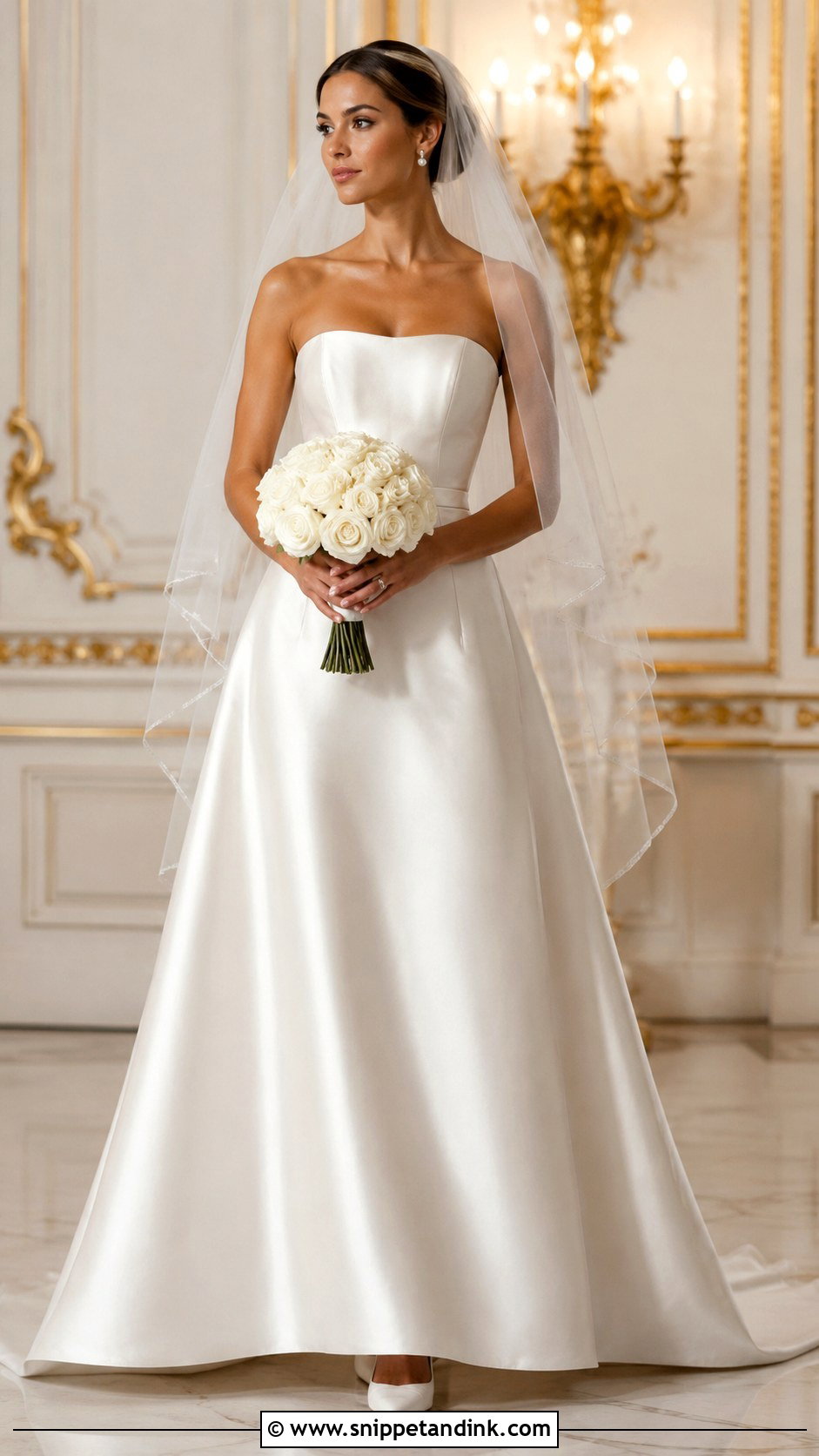
Satin is unforgiving of a poor fit, which is why I start a strapless satin A-line with the bodice. It needs real internal boning and a waist that sits at your natural waist, not below it; if the bodice moves when you raise your arms, it’ll slide all day. The skirt gives movement without ball-gown bulk. Pointed ivory pumps, pearl studs and a fingertip veil with a cut edge keep the line clean. A low chignon leaves the neckline bare. White roses or calla lilies suit the polished surface, and the whole outfit belongs in a hotel ballroom or a formal estate.
2. Lace A-Line Wedding Dress With Long Sleeves
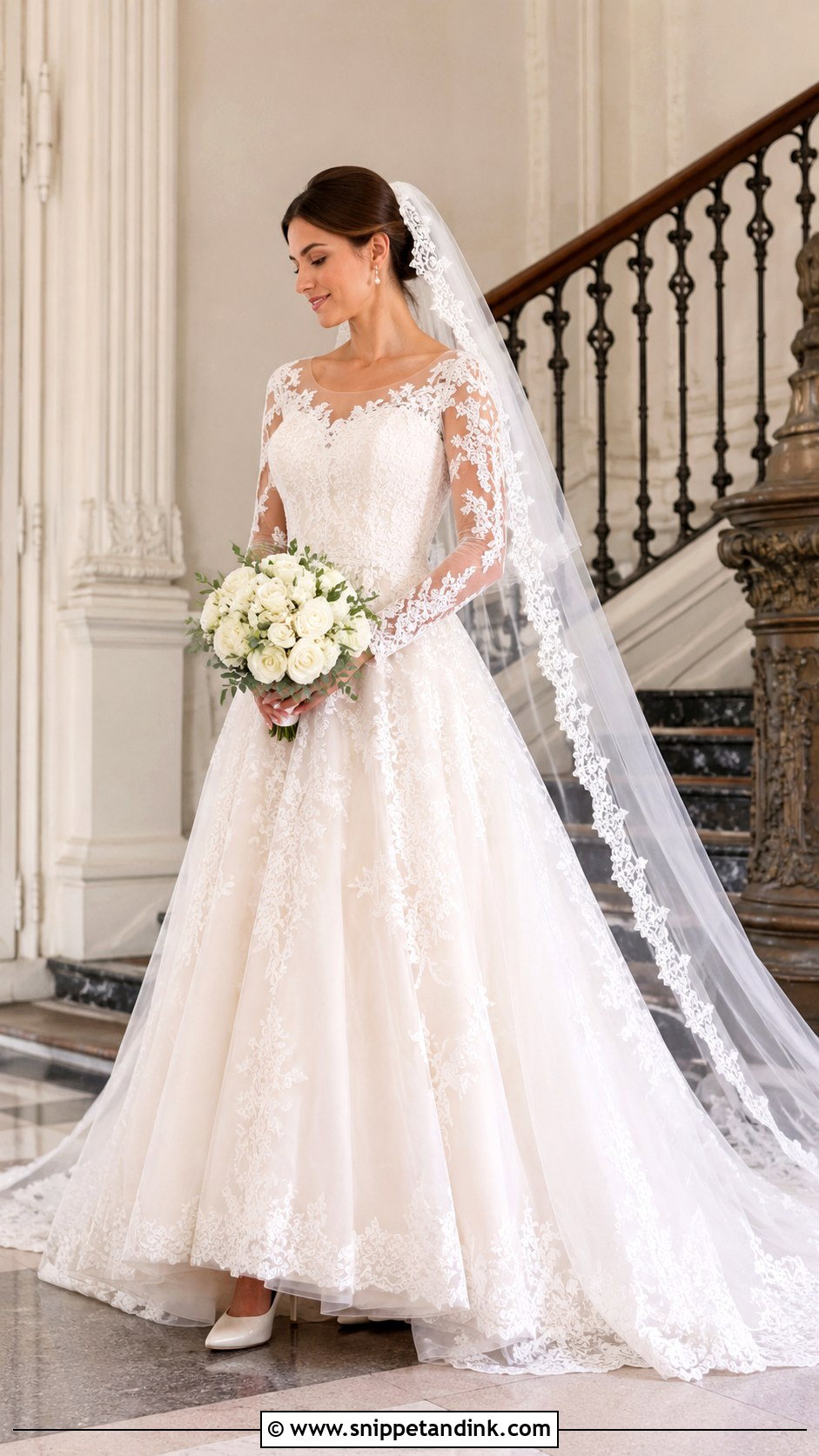
Long lace sleeves only feel romantic if they let you lift your arms. At a fitting, I have brides reach up as if to hug someone taller; a sleeve set too tight at the armhole pulls the whole bodice up. Illusion sleeves give coverage with less weight. Over a fitted lace bodice, a lightly layered skirt keeps the lace pattern from looking heavy. Pearl drops, closed-toe heels and a lace-edged cathedral veil suit cooler months and historic venues, with a loose low bun or pinned waves. Garden roses with greenery and a few seasonal stems finish it.
3. Mikado A-Line Wedding Dress With Square Neckline
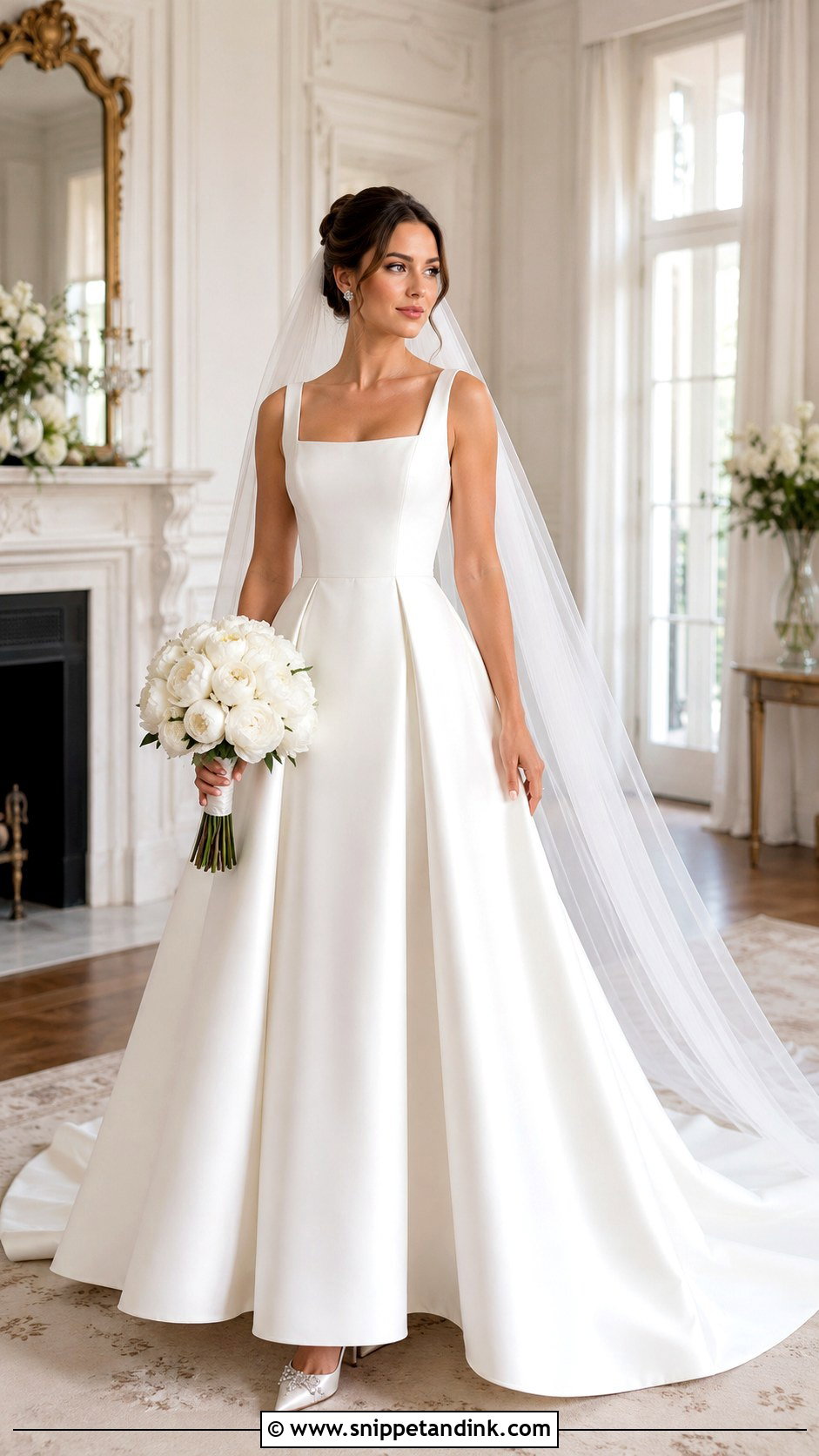
Crisp mikado fabric holds its own shape, so the A-line skirt stands slightly away from the body and pleats sit sharply. That stiffness is also its limitation: mikado creases at the hip when you sit, and those creases show in afternoon photos. Wide straps support a square neckline that frames the collarbone. A smooth waist seam is the detail to inspect, because any puckering there shows clearly in this weight of fabric. Pointed satin heels, small studs, a structured cathedral veil and a sleek bun keep it formal. Peonies or ranunculus in a rounded shape suit the stiffness of the gown.
4. Chiffon A-Line Wedding Dress With V-Neckline
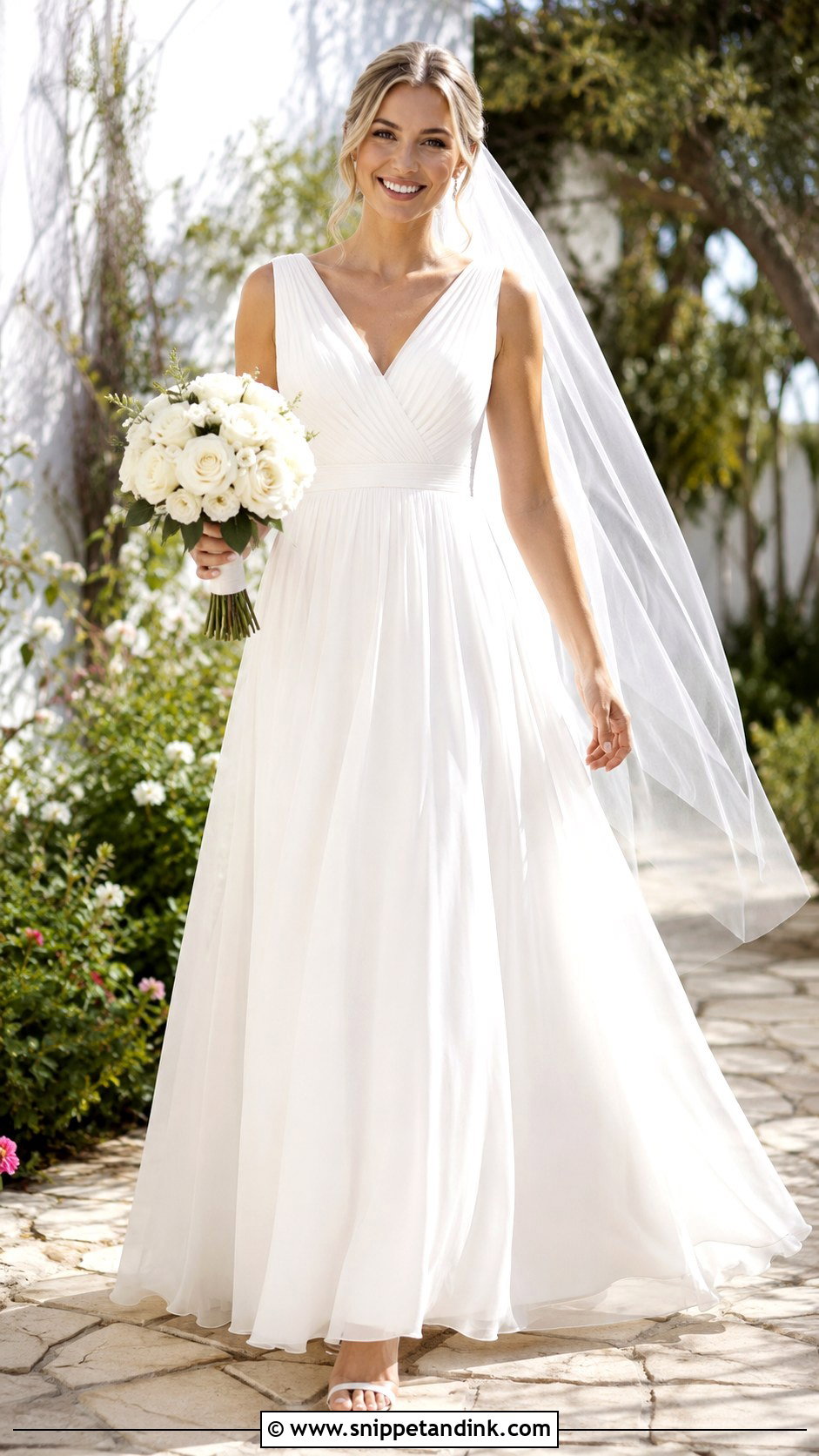
Chiffon is the warm-weather fabric I trust most. It’s light, breathes, and moves with every step, though it snags easily on rough stone and sandals with buckles. A modest V-neck lengthens the upper body, and a wrapped or gathered bodice defines the waist without boning. Insist on a fully lined skirt; unlined chiffon becomes transparent in direct sun. Block-heel sandals keep you upright on lawns. A light fingertip veil, fine drops and loose waves or a relaxed bun suit the mood, with roses, sweet peas and delicate greenery in hand.
5. Off-the-Shoulder A-Line Wedding Dress With Lace
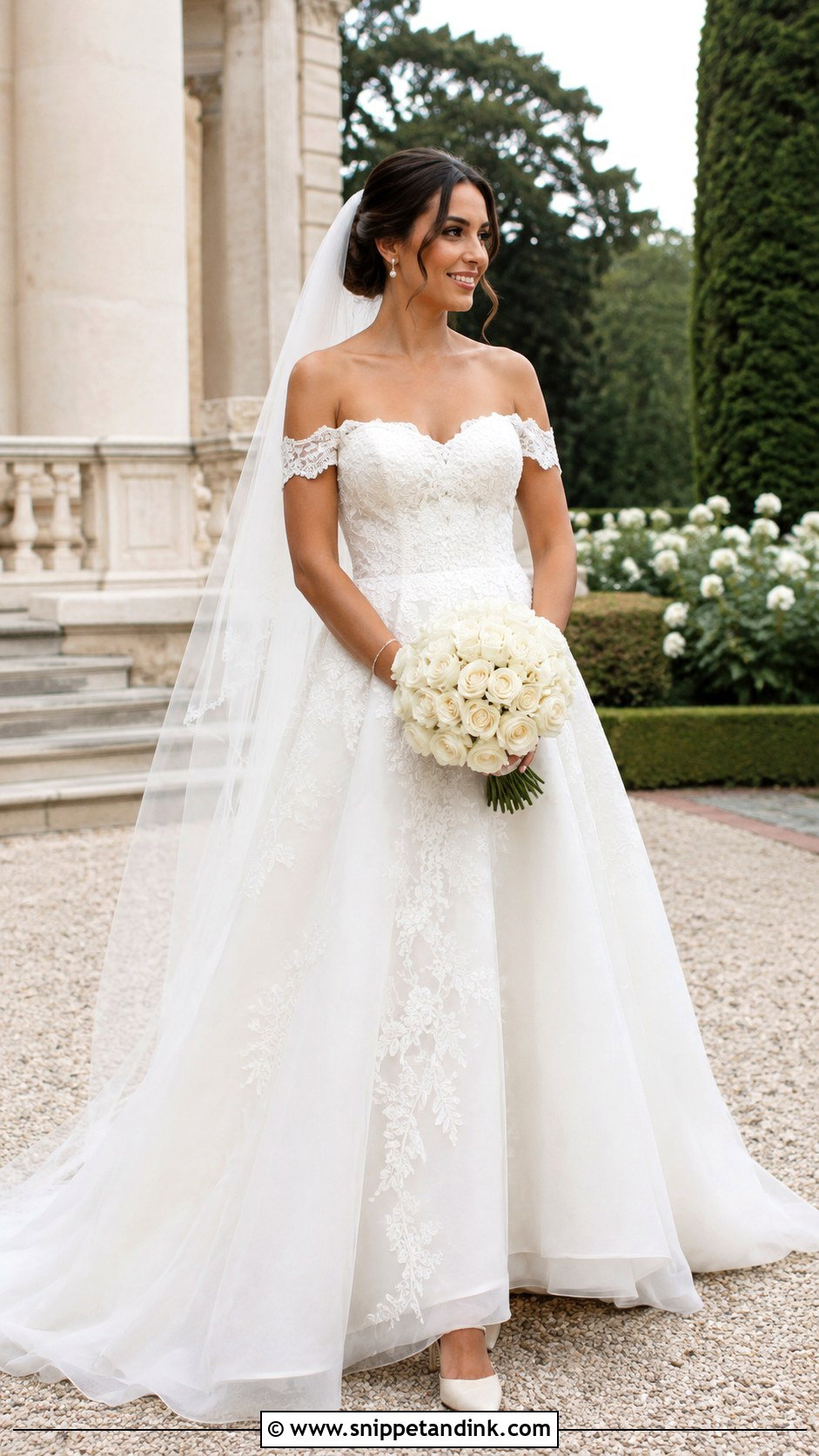
Off-the-shoulder necklines fail when they rely on your arms to hold them up. I look for a lace bodice with internal structure, often a hidden strapless corset, so the neckline stays in place when you hug, raise a glass or throw the bouquet. A plain tulle or organza skirt stops the lace from overwhelming everything below. Ivory slingbacks, pearl earrings and a soft chapel veil work here. A polished low bun shows off the shoulders, and there’s room for a delicate necklace if you want one. Cream roses and white hydrangeas suit garden estates and traditional ballrooms.
6. Bateau Neck A-Line Wedding Dress With Satin Skirt
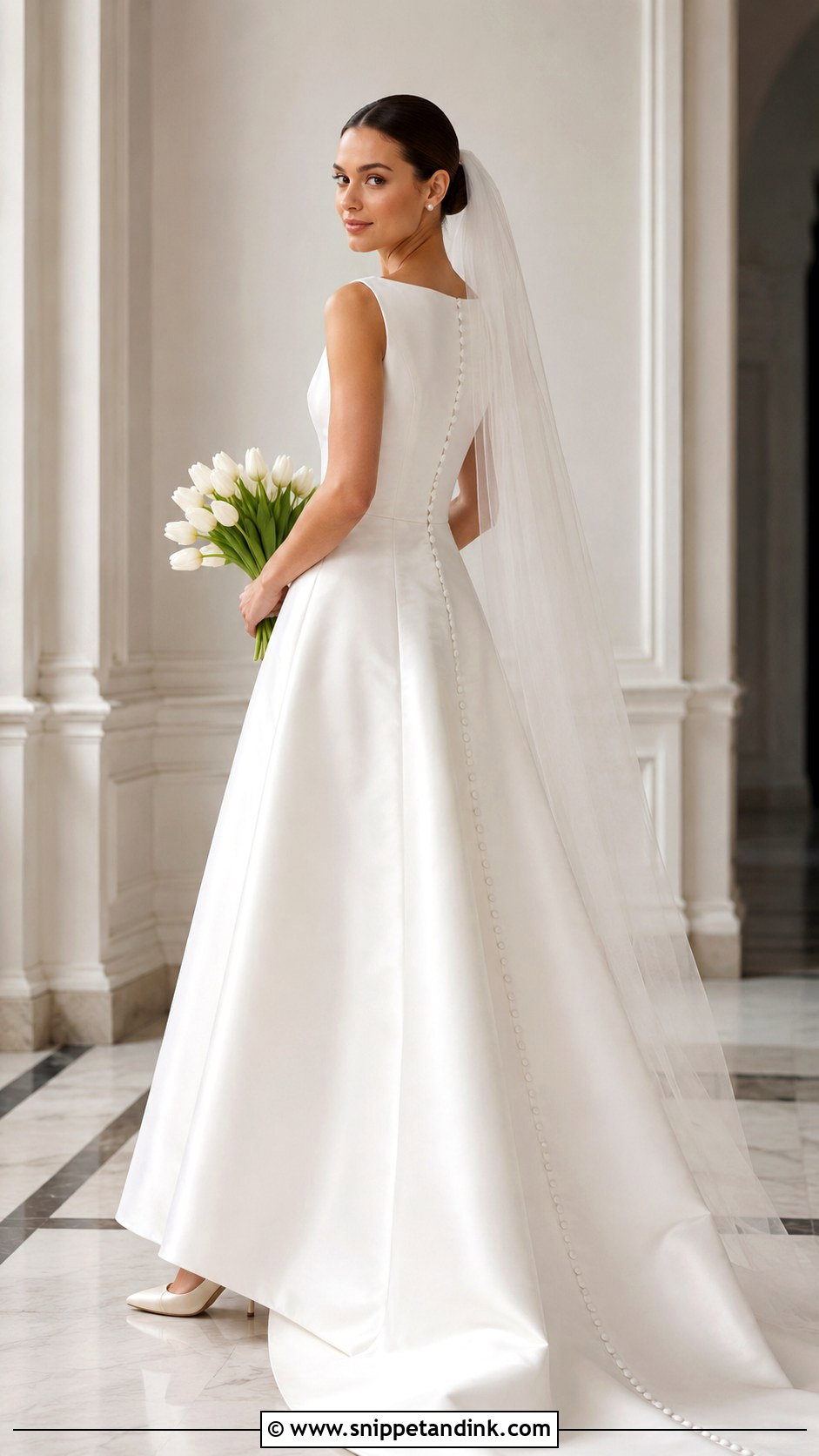
A bateau neckline runs straight across from shoulder to shoulder just above the collarbone, and it’s one of the most flattering lines for brides with narrow or sloping shoulders. Combined with a fitted bodice and a satin skirt flaring from the waist, it reads poised and restrained. Give the back some interest with a low V or covered buttons. I’d skip a necklace entirely, add pearl studs, kitten heels and a chapel veil tucked beneath a neat chignon, and carry tulips or long-stemmed callas. Clean lines rather than decoration are the appeal.
7. Sweetheart A-Line Wedding Dress With Tulle Skirt
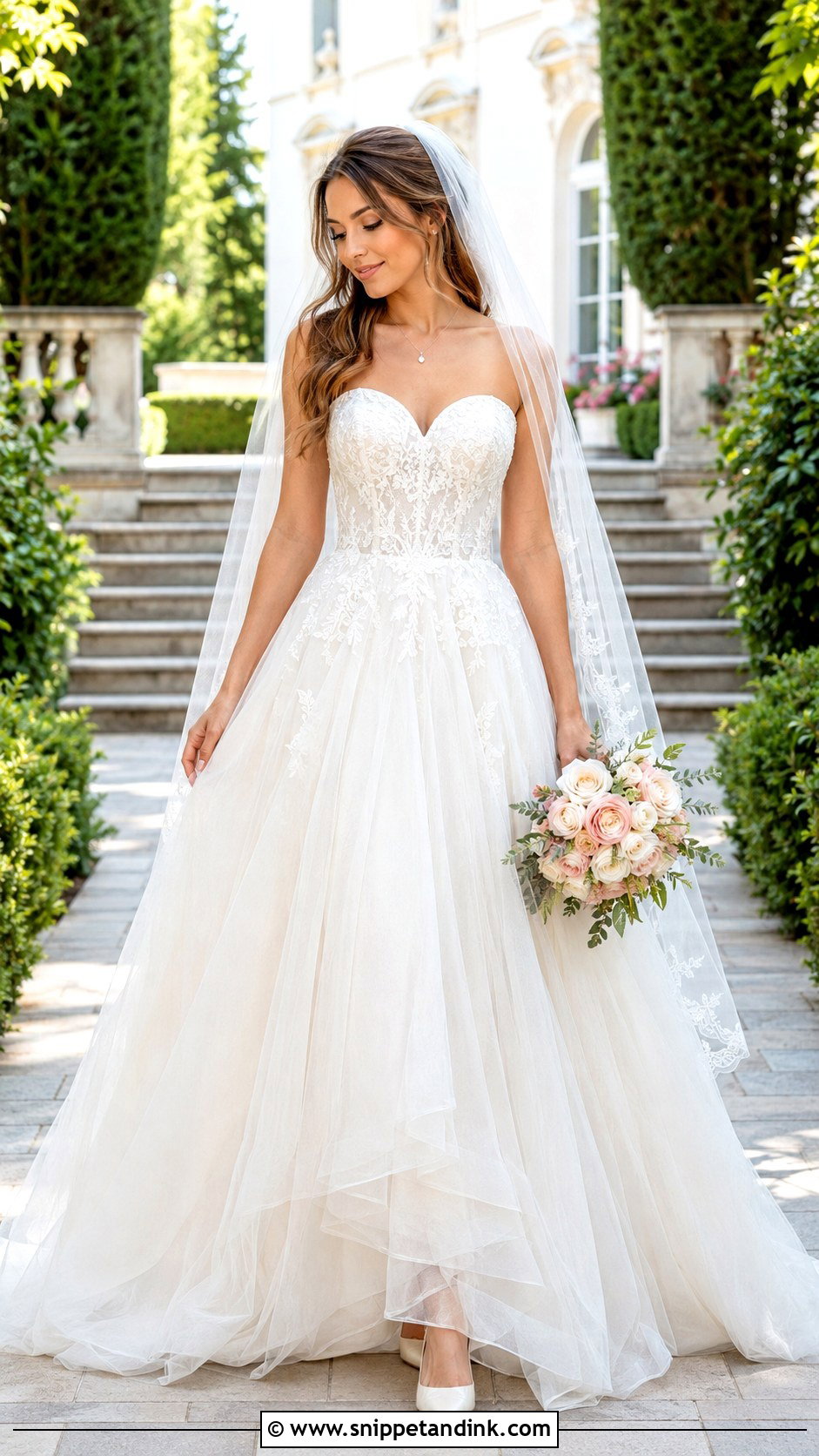
Sweetheart necklines soften a structured bodice, and in my experience they suit fuller busts better than a straight strapless line because the curve follows the body. Layered tulle in an A-line keeps the skirt romantic without reaching ball-gown width, which matters if your venue has narrow aisles or staircases. Lace appliqués on the bodice add texture; a plain lower skirt keeps it balanced. A half-up style with soft curls, a fine pendant and a chapel-length tulle veil work well together. Blush and ivory roses add a little colour.
8. High-Neck A-Line Wedding Dress With Cap Sleeves
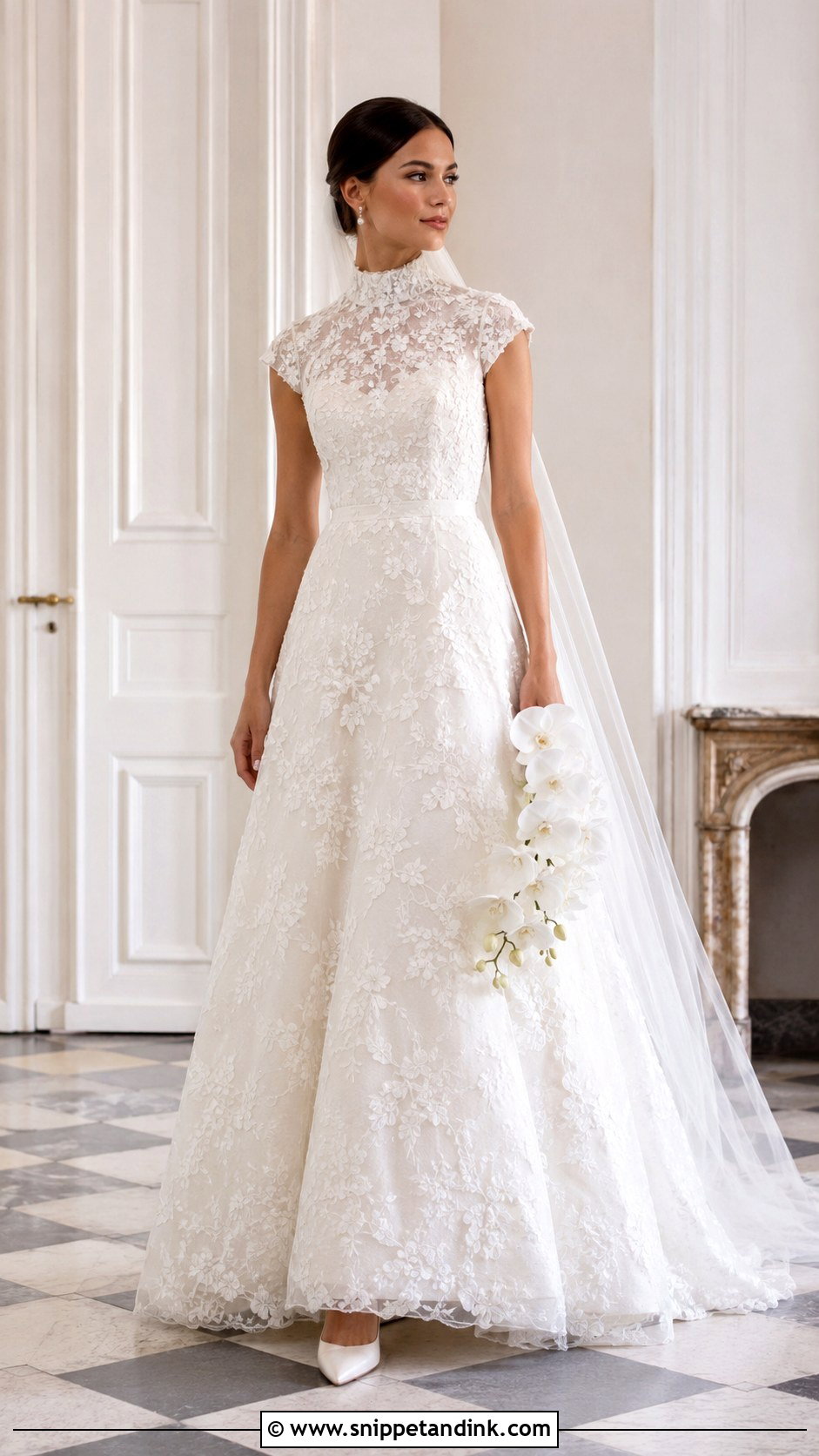
High necks with cap sleeves suit modest ceremonies and cold seasons, but they can feel closed in. A small keyhole back opens the design up and lets the dress breathe a little. The bodice might be lace, embroidered tulle or smooth crepe. The neckline is already the detail, so I’d never add a necklace; pearl button earrings and a veil fixed beneath a smooth bun are enough. Low ivory heels and a slim bouquet of orchids or roses finish it. Have the neck edge fitted closely, since a gap at the throat looks loose in profile photographs.
9. Spaghetti Strap A-Line Wedding Dress With Silk Skirt
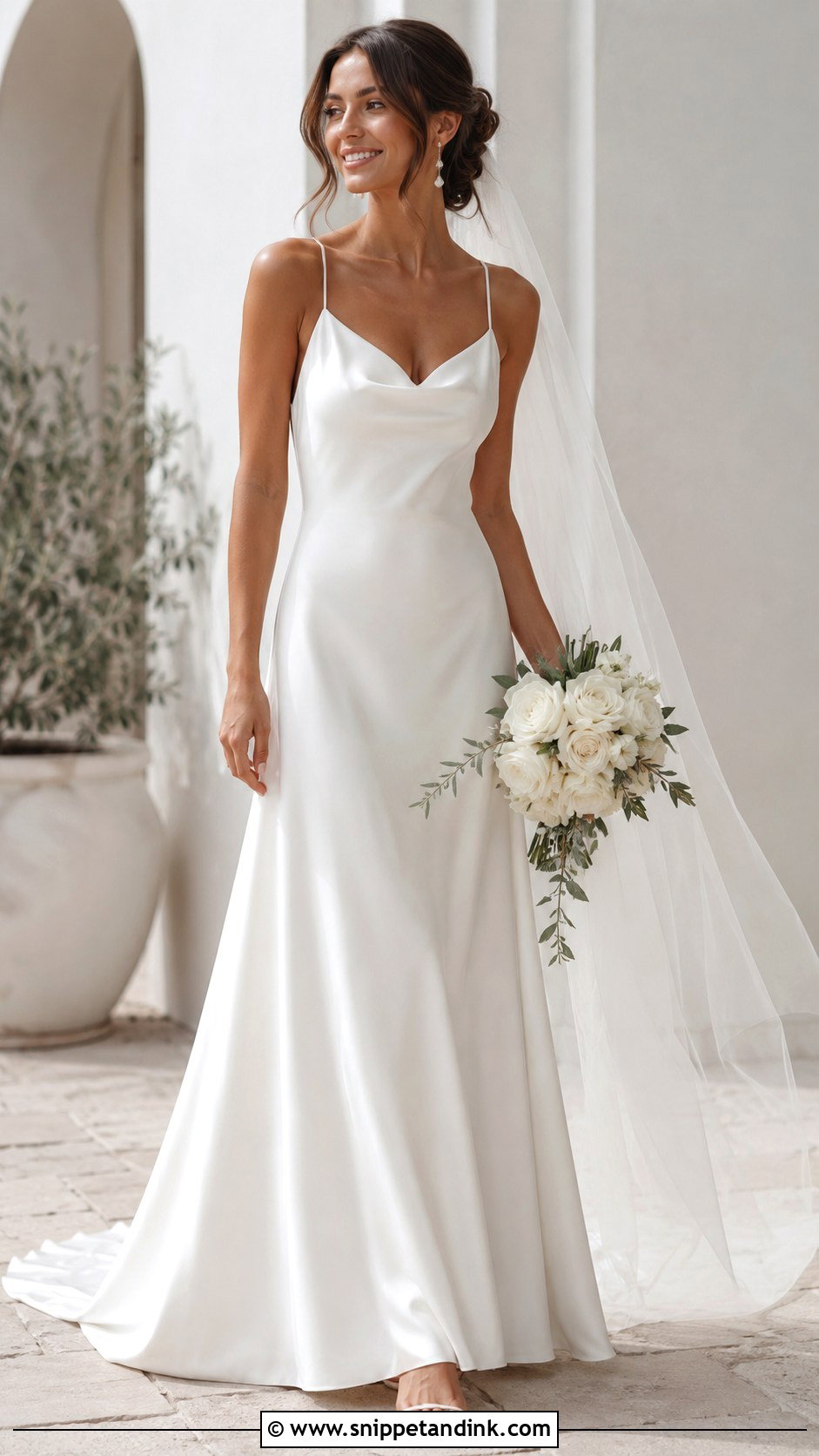
Spaghetti straps carry almost no weight, so the support has to come from the bodice itself. I check for a fitted, lined bodice with enough structure that the straps are decorative rather than load-bearing. A fluid silk or satin skirt falling cleanly from the waist, with few seams and no embellishment, lets the fabric do the work. Sleek ivory sandals, small pearls and a long sheer veil with a raw edge suit it. Wear a low knot or soft waves tucked behind the ears. It’s at its best in warm weather and modern venues, carried with loosely gathered roses.
10. Illusion Neckline A-Line Wedding Dress With Appliqués
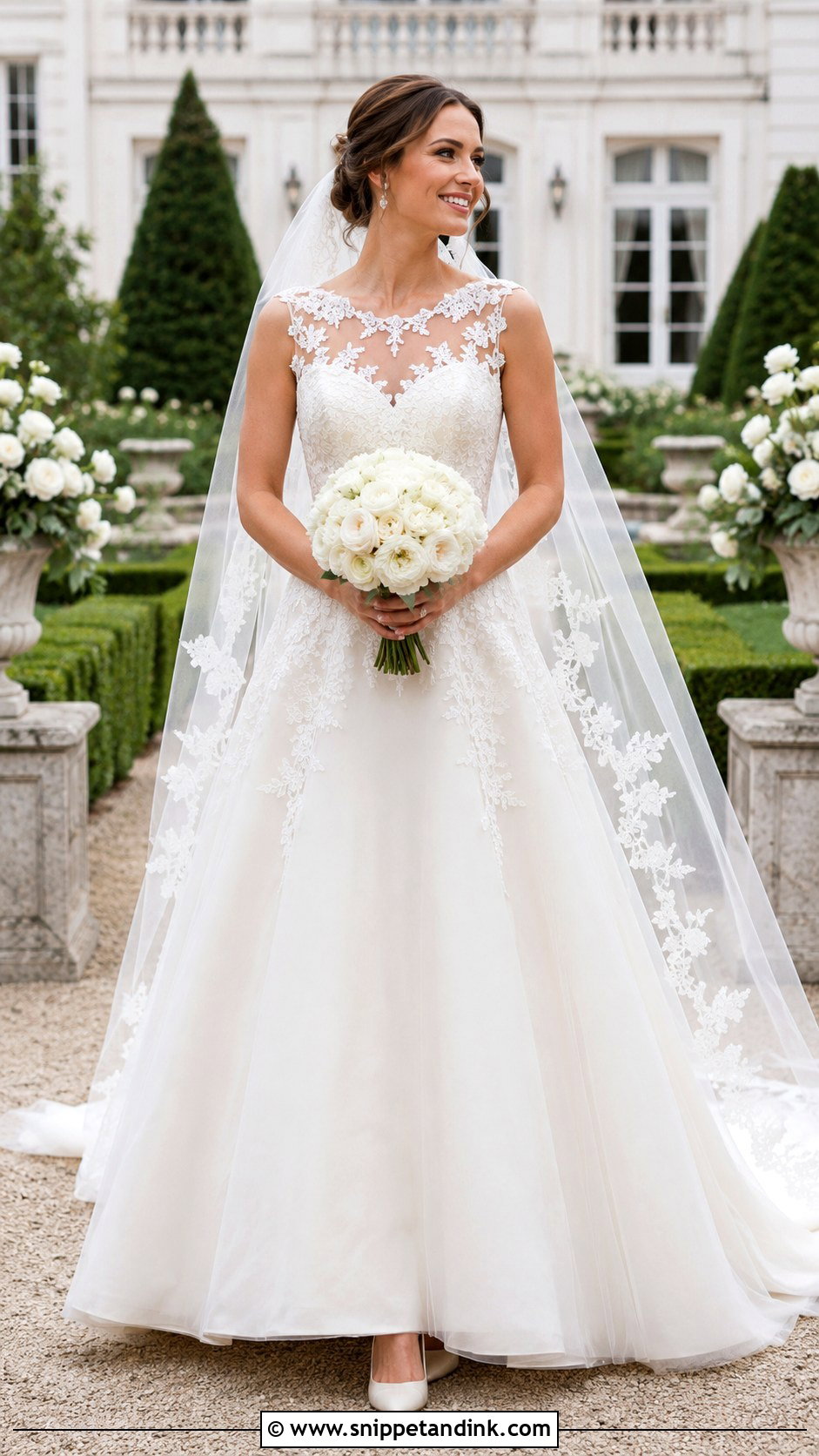
An illusion neckline sets lace on sheer mesh, so the appliqués appear to float on the skin while the mesh quietly supports the bodice. The placement of appliqués decides whether the dress looks refined or busy: dense around the bodice, thinning out onto the upper skirt, keeps the waist defined. Ask for the mesh to be colour-matched to your skin; the wrong tone shows as a visible panel in flash photography. A low textured bun, crystal studs, closed-toe pumps and a veil with a narrow appliqué border suit it, with ranunculus, roses and eucalyptus.
11. Crepe A-Line Wedding Dress With V-Back
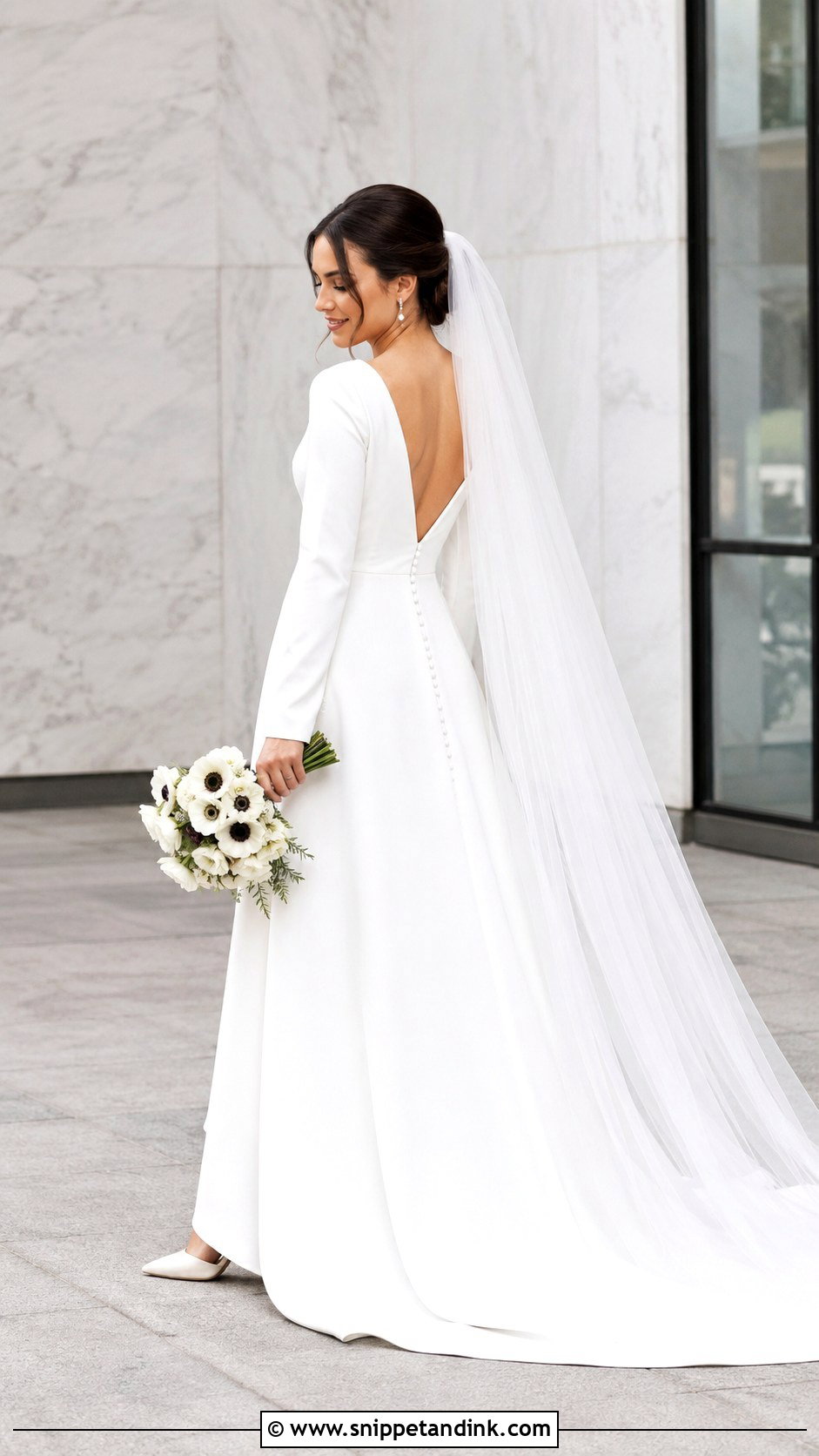
Crepe is matte and drapes close to the body, which means it shows what’s underneath. Choose smooth, unlined underwear and check at the fitting in daylight. A modest front with a deeper V-back gives interest from both sides, and covered buttons running down toward the train keep it traditional. A plain cathedral veil lets guests see the back as you walk in; a sleek low bun keeps it clear. Pointed heels, fine drops and a bouquet of anemones and roses suit minimalist venues and city spaces.
12. Organza A-Line Wedding Dress With Pleated Skirt
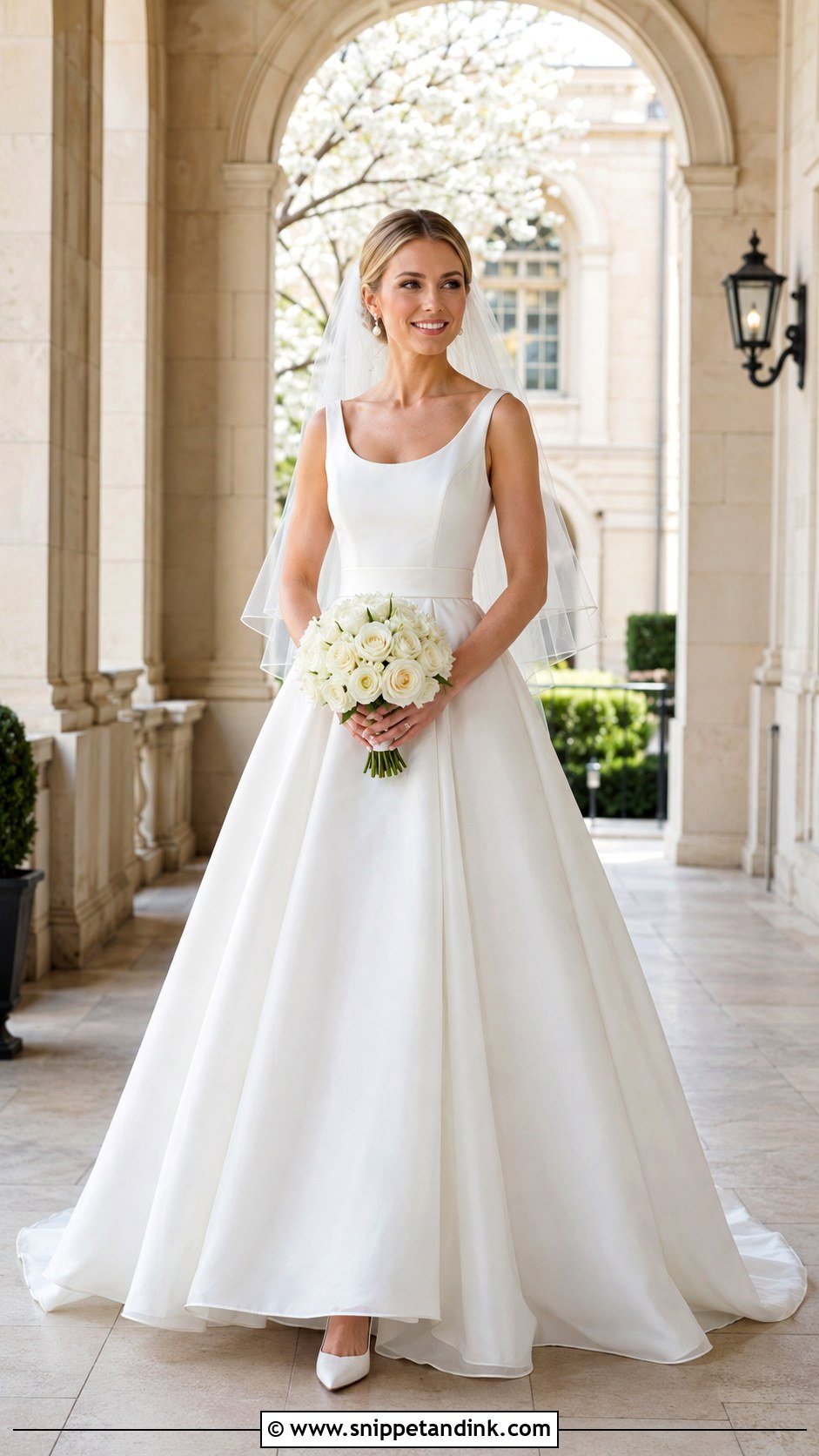
Organza is translucent and stiff at the same time, so wide pleats hold their fullness without the weight of satin. Bright daylight shows its layers at their most luminous. A fitted bodice with a straight or scoop neckline and a defined waistband sharpens the silhouette. A French twist matches the crispness of the fabric, along with satin pumps, pearl drops and a shoulder-length or fingertip veil. Structured white roses with seasonal greenery balance the skirt’s movement. One caution: organza creases visibly if it’s packed tightly, so it needs to travel hanging.
13. A-Line Wedding Dress With Detachable Sleeves
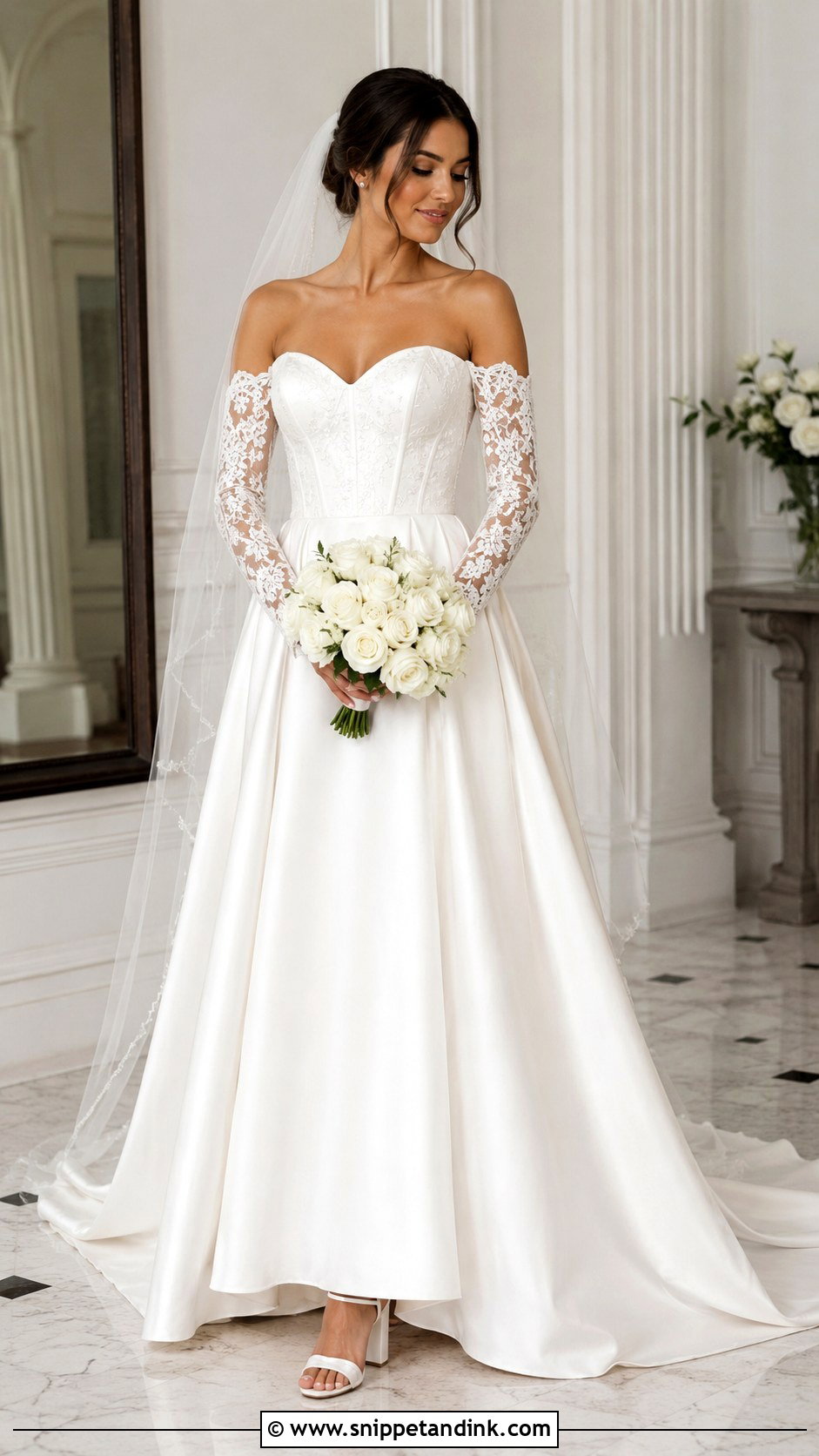
Detachable sleeves give you two dresses for the price of one, and they solve the temperature problem of a cool church followed by a warm dance floor. Fitted lace sleeves or soft off-the-shoulder ones go on for the ceremony and come off for the reception. Practise taking them off before the day. Most attach with snaps, hooks or small buttons, and someone needs to know how they work. Keep the accessories consistent across both versions with pearl studs, block heels and a removable chapel veil. A low bun works with either neckline.
14. A-Line Wedding Dress With Cathedral Train
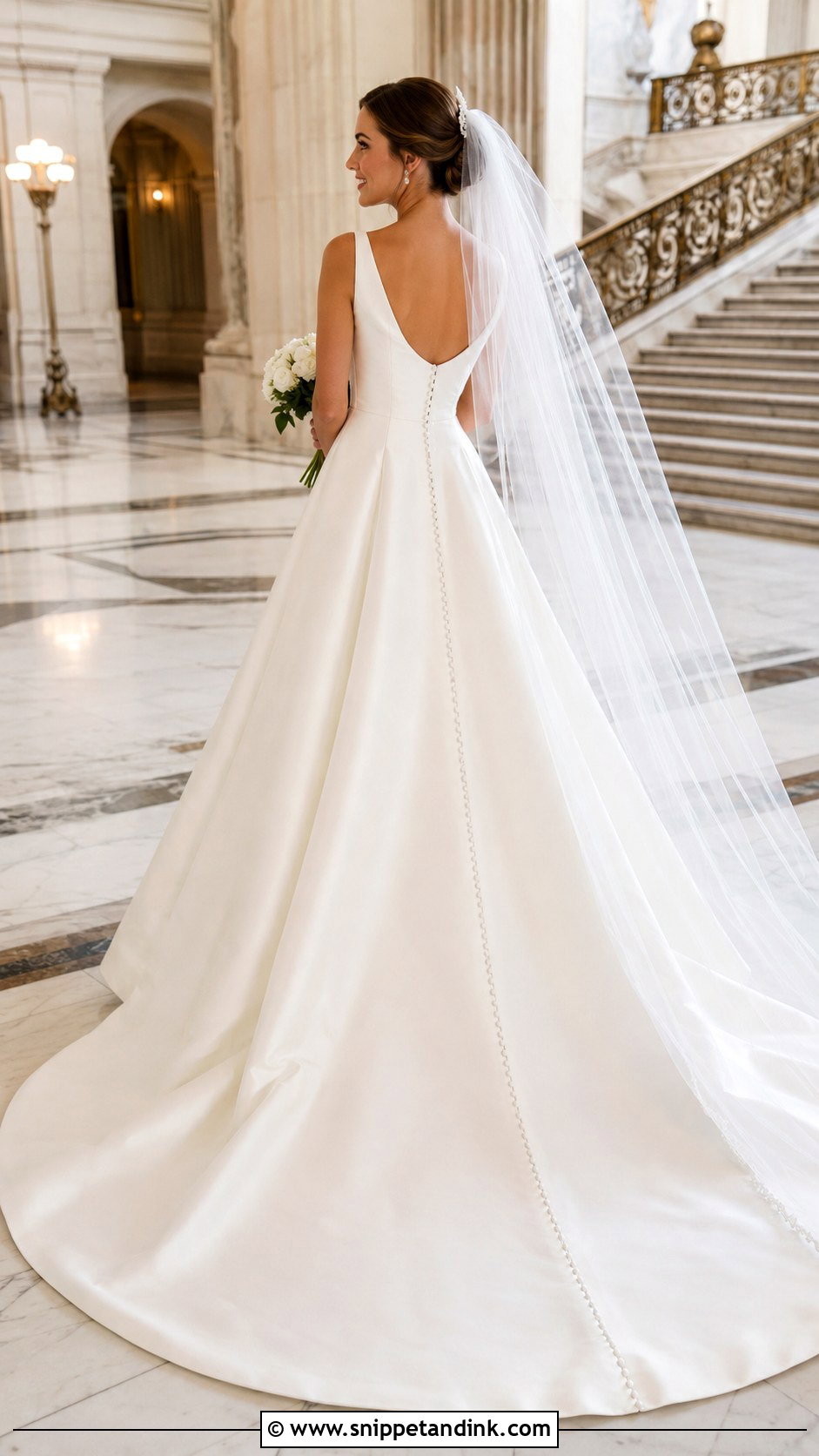
A cathedral train needs a dress with enough structure to support it, so satin, mikado or heavy lace work better than chiffon. Covered buttons down the back draw the eye toward the hem. The bustle is the part brides forget, and with this much fabric it may need several attachment points; ask your seamstress which style suits your skirt and have your maid of honour learn it at the final fitting. A cathedral veil extending just past the train, comfortable pumps, understated earrings and a secure low bun complete it. Keep the bouquet compact so it doesn’t compete with the length behind you.



15. A-Line Wedding Dress With Chapel Train
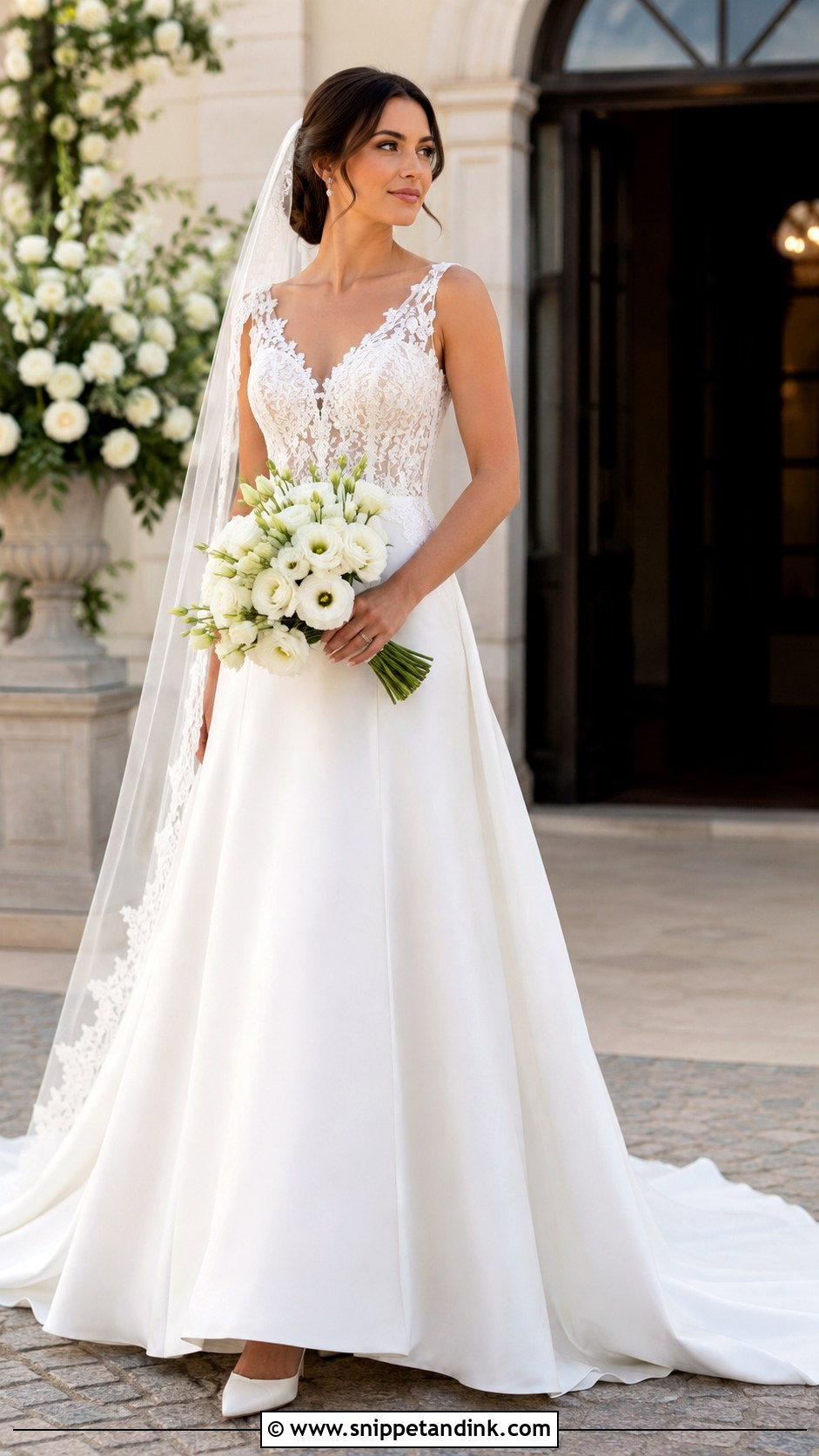
A chapel train sweeps a short distance behind you, enough for drama in the aisle photos but manageable at a reception. It’s the length I recommend most when a bride wants a train but also wants to stop worrying about it after an hour. Satin makes it formal, lace makes it softer. A chapel veil keeps the proportions matched. Almond-toe heels and pearl earrings suit it, with a chignon or half-up style chosen to suit the neckline. White roses, lisianthus and greenery add texture without size.
16. Vintage A-Line Wedding Dress With Lace Sleeves
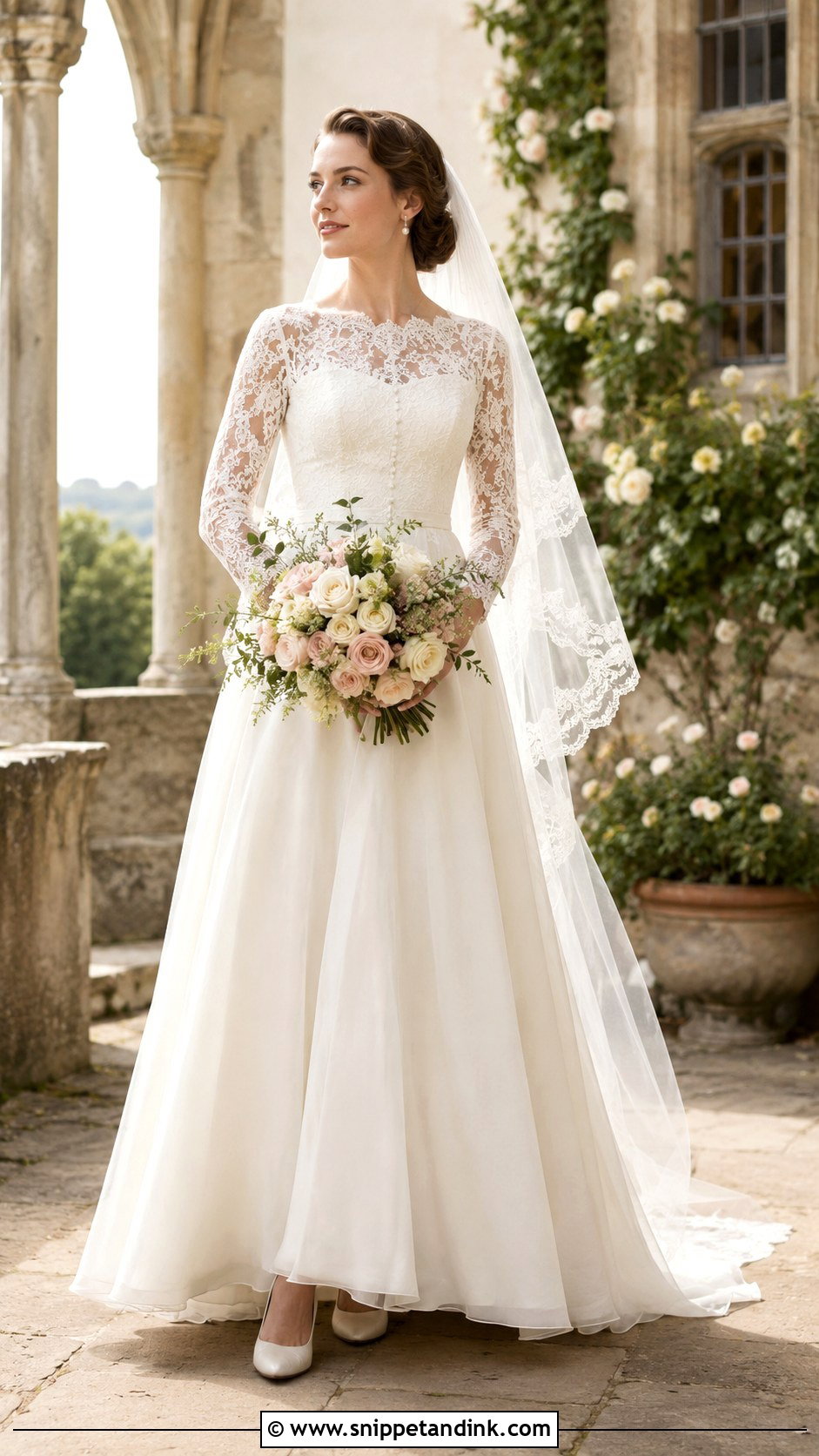
Vintage-inspired dresses tip into costume when there are too many period details at once. My rule is two references, not five: perhaps a fitted lace bodice and covered buttons, with sheer wrist-length sleeves, and nothing else historical. A chiffon, tulle or light satin skirt keeps the line fluid. Round-toe pumps, pearls and a lace-trimmed veil over a low bun suit it. Garden roses with trailing greenery suit historic estates, intimate gardens and libraries.
17. Minimalist A-Line Wedding Dress With Pockets
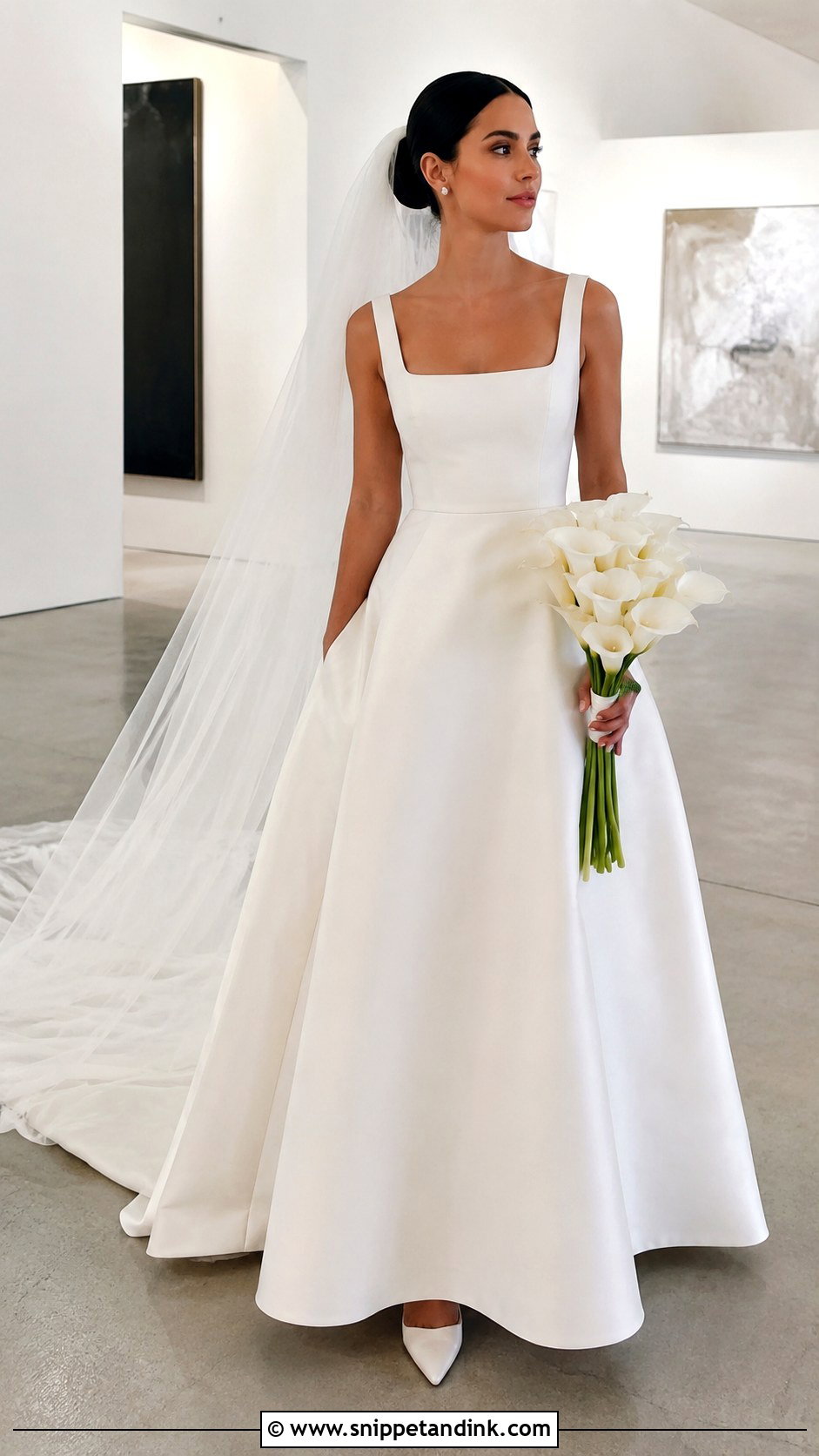
Minimalism hides nothing, so the cut has to be exact. I check a precise waist seam and a neckline that lies flat, often a scoop or square. Structured mikado, satin or faille holds the silhouette. Small, discreet pockets in the side seams are useful for a lip balm, but keep them nearly empty, because anything heavier pulls the skirt line out of shape. Pointed pumps, small studs and a plain cathedral veil fit the mood, with a sleek bun or ponytail. A few calla lilies suit galleries, modern hotels and city venues.
18. Floral Lace A-Line Wedding Dress With V-Neckline
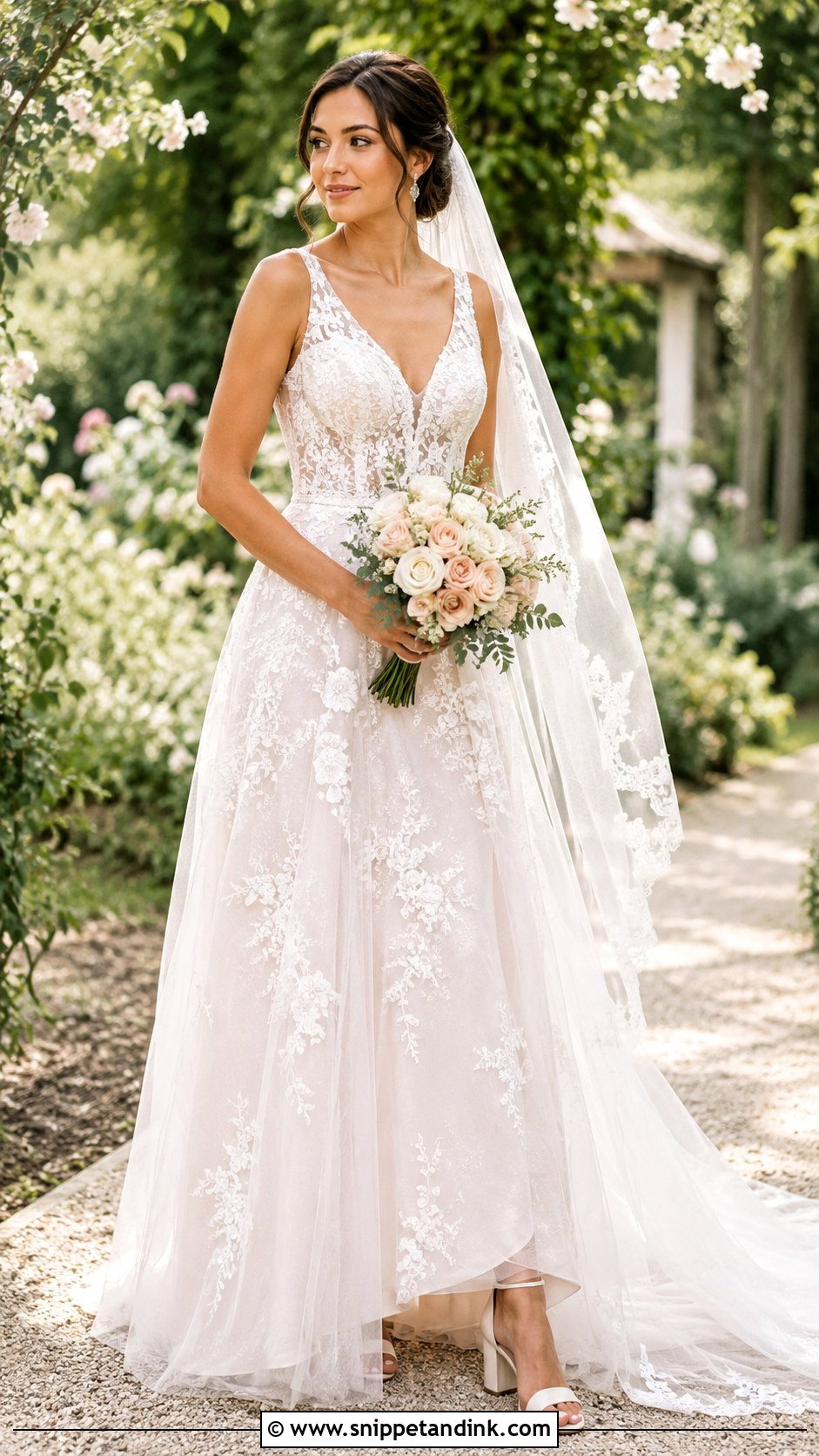
Floral lace on a V-neck A-line looks most natural when the appliqués start dense at the bodice and thin out as they travel down the skirt, which keeps the waist defined. Supportive straps rather than a strapless V make the neckline far easier to wear through a long day. Ivory block heels suit outdoor ground, with small crystal earrings and a veil scattered with lace. Soft waves or a relaxed updo match the organic pattern, and garden roses, ranunculus and leafy greenery suit spring garden and estate ceremonies.
19. Beaded A-Line Wedding Dress With Sheer Bodice
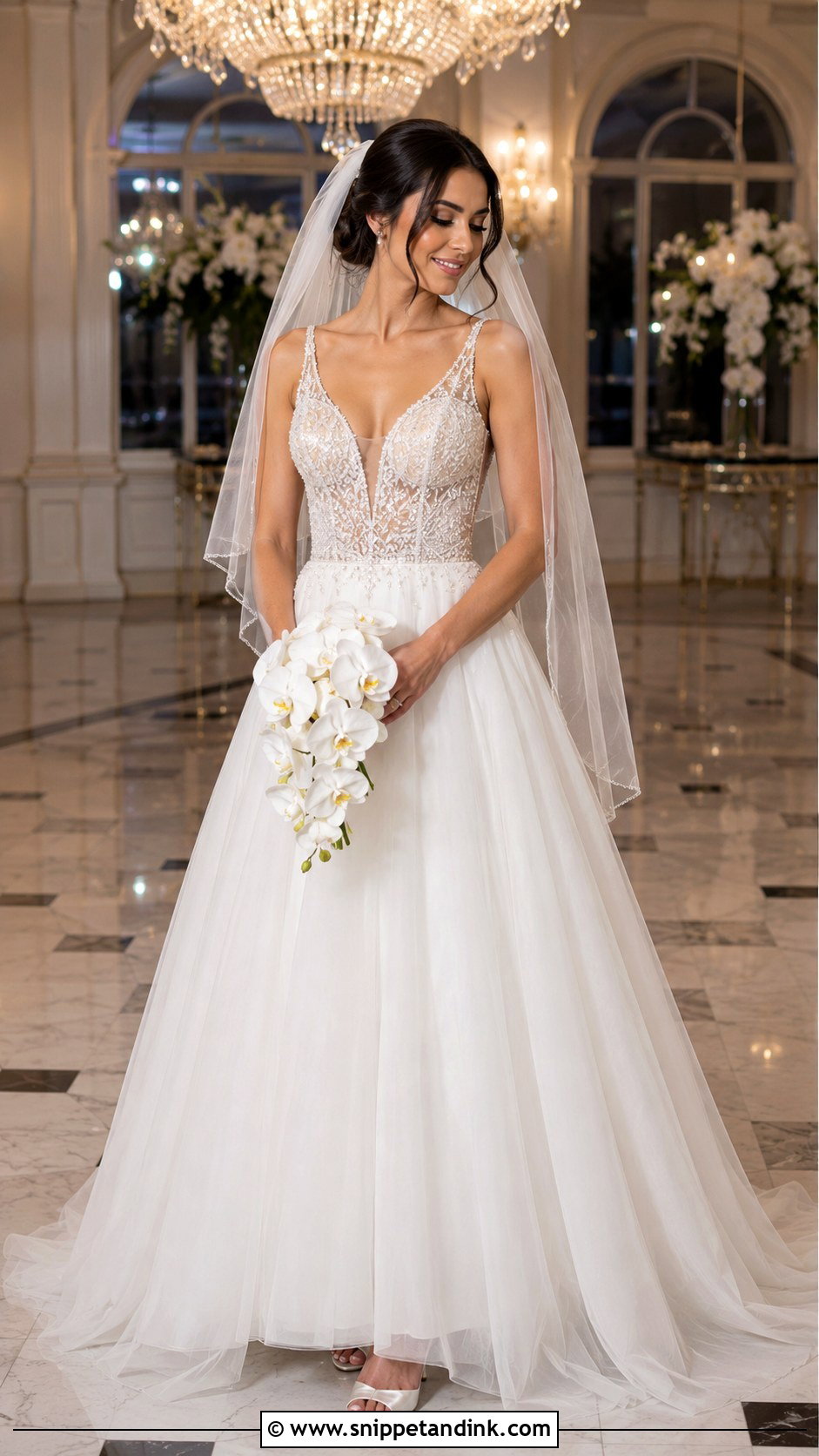
Beading adds weight as well as sparkle. I keep it above the waist, on a sheer-lined bodice, and balance it with a plain chiffon or tulle skirt so the gown doesn’t drag. Check the inside of the bodice too; poorly finished beadwork scratches the arms over a long evening. Satin heels, crystal studs and a plain sheer fingertip veil leave the bodice as the focus, with a clean low bun. Beadwork comes alive under evening and indoor lighting, so this is a gown for a formal evening ceremony.



20. Ivory A-Line Wedding Dress With Pearl Details
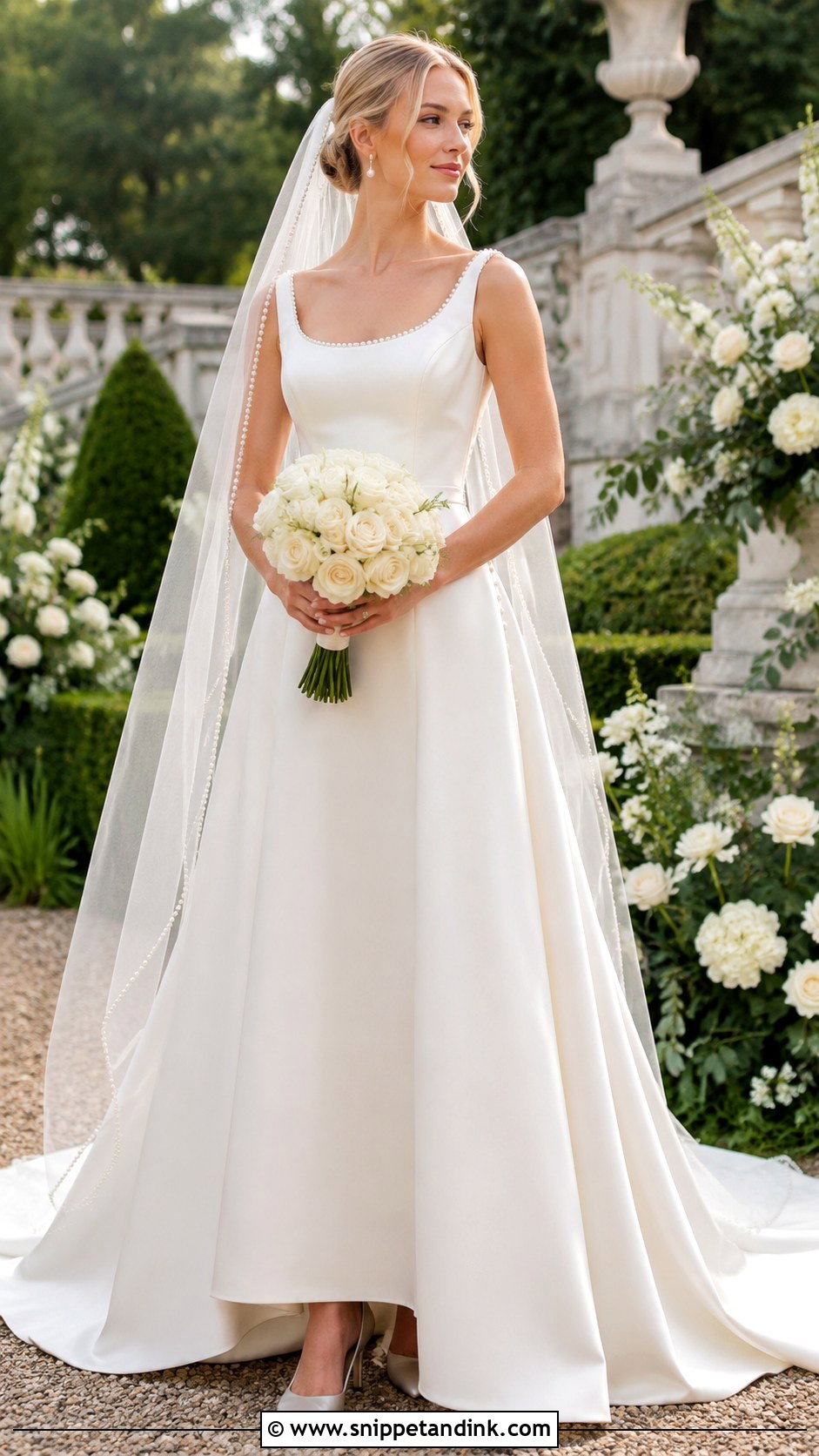
Ivory is softer against most complexions than bright white, and small pearl details at the neckline, waist or buttons suit it without crowding the dress. I’d place pearls in one or two areas, never all over. A fitted bodice with a satin or tulle skirt keeps it balanced. Pearl earrings, ivory pumps and a veil finished with a narrow pearl edge tie the details together. A classic bun or pinned curls suit the romantic trim. Cream roses and white ranunculus give tonal depth and suit ballrooms, gardens and traditional ceremonies in any season.
Ordering, Altering and Bustling: The Calendar Behind the Dress
Made-to-order gowns from a bridal shop often take several months to arrive, and alterations come on top of that. I’d start shopping around nine to twelve months before the wedding if you can, and treat six months as the point where your options begin to narrow. Plan for two or three fittings, with the last one close enough to the wedding that your measurements won’t change much afterwards.
If your dress has a train, choose the bustle at the first fitting. An over-bustle hooks fabric up onto the back of the skirt and suits lighter fabrics; an under or French bustle tucks it beneath with ribbon ties and suits satin and structured lace. Ask your maid of honour to come to the final fitting and practise it herself, because she’ll be doing it in a hallway with no seamstress nearby.
After the wedding
Have the gown professionally cleaned within a few weeks, even if it looks clean. Sugar from champagne and sweat are invisible at first and turn yellow-brown with time. Store it flat or folded with acid-free tissue in a breathable box, away from light, and never on a hanger long term, as the weight of the skirt stretches the shoulders.
A Bodice That Stays Put Matters More Than Any Trim
Start with how you want to feel, then let the fabric follow. Satin and mikado give structure; chiffon, lace, tulle and organza give movement. The neckline and sleeves set the coverage and formality, and the train, veil, shoes and flowers should support the dress rather than fight it. Book professional alterations so the bodice feels secure, the waist sits where it should and the hem matches your shoes. A well-fitted A-line will carry you from the aisle to the last dance.
You'll Like These Ideas:












Leave a Reply