
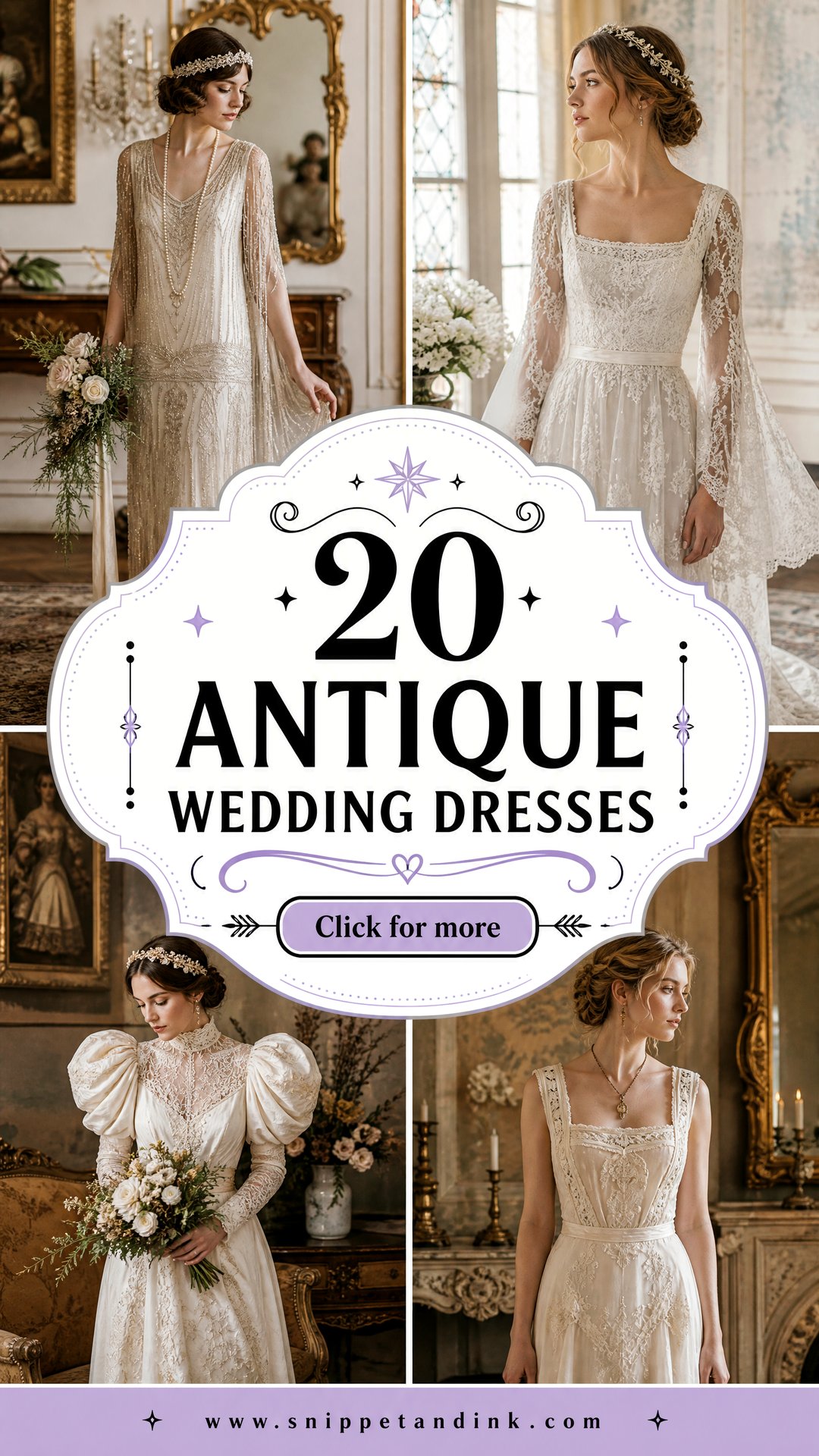
Antique wedding dresses come in two kinds, and I treat them very differently at a fitting. An authentic heirloom gown needs careful inspection and conservation-minded alterations, while a newly made reproduction inspired by Victorian, Edwardian, Art Deco or mid-century fashion gives you modern sizing and stronger seams. Both lean on the same details: high lace necklines, bias-cut satin, intricate beadwork, fitted waists and dramatic sleeves. The twenty outfits below are complete looks, so you’ll see the shoes, veils and finishing pieces that suit each era as well as the dress itself.
Vintage Sizes Run Smaller Than the Label Says
If you’re shopping for an original gown, ignore the size on the tag. Sizing has shifted several times over the last century, and an older dress marked with the size you wear today will often be noticeably smaller. Bring a tape measure and your own measurements instead.
- Measure the dress flat at bust, waist and hips, then double each figure. For a woven fabric I want an inch or two of ease over your body measurements at bust and waist.
- Check the armholes and shoulders. Older gowns were cut with higher, tighter armholes and narrower shoulders, and those are the hardest areas to enlarge.
- Look inside the seams. Some old dresses have generous allowances that can be let out; many have almost none, which means the dress can only go smaller.
- Note where the waist seam lands on you. Waistlines rose and fell by decade, and a seam in the wrong place on your body is harder to fix than a loose side seam.
When an original gown is close but not quite right, I’d rather see it eased with inserted panels of matching fabric than forced. If it is far off, a reproduction will serve you better and you can stop worrying about every seam.
1. Victorian High Neck Antique Wedding Dress
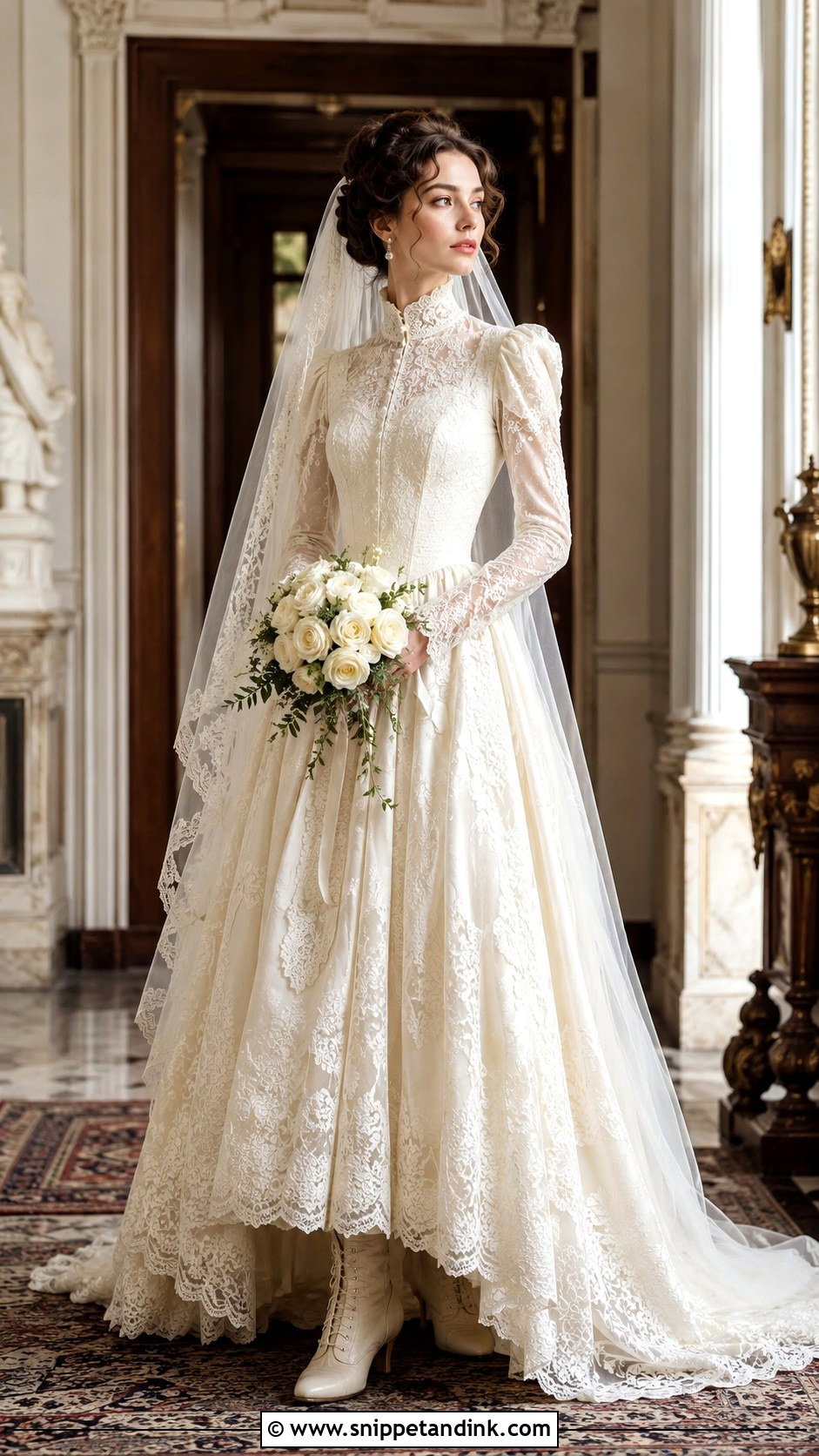
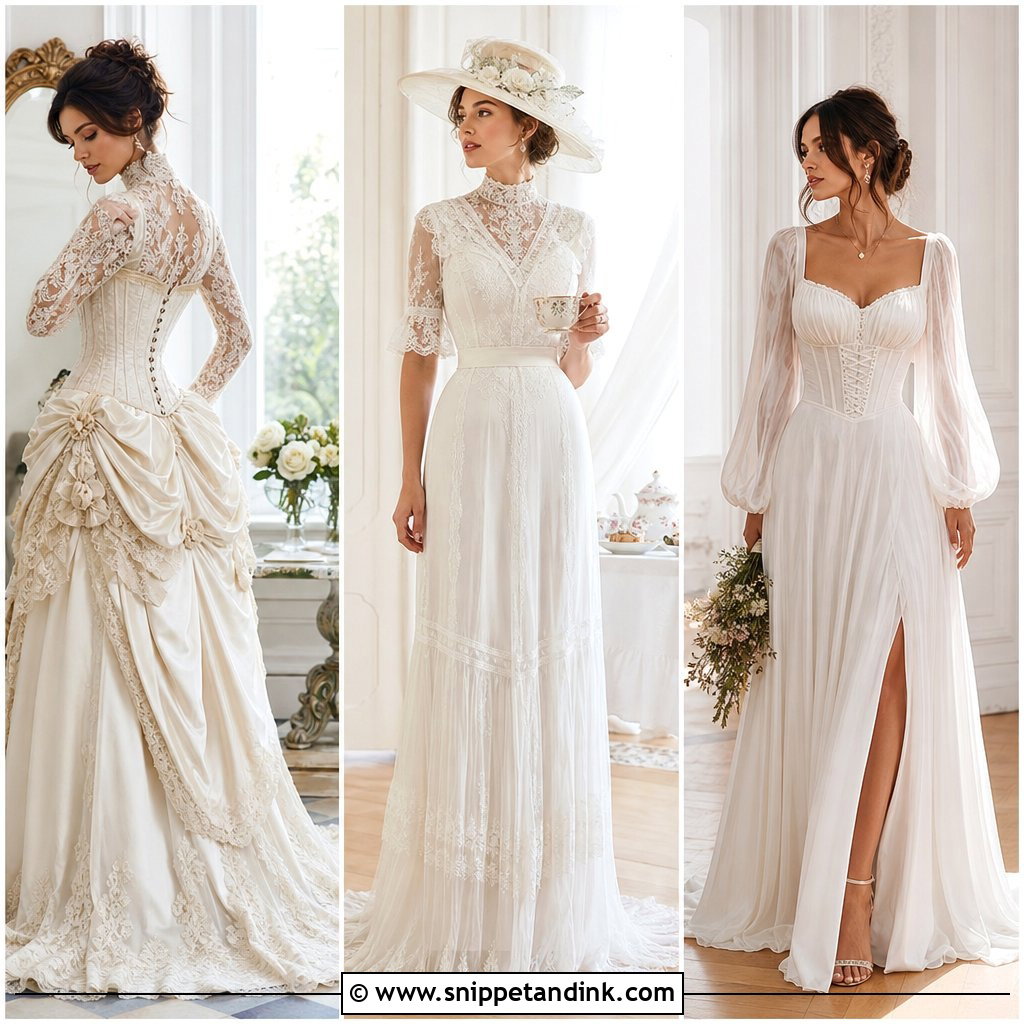
Coverage is the whole point of a Victorian high-neck gown, so the fit at neck and wrist has to be exact. I check that the collar sits a finger’s width from the throat and that the tapered sleeves let you bend your elbow fully without the cuff riding up. An ivory dress with a fitted lace bodice, covered buttons and a full floor-length skirt does the rest. Cream lace-up boots with a comfortable heel are true to the period and more practical than they sound. Add pearl drop earrings, an embroidered cathedral veil and a smooth low bun. A narrow satin sash at the natural waist helps if the bodice reads too long on you.
2. Edwardian Lace Antique Wedding Dress
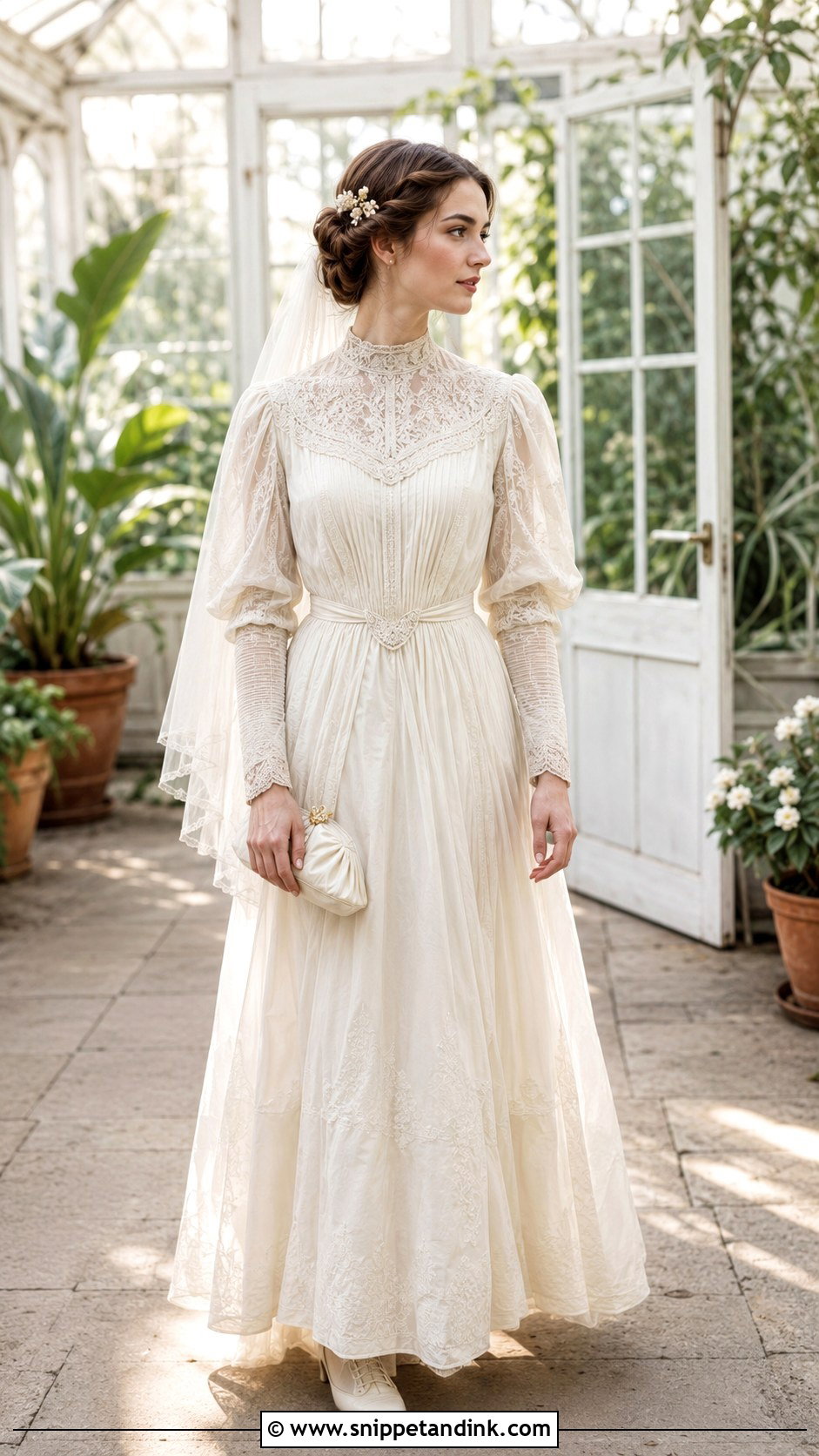
Edwardian gowns get their softness from small handwork: pintucks, embroidered panels and sleeves that puff slightly at the top before narrowing at the wrist. Look for a high or modest neckline, a defined waist and a flowing skirt. On an original dress, inspect the pintucks closely, because a fold that has sat in storage for decades can leave a faded line once it’s pressed out. I’d style it with a fingertip lace veil, pearl hairpins and ivory leather pumps, with a fine pendant or an old brooch rather than a heavy necklace. A loose low chignon and fresh, light makeup keep it gentle.
3. 1910s Embroidered Antique Wedding Dress
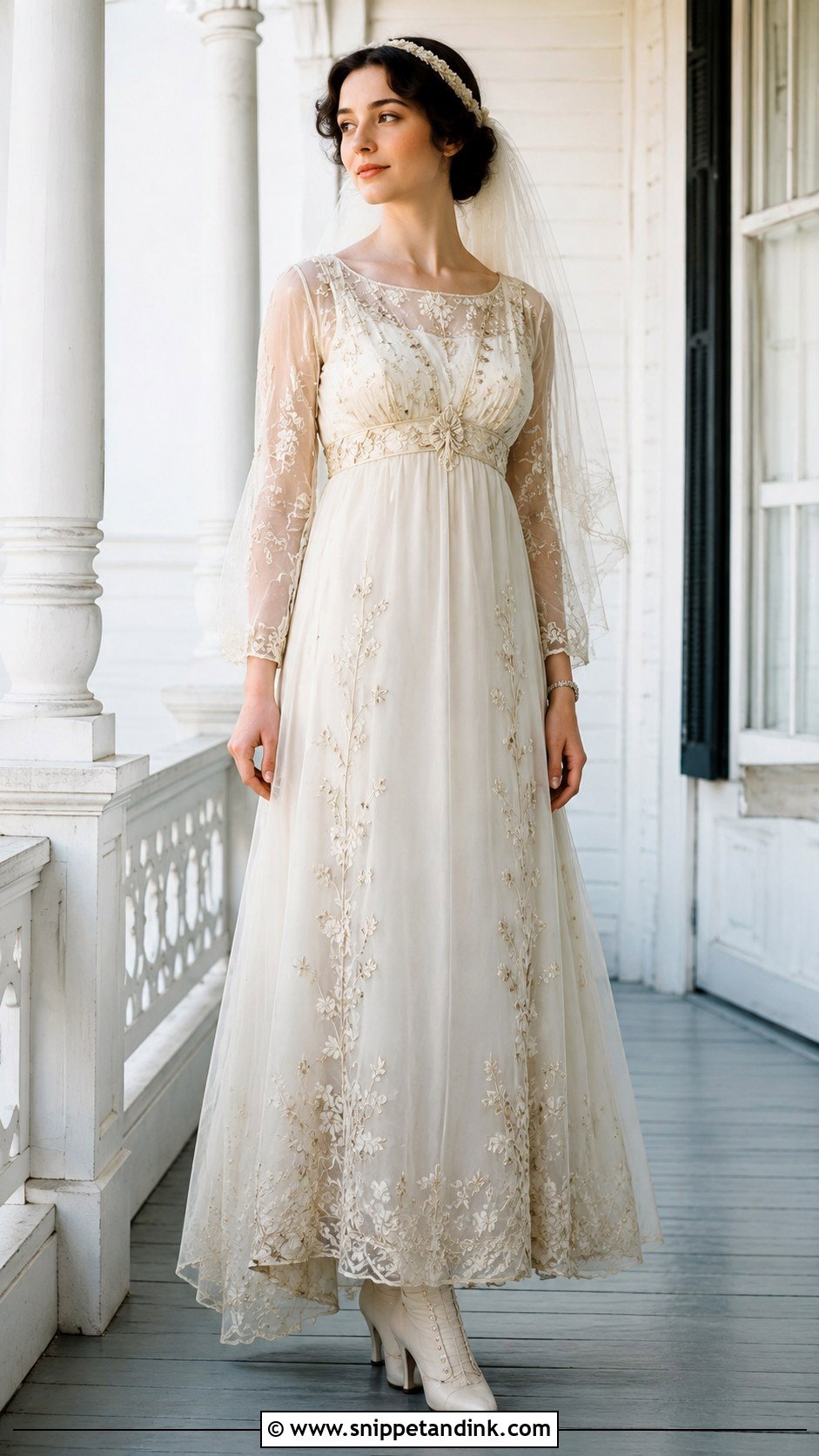
The 1910s sit between the corseted Edwardian shape and the loose twenties, and the dresses show it: a softly raised waist, sheer embroidered sleeves and a skirt that falls close to the body before widening near the hem. Small floral motifs or eyelet keep it light. Sheer cotton and silk look far more transparent in daylight than under shop lighting, so I always check a bride by a window at the fitting. If anything shows through, a fitted silk slip in a matching tone fixes it. Buttoned ankle boots, a narrow floral headband and a light tulle veil under a simple updo finish the look, with tiny pearl studs and a delicate bracelet.
4. 1920s Beaded Antique Wedding Dress
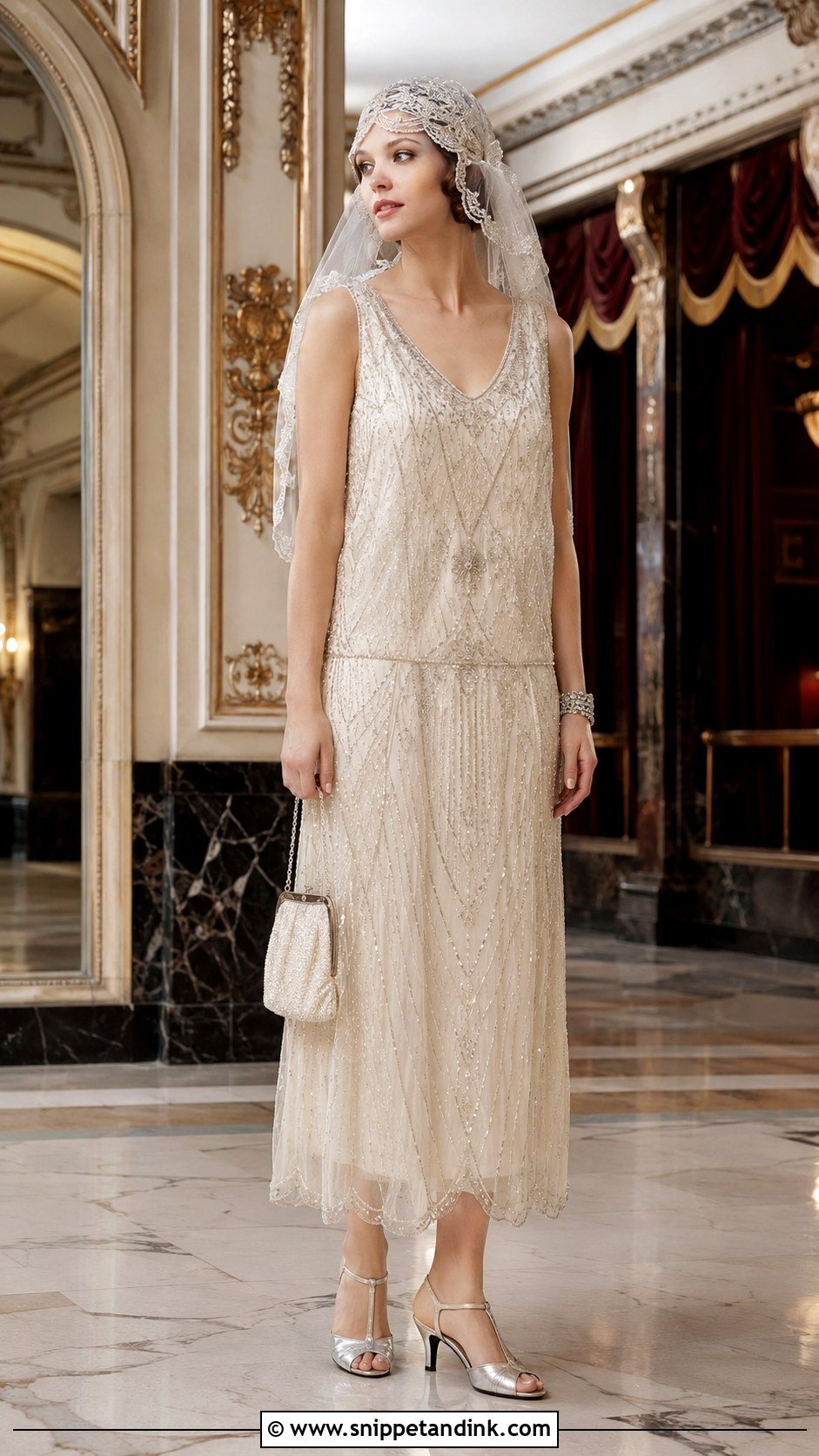
Beaded twenties dresses are heavier than you’d expect, and on an original gown that weight hangs from silk that may be a century old. Before anything else, I check the shoulder seams and the threads holding the beads; loose strands get stitched before the wedding, not after. The shape itself is straight and relaxed, with geometric beadwork, a dropped waist and a lightly draped skirt. Silver T-strap heels, a small beaded bag and a single bracelet suit it, and a Juliet cap veil softens the streamlined line. Short hair takes a jewelled side comb well, while longer hair sits nicely in a low bun with finger-wave texture. Keep other statement pieces away so the beading carries the outfit.
5. 1920s Drop Waist Antique Wedding Dress
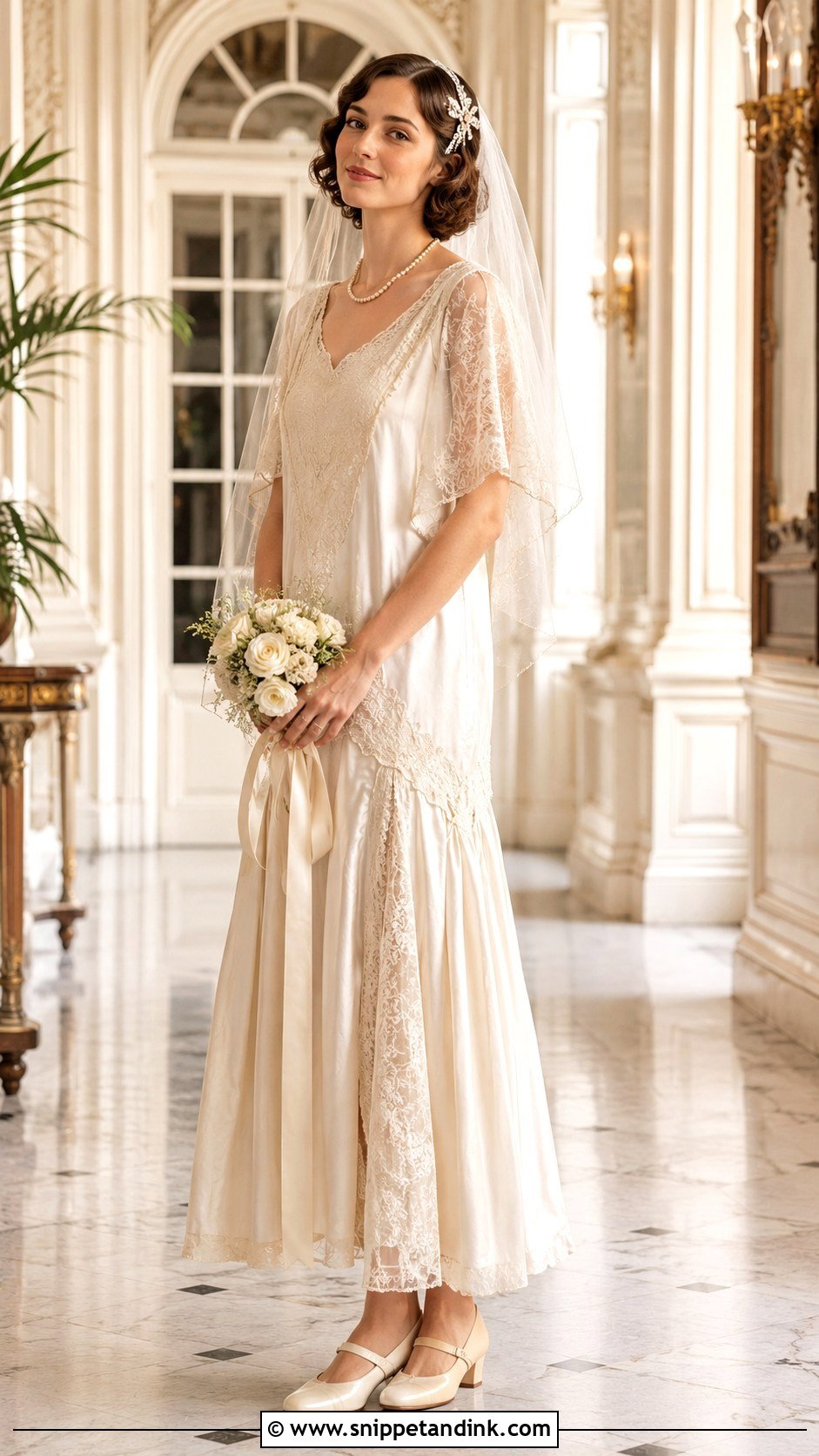
If you dislike anything tight at the waist, this is the easiest dress on the list to spend a long day in. An ivory silk or crepe gown with a long bodice, a low waist seam and a softly gathered skirt barely touches the middle of the body, and lace inserts or subtle beading add detail without changing that. I pair it with low block-heel Mary Janes, a pearl strand and a light shoulder-length veil, plus sleek hair close to the head and a comb near one ear. It suits a courthouse or a small indoor celebration. It is less kind to a very curvy hip line, which can make the low seam ride upward.
6. 1930s Bias Cut Antique Wedding Dress
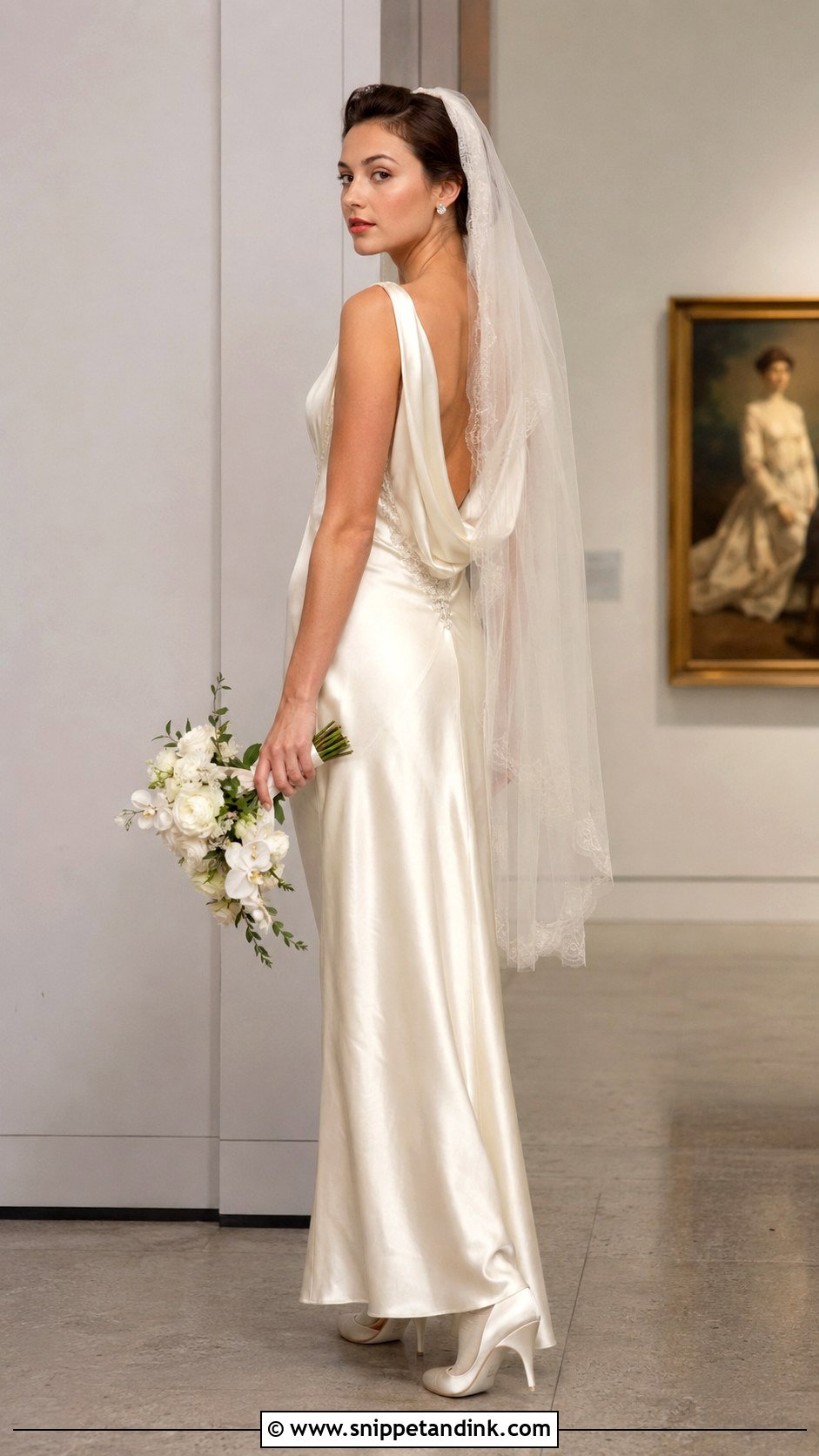
Few silhouettes move like a 1930s bias-cut wedding gown. Silk satin cut on the diagonal follows the body into a long column without boning, which explains the low backs, soft draping and narrow skirts of that decade. It also shows every seam beneath it. My rule is bonded, edge-free underwear in a shade close to your skin, never white. Closed-toe satin heels, crystal studs and a narrow chapel-length veil complete it, and an ivory silk capelet covers the shoulders on a cool evening. Polished waves or a low side bun keep the outline clean.
7. 1930s Satin Cape Wedding Dress
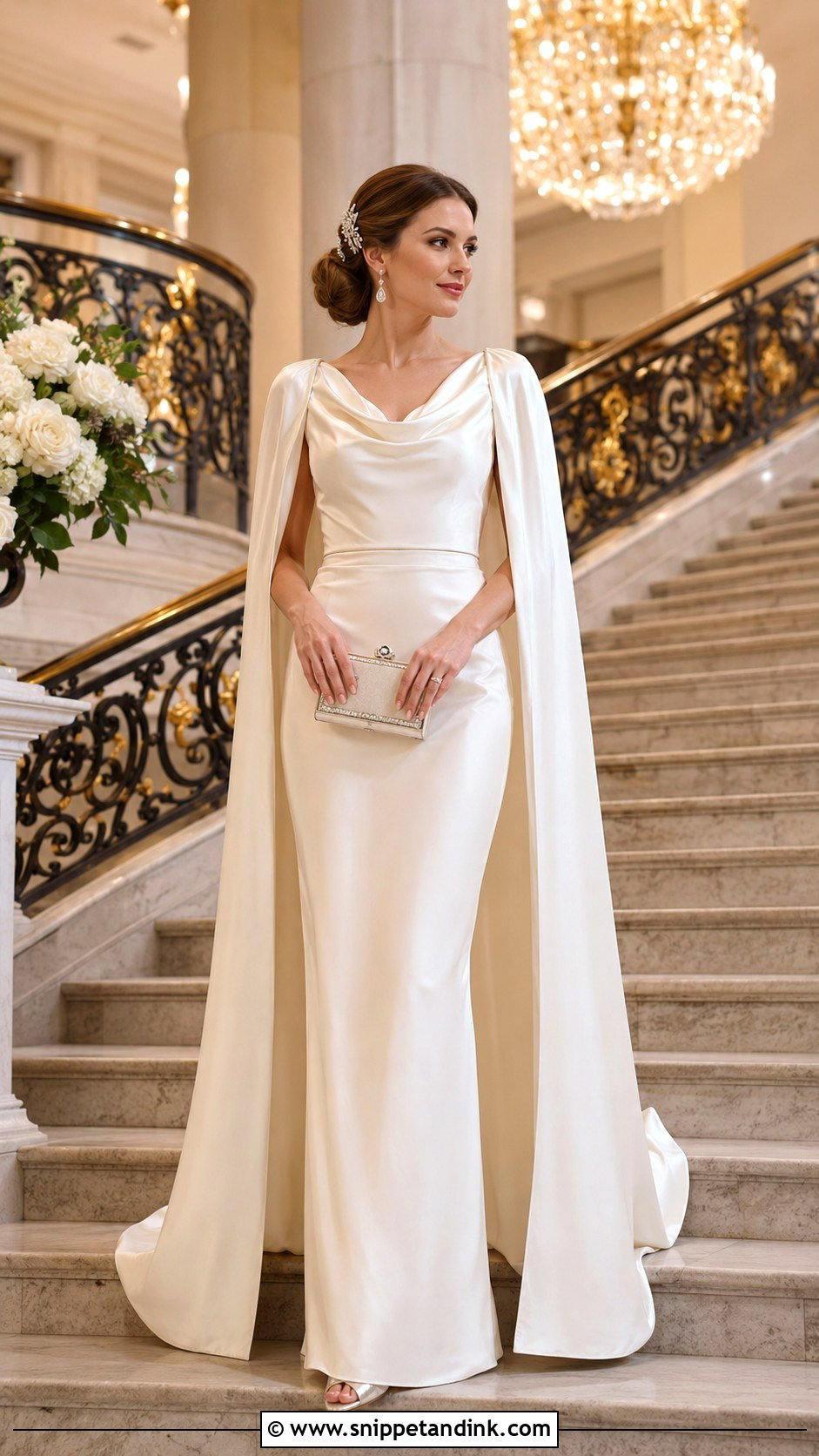
The trick with a cape is weight. If it is heavier than the dress, it drags the neckline backward and you’ll spend the day tugging it forward, so I match the cape’s satin to the gown’s. Start with a slim ivory dress with a draped neckline, fitted waist and floor-skimming skirt, then add a cape that fastens at the neck and falls to the elbows or wrists. Swap the veil for a jewelled comb above a smooth low bun. Ivory peep-toe heels, crystal earrings and a small structured clutch finish it. The back view is the strong one here, so a staircase or a long aisle shows it off.
8. 1940s Long Sleeve Antique Wedding Dress
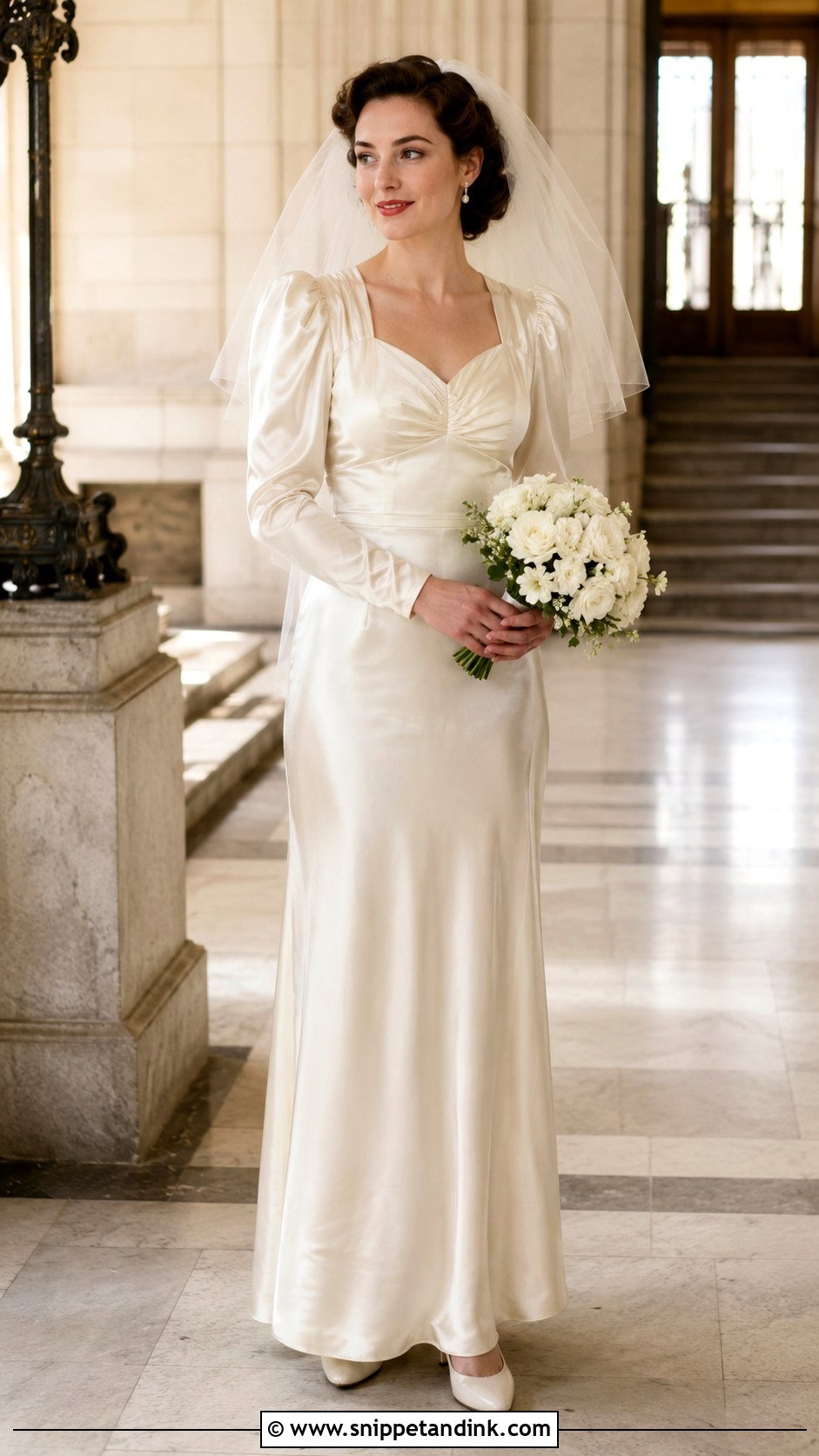
A 1940s long-sleeve gown gets its tailored look from the shoulders: a little gathering at the sleeve head, sometimes a small pad, then fitted cuffs at the wrist. Pair that with a defined waist and a modest V or sweetheart neckline in satin or crepe. Original rayon from the period turns up often in vintage shops, and it can shrink badly if it gets wet, so keep an authentic one away from rain and spilled drinks. Low ivory pumps, a short tulle veil and pearl button earrings are enough. With strong shoulders, skip the necklace and keep the bouquet compact.
9. 1940s Wedding Suit With Veil
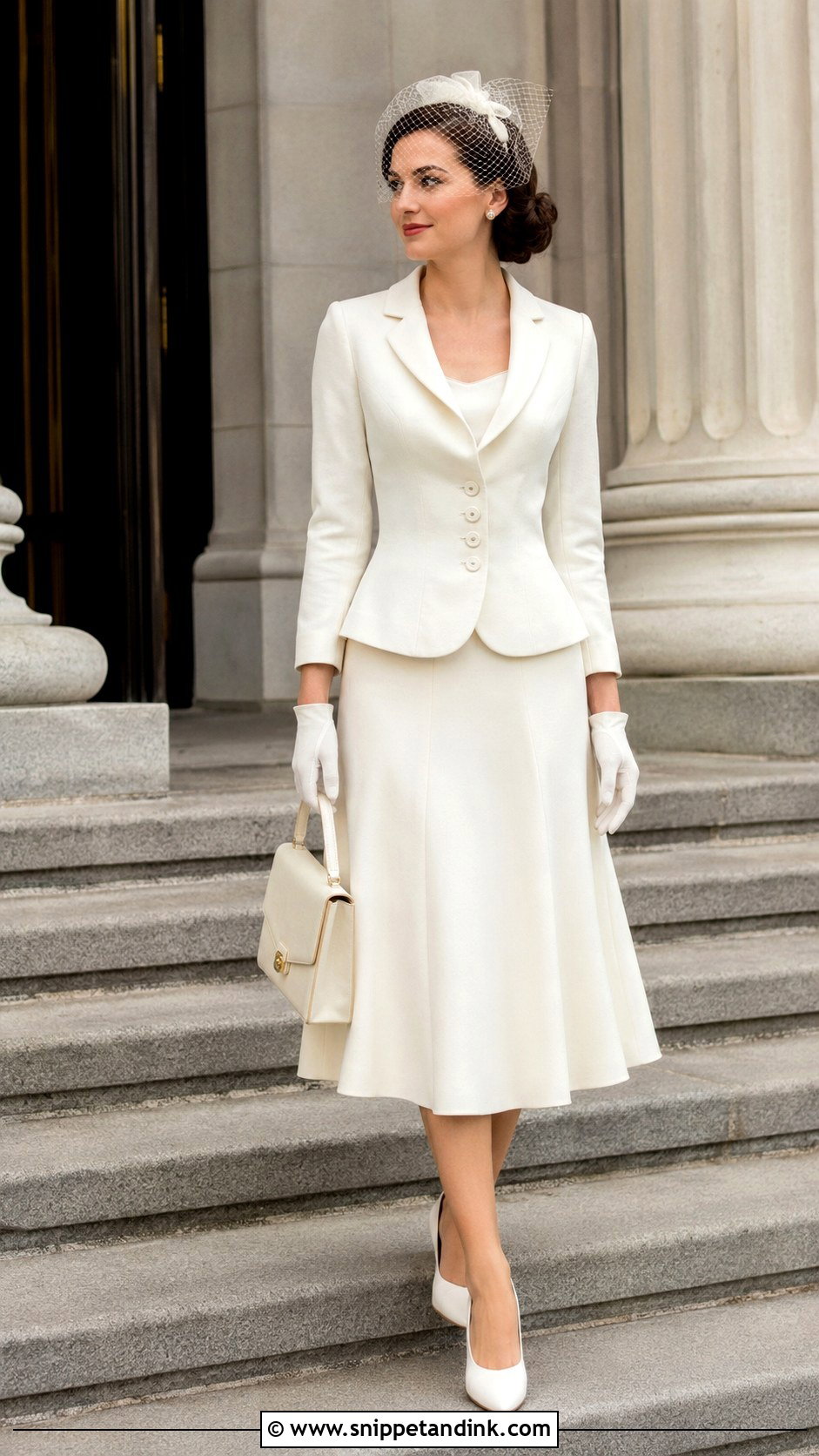
Not every antique bridal outfit needs a long gown. Fabric rationing led many 1940s brides to marry in a smart suit, and that history makes this look feel grounded rather than like a costume. Choose an ivory skirt suit with a shaped jacket, defined shoulders, covered buttons and a midi-length A-line skirt, worn over a silk camisole. I’d have the jacket fitted at the waist even if the skirt comes off the rack; a boxy jacket undoes the whole silhouette. Closed-toe pumps in cream or soft gold, a birdcage veil, pearl studs and a top-handle bag complete it. Gloves look right in portraits; take them off for dinner.
10. 1950s Tea Length Wedding Dress
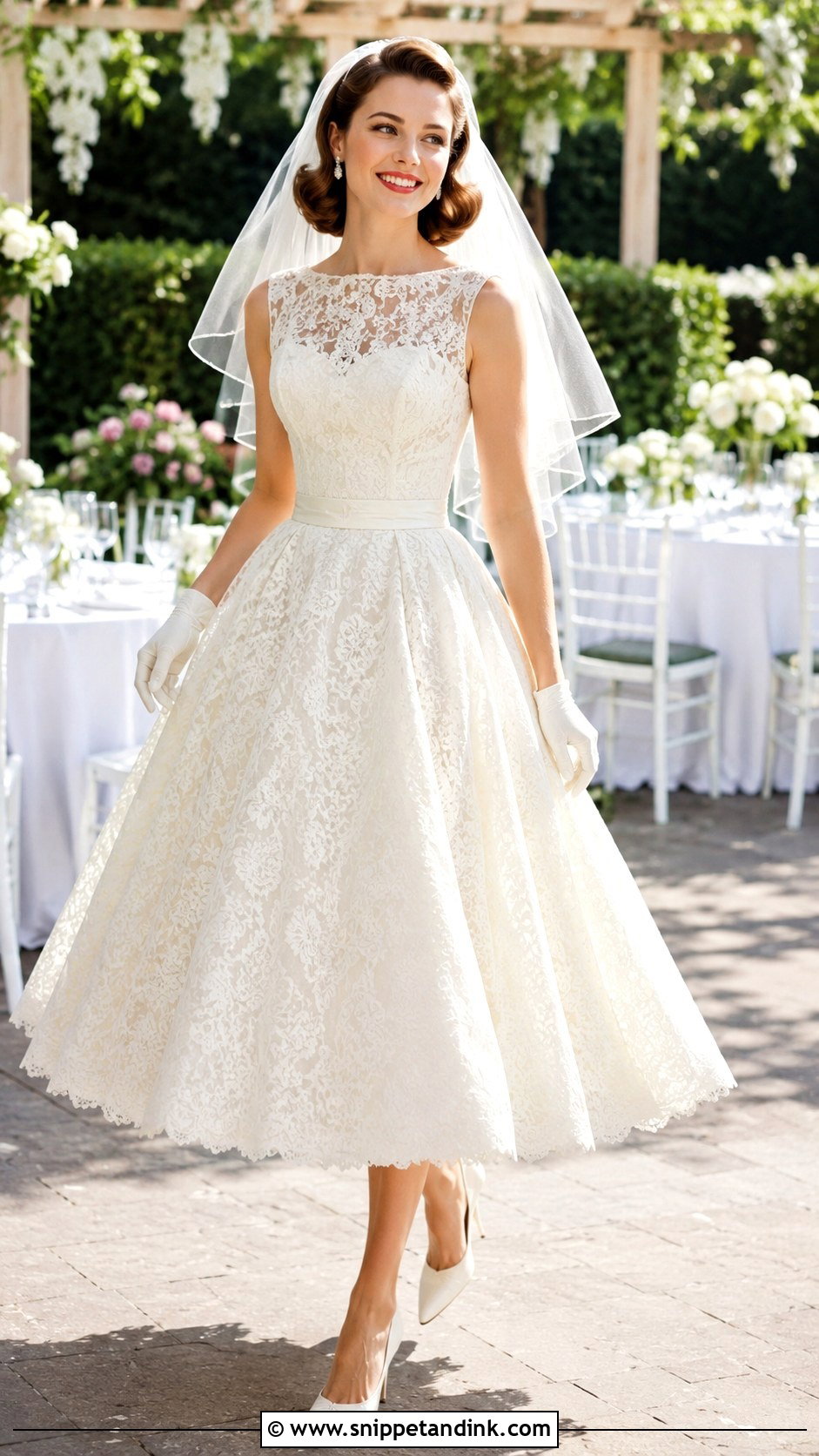
Shoes are fully on show with a 1950s tea-length wedding dress, so they need a good shape and real support for standing. The dress has a fitted bodice, a defined natural waist and a full skirt ending between knee and ankle, held out by a layered petticoat. I test the petticoat by having the bride sit: some flip up at the front, and a softer one solves it. Lace sleeves or a bateau neckline give coverage. Short gloves, pearl earrings, a shoulder-length veil and a slim satin belt are the period touches, finished with a smooth bun or shoulder-length waves.
11. 1950s Lace Ball Gown Wedding Dress
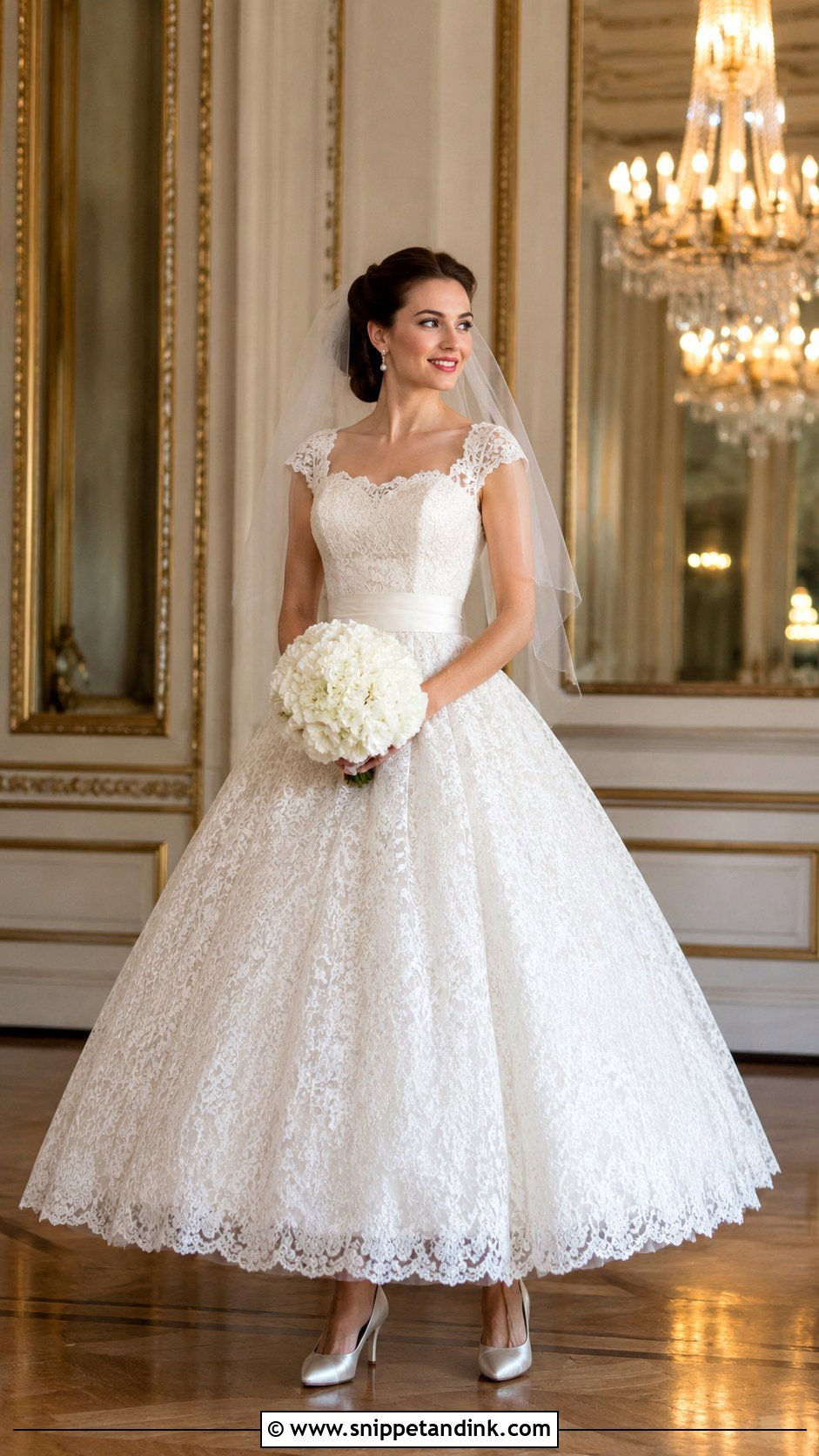
Mid-century brides wore full skirts with sharply defined waists, and a lace ball gown is the most formal version of that shape. A sweetheart or portrait neckline frames the shoulders, and cap sleeves add a little coverage. The skirt needs a structured petticoat, but walk the length of your aisle in it first, since a stiff hoop can knock against your shins with every step. Style it with a fingertip veil, pearl drop earrings and ivory satin heels. A rounded bouquet and a polished low bun keep the proportions balanced. You’ll want a room big enough for that skirt.
12. Antique Lace Wedding Dress With Train
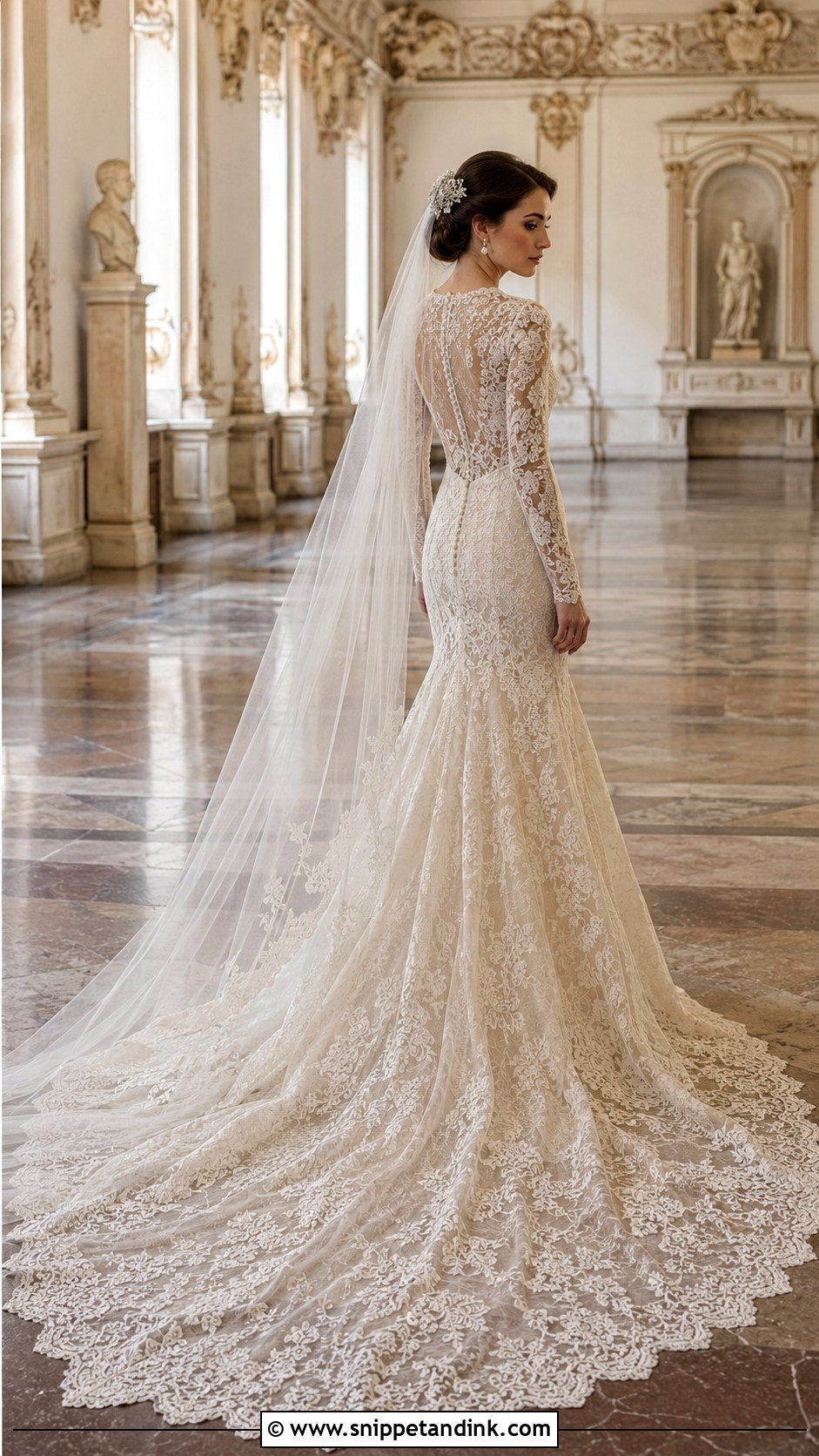
Long trains on old lace need two things sorted well before the day: the seams and the bustle. Fragile lace tears where a heavy train pulls on it, so I ask the seamstress to reinforce the join between train and skirt with a strip of net on the inside. Then comes a practical bustle, rehearsed with whoever will fasten it. The gown itself has a fitted or softly structured bodice, long lace sleeves, a natural waist and a chapel or cathedral train with scalloped edging. Keep the veil plain if the lace is dense, and let it reach just past the train. Pointed ivory heels, small pearl earrings and a low bun with an antique-style comb finish it.
13. Antique Wedding Dress With Juliet Sleeves
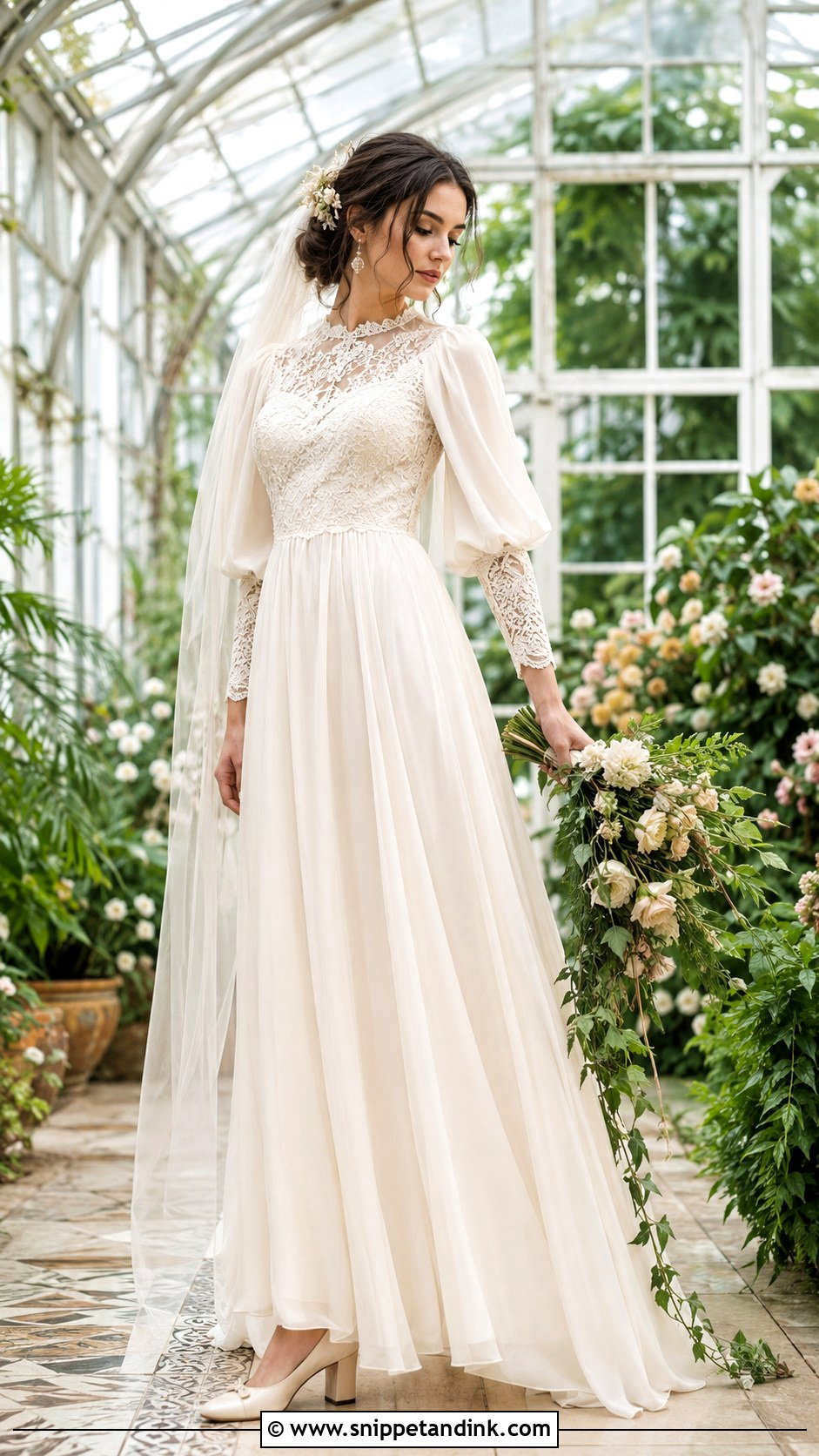
Juliet sleeves are full at the upper arm and close-fitting from elbow to wrist, which gives a historical shape without the bulk of a puffed shoulder. I fit them twice over: the puff for movement, the forearm for length, because a sleeve that is too short creeps up the moment you hold the bouquet. Pair them with a fitted lace bodice, a slightly raised waist and a flowing chiffon or silk skirt. Ivory block heels, a floral comb and a simple veil under loose waves or a braided bun suit it. Small drop earrings are enough. Skip bracelets, since the snug cuffs already draw the eye to your wrists.
14. Antique Wedding Dress With Leg Of Mutton Sleeves
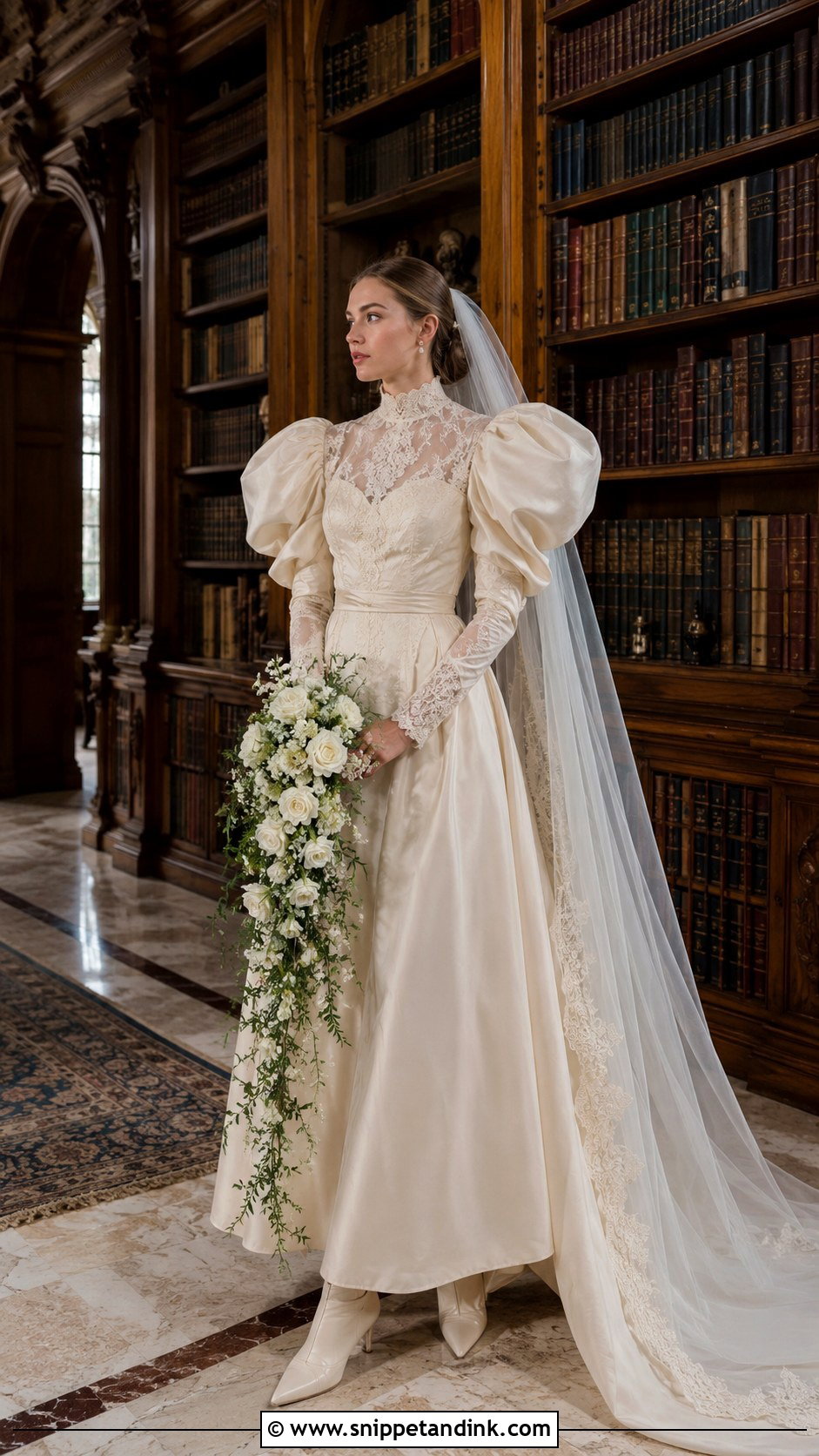
Big shoulders need a quiet skirt. A gown with leg-of-mutton sleeves starts with real volume at the top of the arm and tapers tight to the wrist, so I balance it with a defined waist and a long, controlled A-line instead of a second big shape below. Matte ivory with lace cuffs or covered buttons adds texture without shine. These sleeves are awkward under a fitted coat or in a cramped car, so plan the journey. Pearl studs, pointed cream boots and a narrow cathedral veil finish the look, with a smooth low knot and an elongated bouquet.
15. Antique Prairie Wedding Dress
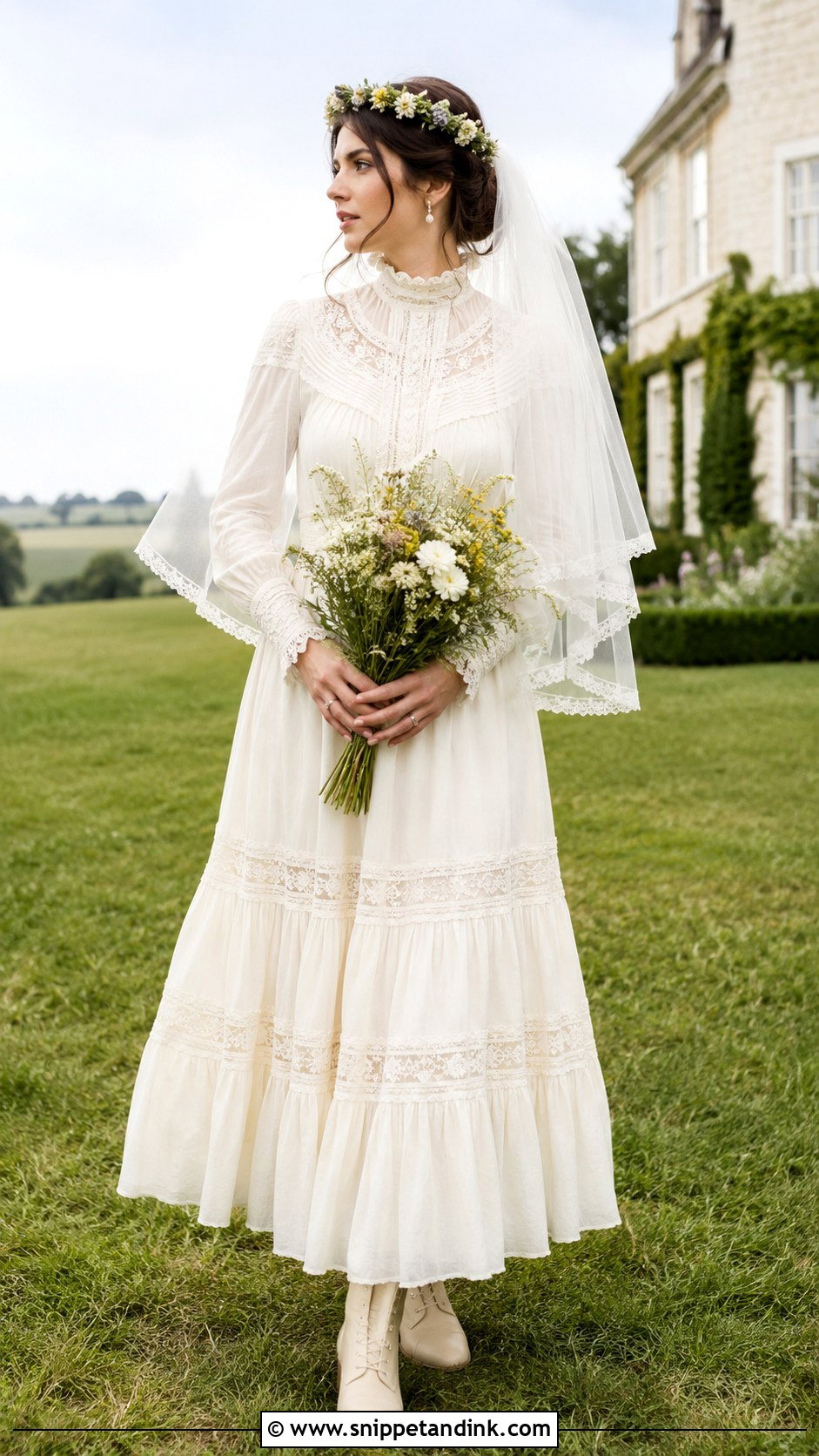
Prairie dresses are the most relaxed shape here, and that’s their strength outdoors. A high neck with soft ruffles, fitted cuffs, lace inserts and a tiered skirt in cotton voile or light chiffon moves with you on grass and doesn’t mind a breeze. Cotton creases far more than silk, though, so I pack a handheld steamer for the morning. Cream ankle boots or low leather heels, a floral crown and a simple fingertip veil suit it, with a loose braid or softly pinned waves. Ruffles at the neck mean no necklace; small pearl earrings are plenty.
16. Antique Wedding Dress With Puff Sleeves
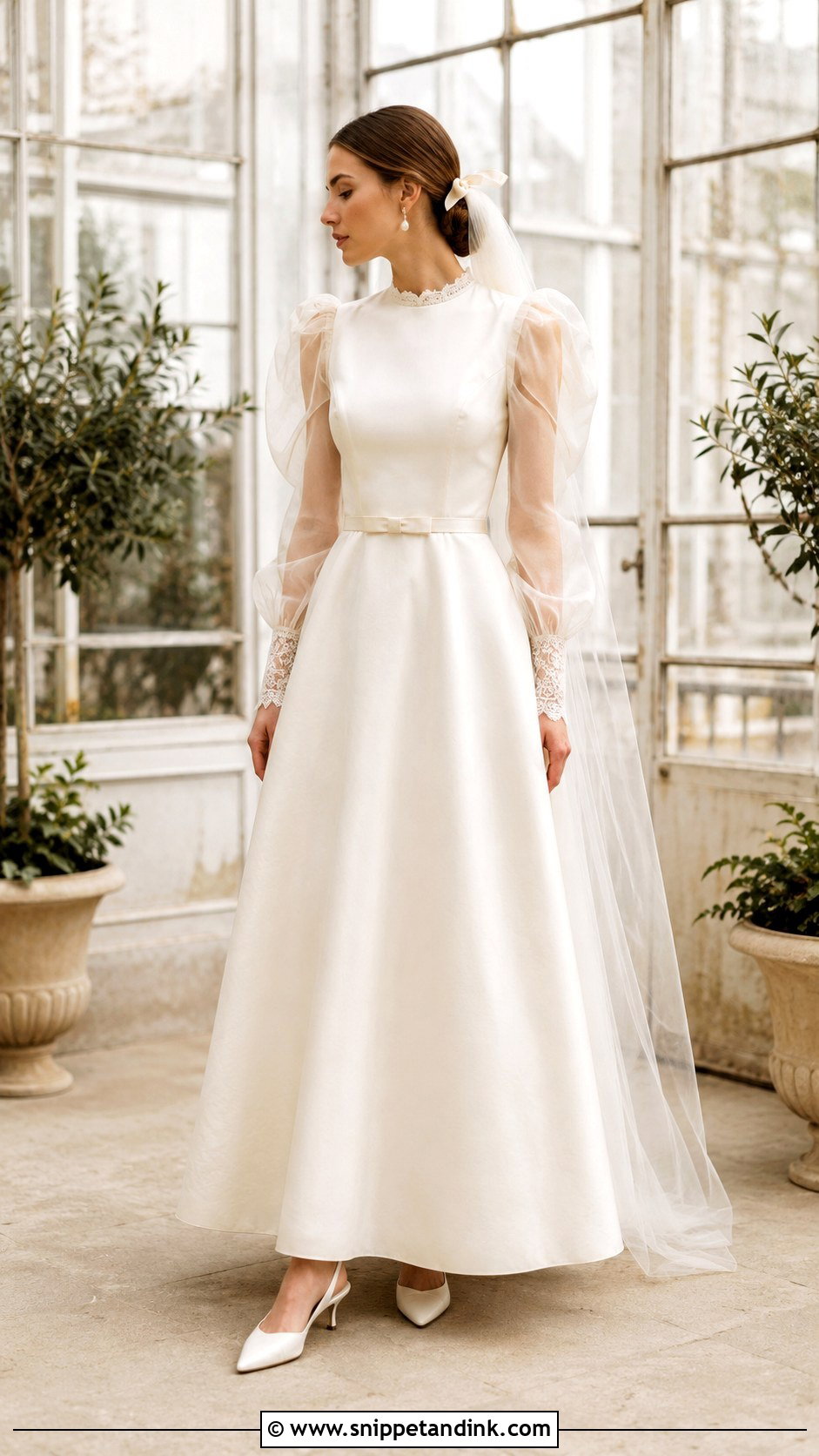
Sheer organza puffs give volume without weight, which is why I prefer them to satin puffs on an already heavy gown. Look for moderate shoulder volume, a fitted bodice and a smooth A-line or gently gathered skirt, with lace cuffs finishing each sleeve. Organza does crush if you lean back into a car seat, so sit forward on the drive. Ivory slingback heels, pearl drop earrings and a waist-length veil suit the shape, and a ribbon-trimmed low bun keeps the sleeves visible. If the bodice carries embroidery, leave any bold necklace at home.
17. Antique Wedding Dress With Square Neckline
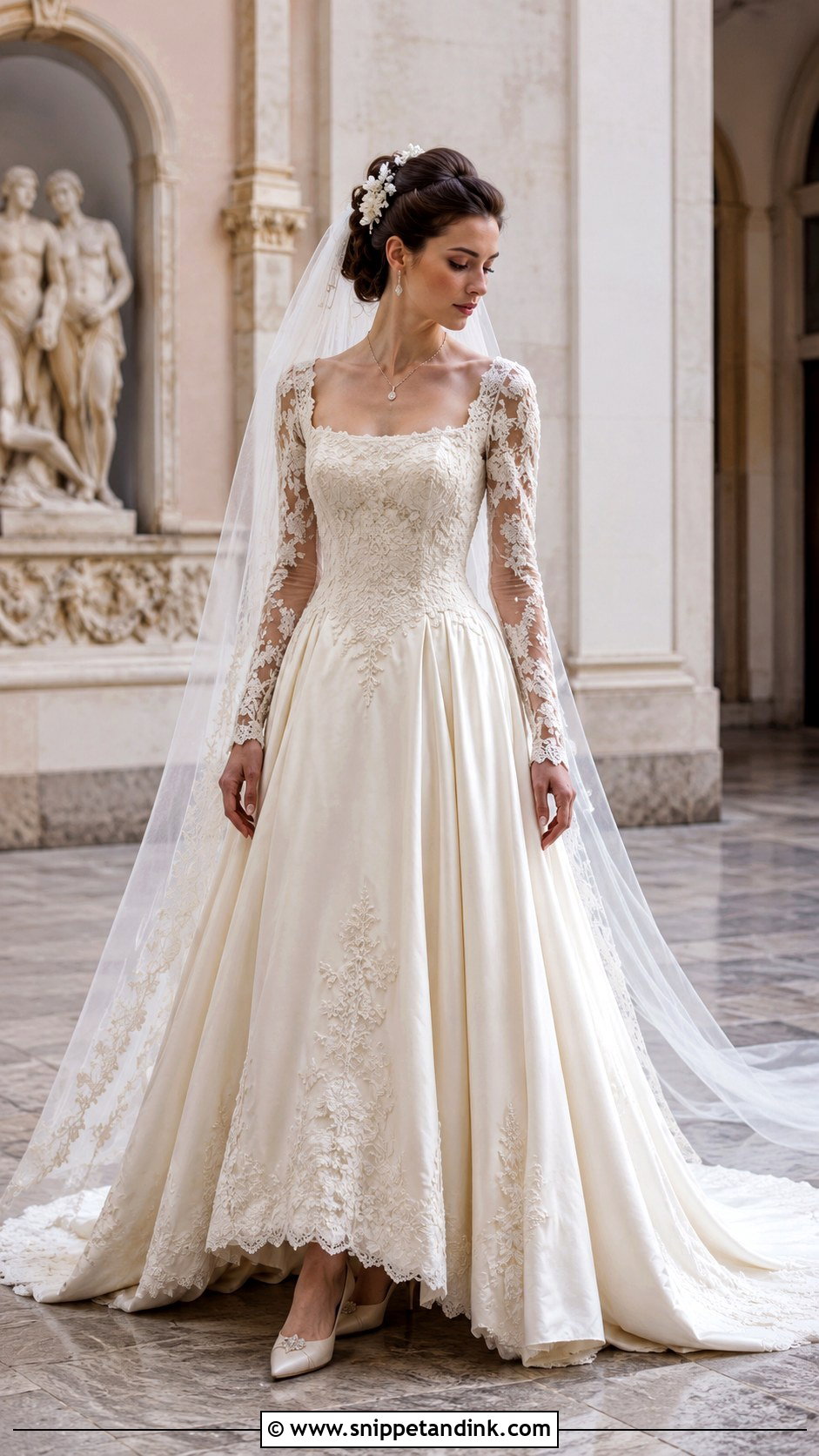
A square neckline gives delicate jewellery a clean frame, so this is the gown where a short pearl pendant earns its place. Pair a fitted lace bodice with long slim sleeves and a softly flared skirt. A low square back with covered buttons is worth asking for, because guests spend the ceremony looking at your back. Pointed low heels, drop earrings and a sheer cathedral veil without heavy edging keep the neckline clear. I’d wear a sleek centre-parted bun to echo the straight lines of the dress, perhaps with two small floral pins above it for softness.
18. Antique Wedding Dress With Corset Bodice
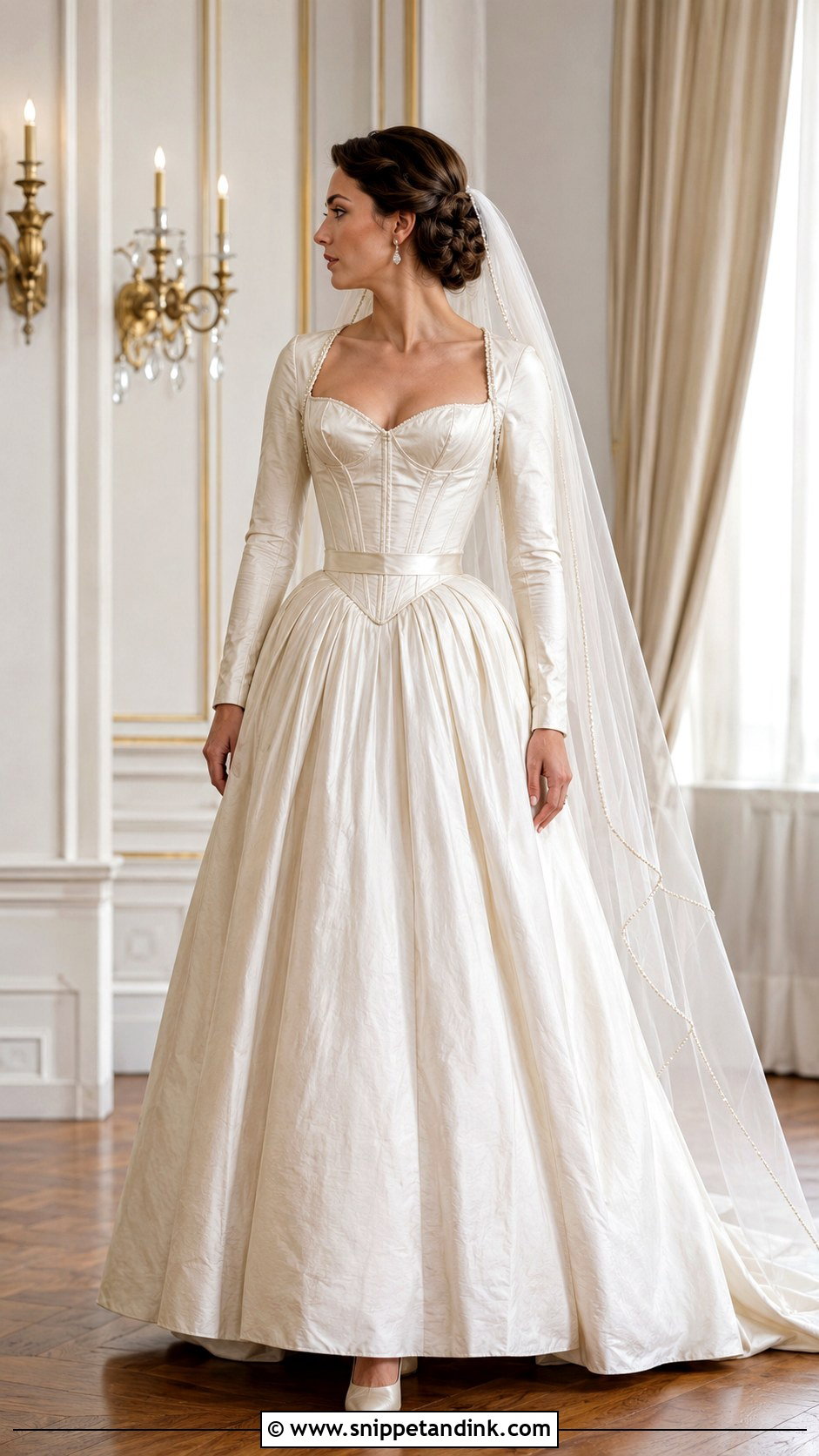
Historical corsets were built to reshape the body; a wedding version only needs to support it. I fit them so a bride can breathe deeply, sit and raise her arms without the top edge gapping, and on an older dress I check that no boning has worn through its channel, since a broken bone digs in by evening. Choose an opaque lined bodice with visible seam work, a modest curved neckline and a full silk or lace skirt. Ivory pumps, a pearl-edged veil and small crystal earrings are plenty. A narrow ribbon at the waist links bodice and skirt, and a low textured bun keeps the neckline open.
19. Antique Wedding Dress With Lace Overlay
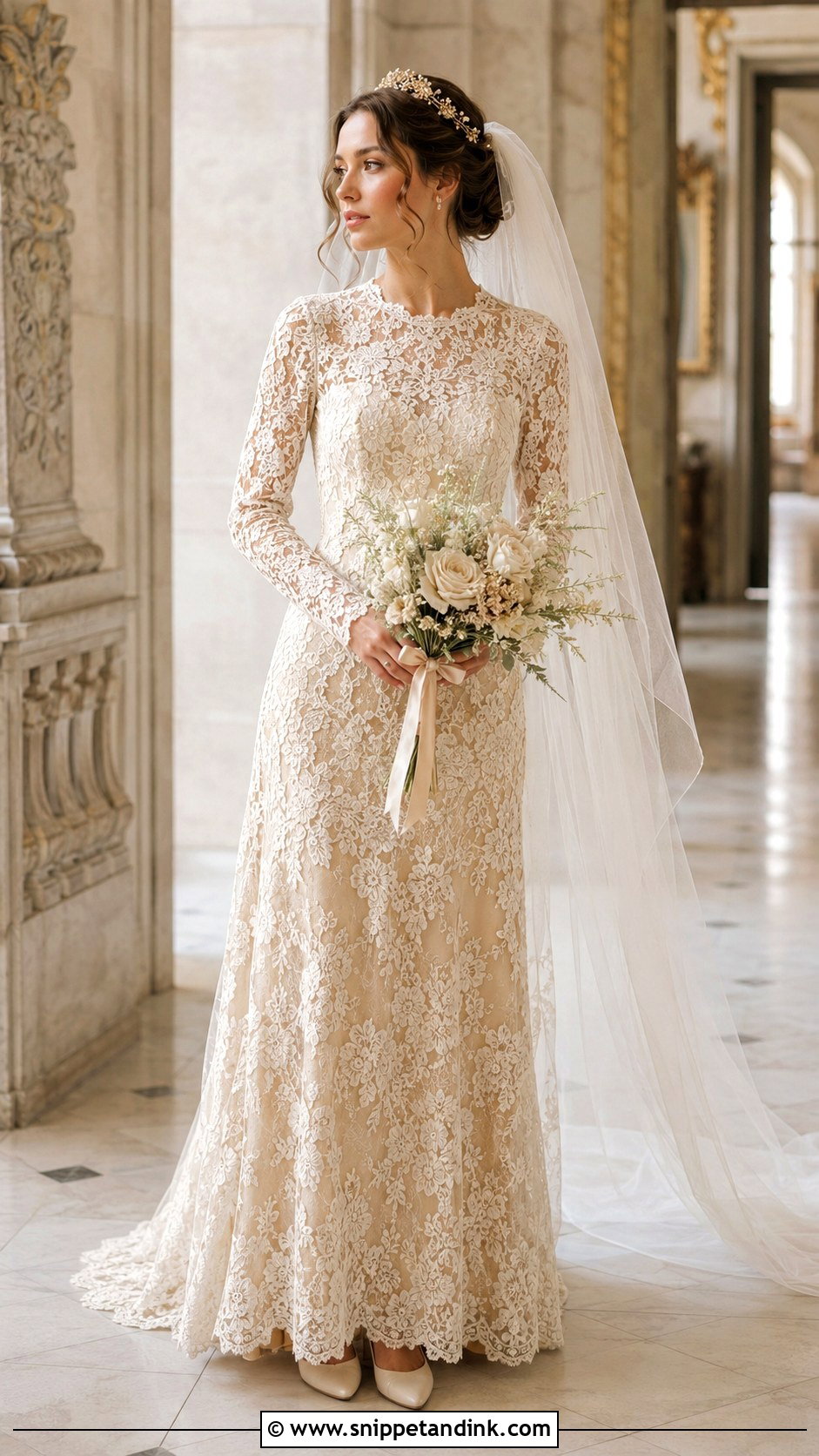
Overlays are the most adaptable idea here, because the underdress and the lace layer are fitted separately. Start with a smooth ivory slip gown or a structured A-line underdress, then add a fitted floral lace layer with long sleeves and a scalloped hem. I hold a few lining colours under the lace before deciding: a close match reads traditional, while soft champagne makes the pattern stand out. Closed-toe ivory heels, pearl studs and a plain tulle veil keep it simple, with a low chignon and a small comb. A bouquet in one or two colours keeps the lace pattern readable in photos.
20. Antique Wedding Dress With Cathedral Veil
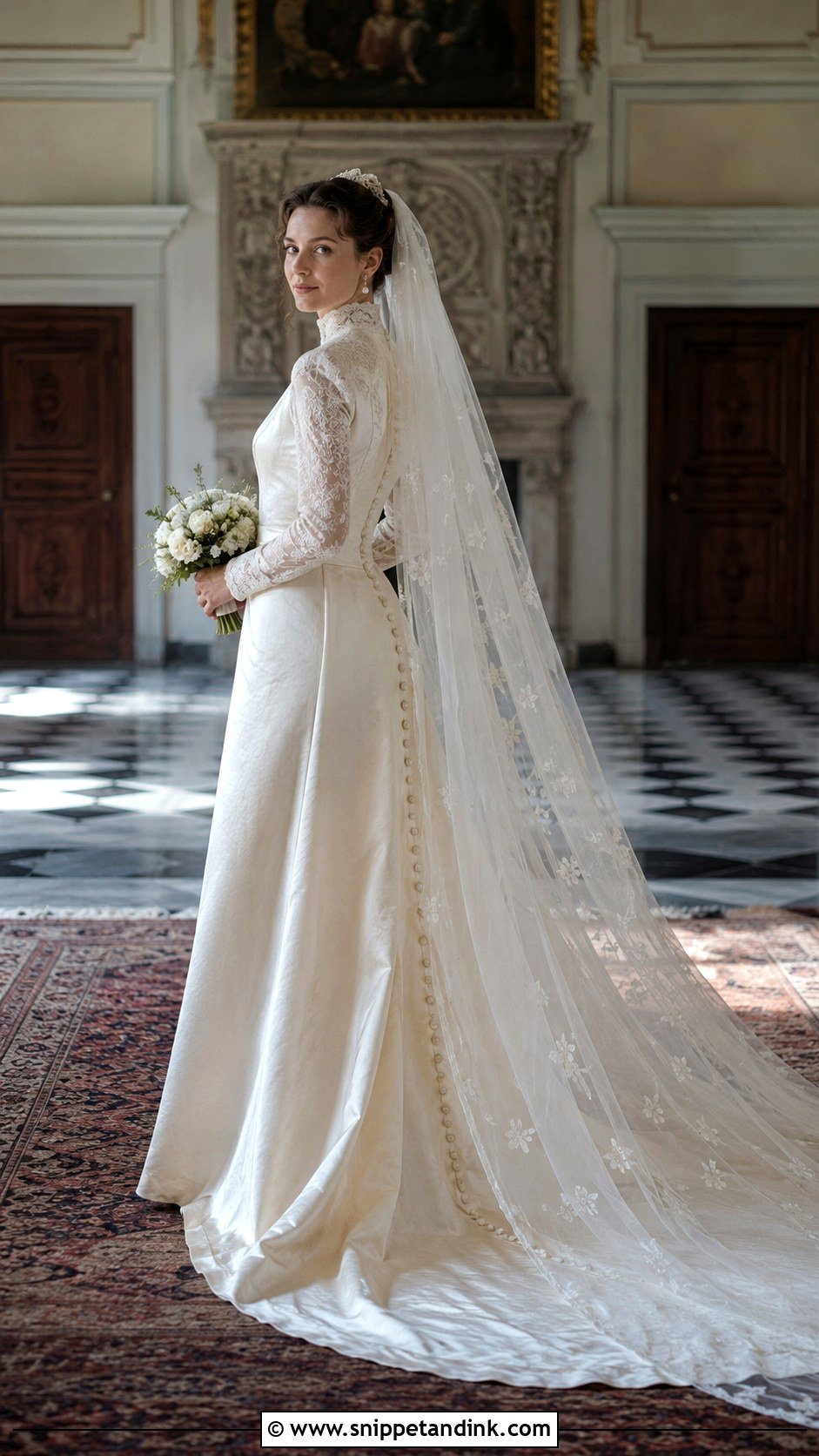
A cathedral veil turns a plain antique gown into a ceremony outfit, but it pulls on your hair more than any other length. I anchor it into a firm low bun with a comb plus a couple of pins crossed through it, so the weight sits evenly instead of tugging at the crown. Choose a silk or satin gown with a high lace neckline, fitted sleeves and a long, uncomplicated skirt, and a sheer veil that extends past the train, edged with narrow lace or small embroidered motifs. Pearl earrings, ivory heels and a delicate comb are all you need. Practise walking and turning in the full outfit before the day.
The Underwear Each Era’s Silhouette Depends On
Every period on this list was designed around a particular kind of foundation, and a modern T-shirt bra often fights the shape. Matching what goes underneath to the decade is the quickest way to make a vintage dress hang the way it was meant to.
- Edwardian and 1910s: a smooth longline bra or light corset that keeps the torso straight and the waist defined without pushing the bust high.
- 1920s: a soft, minimising bra so the bodice drops straight from shoulder to hip.
- 1930s bias cut: skin-toned briefs with bonded edges and a slip or bodysuit with no visible edges, because the satin shows every ridge.
- 1940s: a structured bra with clean cups that suits the tailored shoulders and fitted waist.
- 1950s: a longline bra or waist cincher, plus the petticoat that holds the skirt out.
Buy these before your first fitting and wear them to every appointment. A dress hemmed and fitted over the wrong underwear will be wrong on the day, however good the seamstress.
When the Dress Is Your Grandmother’s
An heirloom gown that doesn’t fit isn’t a lost cause, and you don’t have to wear it exactly as it is to honour it. I usually talk a bride through three routes. The first is a gentle restyle, such as new sleeves, a removed collar or a shortened hem, keeping the original bodice intact. The second is to take the lace or satin from the old gown and build a new dress around it, or just a veil, sash or wrap. The third is to wear something modern and carry a piece of the original with you, such as a lace panel stitched inside your hem.
Talk to the family before anyone cuts. Once old lace or silk has been cut, there is no putting it back, and the person who wore it first may care more than you expect.
Dress for the Decade, Then Make It Yours
Victorian lace, Edwardian embroidery, a fluid 1930s bias cut and a structured 1950s skirt each ask for different shoes, veils, underwear and hair, so plan the outfit around the dress rather than adding pieces one at a time. An authentic gown will need conservation-minded repairs, gentle cleaning and careful alterations. A reproduction gives you the same details with flexible sizing and sturdier fabric. Whichever you pick, wear it for a full hour at a fitting before you commit. Comfort is what still shows in the photos at the end of the night.
You'll Like These Ideas:


Leave a Reply