
Handwork shows. Up close, a stitched flower or a crocheted motif has small irregularities that a machine never makes, and that is exactly why brides commission handmade gowns. The ideas below cover crochet, embroidery, hand-sewn lace, beading, appliqué, natural dyeing and other artisan techniques, along with the visible craftsmanship and wearable heirloom details so many couples now want. For each one I’ve included how to style it and, more usefully, what the maker needs to get right so the dress survives a full day. You might be sewing it yourself, hiring an independent dressmaker or reworking a family gown; the planning matters in every case.
Commissioning a Handmade Gown From an Independent Maker
Hand techniques take far longer than machine work, and a commissioned gown runs on the maker’s calendar, not yours. Heavy embroidery, beading or lace can take many months, so start the search early; most independent makers prefer to begin well over half a year before the date, and some book up further ahead in busy seasons.
- Look for a portfolio in your specific technique. A skilled dressmaker isn’t automatically a skilled embroiderer or lace maker.
- Expect a toile, a test version of the dress in plain cotton, before your real fabric is cut. It’s where fit problems get solved cheaply.
- Agree on the number of fittings in writing. Handmade gowns usually need several, and the last should be close to the date.
- Ask what happens if your measurements change, who sources the materials and how the final payment and any alterations are handled.
- Request a small sample of the main technique on your chosen fabric before committing to the full piece.
I also ask brides to see and touch the maker’s finished work, not only photographs. The inside of a gown tells you more about quality than the outside: neat seam finishes, secure knots and a lining that sits smoothly.
1. Crochet Lace Wedding Dress
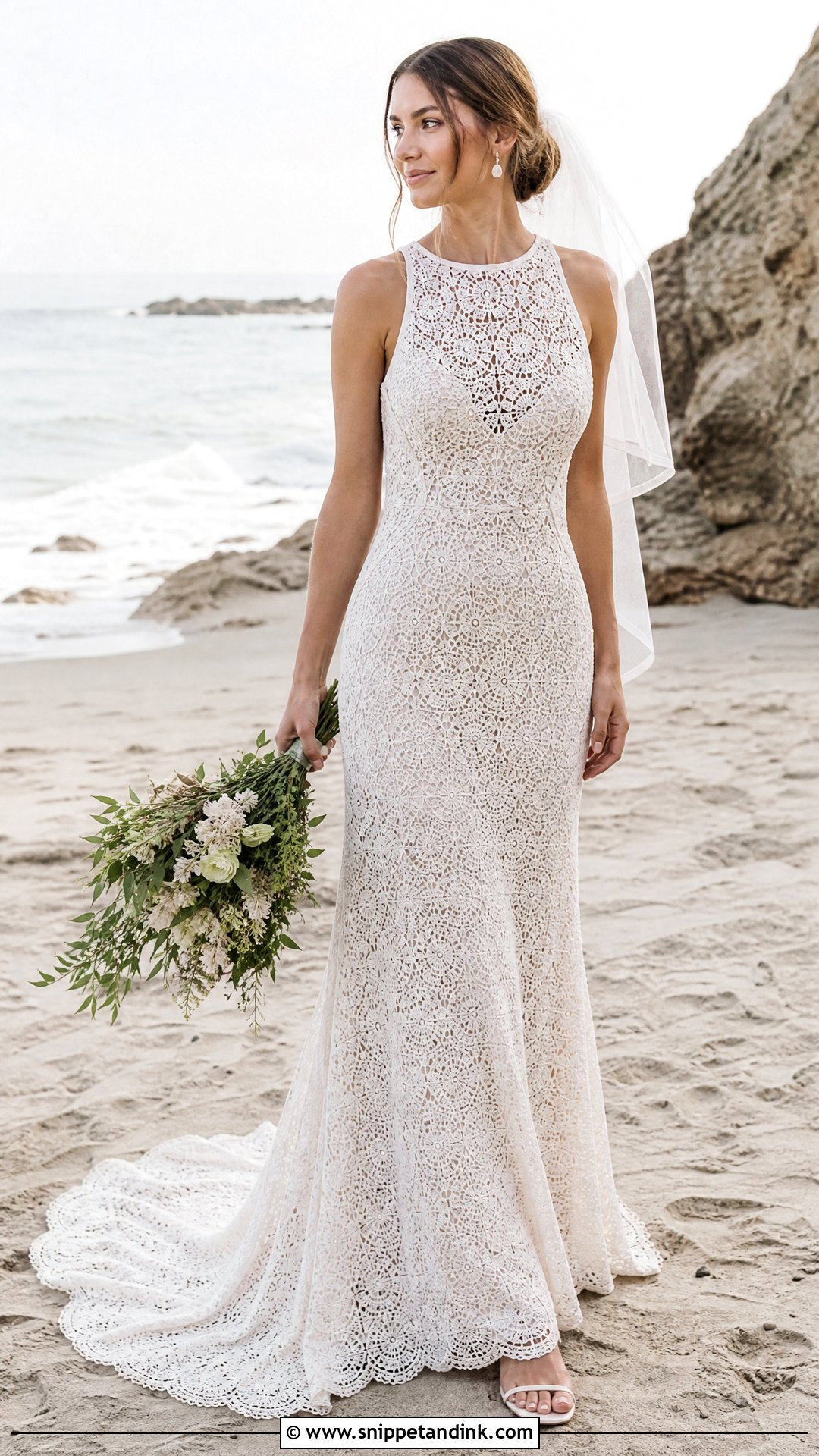
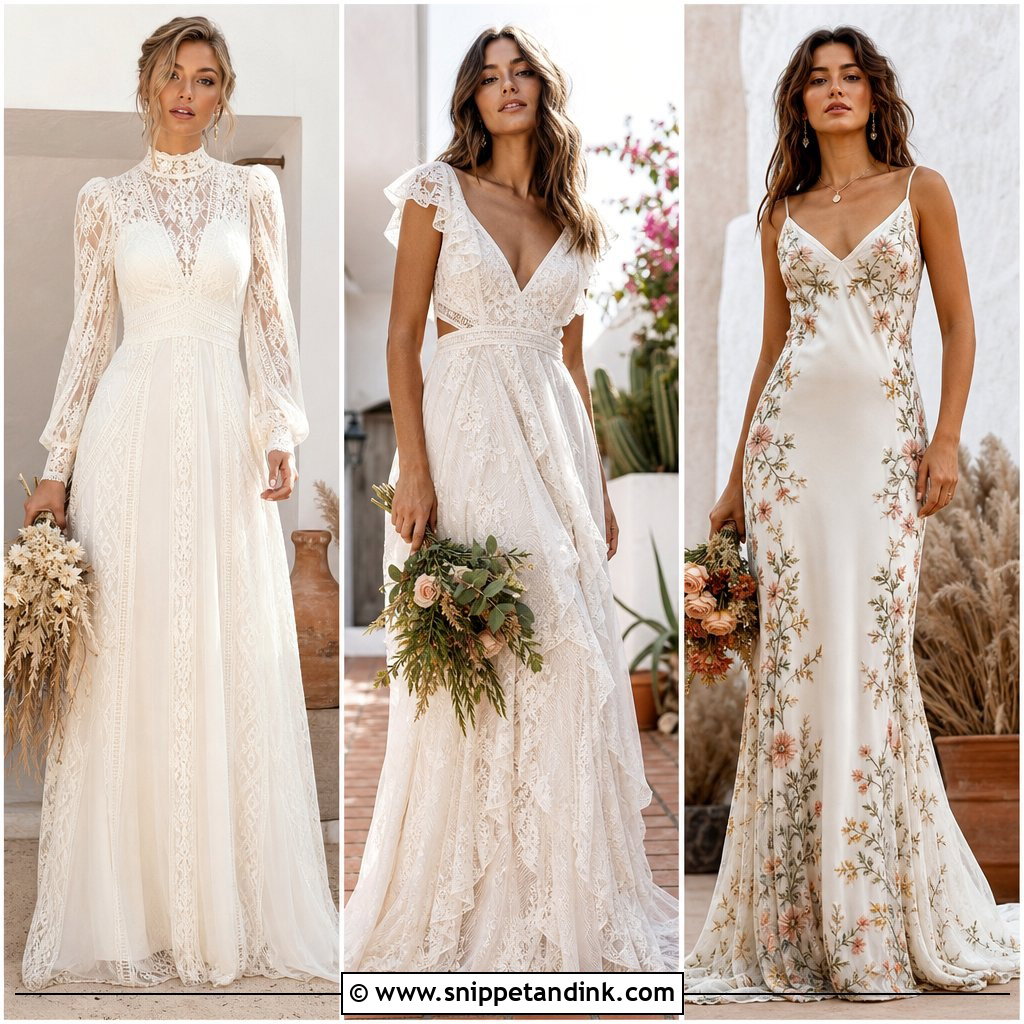
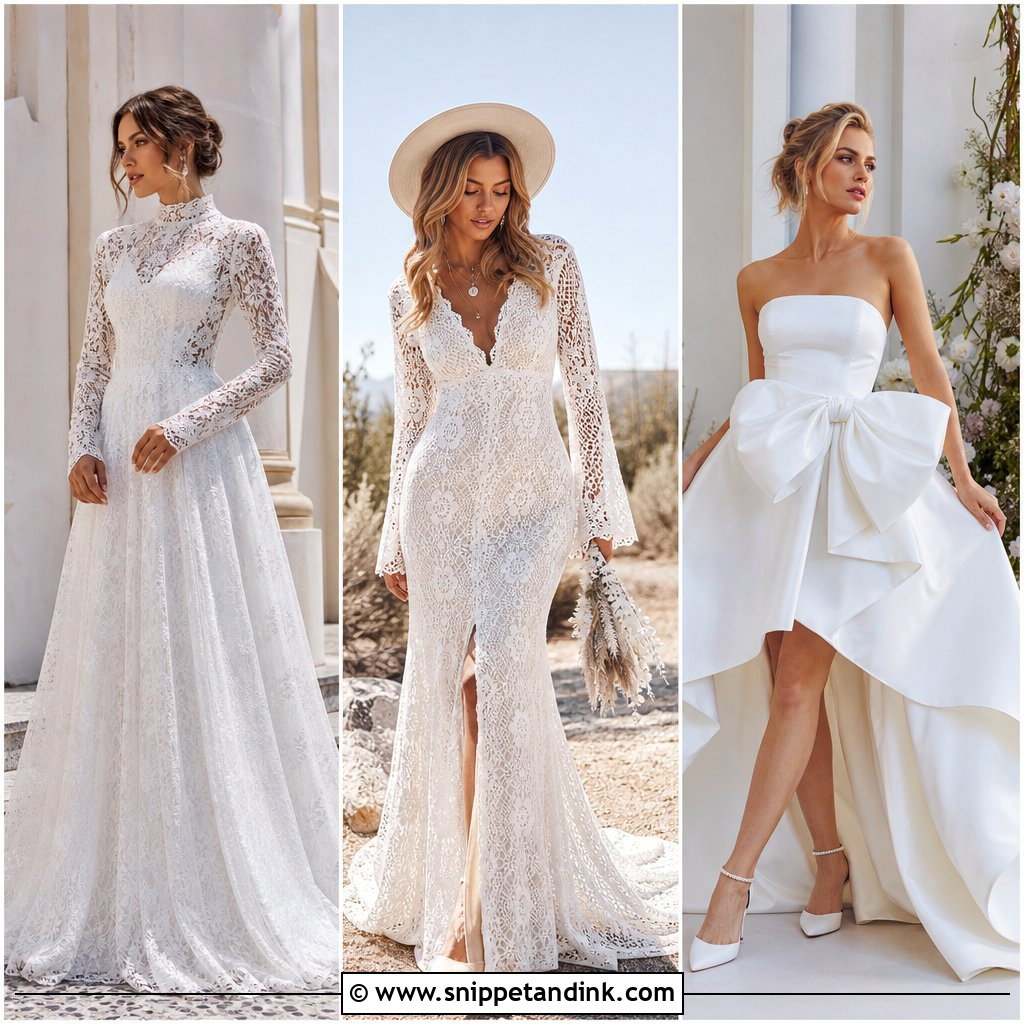
Crochet lace looks soft and romantic, with texture in every stitch, but it’s also stretchy, and that’s the first thing I raise with a maker. A fitted bodice over a full lining, with the waist, shoulder seams and train reinforced, stops the dress growing longer as the day goes on. Fine cotton thread reads more refined than chunky yarn, and floral or shell motifs show off the handwork. For a beach or garden ceremony, flat leather sandals, pearl drops and a light fingertip veil suit it. A removable slip makes cleaning and later restyling far easier.
2. Hand Embroidered Floral Wedding Dress
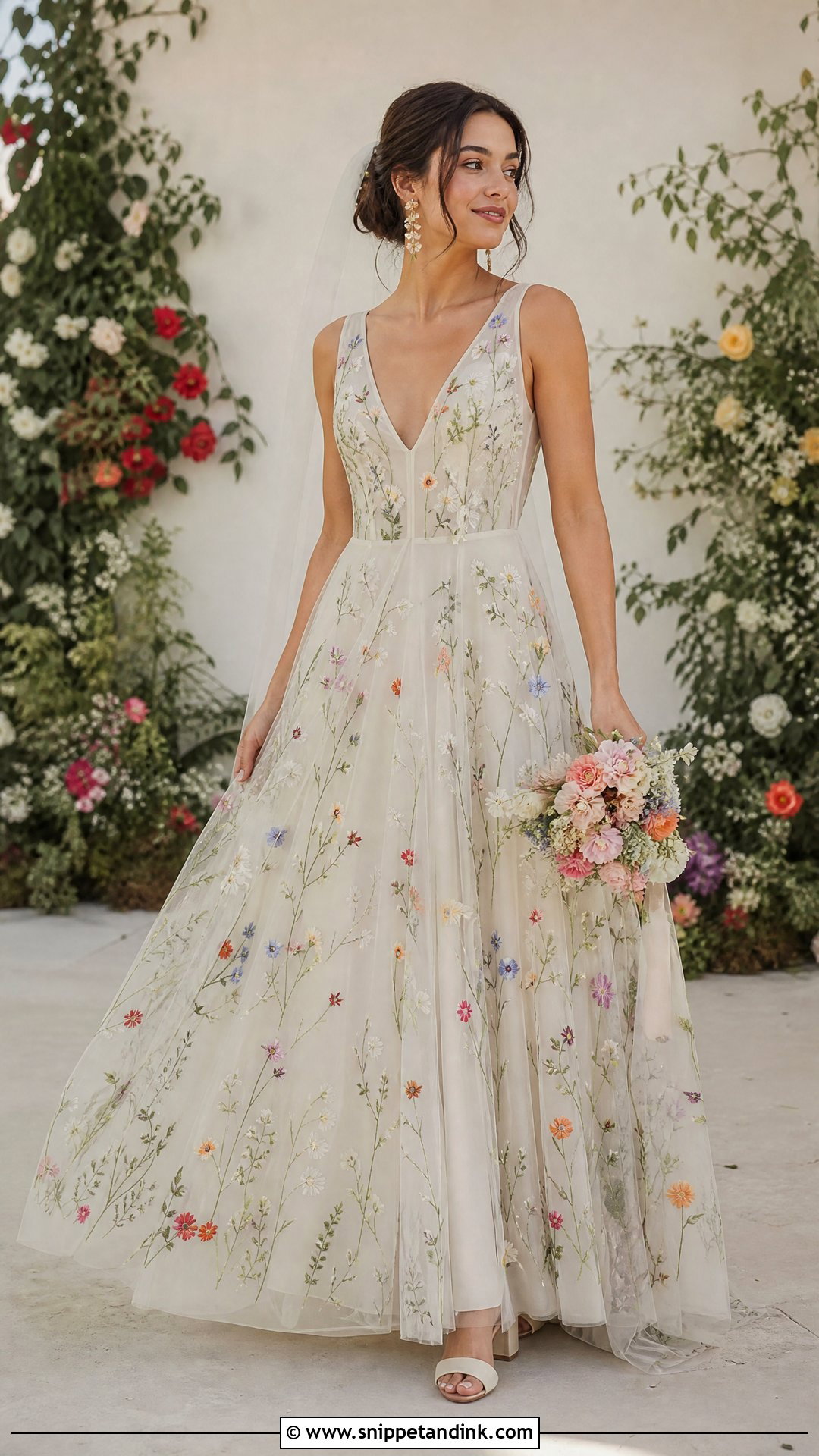
Hand embroidery turns a plain tulle A-line into something only you will ever wear. Vines and blossoms around the bodice, waist and lower skirt in soft green, dusty blue, blush or white-on-white thread keep it bridal. Many brides stitch in flowers from their bouquet, hometown or family history. Where the embroidery sits matters: heavy stitching on a delicate seam or where the arms brush the sides wears quickly, so I ask makers to keep it away from high-friction areas and to add a smooth underskirt so threadwork doesn’t scratch the legs. Ivory block heels and a plain veil let the stitching lead.
3. Hand Beaded Wedding Dress
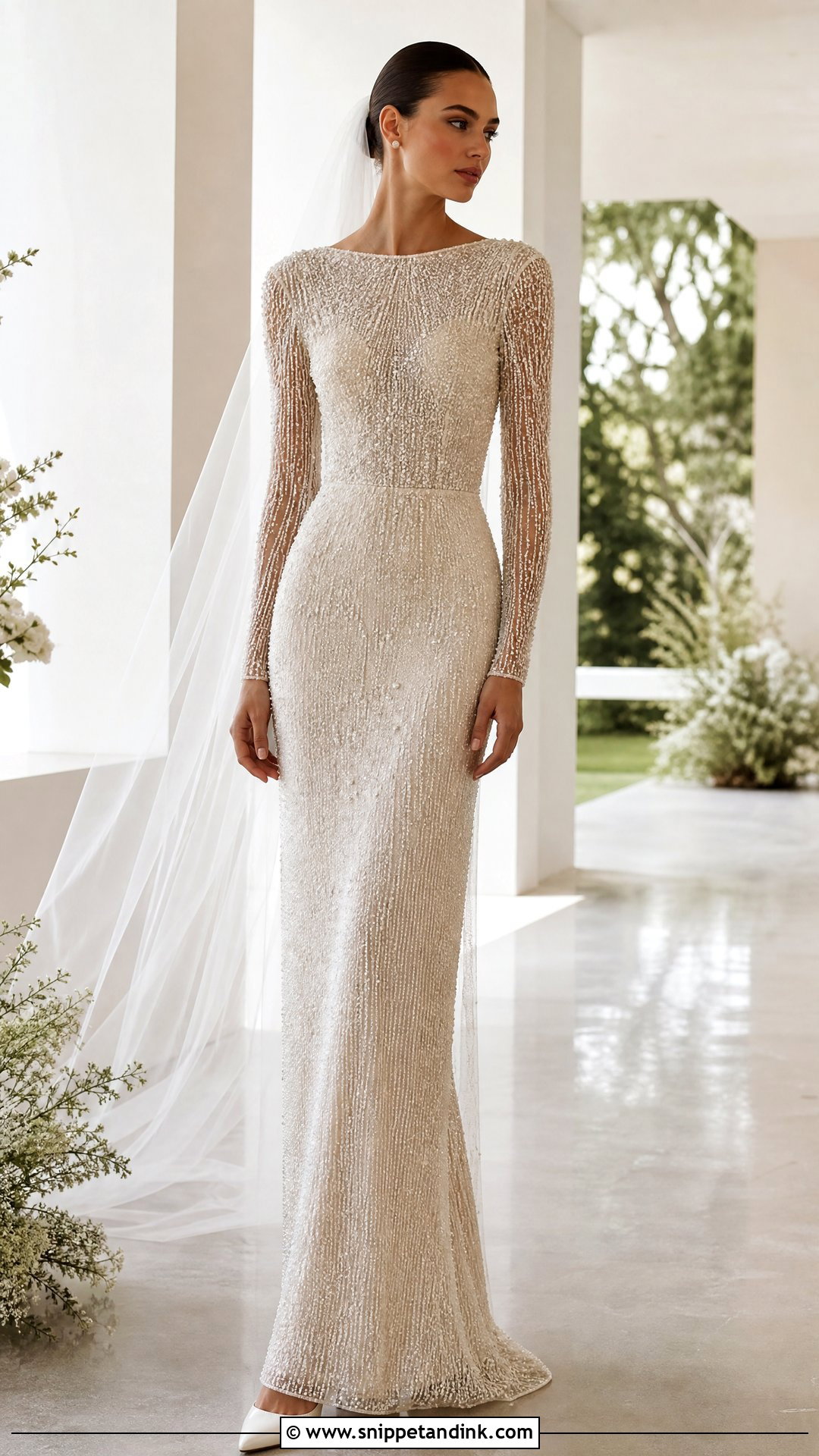
Hand beading gives controlled sparkle under ceremony lighting. A column or fitted sheath is the best base, since a clean shape lets beadwork stand out. Seed beads, crystals and tiny pearls cluster at the neckline, waist and cuffs, then thin out down the skirt. The detail most people miss is weight. Heavy beading can drop a hem by a noticeable amount, so the dress should be weighed and re-measured at each fitting. Secure knots and a reinforced lining keep it comfortable. Pointed satin pumps, a simple veil and small studs are enough; skip the necklace.
4. Vintage Lace Patchwork Wedding Dress
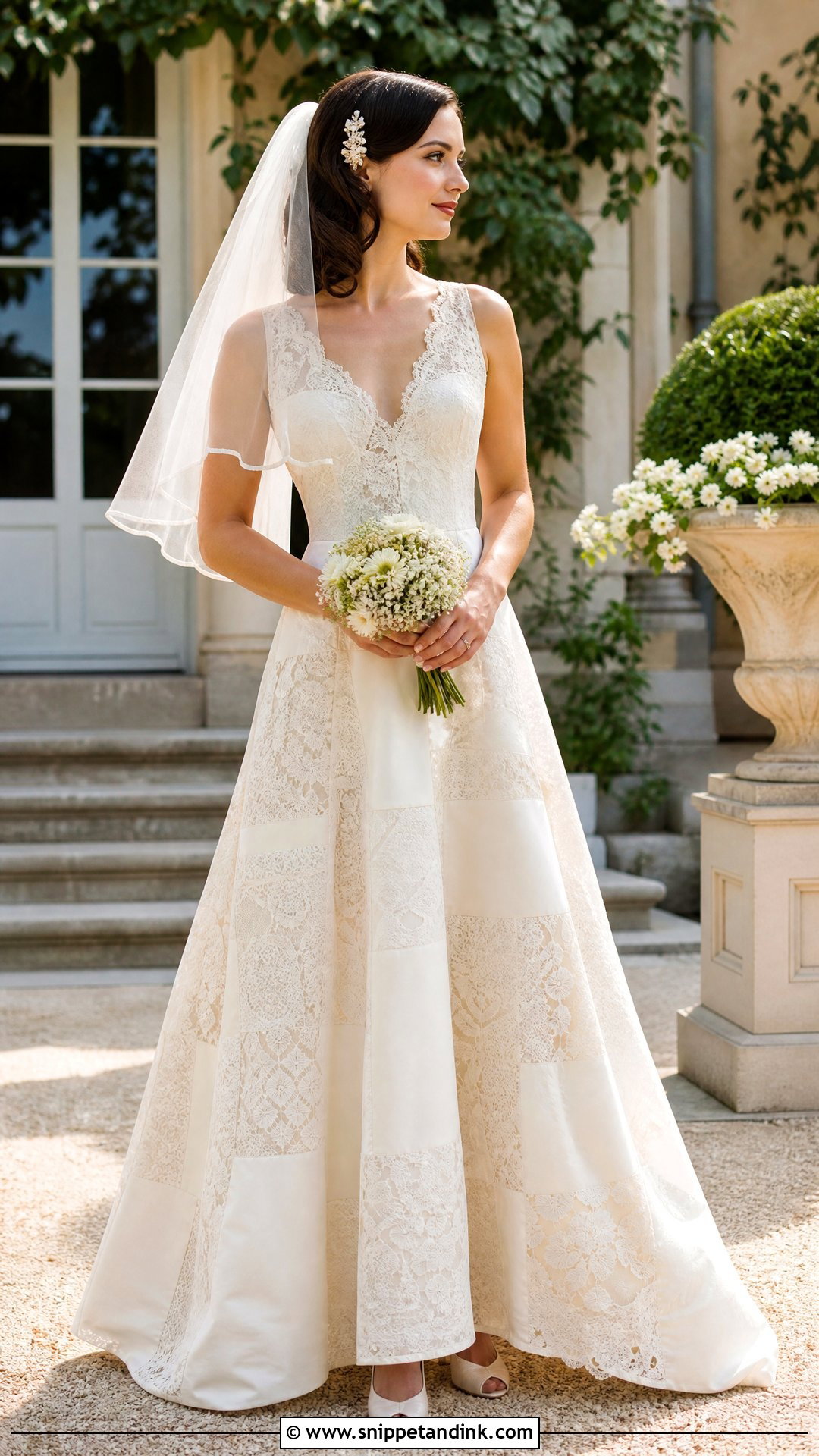
Patchwork lace is the most sentimental idea here. Family textiles, antique trims and reclaimed panels can all come together across a softly structured A-line. The hard part is color, because old laces range from bright white to deep cream, so lay every piece out together in daylight before cutting and group the tones deliberately. A satin underlayer gives the varied lace a calm foundation. I’d put the most meaningful pieces at the neckline, cuffs or waist, where they show in photos. Fragile sections should be mounted onto fine netting. Low heels, a pearl comb and a plain short veil finish it.
5. Hand Painted Silk Wedding Dress
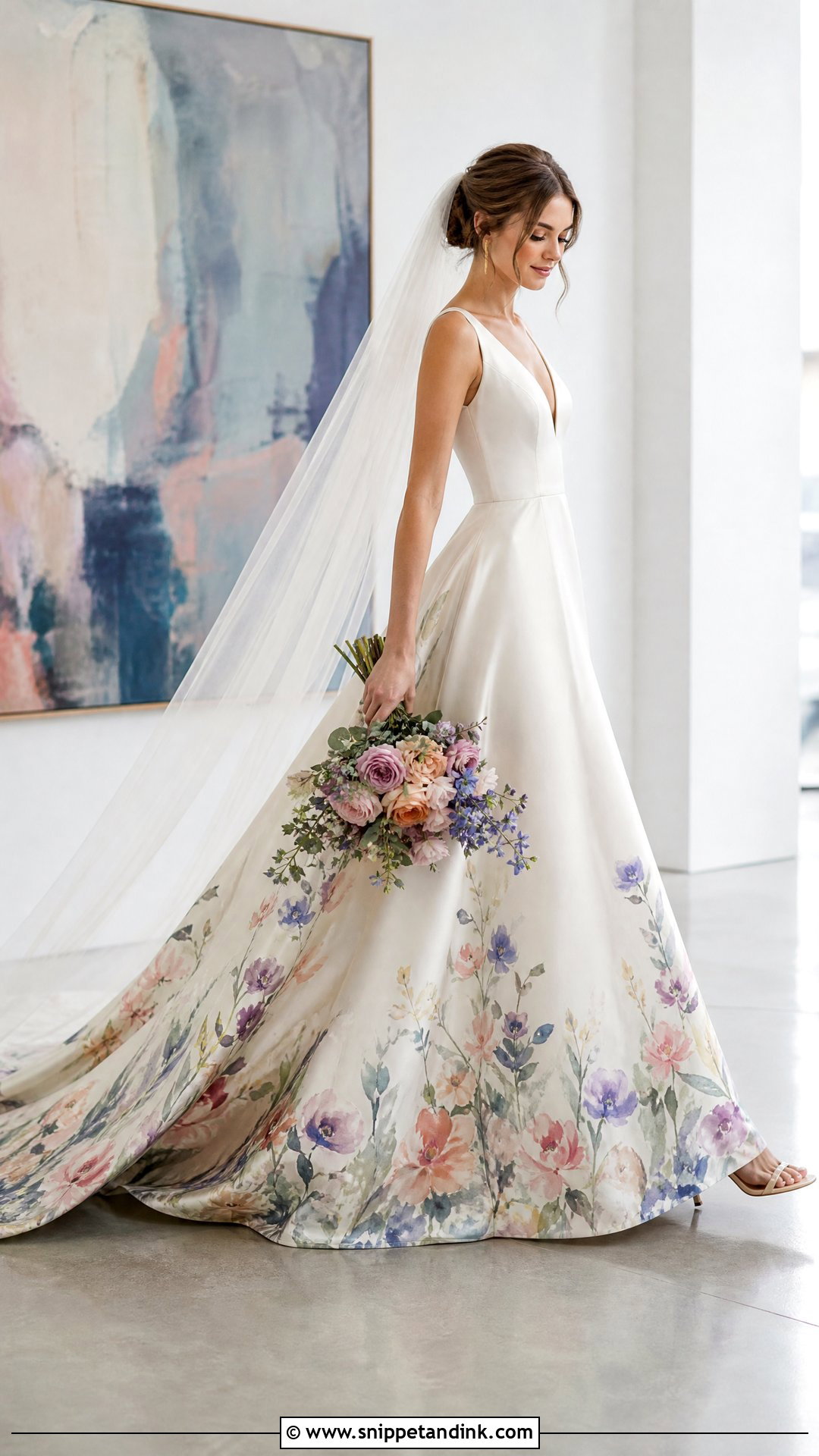
A hand-painted silk wedding dress is wearable art. A bias-cut or A-line silk gown gives a broad, smooth surface; watercolor flowers can climb from the hem, fade at the waist or run along the train as a border. Keep the bodice mostly clean to frame your face. Every pigment needs testing on scraps first, for bleeding, stiffness and how it looks after pressing, because a painted silk should still drape softly. Understated heels, slim gold earrings and an unembellished veil suit it. I like carrying one painted shade into the bouquet.
6. Handmade Boho Wedding Dress
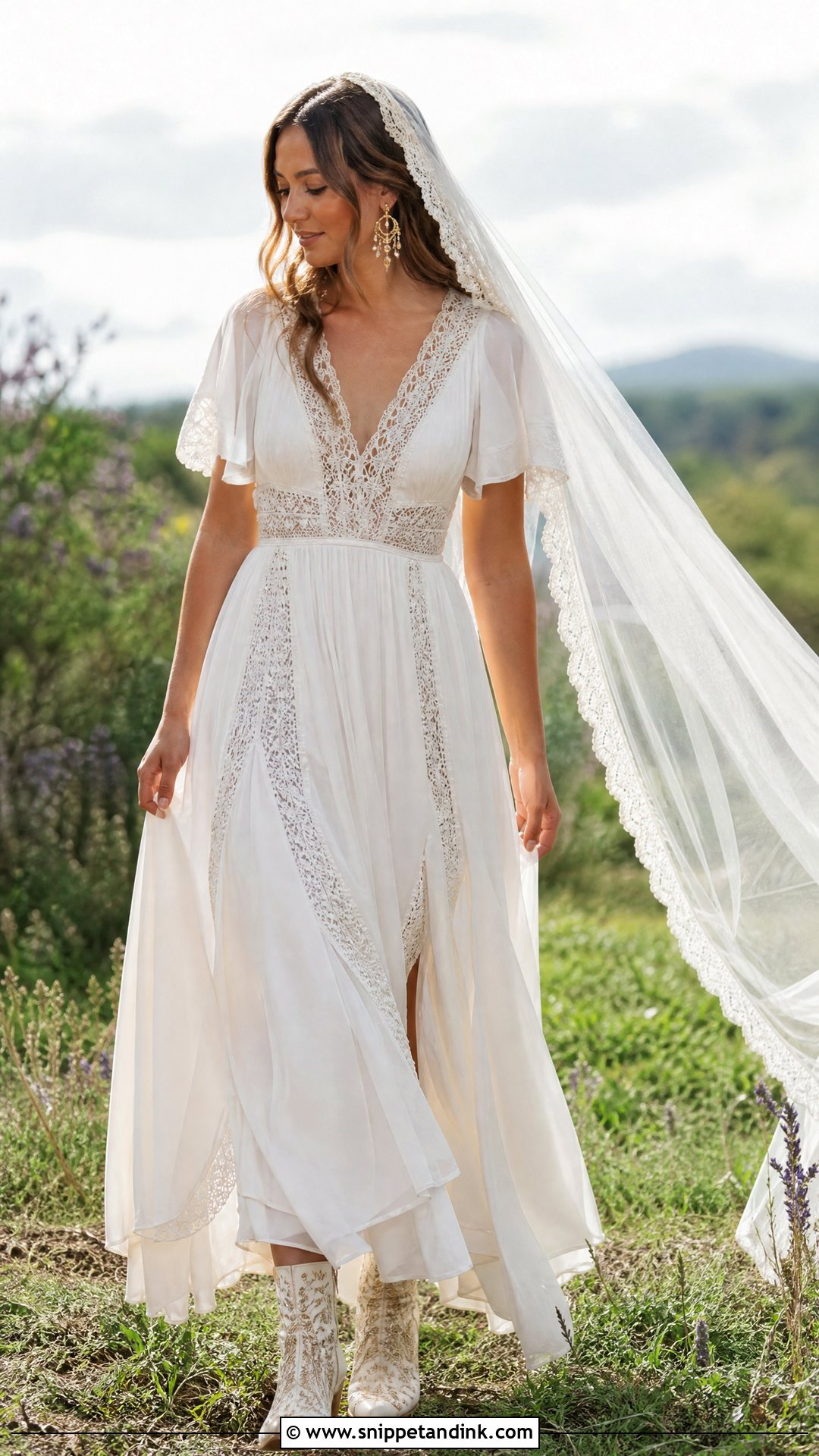
Boho handmade dresses suit outdoor weddings: lined chiffon, hand-applied lace panels, flutter sleeves and a softly defined waist, with a V-neck and a flowing skirt rather than a heavy train. Tassels at the cuffs or back ties are charming in small numbers and messy in large ones. At fittings I have brides walk and sit on a surface like the venue’s, whether that’s grass, sand or stone, so the hem and sleeves get adjusted for the real ground. Embroidered ankle boots or flat sandals, loose waves and a light lace-edged veil complete it.
7. Handmade Corset Wedding Dress
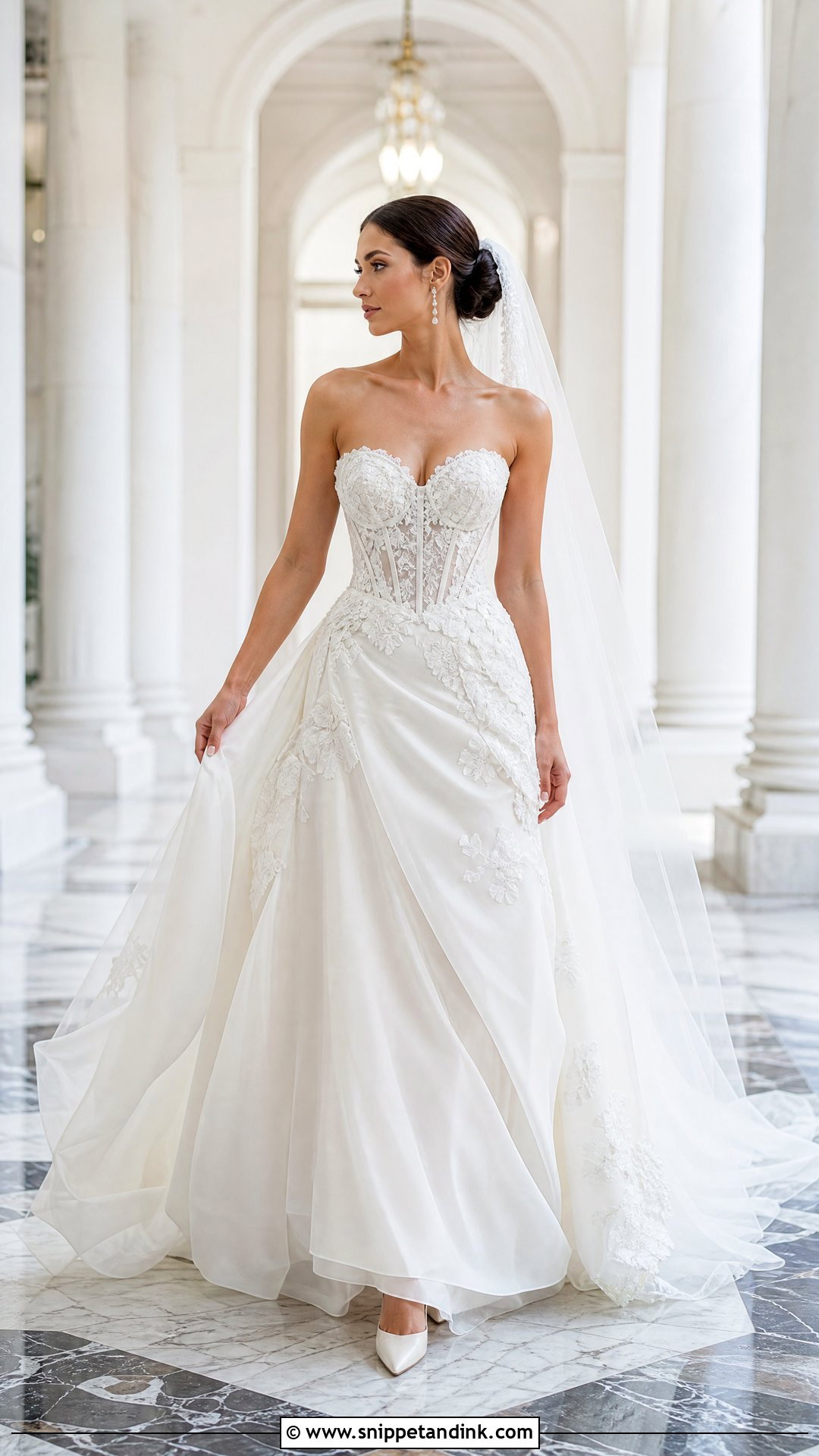
A handmade corset is serious construction. Supportive boning, a waist stay and a neatly finished lace-up back carry the shape, balanced by a full silk or organza skirt. Hand-sewn lace appliqués can soften the corset seams, and a few tiny pearls add dimension. The corset should hold you without restricting breathing, sitting or dancing, which you can only judge in the actual undergarments and shoes, so bring those to every fitting. A modesty panel behind the lacing gives coverage and lets the fit be fine-tuned on the morning. Closed-toe pumps and a cathedral veil suit it.
8. Handmade Satin Wedding Dress
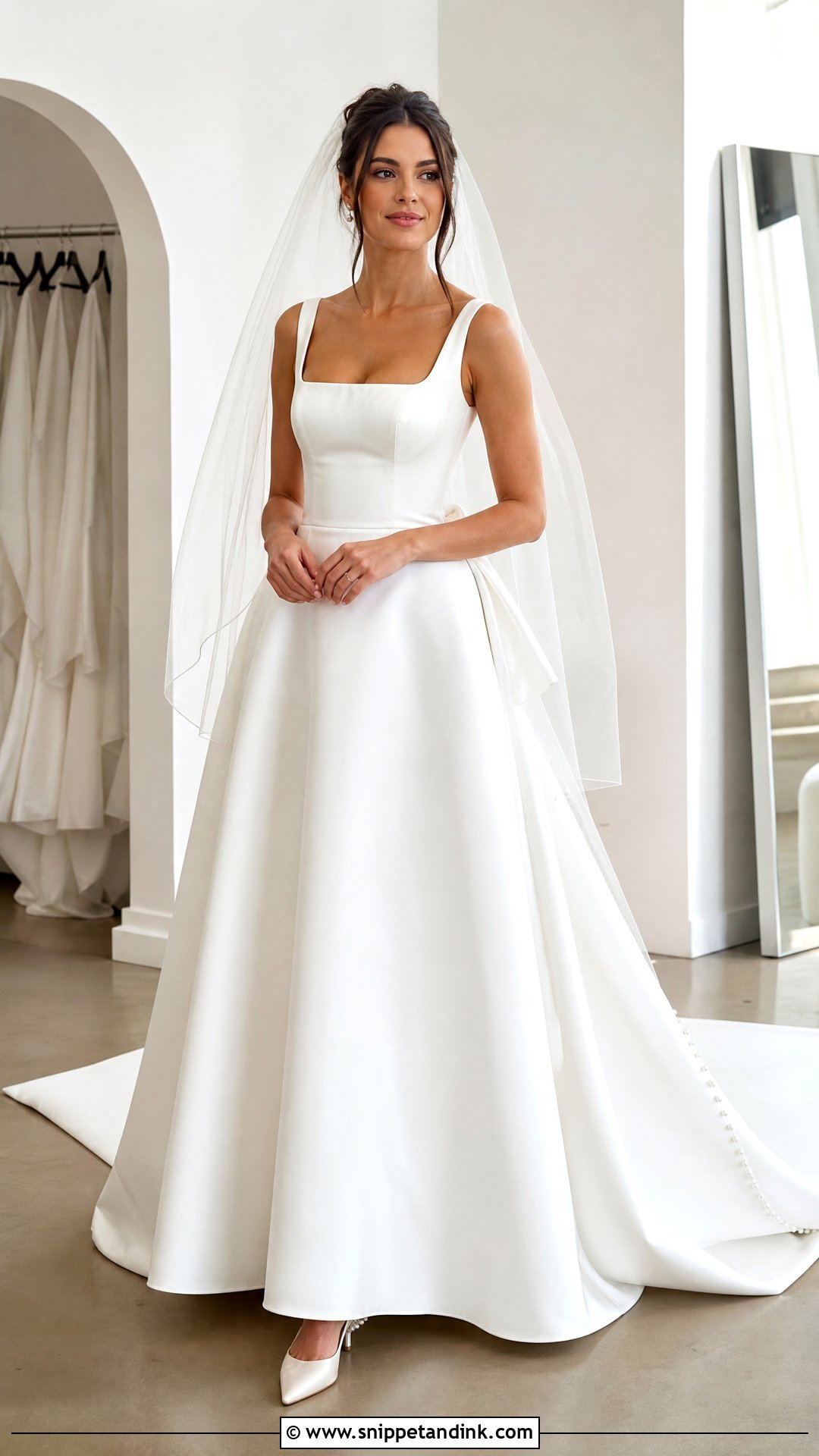
Satin hides nothing. Every seam and pressing decision is on display, which is why it’s a real test of a maker’s skill. A square neck with wide straps, a shaped waist and a softly flared skirt looks clean, with covered buttons down the back and perhaps a hand-sewn bow or detachable train. Satin puckers easily, so a fine needle and a tension test on scraps should come before sewing the final seams. Press from the wrong side under a cloth to protect the sheen. A light petticoat gives gentle volume without stiffness.
9. Hand Appliqué Wedding Dress
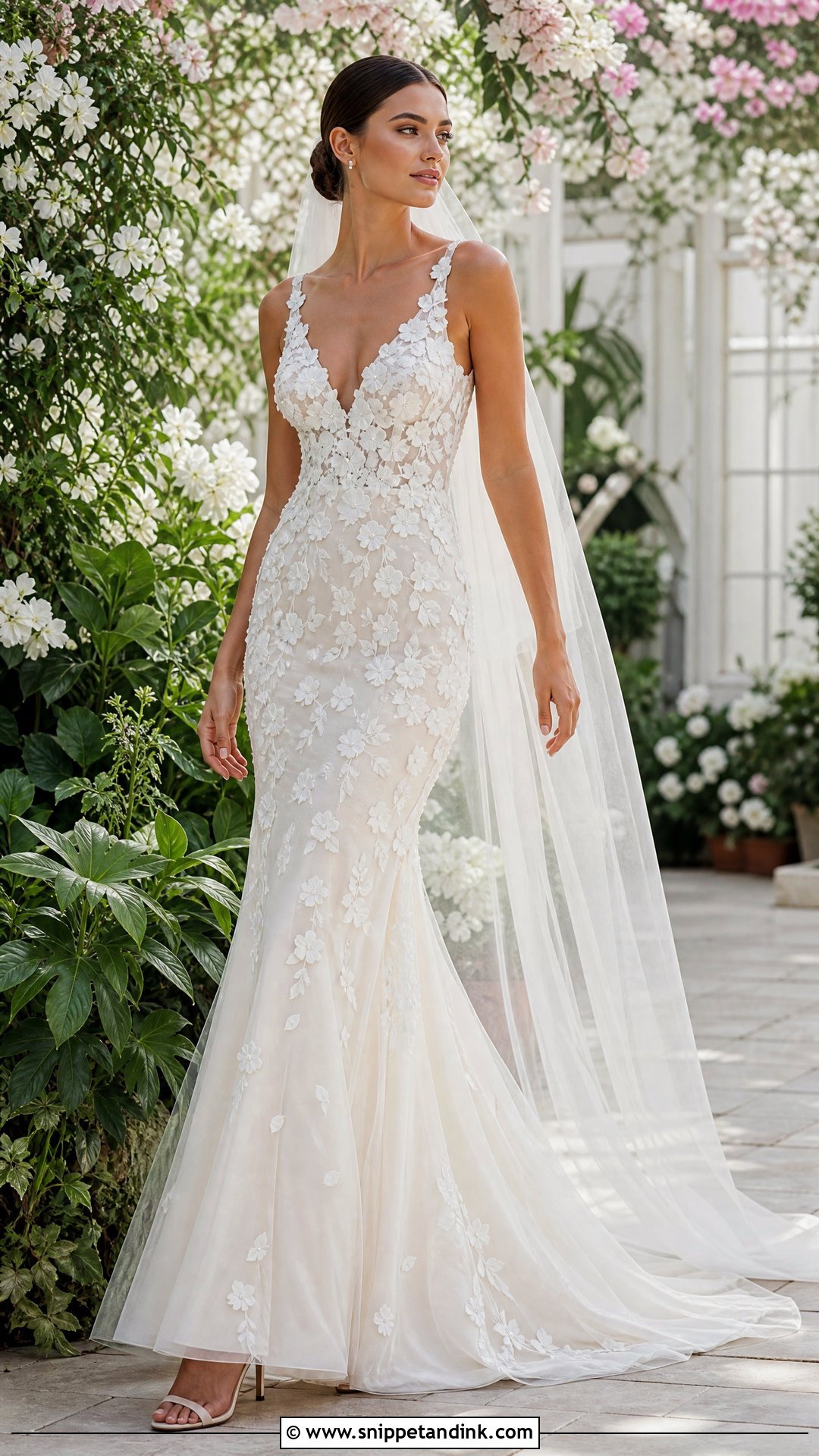
Three-dimensional appliqué gives a gown depth from every angle. Hand-cut floral motifs gather at the bodice of a fitted tulle or organza gown and scatter toward the hem. Each piece should be secured around its edges so the petals stay dimensional but don’t snag the veil. My suggestion to makers is to pin every motif in place first and photograph the dress from front, back and sides, because balance that looks right on a mannequin can look lopsided in a photo. A nude or ivory lining, minimal earrings and a plain veil under a low bun keep the dress in focus.
10. Hand Pleated Wedding Dress
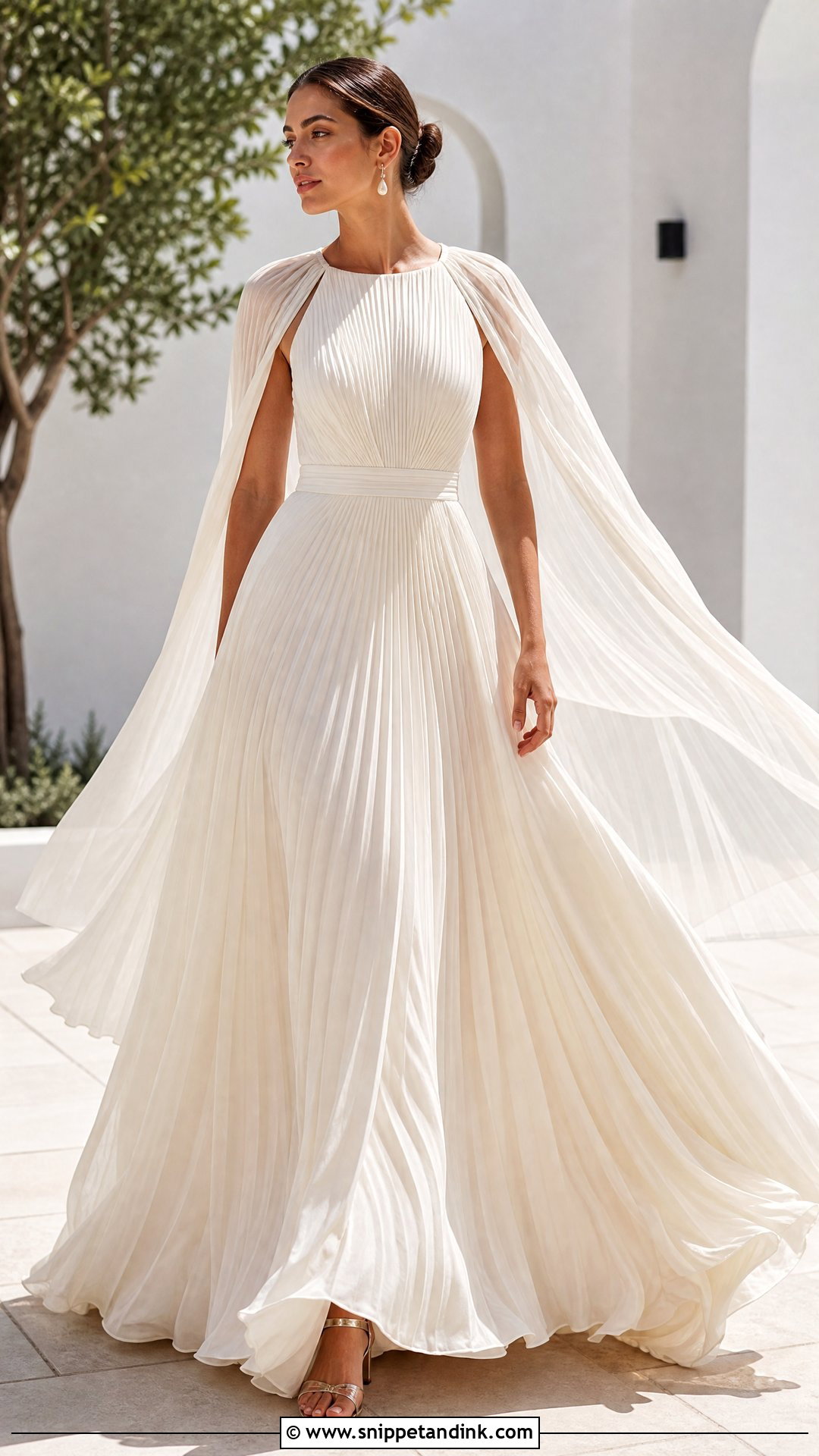
Hand pleating creates movement with no added decoration. Lightweight chiffon or silk organza suits a flowing pleated skirt under a clean fitted bodice and narrow waistband. Vertical pleats lengthen; sunburst pleats soften around the hips. Delicate pleats settle as the fabric hangs, so the dressmaker should let the skirt hang before hemming, or the hem will dip unevenly by the wedding. Avoid bulky seams through the skirt and use a hidden side closure. Metallic sandals and a barely-there veil, or a pleated cape instead, suit the look.
11. Hand Smocked Wedding Dress
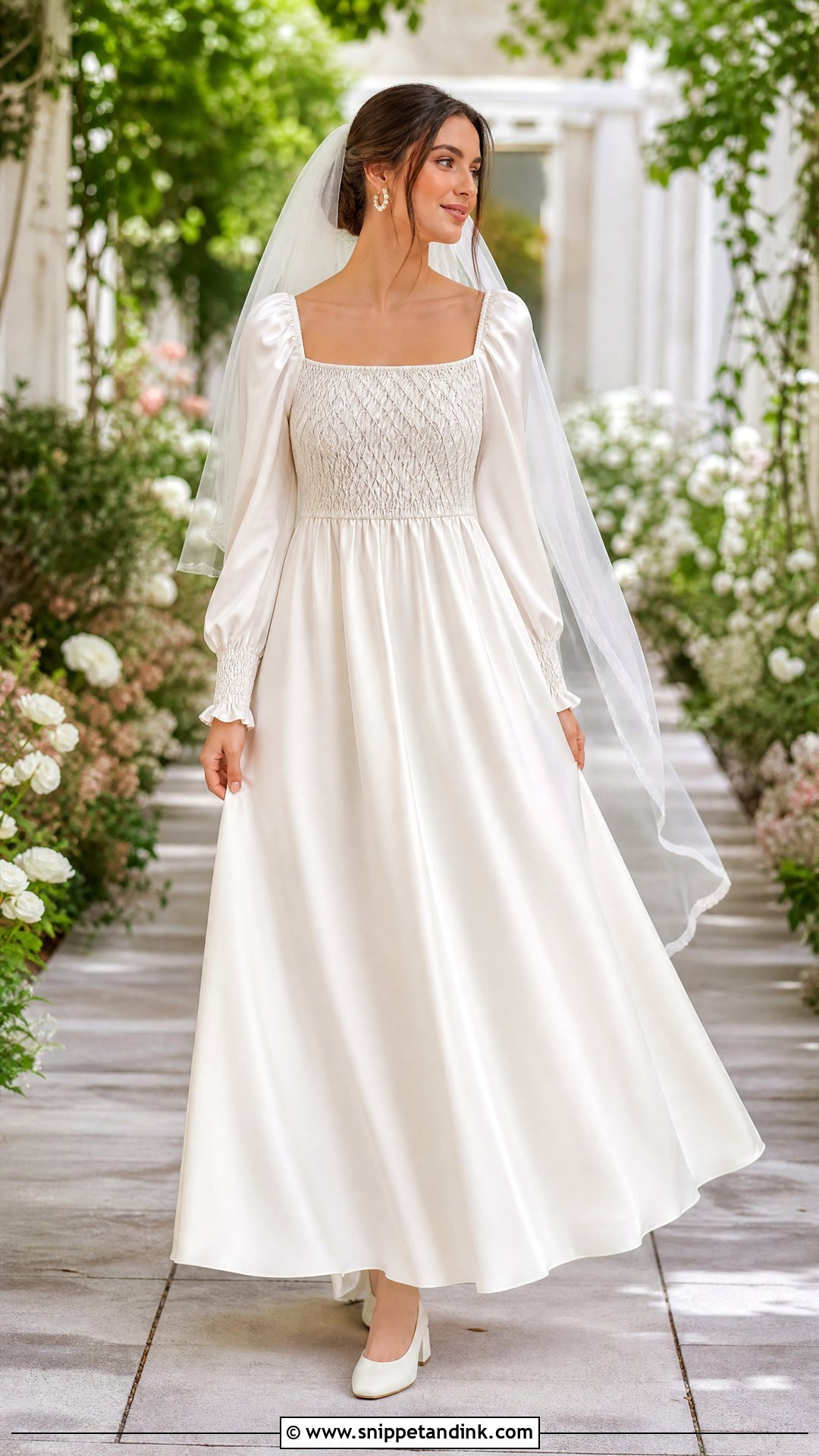
Smocking adds texture and a little stretch, which makes it comfortable across a fitted waist, the upper bodice or gathered sleeves. Fine silk, cotton voile or light chiffon keep the stitched pattern delicate. A square-neck bodice with smocked panels over a flowing A-line skirt has a vintage feel. Test the panel’s stretch before joining it to the skirt, and support the waist properly, or the skirt’s weight will drag the smocking down over the day. White-on-white thread is subtle; pale blue makes a quiet personal touch. Low block heels and a raw-edge fingertip veil suit it.
12. Handmade Two Piece Wedding Dress
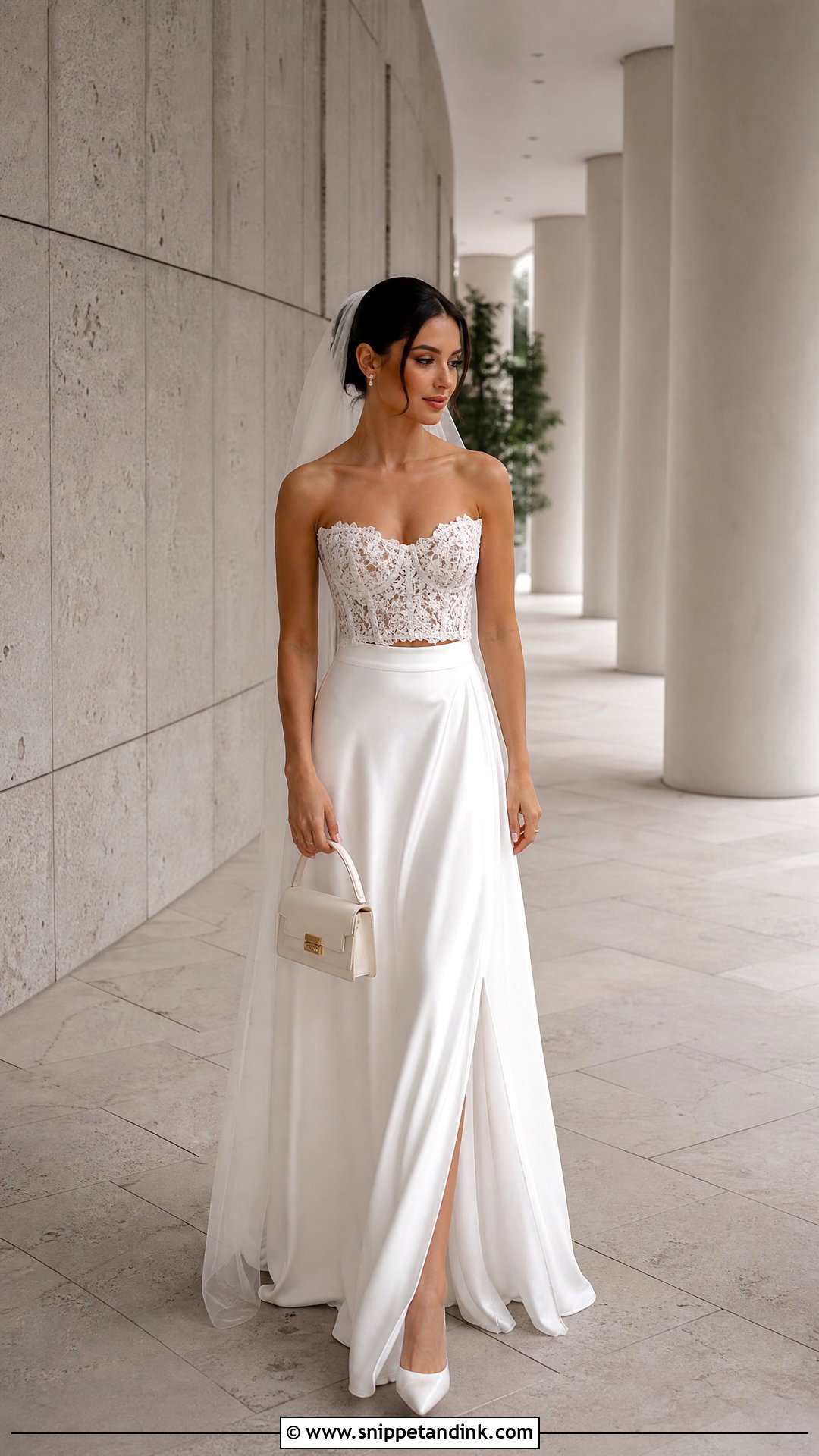
A handmade two-piece gives flexibility while still looking ceremonial: a hand-lace corset top over a high-waisted silk or chiffon skirt that just skims the floor. Decide early whether you want a narrow band of skin showing or a top that overlaps the waistband. Hidden snaps between the pieces stop the top riding up when you raise your arms to hug people. Using the same lining color across both pieces makes them read as one outfit. Pointed pumps and a long plain veil balance the modern shape, and each piece can be worn again on its own.
13. Hand Knit Wedding Dress
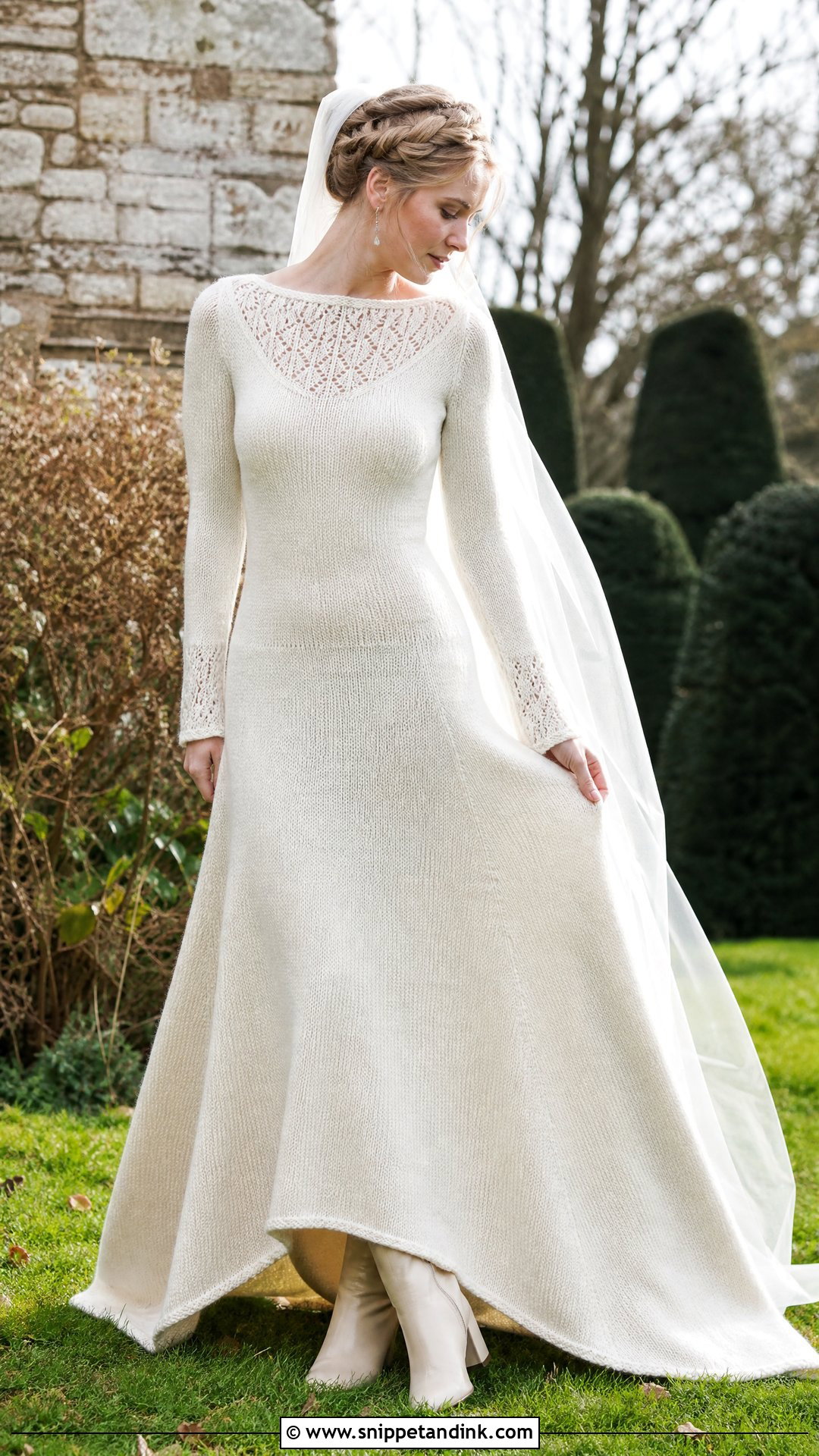
Knitting is the unexpected option, and fine-gauge knit can look delicate rather than cozy-heavy. A fitted knit bodice with long sleeves over a lined, gently flared skirt works well, with lace-knit panels at the neckline, cuffs and hem. Knit stretches under its own weight. Choose smooth yarn with good recovery, let the skirt hang for several days before final hemming, and add a sewn-in waist tape and a supportive slip. Ivory ankle boots, small pearls and a light veil under a braided updo suit it.
14. Macramé Wedding Dress
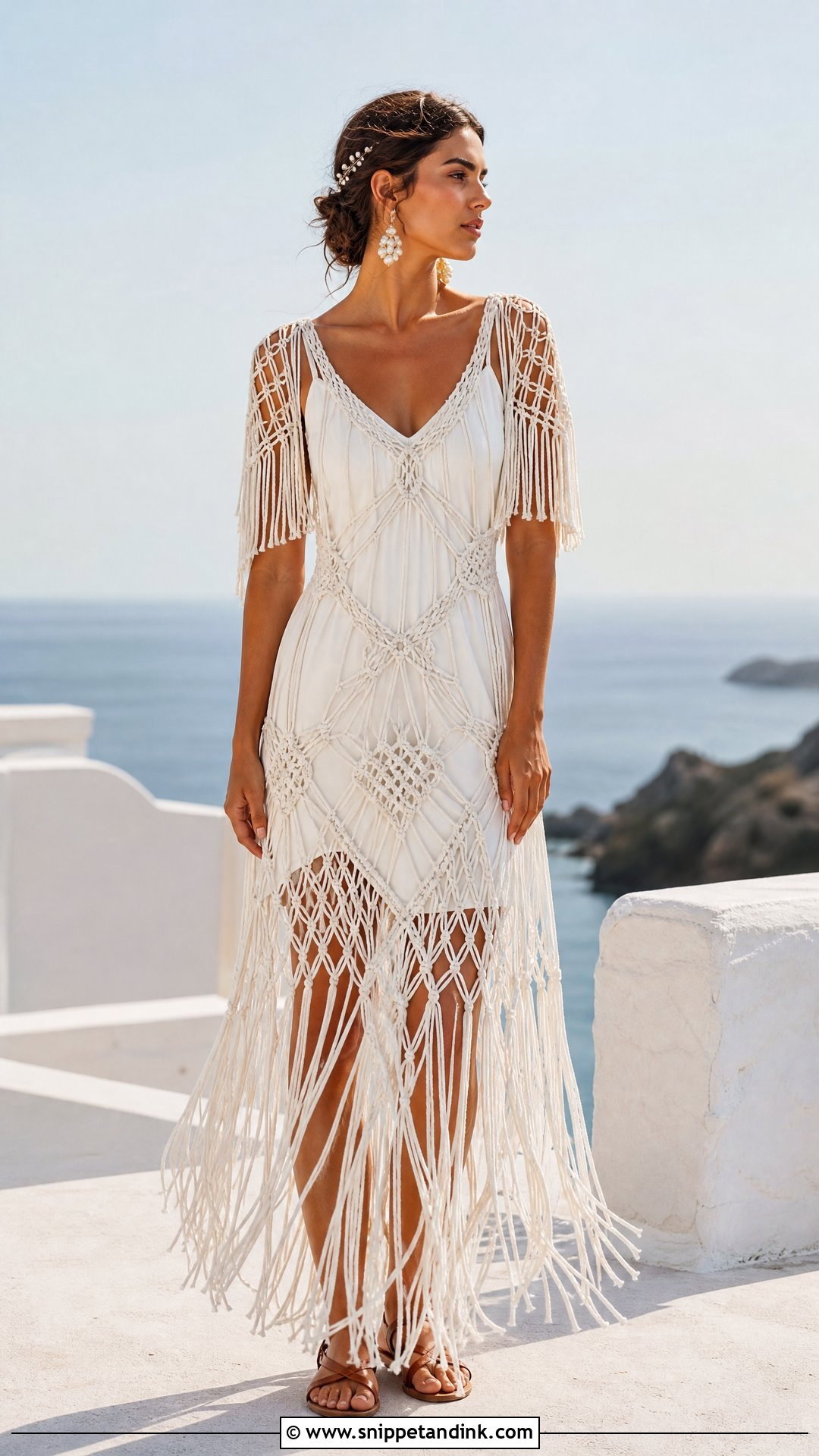
Macramé makes the strongest artisan statement here, through knots, openwork and sculptural fringe. For a bridal version, layer a fitted macramé overlay over a smooth ivory crepe slip, detailed at the bodice and more open through the skirt. Knotted fiber is heavier than it looks and can stretch, so reinforce the shoulders and waist. Keep fringe short at the sleeves and hem; long fringe tangles around shoes and catches on chairs. Flat sandals, bold pearl earrings and a simple comb instead of a veil keep it sophisticated.



15. Hand Sewn Pearl Wedding Dress
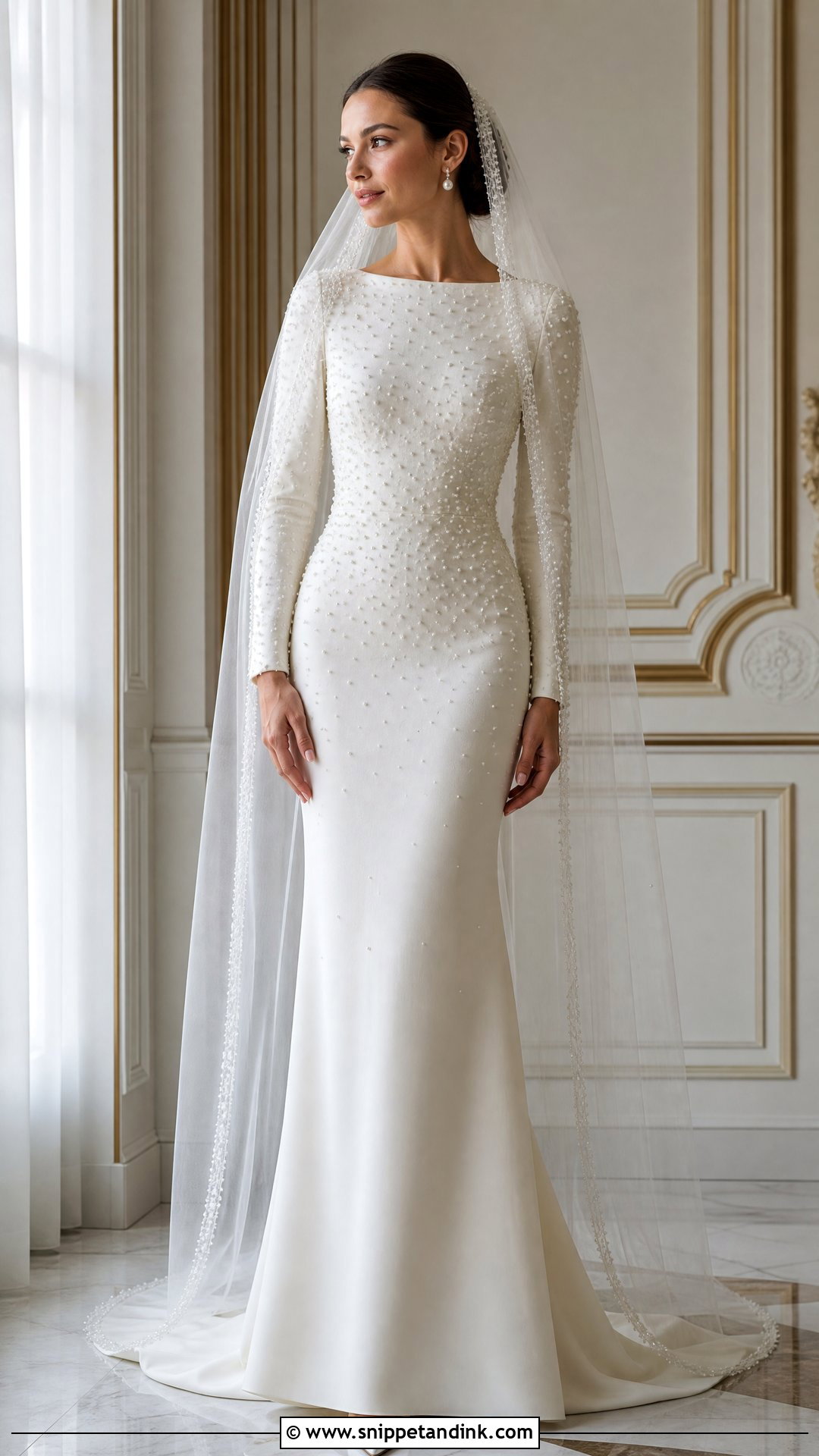
Hand-sewn pearls give soft luminosity instead of the sharp sparkle of crystal. On a fitted crepe gown with a scoop neck, pearls scatter across the bodice, sleeves and upper skirt and thin toward the hem. Mixed sizes look natural if they stay in one color family. The construction detail I always ask about: each pearl should be secured individually, so one broken thread loses one pearl instead of a whole row. A soft lining protects the skin from interior knots. Satin pumps and a plain veil edged with a row of matching beads finish it.
16. Ribbon Embroidered Wedding Dress
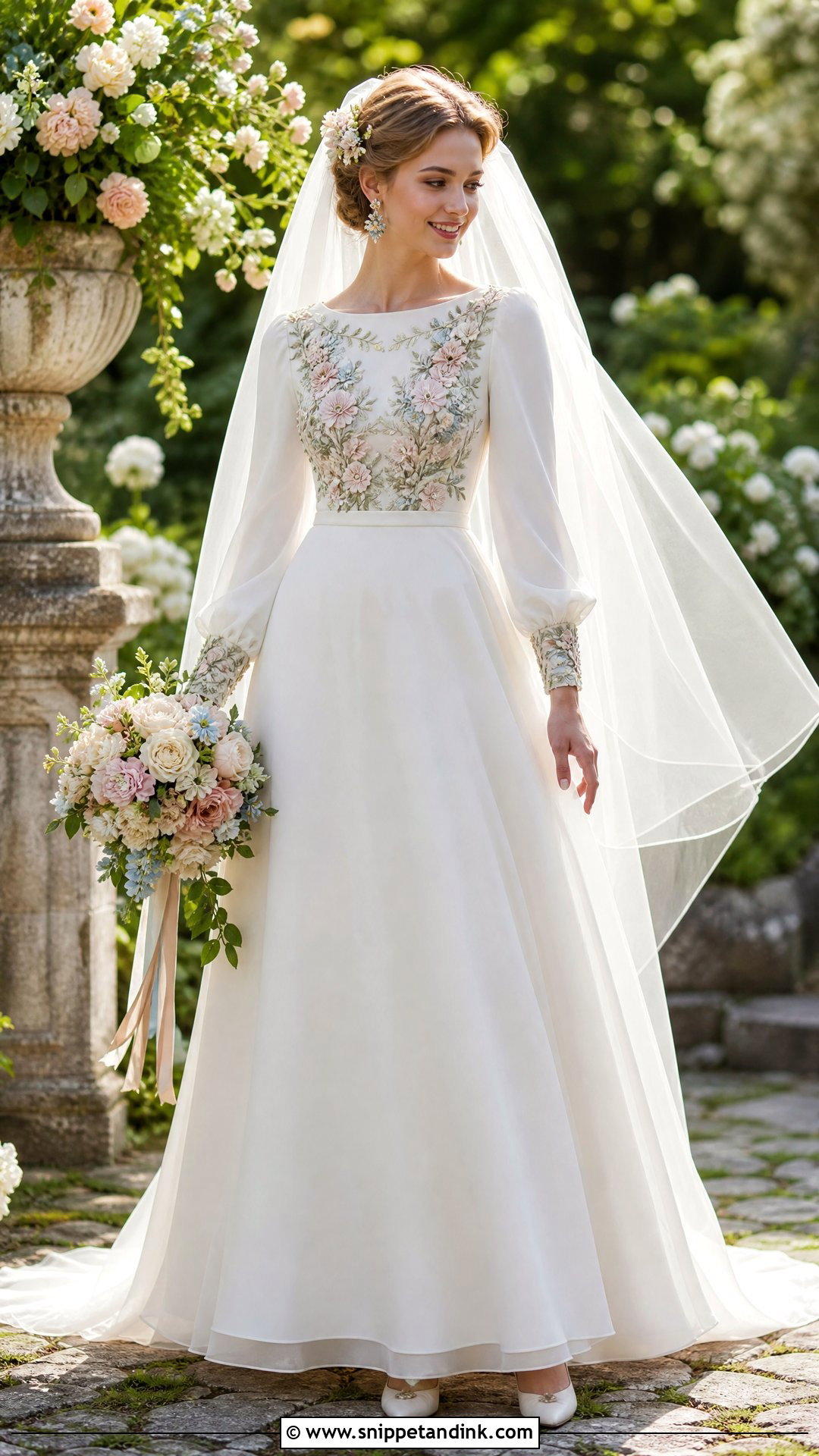
Ribbon embroidery raises flowers and leaves off the fabric with a soft, painterly finish. Narrow silk ribbon in blush, cream, sage or pale blue decorates the bodice and cuffs of an ivory A-line while the skirt stays plain. Keep the dimensional flowers away from the underarms and anywhere you’ll sit, because they flatten and won’t fully recover. A structured lining keeps the embroidered bodice smooth. Low ivory heels and a shoulder-length veil suit it, and one ribbon flower repeated on a hair comb ties everything together.
17. Bobbin Lace Wedding Dress
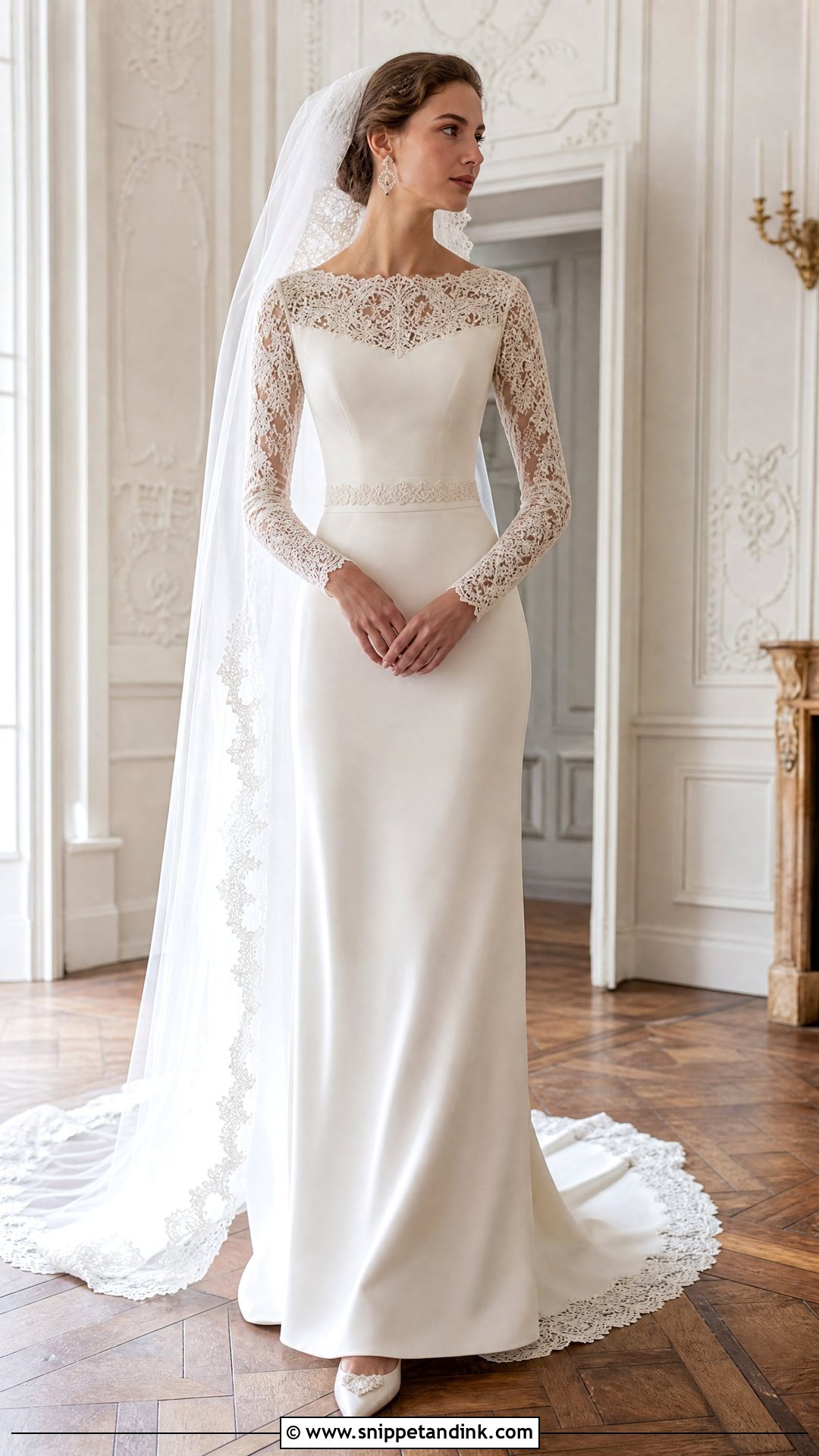
Bobbin lace takes a long time to make, which is why I recommend using it strategically: neckline, sleeves, waist and the border of the train, over a plain silk crepe gown that lets the pattern read clearly. Mount fragile lace onto fine tulle before attaching it anywhere that moves, or it will stretch and distort. If a family member made the lace, place a meaningful motif near the back closure or a cuff, where it shows and becomes a detail worth preserving. Pointed ivory flats and a veil with a narrow matching edge complete it.
18. Needle Lace Wedding Dress
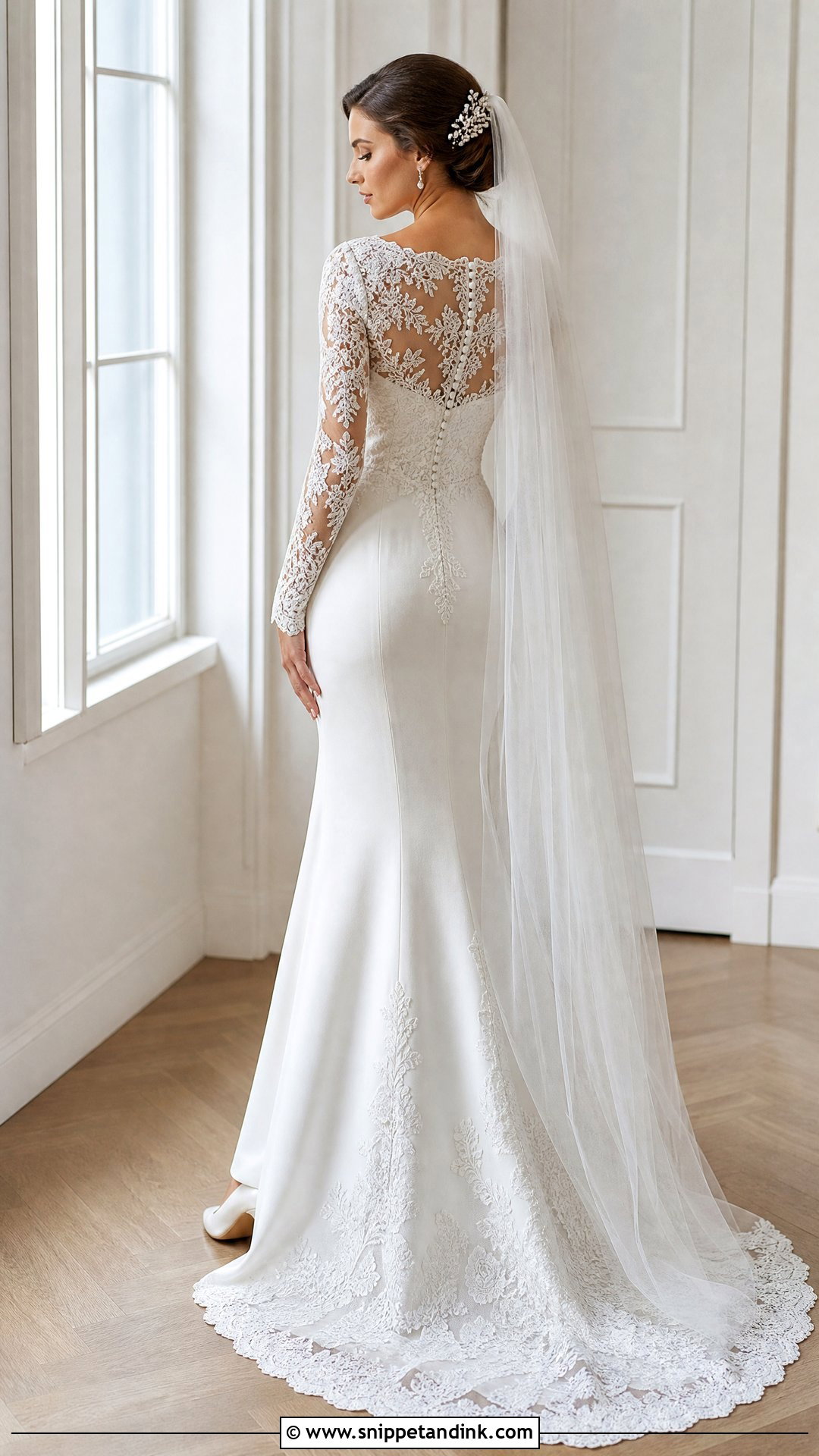
Needle lace is the finest handmade lace there is, and a clean silk gown with a bateau neck shows it best at the sleeves, upper back and scalloped hem. Keep the center of the bodice plain so the patterns don’t crowd each other. Attach it with nearly invisible stitches and no tension. For antique pieces, have an experienced seamstress or textile conservator check them before anything is cut or sewn. A plain veil ending above the lace hem and low satin pumps suit it, and a small repeated motif on a handkerchief makes a quiet keepsake.
19. Hand Quilted Wedding Dress
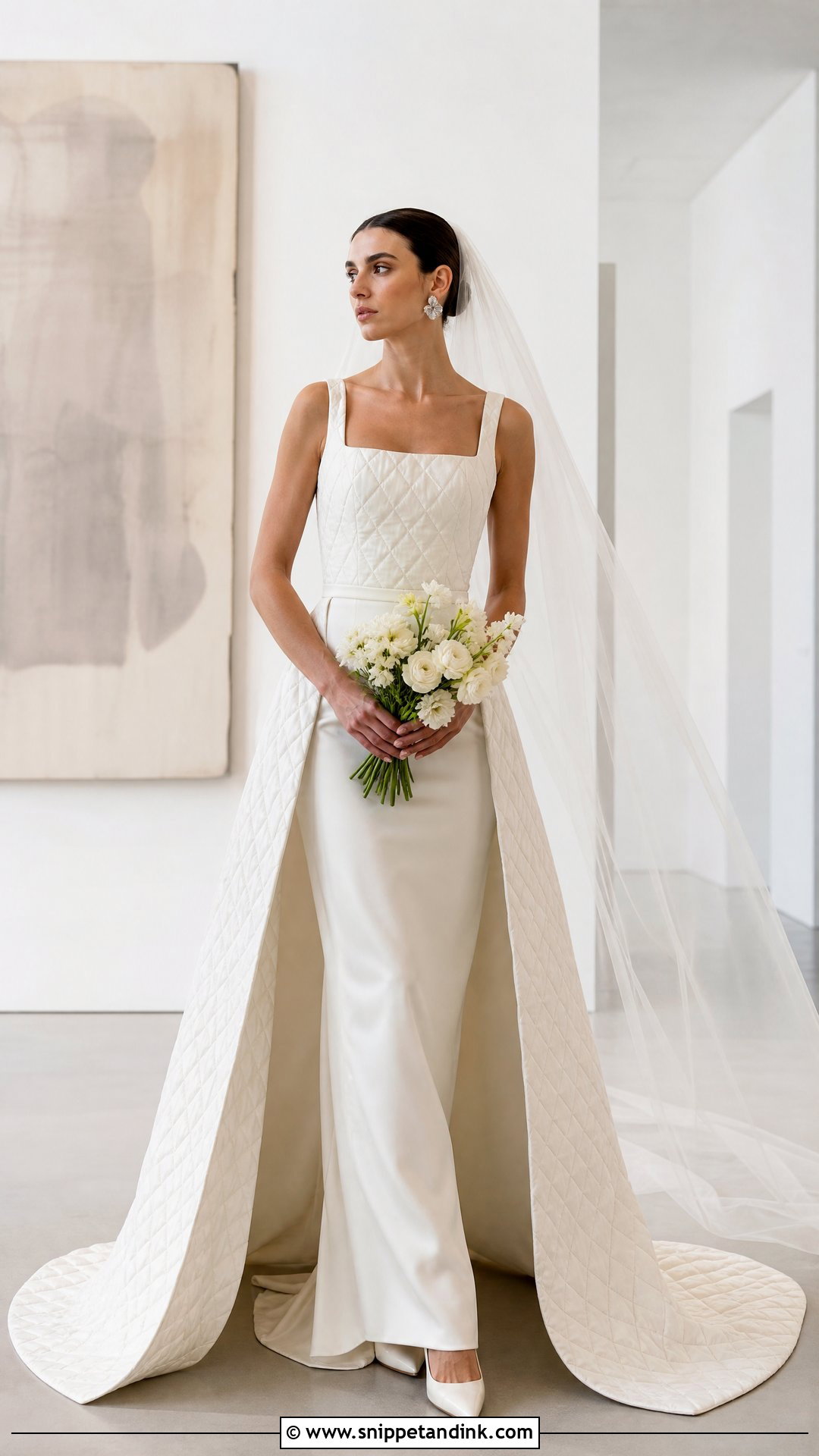
Hand quilting is the most fashion-forward technique in this list. Use lightweight silk or cotton-silk with thin batting, otherwise the gown turns stiff and warm. Quilted panels can shape a strapless bodice, define a square neckline or build a full skirt, in simple patterns like diamonds, waves or botanical lines. Smooth side panels keep bulk off the waist. My favourite version is a detachable quilted overskirt over a lighter column dress, so you can remove it after the ceremony and dance comfortably. Sleek pumps and a sheer veil without trim keep it modern.

20. Block Printed Wedding Dress
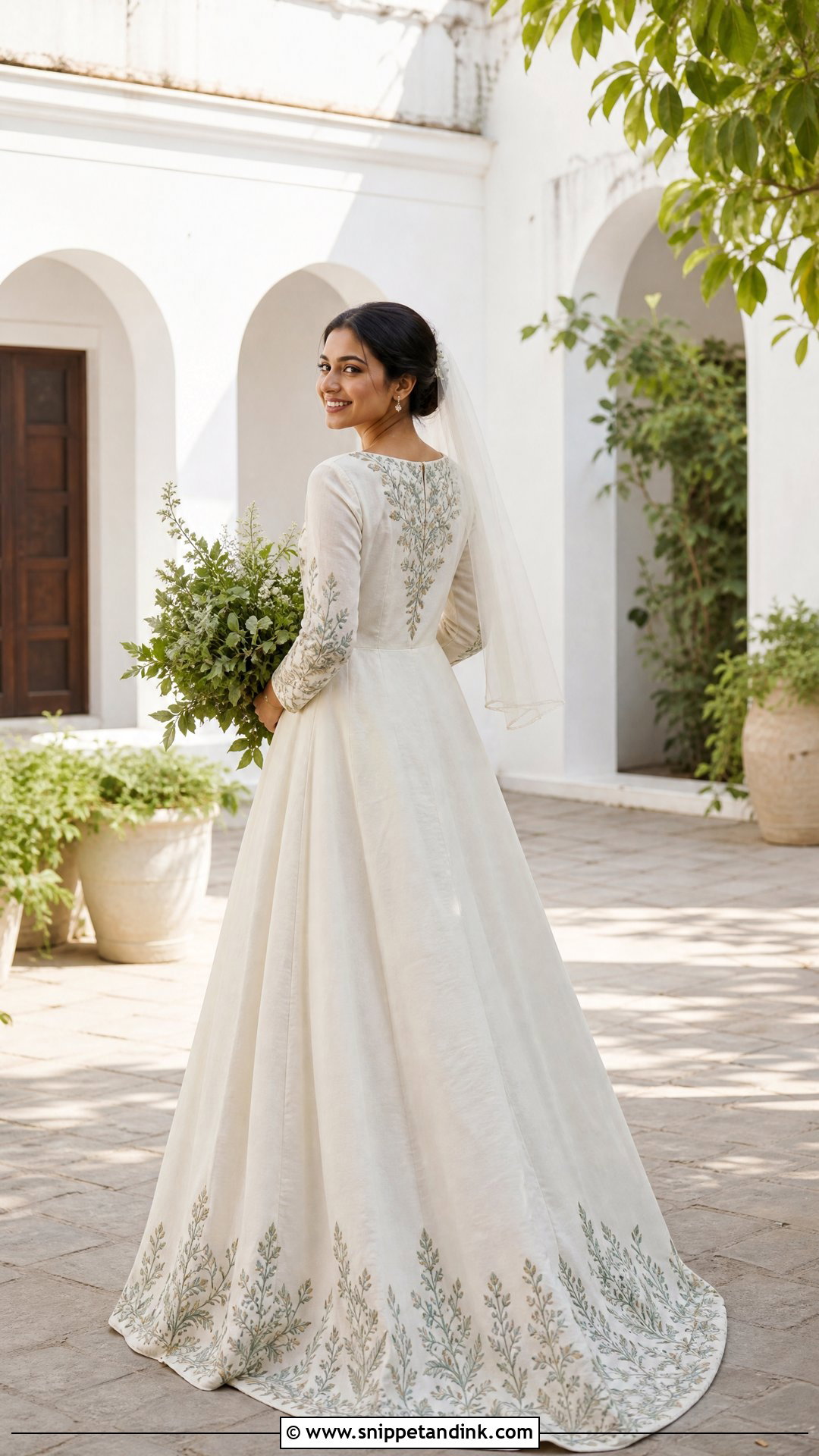
Block printing adds soft pattern to a simple cotton-silk or linen-blend A-line. Botanical motifs run along the hem, sleeves and back neckline: white on ivory for a subtle textured effect, pale blue or muted green for gentle contrast. Print and heat-set each section according to the paint’s instructions before construction, which keeps motifs from distorting at the seams. Aim for placement that’s balanced but lets small variations show, since those are the proof of hand printing. Woven flats, small gold earrings and a short veil suit it.
21. Naturally Dyed Wedding Dress
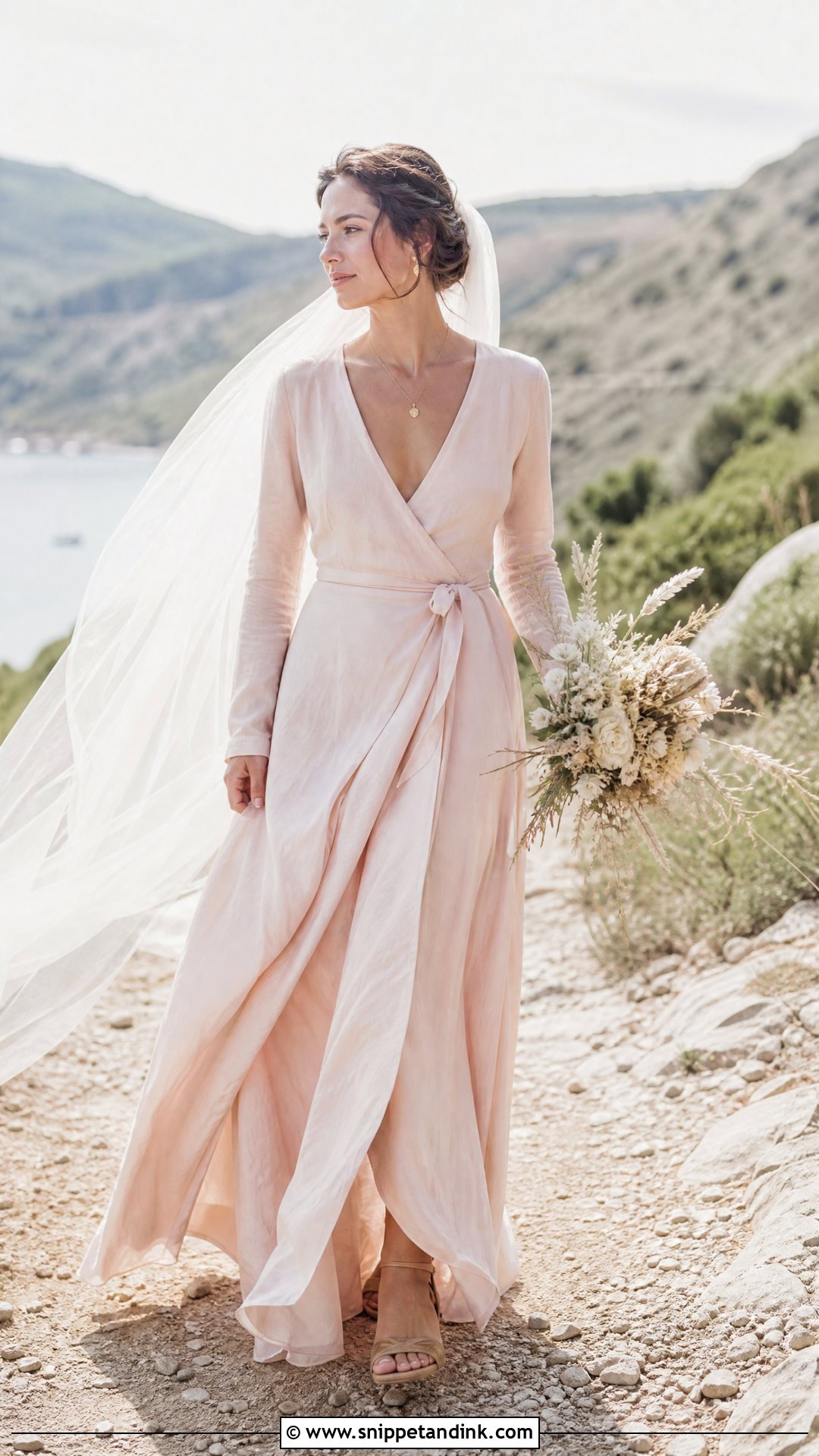
Natural dyes give soft, organic color: cream, blush, pale blue or muted gold, depending on the fiber and dye. Silk, cotton and linen each take it differently, so expect variation and choose a wrap gown or relaxed A-line that suits it. Dye all the fabric in one batch, because matching a natural-dye shade later is close to impossible, and wash and press a test swatch before cutting. Place darker areas along the hem, sash or a detachable train for an intentional ombré. Neutral block heels and a veil matched to the final shade finish it.
22. Upcycled Wedding Dress
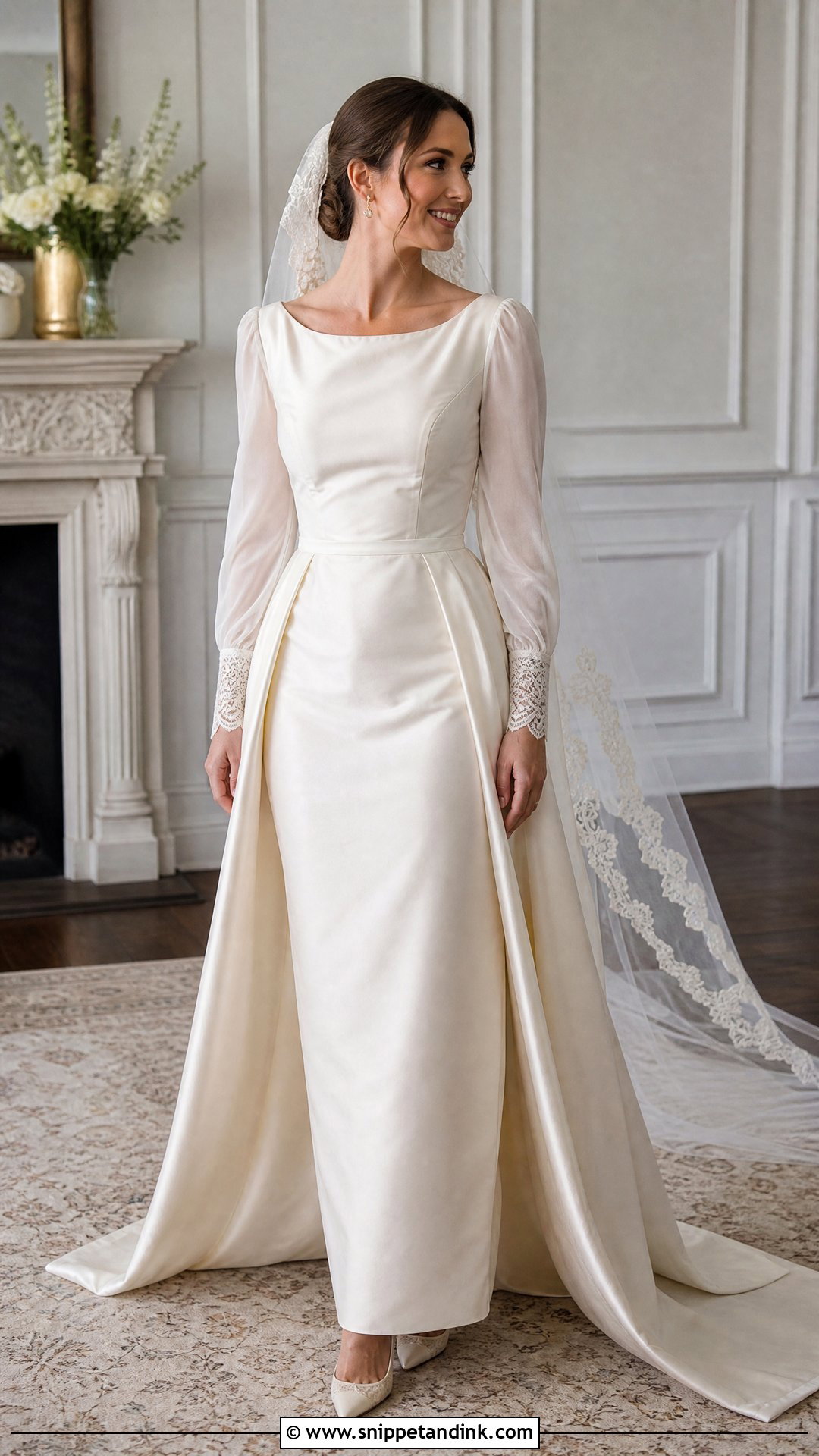
Transforming an existing gown gives you a dress with history built in. Start from a vintage or family gown with strong fabric and enough seam allowance to alter. A reshaped neckline, fitted waist, lighter sleeves or a removable overskirt can modernize it, and original lace can become cuffs, shoulder panels or a veil border. Before anyone cuts, photograph and label every original part, and keep the offcuts for repairs. Yellowed fabric often looks lovely against a warm ivory lining, so don’t chase a perfect color match.
23. Handmade Tea Length Wedding Dress
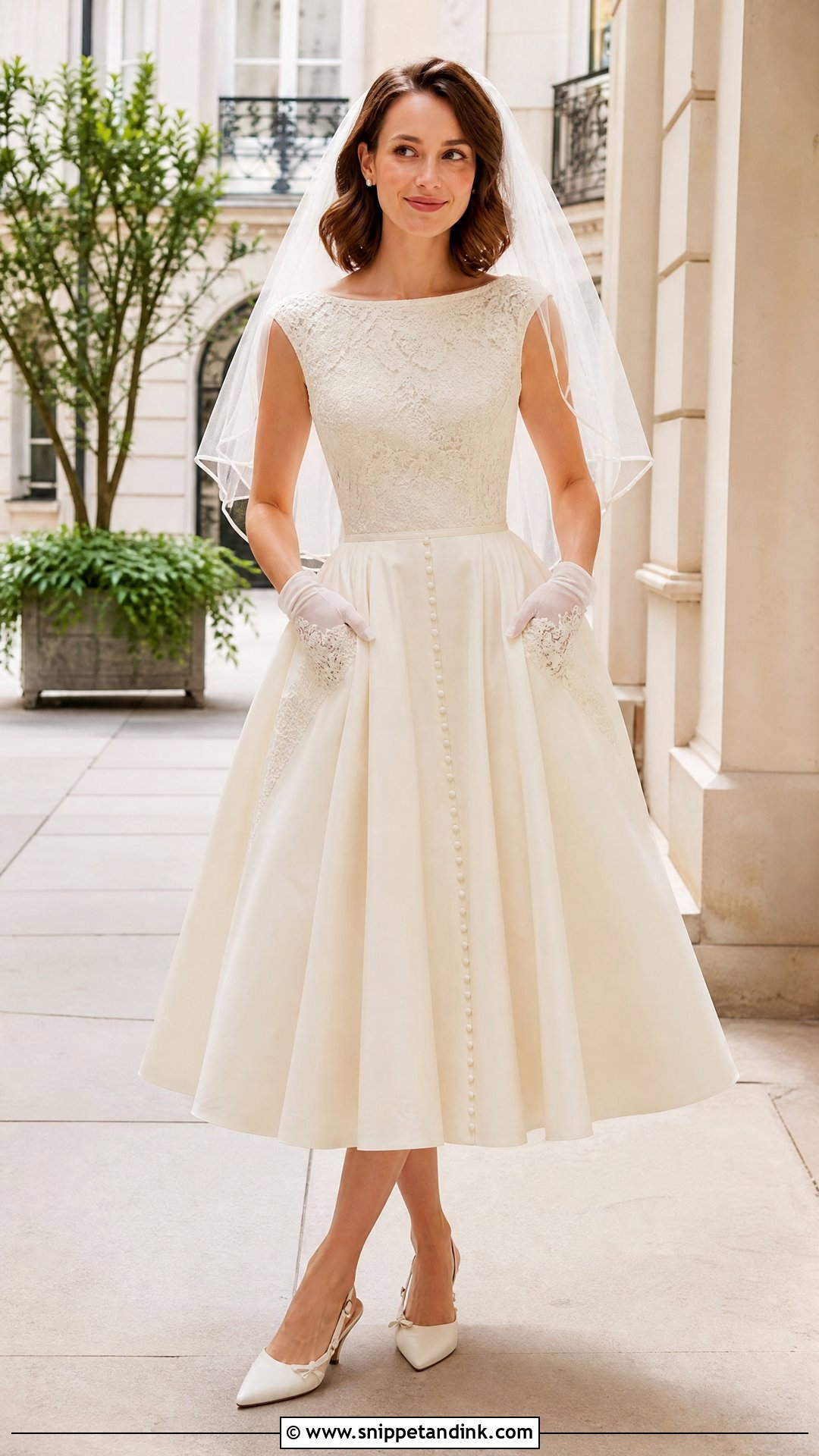
A handmade tea-length dress feels playful and easy to wear, with a fitted bodice and a softly structured skirt ending between knee and ankle. Hand-sewn lace, fabric-covered buttons or embroidered pockets suit the shorter shape. Your shoes will be on display all day, so slingbacks, embellished flats or classic pumps deserve as much thought as the dress. A lightweight petticoat gives shape without rigidity. At the final fitting, walk and sit in it: the hem should clearly show the shoes while still covering the knee when seated. Short gloves and a shoulder-length veil complete the vintage mood.
24. Handmade Colorful Wedding Dress
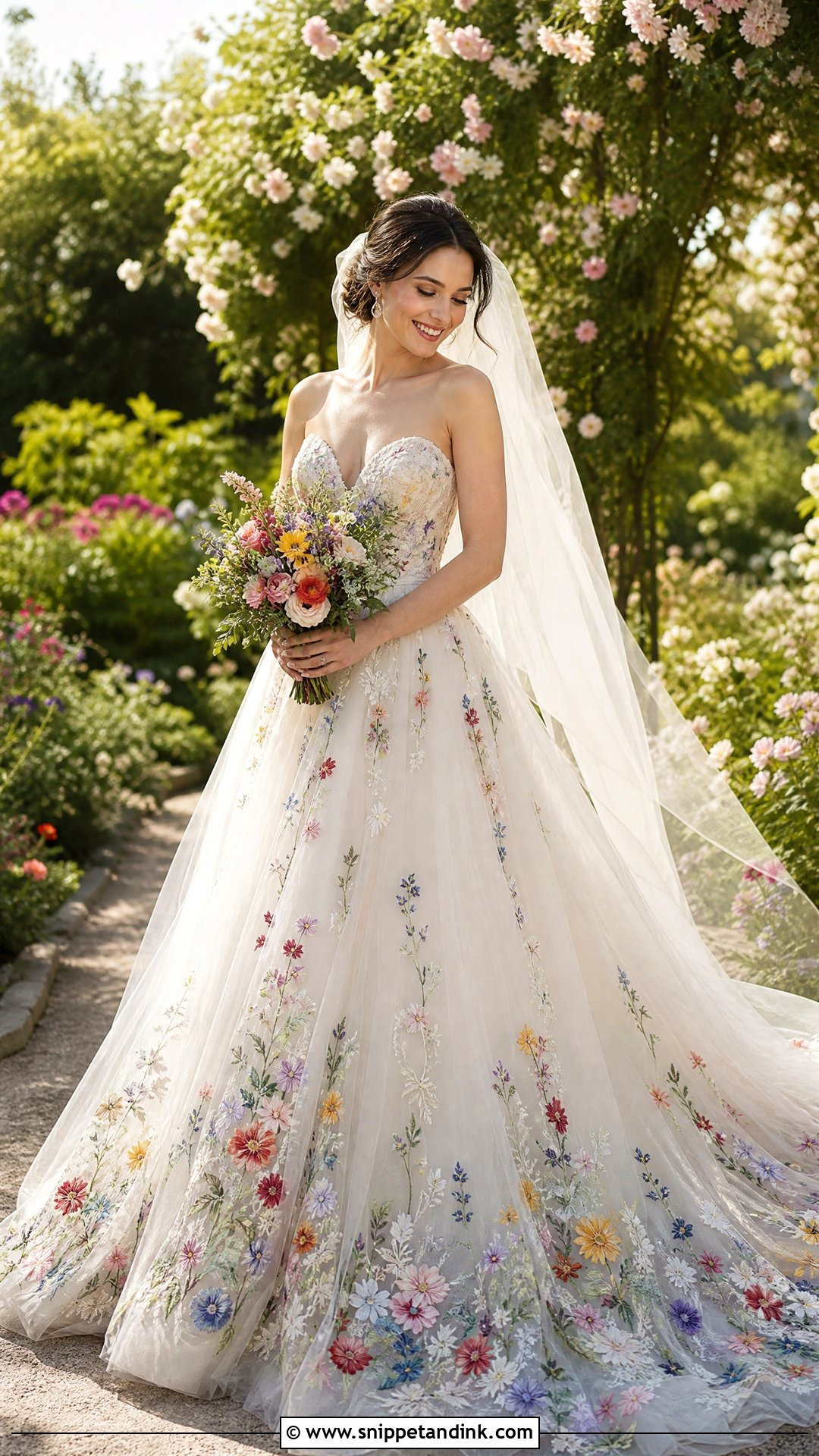
Colorful handwork keeps a recognizable bridal silhouette while letting joy in. On an ivory tulle ball gown or A-line, embroidered flowers, painted vines or colored appliqués gather around the hem and train and stay lighter at the waist. I limit the palette to three or four related shades, often taken from the bouquet or the landscape, so it reads as art rather than a theme. Ask the maker for a placement sketch before any stitching; it’s much easier to move a flower on paper than to unpick it. Neutral satin heels and a plain veil keep the focus low.
25. Handmade Wedding Dress With Cape
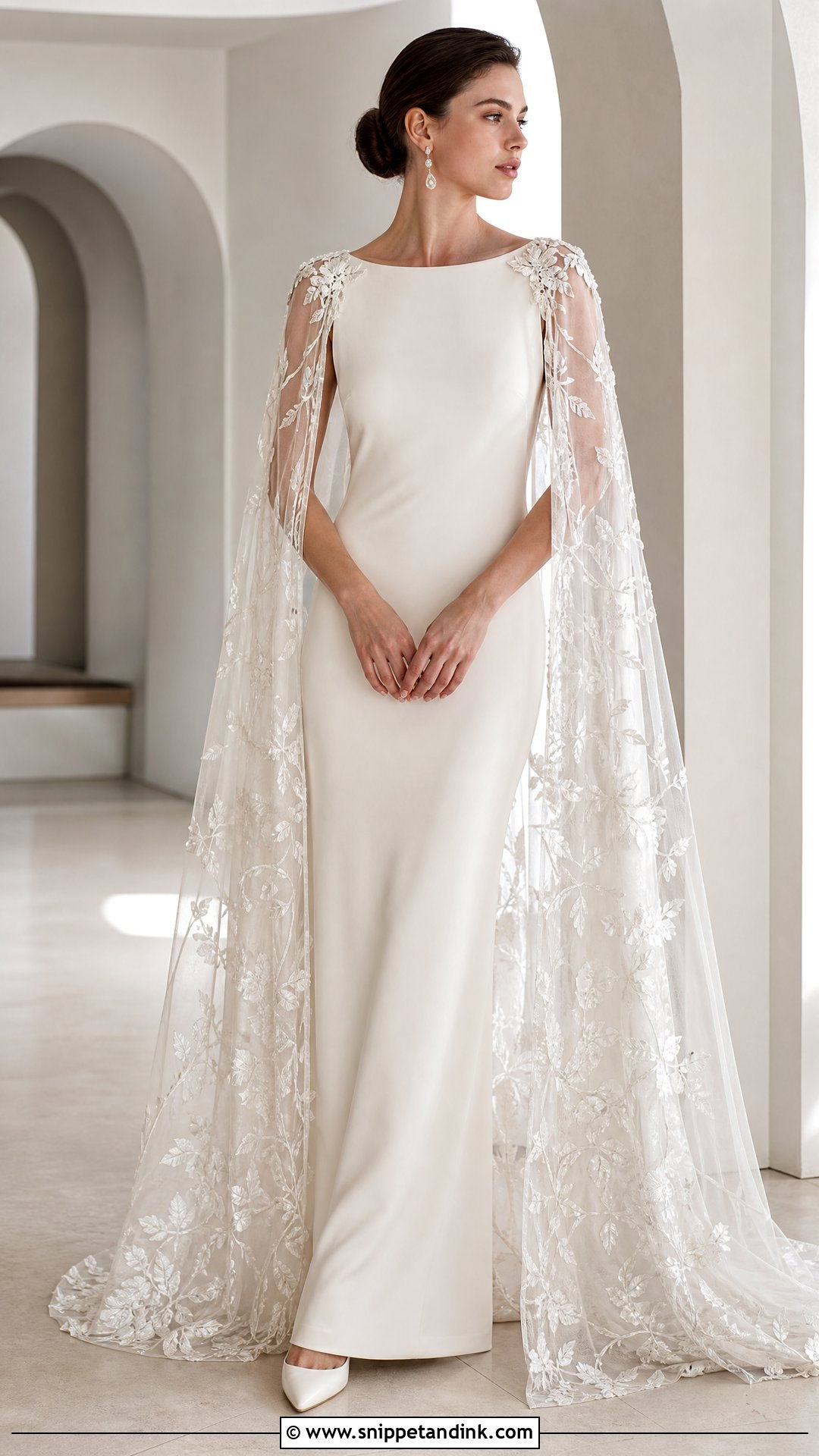
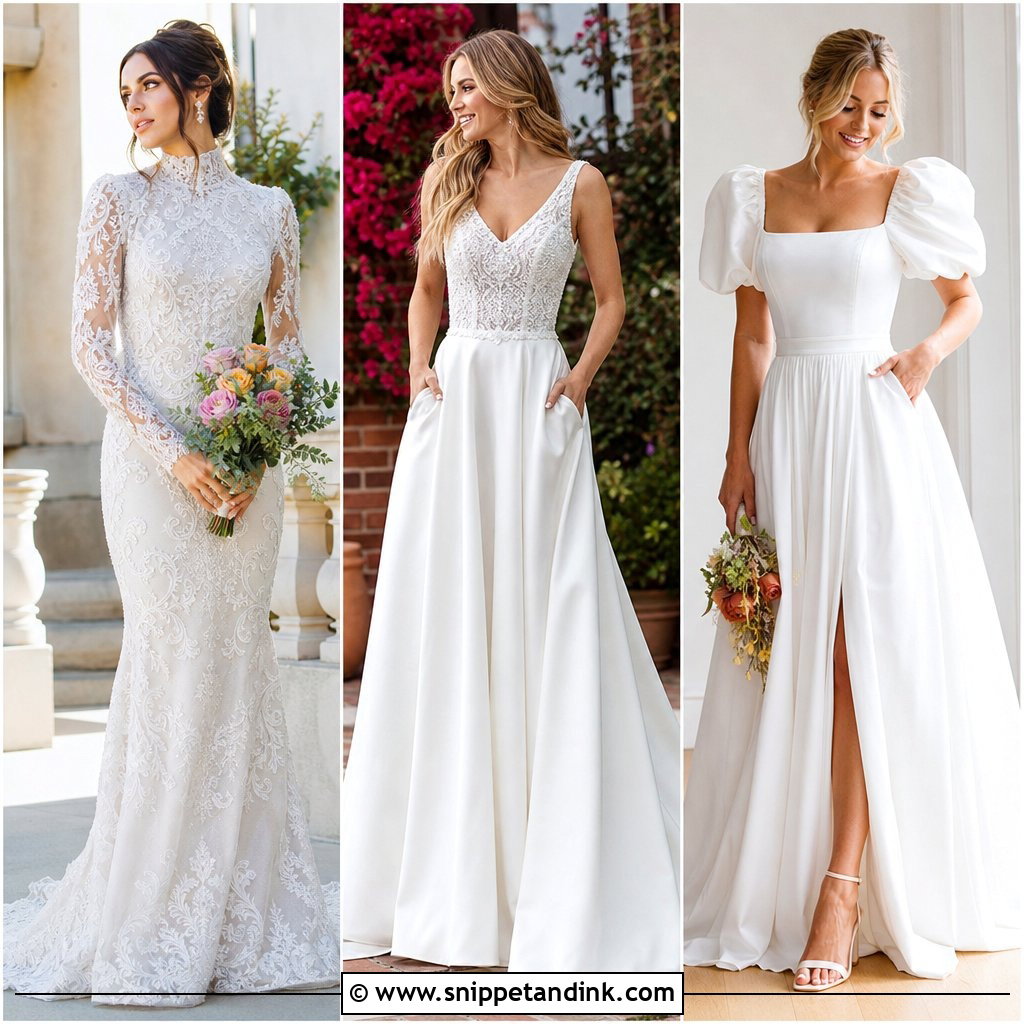
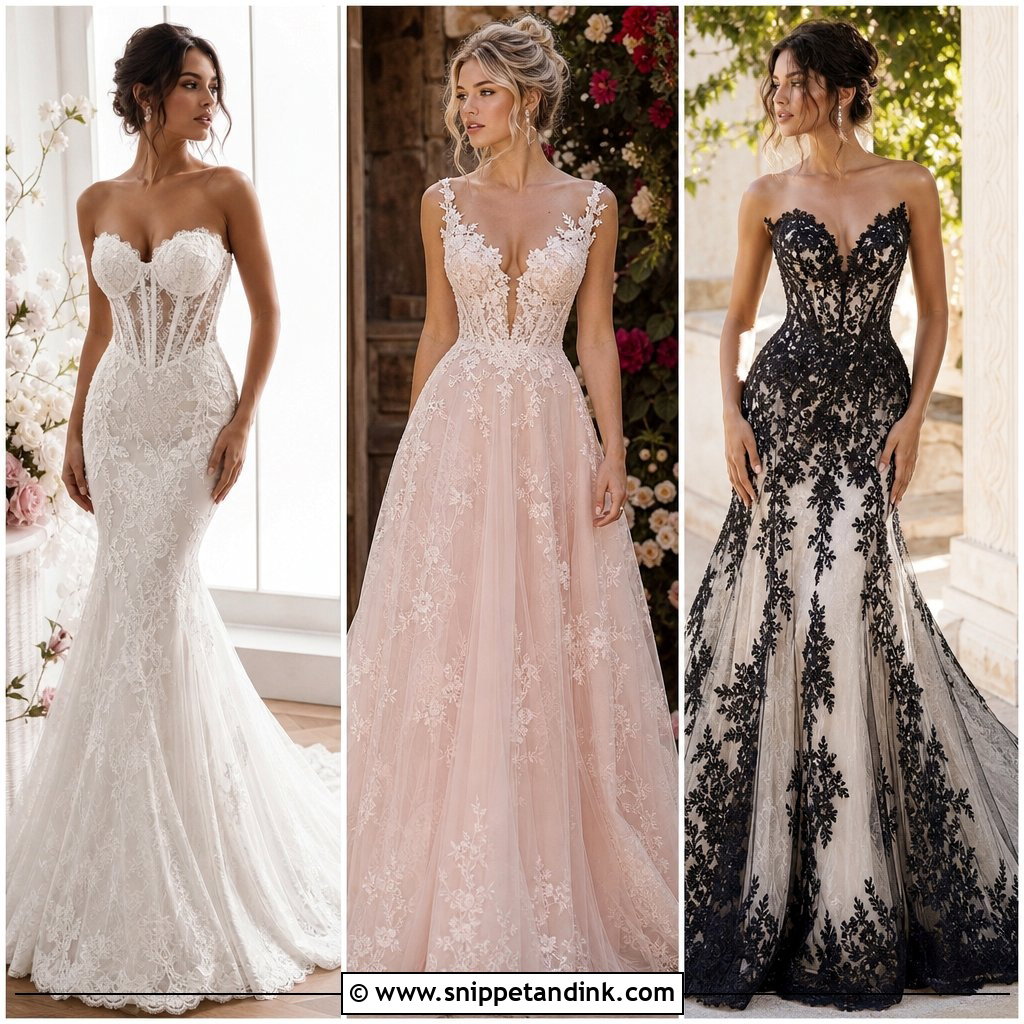
A handmade cape gives one gown two looks. Start with a clean silk or crepe column dress with narrow straps or a strapless neckline, then add a hand-embroidered tulle cape that fastens at the shoulders and falls to the floor. Floral appliqués, scattered pearls or a lace border carry the detail. Keep the cape’s embellishment light and reinforce the shoulder fastenings, since all that length pulls backward as you walk. Skip the veil so the cape stays visible, then take it off after the ceremony for an easier evening.
Sewing Your Own Dress: Where Plans Usually Slip
Brides who make their own gowns are usually talented, and the problems are rarely about skill. They’re about time and logistics.
- Handwork always takes longer than the estimate. Track your hours on a sample square, then multiply across the whole dress.
- You can’t fit your own back. Recruit someone who can pin you accurately, and schedule them like any other fitting.
- Buy extra fabric, thread and beads from the same batch. A second order rarely matches exactly.
- Aim to finish several weeks before the wedding. That leaves room for a final pressing, a full try-on with shoes and undergarments, and any repair.
Looking after handwork afterward
Heavy beaded, knitted and crocheted gowns should be stored flat in acid-free tissue rather than hung, because their own weight stretches them on a hanger. Take the dress to a cleaner experienced with hand-finished bridalwear, and point out painted or naturally dyed areas so they aren’t treated like plain silk.
Pick One Technique and Let It Lead
A handmade gown works when artistry and comfort are planned together. Crochet, embroidery, quilting, lacework, natural dyeing and careful alterations can all make a dress deeply personal, but the most successful ones start with a silhouette that suits your body and venue, then add one or two techniques rather than six. Test materials early, reinforce delicate areas and book enough fittings to judge weight, movement and coverage. Let shoes, veil and jewelry support the workmanship. Made by you, by someone you love or by an independent artisan, a well-planned handmade dress can be handed down.
You'll Like These Ideas:





Leave a Reply