
Most open-back dresses are sold on the hanger, and that’s the wrong way to judge them. What decides whether one works is everything around it: the hair that shows it off or hides it, the veil, the shoes for the ground you’re standing on, and the support sewn inside. So the twenty looks below are styled from head to toe, from satin cowls and long-sleeved lace to beach slips, ball gowns and a mini for the dance floor. As you read, think about three things I ask every bride: how deep you want the back, what the season and venue will do to you, and how much you plan to move. A good alterations team can add hidden structure to almost any of these without changing how they look.
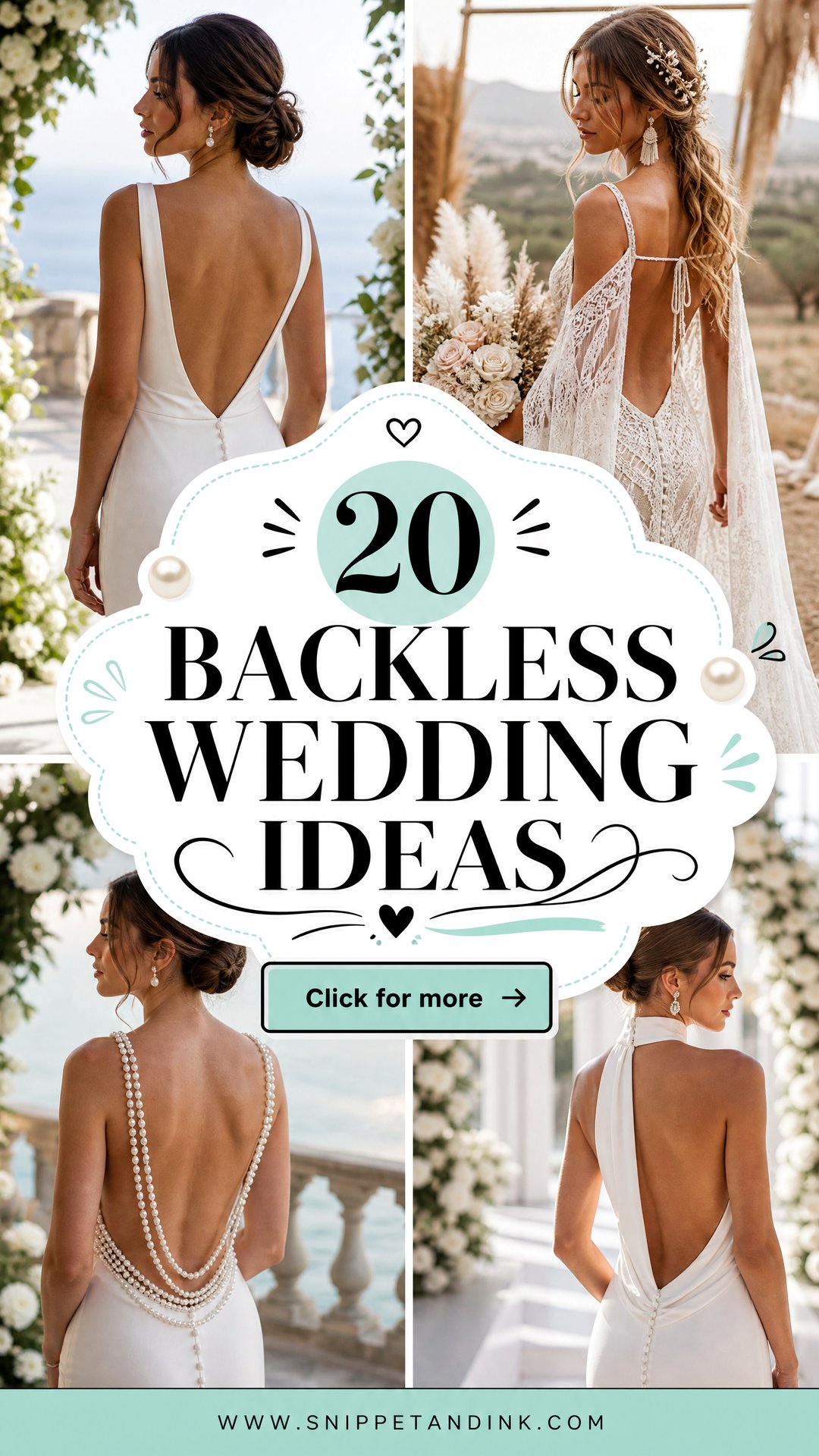
How Low Should the Back Go?
The depth of the opening changes what you can wear underneath, how the dress is built and even which venues will be happy with it. I talk brides through it in four rough zones.
- Shoulder-blade level: plenty of skin, little risk. Most low-back bras work and the bodice behaves like an ordinary dress.
- Mid-back, around the bra line: the most common choice. A regular bra band shows here, so you need built-in cups or a low-back converter.
- Waist level: the bodice must be fully self-supporting with boning and a waist stay. Ideal for most brides who want real drama.
- Below the waist: striking but demanding. Small movements expose more than you expect, and it only suits a fit that is near perfect.
Try the same style at two depths if the salon has them. A few inches make a bigger difference to how secure you feel than any photo suggests, and you can always ask the seamstress to raise an opening with a strip of matching fabric or mesh.
1. Satin Cowl Back Wedding Dress
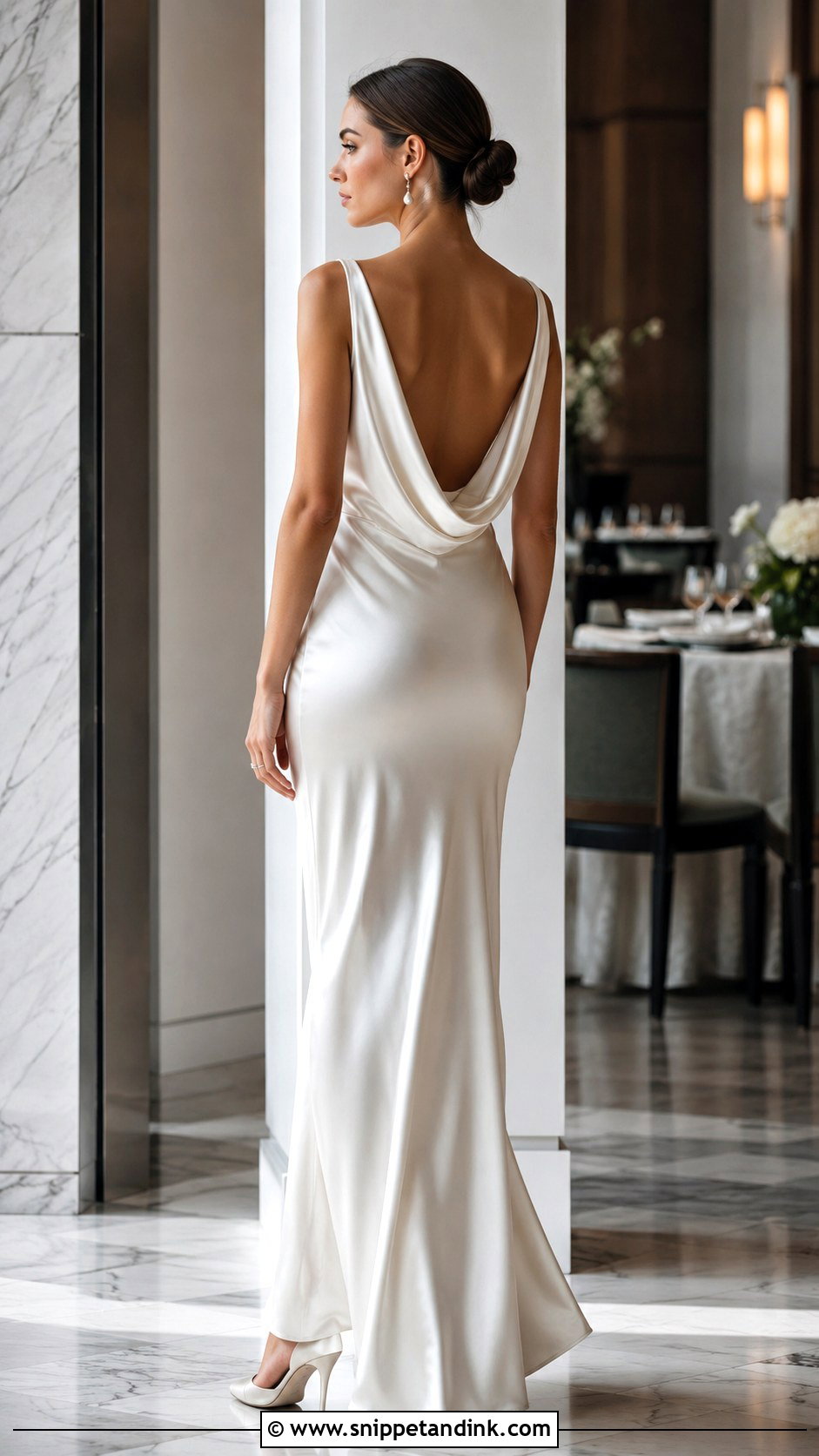
Bias-cut satin is what makes a cowl fall properly, so look for a column that skims rather than grips. The drape should hang between the shoulder blades and swing a little as you walk. Pointed ivory pumps, pearl drops and a slim metallic bracelet keep things spare, and a smooth low bun leaves the folds clear. Skip the beaded veil; a plain fingertip one won’t fight the sheen. Support here is usually adhesive cups plus fashion tape at the front neckline, and I’d test both on a warm day beforehand, because bias satin shows any lump underneath. Hotels, rooftops and pared-back indoor venues suit it.
2. Long Sleeve Lace Backless Wedding Dress
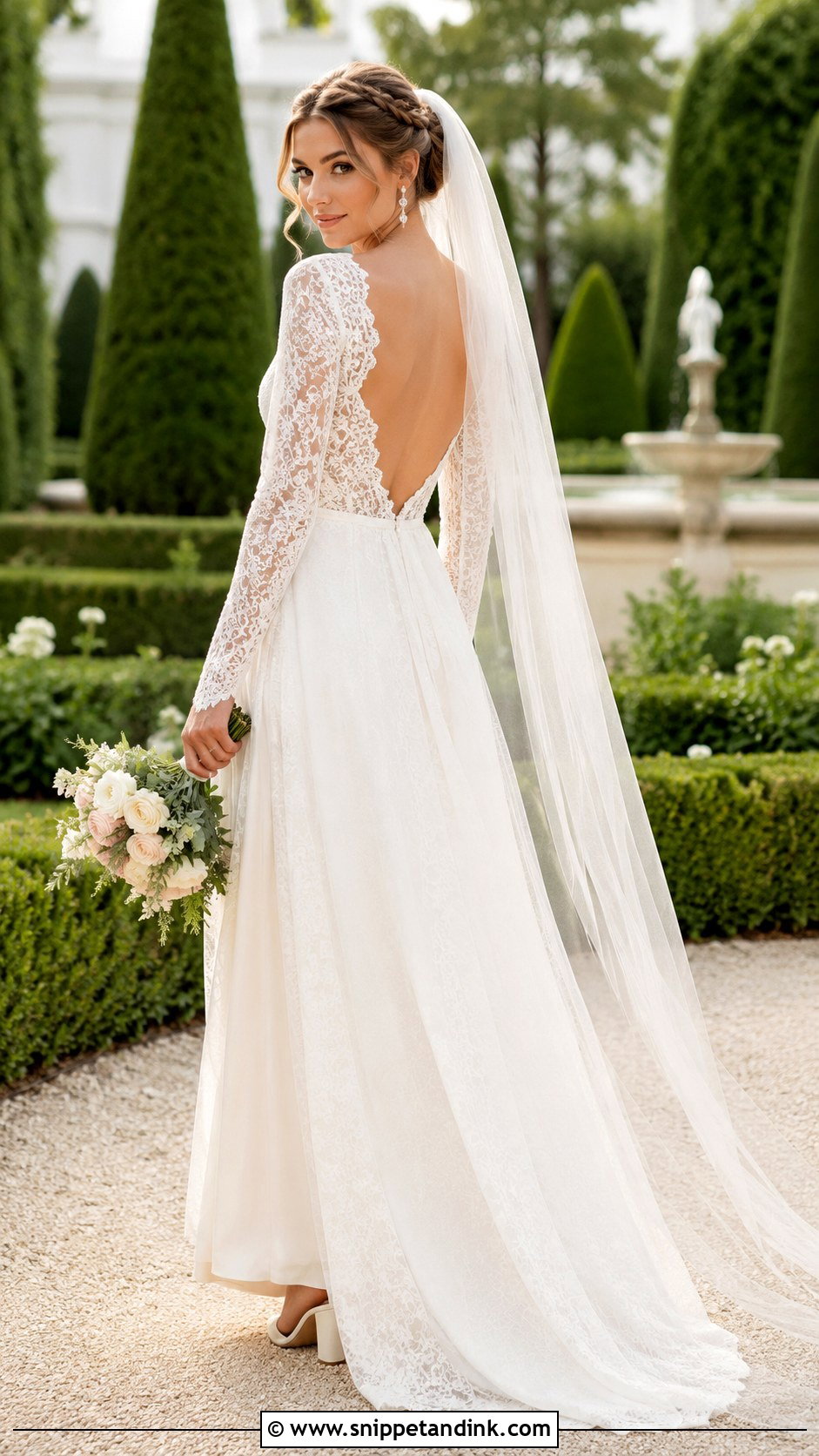
Covered and daring at once? Long lace sleeves with a deep open back manage it. The bodice should be structured, the back edged in scallops, and the skirt a flowing A-line that lets you breathe. Ivory block heels, small crystal earrings and a comb in a chignon or braided bun show the lace frame, and a veil with a simple edge softens it without hiding anything. Lace sleeves sit close to the arm, so the armhole has to be cut high enough that lifting your hands doesn’t drag the back up. Ask about built-in cups and a waist stay. It’s my first suggestion for autumn and winter weddings and for formal churches with a cool interior.
3. Halter Backless Wedding Dress
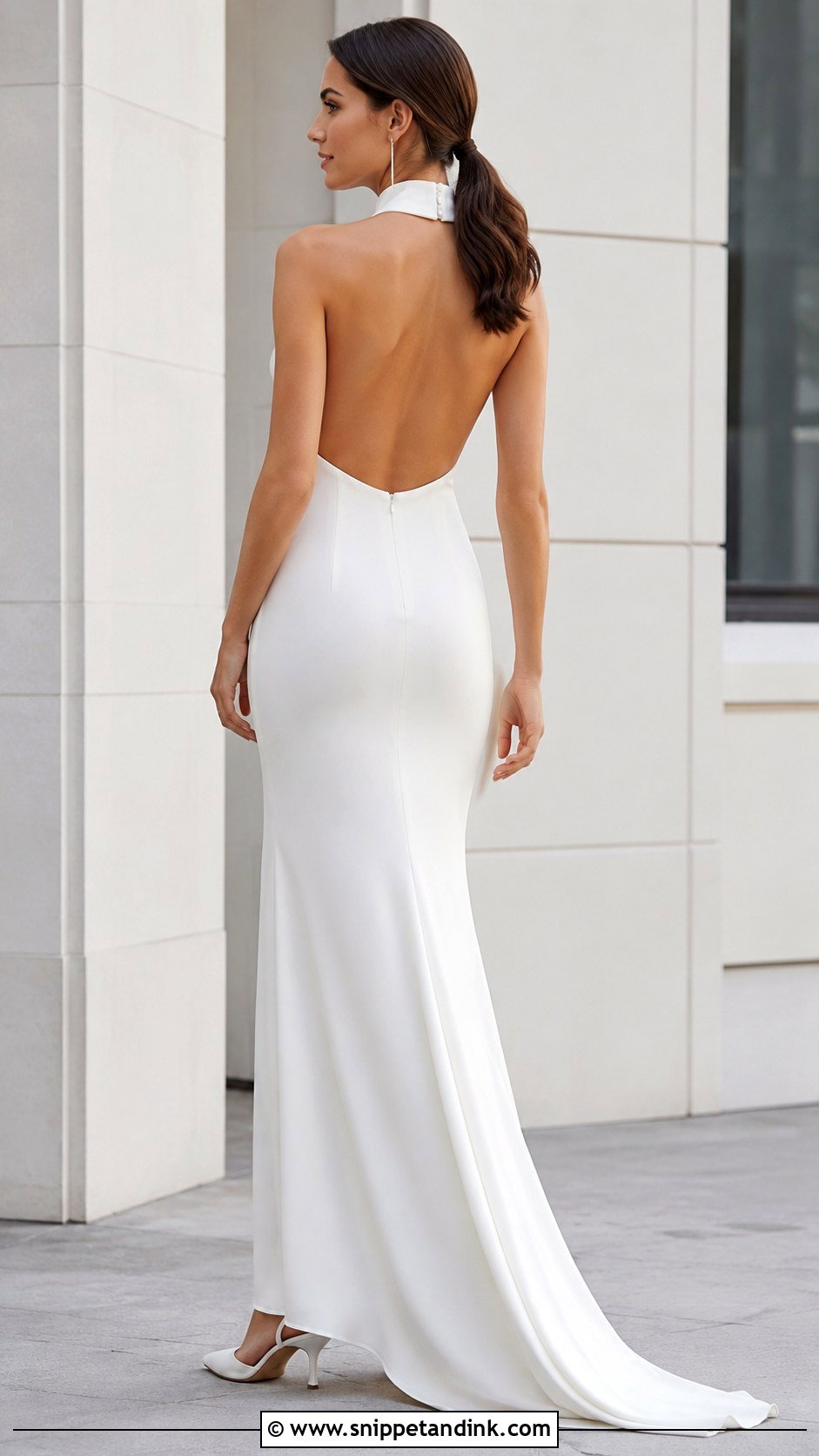
Confident brides tend to love a halter backless wedding dress in crepe: high neck, bare back, softly fitted skirt. The halter shows off the shoulders, so I leave the neck bare and use slim earrings, pointed slingbacks, a small structured bag for portraits and a polished low ponytail. A long narrow veil adds motion. What I watch for is the neck taking the weight. If the collar is doing all the holding, you’ll have a sore neck by the toasts, so the bodice needs built-in support and a firm waist seam to carry the skirt. Galleries and city venues with plain backdrops show its lines best.
4. Square Neck Backless Wedding Dress
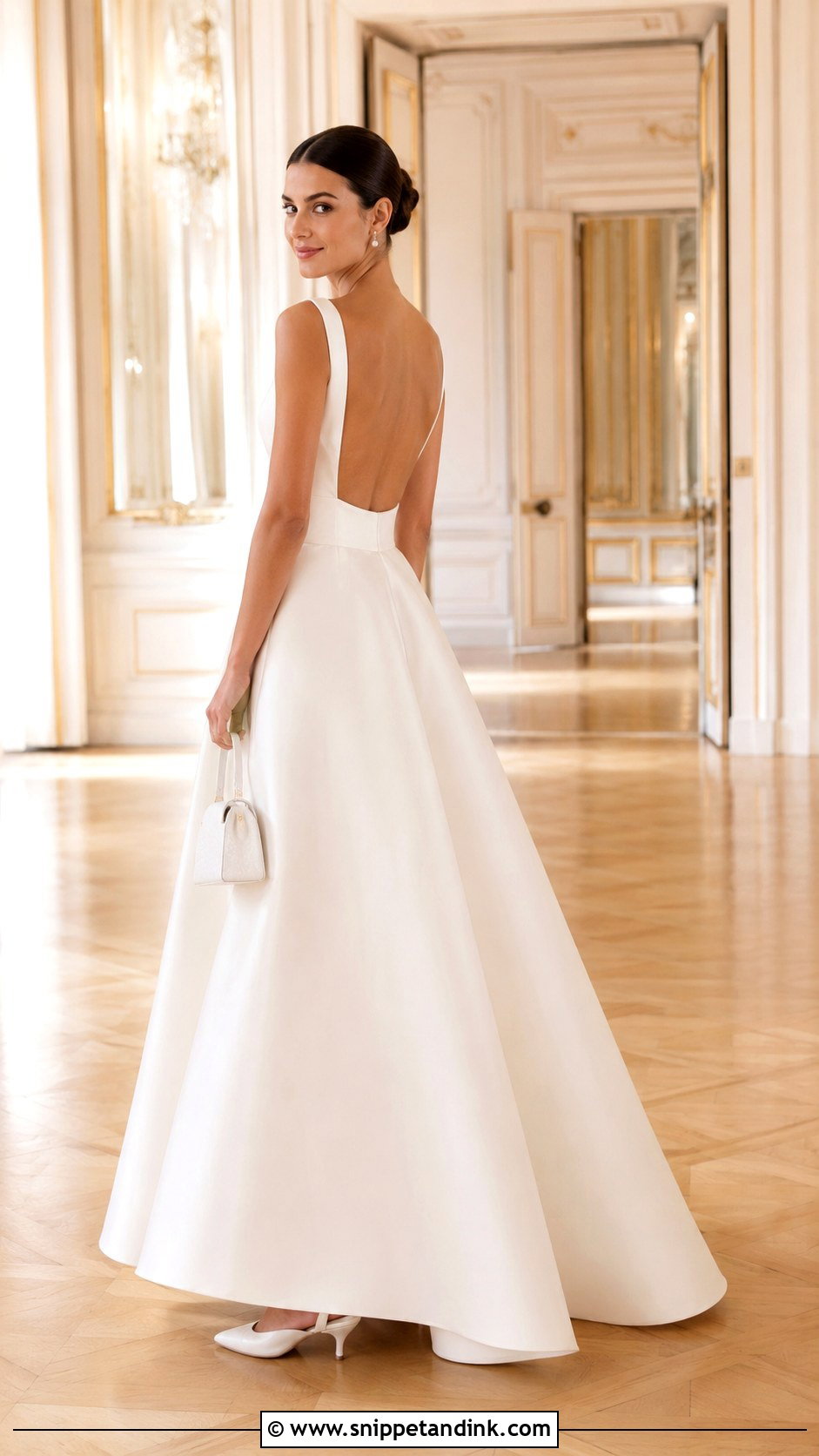
The straight front and the surprise behind are what make this one. A square-neck backless wedding dress holds its shape best in mikado, heavy satin or thick crepe, and wide straps give far more security than spaghetti straps. Pearl studs, ivory kitten heels and a little top-handle bag for getting-ready shots keep it neat, with a centre-parted bun and a medium sheer veil you can take off after the vows. Hidden cups and side boning hold everything in place. It flatters a wide range of figures because the square neck balances the shoulders, and it sits well in ballrooms and estates.
5. Backless Mermaid Wedding Dress
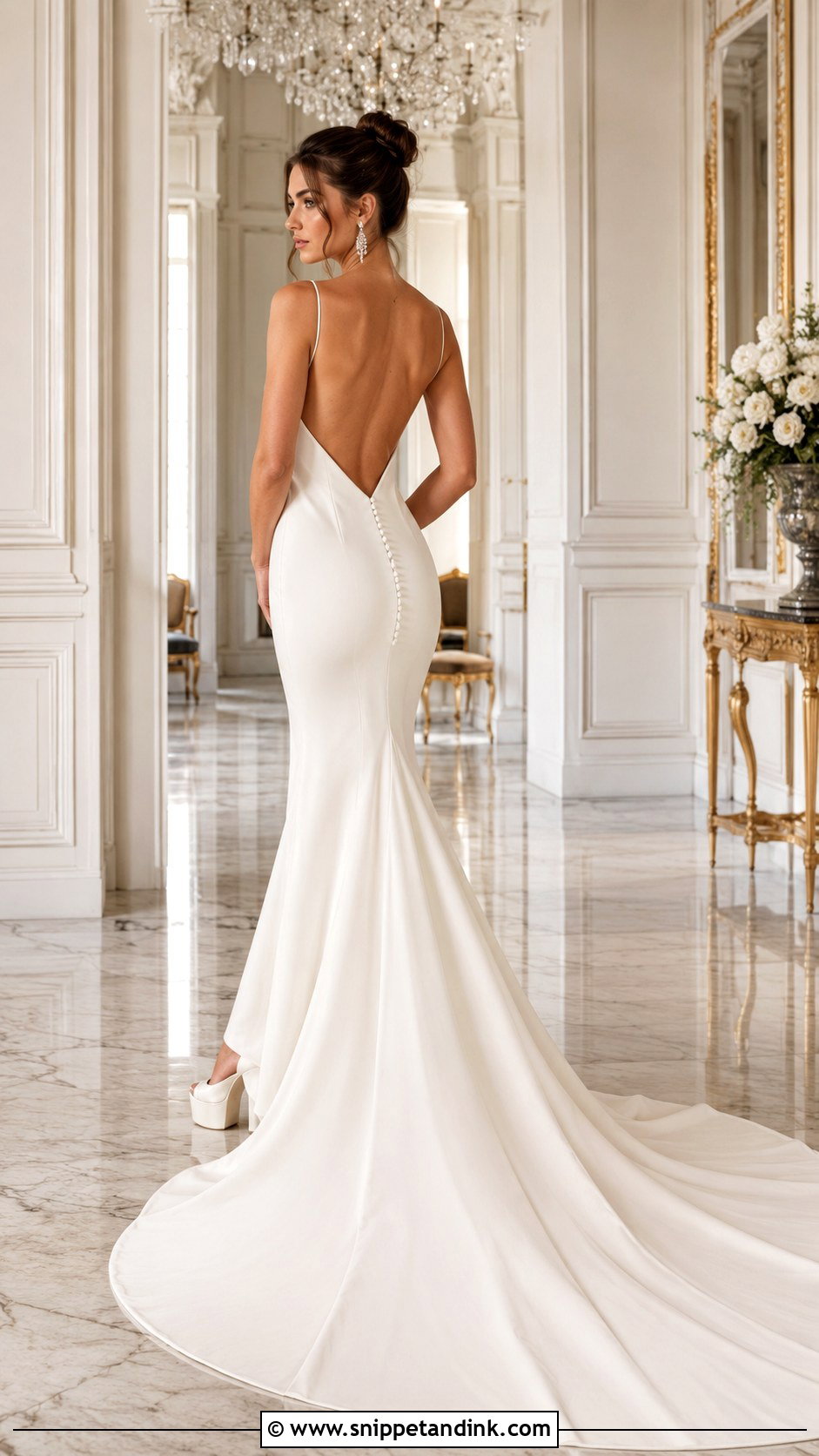
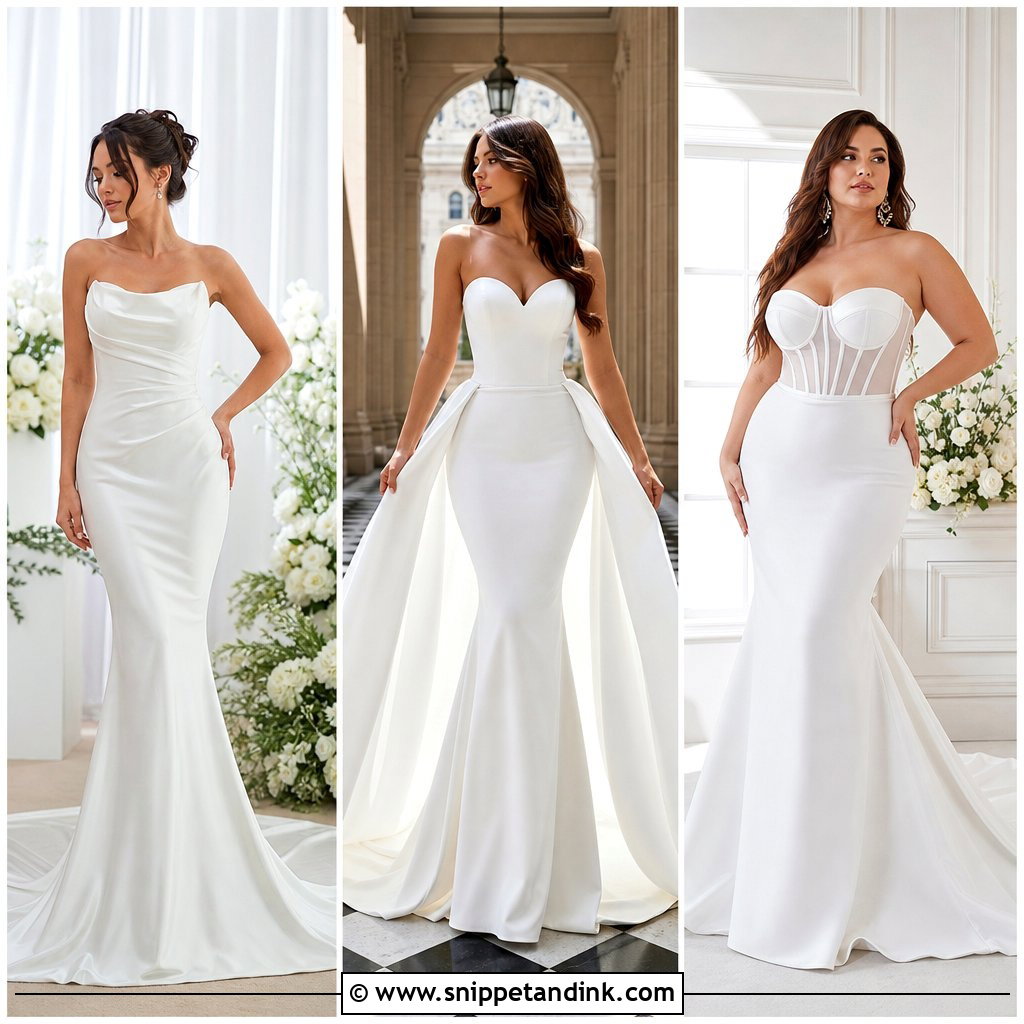
Nothing makes an entrance like a mermaid with a deep V behind it. Crepe looks sleek; lace looks softer. The V lengthens your torso and draws attention to the fitted line. I pair it with cushioned platform heels (you’ll stand a lot), crystal drops, a simple bracelet and either a high bun or side-swept waves pushed off the back. A plain long veil gives contrast against a detailed bodice. Here’s the catch: the skirt is tight through the hips, so stairs, car doors and dancing are all harder. Practise all three at the fitting, and make sure the bustle is placed so the flare lifts cleanly.
6. Backless Ball Gown Wedding Dress
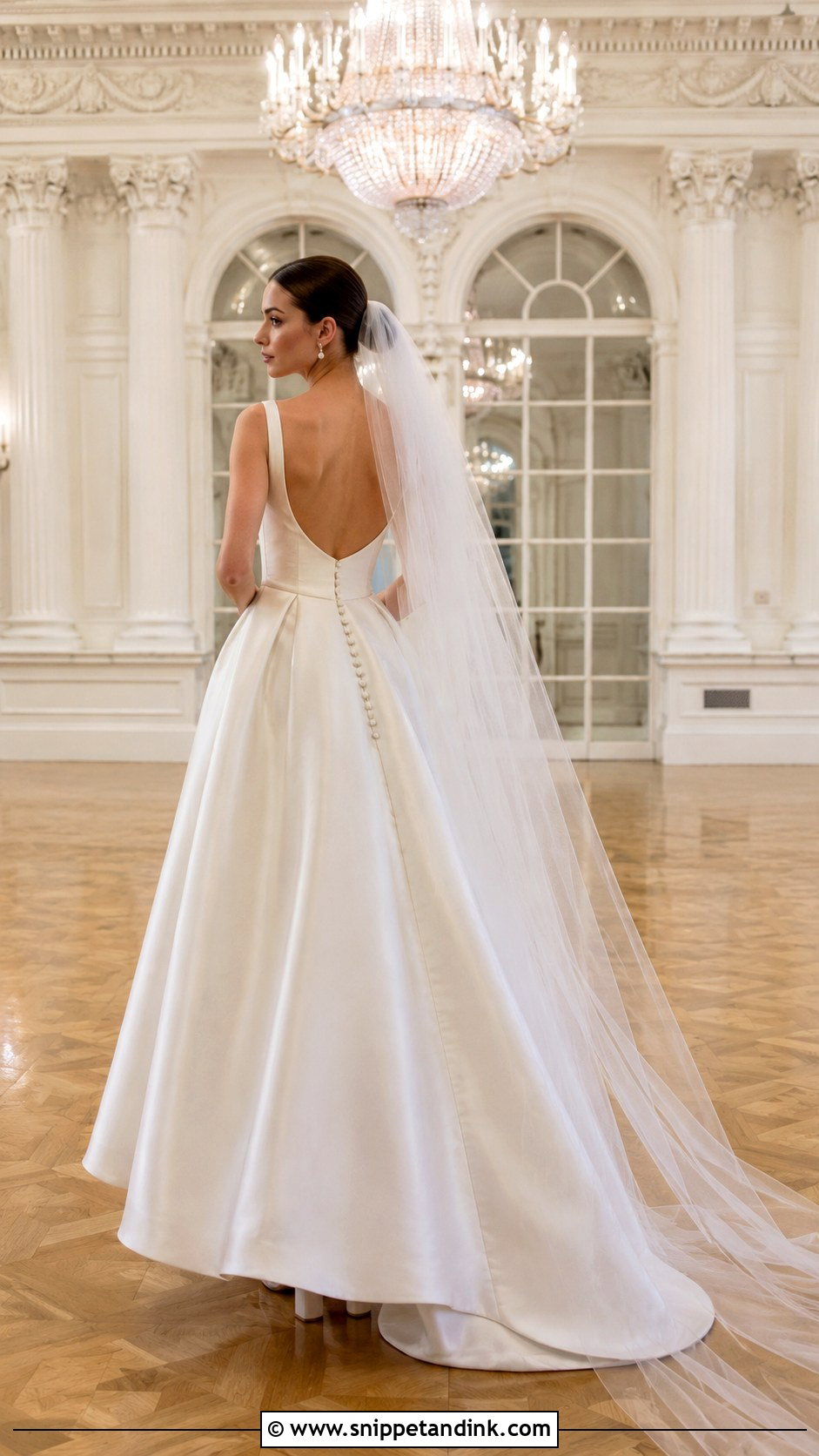
Picture the full ball gown turning to show an open back; the volume is traditional, the back isn’t. Go for a fitted bodice with wide straps and a full satin or layered tulle skirt, with a scoop or V cut gracefully rather than very low. Comfortable block heels hide under the skirt, and small pearl earrings, a fine bracelet and a sleek bun let the back construction show. A long veil running past the train adds formality. A heavy skirt pulls at the bodice all day, and an open back has less fabric to resist it, so the internal structure has to be strong. Large ballrooms and estates give it room.
7. Boho Backless Wedding Dress
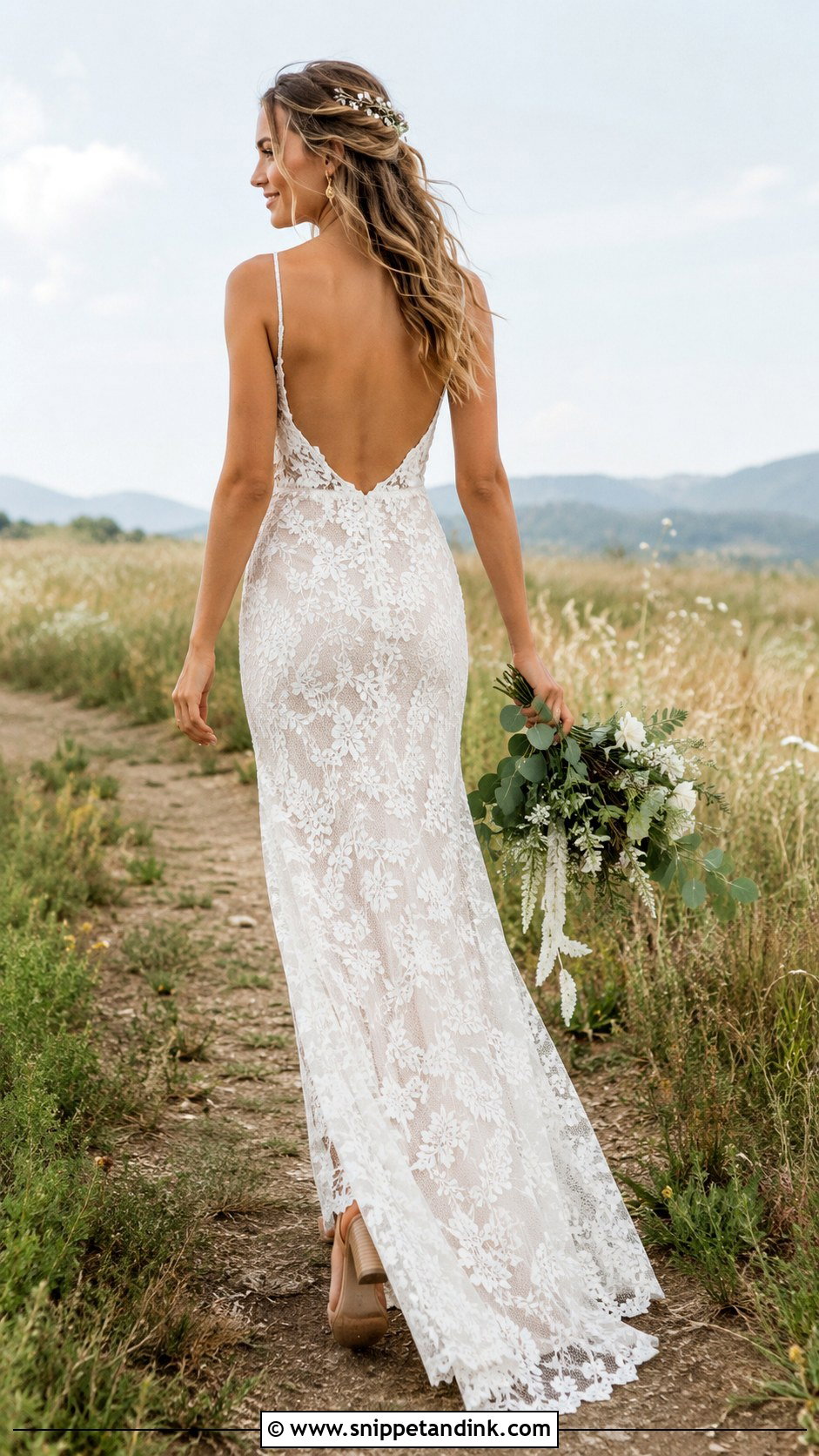
Botanical lace, slim straps and an open V give the boho version its ease. Insist on a lightweight lining, because bare lace against warm skin gets itchy at an outdoor wedding. Low block-heel sandals, small gold earrings and a hair vine in loose half-up waves keep it relaxed, and if you want movement, a sheer draped cape works instead of a veil. Hold back on accessories; the lace already carries a lot of detail. I’d use built-in cups with a little fashion tape at the straps. Meadows, gardens and country barns are its natural setting.
8. Beach Backless Wedding Dress
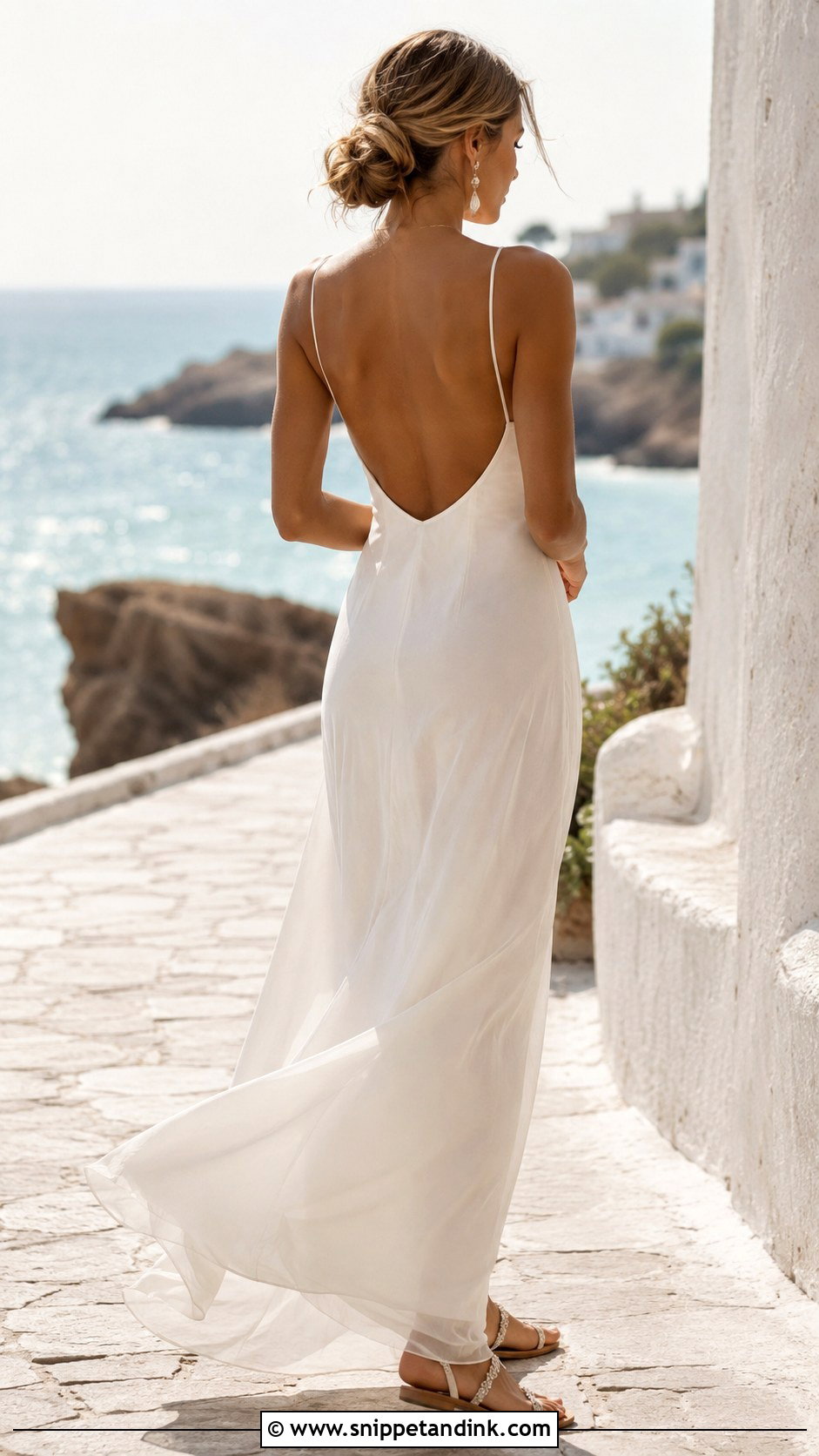
Sea air moves chiffon in a way no studio fan can copy, which is why a beach backless wedding dress in chiffon, silk or crepe looks so alive. Choose thin straps, a low scoop back and a sheath or relaxed A-line that won’t fight the sand. Flat embellished sandals, pearl earrings and a loose low bun suit it, along with a short airy veil. Drop the long train or add a wrist loop so you can lift the hem. Adhesive support needs testing in heat, since humidity and sunscreen weaken it quickly. Waterfront photos are where this one comes into its own.
9. Pearl Backless Wedding Dress
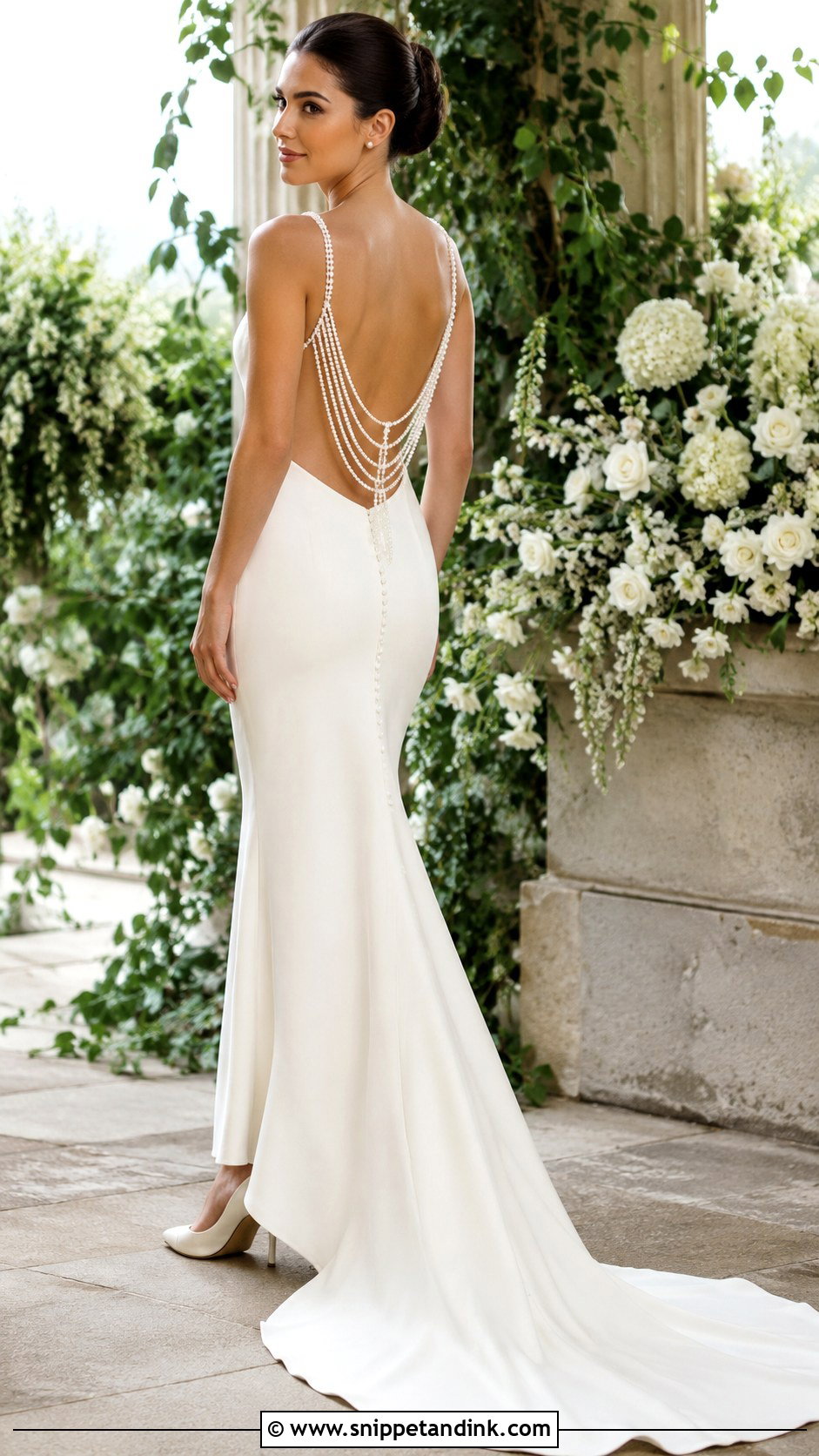
Pearls on an open back can sit on the straps, scatter across an illusion panel or hang in strands over bare skin. Because they’re the feature, keep everything else quiet: satin pumps, pearl studs, a smooth low chignon and a sheer veil with only a light scatter of pearls. If strands already sit near your shoulders, a necklace is too much. Draped strands are the fussy part. They need to hang at even depths and stay put when you turn, so I ask the tailor to tack them at a few hidden points. Formal gardens and elegant indoor venues show it well.
10. Bow Backless Wedding Dress
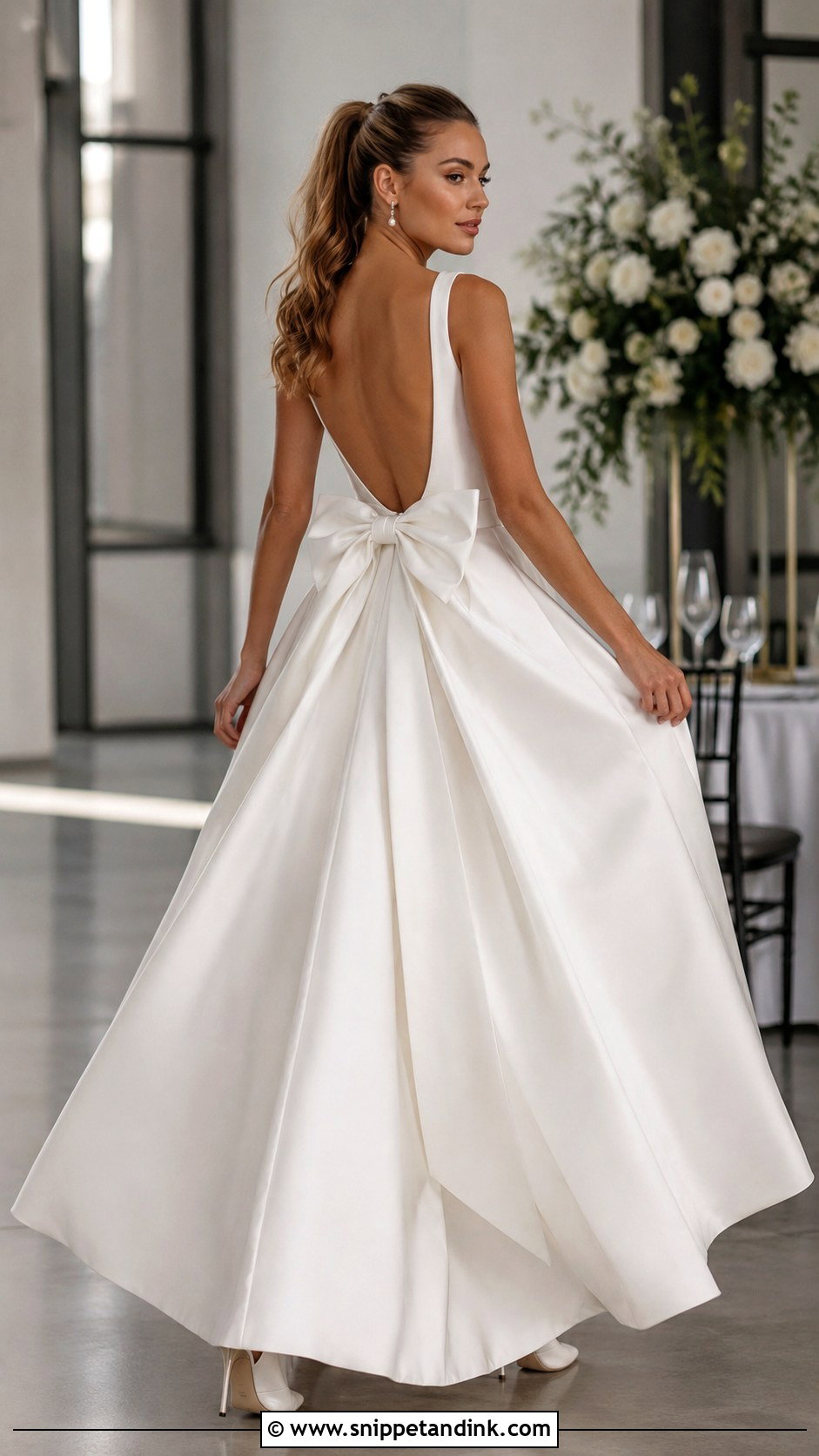
A bow on the back keeps an open dress playful. It can be a structured bow at the waist of a low-back satin gown or soft ties at the shoulders, on a column or A-line skirt that lets the bow lead. Pointed pumps, slim drops and a clean bun or high ponytail keep the lines tidy, and the veil should finish above or below the bow, not on it. If the bow detaches, you can take it off for dancing. Tied bows loosen with movement, so I stitch the knot discreetly once it’s tied the way you like. Walking shots and the exit are where it shows.
11. Keyhole Back Wedding Dress
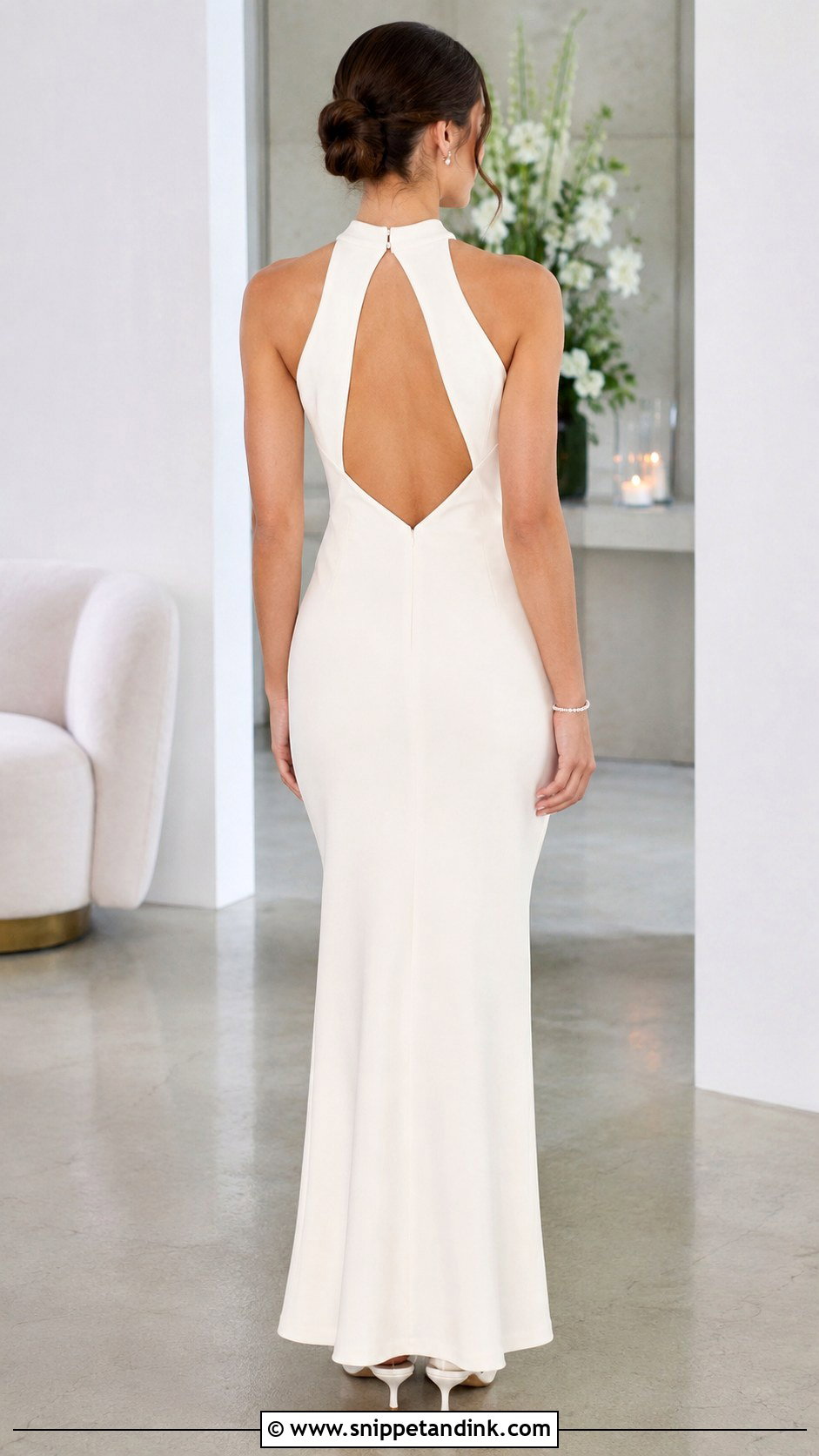
Moderate coverage with one distinctive cut-out: that’s what a keyhole-back wedding dress gives you. The opening can be round, teardrop or long and narrow, framed in lace, crepe or fine beading, on a high-neck sheath or a gently fitted A-line. Low pointed heels, small crystal studs, a narrow bracelet and a smooth updo show the shape, and a simple sheer veil keeps it ceremonial. With fabric all around the opening, it supports you better than a fully open back. Make sure the neck closure rests comfortably and doesn’t drag forward. Intimate ceremonies and cooler months suit it.
12. Illusion Back Wedding Dress
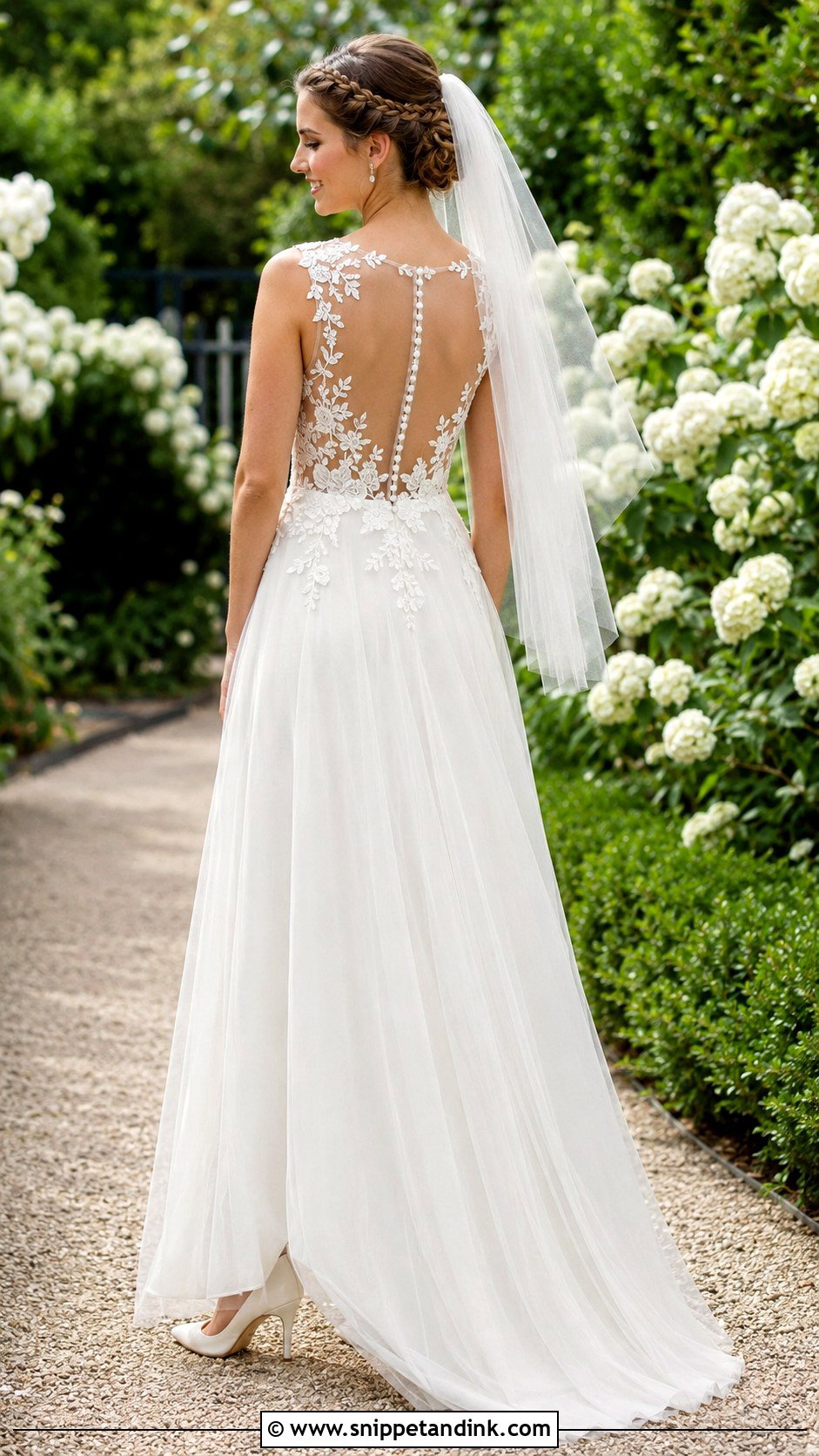
From the pews, an illusion back looks like lace sitting directly on skin. It’s built on sheer mesh with appliqués and a line of covered buttons down the centre, over a soft A-line or a fitted trumpet. Ivory pumps, understated earrings, a neat braided bun and a plain tulle veil let the pattern read once the veil is back. Match the mesh closely to your skin tone, and check it in daylight as well as under warm bulbs. Mesh has little stretch, so raise your arms and sit at the fitting; if the panel strains or wrinkles, it needs to be let out a fraction.
13. Backless Wedding Dress With Detachable Sleeves
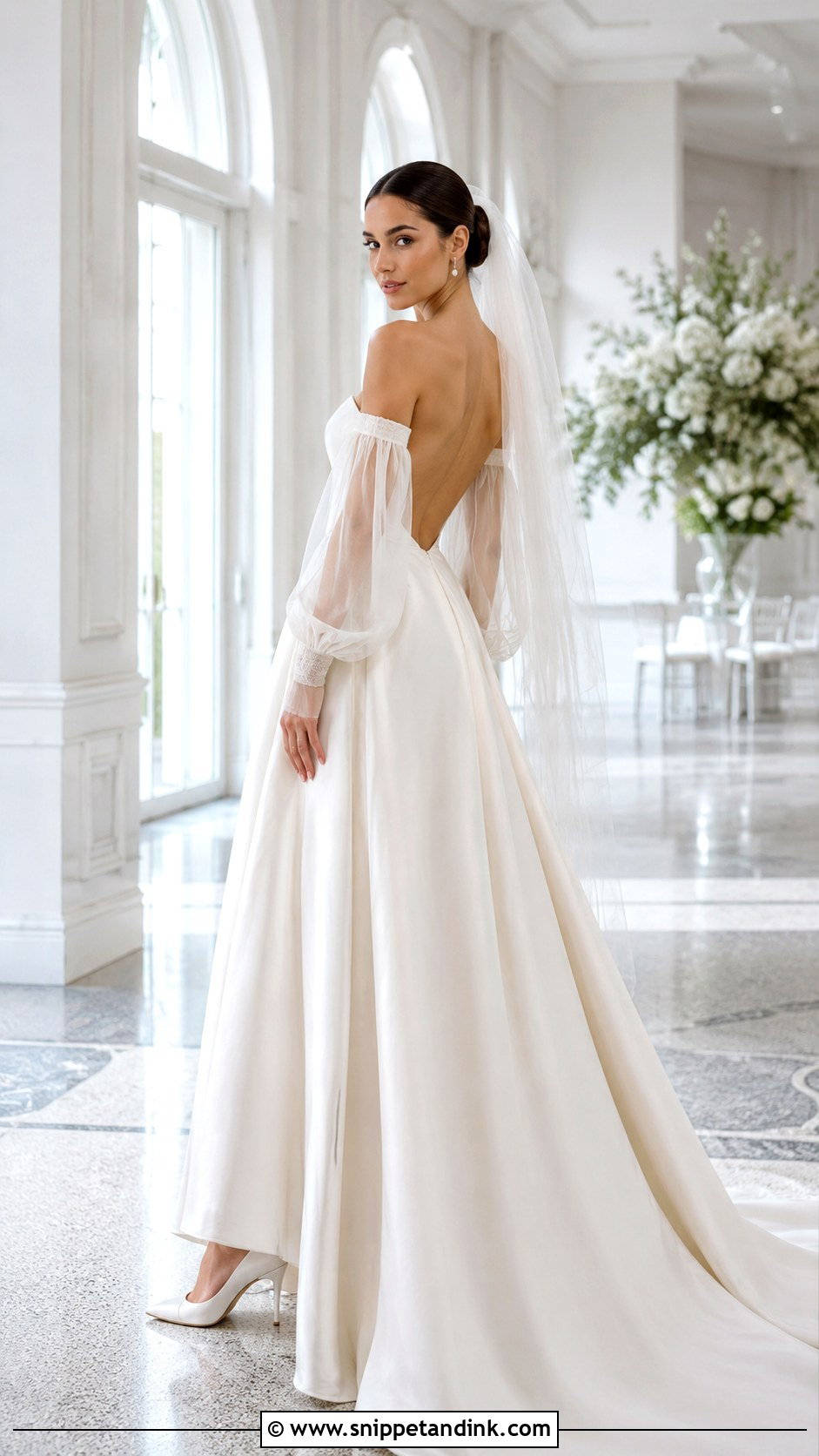
Two looks, one dress. A strapless or thin-strap gown with a low back and a softly structured A-line skirt takes fitted lace, off-the-shoulder drapes or light tulle sleeves for the ceremony, and goes bare for the party. Comfortable pumps, pearl drops, a sleek bun and a simple veil are plenty, since sleeves and back already carry the detail. The fastenings decide how this goes on the day: they should be small snaps or loops that one trusted person can undo quickly. It’s a sensible pick when the ceremony is cool and the evening gets warm, and it adds coverage without altering the dress permanently.
14. Backless Wedding Dress With Detachable Overskirt
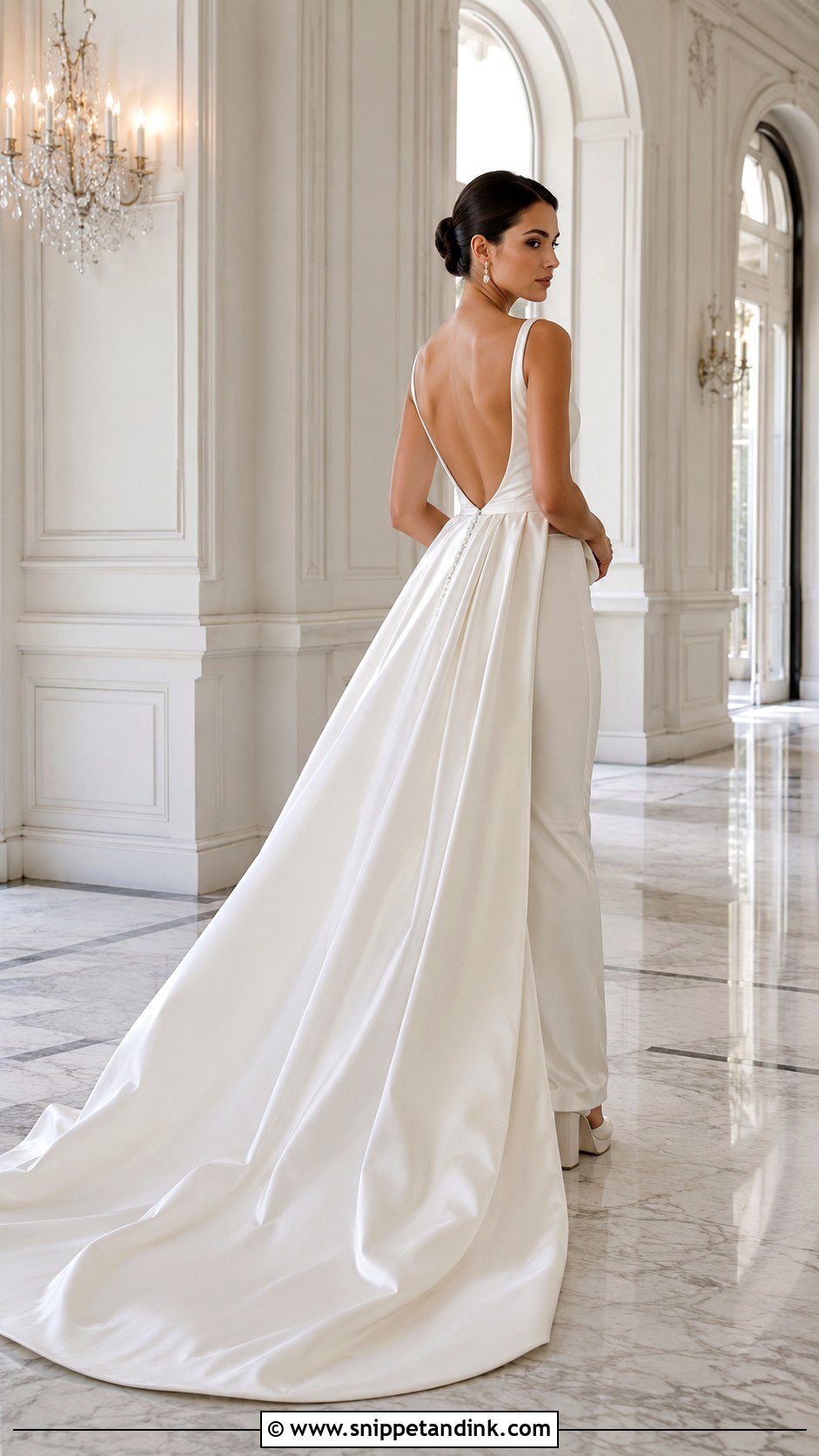
Volume for the vows, freedom after: a detachable overskirt gives you both. The base is a fitted crepe or satin column with a deep scoop or V behind; a full tulle or matching satin overskirt goes over it for the ceremony and comes off for dancing. Supportive platforms, delicate earrings, a polished low bun and a plain long veil suit the fuller look. The weak spot is the overskirt waistband, which can sit bulky or gape at the open back. Ask for it to be concealed under a self-fabric band and fastened with hooks, not just snaps.

15. Plus Size Backless Wedding Dress
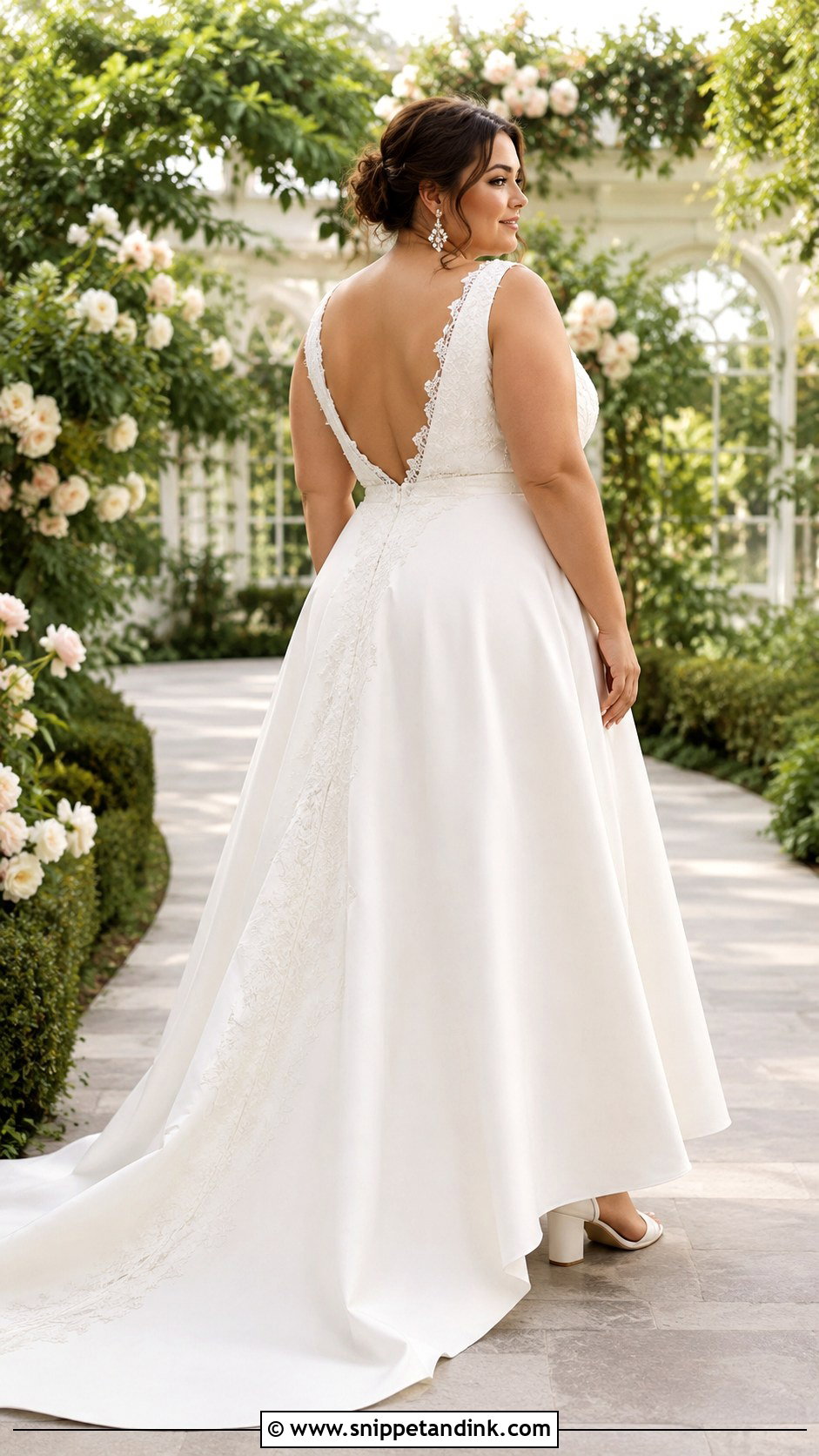
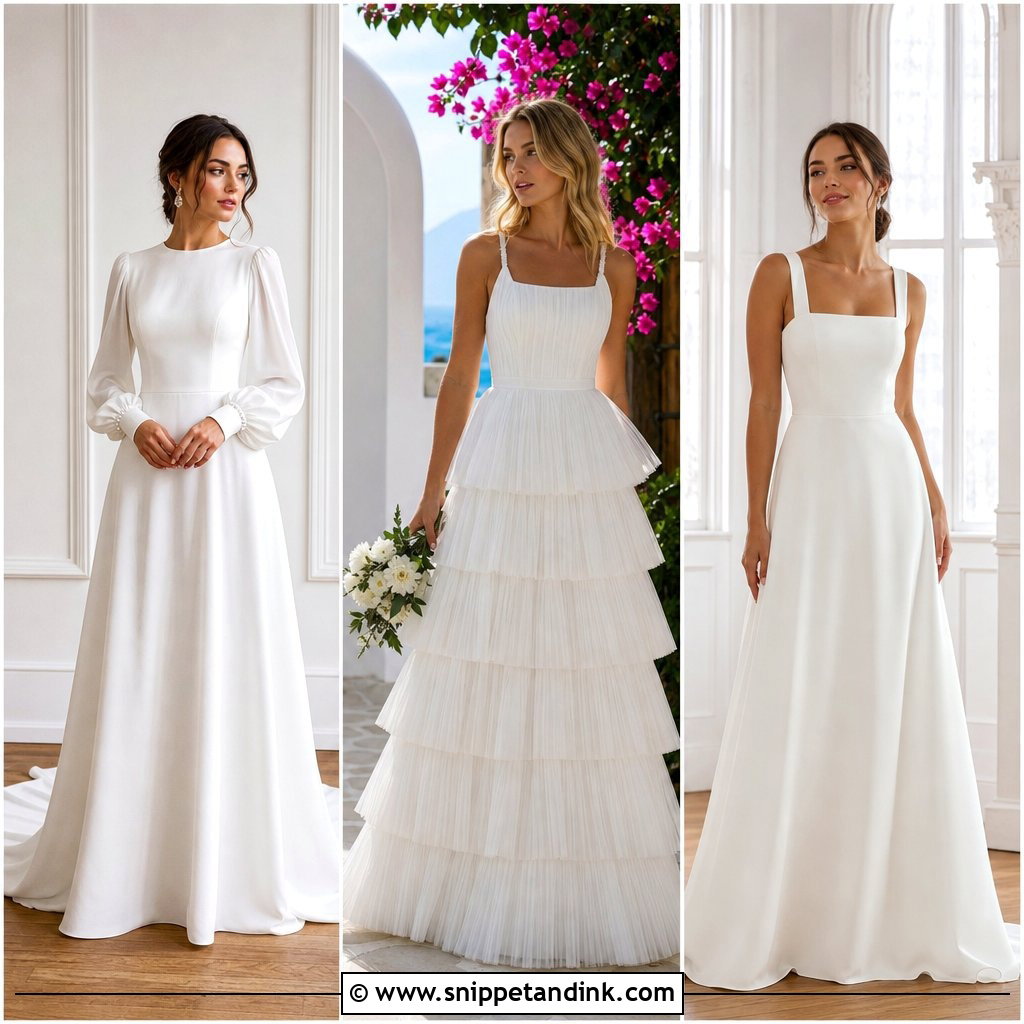
Construction does most of the work in a plus-size open back. Wide straps, a structured waist, sewn-in cups and a low V on an A-line or fit-and-flare give hold, and lace appliqués or illusion mesh across part of the back add security without closing it. Stable block heels, statement earrings, a soft updo and a fingertip veil finish it. Ignore the size on the label and fit the body in front of you; bridal sizing runs small. I’d look for a tailor who has built in support before. Walk, sit and raise your arms at each fitting, and if you find yourself tugging at anything, it isn’t finished.
16. Petite Backless Wedding Dress
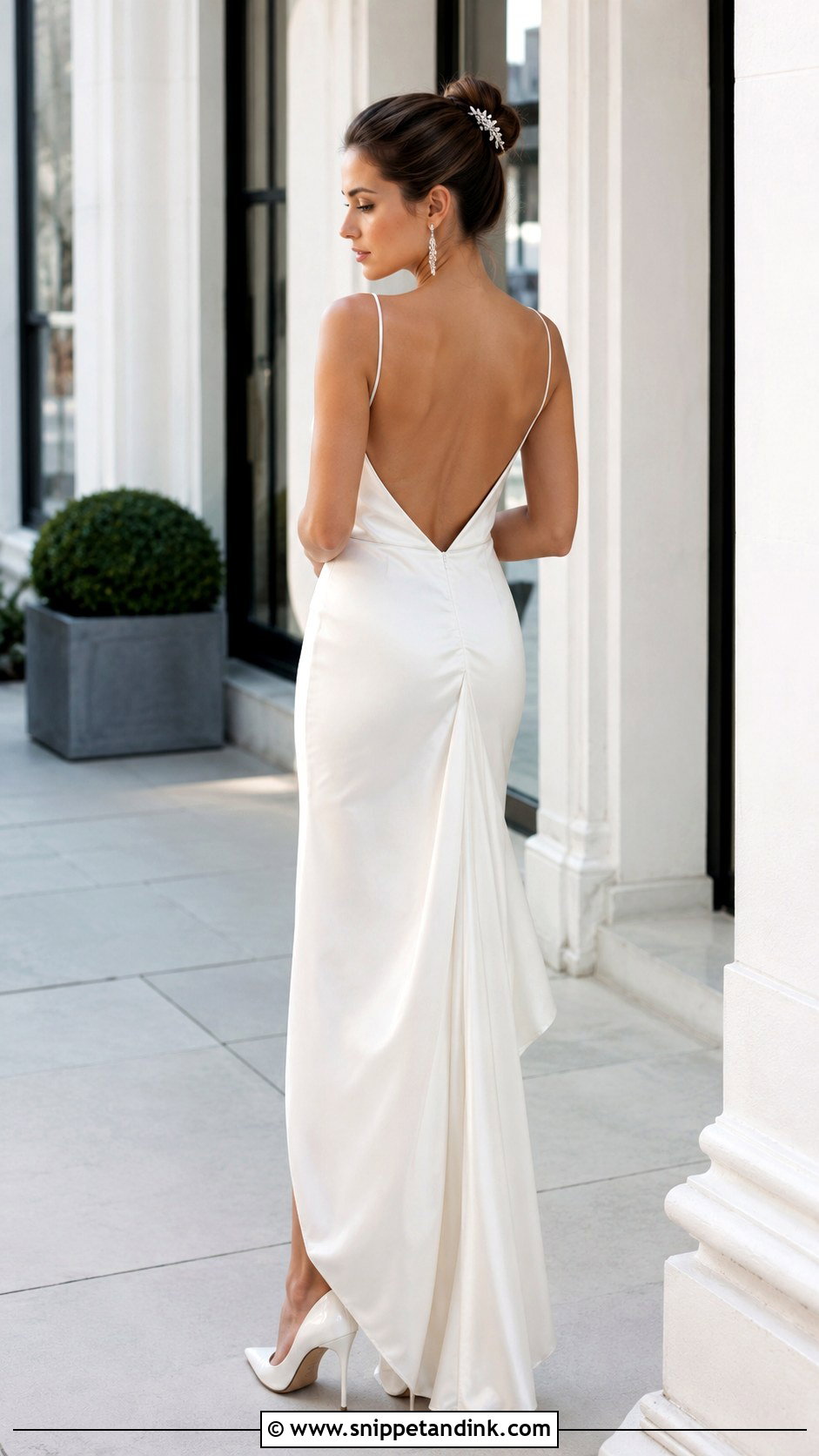
For a petite bride, a backless sheath wedding dress gives one long line from shoulder to hem. A slightly higher waist, narrow straps and a clean V keep the proportions right; a back cut too low can make a short torso look shorter. Light crepe, silk or satin drapes without bulk. Pointed heels, delicate earrings, a small comb and a high bun or sleek ponytail add height, and a narrow veil keeps you from being swallowed. Hemming is critical here, especially with a train, and any embellishment should sit near the neckline or waist where it draws the eye up.
17. High Neck Backless Wedding Dress
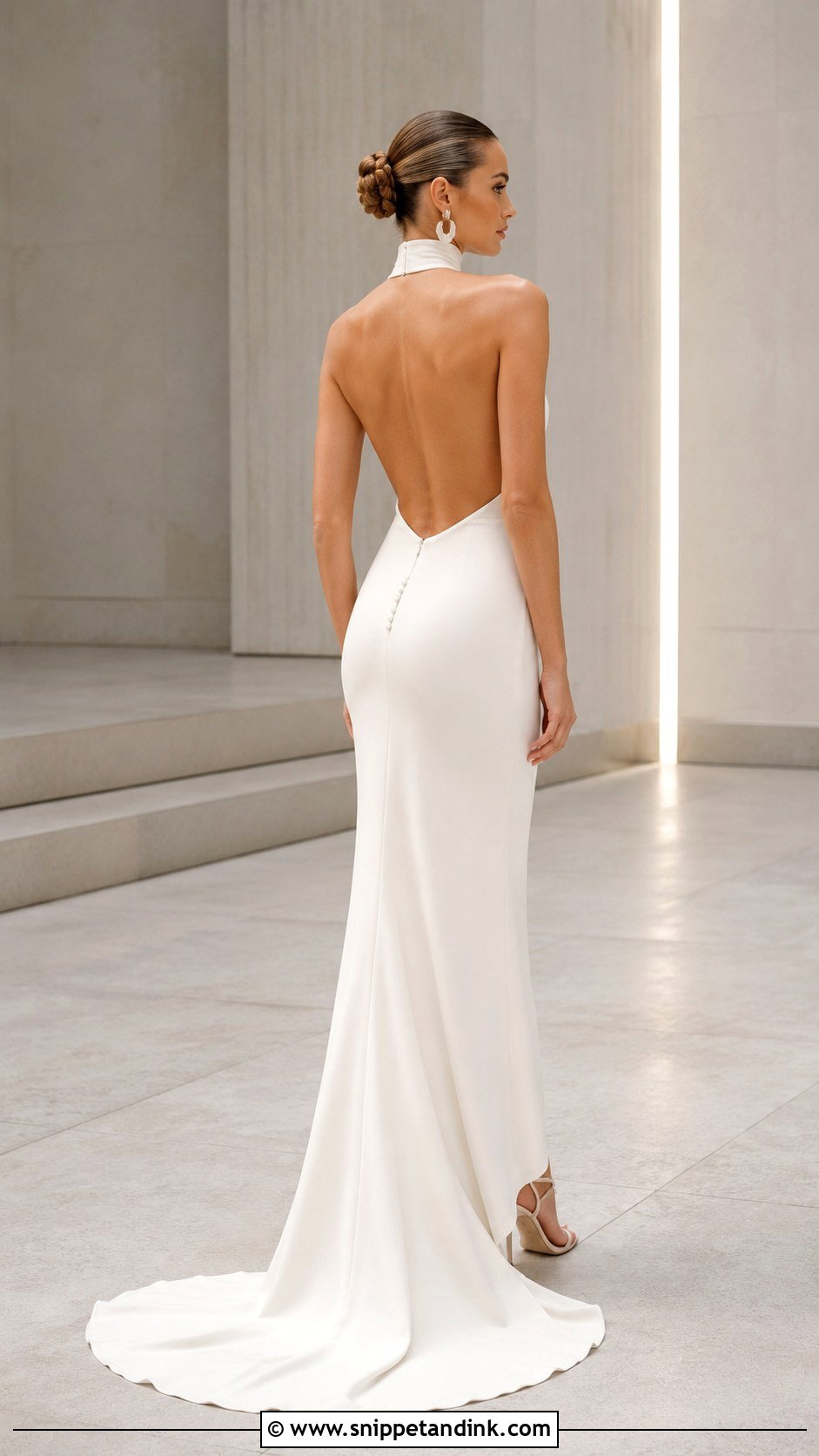
Clean and covered from the front, wide open from behind: the high neck gives the most contrast of any style here. Crepe columns, lace sheaths and satin A-lines all carry it, as long as the collar closure is secure. Slim heels, sculptural earrings and a bare neck are right, with a smooth bun or braided updo so nothing crowds the collar. A light veil you can remove makes the back portraits easier. Bend and turn your head at the fitting; a collar that pulls in those positions will annoy you all day. A waist stay takes much of the load off your neck.
18. Backless Tea Length Wedding Dress
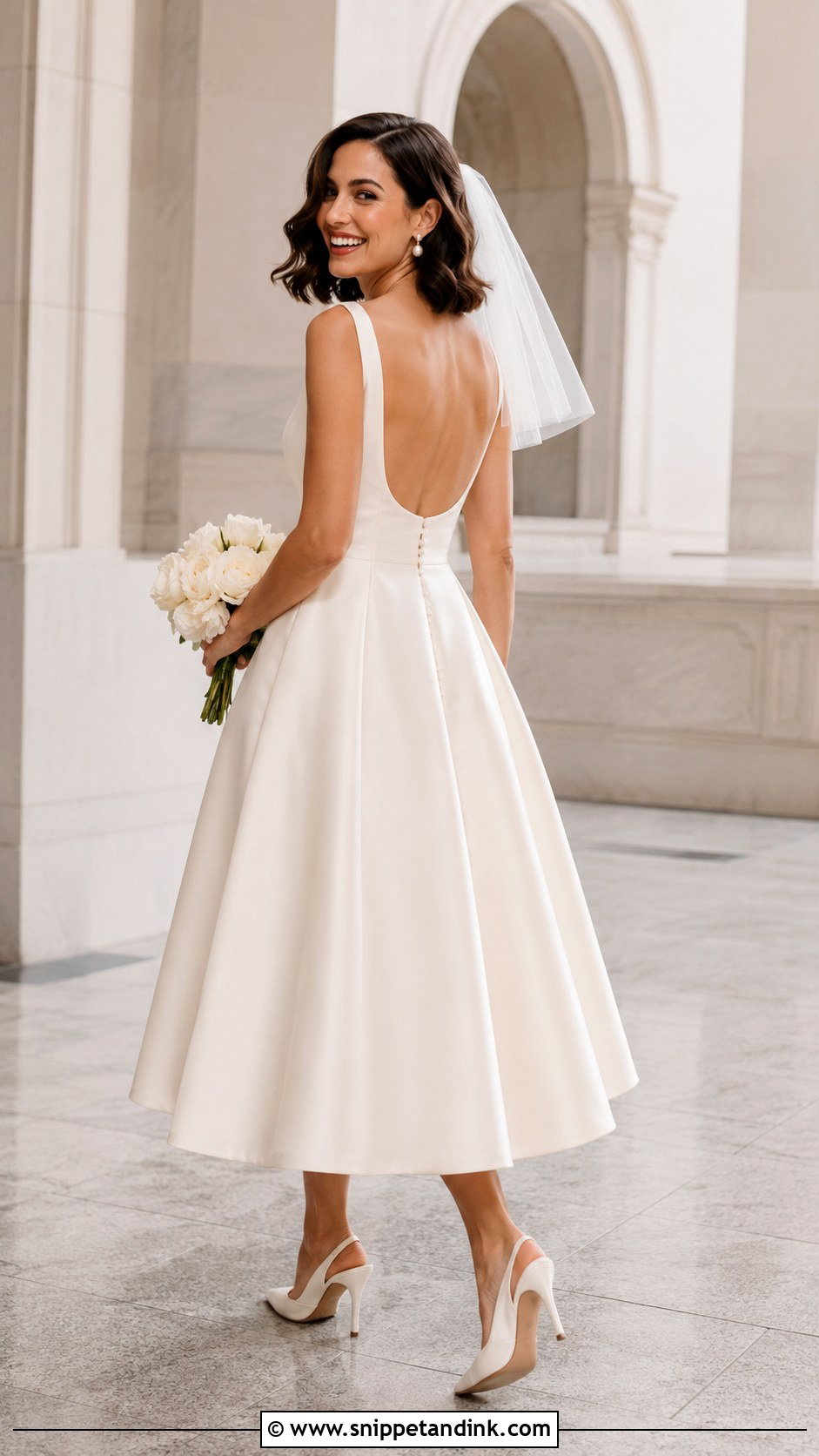
Tea length has a vintage cheerfulness and is much easier to move in. The skirt ends between knee and ankle under a fitted bodice and a scoop back, in crisp satin or softer tulle. Your shoes are on show, so make them count: pointed slingbacks or embellished block heels, with pearl earrings, a short veil and a polished bun or curled bob. A thin belt can mark the waist if the dress isn’t already busy. Shorter dresses are often made lighter inside, so check the cups are properly sewn in. Courthouse weddings, daytime receptions and restaurant dinners suit it.
19. Backless Wedding Reception Mini Dress
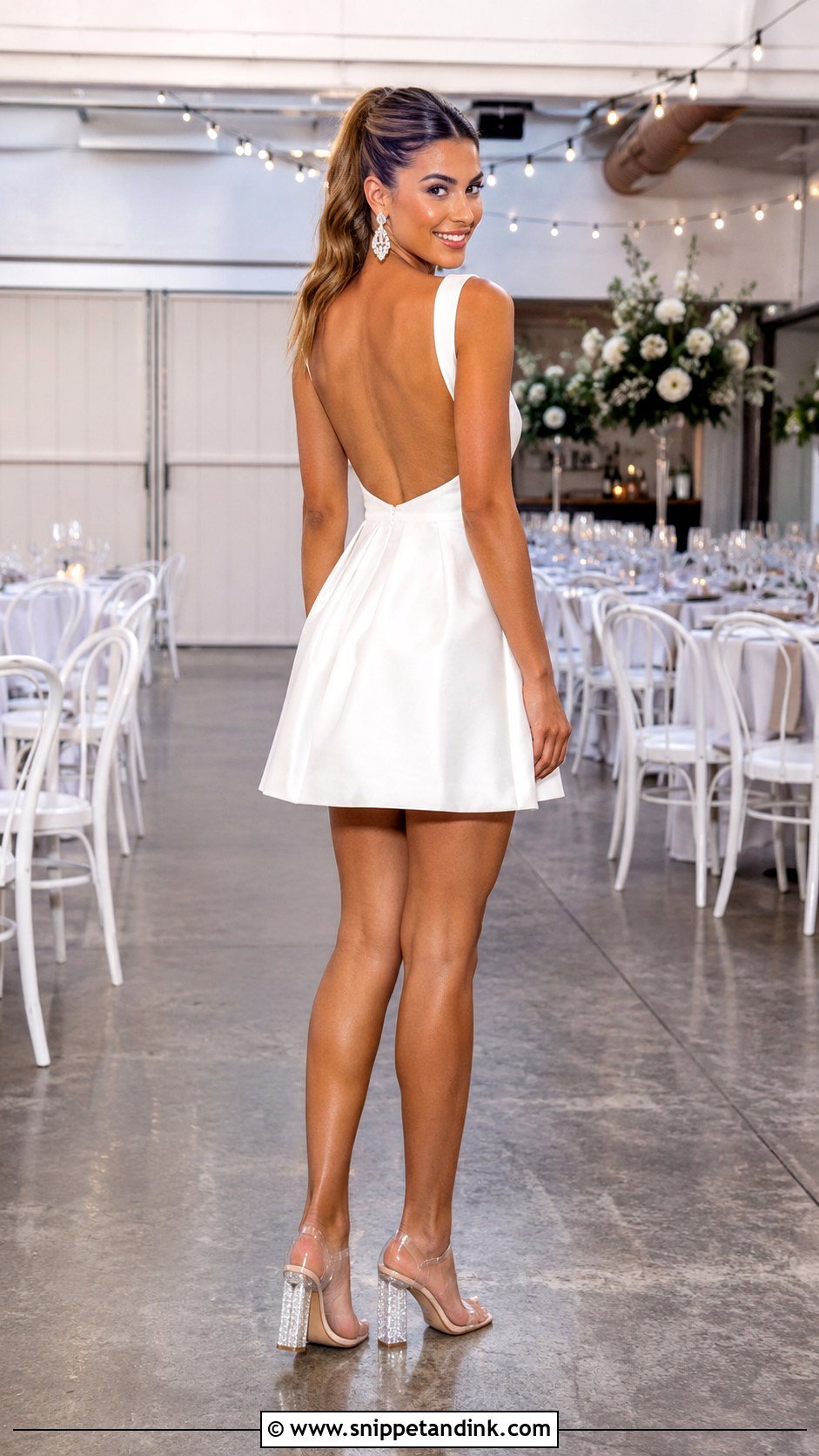
When the music starts, a short dress with an open back lets you actually dance. A structured satin mini, a beaded shift or a small fit-and-flare all work, as long as the back is secure. Balance the shorter hem with a higher front neckline or wider straps, and add comfortable block heels, crystal earrings and a sleek ponytail. A small bow or a short veil keeps it bridal. Built-in shorts or a smooth lining help you move freely. Check it under bright light before you buy, because some white fabrics turn see-through under flash and dance-floor lights. It suits lively receptions and send-offs.
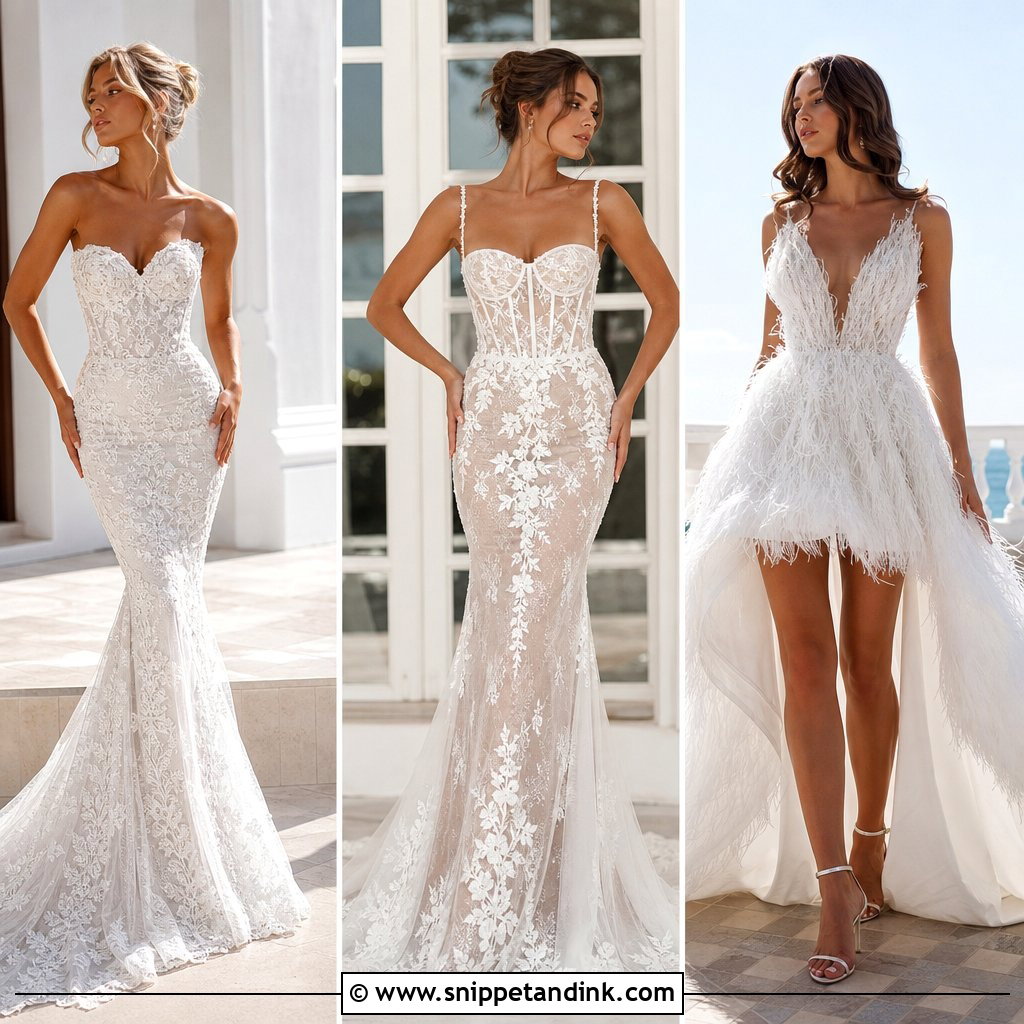
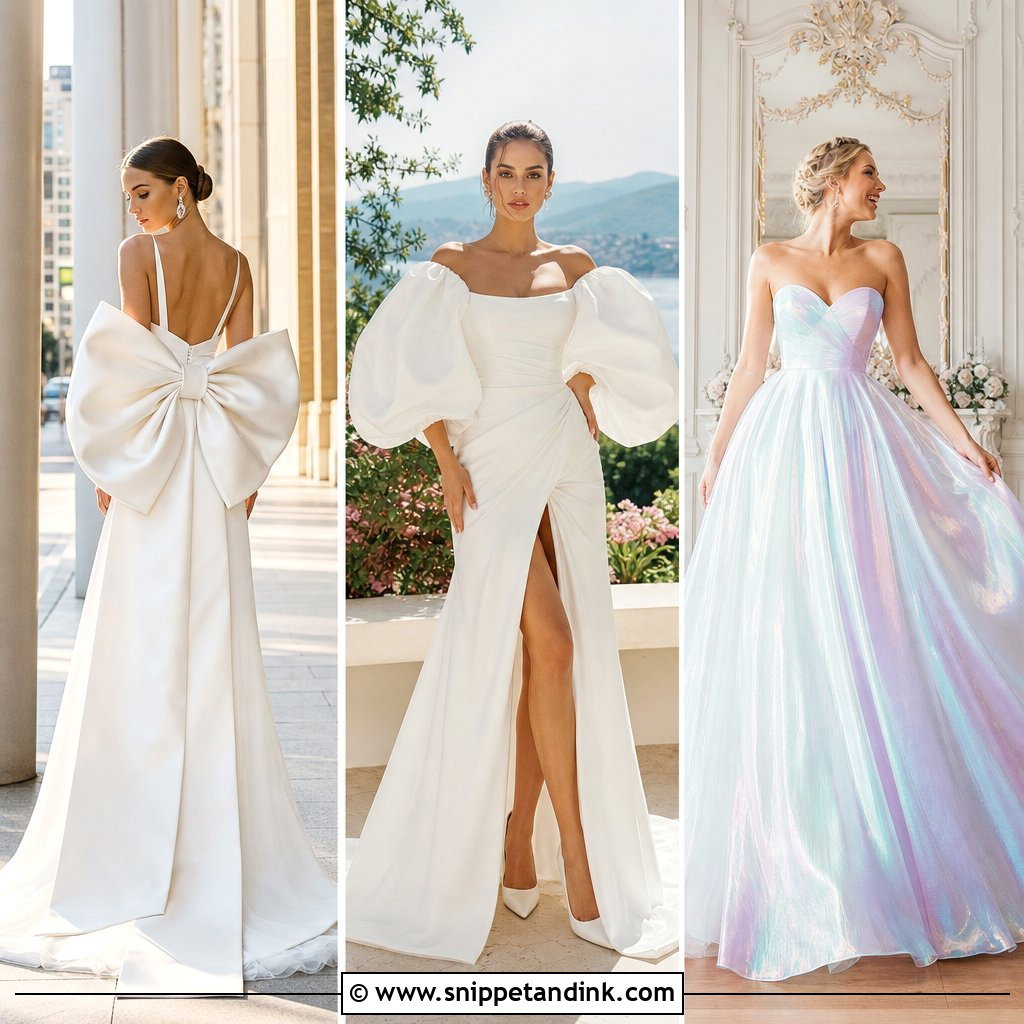
20. Minimalist Backless Wedding Dress
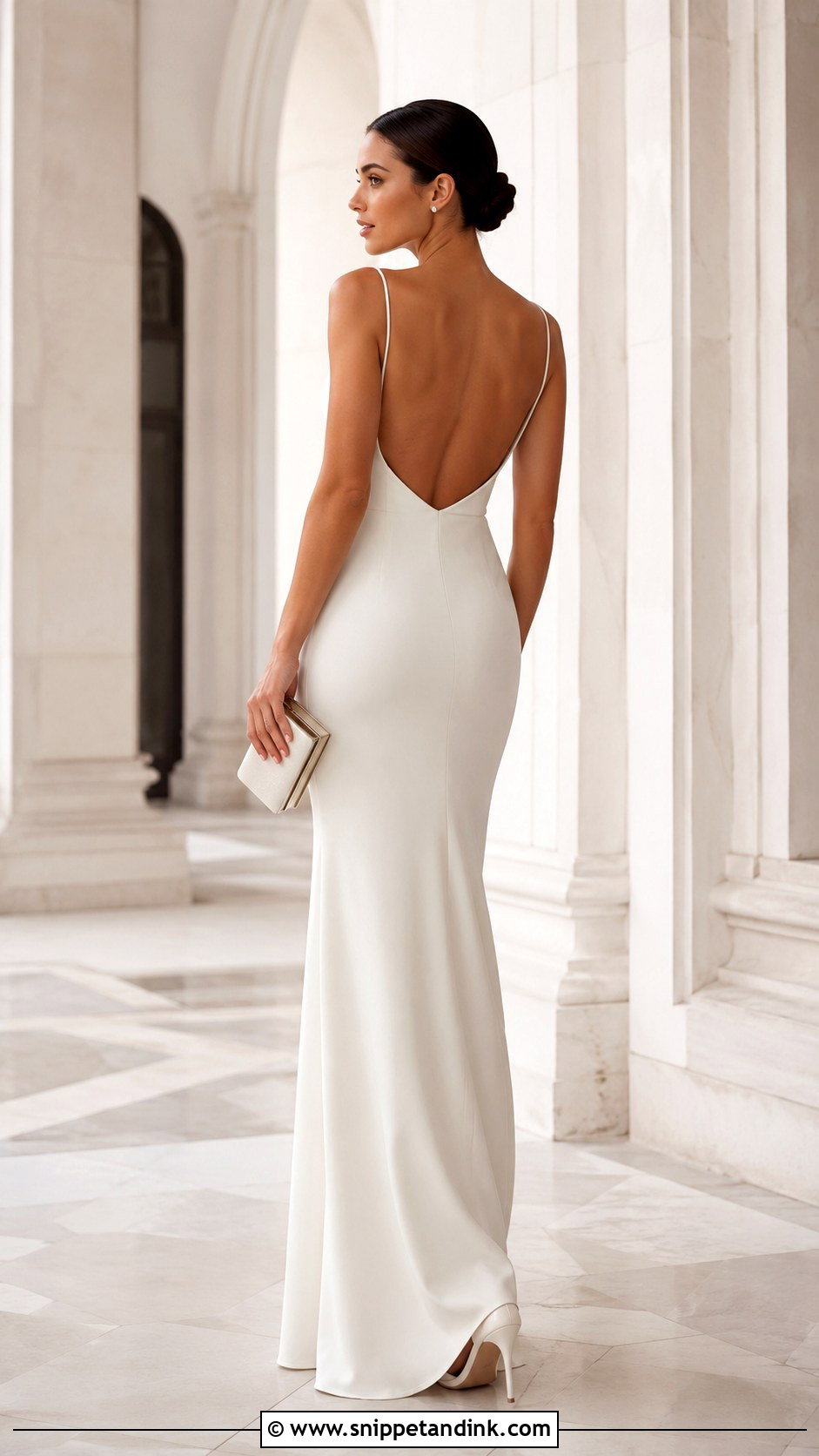
Fabric and tailoring are all a minimalist open back has to offer, so both must be excellent. A matte crepe column, a smooth satin A-line or a draped slip with a low scoop back are the usual forms. Pointed ivory heels, small sparkling studs, a structured clutch and a glossy low bun keep it modern; a sculptural hair piece can replace the veil. Every seam shows on a plain dress, which is why I spend the most fitting time on these, checking darts, the back edge and the bustle from every side. City, destination, indoor or outdoor, it adapts to all of them.
Covering Up for a Church, Temple or Mosque Ceremony
Some houses of worship ask brides to cover shoulders and back during the service. Ask your officiant early rather than finding out at the rehearsal. The good news is that none of these options mean giving up the dress.
- A long lace-edged veil worn down the back during the ceremony gives coverage you can lift away for the reception.
- A sheer bolero or lace jacket buttoned at the front slips off in seconds.
- A cape in chiffon or tulle fixed at the shoulders hides the opening and adds movement down the aisle.
- A removable illusion panel can be hooked inside the back opening, then unhooked for the party.
Have whichever cover you choose made in the same shade of ivory as the dress, and bring it to the final fitting so it can be adjusted alongside the gown.
Posture and the Photographer Standing Behind You
During the vows, the photographer and most of your guests see your back for several minutes. Slumping folds the skin at the top of an open back and pushes the bodice edge away from your body. Stand with your shoulders gently down and back, and practise at home in the dress shoes so it feels natural rather than stiff. If you know you’ll be holding a heavy bouquet, lighten it; carrying weight out in front rounds the shoulders more than anything else.
Is It Comfortable After the First Dance?
An open back is only a good choice if you can still move, sit and celebrate in it hours later. You’ve seen minimal, romantic, boho, formal, petite and plus-size versions above; once you’ve found your silhouette, build the rest around the back. Pick hair that shows it, a veil that doesn’t bury it and shoes that suit the ground. Book professional fittings and test any tape or adhesive cups well before the day, in similar heat. Good tailoring makes a daring dress feel surprisingly easy, and that ease shows in every photo.
You'll Like These Ideas:




Leave a Reply