
Bridal Anarkali suits give a bride drama and movement without the weight of a lehenga at every function. What makes them work is the fitted bodice flowing into a long flare, and how easily the outfit takes a dupatta, heavy jewellery and traditional accessories. Current bridal options run from classic red silk and ivory zari to pastel chikankari, velvet, cape layers, sharara bottoms, jackets and statement dupattas. I style them for the wedding ceremony itself, but just as often for mehndi, sangeet, haldi, nikah, walima, engagements and smaller celebrations. Each look below is complete from head to toe, with notes on fabric, flare and what to check before the tailor finishes it.
Getting the Kalis, Flare and Length of an Anarkali Right
An Anarkali’s flare comes from its kalis, the triangular panels sewn together below the bodice. More kalis and wider panels give a fuller, more dramatic skirt, and they also add fabric weight. When a bride is petite, I keep the flare generous but start it right at the natural waist, so it lengthens rather than shortens her. Taller brides can carry a longer bodice and a heavier flare.
- Measure the length in the exact heels you’ll wear. Floor-length should graze the floor, not pool on it.
- Ask whether the flare has a cancan or extra lining layer. It adds volume, and warmth too.
- Check where the zip sits. A side zip is easier to hide under heavy embroidery than a back zip.
- Fit the churidar or pants at the ankle while seated, since the gathers move when you sit.
Embroidery should follow the cut. Heavy work at the bodice and hem with lighter panels between keeps the skirt swinging; dense work across every kali makes it stiff and heavy, and the flare stops moving.
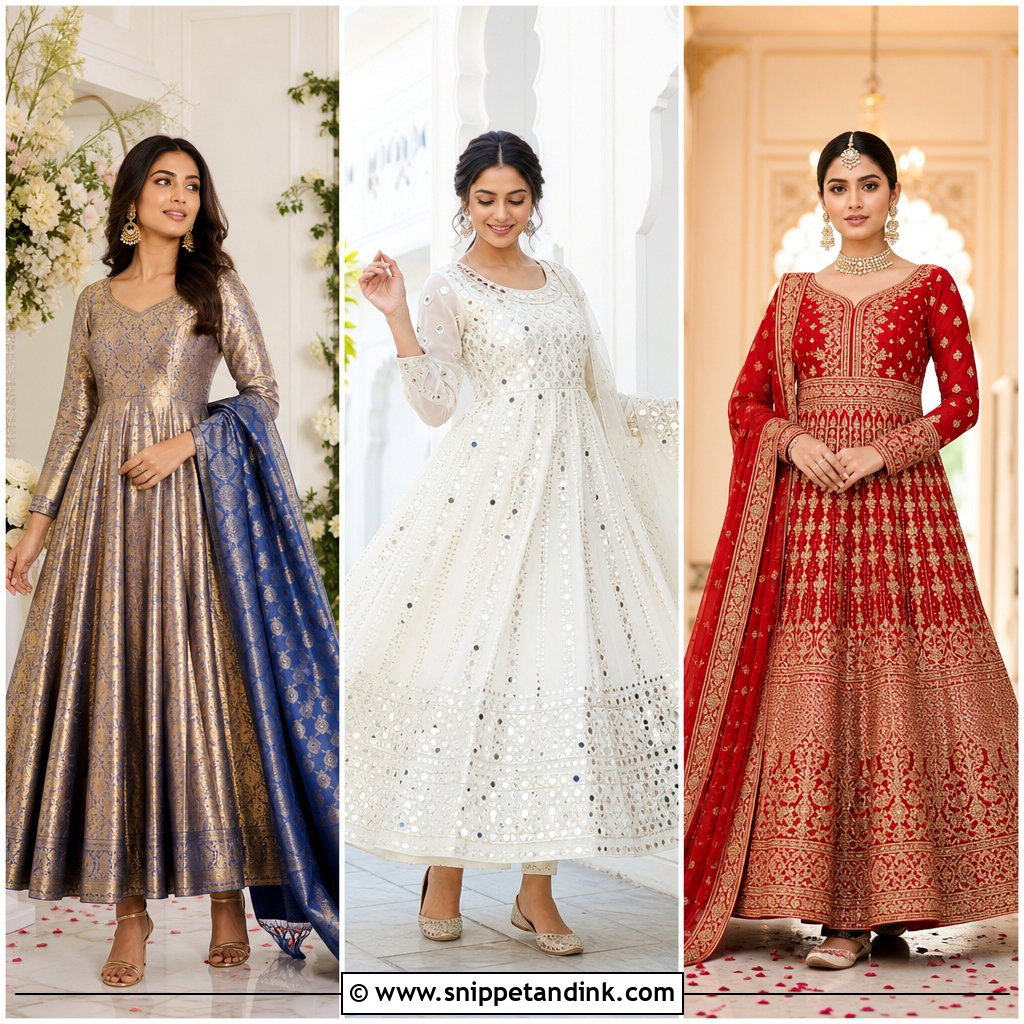
1. Red Bridal Anarkali Suit With Gold Dupatta
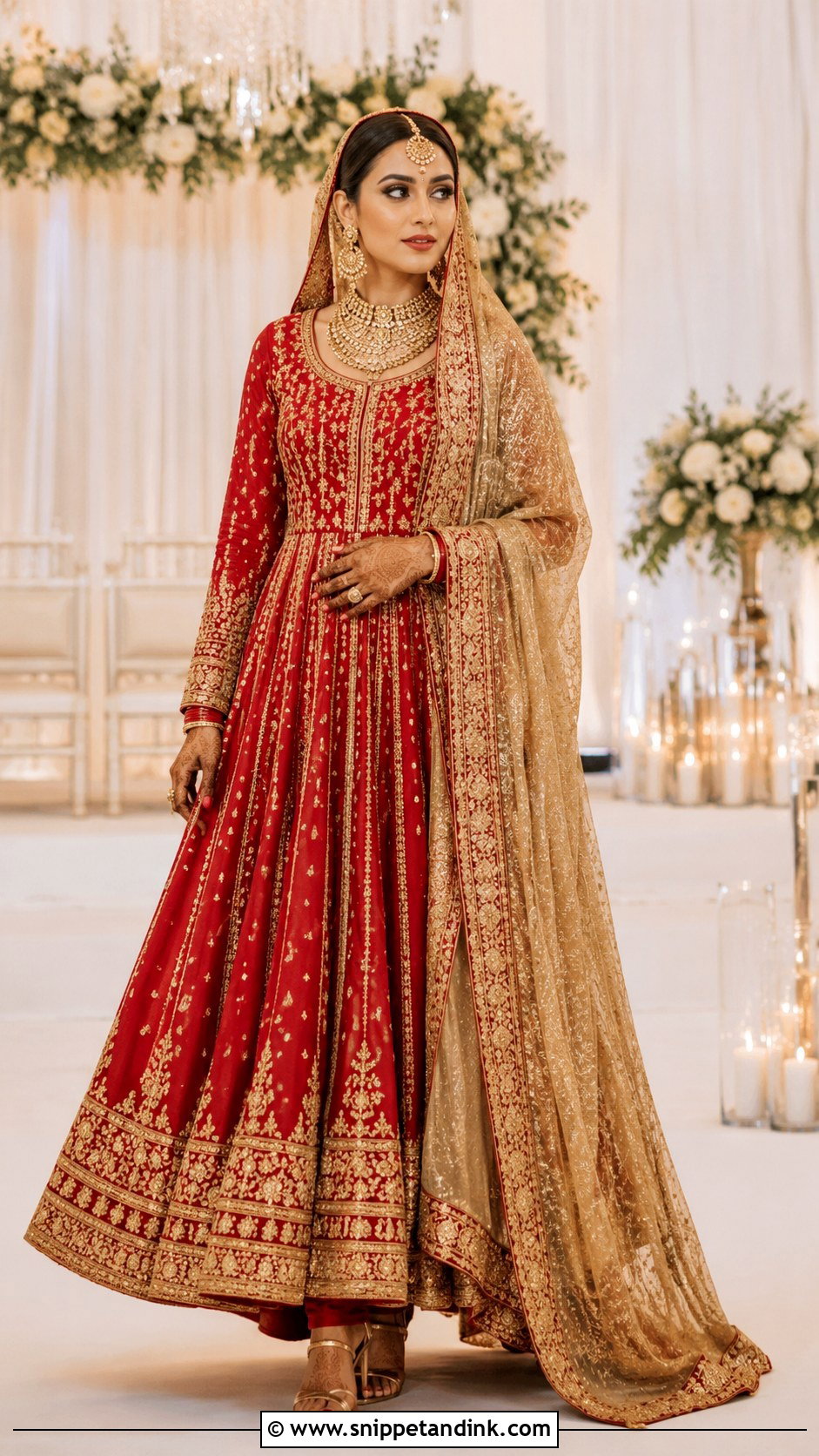
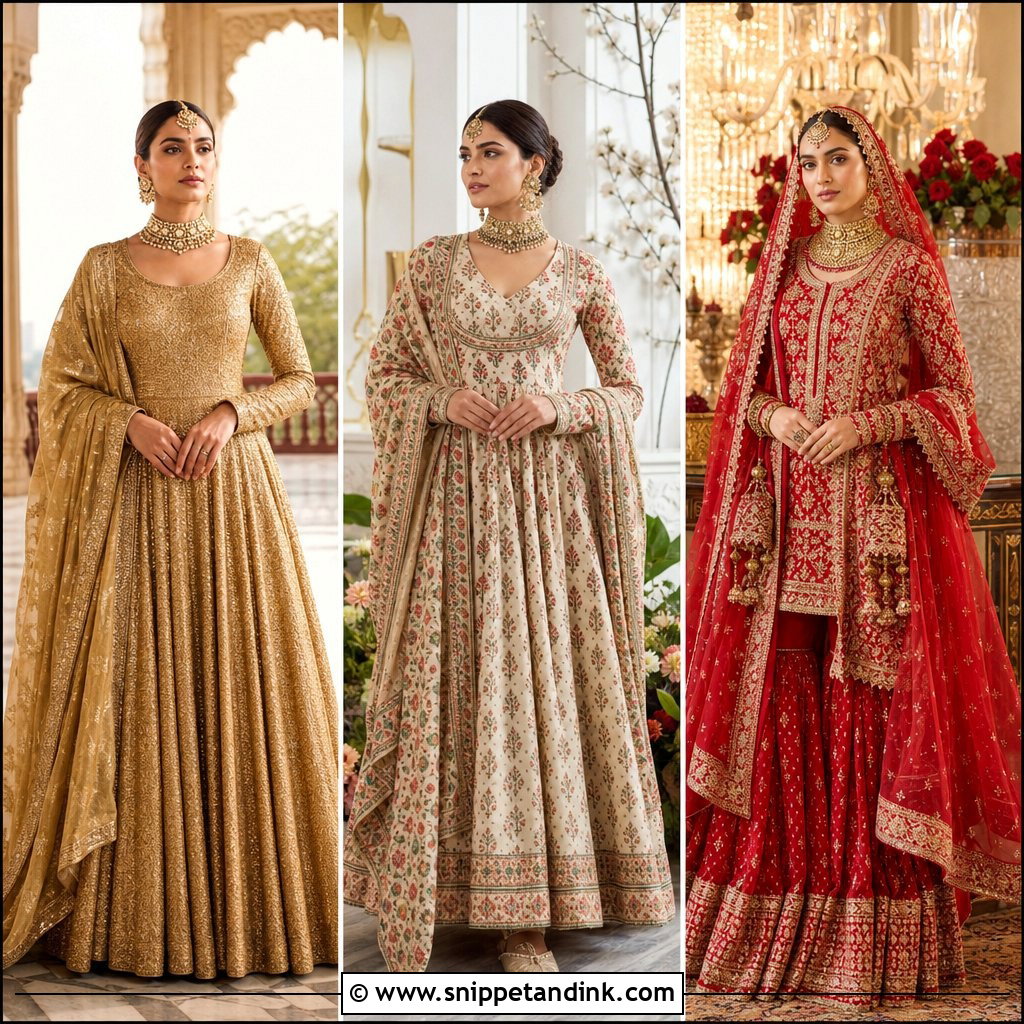
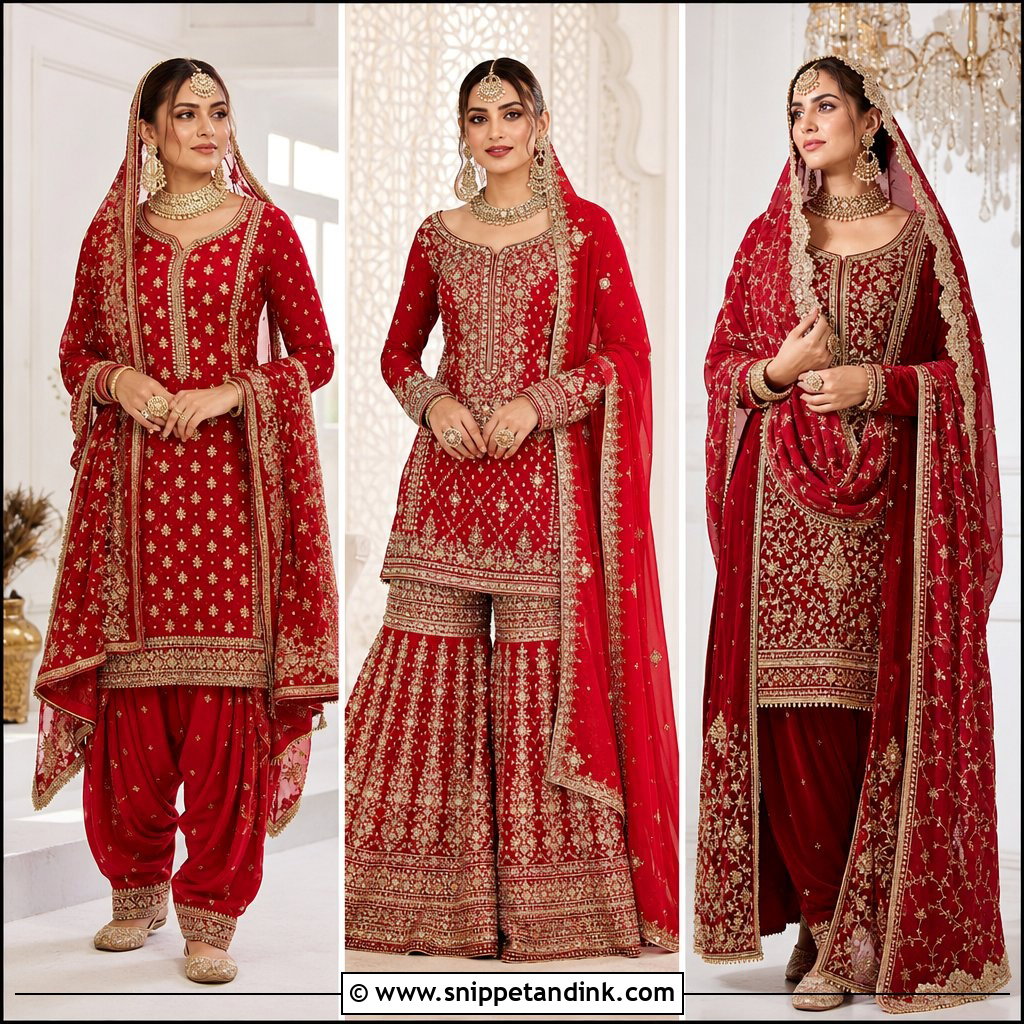
Red with a gold dupatta is the look families picture when they hear the word bride, and it never dates. I’d choose a floor-length silk or brocade Anarkali with zari, sequins or handwork at the neckline, sleeves, hem and panels. The dupatta matters more than people expect. A stiff tissue dupatta won’t fall over the head, so ask for a softer gold that drapes on the head or one shoulder. Gold jhumkas, layered necklaces, red bangles and embellished heels complete it, with a sleek bun or soft curls depending on your face shape and jewellery. For the main ceremony, it looks grand without extra layers.
2. Ivory Bridal Anarkali Suit With Zari Work
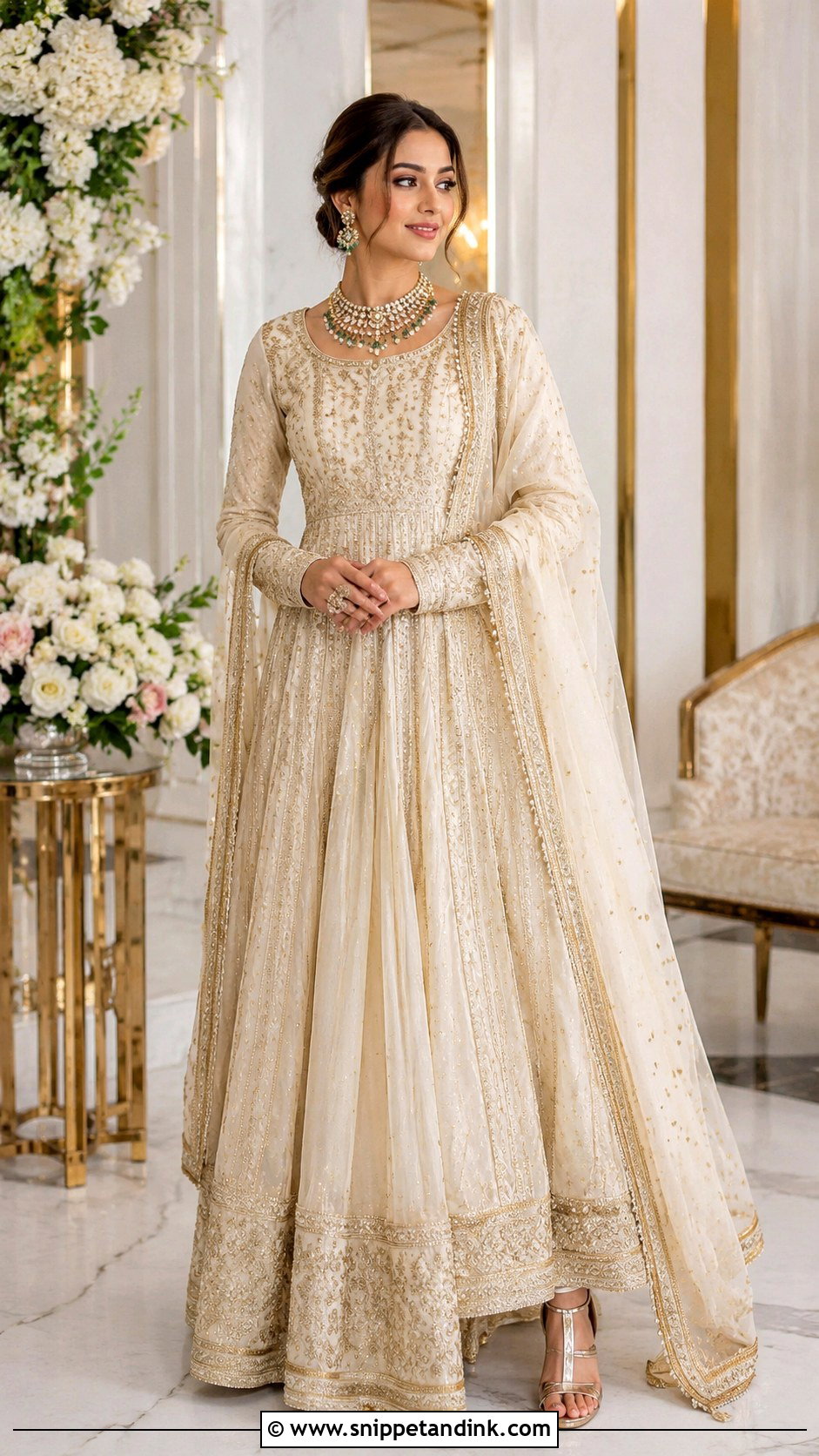
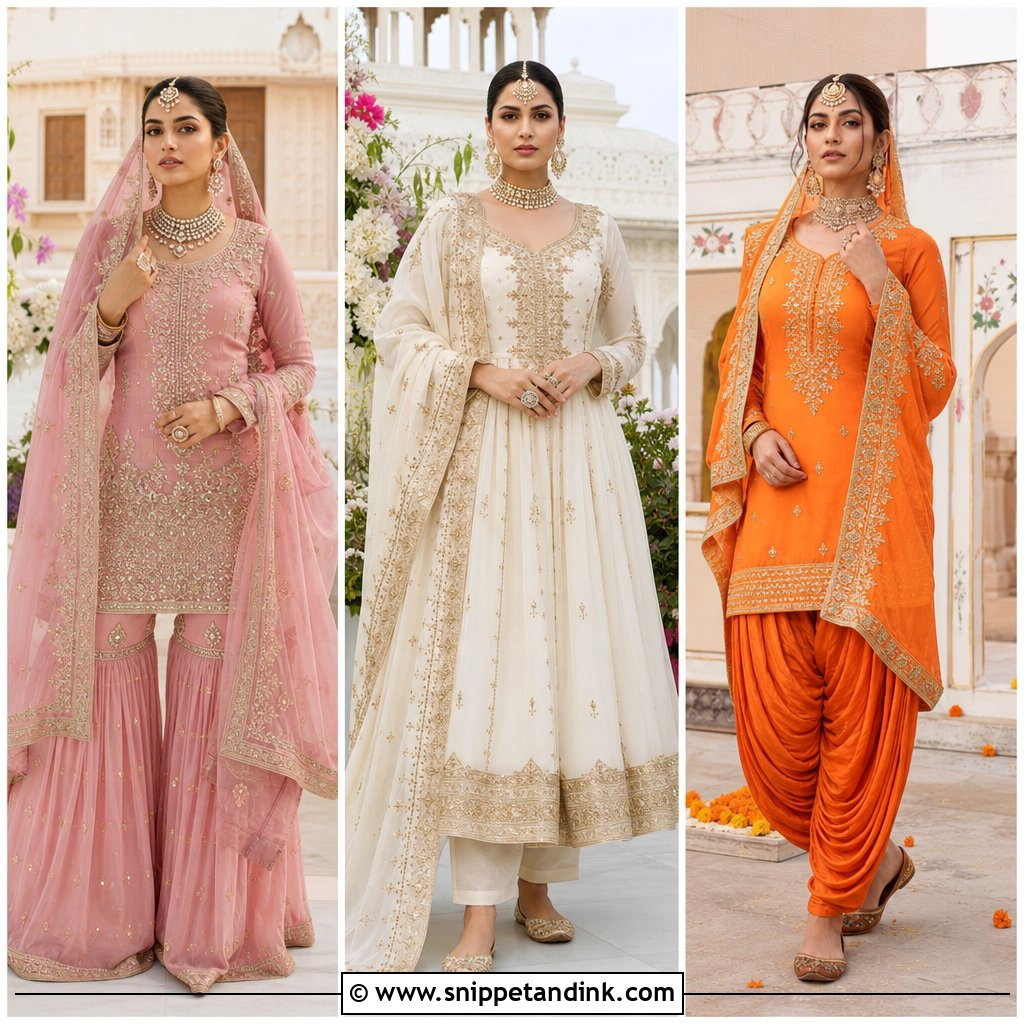
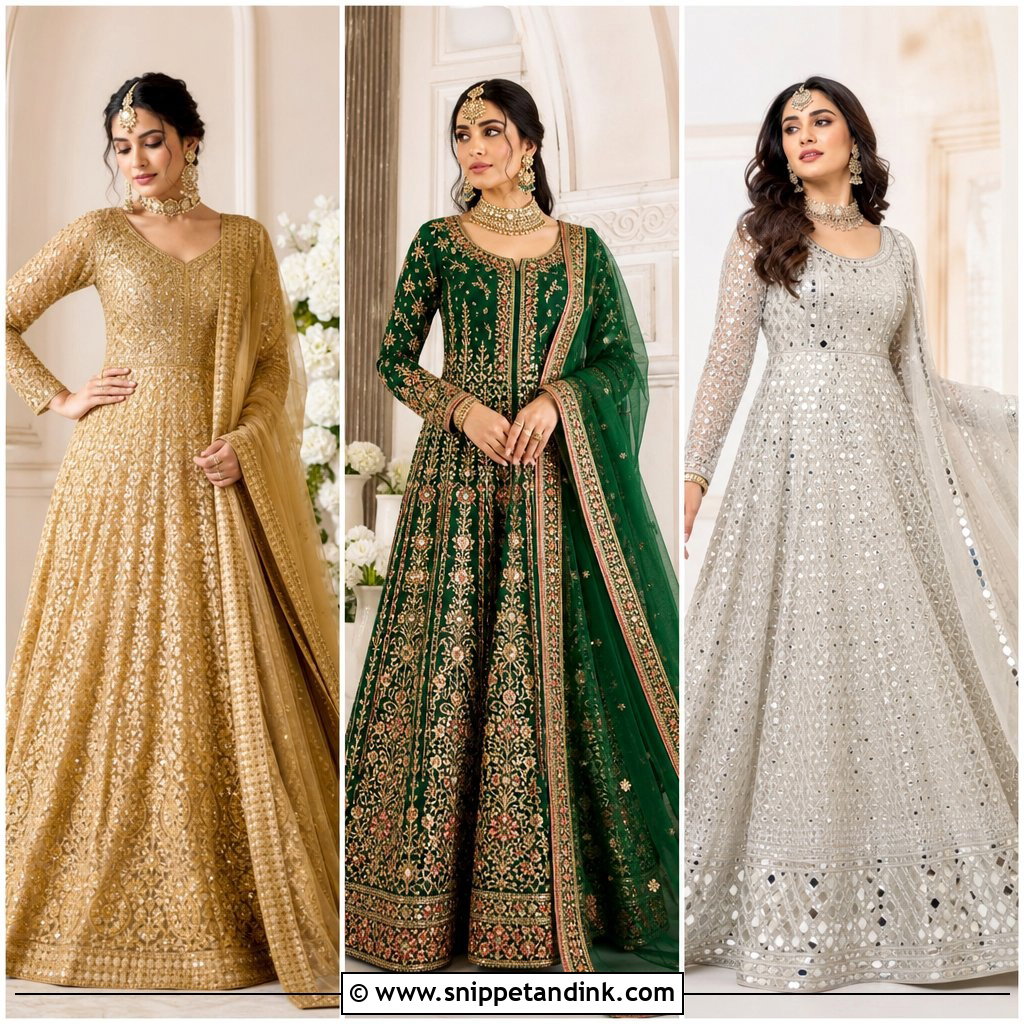
Ivory with zari is the quieter royal option, but the shade decides whether it works. Choose a warm ivory with gold, antique gold or champagne embroidery; a cool white with thin silver work can look washed out next to deep-coloured family outfits in photos. A full flare and structured bodice give shape, and a matching dupatta with a heavy border adds bridal weight. Kundan with pearl accents, metallic heels and a polished low bun suit it. I tend to suggest it for receptions, daytime ceremonies and modern wedding events.
3. Pastel Pink Bridal Anarkali Suit With Mirror Work
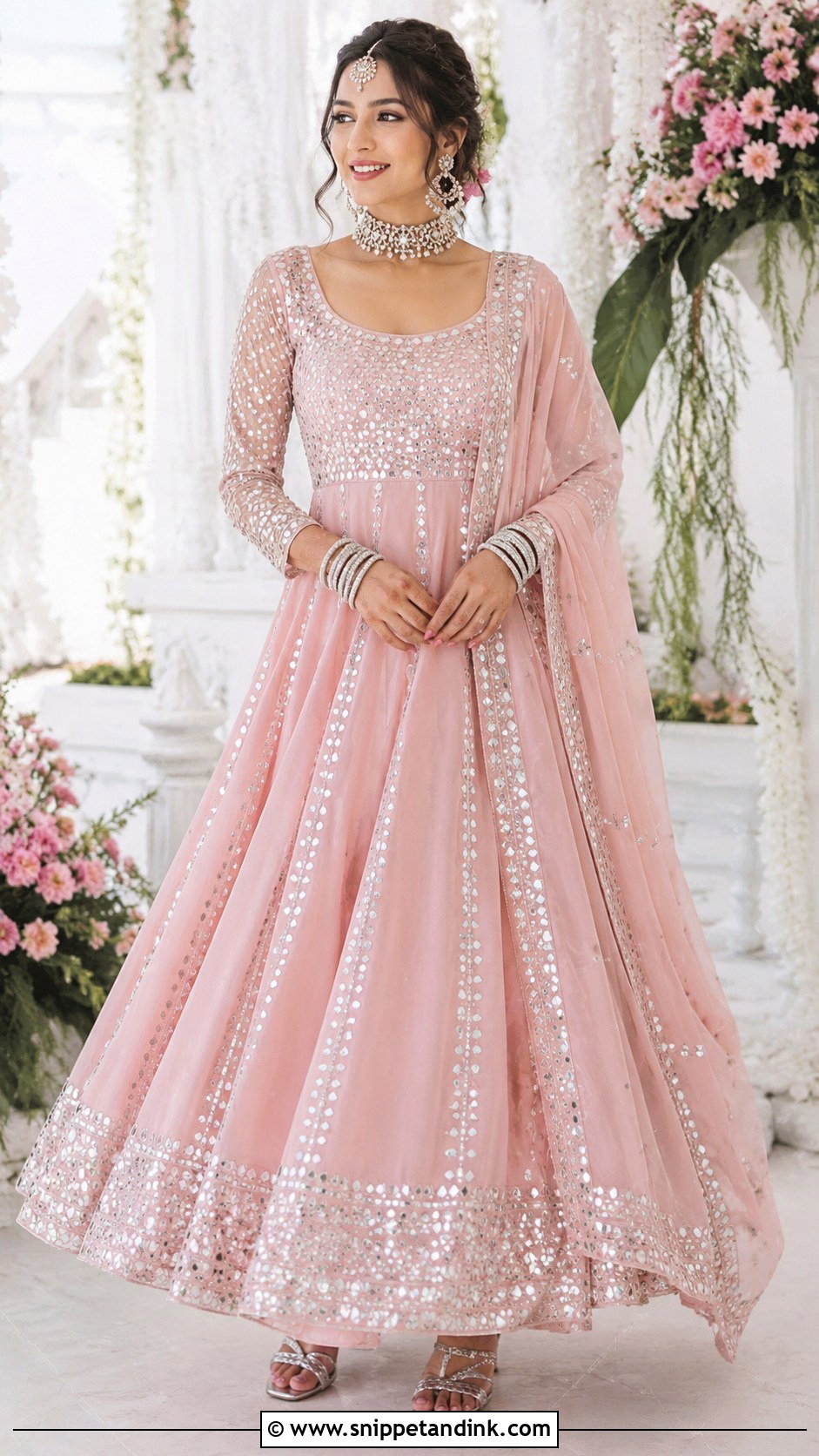
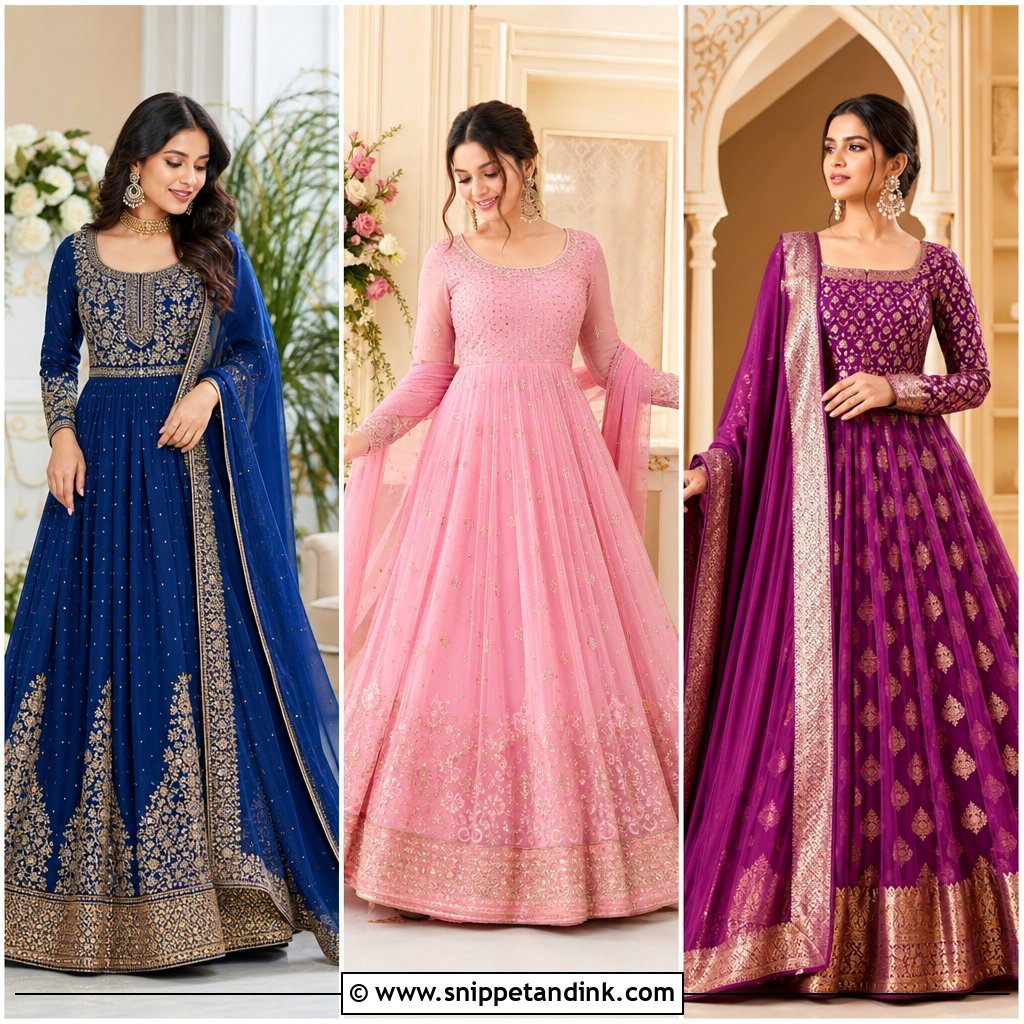
Pastel pink with mirror work brings brightness to mehndi, an engagement or a daytime function when you don’t want deep red. Soft pink georgette, organza or silk with tiny mirrors across the bodice and border catches every light during dancing. Real glass mirrors are heavier than plastic ones and can scratch delicate skin at the underarm, so I ask for a soft lining behind them. A matching or slightly deeper pink dupatta adds depth. Silver-toned jewellery, crystal bangles, soft glam makeup and metallic sandals keep it light and modern.
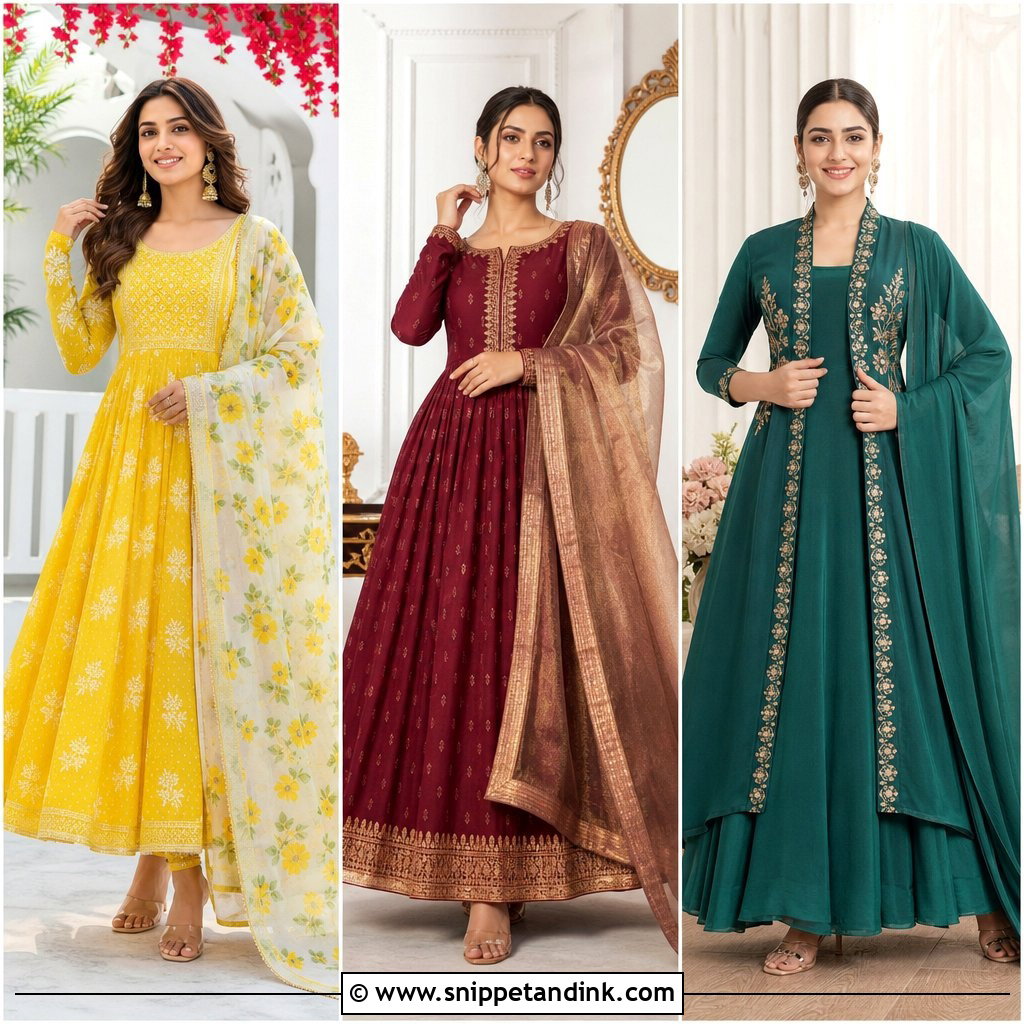
4. Maroon Bridal Anarkali Suit With Heavy Embroidery
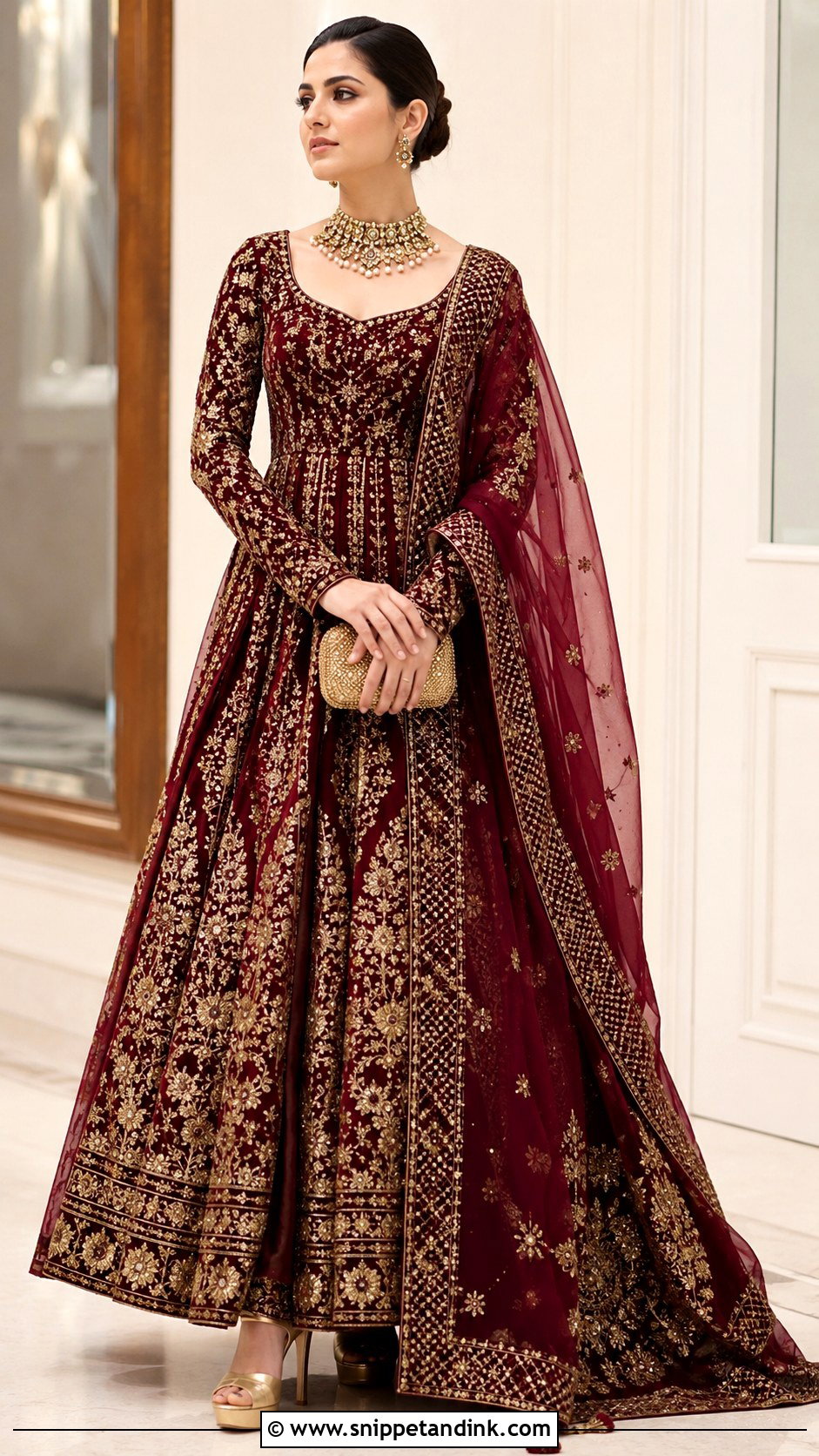
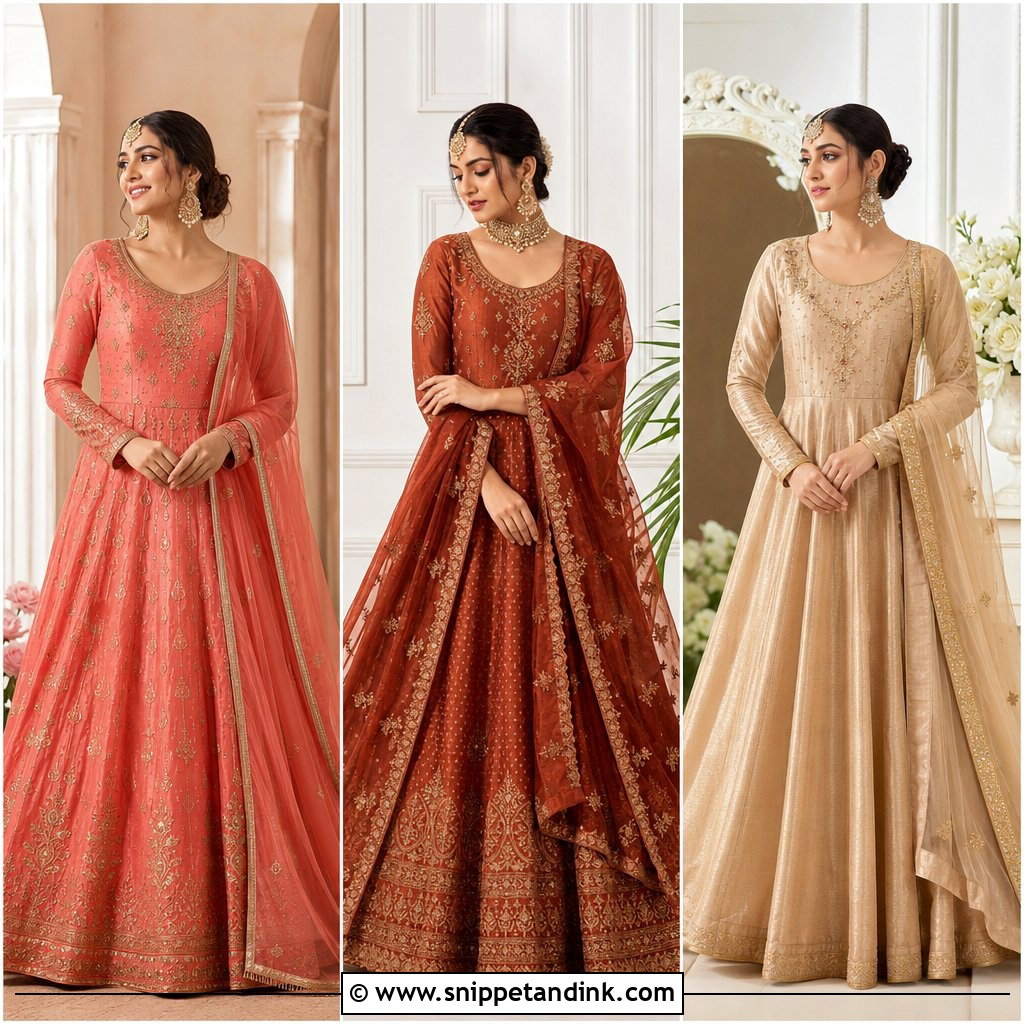
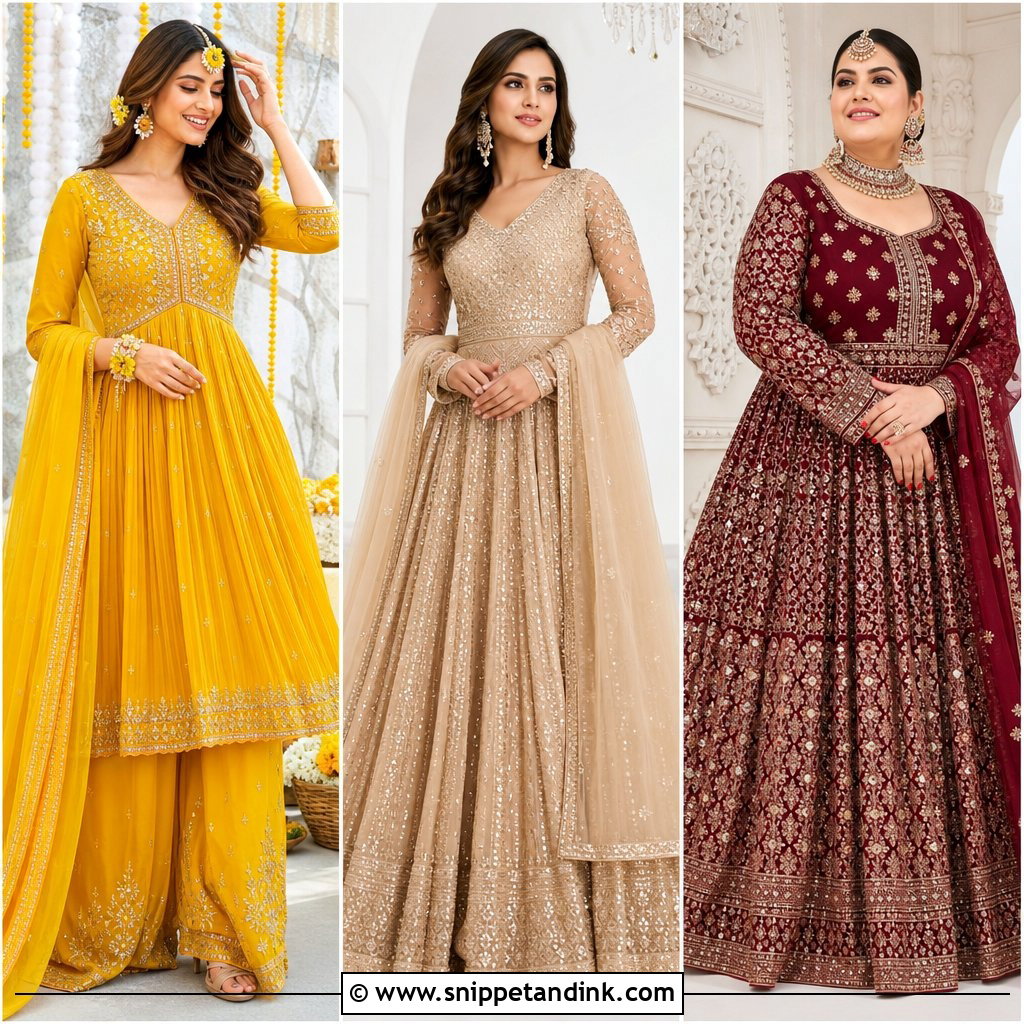
If you love red but want something deeper, maroon is my suggestion, especially for evening events. Under warm reception lighting it reads rich rather than bright, and it takes antique gold, copper or bronze threadwork well. A full-length Anarkali with a wide flare, fitted sleeves and an ornate dupatta border gives it presence. Keep the jewellery bold but balanced: a choker with matching earrings, or a layered necklace with smaller studs. Gold heels and a traditional clutch finish it for receptions, ceremonies and formal portraits.
5. Gold Bridal Anarkali Suit With Net Dupatta
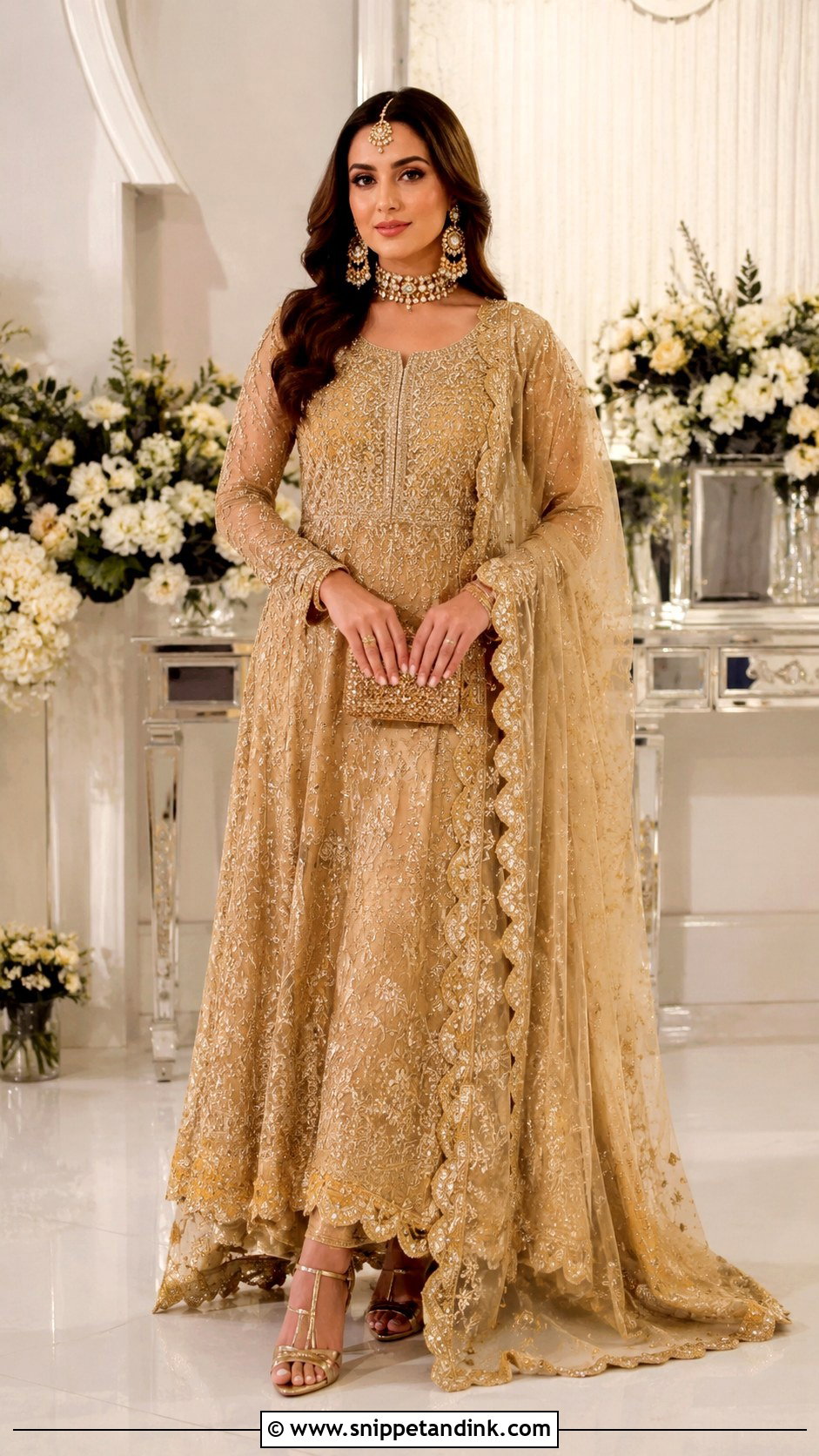
Gold on gold glows, but only if the work is restrained. I look for zari, sequins and subtle beadwork mixed together, not every technique at once, because too much shine flattens in photos into one bright block. A net dupatta with a scalloped border or small embroidered butis keeps it airy. Kundan, polki or pearls soften the metallic surface, and nude or gold heels lengthen the leg line. It suits receptions, engagement evenings and formal family events, where the colour reflects candlelight and lamplight onto the face.
6. Green Bridal Anarkali Suit With Kundan Jewelry
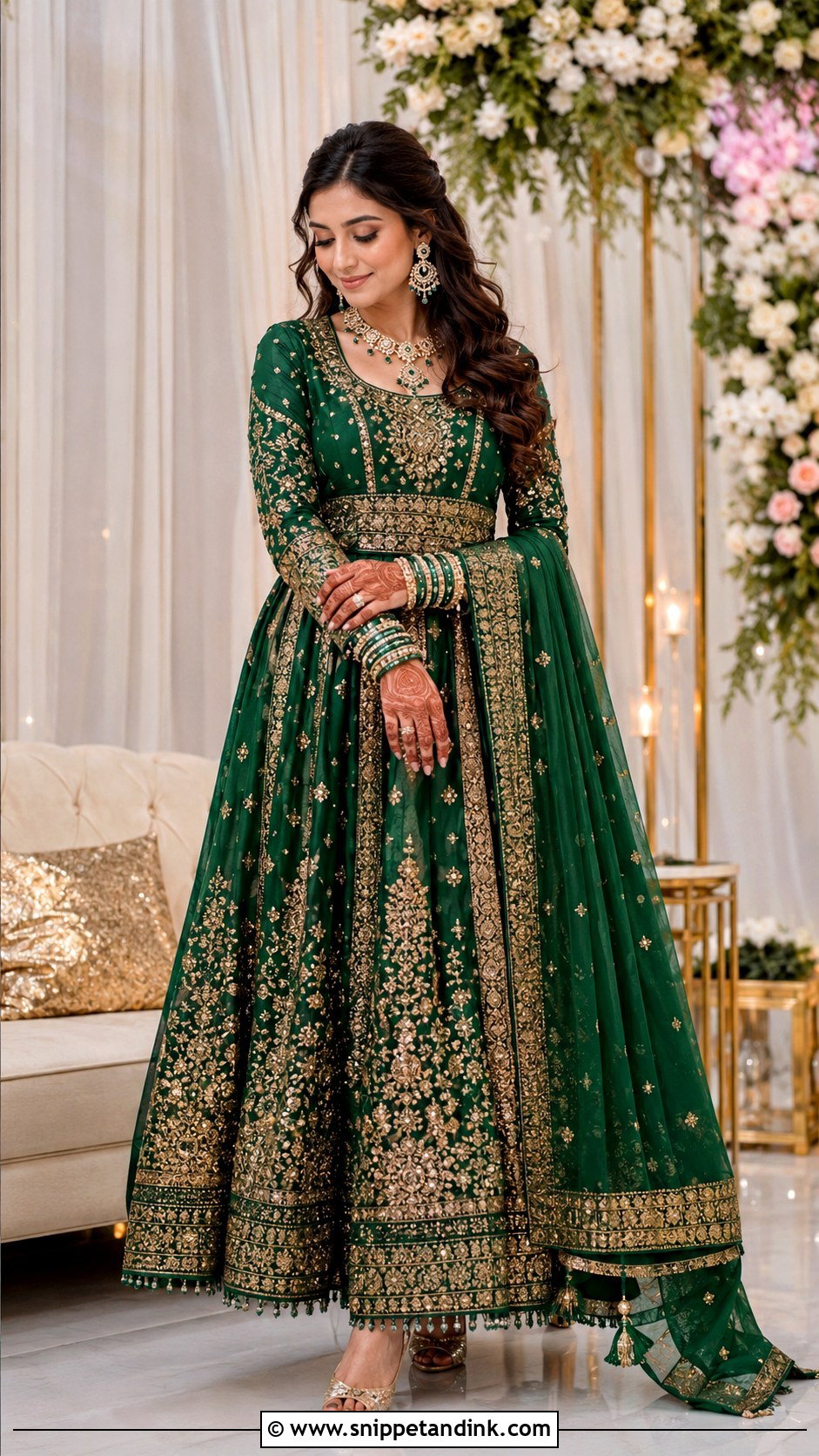
Green steps away from the usual bridal palette while staying traditional. Emerald, bottle green and deep sage all suit wedding functions, in silk, velvet or jacquard with gold work on the yoke, cuffs and hem. A matching dupatta keeps it cohesive; a blush or ivory dupatta makes it feel more modern. Kundan earrings, a statement necklace, bangles and gold heels finish it. Bottle green can look almost black in dim evening light, so if the function is at night I’d pick the brighter emerald. It also makes a strong second bridal outfit for mehndi or the reception.
7. Velvet Bridal Anarkali Suit With Long Sleeves
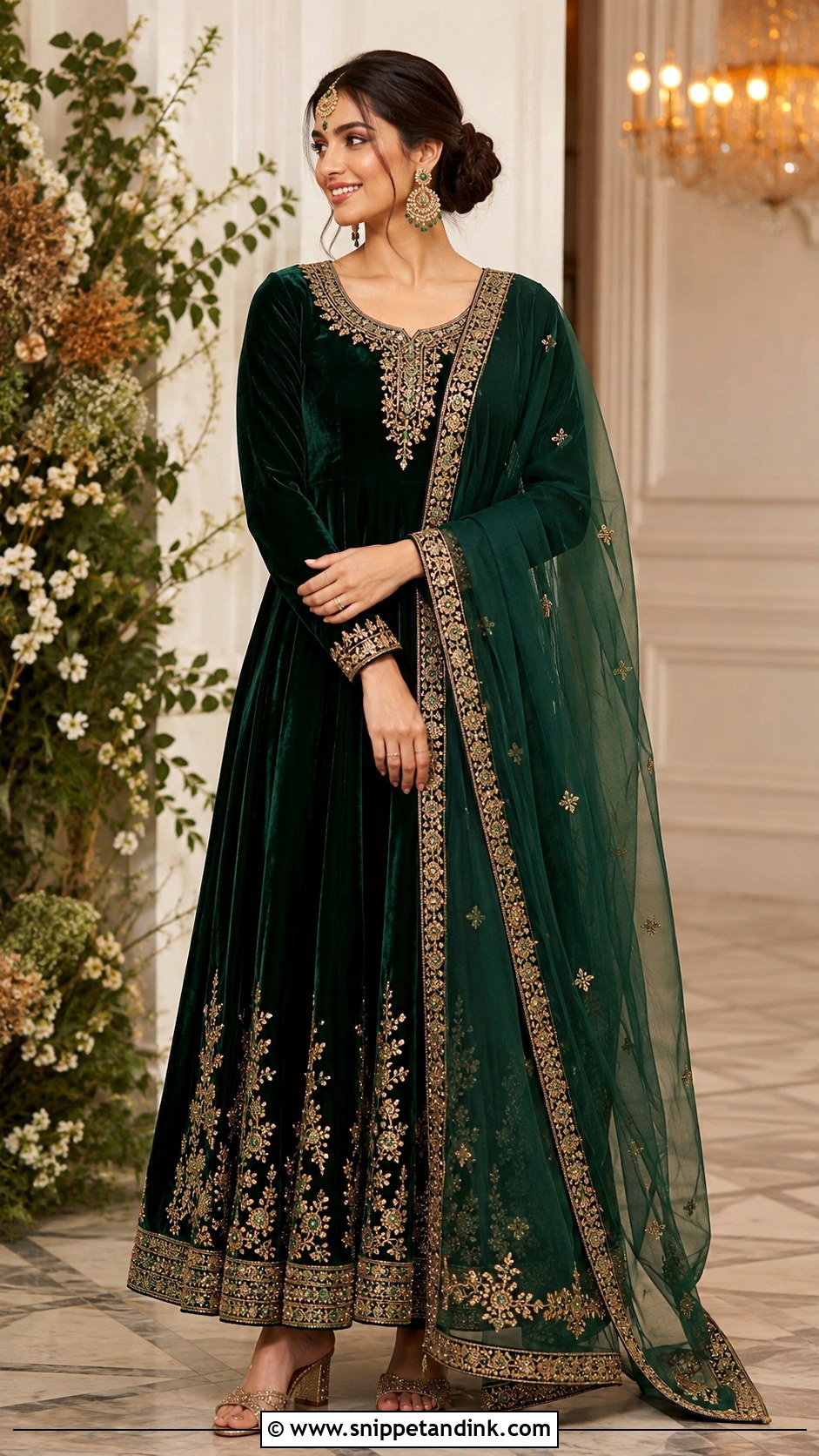
A velvet bridal Anarkali suit with long sleeves belongs at cooler-weather weddings and evening ceremonies. Velvet is already rich, so I place embroidery at the neckline, sleeves, waist and hem rather than covering the fabric. Deep red, maroon, navy, emerald and plum all look luxurious. A lighter net or organza dupatta balances the weight. Velvet is warm and heavy, so I’d never recommend it for a summer day function, and it marks if you crush the pile, which is why it should hang rather than fold before the wedding. Statement earrings, a sleek bun and embellished block heels complete it.
8. White Bridal Anarkali Suit With Pearl Details
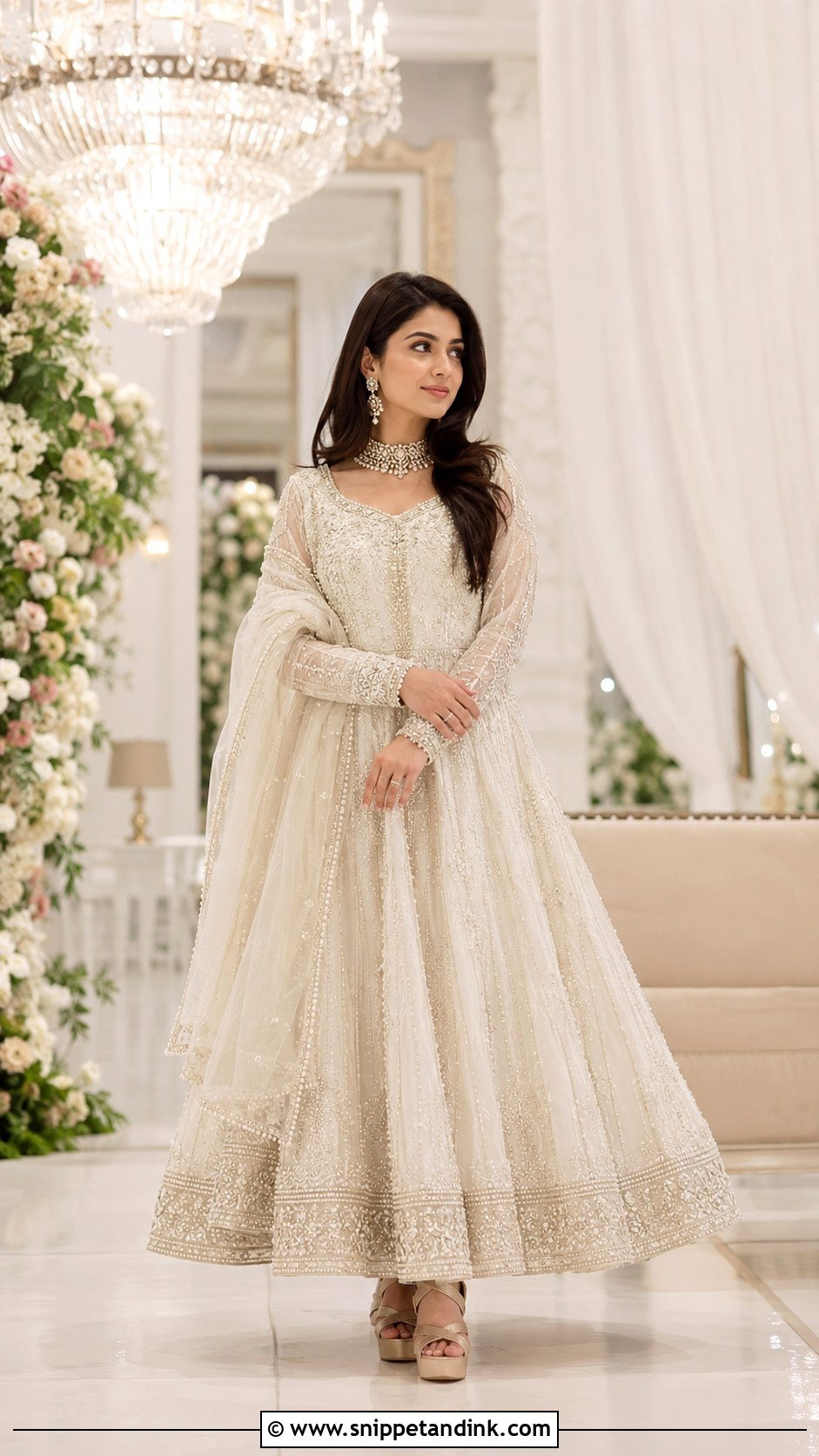
White or off-white with pearl embroidery is the cleanest bridal Anarkali I style. Tonal threadwork and a carefully finished hem carry the detail, and a sheer dupatta with pearl edging adds movement. Pearl drops, a kundan choker and silver or champagne heels keep it bridal. It suits engagements, receptions, nikah, walima or a minimal ceremony. Sewn pearls do snag on a dupatta’s net, so I check that the pearl edging and bodice work won’t catch on each other when the dupatta slides off the shoulder.
9. Yellow Bridal Anarkali Suit For Haldi
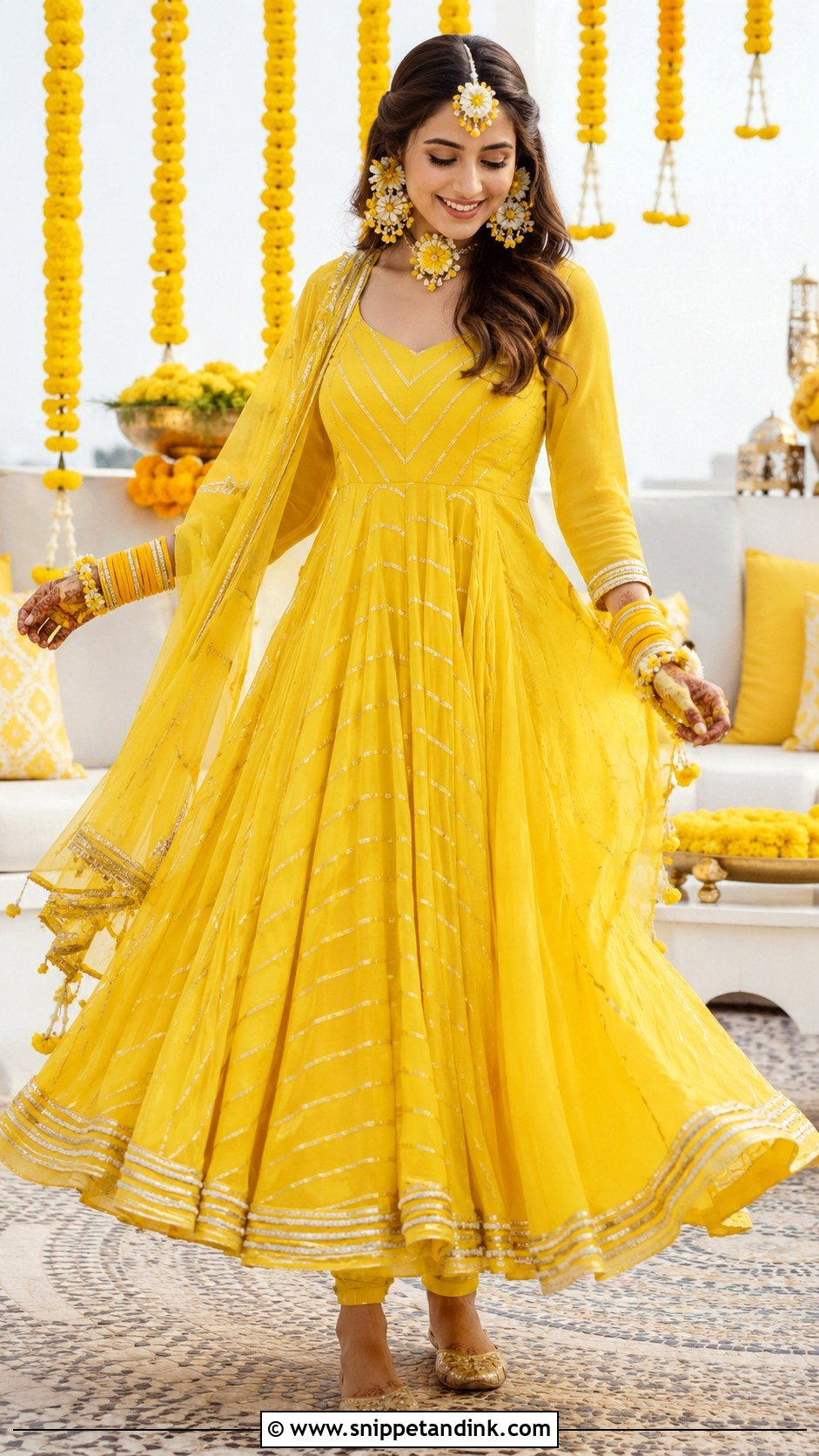
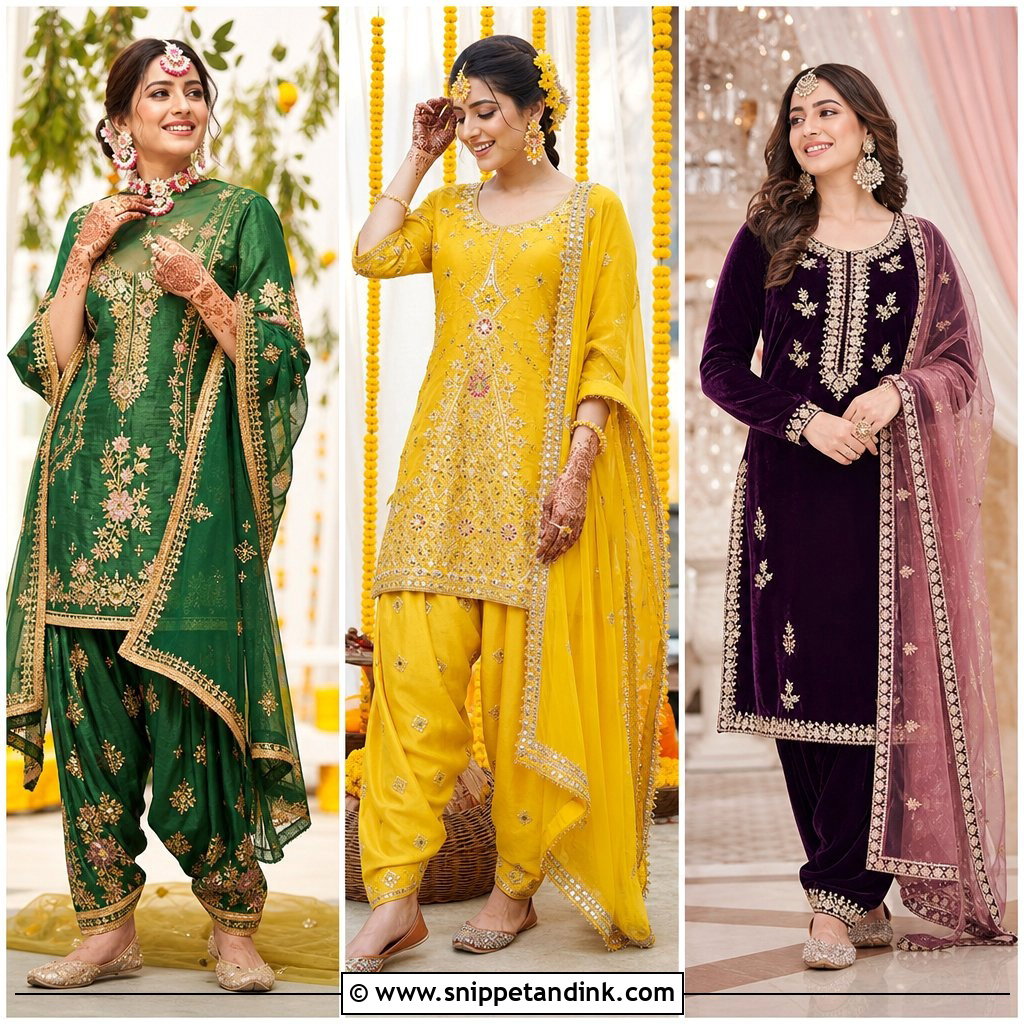
A yellow bridal Anarkali suit for haldi has to be breathable and easy to move in, because haldi is messy and often hot. Cotton silk, georgette, chanderi or organza in mustard, marigold, lemon or soft yellow, with light mirror work, gota patti, thread embroidery or florals, gives enough festivity. A matching or pink dupatta adds cheer. Turmeric paste stains silk and fine embroidery permanently, so I’d treat this outfit as something you won’t mind marking, or choose cotton that washes more easily. Floral jewellery, simple bangles, comfortable juttis and fresh makeup complete it; skip long trails and stiff fabric.
10. Orange Bridal Anarkali Suit For Mehndi
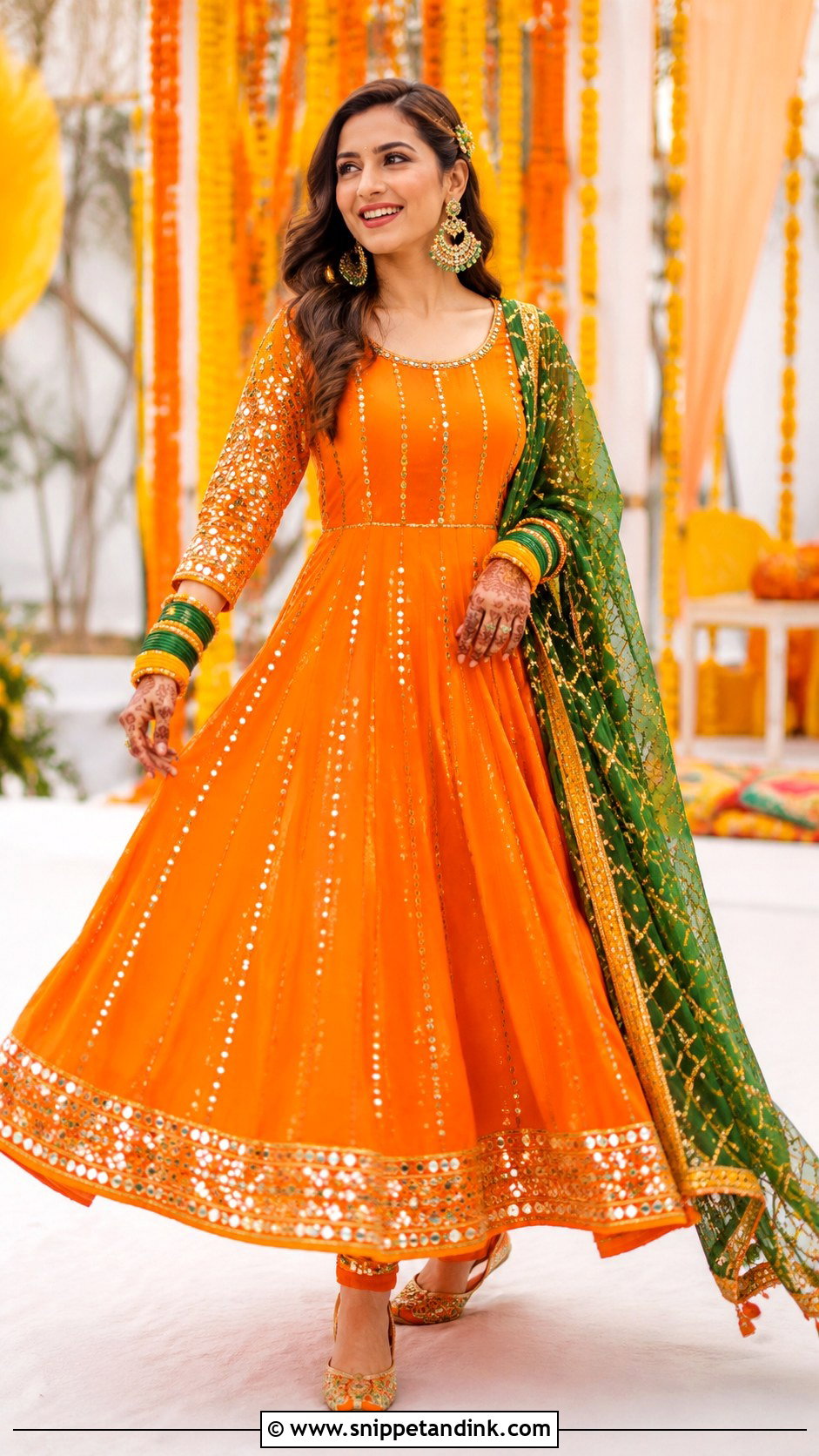
Orange is pure energy at a mehndi. Tangerine, burnt orange and saffron take gold gota, mirror work or multicolour thread embroidery happily, and the colour sits right next to fresh henna. Choose a flare that lets you sit cross-legged while your hands are being done, because you may be in one position for hours. A green, pink or yellow contrast dupatta feels festive; matching accessories look cleaner. Statement earrings, bangles and embroidered juttis finish a look that’s bold but rooted in tradition.
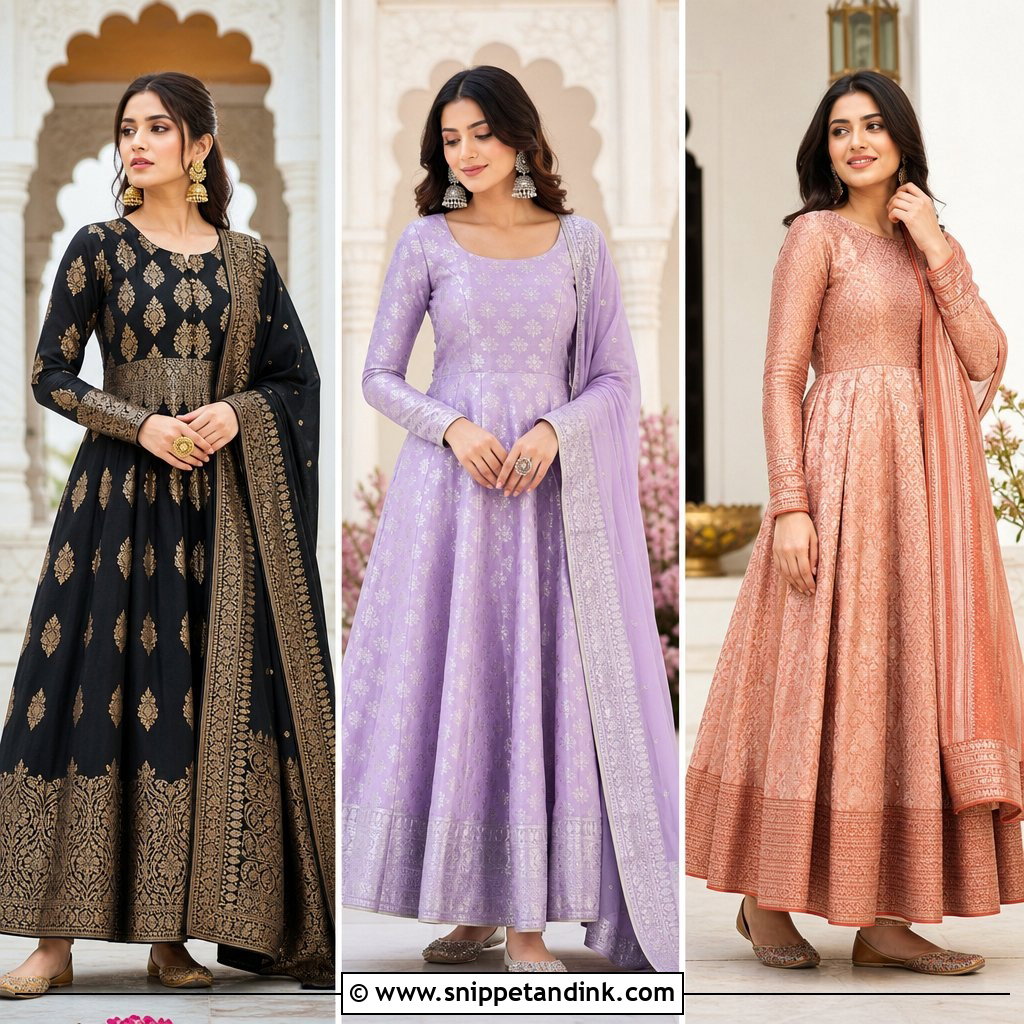
11. Blue Bridal Anarkali Suit With Silver Embroidery
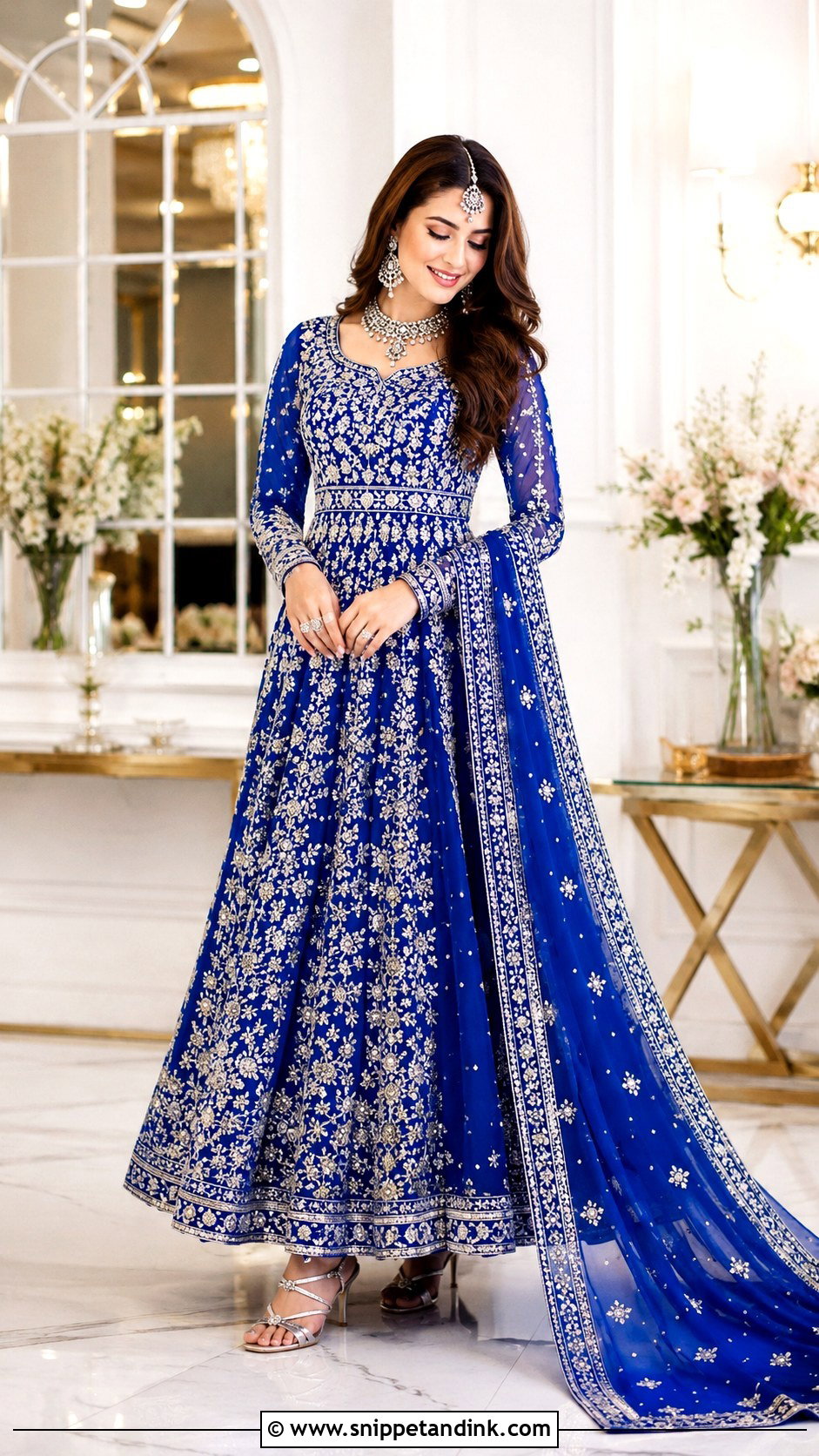
Blue with silver is a cool-toned bridal option, and each shade sets a different mood: powder blue is soft, royal blue is confident, navy is dramatic. Silver zari, crystals or sequins sit cleanly on blue. Pair it with a matching dupatta and silver-toned heels, and jewellery in diamonds, pearls or kundan with white stones. Silver thread can tarnish if stored damply, so I’d keep it wrapped in muslin between fittings. It suits receptions, engagements and evening events.
12. Black Bridal Anarkali Suit With Gold Work
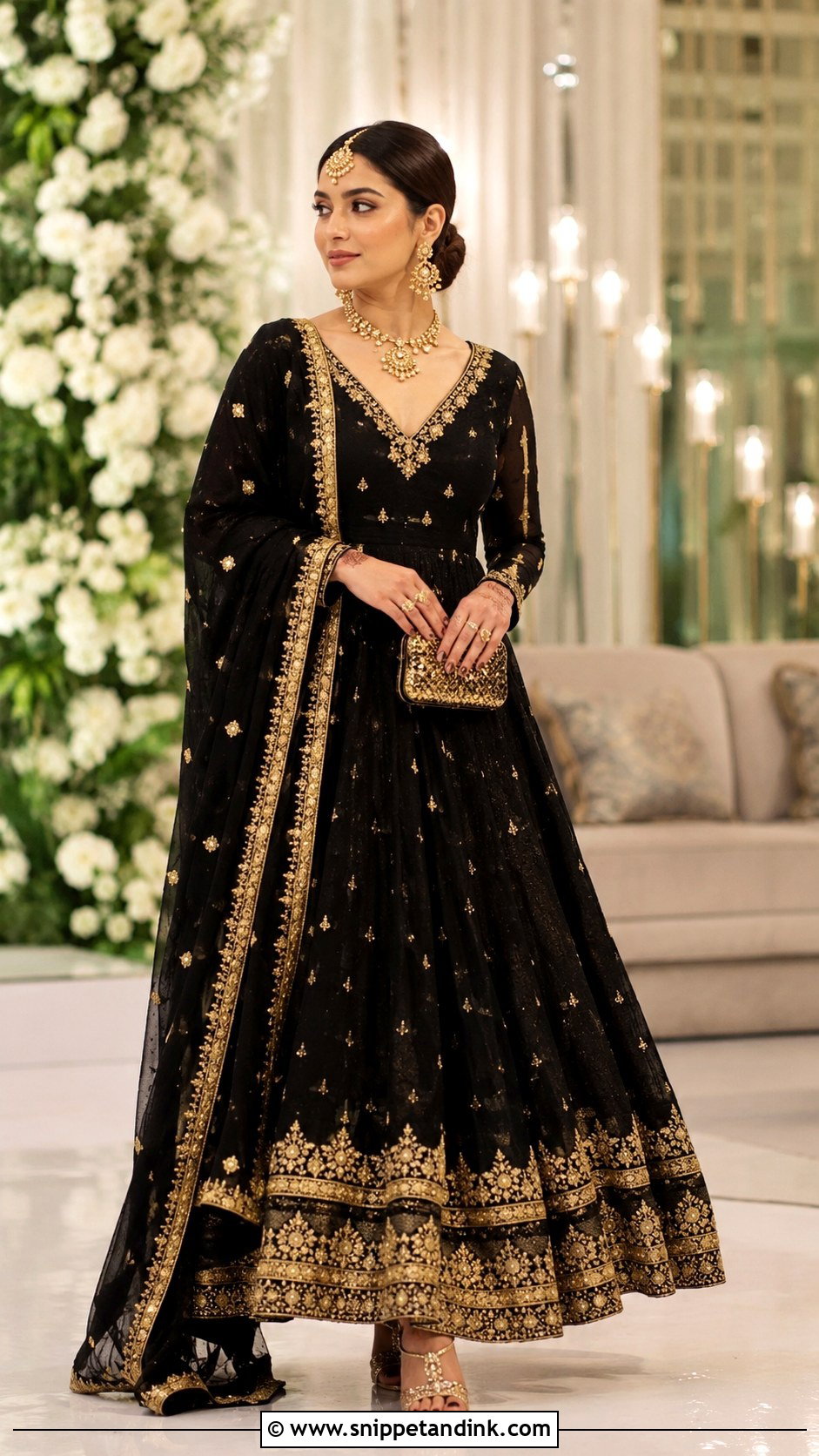
Black with gold work is the bold reception choice. Velvet, silk or georgette with gold at the neckline, cuffs, hem and dupatta border looks rich, and a full flare stops it reading as party wear. Antique gold jewellery, a statement ring, embellished heels and a sleek clutch finish it, with defined but balanced makeup. Before choosing it, I always ask whether black is welcome in the family, since some households avoid it at weddings for cultural reasons. Where it is, it’s memorable at evening events, receptions and formal pre-wedding celebrations.
13. Peach Bridal Anarkali Suit With Organza Dupatta
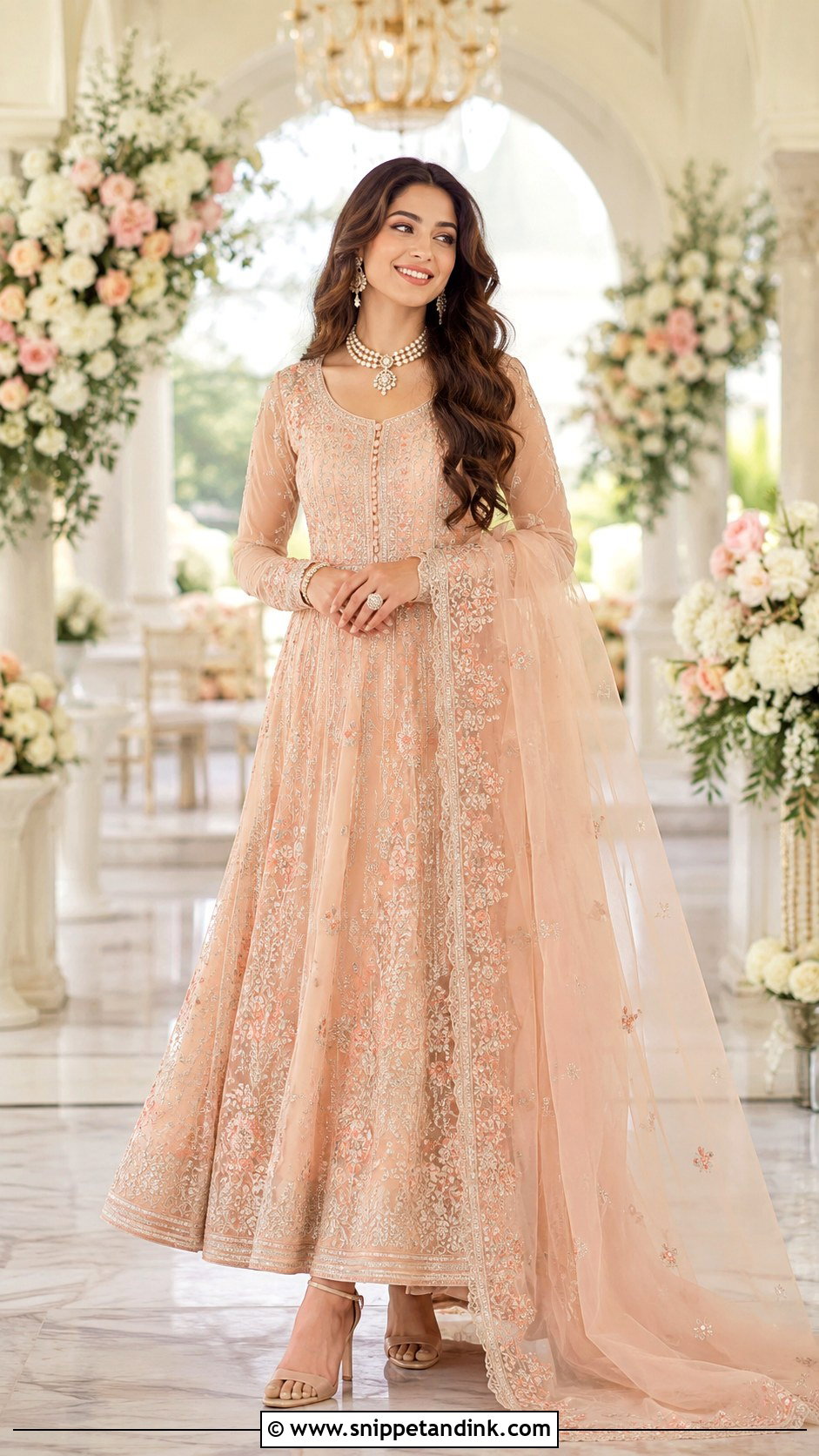
Peach with an organza dupatta is soft and romantic for daytime weddings, engagements and garden-style celebrations. A flowy Anarkali with thread embroidery, sequins, zari or subtle florals keeps it light, and the organza dupatta needs a defined border or it disappears in photos. Peach suits a wide range of skin tones because it adds warmth without brightness. Organza creases sharply and holds the crease, so I have it steamed on the day rather than ironed days ahead. Pearl jewellery, kundan earrings, soft curls and champagne heels complete it.
14. Lavender Bridal Anarkali Suit With Sequin Work
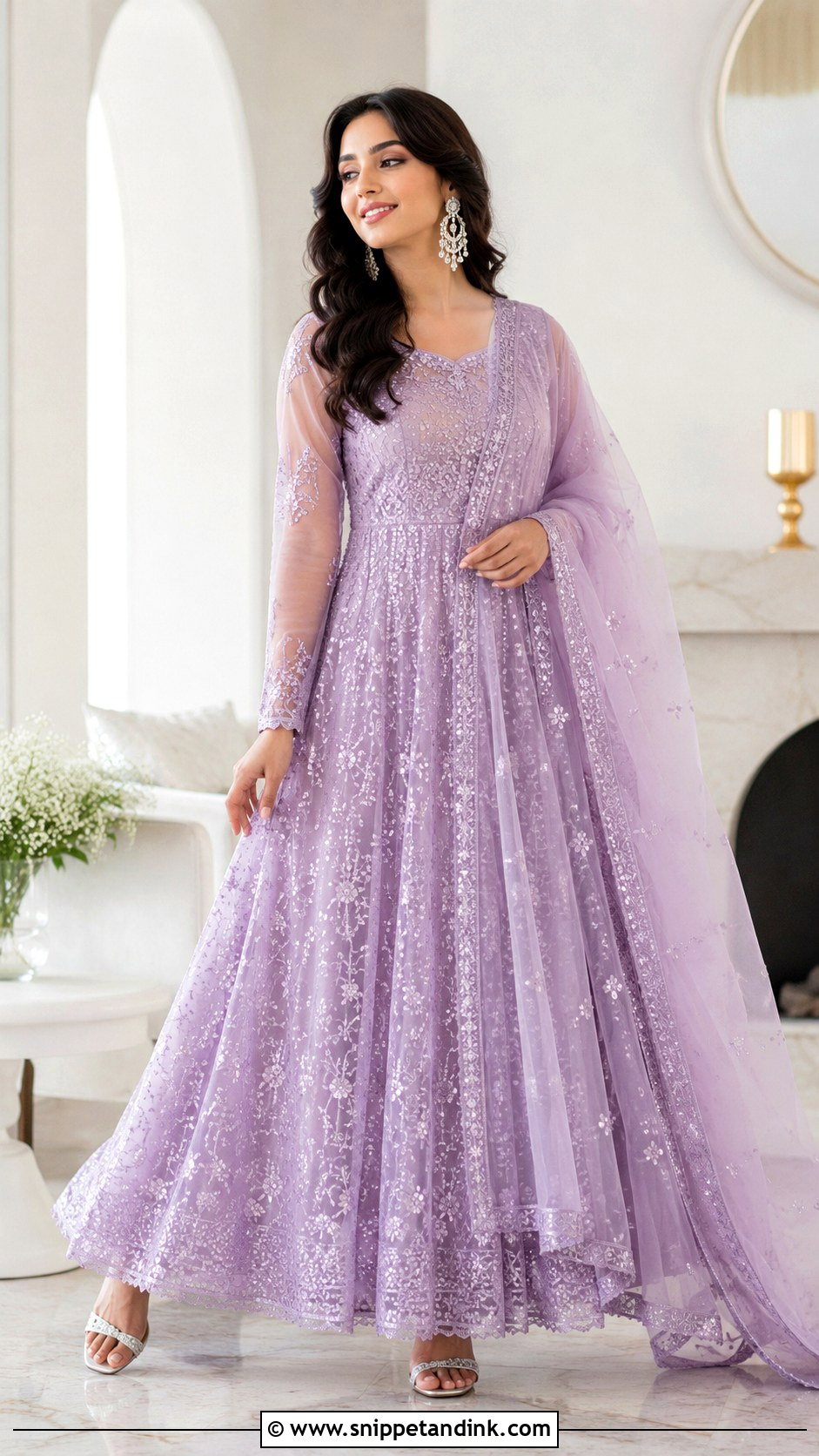
Lavender with sequins feels modern and gentle, a statement without loudness, for engagements, receptions or daytime functions. Soft lavender georgette, net, silk or organza with scattered sequins and detailed bodice embroidery, plus a matching dupatta, silver heels and crystal jewellery. Keep makeup fresh with soft pink tones. Lavender shifts with light more than most pastels, looking greyer in shade and pinker in sun, so try the fabric outdoors before you commit. The flowing Anarkali silhouette gives the colour movement.
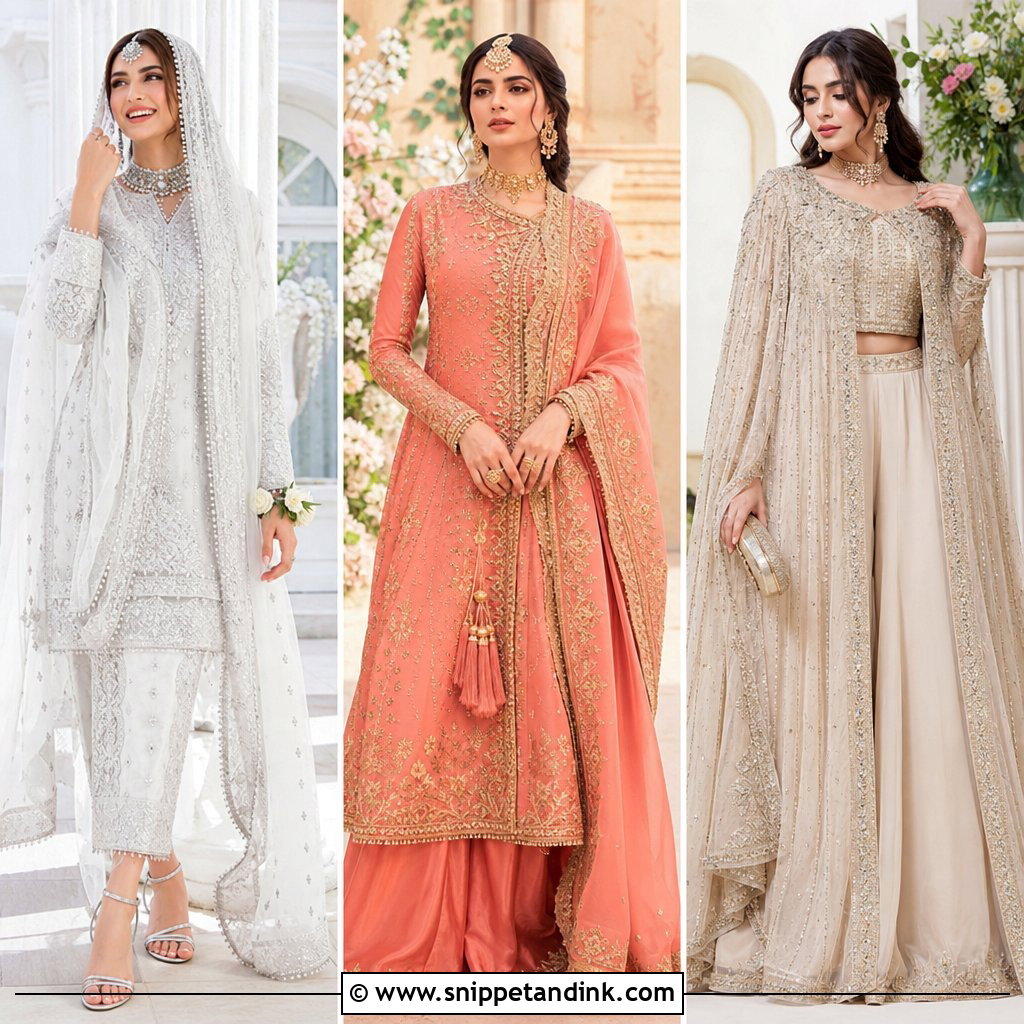
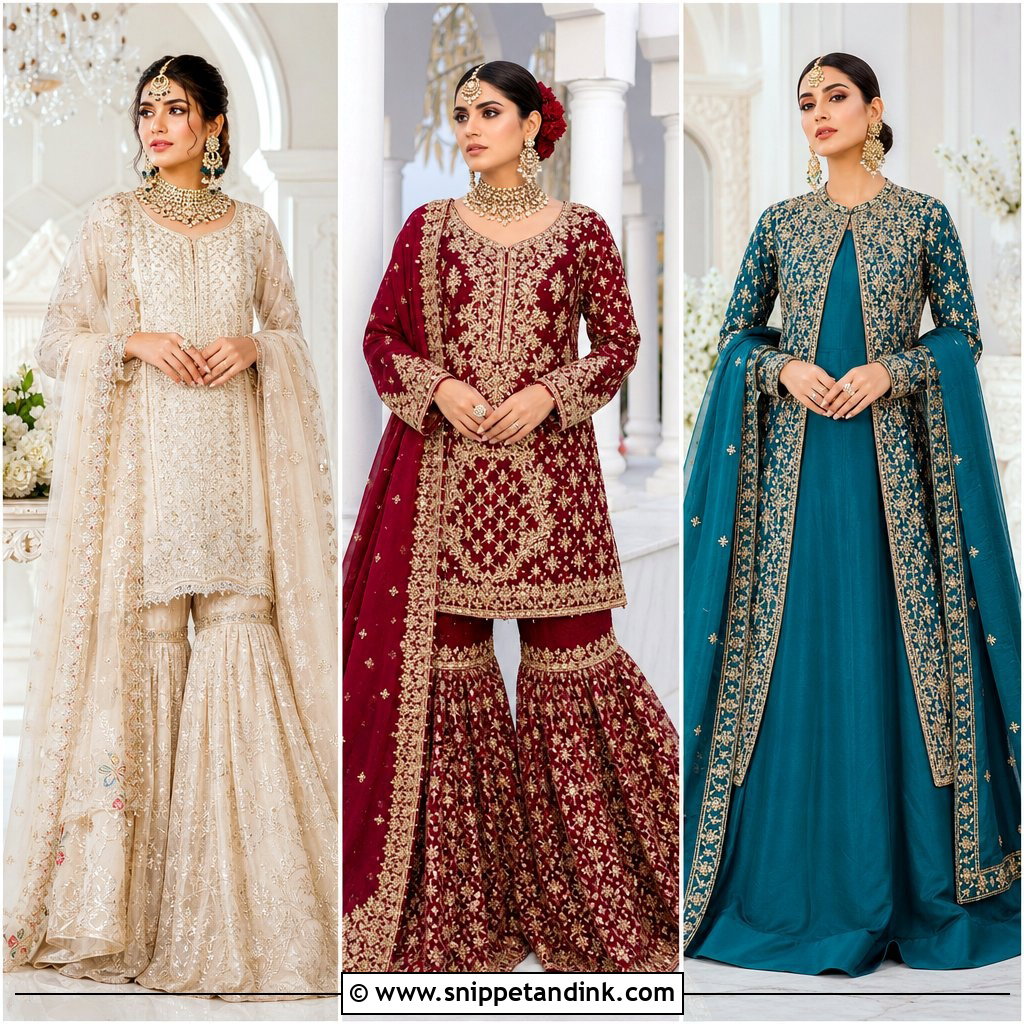
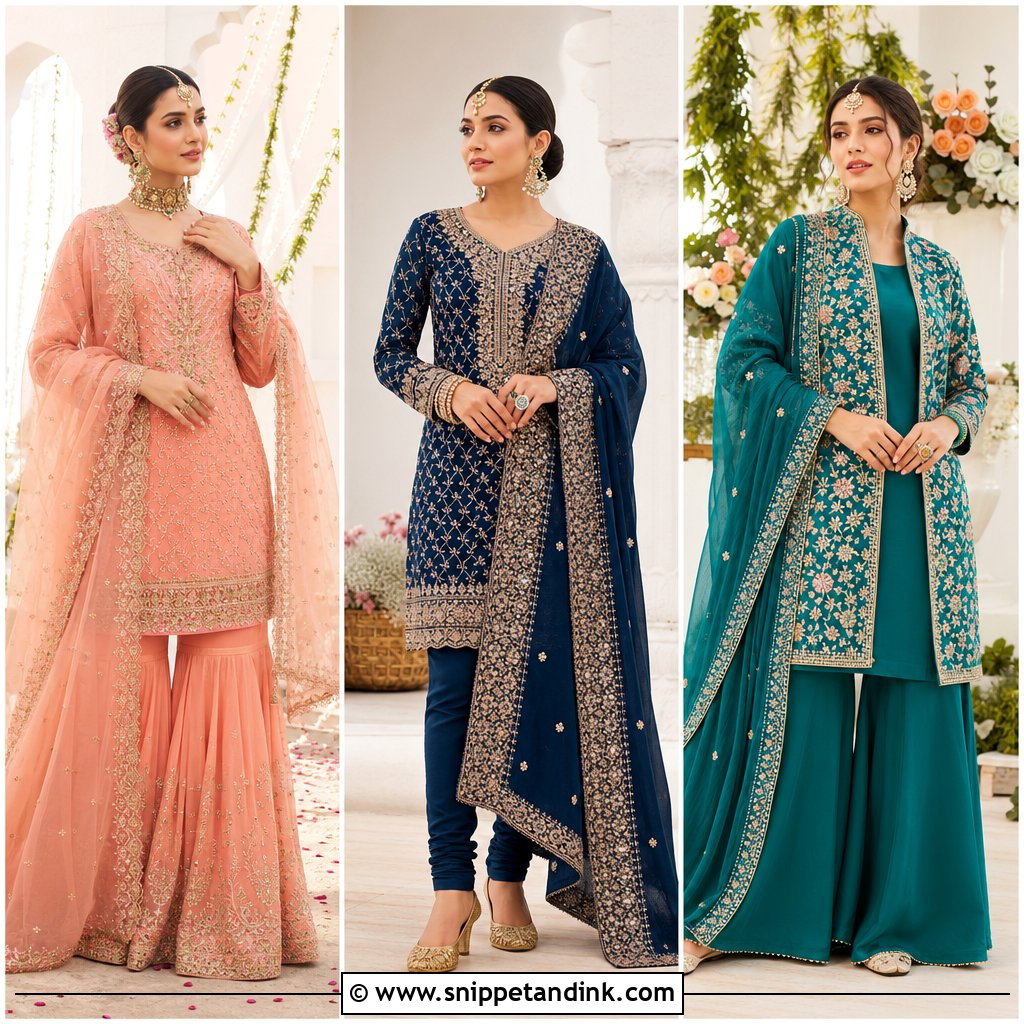
15. Anarkali Bridal Suit With Sharara Bottoms
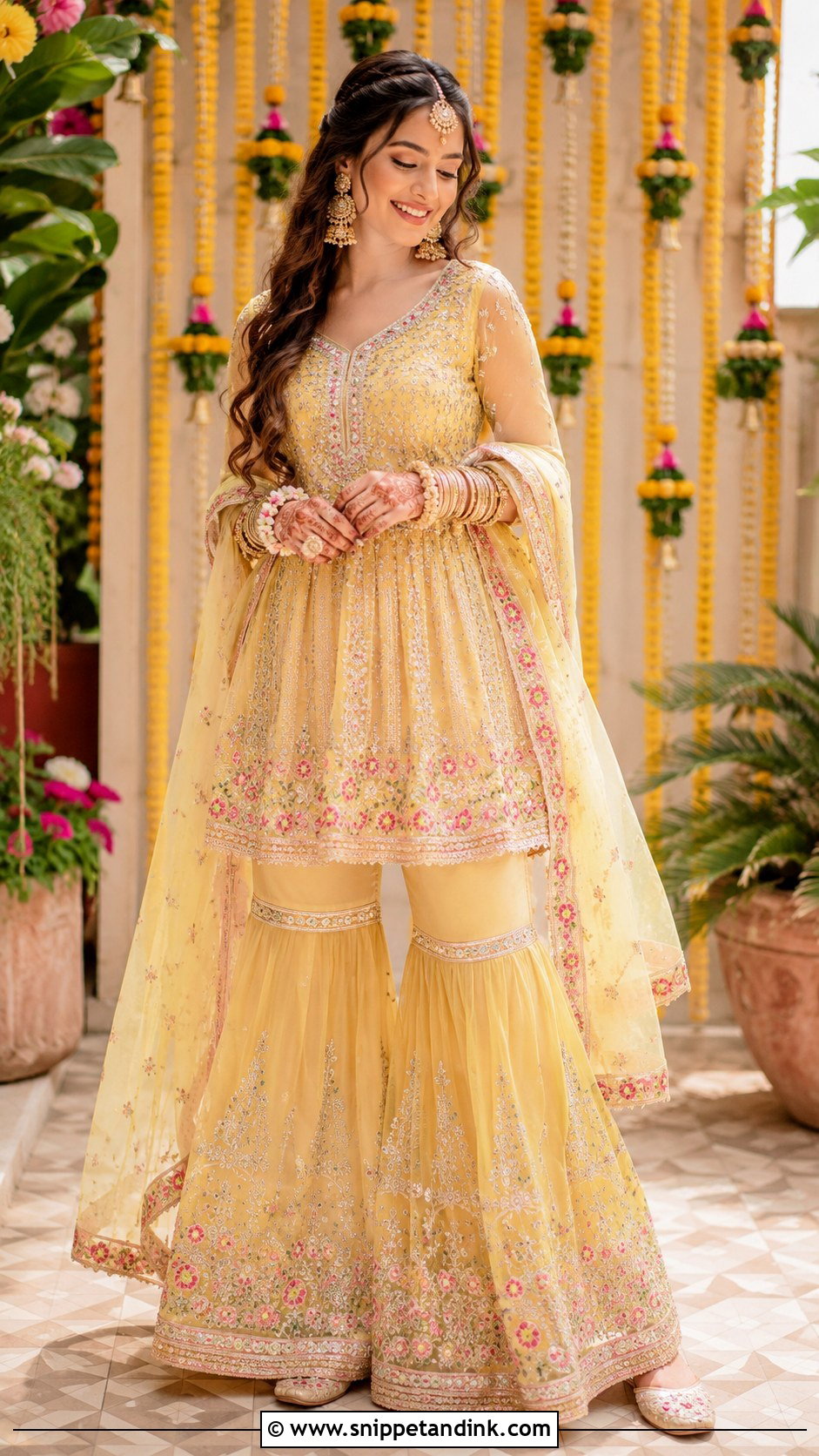
Pairing an Anarkali with sharara bottoms adds volume and a playful shape. It works when the Anarkali is shorter, around calf length, so the sharara flare shows. Put the richest embroidery on the bodice and hem, and coordinate the sharara with matching borders or small motifs. A dupatta over one shoulder keeps it bridal. Jhumkas, bangles and comfortable heels or juttis complete it for mehndi, sangeet or an engagement. Two flares means a lot of fabric around your feet, so practise stairs and turns in it before the event.
16. Anarkali Bridal Suit With Jacket
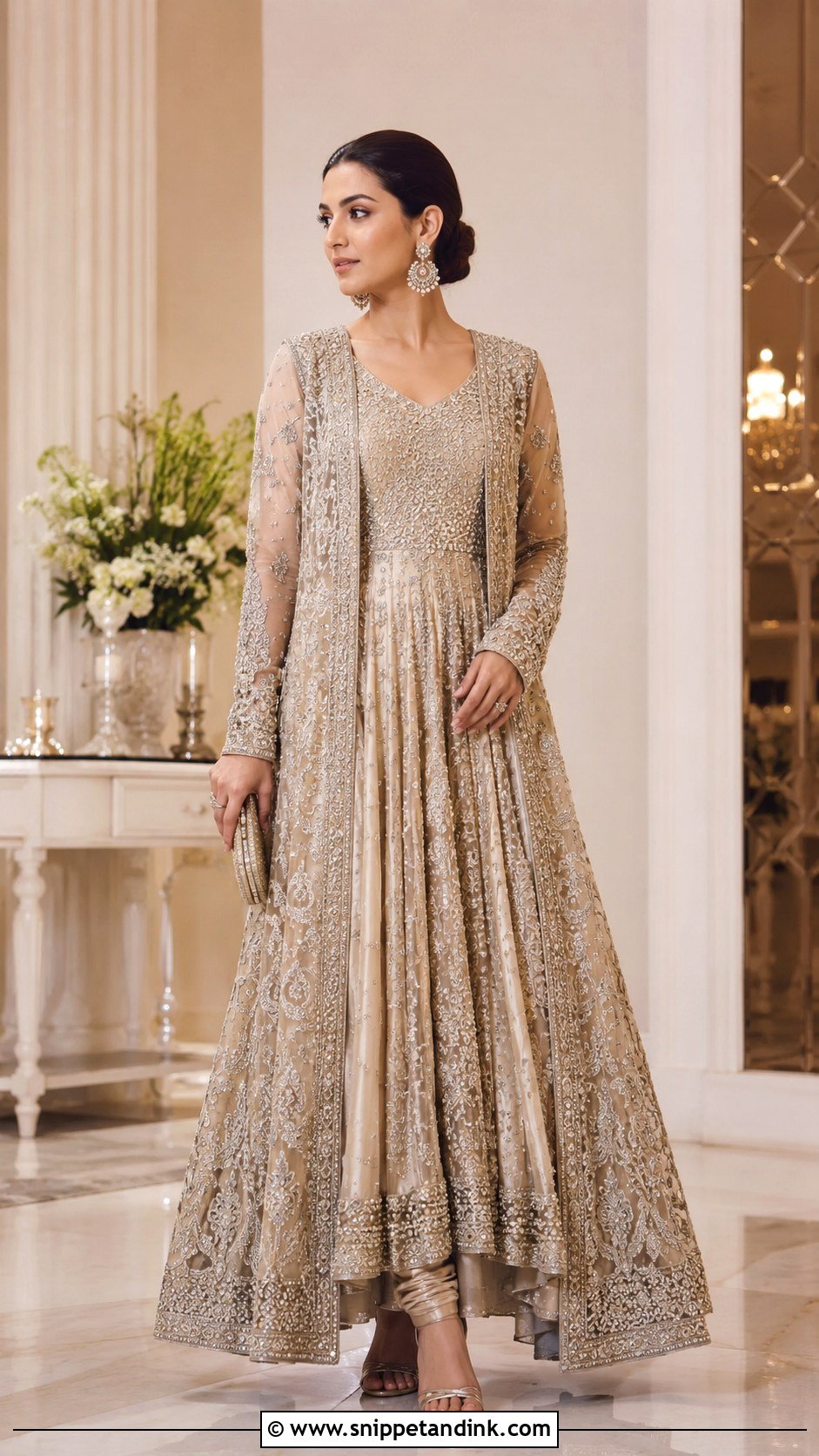
A jacket gives an Anarkali structure, coverage and a layered look. It can be short, waist-length or long and open-front depending on the drama you want. The jacket and Anarkali should share embroidery, matching borders, motifs or threadwork, so they look like one outfit. Many jacket sets look finished without a dupatta at all. Statement earrings, heels and a neat hairstyle keep the neckline visible. With a long jacket, check that the armholes aren’t cut too tight once two layers are stacked, since that’s where these sets usually feel restrictive. It suits receptions, formal ceremonies and cooler seasons.
17. Anarkali Bridal Suit With Cape Dupatta
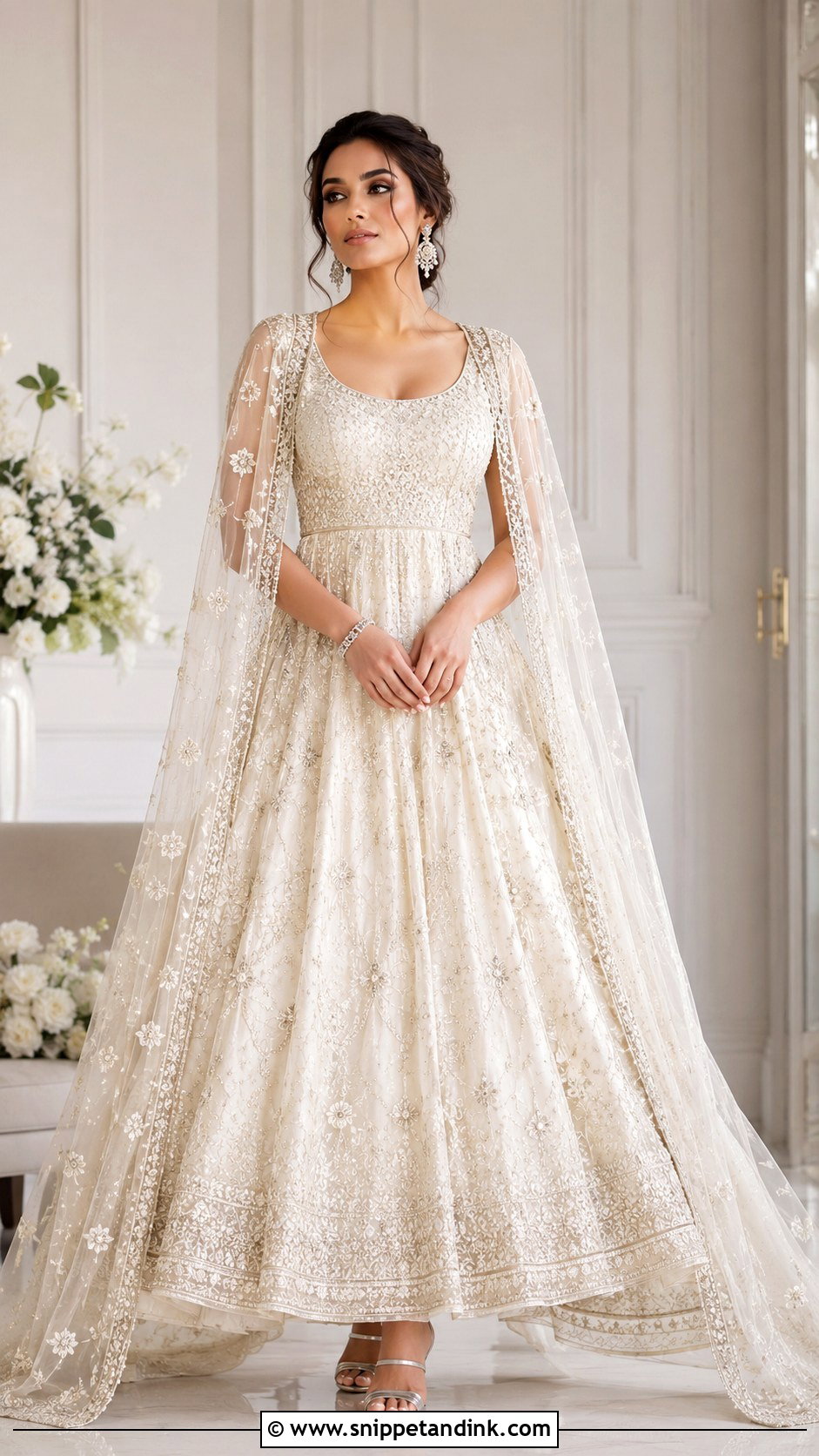
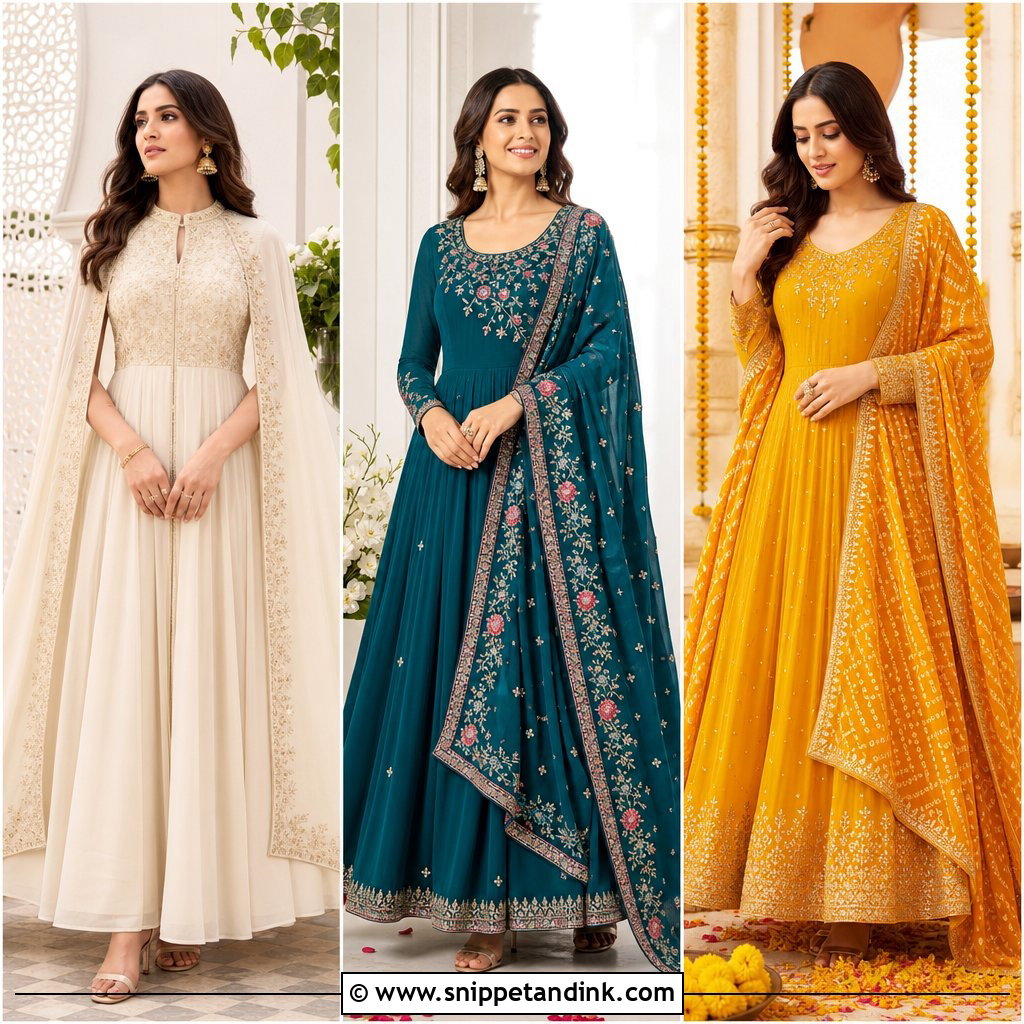
A cape replaces the dupatta with something easier to manage, which suits brides who want their hands free. It can be sheer, embroidered or lightly embellished, over a fitted bodice and full flare so the outfit still reads bridal. Ivory, blush, gold, sage and pastel blue all suit it. Since the cape frames the upper body, I swap heavy necklaces for drop earrings, a bracelet and heels. It’s my usual suggestion for receptions and engagement parties when a bride says she’s tired of adjusting a dupatta all night.
18. Floor Length Bridal Anarkali Suit With Trail
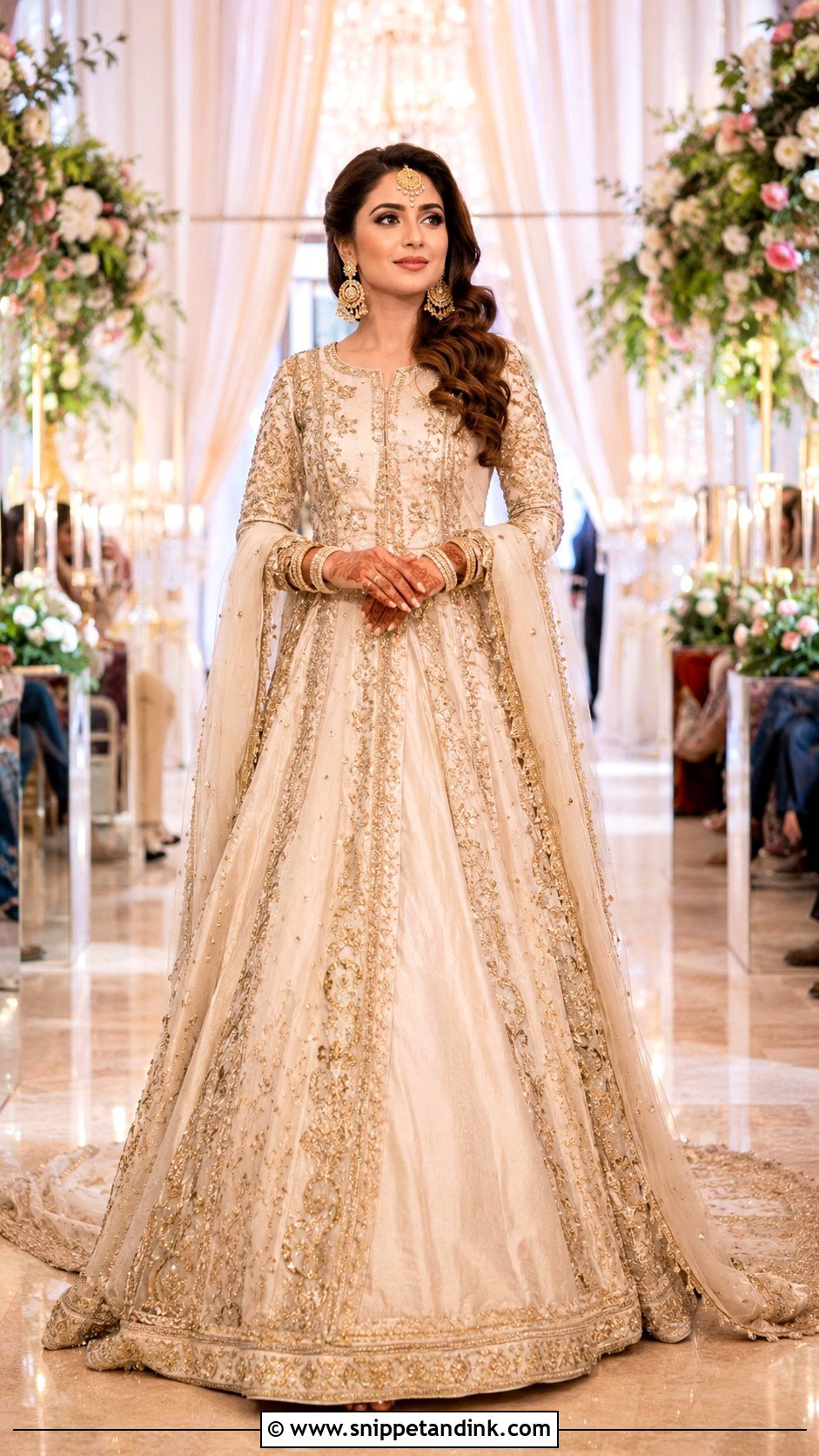
A trail gives you an entrance while staying lighter than most heavy lehengas. Keep it soft and short enough to walk and sit without someone lifting it for you. Silk, georgette or organza with embroidery flowing from the bodice down into the panels looks best. The dupatta can go over the head or be pinned neatly on one shoulder. Style with a matha patti, earrings, bangles and comfortable heels hidden beneath the length, and have the hem measured in those exact heels. It suits ceremonies and formal bridal portraits.
19. Silk Bridal Anarkali Suit With Banarasi Dupatta
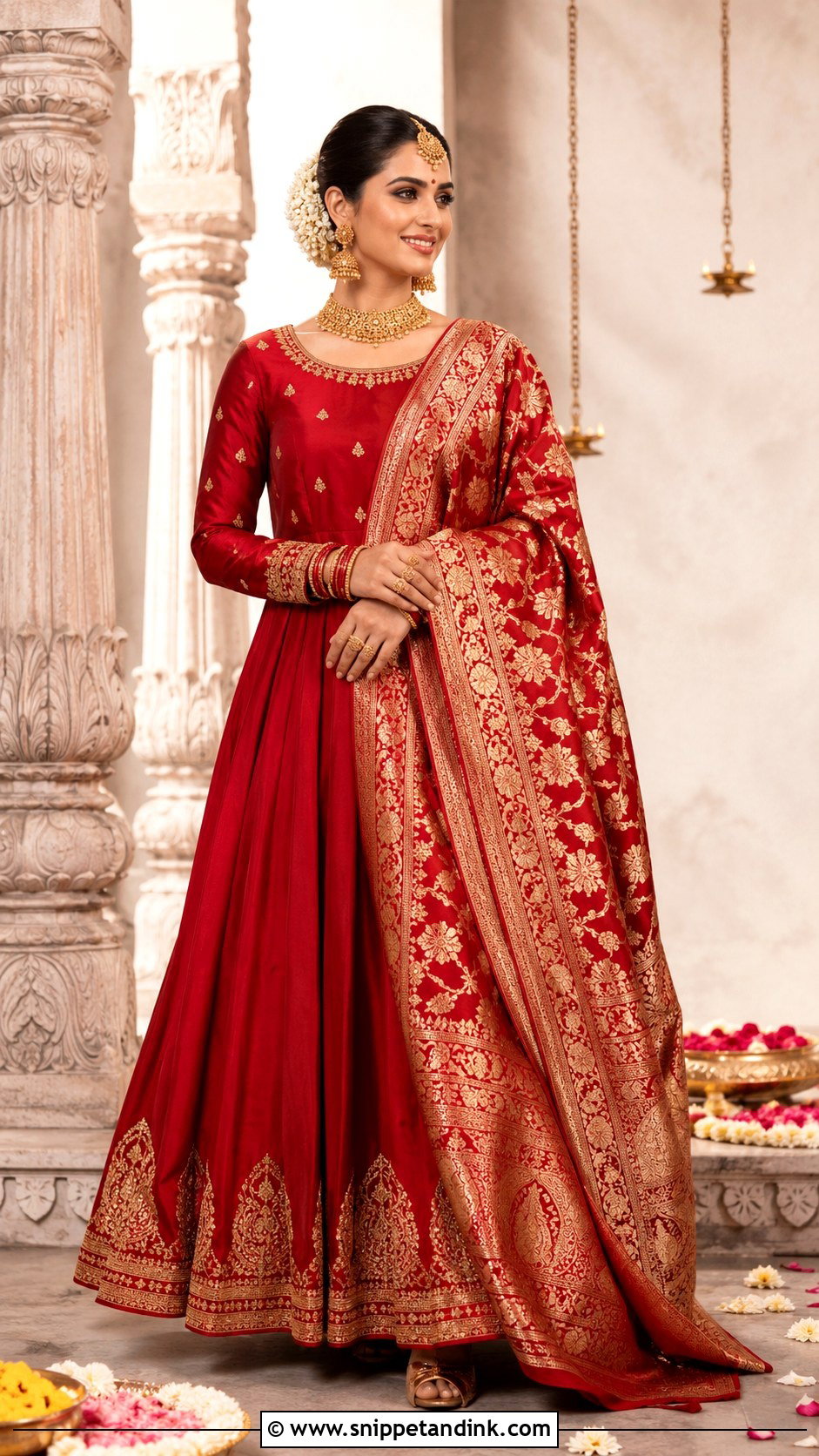
Silk with a Banarasi dupatta has heritage built in. The Anarkali can be plain silk with a heavily woven dupatta, or carry zari embroidery that picks up the dupatta’s motifs. Red, rani pink, emerald, mustard and ivory all suit Banarasi weaving. Temple jewellery, kundan or antique gold, with a center-parted bun and hair accessories, completes the traditional look. A woven Banarasi dupatta is heavier than net, so it needs secure pinning at the shoulder and head or it drags the neckline back. It ties the comfort of an Anarkali to classic Indian bridal dressing.
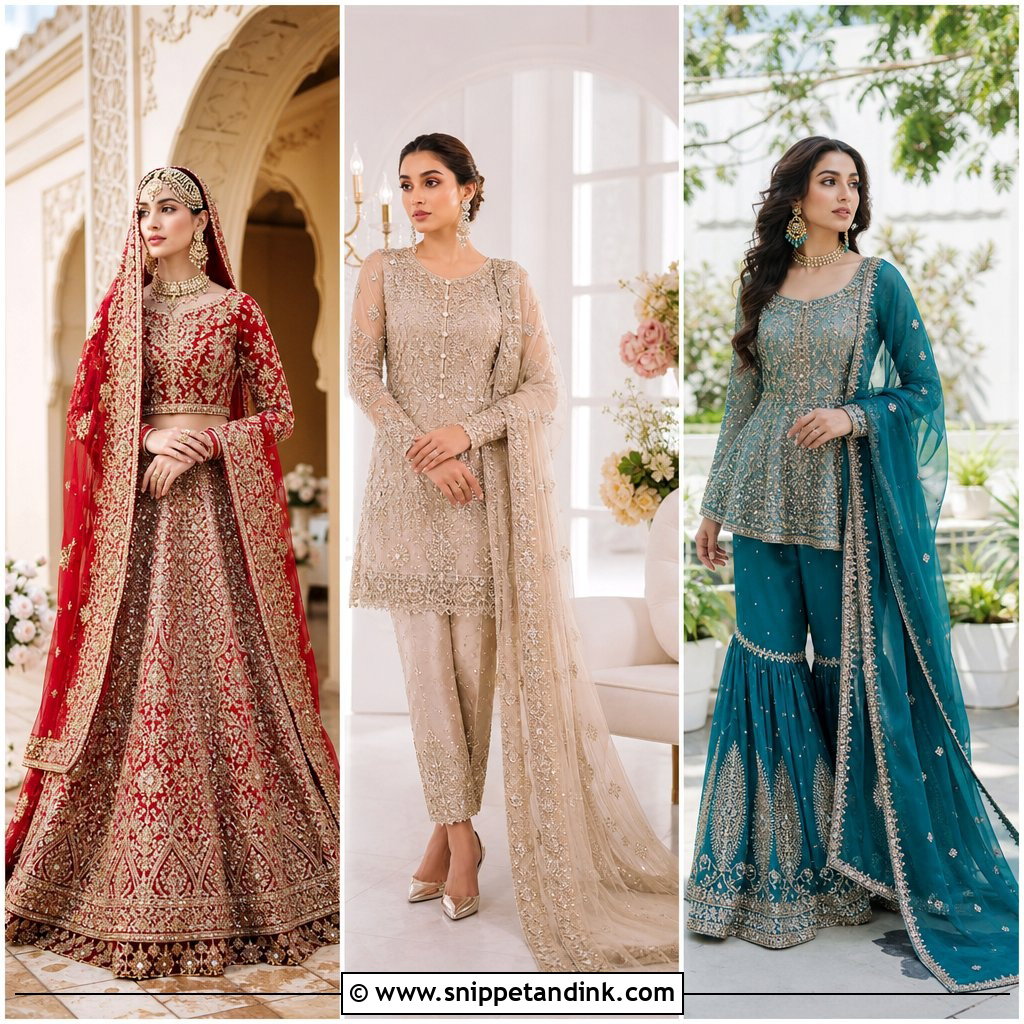

20. Chikankari Bridal Anarkali Suit With Pearls
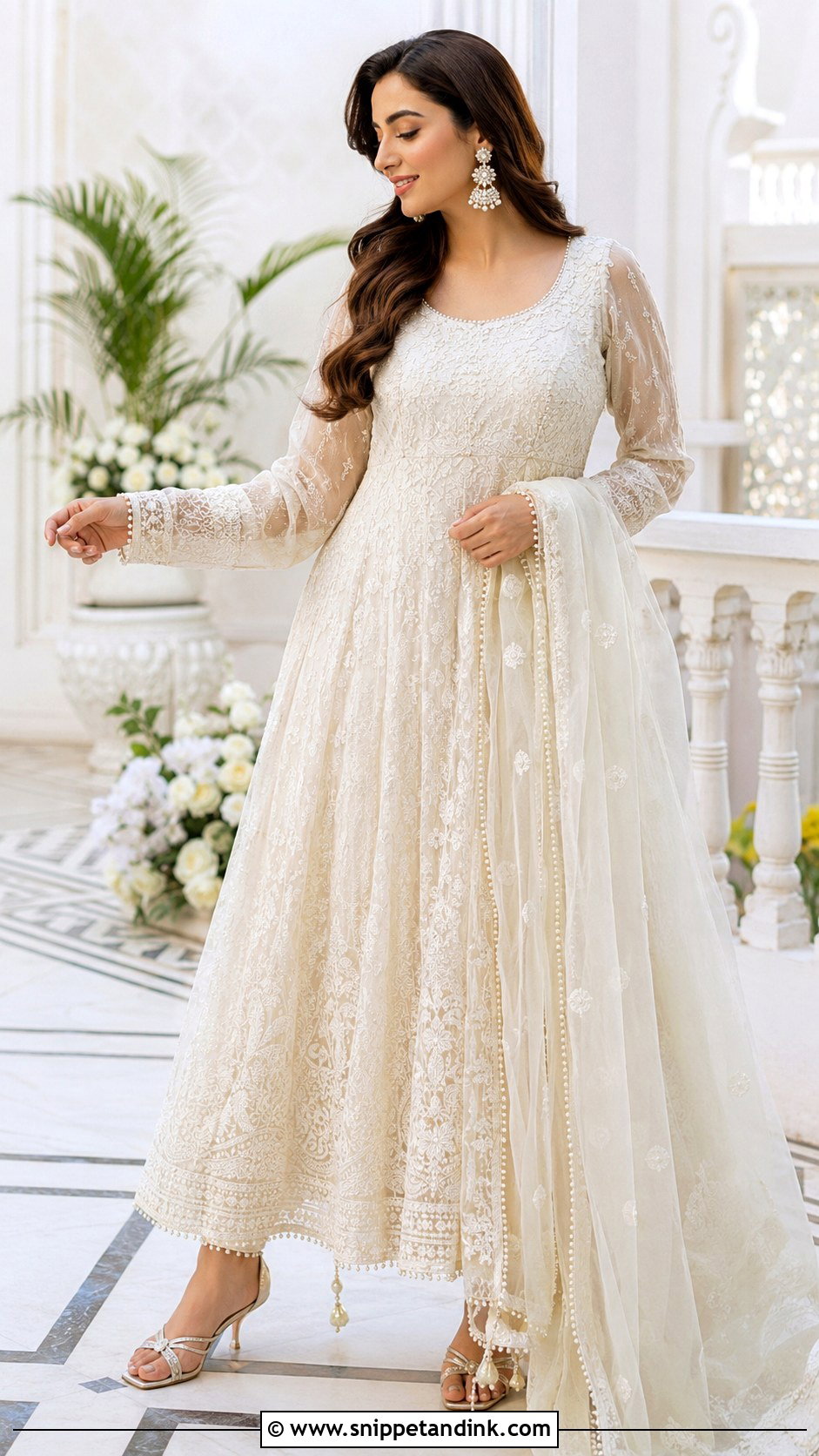
Chikankari with pearls is breathable and refined, for brides who prefer craftsmanship to shine. Ivory, blush, mint, powder blue or soft peach with hand embroidery and pearl accents at the neckline, sleeves and hem, and a matching dupatta with pearl edging, keep it light. Real hand chikankari shows tiny irregularities on the reverse, which is how you tell it from machine work. Pearl jewellery, soft metallic heels and natural makeup complete it for daytime ceremonies, nikah, walima, engagements and summer weddings.
21. Gota Patti Bridal Anarkali Suit For Sangeet
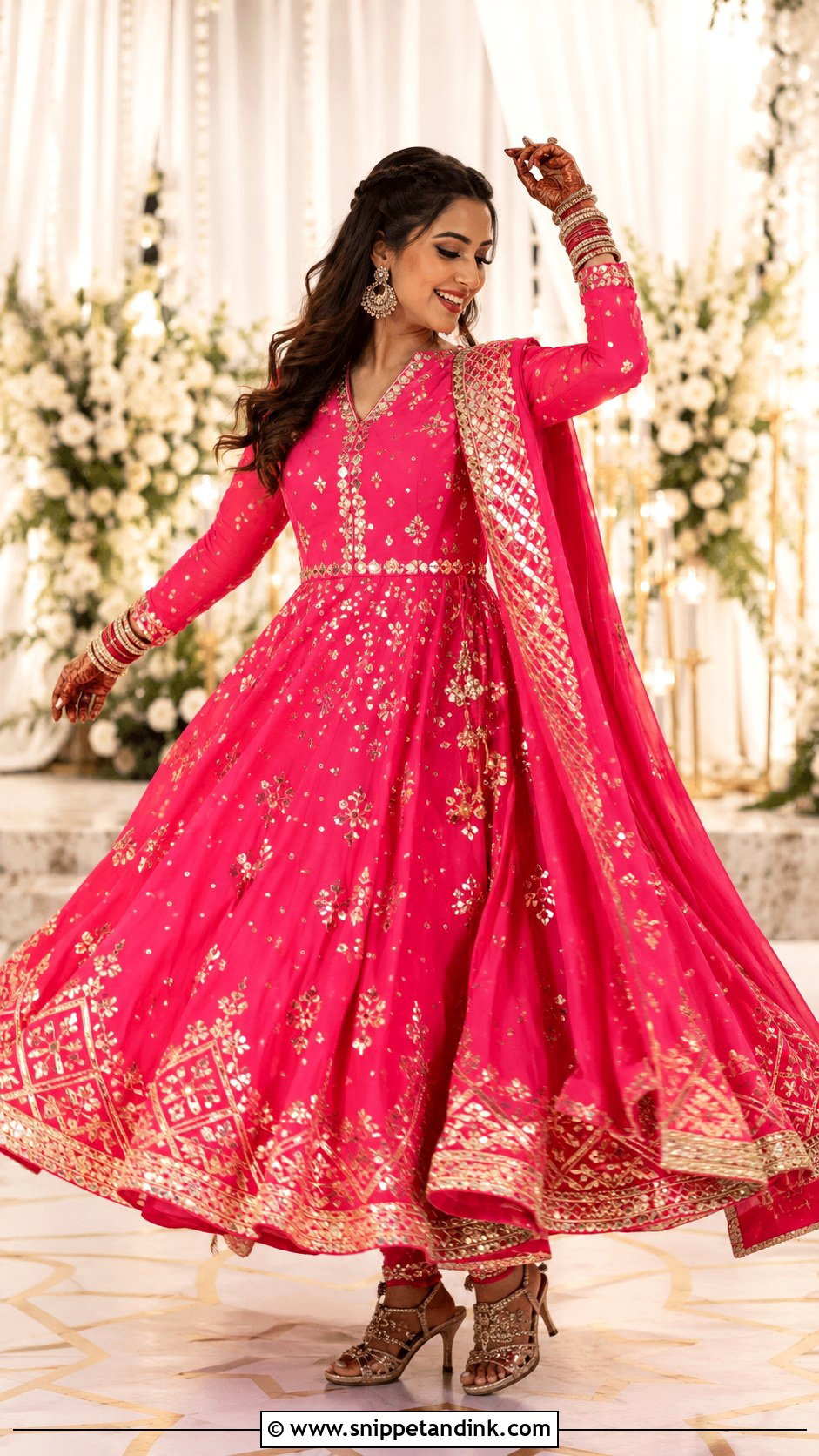
Sangeet means dancing, so I build this one around movement. Georgette, a silk blend or chiffon with gota work across the bodice, sleeves and hem keeps it light, and bright pink, yellow, orange, green or turquoise suits the mood. The flare swings during dancing, and a pinned dupatta stays put. Juttis or block heels, statement earrings and stacked bangles finish it. Gota is a metallic ribbon, so it gives sparkle at a fraction of the weight of dense zardozi, which is exactly what you want for a night on your feet.
22. Rani Pink Bridal Anarkali Suit With Polki Jewelry
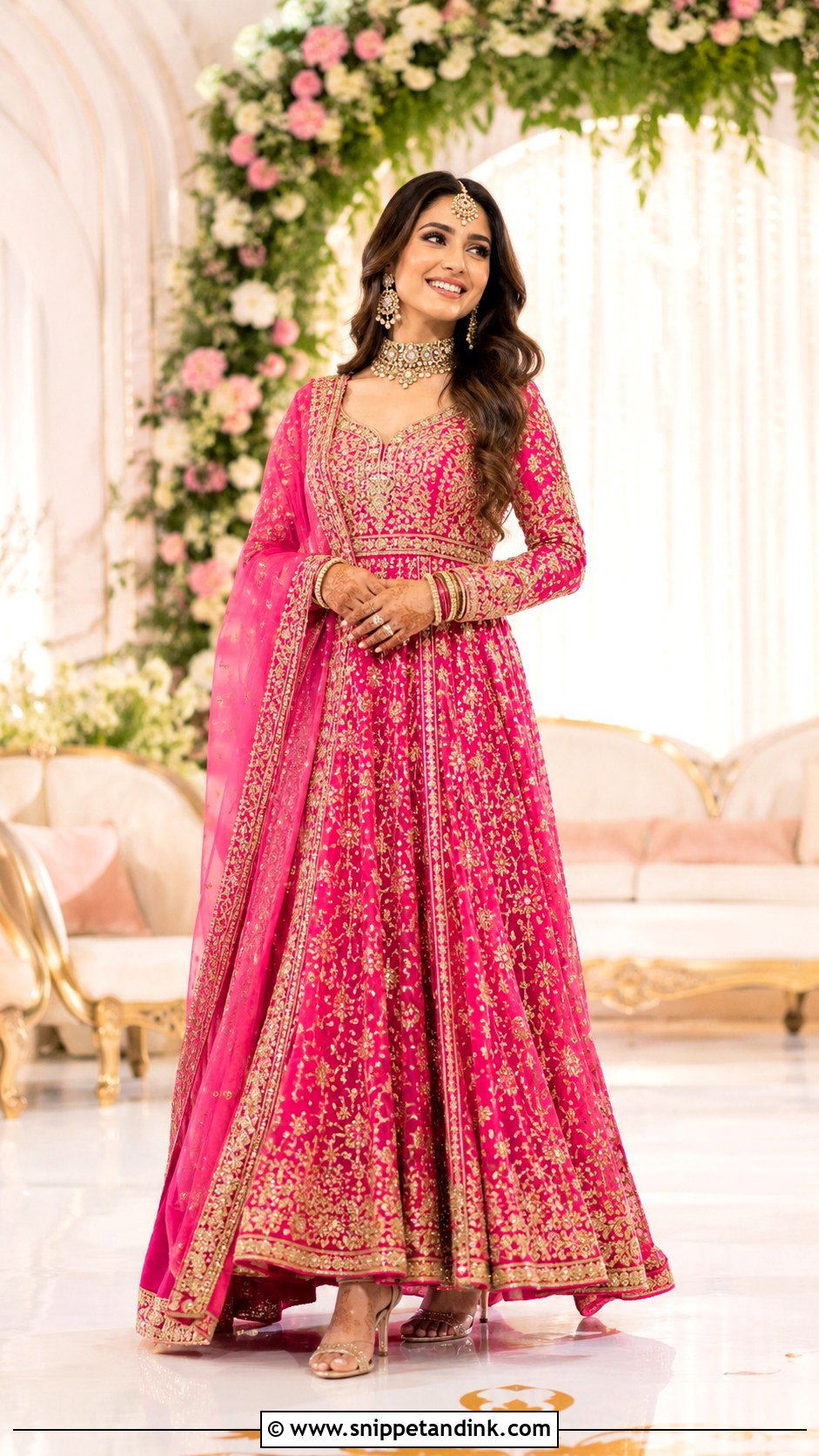
Rani pink with polki is bright and royal, and the colour holds up in both daylight and evening photos. Gold zari, mirror work, sequins or thread embroidery add richness. A matching dupatta gives a monochrome effect; gold or orange makes it more traditional. Polki earrings, a choker, bangles and embellished heels finish it for engagements, mehndi or receptions. Rani pink can clash with red-toned lipstick, so I’d test the lip shade against the fabric at the makeup trial.
23. Mint Green Bridal Anarkali Suit With Floral Embroidery
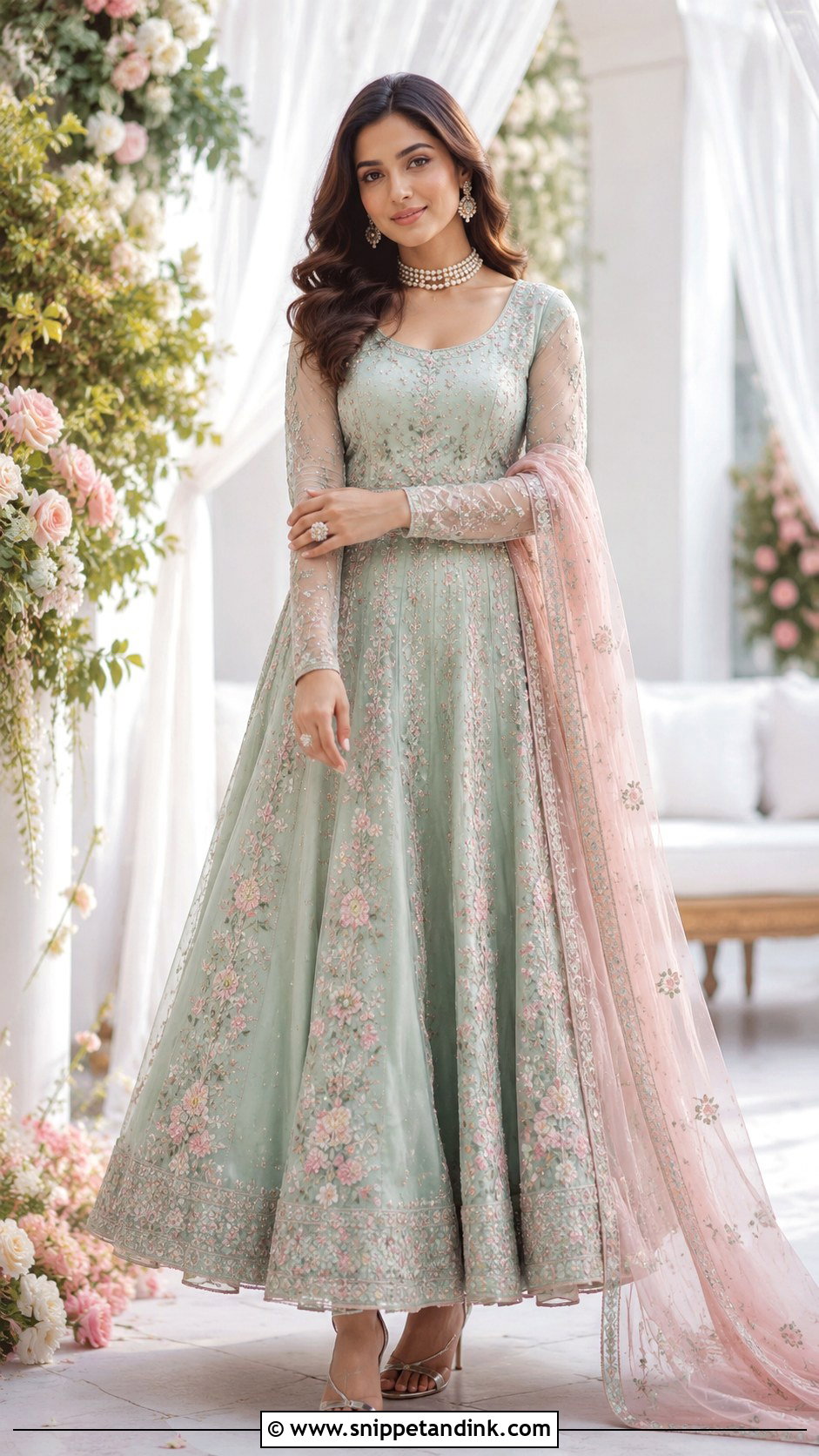
Mint green with floral embroidery is fresh for spring, summer and daytime functions. Threadwork, sequins or pastel florals across the bodice and panels, with a sheer mint, ivory or blush dupatta, keep it delicate. Pearl jewellery, silver-toned heels and soft waves or a floral bun suit it. Mint can make some skin tones look sallow in fluorescent light, so check it near a window and under the venue’s lighting if you can. The florals give a romantic mood, and the flare keeps it wedding-ready from every angle.
24. Heavy Embroidered Bridal Anarkali Suit With Dupatta
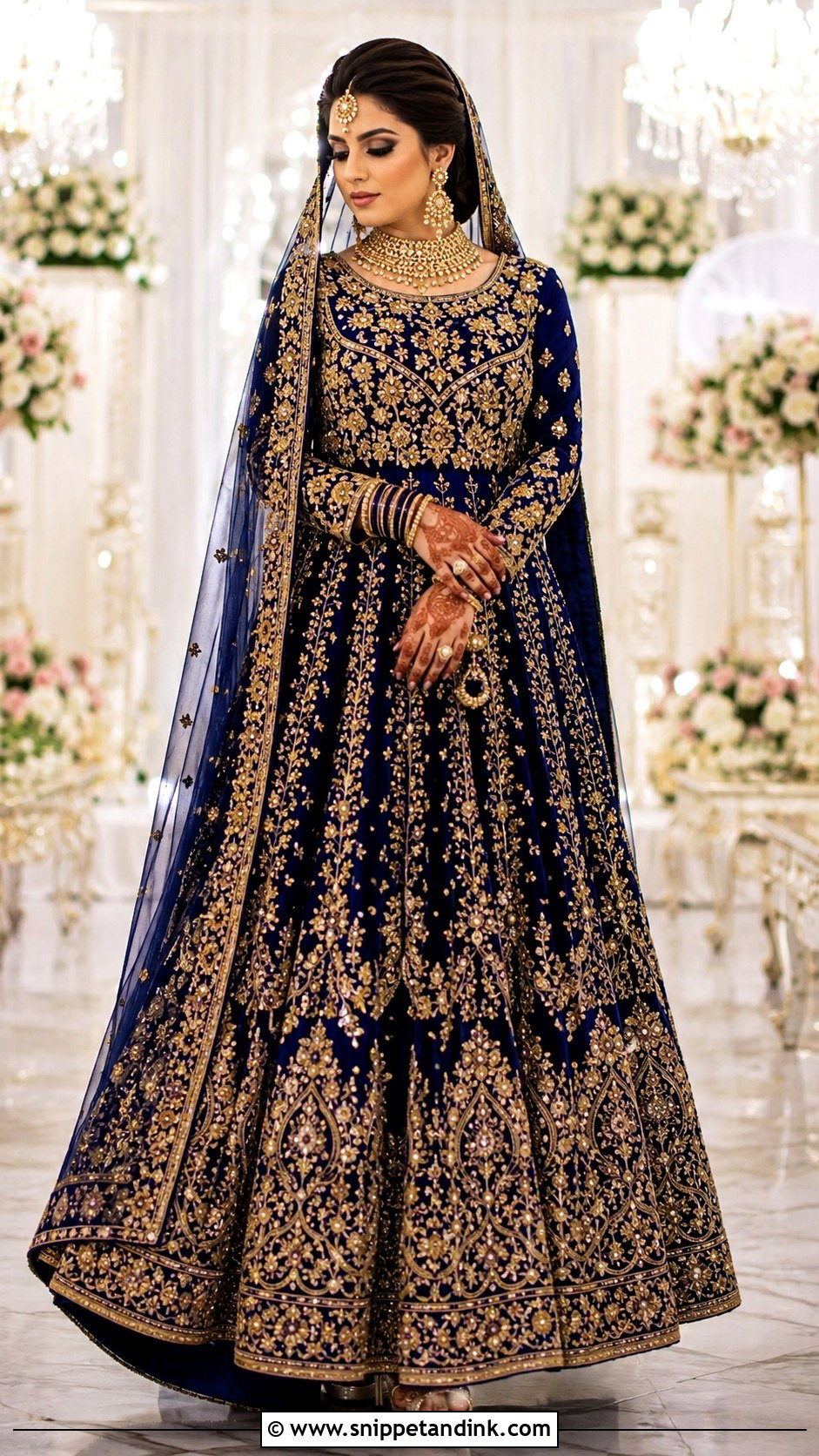
For maximum impact, a heavily embroidered Anarkali with a matching dupatta is the choice, but placement is what keeps it wearable. A structured bodice, strong flare and detailed borders on sleeves and hem, with the dupatta echoing the motifs if you’ll drape it over your head. Heavy zardozi adds real weight to the shoulders and hem, so I’d ask for a firm lining and broad shoulder seams to spread the load. Classic bridal jewellery, bangles, heels and a polished hairstyle finish it, in red, gold, maroon, ivory, emerald or royal blue, for the main ceremony, reception or formal portraits.
25. Minimal Bridal Anarkali Suit With Statement Dupatta
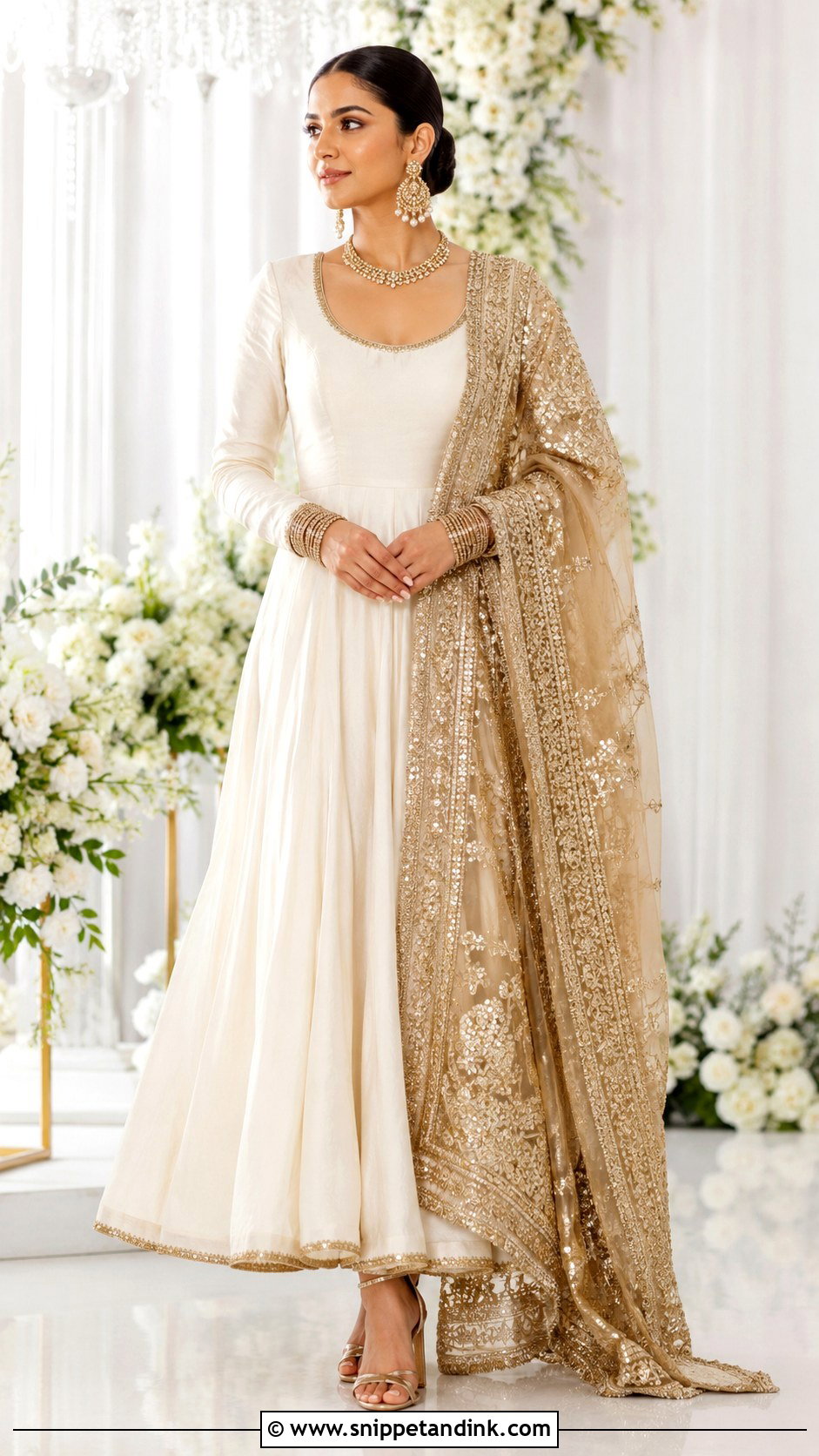
A simple Anarkali with a statement dupatta puts all the drama in one place. A clean silk, crepe or georgette Anarkali with a fitted bodice and graceful flare is easy to wear, and the dupatta carries heavy embroidery, woven borders, sequins or personalised details such as names or dates. Bold earrings, a delicate necklace, bangles and sleek heels finish it. It’s the route I recommend for intimate ceremonies, civil celebrations, receptions and brides who dislike heavy clothing over a long event, and the dupatta often becomes a keepsake afterwards.
Ordering a Custom Bridal Anarkali in Time
Hand embroidery is slow work, so a custom bridal Anarkali with zardozi, gota or chikankari often needs a few months from order to final fitting. Timelines vary a lot between designers and seasons, and the peak wedding season gets busy, so I suggest placing the order at least three to four months ahead and longer for heavy handwork. Ready-made pieces still need a couple of weeks for alterations.
What I check at the trial
- Lift both arms. Tight armholes are the most common complaint on bridal Anarkalis.
- Sit on the floor the way you would at a ceremony, and see where the flare spreads.
- Wear the outfit with the dupatta pinned for twenty minutes and notice where the weight pulls.
- Compare the colour of the Anarkali, churidar and dupatta in daylight. Dye lots can differ slightly.
After the wedding, air the outfit before storing it, then wrap it in muslin or soft cotton rather than plastic, and fold it with tissue between the embroidered layers so metallic thread doesn’t press into the fabric. Refolding it along different lines every few months stops permanent creases forming at the fold.
Which Function Gets the Heaviest Anarkali?
Anarkalis give brides elegance and traditional charm with real comfort. Red silk, ivory zari, pastel chikankari, velvet, capes, sharara sets and statement dupattas cover every wedding function and taste. Whatever you choose should fit well, move easily and look right from head to toe in photographs. Balance fabric, flare, embroidery weight, dupatta styling, jewellery and footwear so nothing fights for attention. Classic or modern, minimal or grand, the right Anarkali is the one you forget you’re wearing by the end of the night.
You'll Like These Ideas:





Leave a Reply