
Dressing for your sister’s wedding is a different job from dressing as a guest. You’ll be in the mehendi, haldi, sangeet, ceremony and reception photos, usually standing right next to the bride, and you’ll spend the hours in between fetching things and looking after relatives. The twenty outfits below run from lehengas and sarees to shararas, Anarkalis, pre-draped sarees and a few fusion pieces. When I style a bride’s sister, I start with her sister’s colors and the venue, then work back to fabric, because fabric decides how comfortable those long days actually feel. The goal is to look special without anyone mistaking you for the bride.
Planning a Different Outfit for Every Function
Before anyone shops, I sit down with the sister and write out the function list with a time of day and a likely venue next to each one. A morning haldi on a lawn and a late reception in a ballroom need opposite things, and seeing them side by side stops you buying three heavy outfits for five events.
- Haldi and mehendi: washable, breathable, nothing you’d mind staining. Cotton silk, cotton, chanderi.
- Sangeet: something you can dance in for two hours. Shararas, sequins, pre-draped sarees.
- Ceremony: your most traditional piece, usually silk, and the one to coordinate most closely with the bride.
- Reception: the place for drama, capes, tissue or tailoring, because the formal rituals are over.
Ask your sister for her color plan for each day, not only the wedding. Many brides give the family a loose palette per function, and knowing it early saves a return trip. If budget is tight, spend on the ceremony outfit and borrow or re-style for the rest; a lehenga skirt worn with a different blouse and dupatta can pass for a new look at another event.
Fittings Take Longer Than the Shopping
Indian wear almost always needs tailoring, and in wedding season tailors are booked solid. Blouse stitching alone can take a couple of weeks or more, and made-to-order lehengas often need several months, so I’d start the ceremony outfit first. Leave room for one more fitting after the first, because blouses are usually taken in or let out twice.
A few details are easy to forget. Every saree needs a fall stitched along the lower border and the edges picoted, or the drape won’t hang straight. A heavy lehenga may need a can-can layer to hold its flare. And bring the bra and shoes you’ll actually wear to every fitting, since a blouse fitted over the wrong bra will gape on the day.
1. Pastel Embroidered Lehenga for Indian Wedding
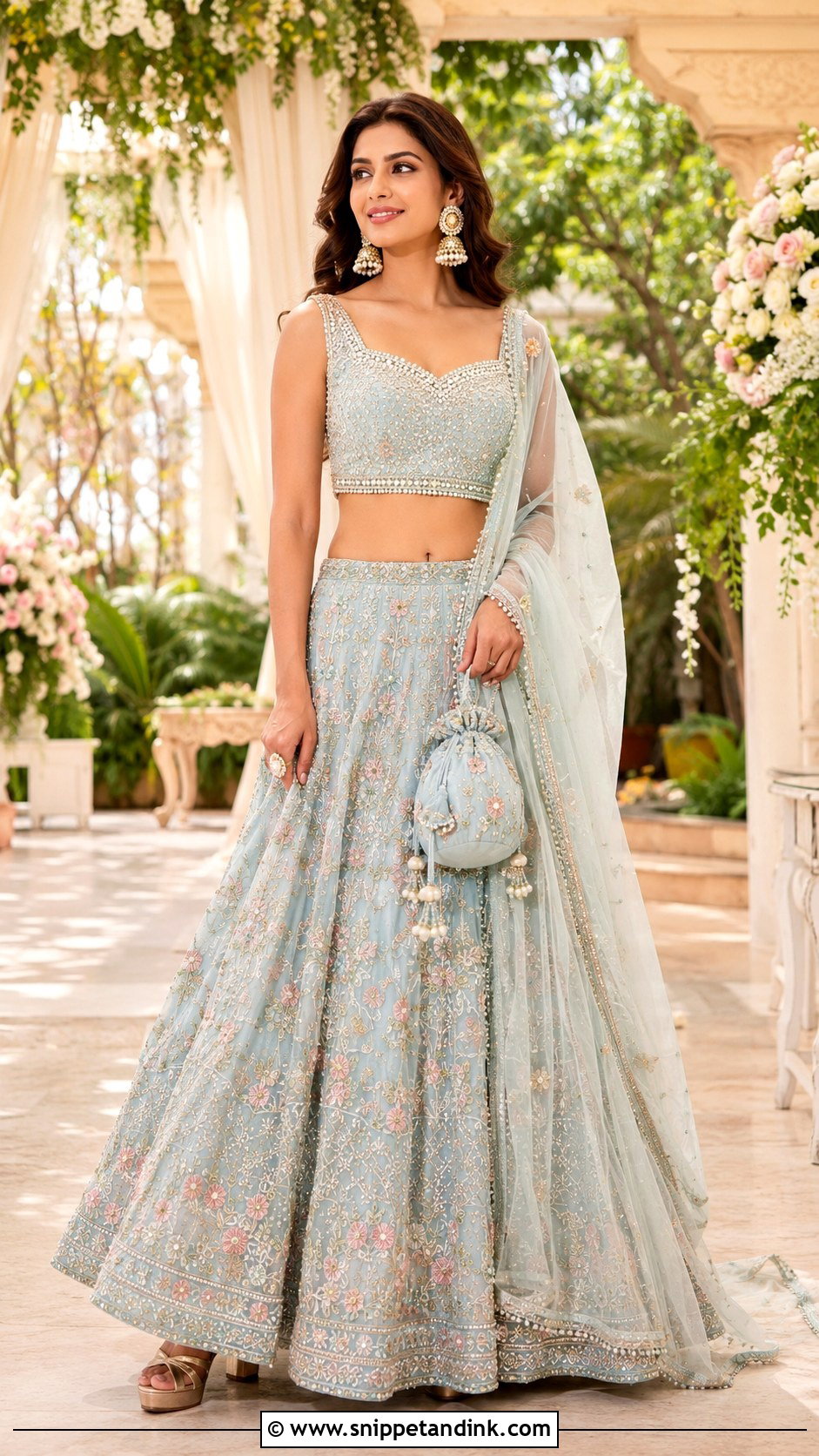
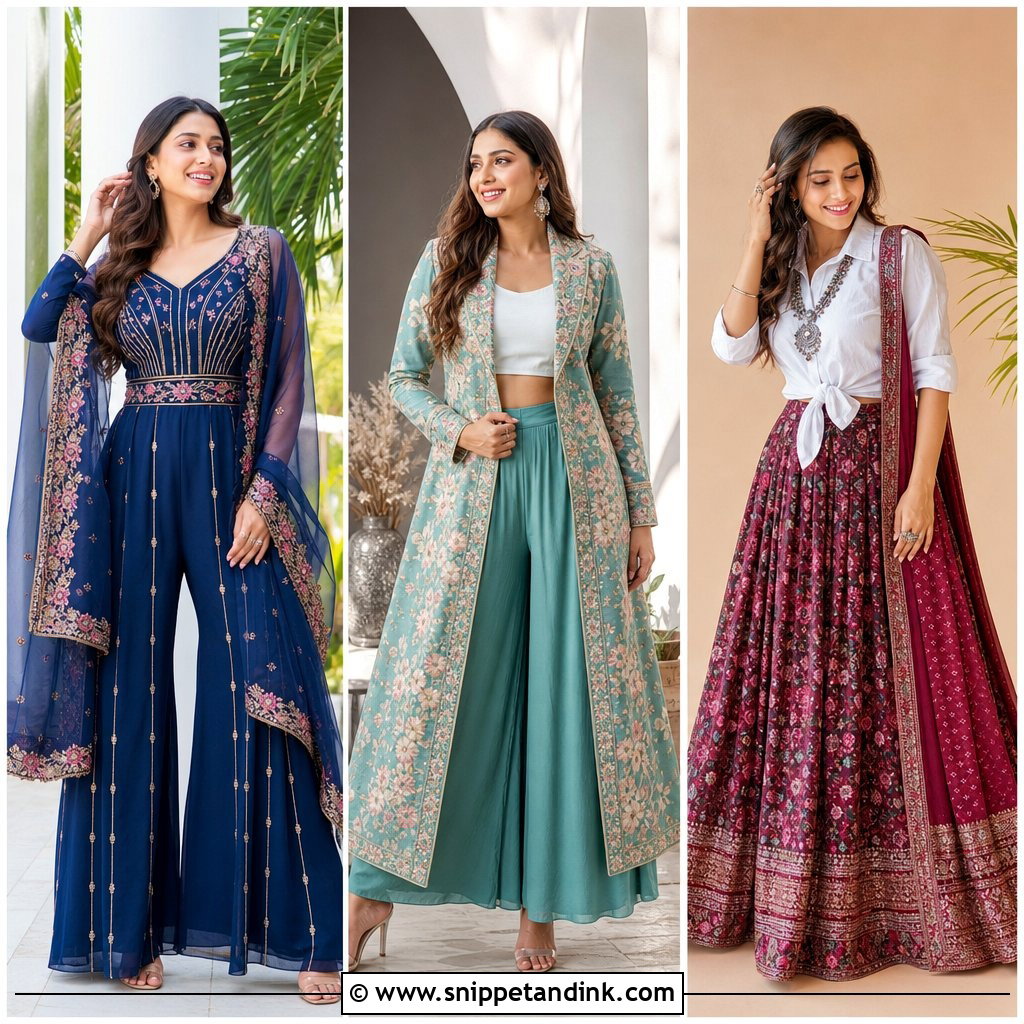
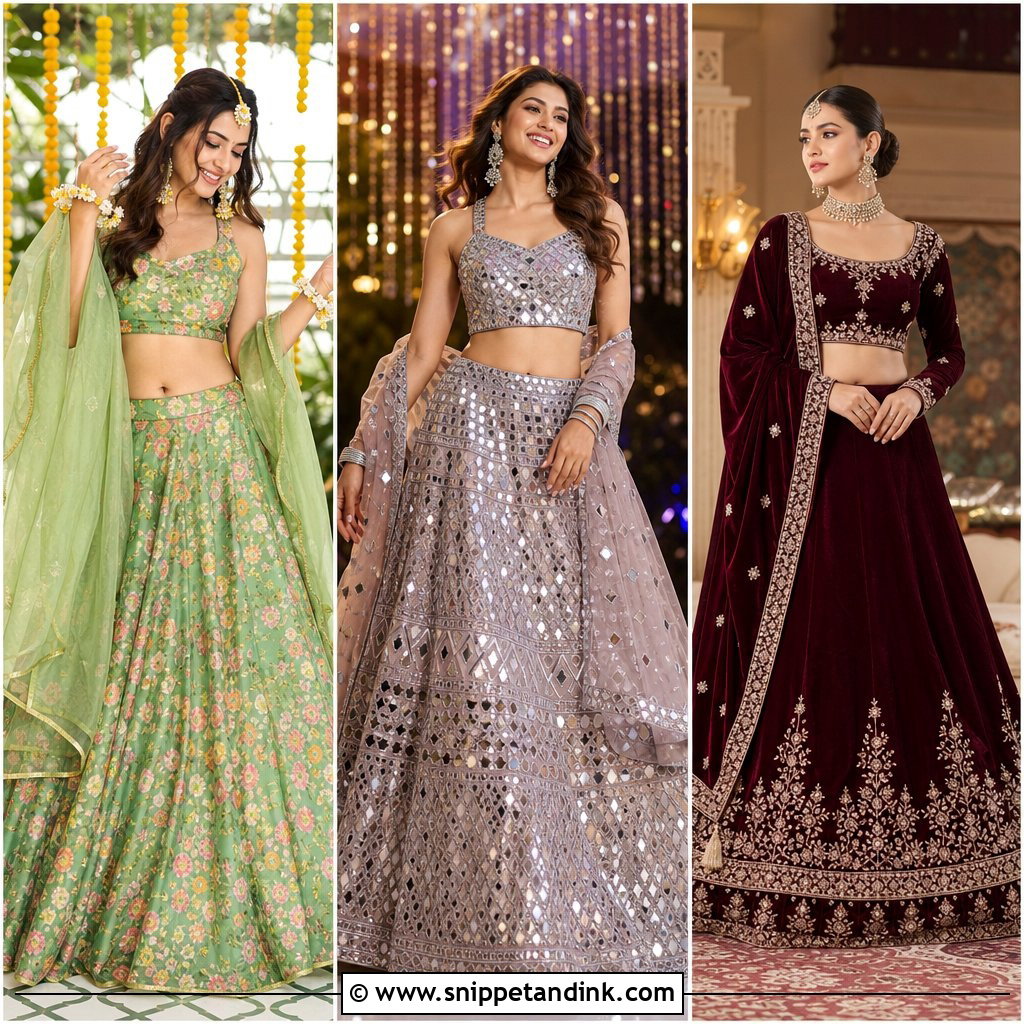
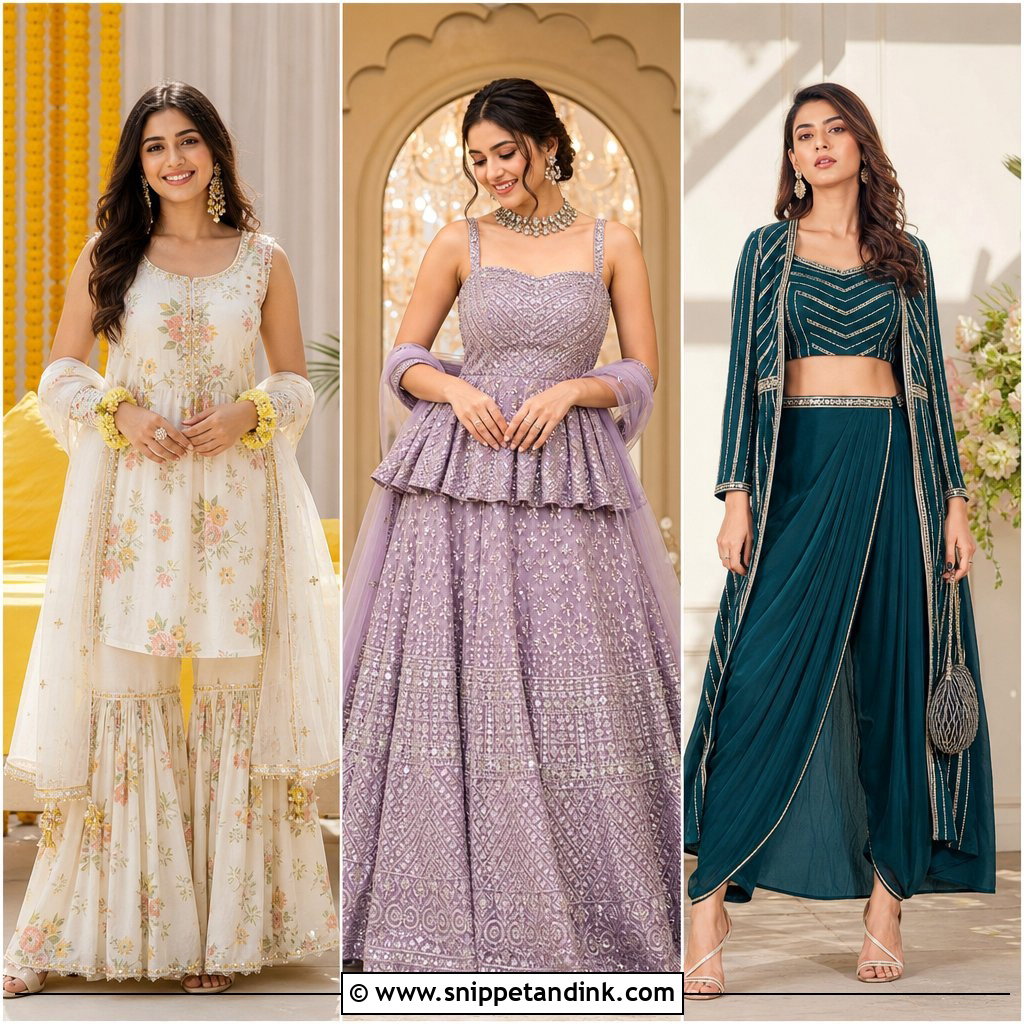
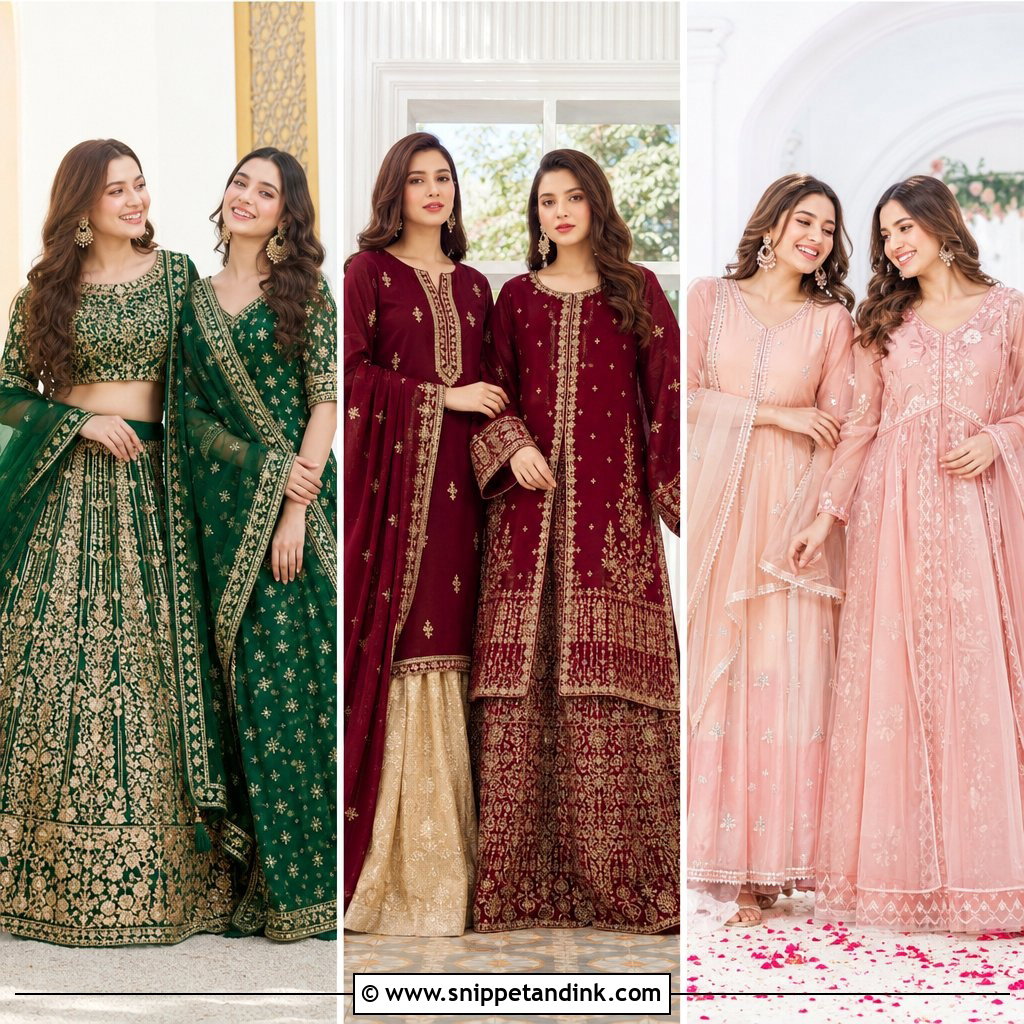
Pastels belong to daylight. Strong sun flattens dark shades, while powder blue, blush, mint and lavender with fine threadwork, pearls or sequins look fresh at a morning wedding or engagement. The first thing I check is the blouse: proper straps or elbow sleeves let you lift your arms for group hugs without the hem riding up. Drape a sheer matching dupatta over one shoulder and pin it at the back, or it slides forward every time you bend. Pearl chandbalis, a slim bracelet, a potli and metallic block heels finish it, with soft curls or a low bun. Ask what the bride and bridesmaids are wearing before you buy. A pastel one shade off theirs reads as coordinated in group photos and still lets you stand apart.
2. Banarasi Silk Saree for Indian Wedding
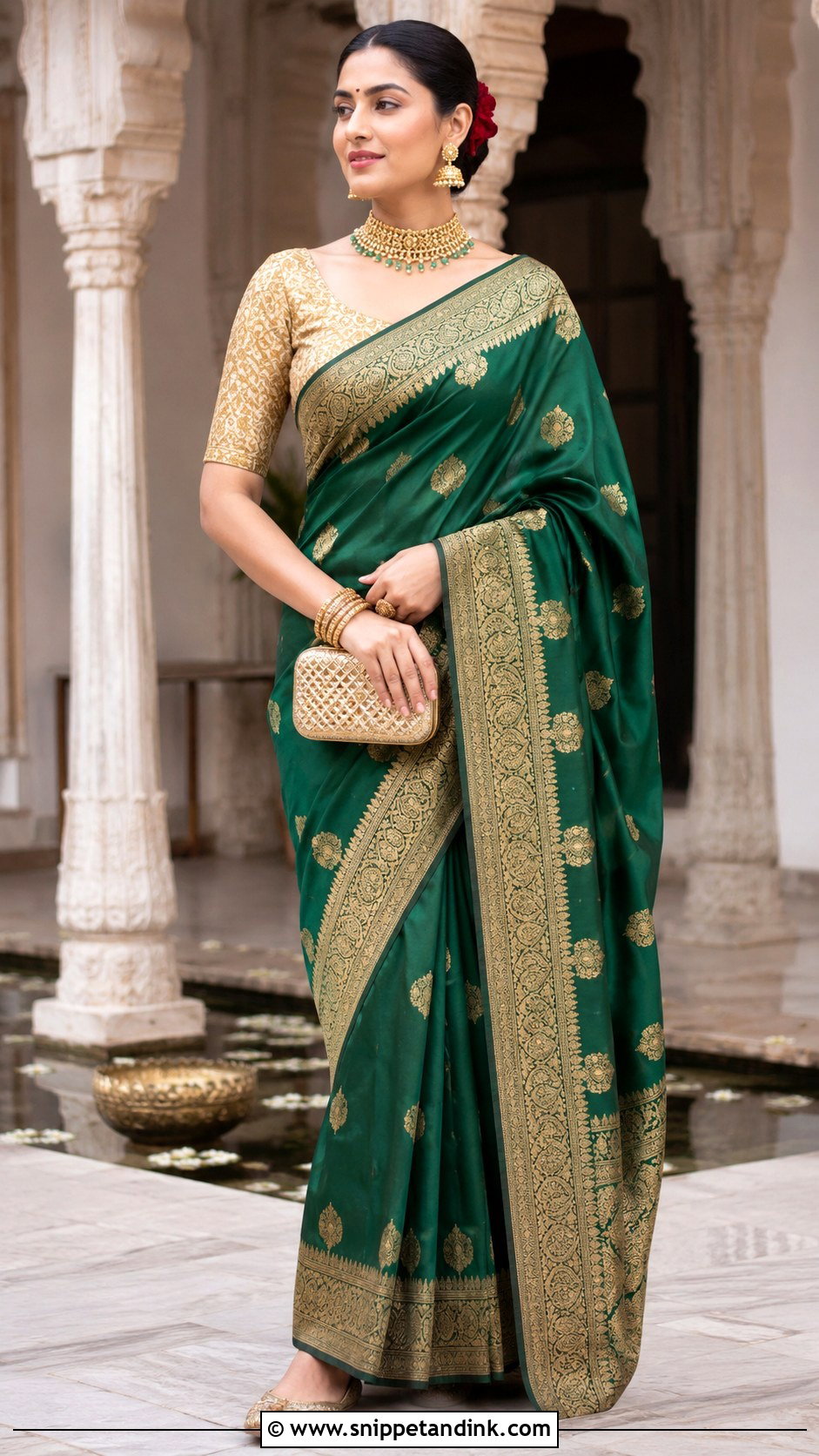
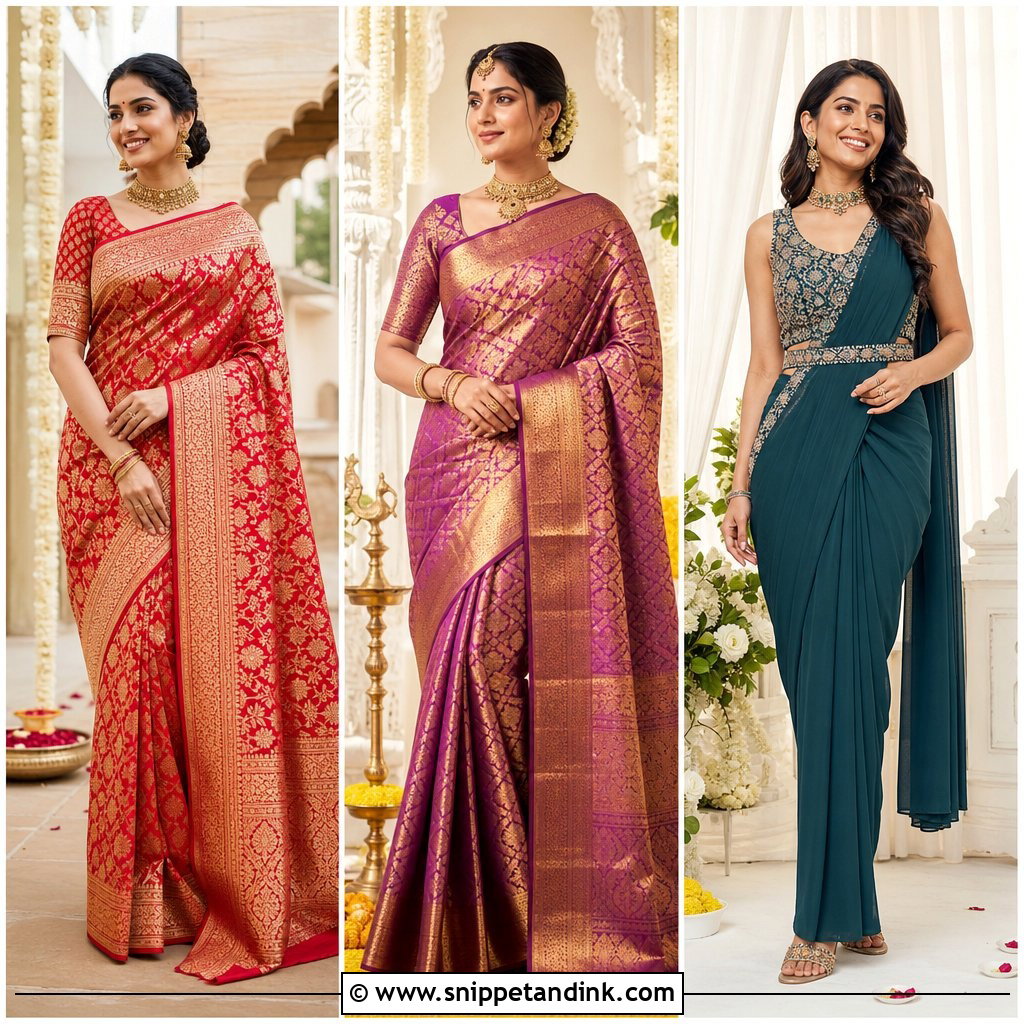
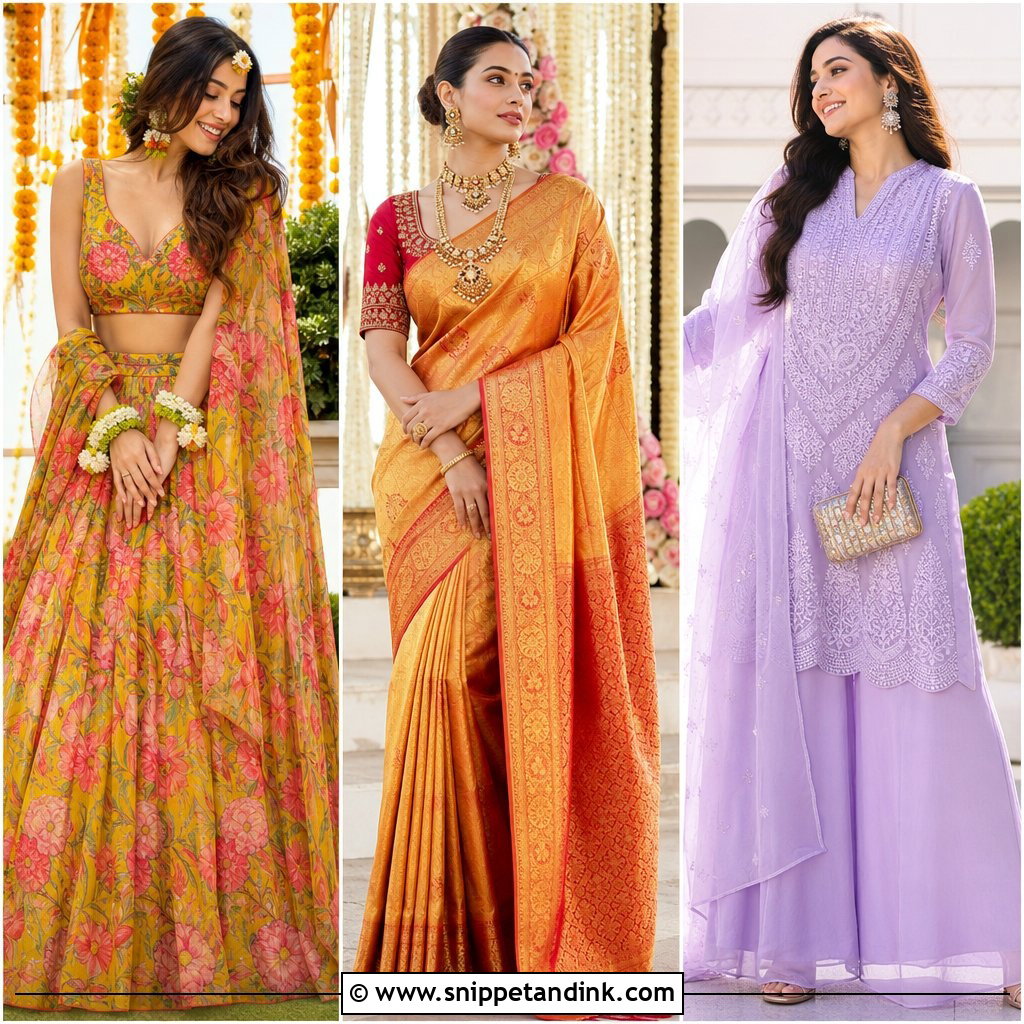
For the main ceremony, a Banarasi silk saree is hard to beat. The zari is woven into the cloth rather than stitched on top, so it keeps its richness through hours of rituals without shedding sequins around the mandap. If the bride is in red or maroon, go to emerald, royal blue or rust so you don’t blur into her in photographs. A contrasting brocade blouse sharpens the outline. I always pleat and pin the pallu instead of leaving it open, since you’ll be bending to pass plates and flowers during the ceremony. Add a choker, small jhumkas, bangles and a structured clutch, and pick juttis or stable block heels only once the saree length is set. A sleek bun with fresh flowers suits it. Banarasi already carries plenty of pattern, so hold back on extra sparkle.
3. Mirror Work Sharara for Sangeet
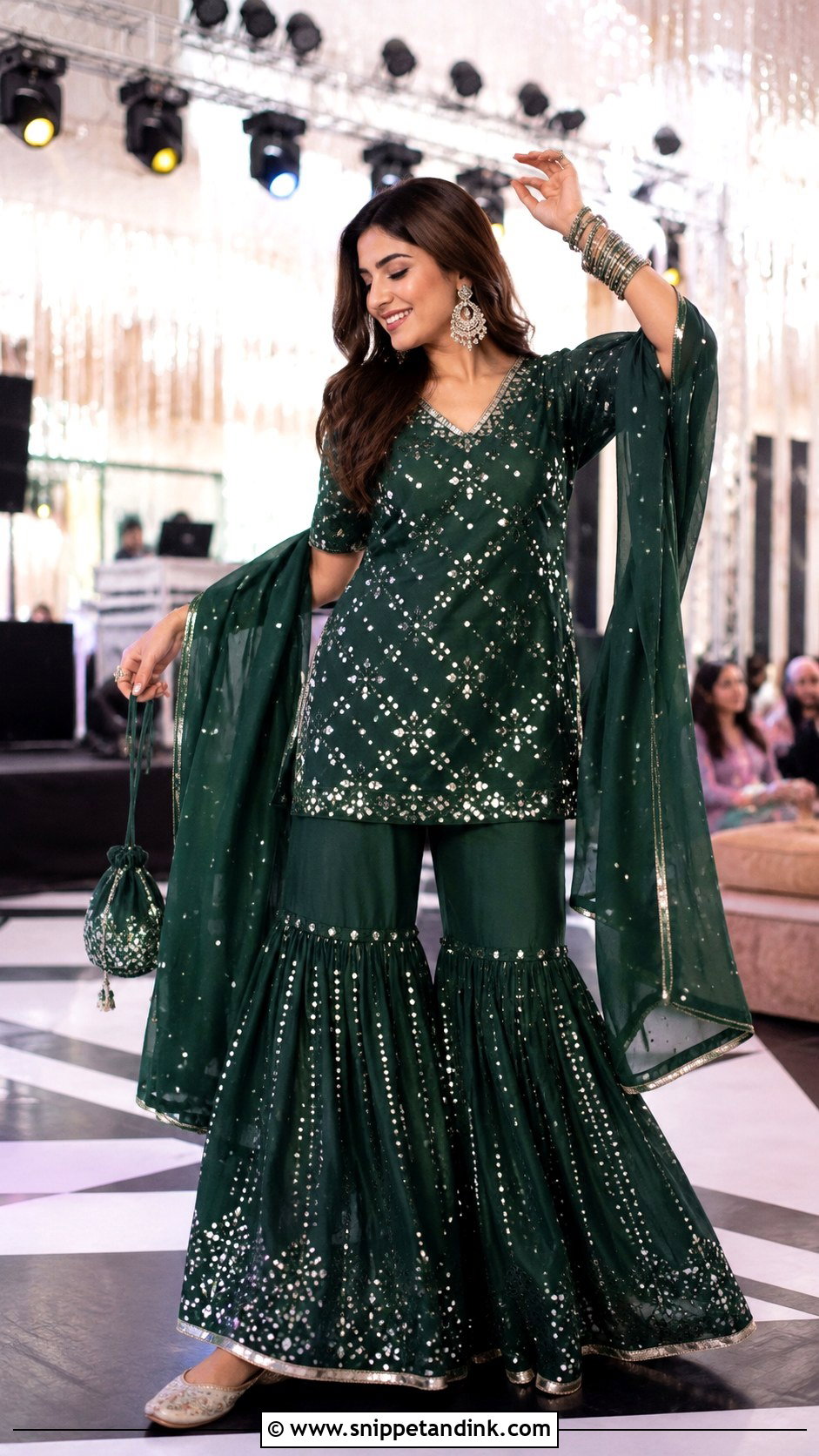
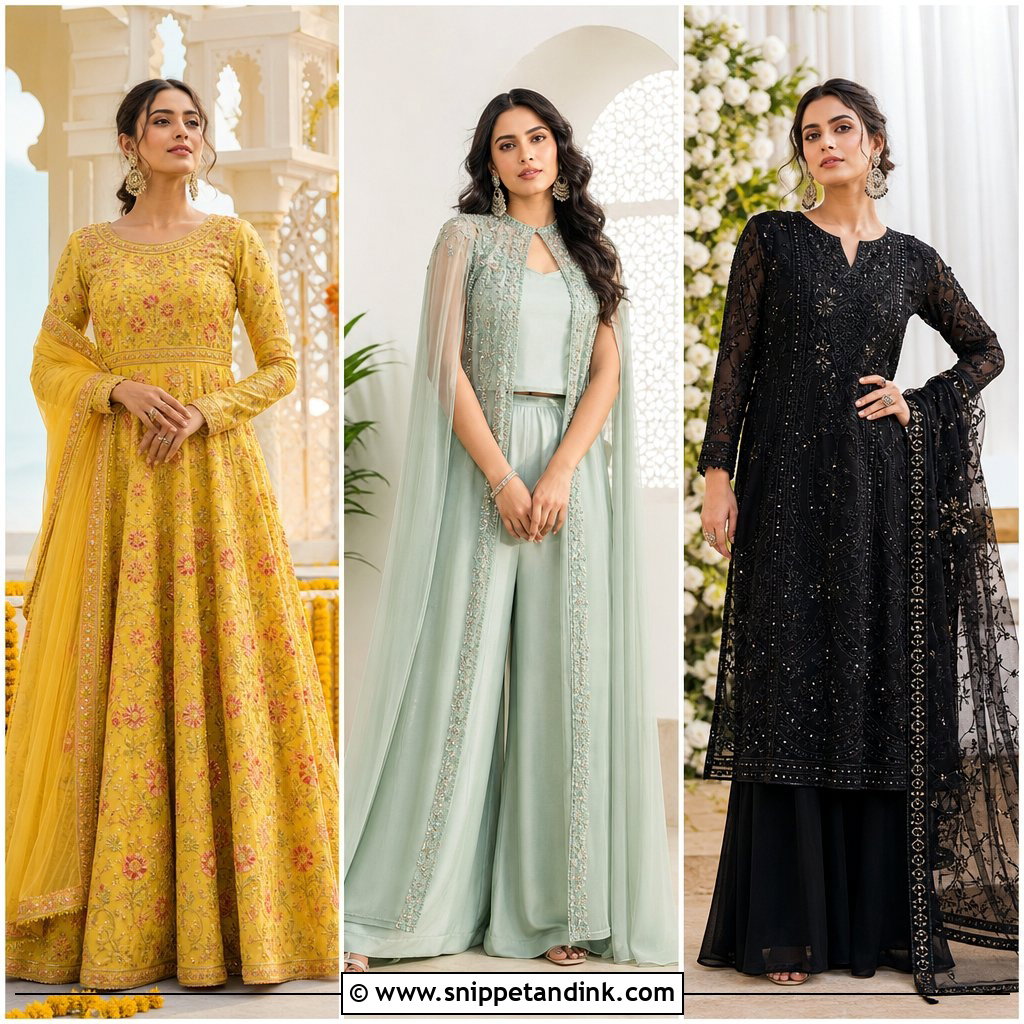
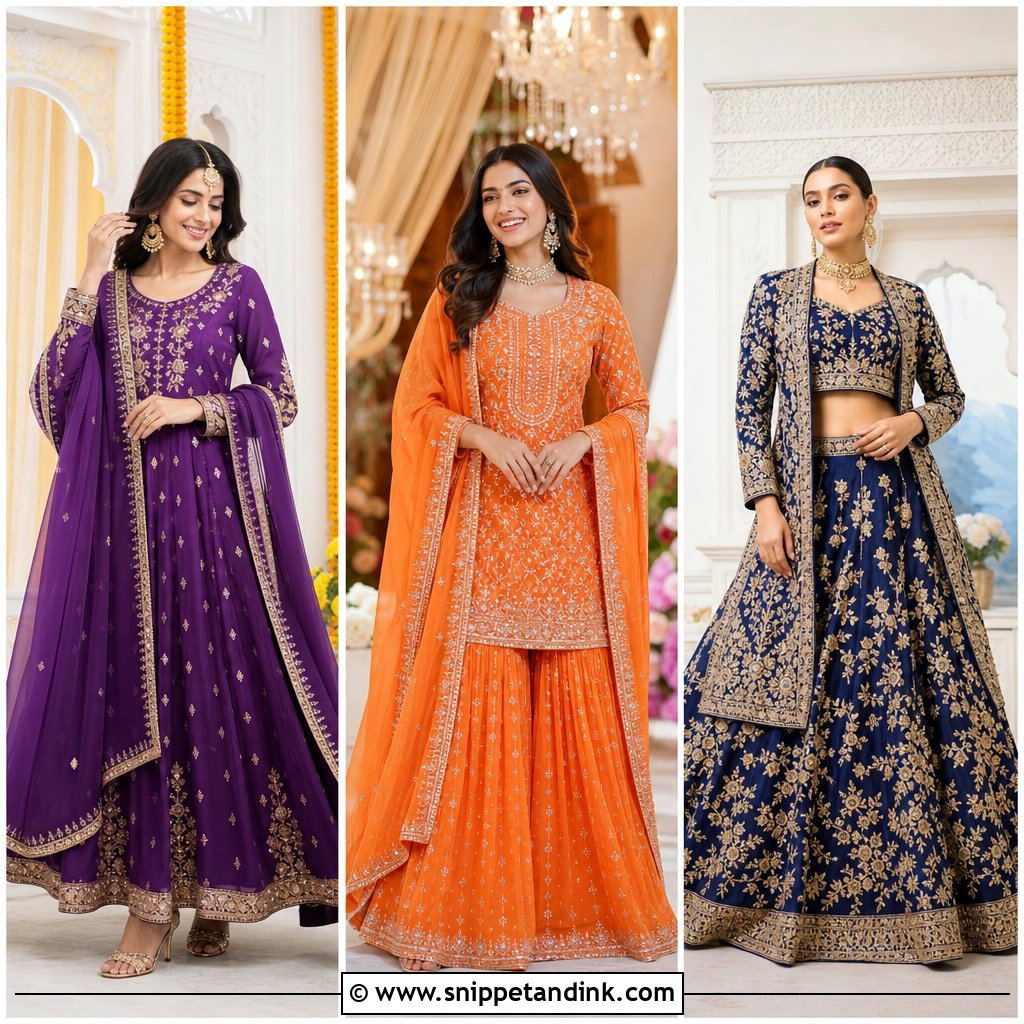
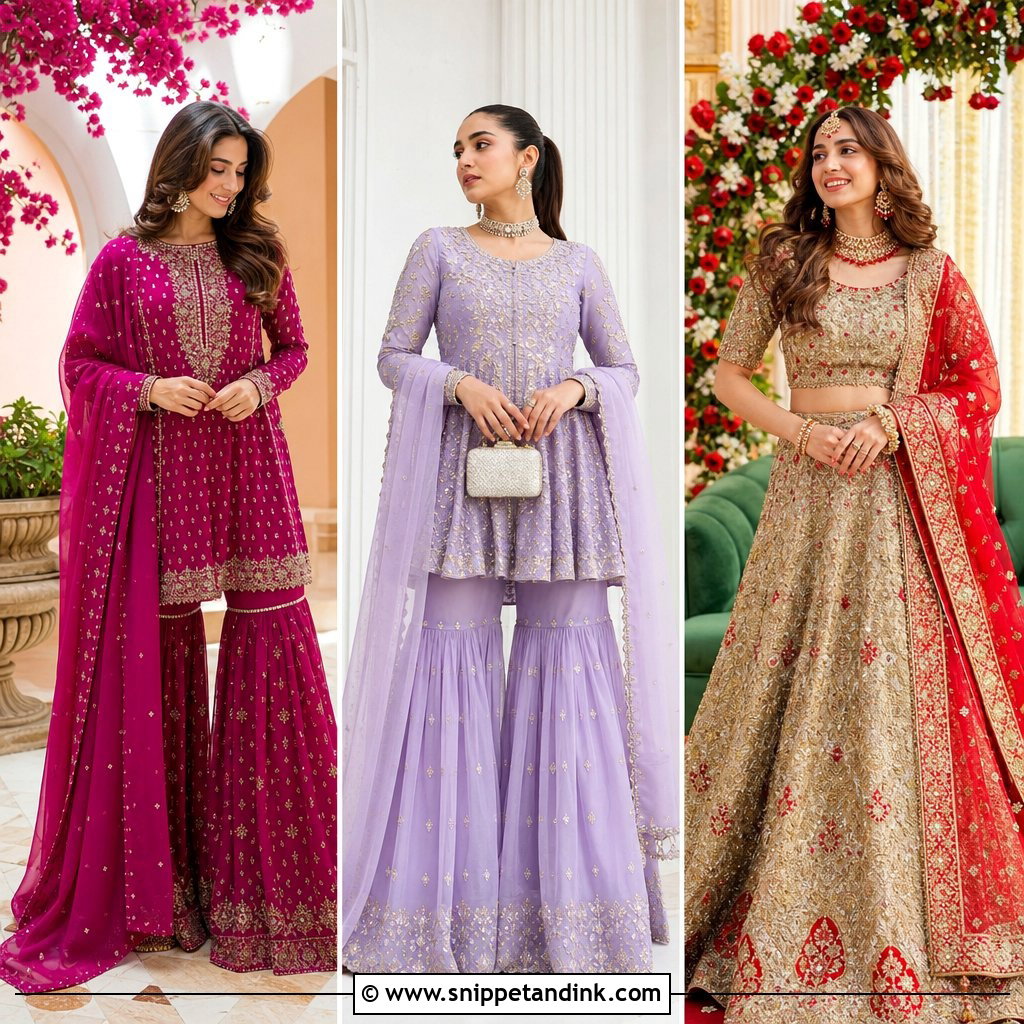
Mirror work earns its place at a sangeet. Those small glass pieces catch every stage light, so you shine on camera without a single sequin. Pair a short kurti with flared sharara pants and a lightweight dupatta. One thing I notice at fittings: real mirror work is held in with thread borders and adds weight, so a densely mirrored kurti can feel stiff at the neckline. Try a few dance steps in the trial room. Emerald, bright pink, cobalt and deep teal all hold up under colored stage lighting. Wrap the dupatta around your arms or pin it at one shoulder before you perform. Statement earrings, stacked bangles and a compact potli are enough, with juttis or low platforms rather than narrow heels and a braided pony that won’t loosen mid-song.
4. Floor Length Anarkali for Engagement
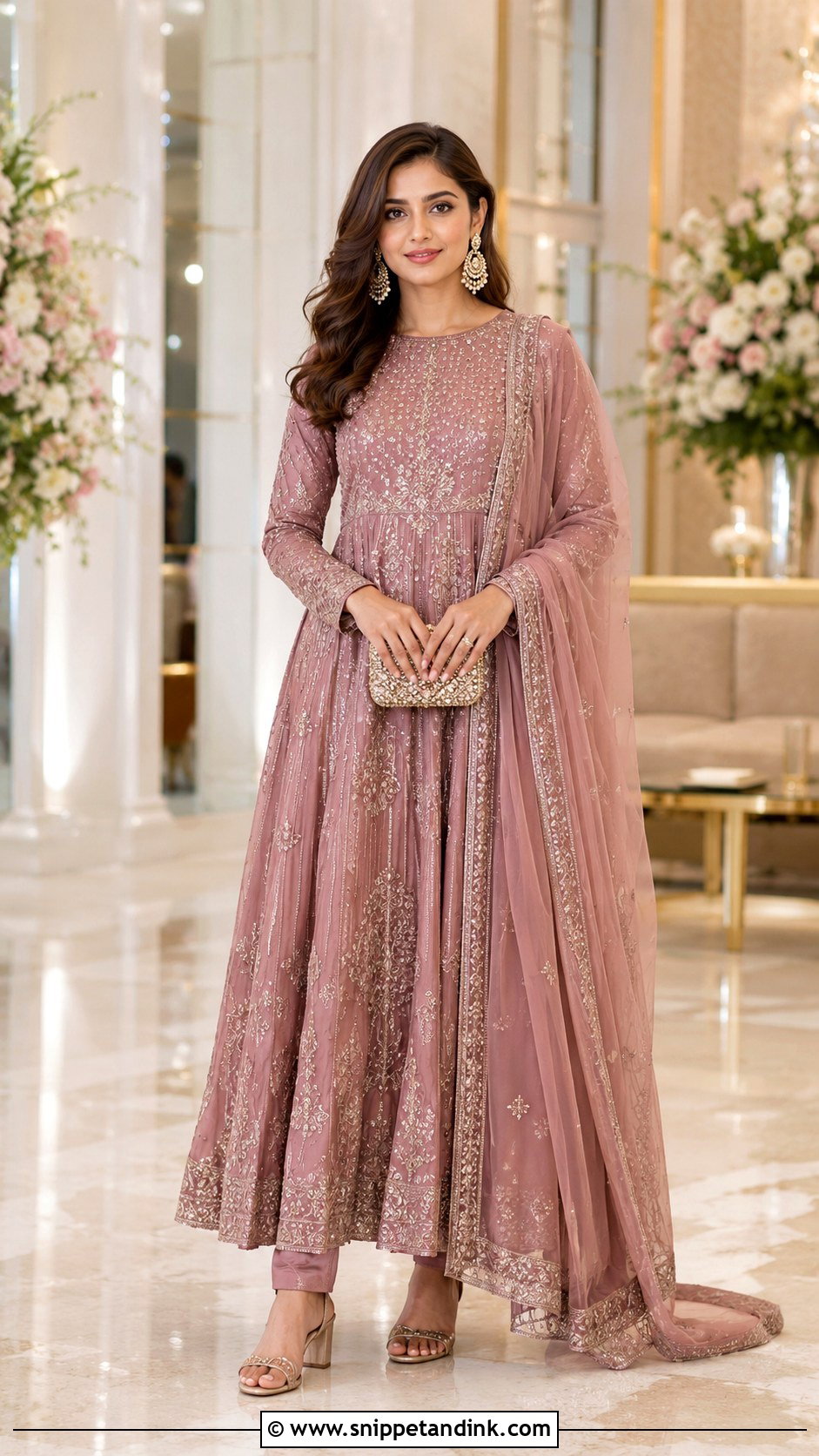
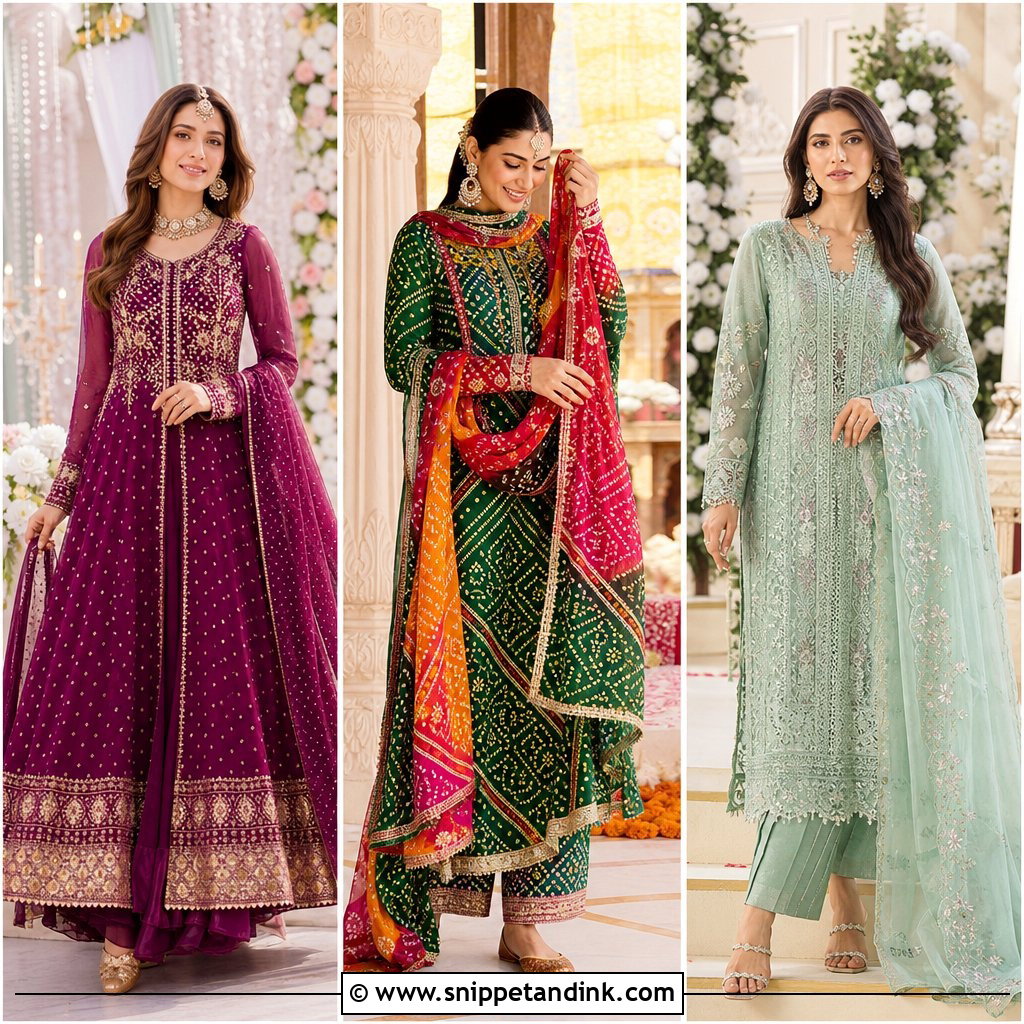
No draping is needed, which is why I often suggest a floor-length Anarkali for an engagement, where you’ll be carrying the ring tray and greeting relatives. Look for a fitted bodice, a defined waist and a flowing skirt in georgette or silk. Georgette moves well but clings in humidity, so lined silk is the safer pick for a warm hall. Wine, navy, sage and dusty rose suit a formal evening. Keep the embroidery to the neckline, sleeves or hem, and add fitted pants, a soft dupatta, chandelier earrings and a jeweled clutch. Take your actual shoes to the hem fitting. A floor-length hem is set to one heel height, and switching from block heels to flat juttis on the day means stepping on fabric all night.
5. Pre-Draped Saree for Cocktail Ceremony
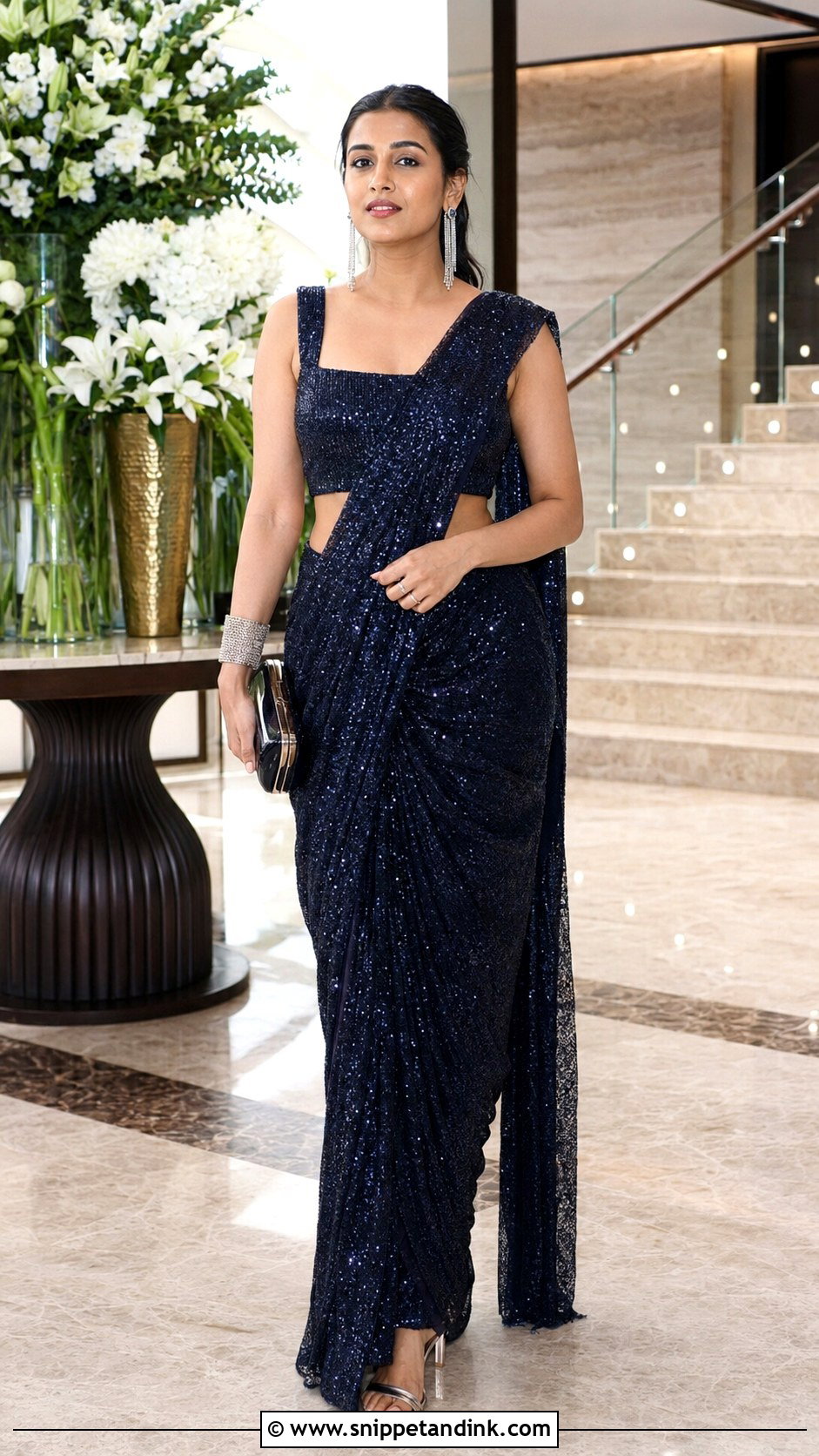
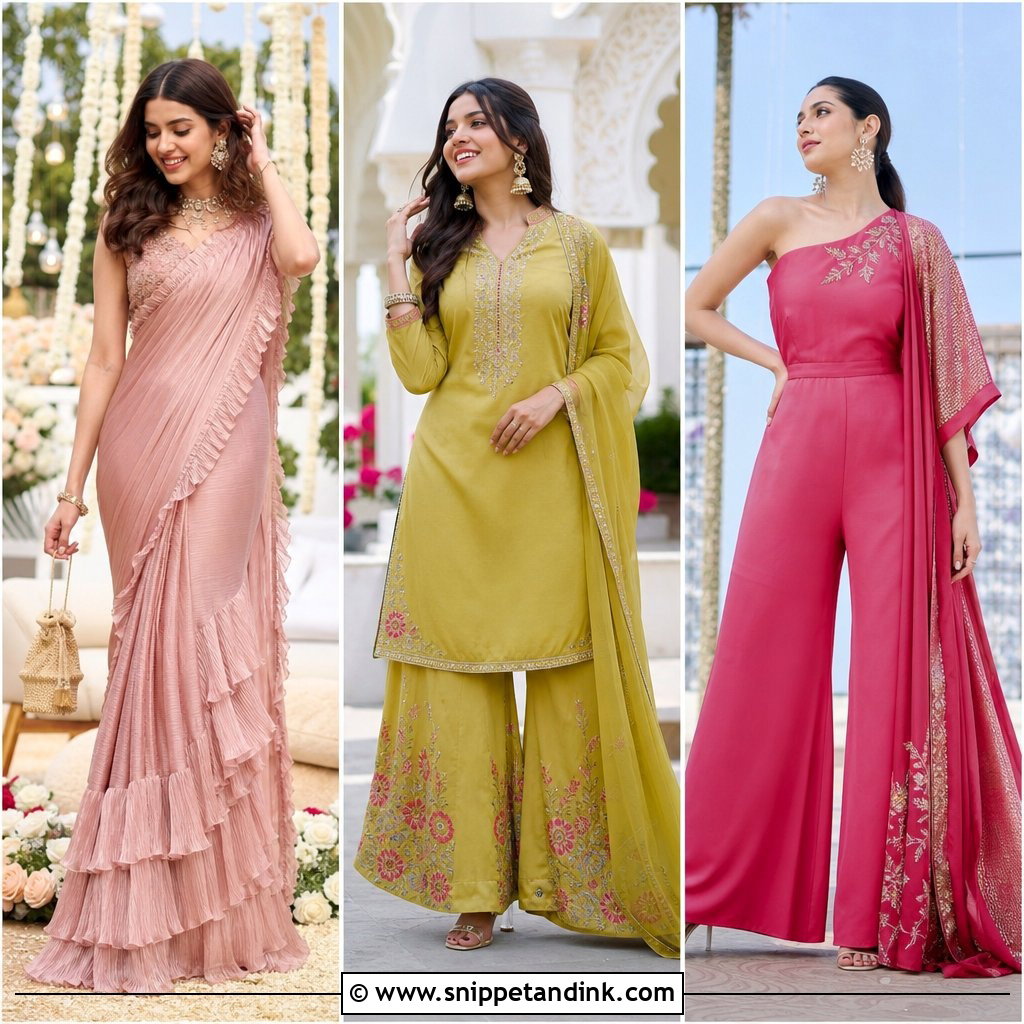
A pre-draped saree gives you the line of a traditional drape with a zip or hook closure, so you’re dressed in minutes instead of waiting for an aunt with a mouthful of safety pins. It suits cocktails, receptions and a modern sangeet. Satin, crepe or light sequins in charcoal, plum, midnight blue or champagne hold the sculpted folds well. Pair it with a structured blouse, perhaps a square neckline or modest cutwork, then long earrings, a cuff and a sleek clutch. I keep jewelry minimal here because the drape is the design. Test one thing before you buy: sit down. Some stitched pleats pull tight across the hips when seated, and any loose pallu detail needs a pin so it doesn’t catch on chair backs.
6. Floral Lehenga for Mehendi
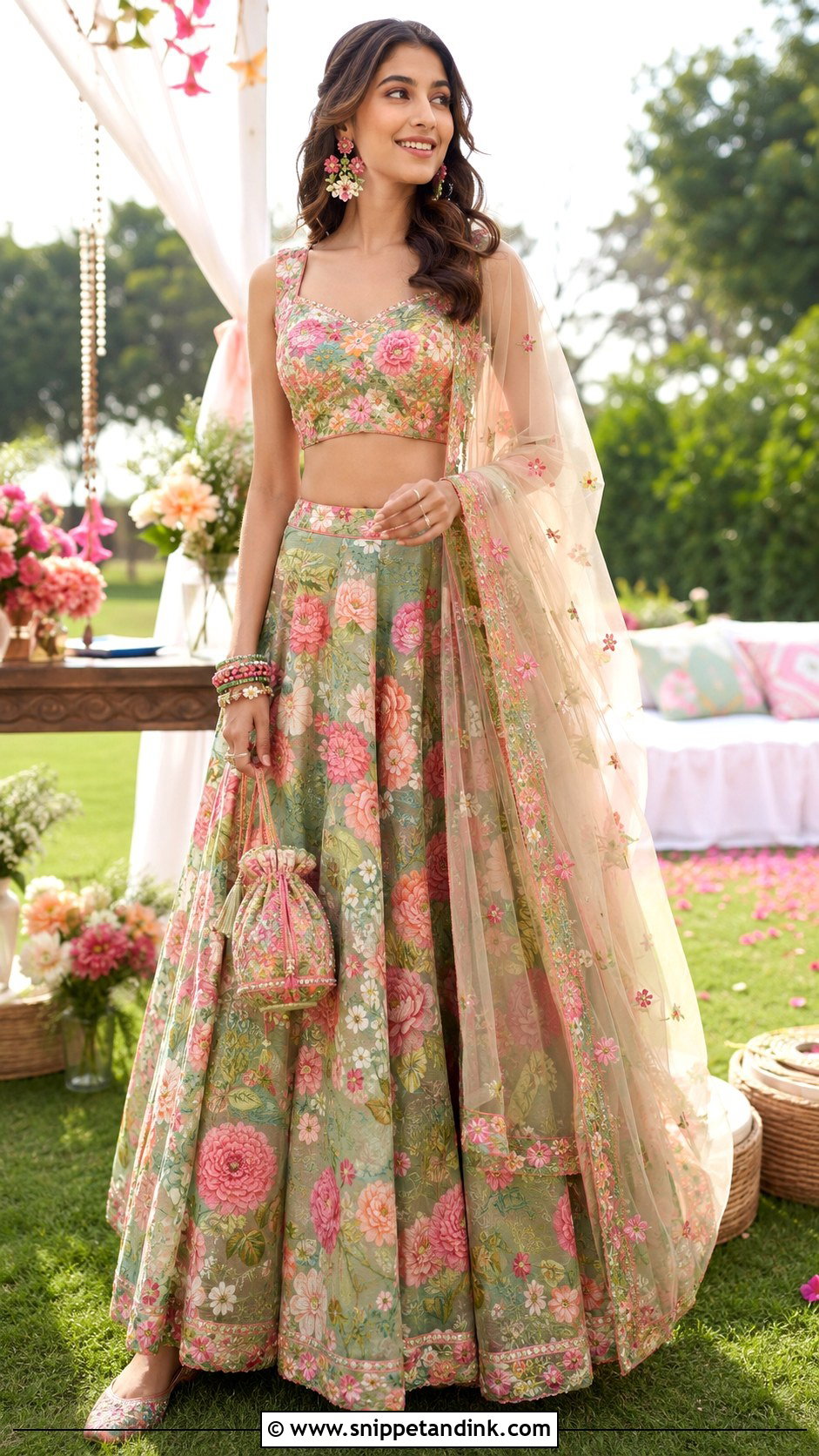
Botanical prints suit a daytime mehendi, and a floral lehenga keeps the mood light. Choose a printed skirt with a short blouse in cotton silk, organza or georgette; cotton silk is the one I reach for in heat because it breathes. Green, coral, yellow and pink feel cheerful without tipping into formal. Skip the dupatta if you like and let a blouse with statement sleeves carry the outfit. Think about your own henna, too. Wet paste smudges onto anything it touches, so short or three-quarter sleeves are wiser than full ones, rings and bracelets stay off, and flat juttis let you sit cross-legged for the application. A loose braid with tiny flowers keeps hair away from your hands.
7. Gharara Suit for Nikah Ceremony
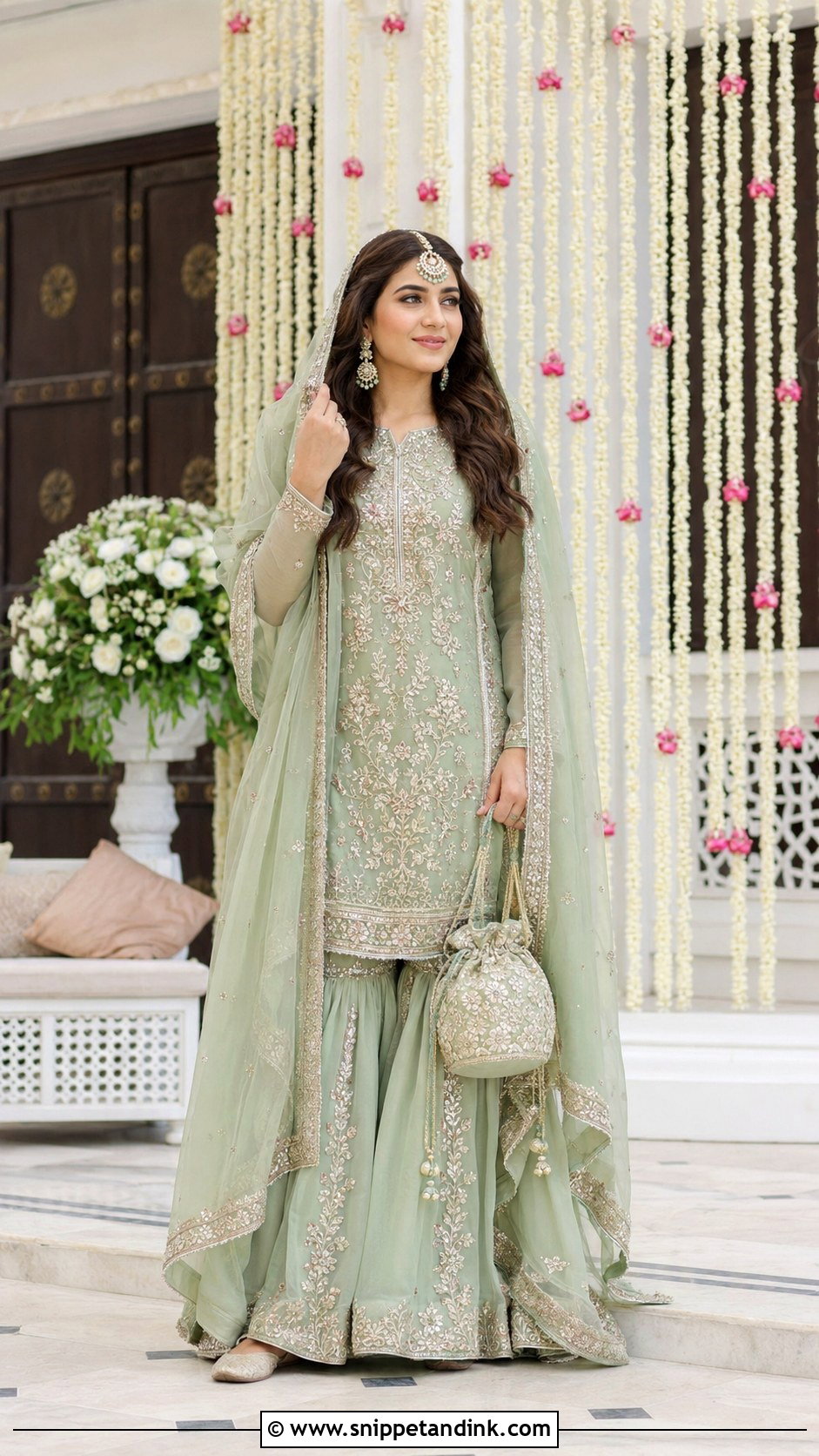
The gharara’s flare begins at the knee, at a gathered joint usually finished with a gota band, and that construction is what separates it from a sharara. For a nikah or formal family dinner, pair a knee-length kurta with the gharara and a delicately bordered dupatta in ivory, pistachio, rose, turquoise or muted gold. Gota or zari borders add richness without much weight. A passa or maang tikka, drop earrings and a small embroidered bag suit the occasion, and closed-toe juttis carry you through a long evening. If you’ll cover your head, soft waves or a low bun sit comfortably under the dupatta. Fit across the shoulders matters most to me: a loose kurta above all that flare makes the wearer look swamped.
8. Silk Skirt and Crop Top for Mehendi
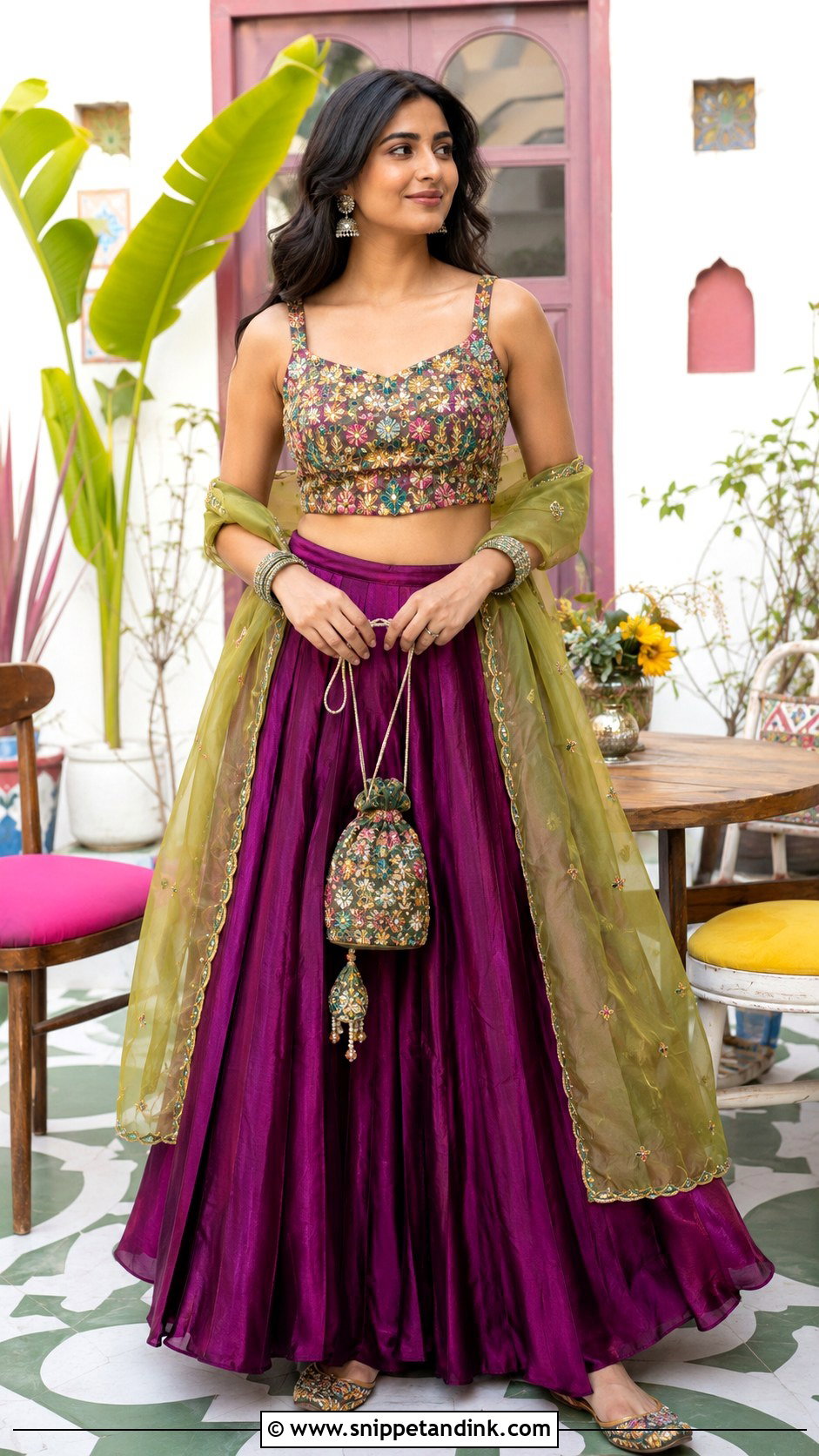
Separates are the easiest pieces here to wear again. A jewel-toned or printed ankle-length silk skirt with a contrasting embroidered top works for a mehendi lunch or welcome event, and both pieces go straight back into your wardrobe afterwards. Bring in tradition with a light organza dupatta, or wear a long ethnic jacket for more coverage. Oxidized earrings, slim bangles, a potli and embroidered flats keep it relaxed, as does a half-up style or loose braid. Check where the top ends before buying. A crop that sits an inch above the waistband when you stand can show three inches when you sit on floor cushions. Repeat one skirt color in the top or bag so the outfit hangs together.
9. Peplum Top and Dhoti Pants for Haldi
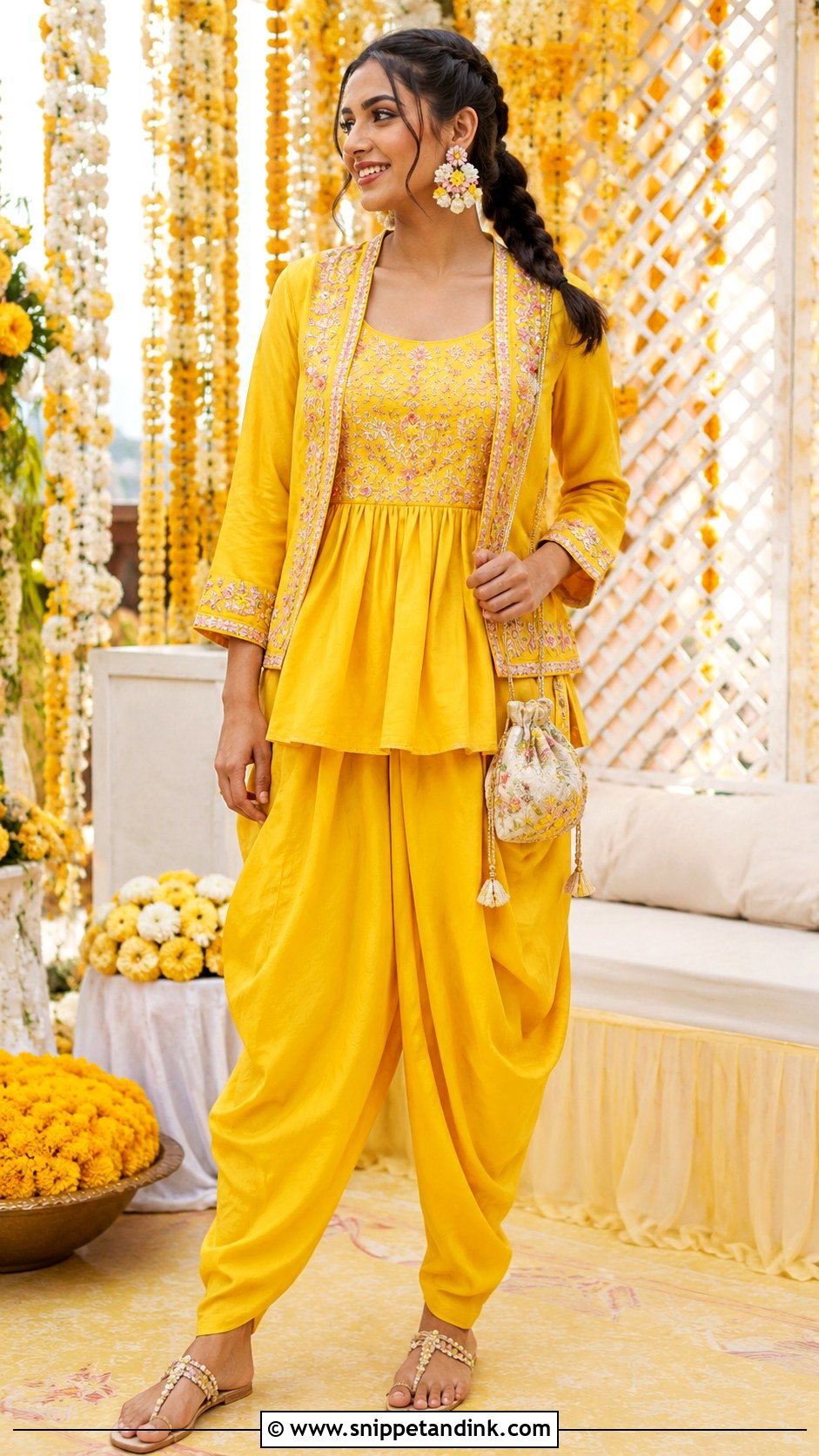
Haldi is messy. Turmeric paste stains cotton and silk alike, so for this function I steer a bride’s sister toward a short peplum top and draped dhoti pants in yellow, lime, tangerine or ivory, in breathable fabric with little surface embroidery. Embroidery is the hardest part to clean once turmeric works into the threads. Add a cropped jacket or light dupatta for the first photos, then take it off before the paste comes out. Floral earrings, one hair accessory and kolhapuri-style flats are plenty. Skip the bag, or wear a crossbody potli so your hands stay free. A braided ponytail survives the splashing, and the fitted peplum over relaxed pants lets you crouch on a low stool without fuss.
10. Cape Lehenga for Reception
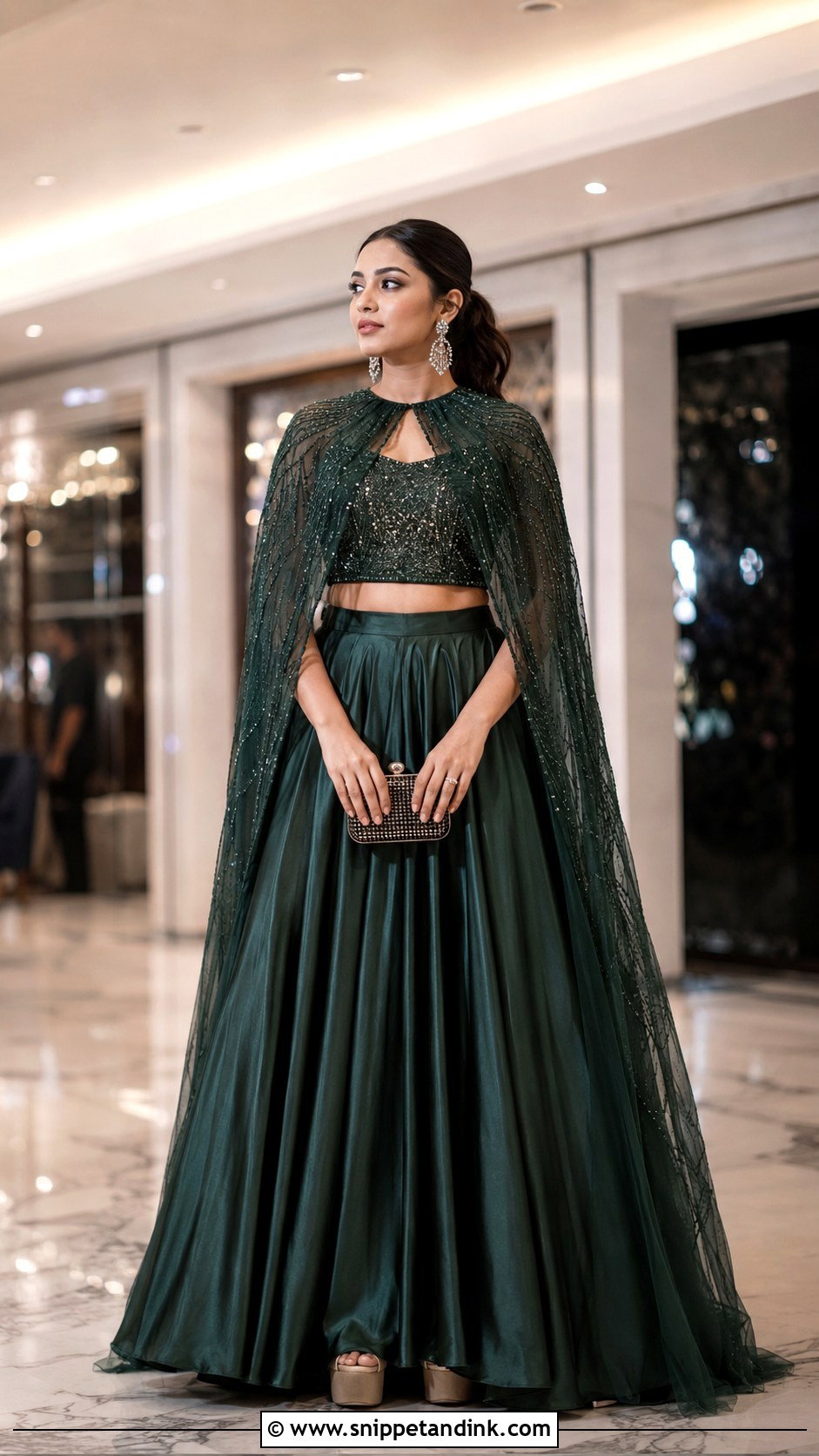
Reception drama without a dupatta to manage: that is what a cape lehenga gives you. A sleek skirt and fitted blouse sit under a sheer embellished cape falling from the shoulders. Deep green, navy, burgundy, silver-grey or soft gold all suit evening light. Keep the skirt only moderately flared so the cape stays the main feature. I check cape length with the shoes on, because a cape that brushes the floor gets stepped on by you and by everyone standing behind you on stage. Chandelier earrings, a cocktail ring, a box clutch and platform heels finish it, with sleek hair or a low ponytail so the neckline isn’t crowded. If you want to dance without it, ask your tailor for press studs at the shoulder instead of a stitched seam.
11. Velvet Lehenga for Winter Wedding
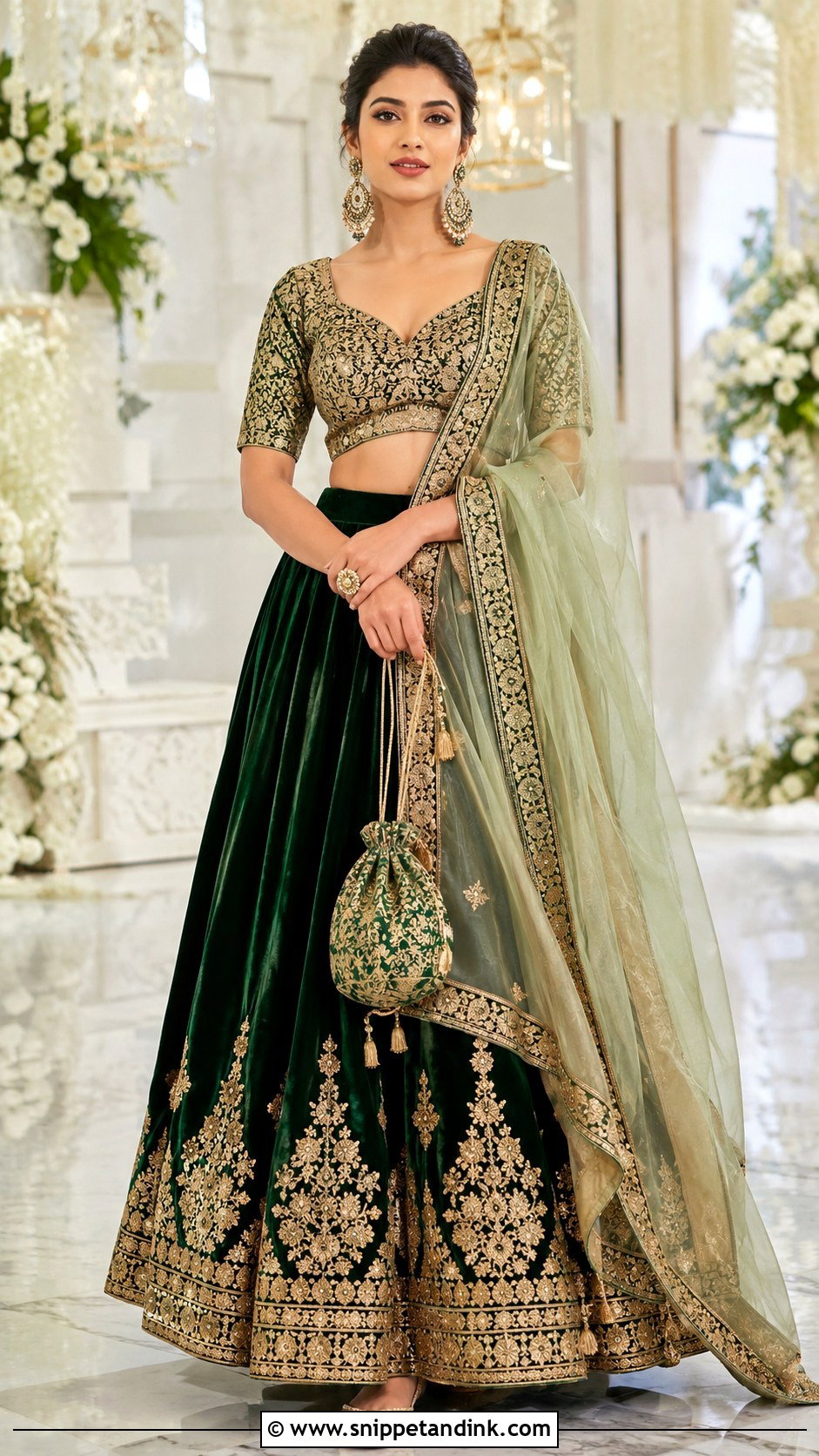
Velvet only makes sense when it’s genuinely cold. It runs warm even in a heated banquet hall, so I’d keep it for outdoor winter weddings or chilly venues. A lehenga in bottle green, navy, plum or deep maroon has real depth, and a brocade or embroidered blouse stops it reading as one heavy block. A net, organza or tissue dupatta brings back some lightness. Kundan earrings, a statement ring and a potli are classic with it, plus block heels or closed embroidered shoes and a smooth bun or brushed waves. Keep embroidery to the border, waist or blouse. Velvet also crushes wherever you sit, so steam it the night before and never press it flat with an iron, which marks the pile.
12. Kanjeevaram Saree for South Indian Wedding
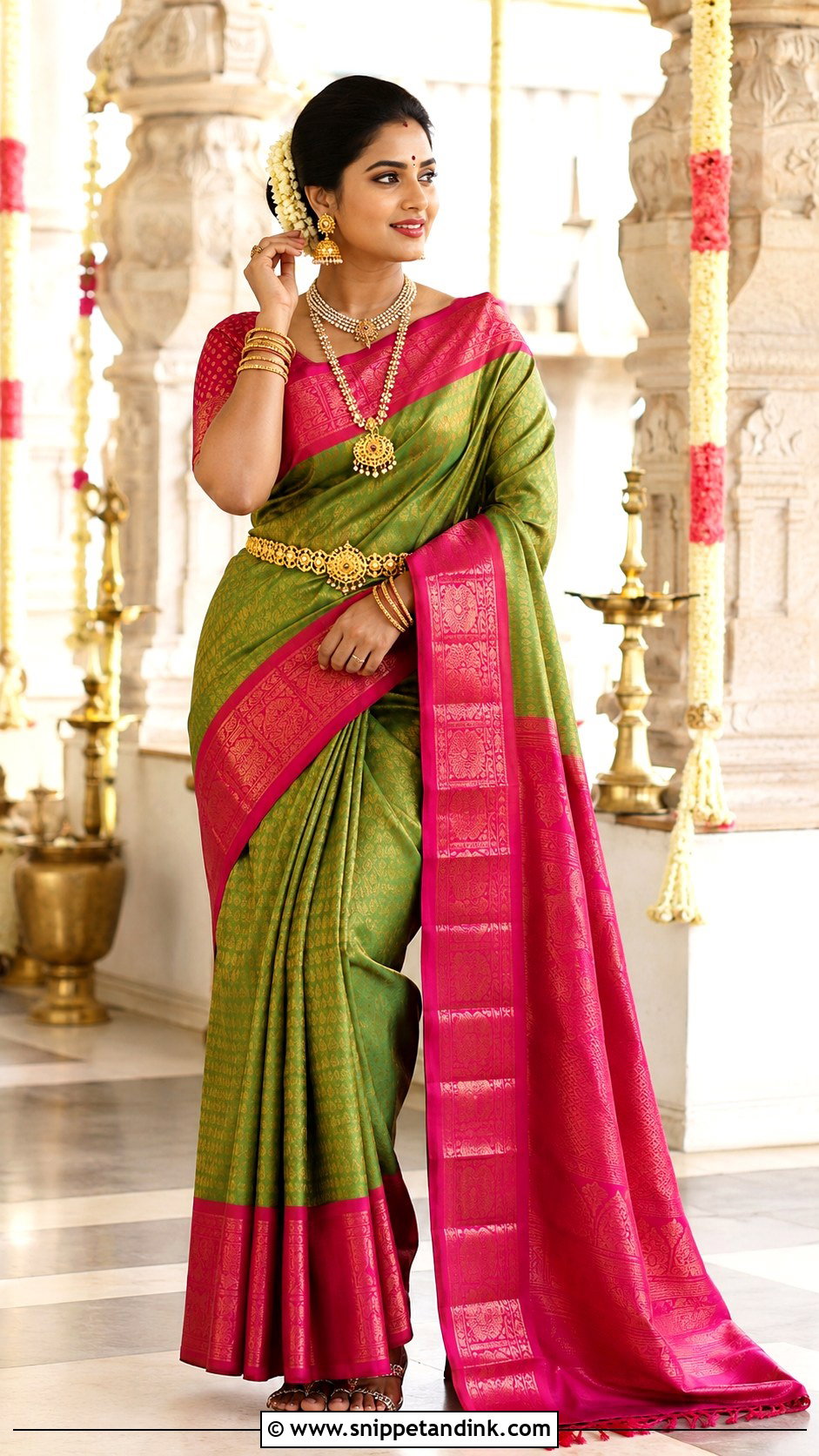
South Indian ceremonies often start early and run long, and a Kanjeevaram’s weight and sheen suit that formality. Magenta, green, mustard, turquoise or purple with a contrasting woven border is the traditional pairing. Wear a well-fitted brocade or matching silk blouse with elbow sleeves, then jhumkas, bangles, a waist belt and a small bindi, with low heels or decorative sandals. A center-parted bun with jasmine completes it, though fresh jasmine wilts within a few hours of heat, so I ask for a second string for the afternoon. Kanjeevaram pleats are stiff and spring open, so pin them before you leave home. If the bride is also in Kanjeevaram, agree on colors early and pick a clearly different body or border.
13. Chikankari Palazzo Suit for Day Wedding
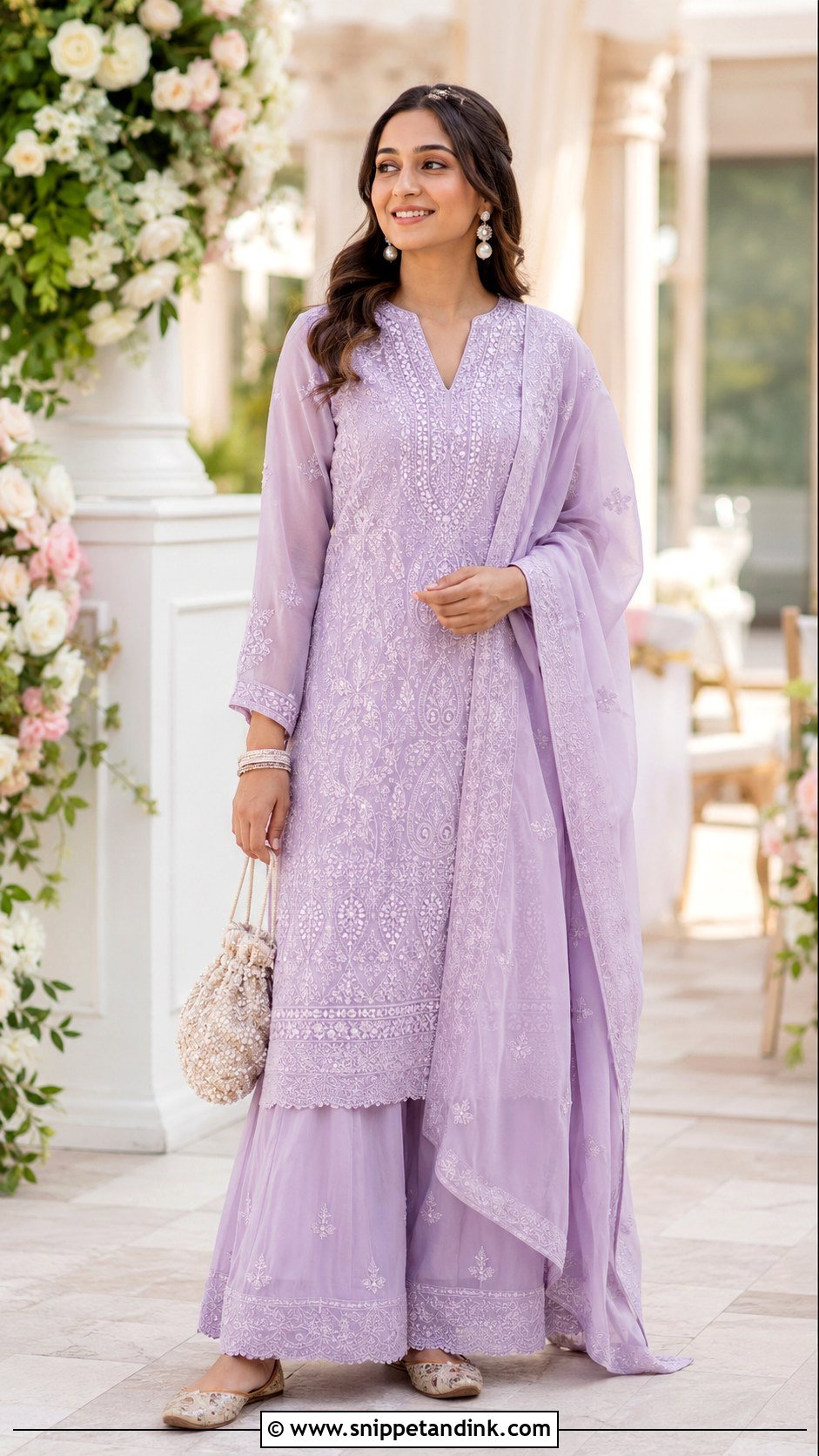
Chikankari is hand embroidery from Lucknow, originally white thread on fine cotton, and it’s one of the coolest things to wear at a daytime outdoor wedding. A straight or slightly flared kurta with wide palazzos and a soft dupatta keeps air moving. Pastel yellow, peach, mint, lilac and ivory suit bright light. Pearl earrings, slim bangles, a beaded potli and neutral juttis keep it understated, with a loose bun or half-up hair. Hold the fabric up to daylight in the shop: most chikankari is sheer, and a tonal lining saves you a surprise in flash photos. For more festivity, choose a sequined border or embellished dupatta. It’s the outfit I suggest to sisters who’ll be running errands for the bride all afternoon.
14. Sequin Saree for Sangeet Night
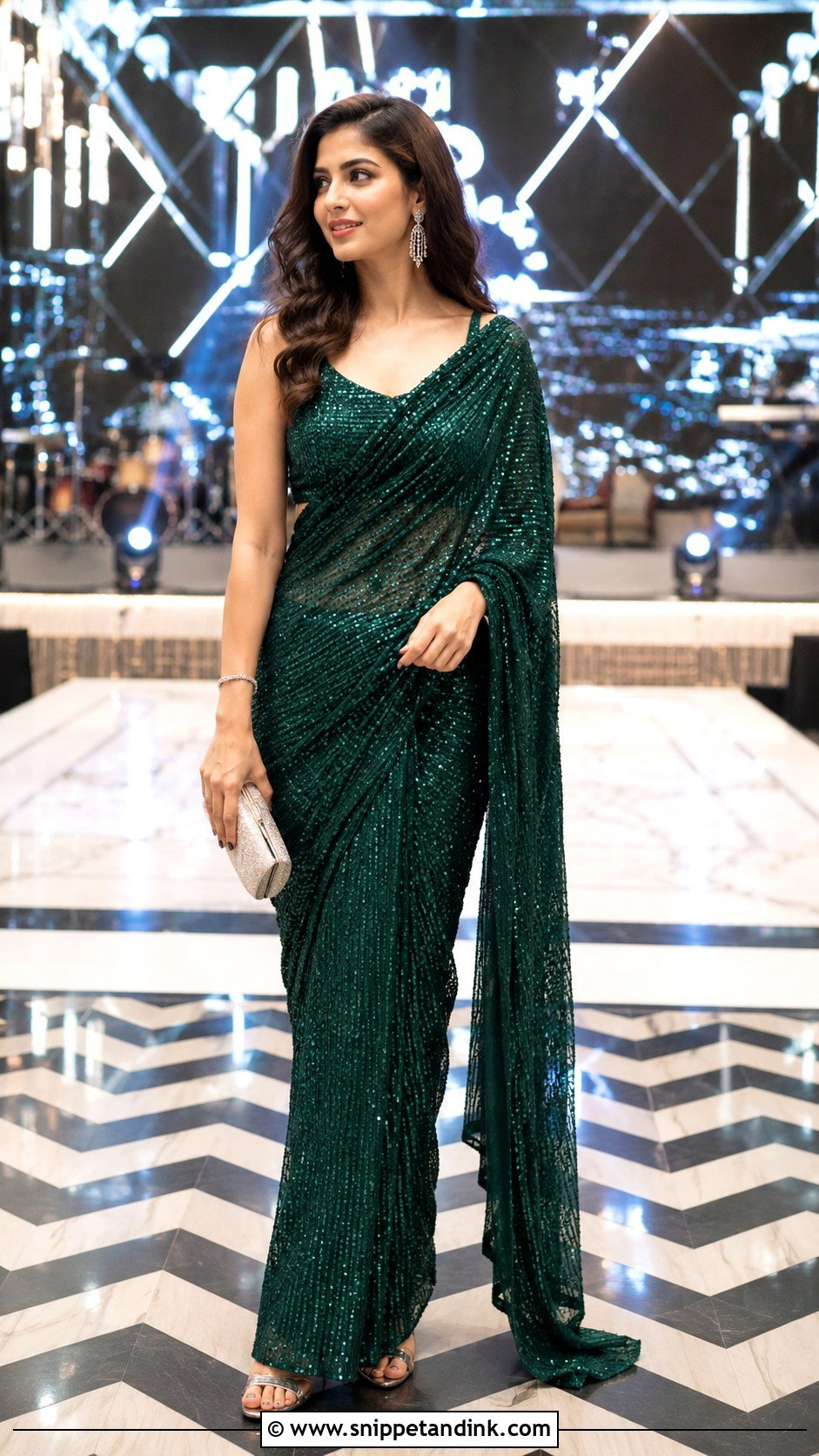
Under bright stage lights, a sequin saree looks right at a sangeet night. One color works best, say emerald, navy, mauve, bronze or black, with a streamlined blouse. Do a dance test at the blouse fitting. Sequined fabric has almost no stretch, so raise your arms over your head; if the hem lifts or the armhole digs in, ask for more ease. Crystal earrings, a slim bracelet, a small clutch and stable heels are enough, with soft waves or a sleek ponytail. Sequins snag on lace and on other people’s embroidery during group dances, which is another reason I avoid stacking big jewelry against them. Pin at the waist and shoulder, or choose a pre-pleated version if you’re performing.
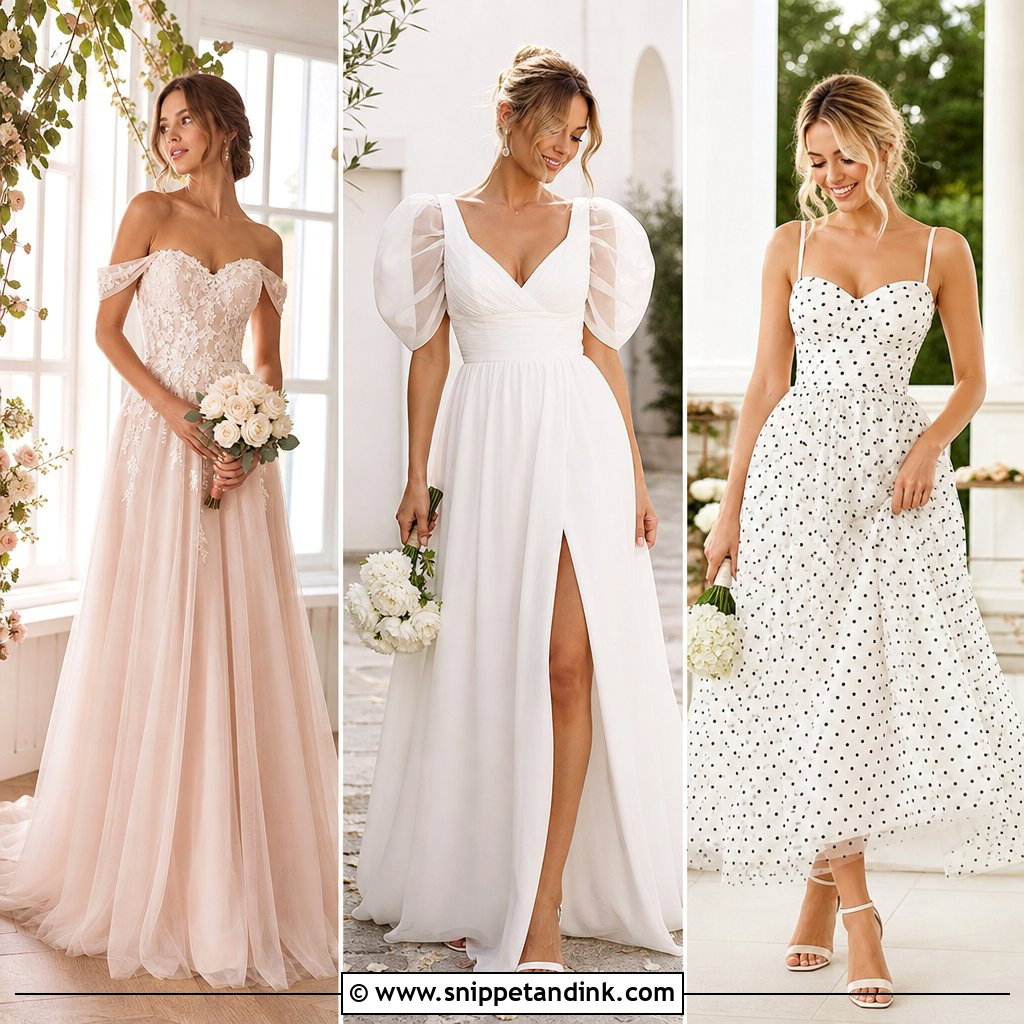
15. Long Jacket Lehenga for Wedding
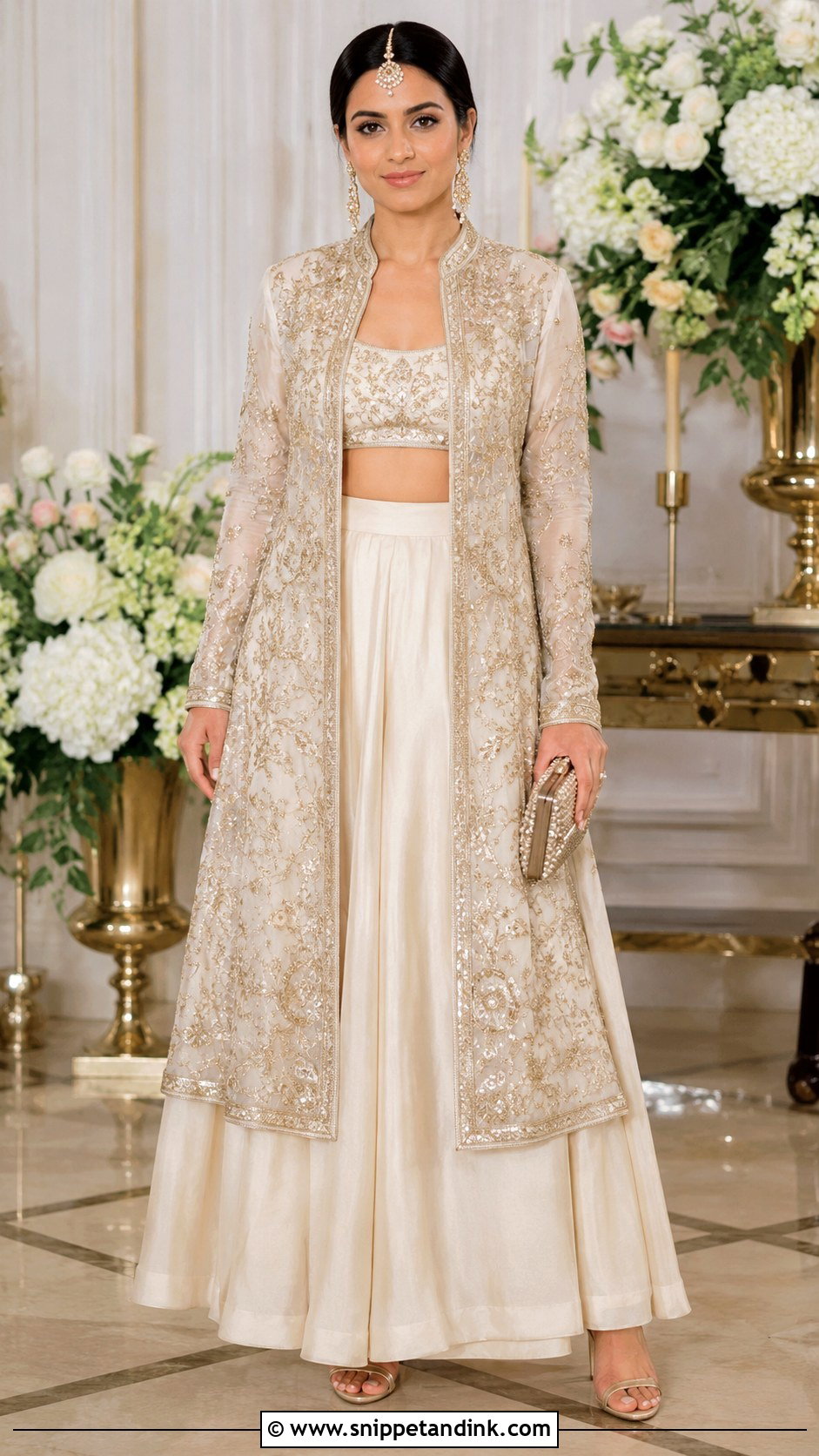
A long, front-open jacket over a lehenga adds coverage, handy at a temple or among conservative relatives, and makes the whole outfit look formal. Keep the flared skirt fairly plain under a fitted blouse and an embroidered jacket. Ivory with gold, teal with navy, or rose pink with wine are dependable pairings. A sheer jacket feels lighter, while silk holds a sharper shape. Add drop earrings, a delicate maang tikka, a clutch and block heels, and leave out the necklace if the jacket’s neckline is already worked. I always walk a client up and down a staircase in it. The jacket should clear the shoe by a couple of inches, or it tangles around your heels on the first step.
16. Bandhani Saree for Haldi Ceremony
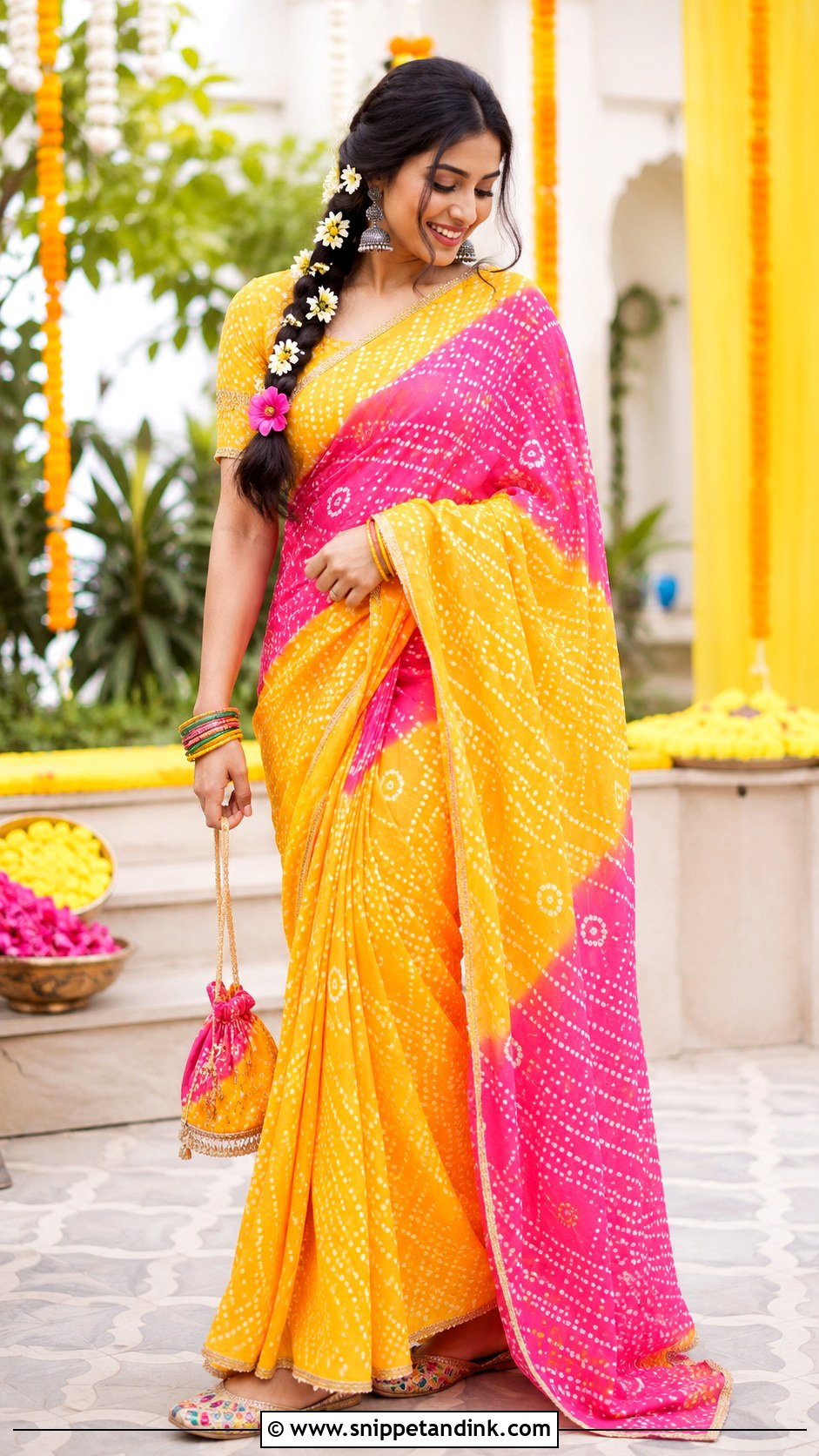
Bandhani is made by pinching and binding tiny points of cloth before dyeing, which is why each saree has that slightly irregular dot pattern. The bright result suits a haldi ceremony or pre-wedding puja. Yellow, orange, pink, green or a two-tone with a gota or zari border all glow in morning light. A short-sleeve blouse lets you join the rituals freely. Oxidized jhumkas, colorful bangles, embroidered flats and a potli complete it, with a braid or low bun with flowers and light makeup. Turmeric is a real stain risk here, so save any heirloom saree for another day and wear one you’re happy to send for dry cleaning. Pin the pallu at the shoulder and wrist so it can’t slip into the haldi bowl.
17. Angrakha Anarkali for Wedding Ceremony
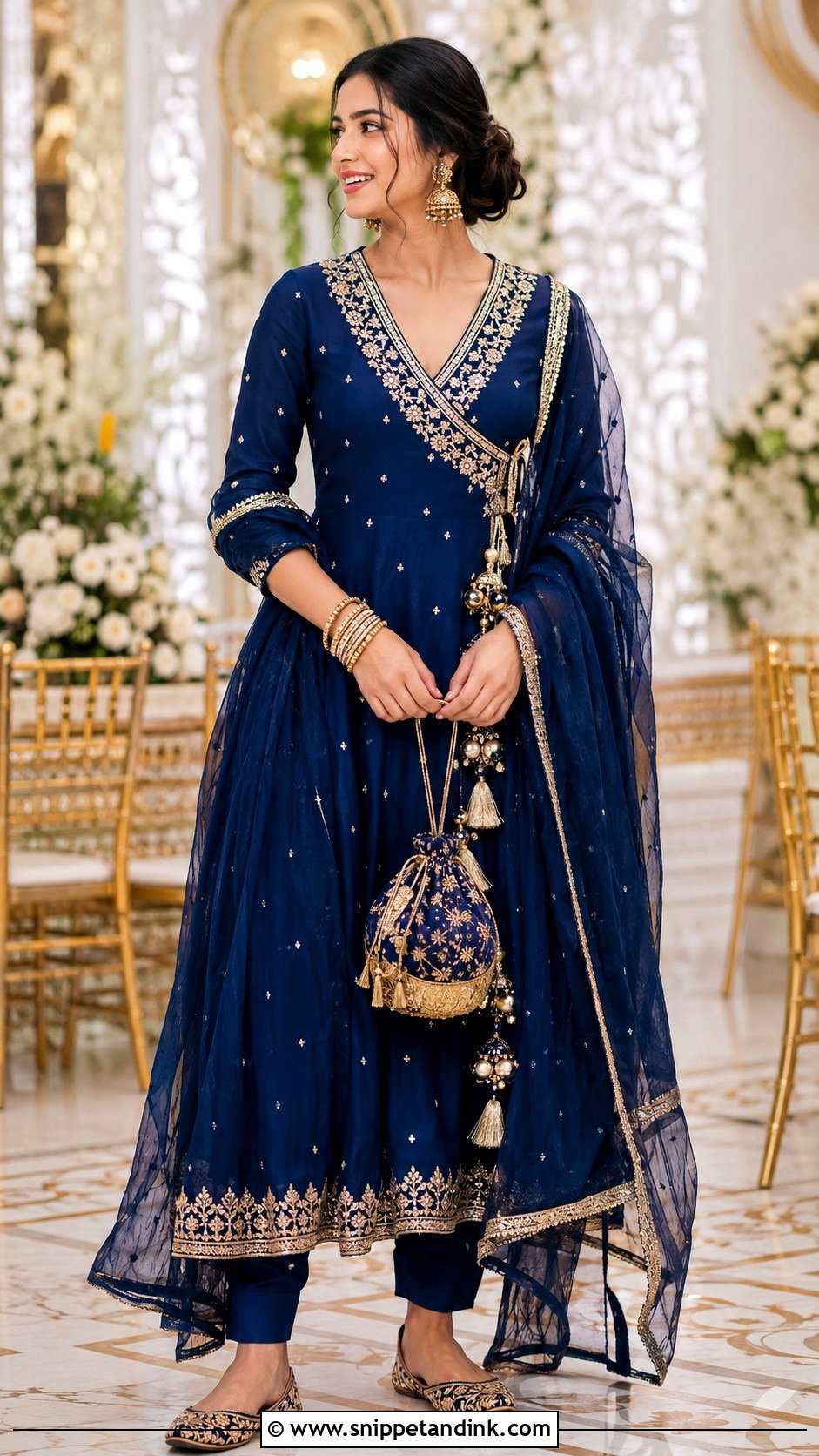
An angrakha closes with an overlapping panel tied at the side, and that angled neckline is the reason to choose one. For the ceremony, a floor-length version in ruby, forest green, royal blue or muted gold looks traditional without looking bridal. Tassels and embroidery along the overlap show off the construction. Slim pants, a coordinated dupatta, jhumkas, stacked bangles, a potli and juttis complete it, with a side braid or low textured bun to keep the neckline clear. The ties are the weak point. I have a hook or press stud added behind the bow, because tied fabric works loose over a long day. Pick a light dupatta so it doesn’t fight the skirt’s movement.
18. Indian Jumpsuit With Dupatta for Cocktail
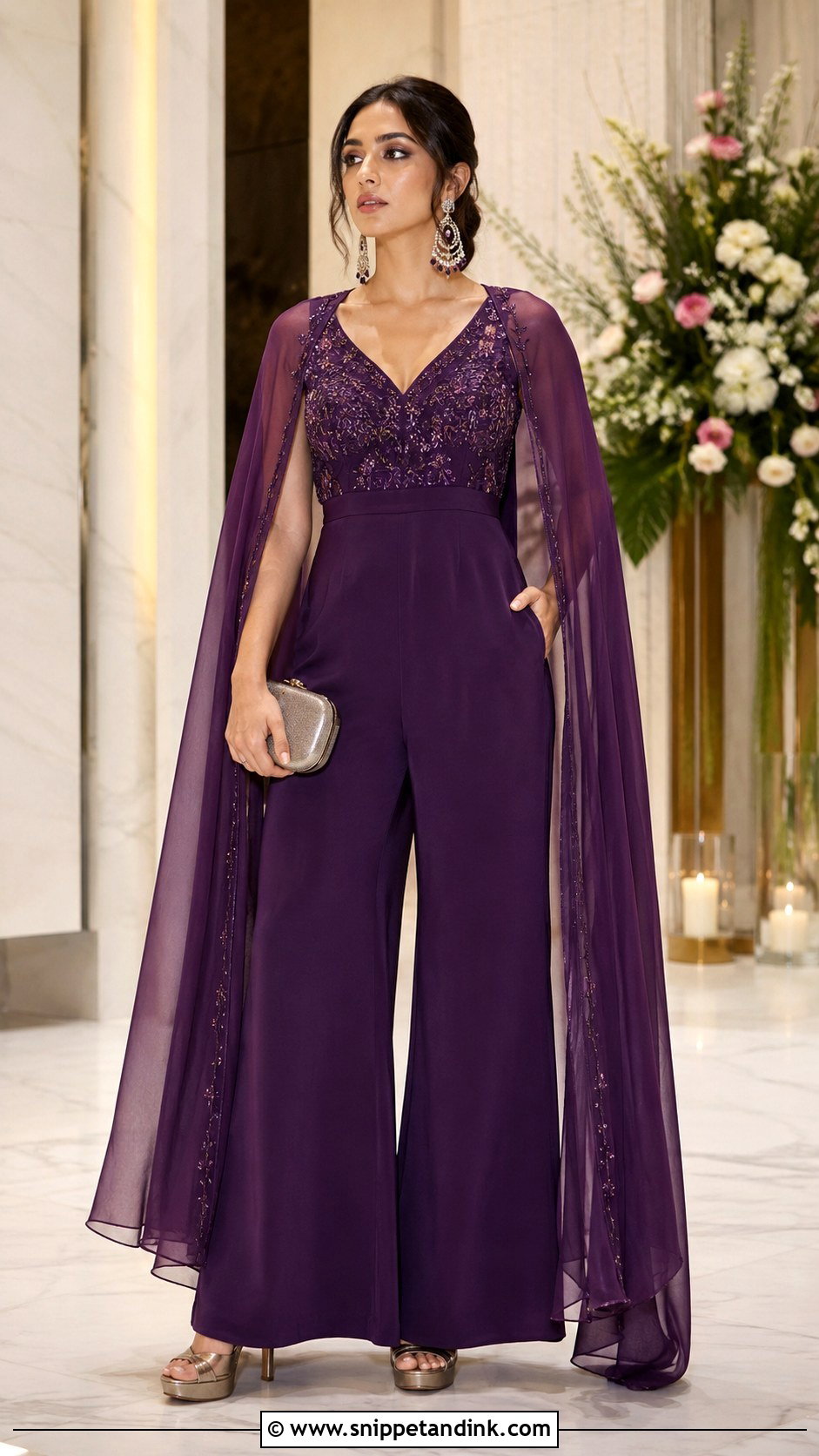
For a cocktail or reception, an Indian jumpsuit with a dupatta gives you a modern line and real freedom to move. Look for wide-leg trousers, a defined waist and an embroidered or draped bodice in jewel tones or metallic neutrals. A cape dupatta or shoulder drape adds the traditional note. Sculptural earrings, a metallic clutch and platform sandals suit it, with a high ponytail or straight, polished hair. My test for any jumpsuit: can you get in and out of it in a venue bathroom without help? A back zip with a hook at the top can be impossible alone, so ask for a side zip if it’s made to measure. Leave off long trailing drapes if you’ll be dancing or herding guests between rooms.
19. Tissue Saree for Wedding Reception
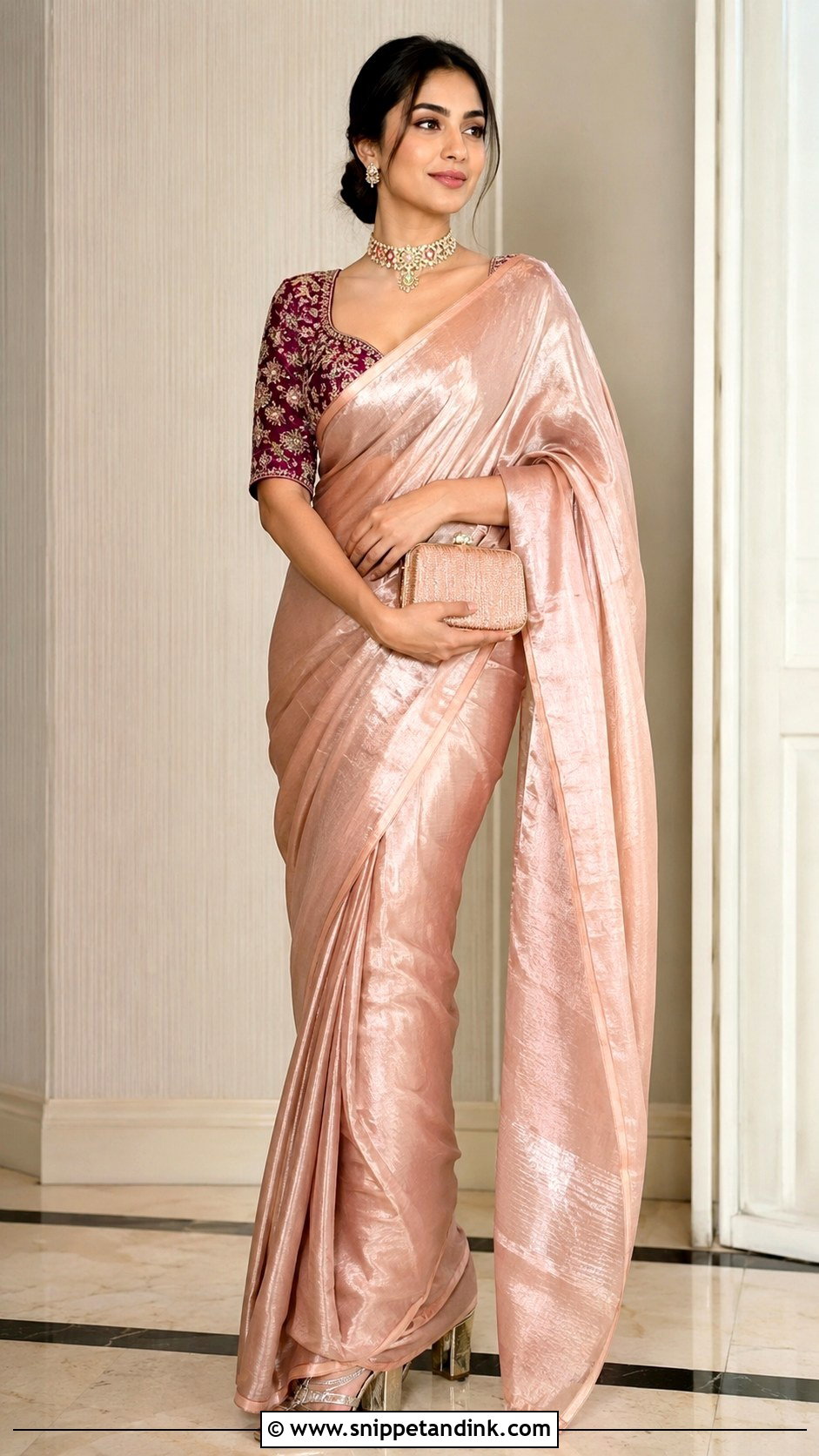
Tissue is woven with metallic threads, so it glows rather than glitters, and that soft light is why it suits an evening reception. Antique gold, silver, rose gold, copper or a metallic pastel all work. A contrasting embroidered blouse gives the drape definition, because a blouse cut from the same tissue can look flat under flash. A gemstone choker, small earrings, a hard-case clutch and metallic block heels complete it, with a low bun or side-parted waves. Pure tissue is crisp enough to hold structured pleats, but it also creases sharply, so pin the pleats at the waist and avoid sitting on the pallu. For a softer fall, a blended tissue drapes more fluidly. Keep accessories quiet and let the sheen work.
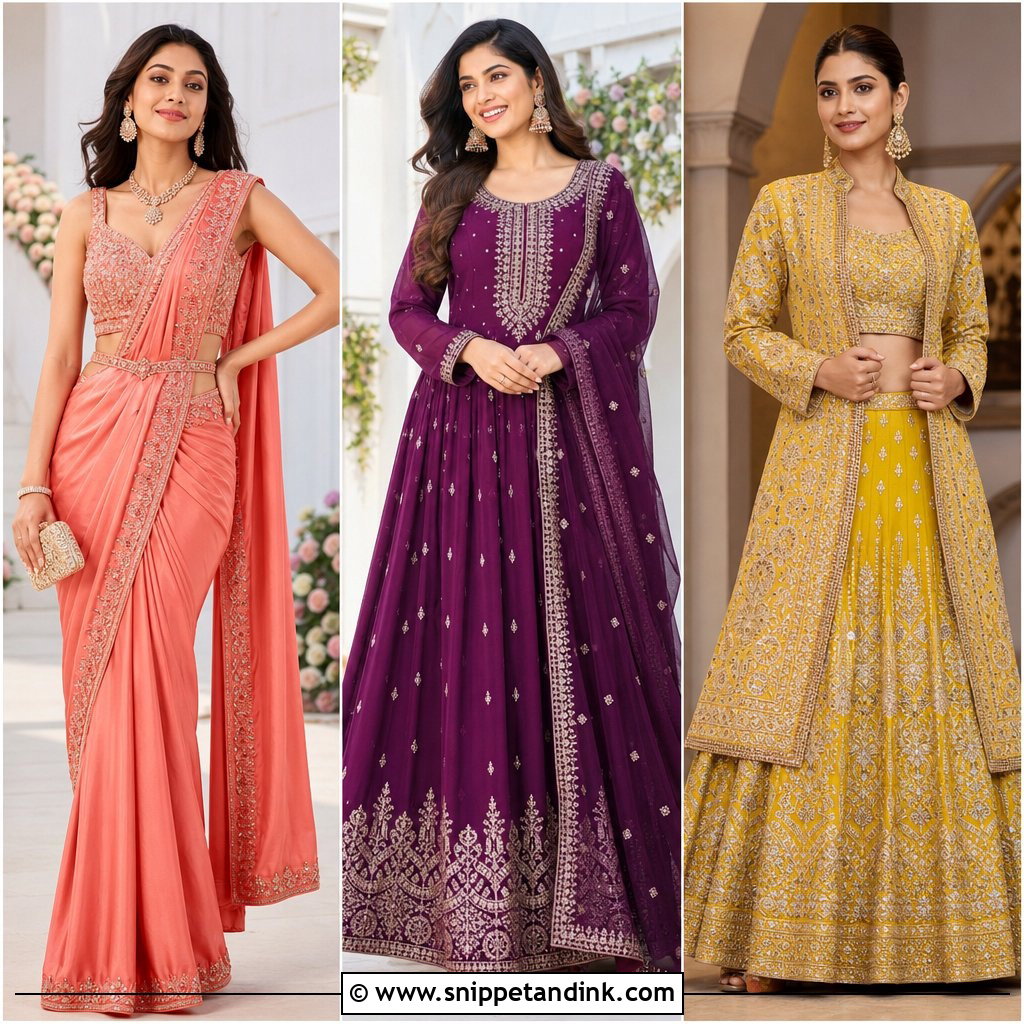
20. Brocade Pantsuit for Indian Wedding
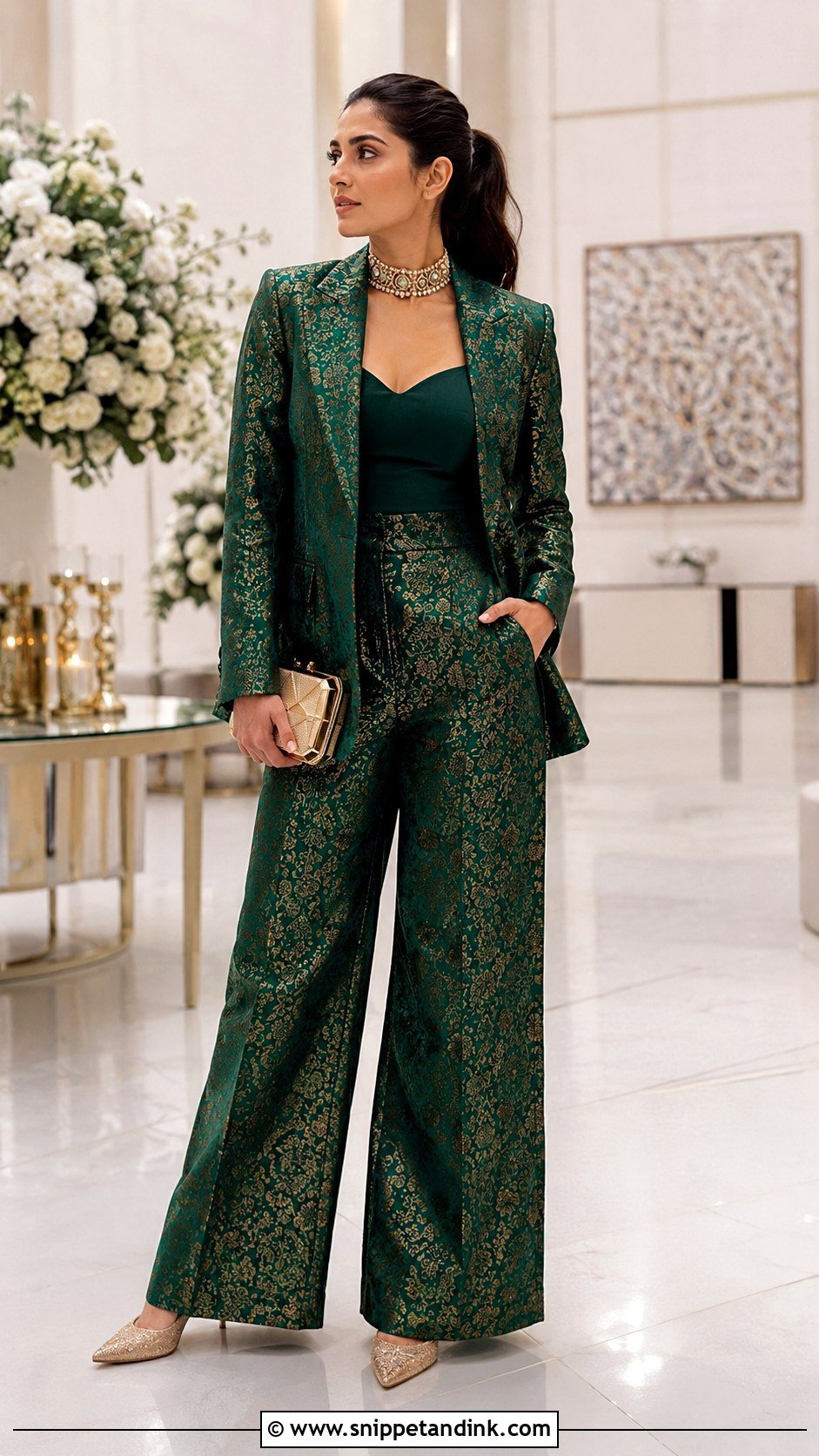
For a modern reception or formal family dinner, a brocade pantsuit is a confident alternative to a saree or lehenga. Tailored straight or wide-leg pants go with an embroidered bustier or camisole and a matching long blazer. Emerald, midnight blue, ivory and antique gold give it an occasion finish, and chandelier earrings or a statement choker tie it back to the wedding. Add a structured clutch and pointed heels, and wear your hair sleek. Brocade has no give, so I fit the jacket with the arms reaching forward, as if hugging someone, since that’s the movement you’ll repeat all evening. Use one brocade pattern only and keep everything else plain.
The Bag I Pack for Quick Changes Between Events
Back-to-back functions often mean changing in a hotel room or a relative’s spare bedroom with fifteen minutes to spare. I hang each outfit in its own garment bag with the jewelry, blouse, petticoat and dupatta pins clipped inside, labelled by event. Then nothing goes missing in the rush.
- A strip of safety pins in two sizes and a few spare blouse hooks
- Double-sided fabric tape for necklines and pallus
- A travel steamer, since silks crease in the car
- A shapewear petticoat or saree shapewear in skin tone
- Blotting papers and a small sewing kit with thread in your main colors
After the wedding, air each piece for a day before packing it away. I wrap silk and zari in soft muslin rather than plastic, which traps moisture and tarnishes metallic thread, and I refold heavy silk sarees every few months so they don’t weaken along the same creases. Send anything with turmeric or henna marks to a cleaner who handles Indian silks as soon as you can; old stains are much harder to lift.
Dressing as the Sister, Not the Bride
A sister’s wardrobe for an Indian wedding is really several outfits doing different jobs. My usual rule is lighter fabric and brighter color for haldi and mehendi, then richer weaves, embroidery and some sparkle for the wedding and reception. Comfort comes first, because you’ll be dancing, greeting guests, running small errands and standing in a great many photographs. Coordinate with the bride’s palette without copying her. Above all, have every piece fitted and wear it around the house for an hour before the event. Good fit, sensible shoes and one or two thoughtful accessories will carry you through every function.
You'll Like These Ideas:


Leave a Reply