
Dressing a Marathi couple is mostly about balance. The bride usually carries the colour in a Paithani, Nauvari, or silk saree, with her nath, green bangles, gold and the mundavalya across her forehead. The groom answers it more quietly, in a dhoti kurta or sherwani with a pheta, shela and mojari. When I plan both looks together, I start with the bride’s saree, pull one colour from its border for the groom, and then think about the rituals: sitting through the antarpat, walking the saptapadi, bending for blessings. The pairings below cover the main ceremony, haldi, engagement and reception, from fully traditional to quite modern.
Hand-Draped or Pre-Stitched Nauvari on the Wedding Morning
The nine-yard drape is the piece most likely to cause stress on the day, so it helps to decide early how it will be worn.
Hand-draped
A traditional drape tied by an experienced drapist sits closest to the body and looks most authentic. It takes time, often longer than people expect, and the drapist needs to be booked for the morning. Ask them to drape you once before the wedding, sit and walk in it, and tell them where it pulled.
Pre-stitched
A ready-stitched Nauvari can be worn in minutes and the pleats stay put through hours of rituals. The trade-off is that a stitched saree is harder to wear another way later, so many brides choose it for a second saree rather than an heirloom Paithani.
For the groom, the same question applies to the pheta. Pre-tied phetas save time and stay even, while a hand-tied one needs someone who can tie it well on the morning. Either way, try it with the mundavalya, since both sit on the forehead and must not press against each other.
1. Maharashtrian Paithani Saree And Dhoti Kurta Couple Outfit
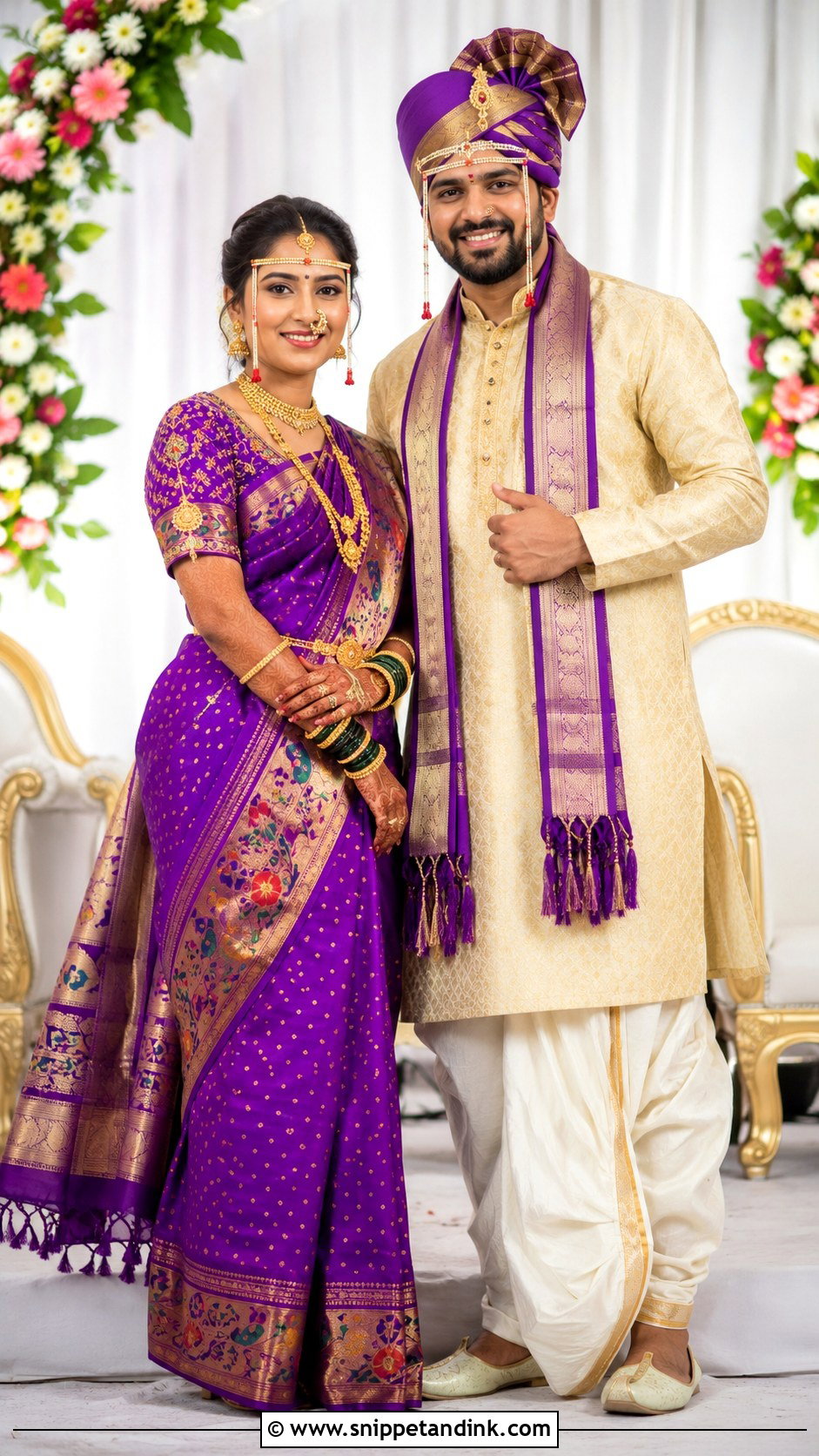
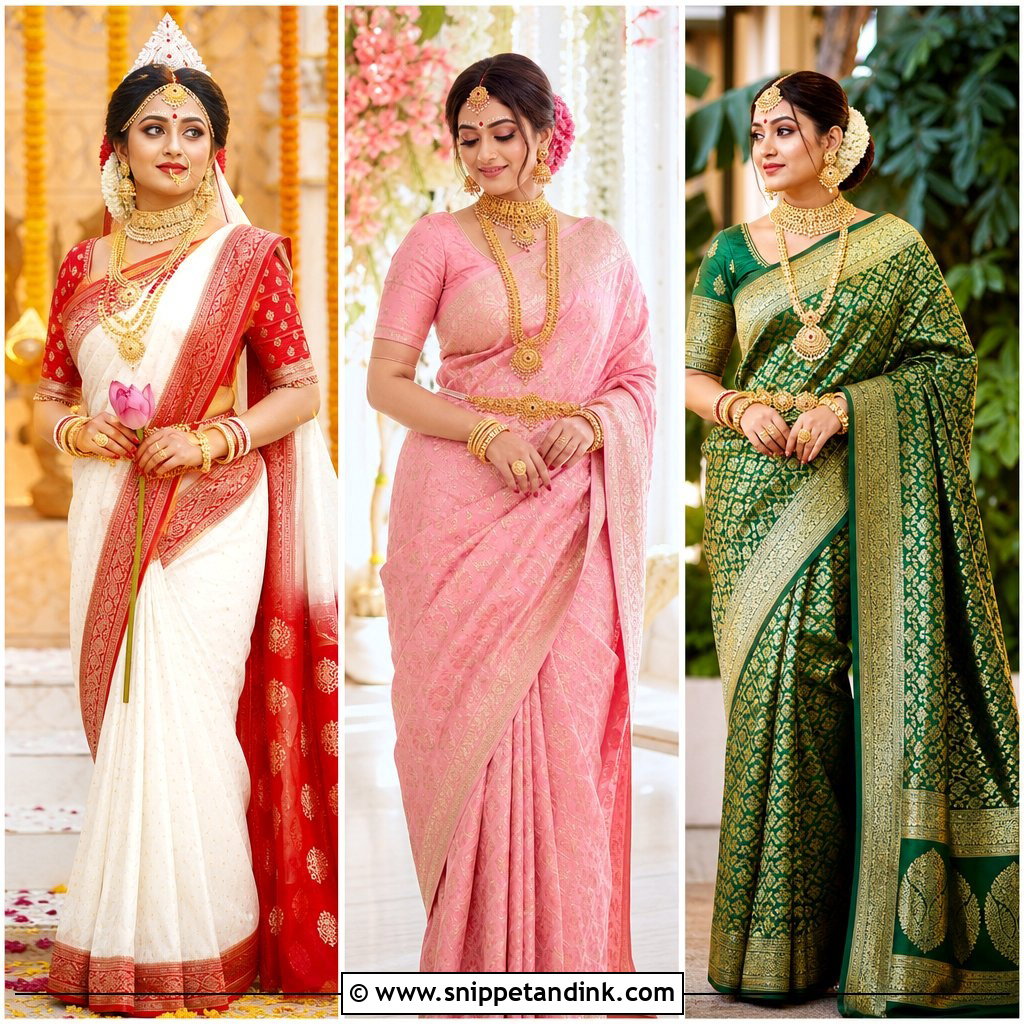
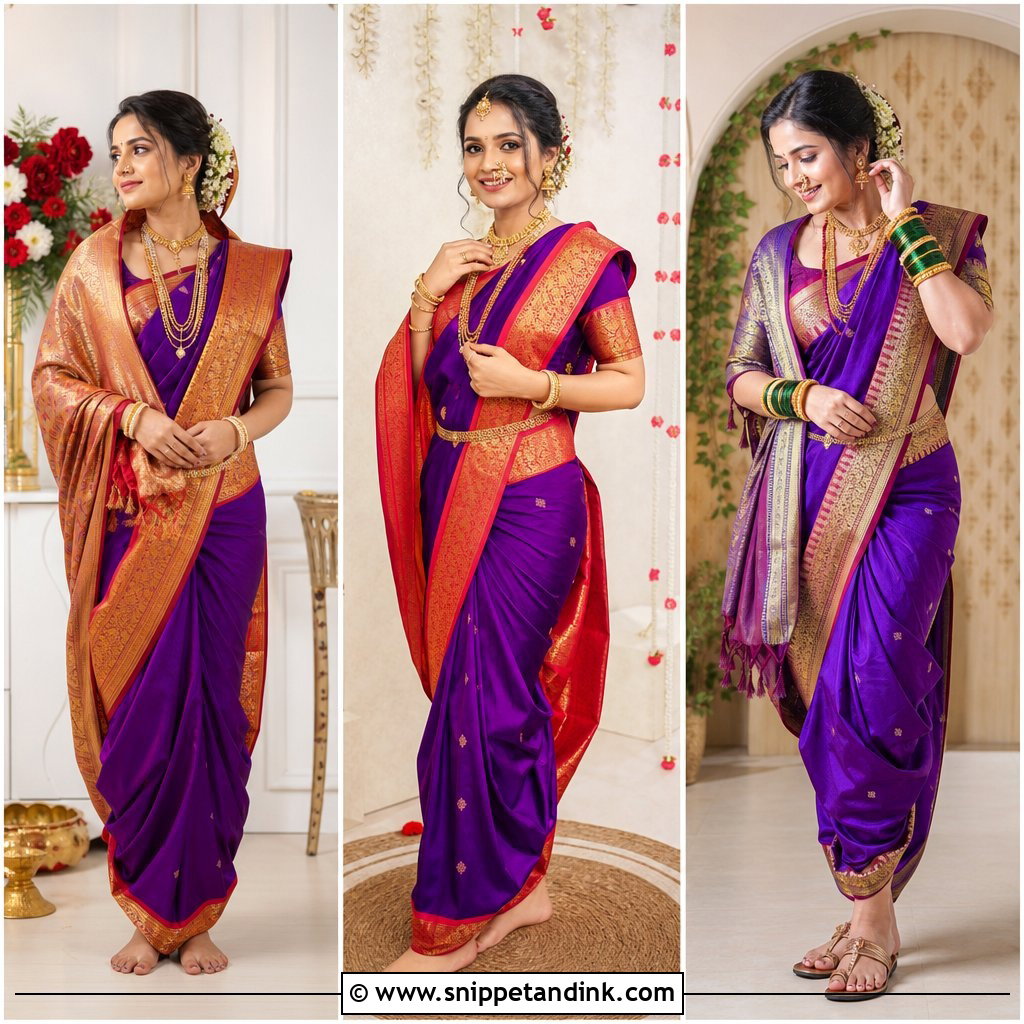
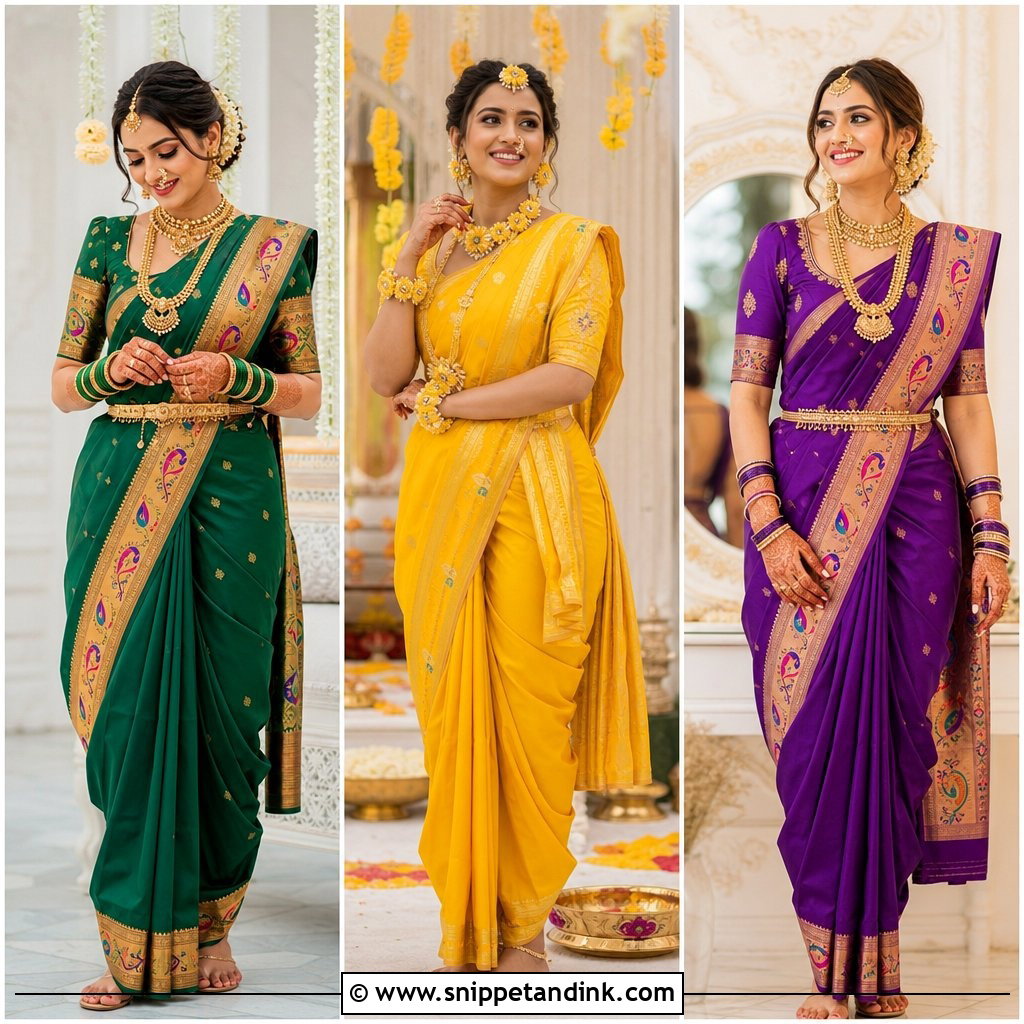
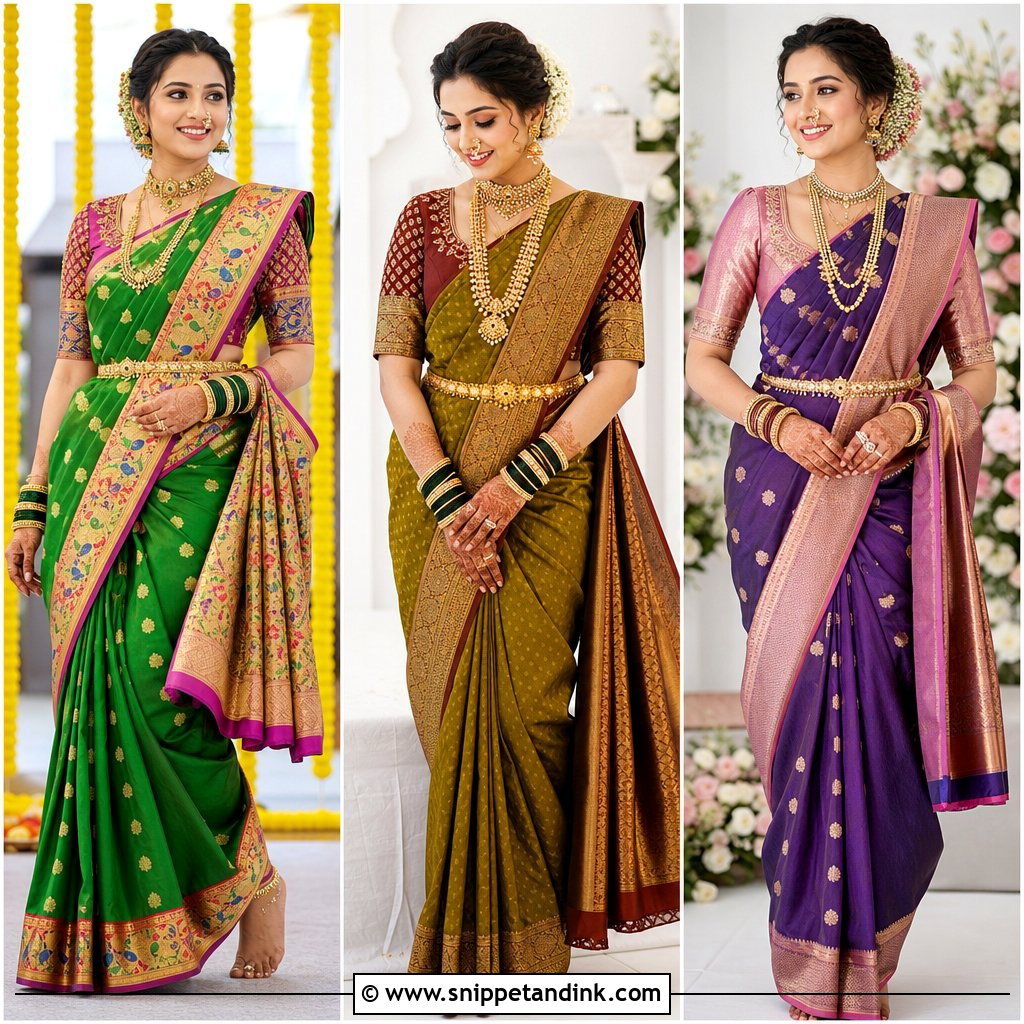
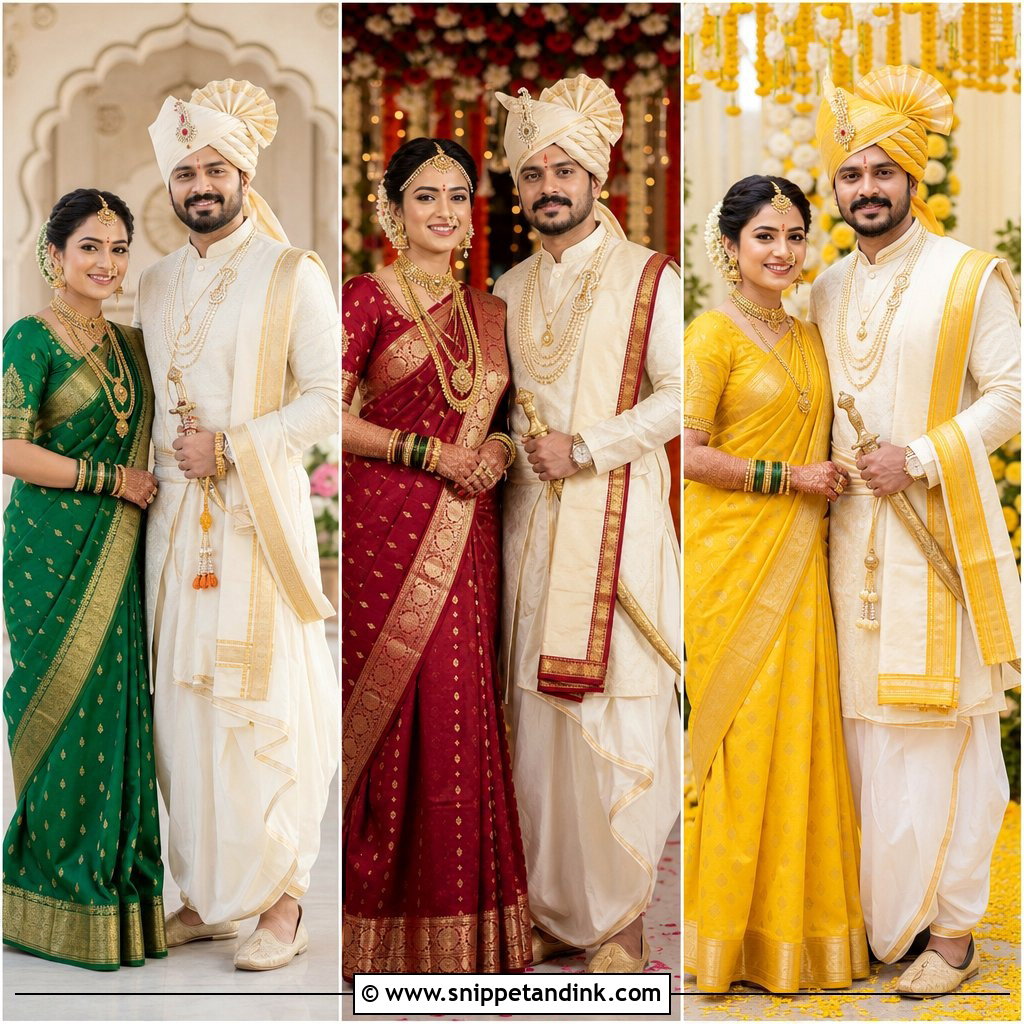
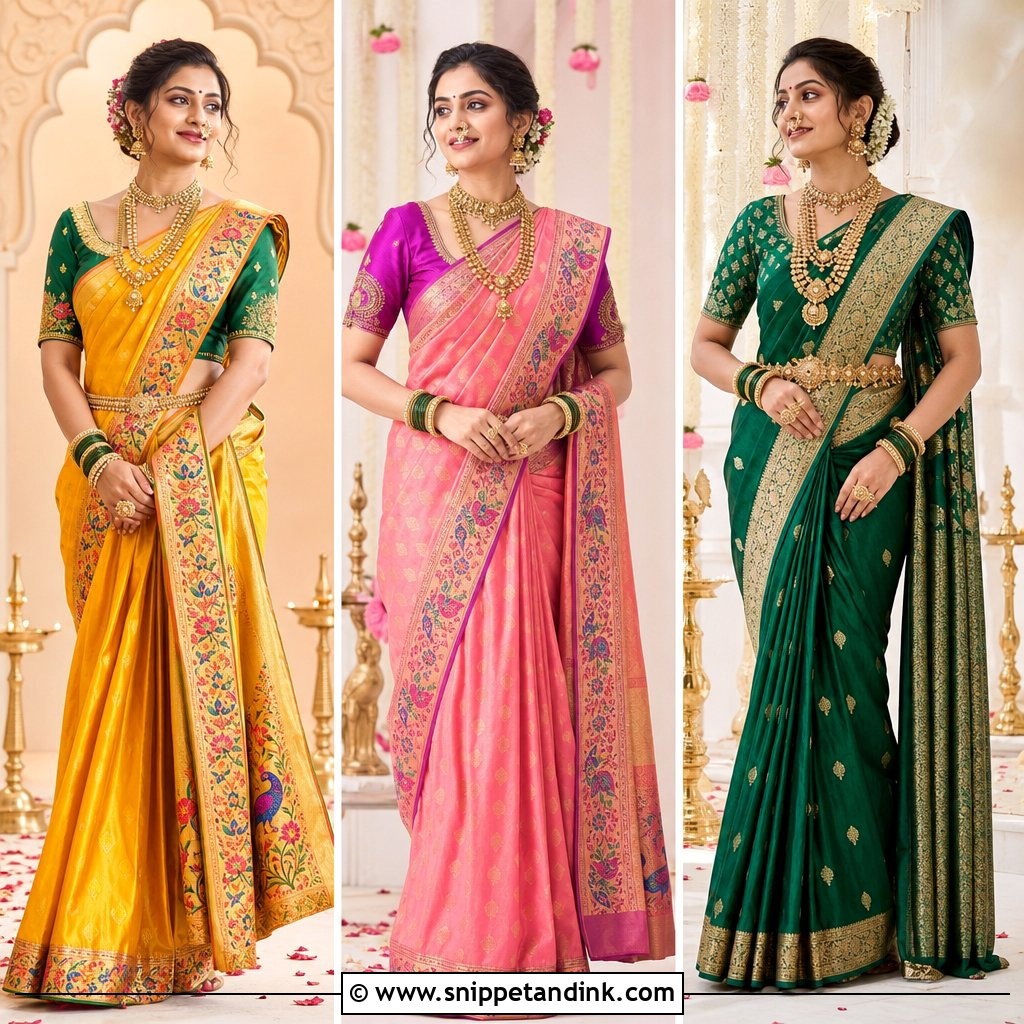
This is the pairing most families picture first. The bride wears a silk Paithani in green, purple, red, orange or yellow with its contrast zari border, plus a nath, mundavalya, green glass bangles, thushi, Kolhapuri saaj, kamarbandh and a flower-wrapped bun. The groom stays in cream or off-white: kurta, white dhoti, a gold-bordered shela, pheta, pearl mundavalya and mojari. That pale base is deliberate. A heavy Paithani pallu with peacock motifs needs space around it, and a quiet groom gives it that space in every couple portrait.
2. Maharashtrian Nauvari Saree And Pheta Groom Outfit
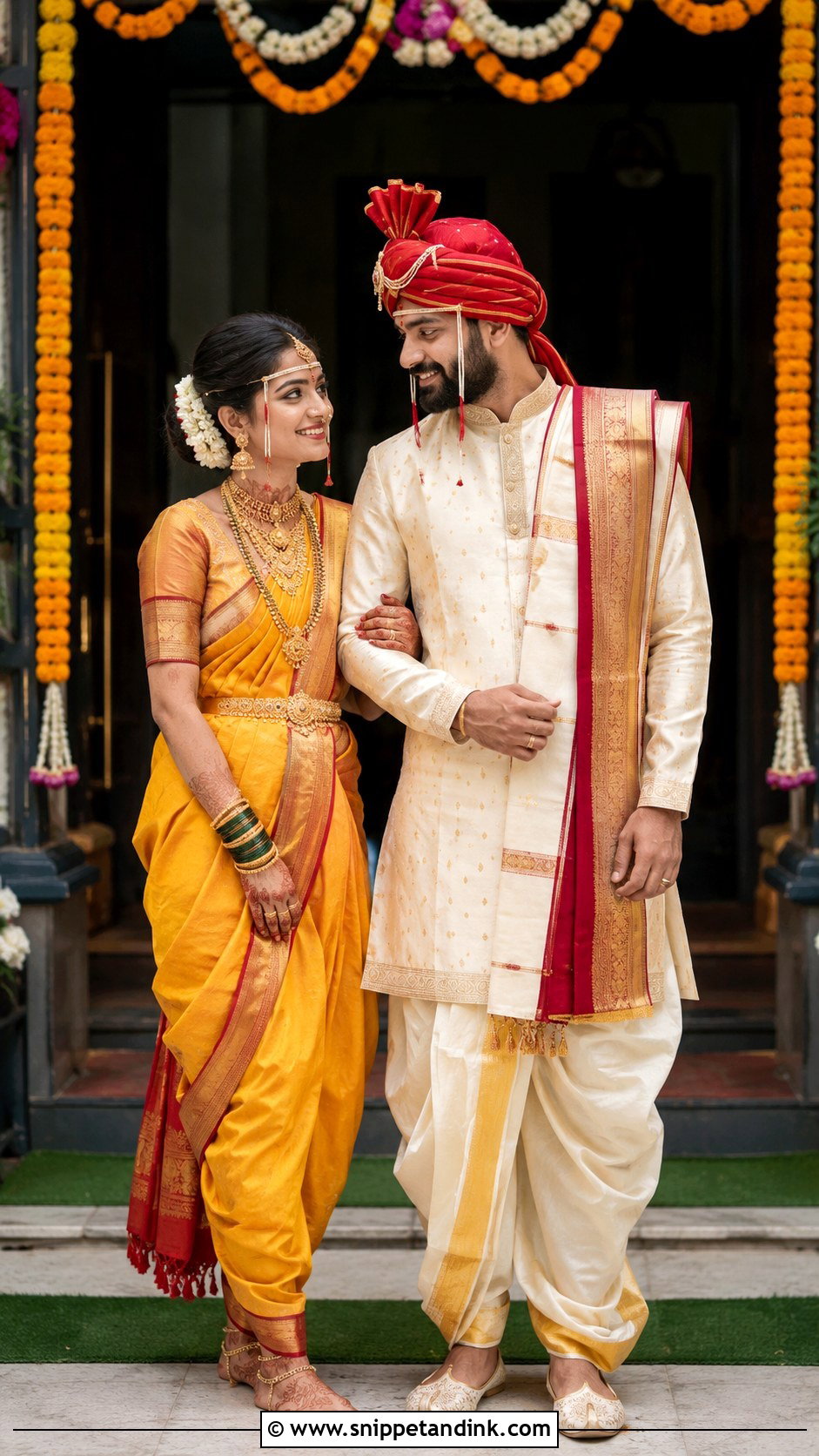
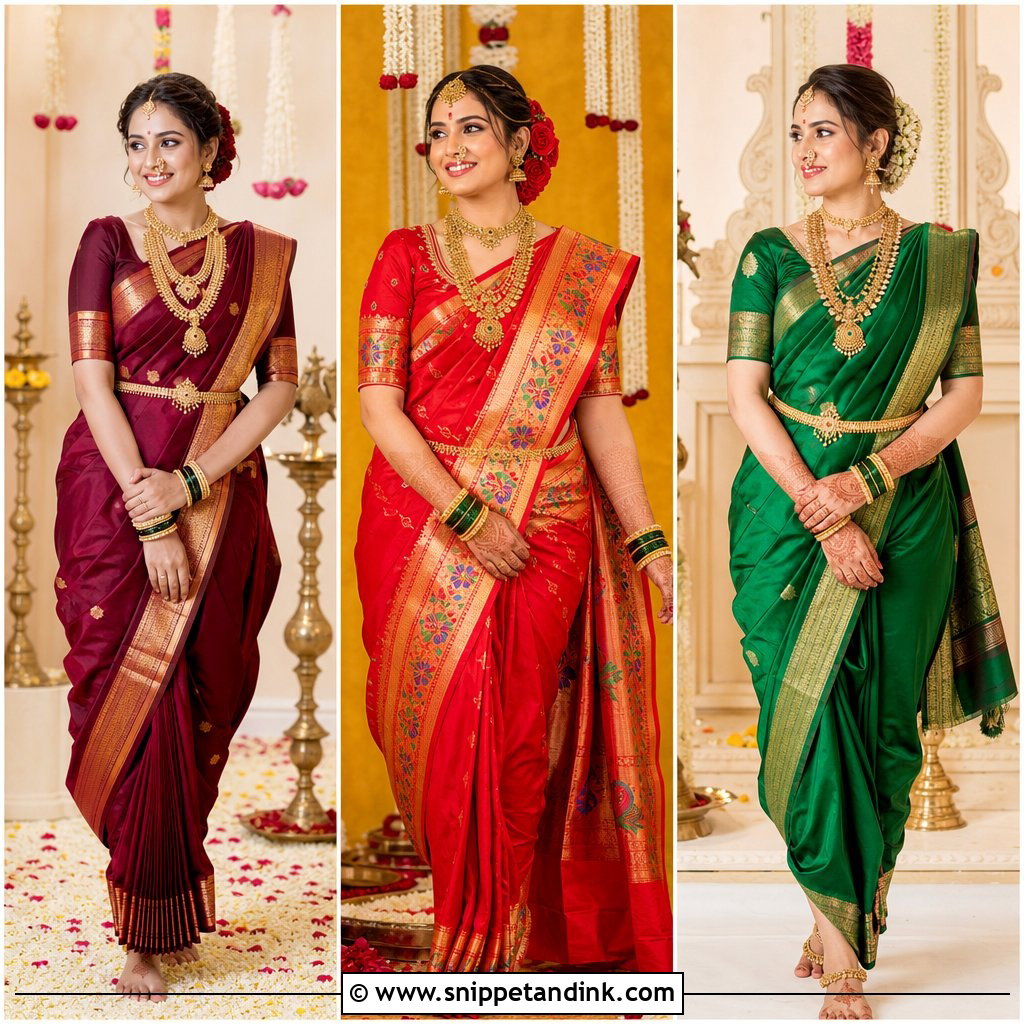
The nine-yard drape is what makes the Nauvari saree and pheta pairing so rooted. Because the saree is tucked at the back like a dhoti, the bride can climb steps, sit cross-legged and walk around the fire without lifting pleats out of the way. Mustard, parrot green, royal purple and red are the classic silks. Add armlets and a crescent bindi with the nath and gold. For the groom, a silk kurta with dhoti or kanche, a bright pheta, embroidered stole and Kolhapuri-style footwear completes the head-to-toe story. If the drape is new to you, practise sitting in it before the day.
3. Green Paithani Saree And Cream Sherwani Couple Outfit
Green is a much-loved bridal colour in Maharashtra, and against gold zari it reads fresh rather than heavy. The bride pairs her green Paithani with a matching blouse, a gold waist belt, layered necklaces, nath, green bangles and a bun with flowers. The groom’s cream sherwani goes with a silk dhoti, churidar or straight trousers, and a green or gold stole that picks up her border. I’d keep his pheta cream too. Two green heads in the mandap tends to flatten the photos.
4. Purple Paithani Saree And Gold Kurta Couple Outfit
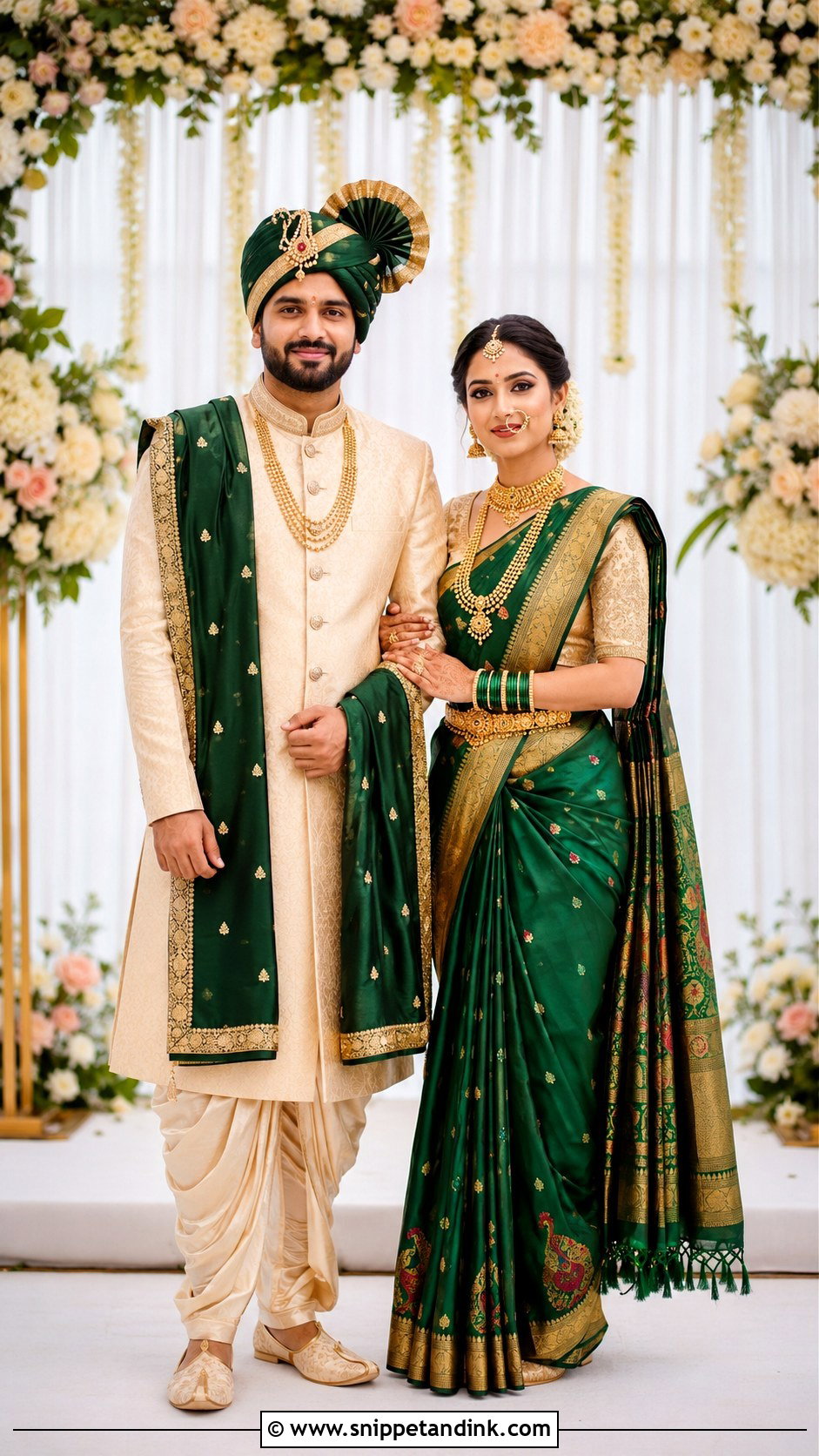
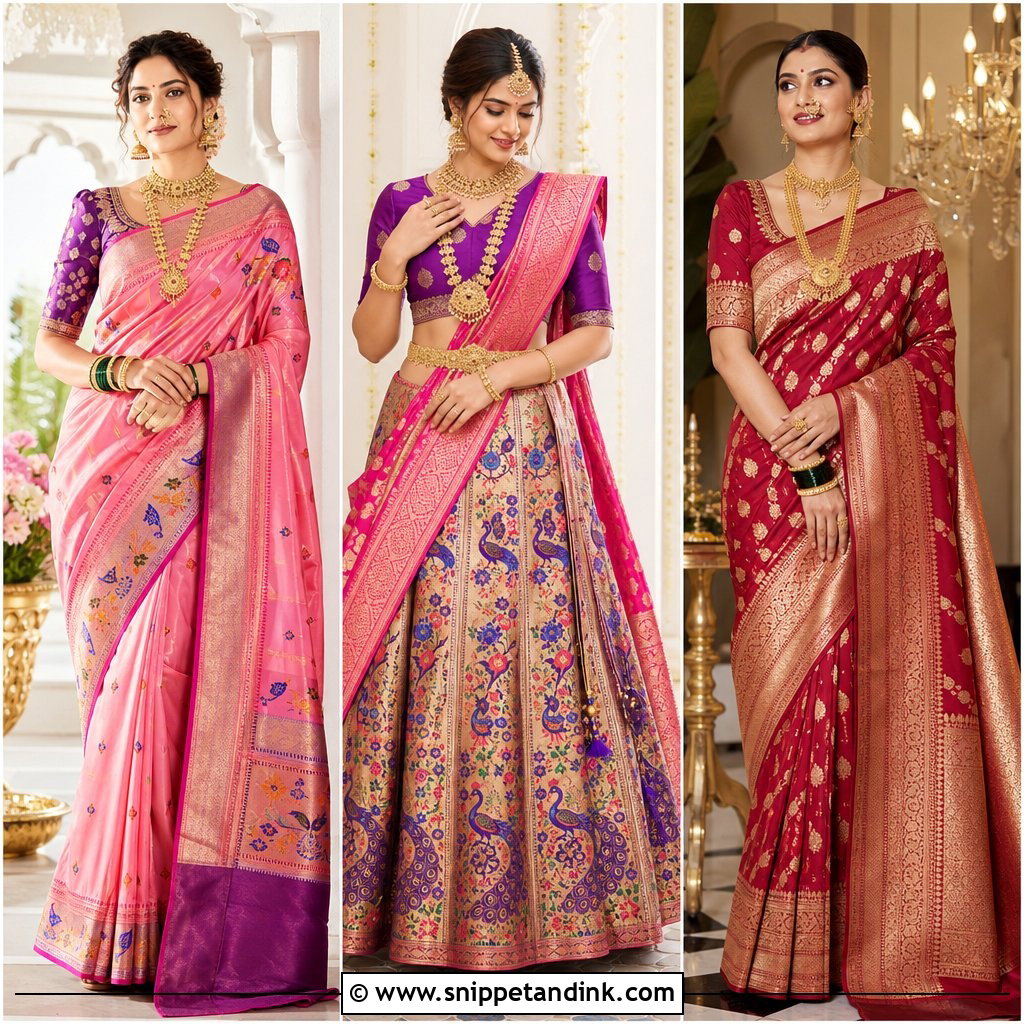
Purple silk changes colour as the light moves across it, especially in Paithani where the weft and warp threads often differ. That shimmer is why it suits indoor and evening ceremonies. The bride can drape traditionally or with neater modern pleats, then add nath, pearl mundavalya, thushi, bangles and gold hair ornaments. The groom answers in soft gold silk: kurta, ivory dhoti, matching stole and a purple pheta. Check his gold against her zari in daylight first; brassy gold beside antique zari looks mismatched.
5. Yellow Nauvari Saree And White Dhoti Kurta Couple Outfit
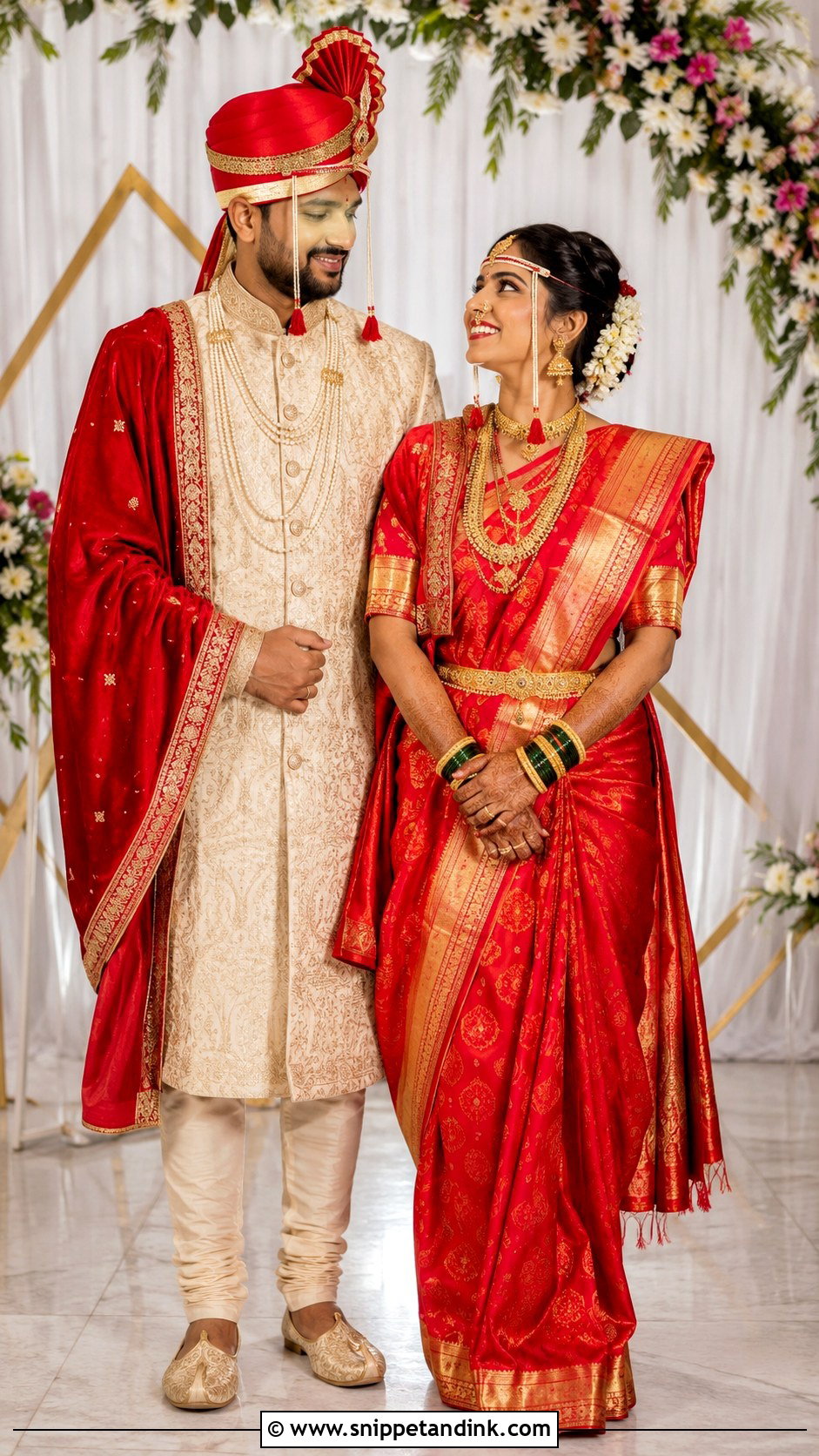
Yellow is auspicious, cheerful and forgiving in daylight. A yellow Nauvari with a green or red blouse gives instant contrast, and stacked green bangles repeat it. Add gold, nath and mundavalya. The groom wears crisp white kurta and dhoti with a gold-bordered shela and a yellow pheta. For warm mornings, ask whether the Nauvari can be in a lighter silk or cotton silk. Heavy silk in midday heat is hard to sit in for long rituals.
6. Red Silk Saree And Beige Sherwani Couple Outfit
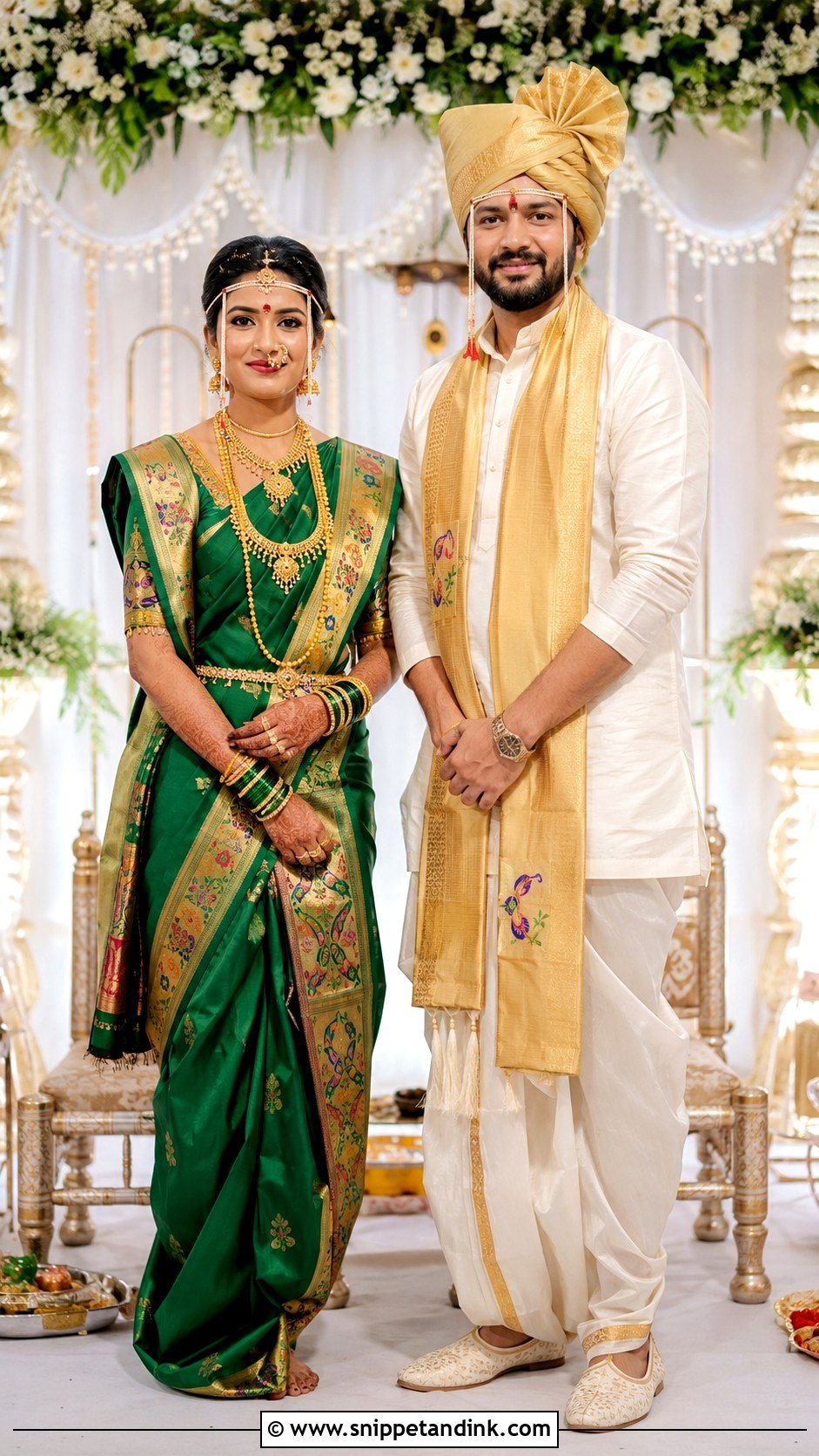
Red gives the bride an unmistakable presence. A red Paithani, Shalu or silk saree with gold borders, a traditional blouse, layered necklaces, nath, kamarbandh and pearl mundavalya is fully bridal. The groom softens it in beige: sherwani, cream dhoti or trousers, a red stole and matching pheta. Red silk can reflect onto the face in close-ups, so I tell brides to test their makeup next to the saree, not just in a mirror. The pairing works for the ceremony, the reception entrance and family portraits.
7. Orange Paithani Saree And Ivory Groom Outfit
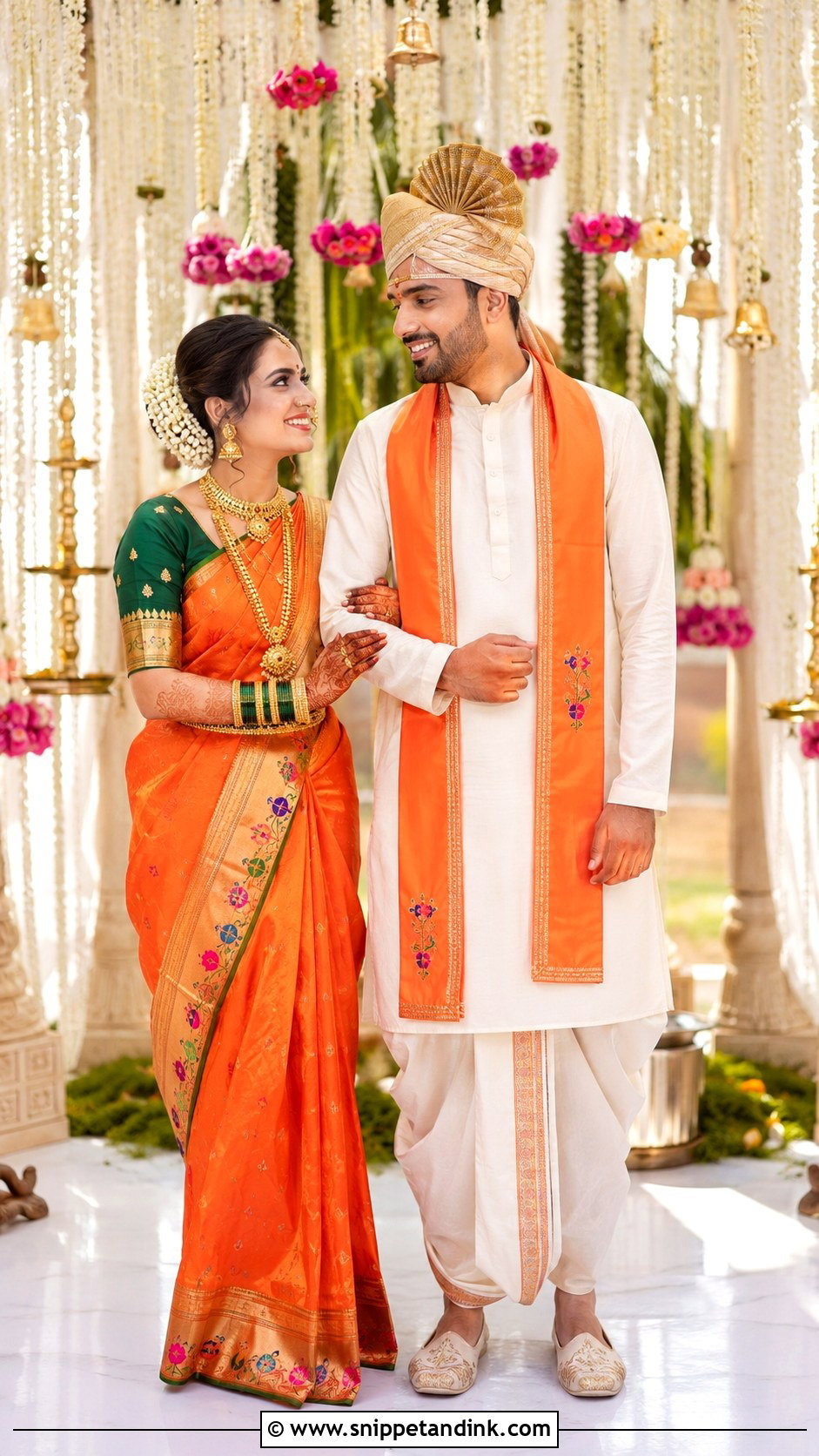
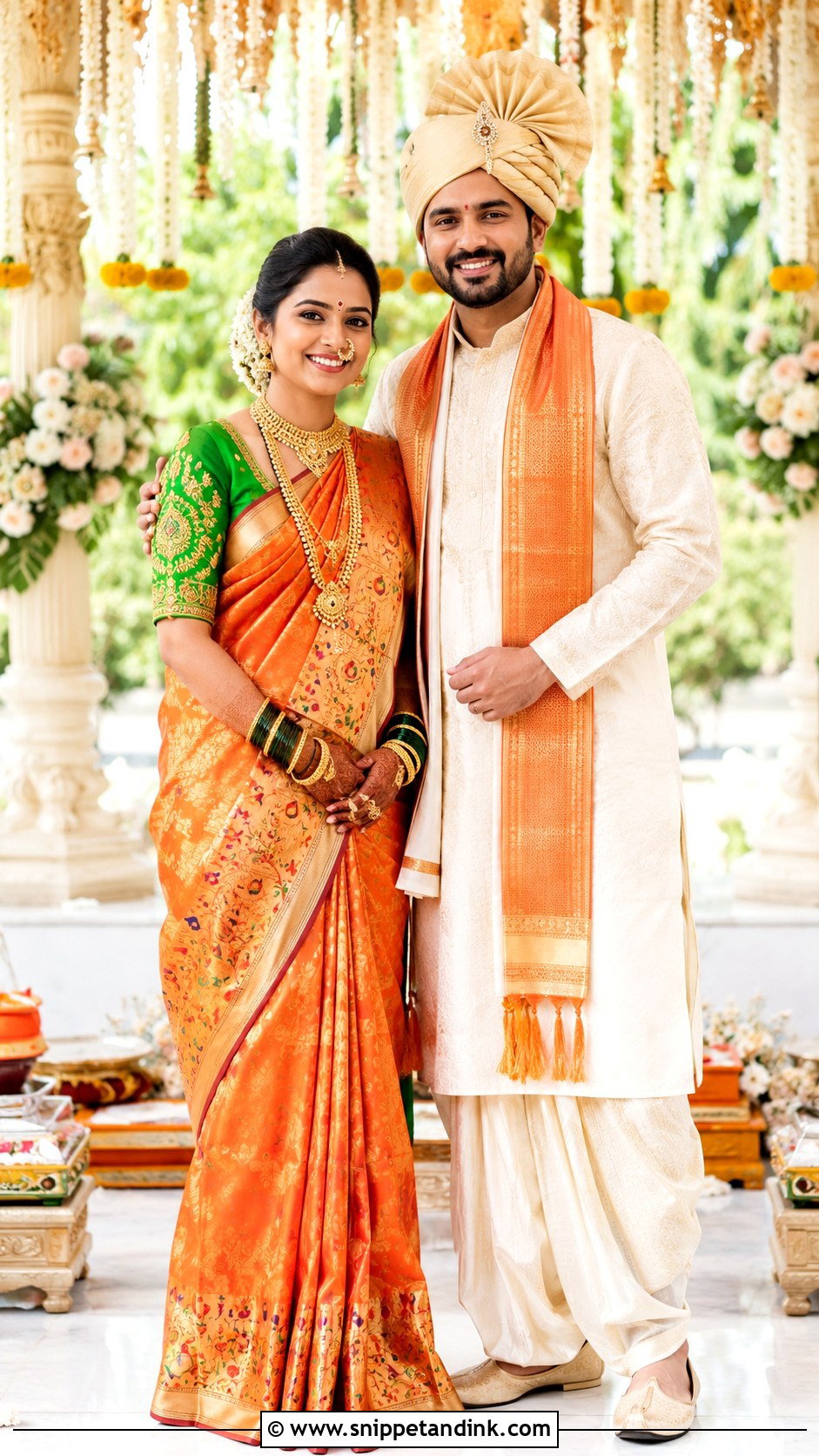
Orange silk shows off sheen better than almost any colour, and the zari border glows against it in daylight. A contrast blouse in green, pink or red keeps it from looking like a single block of colour. Gold, nath, mundavalya and a traditional bun finish the bride. The groom wears ivory, whether a kurta, dhoti or sherwani, with an orange stole and a matching or neutral pheta. I’d avoid an orange sherwani for him; two large areas of the same bright colour compete.
8. Maharashtrian Bride Lehenga And Groom Sherwani Outfit
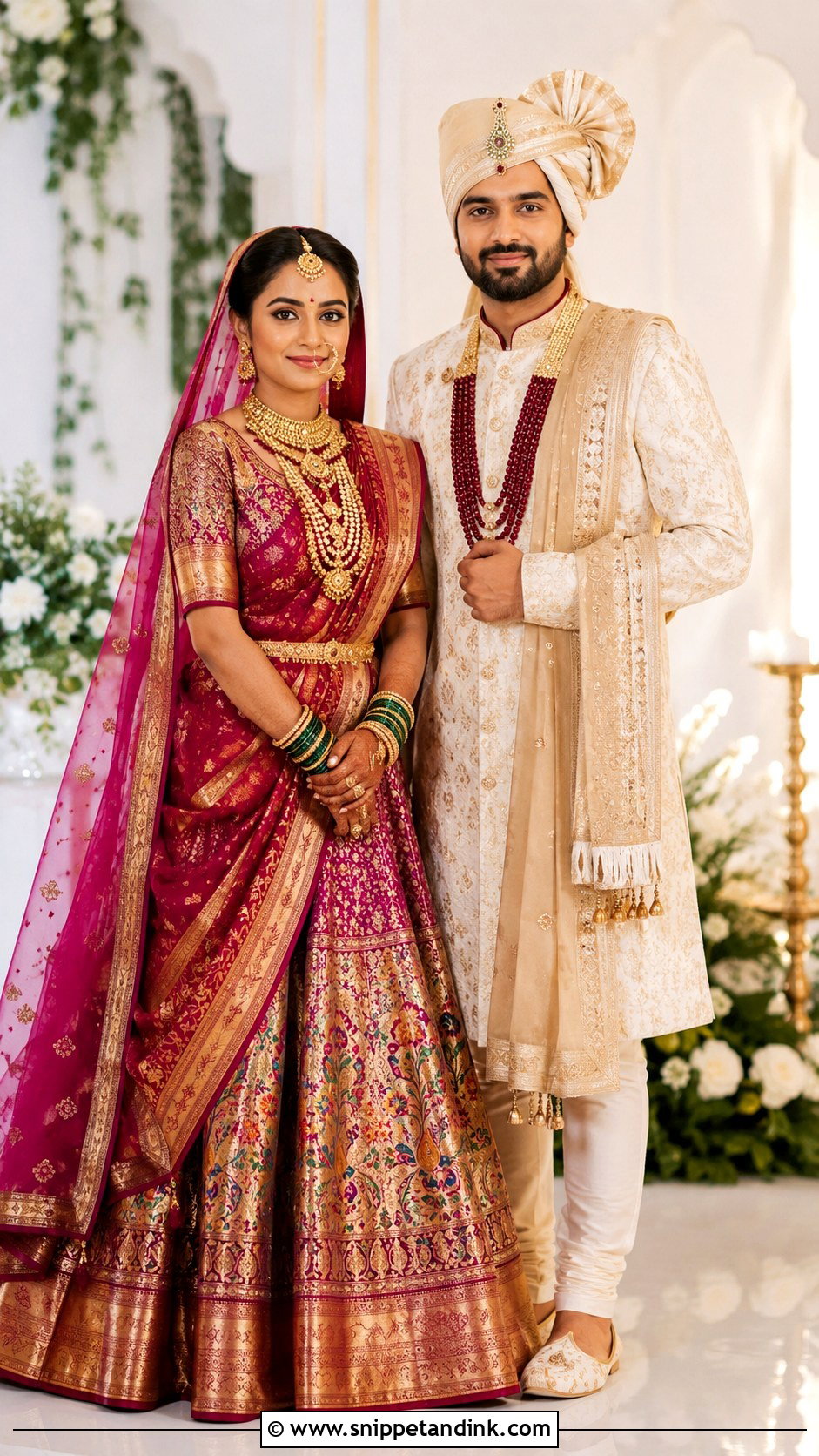
A lehenga gives the bride volume and a lighter, more modern line while the regional details stay. Look for silk with Paithani motifs, zari borders or peacocks, and wear the dupatta draped over the shoulder in a saree-like way. Nath, mundavalya, green bangles and gold keep it Marathi. The groom wears a coordinating sherwani with churidar, stole, pheta and mojari. One honest caution: some families expect a saree for the main rituals, so I’d confirm before ordering a lehenga for the mandap rather than the reception.
9. Paithani Lehenga And Bandhgala Groom Outfit
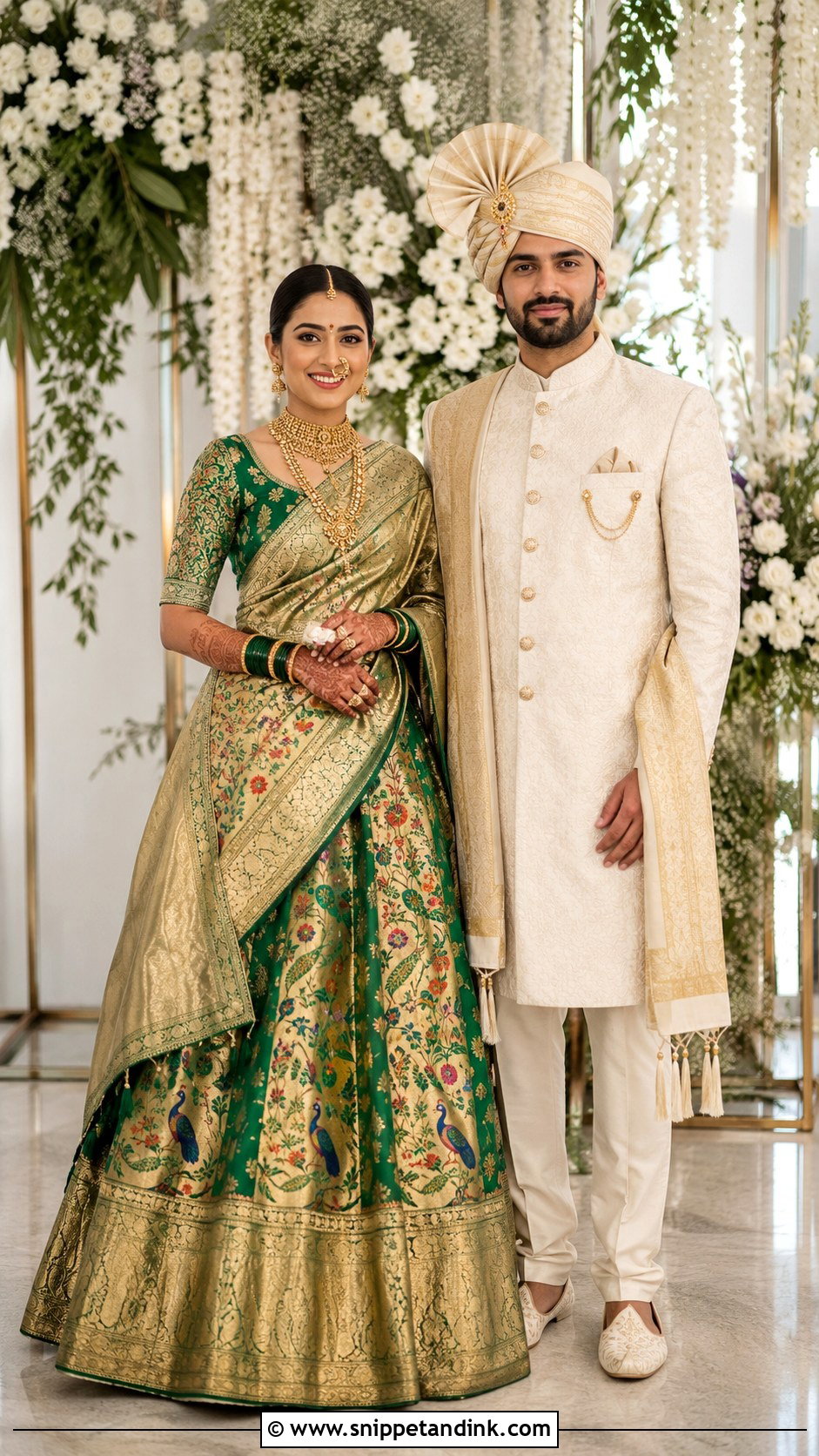
A Paithani lehenga with a bandhgala reads sharp and festive at once. The lehenga can carry Paithani borders, silk texture and traditional sleeve details on the blouse, with a contrast dupatta for movement. A nath, thushi, Kolhapuri saaj and a neat bun or braid complete her. The groom’s structured bandhgala in ivory, gold, beige or deep green with slim trousers suits a reception. Add a pheta if you want the Maharashtrian note to stay strong. Bandhgalas are close-fitting at the collar, so he should try it seated as well.
10. White And Gold Maharashtrian Couple Wedding Outfit
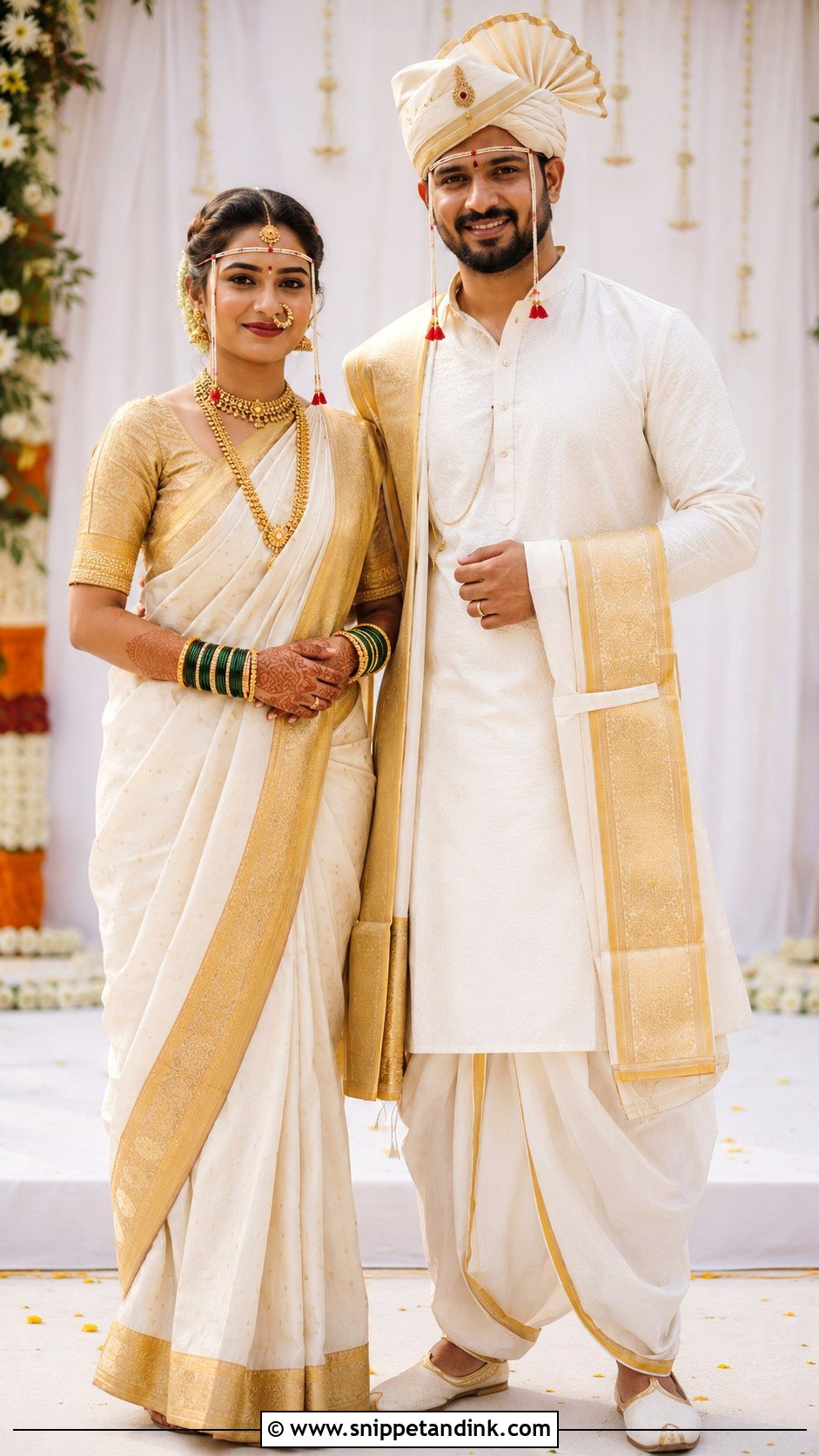
White and gold is calm and suits morning weddings and temple-style ceremonies. The bride wears an off-white silk saree with a gold border and blouse, nath, mundavalya and traditional jewellery, with green bangles as the one burst of colour. The groom matches in white or cream: kurta, gold-bordered dhoti, shela, pheta and mojari. Off-white shows turmeric and kumkum quickly, so keep a spare handkerchief and avoid touching the drape after rituals with coloured powder.
11. Maroon Paithani Saree And Cream Groom Outfit
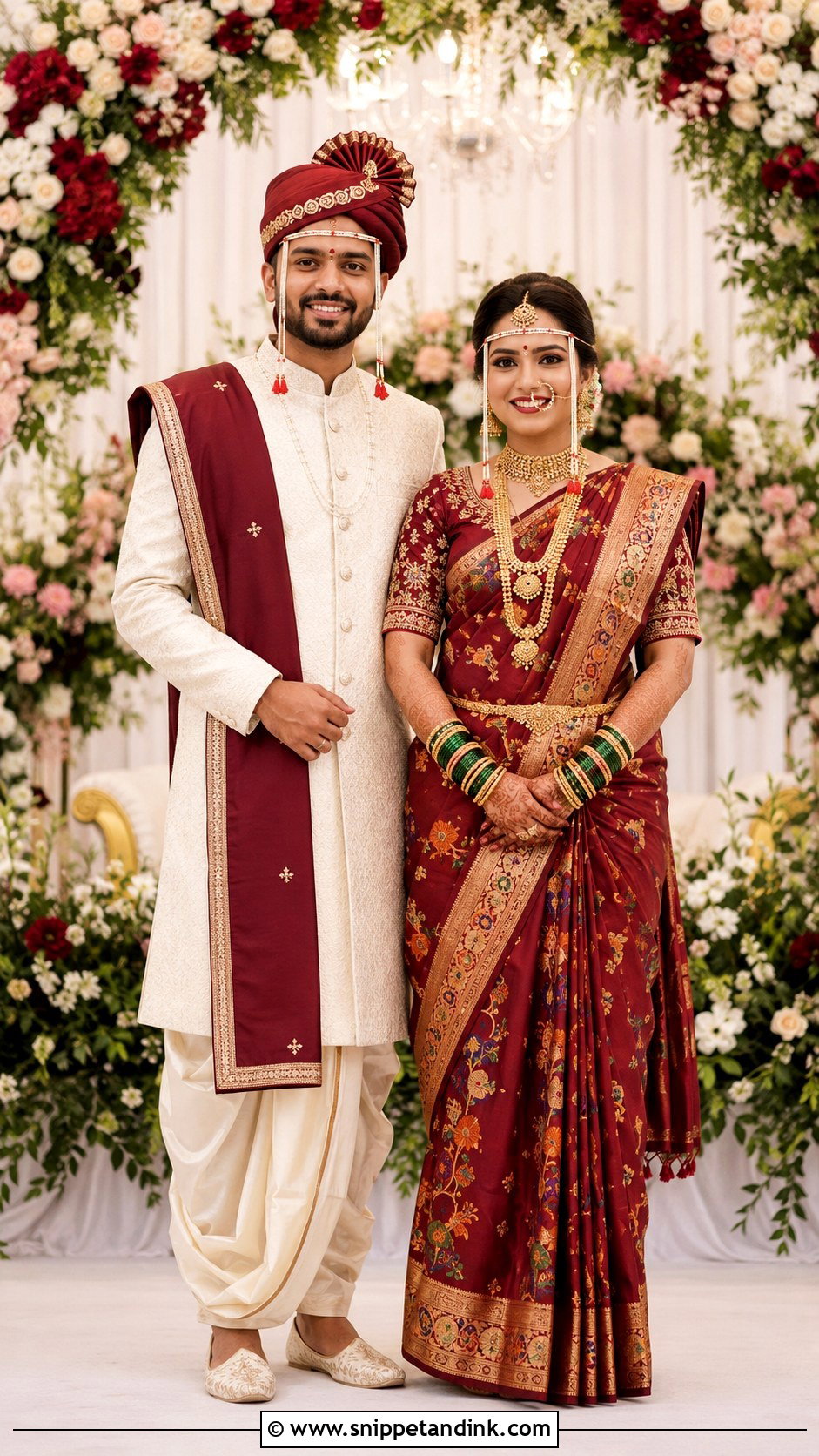
Maroon gives depth without the brightness of red, and it suits evening light. The bride wears it with a contrast blouse, gold, nath, mundavalya and fresh flowers in her bun. The groom’s cream sherwani or kurta with a dhoti, maroon stole and matching pheta keeps the pair from looking too dark together. In photographs, deep maroon can lose detail in dim halls, so ask your photographer to plan extra light for the mandap.
12. Pink Paithani Saree And Ivory Sherwani Couple Outfit
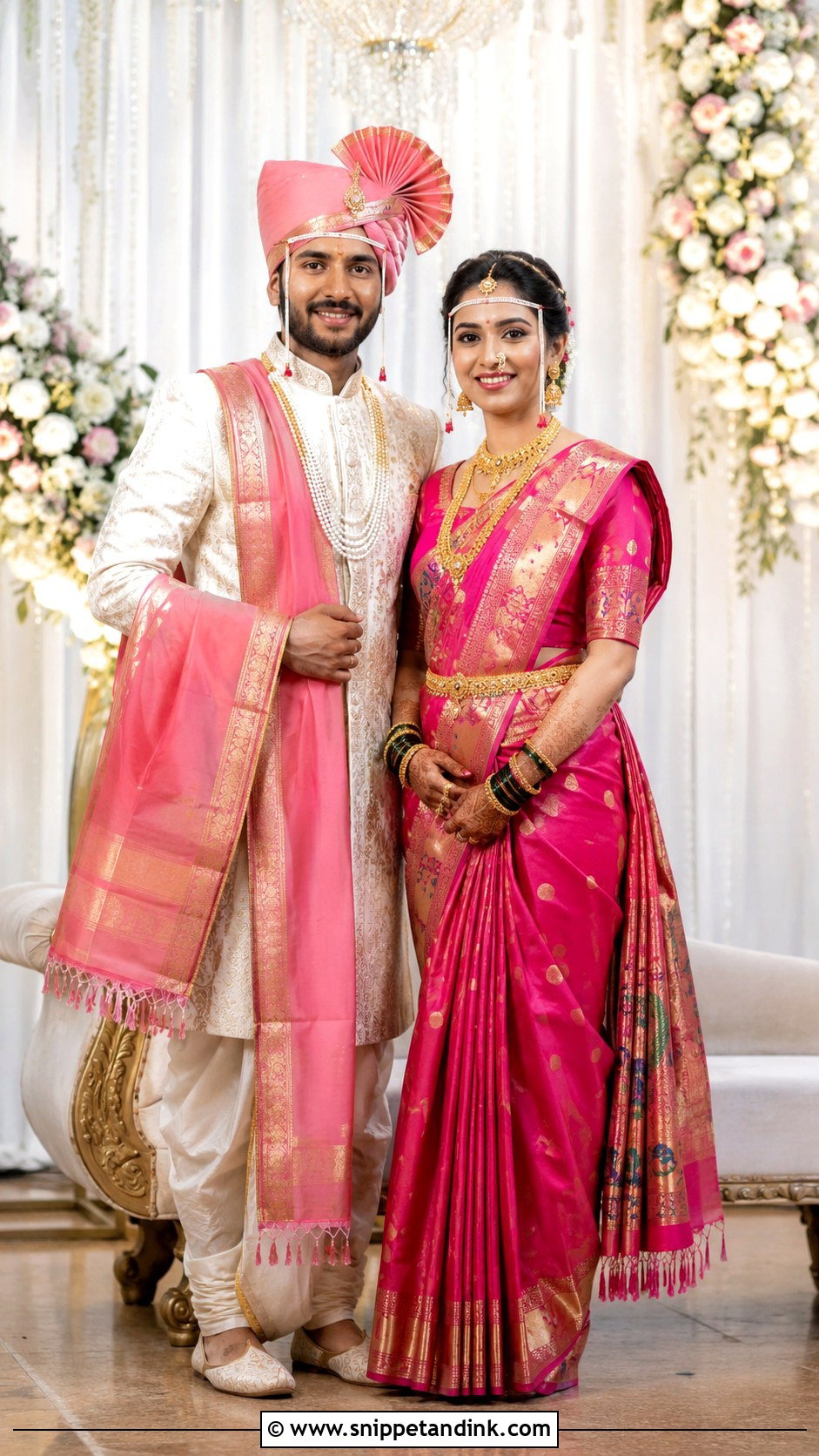
Pink brings softness. Rose, rani pink or magenta Paithani with gold zari and a contrast blouse suits engagements, morning portraits and reception-style ceremonies. Traditional jewellery, nath, mundavalya, bangles and a waist belt complete her. The groom’s ivory sherwani with a pink stole, cream churidar or dhoti and a simple pheta looks cheerful without matching too closely. I’d steer magenta brides toward cooler gold or antique gold jewellery, which sits better against blue-toned pink.
13. Maharashtrian Haldi Couple Outfit
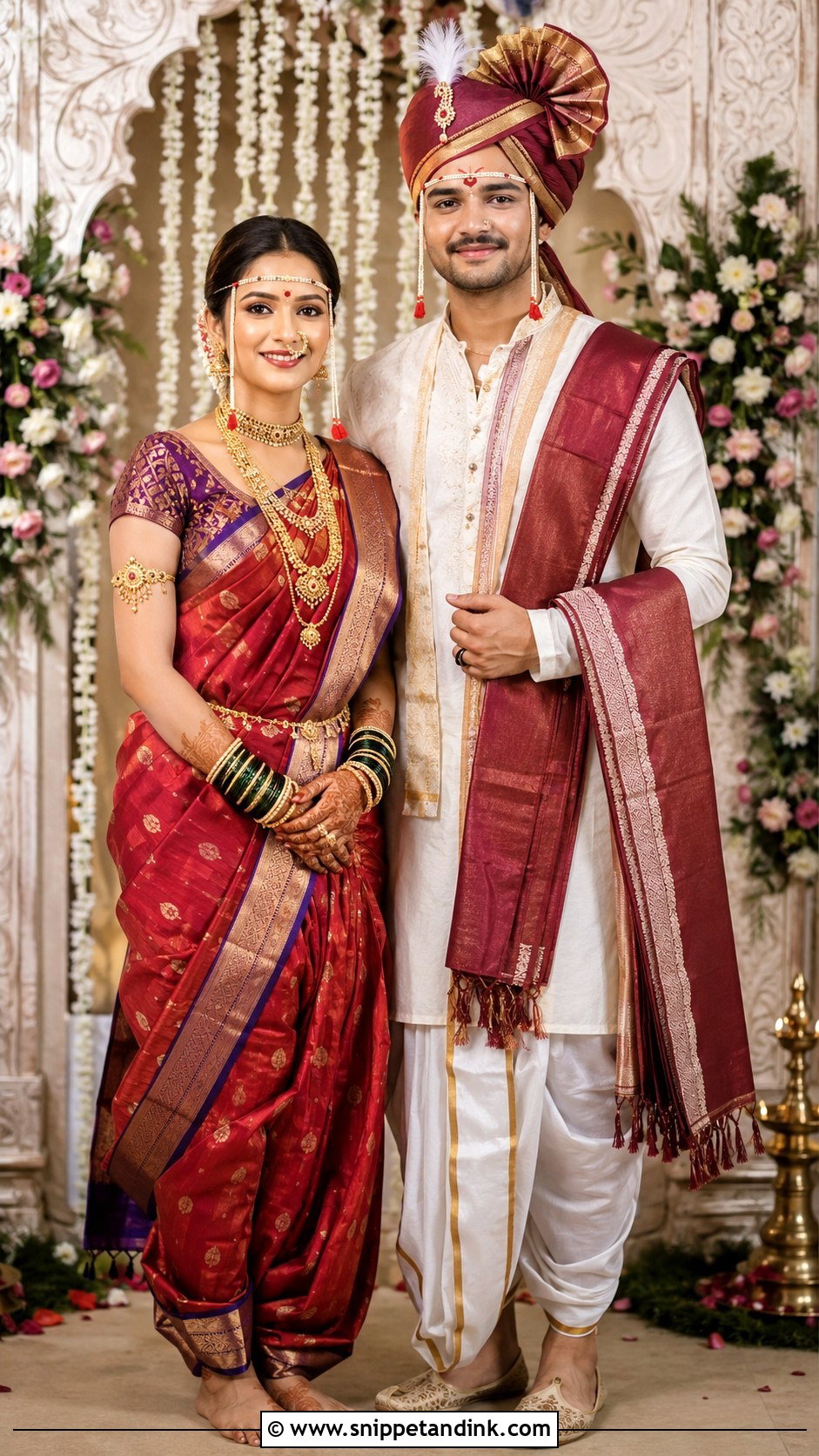
Haldi stains. Plan the Maharashtrian haldi couple outfit around that, not around photos alone. The bride can wear a yellow cotton silk saree, a light Nauvari or a simple Paithani-inspired drape with floral jewellery, green bangles and very little gold. The groom suits a yellow or ivory kurta with a white pajama, dhoti or relaxed trousers. Treat both outfits as ones that may not come clean; turmeric sets into natural fibres quickly. Yellow, white and green together look joyful in pictures.
14. Maharashtrian Engagement Couple Outfit
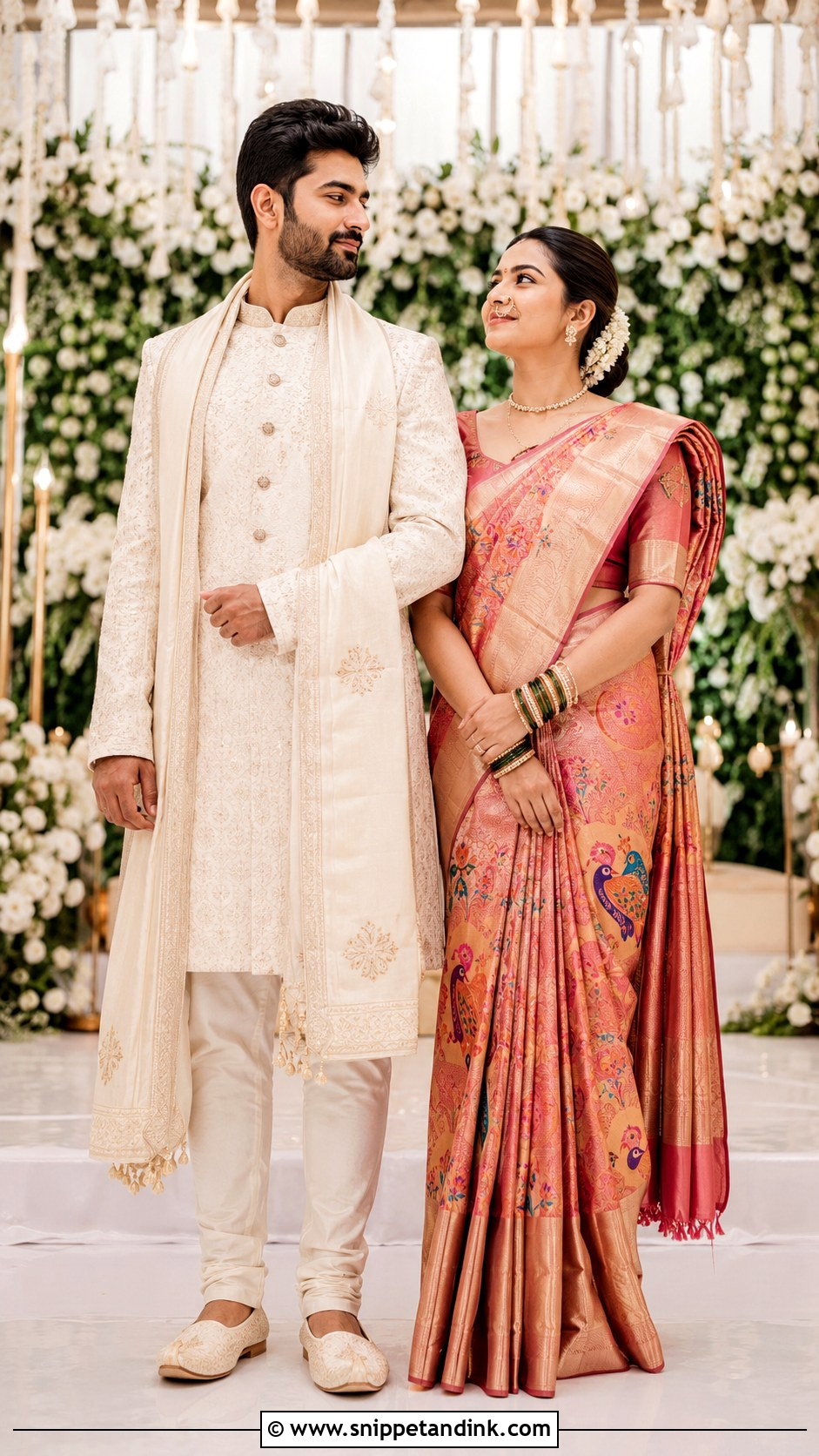
Engagement looks can be a step lighter than the wedding. The bride might wear a silk saree, a Paithani or a Paithani lehenga in pink, green, blue or lavender, with statement earrings, bangles and a neat hairstyle. The groom can choose a bandhgala, kurta set or lightly embroidered sherwani, and a pheta is optional here. Hands get the attention in ring exchange photos, so bangles shouldn’t crowd the ring finger, and sleeves should sit clear of the wrist. You’ll greet many guests, so comfortable shoes matter.
15. Maharashtrian Reception Couple Outfit
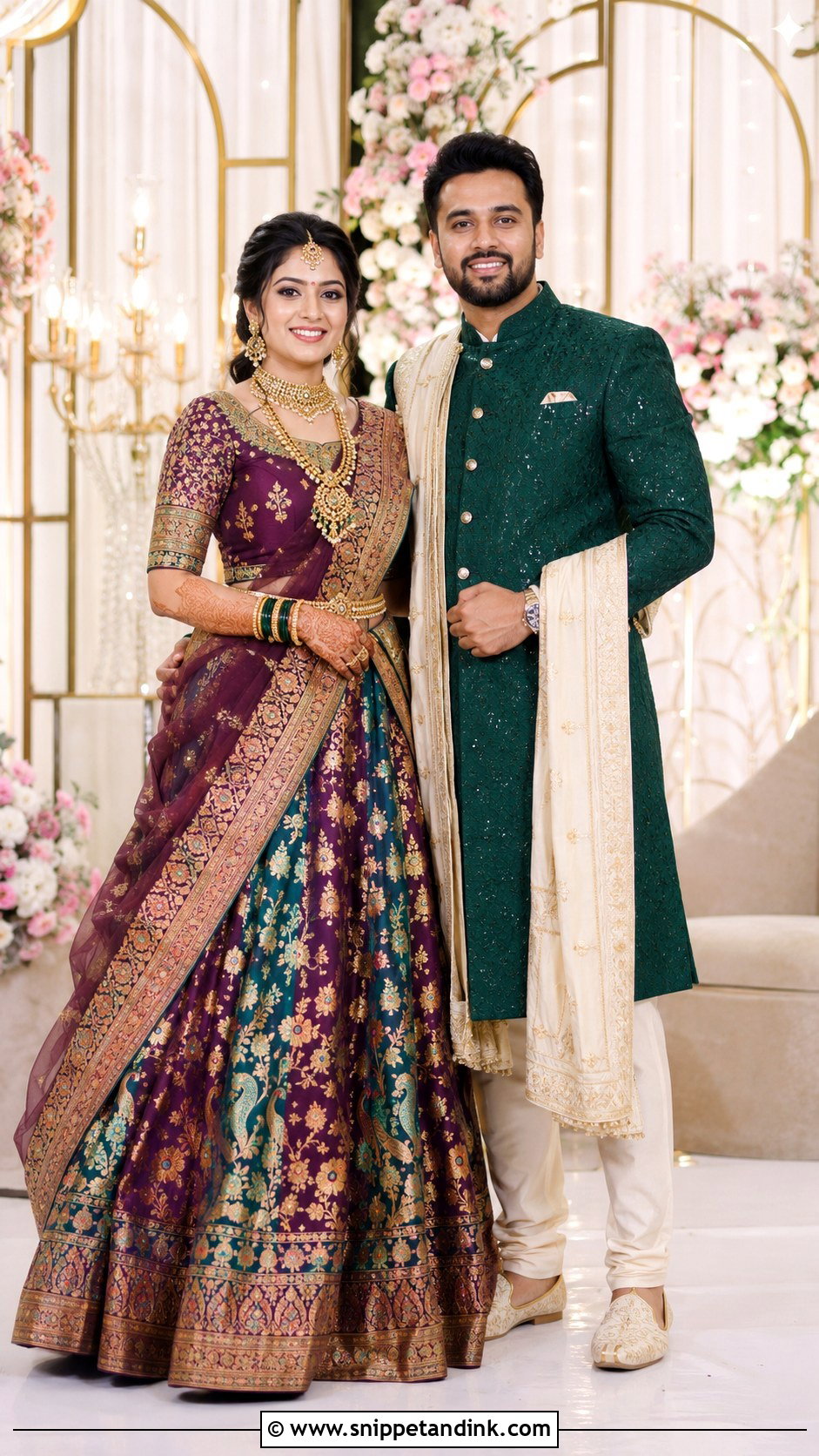
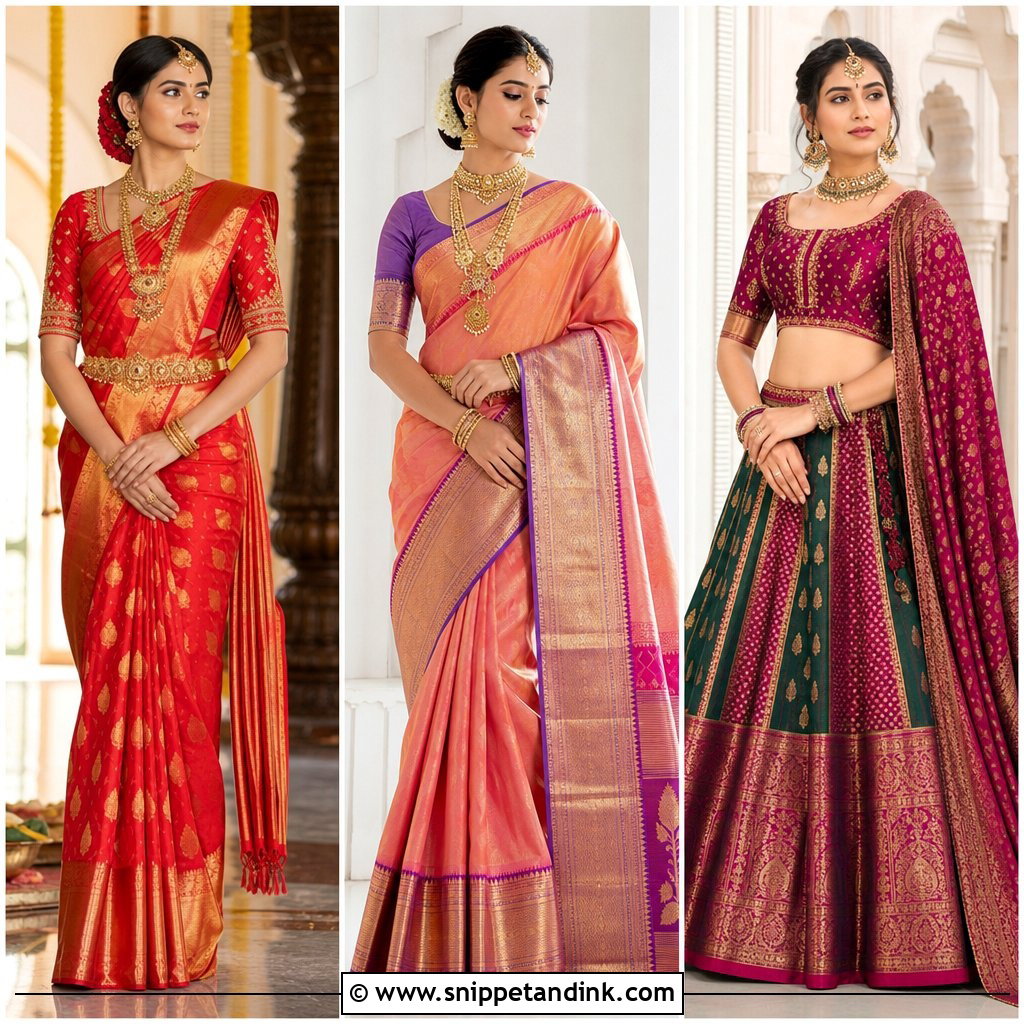
The reception is where heavier fabric and sharper tailoring belong. The bride can wear a rich silk saree, a contemporary Paithani lehenga or a draped saree gown, keeping a nath-inspired accessory and gold. The groom suits a sherwani, bandhgala suit or embroidered kurta jacket in ivory, navy, beige or deep green. Coordinate through borders, stole colour or jewellery tone rather than identical fabric. Stage lighting is often harsh, so matte fabrics on the groom usually photograph better than shiny ones next to a bride in silk.
16. Maharashtrian Sangeet Couple Outfit
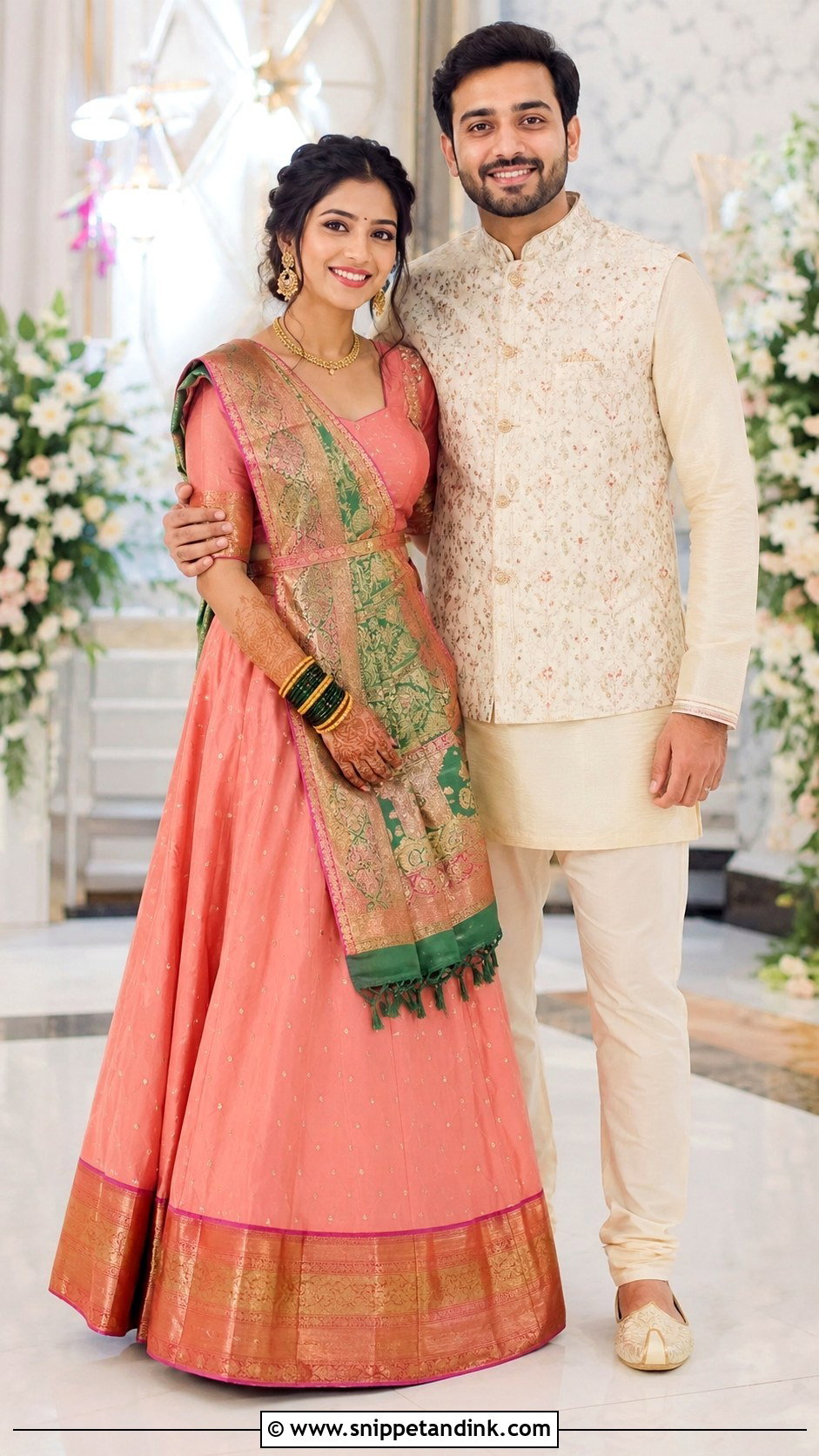
Sangeet clothes have to move. A light lehenga, a pre-draped saree or a silk skirt set with Paithani border details lets the bride dance. Pin jewellery securely and choose a hairstyle that won’t drop during family performances. The groom can wear a kurta jacket set, bandhgala or embroidered kurta with trousers and mojari. Teal and gold, pink and ivory, or green and beige coordinate well. Skip heavy layers and complicated drapes for this night.
17. Maharashtrian Wedding Mandap Couple Outfit
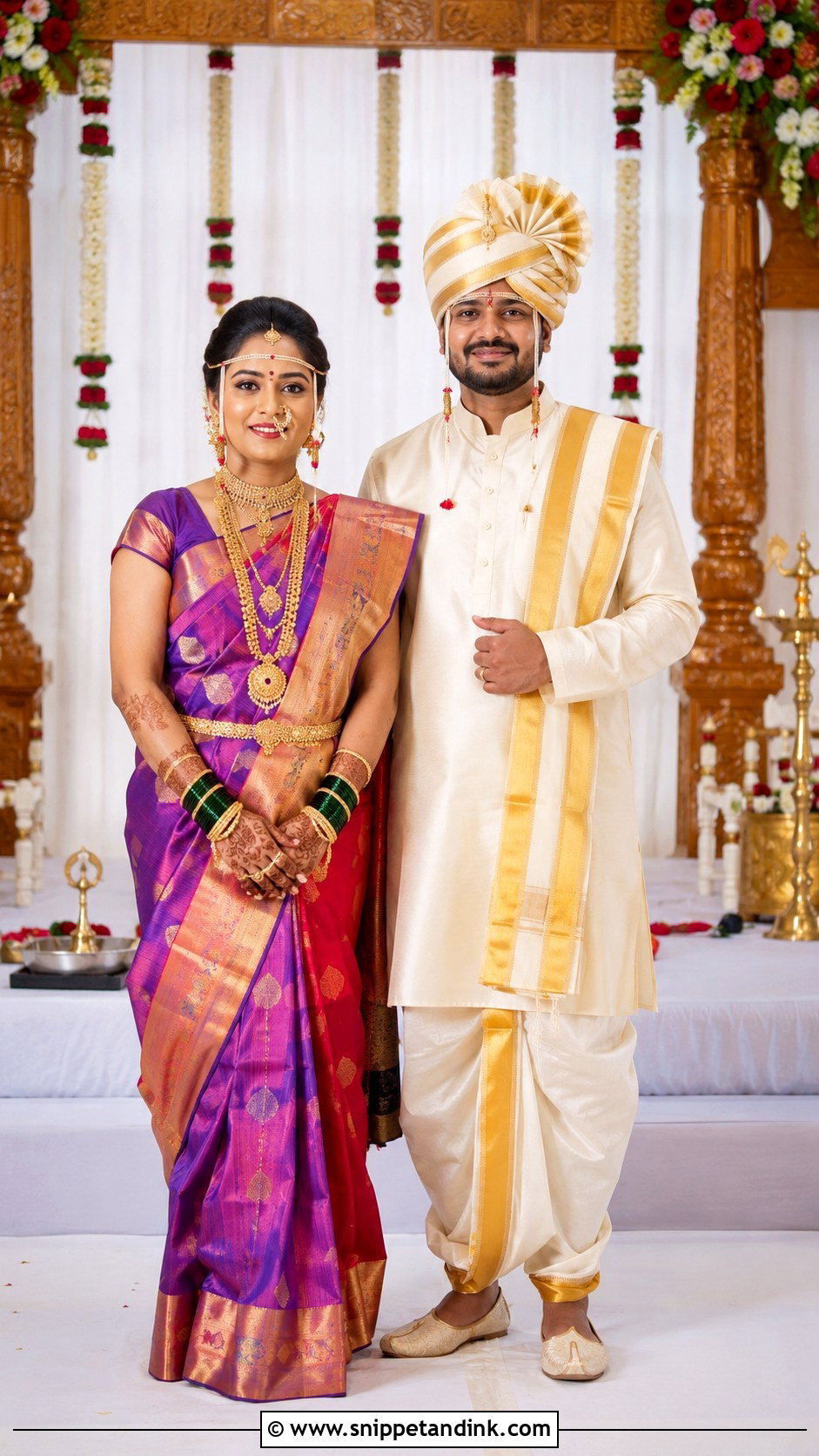
In the mandap, the outfits work hardest. The bride in Paithani or Nauvari with mundavalya, nath, green bangles, layered necklaces and a traditional bun; the groom in dhoti kurta, shela, pheta, mundavalya and mojari. I keep his outfit cream, white or beige and pull one colour from her saree into his stole or turban, so they look connected without matching. Both will stand, sit, walk and bend for blessings for hours. Pin the pallu and shela well and ask the drapist to leave a little ease at the waist.
18. Traditional Marathi Bride And Groom Outfit
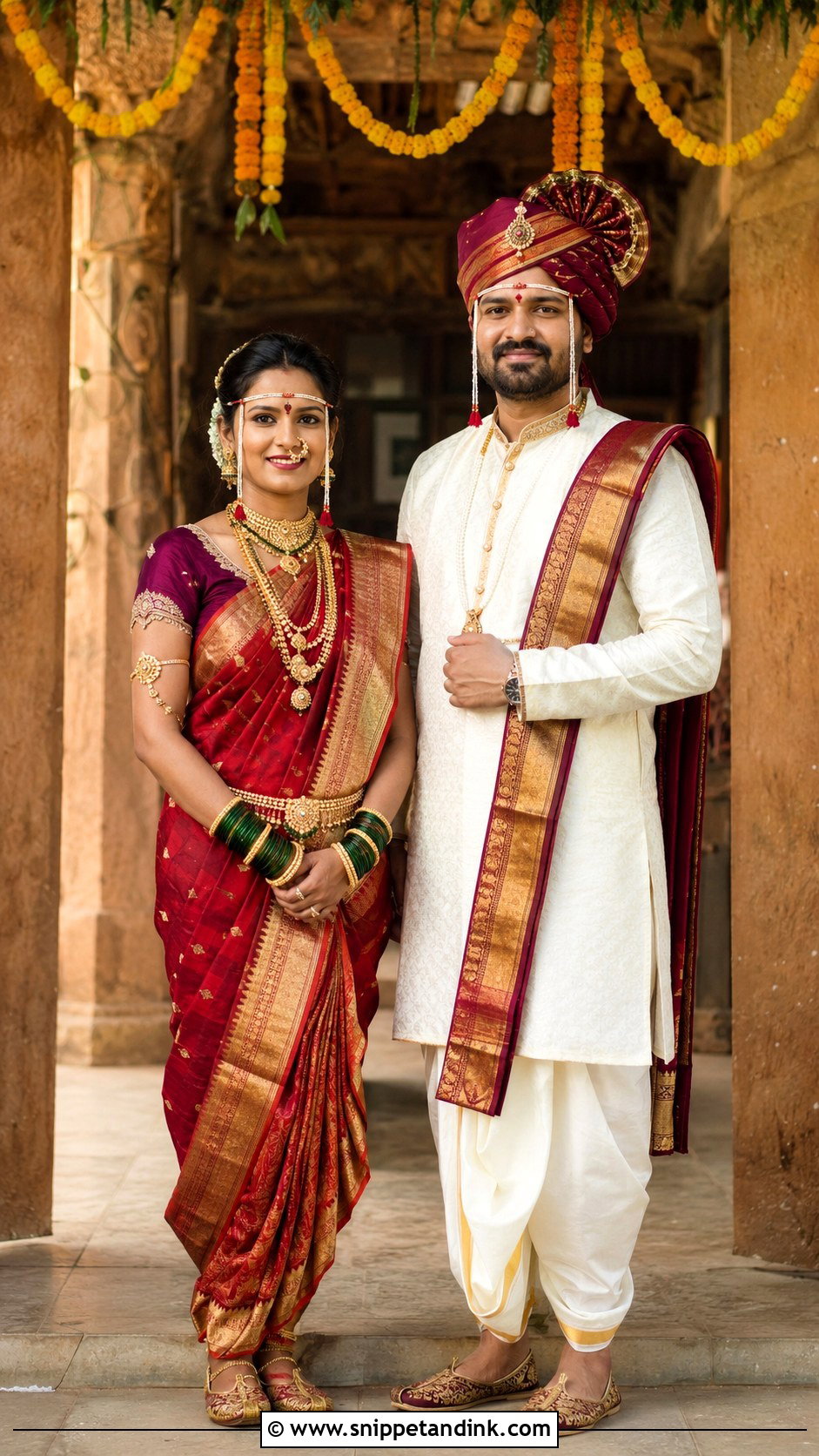
The traditional Marathi bride and groom outfit is about recognisable detail. Her Nauvari or Paithani comes with a fitted blouse, nath, mundavalya, thushi, Kolhapuri saaj, bangles, armlets and crescent bindi. His kurta with dhoti or kanche, a shela across the shoulder, pheta or Gandhi-style cap, mundavalya and traditional footwear completes the pair. Each piece has a purpose, so I’d rather leave one out than add a non-regional item in its place. Elders notice these details first.
19. Modern Maharashtrian Bride And Groom Outfit
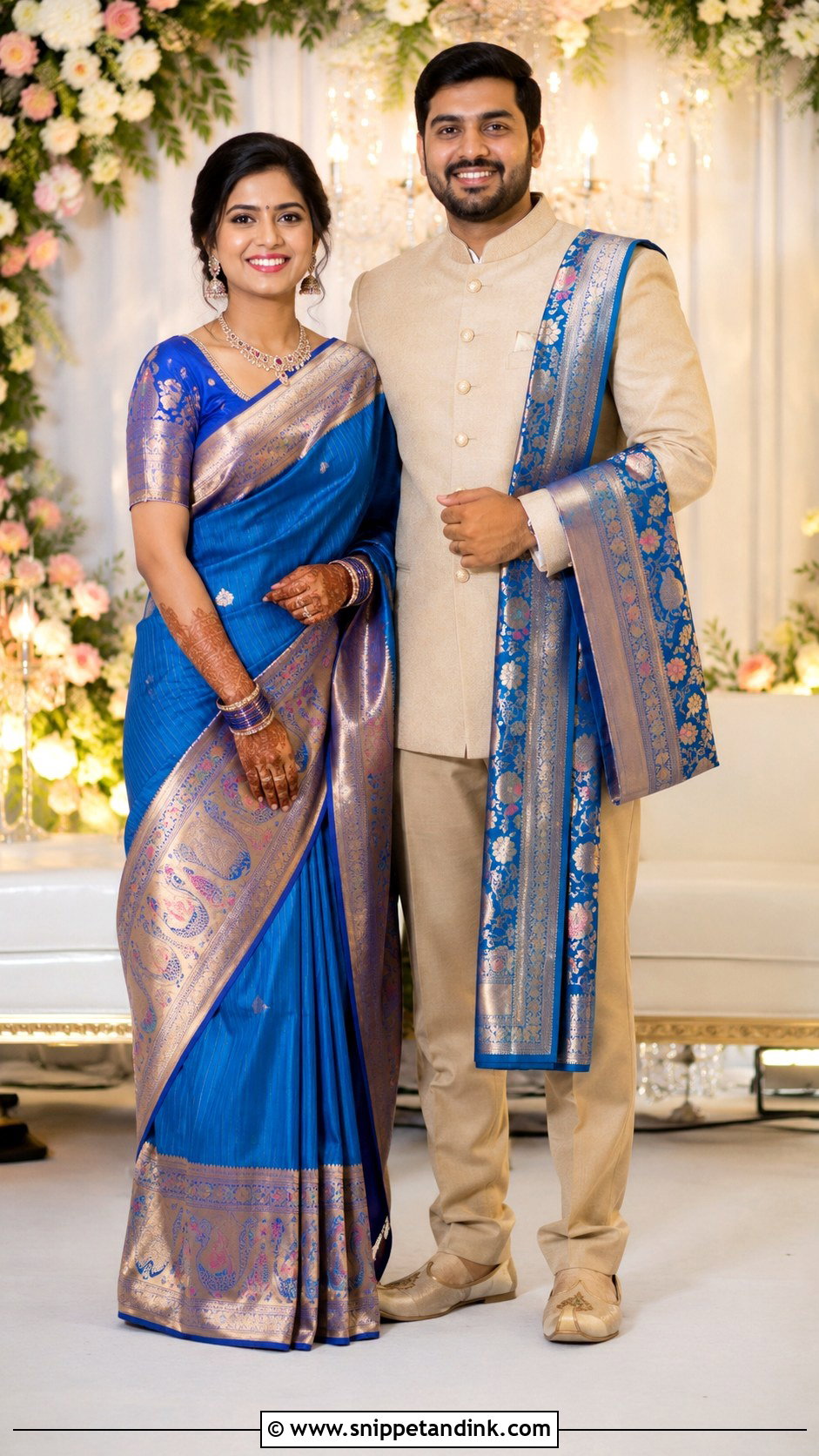
Modern here means cleaner lines, not fewer traditions. The bride might wear a structured Paithani saree, a pre-stitched Nauvari, a silk lehenga or a minimal saree with traditional jewellery. The groom’s fitted sherwani, bandhgala or kurta jacket set comes with a coordinated stole and an optional pheta. Limit the palette to two colours: ivory and green, blush and gold, or maroon and cream. Pre-stitched drapes save time on the morning and hold pleats through a long day, which many brides appreciate.

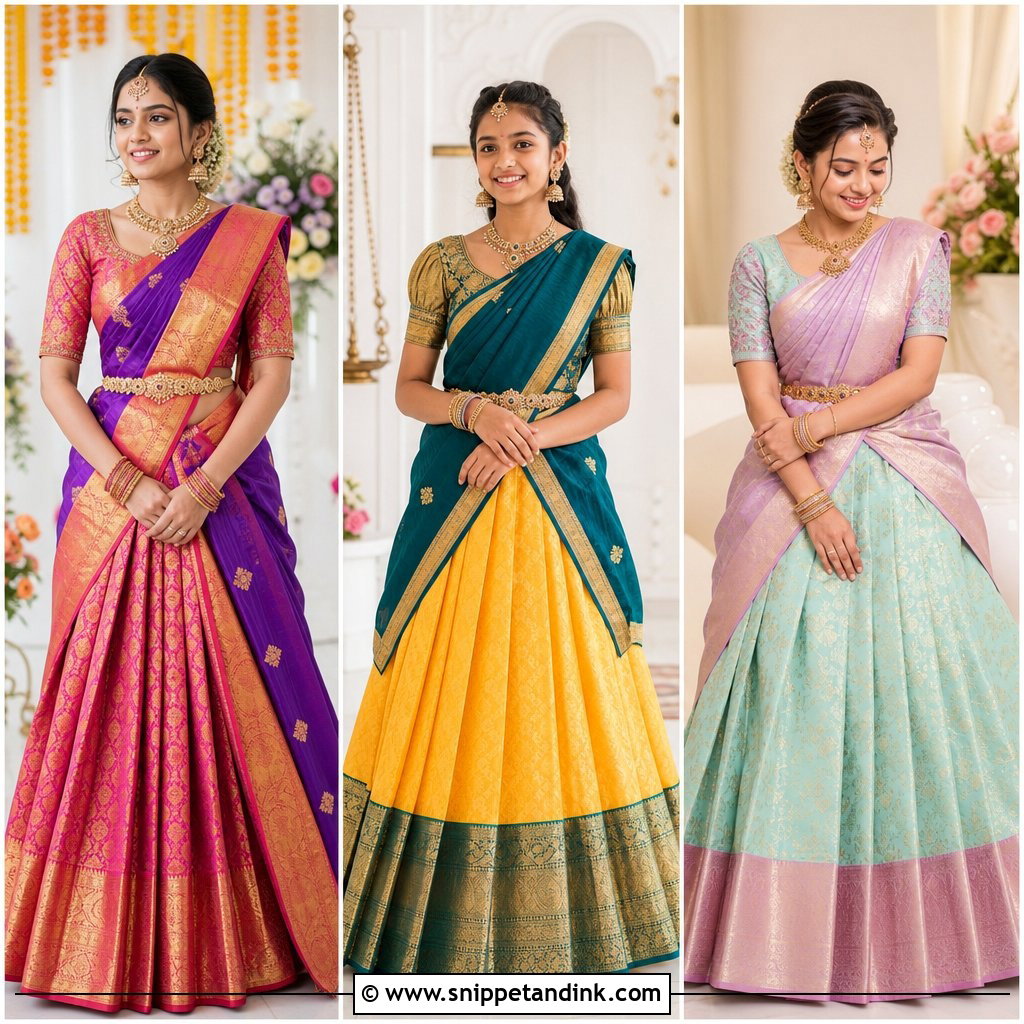

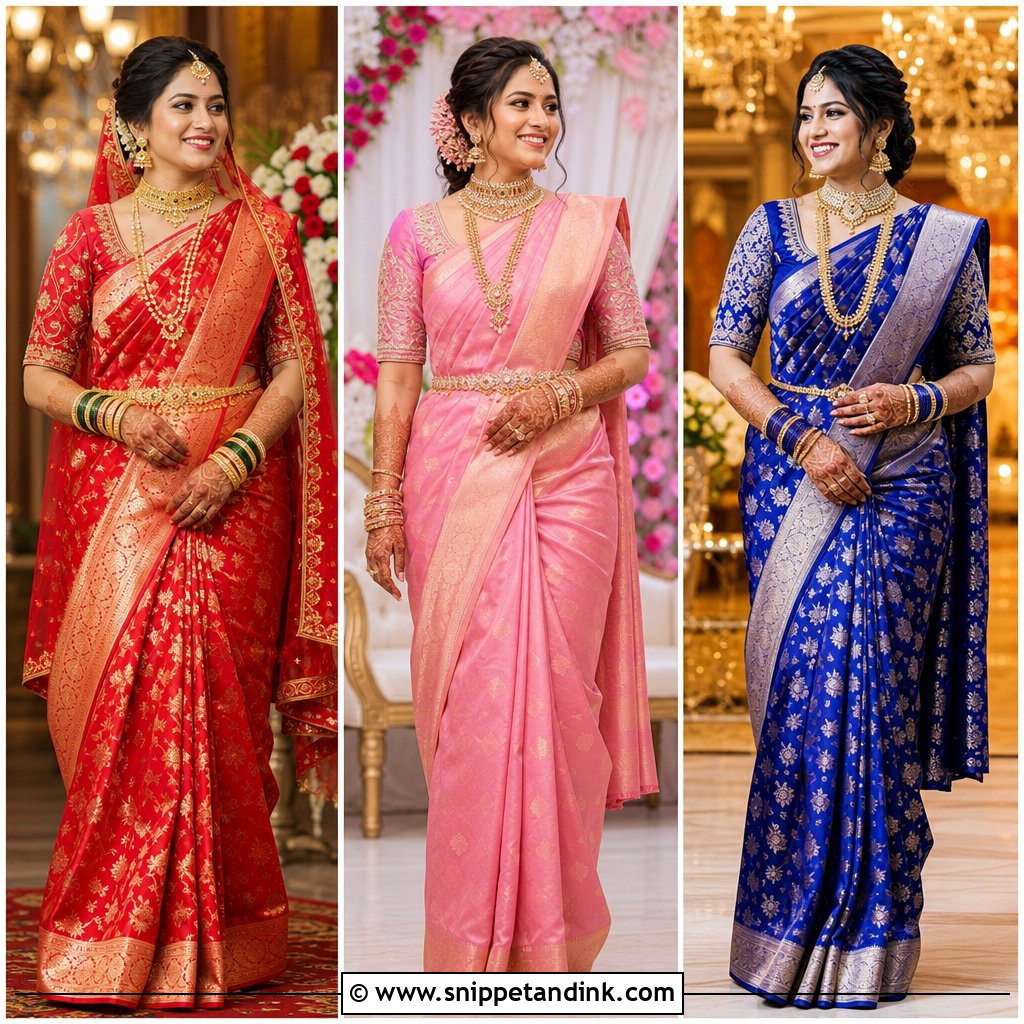
20. Maharashtrian Temple Wedding Couple Outfit
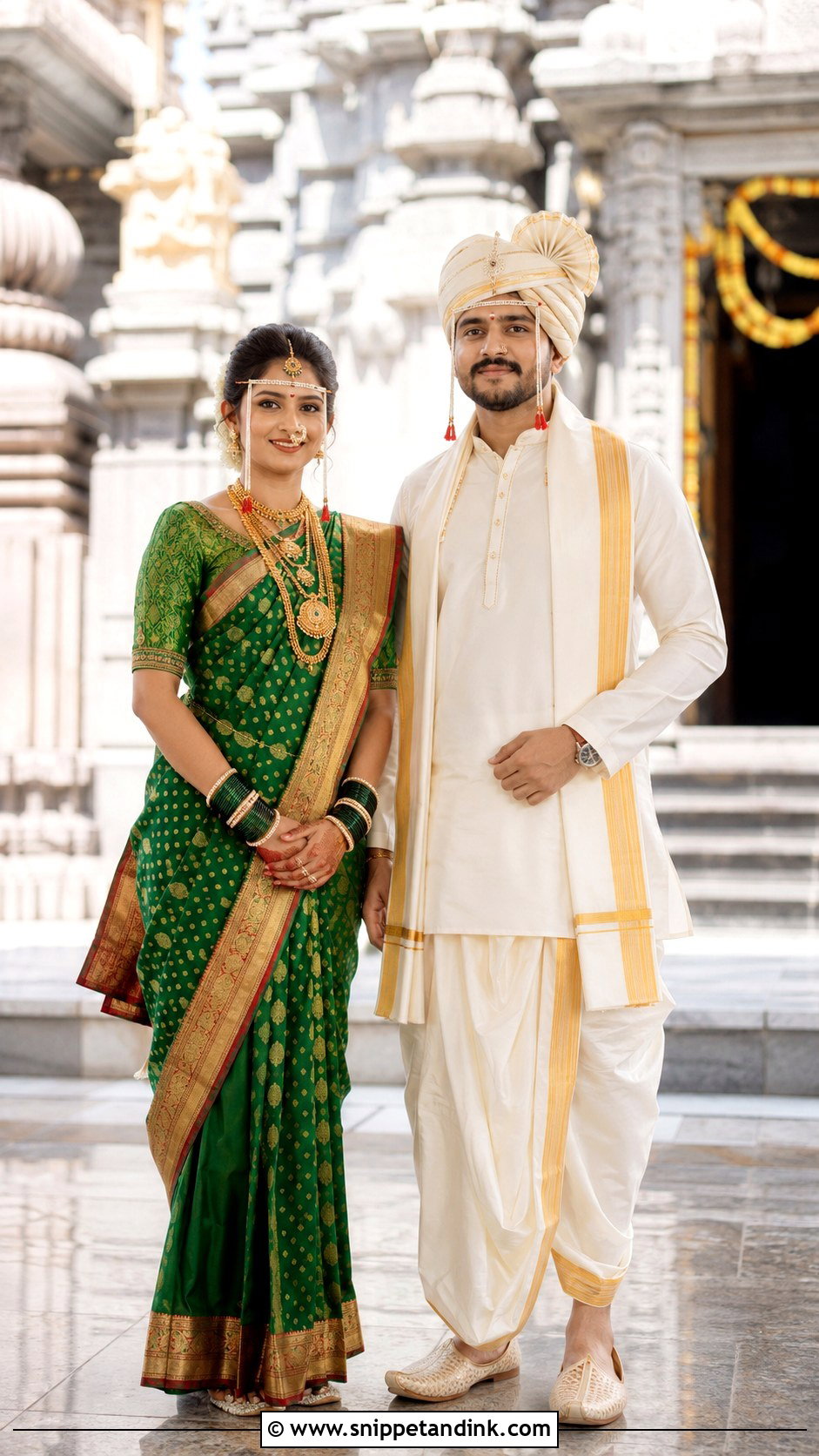
Temples call for modest and easy clothing. A silk Paithani or simple Nauvari in green, yellow, red or purple with gold, nath, bangles and a tidy bun suits the bride. The groom wears a cream or white dhoti kurta with a gold-bordered shela, a simple pheta and mojari, which he will likely remove at the entrance. Leave out long trains and oversized dupattas, since floors are often stone and space is limited. Fabric and meaningful jewellery carry the look.
21. Maharashtrian Outdoor Wedding Couple Outfit
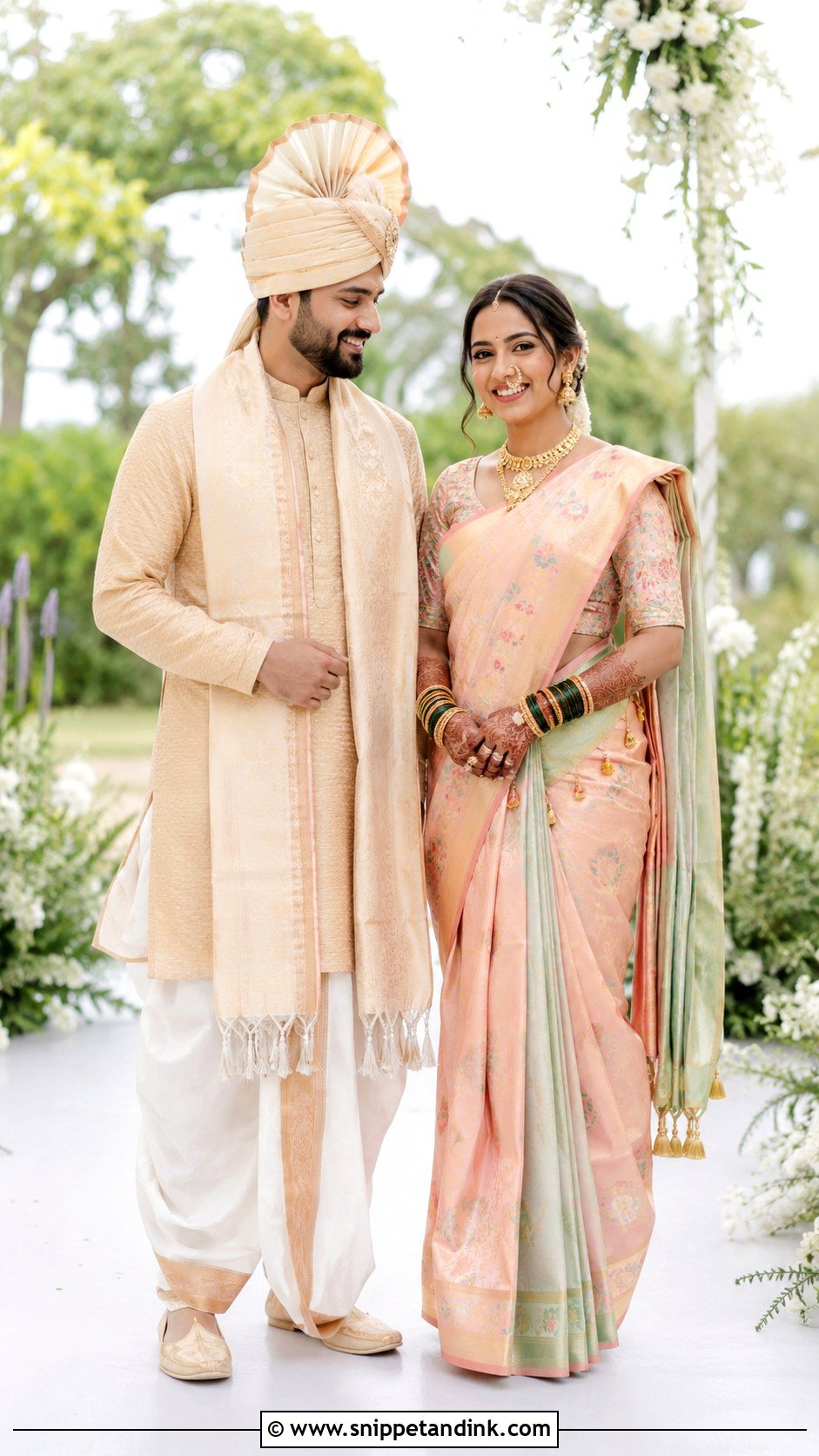
Outdoors, comfort and secure draping come first. A lighter silk Paithani, a cotton silk Nauvari or a pastel Paithani-inspired saree with well-pinned pleats keeps the bride composed in wind. Nath, bangles and mundavalya keep it ceremonial. The groom’s breathable kurta, dhoti or light sherwani in ivory, beige or soft gold works with a coordinated stole and pheta. Yellow, green, peach, pink and ivory all read well in daylight. Dark silk absorbs heat in direct sun, so save it for evening.
22. Maharashtrian Summer Wedding Couple Outfit
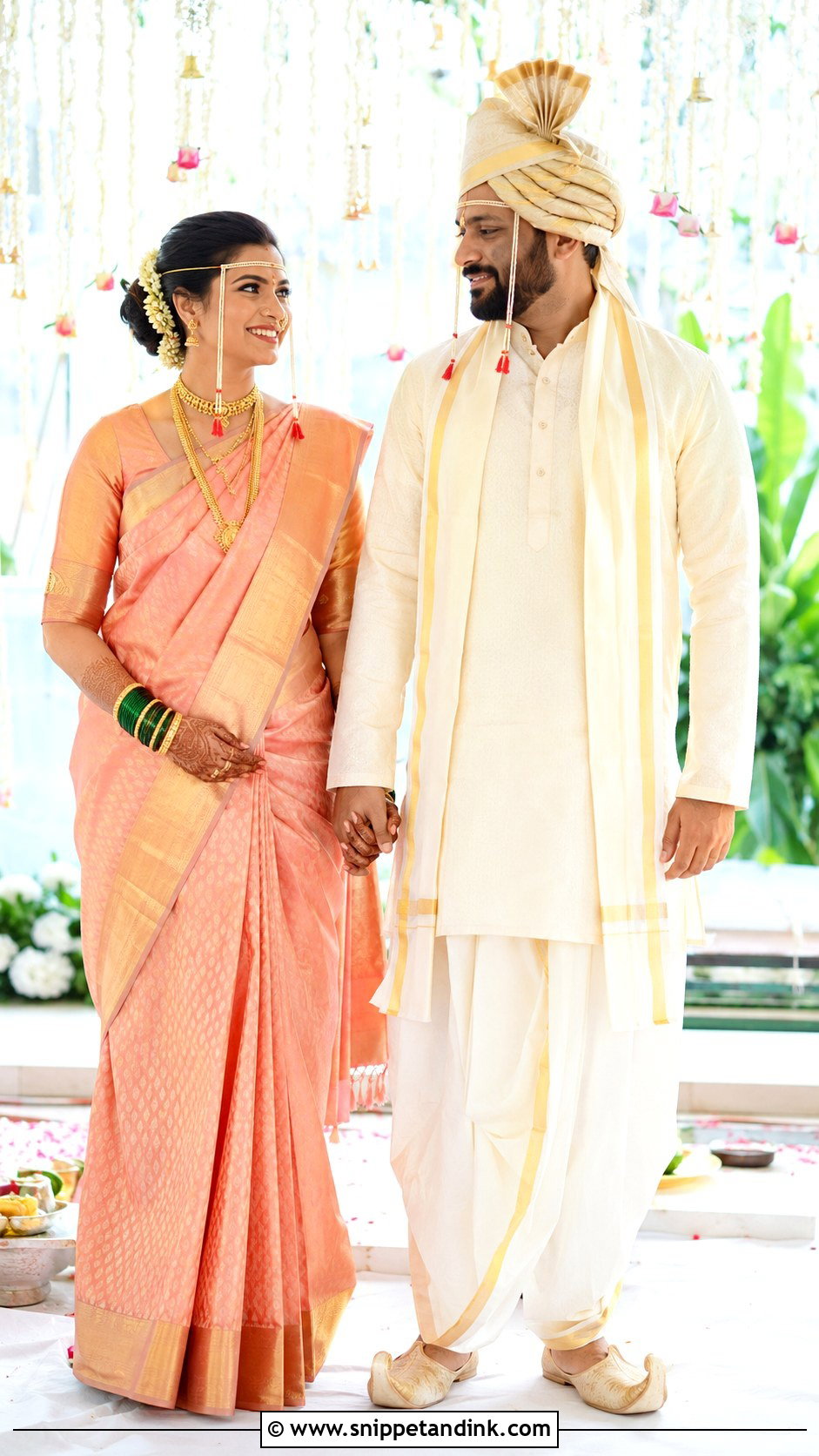
Summer weddings need breathable fabric more than anything. A lightweight silk Paithani, a cotton silk saree or a pre-draped Nauvari in yellow, green, peach or soft pink keeps the bride cooler. Wear traditional jewellery, but fewer layers of it, since metal against warm skin gets uncomfortable over long rituals. The groom suits a cotton silk kurta, white dhoti, light shela and simple pheta, with ivory, cream or pale gold. A cotton lining under the blouse helps a lot with sweat marks on silk.
23. Maharashtrian Winter Wedding Couple Outfit
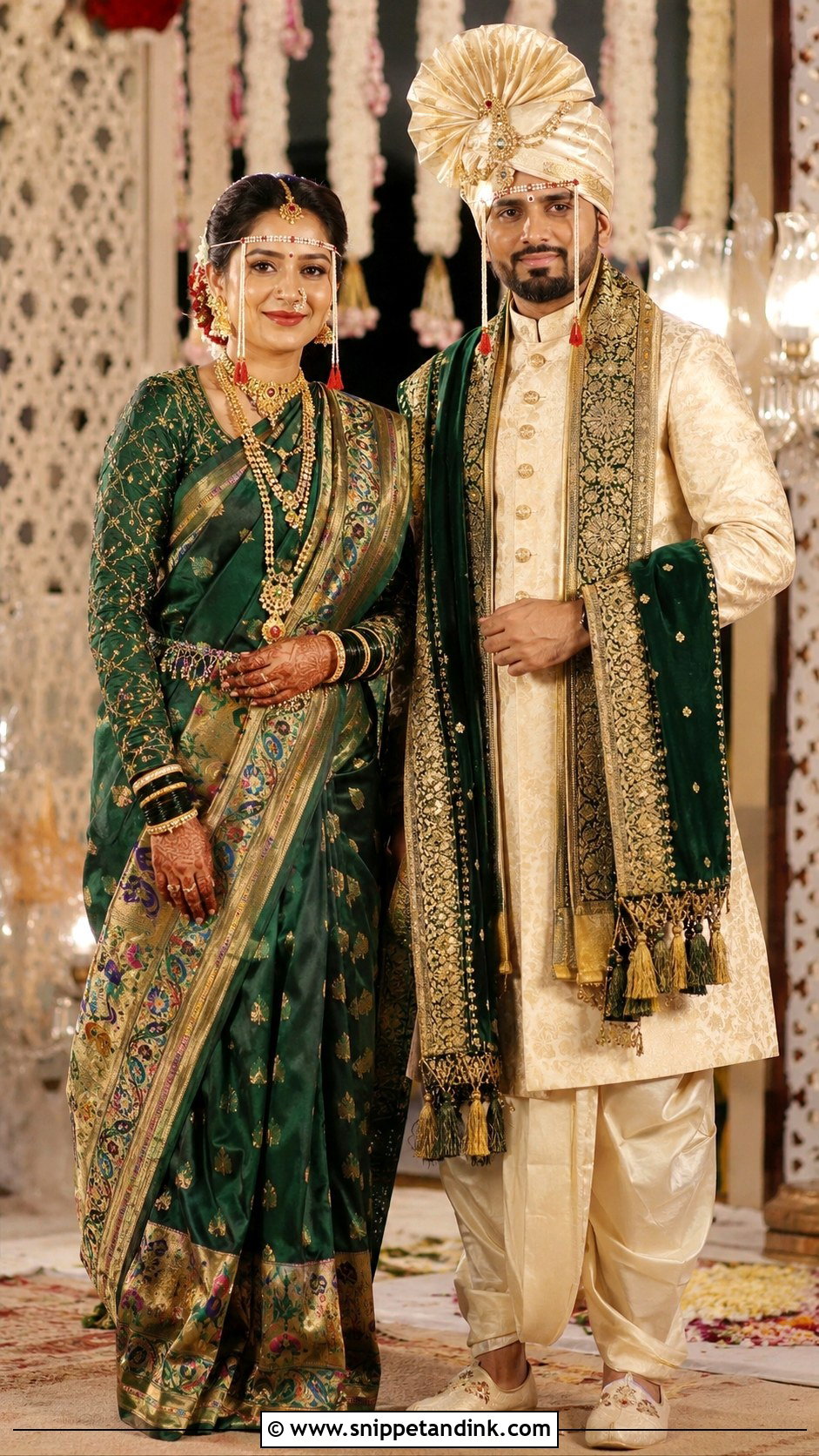
Cold months let you bring out the heavy silk. A Maharashtrian winter wedding couple outfit can mean a Paithani, Shalu or Paithani lehenga in maroon, purple, emerald or red, with layered gold, nath, bangles, mundavalya and a blouse with longer sleeves. The groom wears a sherwani, bandhgala or silk kurta with dhoti pants, a heavier stole, pheta and mojari. Brocade and deep shades look rich against floral mandaps. Evening venues can still be warm indoors, so plan layers he can remove.
24. Matching Maharashtrian Couple Outfit
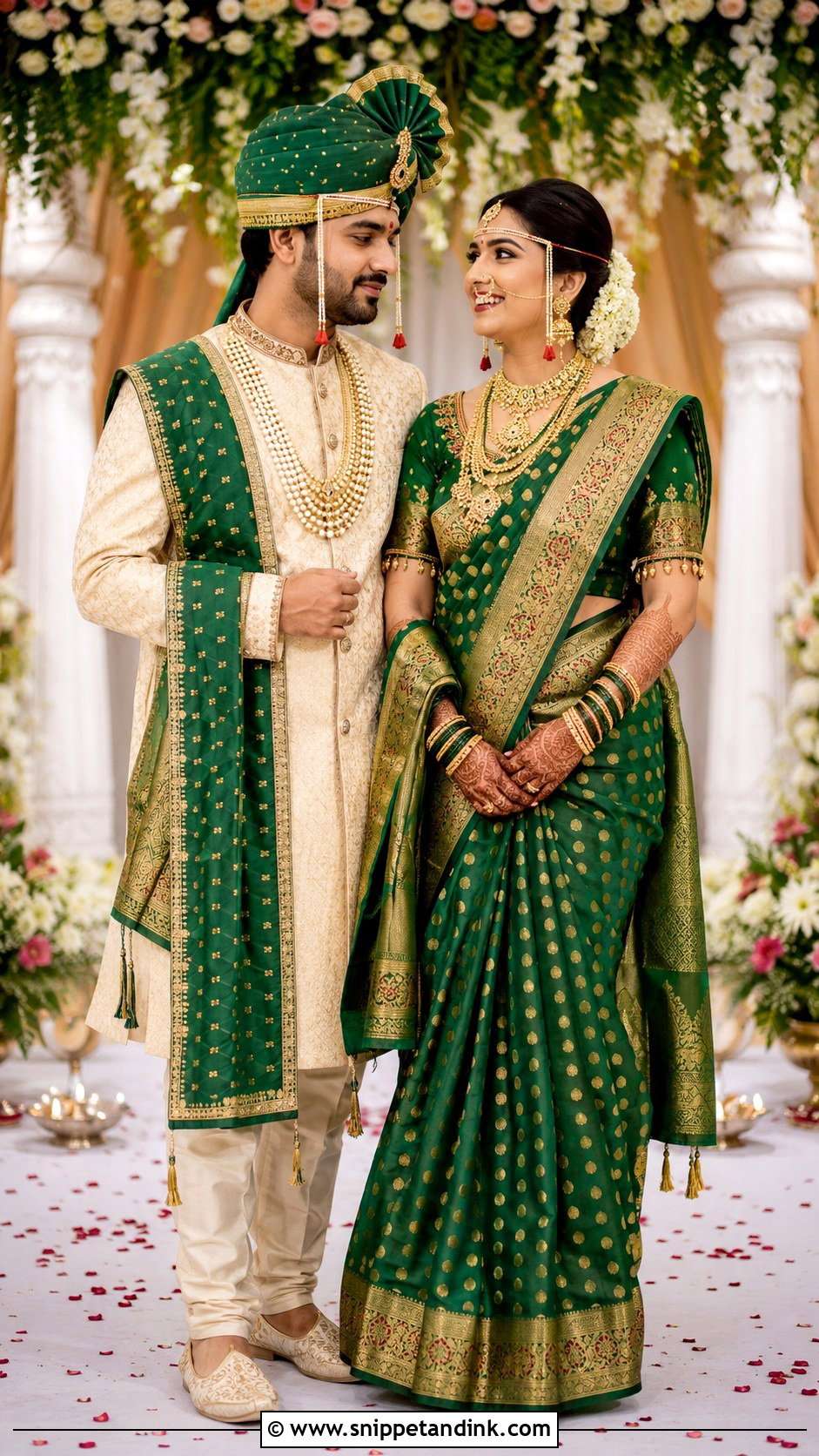
Coordination works best as an echo, not a copy. The bride wears her Paithani or Nauvari in a bold colour, and the groom repeats that shade once, in his pheta, stole, pocket square or border. A green Paithani with a cream sherwani and green stole; a purple saree with an ivory kurta and purple pheta. Families find this easy to picture and the bride’s outfit keeps its importance. Matching mundavalya for the ceremony ties the two together.
25. Minimal Maharashtrian Wedding Couple Outfit
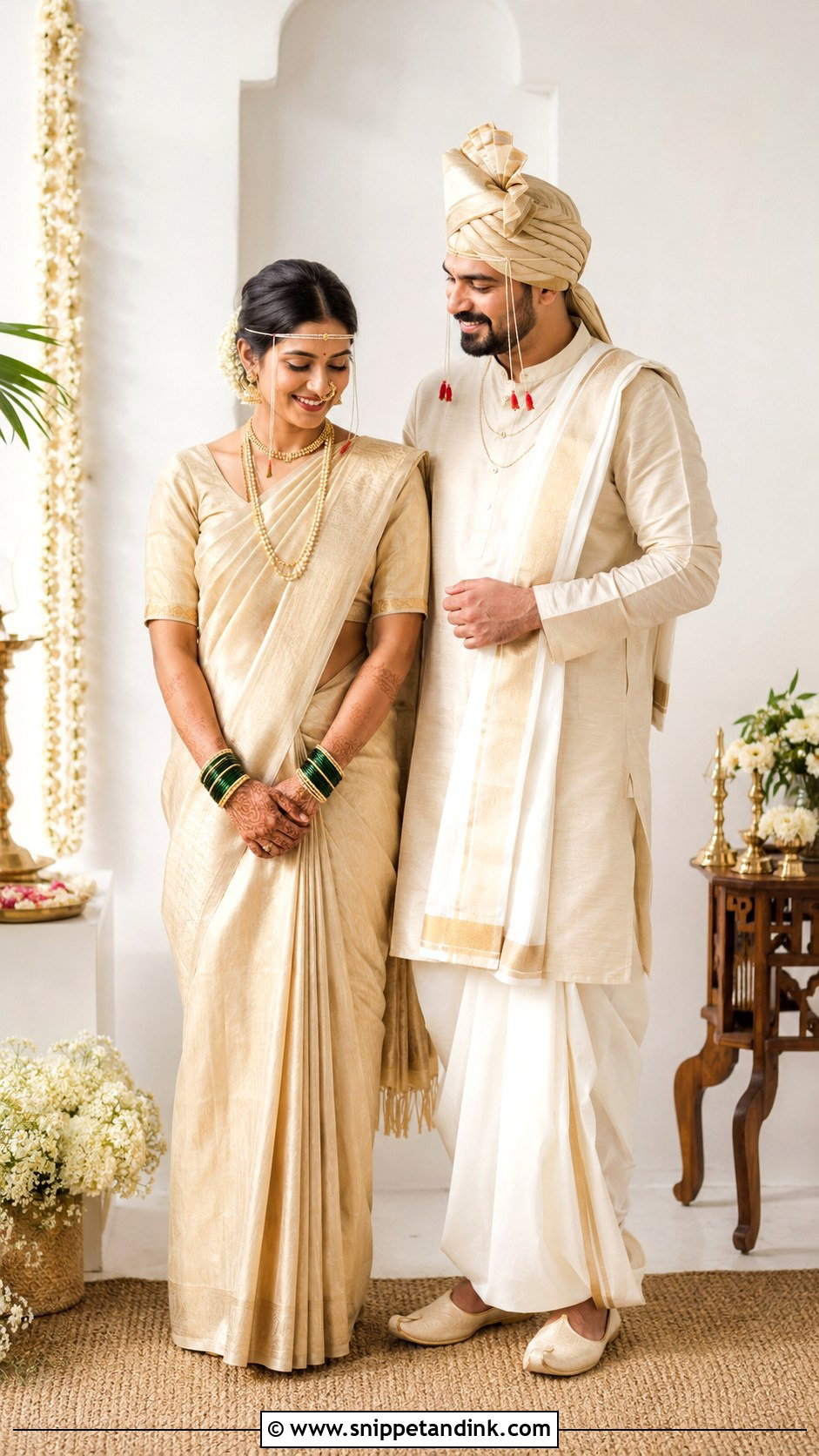
Minimal styling asks more of the fabric and draping, not less. A simple silk Paithani or plain silk saree with a gold border, nath, green bangles, a small layered necklace and mundavalya suits the bride. The groom wears a cream kurta, white dhoti, an understated shela, simple pheta and classic mojari. Ivory, pale gold, green, peach and light yellow keep it soft for home weddings and intimate ceremonies. With so little ornament, a neatly pressed drape makes the biggest difference.
Caring for a Paithani After the Last Ritual
A real Paithani is often kept and passed down, and the zari is its most fragile part. A little care in the first weeks makes a big difference.
- Air it out in shade for a few hours before putting it away. Sweat and moisture left in silk weaken it over time.
- Spot stains from kumkum, turmeric and food need a dry cleaner who handles silk and zari. Don’t scrub at home.
- Wrap the saree in plain cotton or muslin, never plastic, which traps moisture.
- Refold it along different lines every few months. Zari cracks along folds that stay in one place for years.
- Keep perfume and naphthalene off the fabric directly, since both can mark silk and tarnish metallic thread.
The groom’s silk kurta and shela deserve the same treatment. Dhotis in cotton can be washed gently, but anything with a gold border should go to a dry cleaner.
Jewellery needs a moment too. Wipe the nath and gold pieces with a soft dry cloth before boxing them, and store pearl mundavalya flat so the strings don’t stretch.
Start From Her Saree, Then Dress Him to Answer It
A Marathi couple looks right when the two outfits feel related and both people can get through the rituals comfortably. Paithani, Nauvari, dhoti kurta, pheta, shela, mundavalya, nath and gold do most of the work. Some couples stay fully traditional in the mandap and switch to lehengas, bandhgalas or sherwanis for the reception. Start from the bride’s saree, borrow one colour for the groom, and test every outfit seated and moving. That approach holds whether the wedding is grand or very small.
You'll Like These Ideas:



Leave a Reply