
A refined bridal look doesn’t need beading to be remembered. With a plain long-sleeve gown, the work moves to places nobody notices until they go wrong: where the sleeve meets the shoulder, how the fabric handles light, whether the cuff lets you lift a glass. I fit sleeves on brides constantly, and on a simple dress a few millimetres show. Below are twenty shapes, from satin ball gowns to crepe columns and chiffon A-lines, each with what I’d pair with it and what I’d check at the fitting.
Sleeves That Let You Hug, Toast and Dance
Most complaints I hear about long sleeves come from the armhole, not the sleeve. A low, roomy armhole looks relaxed on a hanger but locks the arm down; when you lift it, the whole bodice rises too. A higher, closer armhole actually gives you more reach. It sounds backwards until you try both on in the same afternoon.
What I check at every sleeve fitting
- Length: with arms relaxed, the cuff should end at the wrist bone or just past it. Longer, and it soaks up hand cream and gets in the way of the cake knife; shorter looks as if the dress shrank.
- Reach: arms straight out in front, then up as if waving. If the fabric pulls tight across your back, the back needs more ease, not a looser sleeve.
- Elbow: bend it fully. Crepe and satin both crease there, but neither should bite into the inside of your arm.
- Cuff closure: covered buttons look neat, yet a hidden snap or short zip is quicker to open if your hands swell in the heat.
Long sleeves in July
Long sleeves aren’t only for winter. For a summer date I suggest sheer chiffon, georgette or fine mesh sleeves on a lined bodice, since full satin sleeves trap heat during an outdoor ceremony in direct sun. In cooler months, crepe and satin keep you warmer and hold a crisper line in photos.
1. Bateau Neck Satin Long Sleeve Wedding Dress
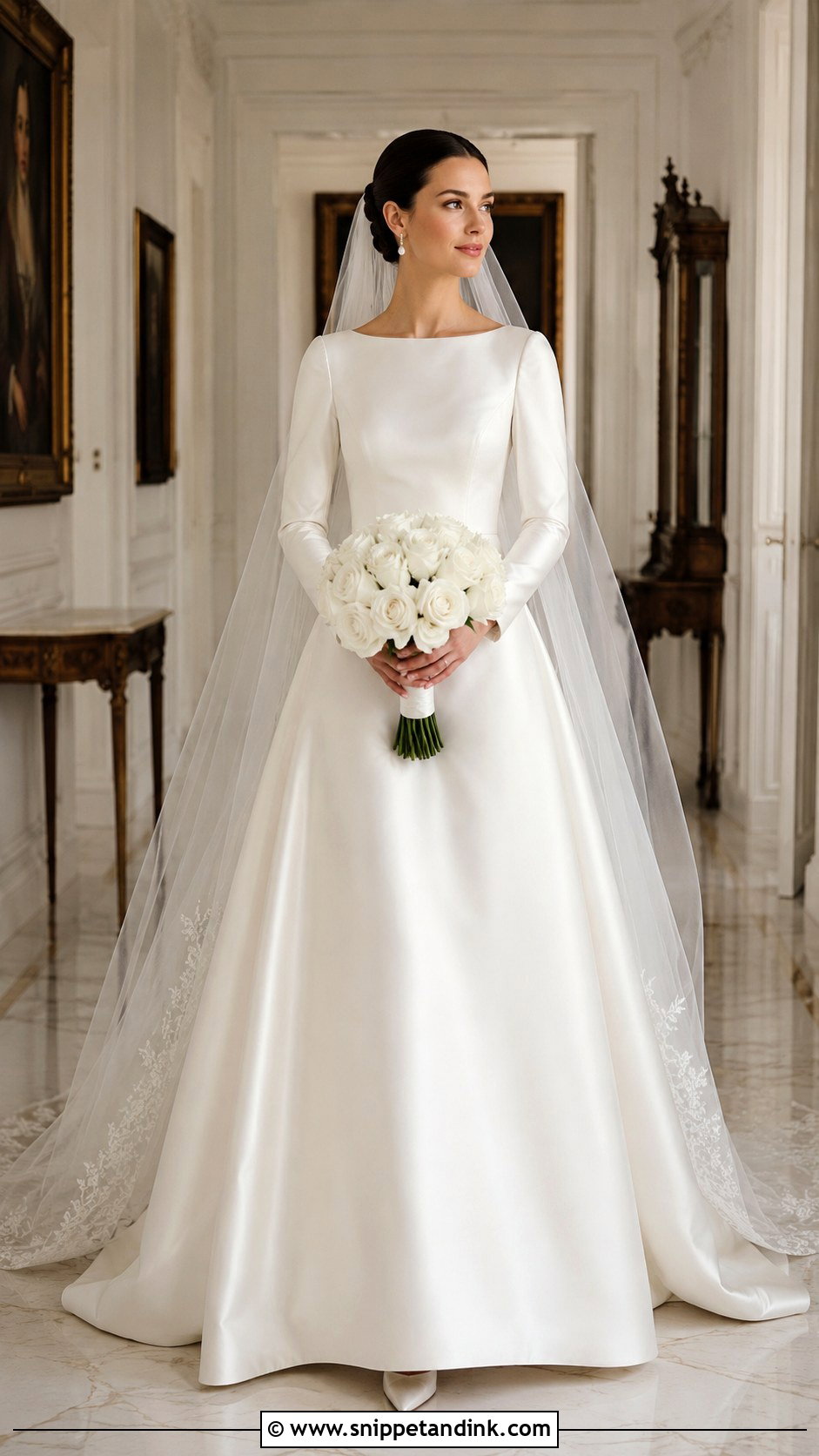
Bateau necklines run straight along the collarbone, so the shoulder seam has to land exactly on the shoulder point or the whole neckline tips forward. Satin makes that harder, because it shows every ripple. I’d pair it with an A-line skirt from a natural waist, a low chignon so the neckline stays clear, small pearls and pointed ivory pumps. White roses or calla lilies in a structured bouquet keep to the same clean line, and a plain cathedral veil gives the ceremony its length. Ask for a good lining under the satin; it hides the construction and stops the fabric clinging once you warm up. A ballroom or a cool-season estate wedding is where this one belongs.
2. High Neck Crepe Long Sleeve Wedding Dress
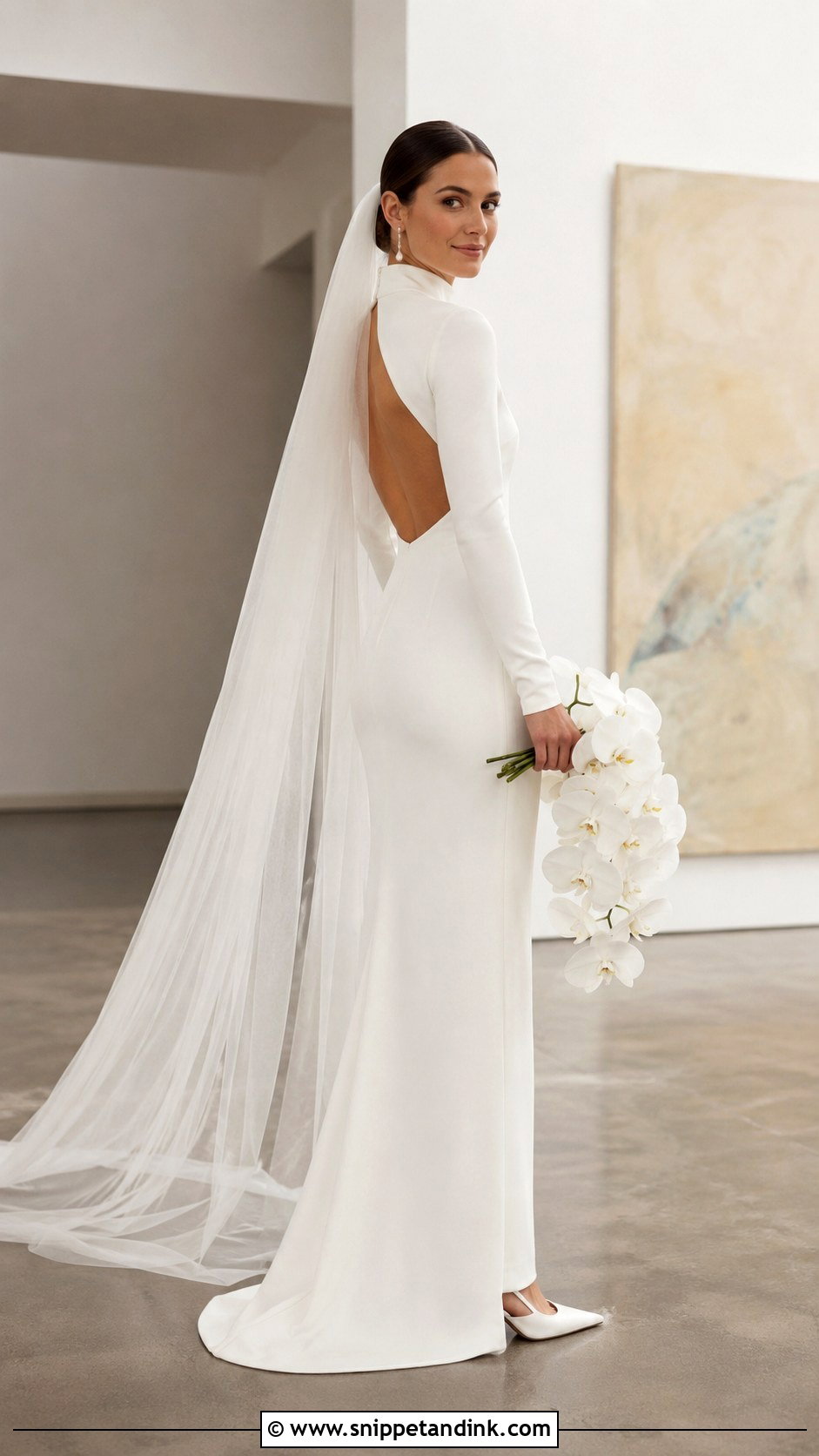
Crepe is honest fabric. It drapes well, it doesn’t shine, and it shows whatever is underneath it, which is why I always fit a crepe high neck over the exact bra or shapewear the bride will wear on the day. A sheath or soft fit-and-flare suits it, with fitted sleeves finished in covered buttons at the cuff, and a small keyhole or open back stops that much coverage from feeling heavy. Style it with a center-parted low bun, slim drops, pointed slingbacks and a long plain veil. Tulips or orchids sit well against the matte surface. Before the final alteration, stand by a bright window: seams that vanish in a salon mirror can show in daylight.
3. V Neck Fit And Flare Long Sleeve Wedding Dress
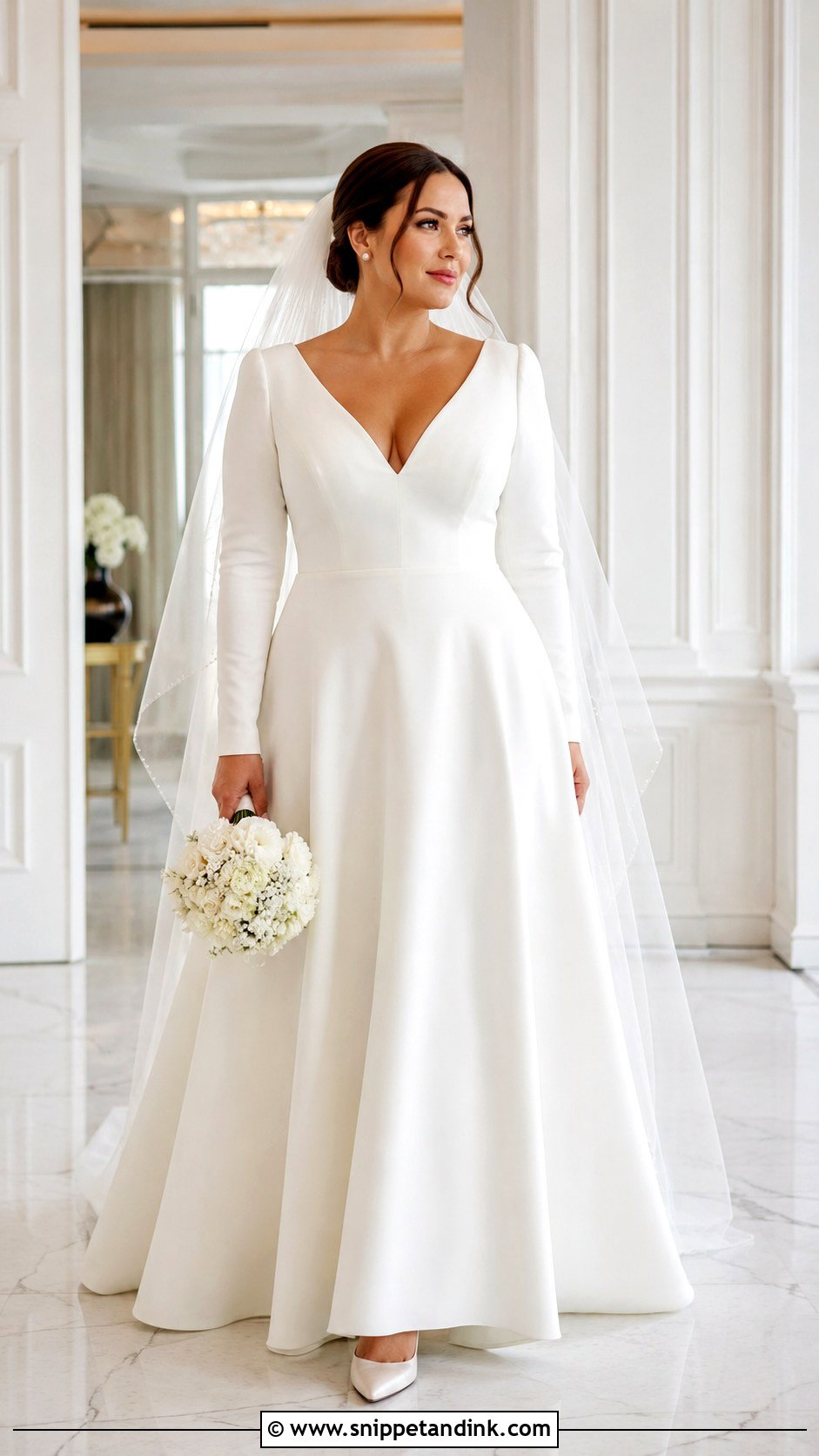
The usual problem with a fit-and-flare is the flare point. Set too high, the skirt fights your hips; set too low, you shuffle. On a V-neck version I want the bodice fitted to just below the hip and the skirt skimming from there, never squeezing. Long sleeves calm the neckline, and if you’d like more cover over the bust, a raised V or a discreet mesh inset is an easy request when you order. Matte crepe or stretch satin will let you dance. Pearl studs, a fingertip veil, pointed pumps and a compact bouquet with a little greenery are all it needs. Check the hem over your actual wedding shoes, not a borrowed pair.
4. Square Neck Satin Long Sleeve Wedding Dress
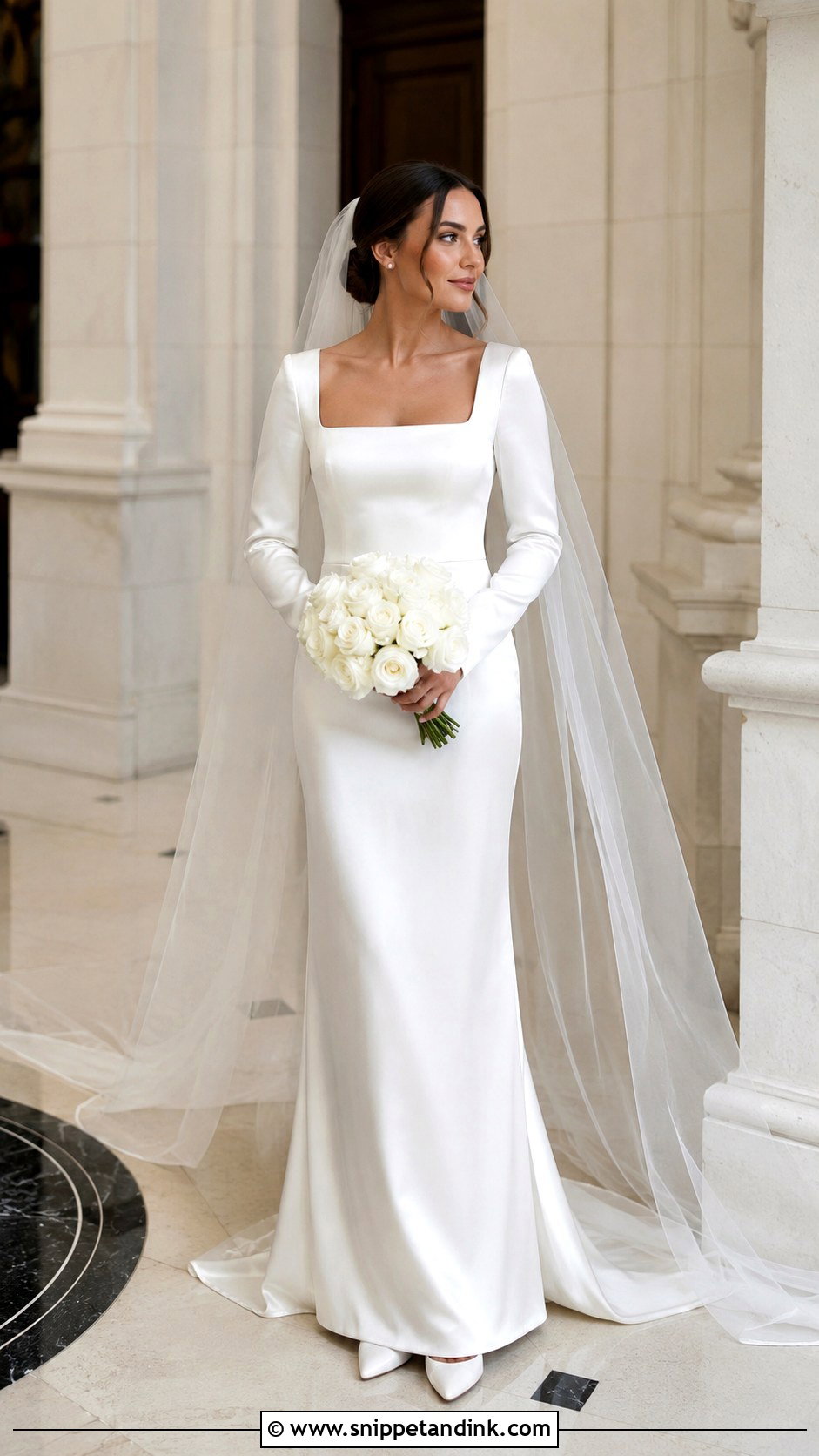
Square necklines are the ones I watch most closely when a bride lifts her arms. A fitted long sleeve pulls on the shoulder, and that pull can make the straight top edge gape or bow. So before I pin anything, I ask her to reach forward, sit and hug me. With a satin column skirt and a structured bodice the result is crisp, and a modest back slit makes the narrow skirt walkable. Keep everything else quiet: sleek bun, tiny studs, ivory pointed heels, white roses tied with silk ribbon. Attach a chapel veil below the bun so it softens the back without covering the neckline.
5. Scoop Neck A Line Long Sleeve Wedding Dress
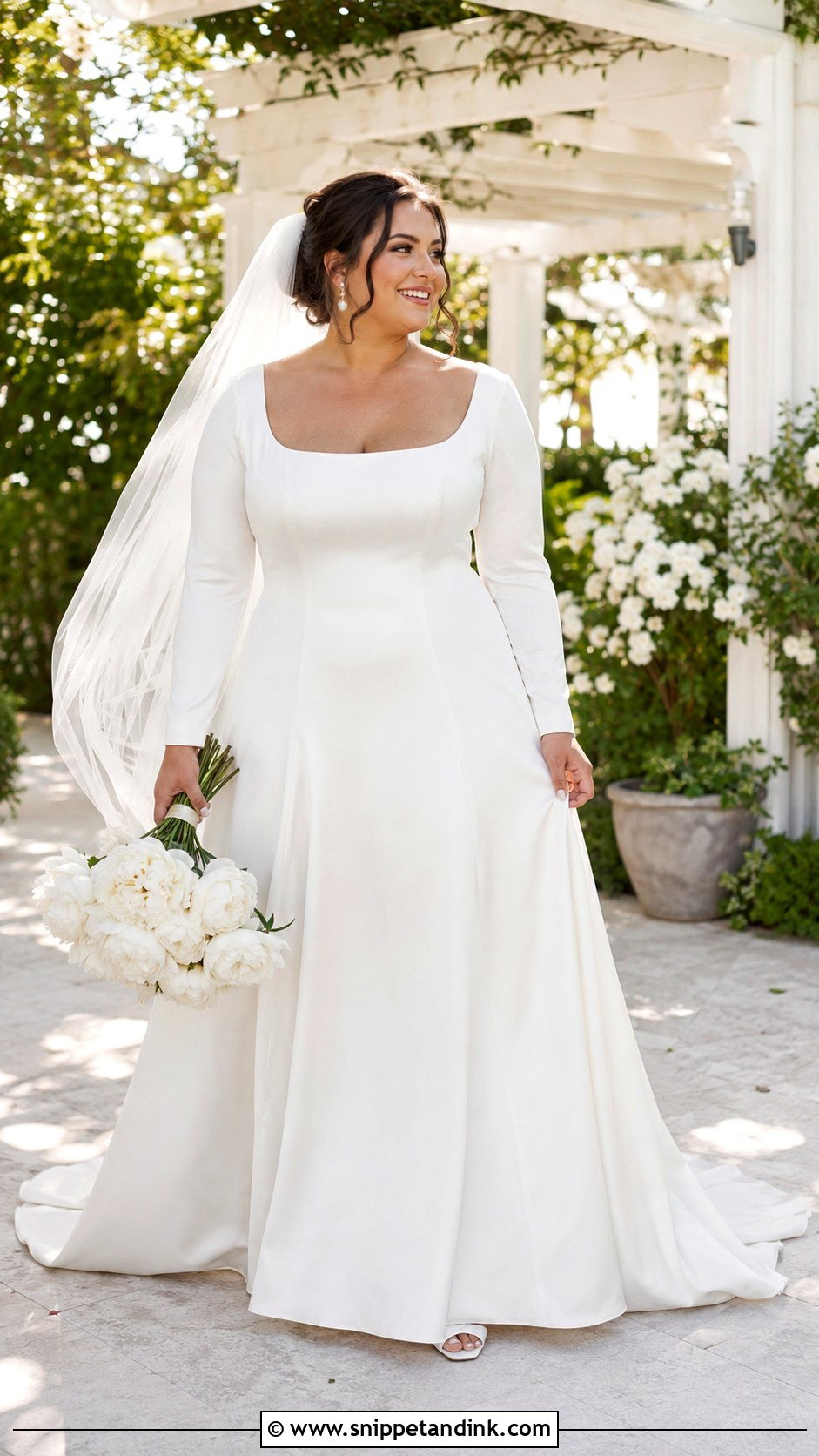
This is the shape I reach for when a bride isn’t sure what she wants yet, because it works on most figures. The scoop opens the face, the shaped waist defines the upper body and the skirt falls free over the hips. Lightweight satin or matte silk for summer, crepe for cooler months. I’d rather see a narrow waist seam than a jewelled belt here; the belt tends to become the only thing anyone remembers. Low block heels make garden paths and a long evening far easier, and pearl earrings, a gathered veil and loose peonies finish it.
6. Off Shoulder Long Sleeve Wedding Dress
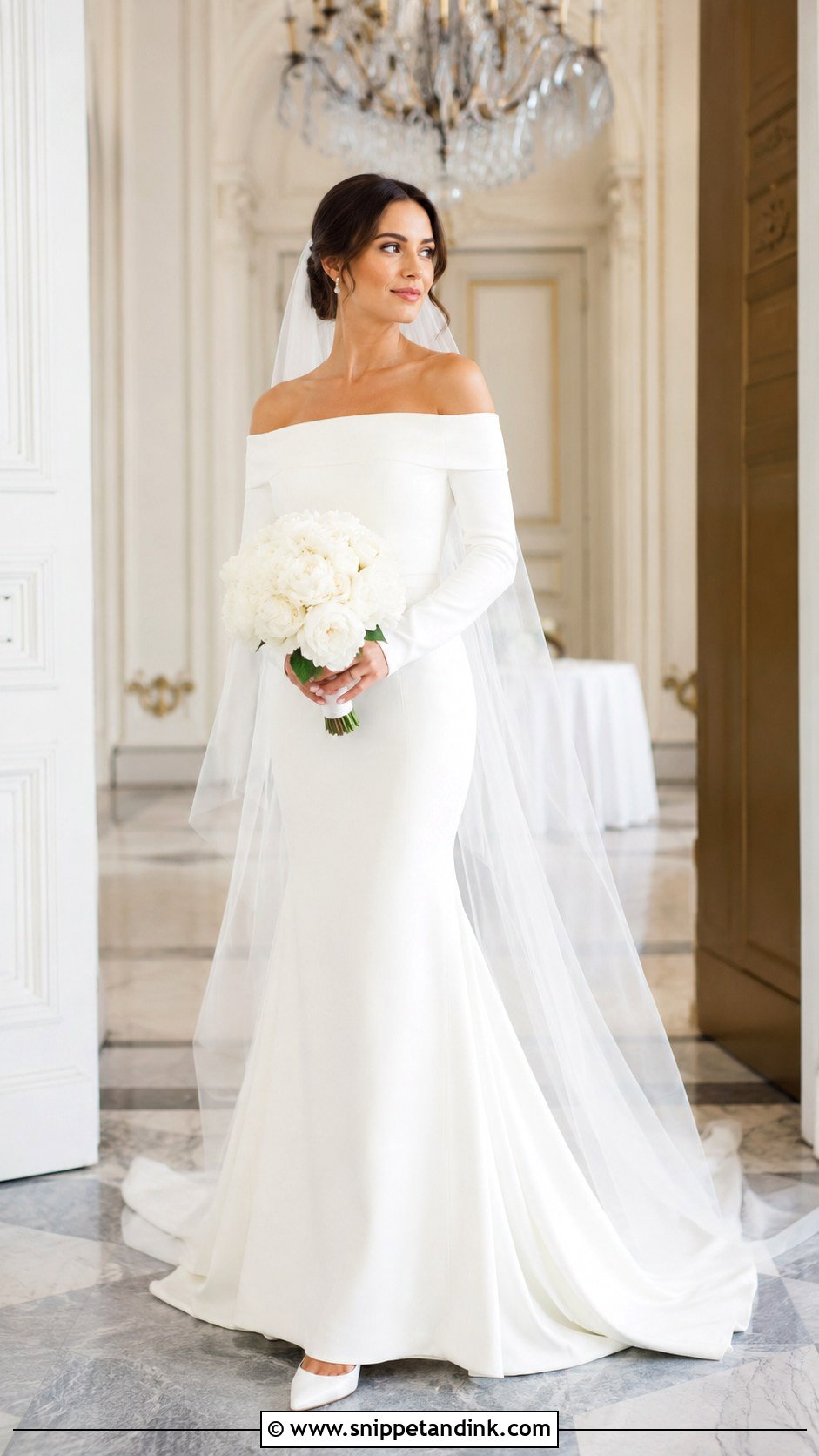
Off-shoulder long sleeves are the trickiest sleeve in this list. The fold-over neckline sits across the upper arm, so every time you raise that arm, it wants to ride up. I build in a little stretch or a hidden elastic channel and test it by having the bride raise both arms and hug someone; if the neckline climbs, we take it in again. A fitted crepe bodice and gently flared skirt keep things understated. Skip the necklace, since bare shoulders already carry the look, and go with small drop earrings, a soft low bun, a plain fingertip or chapel veil, closed-toe pumps and a rounded white bouquet. Even well fitted, expect to nudge it back once or twice at dinner.
7. Mock Neck Chiffon Long Sleeve Wedding Dress
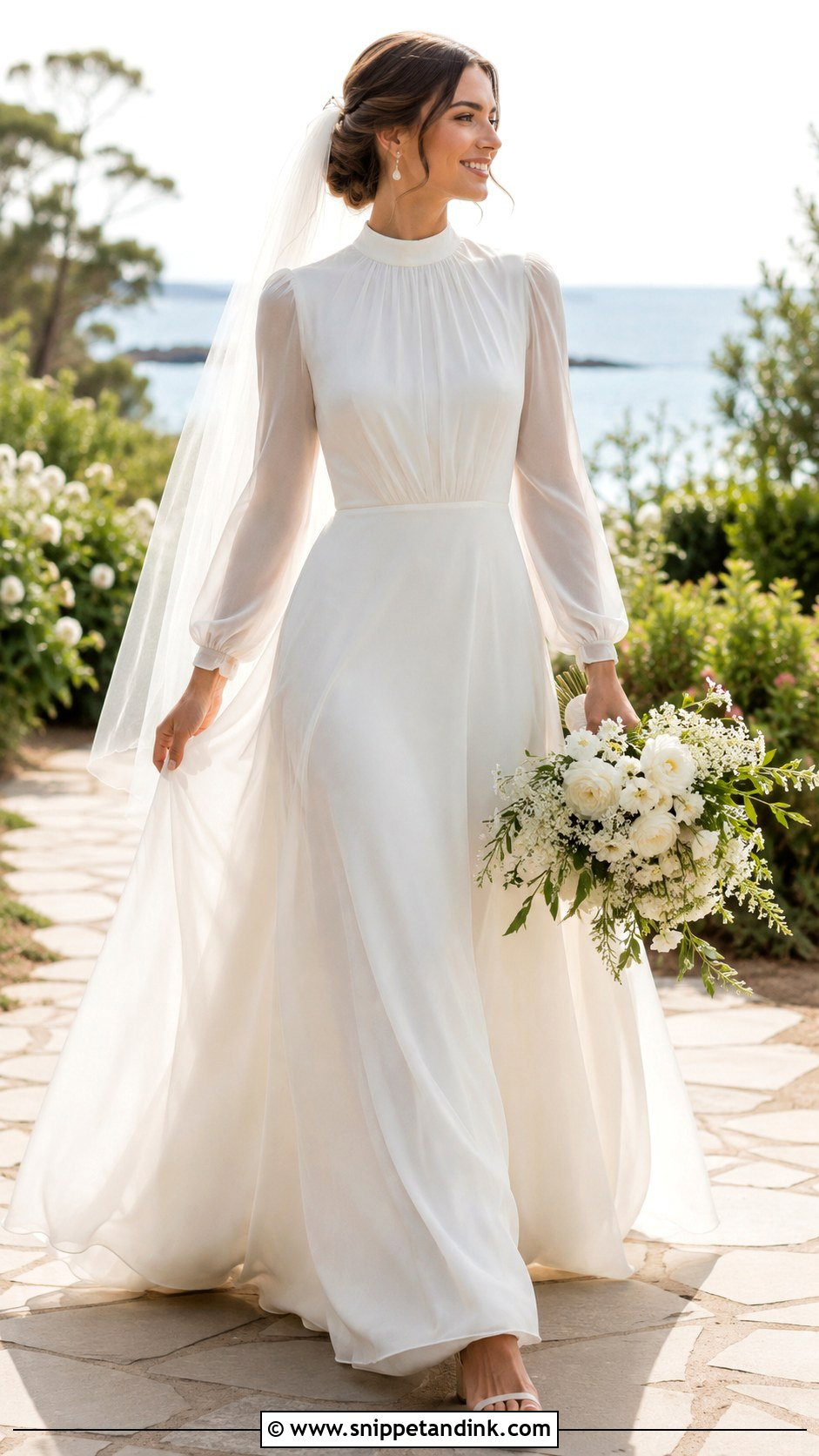
Chiffon softens what could otherwise feel like a very covered shape. The bodice should be lined, while the sleeves can stay sheer or lightly gathered so they move as you walk, and a floaty A-line or soft pleats suit it better than anything clingy. I’d consider it for a garden, a coastal ceremony or early fall. The part I fit carefully is the mock neck itself. Leave about a finger’s width of room, or it rubs when you turn your head and folds when you look down at your vows. Add pearl drops, low sandals or pumps, a veil under a loose bun, and sweet peas or ranunculus.
8. Draped Neck Silk Long Sleeve Wedding Dress
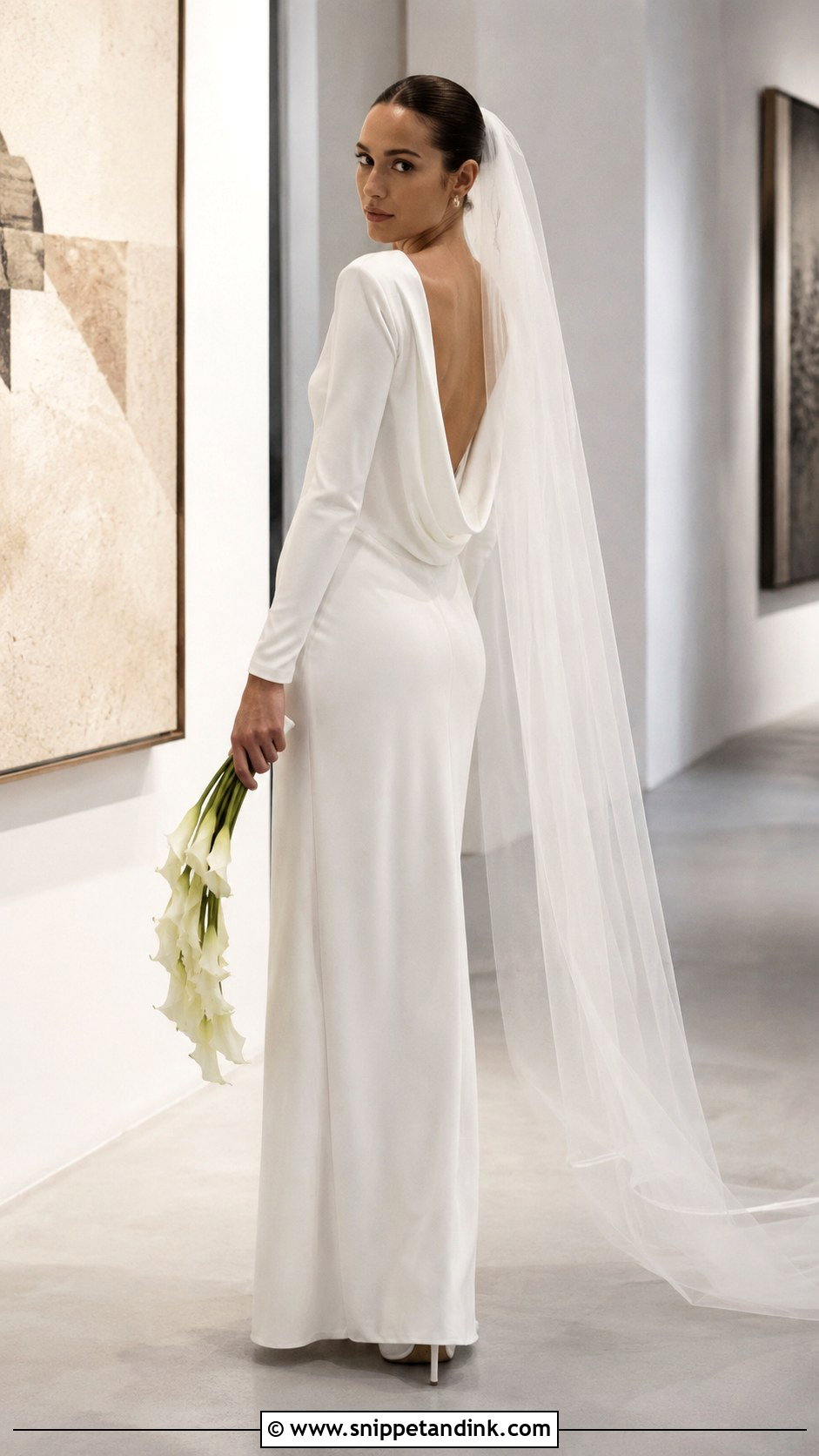
Silk is the least forgiving fabric I work with. It shows seams, underwear lines and even a badly pressed lining edge, so a draped neck in silk is only as good as what’s under it. The drape should fall loosely at the collarbone and flow into a bias-cut or fluid column skirt, with slim sleeves keeping it balanced and a soft cowl or open back adding interest behind. Minimal earrings, sleek ivory heels, a narrow bouquet of calla lilies and a sheer chapel veil are enough. Bias-cut silk also drops slightly after hanging, so I let the gown hang for a day or two before marking the final hem. A city ceremony, a gallery or a small destination wedding suits it.
9. Wrap Front Crepe Long Sleeve Wedding Dress
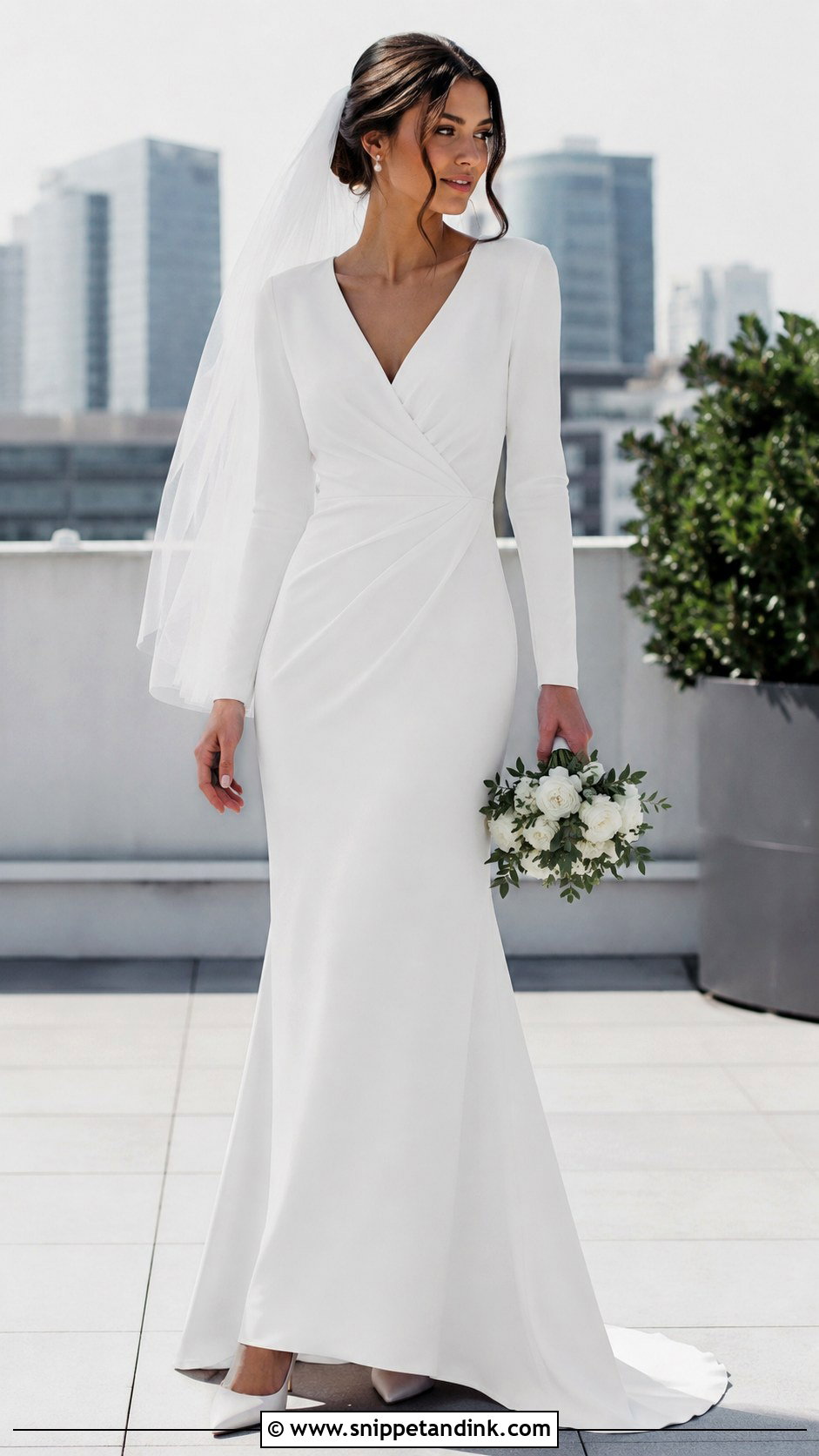
I always steer brides toward a faux wrap, stitched in place, rather than a true tie closure. A real wrap loosens with every hug, and by the speeches it has shifted. The diagonal line across the bodice gives shape to an otherwise plain gown, and with a V-neck, fitted sleeves and a gently flared crepe skirt, the whole figure looks longer. If there’s a front slit, keep it low; slits on wrap skirts open further than you expect when you sit. Pearl studs, pointed heels in ivory or soft metallic leather, a plain veil and a small white bouquet. It moves easily from a courthouse to a restaurant or rooftop reception.
10. Empire Waist Chiffon Long Sleeve Wedding Dress
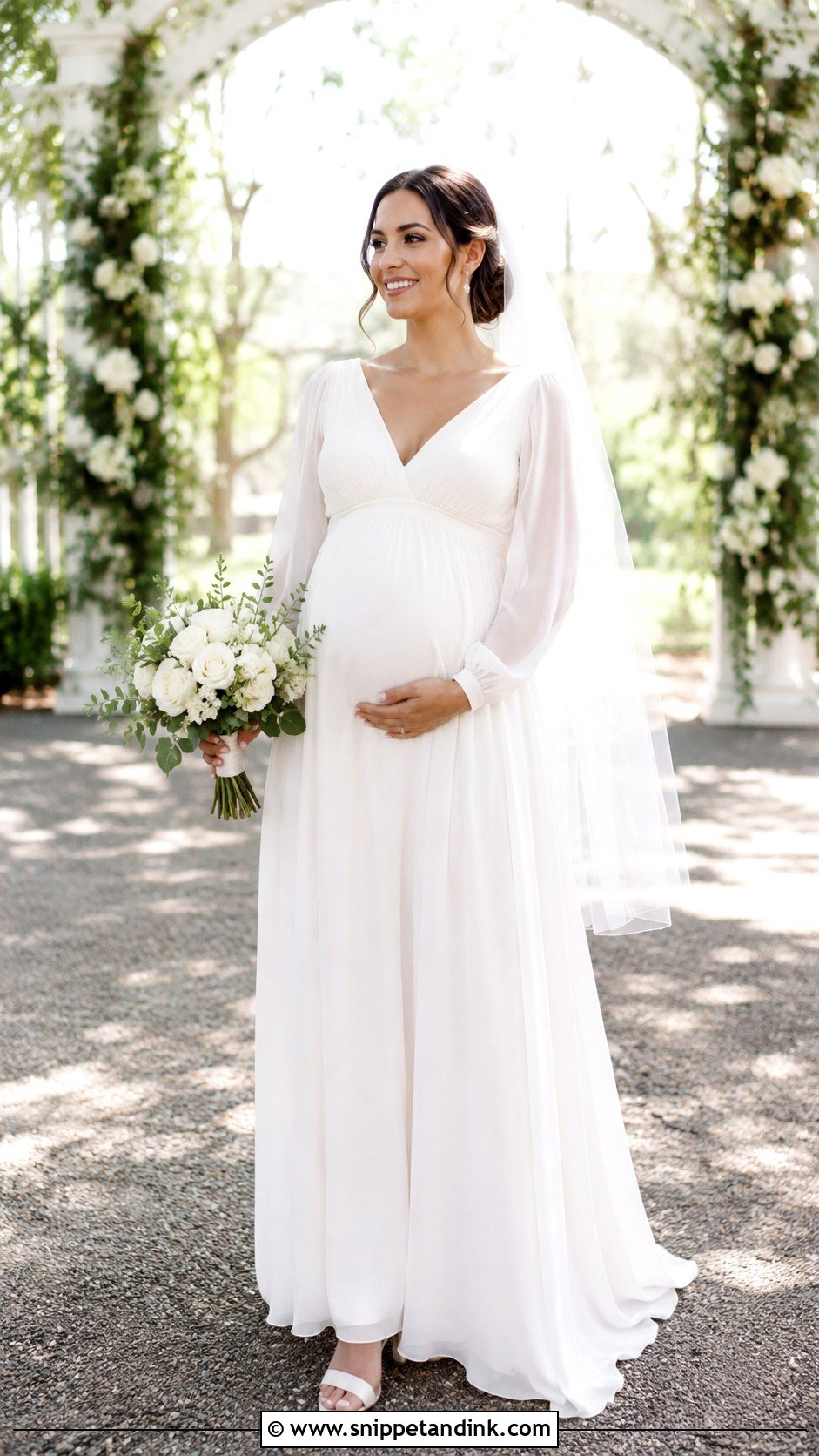
An empire seam sits just under the bust and everything below falls loose, so nothing presses on the waist or hips all day. Lined chiffon with sheer sleeves, narrow cuffs and a modest V or round neck is the classic version. Watch the gathering at that seam. Too much fabric packed in adds bulk across the tummy, the opposite of what most brides want from this cut, so I prefer soft vertical drape. Low block heels, delicate earrings, a fingertip veil and loose white flowers suit it. It’s the cut I suggest first for outdoor and destination weddings and for pregnancy-friendly bridal dressing, because the loose skirt doesn’t need refitting as a bump grows.
11. Satin Ball Gown Long Sleeve Wedding Dress
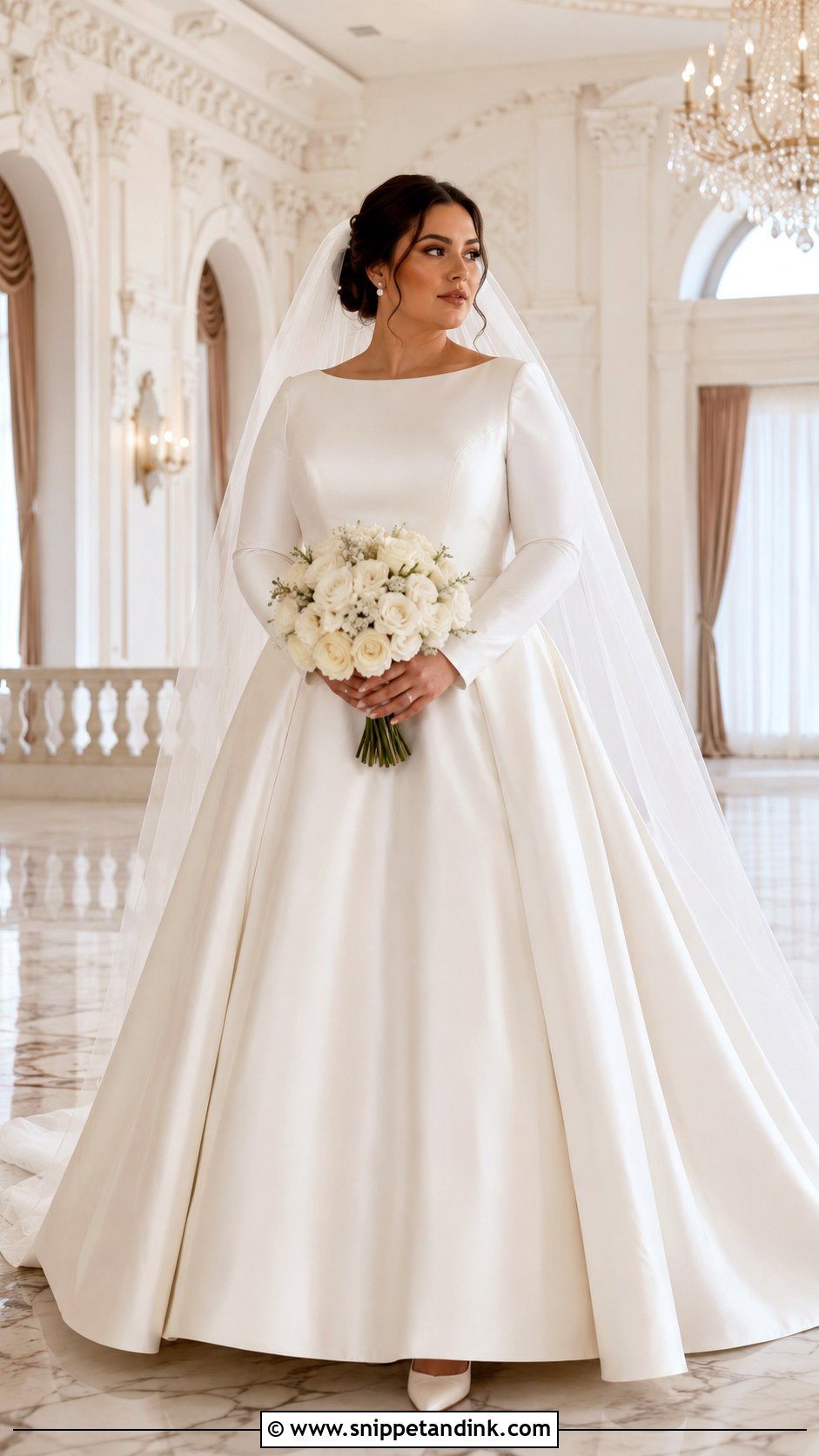
A ball gown stays simple when nothing competes with the skirt. Smooth satin or structured mikado with a clean bodice holds that volume without lace or beading, and fitted sleeves with a bateau, square or modest scoop neck keep it formal. Weight is the thing nobody warns you about. A full mikado skirt over layers of tulle is heavy, so I ask brides to wear it for twenty minutes at the final fitting and climb a few stairs. Hidden pockets help with a handkerchief or lip balm. Finish with a sleek updo, pearl studs, pointed pumps, a structured bouquet and a plain veil longer than the train. Ballrooms, museums and historic halls are its natural setting.
12. Mermaid Long Sleeve Wedding Dress
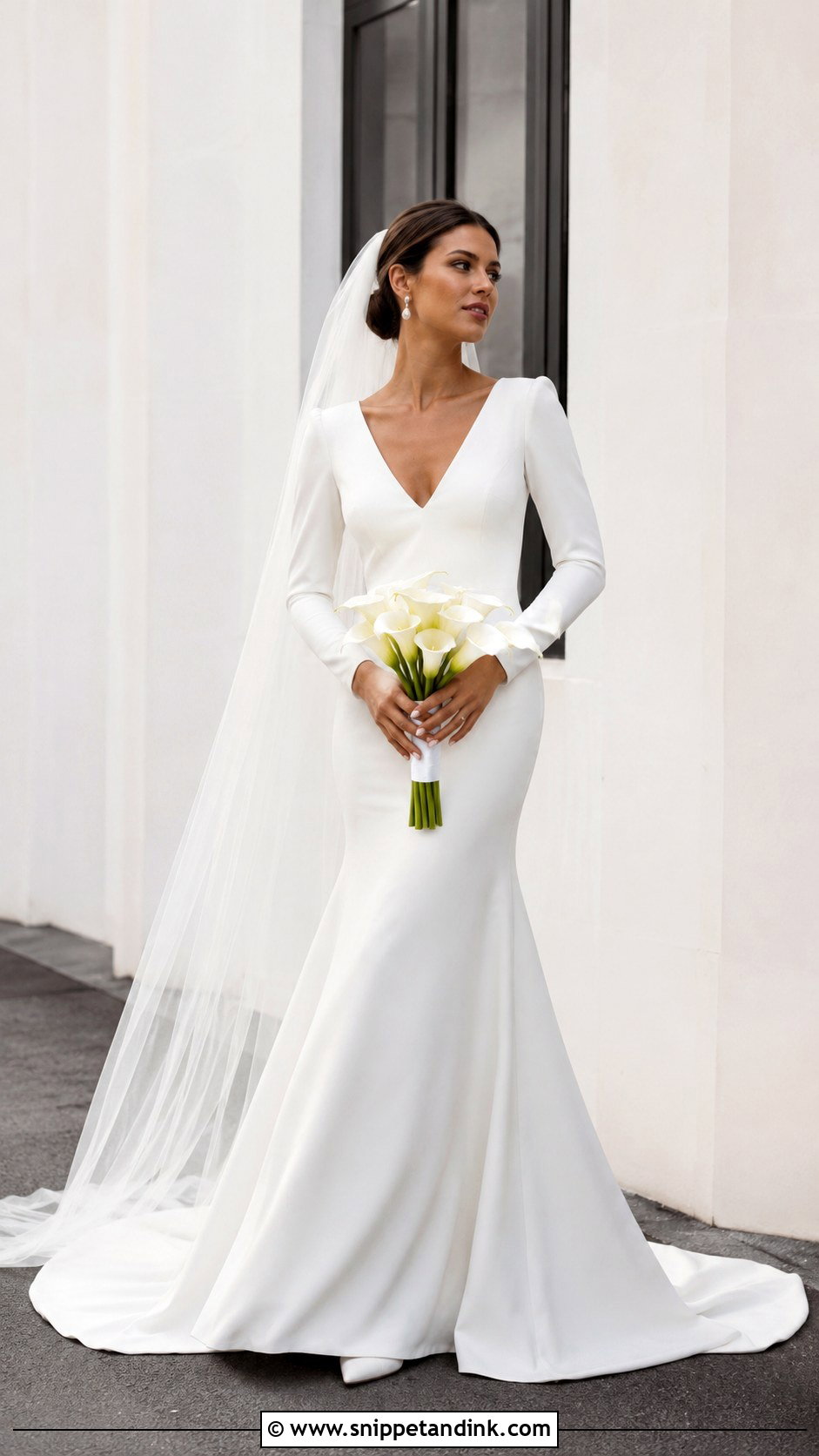
Mermaids get their drama from shape, and the shape depends on exactly where the flare starts. Too high and it reads as a trumpet; too low and you can’t take a full stride. I want substantial crepe or stretch satin that holds a smooth line through the hips, enough ease at the thigh to sit, and a flare at or just below the knee. A plain V or bateau neckline and fitted sleeves keep it polished. Sleek pumps, understated earrings, a cathedral veil and a narrow bouquet, since a big round one hides the line you paid for. Practise steps in it, because church stairs and car doors are where mermaid skirts show their limits.
13. Tea Length Long Sleeve Wedding Dress
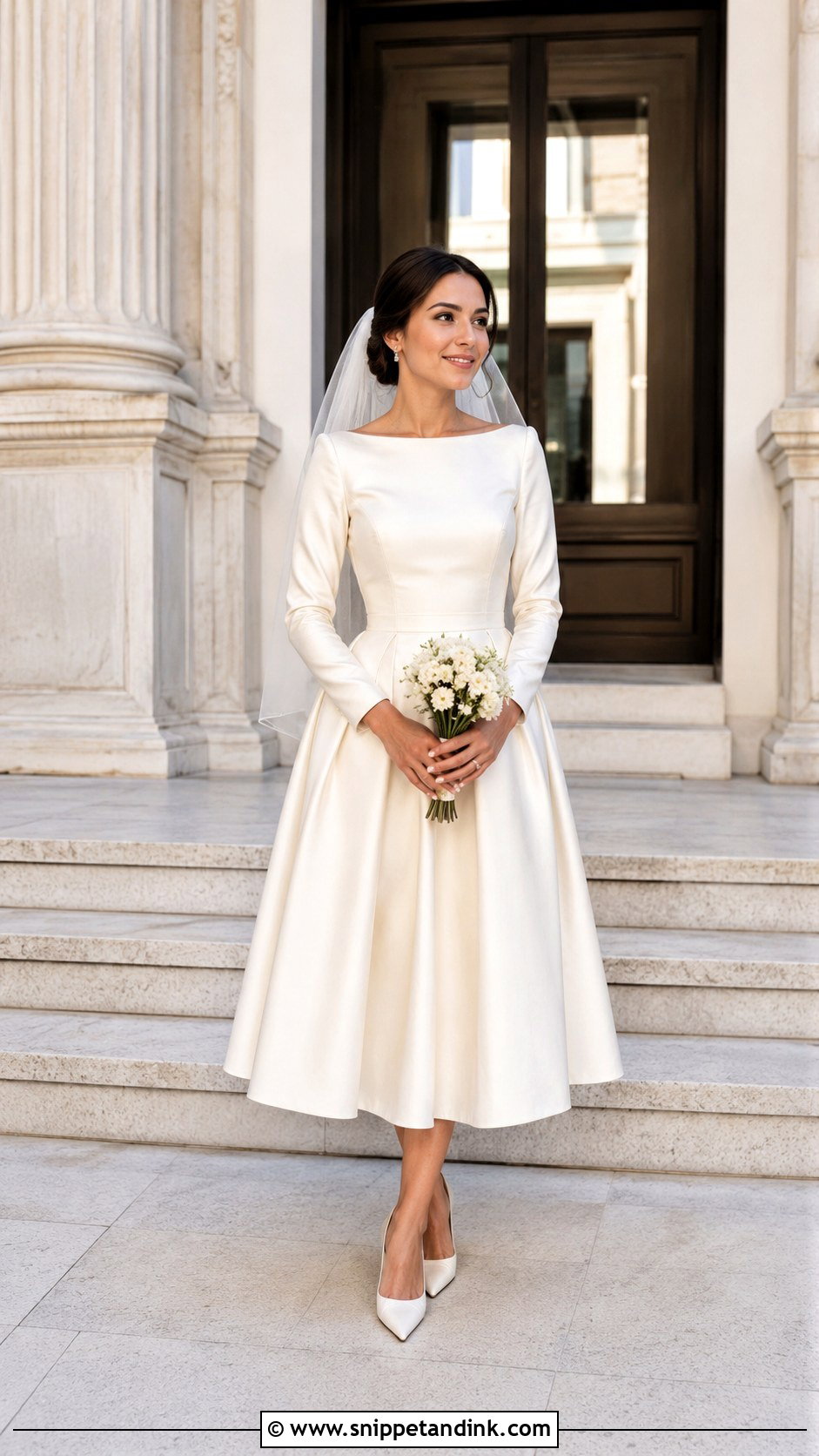
Once a hem rises above the ankle, your shoes become part of the dress, so I always ask brides to bring them before we mark the length. A tea-length skirt ends anywhere between knee and ankle, and structured satin or mikado lets it hold its shape without petticoat bulk. A bateau or scoop bodice with fitted sleeves keeps the top simple. Pointed slingbacks or low pumps, pearl earrings, a small bouquet and a short veil or neat bow will do. Go easy on retro extras. The hemline already says 1950s; gloves, a birdcage veil and a pillbox hat together turn it into costume. Daytime ceremonies, courthouse weddings and smaller venues suit it.
14. Long Sleeve Midi Wedding Dress
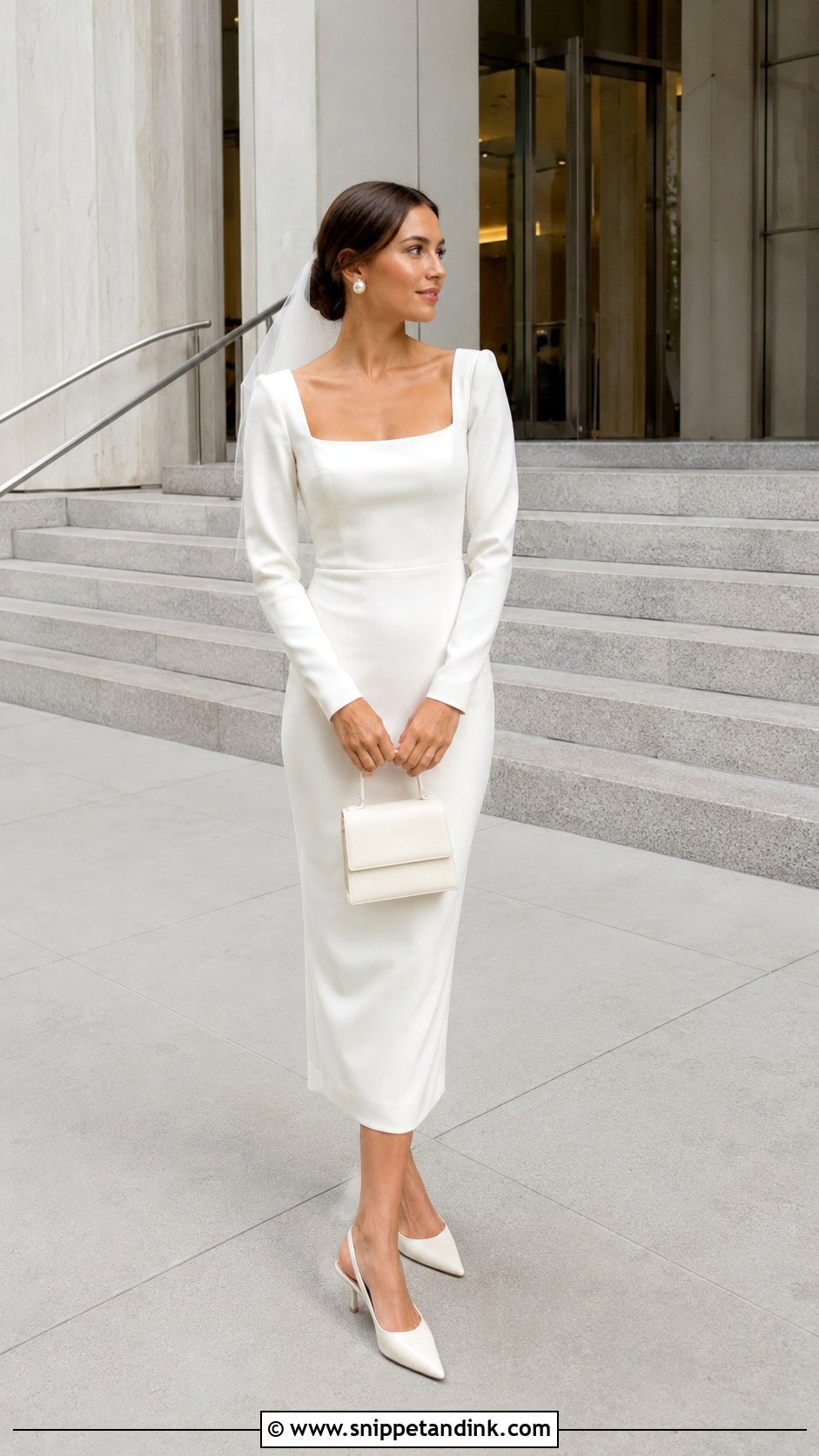
For a civil ceremony or a smaller daytime party, a long-sleeve midi in clean crepe looks bridal without the formality of a floor-length gown. A square, boat or high neck sits well on a sheath. I mark the hem just below the knee so the whole shoe shows, then add pointed pumps or ankle-strap heels and a structured mini bag. A short veil makes it unmistakably a wedding outfit; without one, pearl pins in a smooth bun do a similar job. Insist on a full lining, because unlined crepe creases across the lap after one car ride. Of all twenty, this is the easiest to wear again once it’s shortened.

15. Open Back Long Sleeve Wedding Dress
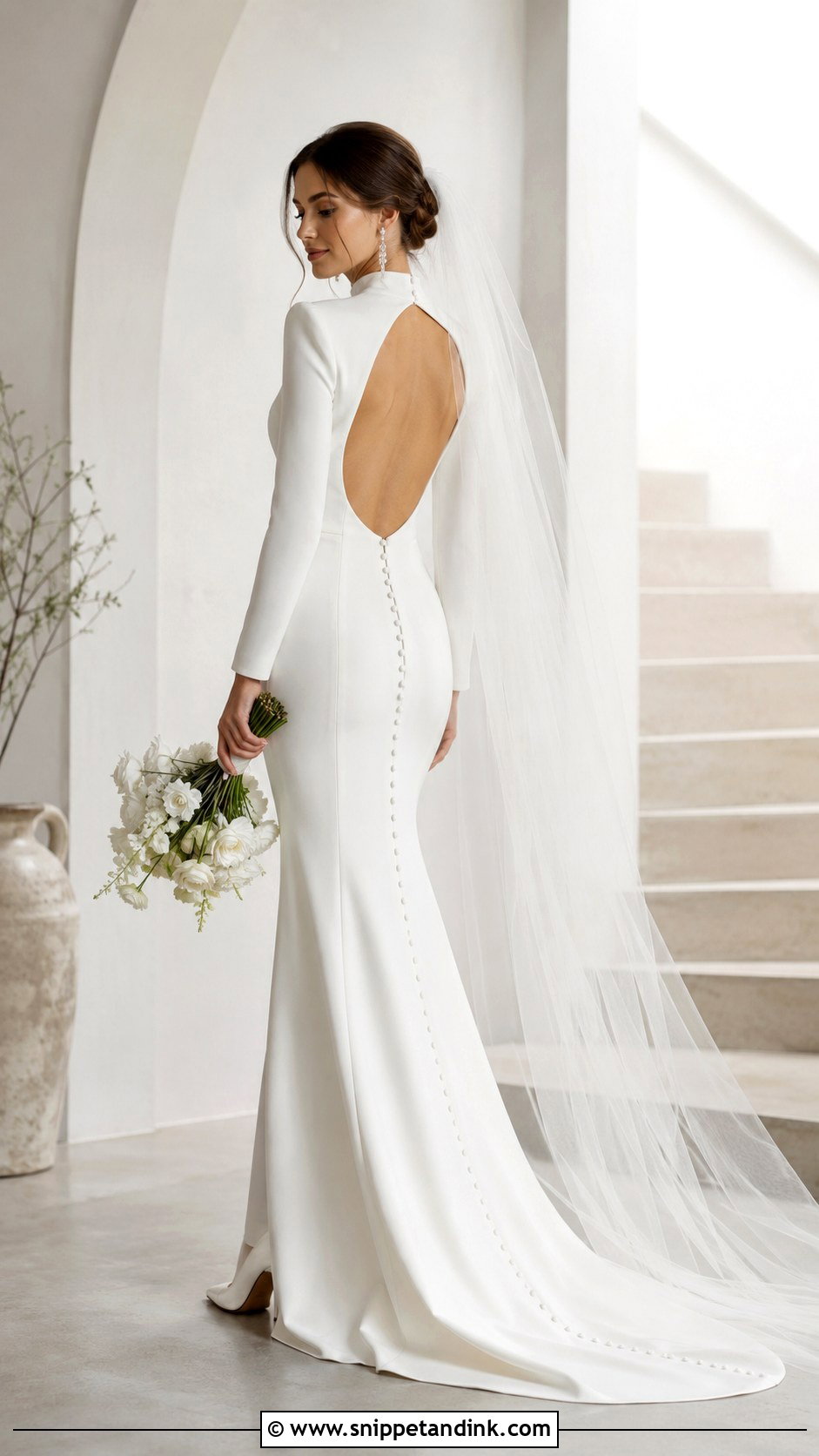
With a high front and an open back, the fitting conversation is mostly about support. Most simple open-back gowns won’t take a regular bra, so ask the salon early whether cups can be sewn into the bodice; I find that far more secure than adhesive cups on a warm day. Keep a bateau or high neckline at the front, then let a square, oval or softly draped opening carry the back, with covered buttons down the center if you want detail. Lift the hair into a low bun or twist so the back stays visible, and add drop earrings, pointed heels, a hand-tied bouquet and a sheer veil you can remove after the ceremony. Sit down in it at the fitting. If the edges gape when you lean forward, they need taking in.
16. Button Back Long Sleeve Wedding Dress
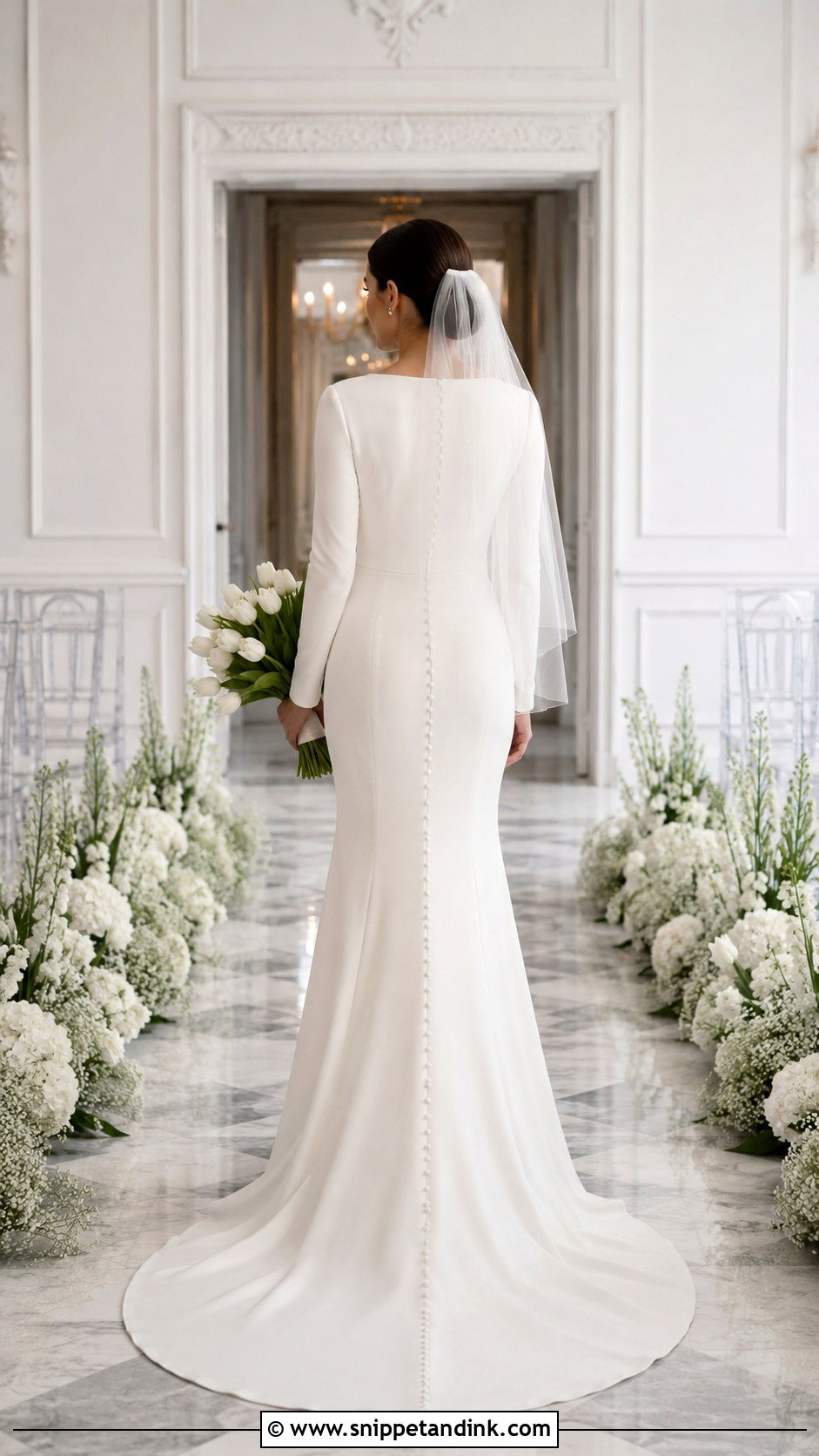
Covered buttons are lovely to look at and slow to fasten. A full row of working loops down a fitted back takes a surprisingly long time, so I always ask whether they’re functional or decorative over a hidden zip, and I make sure whoever is dressing the bride has practised. A fitted crepe or satin gown with long sleeves and a modest neck lets that row of buttons be the only detail. Smooth low bun, pearl studs, ivory pumps, white tulips or roses, and a light veil set below the hair so it doesn’t hide the buttons. After alterations, check the loops lie flat, since a tightened seam can make them pucker. Guests look at your back for the whole ceremony, which is exactly when this detail earns its place.
17. Puff Sleeve Wedding Dress With Long Cuffs
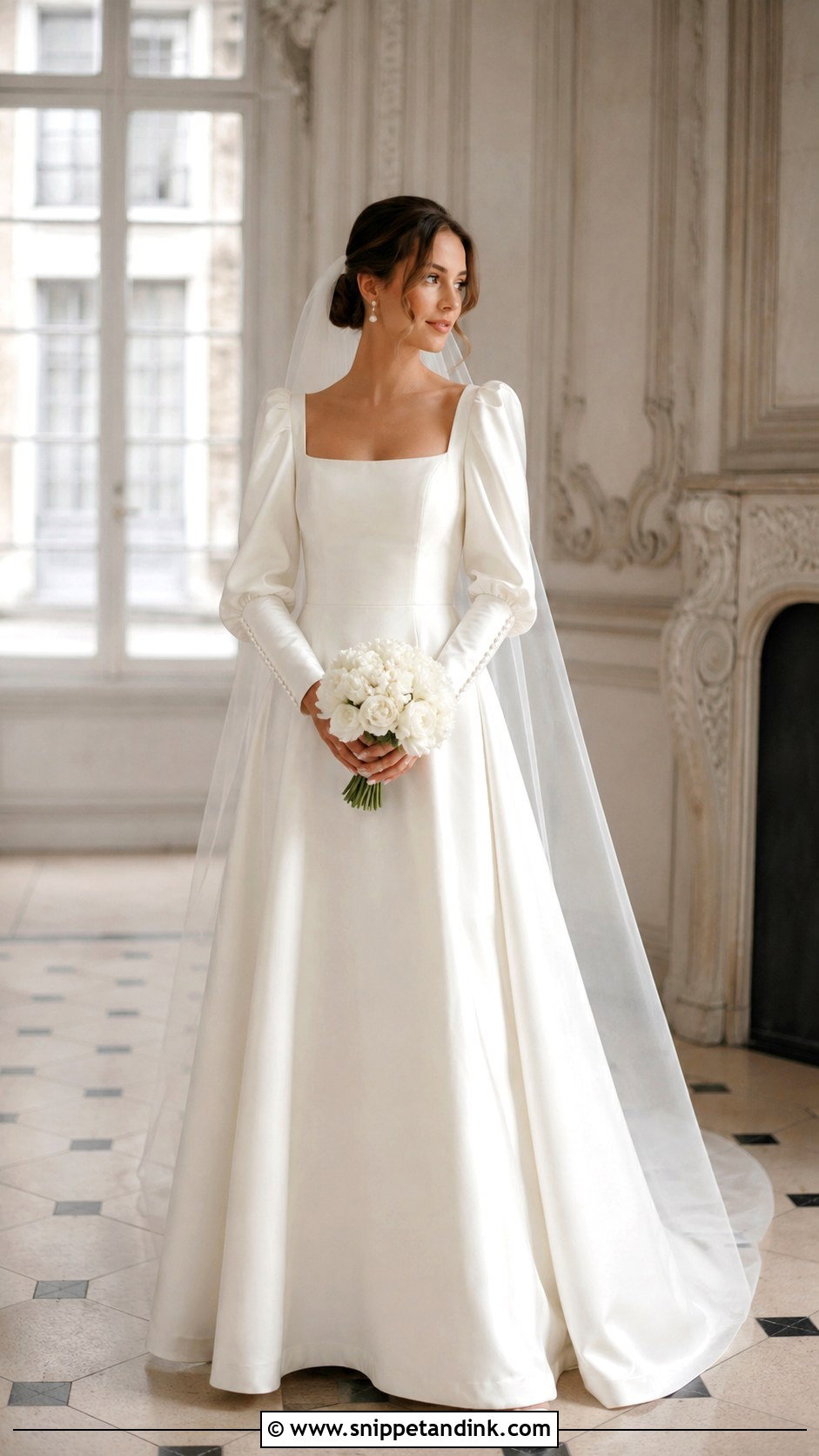
Puff sleeves go wrong quickly once the volume gets out of hand. I keep the puff small at the shoulder, taper it into a long fitted cuff, and pair it with a streamlined A-line or column skirt. Matte crepe, silk or lightweight satin all hold a controlled puff; chiffon needs a stiffer layer inside or it collapses. A square or modest scoop neckline balances the structured shoulder. Check that the shoulder seam sits right on your shoulder point, because a puff set too far out makes you look broader in photos. Pearl drops, low pointed heels, a plain veil from a polished bun and a compact bouquet. Anything frilly added on top tips it into sweet.
18. Bishop Sleeve Wedding Dress
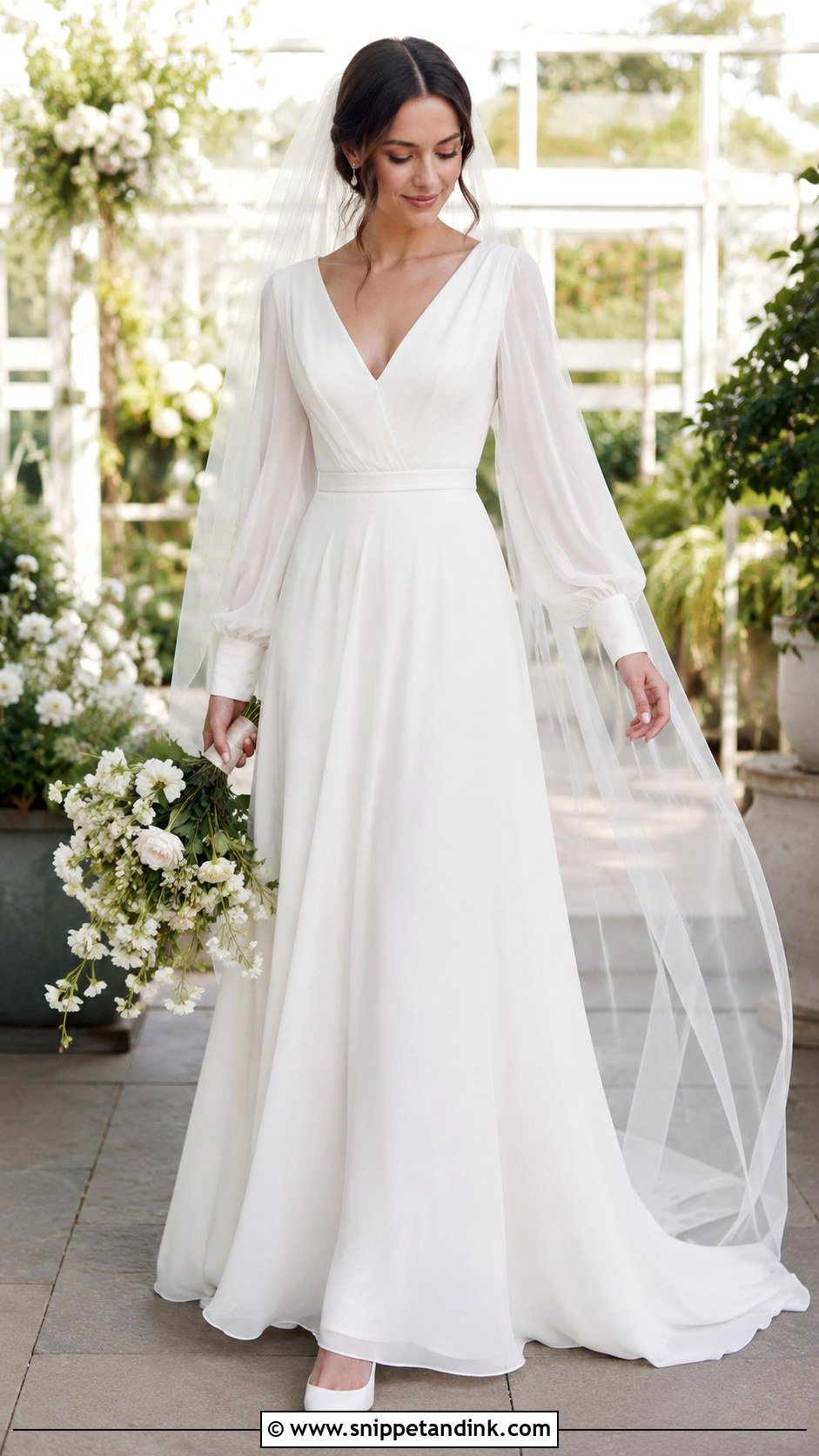
Fabric decides whether this works. Bishop sleeves gather their fullness into a fitted cuff, and in chiffon, silk georgette or fine crepe they fall softly; in satin they balloon and look bulky. Keep the bodice clean, the skirt an uncluttered A-line or column, and the neckline a modest V or rounded shape. Small earrings, a plain fingertip veil, closed-toe pumps and a loose but controlled bouquet with minimal greenery. I fit the cuff so it closes at the wrist bone and the gathered fabric stops above the hand; otherwise it drags through every plate at dinner. It moves well in a breeze, so it suits outdoor ceremonies and historic interiors alike.
19. Illusion Sleeve Wedding Dress
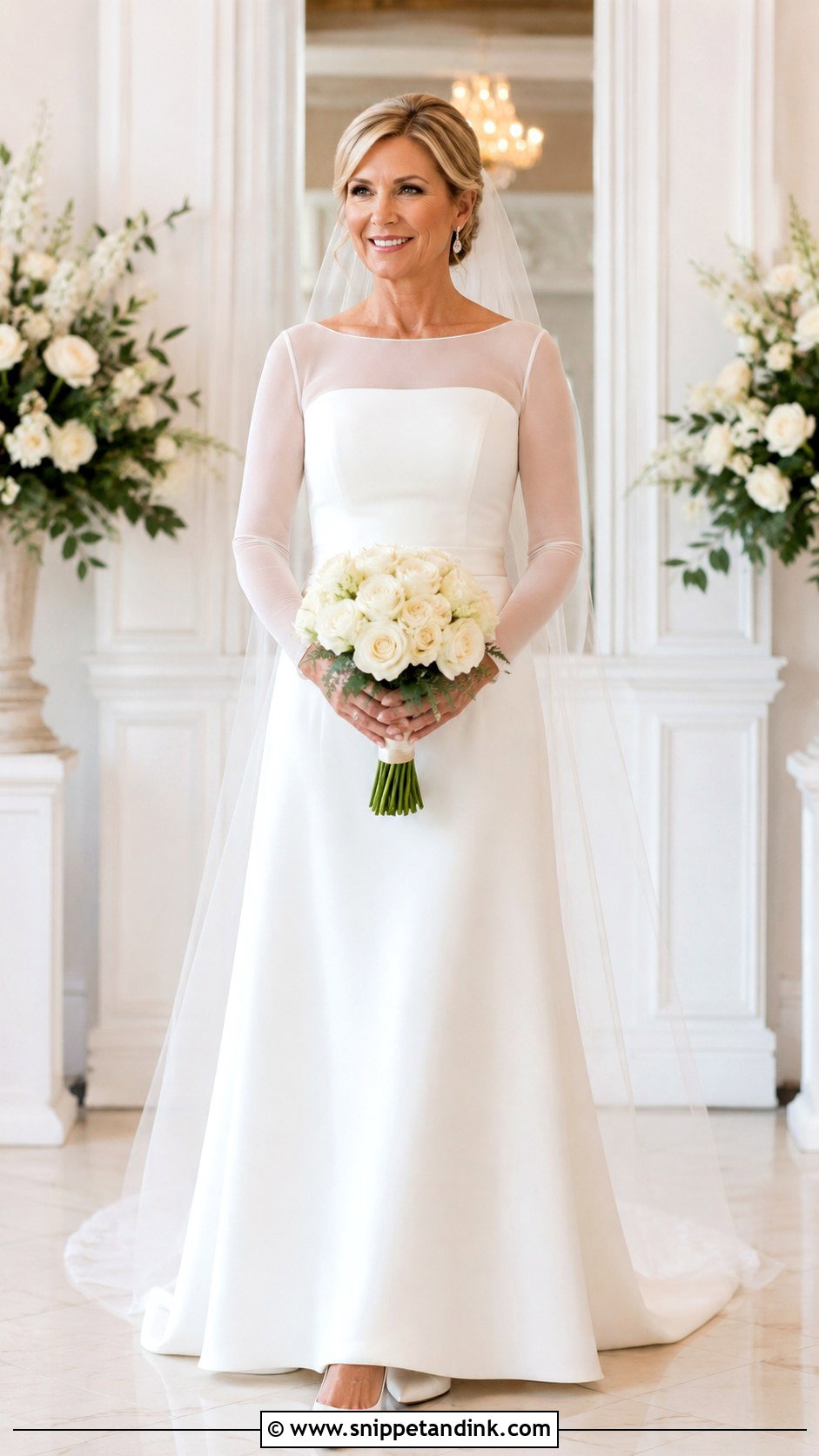
Illusion mesh only works when it nearly disappears. I hold samples of ivory and skin-toned mesh against the bride’s arm in daylight, because a shade that matches indoors can look grey or pink outside, and some mesh turns shiny under flash. Choose fine mesh with minimal seaming and no heavy appliqués, a bateau or wide scoop neck so it looks deliberate, and a crepe A-line, column or satin skirt. Delicate earrings, simple pumps, a transparent veil and white roses keep the palette clean. The sleeve should fit close without wrinkling at the elbow or digging in at the wrist, since tight mesh leaves marks on the skin by evening.


20. Detachable Long Sleeve Wedding Dress
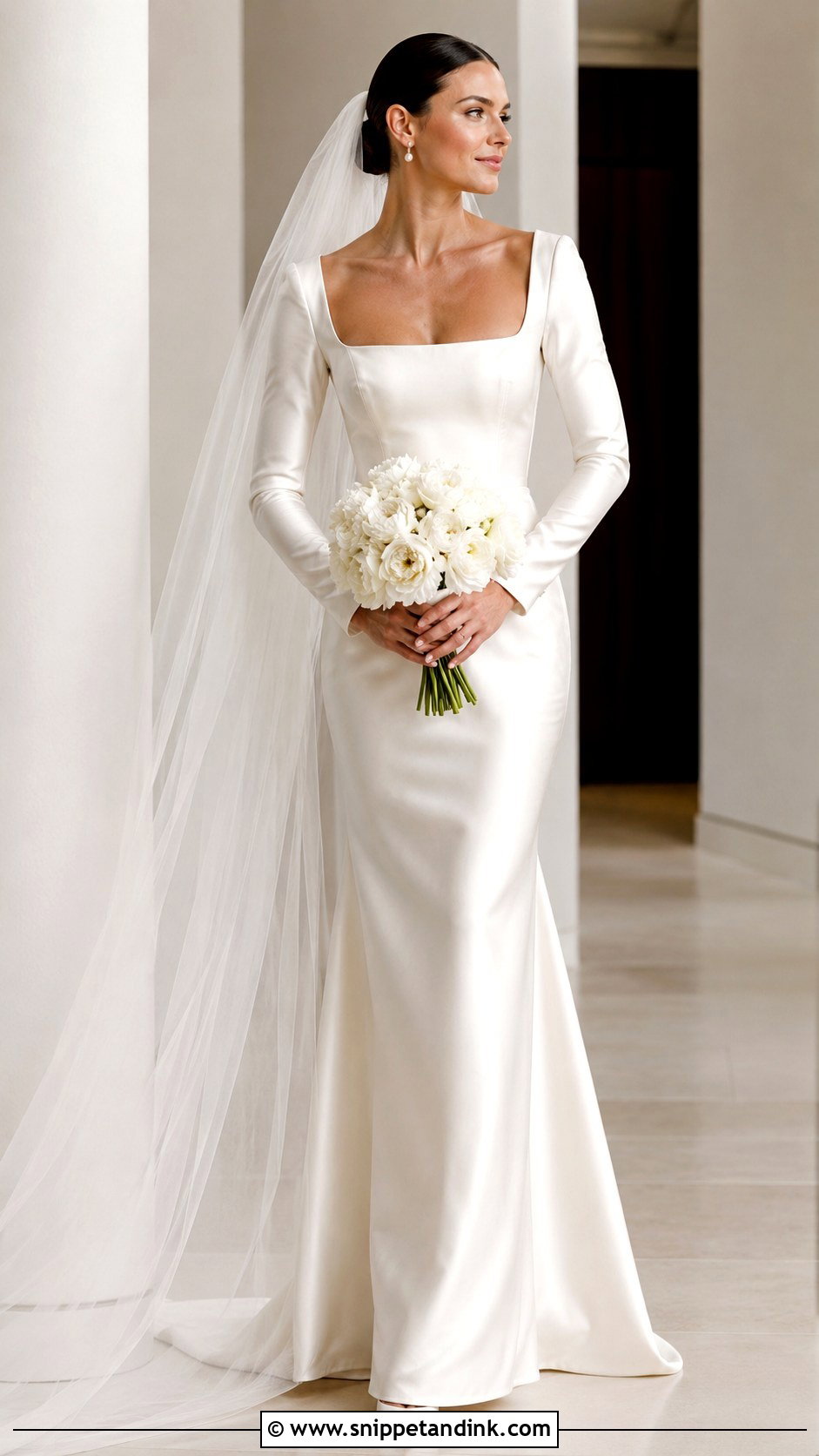
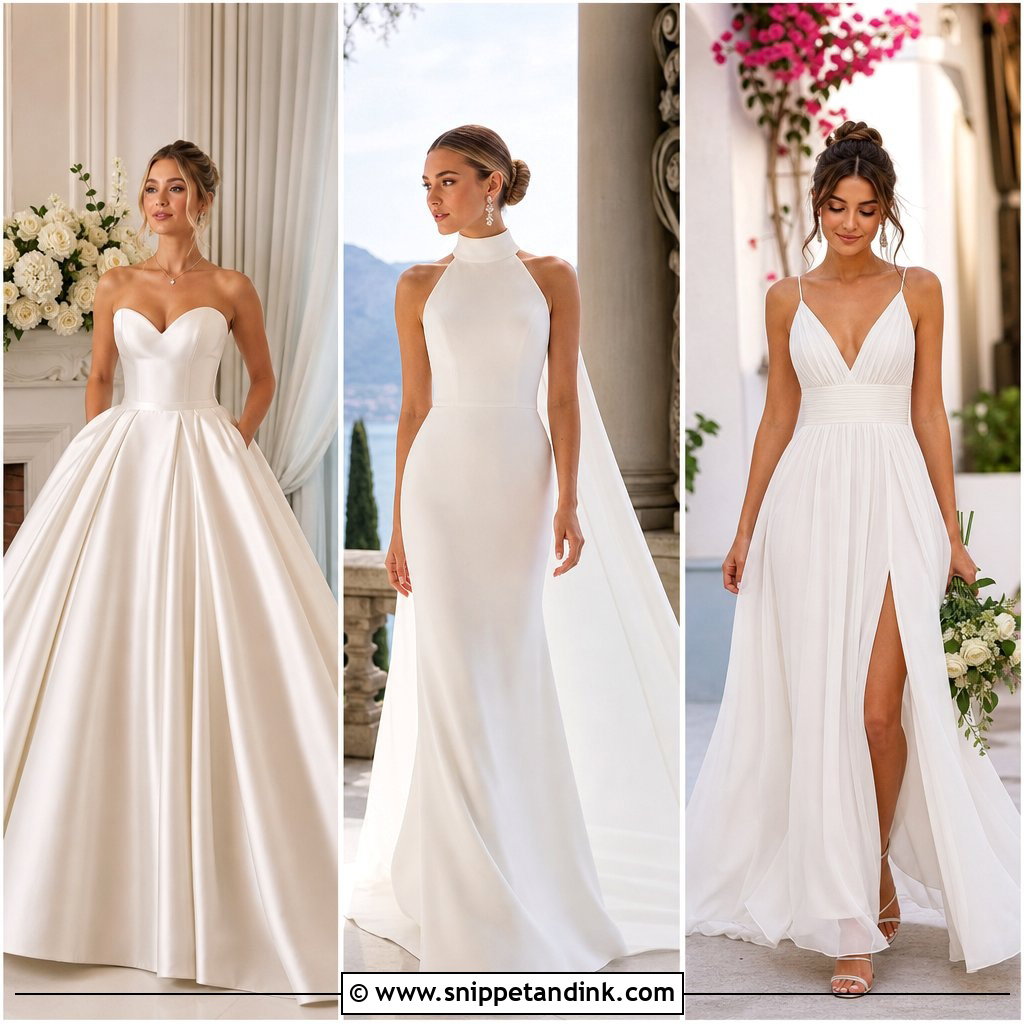
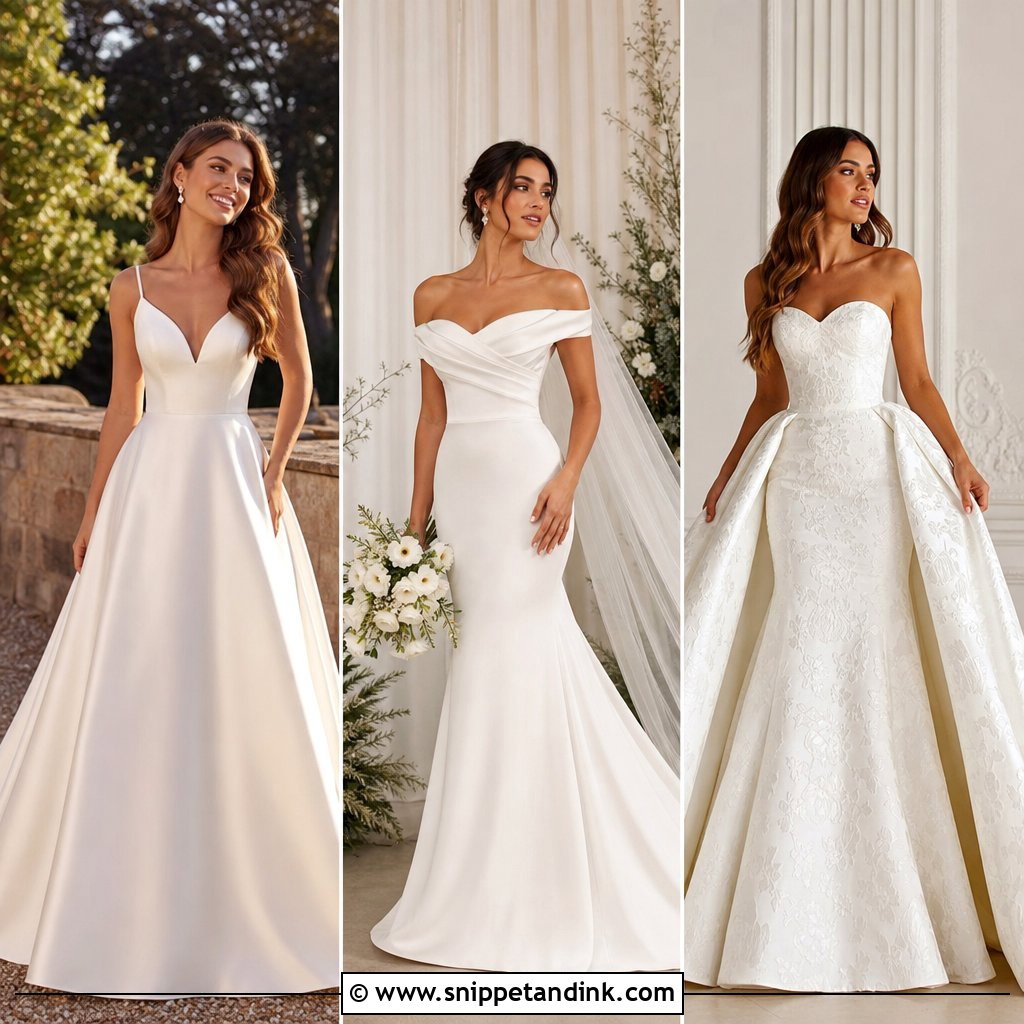
Two looks from one dress is the appeal, and the attachment is the part I scrutinize. Start with a simple strapless, square-neck or sleeveless satin gown, then add fitted crepe sleeves or a matching long-sleeve topper for the ceremony, with the snaps or hooks hidden under a neckline seam or overlay edge. Ivory varies between satin and crepe even from the same maker, so compare the two by a window and under indoor light before committing. A long plain veil, pearl earrings and pointed ivory heels make the formal version; remove sleeves and veil for the reception. Show a bridesmaid how the fastenings work before the day, not in the venue bathroom.
Makeup Marks, Pushed-Up Cuffs and the Morning After
Long sleeves bring a few problems a strapless gown never has. Cuffs and inner forearms pick up foundation and self-tan every time you hug someone or touch your face. I ask brides to keep tanner off their arms for a few days beforehand and to let body lotion sink in fully before they step into the dress.
Small things for the bridesmaid’s bag
- A white chalk stick or dry-cleaning wipe for makeup on ivory; test it on an inside seam allowance first.
- The spare cuff button the salon gives you, plus a needle already threaded in matching colour.
- A few small safety pins for a loop or snap that gives way during the dancing.
Pushing fitted sleeves up to eat or wash your hands stretches crepe at the elbow, and it rarely springs back. Have a bridesmaid hold your cuffs back for you instead, or ask for cuff snaps you can open.
After the wedding
Send the gown for professional cleaning within a few weeks, even if it looks clean. Spilled champagne and sugary drinks dry invisible, then turn yellow-brown on ivory over the following months. Store it folded in acid-free tissue inside a breathable box. Hanging a heavy dress by its shoulders for a year slowly stretches the sleeve heads out of shape.
A Plain Gown Lives or Dies at the Fitting
Plain long-sleeve gowns rely on construction more than decoration, so most of the real work happens at fittings. Start with the silhouette that feels right to move in and suits your venue, then put your budget into alterations. Test every fitting the way you’ll use the dress: sit, walk, lift your arms, hug, and look at it in daylight and under a phone flash. Keep only the accessories that support the neckline. A long-sleeve dress that truly fits, in satin, crepe, chiffon or silk, looks unmistakably bridal from every side.
You'll Like These Ideas:










Leave a Reply