
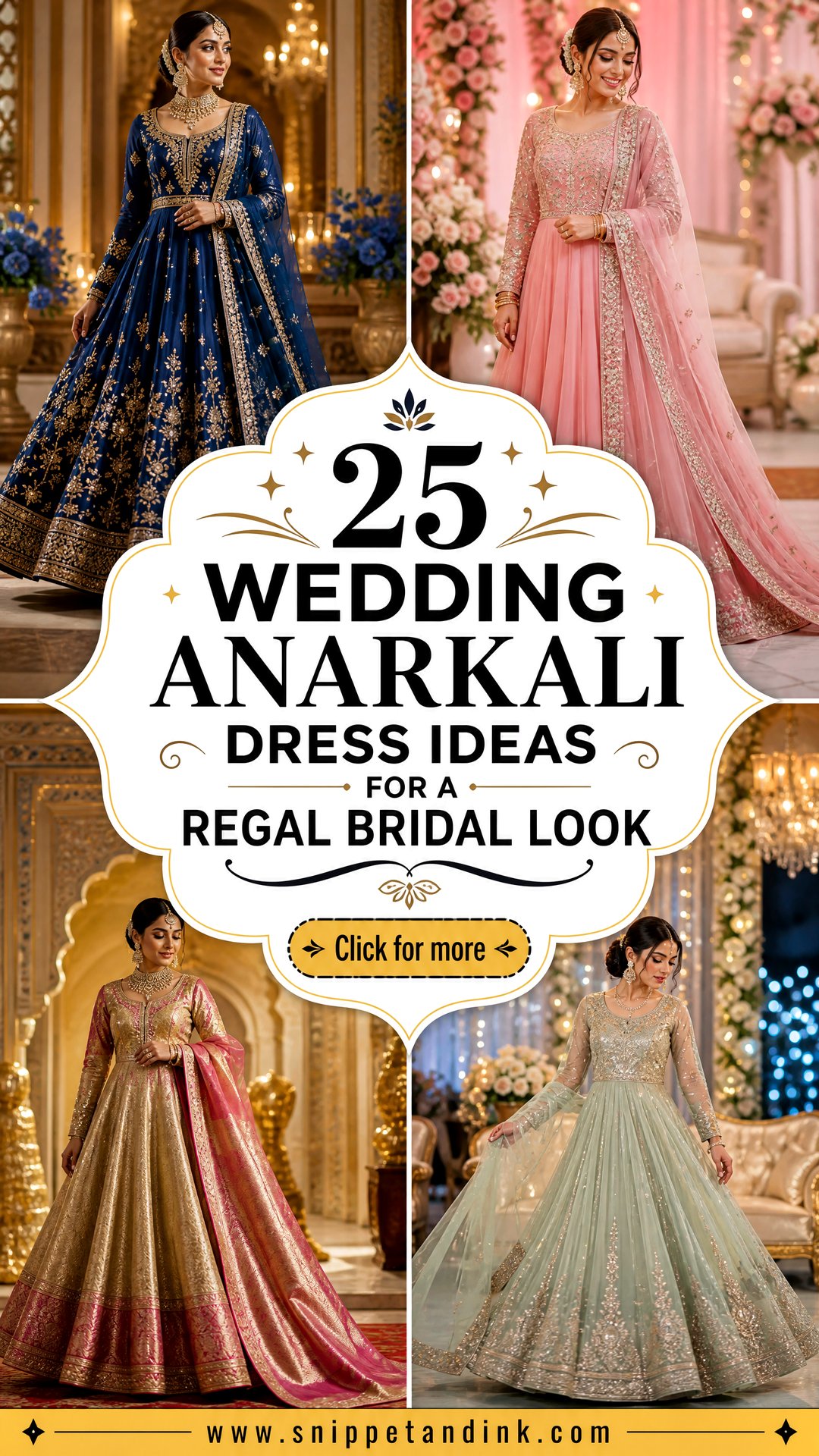
An Anarkali is the outfit I reach for when someone wants to look festive at an Indian wedding but dreads managing a lehenga all day. The fitted bodice and long flared skirt move well, sit well and suit brides, bridesmaids, mothers and guests alike. Below you’ll find silk and velvet pieces, cape and jacket styles, pastel organza, and mirror-work outfits for sangeet nights, with notes on the dupatta, jewelry, footwear and hair that complete each one. Royal or restrained, every look here can be built from head to toe.
Where an Anarkali Should Sit on Your Body
Most Anarkalis that look wrong are fitted wrong, not designed wrong. At a fitting I check three points before I look at the embroidery at all.
- The yoke seam. The fitted bodice should end just under the bust, where the flare begins. Too low and the skirt starts at your waist and adds width; too high and it pulls across the chest.
- The flare. Count the panels, often called kalis. More panels mean a fuller swing. Walk and turn in it, then sit on a low stool, because a bridal or family function often means sitting on the floor.
- The length. Finish the hem wearing the exact shoes you’ll wear. Floor-length styles should just clear the ground; churidars should have enough extra length to gather in soft rings at the ankle.
Give a tailor at least three to four weeks for alterations on an embroidered piece, longer in wedding season when everyone wants the same week.
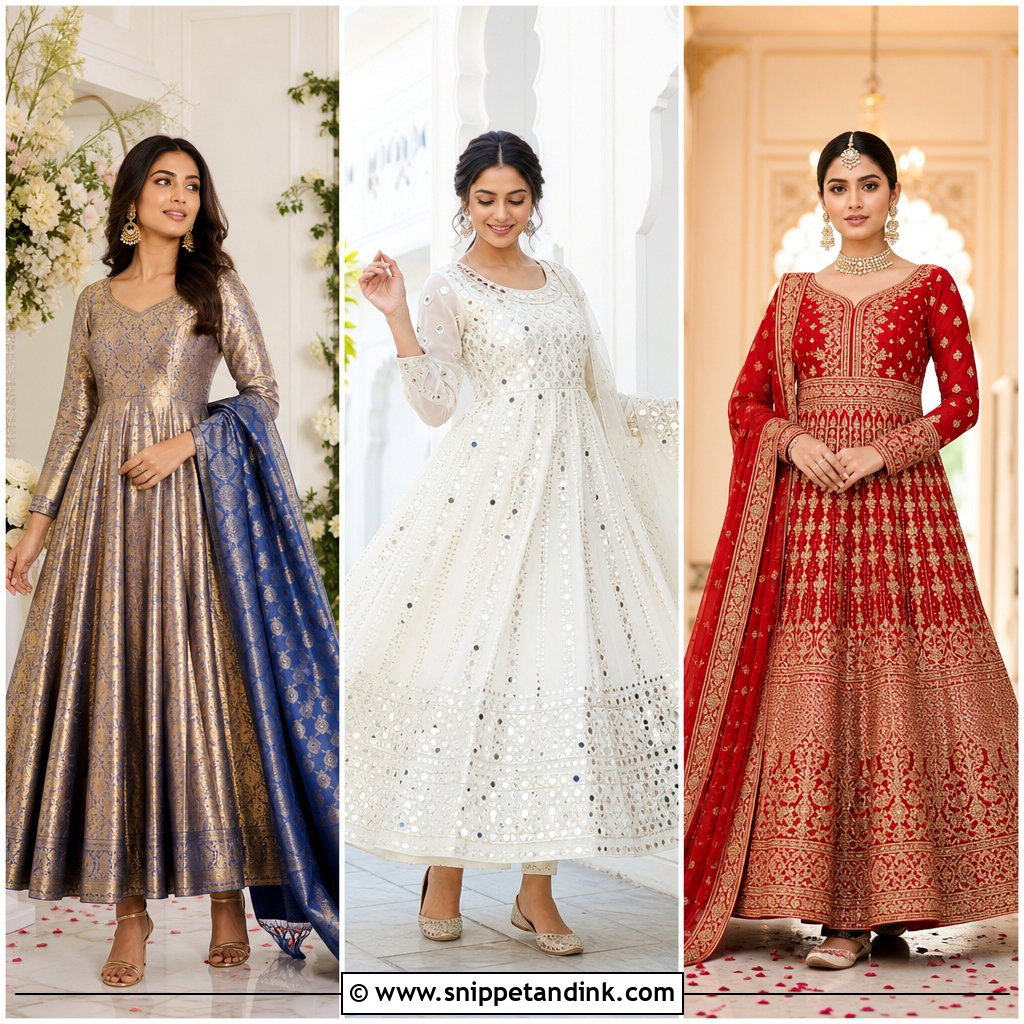
1. Red Bridal Anarkali Dress
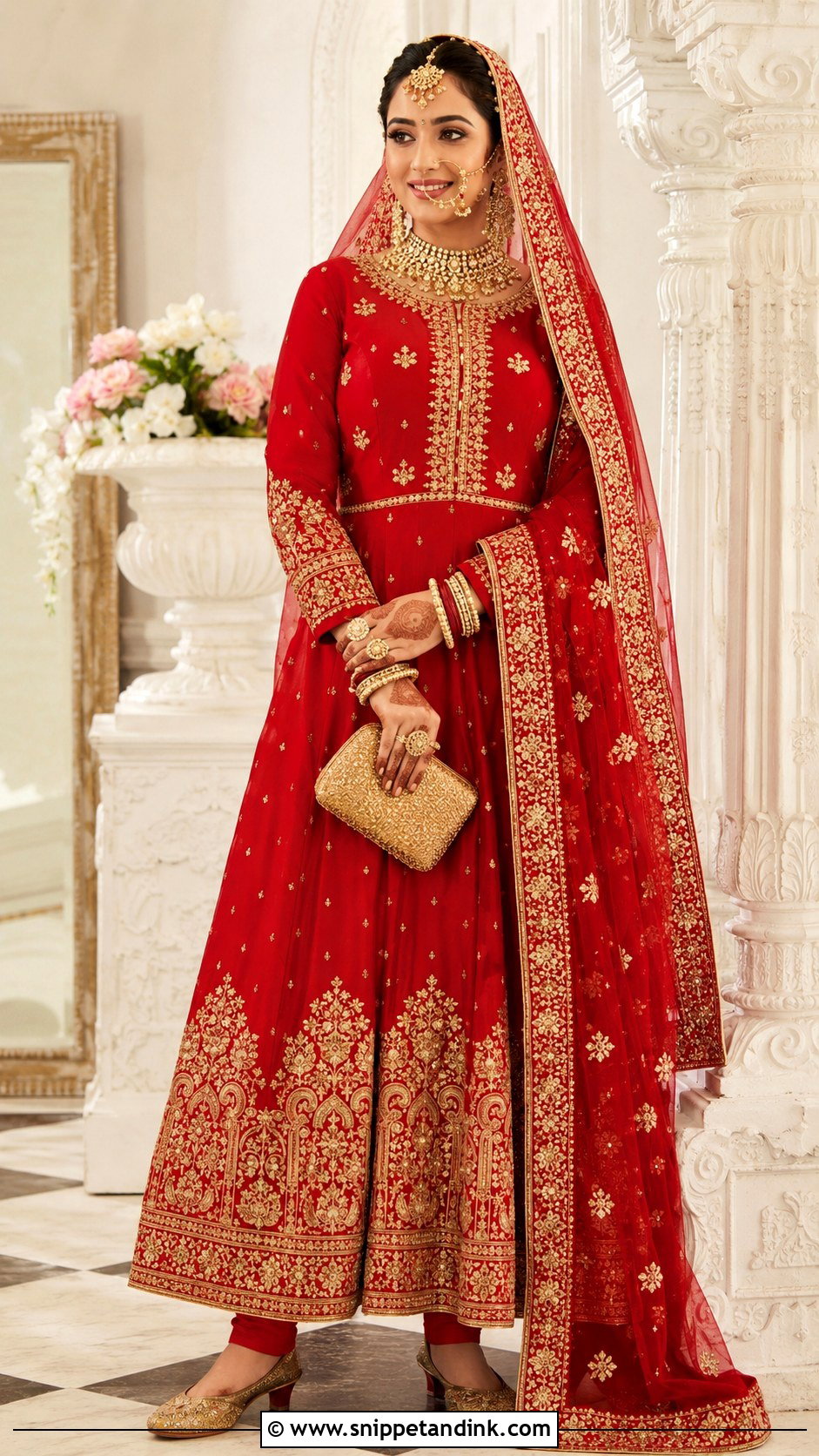
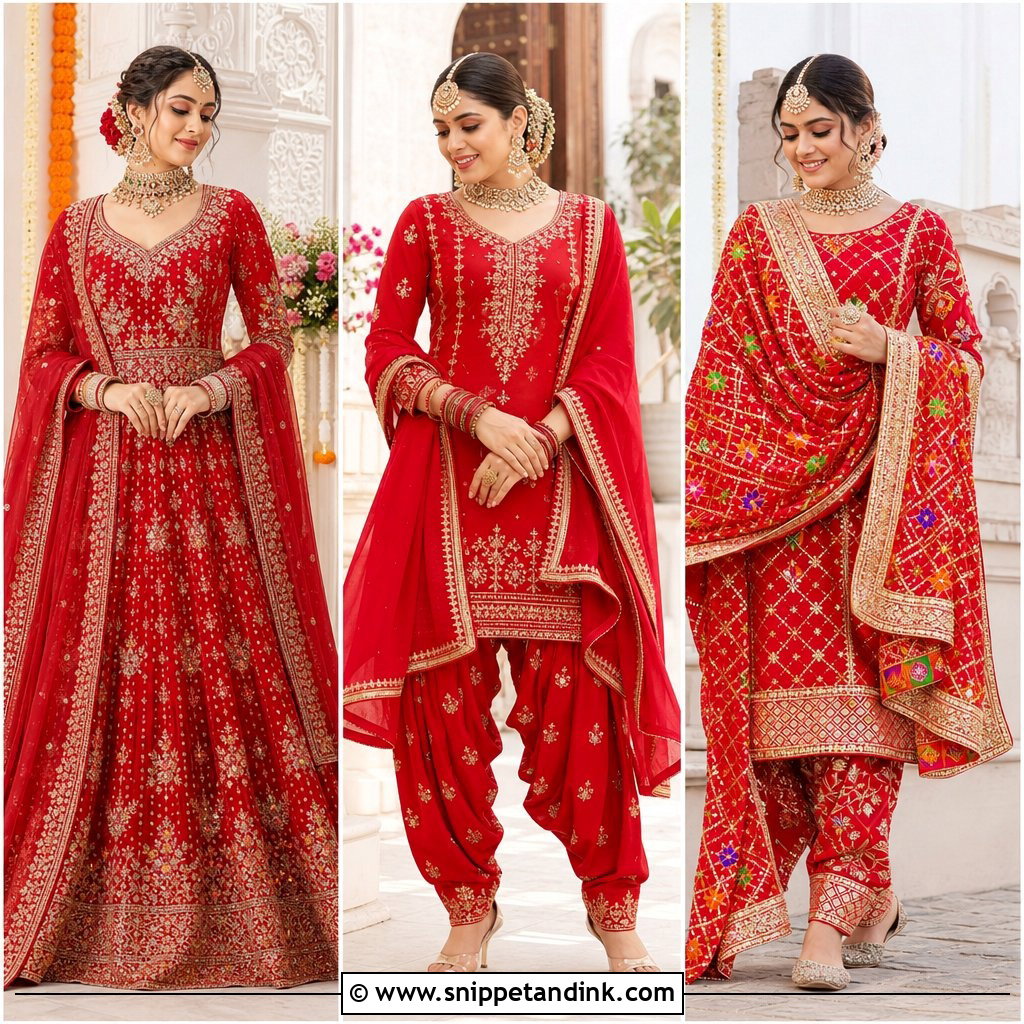
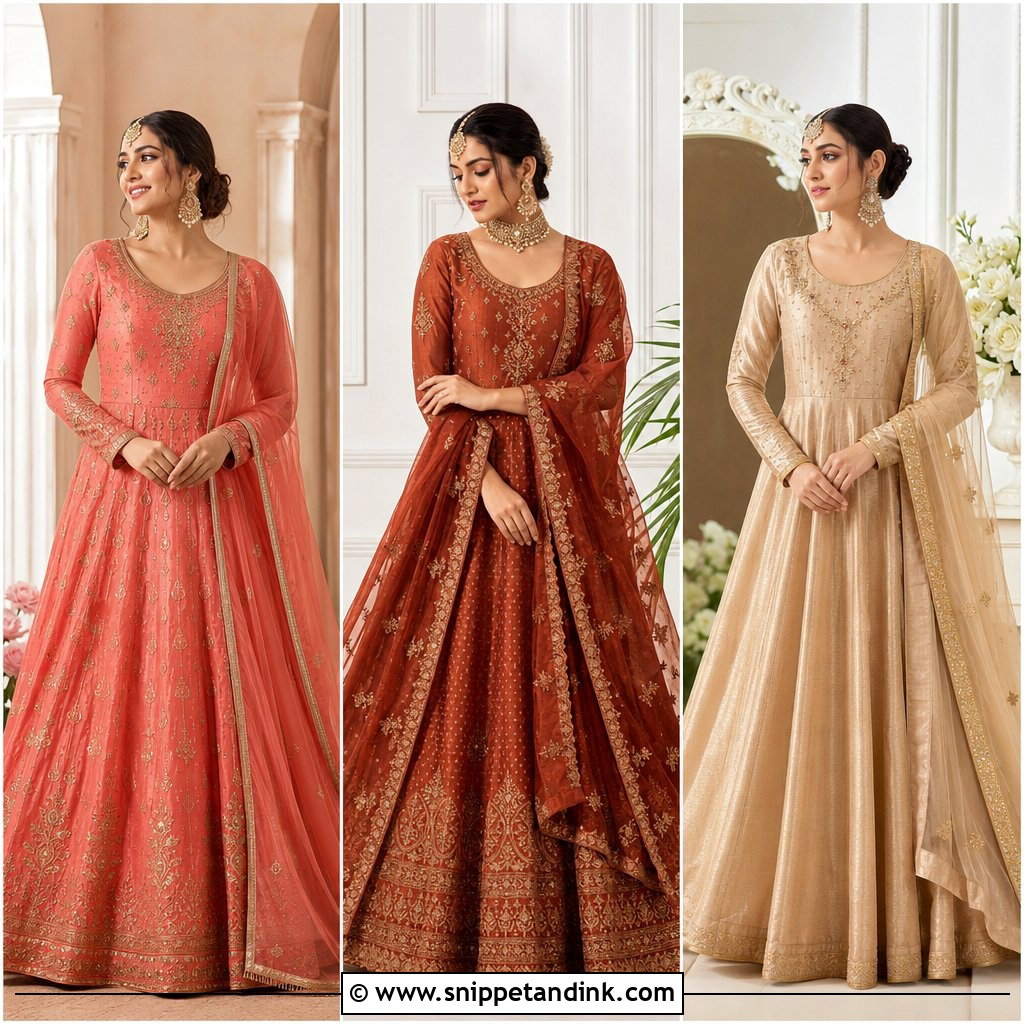
Red silk or brocade is still the bridal Anarkali most families picture, and for good reason: zari embroidery on red glows under ceremony lights. I always check the flare on a bridal piece by having the bride sit cross-legged, because many rituals happen on the floor and a skirt cut too narrow won’t let her settle. Pair it with a matching churidar, a heavy dupatta over one shoulder, kundan earrings, a maang tikka, stacked bangles and embroidered heels. Keep the makeup base matte with bold eyes and a deep red or rose lip, since a glossy base looks oily against heavy gold.
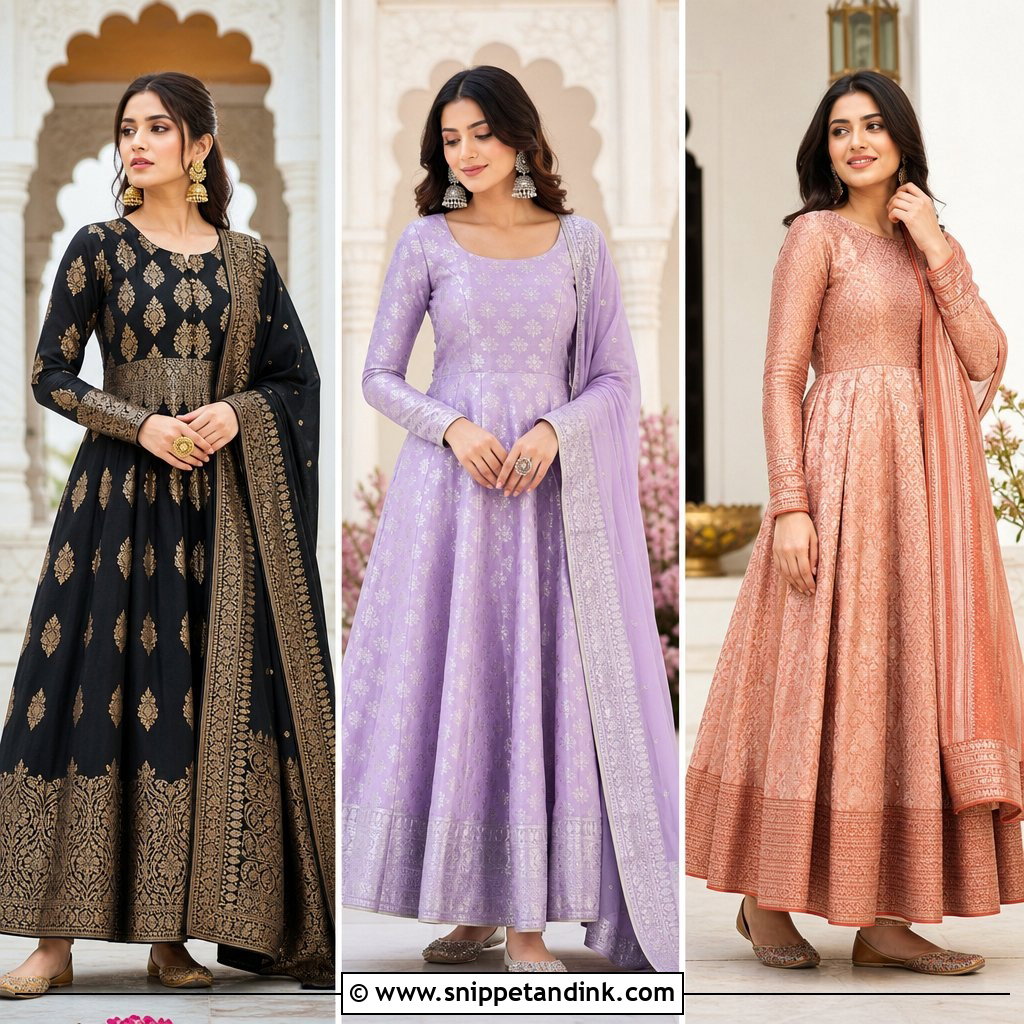
2. Pastel Anarkali Dress For Wedding Guest
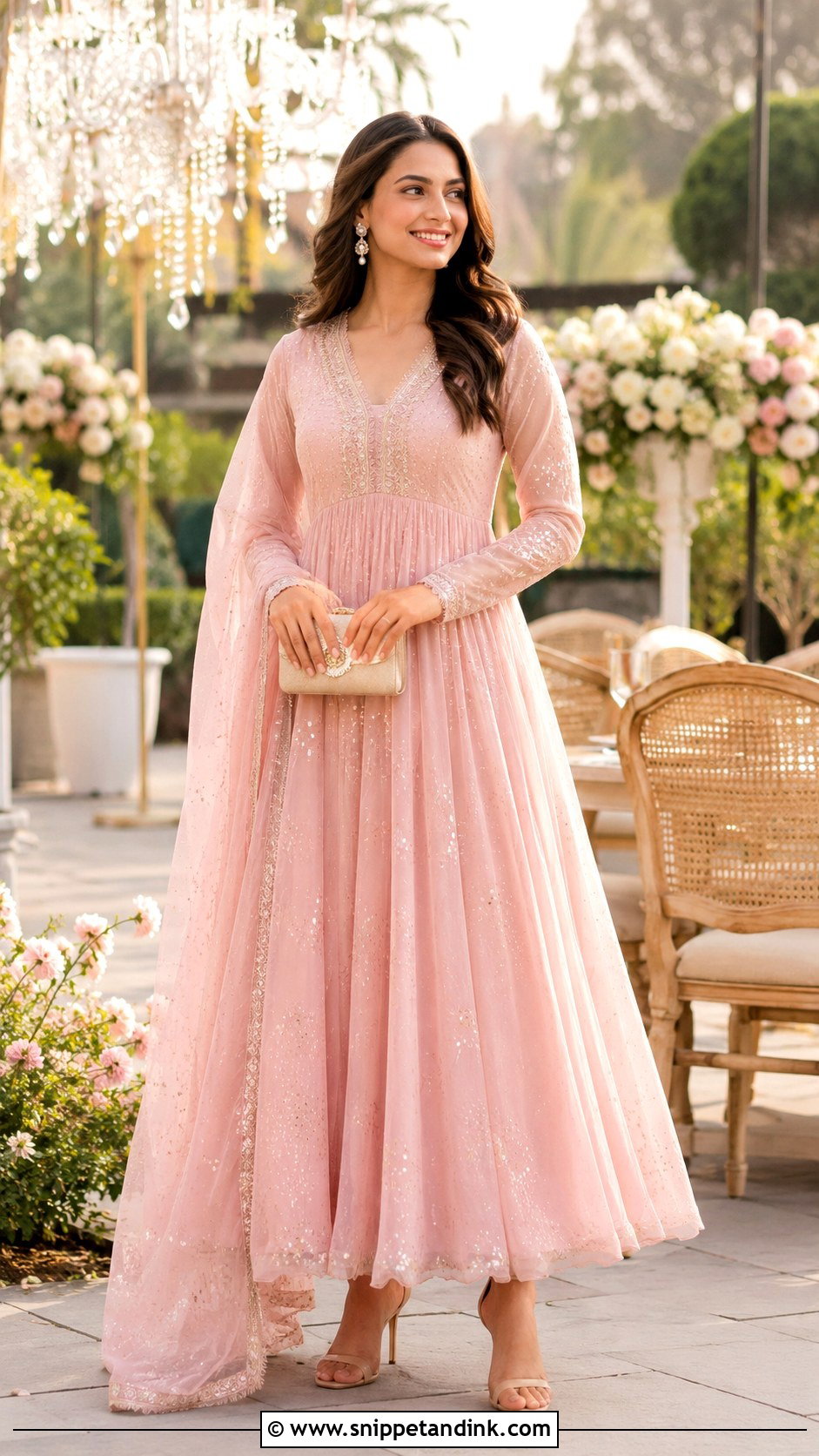
For a daytime ceremony or garden function, pastels feel right. Blush, powder blue, mint, lilac and peach all work in georgette, organza or chiffon with light threadwork or pearls. The thing to watch is transparency: pale georgette under midday sun can show the lining seams, so ask for a full-length lining in a matching shade. Nude heels, a pearl clutch and delicate earrings keep it light, with a sheer dupatta for movement. Soft curls and a tiny bindi are enough.
3. Velvet Anarkali Dress For Reception
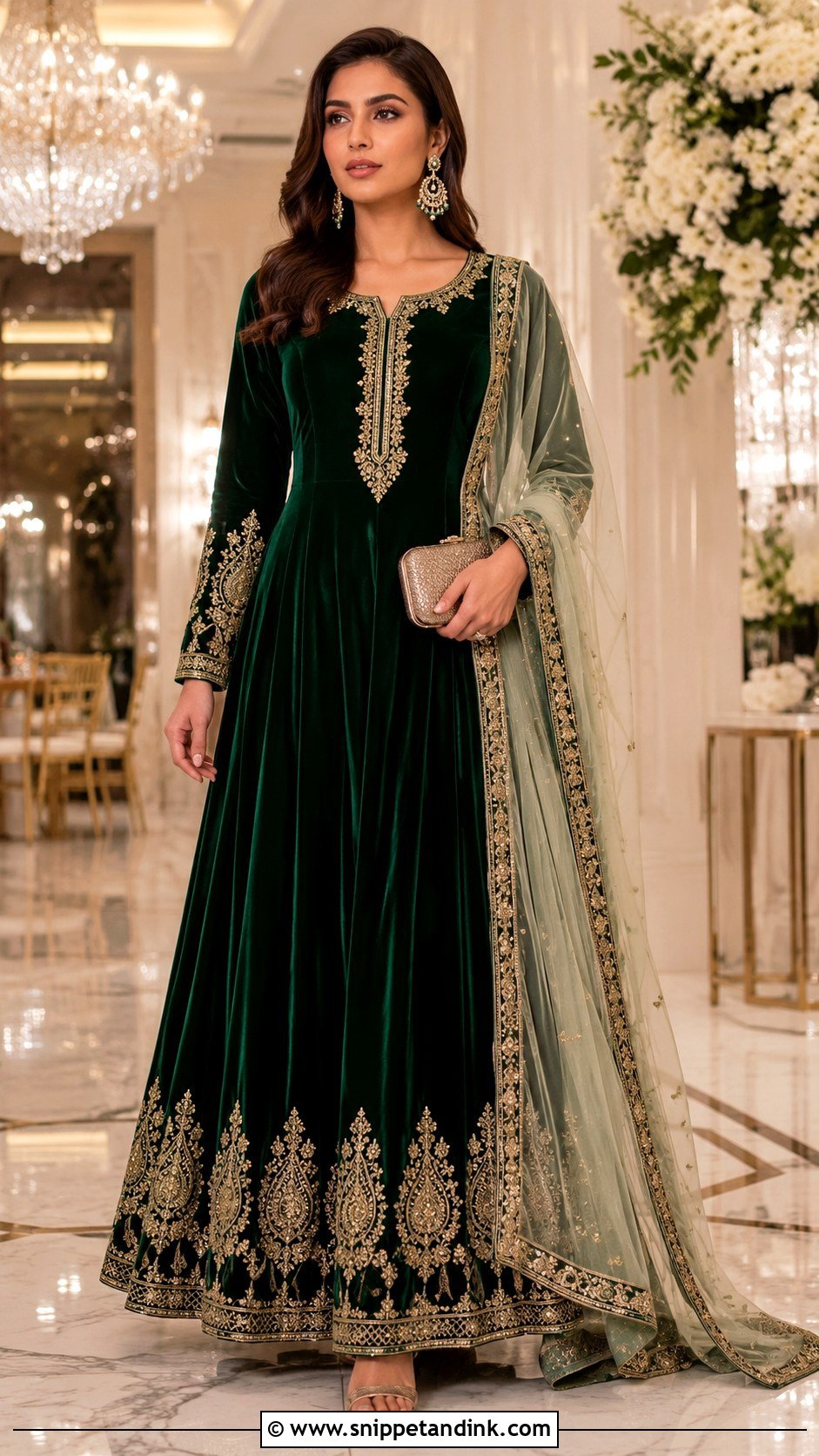
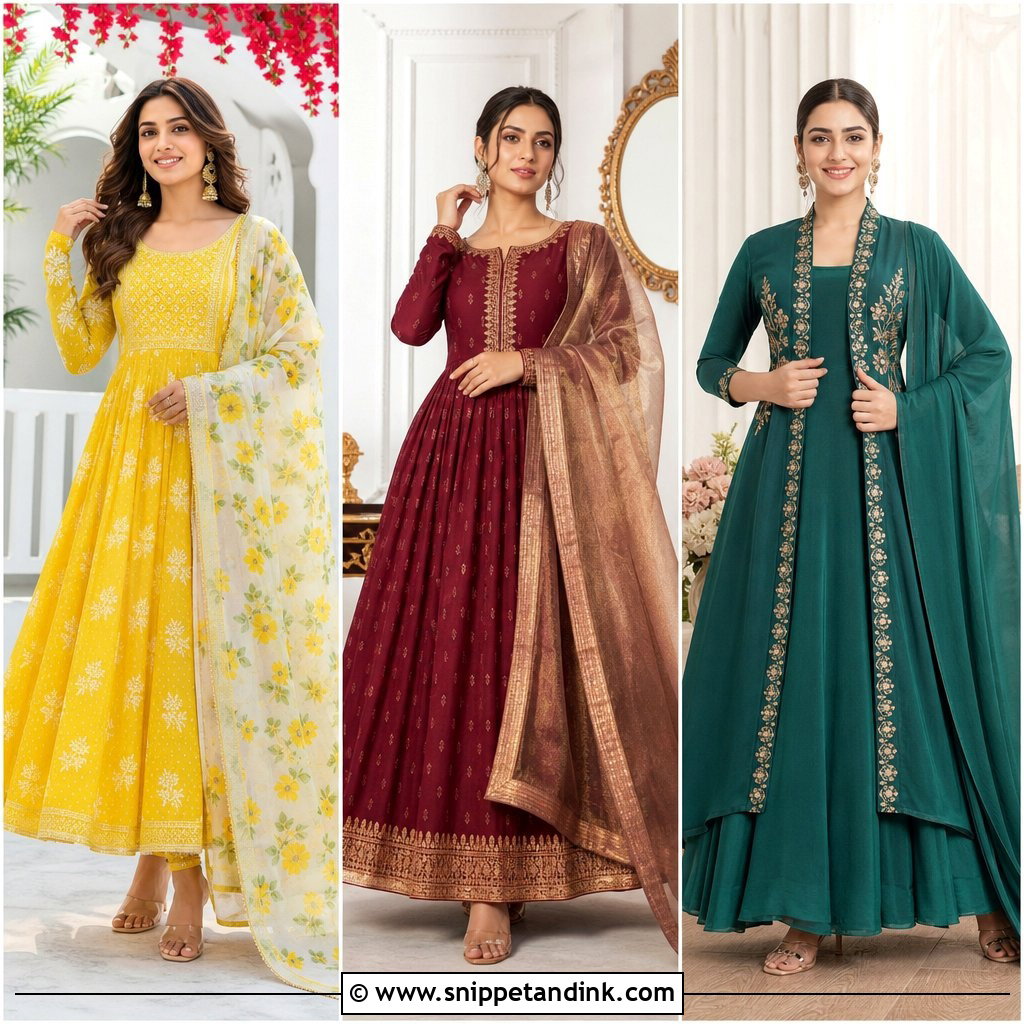
Velvet is a reception fabric, rich in emerald, navy, maroon, plum or royal blue, and it carries gold embroidery better than almost anything. A velvet Anarkali dress is also warm and heavy. I don’t recommend it for an outdoor summer evening; it’s a winter and air-conditioned hall fabric. Keep the cut clean and let the pile do the work. Statement earrings, a sleek clutch, metallic heels and a light net dupatta to soften all that weight.
4. White And Gold Anarkali Dress
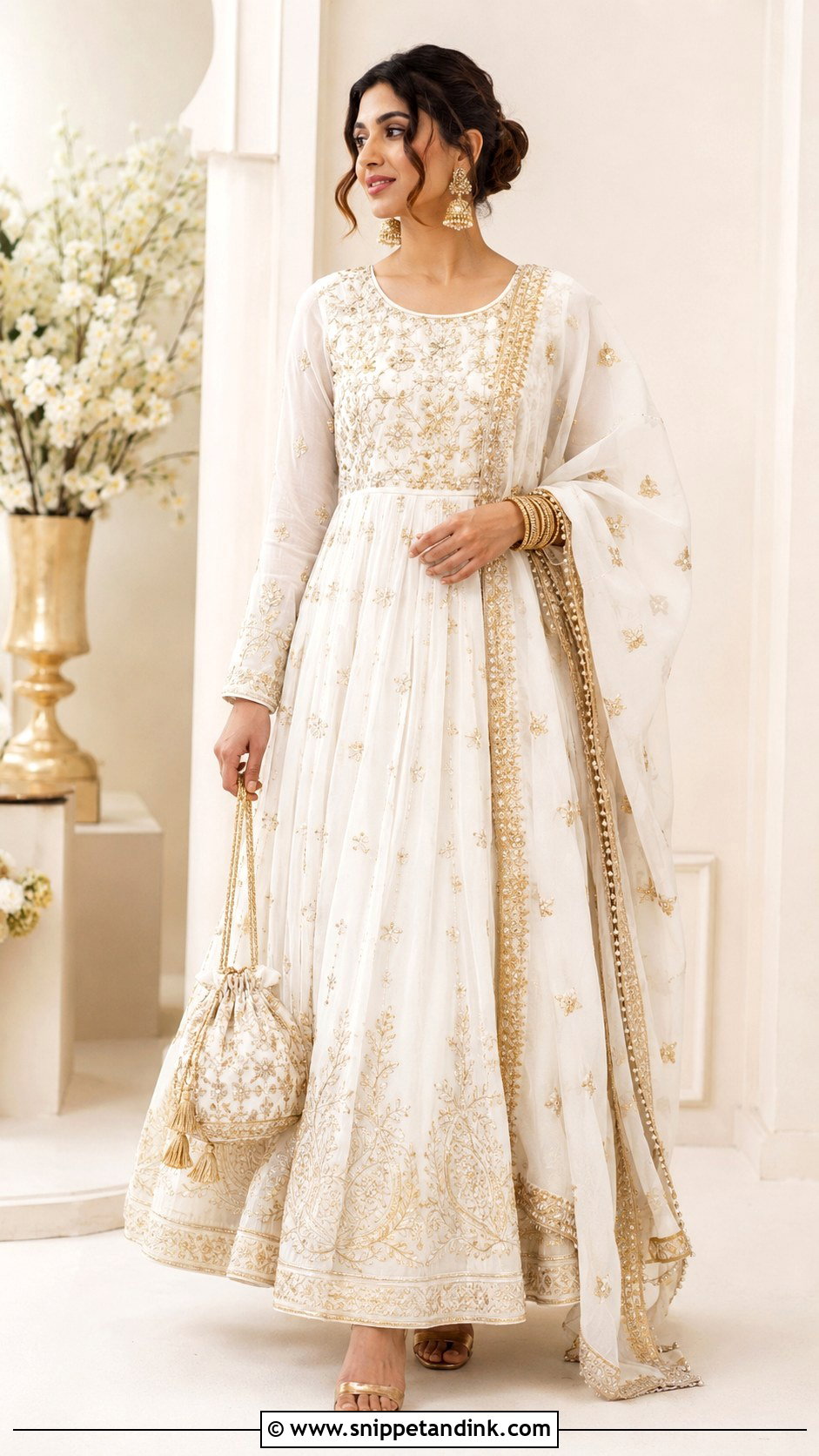
Ivory with gold works for pre-wedding functions and receptions, but check with the family first, since white is avoided at some ceremonies in some communities. Rich surface keeps it from looking plain: chikankari, zari, sequins or brocade panels. I’d pick ivory or cream over optical white, which can look grey next to warm gold in photos. A gold-bordered dupatta, jhumkas, metallic sandals and a potli bag finish it, with a sleek bun and gold bangles.
5. Black Anarkali Dress For Wedding Reception
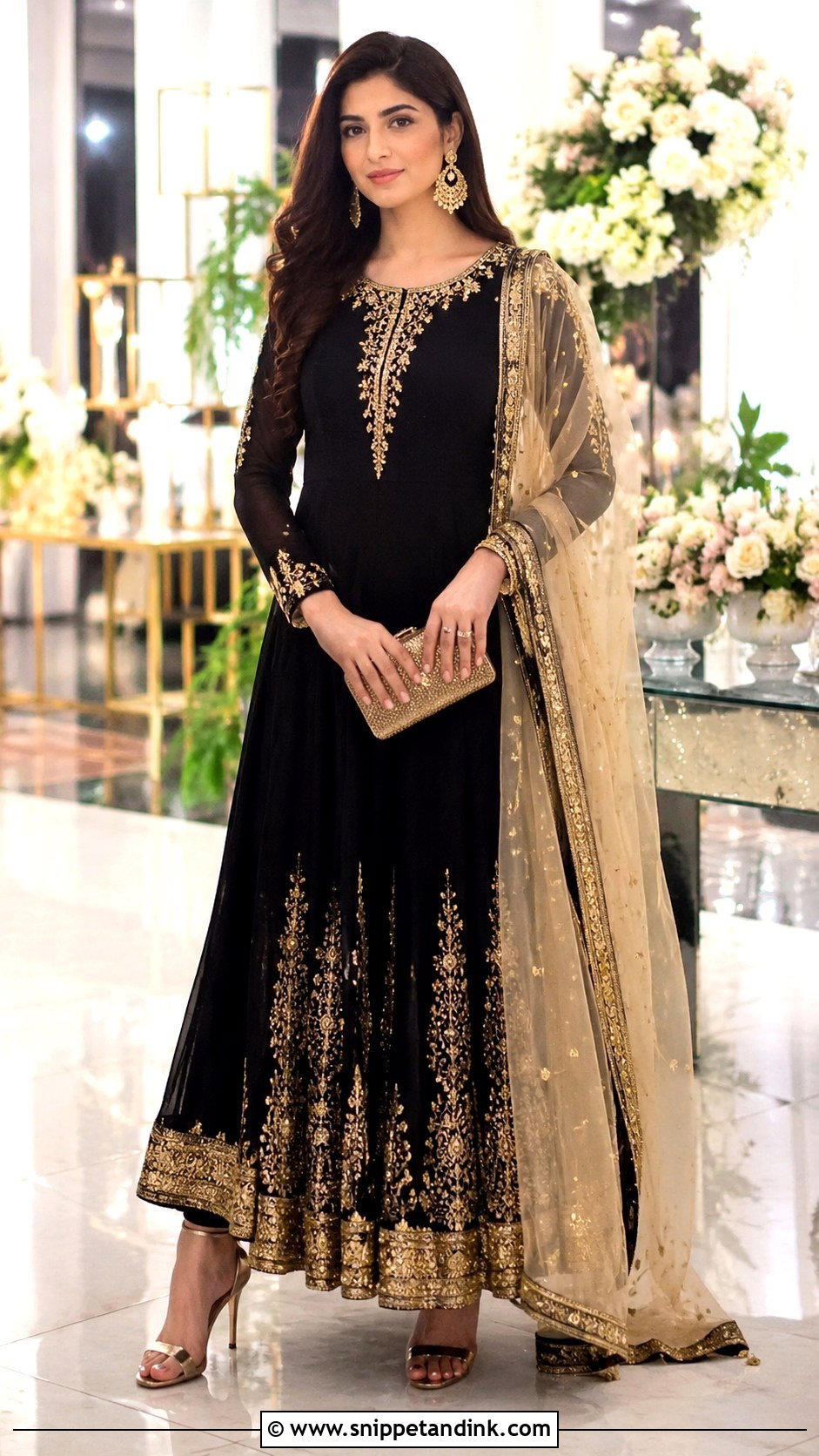
Black can look sharp at an evening reception, but ask before wearing it, because some families consider it inauspicious at a wedding. Where it’s welcome, gold, silver or antique embroidery on black georgette, velvet or silk keeps it festive. A fitted waist and soft flare give it a formal shape. If the dress feels too dark, a gold, champagne or jewel-toned embroidered dupatta lifts it. Kohl-lined eyes, sleek hair, statement earrings and a metallic clutch.
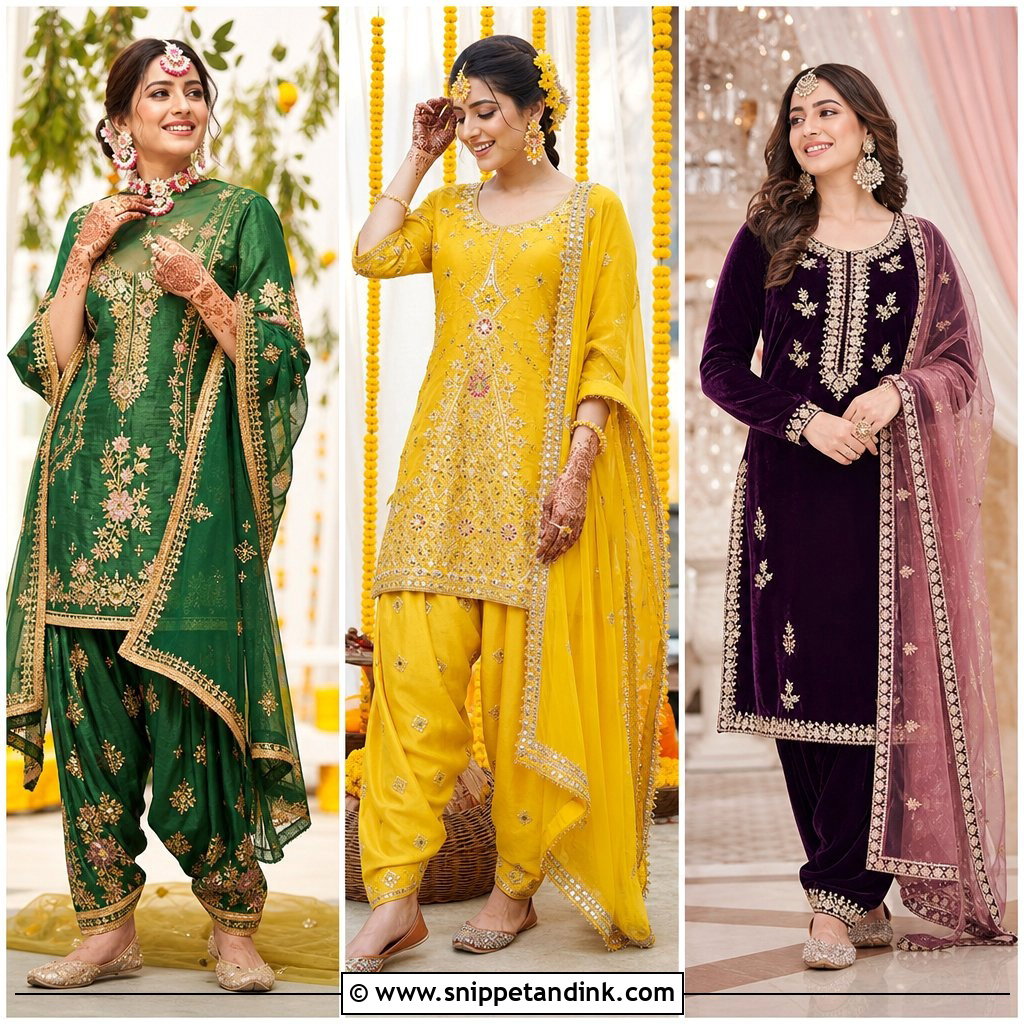
6. Floral Anarkali Dress For Mehndi
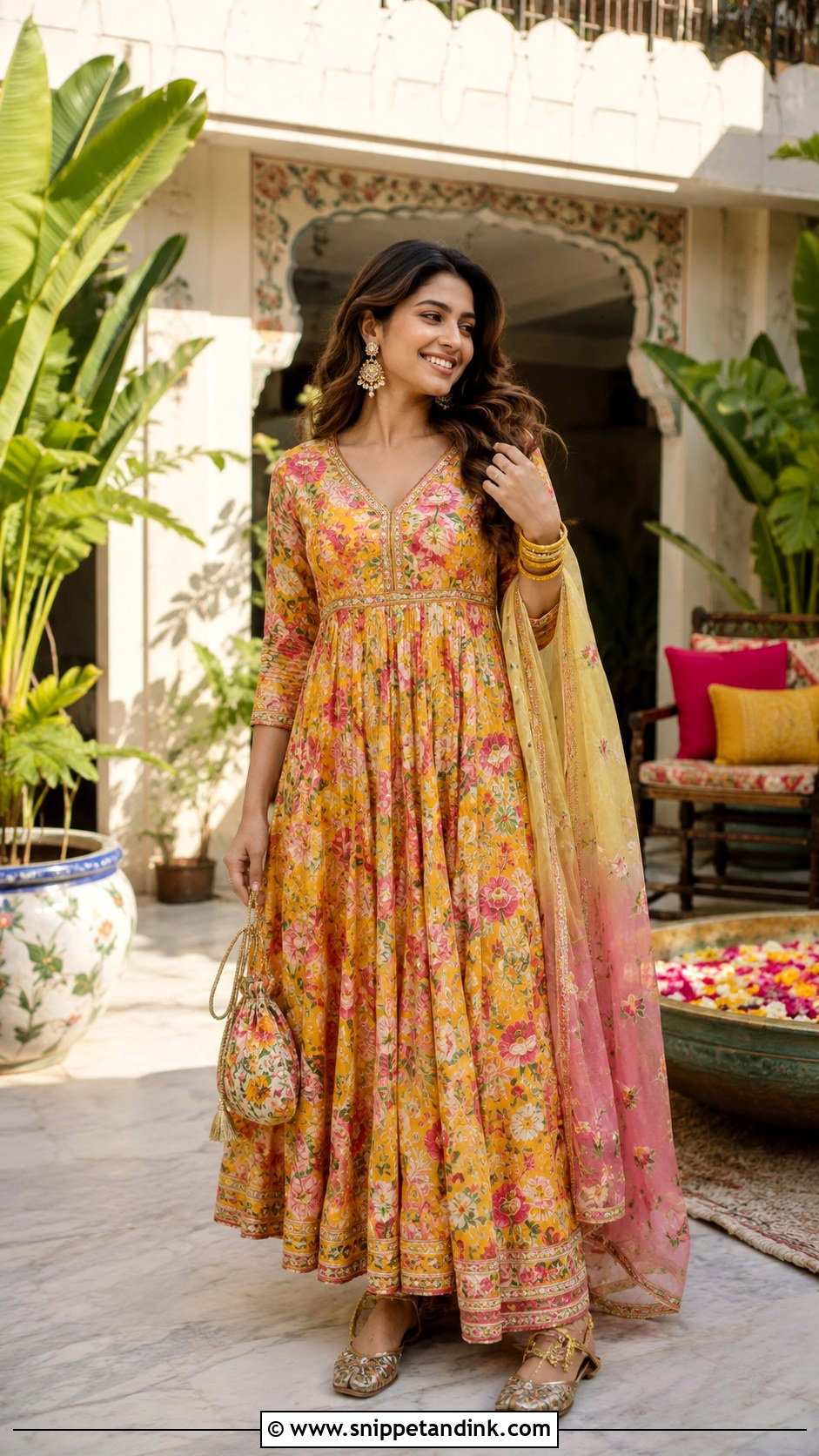
Mehndi days are long, colorful and mostly spent sitting while henna dries. That shapes what I’d choose. Printed or embroidered florals in yellow, green, coral, pink or turquoise look cheerful, and cotton silk, georgette or muslin blends stay comfortable for hours. Elbow-length or three-quarter sleeves help too, since your hands and forearms need to stay clear of fabric while the paste sets. Light earrings, colorful bangles you can slip off, embellished flats and a dewy face with peach blush.
7. Yellow Anarkali Dress For Haldi
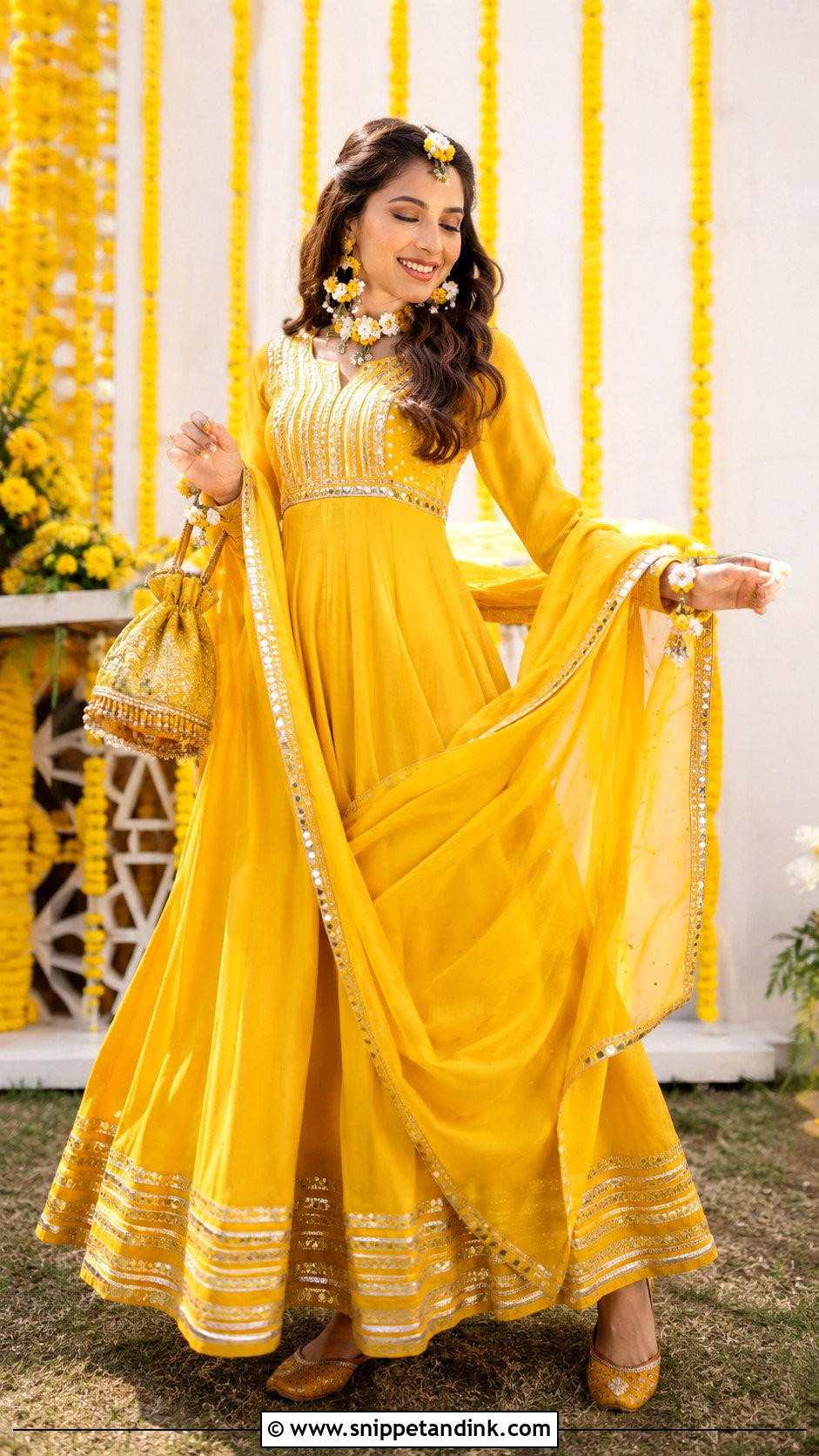
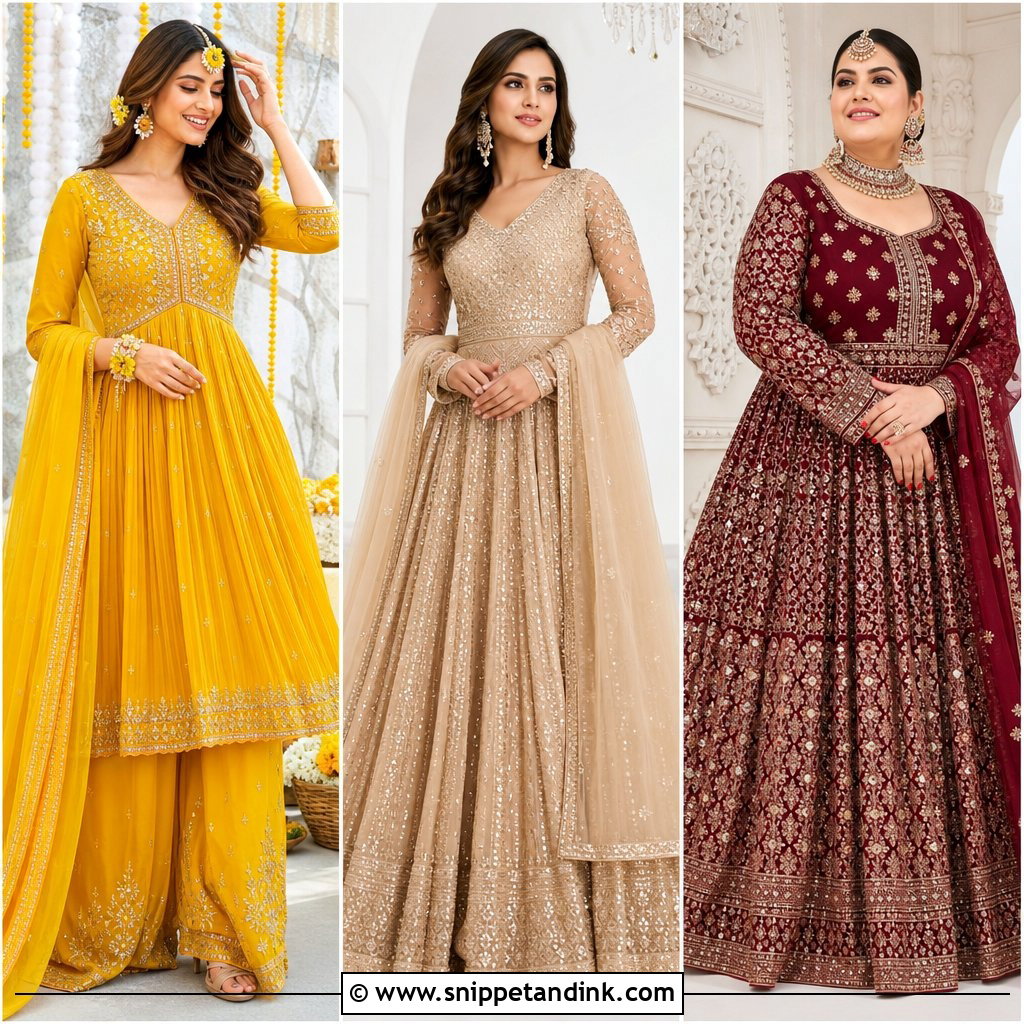
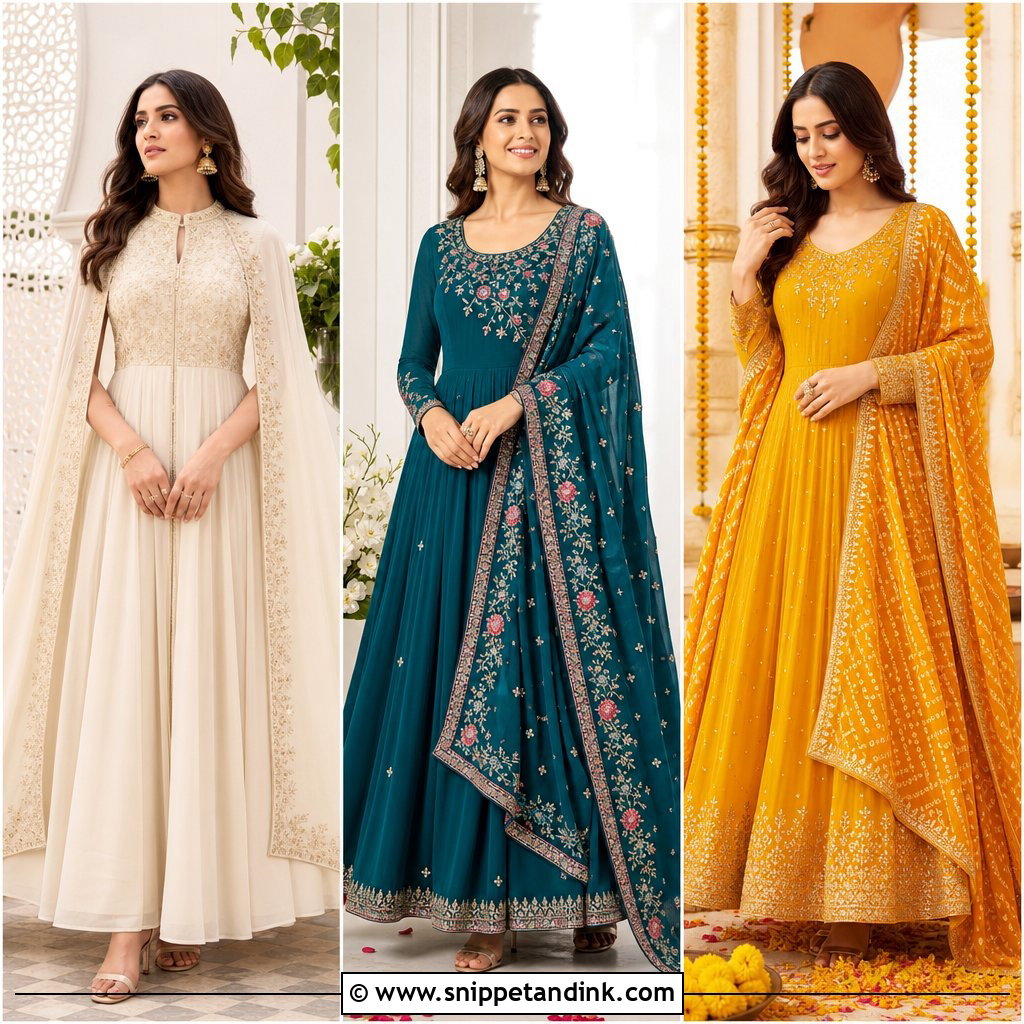
Yellow is the classic haldi outfit because turmeric paste is going to land on it anyway. That’s the practical point most people forget: don’t wear an expensive silk or an heirloom to a haldi, because turmeric stains are close to permanent on delicate fabric. A lightweight Anarkali in marigold, mustard or lemon with gota patti or mirror work is festive and washable. Juttis, floral jewelry and a simple dupatta. Close family can go fuller and heavier; guests can stay printed and light. A braid holds up better than loose waves once the paste starts flying.
8. Green Anarkali Dress For Sangeet
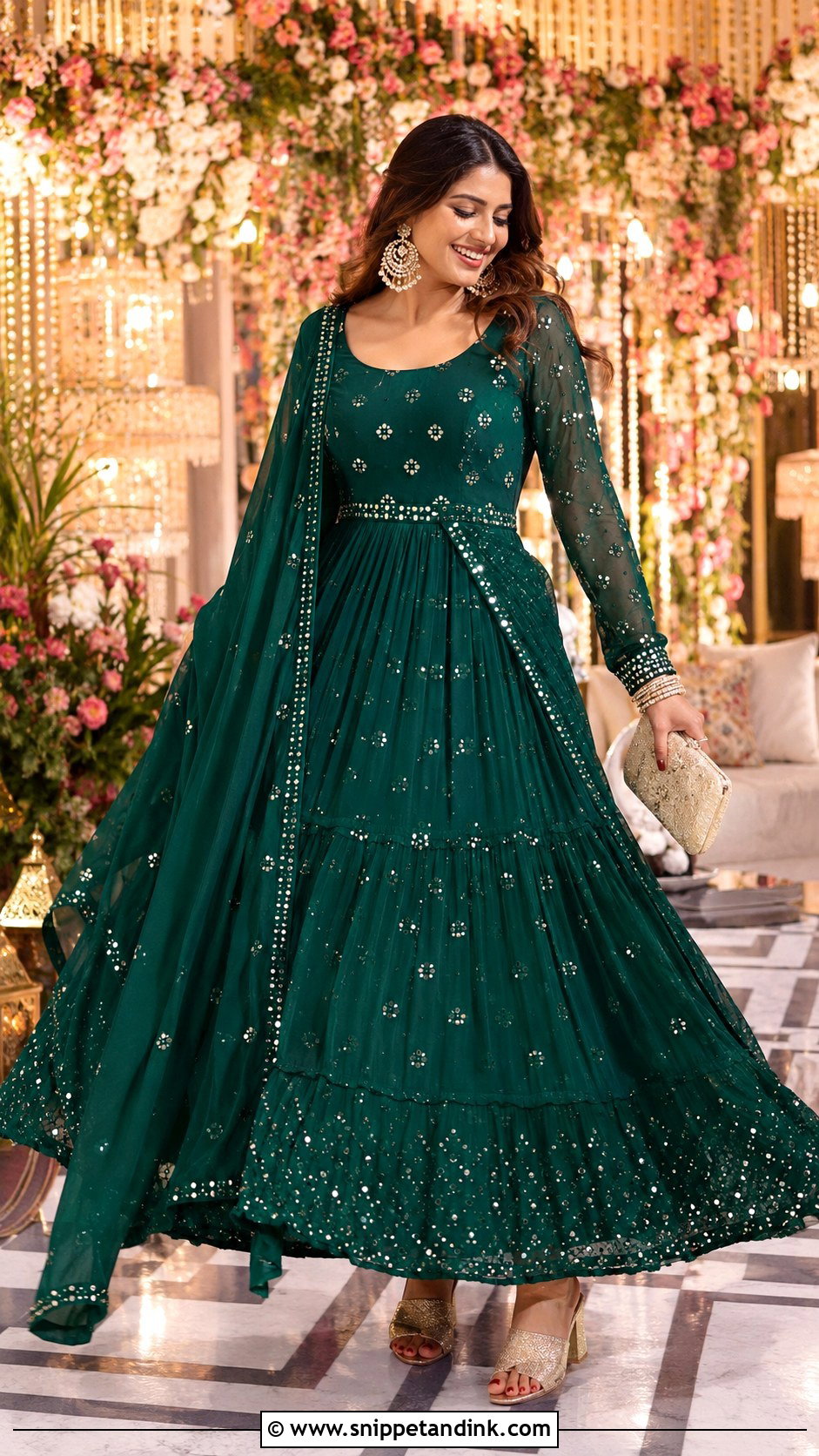
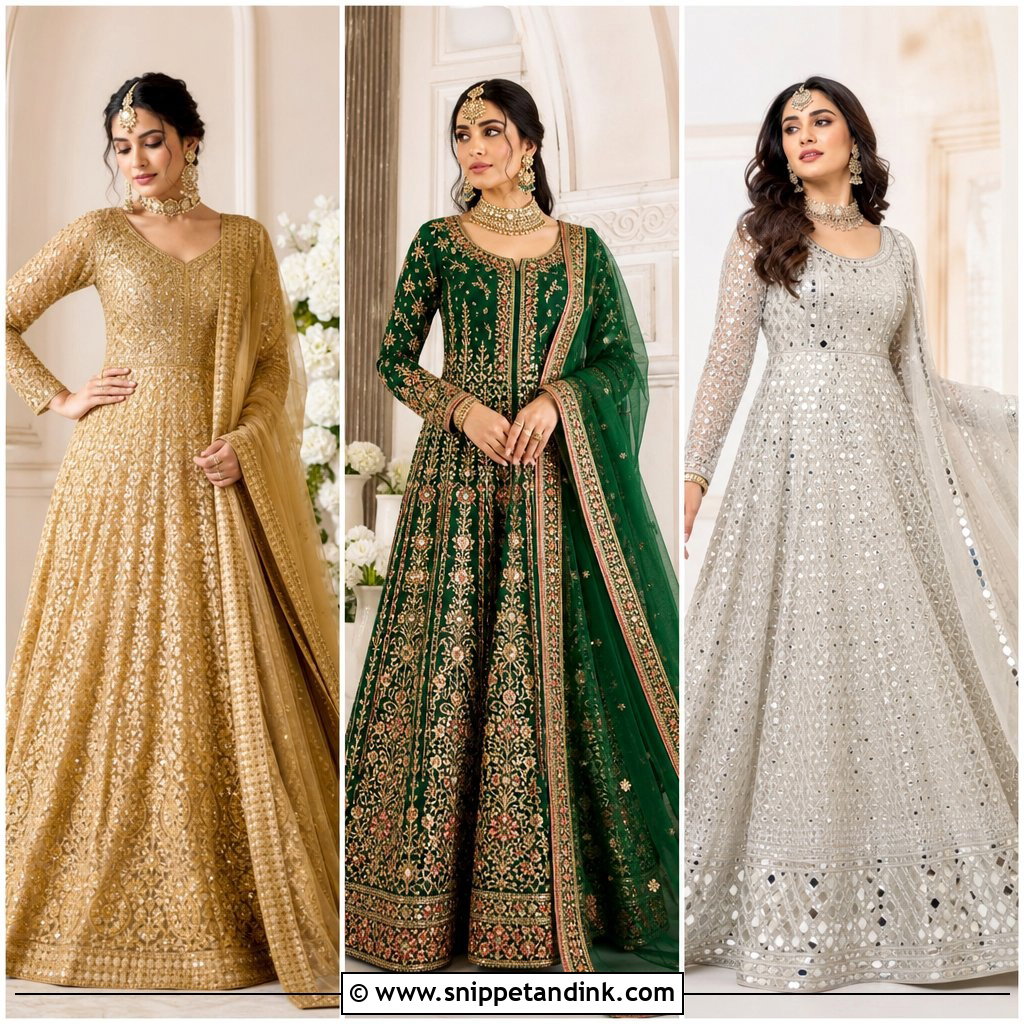
Green suits a sangeet. Emerald and bottle green feel formal; parrot and olive feel playful. Sequins, mirror work or metallic thread catch the dance-floor lights. For dancing, georgette or net moves better than silk, which has more body and swings less. Pin the dupatta firmly on one shoulder so both hands are free, choose heels you can actually dance in, and add chandelier earrings and stacked bangles. Bold liner suits the energy of the night.
9. Blue Anarkali Dress For Wedding
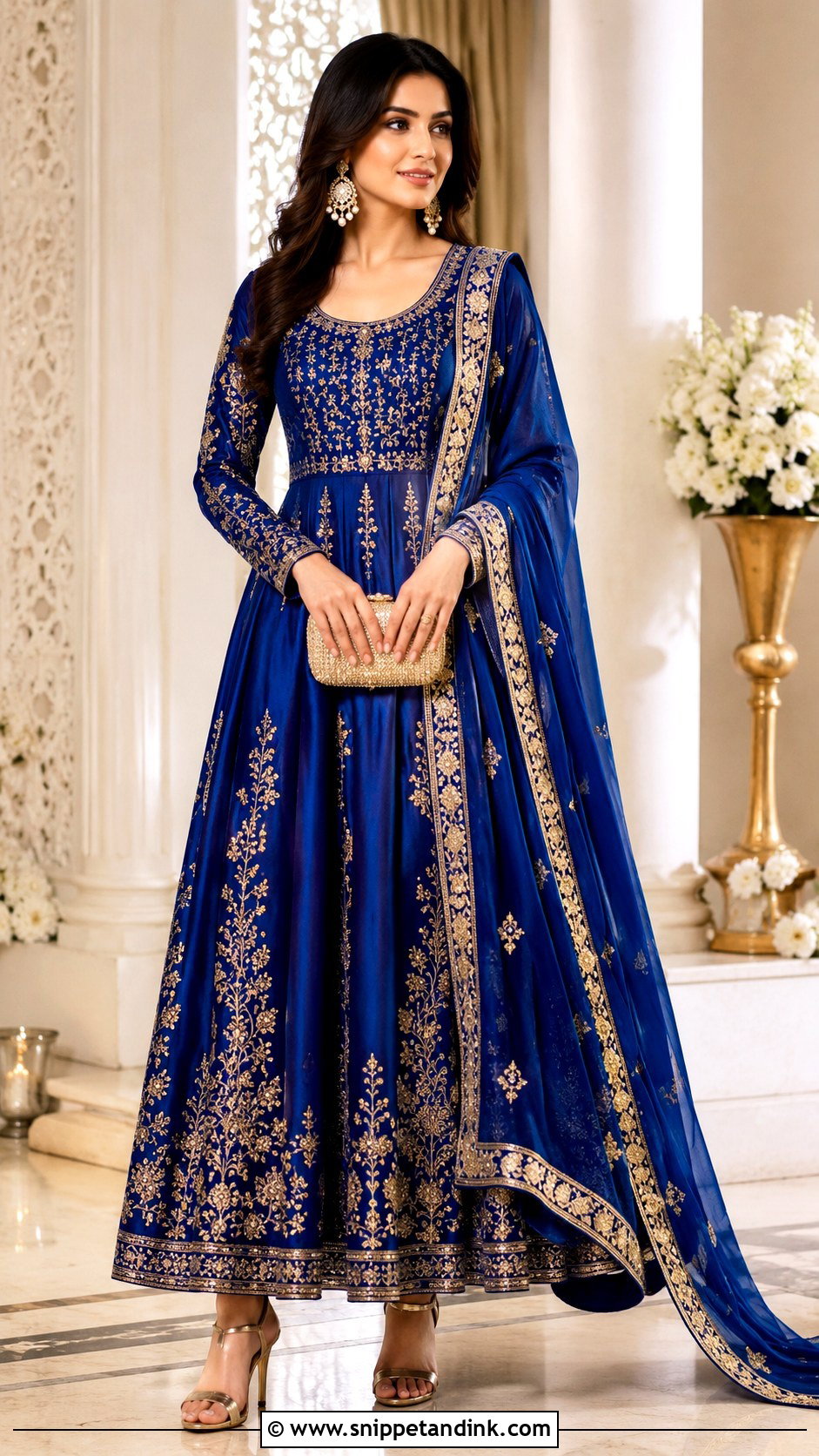
Blue gives you a strong color that doesn’t compete with the bride’s red or pink. Royal blue and navy carry silk and zari for a formal ceremony; teal and powder blue in chiffon or organza suit a daytime event. Match the metal to the shade: silver and pearl sit better on cool powder blue, gold on royal blue and teal. A matching dupatta looks clean, a contrast one more personal. Bridesmaids and sisters often like blue because it stands out in photos without looking loud.
10. Pink Anarkali Dress For Bridesmaid
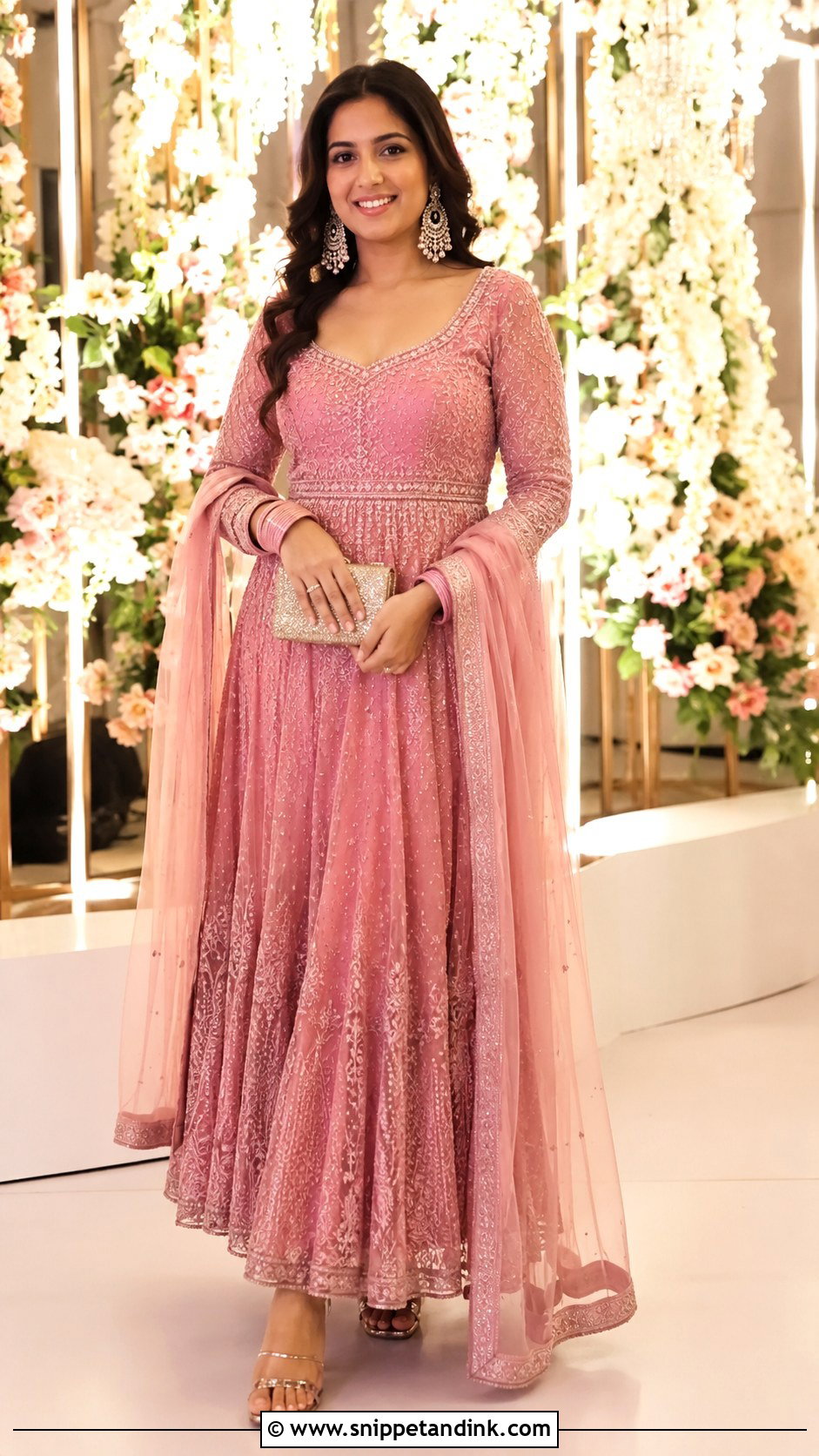
Pink is the easiest color to coordinate across a group of bridesmaids, because the range from dusty rose to rani pink and fuchsia lets each person pick the shade that suits her skin. I’d keep the shades from one family of pink and let the silhouettes vary, so the group looks planned without matching like uniforms. A flattering neckline, medium flare and embroidery at the bodice or hem work on most bodies. Comfortable footwear matters more than usual, since bridesmaids are on their feet running errands. A half-up style and glowing makeup finish it.
11. Mirror Work Anarkali Dress
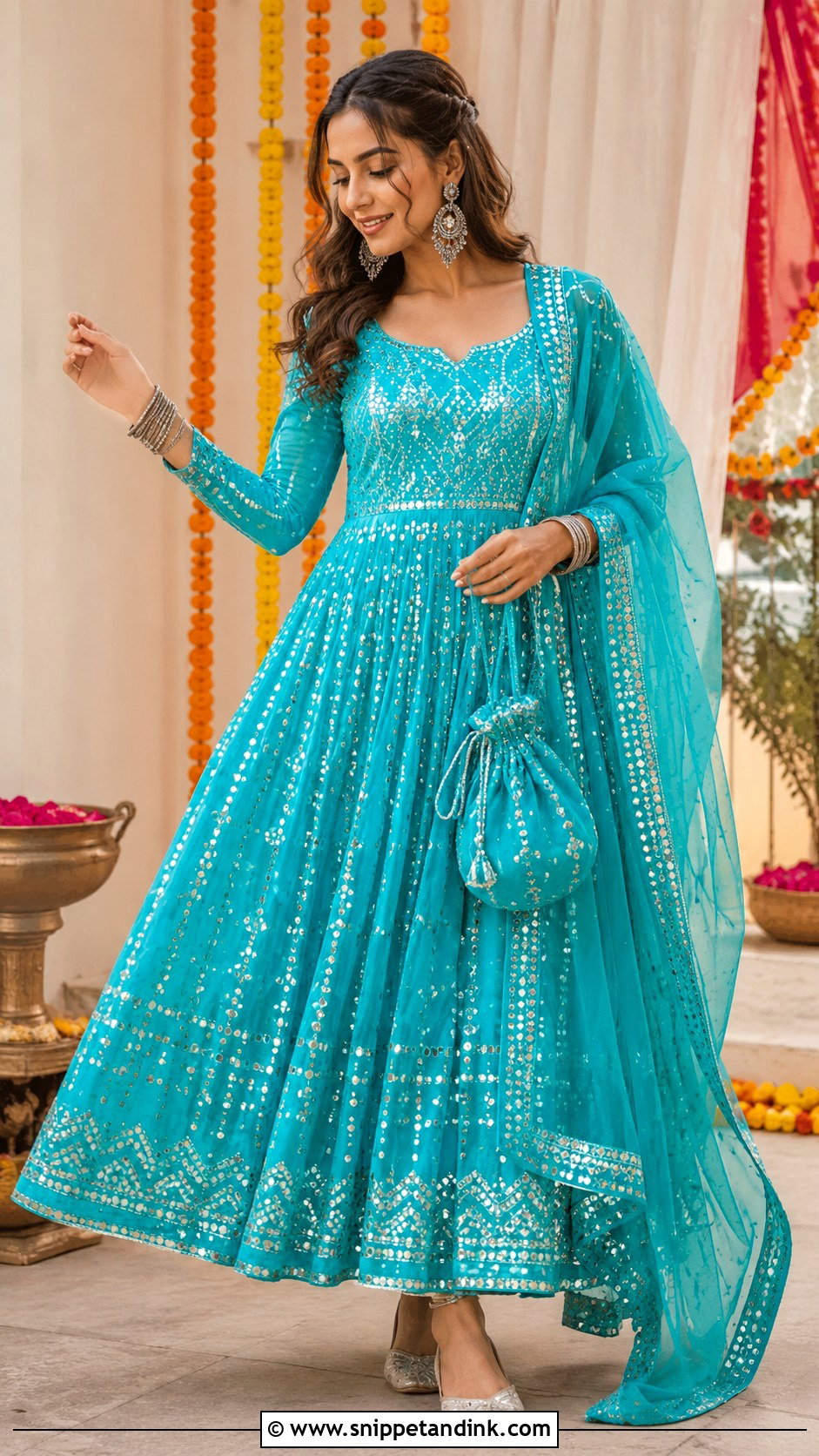
Mirror work does the sparkling for you, so the jewelry can stay modest. Orange, pink, blue, green or yellow bases suit mehndi and sangeet, where the mirrors pick up every light. One practical note: the small mirrors are stitched on with thread, and they can catch on net dupattas and scratch the inner arm if the work runs up the sleeves. Choose mirror work on the bodice and hem rather than the arms. Juttis or block heels, oxidized earrings and a lightweight dupatta.
12. Chikankari Anarkali Dress For Wedding
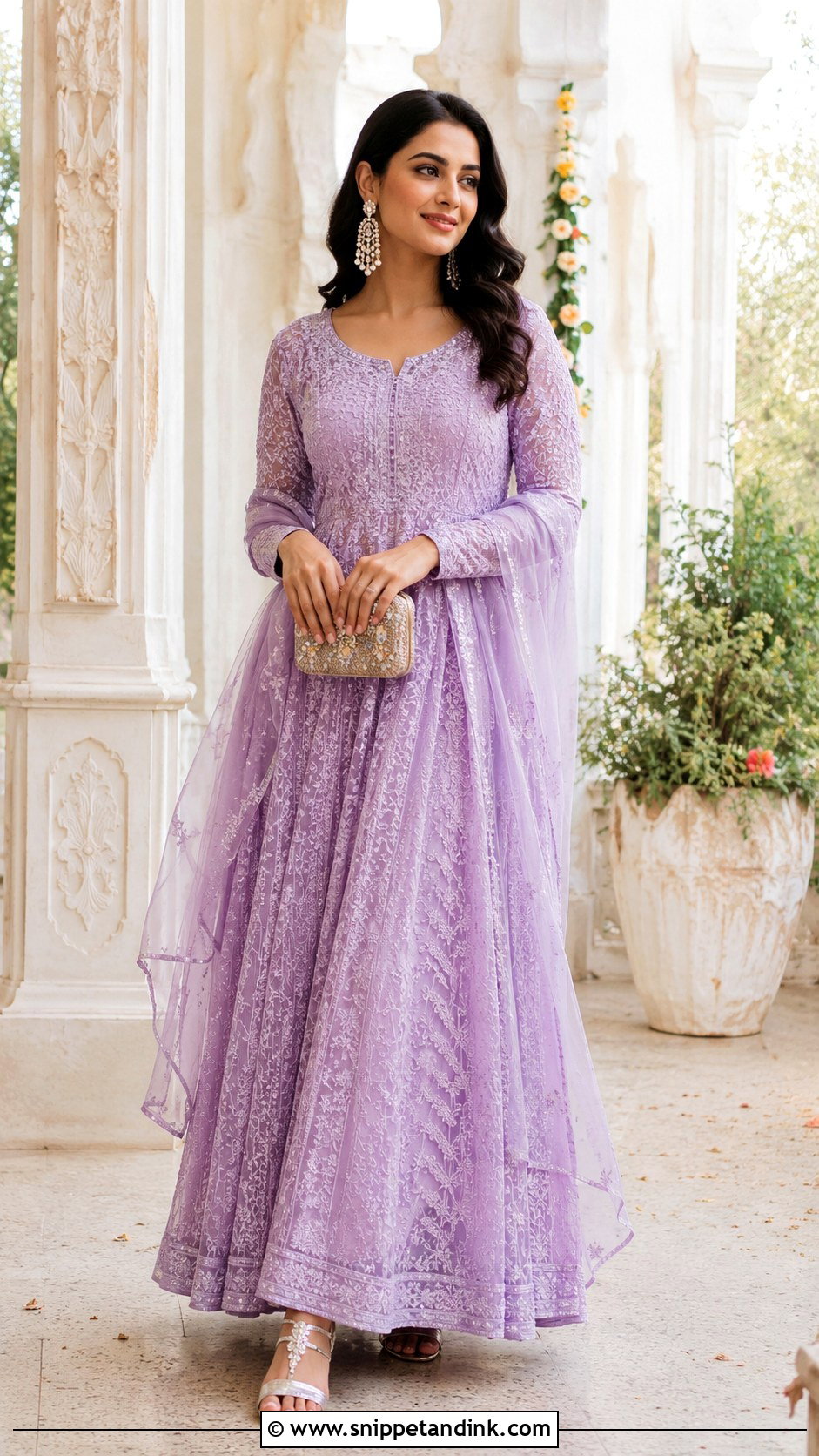
Chikankari is fine hand embroidery traditionally worked in white thread, and it reads quiet and refined rather than sparkly. Ivory, peach, lavender and sage chikankari Anarkalis suit daytime ceremonies, engagements and family gatherings. I like it for women of every age because it’s light to wear. If the piece is very pale, add contrast with earrings or a bangle stack, and pearls suit the delicacy of the work. A neat bun and soft makeup.
13. Silk Anarkali Dress For Wedding
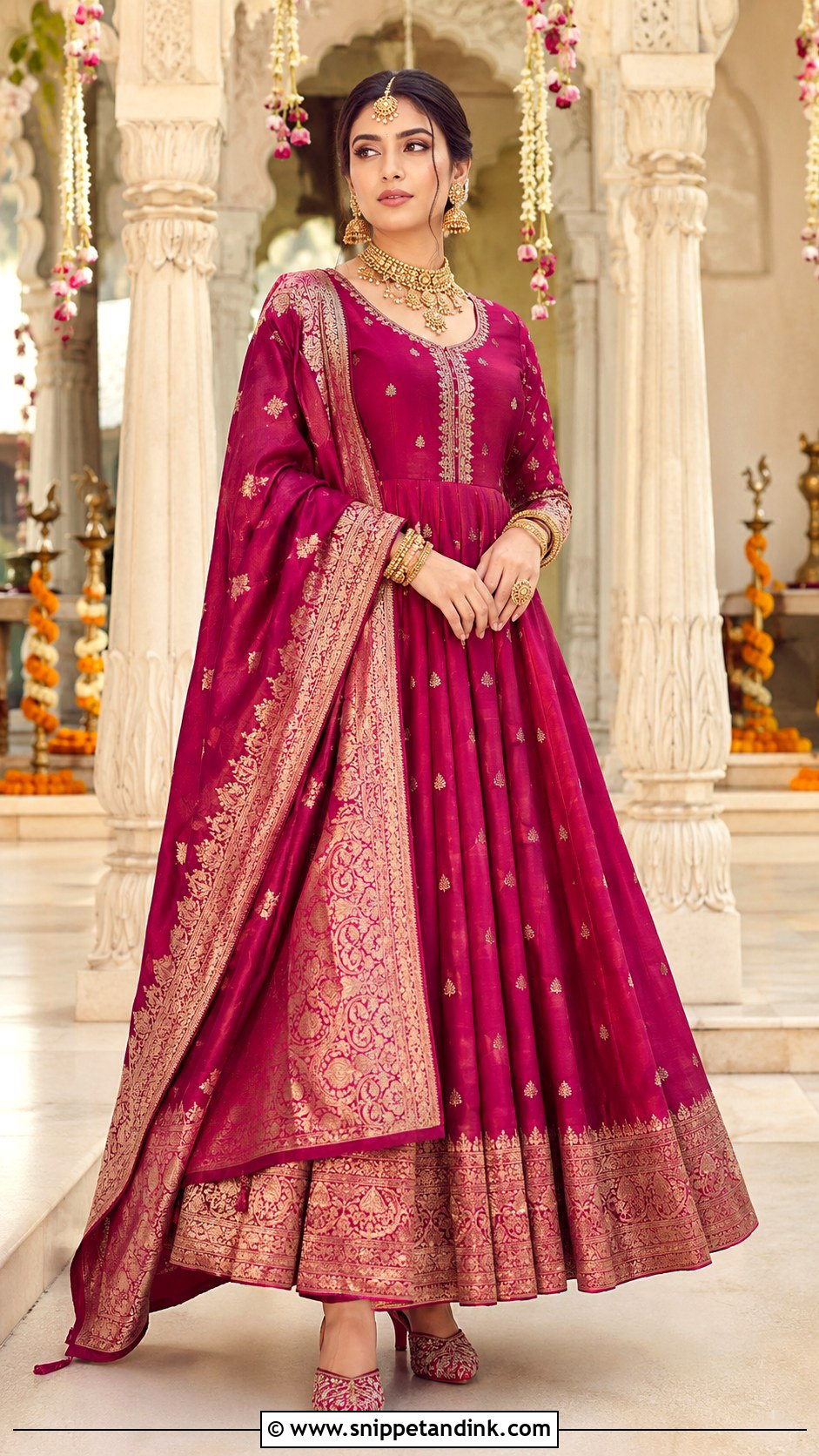
Silk gives an Anarkali its structure, so the flare stands away from the body instead of hanging. A silk Anarkali dress in raw silk or Banarasi silk with woven motifs and zari borders suits ceremonies and engagement functions. Red, magenta, emerald, mustard and royal blue hold their depth in silk. Real silk creases where you sit, so steam it just before you dress, not the night before. A matching churidar, a brocade dupatta, temple jewelry and a sleek hairstyle complete it.
14. Net Anarkali Dress For Reception
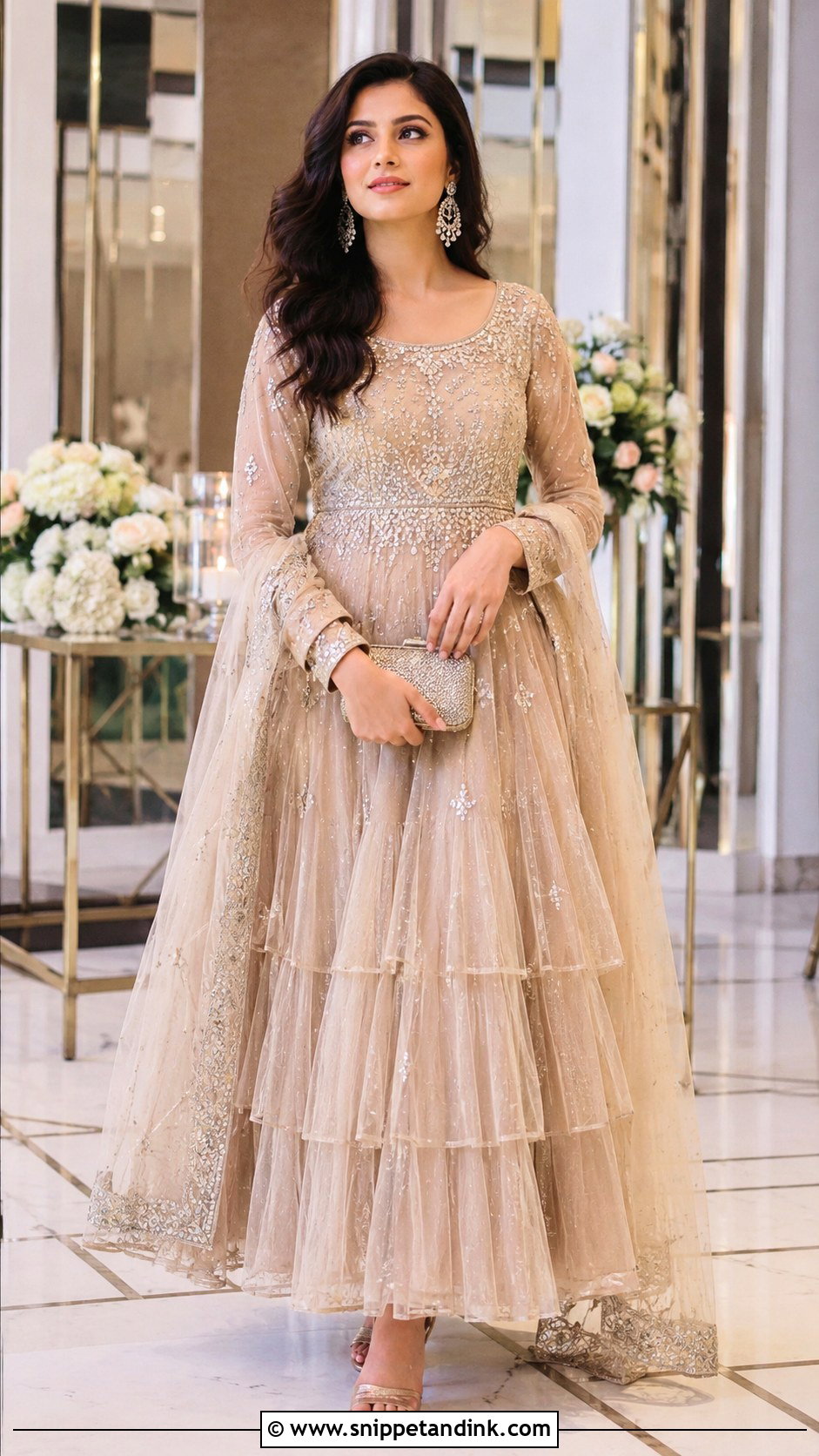
Net Anarkalis depend on their lining. Without a proper one the embroidery hangs heavy and the net scratches the skin, so I check the inner layer before I look at the outer one. Layered floor-length net with sequins or beadwork on the bodice and hem gives a gown-like effect for an evening reception. Champagne, mauve, silver, blush and navy all look polished at night. Pin a net dupatta neatly, since loose net catches on everything. Crystal earrings, metallic heels and luminous makeup.

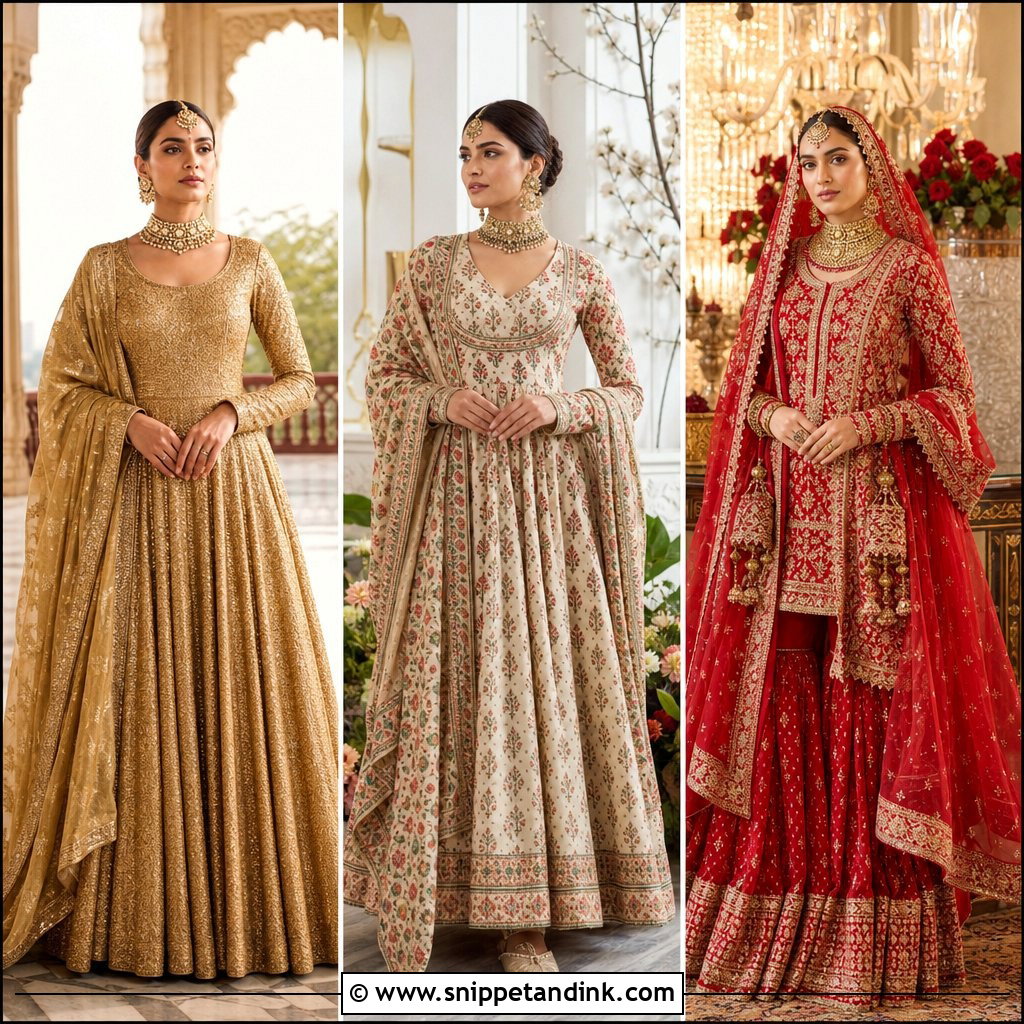
15. Organza Anarkali Dress For Day Wedding
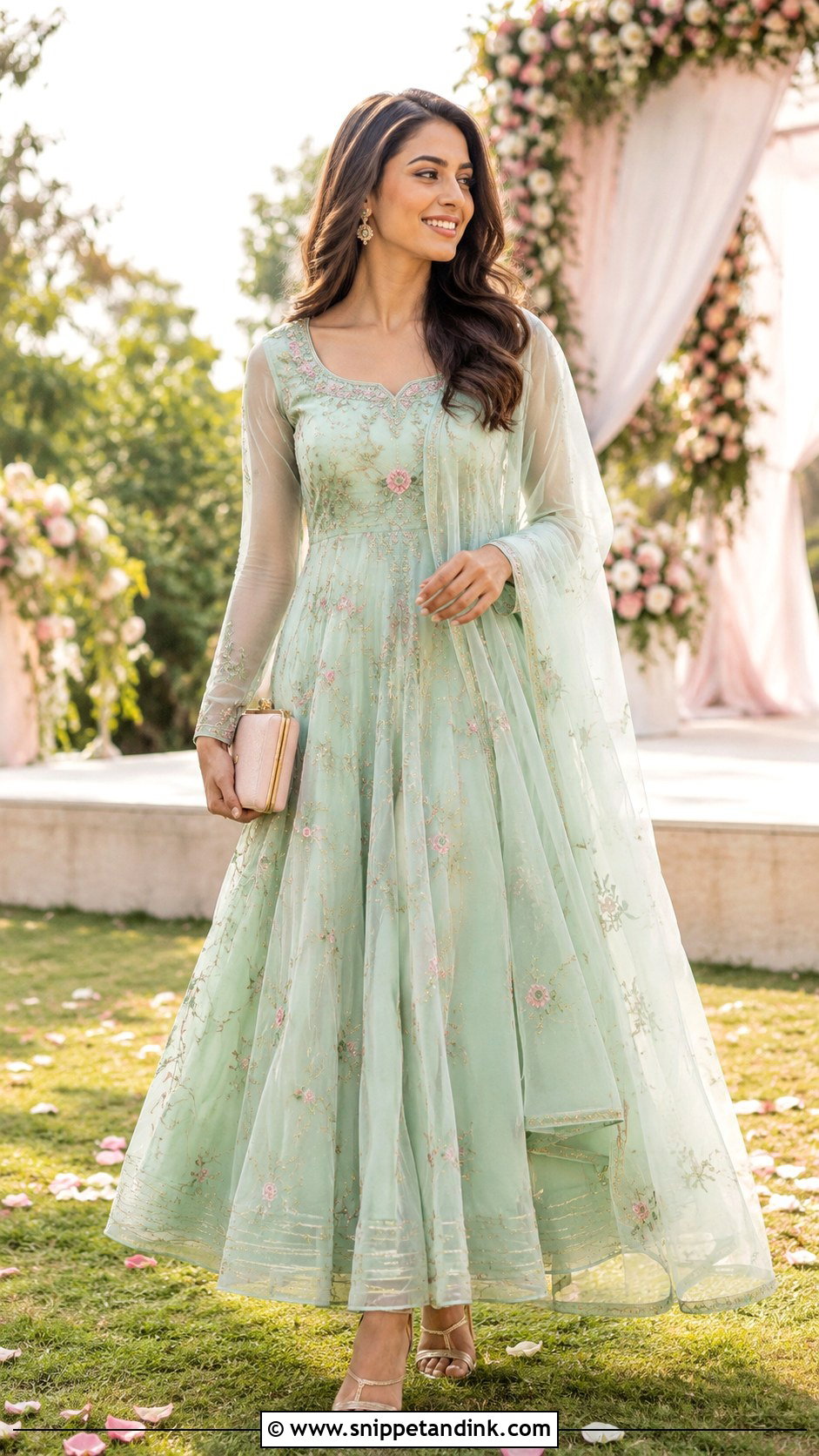
Organza is crisp and light, so it gives volume without weight, which is what you want outdoors in the heat. Peach, mint, ivory, lavender and powder pink with floral embroidery or pearls suit day weddings best. Organza does crease sharply and the creases don’t fall out on their own, so travel with it on a hanger rather than folded in a suitcase. Strappy heels, a dainty clutch and minimal jewelry, with a sheer organza dupatta and soft waves.
16. Cape Anarkali Dress For Wedding
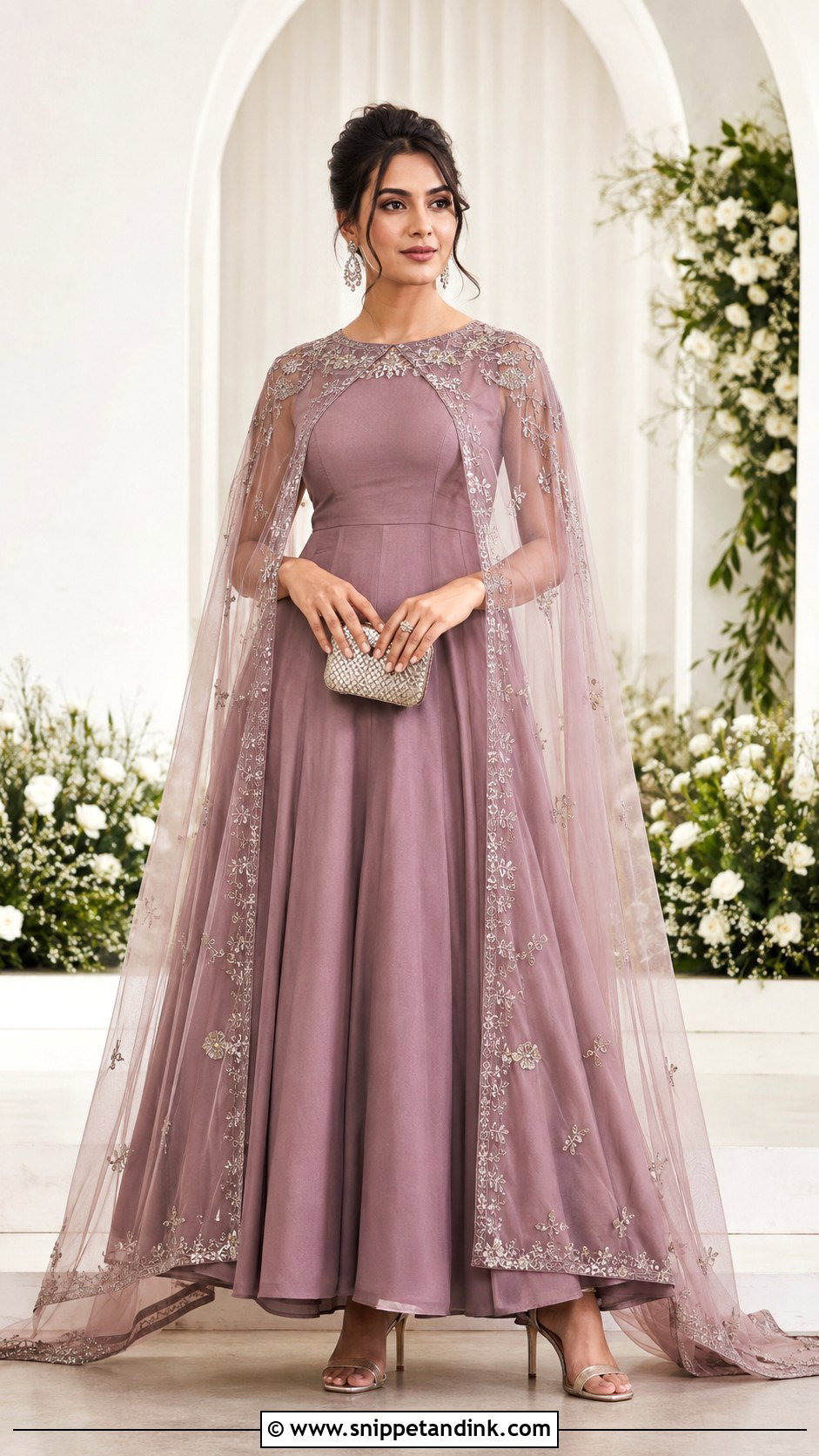
A cape replaces the dupatta, and that’s its biggest advantage: it stays put while you walk, greet guests and dance. Sheer, embroidered or beaded capes attached at the shoulders look modern at receptions, cocktail events and sangeets. Keep the Anarkali under it solid so the cape stays the focus. Necklines on cape styles often carry their own detail, so skip a heavy necklace and wear drop earrings instead, with sleek heels and a small clutch.
17. Jacket Anarkali Dress For Wedding
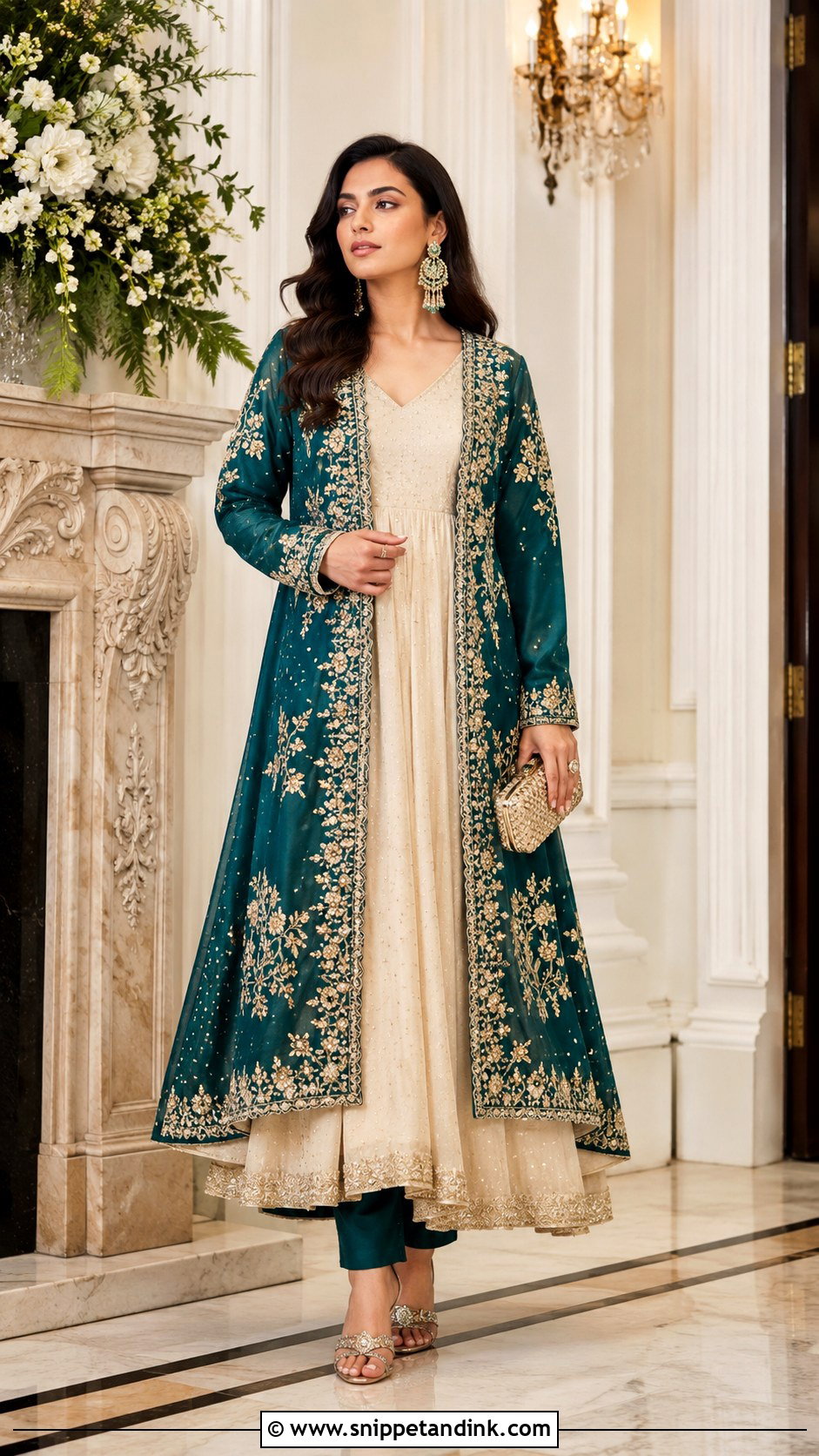
Layering a short, waist-length or long jacket over a plain Anarkali gives depth without a busy print. A jacket Anarkali dress in brocade, mirror work or zari suits cooler weather, receptions and family ceremonies. The jacket adds a layer of warmth, so I’d avoid it for a crowded summer hall. Usually it doesn’t need a dupatta; add one only for a more traditional function. A sleek bun and embellished heels keep the look regal for bridesmaids and close relatives.
18. Anarkali Dress With Banarasi Dupatta
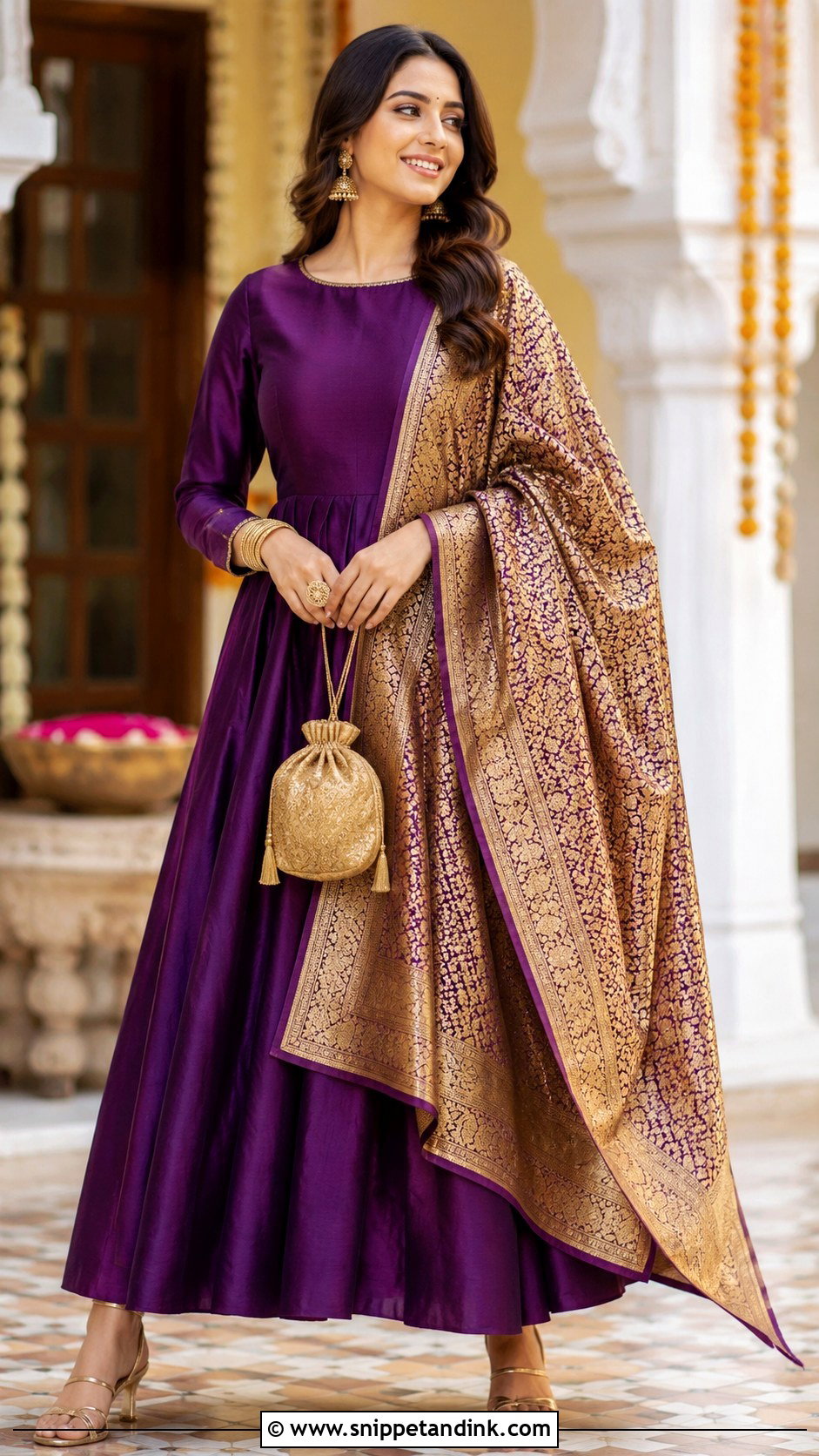
A Banarasi dupatta can carry an otherwise simple outfit. Start with a solid Anarkali in silk, georgette or cotton silk, then add a Banarasi in gold, contrast pink, green, purple or red. Banarasi weaves are heavy, so a single shoulder drape needs one pin hidden under the fold at the shoulder and a second at the waist. Jhumkas, bangles, a potli bag and metallic sandals. It’s a good approach for mothers and sisters who want elegance without embroidery all over the dress.
19. Anarkali Dress With Palazzo Pants
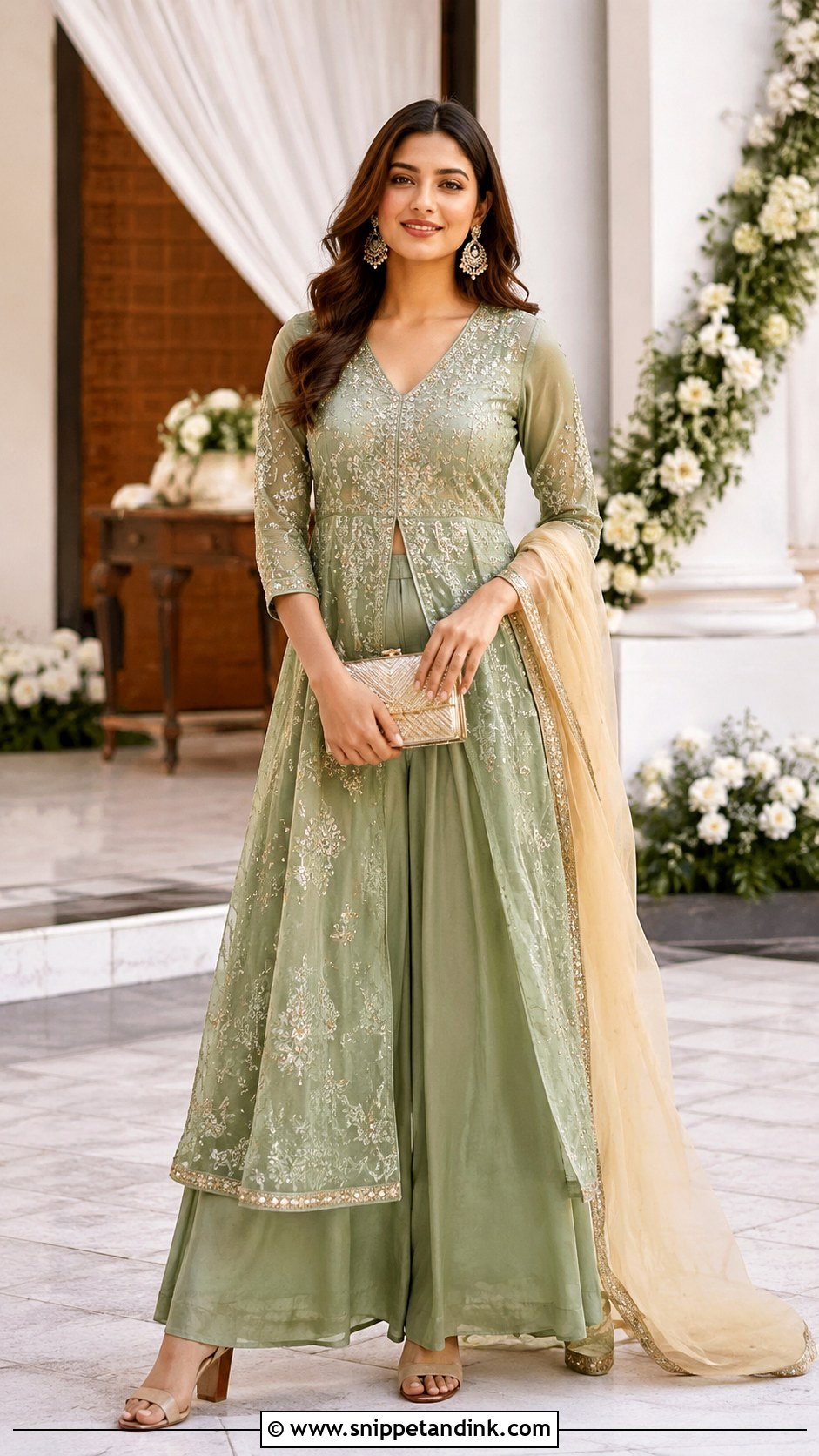
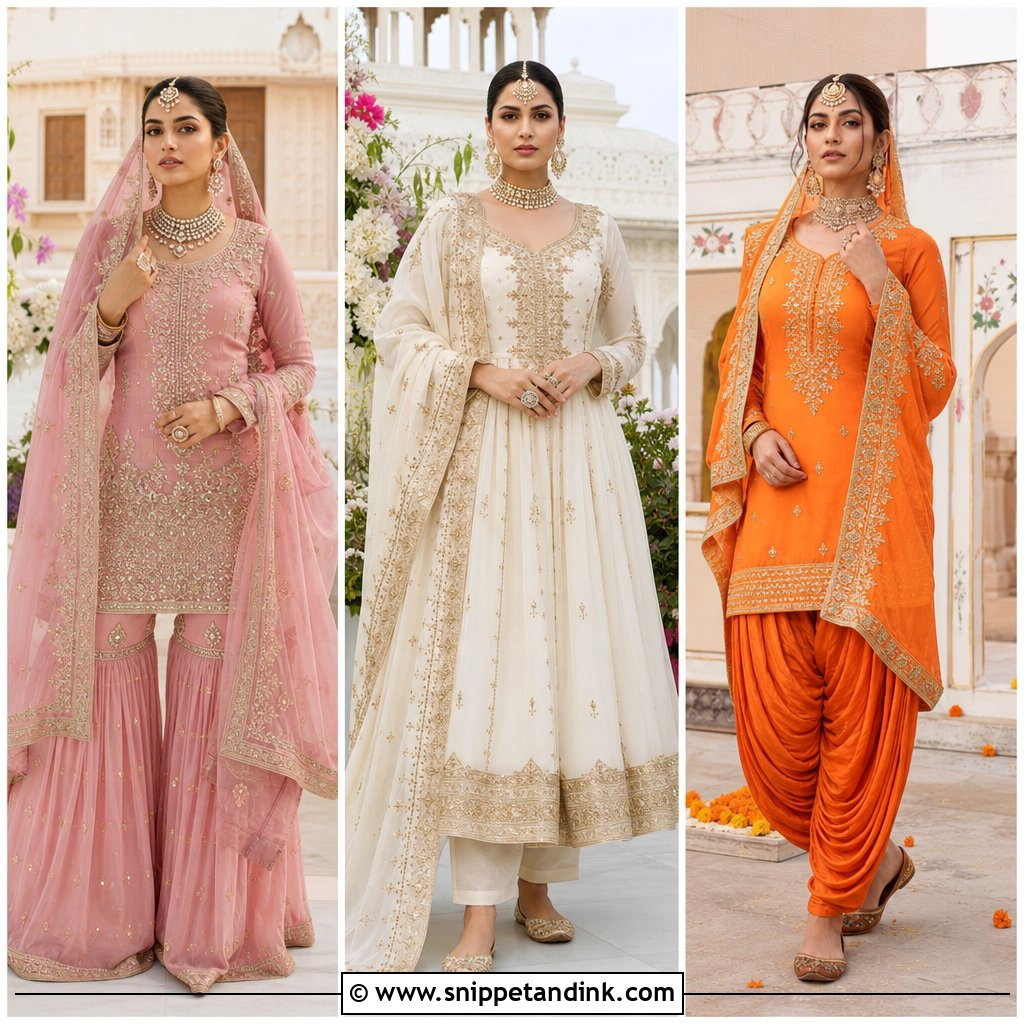
Palazzos change the whole silhouette: softer than a churidar, much easier to sit and walk in over a long day. A front-open or side-slit Anarkali lets the palazzo show. Georgette, crepe, silk blends and chiffon drape well for this pairing. I suggest it often to women who don’t like a tight churidar at the ankle. Keep the top and the palazzo in the same color family so the line stays long, then add block heels, earrings and a simple dupatta.
20. Anarkali Dress With Sharara
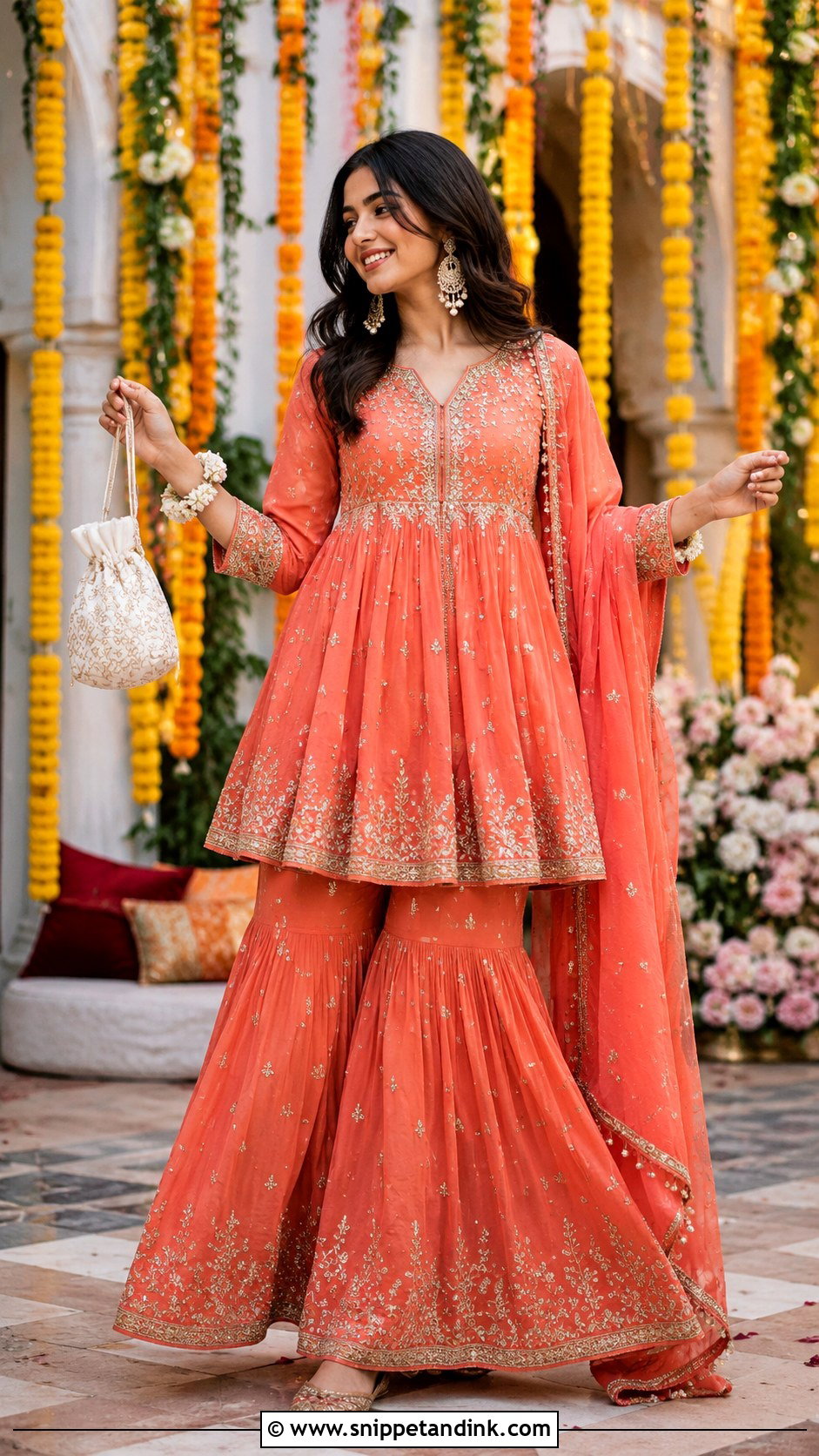
Shararas only show when the Anarkali stops short or splits high, so an Anarkali dress with sharara bottoms needs that cut or the flared bottoms disappear under the skirt. Mirror work, gota patti, sequins or colorful thread suit mehndi and sangeet. The sharara has plenty of movement, which makes it fun to dance in. I’d keep juttis rather than heels, since a sharara hem is easy to step on. Bold earrings and a light dupatta pinned to one side.
21. Floor Length Anarkali Dress
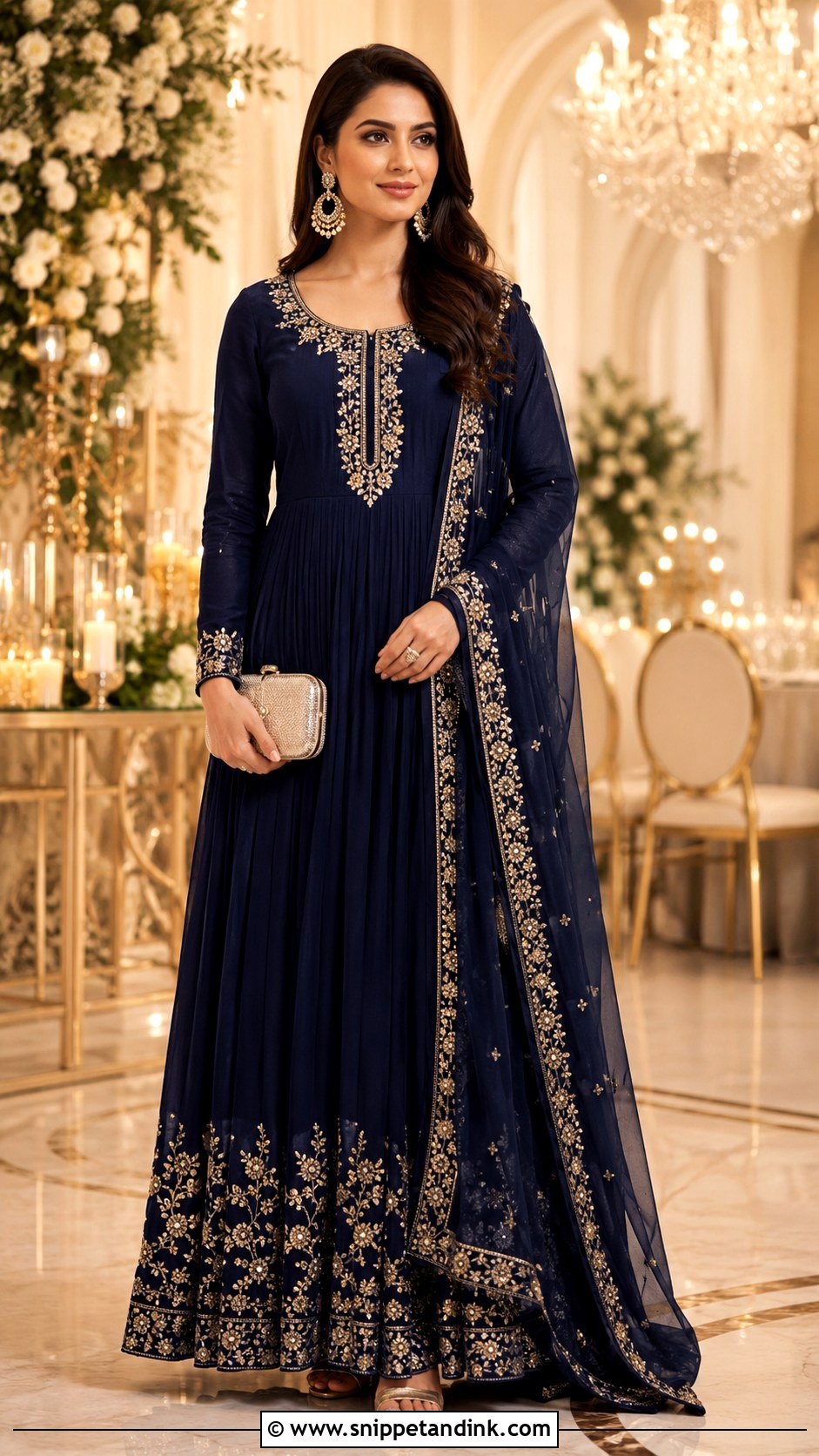
Floor length gives an Anarkali a gown’s presence while staying traditional. A fitted top, defined waist and wide flare with embroidery at the neckline, sleeves and hem suit receptions, engagements and formal evenings. Have the hem finished with your actual heels on so it clears the floor by a finger’s width; a dragging hem picks up dust and gets trodden on all night. One long vertical line flatters most bodies. Statement earrings, a clutch and a soft dupatta if you want one.
22. Short Anarkali Dress With Churidar
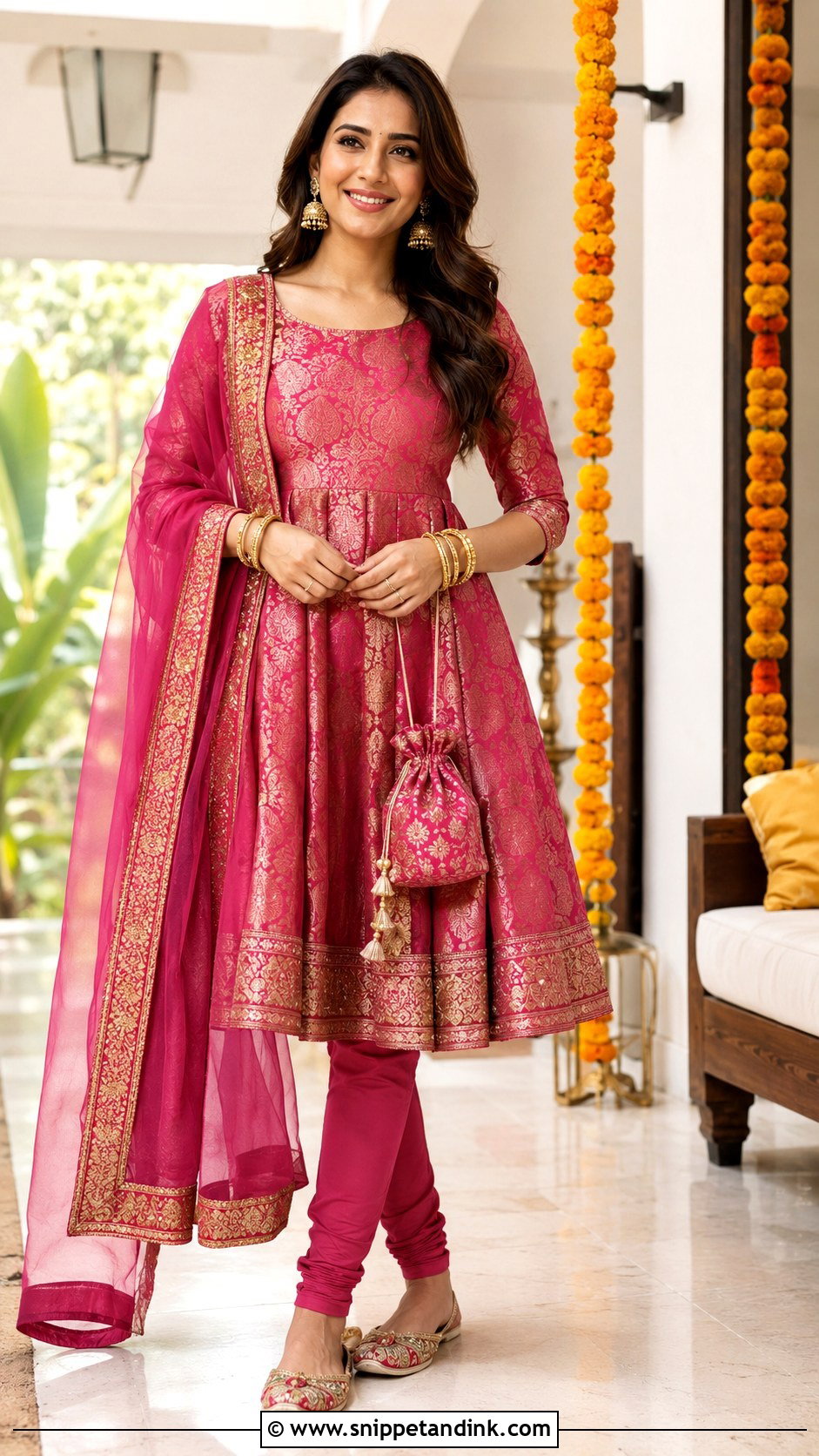
The knee-length Anarkali with churidar is the most practical cut here. You can climb stairs, sit through long rituals and move around a crowded venue without lifting a skirt. Silk, brocade, georgette or cotton silk with festive embroidery all work. Pair it with a fitted churidar, juttis or heels and a bordered dupatta. It suits pre-wedding ceremonies, smaller family events and older relatives who value comfort. Bangles and earrings are enough.
23. Heavy Embroidered Anarkali Dress
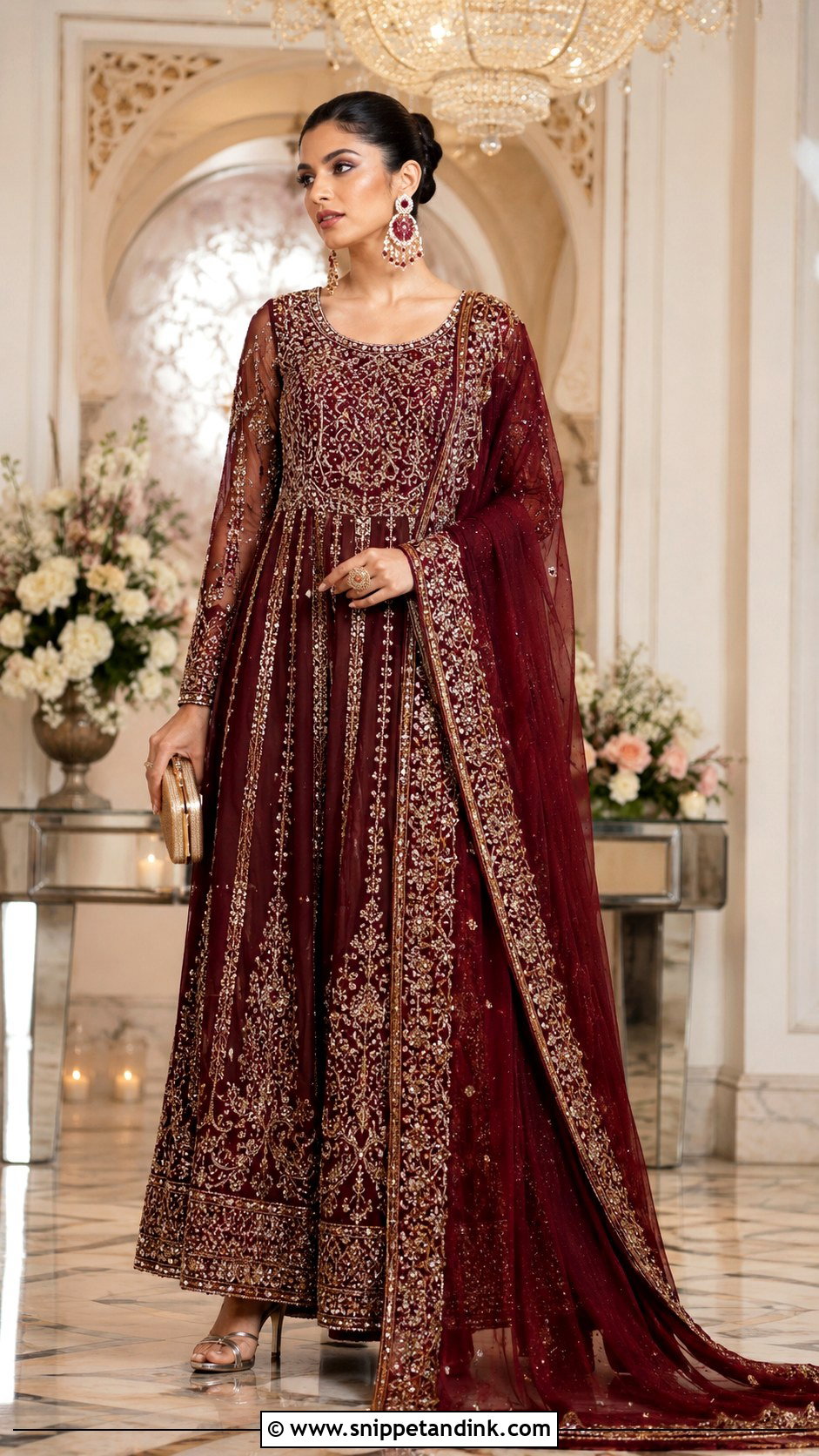
Heavy zardozi, zari, resham or beadwork is for the grand functions. On silk, velvet, net or georgette, this much embroidery is the statement, so earrings, a ring and a clutch are often enough. The real issue is weight. Fully worked pieces can pull on the shoulders after a few hours, so I check the shoulder seams and ask for a lined, firm yoke that spreads the load. A matching dupatta with border work adds drama without competing. Brides, sisters and close family suit this most.
24. Minimal Anarkali Dress For Wedding
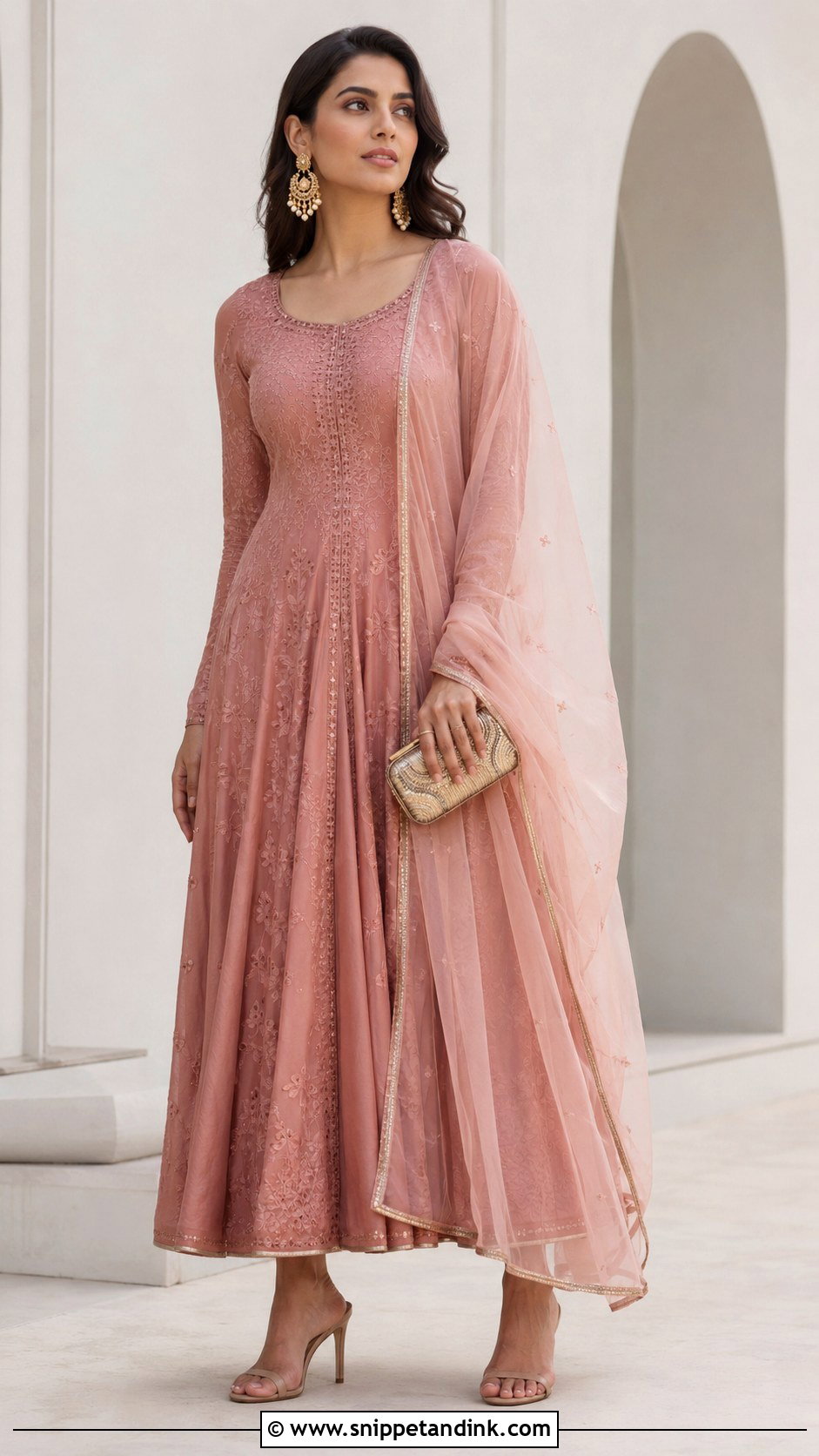
Minimal doesn’t mean plain; it means the fabric and cut have to be good. Clean lines, a rich fabric, a zari border or tonal embroidery and small buttons look considered. Sage, dusty rose, beige, navy and mauve feel modern. This is the Anarkali I’d suggest for a guest at a smaller ceremony or a daytime wedding. Good earrings, heeled sandals, a structured clutch and a light dupatta to mark the occasion.
25. Plus Size Anarkali Dress For Wedding
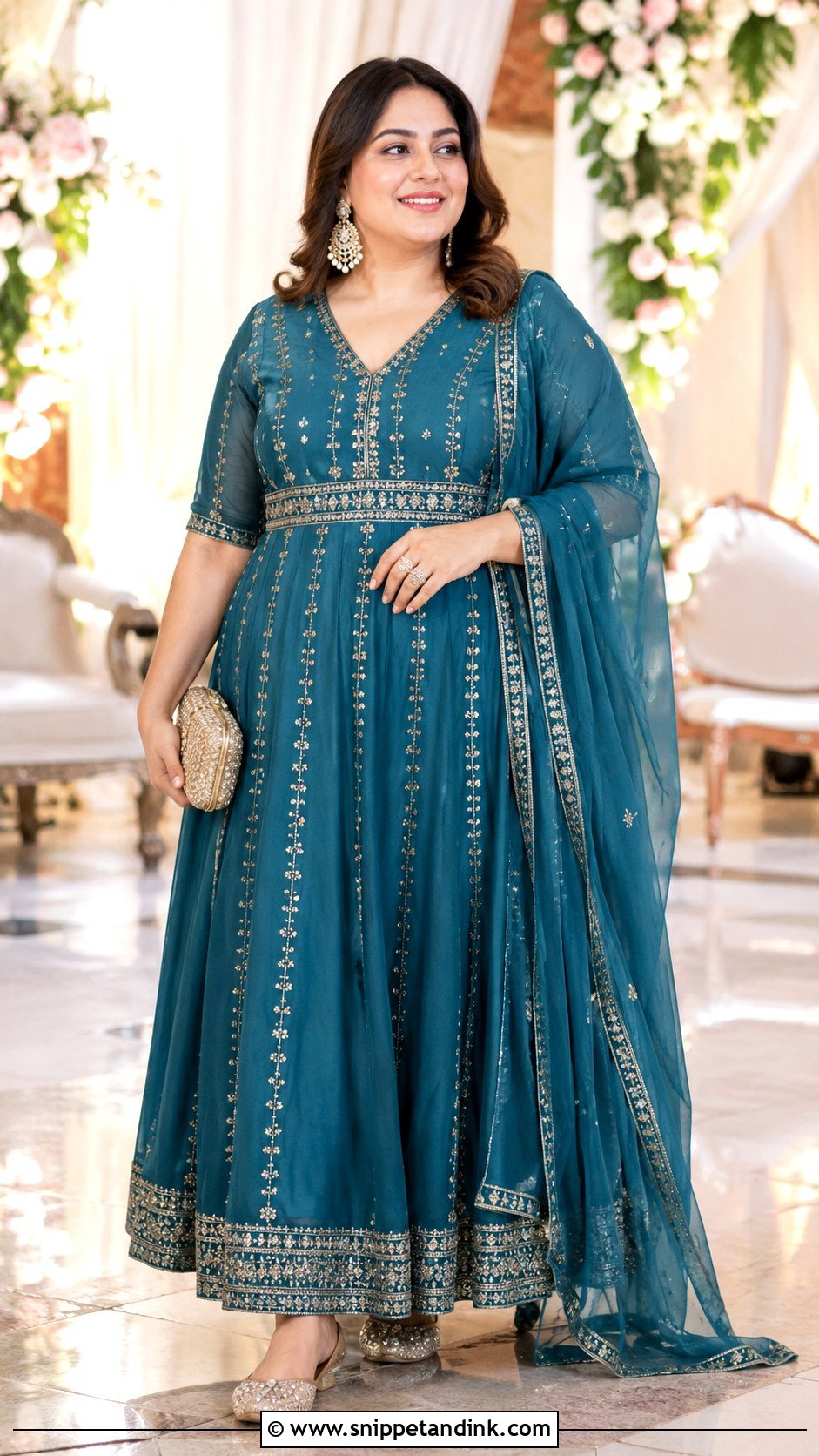
For plus size Anarkalis, fit at the yoke matters more than any trend. Look for a bodice that supports without pulling across the bust, a flare that starts at the right point, and fabric that moves rather than clings. Empire waists, V-necks, elbow sleeves and vertical embroidery help balance the shape, but comfort decides. Very stiff fabrics stand away from the body and make sitting awkward. Supportive heels or embellished flats, a light dupatta and statement earrings. Small alterations at the shoulder and waist make a ready-made piece look custom.
A Dupatta That Stays Put Through a Six-Hour Function
A dupatta that slips every ten minutes ruins more photos than any other wardrobe problem. I hide a small safety pin under the fold at the shoulder, and on heavy Banarasi or net dupattas add a second at the waist or the back of the blouse. Take a few spare pins in your clutch.
Plan for heat, too. Velvet, heavy silk and jacket styles are warm, so if an outdoor event runs into the afternoon, keep the heavier piece for the evening and wear georgette, organza or cotton silk in daylight. When one day runs from a morning puja into an evening party, I’d rather see a quick change at the venue than a guest wilting in brocade for ten hours. Keep the second outfit on a hanger in the car, with its own dupatta already pinned in place.
Putting Zari Work Away After the Wedding
Metallic zari tarnishes with moisture, so let the outfit air for a day before storing it. Wrap embroidered Anarkalis in soft cotton or muslin, not plastic, which traps damp. Refold along different lines every few months so the creases don’t set permanently in the embroidery, and keep perfume off the work, since it can discolor metallic thread. Heavily embroidered pieces should go to a dry cleaner who handles ethnic wear; home washing loosens beads and mirrors.
One Anarkali, Many Functions
Anarkalis have stayed popular because they’re comfortable and easy to style across a whole wedding week. Red silk for the bride, pastels for daytime guests, velvet for the reception, capes and jackets for modern looks, and supportive cuts for every body. Before buying, think about the function, the weather, how much you’ll sit and dance, and the family’s dress customs. Then get the fit right at the yoke, plan the dupatta and choose shoes before the hem is finished. That’s what makes the outfit feel like yours.
You'll Like These Ideas:





Leave a Reply