
Lace is the one fabric I’d call self-decorating. Put it on a plain silhouette and it already brings pattern and depth, so the rest of the dress can stay quiet. What usually spoils a simple lace gown is piling more on top: beading over the motifs, a busy veil edge, a necklace sitting on a lace neckline. Each of the twenty dresses below keeps to one focal point, a sleeve, a neckline, an open back or the lace pattern itself, and I’ve noted the styling and the fit detail I’d watch on each one, from a barefoot beach ceremony to a ballroom.
Telling Chantilly From Guipure on the Shop Floor
Two simple lace dresses can look identical in photos and behave completely differently on the day, and the lace type is usually the reason. When a bride can’t decide, I have her pinch the bodice lace between finger and thumb and turn it over to look at the back.
- Chantilly is fine and flat, with delicate motifs on a sheer net ground. It drapes softly and suits slips, sleeves and layering, but it snags easily and can stretch on very fitted styles.
- Alençon has a raised cord outlining each motif, so it feels textured and holds its shape better. It’s the lace I’d pick for a fitted sheath or a structured neckline.
- Guipure has no net at all; the motifs are joined by small bars. It’s heavier and bolder, reads clearly on camera from a distance and suits boho or modern cuts, though it can feel warm in summer.
Then check what’s under the lace. The lining should sit close in shade to the lace itself, or the pattern looks grey or patchy in daylight. Ivory lace over a bright white lining is the mismatch I spot most often, and it’s easy to miss under shop lighting.
1. Simple A-Line Lace Wedding Dress
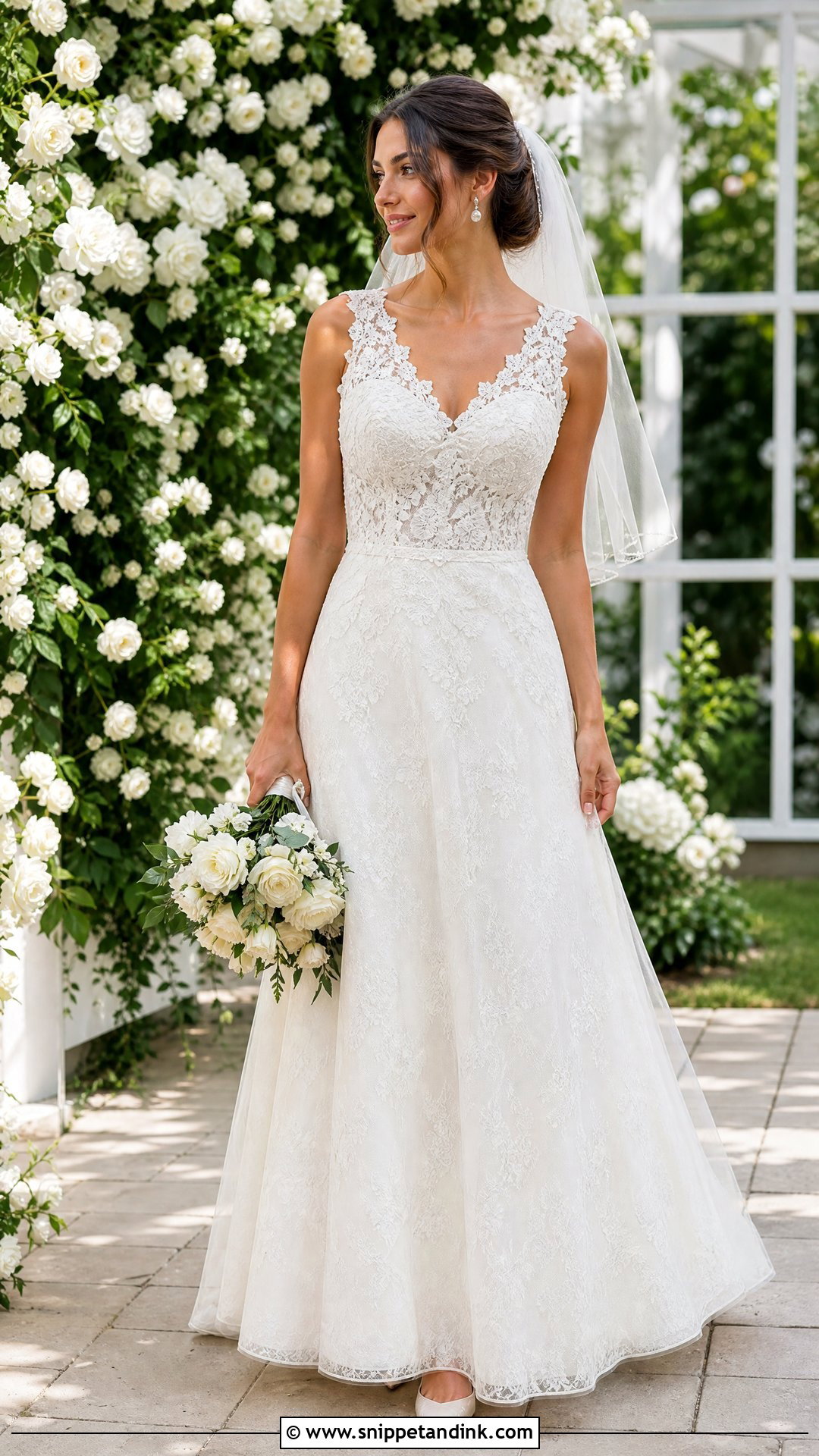
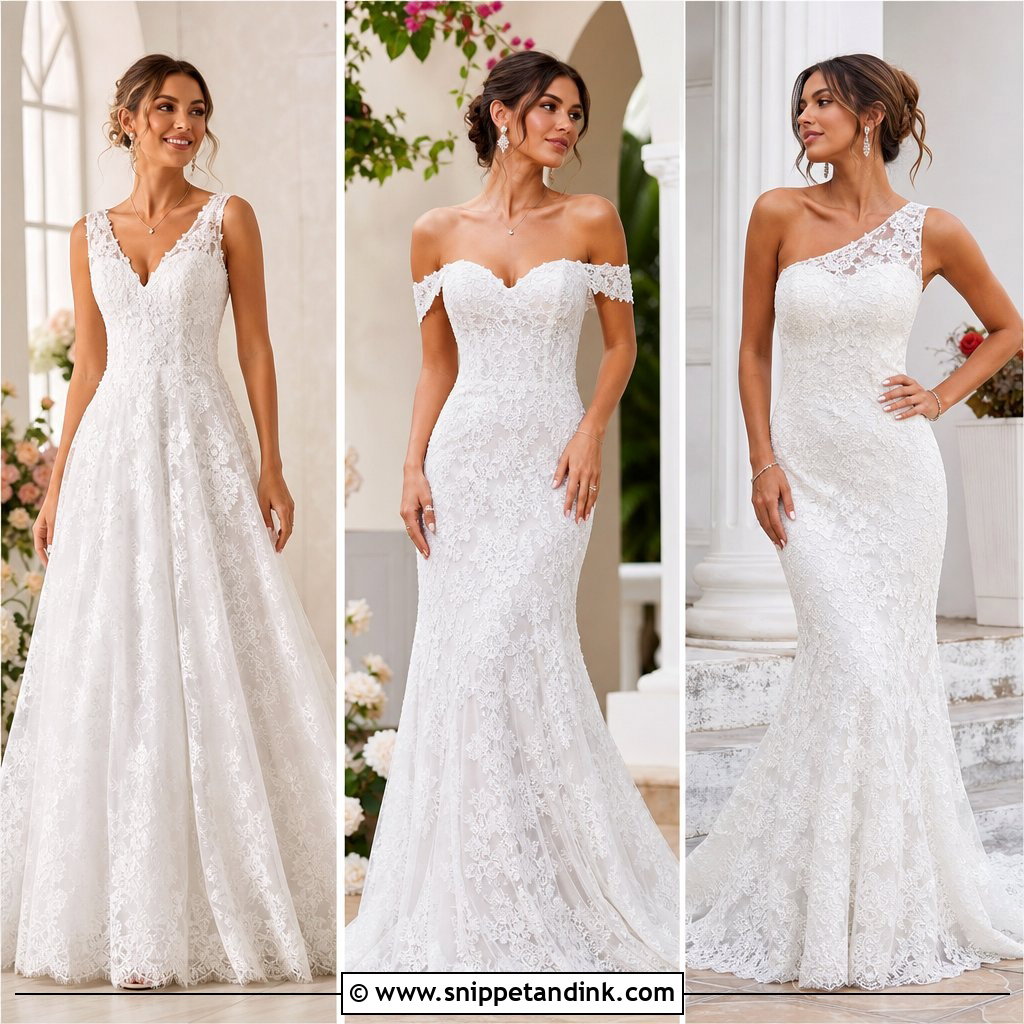
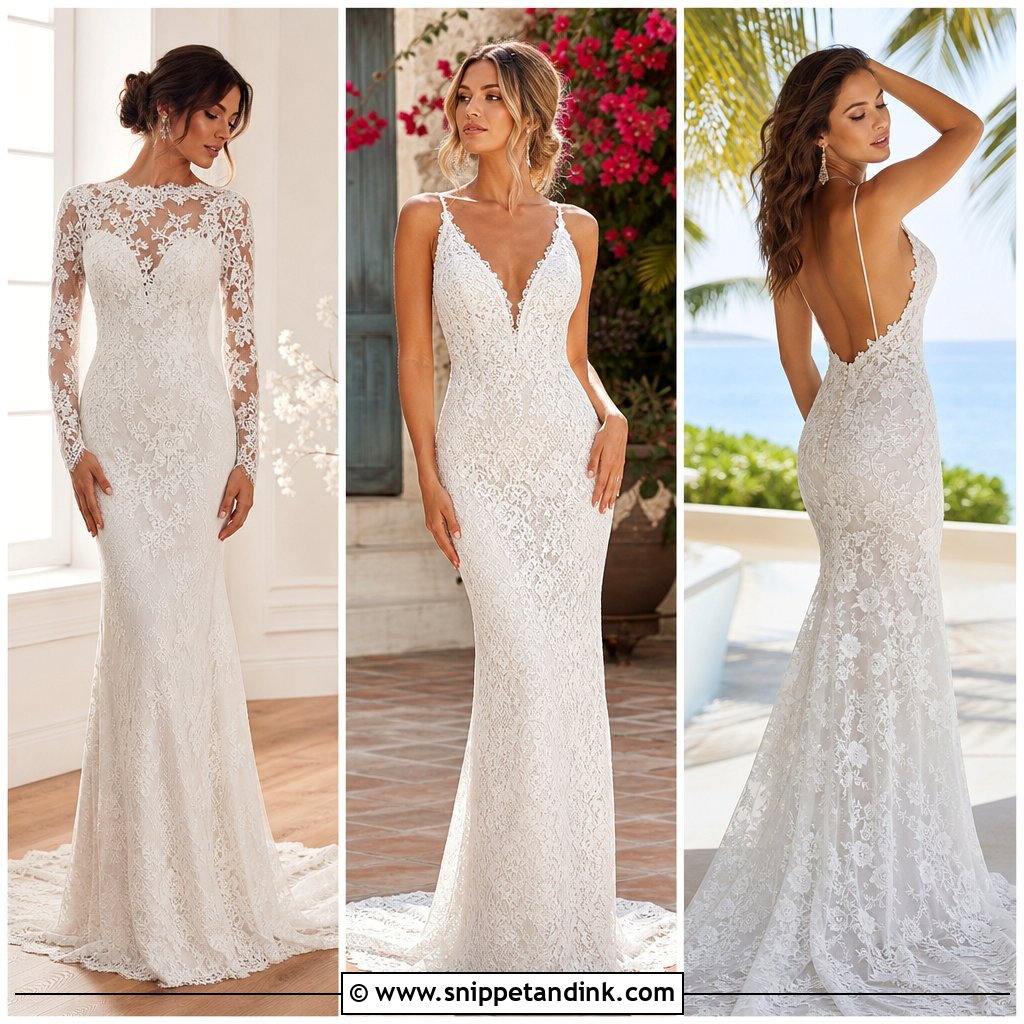
Most first-time lace shoppers end up in an A-line, and for good reason. The fitted bodice marks your waist, then the skirt widens gradually enough that you’re not managing volume all day. Soft floral lace over a smooth ivory lining shows its texture without looking busy, and a scoop, V or modest sweetheart neckline keeps it classic. I like pearl studs, pointed pumps and a light fingertip veil, with a small bouquet of white flowers and greenery. One thing to check: the motifs should match across the side seams, because a broken pattern at the waist is obvious in profile shots.
2. Simple Fitted Lace Wedding Dress
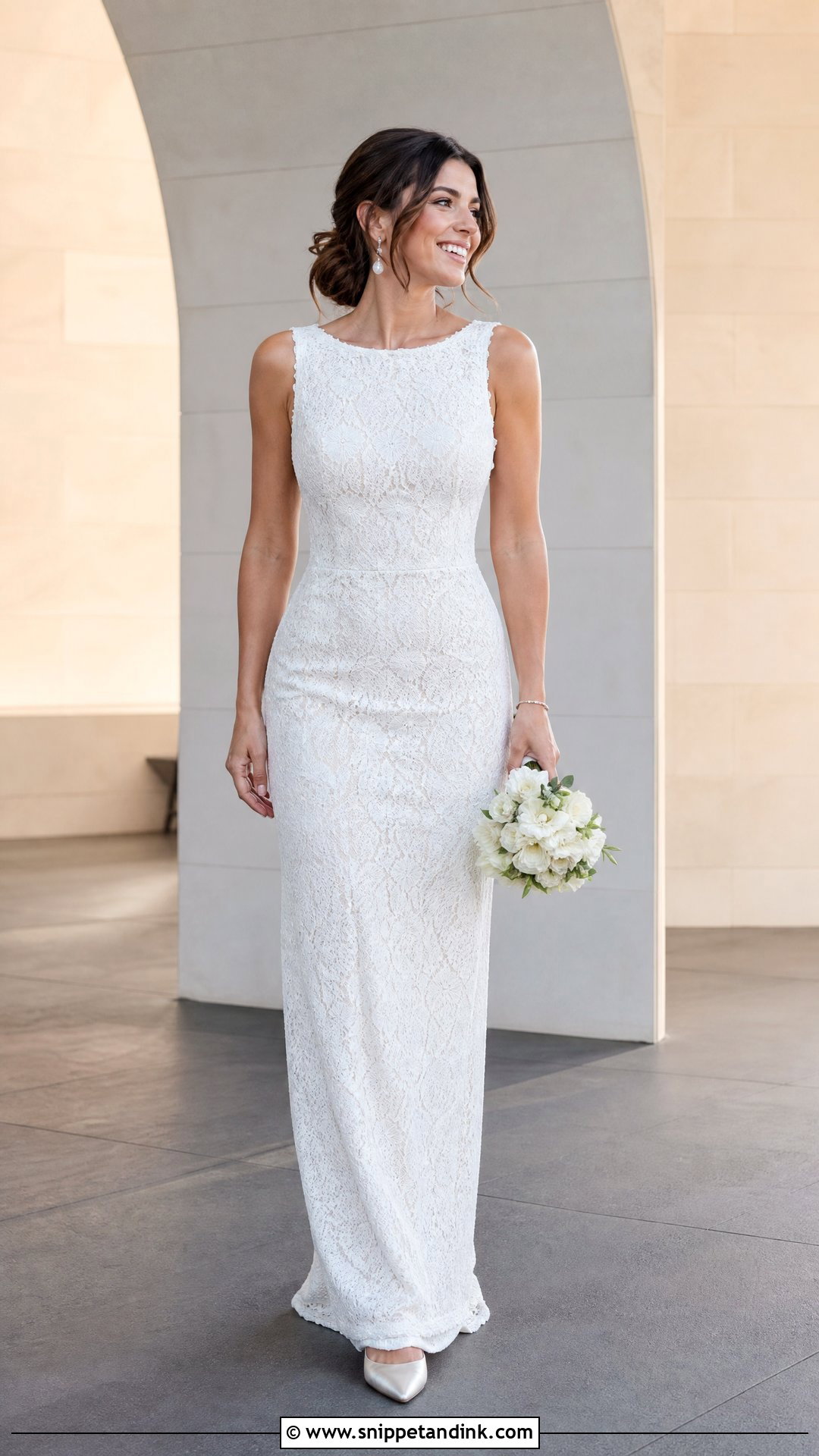
Fitted lace needs a firmer lace than you’d expect. Very soft lace on a clean column or sheath silhouette can bag at the knees after an hour of sitting, while a medium-weight corded lace holds its line. Subtle vertical patterns lengthen the frame, and a supportive lined bodice keeps everything smooth. Sleek ivory heels, a small structured clutch and simple drops suit it, with a low bun or polished waves so the neckline stays clear. It belongs in lofts, restaurants and smaller formal ceremonies, and with careful alterations it reads sleek rather than revealing.
3. Simple Long Sleeve Lace Wedding Dress
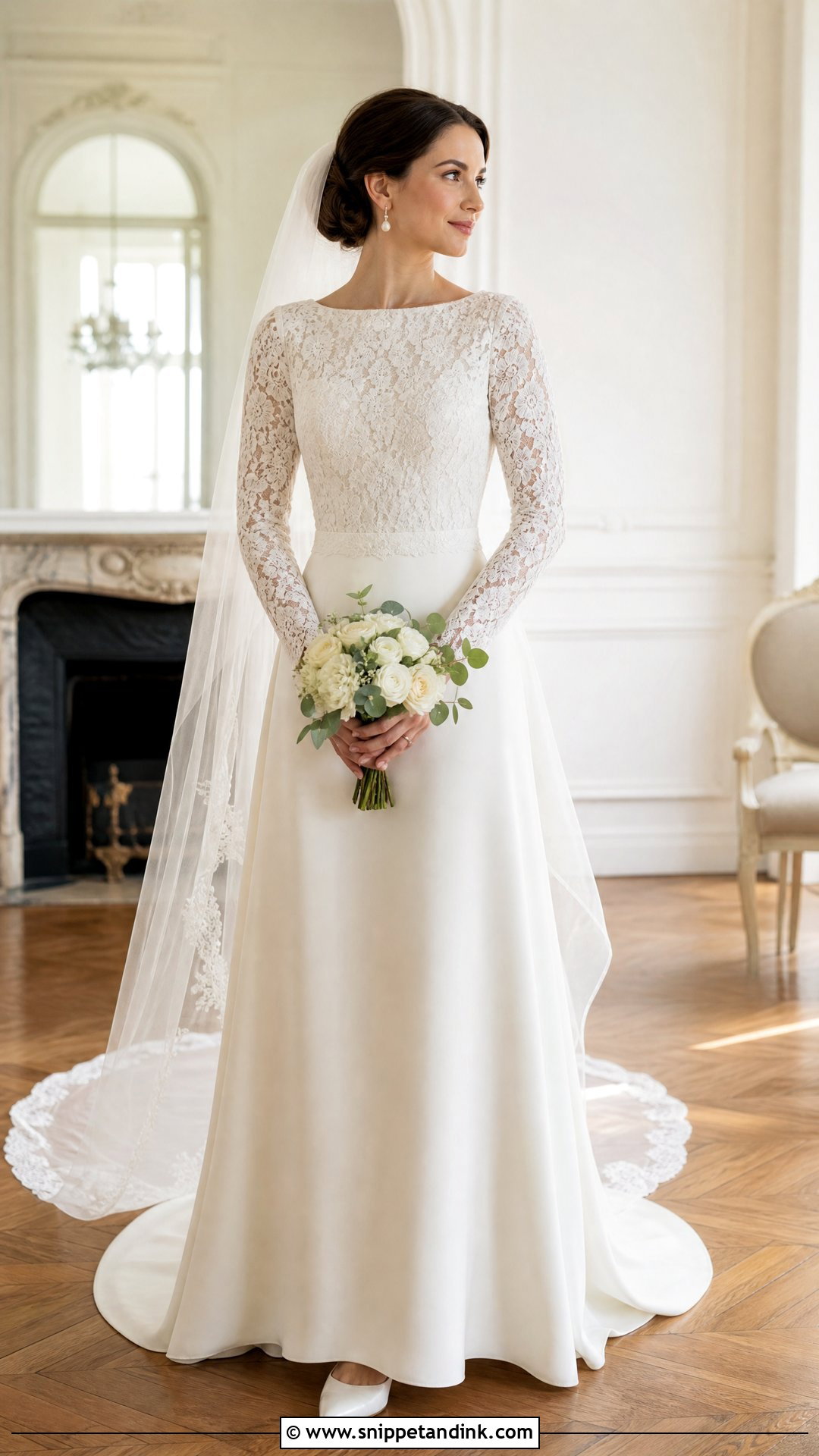
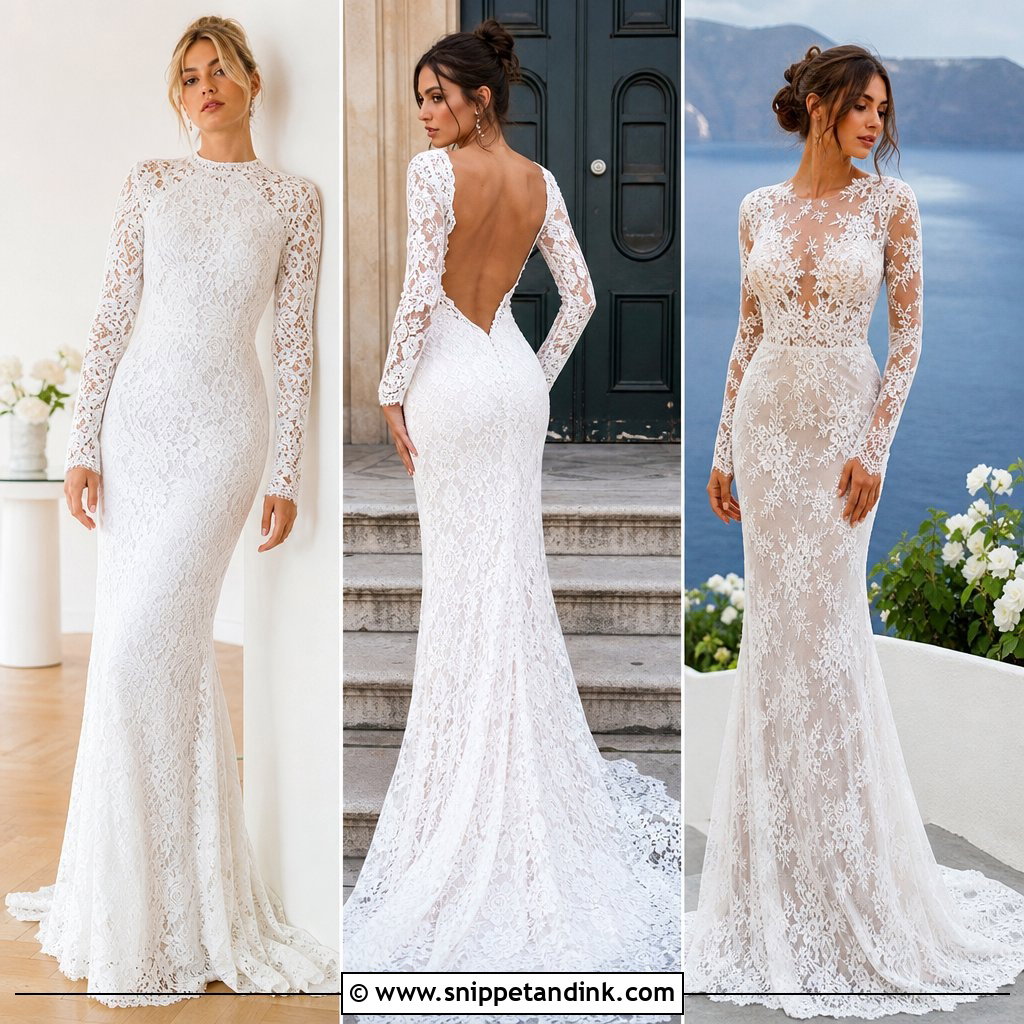
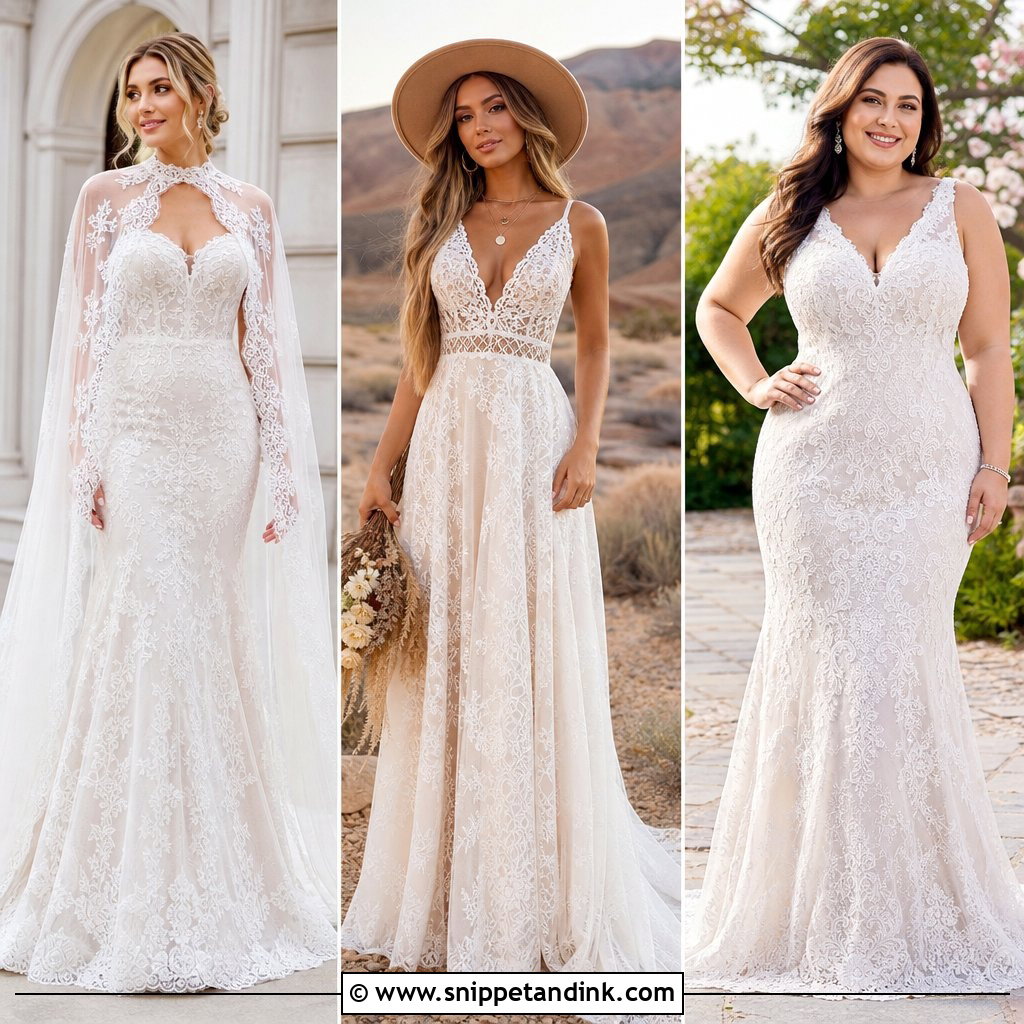
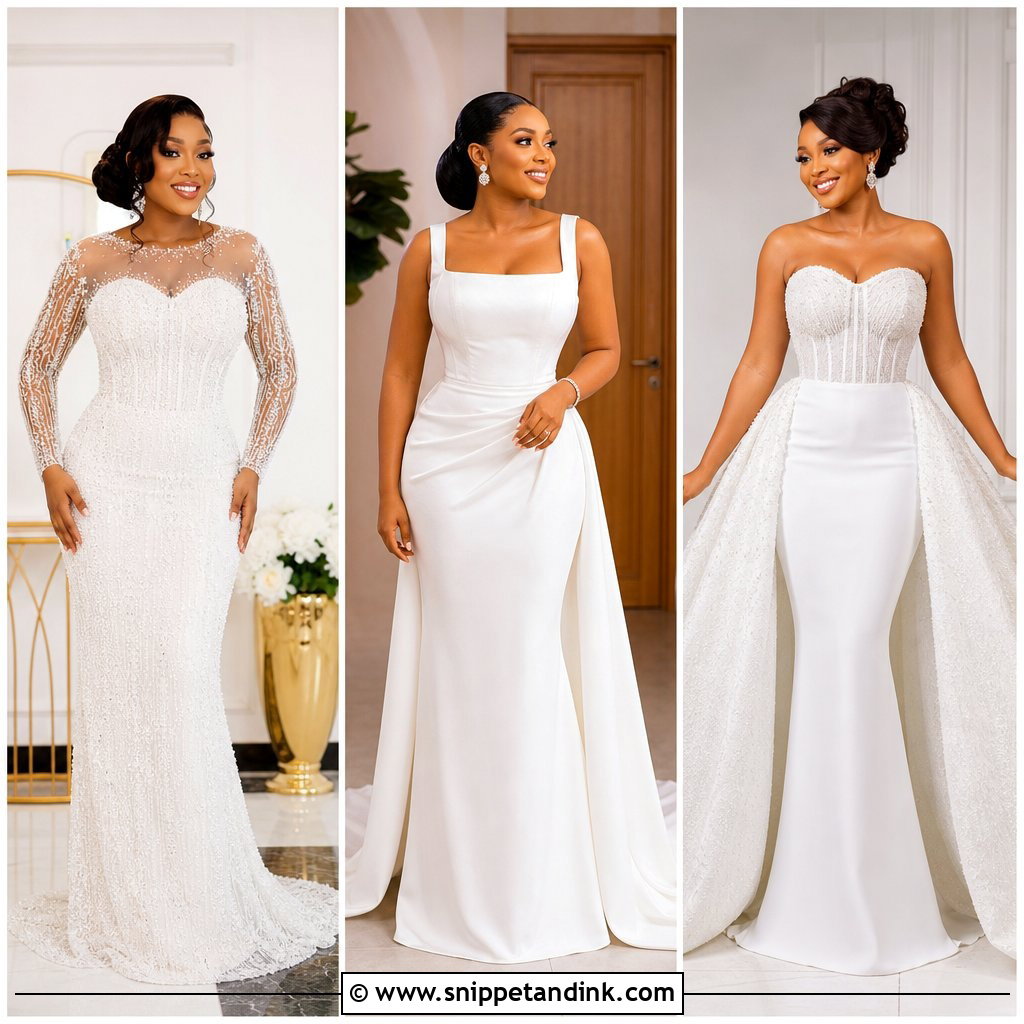
For autumn and winter, a lace sleeve is hard to beat. My one rule is to keep the bodice plain when the sleeves are lace, since lace on lace from wrist to waist starts to look heavy in photos. Over the arms you’ll choose between an illusion lining, where the pattern sits on sheer tulle and skin shows through, and a full lining that looks more modest. Underneath, go for a soft A-line or a straight skirt. Closed-toe ivory pumps, a small comb and pearl earrings are enough. A chapel veil suits a formal church; a short one keeps things cleaner. Lace sleeves snag easily on bracelets, so I’d leave the wrists bare.
4. Simple Cap Sleeve Lace Wedding Dress
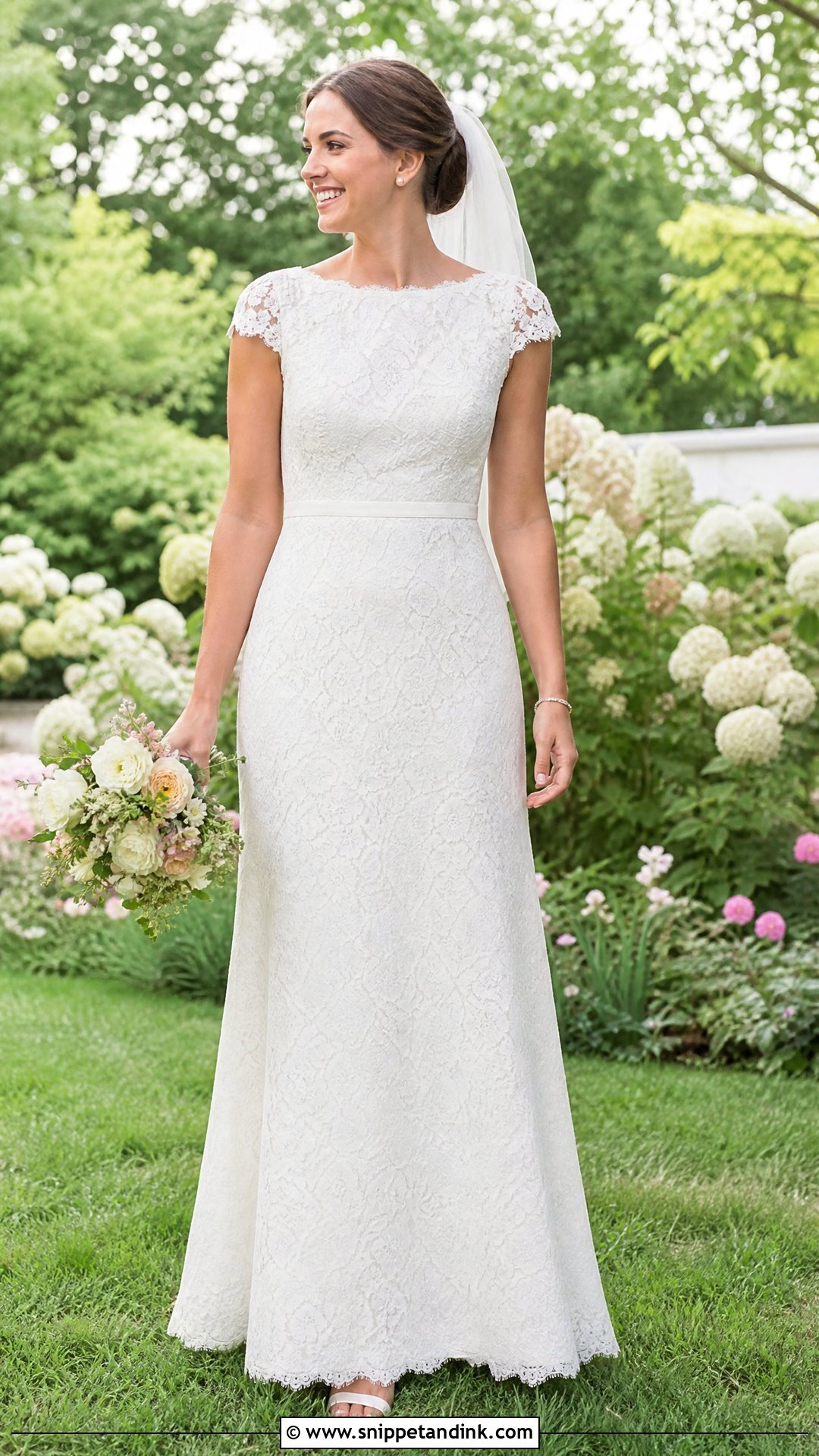
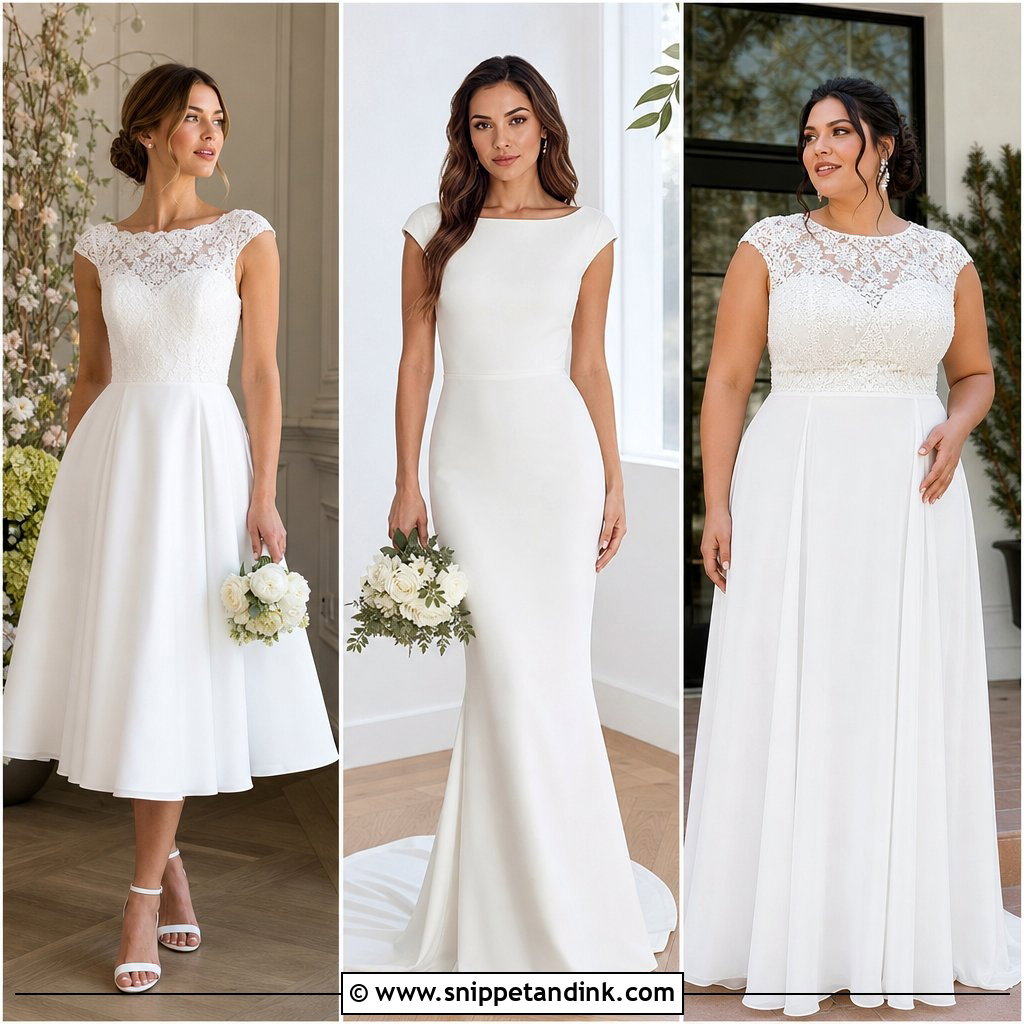
On cap sleeves I look first at where the lace edge lands. A thick scalloped border can cut straight across the top of the arm and make the shoulder look wider, while lace that runs continuously from bodice onto sleeve looks much lighter. Cap sleeves pair best with an A-line or a softly fitted shape and a bateau or shallow V-neck. Slingbacks, pearl studs and, if you’d like a little waist, a narrow satin ribbon finish it. Wear a short veil or floral hairpin rather than anything that hides the sleeves. It’s a handy middle ground when thin straps feel too bare and long sleeves too warm.
5. Simple Sleeveless Lace Wedding Dress
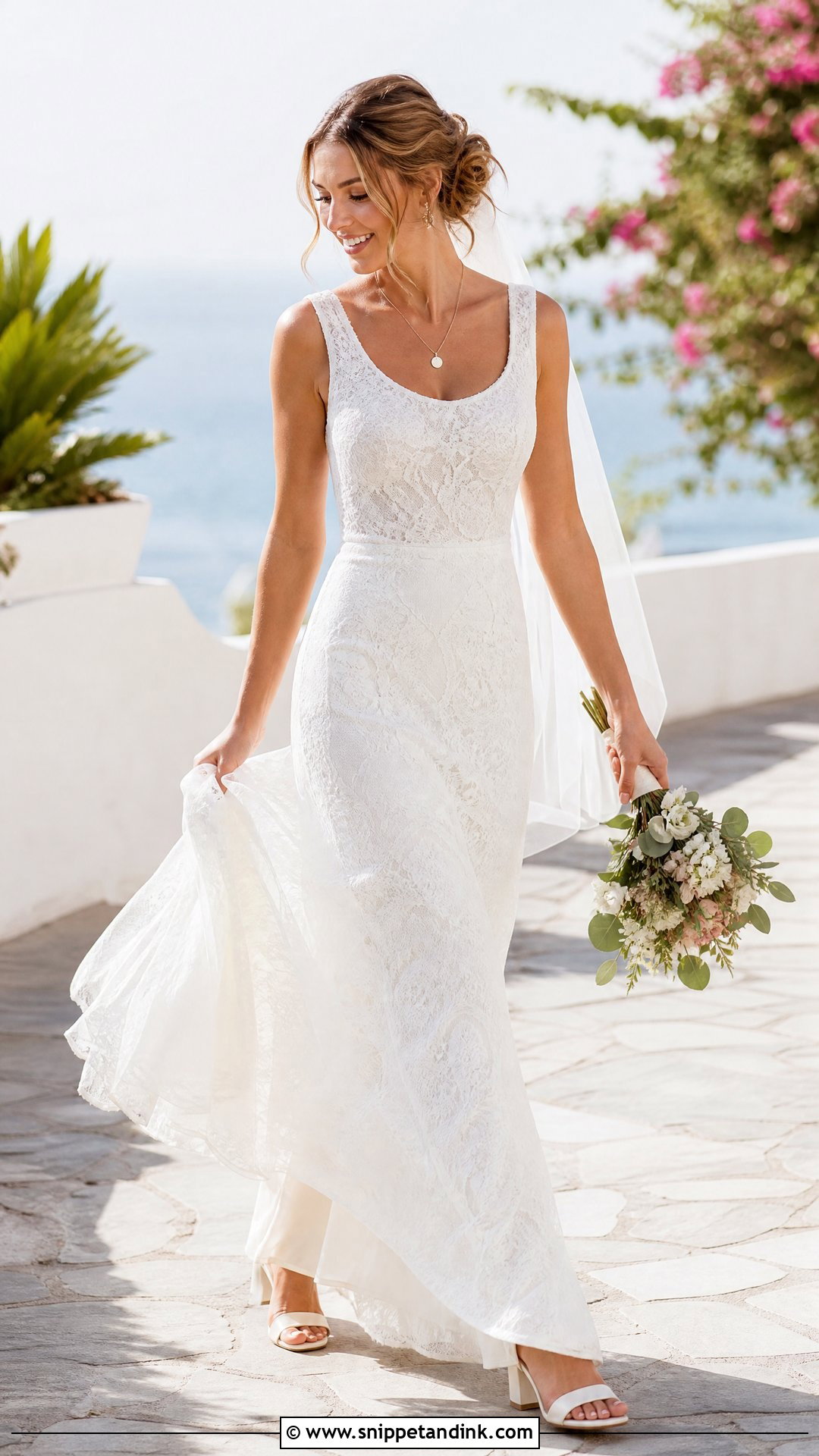
On a lace bodice, wide straps beat thin ones. Lace has some give, and thin straps let the bodice drop little by little as the night goes on. A fitted bodice with an uncomplicated neckline lets you pair almost any skirt with it, an A-line for romance or a straight cut for something more current. Low block heels, a small pendant and a simple veil tucked beneath a relaxed updo keep it light. In warm weather the freedom around the arms is a real comfort. For the evening, keep a plain ivory wrap nearby rather than a lace bolero that competes with the dress.
6. Simple Square Neck Lace Wedding Dress
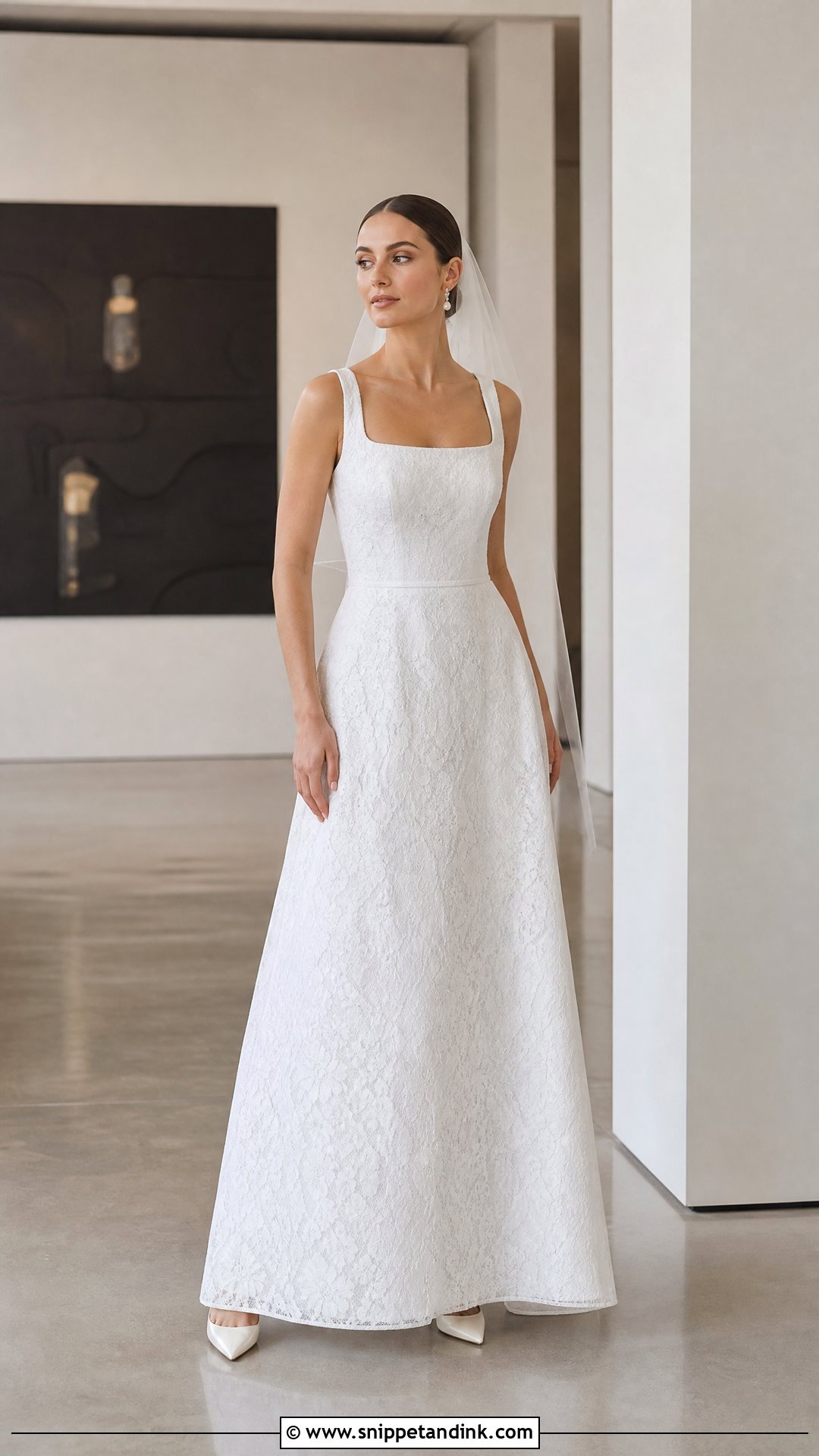
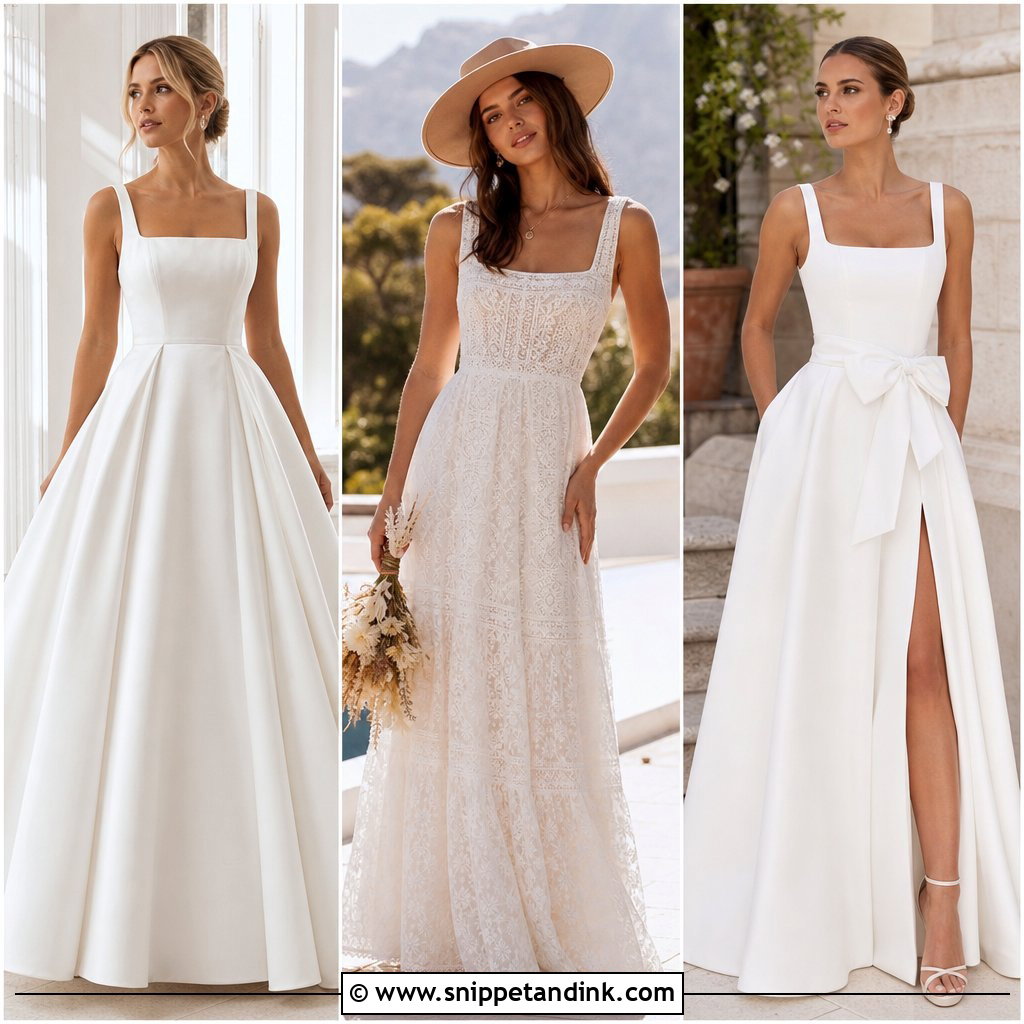
Square necklines and lace pull in opposite directions: the neckline wants crisp edges and lace wants to soften them. Small-scale floral lace handles that best, because large motifs break up the straight line. Pair it with wide straps, short sleeves or fitted long sleeves, a defined waist and an A-line or column skirt. Pearl drop earrings, pointed ivory shoes and a sleek low bun keep the frame neat. A plain tulle veil contrasts with the texture, while a lace-edged one matches it. I always have the neckline edge stabilized with stay tape, since lace stretches, and a square neck that gapes at the corners loses its whole point.
7. Simple V-Neck Lace Wedding Dress
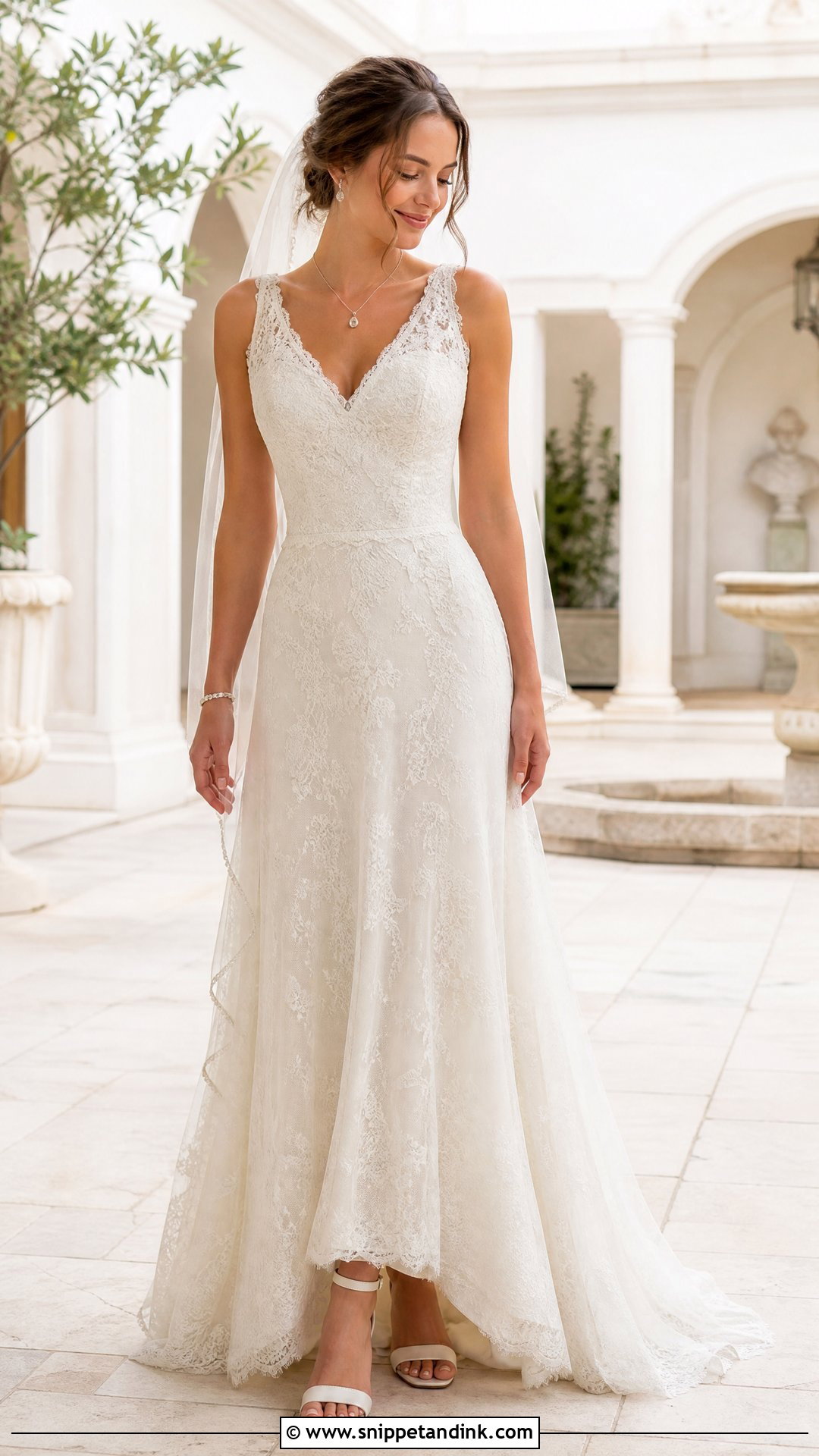
A V draws the eye vertically, which is why it flatters so many figures. In lace, though, the depth needs more support than it would in satin. I ask for a lined bodice with light boning or a sewn-in bra so the V doesn’t shift every time you hug someone. Keep the waist gently defined and the skirt flowing. A fine pendant fills the space nicely, with understated earrings and ankle-strap heels, then a low bun and fingertip veil. Look for a lace with an even, repeating pattern, since mismatched motifs on either side of a V make the neckline look lopsided.
8. Simple High Neck Lace Wedding Dress
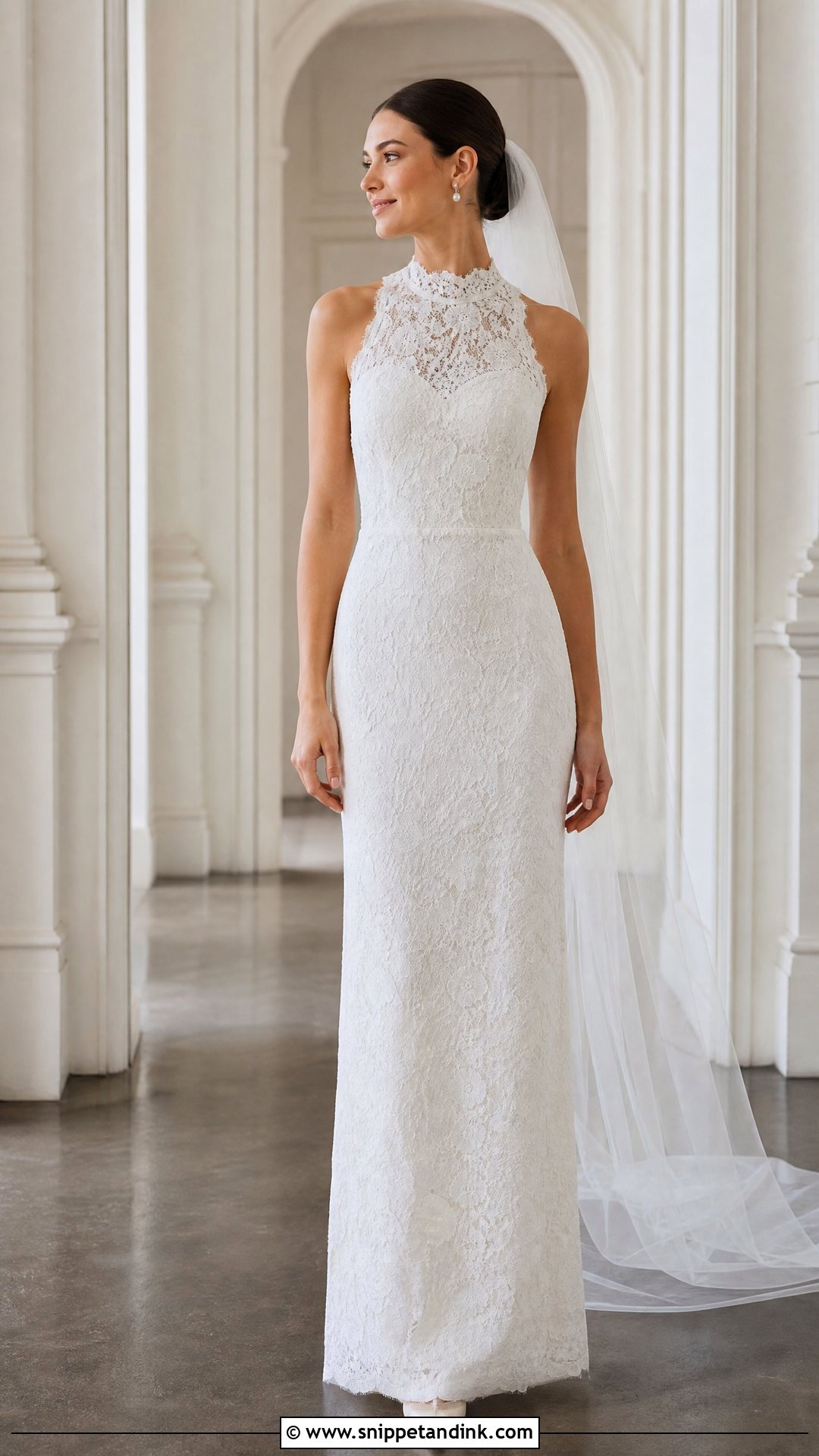
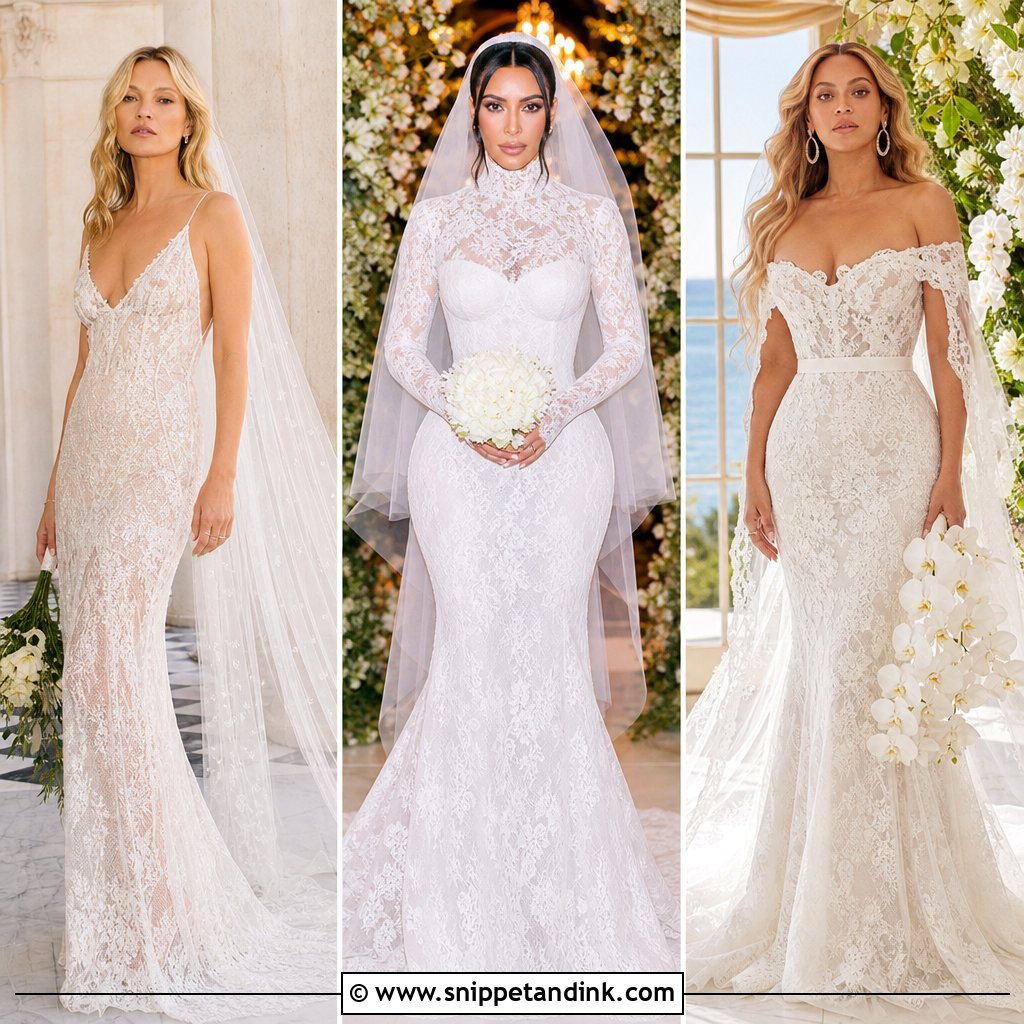
High lace necklines need breathing room somewhere else, or the dress can feel buttoned-up. A small keyhole or an open back solves that. The strongest versions pair lace at the throat with a smooth bodice and skirt, sleeveless for a lighter look or with fitted sleeves for a formal one. Pearl earrings, low pointed pumps and a neat chignon put the attention on the neckline. A necklace would only fight the lace near your face, so leave it off and anchor the veil below the hair. Before buying, feel the inside of the collar against your neck; some laces are surprisingly scratchy there.
9. Simple Off-Shoulder Lace Wedding Dress
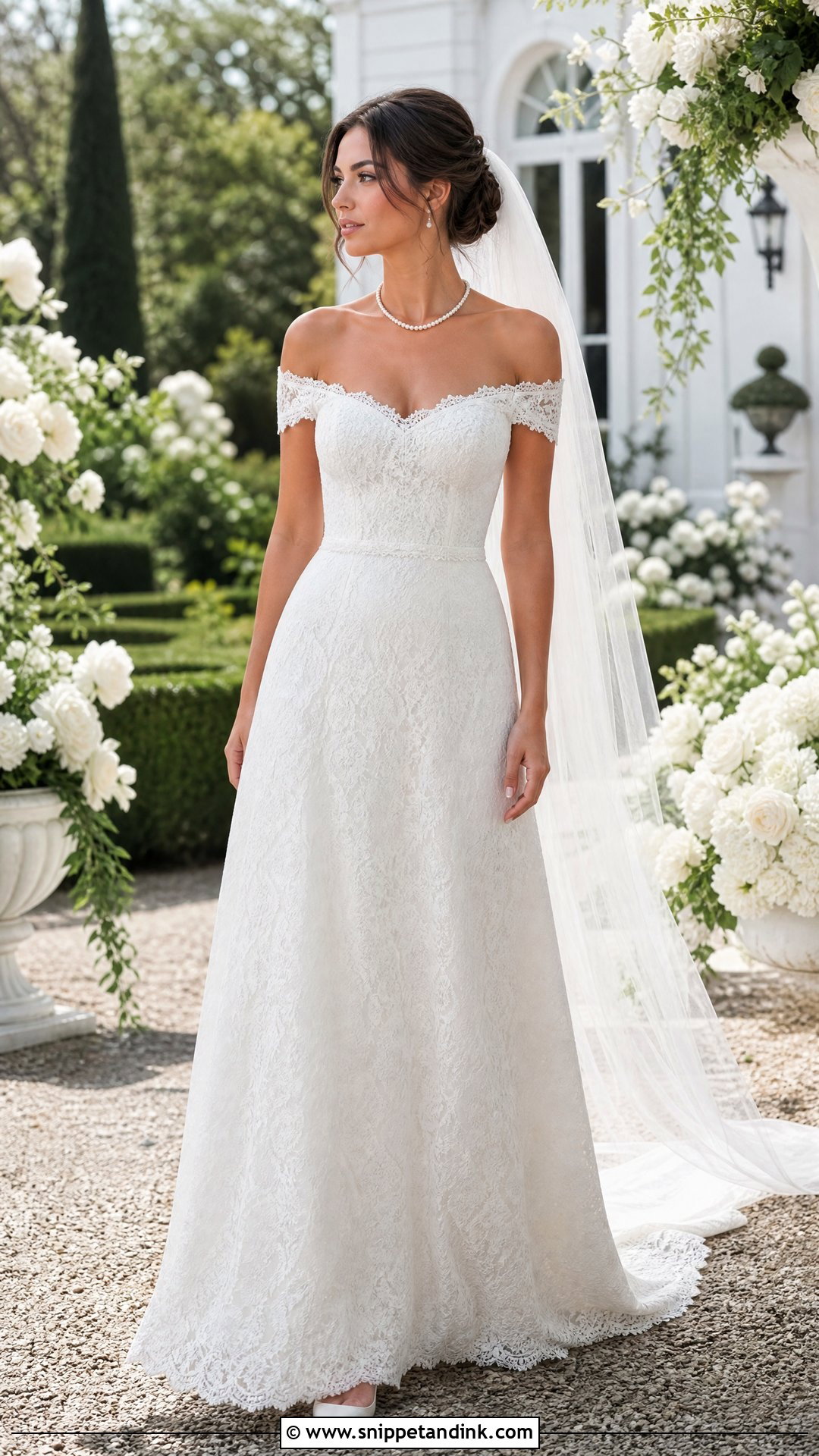
Before you commit to off-shoulder lace, lift your arms at the fitting. Lace bands on this neckline can stretch slightly over a long day, so I build them onto a structured bodice with grip tape or an elastic stay inside to keep them in place. A restrained A-line or fitted skirt stops the look tipping into drama. A short pearl necklace and small earrings work here because the collarbone is bare, with pointed heels and a loose updo to keep the shoulders on view. A plain veil adds movement behind you. Garden, estate and evening receptions all suit it.
10. Simple Strapless Lace Wedding Dress
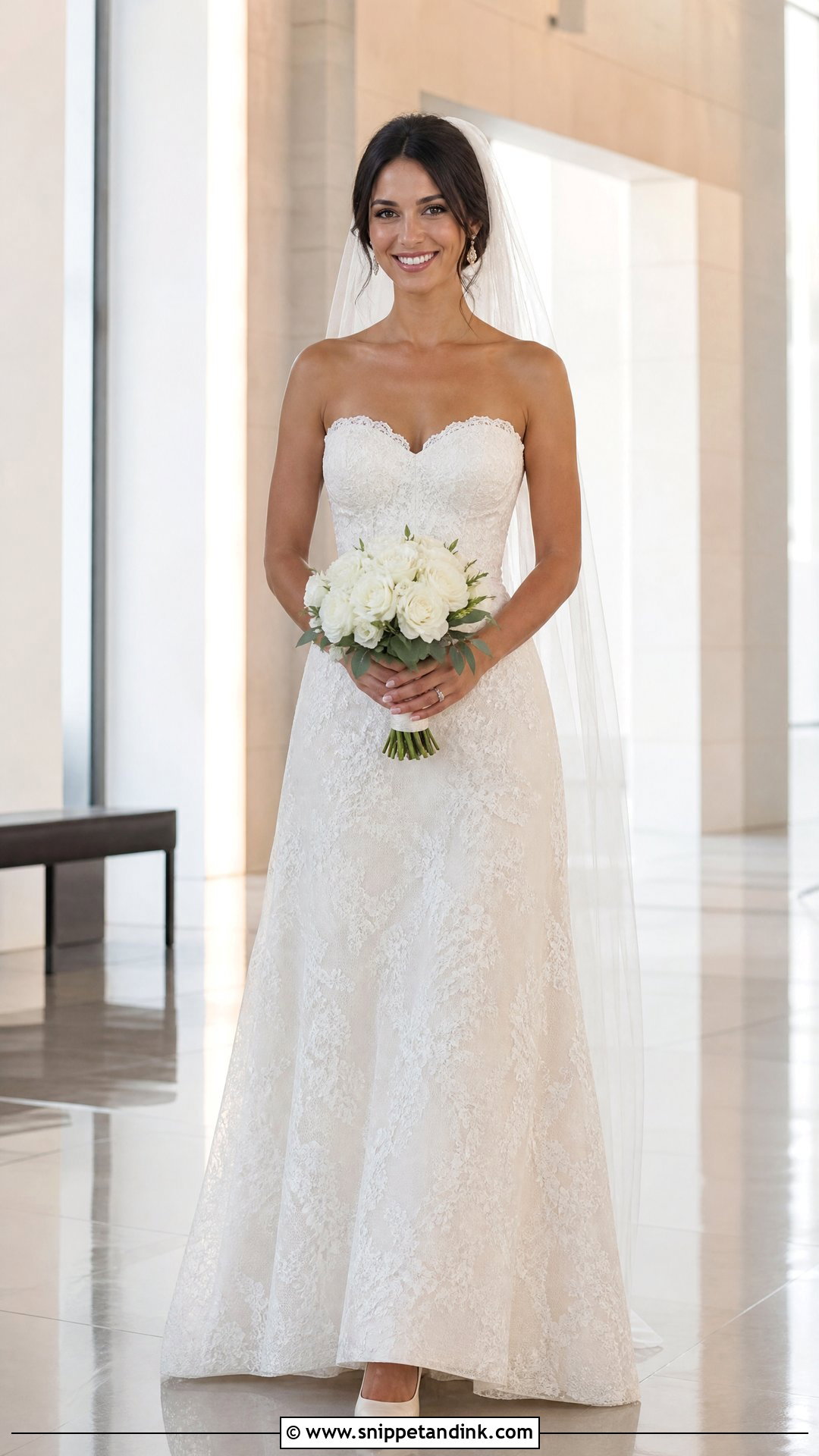
Strapless lace only looks clean if the bodice is engineered underneath. Boning and a waist stay do the holding, not the lace, so ask what’s inside before you fall for the outside. A straight or softly curved neckline feels more current than an ornate sweetheart, over an A-line, sheath or soft fit-and-flare skirt. With bare shoulders, wear drop earrings or a narrow necklace, never both. Ivory pumps and a plain tulle veil keep it uncluttered, and a detachable lace bolero covers you for the ceremony and comes off for the party. If you’re tugging it up at the fitting, it isn’t finished yet.
11. Simple Tea-Length Lace Wedding Dress
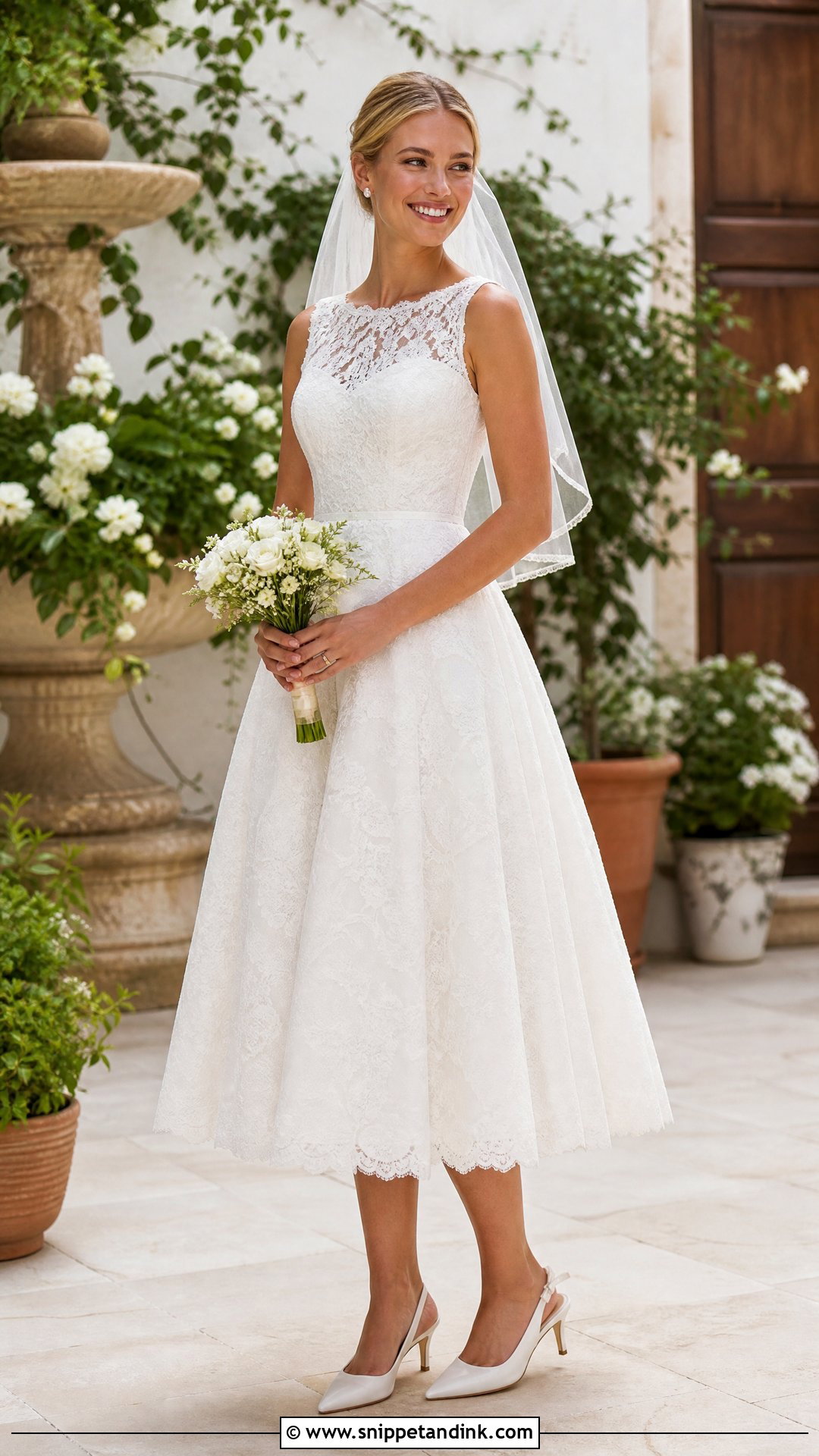
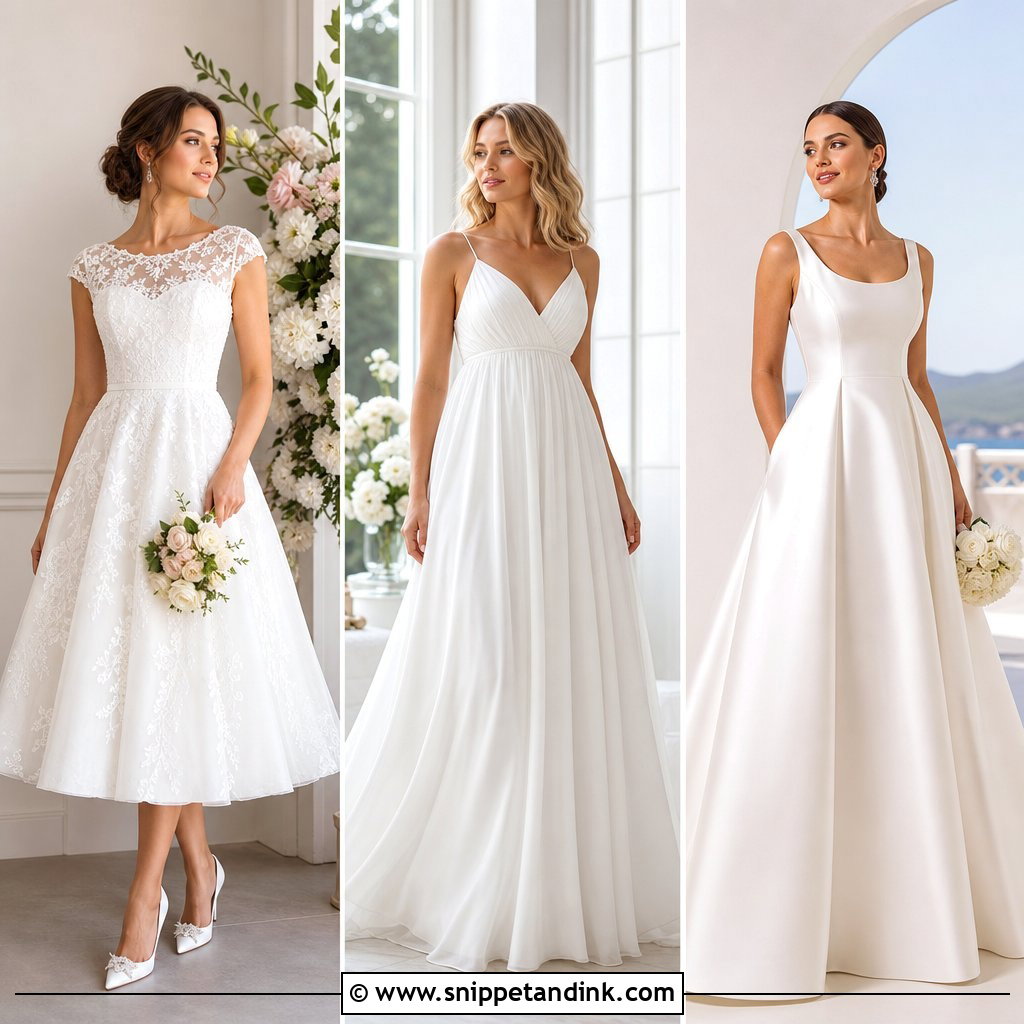
Tea length shows off the shoes and the waist, so both need to be right. The hem falls between knee and ankle, which makes it practical for courthouses, gardens and smaller receptions. Skip the stack of stiff petticoats; a gently fitted bodice with controlled fullness keeps it modern rather than costume. Pointed slingbacks or refined ivory block heels, pearl studs and a short veil play up the vintage feel without overdoing it, and a compact bouquet suits the shorter proportion. Hem it with your chosen shoes on, aiming to show the ankle. Lace hems here are often finished on the scallop, so the final length depends on where the lace edge falls.
12. Simple Lace Midi Wedding Dress
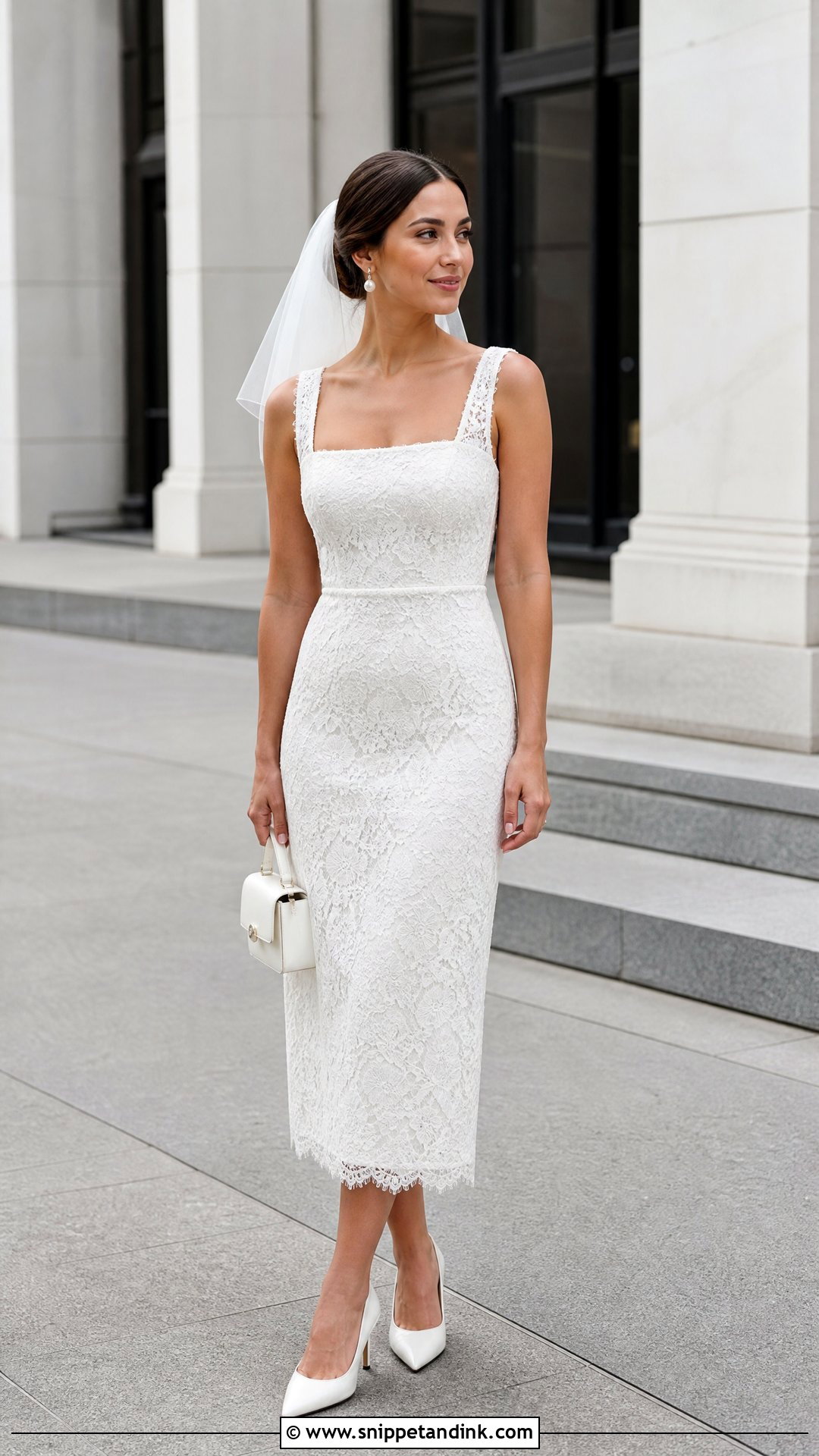
People mix up midi and tea length, but a midi has more range. It can be straight, softly flared or bias-cut, and it suits civil ceremonies and second outfits alike. Choose lined lace with little embellishment so the shorter dress still looks deliberate, and a square, scoop or boat neckline to keep it neat. I’d finish it with pointed pumps, a mini top-handle bag and small pearl or crystal earrings, plus a short veil or a sculptural hair clip. Where the hem stops matters more than most brides expect. Ending at the narrowest part of the calf makes the leg look longer; ending at its widest point does the opposite.
13. Simple Boho Lace Wedding Dress
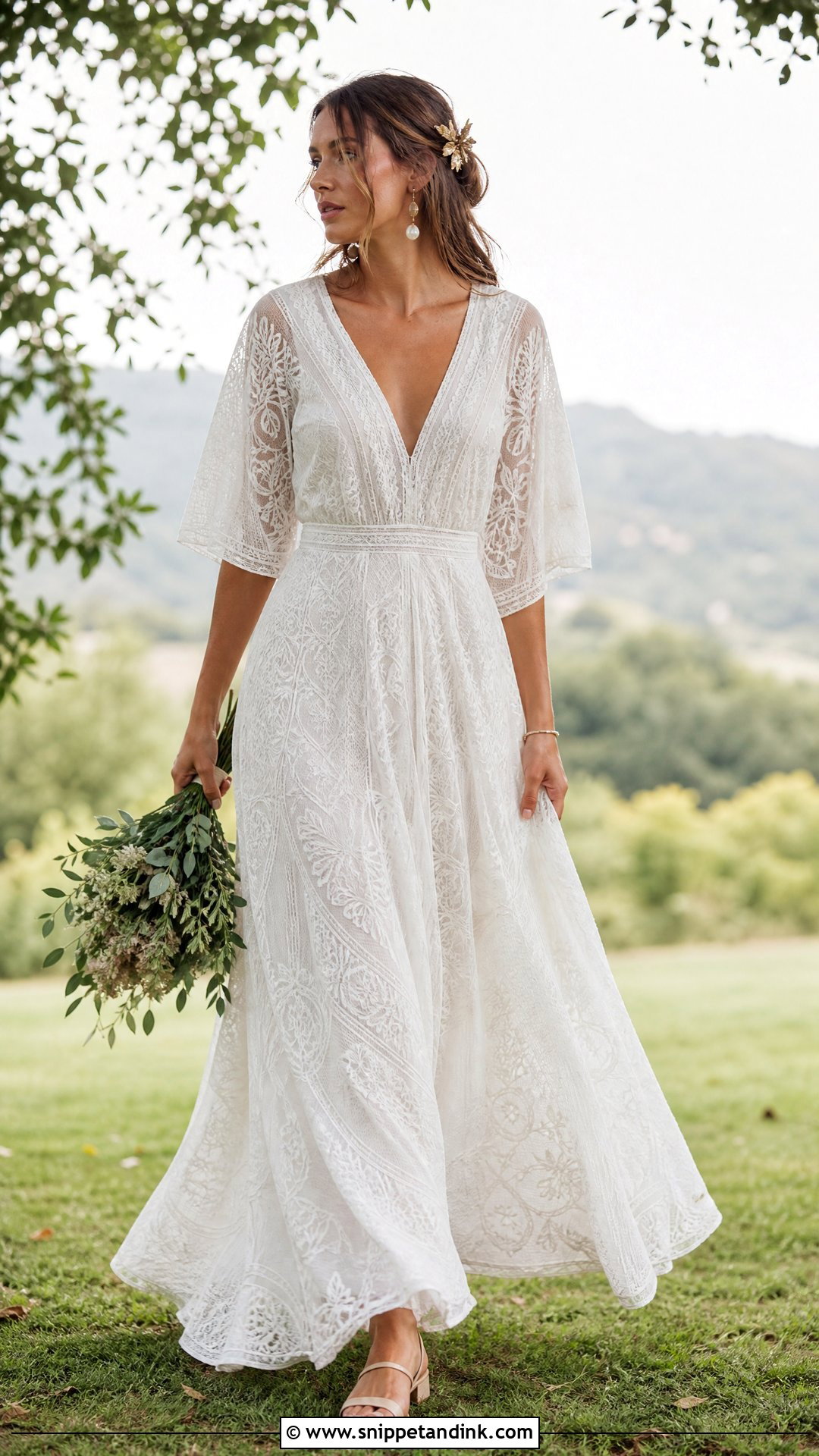
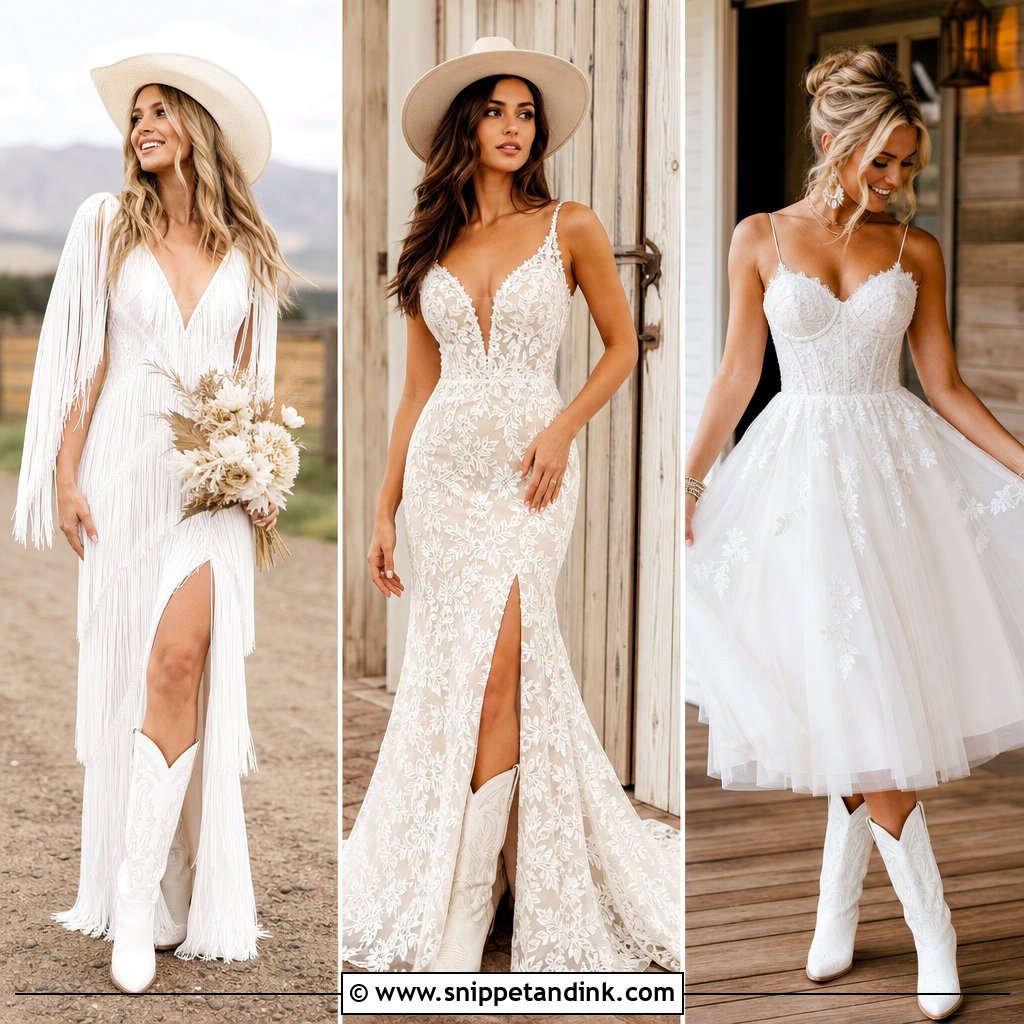
Weight decides whether boho lace works. Heavy appliqués and fringe drag the dress down, while a light lace with an open floral or geometric pattern moves with you, and crochet-style or guipure laces suit the mood well. Go for a relaxed A-line, a natural waist and comfortable sleeves, lined enough for coverage but not so heavily that the pattern disappears. Low block-heel sandals, delicate earrings and a loose braid or soft waves fit the setting. A plain veil or small floral comb, plus a greenery bouquet in a tight palette, keeps the look from sprawling. Outdoors in woodland or desert, a hem that just clears the ground saves the lace from burrs and dust.
14. Simple Vintage Lace Wedding Dress
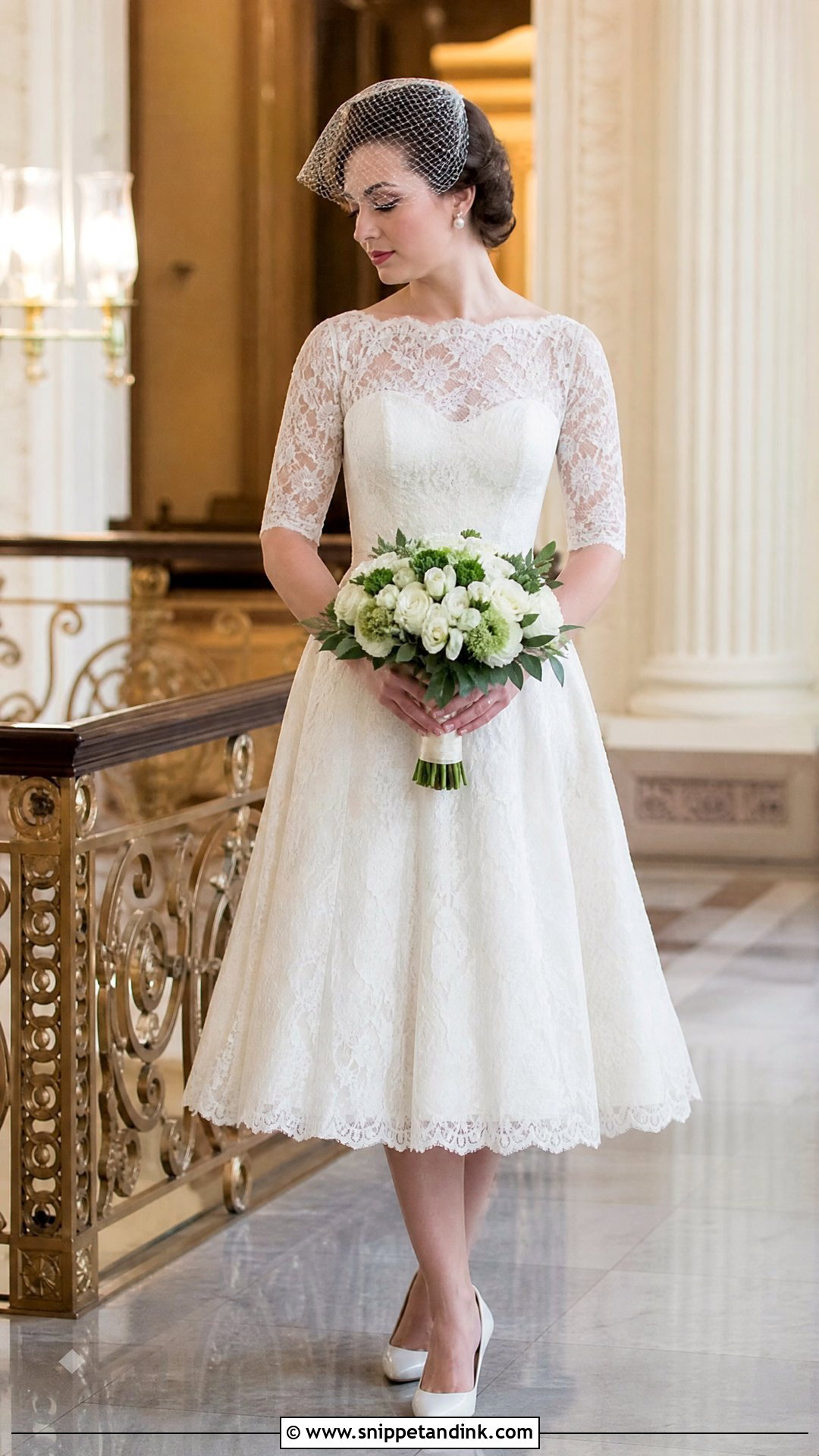
Restraint is the whole trick with a vintage-inspired lace wedding dress. Pick one era detail, such as a bateau neckline, a row of covered buttons, elbow sleeves or a tea-length skirt, and keep everything else clean and lightly structured. Fine floral lace in soft ivory looks gentler than stark white. Classic pumps, pearl earrings and a small structured bouquet suit it, with smooth waves or a neat low bun. A birdcage veil leans into the period, and a plain fingertip veil keeps it current. If you’re wearing genuinely old lace, ask the seamstress to check it for weak or brittle spots before any alterations begin.

15. Simple Plus Size Lace Wedding Dress
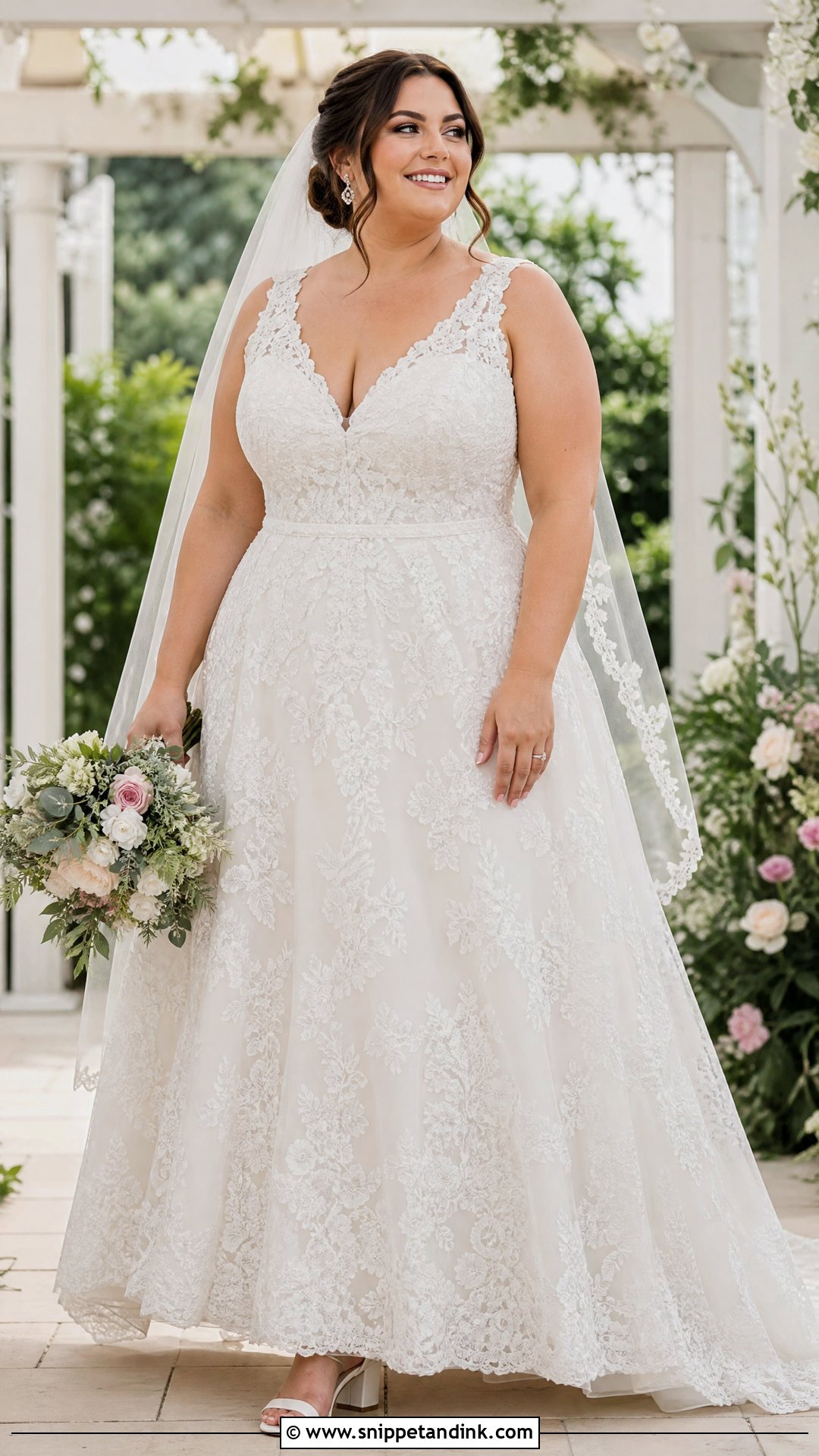
Simple shouldn’t mean shapeless, and that’s the mistake I see most often in plus-size bridal. A defined waist, a structured bodice and lace placed evenly across the dress give a far better line than a loose gown chosen to hide in. Wider straps, supportive sleeves or a balanced V help it feel secure. Choose undergarments only after your seamstress has looked at the construction, because many gowns can have cups or a corset sewn straight in. Comfortable block heels, earrings with enough scale to hold their own and a soft veil falling past the shoulders complete it. Your own preferences matter far more than any body rule.
16. Simple Petite Lace Wedding Dress
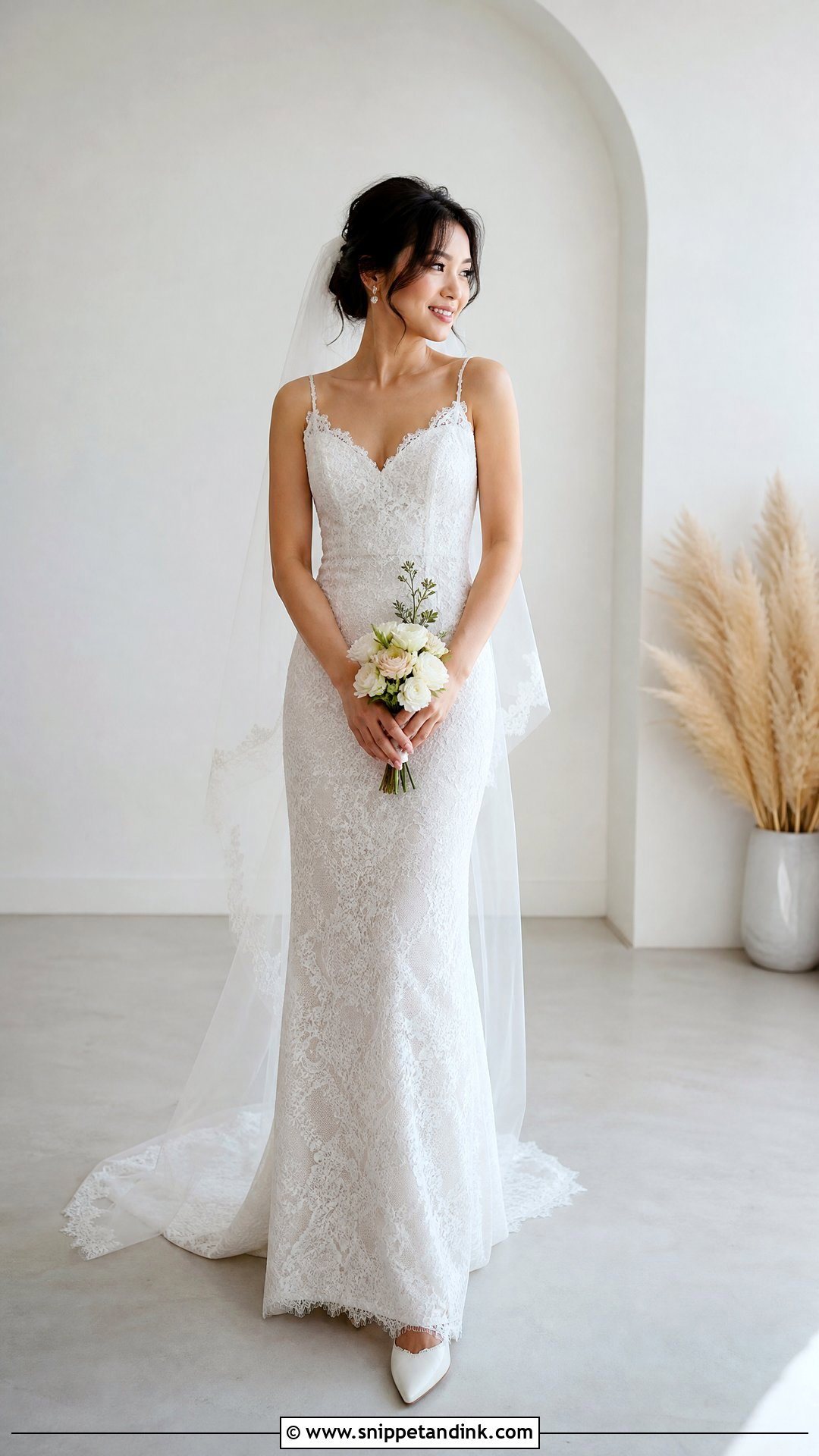
For petite brides, lace scale matters more than silhouette rules. Small motifs look in proportion, whereas oversized appliqués can swallow a shorter frame. A raised or natural waist, a narrow A-line and a continuous lace pattern lengthen the line. Sheath silhouettes work too when they’re altered closely at the shoulders, waist and hem. The fix I make most is shortening the bodice, since a bodice that’s too long drops the waist and visually shortens the legs. Pointed heels, delicate earrings, a slim bouquet and a light chapel veil for vertical line finish it.
17. Simple Modest Lace Wedding Dress
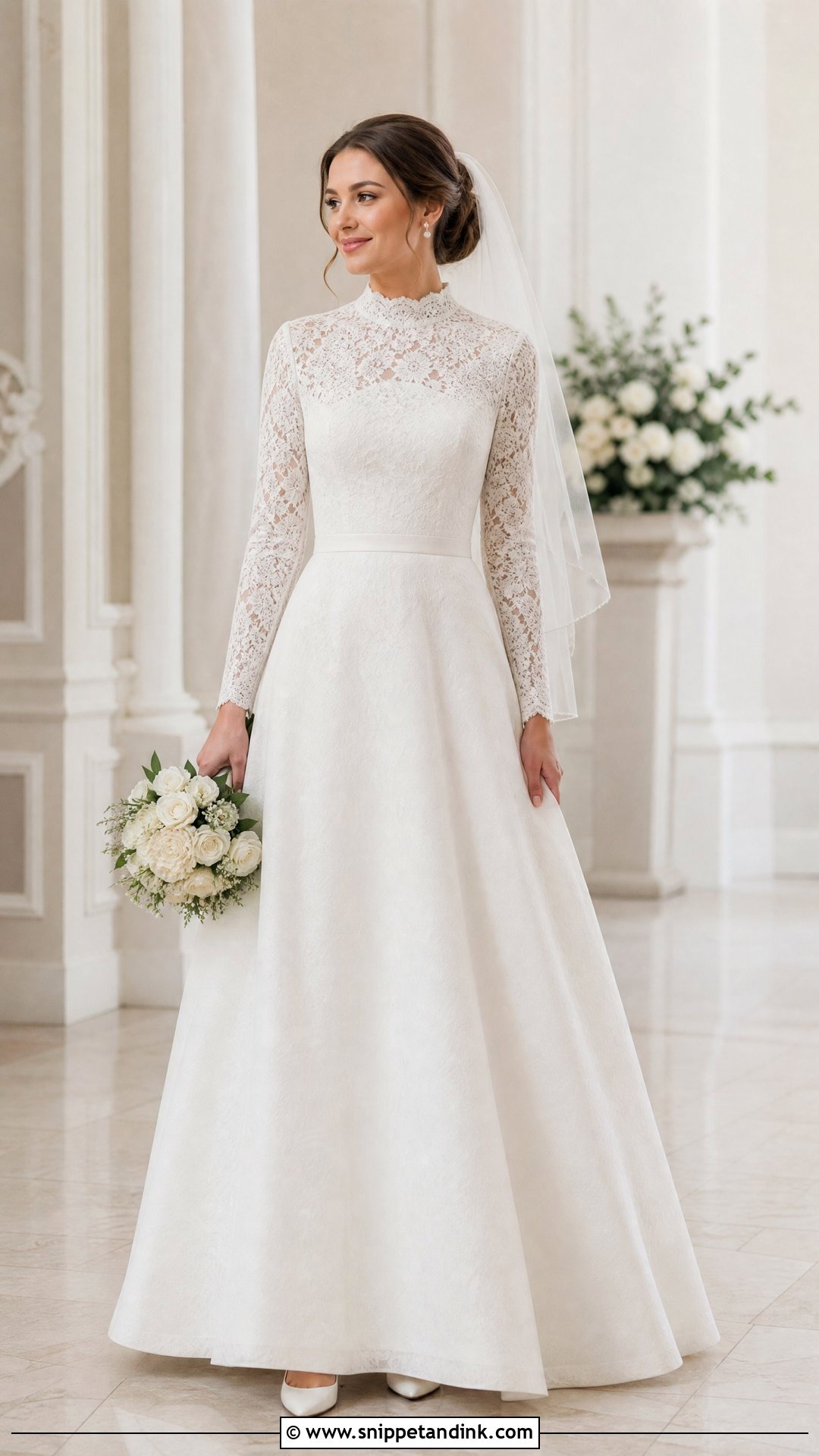
Modest lace should be designed for coverage, not patched up afterwards. Look for a higher neckline, a lined bodice, a covered back and sleeves cut with enough room to lift your arms. A smooth A-line keeps it graceful without extra fullness. When the lace itself is intricate, keep buttons, beads and trim to a minimum elsewhere. Closed-toe pumps, pearl earrings and a plain veil under a polished updo are my usual pairing, and a narrow belt can define the waist if it matches the dress shade exactly. At each fitting, sit, bend and reach. The back is where coverage usually slips when you lean forward.
18. Simple Beach Lace Wedding Dress
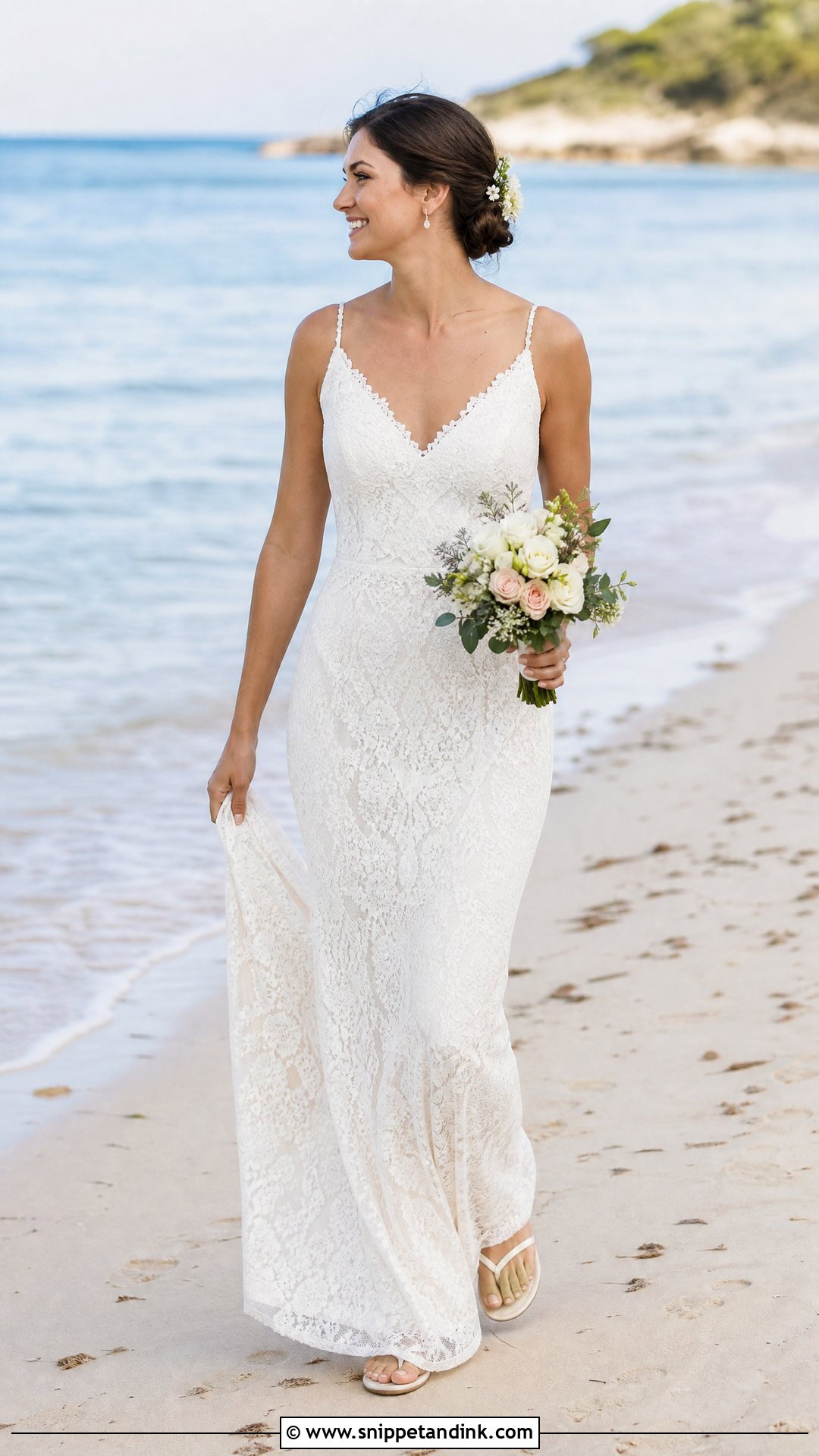
For a beach wedding, the lace has to be light and the lining breathable, or you’ll be very warm by the vows. A sheath, soft A-line or relaxed empire shape all work, while long trains, thick corsetry and layered skirts just collect sand. Flat bridal sandals, small earrings and a short veil or secure hair piece cope with wind, and loose waves or a low textured bun stay manageable in a breeze. Hem it to skim the sand in your actual sandals. Damp sand and salt spray can mark lace, so let the dress dry fully before it goes back in its bag.
19. Simple Courthouse Lace Wedding Dress
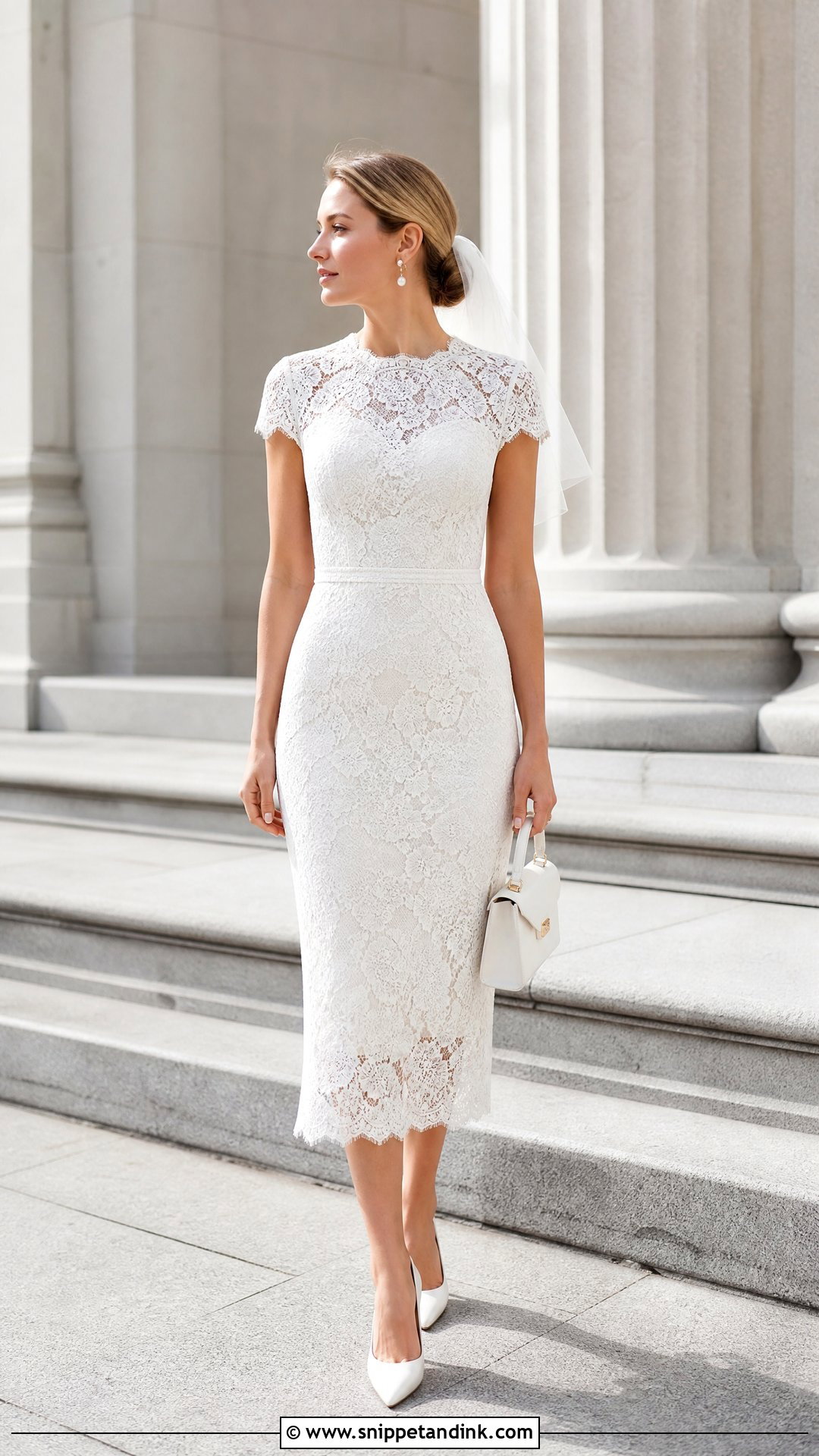
Courthouse dresses have to cope with corridors, steps, a security line and photos on a busy street. Midi, tea length or a streamlined ankle length handle all of that. Pick a clean neckline, little embellishment and a waist that’s defined but not tight, because you’ll probably sit and wait at some point. Pointed pumps, a compact structured bag and pearl earrings give a polished finish, and a short veil marks you as the bride without catching in doorways. In cold months, a tailored ivory coat over the dress looks intentional. Careful tailoring is what keeps a plain lace dress from reading as a party frock.


20. Simple Lace Slip Wedding Dress
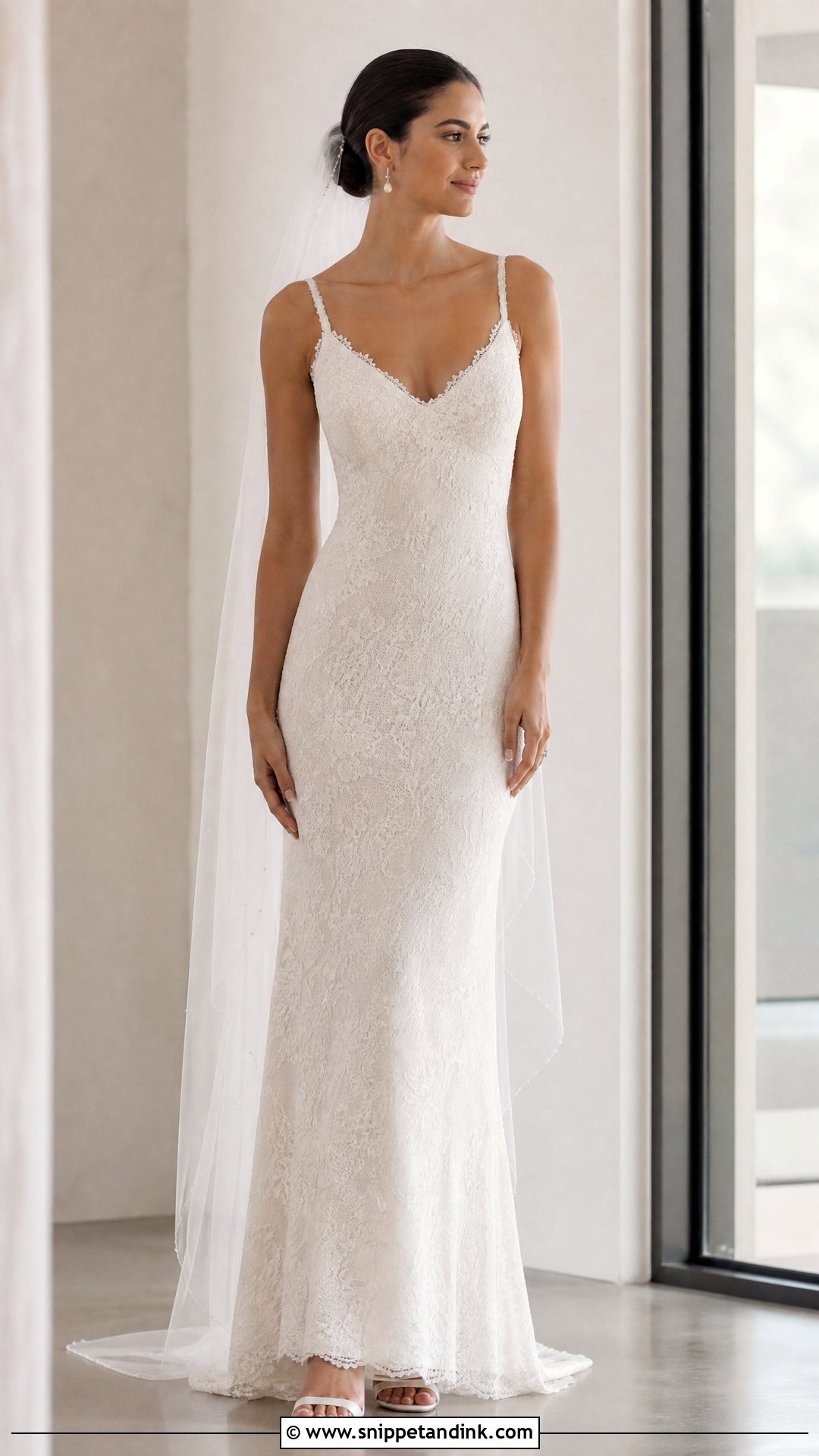
Lace slips reveal every small fit issue, which surprises brides who picked them for being easy. Look for a bias-cut or softly straight shape that skims rather than clings, fully lined for a smooth finish. Wider straps give support; thin ones are fine only if the bodice is built to hold you. Minimal ivory sandals, small drops and a sheer fingertip veil keep it modern, with a sleek bun or soft waves depending on the mood. Plan alterations at the bust, waist and hem, and expect them to take a little longer, since the lace layer is adjusted separately from the lining.
Why Lace Alterations Need Extra Weeks
Satin gets hemmed by cutting and stitching a fold. Lace usually doesn’t. When a skirt finishes on a scalloped edge, the seamstress often removes the scallop, shortens the skirt underneath, then hand-sews the scallop back along a motif line so the edge still looks untouched. Taking in a lace bodice works the same way, overlapping motifs rather than running a straight seam.
That handwork is why lace alterations take longer and often cost more than the same change on plain fabric, though prices vary widely by area and by dress. Tell the seamstress at the first appointment that the gown is lace so she can plan the work, and leave more time between fittings than you would for satin.
Protecting the lace on the day
- Bracelets with prongs or open links catch lace sleeves; smooth bangles or bare wrists are safer.
- Ask the florist to wrap bouquet wires and pins in ribbon right down the stem.
- Velcro on garment bags and shapewear pulls threads, and so can a groom’s cufflinks during a hug.
- If a thread does pull, don’t cut it. Ease it to the back with a needle, or leave it for your seamstress after the wedding.
Lace Works Hardest When It’s the Only Ornament
Start with the neckline and skirt shape that make you feel most like yourself, then work outward to sleeve coverage, lace weight, the venue and how much you’ll be moving. Lace changes mood easily, from modern to vintage to modest, depending on the cut and styling, so you rarely need more than a couple of accessories on top. Good shoes, careful alterations and a veil in proportion will do more for a simple lace gown than any added sparkle. The right dress feels as natural in the last hour as it did in the first.
You'll Like These Ideas:







Leave a Reply