
Lace is the fabric I reach for most often when a bride wants coverage, because it adds pattern and depth that a plain covered bodice can’t. High necklines, long sleeves, lined bodices and graceful skirts all take lace well, and so does almost every silhouette, from A-lines and ball gowns to sheaths, tea-length dresses and capes. The catch is that lace varies enormously: some is fine enough to see through, some is stiff and sculptural, and the lining behind it changes everything. The 25 gowns below cover classic, simple, vintage and regal tastes, with notes on how each type of lace behaves once you’re wearing it all day.
Reading a Lace Swatch Before You Order
Two gowns can both be described as lace with sleeves and look nothing alike on the day. Before committing, ask for a swatch of the lace with its lining behind it and look at it in daylight, not under the shop’s warm lights. Hold it against your skin: what reads as opaque on a hanger can show skin once it’s stretched over an arm.
- Check whether the lace is appliquéd or all-over. Hand-placed motifs at the neckline and hem look finished; lace cut straight across looks mass-produced.
- Feel the edges. Corded and beaded lace is stiffer and can scratch at the underarm and neckline.
- Ask about stretch. Lace on stretch tulle moves with you; lace on rigid net needs more ease in the sleeves.
- Compare lining colors. Nude, ivory and champagne linings each change how the same lace reads in photos.
1. High Neck Lace Wedding Dress
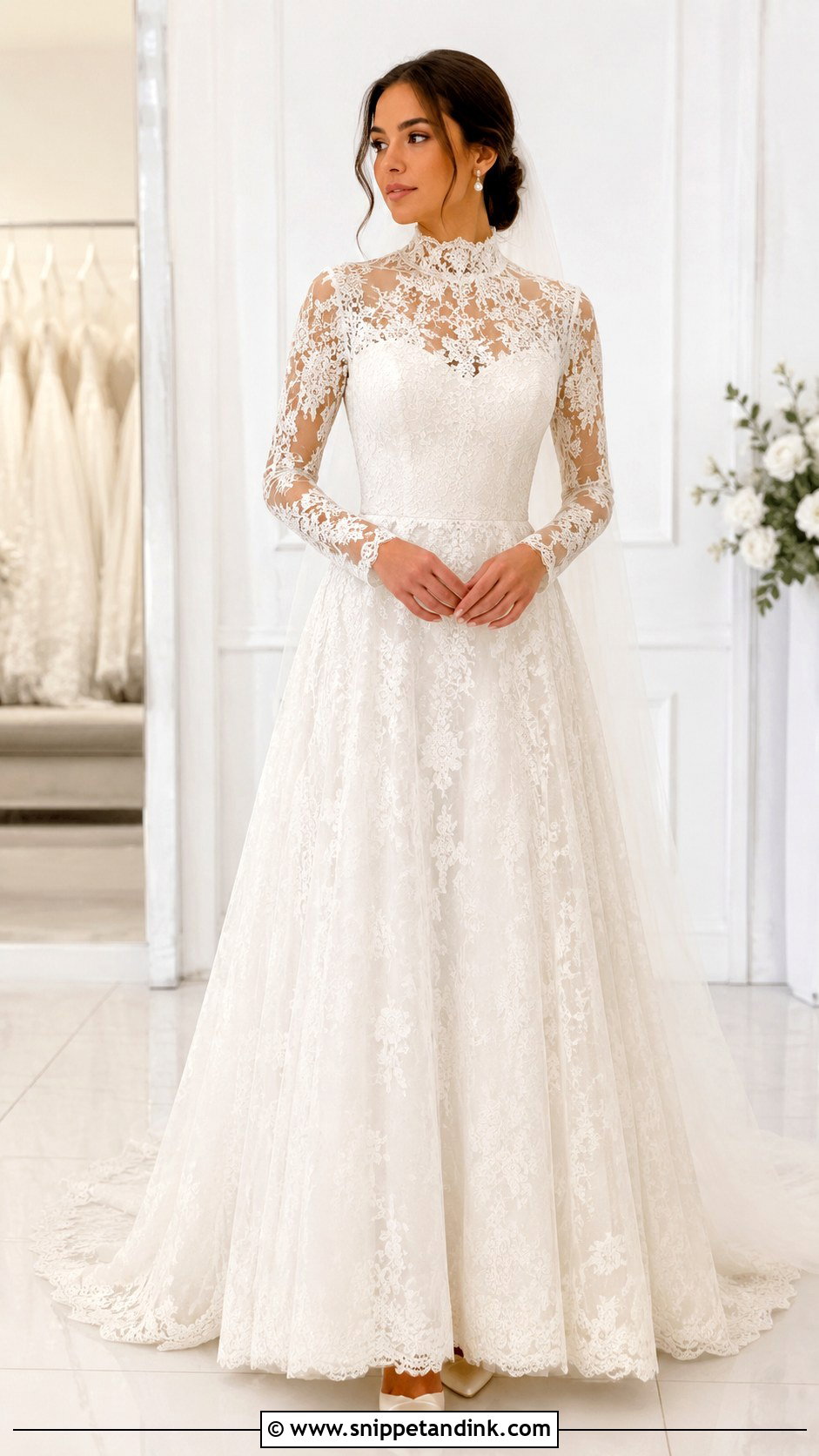
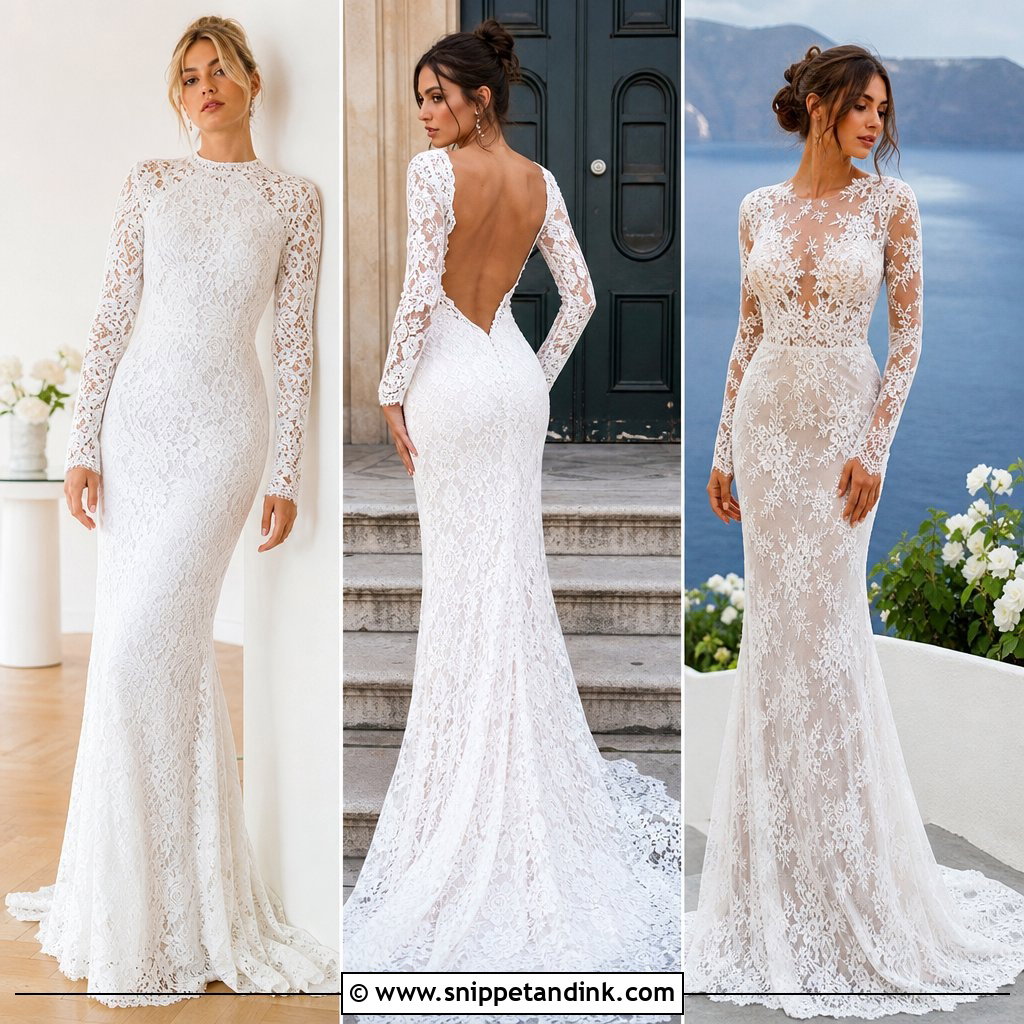
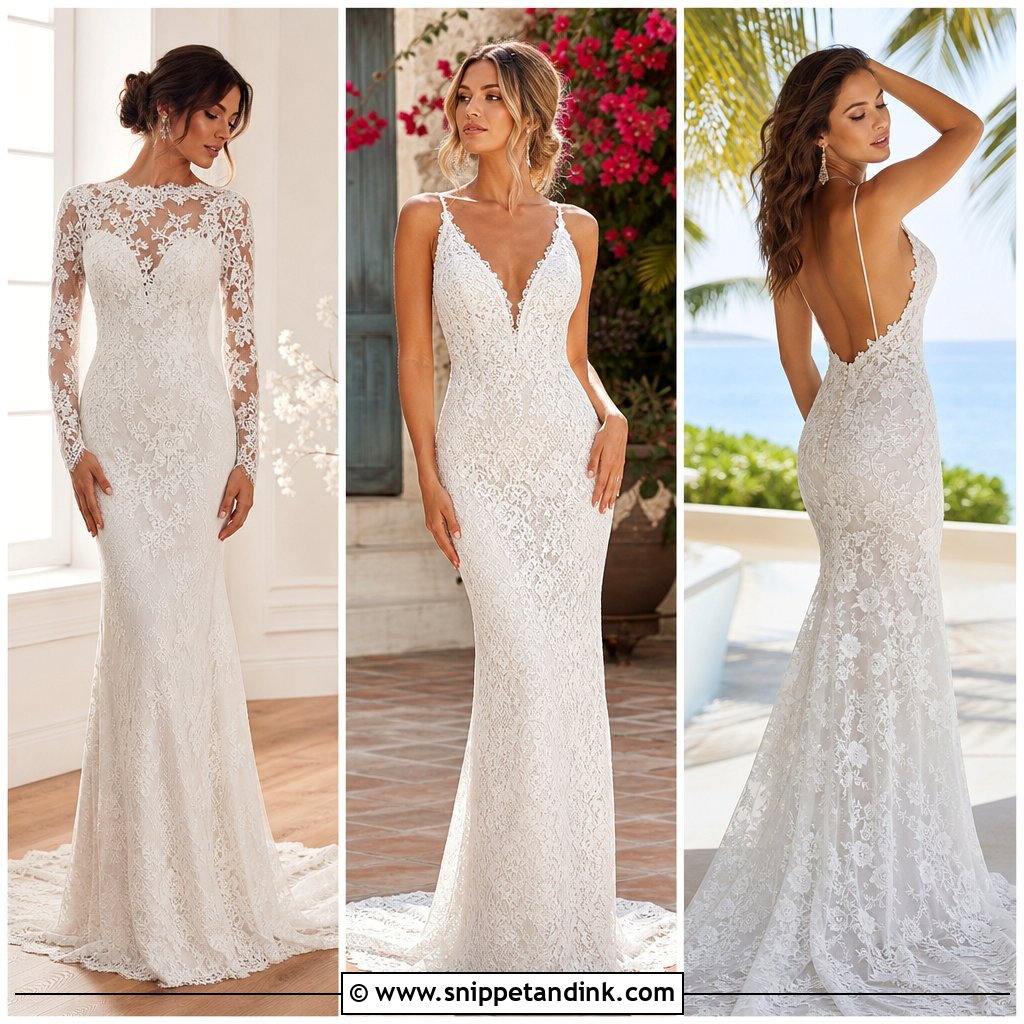
A high lace neck frames the face and lets the lace pattern carry the dress. Pair it with long sleeves, a fitted bodice and a soft A-line or sheath skirt. Choose fully lined lace for coverage, or illusion lace on a nude or ivory lining for something lighter. The lining color matters more than brides expect: nude lining makes the lace look like it’s floating on skin, while ivory lining reads as a solid dress. A low bun, pearl earrings and a simple veil leave the neckline alone.
2. Long Sleeve Lace Wedding Dress
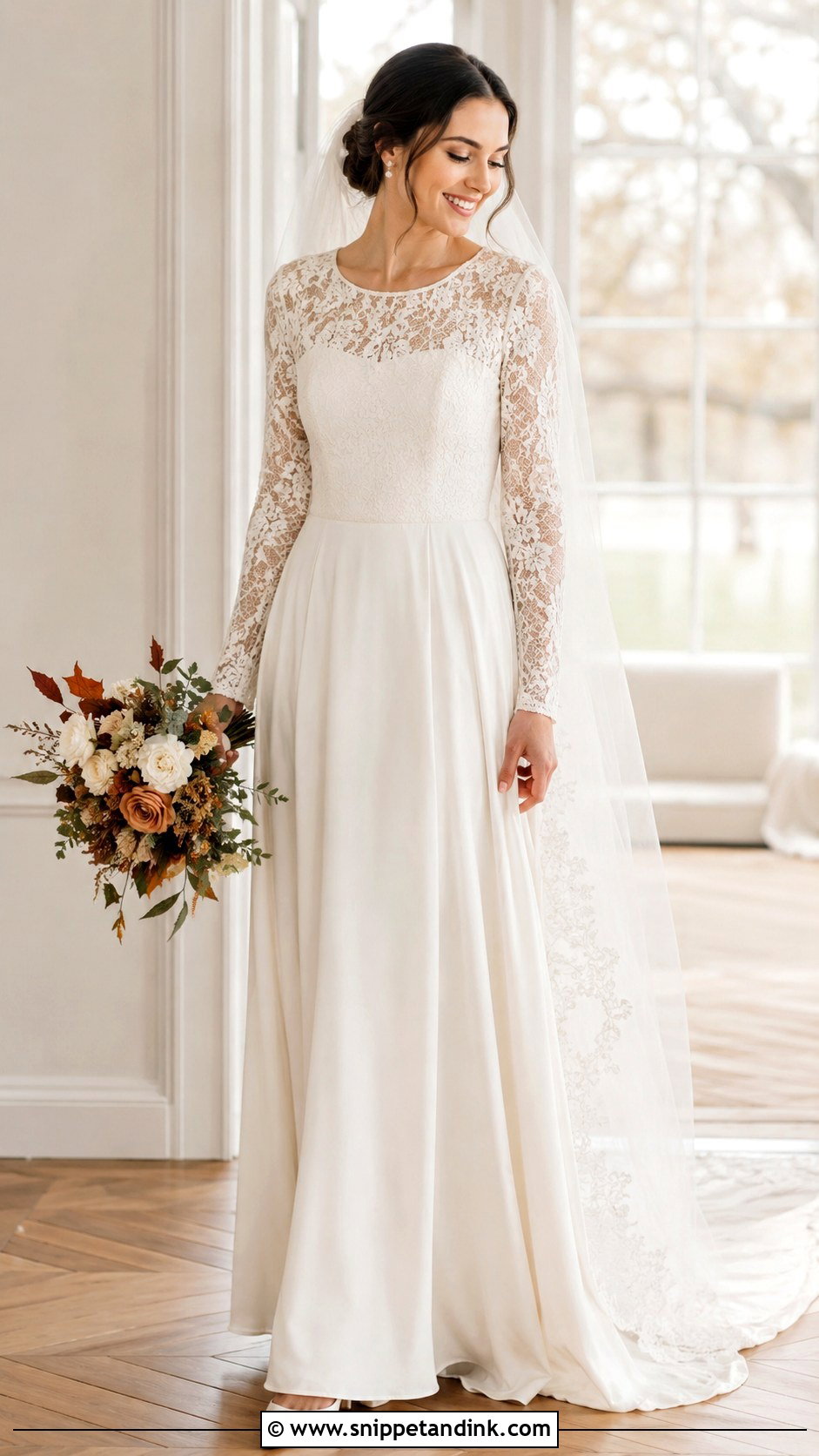
Long lace sleeves can be fitted, slightly flared or continued straight from the bodice pattern. For real coverage, ask for lined sleeves or dense lace placement. Fitted lace sleeves have little stretch, so I always have brides raise their arms and hold a bouquet at chest height during the fitting; if the sleeve pulls at the elbow, it needs a touch more ease. Keep jewelry simple so your hands, the bouquet and the lace show. A chapel veil and satin pumps suit fall and winter weddings.
3. A Line Lace Wedding Dress
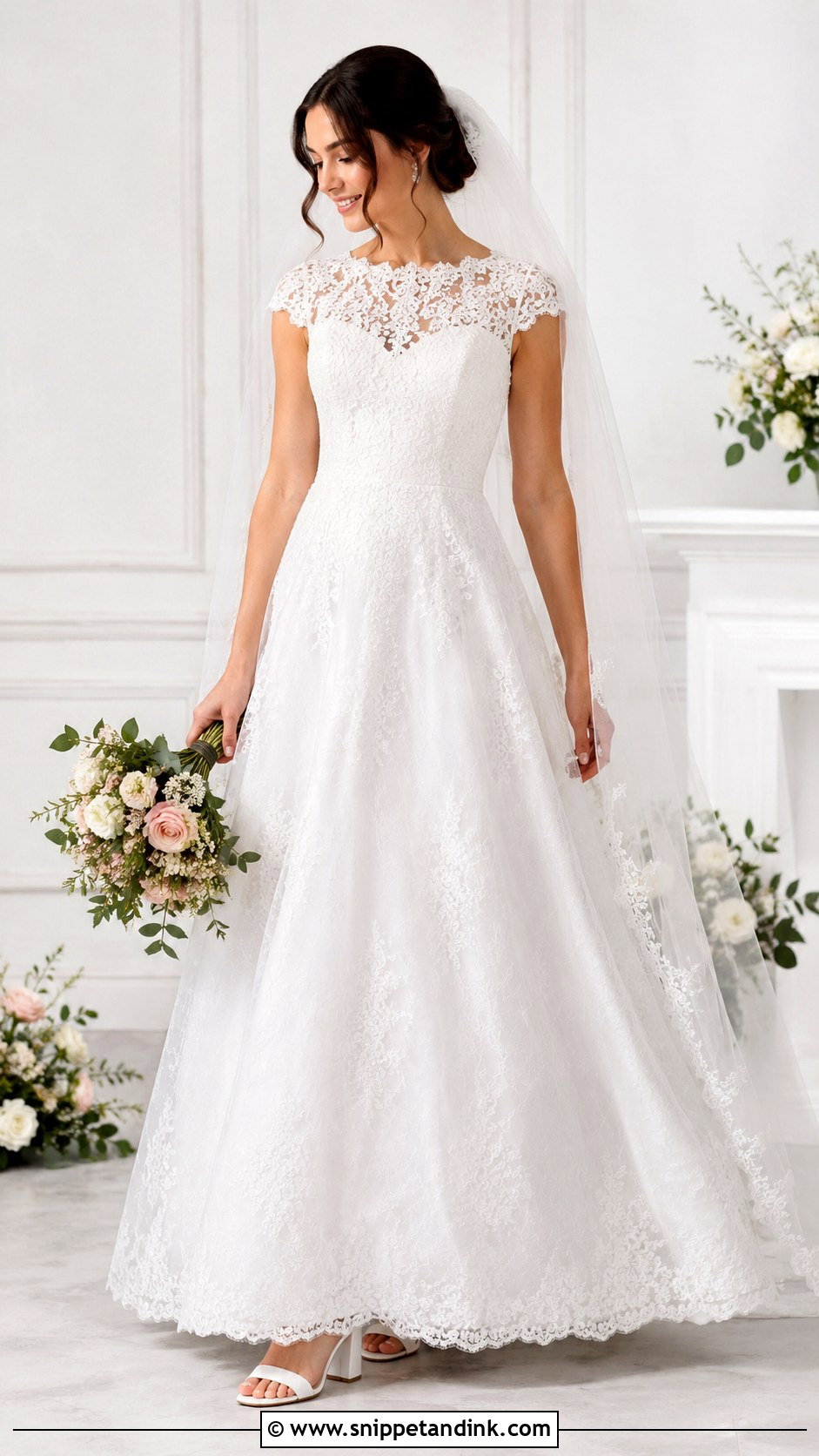
The A-line suits many body types because the fitted bodice marks the waist and the skirt falls away without heavy volume. A higher neckline, covered shoulders and a lined bodice keep it modest. Floral lace reads romantic; geometric lace looks modern. On an A-line, look at where the lace pattern stops on the skirt. A pattern that ends in an abrupt straight line at the hip looks cheaper than one that thins out gradually toward the hem. Block heels, a fingertip veil and soft waves keep it relaxed.
4. Lace Ball Gown Wedding Dress
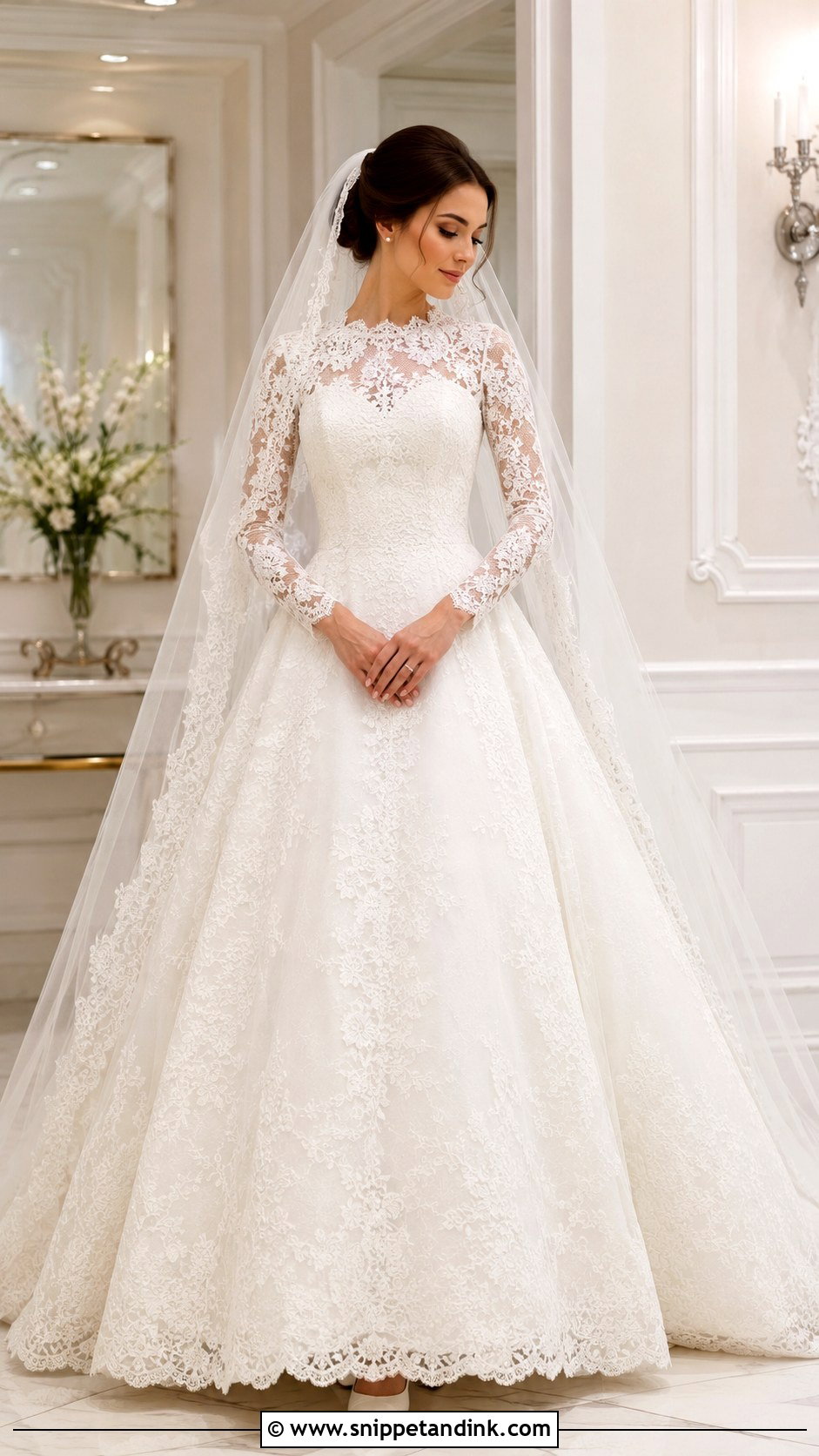
Lace on a ball gown gives a regal, traditional effect, with a covered bodice and sleeves balancing the full skirt. The best versions let the lace continue across the bodice and fade softly into the skirt rather than stopping at the waist seam. A structured waistline keeps it polished, and a long veil adds ceremony impact. Lace over a full skirt adds real weight, so check the bustle can carry it. Pearl studs and closed-toe heels are enough for a formal venue.
5. Lace Sheath Wedding Dress
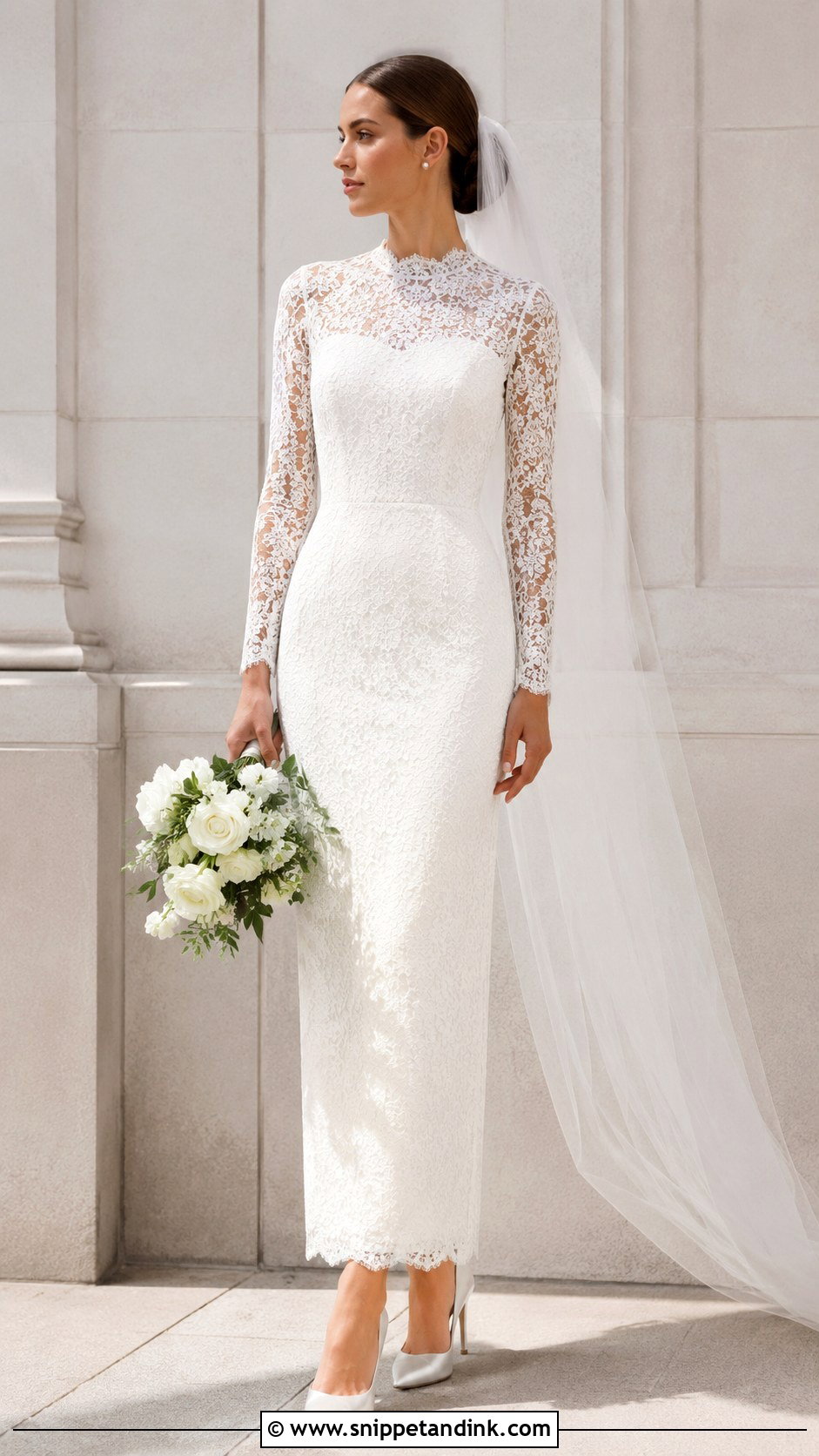
A sheath follows the body in one clean line, which makes it a calm backdrop for delicate lace. Choose a high neckline, long sleeves and full lining through the bodice and skirt. Unlined lace on a sheath shows every seam of your underwear, so the lining here is about more than modesty. A small back slit or stretch lining lets you walk and sit easily. Satin heels, a smooth bun and a plain veil keep it modern.
6. Bateau Neck Lace Wedding Dress
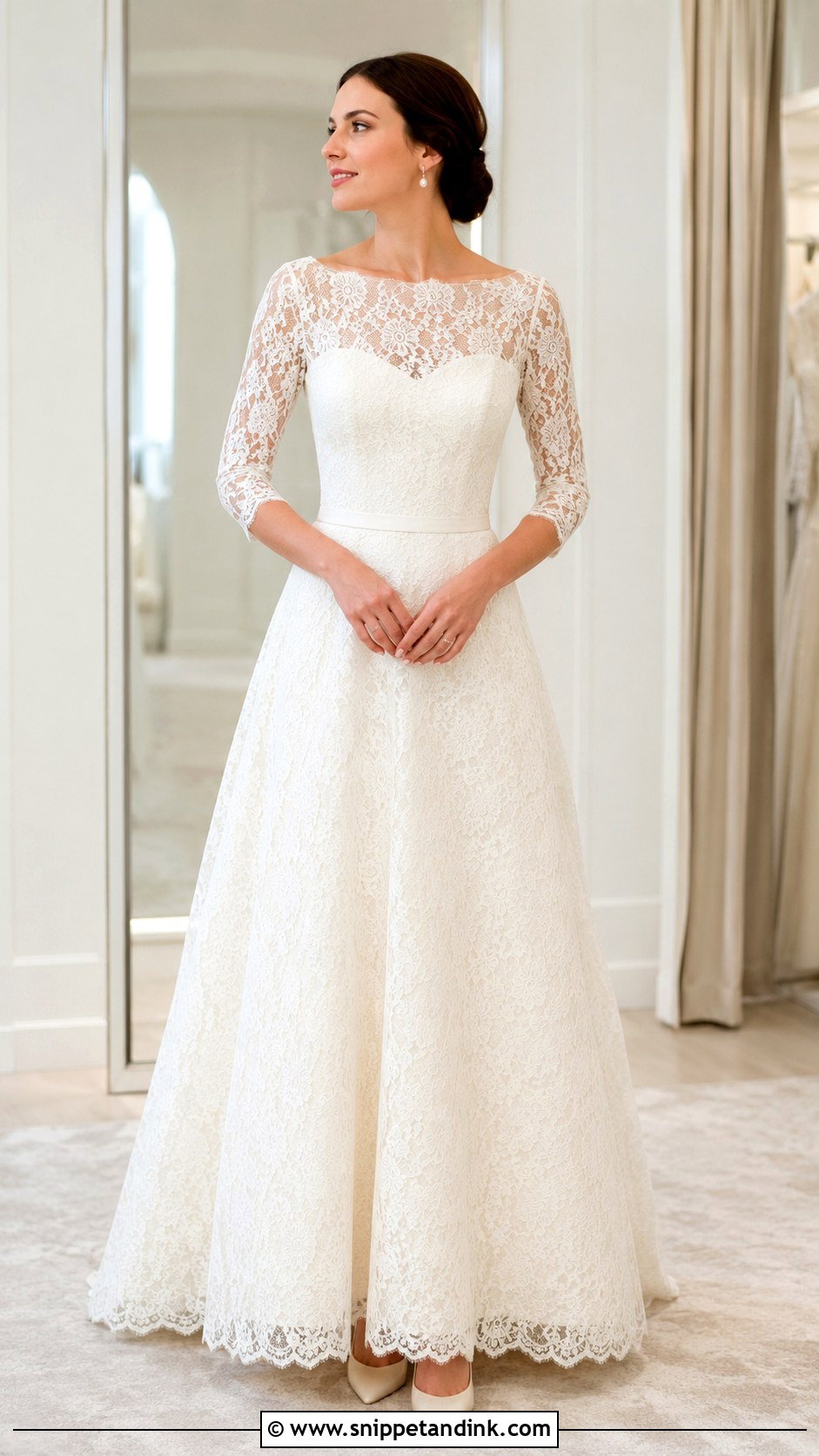
A bateau neck lace wedding dress runs across the collarbone, covering while still opening the upper body slightly. It sits well with three-quarter or long lace sleeves, a fitted waist and an A-line skirt. If you want modesty but dislike a high collar, this is the neckline I’d try first. Bateau necks can slide outward on sloping shoulders, so a small strap keeper inside the shoulder seam helps. Pearl drop earrings and a low chignon complete it.
7. Mock Neck Lace Wedding Dress
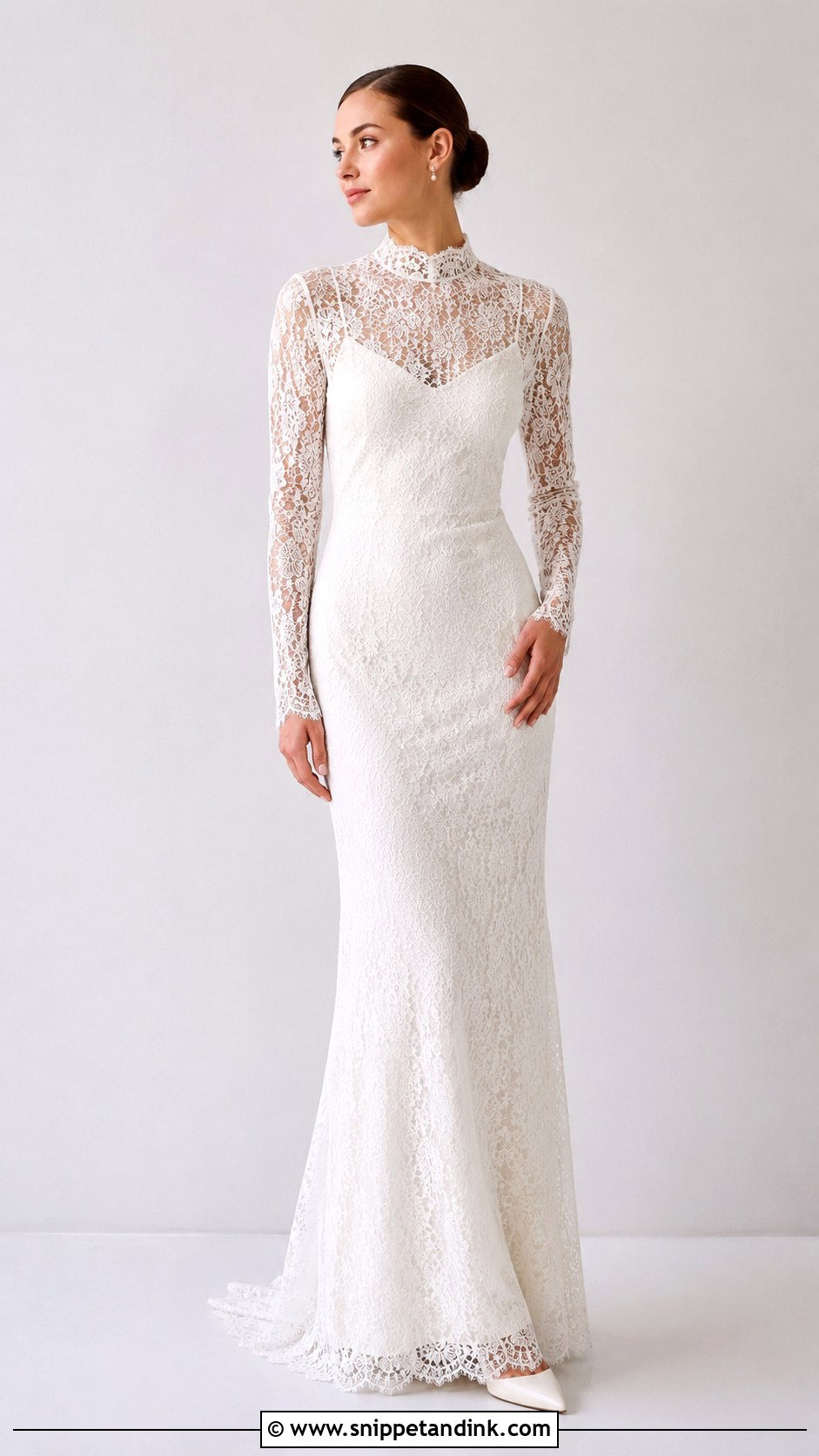
A mock neck lace wedding dress covers more than a crew neck but feels lighter than a full turtleneck. It works best with fine lace over a lined bodice, the pattern continuing onto the sleeves. A slim skirt makes it contemporary; an A-line softens it. Lace mock necks can feel scratchy under the jaw if the edge is corded, so I look for a soft scalloped edge or a fine binding at the top. Skip necklaces and wear a sleek bun with small earrings.
8. Lace Wedding Dress With Covered Back
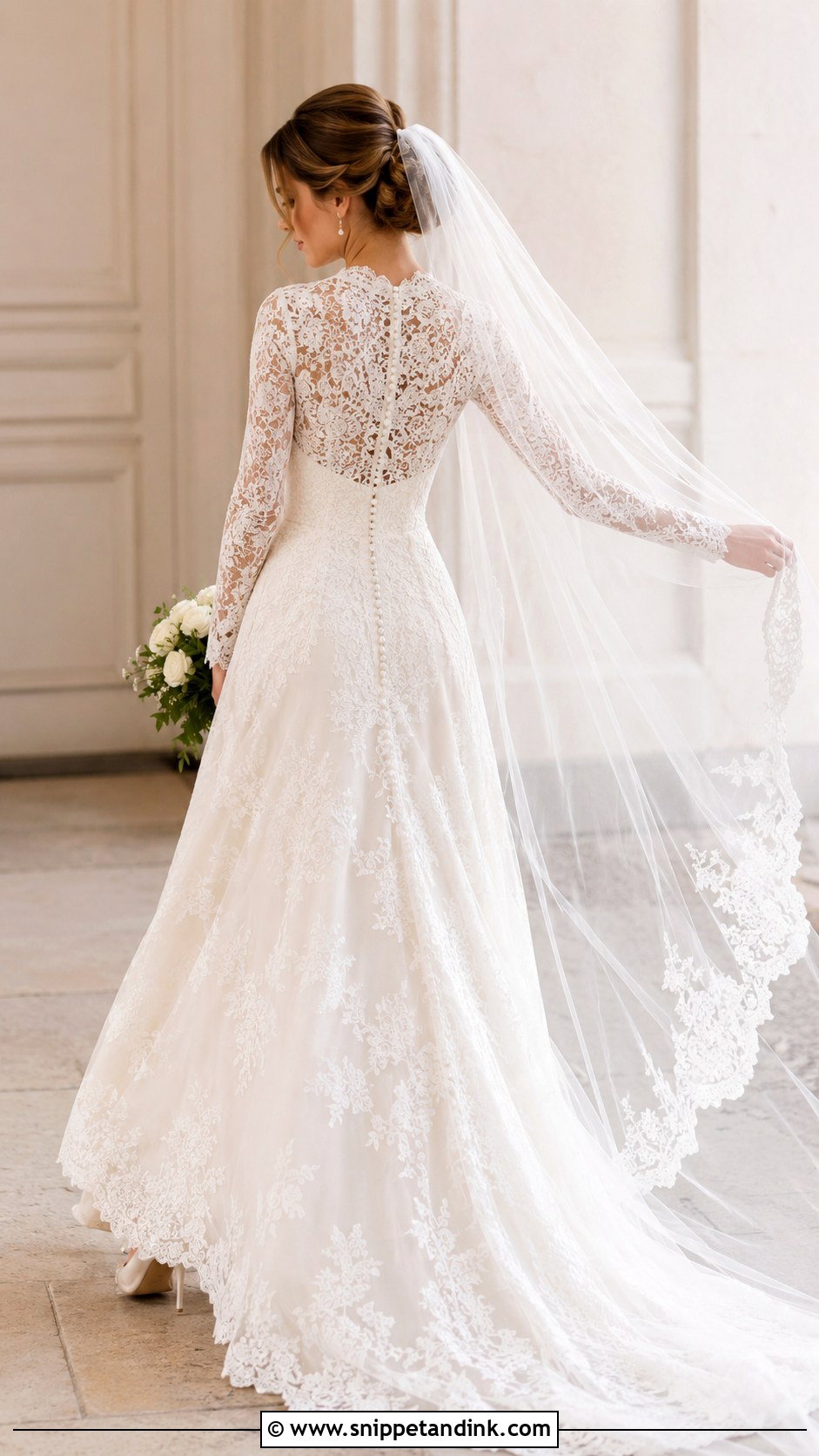
Most gowns put the drama in an open back, but a covered lace back can hold attention just as well. Buttons down the back add a traditional detail over floral lace, and a sheer lace back with lining keeps the design light. Pair it with long sleeves and a sheath or A-line skirt. Long rows of covered buttons take time to fasten, so give whoever is dressing you a crochet hook or button hook and ten spare minutes. A long veil lifted for photos shows the buttons off.
9. Lace Wedding Dress With Lined Bodice
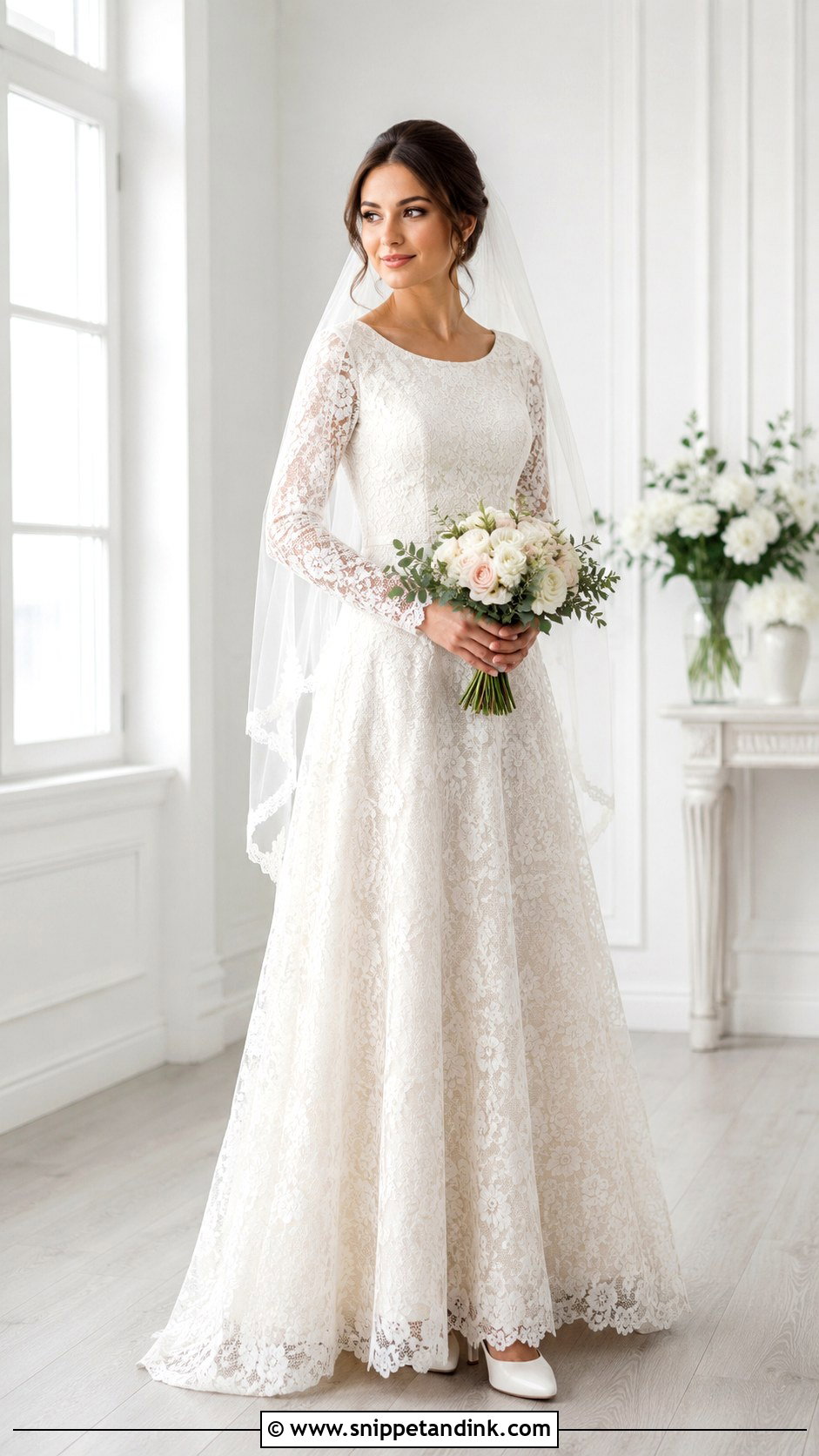
Love lace but dislike the illusion look? A lined bodice solves it. The lining removes sheerness while letting the lace texture show, and it works with bateau, scoop, high or square necks. In photographs it gives a cleaner finish, since flash can make unlined lace look patchy. Ask what the lining is made of: silk or a good stretch lining breathes, while cheaper polyester gets warm by the evening. Closed-toe heels and a simple veil keep the look neat.
10. Lace Wedding Dress With Detachable Sleeves
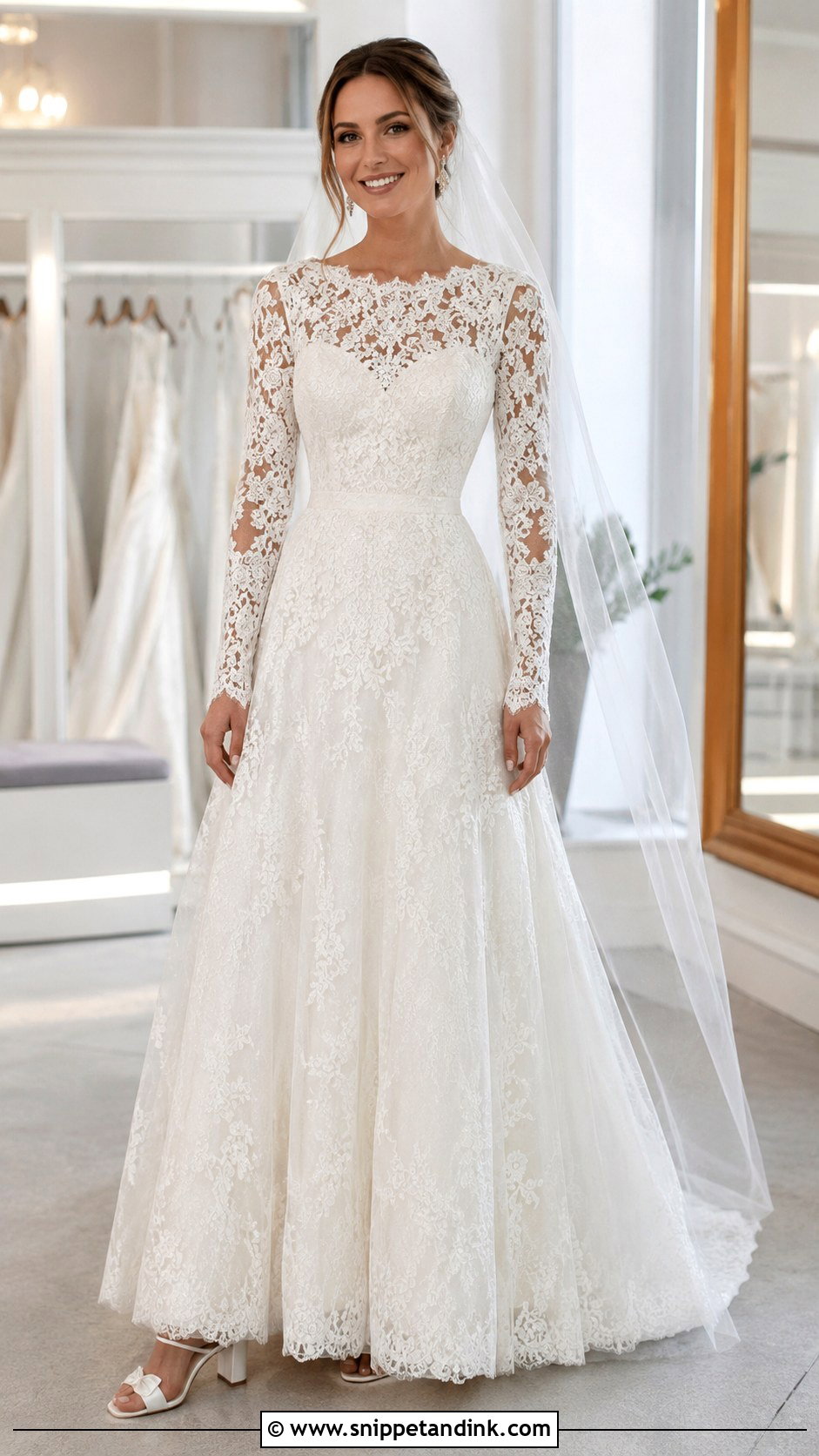
Detachable lace sleeves let you wear more coverage for the ceremony and less for the reception. The sleeves should attach cleanly at the shoulder and use the exact lace of the gown, ideally cut from the same piece so the motifs line up. They suit A-line, sheath and fit-and-flare dresses. The weak point is the fastening, often small snaps or loops, so I ask the seamstress to reinforce them, because they take the strain every time you raise your arms. A fingertip veil and delicate earrings finish it.
11. Lace Wedding Dress With Cape
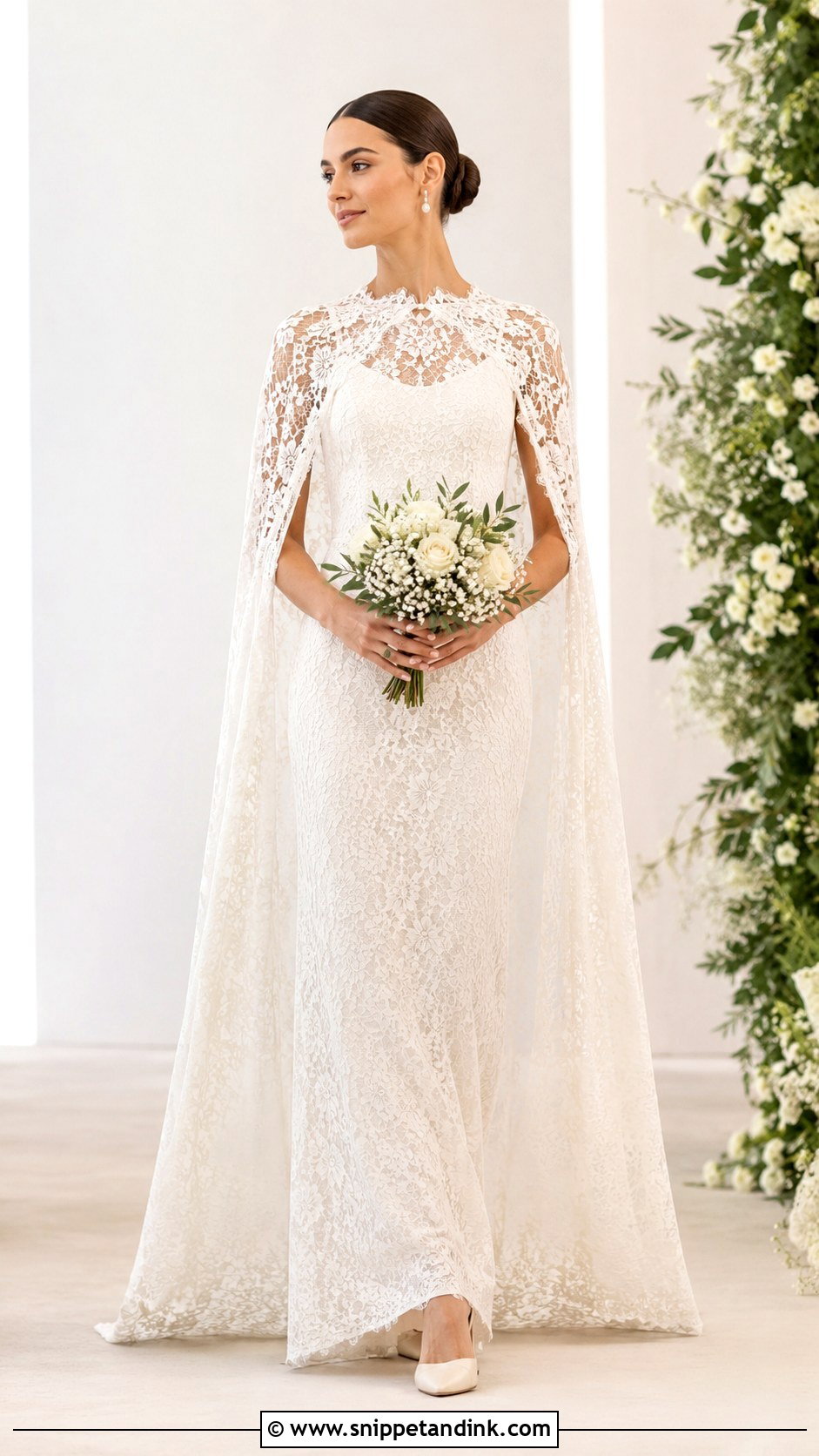
A lace cape can stand in for a veil, covering the shoulders and adding movement at the back. If the dress already has heavy lace, choose a plain tulle cape so the two layers don’t compete. A simple sheath or A-line lets the cape lead. Capes catch the wind at outdoor ceremonies, so ask for a few hidden weights or snaps along the edge if you’re marrying outside. Sleek hair, pearl earrings and simple heels let it flow.
12. Lace Wedding Dress With Bolero
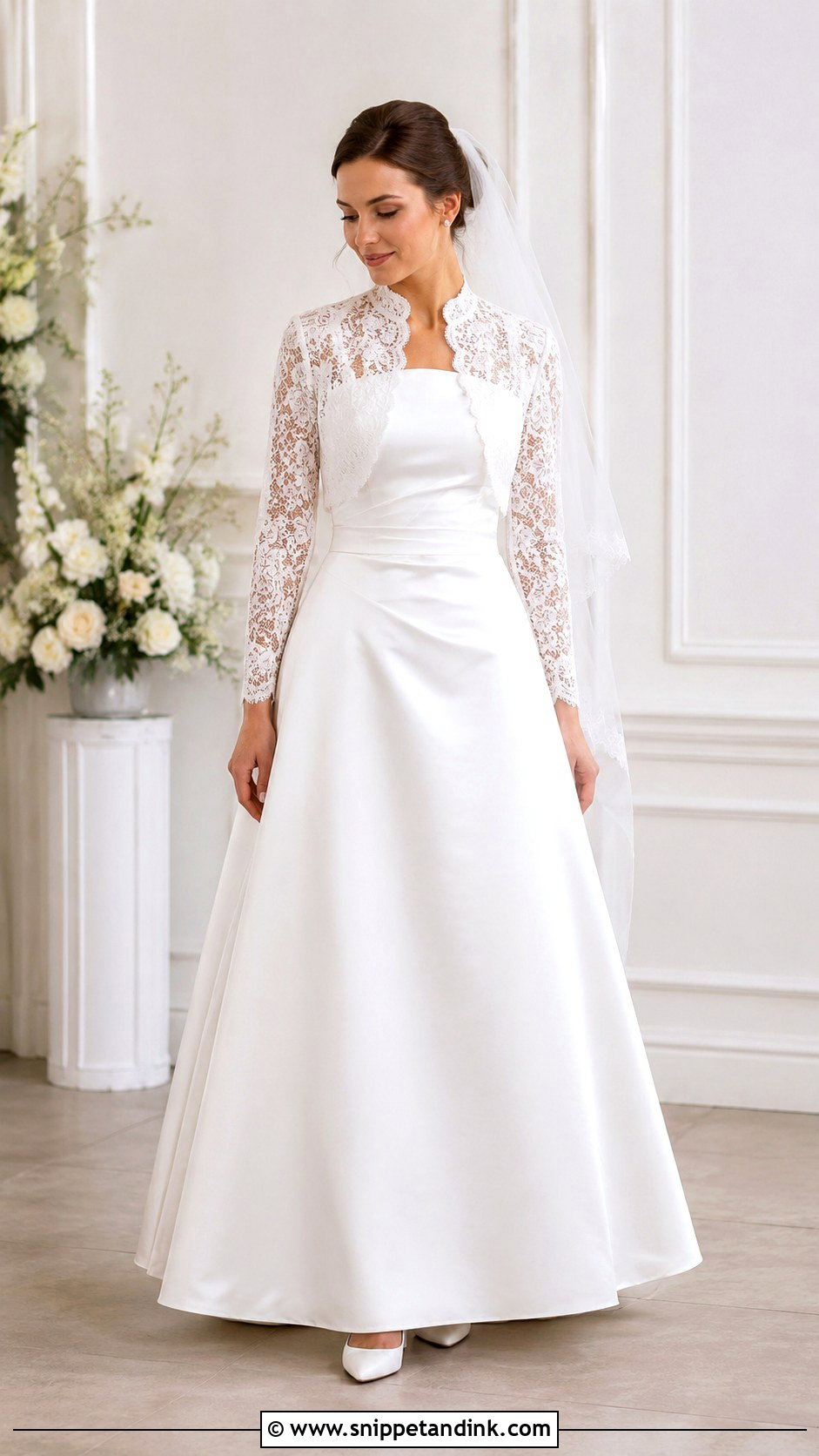
A lace bolero adds shoulder and arm coverage over a simpler dress, and it can come off later. It looks best when the lace matches or clearly complements the gown: a fitted lace bolero over satin or crepe looks elegant, while lace on lace is more traditional. Ivory lace laid over a white dress, or the reverse, looks like a mistake in close-ups, so bring the gown or a swatch when buying it. A neat bun, small earrings and closed-toe shoes complete it.
13. Tea Length Lace Wedding Dress
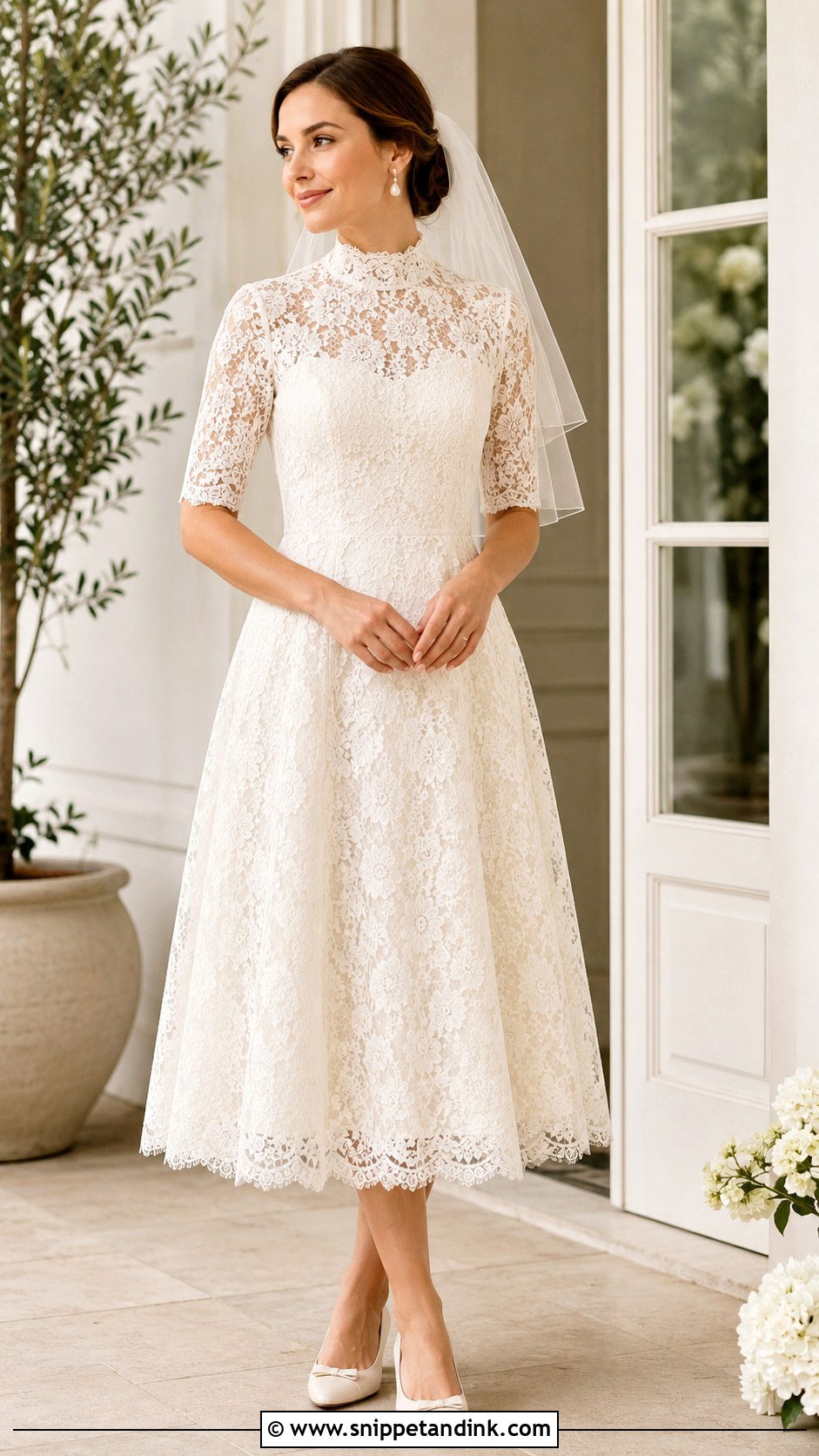
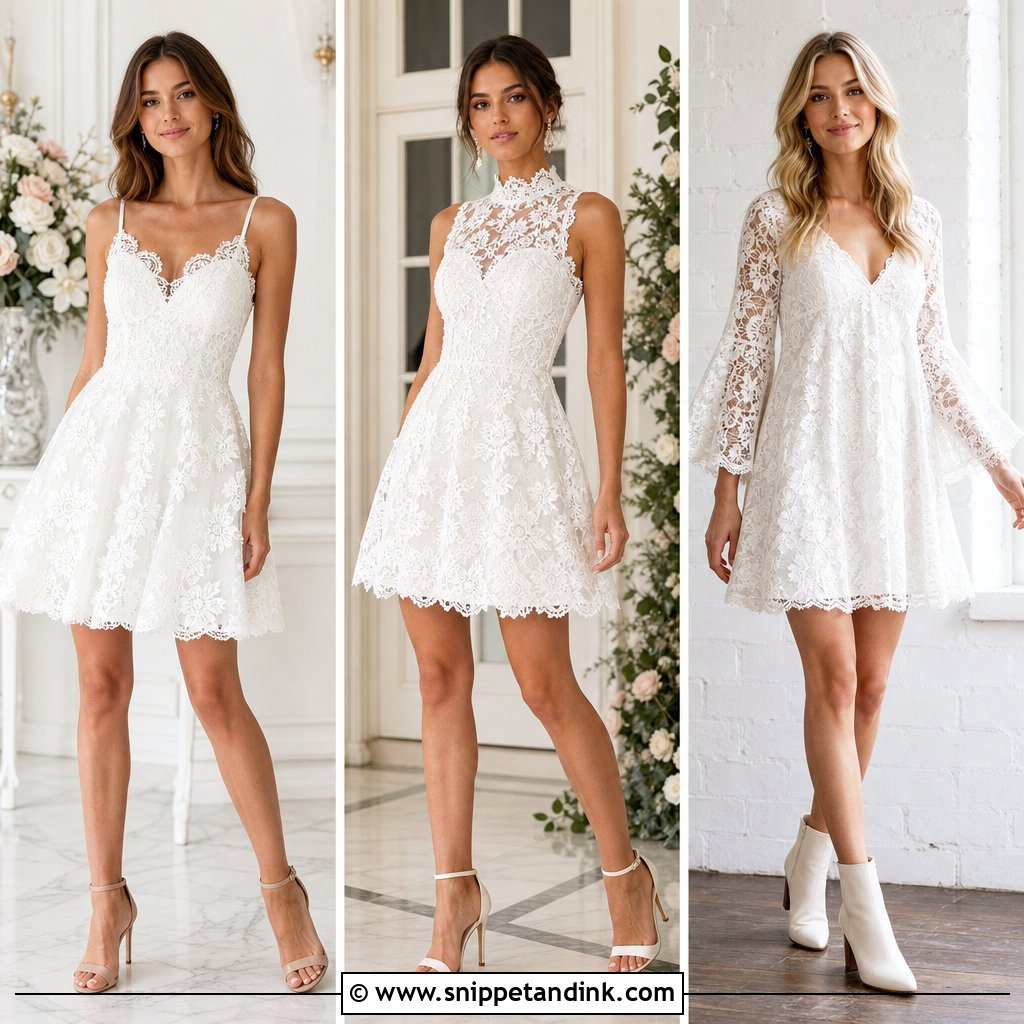
Tea length falls between knee and ankle, which suits civil ceremonies, garden weddings and small celebrations. A higher neckline, elbow sleeves or long lace sleeves keep it covered. Because the shoes show, choose them as carefully as the dress: pumps, slingbacks or low block heels. Lace hems on tea-length dresses are visible at eye level in seated photos, so a scalloped hem looks far better than a plain cut edge. A short veil or hair bow keeps it light.
14. Vintage Lace Wedding Dress
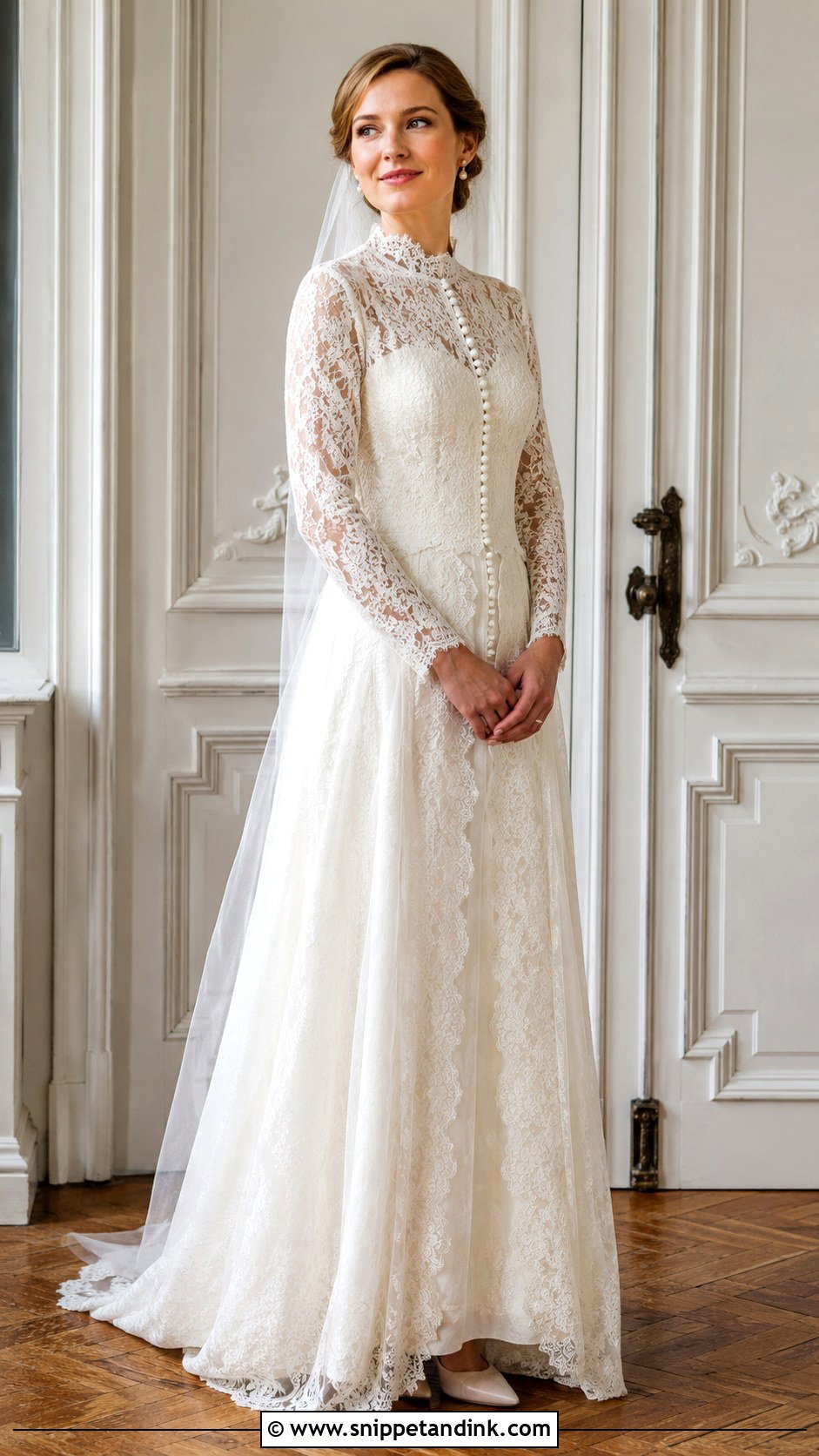
Vintage gowns often come with high necks, covered buttons, scalloped edges and long sleeves already, which makes them naturally modest. To keep the look current, choose a clean fit and limit the details. Soft ivory lace, a defined waist and a flowing skirt feel romantic without looking dated. If it’s a genuine heirloom, have a specialist check the lace before any alteration, since old lace can be brittle and split along fold lines. Pearl earrings, a simple veil and classic pumps suit it.
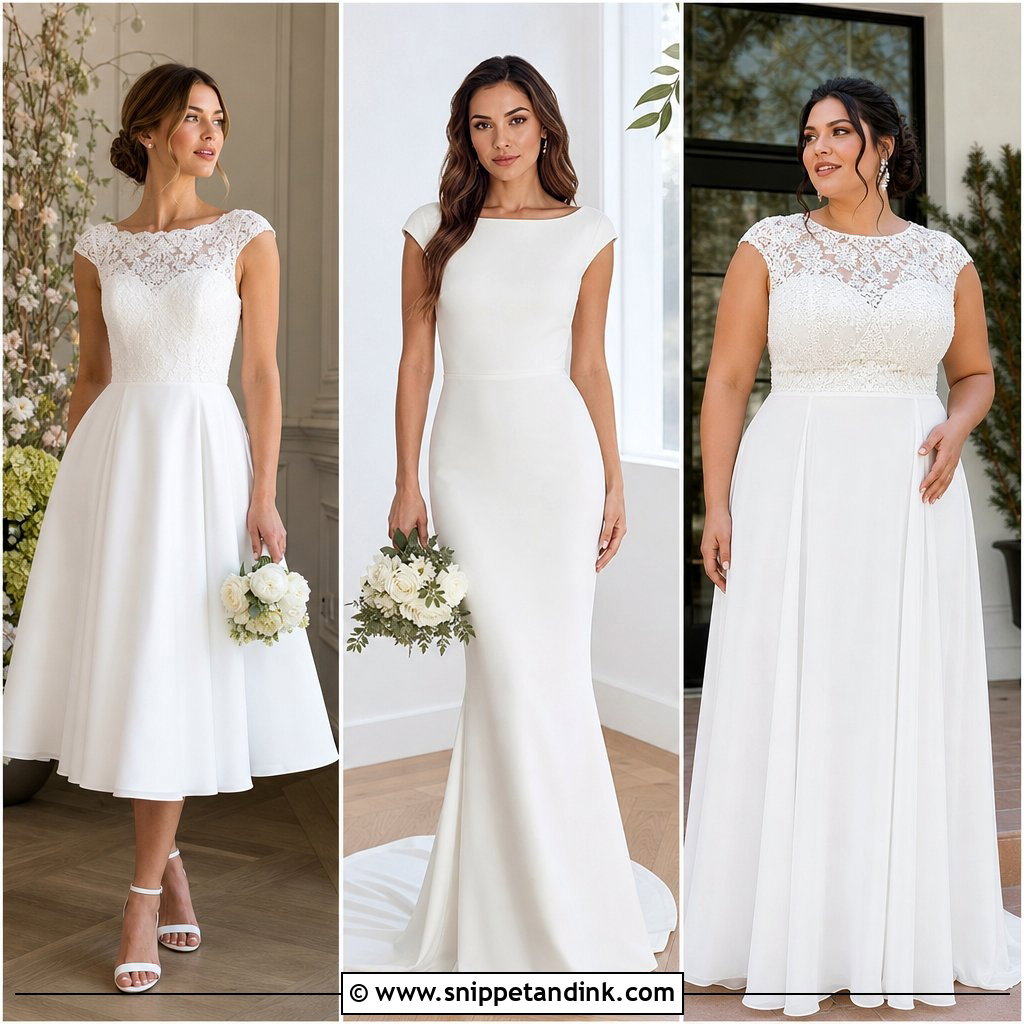
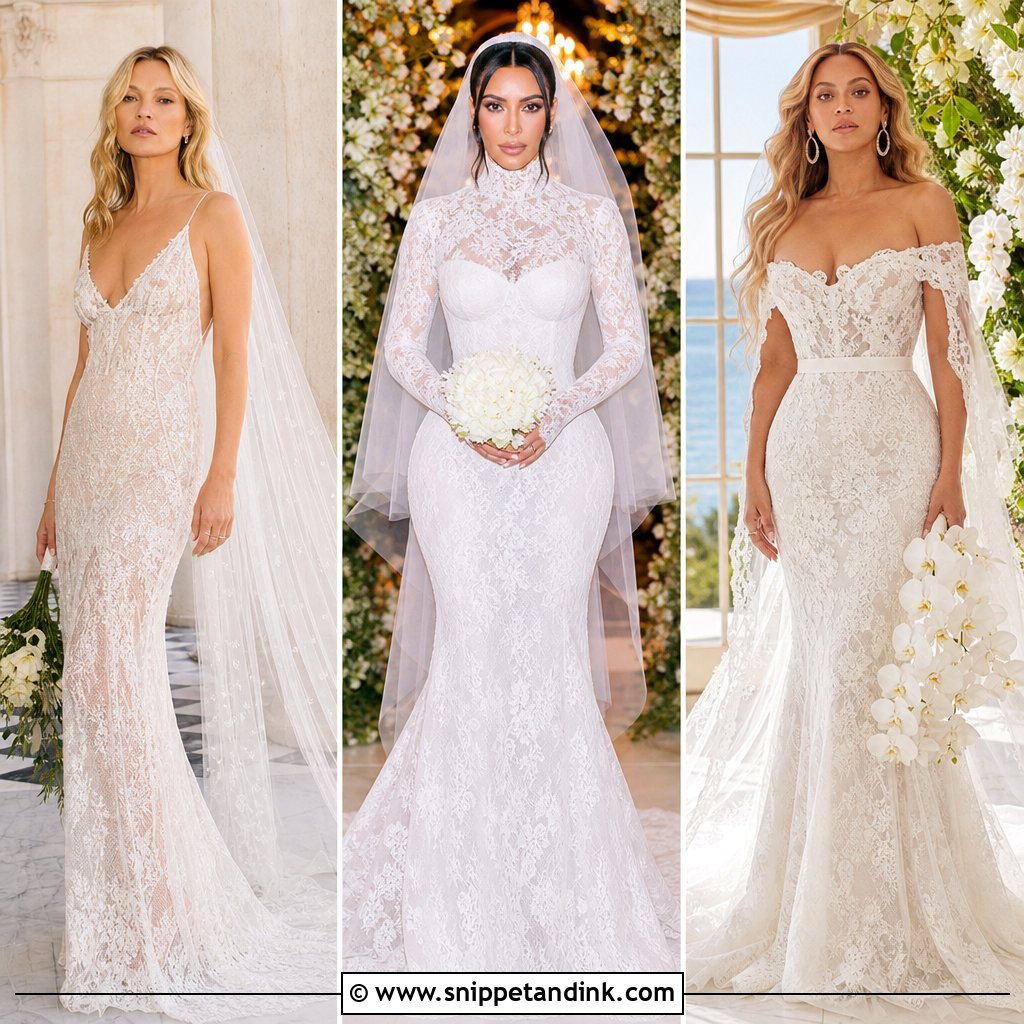
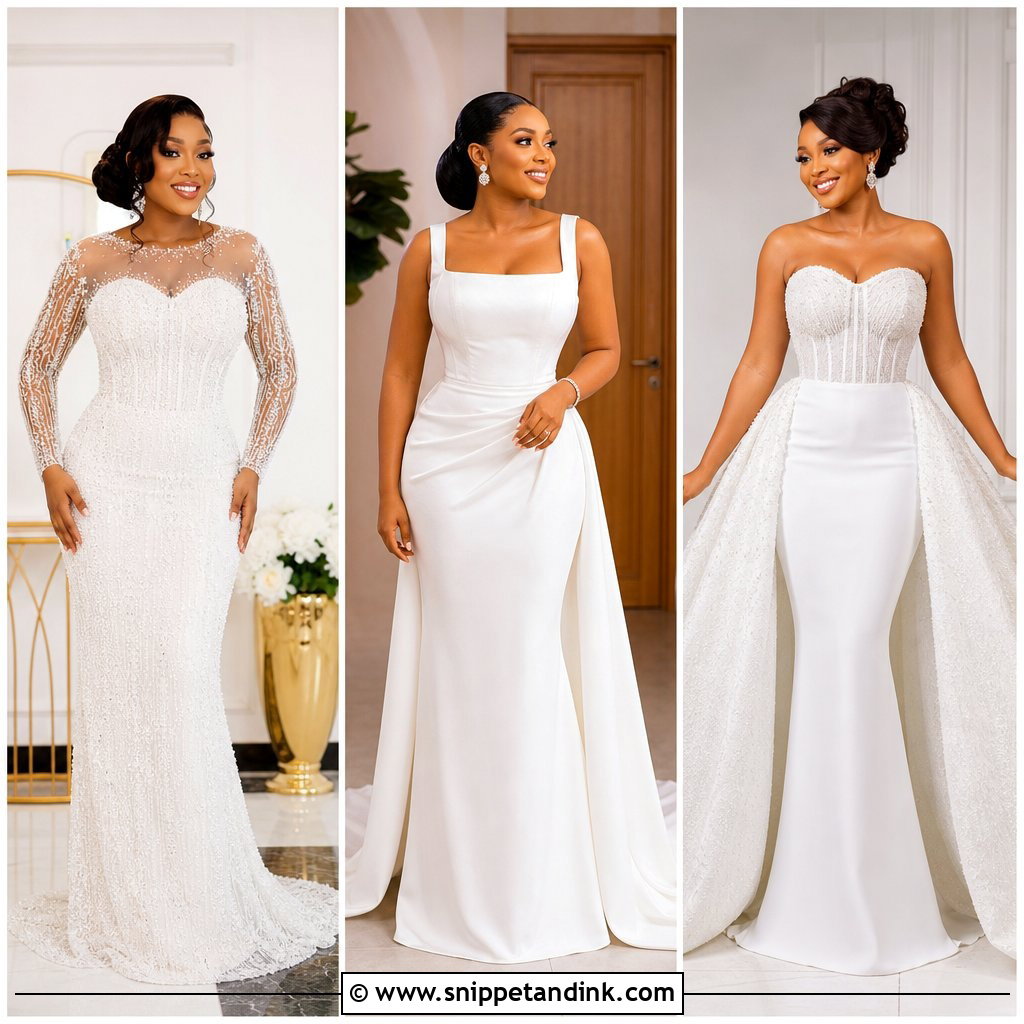
15. Boho Lace Wedding Dress
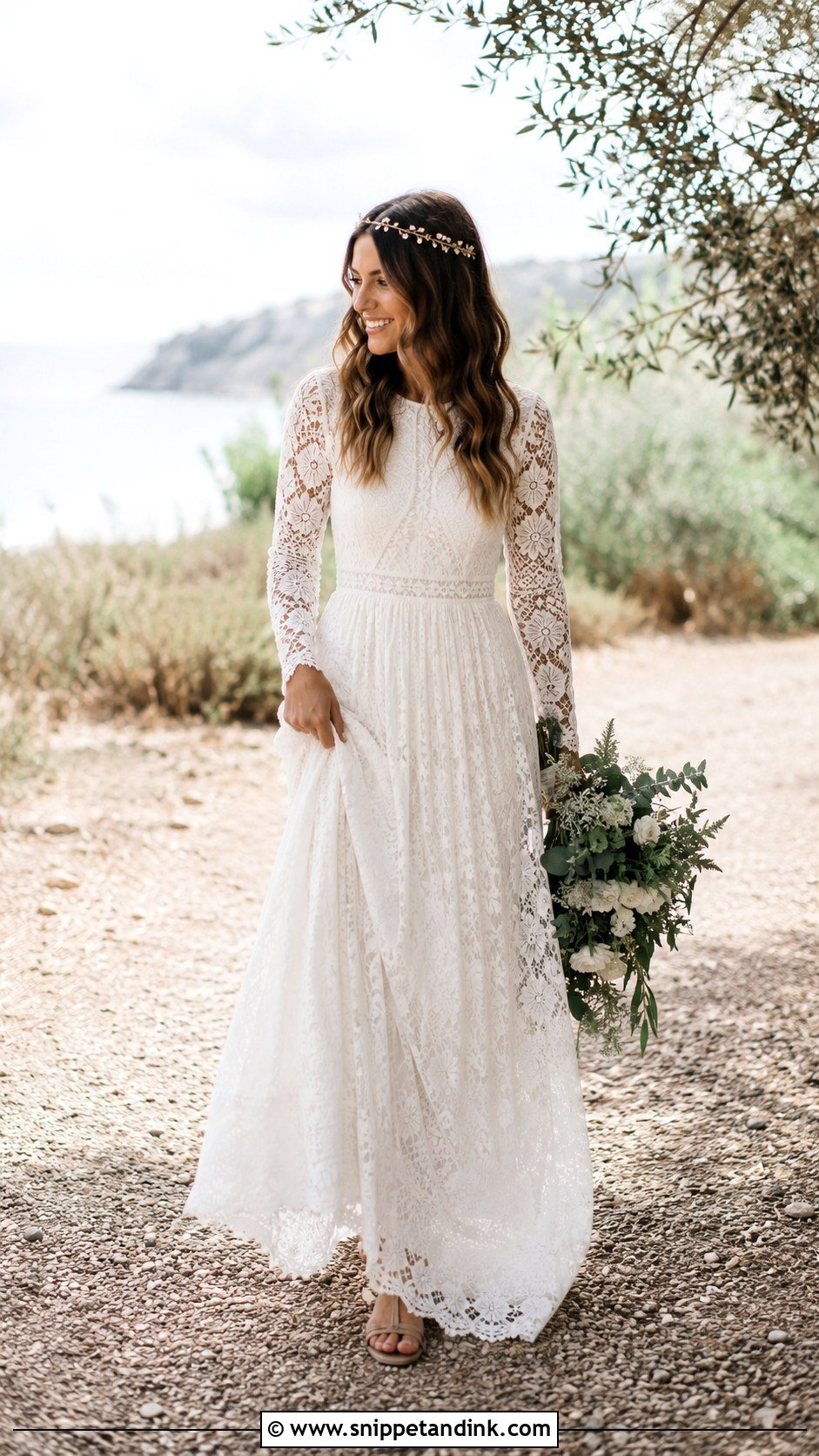
Boho lace can stay modest by using relaxed coverage instead of cutouts. Long sleeves, soft lace, a lined bodice and an easy skirt suit outdoor and relaxed venues, with a high scoop, bateau or a lined modest V. Soft, lightweight lace drapes better here than stiff corded lace, which fights the loose silhouette. Loose waves, soft makeup and sandals or block heels fit the mood; keep any floral hairpiece small so it doesn’t read as casual.
16. Simple Lace Wedding Dress
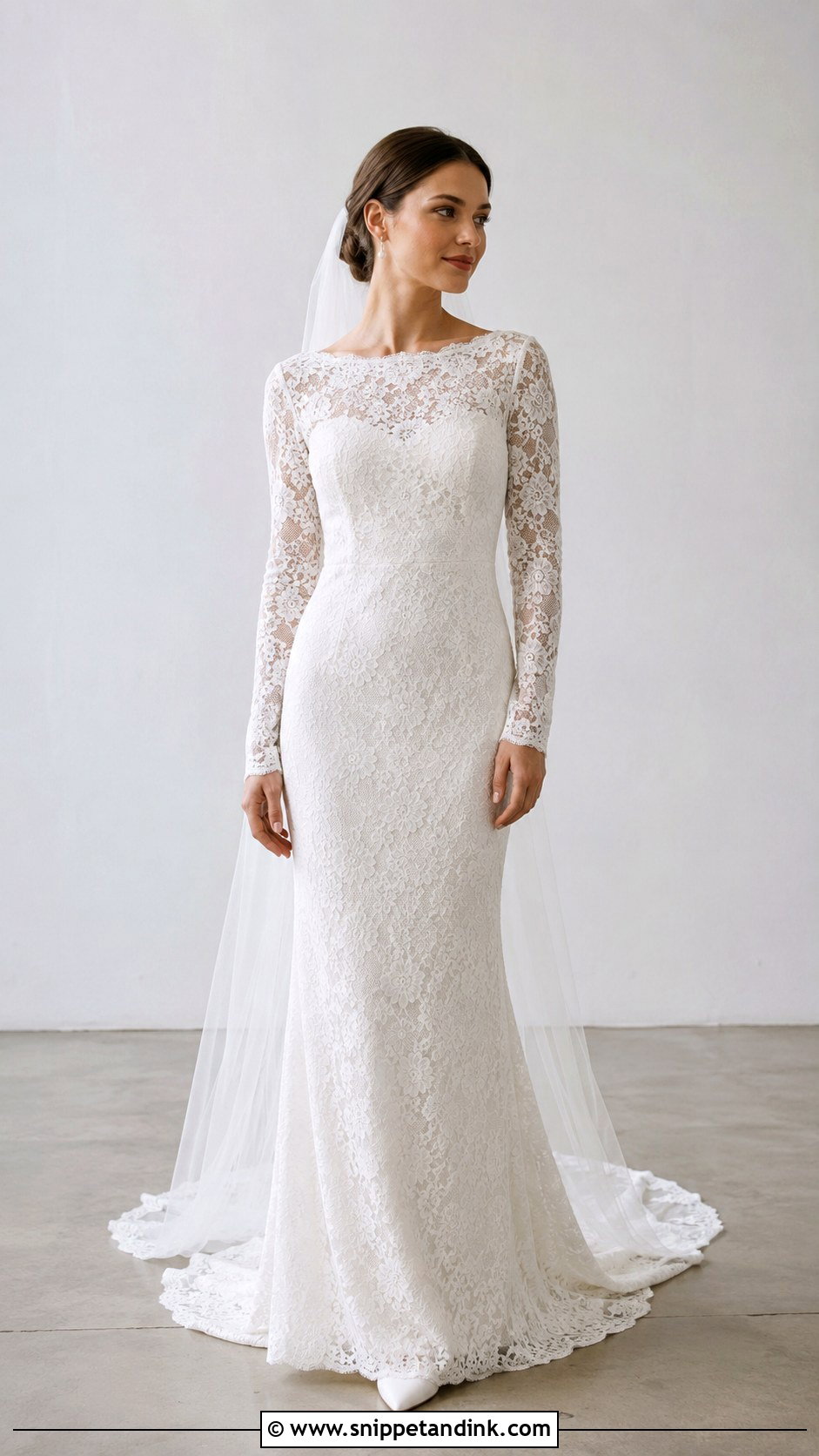
Simple doesn’t mean plain; it means every detail has a reason. A sheath, A-line or slim fit-and-flare with a higher neckline and sleeves lets clean lines and soft lace carry the dress. A plain veil, satin shoes and minimal jewelry keep it intentional. With so little going on, the quality of the lace shows clearly, so this is where a finer lace with hand-placed edges is worth paying for. If the lace itself is detailed, skip heavy accessories entirely.
17. Floral Lace Wedding Dress
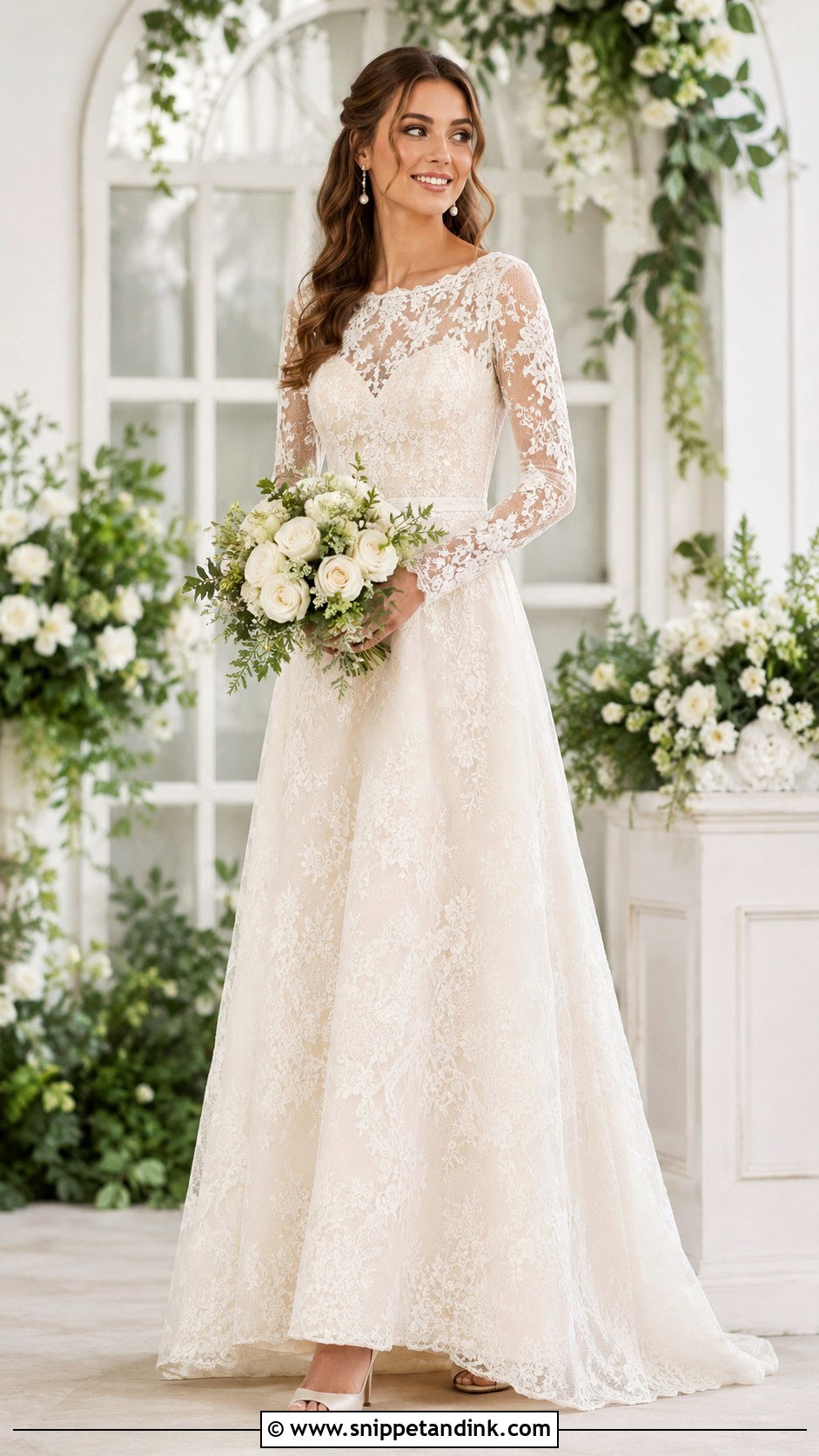
Large floral lace feels bold and modern; small florals look delicate and traditional. Lined bodices, long sleeves and a skirt with enough structure keep it covered. Floral lace flows naturally on an A-line, the motifs trailing down from bodice to skirt. I usually suggest a simple bouquet here, because a busy arrangement held against busy lace turns into one blur in photos. Pearl earrings, soft curls and ivory heels finish it.
18. Chantilly Lace Wedding Dress
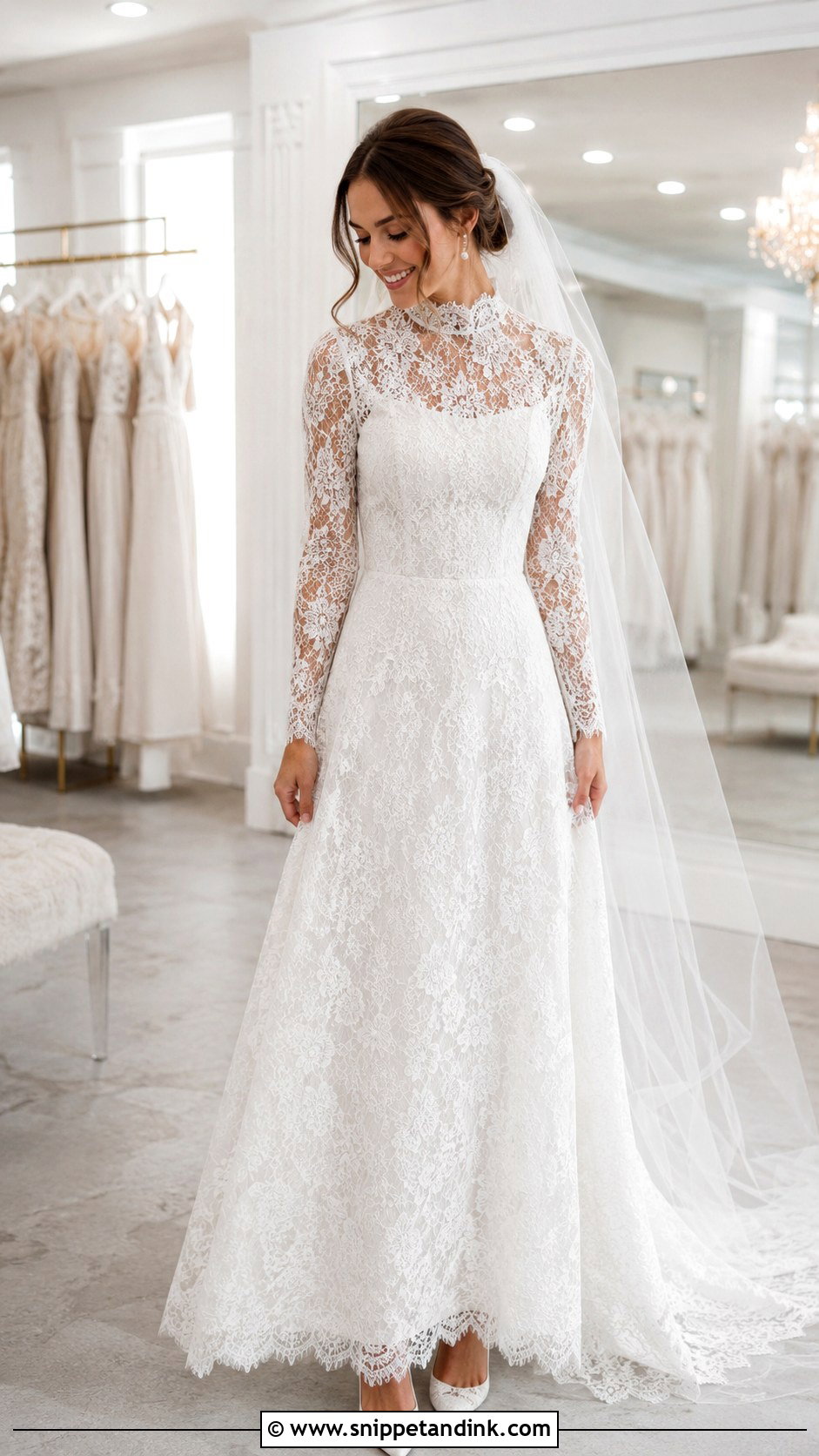
Chantilly is the fine, airy lace with delicate outlines, and it’s lighter than most. That makes a lined bodice and skirt essential if you want full modesty. It suits long sleeves, high necklines and slim or A-line shapes, and its mood is quiet and romantic rather than dramatic. Because it’s so fine, Chantilly snags on rings, bracelets and Velcro, so I keep jewelry smooth and check bridesmaids’ accessories too. A sheer veil and pointed heels suit it.
19. Guipure Lace Wedding Dress
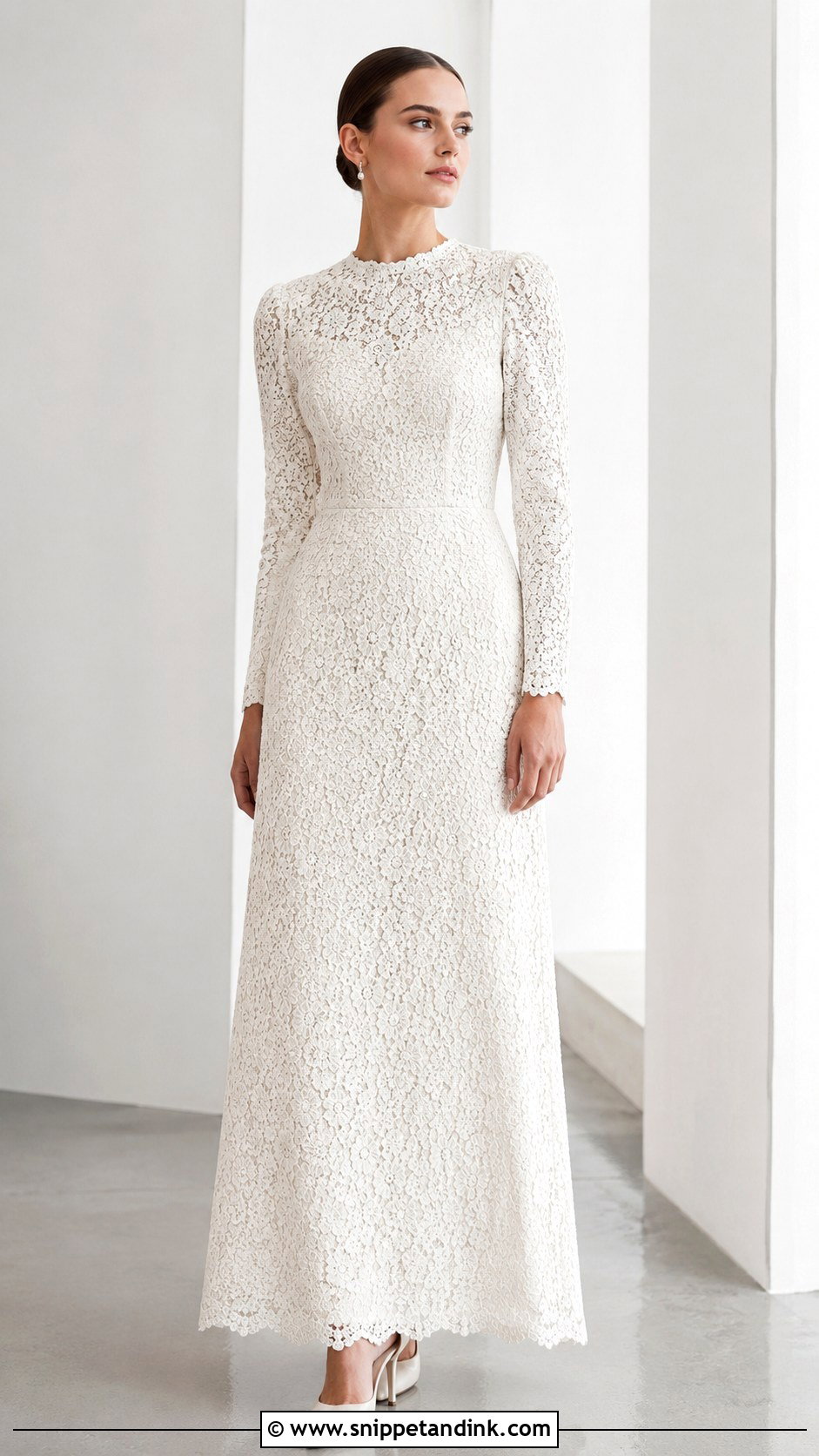
Guipure is bolder: a heavier, raised lace whose motifs are joined by bars rather than a net background. It stands out on its own, so the silhouette should stay simple, a straight skirt, an A-line or a structured bodice. A lined dress with long sleeves and a clean neckline keeps it modest. Guipure is stiff and doesn’t drape, so it suits structured shapes far better than soft gathers. Smooth hair, minimal jewelry and elegant pumps keep the look modern.



20. Lace Fit And Flare Wedding Dress
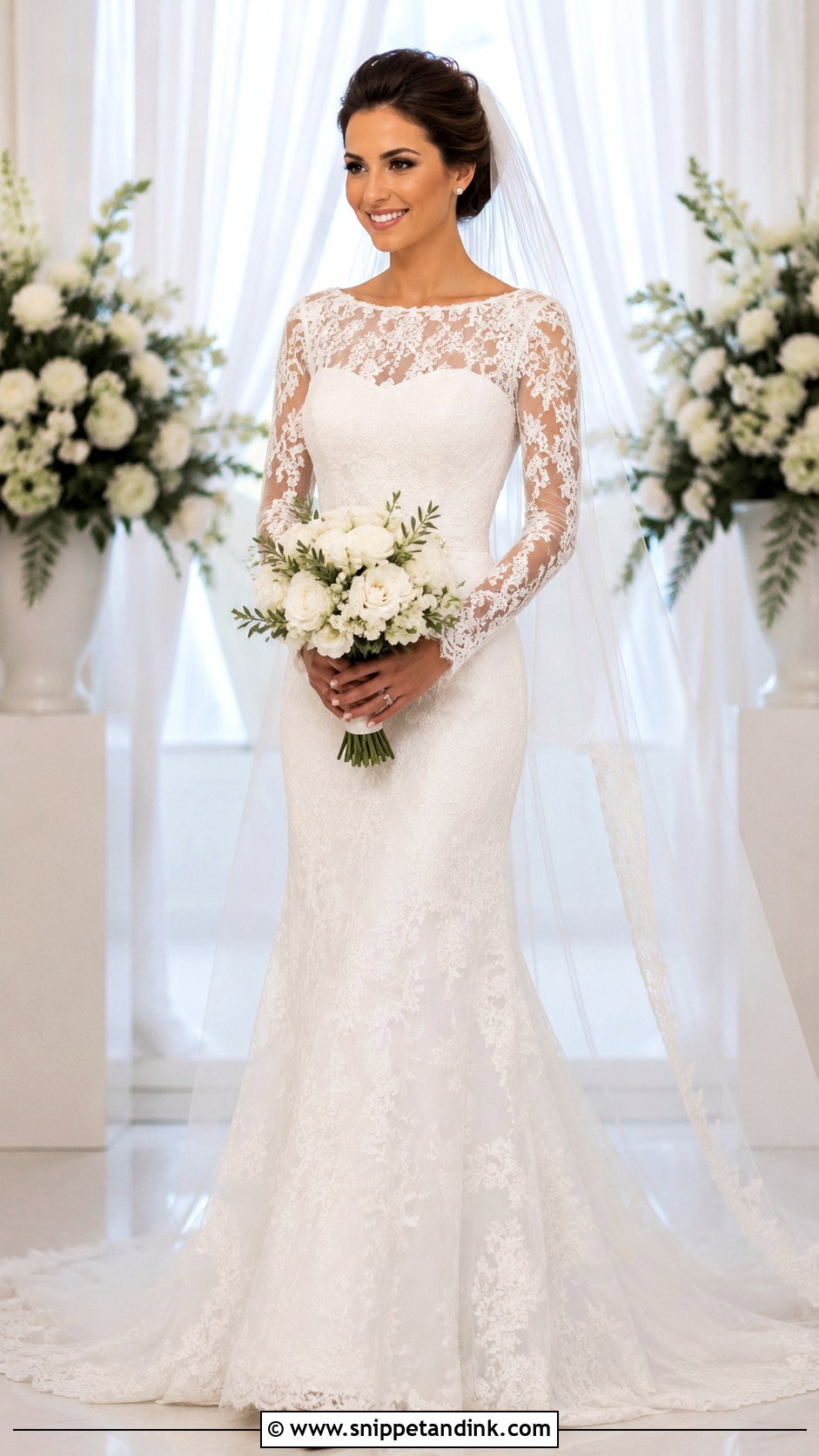
Fit and flare follows the bodice and hips, then opens gently below, so you get shape without the restriction of a mermaid. A high or bateau neckline, long sleeves and full lining keep it covered. The lace should lie flat over the hips; if the motifs bunch or ripple there, the fit is too tight or the lace is too stiff for the shape. A chapel veil, classic heels and small earrings finish it.
21. Lace Mermaid Wedding Dress
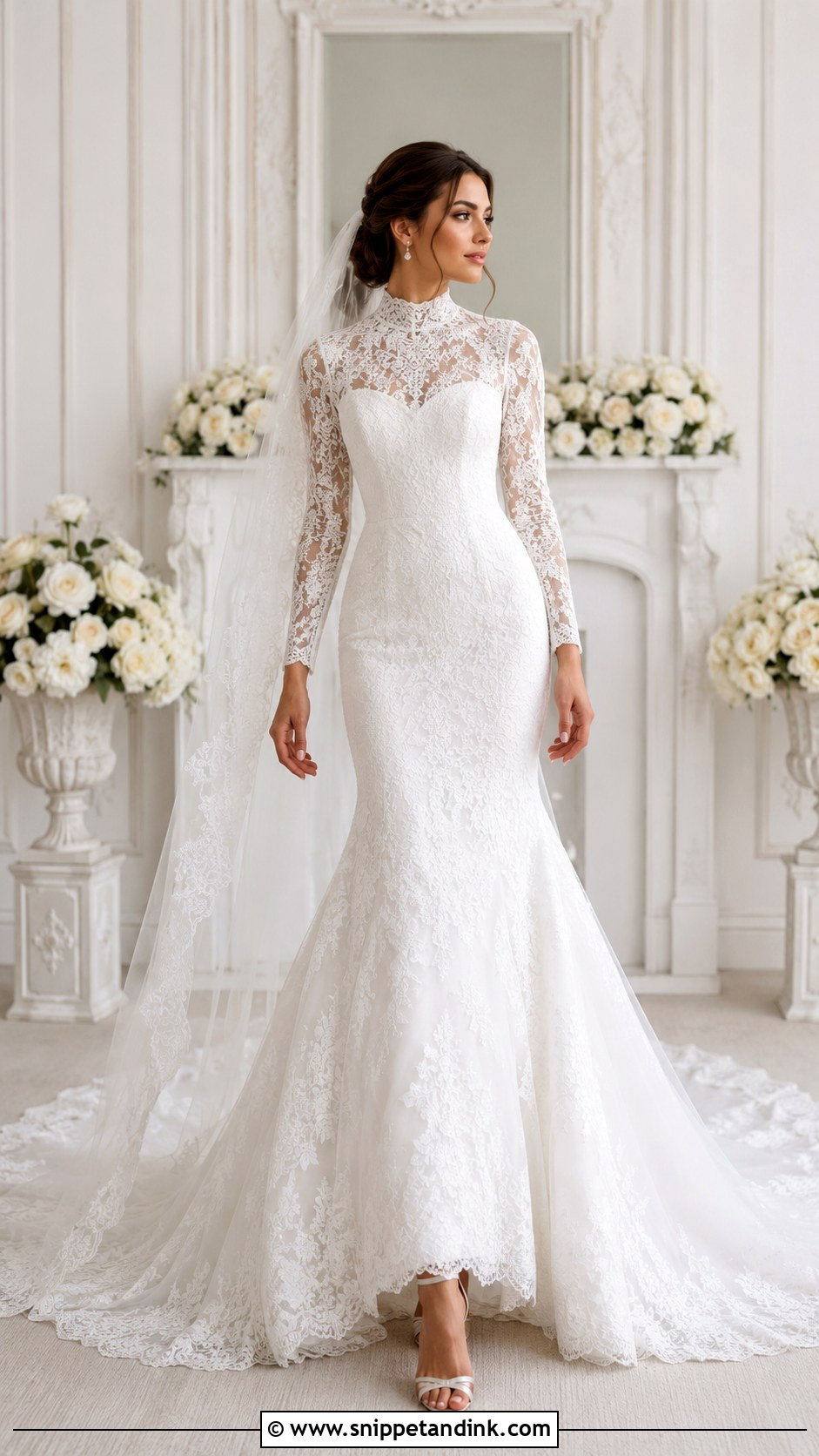
A lace mermaid stays modest when the upper body is fully covered and the lace placement is considered. A high or bateau neck and long sleeves balance the fitted skirt. Pick a flare that starts below the knee so you can walk normally, and wear supportive heels, because you’ll be standing for long stretches in a shape that doesn’t let you shift your weight easily. The lace softens the silhouette; a long veil and simple earrings complete it.
22. Lace Wedding Dress With Cathedral Train
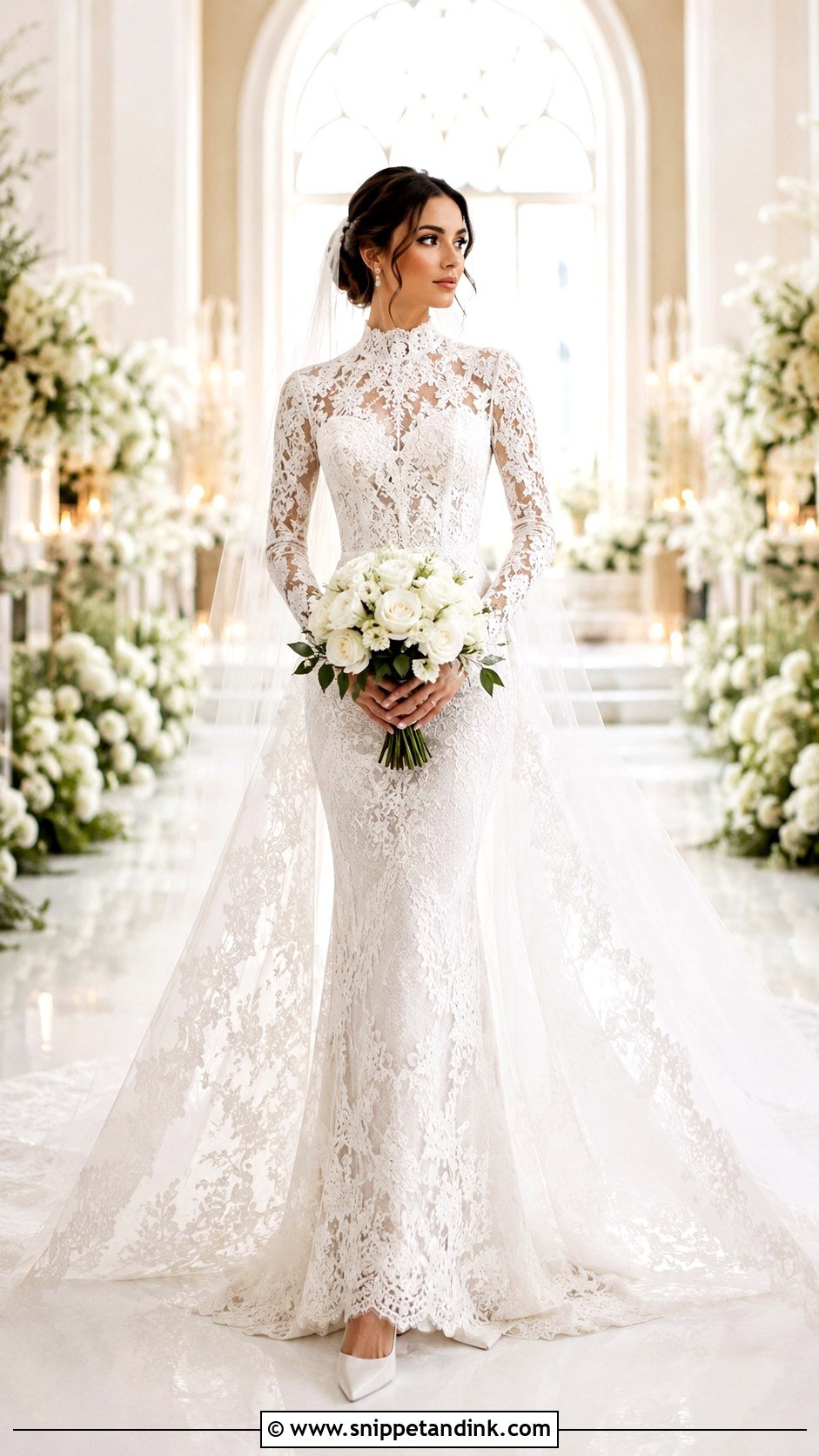
A cathedral train adds drama while the covered bodice keeps it graceful. It works best with long sleeves, a high neck and lace that runs from the top of the gown into the train. A cathedral veil looks wonderful in the aisle photos, but make sure it’s sheer enough not to hide the lace beneath. A long lace train also collects dust and grass quickly, so plan when it will be bustled. Classic pumps and simple jewelry suit a grand ceremony.
23. Lace Wedding Dress With Square Neck
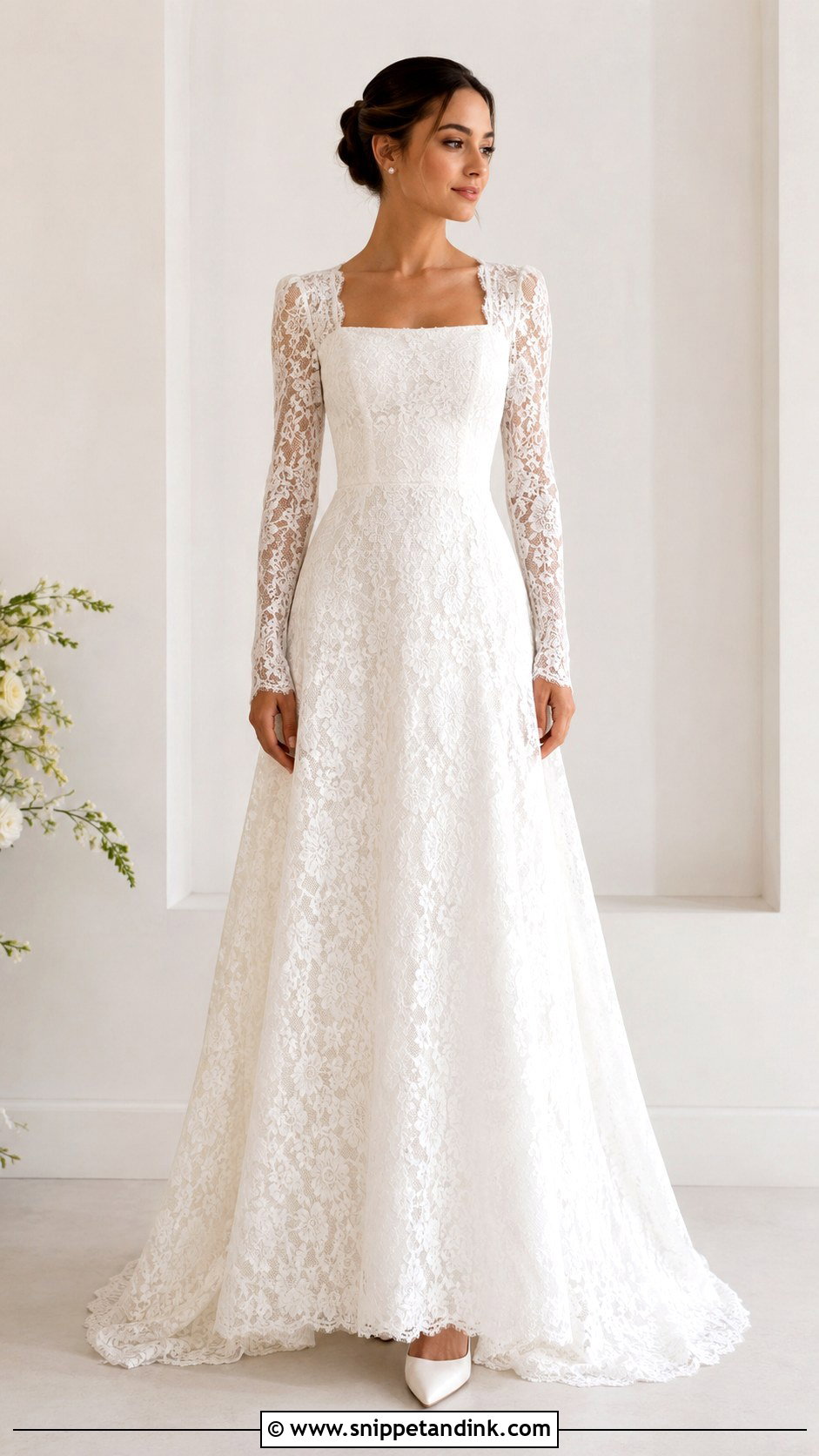
A square neck frames the collarbone with a clean, structured line and works with long or three-quarter sleeves. For more coverage, choose a higher square rather than a deep one. It suits an A-line skirt, a fitted waist and a floral lace bodice. The straight edge of a square neck needs a firm finish; scalloped lace along it can look wavy, so I prefer a bound edge or a neat lace border cut to follow the line. A smooth updo, pearl studs and ivory heels finish it.
24. Lace Wedding Dress With Three Quarter Sleeves
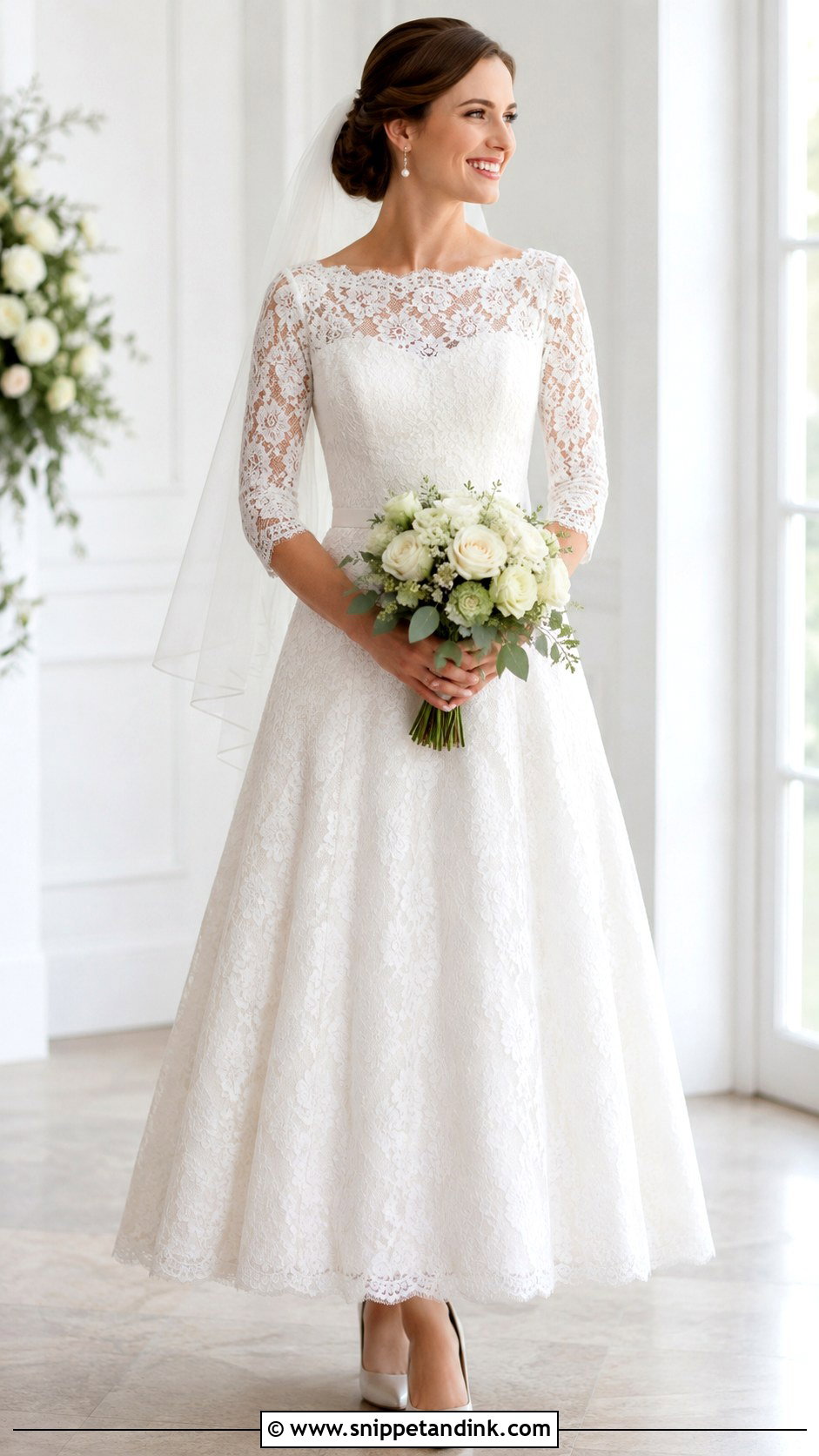
Three-quarter sleeves end below the elbow, giving coverage with a lighter feel than full sleeves. They pair well with bateau, scoop or square necks and with A-line or tea-length shapes. They’re practical for spring and early fall, and they stay out of the way when you’re eating, signing or cutting the cake. Classic pumps, a fingertip veil and pearl earrings complete a softly vintage look.

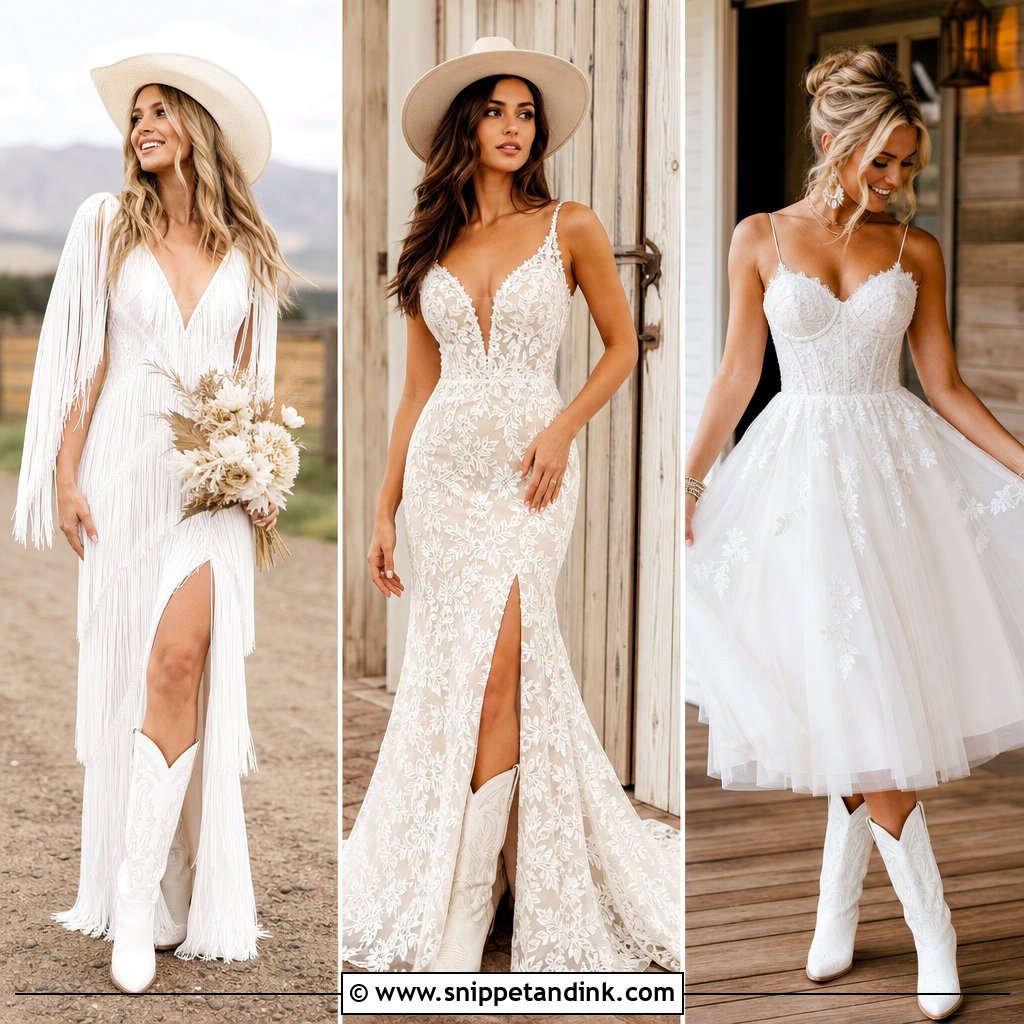
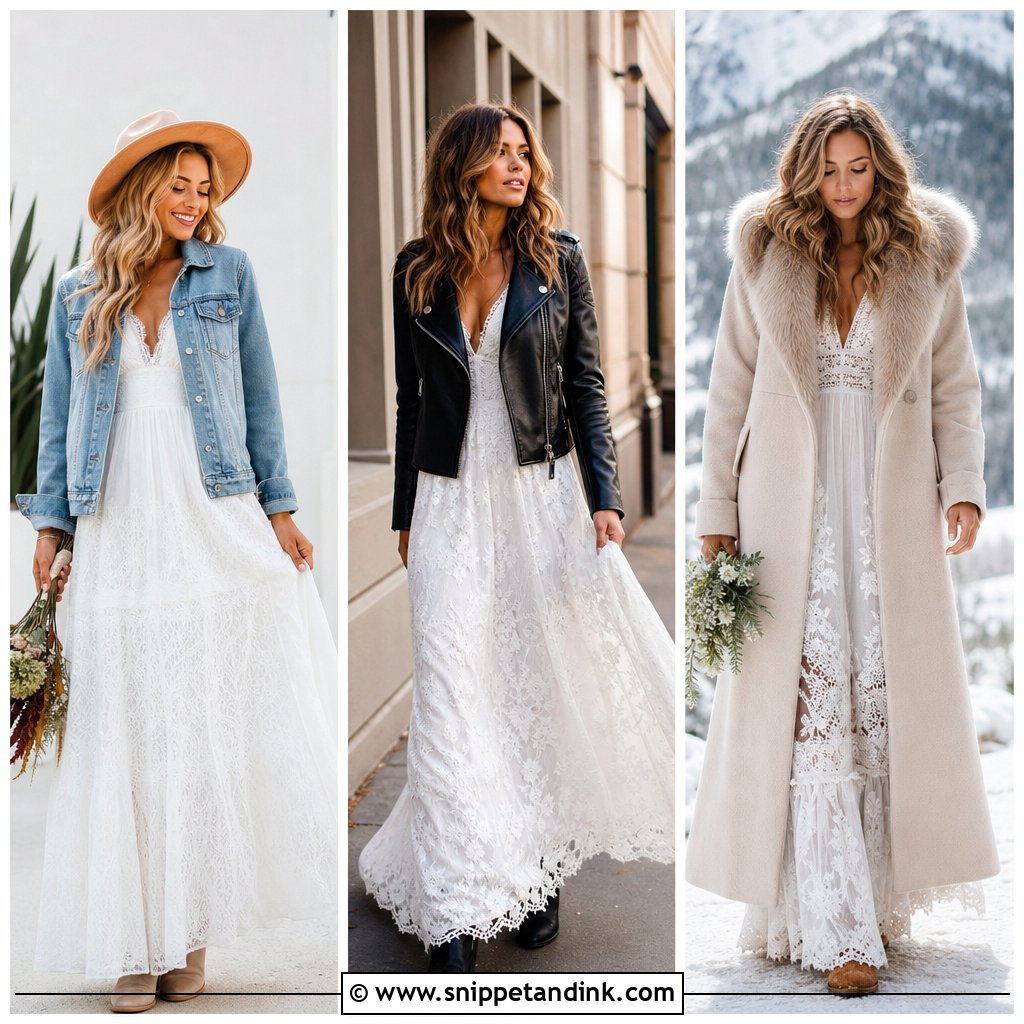
25. Plus Size Lace Wedding Dress
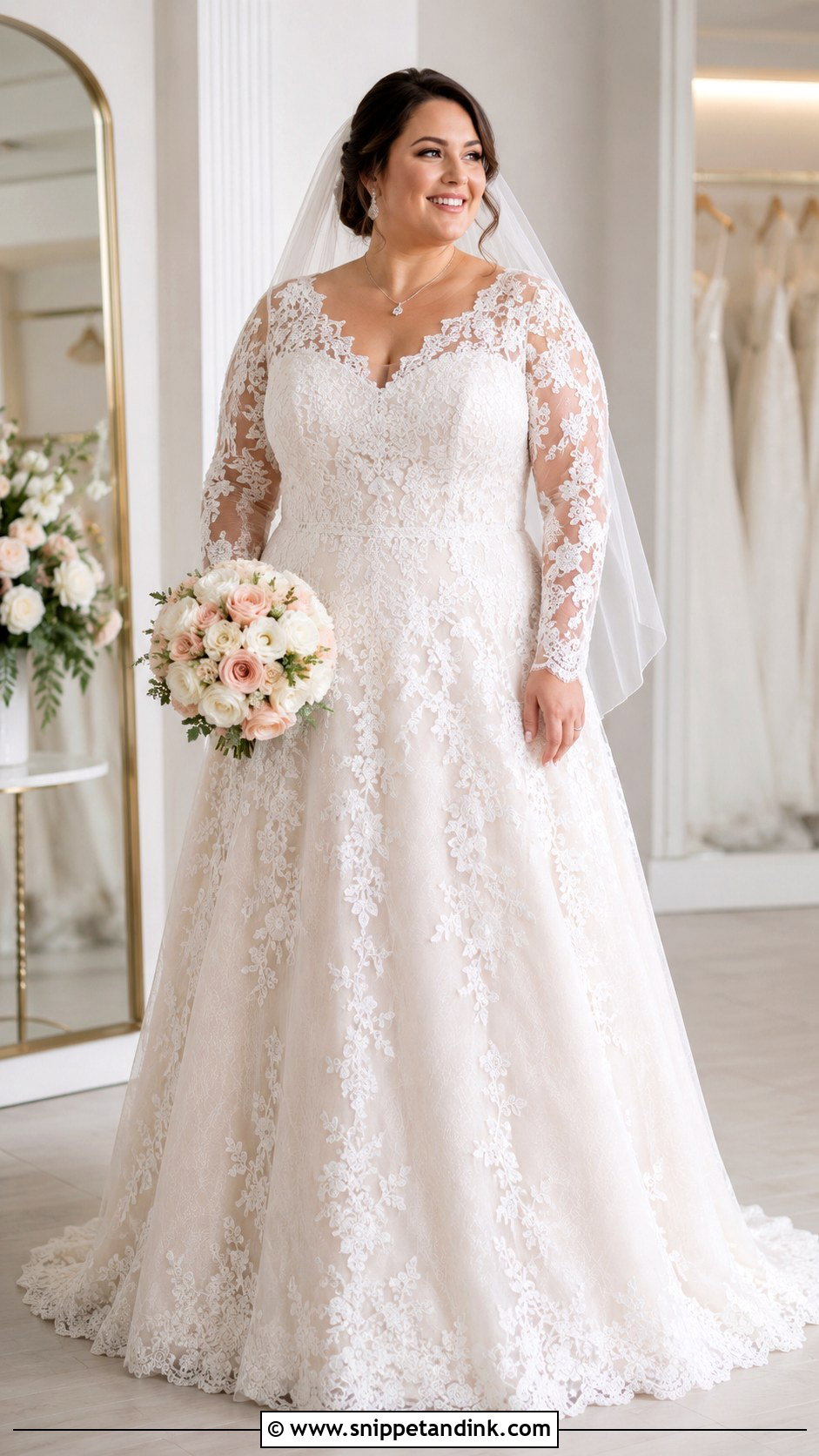
Supportive structure is what makes a plus size lace gown comfortable: a defined waist, firm lining and sleeves that let you move. A-line gowns balance the body well, and high, bateau or square necks all work depending on your comfort. Lace placement can draw the eye to the features you like, whether the waist, sleeves or skirt. Stretch lace on the sleeves is worth asking about, since rigid lace can feel tight across the upper arm. Comfortable heels and a secure veil finish it.
Snags, Loose Beads and a Grass-Stained Hem
Lace is tougher than it looks, but it has habits. It catches on ring settings, bracelet clasps, Velcro on bags and the heels of guests who step too close. If a thread pulls, don’t tug it back; ease it to the wrong side with a needle or snip the loose end carefully. A small sewing kit with thread matched to the gown and a few spare beads, if the shop can give you some, belongs in the emergency bag.
Outdoors, the hem and train pick up grass and dust within an hour. A little white chalk can disguise a small mark on ivory lace for photos; wet wiping usually spreads it. After the wedding, take the gown to a cleaner experienced with bridal lace, then store it in an acid-free box with tissue in the folds. Plastic garment bags trap moisture, and lace kept in them tends to yellow.
Which Lace Will You Still Be Comfortable In at Midnight?
Covered lace gowns range from high necks and long sleeves to tea-length dresses, capes and cathedral trains. Settle the silhouette that supports your body first, then a neckline you can forget about, then the lace itself, fine or bold, floral or geometric. Think about the season, the venue and how much you’ll move. Lace that fits well and suits the day will feel like yours from the first photo to the last dance.
You'll Like These Ideas:







Leave a Reply