
Bridal henna is in almost every close-up from your wedding: the ring exchange, the bouquet, the hands folded in your lap during the ceremony. That’s why the figures inside the design matter as much as how much skin it covers. A peacock, a lotus, a tiny groom on one palm and a bride on the other all carry meaning, and they also behave differently once the stain develops. Below are twenty complete bridal looks, from dense Indian work and Arabic trails to portraits, hidden names and full-hand storytelling designs, with the things I watch for when drawing each one. Match them to your outfit, your jewelry, your hand shape and how long you can sit.
What the Traditional Figures Carry
Brides often pick motifs because they look pretty in a photo, and then ask me afterwards what they mean. It’s worth knowing beforehand, because a few figures placed with intent make a design feel personal without adding coverage. These are the meanings most families recognise, though they shift a little from one region and community to the next.
- Peacock: beauty and grace, and in many Indian traditions a sign of love and longing between partners.
- Lotus: purity and new beginnings, rising clean from muddy water.
- Paisley: fertility and growth; it’s often read as a mango shape, which carries the same meaning.
- Elephant: good fortune and royalty, common in Rajasthani work.
- Doli and kalash: the bride’s departure and a full, prosperous home.
- Mandala: wholeness and balance, a circle with no break in it.
If your family follows a particular custom, ask an elder before your appointment. Some households prefer certain figures on the right hand, or have a motif that every bride in the family has worn.
1. Full Hand Indian Bridal Mehndi Design
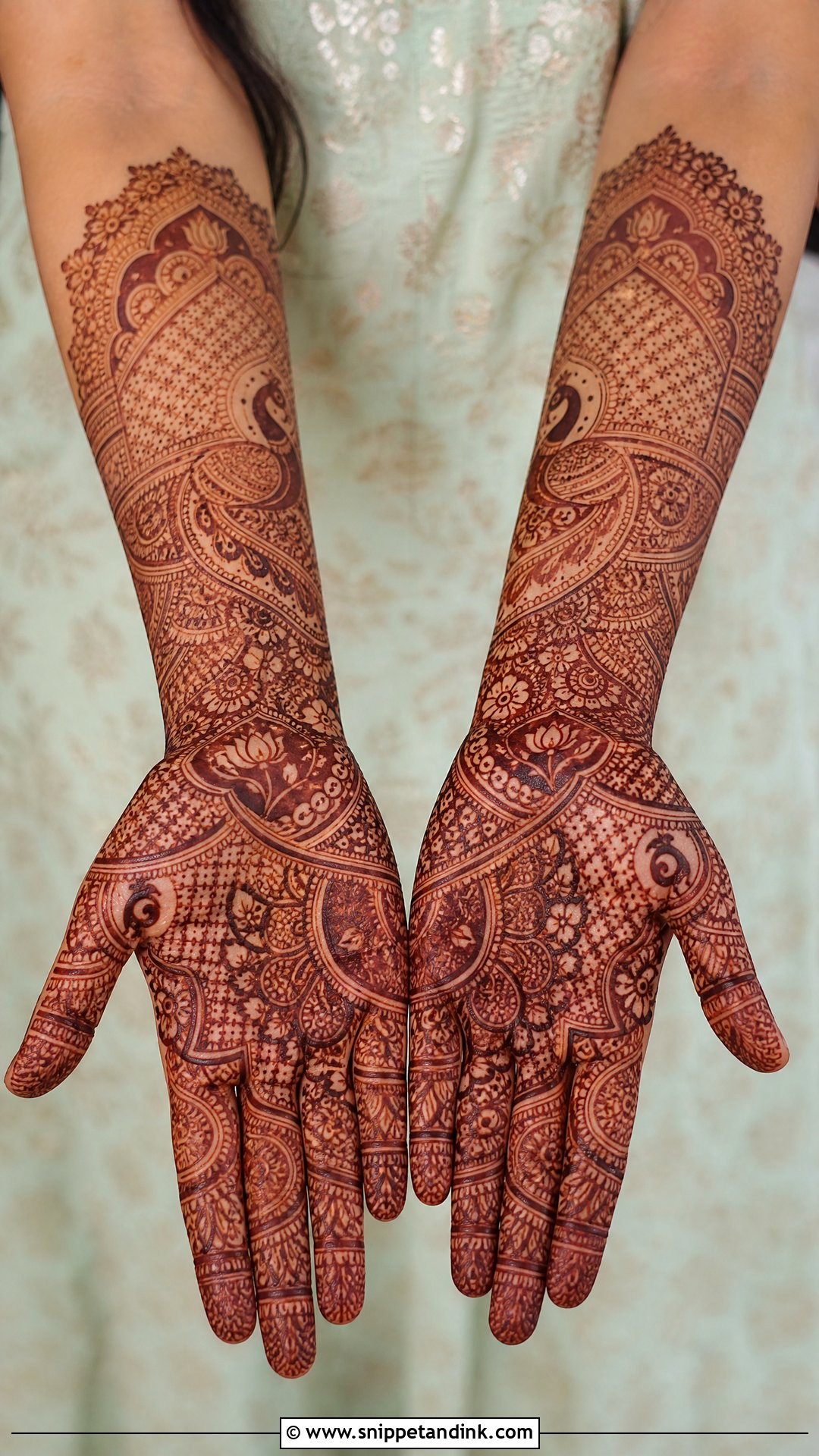
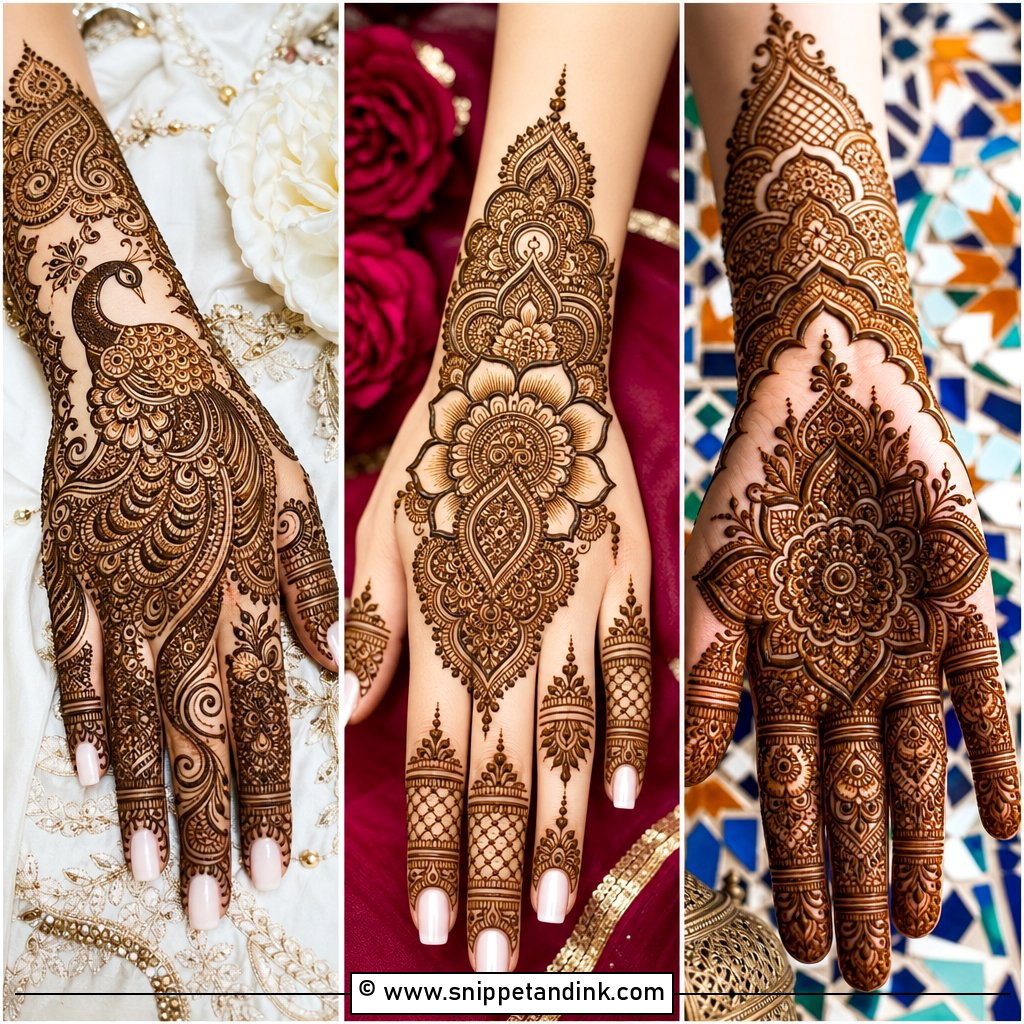
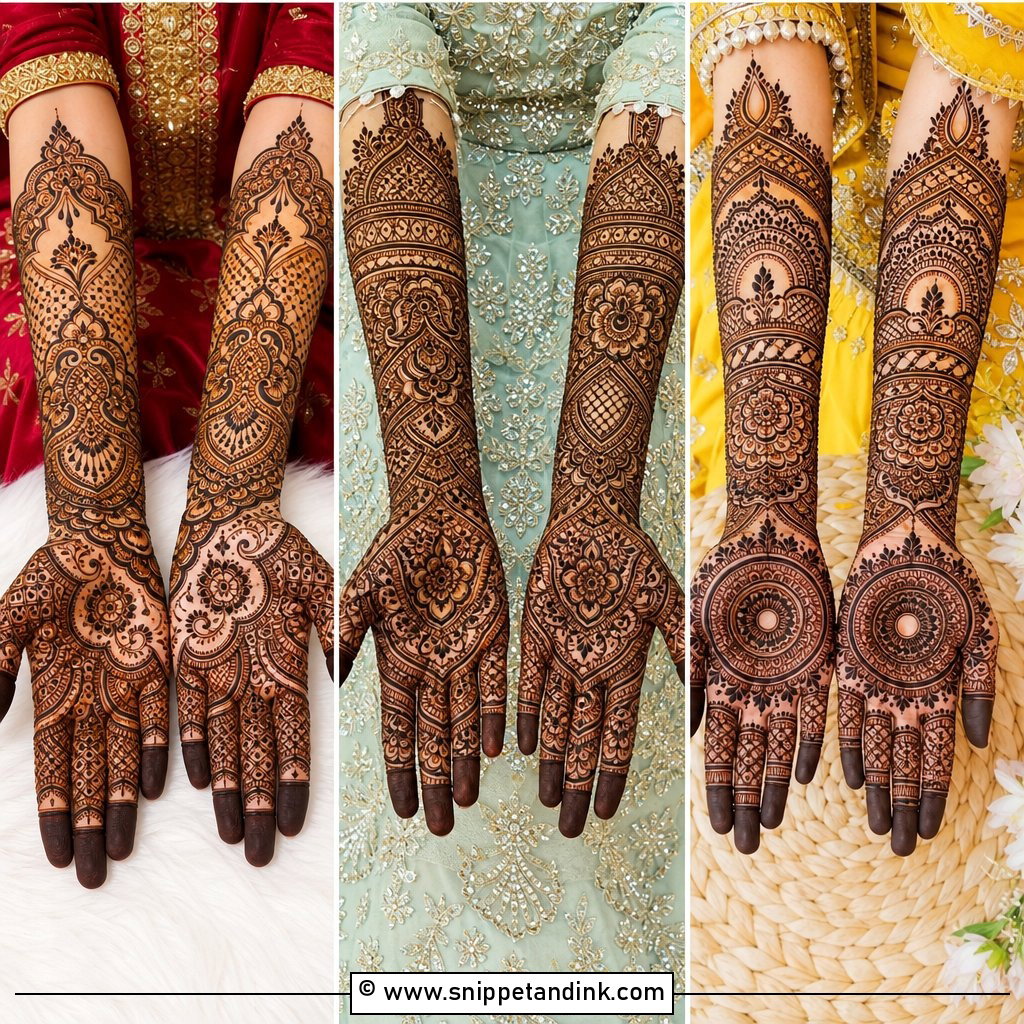
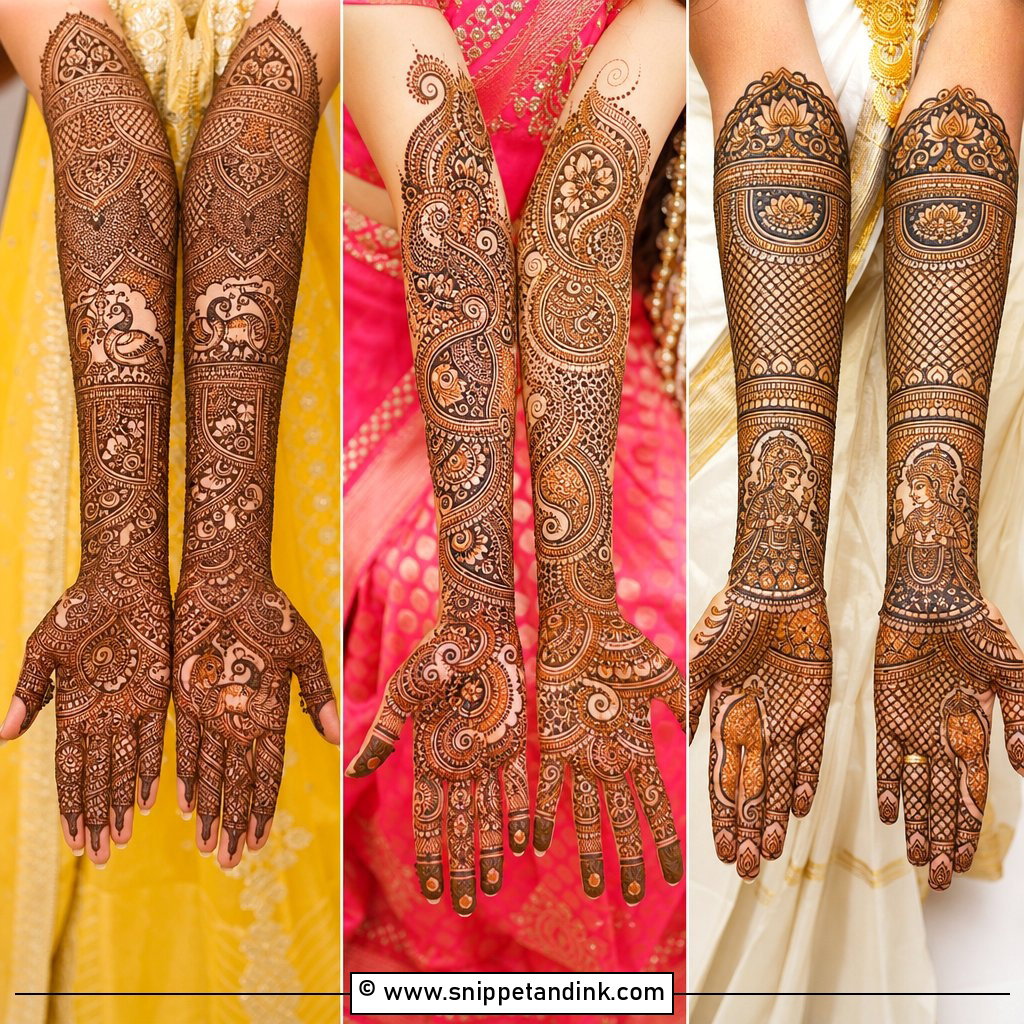
Full Indian coverage takes the palm, fingers, wrist and forearm and fills them with paisleys, lotus flowers, peacocks, tiny leaves, mandalas and fine filler lines. It sits right with lehengas, sarees, shararas and heavy traditional jewelry. The detail I fuss over most is the centre motif on each palm. When the bride holds her hands side by side, those two centres have to line up at the same height, or the whole thing looks lopsided in photos.
2. Arabic Bridal Mehndi Design Full Hand
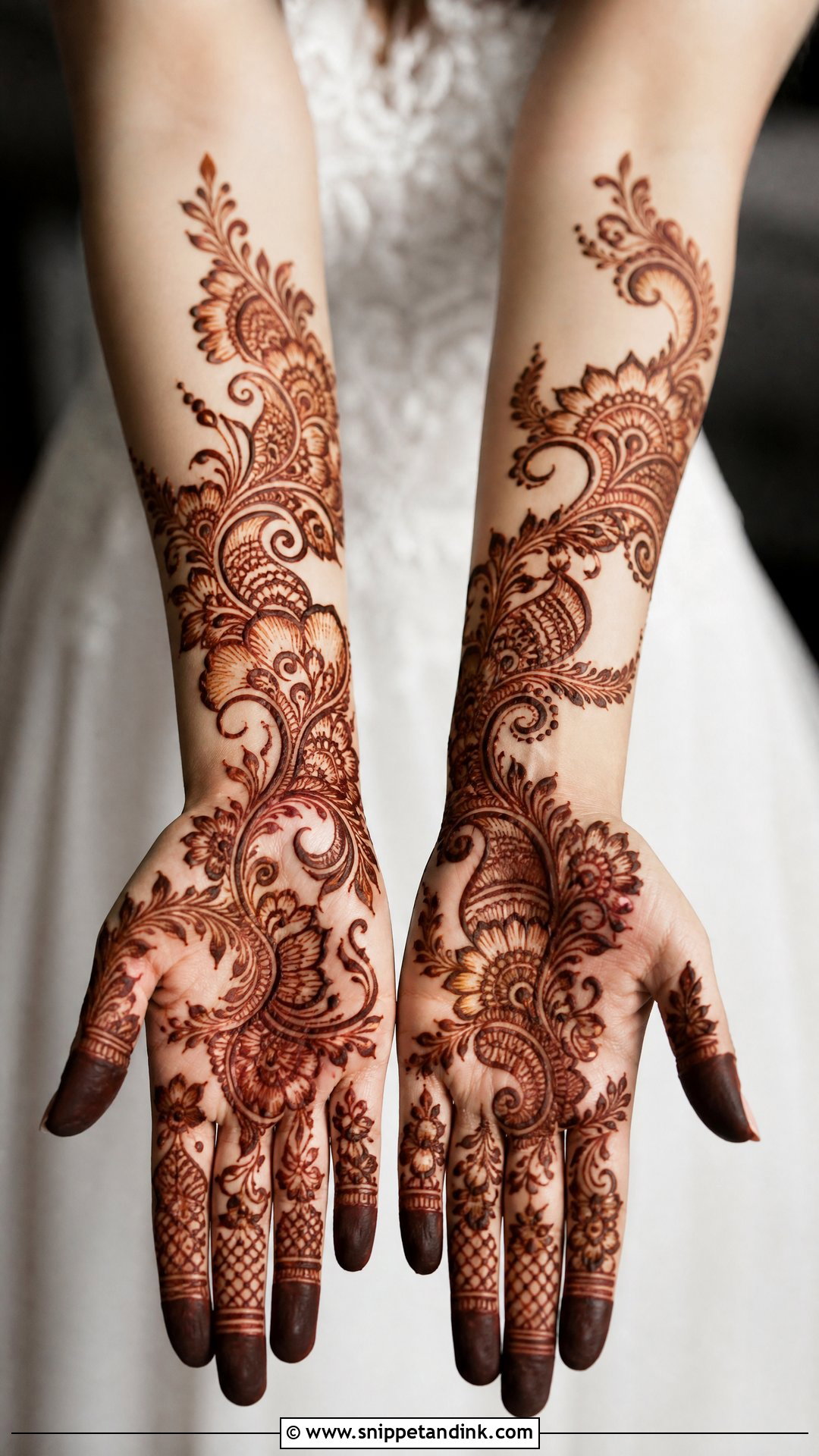
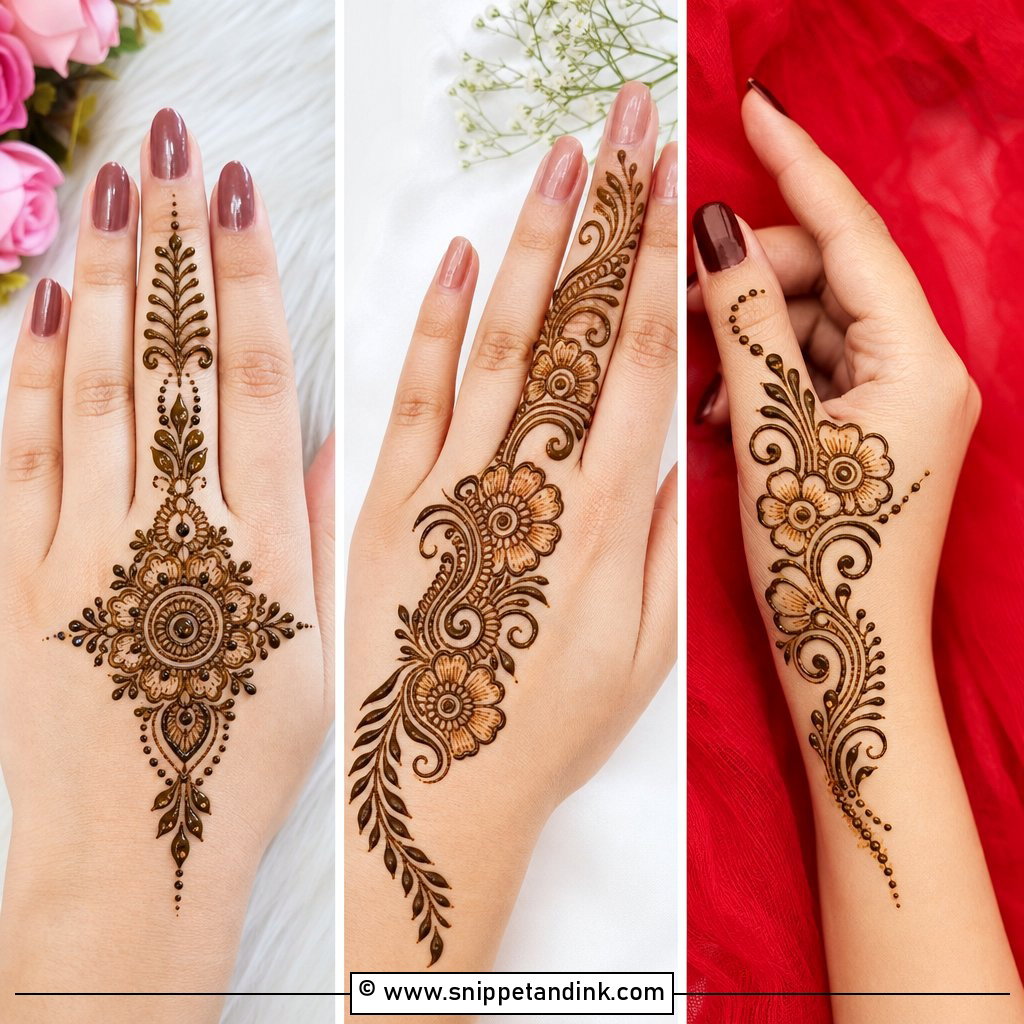
Arabic bridal work moves diagonally from the fingers toward the wrist and forearm, using bold flowers, shaded petals, leafy vines and curved paisleys instead of filling every inch. The open skin is what makes it read so clearly on camera: dark lines against bare skin carry further than dense fill. To make it properly bridal, I detail every finger and finish with a wrist cuff or forearm band, otherwise it can look like party henna.
3. Indo Arabic Bridal Mehndi Design
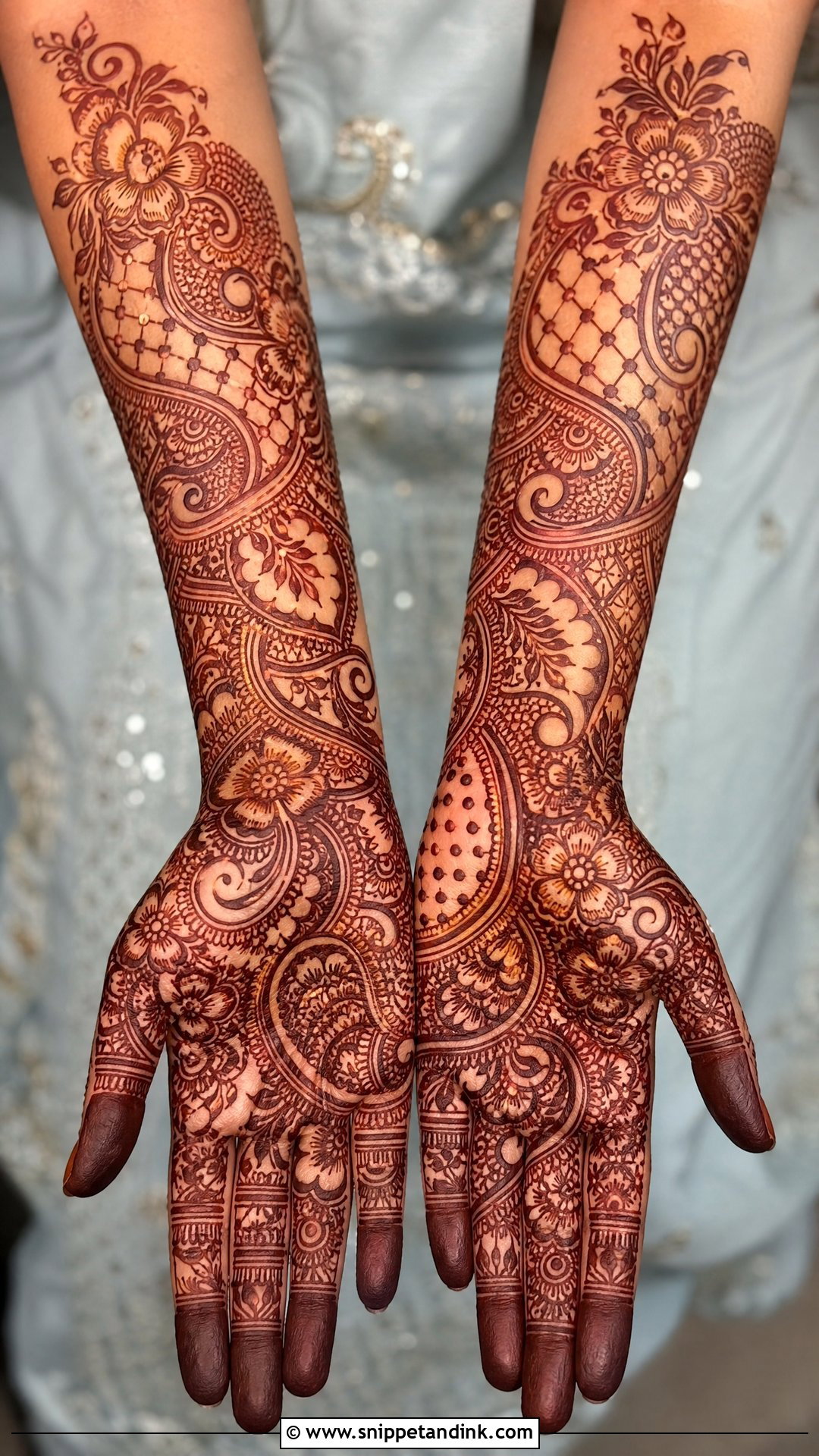
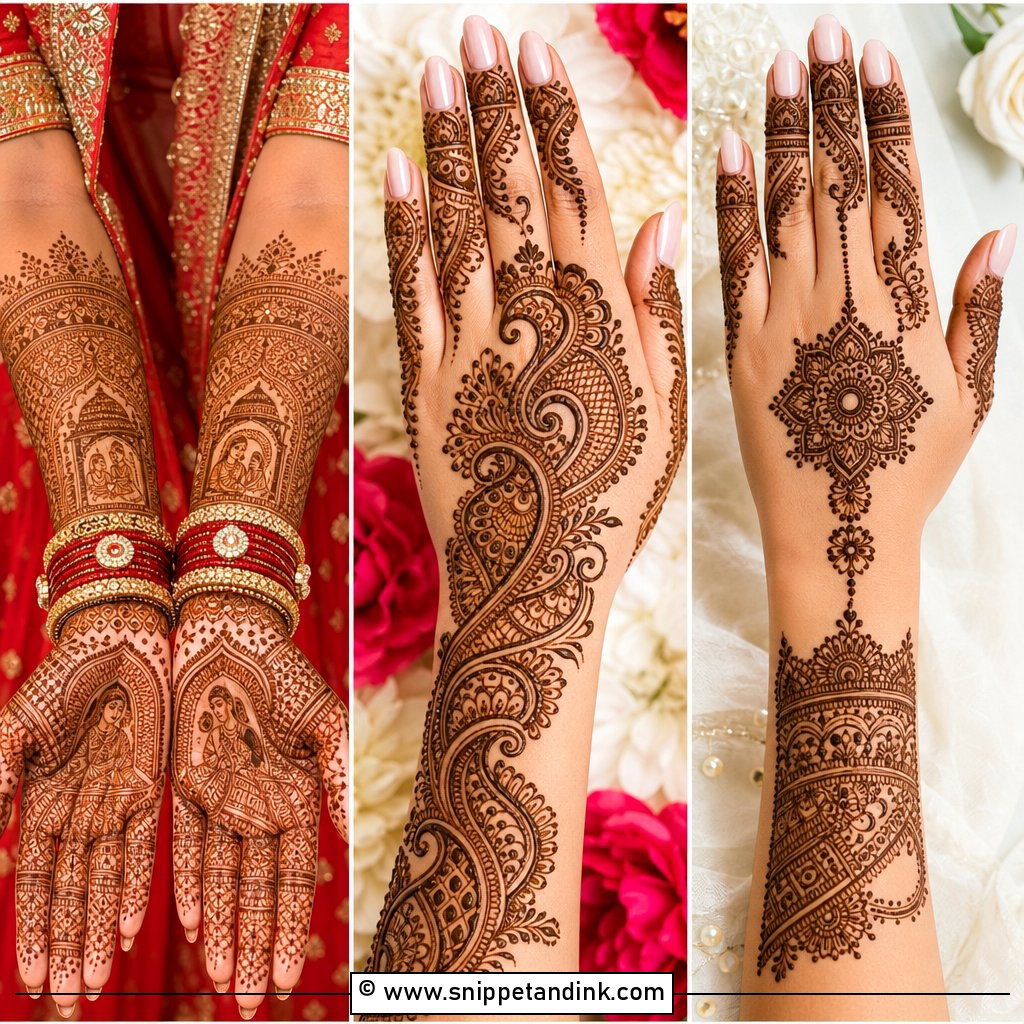
Indo-Arabic starts with big Arabic shapes, flowers, paisleys or curved vines, and then fills selected spaces with Indian dots, grids, tiny leaves and shading. The trick is choosing which spaces stay empty. I’ll usually put a mandala or floral centre in the palm and let a sweeping trail cross the back hand toward the wrist. It suits engagements as well as the wedding itself, and it takes noticeably less sitting time than full Indian work.
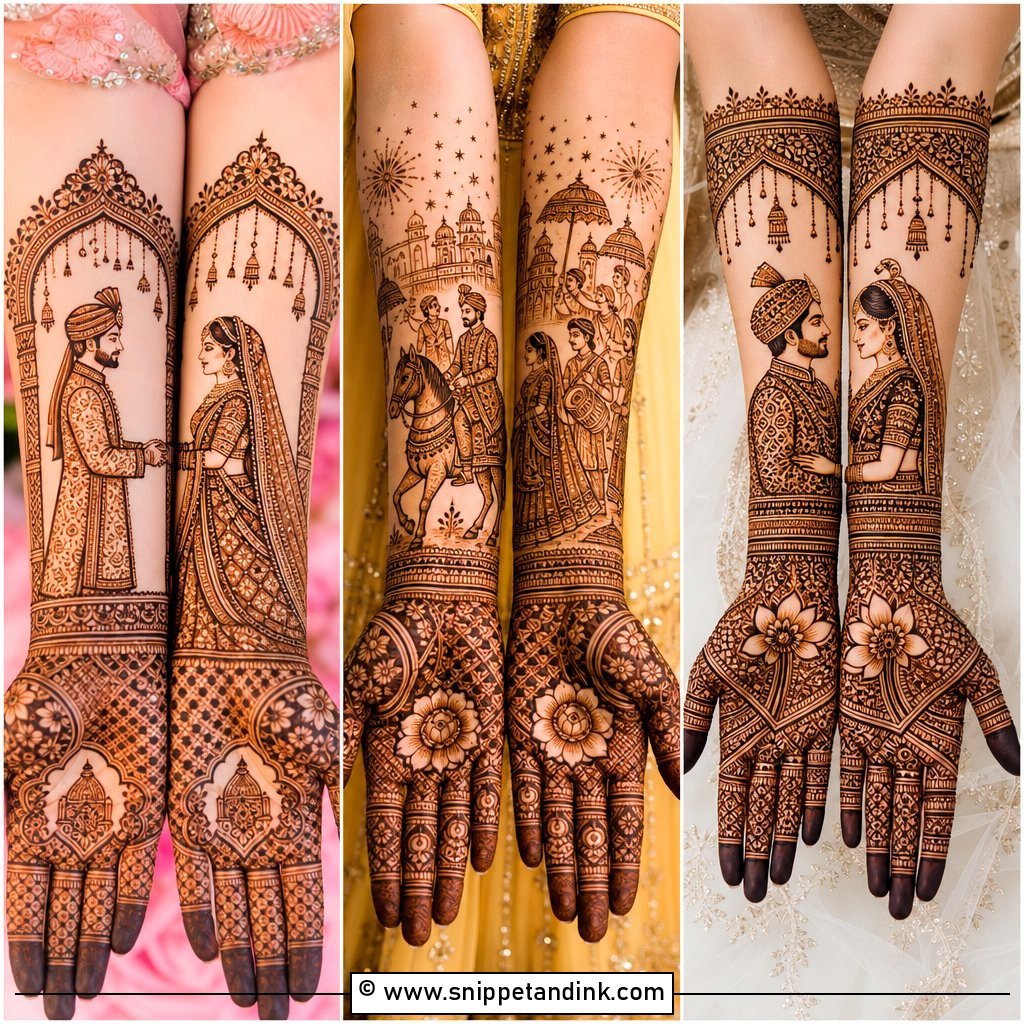
4. Bridal Mehndi Design With Bride And Groom Portrait
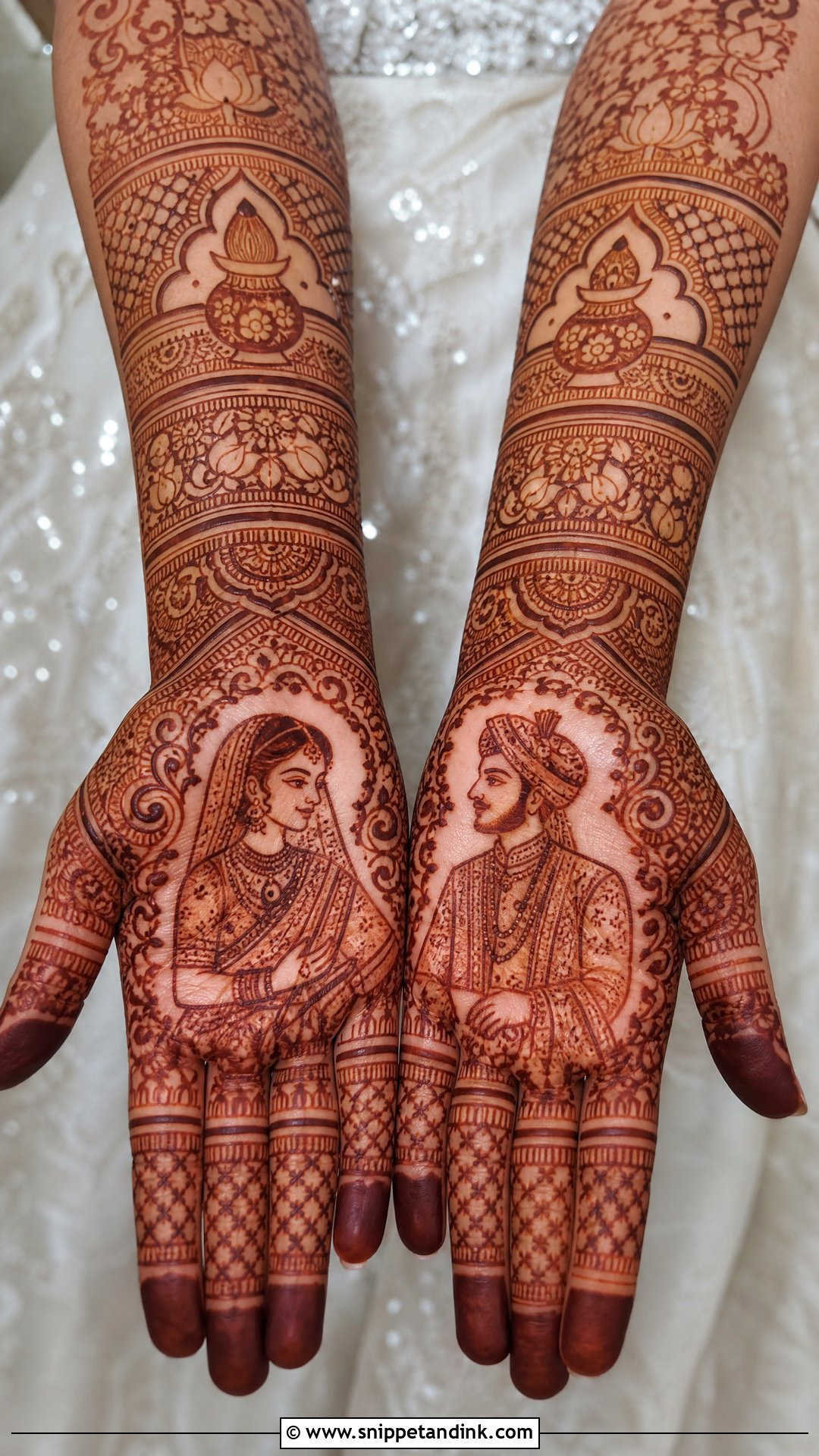
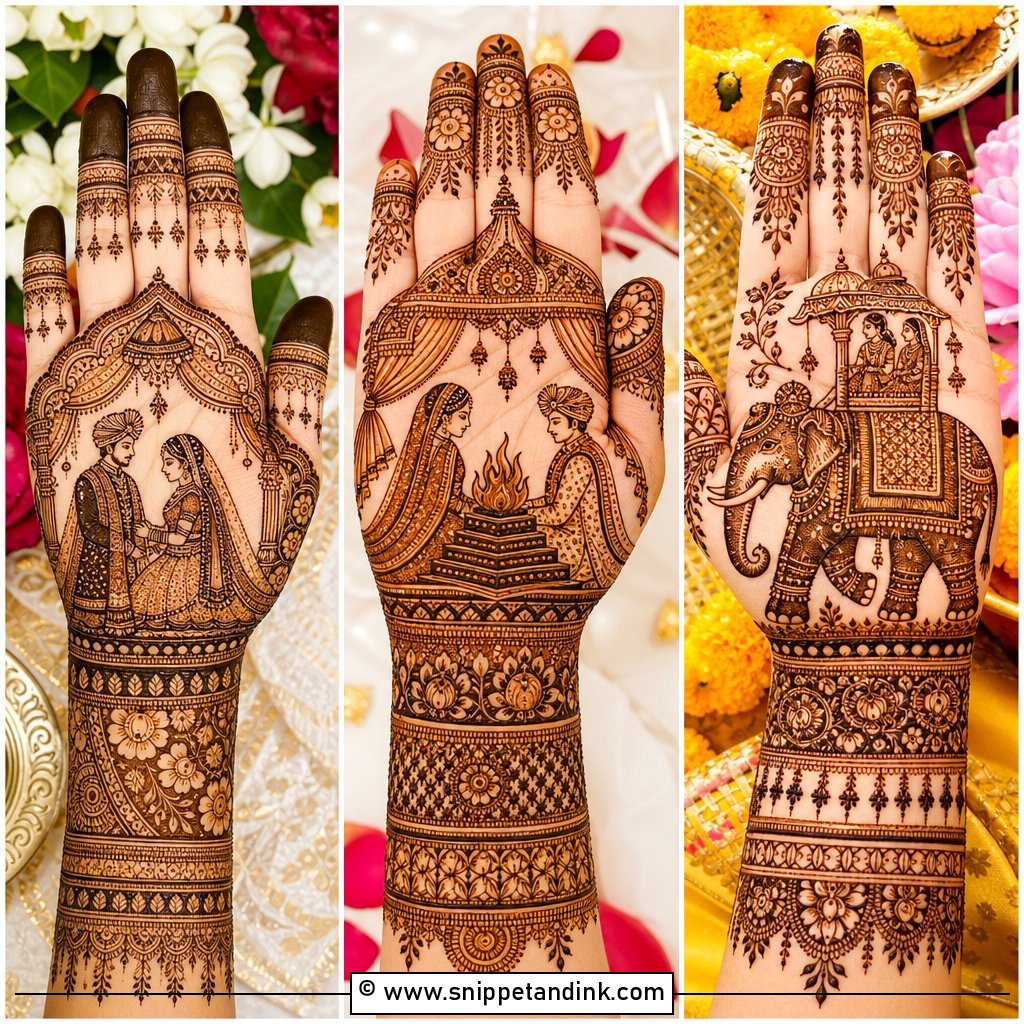
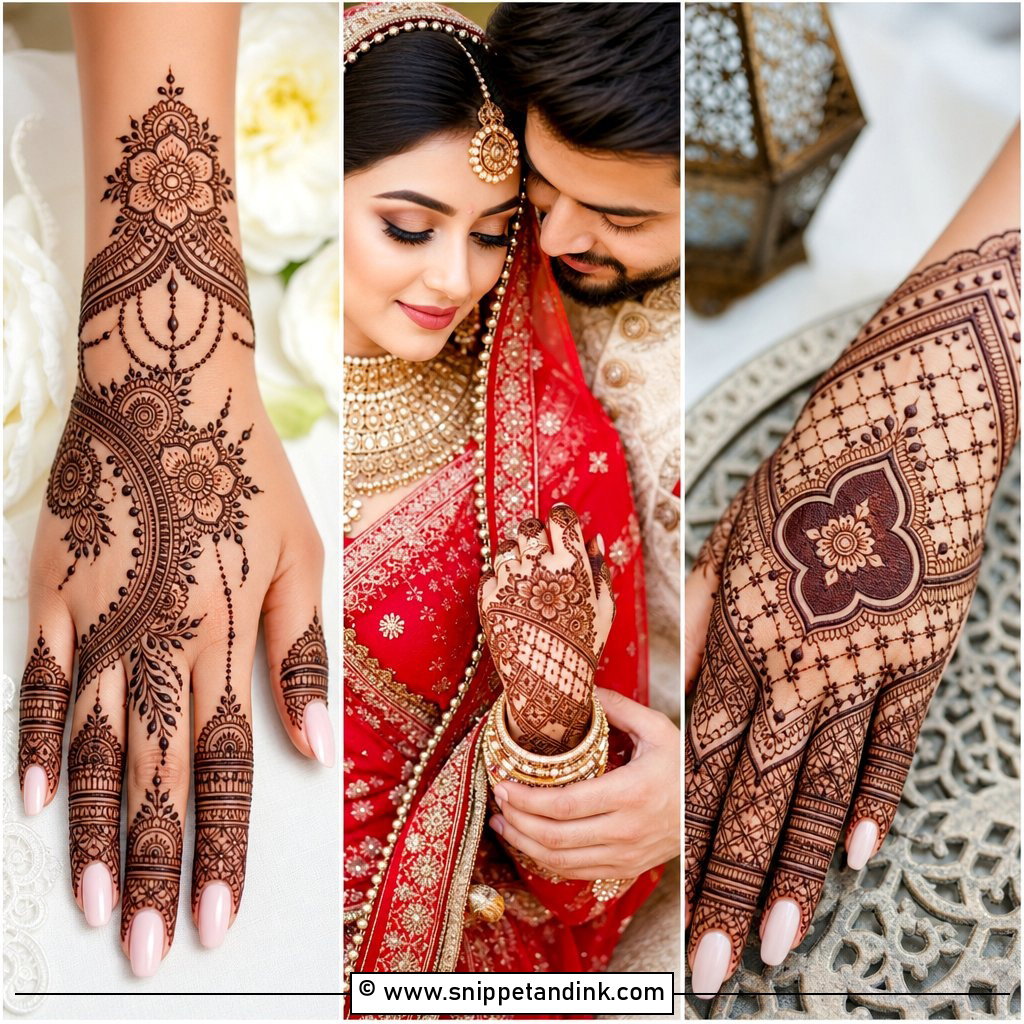
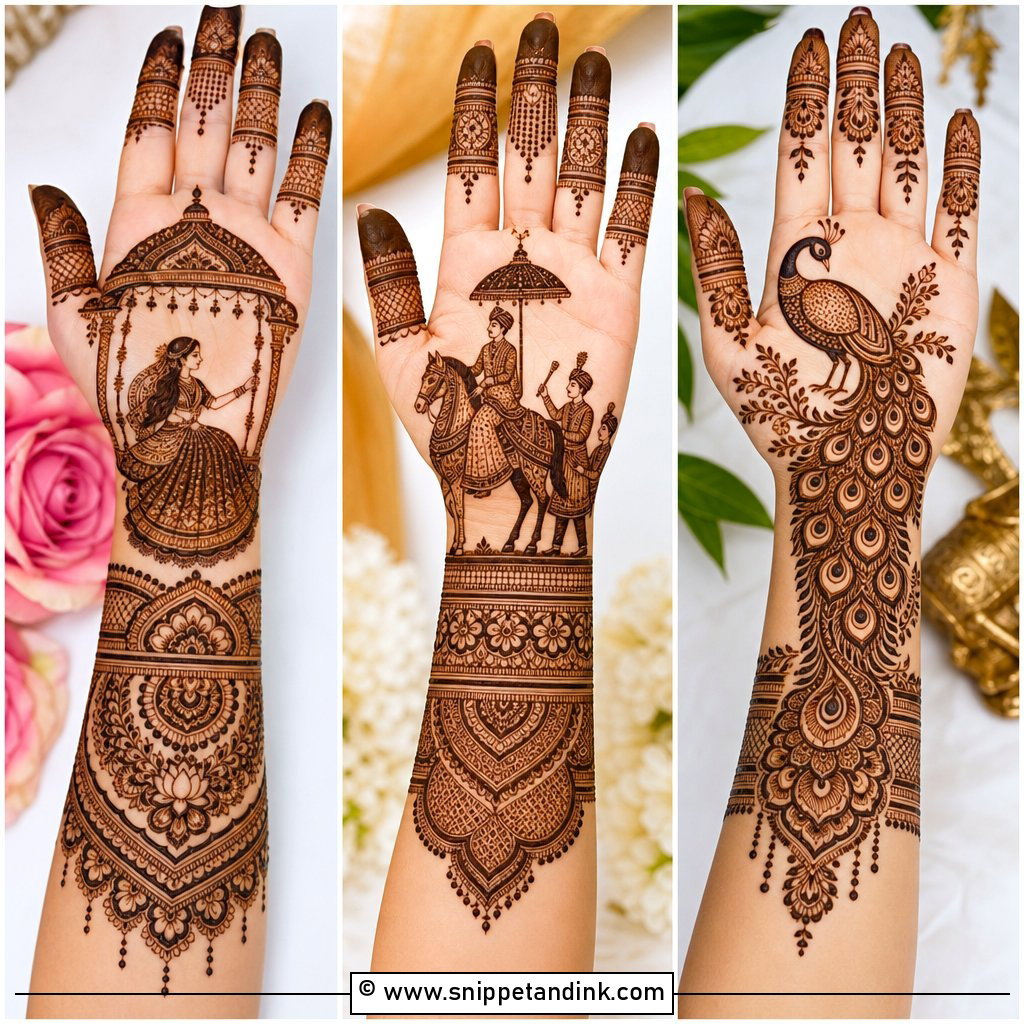
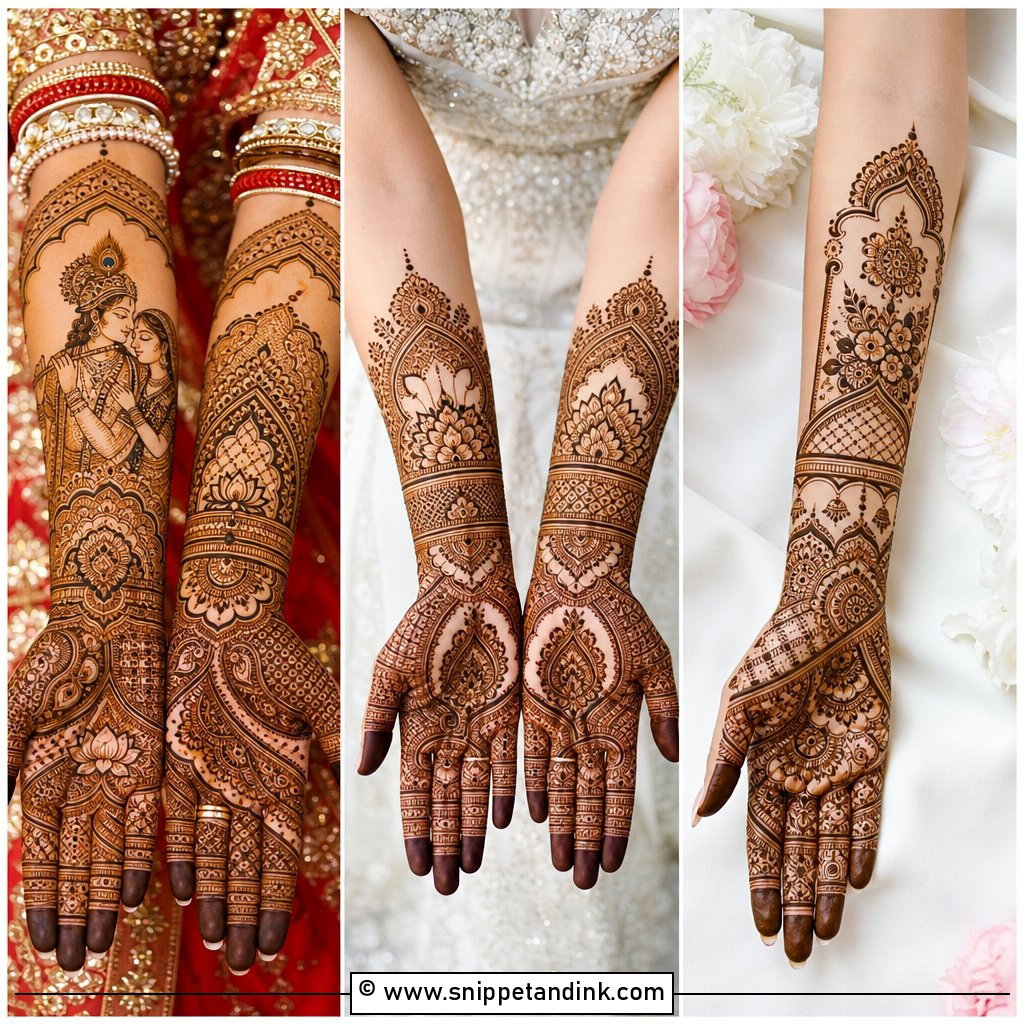
A bride and groom portrait design puts the bride’s figure on one palm and the groom’s on the other, surrounded by varmala, doli, kalash, lotus or mandap details, with paisleys, floral borders and jaali filling the rest. Faces are the hardest thing a henna artist draws. Lines that look crisp in wet paste spread very slightly as the stain develops, so a figure drawn too small ends up as a smudge with eyes. I’d rather draw the portraits a little larger and simpler than risk that. Ask to see an artist’s past portrait work, not just her florals.
5. Bridal Mehndi Design With Hidden Name
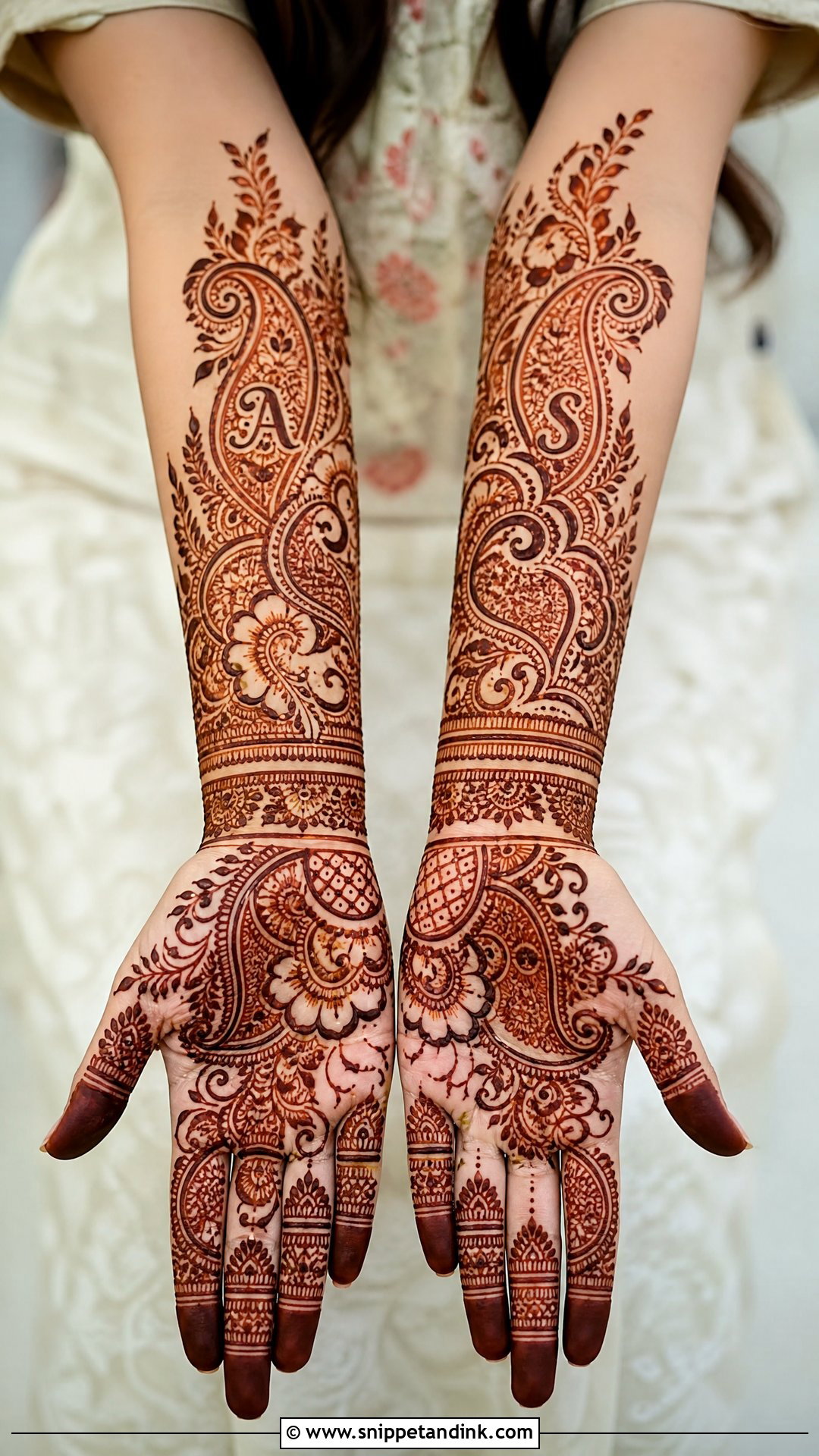
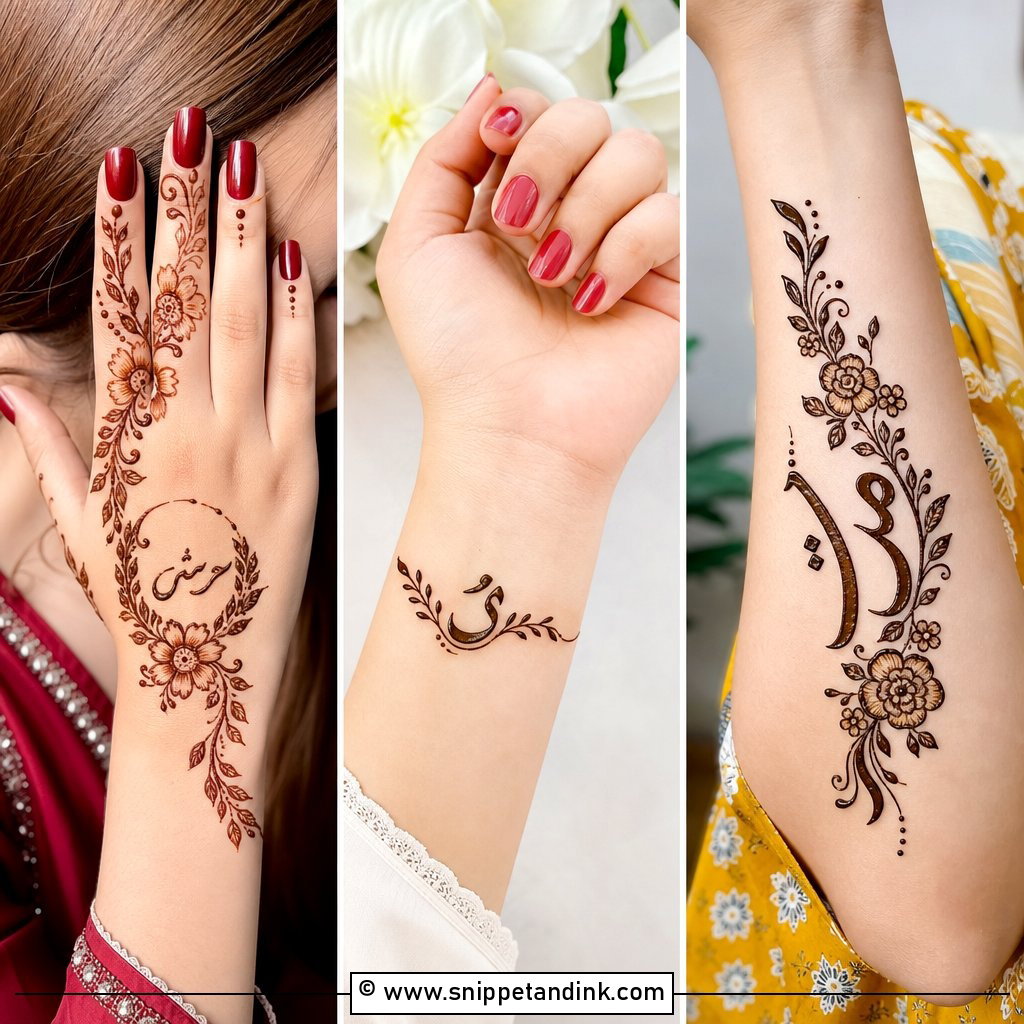
Hiding the groom’s name in the design is one of my favourite requests, because it gives the couple a small private game during the celebrations. The letters can sit inside paisleys, vines, wrist bands or a mandala, in a traditional, Arabic or Indo-Arabic layout. I tuck them where the pattern already has similar curves, so they disappear into the flow rather than sitting there like a label. A hidden name design fits full hands, back hands or a forearm panel without changing the overall look.
6. Royal Peacock Bridal Mehndi Design
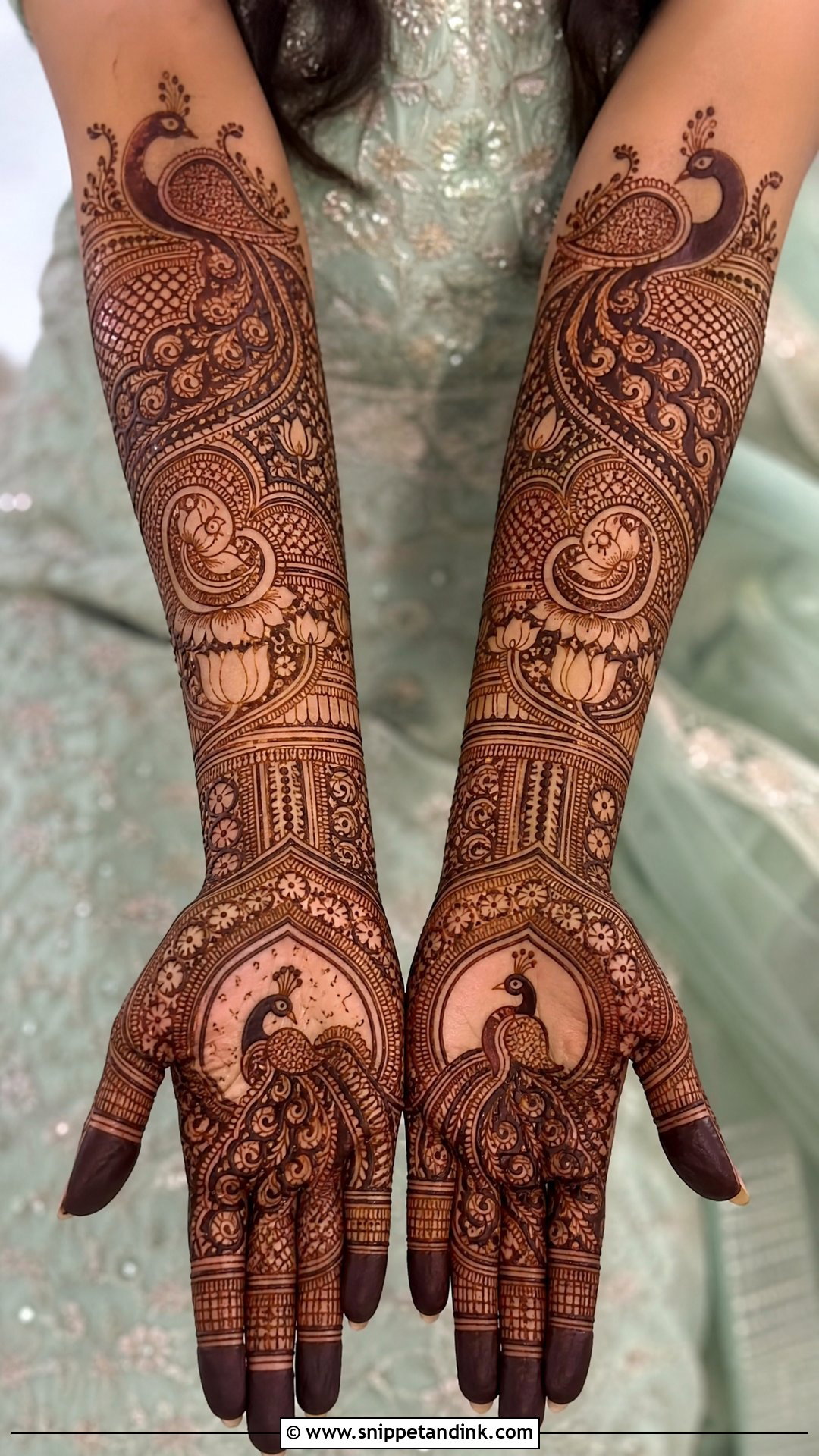
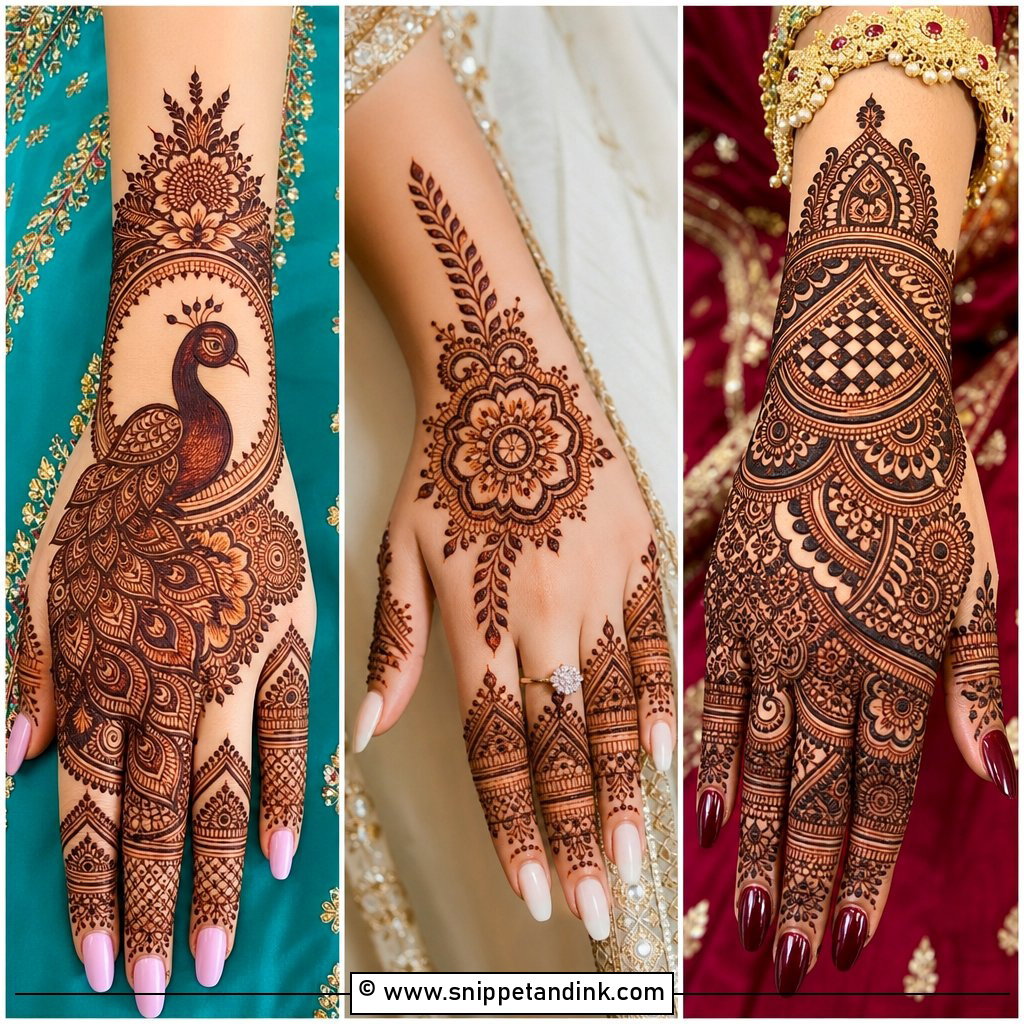
Peacocks give bridal hands a regal feel, with feathers spilling into paisleys, florals and fine line fillers from a body on the palm, wrist or forearm. They need room, though. A peacock crowded by filler stops reading as a bird once the stain darkens. I usually draw one large peacock per hand, facing inward so the two meet when the palms are held together, then add jaali sections and small lotus accents around them.
7. Lotus Bridal Mehndi Design
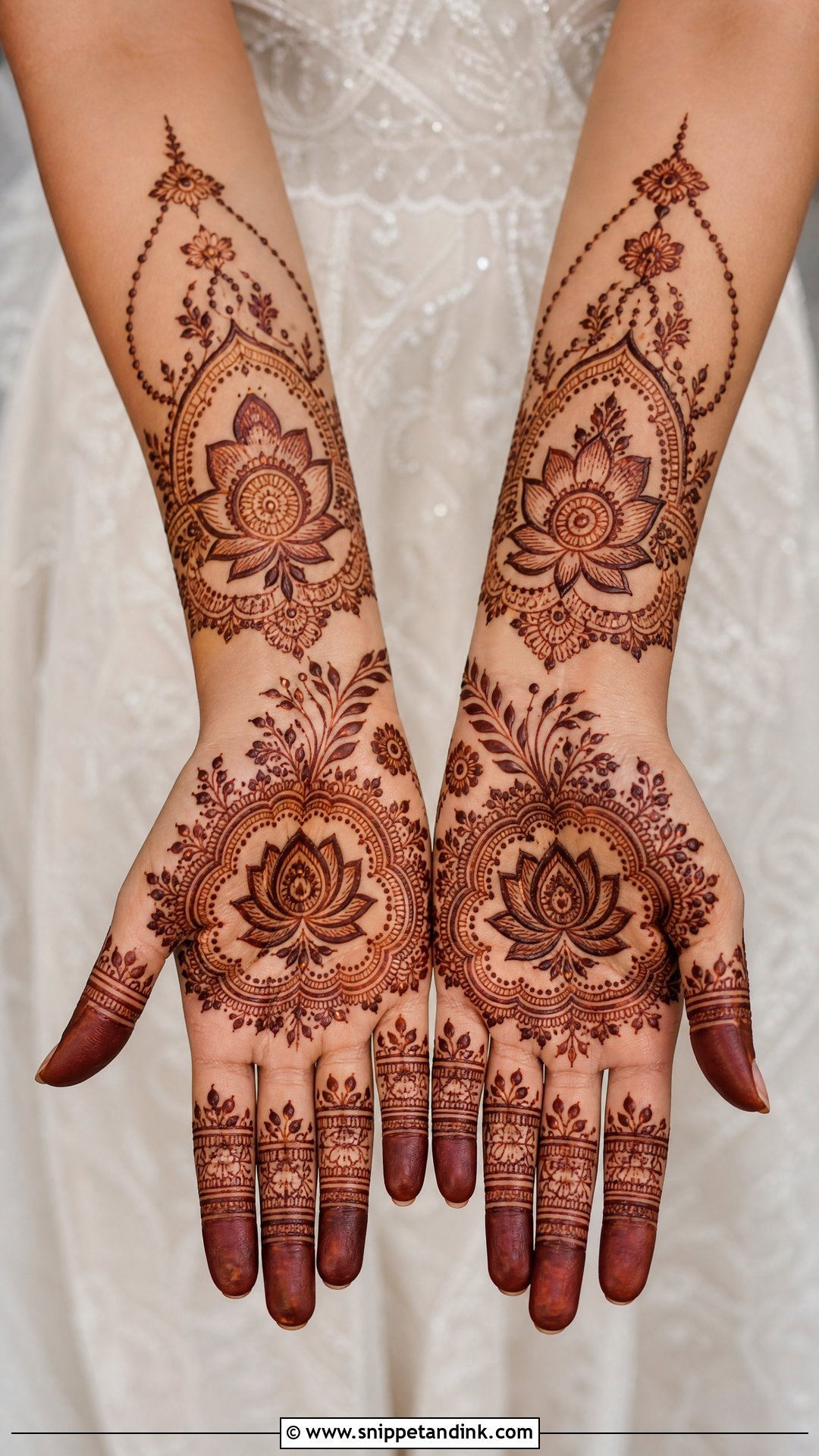
Lotus bridal mehndi is a motif tied to purity and new beginnings, so it suits a wedding naturally. The lotus can sit in the palm centre, stretch across the wrist or repeat up the forearm, and it pairs well with mandalas, leafy vines, fine dots and shaded borders. Petal outlines need to be bold enough to survive staining; thin petals with heavy shading inside can merge into a dark blob. It works dense and full-hand, or open with plenty of negative space.
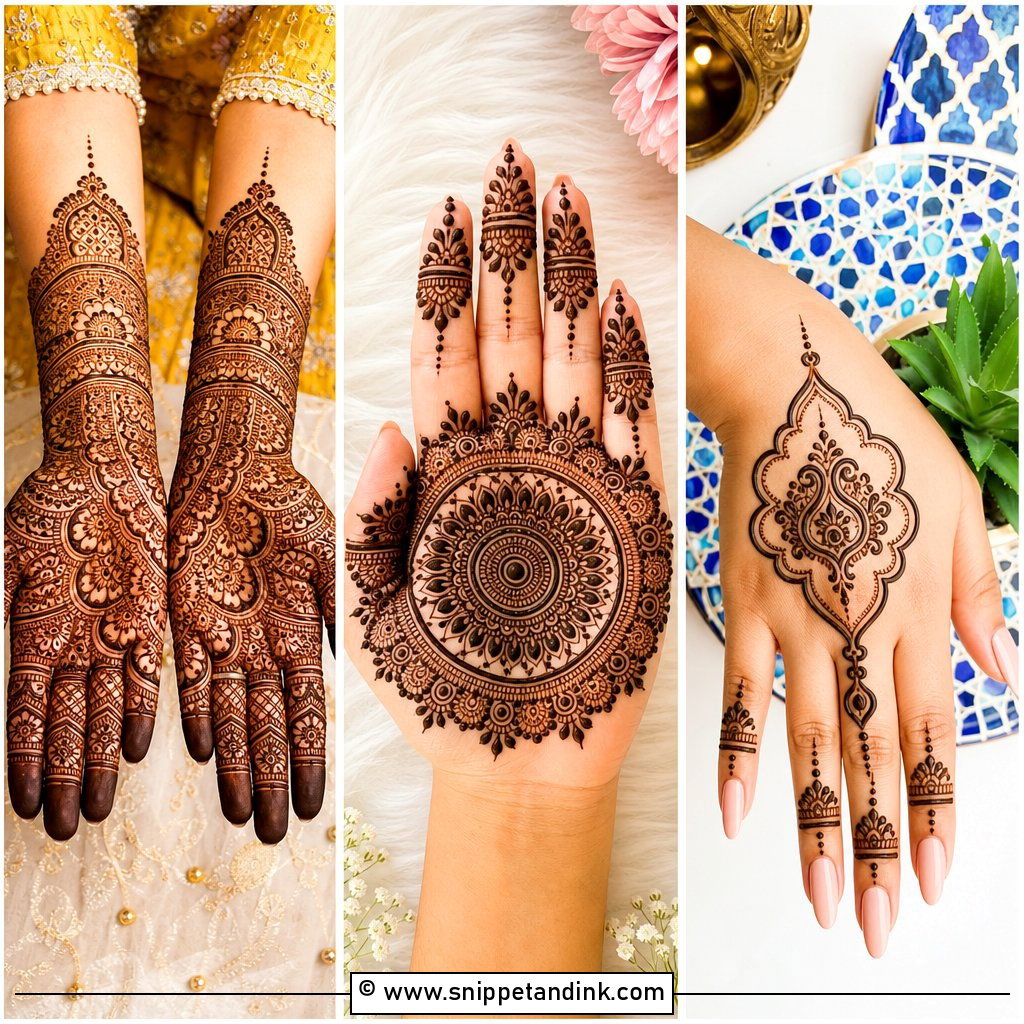
8. Mandala Bridal Mehndi Design
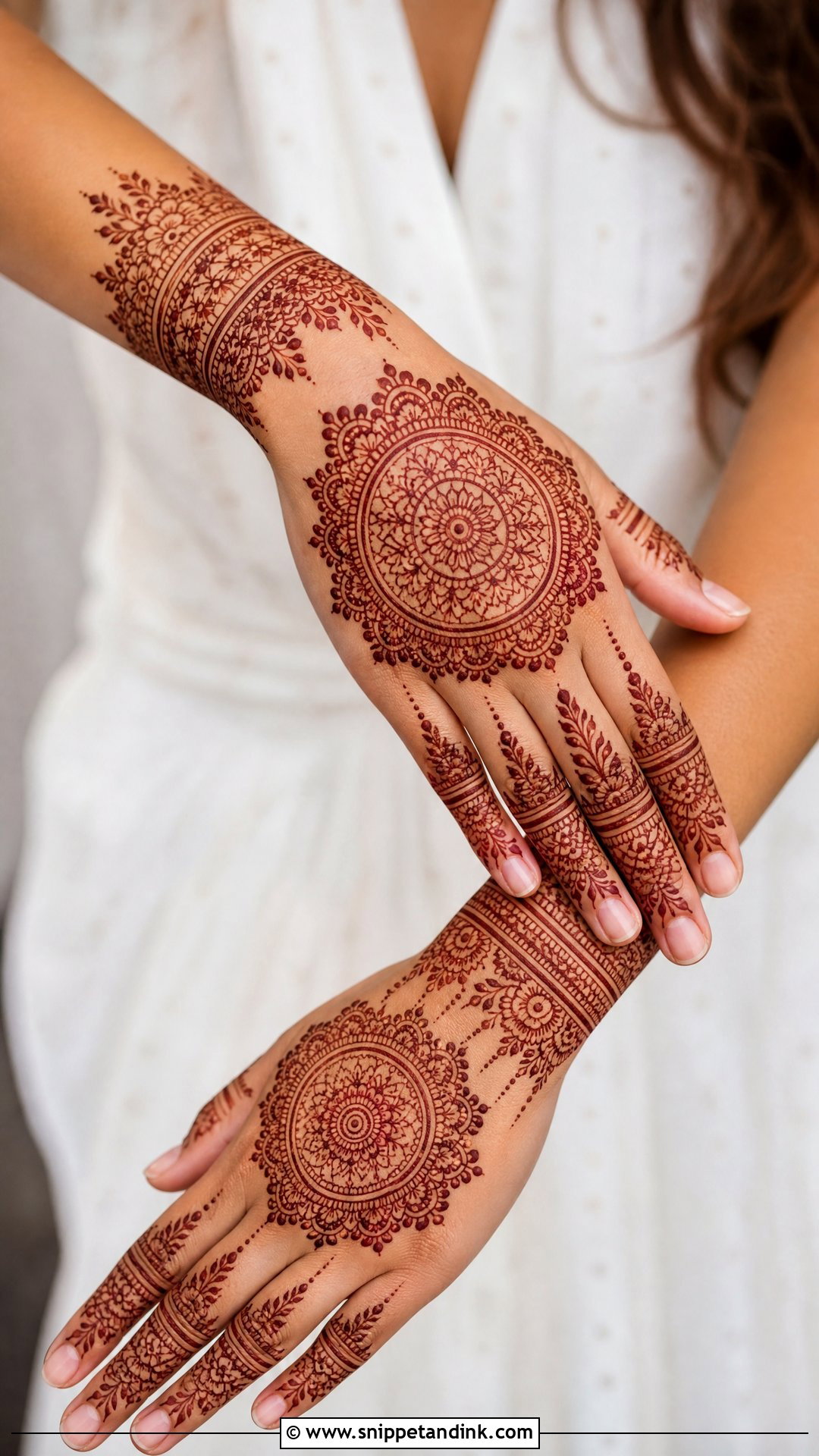
Mandala work begins with one round motif in the palm or back hand and grows outward in rings of petals, dots, scallops and fine lines. The circle has to be truly round and truly centred, and those are the two things a rushed artist gets wrong. For a bridal finish, the mandala should connect to detailed fingers, wrist cuffs and forearm patterns. Coverage adjusts easily, so it suits brides who want structure without dense storytelling.
9. Jaali Bridal Mehndi Design
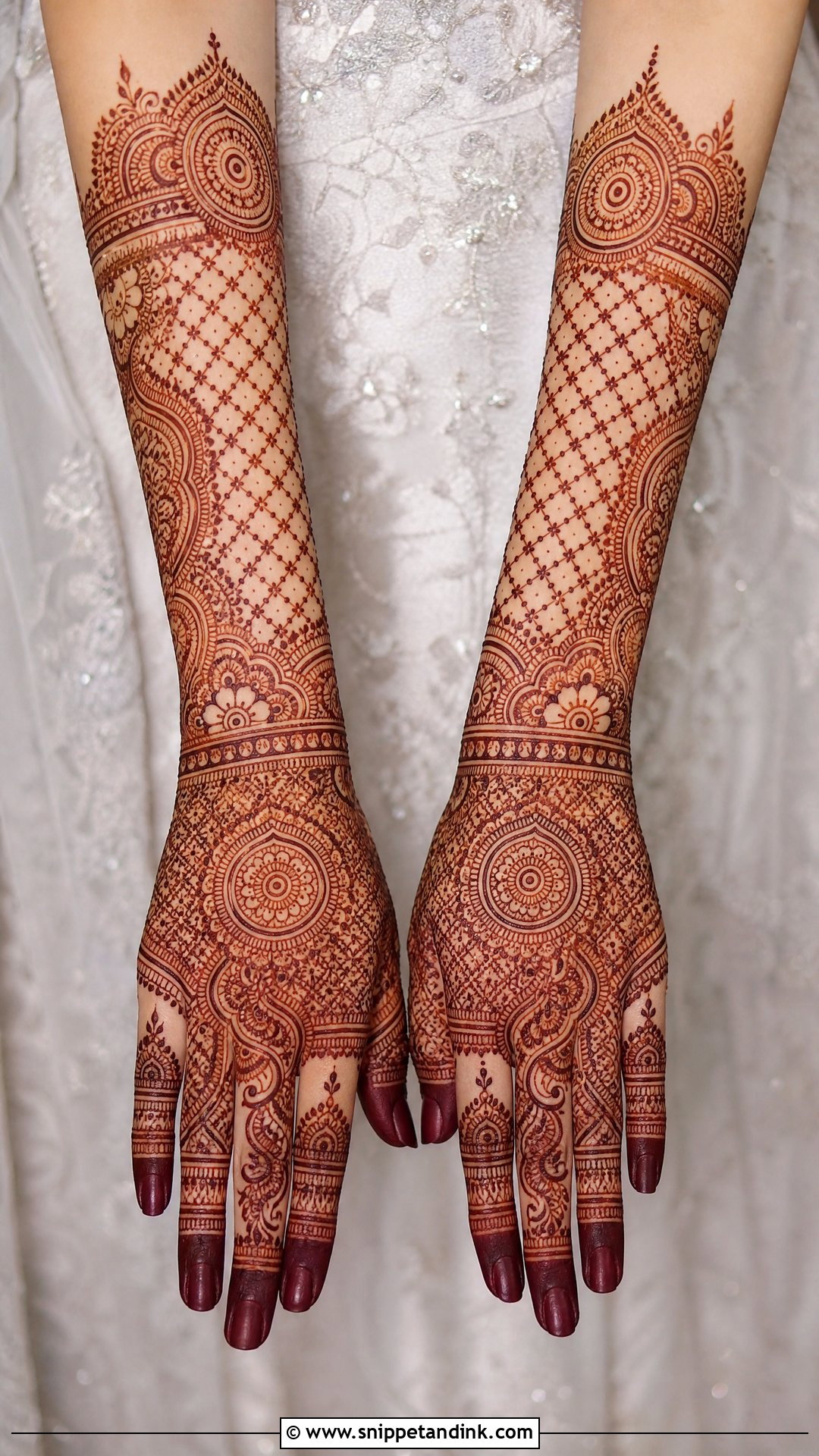
Jaali is a mesh of crisscross lines, dots and small flowers, framed by shaded borders, and it gives the hand a lace-like texture beside bangles, rings and embroidered sleeves. On its own it can look flat, so I combine panels of mesh with paisleys, lotus motifs or a mandala centre. Even spacing is everything. If cone pressure wavers, the grid squares change size and the panel looks uneven. Used well, it adds detail without turning the whole hand dark.
10. Back Hand Bridal Mehndi Design
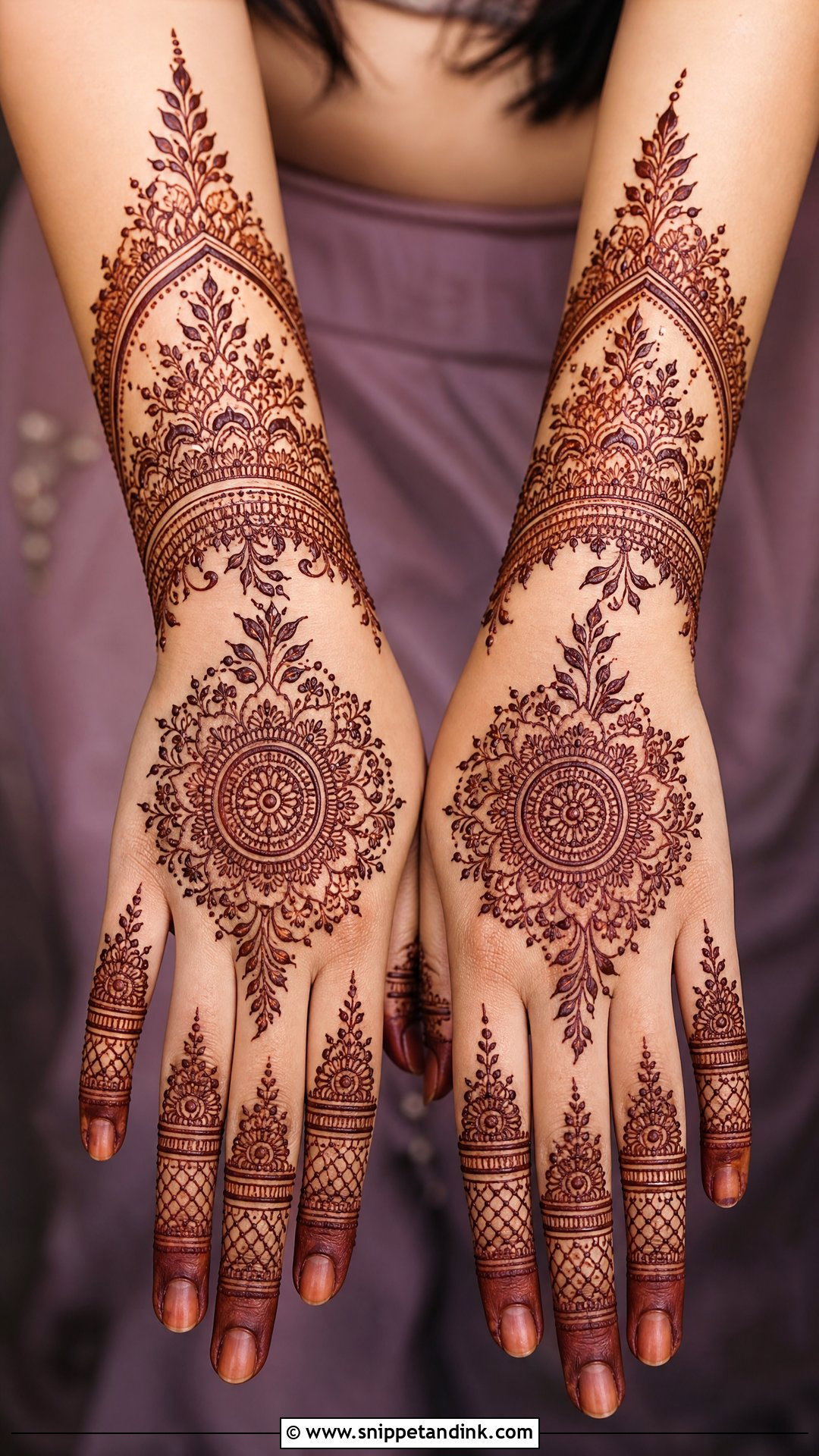
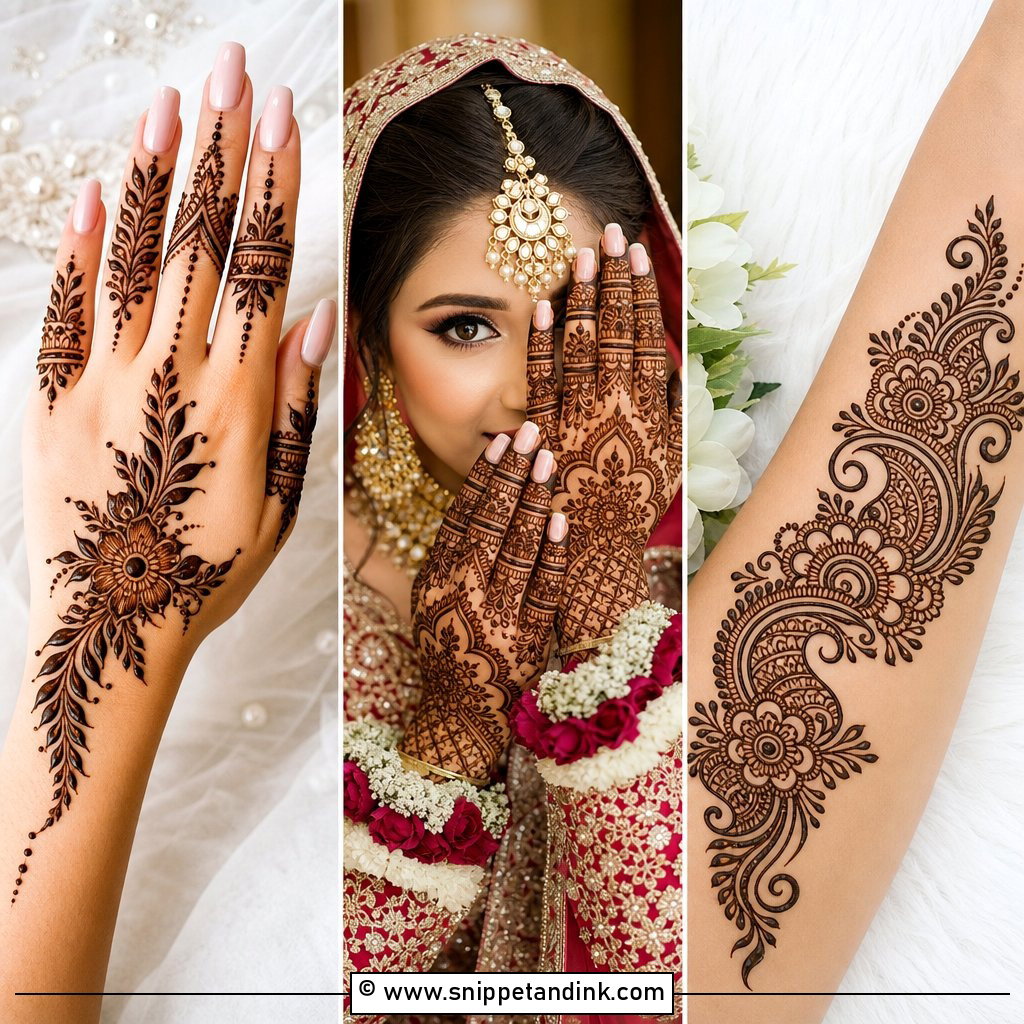
Back hand bridal mehndi shows in every jewelry shot, so I plan it around what the bride is wearing. Decorated fingers, a central mandala or floral trail, wrist cuffs and a forearm extension make up a complete look. If you’re wearing haath phool, statement rings or heavy bangles, I leave lighter spaces where the metal will sit, otherwise hours of fine work disappear under gold. The design also has to look right with the hand relaxed, not only in posed shots.
11. Front Hand Bridal Mehndi Design
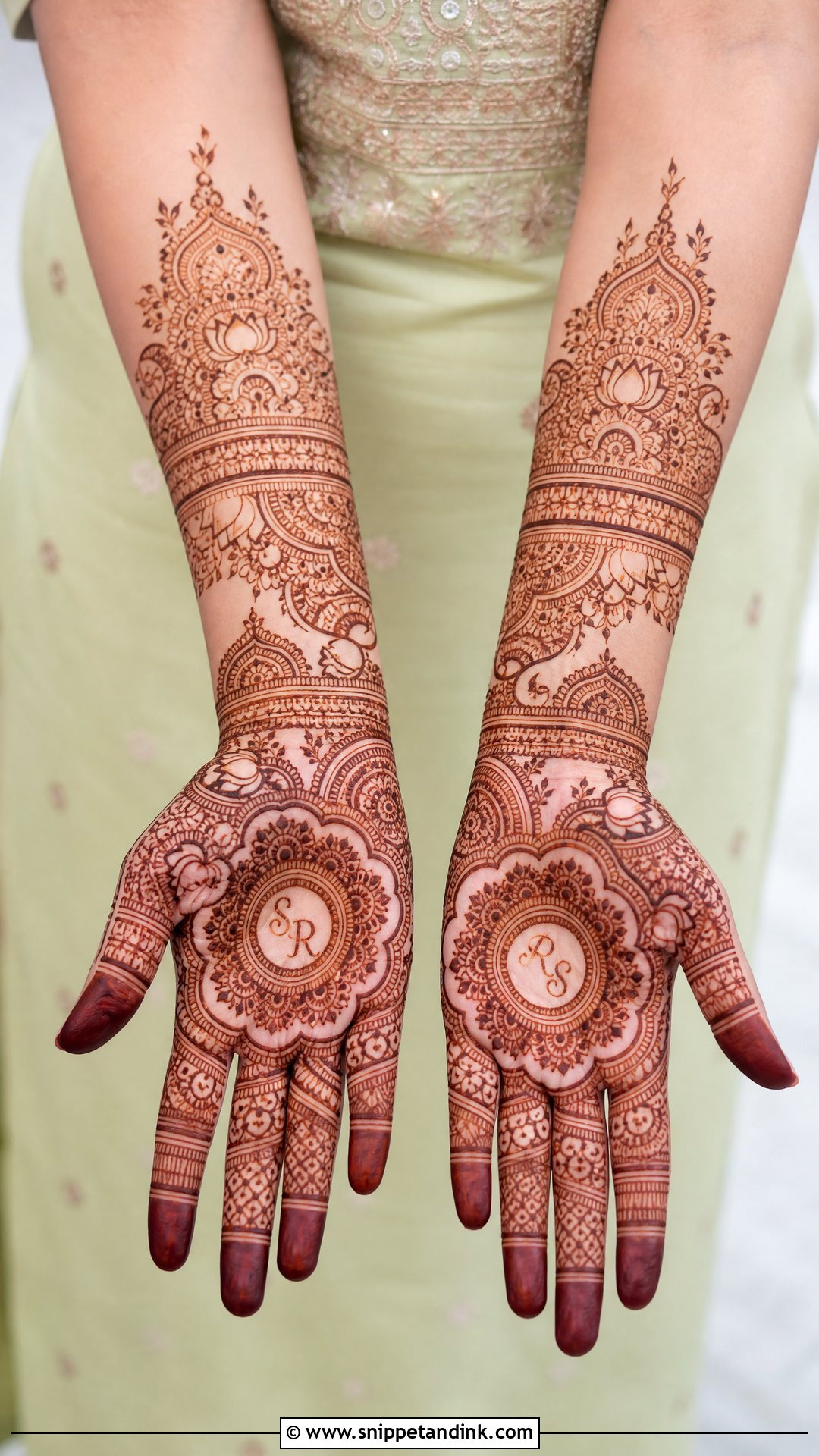
The palm is where storytelling usually lives: mandalas, portraits, paisleys, lotus blooms or hidden initials, with fine lines, dots, leafy tips and small florals on the fingers. Palms take the darkest stain on the body, which helps detailed work show. The common mistake is placing big motifs with no filler between them, which looks unfinished once the stain develops. For a traditional look, go dense; for something more modern, keep the centre open and let the fingers and wrist carry the detail.
12. Minimal Bridal Mehndi Design
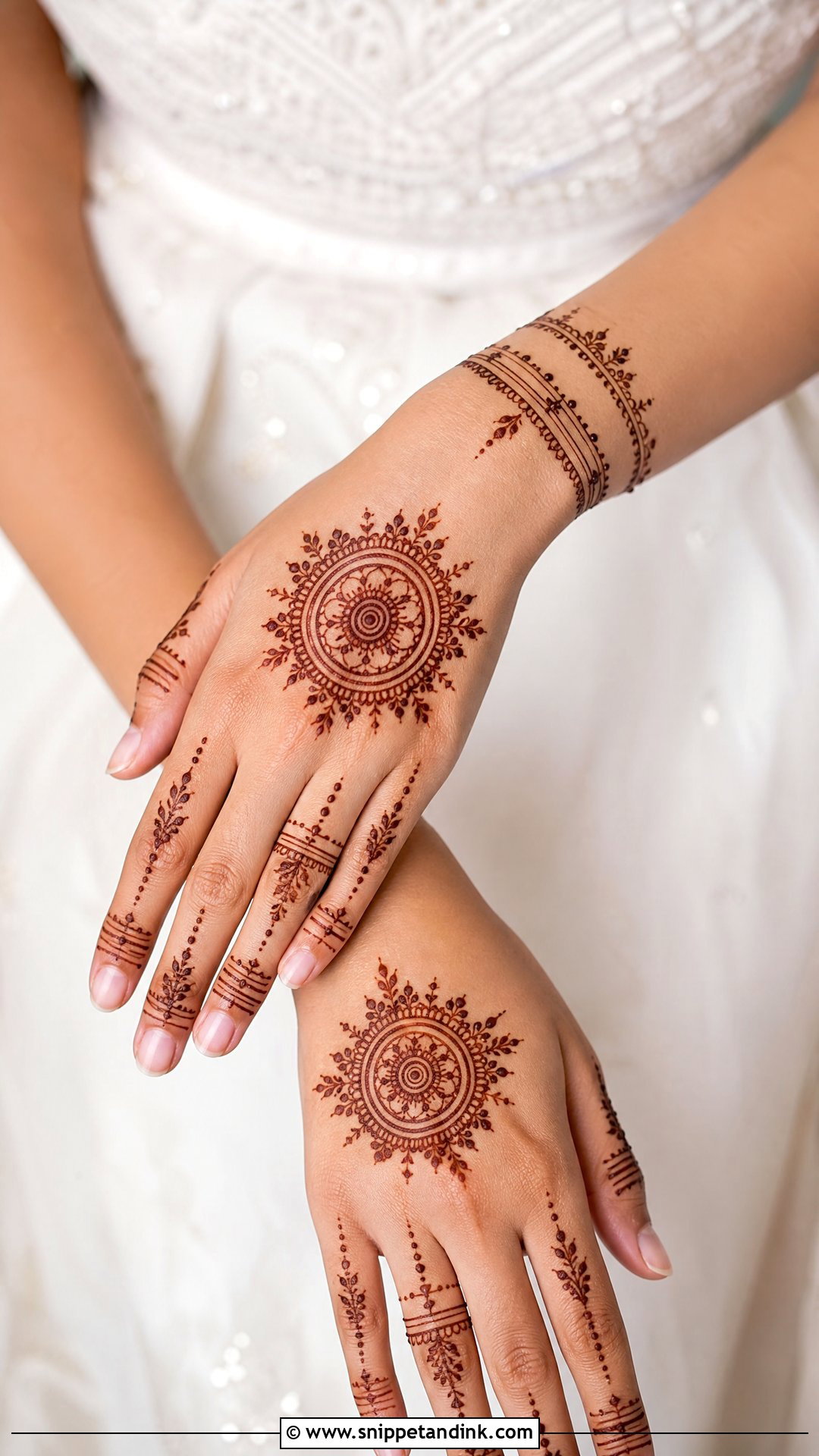
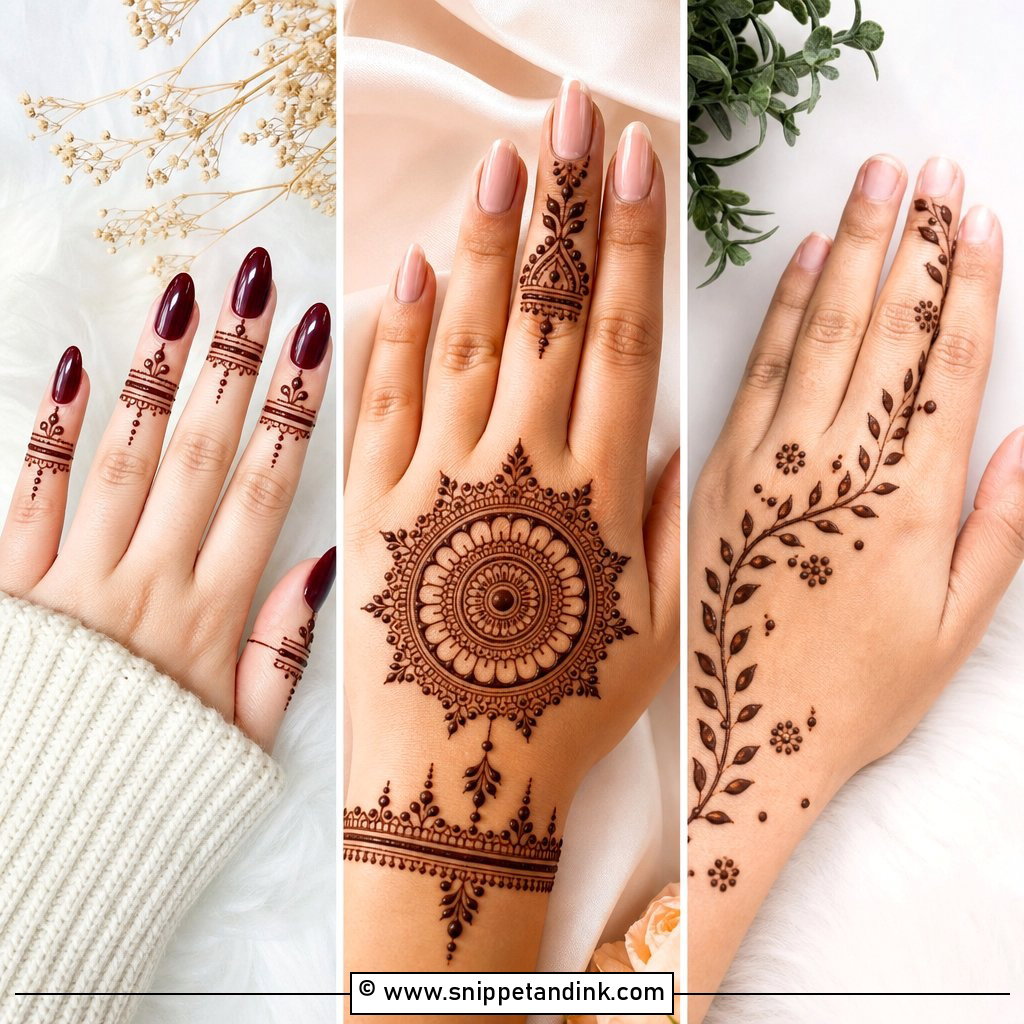
Minimal bridal mehndi still has to look finished. A palm mandala, delicate finger details, a slim wrist band and a few floral or leafy trails can be enough, provided the spacing is clean and the two hands match. It suits courthouse weddings, intimate ceremonies and destination trips where you won’t sit for hours. A tiny hidden initial or a bracelet-style wrist pattern keeps it bridal. It also dries fast, which matters on a busy wedding schedule.
13. Modern Bridal Mehndi Design
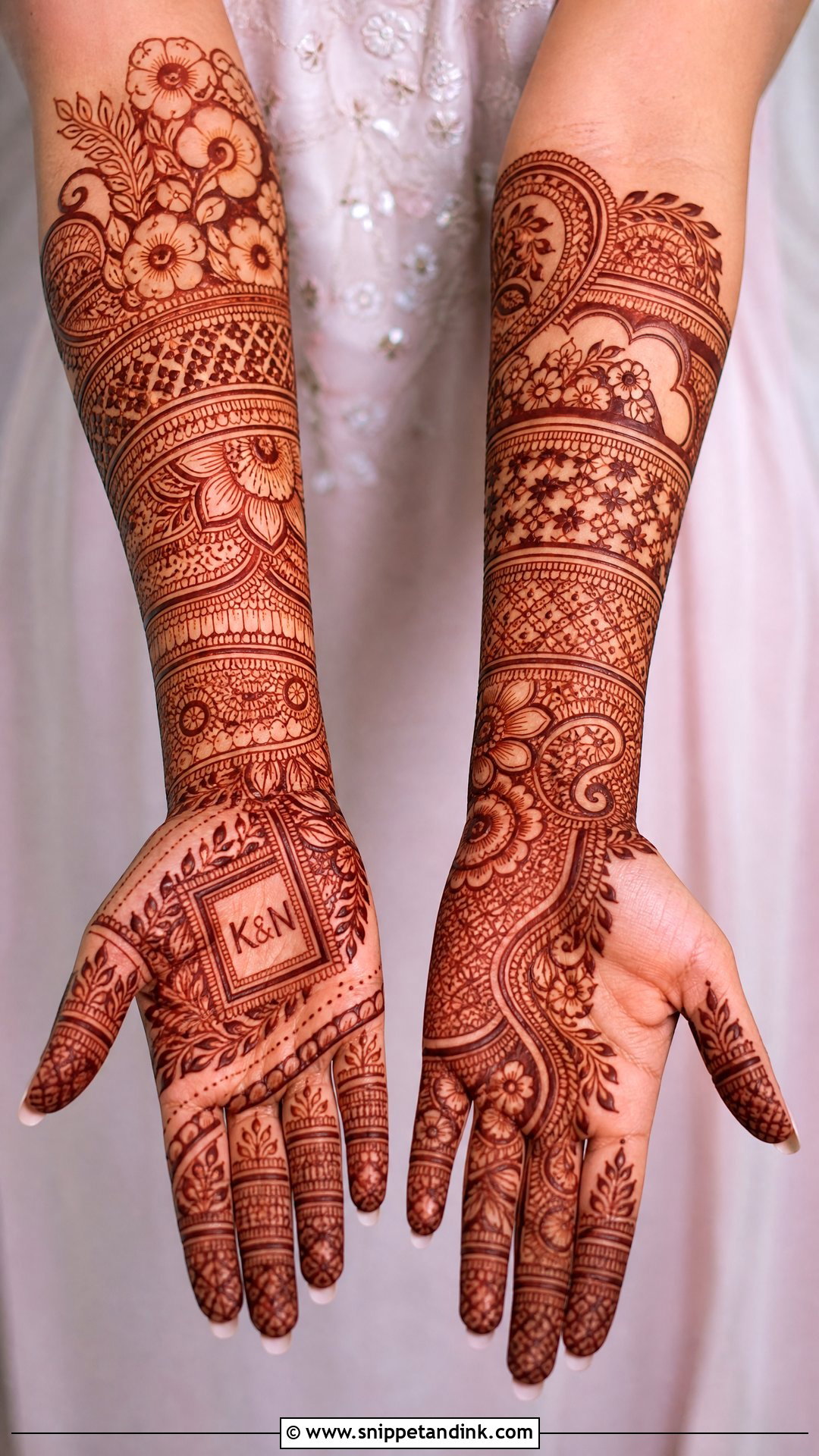
Modern bridal mehndi uses bold florals, negative space, geometric bands, half-and-half palms and slim finger patterns, all arranged so the skin can breathe. My rule is one or two main focal points per hand, then neat fillers and borders supporting them; more than that and it loses its clarity. It suits contemporary lehengas, pastels and fusion outfits, and the open areas make room for initials, a wedding date or a small symbol the couple cares about.
14. Pakistani Bridal Mehndi Design
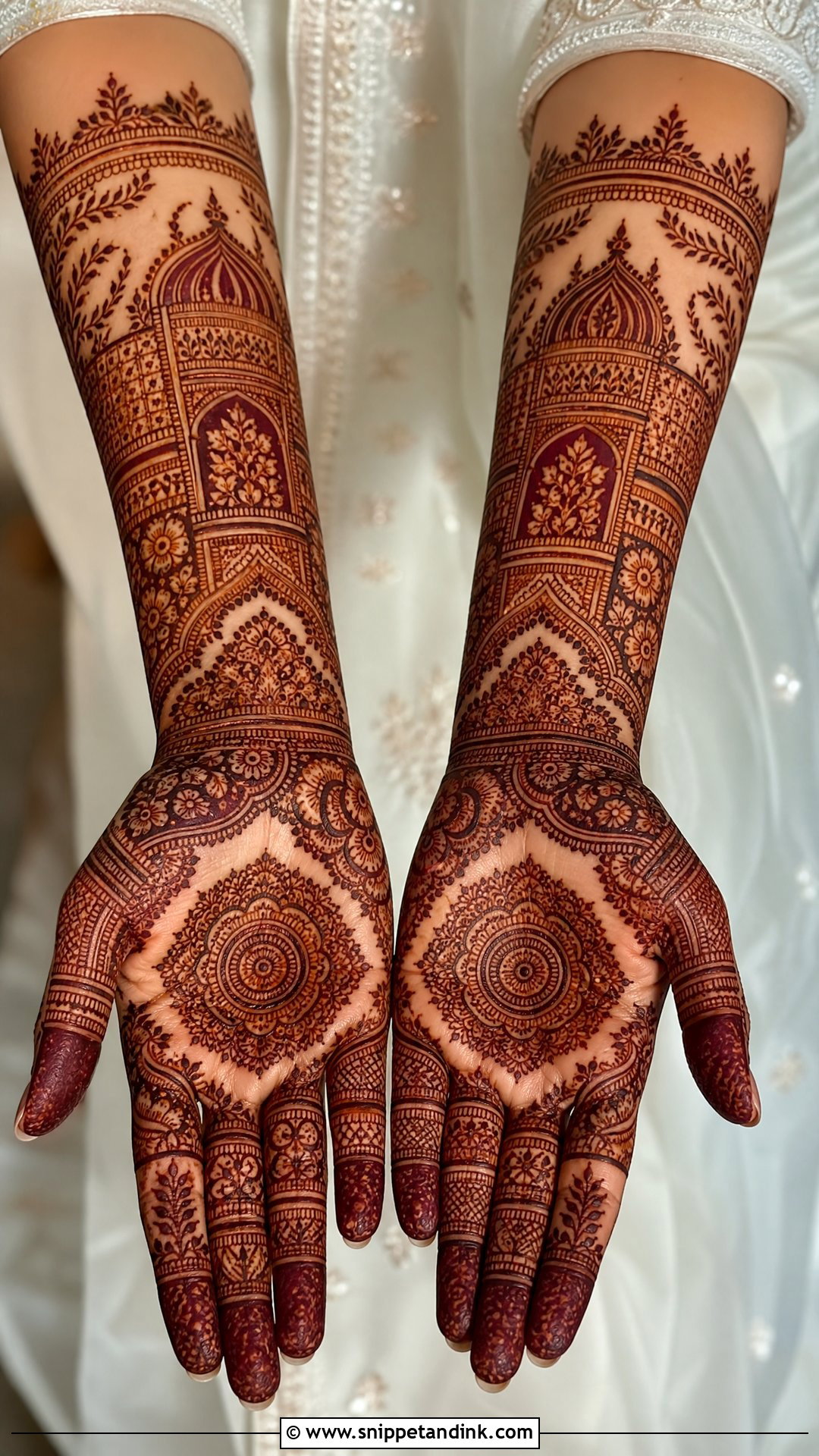
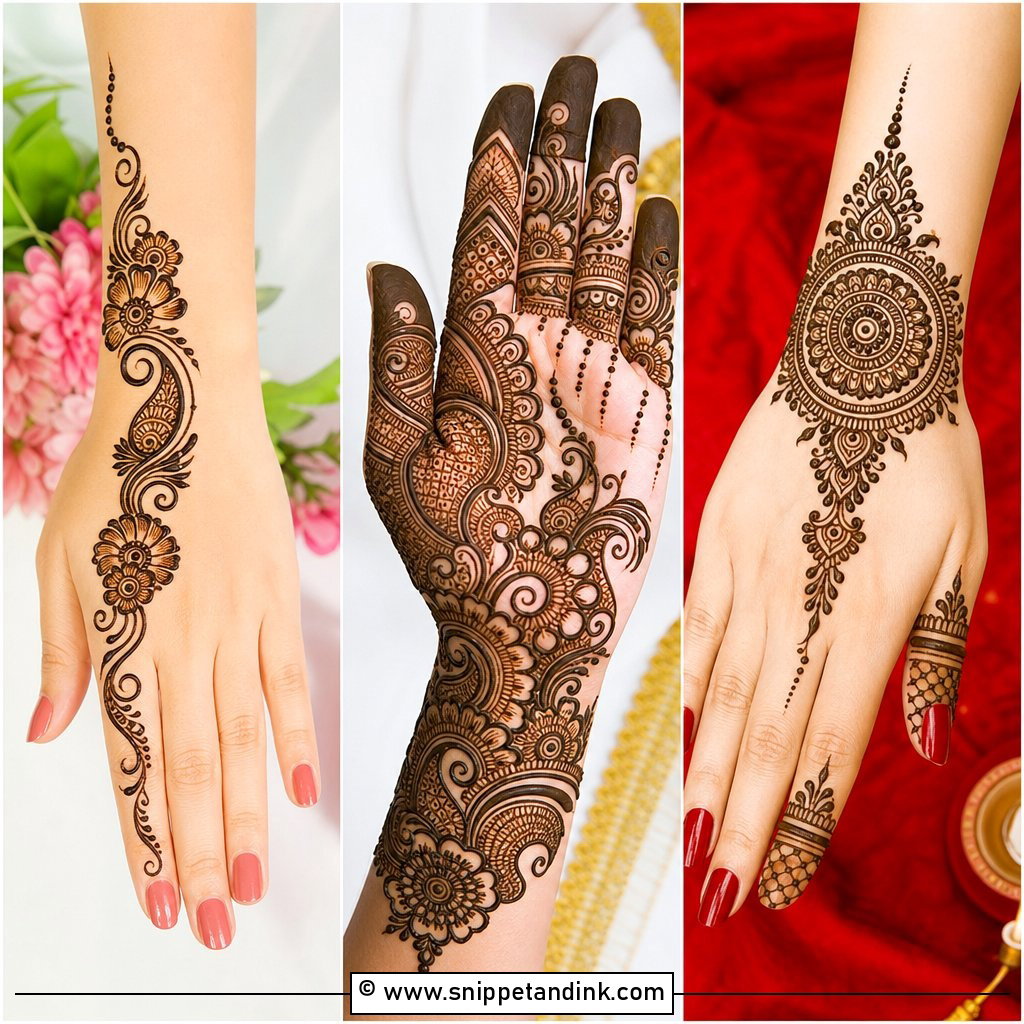
Pakistani bridal work mixes dense Indian-style detail with Arabic flow: floral vines, paisleys, domes, jaali panels, mandalas, leafy trails and detailed fingers across the hands and forearms. The mix of filled and open sections is what keeps it intricate without looking heavy. It pairs naturally with ghararas, shararas, lehengas and heavily embroidered outfits. Symmetry around the palm centres and wrists is what I check most, since these designs are often photographed with both hands raised together.
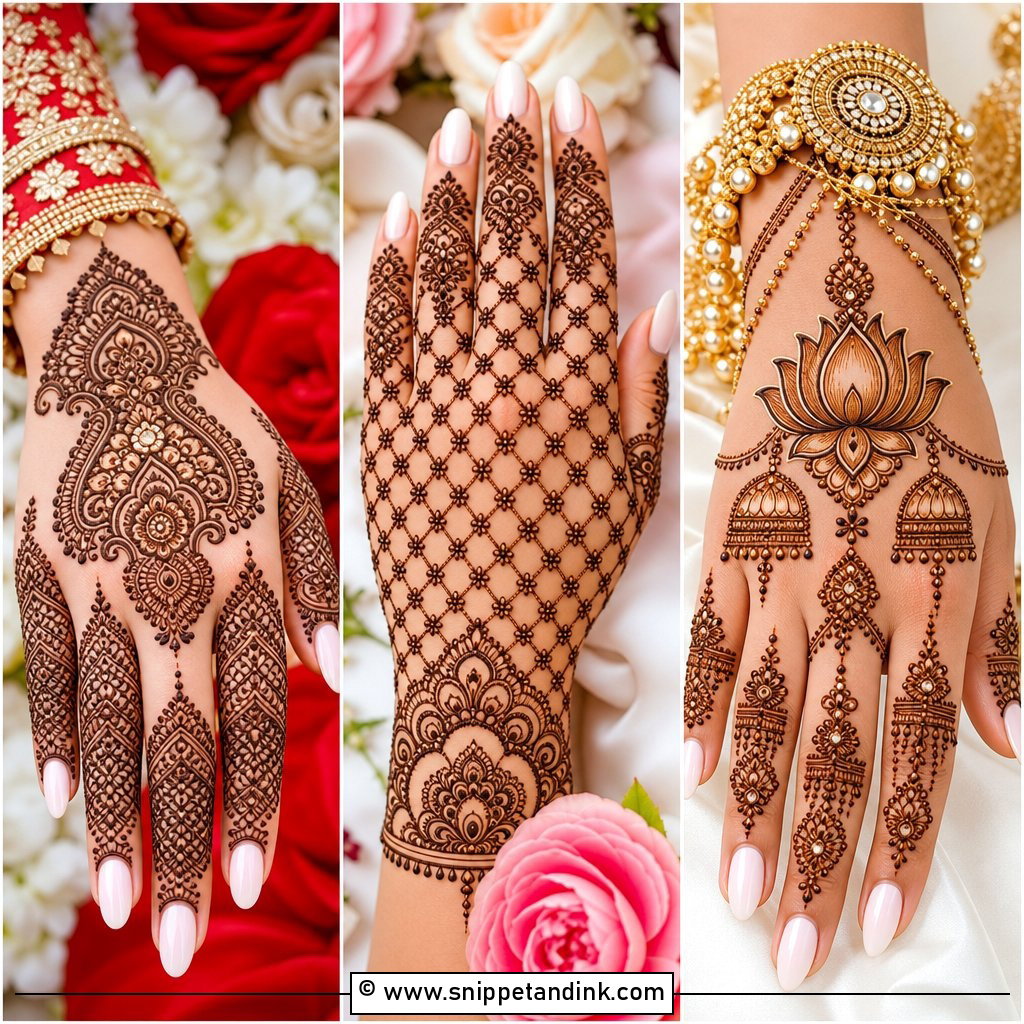
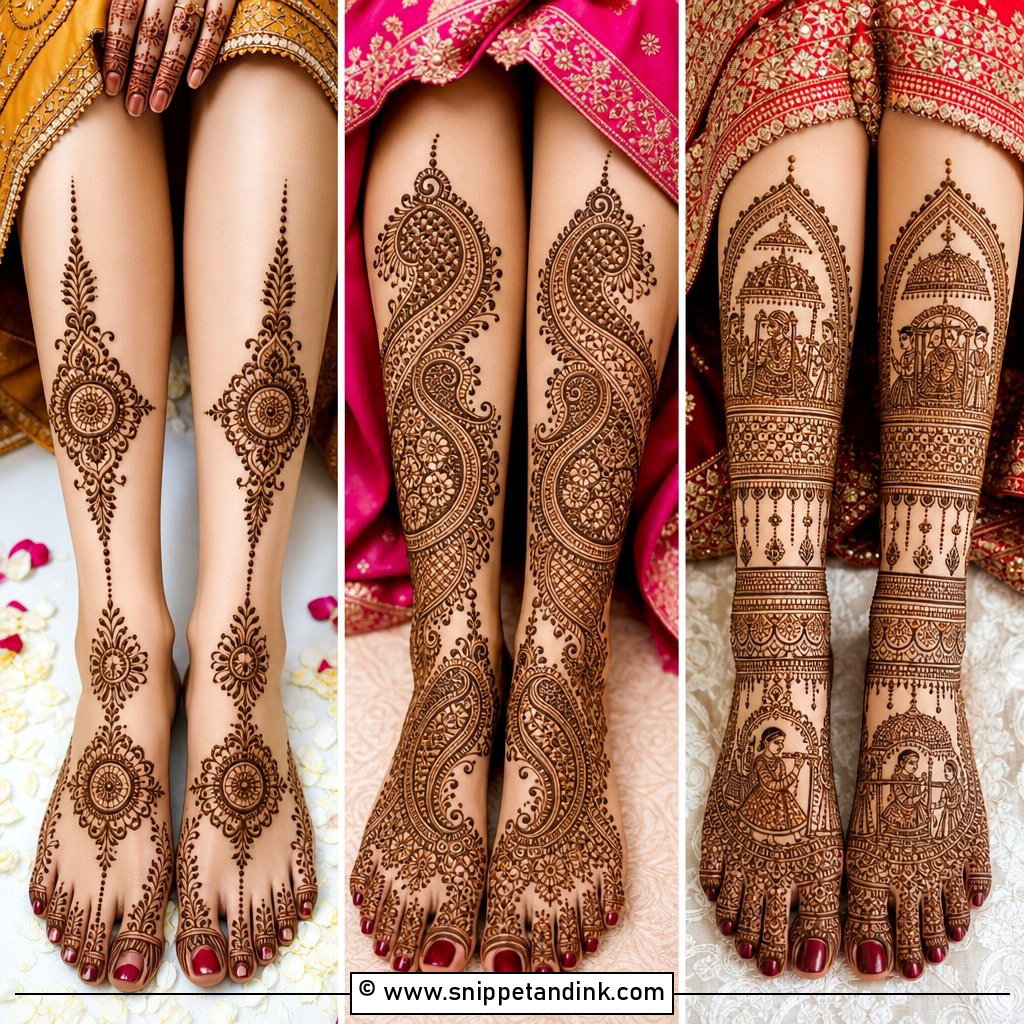
15. Rajasthani Bridal Mehndi Design
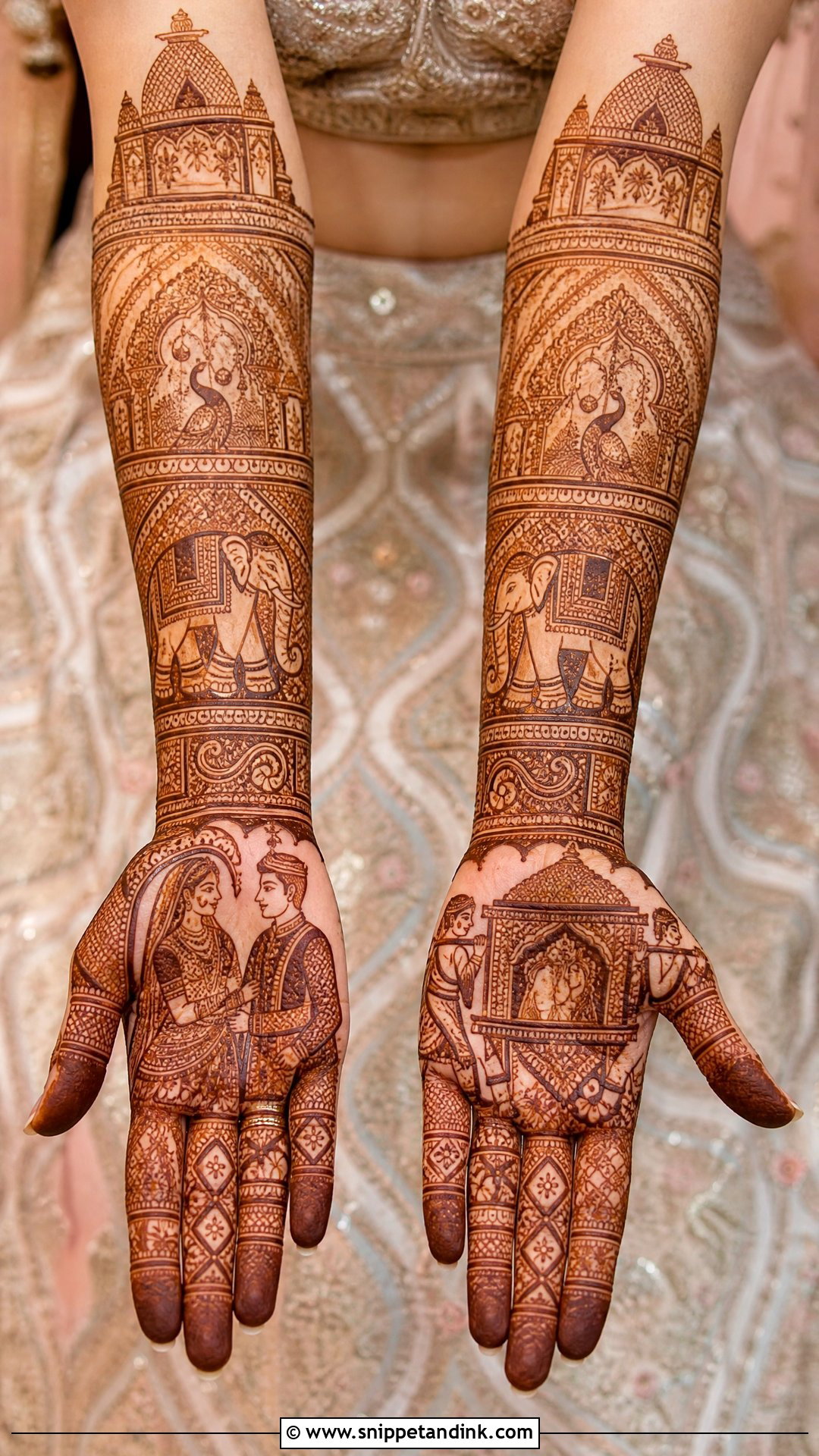
Rajasthani mehndi is storytelling in miniature: bride and groom figures, elephants, peacocks, doli scenes, mandap shapes, paisleys and fine traditional fillers, often from fingertips to forearm. It needs a skilled artist with very steady line work and a bride with a lot of patience. I divide the hand into clear sections with borders before drawing any scene, so tiny figures don’t merge together once the stain develops. It suits brides drawn to a heritage look.
16. Moroccan Bridal Mehndi Design
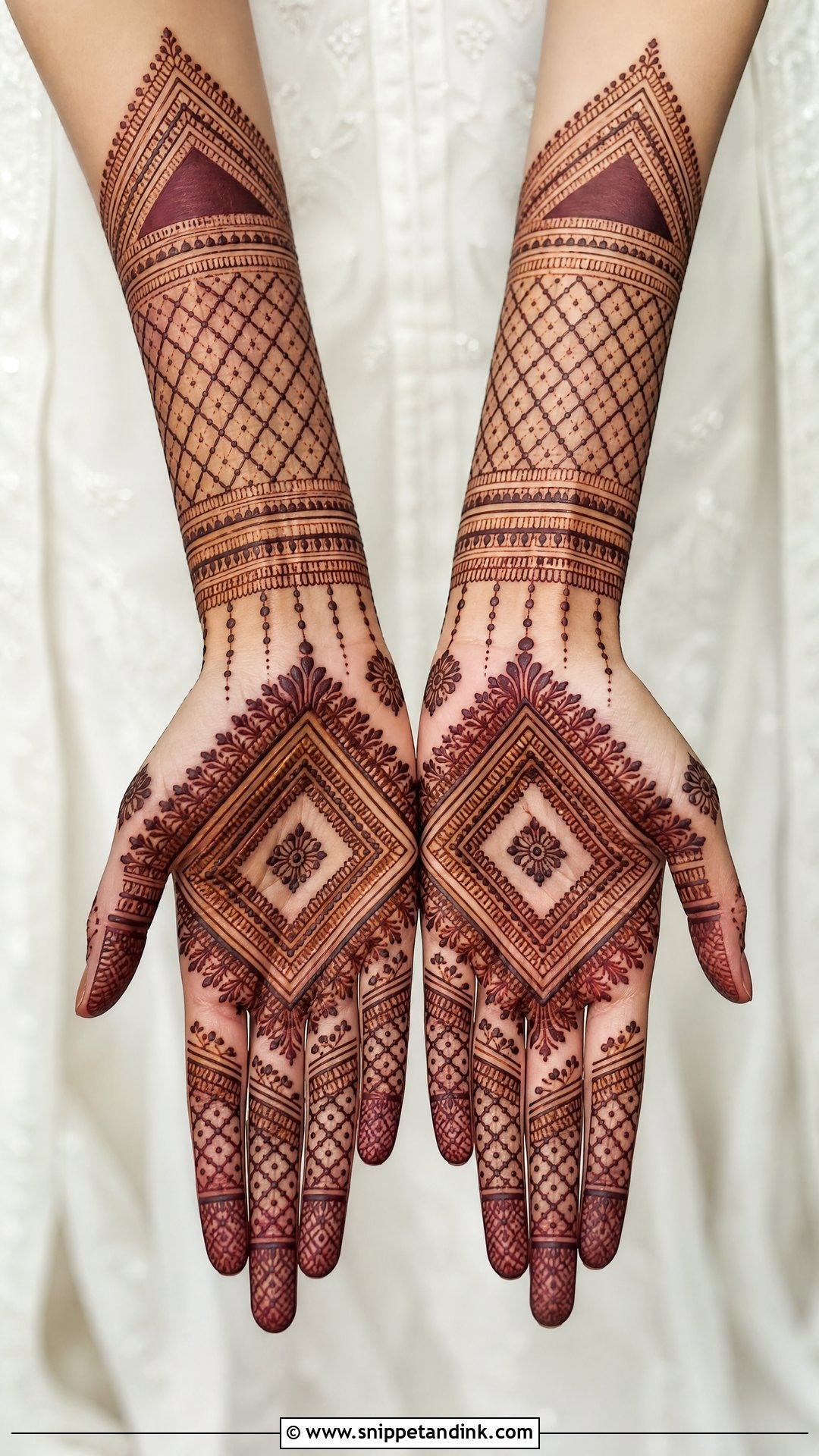
Moroccan work replaces florals with diamonds, lines, triangles, grids, dots and structured bands, laid symmetrically over the palms, fingers, wrists and forearms. Straight lines are less forgiving than curves, so I mark guide points before committing. When the stain turns deep maroon, these shapes look crisp and graphic in a way florals don’t. A few small leaves at the wrist or fingertips soften it if it feels too hard-edged.
17. Gulf Bridal Mehndi Design
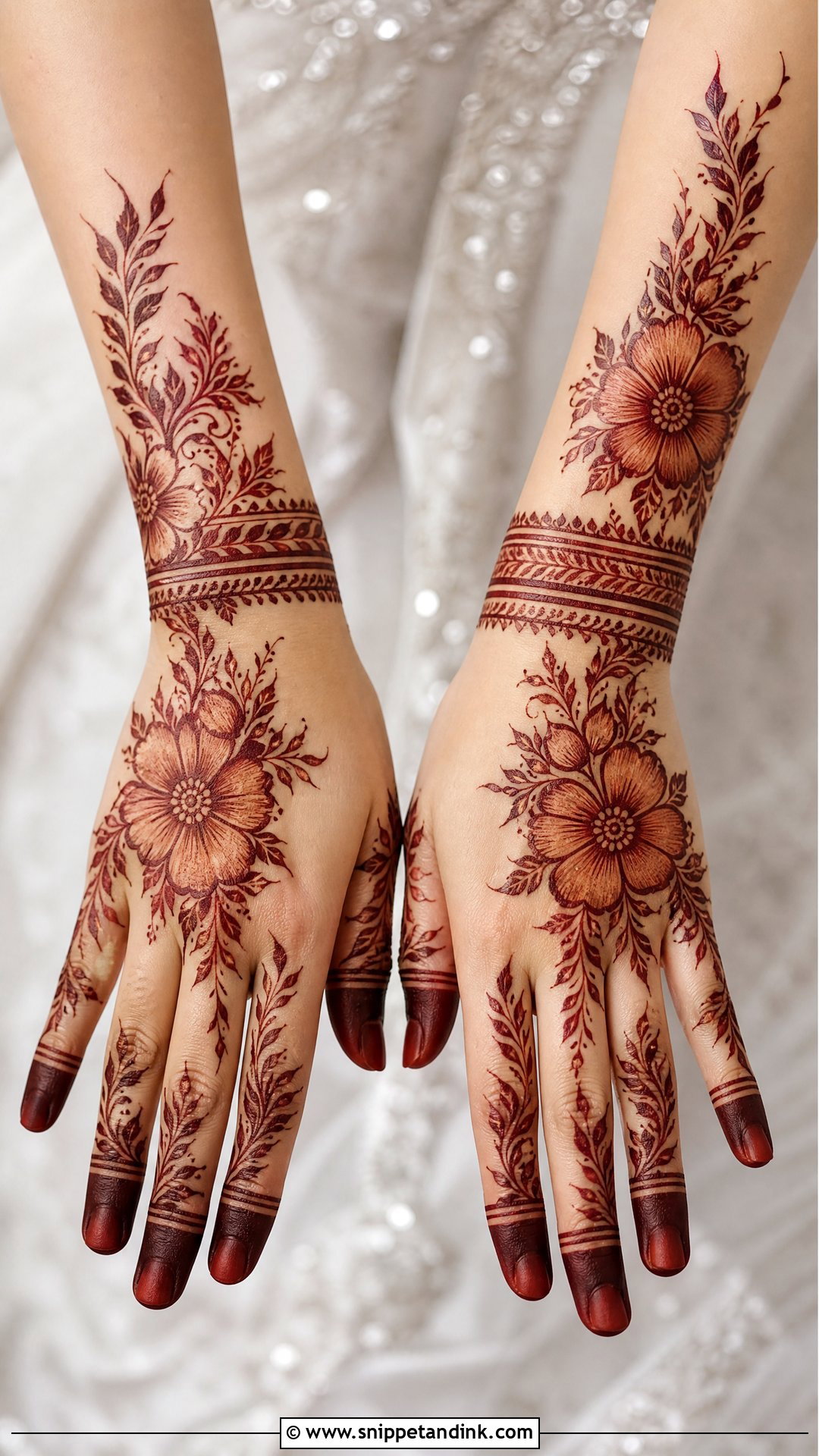
Khaleeji-style henna uses bigger motifs than Indian work: bold flowers, leafy trails and wide open spacing across the back hand, fingers, wrist and forearm. The thick outlines come from a wider cone opening, and those lines stain evenly as long as the paste stays on for several hours. Bracelet bands, fingertip details and small paisleys make it more bridal. It sits comfortably with both traditional and modern outfits.
18. Jewelry Bridal Mehndi Design
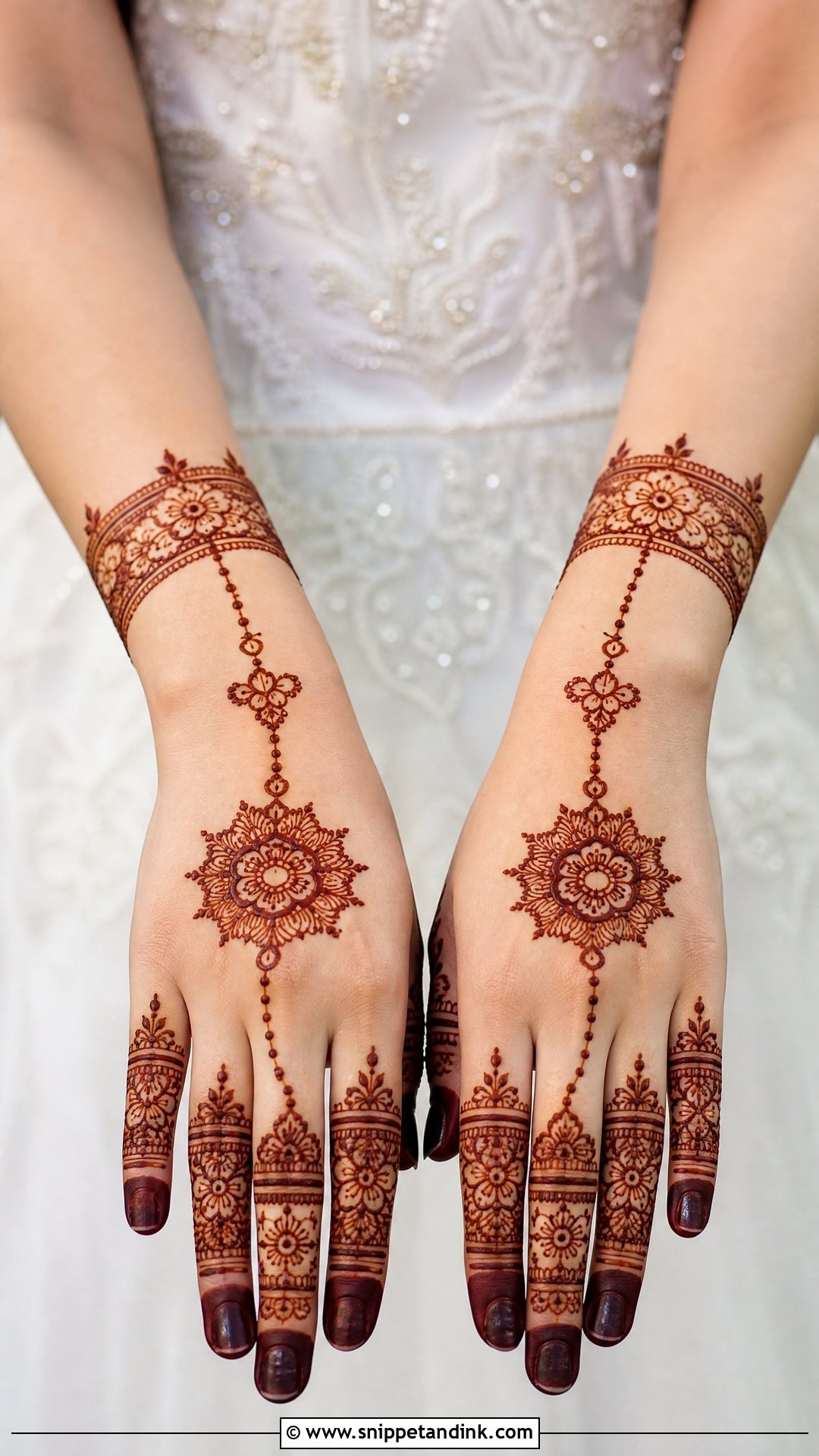
Jewelry-style mehndi draws ornaments on the skin: ring chains, bracelet cuffs, haath phool shapes and delicate finger bands. It’s most at home on the back hand, where it frames real rings and bangles. I link the finger detail into a central floral or mandala motif, then extend toward the wrist like a bracelet. If your actual jewelry is heavy, keep the henna open so the two don’t compete for attention.
19. Bridal Mehndi Design For Short Fingers
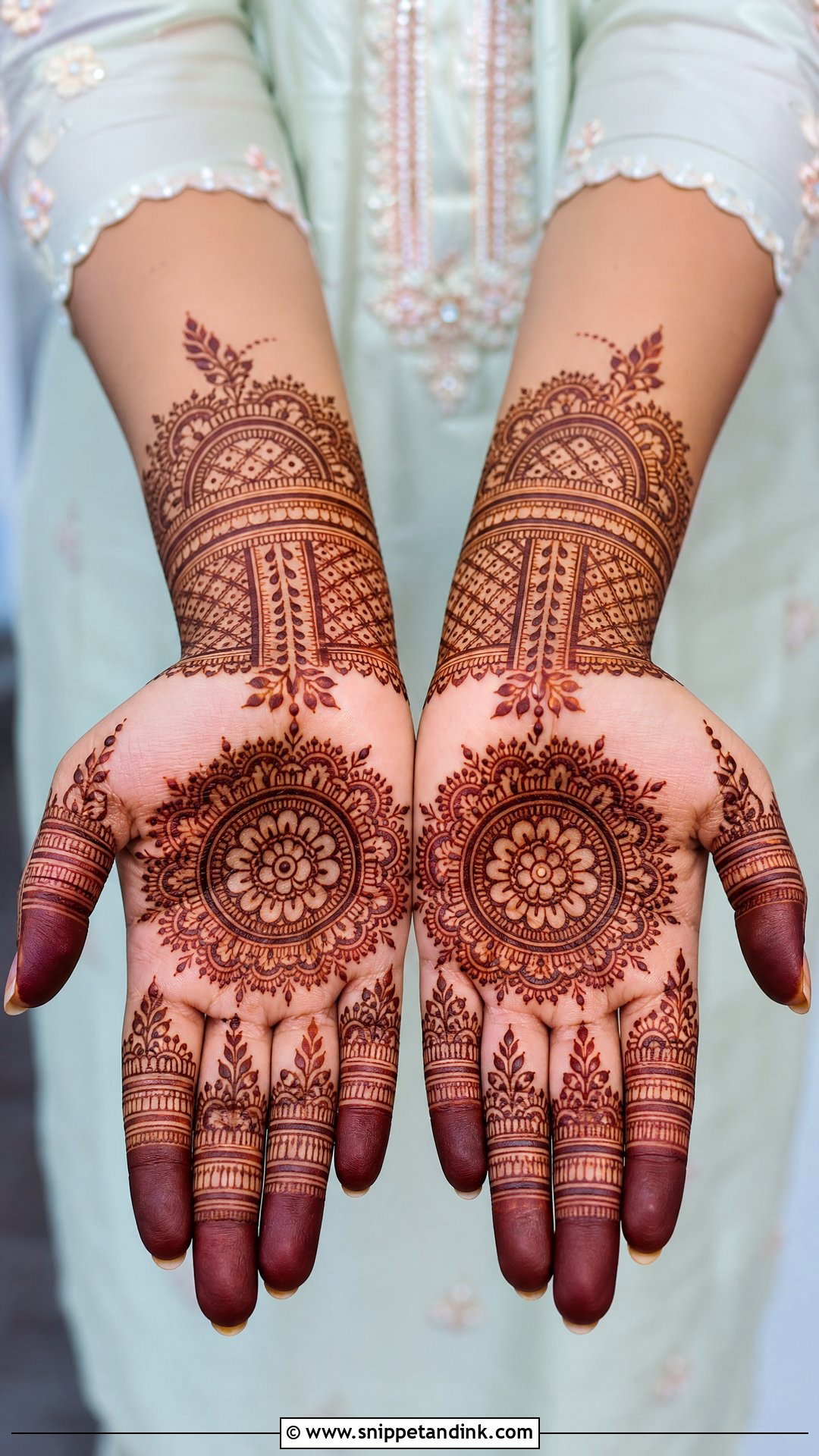
With shorter fingers, the aim is to lead the eye lengthwise. Vertical finger patterns, slim leafy trails, narrow grids and fine lines running toward the tips all help, while thick horizontal bands across each finger cut them into short segments. A palm mandala, a diagonal Arabic trail or a soft floral centre adds interest without overwhelming the hand. I also extend the fingertip coverage slightly, which visually lengthens the finger. It works in Indian, Arabic and Indo-Arabic styles.
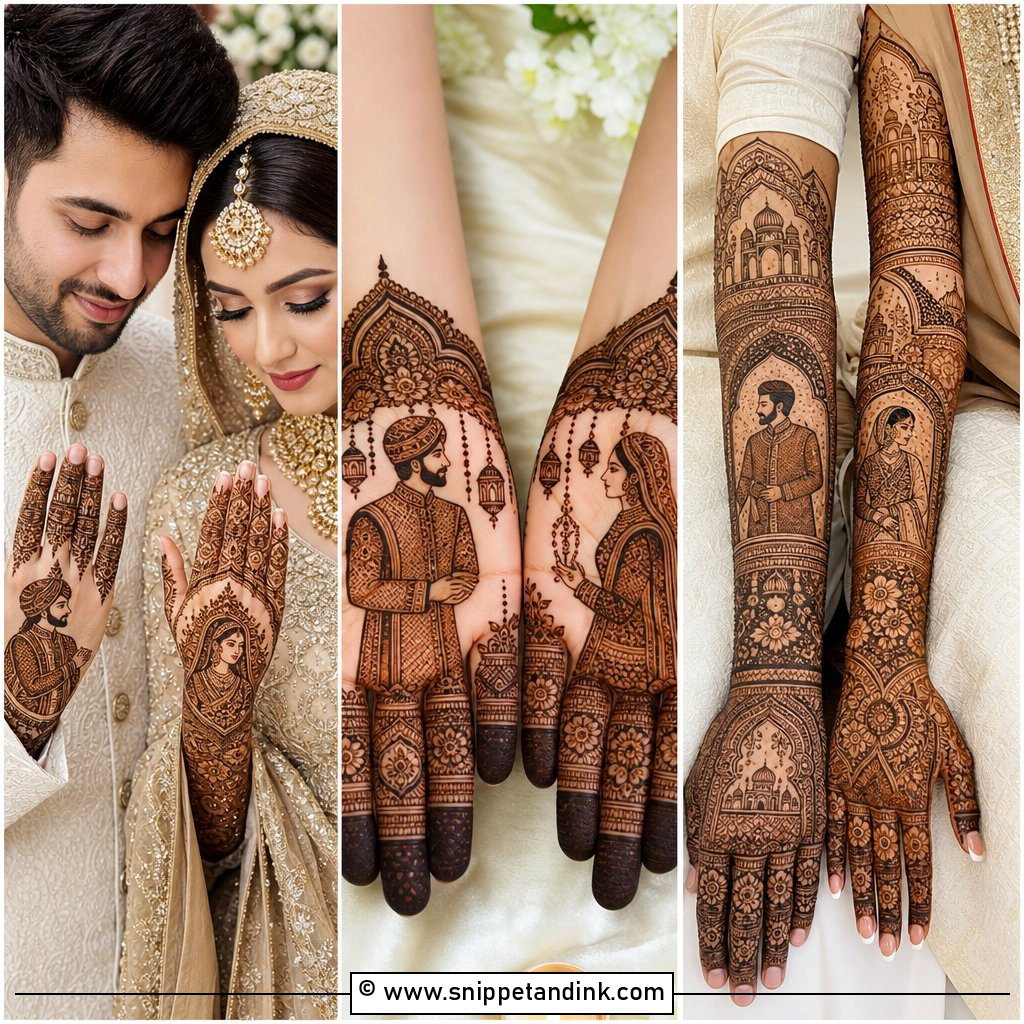
20. Bridal Mehndi Design For Long Fingers
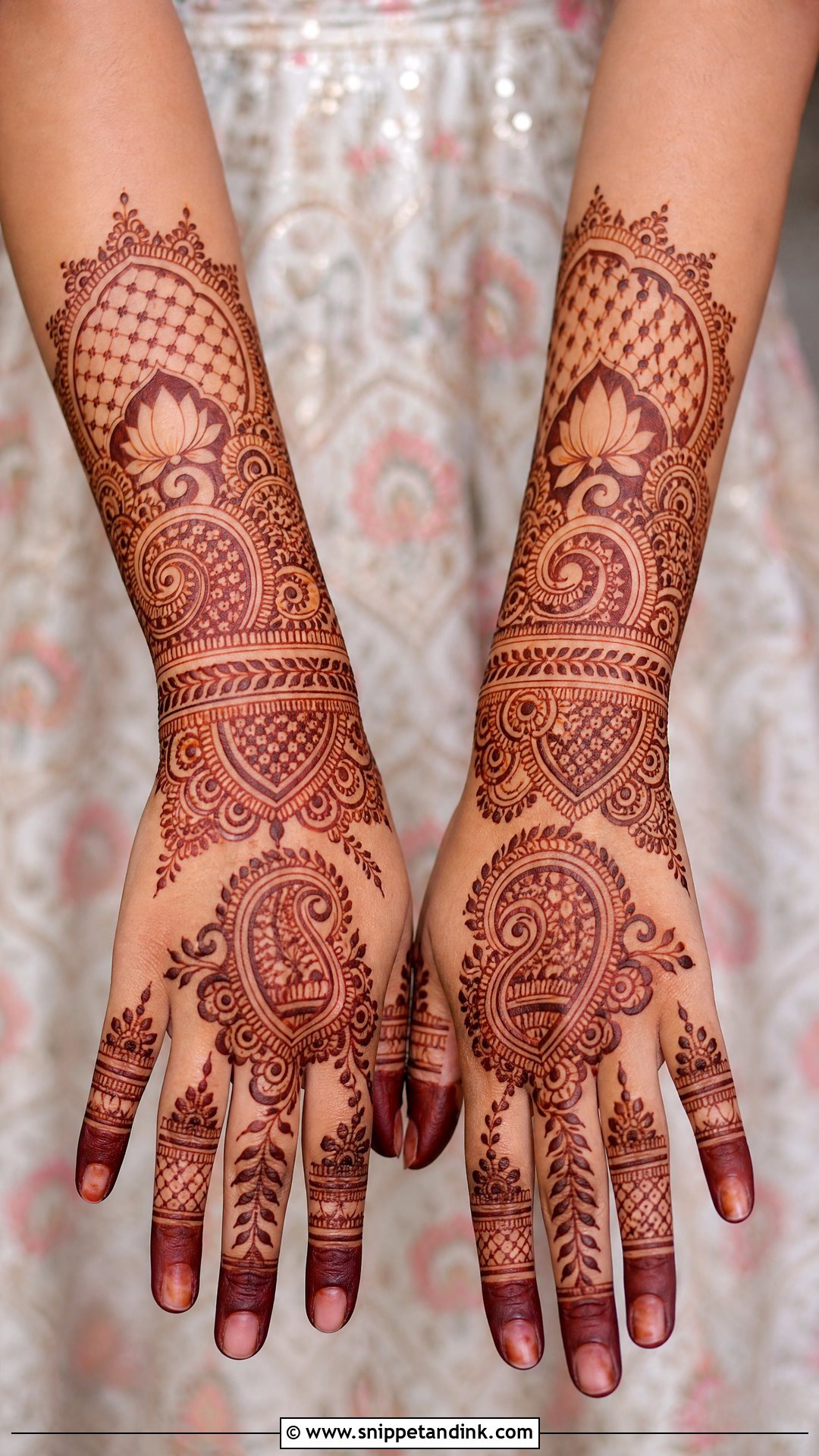
Long fingers give me room for fingertip shading, leafy vines, jaali sections, ring-style bands and tiny floral chains without crowding. A full palm with a mandala, paisley or lotus centre balances the length, and jewelry-style patterns look graceful on the back hand. Very slim fingers can look a little stark with only straight lines, so I add small curved motifs or dotted borders to soften them. These hands are the easiest to photograph in close-up.
Sitting Still for Portraits and Scene Work
Figure work is slow. A full bridal set with portraits or Rajasthani scenes can take most of a day, and the figures themselves are the part I won’t rush, because one stray line changes a face. The bride’s job is mostly to stay still and comfortable, which is harder than it sounds.
- Eat a proper meal and use the bathroom before we start. Once both palms are covered, you’ll need someone to feed you and hold your phone.
- Wear an old, loose top with short or wide sleeves you can’t smudge the forearms against.
- Sit somewhere with good daylight or bright white light. Portraits drawn in dim yellow light often turn out uneven.
- Keep your hands open and flat while the paste dries; a clenched fist cracks the figures on the palm first.
Plan the appointment one or two days before the wedding. The stain comes off orange and darkens over the next day or two, and faces especially look more defined once the colour has deepened. Keep the hands warm, keep them away from water for several hours after removing the paste, and the details will be at their sharpest when the photographer arrives.
Which Figure Tells Your Story Best?
Start with the photos you picture, then work backward. Dense Indian patterns read as traditional and grand; Arabic and Gulf designs bring flow and open skin; Indo-Arabic, Pakistani and Moroccan styles sit between the two; minimal and jewelry mehndi suit lighter outfits. Portraits, hidden names, peacocks, lotus motifs, mandalas and jaali are where the personal meaning comes in. Bring your outfit, your jewelry and an honest sense of how long you can sit still to your mehndi appointment, and the right figures will follow.
You'll Like These Ideas:


Leave a Reply