
Satin is the fabric I’m most careful with in a fitting room. It has that smooth, poured look brides fall for, and it is also brutally honest: every seam, every crease from sitting in the car and every line from the wrong bra shows on it. The twenty satin gowns below run from a bias-cut slip to a full ball gown and a black evening dress. For each one I’ve noted how it’s styled head to toe and what I’d watch for before you commit to it.
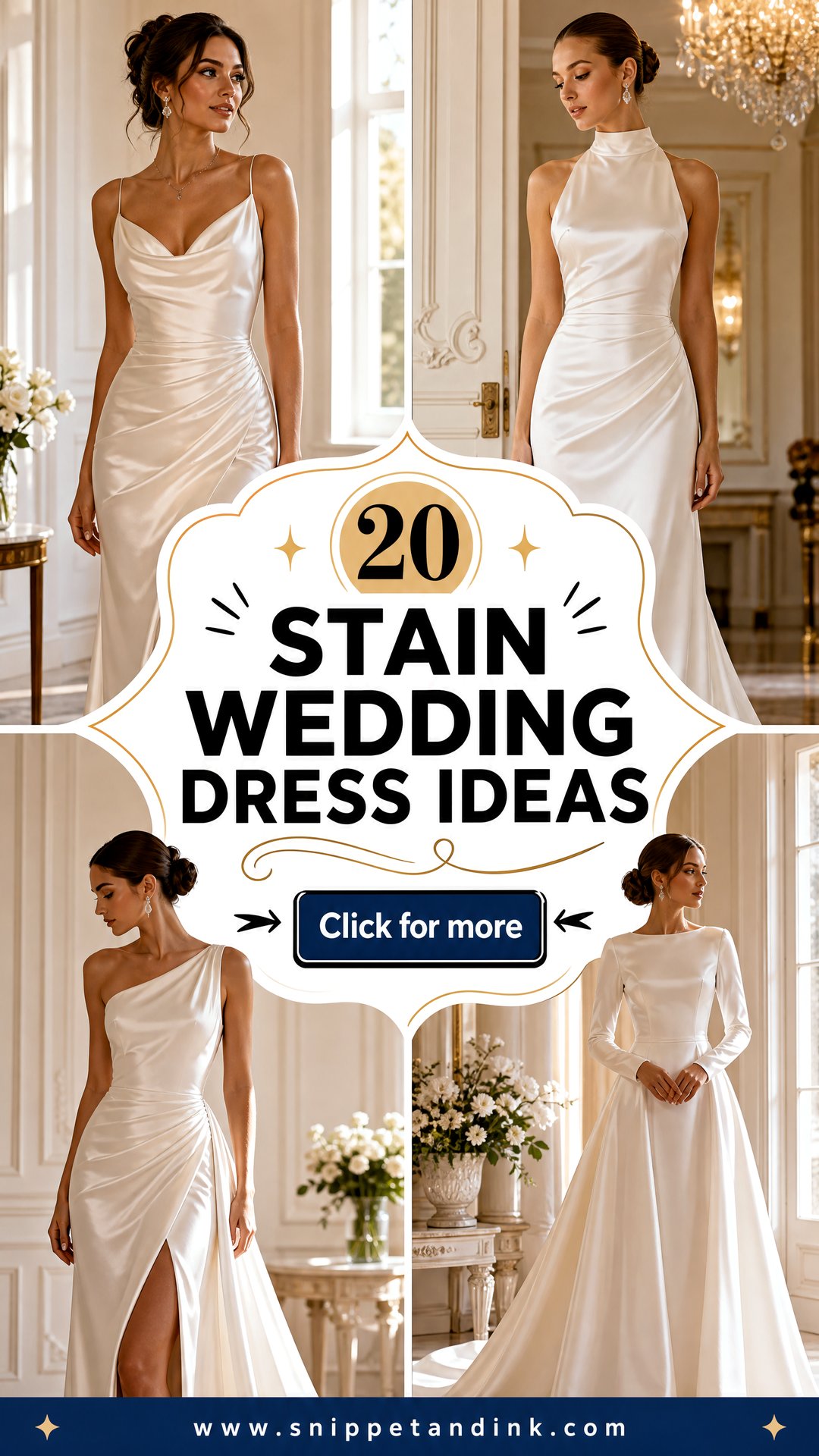
Duchess, Charmeuse, Crepe-Back: Which Satin Is in the Gown
“Satin” on a label describes a weave, not a fibre, and two satin gowns can behave completely differently. Before a bride falls for a silhouette, I have her touch the fabric and crush a corner in her hand, because the weight decides which shapes will actually work.
- Duchess satin is heavy and stiff with a low sheen. It holds pleats and big skirts, so it suits ball gowns, basque waists and structured A-lines. It’s warm to wear in summer.
- Charmeuse is light and fluid with a high shine. It’s what bias-cut slips and cowl necks are made from, and it shows every line underneath.
- Crepe-back satin has a shiny face and a matte back. It drapes well, creases less than charmeuse and is a good middle ground for sheaths and empire waists.
- Mikado is often sold alongside satins. It’s crisp, slightly textured and good for sculpted shapes like square necks and minis.
Silk satin breathes better and has a deeper glow; polyester satin is tougher, cheaper and handles water marks better. Neither is wrong. Ask which one you’re trying on, because it changes how the gown will crease, how warm you’ll be and how it has to be pressed.
1. Satin A-Line Wedding Dress
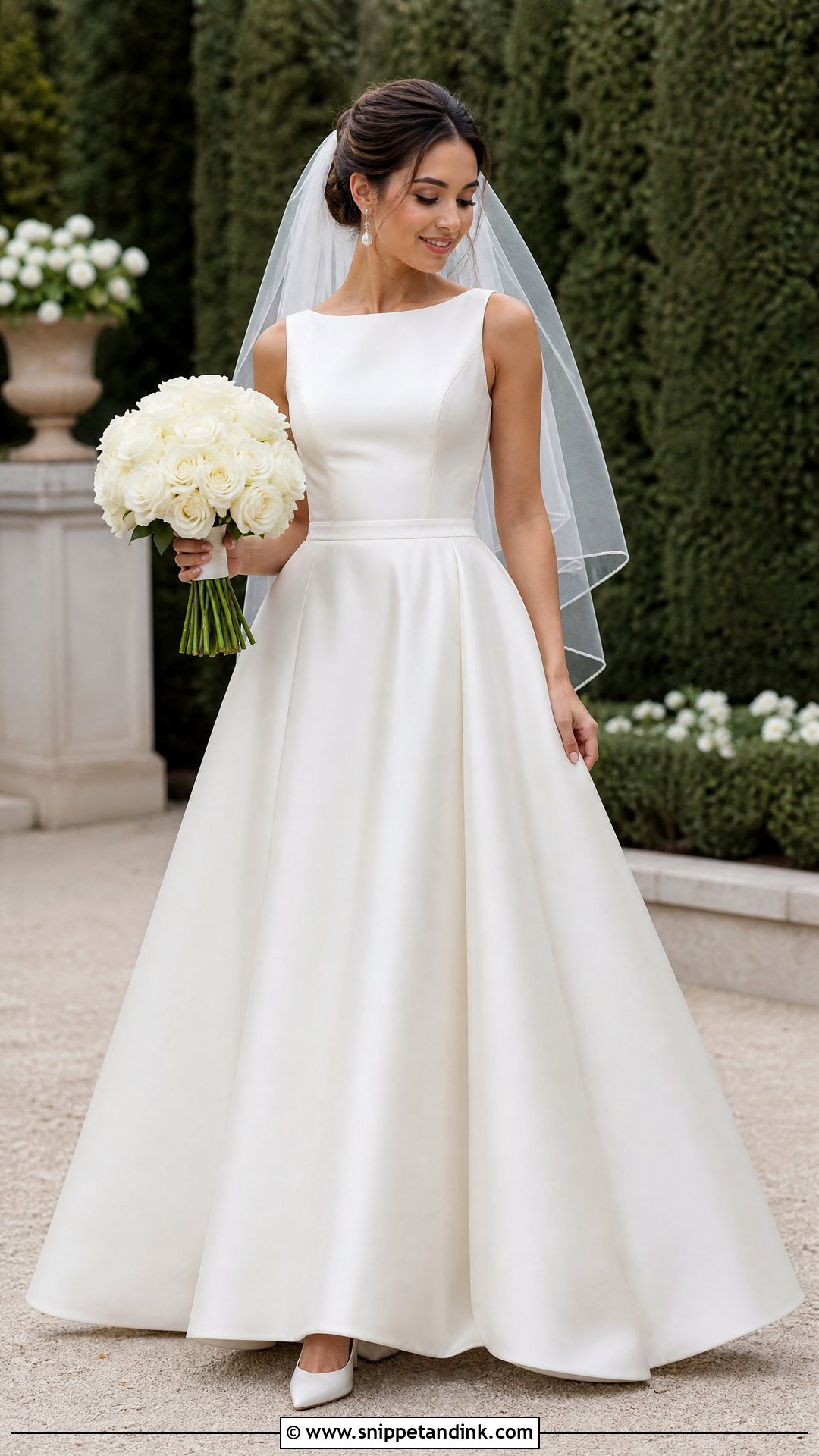
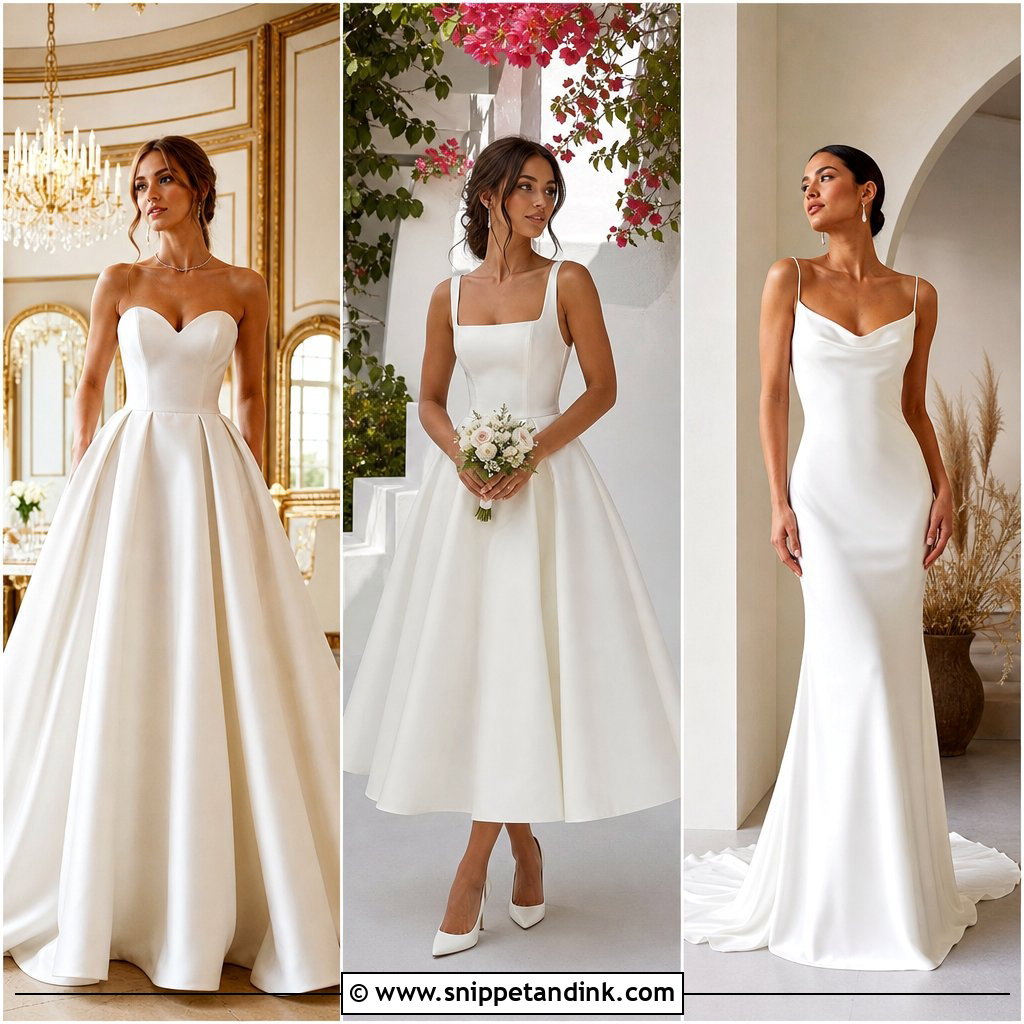
The A-line is where I start most satin appointments, because the skirt falls away from the waist and hides almost nothing it shouldn’t. A fitted bodice with wide straps or a soft curved neckline keeps it classic. Pointed ivory pumps, pearl drops and a fingertip veil with a narrow satin edge finish it, and a cropped jacket in the same fabric covers you for a cold ceremony. One thing I check: the skirt seams. On a heavy satin they should run straight to the floor, and if they twist when you walk, the panels were cut off grain.
2. Satin Ball Gown Wedding Dress
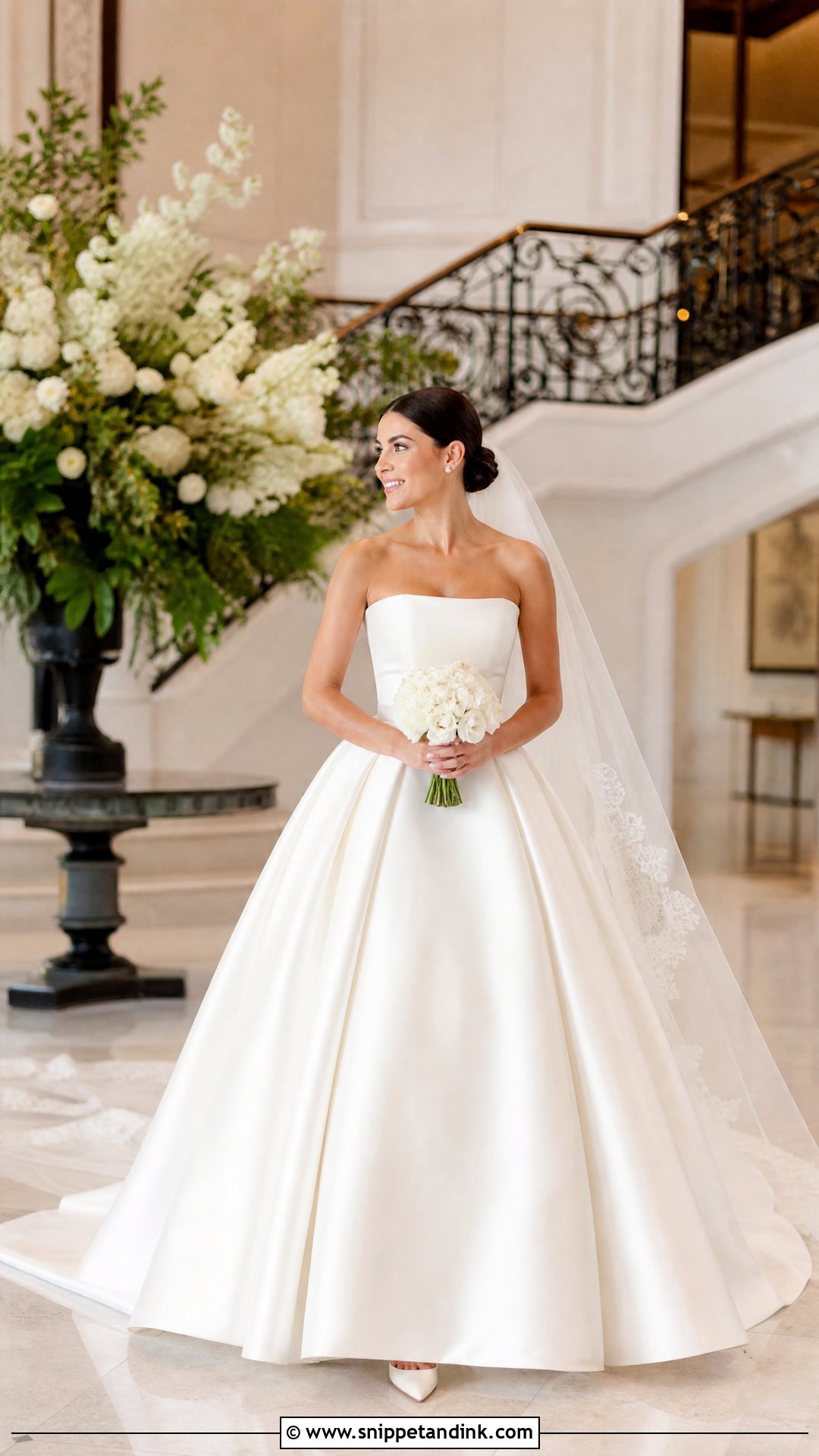
A satin ball gown makes an entrance without needing lace or beading, because the fabric itself catches the light in those big pleats. Look for a structured bodice and a defined waist so the volume starts in the right place. A strapless or softly scooped neckline balances the skirt, and a sleek low bun keeps that neckline clear. I keep jewelry to studs and a tennis bracelet and suggest a compact bouquet, since a wide arrangement fights the skirt for space. Hotel ballrooms and evening receptions suit it best. Practice sitting in it before the day; a full satin skirt takes a moment to gather.
3. Satin Mermaid Wedding Dress
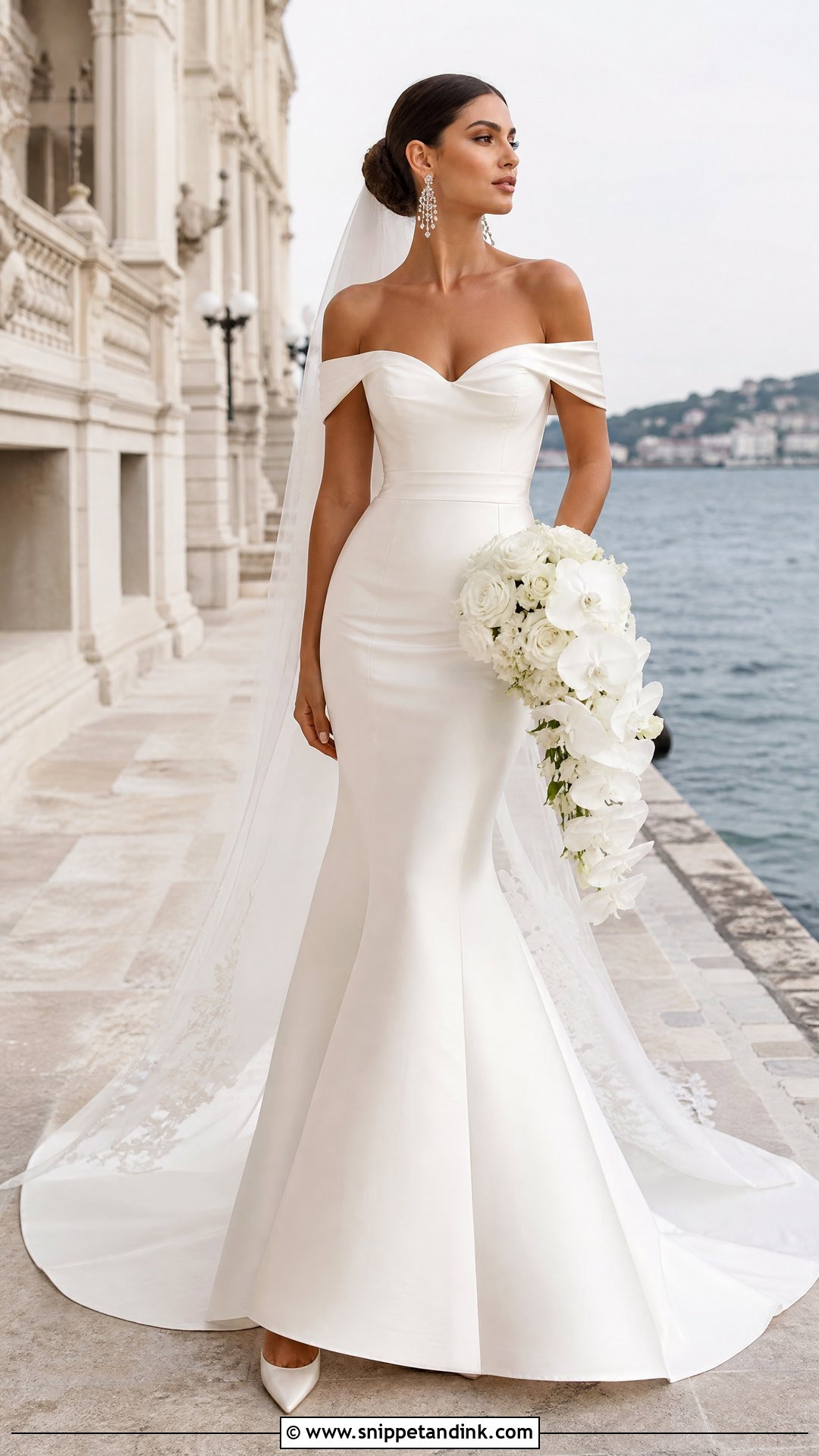
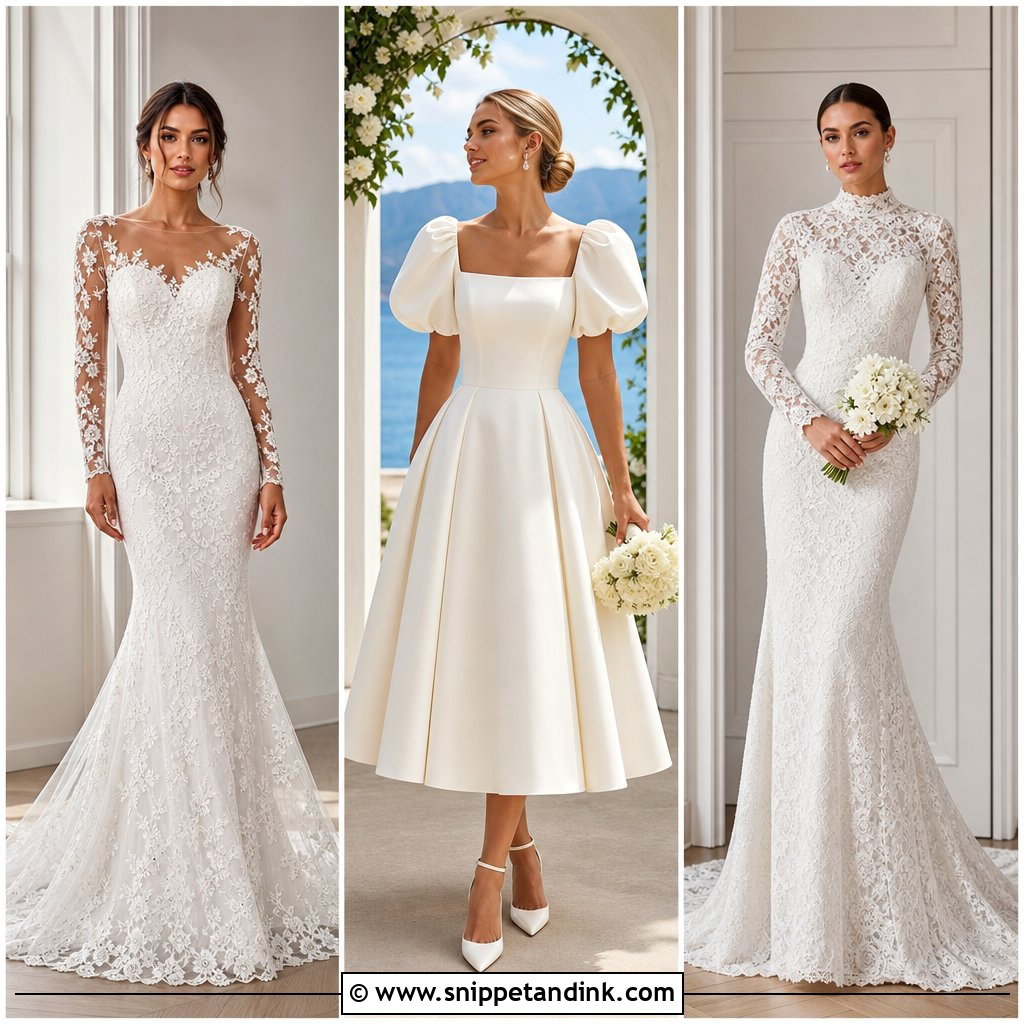
Mermaid gowns are fitting-dependent in a way the other shapes aren’t. The fabric hugs the bodice and hips and only releases near the knee, so if the flare point sits too high or too low, satin makes it obvious. I ask brides to walk and climb a step at every fitting, because that flare is also where a too-tight hem stops your stride. An off-the-shoulder neckline or supportive straps keep the top secure. Chandelier earrings, a narrow long veil and polished waves or a side-parted updo match the glamour, and a cascading bouquet follows the long line of the skirt.
4. Satin Slip Wedding Dress
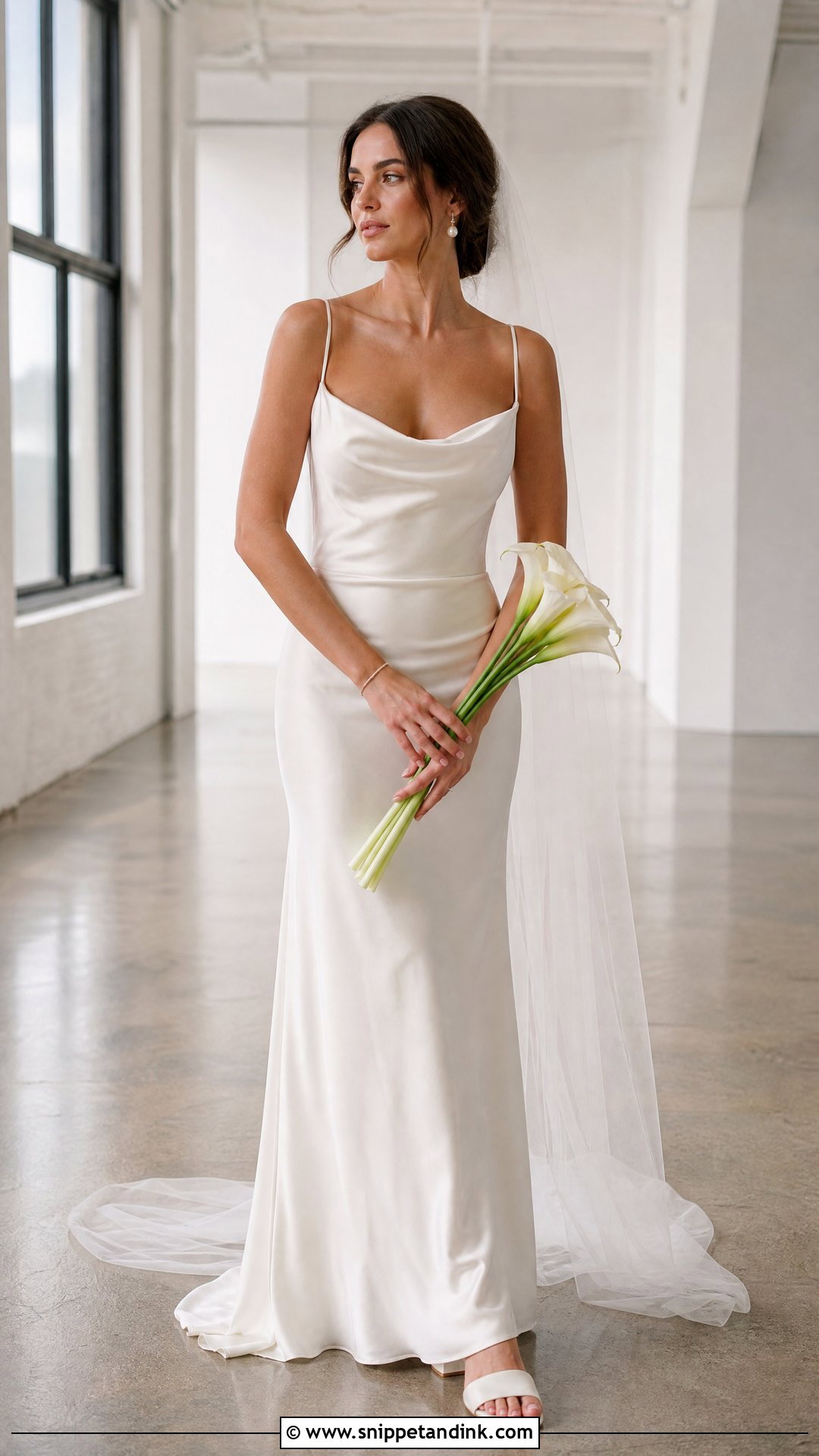
The slip dress looks simple and is the least forgiving gown on this list. A bias-cut gown drapes because it’s cut diagonally across the weave, which also means it clings to anything underneath, so I always bring nude, laser-cut underwear to the fitting rather than the day before. Look for a draped neckline and a skirt that skims rather than grips. Low mules, small pearls, a sheer floor-length veil and a sleek bun keep it modern, and calla lilies suit the clean line. A tailored white blazer works for cooler moments at a loft or city ceremony.
5. Long Sleeve Satin Wedding Dress
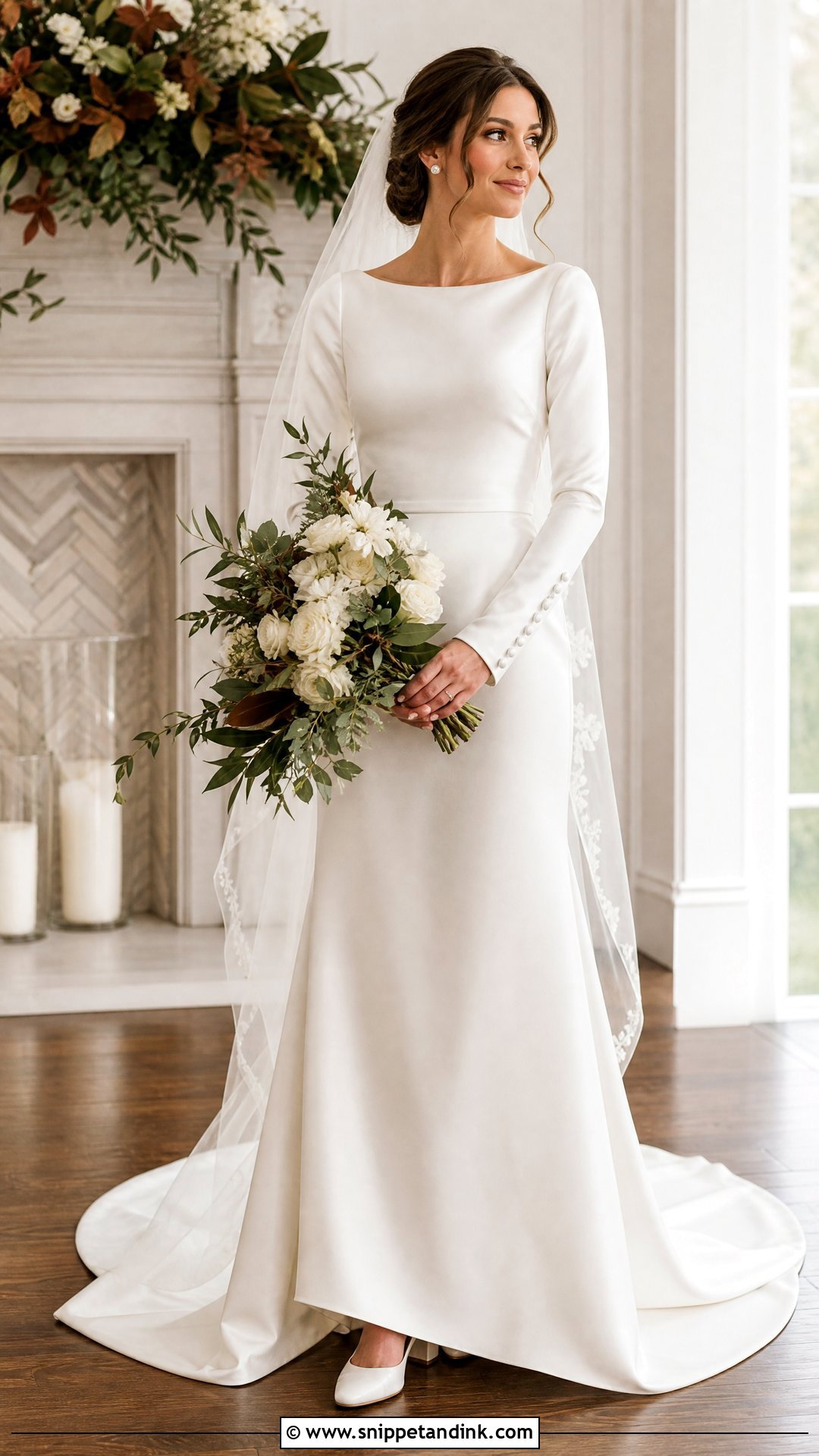
Long satin sleeves need room at the elbow. Satin has very little give, so a sleeve fitted while your arm hangs straight will pull across the back the moment you hug someone or lift a glass. A fitted bodice with a bateau, V-shaped or square neckline keeps the coverage from feeling heavy, and covered buttons at the cuff give a classic finish. Pearl studs, a hair comb, block heels and a chapel veil complete it. A low chignon keeps the neck clear, and white flowers against dark foliage suit fall and winter at an old hotel or estate.
6. Off-the-Shoulder Satin Wedding Dress
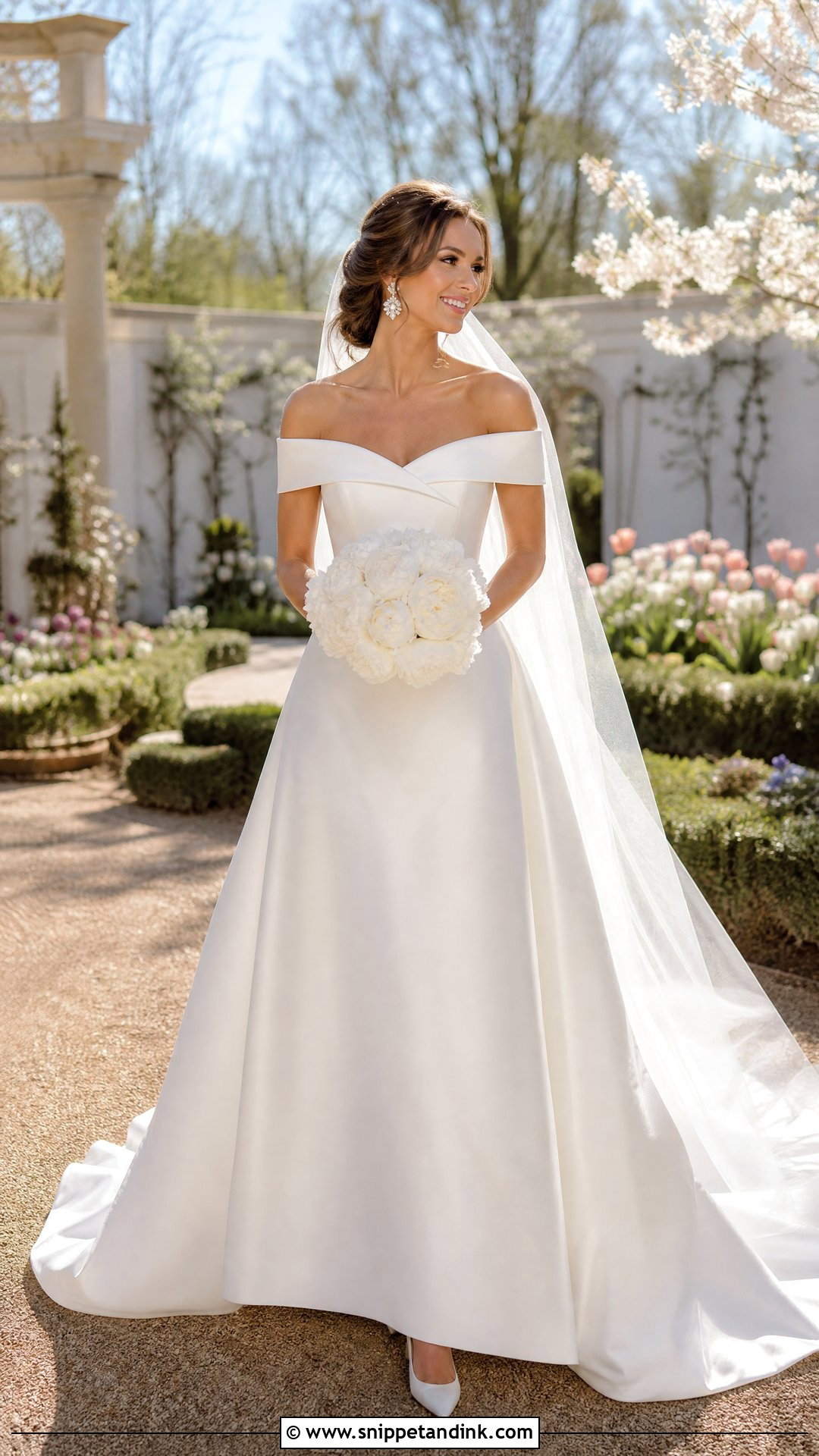
Off-the-shoulder satin depends entirely on what’s inside the bodice. I look for boning and a firm internal band, because without them the folded neckline creeps up your arms every time you reach forward. A gently flared skirt balances the bare shoulders. Pick either a short pearl necklace or statement earrings, not both. Satin pumps, a chapel veil and a loose low bun with a few face-framing pieces finish it, with a round bouquet of peonies or ranunculus for a spring garden or estate.
7. Square Neck Satin Wedding Dress
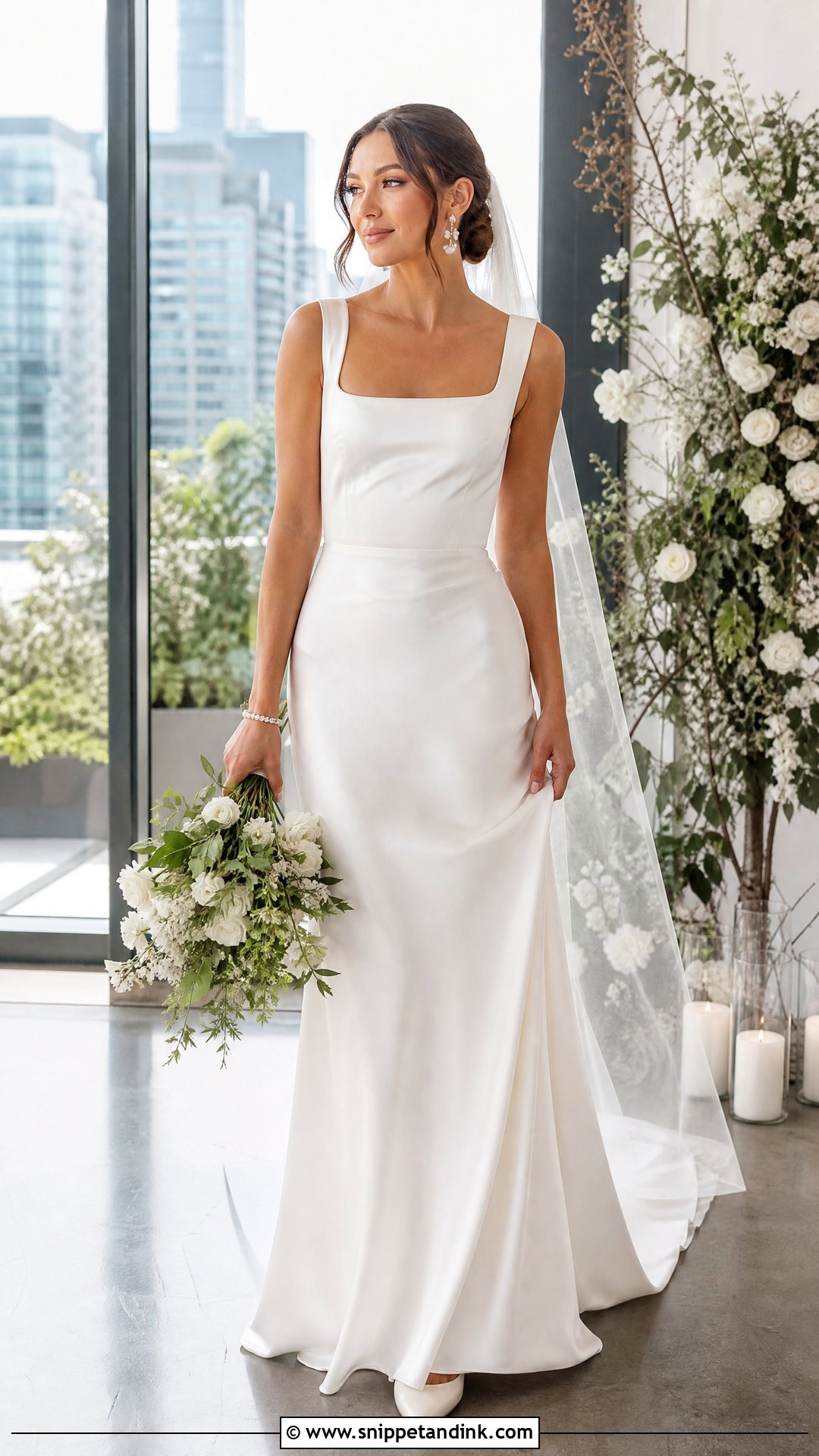
Square necklines are kind to satin because the straight edge stays crisp instead of rippling. Wide straps add support and coverage. The skirt can go either way: A-line if you want movement, a column if you want the neckline to do all the talking. I’d skip a necklace and use pearl-and-crystal earrings with a fine bracelet and pointed heels. Wear the hair up or half-up so the shoulders stay visible, keep the veil edging minimal, and carry a loose bouquet to soften the geometry. City venues and formal gardens both work.
8. Strapless Satin Wedding Dress
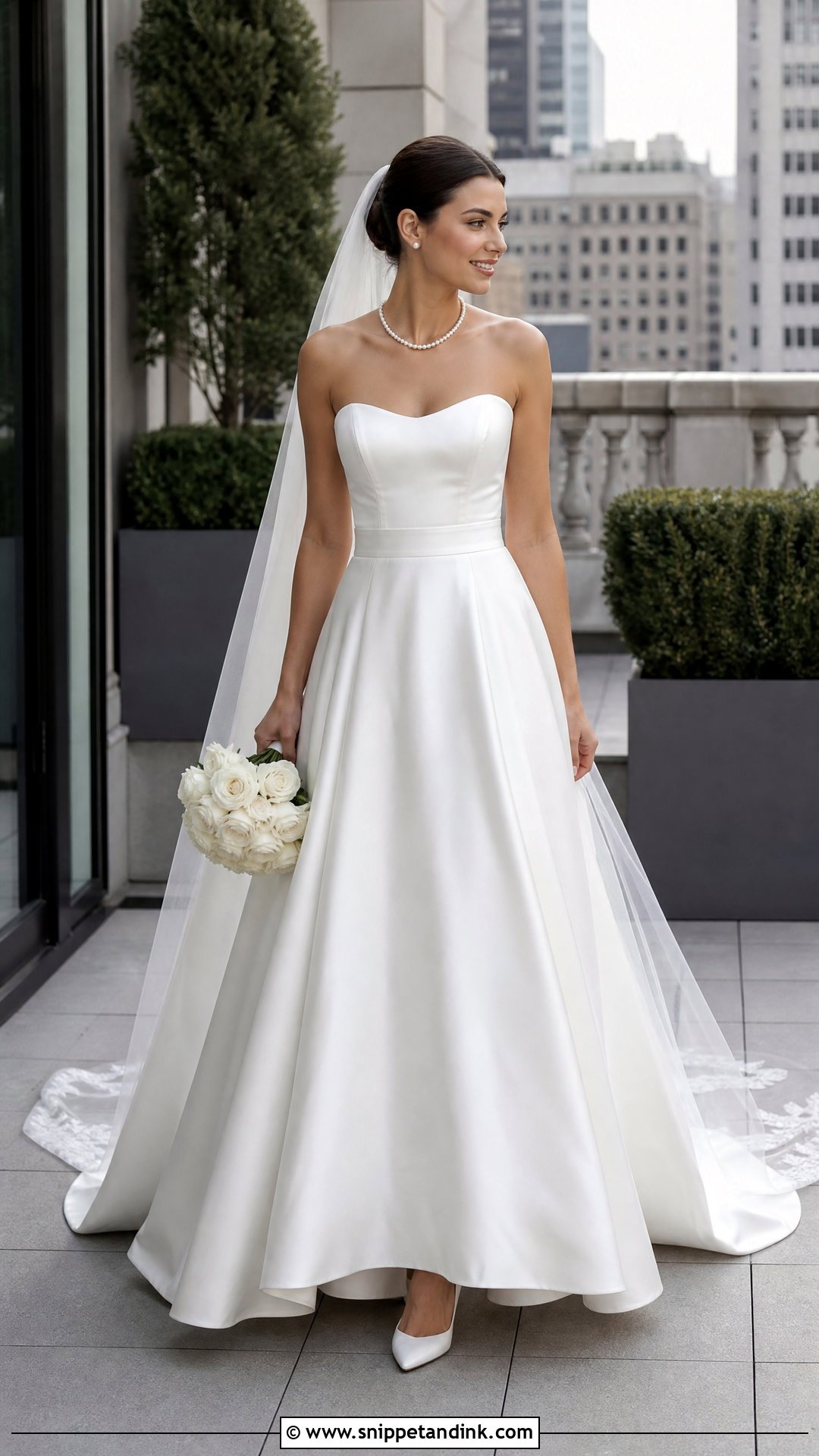
Strapless satin gives you a bare canvas for jewelry, but the bodice has to hold itself up. Before anything else I check where the waist seam lands on your torso and whether the top edge stays flat when you breathe in; if it gaps, it will gape all evening. Choose an A-line skirt for balance or a column for a sleeker line. A short pearl necklace with matching studs suits it, and veil length sets the formality. Wear the hair up to show the neckline or brushed into soft waves. White roses keep it simple for a ballroom or rooftop.
9. Corset Satin Wedding Dress
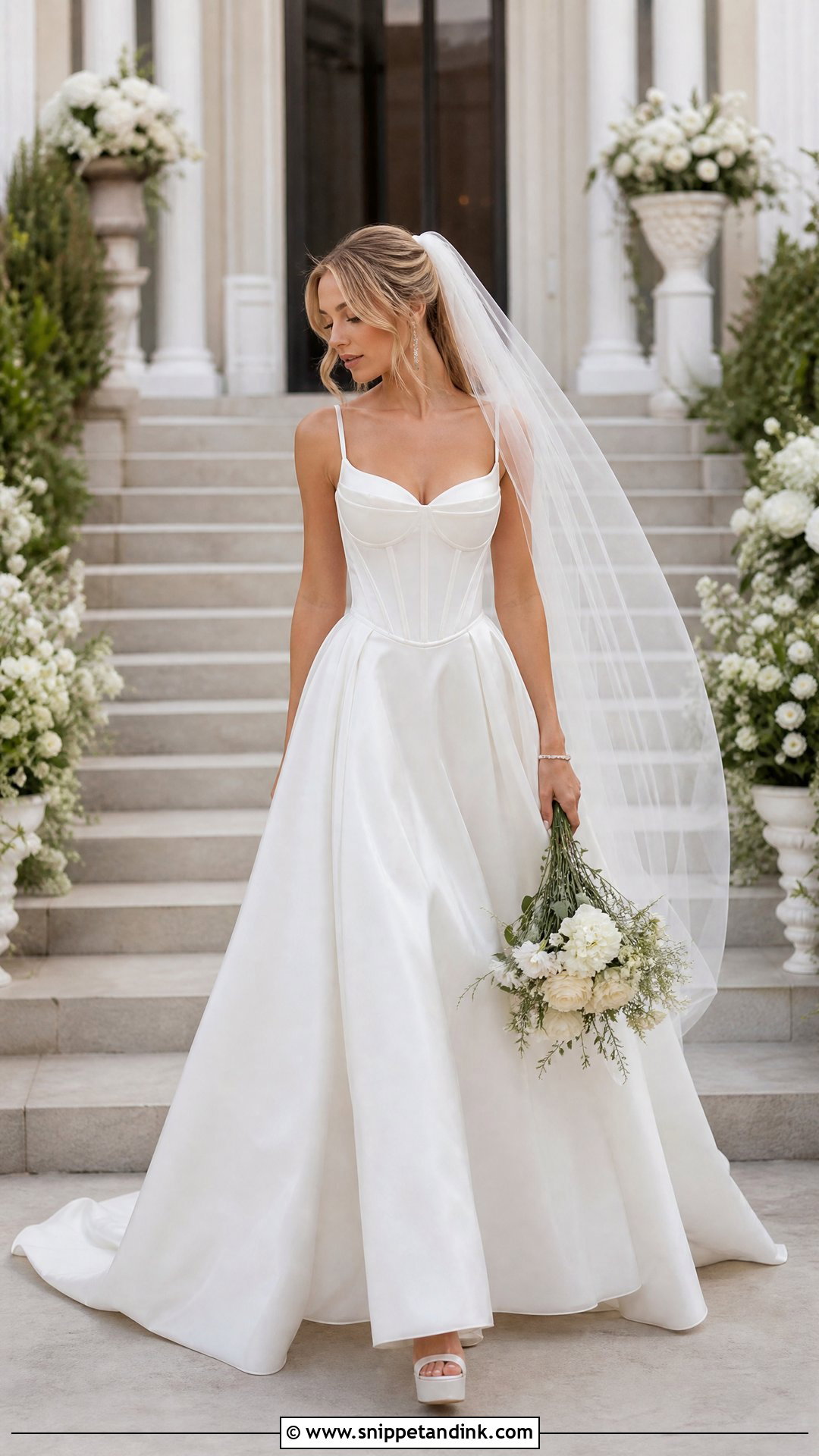
A corset bodice in satin shows its structure, so the boning channels and seam lines become part of the design. They need to lie flat. Twisted bones show through satin instantly. Pair it with a full A-line skirt for a romantic proportion, then go quiet with the rest: drop earrings, a thin bracelet and a plain tulle veil. Platform heels under the skirt are kinder for a long evening. Soft waves or a textured low bun suit it, along with a loosely arranged bouquet.
10. Cowl Neck Satin Wedding Dress
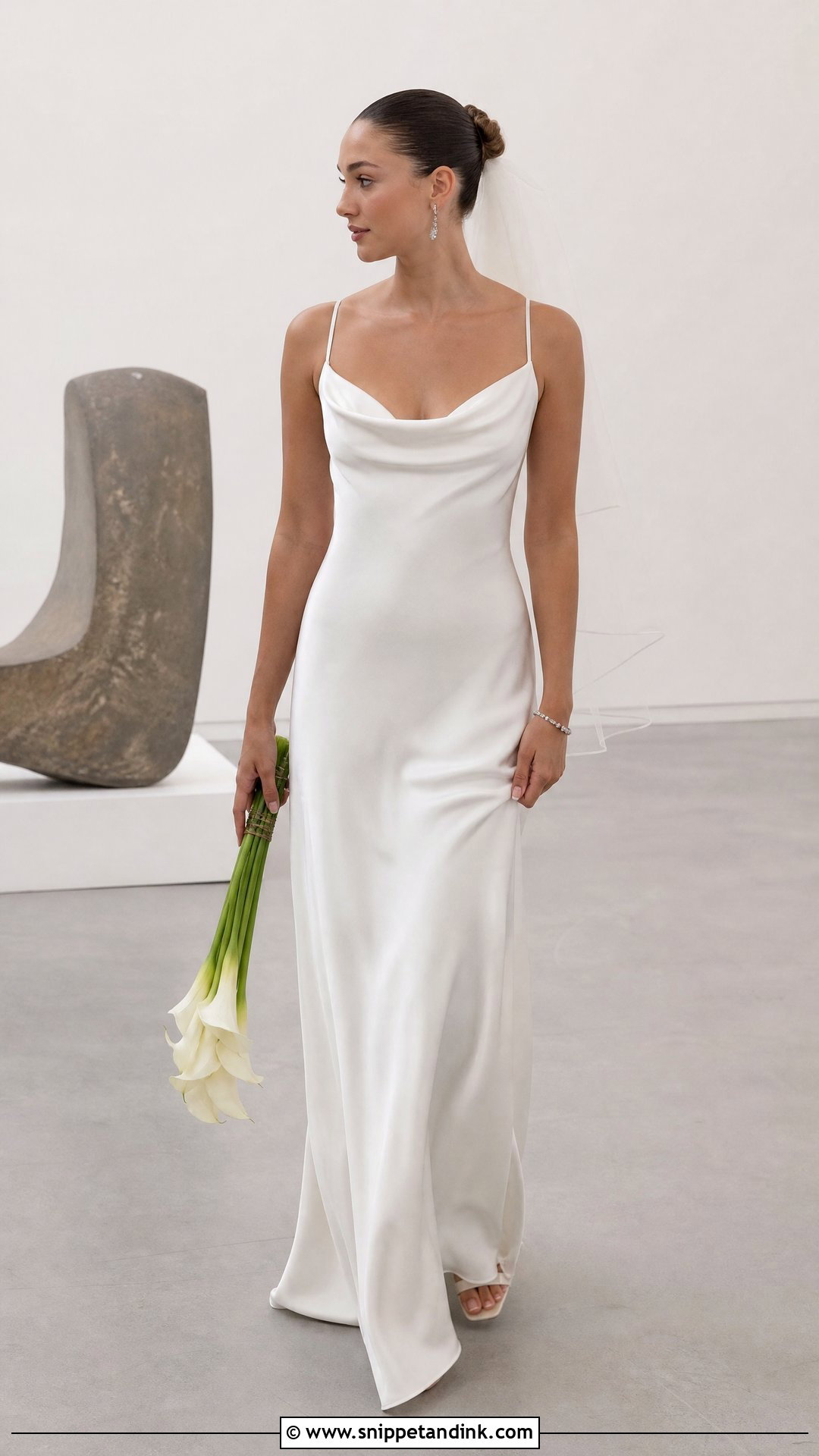
A cowl has to be cut and weighted correctly or it just slides off-centre. The soft folds on a cowl neck satin wedding dress fall best on a slim column or bias-cut gown with narrow straps, and I always have brides bend forward at the fitting to see how much the neckline opens. Small crystal earrings, a fine bracelet and low sandals or pointed mules keep it minimal. Attach the veil beneath a low bun so it doesn’t crush the drape. A sheer wrap or removable cape adds cover, and long-stemmed calla lilies echo the fluid line.
11. Halter Satin Wedding Dress
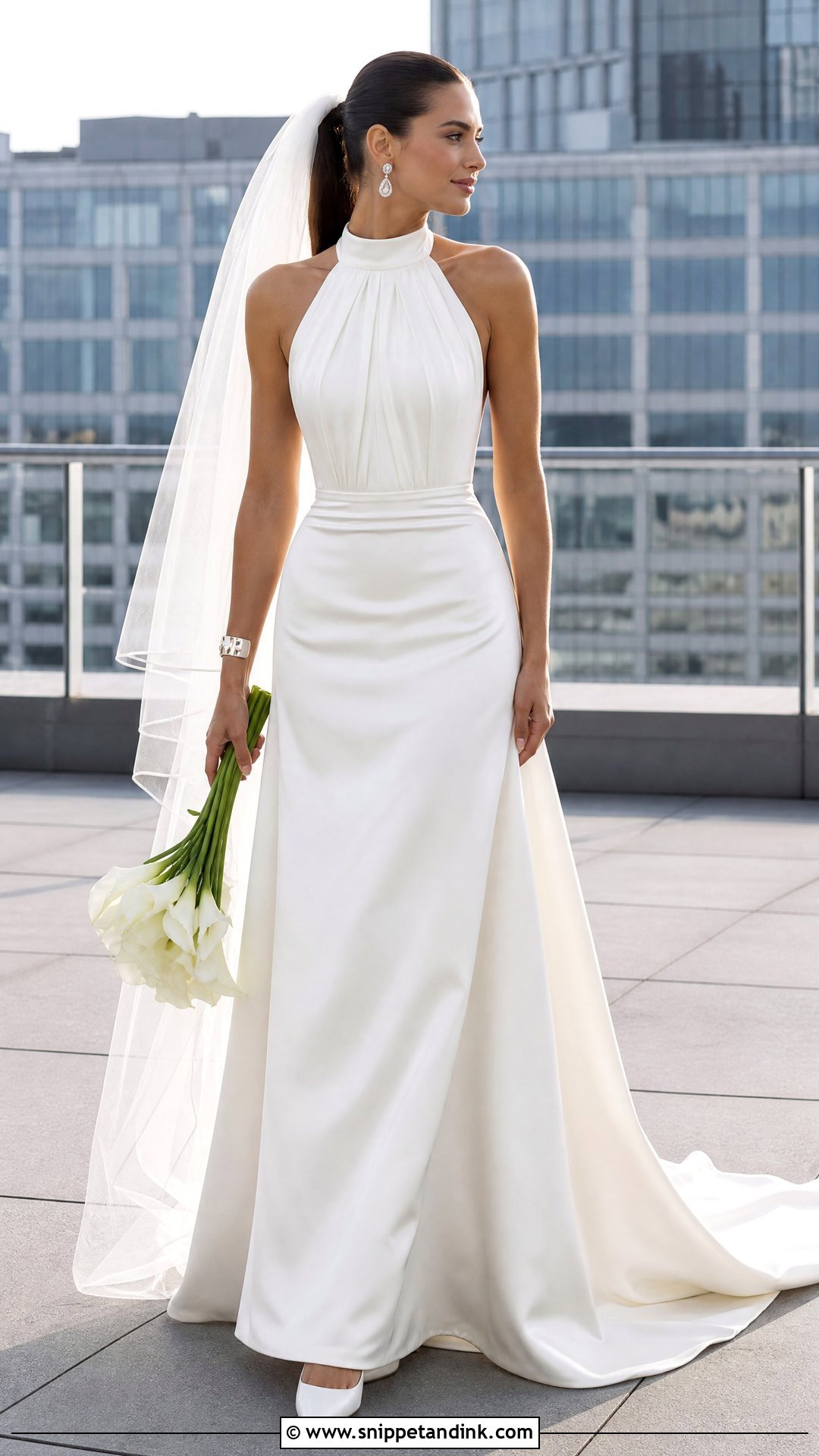
Halters pull the eye up to the shoulders, so I treat the neckline as the jewelry and leave the throat bare. Choose a high halter for more coverage or a draped version for softness. A fitted waist and flowing skirt keep it balanced. Drop earrings, a cuff, pointed pumps and a veil set below a smooth bun or ponytail finish it. One fit note: the strap behind the neck carries weight, so a heavy satin skirt on a thin halter tie can ache by evening. Ask for a hidden back strap if the gown is substantial.
12. High Neck Satin Wedding Dress
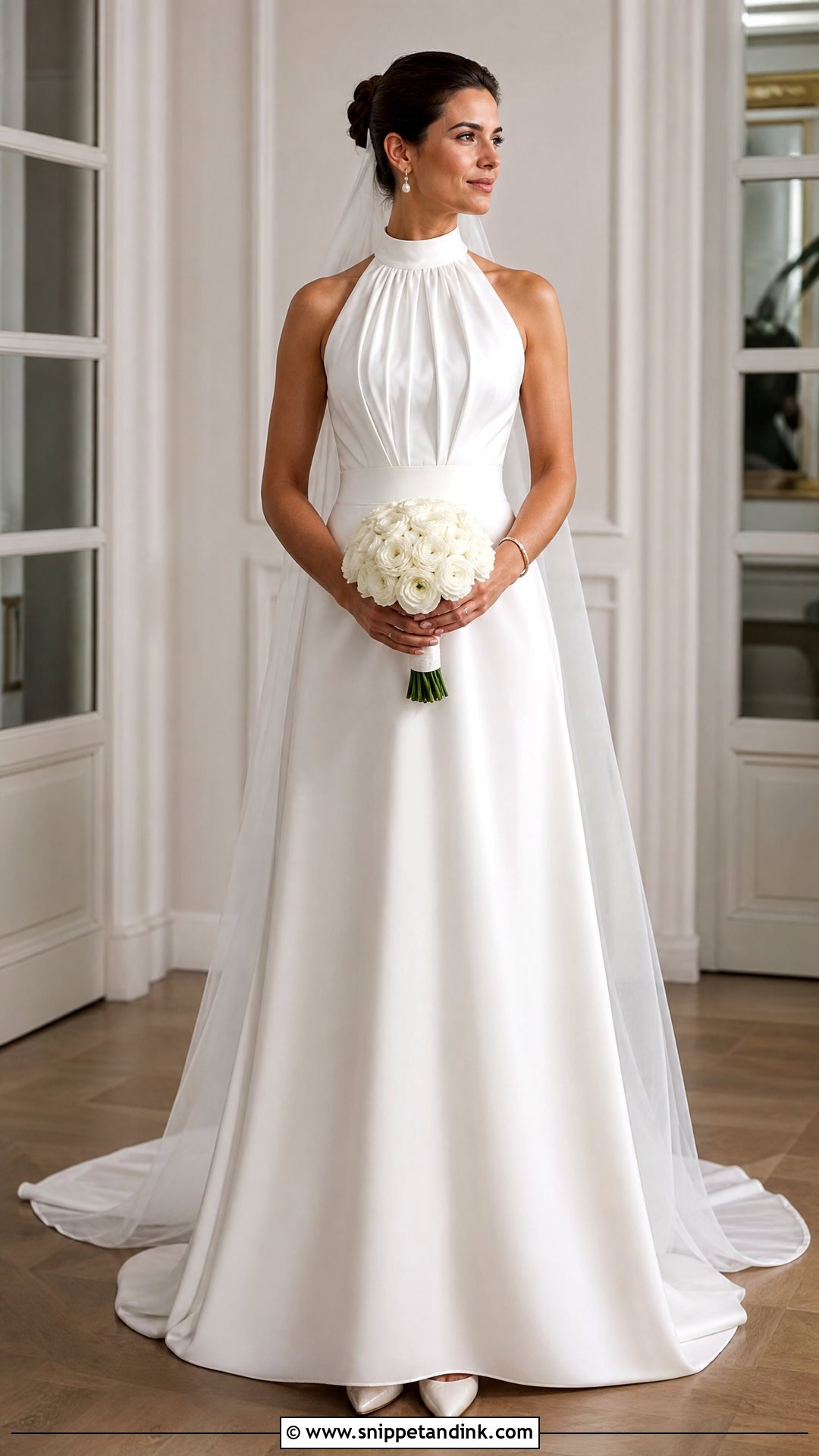
High necklines in satin can look severe if the whole gown is stiff, so I look for some softness at the neck, a gentle gather or a fluid skirt below. Choose sleeveless for warm months or fitted long sleeves for cold ones, with a defined waist either way. No necklace. Pearl studs, a slim bracelet and closed-toe pumps are plenty. A neat updo keeps the long line clean, and a veil fixed under the bun stays off the bodice. Carry a compact white bouquet for a formal indoor or fall ceremony.
13. Tea-Length Satin Wedding Dress
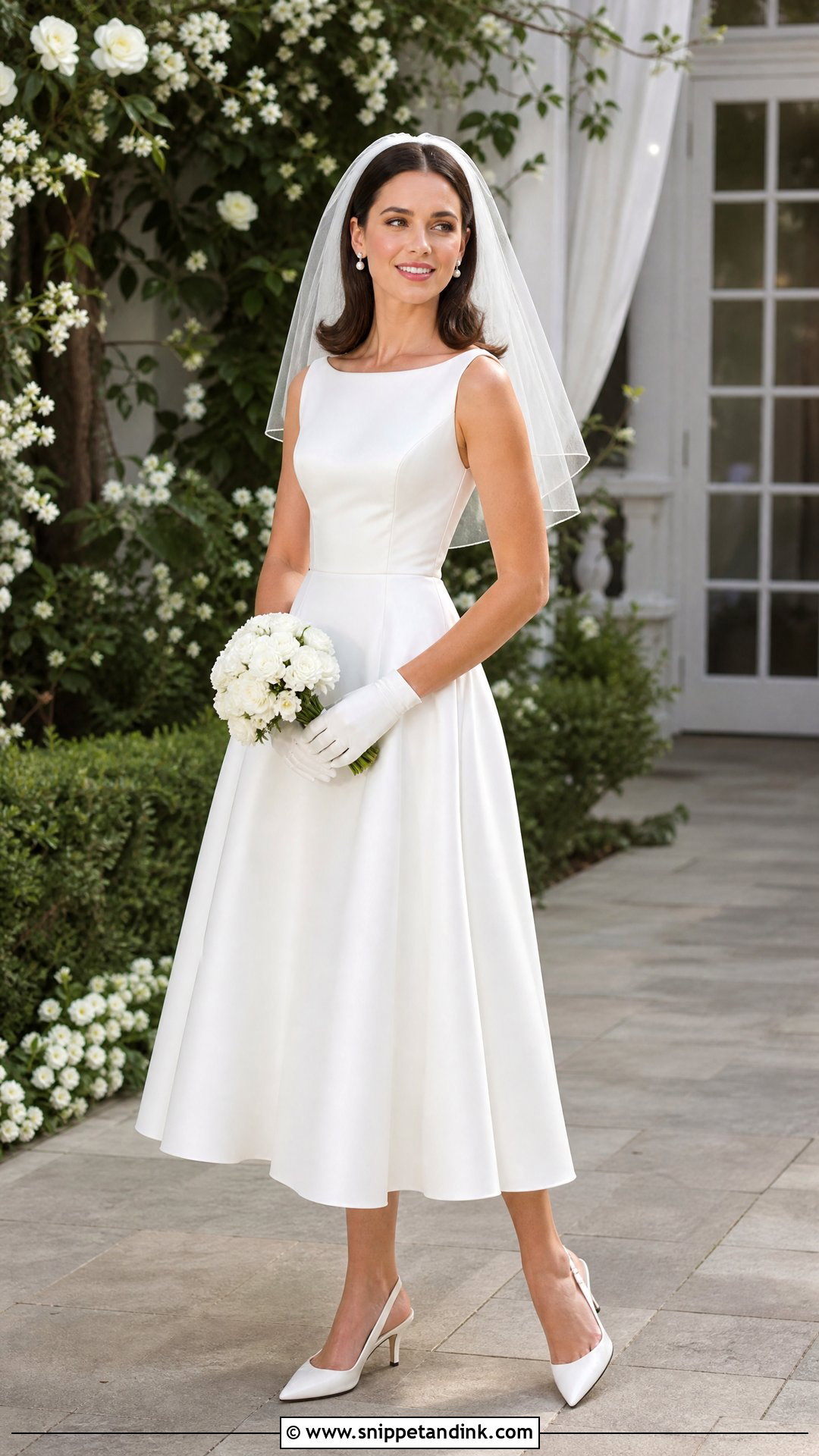
Tea length shows your shoes, so choose them as carefully as the dress. The hem should land between lower calf and ankle; I mark it with the actual shoes on, since even a half-inch of heel changes where it falls. Kitten heels, slingbacks or embellished flats all work. Pearl studs, short gloves if you like them, and a shoulder-length veil or a structured bow keep the vintage note. A cropped cardigan handles cooler days. Courthouse ceremonies and afternoon garden receptions are where this shape is happiest.
14. Satin Mini Wedding Dress
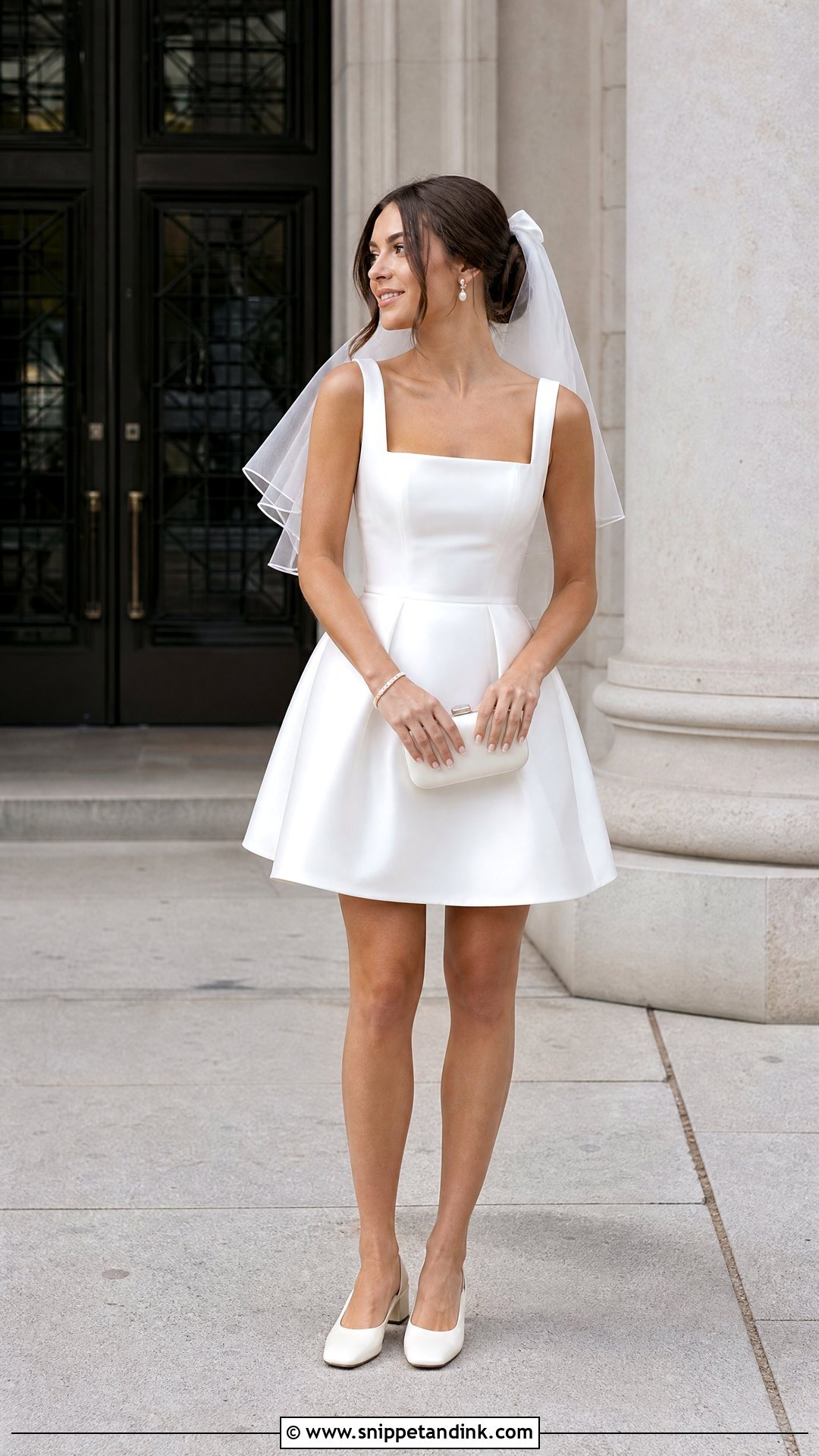
A mini in satin is fun for a city hall ceremony or a reception change, and it needs more structure than people expect, because thin satin on a short dress wrinkles across the lap the first time you sit. A structured shift or fitted sheath holds its shape better than a floaty cut. Square or bateau necklines balance the short hem. Low block heels or bridal flats, pearl earrings, a small clutch and a short veil or hair bow finish it. Sheer tights and a long tailored coat make it workable in winter. Keep the bouquet petite.
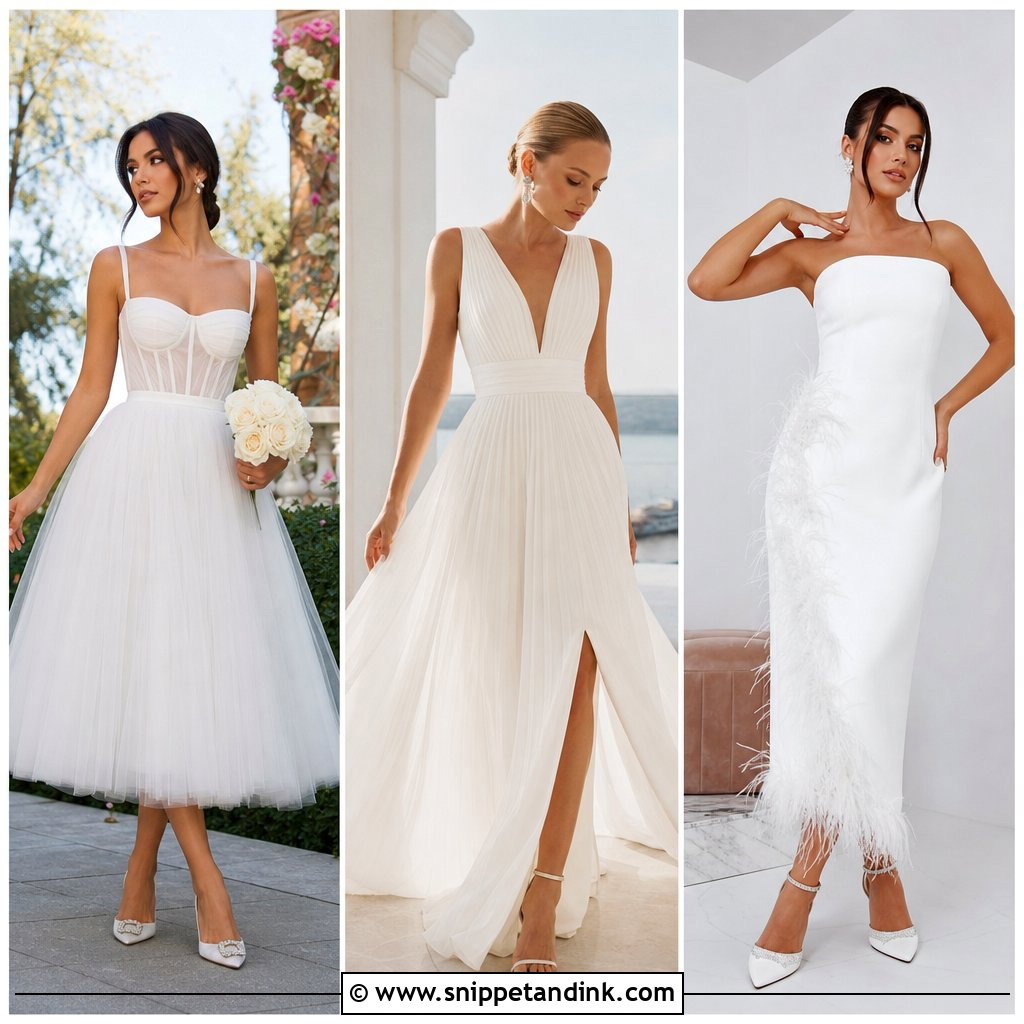
15. One-Shoulder Satin Wedding Dress
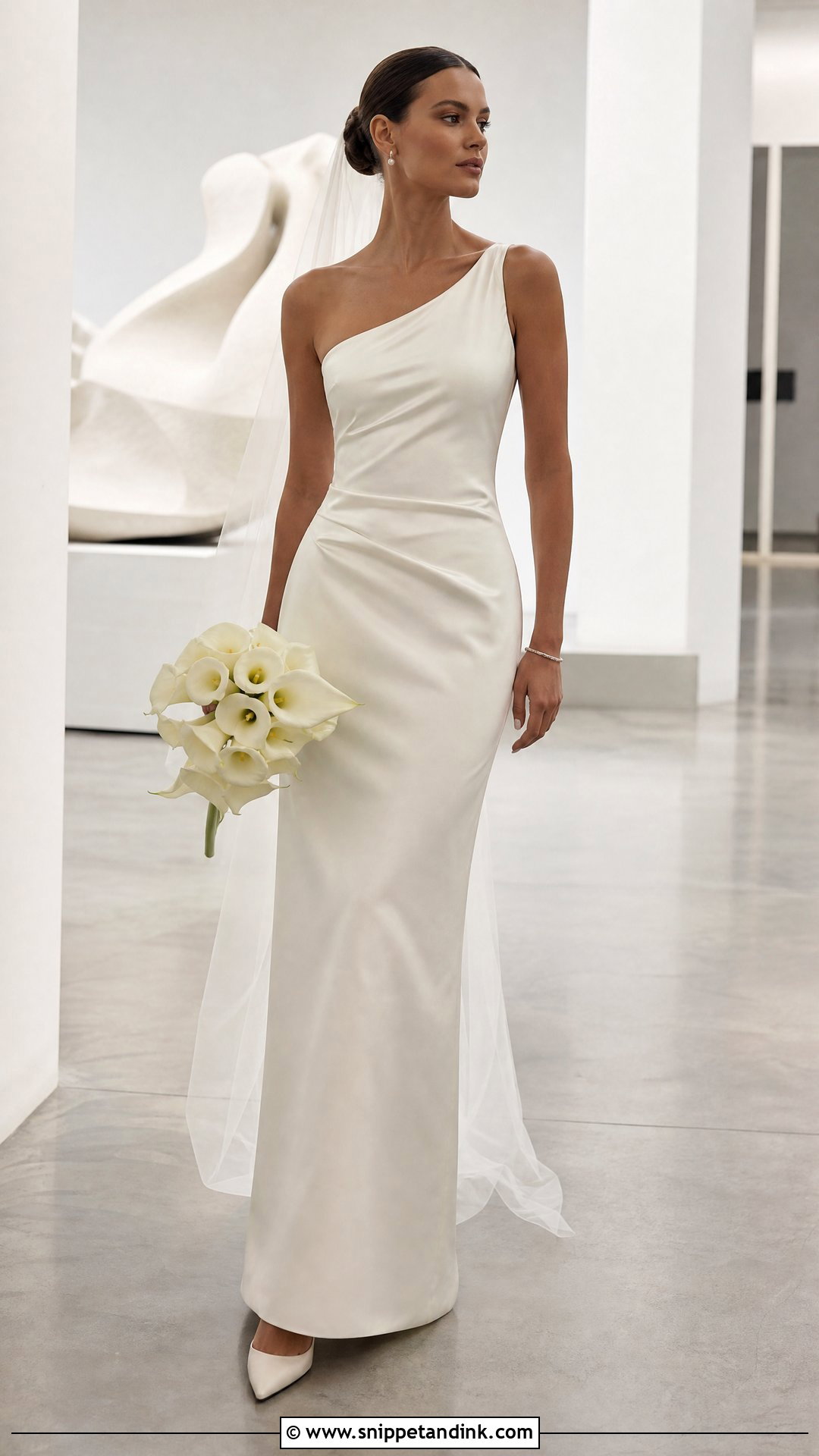
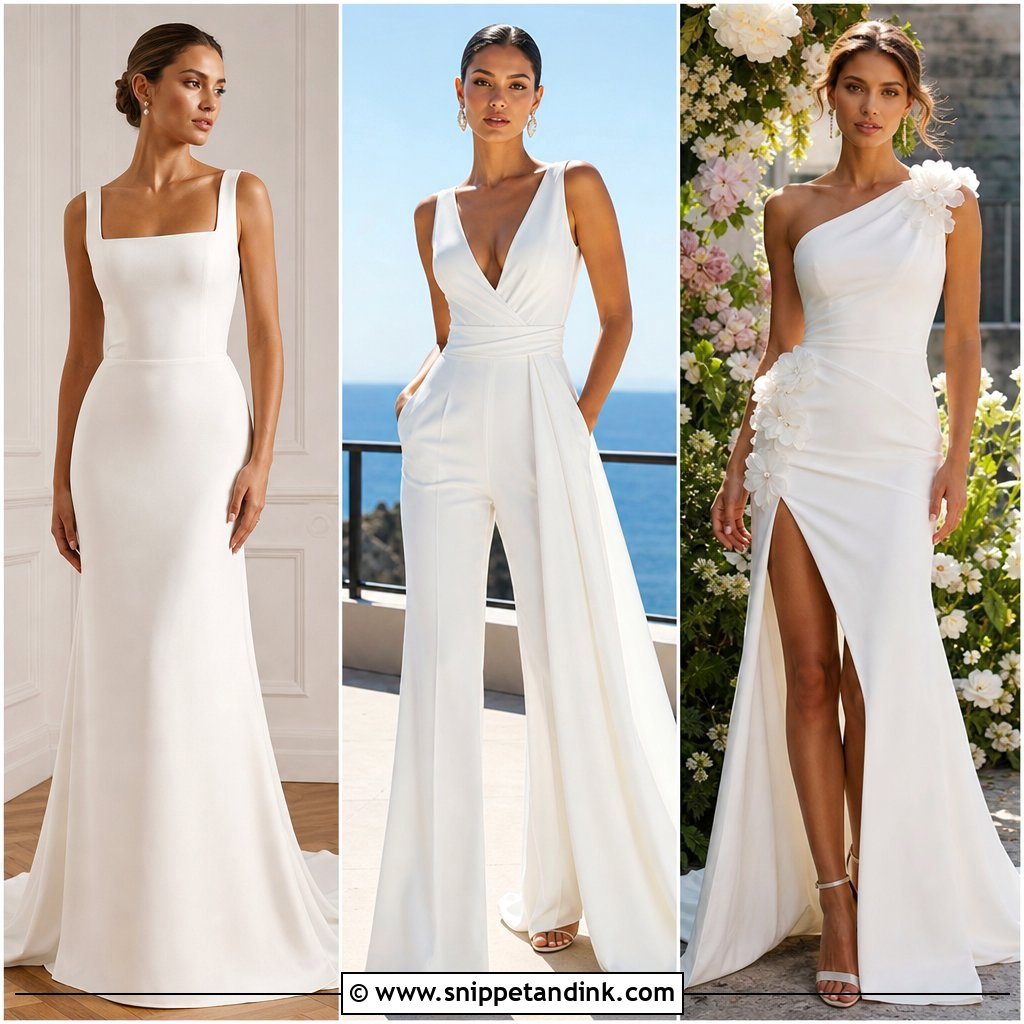
The asymmetry does the work on a one-shoulder gown, so I don’t add a necklace. Earrings and a bracelet are enough. A fitted column reads modern; a draped A-line is easier to move in. Pointed pumps or slim block heels suit both. Set the veil toward the back of a sleek bun so it doesn’t hide the shoulder detail. Check the single strap at every fitting by lifting your arms: one-shoulder bodices shift more than symmetrical ones. Sculptural calla lilies suit a museum or rooftop reception.
16. Basque Waist Satin Wedding Dress
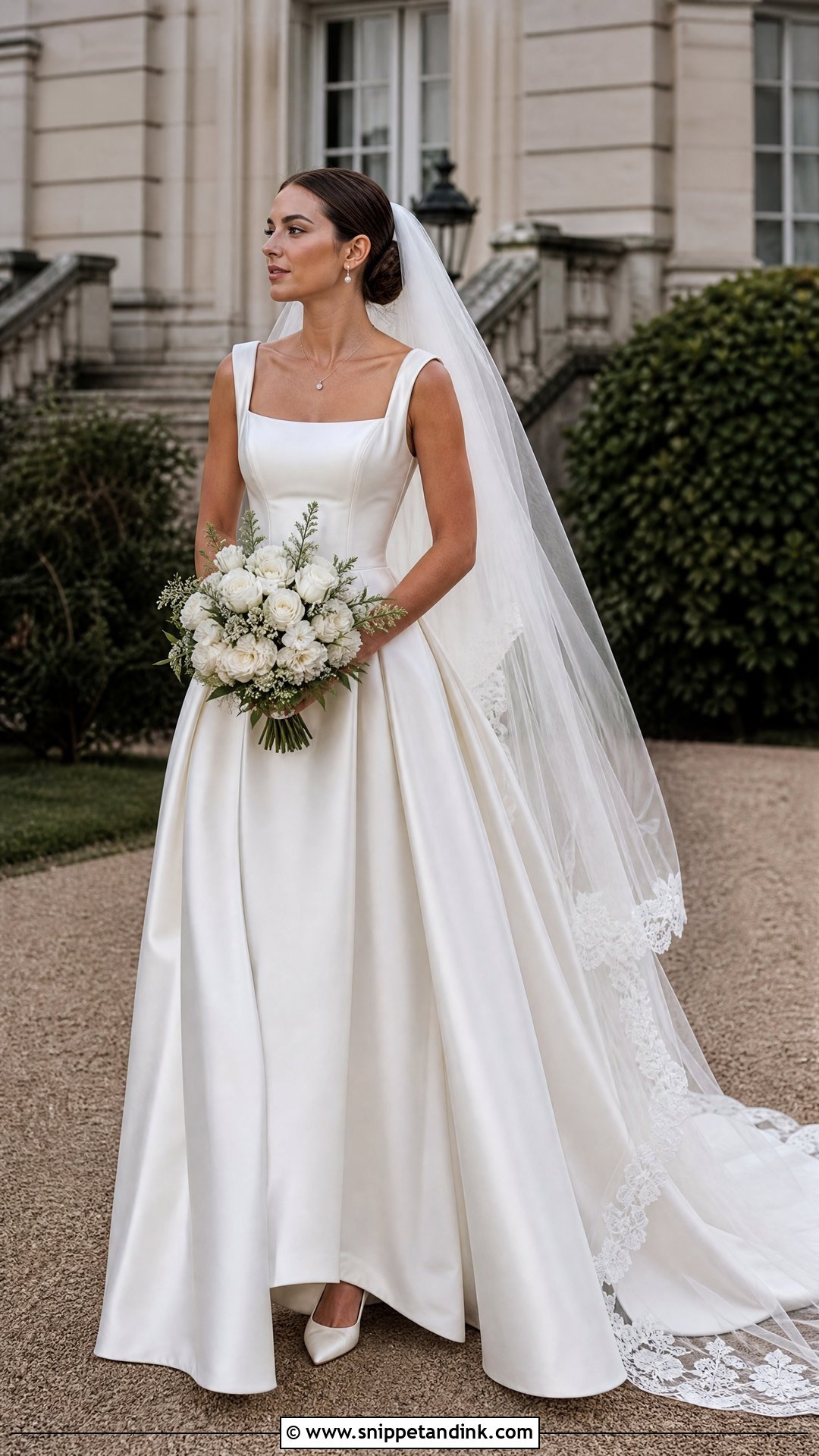
A basque waist dips into a point below the natural waist, which lengthens the torso and makes a dramatic join with the skirt. Satin shows that point sharply, especially with box pleats or a full ball gown skirt. It favours brides with a longer torso; on a short one I sometimes raise the point slightly so the proportion doesn’t swallow you. A simple pendant, pearl studs and closed-toe heels keep it formal. Use a cathedral or chapel veil, a smooth bun or controlled waves, and a medium bouquet against the fuller skirt.
17. Empire Waist Satin Wedding Dress
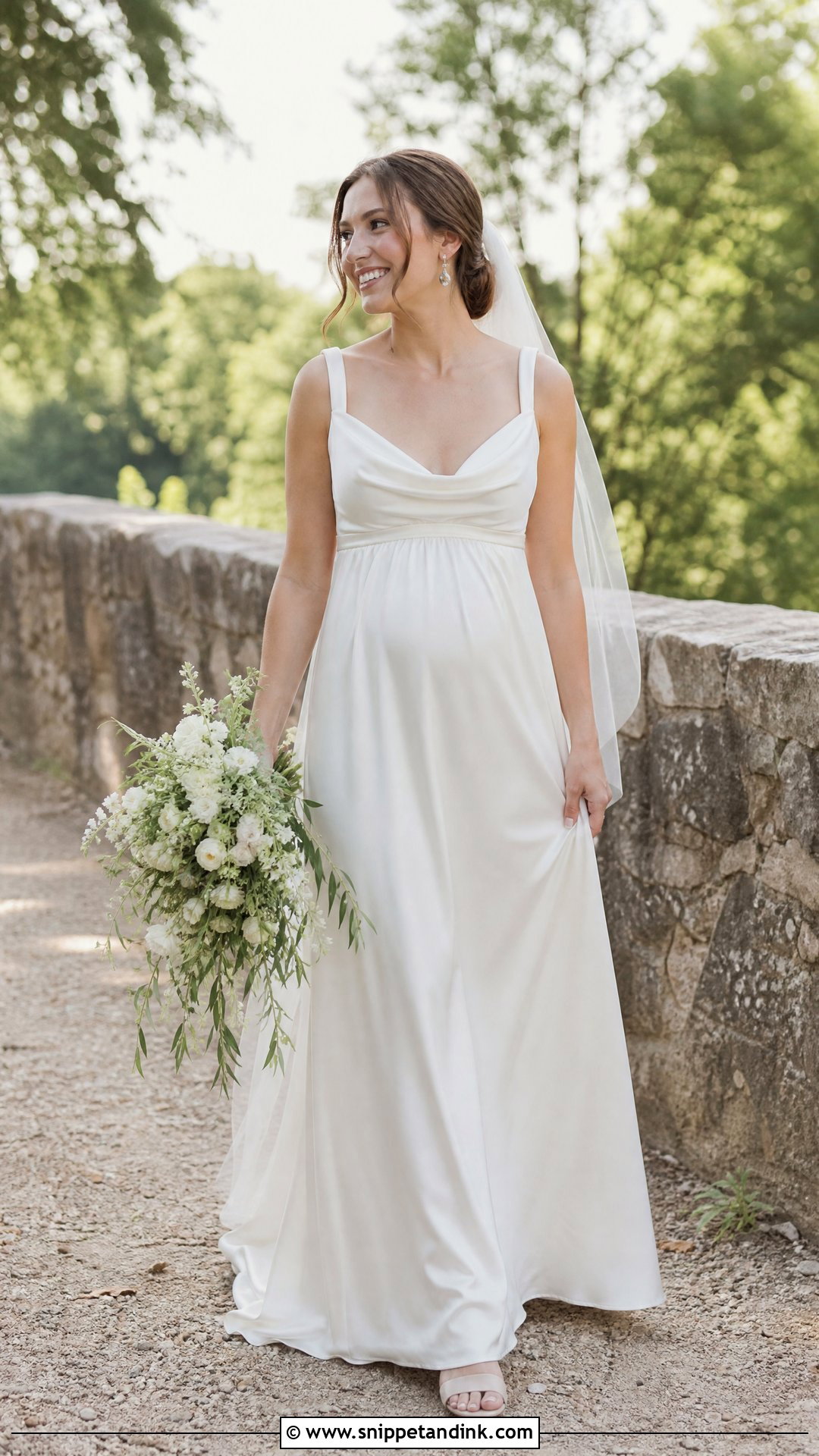
The seam on an empire waist satin wedding dress sits just under the bust, and the skirt falls long and loose from there. That makes it one of the most comfortable gowns here for a warm outdoor ceremony. Choose a lightweight satin; a heavy duchess on an empire line drags the seam down and adds bulk. Drop earrings, low heels, a sheer veil, a loose updo or half-up style and a bouquet with trailing greenery keep it airy.
18. Plus Size Satin Wedding Dress
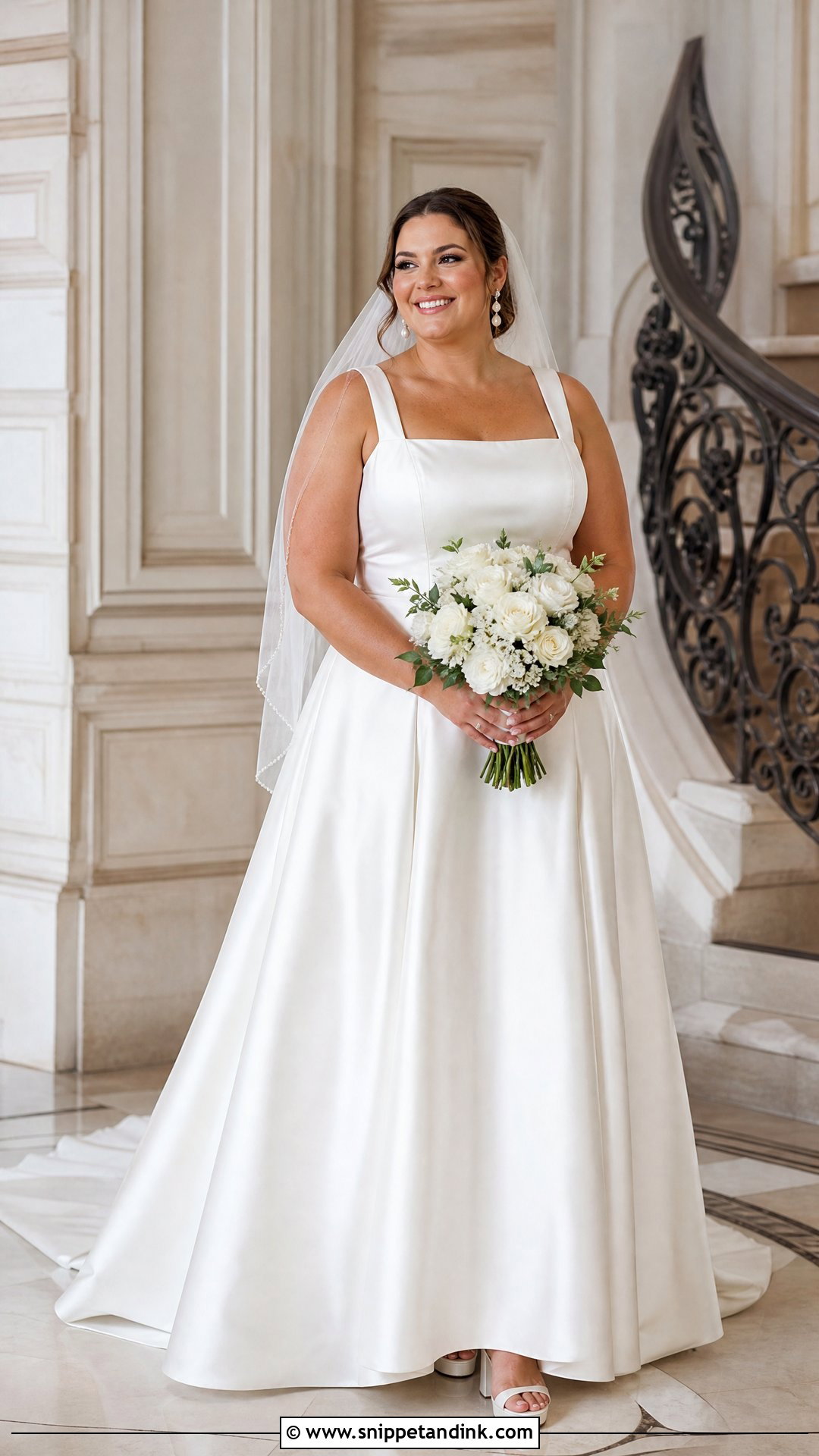
Support is the first conversation I have in a plus-size satin fitting, before necklines or veils. Satin shows any strain across the bust or hips, so a structured bodice, wide straps and a properly lined skirt matter more than any trim. A V-shaped or square neckline with an A-line skirt is a reliable start. Undergarments should be fitted alongside the dress, never as an afterthought, so nothing digs in or shows a line. Cushioned block heels, pearl drops and a veil scaled to the gown’s length finish it. Choose a bouquet sized to your height.
19. Modest Satin Wedding Dress
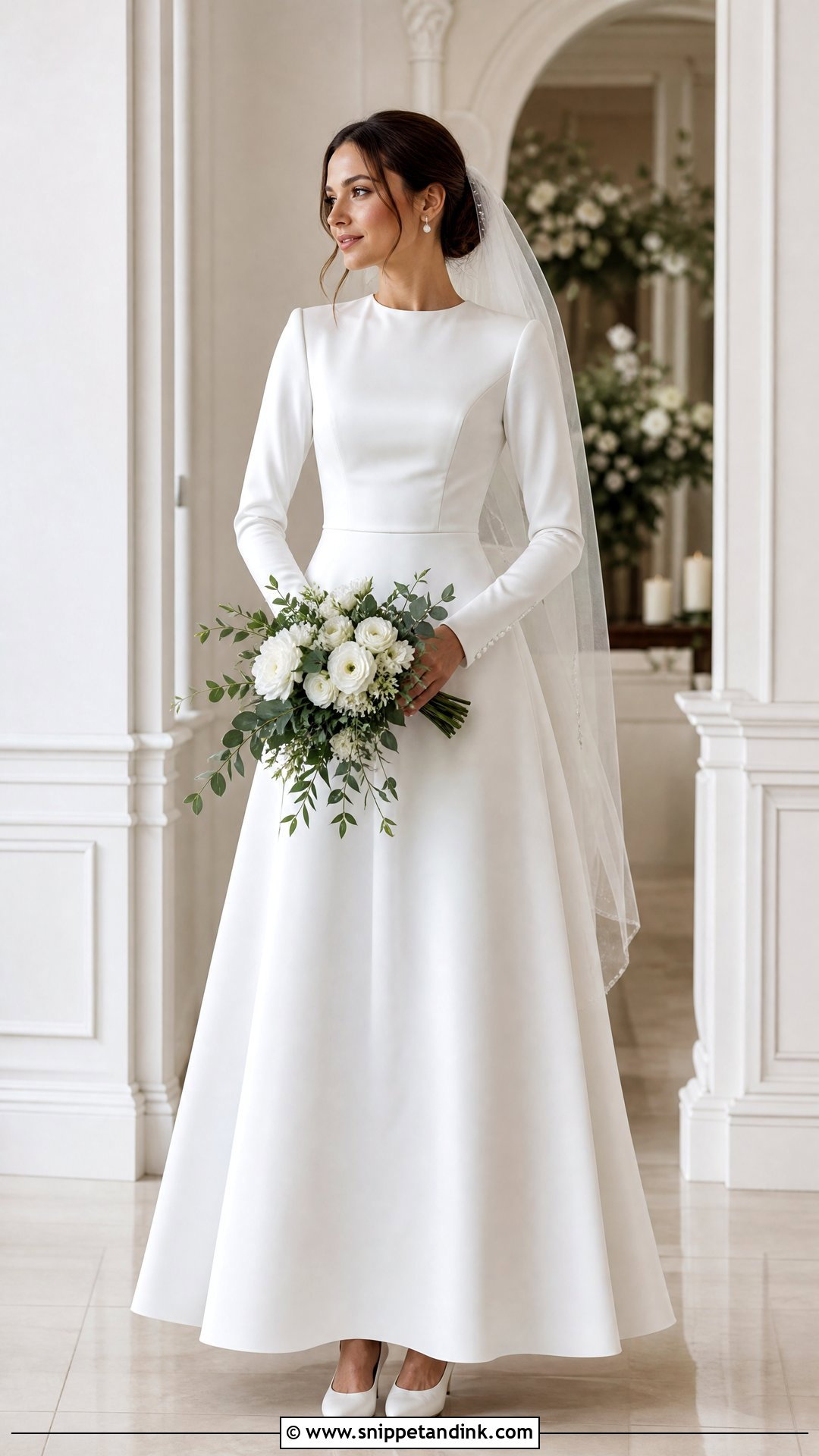
Modest satin works best when the coverage comes from the cut rather than layers. Long sleeves, a higher neckline and an A-line or gathered skirt are the base, and covered buttons, narrow cuffs and soft waist pleats add detail without heaviness. I’d check sleeve and shoulder ease here too, since modest gowns often stay on through prayers, dancing and long greeting lines. Pearl earrings, closed-toe pumps and a light veil keep it calm. Wear a polished updo or a soft half-up style, and carry structured white flowers with greenery for a formal indoor or cool-weather ceremony.
20. Black Satin Wedding Dress
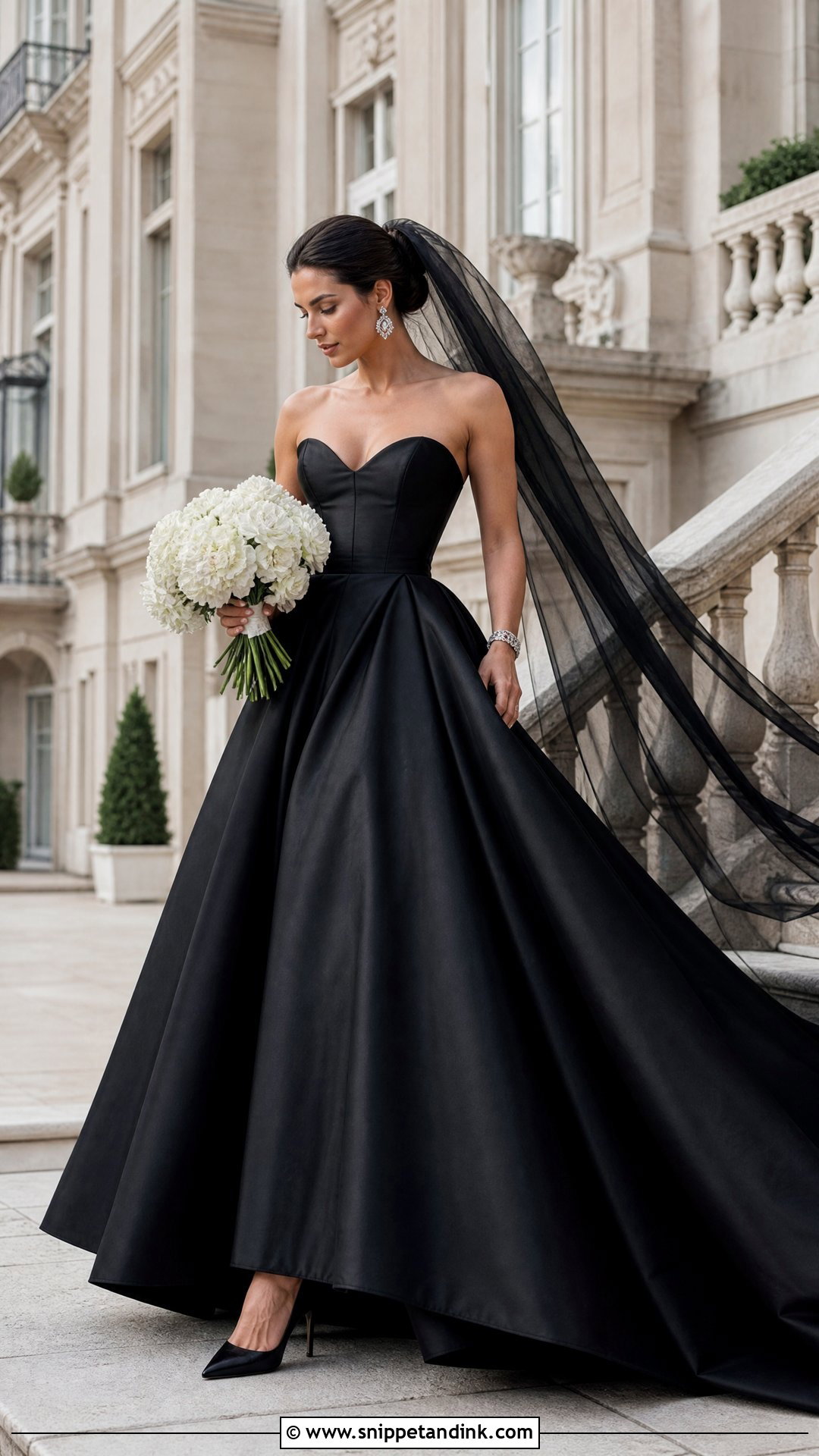
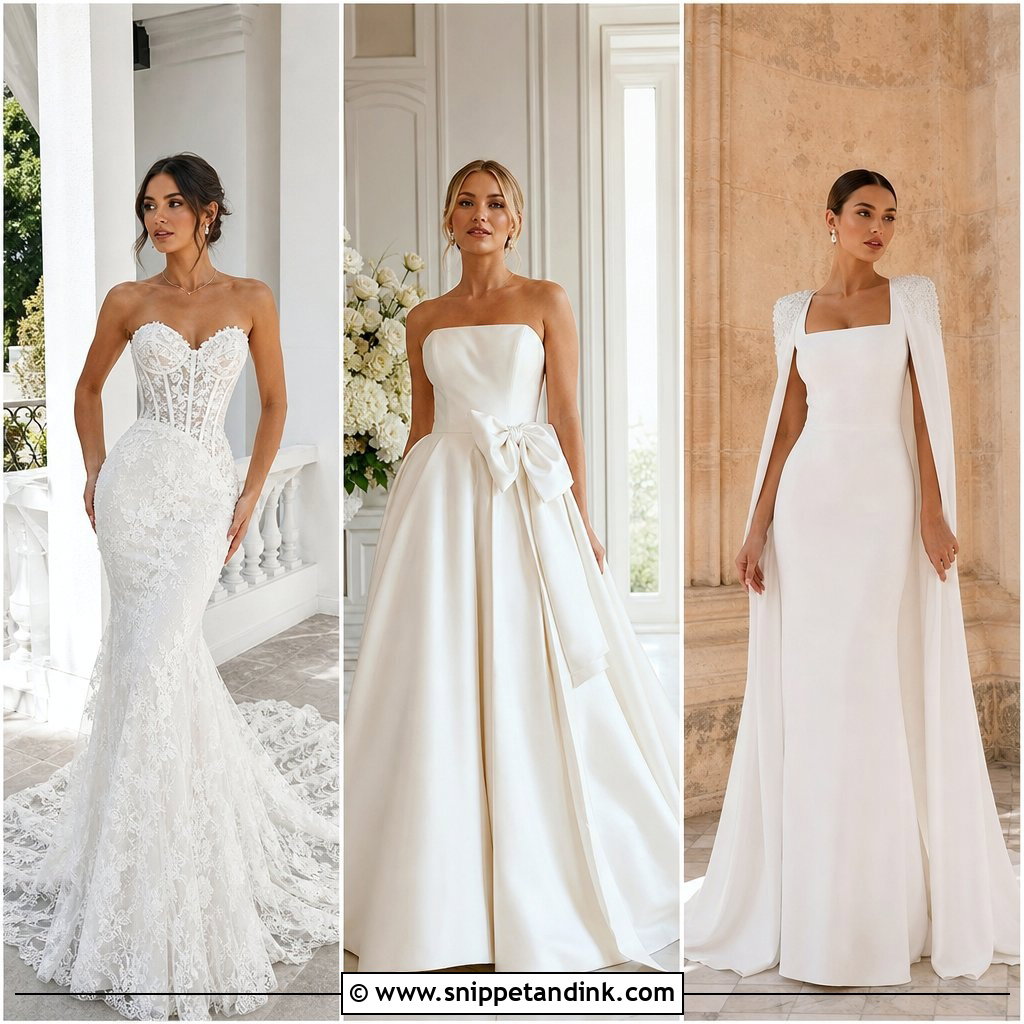
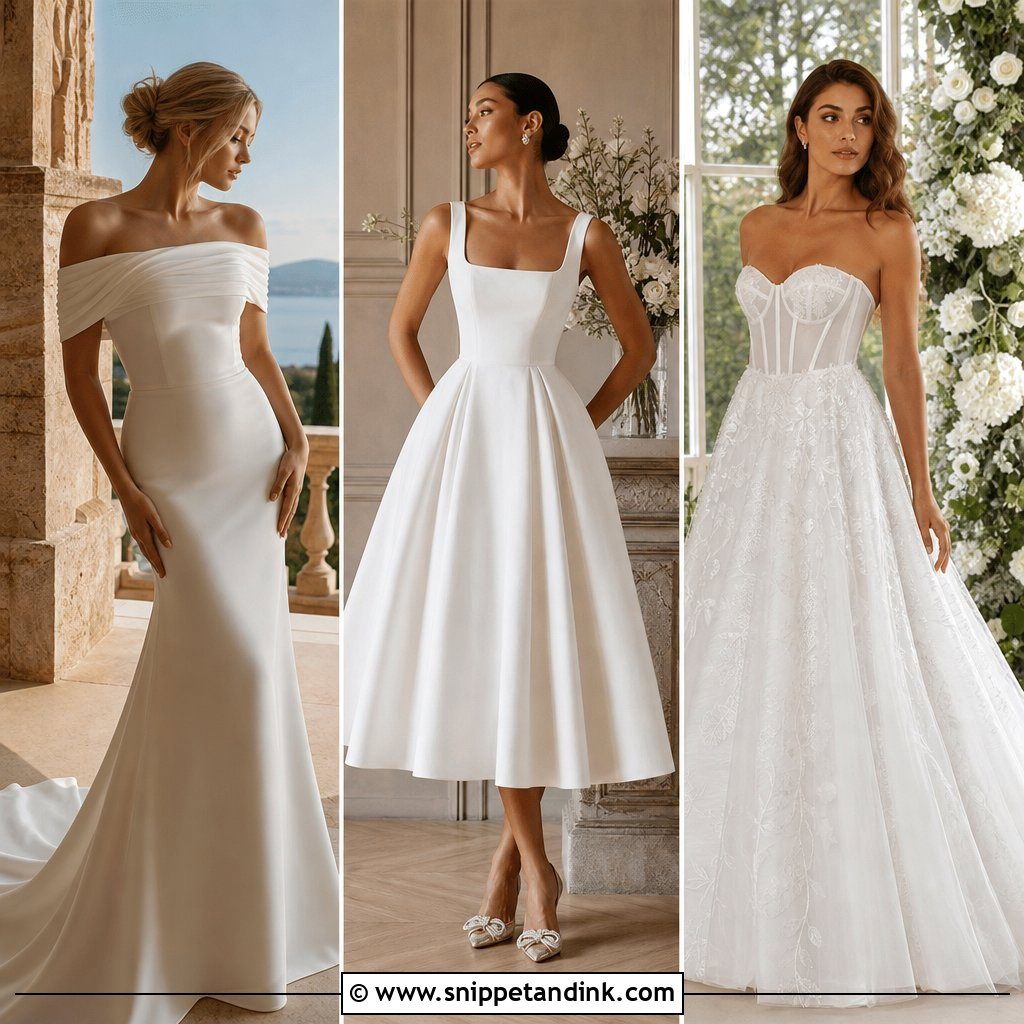
Black satin is dramatic, and it’s also the hardest colour to photograph well. It picks up lint and pale makeup marks in every close-up, so a lint roller in the getting-ready bag isn’t optional. A clean ball gown, a fitted mermaid or a simple column all work, matched to how formal the venue is. Crystal earrings, a metallic bracelet and a black or contrasting veil keep it bridal. Black pumps continue the dark line; silver shoes add a flash. White flowers give the crisp contrast, and polished waves or a sculpted low bun suit an evening ceremony.
Creases, Water Spots and Steaming on the Morning
Satin creases where you sit and bend, and nothing will stop that completely. What you can control is how bad the gown looks when it comes out of the bag and how quickly it recovers.
The day before
Hang the gown from its inner loops, not the shoulders, as soon as it reaches the venue, and give a full skirt room so it isn’t crushed against a wall. Steam it with a handheld steamer held a few inches away, from the inside where possible. Never put a hot iron straight onto satin; it leaves a shiny print that won’t come out.
During the day
- Water spots show on silk satin. Dab a spill with a dry white cloth and leave it. Rubbing raises the surface and makes a duller patch than the water did.
- When you sit in the car, lift the back of the skirt and sit on the lining, not the satin. It cuts the lap creases noticeably.
- Put on deodorant and body lotion well before dressing. Both leave marks on satin that are hard to clean.
- Ask your bridesmaid to carry a few safety pins, white chalk for small marks and a clean cloth.
After the wedding, take the gown to a cleaner who handles bridal fabrics within a few weeks. Sugar from champagne or cake can be invisible on satin at first and turns yellow later.
Fit the Satin First, Then Add Everything Else
Whichever silhouette you choose, fit comes first with satin, because the smooth surface shows pulling, bunching and undergarment lines that other fabrics would hide. Book alterations early enough for two or three fittings and bring the shoes and underwear you’ll actually wear to each one. Once the gown sits properly, add the veil, jewelry, bouquet and any seasonal layer so they support the dress instead of competing with it. Get the fit right and almost any of these shapes will feel like yours.
You'll Like These Ideas:




Leave a Reply