
Satin, Silk or Organza for Your Season and Room
Most of the gowns below are really fabric choices wearing the same silhouette, so I start there with brides. A long fitted bodice traps heat against the torso, which makes fabric weight matter more than it would on a slip dress.
- Heavy satin, mikado and jacquard hold structure and suit cool months, air-conditioned ballrooms and evening ceremonies. In a July garden they get warm fast.
- Organza and fine tulle breathe better and suit spring and summer, although a corseted bodice underneath still adds warmth.
- Silk crepe and lighter silk satin drape well indoors but show perspiration and water marks, so they need a cool room.
- Lace works almost year-round; the lining underneath decides how warm it is.
Think about the floor as well. Satin trains slide nicely over polished stone, while tulle and lace pick up grass, gravel and burrs outside. If your photos will be taken on a lawn, I’d lean toward a skirt that can be bustled up early.
1. Strapless Satin Drop Waist Wedding Dress
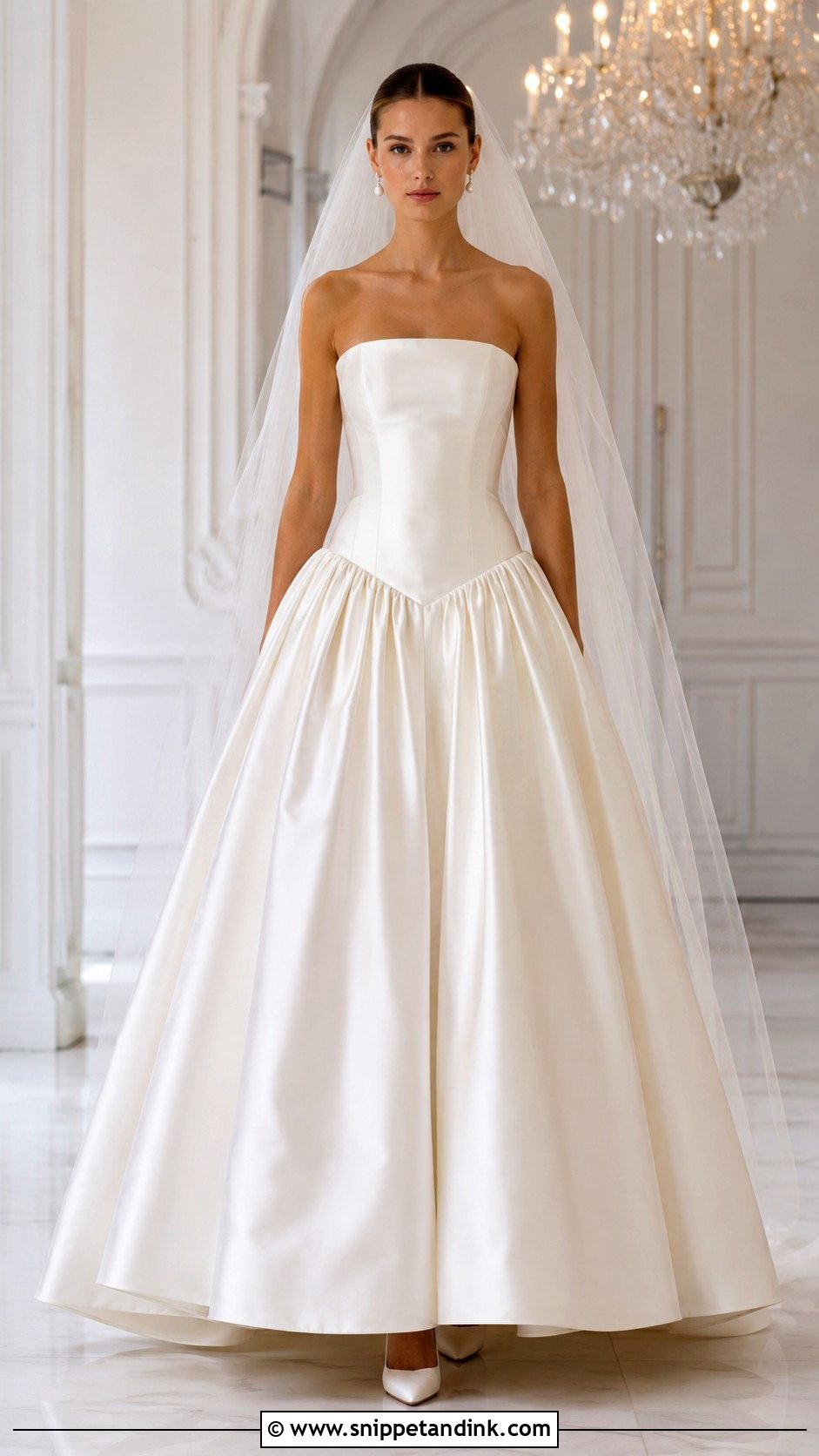
Strapless satin is the cleanest way into this silhouette. The bodice needs real internal support, boning plus a waist stay, so you aren’t hitching the neckline up all evening. A straight or gently curved dropped seam can then open into a full pleated skirt with no embellishment at all. Pearl studs, a smooth fingertip veil, pointed ivory pumps and a compact bouquet of white roses or calla lilies keep it tidy. My warning with satin is about handling: every touch leaves a mark on the shine, so I steam it once, hang it high and keep hands, lotion and makeup well away until you step in.
2. Square Neck Drop Waist Wedding Dress
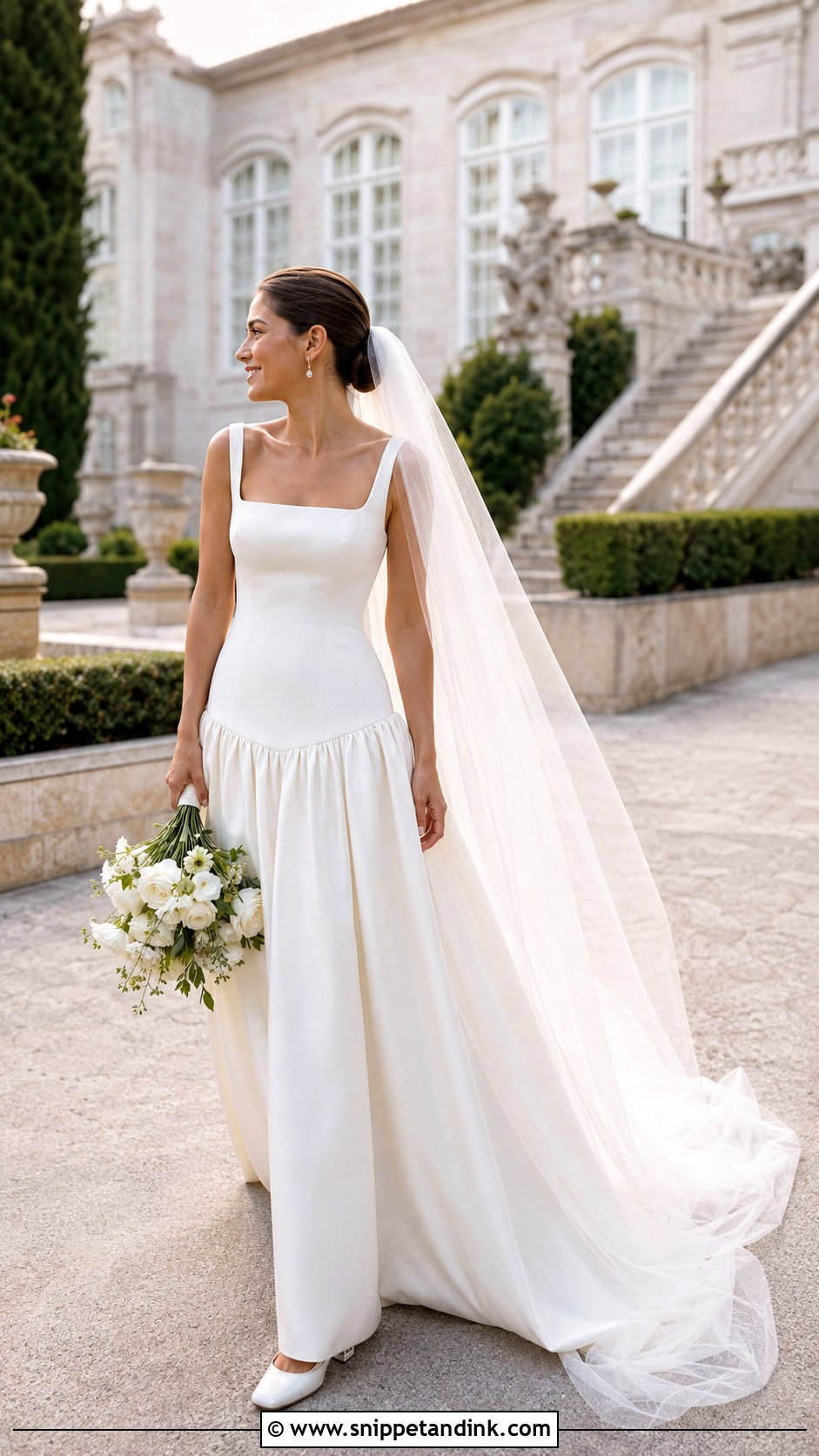
I reach for a square neck when a bride wants structure up top but less exposure than a sweetheart. It frames the collarbone, sits on wide straps and pairs naturally with a softly gathered skirt below the long bodice. A low bun, fine drop earrings and a cathedral veil tucked beneath the hair keep the neckline readable. Closed block heels help on estate gravel or museum stone. For flowers, something loose in ivory with fresh greenery suits the clean geometry. The square corners are the fit point to watch, since they lift away from the skin if the straps are even slightly long.
3. Sweetheart Corset Drop Waist Wedding Dress
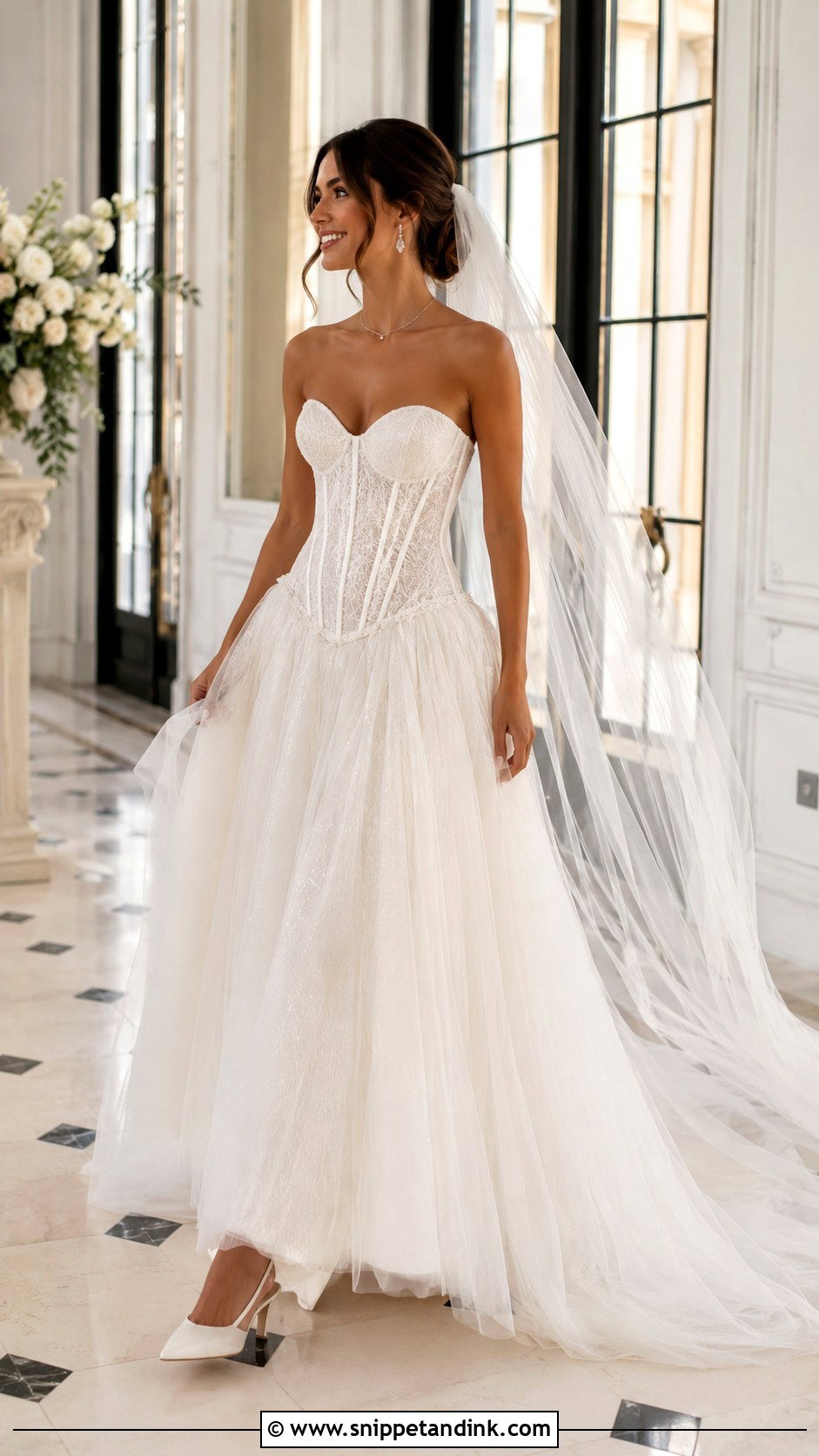
Visible boning and a curved neckline give a sweetheart corset drop waist wedding dress its romance. What I care about is what holds it closed. Decorative lacing looks pretty, but I’d want a hidden zip or hook-and-eye panel underneath, because lacing alone loosens as you move. Ask for a soft lining against the skin. A full tulle or satin skirt sets off the fitted top. A fine necklace, crystal earrings and a long sheer veil without a heavy border finish it, and ivory slingbacks are far kinder over a long day than towering pumps. Peonies, garden roses or ranunculus in a rounded bouquet echo the curve of the neckline.
4. Lace Drop Waist Wedding Dress
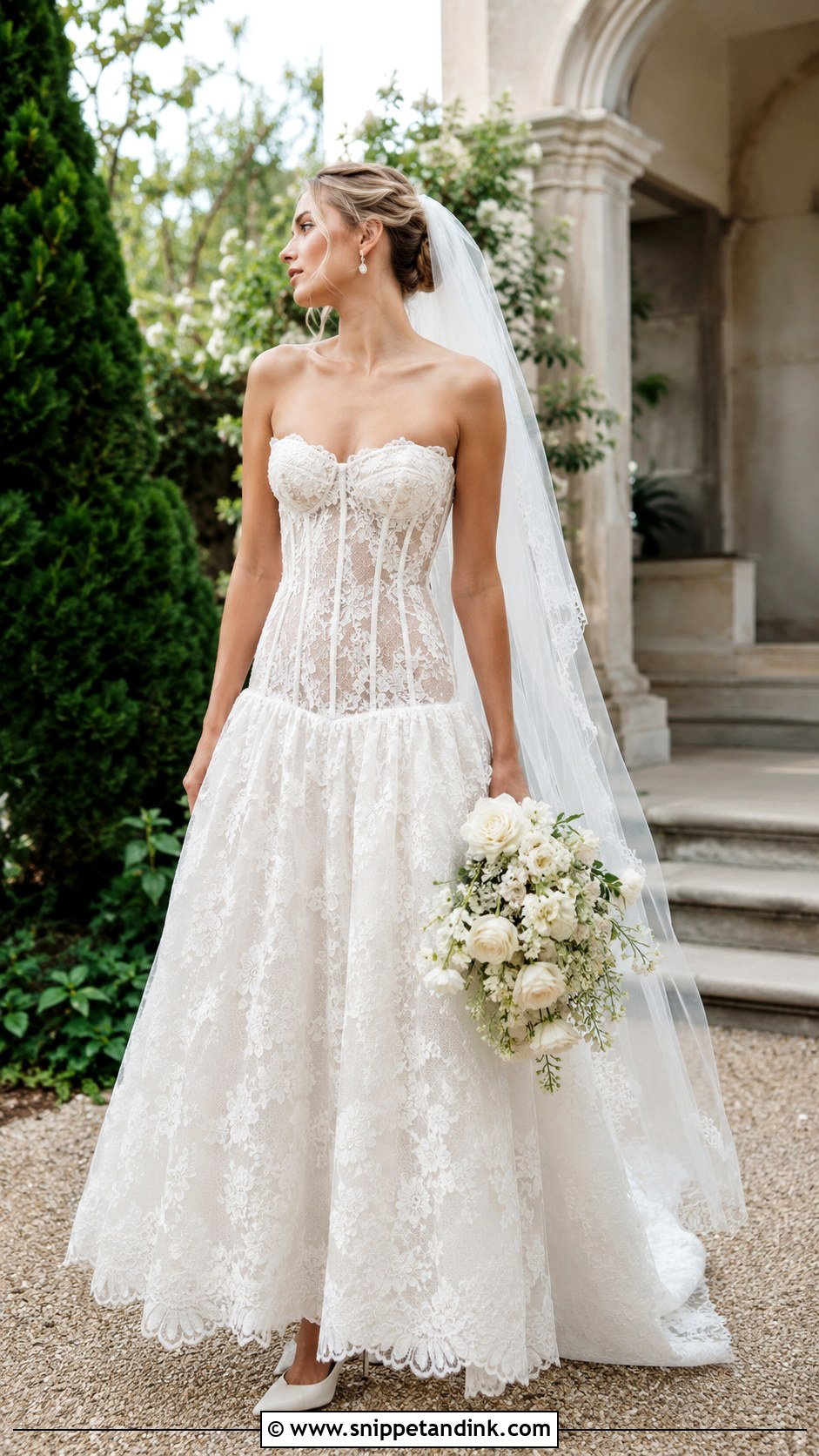
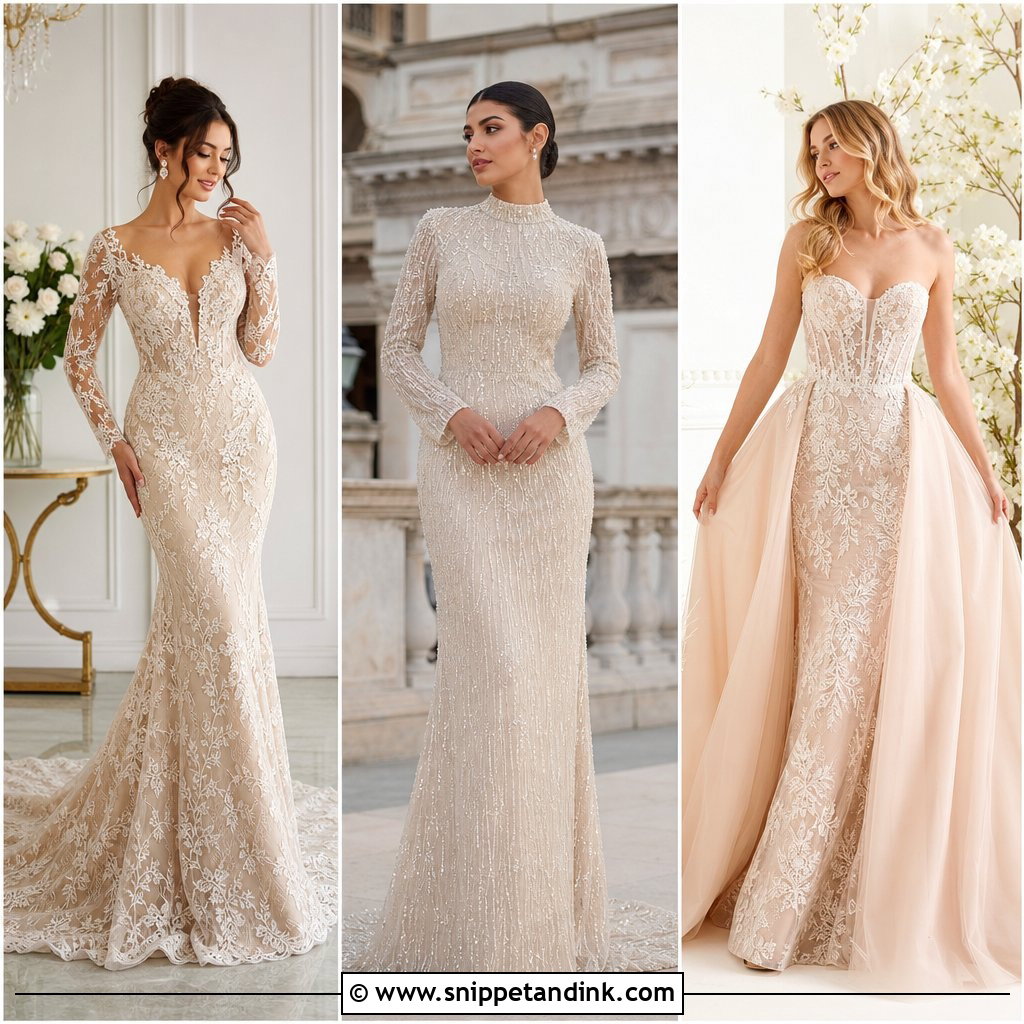
Lace changes character completely with scale. Fine Chantilly-style lace reads delicate and almost vintage, while big floral motifs feel bolder and more modern. On a drop waist, the lace has to cross the lowered seam; if the motifs stop dead at the join, you’ll see a hard line in every photo. A lightly lined corset, full lace skirt and scalloped hem keep the gown consistent all the way round. I’d choose simple earrings, satin heels and a plain sheer veil so nothing fights the pattern, and a loose bouquet of cream flowers. Close-up portraits are where this gown earns its price.
5. Long Sleeve Drop Waist Wedding Dress
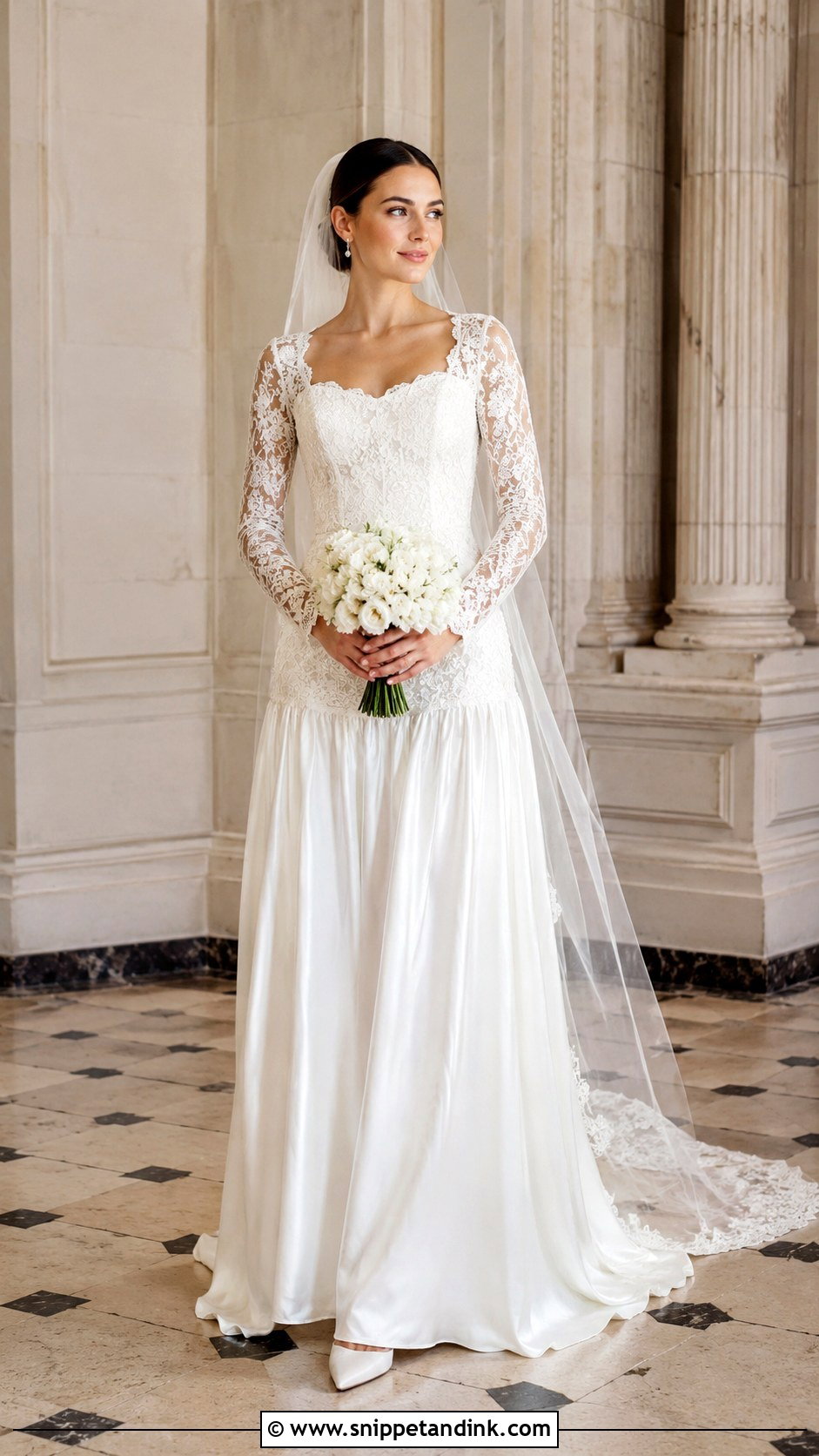
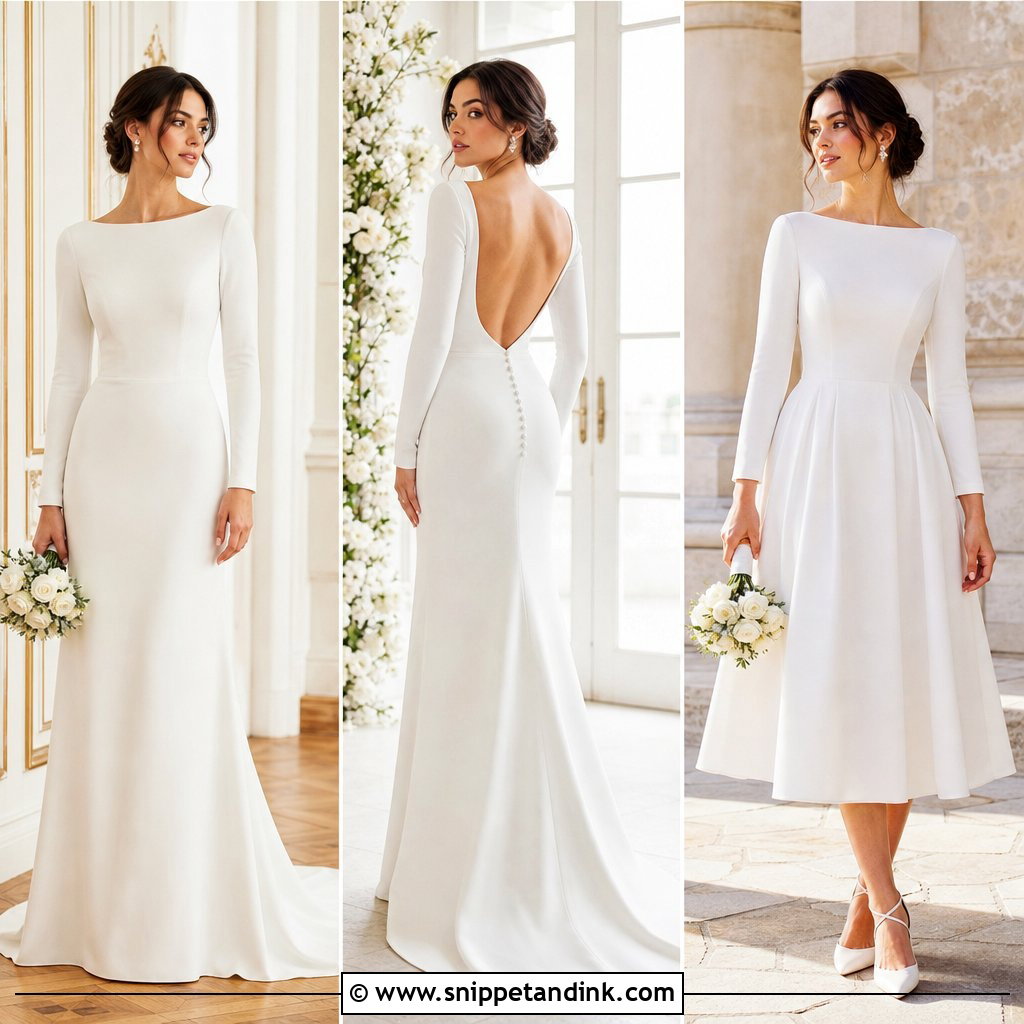
Sleeves change how a long bodice moves, and that’s the part people forget. Sheer lace sleeves stay light; fitted crepe or satin sleeves look sharper but restrict the arms more. Either way, the extended bodice needs a little ease through the waist and hips for sitting and dancing. A scoop, square or modest sweetheart neckline keeps the covered top from looking heavy. Finish with a sleek bun, pearl earrings, low pointed heels and a chapel veil, and keep the bouquet small so the front isn’t crowded. It is a natural fit for autumn and winter. I always ask brides to reach across a table during fittings, because a sleeve set too tight in the armhole lifts the whole bodice.
6. Off The Shoulder Drop Waist Wedding Dress
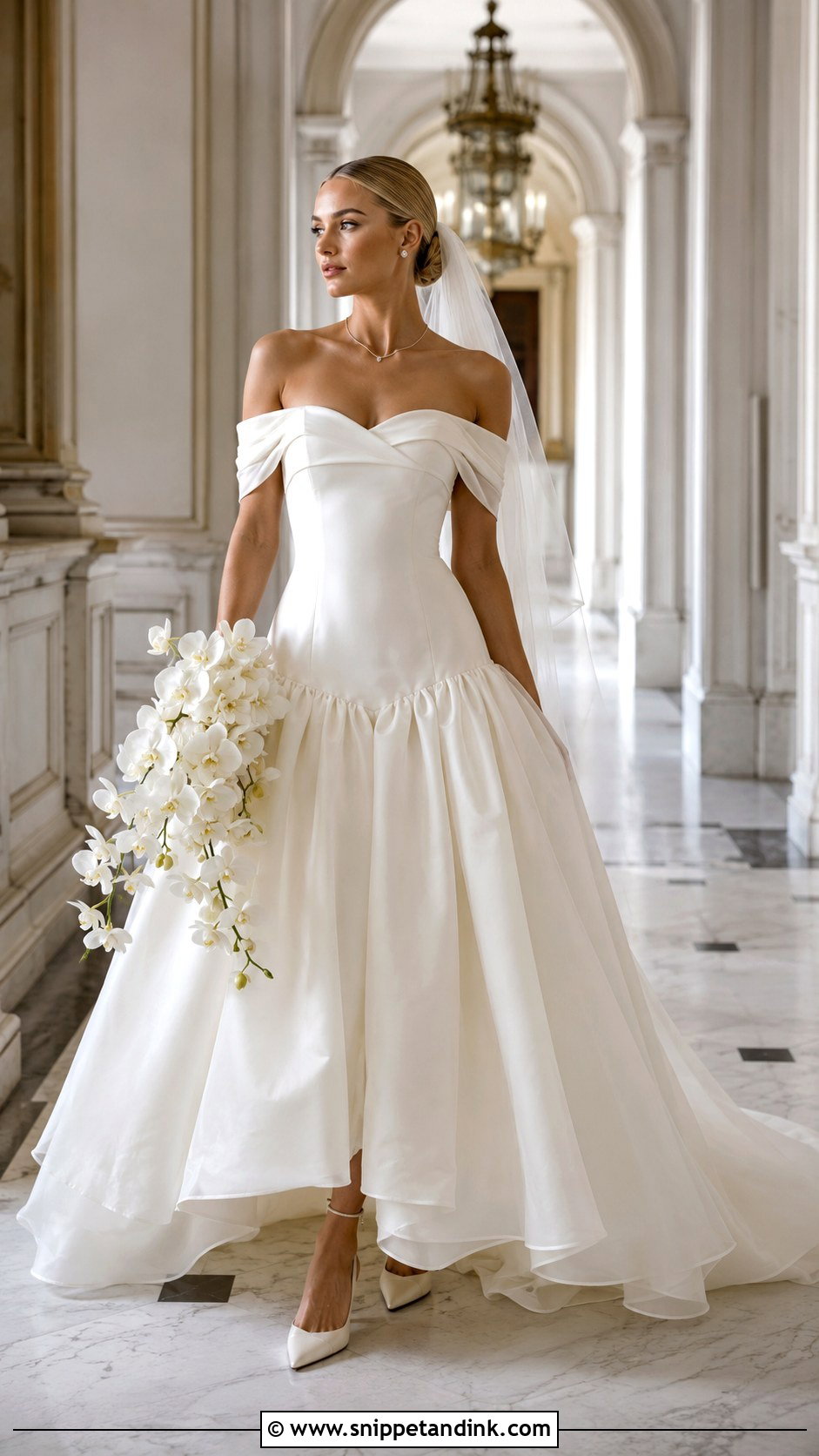
Soft draped sleeves make an off-the-shoulder neckline romantic; structured fold-over cuffs make it crisp. The fitting is non-negotiable. This neckline has nothing over the shoulder to hold it, so it relies entirely on a snug bodice and, ideally, a silicone strip inside the band. Full satin or organza below keeps the proportions balanced. A collarbone-length necklace, small earrings and a veil set low beneath softly pinned hair suit it, with pointed slingbacks and a cascading white bouquet carrying the long line down. Hugging guests is the real test, so do it at the final fitting.
7. Drop Waist Ball Gown Wedding Dress
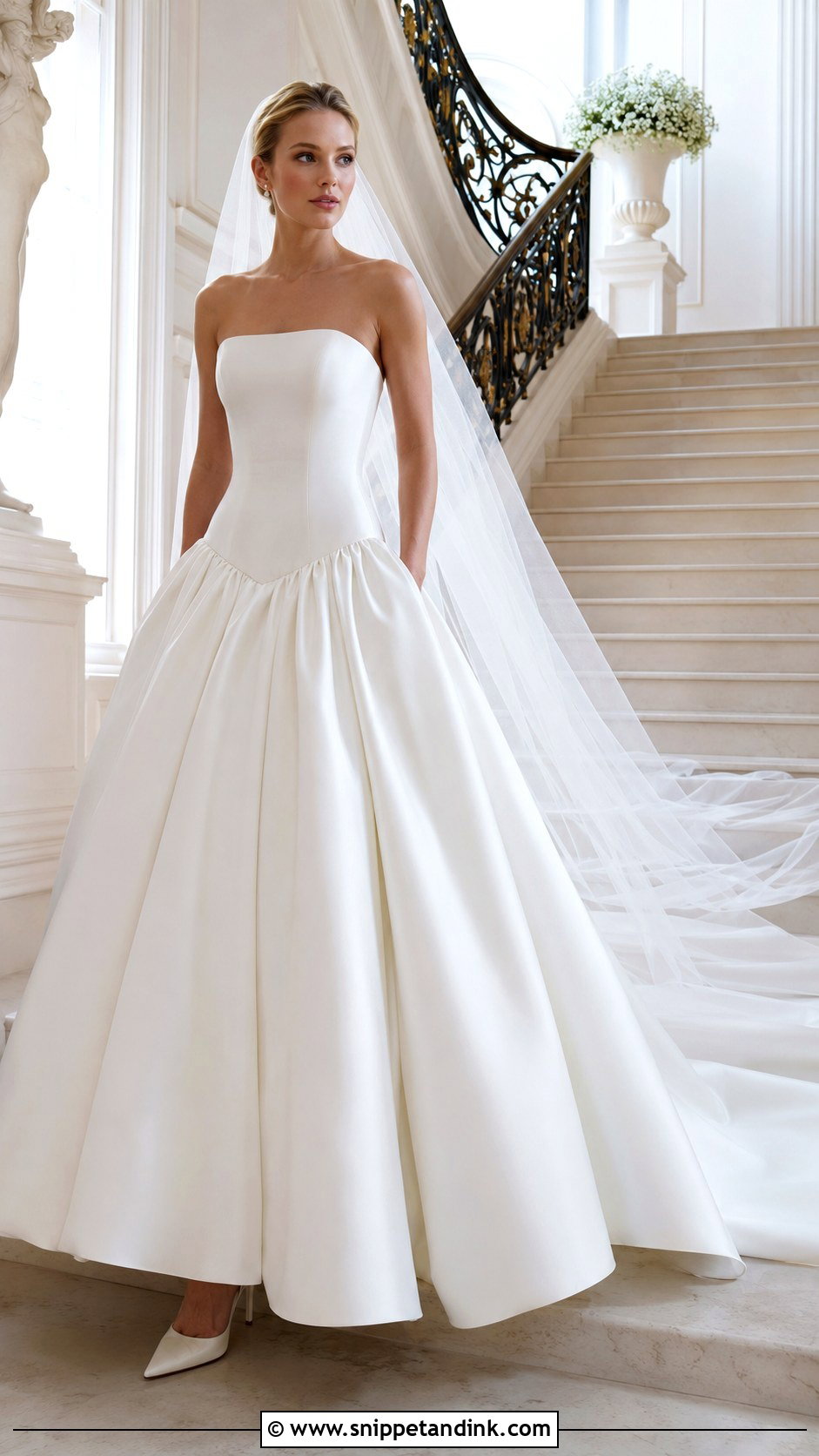
This is the boldest version of the shape. The bodice runs right down to the hip and then the skirt erupts, so the change in volume is far more dramatic than on a natural-waist ball gown. Structured mikado, satin or layered tulle can carry it without decoration. Restrained accessories are a must: pearl studs, a plain cathedral veil, classic closed heels and a medium bouquet that won’t disappear against the skirt. Ask early about petticoats and bustle points. A hooped petticoat makes doorways and car seats awkward, while a layered net one compresses more easily, and that choice changes how you move all day.
8. A Line Drop Waist Wedding Dress
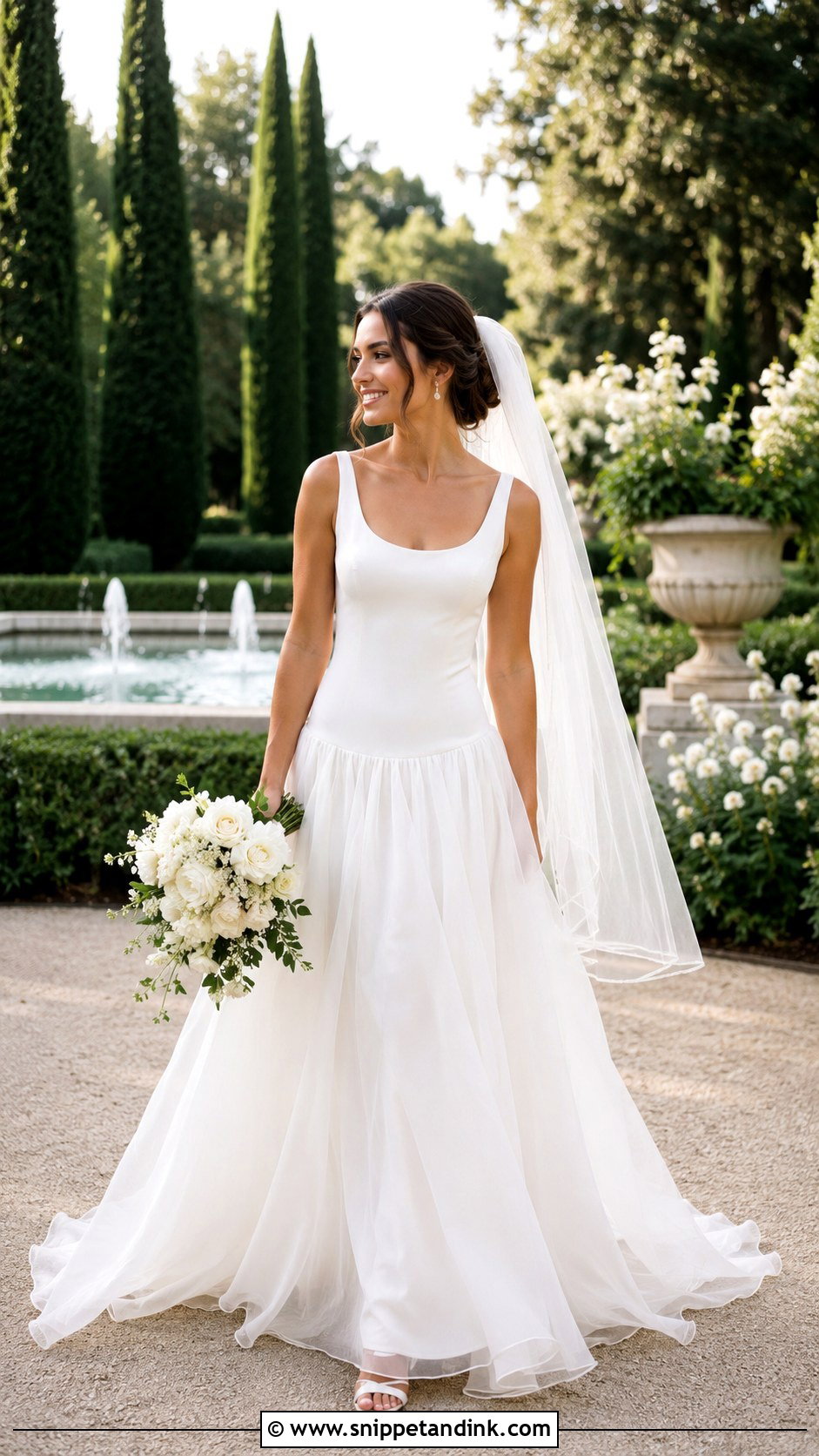
If a full ball gown feels like too much, an A-line drop waist is the gentler route. The skirt widens gradually from the seam instead of bursting out, so you keep the long torso without the width. A supportive bodice with a straight, scoop or sweetheart neckline works with chiffon, organza or light satin below. Block heels, small earrings, a fingertip veil and a hand-tied bouquet of seasonal white flowers keep it relaxed. I recommend it a lot for gardens, vineyards and smaller rooms. Brides who have never worn a big skirt usually find this one far easier to sit, dance and climb stairs in.
9. Mermaid Drop Waist Wedding Dress
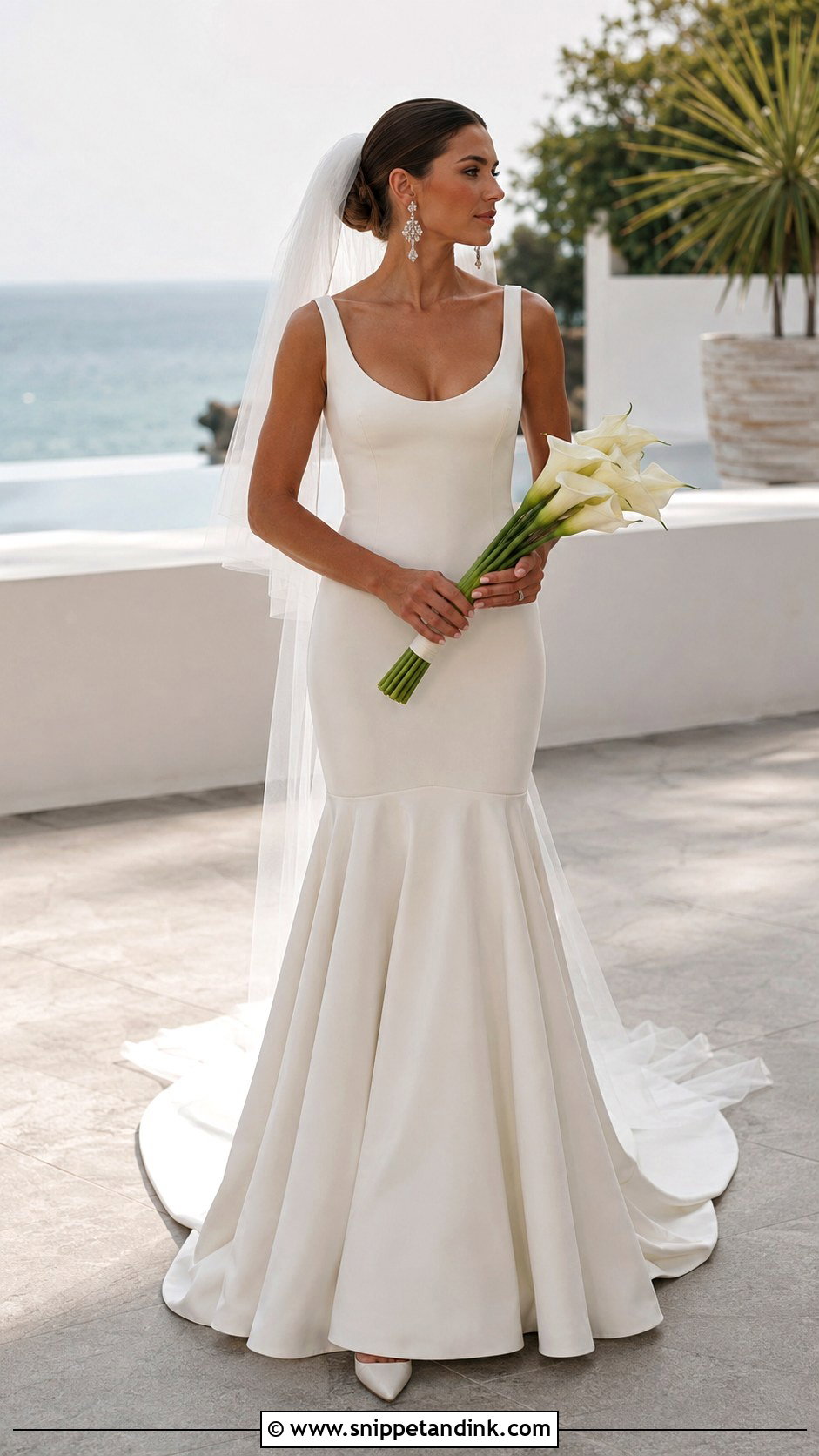
Mermaid is the drop waist taken further: fitted past the waist, past the hips, flaring only near the knee. It looks sleek and formal and it is the most restrictive gown in this list. Stretch crepe, satin or lace can smooth the line, but you still need a natural stride. At fittings I have brides climb a step or two and sit fully back in a chair; if either is a struggle, the flare point needs lowering or the skirt needs a little more ease. A low sculpted bun, statement earrings, a narrow veil, pointed pumps and a long streamlined bouquet complete it. A detachable train helps once the reception starts.
10. Mikado Drop Waist Wedding Dress
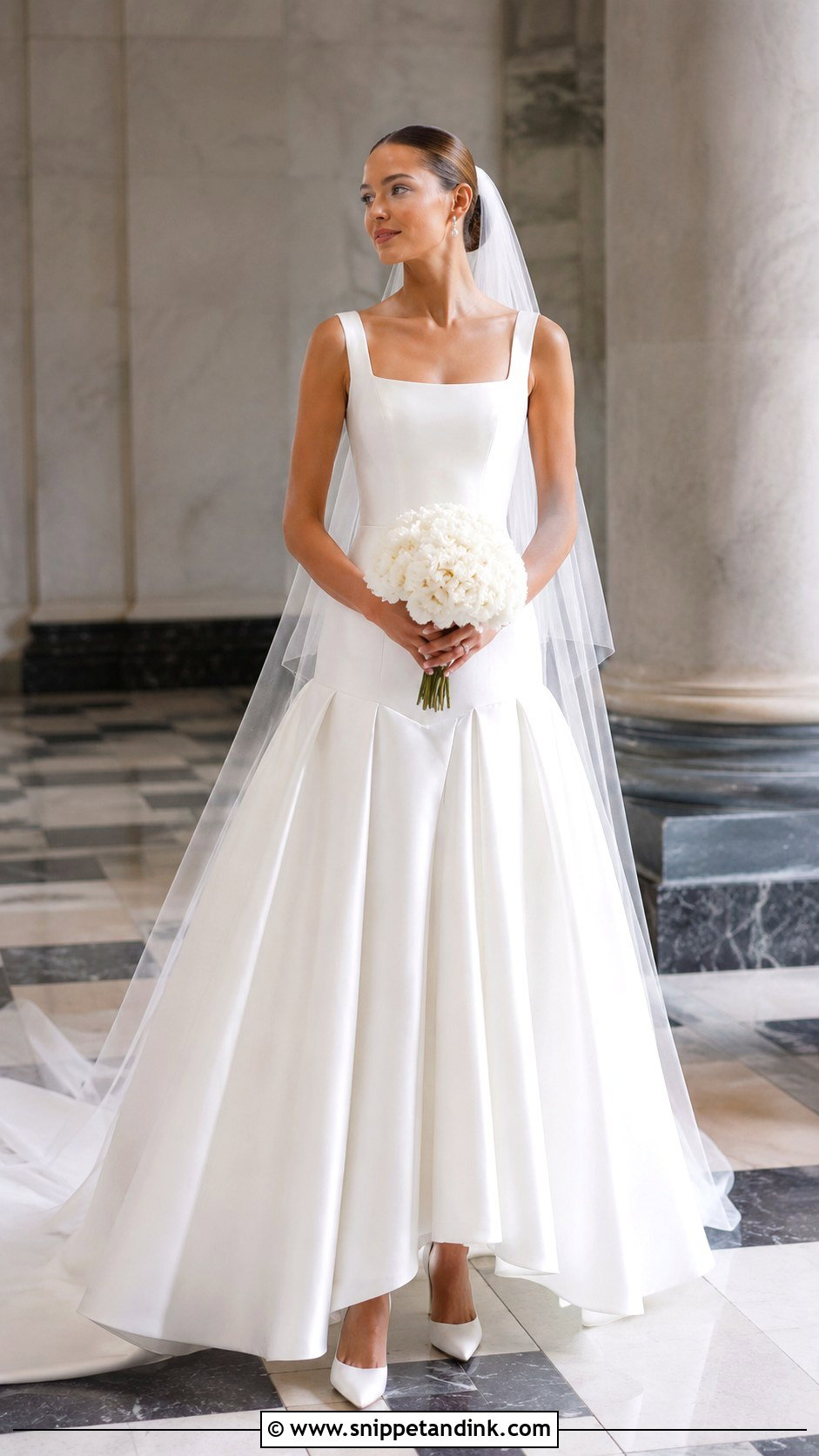
Mikado has the body to hold pleats and curved seams by itself, so the tailoring becomes the decoration. A strapless or square-neck bodice keeps attention on the cut, and a line of covered buttons down the back adds detail without clutter. Pearl earrings, a simple cathedral veil, satin pumps and a compact bouquet suit it, with a neat bun or polished waves. It needs room around it to read well, which is why I like it against grand staircases. One practical note: mikado shows pressure creases from the car, so travel with the skirt lifted over your lap rather than sitting on it.
11. Silk Drop Waist Wedding Dress
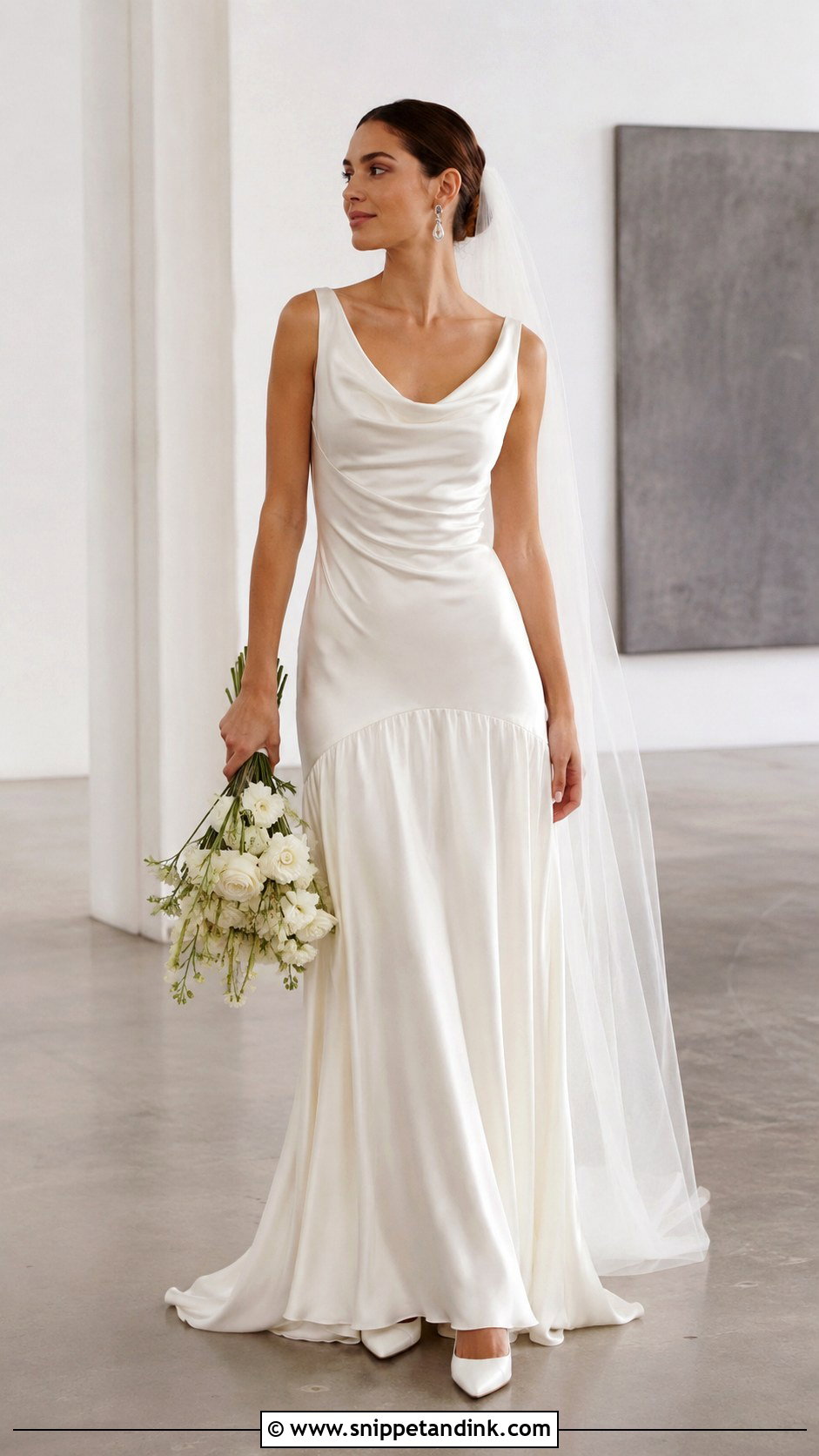
Silk softens a silhouette that’s usually built for structure. Choose silk satin, faille or another weave with some weight, because a thin silk will cling and show every seam on a long bodice. Gentle ruching or diagonal draping across the hips makes the lowered waist feel easy rather than rigid. Barely-there makeup, luminous earrings, a light veil, kitten heels and long-stemmed white flowers keep the mood minimal. It suits a city ceremony or a gallery. Silk marks easily, so I book professional steaming the day before and set aside a clean, dry hanging spot in the getting-ready room; water spots on silk can leave rings.
12. Tulle Drop Waist Wedding Dress
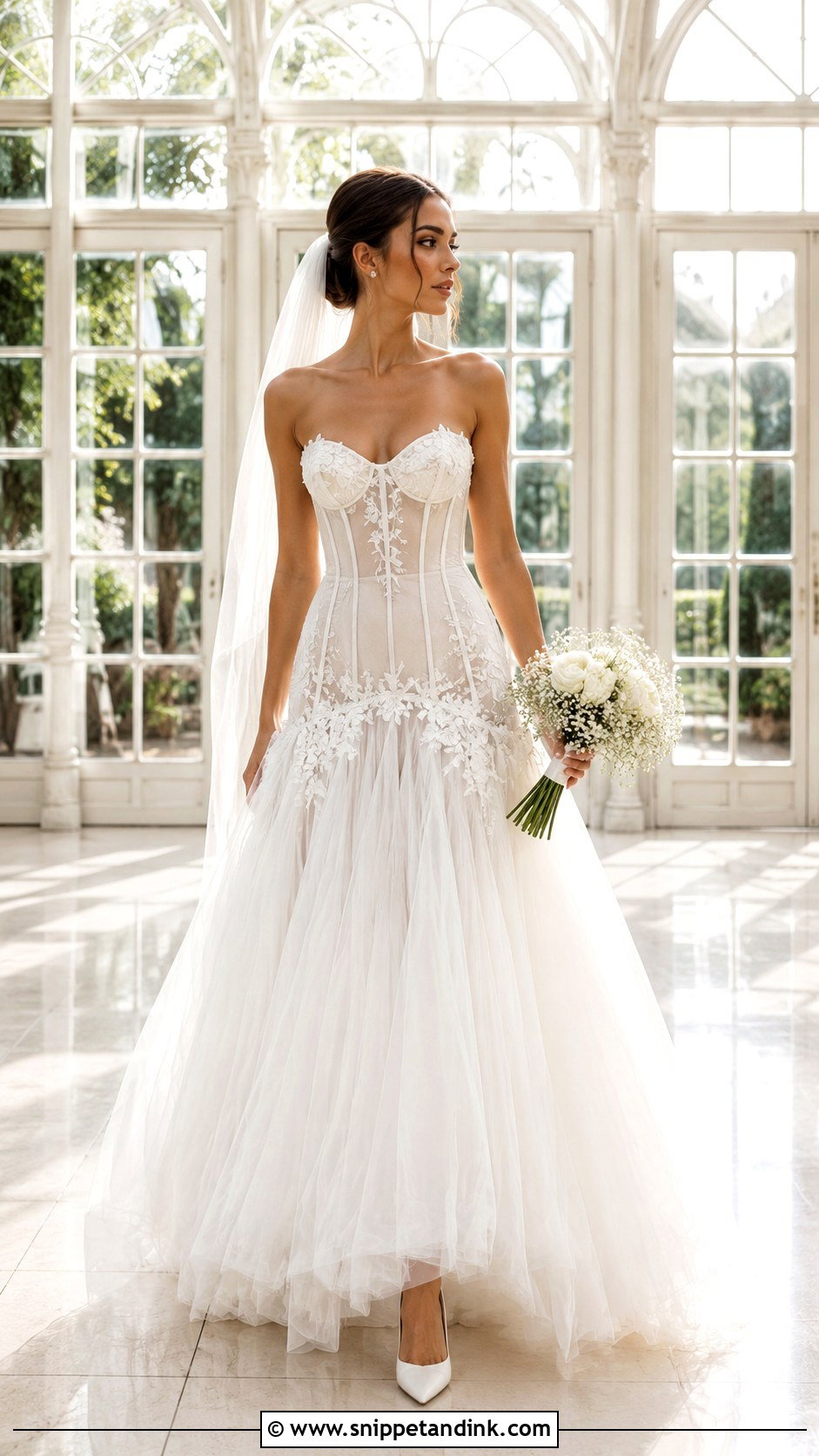
Tulle gives the drop waist an airy finish, with a corseted bodice holding the shape and soft layers falling from the seam. Fine layers move gently; dense gathered tulle builds more of a princess skirt. Floral appliqués around the waist can blur the seam, but keep them sparse if you want the outline to read clearly. Crystal studs, a sheer veil, ballet-inspired satin pumps and delicate white flowers finish it. Tulle snags. Heel tips, bracelets and other people’s shoes all catch it, so I’d plan a secure bustle before the dancing and keep a small pair of scissors in the kit for loose threads.
13. Organza Drop Waist Wedding Dress
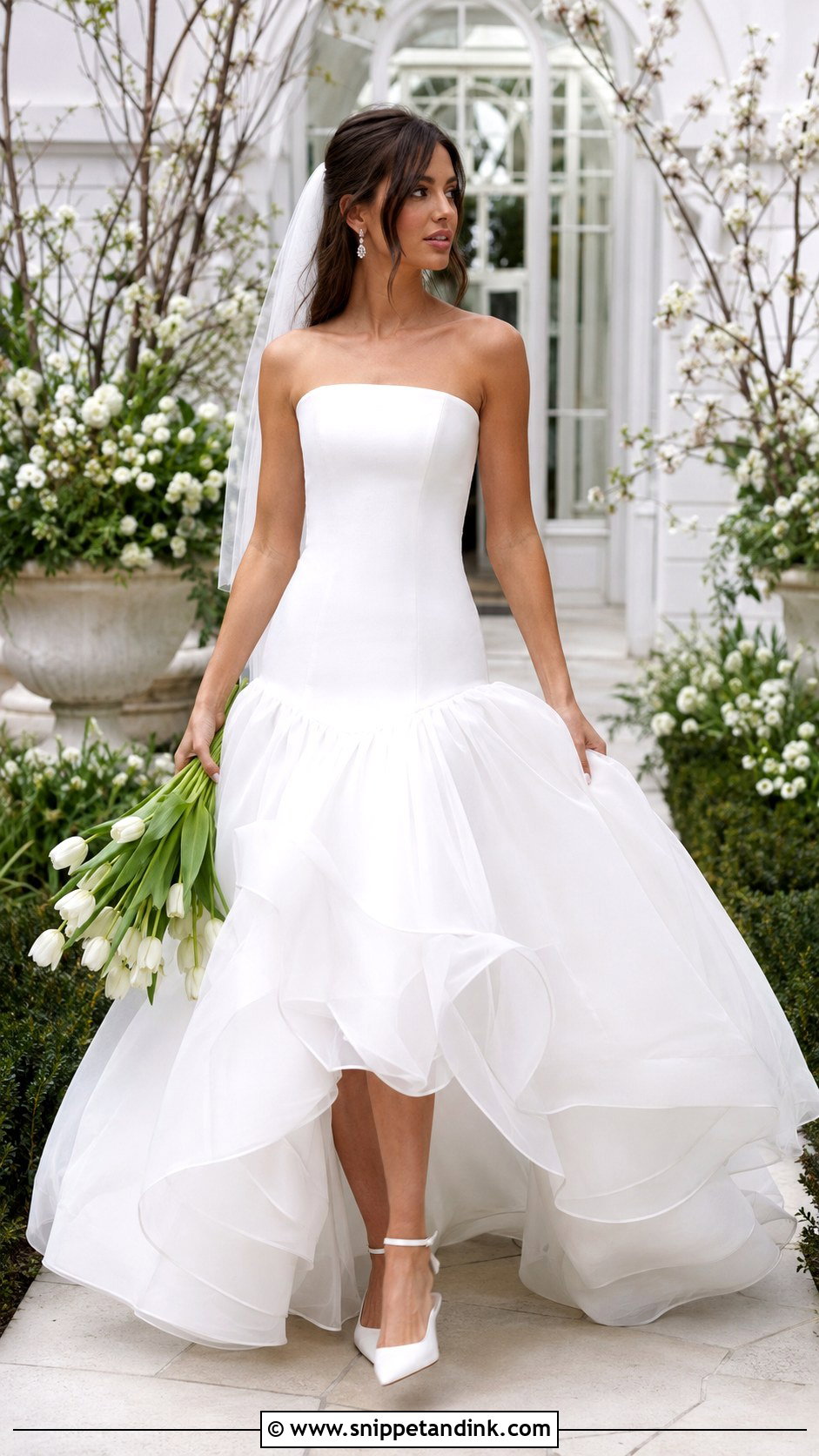
Organza feels crisp but floats. It holds a full skirt with a lighter, slightly translucent quality that heavy satin can’t give you. A fitted strapless bodice over gathered or layered organza sets structure against movement, and sculptural folds can replace beading entirely. Polished studs, a simple veil and pointed heels with some ankle support suit it, alongside white tulips or garden roses that stay clear of the waistline. It is my favourite fabric for warm-weather ceremonies. Do ask for reinforced skirt loops: organza is strong but the bustle points take a lot of strain.
14. Beaded Drop Waist Wedding Dress
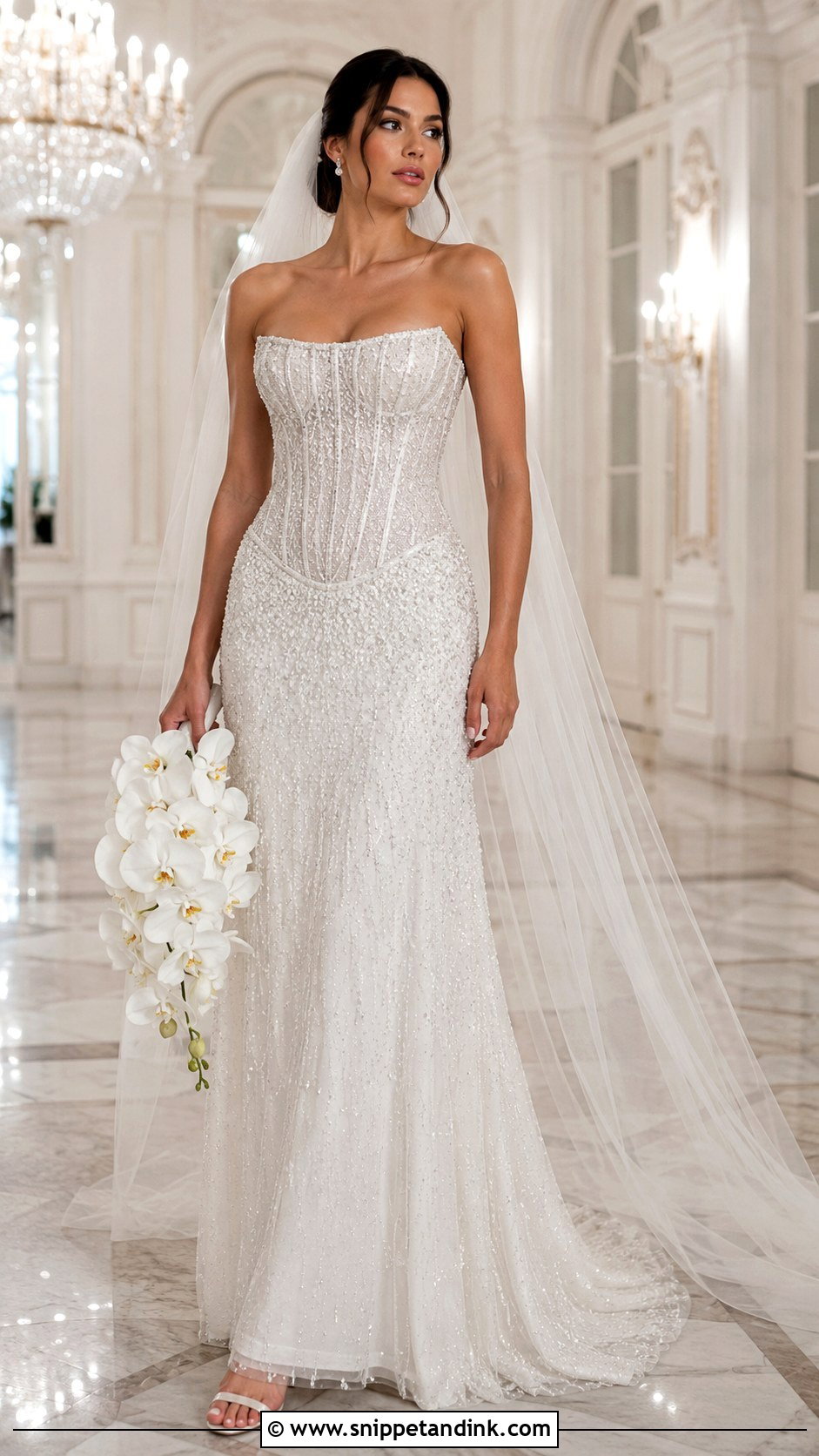
Beading catches light and, placed vertically, makes the bodice look even longer. Concentrate it at the neckline for controlled sparkle, or carry it lightly onto the skirt for continuity. The trade-off is weight. A heavily beaded gown can feel noticeably heavier by the evening, and the weight pulls on the shoulders and waist stay, so walk, sit and turn in it before committing. Plain satin heels, small crystal earrings, an untrimmed veil and a white orchid or calla lily bouquet keep everything else quiet. Soft, polished hair lets the surface do the work at an evening ballroom reception.

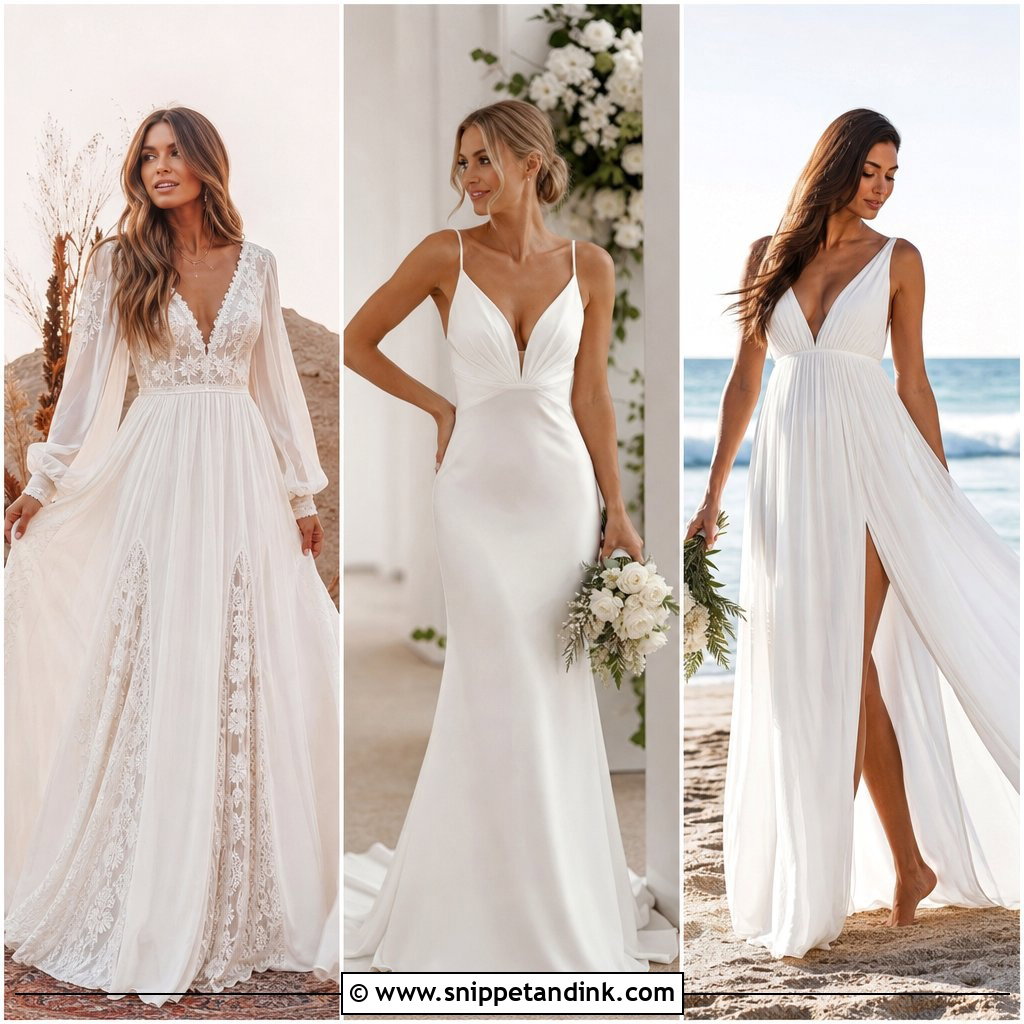
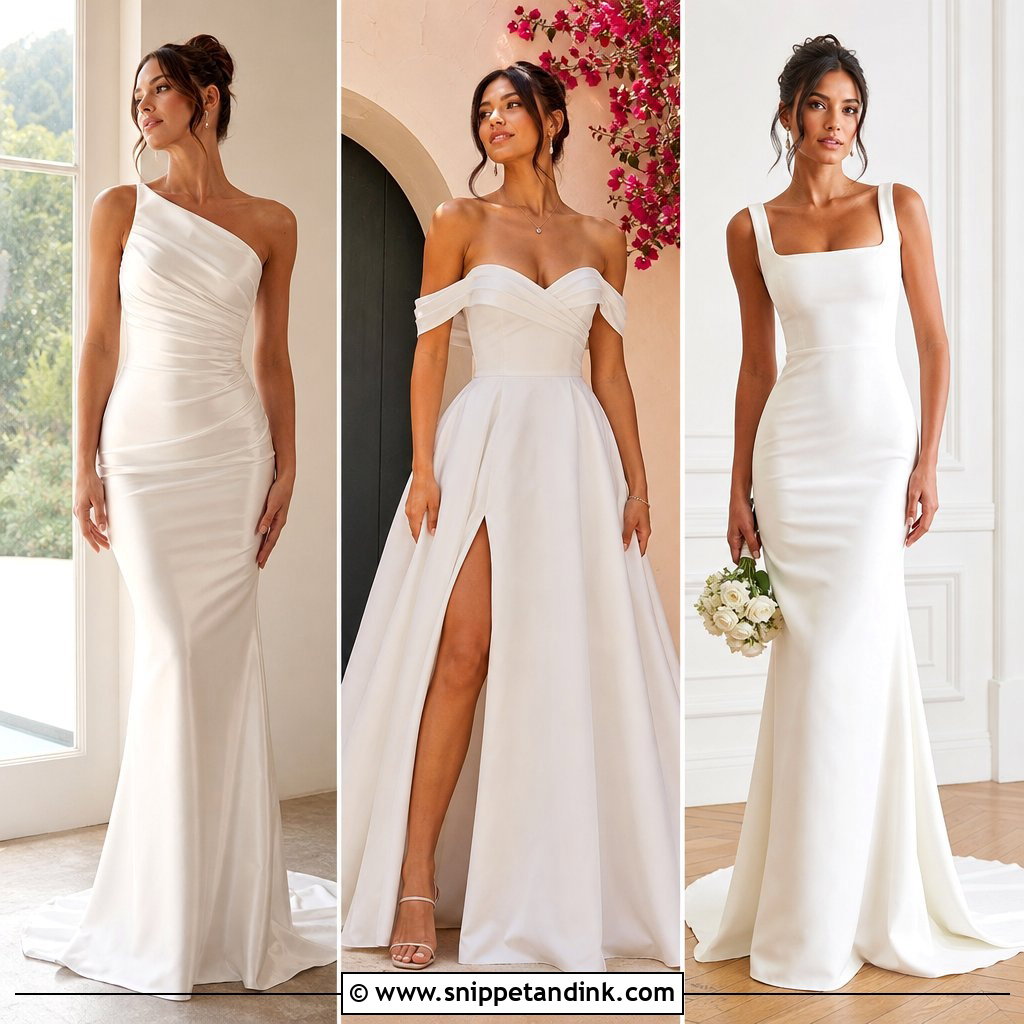
15. Pearl Drop Waist Wedding Dress
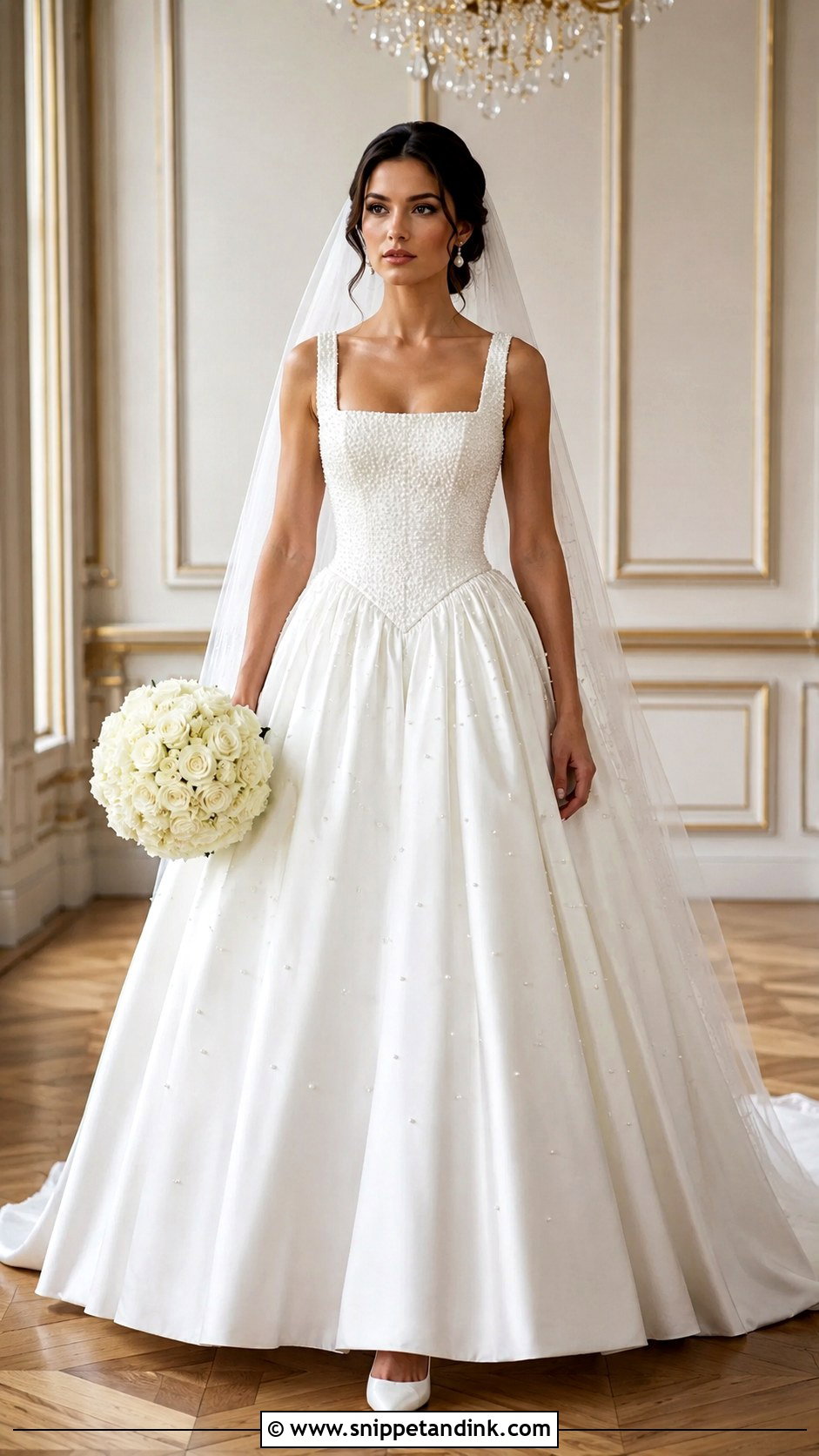
Pearls soften structure. On this gown they may be scattered across the corset, the straps or the top of the skirt. Run your hand over them in the shop. Each should be stitched down individually with a smooth backing, because loosely strung pearls snag the veil and scratch the inner arm. A square or scoop neckline gives the surface room and keeps the look modern. Pearl earrings, satin pumps and a sheer veil with a light edge are enough; a jewelled necklace on top would be one layer too many. A rounded bouquet of white roses pulls it together.
16. Minimalist Drop Waist Wedding Dress
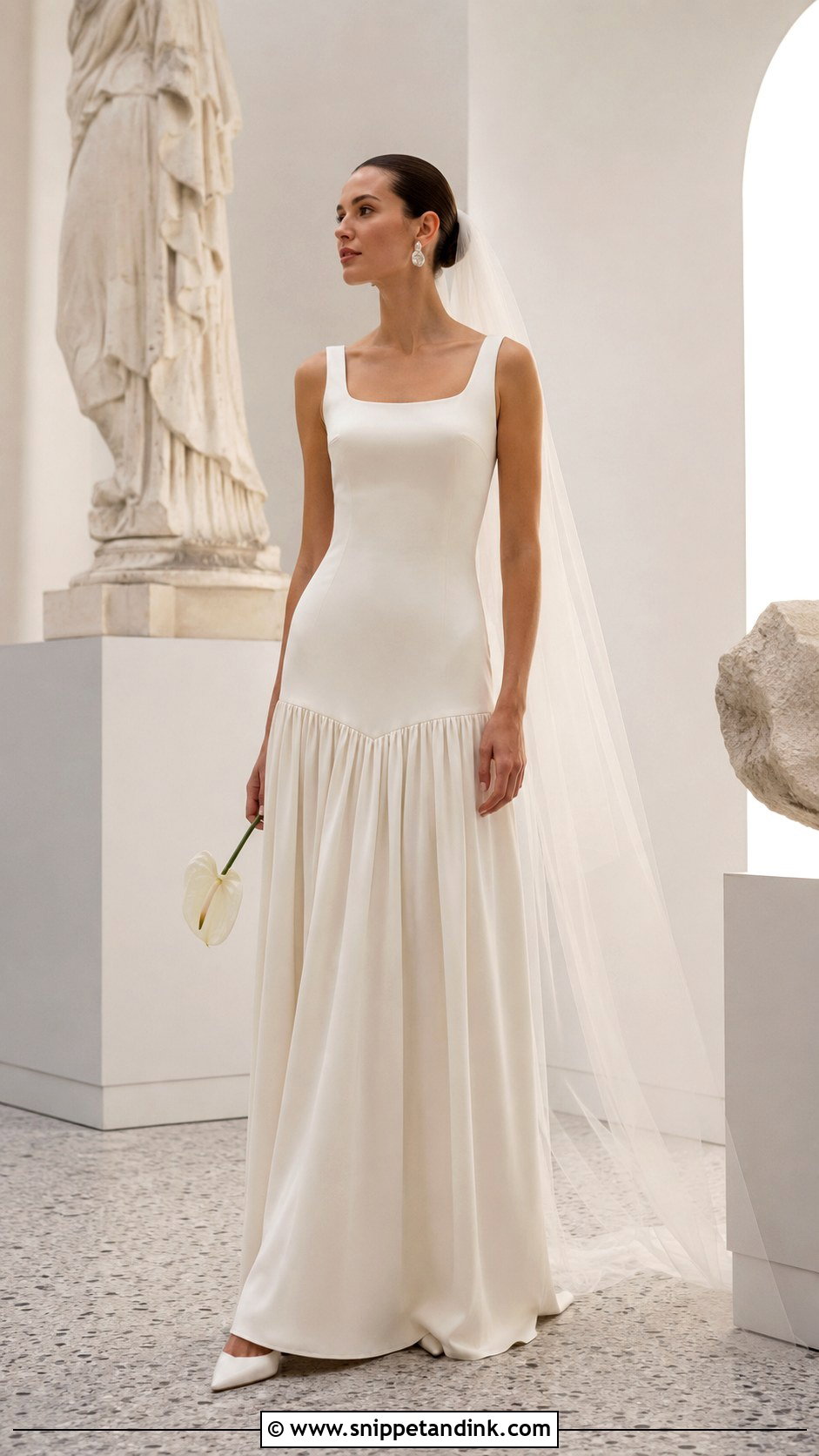
With no lace or beads to hide behind, a minimalist drop waist is all about precise cutting. A straight neckline, a low curved waist and a softly pleated skirt look current and calm. Here alterations have to be exact, since every seam, dart and hem is on show, and I’d never take this kind of gown to an inexperienced seamstress. Sculptural earrings, a sleek bun, pointed pumps and a plain chapel veil suit it, with a single-flower bouquet or a sparse white arrangement. A dramatic veil for the ceremony, removed later, gives you a second look for free.
17. Vintage Drop Waist Wedding Dress
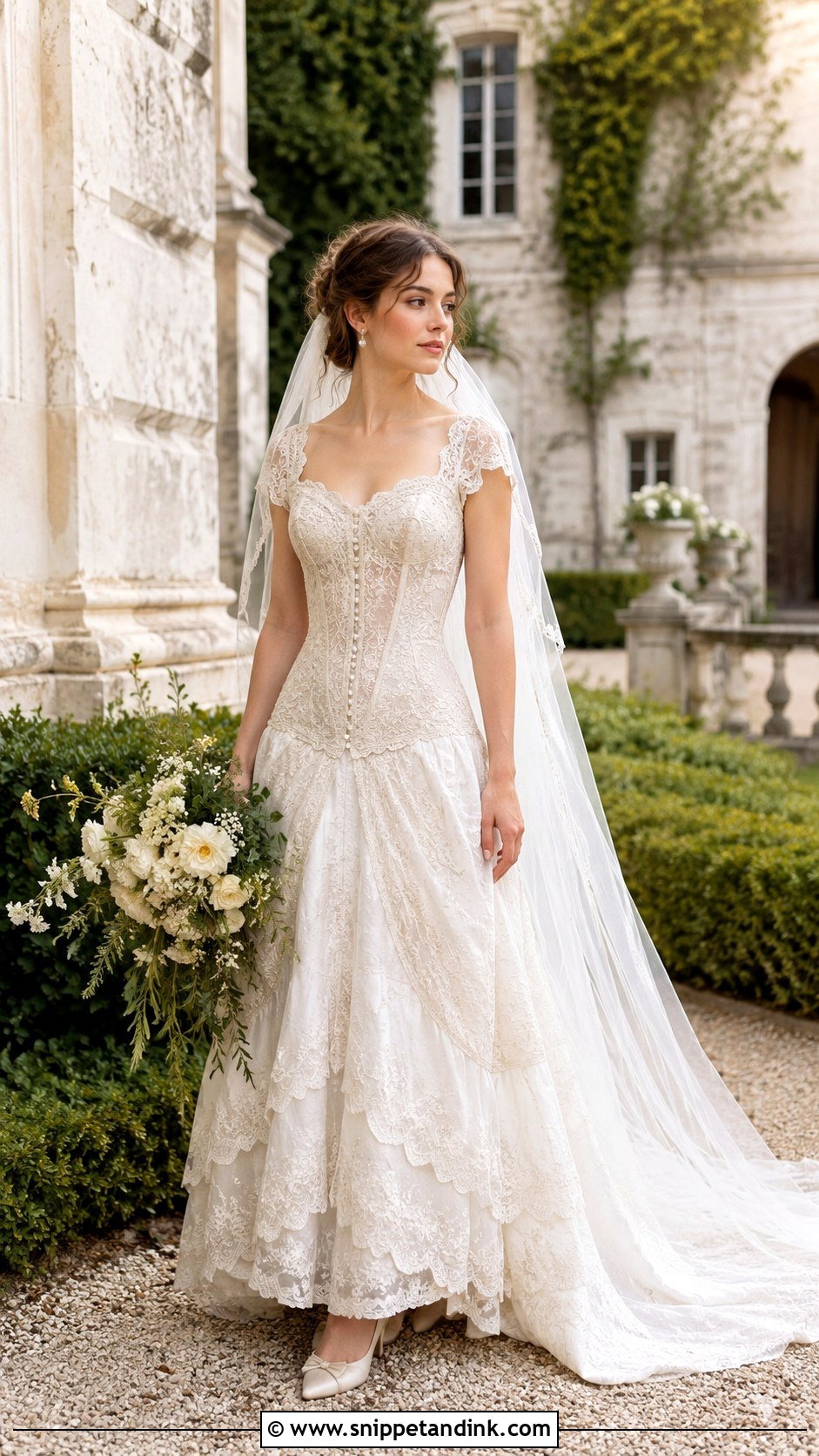
Vintage references work best in small doses. A corseted bodice, softly curved waist and lace or jacquard fabric with a heritage pattern give the feel; covered buttons, scalloped edges and fine sleeves add character, but pile on all of them and it slides toward costume. A Juliet-style or plain chapel veil, pearl earrings and low satin pumps finish it, with soft waves or a neat chignon. I’d carry a loosely gathered bouquet with trailing greenery. Modern internal support is what keeps these gowns wearable from the morning portraits to the last dance.
18. Plus Size Drop Waist Wedding Dress
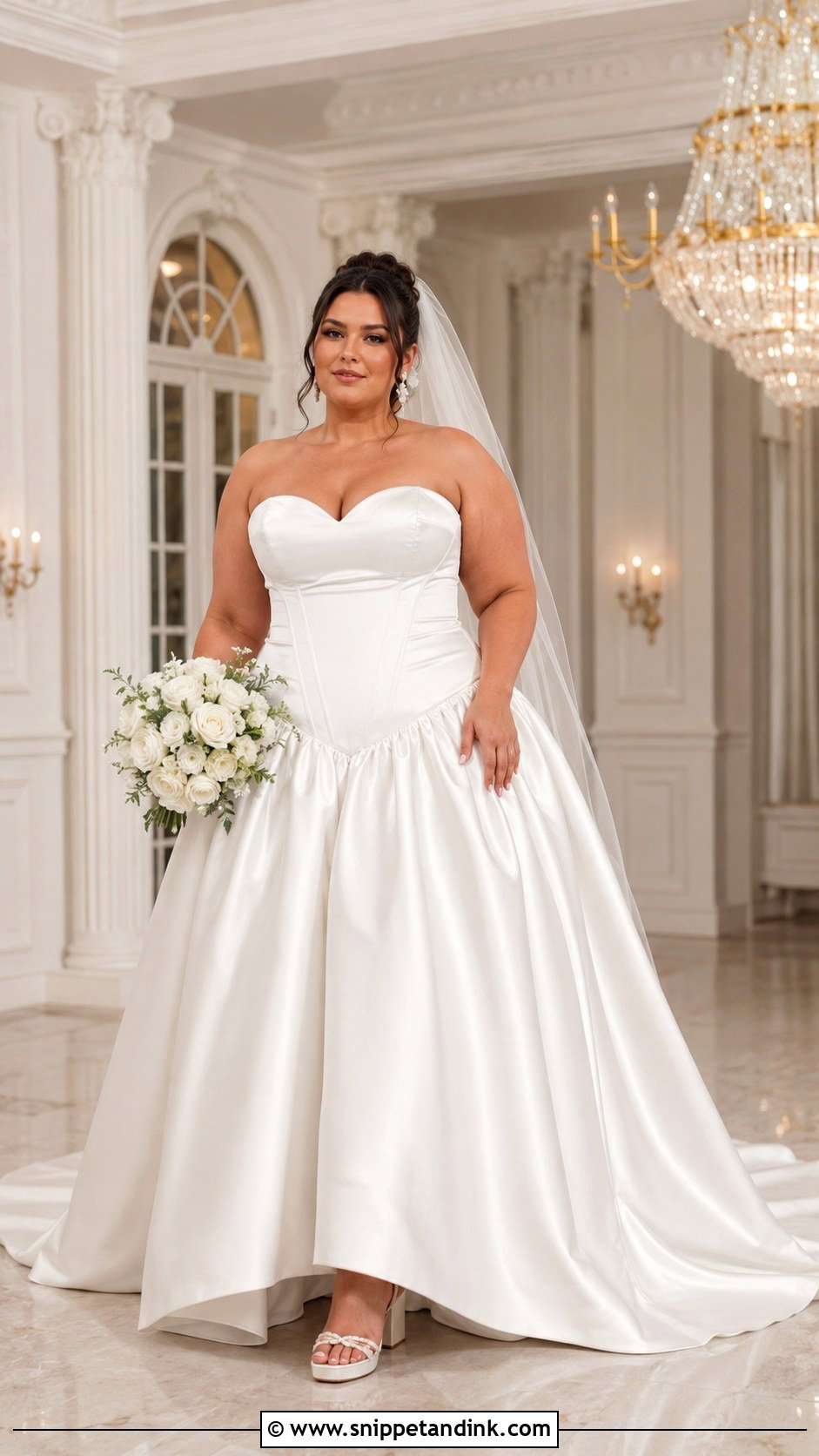
A plus size drop waist wedding dress needs the construction to do the supporting, not your posture. Look for reinforced seams, quality boning, an adjustable corset back and real room through the hips for sitting. A curved or Basque waist, the one that dips to a point at the centre front, gives a smooth transition into an A-line or ball gown skirt. Try sweetheart, square and off-the-shoulder necklines, because each offers different support. Order from the designer’s measurement chart and ignore the label. A good seamstress can then refine the straps, bodice, hem and bustle without losing the original shape.
19. Petite Drop Waist Wedding Dress
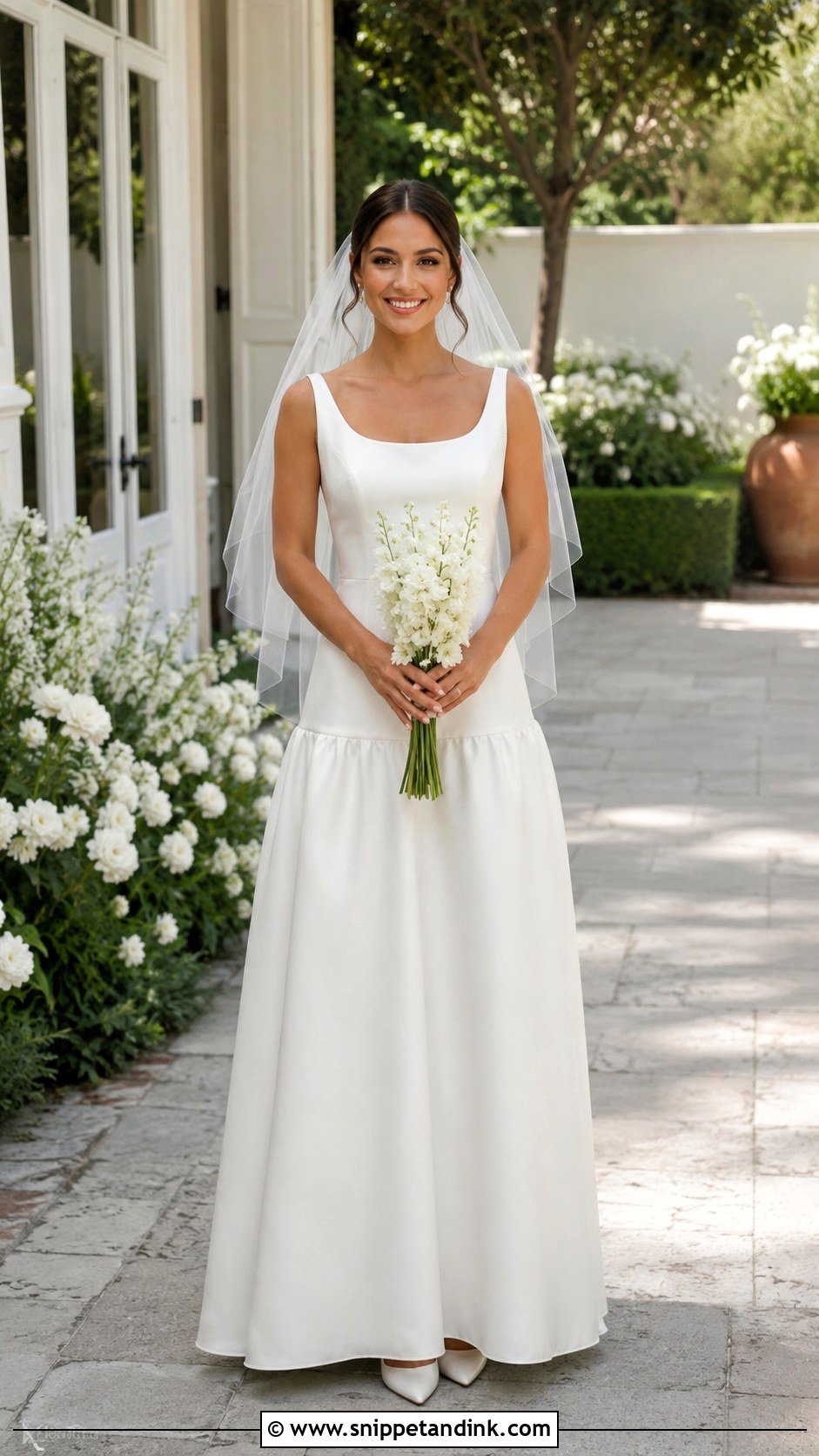
On a petite frame, seam placement outweighs everything else. A shorter bodice with a moderate drop lengthens the torso; a deep drop pushes the skirt so far down that the legs look short. An A-line skirt with some movement, vertical seams, light embellishment and a clean neckline keep it in proportion. Pointed heels, small drop earrings, a narrow bouquet and a fingertip or chapel veil finish it. Bring your actual wedding shoes to every fitting. The hem, your posture and how the skirt falls all change with heel height, and a sample on a tall model tells you almost nothing.


20. Drop Waist Wedding Dress With Detachable Overskirt
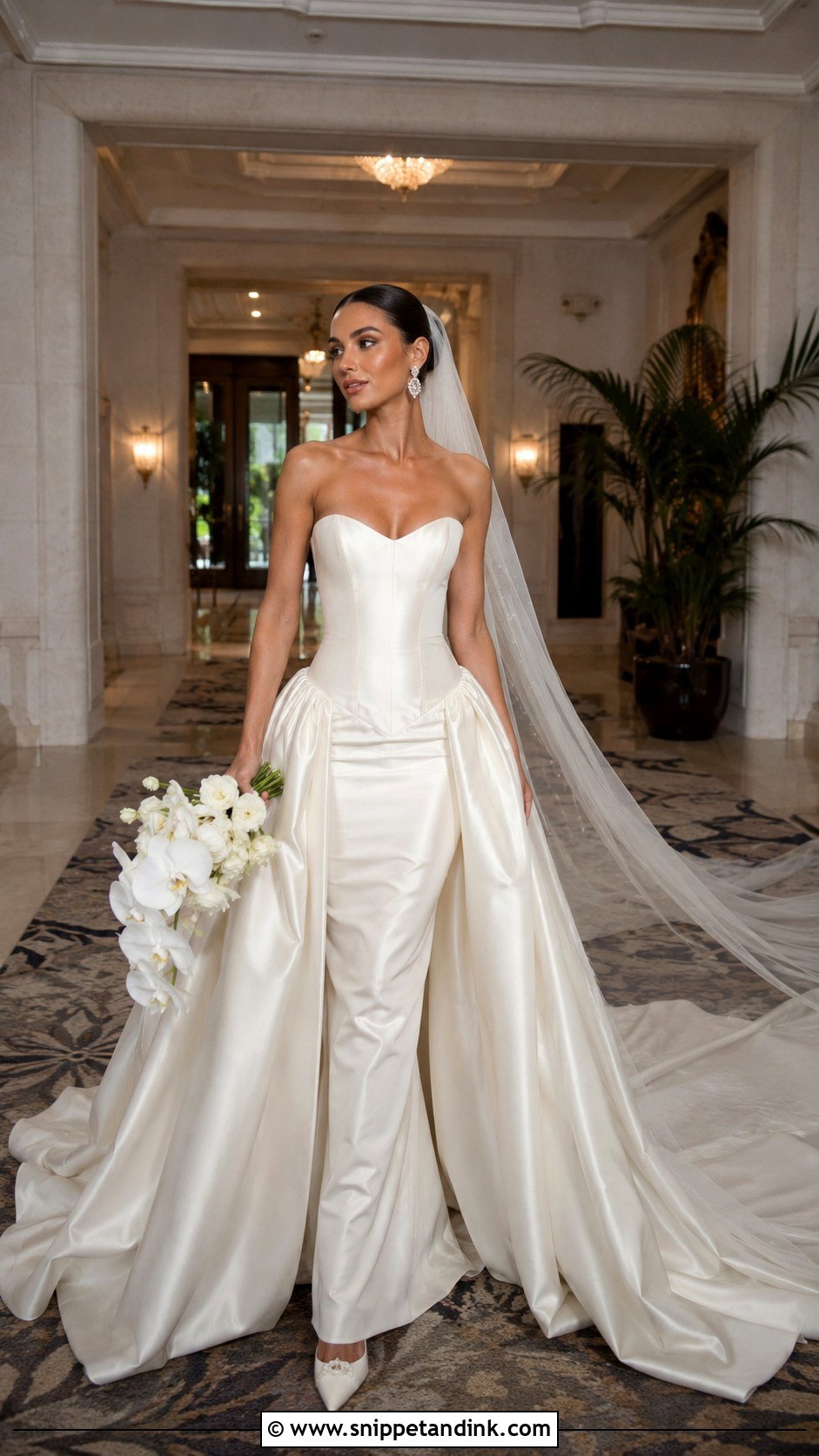
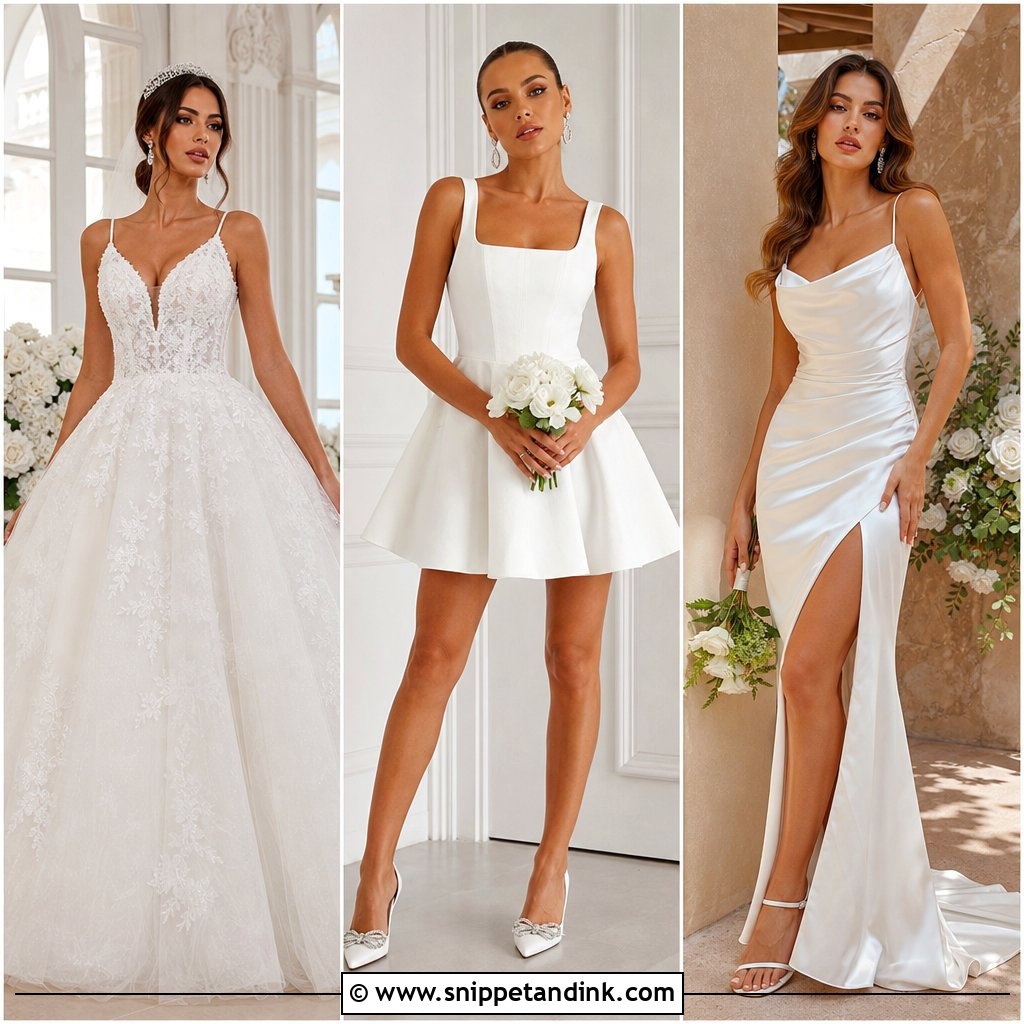
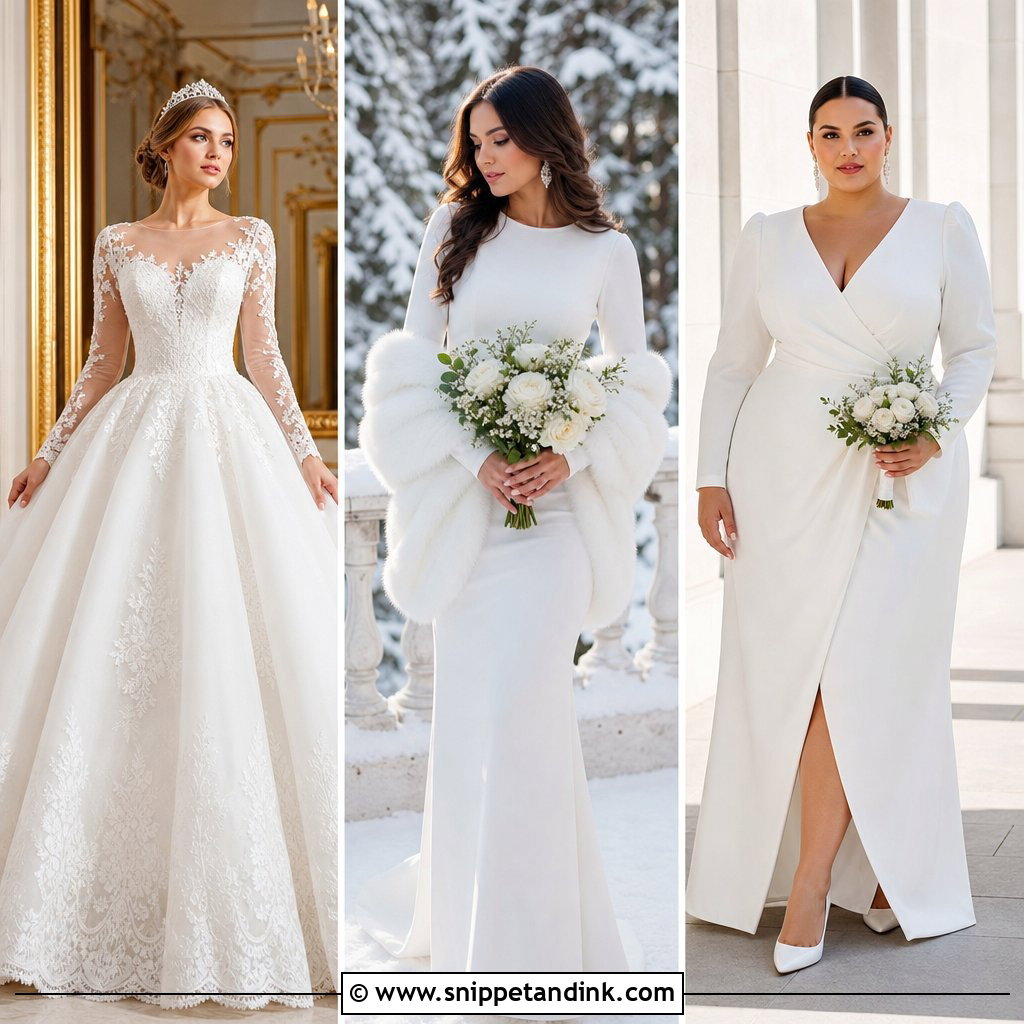
Two looks in one gown: a fitted base dress for the reception and a full overskirt clipped at the lowered waist for the ceremony, with ball gown volume and a train. After portraits or the first dance it comes off and you’re in a slimmer skirt that’s easy to move in. The attachment matters most. It should sit flat and come undone in a minute or two, so I favour hidden hooks or snaps over buttons. Bold earrings, a long veil, pointed heels and a modern white bouquet work with both versions. Test both at alterations, because the waistline must look finished with and without the outer layer.
Stepping Into a Dropped Bodice on the Morning
A drop waist goes on differently from most gowns because the fitted part extends over the hips. I have brides step in rather than pull it over the head, with hair and makeup already done and a clean cloth or scarf over the face just in case.
- Put on shapewear, bra or cups, and shoes first. Bending to buckle a shoe in a boned bodice is miserable.
- Lay the gown open on a clean sheet so you can step into the centre.
- Have one person lift the bodice while you settle the seam on your hips before anything is fastened.
- Close from the bottom up: zip or hooks, then any corset lacing, tightened gradually and evenly.
- Fluff the skirt and check the back in a mirror before the veil goes on.
Allow around twenty to thirty minutes for dressing, longer for corset backs. Rushing it is how zips catch lace.
Once the Party Ends: Cleaning a Structured Gown
Get the dress to a specialist cleaner within a few weeks. Sugary drinks and perspiration can dry invisibly and turn yellow later, especially on satin and silk. Point out any spills you know about. For storage, I’d keep a boned bodice supported rather than hanging by thin straps for months, and use acid-free tissue and a cotton bag rather than plastic, which can trap moisture.
One Long Bodice, Twenty Ways to Wear It
These 20 Dropwaist Wedding Dresses share a single idea, a bodice that runs past the waist, and yet they look completely different. Satin and mikado give crisp structure; lace, tulle, silk and organza bring movement. Neckline, sleeve and skirt volume do the rest. When you shop, watch where the bodice ends on you and how it behaves when you sit. Understructure and a skilled seamstress matter as much as anything you can see, and accessories should back the gown up rather than compete with it. The right one feels comfortable and still looks like you at the end of the night.
You'll Like These Ideas:







Leave a Reply