
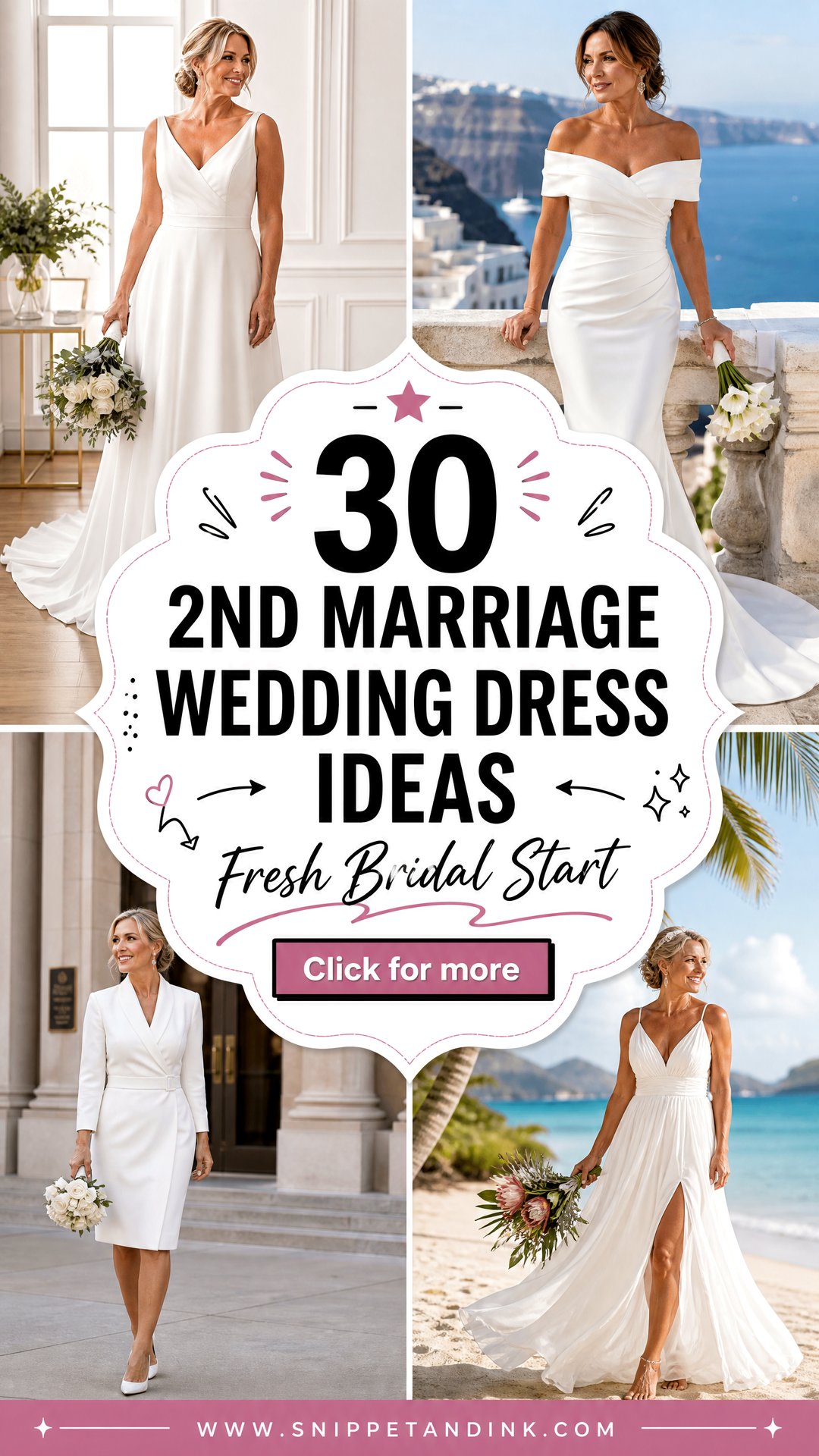
Women who come to me for a second wedding dress usually arrive knowing exactly what they won’t wear, and that saves us an hour. You already know your body, your taste and how you behave at a party, so the dress can answer to your life now instead of to old rules. White, ivory, champagne, blush, pale blue, a print, a short hem or a jumpsuit are all fair game. What actually narrows it down is the venue and the season: a courthouse rewards tailoring, a lawn rewards lighter fabric, and an evening ballroom can carry a full gown without anyone blinking. The ideas below are grouped loosely by shape, color and setting, with notes on what I check before I’d let a client buy each one.
Bridal Salon or Ready-to-Wear? Let the Calendar Decide
The first question I ask isn’t about style. It’s how many weeks you have. A gown ordered from a bridal salon is usually made to order, and production time is often four to six months before alterations even start. If your wedding is closer than that, you’re shopping samples, off-the-rack bridal or ready-to-wear, and that’s fine. Many of the midis, suits and slip dresses below come from regular eveningwear lines.
- Six months or more: you can order from a salon and still leave room for two or three fittings.
- Two to five months: look at sample sales, in-stock bridal and eveningwear, and budget for alterations straight away.
- Under two months: buy something that already fits your largest measurement and have a tailor take in the rest. Letting out is rarely possible.
Whatever route you take, bring the shoes and the underwear you plan to wear to every appointment. A hem pinned in flats will be wrong in heels, and a bra with different straps changes how a neckline sits.
1. Second Marriage A-Line Wedding Dress
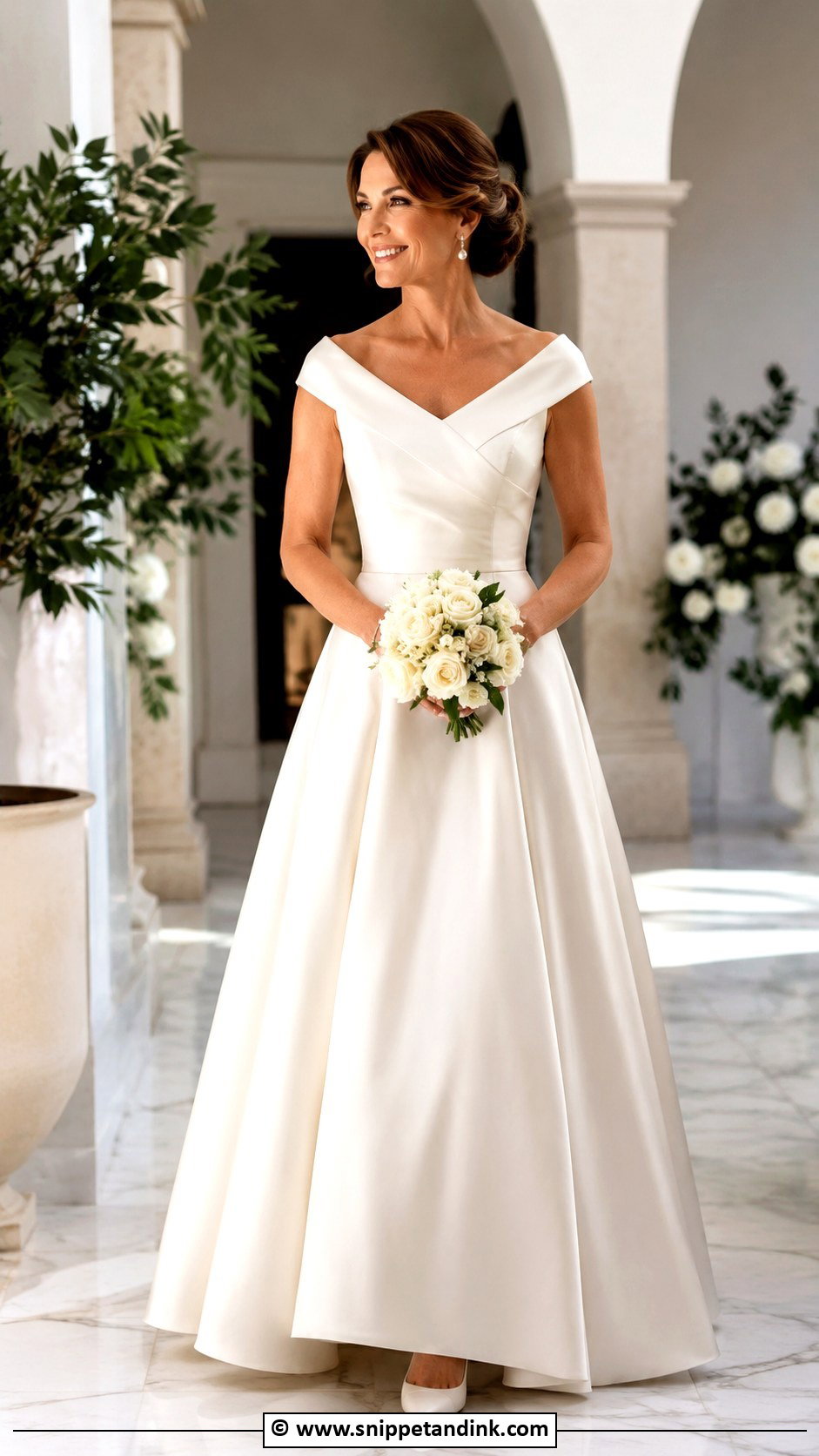
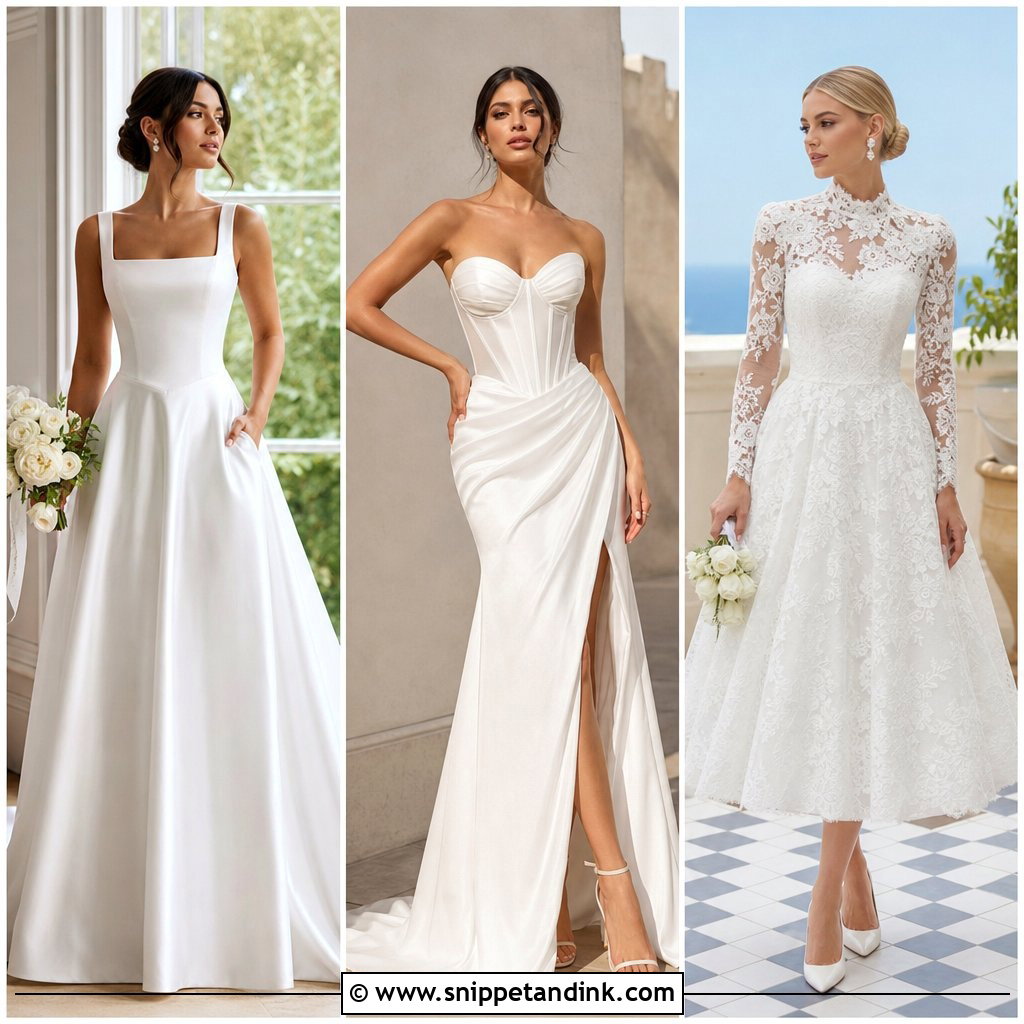
An A-line is the shape I pull first when a bride says she wants to look like a bride but not like a cake topper. The bodice holds you, and the skirt releases from the natural waist, so it forgives a lot through the hip. Crepe or a matte satin keeps it grown-up; heavy beading pushes it back toward a first-wedding feel. The thing I watch at fittings is where the waist seam lands. Even a centimetre too low and the skirt starts to look like it’s sliding off you. A fingertip veil suits it if you want tradition, and polished waves do the job if you don’t.
2. Second Marriage Tea Length Wedding Dress
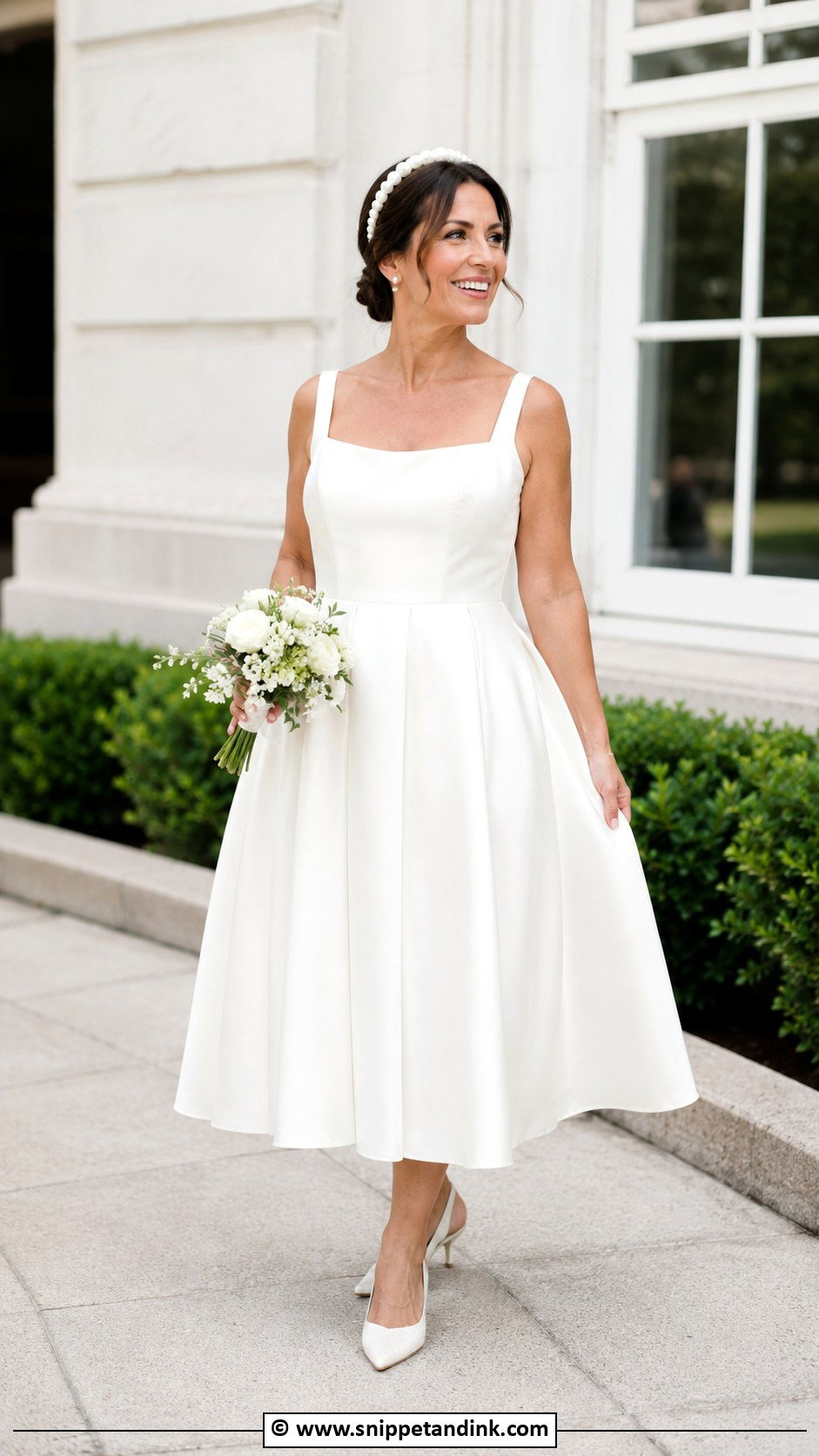
Tea length sits between the knee and the ankle, and I love it for daytime ceremonies and brunch receptions because nobody is lifting a hem to climb courthouse steps. A structured bodice with a full skirt reads vintage; a plain satin version with simple seams reads modern. The length makes your shoes part of the outfit, so this is the dress to show off beautiful shoes. One honest warning: the hem hits the widest part of the calf on some legs, so stand in front of a full mirror in the heels you’ll wear before you commit to the exact length.
3. Second Marriage Lace Wedding Dress
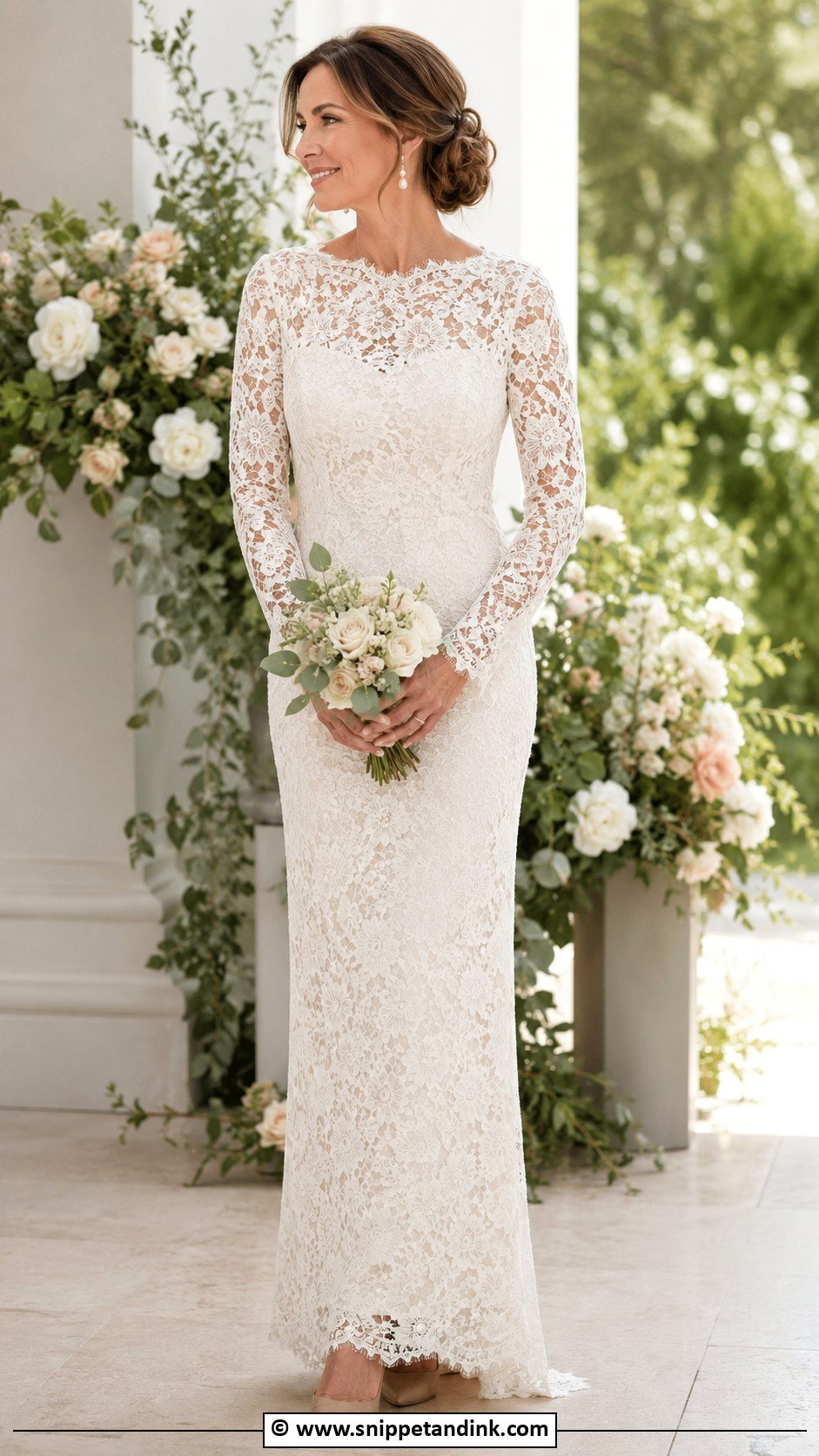
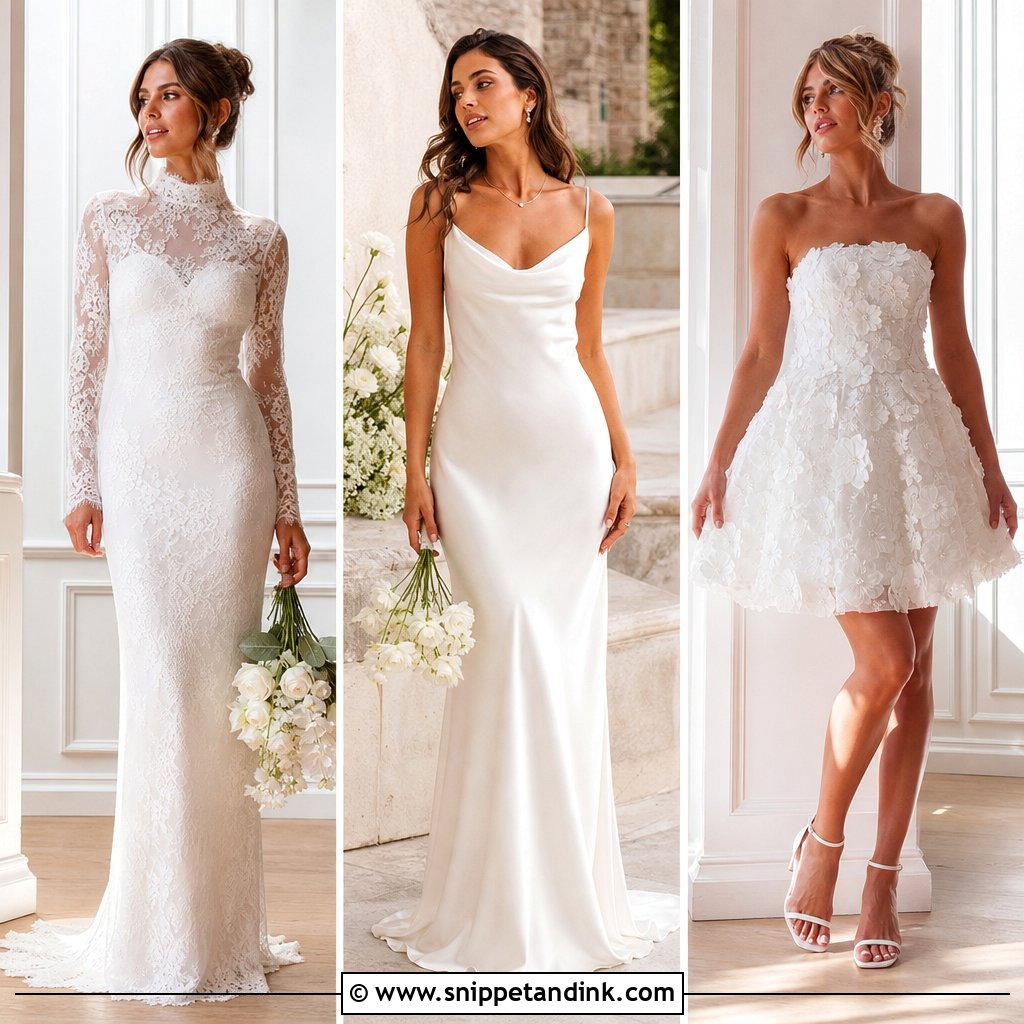
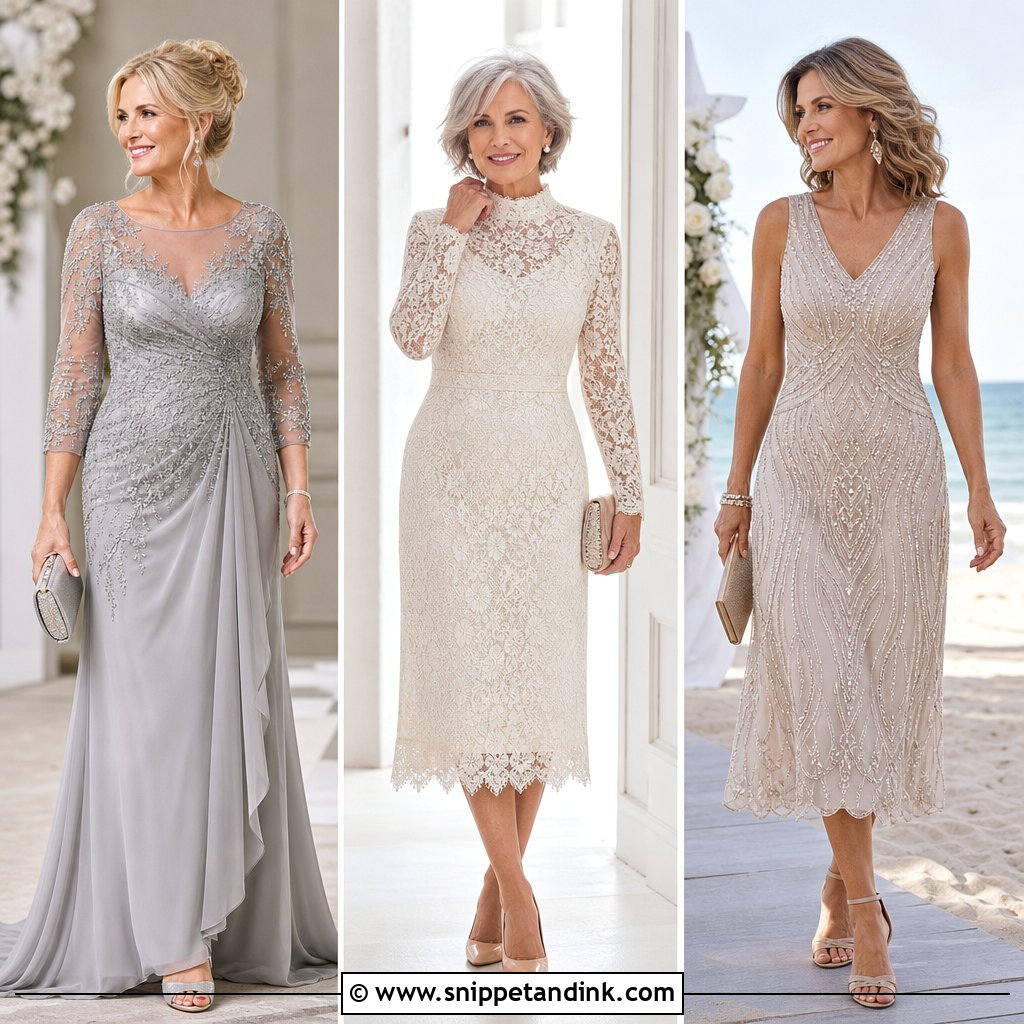
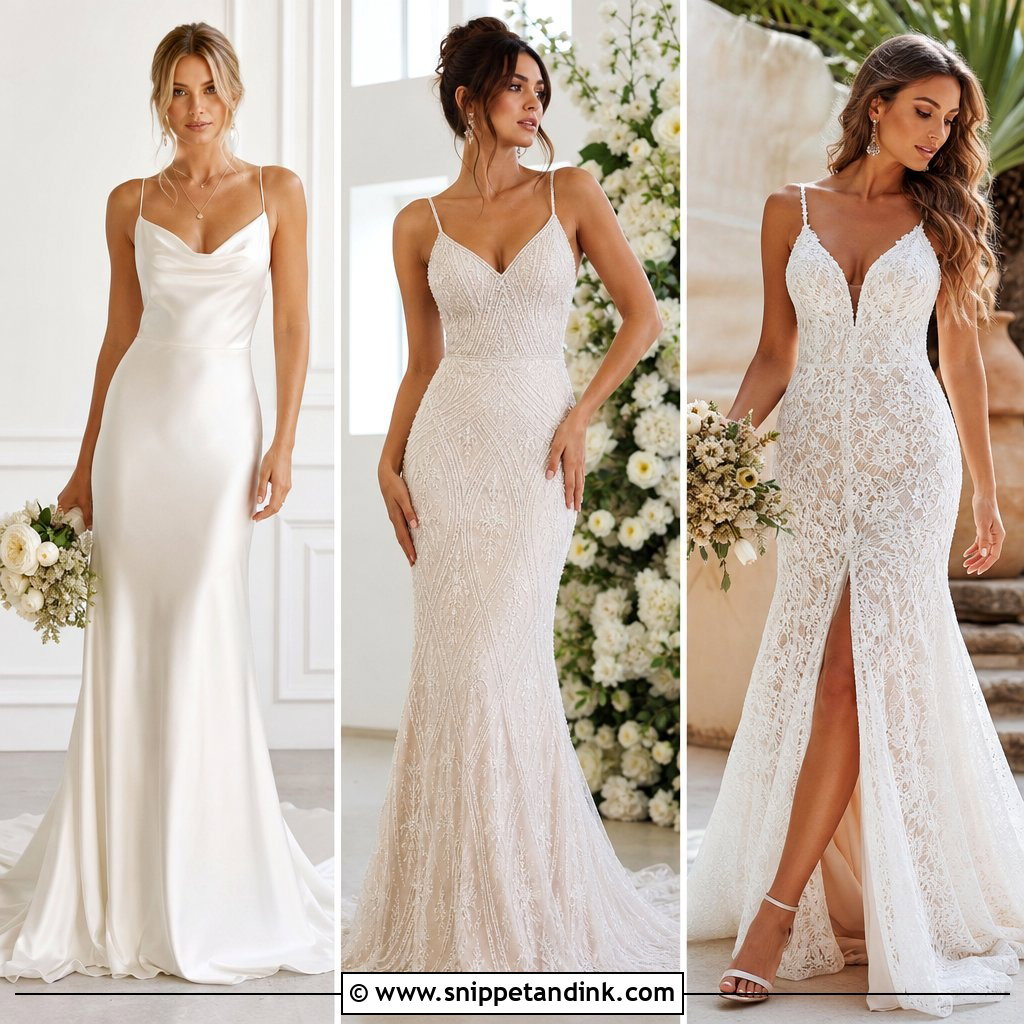
Lace doesn’t have to feel sugary. The trick is pairing it with a plain silhouette, a sheath or a simple midi, so the texture does the work and the shape stays modern. I usually suggest a champagne or blush lining under ivory lace, because it gives the pattern depth instead of letting it go flat against your skin. Corded lace holds its shape better than delicate Chantilly if you’ll be hugging people all afternoon. Keep the jewelry to small pearl drops and a low bun, and let the lace carry the look.
4. Second Marriage Satin Slip Wedding Dress
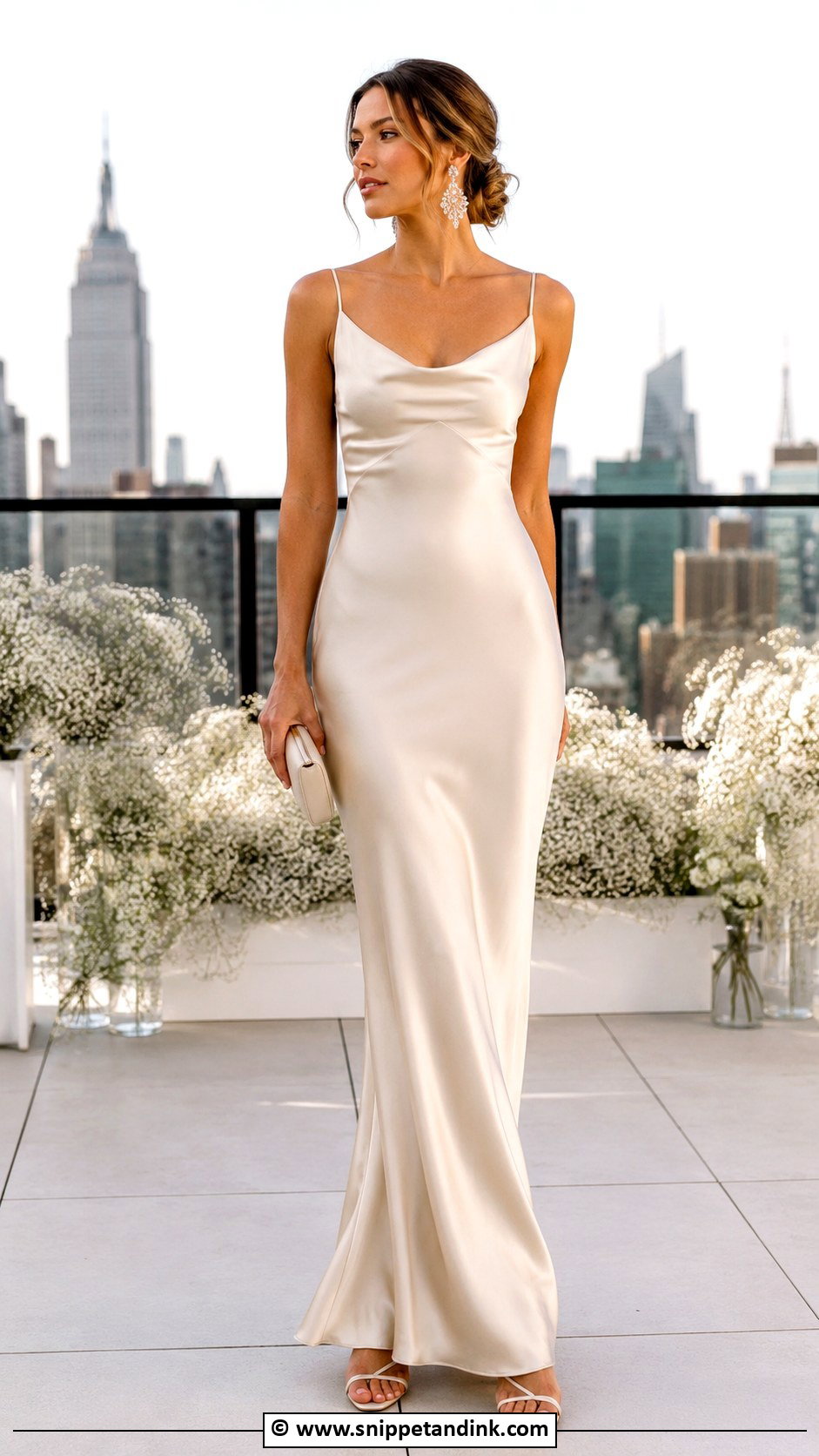
A bias-cut slip is unforgiving in a way the hanger never shows you. Satin cut on the bias drapes like water but reveals every seam underneath, so I always ask clients to bring the exact underwear they plan to wear to the first fitting. Get that right and it’s one of the most relaxed options for a rooftop, a restaurant or a destination ceremony. Delicate straps, a strappy sandal and a slim clutch are enough. If you want cover for the ceremony, a tailored blazer over the shoulders looks deliberate rather than chilly.
5. Second Marriage Champagne Wedding Dress
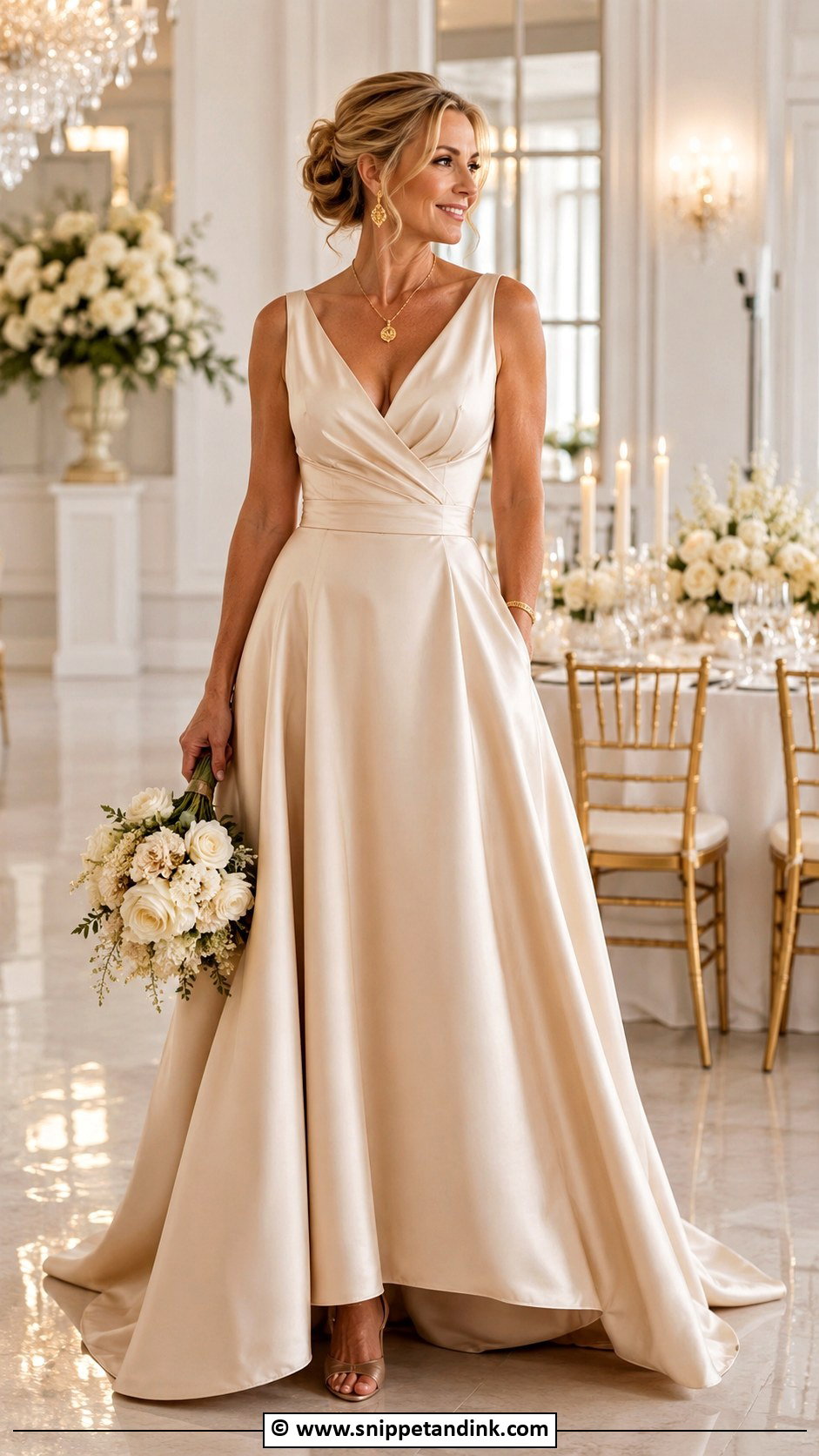
Champagne flatters more skin tones than stark white, which is why I suggest trying it even to brides who swear they’re ivory people. It works in satin, tulle, crepe or beading, and the warmth deepens under evening light. Hold the fabric against your face in daylight first: some champagnes pull pinkish, some pull grey, and the wrong undertone can make skin look tired. Gold jewelry and a cream bouquet keep the palette coherent. It suits fall weddings and indoor evening venues especially well.
6. Second Marriage Blush Wedding Dress
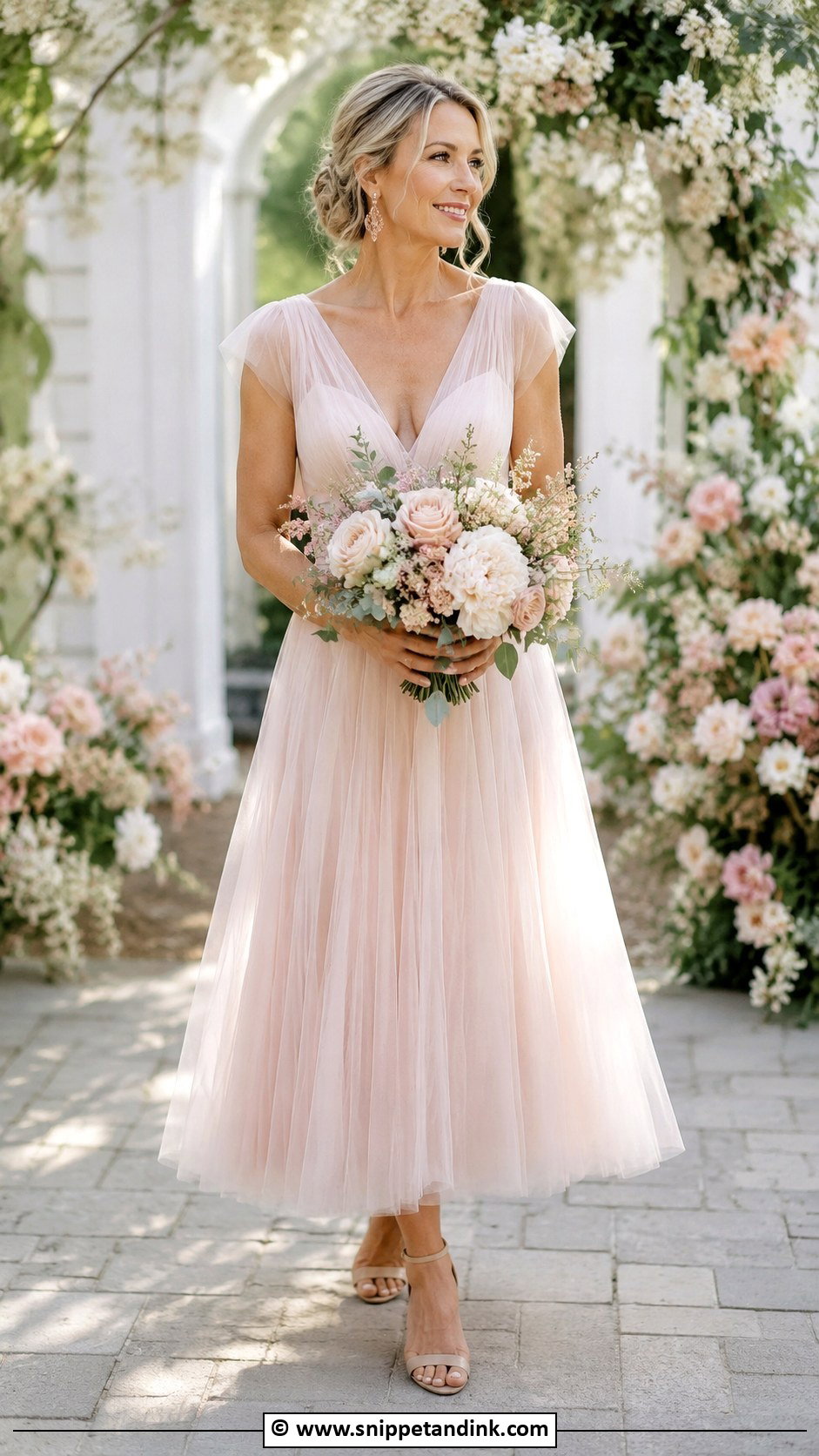
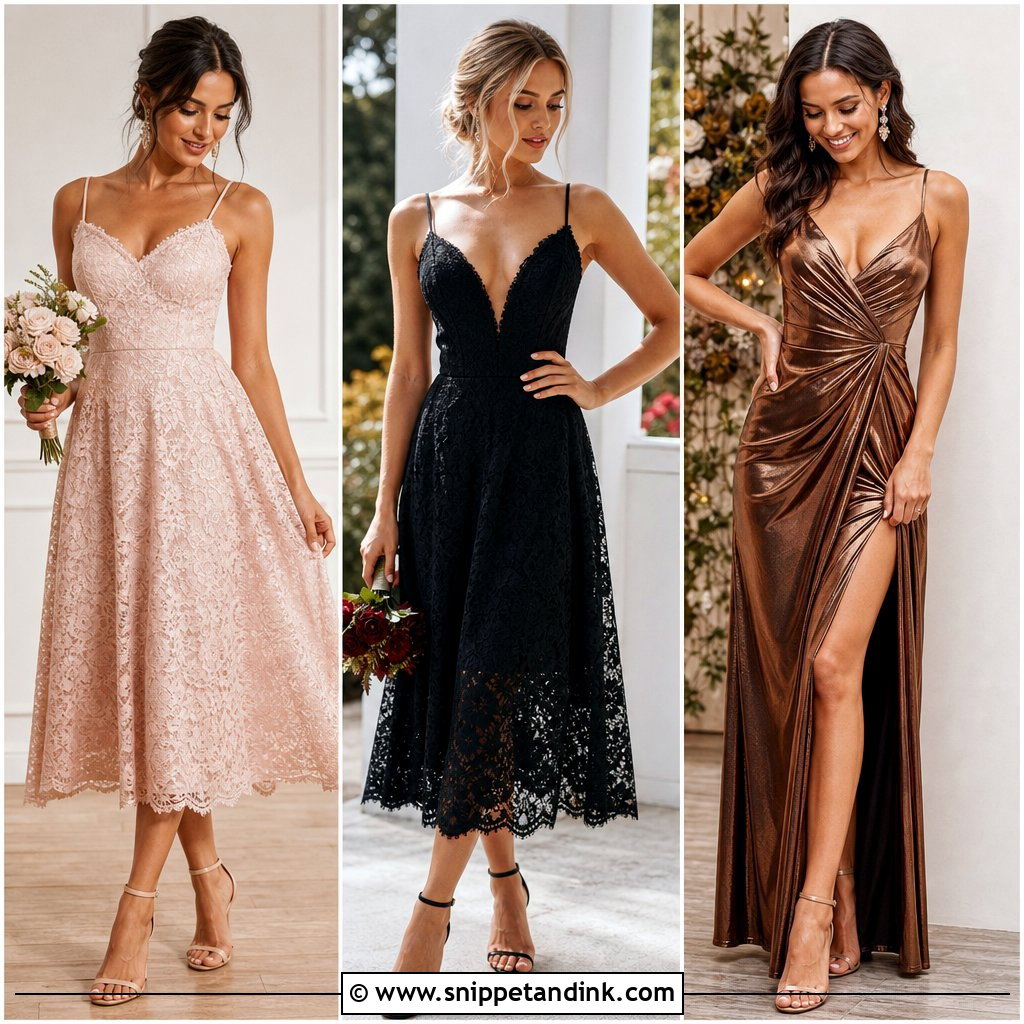
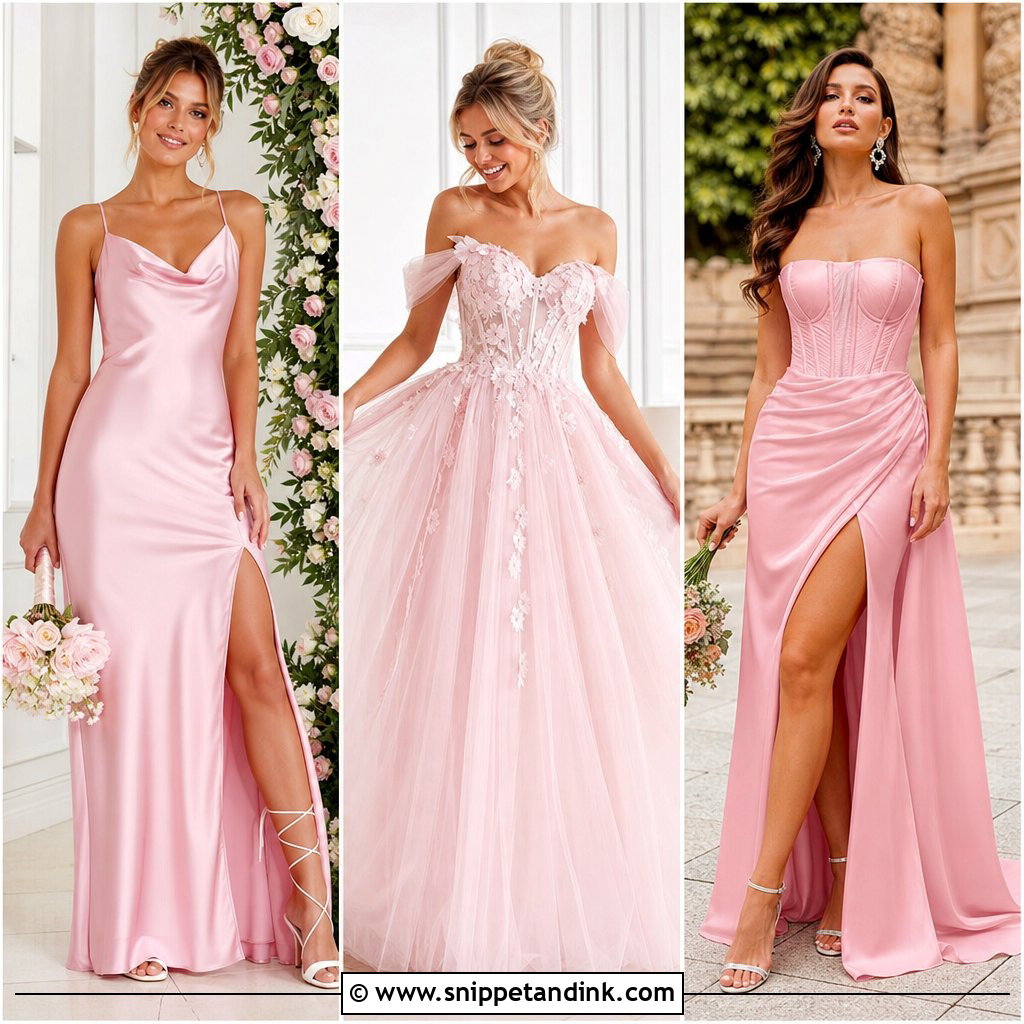
Blush is close enough to bridal that guests read it as a wedding dress, but it gives you color in every photo. Tulle gives the softest result; satin looks more expensive; lace in a blush midi feels intimate for a small ceremony. The risk is fair skin: if the pink is too close to your own tone, you can look washed out from a distance, so I test it next to the face in natural light. Rose gold jewelry and a bouquet with peach or ivory blooms finish it without adding more pink than you need.
7. Second Marriage Ivory Sheath Wedding Dress
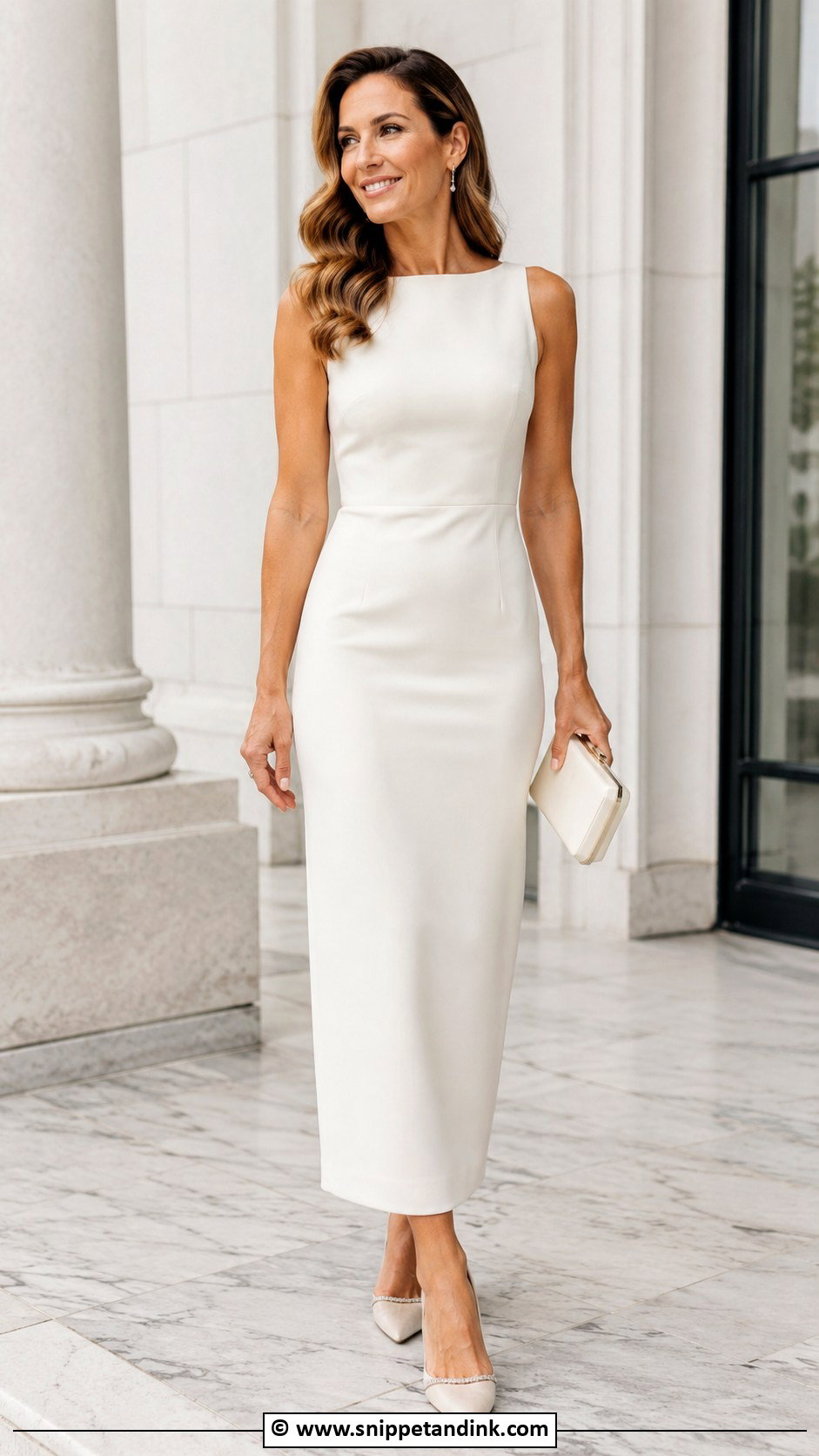
A sheath runs straight down from the bust without the volume of a ball gown, which makes fit the whole story. Crepe or stretch satin with a bateau or square neckline is the combination I reach for most. The alteration I end up doing on almost every sheath is the side seams through the hip, because off-the-rack sizing rarely matches both bust and hip at once. Pointed heels, a structured clutch and a low chignon keep it sharp for a city hall ceremony, a gallery or a small formal dinner.
8. Second Marriage Long Sleeve Wedding Dress
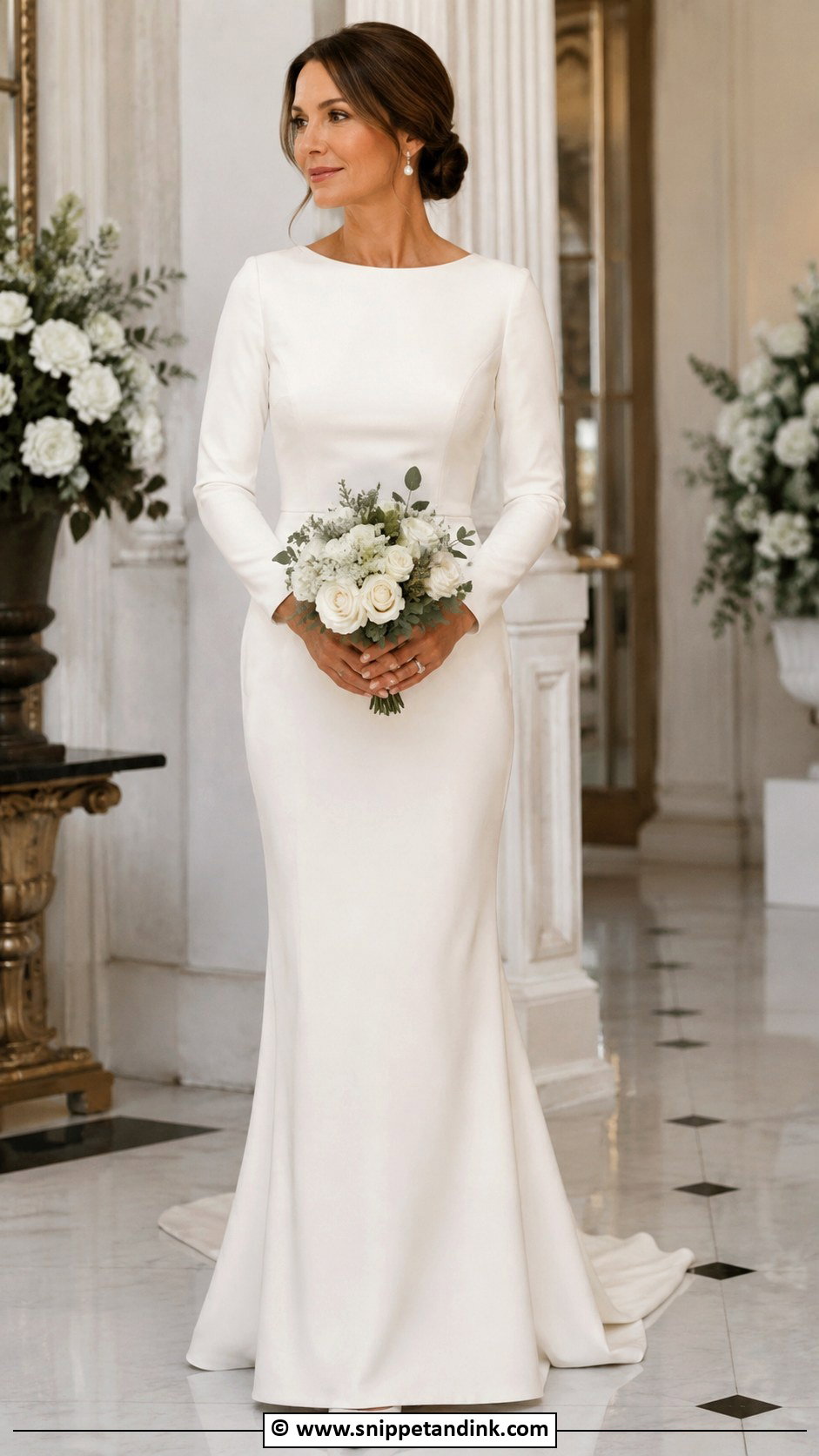
Long sleeves read as deliberate when they’re light, and heavy when they’re not. Sheer lace, fitted crepe or a soft bishop sleeve are the three I’d consider, and the bishop is the one to try sitting down because the gathered cuff can catch on a table edge. Fall and winter ceremonies suit sleeves best, though a sheer sleeve works in a cool spring church too. Keep the hair clean and the earrings simple so the neckline and arms balance. It’s a smart route if you want coverage without hiding your shape.
9. Second Marriage Off Shoulder Wedding Dress
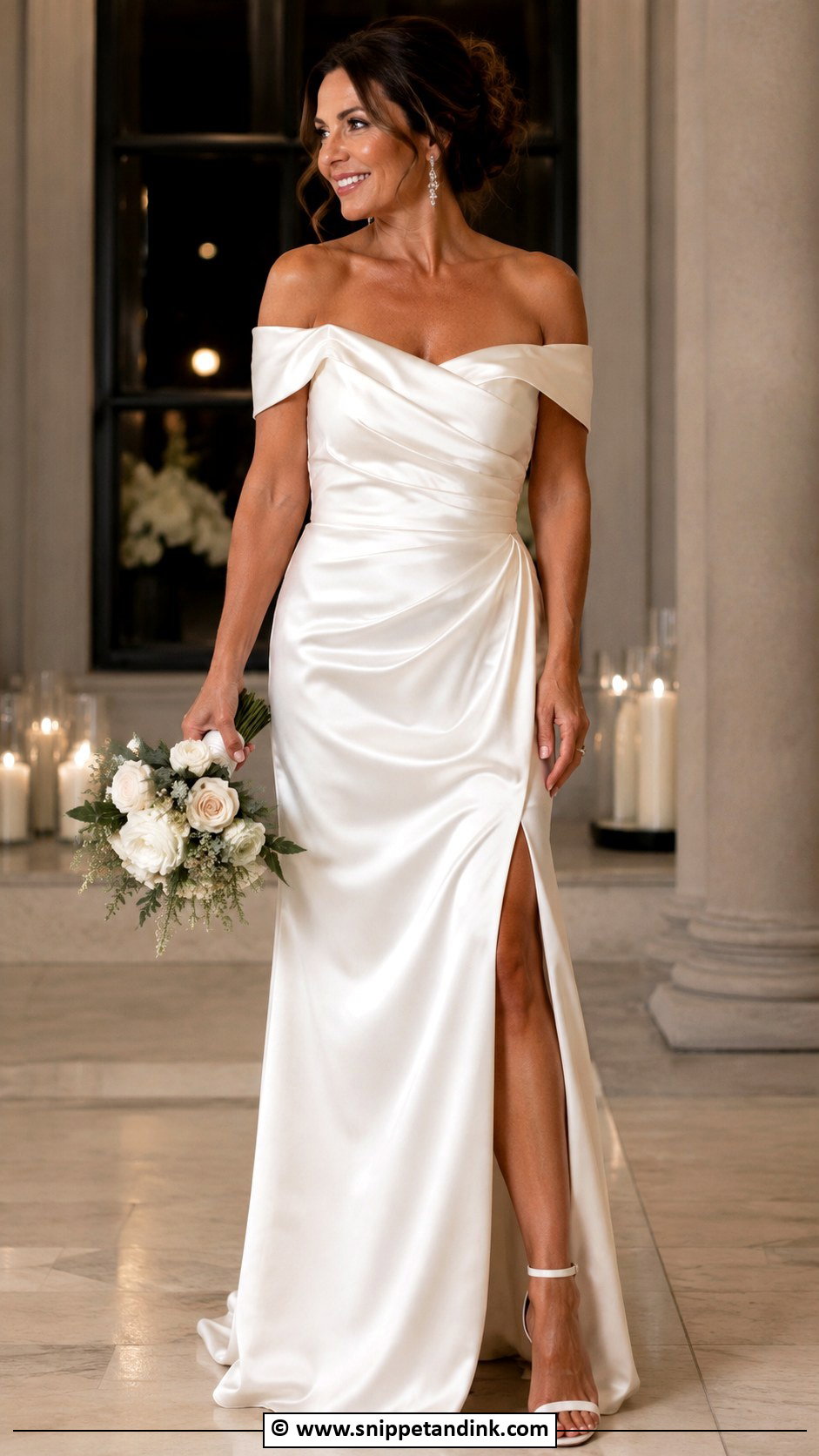
Off-shoulder necklines are pretty but they move. Every time you raise your arms to hug someone, the band rides up, so I always have clients do a few big hugs in the fitting room before we finalise. A silicone grip strip inside the band or a well-placed boning channel fixes most of it. Choose a fitted crepe gown or an A-line in satin, wear drop earrings, and put the hair in a low bun or swept to one side so the shoulder line stays visible. It’s romantic without being theatrical.
10. Second Marriage V Neck Wedding Dress
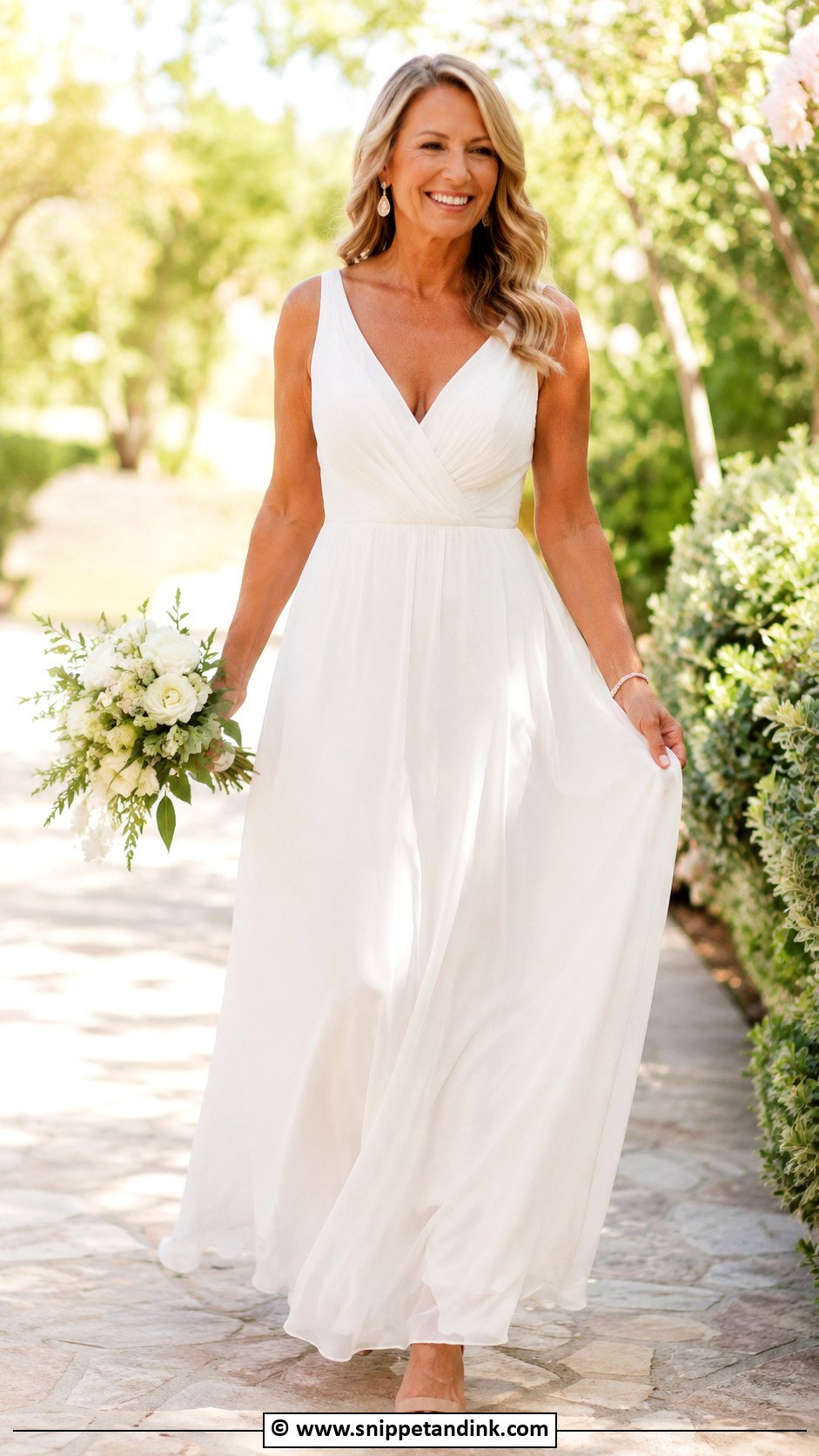
A V neck lengthens the upper body and suits more figures than almost any other neckline I fit. A crepe sheath, a chiffon A-line or a lace dress with a modest plunge all work for a second wedding. Here’s my rule on jewelry: a pendant only if the neckline is completely plain, earrings instead if there’s lace or beading near it. For deeper plunges, I’ll add a hidden mesh panel or fashion tape so you’re not adjusting it all evening. Nude or metallic heels suit beach ceremonies and formal dinners equally.
11. Second Marriage Square Neck Wedding Dress
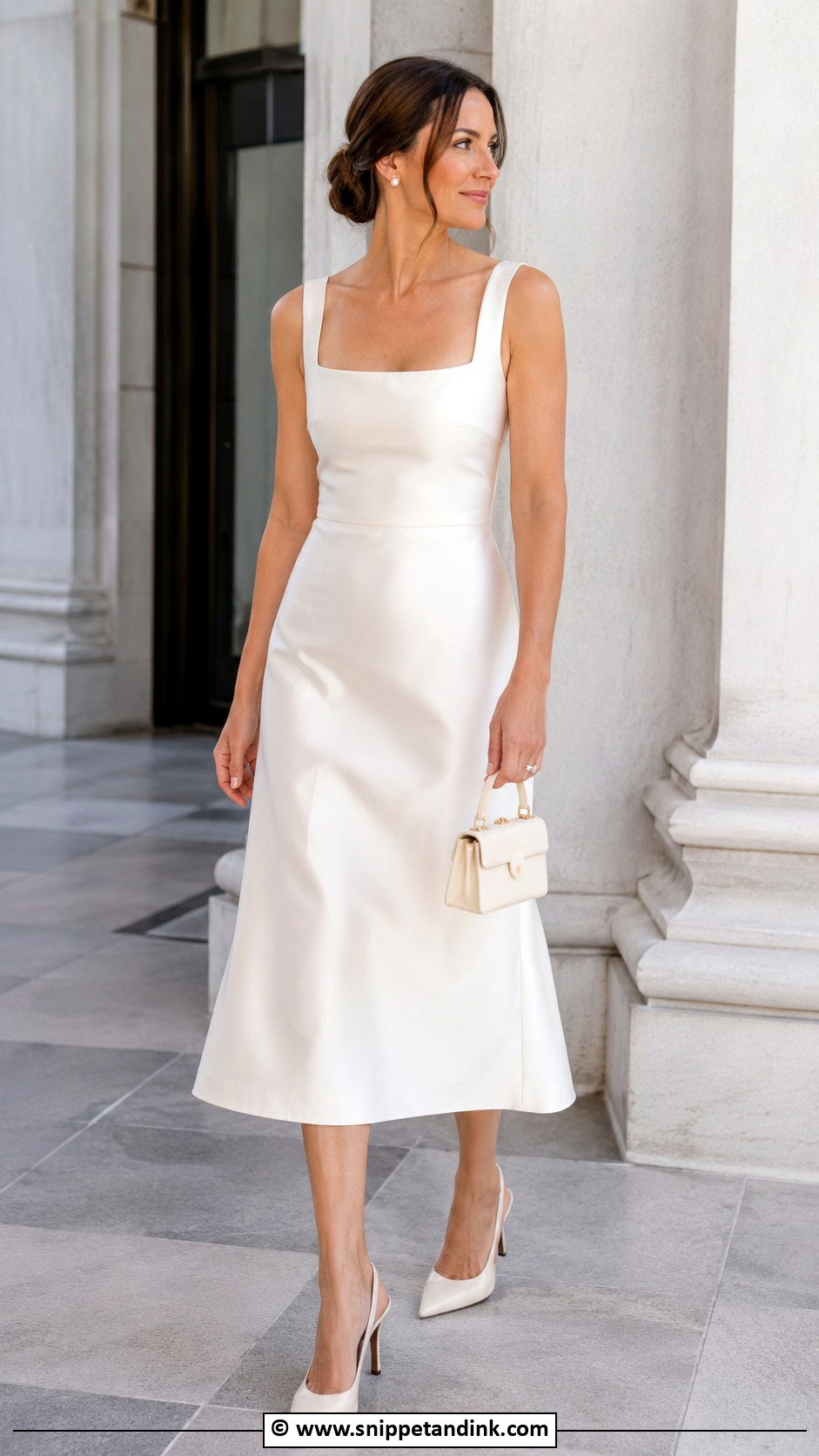
Square necks frame the collarbone and make a simple gown look finished, which is why they’ve become one of my quiet favorites. A satin midi, a crepe column or an A-line with wide straps all carry it. Pearl studs and a slim bracelet are plenty. The neckline needs a clean updo or tucked waves to show its geometry, and the straps must sit snugly: a square neck that gapes when you lean forward is a fitting problem, not a style choice, so test it bending over a table. It suits courthouse ceremonies and modern restaurant receptions.
12. Second Marriage High Neck Wedding Dress
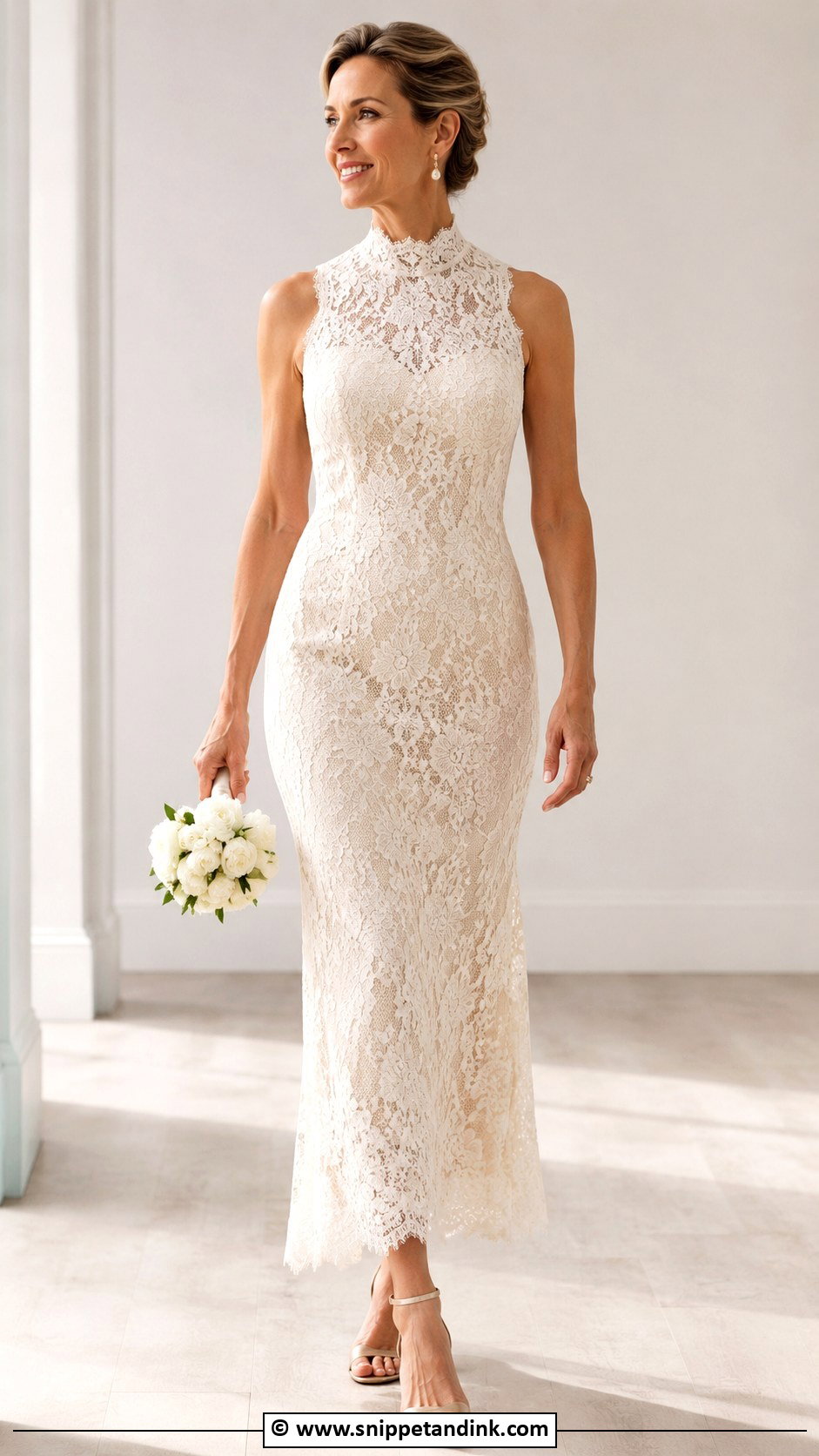
High necks look refined when the fabric is light and stiff when it isn’t. Soft crepe, lace, chiffon or a fluid satin are the ones that stay comfortable through a long day. A high-neck sheath looks sleek; a high-neck lace gown looks romantic. Skip the necklace completely, sweep the hair back and let earrings do the talking. One thing to check at the fitting is the closure: a row of tiny buttons at the nape is lovely but slow, so plan on someone patient to help you in.
13. Second Marriage Midi Wedding Dress
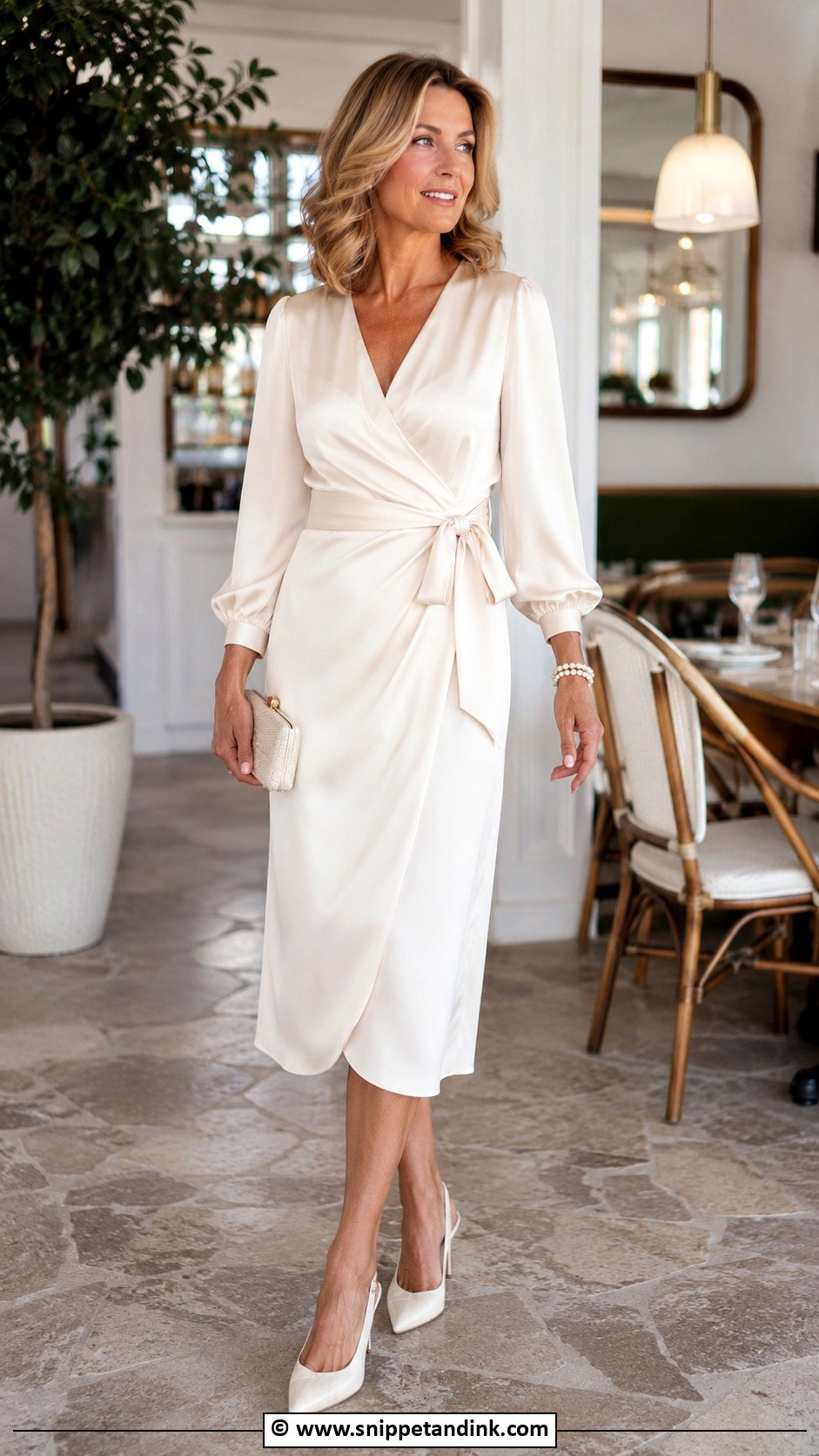
Midi is the length I’d call the easiest win for a second wedding. It looks dressed up, you can move in it, and you’ll probably wear it again. A satin wrap, a lace pencil, a crepe fit-and-flare and pleated chiffon each give a different mood. Slingbacks and modern pearls suit almost all of them. It also opens the color question wide, from ivory to blush to pale blue, since a midi doesn’t rely on traditional bridal white to read as special.
14. Second Marriage Short Wedding Dress
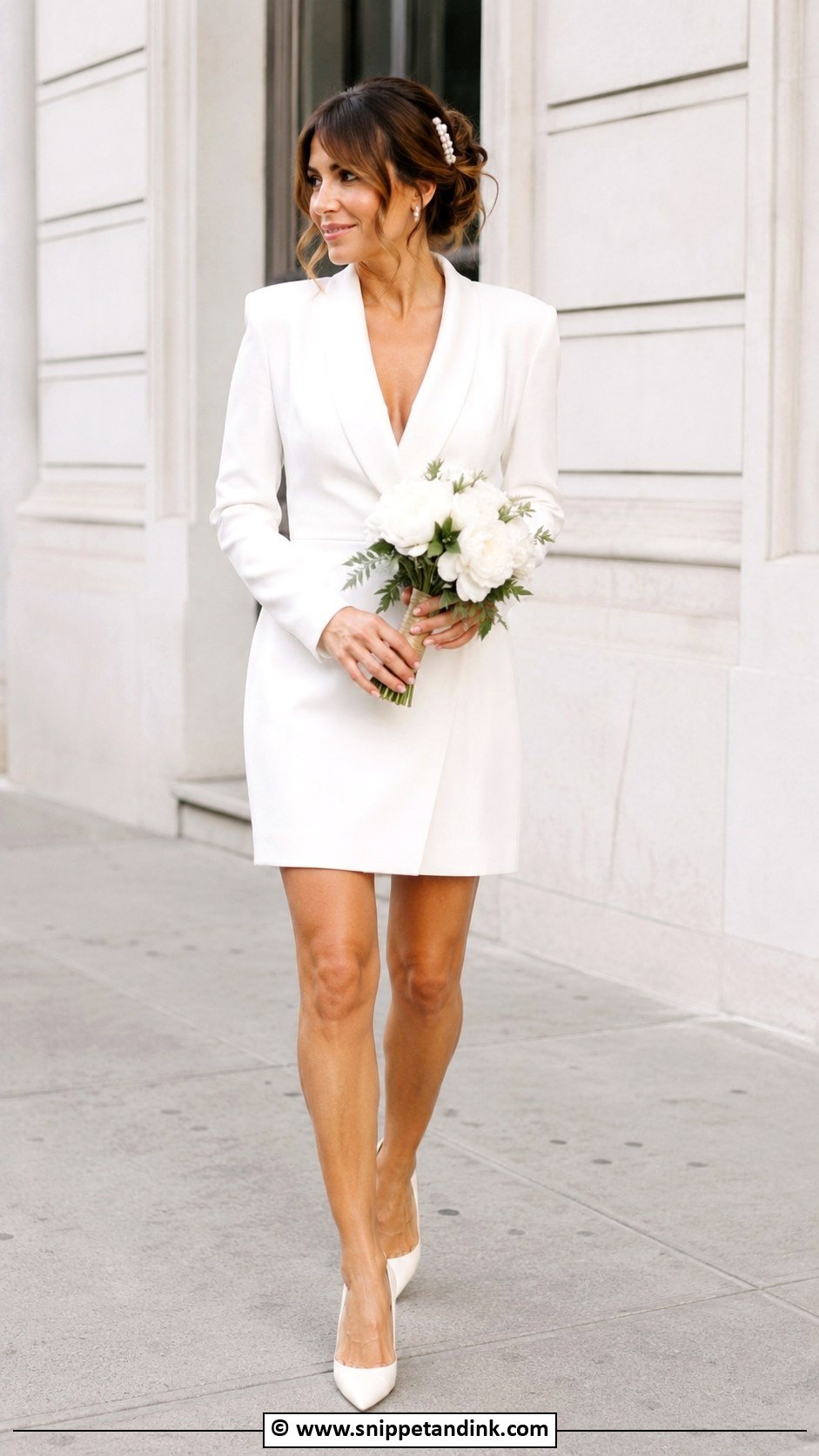
A short dress is a strong call for a city elopement or a casual reception, and I steer women toward it when they’ve told me they hate fabric around their ankles. A tailored mini with long sleeves feels chic; a lace knee-length is gentler. The thing that makes short read as bridal is one accessory, a birdcage veil, a pearl headband or sculptural earrings, rather than a pile of them. Sit down in it during the fitting. Some minis ride up a lot more on a chair than they do standing at a mirror.
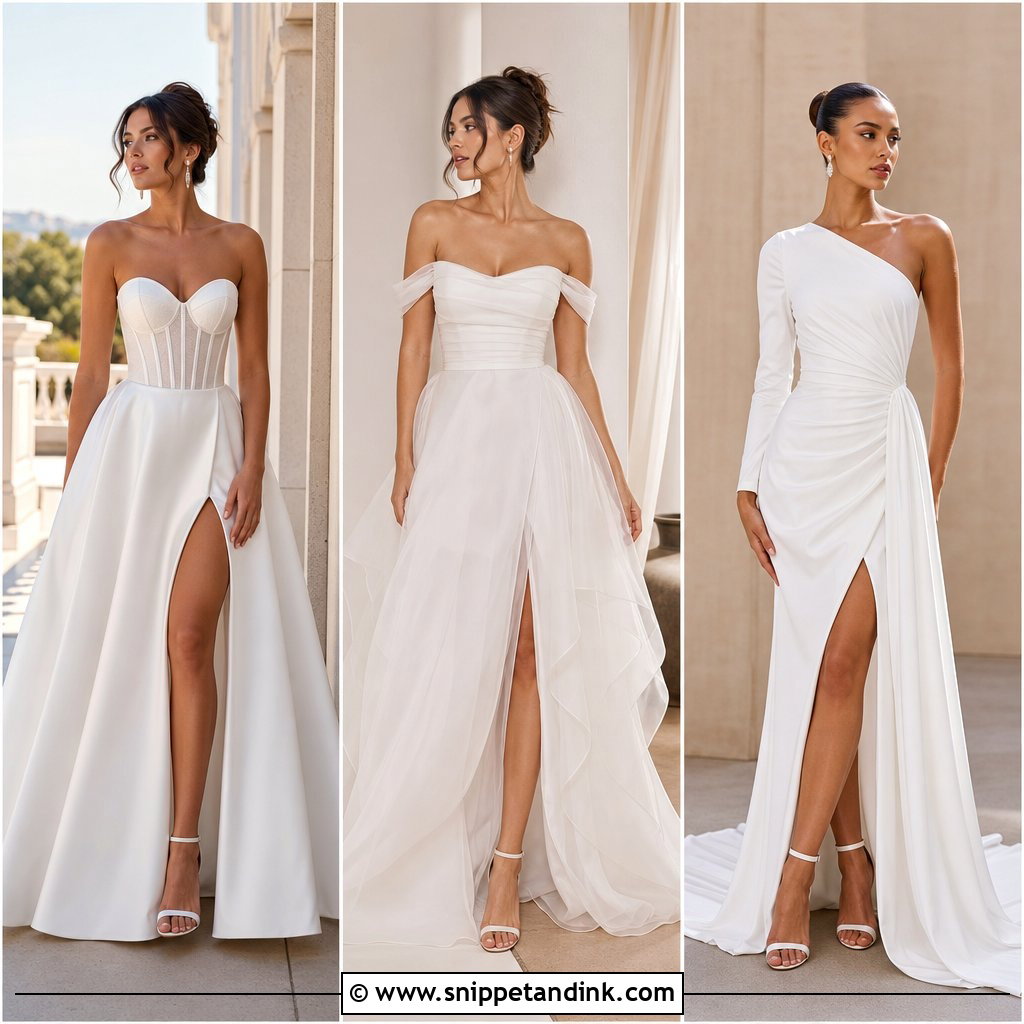
15. Second Marriage Courthouse Wedding Dress
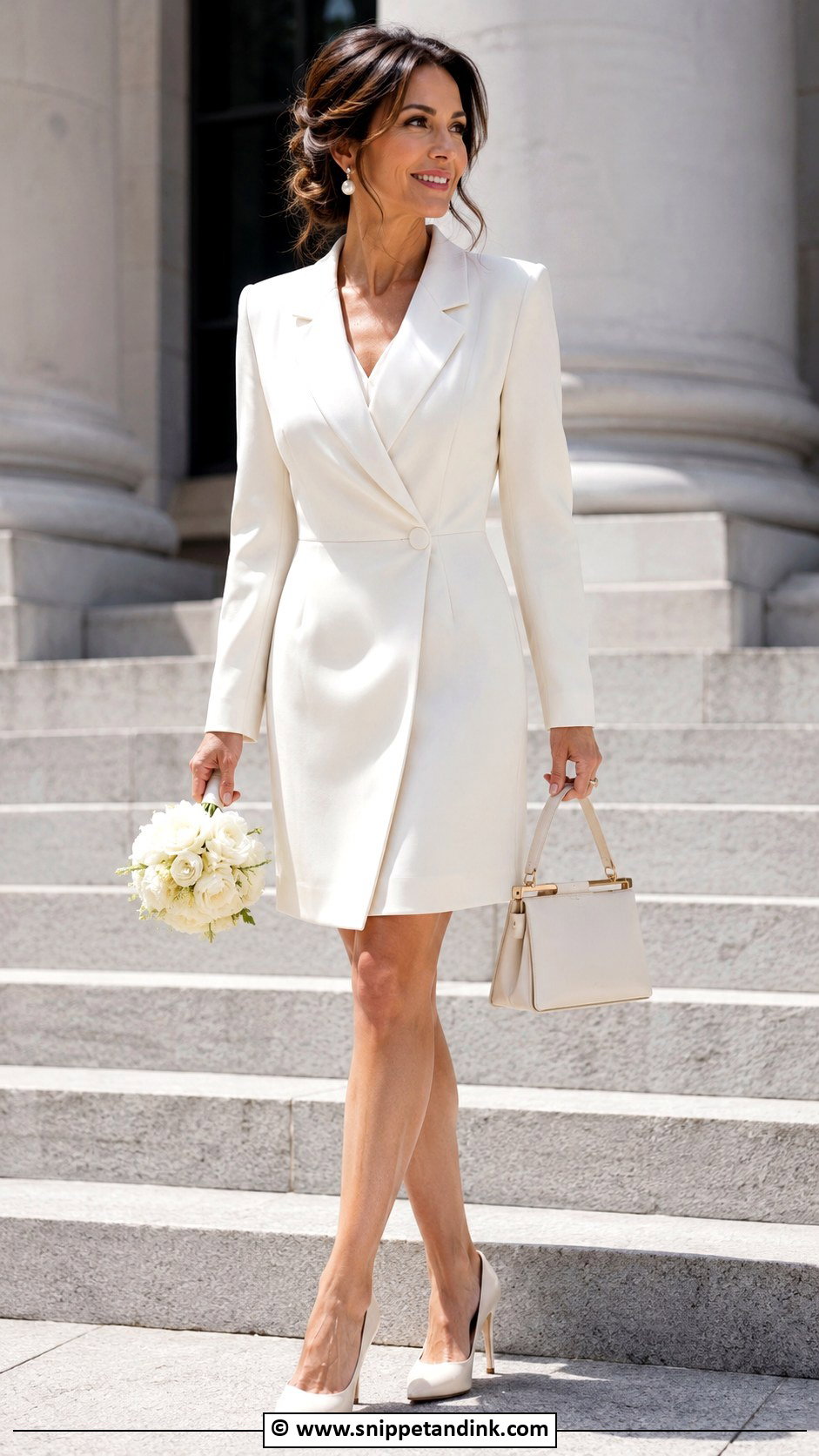
For a courthouse ceremony, think clean lines and comfortable shoes, because there’s often a queue and a corridor. A white blazer dress, an ivory midi, a tailored sheath or plain satin all photograph well against neutral walls and harsh overhead light. I’d avoid anything that wrinkles badly while sitting in a waiting area, which rules out some linens. Add one bridal note, a short veil, a pearl clip or a small bouquet, and you look intentional without seeming overdressed for the setting.
16. Second Marriage Beach Wedding Dress
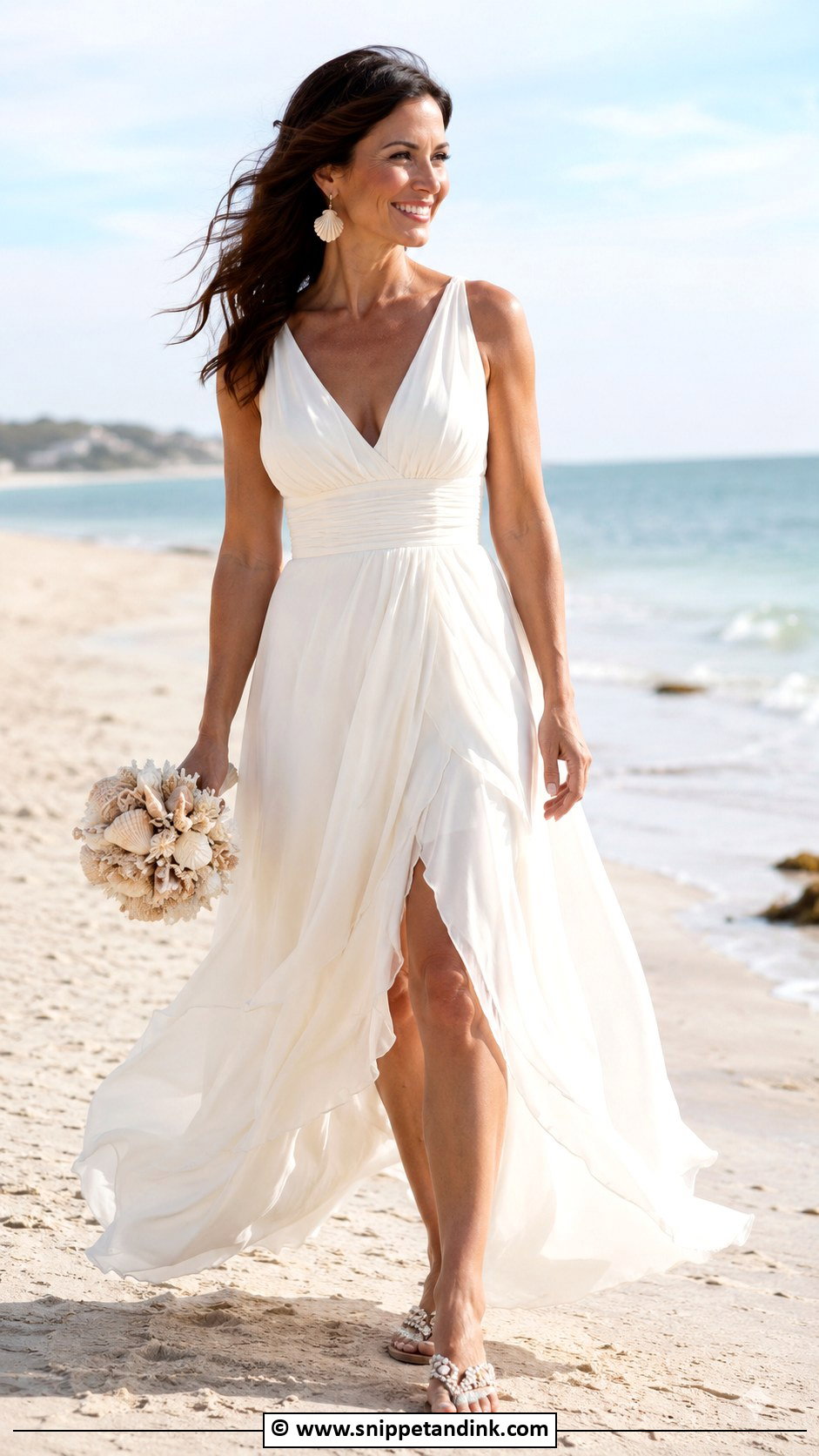
On sand, weight is the enemy. A train drags, collects grit and pulls the dress off line in every photo, so I’d keep the hem at floor length or above. Chiffon, soft crepe and cotton lace move well in a breeze; heavy satin goes stiff in salty humidity. A relaxed A-line or a simple maxi is easiest to walk in barefoot or in flat sandals. Loose waves and a green-and-white bouquet keep the whole look as relaxed as the setting.
17. Second Marriage Garden Wedding Dress
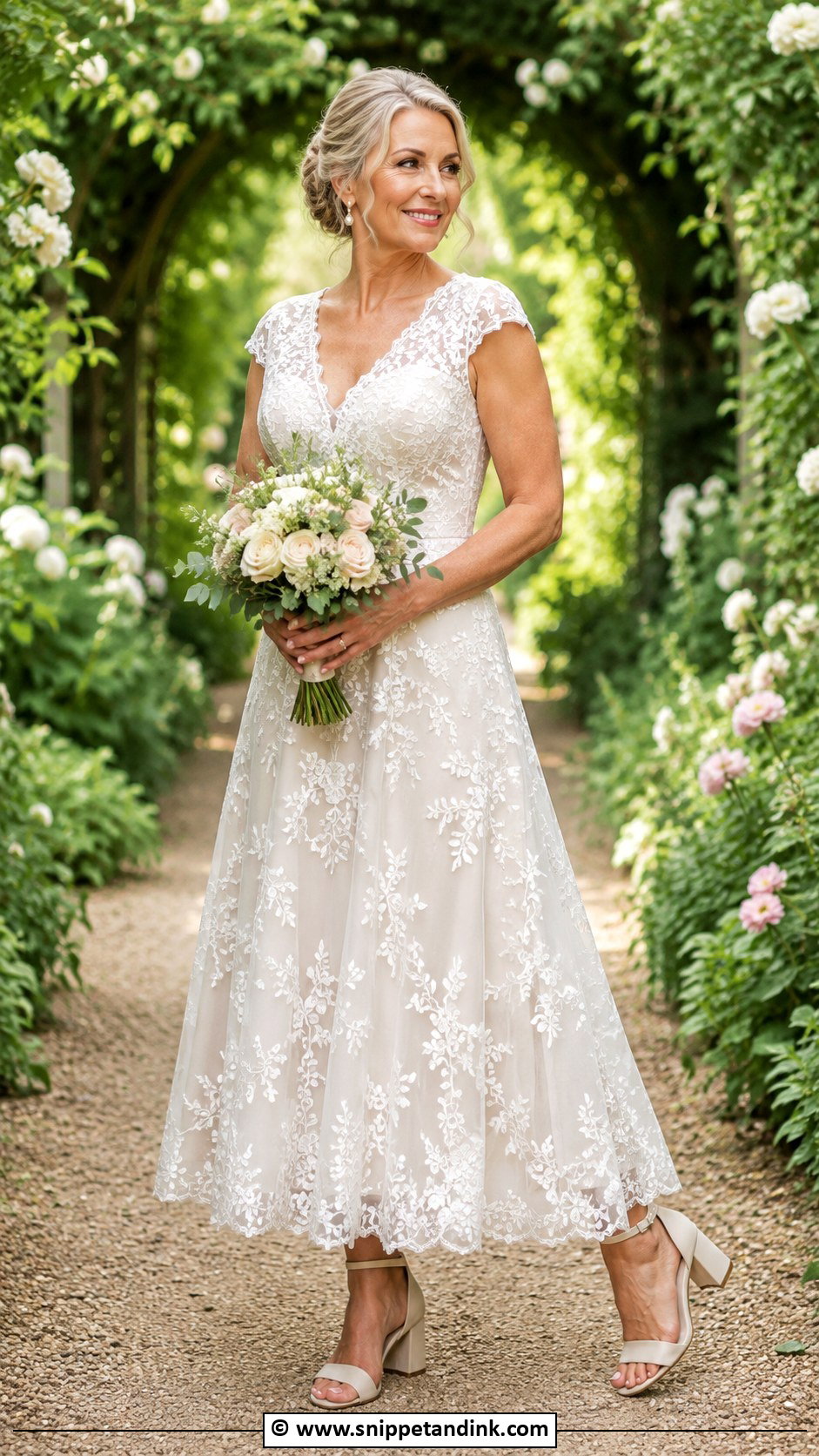
Garden ceremonies give you room for texture: floral lace, embroidered tulle or a subtle print all look right outdoors. What brides forget is the ground. Stilettos sink into lawn, so block heels or wedges are the practical choice, and I’d hem a garden gown a touch shorter at the front so it doesn’t pick up damp grass. A floral comb is usually easier than a veil in an open field where the wind can catch it.
18. Second Marriage Destination Wedding Dress
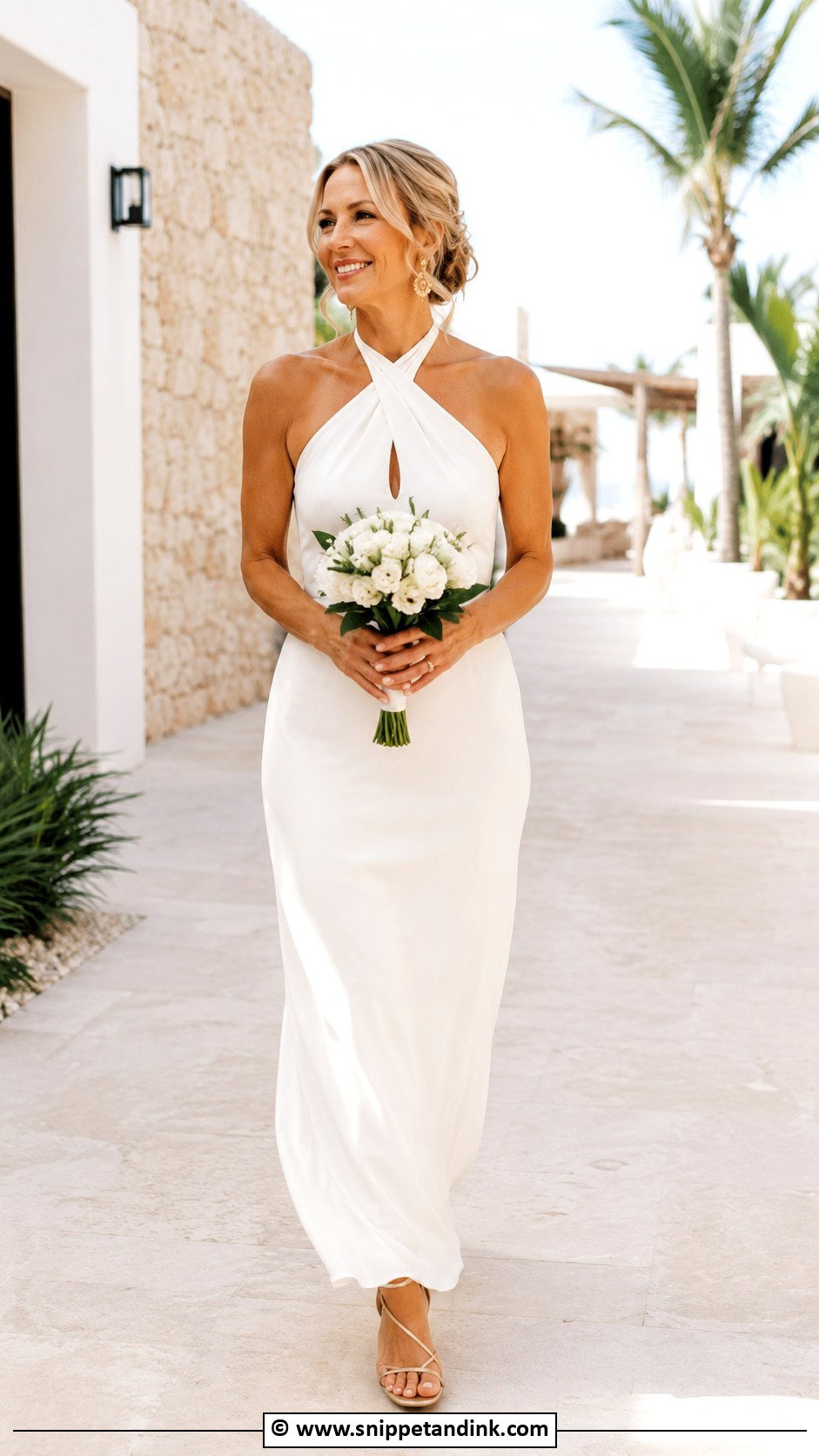
If the dress is flying with you, pack first and dream second. Chiffon, silk and lace suit a tropical setting; a satin midi or tailored gown suits a city break. Ask the shop how the fabric responds to steam before you buy, because some satins mark under a hotel steamer. I tell clients to carry the dress on board in a breathable garment bag rather than checking it, and to hang it in the bathroom during a hot shower the night they land to relax the creases. Choose something you can walk, sit and dance in without thinking about it.
19. Second Marriage Formal Wedding Gown
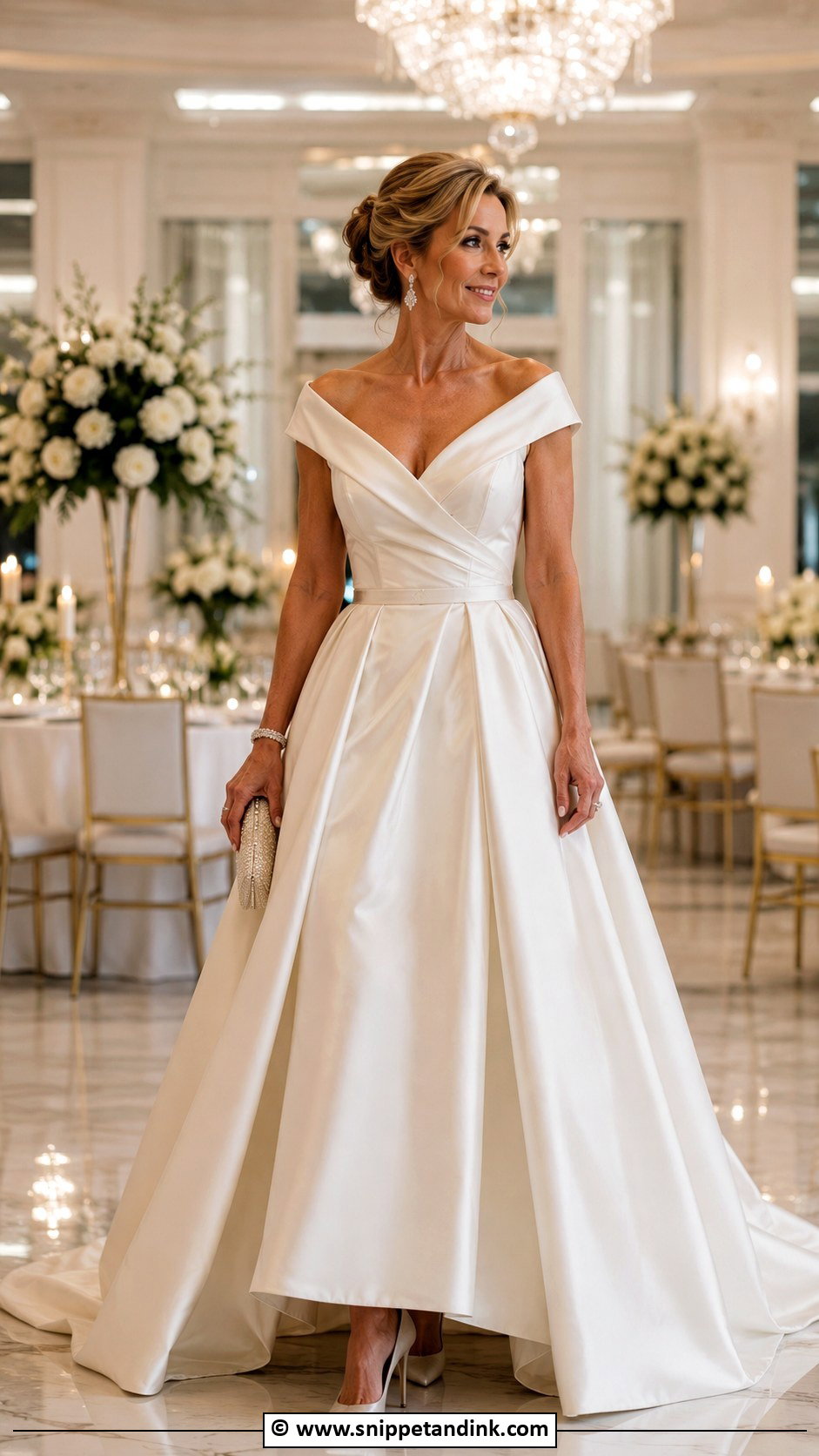
There’s no rule that says a second wedding has to be understated. If the celebration is formal, a structured satin ball gown, a crepe column, a beaded sheath or an elegant mermaid dress is entirely appropriate. With a big gown, I keep everything else restrained: classic heels, one piece of good jewelry and a polished hairstyle. Mermaid cuts are the ones to test on stairs and in a chair, since the knee-level flare restricts stride. For hotels, estates and evening receptions, it’s a confident way to celebrate fully.

20. Second Marriage Simple Wedding Dress
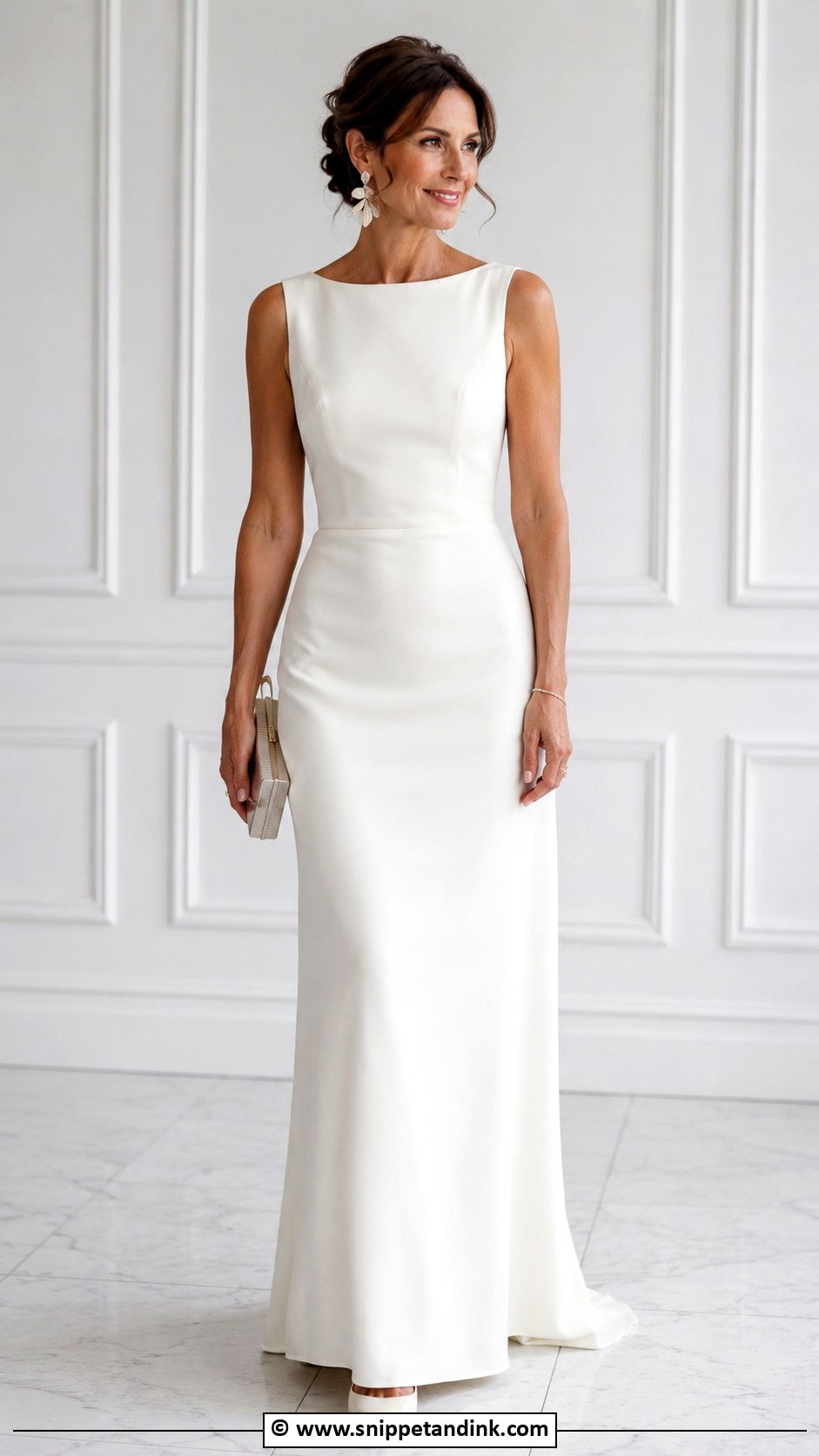
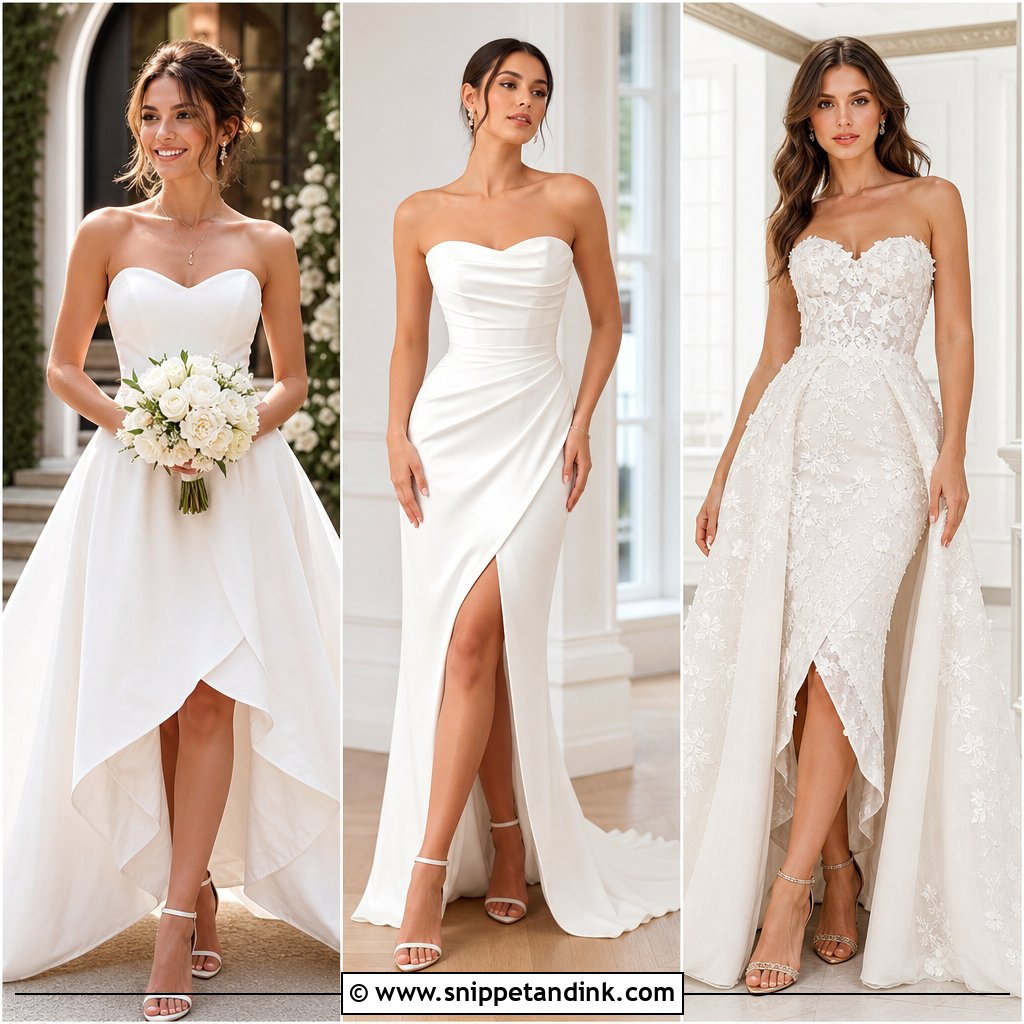
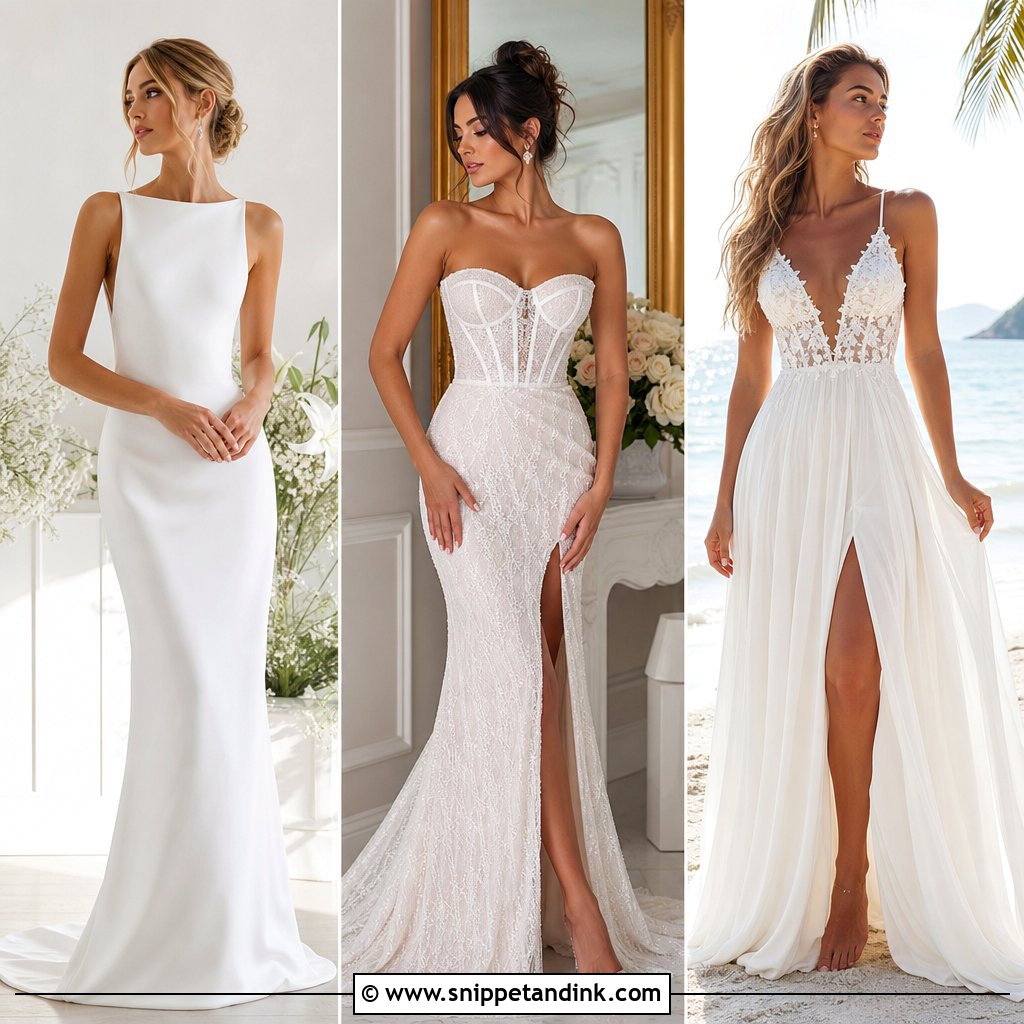
Simple dresses expose everything, so the fit and fabric have to be excellent. A plain crepe gown, a satin slip, a minimalist midi or a column with a sharp neckline can look more expensive than a beaded dress at twice the price, but only if the seams lie flat. That’s where I’d spend money: on a good tailor rather than on embellishment. Sculptural earrings and a smooth bun complete it. It fits almost any setting, from a courthouse to a destination dinner.
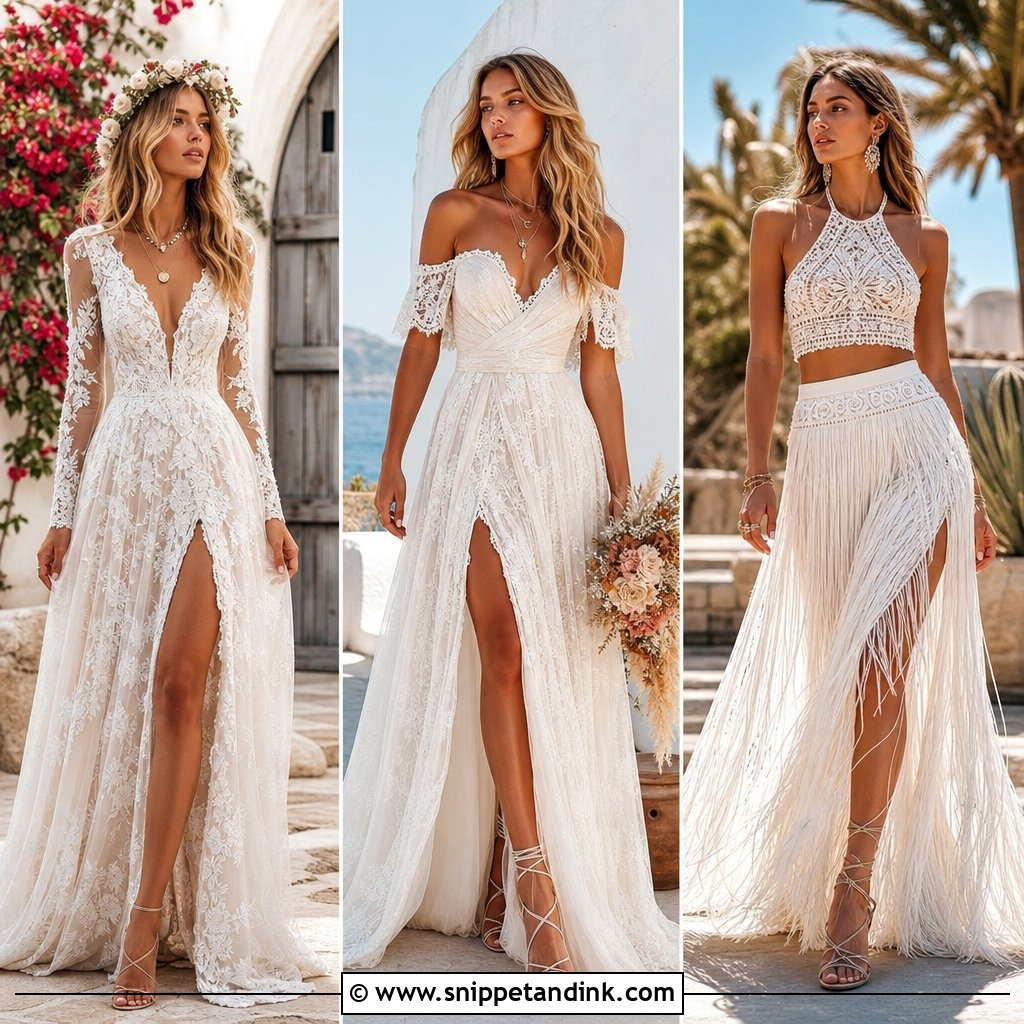
21. Second Marriage Boho Wedding Dress
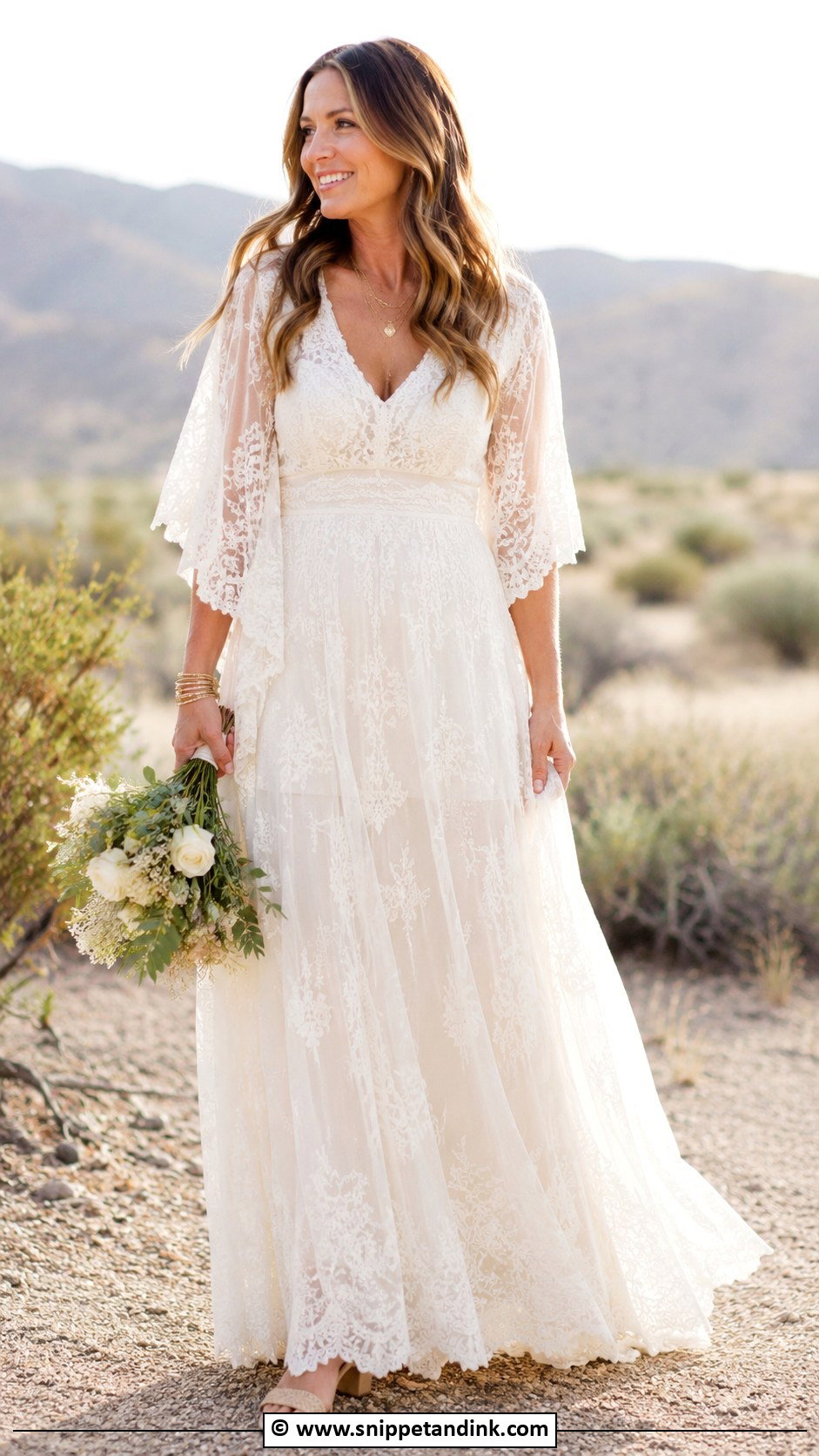
Boho suits deserts, beaches and backyards, but on a grown woman it needs editing or it slides into costume. I look for soft lace, a crochet-style trim or a flowing sleeve, and then I keep the rest quiet: low block heels, fine gold jewelry and loose waves. A full flower crown is often one step too far, and a single floral pin or a textured veil gives the same feeling with more restraint. Neutral makeup and a loose, natural bouquet tie it together.
22. Second Marriage Vintage Wedding Dress
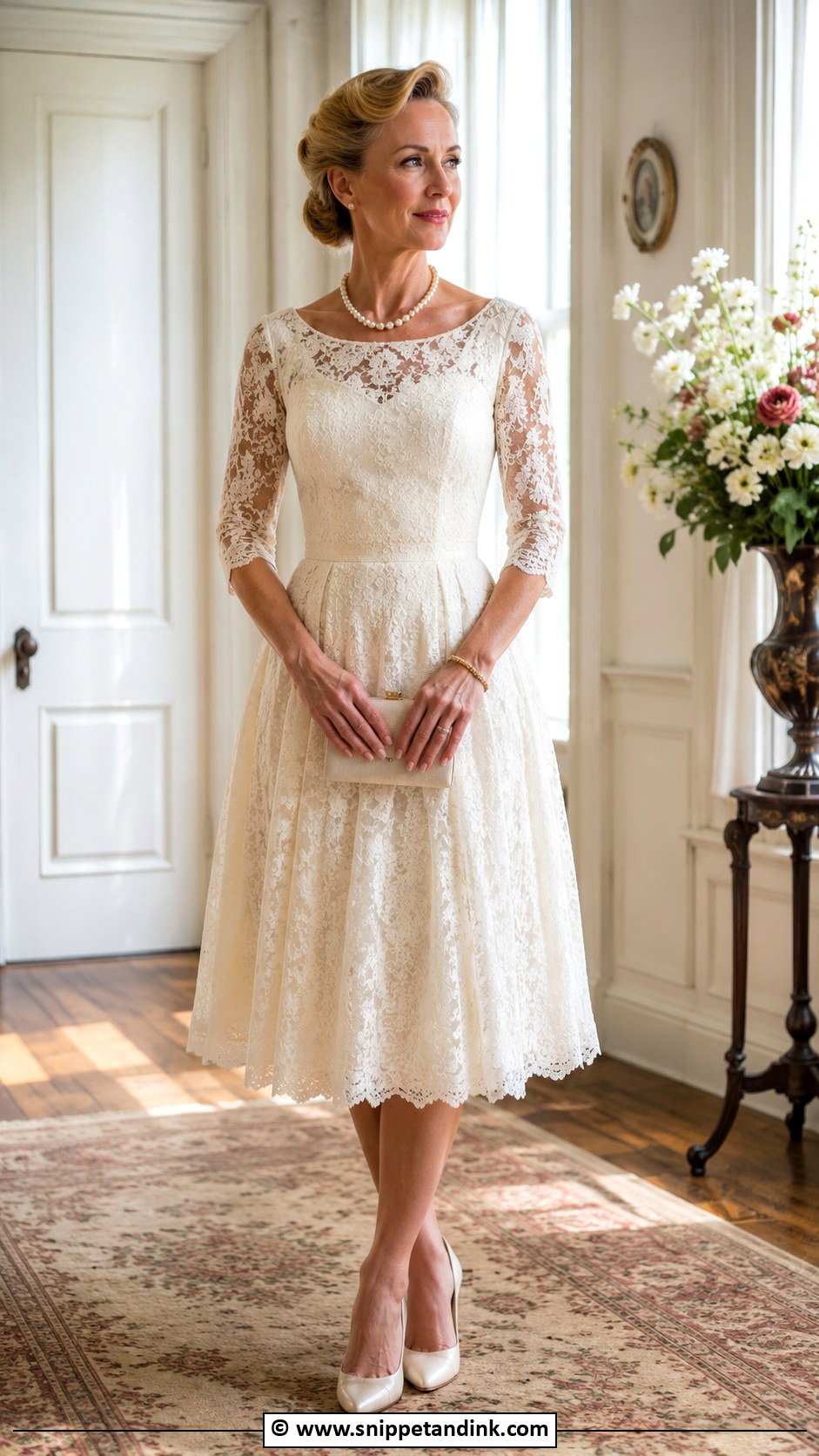
A true vintage gown, a family dress you alter, or a new dress with old influences all count here. Tea-length skirts, lace sleeves, satin buttons and 1930s bias cuts suit the mood. Before anyone buys a true vintage piece, I check the seam allowances, the condition of the fabric under the arms and whether old stains will lift. Silk from decades ago can split under alteration, so it needs a tailor who knows old textiles. Pearls, classic pumps and polished hair keep it from feeling dated.
23. Second Marriage Floral Wedding Dress
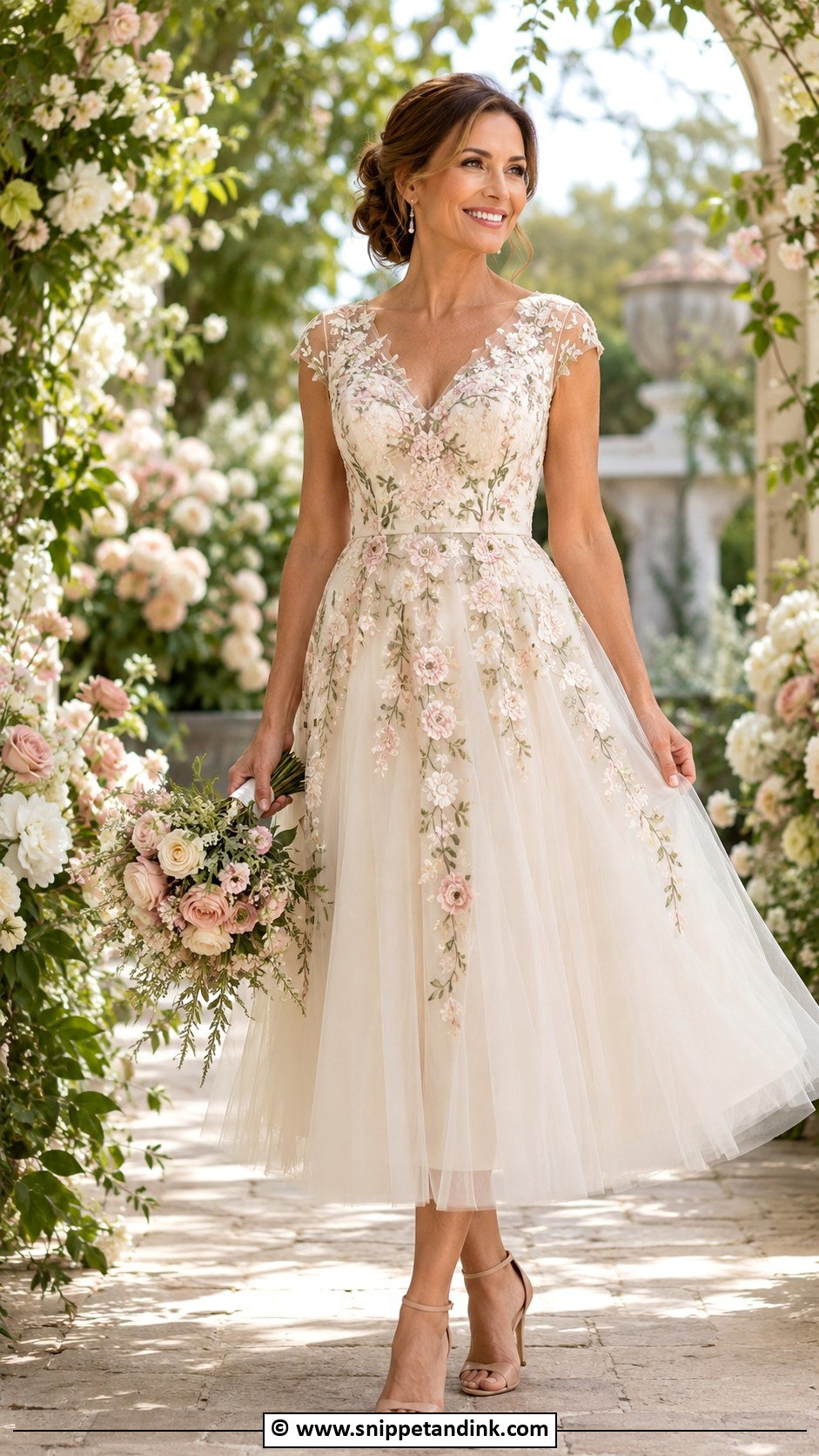
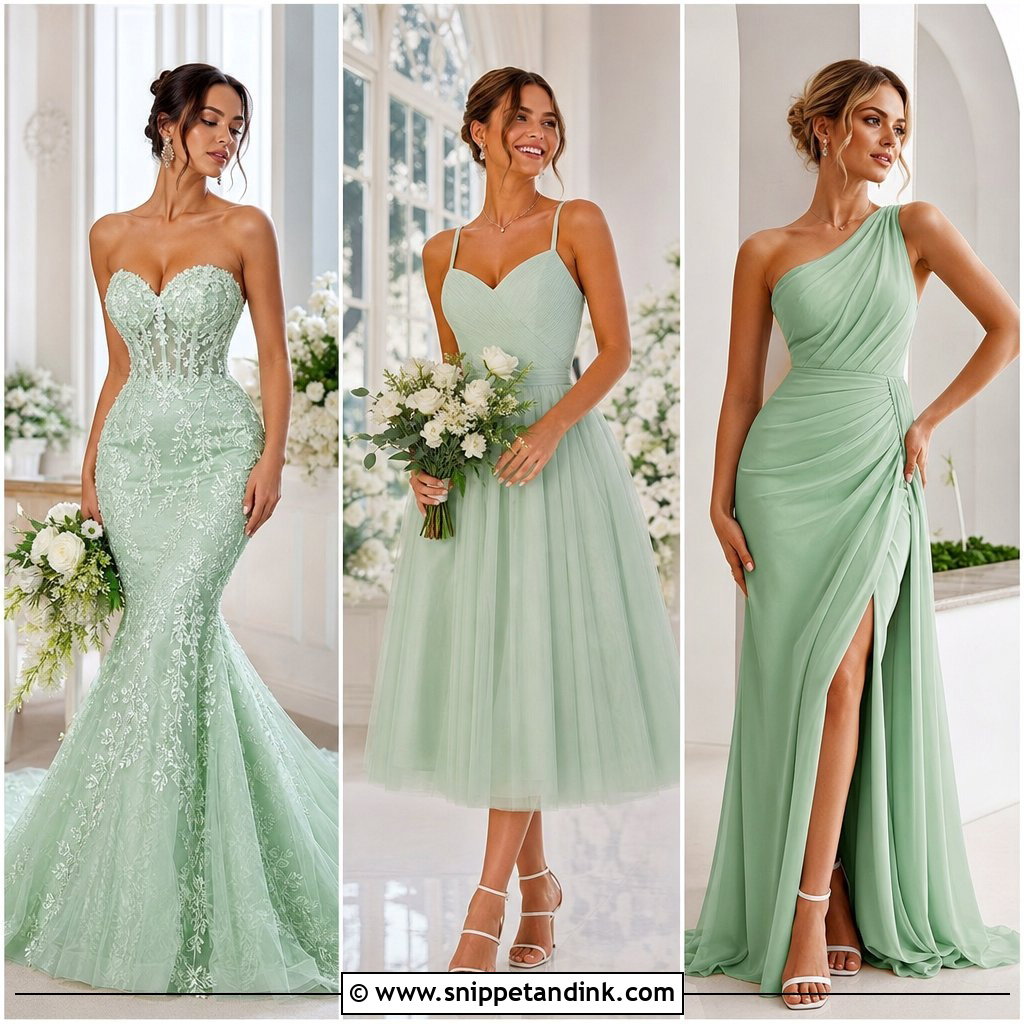
Embroidered flowers on ivory tulle, a pastel print or raised appliqués all bring color without abandoning bridal shapes. A midi, an A-line or a flowing maxi can carry it depending on the venue. Pull one or two shades from the dress into the bouquet and let the jewelry go almost invisible, because the fabric is already busy. Raised 3D appliqués are worth a hug test, as they can snag on lace or beading on a guest’s outfit. It’s a happy choice for spring gardens and outdoor receptions.
24. Second Marriage Blue Wedding Dress
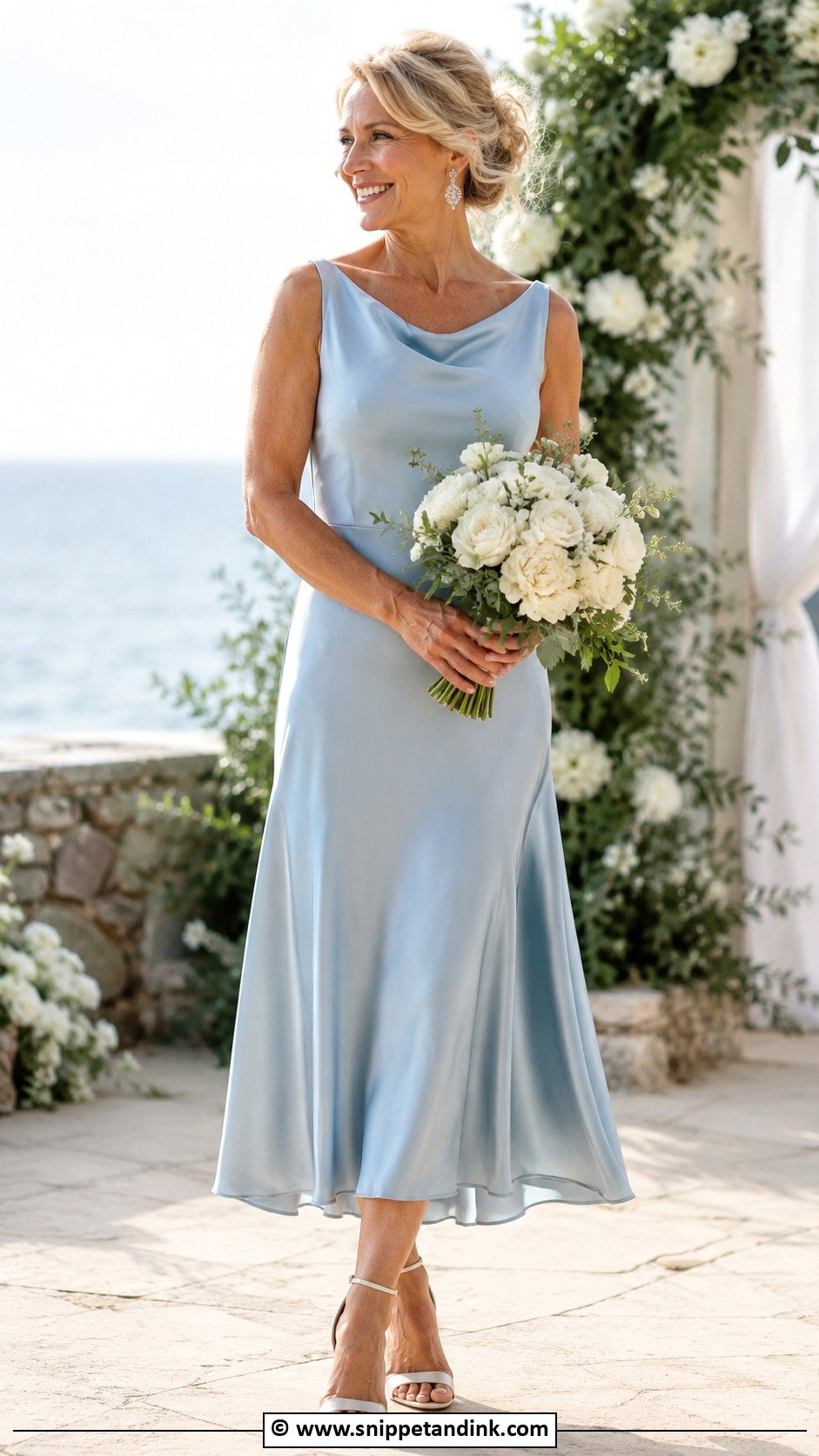
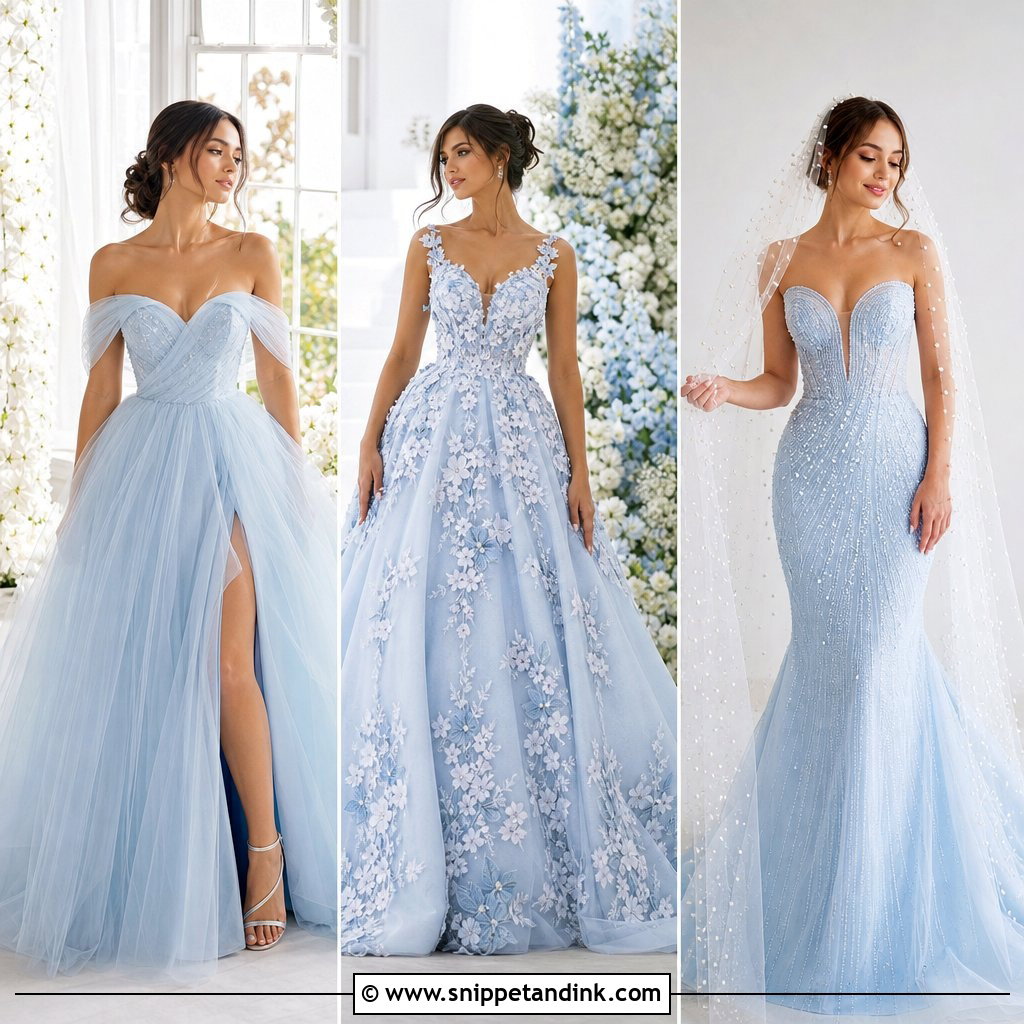
Pale blue, powder, steel and dusty blue all suit a second wedding, and the softer shades still read as bridal in photos. Satin looks polished at night, chiffon is softer in daylight and lace adds romance. Test the shade under the lighting you’ll actually have. Cool blues can look grey under warm tungsten bulbs, so a dress chosen at a sunny window may change in an evening venue. Silver jewelry, ivory heels and a white-and-green bouquet suit it at a coastal or winter wedding.
25. Second Marriage Jumpsuit Wedding Outfit
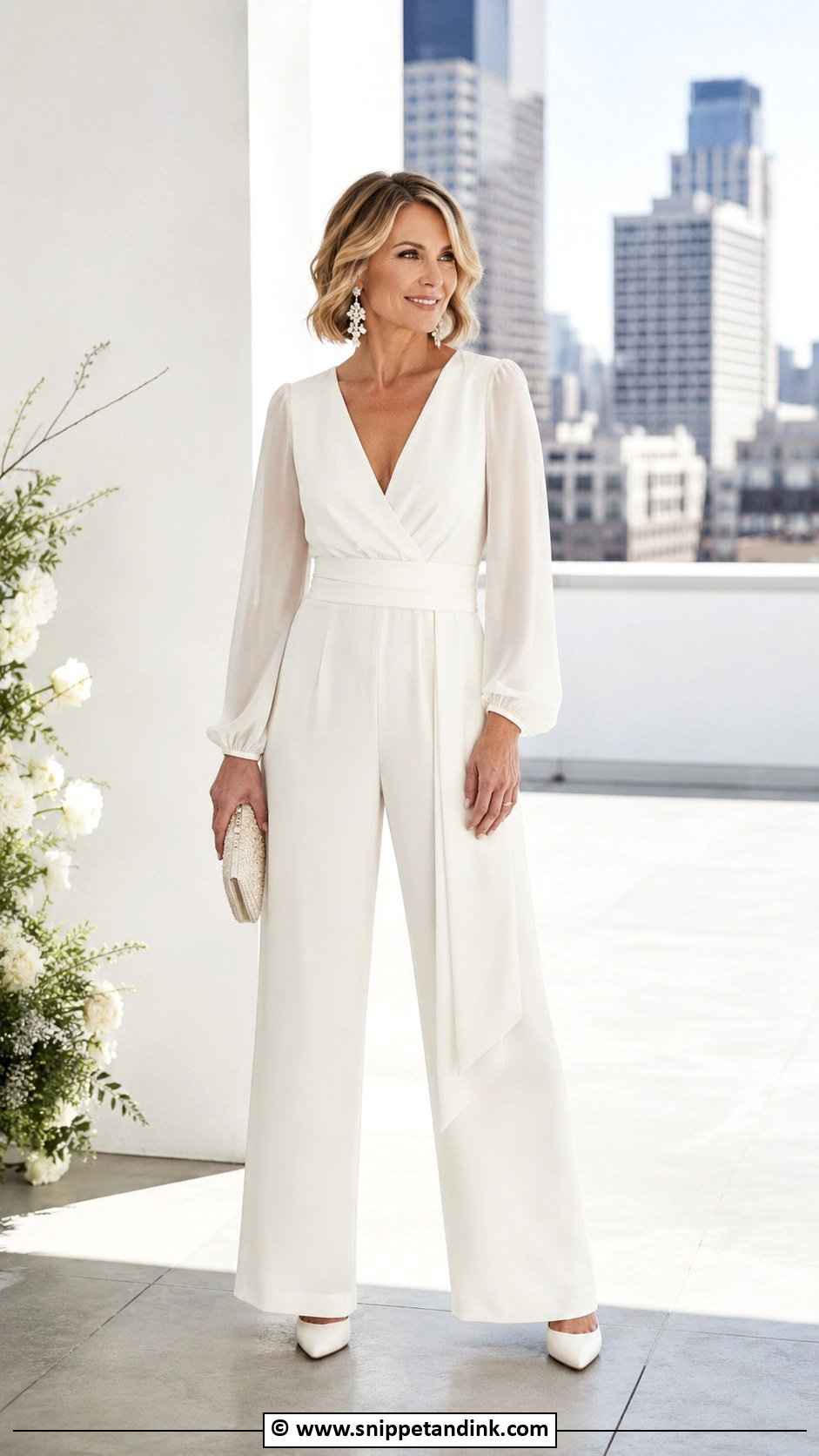
Jumpsuits suit brides who’ve never felt like themselves in a skirt. Ivory crepe or a structured satin with a defined waist looks most bridal, and wide legs lengthen the line. The fit point I always check is the rise: too short and you’ll feel it every time you sit. A cape, an overskirt or a detachable train brings ceremony drama that comes off for the party. Pointed heels, statement earrings and a sleek clutch finish it, and one practical note: plan your bathroom trips, because a back zip takes help.
26. Second Marriage Pantsuit Wedding Outfit
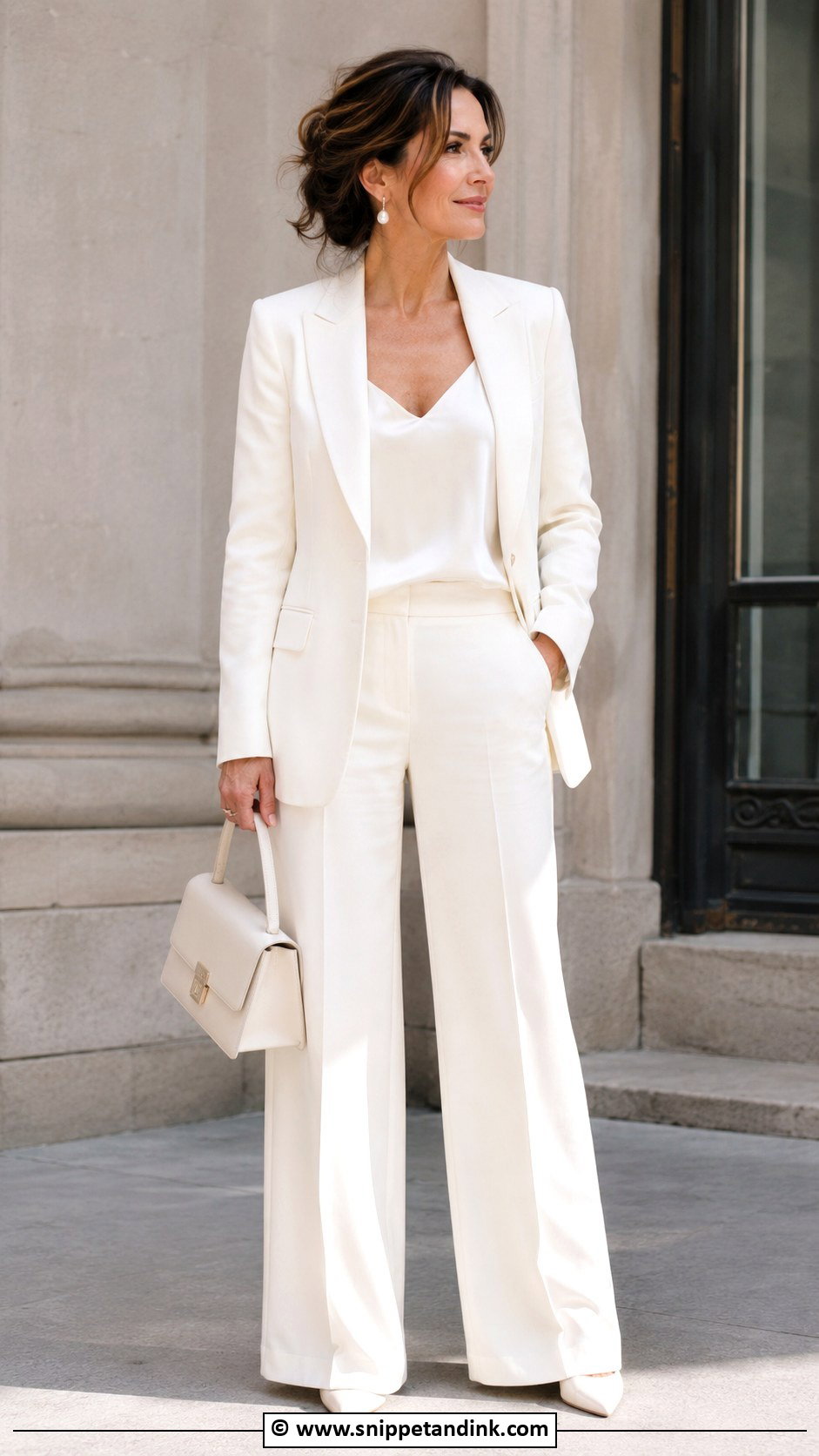
A wedding pantsuit is all about the tailoring. Ivory, white, champagne or a faint blush works, with a blazer that sits right at the shoulder and wide-leg or tapered trousers. Under it, a silk camisole or a smooth bodysuit stops the jacket from looking empty. Get the trouser hem done with your wedding shoes on; even half an inch too long breaks badly in photos. A veil, a satin bow or a small bouquet softens it if you want a bridal note.
27. Second Marriage Two Piece Wedding Outfit
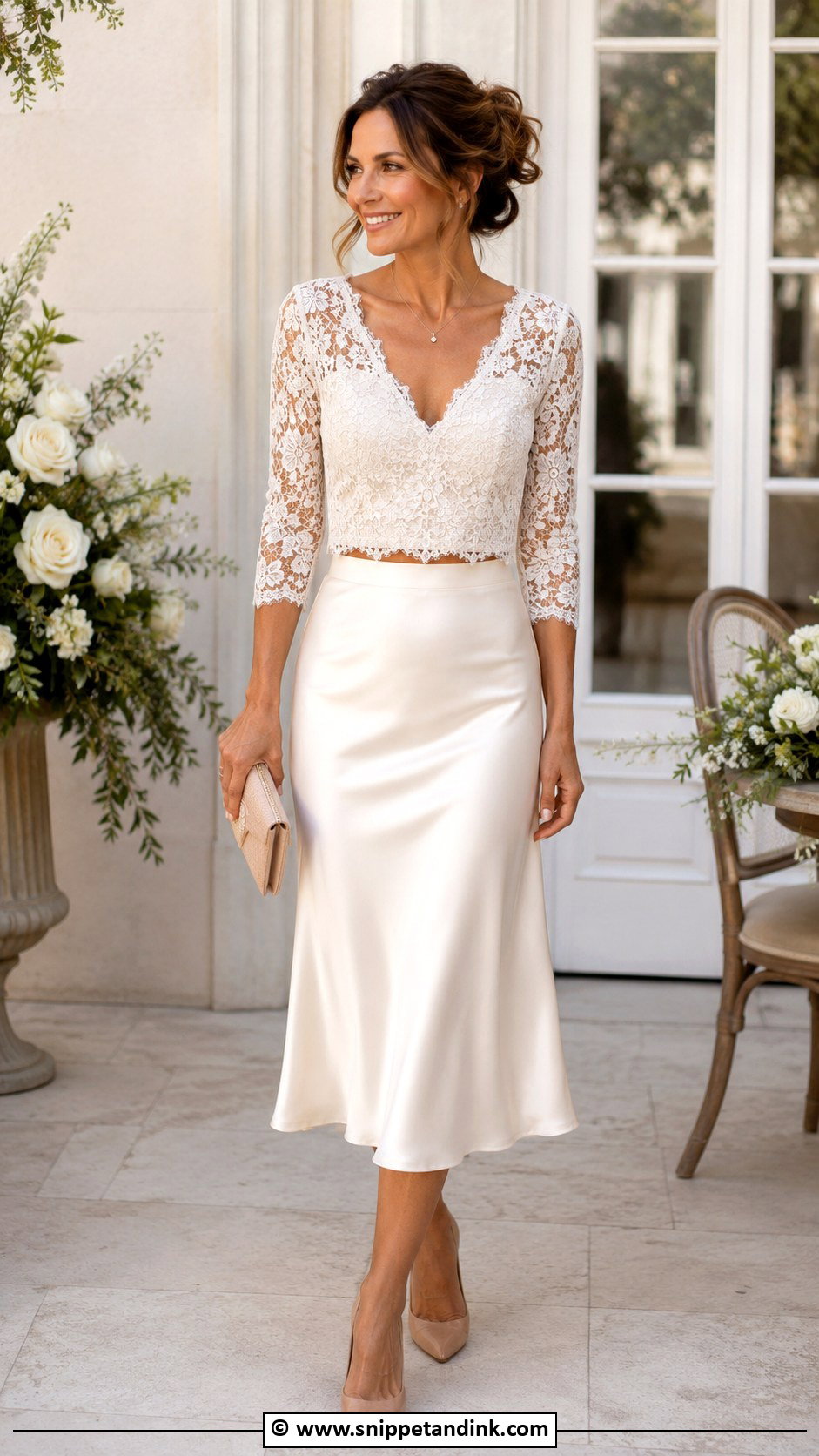
Separates solve a real fitting problem: many women are one size on top and another below, and a two-piece lets each half fit properly. Lace over satin, a cropped crepe blouse with wide-leg trousers, or a structured bustier with an A-line midi all work. Matching tones look most polished; mixing lace and silk adds depth. Check the gap between top and skirt when you raise your arms. It’s also the outfit you’re most likely to split up and wear again afterward.
28. Second Marriage Cape Wedding Dress
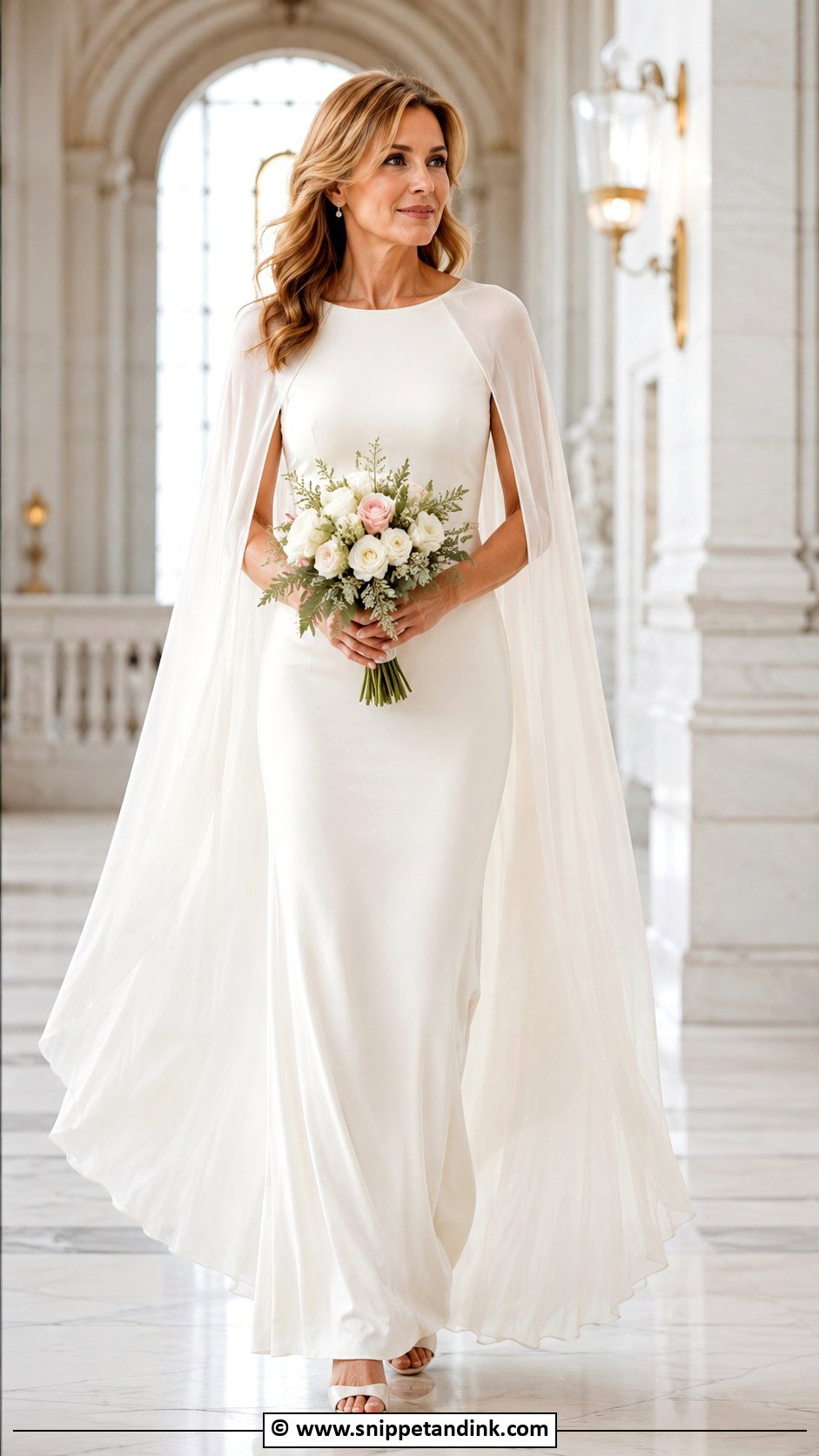
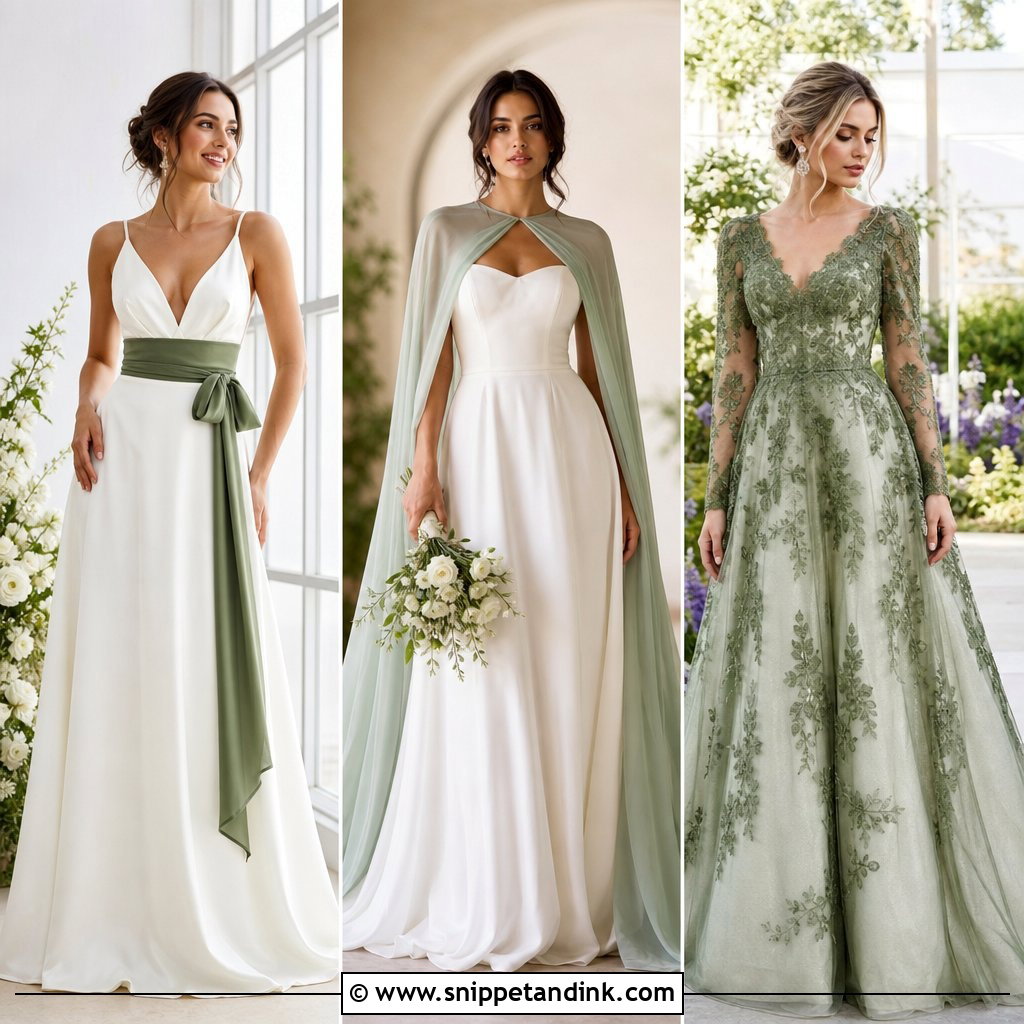
A cape gives you the drama of a veil without anything pinned in your hair. Sheer, lace, satin or crepe all work, over a simple column, a sheath, a jumpsuit or a tailored midi so the cape becomes the main detail. It reads best from the back and the side, which makes the ceremony entrance and exit the moments to plan around. I’d fasten it with hidden hooks rather than relying on a single tie at the throat, which pulls forward when you’re seated.
29. Second Marriage Reception Wedding Dress
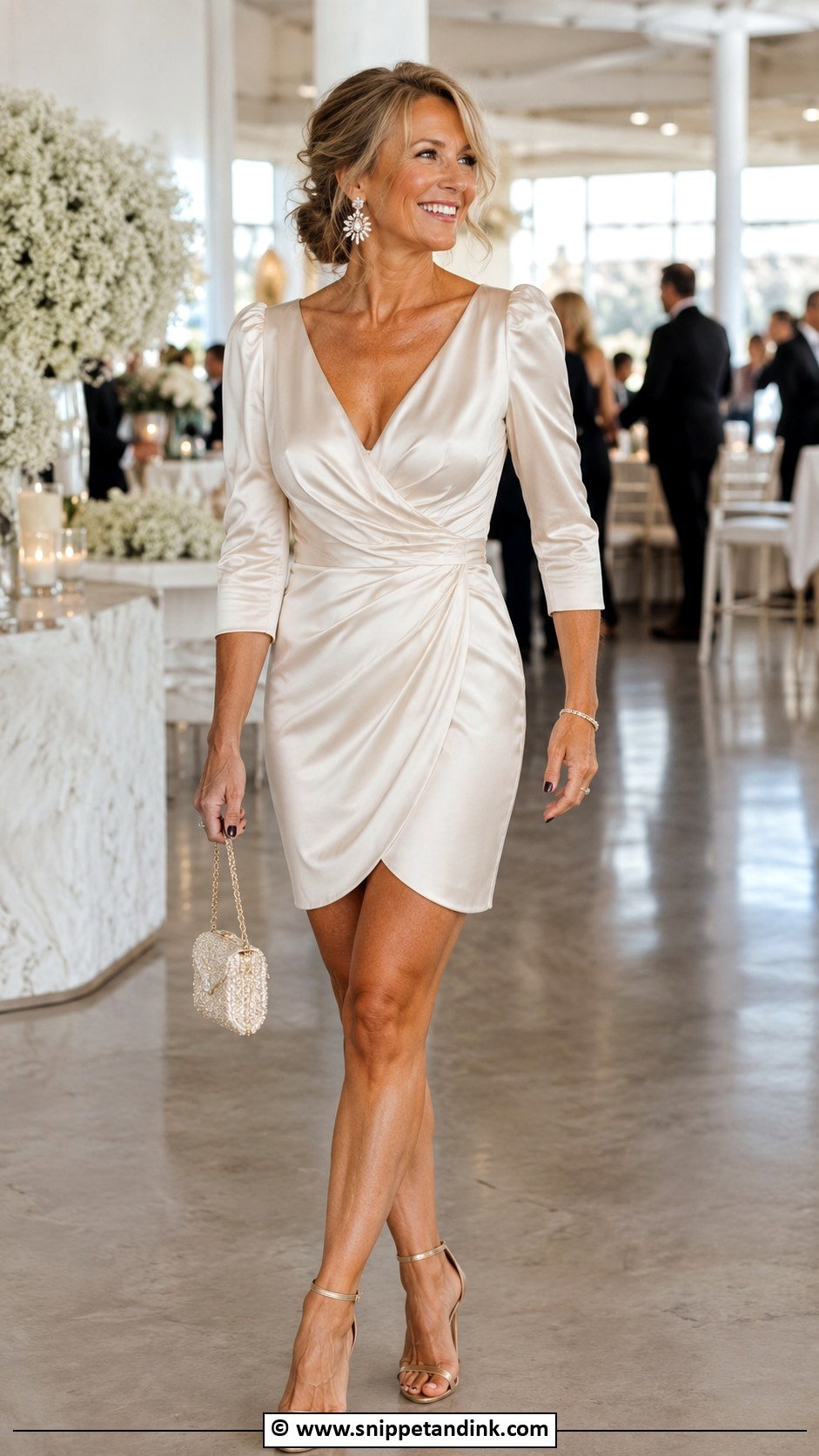
If your ceremony dress is formal, a lighter second look lets you move, mingle and dance properly. A short satin dress, a beaded midi, a feather hem, a slip dress or a white jumpsuit all do it. Link the two outfits with one shared element, a shade, a fabric or the same earrings, so the photos still feel like one wedding. Plan the change: twenty minutes with someone to help with closures is realistic, and it’s best done during dinner service rather than in the middle of the party.
30. Second Marriage Winter Wedding Dress
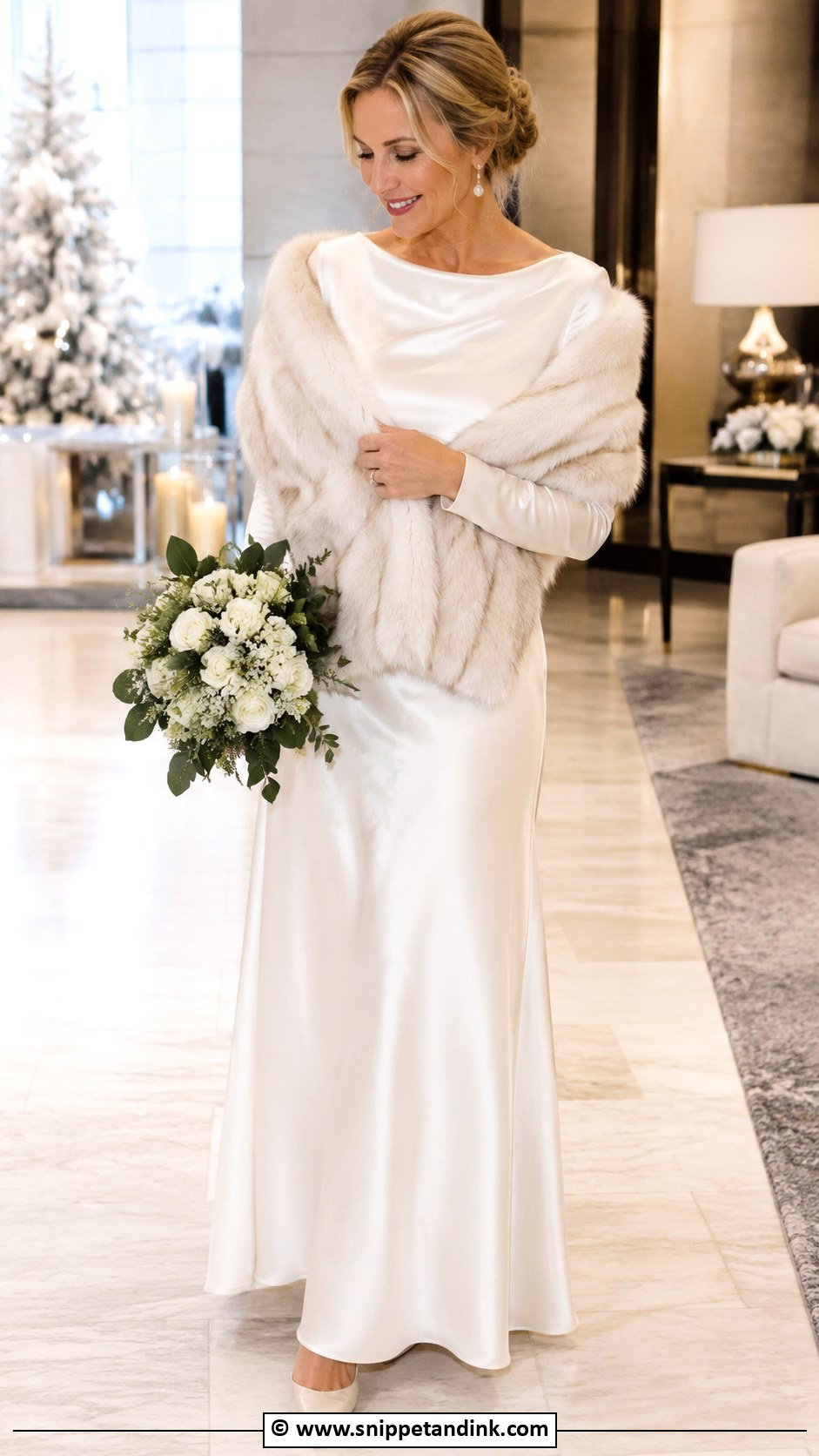
Winter dresses need warmth without bulk. Long sleeves, satin, crepe, velvet trims and structured shapes suit the season, in ivory, champagne, soft silver or pale blue. For outdoor photos, a tailored coat or a faux fur wrap looks far better than a cardigan, and closed-toe heels are worth it on cold paving. Velvet is the fabric to see in person, since it crushes where you sit. Lodges, hotels and evening receptions all suit it, and layered textures look rich in low light.
How Alterations Change a Dress That Wasn’t Built for a Wedding
Bridal gowns are cut with generous seam allowances because the industry expects them to be altered. Eveningwear and ready-to-wear often aren’t. That means a bought-in midi can usually be taken in and hemmed, but letting it out or moving a waist seam may not be possible. I check the inside of the dress before a client pays, looking at the seams for spare fabric.
Plan for at least two fittings. The first is about shape, the second about fine adjustments and the hem, and I like the last one to fall within two or three weeks of the wedding so any change in your weight is accounted for. Sit, raise your arms and walk on a step at each one.
After the Party: Cleaning a Dress You May Wear Again
Many second-wedding dresses get a second life, so care matters. Get it to a specialist cleaner within a few weeks. Champagne, white wine and sugary drinks dry invisible, then oxidise into brown marks that are much harder to lift later. Point out every spot you remember.
For storage, skip the plastic bag it came in. Fold the dress loosely with acid-free tissue in a breathable box, or hang a light dress by its inner loops so the shoulders don’t stretch, and keep it somewhere cool and dark. Heavy beaded gowns shouldn’t hang for months, since the weight pulls the bodice out of shape.
The Dress You Can Sit, Dance and Say Your Vows In
A second wedding gives you more freedom than the first, and the best dresses I’ve fitted for one used it. Honor tradition, ignore it or mix the two. Then let the practical questions settle the rest: how the dress fits sitting down, whether you can move in it all evening, and whether it suits the venue and the weather. A plain sheath is right for one woman, a ball gown or a blue midi for another. Bring the shortlist from these ideas to a fitting and judge each one in a mirror, not on a screen.
You'll Like These Ideas:



Leave a Reply