
The first question I ask a bride isn’t about lace or necklines. It’s where she’s getting married and how long she’ll be in the dress, because a gown that looks right in a mirror can be miserable on sand, cobblestones or a ten-hour day. Once that’s settled, the choice gets much easier. Ball gowns, clean satin, lace, modest cuts, jumpsuits, short reception dresses and second looks all have their place. Below are 25 wedding dresses I’d put in front of real brides, each with notes on fabric, fit and the shoes, veil and jewelry that suit it.
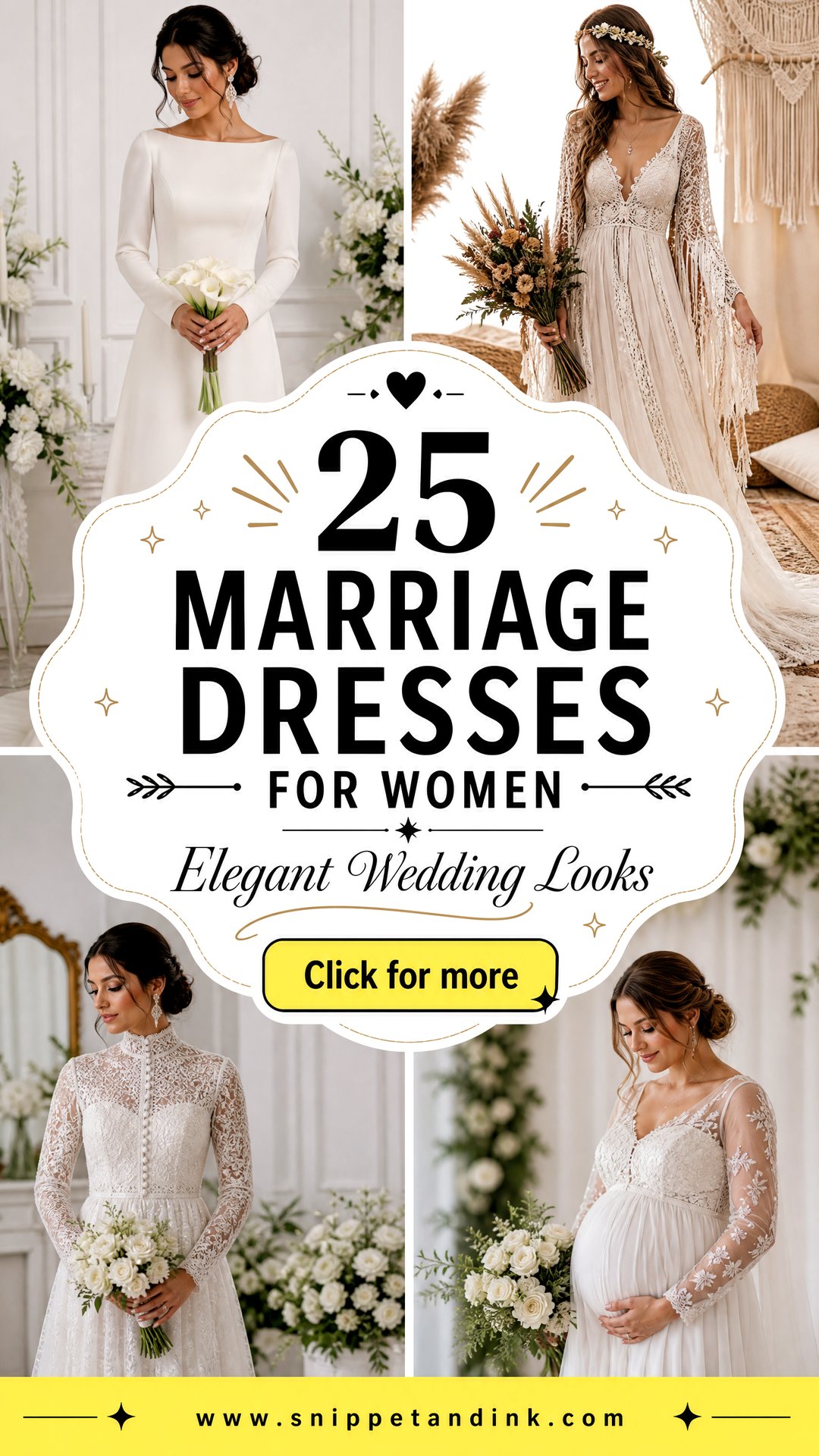
Ceremony Ground, Season and Hours Worn Narrow the Shape Fast
Before we pull a single dress, I ask three questions. The answers rule out half the racks, which saves brides from falling for something that won’t work on the day.
What will you walk on?
Grass, sand and gravel pull at long trains and swallow thin heels. Church aisles and ballroom floors suit full skirts and cathedral trains. Cobbled streets and old stairways are where mermaid hems and long trains catch.
What will the weather do?
Heavy satin, mikado and beading are warm in summer heat. Chiffon, organza and light crepe breathe. In winter, sleeves or a cover-up matter more than fabric weight, since most of the day is spent indoors.
How many hours will you wear it?
A ninety-minute civil ceremony and lunch can carry almost any dress. A day running from early photos to a late reception needs a bodice you can sit and eat in, and probably a bustle or second look.
1. White Ball Gown Marriage Dress
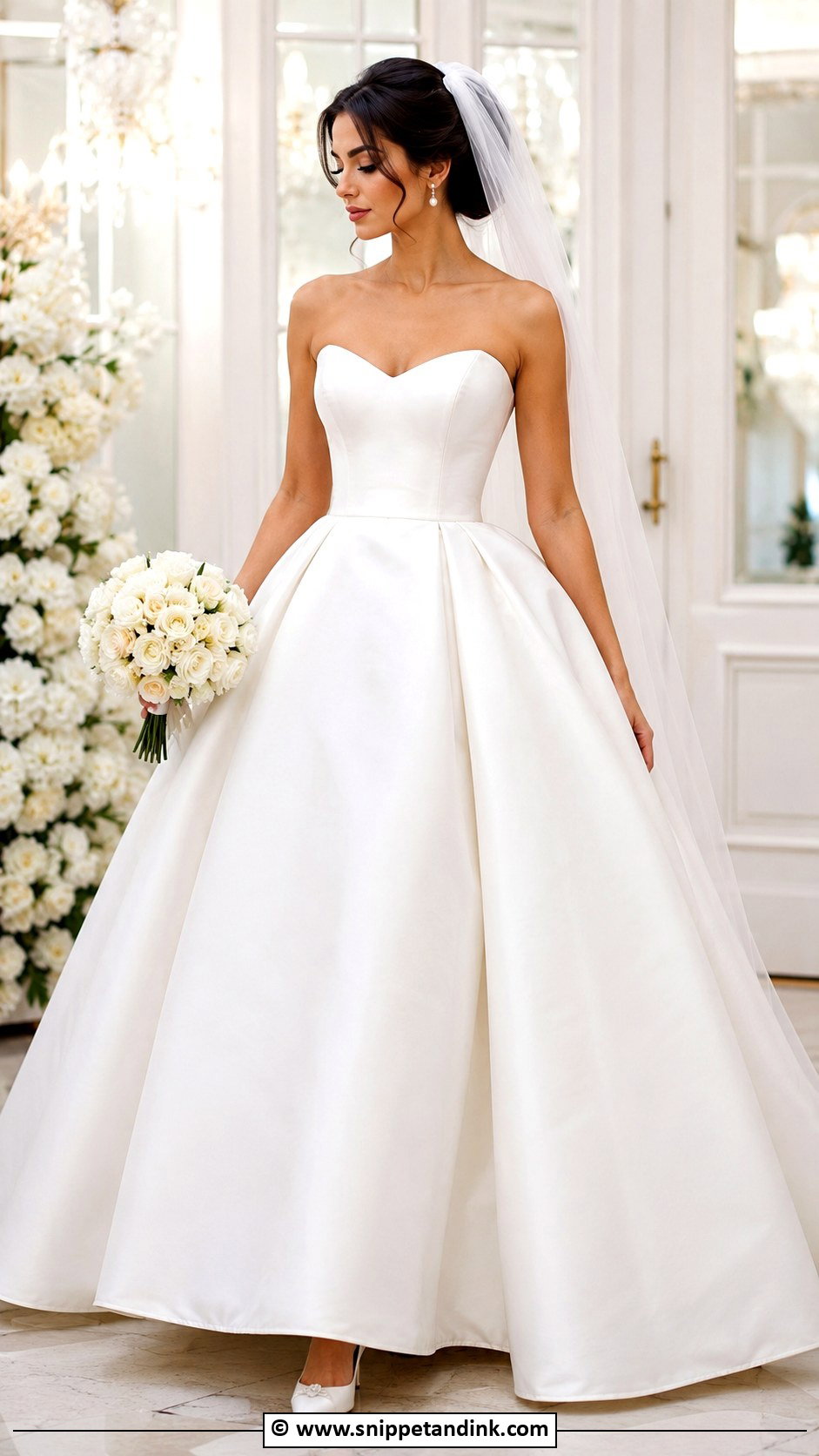
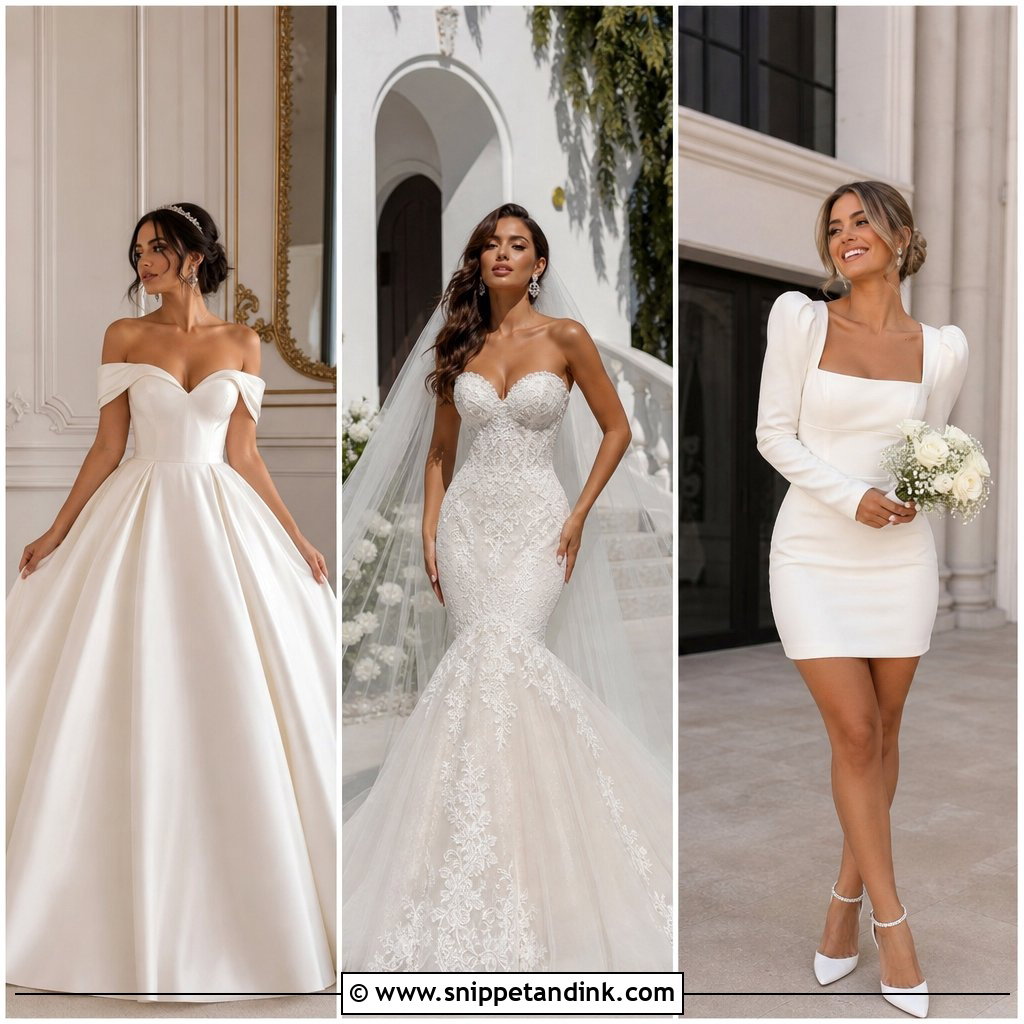
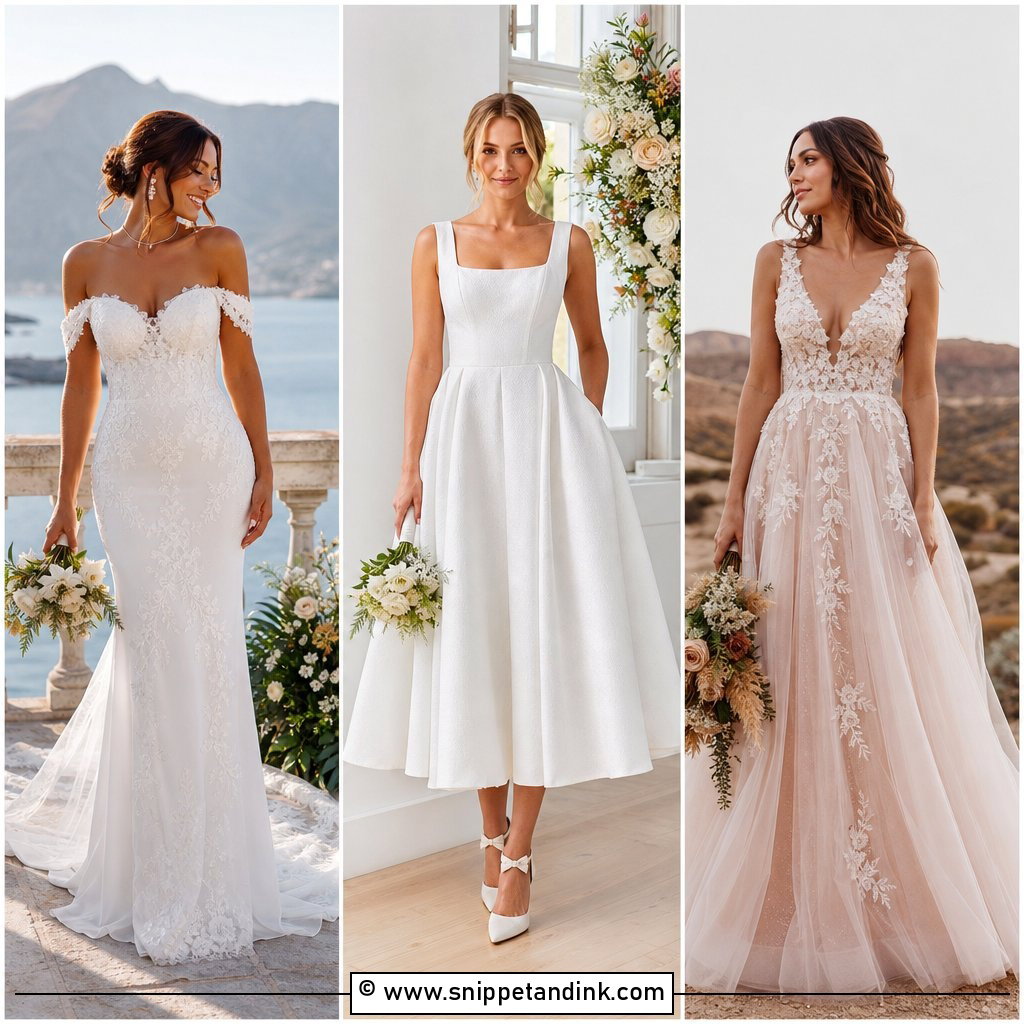
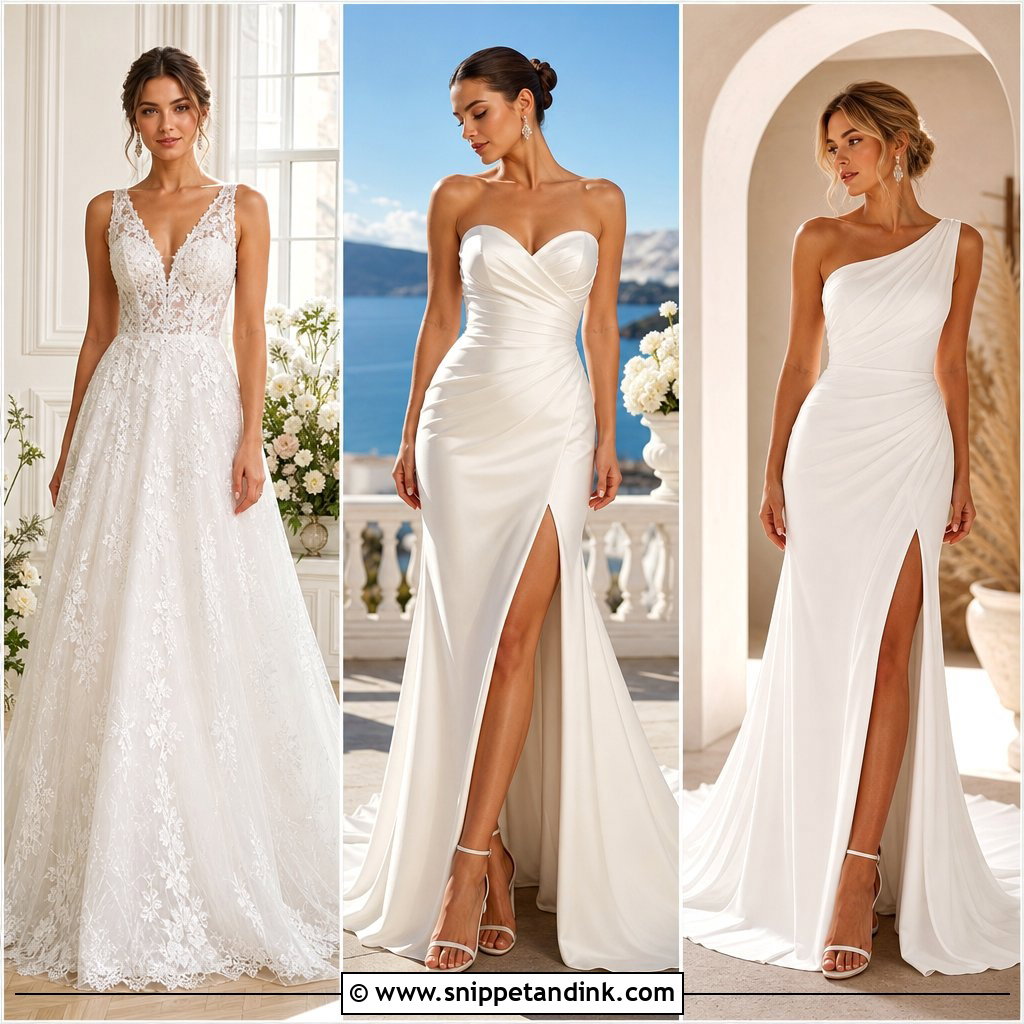
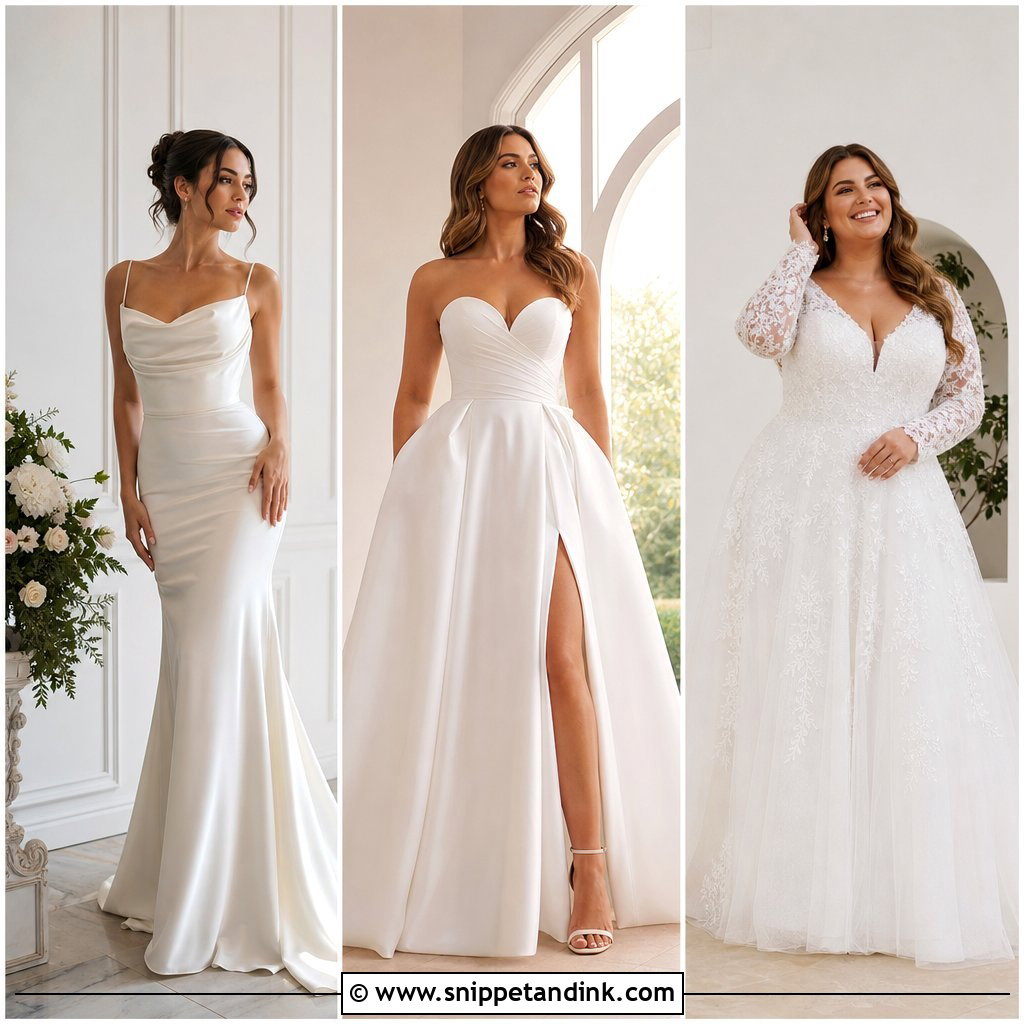
A white ball gown marriage dress gives the biggest entrance, and it’s the shape most brides picture first. The weight of a full skirt needs a properly boned bodice and a waist stay, otherwise the waistline drags down by the evening. Satin holds a structured line, tulle stays airy, organza sits somewhere between. Sweetheart, off-shoulder and bateau necklines all suit it. Pearl earrings, a long veil, pointed heels and a tidy bouquet finish it. Plan your aisle and car with the skirt’s width in mind; some vintage cars and narrow church doors need a second look.
2. Satin A Line Marriage Dress
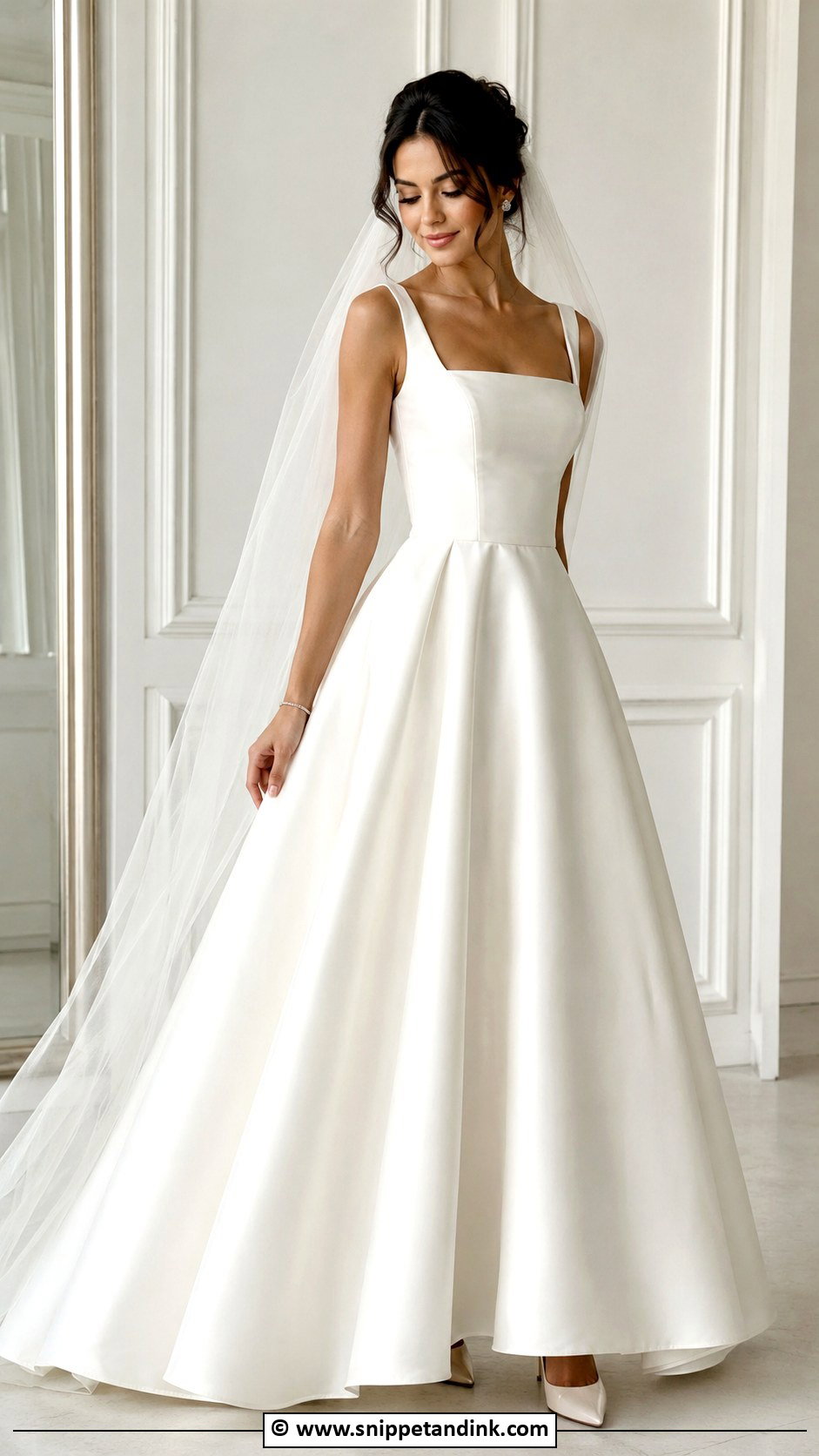
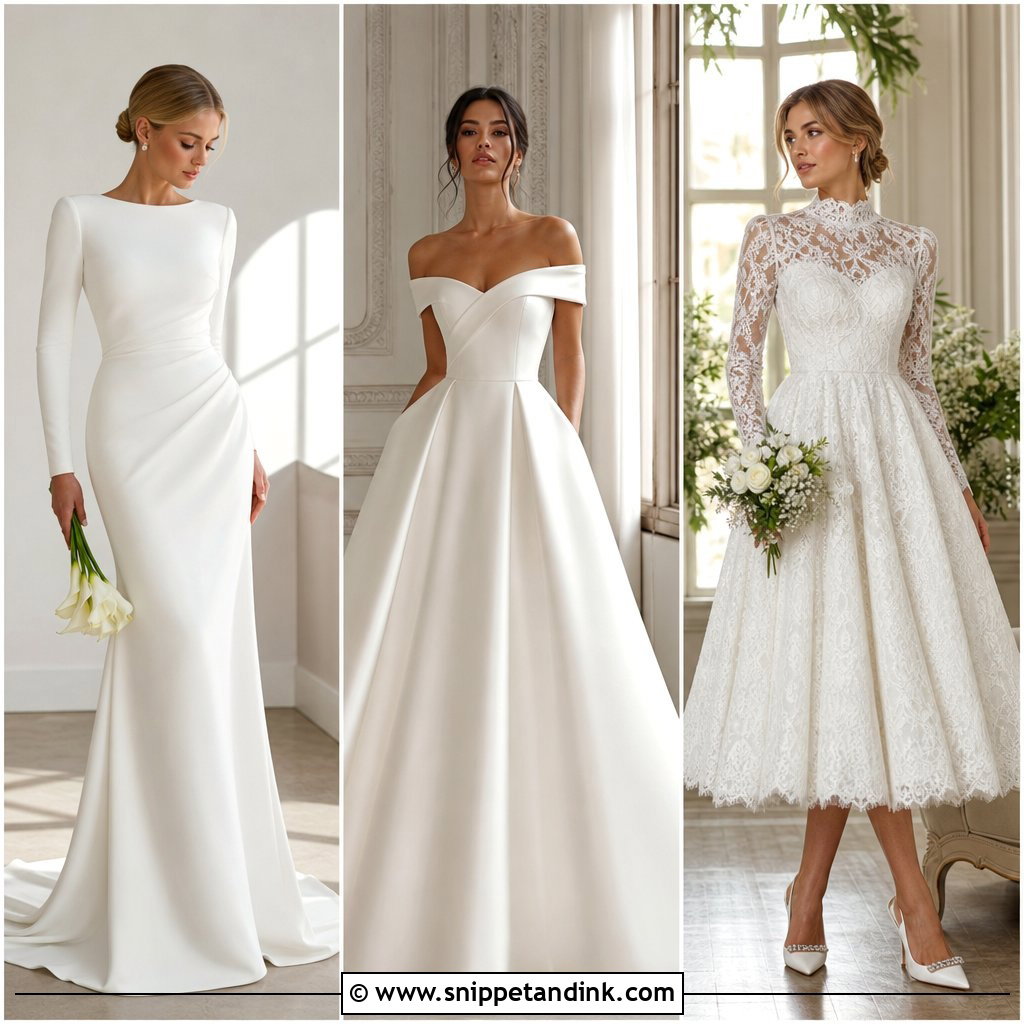
Satin A-lines are the dress I see fewest regrets about. The bodice shapes the upper body and the skirt skims the hips, so it suits a wide range of figures and sits comfortably at dinner. The catch is that plain satin shows every pull and pucker, so fit matters more than decoration. Square, scoop or strapless bodices keep it fresh. Crystal studs, a slim bracelet, ivory heels and a soft veil are enough, and a low bun or sleek half-up style lets the fabric lead.
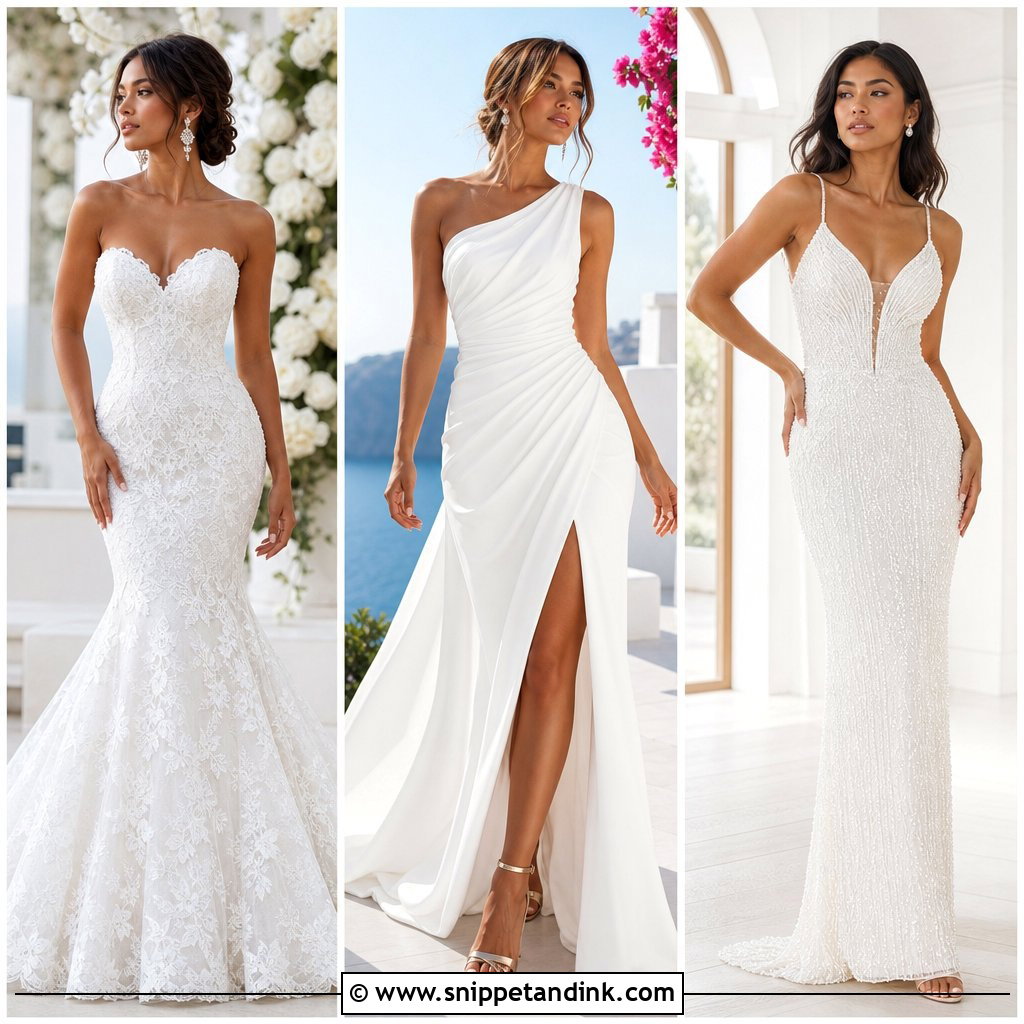
3. Lace Mermaid Marriage Dress
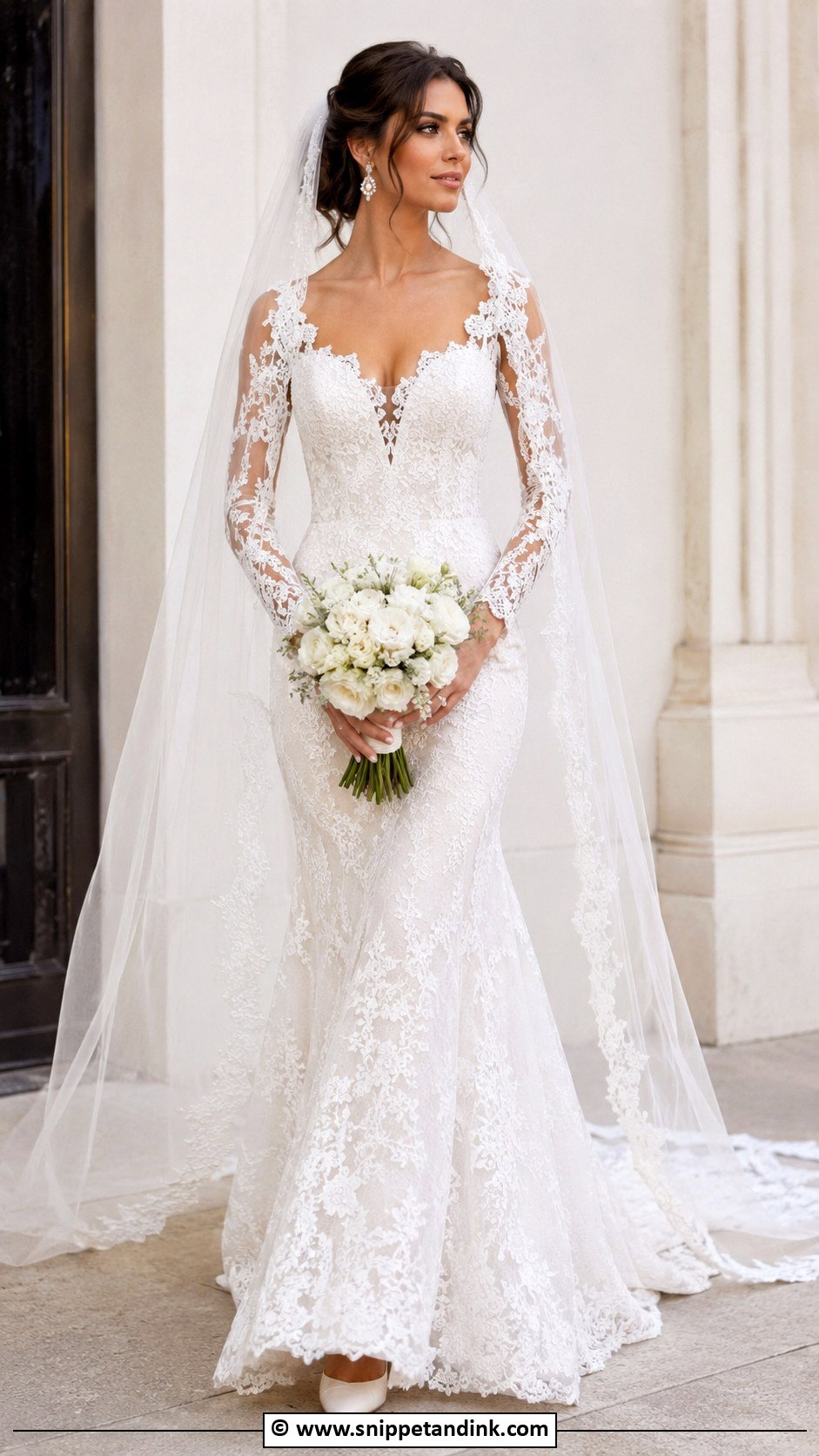
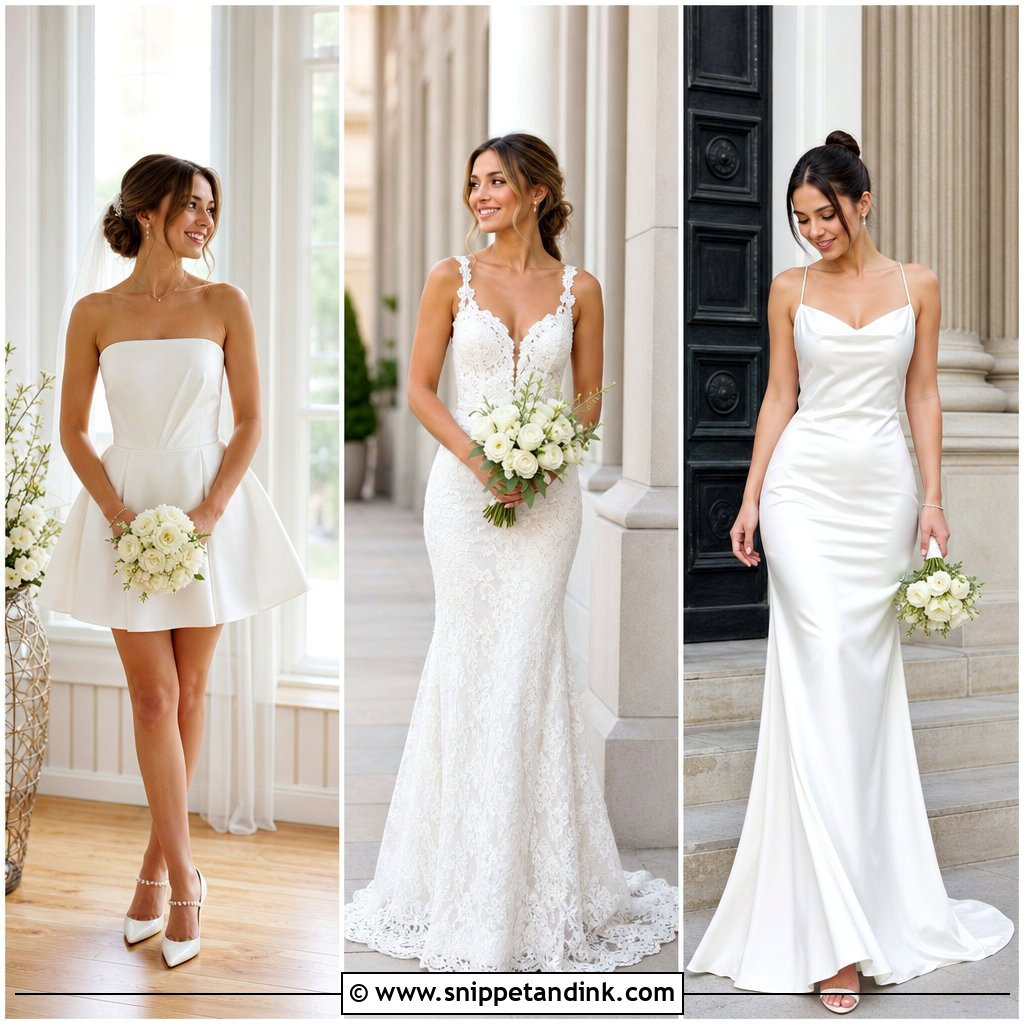
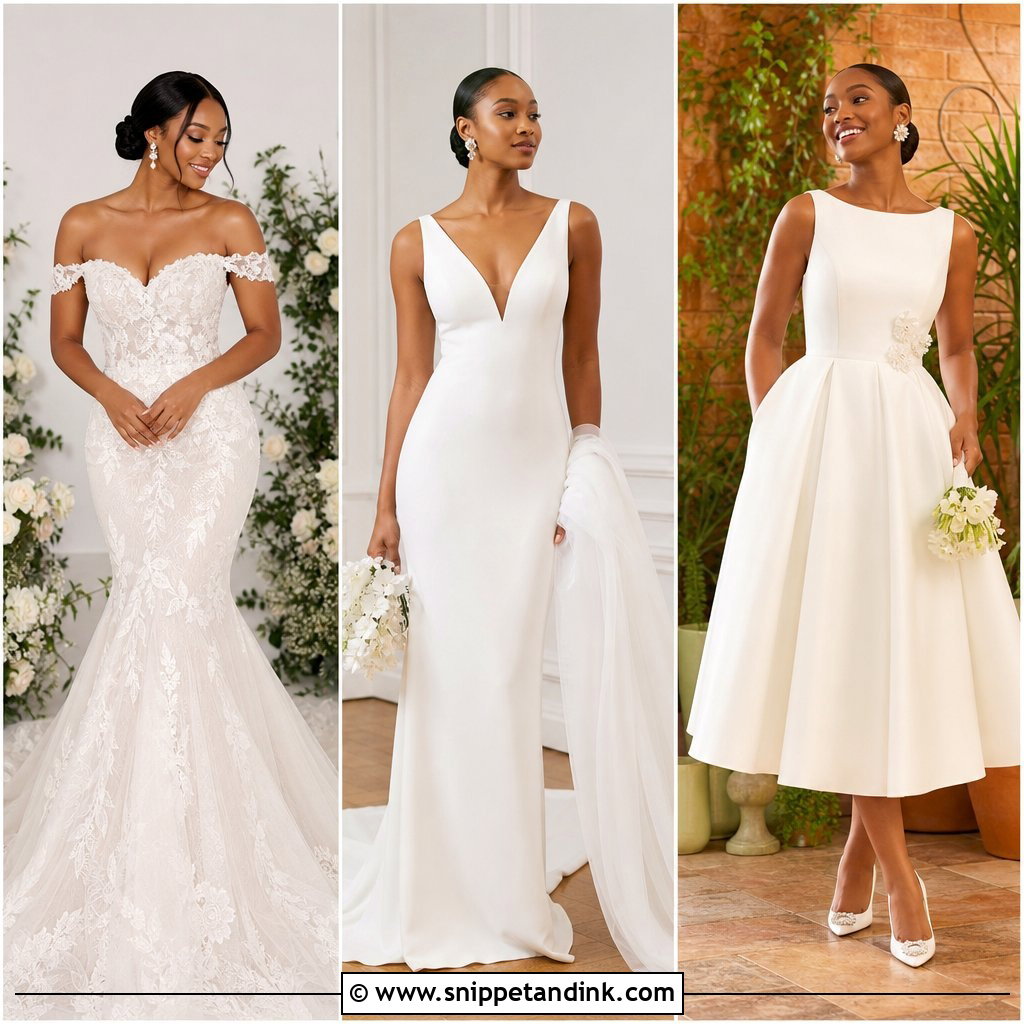
A lace mermaid suits brides who like to feel held in. The fit through hips and thighs is close, and the flare height decides how freely you walk, so I always have brides take a step up in the sample. Lace over nude or champagne lining shows the pattern best. Long lace sleeves feel formal; thin straps lighter. Drop earrings, a fingertip veil and pointed heels complete it, with a smooth bouquet that doesn’t fight the lace. Evening ceremonies in formal halls suit it well.
4. Off Shoulder Marriage Dress
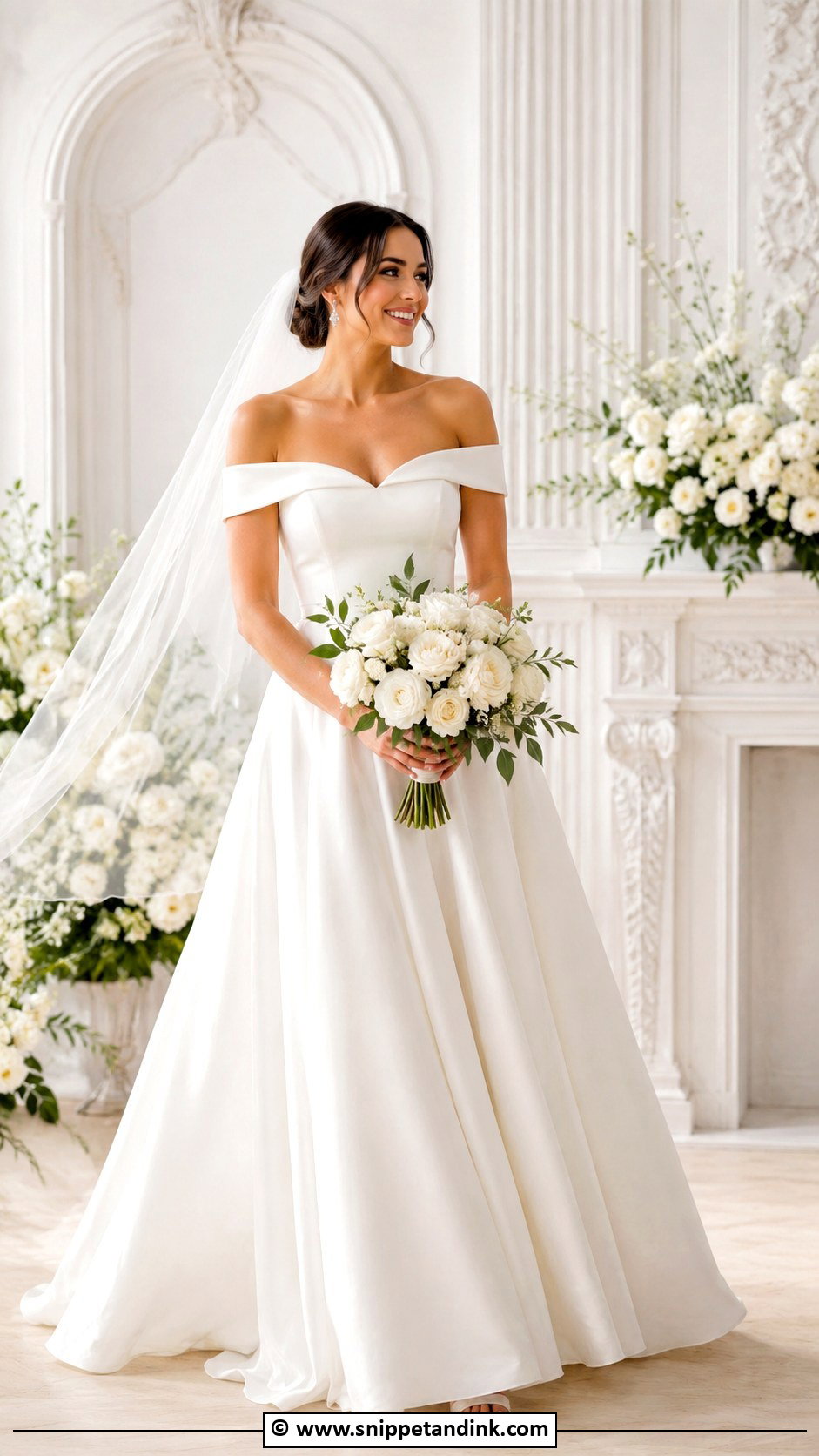
An off-shoulder neckline shows the collarbone while keeping more coverage than strapless, which many brides find a comfortable middle ground. It works on a mermaid, an A-line or a ball gown. The band has to be fitted with your arms moving, since you’ll be hugging people all day. Satin gives a clean edge, lace or tulle a softer one. Delicate earrings and ivory heels are plenty, and a loose updo or brushed waves frames the shoulders.
5. Long Sleeve Marriage Dress
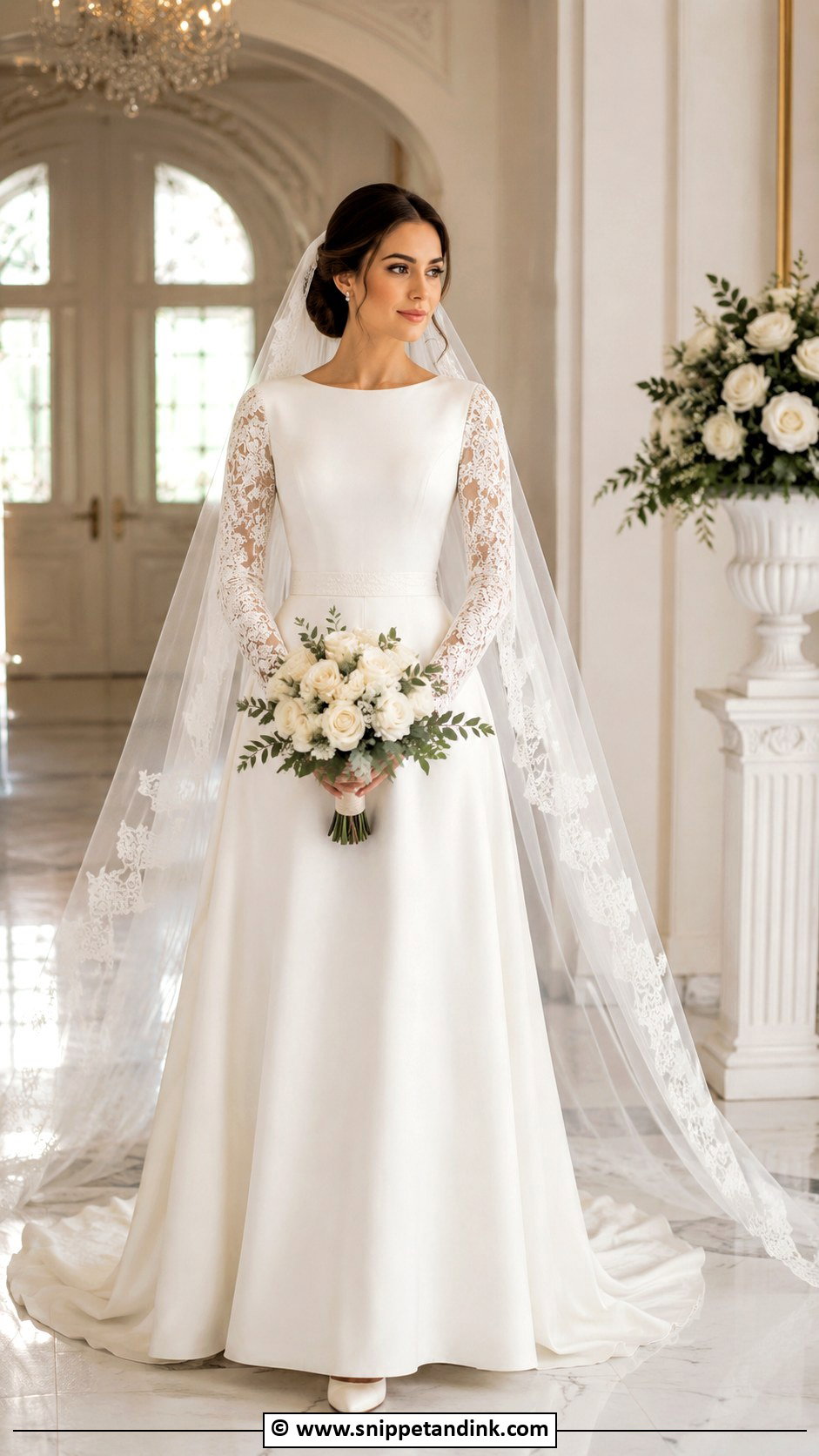
A long sleeve marriage dress changes mood with the sleeve fabric. Lace feels romantic, crepe clean, illusion mesh light and almost invisible. Whatever you choose, test reach in the fitting room: arms up to shoulder height and forward as if signing the register. Fitted sleeves with no stretch are the most common complaint I hear on the day. High, V or square necklines all pair well. Pearl studs, a low chignon, closed-toe heels and a chapel or cathedral veil finish it.
6. Simple Crepe Marriage Dress
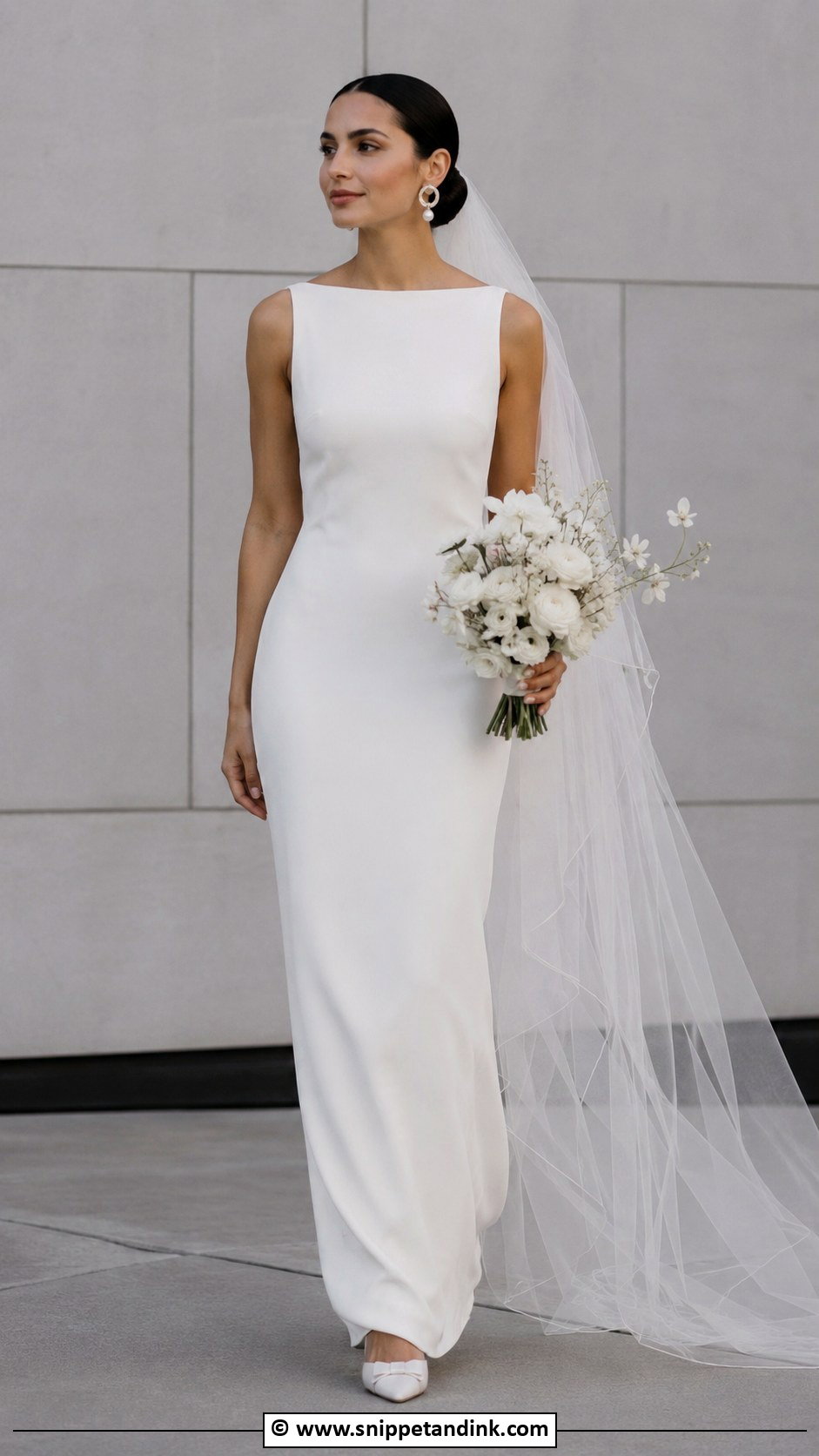
Crepe hides nothing, which is both its appeal and its risk. It falls close to the body with almost no shine, so seams, darts and undergarment lines all show. That’s why a crepe sheath or column needs the most careful tailoring of any dress here. Sculptural earrings, sleek heels, a structured bouquet and a smooth veil suit its clean lines. A polished bun or straight hair with a center part completes it. City halls and minimalist venues are a natural fit.
7. Tea Length Marriage Dress
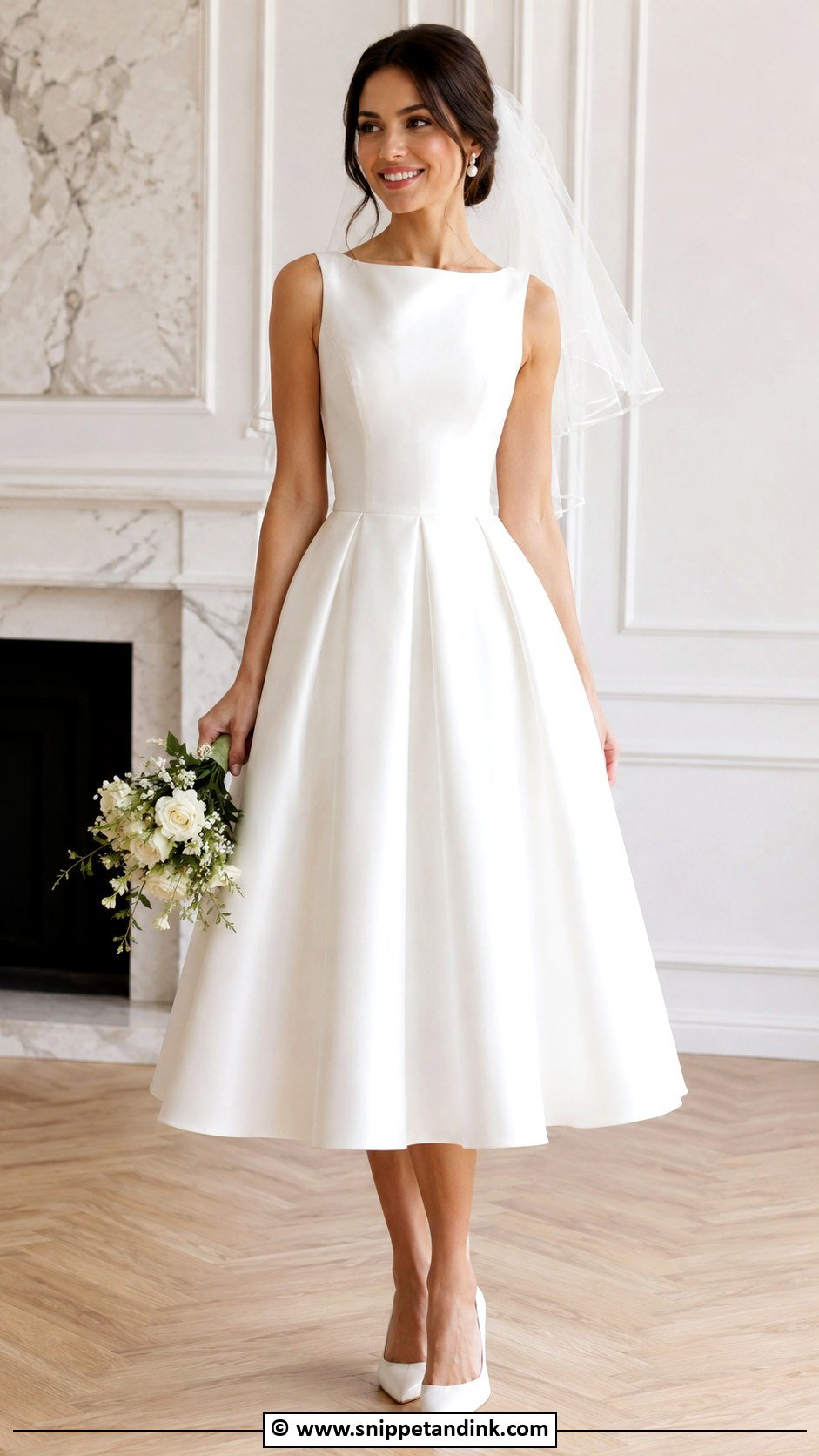
A tea-length hem lands between knee and ankle, so you’ll never trip on it and your shoes will be seen. It suits civil ceremonies, daytime weddings and smaller gatherings. A fitted bodice with a flared skirt feels playful; a sleek satin version cleaner. A petticoat under the skirt gives that classic lifted shape, and I check it doesn’t show at the hem when you sit. Pointed pumps, pearl earrings, a short veil and a small bouquet complete the look.
8. Short Marriage Dress
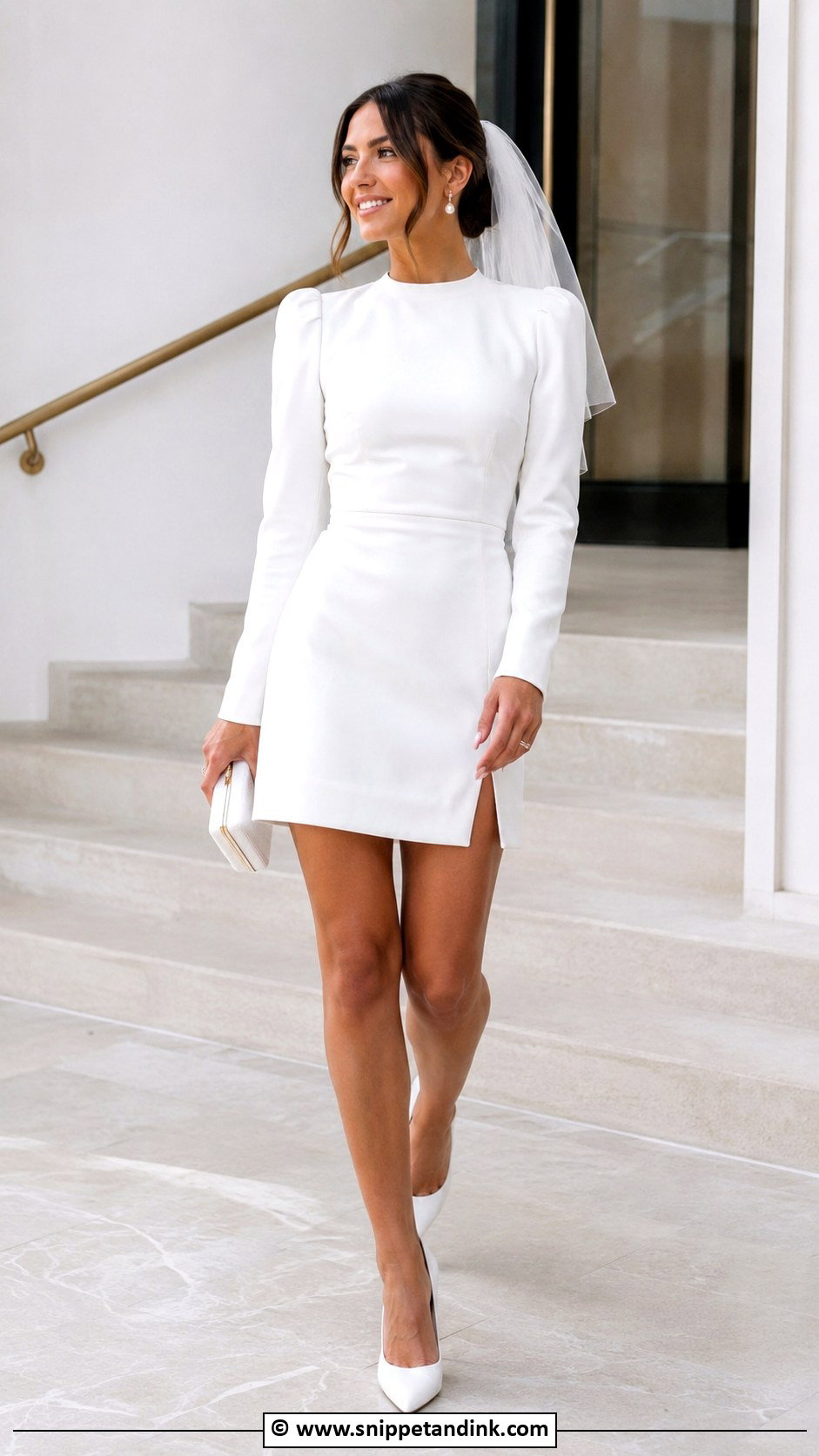
A short dress works as the main look for a casual or courthouse wedding, or as the change for dancing. Structured minis, lace shifts, satin shifts and fit-and-flare cuts all read bridal. The thing to test is sitting: a short hem rises more than you think, especially in photos taken from below. Pearl earrings, a small veil, white heels and a polished clutch balance it. A bow, feather trim or clean neckline adds interest without clutter.
9. Boho Marriage Dress
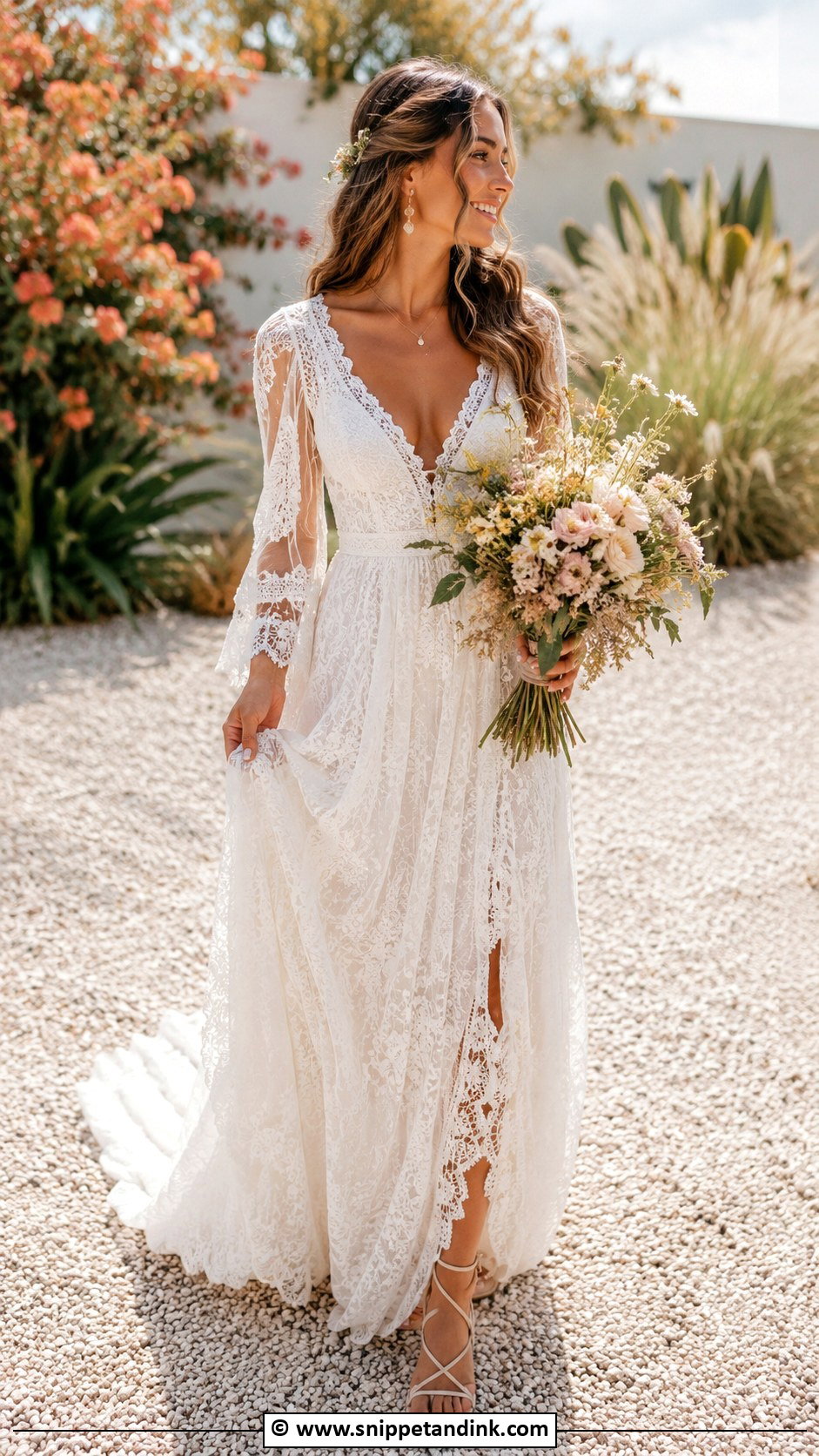
Boho dresses are meant to move, so stiff structure works against them. Soft lace, flowing chiffon, bell sleeves, open backs and light embroidery are the usual details. Open backs need a plan for support, whether a built-in cup or adhesive, decided before fittings begin. Loose waves, fine earrings, strappy sandals and a wildflower bouquet complete it, with a soft veil or floral hairpiece. Outdoor, beach and rustic venues suit it. Long chiffon hems do pick up grass and sand, so expect a dusty edge by evening.
10. Floral Marriage Dress
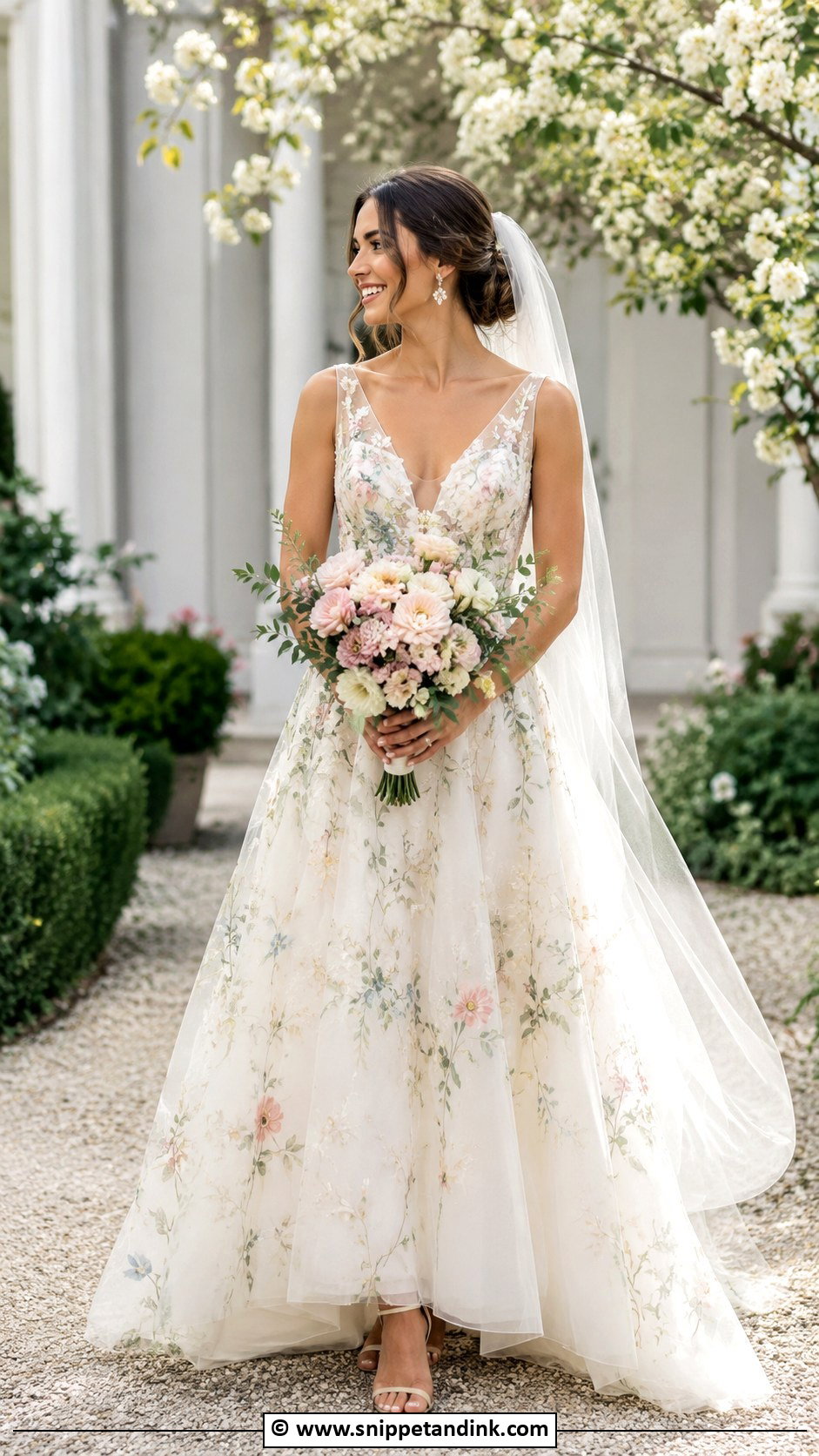
Floral detail can be embroidered, printed, appliqued or built into textured lace. White-on-white flowers read classic; pastel flowers look fresher and more modern. An A-line or soft ball gown gives the pattern room. I like to pull one or two colors from the dress into the bouquet so they echo each other. Keep the veil sheer and plain. Simple heels and small earrings are enough, and spring garden ceremonies show the detail best.
11. Beaded Marriage Dress
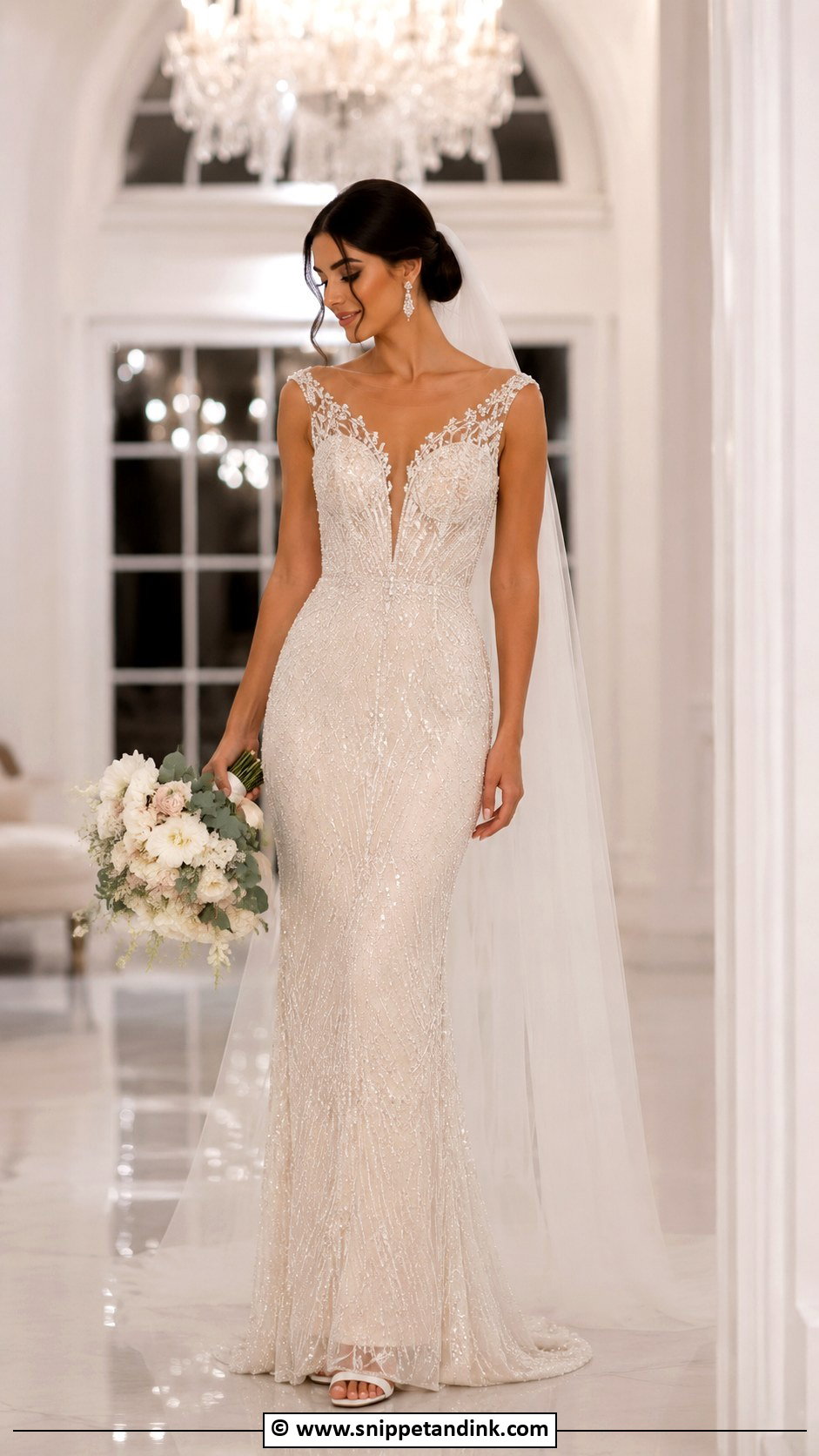
Beading adds weight, and that weight hangs from the shoulders or the waist seam. A fully beaded gown can feel very different after a few hours, so wear the sample longer than feels necessary. Bodice-only or sleeve-only beading gives sparkle with less strain. Evening lighting catches the detail best. Simple heels, small crystal earrings and a plain veil keep it balanced. A sleek bun or side-parted waves completes it. Check under the arms, where beads can rub the skin raw by the end of the night.
12. Corset Marriage Dress
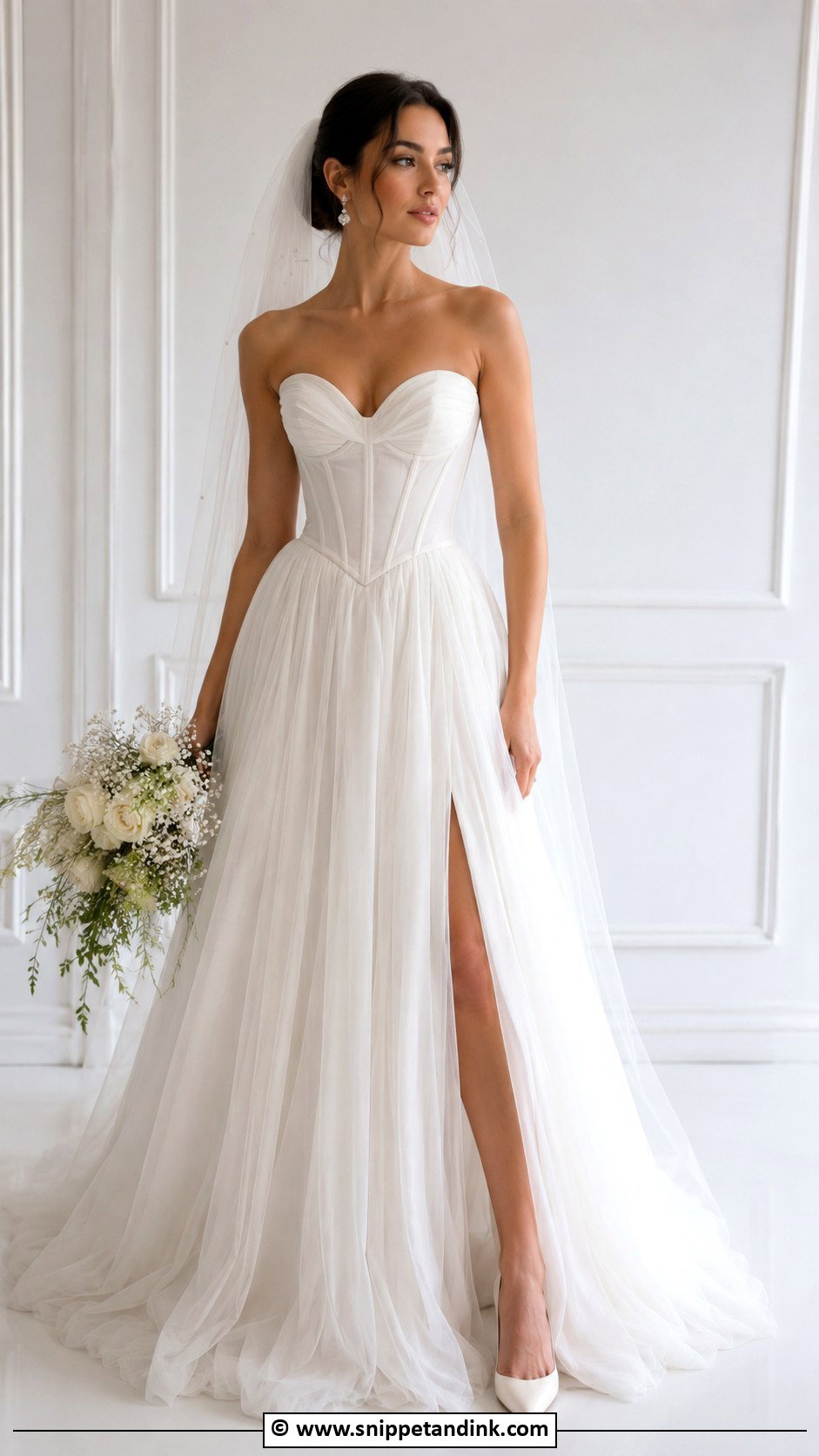
A corset marriage dress holds you up so you’re not tugging at the bodice all day. Proper boning and a waist tape do that work; exposed boning looks fashion-forward, covered boning softer. A lace-up back can be adjusted on the morning, which helps if your weight shifts in the last weeks. Full tulle, sleek satin A-line or fitted mermaid skirts all pair with it. Delicate earrings, a smooth veil, pointed heels and a bouquet held low keep the neckline visible.
13. Square Neck Marriage Dress
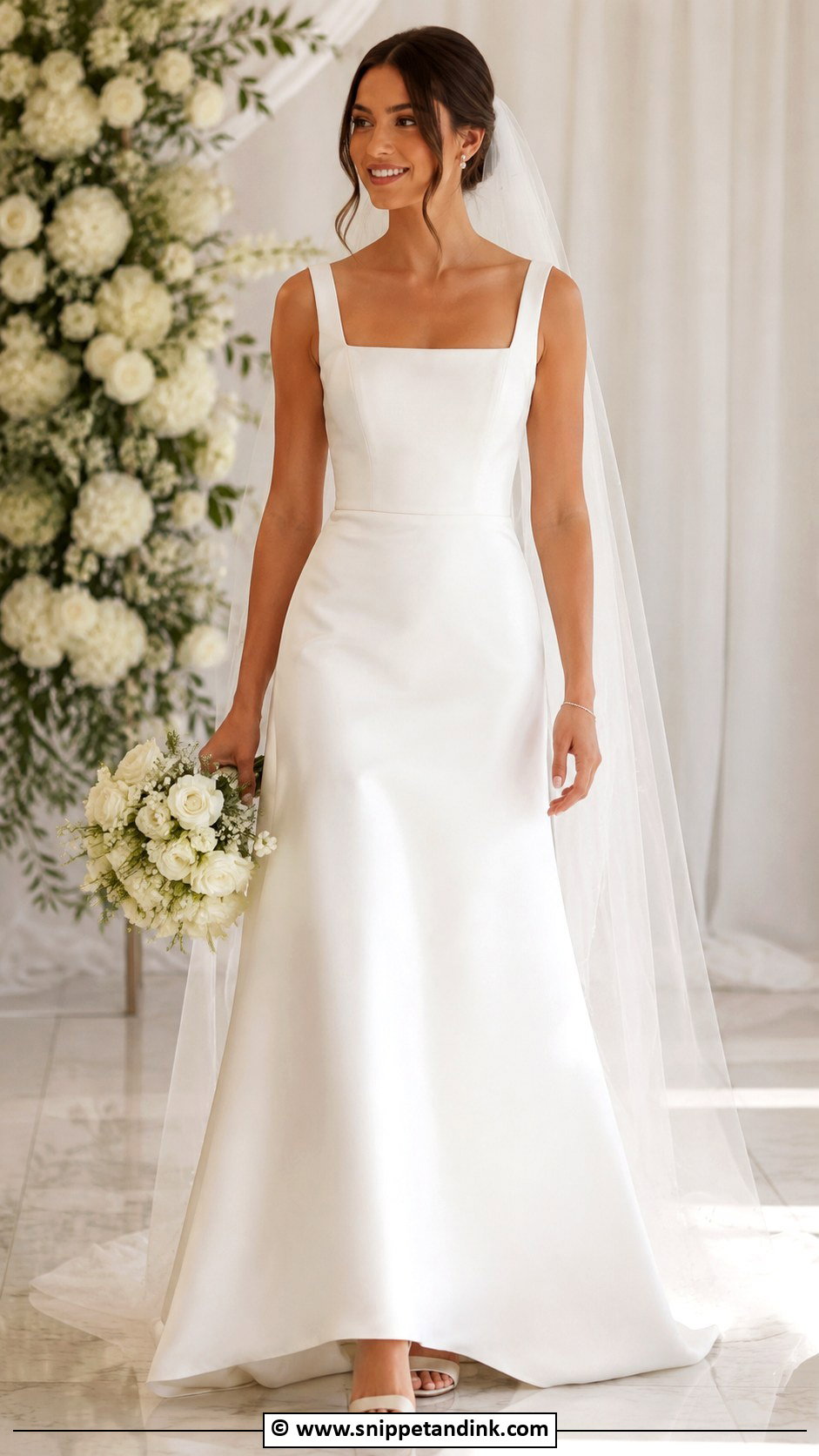
Square necklines frame the collarbone with more coverage than a deep V. They suit thick straps, cap sleeves, long sleeves or a sleeveless bodice. The corners are where fit shows: if they gape when you lean forward, the side seams need taking in. Satin feels polished, lace romantic, crepe minimal. Pearl studs, a simple bracelet and block heels or pointed pumps finish it, with a low bun or soft waves. It’s a shape that stays stylish without chasing trends.
14. High Neck Marriage Dress
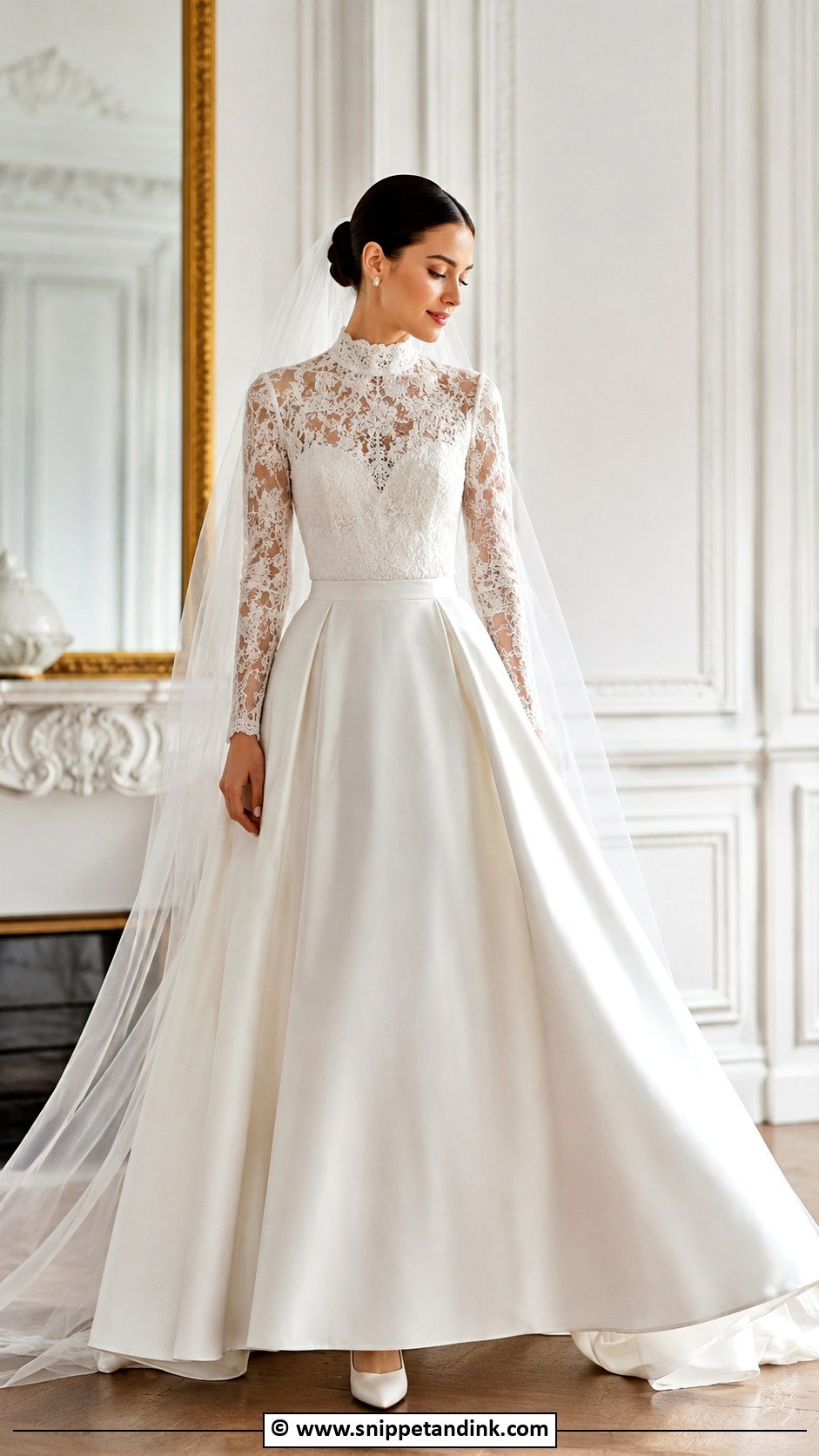
A high neck draws the eye upward and creates a long line through the body. It can be lace, satin, crepe or sheer illusion. Fitted high-neck sheaths feel modern; high-neck lace gowns more classic. Look down at your hands in the fitting room, because a collar that’s too stiff creases or digs when you read vows. Skip necklaces and wear earrings. A sleek updo, closed-toe heels and a plain veil suit it for formal ceremonies and cooler seasons.

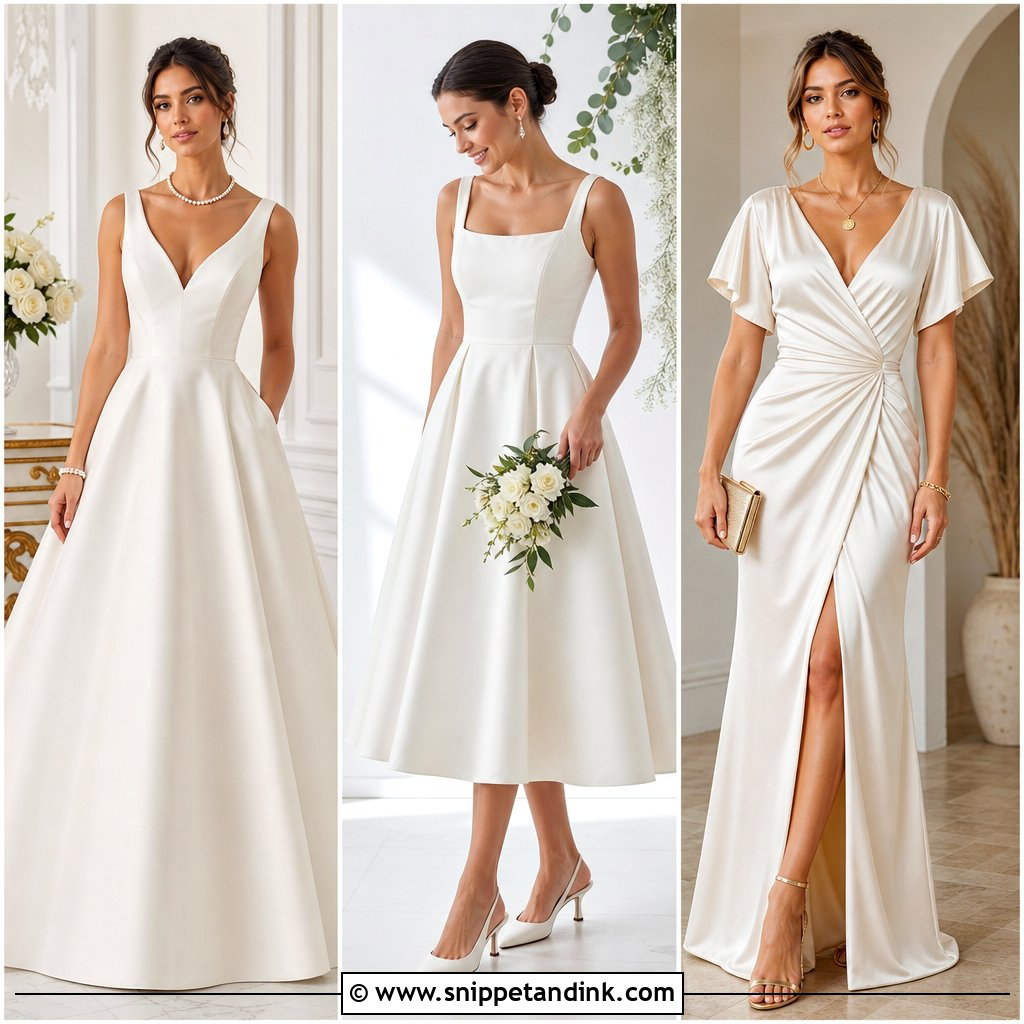
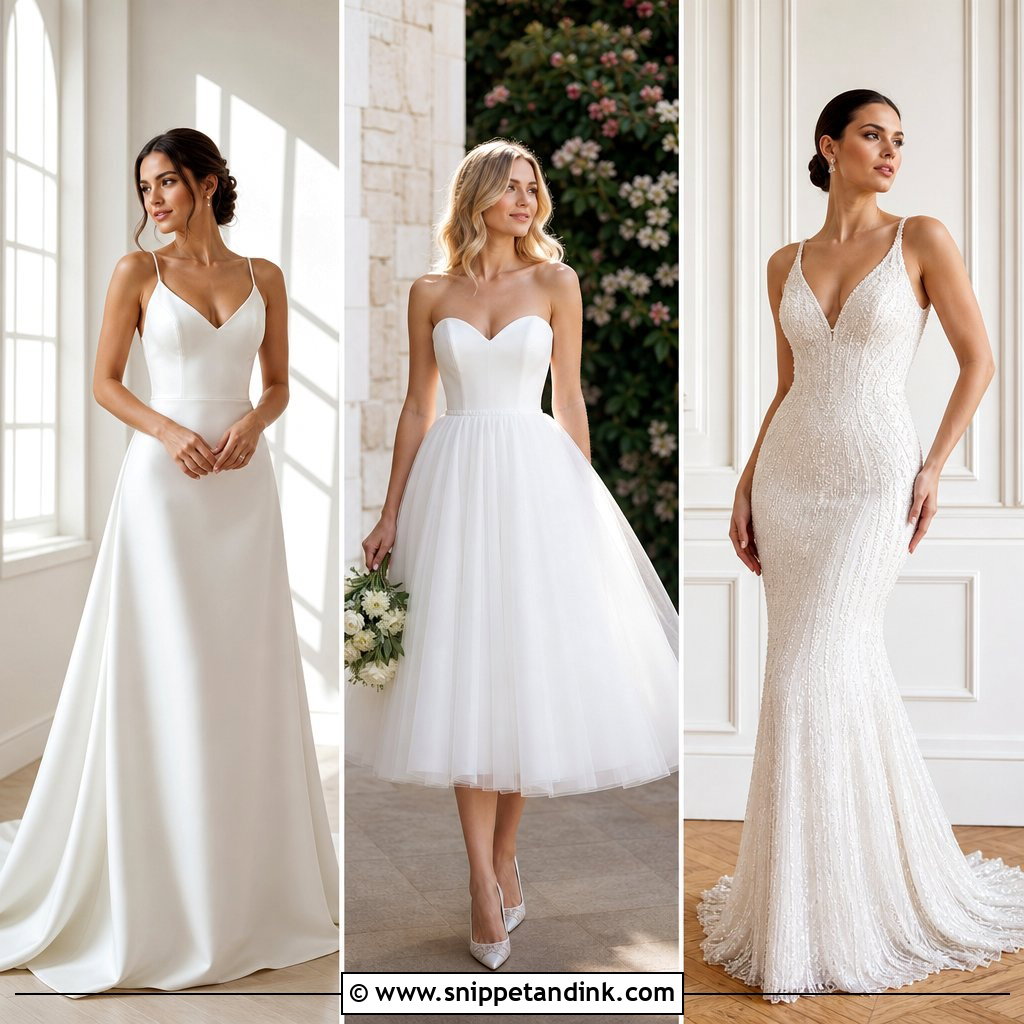
15. V Neck Marriage Dress
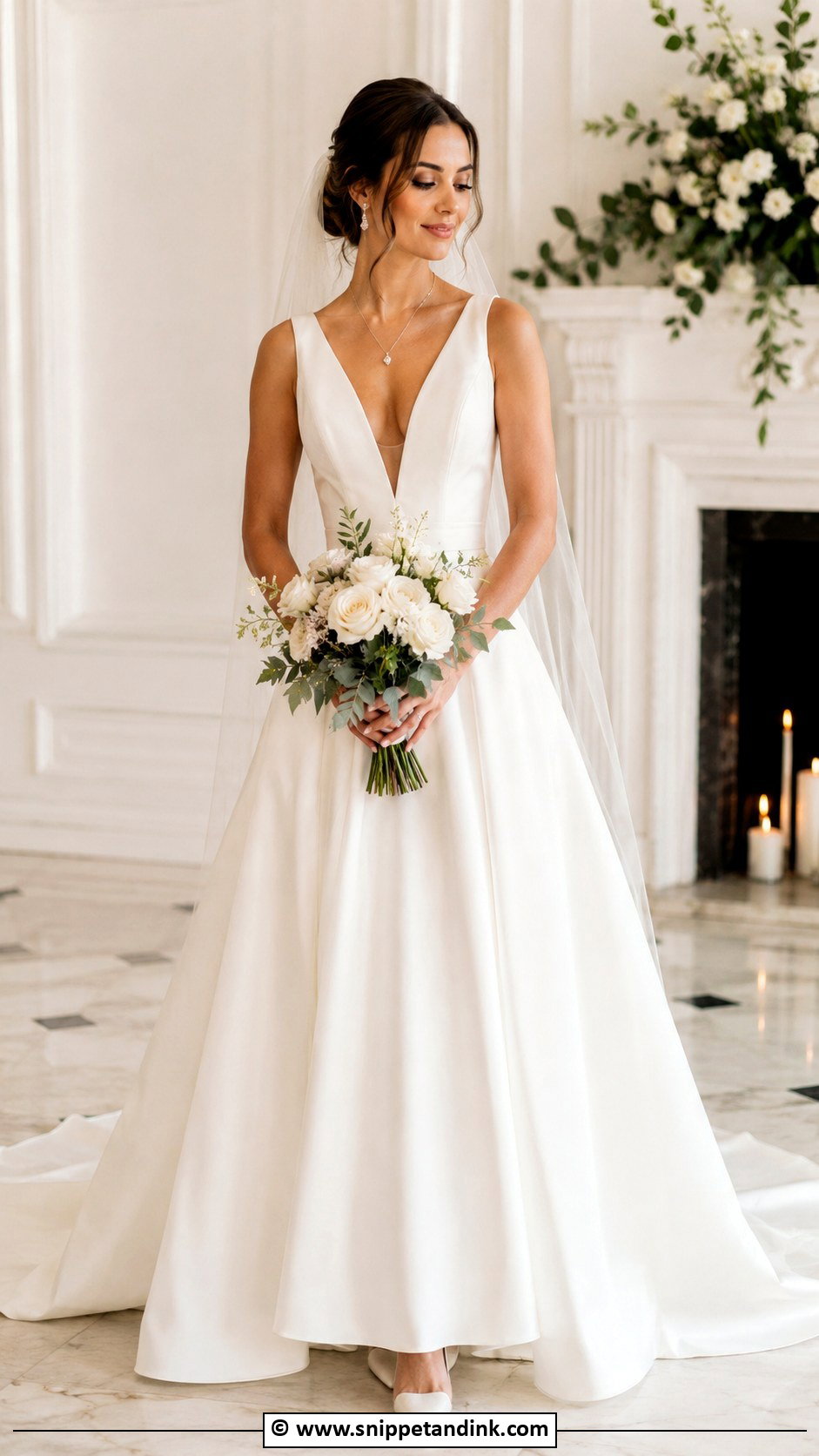
A V-neck lengthens the upper body, and the depth can be set to your comfort. Deep plunges rely on tape, mesh or boning to stay put, so ask what holds the neckline in place before you fall for one. It pairs with A-line, sheath, empire and mermaid shapes. A delicate pendant suits a plain V; skip the necklace if there’s lace or beading. Drop earrings, slim heels, a medium-length veil and a soft bouquet complete it.
16. Strapless Marriage Dress
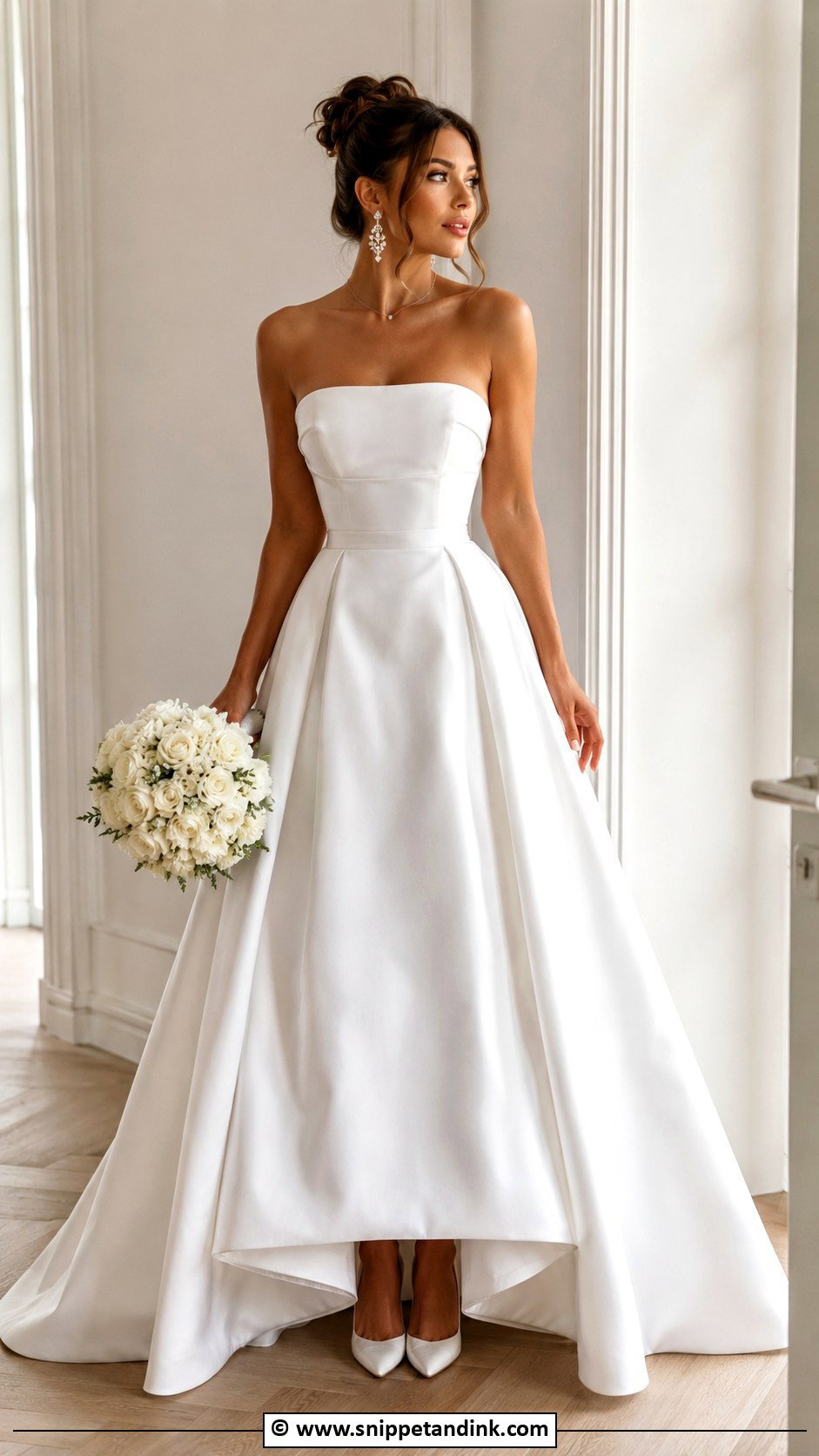
A strapless bodice stays up through its internal structure, not through tightness. If it’s squeezing you to stay in place, the boning or fit is wrong. Test it by raising both arms and bending forward. A strapless ball gown feels dramatic; a strapless satin column sleek. A necklace, statement earrings or both can work, depending on how plain the dress is. Comfortable heels, a veil and a bouquet carried low keep the neckline clear.
17. Modest Marriage Dress
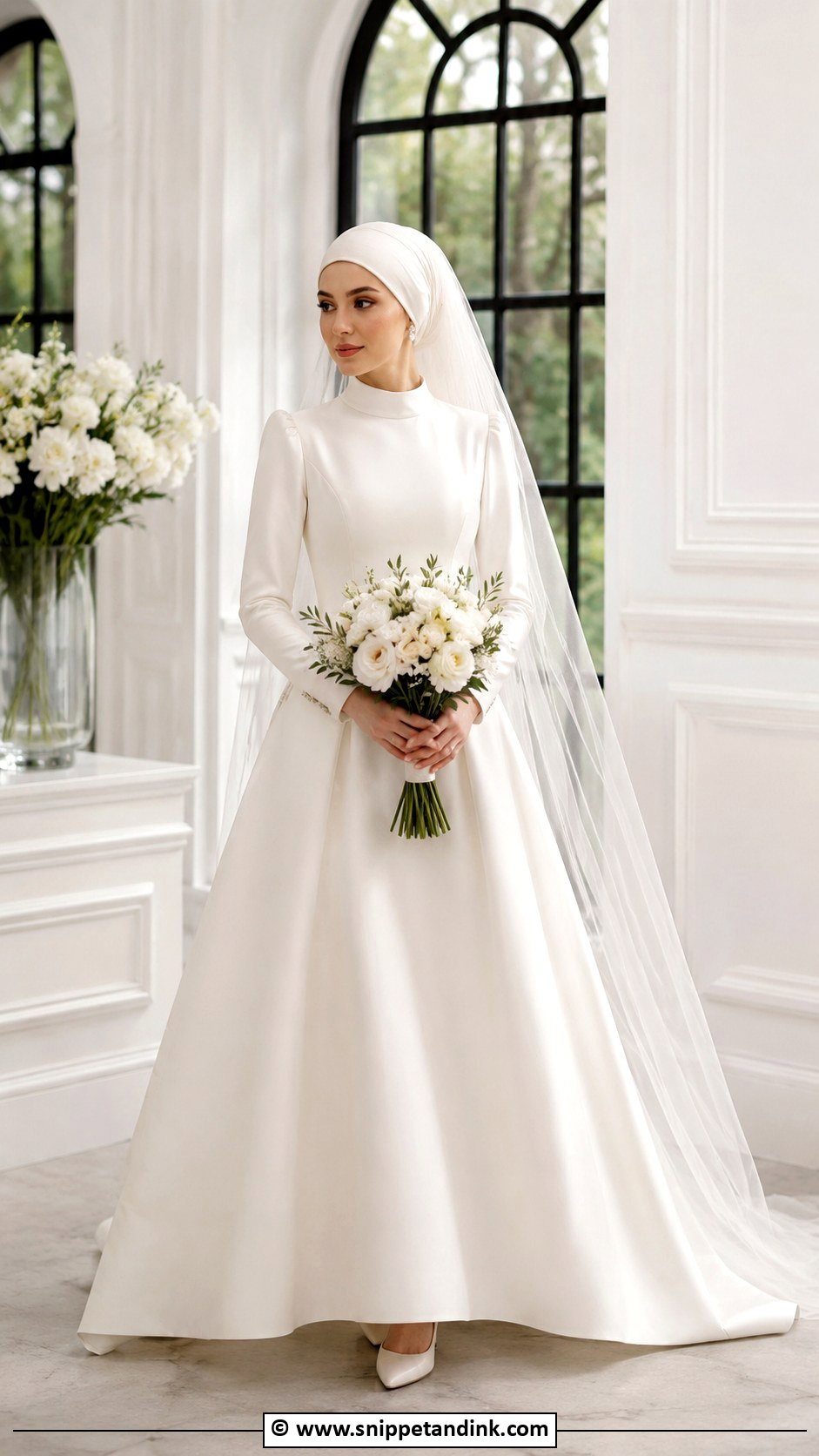
A modest marriage dress works best when coverage comes from design, not extra layers. Higher necklines, longer sleeves, lined bodices, soft A-line skirts and capes all add coverage without weight. Lightweight crepe, chiffon, satin and lace keep it breathable. Pearl earrings, closed-toe heels, a smooth veil and a structured bouquet complete it. A neat bun, soft waves or a covered style all suit it. If you’ll wear a hijab or head covering, bring it to every fitting so the neckline and veil are planned together.
18. Plus Size Marriage Dress
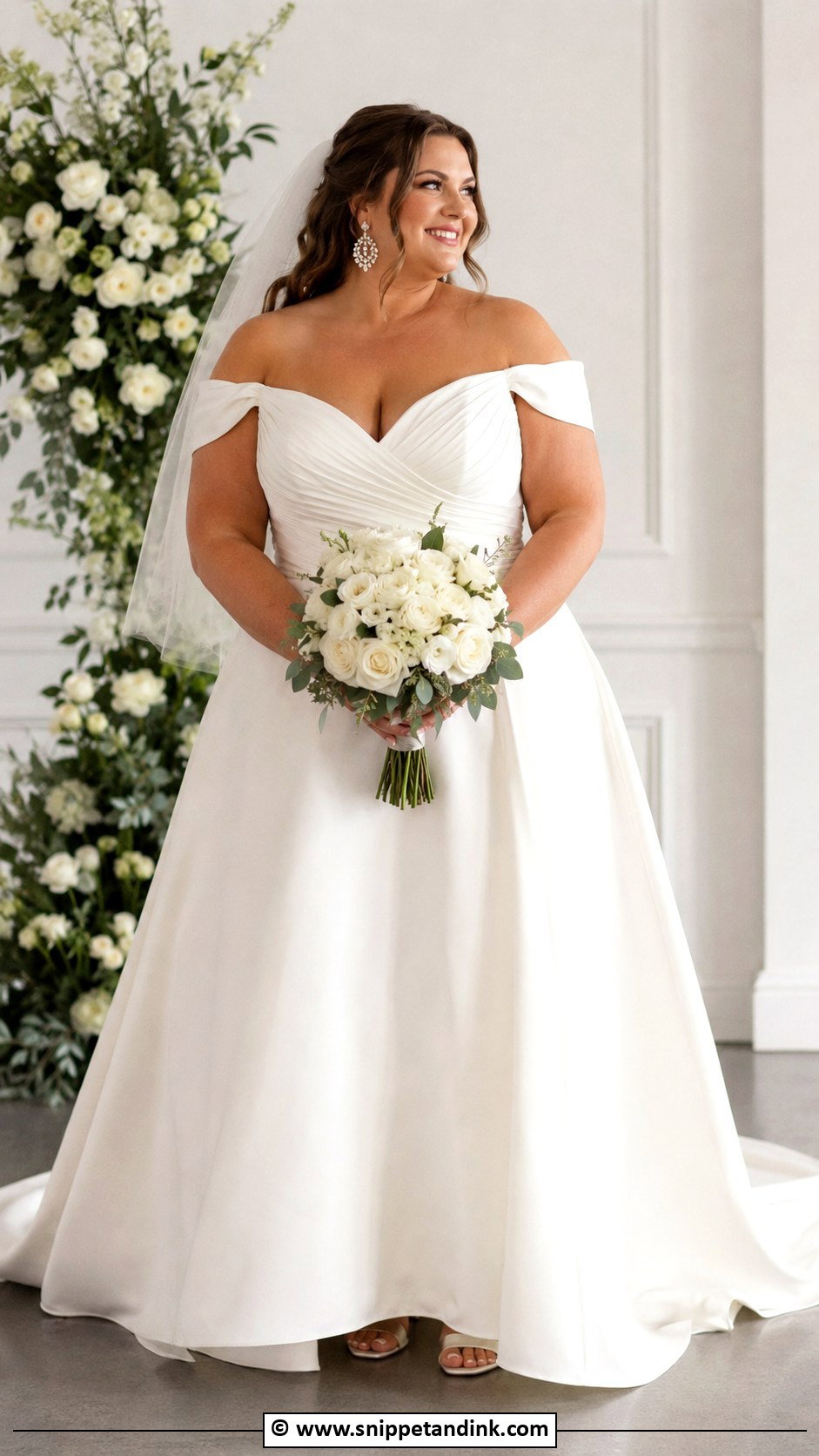
For plus size brides, construction matters more than silhouette. Good lining, internal structure and straps wide enough to hold a supportive bra make a dress comfortable all day. A-line gowns, corset bodices, wrap tops, off-shoulder necklines and fit-and-flare dresses all work. The goal isn’t to hide the body but to let you sit, dance and breathe without adjusting anything. Supportive undergarments, secure heels, statement earrings and a veil matched to the dress length complete it. A skilled tailor changes more than any style choice.
19. Petite Marriage Dress
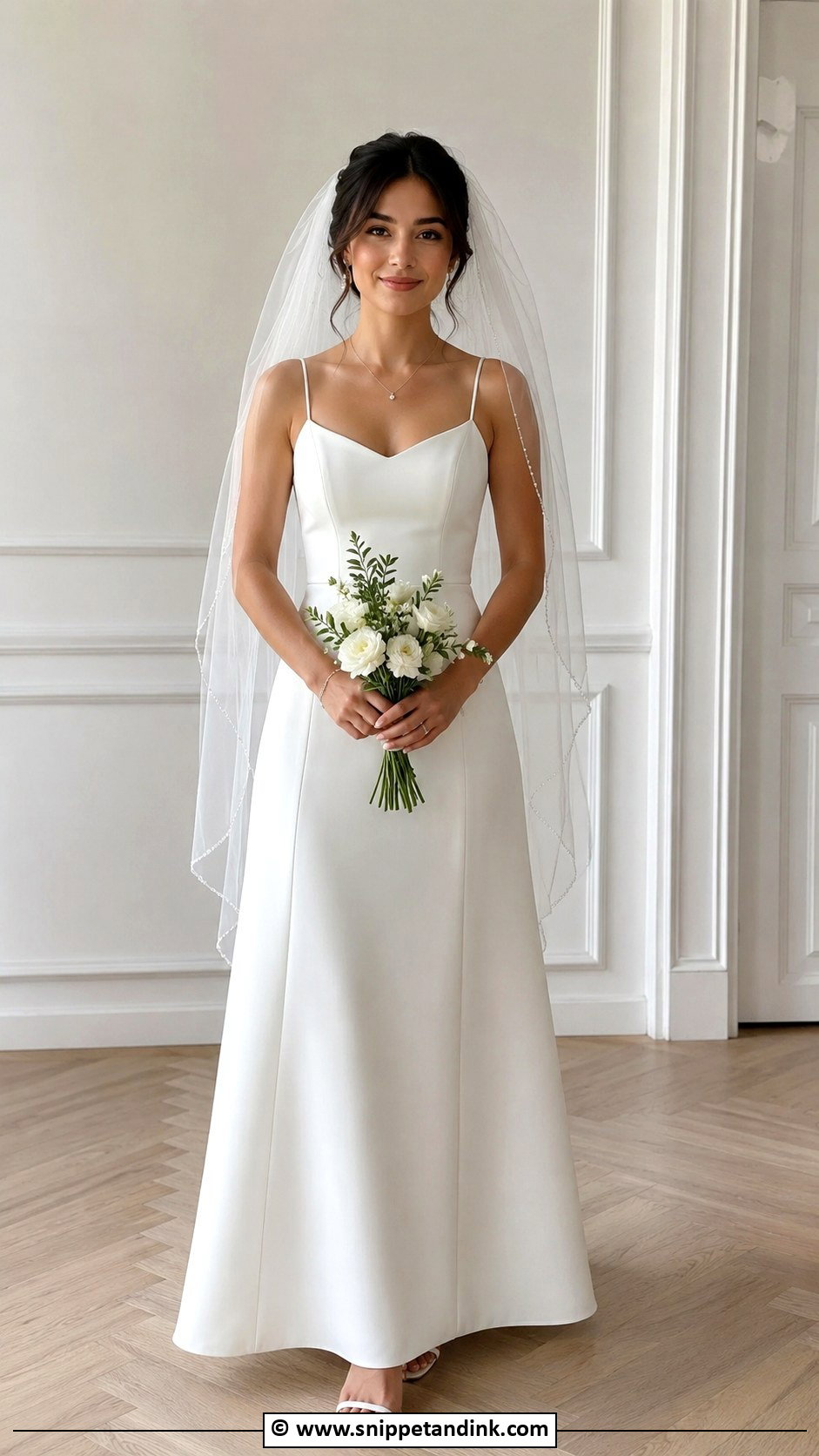
Petite brides look best when the dress doesn’t overwhelm them. Clean lines, vertical seams, lighter fabrics and a well-placed waist all help. A sheath, slim A-line, empire waist or tea-length dress works. Heavy skirts need careful tailoring so they don’t swallow you. A fingertip veil, small bouquet and fine jewelry look more balanced than oversized pieces. If you want drama, get it from texture or neckline rather than volume. Expect the hem to need taking up on almost any sample.

20. Maternity Marriage Dress
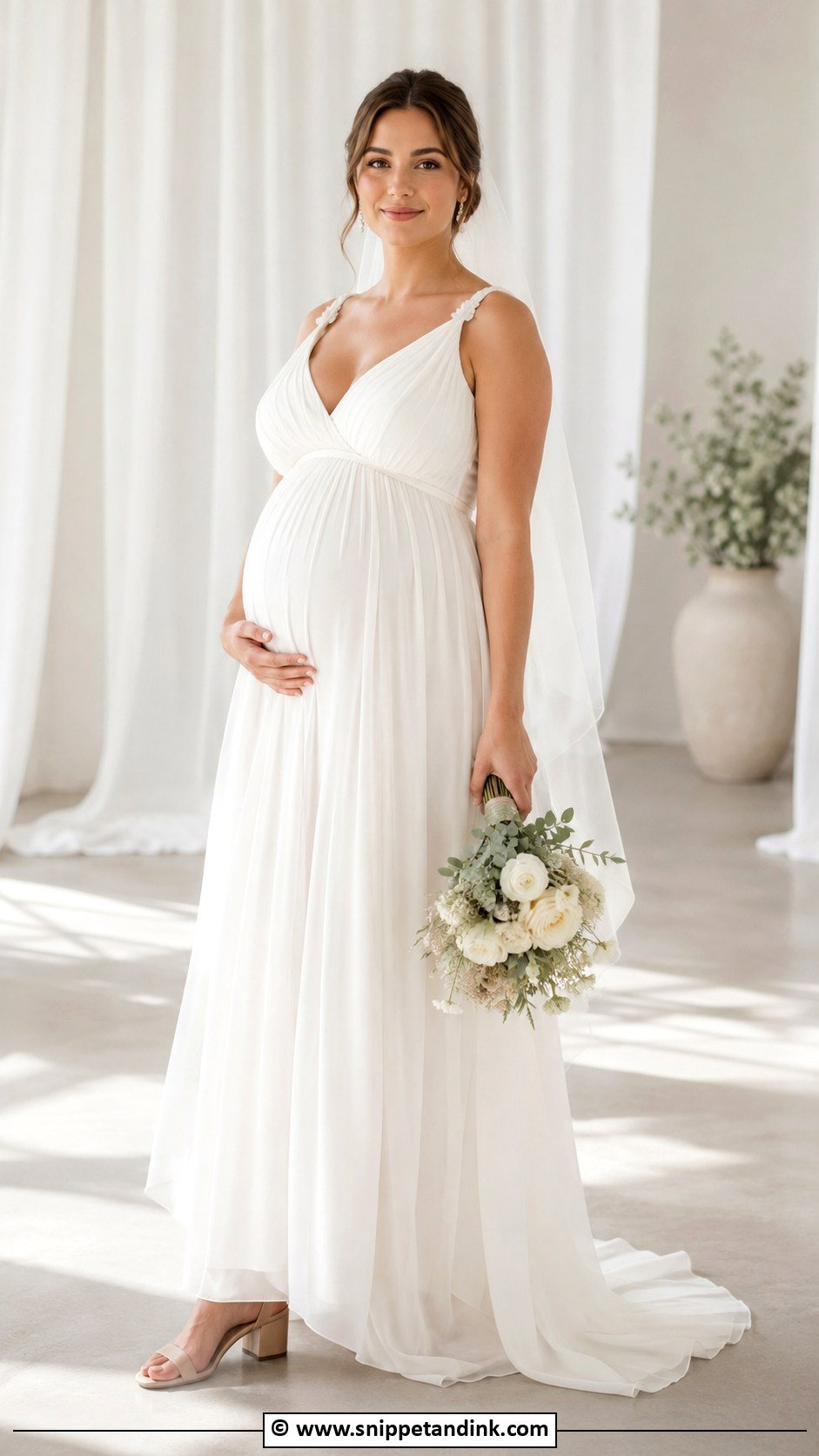
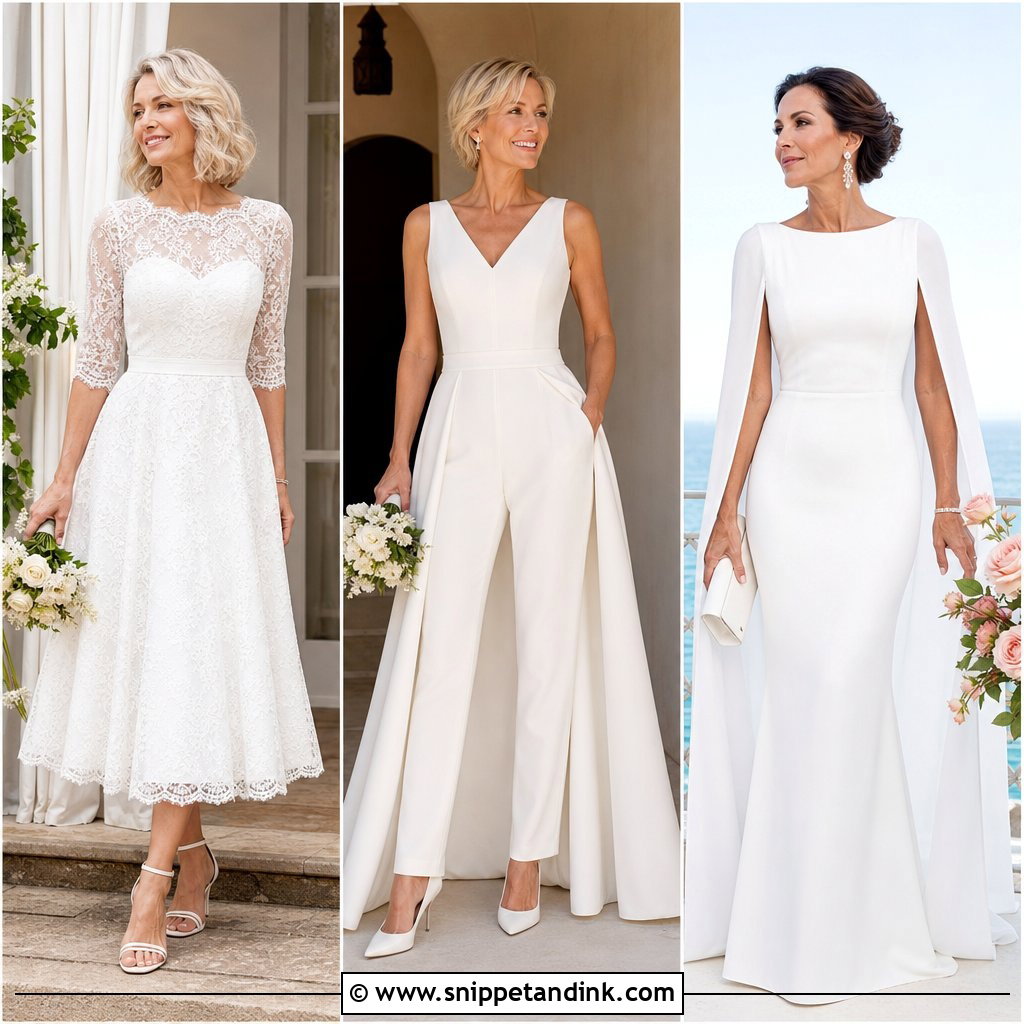
Bodies change quickly in pregnancy, so with a maternity marriage dress I schedule the final fitting as close to the date as the seamstress allows. Empire waists sit above the bump and fall softly over it. Stretch crepe, chiffon, soft tulle and jersey-lined fabrics give comfort without looking casual. Lace-up or adjustable backs buy extra room. Low block heels, delicate earrings and a light veil suit it, with a soft bouquet and relaxed hair. Avoid anything tight at the waist.
21. Civil Marriage Dress
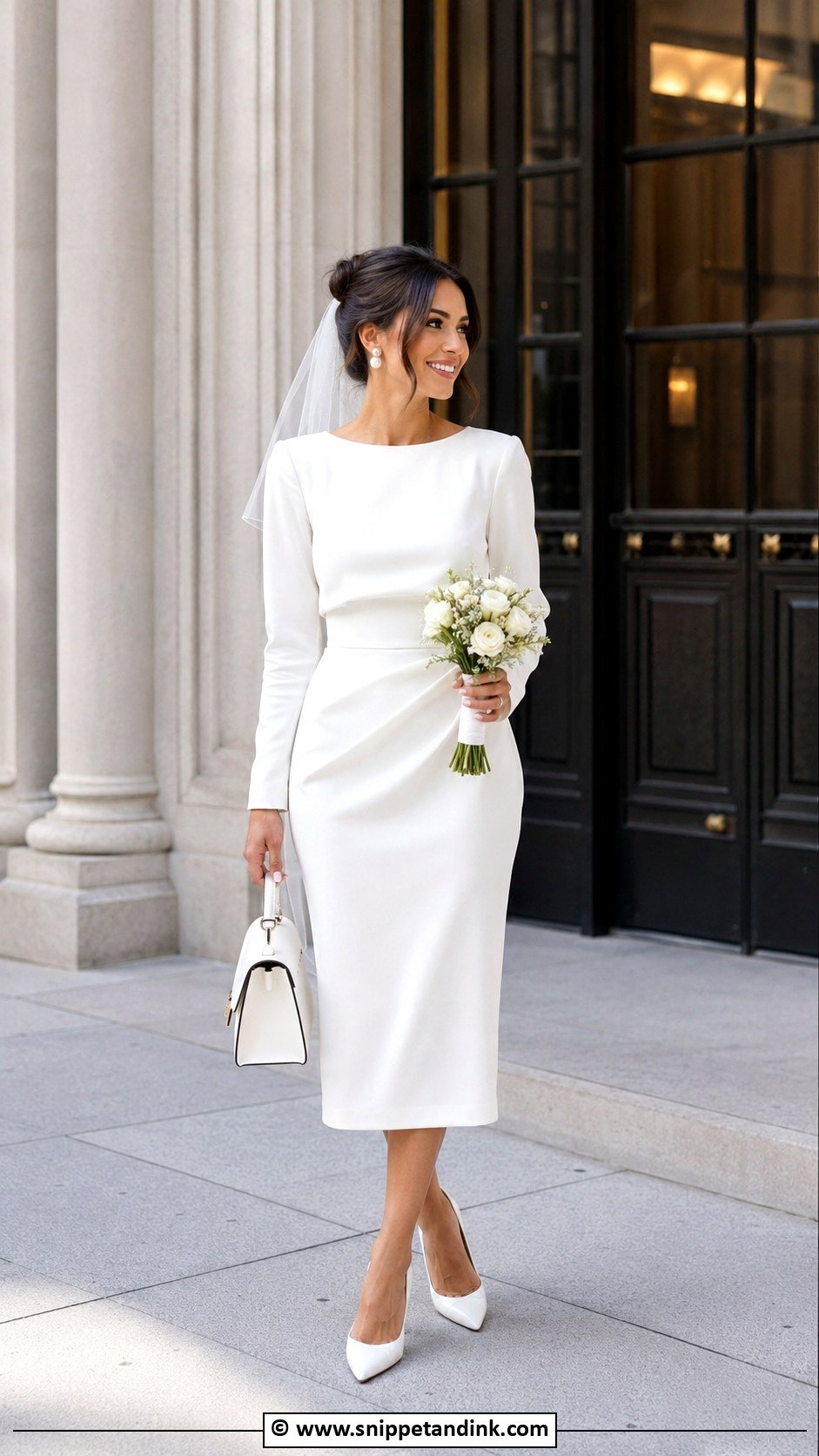
A civil ceremony usually means a shorter day, standing rooms and stairs, so I lean toward practical dresses with sharp tailoring. A tailored midi, white suit dress, satin column or tea-length dress all work. Pointed pumps, a structured bag, pearl earrings and a small bouquet complete it. A short veil or bow hair accessory makes it feel bridal. Crisp fabrics photograph well in the flat, bright light many civic buildings have.
22. Beach Marriage Dress
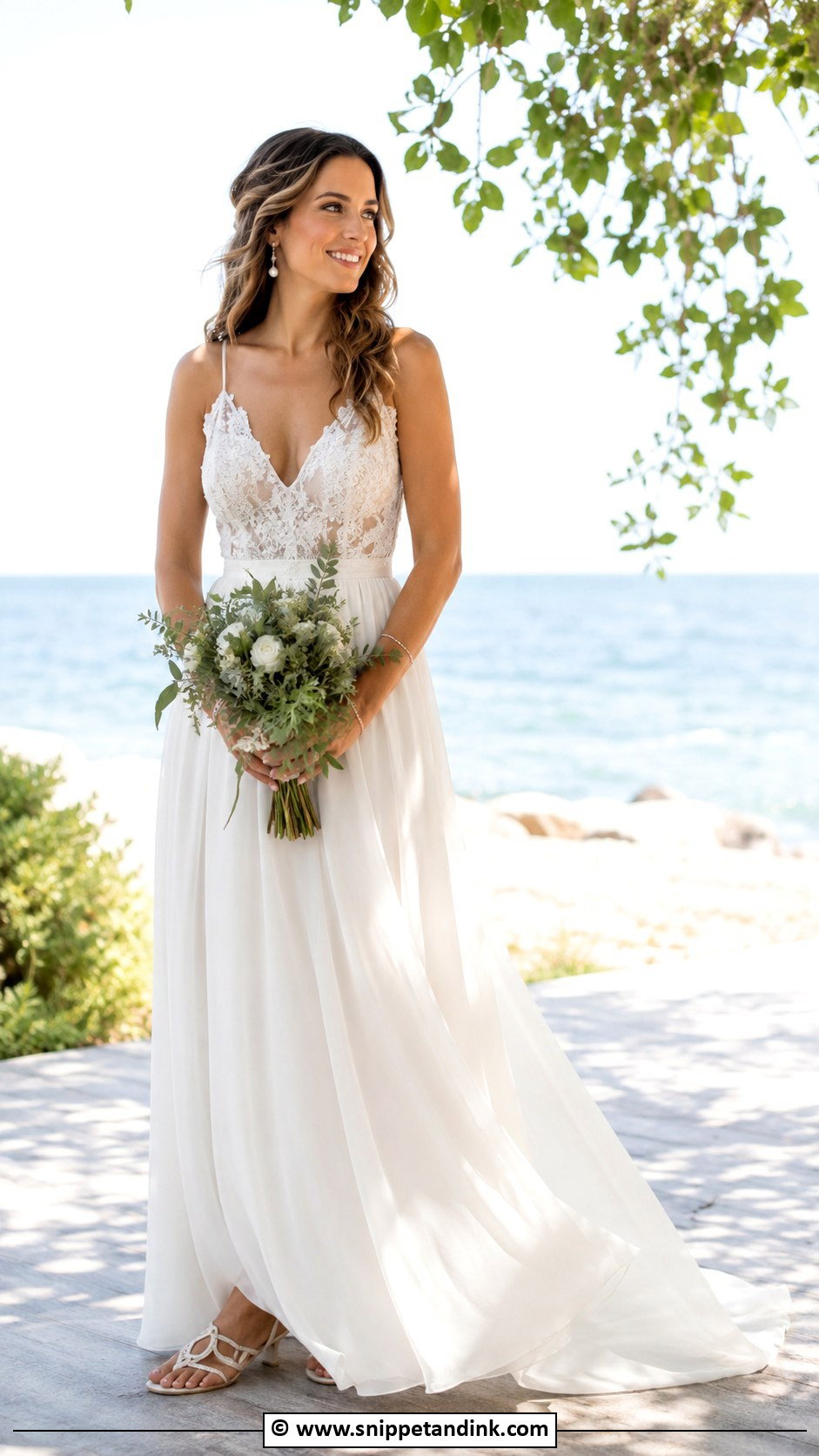
Sand, wind and salt are the three things a beach dress has to handle. Heavy ball gowns sink and drag in sand; chiffon, light lace, organza or crepe move with you. A flowing A-line, sheath, slip or boho gown all suit the setting. Flat sandals, barefoot sandals or low block heels are practical. Pearl earrings, loose waves and a bouquet with natural greenery finish it. Wind catches long veils, so choose a short veil, add weights to the hem, or skip it.
23. Reception Marriage Dress
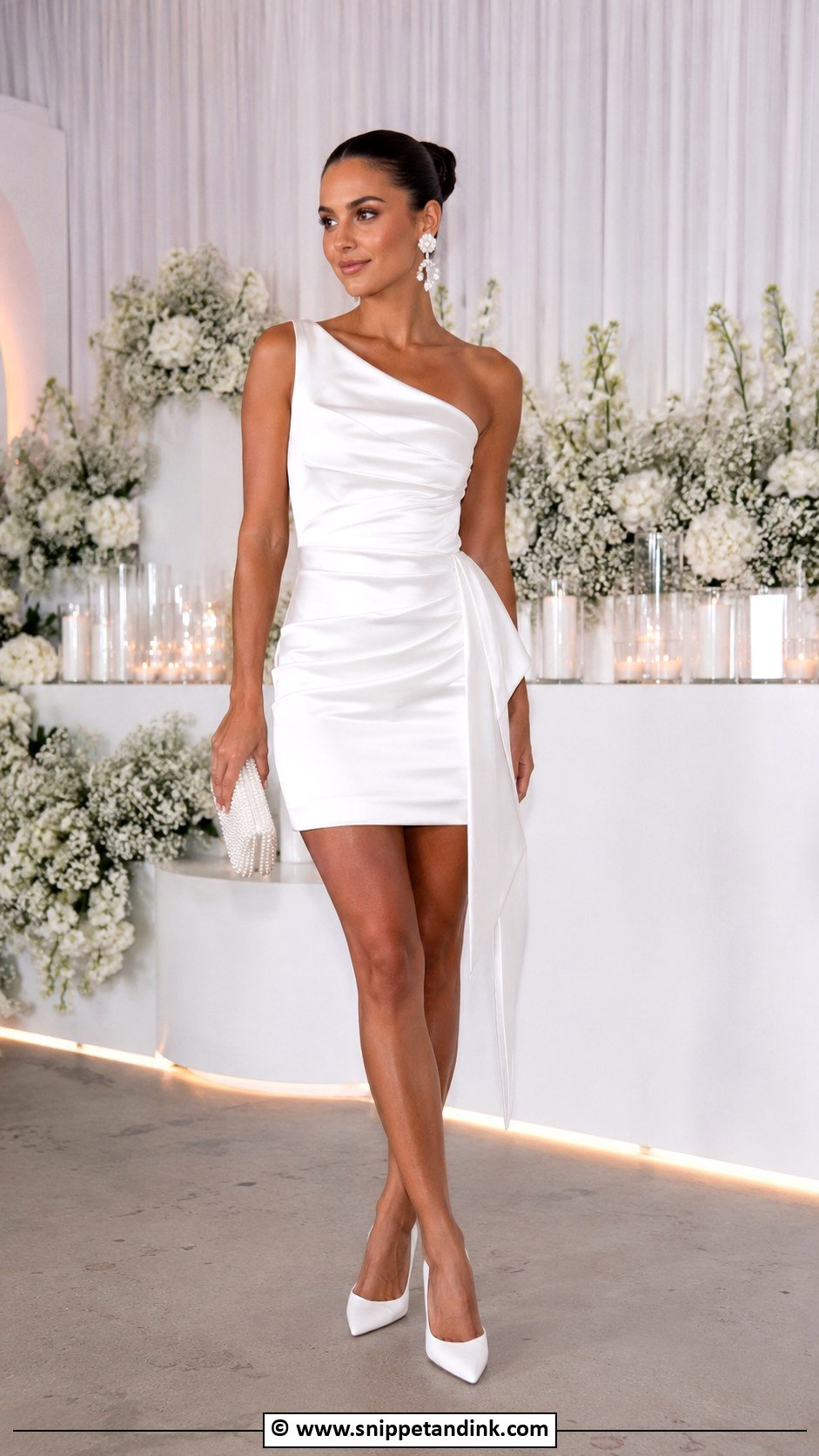
The reception dress is your chance to move freely. A short dress, feather-trim mini, satin midi, fitted column or beaded cocktail dress all suit dancing. Keep it white or ivory so it still reads bridal, with heels you’ve broken in, statement earrings and a small clutch. If the ceremony dress is traditional, the second look can be more playful. Plan where you’ll change and who helps, so you’re not missing a half hour of your own party.
24. Marriage Dress With Detachable Train
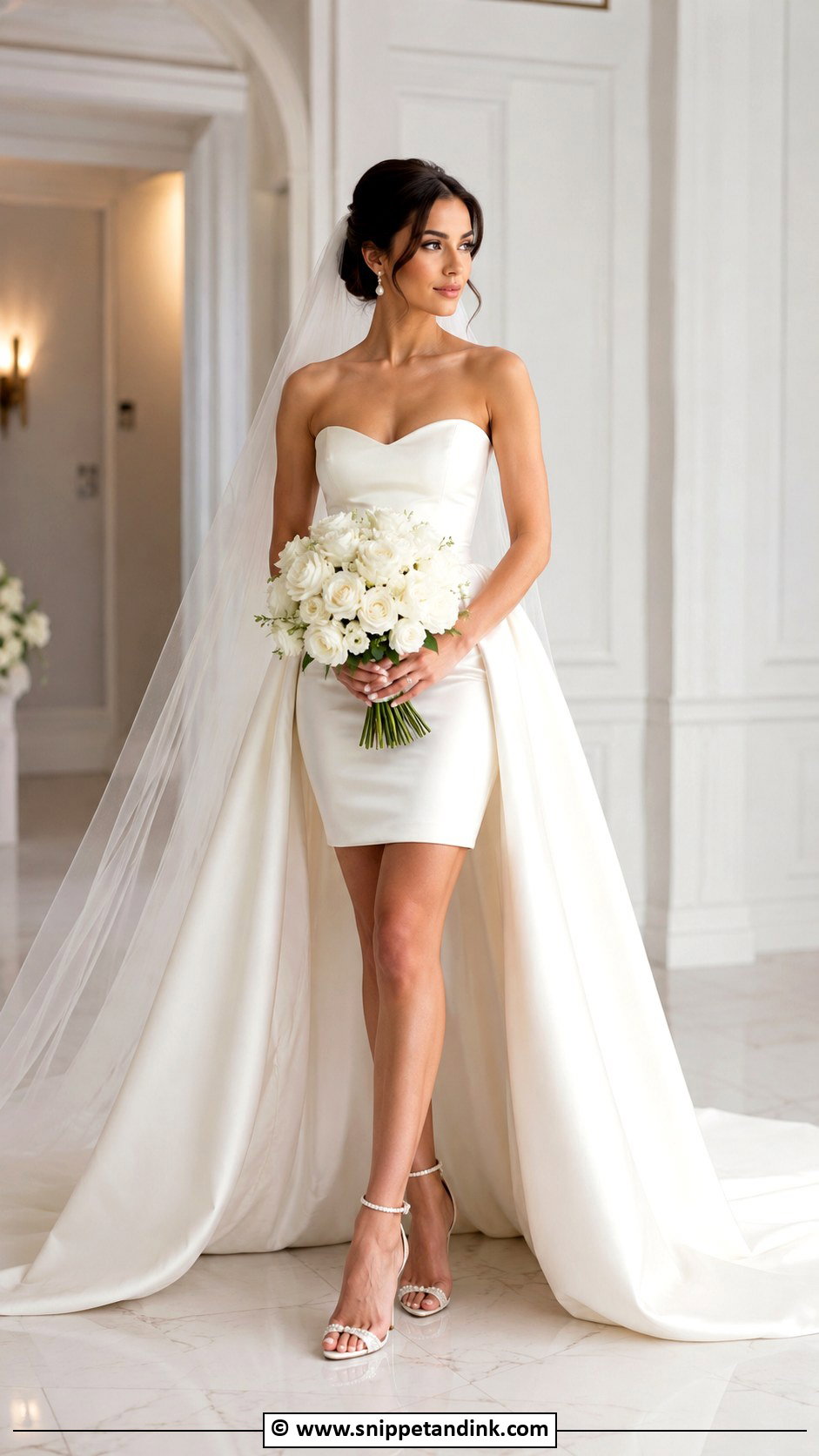
A detachable train gives a formal ceremony line, then comes off for dancing. Ask how it attaches: hooks and snaps come off fastest, hidden buttons look neatest but take longer. Show your maid of honor how to remove it before the day. It works on fitted gowns, satin dresses, lace silhouettes and even short dresses with overskirts. Elegant heels, a veil and classic jewelry suit the ceremony; once the train is off, swap to bolder earrings or a lighter hair accessory for a fresh look.


25. Marriage Dress With Bridal Suit
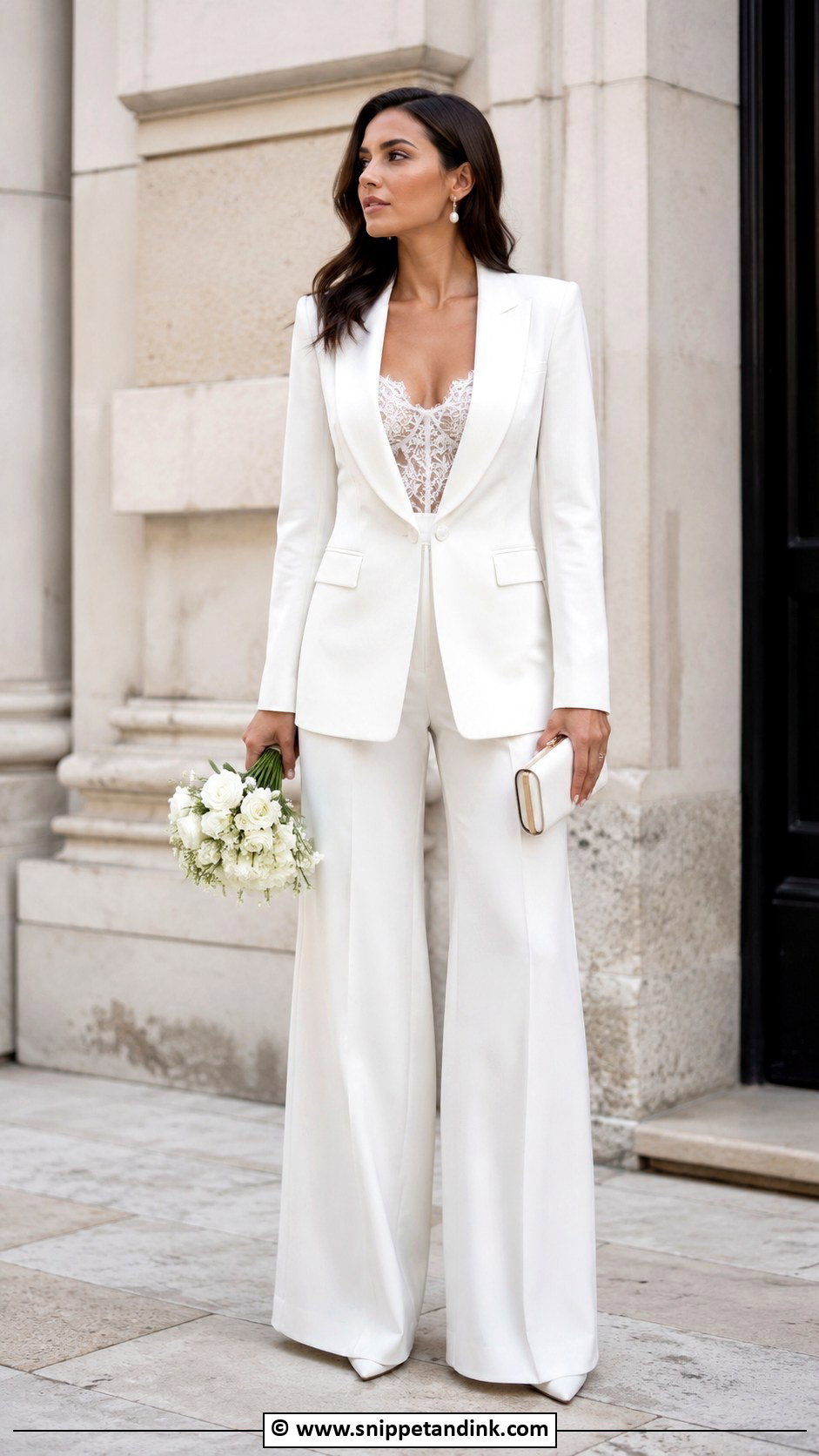
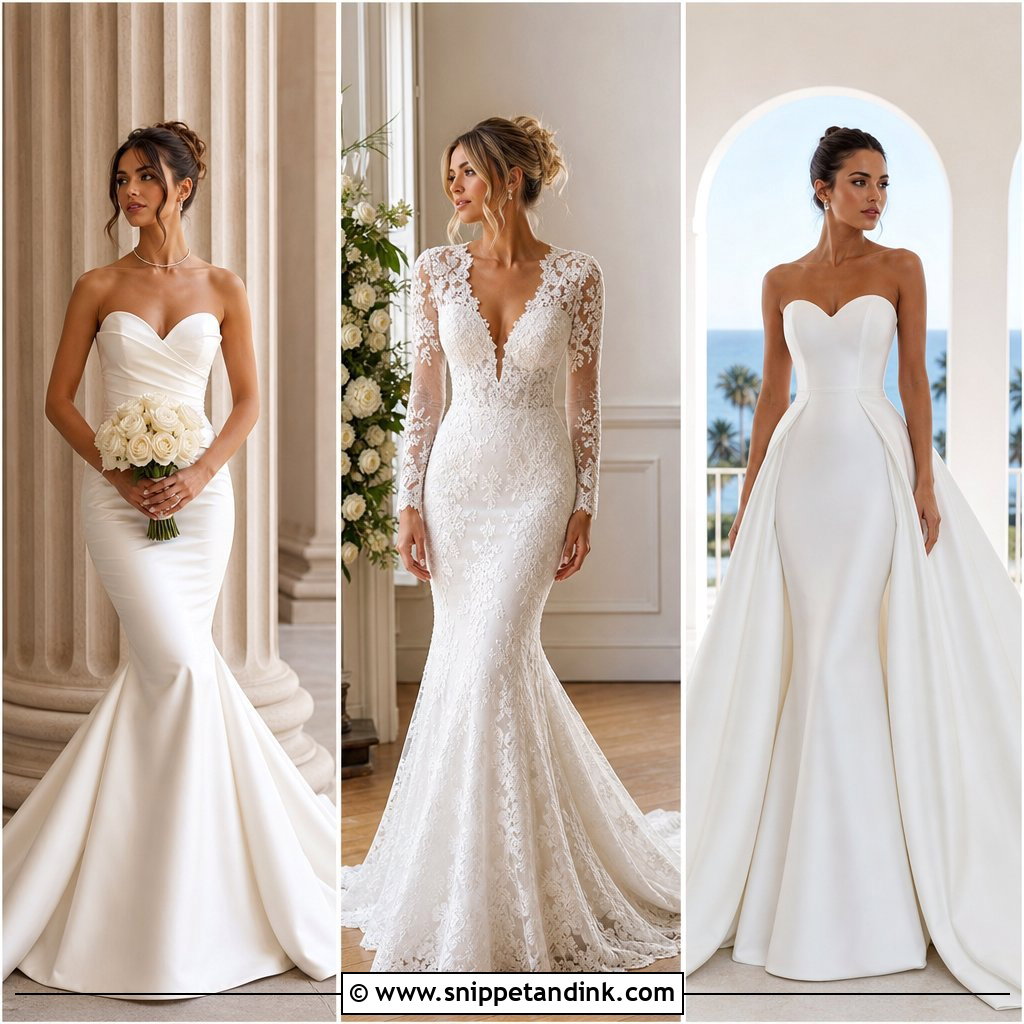
Bridal suits are the right answer for brides who’d never be comfortable in a gown. A white blazer dress, a wide-leg trouser suit, a lace camisole with tailored trousers, or a gown under a structured jacket all work. Trouser hems should be cut for your exact shoe height, with a slight break or none at all, so bring the shoes to the fitting. Pointed heels, pearl or crystal earrings, a sleek clutch and polished hair complete it. A small bouquet keeps it bridal at a civil ceremony or second look.
Bustles, Bathroom Breaks and an Emergency Kit
These are the parts of wearing a wedding dress that nobody mentions in the boutique, and they matter more than any accessory.
The bustle
Any dress with a train needs a way to lift it for the reception. An over bustle hooks the train up onto the back of the skirt; an under bustle, often called a French bustle, tucks it underneath with ribbon ties. Ask your seamstress which suits your fabric, then have the person who’ll do it on the day attend your final fitting and practice twice. Ribbons are usually numbered or color-coded; take a photo of each step.
The bathroom
Most brides manage best by facing the toilet, stepping in backward and gathering the skirt to the front. A friend helps with a ball gown. Practice once at home, in the dress or a similar skirt.
The kit
- Needle and thread matched to the gown, plus safety pins
- Fashion tape for necklines and straps
- A white chalk stick for small marks on white or ivory
- Plasters for heels and a pair of flat shoes for the evening
The Dress That Suits Your Day, Not Just the Mirror
There’s no single right wedding dress, only the one that suits your body, your plans and your taste. Some women feel most like themselves in a ball gown; others in simple crepe, a short dress, a modest gown or a tailored suit. Think about the venue, the weather, how far you’ll walk, how long you’ll sit, and how many hours you’ll wear it. Fabric, fit, neckline, shoes and accessories all work together. Use these 25 dresses as a starting point, then trust the one you forget you’re wearing.
You'll Like These Ideas:



Leave a Reply