
Dressing for a wedding later in life is usually the easier fitting, not the harder one. You know your taste and your body, and you stop trying to look like a magazine page. The gowns below suit intimate ceremonies, destination celebrations, courthouse weddings and formal evenings alike. White is still yours to wear, though ivory, champagne, blush, silver and soft blue all read as bridal. What I look at first with every client is the inside of the dress: the lining, the boning, whether the bodice holds you or you end up holding it. Get that right and the style choices become the fun part.
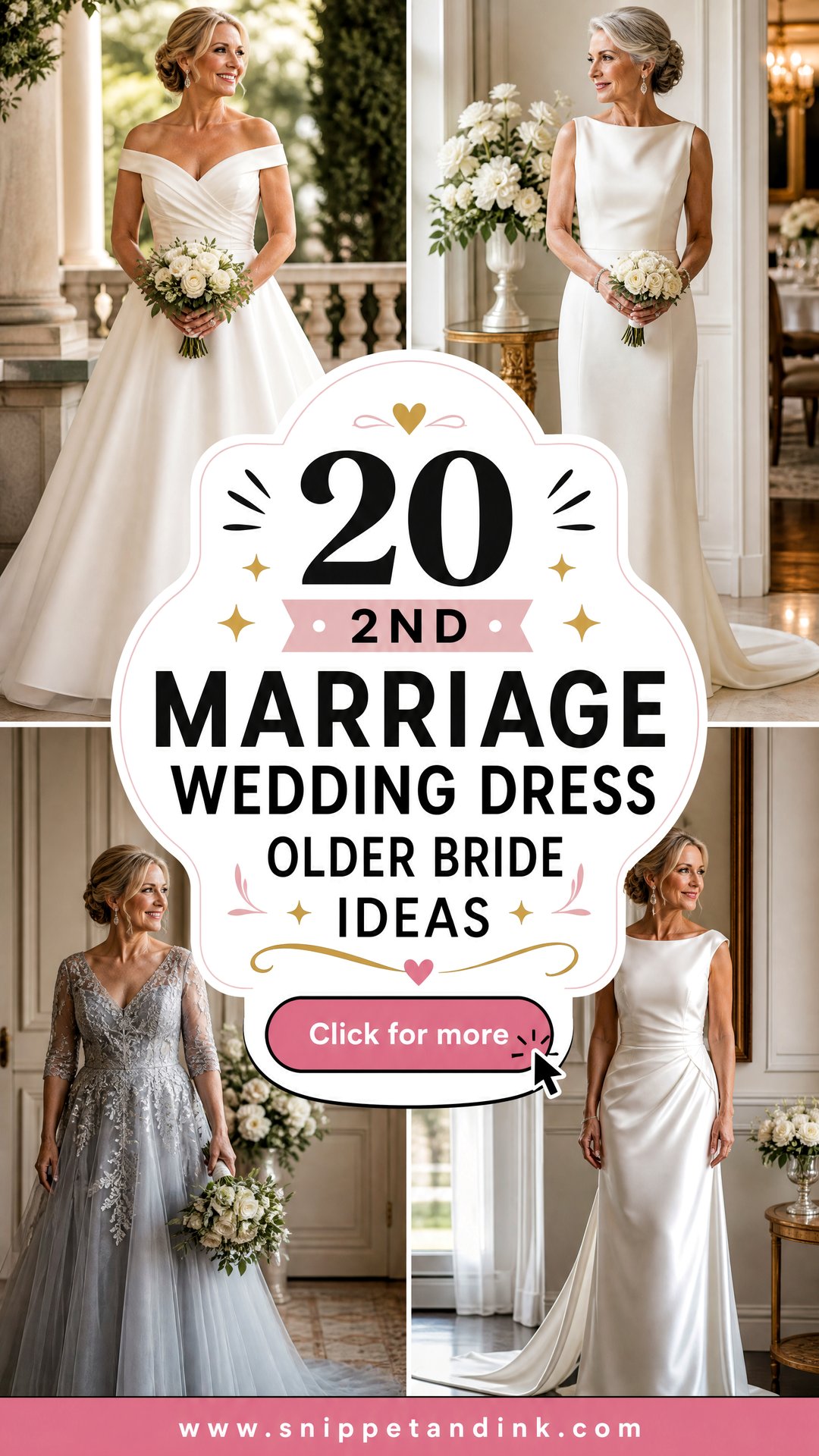
How I Run a Dress Appointment for a Bride Over Forty
Most bridal salons are set up for a twenty-something first-time bride, so it helps to walk in with your own plan. I ask clients to bring three things: the shoes they’re likely to wear, or at least the heel height, the bra or shapewear they’d actually wear on the day, and one photo of an outfit they’ve loved wearing in real life, not a wedding picture. That last one tells me more about your proportions than any mood board.
Ask how the shop sizes its samples
Samples often come in a single size and get clipped onto you, which makes it hard to judge fit. Bridal sizing also tends to run smaller than high street sizing, so ignore the number on the label. Ask for your measurements to be taken and compared with the designer’s chart before you order.
Look beyond the bridal racks
Many of the dresses on this list are easier to find in eveningwear or occasion departments, often in stock and ready to alter. If you’re marrying within a few months, that matters: made-to-order bridal gowns commonly take several months to arrive, and shops will quote you their own timeline. Ready-to-wear gives you more time for tailoring.
Judge the support before the style
Turn the bodice inside out. Boning, a waist stay and built-in cups mean the dress carries its own weight, so you won’t spend the evening tugging the neckline up. A dress with none of these may still work, but you’ll need to factor in a supportive undergarment and check it under every neckline you try.
1. Long Sleeve Lace Wedding Dress
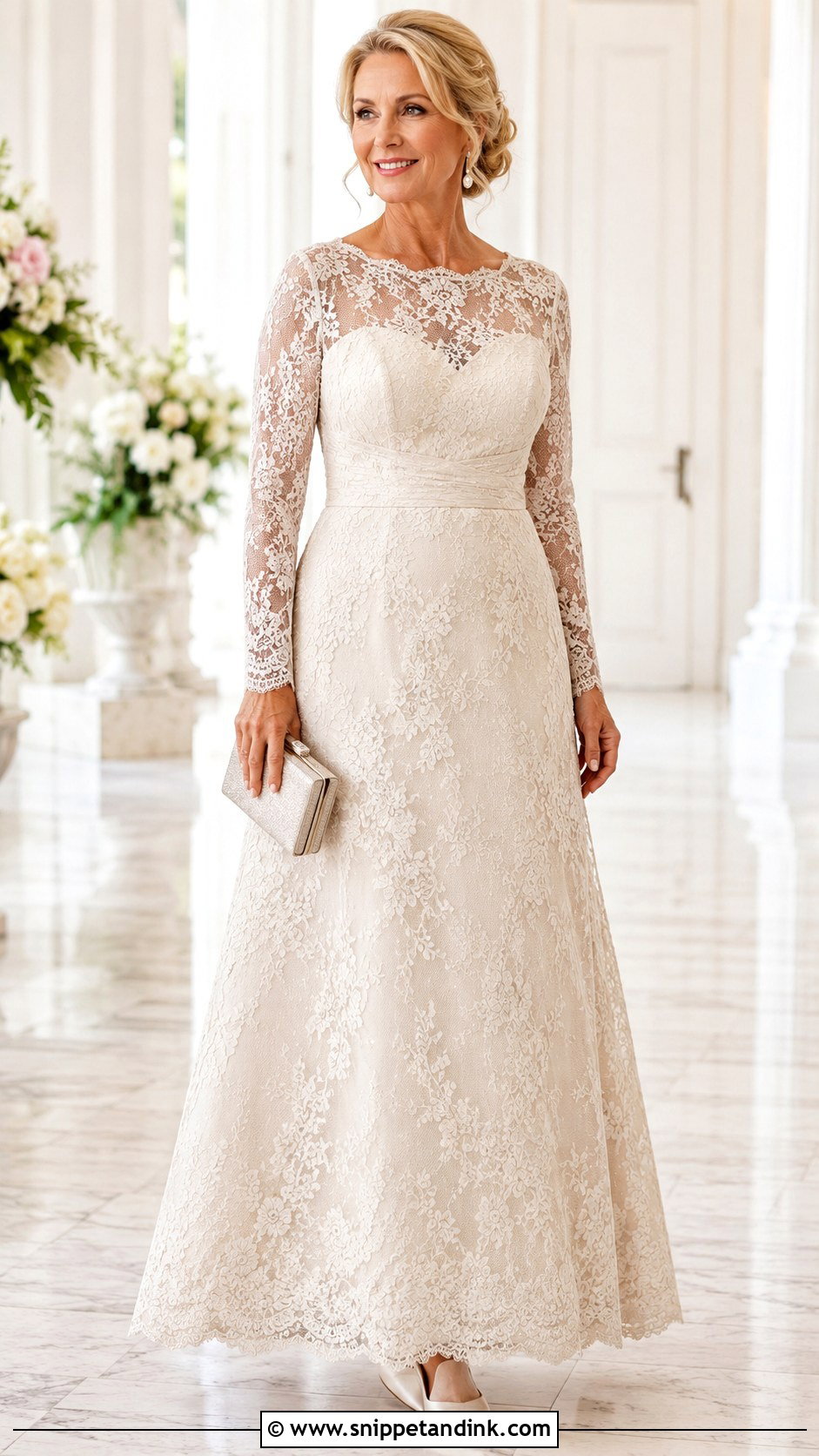
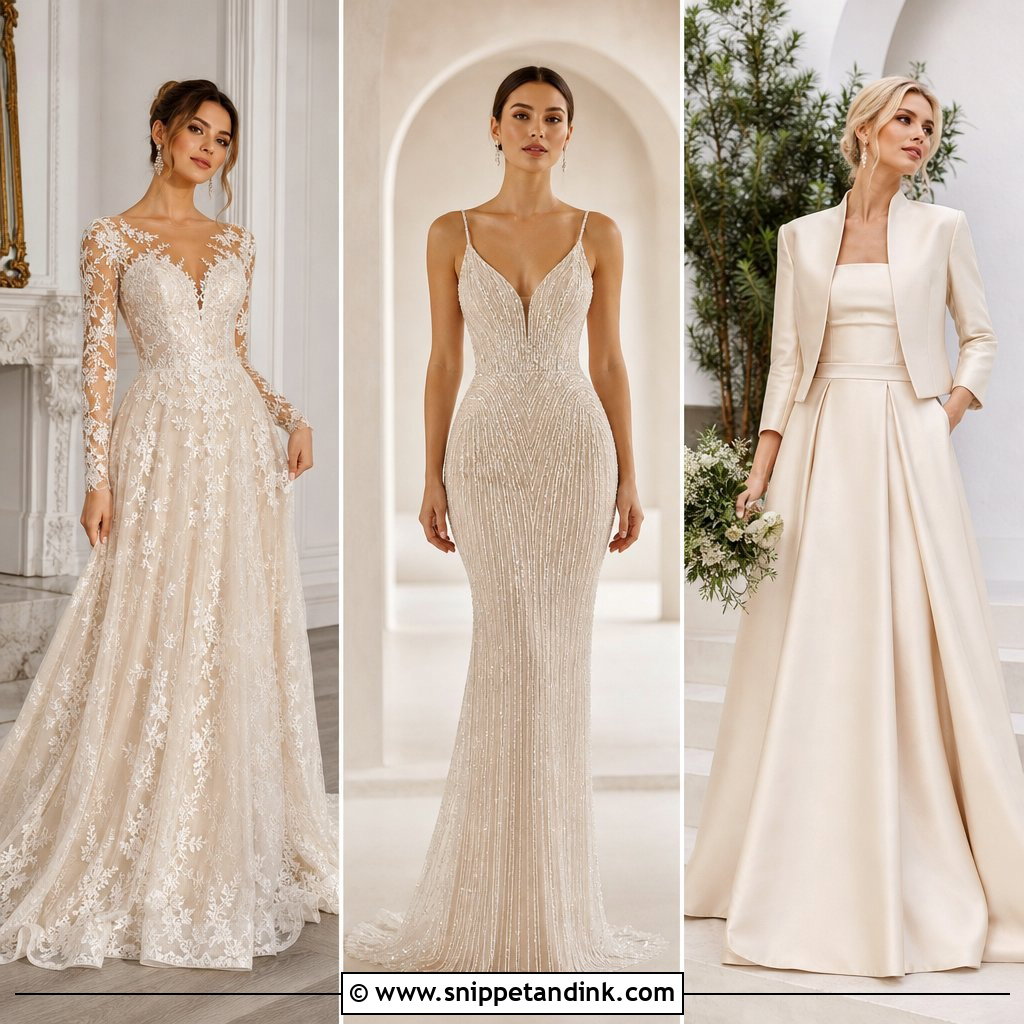
Long lace sleeves give coverage without weight, provided the lace is soft and the lining is fitted. I steer clients toward ivory lace over a skin-tone lining, with a defined waist and an easy A-line skirt. Sheer sleeves keep it light for spring; lined ones carry it into fall or winter. A V-neck lengthens the upper body, and a bateau neckline is the more covered alternative. Pointed ivory pumps, pearl drops and a small structured clutch are enough. Wear your hair in a smooth low bun so the lace pattern on the back and shoulders shows. If the lace is busy, skip the necklace entirely.
2. Satin Midi Wedding Dress
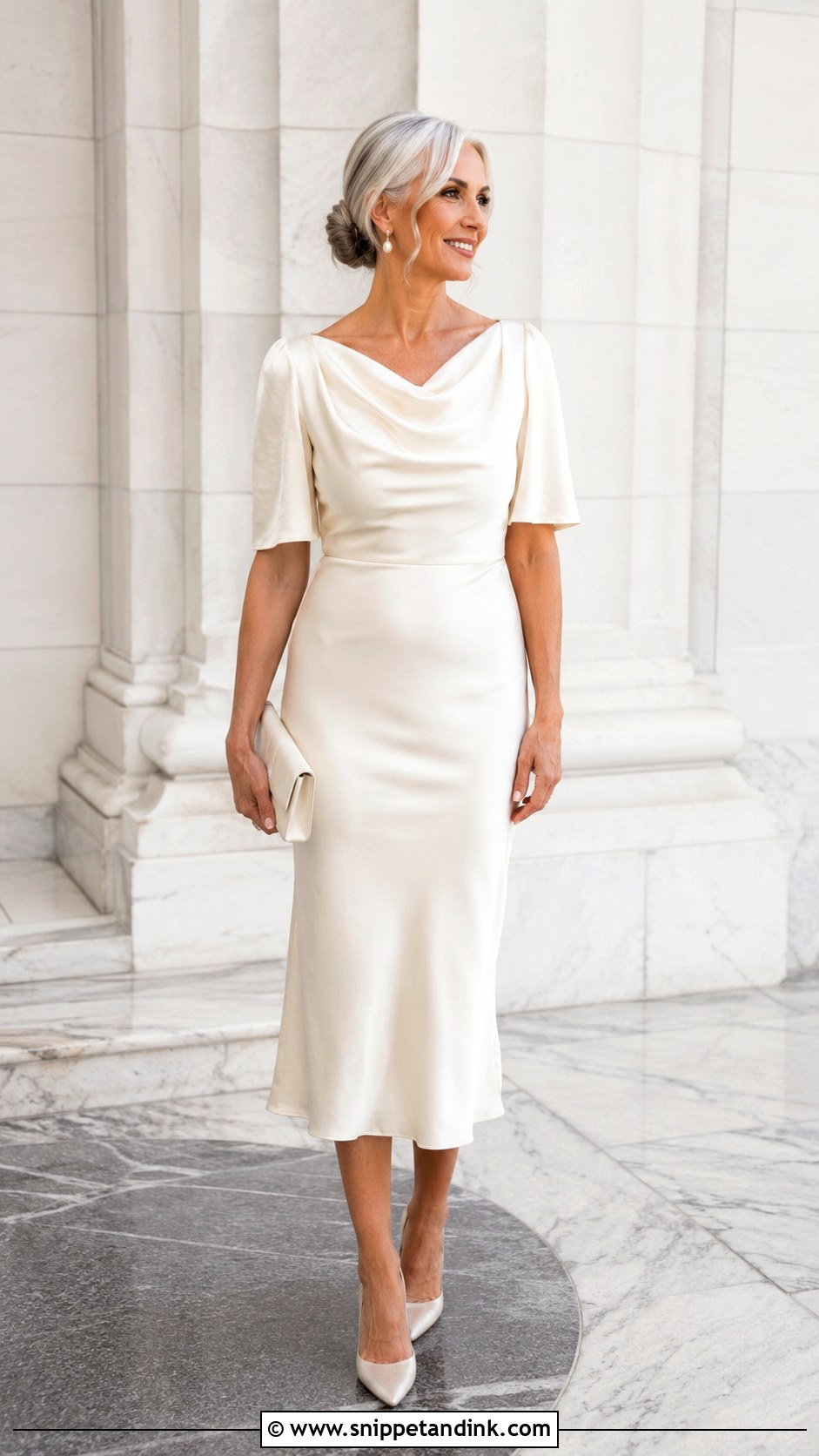
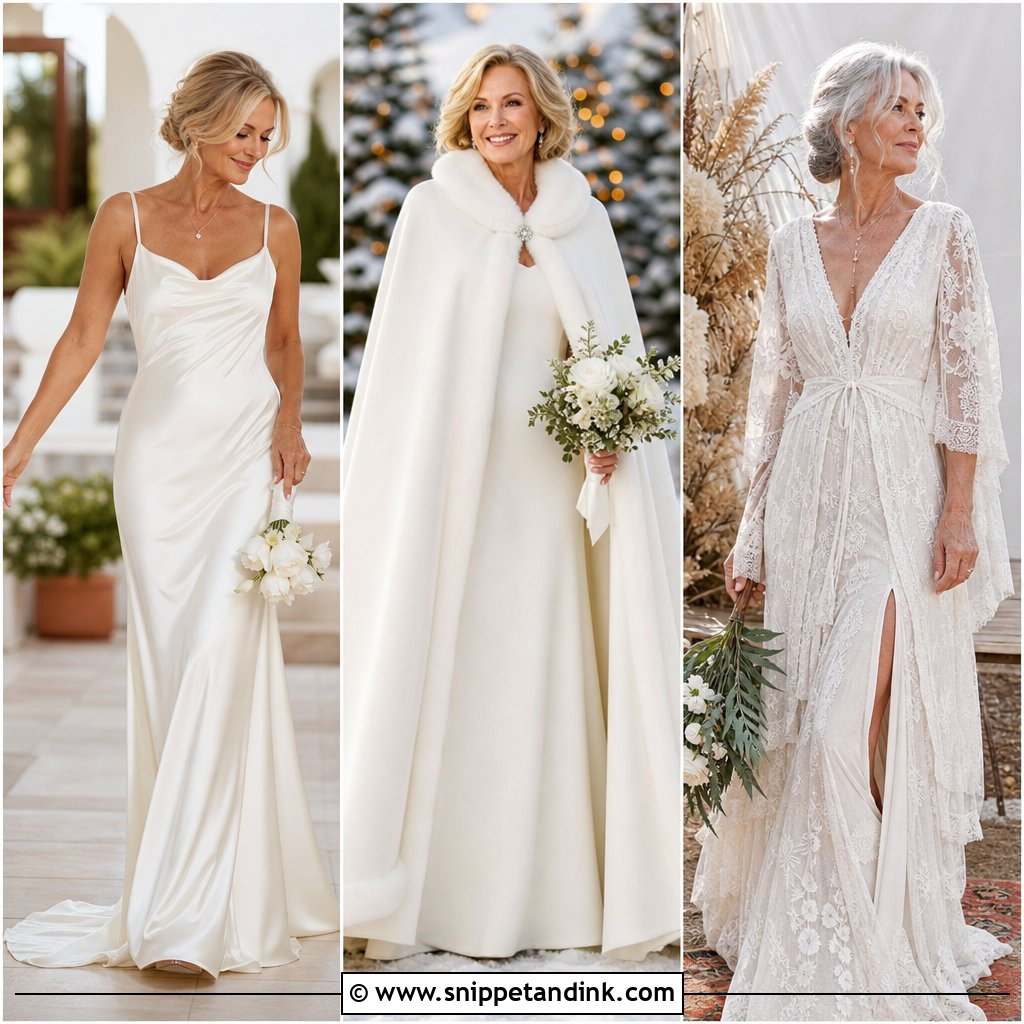
Satin at midi length is the dress I suggest most for courthouses and restaurant dinners, where a full gown can feel like too much in a small room. Look for a softly draped neckline, elbow sleeves or a wrap bodice that marks the waist. Bias-cut satin skims the body but shows every line underneath, so it needs smooth, no-line underwear and a good steam. A structured A-line is more forgiving. Slingback heels, a satin clutch and sculptural pearl earrings keep it tonal, as does pairing ivory with cream or pale gold. A cropped jacket covers your arms for an outdoor ceremony without fighting the shorter hem.
3. Tea Length Lace Wedding Dress
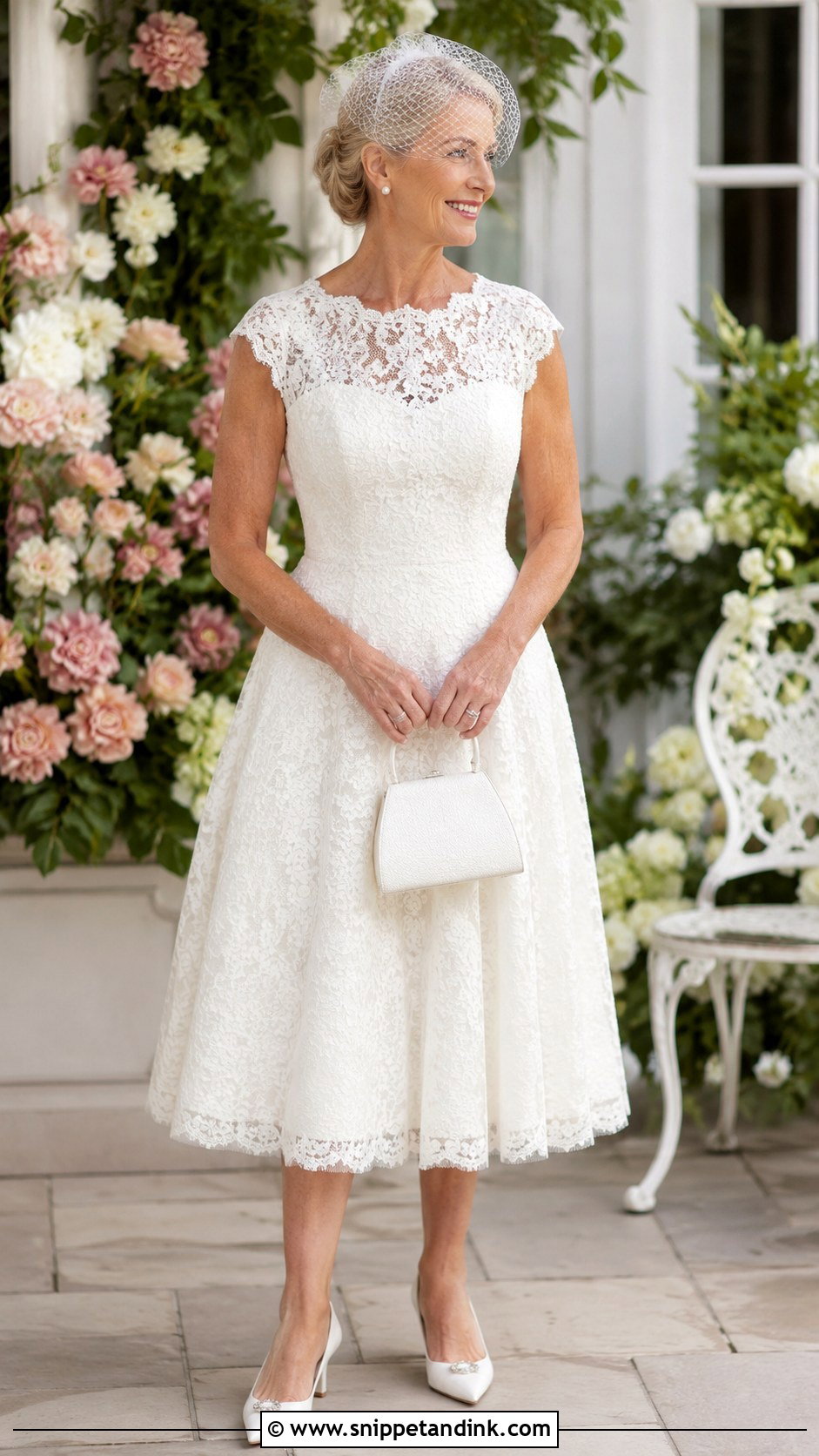
With tea length, the shoes become half the outfit. A fitted bodice and a softly flared skirt ending between knee and ankle suit most figures, and three-quarter sleeves balance that volume. Keep the neckline clean, bateau or a modest V. Pointed kitten heels, a compact top-handle bag and pearl studs finish it; a birdcage veil leans vintage, a floral comb softer. The hem matters more than people expect. I pin it to fall just below the fullest part of the calf, where the leg starts to narrow, and I always pin it with the wedding shoes on. Garden ceremonies and small daytime receptions suit it.
4. Chiffon Empire Waist Wedding Dress
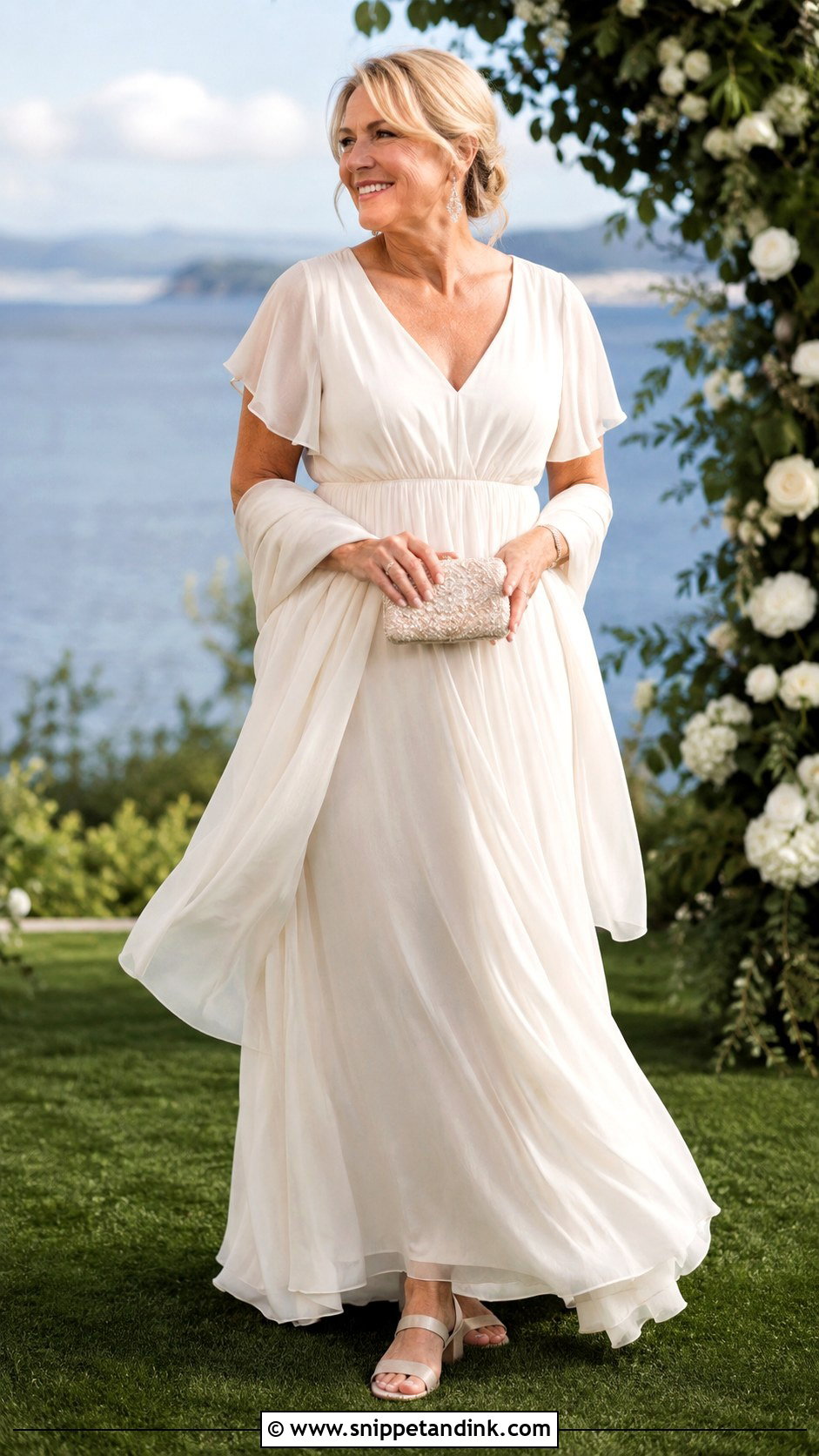
Chiffon is the most comfortable fabric on this list for a long day, because it weighs almost nothing. An empire seam sits just under the bust and lets the skirt fall straight, skimming waist and hips without pressing on them. The catch is support: with so little structure, the bodice needs a proper inner foundation or built-in cups, otherwise the gathers sag by evening. Flutter sleeves and low block-heel sandals keep the look airy, with a beaded clutch and small crystal earrings. Add an ivory or champagne wrap for cool evenings. Outdoors, choose a floor-skimming hem over a train, which drags through grass and sand.
5. Crepe Sheath Wedding Dress With Cape
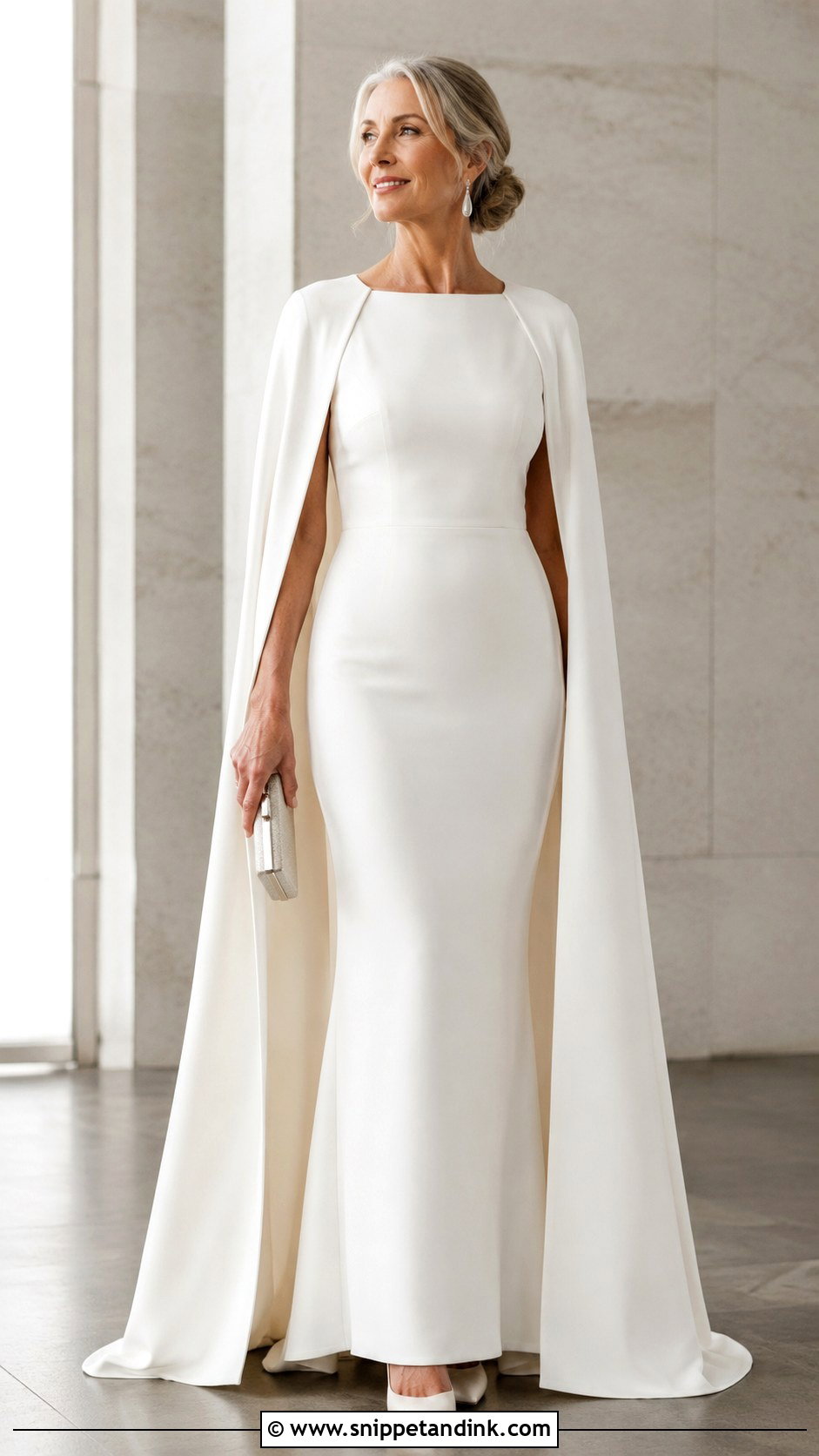
Crepe sheath plus detachable cape is one of my favorite combinations for a city wedding. The crepe gives a clean line; the cape adds movement and covers the upper arms for the ceremony, then comes off for dinner. A column shape has nowhere to hide pulling, though, so budget for alterations across the waist and hips, and insist on a back slit so you can climb steps. A stretch lining helps more than you’d think. Wear it with pointed pumps, a metallic box clutch and modern drop earrings, plus a sleek chignon or a brushed bob. The cape can stand in for a veil at hotels and modern venues.
6. Champagne Beaded Wedding Dress
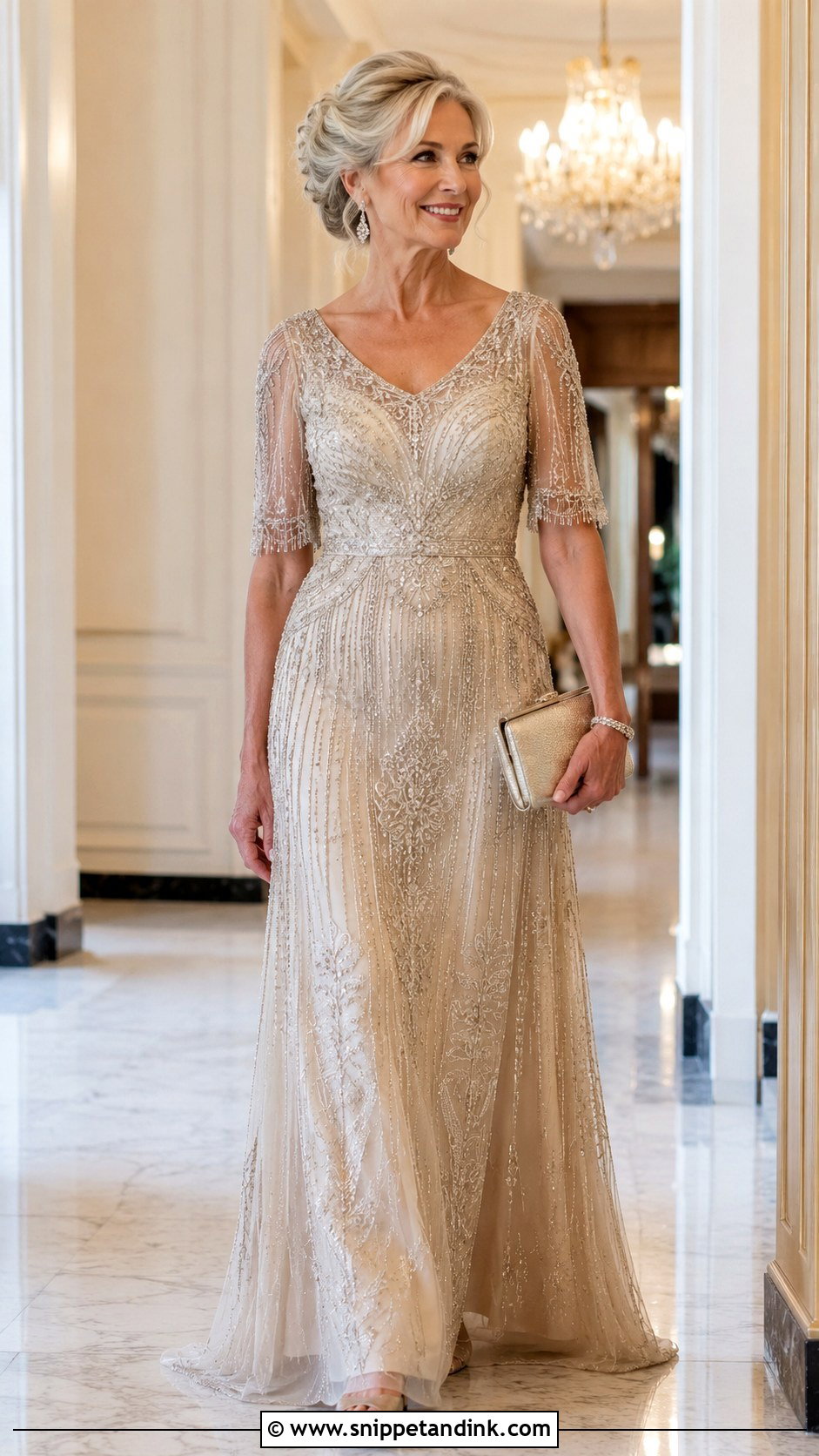
Champagne warms the skin in a way stark white sometimes doesn’t, particularly on fair or silver-haired brides. Pick a floor-length gown with tonal embroidery rather than dense beading, which keeps the fabric soft and lighter to wear. A fitted bodice over an A-line or gentle column skirt works well. Pair it with neutral metallic heels, a pale gold clutch and quiet crystal earrings, and leave the necklace off if the neckline is beaded. Run your hand along the inside of the arm openings before you buy. Rough bead edges there rub raw after a few hours of hugging guests. Evening ceremonies and ballrooms are where it glows.
7. Blush Floral Wedding Dress
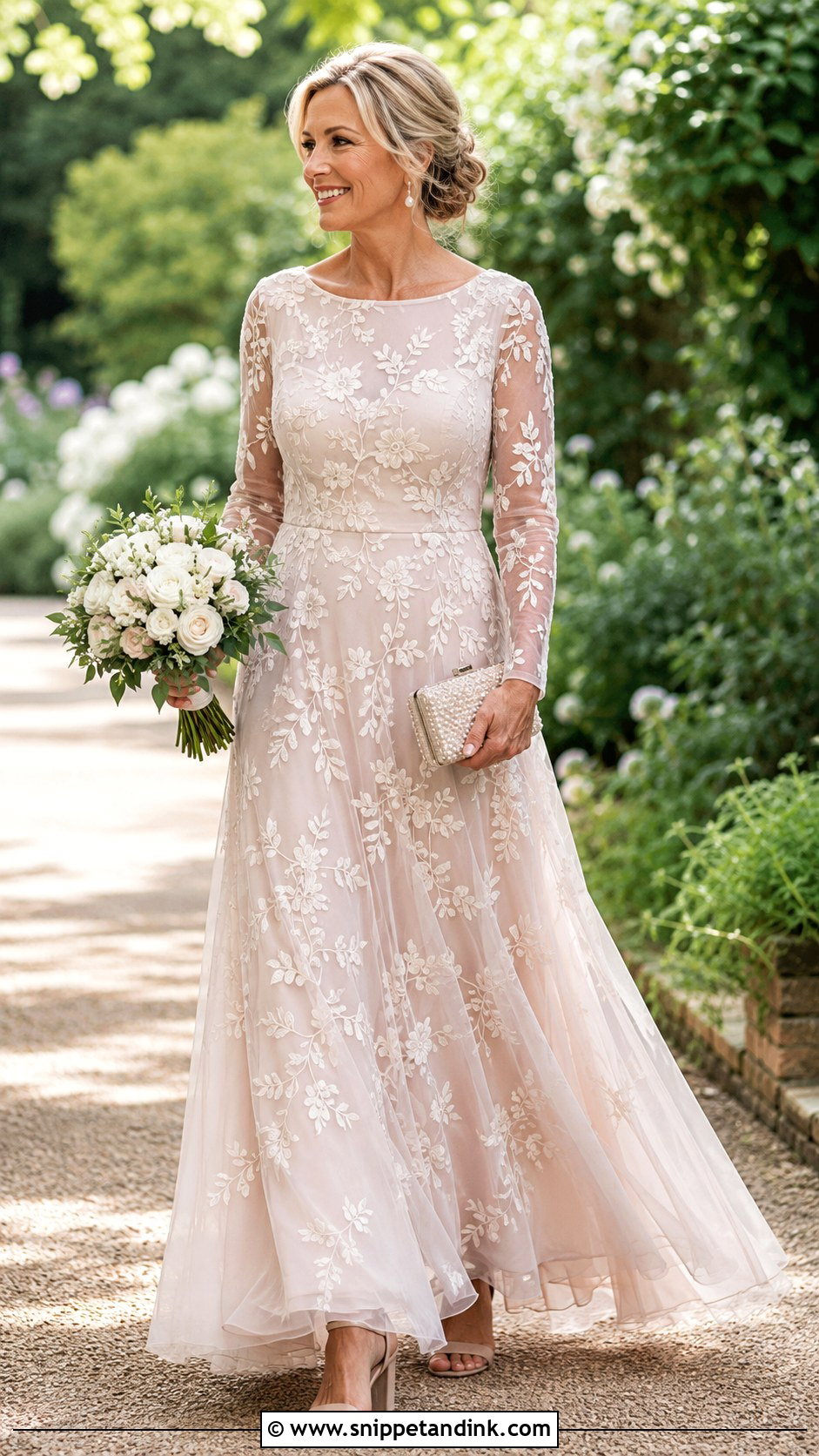
Blush with floral detail looks bridal while giving you a break from solid ivory. A pale blush base with ivory embroidery, botanical appliqués or a subtle print all work. Keep the skirt an A-line, since detailed fabric on a fitted skirt can look busy. I hold the dress against your face in daylight before anything else, because some blushes turn sallow on olive or very fair skin and others look rosy and fresh. Nude or blush block heels and simple earrings are plenty. Carry a cream-and-greenery bouquet so it doesn’t compete with the print, and choose a small comb over a long veil if the fabric is heavily embellished. Spring and garden ceremonies suit it.
8. Off Shoulder A-Line Wedding Dress
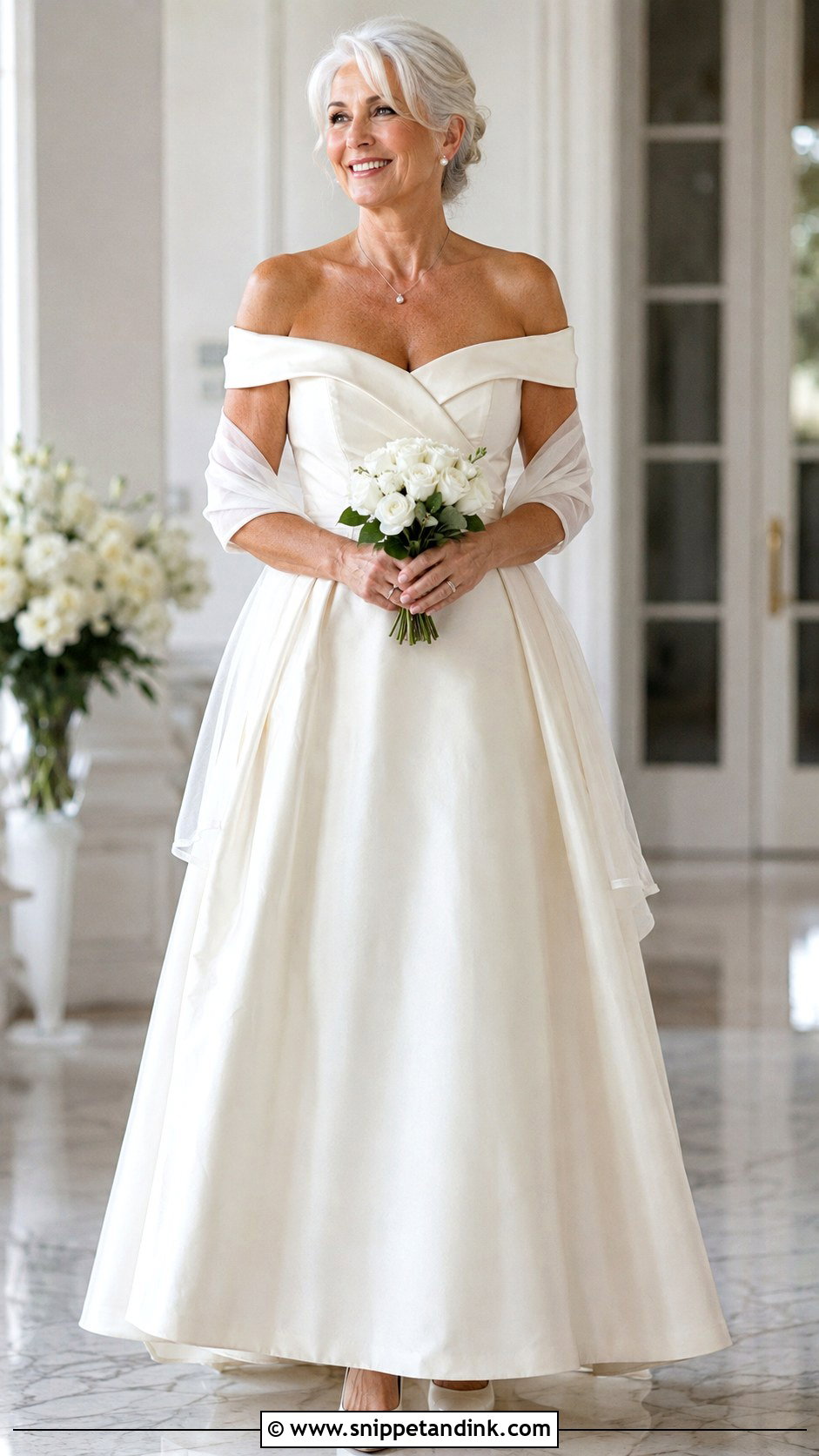
Off-shoulder necklines show the collarbone, which tends to stay elegant at every age, but this is the cut I test hardest in fittings. The bodice must have internal boning and grip, with straps or sleeves that stay put. Sit, walk and lift both arms over your head in the fitting room. If the neckline slides, it will spend the whole reception being hitched up. The skirt should fall away from the waist without bulk. Add a delicate pendant, pearl or crystal studs, closed-toe heels and a light shawl for cool evenings. Half-up hair keeps the neckline clear. It suits a formal ceremony as well as a smaller second wedding with close family and friends.
9. High Neck Wedding Dress With Sleeves
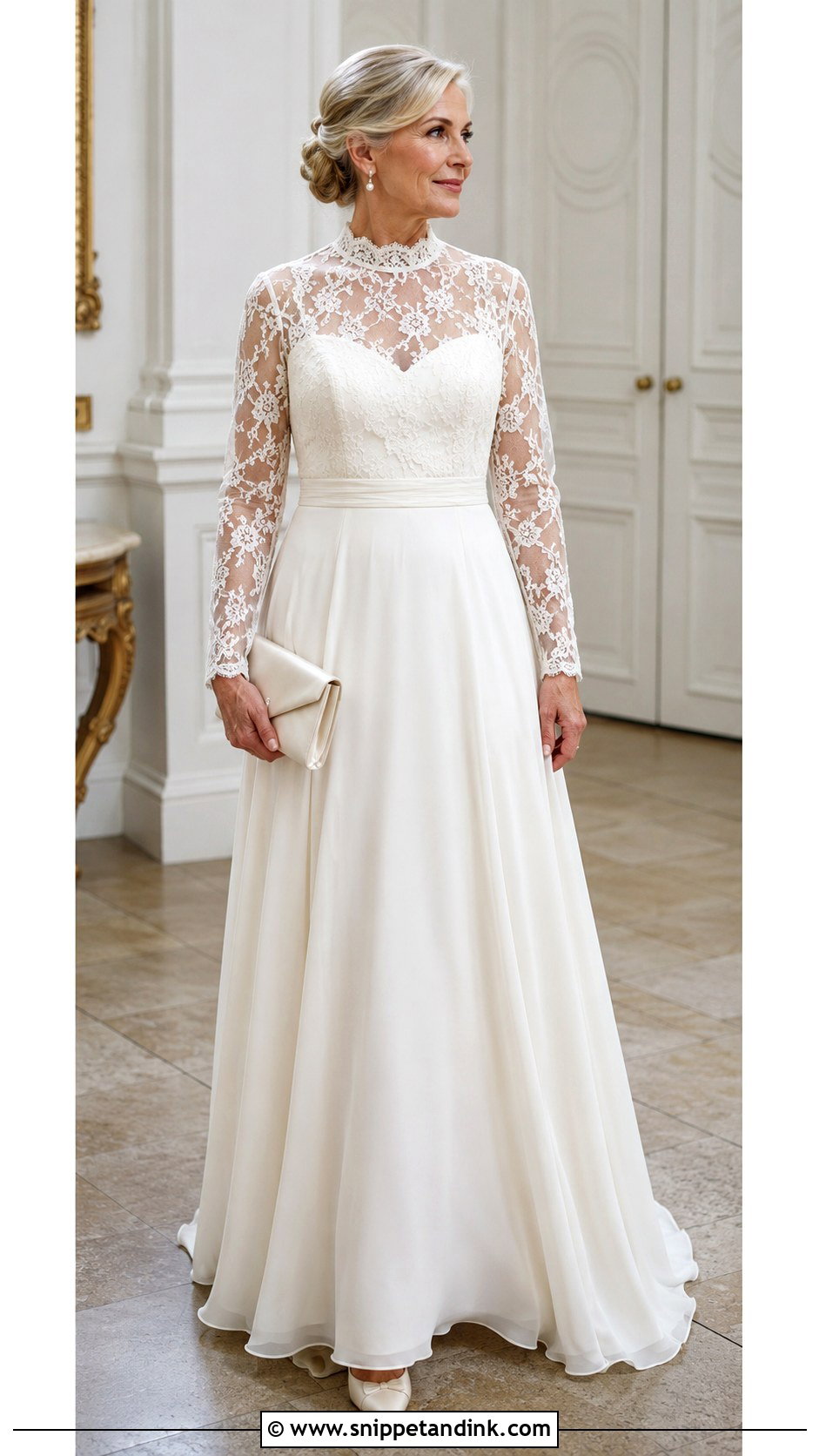
A high neck frames the face and covers the upper body, and the trick to keeping it light is sheer lace at the neck and sleeves over an opaque bodice. Without that, it can read stiff or even severe. A softly defined waist and flowing skirt loosen it further. Pearl earrings, a satin clutch and low pointed heels are all it needs. Skip the necklace; the neckline is your jewelry. A bracelet or a family ring is a better place for something meaningful. Wear a low bun, a short cut or side-swept waves so the neck detail is seen. I’d choose it for cool-weather or formal afternoon ceremonies.
10. V-Neck Wrap Wedding Dress
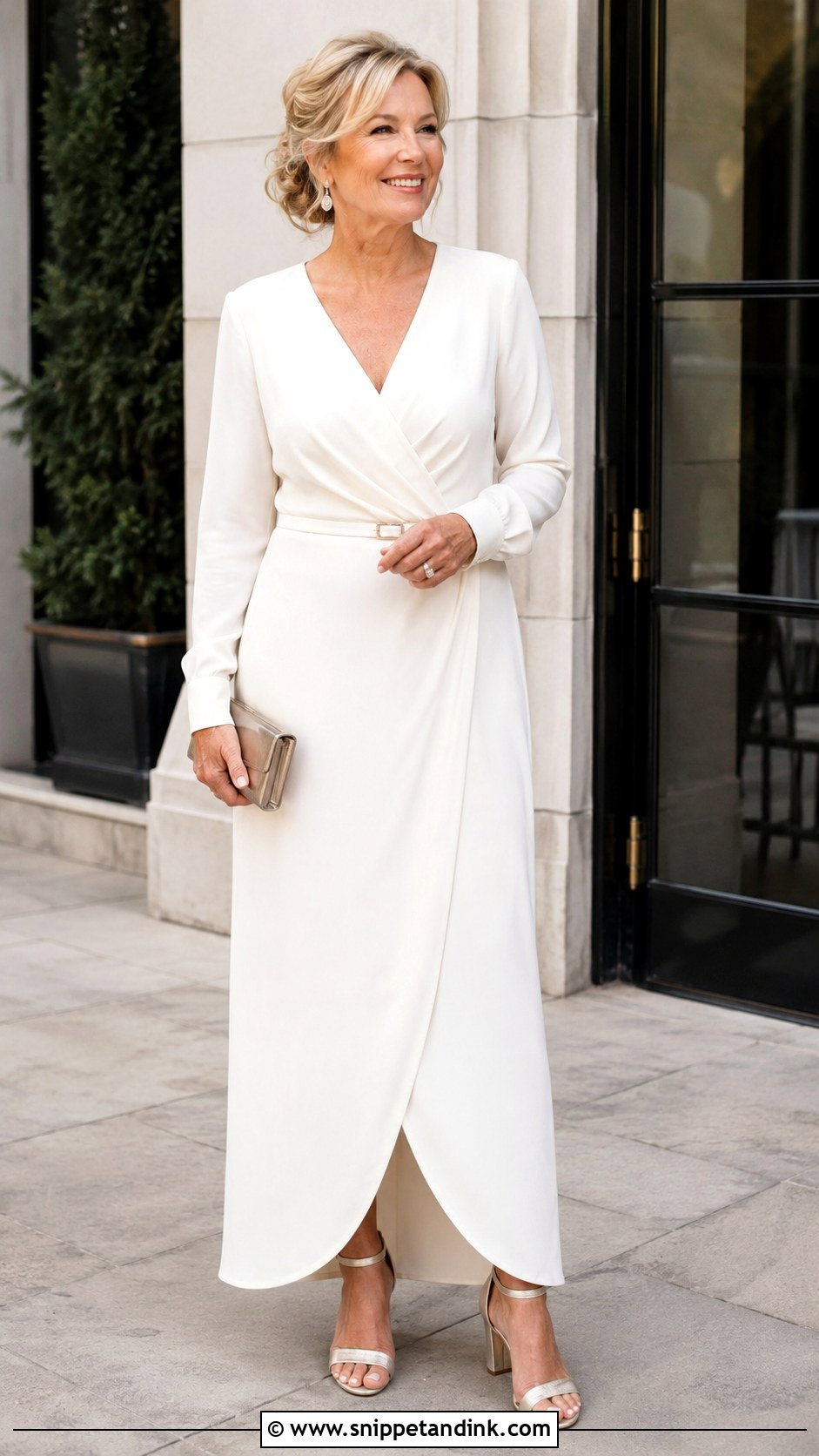
Wrap dresses adjust to you, which is why they suit so many figures. A true wrap can loosen during dancing, so I usually recommend a fixed wrap-effect bodice with a hidden hook or snap at the waist. Matte crepe, chiffon and soft jersey all work, but a lined version photographs smoother because unlined jersey shows every crease. Block-heel sandals, a small metallic clutch and teardrop earrings that echo the V-neck keep it simple. A thin belt can sharpen the waist; a heavily beaded one fights the gathers. Add a cropped jacket in town or a light wrap outdoors. It’s easy to sit, walk and dance in, which counts for a lot by ten at night.
11. Ivory Column Wedding Dress
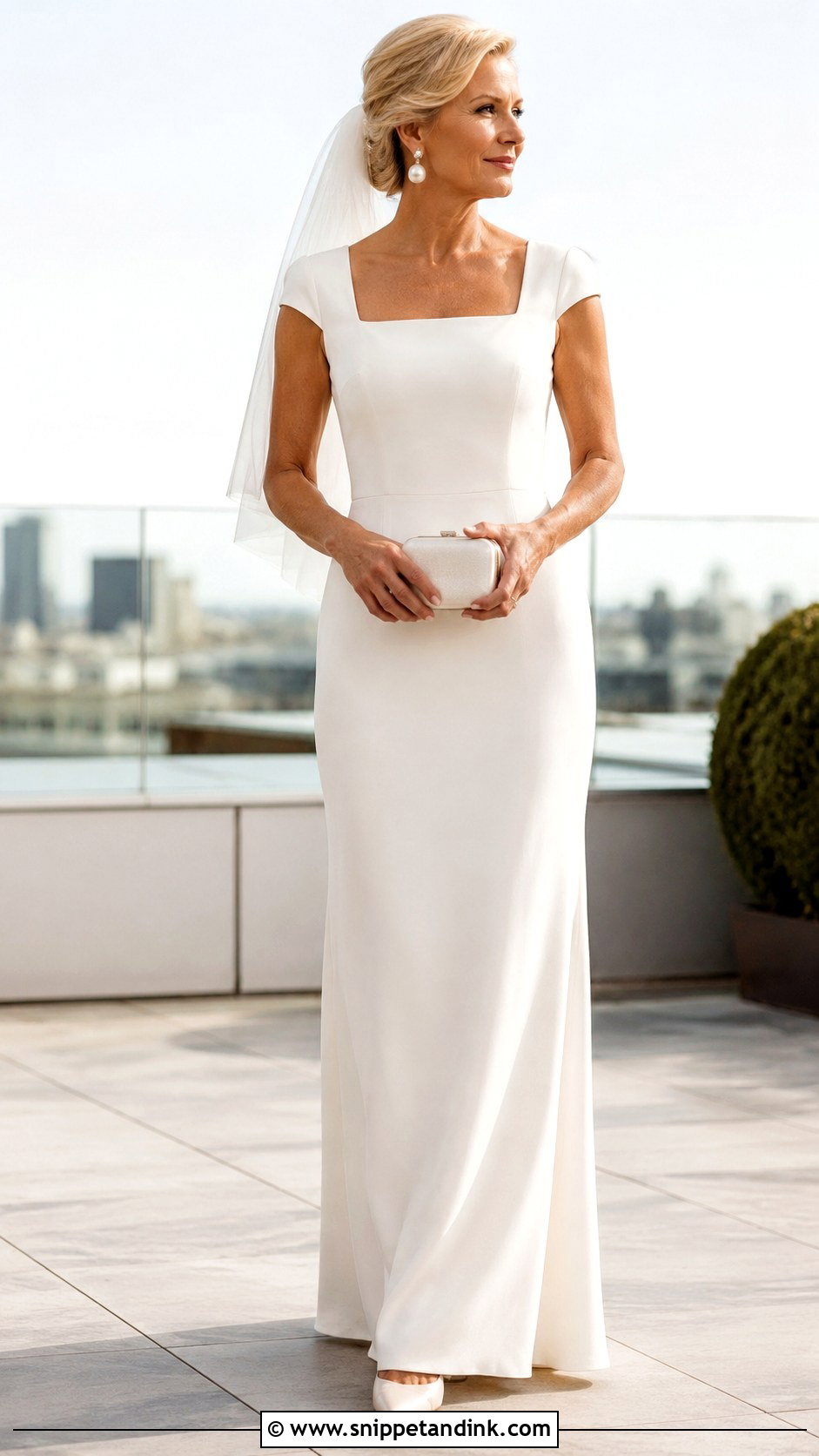
A column dress draws one long line from shoulder to floor, and it lives or dies on the weight of the fabric. Thin crepe clings to every curve; substantial crepe or satin with a smooth lining follows the body without hugging it. A square neckline, cap sleeves or a softly draped bodice adds interest. Pointed ivory pumps, a structured clutch and bold pearl earrings suit the minimal shape. If you want waist definition, choose a narrow tonal belt, not a contrasting one, which chops the line in half. Make sure there’s a back or side slit, or you’ll be taking very small steps all day. Modern venues, rooftops and formal dinners suit it.
12. Tiered Chiffon Wedding Dress
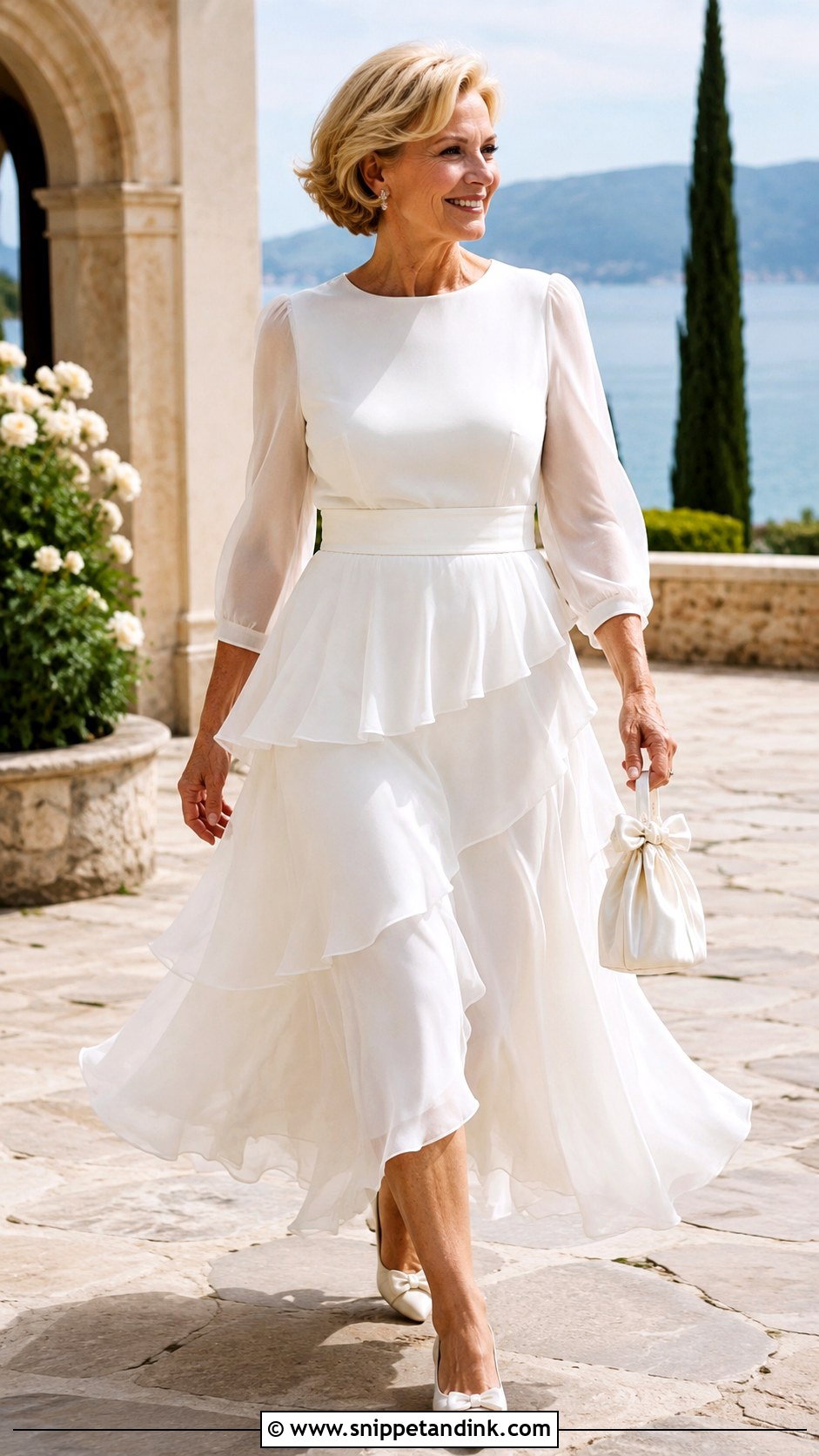
Tiers give movement without ball-gown weight, but the scale of the tier decides everything. Narrow, fluid layers that fall vertically look graceful; wide ruffles add volume where most women don’t want it. A fitted bodice, a defined waistband and three-quarter sleeves balance the skirt. Low block heels, crystal studs and a small satin bag keep the focus on the layers, with a simple comb or fingertip veil. Hemming tiers is fiddly, since each layer has to be shortened and leveled separately, so ask your seamstress for a quote early. Destination ceremonies and outdoor receptions with plenty of dancing are its natural home.
13. Floral Appliqué Wedding Dress With Jacket
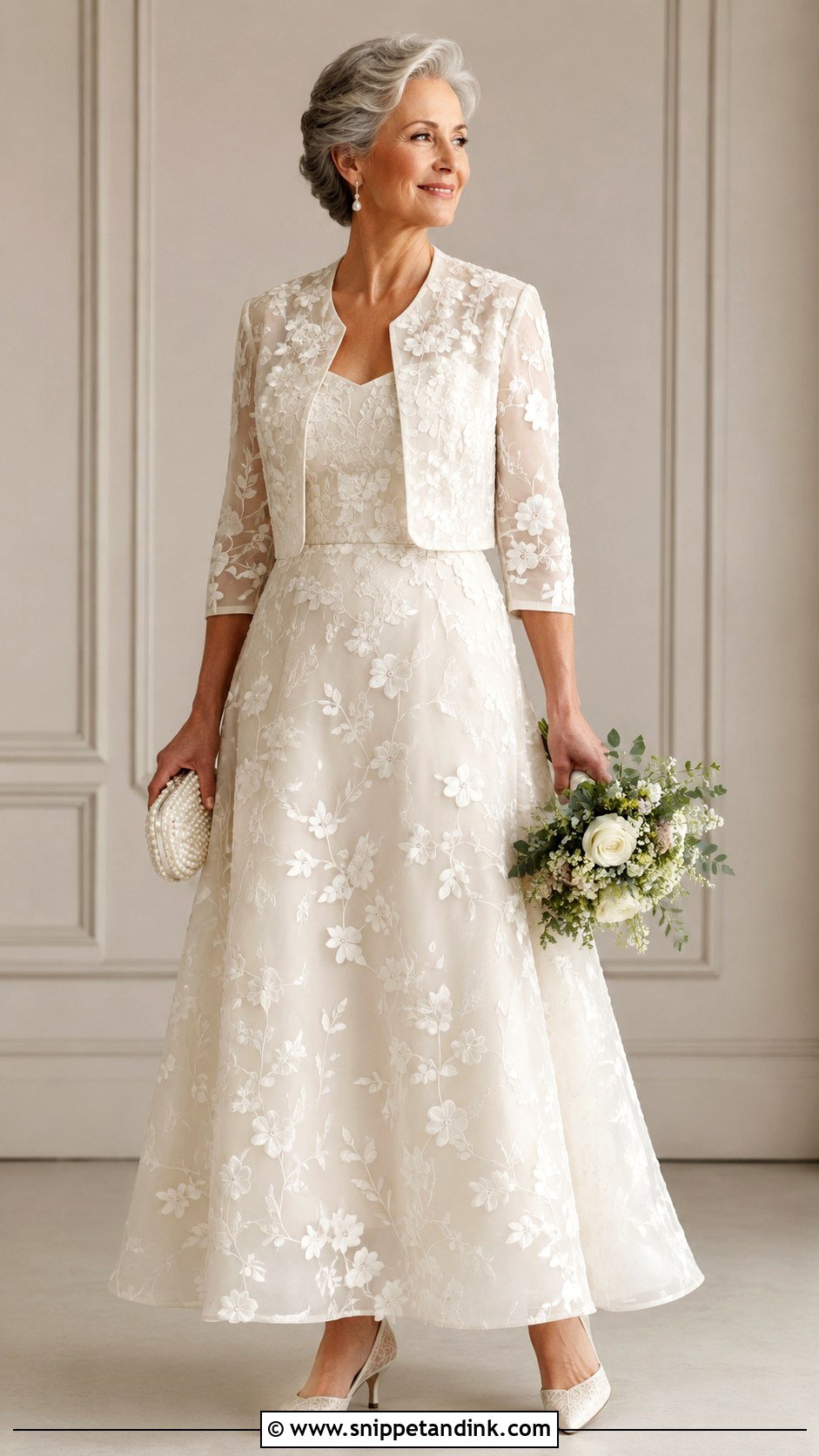
Pairing an appliqué dress with a matching jacket gives you two looks for one budget. Choose an A-line or sheath with three-dimensional flowers concentrated at the bodice, waist or hem. A cropped jacket in plain crepe or matching appliqué stays on for the ceremony and comes off for dinner. Kitten heels, a pearl clutch and small drops finish it, with soft waves or an updo and a plain bouquet. The thing I check is the appliqué at the waist: raised flowers there can dig in once you sit, so do a seated test before you commit. It’s a strong option for transitional seasons, giving an older bride two distinct looks without a full change.
14. Silver Gray Wedding Dress
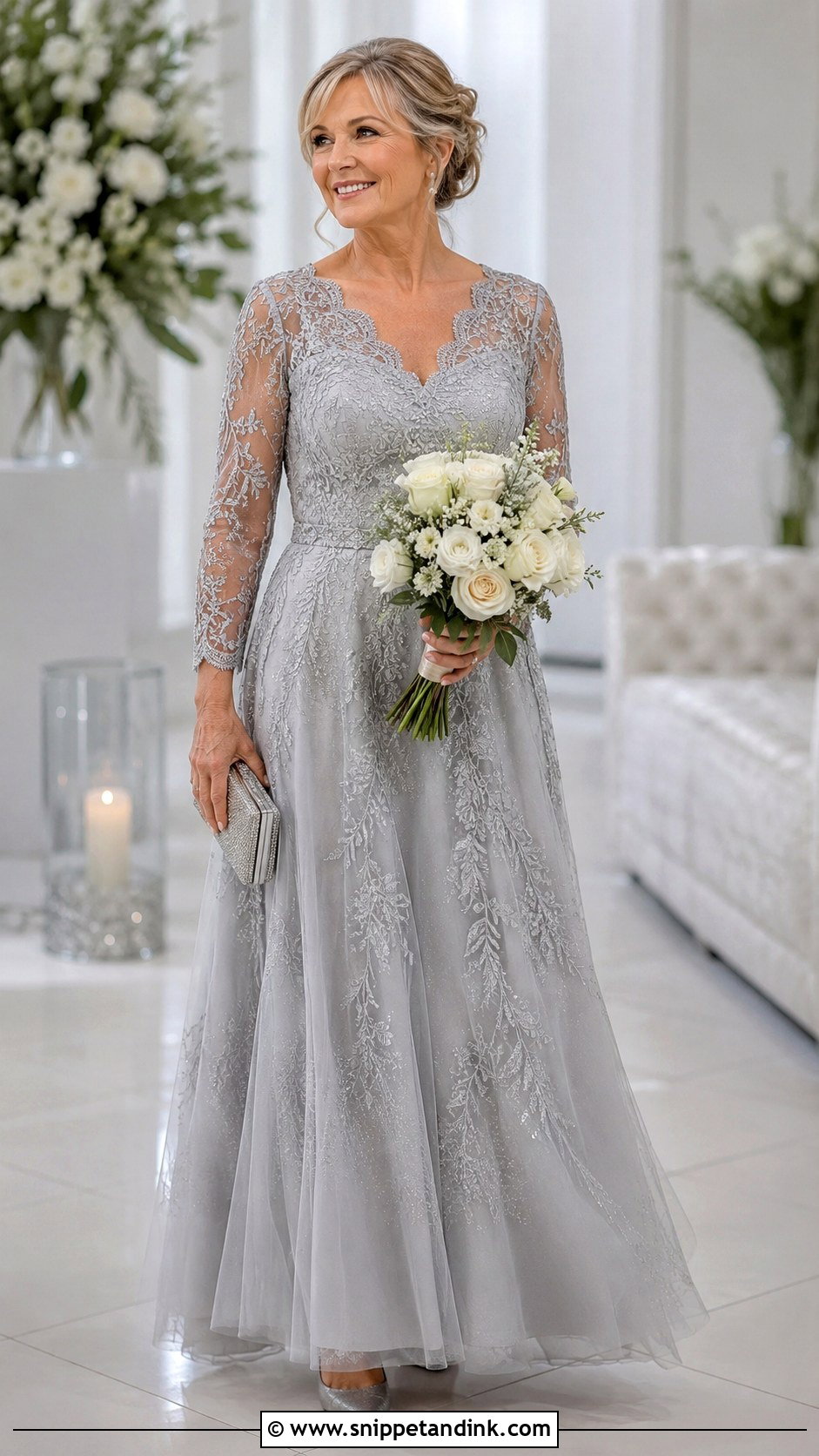
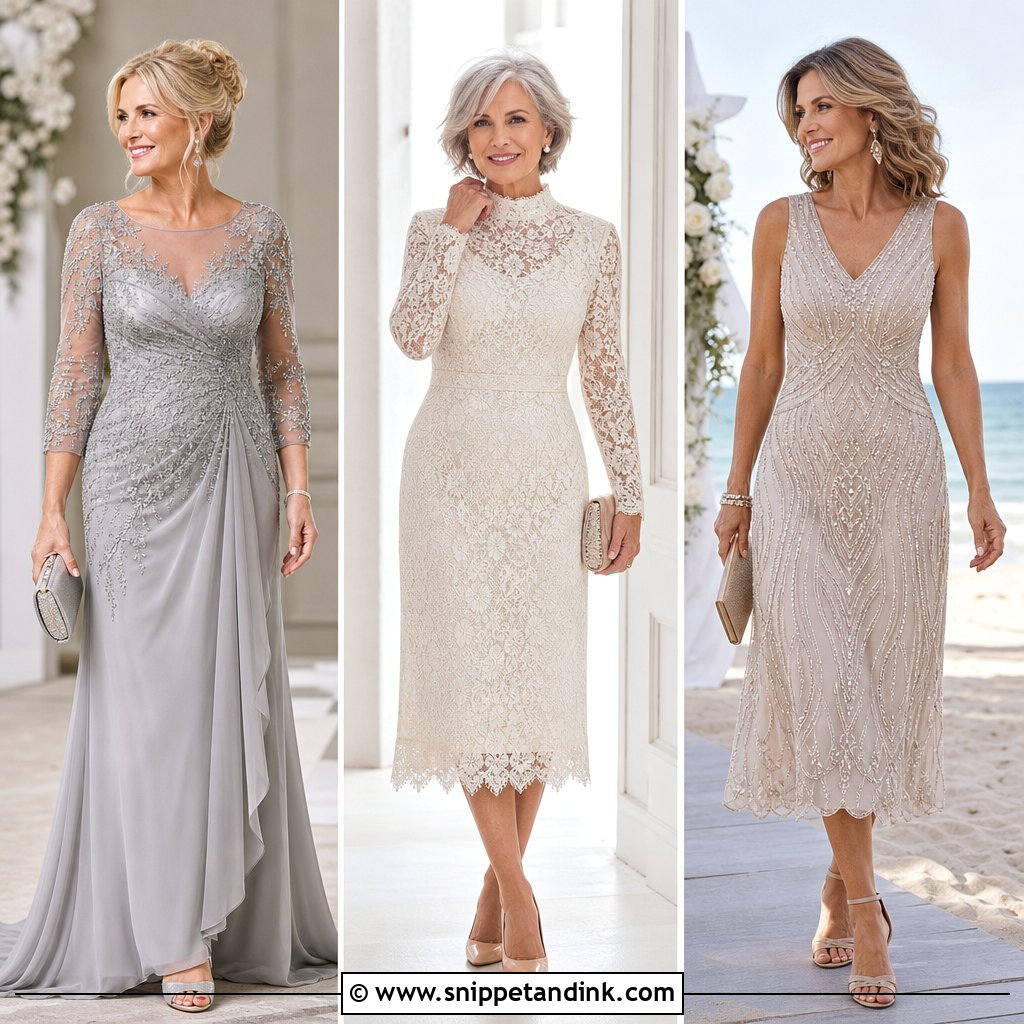
Silver gray is quietly luxurious for a second marriage wedding dress, and it flatters silver or salt-and-pepper hair particularly well. Stay in the soft dove, oyster and pale silver range; charcoal reads as evening wear rather than bridal. Satin, chiffon and embroidered tulle each reflect gray differently, so compare them by a window and under indoor bulbs. Pewter heels, a crystal clutch and pearl earrings give a cool-toned finish, and an ivory bouquet adds a bridal note. Keep makeup in rose or neutral tones; gray eyeshadow to match the dress drains the face. A sheer wrap adds coverage. It looks striking at winter and evening ceremonies.
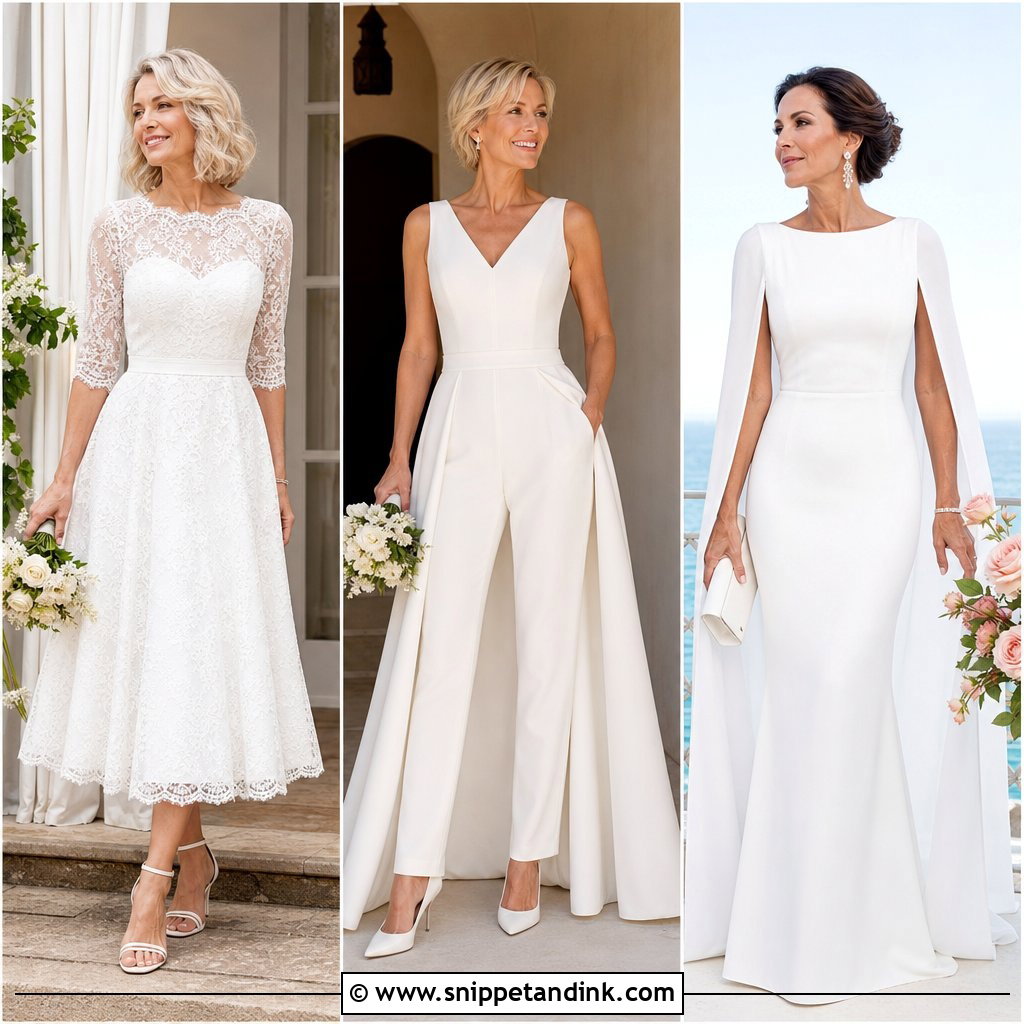
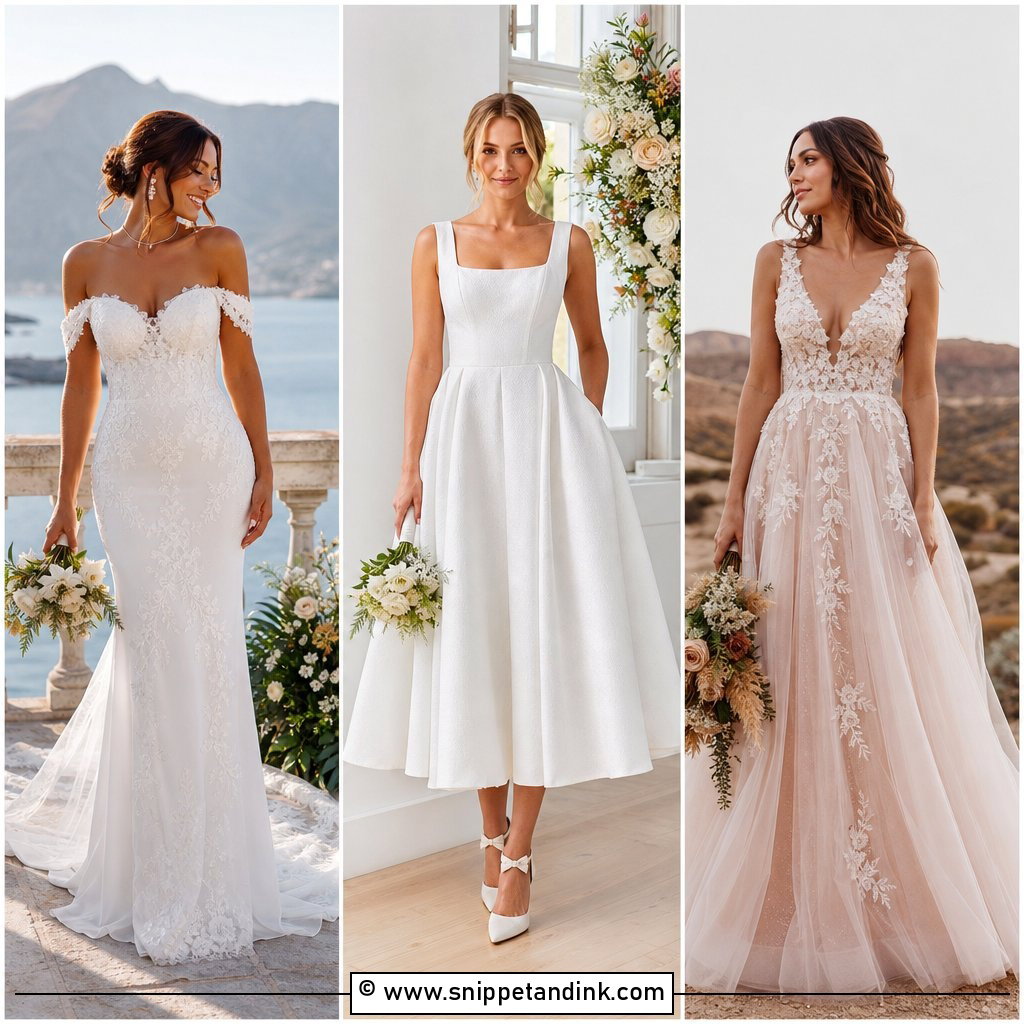
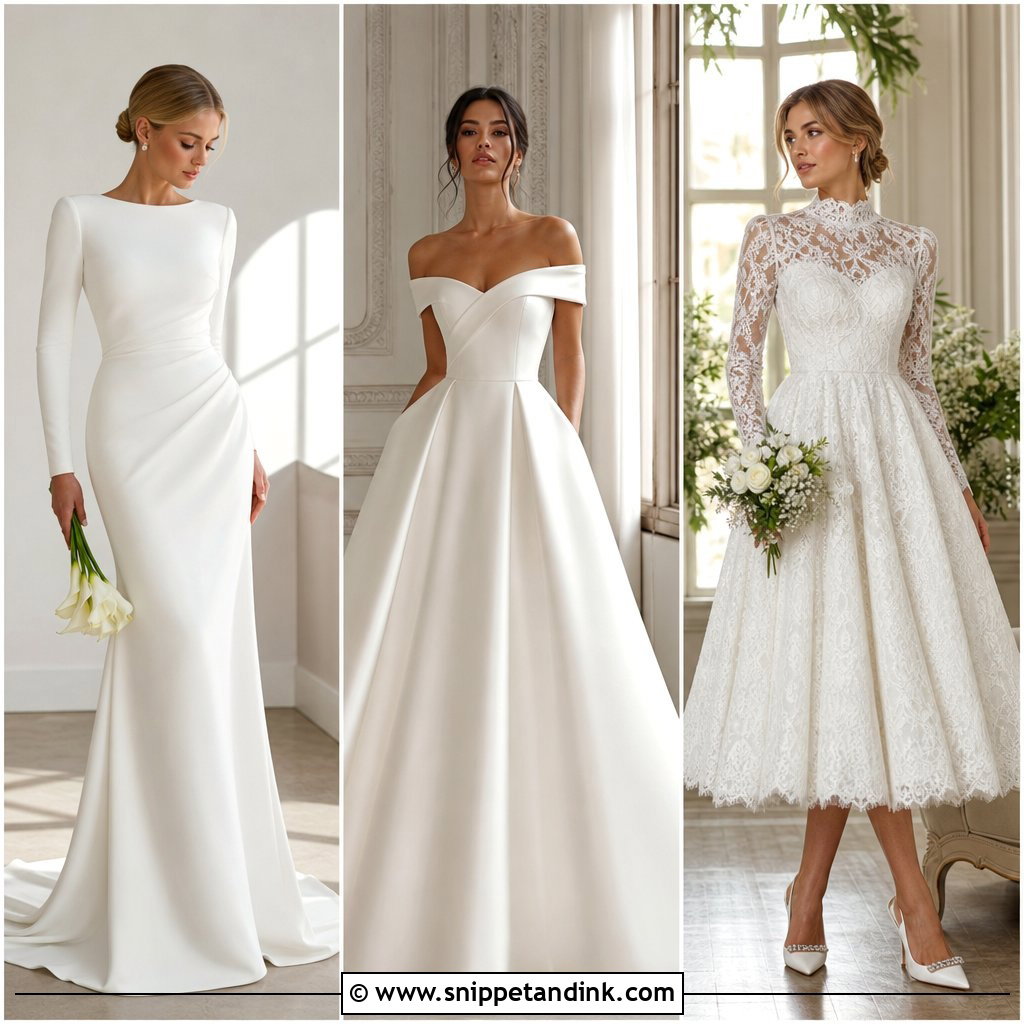
15. Pleated Midi Wedding Dress
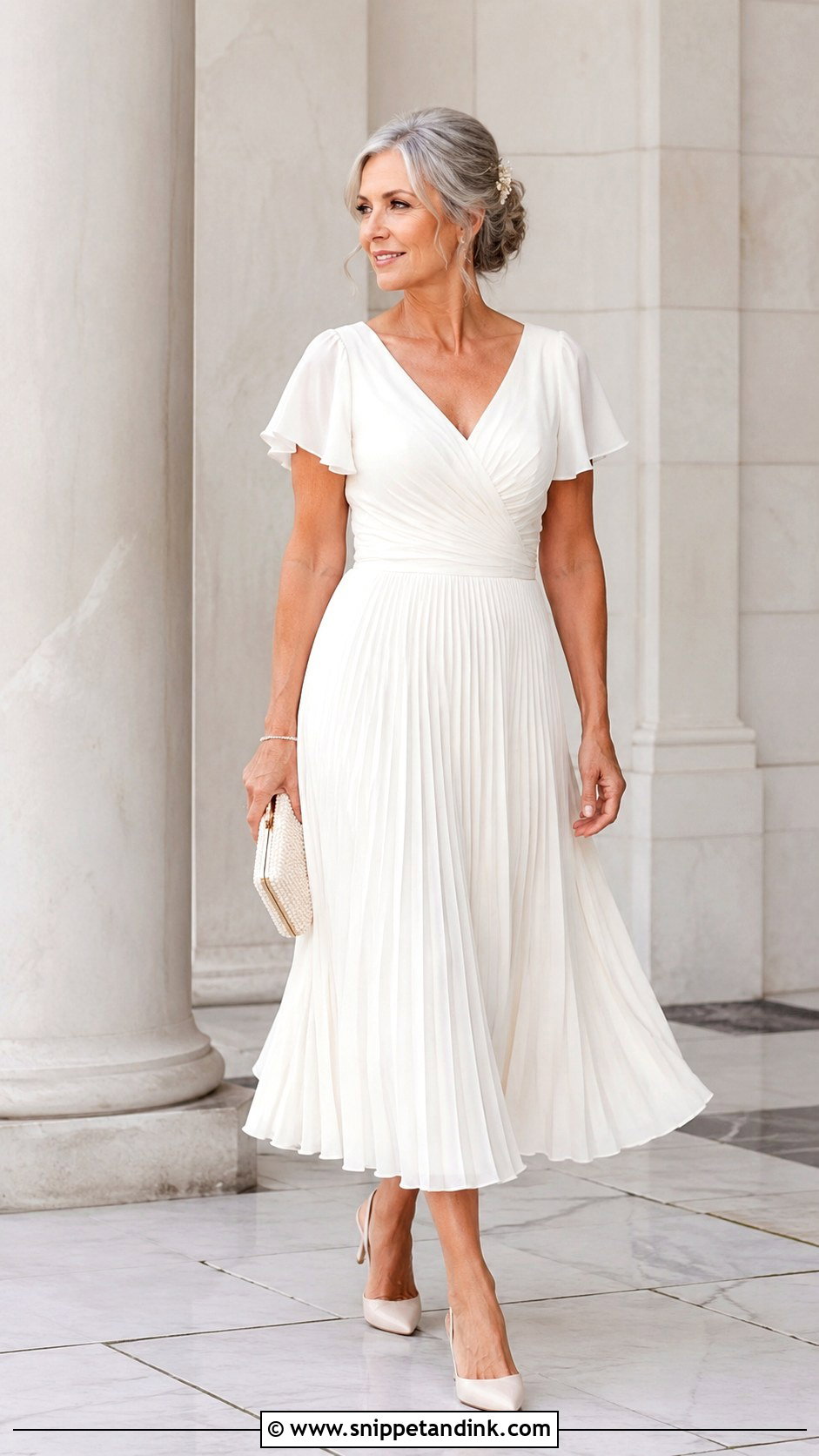
Fine pleats give a midi texture without beading or lace. Look for ivory or champagne with a fitted waist and pleats that start below the midsection, not right at the waistband, which can puff out over the tummy. A draped bodice, flutter sleeve or clean V-neck balances the skirt. Slingbacks, a compact clutch and a fine bracelet are enough, and a wide belt would break the pleat lines. Finish with a small fascinator, comb or short veil. Steam pleats carefully from the inside on low heat, or ask the shop to press them, because a hot iron can flatten heat-set pleats for good. Courthouses and daytime receptions suit it.
16. Boat Neck Satin Wedding Dress
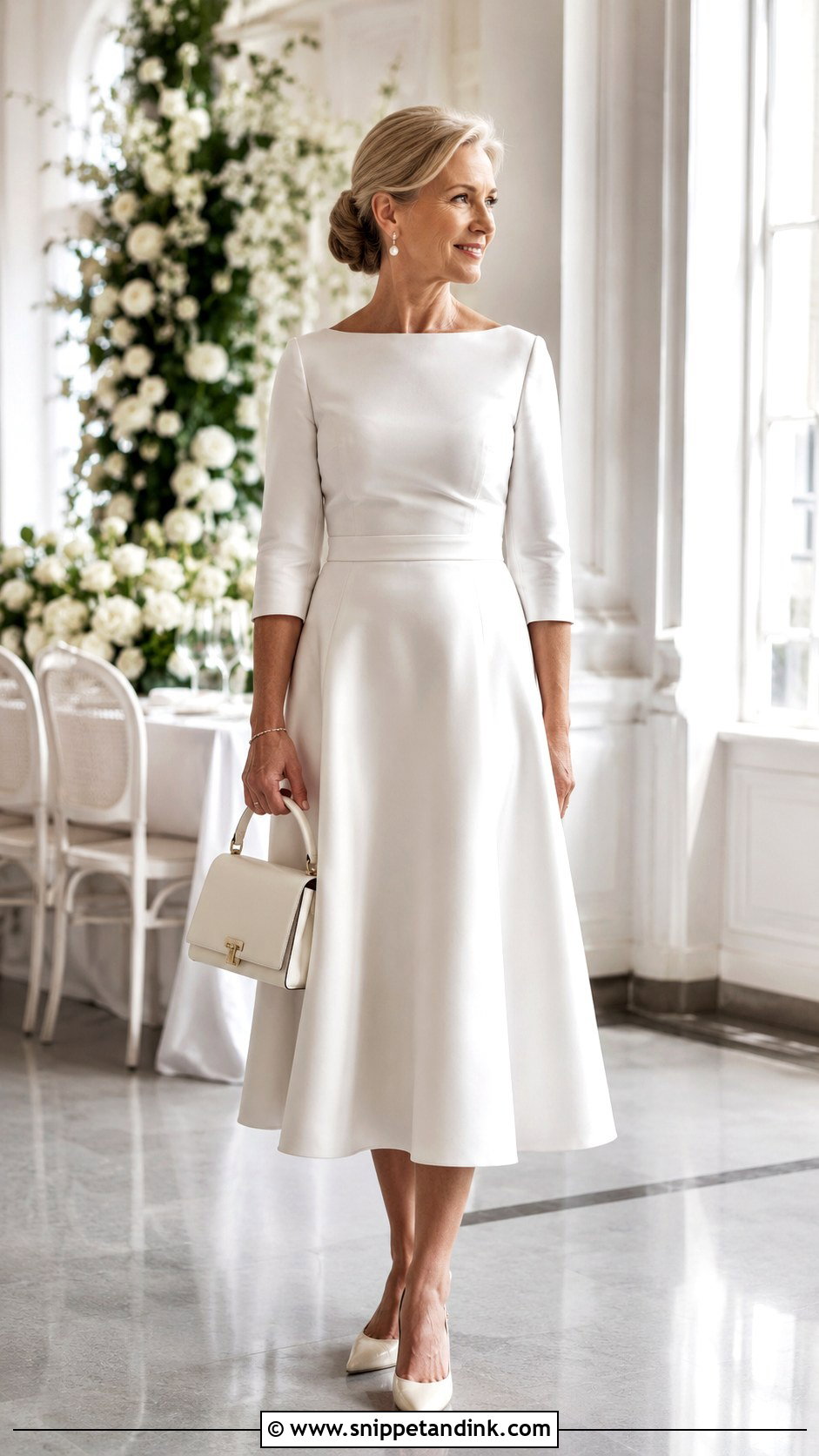
A boat neck runs straight across the collarbone and widens the shoulders slightly, which balances fuller hips nicely. Pair it with three-quarter sleeves, a fitted natural waist and an A-line or gently flared skirt. Matte satin gives subtle structure; silkier satin adds shine but shows creases more. Wear pearl drops, pointed pumps and a structured top-handle bag, and a bracelet instead of a necklace, since the neckline sits too high for one. A neat chignon or short bob keeps the shoulders visible. In fittings, reach forward and hug someone. Set-in sleeves on satin can restrict the arms more than you’d expect, and a good seamstress can ease them.
17. Lace Bodice Wedding Dress With Chiffon Skirt
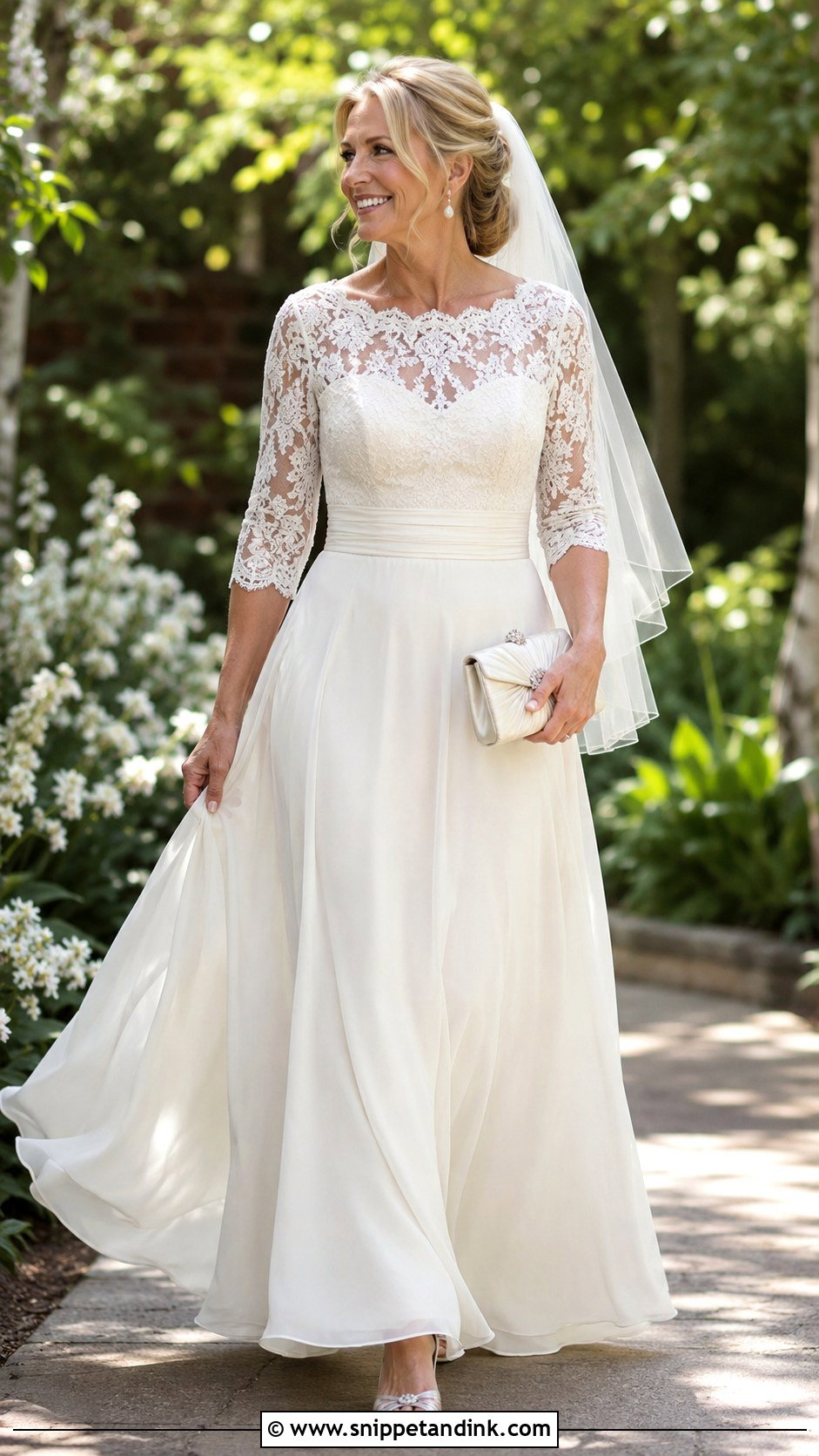
A lace bodice over a chiffon skirt puts the detail near your face and keeps the weight off your legs. Choose soft lace with a comfortable lining, supportive cups and a defined waistband. Three-quarter or short illusion sleeves add coverage while leaving the pattern visible. The chiffon should fall smoothly and move when you walk. Low ivory heels, a satin clutch and pearl earrings are all you need. Pick a plain tulle veil; a lace-edged one will compete with the bodice. Softly pinned hair and fresh makeup finish it. I’d use it for outdoor and destination weddings from spring into early fall, when heavier fabrics would feel hot.
18. Embroidered Tea Length Wedding Dress
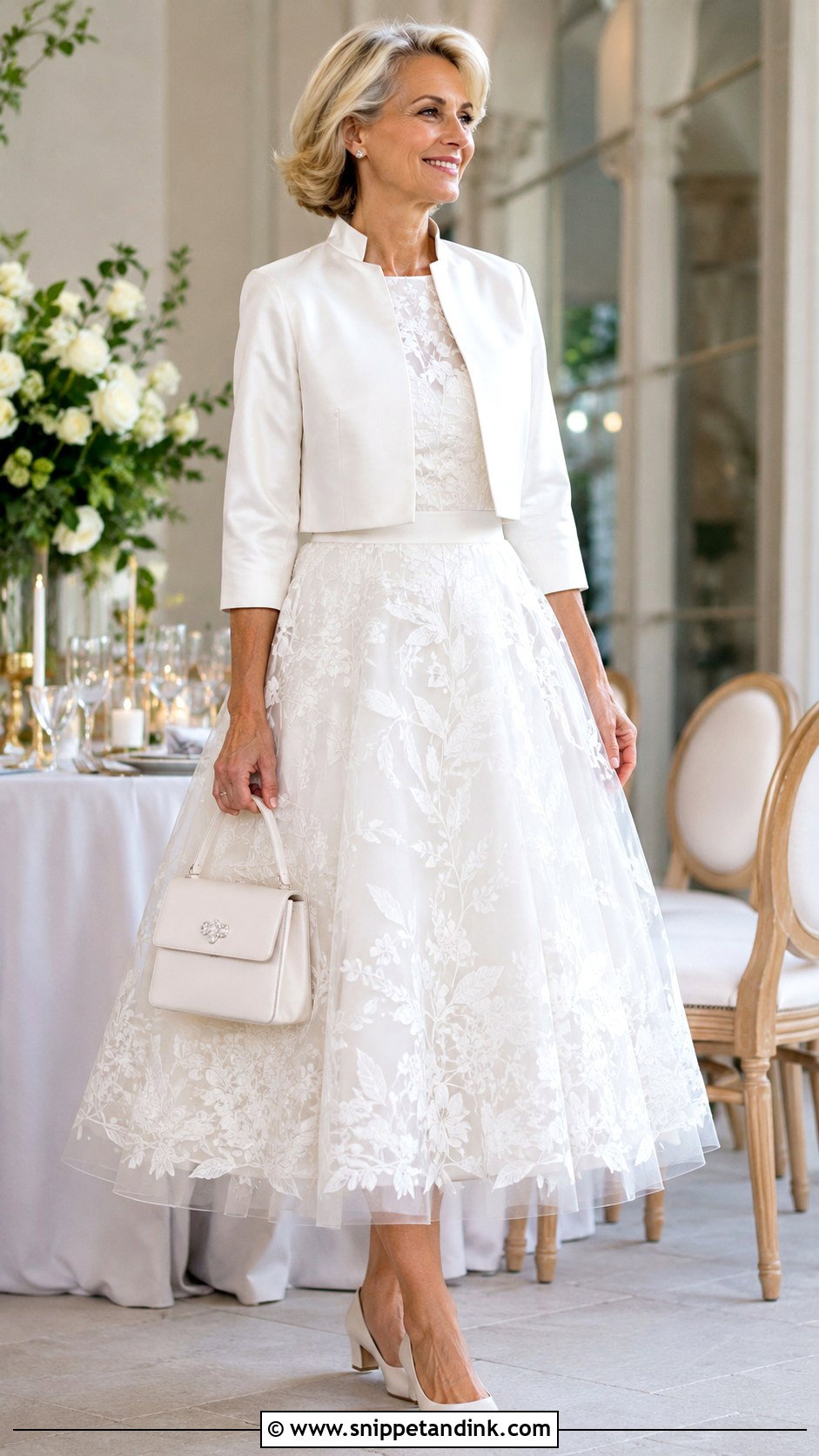
An embroidered tea-length dress brings real craftsmanship without a floor-length skirt. Tonal embroidery, delicate vines or scattered florals over ivory tulle all work. A fitted waist and gently flared skirt give the embroidery room. Closed-toe kitten heels, a small top-handle bag and pearl or crystal studs suit the length, and a cropped satin jacket adds cover. A long veil would swamp the hem, so wear a birdcage veil or a decorative comb instead. Embroidered hems are hard to shorten without cutting through the motif, so buy as close to your length as you can. Afternoon ceremonies and restaurant receptions are its sweet spot.
19. Simple Wedding Dress With Detachable Sleeves
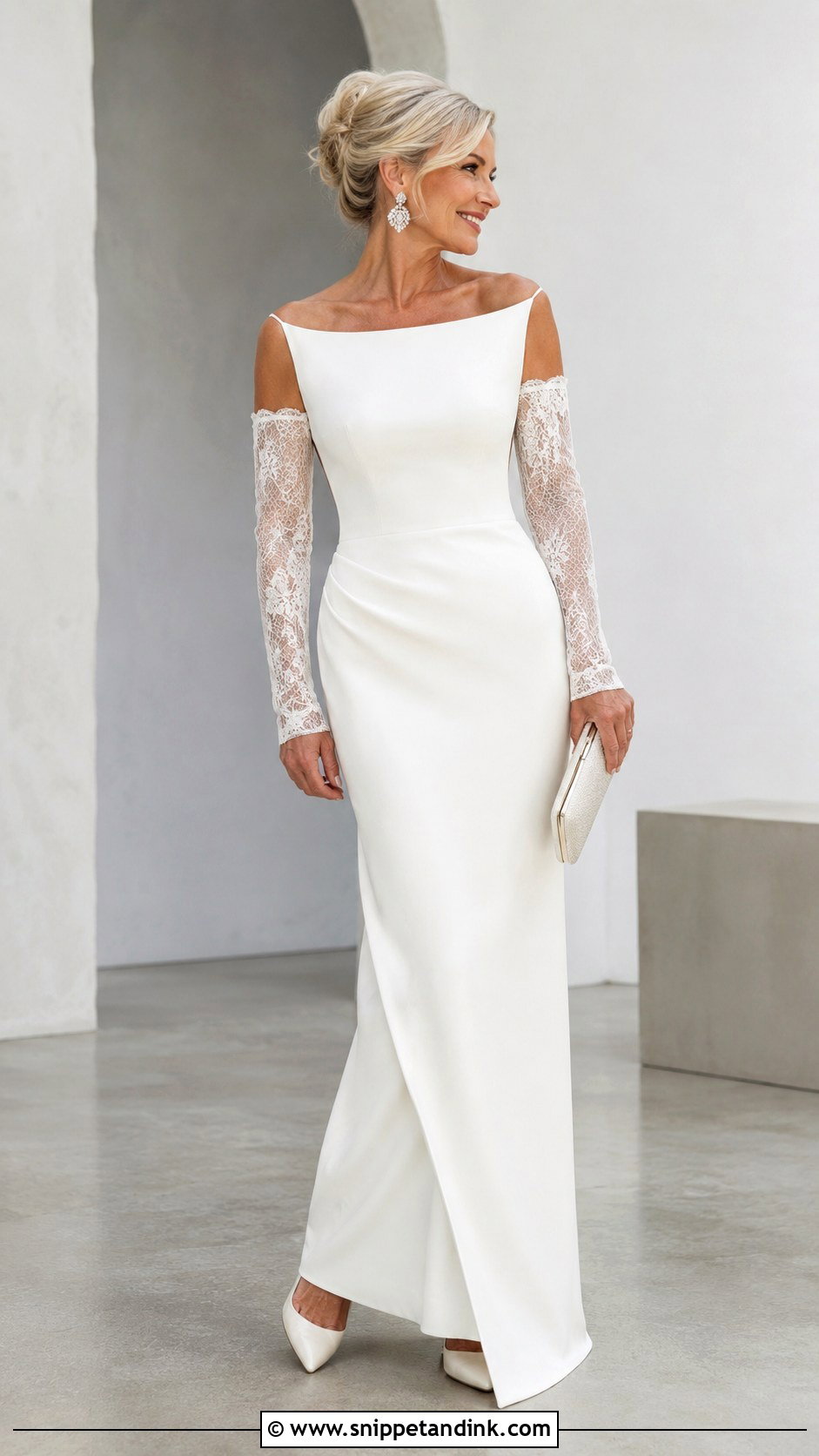
Detachable sleeves solve the coverage question without forcing a decision. Start with a clean crepe or satin gown in an A-line, sheath or column shape, wear lace, tulle or matching sleeves for the ceremony, then take them off for the reception. Choose statement earrings that suit both versions, and keep other accessories minimal so the change is noticeable. In fittings, check where the sleeves attach. Hooks or snaps sitting on the shoulder can rub, and they should lie flat under the fabric. A polished updo shows off the neckline either way. It’s practical for venues where the ceremony is cool and the reception warm.



20. Soft Blue Wedding Dress
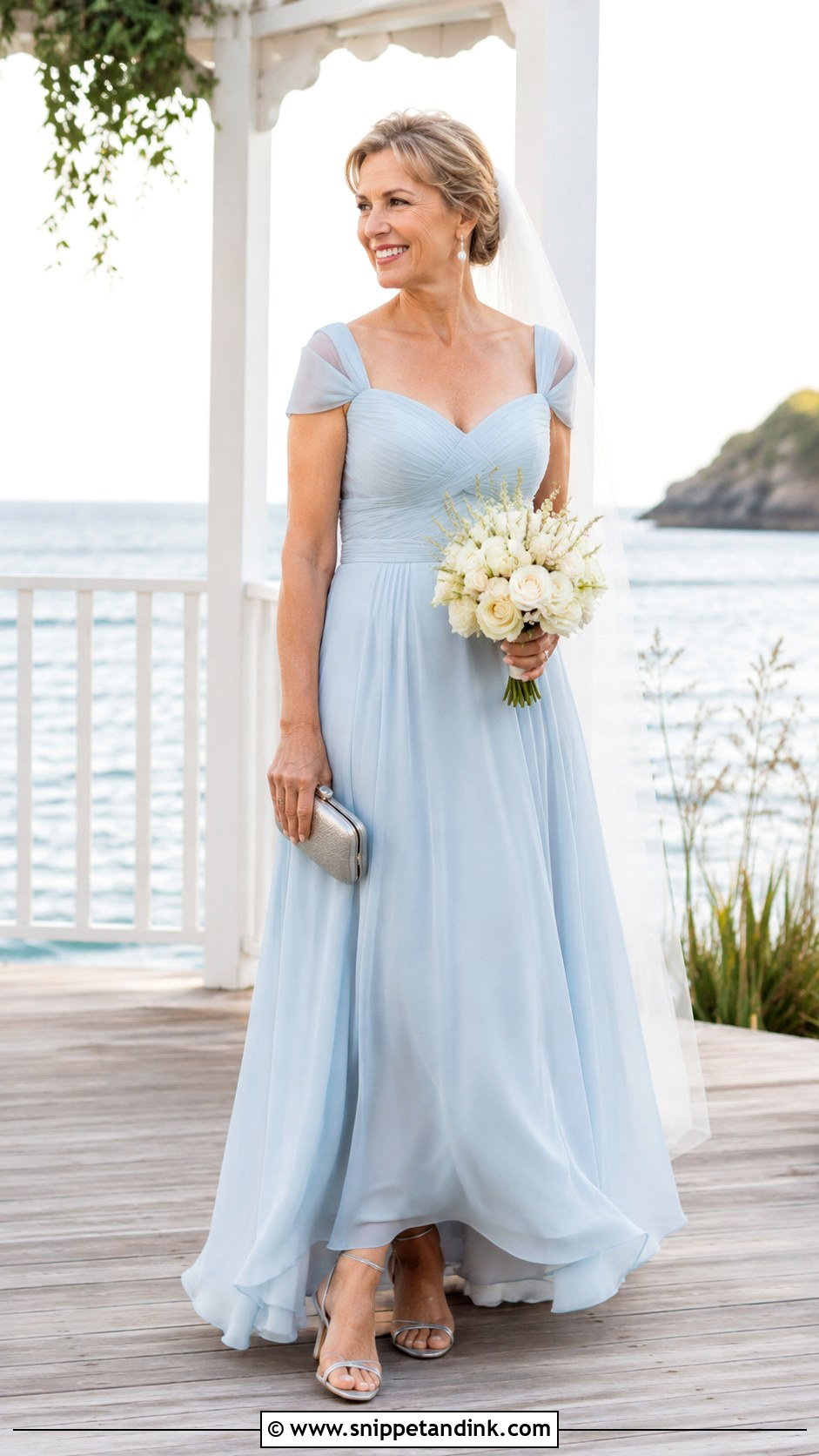
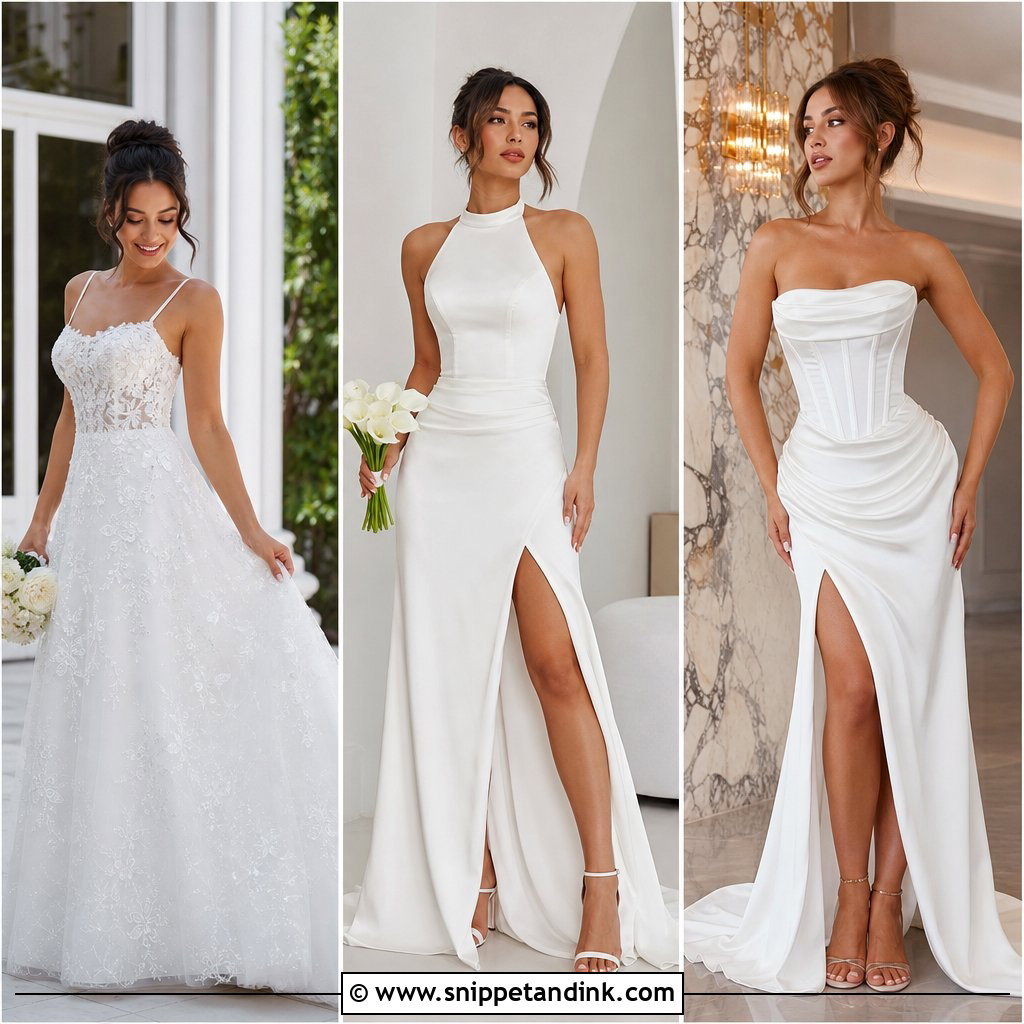
Soft blue is a distinctive step away from white that still feels delicate. Powder blue, misty gray-blue or an icy pastel can all work, and the right one depends on your coloring: cool, pink-toned skin usually suits icier blues, while warmer skin does better with a hint of gray in the shade. A chiffon A-line, embroidered tulle or satin midi all carry the color well. Silver or neutral heels, pearl earrings and a pale metallic clutch keep it calm, and an ivory bouquet adds the traditional bridal note. If you want a veil, compare plain ivory and pale blue tulle against the dress in daylight. Coastal and outdoor ceremonies suit it.
Which Problems Alterations Solve, and Which They Don’t
Tailoring is where a second-wedding dress turns from nice to right, but a seamstress works within the fabric she’s given. Knowing the limits before you buy saves money and disappointment.
- Easy and common: shortening a plain hem, taking in side seams, adding bra cups, tightening straps, adding a bustle or a waist stay.
- Possible but slower: adding sleeves or a modesty panel, which usually needs matching fabric ordered from the maker, and shortening tiered or pleated skirts.
- Hard or limited: letting a dress out more than a little, since most bridal seams leave only a small allowance. Shortening a lace or embroidered hem without losing the scalloped edge also takes skilled hand work.
- Rarely worth it: reshaping a whole neckline or changing a column into an A-line. At that point, a different dress is often cheaper.
Plan on two or three fittings, with the first roughly two months before the wedding and the last within a couple of weeks of it, so any change in your weight from planning stress can be accounted for. Bring your shoes and undergarments to every fitting. At the final one, sit down, raise your arms and walk up a few stairs before you sign off, because that’s the moment small pulls show up.
Dressing for the Wedding You’re Having, at the Age You Are
No age or tradition decides your second wedding outfit. It should fit the celebration and let you move without thinking about it. Compare silhouettes, colors, fabrics and coverage from the ideas above, and try at least one dress you’d normally walk past, because a surprise favorite turns up in fittings more often than you would think. Judge each one by how it feels when you walk, sit and laugh, not only in the three-way mirror. Set aside part of your budget for alterations; a simple gown that fits perfectly looks more expensive than an elaborate one that doesn’t. Classic ivory lace, modern crepe, soft blue chiffon or a satin midi, wear it as a joyful expression of your next chapter.
You'll Like These Ideas:





Leave a Reply