
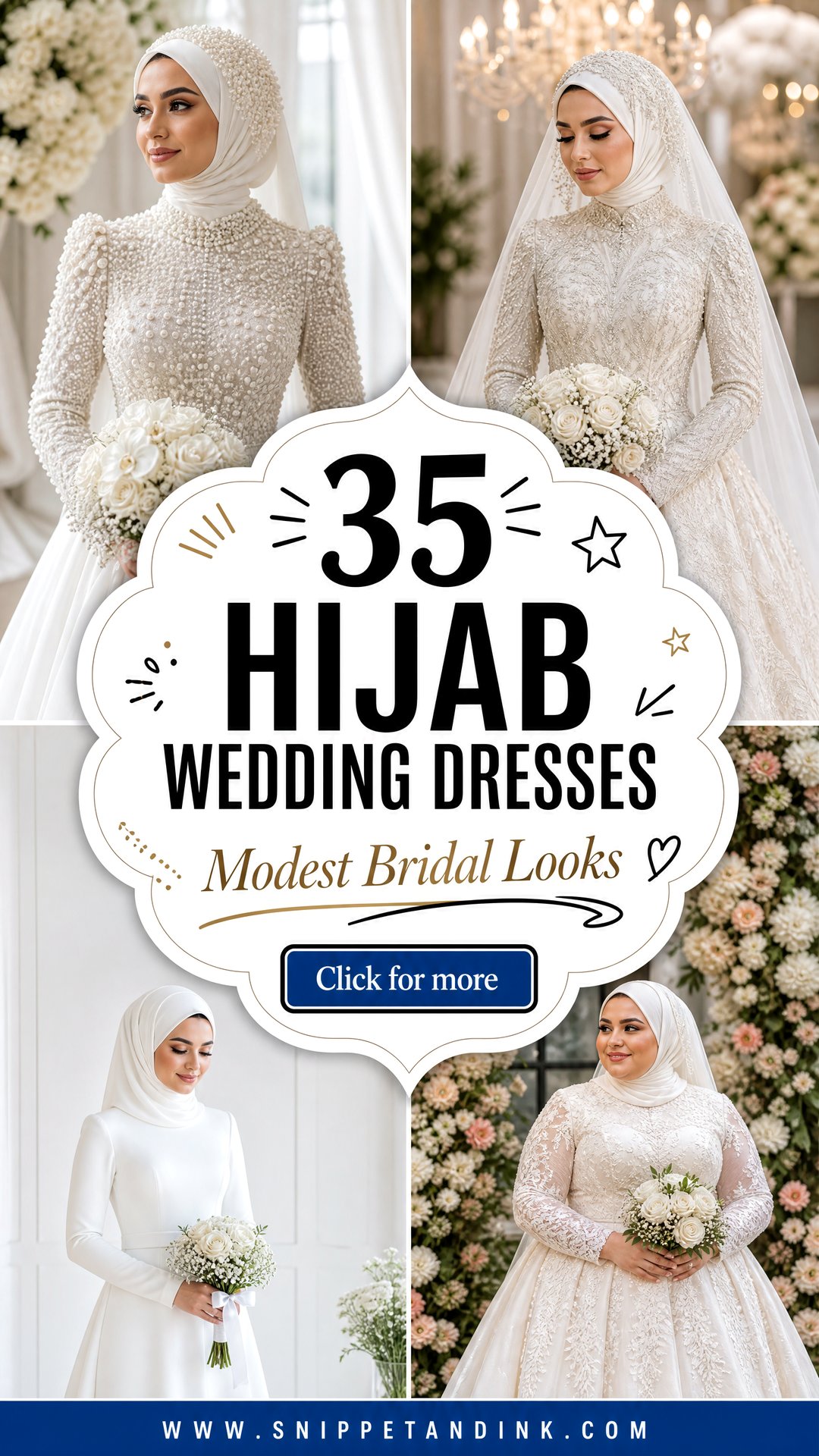
Shopping for a modest wedding dress used to mean compromise, and in a lot of bridal salons it still means asking for sleeves the sample doesn’t have. It shouldn’t. The gowns that work best with a hijab almost always start from the same foundations: a high neckline, long sleeves, fabric you can’t see through, and a hijab chosen alongside the dress rather than added at the end. From there the range is wide, from satin ball gowns and lace A-lines to embellished kaftans, modest mermaids and layered chiffon. I’ve gathered 35 dresses below, with what I’d check on each before you commit.
Test the Lining Under a Camera Flash Before You Buy
A gown can look fully opaque in a salon mirror and turn see-through in photos. Flash and bright backlight, like a window behind you, pass straight through thin linings, illusion tulle and single-layer chiffon. I ask brides to have someone take a few phone photos with the flash on, from the front and side, in every dress they’re seriously considering. It takes a minute and saves a lot of disappointment.
A few other checks I run at modest bridal appointments:
- Bring your own hijab and undercap in the shade you plan to wear, so you see the real neckline and color match.
- Lift your arms, hug someone, and sit down. Sleeves, waistbands and back openings all shift.
- Ask what the sample is lined with and whether the ordered gown will be the same. Samples are sometimes altered.
- Ask whether sleeves, lining or a higher neck can be added before the gown is cut, and whether that changes the delivery date.
- Look at yourself from behind in a second mirror. Back openings and zip plackets are where coverage most often falls short.
1. White Satin Hijab Wedding Dress
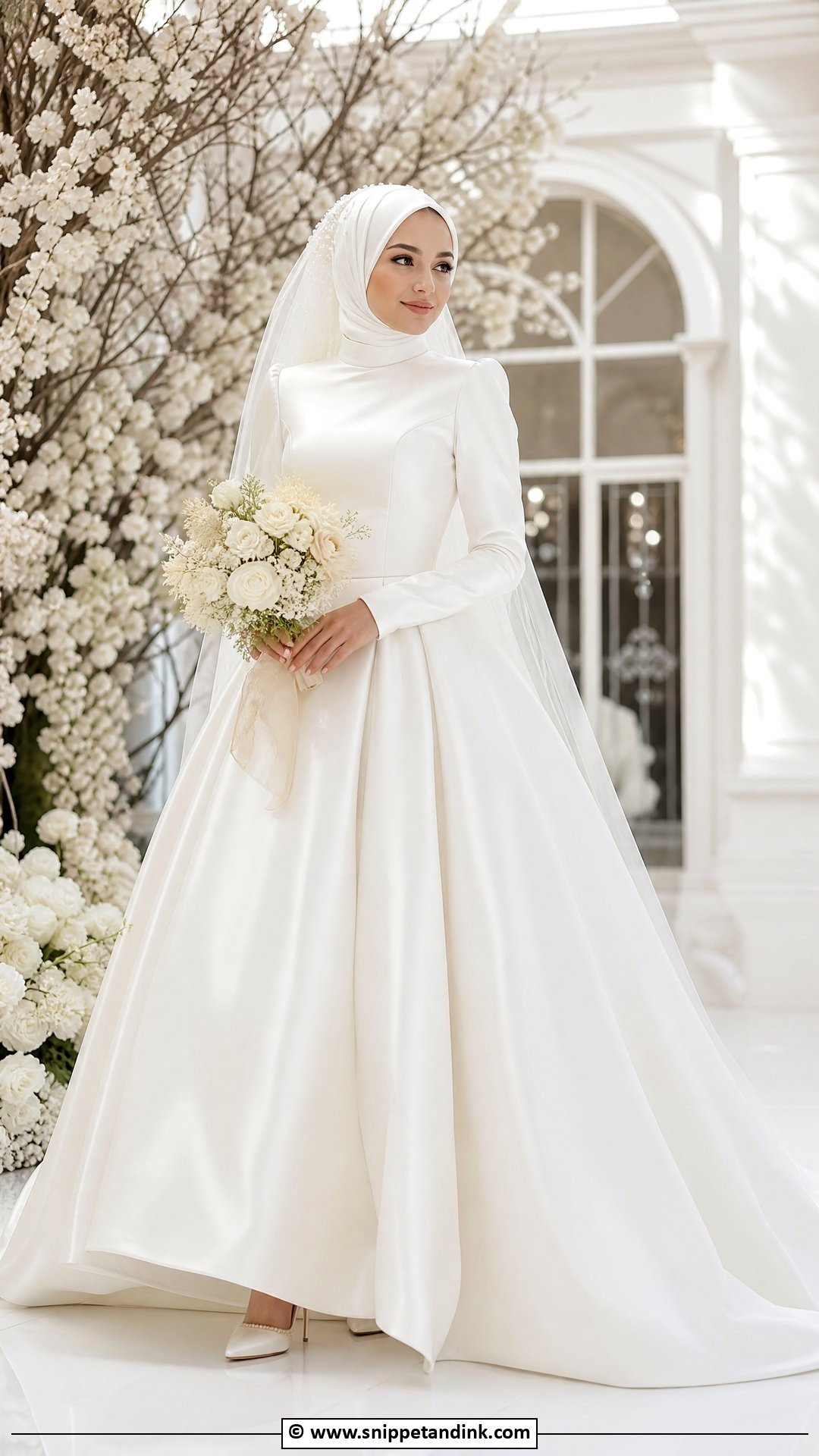
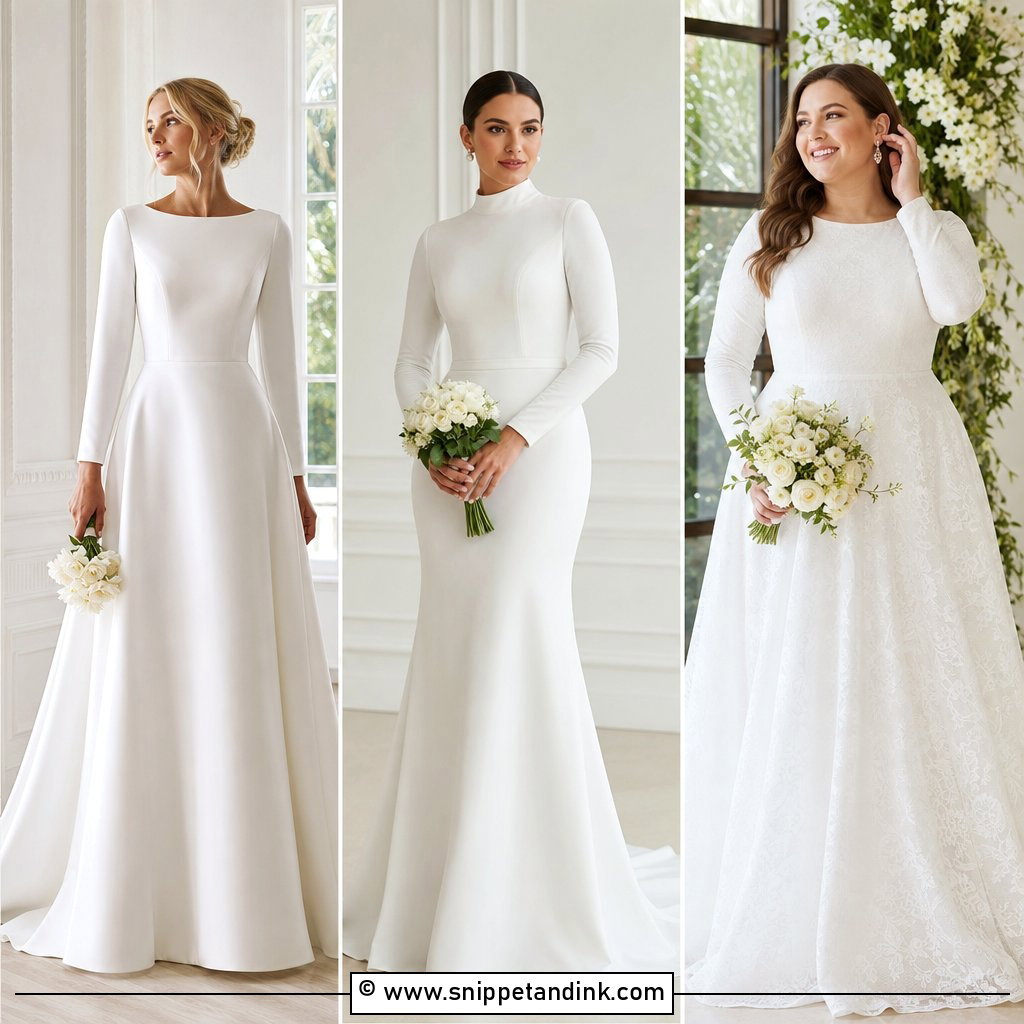
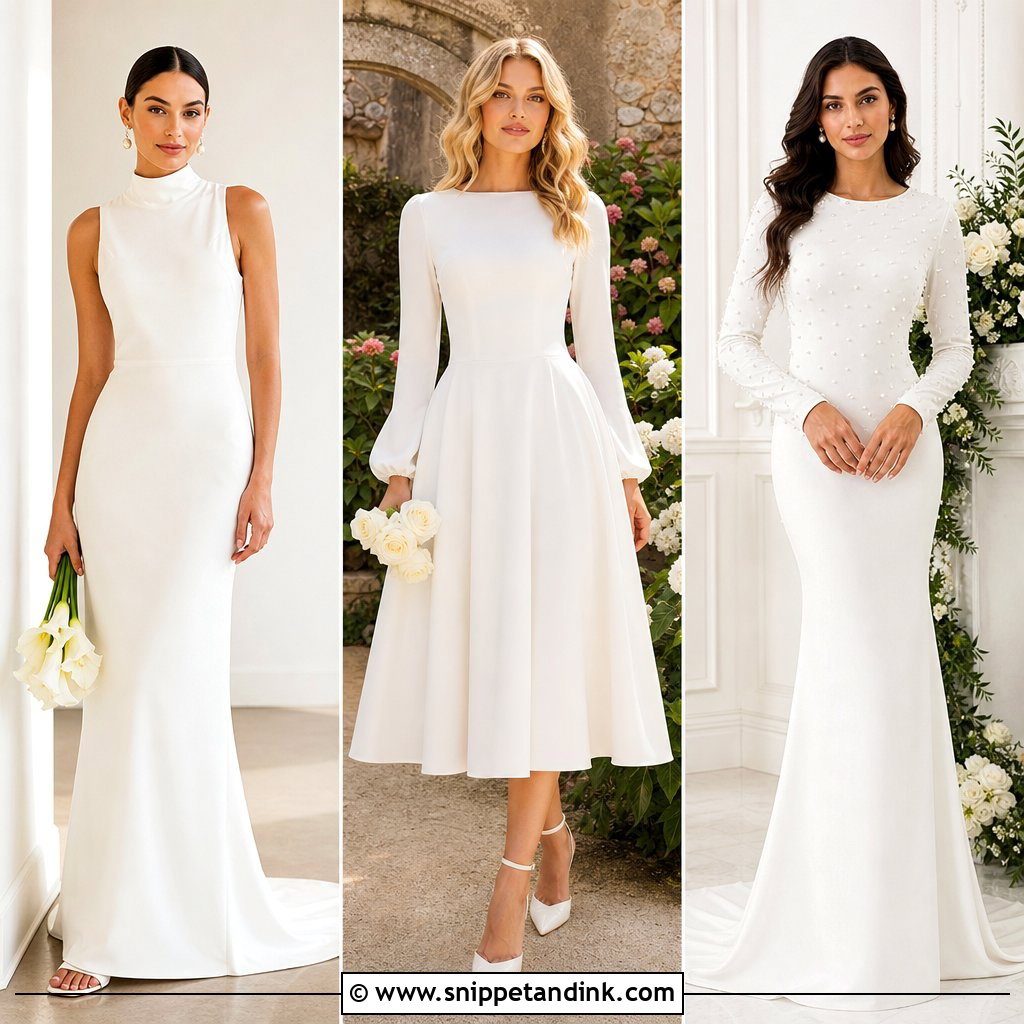
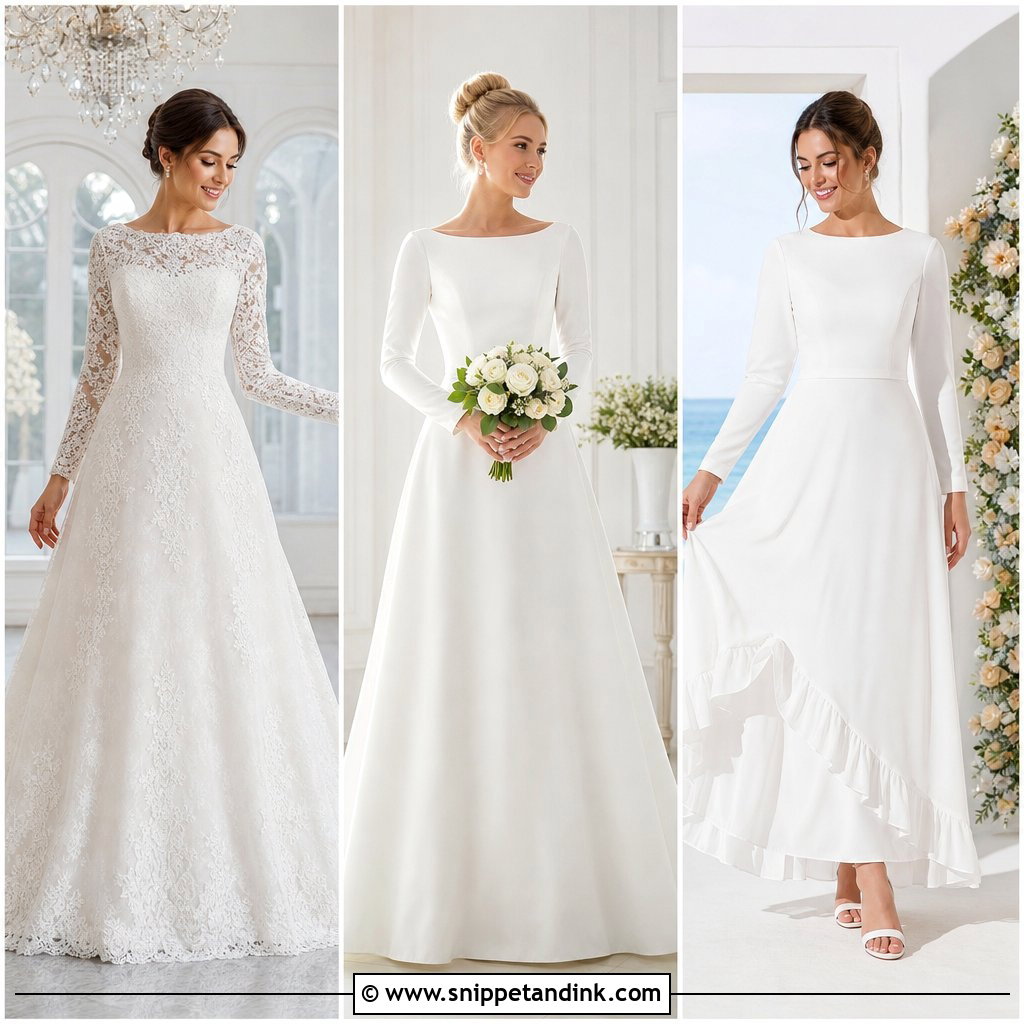
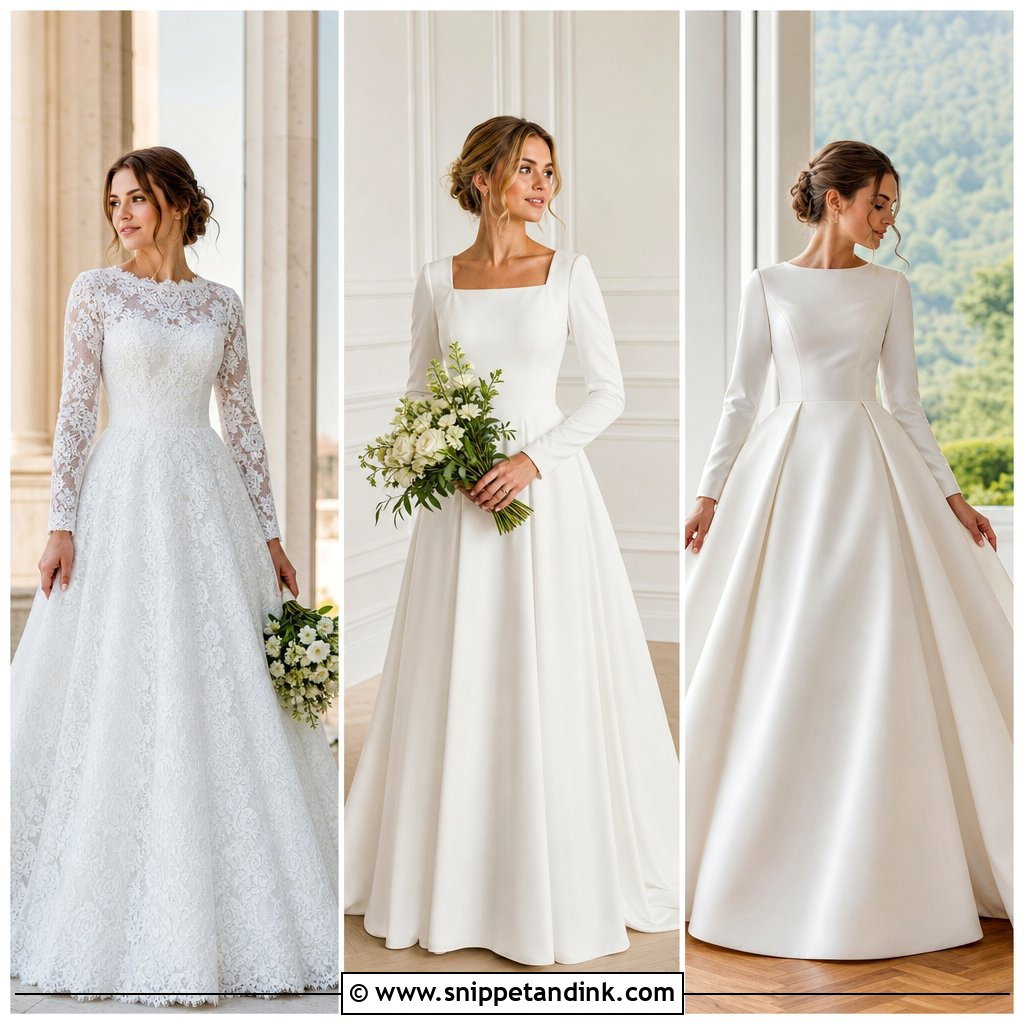
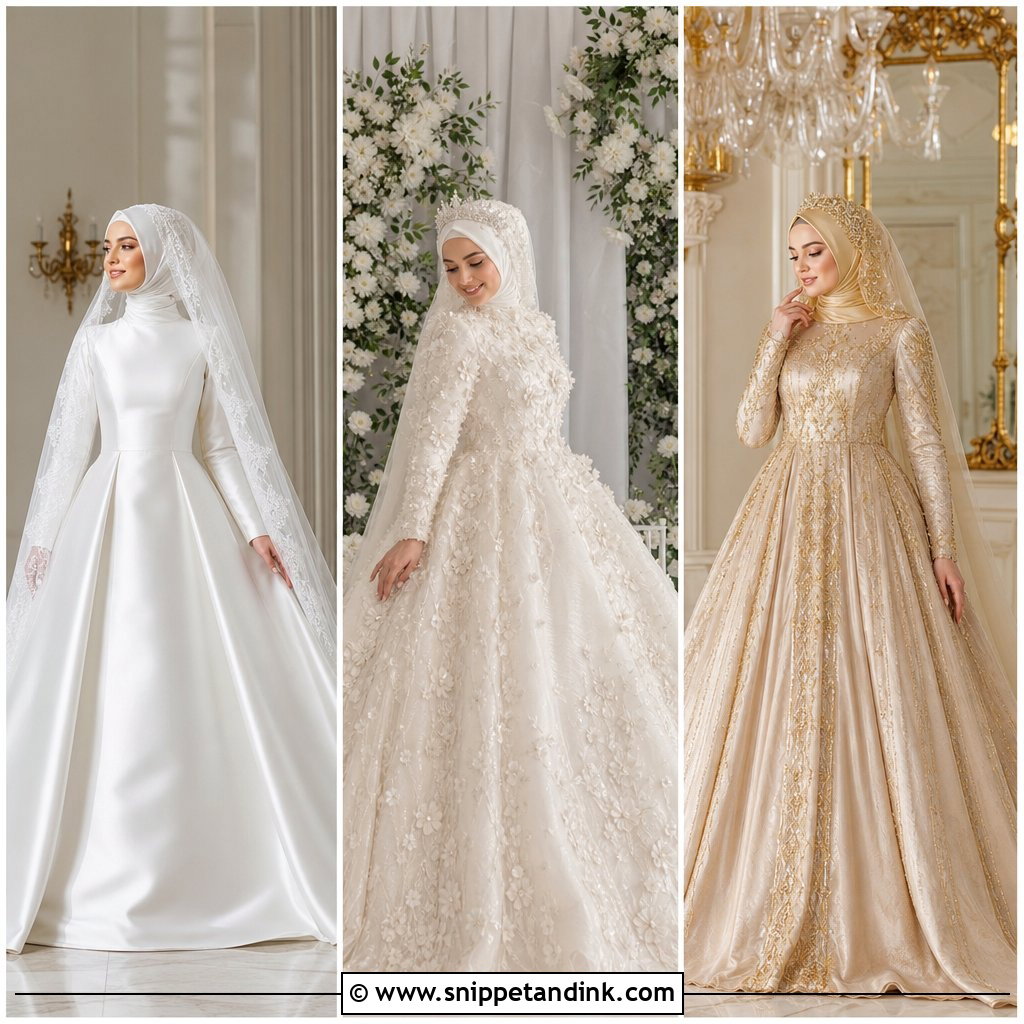
White satin is the cleanest bridal look there is, and with full coverage it reads graceful rather than plain. Satin’s glow comes from its smooth surface, which also means it shows every wrinkle from the car ride, so I keep a steamer on hand. A high neck, long fitted sleeves and a full A-line or ball gown skirt give the classic shape. With a satin hijab on top, make sure both whites match exactly; satin from different makers can be blue-white or warm-white. Pearl pins, a soft veil and closed-toe heels finish it.
2. Lace Hijab Wedding Dress
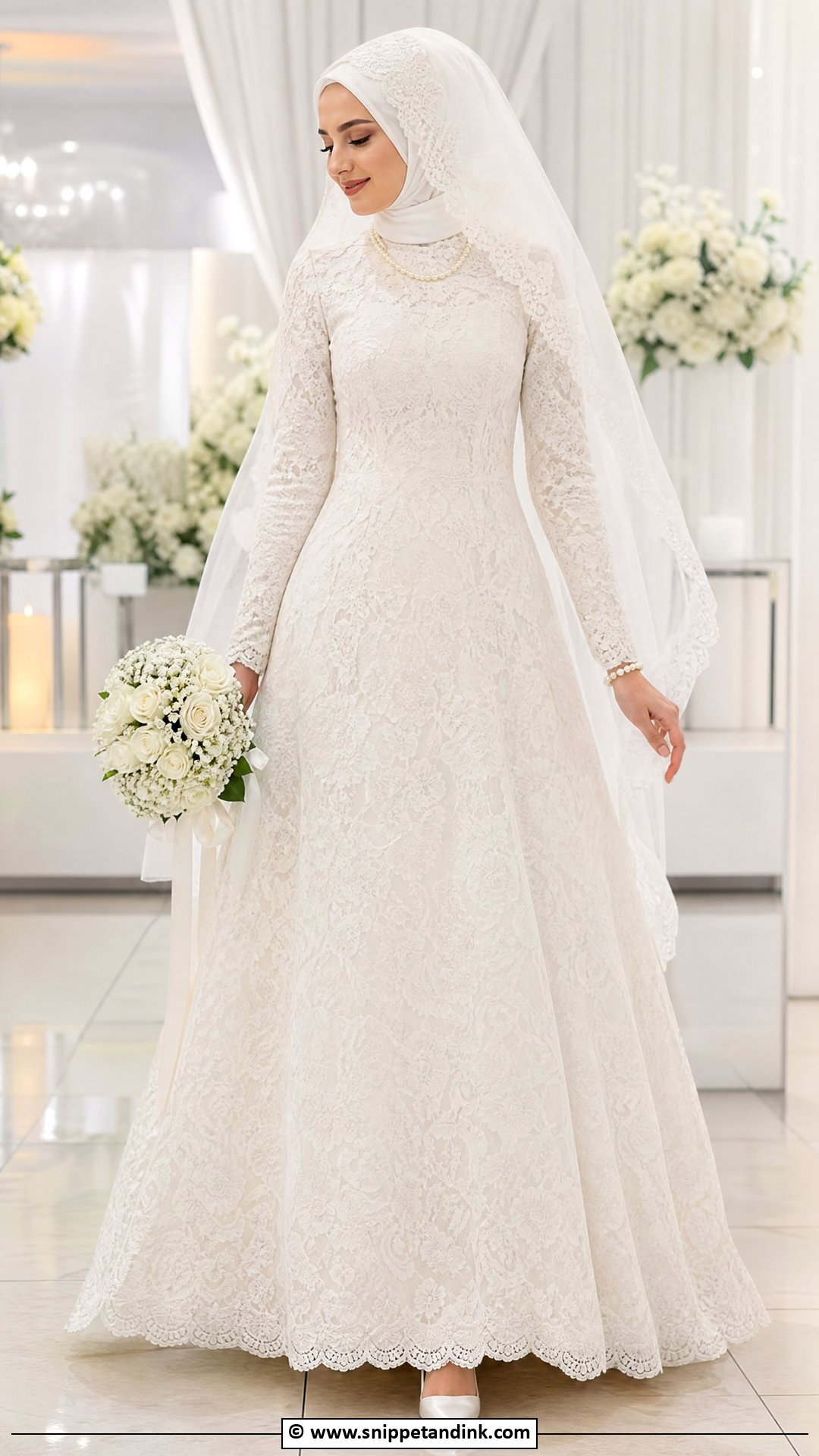
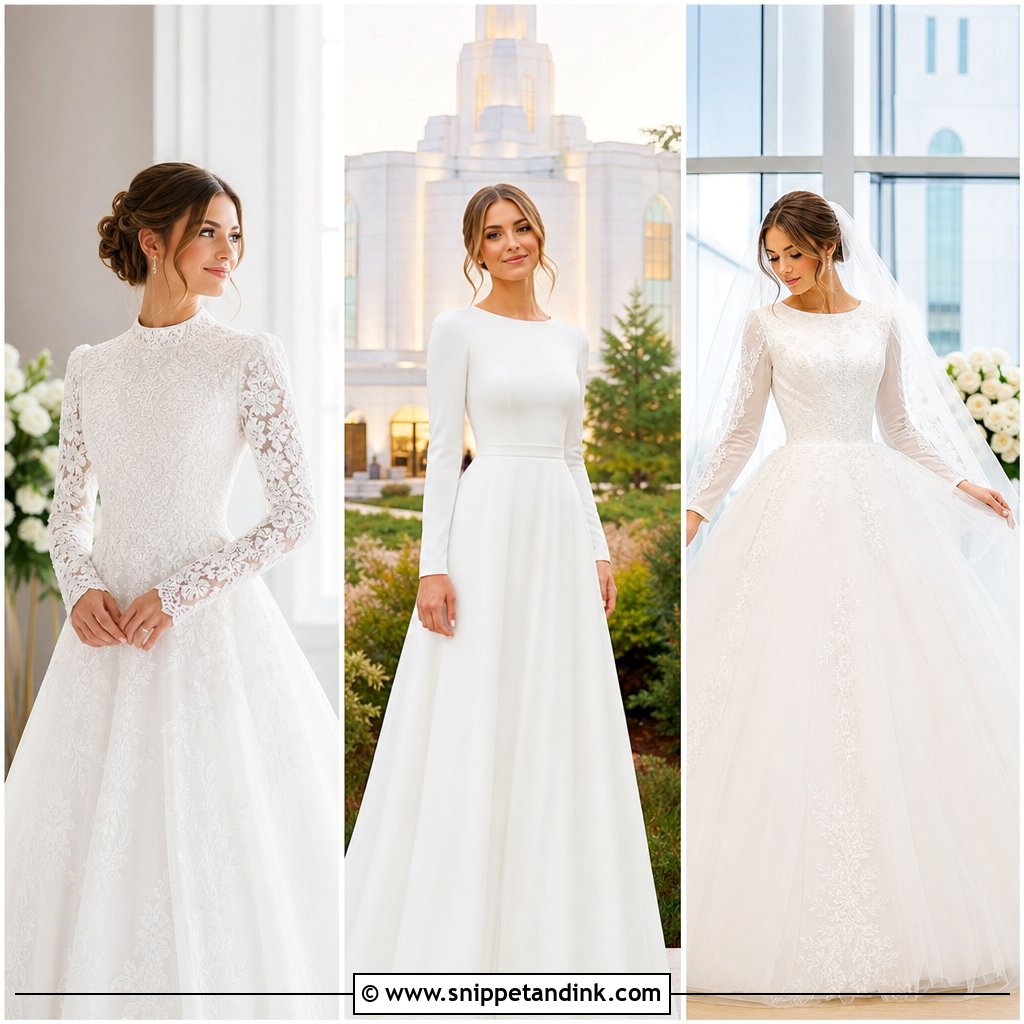
Lace is romantic and textured, but the best modest versions are lined lace rather than sheer panels at the bodice, sleeves and back. An A-line lace gown with a high neck moves comfortably and suits most figures. Ivory lining under ivory lace gives a softer, more traditional look; a nude lining makes the pattern stand out more. A chiffon or lace-edged hijab coordinates without competing. Pearl earrings and satin heels keep it balanced.
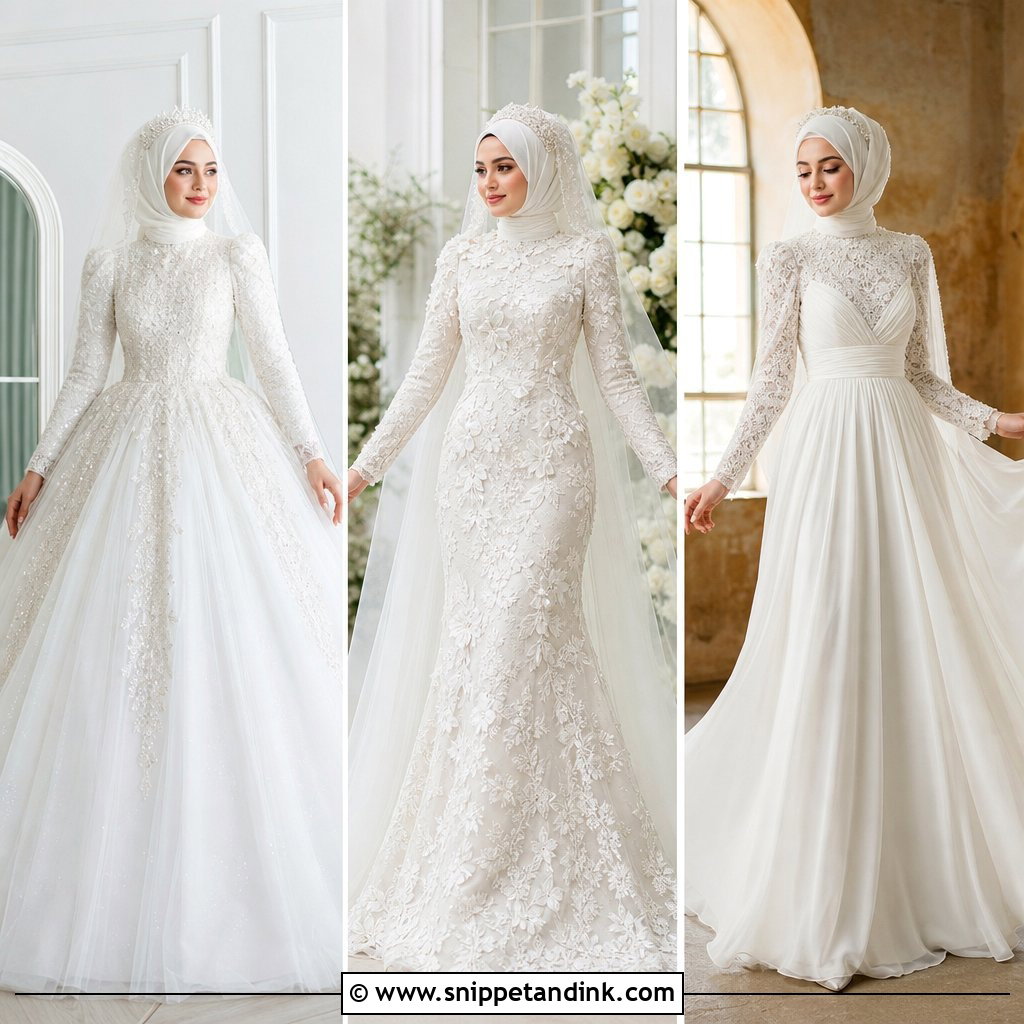
3. Modest Ball Gown Hijab Wedding Dress
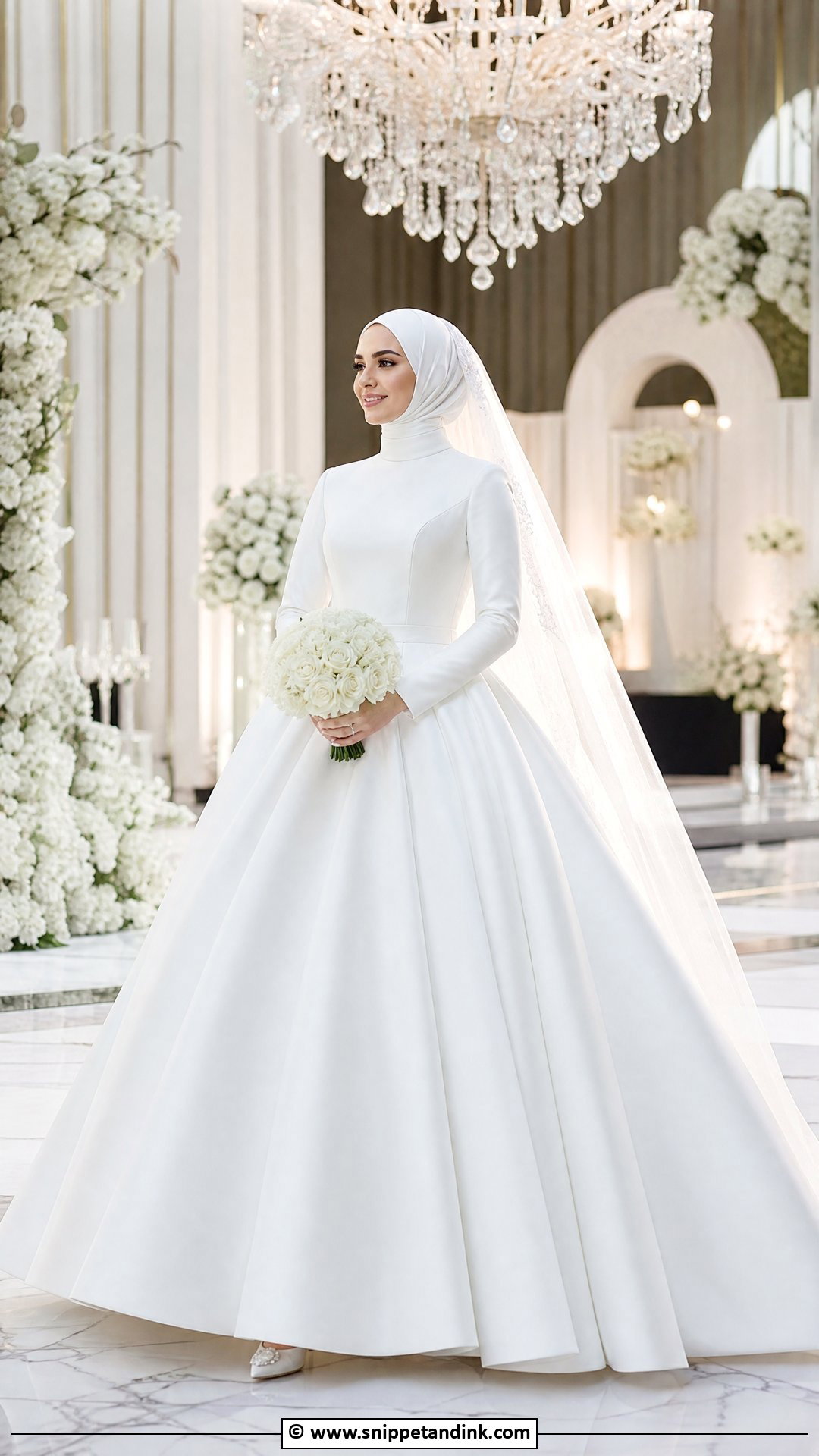
A modest ball gown hijab wedding dress gives the grand entrance with full coverage. Satin, mikado, organza or tulle with an opaque lining all hold the regal shape. If you love detail, put it on the bodice and keep the skirt clean. A structured hijab wrap with a long veil makes it formal. My caution with ball gowns is practical: the skirt is wide and heavy, so check the venue’s doorways, stairs and the car you’ll travel in.
4. A Line Hijab Wedding Dress
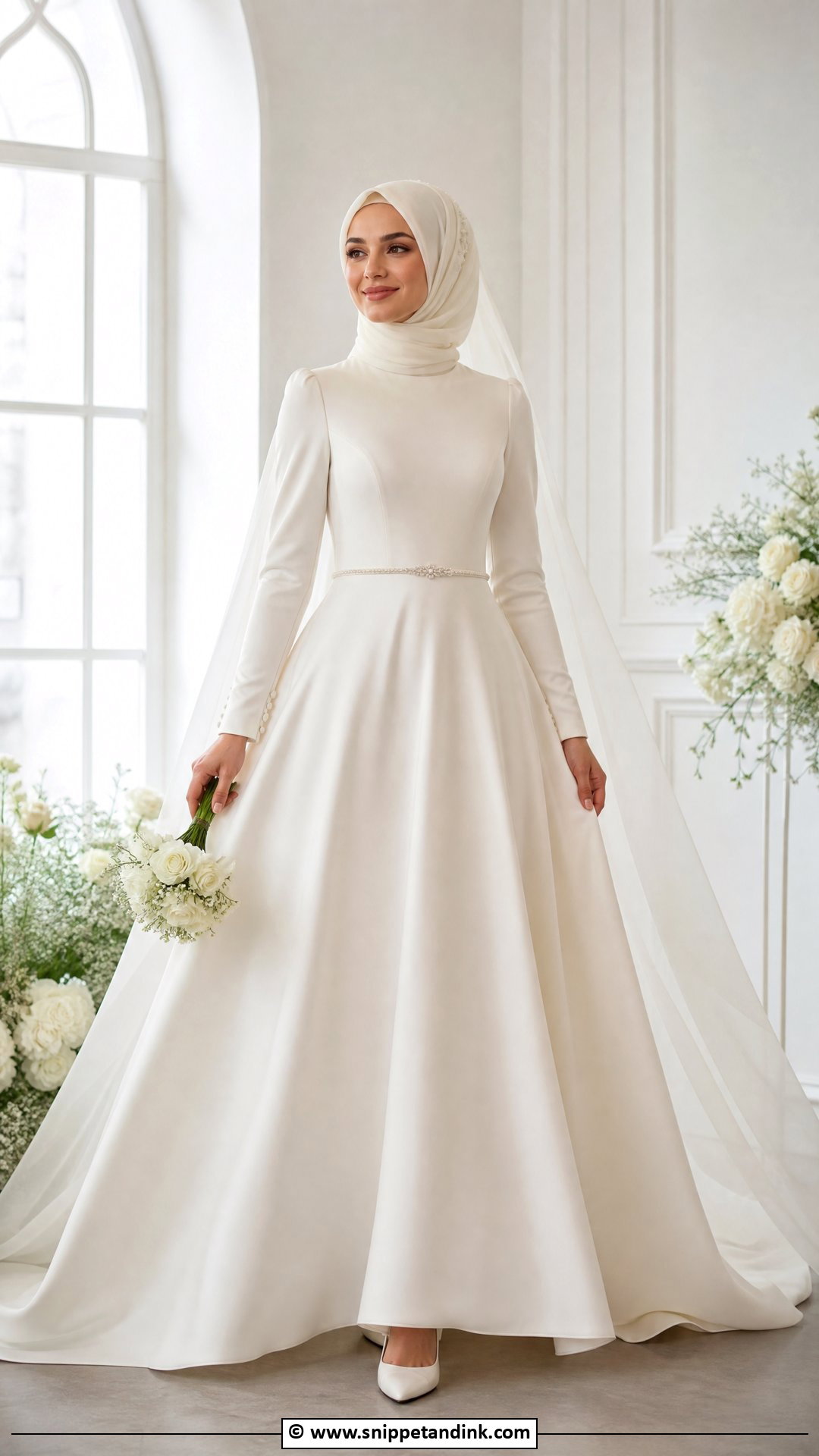
Ask me for the safest silhouette and I’ll say A-line. The fitted top and gently widening skirt define the waist without clinging, which is why it works for petite, tall, curvy and plus-size brides alike. Crepe looks modern, satin classic, lace romantic. A hijab in the same shade keeps the line calm. A thin belt and pearl pins add a little detail, and it’s comfortable enough to wear from the morning photos to the final dance.
5. Mermaid Hijab Wedding Dress
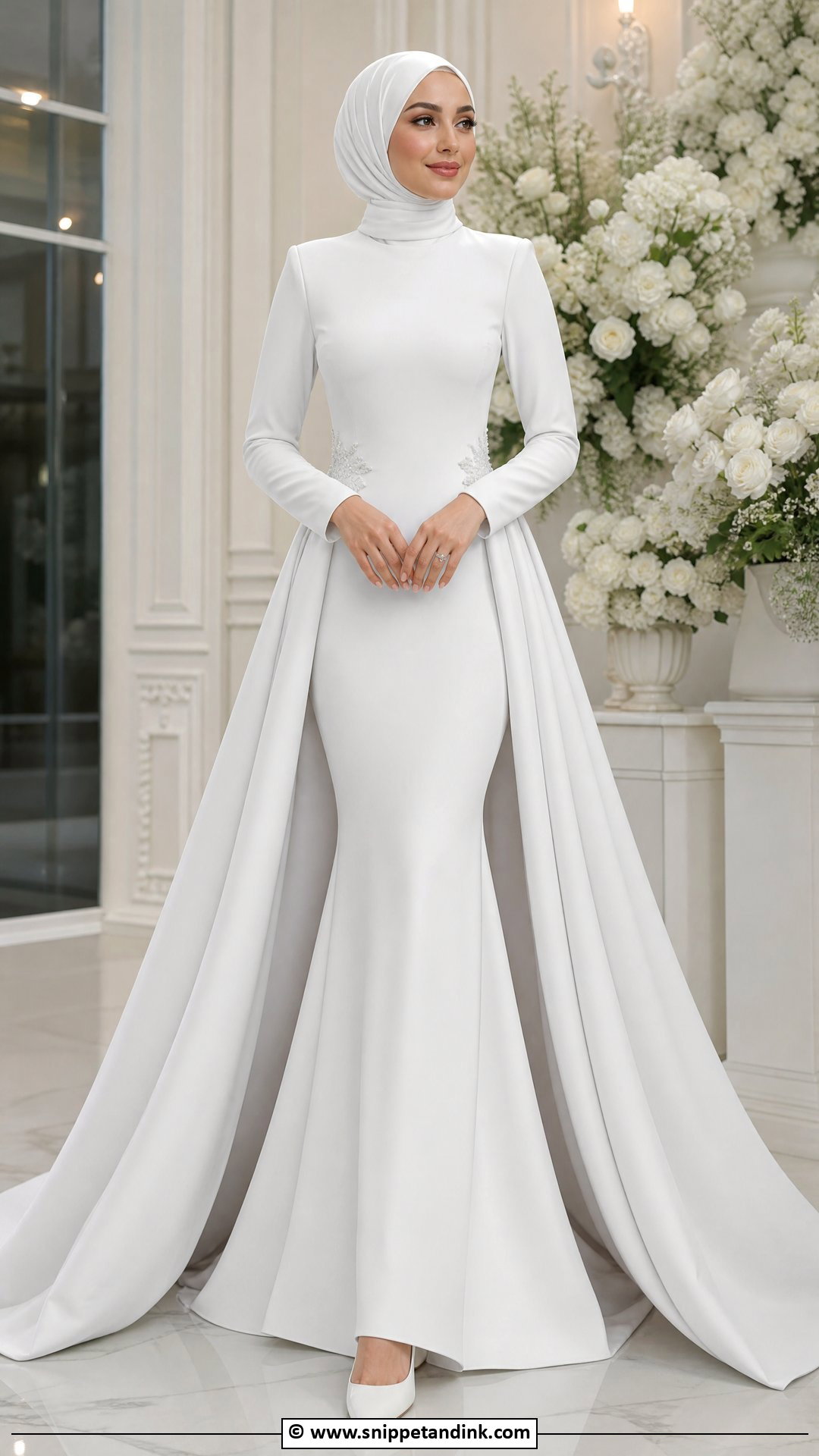
A mermaid hijab wedding dress can stay modest if it skims the body rather than hugging it, so the fitting is everything. I size up slightly through the hips for modest brides and let the seamstress take it in. Long sleeves, a high neck and a lined bodice give coverage, while the flared hem adds movement. A smooth jersey or chiffon hijab keeps the top neat. A detachable overskirt adds ceremony coverage and comes off for the party.
6. Chiffon Hijab Wedding Dress
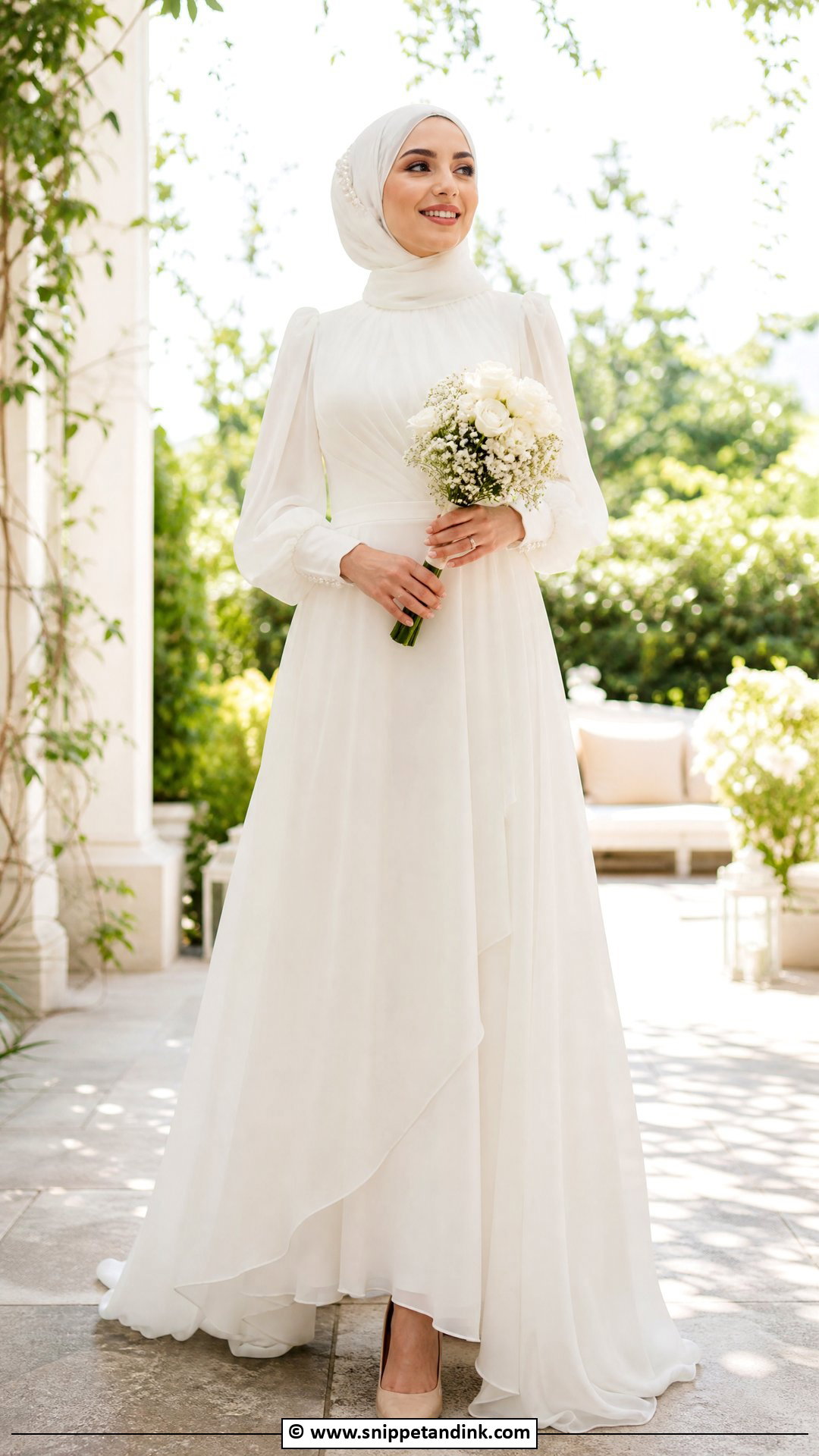
Chiffon is the coolest fabric to wear on a warm day, and layered over a fully lined A-line or empire waist it looks airy without losing coverage. Sheer-looking sleeves need lining or an underlayer to be truly hijab-friendly; chiffon alone is see-through. A chiffon hijab blends with the dress and folds softly around the face. It suits garden and beachside weddings, though chiffon frays and snags easily, so keep it away from rough chairs and beaded cuffs.
7. Pearl Hijab Wedding Dress
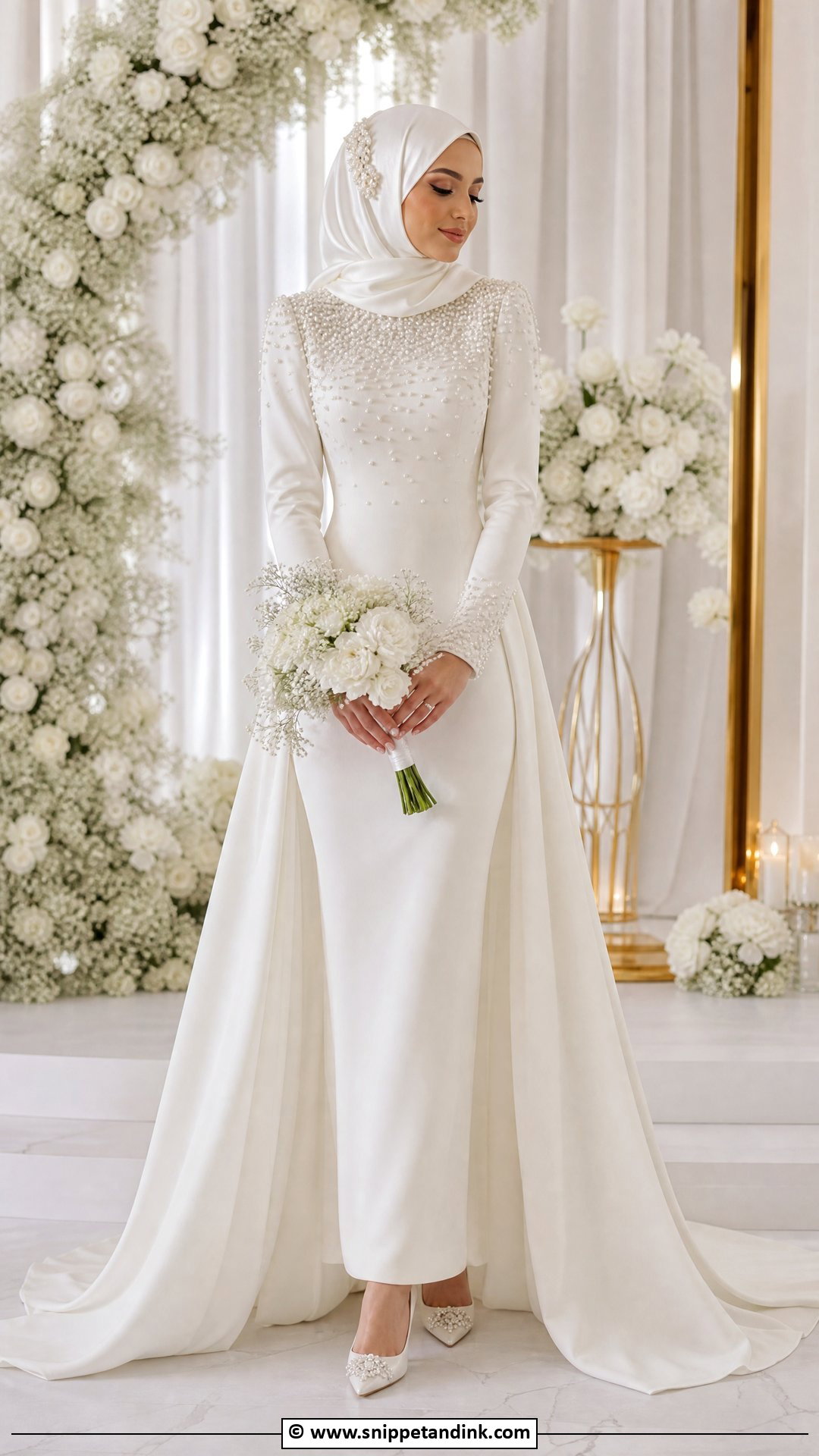
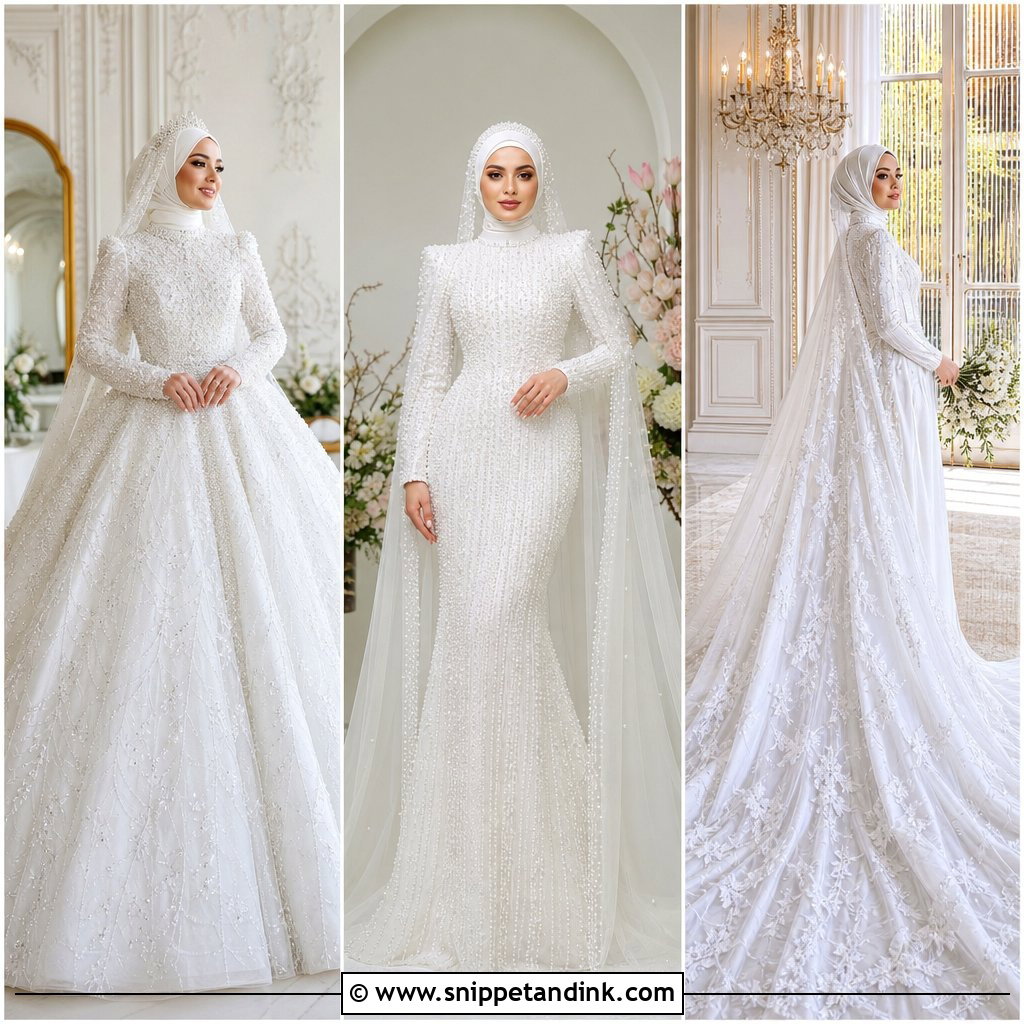
Pearls give a soft polish rather than flash. They can sit on the bodice, sleeves, cuffs, veil or hijab edge. My rule is to put them in one or two places and keep the gown shape simple; a long-sleeve crepe or satin dress with pearl embroidery looks modern and modest. If the gown is heavily decorated, wear a plain hijab. If it’s simple, a pearl-dotted hijab is fine, though not too many, because pearls weigh the fabric down at the face.
8. Beaded Hijab Wedding Dress
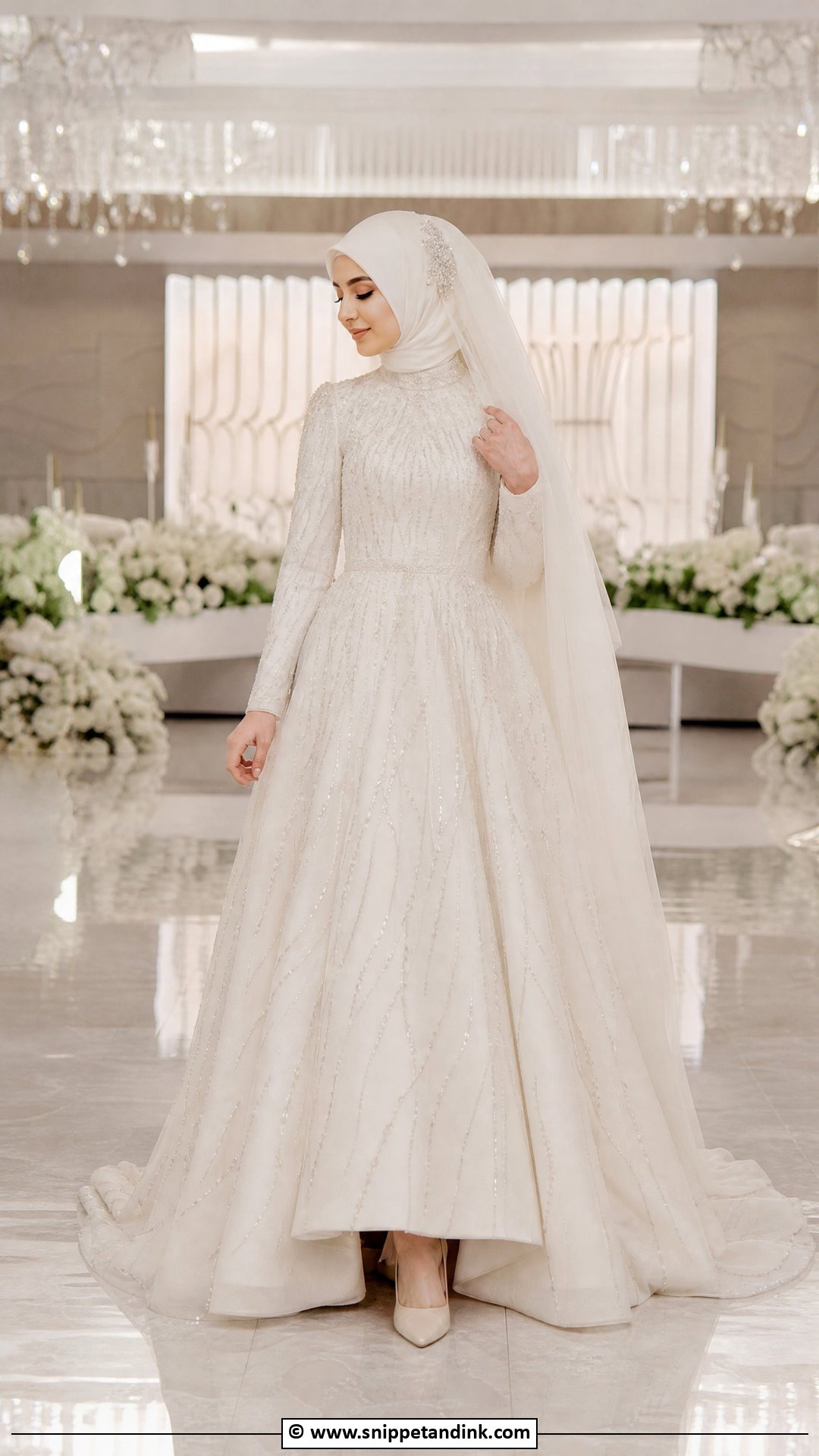
For shimmer and a special-occasion feel, beading delivers, but only over full lining so the dress stays covered from every angle. A beaded bodice with a flowing skirt keeps the gown from feeling heavy. With allover beading, keep the shape simple and the hijab clean. Heavy beading drags at the shoulders over a long evening, so I’d always wear it for an hour at the fitting. Crystal pins and minimal jewelry let it shine under evening lights.
9. Embroidered Hijab Wedding Dress
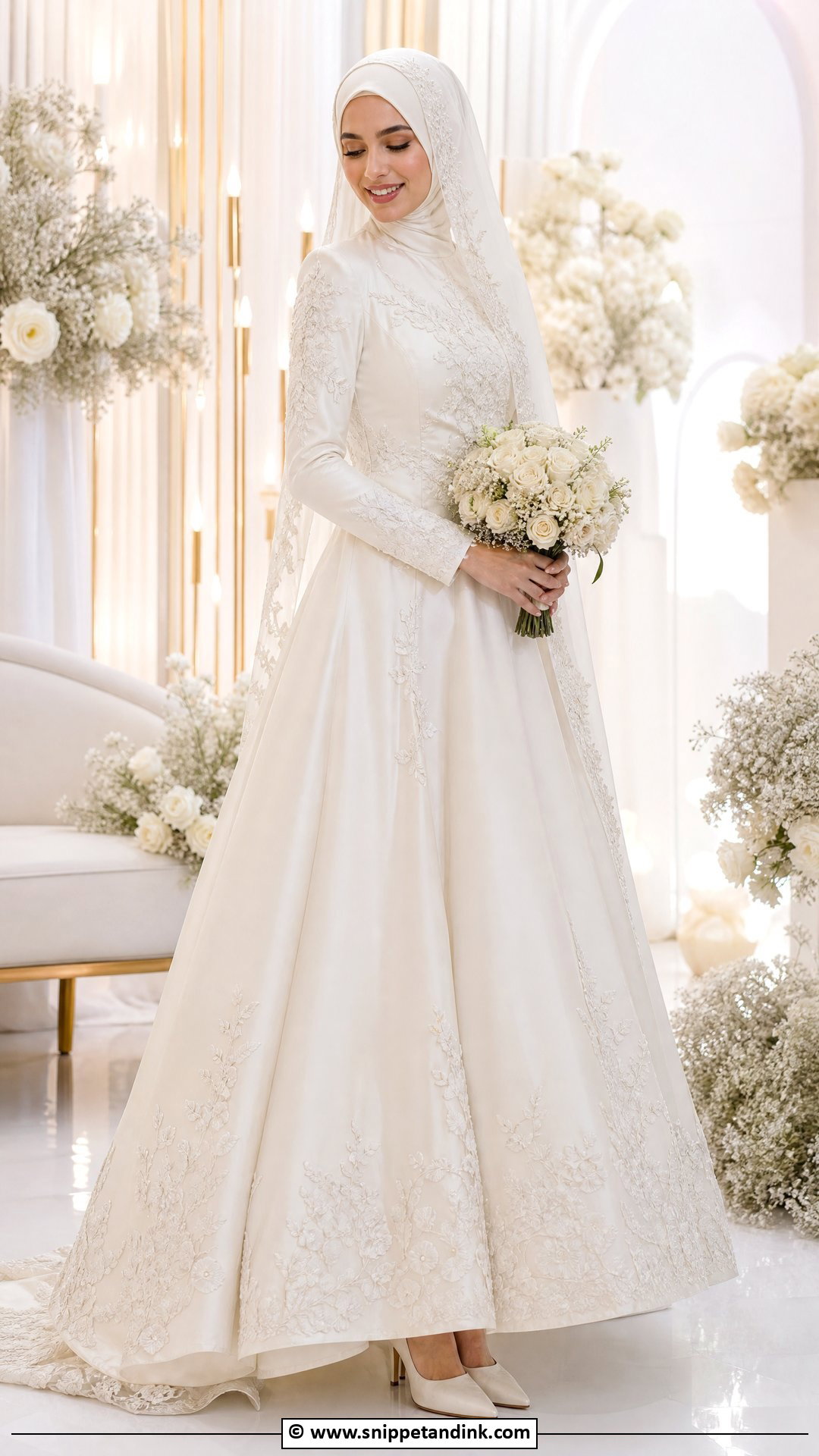
Embroidery makes a dress personal without needing a revealing cut. Florals, vines, geometric motifs or cultural threadwork on the sleeves, bodice, hem or train over opaque lining all work. A matching hijab with a lightly embroidered border ties it together. If the embroidery is colorful, keep the bouquet and shoes simple. It’s a natural fit for multicultural weddings, where a family motif can be stitched into the design.
10. High Neck Hijab Wedding Dress
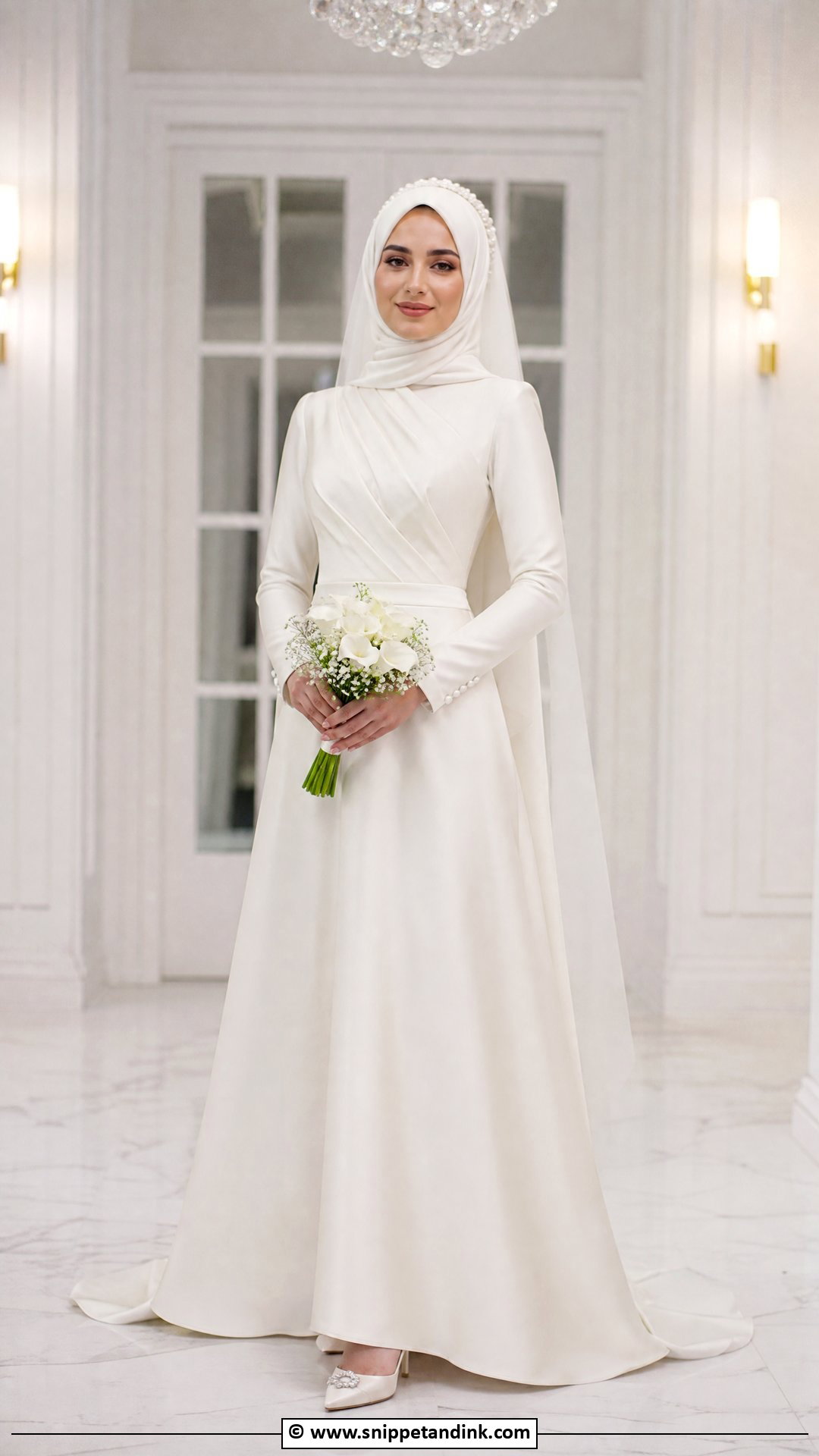
A high neck is the easiest foundation for a polished modest look, because it closes the gap between the hijab and the dress at the chest and shoulders. Lace, satin, crepe and embellished tulle all work. Keep the hijab smooth around the neck so the two layers don’t bunch. Drop earrings only show if your hijab style leaves the ears visible, so many brides put the sparkle into pearl pins instead.
11. Long Sleeve Hijab Wedding Dress
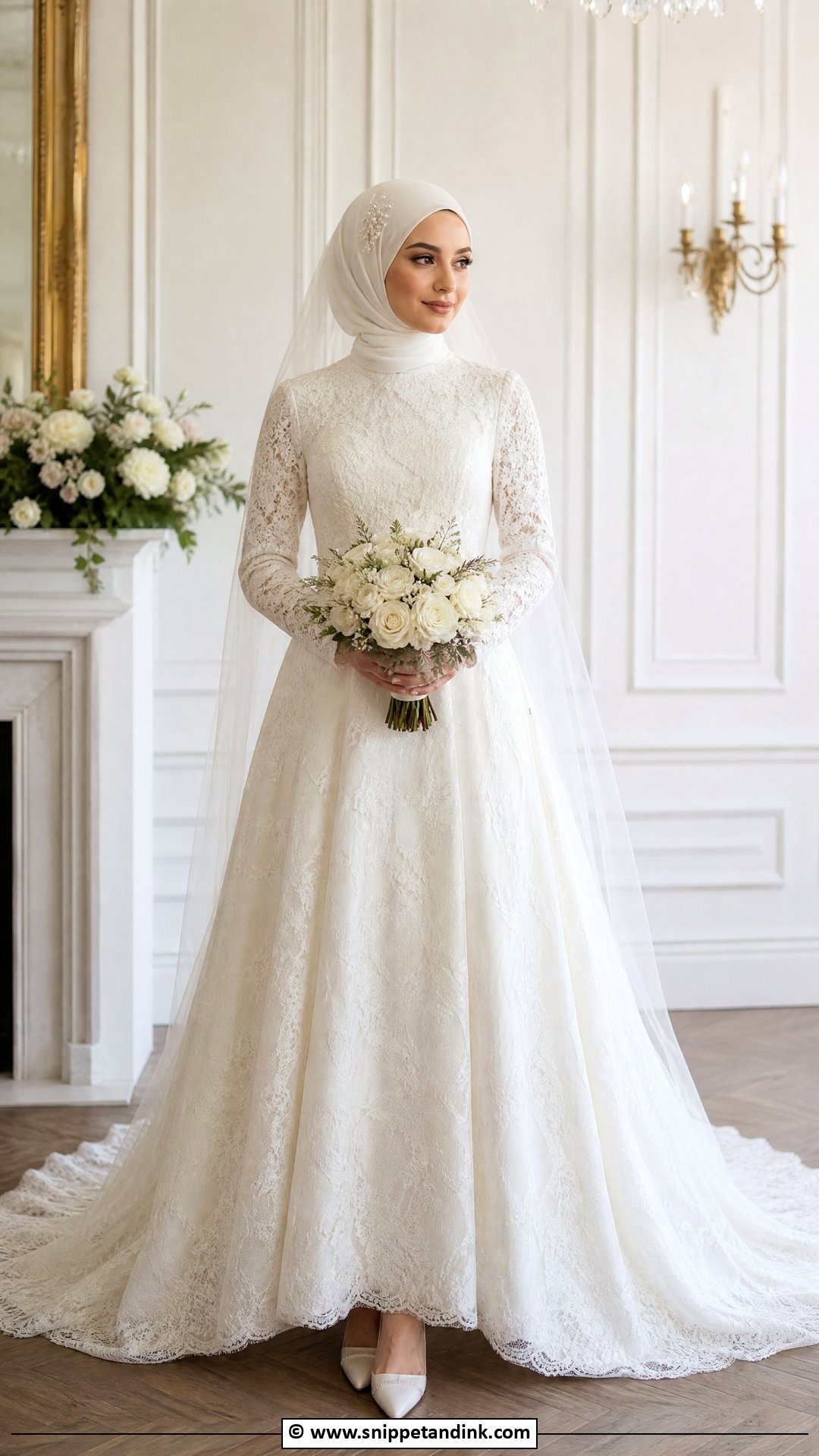
Sleeves set the mood: fitted, slightly flared, puffed or buttoned at the wrist. For full coverage, lace or tulle sleeves need lining or an underlayer. I check sleeve length with arms raised, because a sleeve that reaches the wrist standing will expose the forearm when you hold your bouquet. A plain hijab suits detailed sleeves; an embellished hijab suits simple ones. Long sleeves work across every season.
12. Minimalist Hijab Wedding Dress
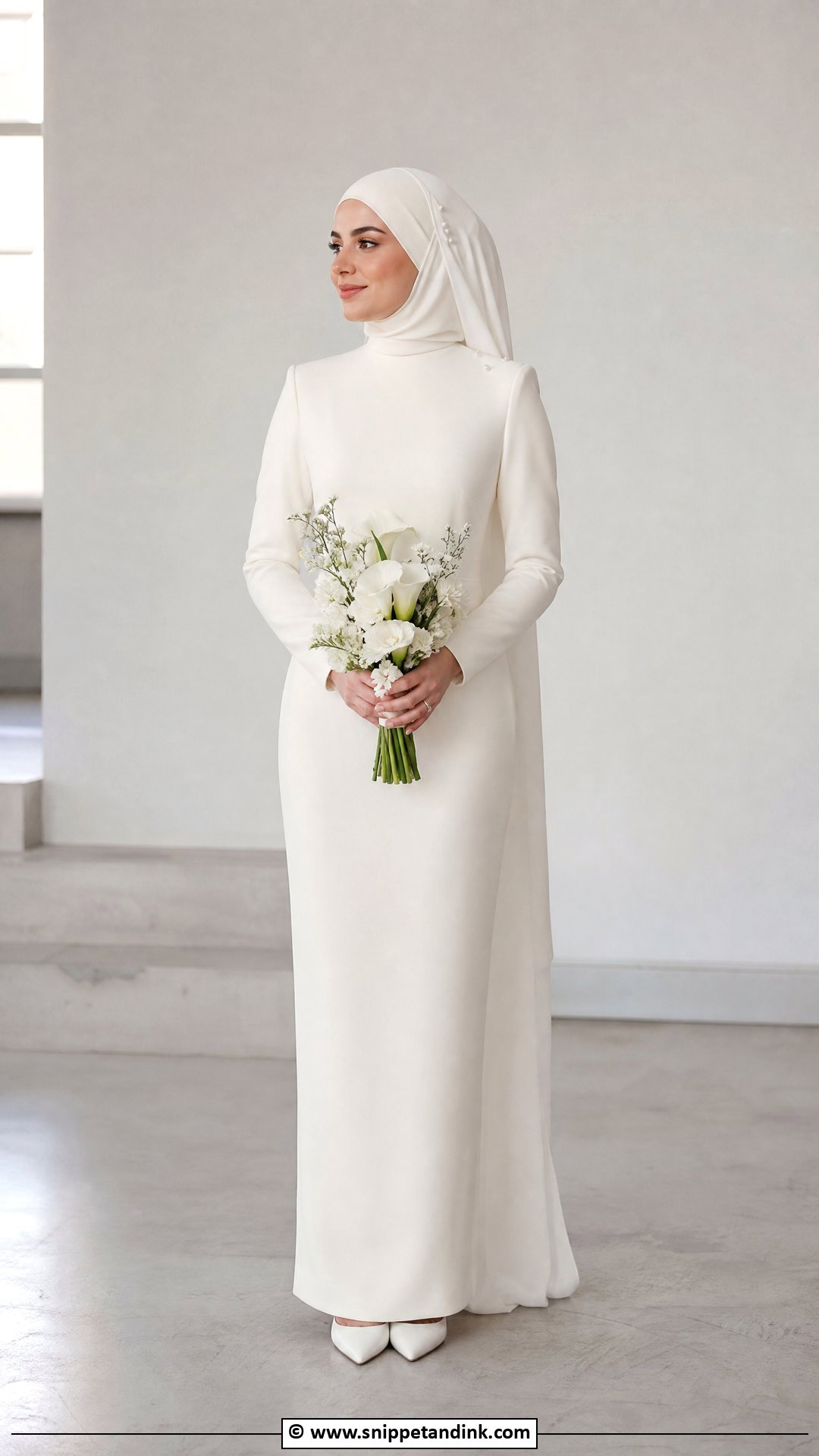
Minimalism leaves nowhere to hide, so fabric quality and tailoring carry the dress. A long-sleeve crepe gown, satin column or plain A-line can look very refined when fitted precisely. A smooth hijab in the same white or ivory gives an unbroken line from face to hem. Pearl studs, a sleek bouquet, pointed heels and a simple veil are plenty. It photographs cleanly and suits civil ceremonies and modern venues.
13. Luxury Hijab Wedding Dress
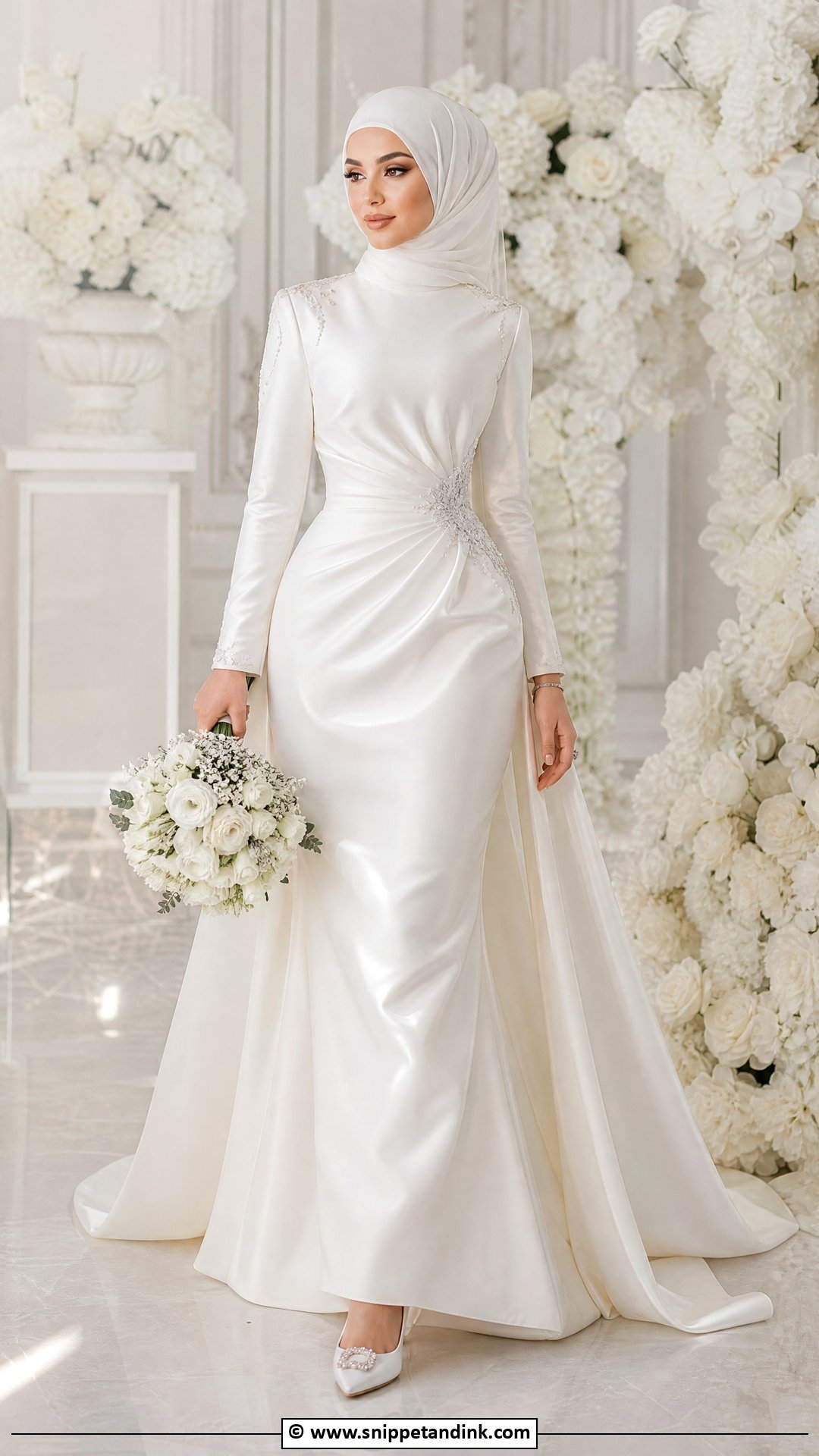
What makes a gown feel expensive is fabric, fit and finishing more than embellishment: silk satin, mikado, fine lace, hand beading or sculpted tailoring. A well-made gown feels substantial, is fully lined and is shaped carefully around the shoulders, waist and sleeves. I turn luxury gowns inside out at appointments, since the seams and lining tell you more about quality than the outside does. A matching hijab in good chiffon, silk or satin completes it. Keep accessories fine rather than many.
14. Simple Hijab Wedding Dress
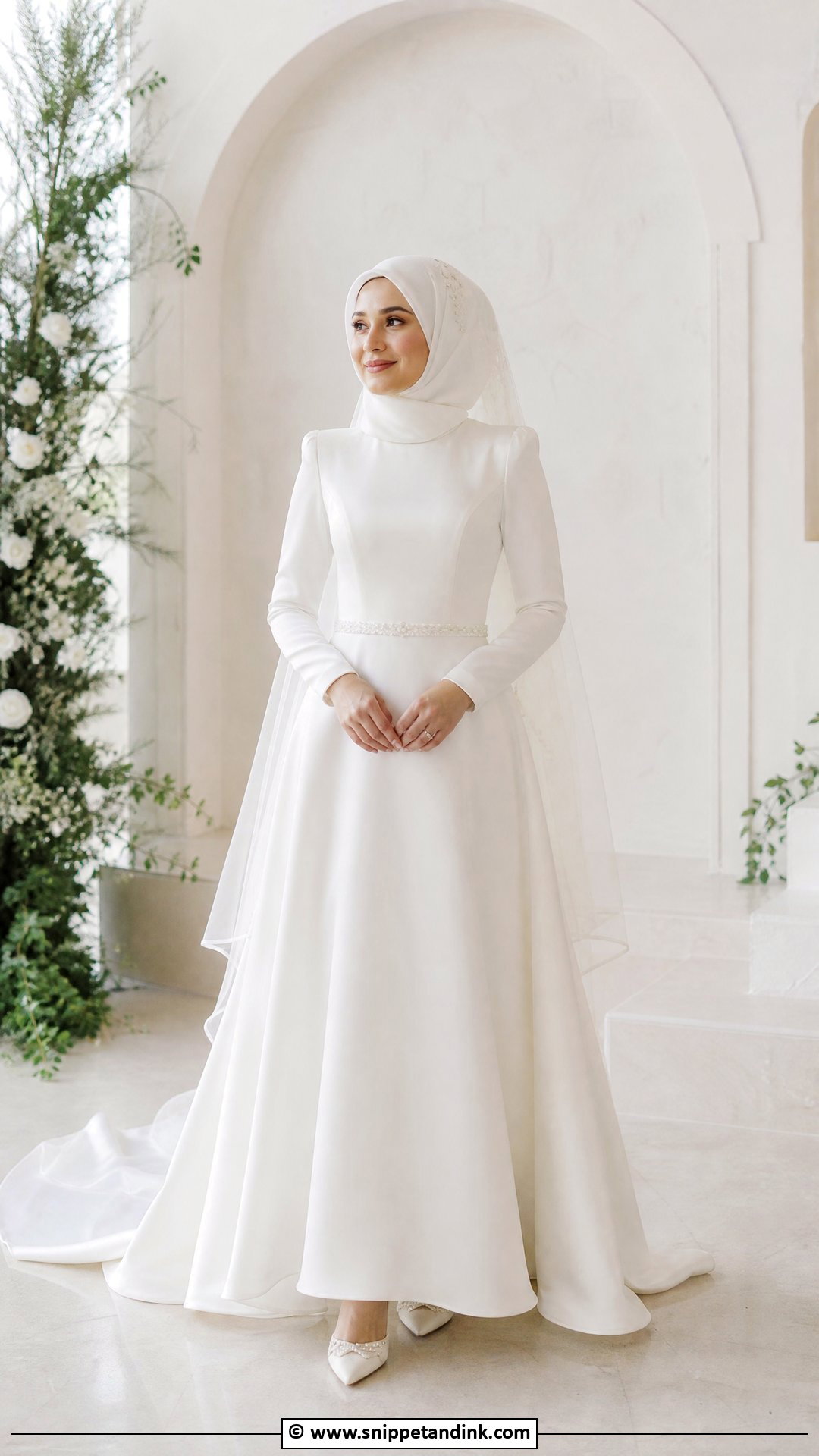
Simple doesn’t mean boring; it means the silhouette and fit do the work. A plain satin A-line, a crepe long-sleeve gown or a chiffon empire dress can all look bridal with the right hijab. A high neck and opaque fabric keep coverage easy. A delicate belt and small pearl pins add focus. It’s a sensible choice for a smaller wedding or a civil ceremony, and the easiest to alter if your plans change.
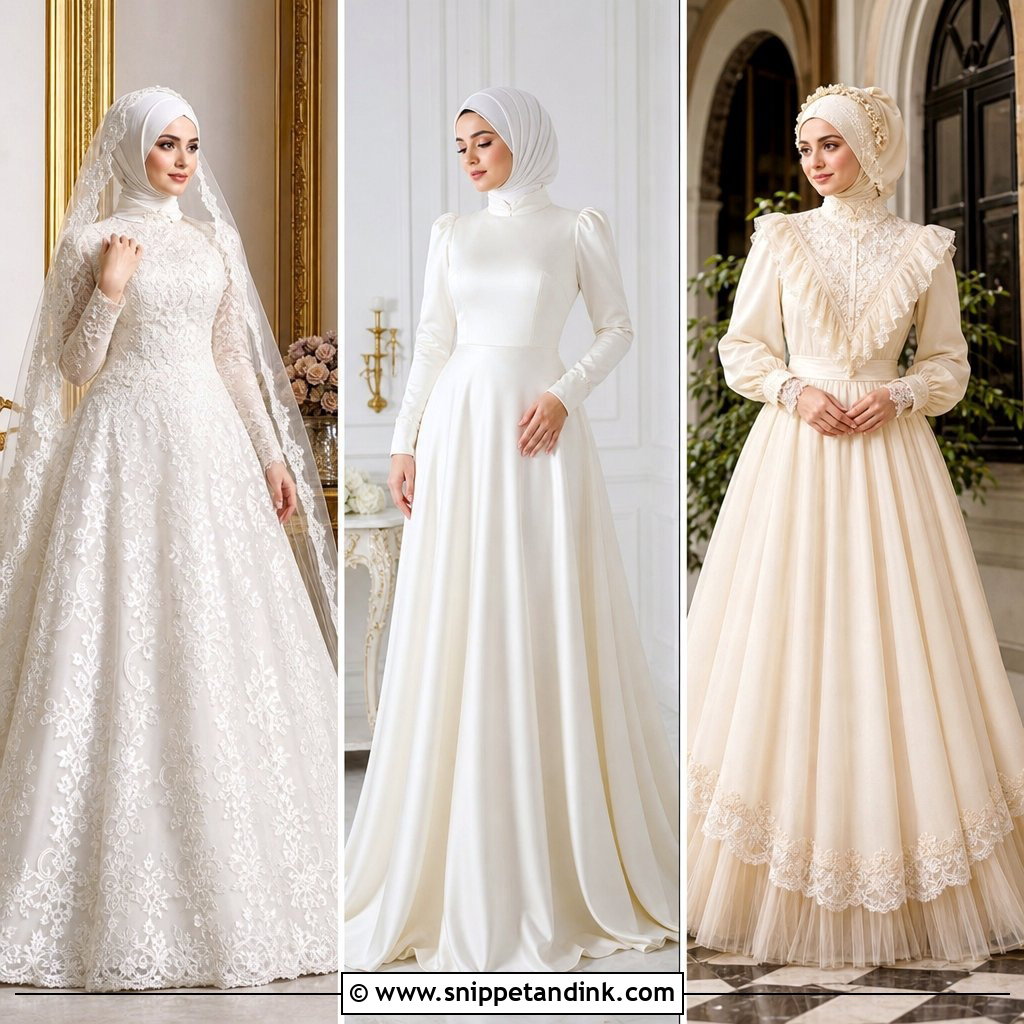

15. Plus Size Hijab Wedding Dress
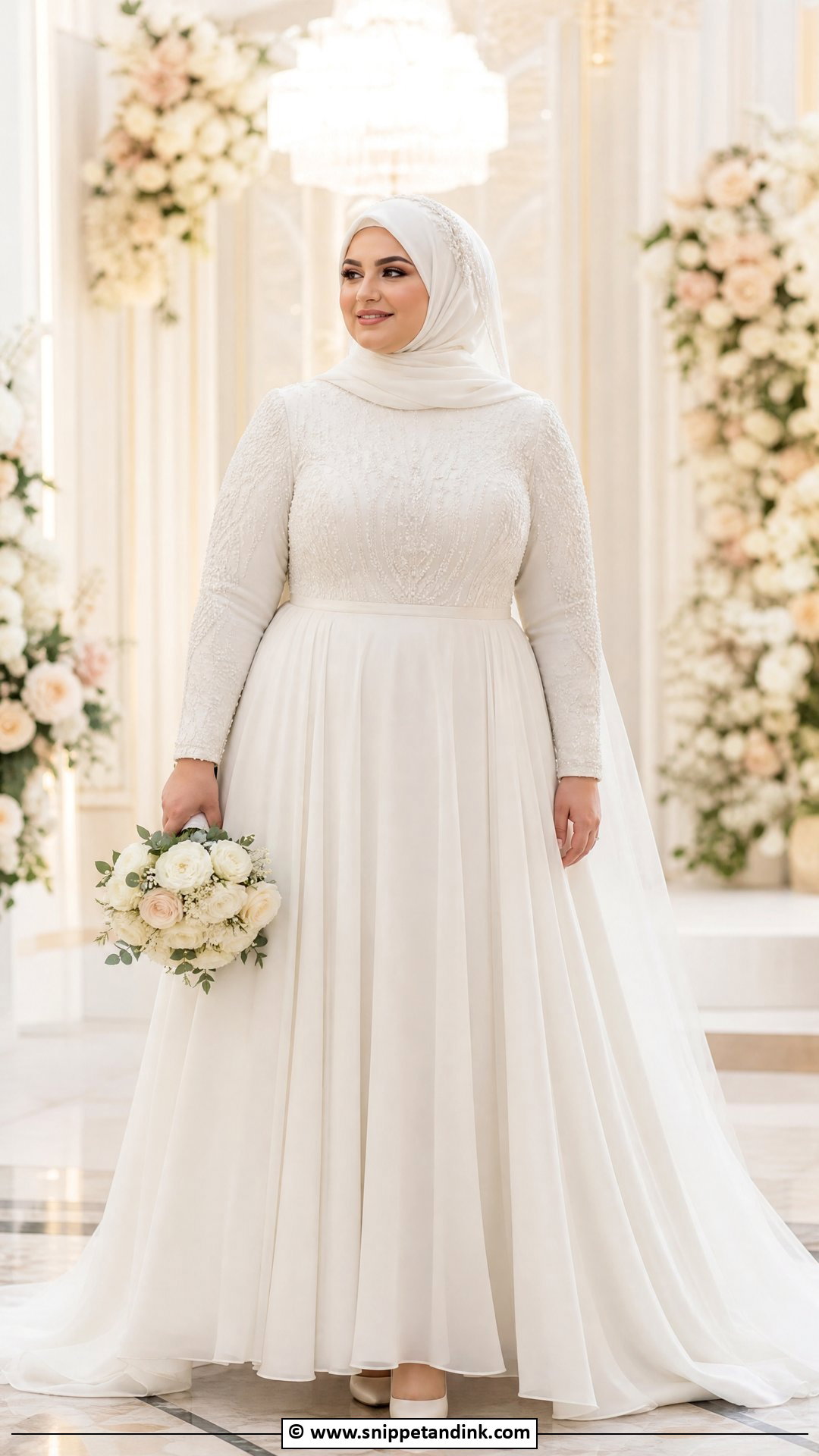
For plus-size brides, support and comfort come first. A-line, ball gown and empire silhouettes define the upper body and let the skirt move. I look for strong lining, flat seams and sleeves with enough room to lift your arms, because tight sleeves are the most common complaint I hear. Avoid stiff fabrics that crease and pull when you sit. A hijab that frames the face without adding bulk at the shoulders keeps the proportion balanced.
16. Petite Hijab Wedding Dress
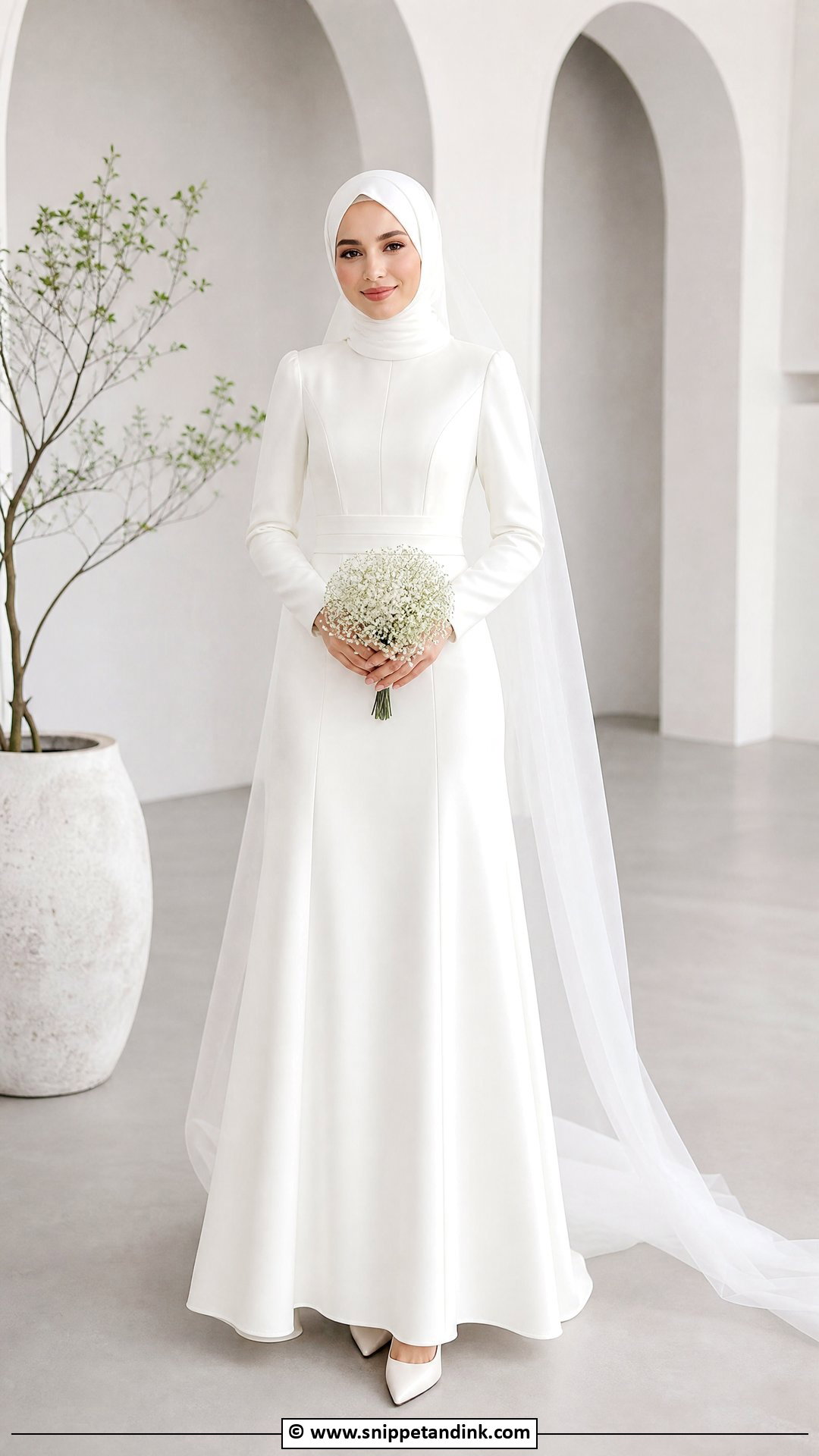
For a petite frame, the aim is length without being swallowed. Clean A-lines, slim columns and high waists work well, in lighter fabrics like crepe, chiffon or soft satin. Vertical seams and small embroidery lengthen; oversized bows, huge sleeves and lots of volume shorten. A hijab styled close to the face keeps the upper body neat. Pointed heels add height under the hem, but have the hem set to those exact shoes.
17. Tall Bride Hijab Wedding Dress
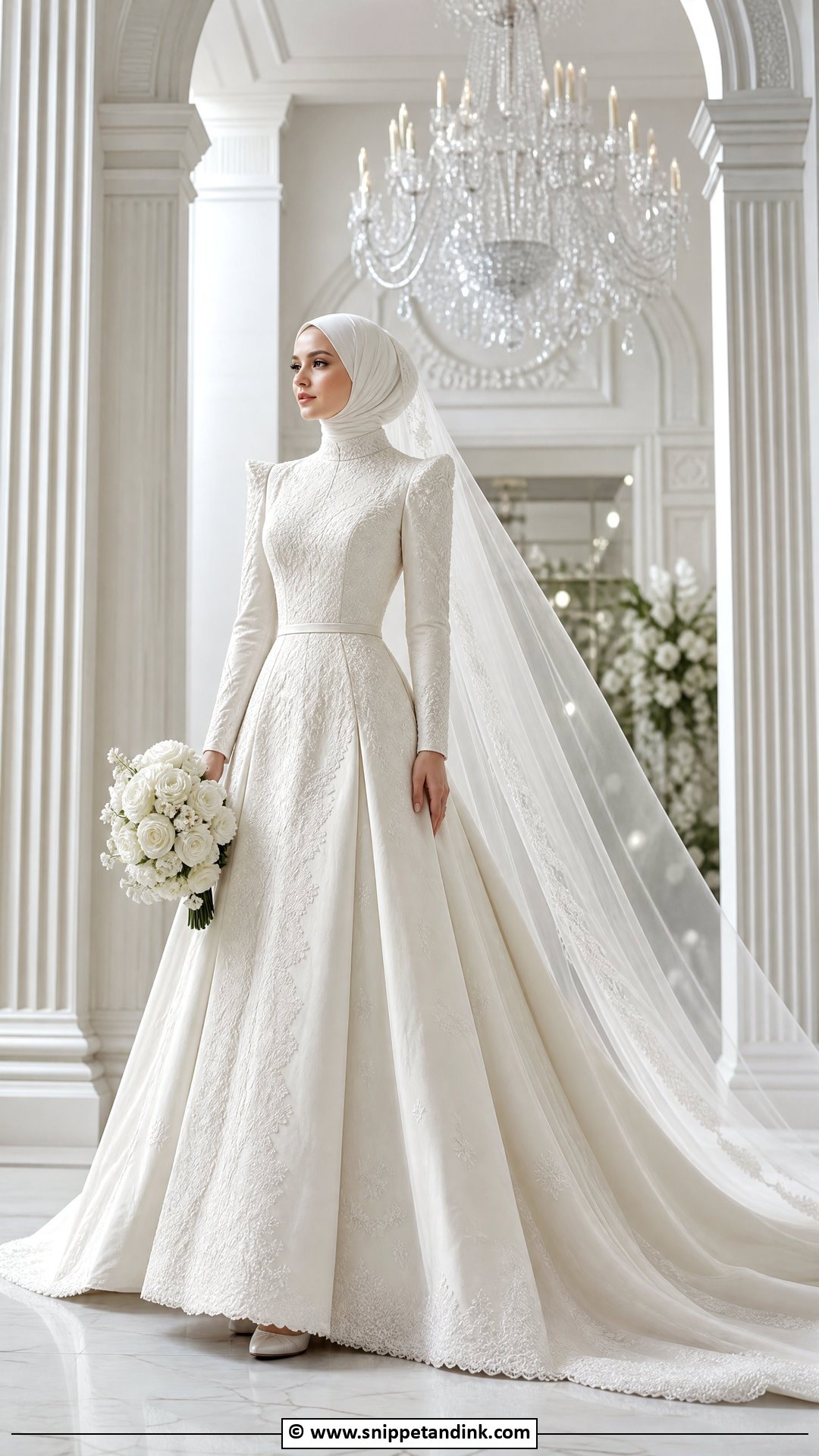
Taller brides can carry drama: long trains, wide skirts, statement sleeves and bold lace patterns all sit in proportion. A fitted waist with a full skirt looks regal; a sleek column shows off height. Chiffon or tulle layers soften it. A long veil over a smooth hijab adds length without feeling excessive. Check sleeve and bodice length especially, since off-the-rack gowns are often cut short in the arm for taller brides.
18. Ivory Hijab Wedding Dress
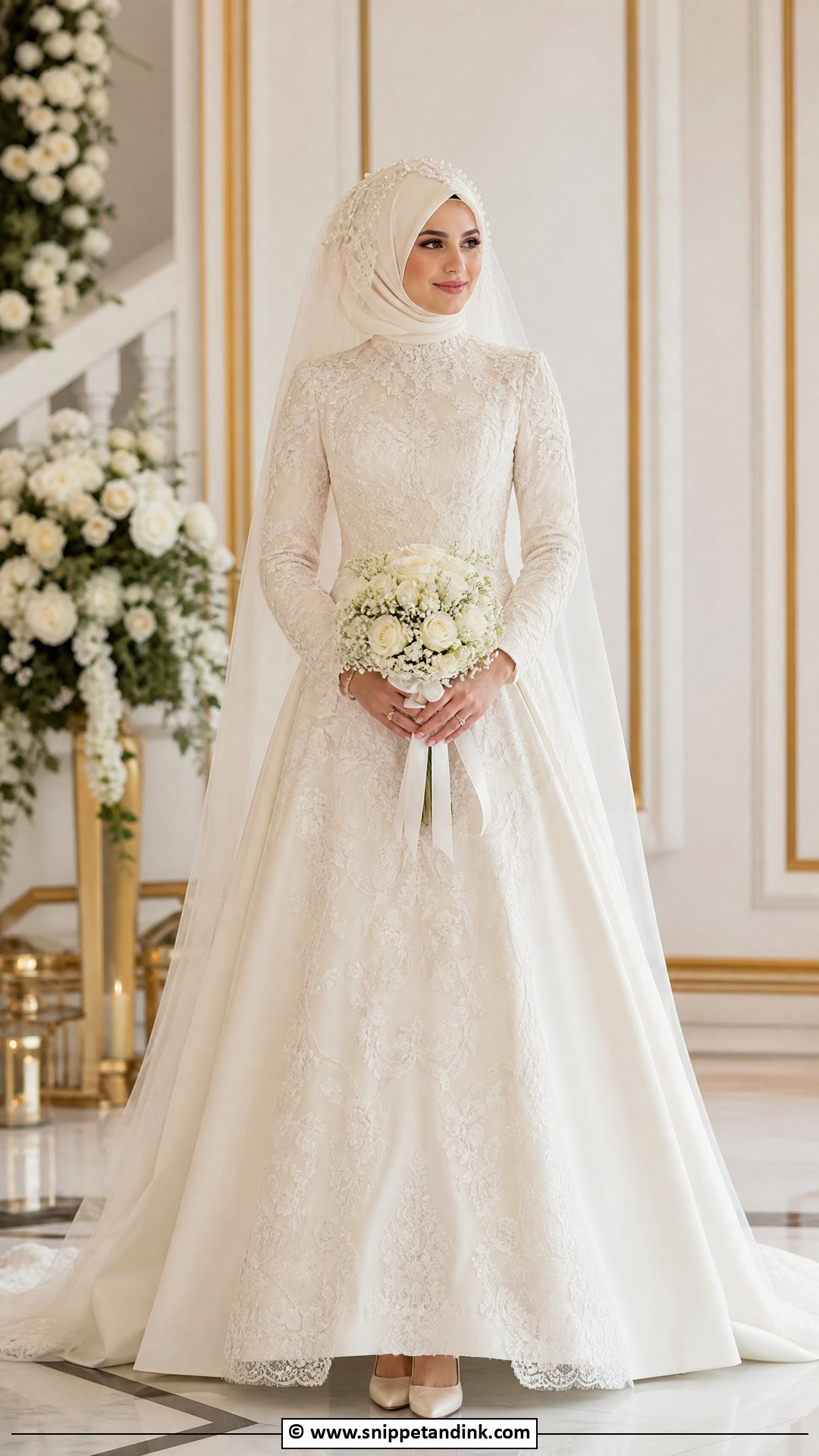
Ivory has a gentle warmth that flatters many skin tones more than bright white. It pairs naturally with lace, satin, crepe, pearls and floral embroidery. The undertone matters: match the hijab to the gown’s ivory in daylight, as two ivories can look mismatched in photos. If the dress is simple, add pearl or crystal pins. If it’s embellished, keep the hijab plain.
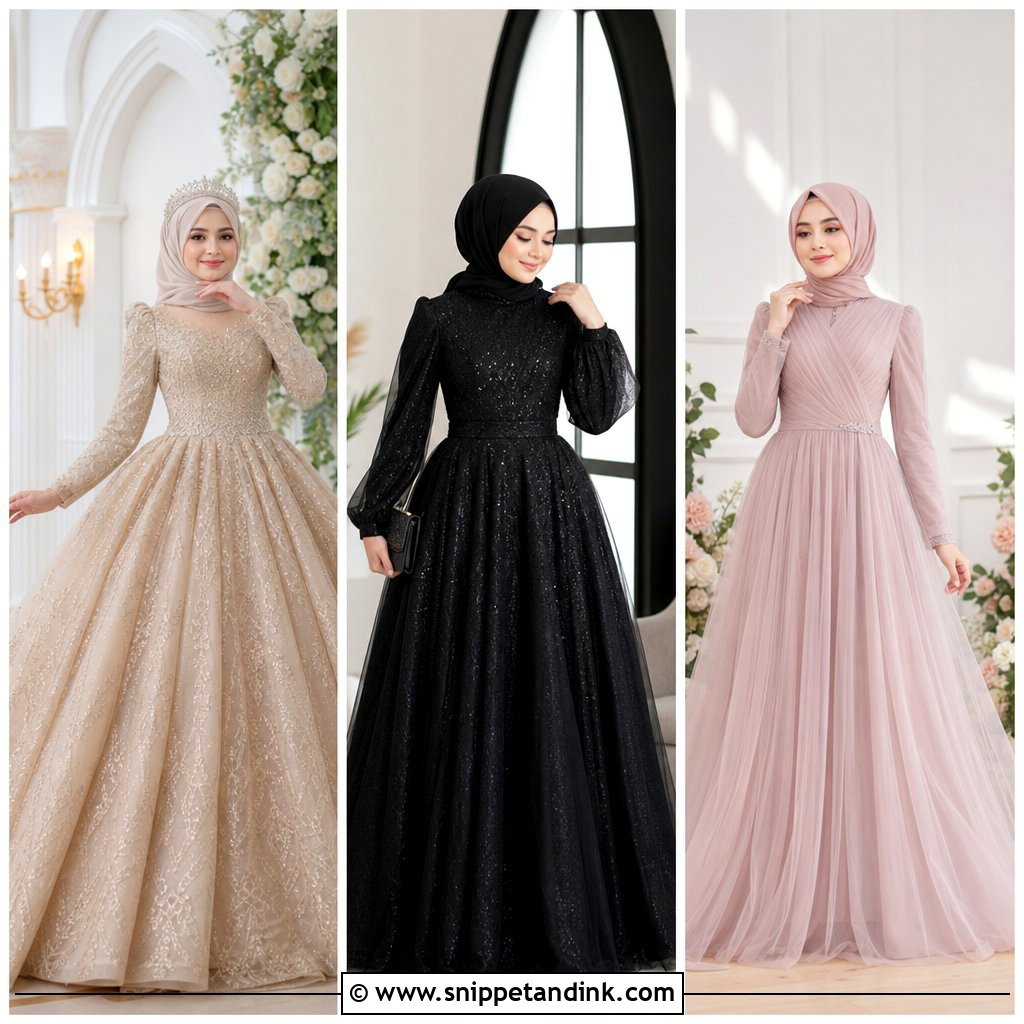
19. Champagne Hijab Wedding Dress
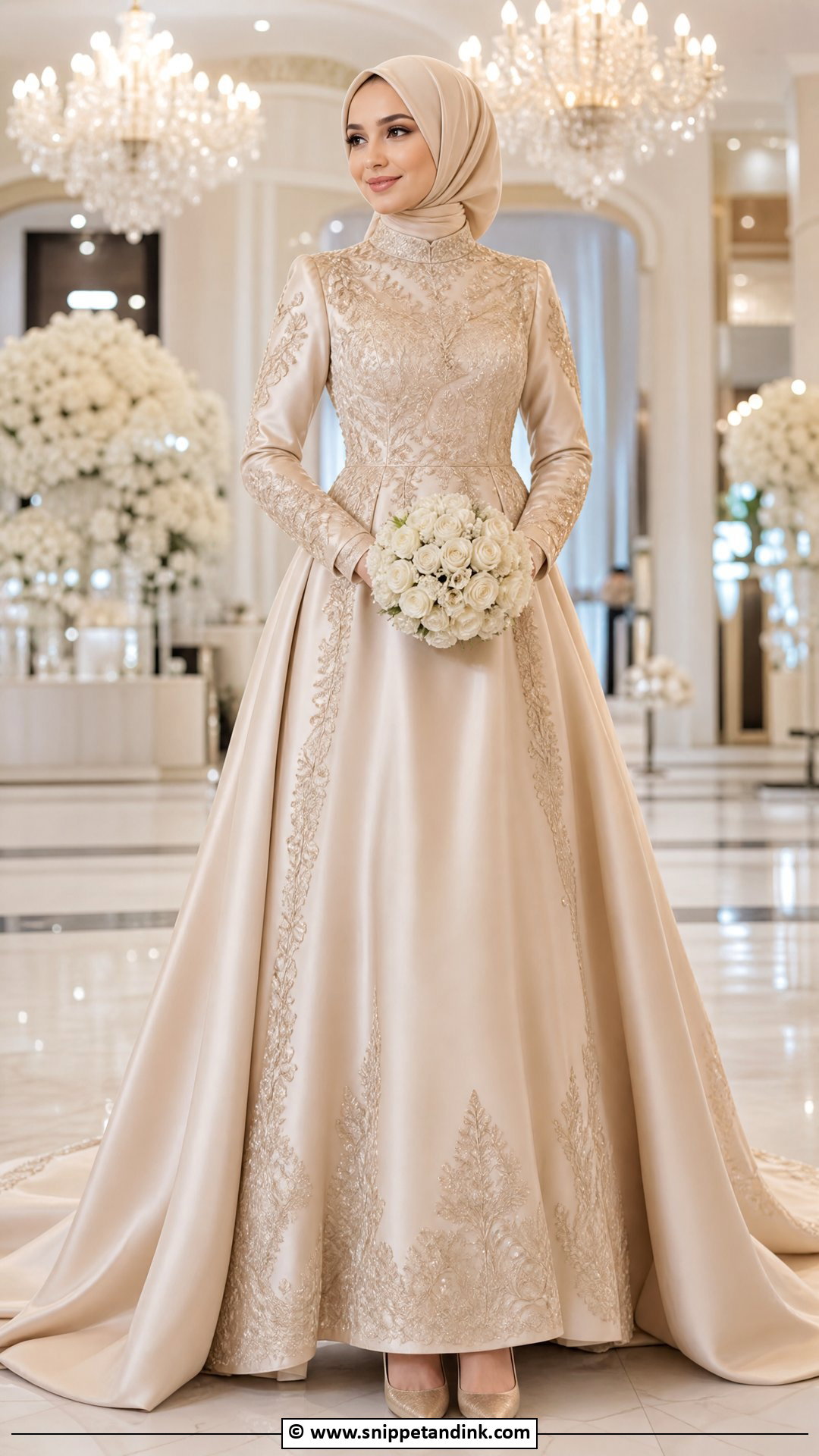
Champagne is a gentle departure from white that glows next to gold embroidery and pearl beading. A fully lined gown with long sleeves and a high neck keeps it modest. Satin looks polished; lace looks romantic. Pair it with a matching hijab, or ivory for contrast. Under warm reception lighting champagne deepens, so view it in the kind of light your venue has. Gold shoes and a cream bouquet suit an evening reception.


20. Blush Hijab Wedding Dress
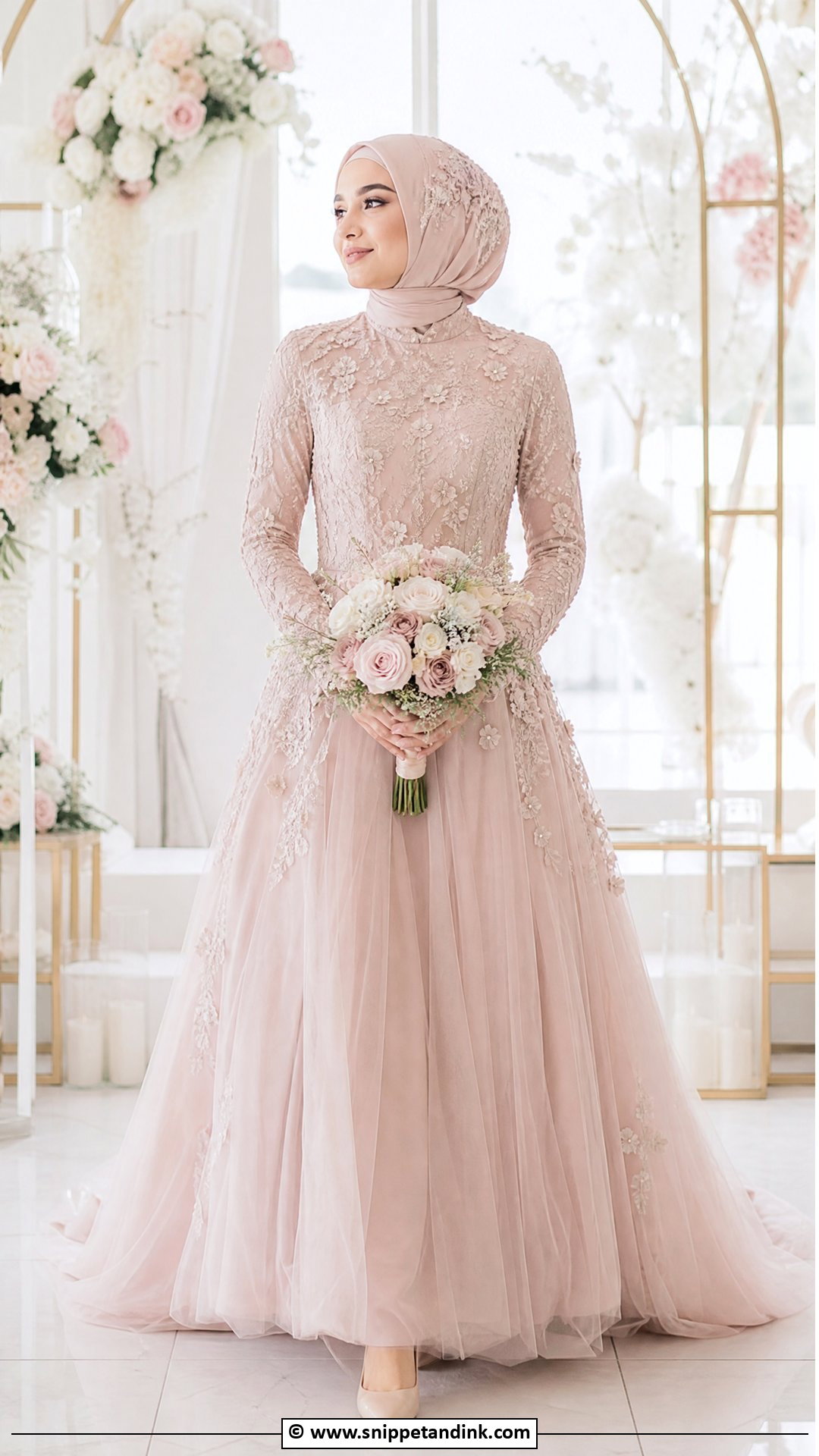
Blush gives soft color without boldness, especially with lace, tulle or floral embroidery. A high neck, long sleeves and a lined skirt keep it modest. A blush hijab makes a tonal look; ivory reads more traditional. Some blushes turn peach or grey outdoors, so I’d always step outside with the fabric before deciding. Pearl pins and nude closed-toe heels suit a spring garden wedding.
21. Gold Hijab Wedding Dress
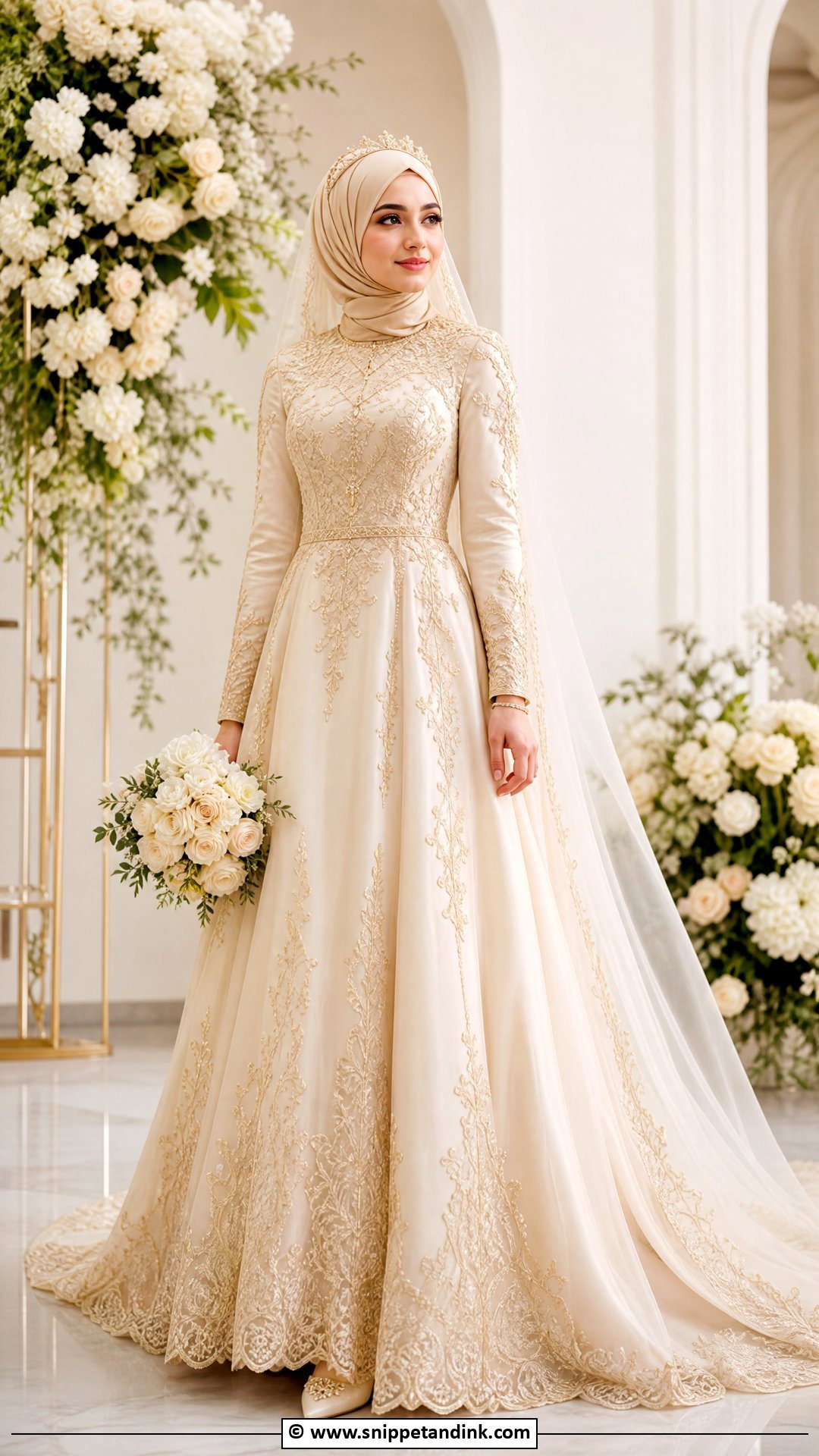
Soft gold embroidery over ivory or champagne fabric is far easier to wear than a fully metallic gown, and still feels rich. A long-sleeve A-line with gold threadwork looks regal without weight. The hijab can be ivory, champagne or gold-toned depending on how bold you want to go. Keep jewelry quiet if the dress is detailed. Gold threadwork can scratch a chiffon hijab where they meet, so a soft jersey hijab or a smooth neckline edge helps.
22. Silver Hijab Wedding Dress
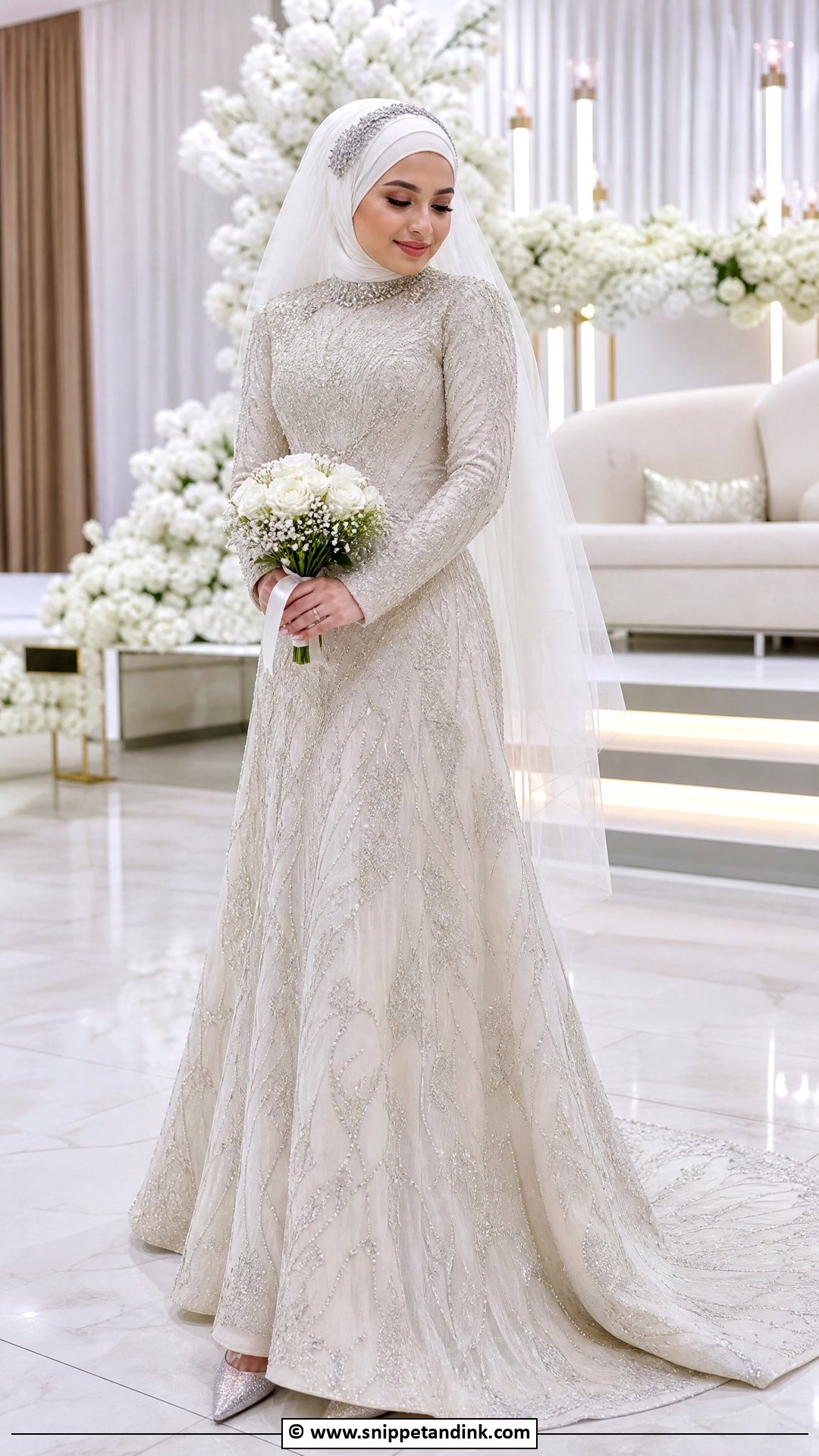
Silver beadwork over white, ivory or pale grey looks cool and quietly glamorous. Opaque lining under any shimmer or mesh keeps it hijab-friendly. A white chiffon hijab and crystal pins suit it. If the dress is very sparkly, skip heavy jewelry. Silver looks sharpest under bright reception lighting and in evening portraits, and slightly flat in soft daylight.
23. Floral Hijab Wedding Dress
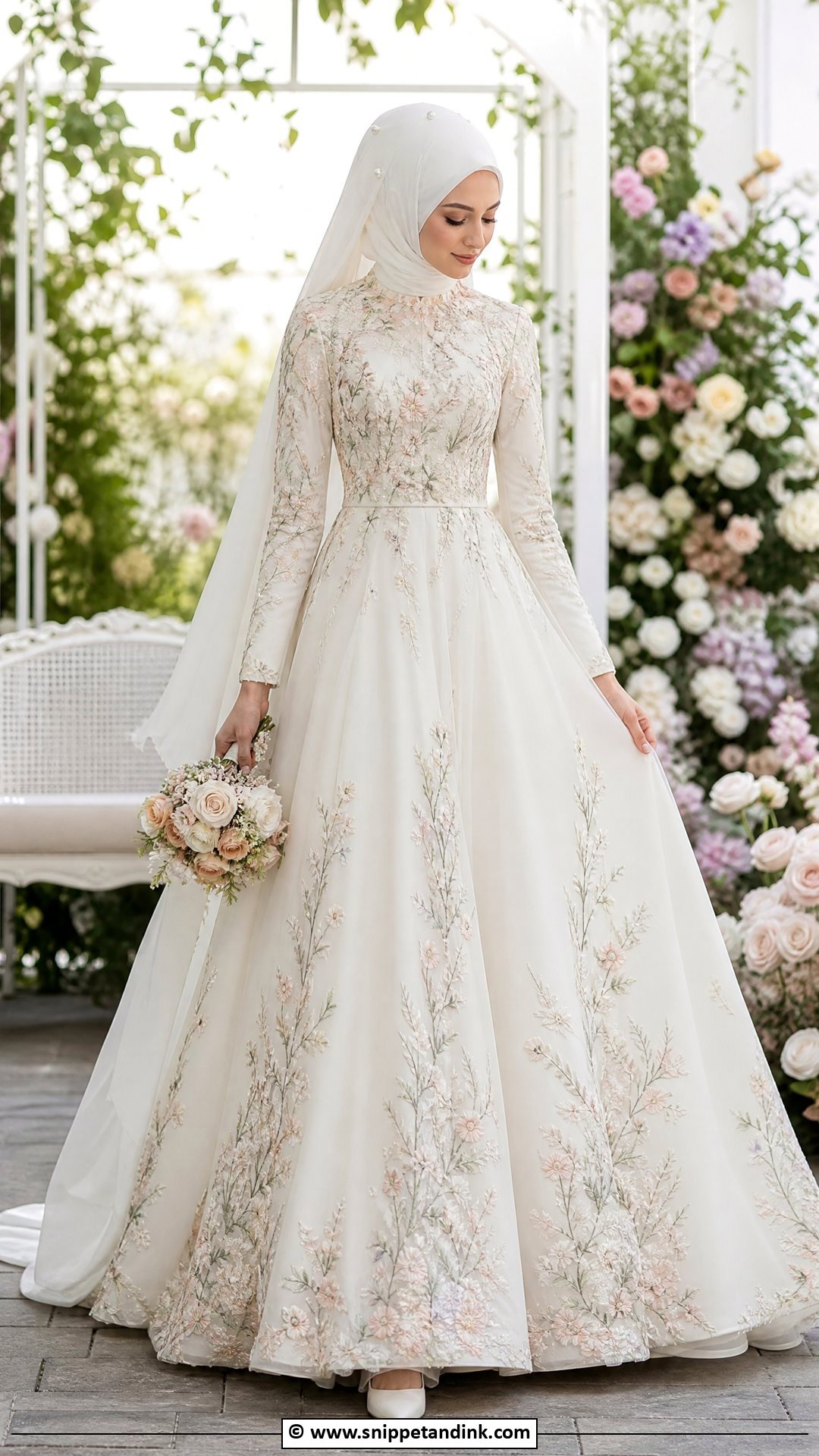
Florals can be embroidered, appliqued, beaded or printed in delicate tones. White-on-white or ivory flowers keep it traditional; blush or pastel embroidery adds a softer statement. A high neck and long sleeves keep it modest. Pair it with a plain hijab so the dress leads, and pick a bouquet that echoes the gown’s flower colors. Raised 3D flowers can catch on the hijab at the shoulder, so flatter work near the neckline is easier.
24. Tulle Hijab Wedding Dress
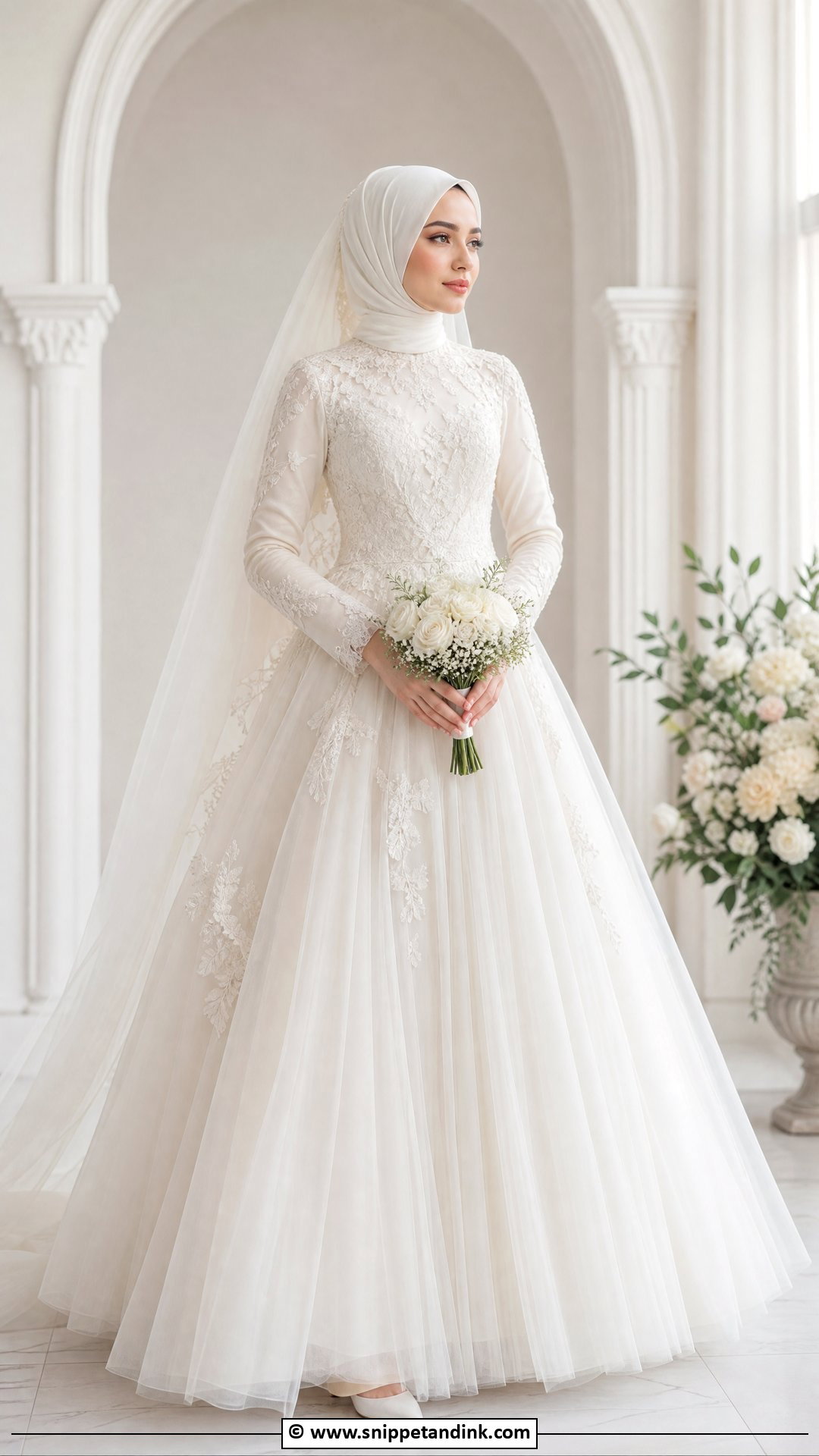
Tulle gives volume without much weight, building a soft ball gown or A-line that still feels light. For modest styling, the bodice and sleeves must be fully lined, especially when the tulle carries embroidery or appliqué. I’d choose a chiffon hijab over a tulle one, since tulle is stiff and won’t fold smoothly around the face. A long veil adds movement, and simple heels with a delicate bouquet keep it balanced for a fairytale feeling with full coverage.
25. Crepe Hijab Wedding Dress
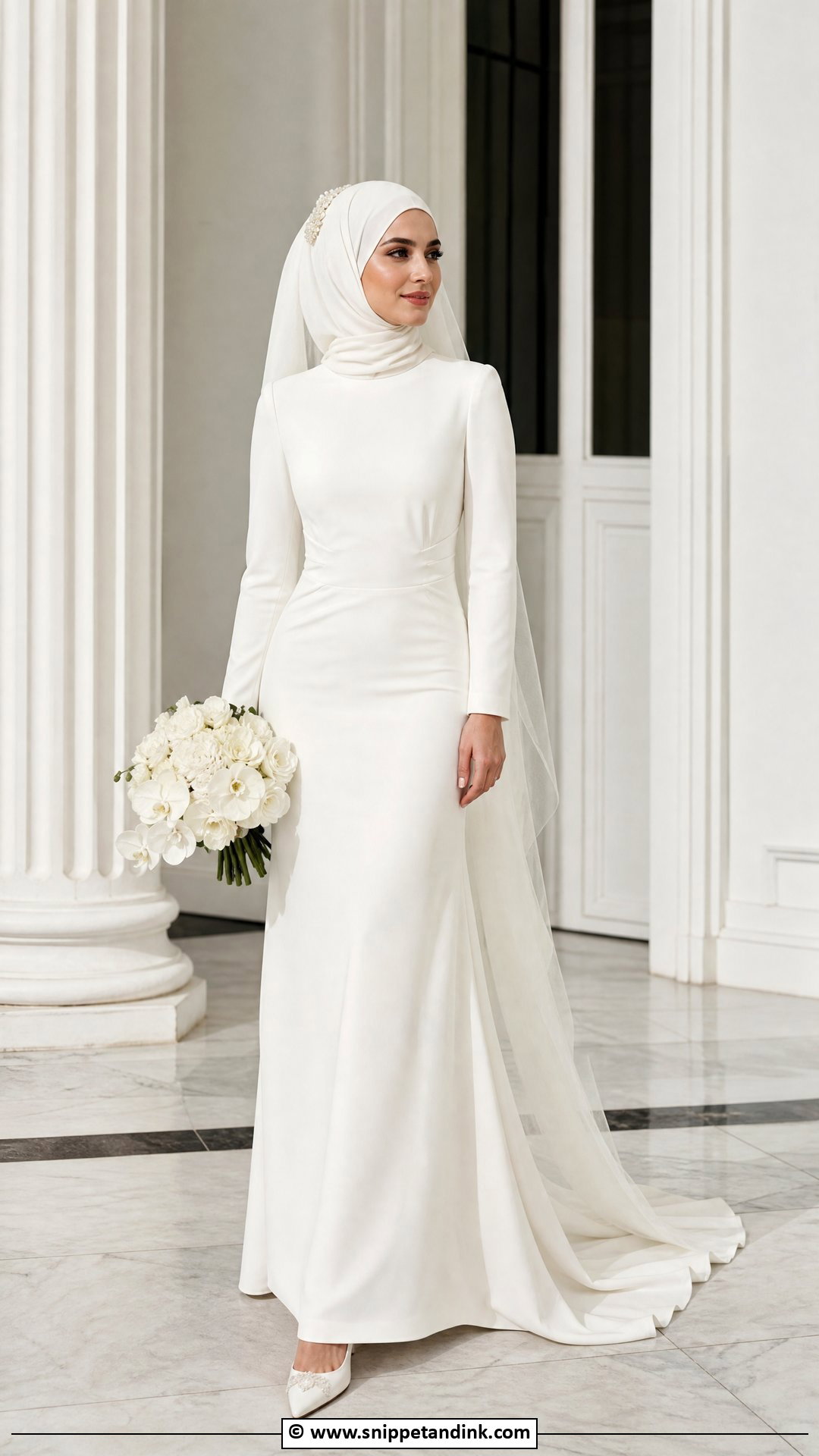
Crepe has a smooth, matte surface that gives structure without shine, so it suits minimal long-sleeve dresses, A-lines and modest fit-and-flare shapes. Because the fabric is plain, tailoring shows: seams, sleeve length, neckline and hem all need to be exact. A matching chiffon or jersey hijab keeps it comfortable, and jersey in particular grips well without many pins. Pearl pins and pointed heels finish it.
26. Cape Hijab Wedding Dress
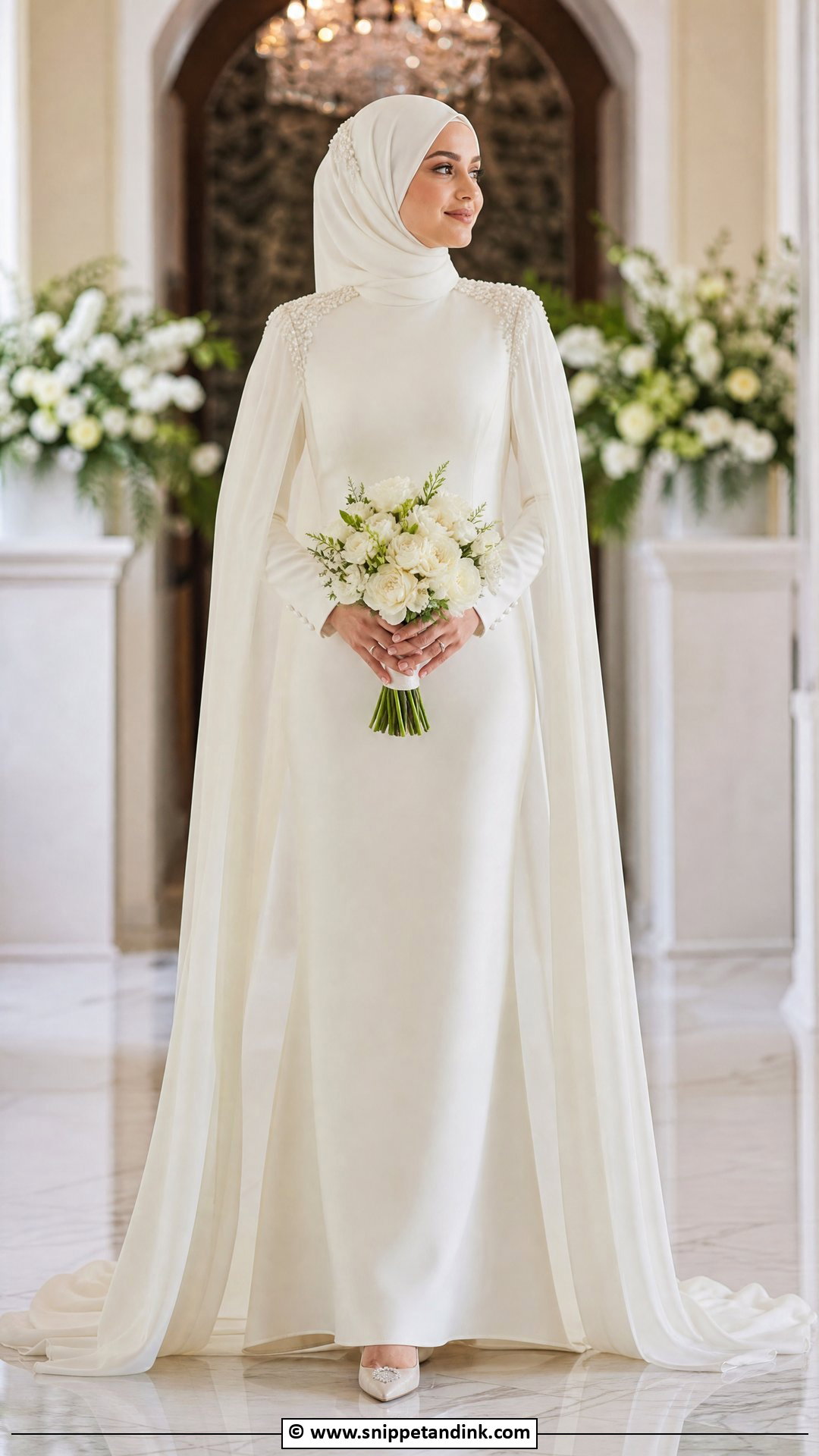
A cape can replace a veil or layer over the gown for movement, and it adds coverage at the same time. A simple crepe, satin or lace dress underneath lets the cape be the statement. Keep a high neck and long sleeves under it, so you stay covered when the cape swings. Tuck the hijab neatly beneath the cape at the shoulders. Minimal jewelry and closed heels keep the silhouette refined.
27. Detachable Train Hijab Wedding Dress
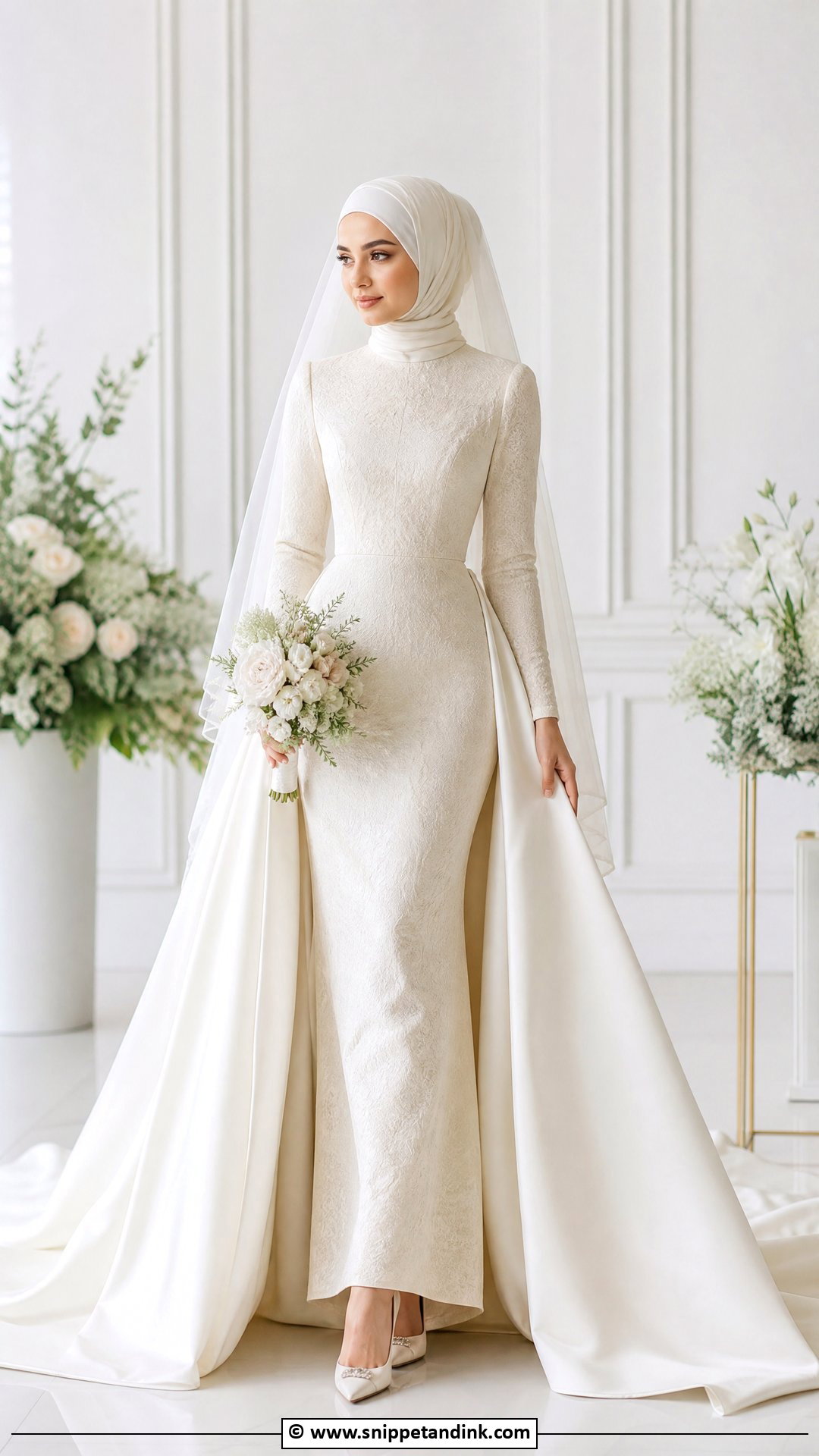
A detachable train gives you the ceremony and portrait drama, then comes off for an easier reception. It works best with a fitted modest gown, an A-line or a sleek crepe silhouette. The train can be satin, tulle, organza or lace. I check where it attaches, at the waist or the shoulders, because a shoulder-attached train pulls on the hijab when someone steps on it. It’s two looks without buying two dresses.
28. Kaftan Hijab Wedding Dress
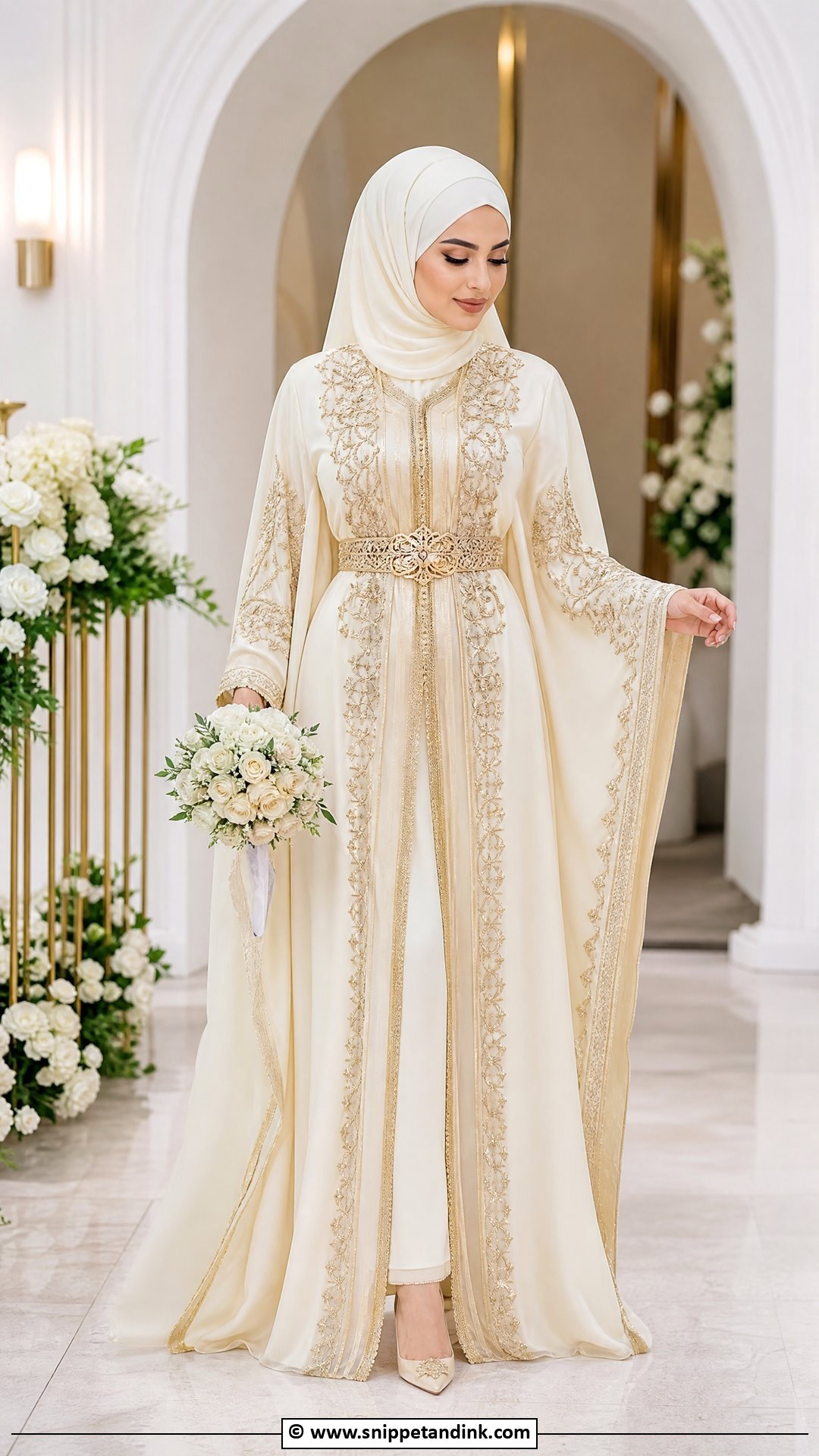
Kaftans suit brides who prefer a relaxed silhouette to a fitted gown. Bridal kaftans often carry embroidery, beading and wide sleeves in flowing fabric. Ivory, champagne, gold or soft blush suit a wedding. Wide sleeves can reveal the arm when raised, so a fitted inner sleeve is worth asking for. A matching hijab, pointed heels and a small clutch complete it for cultural celebrations and intimate ceremonies.
29. Abaya Hijab Wedding Dress
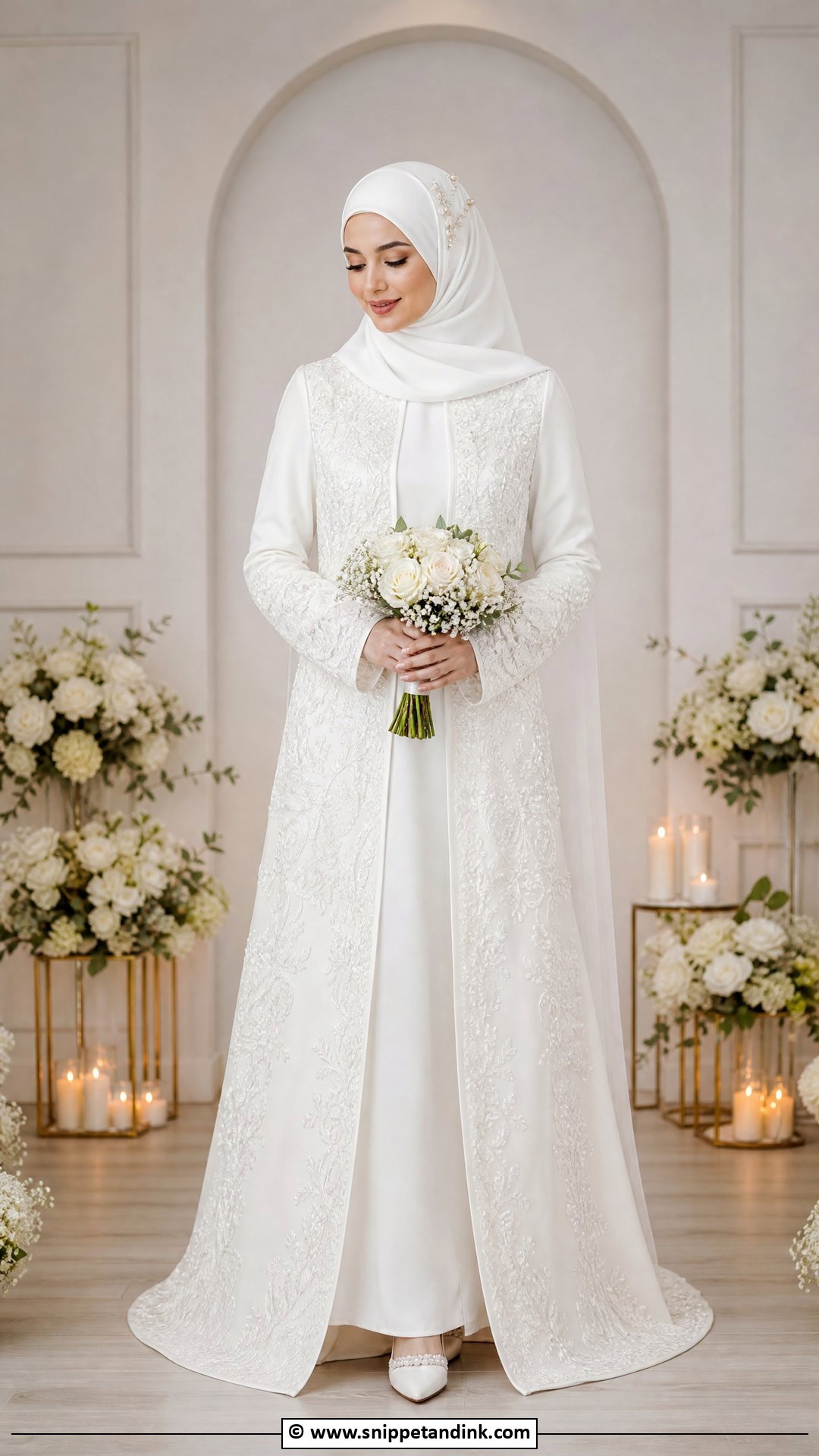
With an abaya, modesty becomes the design itself. Bridal abayas range from plain satin to heavily embroidered, pearl-detailed or lace-trimmed. A white or ivory abaya over a matching underdress gives full coverage while still feeling formal. A structured cut looks tailored; a flowing cut feels softer. It’s comfortable for brides who don’t want a Western-style gown, and it works for pre-wedding events and small ceremonies too.
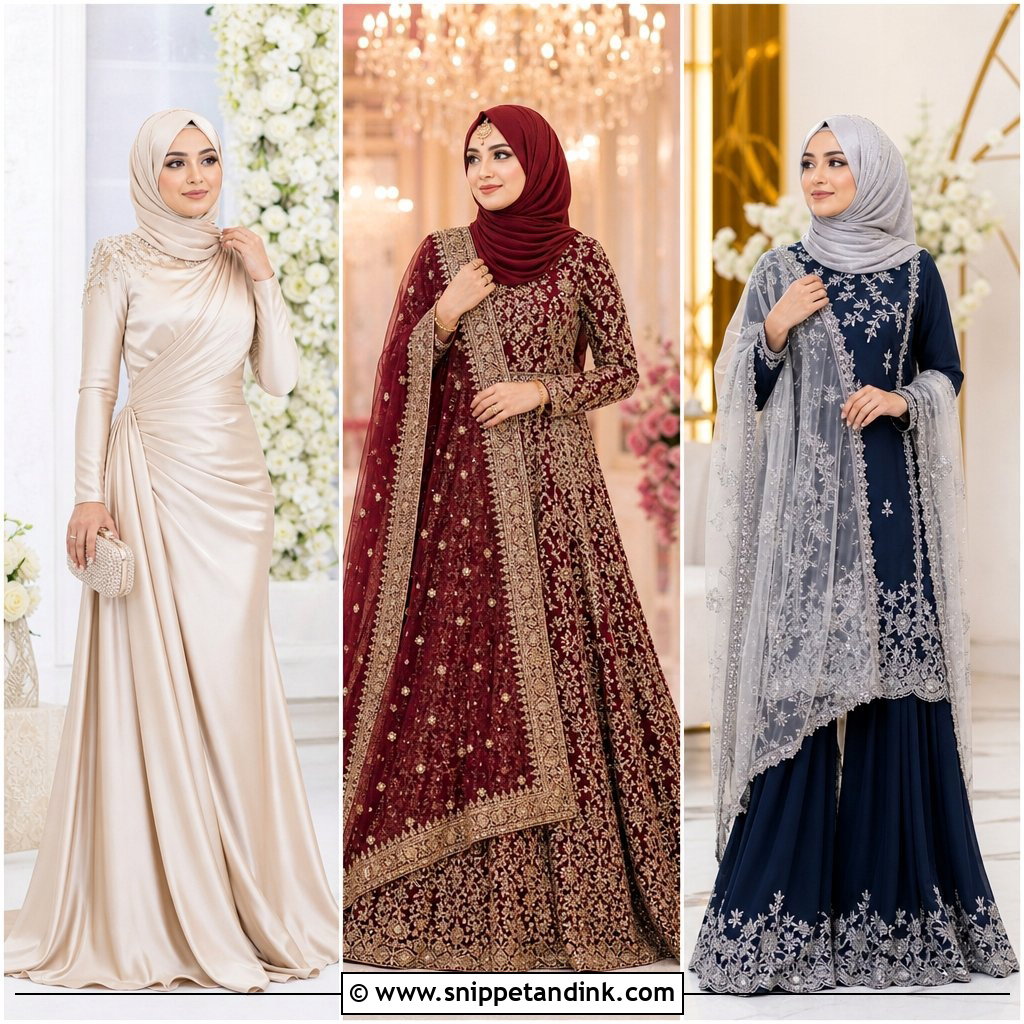
30. Pakistani Hijab Wedding Dress
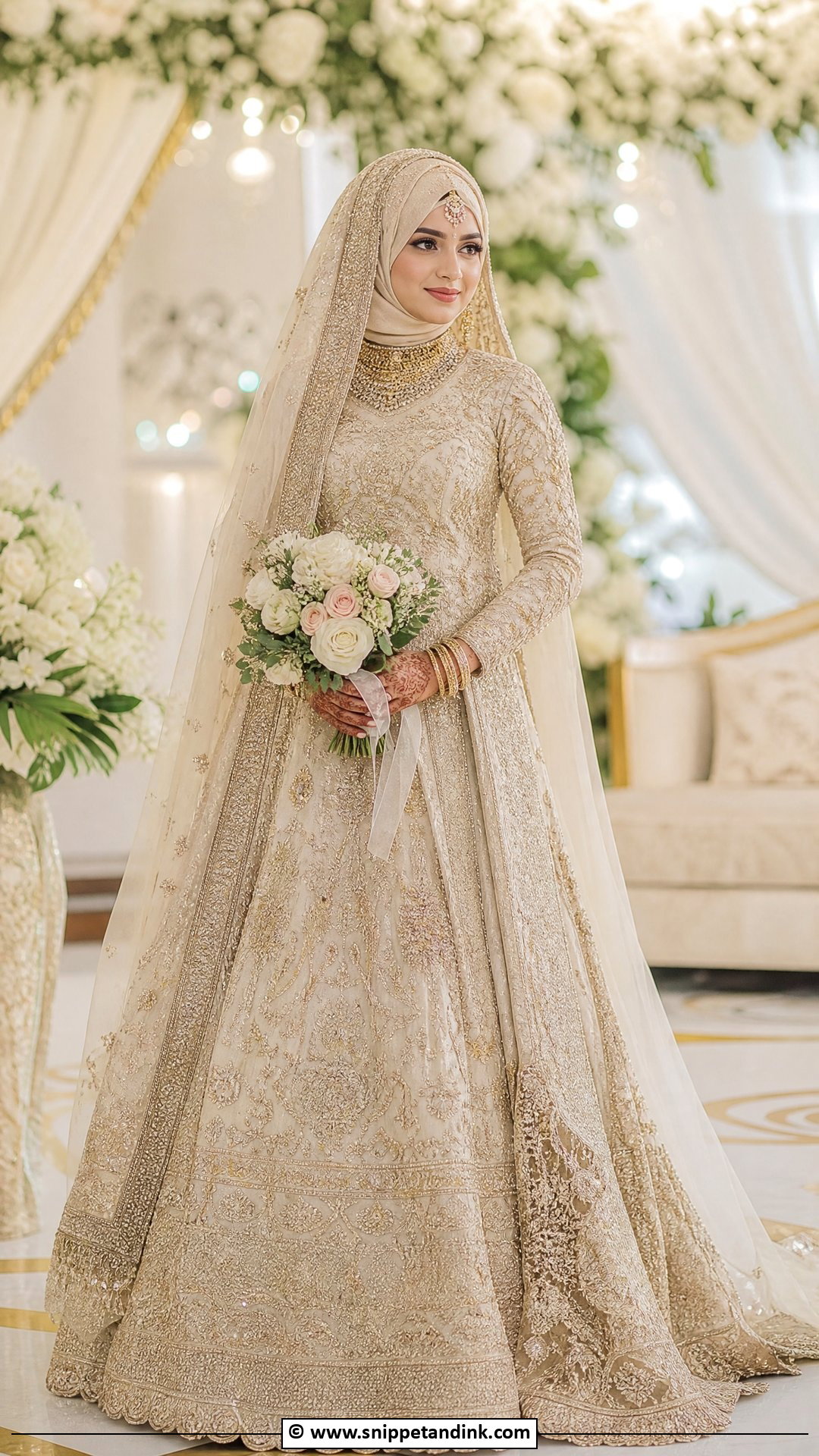
Pakistani bridal wear means detail, color and handwork: lehengas, shararas, ghararas and long embroidered maxis. For hijab-friendly styling, choose a high-neck blouse with long sleeves and a dupatta draped to work with the hijab rather than against it. Pakistani bridal dupattas are often heavy with embroidery, so I pin them to the undercap and shoulder rather than resting them on the hijab alone. Red, ivory, gold, blush and emerald all suit, with the hijab matched or neutral underneath.
31. Turkish Hijab Wedding Dress
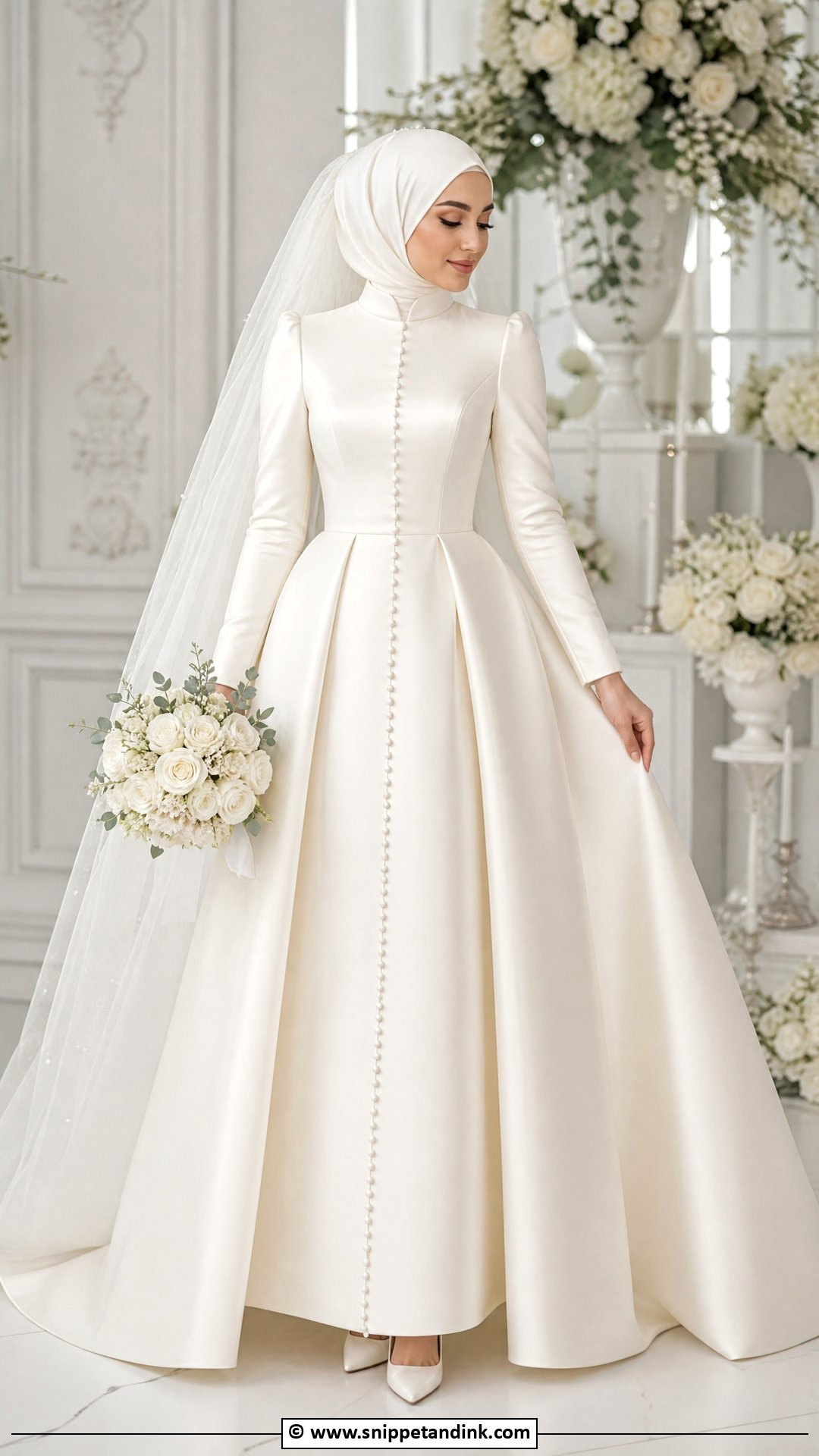
Turkish modest bridal design tends toward clean bodices, long sleeves, high necks and graceful skirts, with lace overlays, pearl buttons or fine embroidery on some and sleek minimalism on others. A fitted satin or crepe gown with a long veil over a smooth hijab gives the classic look. The hijab is styled neatly close to the face. Simple jewelry, pointed heels and a soft bouquet keep it formal and calm.
32. Moroccan Hijab Wedding Dress
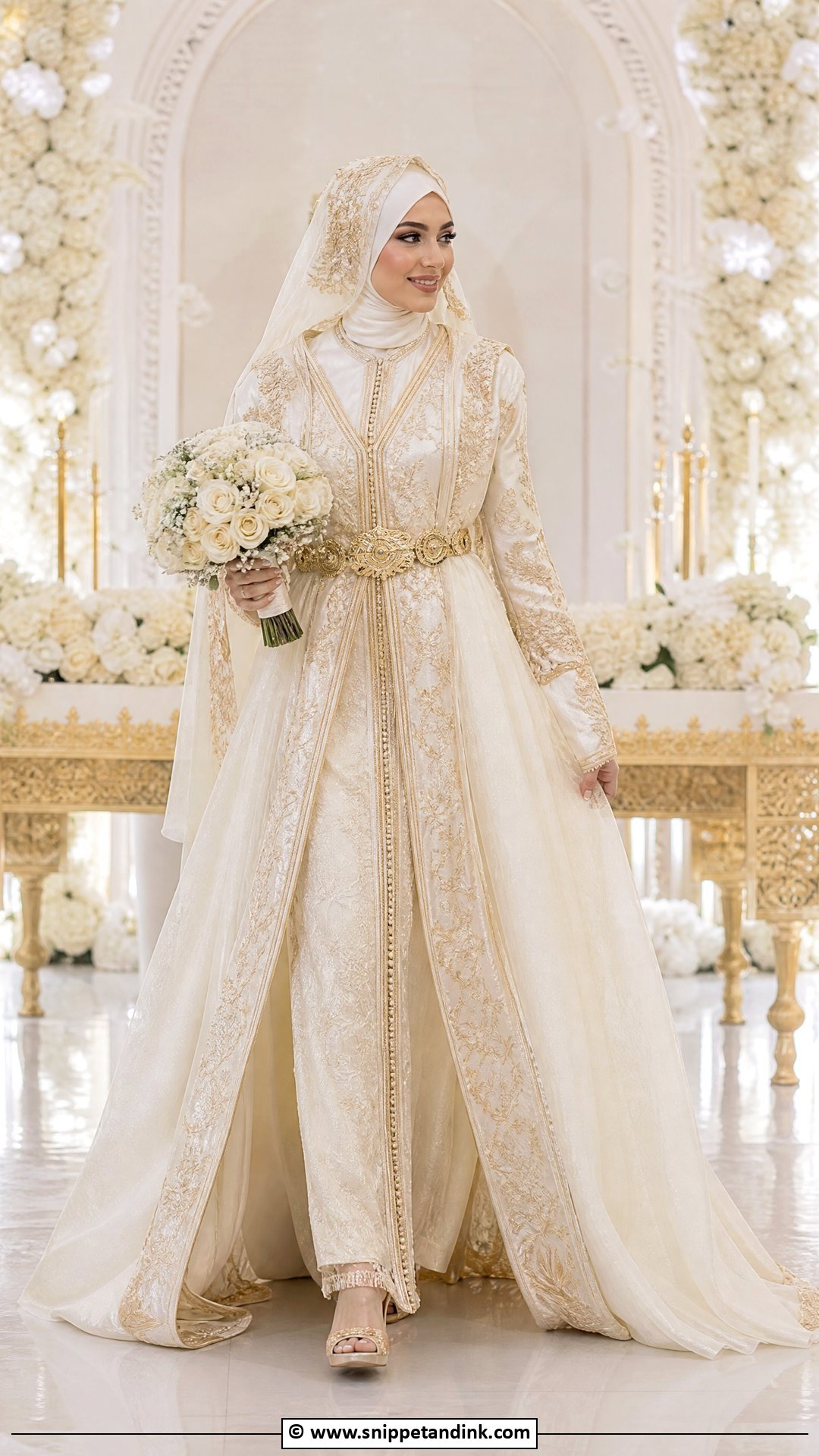
A Moroccan hijab wedding dress is ornate and layered. Bridal takchitas and kaftan-style gowns bring a decorative belt, embroidery and rich trims, in ivory, gold, emerald, royal blue or blush. Long sleeves and full coverage make them naturally hijab-friendly. Coordinate the hijab with the embroidery and neckline. Many Moroccan brides change several times through the evening, so plan a hijab that works with each outfit or one per look.
33. Indian Hijab Wedding Dress
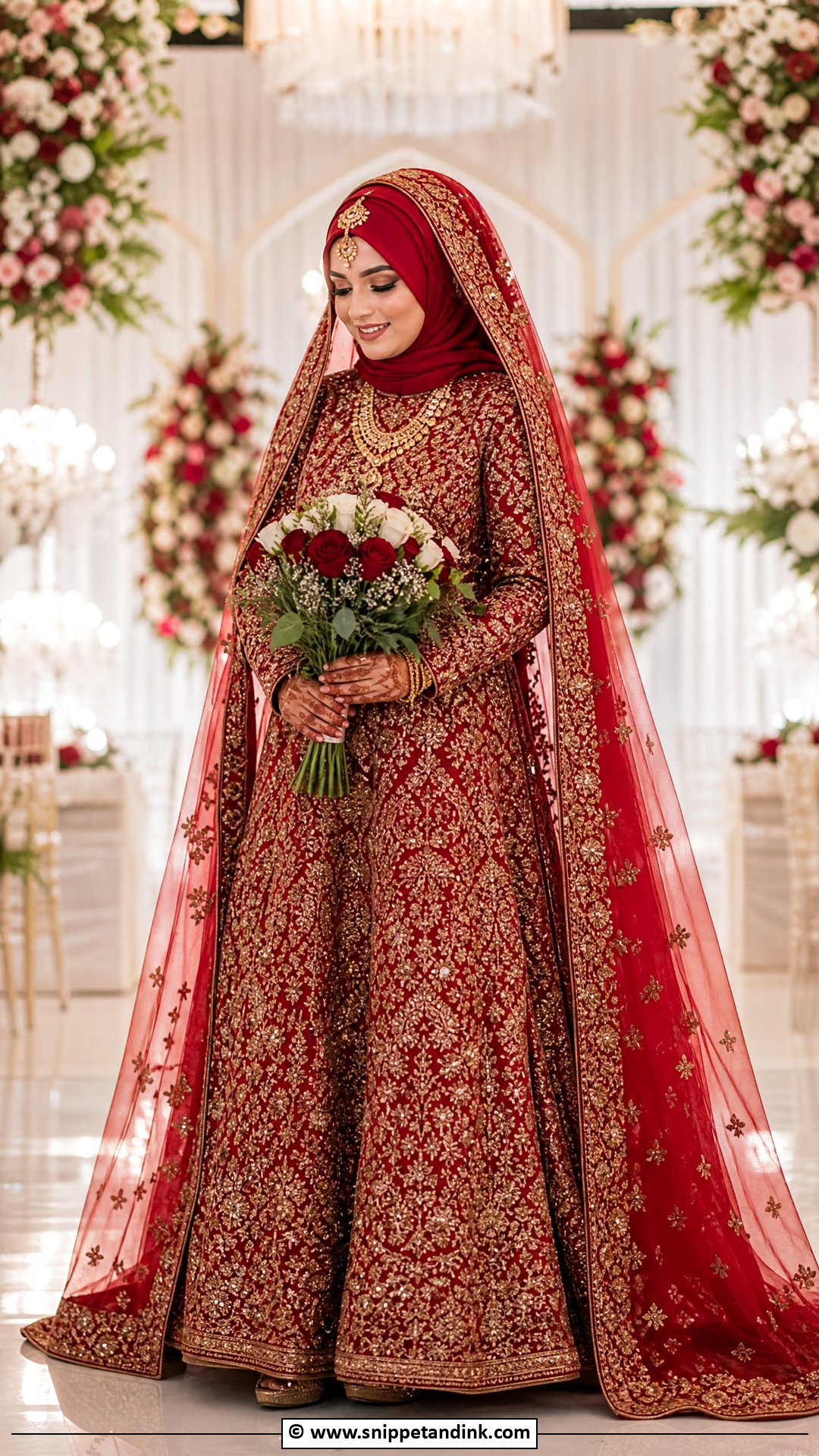
An Indian lehenga can be fully modest with the right pieces: a long-sleeve high-neck blouse, a lined skirt and a coordinated dupatta. Ivory and gold feel classic; red, blush, emerald and champagne are more festive. Coordinate the hijab with the dupatta so both layers look planned. Check that the blouse is long enough to meet the skirt waistband when you lift your arms. Jewelry should frame the face rather than crowd it.
34. Modern Hijab Wedding Dress
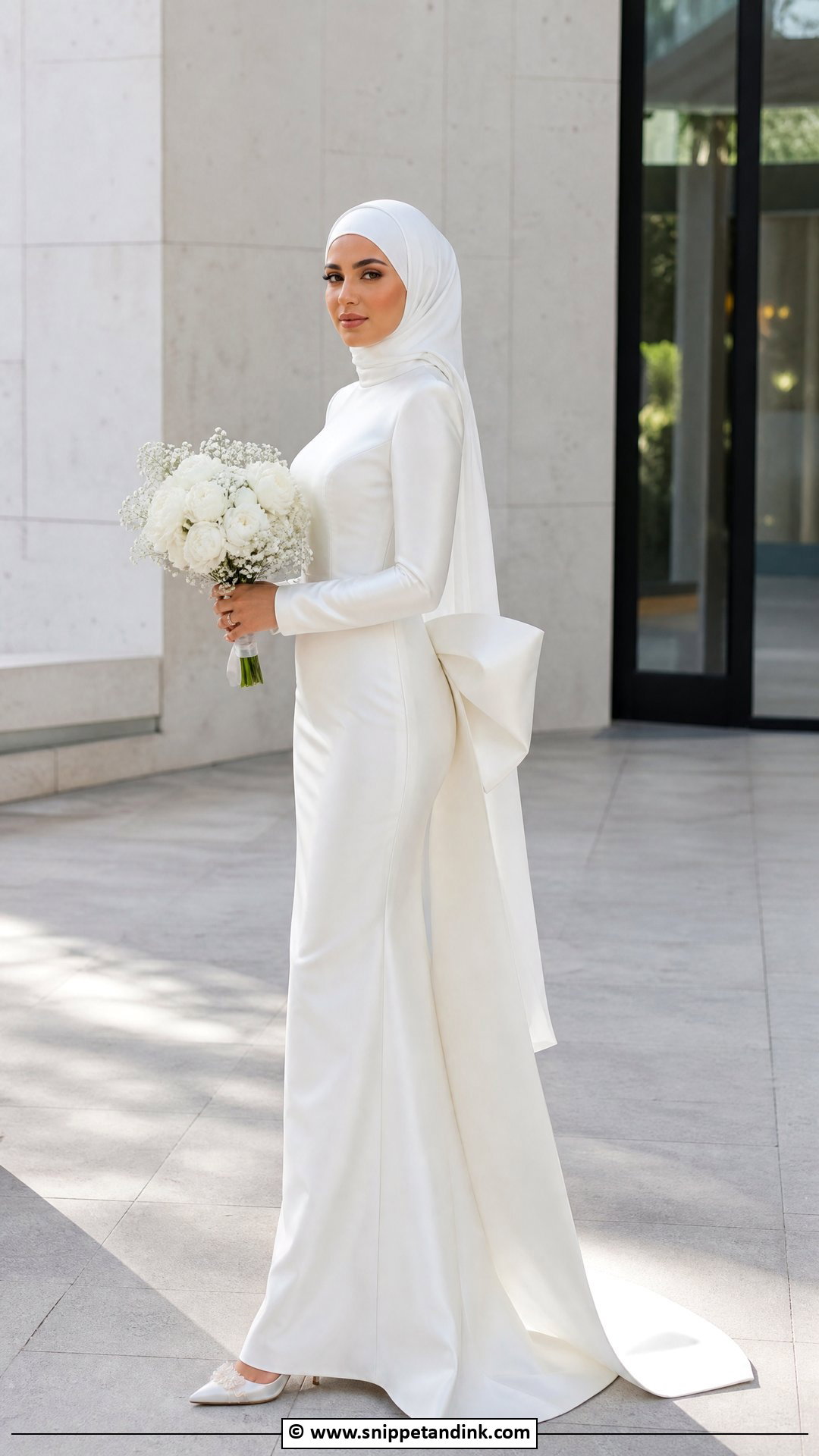
Modern modest design means fresh shapes and deliberate detail: a high-neck crepe gown, a satin column with a cape, a structured A-line or a minimal dress with pearl accents. Choose a hijab in the same tone and keep the wrap smooth. If you want drama, pick one modern feature, such as a cape, an oversized bow or a detachable train, and stop there. Sculptural heels and a neat bouquet suit the clean mood.
35. Vintage Hijab Wedding Dress
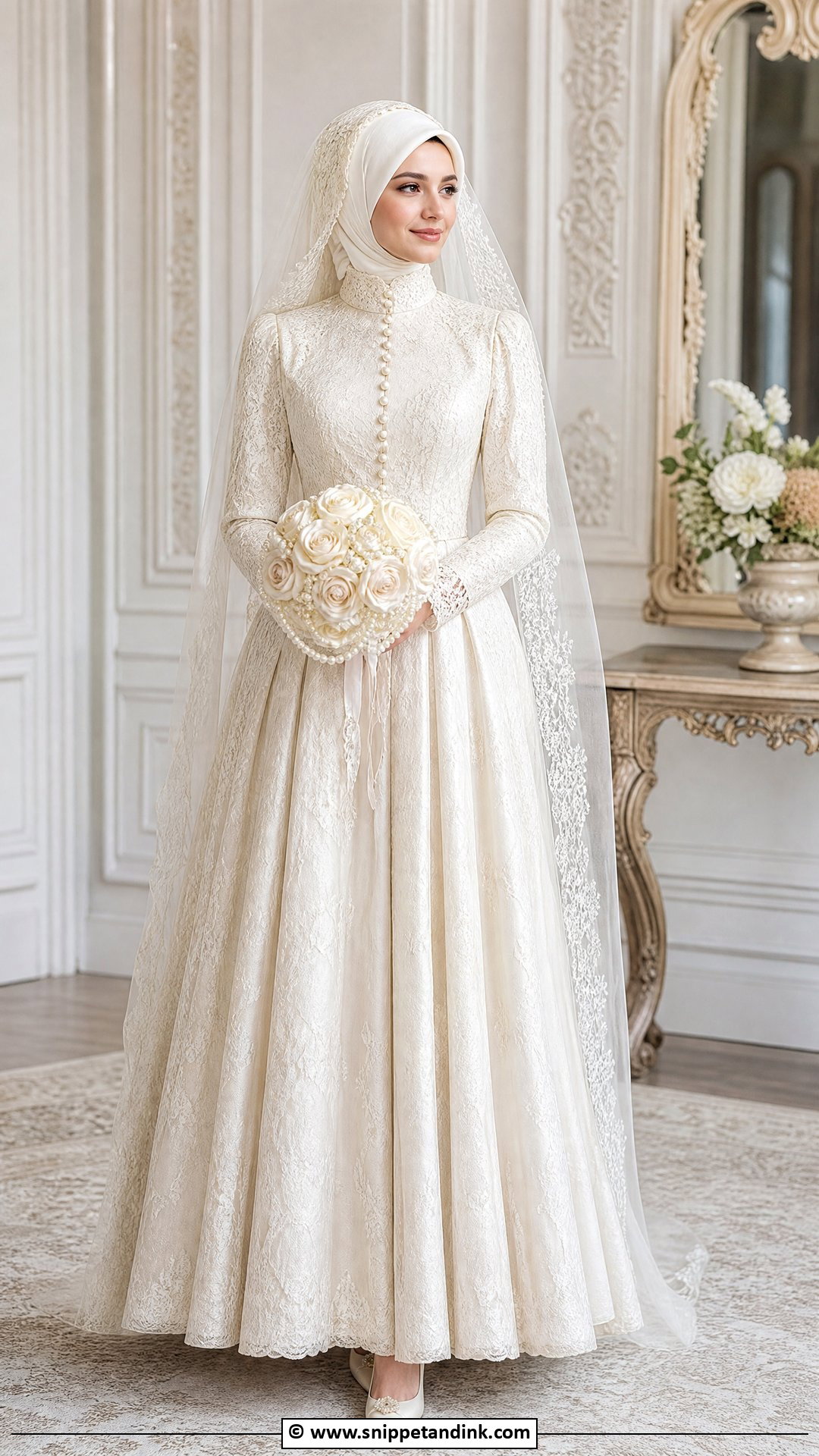
Vintage details include lace sleeves, pearl buttons, high collars, soft pleats, puff sleeves and tea-length shapes. To keep it bridal rather than costume, I choose an opaque lining and keep the hijab simple rather than period-styled. Ivory lace, satin gloves, pearl pins and classic closed heels pull it together. A soft veil over the hijab adds charm. It suits intimate venues and historic settings.
If Part of Your Celebration Is Women-Only
Some brides keep the hijab on for the nikkah and mixed events, then remove it at a women-only reception. If that’s your plan, think of it as two hairstyles. Hair under a hijab should be kept flat and low, so a sleek low bun or braid works best, and it can be loosened into soft waves later. Tell your hairstylist early, because heavy pinning under a scarf leaves dents that need time and heat to fix. Build a short break into the schedule for the change, and keep the hijab and pins in a bag of their own so you can put it back on at the end of the night.
Hijab fabrics for a long, warm day
Over several events, the hijab fabric matters as much as the dress. Jersey grips and needs few pins but can feel warm. Chiffon is light and airy but slips, so it needs a good undercap. Satin looks rich in photos but is the warmest and the most slippery. I often suggest a lighter fabric for the daytime ceremony and saving satin for an air-conditioned evening reception. A spare hijab in your bag covers makeup marks and spills.
Full Coverage, Chosen on Your Own Terms
Modest bridal wear is as varied as any other kind: satin, lace, pearls, embroidery, cultural dress or clean minimalism. Whatever you choose, the basics stay the same. Insist on full lining, check the sleeves with your arms raised, test the fabric under a flash, and style the hijab with the gown from the very first fitting. A hijab wedding dress should never feel like a compromise. It should feel like yours, from the first photo to the end of the night.
You'll Like These Ideas:








Leave a Reply