
Dressing a hijabi bride is a head-to-toe job from the very first appointment. The gown, the hijab, the underscarf, the veil and any headpiece all have to sit together, and the neckline of the dress has to meet the hijab without a gap or a bulge. Then come the practical questions: how many events are there, which ones are mixed, how hot the venue is, and what the family expects. Some brides want a classic white gown; others want red, gold, champagne, emerald or blush, or a cultural outfit with heavy embroidery. Below are thirty complete looks, with notes on fabric, coverage and how I’d style the head and neck for each one.
Adding Sleeves and a Higher Neck to a Shop Gown
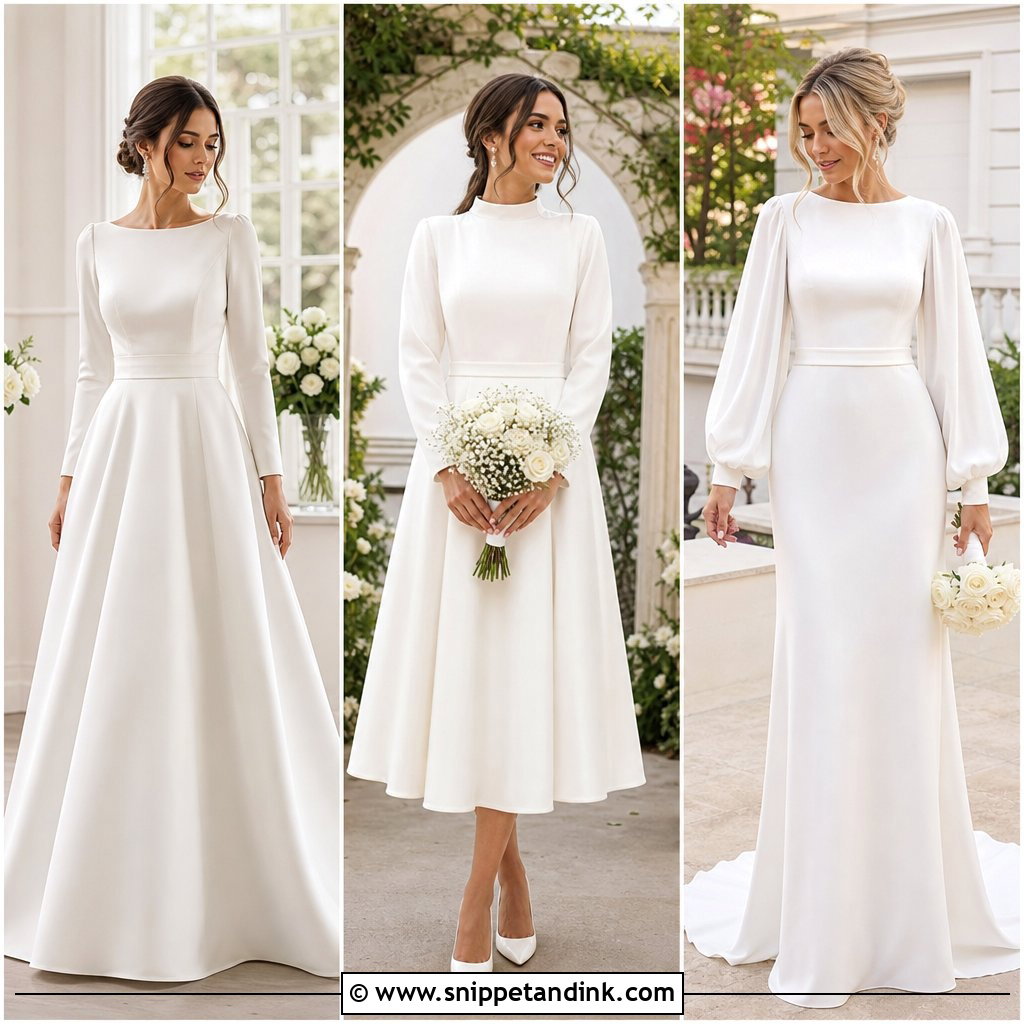
Many brides fall for a gown that isn’t modest as sold. A good seamstress can often add sleeves, raise a neckline, close an open back or line a sheer panel, but the results depend on what you ask for and when.
- Ask the shop for extra fabric or matching lace at the time of ordering. Finding an exact match later is hard, and an obvious mismatch looks like a patch.
- Illusion mesh in a shade close to your skin is the easiest way to raise a neckline or fill a back. Fully opaque fabric looks more natural if the gown is plain satin or crepe.
- Sleeves change how the bodice fits, so they should be added before the main fitting, not after.
- Allow extra time. Modesty alterations typically need more fittings than a standard hem, so start them earlier than a friend’s timeline might suggest.
If the dress needs more than two of these changes, a modest-specific design or a custom gown may end up cheaper and look better.
1. White Muslim Bridal Ball Gown
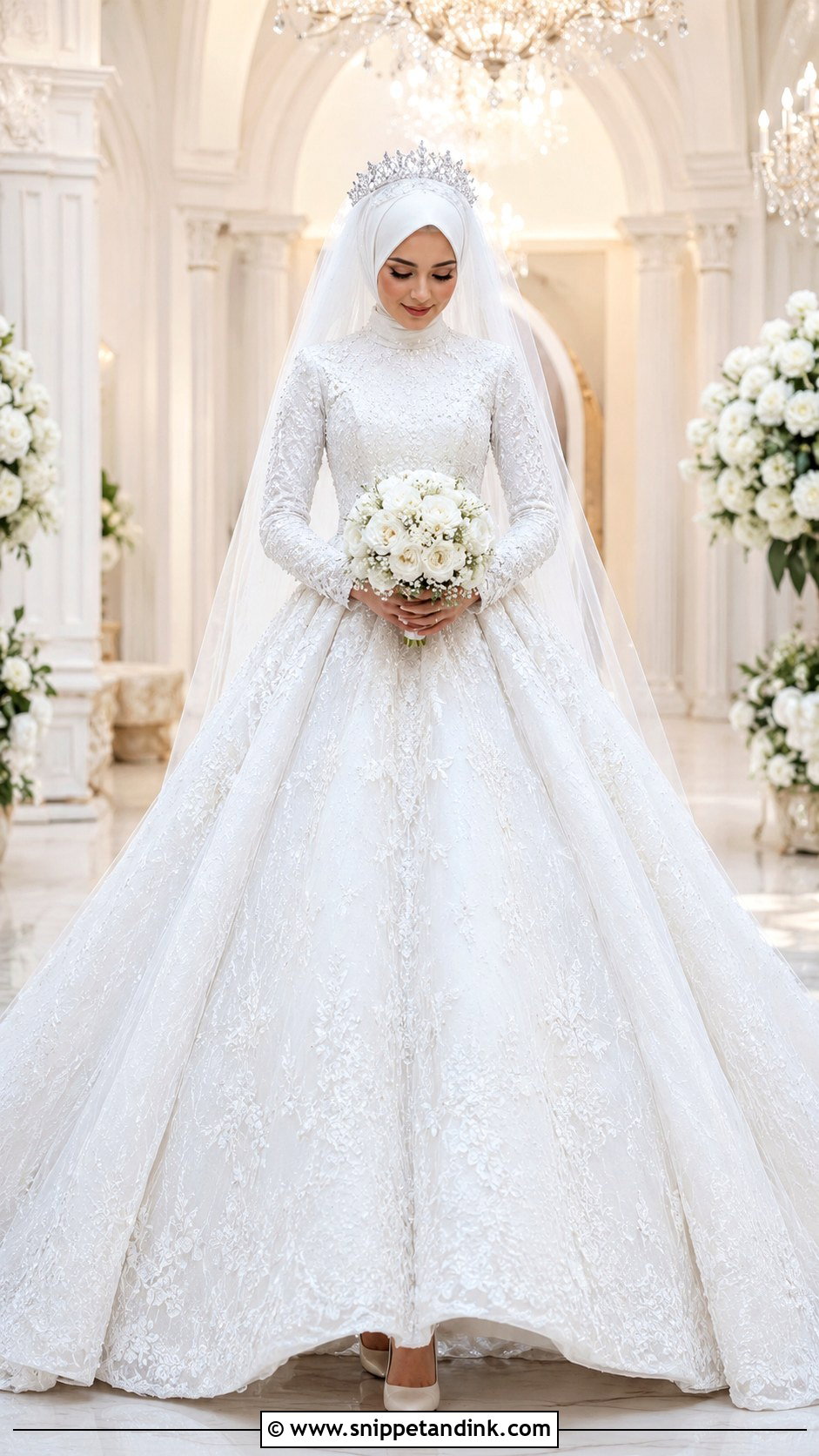
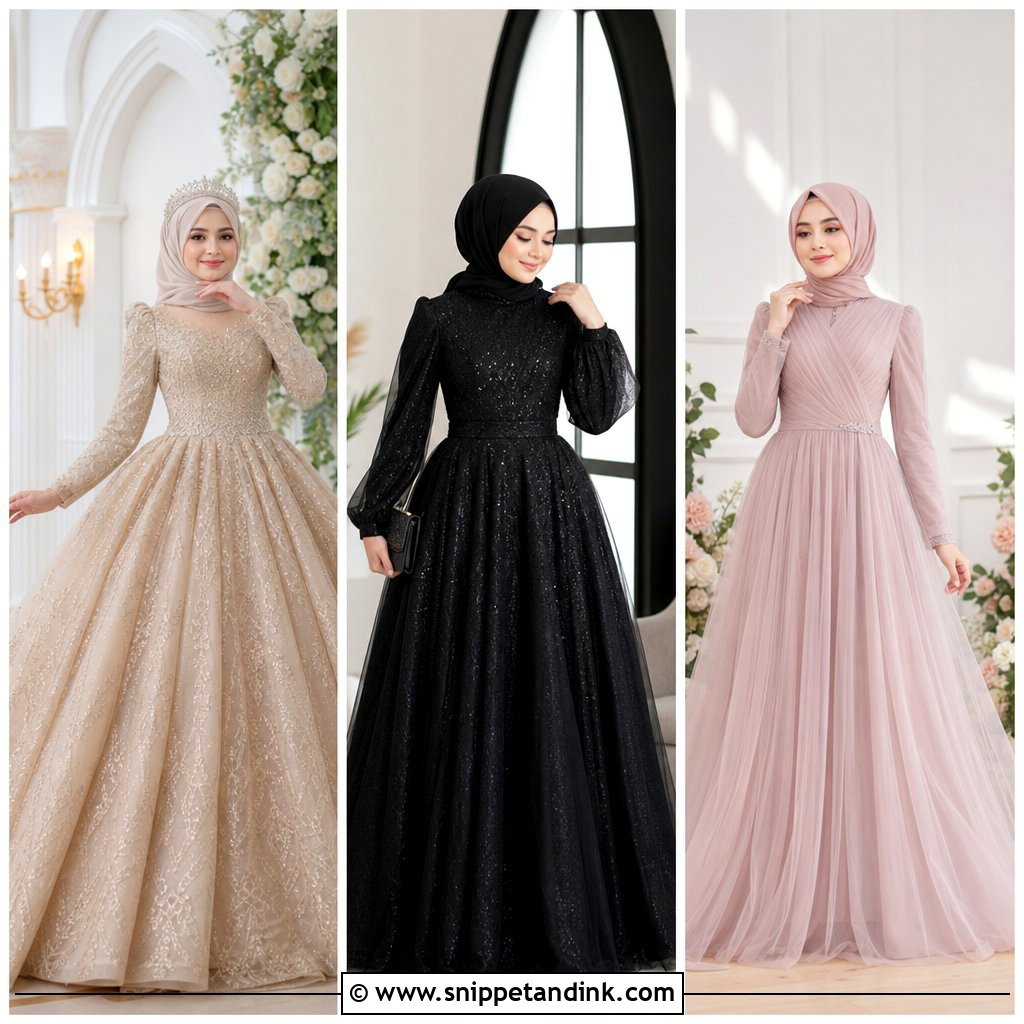
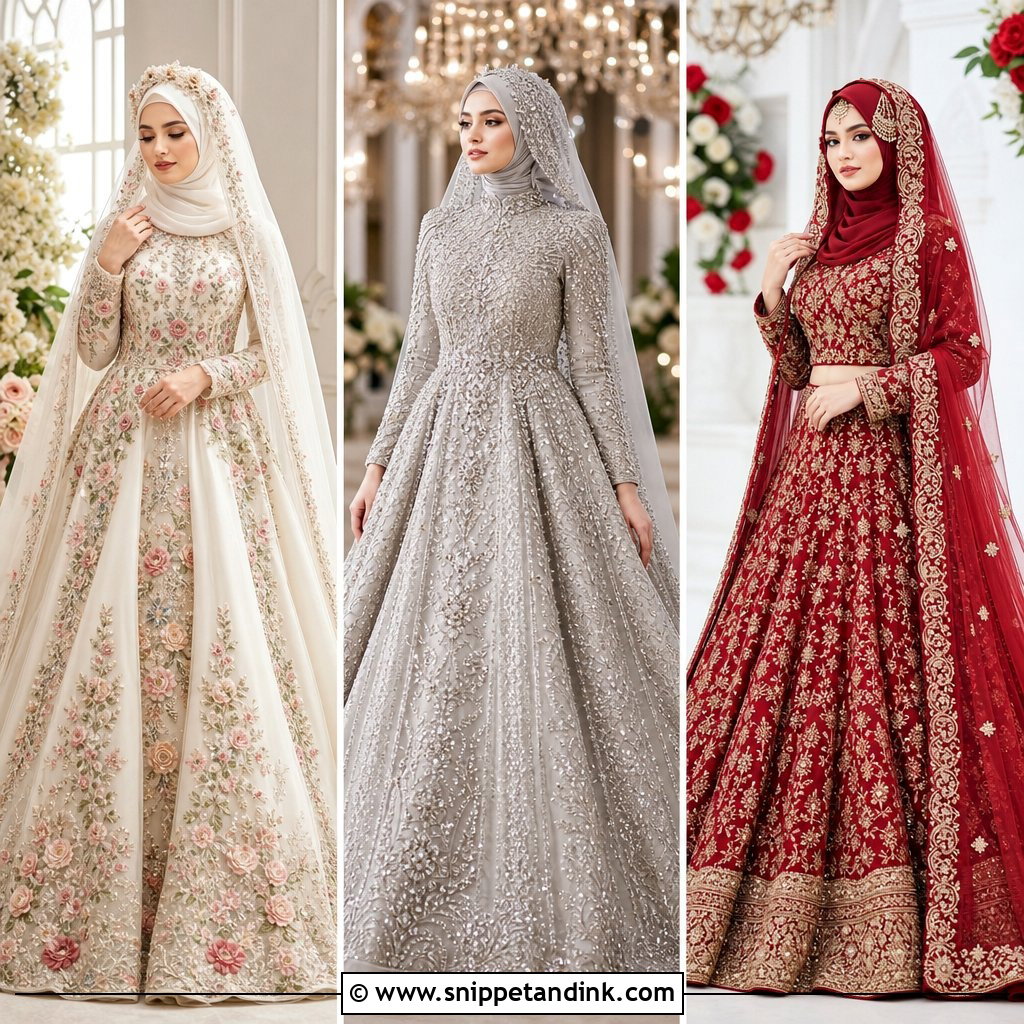
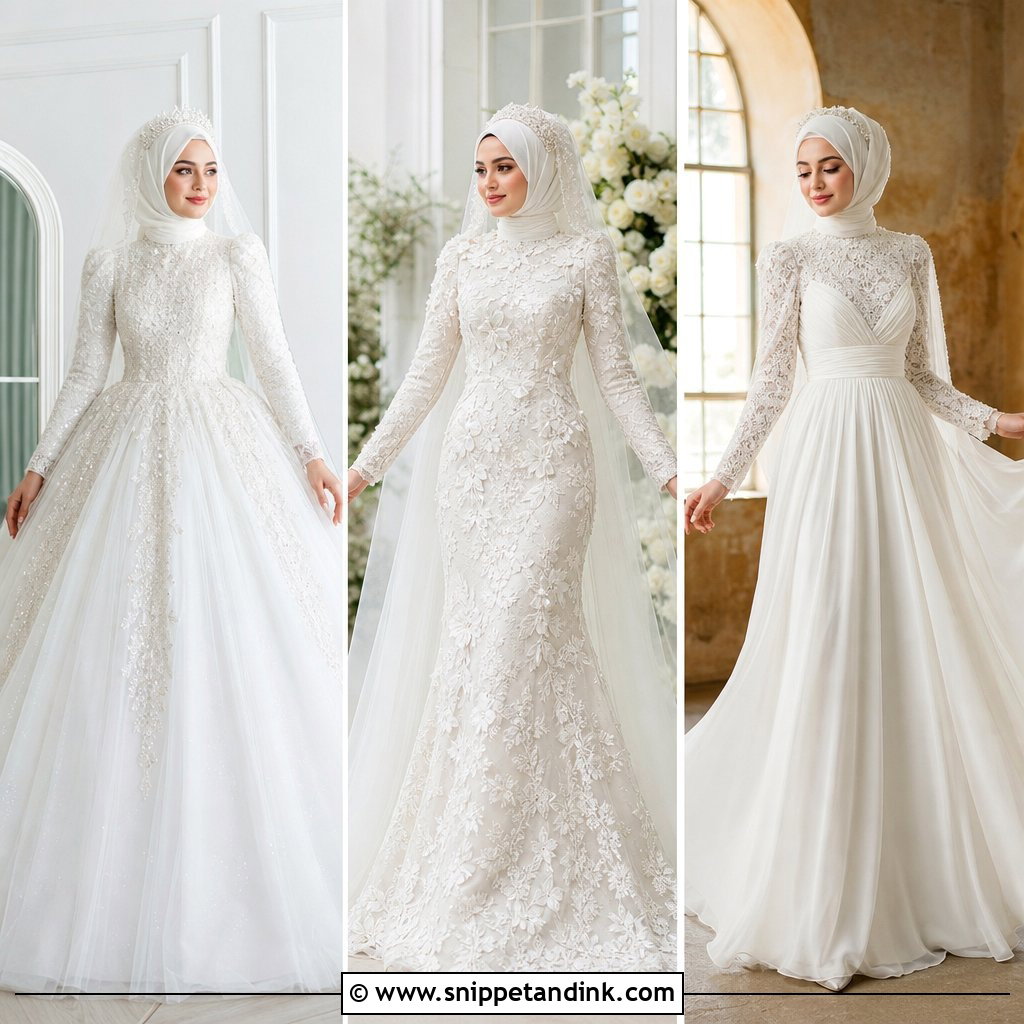
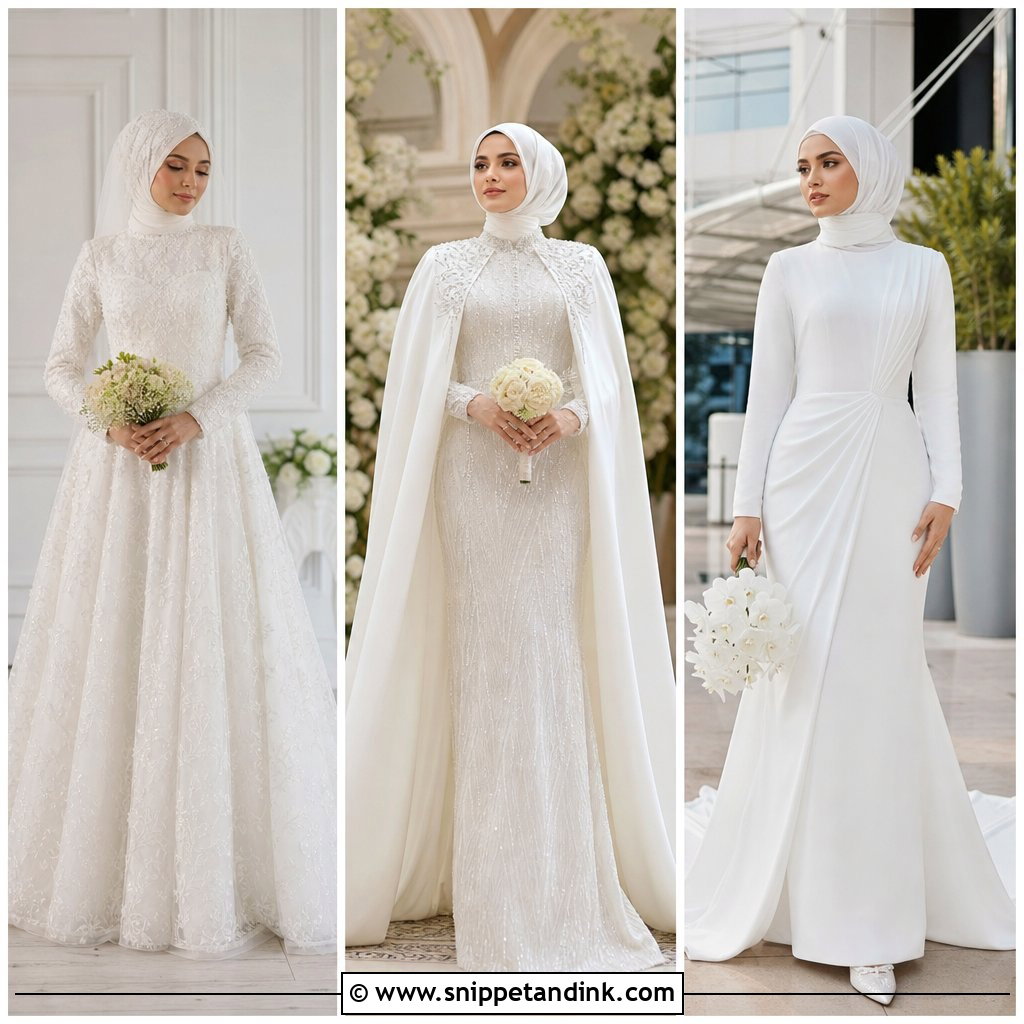
A white ball gown with full coverage gives you the princess silhouette without compromise, as long as the sleeves and neckline are built in rather than added as an afterthought. I look for a high neck that finishes cleanly under the hijab and long sleeves fitted enough to sit under a cuff. Lace, pearl beading or soft embroidery add detail without weight. A white satin or chiffon hijab wrapped close to the face, with a long veil layered over it, keeps the upper half neat against a very wide skirt. Closed-toe heels, a pearl tiara and a small bouquet finish it for a formal indoor wedding.
2. Ivory Muslim Bridal A Line Dress
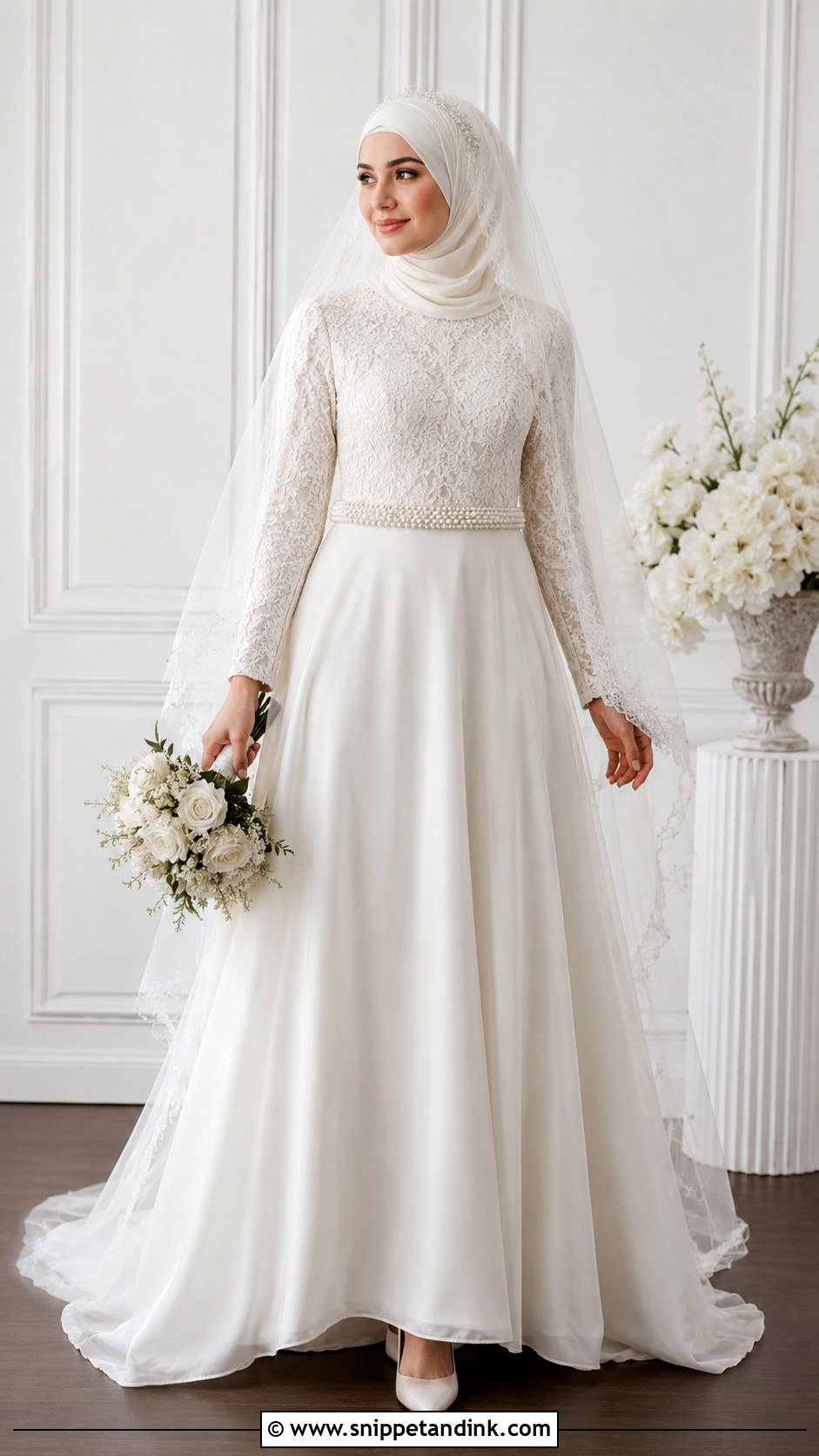
An ivory A-line is the shape I suggest most to brides who aren’t sure yet, because the bodice gives definition and the skirt skims without clinging. Look for fully lined lace sleeves and an illusion neckline that’s actually lined, since sheer mesh in shop lighting can look opaque and then show skin under a photographer’s flash. An ivory hijab and a fingertip veil keep it soft. Pearl earrings worn under the hijab, a slim belt and ivory pumps finish it. It’s quieter than a ball gown and far easier to sit and greet guests in.
3. Muslim Bridal Mermaid Dress With Hijab
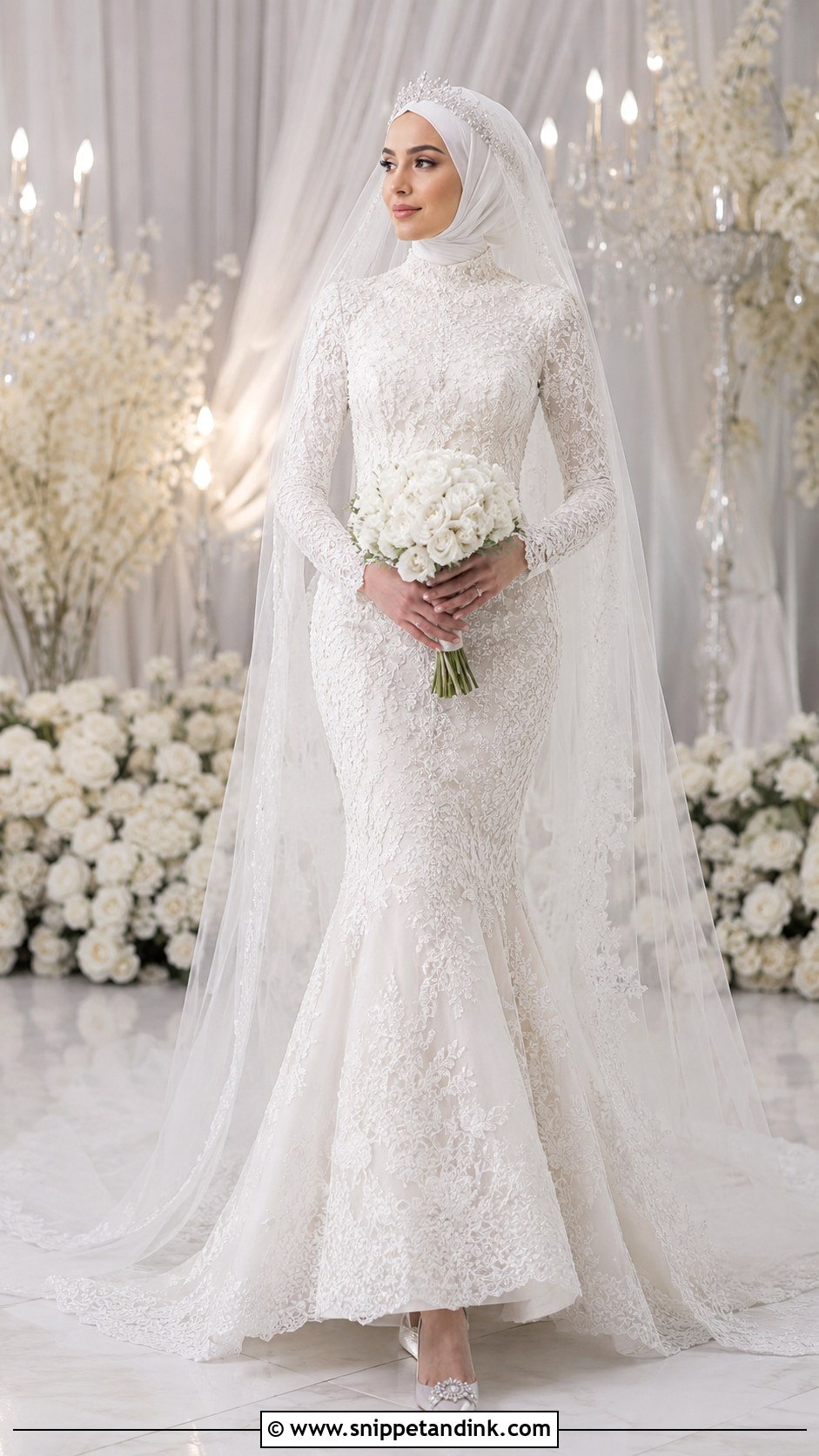
A mermaid shape follows the body to the knee, so modesty here depends on the cut and lining more than the coverage alone. I’d look for full lining, long sleeves, a higher neckline and a little ease through the hips so the fabric skims rather than grips. Lace or crepe both work. Walk in it before you decide; a flare set too high makes the aisle a shuffle. A sleek hijab wrap and a long veil balance the shape, with pointed heels and a crystal headpiece placed over the hijab.
4. Simple Satin Muslim Bridal Dress
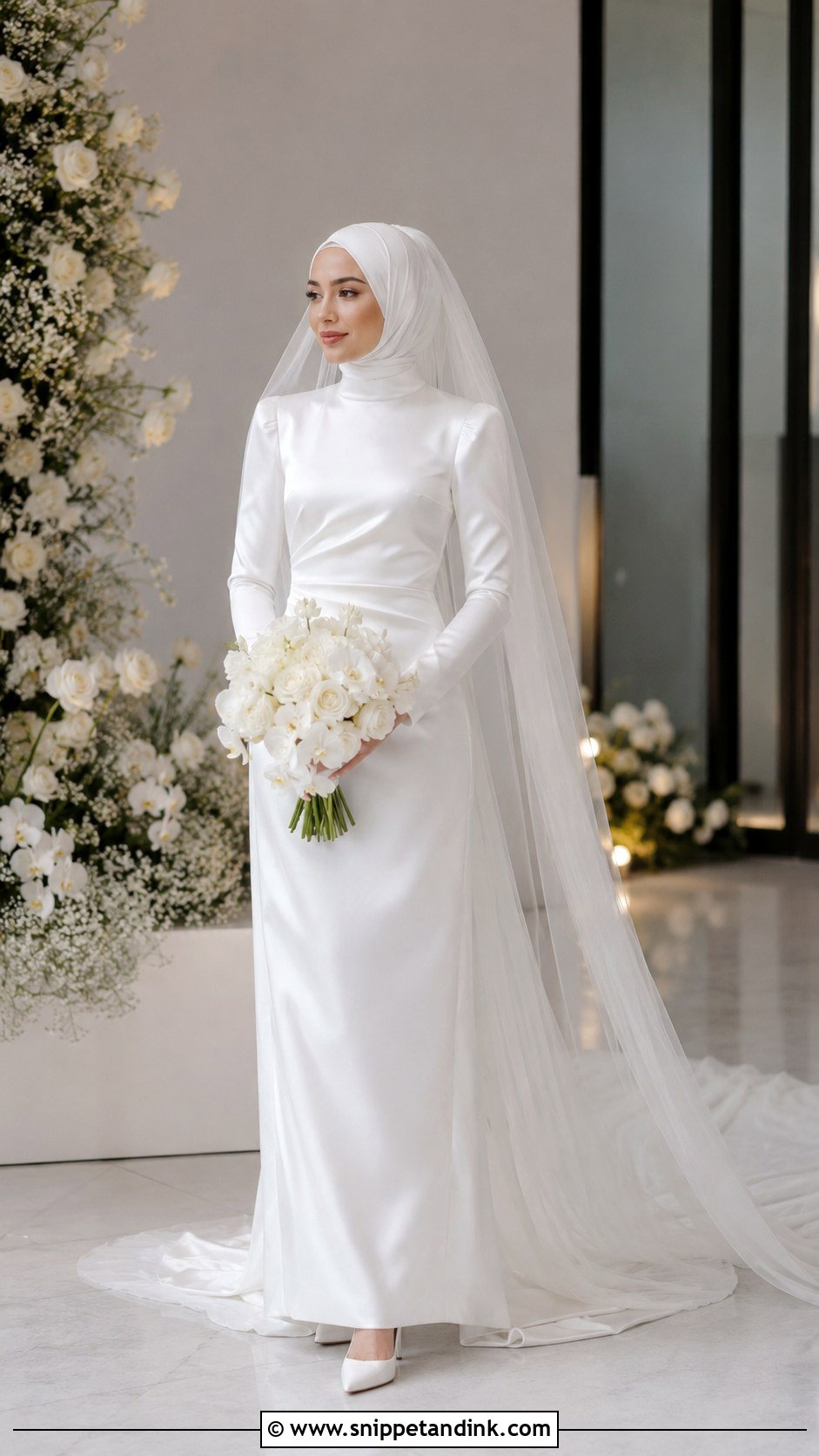
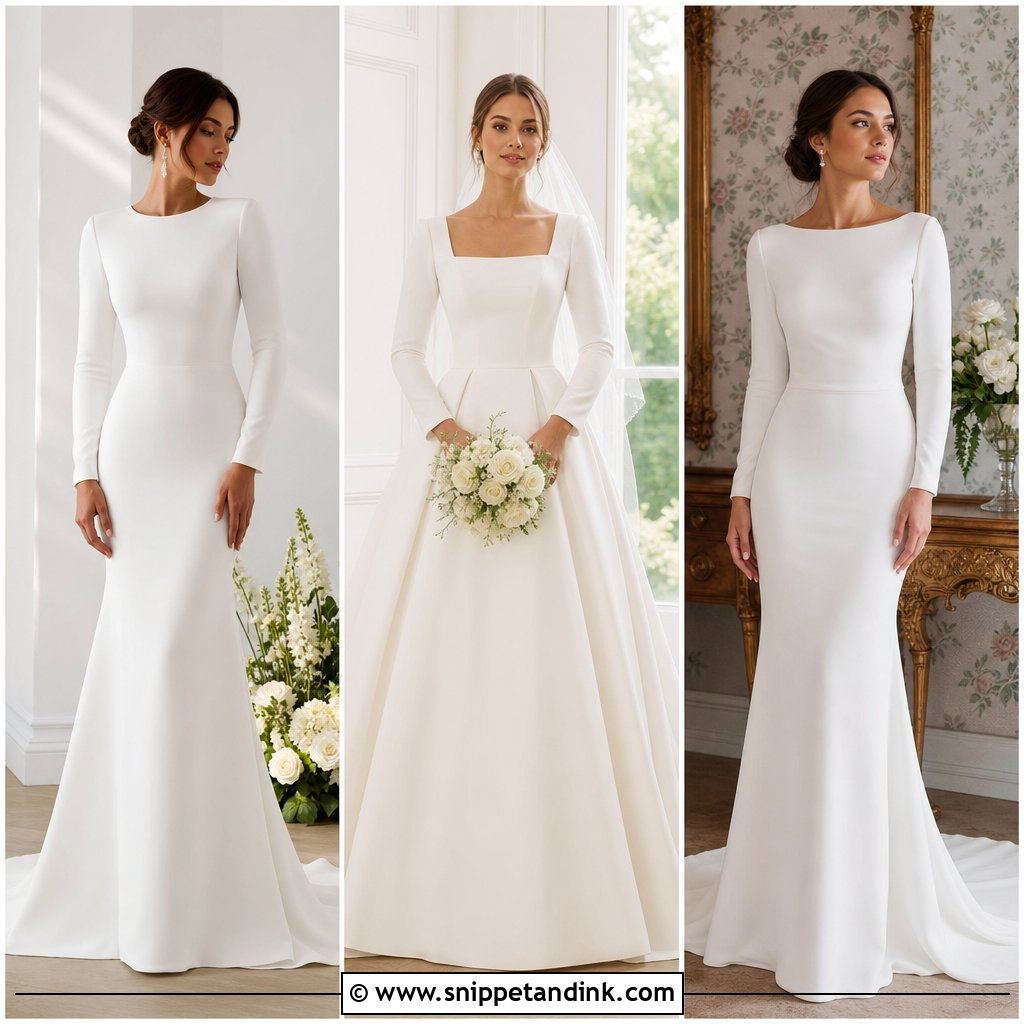
Plain satin depends entirely on fit, because every pull at a seam catches the light. A long-sleeved column or A-line with a high neck and a covered back is clean and modern. The sleeve is where I’d spend the most fitting time: satin sleeves have no stretch, so they must allow you to lift your arms for hugs and photos. A matching satin or chiffon hijab, a plain cathedral veil, pointed pumps and a structured bouquet complete it, with almost no jewelry needed.
5. Lace Muslim Bridal Dress With Long Sleeves
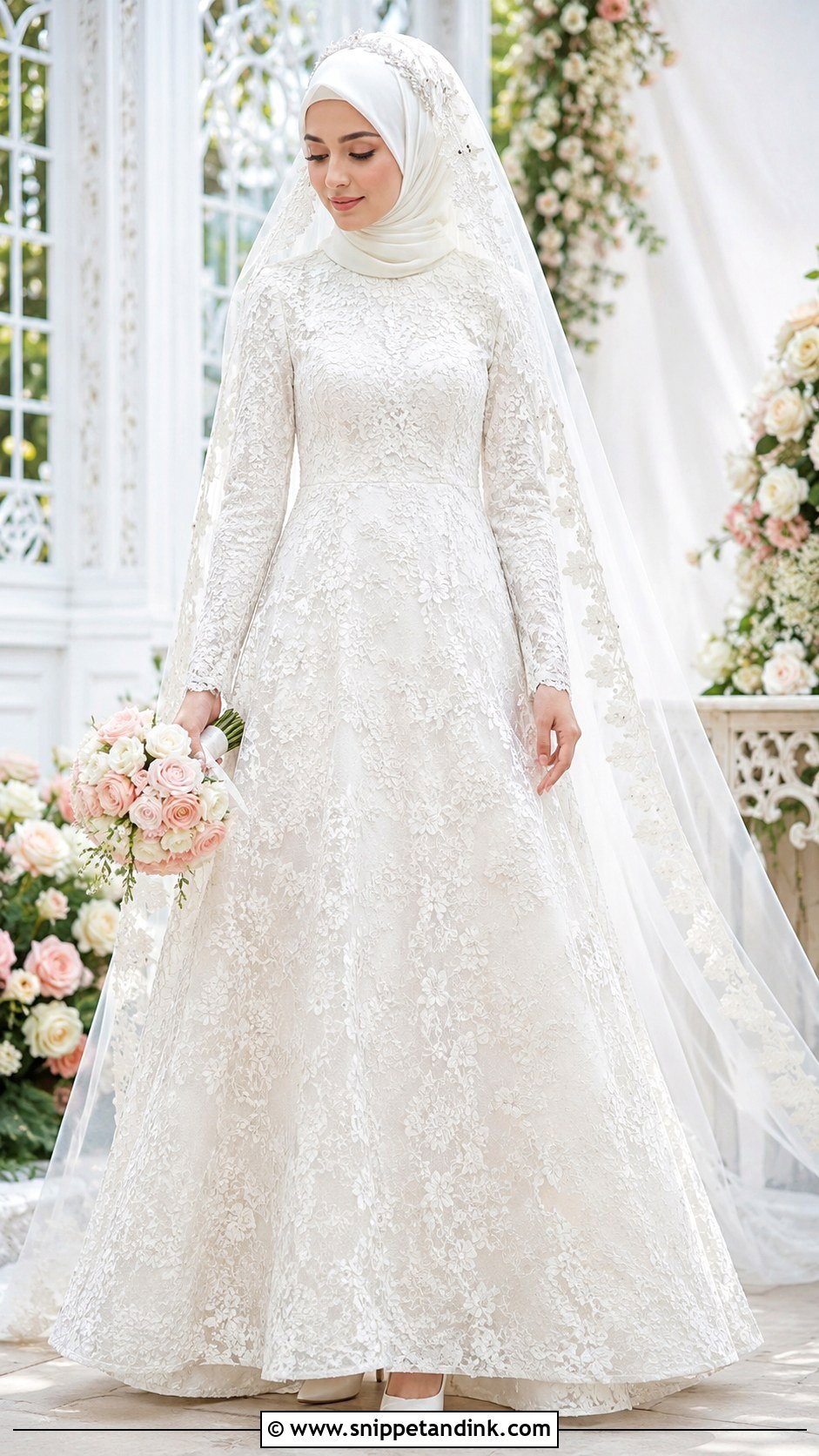
Lace brings texture to a covered gown, but lace sleeves need a lining or a nude underlayer if you want full coverage, since most bridal lace has open gaps between motifs. Floral lace feels soft; geometric lace feels more current. Make sure the skirt lets you walk, sit and greet guests comfortably. A chiffon or silk hijab frames the face, and a lace-edged veil, a pearl hairpiece placed over the hijab and simple heels finish it for a spring or garden-style reception.
6. Muslim Bridal Dress With Cape
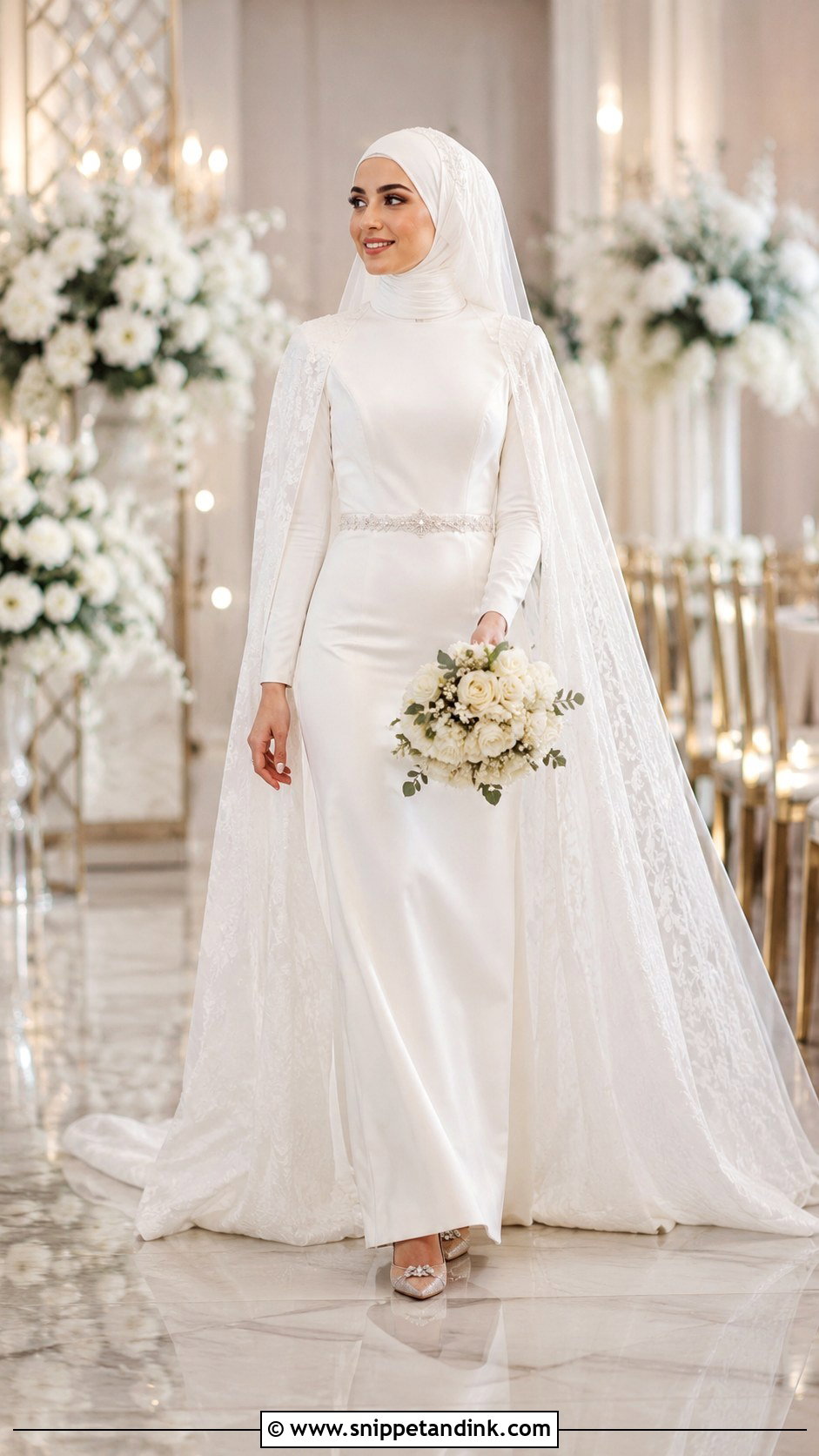
A Muslim bridal dress with cape gives you the length and movement of a veil without anything pinned to the hijab. That makes it a good choice if you find veils heavy or fiddly. Tulle, chiffon, organza and lace capes all work; check that the cape attaches neatly at the shoulders or neckline and doesn’t tug on the hijab when you turn your head. A simple long-sleeved gown underneath lets the cape lead. Keep the hijab wrap close to the face so there isn’t too much volume up top.
7. Muslim Bridal Dress With Detachable Train
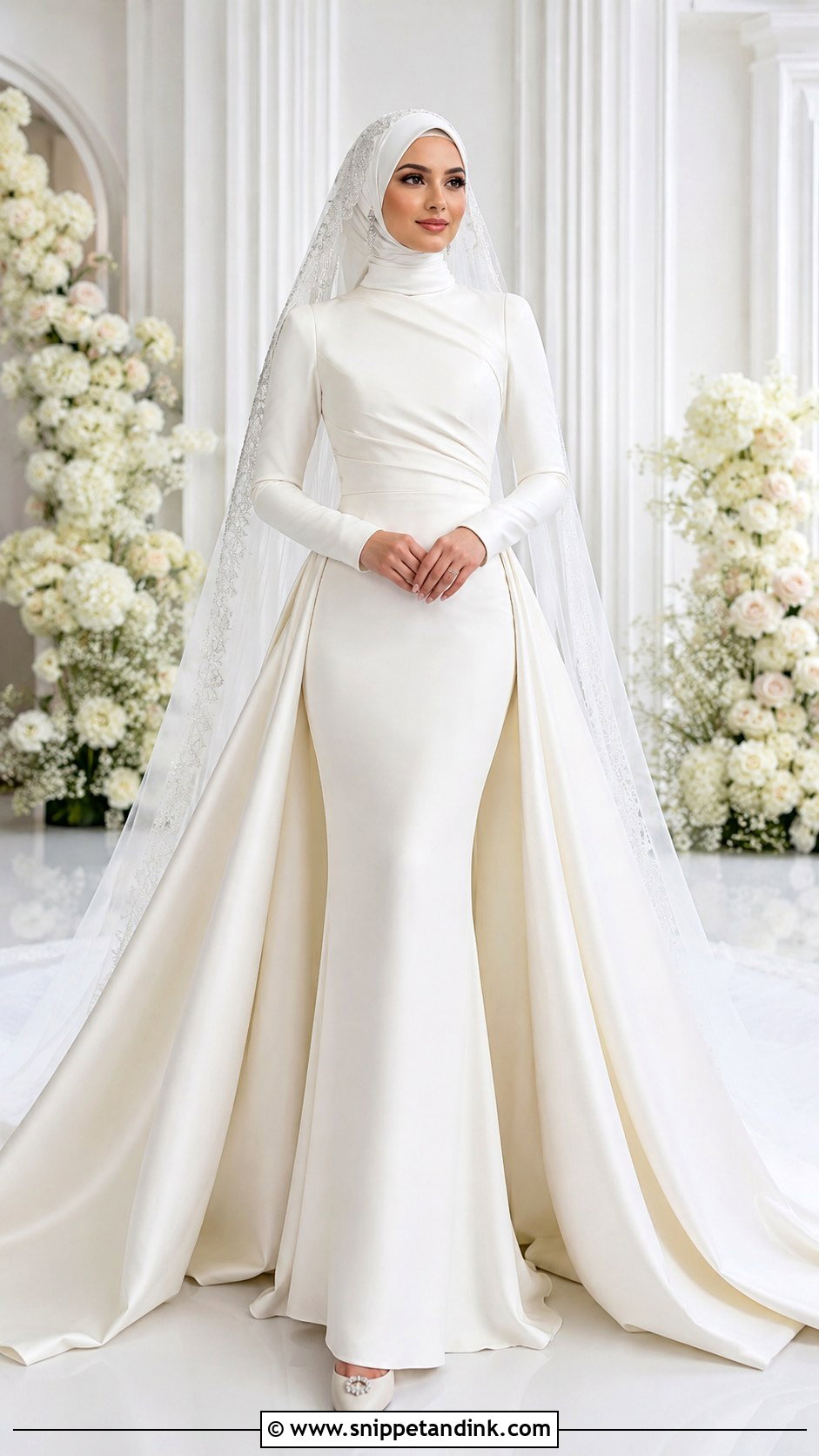
A detachable train lets you have the full sweep for the ceremony and portraits, then unclip it to move freely at the reception. Satin, crepe or lace gowns all carry one well. Practise the release with whoever will help you; hidden hooks and snaps are fiddly in a crowded room. Keep the hijab smooth and well secured, with a veil over it if you want softness. Choose heels you can stand in for hours and jewelry that doesn’t compete with the train.
8. Muslim Bridal Dress With Pearl Details
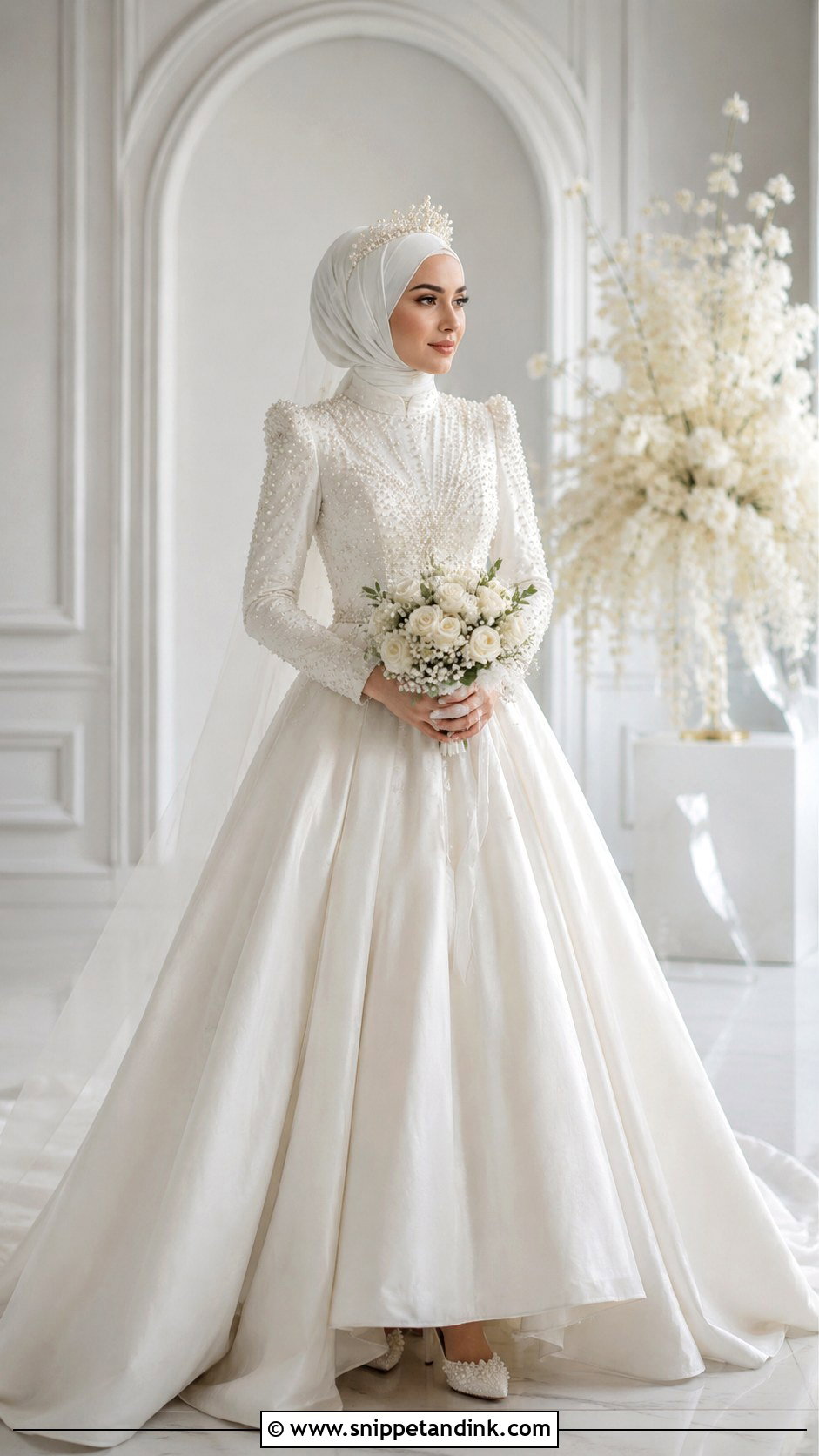
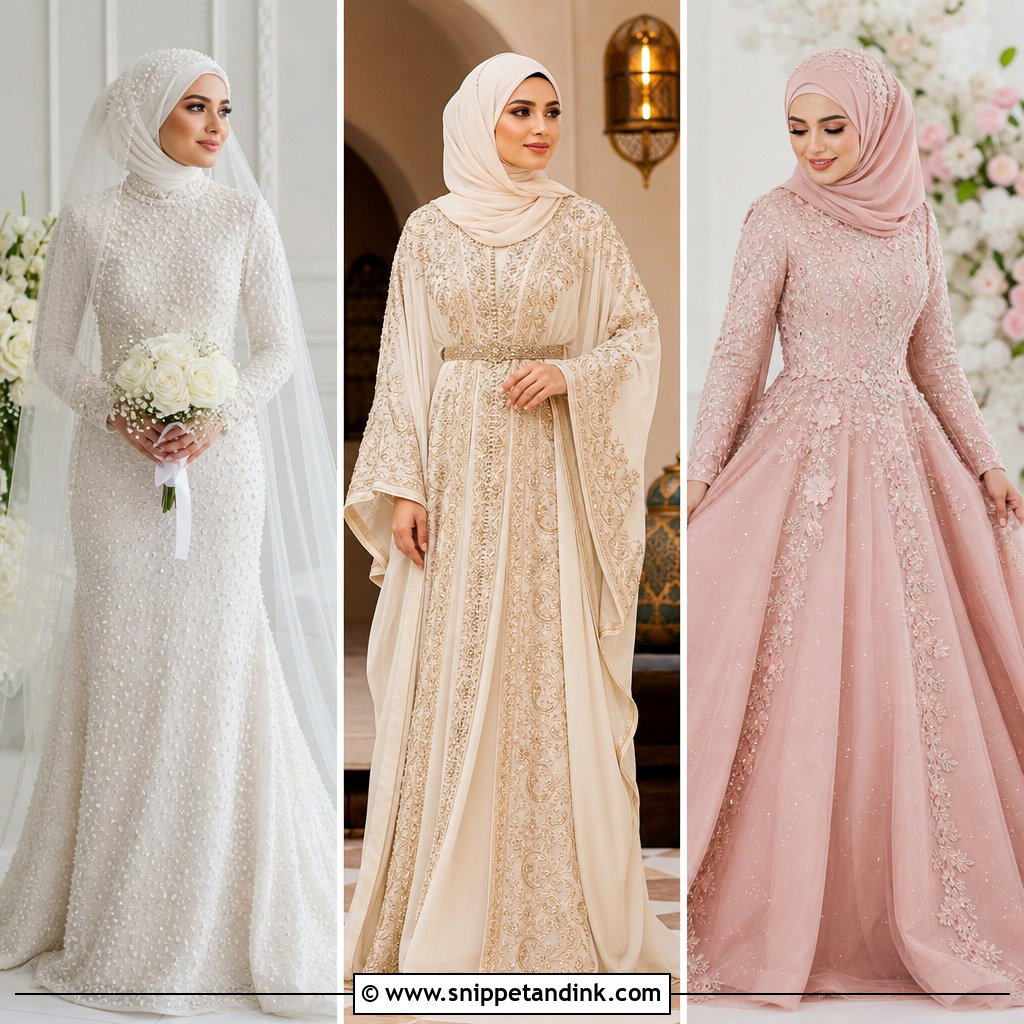
Pearls add texture with a gentle reflection rather than the sharp sparkle of crystals. They look best concentrated in one or two places: the sleeves, the bodice, the neckline or the veil. A soft A-line or sheath with pearl accents pairs well with a plain hijab, which balances the texture. Pearl-trimmed heels, a small pearl crown and white flowers finish it. Ask whether the pearls are sewn on individually; glued pearls can pop off when you hug people.
9. Muslim Bridal Dress With Beaded Bodice
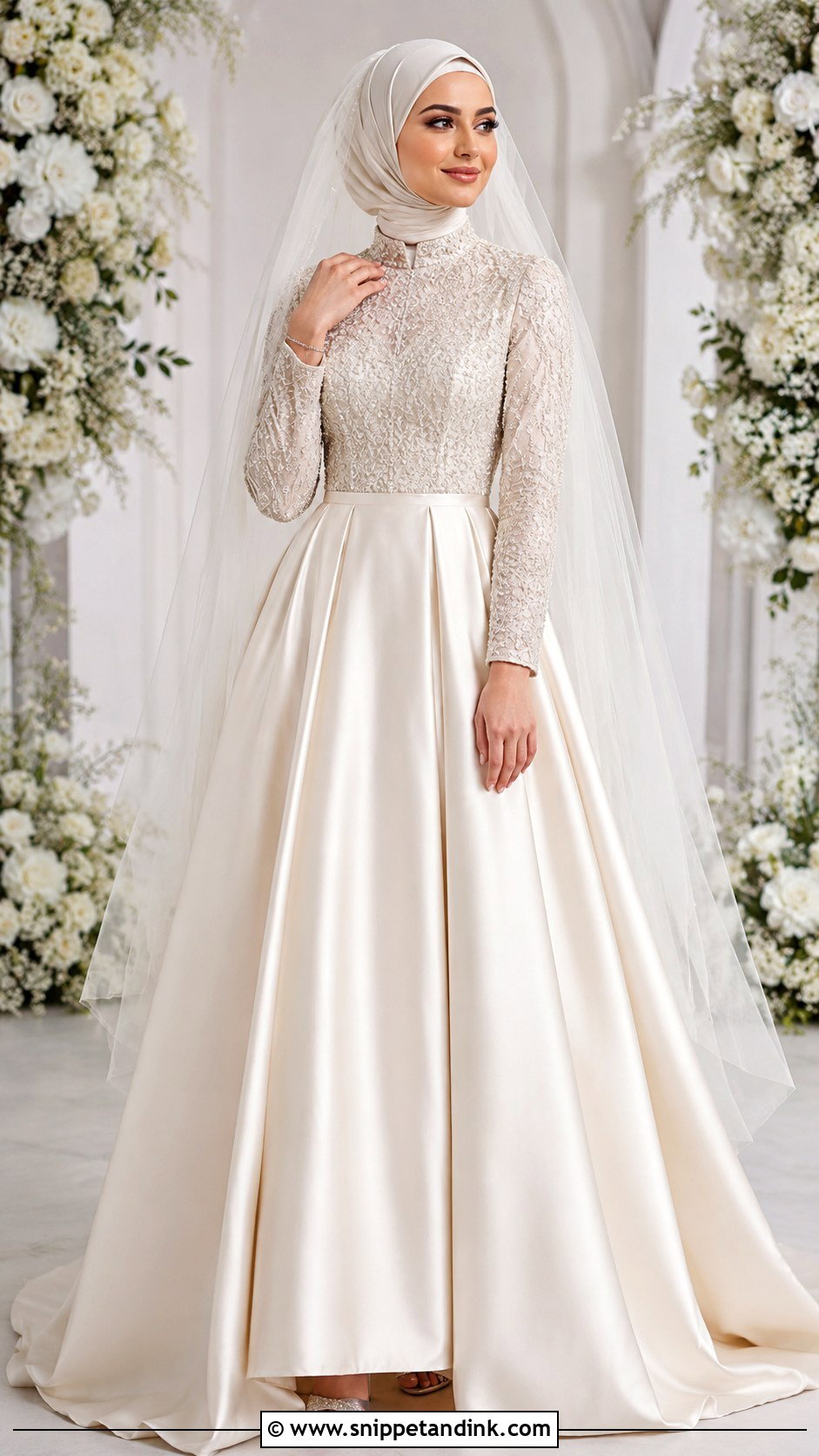
A beaded bodice puts the shine near your face, so the hijab colour matters: matching it to the dress keeps the beading as the focus, while a contrast hijab can clash. Look for beadwork over a fully lined, high-necked, long-sleeved bodice, with a plain satin, tulle or chiffon skirt below. Beading adds weight to sleeves, so make sure they still let you raise your arms. A soft veil, metallic heels and a fine bracelet suit an evening reception.
10. Muslim Bridal Dress With Embroidered Veil
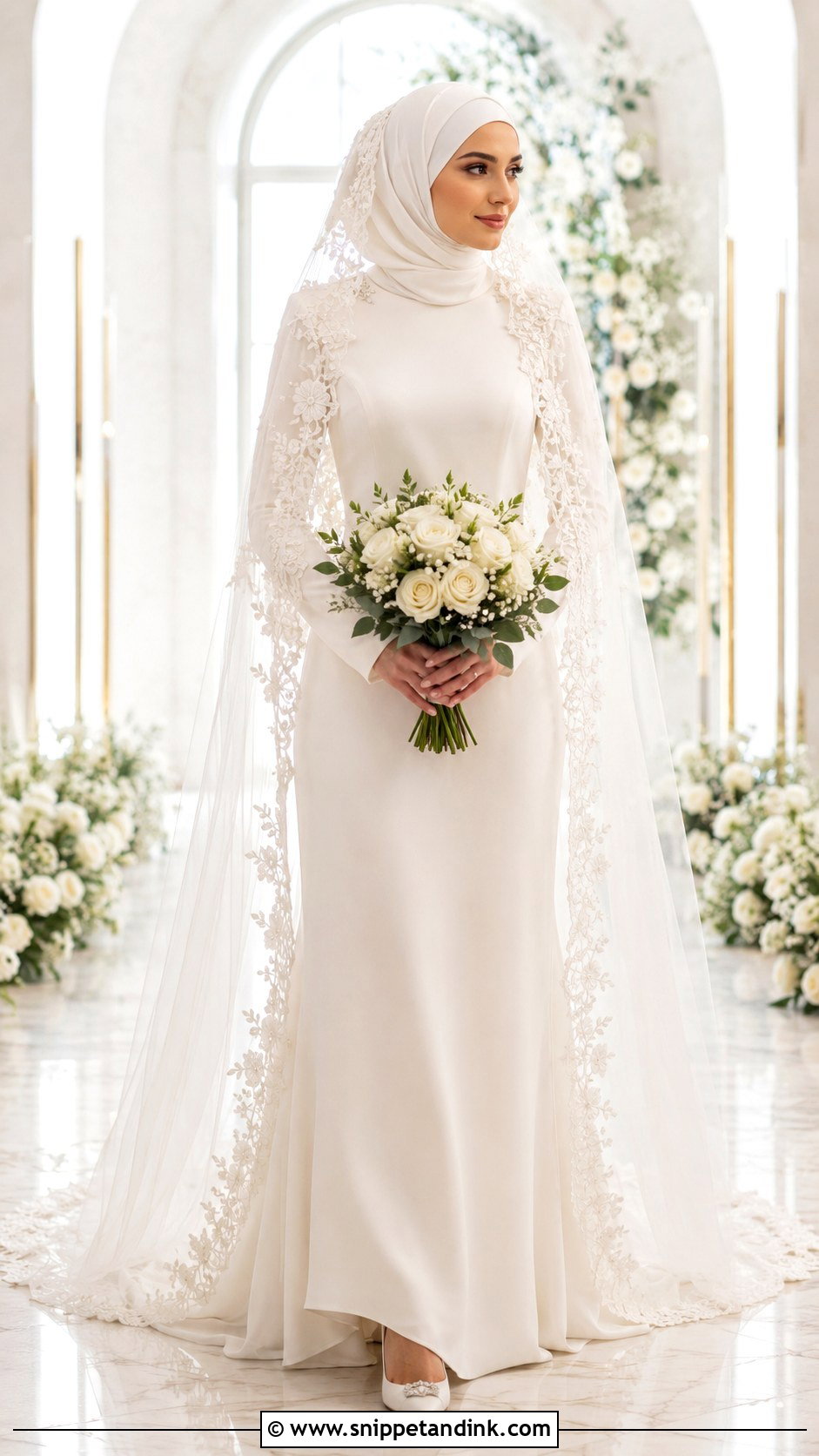
An embroidered veil can carry the whole outfit, which is useful when you want a simple gown or the family values a traditional veil moment. Start with a clean long-sleeved dress in ivory, white or champagne. Choose a veil with floral embroidery, pearls or a little metallic thread. Under it, keep the hijab smooth and lightweight; a thick, layered wrap pushes the veil up and makes it sit unevenly. Simple shoes and jewelry let the veil lead.
11. Red Muslim Bridal Lehenga
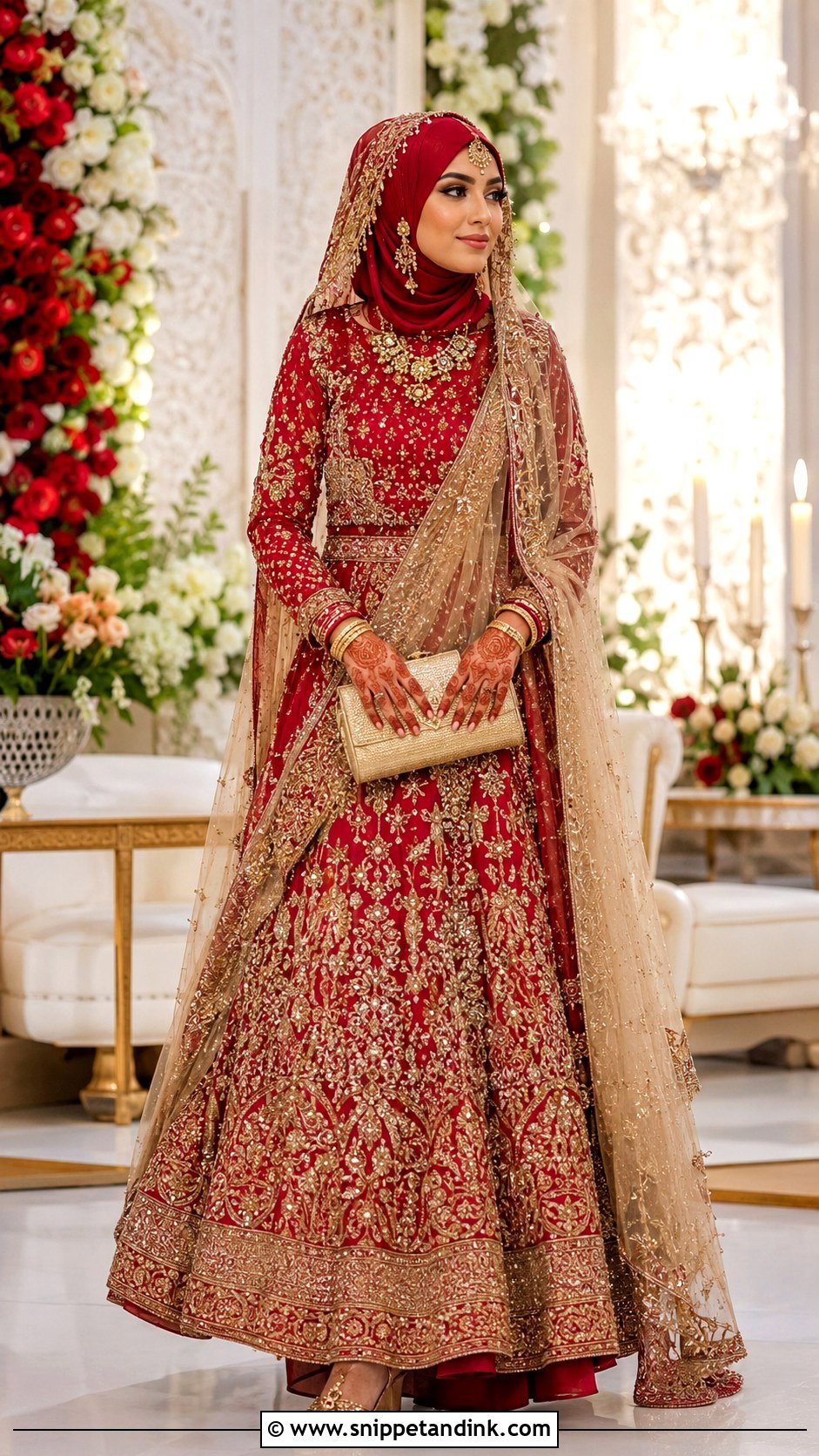
A red lehenga is the traditional choice at many South Asian weddings, and it adapts well to full coverage. Choose a long-sleeved blouse with a modest neckline, a full embroidered skirt and a dupatta draped over the hijab or across the shoulders. Gold embroidery, zari or stonework gives it festive weight. Heavy lehengas can weigh a lot, so try sitting and standing in the full outfit before the day. A red or gold hijab blends in, and traditional jewelry, embellished heels and a clutch complete it.
12. Gold Muslim Bridal Lehenga
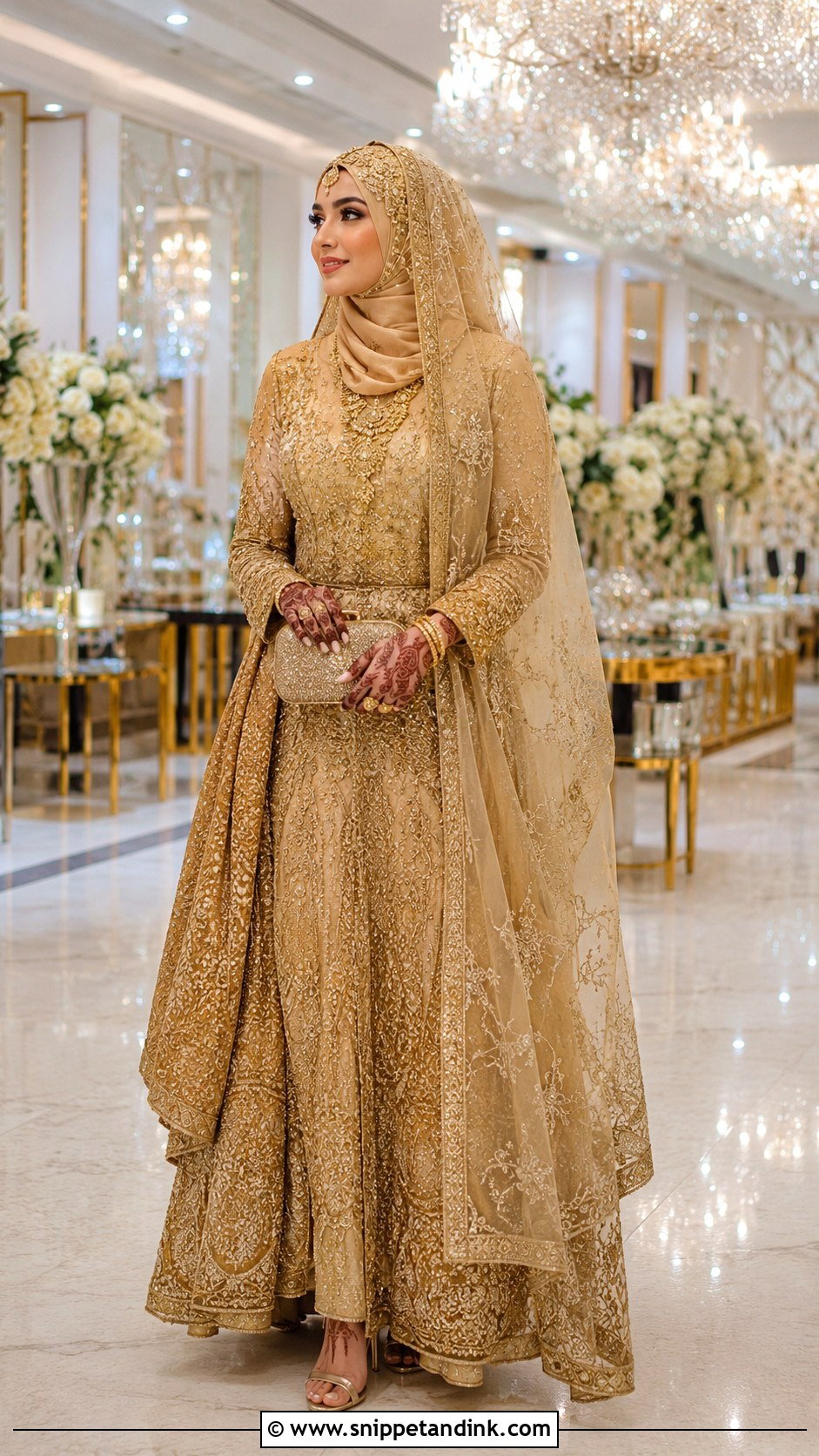
A gold lehenga is rich on its own, so I’d avoid making every piece heavy. Balance a detailed skirt with a plainer long-sleeved blouse and a lighter dupatta. Champagne, antique gold and soft bronze suit many skin tones. A neat hijab wrap keeps the face from looking crowded, which matters when the jewelry is also gold. Matching hijab, gold jewelry and embellished heels suit an evening reception in a large hall.
13. Pakistani Muslim Bridal Dress
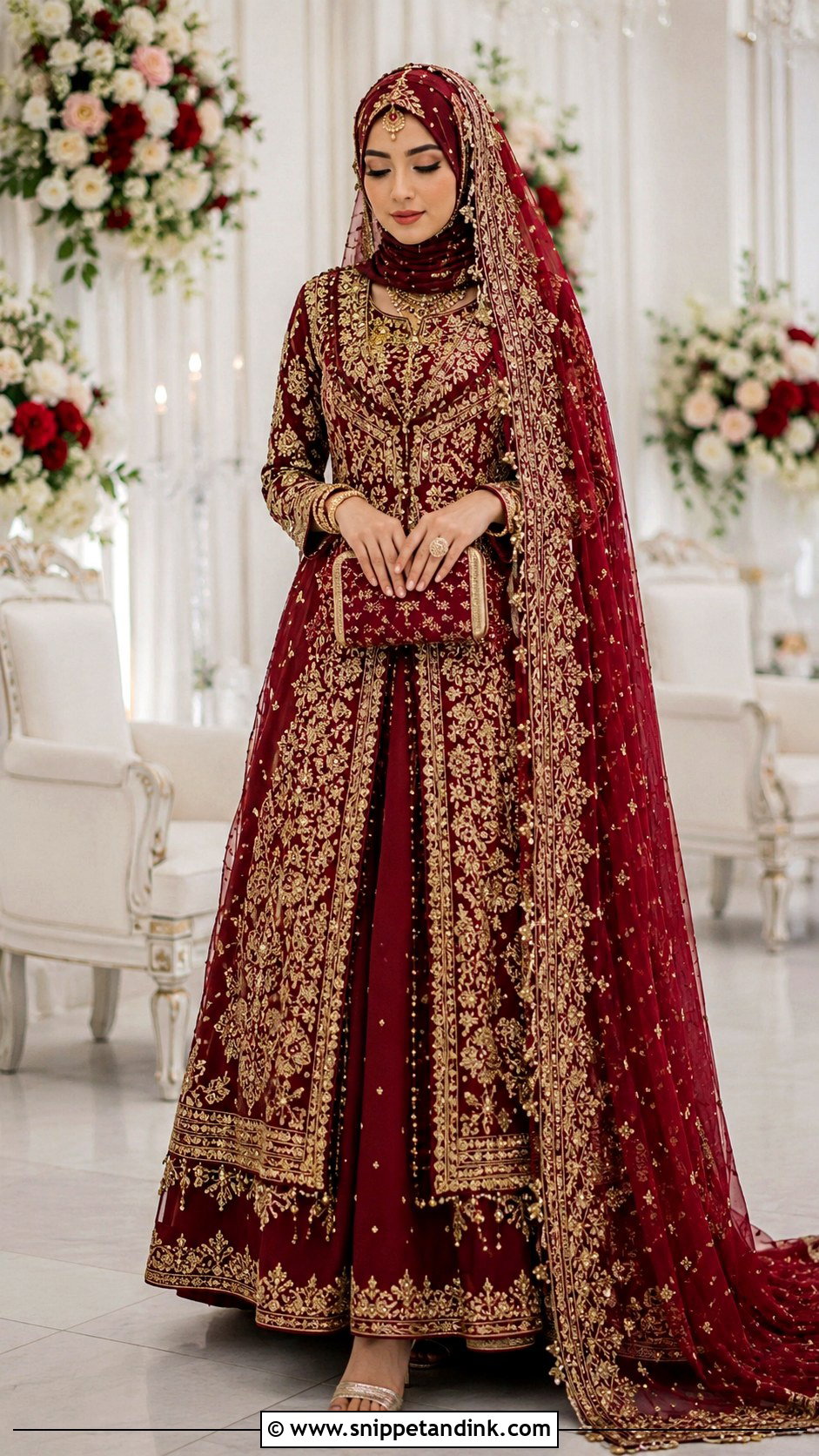
Pakistani bridal outfits usually combine heavy embroidery with a long kameez or peshwas, wide trousers or a lehenga skirt, and a dupatta styled with the hijab. Deep red, maroon, blush, gold and ivory are all common; family tradition often decides. Full sleeves and a modest neckline are standard. The dupatta is usually the heaviest part to manage, so have it pinned over the head and shoulder at several points before you leave the bridal room. Traditional jewelry, comfortable heels and a matching clutch complete it.
14. Indian Muslim Bridal Dress
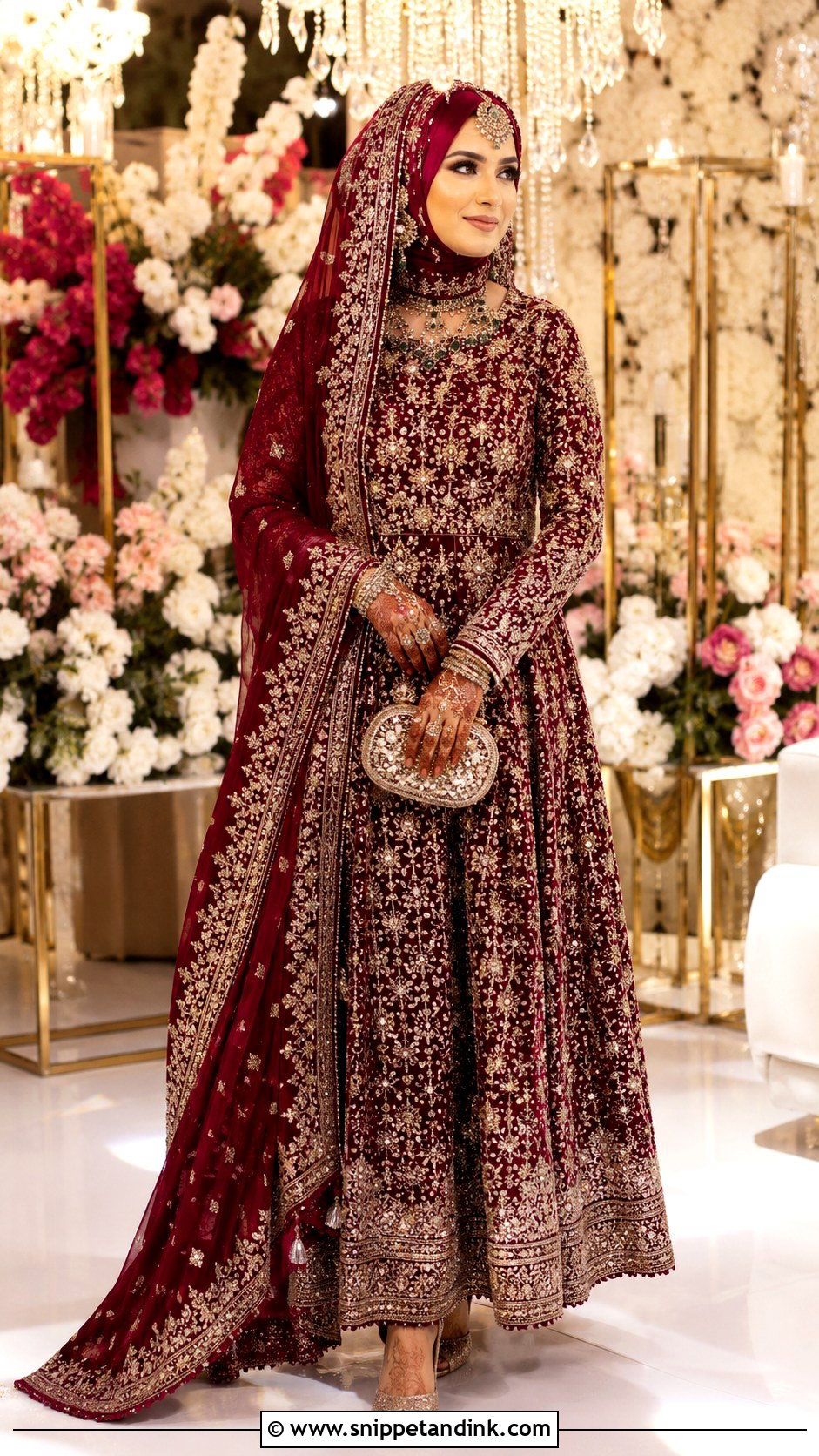
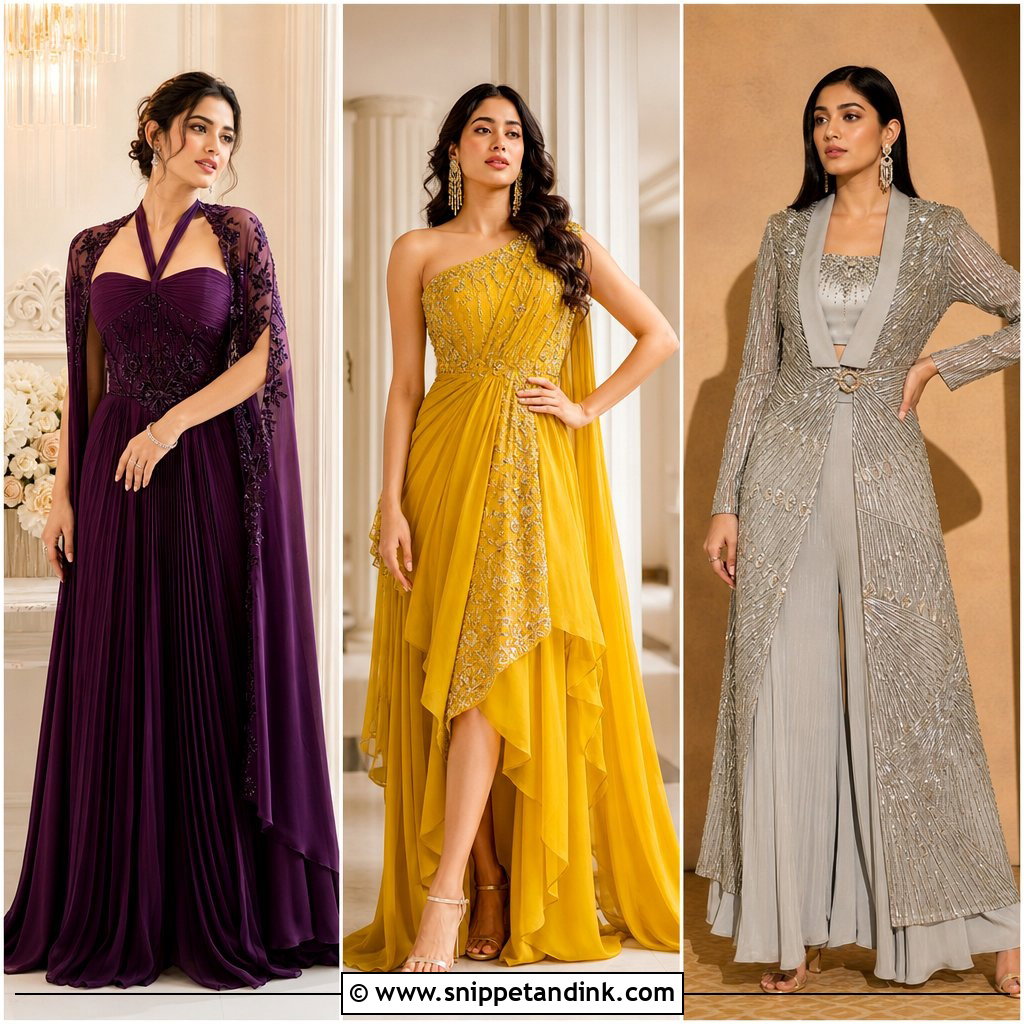
An Indian Muslim bridal dress can be a long embroidered anarkali, a lehenga or a sharara set, each worn with a hijab and dupatta. Ruby, emerald, ivory, gold and rose all work, depending on the embroidery. Full sleeves, a covered neckline and a dupatta that frames the hijab without slipping are the essentials. Family jewelry and handwork patterns add personal meaning. Embellished sandals or heels and a small clutch finish it.



15. Turkish Muslim Bridal Dress
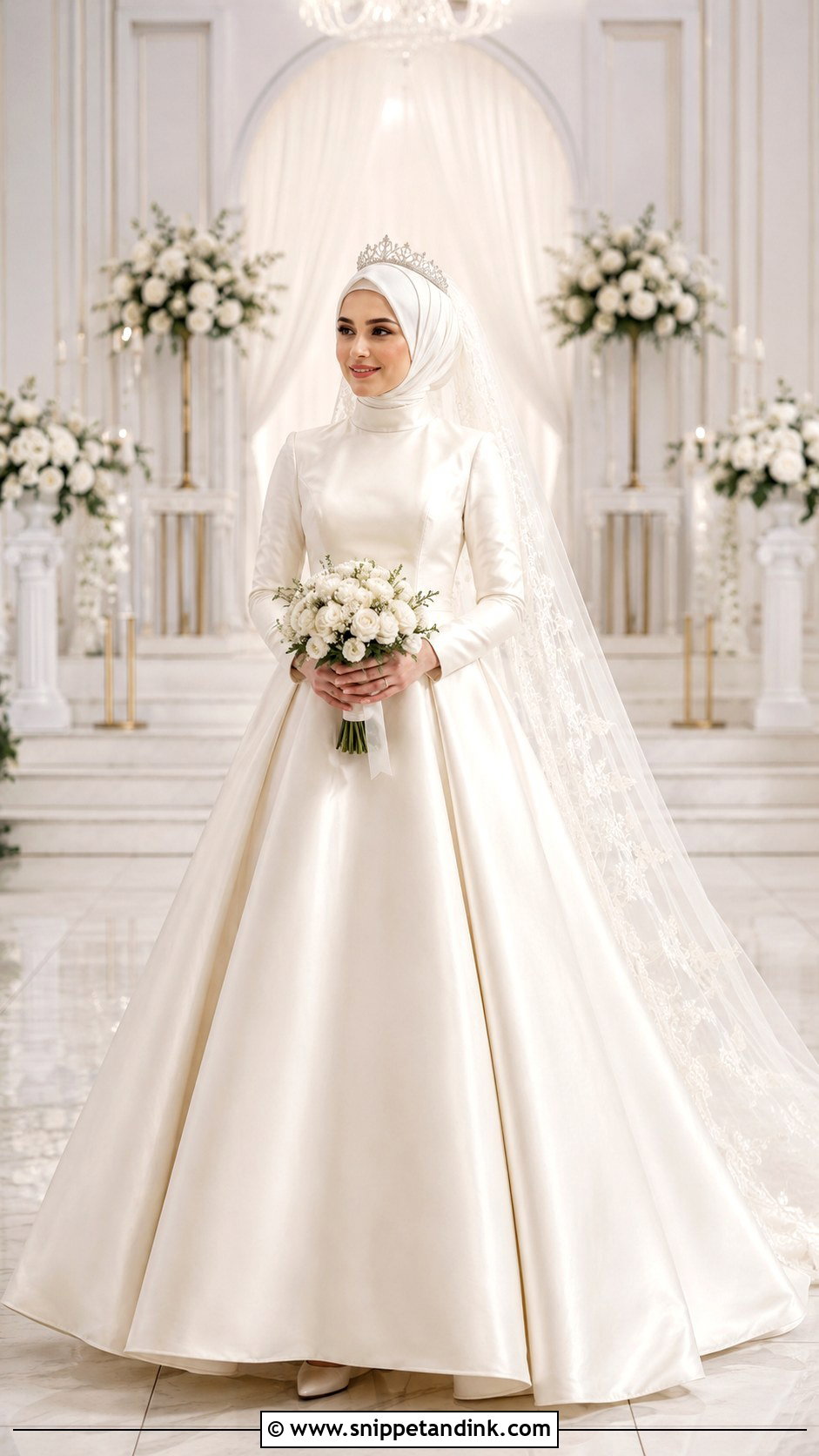
Turkish bridal style tends toward clean tailoring: long-sleeved satin gowns, high-neck lace or sleek A-lines with a neatly wrapped hijab. A long veil or cape adds drama. White and ivory are most common; champagne works well too. A delicate tiara placed over the hijab, closed-toe heels and a simple bouquet complete it. The tailoring is where the look succeeds or fails, so budget for proper alterations rather than relying on the sample size.
16. Moroccan Muslim Bridal Kaftan
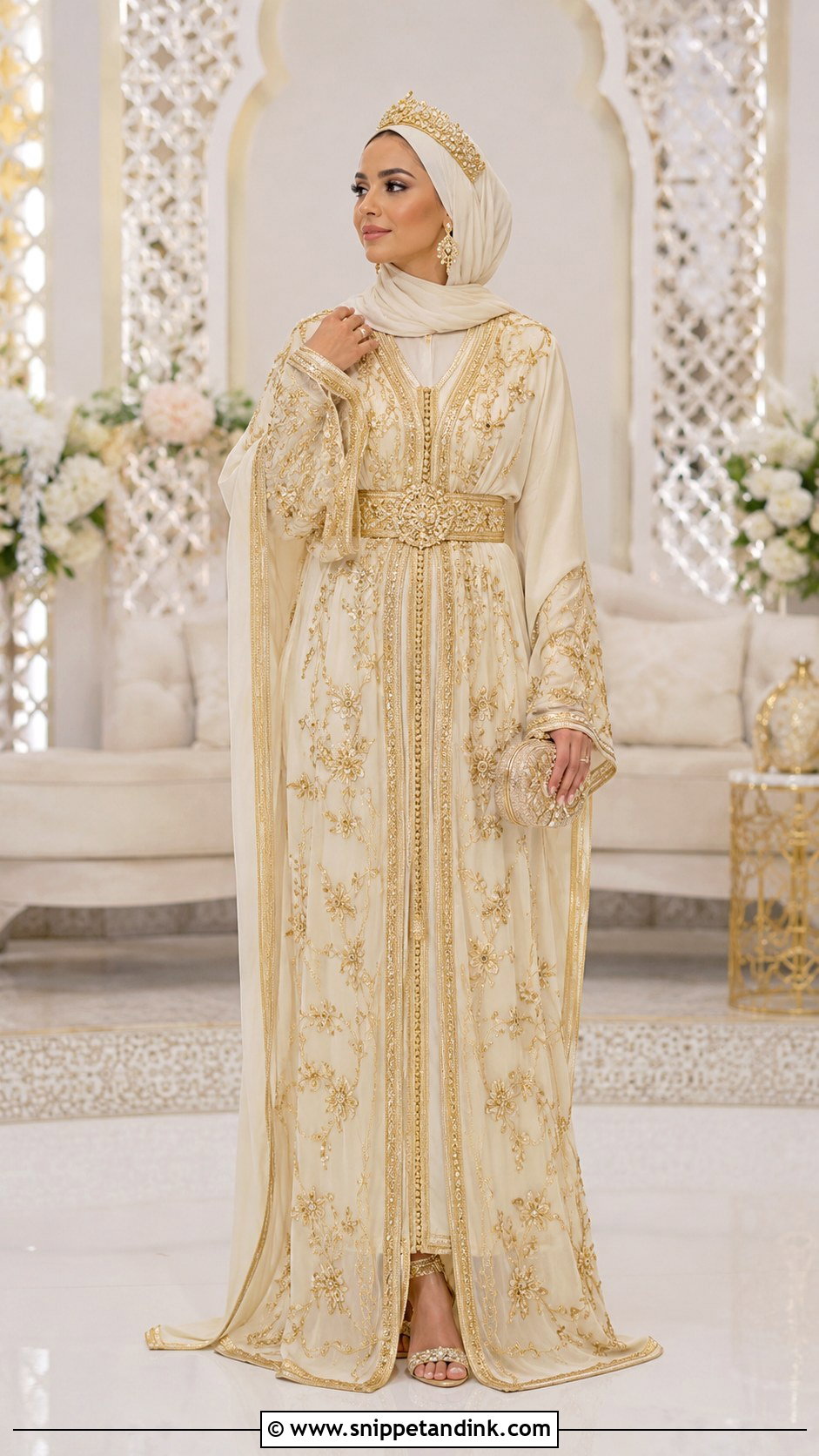
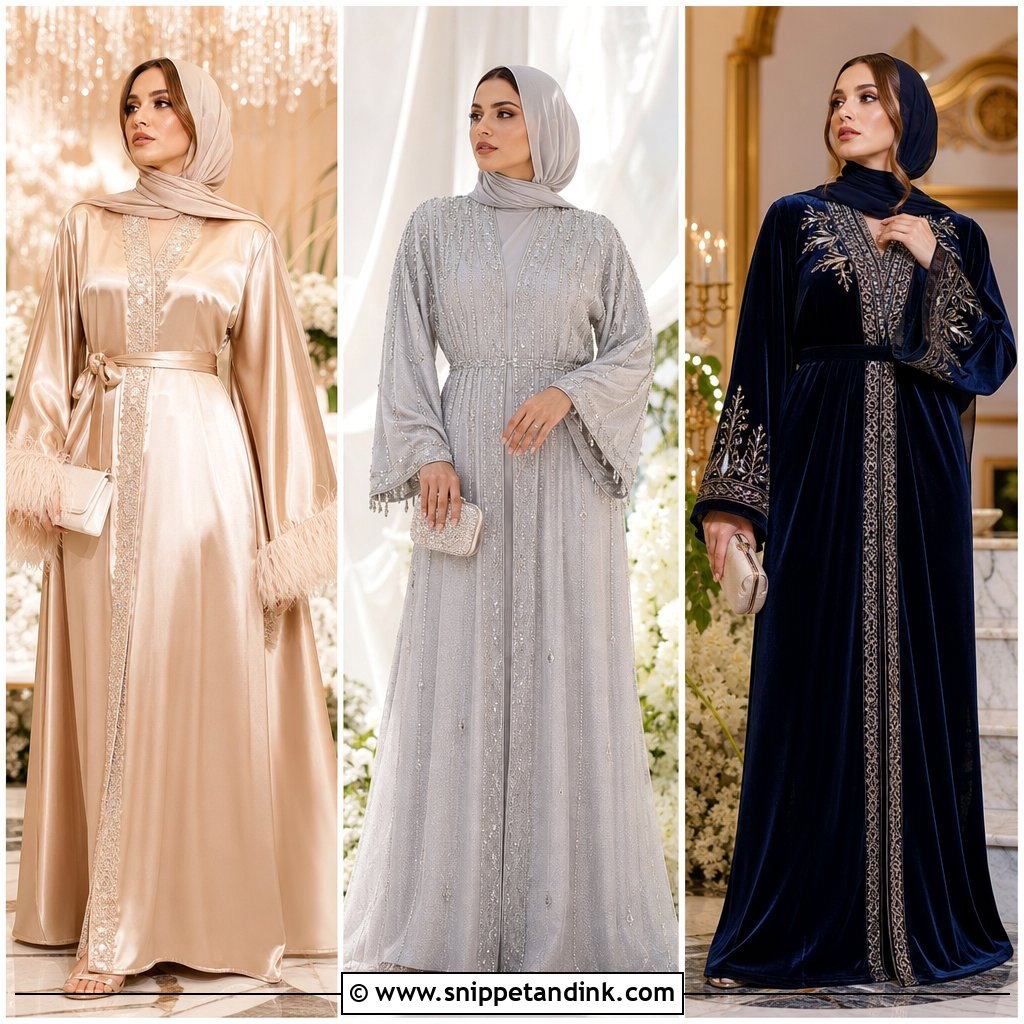
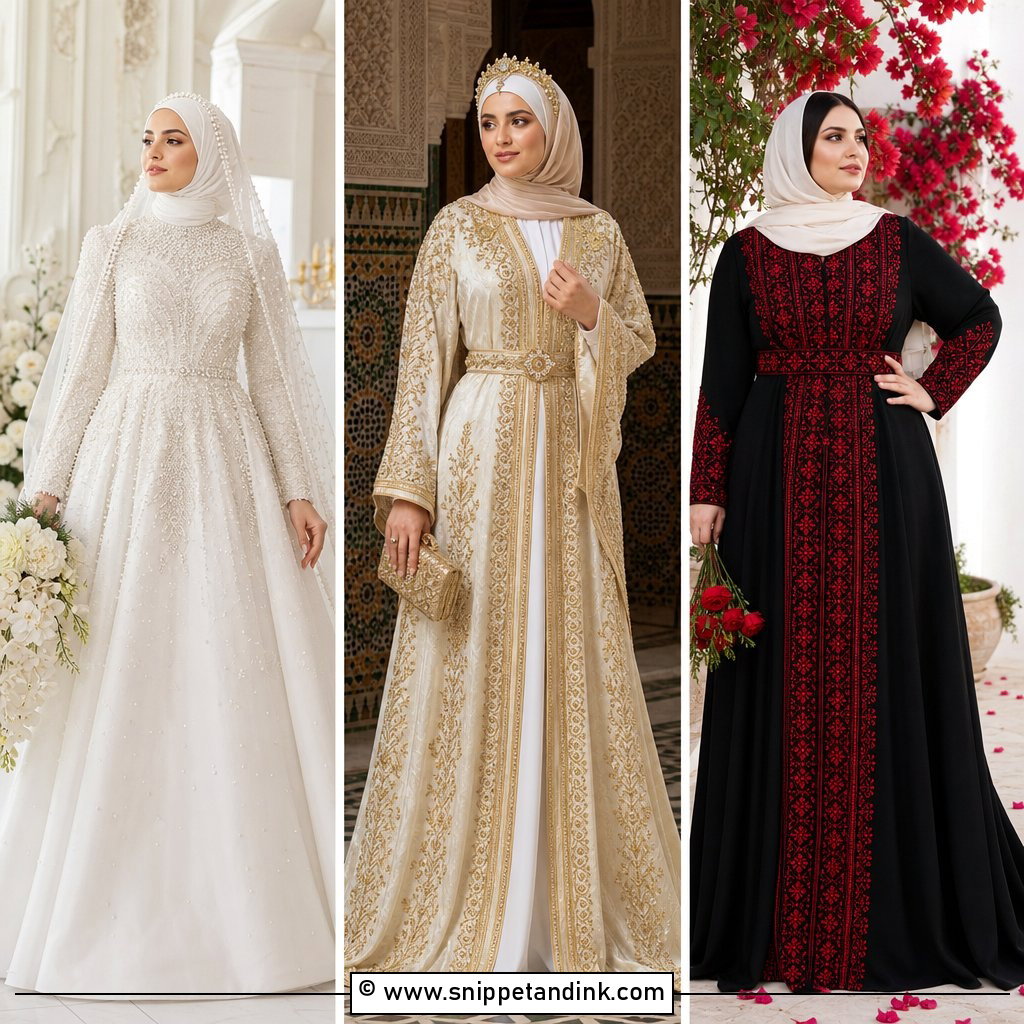
A Moroccan Muslim bridal kaftan is long, flowing and fully covered, so comfort is built in. Ivory, emerald, gold, white or blush with embroidery, beading or metallic trim all suit it. The belt is what turns a kaftan into a bridal silhouette, so choose one that sits firmly at the waist. Moroccan brides often change outfits several times during the celebration, and kaftans suit henna nights, receptions or the main ceremony depending on the family. A coordinated hijab, ornate jewelry and embellished heels finish it.
17. Modern Muslim Bridal Jumpsuit
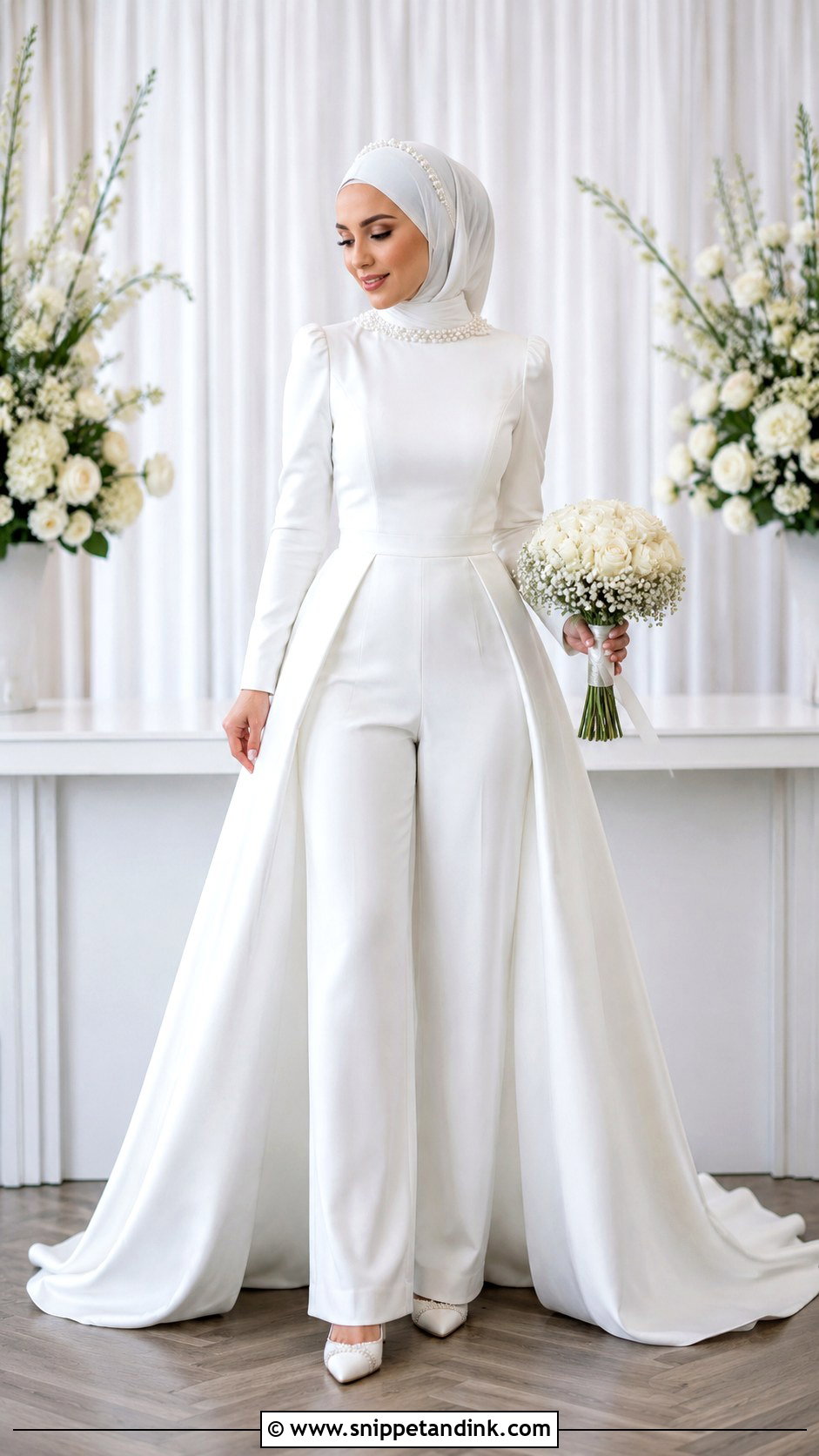
A modern Muslim bridal jumpsuit suits brides who’d rather not wear a gown. Choose wide legs, long sleeves, a high neckline and a structured bodice; wide legs move like a skirt and avoid any clinging. An overskirt, cape or detachable train adds ceremony drama. A sleek hijab and pointed heels lengthen the line. Pearl studs, a slim bracelet and a clean bouquet suit a civil ceremony or small reception.
18. Muslim Bridal Pantsuit
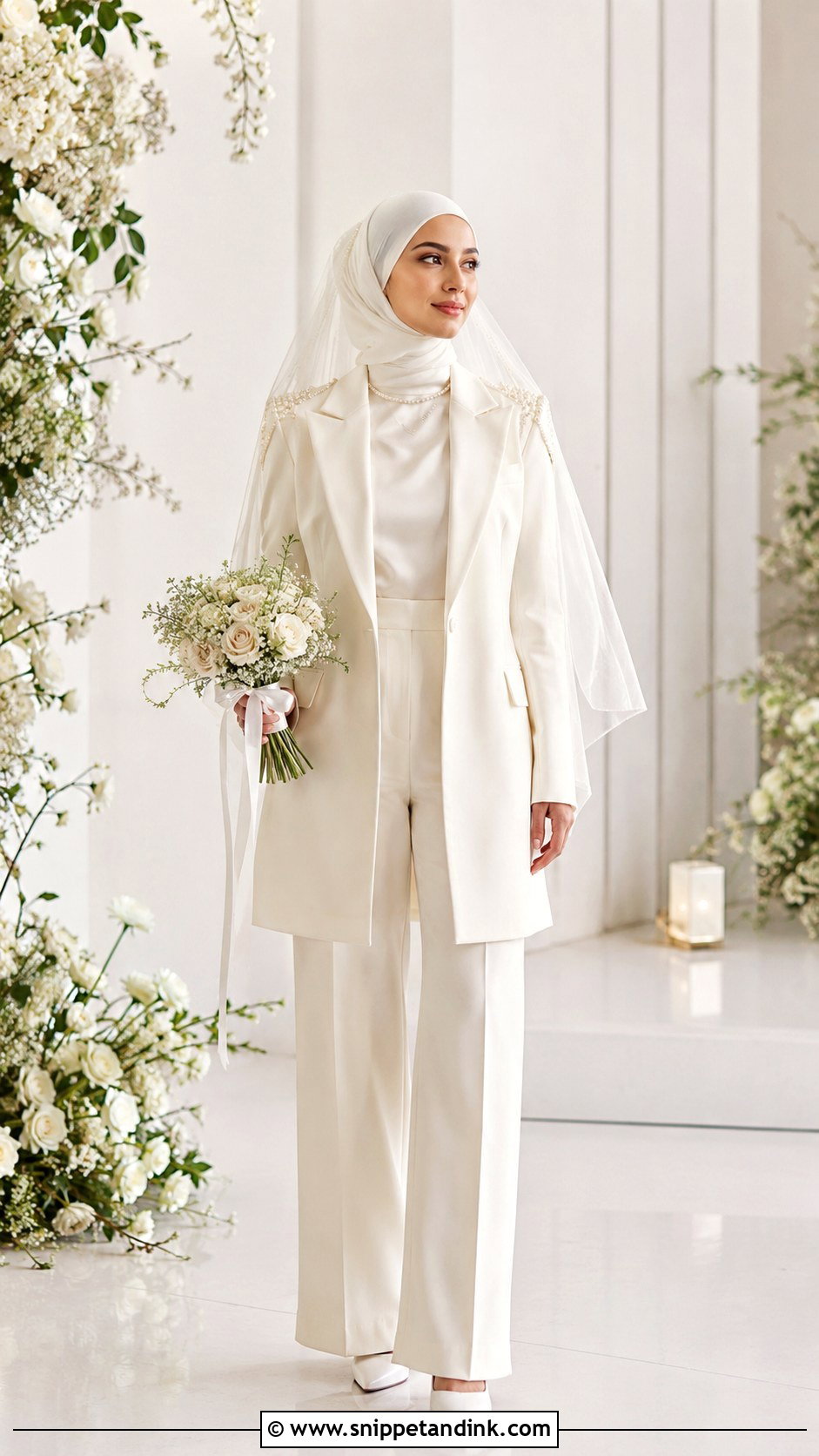
A bridal pantsuit needs the right fabric to look bridal rather than corporate. Ivory satin, crepe or jacquard do that; plain suiting fabric doesn’t. Wide-leg trousers with a long blazer or tunic jacket give full coverage, and a long jacket covers the hips. A matching hijab, pointed heels and pearl or crystal accessories soften the tailoring. A veil fastened at the shoulders adds a ceremonial touch for the nikah.
19. Muslim Bridal Abaya Dress
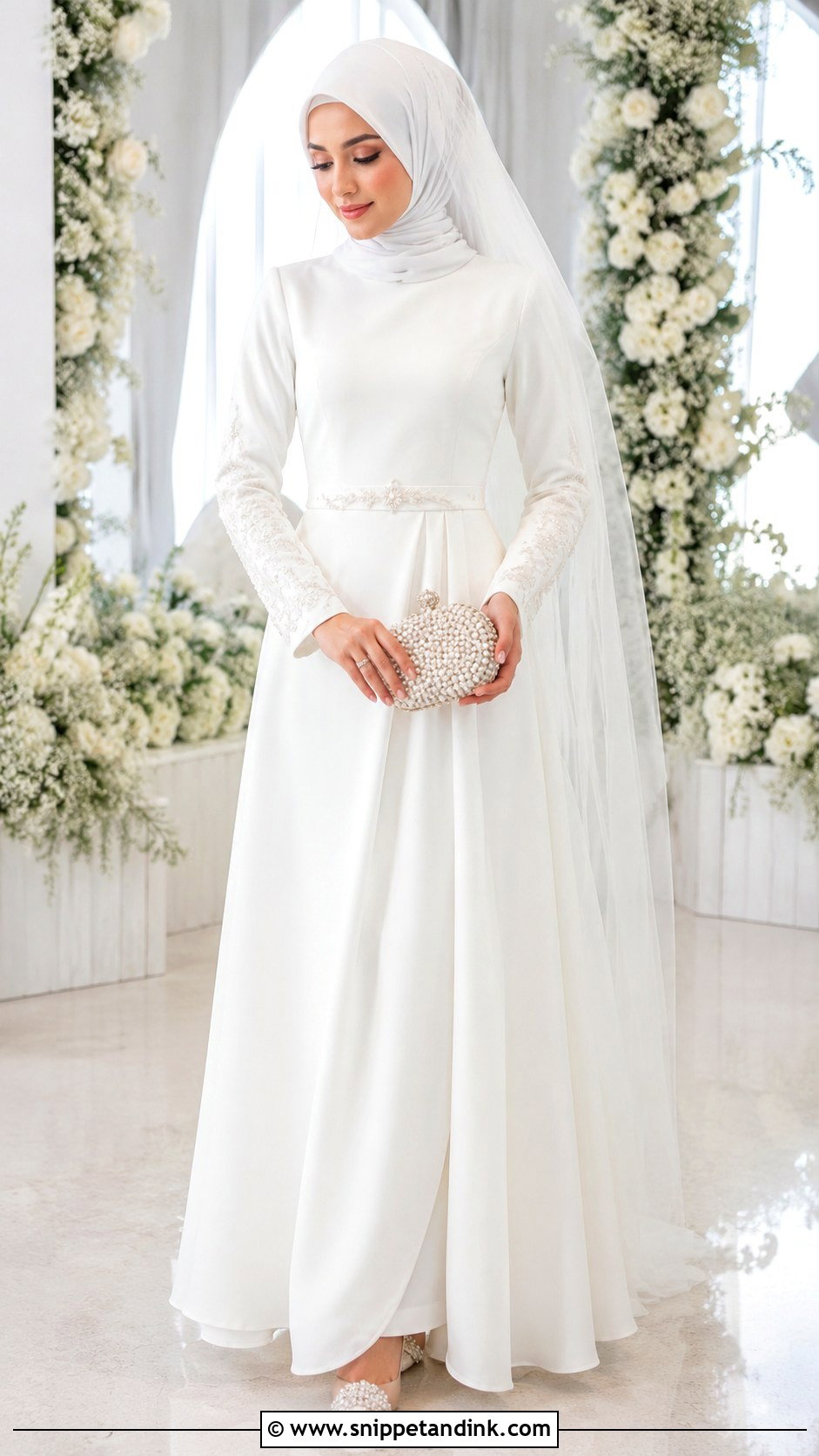
A bridal abaya is easy to personalise, and the difference between bridal and everyday is in the fabric and embellishment. White, ivory, champagne or soft gold with embroidery on the sleeves, front panel or hem looks special. A subtle inner belt or waist detail stops it looking shapeless without making it fitted. A matching hijab, a delicate veil, embellished heels, a pearl clutch and soft jewelry finish it.

20. Muslim Bridal Gown With Overskirt
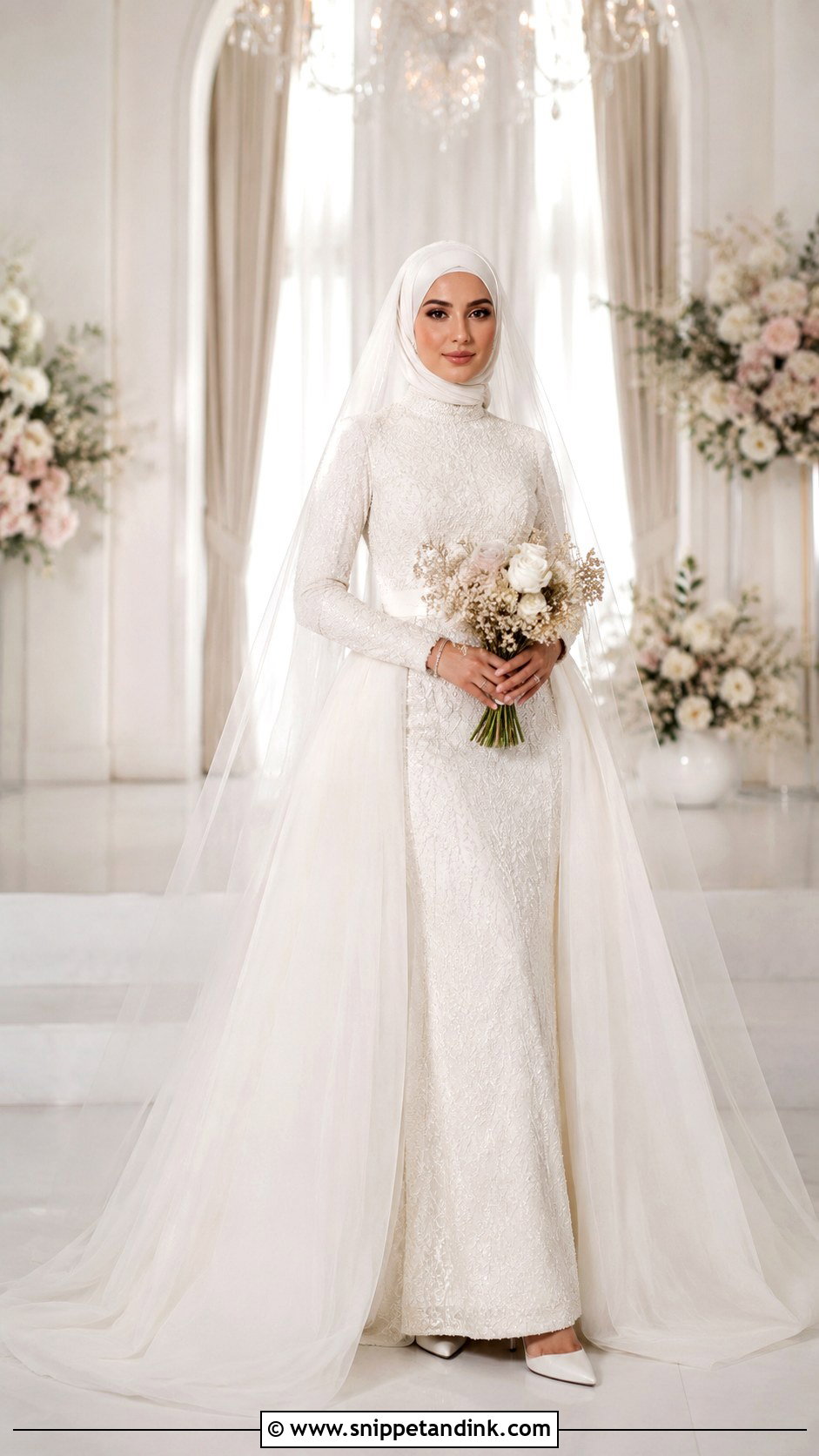
An overskirt gives you a big ceremony silhouette and a lighter reception one from the same base gown. Wear a fitted long-sleeved gown underneath and add a tulle, satin or organza overskirt for the entrance and portraits. Check how it fastens; it should come off in under a minute with one helper. A neat hijab and a long veil balance the volume. Choose heels that suit both skirt lengths.
21. Champagne Muslim Bridal Dress
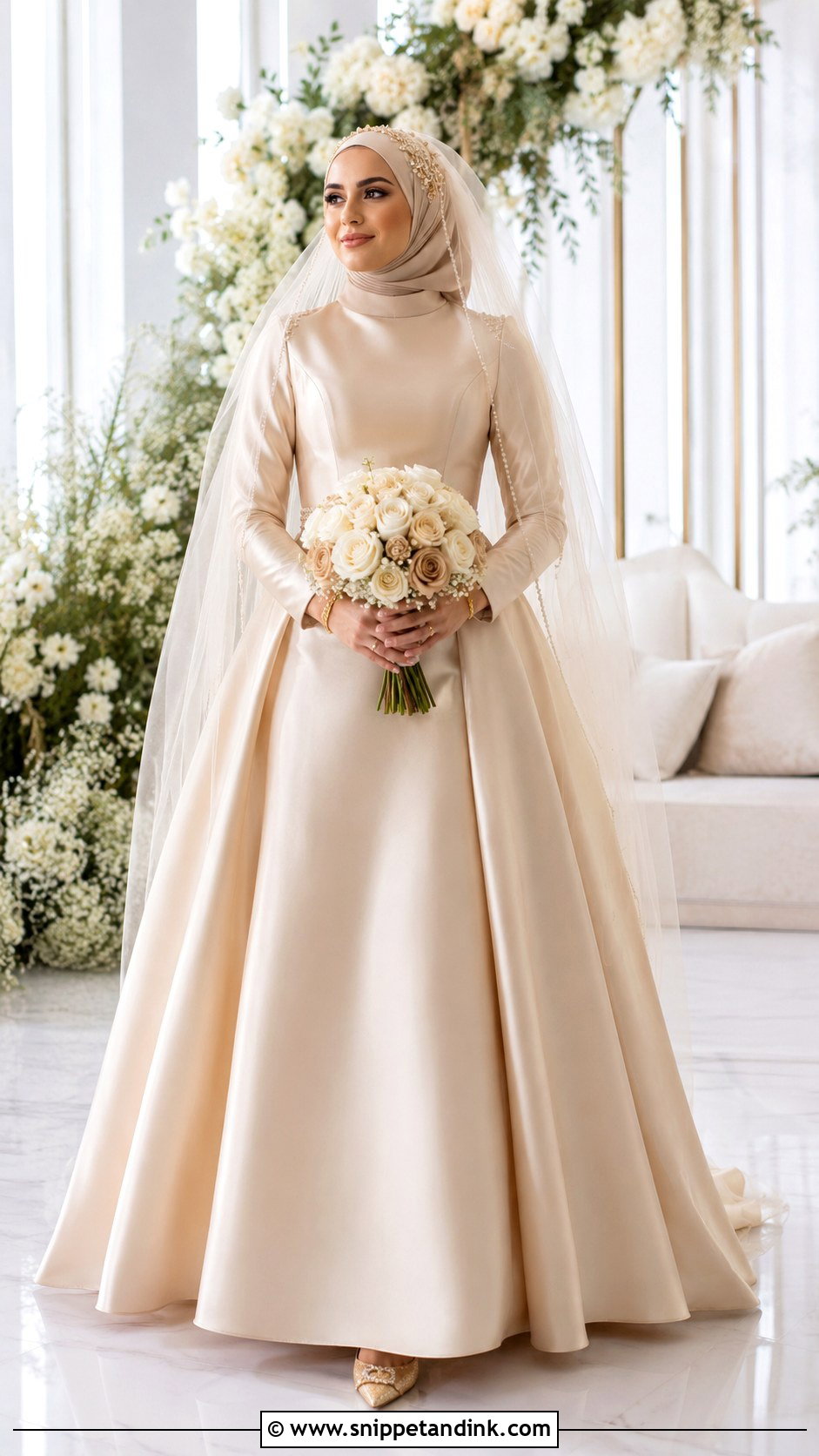
Champagne is warmer than white and kinder to many skin tones, especially under warm indoor lighting. It works in satin, lace, tulle and beading. A long-sleeved A-line or sheath with a high neck pairs best with a hijab in the same champagne. The hijab’s shade is the tricky part: off-white hijabs next to champagne look grey, so bring a fabric swatch when buying. Gold or pearl accessories and nude or metallic heels continue the tone, with an ivory or champagne veil.
22. Blush Muslim Bridal Dress
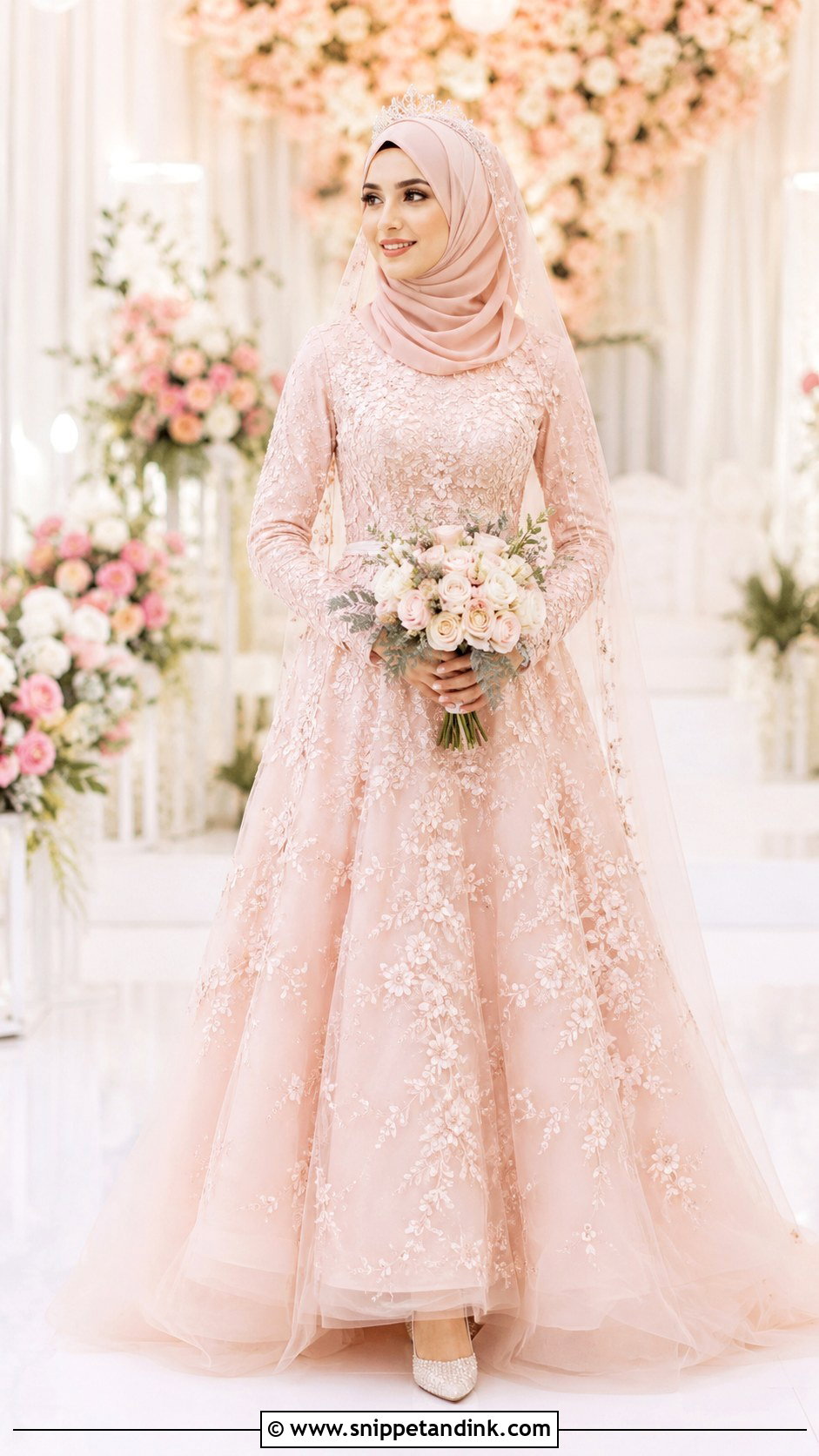
Blush is pale pink and softer than white, and it photographs warmly in natural light. Choose a gown with lace sleeves, floral embroidery or a light tulle skirt. A matching blush hijab keeps the look unified; ivory accessories brighten it. Blush can look washed out on some fair skin tones in strong daylight, so try it near a window, not just under shop lights. Pearl heels, a floral bouquet and a delicate tiara over the hijab finish it.
23. Emerald Muslim Bridal Dress
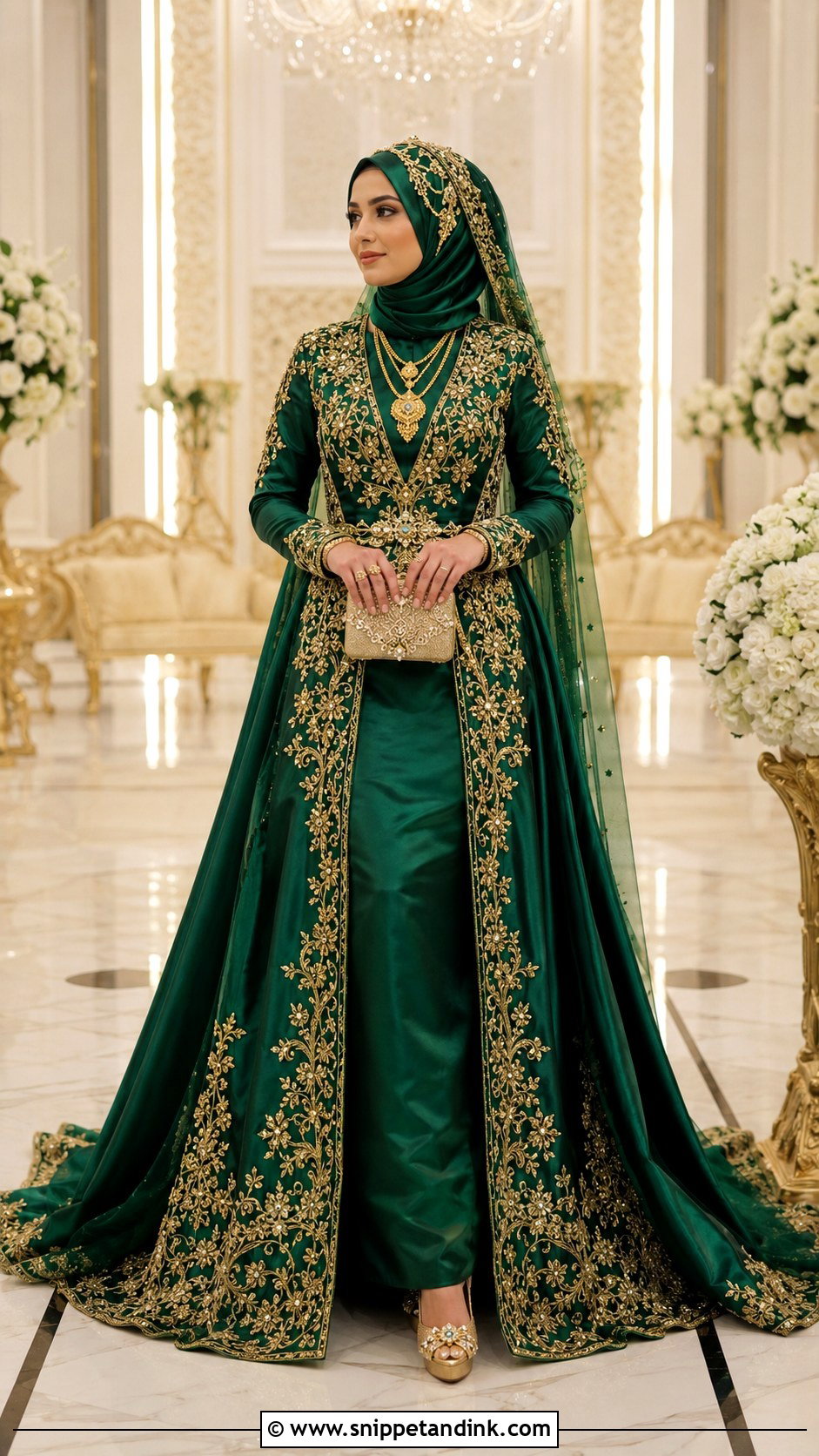
Emerald is a rich colour that suits evening receptions and cultural celebrations. Velvet, satin, brocade and embroidered fabrics hold its depth. A long-sleeved gown, kaftan or lehenga with gold details all work. An emerald hijab is dramatic; gold or ivory softens it. Velvet is warm, so for a summer venue, choose satin or brocade instead. Gold jewelry, embellished heels and a structured clutch finish it.
24. Navy Muslim Bridal Dress
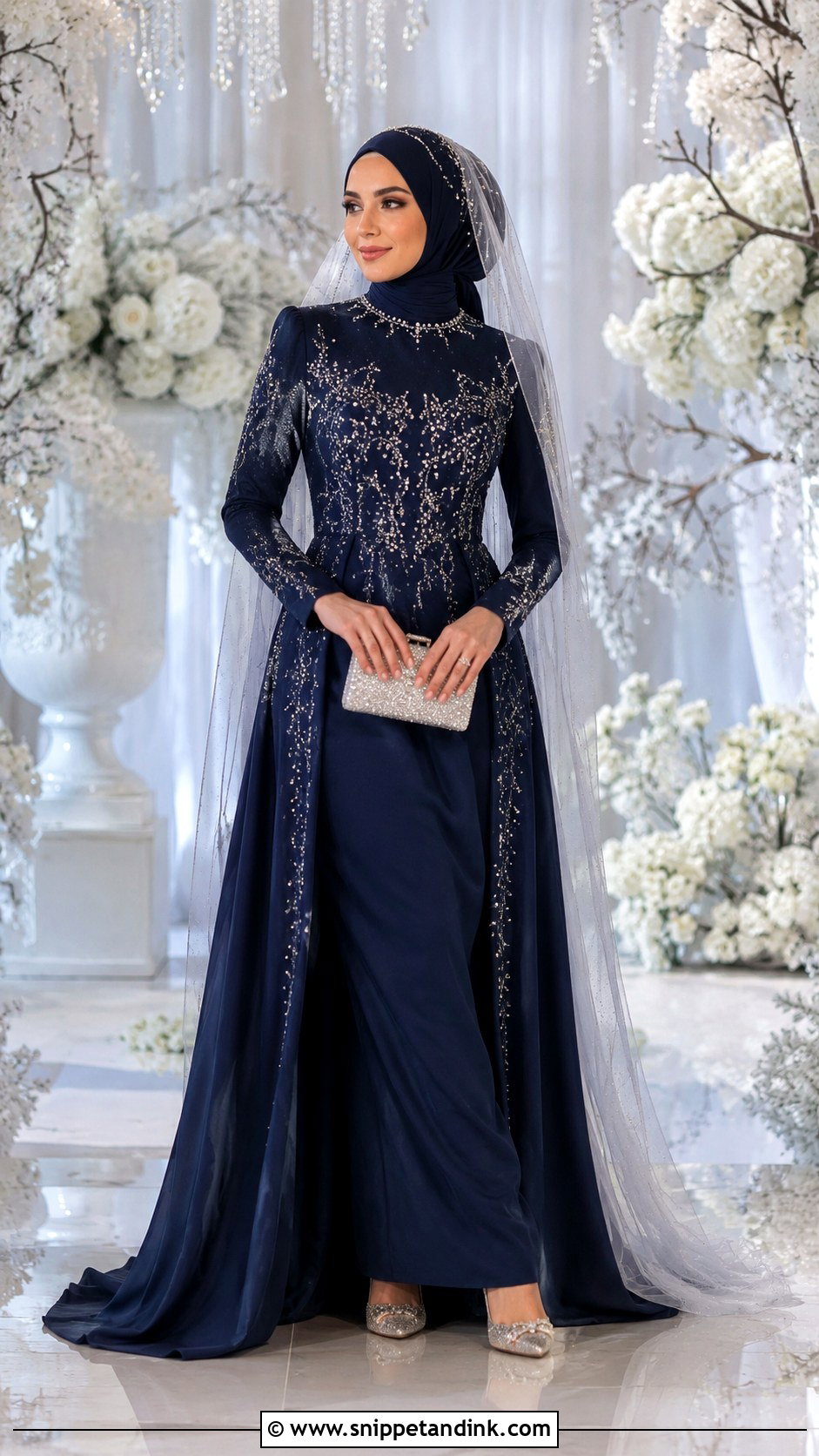
Navy is a less common bridal colour, and it pairs with silver, pearl or crystal rather than gold. Long-sleeved gowns, kaftans and embroidered dresses all carry it. A matching hijab looks sleek; a soft silver veil adds contrast. Cool-toned jewelry and metallic heels complete it. Navy can read almost black in low light, so ask your photographer to check exposure with you in the dress before the evening portraits.

25. Maroon Muslim Bridal Dress
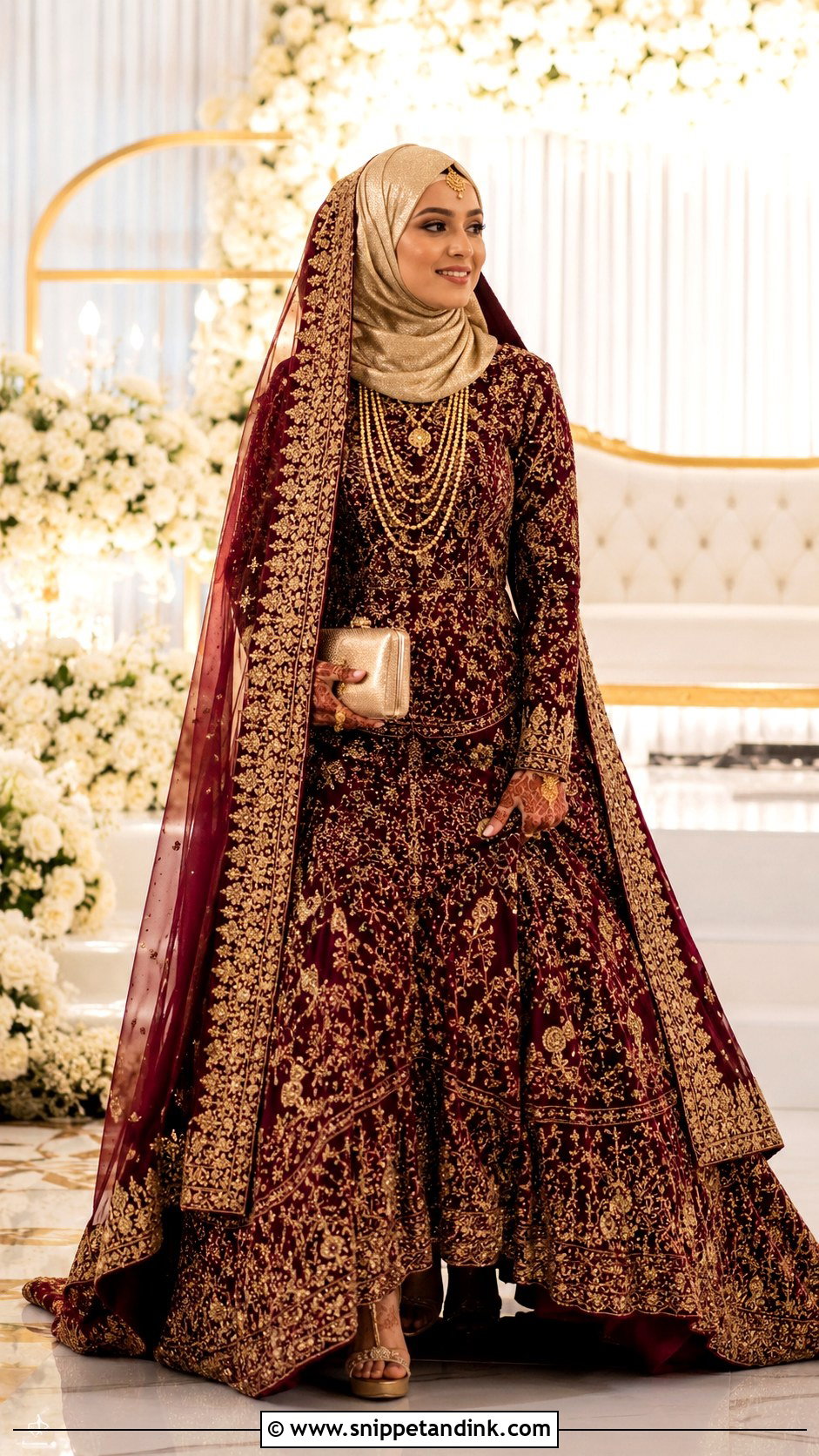
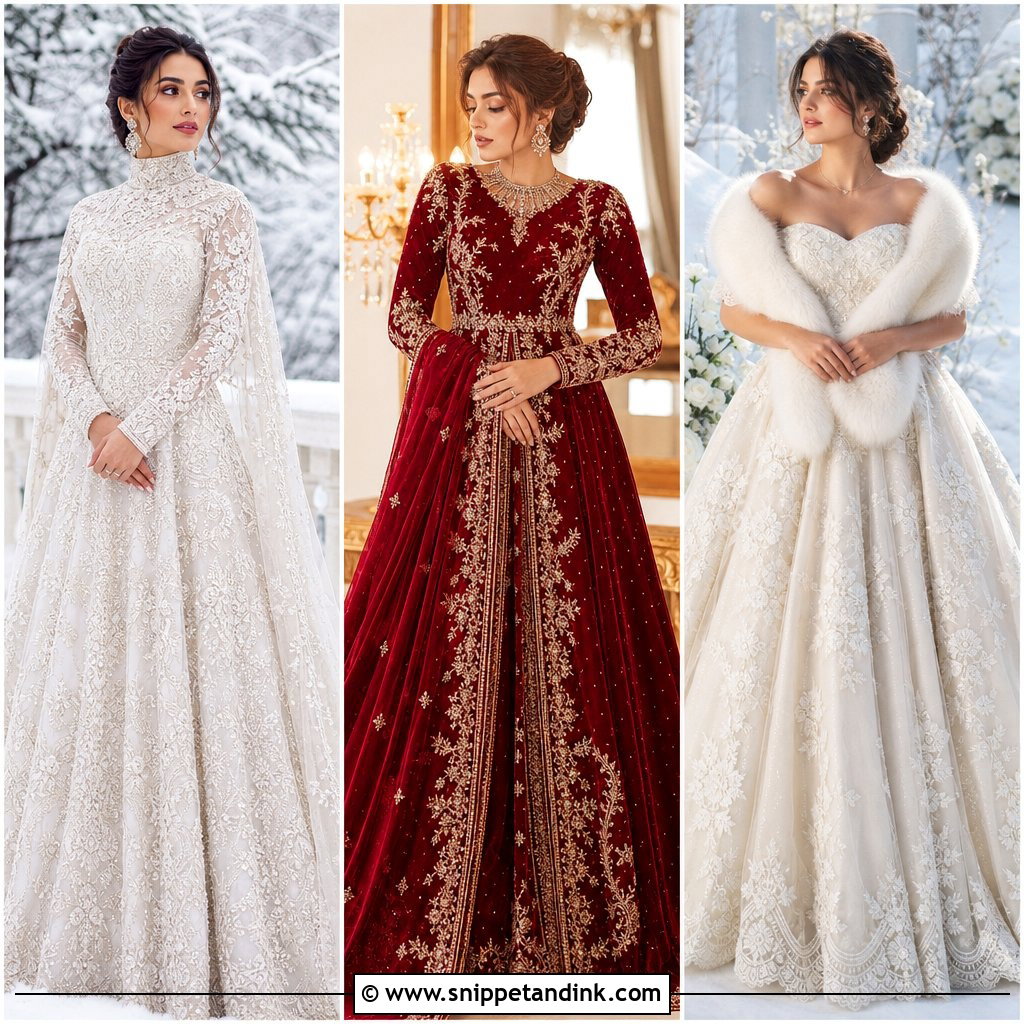
A maroon Muslim bridal dress is deeper and more dramatic than bright red, and it carries gold embroidery very well. A lehenga, anarkali, kaftan or long gown with full sleeves all work. A matching or antique-gold hijab completes it, with layered jewelry. Heavily embroidered maroon outfits can be heavy, so prioritise comfortable shoes. It suits South Asian, Middle Eastern and fusion weddings.
26. Floral Muslim Bridal Dress
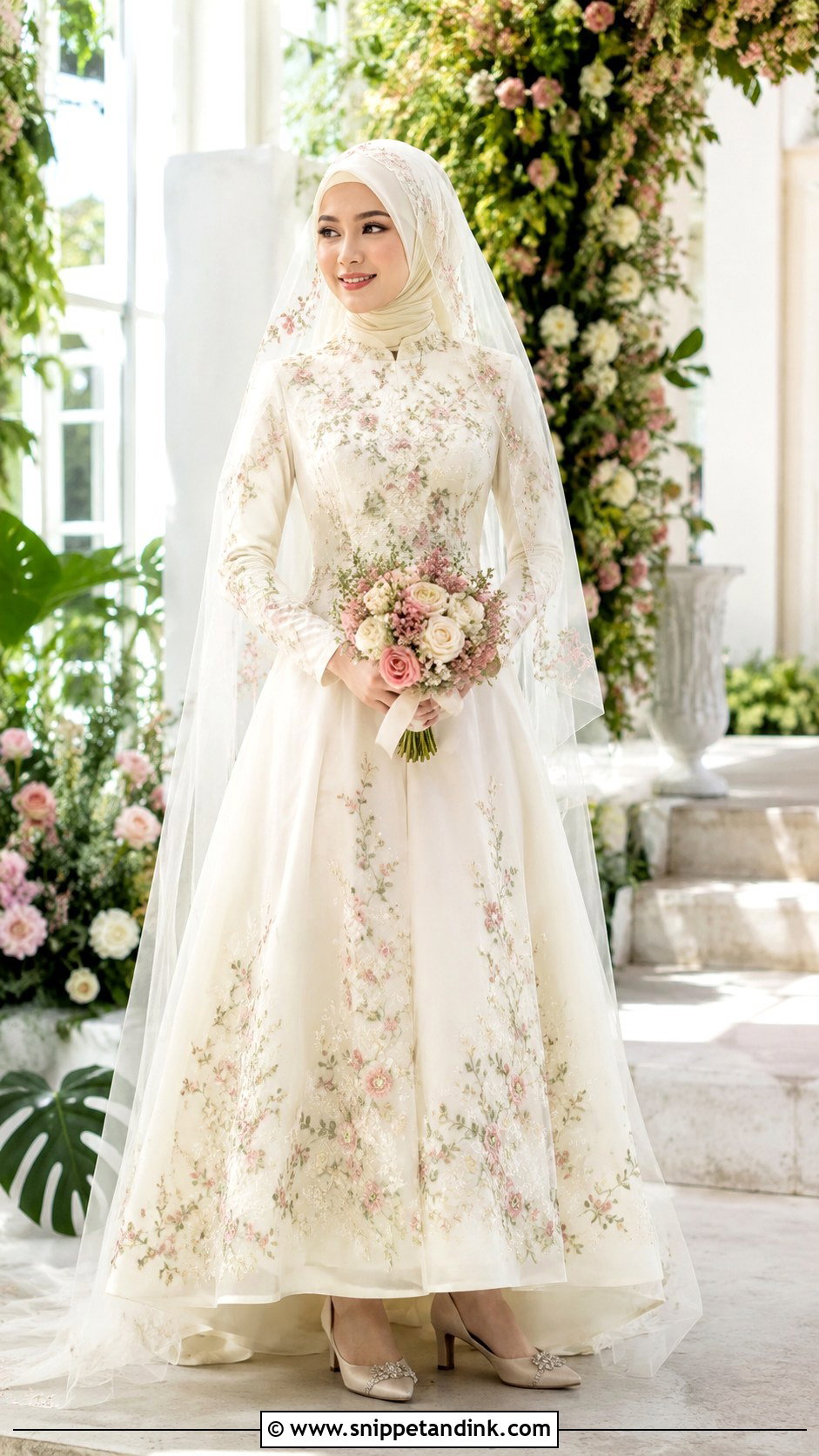
Floral embroidery can sit on the bodice, sleeves, skirt, veil or dupatta. An ivory, blush, champagne or soft blue base keeps the flowers from overwhelming. If the dress is busy, keep the hijab plain; if it’s simple, a floral veil adds interest. Match the bouquet to the embroidery colours. It suits daytime and garden-style venues.
27. Modest Muslim Bridal Dress With Gloves
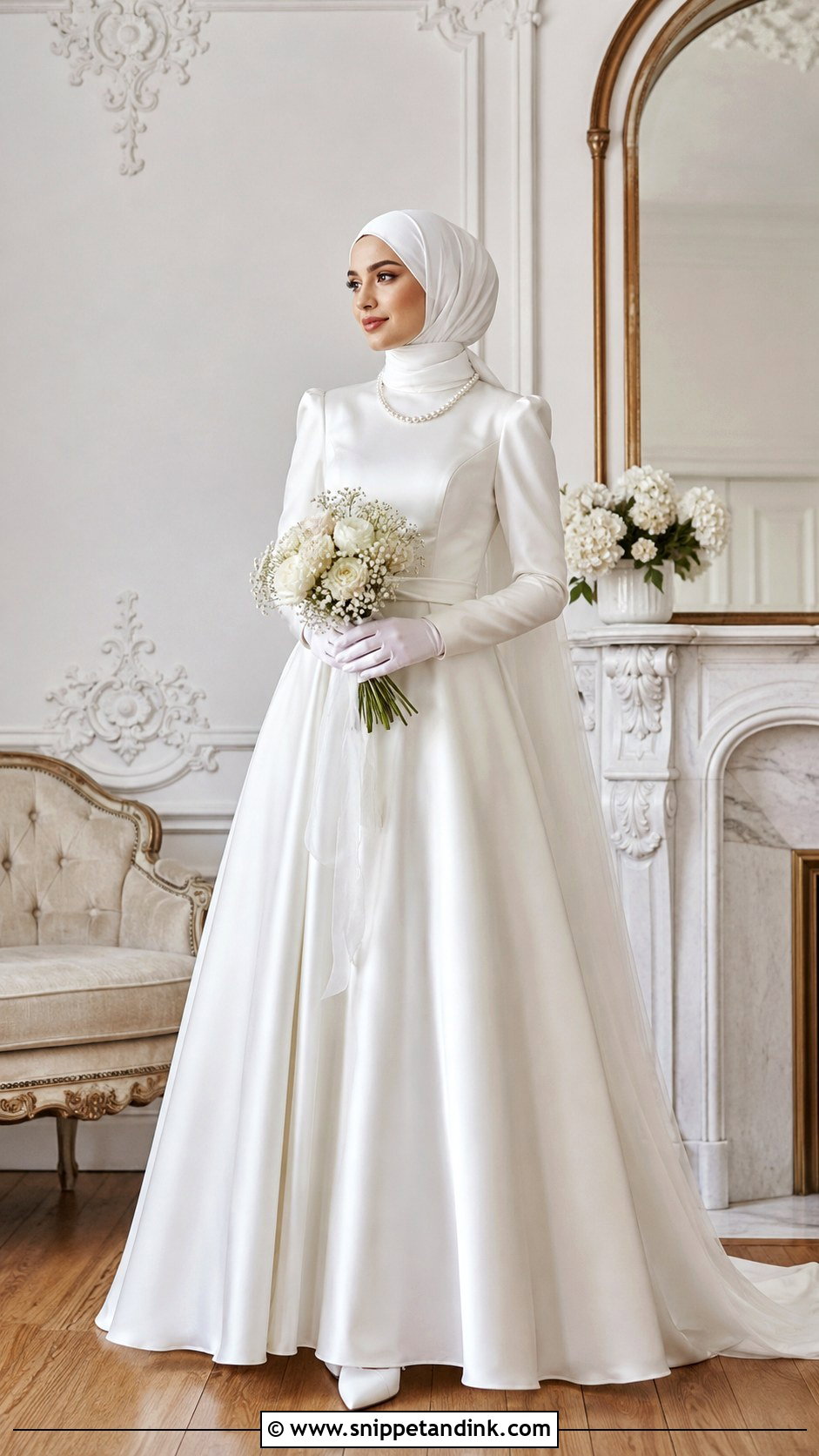
Gloves look intentional when they match the gown’s fabric or lace and stop at a deliberate point, usually the wrist or just below the elbow under a long sleeve. A high-necked, long-sleeved satin or crepe gown suits them. Remember that you’ll need to take a glove off, or have a ring finger opening, for the ring. A clean hijab wrap, pearl jewelry and pointed heels finish it, with a short or long veil.
28. Minimal Muslim Bridal Dress
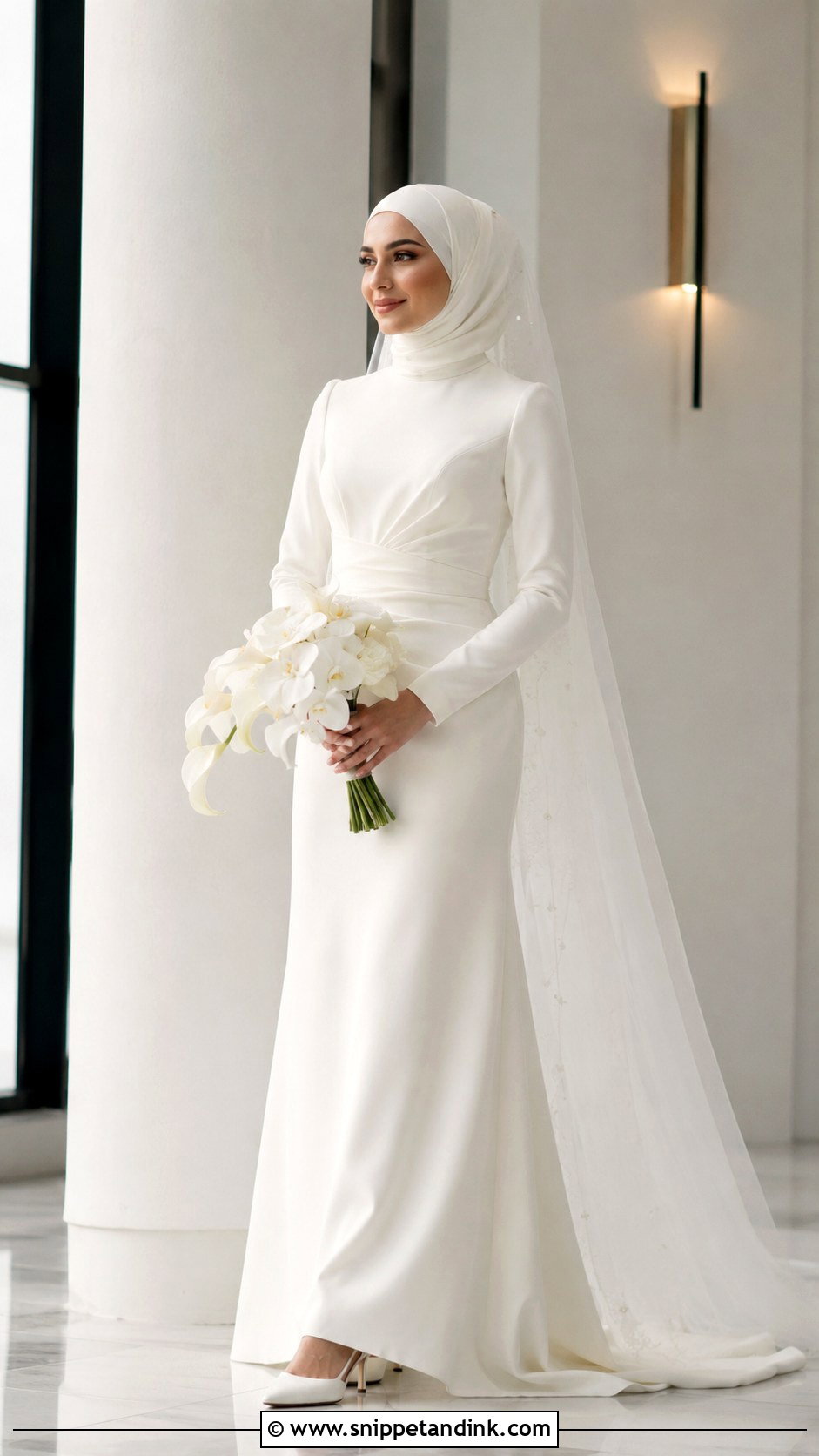
A minimal gown is all tailoring: satin, crepe or mikado with a high neck, long sleeves and very little embellishment. Alterations matter more here than anywhere else in this list, because nothing hides an uneven hem or a sleeve that twists. A matching hijab, a simple veil and sleek heels keep it modern. Add one statement detail, like pearl earrings under the hijab, a sculptural bouquet or a fine belt, and stop there.
29. Plus Size Muslim Bridal Dress
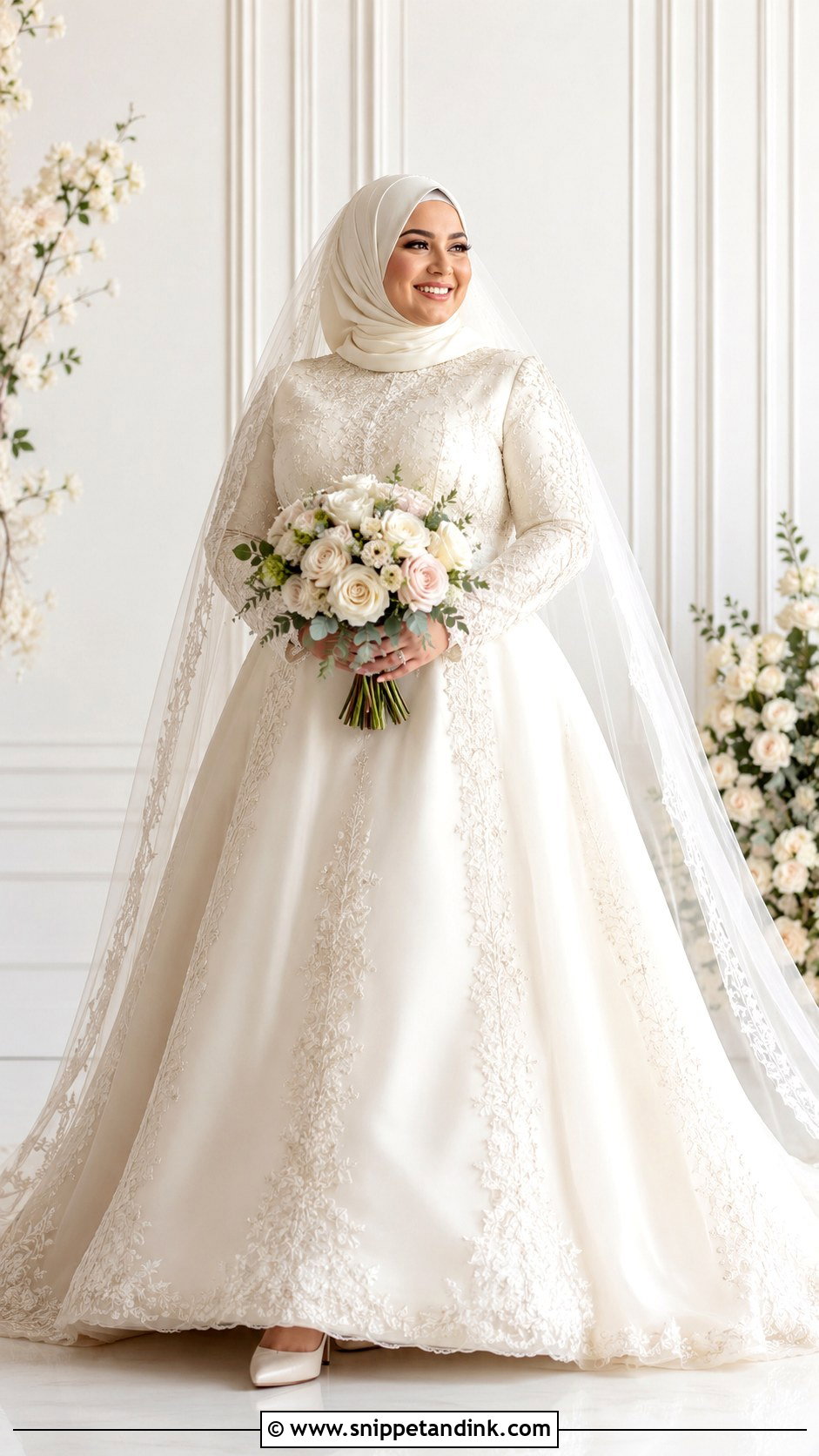
For plus size brides, I focus on lining, sleeve comfort and how the neckline meets the hijab. A-line gowns, structured ball gowns, empire waists and flowing kaftans all work. Avoid stiff fabrics that pull or crease across the body. Vertical details like embroidery panels or a long veil draw the eye down the full length. A secure hijab wrap, comfortable heels and balanced accessories complete it. The aim is a dress you can move, breathe and celebrate in.
30. Muslim Bridal Reception Dress
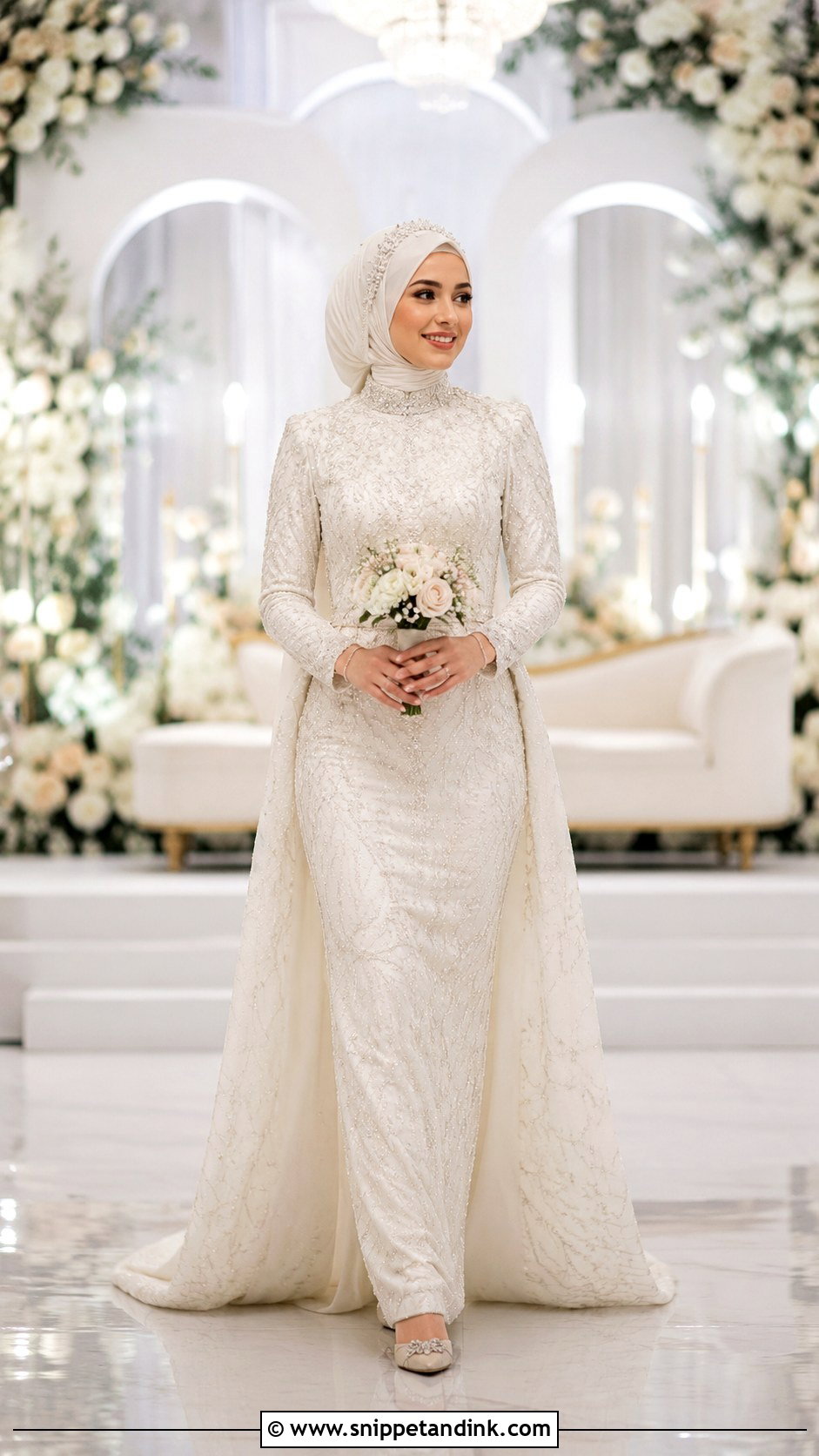
A reception dress can be lighter and easier to move in while staying formal. Many brides change after the ceremony into a beaded gown, an embroidered kaftan, a lehenga or a satin dress with a shorter train. Keep the neckline high, the sleeves long and the hijab coordinated. It’s a good moment to add colour or shimmer. Receptions involve a lot of standing, greeting and photos, so choose shoes you can wear for hours.
Pinning a Veil and Tiara Over a Hijab So Nothing Slides
Silk and satin hijabs are slippery, and a veil comb has nothing to grip. This is the order I build the head in:
- Start with a cotton or jersey underscarf, or a bonnet with grip. It gives every pin something to hold on to.
- If you have long hair, a low bun under the underscarf gives the veil a solid anchor and adds a little height at the back.
- Wrap the hijab and pin it at the sides and under the chin. Use flat, plain pins where they’ll be seen and secure ones where they won’t.
- Slide the veil comb through the hijab into the underscarf or bun, never into the hijab alone. A couple of hidden pins either side of the comb keep it straight.
- Place the tiara or headpiece last and pin through its loops into the underscarf.
Practise the whole build at your trial and photograph the back. If your hijab stylist and veil fitter are different people, make sure one of them knows the full sequence on the day.
Nikah, Reception, Walima: One Outfit or Several?
Many Muslim weddings run over more than one event, and each can have different expectations. A simpler outfit for an intimate nikah and something grander for the reception is common. If any event is women-only, some brides choose a different hairstyle or outfit for it, so plan hair and makeup timing around those changes rather than discovering them on the day.
Try the Gown With Your Hijab On Before Anything Is Hemmed
A good bridal outfit respects your modesty, culture and comfort while still looking like you. Whether it’s a white ball gown, red lehenga, satin abaya dress, embroidered kaftan, modern jumpsuit or minimalist gown, the whole outfit should work together, from hijab to shoes. Think about fabric weight, sleeve comfort, neckline coverage, veil placement and how you’ll move through a long day. Try the complete look on, hijab included, before the final fitting.
You'll Like These Ideas:






Leave a Reply