
A Nikkah asks less of an outfit than a baraat or a walima does, and that is a gift. The ceremony is short and often seated, sometimes on the carpet of a masjid or in a relative’s front room, and the outfit has to cover well, stay in place while you sign, and still feel like yours. When I style a Nikkah, I settle the dupatta and the seating before I talk about colour, because those two things decide whether a sharara, an abaya or one of the hijab-friendly silhouettes below will actually work for you. You’ll find whites, pastels, chikankari, organza and raw silk here, plus a few pieces that suit sisters and guests as much as the bride.
Floor Cushions, a Pen and a Long Prayer: What a Nikkah Asks of Your Clothes
Most of the outfits I see go wrong at a Nikkah weren’t bad choices; they were chosen standing up in a shop. The ceremony itself is usually seated, often on the floor, with the bride either beside the groom or in a separate room while the imam or qazi asks for her consent. Then there’s the signing, the dua, and an hour or more of relatives coming to hug you.
So at a fitting, I run the bride through the day before we look at the mirror:
- Sit cross-legged or on your knees for a few minutes. Watch for a waistband that digs in, a kameez that rides up at the slits, or a skirt that won’t fold.
- Reach forward as if to sign the nikahnama. Tight armholes pull the whole bodice up, and the dupatta tends to slip at this exact moment.
- Lower your head for the dua. A heavy embroidered dupatta drags forward and pulls on pins and hair.
- Walk up a few stairs in your shoes. Shararas, ghararas and floor-length flares all need a hand to lift them.
If an outfit passes those four tests, the colour and embroidery are the easy part.
1. White Nikkah Sharara Outfit
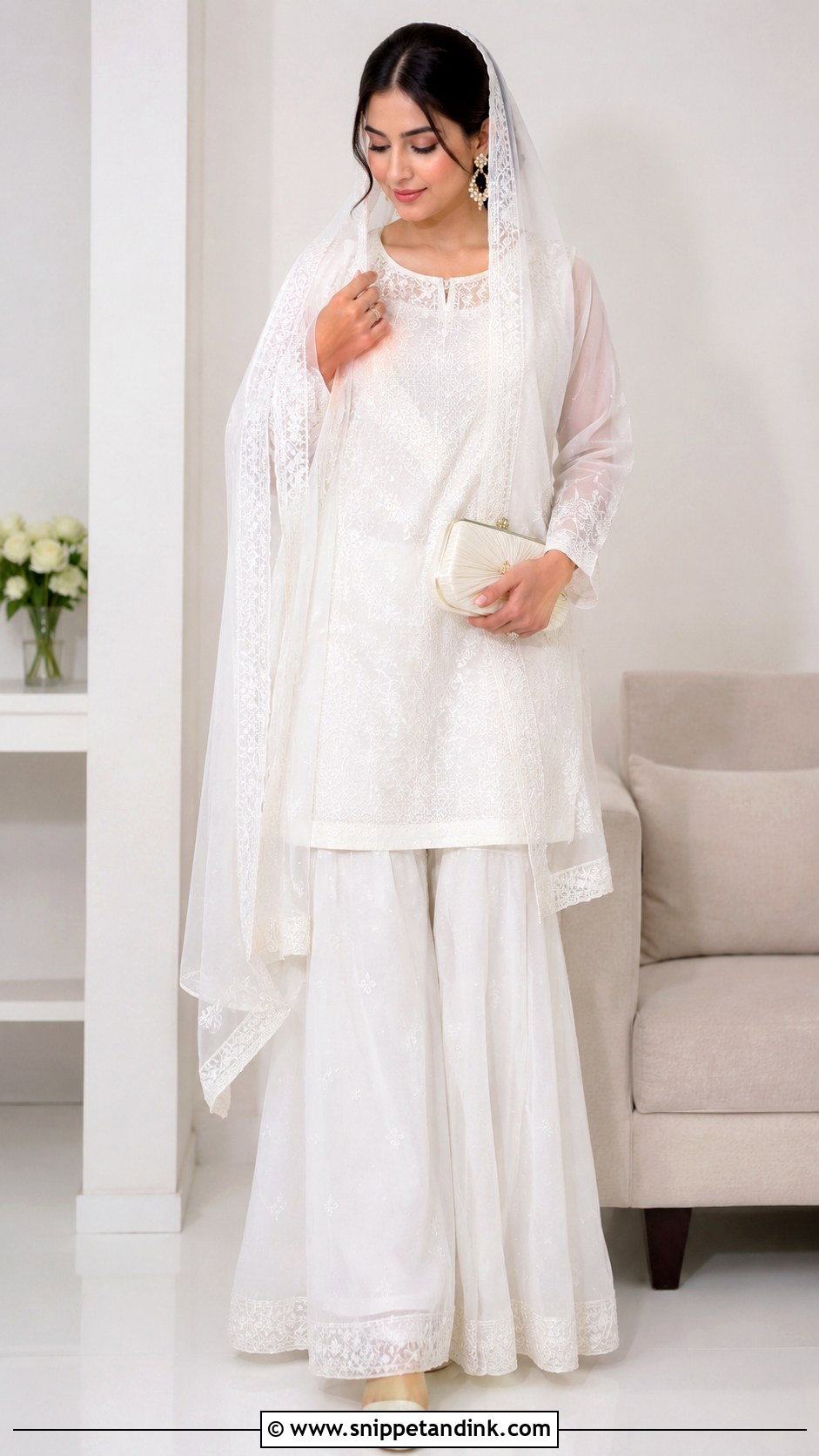
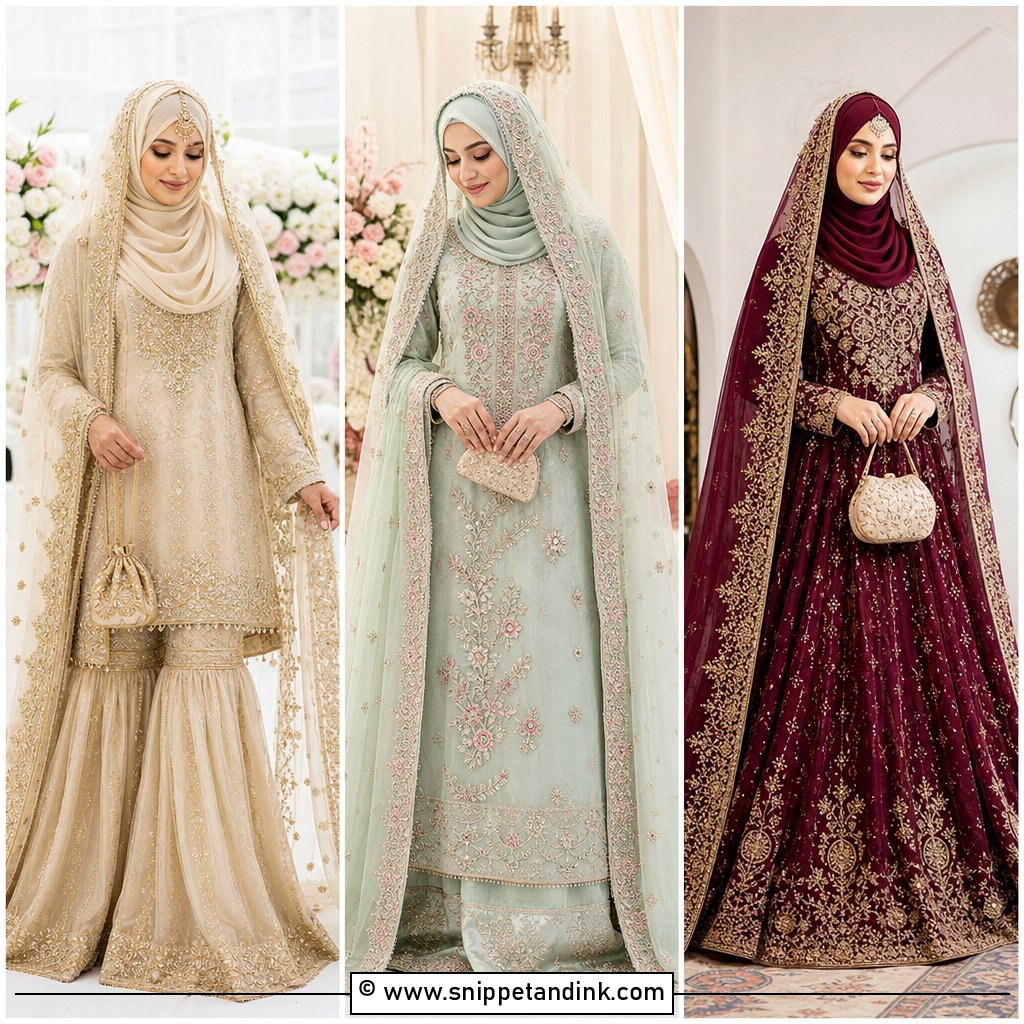
White sharara is the outfit I reach for most often for a small Nikkah, mainly because the flared pants give you the movement of a lehenga without its weight. Pair it with a straight or slightly flared kameez finished with fine threadwork or pearls at the neckline and cuffs. Watch where the sharara starts to flare: from the knee, it walks cleanly; from mid-thigh, it tends to catch on your heels. Pure optical white can look bluish beside warm skin, so I usually put an off-white chiffon or organza dupatta with it. Pearl earrings, ivory block heels and a neat low bun finish it.
2. Ivory Nikkah Anarkali Outfit
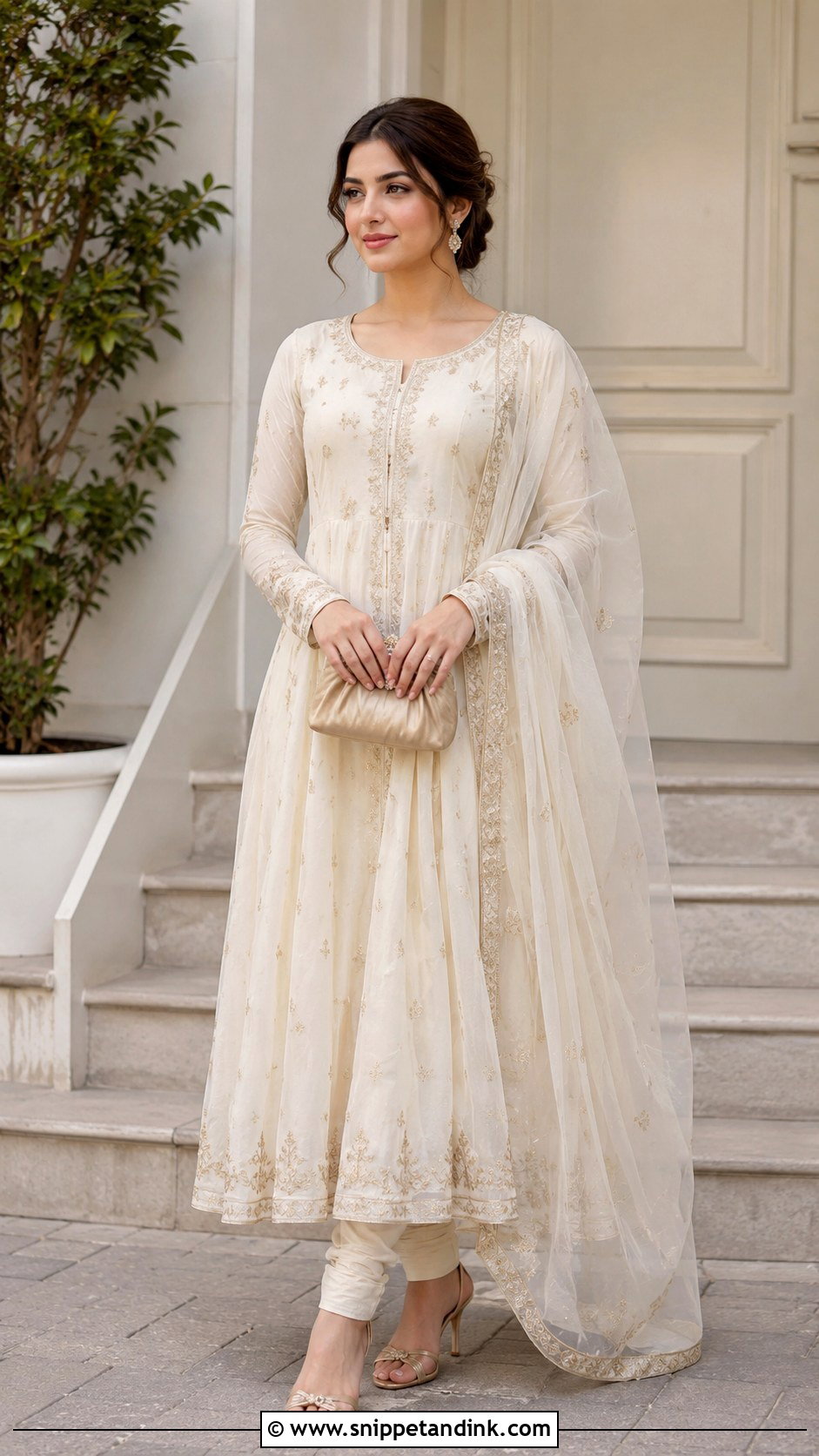
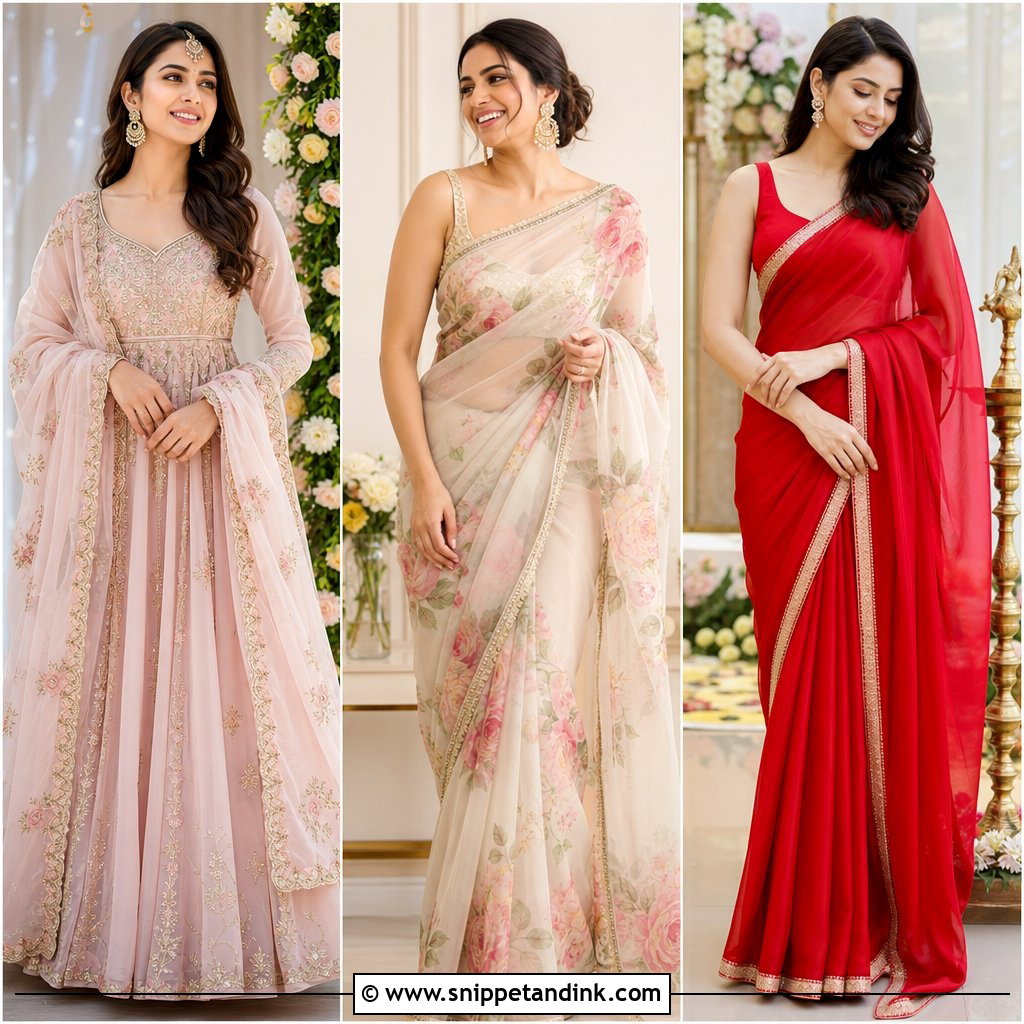
An Anarkali reads bridal with very little embroidery because the fitted bodice and long flare do the work. The catch is sitting: a full-length flare bunches in your lap, so I prefer one that ends just below the ankle with a churidar underneath, not wide trousers that double the bulk. Light gold or tone-on-tone threadwork is plenty on ivory. Add a sheer dupatta with a narrow border, champagne heels and a small potli.
3. Pastel Pink Nikkah Gharara Outfit
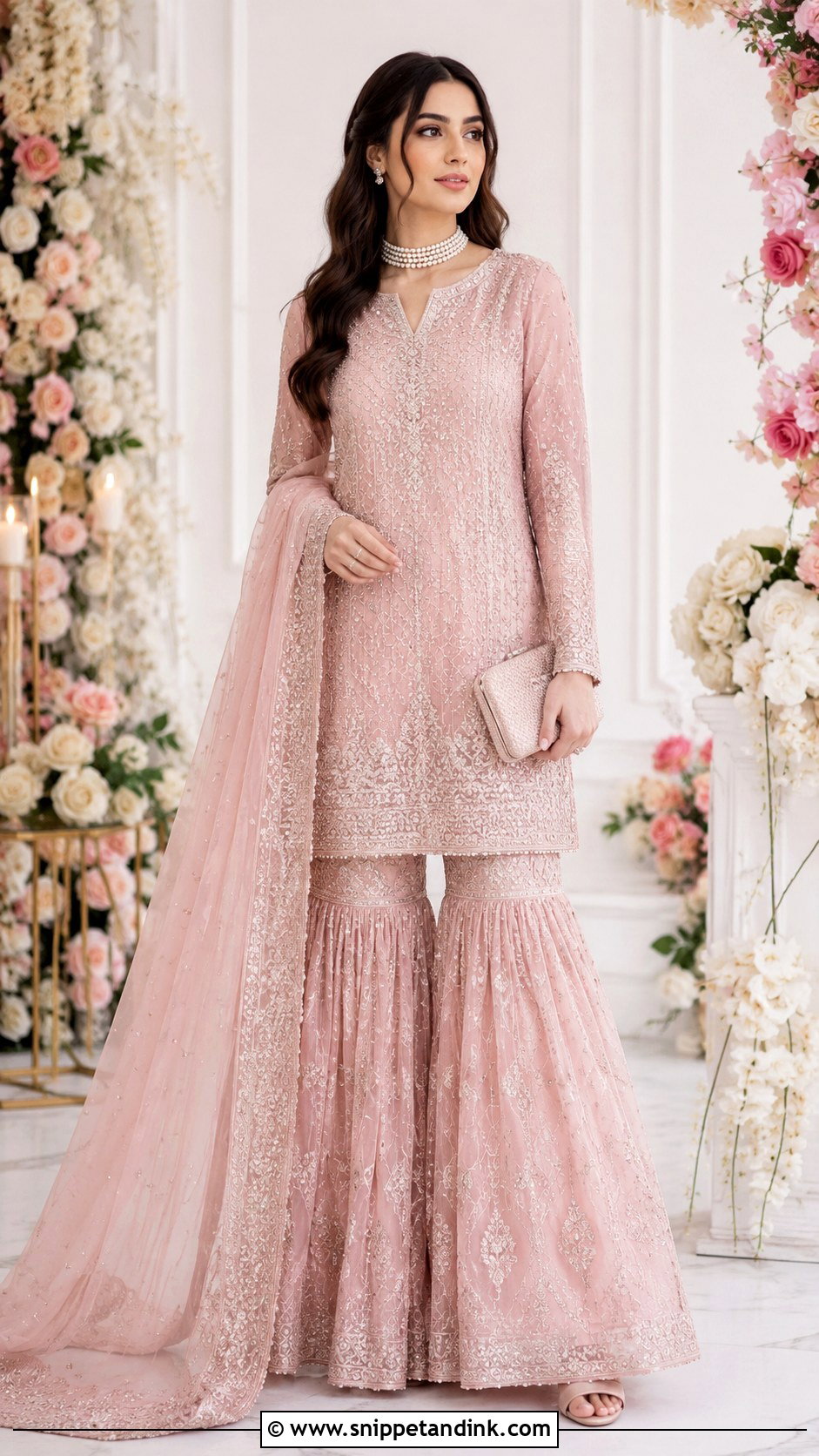
Pastel pink stays warm on camera in daylight, which is why it suits a morning or afternoon ceremony so well. On a gharara, the eye goes straight to the gathered band at the knee, so I keep the kurta’s embroidery to the neckline, cuffs and hem and let that band be the main detail. A gharara one shade deeper than the kurta adds depth without fighting it. Pearl studs or small jhumkas, nude heels and a soft pink lip are all it needs, and the same outfit works for a sister as well as the bride.
4. Cream Nikkah Lehenga Outfit
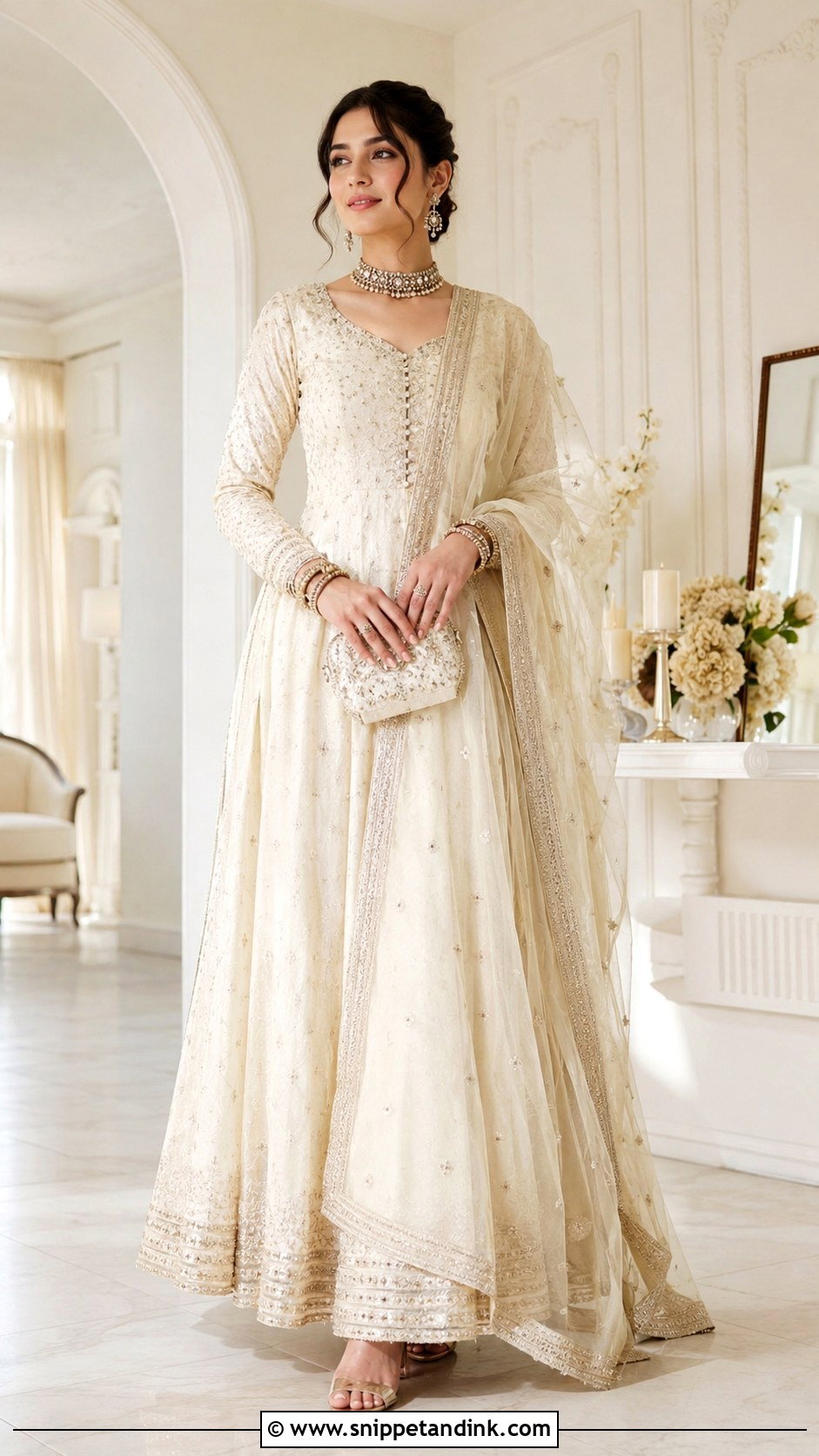
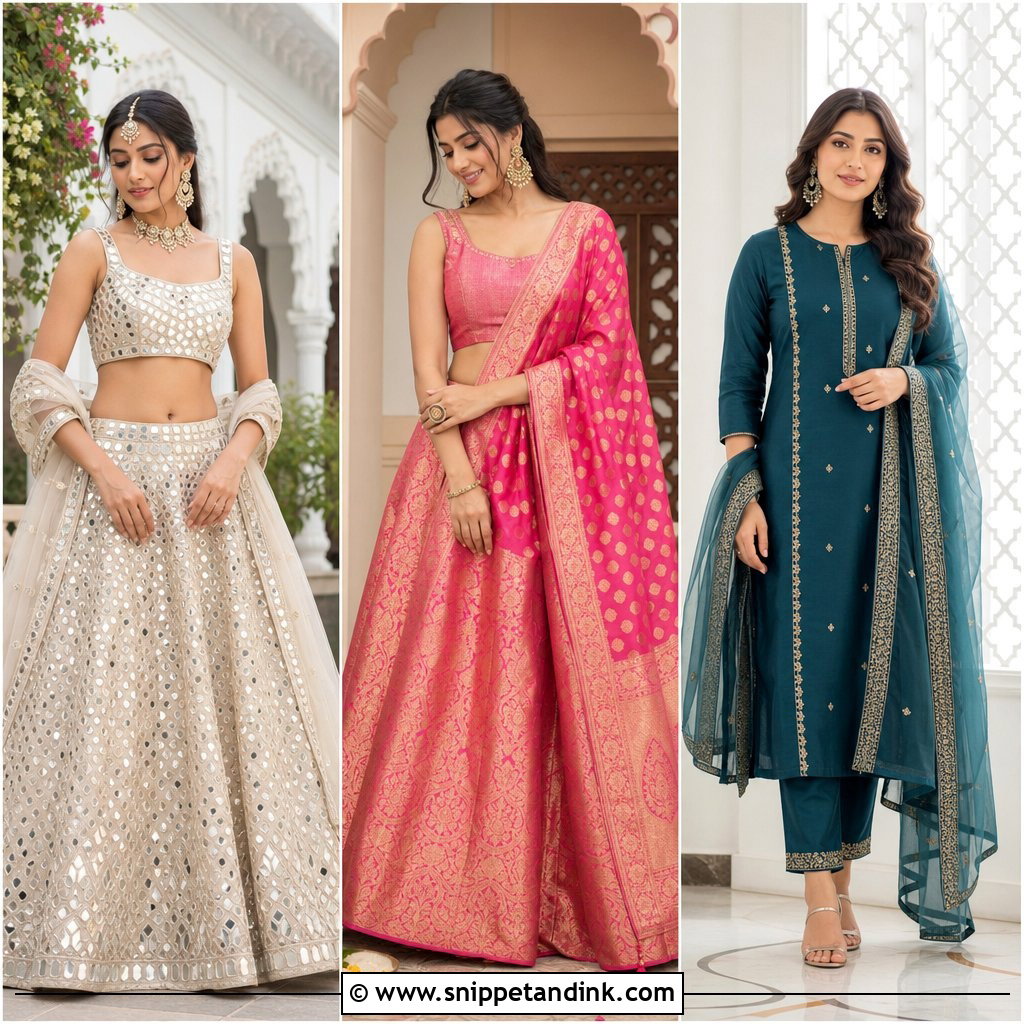
Cream gives you the bridal shape without heavy red, but the weight of the skirt matters more than the colour. At a fitting I ask brides to lift the lehenga off its hanger: if it feels heavy in your hand, it will feel twice as heavy after an hour on a floor cushion. A long blouse or peplum top covers the midriff without extra layers. Drape a champagne dupatta over one shoulder or lightly over the head, and keep the rest quiet with small bangles, pearl earrings and beige or gold heels.
5. Champagne Nikkah Maxi Dress Outfit
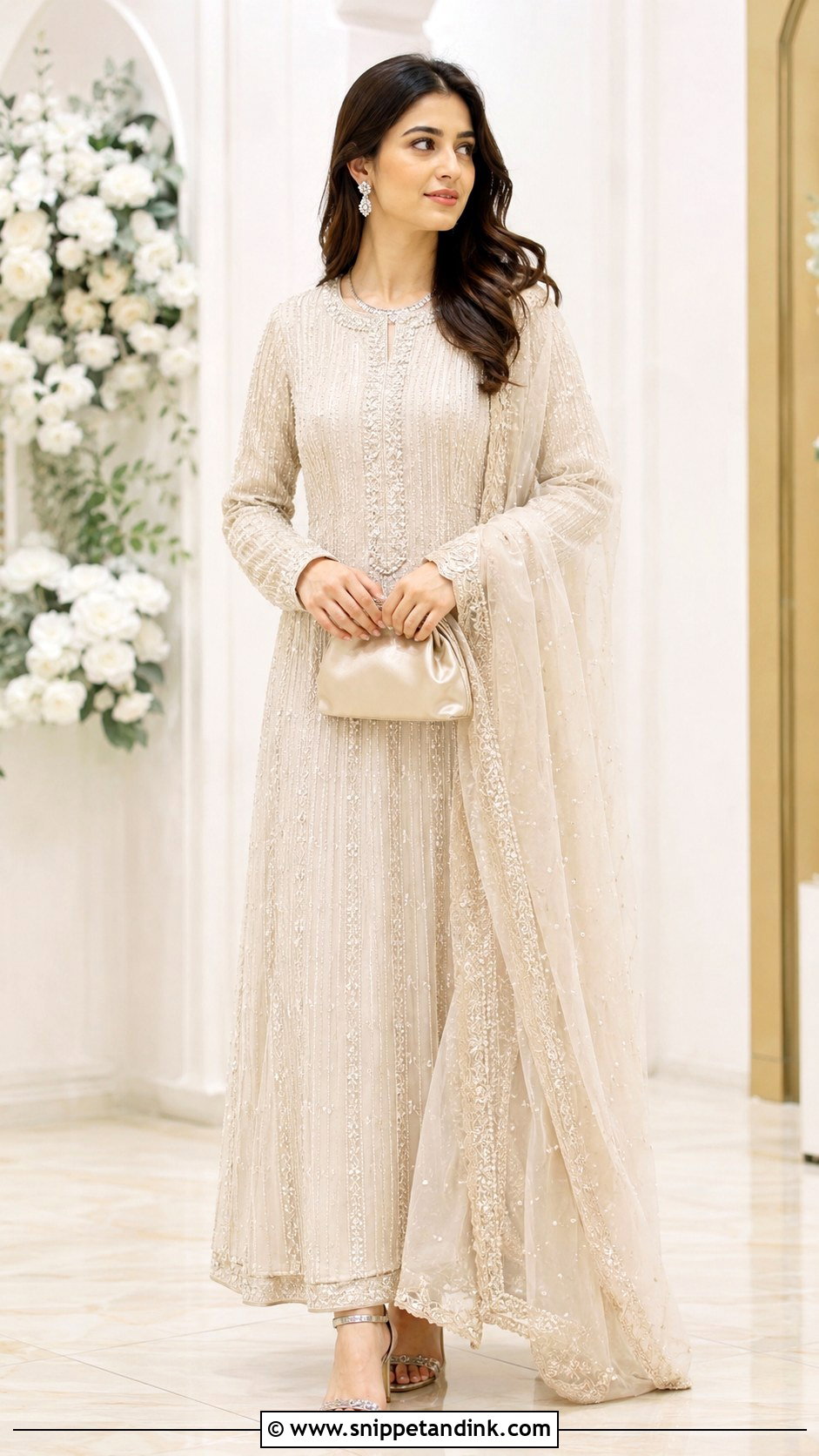
Champagne maxis are the easiest outfit here to pack if the Nikkah is in a different city from the reception. Look for long sleeves, a modest neckline and an empire or soft A-line waist. Satin in this shade can flare shiny under a camera flash, so I lean toward crepe or chiffon over a matte lining. A little beading at the bodice or sleeves is enough; bring a matching scarf if you’re going to a masjid, and keep the jewellery to simple drops.
6. Beige Nikkah Salwar Kameez Outfit
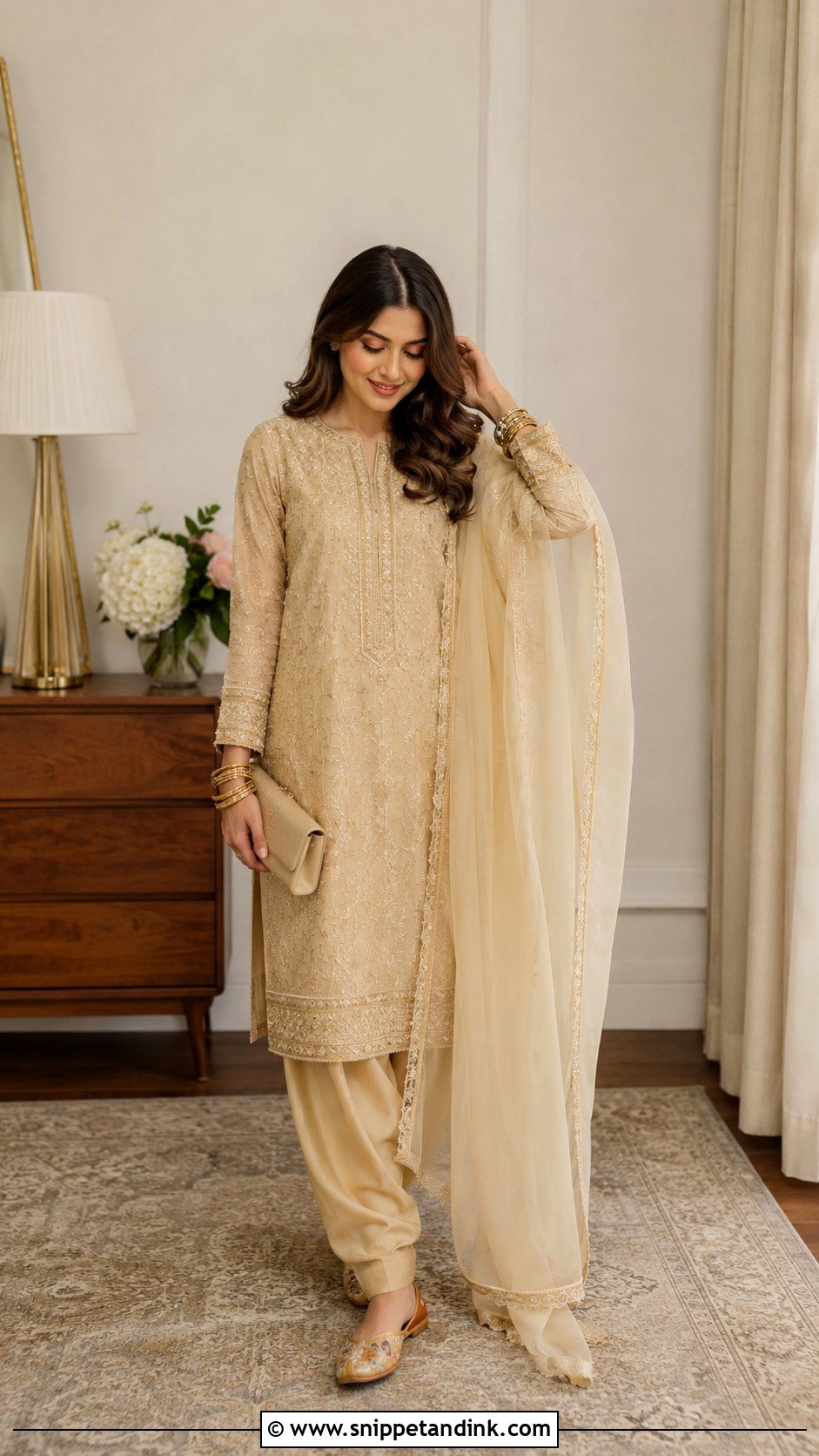
I’d pick this one for a long day with relatives, because a salwar kameez forgives sitting, standing, hugging and eating in a way fitted pieces don’t. Cotton silk and raw silk keep their shape better than georgette, which clings once the room warms up. A classic salwar falls softer and more traditionally; straight trousers look cleaner. Beige can wash out paler skin, so give it a dupatta with a gold or pearl border near the face, and wear juttis or khussas if you’ll be greeting family for hours.
7. Mint Green Nikkah Suit Outfit
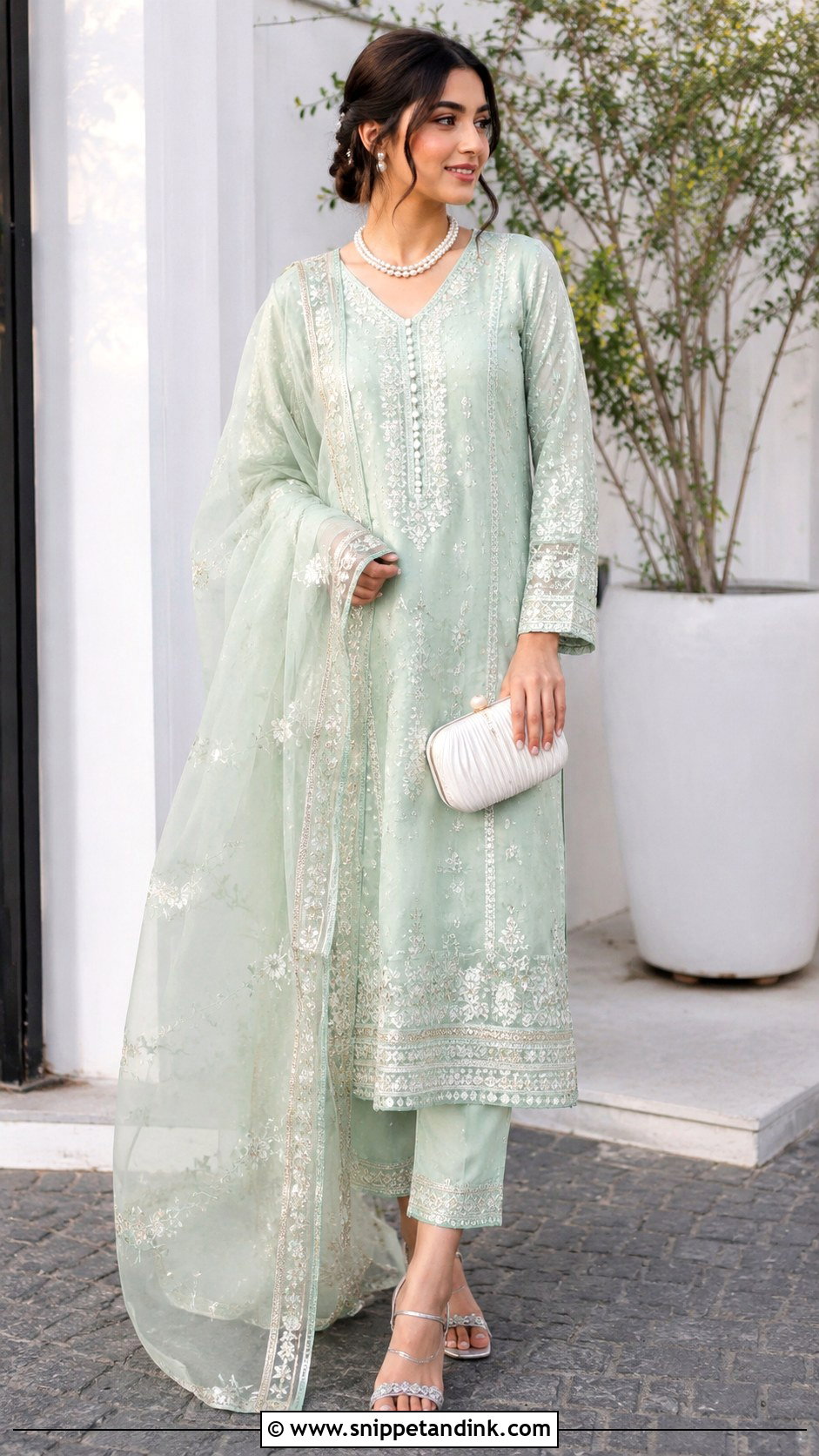
Of the cool pastels, a mint green Nikkah suit outfit is the one I see work best in spring and summer light. The embroidery thread decides how it reads: silver or ivory keeps mint fresh, while yellow gold can push it slightly olive. Cigarette pants keep it modern, a simple sharara dresses it up, and a sheer dupatta in the same shade finishes it. As a guest, it puts colour into the family photos without pulling focus from the bride.
8. Powder Blue Nikkah Chiffon Outfit
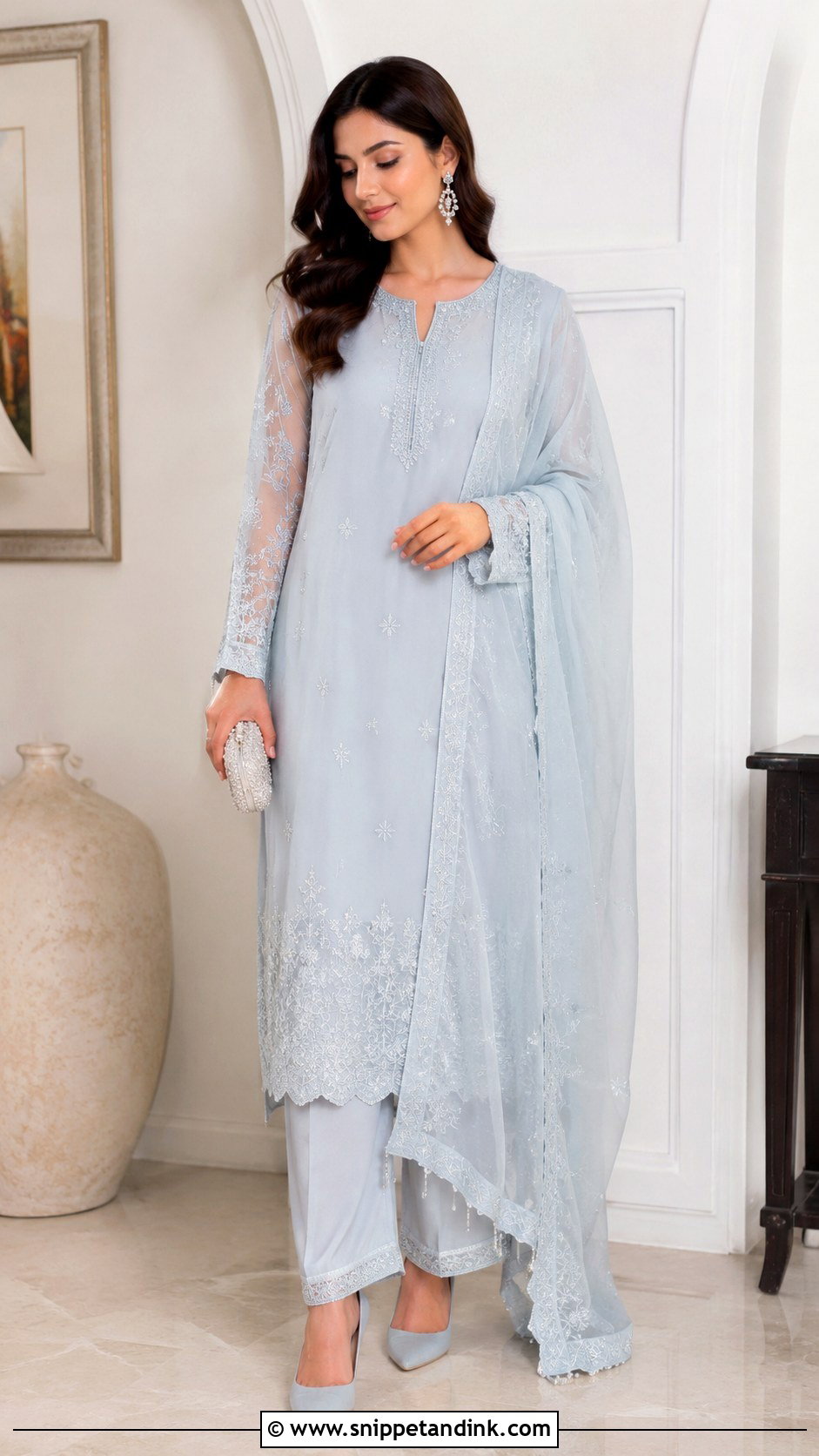
Chiffon is light, but it is also sheer and slippery, and the lining decides whether this outfit looks expensive. I check that the lining runs to the hem and that the sleeves are lined too; otherwise the shirt looks see-through in daylight. Straight silk pants or palazzos give weight at the bottom. Pin the dupatta at the shoulder with a small safety pin hidden in a fold, because chiffon slides off the moment you lean forward to sign. Silver jewellery and pale blue heels suit the calm colour.
9. Lavender Nikkah Pishwas Outfit
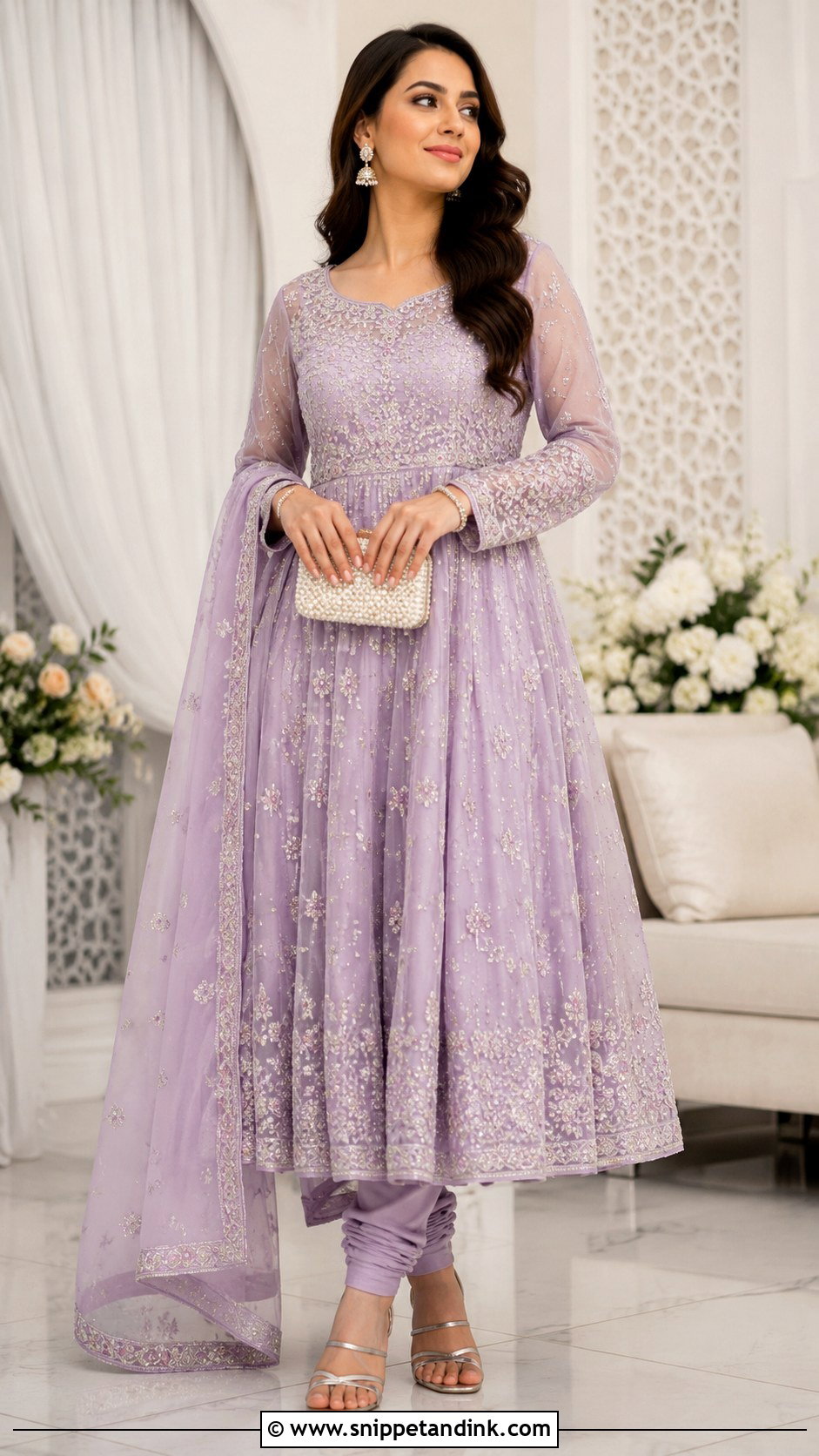
A pishwas is a long frock with a very full flare, so it moves more than anything else in this list. That swing looks wonderful as you walk in, but it means a lot of fabric to arrange when you sit, so I sweep the skirt to one side before the bride sits and let her rest a hand on top to hold it. Light mirror work or fine threadwork on the bodice is enough on lavender. If you wear hijab, match it to the dupatta border rather than to the frock; lavender on lavender on lavender can look flat in photos.
10. Sage Green Nikkah Kurta Outfit
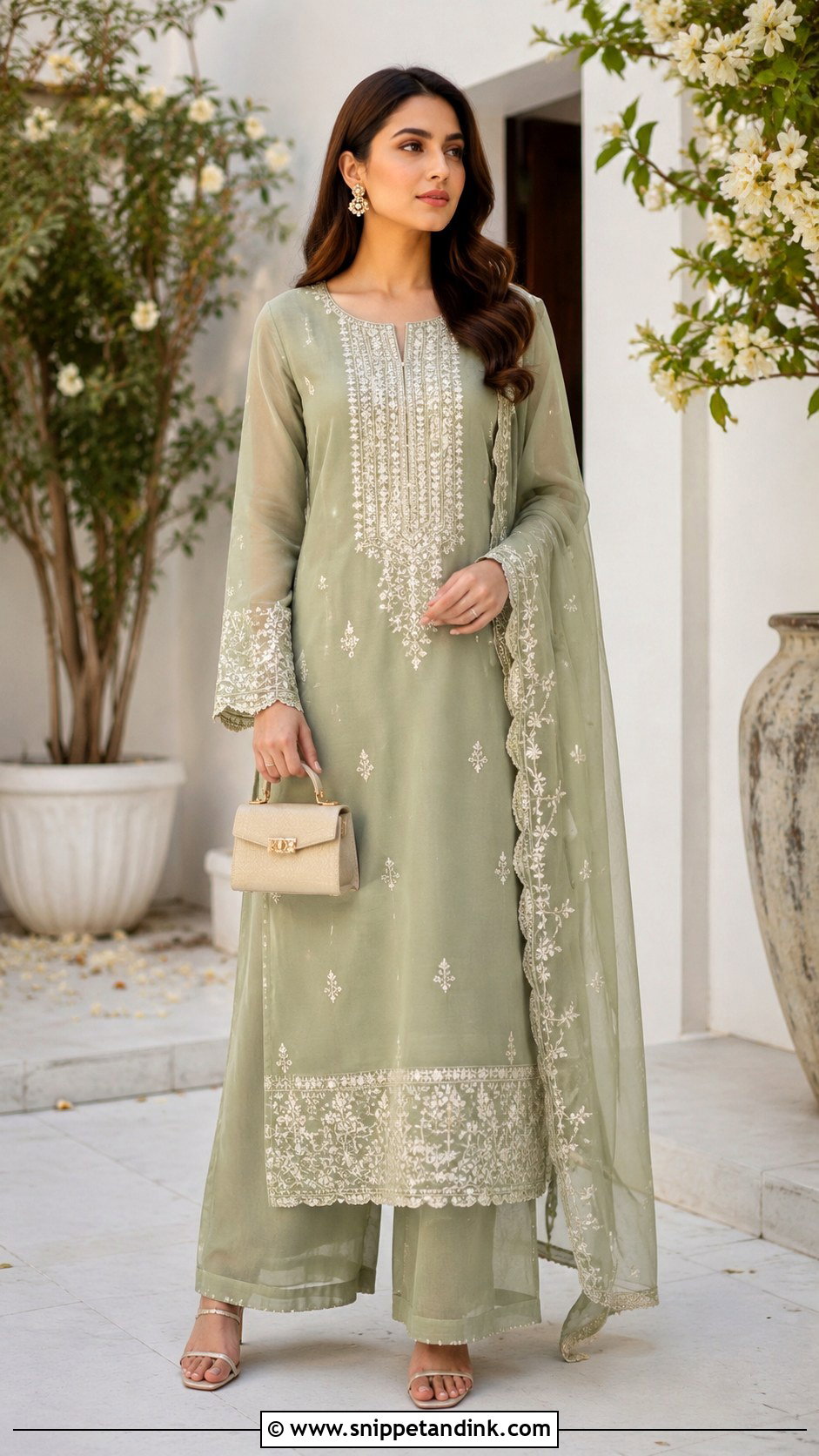
Sage is one of the few pastels that holds its colour under both warm indoor bulbs and outdoor shade. A long straight kurta with side slits gives you room to sit cross-legged, and ivory or champagne embroidery stops the green turning grey. Matching trousers keep it clean; a soft gharara makes it more traditional. For guests it’s a safe colour that never competes with a bride in ivory or white.
11. Peach Nikkah Organza Outfit
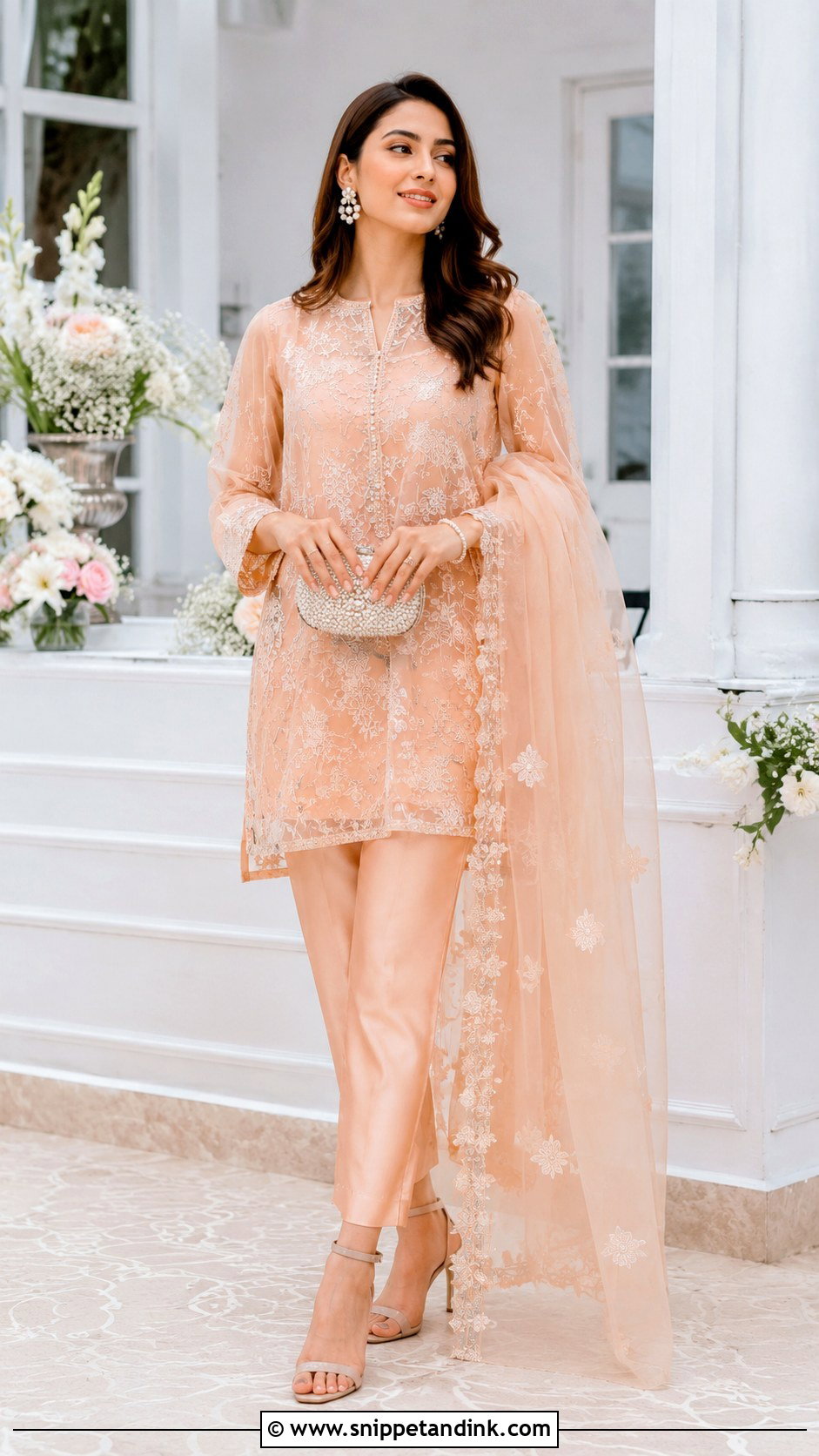
Organza holds air, which is why it looks dressy without any weight. It is also crisp, and once you sit on it, it creases with a sharp line that shows in every photo. I always want a soft slip in a matching shade under a peach organza shirt, and I steam it on the morning rather than the night before. Silk pants or a simple sharara go underneath, and peach is kind to warm makeup and a rosy lip at a daytime Nikkah.
12. Blush Pink Nikkah Saree Outfit
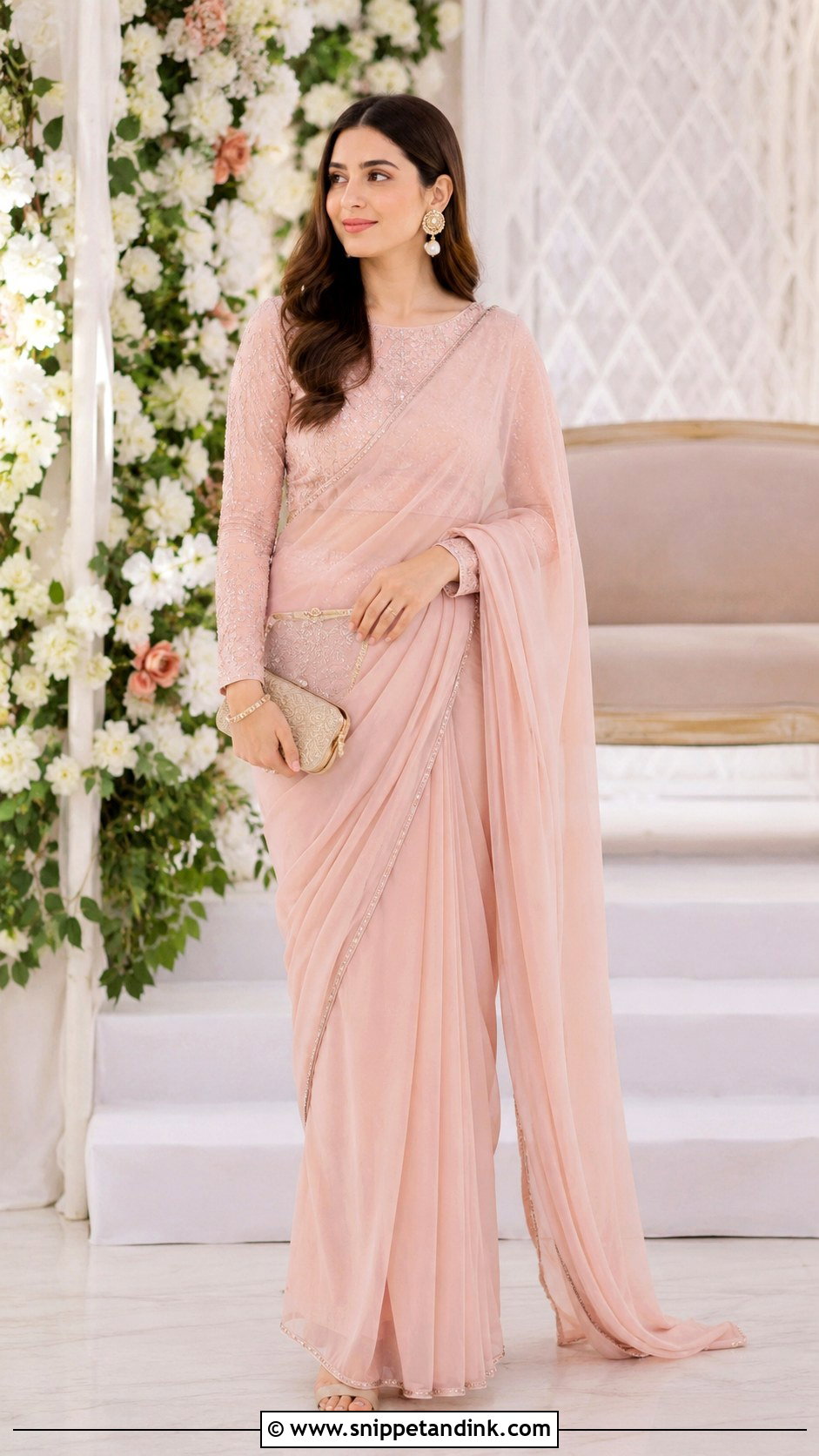
A saree becomes fully modest with three choices: a full-sleeve or longer blouse, a pallu brought cleanly over the shoulder, and enough pins to lift that pallu over your head during the ceremony. Chiffon and georgette drape softly and take pins far better than stiff silk. I pre-pleat the pallu and set it with three or four pins at the shoulder so it doesn’t need fixing all day. Honestly, a saree suits family members who already wear one comfortably more than first-timers; pearl earrings and nude or gold heels are all it needs.
13. Gold Nikkah Palazzo Suit Outfit
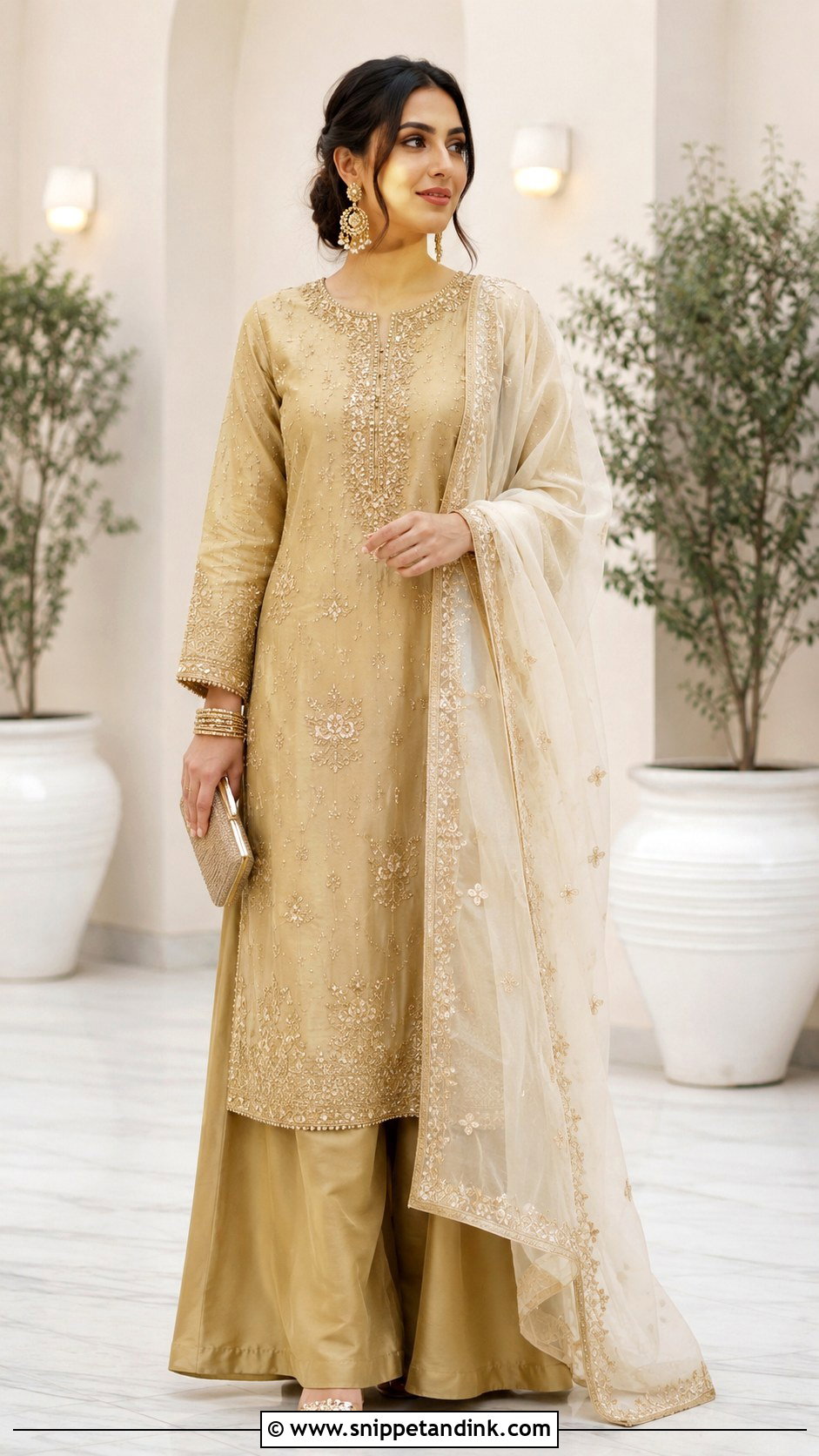
Gold is the colour where I’m strictest about the finish. Choose dull or antique gold rather than metallic lamé, which turns brassy under flash. Wide palazzos balance the shine and stay comfortable through a long receiving line, and an ivory dupatta softens the whole thing for a masjid. Low block heels and a slim bangle stack are enough, and it really comes alive at an evening Nikkah, when warm light makes a dull gold glow.
14. White Abaya Nikkah Outfit
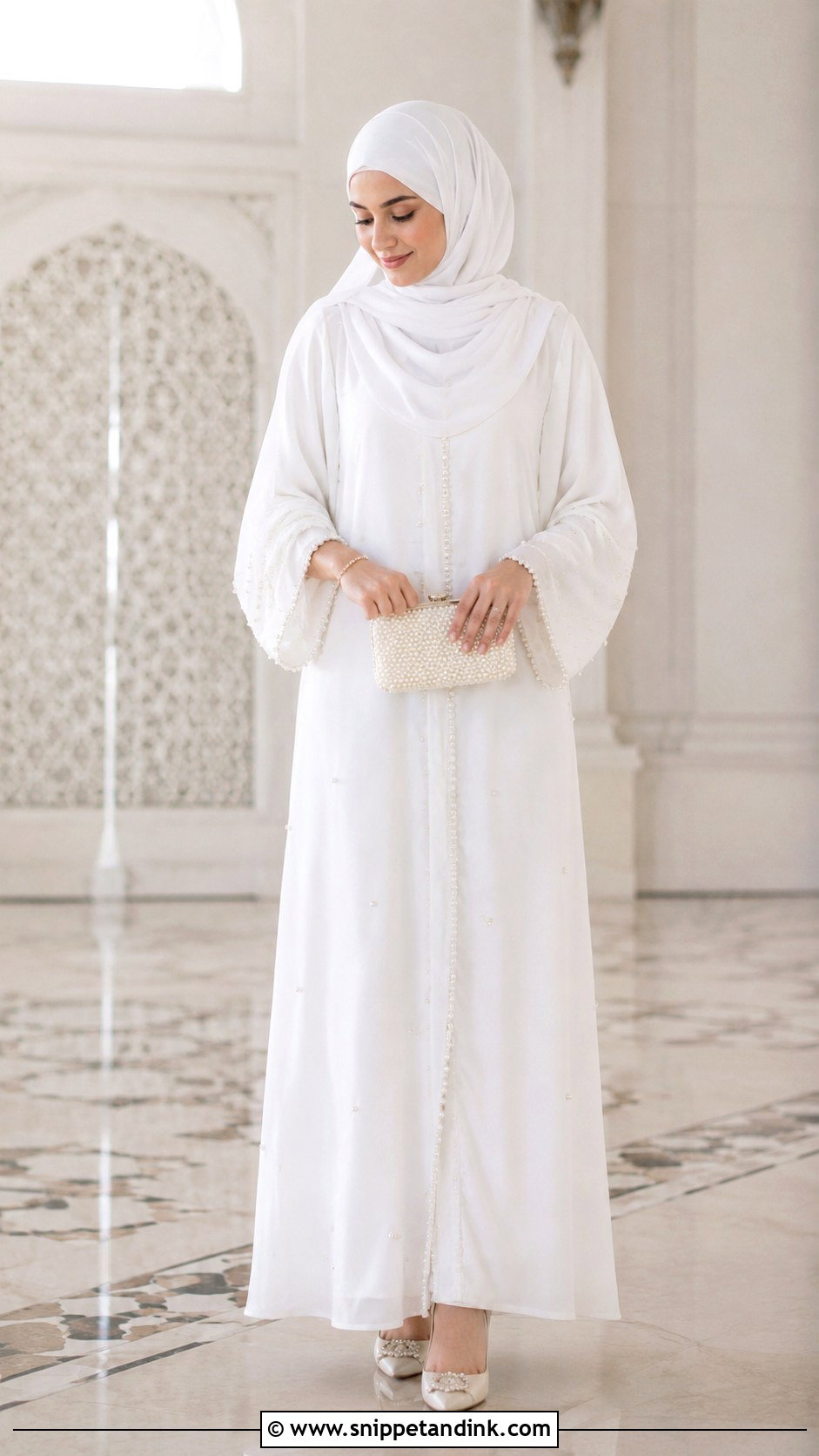
For a masjid Nikkah, an abaya is the most straightforward choice, since the coverage is built in and nothing needs pinning. The bridal feeling comes from small details: pearl buttons, lace cuffs, a gently flared hem. Thin white crepe can show the outline of what’s underneath, so I always pair it with a full-length slip. Match the hijab to the abaya in the same white, because two different whites side by side look accidental. A small brooch or a soft headpiece adds the finishing touch.
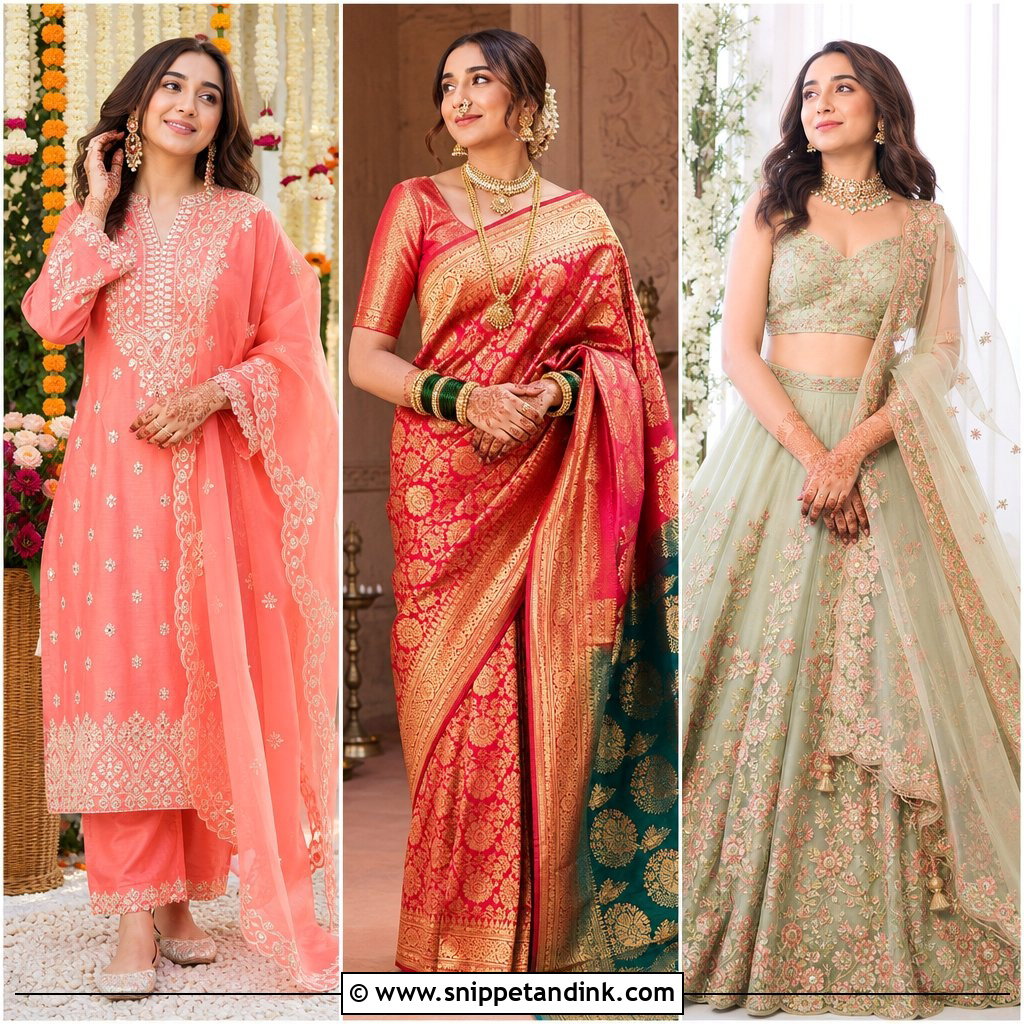
15. Cream Hijab Nikkah Outfit
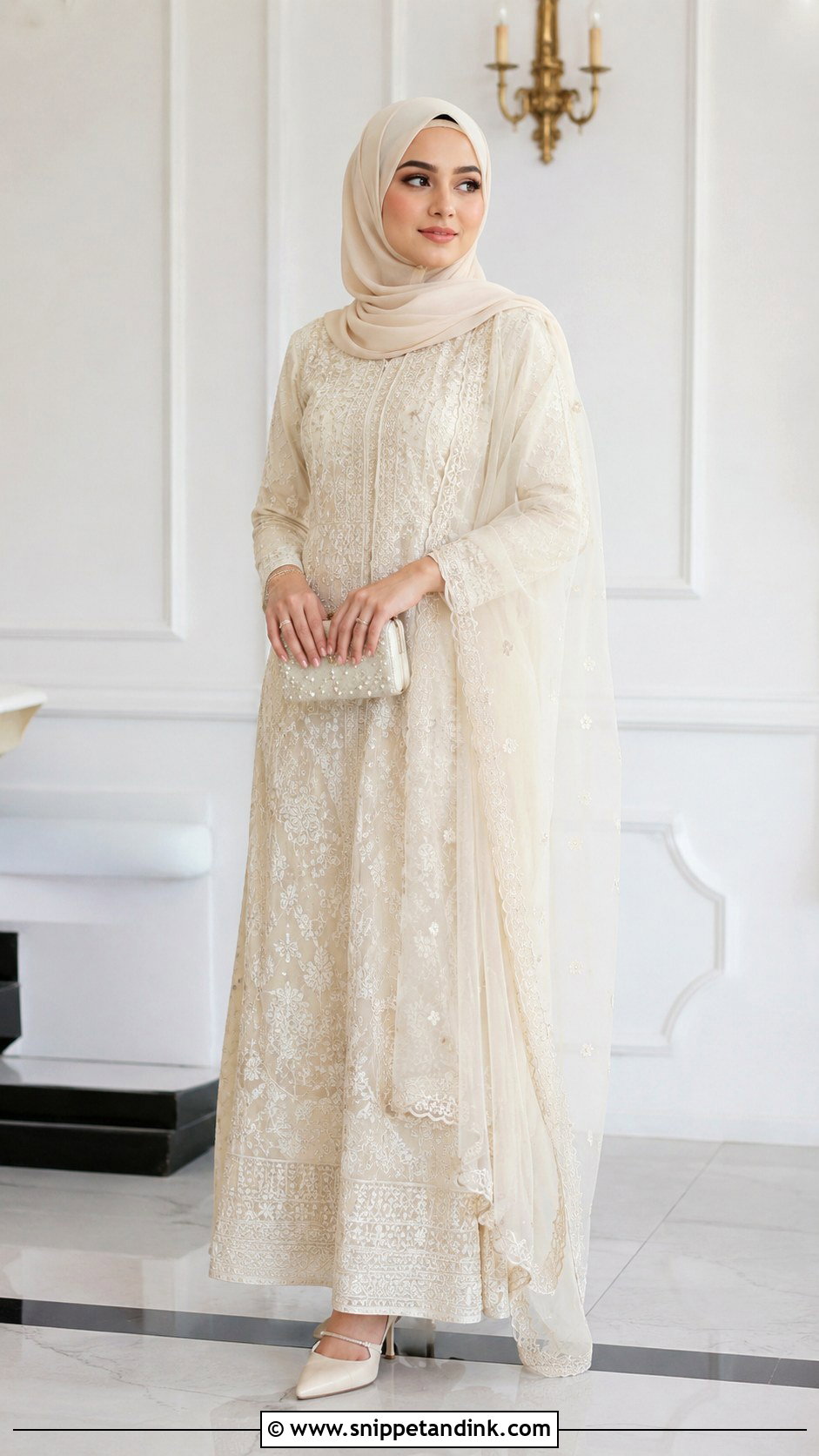
Getting a cream hijab Nikkah outfit to look coordinated comes down to tone. Cream runs from yellowish to pinkish, so I bring the hijab fabric to the fitting and hold it against the outfit by a window. Start with a cream maxi, a long kurta set or a modest embroidered suit, and choose a chiffon or silk hijab that frames the face without bulk under the jaw. Earrings only matter if your style shows them; a soft, glowing base suits cream better than heavy contour.
16. Simple White Kurta Nikkah Outfit
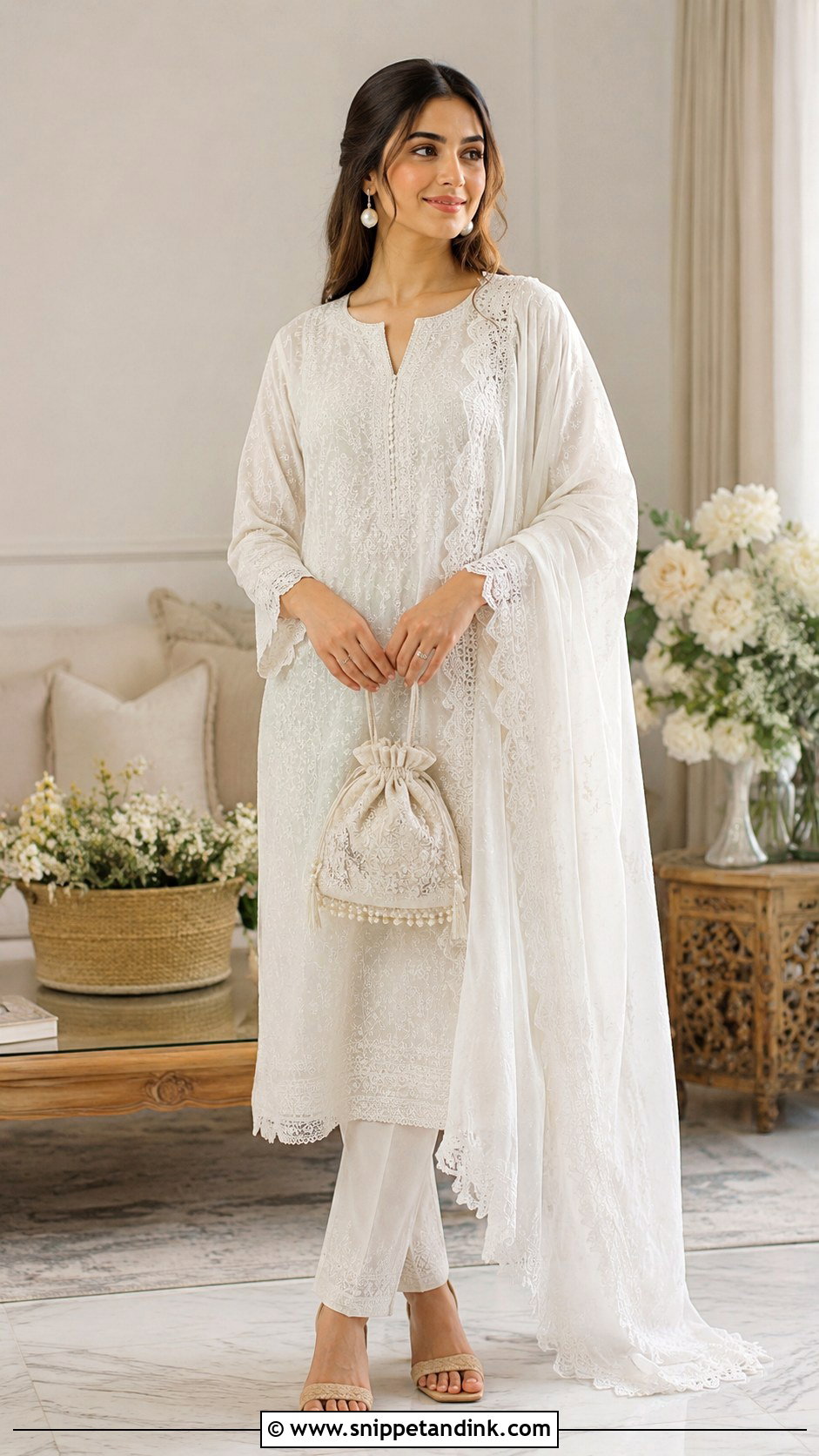
Plain white is the easiest outfit to make look intentional, and the easiest to make look like everyday wear. Choose a long white kurta in lawn for summer heat, or in raw silk or chikankari for cooler months, over straight pants, culottes or a light sharara. The ceremony feeling comes from the dupatta: scalloped edges, lace or a thin gold trim. If the kurta is very plain, I’d add a stack of fine bangles or a delicate necklace before adding more embroidery.
17. Floral Embroidered Nikkah Suit Outfit
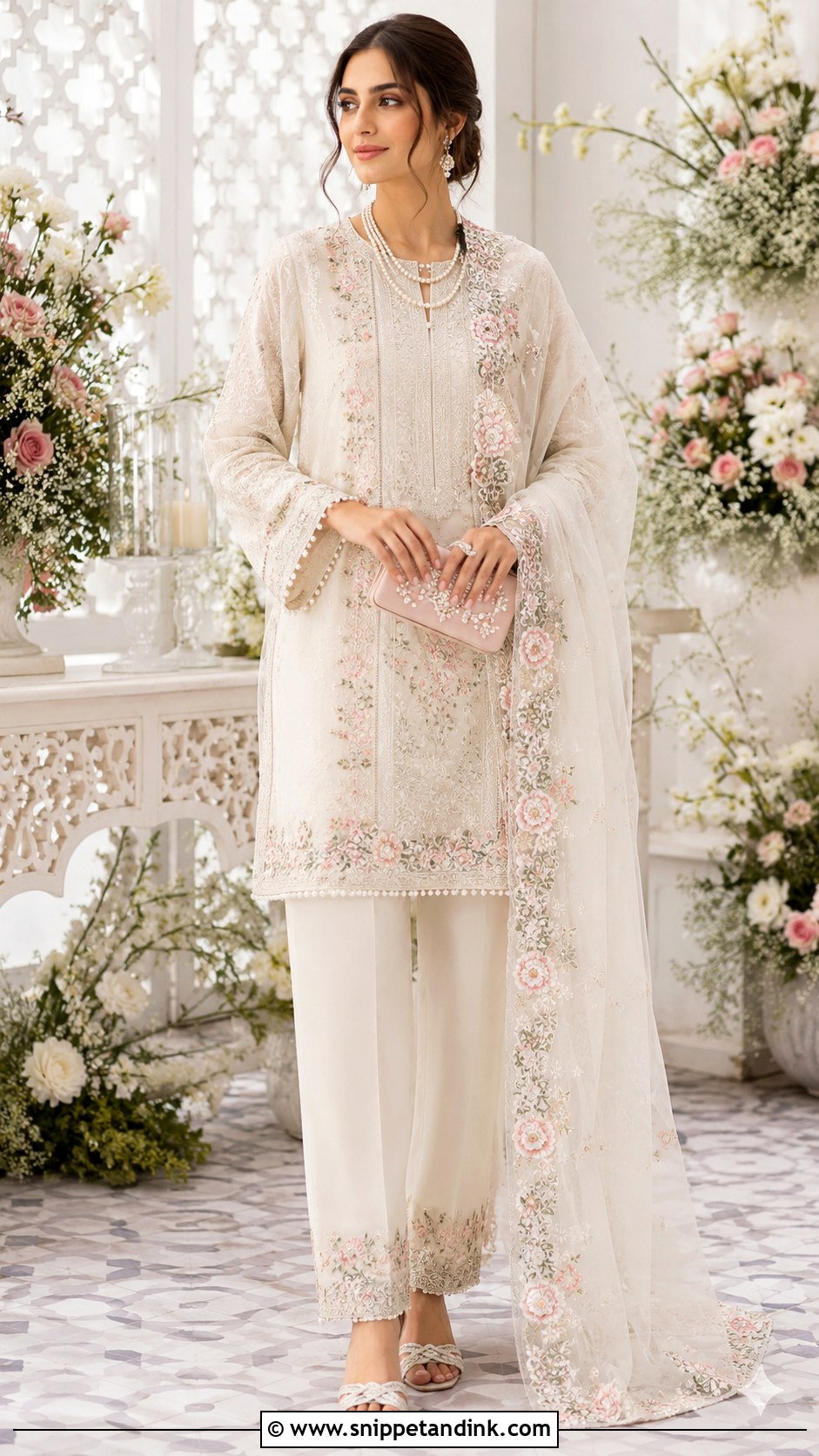
Floral embroidery reads from across a room, so the base underneath should be quiet: ivory, blush, mint or powder blue. My one rule is to choose where the flowers live. Put them on the shirt or on the dupatta border at full density, not both, or the photos turn busy. Straight pants keep it neat, a small gharara makes it traditional, and pearls with loose waves or a sleek bun finish it.
18. Chikankari Nikkah Outfit
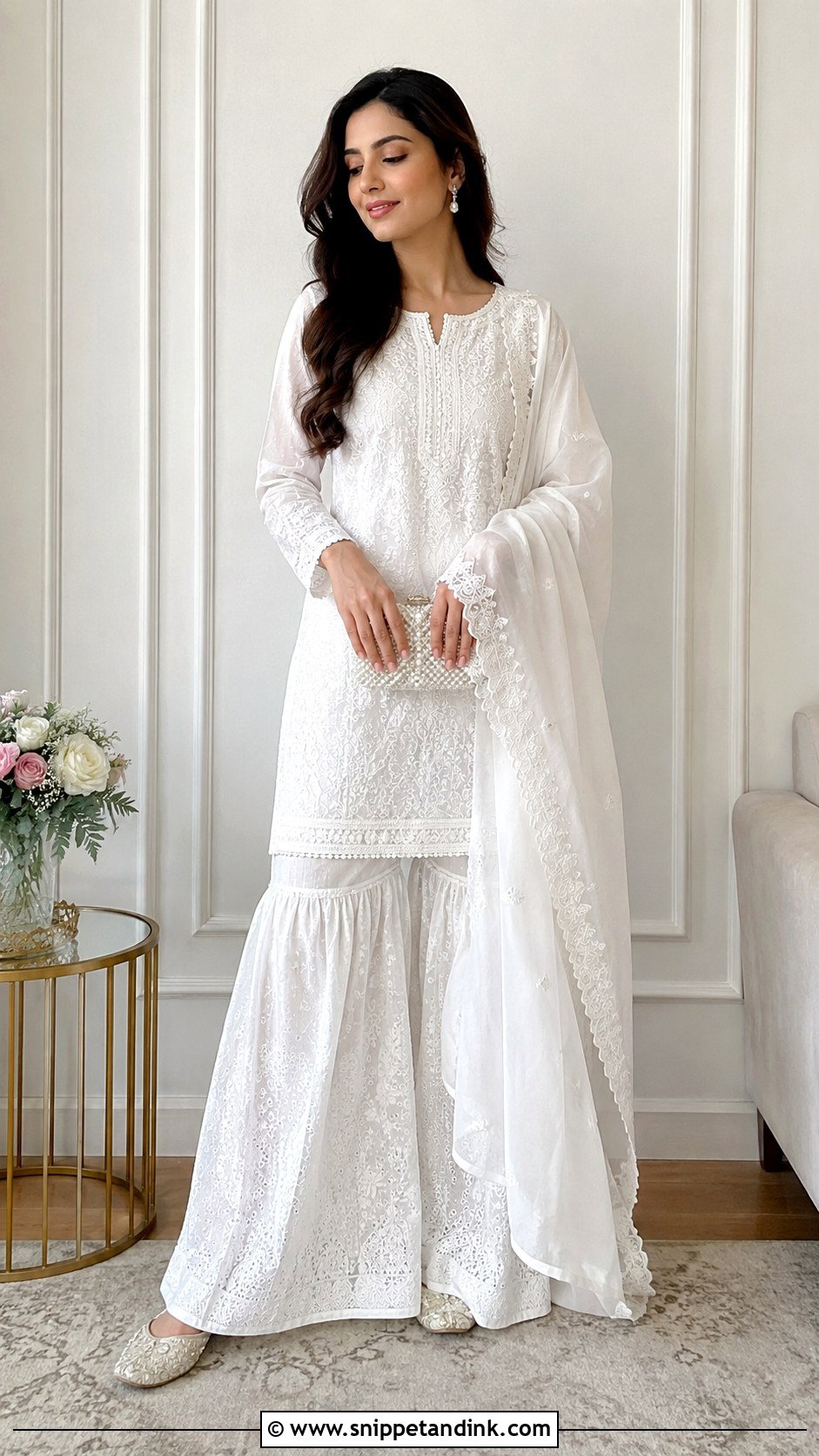
Chikankari is hand embroidery on fine cotton, georgette or muslin, and its shadow work shows best in daylight, which makes it ideal for a home or afternoon Nikkah. Turn the piece over before you buy: genuine hand chikan has slight irregularities in the stitches, while machine copies look flat and uniform. Pair a full-sleeve kurta with straight pants, palazzos or a light sharara, and add a dupatta with small mukaish dots for sparkle. It’s also the outfit here you’ll most likely wear again, so hand-wash it cold and dry it in the shade.
19. Raw Silk Nikkah Suit Outfit
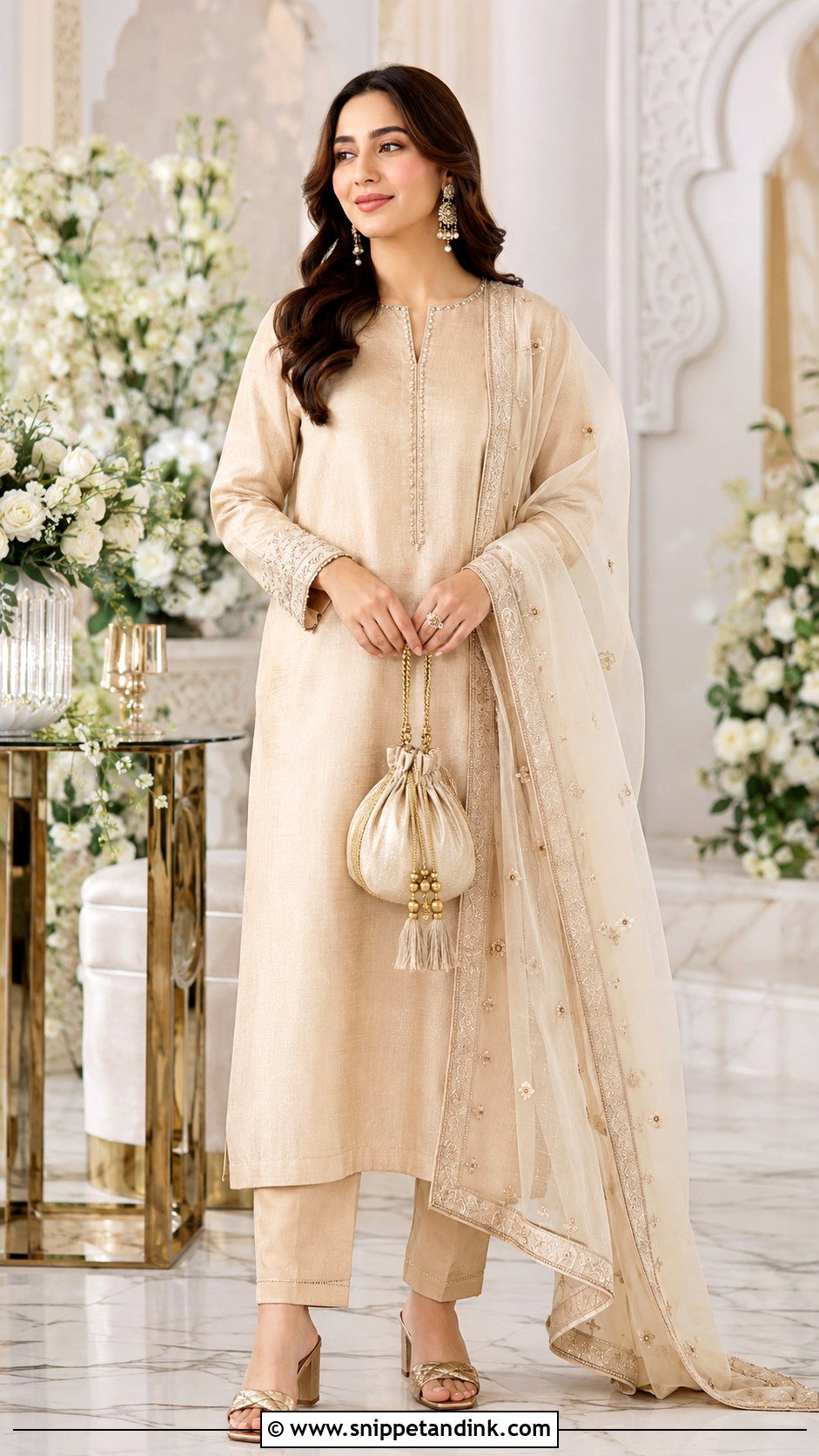
Raw silk has a slubbed texture and natural body, so it holds a crisp line in photos without heavy work. That body has a downside: after long sitting, it creases behind the knees and across the lap. A straight shirt with a slight A-line hides this better than a close fit. Ivory, champagne, blush, sage and soft gold all suit it; keep embellishment to the neckline or the dupatta border, and finish with a potli and block heels.
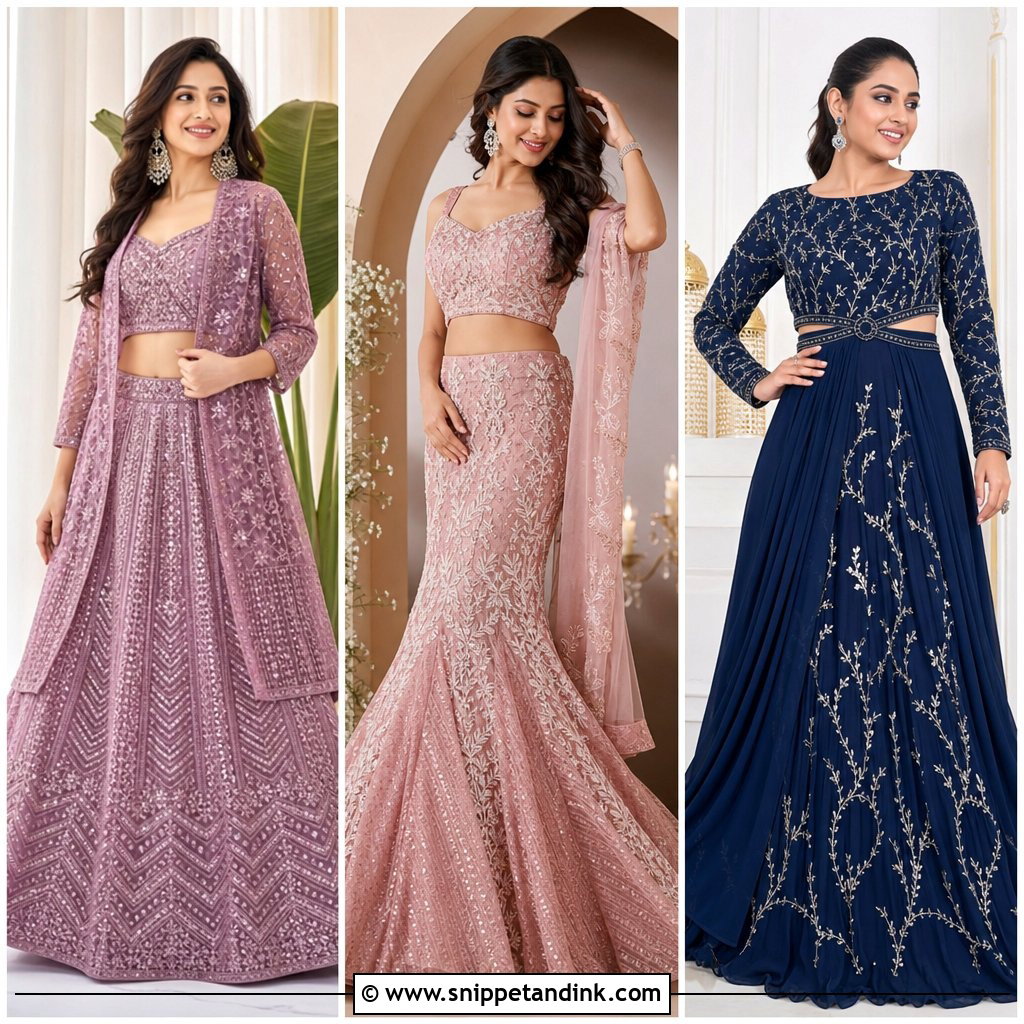

20. Silk Kaftan Nikkah Outfit
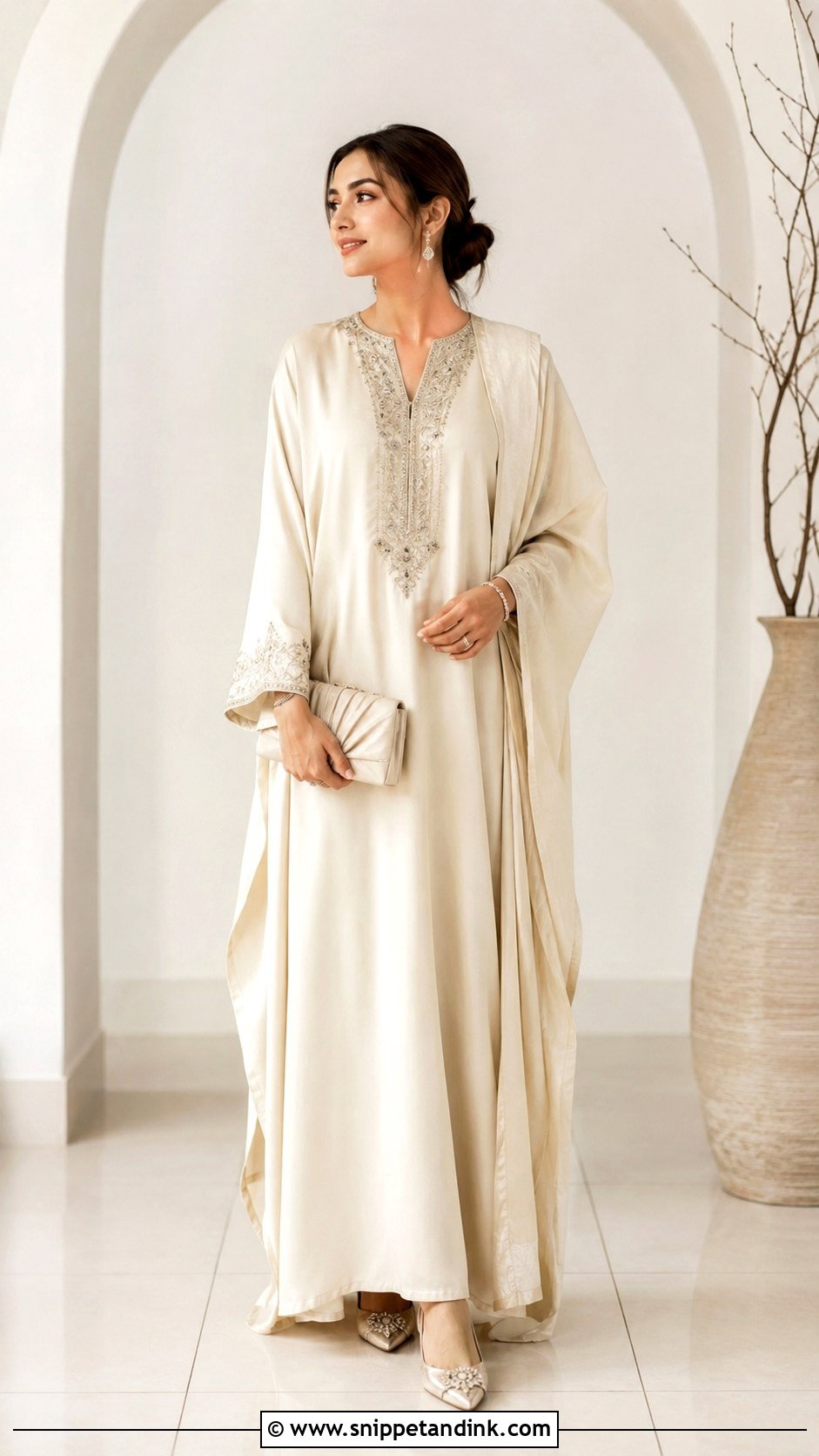
Nothing in this list is more comfortable than a silk kaftan, and I suggest it often to mothers, grandmothers and anyone who doesn’t want fitted tailoring for a long day. The risk is looking shapeless on camera. Embroidery running down the front panel creates a vertical line, and a hidden tie at the waist gives the back some definition. Add a matching hijab or dupatta, pointed flats or low heels, and simple drop earrings.
21. Modest Maxi Dress Nikkah Outfit
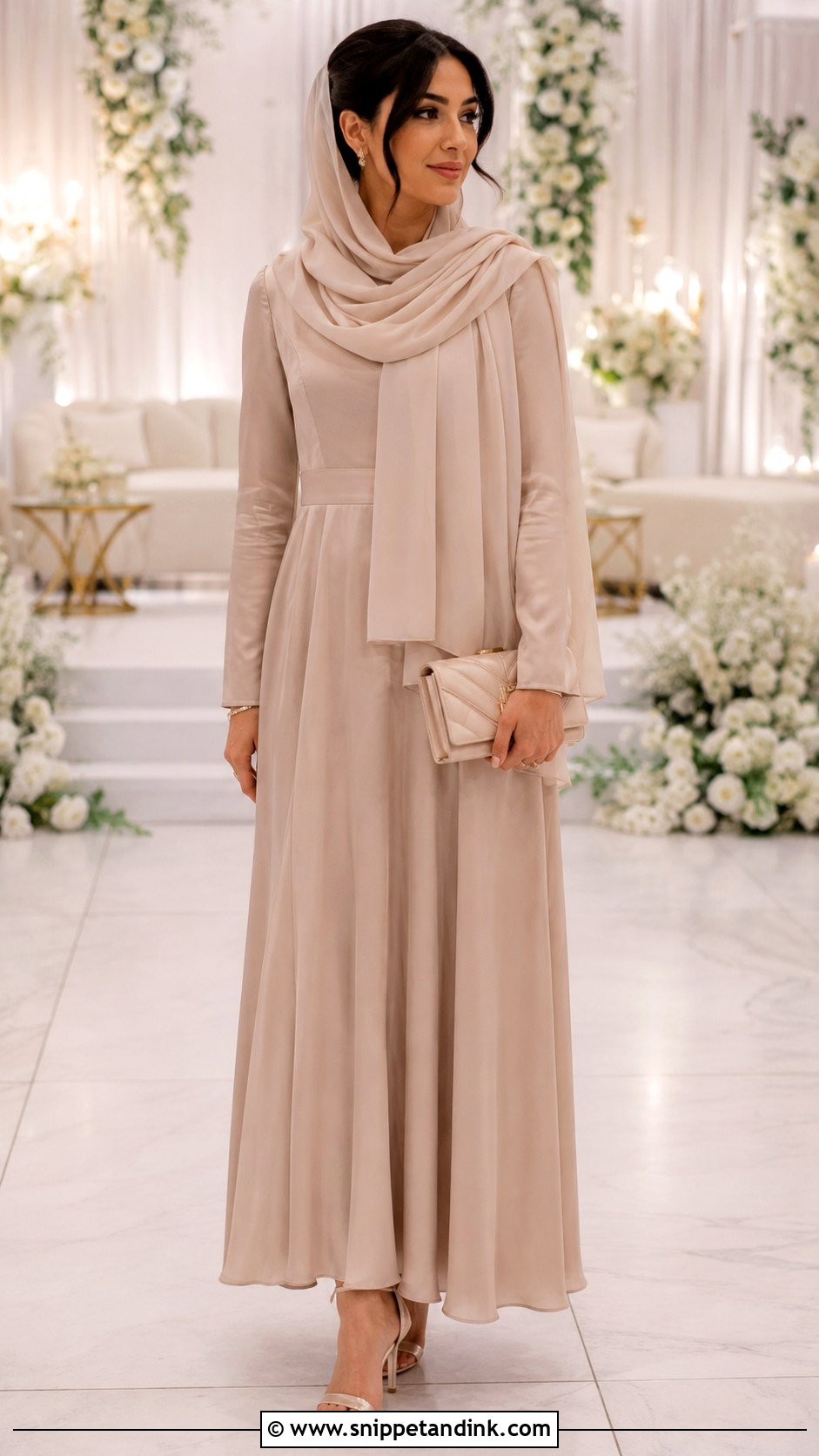
If you’re a guest who doesn’t usually wear South Asian dress, a modest maxi is the simplest way to show respect without guessing at traditional pieces. Look for long sleeves, a high neckline and a fabric with some flow; crepe and georgette are more forgiving than satin, which shows every seam and wrinkle. Bring a matching scarf to cover your hair if the ceremony is in a masjid. A textured bag or lightly embellished shoes give a plain dress some interest.
22. Straight Pants Nikkah Suit Outfit
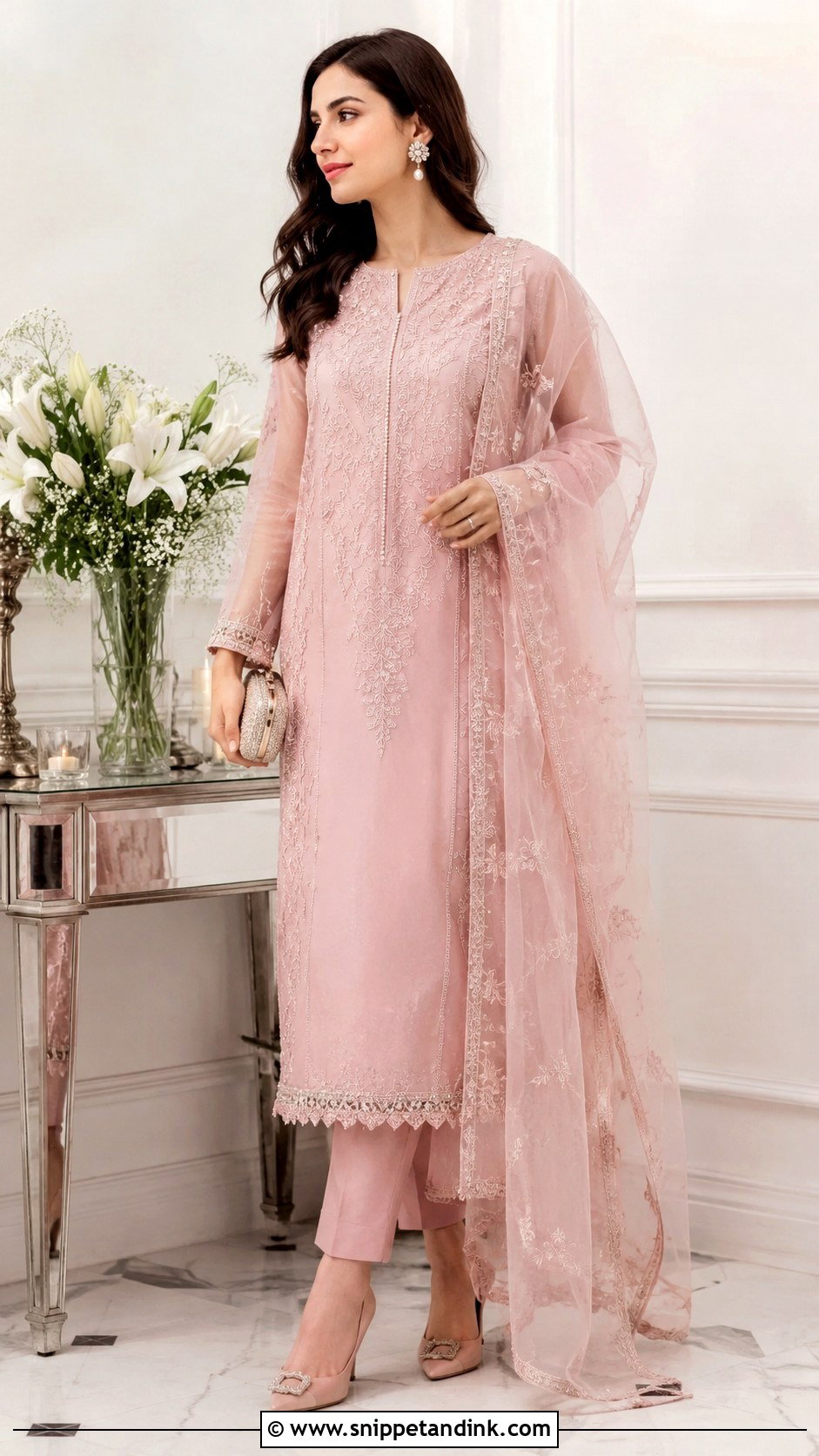
Clean tailoring is the whole point of a straight pants Nikkah suit outfit, so fit matters more than embroidery. At the fitting I check that the side seams hang straight when you stand and that the slits open high enough for you to sit without the shirt riding up. Cigarette pants or slim trousers, an organza or net dupatta and pointed heels finish it. Ivory, mint, blush, beige and powder blue all work, and sisters and friends tend to wear this one again.
23. Short Kurti Gharara Nikkah Outfit
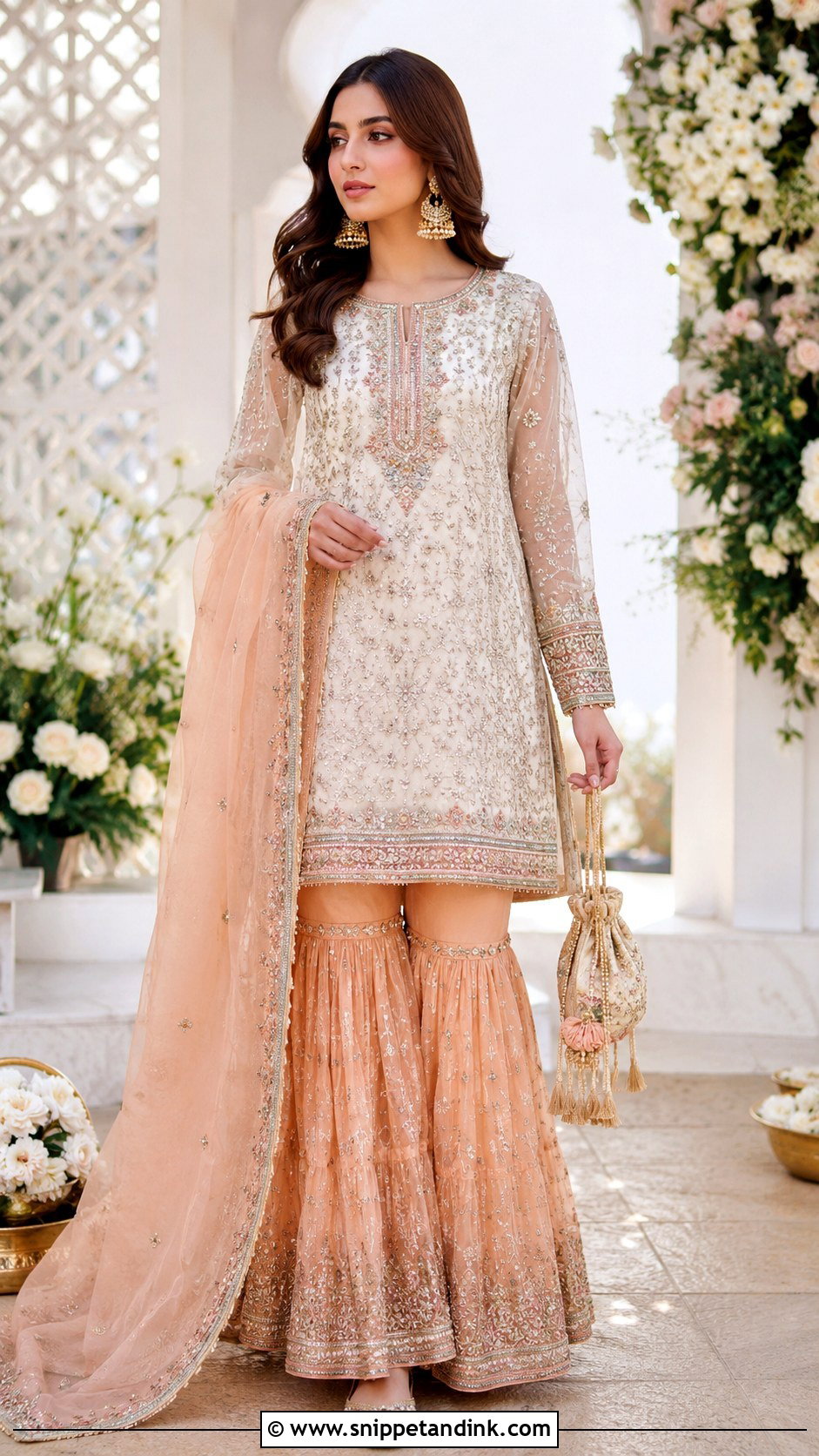
Long before lehengas became the default, the gharara was a classic bridal shape in many Muslim families of North India and Pakistan, and a short kurti gharara Nikkah outfit keeps that tradition in a lighter form. The short kurti is there to show the gathered band at the knee, so it should end at or above mid-thigh. Stay light with ivory, peach, pink, mint or champagne, and add jhumkas, a potli and khussas. Ghararas are wide, so practise stairs before the day.
24. Simple Lehenga Choli Nikkah Outfit
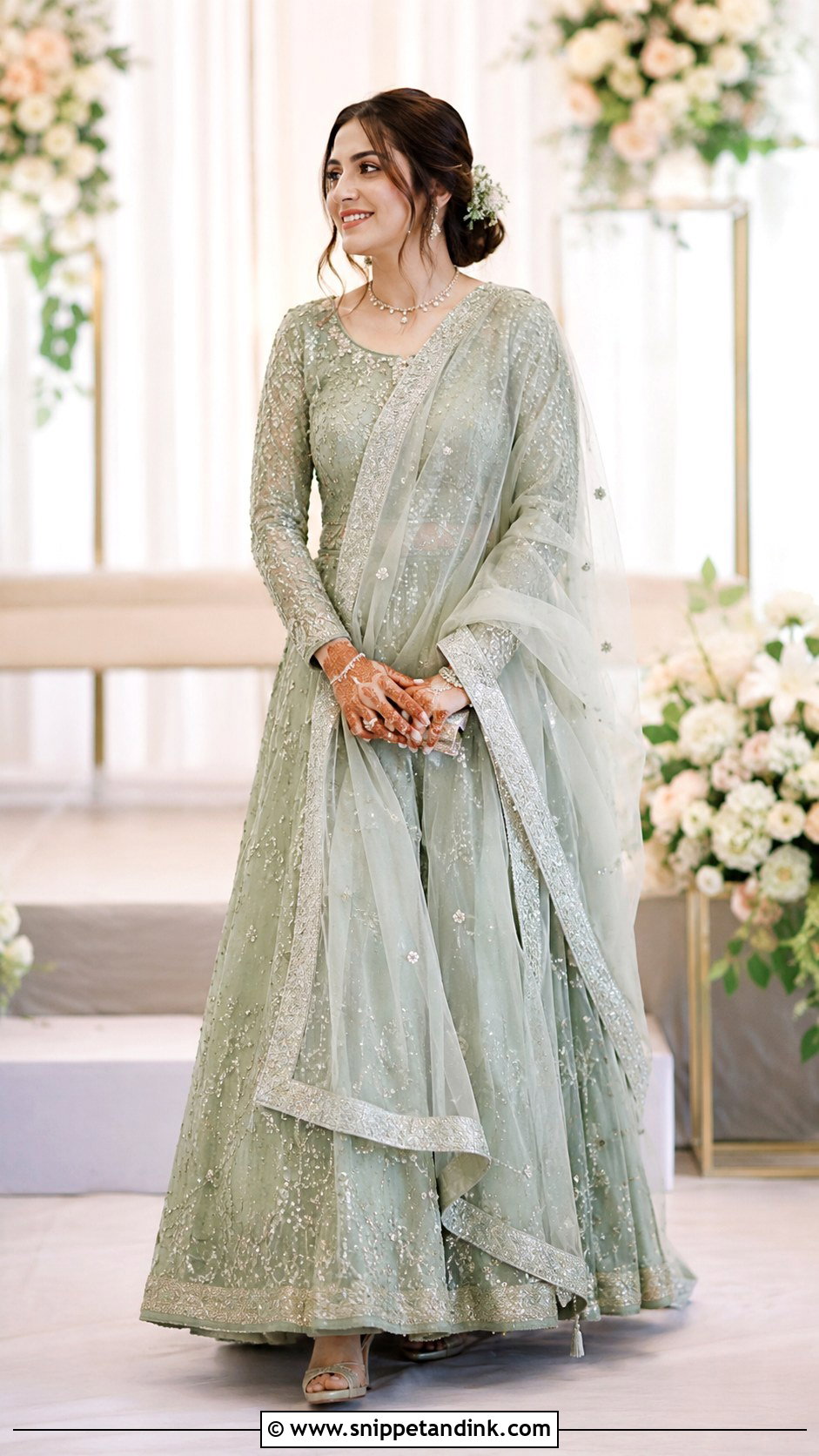
Making a lehenga choli modest is mostly blouse work. Ask your tailor for a longer choli or a peplum with full sleeves, and keep the lehenga itself light, in ivory, blush, champagne or pastel green with minimal embroidery. I pin the dupatta at the back of the head and once at the shoulder so it doesn’t slide during the ceremony. Skip heavy can-can layers for a daytime or intimate Nikkah; they add heat and bulk the moment you sit.
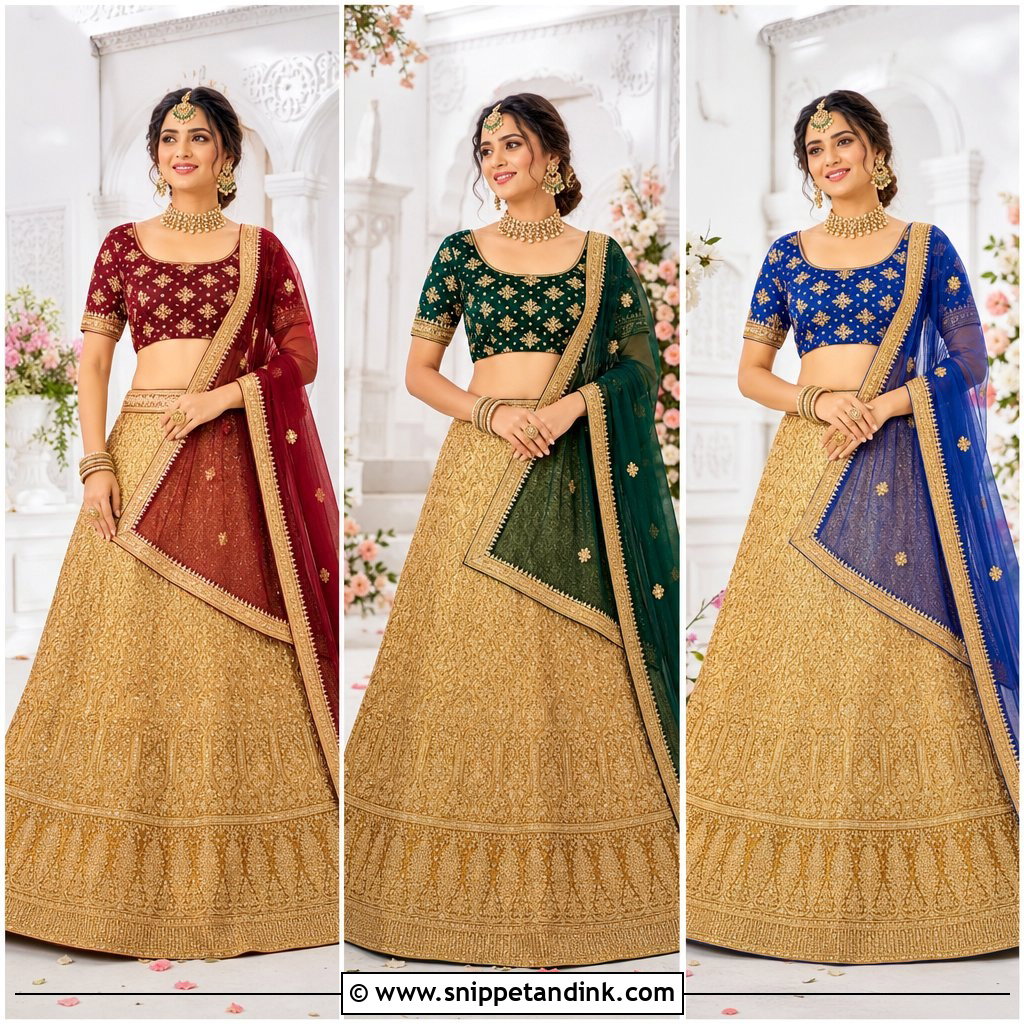

25. Neutral Nikkah Co Ord Set Outfit
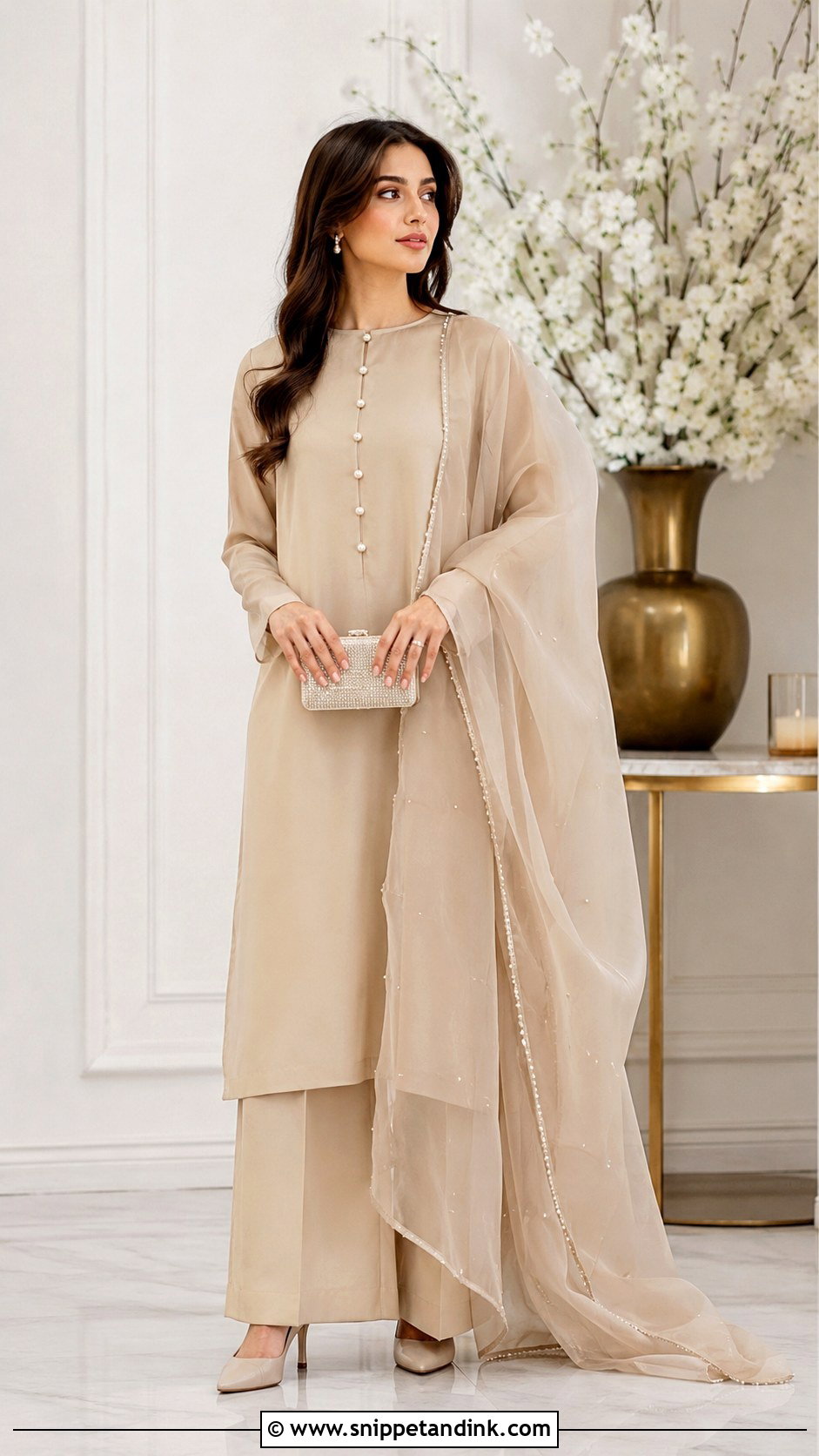
A co-ord is the least traditional piece here and the most reusable. Choose a long tunic and wide-leg pants in ivory, beige, taupe, blush or champagne, then look for small finishing details such as embroidered cuffs, pearl buttons, scalloped edges or an organza overlay. Since the set has no built-in dupatta, bring one or a long scarf for the ceremony itself. Sleek heels, a box clutch and a low bun keep it polished, and the separates go straight back into your wardrobe afterwards.
A Dupatta That Stays Put From the Ijab to the Last Photo
More fuss at a Nikkah comes from a sliding dupatta than from anything else. Chiffon and georgette are the worst offenders because they’re slippery; net and organza grip better but sit stiffly. This is how I set one over the head so it survives the whole ceremony:
- Start with a base: a low bun, or an underscarf cap if you wear hijab. Pins need something solid to hold onto.
- Fold the dupatta lengthways so the border sits where you want it on your forehead, then place it so more length falls on your left side.
- Pin at the crown into the bun with two U-pins pushed in crossways, not straight down.
- Bring the longer side over your right shoulder and fix it at the shoulder seam with a small safety pin hidden inside a fold.
- Raise your arm and lean forward. If the fabric pulls at your hairline, loosen it at the shoulder pin, not at the crown.
Heavy borders need extra care. If the dupatta has a thick gota or zari edge, I’d skip wearing it over the head and choose a lighter second dupatta just for the ceremony.
Masjid, Living Room or Banquet Hall
Where the Nikkah happens should shape the outfit as much as your taste does. In a masjid, plan on covering your hair, arms and ankles, and on taking your shoes off at the door, so wear something you can slip on and off without help, and get a pedicure, because your feet will be in the photos.
A home Nikkah is more relaxed about coverage but tighter on space. Wide ghararas and full pishwas skirts take up a lot of room on a crowded sofa. Banquet halls are often air-conditioned to the point of chill, so a light shawl in the same tone as your dupatta is worth packing. And for an outdoor Nikkah, organza and chiffon catch the wind, which makes pinning even more important.
Sit Down in It Before You Say Yes
The outfit that works for a Nikkah is the one you stop thinking about once you’re seated. Lightweight fabric, a dupatta that stays pinned and a colour that suits your skin in the venue’s light matter far more than heavy embellishment. A white sharara, a pastel gharara, a silk suit, an abaya or a simple lehenga can all do the job if the shoes, jewellery and bag support it instead of crowding it. Try the full look on, sit in it for ten minutes, raise your hand as if to sign, and adjust from there.
You'll Like These Ideas:








Leave a Reply