
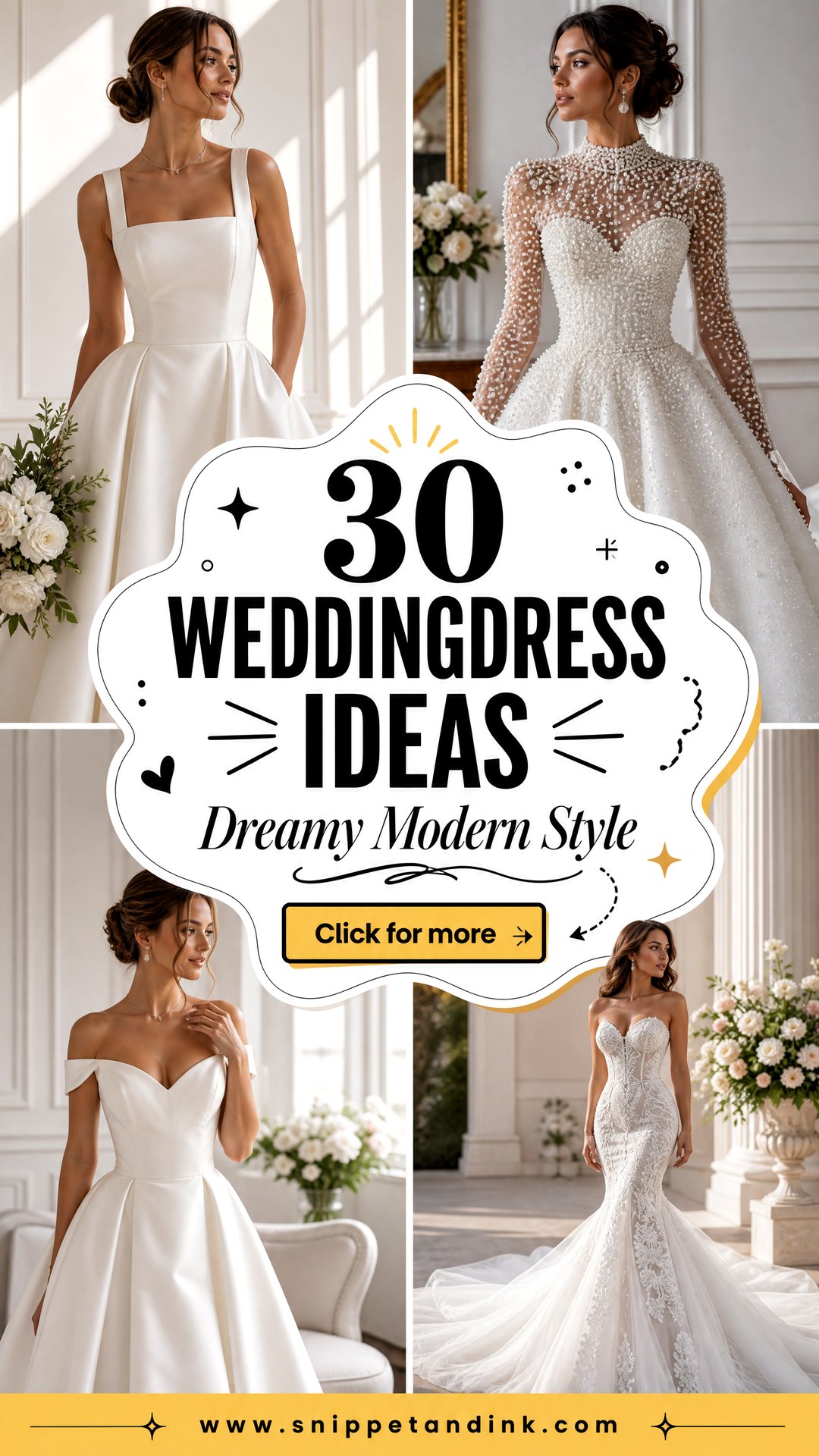
A bride usually arrives at her first appointment with forty saved photos and no idea which ones she’d actually walk down an aisle in. This list is meant to close that gap. It runs from clean satin gowns and lace through courthouse outfits, beach silhouettes and reception looks, and for each one I’ve added what I’d check on you in the fitting room. Look at the dress, shoes, veil and jewelry as one outfit, and keep your venue and how much you want to move in mind as you scroll.
How Long a Bridal Gown Takes From First Appointment to Final Fitting
Most brides underestimate the timing. Many designer gowns are only made after you place your order, and production often takes four to six months, sometimes longer for heavily embellished pieces. Alterations come on top of that. That’s why I suggest starting to shop nine to twelve months before the date and ordering by roughly seven or eight months out.
What the months usually look like
- Shopping: two or three appointments. Bring one or two people whose opinion you trust, not a crowd.
- Ordering: the salon measures you and orders the closest size. Bridal sizing often runs smaller than high street sizing, so ignore the number on the label.
- Arrival: the gown usually lands two to three months before the wedding.
- First fitting: about eight to ten weeks out. Bring your wedding shoes and underwear.
- Final fitting: one to three weeks before the day, when you also learn the bustle.
Rush orders and off-the-rack samples exist if you’re short on time, but expect extra fees and fewer choices. Costs and timelines vary widely between salons and designers, so ask for both in writing at your first appointment.
1. Satin Ball Gown Wedding Dress
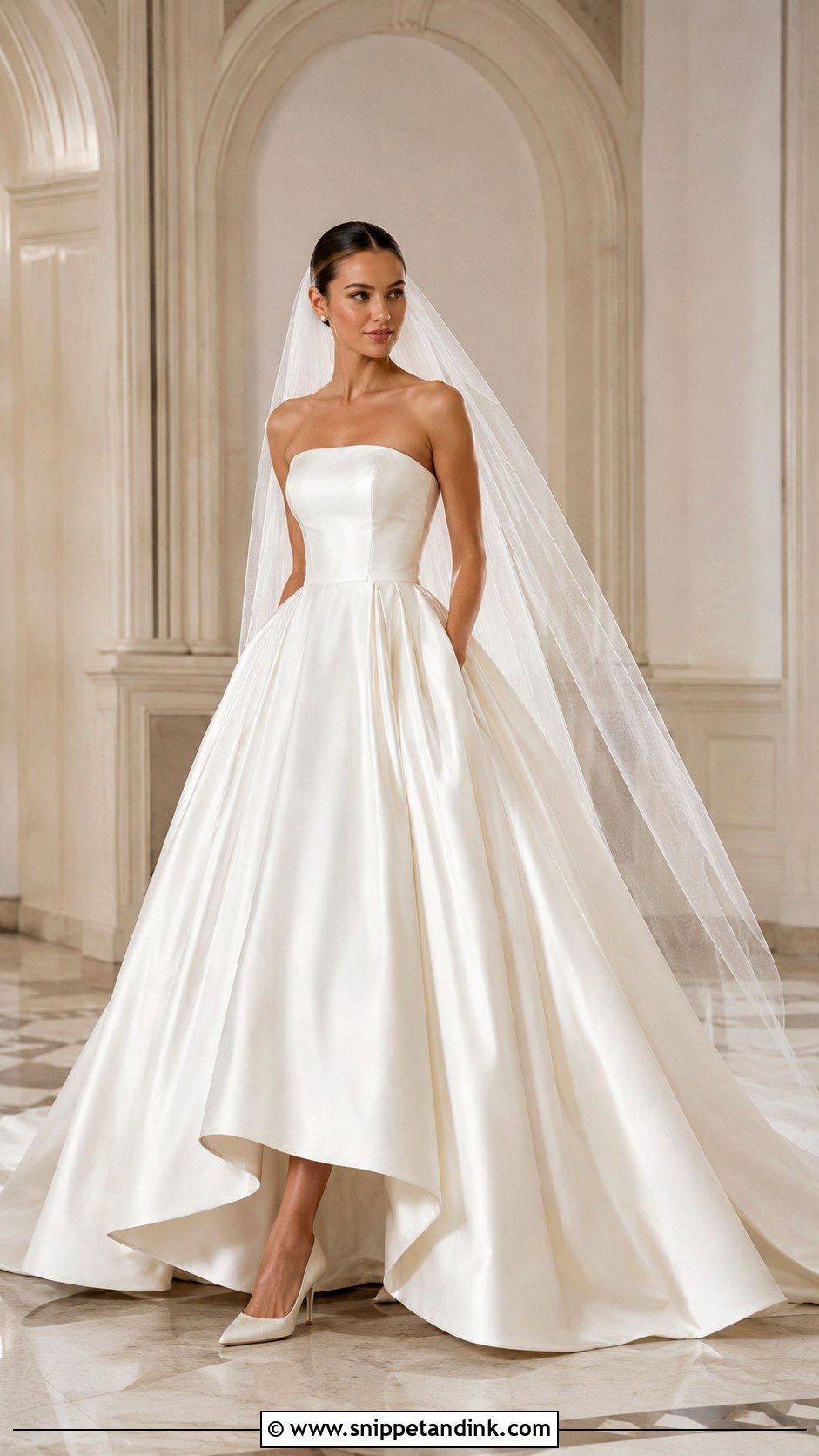
Satin gives a ball gown its structure without any sparkle, so the skirt does all the talking. The bodice is your call: strapless, scoop or square, depending on how much support you want and whether you’ll fidget with it. On a petite bride I ask the seamstress to reduce the petticoat layers rather than shorten the skirt, because volume, not length, is what swallows a smaller frame. Pointed ivory pumps, pearl studs and a long veil keep it classic in a grand hotel or formal hall. A plain, tight bouquet lets the satin carry the light.
2. Lace A Line Wedding Dress
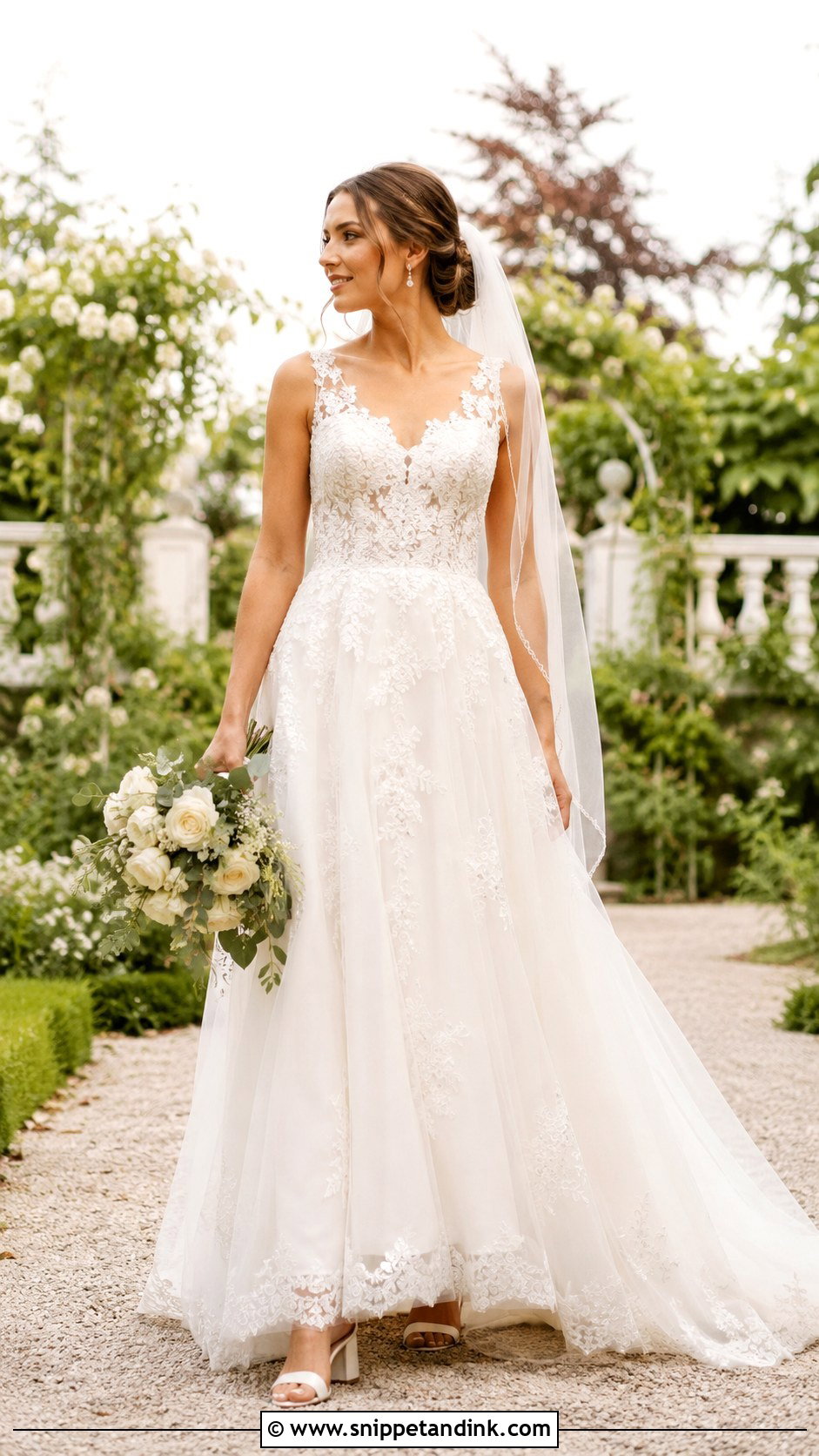
The A-line is the shape I pull first for a bride who doesn’t know where to start, because it fits at the waist and then simply stops clinging. Floral lace leans toward a garden mood; geometric or linear lace reads modern. Lace is also where quality shows up close, so look at the edges. Good lace is cut around its motifs, not straight across them. Soft block heels, a fingertip veil and drop earrings finish it, with hair kept polished so the lace stays in focus. If you’d rather not manage a heavy train, this is a sensible place to land.
3. Minimalist Slip Wedding Dress
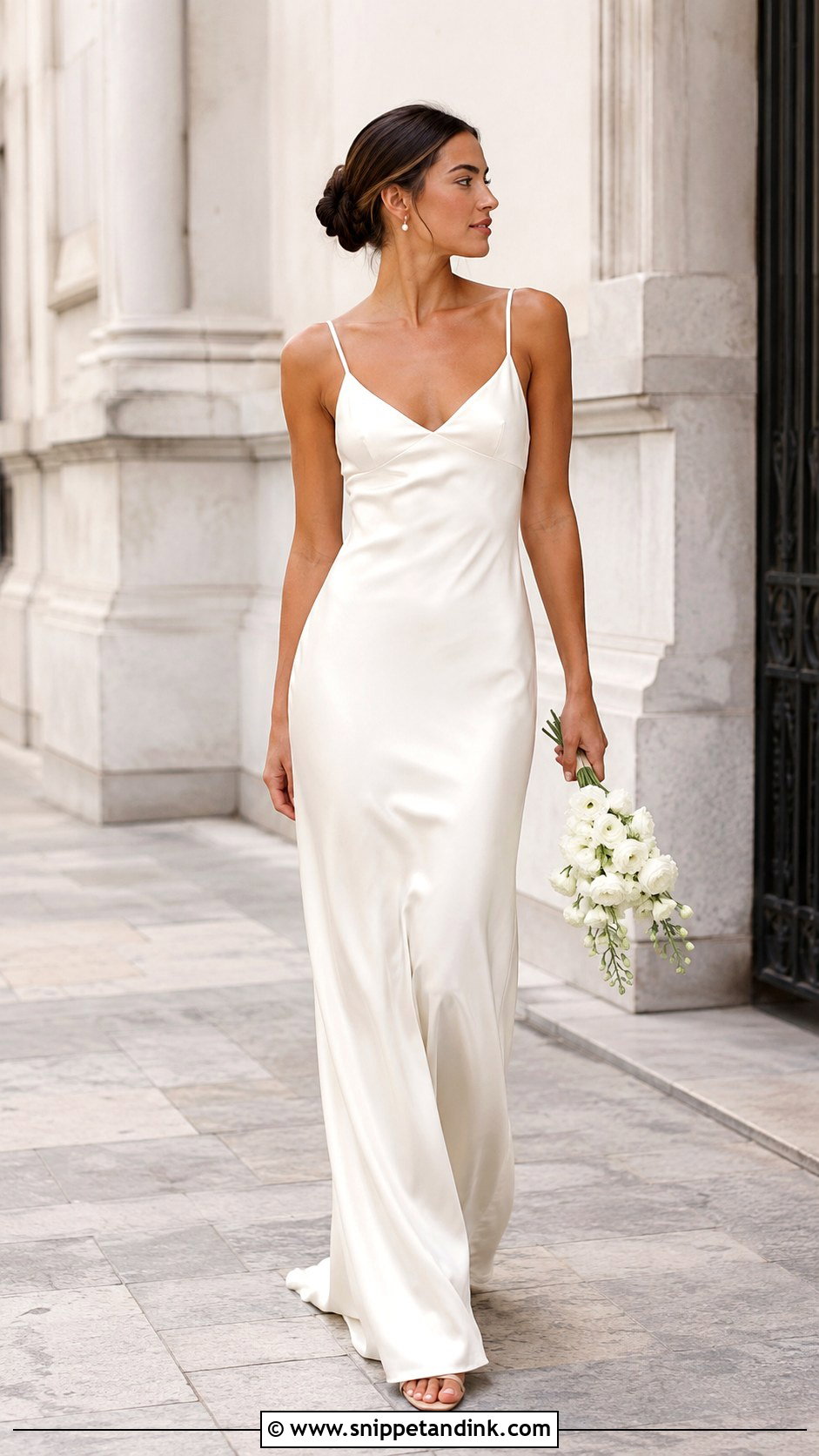
A slip dress has nowhere to hide, which is both its appeal and its risk. Silk, satin or heavy crepe drapes well; thin polyester satin shows every seam of your underwear and every crease from the car. I’d budget more for tailoring here than for an embellished gown, because adjusting the strap length, waist and hem by a centimeter is what makes it look custom. Barely-there heels, a low bun and small diamond or pearl earrings suit a city or rooftop ceremony. A sheer scarf, a bridal blazer or a cathedral veil adds coverage for a church service.
4. Off Shoulder Wedding Dress
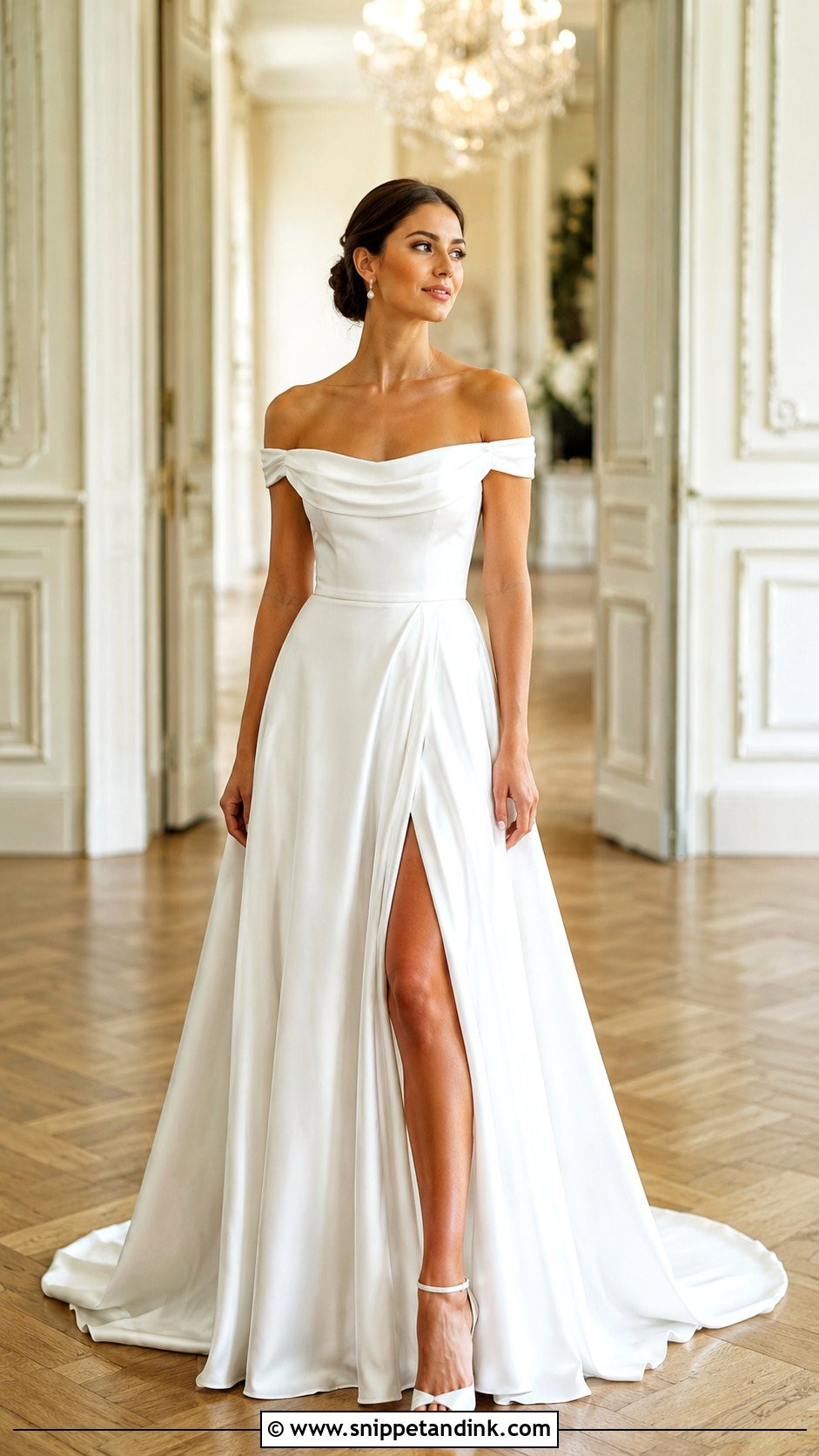
Off-shoulder bodices frame the collarbones better than any other neckline, but they can pin your arms down if they’re cut tight. At fittings I ask brides to hug me and raise a glass as if toasting; if the sleeves stop them, the seamstress adds room or a little stretch. A fitted bodice over a full skirt reads formal, while a slim crepe version reads clean. Sweep the hair back and choose pearl drops with simple ivory heels so the shoulder line stays visible.
5. Square Neck Wedding Dress
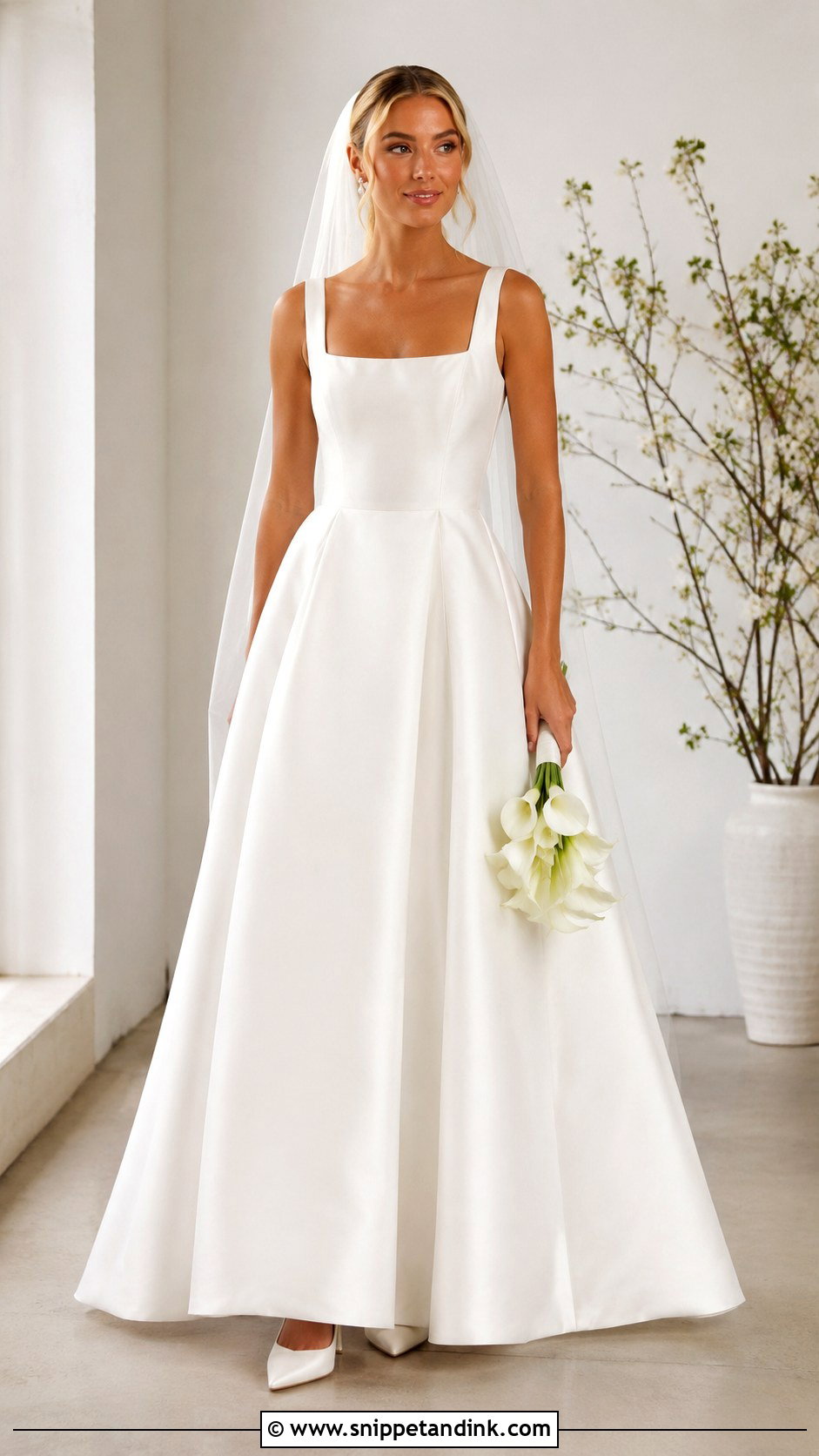
Square necklines run straight across the chest, and with wider straps they give real support without boning that digs in, which makes them comfortable over a long day. They suit fitted gowns, A-lines and plain satin alike. The detail I watch is the corners. They should land at the same point on both sides and lie flat, since a gaping corner is the first thing you notice in a front-on photo. A sleek veil, low block heels and a structured bouquet keep the lines crisp. Wear a fine necklace or nothing at all.
6. Basque Waist Wedding Dress
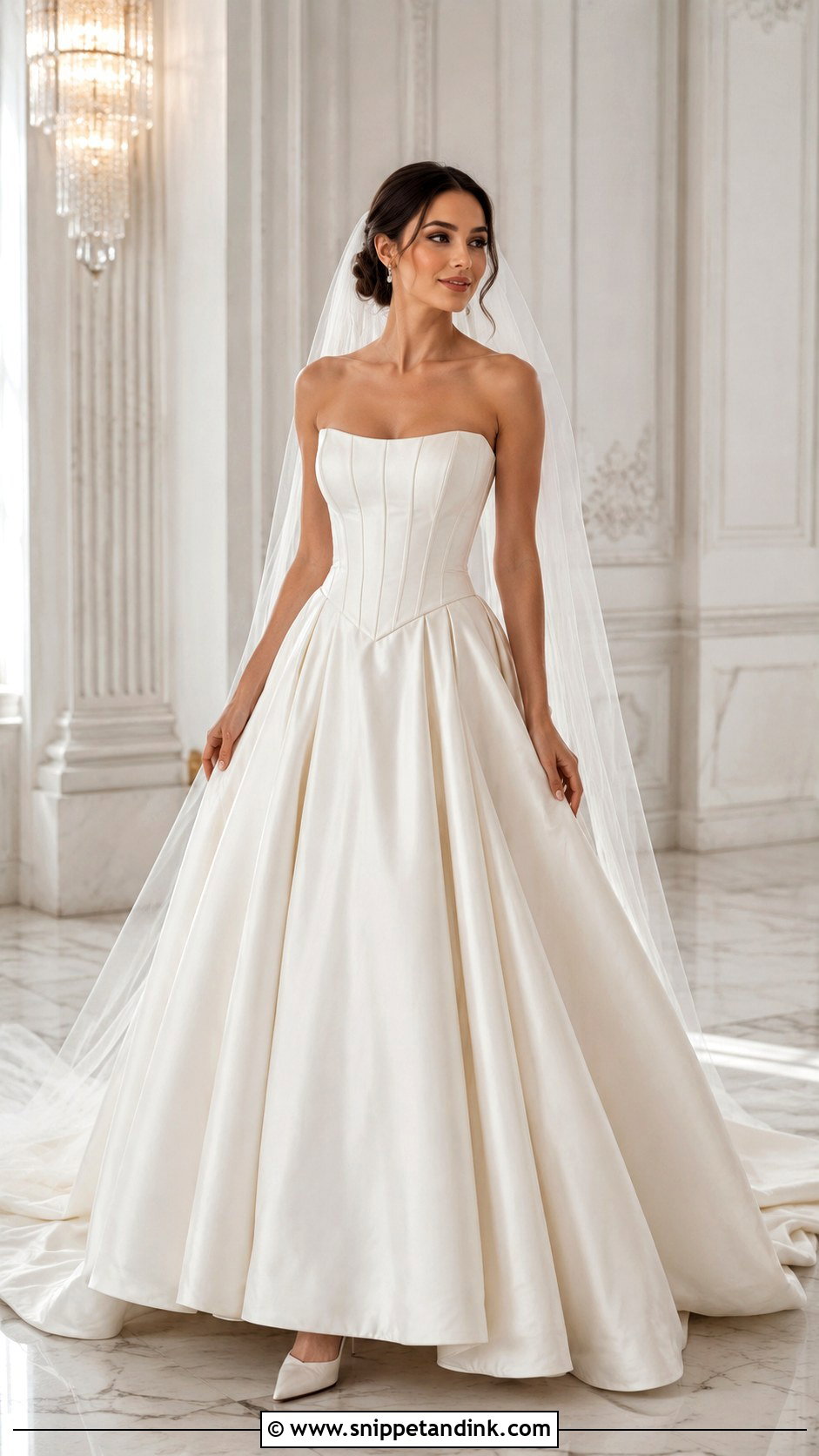
A basque waist wedding dress dips into a V or U below the natural waist, which lengthens the torso and makes the waist look smaller. Over a full satin or tulle skirt with pointed heels and a soft veil, it has real drama. The catch is torso length. On a short-waisted bride, a deep point can push down into the hips and shorten the legs, so I’d try a shallower curve first. The bodice is already doing a lot, so keep the jewelry simple.
7. Drop Waist Wedding Dress
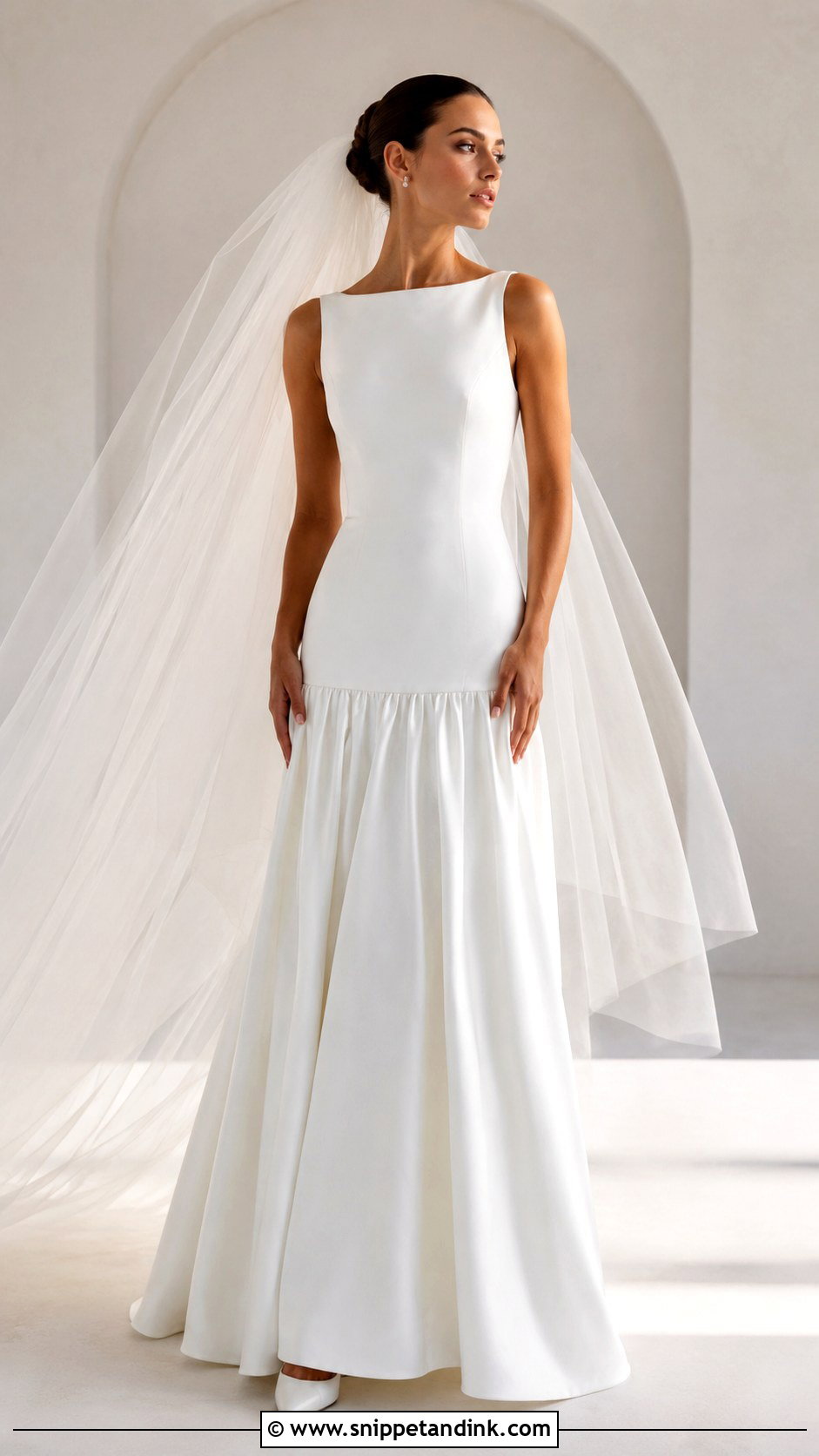
A drop waist wedding dress starts the skirt at the hip, so the bodice runs long and close. Mikado and heavy satin hold that line best, while soft tulle versions feel lighter. The shape is unforgiving if the bodice pulls, so sit down in it at every fitting and check for horizontal creases across the hips. On a longer torso it looks runway-sharp. With clean heels, a sculptural veil and minimal jewelry, it’s quietly different from the usual bridal outline.
8. Corset Wedding Dress
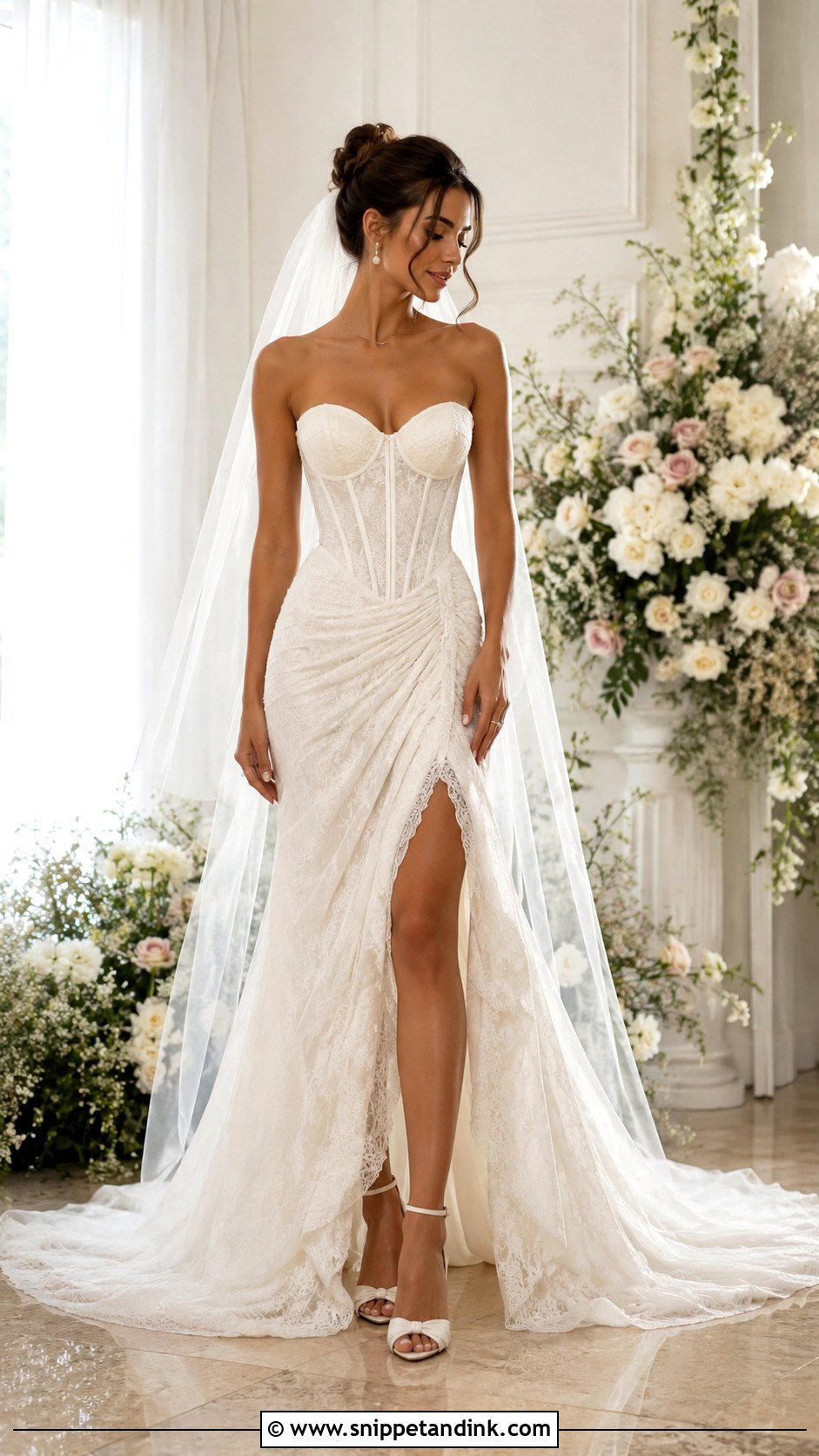
A corset bodice gives the most support of anything on this list, which matters if you’d rather not wear a separate bra. Lace over boning feels classic; plain satin feels editorial. The mistake I see is a corset laced too tight at the fitting because it looks good in the mirror, forgetting that you’ll sit through a three-course dinner in it. It should let you take a full breath and bend to hug someone shorter. A sheer veil and simple earrings keep the bodice in focus, and comfortable heels matter more than people expect.
9. Floral Applique Wedding Dress
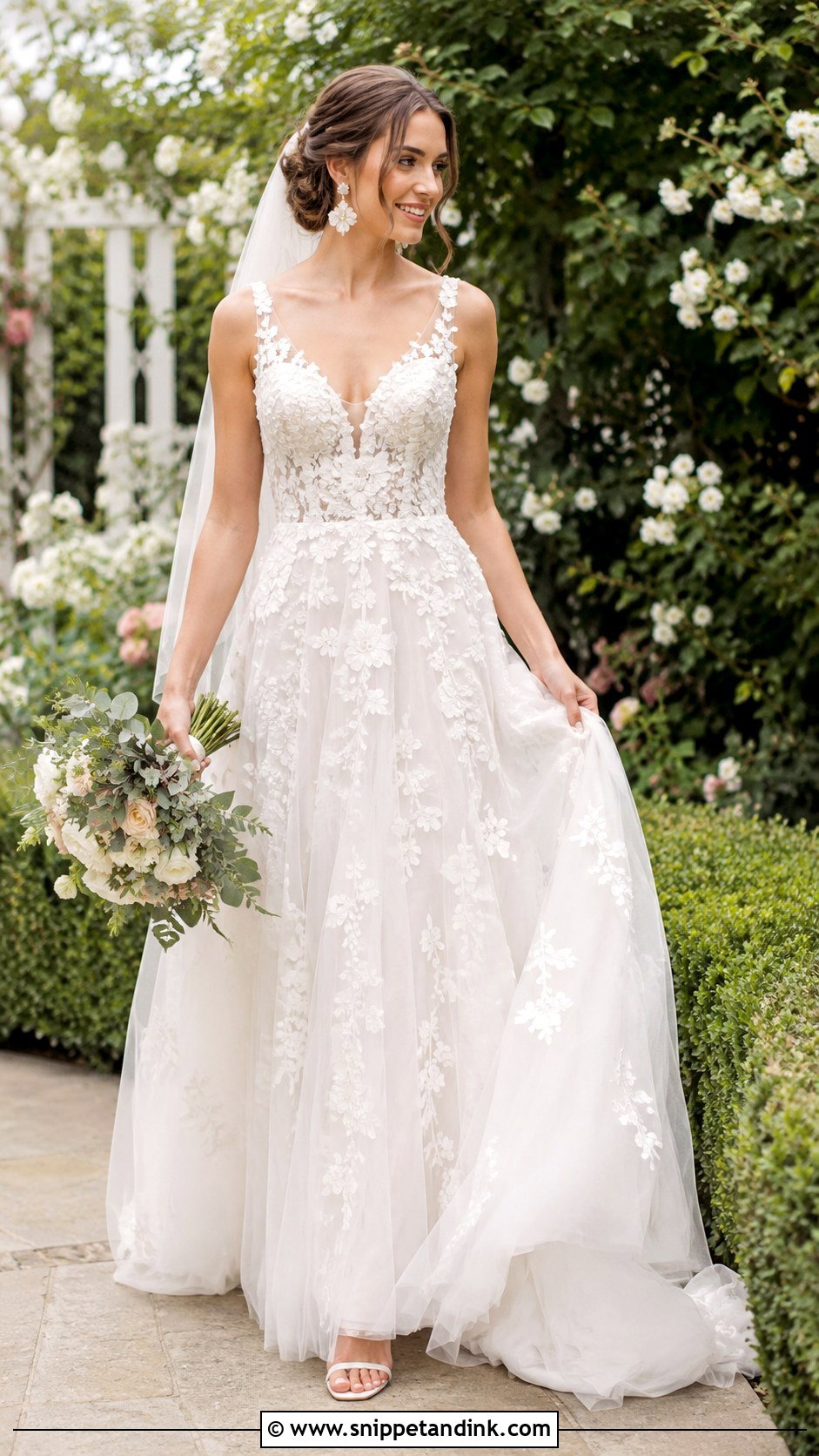
Appliques are lace motifs cut out and stitched on by hand or machine, so they sit raised from the tulle and throw small shadows that show up well in daylight photos. That’s why they suit garden and outdoor spring ceremonies. Allover texture brings drama; scattered flowers stay softer. I check how the appliques are attached around the bodice seams, because loose edges catch on bouquet stems and bracelets. If they’re bold, keep the bouquet simple, with soft heels and a veil carrying only a light trim.
10. Pearl Wedding Dress
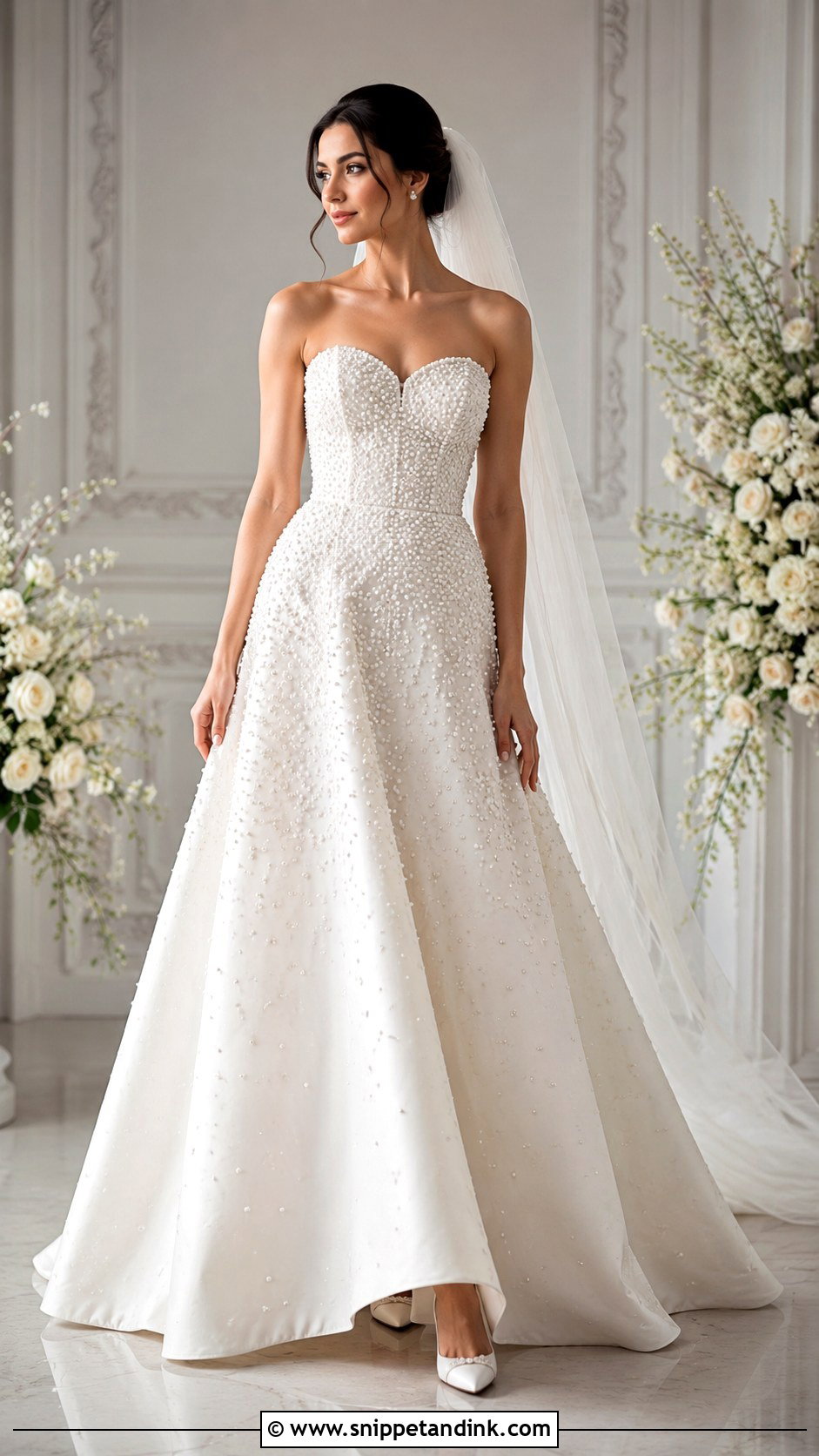
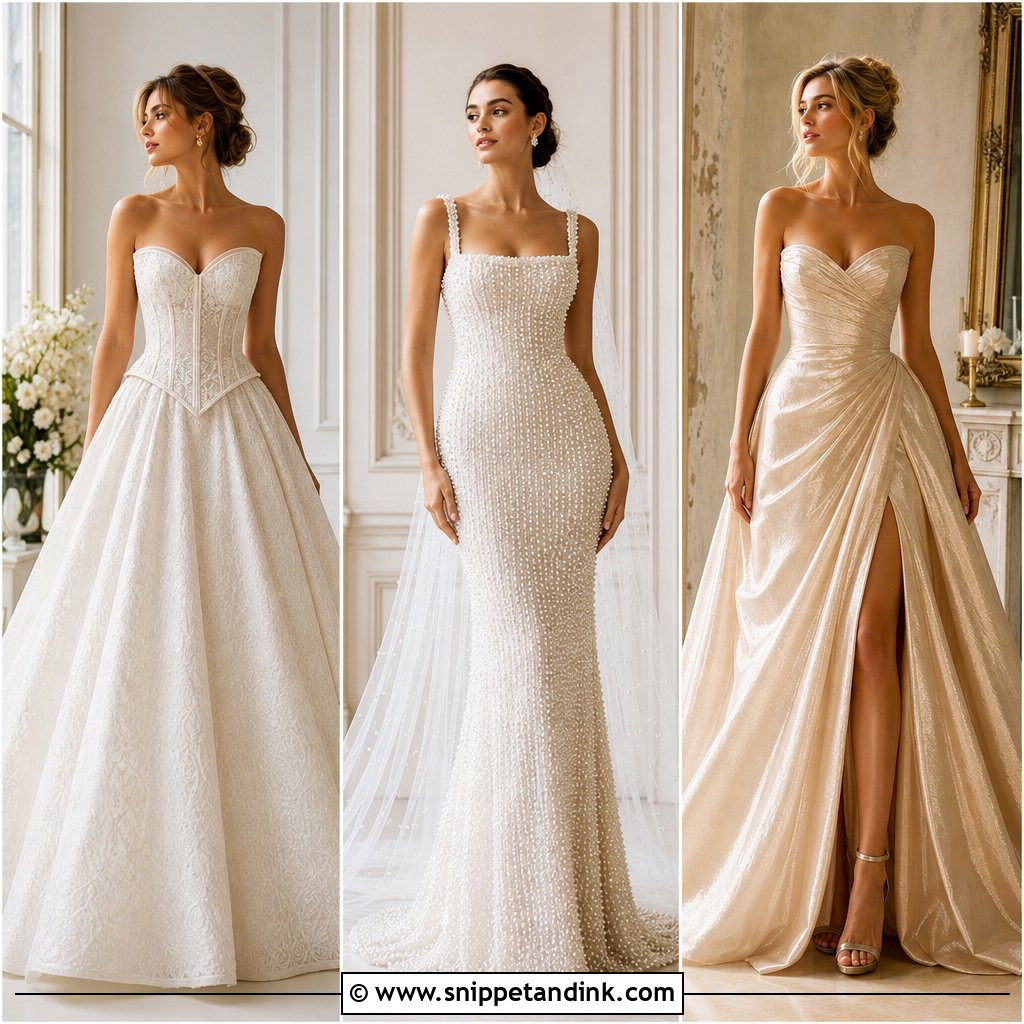
Pearl-embellished gowns glow rather than sparkle, which suits formal and coastal settings. Pearls add weight, though. An allover pearl skirt can be noticeably heavier than plain tulle, so walk a full minute in the sample before you decide. For something subtle, look at tiny pearl accents on sheer sleeves or straps; for drama, an allover pearl gown with a plain veil. Pearl studs, satin heels and a clean hairstyle make the embellishment look intentional rather than piled on.
11. Bow Back Wedding Dress
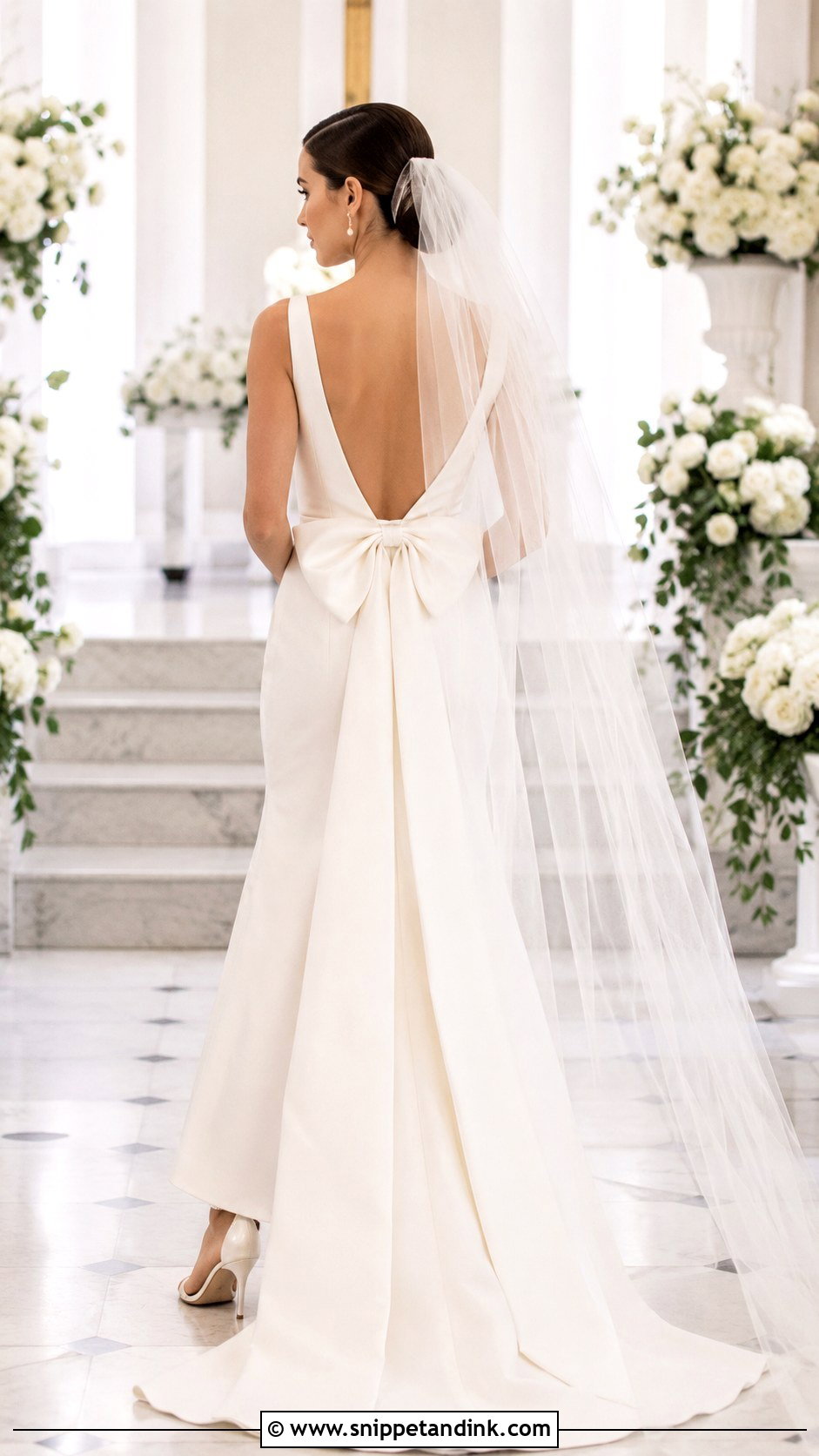
A bow on the back gives the aisle shots and walk-away photos a focal point. Large bows need interfacing or a stiff lining to hold their shape; a soft bow can collapse after hours of leaning against a chair. I check that it’s stitched on firmly, not just tacked. Pair it with a plain front neckline, satin heels and a veil you’ll remove or move aside after the ceremony so the back actually gets seen. On a minimal gown, the bow adds interest without any beading.
12. Detachable Overskirt Wedding Dress
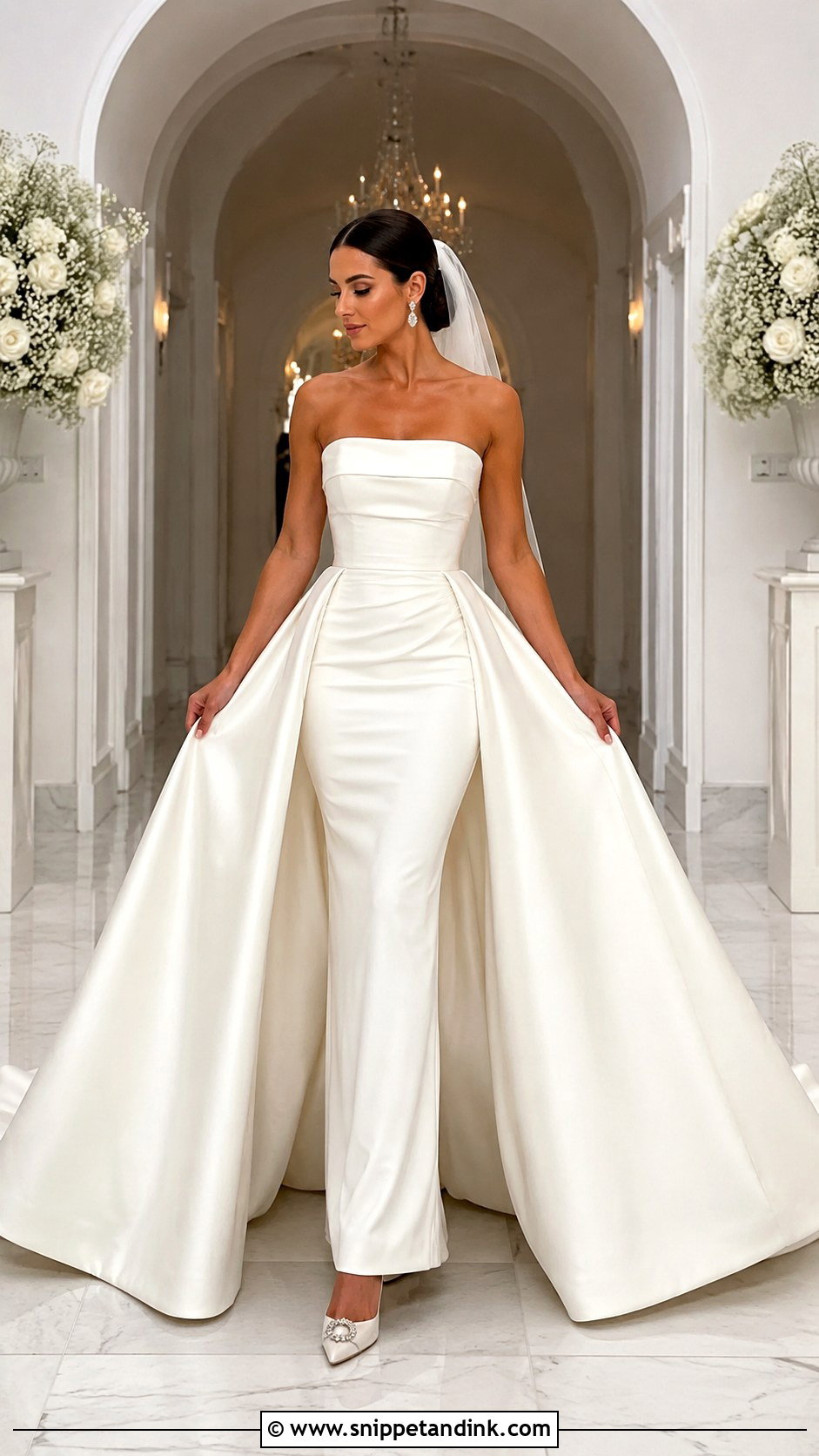
With a detachable overskirt wedding dress, you wear the full skirt for the ceremony and unclip it for a slimmer reception silhouette, which can save buying a second dress. The base can be a fitted crepe gown, a lace sheath or sleek satin. What I test before anything else is the fastening. Hooks and snaps hidden under a belt come off fastest; a long row of buttons means someone helping you for ten minutes in a side room. Practice removing it at the final fitting, and choose earrings and a veil that suit both versions.
13. Long Sleeve Wedding Dress
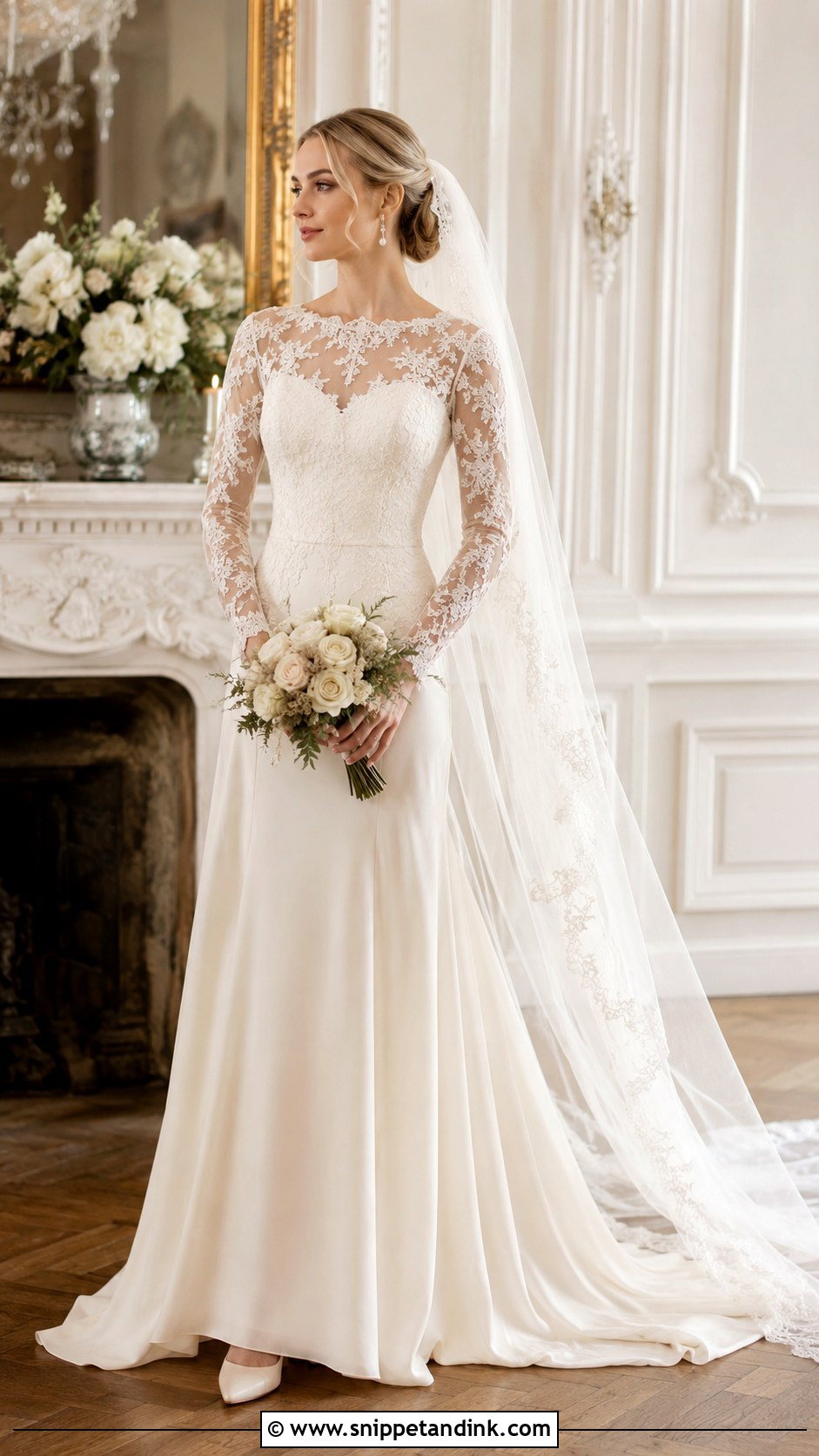
Long sleeves work in every season: sheer lace sleeves feel light, and crepe or satin sleeves look clean. The fit question is movement. Sleeves set too high or too narrow at the upper arm will pull when you lift your bouquet or hug your family, so raise your arms at each fitting. If you’re worried about feeling covered up, balance the sleeves with an open back or a soft V. Closed-toe heels, pearl earrings and a veil matching the gown’s level of detail suit autumn, winter and formal indoor ceremonies.
14. High Neck Wedding Dress
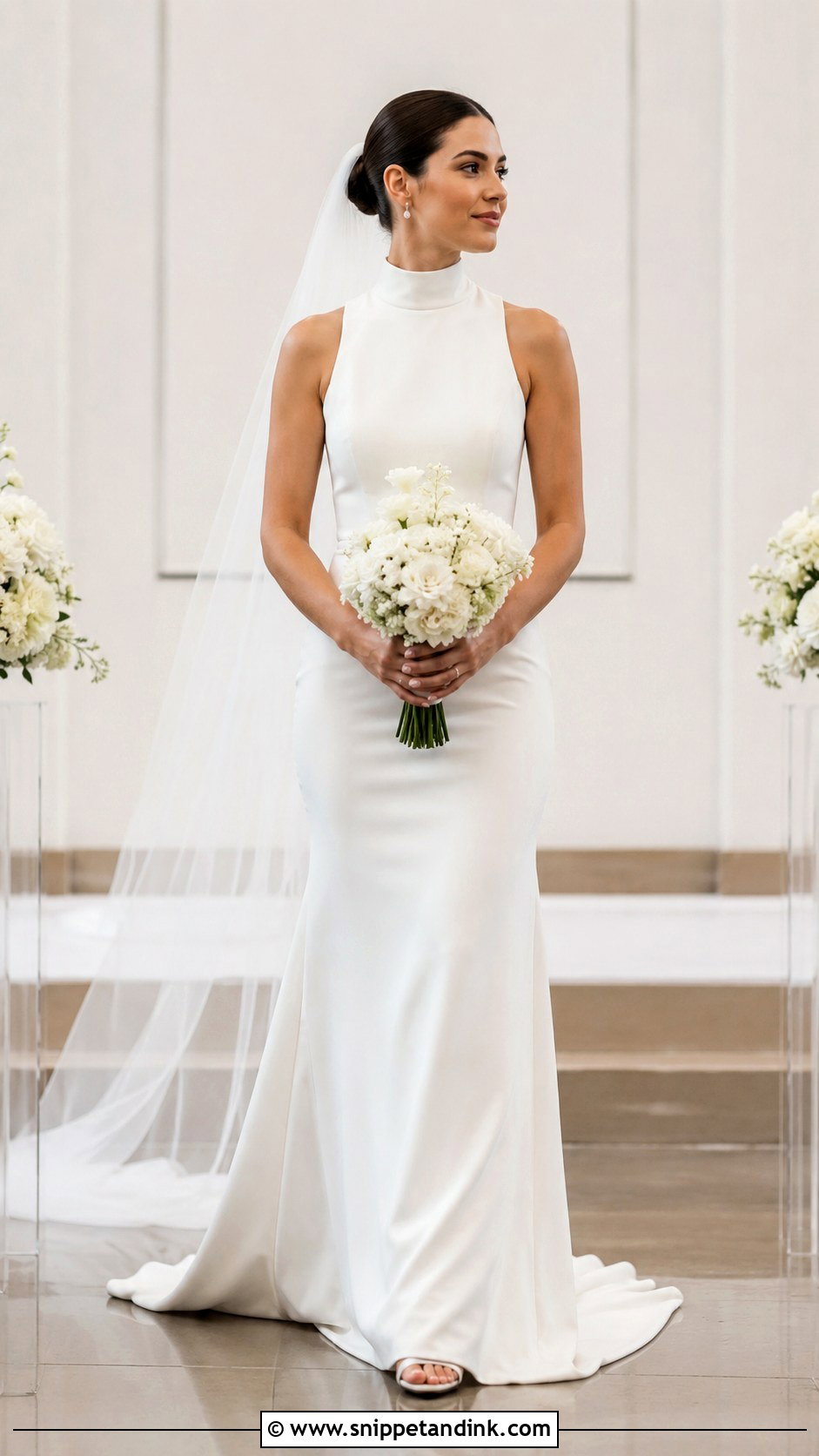
A high neck draws the eye straight up to your face and creates a long, narrow line, in lace, crepe, satin or illusion fabric. My advice is to settle the hair before the dress is final. High necklines usually look best with hair up in a sleek bun so the neck isn’t crowded, and long loose waves can bunch against the collar. Skip necklaces entirely. Small earrings, simple heels and a well-fitted bodice do the rest, whether you want the mood modest, modern or vintage.
15. Halter Wedding Dress
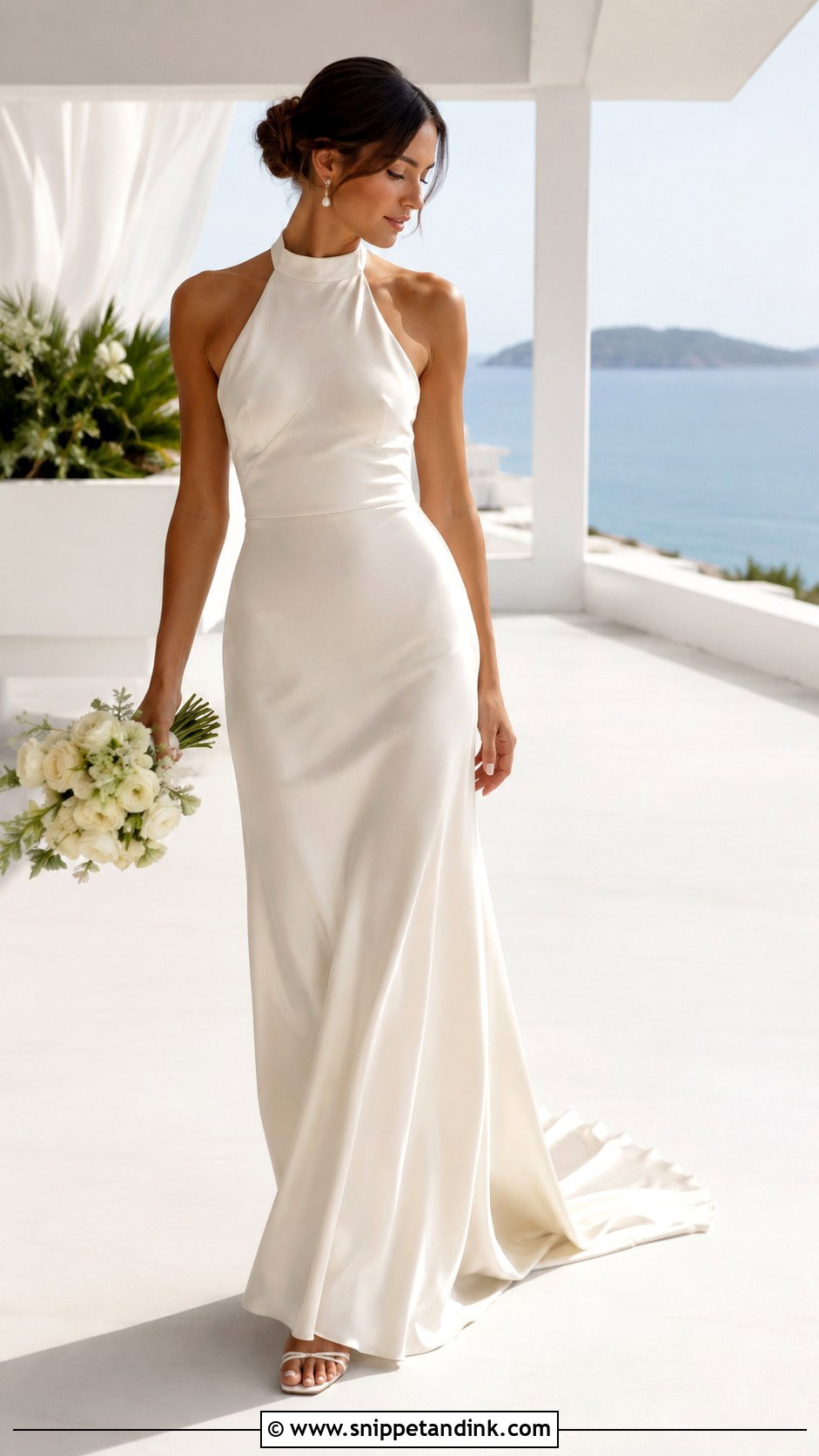
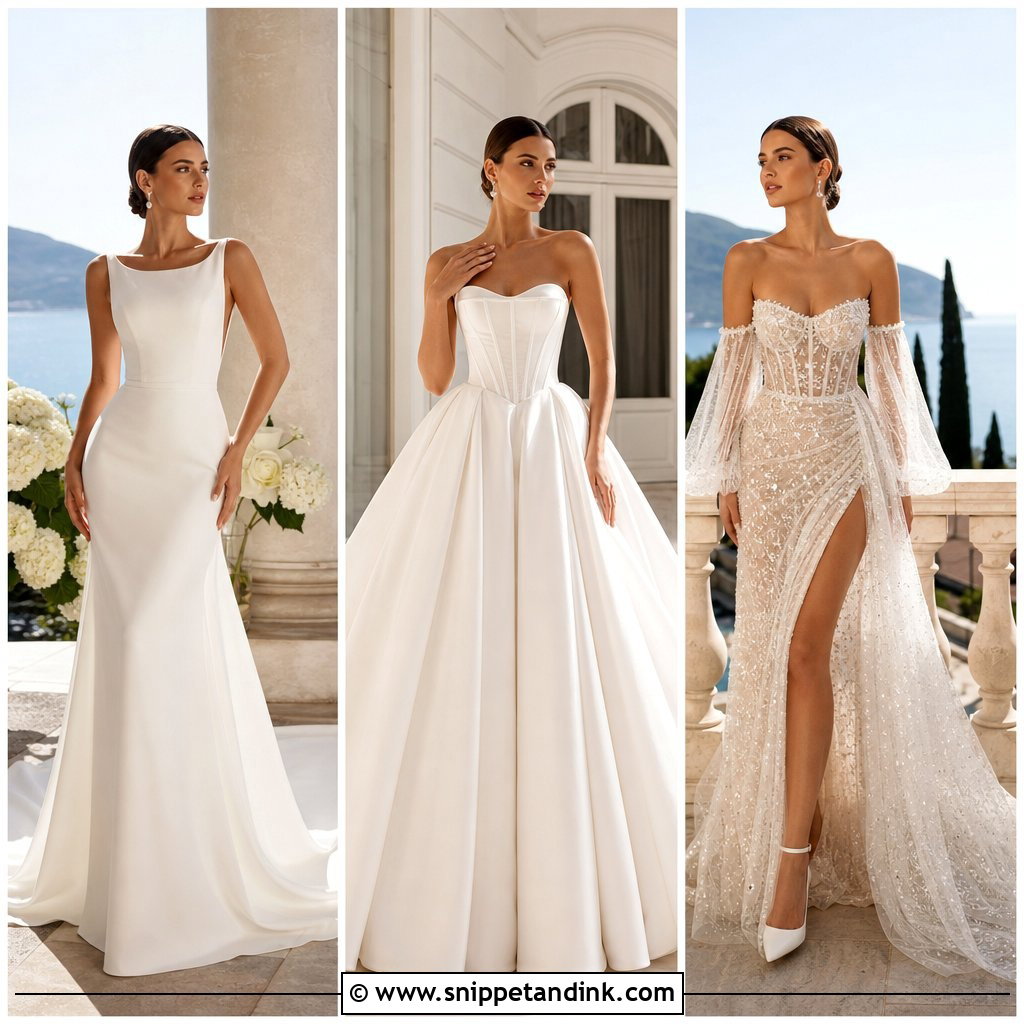
Halter gowns open up the shoulders and, cut well, give solid support through the bust. A satin halter feels sleek; lace softens it. For a fuller bust I’d look for internal structure or a wide halter band, because a thin neck tie carrying the weight starts to strain by evening. A low bun, delicate earrings and strappy or pointed heels suit beach, city and destination venues. No necklace, since the neckline is the feature.
16. Cat Eye Neckline Wedding Dress
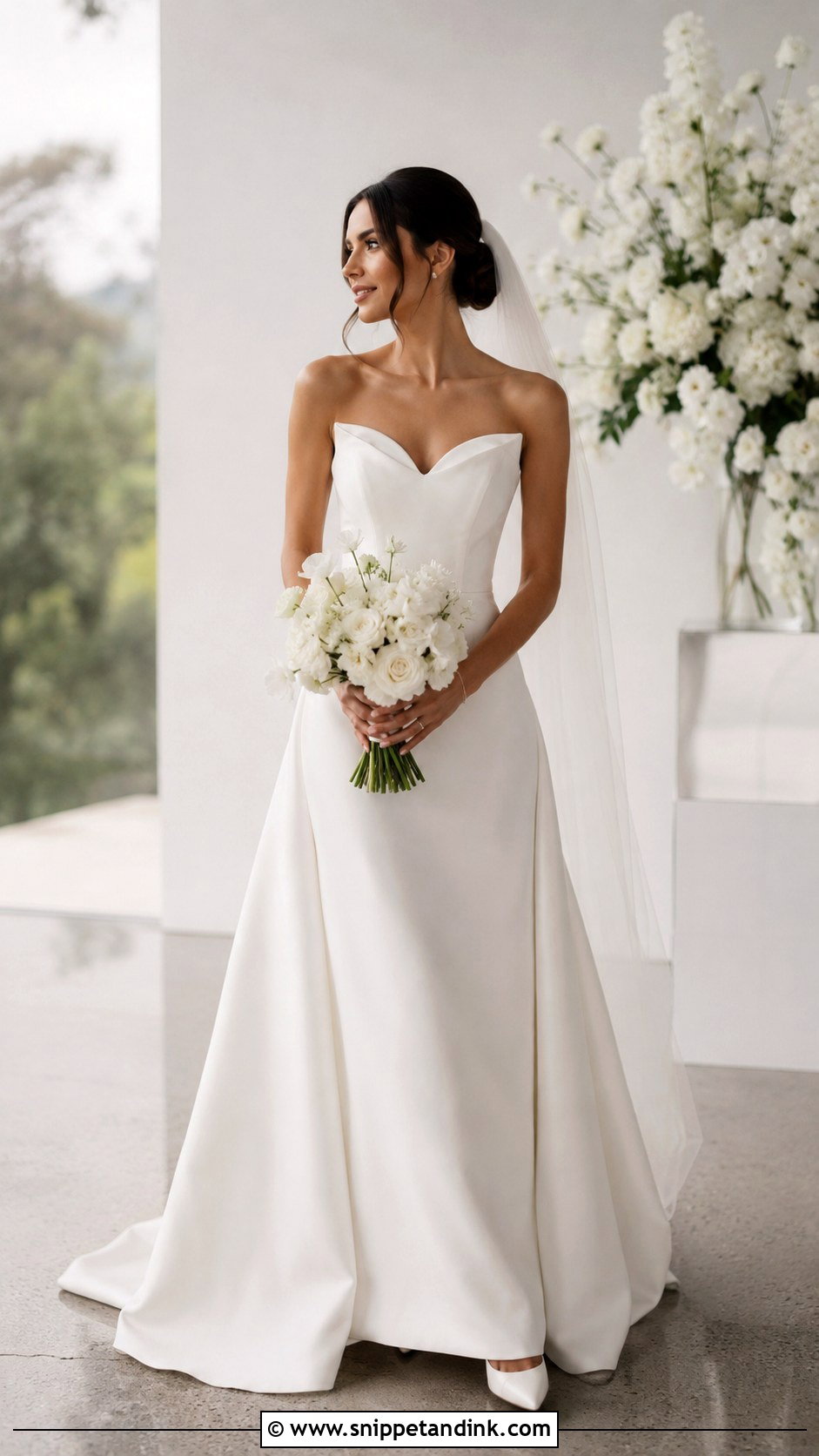
A cat eye neckline is strapless with two small raised points at the bust, a subtle shape that looks sculpted rather than sweet. It needs a structured fabric to hold those points. In soft crepe they flop; mikado or heavy satin keeps them crisp. A smooth satin skirt, pointed pumps and a clean veil keep the outfit tidy, and studs or small drops are enough jewelry. For a bride who wants a strapless gown that doesn’t feel expected, I’d put this on the try-on list.
17. Mermaid Wedding Dress
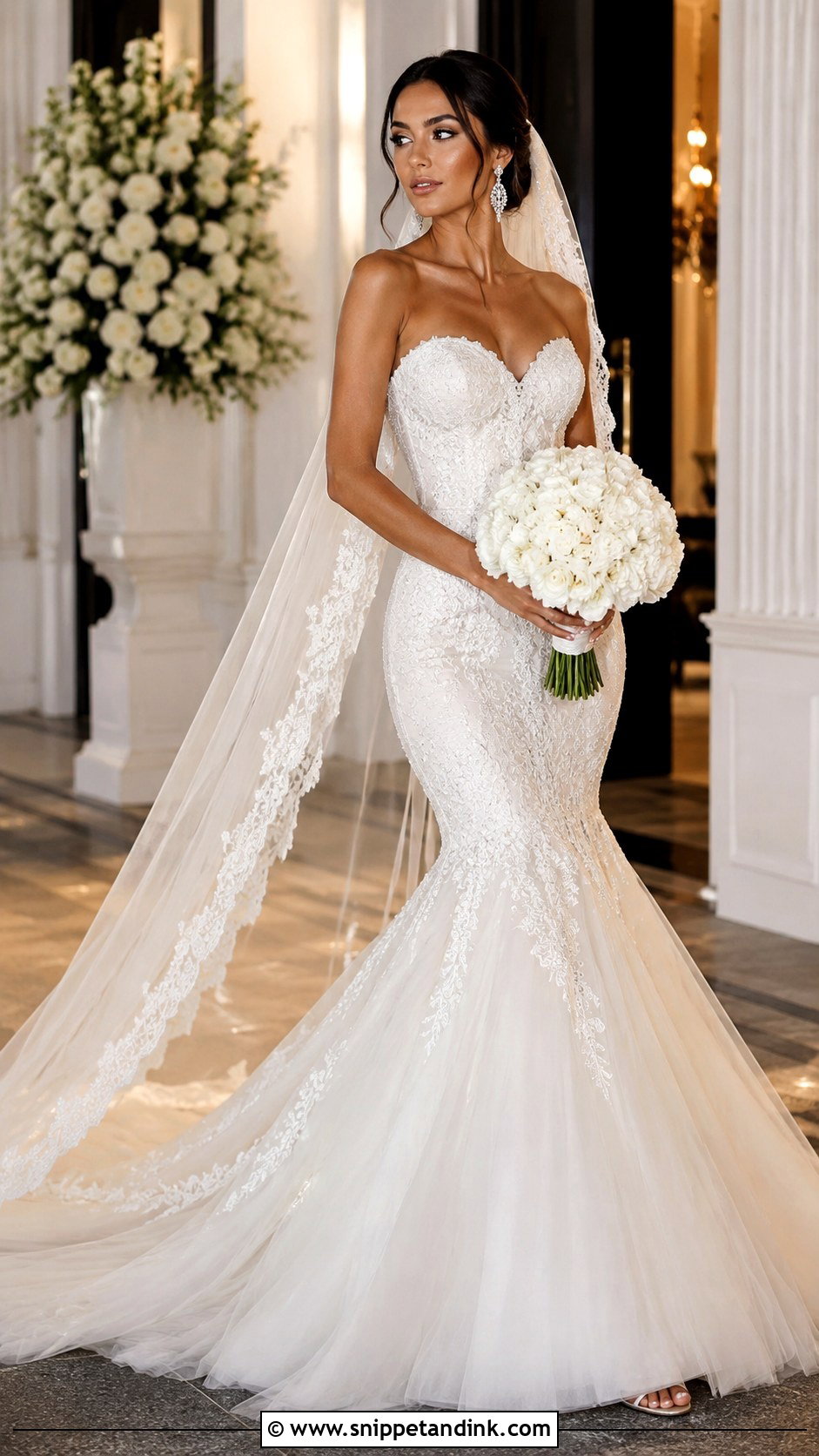
A mermaid gown hugs through the bodice, waist and hips and flares near the knee. That flare point decides how you’ll move. If it sits low and tight, stairs and dancing get hard, so at every fitting I have brides sit, walk, climb a step and turn on the spot. If any of that is a struggle, a softer fit-and-flare gives a similar outline with more room. Crepe, lace, satin or embellished fabric all suit it, with supportive heels, a long veil and statement earrings for an evening reception.
18. Fit And Flare Wedding Dress
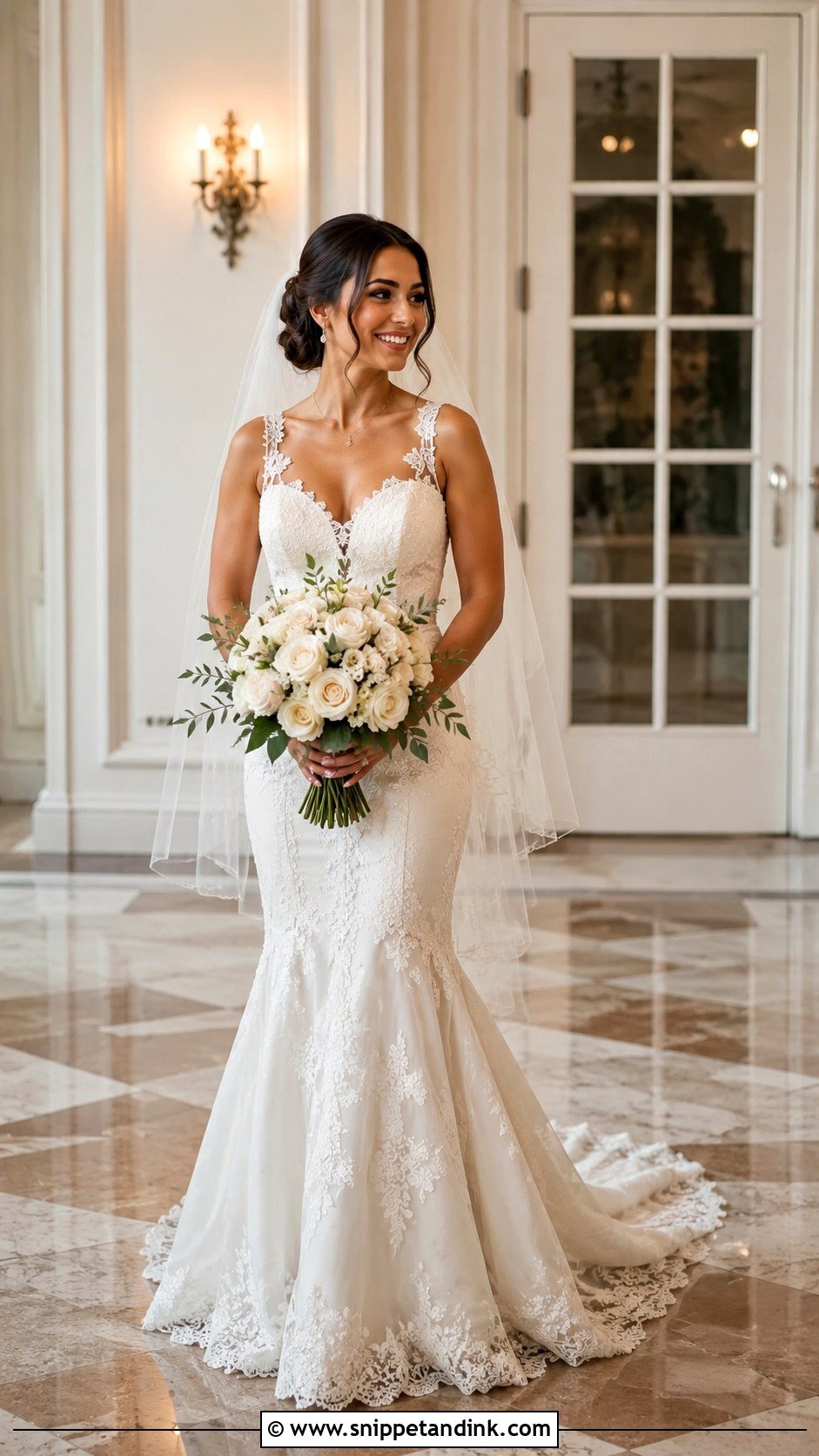
Fit and flare follows the body through the waist and hips but opens earlier than a mermaid, usually around mid-thigh. That small difference is what lets you walk, sit and dance through a full day. Lace reads romantic, crepe reads clean, satin reads classic. A mid-length veil, comfortable heels and a small clutch for reception essentials suit it. It shifts between formal and relaxed venues easily, which is why I recommend it so often.
19. Tea Length Wedding Dress
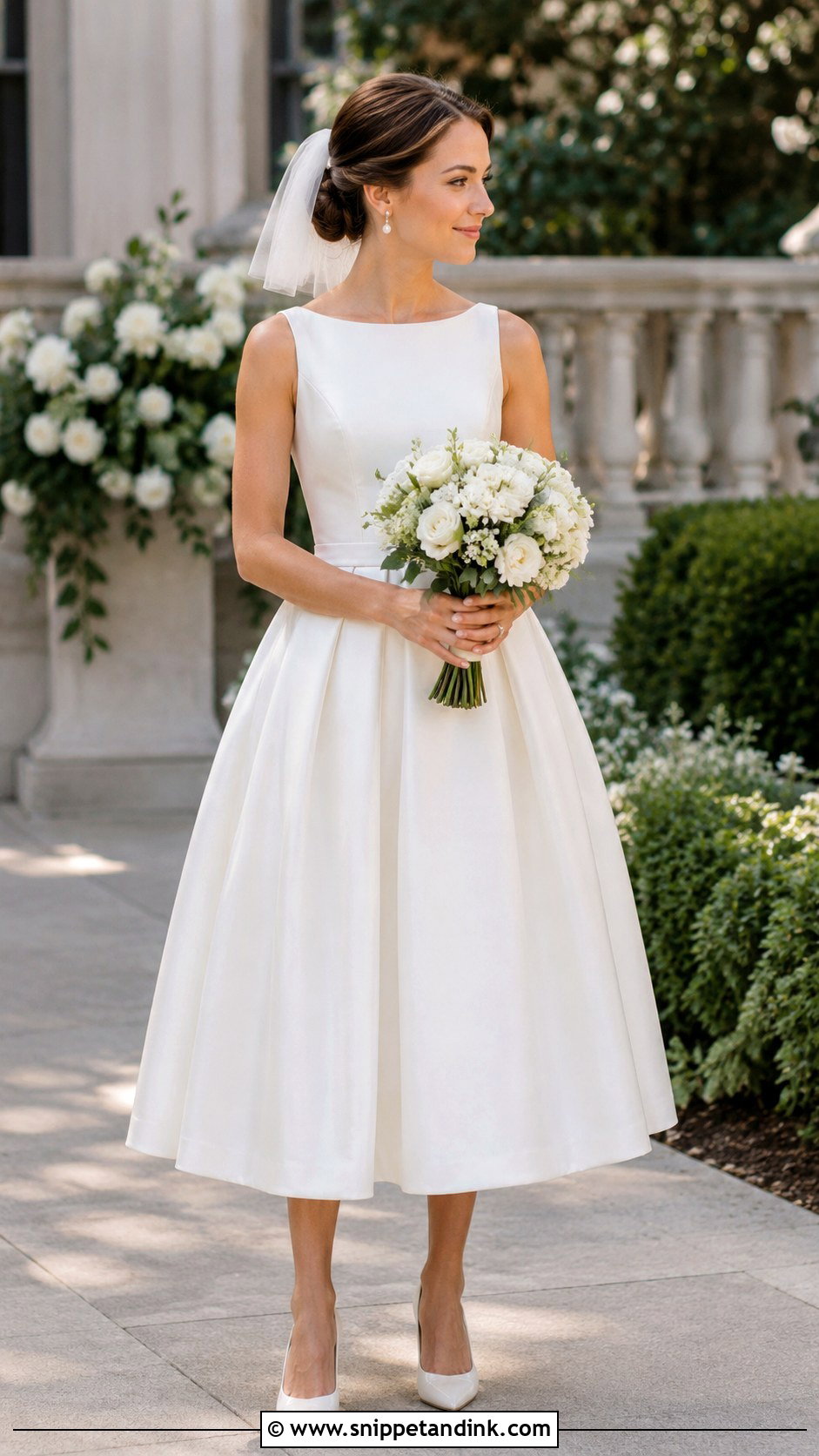
Tea length falls between knee and ankle, so your shoes become part of the outfit and the exact hem matters more than on any long gown. I set it with the bride standing in her actual wedding shoes; a centimeter higher or lower changes how the calf looks. Pointed pumps, embellished flats or block heels, a short veil, pearl earrings and a structured bouquet suit courthouse, garden and daytime celebrations. It brings a vintage note without committing to full length.



20. Short Wedding Dress
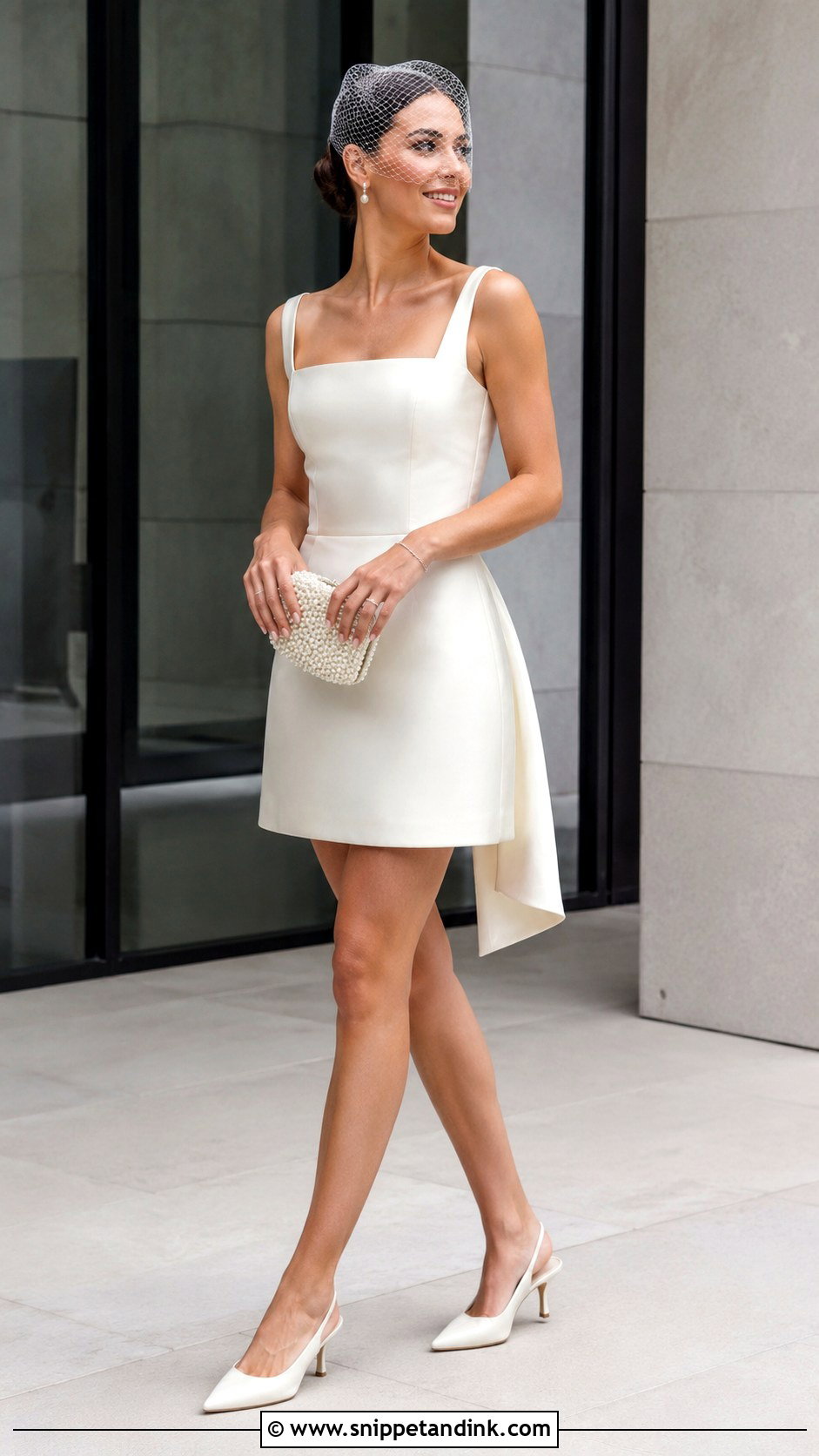
Short dresses suit courthouse ceremonies, elopements and a reception change. To keep one bridal rather than partywear, the fabric has to do the work, so look for satin, crepe, lace or organza with some body. A structured mini looks fashion-led; a lace mini feels softer. Slingback heels, a birdcage veil and pearl or crystal earrings finish it, with a cropped bridal jacket if you want coverage. Check the length sitting down, since plenty of reception photos are taken at the table. It’s also the easiest bridal look to dance and stay cool in.
21. Bridal Jumpsuit Wedding Outfit
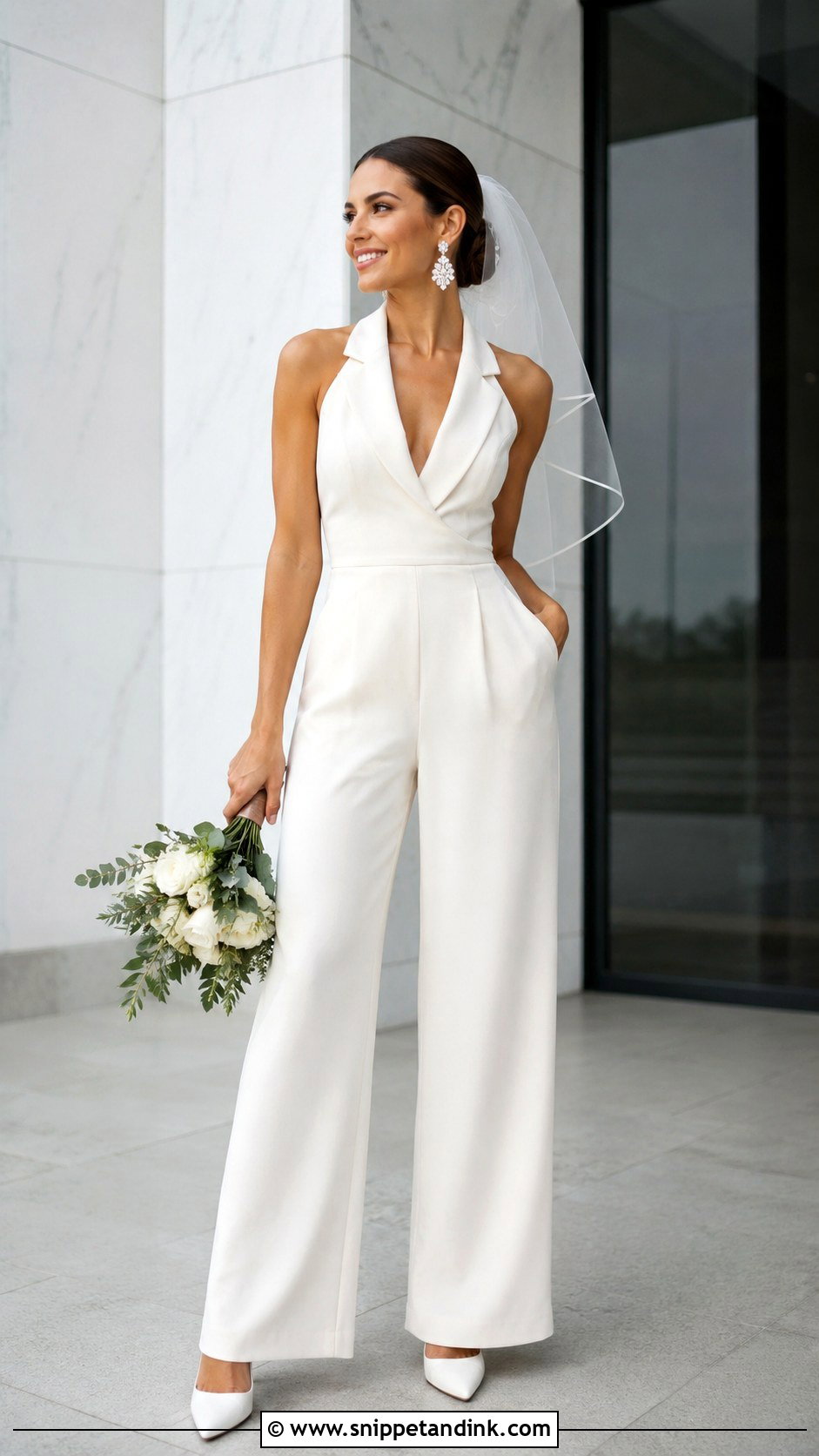
A bridal jumpsuit gives full freedom to move, and it suits courthouse ceremonies, elopements and city weddings. White crepe, satin or structured suiting keeps it from looking casual. Look for a tailored waist, wide legs and a neckline that stays put. Have the leg length set in your wedding shoes; too short and it reads as cropped trousers. A detachable cape or overskirt adds presence for the ceremony, and pointed heels, a short veil and statement earrings finish it.
22. Bridal Suit Wedding Outfit
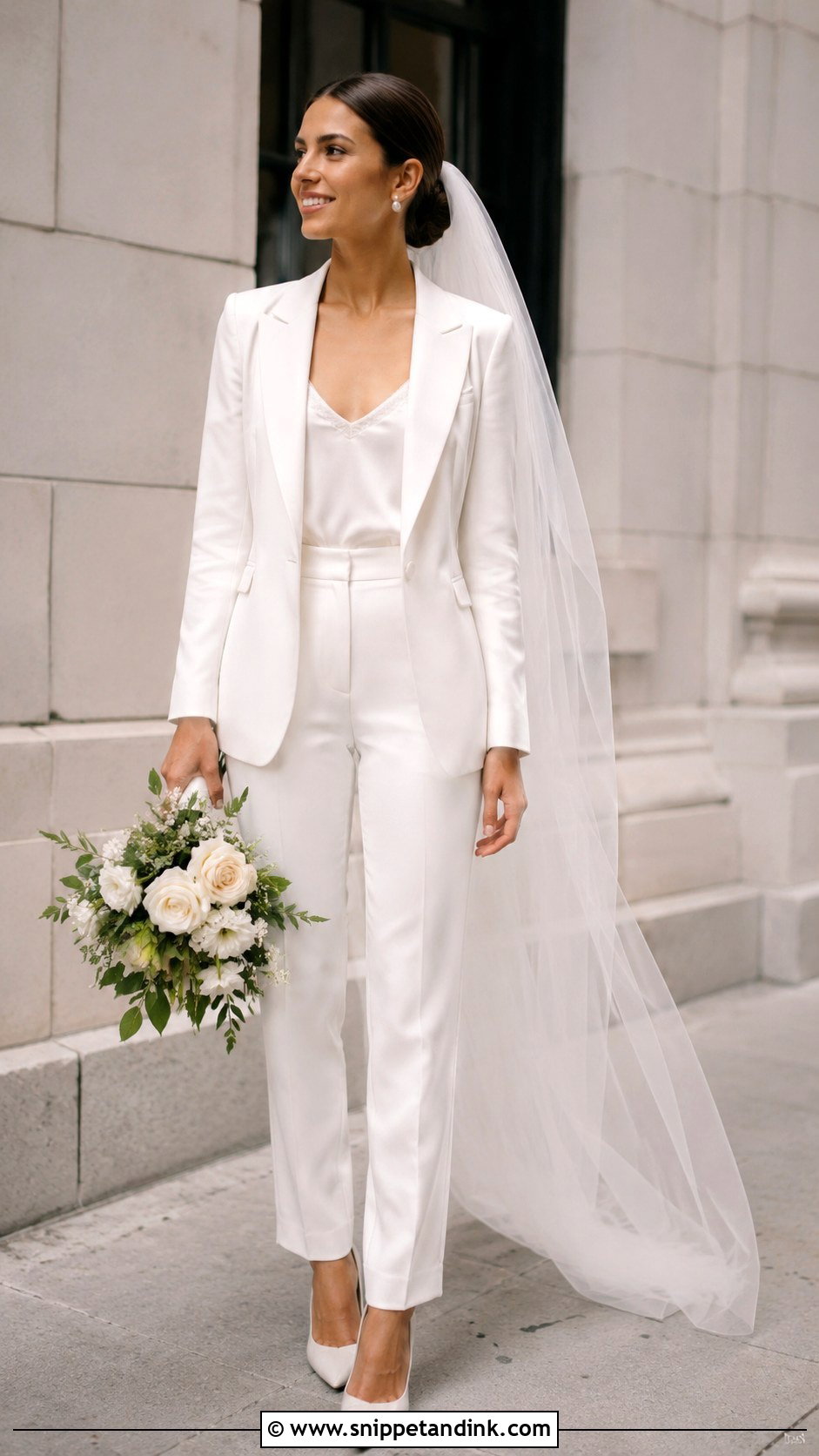
A bridal suit looks sharp and still bridal when it’s white or ivory and fitted precisely. I’d send any suit to a tailor for the shoulders, sleeve length, waist and trouser hem, since off-the-rack suiting almost never fits all four. A silk camisole, lace top or structured bustier underneath softens the tailoring. Pointed pumps, pearl earrings and a small bouquet or sleek clutch suit civil ceremonies and modern receptions. Adding a veil over a suit makes a nice contrast if you want one traditional note in the mix.
23. Two Piece Wedding Dress
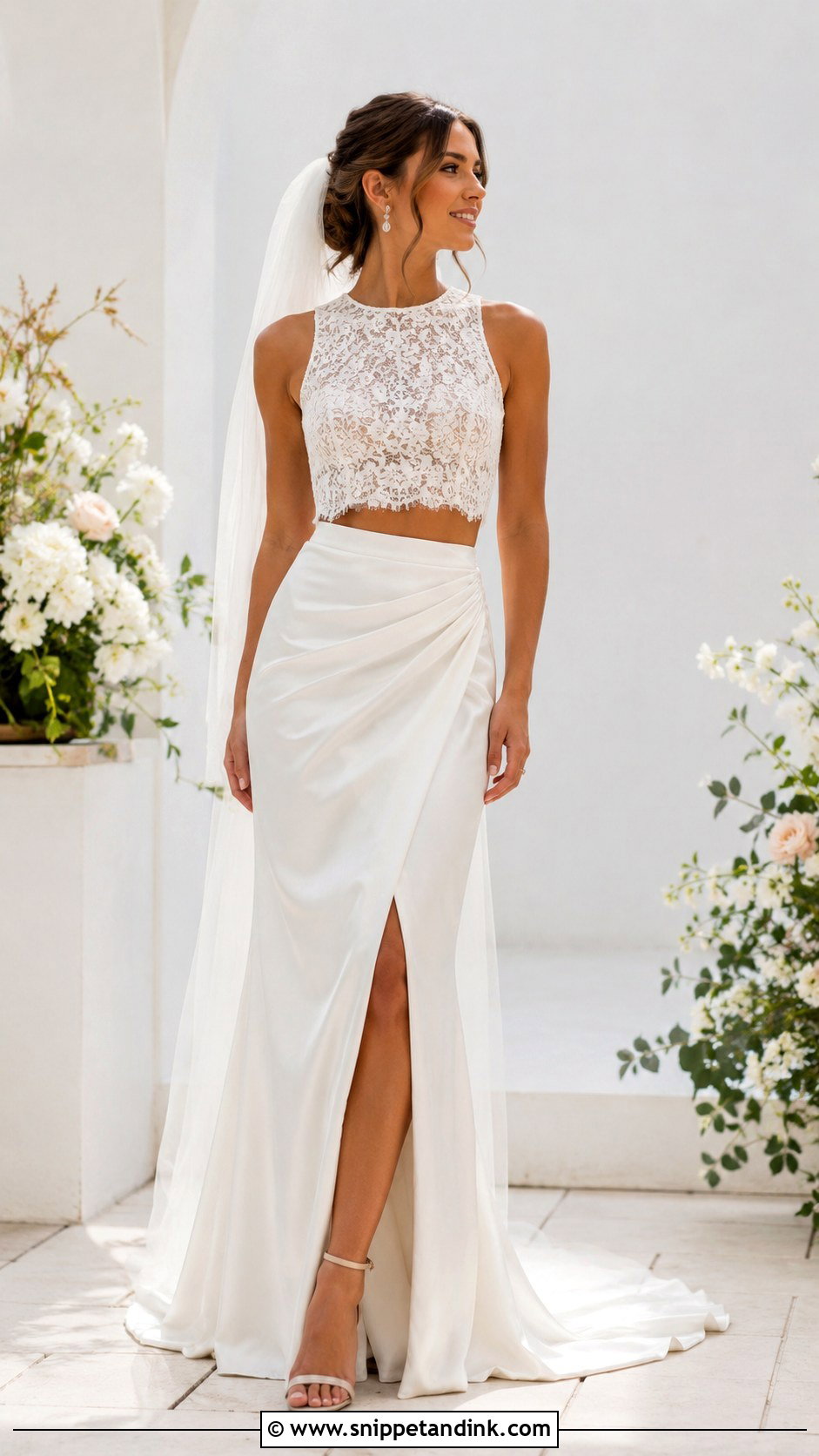
Two-piece gowns solve a real fitting problem. Many brides are one size on top and another on the bottom, and separates let you buy each half correctly. The set might be a cropped top with a full skirt, a lace blouse with satin, or a structured bodice over a column skirt. I keep the halves connected through fabric, tone or a repeated detail; otherwise it looks like two outfits. Decide how much midriff you want to show and test it sitting down. Clean heels, delicate earrings and a simple veil keep the focus on the pairing.
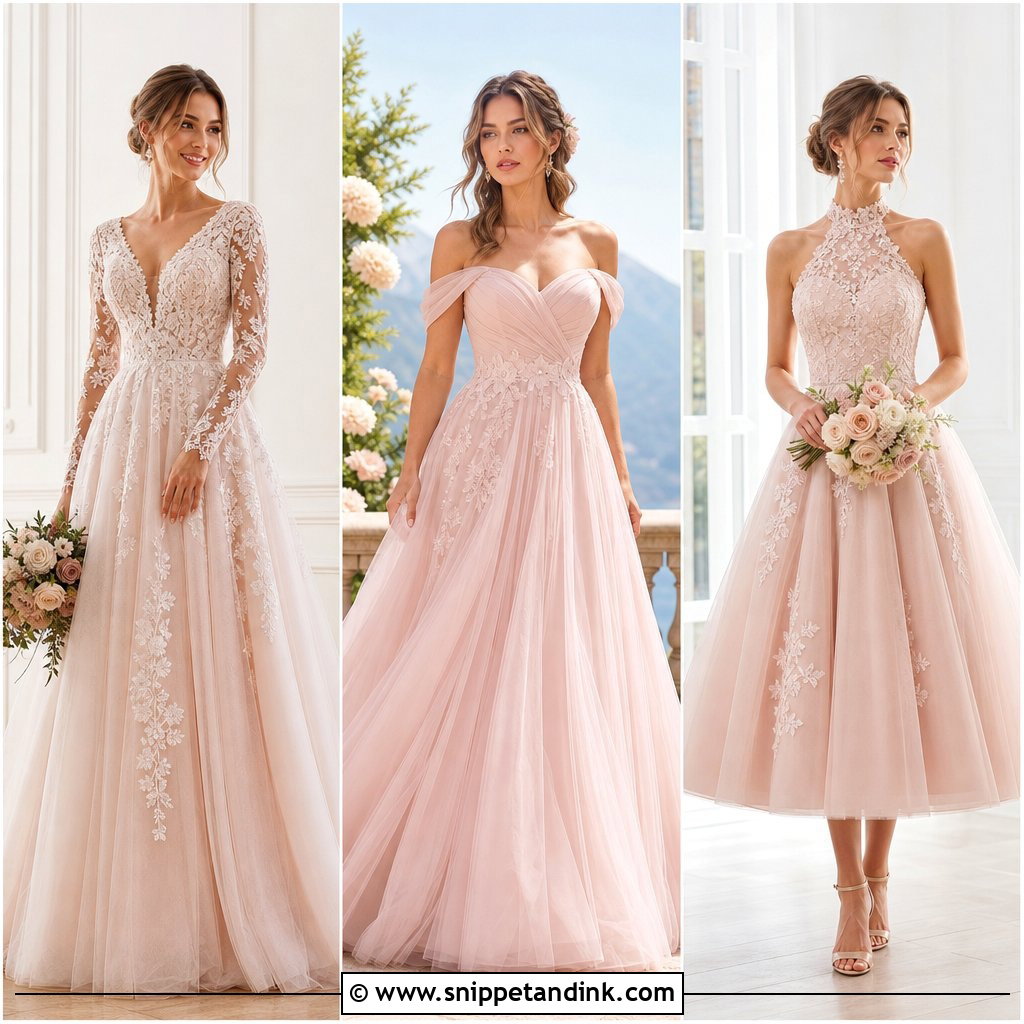
24. Blush Wedding Dress
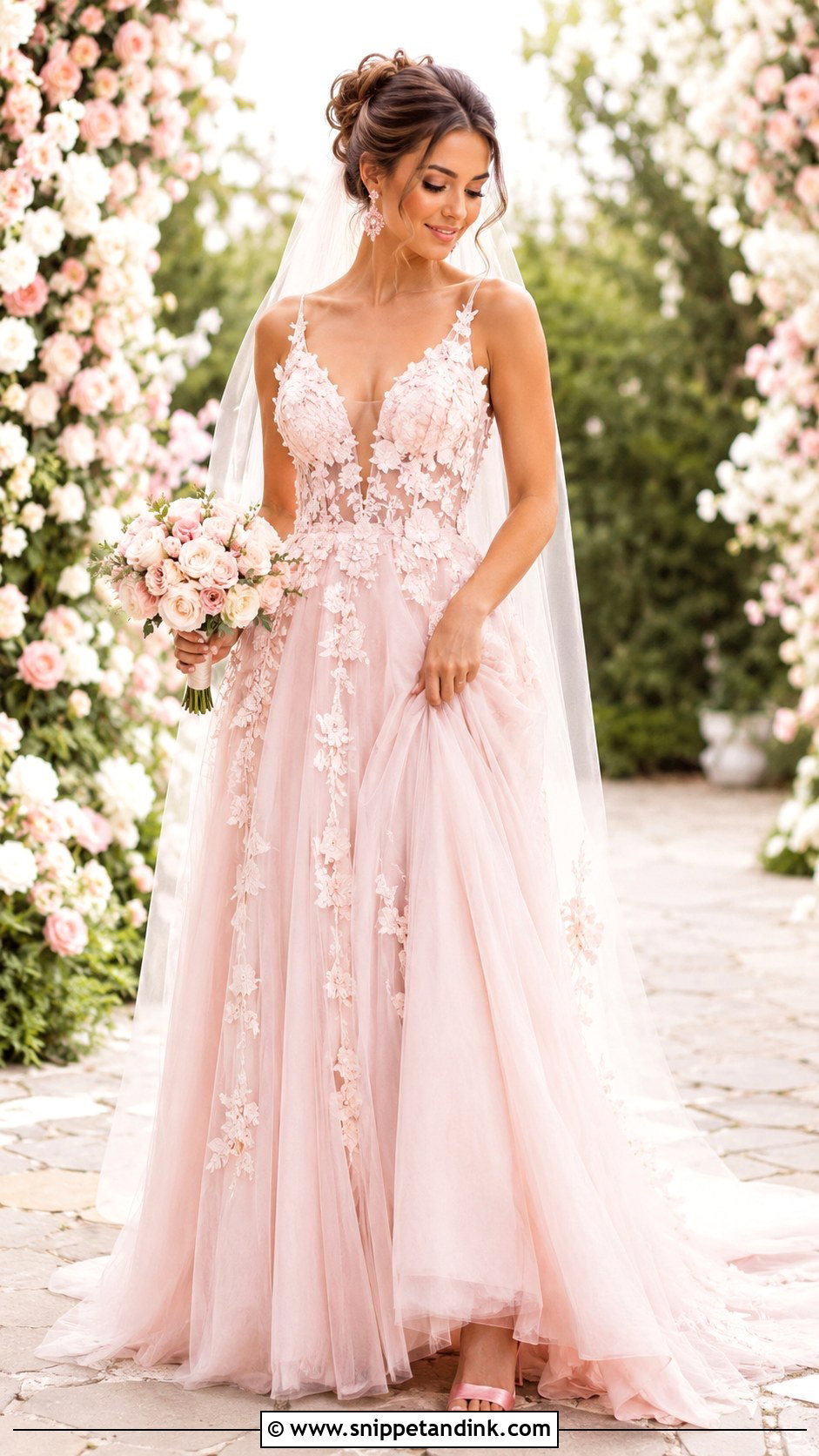
Blush sits close to ivory but warmer, and the risk is that on some skin tones a pale pink washes the face out. I always test the color against bare skin in daylight, never only under shop lighting. For subtle color, try a blush underlay beneath ivory lace; for impact, go fully blush in tulle or applique. Nude or blush heels, rose-toned earrings and a cream and soft-pink bouquet suit spring and garden ceremonies. Keep makeup fresh so the dress flatters you instead of competing.
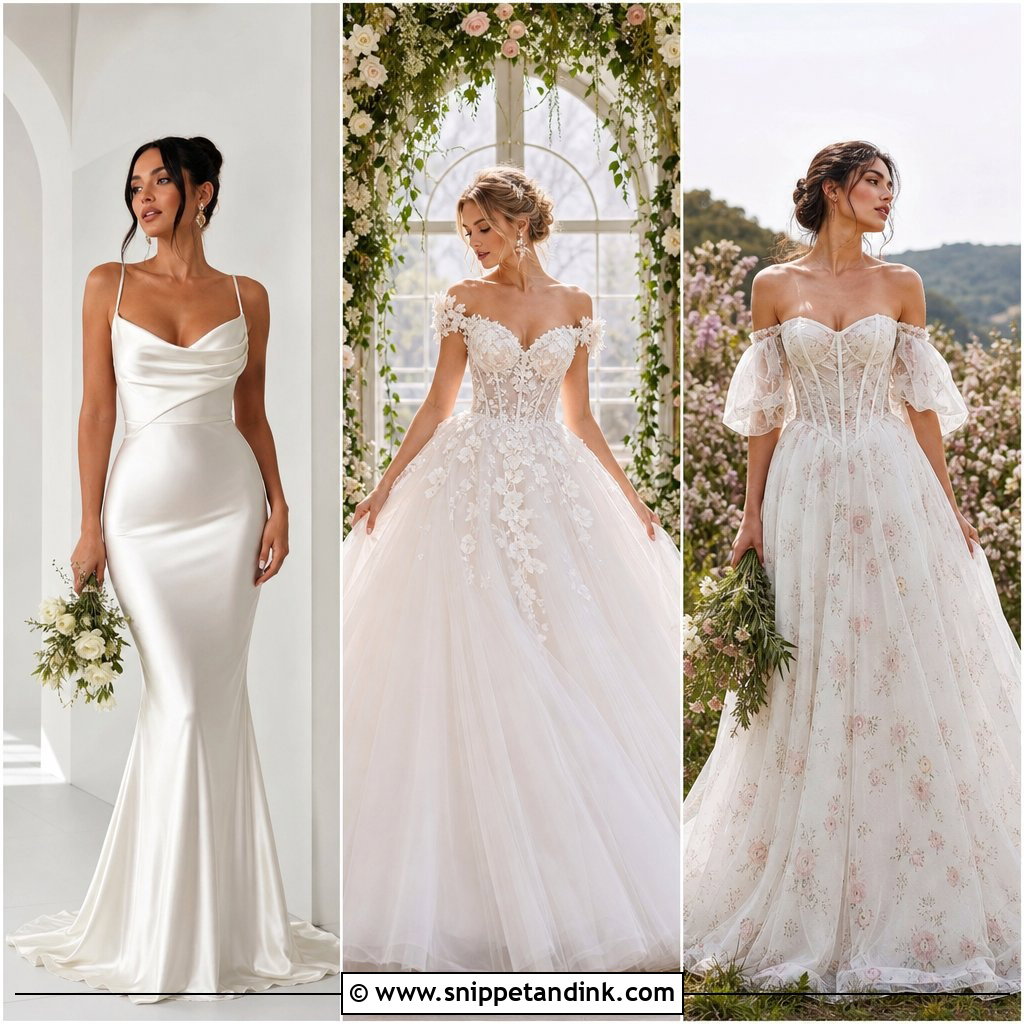
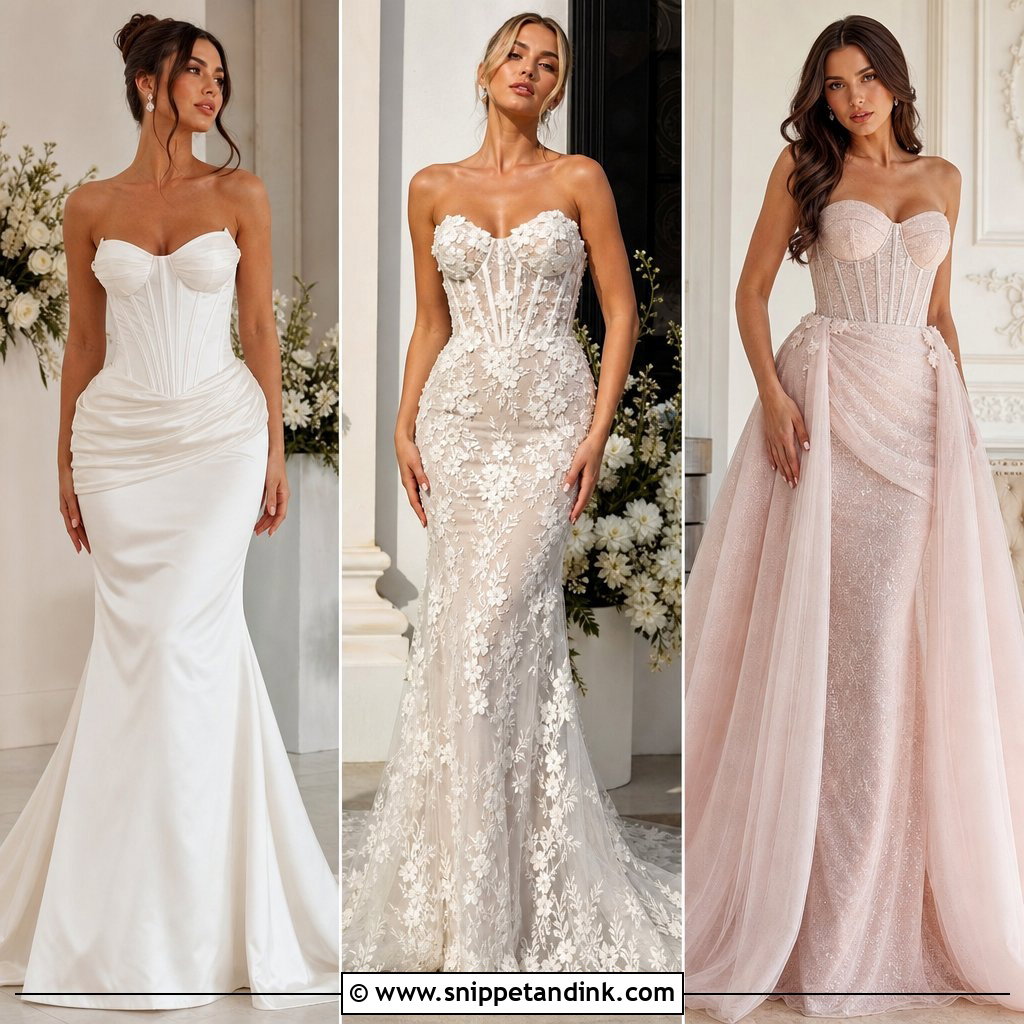
25. Champagne Wedding Dress
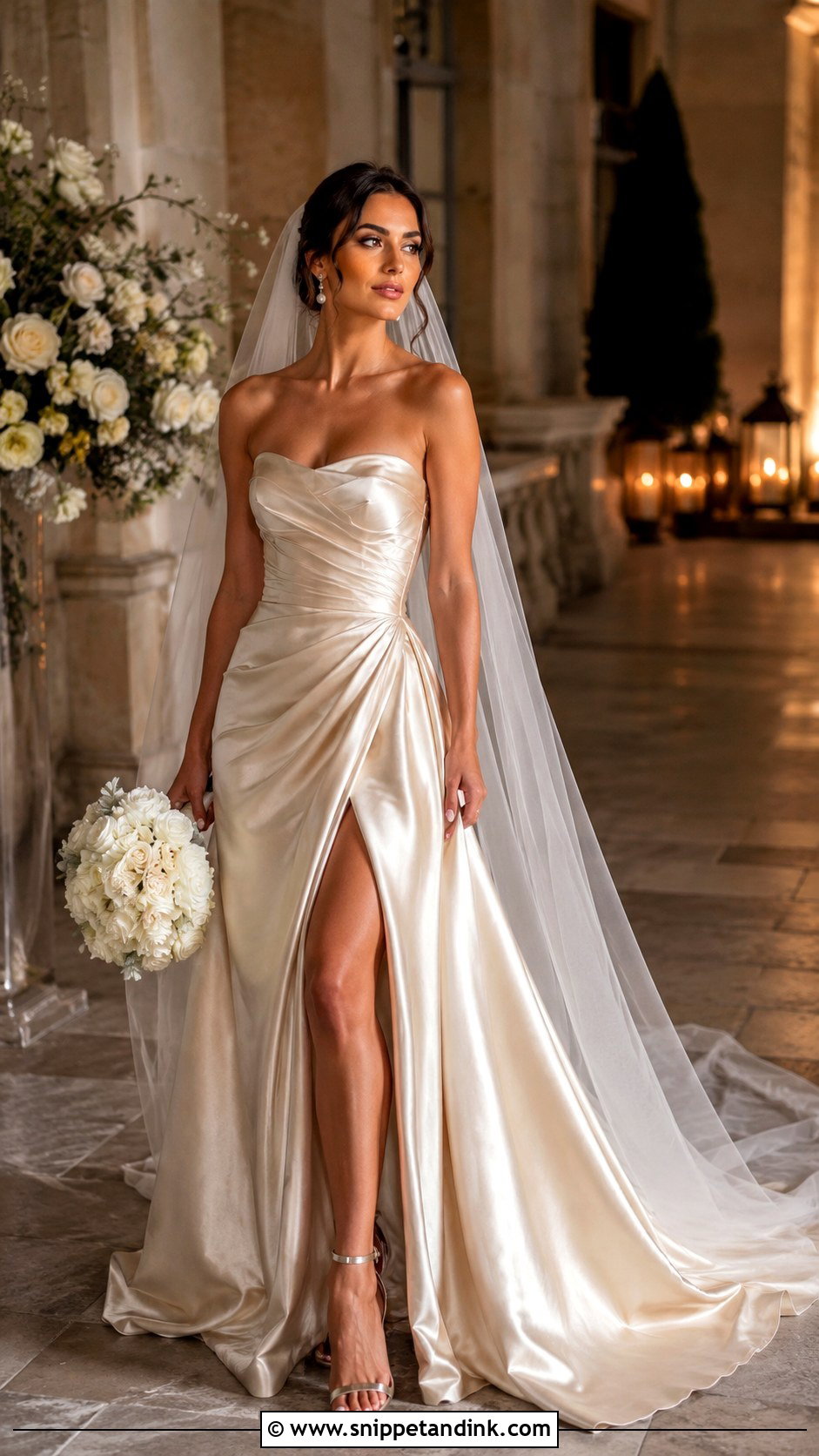
Champagne is the shade I suggest when bright white looks harsh against a bride’s skin. It warms the face and adds depth to satin, beading, lace and tulle. One thing to know: under warm evening light, champagne can read closer to gold, so ask to see the fabric in both natural and artificial light. Metallic heels, pearl earrings and a soft ivory veil balance it. On a shimmering gown, keep accessories plain; on plain satin, add sparkle through earrings or a hairpiece. Historic venues and ballrooms suit it well.
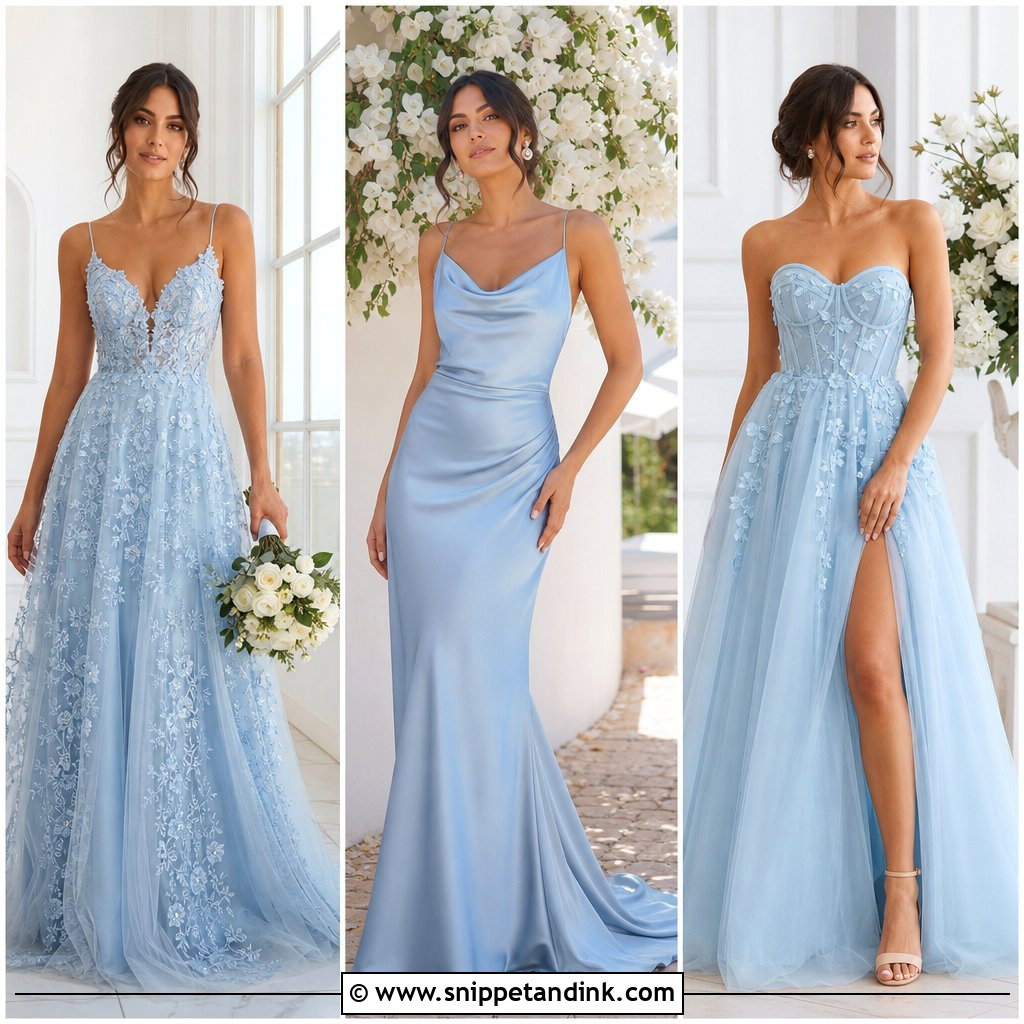
26. Blue Wedding Dress
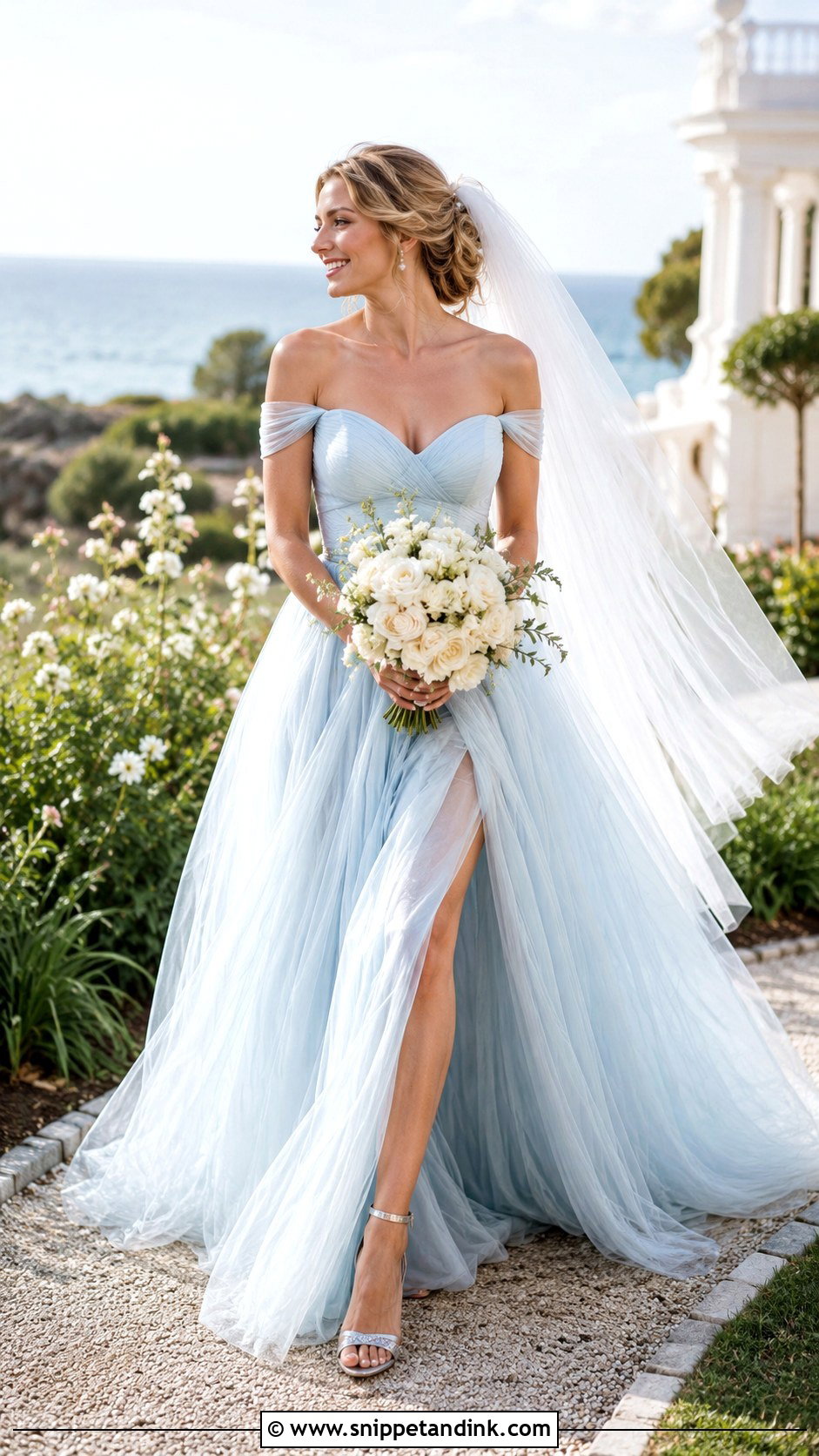
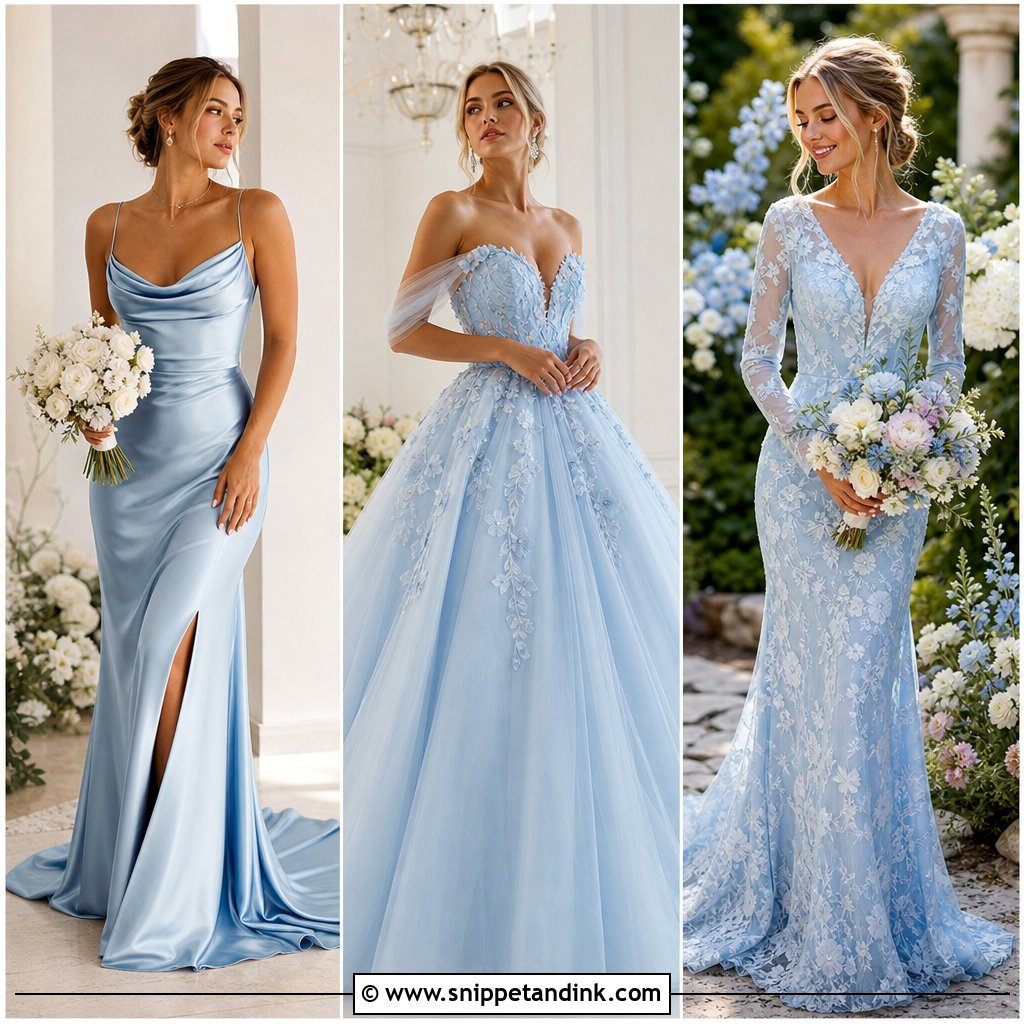
Pale blue is a gentle way to build your something blue into the gown itself, and it suits coastal and garden weddings in airy tulle, floral embroidery or smooth satin. If you’re nervous about color, start with a blue underlay beneath ivory lace; it adds depth without full commitment. Match the veil carefully, because a warm ivory veil beside icy blue can look yellowish by contrast, and some brides prefer a white or blue-tinted tulle. Silver heels, pearl earrings and a light bouquet in white or pale blue keep it soft.
27. Beach Wedding Dress
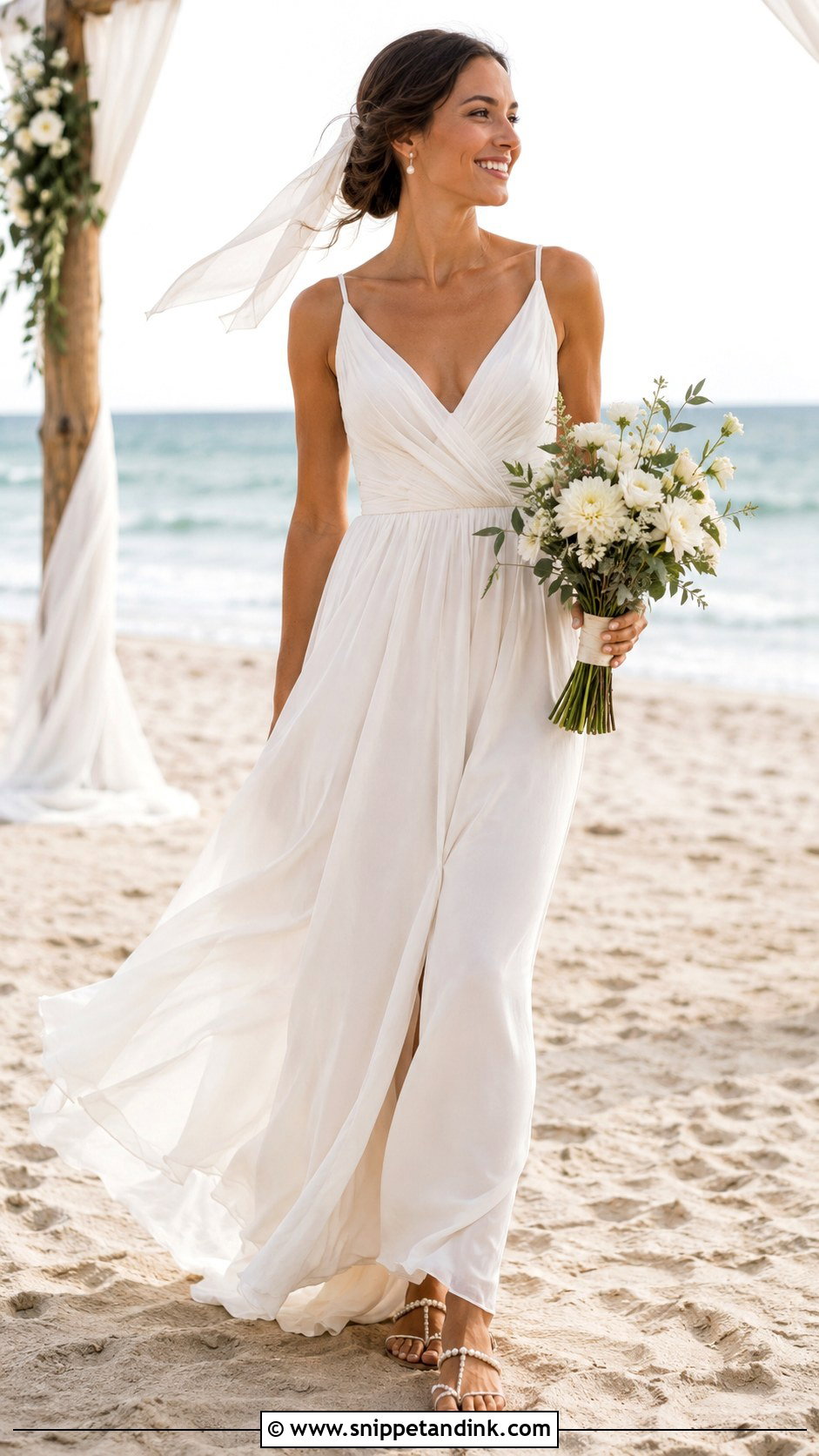
Heat, wind and sand are what a beach dress has to handle. Chiffon, crepe, soft lace or light satin breathe; heavily structured gowns trap heat in direct sun. A slip, A-line, halter or relaxed sheath all work, and I’d skip a long train unless there’s a platform aisle, because sand and wet hems ruin it fast. Wear flat sandals and pearl earrings, and secure a lightweight veil or hair scarf with a small comb so the wind doesn’t wrap it across your face during the vows.
28. Garden Wedding Dress
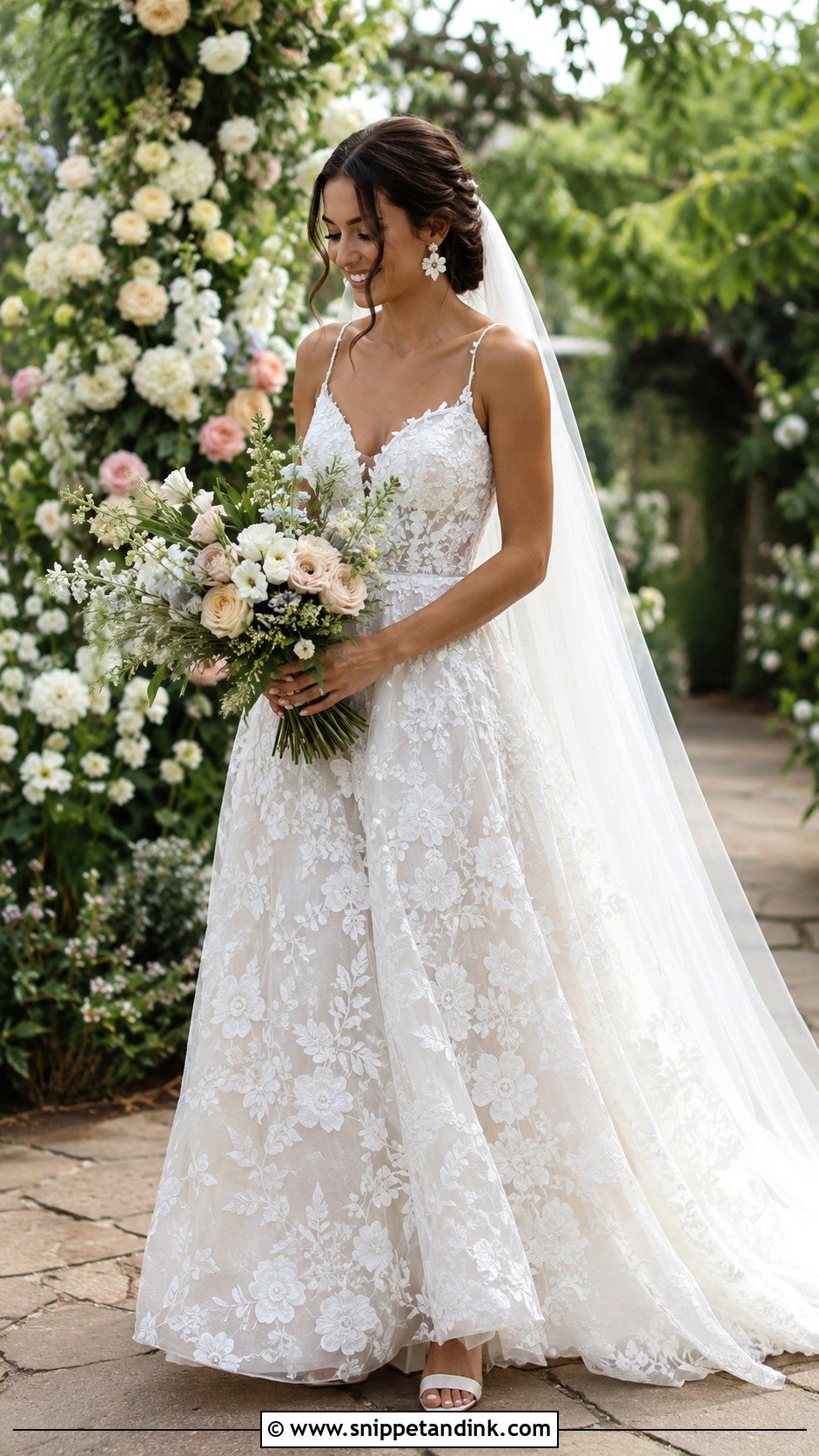
Garden ceremonies favor floral lace, soft tulle and organza. Organza creases easily, though, so if you’ll be outside for long portrait sessions, I’d weigh tulle or lace instead. An A-line, fit and flare or flowing sheath works depending on formality. Block heels or wedges stop you sinking into the lawn, and floral earrings, a soft veil and a textured bouquet tie the look to the setting. Hem the dress so it just clears the grass in your shoes, because damp lawns stain a dragging hem quickly.
29. Courthouse Wedding Dress
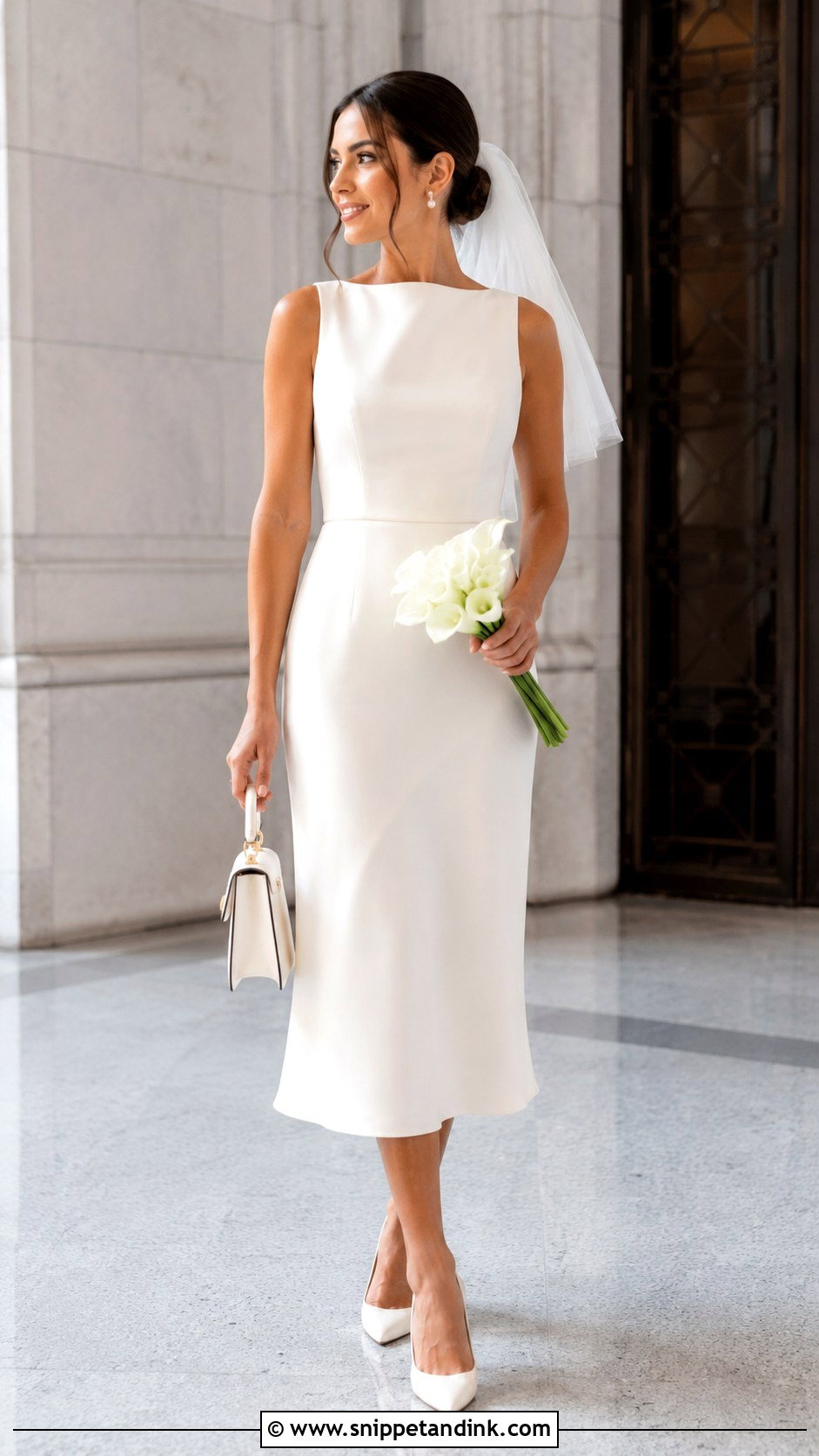
A courthouse wedding dress should feel special without being more formal than the room. A midi, a short dress, a slip gown, a jumpsuit or a tailored suit can all work. Since the setting is plain, fit and fabric carry everything, so look at clean crepe, satin, lace or polished suiting. Add a bridal touch with a short veil, a hair bow or lace gloves. Pointed heels, a small bouquet, pearl earrings and a structured handbag complete it for a city hall ceremony.
30. Plus Size Wedding Dress
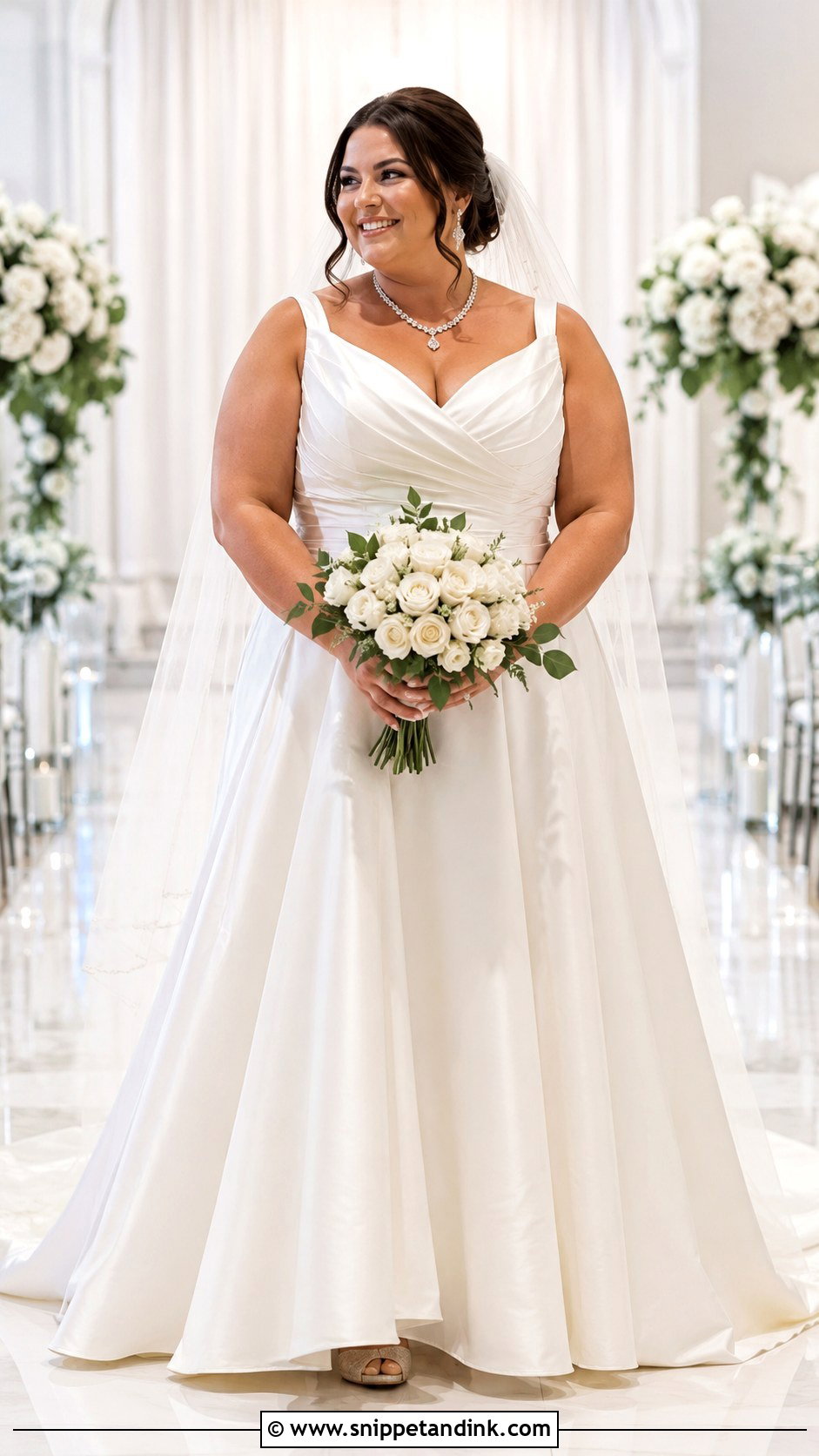
In my experience the best plus size fittings start with support, not with hiding anything. A-line gowns, corset bodices, fit and flare cuts, wrap-inspired shapes and structured ball gowns all work. What separates a good dress from a great one is inside it: quality lining, built-in cups and seams placed to shape the body rather than cut across it. Ask the salon for samples close to your size, because a dress clipped onto you from a much smaller sample tells you very little. Add comfortable heels, a veil matching the gown and jewelry suited to the neckline. The right dress lets you breathe and move.
Bustles, Underpinnings and Surviving the Reception in Your Gown
The ceremony is short. The reception is hours of sitting, hugging and dancing, and the gown has to cope with all of it.
Settle the bustle at your fitting
Any train has to be lifted for dancing. A French bustle, sometimes called an under-bustle, tucks the train underneath with ribbon ties and suits soft fabrics. An American bustle hooks the train up over the skirt at a few points and looks neat on satin. A ballroom bustle lifts the train so the hem looks even all the way round, which suits heavier skirts but needs more attachment points. I ask whoever will do it on the day to come to the final fitting and practice twice, because matching a row of ribbons in a dim corridor is harder than it sounds.
Under the dress
- A strapless or plunge bra only if the bodice has no built-in cups; many gowns do, and a second layer bulges.
- Smooth, no-line underwear close to your skin tone, not white, which can show through ivory fabric.
- A slip or petticoat if the skirt clings or drags against your legs.
- Gel insoles, plus a pair of flat shoes for later in the evening.
Cleaning and Storing the Gown Once the Party Is Over
Have the gown professionally cleaned within a few weeks. Champagne, sweat and sugary drinks can dry invisible, then oxidize into yellow-brown marks months later, when they’re much harder to shift. Point out every mark you know about when you drop it off.
For storage, I prefer an acid-free box with acid-free tissue folded into the creases, kept somewhere dark with a steady temperature, so not an attic or a damp basement. Avoid the plastic bag it came home in, since plastic traps moisture. Heavy gowns shouldn’t hang for years either, as the shoulders stretch under the weight of the skirt. Check on it once a year and refold along different lines so the creases never set.
Trust the Fitting Room Mirror Over the Trend List
There’s no single right bridal look in this collection. A satin ball gown, a lace A-line, a jumpsuit and a courthouse dress can all be completely bridal. What matters is styling them as one picture: gown, shoes, veil, jewelry and hair, set against your venue and season. Trends are useful for ideas. Once you’re in the fitting room, I’d trust how you move and breathe in a dress over anything you saw online.
You'll Like These Ideas:









Leave a Reply