
Modern wedding dresses give you a lot more room to dress like yourself. Architectural shapes, fluid slips, graphic lace, corsetry, sculpted flowers and shorter hems all sit comfortably in bridal now, along with draping, strong waists, unusual materials and pieces that change between ceremony and reception. What I tell brides is that the dress is only half the decision. Venue, season, how you’ll move, what goes underneath and how much alteration it needs matter as much as the hanger appeal. Each look below comes with shoes, veil, jewellery and flowers already worked out, plus the fitting detail I’d watch.
Months Between Saying Yes and Wearing It
Designer gowns are usually made to order once you buy, and many of the shapes here, especially corsetry, sculpted strapless bodices and appliqué gowns, take months to produce. The time varies by designer and season, but I plan around this rough schedule and tell brides to ask the shop for the real figure before signing.
- Around nine to twelve months out: start trying on. It gives you time to compare shapes without rushing.
- Around six to nine months out: order. Many made-to-order gowns need several months to arrive, and rush production, where it’s offered, often costs extra.
- Around two to three months out: first alteration fitting. Structured and draped gowns often need two or three sessions.
- Around two weeks out: final fitting with shoes, underwear and jewellery, then collect or arrange delivery.
If your timeline is shorter, look at sample sales, off-the-rack collections or ready-to-wear minis and slips. A simple column or slip needs far less work to fit than a corset gown, which makes it the safer short-notice choice.
1. Minimalist Column Wedding Dress
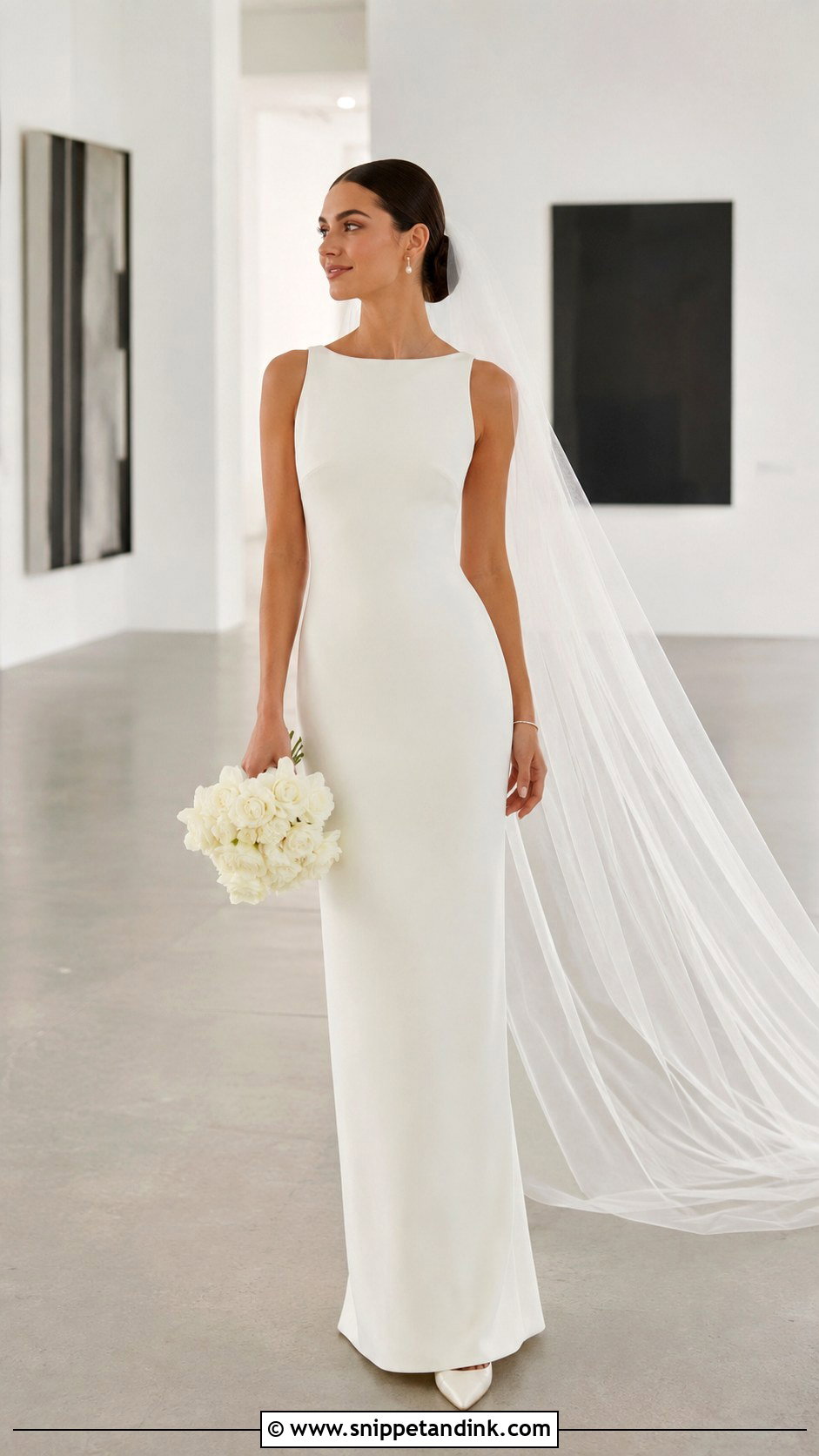
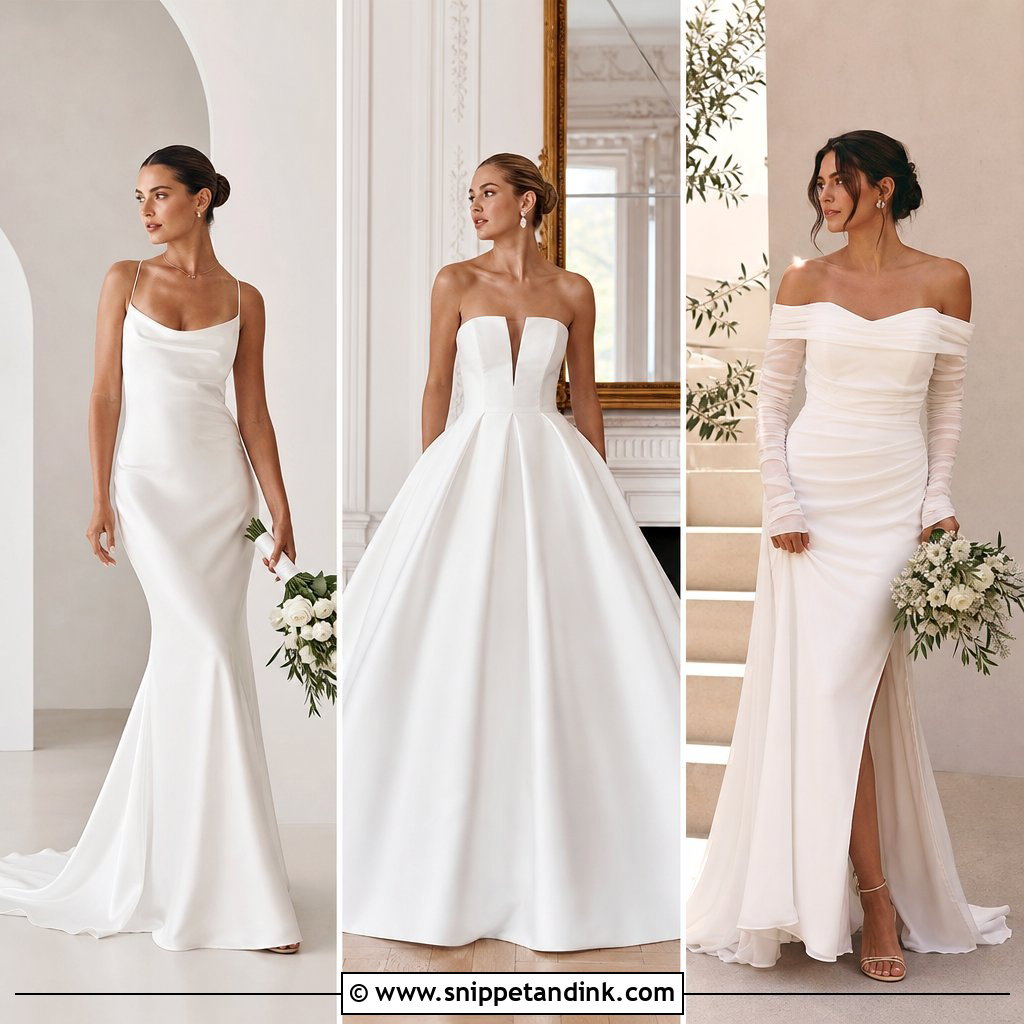
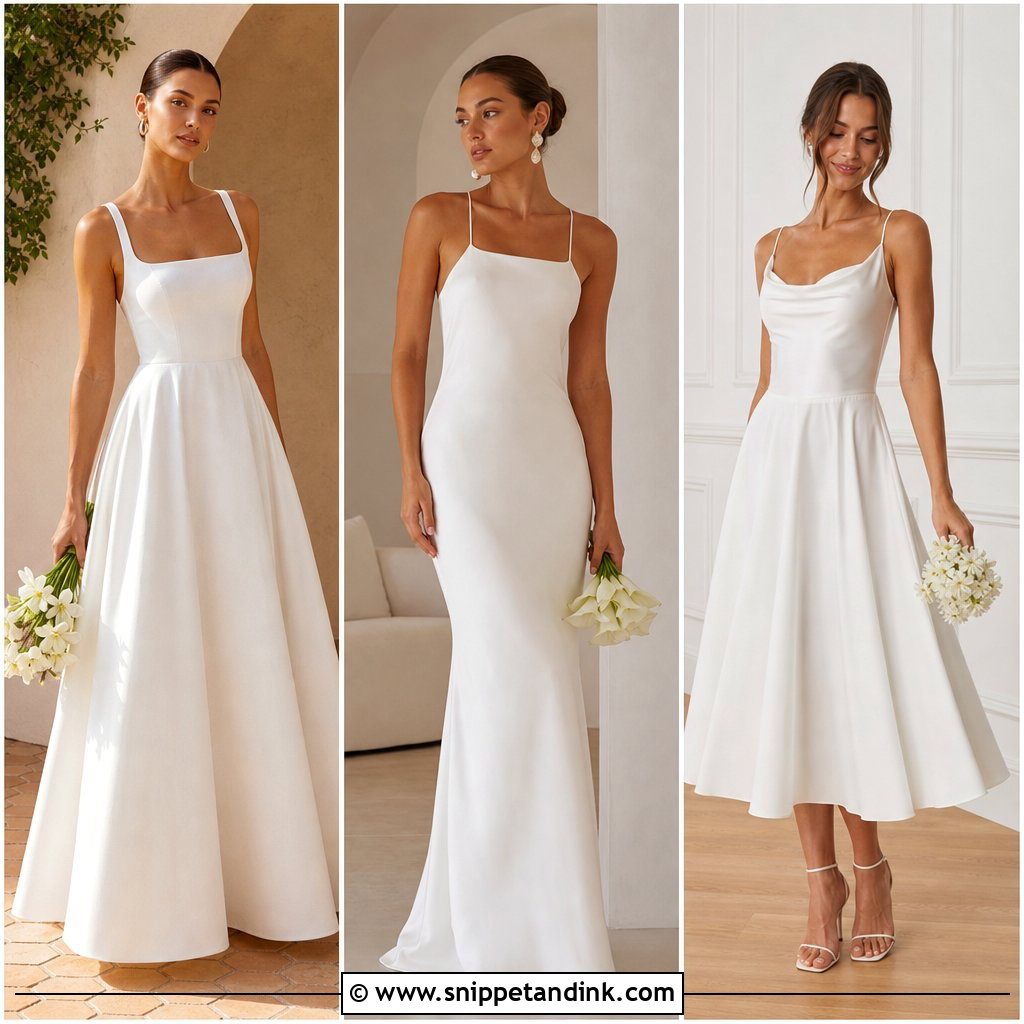
Quick verdict: this is the most demanding dress on the list to fit, and the most rewarding when it’s right. Smooth crepe, silk or structured satin in a gently fitted column has nowhere to hide a crooked seam, so the alterations budget matters more than the dress price. A bateau, straight or soft scoop neck keeps the front clean. Pointed ivory pumps, small pearls and a slim metal bracelet are all the jewellery it wants. A low bun or sleek ponytail echoes the lines, and a single-layer cathedral veil adds movement. Have the hem marked in your actual wedding shoes; half a centimetre shows on a column.
2. Basque Waist Ball Gown Wedding Dress
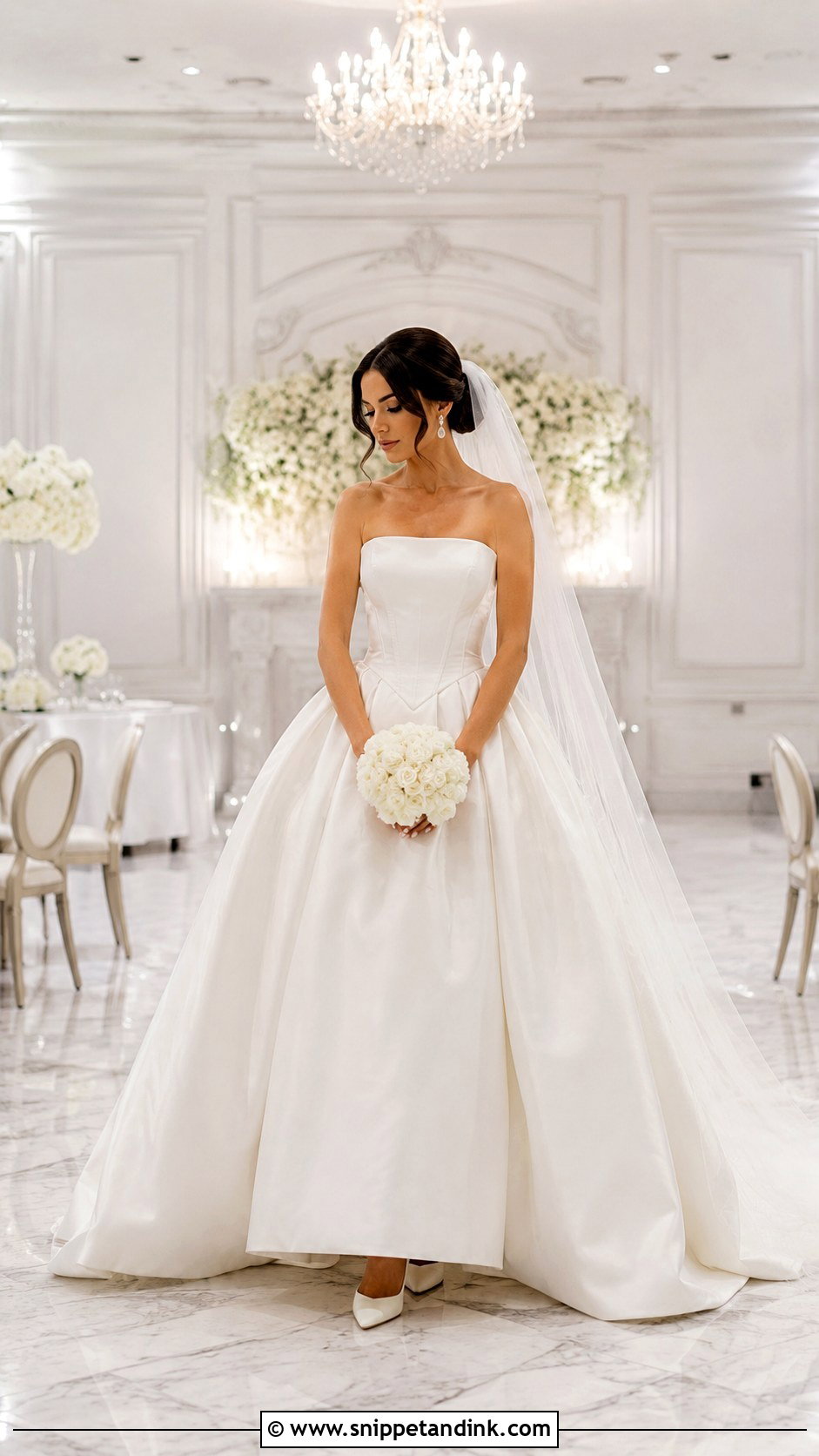
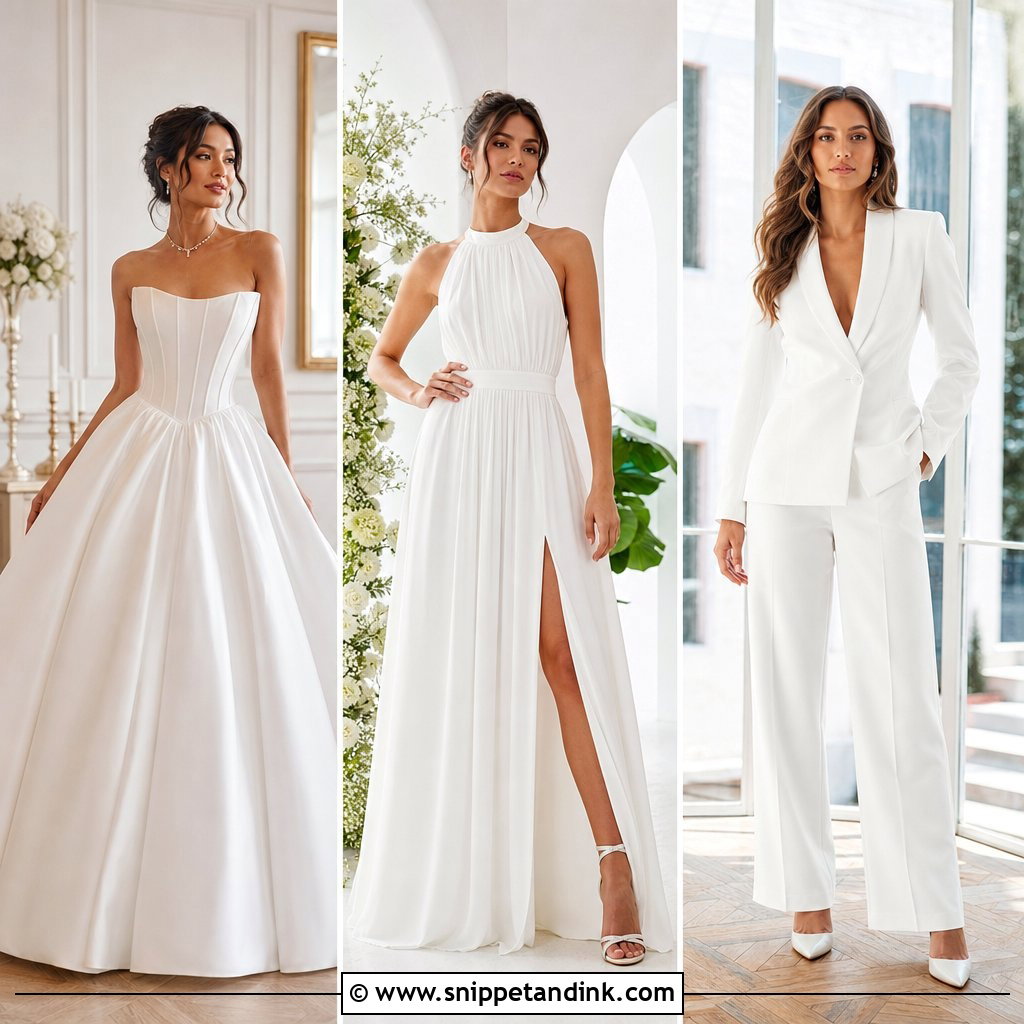
The pointed basque waist draws a long V into the skirt, so the torso looks longer and the full skirt looks deliberate rather than frothy. It’s a shape designers keep returning to, often in satin with an inner corset and a lighter skirt than older ball gowns. Closed-toe satin heels, teardrop earrings and a long veil under a smooth bun suit it, and the bodice doesn’t need a necklace. Carry a compact white bouquet so the skirt stays the focus. One practical thought: a full skirt and long train need floor space, so walk your aisle and reception room in your head before committing.
3. Drop Waist Satin Wedding Dress
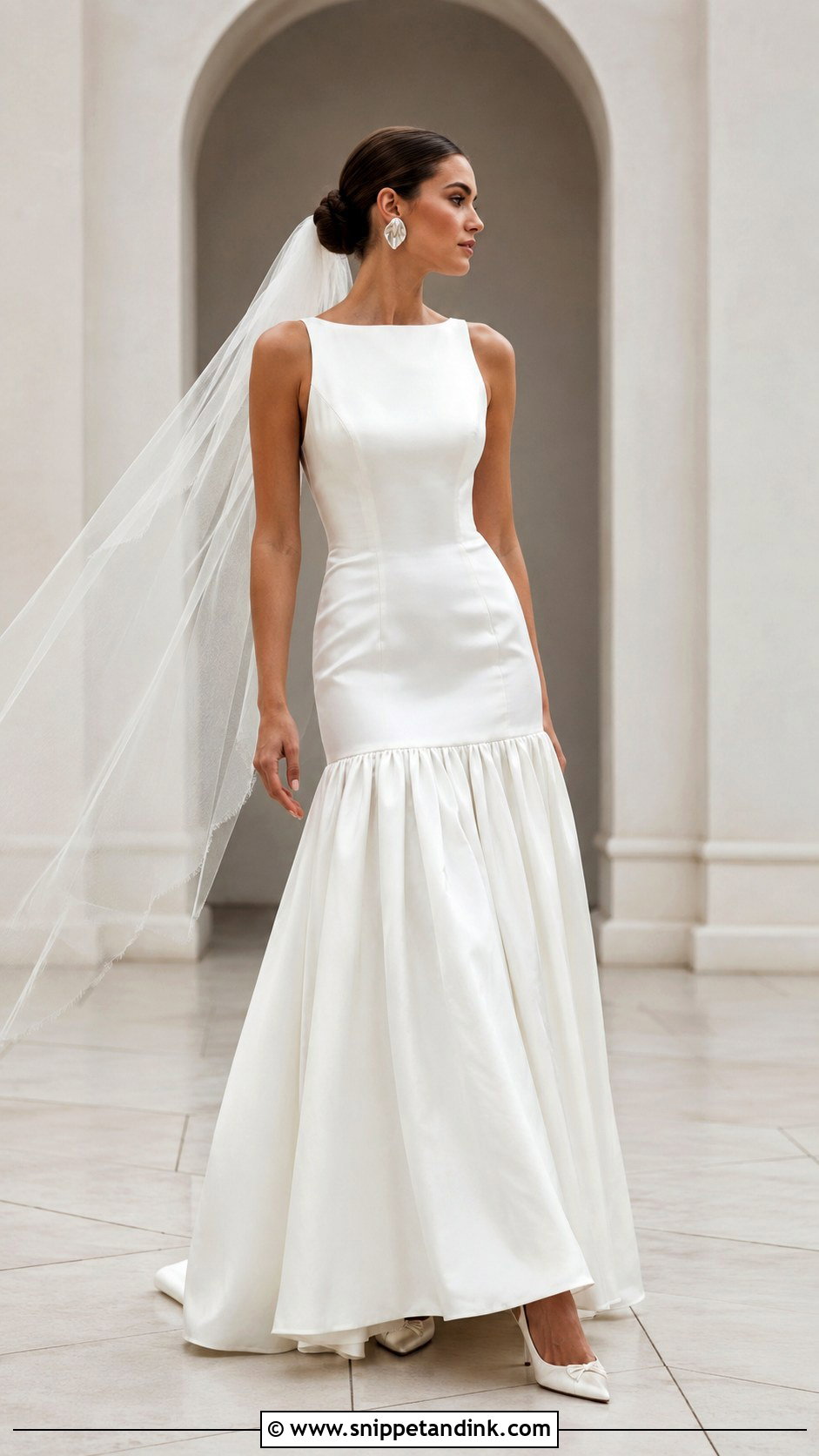
Drop waists change where the eye reads your body. The fitted bodice runs past the natural waist before breaking into a flared or gathered skirt, which looks fashion-led and leads neatly into a train. The fit through the hip is close, so sitting and stairs need testing, not assuming; I’d climb a few steps at every fitting. Sculptural earrings, pointed slingback heels and a veil with a raw or narrow edge keep things sleek. A glossy bun leaves the long bodice line uninterrupted. Lofts, museums and plain indoor rooms give this gown the clean background it needs.
4. Sculptural Strapless Wedding Dress
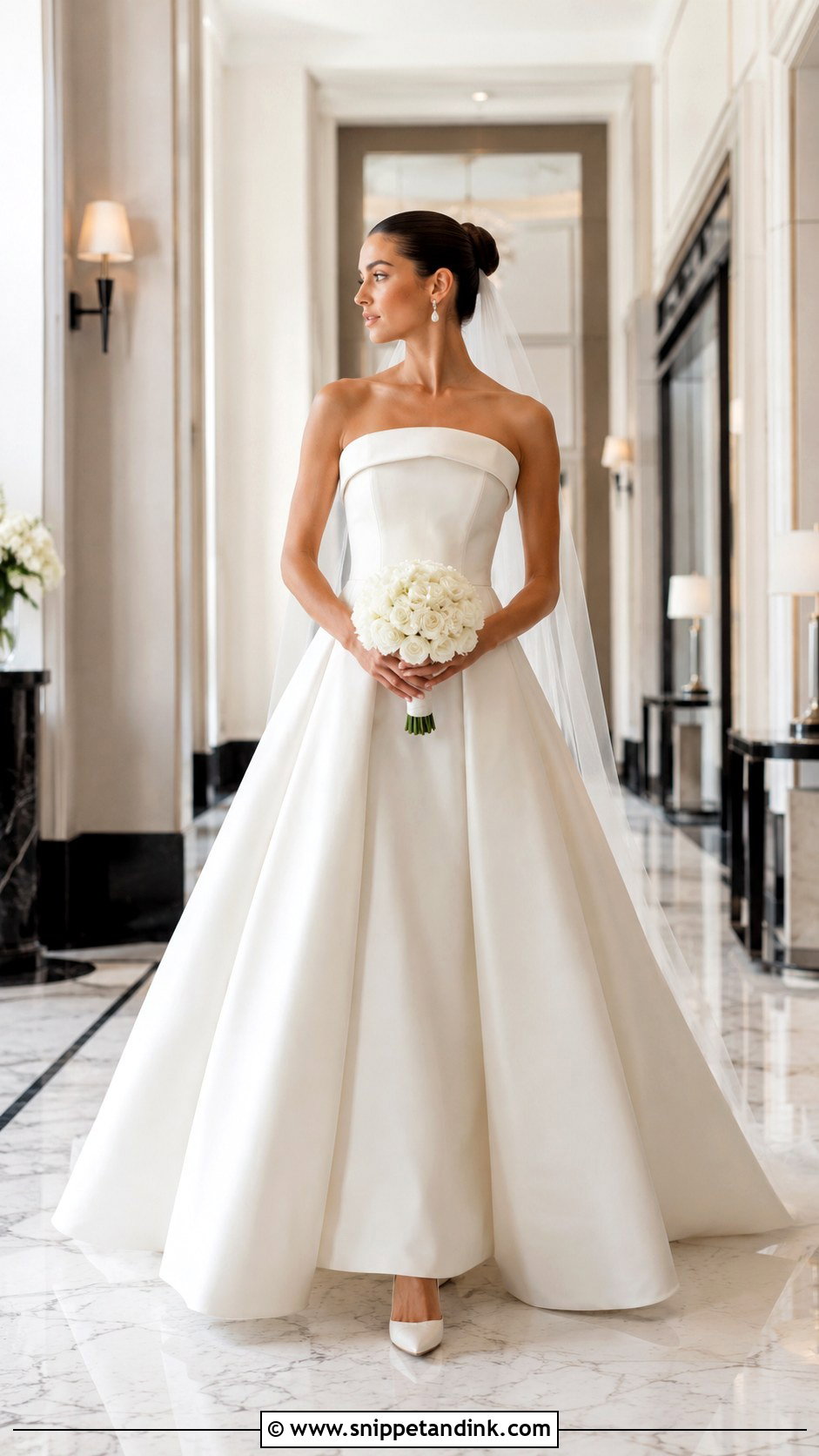
Strapless dresses fail when they’re held up by the bust alone. A sculptural strapless wedding dress should grip at the waist and ribs, with internal boning doing the work, so the folded neckline stays exactly where the designer put it. The curve, fold or architectural bodice is the statement; the skirt can be straight, trumpet or full. Modern drop earrings, pointed pumps and a sheer fingertip veil are enough, with a sleek bun or shoulder-length waves to show the neckline. Keep the bouquet simple and green. At the fitting, hug someone and lift your arms; nothing should shift.
5. Draped One Shoulder Wedding Dress
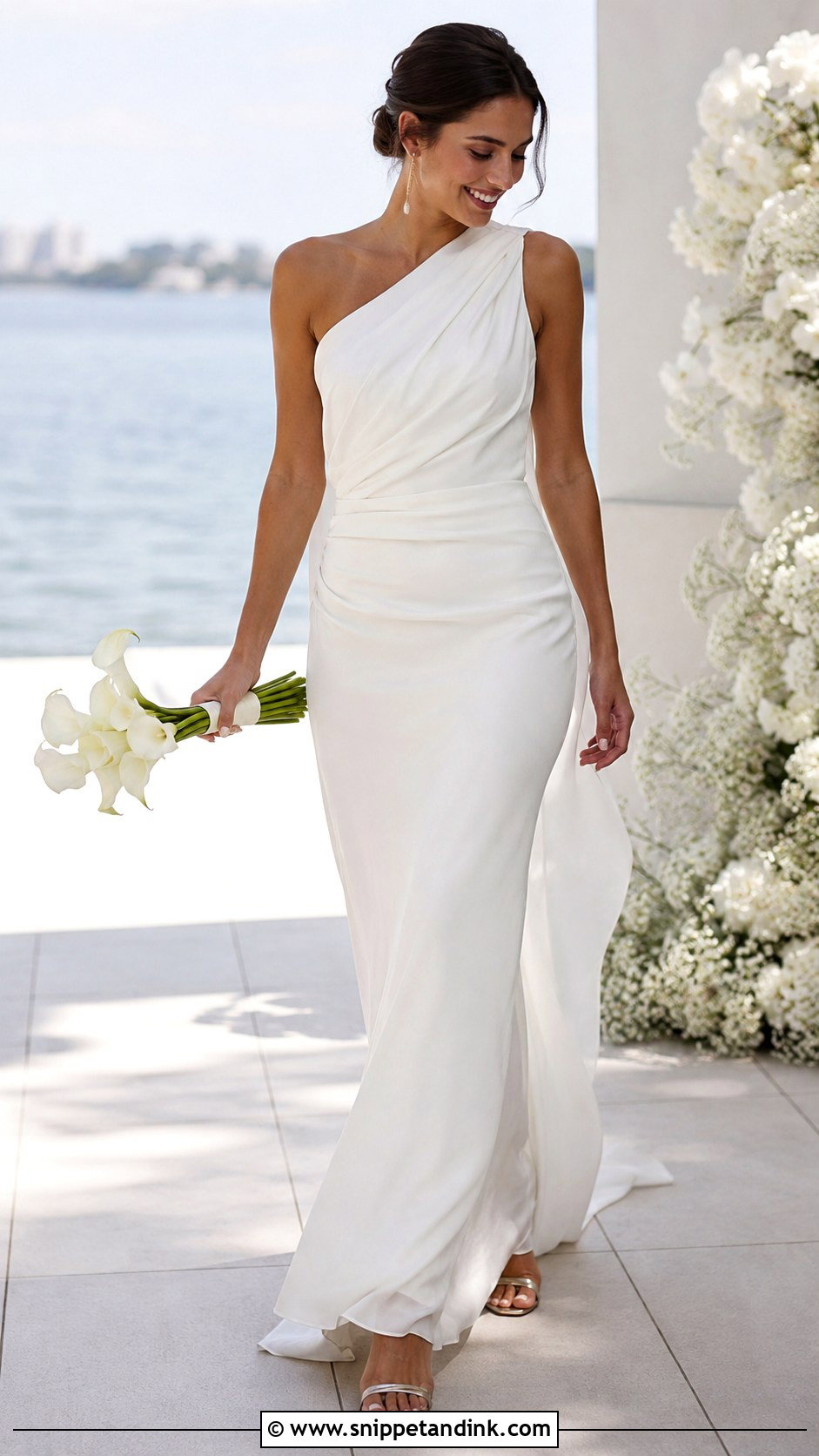
What makes this one work is the diagonal: fluid crepe, satin or silk drapes from the shoulder across the bodice and on into a fitted or relaxed skirt. I check that the shoulder seam stays flat when the bride raises her arms, because heavy draping can twist the whole bodice sideways. Skip a necklace. One statement earring or slim matching drops is plenty. Metallic or ivory sandals, a structured clutch for later and a veil fixed below a low twisted bun finish it. Calla lilies suit the long, clean lines, and the gown carries a waterfront or resort setting comfortably.
6. Modern Lace Wedding Dress
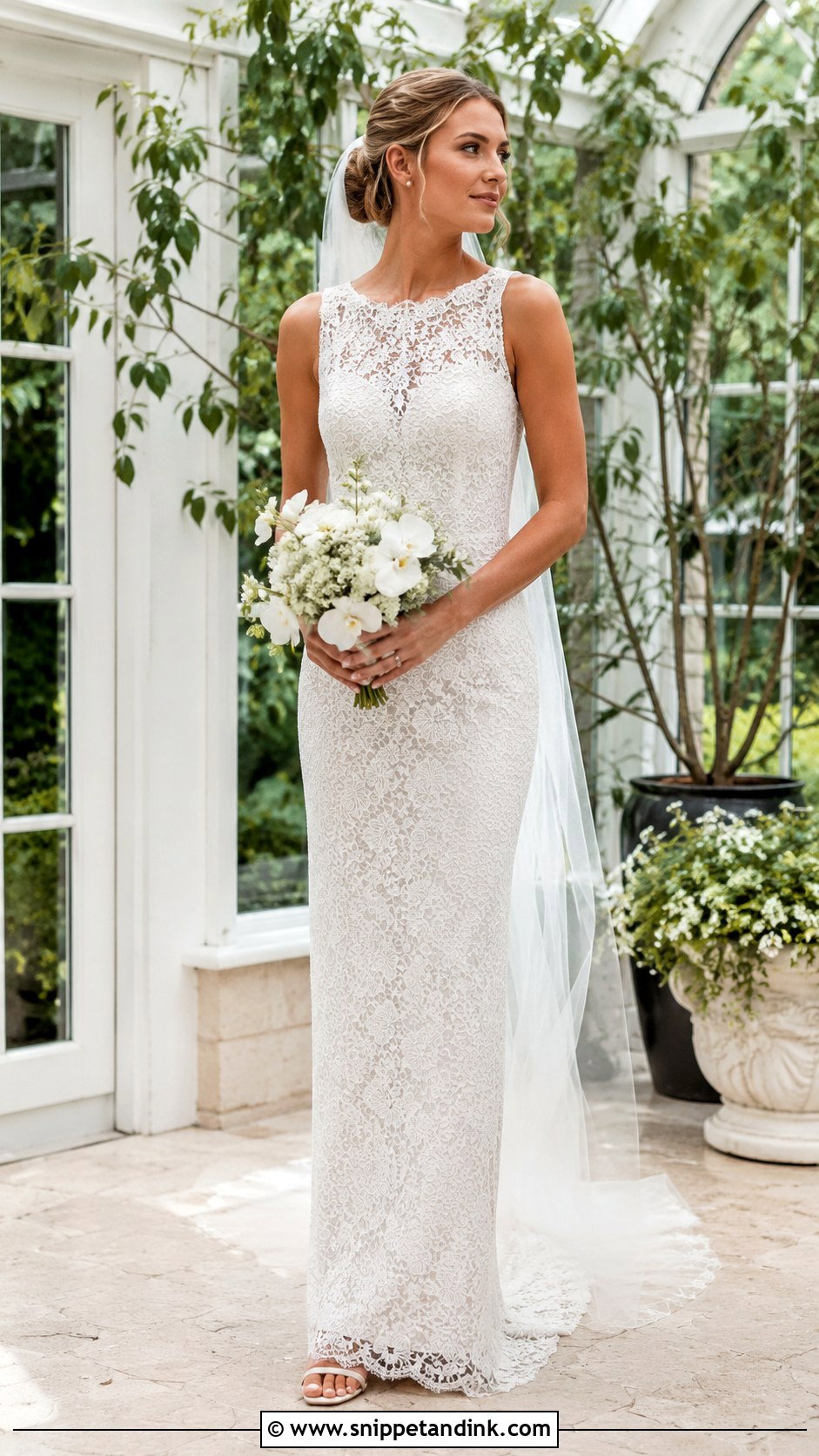
Lace reads as modern when the pattern is graphic or open and sits on a plain shape, with nothing else competing. A fitted column, clean A-line or soft flare all work. Crochet-style textures and reworked traditional patterns have become a fresh way into lace. The detail most brides miss is the lining colour: nude, ivory and white backings change how the lace pattern shows, so look at it near a window, not just under shop lights. Minimal ivory sandals, pearl studs and a veil without lace edging keep it clean, with relaxed waves or a textured low bun and white seasonal flowers.
7. 3D Floral Wedding Dress
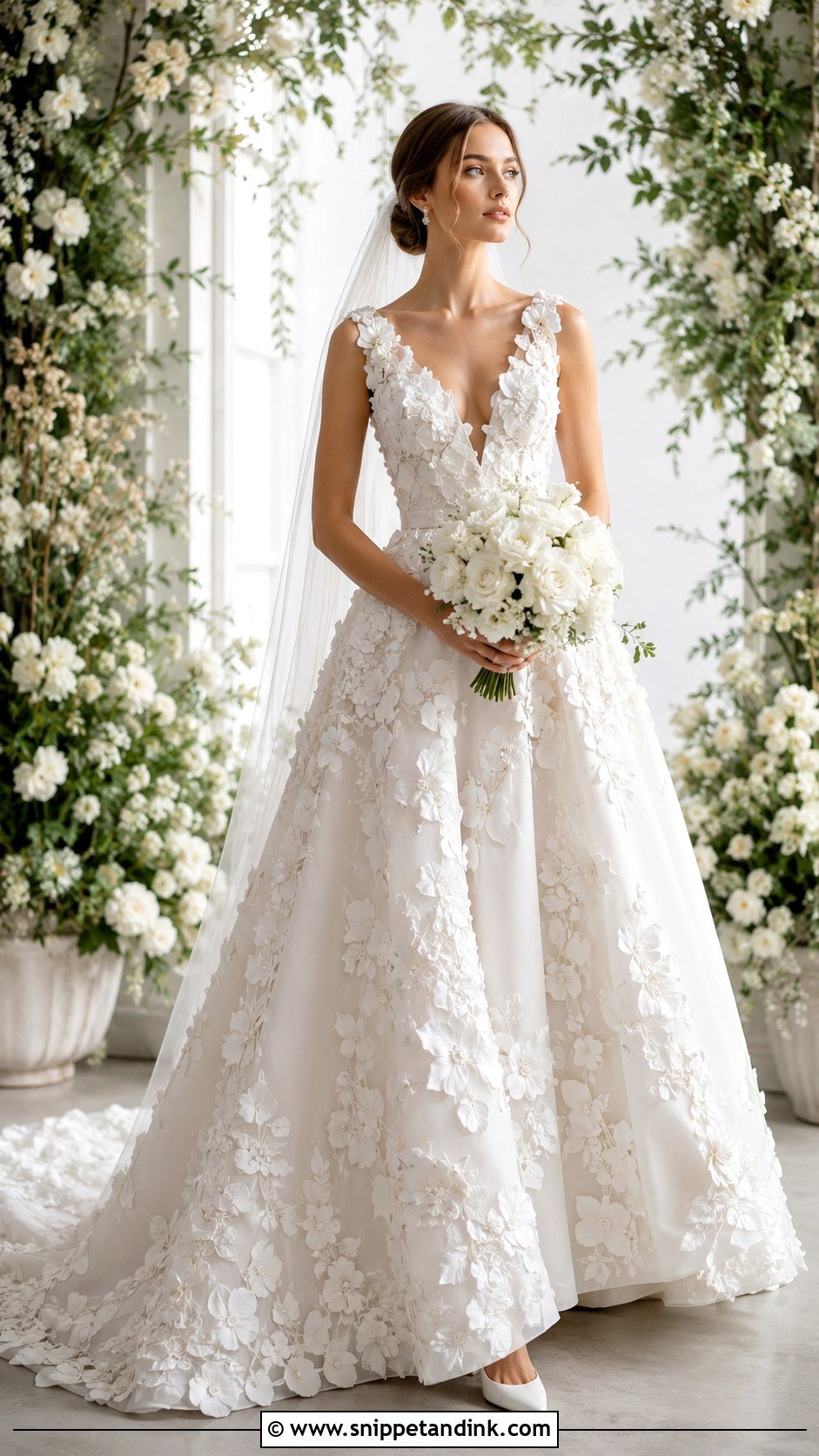
Raised flowers are fragile, and that shapes every styling choice around them. Appliqués placed across the bodice, skirt or train look artistic; covering every inch looks heavy. A sheer-backed A-line or structured strapless gives them space. Hair should be pinned up, because loose curls catch on petals and pull threads. Satin pumps, tiny crystal studs and a plain tulle veil keep things calm, and a single-colour bouquet stops the flowers on the dress fighting the ones in your hands. At each fitting, run your arms along your sides and check no petal rubs or has worked loose.
8. High Neck Long Sleeve Wedding Dress
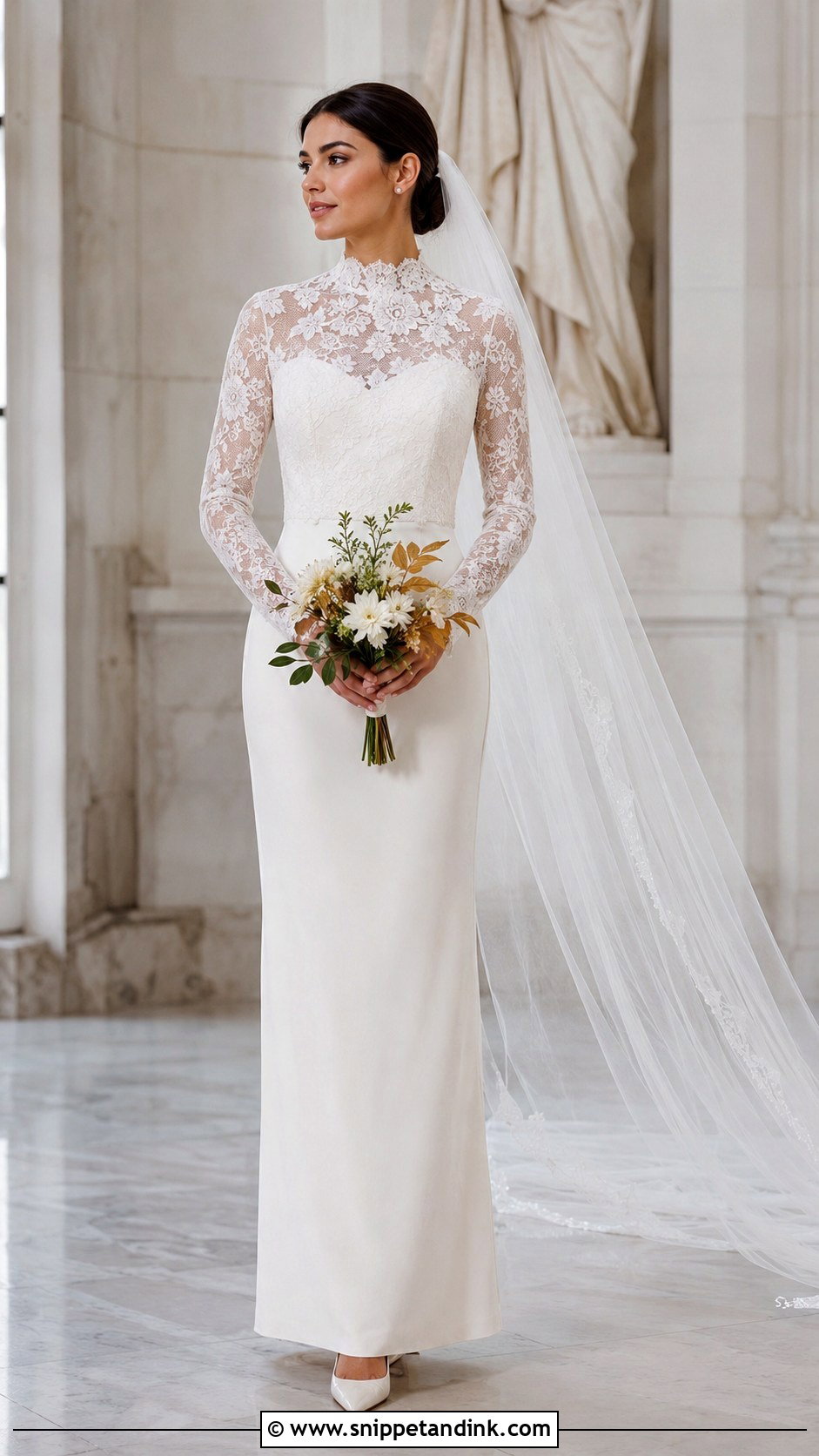
High necks with long sleeves look directional rather than modest when the fabric is light. Sheer lace, smooth crepe or a fine knit follows the body without stiffness. A slim column skirt keeps it modern; an A-line softens it. Pointed low heels, delicate studs and a neat bun sitting below the collar line show the neckline from every side, and a chapel veil tucked under the hair keeps it visible. A narrow long-stemmed bouquet echoes the vertical line. I always ask for elbow bends and arm lifts in the fitting; long sleeves that are fine standing can bind at the shoulder when you reach.
9. Corset A-Line Wedding Dress
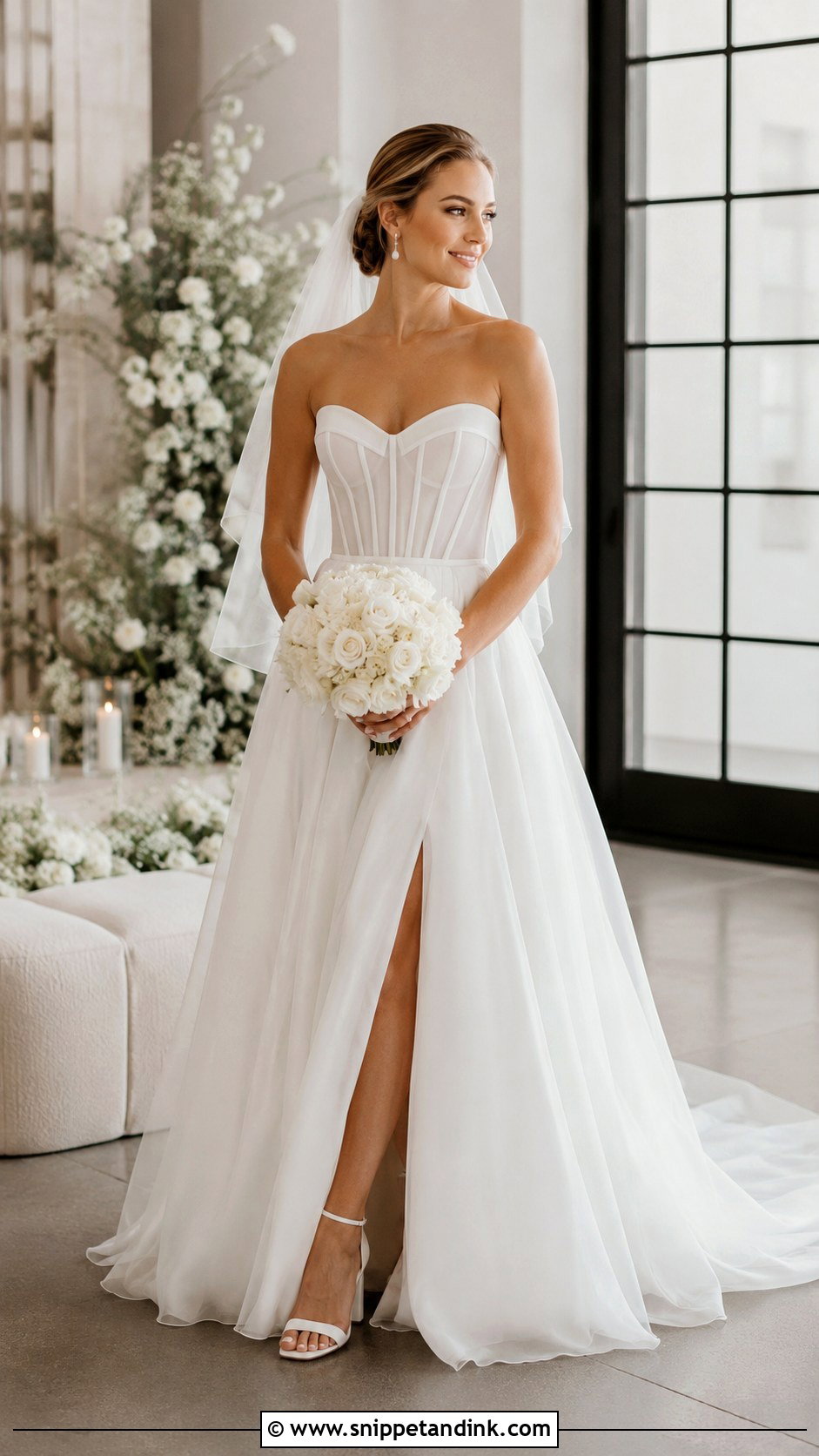
Exposed corsetry over an easy A-line skirt is structure where it counts and ease everywhere else. I look for refined boning, built-in cups and a clean waist seam rather than a bodice made mostly of see-through panels, which often lacks real support. The skirt, in gathered satin, organza or tulle, should swing freely. Block-heel sandals, small drops and a light fingertip veil suit it, with swept-back hair so the bodice shows. A medium, rounded bouquet balances the skirt. During fitting, sit, dance and take a deep breath; if you can’t breathe fully, the corset is too tight.
10. Square Neck Wedding Dress
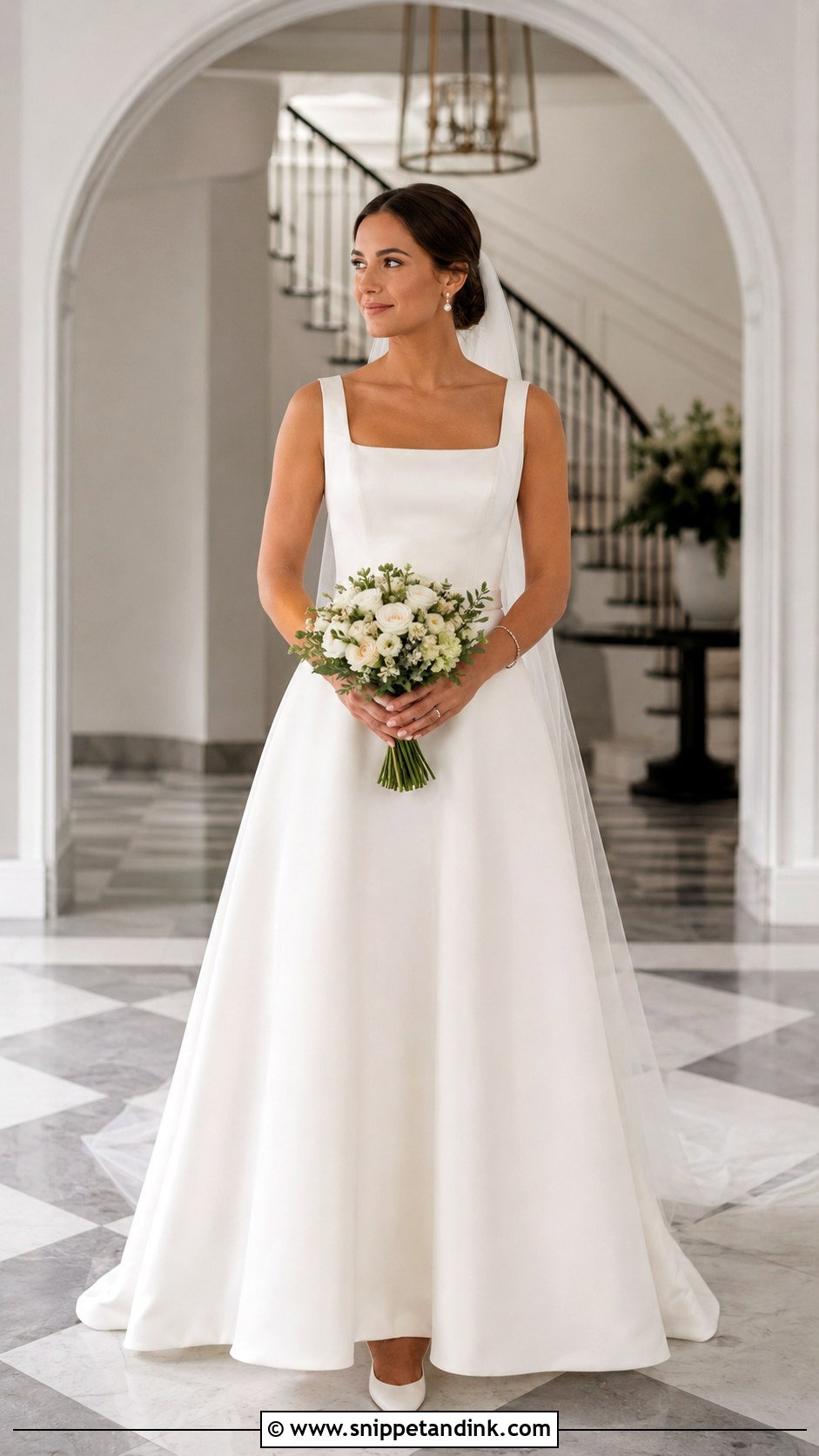
Square necks frame the face with clean geometry, and the wide straps that come with them hold proper underwear, which is why this cut flatters so many figures. A fitted satin bodice can lead into a column, A-line or full skirt depending on how formal the venue is. Pearl drops, a quiet bracelet and pointed ivory heels suit it; a soft low bun and chapel veil add a traditional note. Keep the bouquet compact so it doesn’t cover the neckline. The two checks I make: the corners lie flat when you lean, and no bra edge shows from the front or side.
11. Halter Neck Wedding Dress
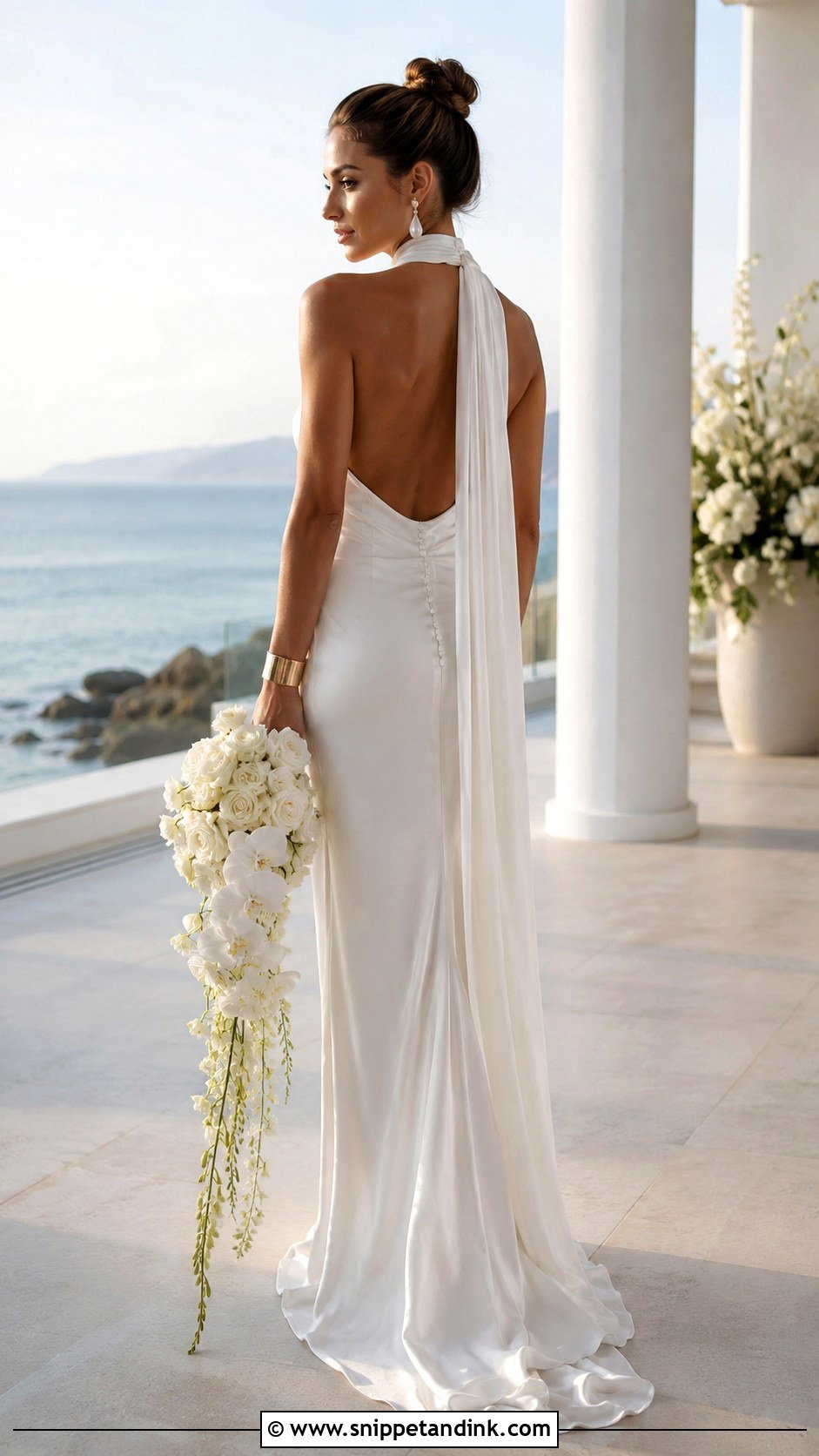
Halters draw a long line from the neck to the waist, and in smooth crepe, silk or satin with a fluid column skirt that line is the whole look. Open backs are tempting with this neckline, but they need a built-in support panel or you’ll spend the evening adjusting. Sleek earrings, a polished cuff and narrow-strap sandals are enough. No necklace. A high bun, twisted updo or short polished cut shows the shape best, and a simple trailing bouquet follows the length. The cut suits coastal and rooftop ceremonies, where air moves around bare shoulders.
12. Cape Sleeve Wedding Dress
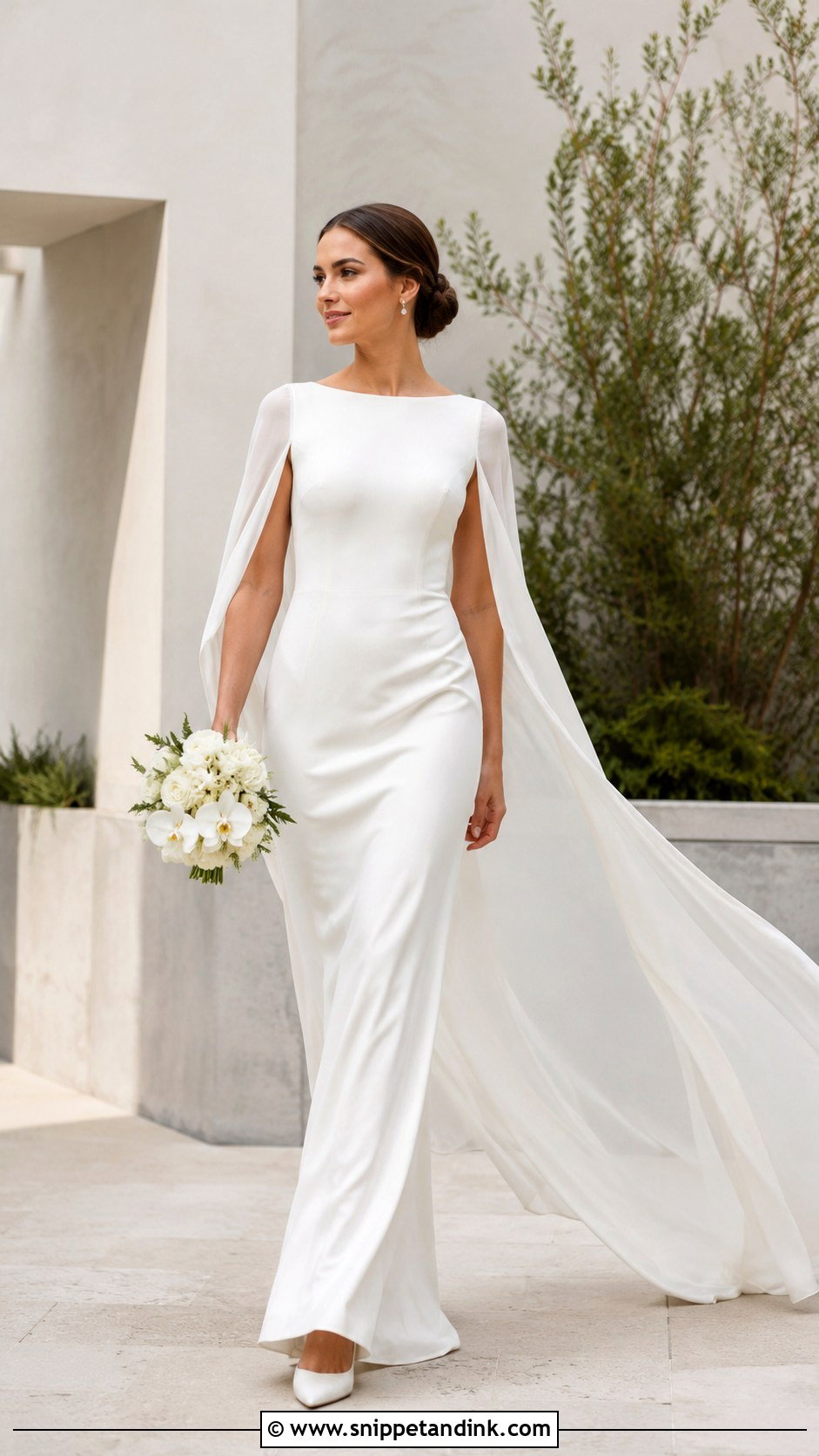
A cape can replace a veil, which is handy if you like the drama but not the weight on your head. Panels attach at the shoulders or neckline over a fitted crepe column or simple A-line. Chiffon floats softly; structured satin gives a sharper outline. With the cape already framing your shoulders, skip a big necklace and heavy hair pieces. Pointed heels, small crystal earrings and a smooth low bun keep it streamlined. Wind is the test I’d run: a long cape outdoors can wrap around your legs, so ask whether it can be bustled, shortened or removed before the reception.
13. Detachable Overskirt Wedding Dress
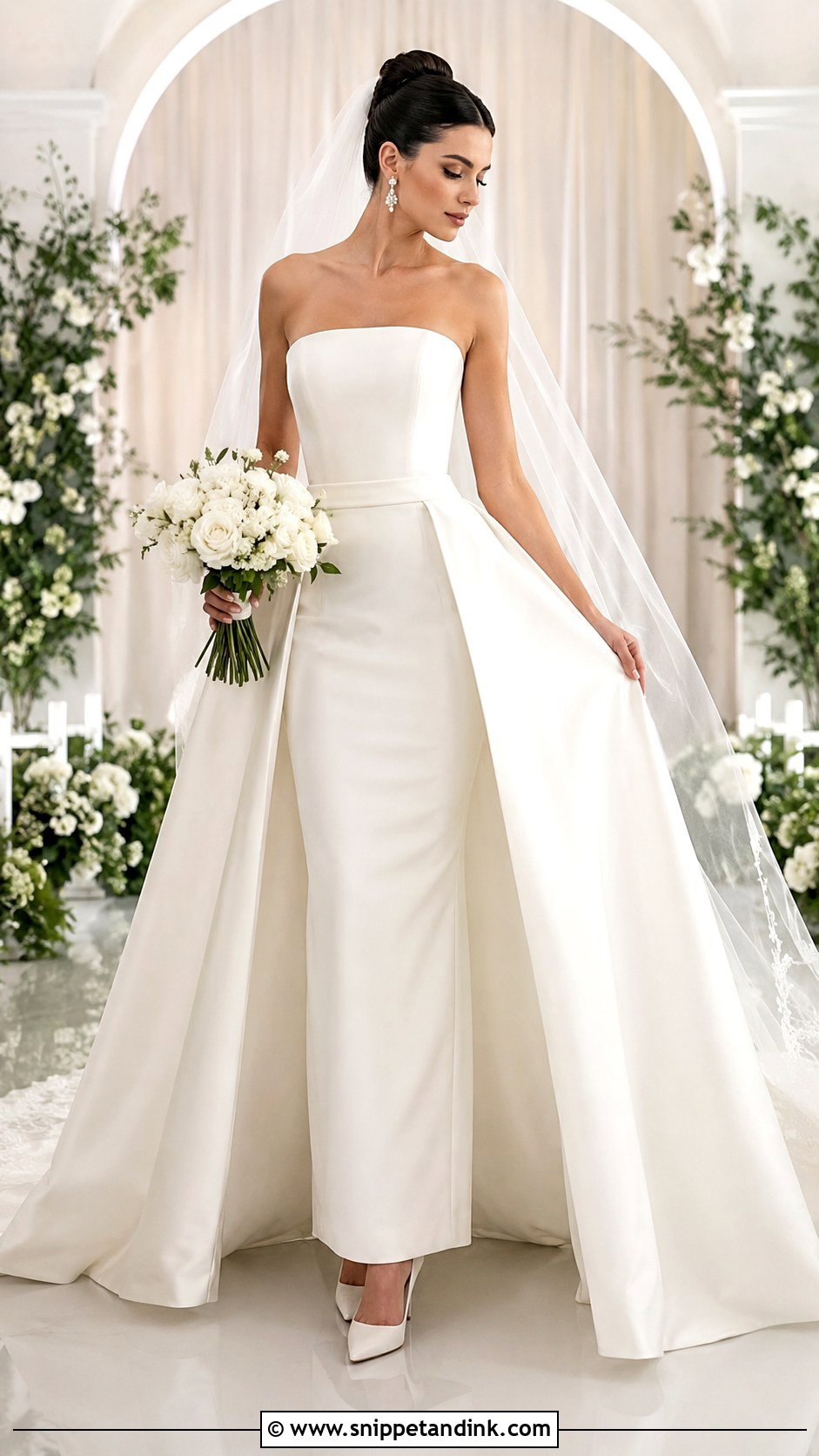
A fitted base dress with a full overskirt gives two outfits from one gown. The base can be a column, sheath or even a mini; the overskirt in satin or organza goes on for the ceremony and comes off for dinner and dancing. The attachment points should be hidden and the closure secure but quick. Practise taking it off at least once before the day. Comfortable pointed pumps, modern earrings and a plain cathedral veil suit the ceremony version, and a sculptural pin or small bow replaces the veil later. A medium bouquet with clean lines looks right with both shapes.
14. Bubble Hem Wedding Dress
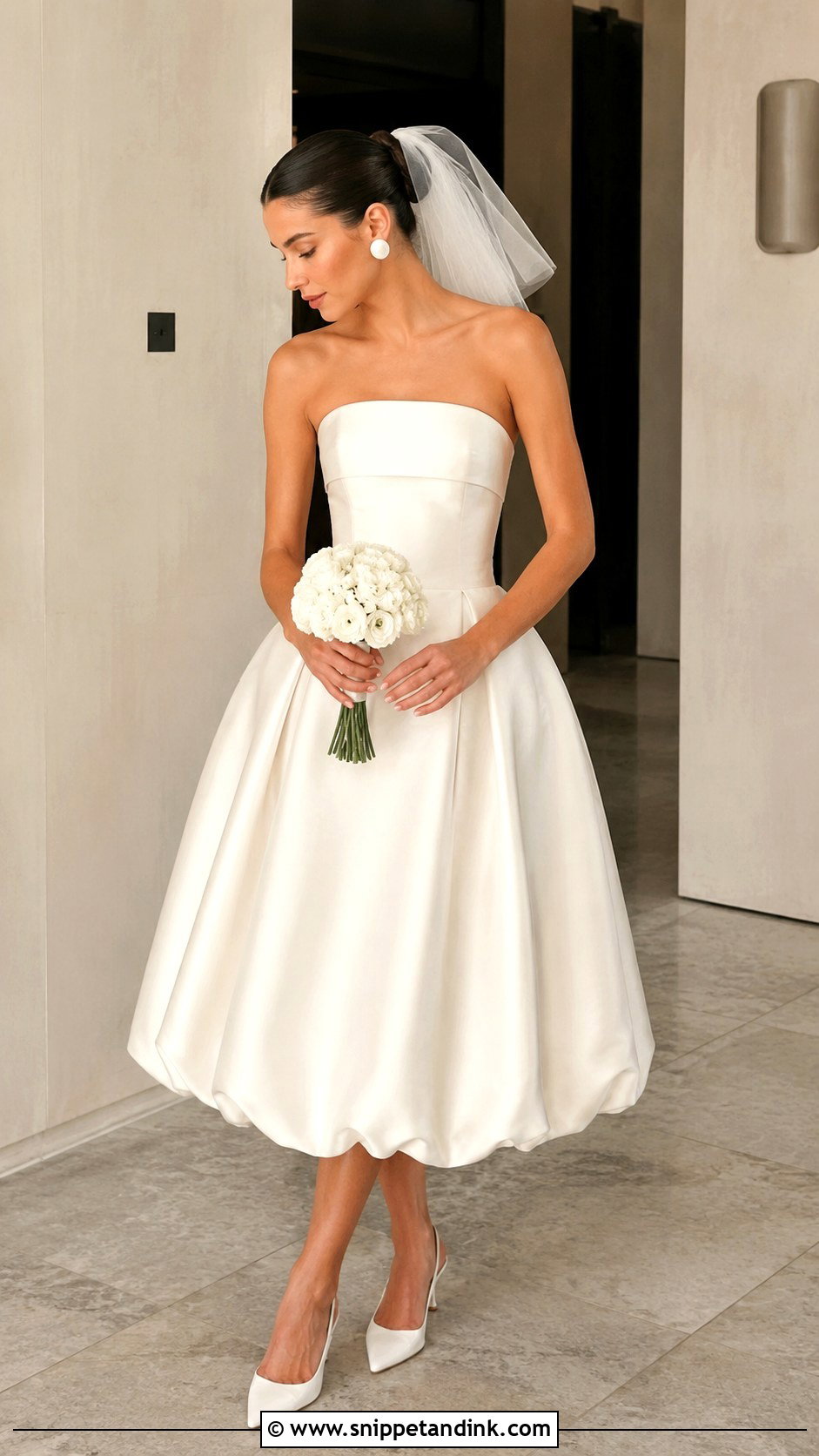
Bubble hems are fun and slightly risky. The rounded, puffed hem can sit on a full-length gown, a tea-length dress or a mini, and designers have been using inflated skirt shapes to add volume without weight. The problem I watch for is collapse: some bubble hems flatten unevenly when you sit, and a lopsided bubble looks deflated in photos. Check it from all angles after sitting. Pointed slingbacks, button earrings and a short veil or structured headband suit the shape, with a neat bun and a small bouquet so the skirt stays the main event. City ceremonies and modern hotels suit its playful edge.
15. High Low Wedding Dress
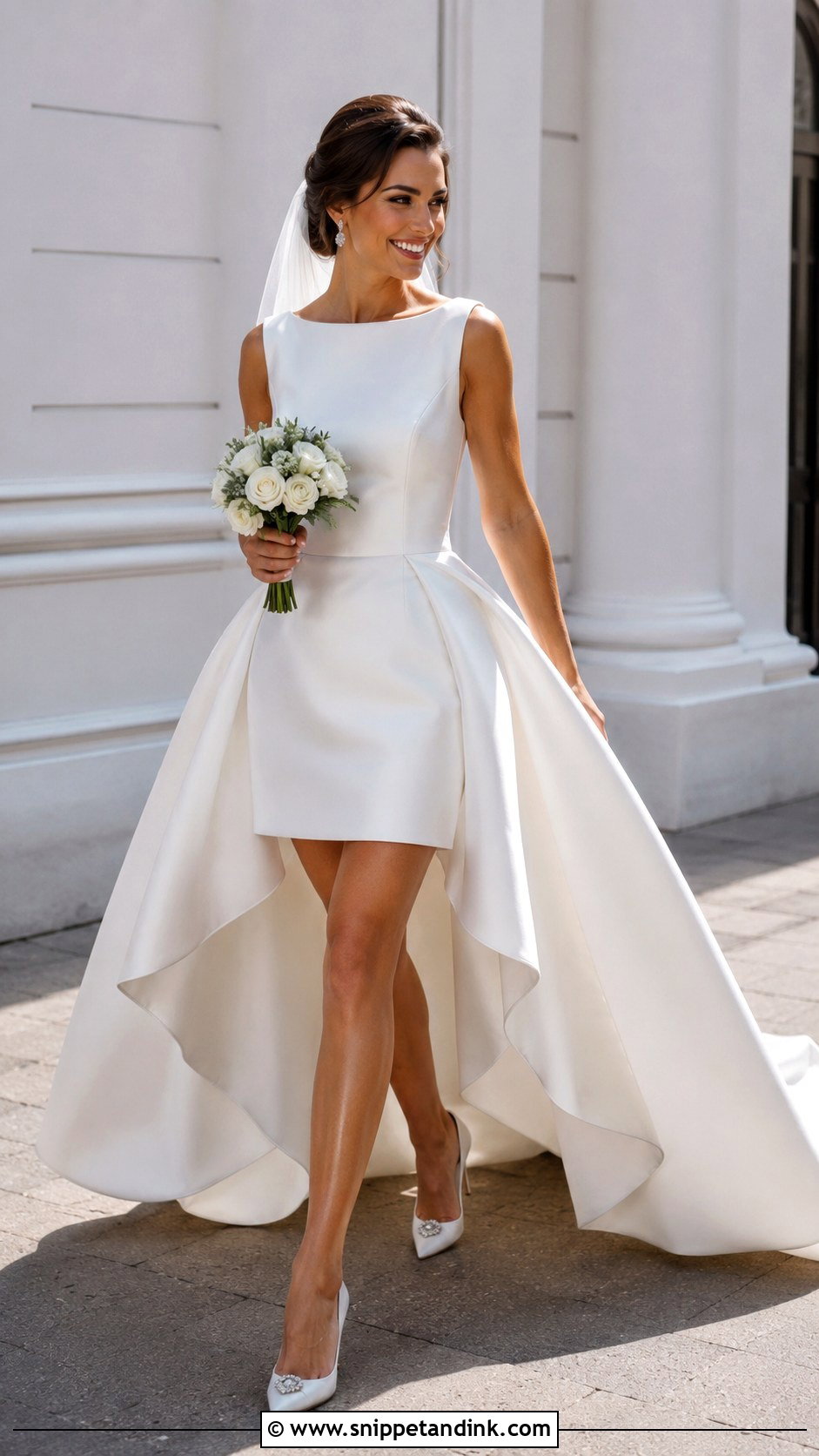
High-low hems show off the shoes while keeping a train at the back. A structured satin version holds a crisp curve; layered organza is softer. Because footwear is front and centre, I’d spend real time on it: refined slingbacks, embellished pumps or simple ankle-strap heels you can stand in for hours. Modern earrings, a short veil and a smooth updo keep the shape confident, and a compact bouquet leaves the front hem visible. Walk on grass, stone and carpet during fittings; the short front shouldn’t flip up, and the back needs an easy bustle or loop.
16. Satin Midi Wedding Dress
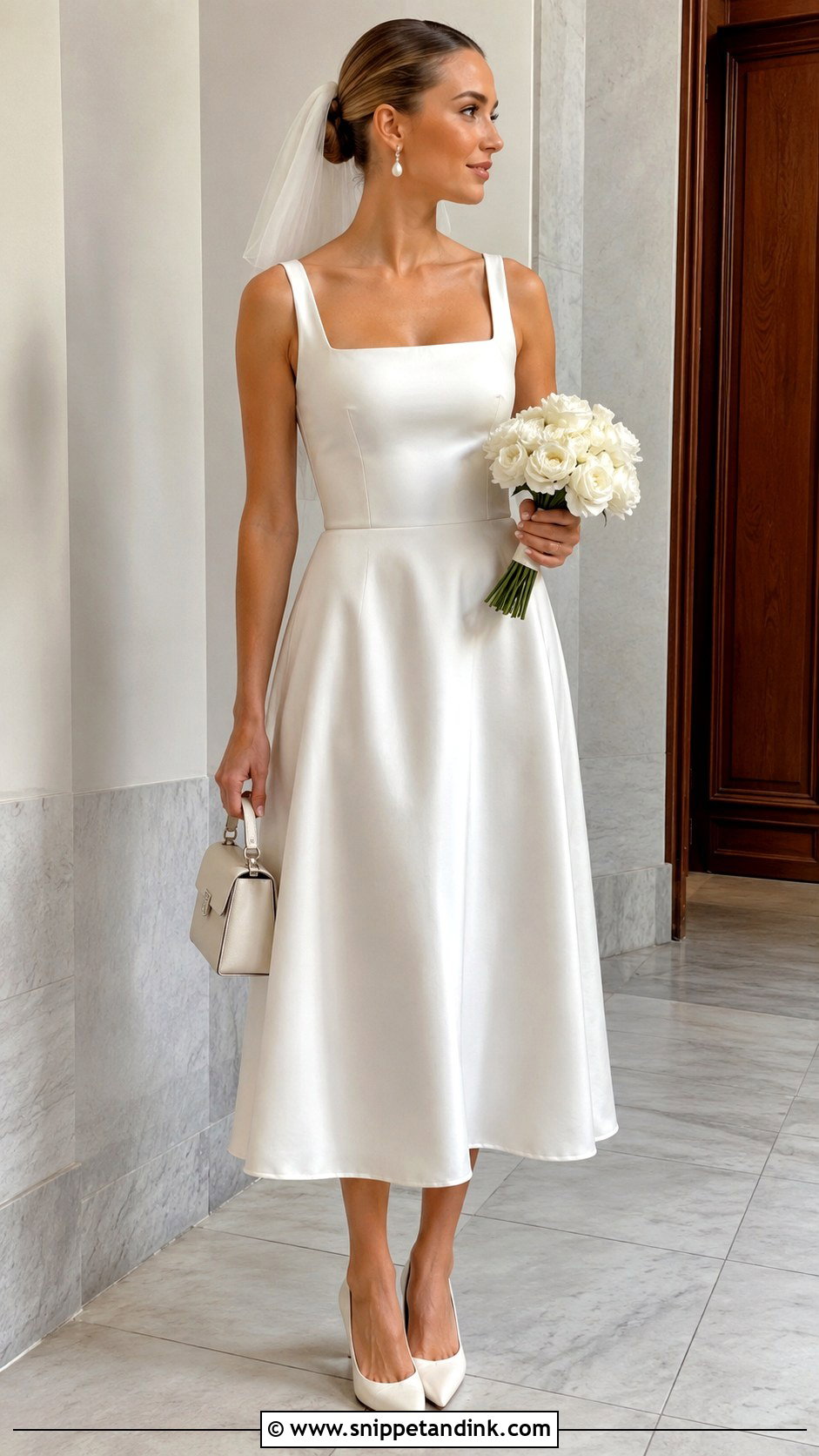
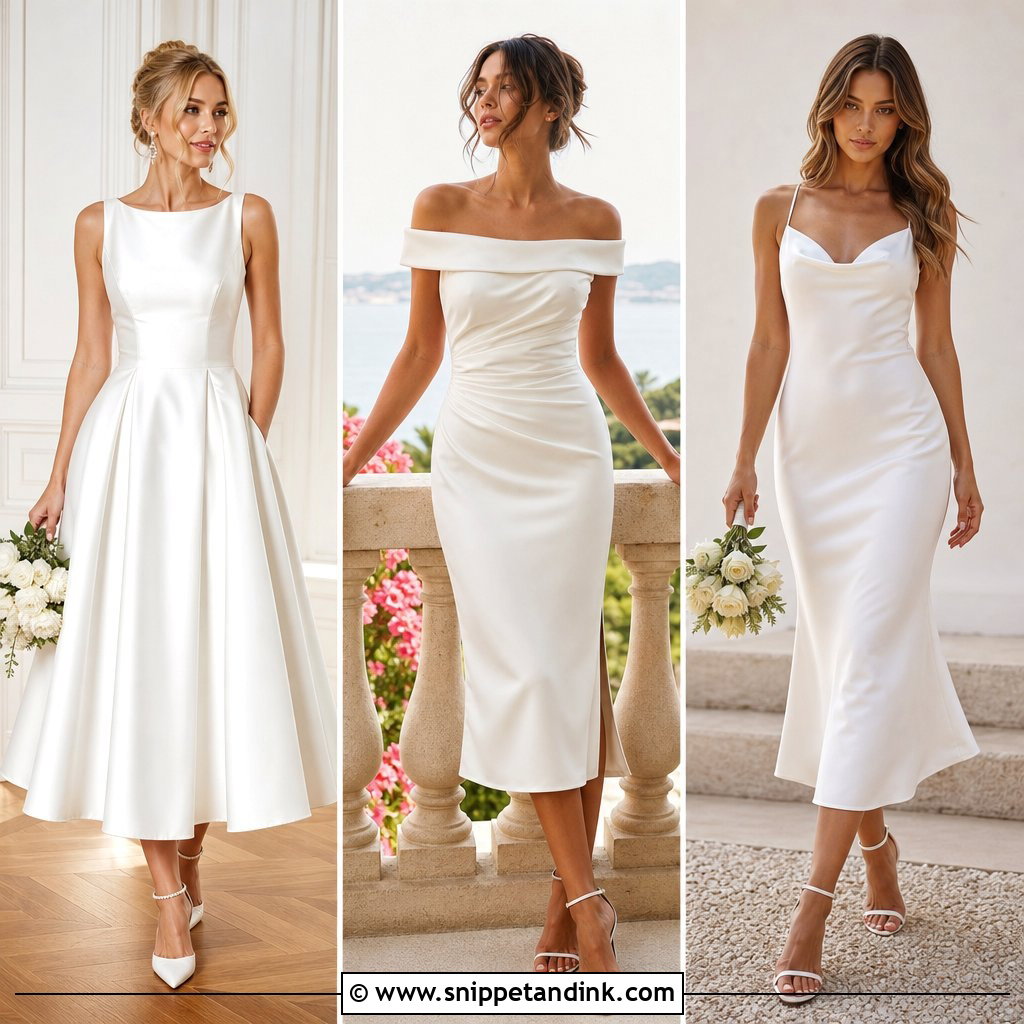
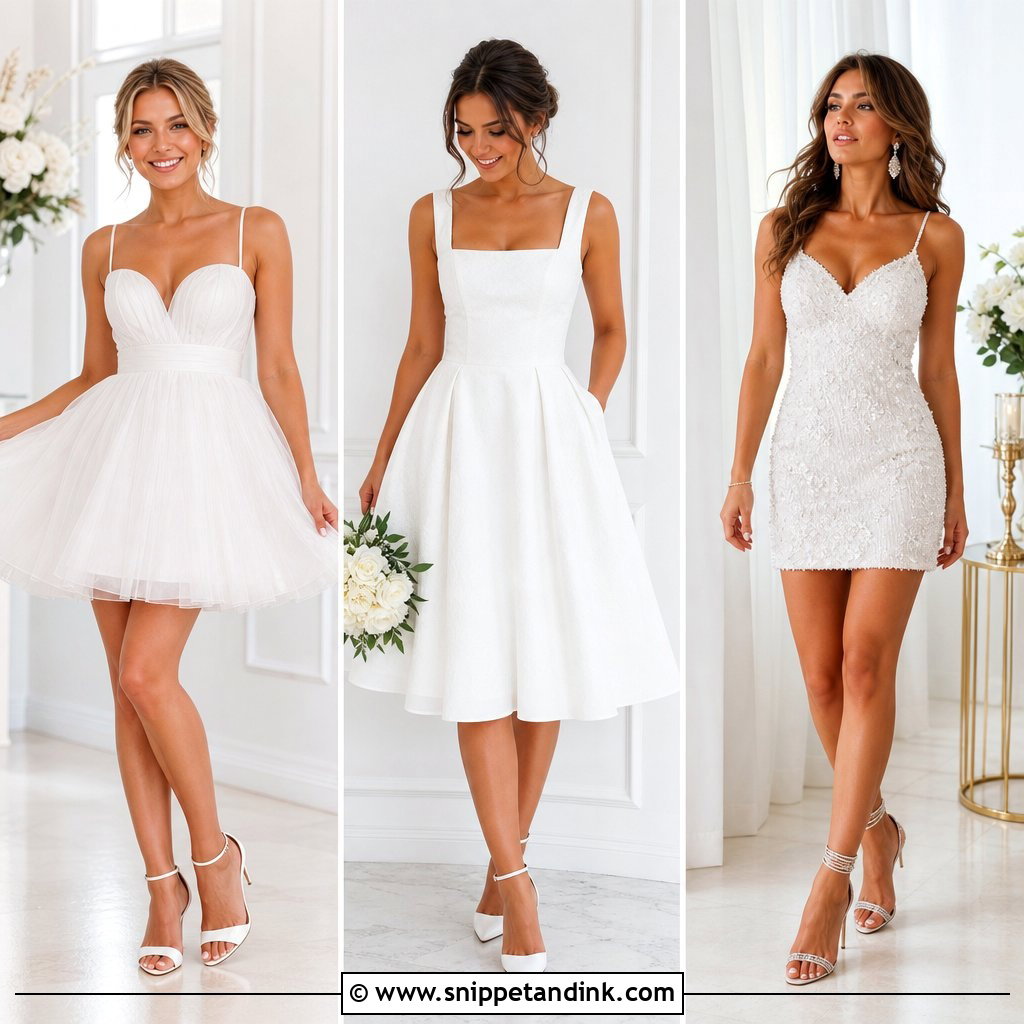
A satin midi wedding dress is right for smaller ceremonies, civil weddings and relaxed receptions. A fitted bodice with a square, scoop or off-shoulder neck leads into a soft skirt ending between knee and ankle. Hem placement is the decision that matters most, because a midi shows the lower leg and shoes. Where it flatters depends on your height and heel, so mark it with the shoes on. Pointed pumps or slingbacks, pearl drops and a short veil keep it bridal; a structured mini bag joins after the ceremony. Hair goes up or in smooth waves depending on the neckline.
17. Wedding Mini Dress With Veil
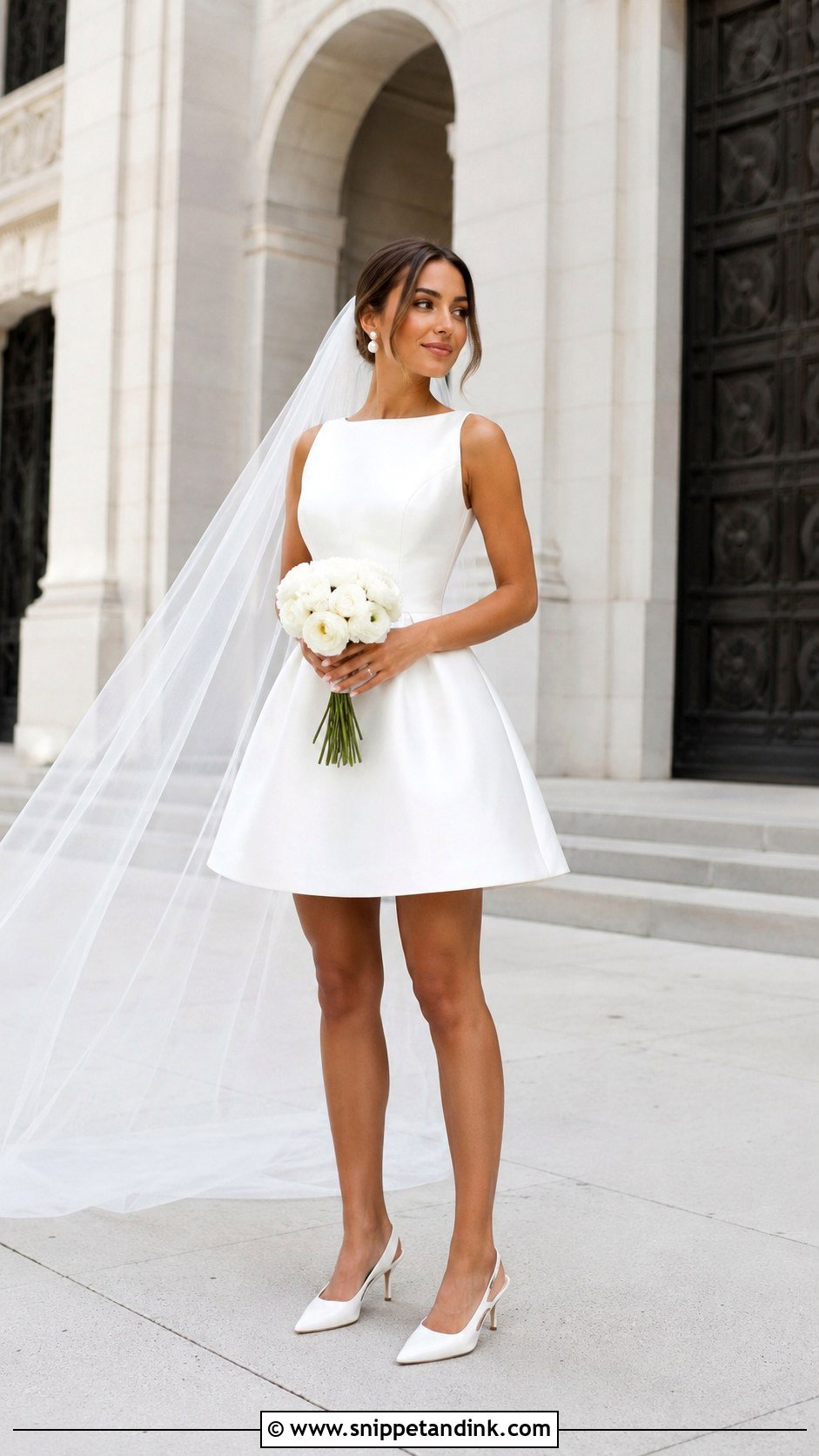
Minis need a clear bridal signal, and a long sheer veil is the quickest one. Choose a structured A-line, a tailored shift or fitted satin with a secure neckline. Shoes follow the venue: pumps, slingbacks or polished flats. Sheer tights suit cold weather; bare legs are fine indoors in summer. I keep the hair simple so the veil goes in and comes out without wrecking the style. Sit, bend and climb into a car in the fitting. If the hem rises further than you’re happy with, ask about adding a little length from the hem allowance.
18. Feather Trim Wedding Dress
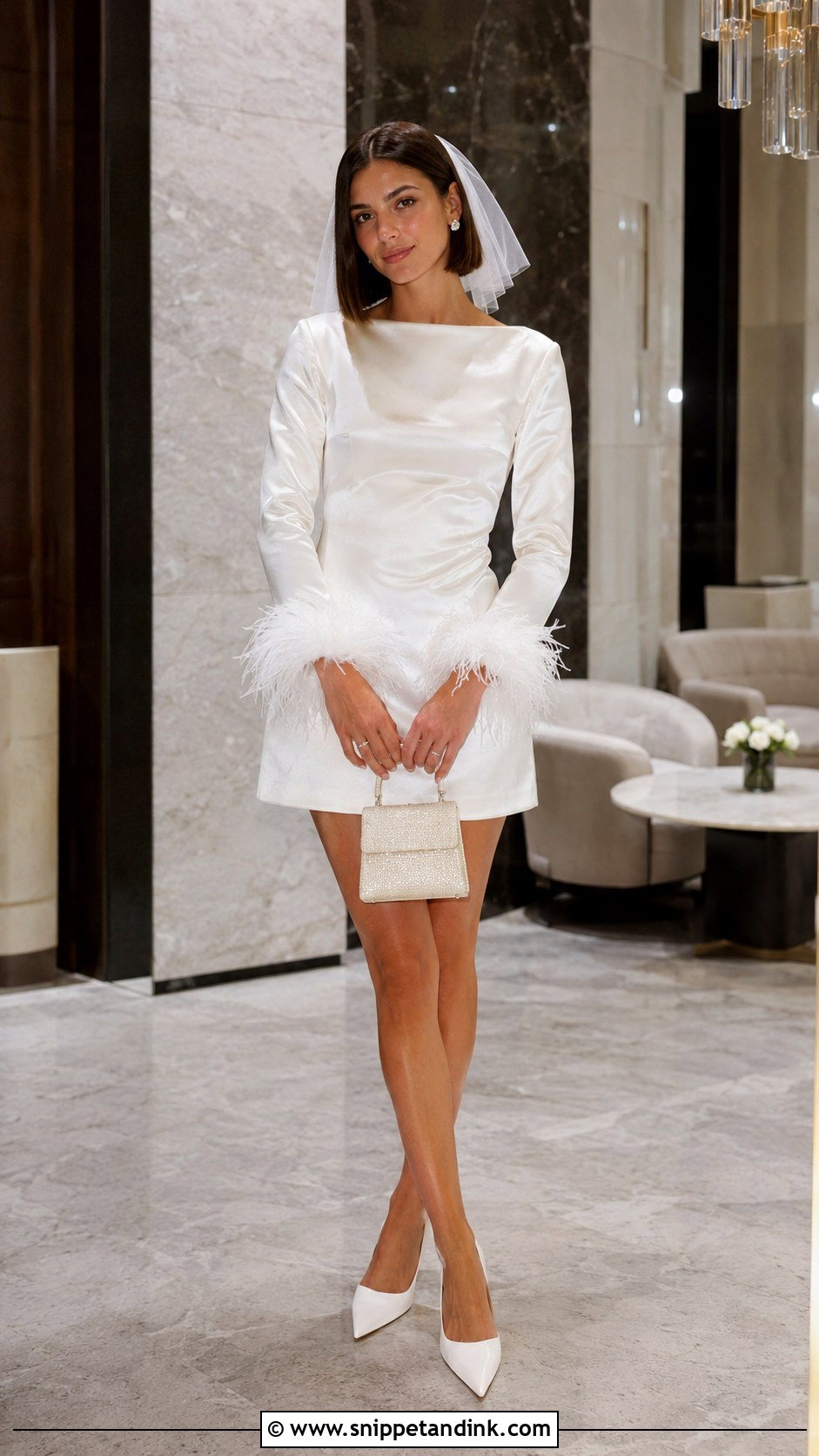
Feather trim adds movement and lightness, but one area is enough. Neckline, cuffs or hem on a streamlined column, satin mini or softly fitted gown keeps it modern; feathers everywhere turn it into costume. Feathers shed, especially in the first hours of wear, so I ask brides to rub the trim gently at the fitting and check how much comes away, and to hold it against the inside of the wrist for itchiness. Clean ivory pumps, crystal studs and a small structured bag suit it. A low bun or sleek bob balances the movement, with a plain short veil if the neckline is trimmed.
19. Black Bow Wedding Dress
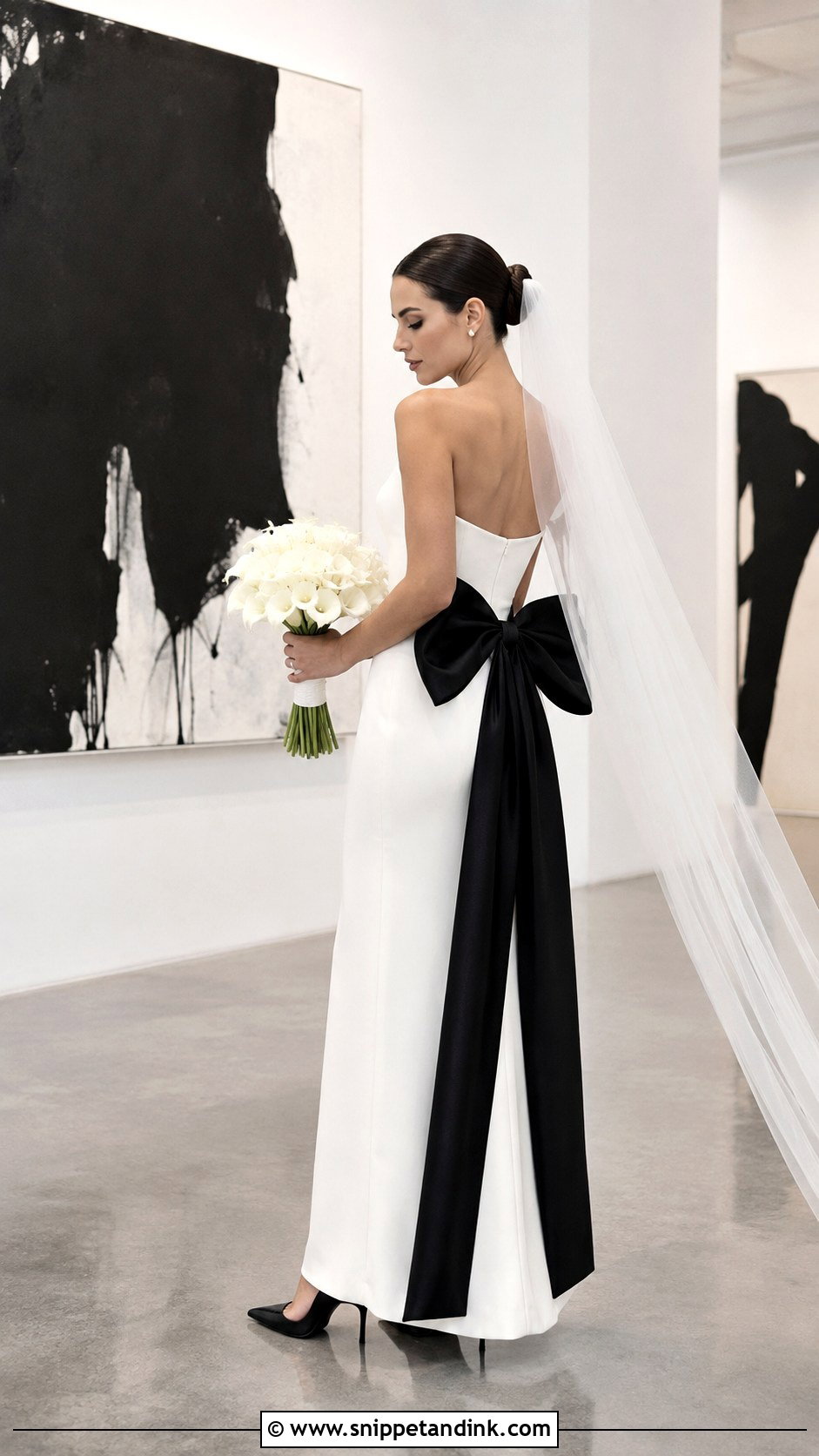
One black bow on a white gown has more impact than three. Start with a simple white or ivory column, A-line or strapless satin, then place the bow at the waist, neckline, shoulder or back. Look at the placement from front, side and back before alterations are final, because a bow that looks centred standing can tip when you sit. Black pointed pumps, pearl earrings and a plain white veil tie old and new together, with a sleek bun and white flowers. If the bow is detachable, you get a fully white second look for the evening.

20. Metallic Embroidered Wedding Dress
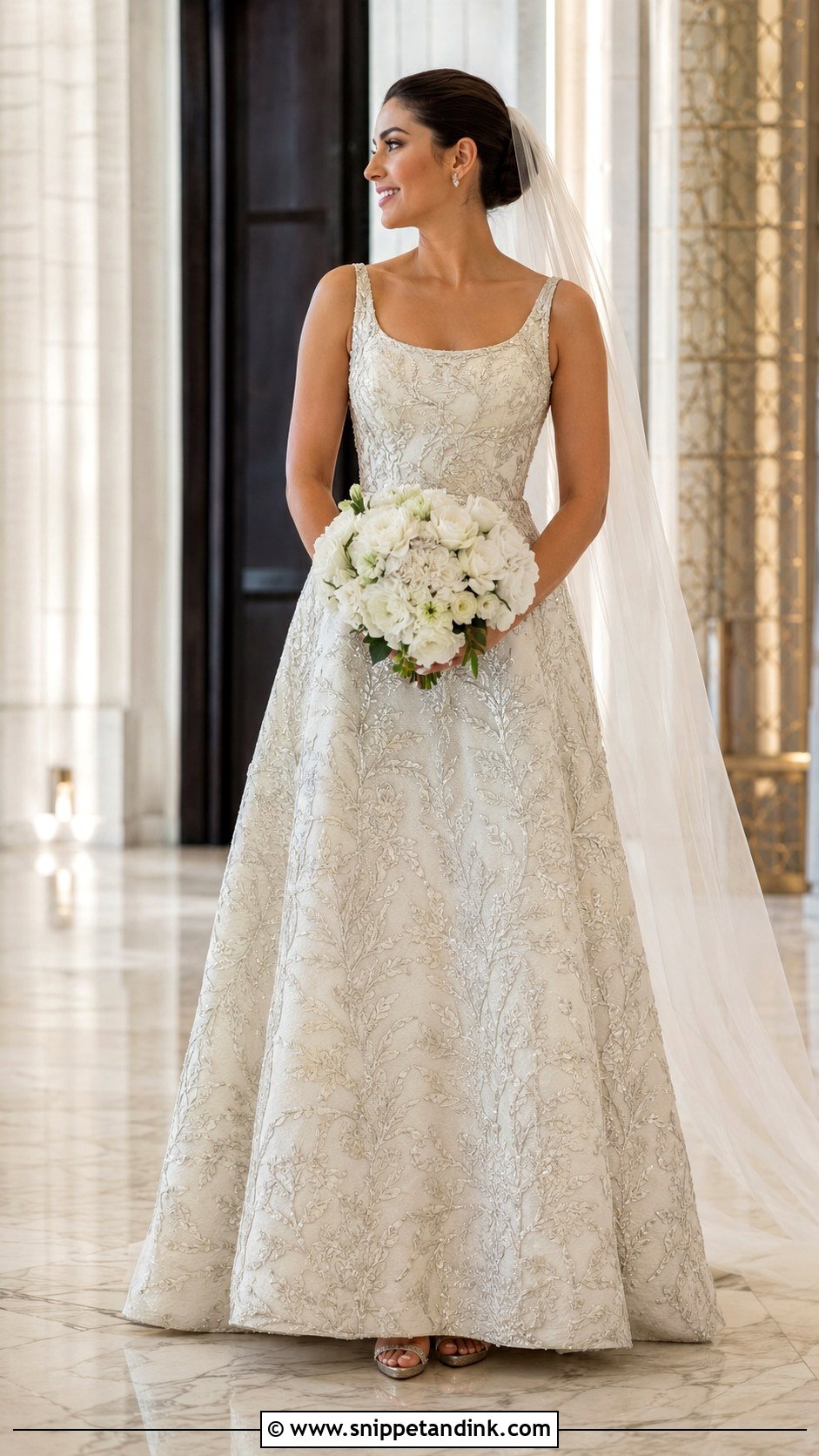
Metallic thread gives quiet shine without the weight of crystals. Silver, pale gold or pearl-toned embroidery over ivory tulle, organza or satin suits a clean A-line or column, which lets the work look intricate rather than heavy. Metallics change dramatically under different light: soft by day, brighter under warm lamps, sometimes harsh with flash. I’d view the dress near a window, under indoor lighting and with a phone flash before buying. Metallic sandals, small sparkling studs and a plain sheer veil keep it restrained, with soft waves or a low bun and a white bouquet with little greenery.
Feathers, Petals and Bubble Hems in a Suitcase
Several of these dresses are sculptural, and sculpture doesn’t fold. If you’re travelling, I’d ask the shop how the gown was shipped to them and pack it the same way. Many bridal shops will pack a dress in tissue for travel if you ask.
On the plane
Carry the dress on rather than checking it. Ask cabin crew whether there’s space in a closet; if not, lay the garment bag flat in the overhead bin with nothing on top. Feathers and three-dimensional flowers should face upward, with tissue tucked between layers so petals aren’t crushed.
At the venue
Hang it as soon as you arrive, in the bag with the zip open, so creases can drop. Steam satin and tulle from inside the gown, never directly onto appliqués, feathers or metallic embroidery, and keep the steamer moving. A bubble hem may need gentle fluffing from underneath by hand. Leave any serious pressing to a local bridal steaming service rather than a hotel iron.
After the wedding
Get the dress to a specialist cleaner within a few weeks. Sugar from drinks and cake can dry clear, then turn yellow over time on ivory fabric. Point out every spot you know about, and mention any feathers or metallic threads so they’re treated correctly.
Modern Shape, Your Proportions
A contemporary dress works when it looks current without swallowing the person wearing it. Proportion, fabric, structure and good tailoring do most of that work; accessories just finish the sentence. Start with the shapes you’re comfortable in and that suit your venue, then think about how the dress moves, how it photographs and how it sits with your shoes, veil, jewellery, hair and flowers. Try one or two unexpected shapes alongside your favourites, but don’t pick a trend because everyone else is wearing it. With careful fittings and styling that hangs together, a modern gown can feel personal for years.
You'll Like These Ideas:










Leave a Reply