
Yellow is the haldi default for a practical reason: the paste is yellow, and anything it lands on blends in. Lavender breaks that rule, which is exactly why I like it for brides who are tired of seeing every photo in one shade. Against marigold decor a pale purple sits opposite yellow on the color wheel, so the outfit separates from the backdrop instead of disappearing into it. The trade-off is that turmeric shows on lavender far more than on mustard, so fabric and the way the dupatta is handled matter more here. Below are the silhouettes I’d actually put a bride, a sister or a guest in, with notes on how each one behaves once the paste starts flying.
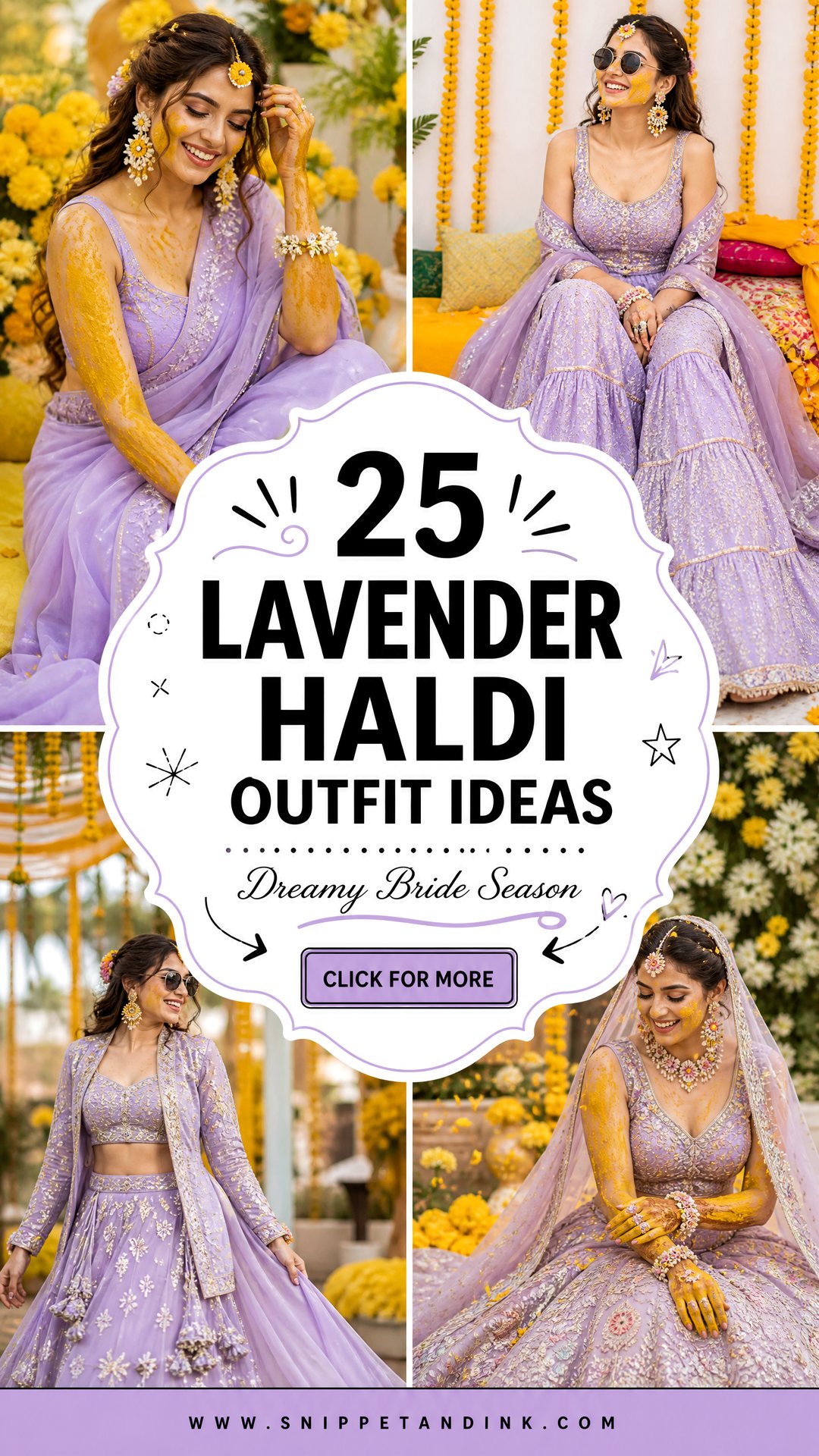
Cool Lilac or Warm Mauve Under Morning Sun
Lavender isn’t one color. Some shades lean blue and cool, some lean pink and warm, and the difference shows up harshly in the direct daylight most haldis are held in. On olive and deep skin, an icy blue lavender can make the face look grey in photos, while a warmer lilac with a touch of pink keeps the skin lit. Fair skin with pink undertones often carries the cooler shade well.
Before anyone orders, I test the shade like this:
- Hold the fabric under your chin by a window at mid-morning, not under shop lighting, which is usually warm and flattering.
- Put a marigold or anything yellow beside it. If the lavender turns muddy next to yellow, the shade has too much grey in it.
- Photograph it on your phone with no filter. Cameras push blue, so a shade that already feels cold in person will look colder in the pictures.
- If several people are wearing lavender, compare their swatches side by side. Lavenders from different shops almost never match.
1. Lavender Lehenga For Haldi
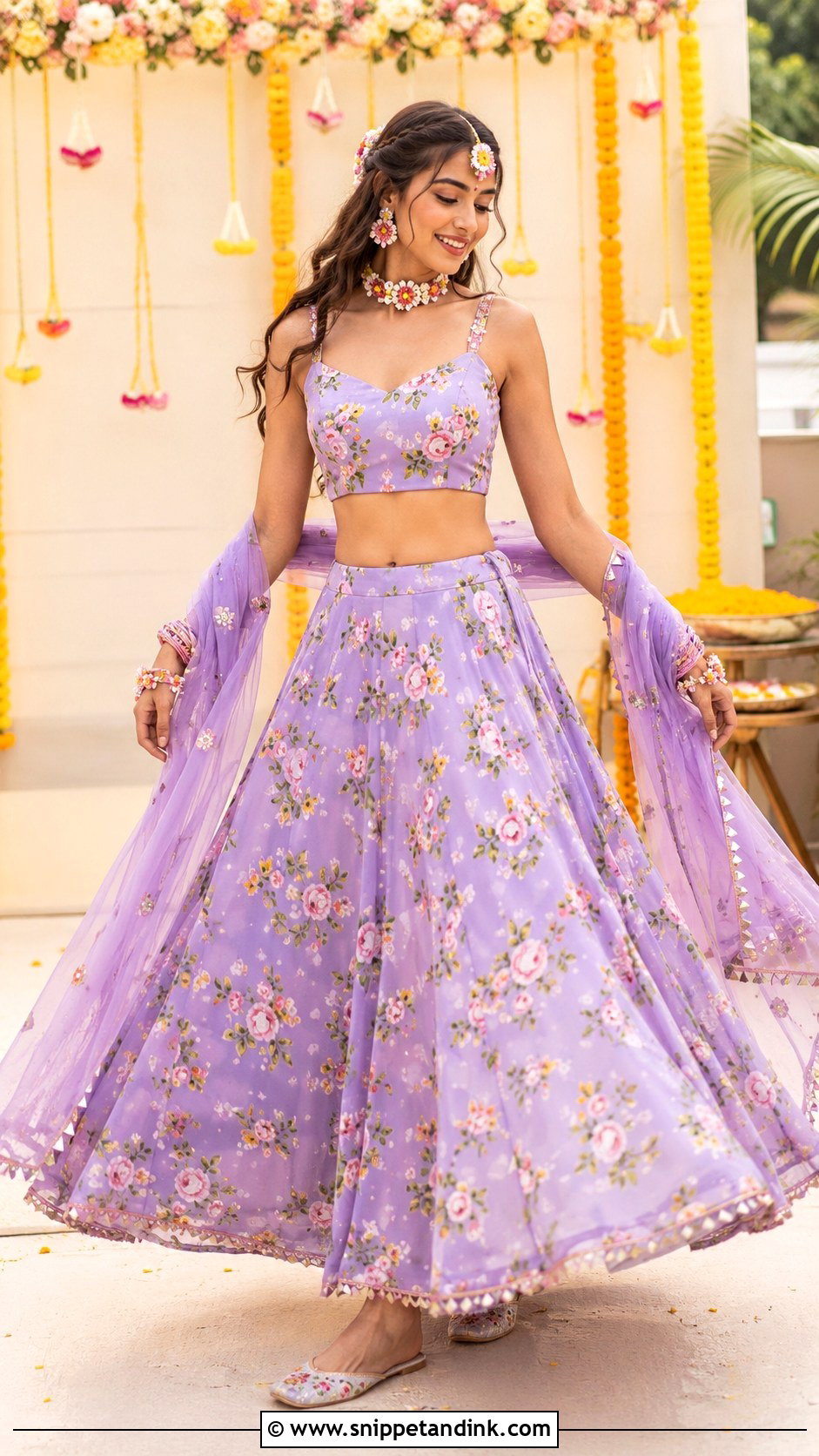
A lavender lehenga for haldi needs to be lighter than the lehenga you’d wear in the evening, because you’ll be sitting low on a patla or cushion while people lean over you. Georgette or cotton silk folds under you without creasing hard; stiff can-can layers push the skirt up around your face when you sit. I keep the sparkle to a mirror work blouse or a thin gota border. Pin the dupatta at the shoulder and at the back of the waist, never only at the head, so a cousin’s hand doesn’t drag it off mid-ritual. Yellow phool jewelry and pearl jhumkas pull it back to the ceremony’s colors.
2. Lavender Sharara Set For Haldi
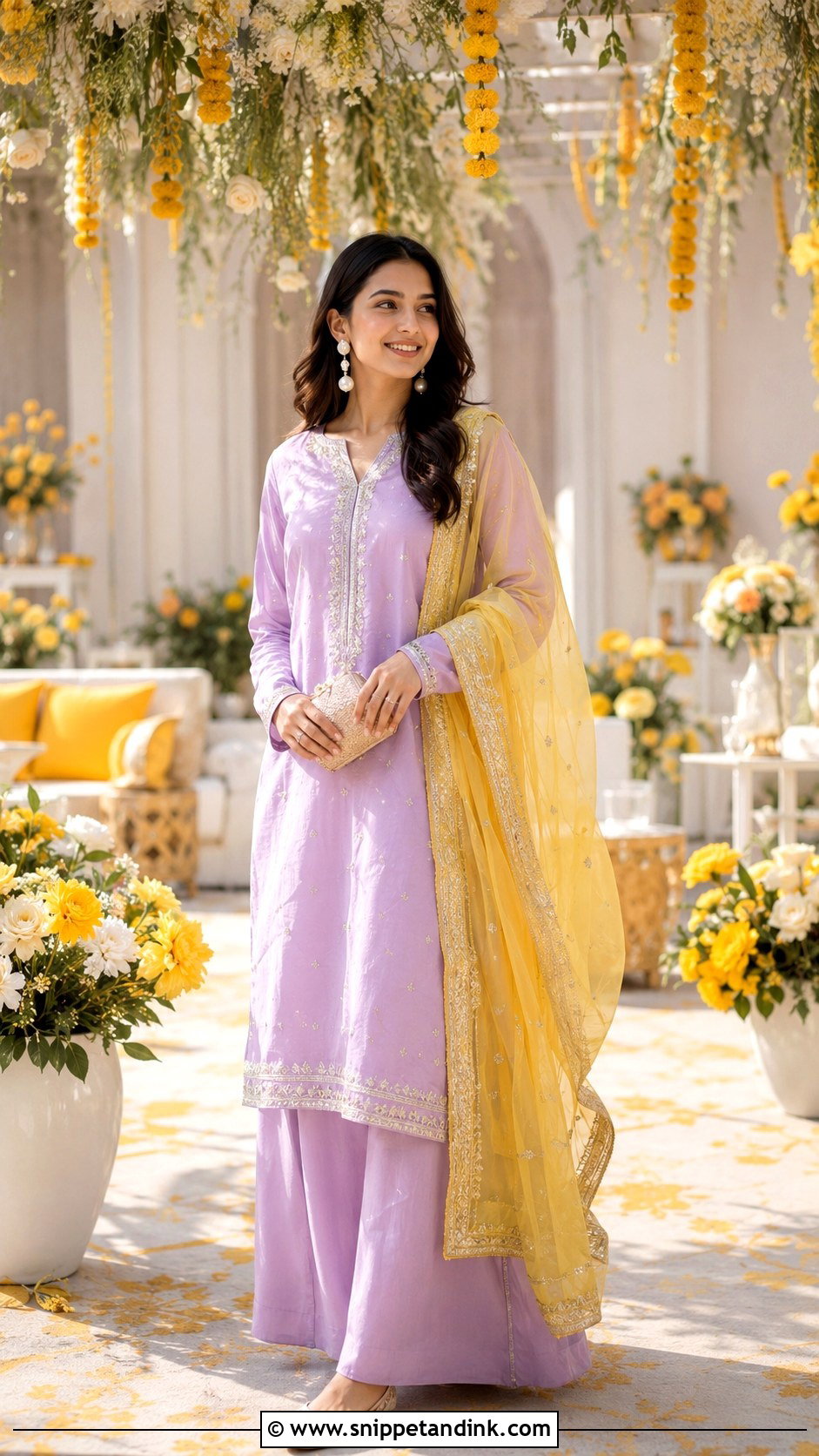
Shararas are my answer for anyone who’ll be dancing once the paste is done. The flare starts at the knee, so the legs move freely and the hem swings in candids. The catch is length. A sharara that pools on the floor collects turmeric and wet petals, so I hem it to just skim the top of the foot in the shoes she’ll actually wear. Keep the kurti short with thread or mirror detail and add a chiffon dupatta. A haath phool and yellow glass bangles bring in the ceremony color without any more embroidery.
3. Lavender Anarkali For Haldi
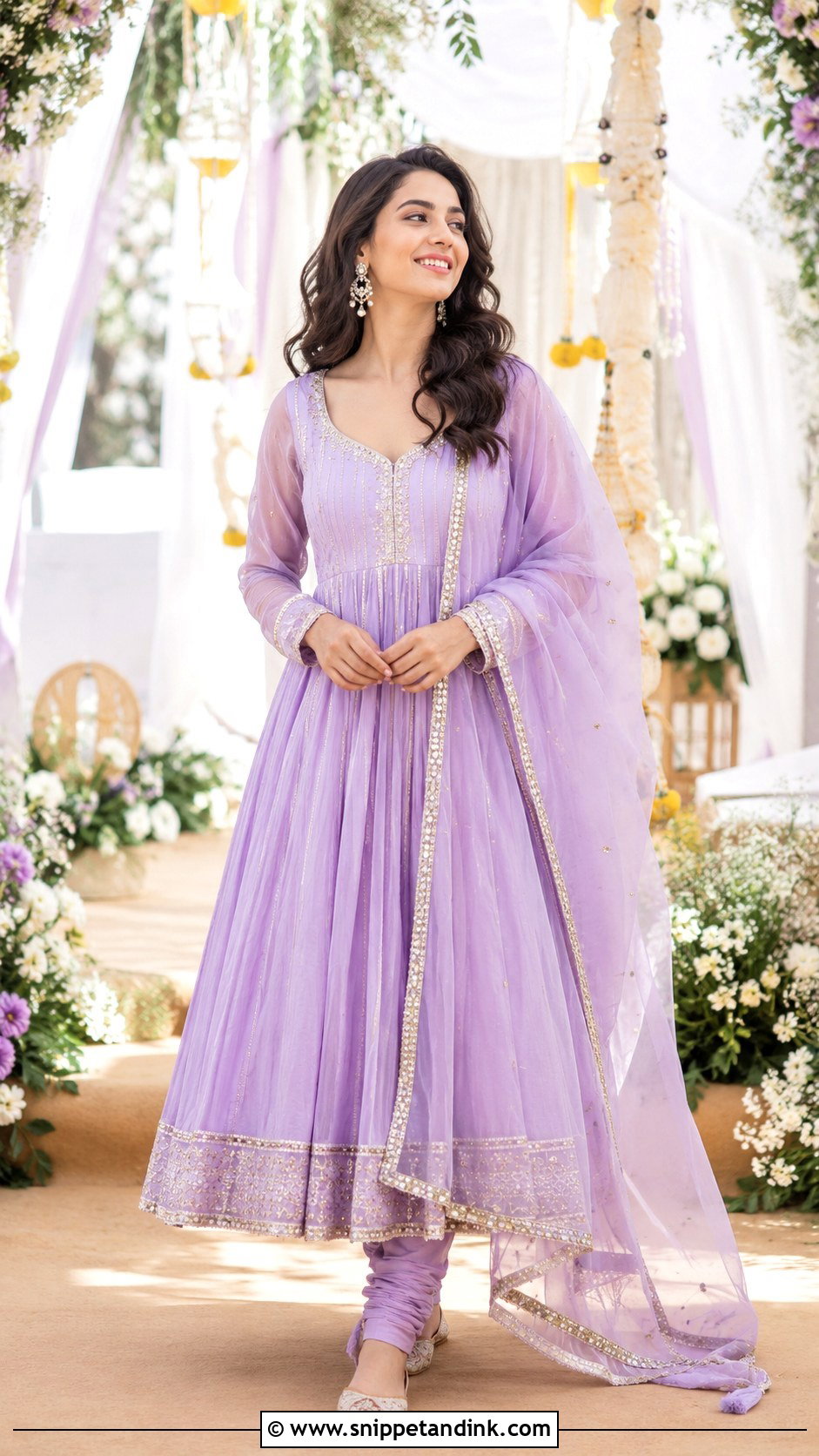
The flare on an anarkali does the styling for you, which is why I hand it to people who don’t want to fuss. Check the lining before anything else. An unlined georgette anarkali goes sheer in direct sun, and haldi is almost always photographed in strong daylight; a soft cotton lining fixes it without adding heat. Choose churidar for a traditional finish, or straight pants if you’ll be on the floor for long, since churidar bunching at the ankle gets uncomfortable when you sit cross-legged. Light gota and embroidered juttis are enough.
4. Lavender Saree For Haldi
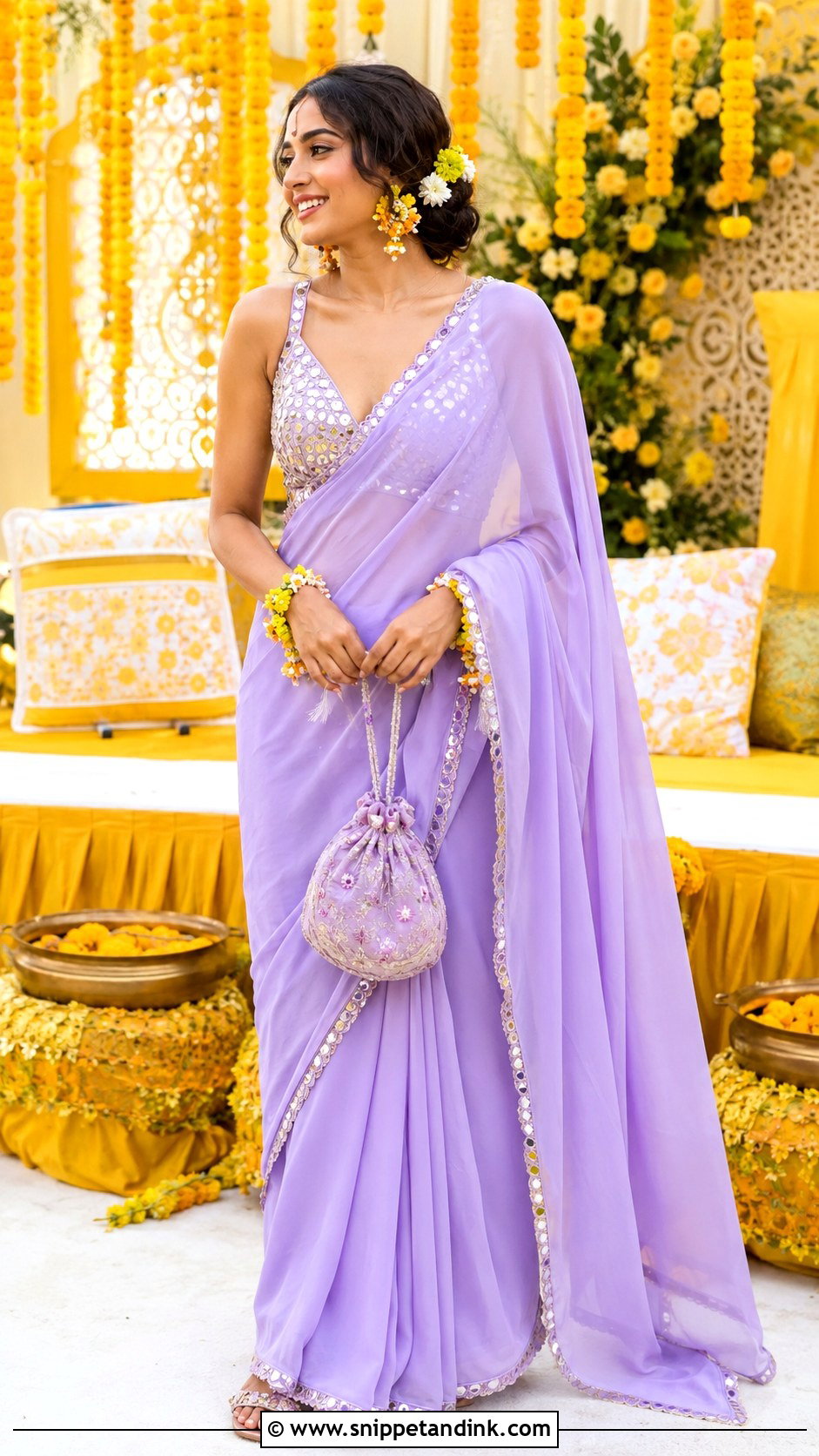
A saree is the most graceful option on this list and the most work at a haldi. Organza, chiffon and linen silk all drape light, but the pleats need four or five safety pins at the waist and the pallu pinned at the shoulder, because every hug and every handful of paste tugs at it. I’d hold off on a crisp tissue saree here, as it creases sharply the moment you sit. The blouse sets the mood: sleeveless reads modern, mirror work reads festive. Add yellow bangles or marigold earrings for the haldi link. Mothers and aunts tend to love this one because it feels like their own wardrobe, only softer.
5. Lavender Kurta Set For Haldi
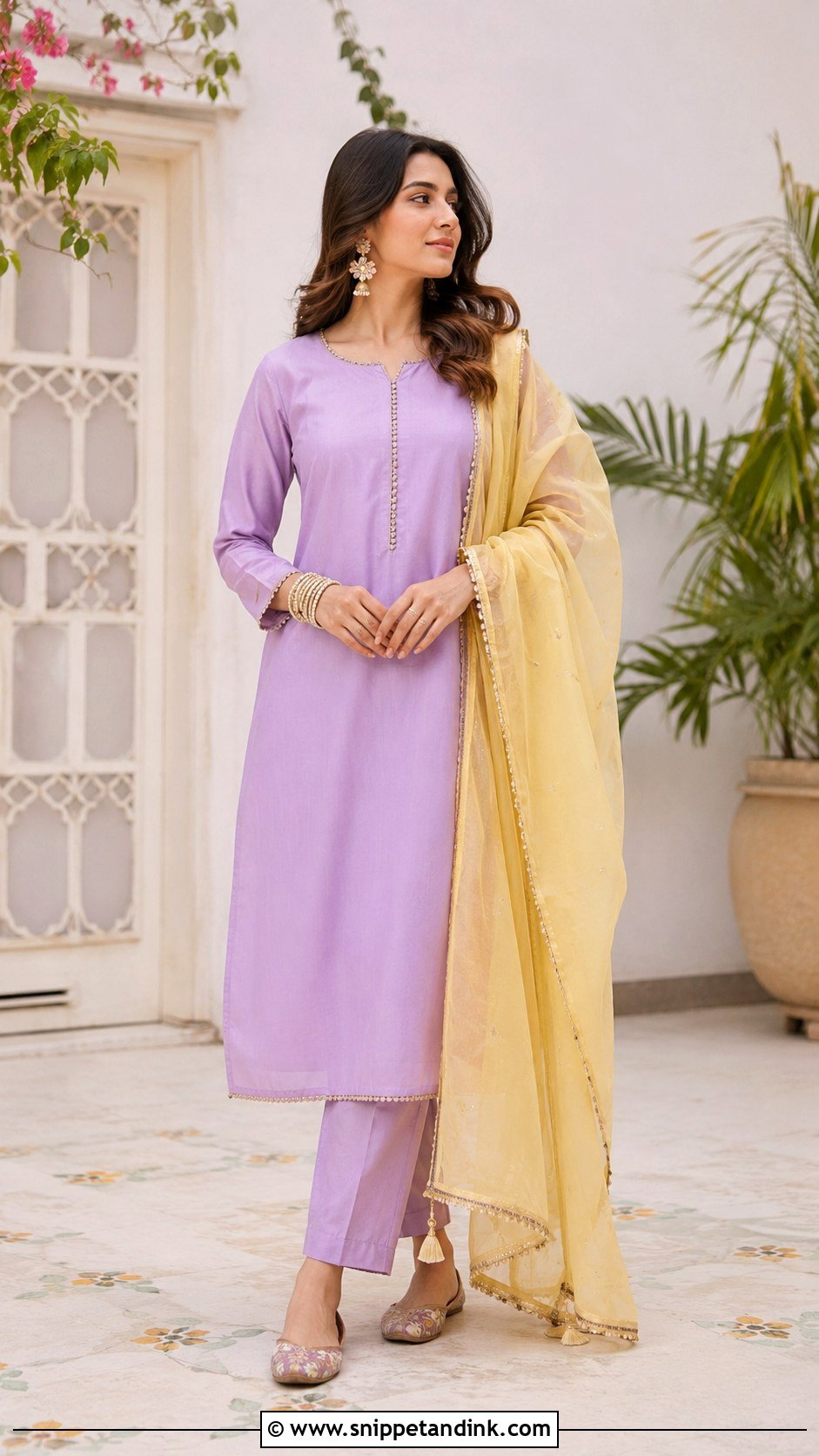
For an outdoor morning haldi in heat, a straight kurta set in mulmul or chanderi is honestly the most comfortable thing anyone will wear. Cotton breathes, and unlike polyester blends it can be soaked and treated if turmeric hits it. Keep the embellishment small, a lace trim or a few mirrors at the neckline. A dupatta in ivory or pale yellow stops head-to-toe lavender from looking flat on camera.
6. Lavender Gharara For Haldi
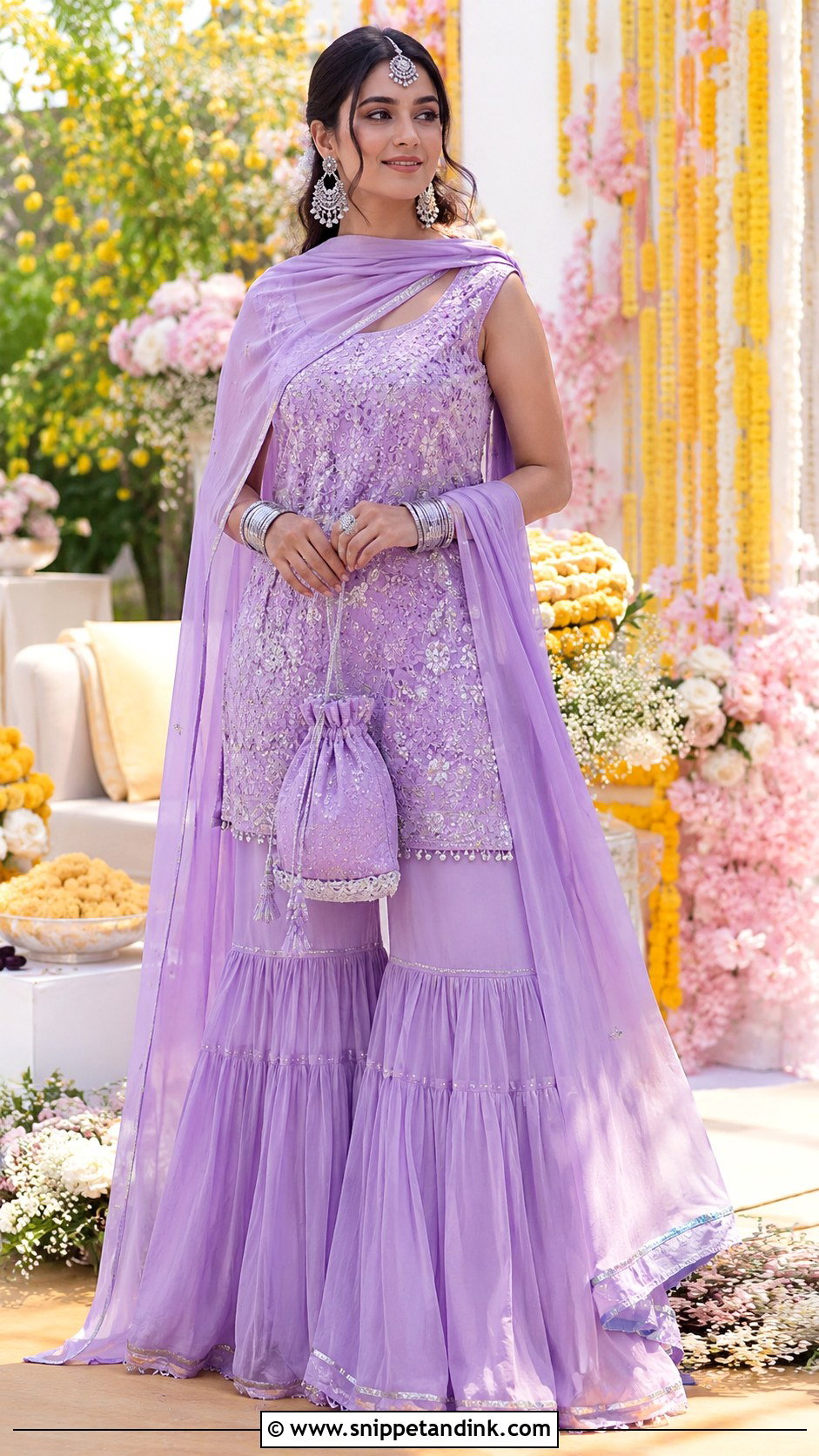
Look at the knee of a gharara first. That’s where the fitted leg meets the flare, and it’s usually banded with gota or zari, so it’s where the eye goes in photos. Because the legs already carry so much fabric, I keep the top short and the accessories few: one pair of statement earrings and a small potli. Pin the dupatta on one shoulder. A gharara takes more managing than a sharara when you sit, so practice getting up from the floor in it before the day. Silver or pearl jewelry sits better on lavender than heavy yellow gold.
7. Lavender Co Ord Set For Haldi
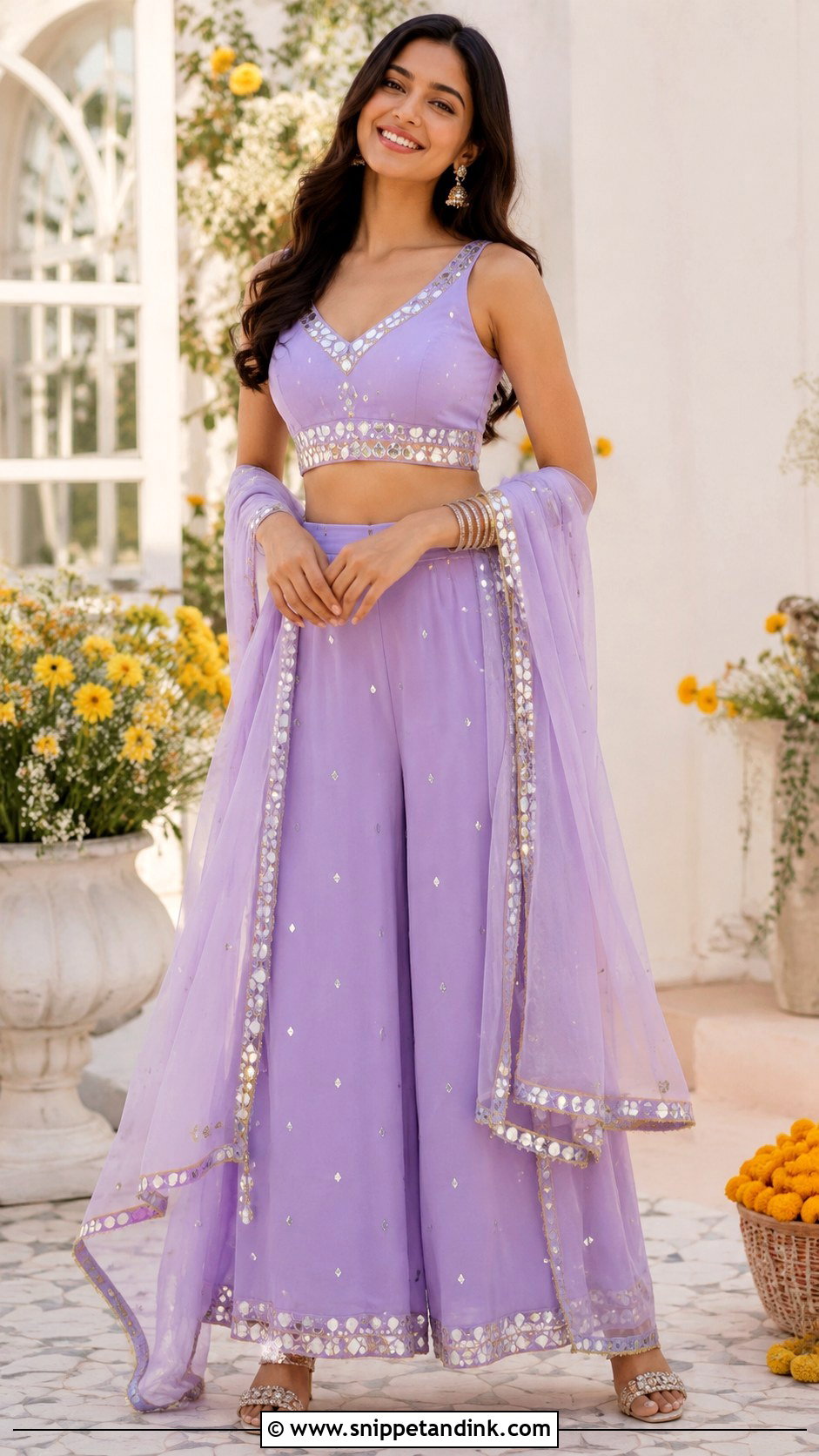
A matching co ord suits a modern haldi ceremony where the dress code is relaxed. Crop top with palazzos, a peplum with flared pants, a plain kurta with trousers: the matching color is what makes a simple shape look intentional. I add one festive detail, usually mirror borders or tassels, so it doesn’t read like brunch wear. The real argument for a co ord is that both pieces come back out after the wedding, worn separately. If someone’s budget is tight, this is where I point them.
8. Lavender Palazzo Suit For Haldi
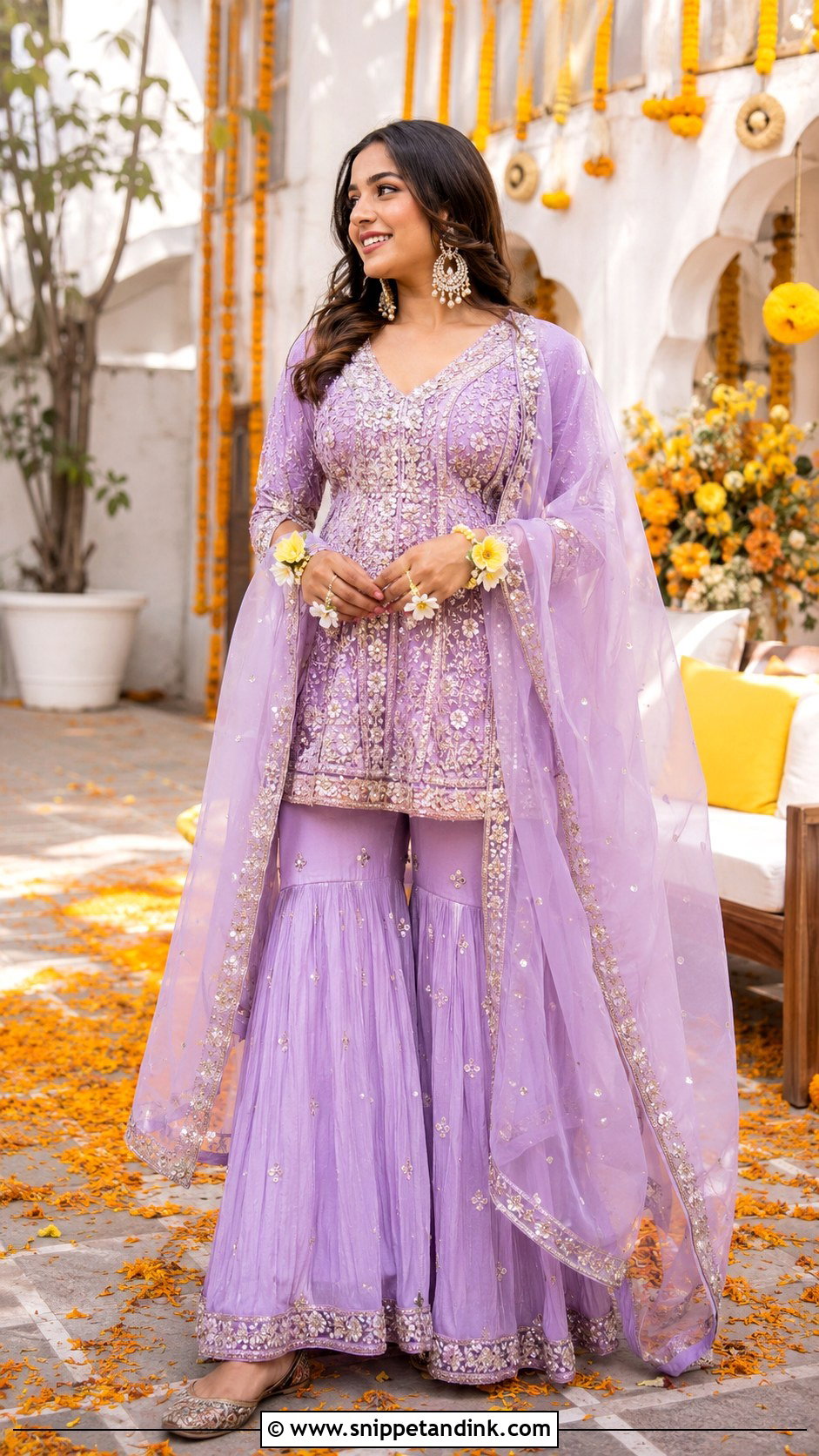
Long ceremonies are where a lavender palazzo suit earns its place. Wide legs let you sit cross-legged for an hour without anything cutting in at the knee. Kurta length changes the whole read. Hip length looks younger, while calf length looks more formal and suits older relatives. Cotton silk and chanderi hold their shape in heat better than thin rayon, which clings once you start to sweat. Put the haldi yellow into the dupatta border so the suit stays wearable later.
9. Lavender Skirt And Crop Top For Haldi
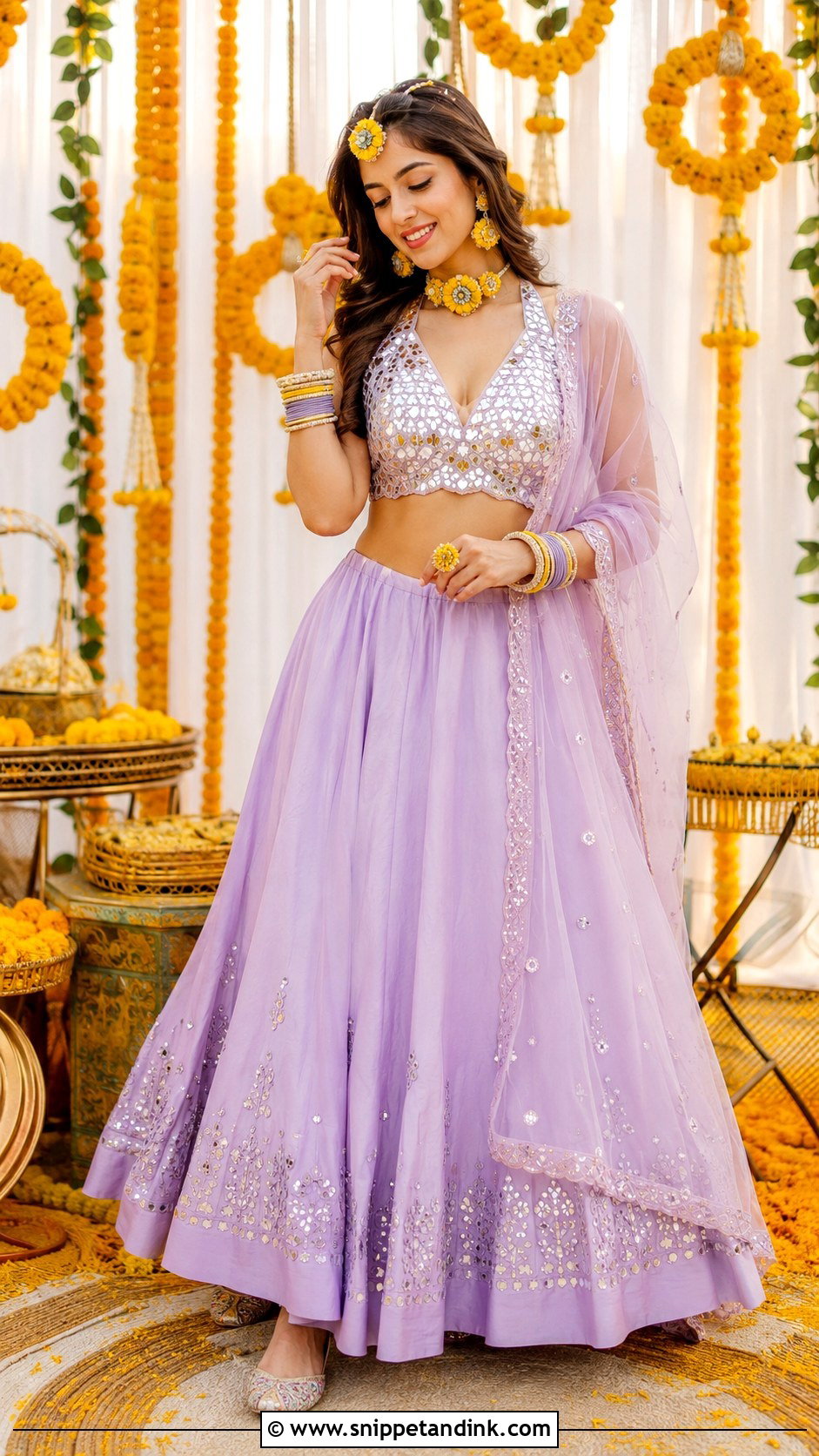
Think of this as a lehenga without the weight, and on a hot afternoon that difference matters. A flowy printed or mirror work skirt with a short blouse keeps the coordinated look. If you’d rather not show midriff, a longer blouse or a sheer cape covers it without adding heat. Yellow floral jewelry stands out hard against lavender here, which is the point. I’d steer guests away from very short crop tops at a family haldi with elders present; it’s the one place I still see people tugging at their hem halfway through. Wedges or juttis are safer on grass than thin heels.
10. Lavender Organza Saree For Haldi
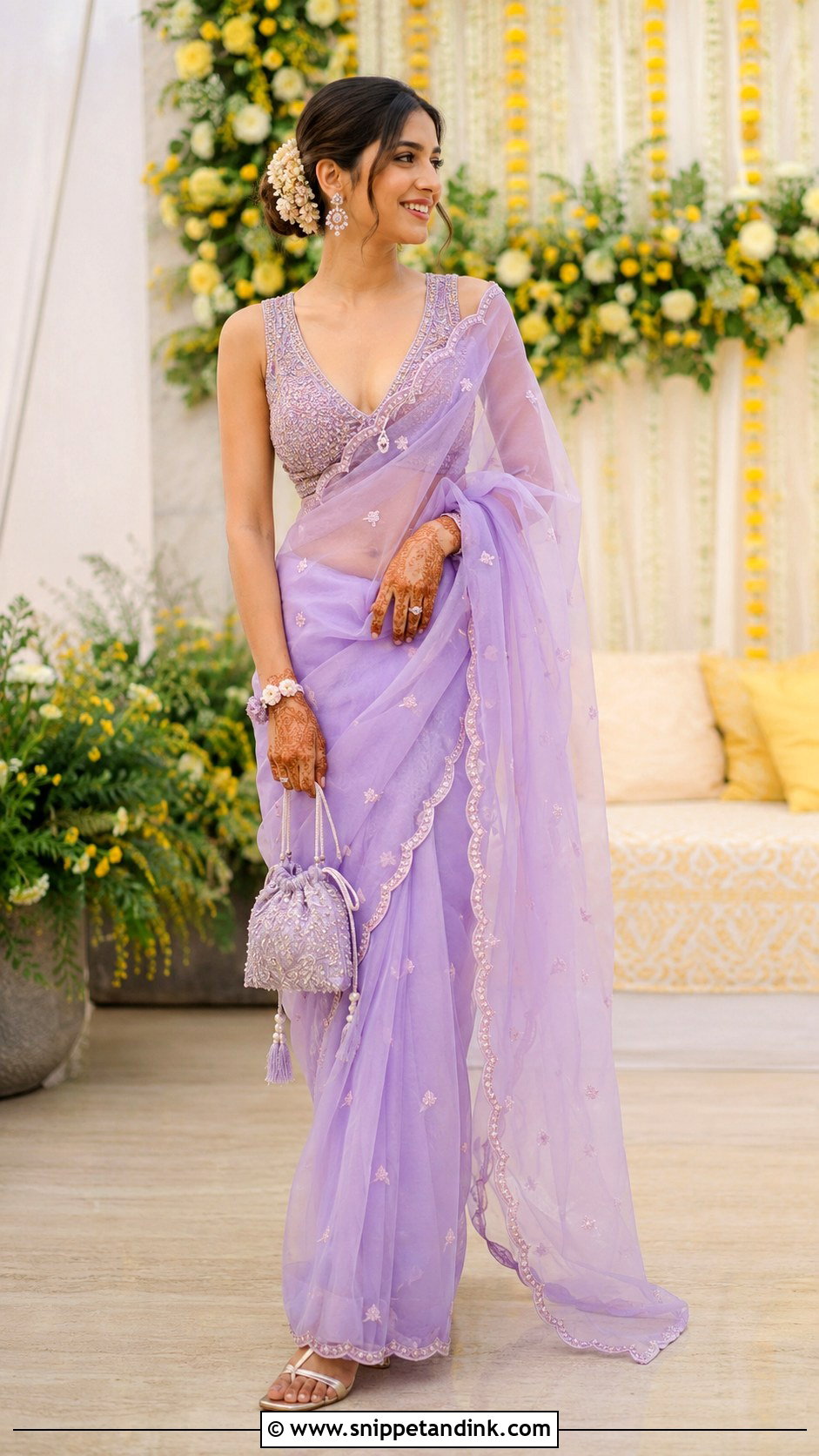
Organza gives you volume without embroidery because the weave itself is crisp and slightly sheer. That crispness has a cost. It won’t hug the body, so pleats puff out unless they’re pressed flat and pinned close at the waist. A structured blouse in ivory or pale yellow helps the drape look deliberate, and a scalloped or pearl edged border keeps it lighter than heavy sequins. One warning: silk organza can water-spot, so sponge a turmeric mark gently rather than splashing it.
11. Lavender Floral Lehenga For Haldi
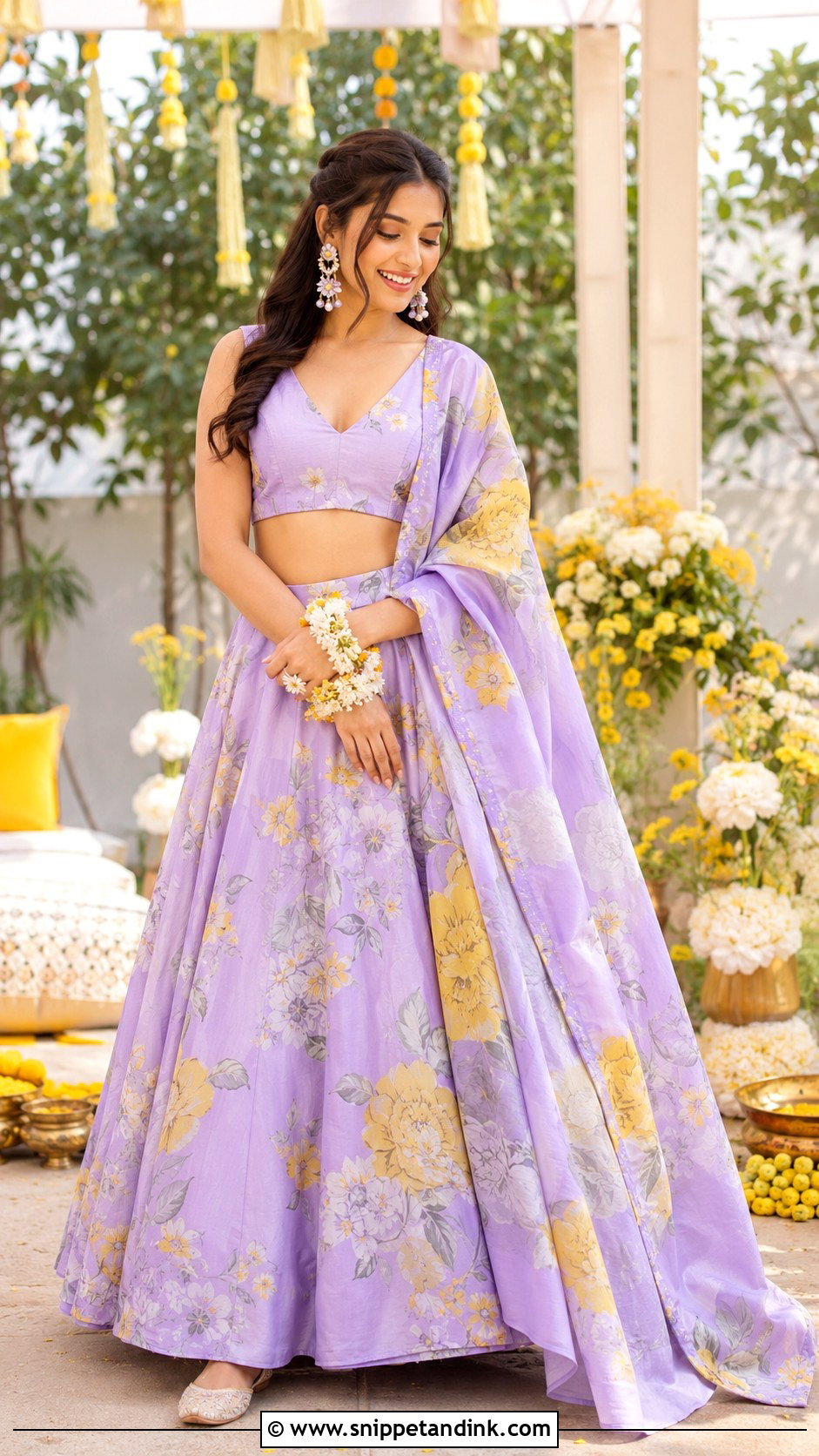
Prints belong at a garden or poolside haldi because they look at home next to real flowers. I look for a print with yellow or green already in it, so the lehenga talks to the marigolds without needing a yellow dupatta. Keep the blouse plain when the skirt is busy, since two prints together turn messy at a distance. A delicate maang tikka and floral bangles are enough jewelry. There’s a practical win too: a small floral print hides a stray turmeric smudge far better than solid lavender does.
12. Lavender Mirror Work Outfit For Haldi
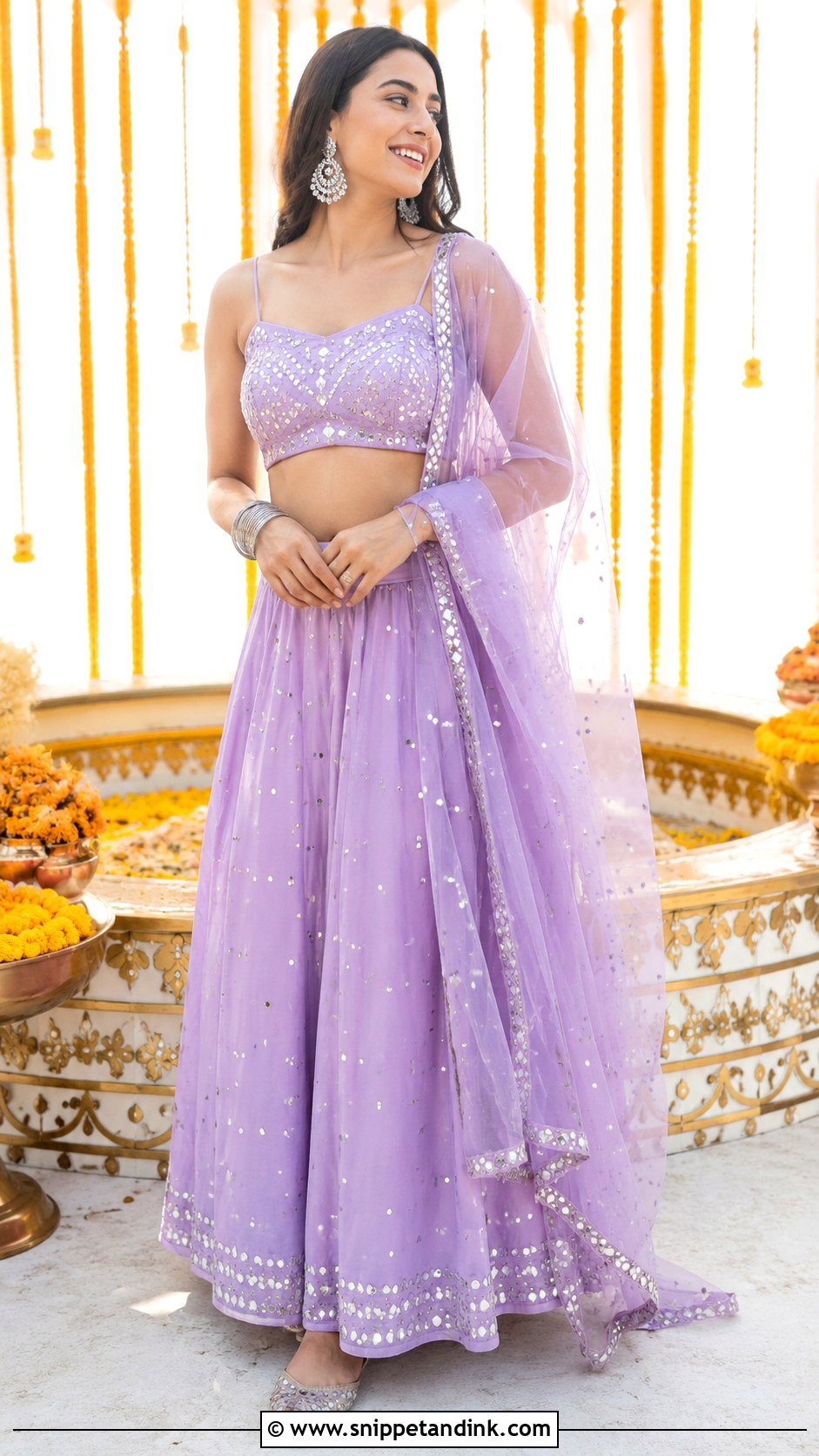
Mirrors bounce daylight, so a lavender mirror work outfit sparkles at a morning haldi in a way sequins don’t. The shape matters less than the weight. Heavy mirror work on a full skirt drags, and mirrors on the sleeves scratch the inner arm when you raise your hands, so I ask for mirrors on the yoke and borders only. Silver jewelry carries the shine on. Know before you buy that turmeric paste cakes in the stitching around each mirror, so a heavily mirrored piece is harder to clean than it looks.
13. Lavender Yellow Dupatta Haldi Outfit
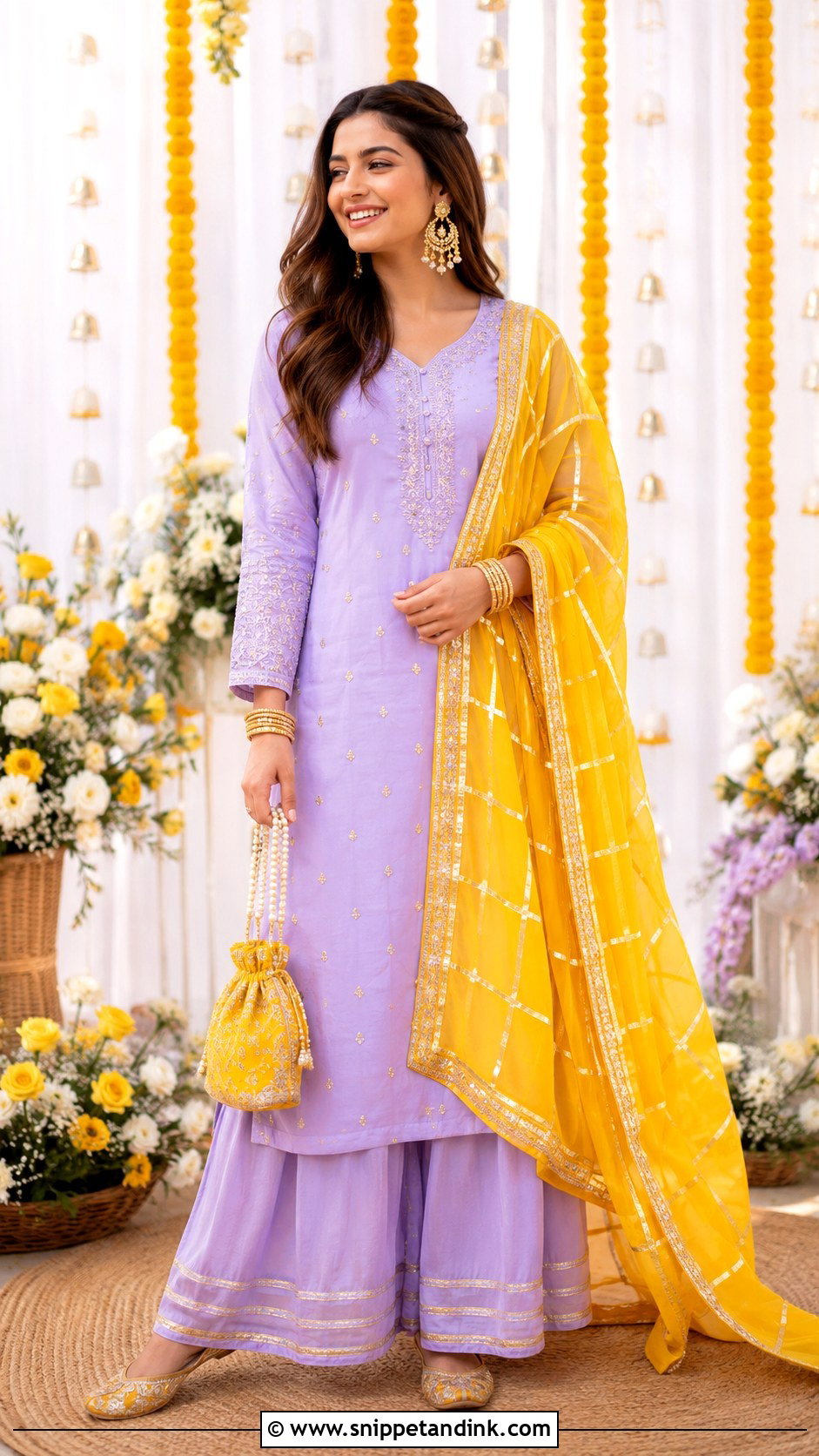
This is the pairing I suggest most often to guests who’ve been told to wear yellow and don’t want to. Lavender and marigold sit opposite each other on the color wheel, so a mustard or marigold dupatta over a lavender suit makes both colors look brighter. Keep the base outfit simple and let the dupatta carry the work with gota patti or tassels. Gold earrings and a few bangles finish it. If the hosts are strict about the yellow code, this still reads as respectful from across the courtyard.
14. Lavender Peplum Sharara For Haldi
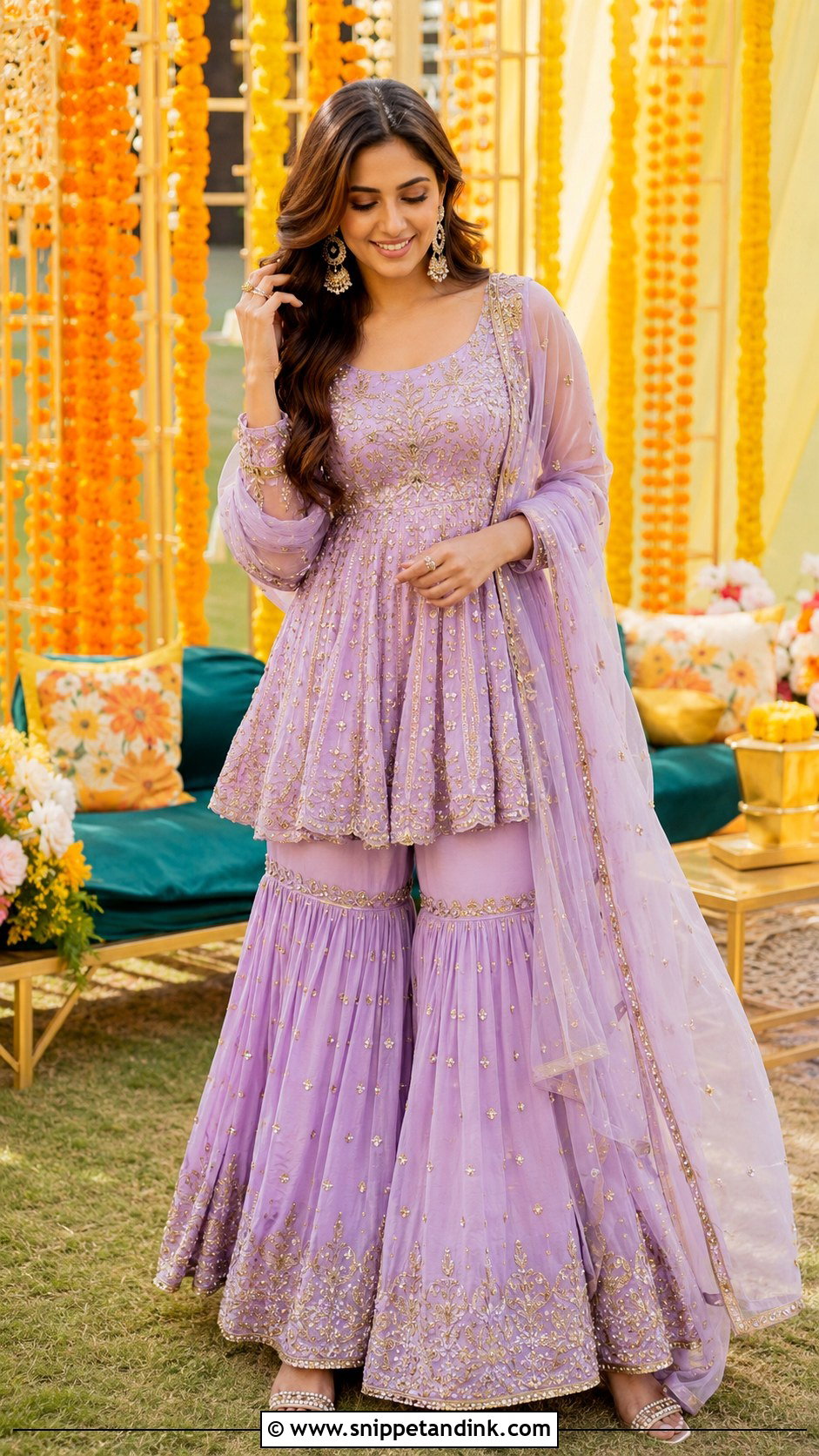
A peplum puts a waist into an outfit that’s otherwise all flare, which is why it flatters so many shapes. The seam where the peplum starts should hit your natural waist. If it sits too low it shortens the legs, so I always check it at the fitting with the sharara on. Choose thread embroidery or small gota on the peplum and you can drop the dupatta entirely. With soft waves and embellished sandals it moves from haldi to sangeet with nothing more than a change of earrings.
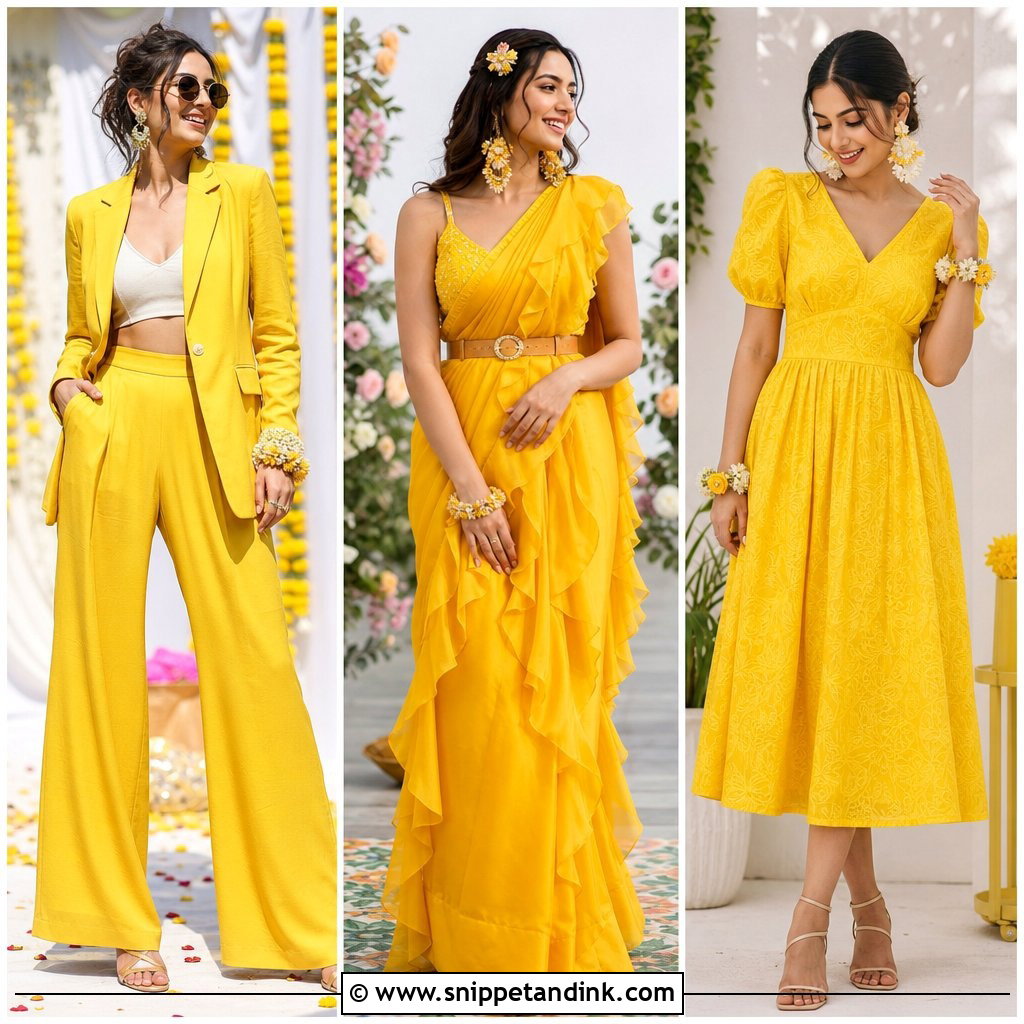
15. Lavender Cape Set For Haldi
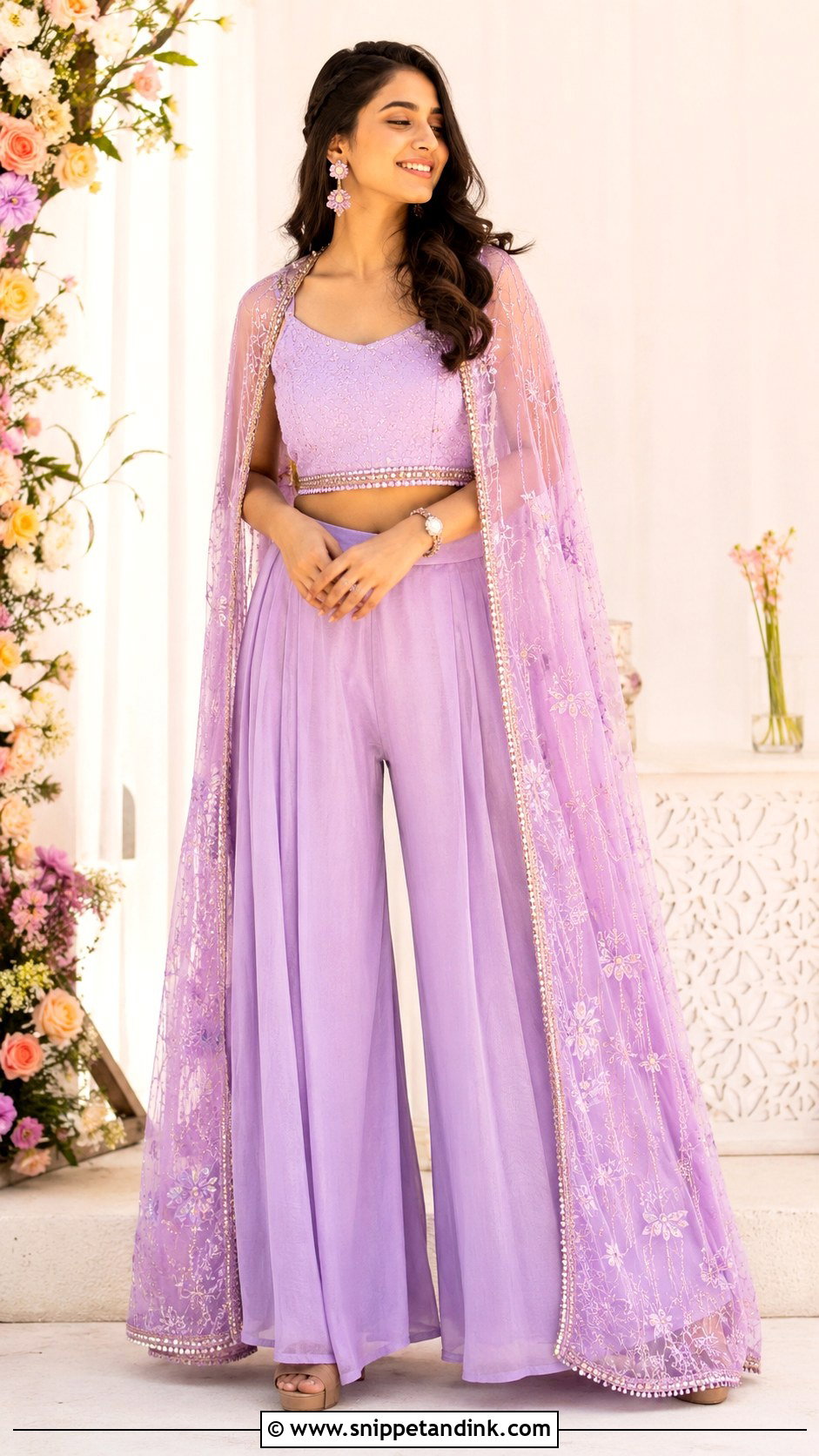
Hands free is the whole point of a cape set. With no dupatta to hold, you can hug, apply paste and dance without anything sliding off. A sheer organza cape with embroidered edges or tassels sits well over a crop top and palazzos, or over a slim skirt. Since the cape is the statement, I keep jewelry to earrings and maybe one bracelet. Watch the length if you’ll be sitting on the floor: a floor-length cape gets trodden on, and hip or knee length is far easier.
16. Lavender Dhoti Set For Haldi
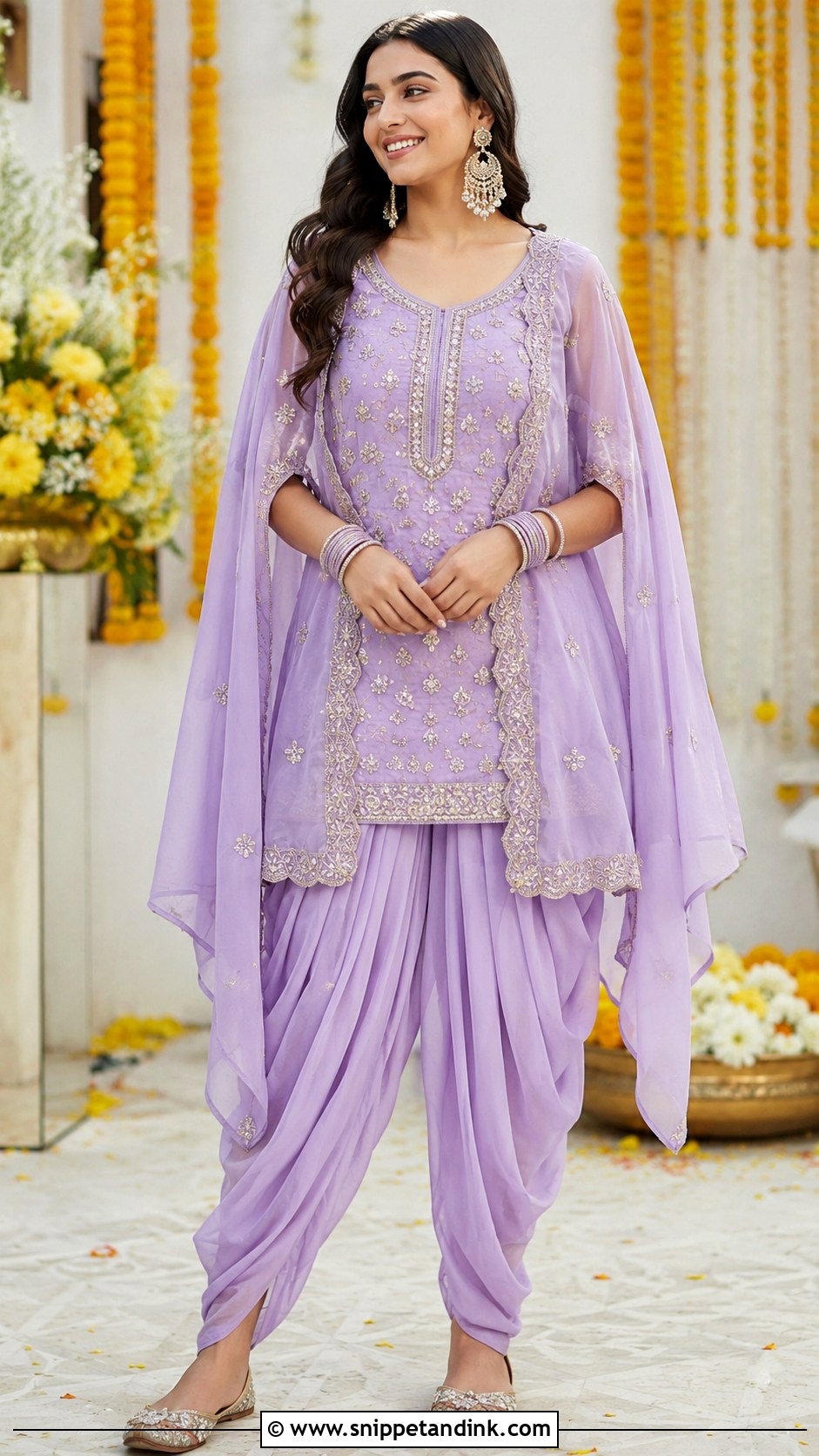
If the haldi has games and dancing planned, a lavender dhoti set handles it better than any skirt. The draped pants give an Indo-western shape with full leg freedom, and a crop top or jacket-style blouse sits well above them. I’d skip it for anyone who dislikes volume at the hip, because the drape adds width exactly there. Chandbalis give it attitude and flats keep it practical. It’s a good way for the bride’s friends to look different from the rows of lehengas.
17. Lavender Chikankari Kurta For Haldi
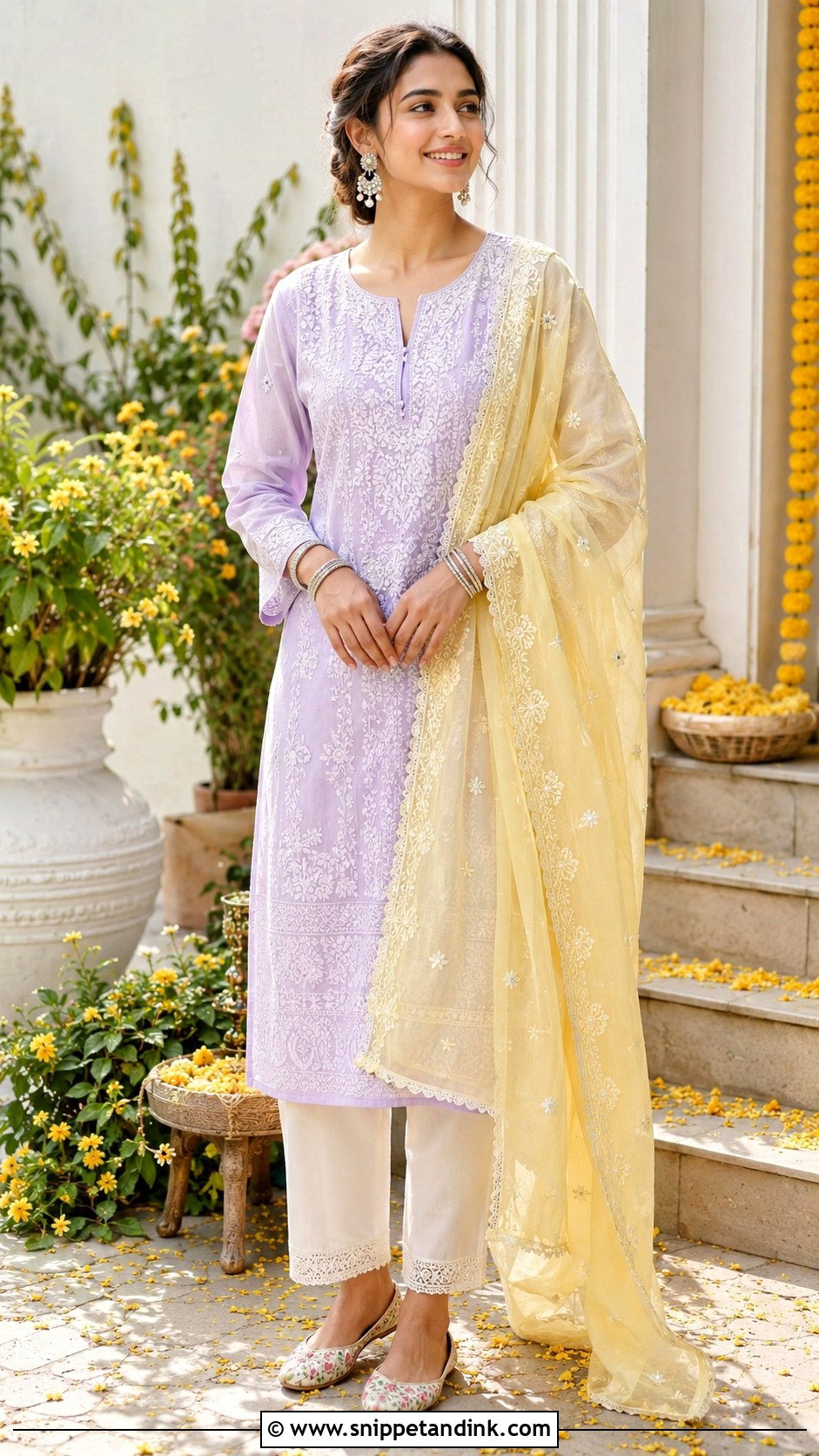
Chikankari is hand embroidery worked in white or tonal thread on light cotton or georgette, and its texture is quieter than mirrors or gota. That makes it a strong choice for guests who want to dress up without competing with the bride. Pair the kurta with ivory or lavender pants. Genuine chikankari is delicate, so a turmeric mark needs a cold rinse and patience, never scrubbing across the threads. A yellow dupatta adds the haldi link if you want one, and pearl earrings with fresh flowers in the hair are all it needs.
18. Lavender Jacket Lehenga For Haldi
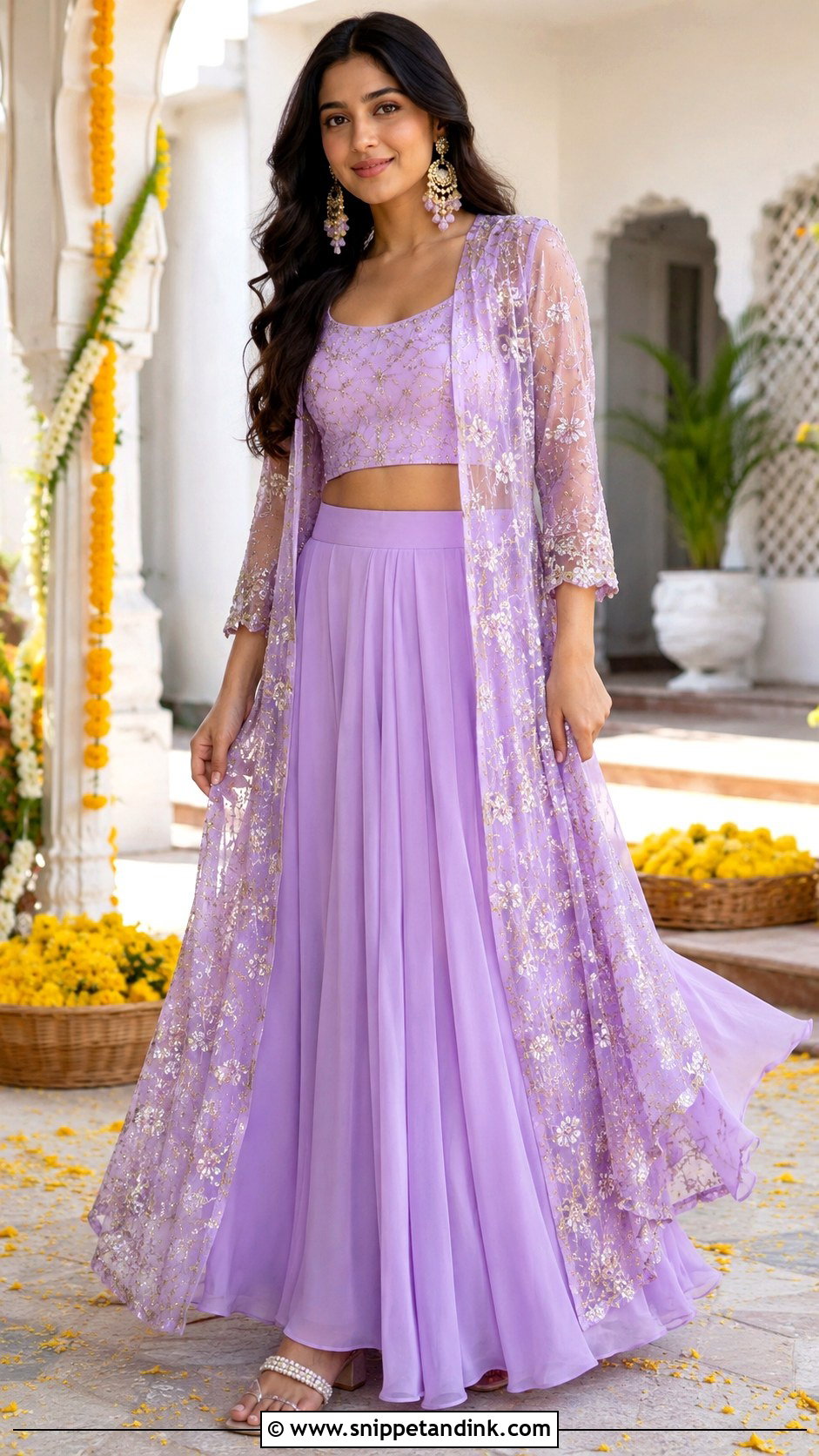
Swapping the dupatta for an embroidered jacket solves the most common haldi complaint I hear: re-pinning a dupatta that keeps slipping. The jacket gives coverage and structure, and it stays put through every hug. Layer a sheer or cropped jacket with mirror or thread edging over a light skirt and matching blouse. A short jacket suits petite frames; a long one can swallow the lehenga. Statement earrings and comfortable footwear are enough. It’s one of the few lehenga options I’m happy to give a bride for a very active ceremony.
19. Lavender Silk Suit For Haldi
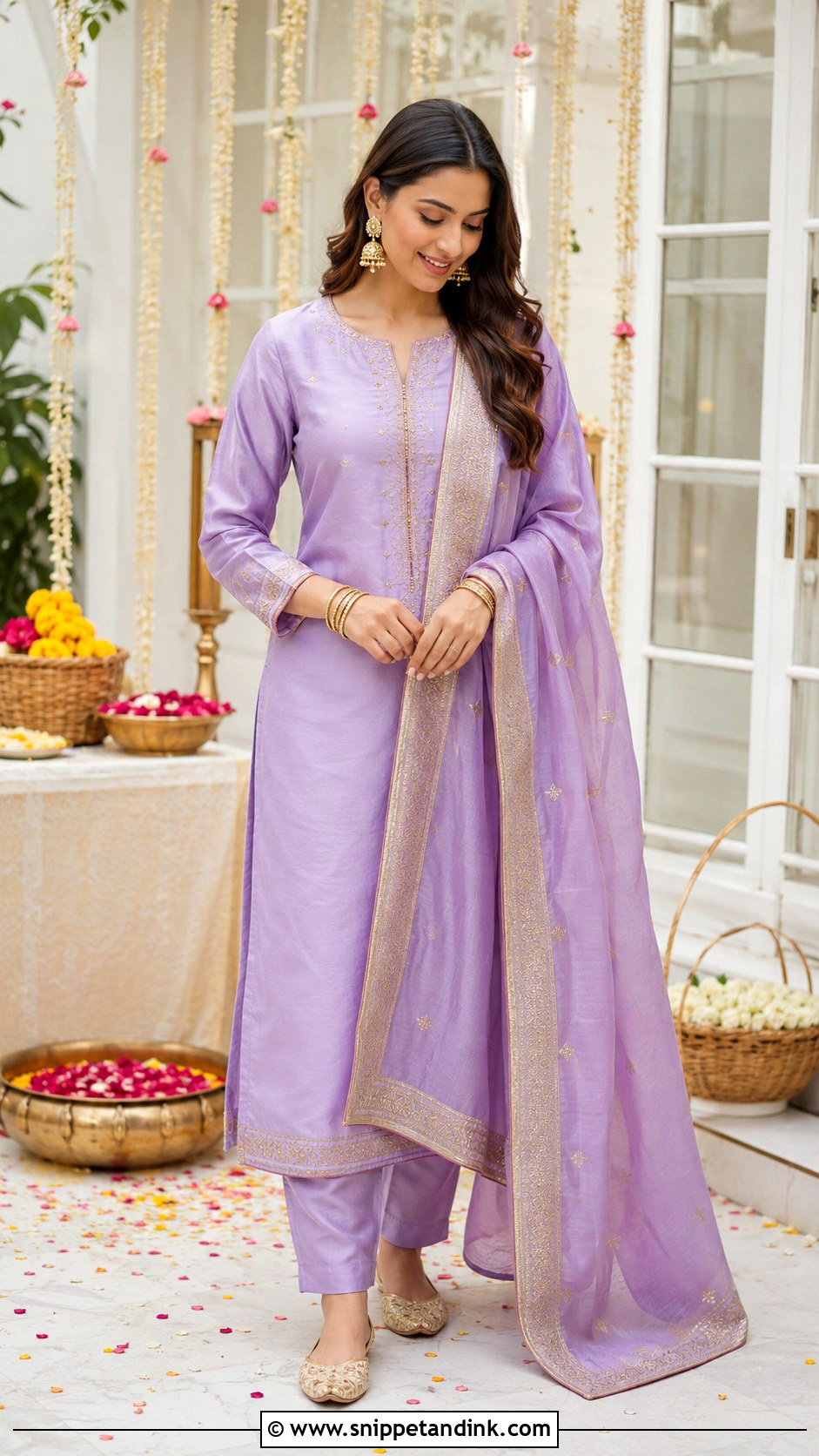
Silk gives lavender depth. The sheen shifts lighter and darker as you move, so even a plain suit looks dressed. Silk blends and chanderi silk keep it breathable, and a dupatta with zari or a woven border adds the traditional touch. Gold jewelry warms lavender silk, which helps on warm skin tones. Be aware that pure silk and turmeric don’t get along. A yellow mark on silk usually means a trip to the dry cleaner, so I see this as an outfit for elders and guests rather than for whoever sits in the center.
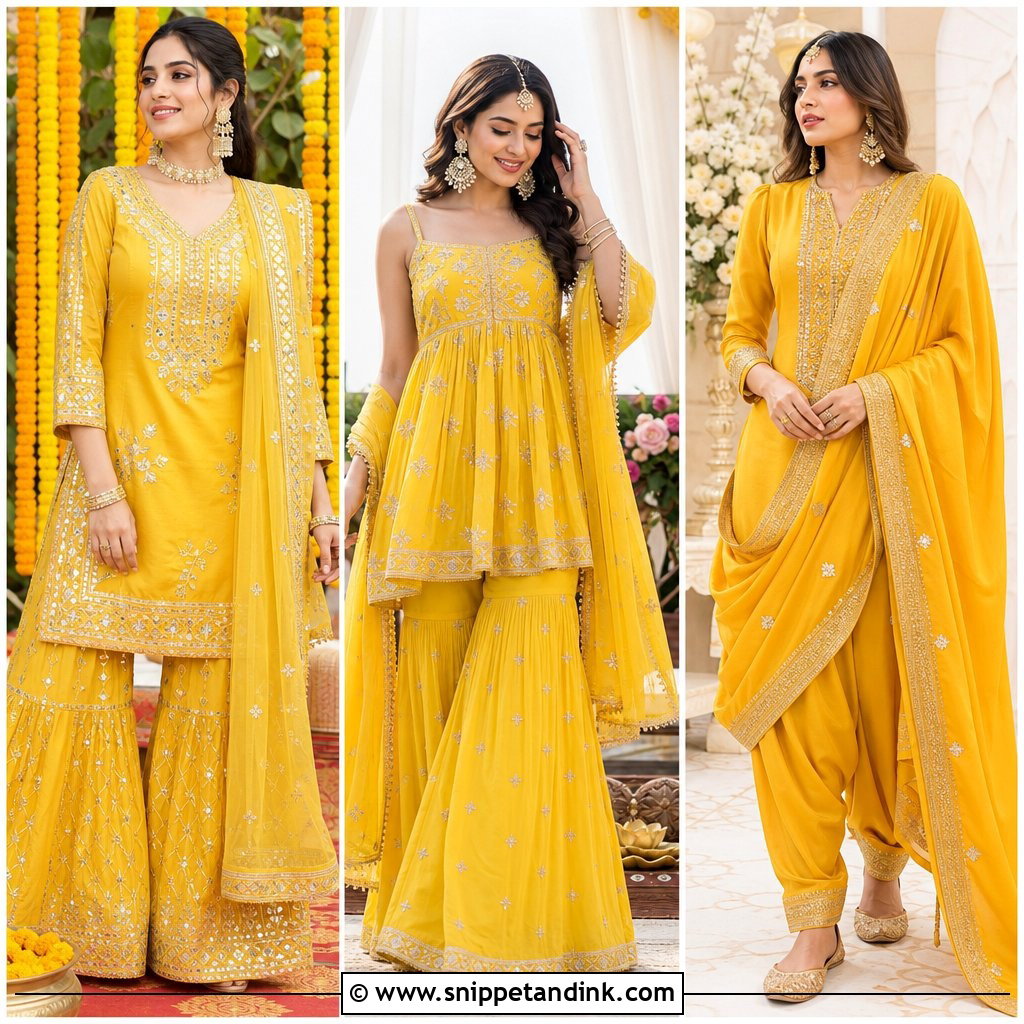

20. Lavender Printed Kurta Set For Haldi
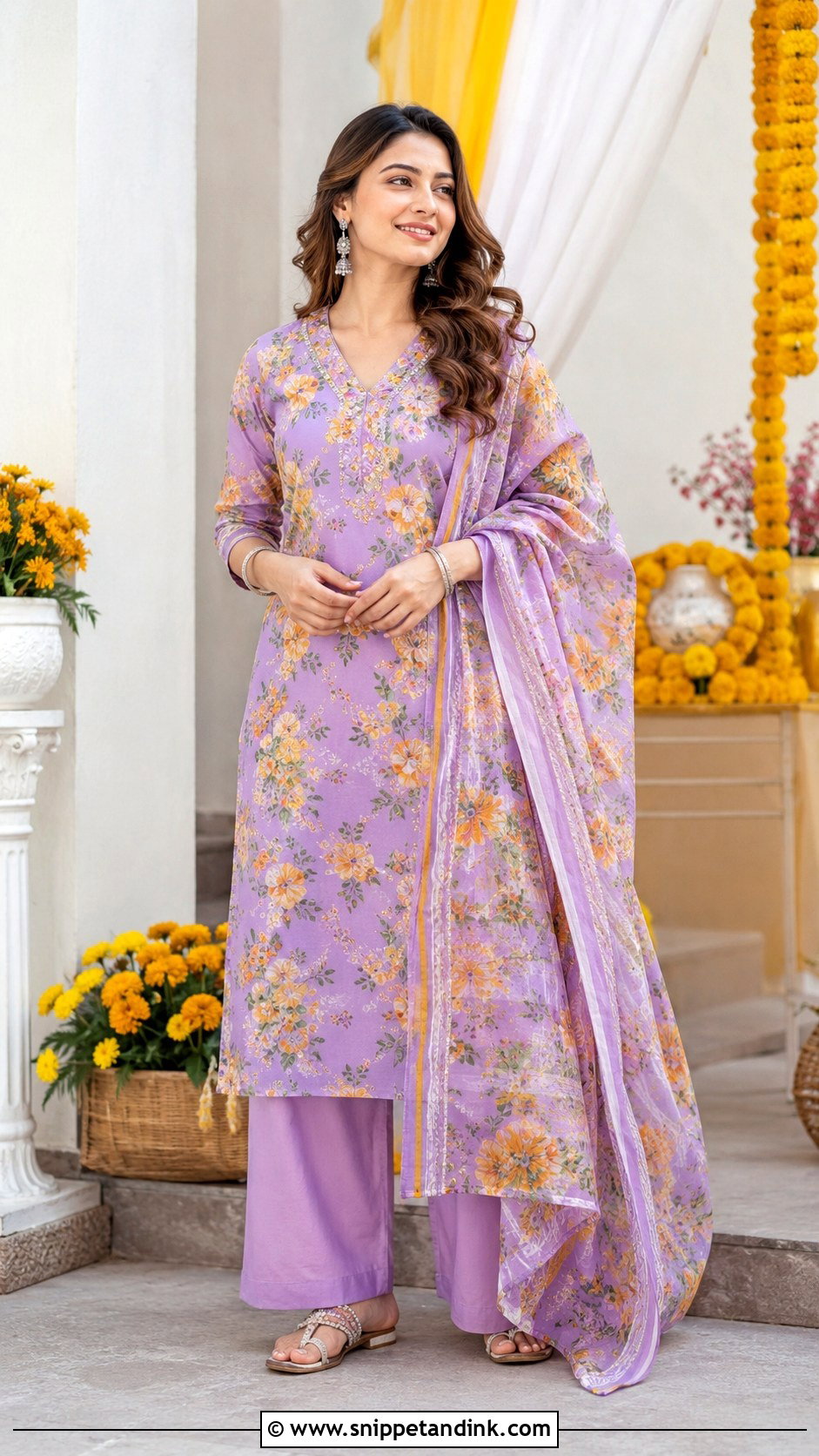
Block prints, leheriya stripes and small florals bring cheer without embellishment that can snag. Look for motifs that already include yellow or white, and pair the kurta with straight pants, palazzos or a matching skirt. A printed dupatta finishes it, and flats keep it practical on lawns. The honest benefit of a printed cotton set is that it’s the easiest thing here to wash after haldi, and you’ll wear it again on ordinary summer days.
21. Lavender Ruffle Saree For Haldi
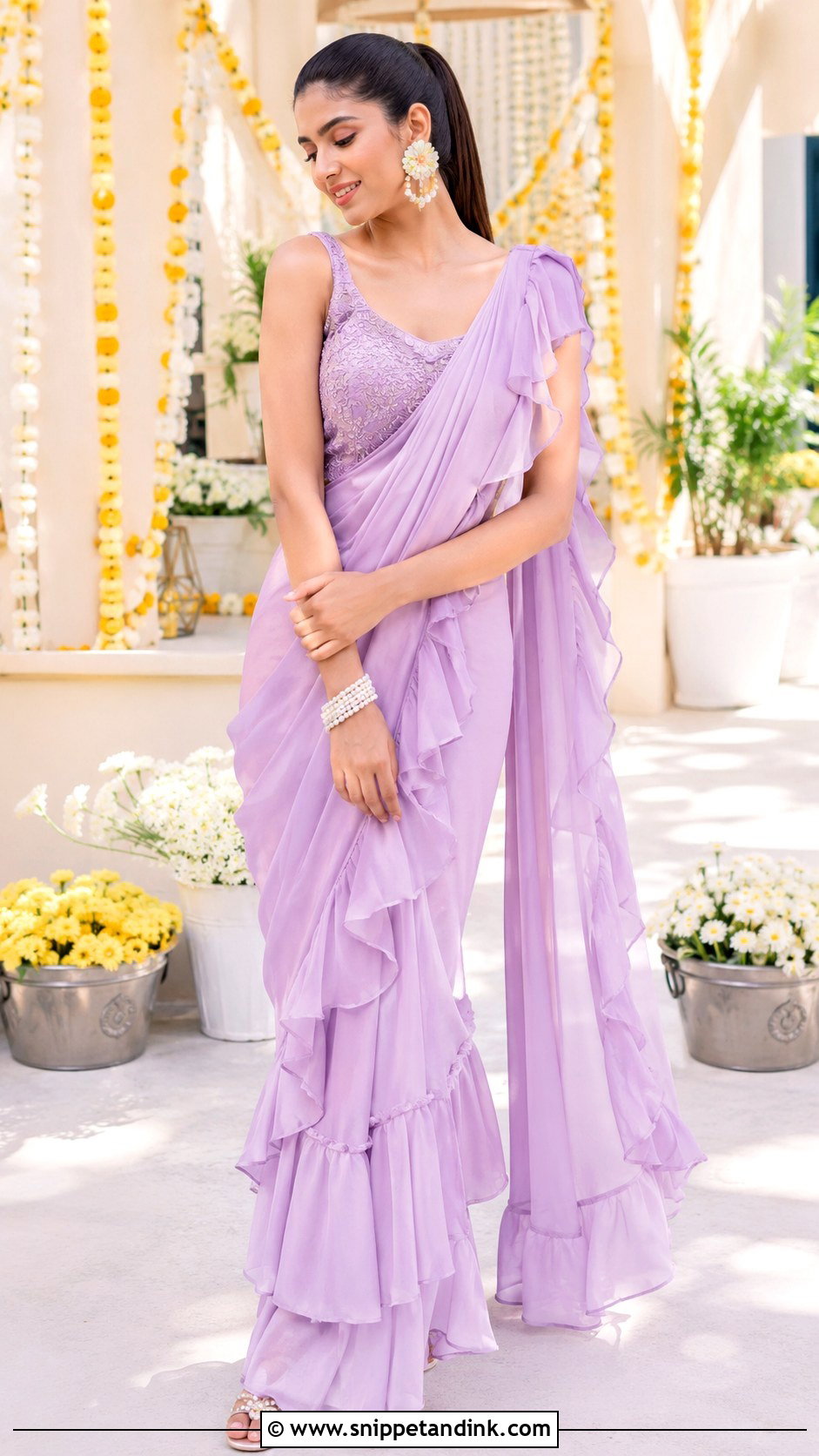
Ruffles add movement at the hem and pallu, so a lavender ruffle saree looks lively with no embroidery at all. I almost always recommend the pre-draped version for haldi. It hooks or zips at the waist, so nothing unravels when someone grabs you for a photo. Pair it with a simple or mirror work blouse and playful earrings like pearl hoops. A sleek ponytail balances the volume of the ruffles better than loose curls do.
22. Lavender Short Kurti With Skirt For Haldi
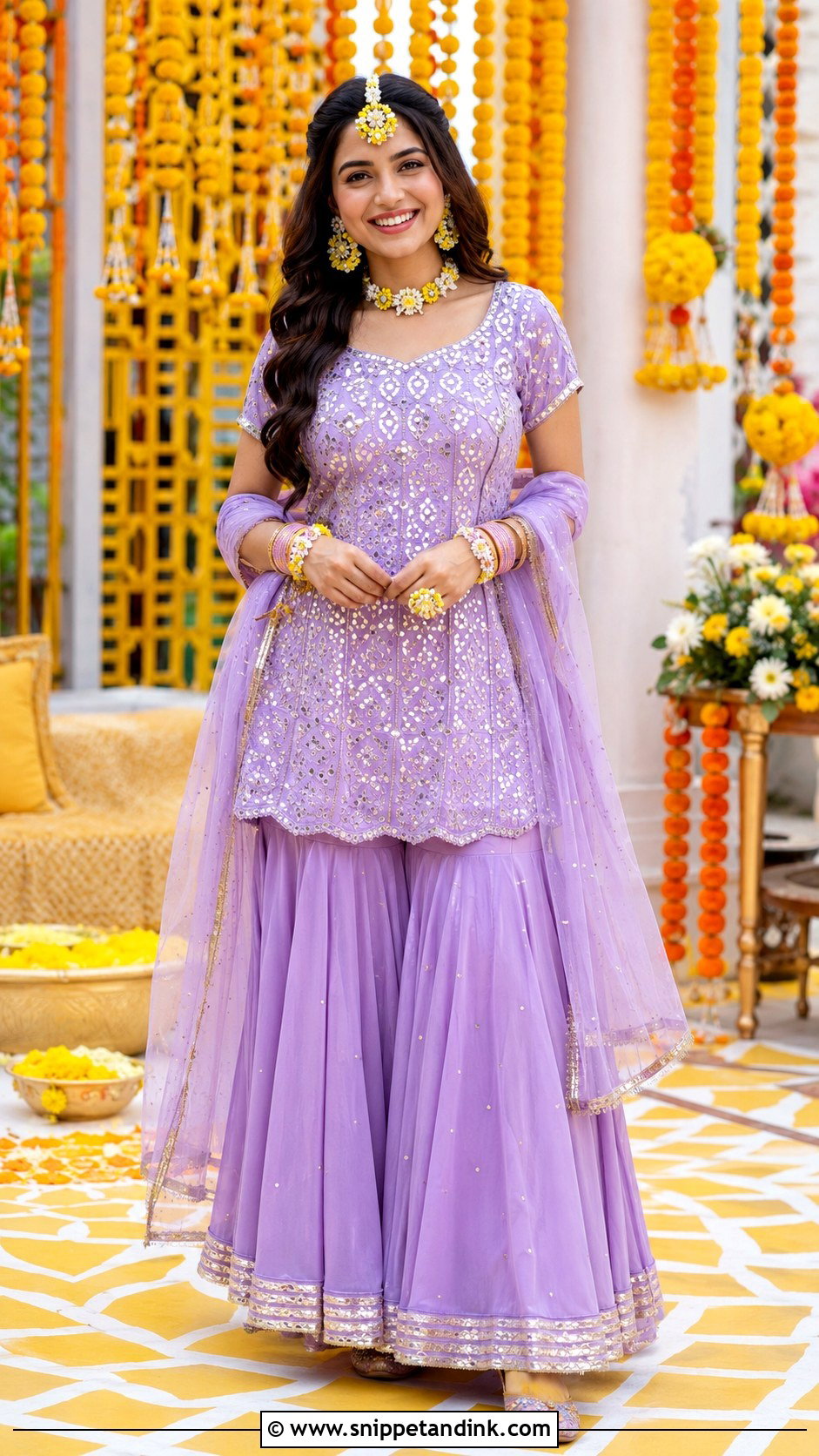
Easier than a lehenga, dressier than a basic kurta set: that’s the gap this outfit fills. A flared skirt with a gota border or light print does the festive work, and the short kurti covers the waist. Make sure the kurti hem lands at or just below the skirt waistband, because a gap there looks accidental. Add a light dupatta for a more traditional feel, then juttis and flower jewelry.
23. Lavender Halter Blouse Lehenga For Haldi
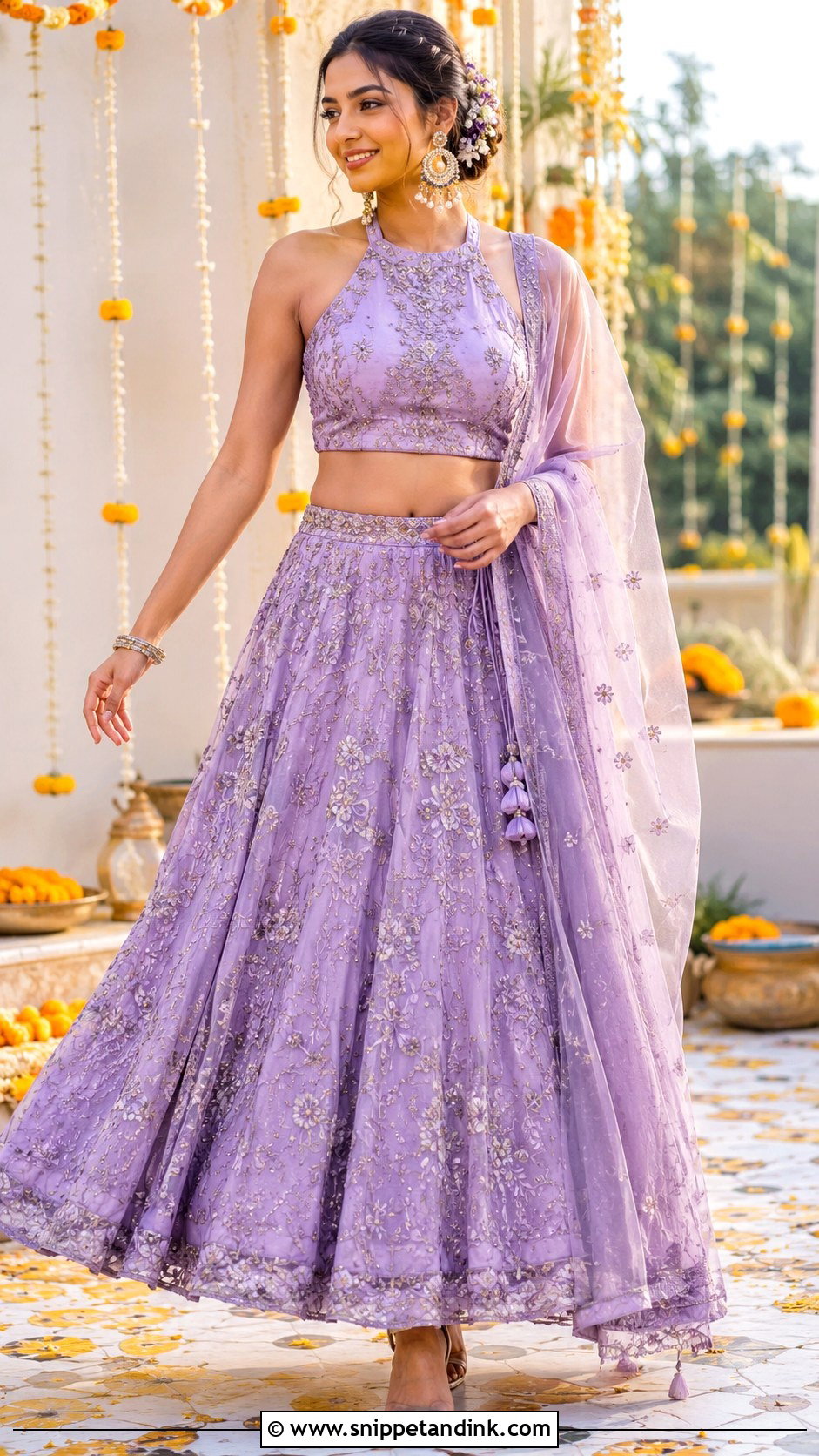
A halter neckline instantly makes a lehenga look current, and at a daytime haldi it keeps the shoulders cool. Since the blouse carries the statement, keep the skirt light with subtle mirrors or a soft print, and drape the dupatta over one shoulder or like a cape. A halter needs real support at the back, so I have the tailor add a hook at the back strap and test it in a squat before it’s finished. Pair it with statement earrings, skip the necklace, and go for a sleek bun with floral accents.
24. Lavender White Palazzo Outfit For Haldi
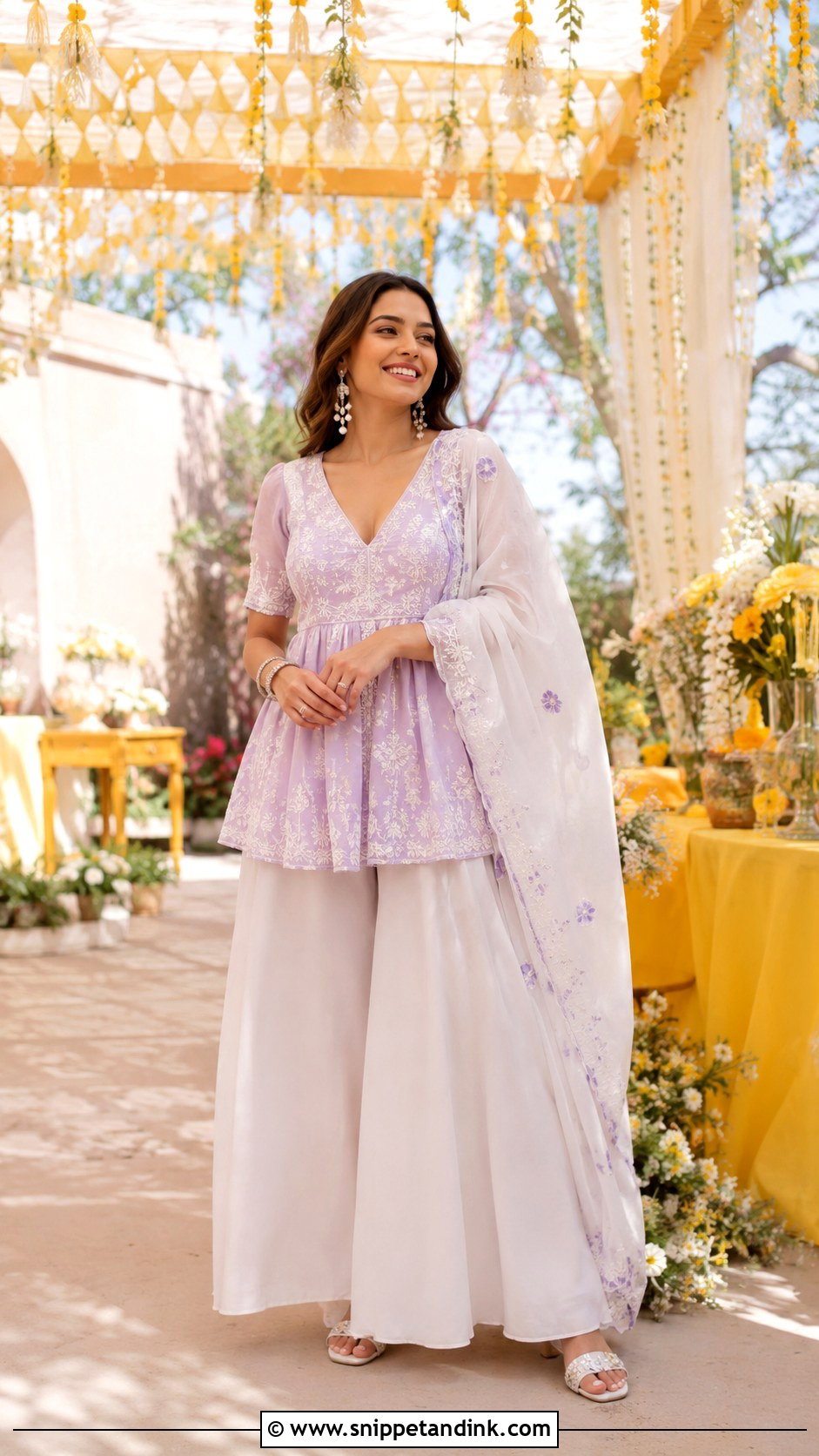
White palazzos under a lavender kurta look airy and cool in sunshine, and a white dupatta with lavender embroidery ties the two together. Guests get a pastel look without stepping into bridal territory. But white is the most unforgiving color you can bring to a haldi, and turmeric on white cotton is the hardest stain on this list to lift completely. I only suggest this to guests who’ll be watching rather than applying. Pearls and white sandals finish it.
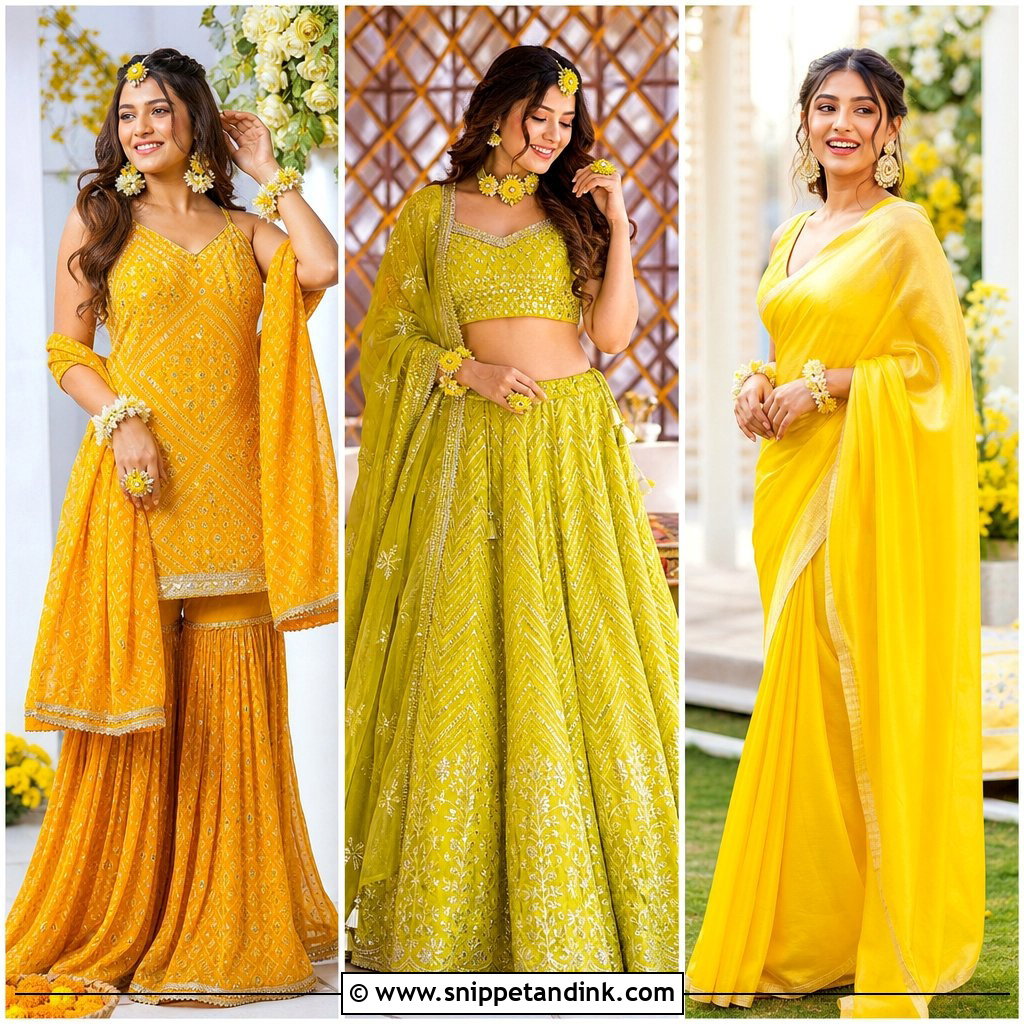
25. Lavender Bride Haldi Outfit
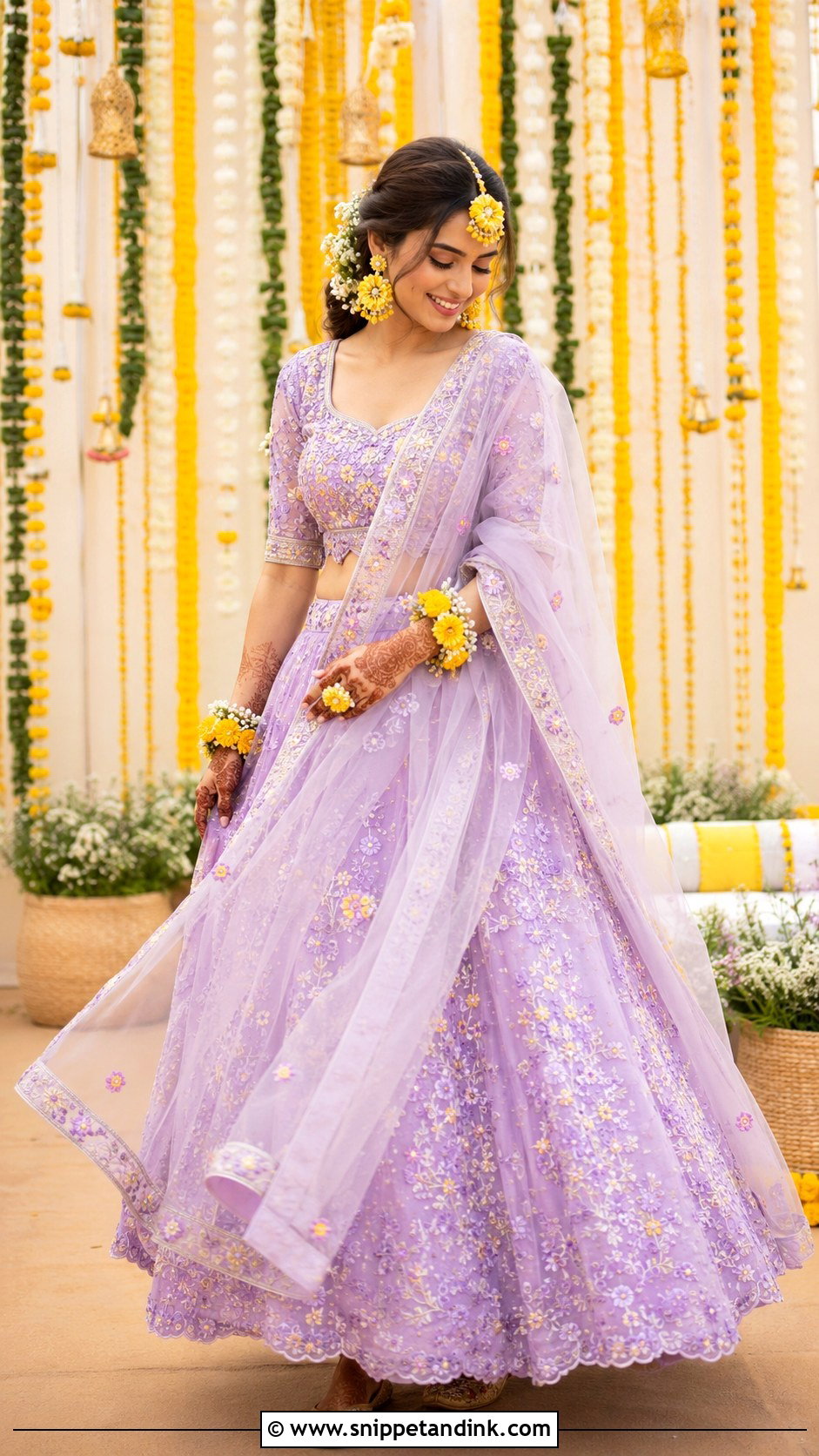
As the bride, you’re the one who’ll be covered head to toe, so your outfit has a different job from everyone else’s. Choose the silhouette by how the ritual runs in your family. If you’ll sit on the floor for a long time, an anarkali or sharara is kinder than a full lehenga. Keep the fabric washable, or accept that the outfit may not come back the same color. I like marigold jewelry and a yellow dupatta on the bride, since both can take the paste, and I’d leave heavy zari and anything heirloom at home. Ask one question at the fitting: can I sit, laugh and be hugged in this?
Turmeric on Lavender Fabric and How to Lift It
Yellow on purple is the worst stain pairing there is, because the two mix into a brownish mark rather than a pale tint. Turmeric’s pigment also reacts to alkali. Many ordinary detergents and soaps are alkaline, and the stain can flash reddish-brown the moment they touch it. That shift is normal and usually rinses back toward yellow, but it frightens people into scrubbing, which only spreads it.
This is what I tell every client before the ceremony starts:
- Lift wet paste off with the edge of a spoon or a card. Wiping with a tissue pushes it deeper into the weave.
- Rinse from the back of the fabric with cold water as soon as you’ve changed. Hot water helps the stain set.
- On cotton and cotton silk, dab in a little liquid dish soap and let it sit before rinsing. Leave silk, organza, zari and chikankari alone and take them to a dry cleaner, telling them it’s turmeric.
- Dry washable pieces outdoors. Sunlight breaks the yellow pigment down and faint marks often fade within a day or two, but turn lavender inside out after the first few hours so the dye itself doesn’t fade.
- Never use chlorine bleach on colored fabric, however tempting.
Dressing a Whole Family in One Pastel
When the bride’s side agrees on lavender, the photos can turn into one flat block of purple. I give the bride the lightest or most embellished version so she stands out, put sisters in one silhouette with different necklines, and let mothers go a shade deeper in silk. Guests can bring in white or yellow. Ask everyone to send a daylight photo of their outfit a week before; it’s the easiest way to catch two people arriving in an identical sharara.
A Pastel Palette That Still Belongs at Haldi
Lavender gives haldi a softer palette without ignoring the yellow at its heart. Start from how active the ceremony will be and how much paste you’ll get, then pick the shape: a cape or jacket for freedom, printed cotton for easy washing, silk or organza only if you’ll be watching rather than sitting in the middle. Let the yellow come in through flowers, a dupatta or bangles, and the outfit will look like it belongs there.
You'll Like These Ideas:









Leave a Reply