
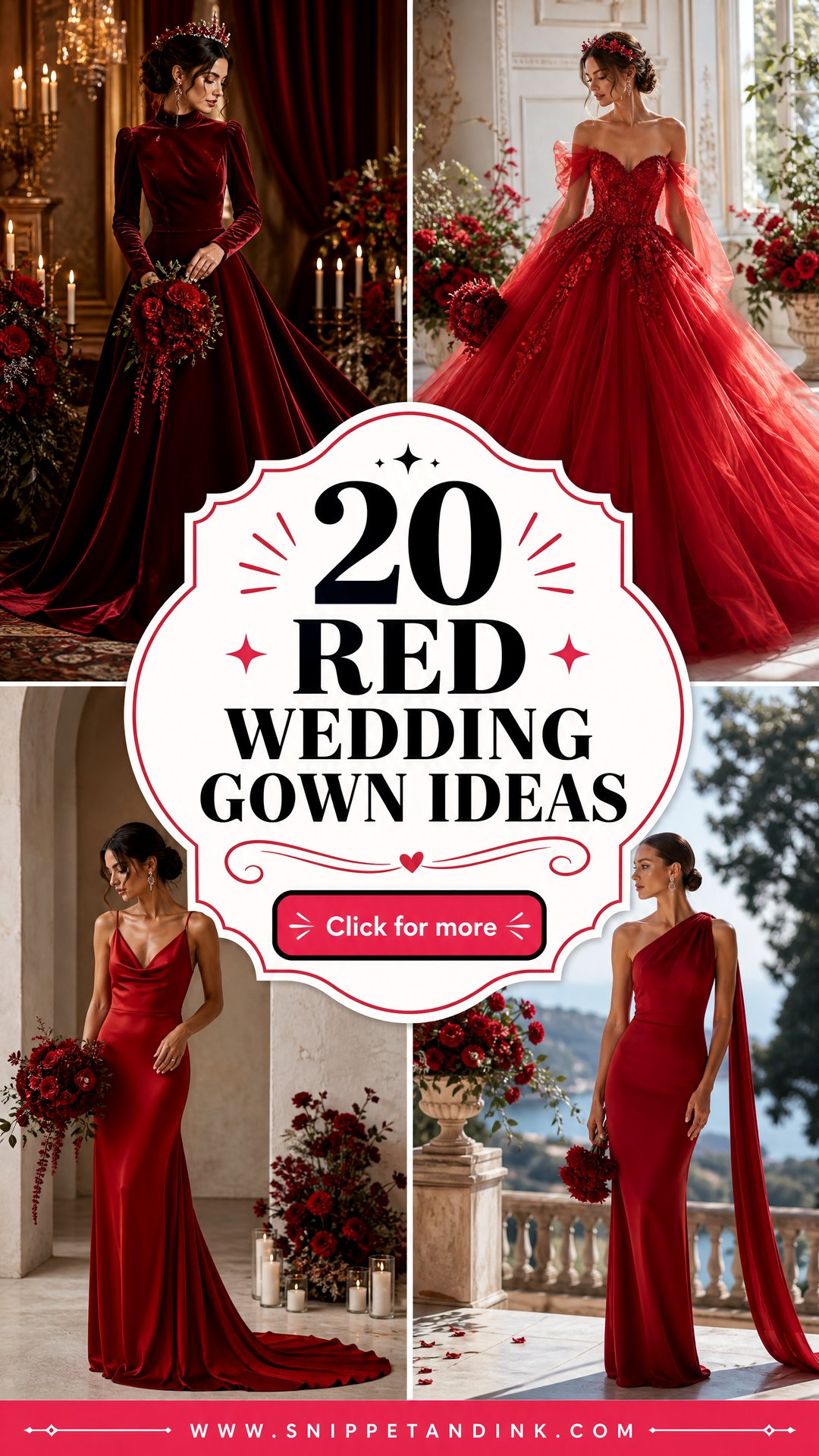
Most brides who ask me about a red bridal look have already decided on the colour. What they haven’t worked out is how much the fabric changes it. The same dye looks glossy and bright on satin, flat and grown-up on crepe, softer and pinker in tulle, and almost black in the folds of velvet. So I start with fabric, then shape, then everything you’ll wear with it. The twenty gowns below run from a crimson ball gown and a fitted burgundy mermaid to red-and-gold cultural dress, modest cuts and a beaded reception change, each with the shoes, jewelry, veil and fitting checks I’d give a bride trying it on.
Red Gowns Often Take Longer to Order Than Ivory Ones
Many bridal designers keep red as a special-order colour rather than a stock one, and that changes your calendar. Ivory gowns are cut from fabric the maker uses constantly; a red version may need fabric dyed or sourced for your order. Production times vary a lot between designers, so ask for the quoted wait in writing and add the alteration period on top, which is usually two or three fittings spread over several weeks.
The other thing I warn brides about is dye lots. The shop sample may have been made from a different batch of fabric than your gown, and reds drift noticeably from batch to batch. Ask whether the maker can send a cutting from your actual fabric before the dress is sewn. Once you have it, that cutting becomes your reference for shoes, lipstick, ribbon and the bridesmaids, so keep it in your bag.
- Confirm the exact colour name on the order form, not only a description like deep red.
- Ask whether lining, lace and tulle are dyed to match the main fabric or bought separately.
- If you plan to wear red shoes, wait for the fabric cutting before you buy them.
1. Red Satin Ball Gown
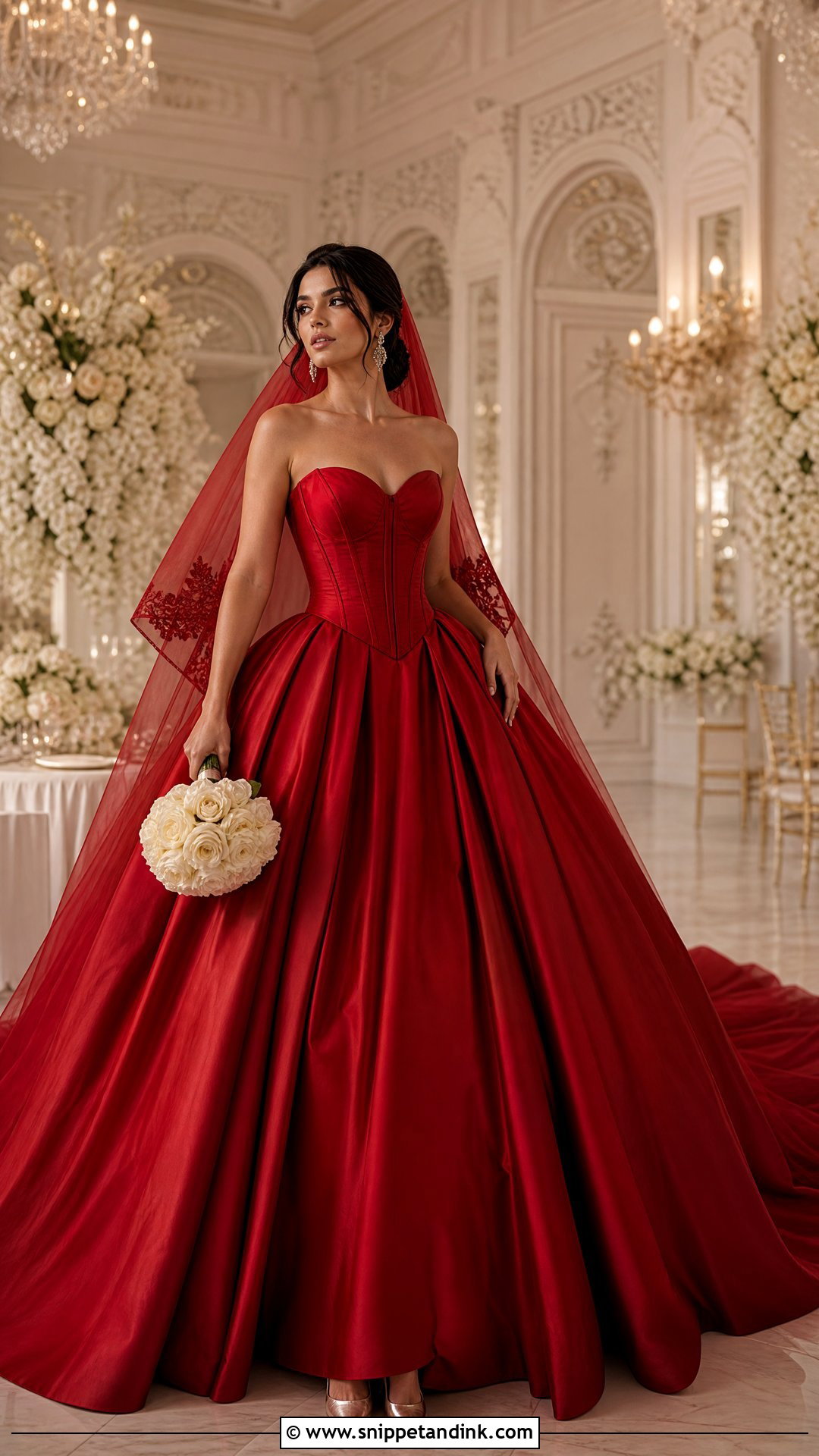
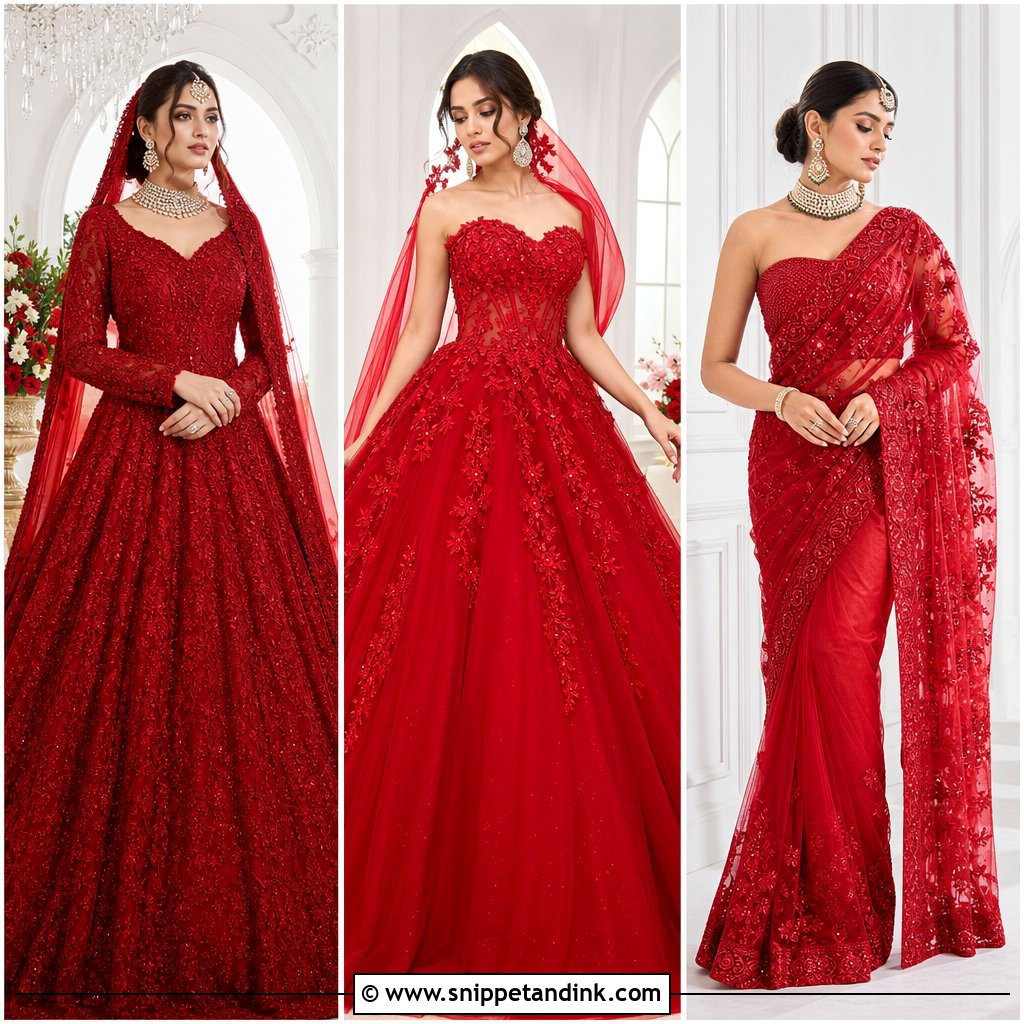
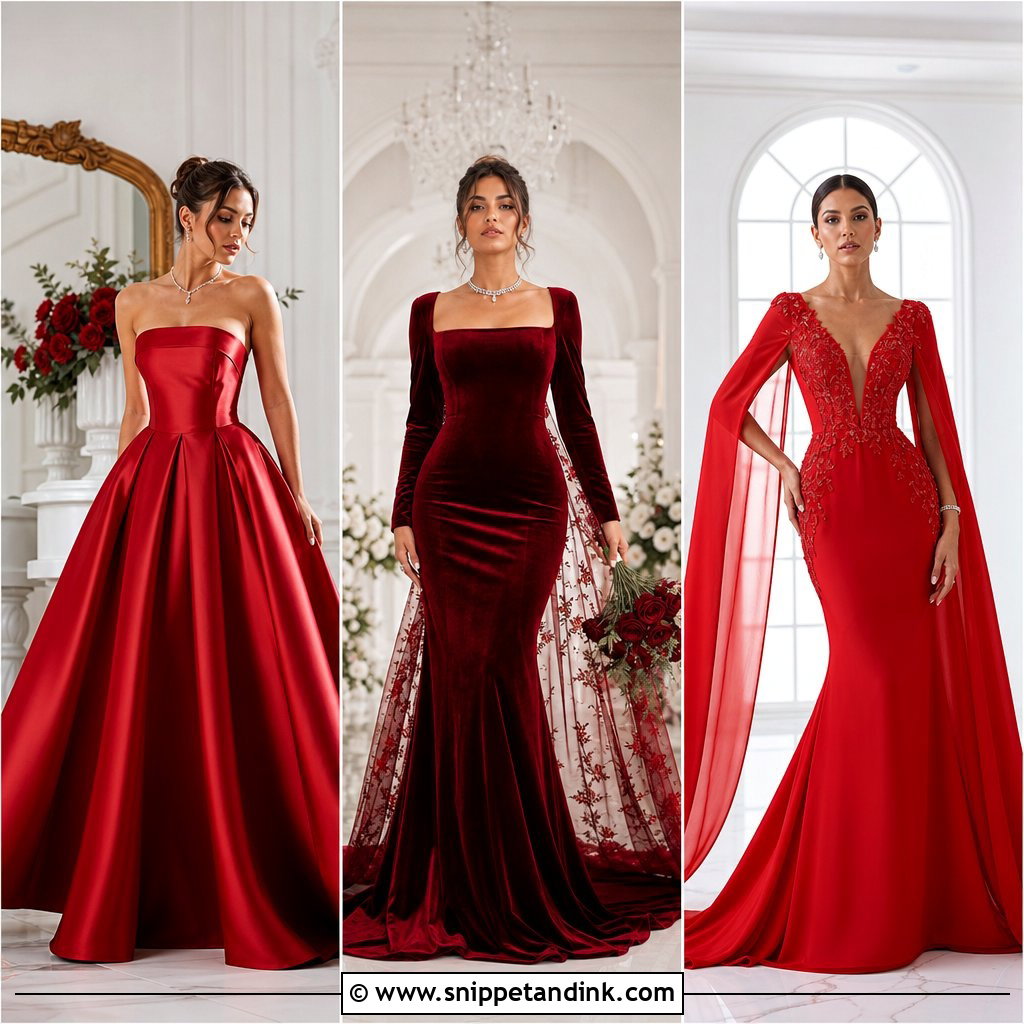
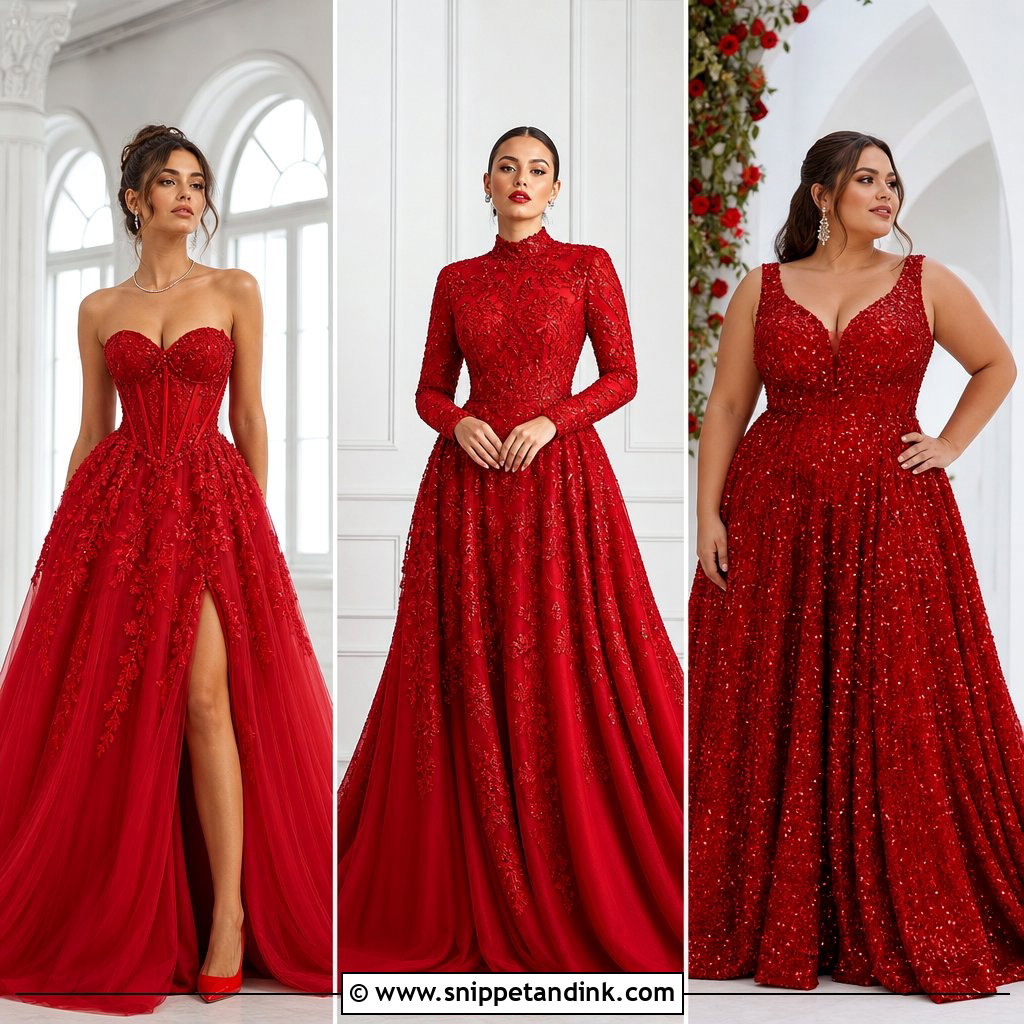
Satin ball gowns ask for a big room, and they repay it. A structured corset bodice and a full pleated skirt hold their shape all day, and crimson or ruby satin reflects light so well that it needs no embellishment. I’d add pointed metallic heels, a fine crystal necklace and small drops, with a sleek bun so the neckline stays clear. A long red or sheer cathedral veil stretches the silhouette further. Ivory or pale blush flowers soften the colour in your hands. Satin creases in the car and wherever you sit, so ask your bridal salon how they’ll pack it, who steams it on the morning, and to show your helper the bustle before the day.
2. Red Mermaid Wedding Gown
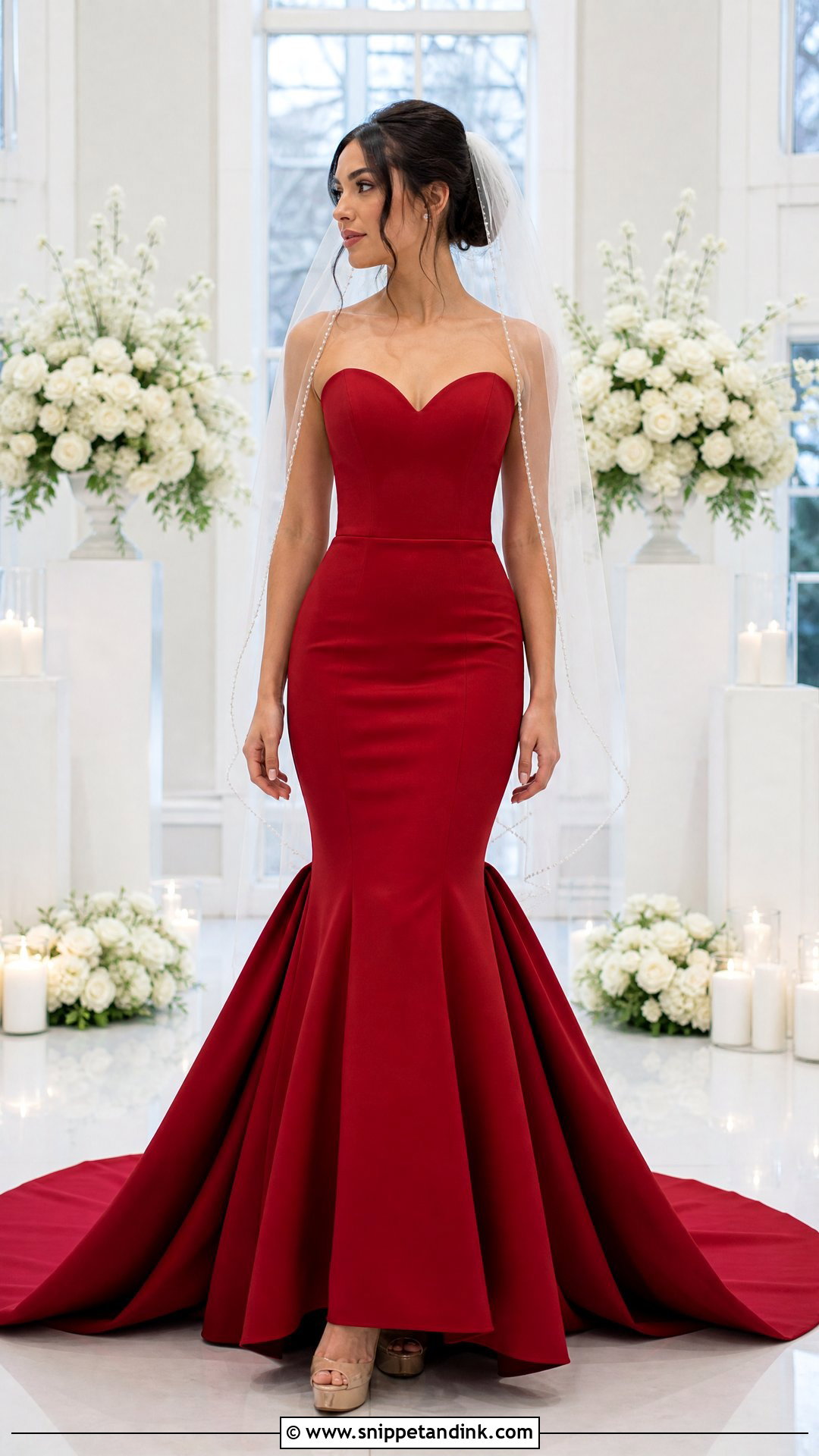
Mermaid gowns are fitted through the bodice, waist and hips and only release near the knee, which means the knee is where every fitting problem shows up. I watch brides walk the length of the shop: if the steps shorten into a shuffle, the flare starts too low. Stretch crepe or a supportive satin moves better than a rigid fabric here. A sweetheart or softly curved neckline balances the close fit, and red or neutral platforms lengthen the line under the skirt. Keep accessories small, crystal studs, a slim bracelet and a fingertip veil. Sit, walk and dance in it before you sign off, and consider a detachable train for the ceremony that comes off for the reception.
3. Burgundy Lace A-Line Wedding Gown
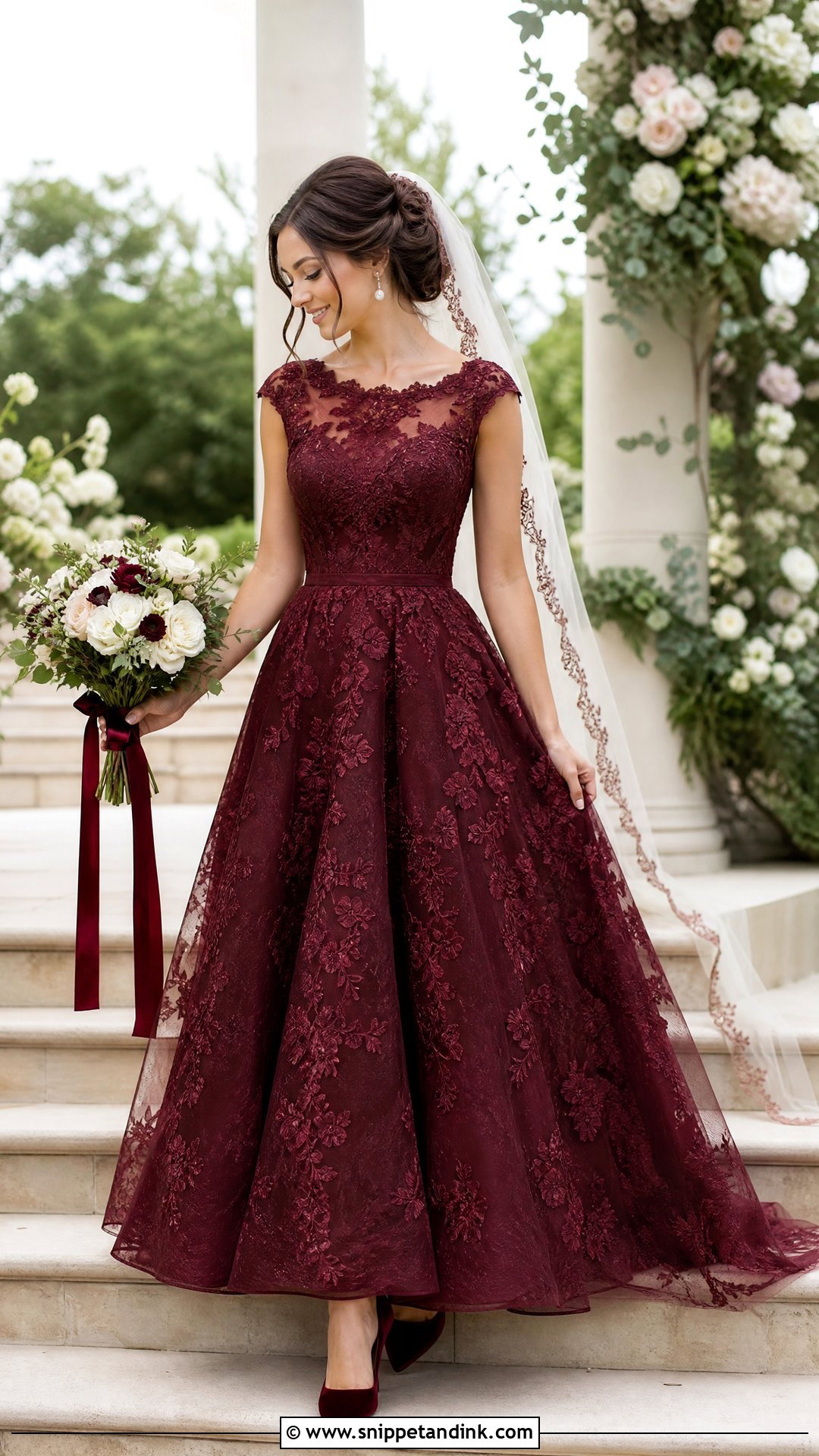
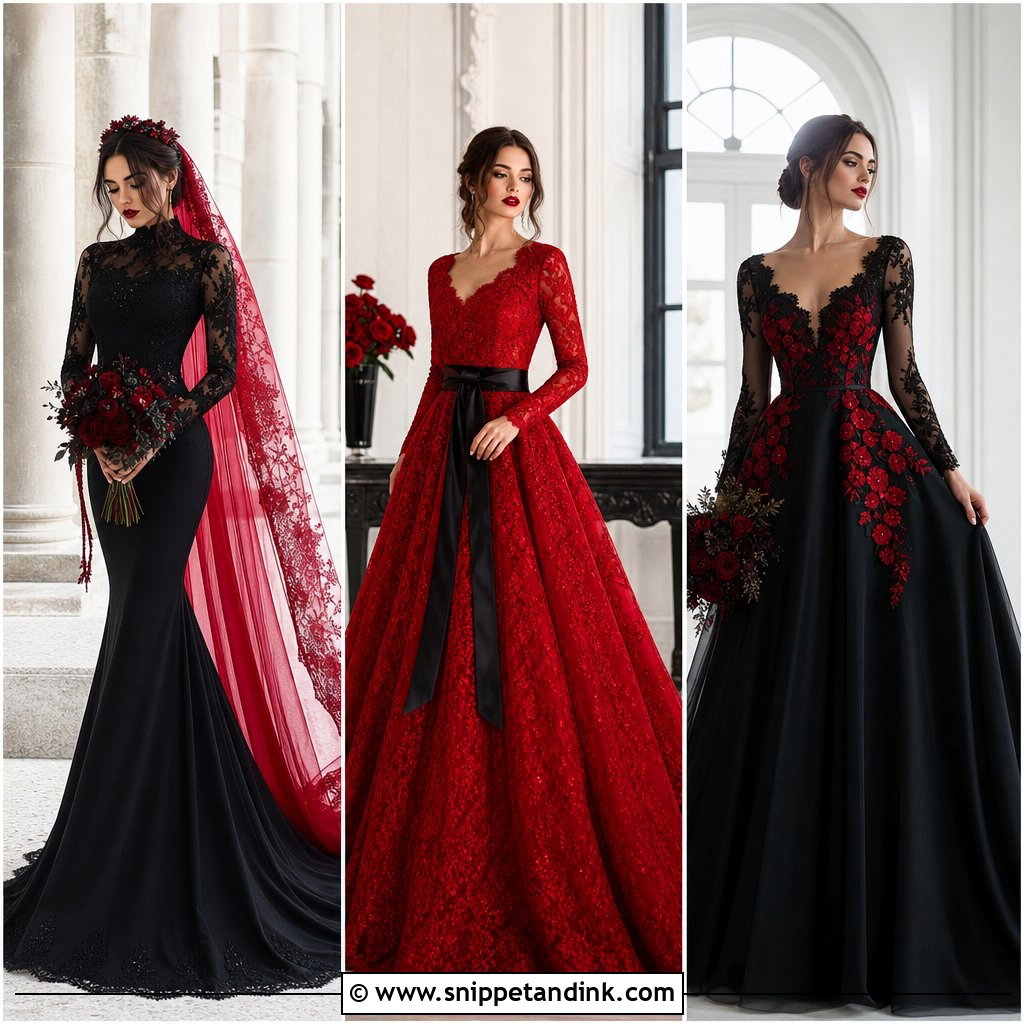
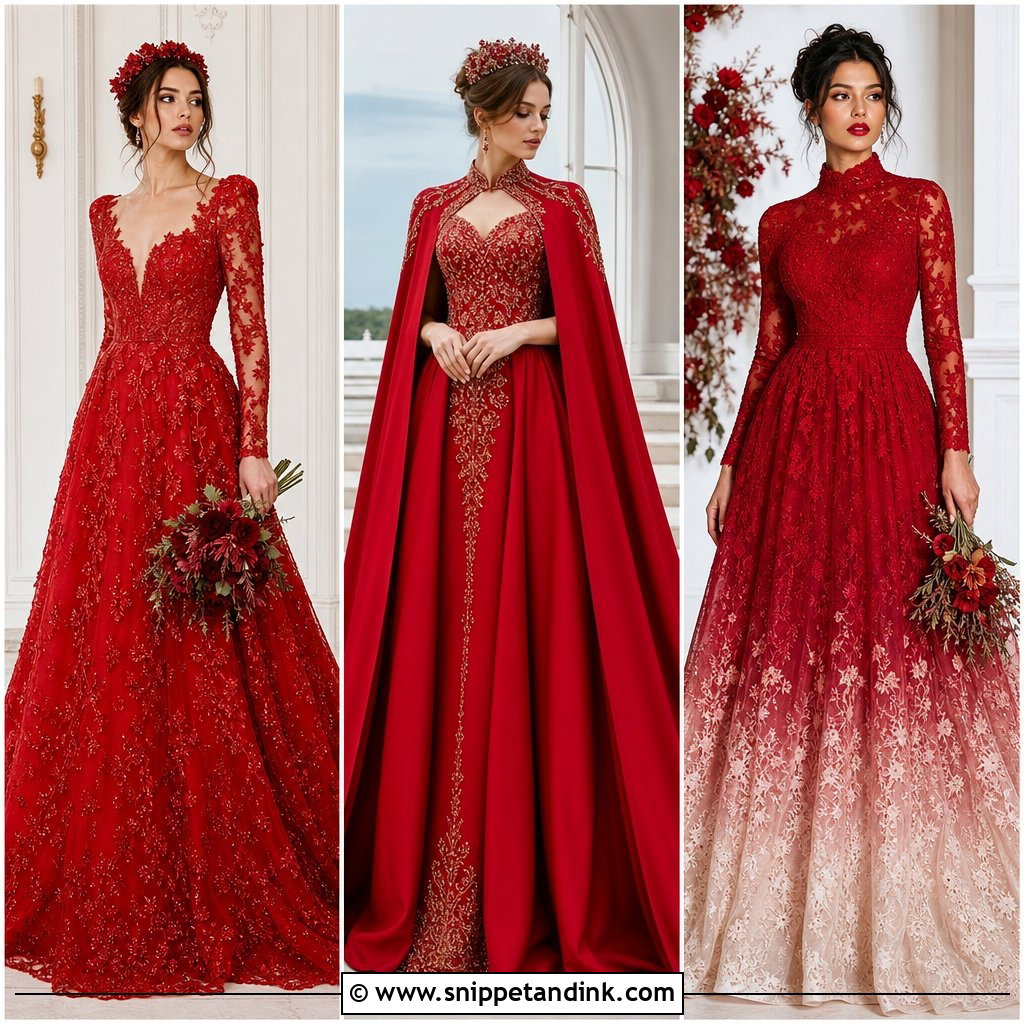
Burgundy is easier to wear in lace than brighter reds, because the pattern breaks up the colour and stops it from feeling heavy. A fitted bodice, a natural waist and a skirt that skims rather than clings suit it. Floral lace over a matching lining gives texture; a little beadwork at the neckline or waist adds light. Burgundy velvet heels, pearl earrings and a delicate comb fit the mood, and a sheer veil edged in the same lace carries the dress up to the hair. Cream flowers, muted greenery and a burgundy ribbon finish it. At alterations, look closely at where the waist seam sits on your body. Half an inch too high or low and the skirt falls unevenly.
4. Scarlet Off-Shoulder Wedding Gown
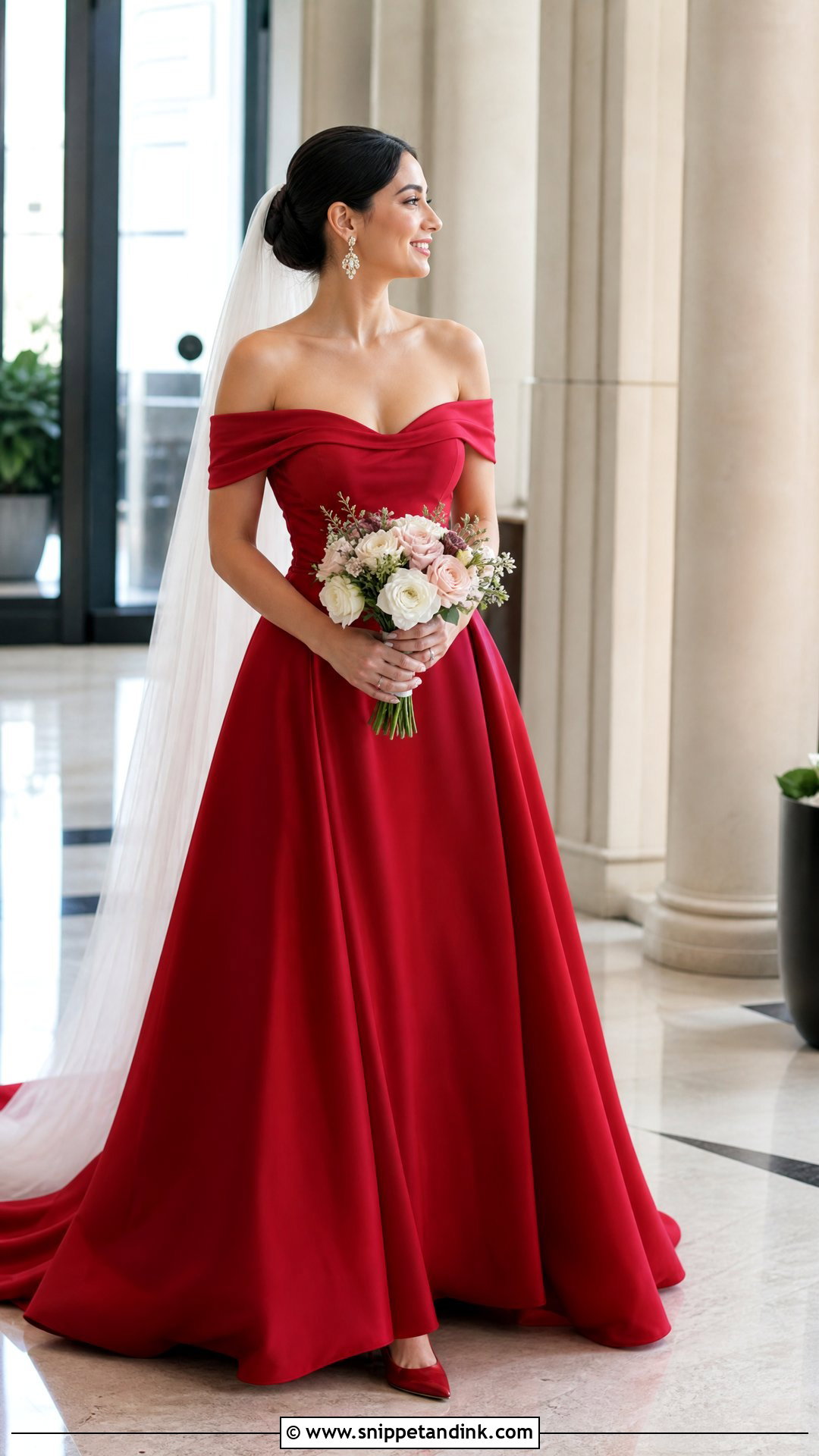
An off-shoulder scarlet wedding gown frames the collarbone, and anything you hang around your neck will crowd that frame. I go for statement earrings and either a very short pendant or nothing at all. The bodice has to be structured, since it holds both the neckline and the dropped sleeves up. A full A-line skirt reads classic; a fitted skirt reads modern. Scarlet pumps and a low polished bun keep things tidy, and a chapel veil anchored under the bun stays clear of the shoulders. White, peach or blush flowers soften the bright red. Hug someone at your fitting and lift the bouquet to chin height: if the sleeves slide up, they need a stay or elastic.
5. Red Velvet Long-Sleeve Wedding Gown
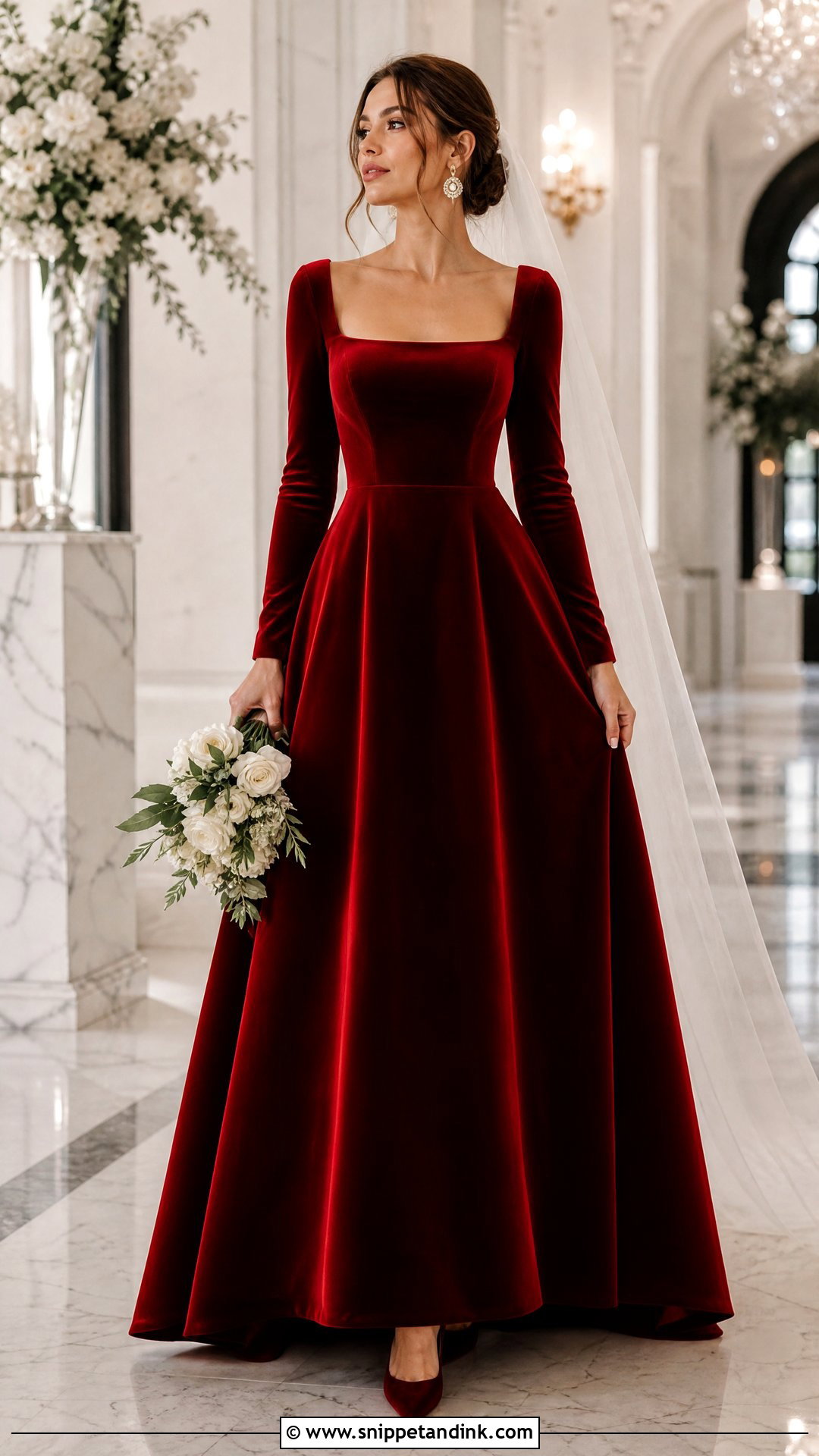
Velvet is a cold-weather fabric, full stop. Deep ruby, garnet or wine velvet soaks up light and looks expensive, but it’s warm to wear and crushes wherever it’s pressed. A defined waist with an A-line or softly fitted skirt keeps the heavier cloth from bulking out. Square, bateau or modest V necklines suit full sleeves. Pointed closed-toe heels, vintage-style earrings and a small structured clutch are all it needs. Wear your hair up, since loose hair brushing velvet rubs the pile and leaves a dull patch on the shoulders. Choose plain tulle or a simple hairpiece over a decorated veil. Ask the venue what temperature they keep the room at in the evening, because a crowded dance floor gets hot fast.
6. Red Tulle Princess Wedding Gown
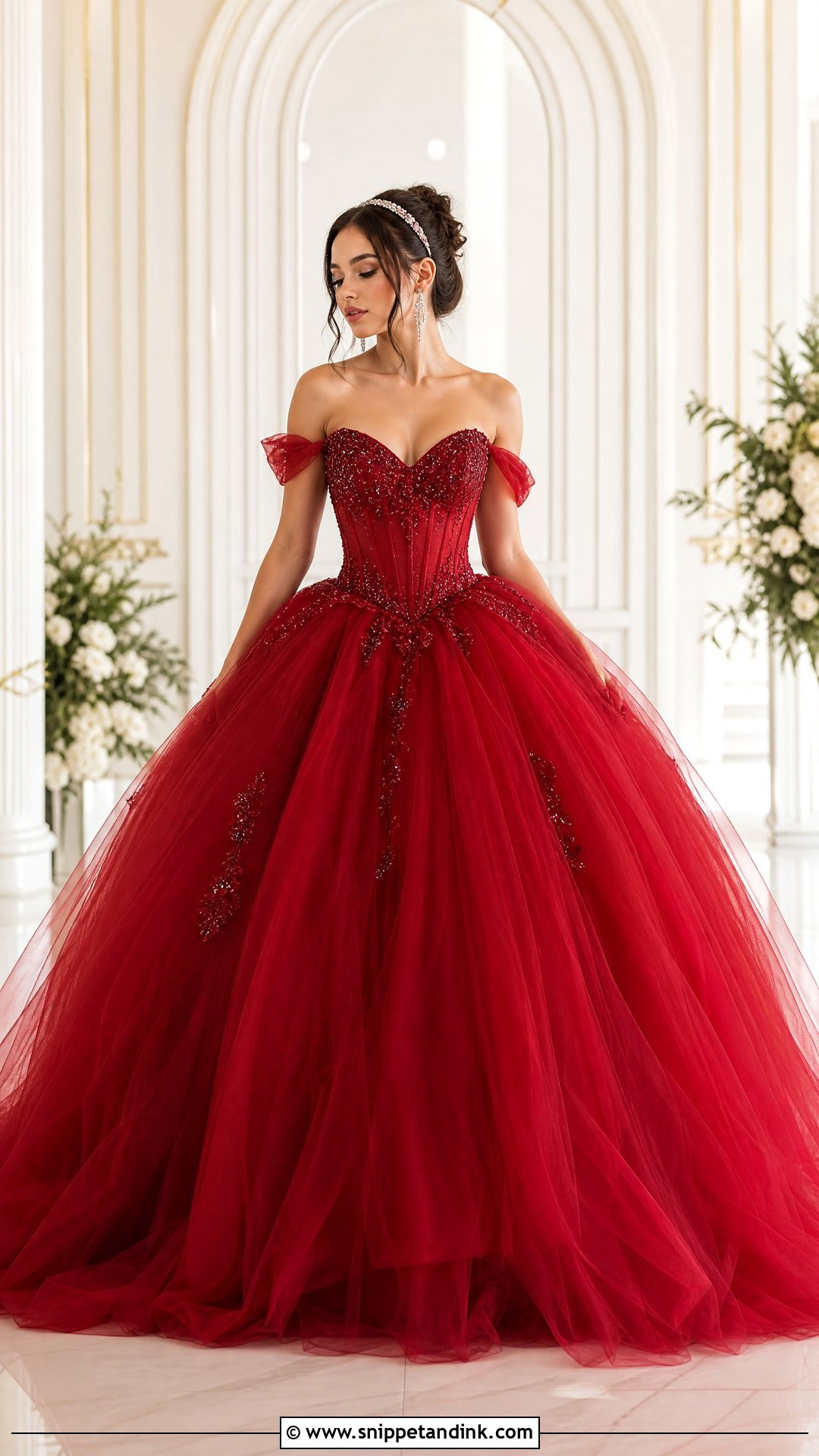
Red tulle princess gowns look weightless, but layered skirts are fiddly to manage, and that’s what I plan around. A fitted corset bodice gives the skirt its shape, and scattered crystals or tonal appliqués add depth without hiding the colour. Ask for a lining close to the outer red, or the skirt looks streaky where layers overlap. Hidden block heels, sparkling studs and a narrow jeweled headband are enough. If you add a tulle veil, keep it plainer than the skirt. Request a strong bustle with clearly marked loops, and have the hem set while you wear your actual wedding shoes, because the front layers of tulle catch on toes very easily.
7. Red And Gold Lehenga Wedding Gown
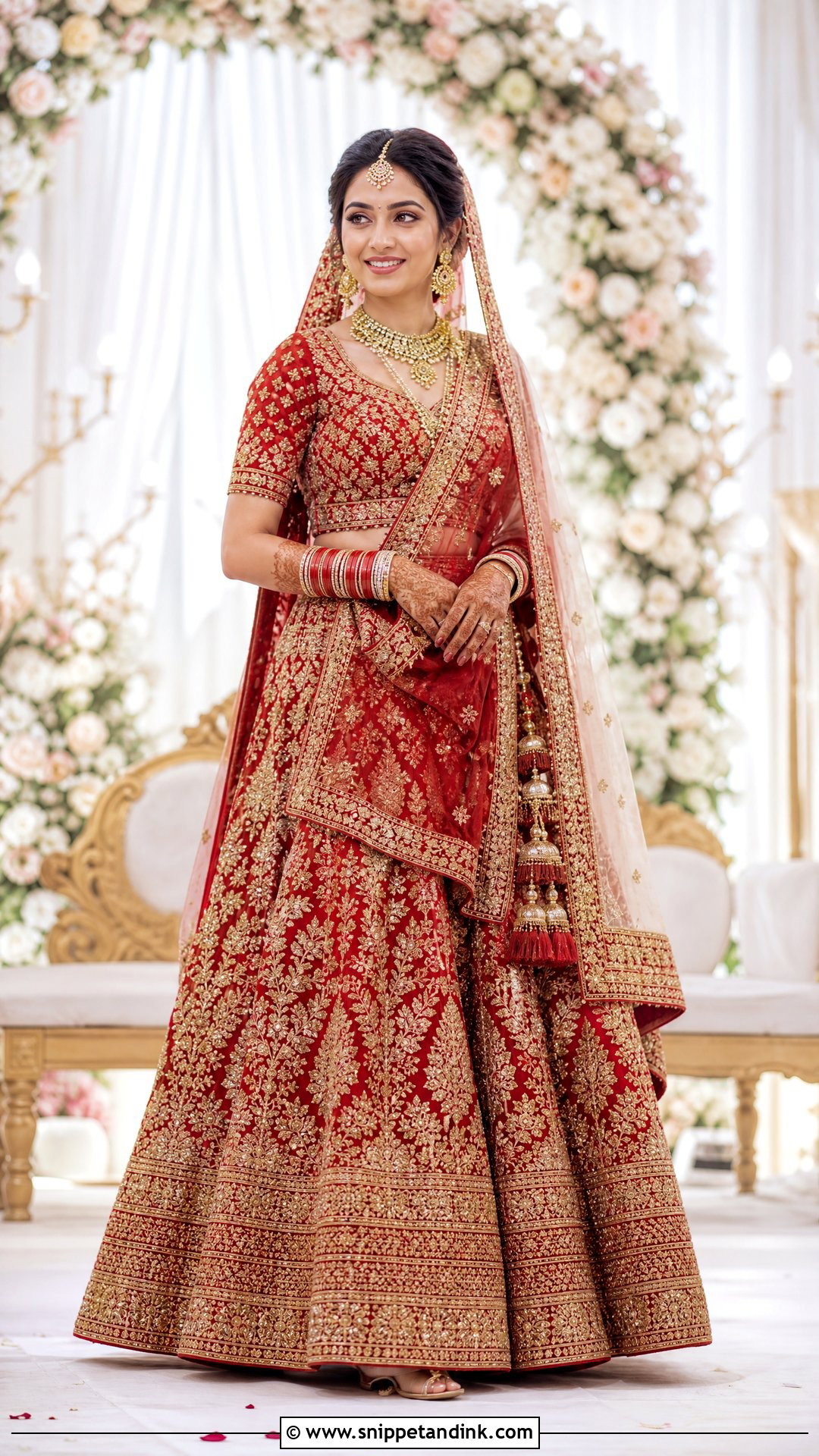
A red-and-gold lehenga belongs to South Asian wedding tradition, where red is widely worn by brides as a colour of good fortune and new beginnings. Choose a fitted blouse, a richly worked full skirt and a dupatta draped in the way your family or community prefers. Gold zari, sequins, beads or traditional motifs give texture to the deep red base. Heavy work means a heavy skirt, so I always check the waistband, the lining and the closures with the bride wearing it for at least ten minutes. Comfortable embellished heels, gold earrings, bangles and a necklace shaped to the blouse neckline complete it. Pin the dupatta at the shoulder and head so it stays put while you greet guests.
8. Red Qipao Wedding Gown
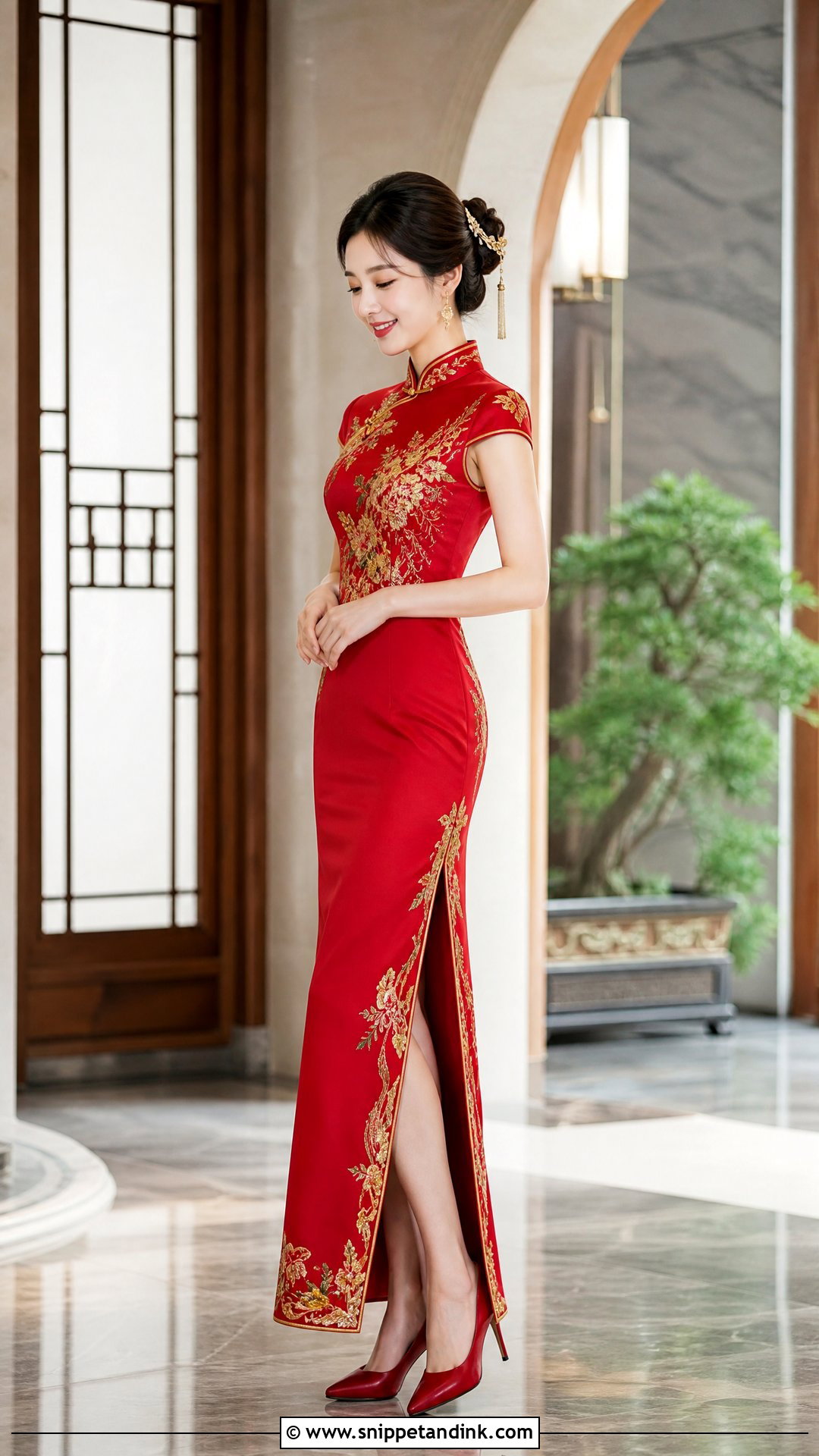
A red qipao wedding gown has a fitted body, a high Mandarin collar and traditional detailing, and red with gold is strongly linked with Chinese wedding dress. Modern versions may add lace, a longer train or a softer skirt. I’d involve family, or a maker who knows the tradition, in choosing motifs, because some carry specific meanings. Gold embroidery pairs well with simple gold earrings, red pumps and a neat chignon. If there’s a side slit, sit and climb a step in it at the fitting to check the height. A decorative hairpin finishes it without crowding the collar, and many brides wear the qipao for the tea ceremony as one look among several.
9. Red And White Ombre Wedding Gown
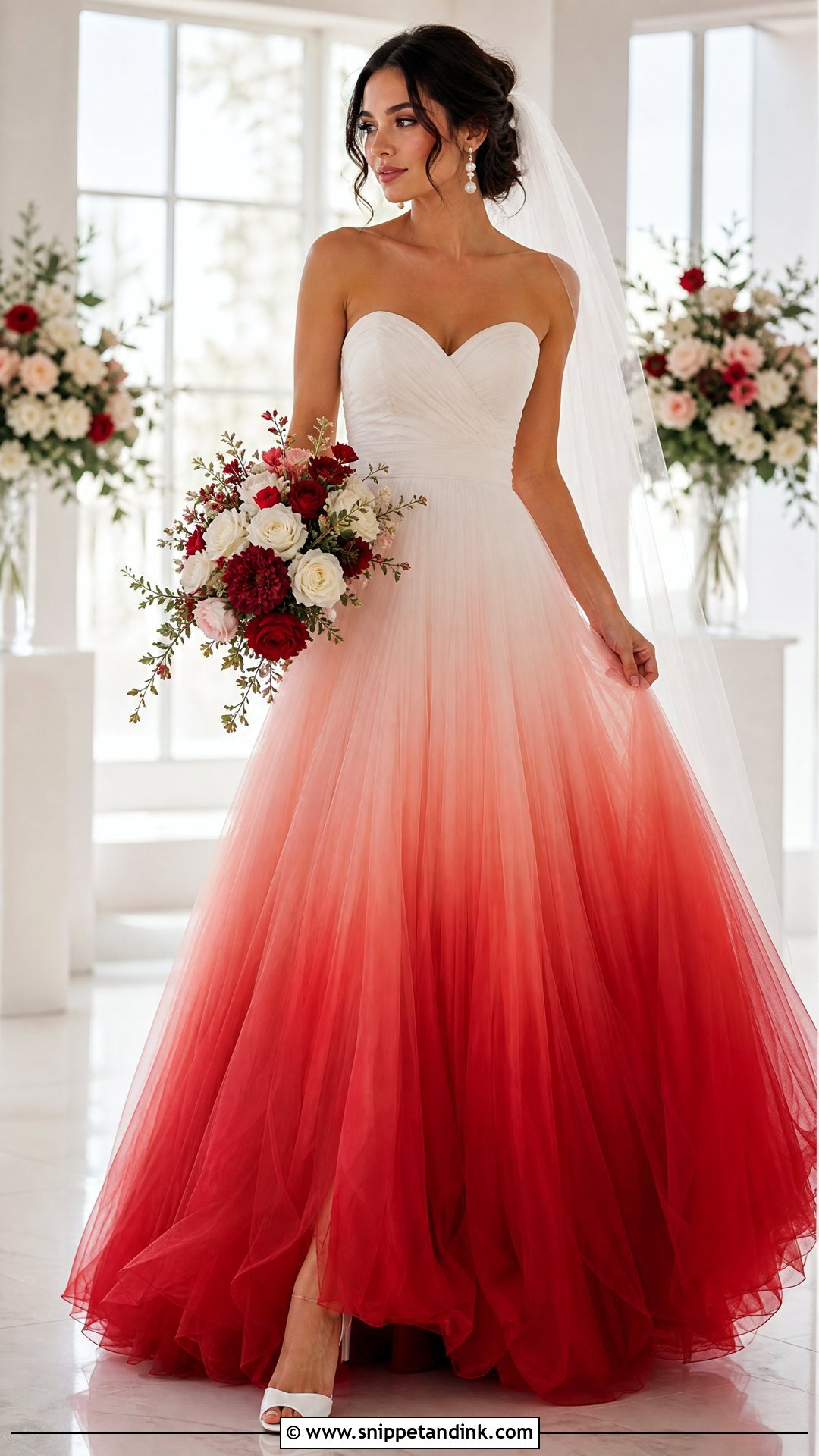
Gradient dresses are hard to judge from a photo. A red-and-white ombre wedding gown should move slowly from an ivory or white bodice through blush and scarlet to deeper red at the hem. Chiffon, organza or layered tulle carry the gradient best, because the colour shifts more softly through sheer fabric. With so much happening in the skirt, I keep accessories plain: white or nude heels, small pearls and a sheer veil. A bouquet of white and red flowers echoes the dress without matching it exactly. Ask to see the fabric in daylight and dim light, and check the side seams and the back of the train, where gradients often fail to line up.
10. Red Floral Embroidered Wedding Gown
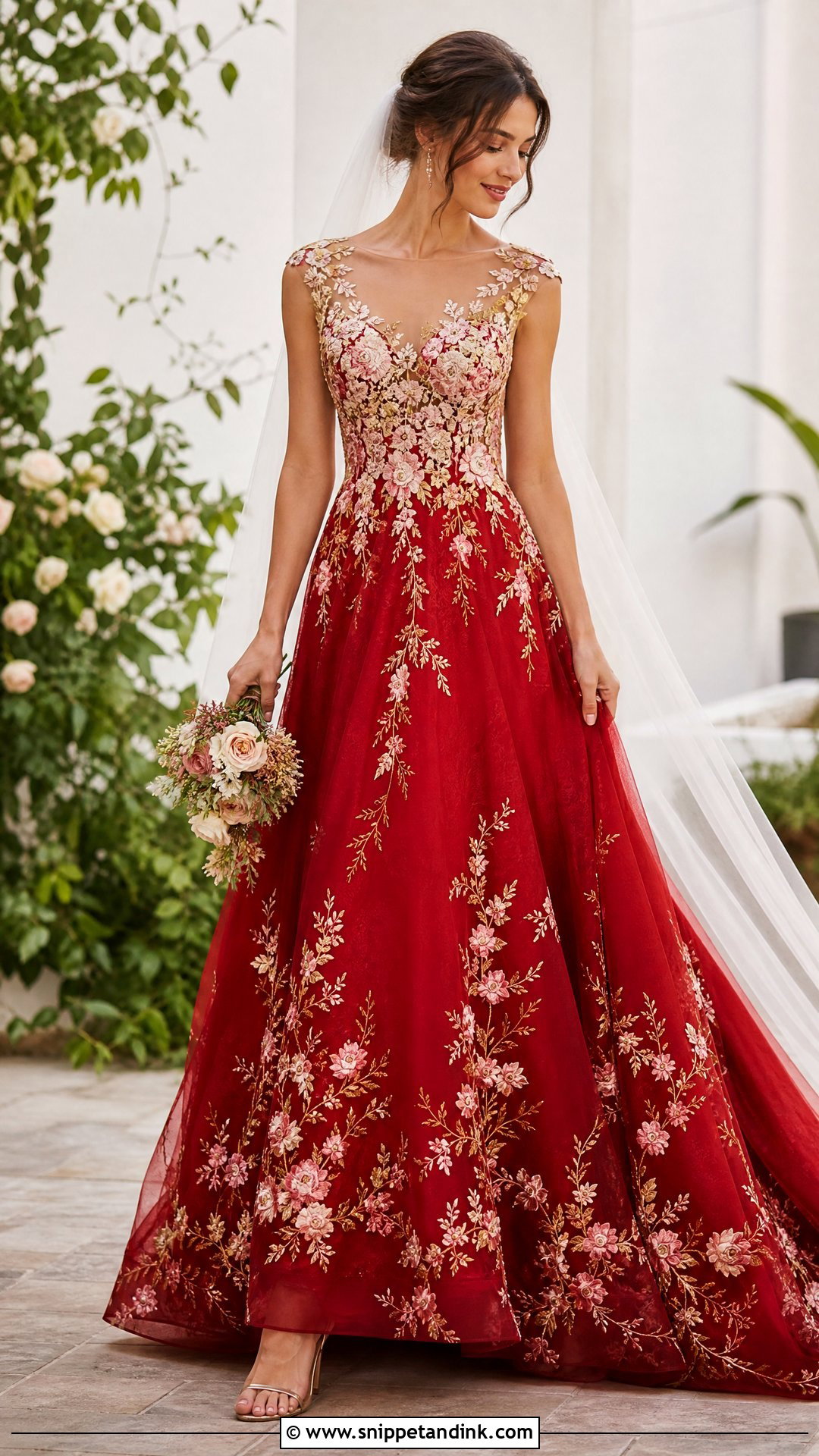
Embroidery is a choice between quiet and contrast. Tonal red flowers on red are subtle; ivory, blush or gold flowers stand out from a distance. An illusion bodice with placed appliqués feels romantic over a flowing A-line skirt. I keep shoes and earrings understated and the veil plain, because a patterned veil laid over patterned lace turns into visual noise. One or two flower varieties in the bouquet are plenty. If you’d like more coverage, an opaque lining can go under the embroidered bodice without changing the design. At alterations, run a finger along every seam and closure: appliqués that fold or lift at the zip show up in close-up photographs.
11. Minimalist Red Slip Wedding Gown
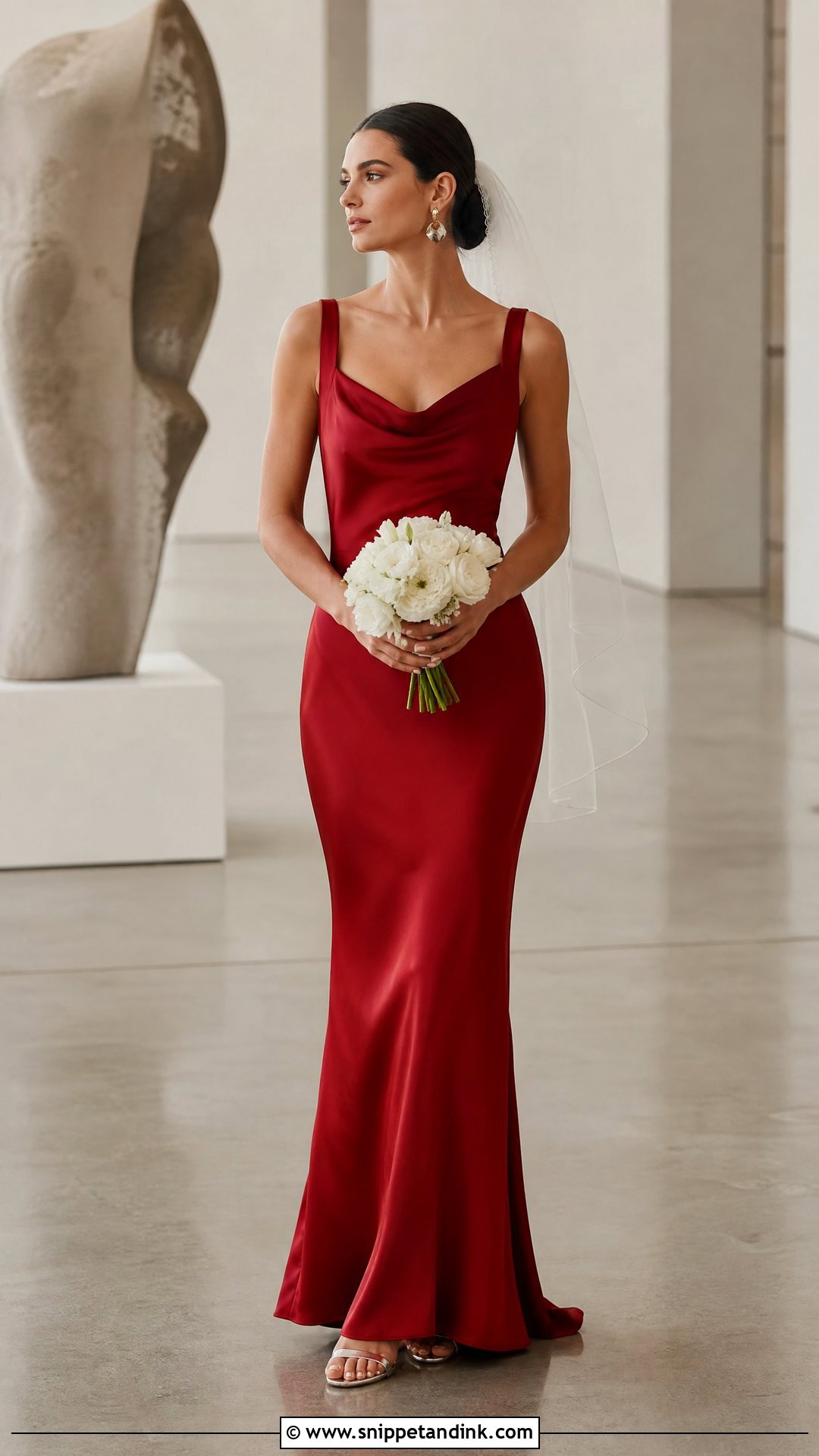
A red slip gown is the simplest dress on this list and the least forgiving. Silk satin or fluid crepe cut on the bias follows the body with no internal structure, so wider straps or a cowl neckline help if you want to feel secure. I’d pair it with slim metallic sandals, sculptural earrings and a small bouquet of white flowers. A smooth low bun and a light fingertip veil make it read as bridal. Undergarments must be smooth-edged and close to your skin tone, since thin fabric shows lines and texture. Have the fit checked while you walk and sit, not just standing. A touch more ease through the hips usually drapes better and feels better by evening.
12. Red Cape-Sleeve Wedding Gown
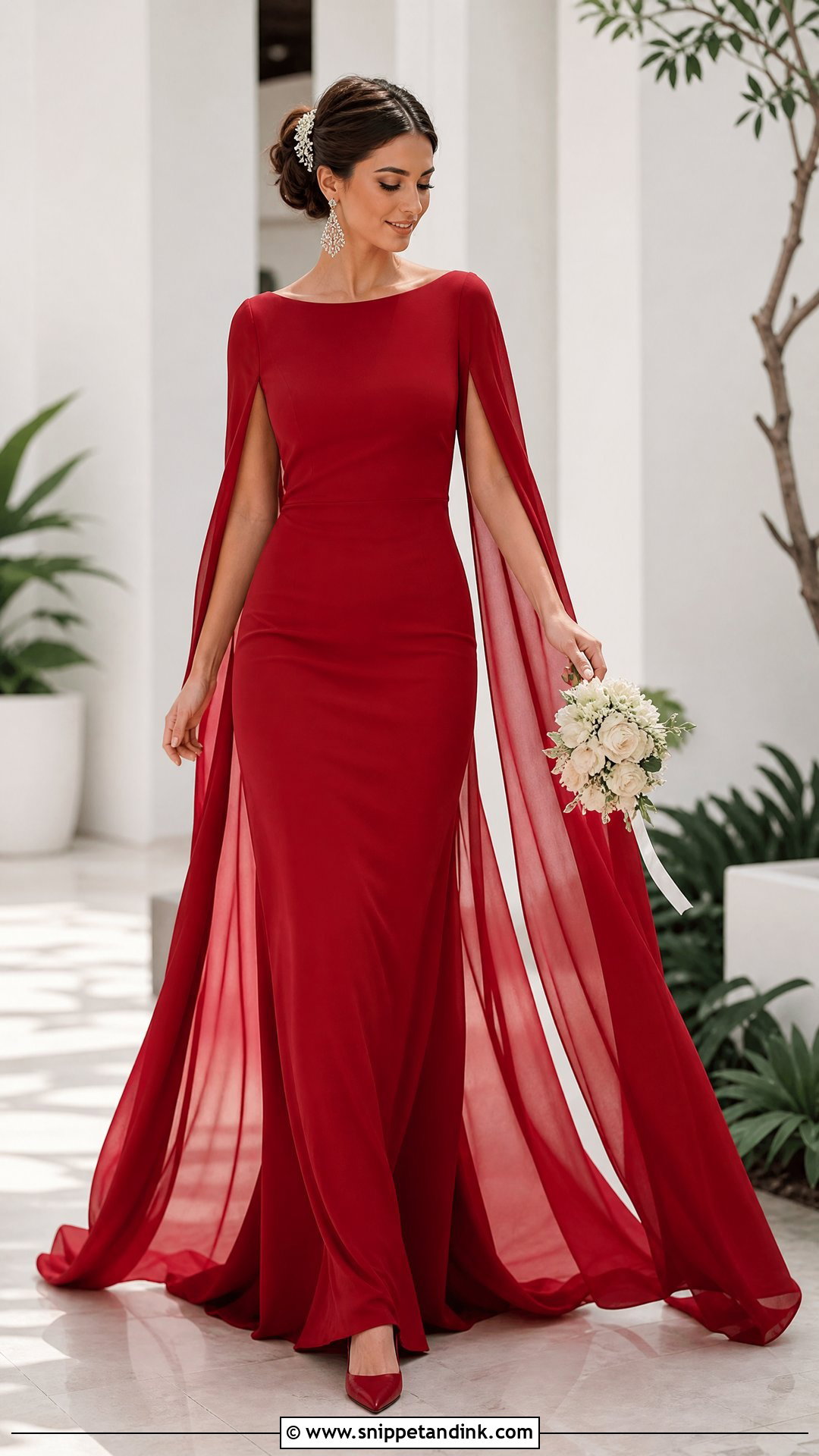
Cape sleeves give arm coverage that moves, and the base gown should stay plain so the cape is the feature: a fitted column or gentle A-line works. Chiffon floats; crepe holds a cleaner outline. Pointed heels, chandelier earrings and a sleek bracelet suit it. If the cape runs into a train, skip the veil, since two long layers tangle when you turn and kneel. A decorative comb in a low updo does the job instead, with a small ivory bouquet. Test the cape near an open door or outside at your last fitting. Light chiffon blows forward easily, and a cape that wraps across your face or bouquet during the vows needs weighting at the hem.
13. High-Neck Red Crepe Wedding Gown
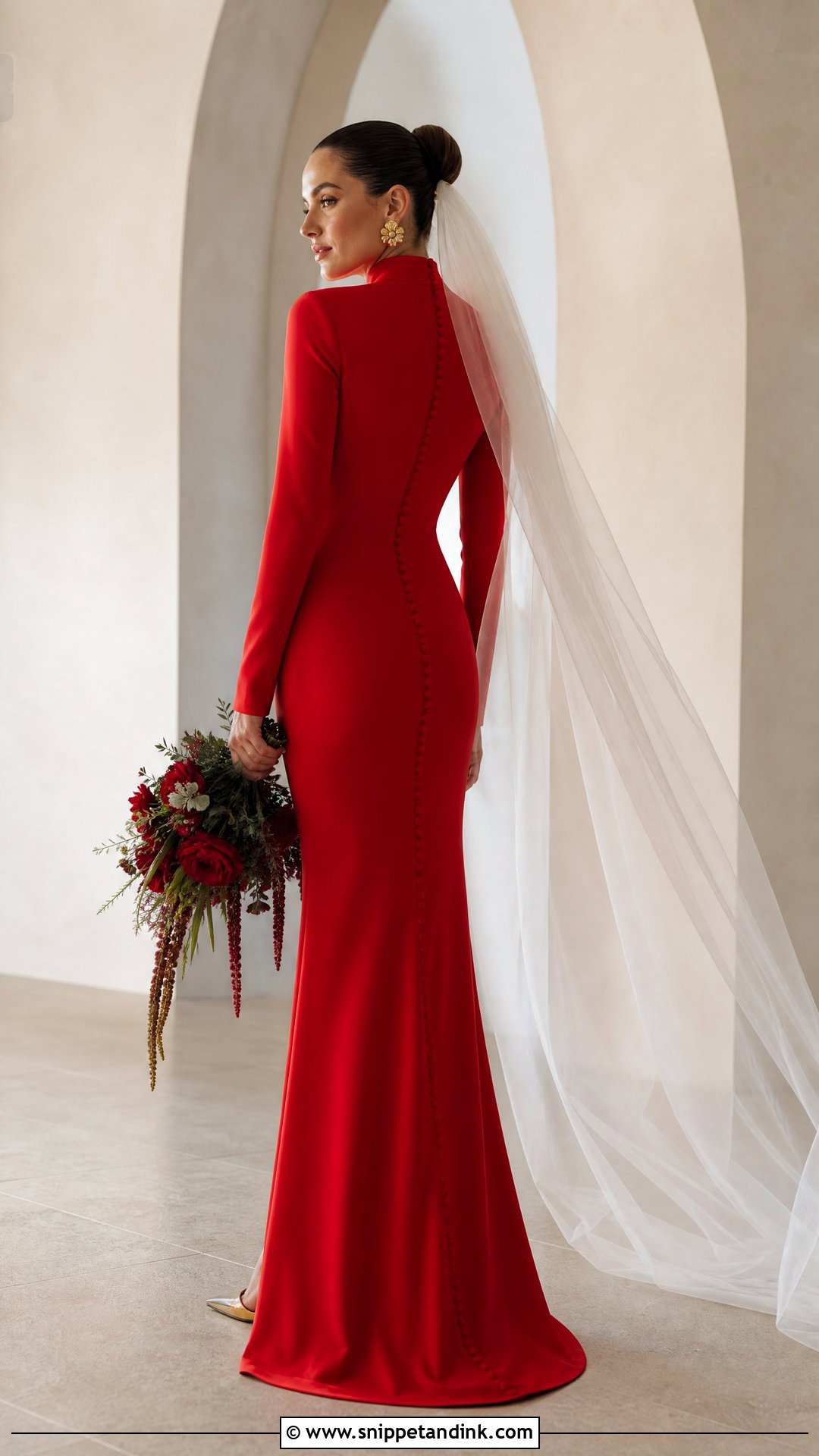
Crepe is the fabric I’d pick for a high-neck red gown, because it falls in one smooth line and doesn’t fight the neckline for attention. It suits a column, a trumpet or a gently fitted A-line. Sleeveless shows the shoulders; fitted long sleeves give full coverage. Statement earrings, a polished bun and pointed red or gold heels finish it, and you won’t need a necklace. Anchor a long veil under the bun if the back is plain, or go short to show off buttons and seams. Crepe reveals any pulling at the waist and hips, so tailoring has to be precise and undergarments smooth, with no edges that print through.
14. Tea-Length Red Wedding Gown
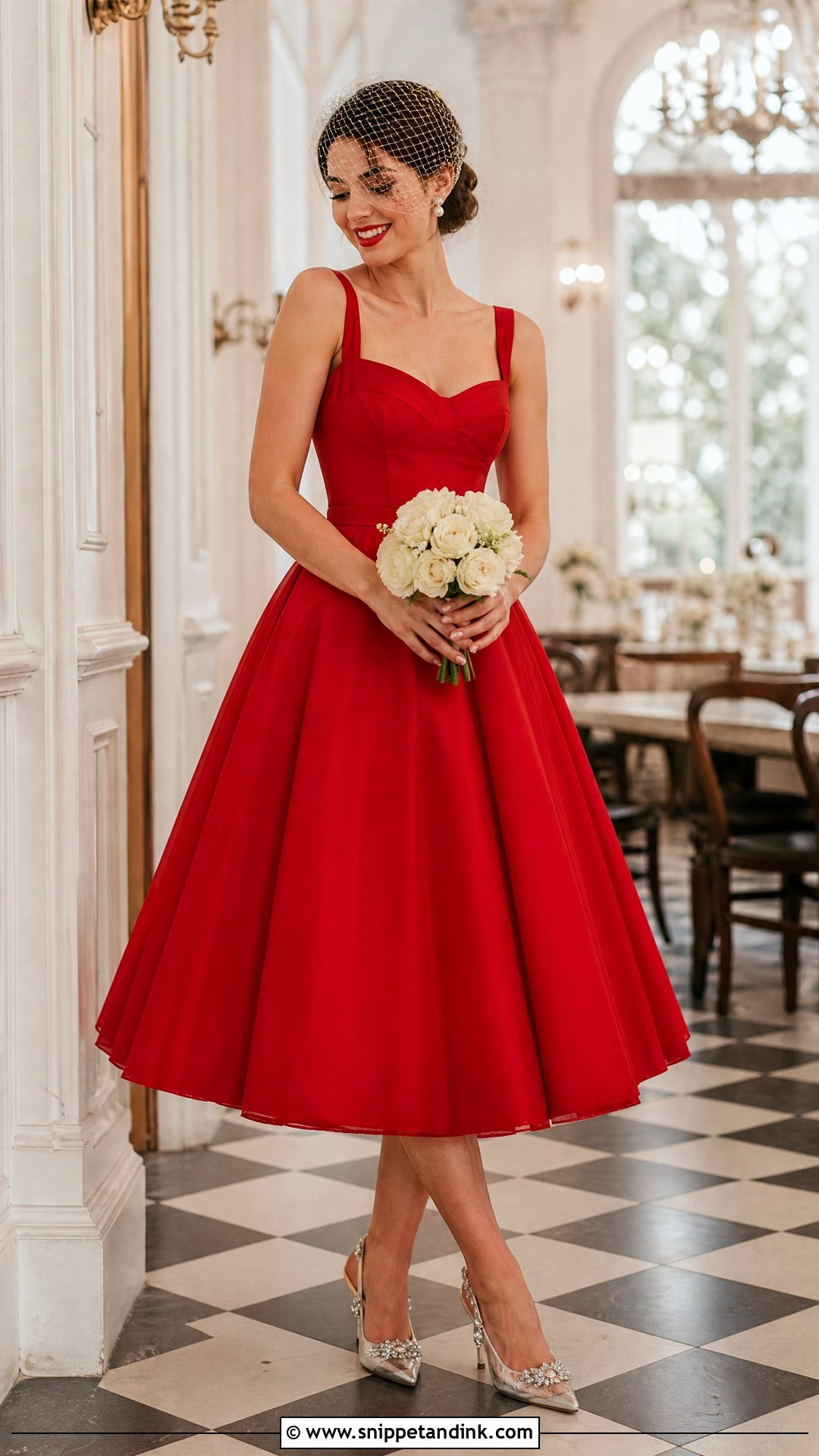
With a hem between knee and ankle, a tea-length gown puts your shoes and legs in every photograph, so I always fit the length with the shoes on. A fitted bodice and full skirt gives a retro shape; a simple A-line is more modern. Pointed pumps, jeweled slingbacks or block heels can all work, depending on whether you’ll stand on grass, gravel or a polished floor. Short gloves, pearl earrings and a birdcage veil are lovely individually, but wearing all three at once tips into costume. Keep the bouquet compact to match the shorter proportions. Check that the hem hangs level all round, and on a petite frame, try it an inch shorter or longer to see which keeps the leg looking longest.
15. Plus-Size Red Corset Ball Gown
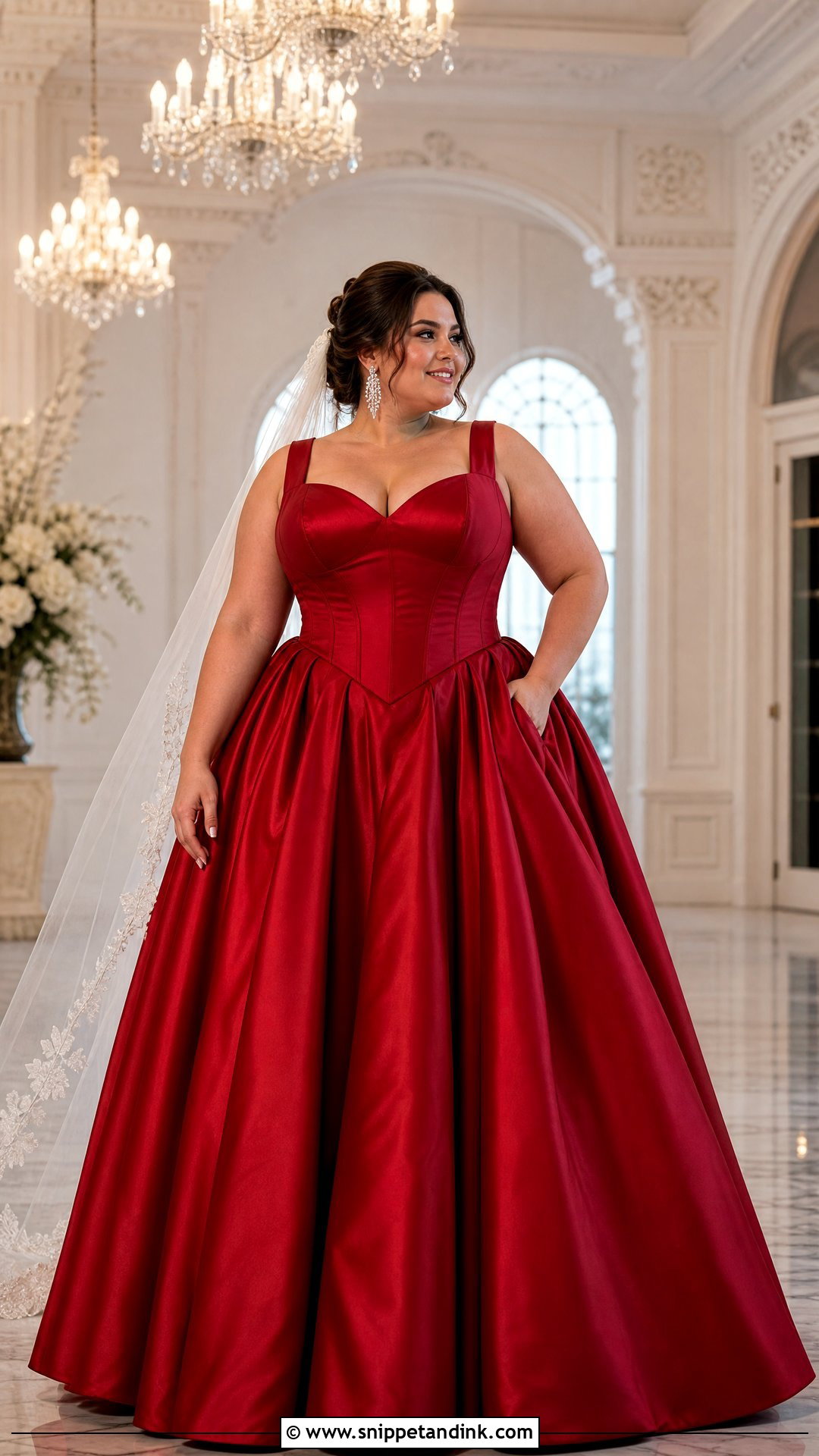
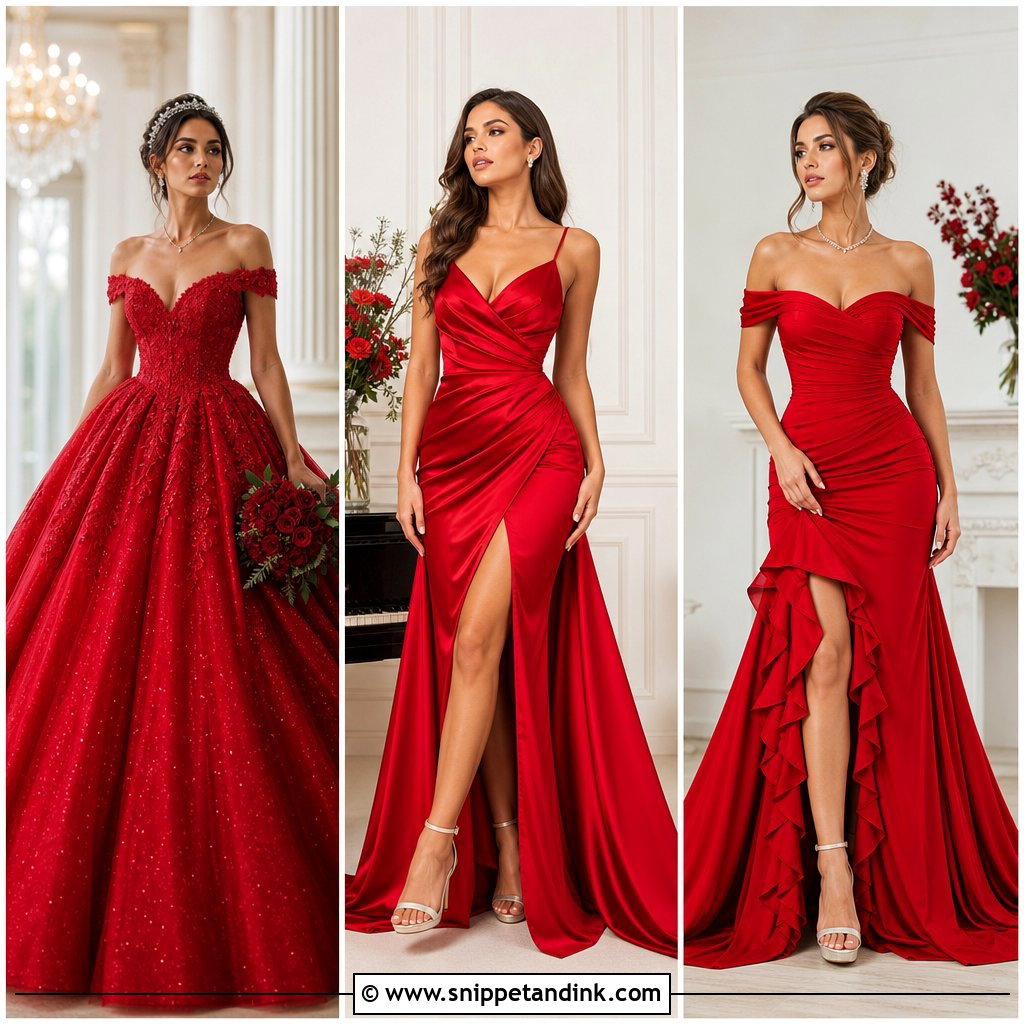
Plus-size brides often get handed sample gowns that don’t fit, and judging a corset ball gown that way tells you very little. Ask whether the shop has a sample in your size, or at least one close enough to show where seams and boning will actually sit. A good corset bodice has structured boning, a full skirt from the natural waist, and wider straps or sleeves if you want them. It should feel secure without pressing on your ribs when you breathe or digging in at the underarm. Ruby satin, layered tulle and embroidered lace all suit the shape. Cushioned heels, drop earrings and a long veil on a stable updo finish it, and a structured underskirt keeps volume even so fabric doesn’t bunch between your legs. Bust support and seam placement matter far more than the size label.
16. Modest Red Wedding Gown With Sleeves
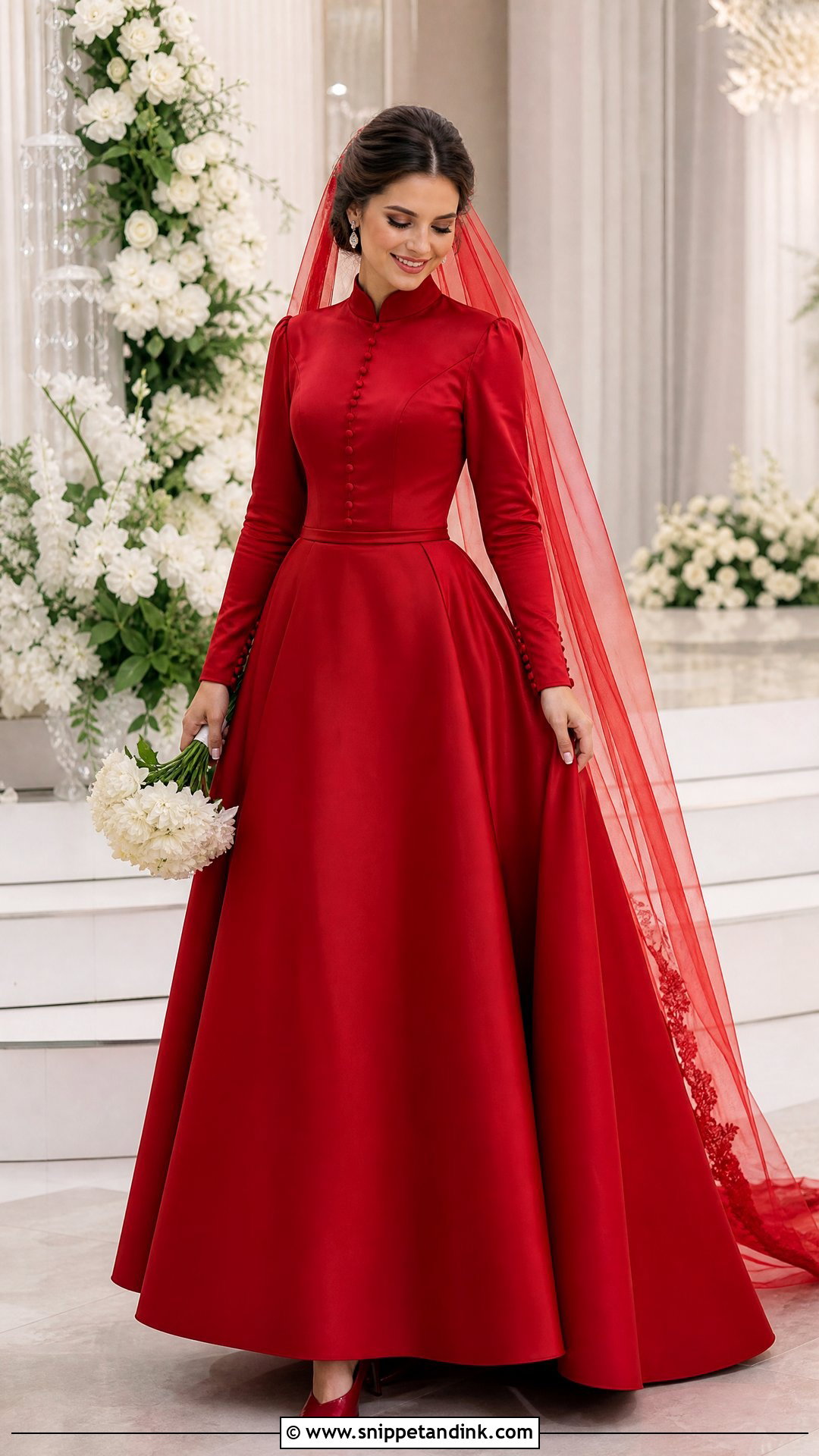
Modest gowns hold their interest in the details. A high neckline, opaque long sleeves, a fitted waist and an A-line skirt in crepe, satin or lined lace give full coverage with plenty of shape. Covered buttons, cuffs or subtle embroidery add polish. Closed-toe heels, delicate earrings and a matching head covering or veil, if you wear one, complete it, and a low bun shows the collar and back. Under lace sleeves, ask for lining matched to the red exactly; a paler lining looks patchy in daylight. Bend your elbows and raise your arms in every fitting. If the bodice rides up or the shoulders fold, the sleeve head needs more room.
17. Red Wedding Gown With Detachable Overskirt
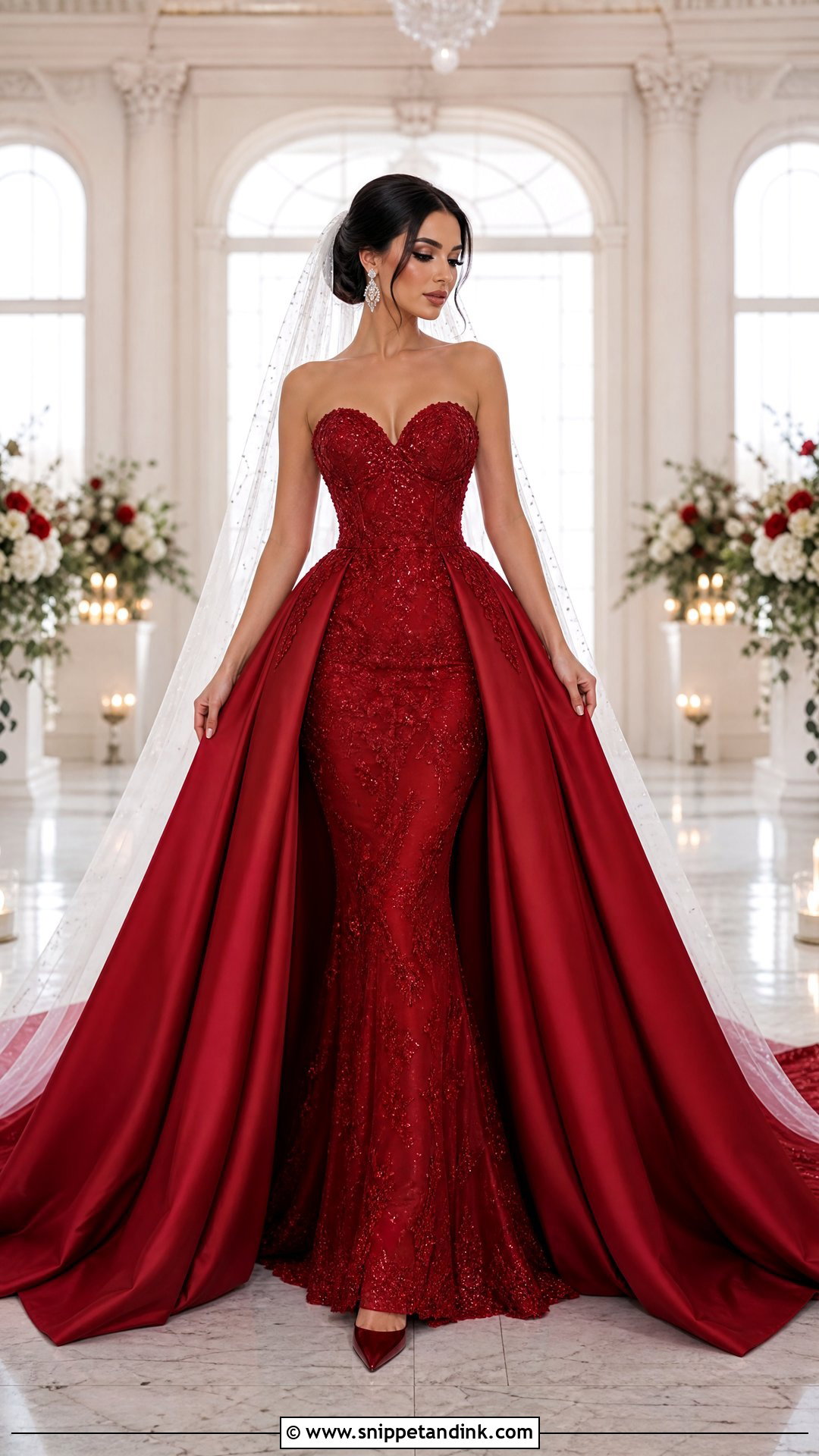
This is two dresses for the price of one change of fastenings. Start with a fitted column or mermaid, then add a full satin, tulle or organza overskirt for the ceremony; take it off and you have a lighter shape for dancing. Keep heels, earrings and hair the same for both so the photos feel connected. A fingertip veil stays clear of the overskirt waistband. The waistband is where these go wrong, so ask your seamstress to hide it well and test the fasteners again and again. Then teach a trusted attendant to remove and fold the overskirt, because hooks that twist or sag show the moment you walk.
18. Red Wedding Gown With Bow Back
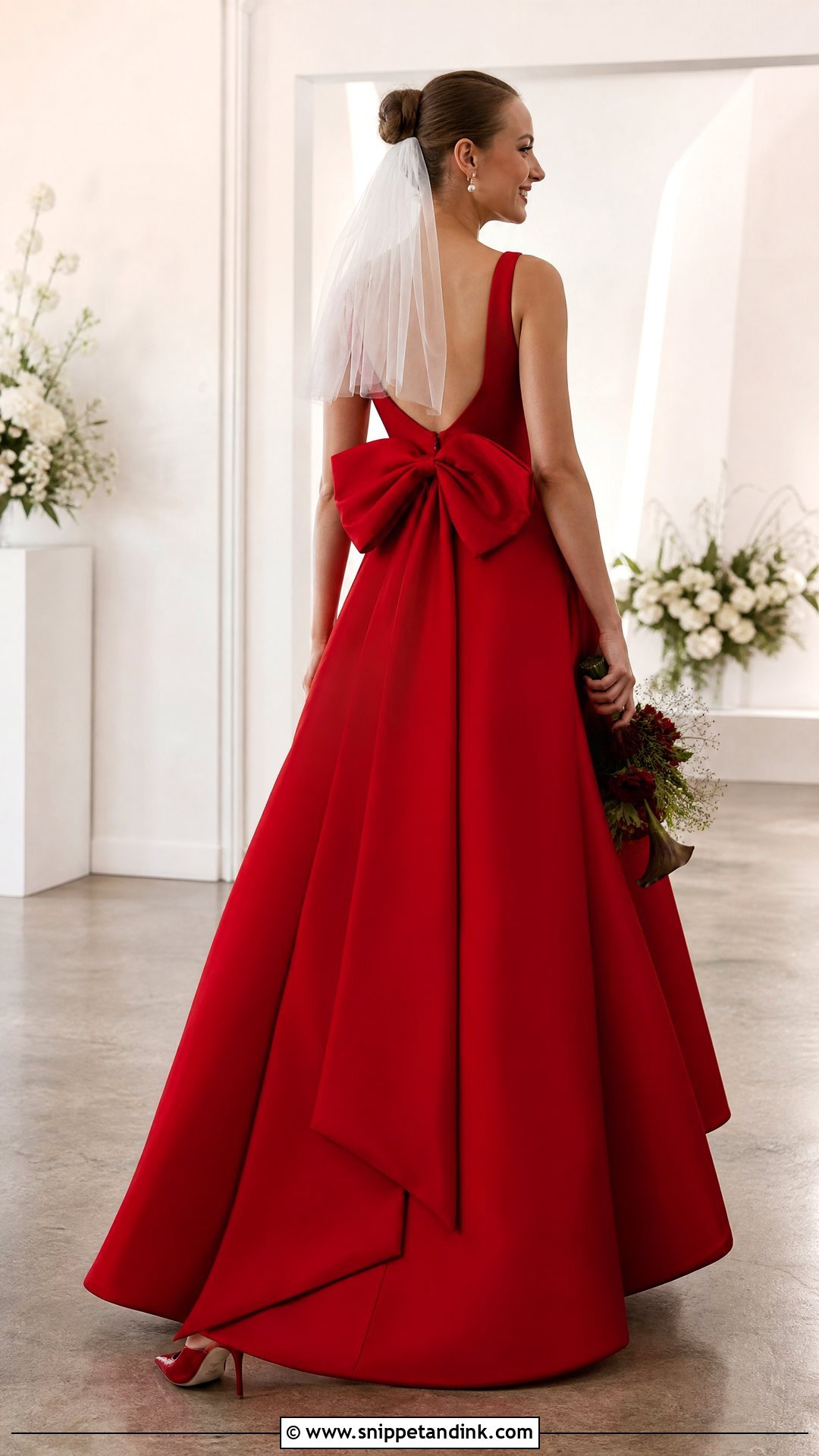
A bow back gives guests something to look at through the whole ceremony, since that’s the side of you they see. A clean structured A-line or column lets the bow lead. Crisp satin or Mikado holds wide loops and long tails; softer fabrics droop by evening. Simple earrings, pointed heels and a smooth updo keep the back clear. A short veil can sit above the bow; a long one needs to be sheer enough to see through. Skip shoulder bags and back-chain necklaces, which catch on the loops. Check at the fitting that the bow is centred and firmly attached, and ask whether the tails can come off so you can sit comfortably after photos.
19. One-Shoulder Red Column Wedding Gown
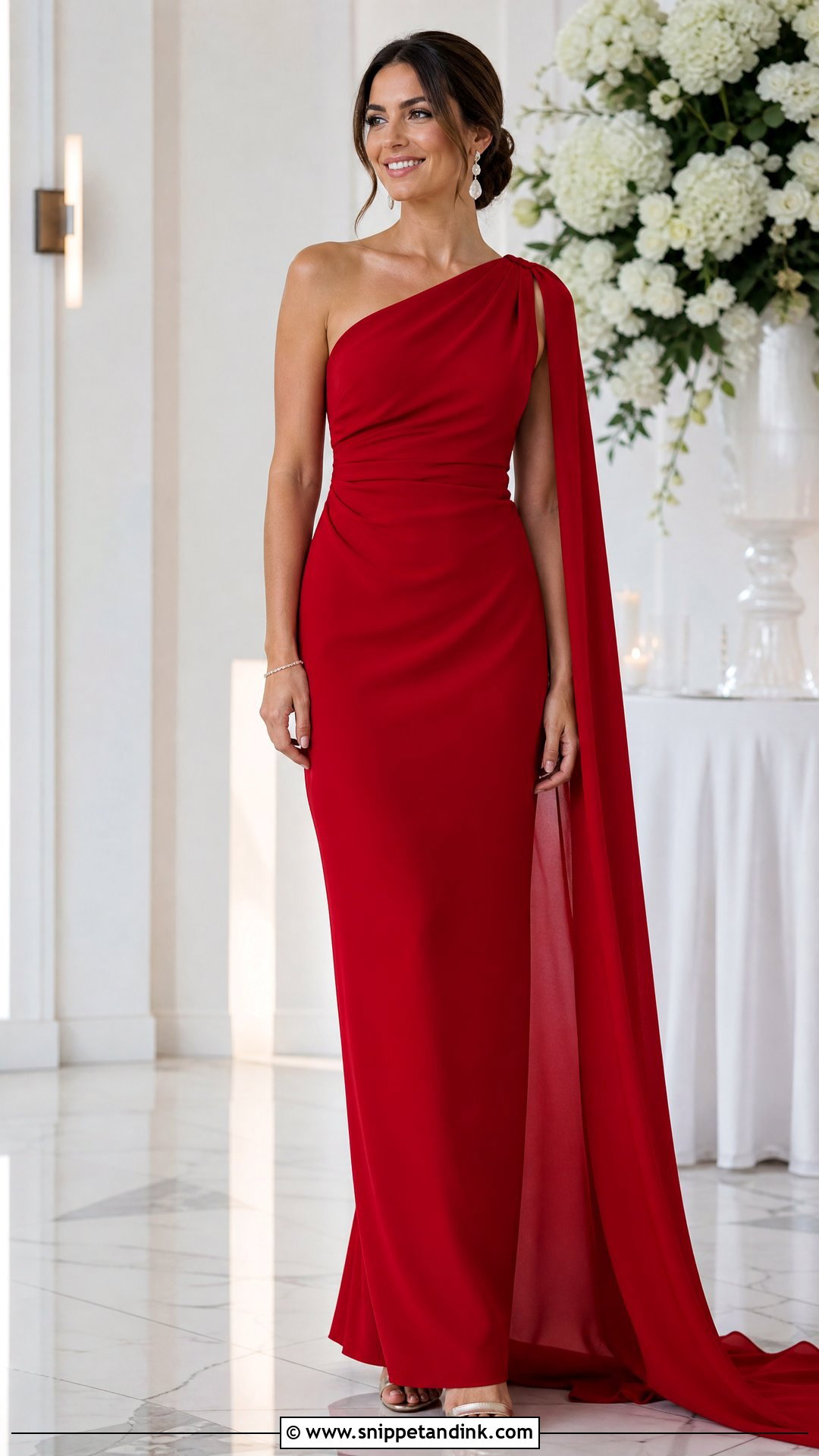
One-shoulder columns live on their armholes. Too loose and the fabric shifts every time you lift your arm; too tight and the raised shoulder cuts in. That’s the first thing I check, before talking accessories. Crepe, satin or stretch jersey makes a smooth line from shoulder to floor, and built-in support with a little draping at the waist keeps it secure. Wear one statement earring or a pair of small drops, never a necklace. Metallic sandals, a slim bracelet and a low side-parted bun suit the asymmetry. A light cape attached at the shoulder can stand in for a veil, as long as it unhooks for dancing.



20. Beaded Red Reception Wedding Gown
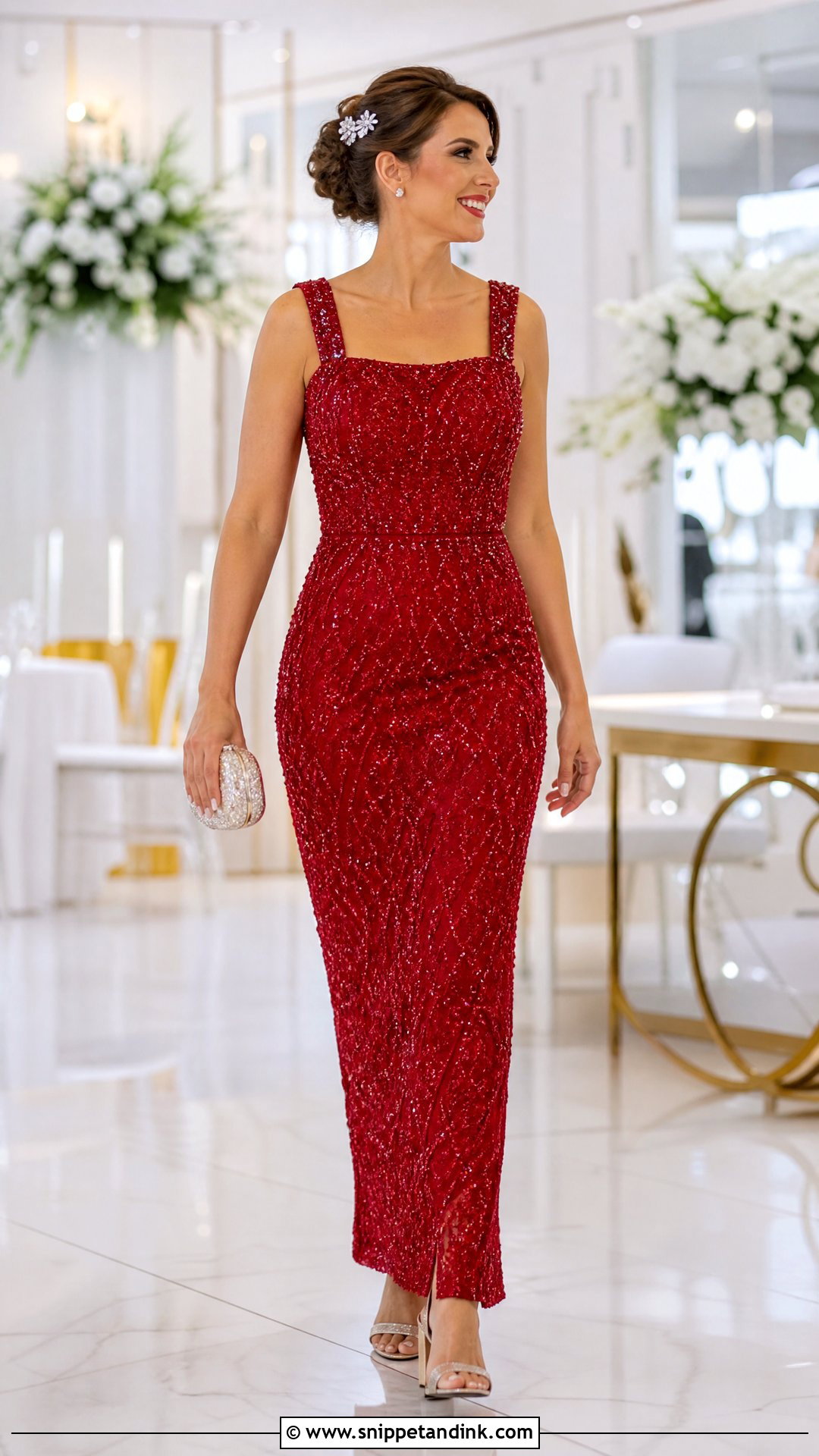
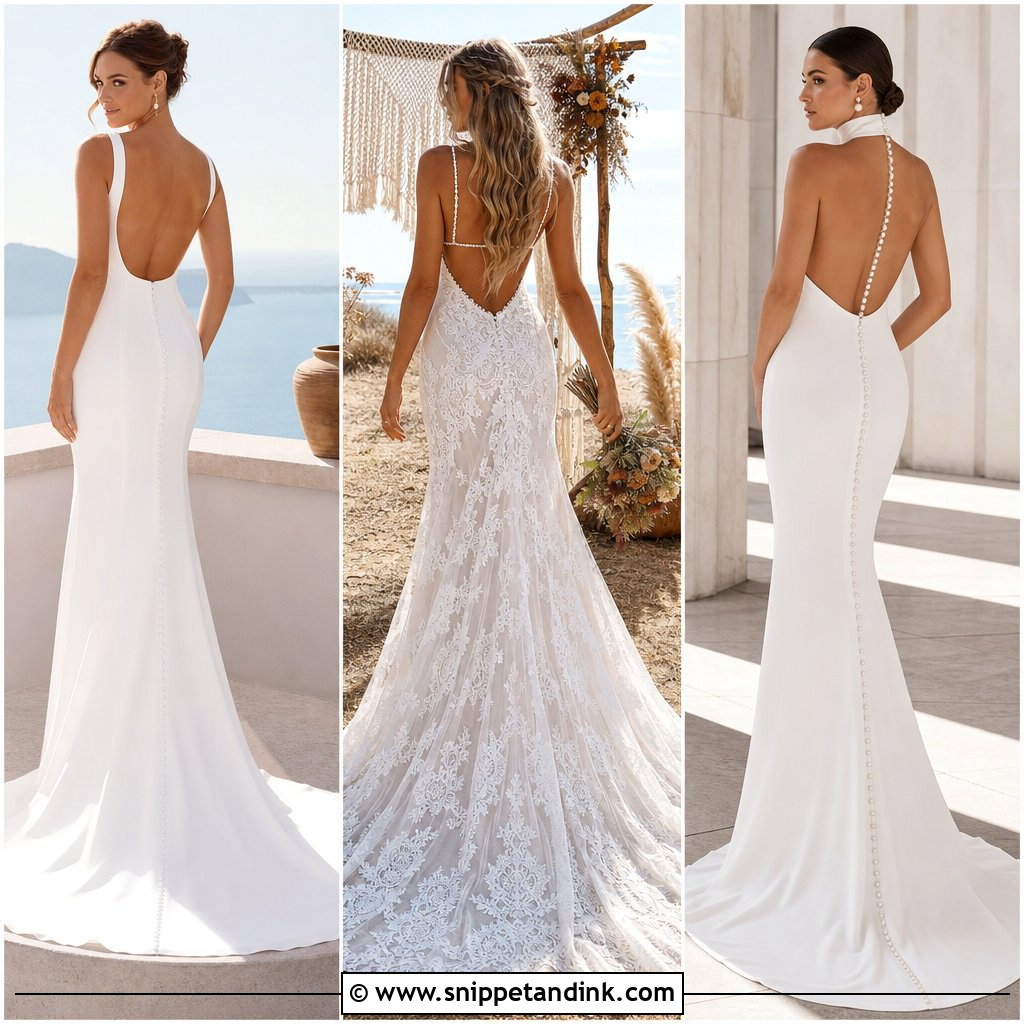
Reception dresses get worn for the longest, liveliest part of the night, so comfort wins every argument. A column, sheath or soft flare covered in tonal red beads, sequins or crystals over a smooth lining gives the sparkle. Short sleeves, wider straps or a supportive neckline make hours of dancing easier. Cushioned block heels or smart flats, small earrings and a compact clutch are enough, with a sleek ponytail or bun so hair doesn’t snag on the beading. Skip the long veil for a jeweled comb. Before you buy, swing your arms against your sides: some beadwork scratches, and heavy beading drags on thin straps. Reinforced straps and a manageable hem let you move freely.
Wearing Red as a Second Look on the Same Day
Plenty of brides wear ivory or white for the ceremony and change into red, or wear red for a tea ceremony or sangeet and something else later. It’s a smart way to wear both, but outfit changes take more time than people expect. Allow a realistic window, often half an hour once you count hair adjustments, jewelry swaps and getting back to the room, and put it on the timeline so the photographer and caterer know.
What makes the change go smoothly
- Choose one helper who has practised the closures with you, ideally at your last fitting.
- Book a private room near the reception with a full-length mirror, good light and a rail to hang the first gown.
- Plan jewelry and hair that suit both outfits, so you’re only changing the dress and maybe the shoes.
- Have a garment bag ready for the first dress. Leaving it draped over a chair overnight is how gowns get stepped on and stained.
If the red is the cultural outfit and the white is the second, talk to family early about which parts of the day each one belongs to. Getting the order right matters to people, and it’s far easier to settle in a planning meeting than in the corridor.
Trying the Whole Red Look on at Once
A red gown works when it suits your body, your personality and the room you’re marrying in. The twenty looks above go from dramatic satin ball gowns and fitted mermaids to cultural dress, modest cuts and lighter reception changes. Start with the shade and shape you feel most confident in, then think about fabric weight, venue temperature, alterations and how far you need to move. Shoes and accessories should finish the gown, not compete with it. And before the day, put the entire outfit on together at least once, undergarments, jewelry, veil and shoes, then sit, walk and hug someone in it. That rehearsal catches more problems than any single fitting.
You'll Like These Ideas:


Leave a Reply